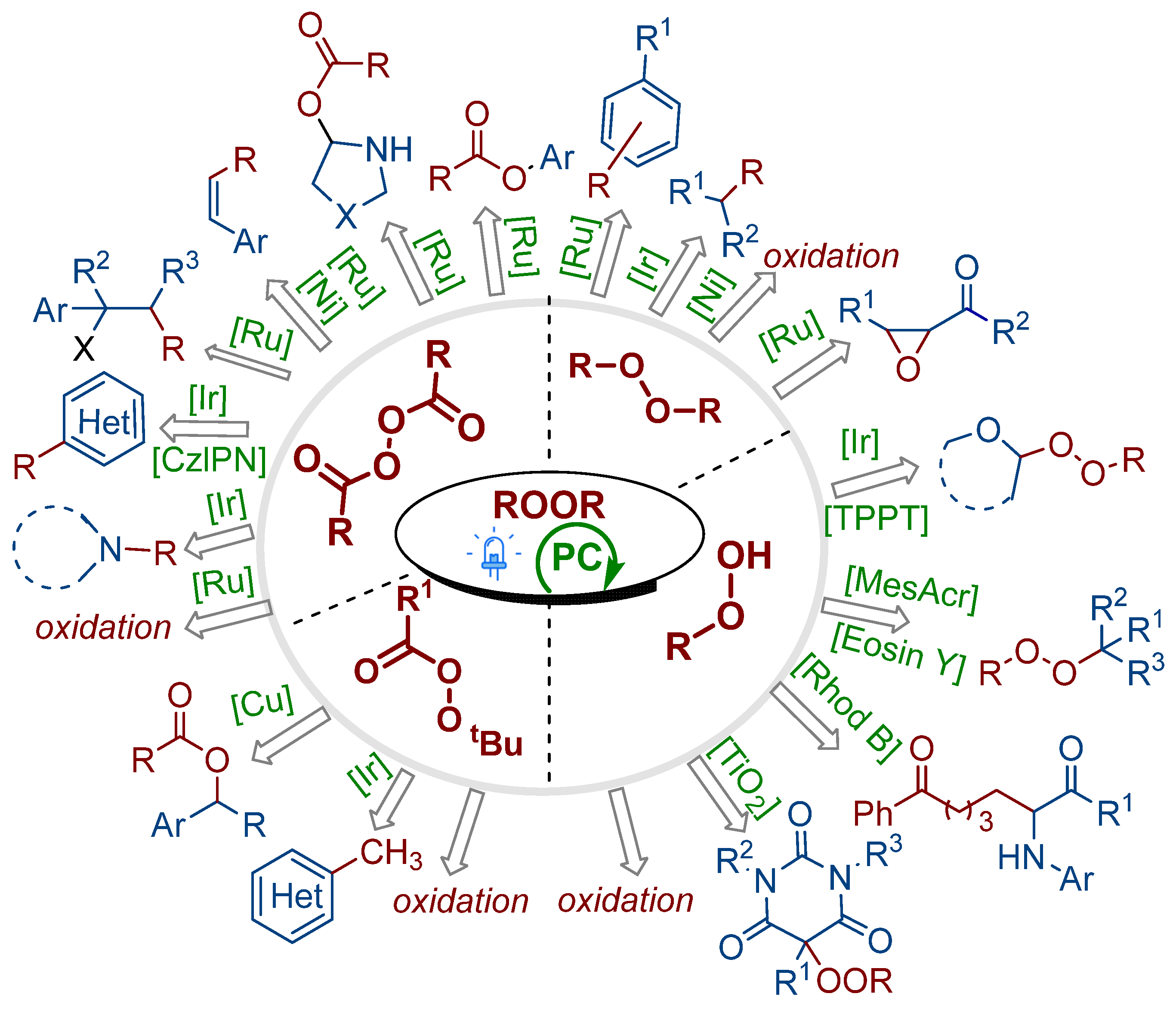
Review

Throwing Light on -O–O- Bond: Organic Peroxides in Visible-Light Photocatalysis

by
Diana V. Shuingalieva
,
Damir D. Karachev
,
Ksenia V. Skokova
,
Ivan M. Prosvetov
,
Dmitri I. Fomenkov
,
Vera A. Vil’
* and
Alexander O. Terent’ev
*
N. D. Zelinsky Institute of Organic Chemistry, Russian Academy of Sciences, Leninsky Prospect 47, Moscow 119991, Russia
*
Authors to whom correspondence should be addressed.
Chemistry 2026, 8(2), 20; https://doi.org/10.3390/chemistry8020020
Submission received: 30 December 2025 / Revised: 30 January 2026 / Accepted: 5 February 2026 / Published: 9 February 2026

Abstract

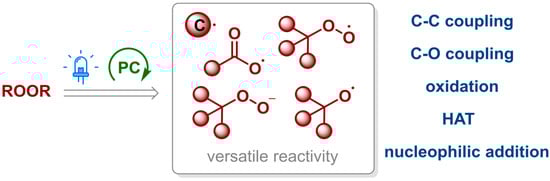
Visible-light photocatalysis enables the integration of classical electrophile/nucleophile chemistry with radical species (free radicals, radical cations, and radical anions) and metallocomplexes, significantly expanding the scope of organic transformations. Substrates capable of generating radicals via single-electron transfer (SET) are therefore of high value in this field. Among conventional radical precursors, organic peroxides occupy a distinctive position due to their unique reactivity. They can generate both oxygen-centered and carbon-centered radicals through either oxidative or reductive SET pathways. Furthermore, organic peroxides can act as radical precursors, nucleophiles, and oxidants. The review emphasizes the advancements of visible-light-mediated reactions utilizing the broad potential of organic peroxides for constructing various chemical bonds.

Graphical Abstract

1. Introduction

Undergoing substantial development in the 2000s–2010s, visible-light photocatalysis enables various transformations, including cross-coupling, C–H functionalization, and addition reactions, under mild and energy-efficient conditions [1,2,3,4,5,6]. As noted in the review article of Prof. Reiser and Prof. Konig [7], the term "photocatalysis" can initially seem misleading, since light (photons) is used as a reagent—typically in large excess rather than in a truly catalytic manner. Nevertheless, visible-light photocatalytic processes are defined by their requirement for light as an energy input, coupled with the use of catalytic amounts of light-absorbing materials (transition metal complexes [8], organic dyes, or heterogeneous semiconductors [9]) that act as photocatalysts. These photocatalysts absorb visible-light photons and mediate energy or electron transfer to substrates, generating reactive radical or ionic intermediates [10,11].
Organic peroxides are compounds featuring a weak O–O bond, which largely determines their reactivity. These compounds have long been used in various industrial applications as oxidants (including bleaching agents), antiseptics, radical initiators in polymer production, and reagents in rubber vulcanization [12]. A range of synthetic methods has been developed to prepare organic peroxides from major classes of organic compounds, including alkenes and dienes, halogenated derivatives, carbonyl compounds, carboxylic acids, and their derivatives [13,14,15,16,17]. The synthesis typically relies on readily available O–O-containing reagents: ozone, molecular oxygen, and hydrogen peroxide, as well as their salts and derivatives [18,19,20,21,22,23,24,25]. One of the first examples of photocatalytic processes involving organic peroxides is the Schenck ene reaction [26,27]. This method allows the synthesis of 1,2-dioxetanes, allyl hydroperoxides, and certain endoperoxides from unsaturated substrates using singlet oxygen generated from triplet oxygen by the action of organic dyes excited by visible light.
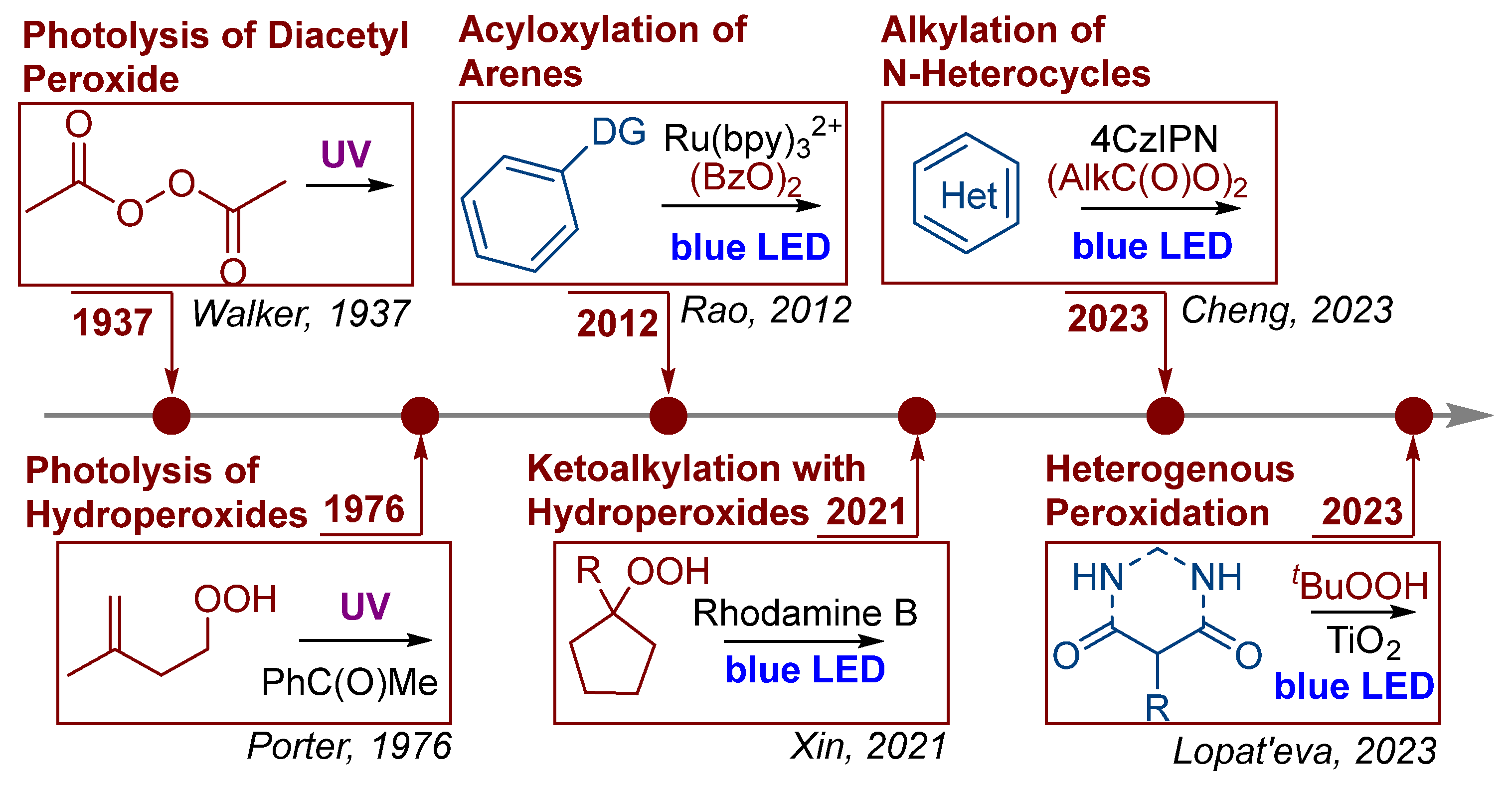
The application of organic peroxides as O- and C-radical sources has been developing rapidly [28], but it was mainly limited by only four conventional approaches (Scheme 1): (1) homolysis under high temperature, (2) homolysis under UV irradiation [29,30,31,32], (3) single-electron transfer (SET) under the action of metal compounds [33], and (4) SET under the action of halogen (mainly iodine) species [34,35,36,37,38]. There are a few examples of radical generation from hydroperoxides under electrolysis [39]. Rare cases of postulated visible-light-driven peroxide homolysis are also discussed in this review [40,41]. Visible-light photocatalysis introduces a new dimension to peroxide-driven radical chemistry by enabling radical generation in previously inaccessible reaction settings (Scheme 1).
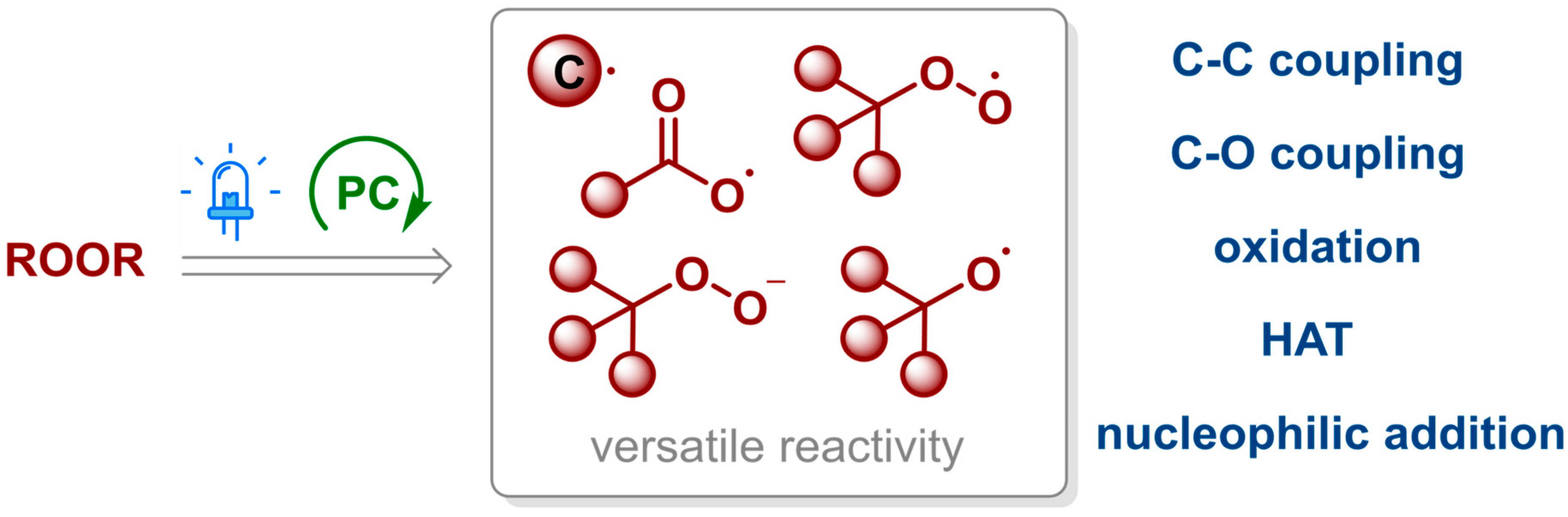
A pioneering study about photochemical processes involving organic peroxides (photolysis of diacetyl peroxide) was made by Walker (Figure 1) [29]. Investigation of UV-induced cyclization of the unsaturated hydroperoxides sensitized by acetophenone by Porter was the next key point [42]. The photoredox catalysis involving organic peroxide was reported by Li’s group, who demonstrated visible-light-mediated functionalization of electron-rich arenes with dibenzoyl peroxide using a Ru-based catalyst [43]. A subsequent breakthrough came with the transition from metal-based to purely organic photocatalytic systems, as exemplified by Li-Na Guo’s work on the photocatalytic ketoalkylation of N-glycine derivatives [44]. Then, direct alkylation of the C=N double bond in N-heteroaromatics was achieved utilizing diacyl peroxides and the organic photocatalyst 4CzIPN under visible-light irradiation by B. Yu [45]. Heterogeneous catalysis was applied to peroxidation with tBuOOH under visible light in 2023 by our group [46].
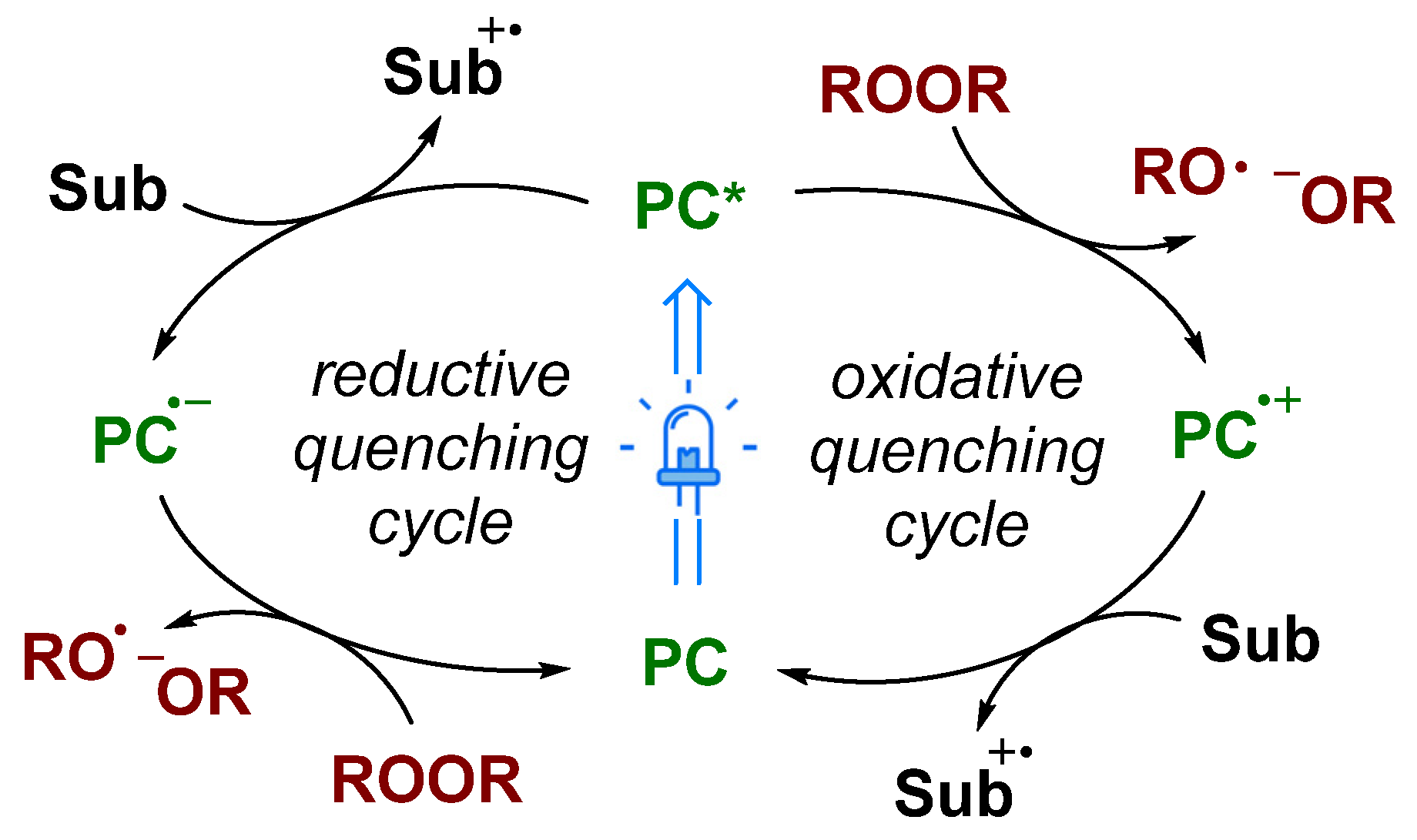
The photochemical process with organic peroxides follows two main pathways, depending on the reduction and oxidation potentials of the photocatalyst’s excited state. The first pathway, known as the oxidative quenching cycle, proceeds via a single-electron transfer from the excited state of the photocatalyst to the peroxide. This process generates an O-centered radical, a negatively charged species, and a photocatalyst radical cation. The latter interacts with substrates or reaction intermediates, thereby closing the catalytic cycle (Scheme 2). The second pathway (reductive quenching cycle) typically involves the oxidation of the substrate, followed by the reduction of peroxide with the reduced form of the photocatalyst. The apparent simplicity of the general scheme should not be misleading, since the ratio of different O-centered radicals formed during single-electron reduction of an unsymmetric O–O bond is influenced both by the structure of peroxides and by the nature of reductive agents, including the structure of photocatalysts [47].
The focus of this review is on the multifaceted use of organic peroxides in visible-light photocatalysis. They can generate both oxygen-centered and carbon-centered radicals through either oxidative or reductive SET pathways. Oxygen-centered radicals participate in hydrogen-atom abstraction (HAT) processes or rearrange to form carbon-centered radicals. The latter predominantly engage in coupling reactions or addition processes. Furthermore, organic peroxides can act as nucleophiles and oxidants. Since this field of photochemistry is young and rapidly developing, this review describes work for the period from 2012 to 2025. The classification of this review is made according to the role of organic peroxide in photochemical transformation. The material within the sections is organized mainly in chronological order.
Previous reviews devoted to visible-light photocatalysis have mostly been focused on photocatalyst nature [48,49,50] or whole synthetic processes [51,52,53]. A number of review articles discuss the generation of radicals from organic peroxides and their application in the synthesis [54,55]. The alkoxy radical-mediated transformations under visible-light irradiation were summarized by Zh. Zuo [56].

2. Peroxide as a Source of Oxygen Functionality

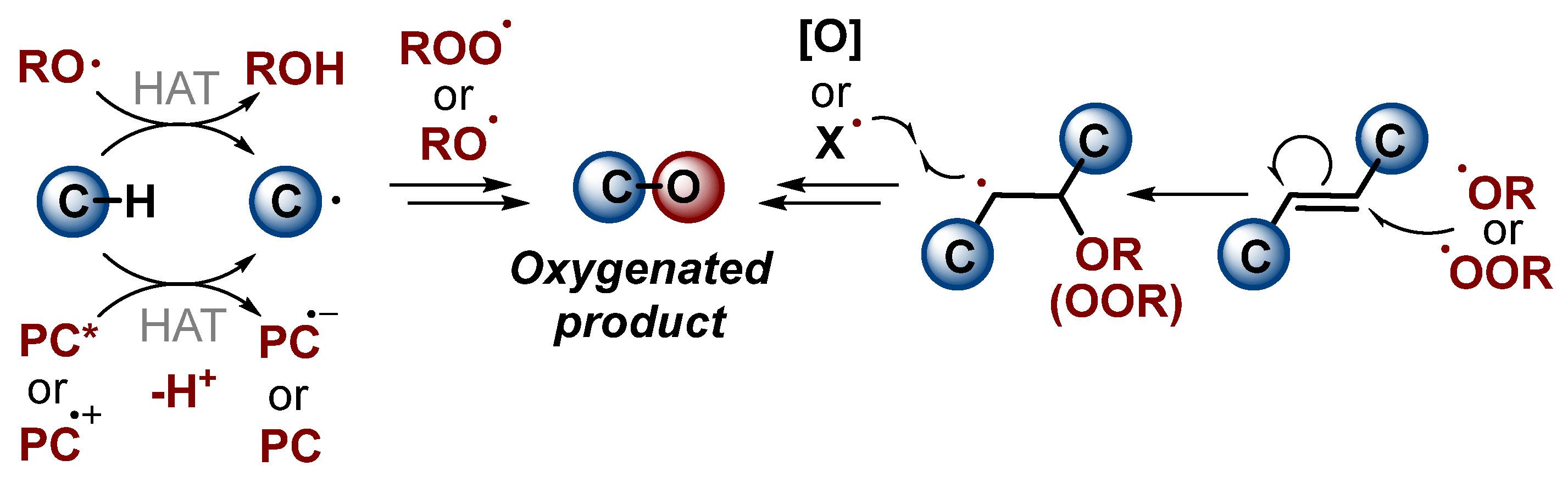
Two typical pathways of C–O coupling product formation (Scheme 3): (1) Recombination of an O-centered radical with a C-centered radical generated from the substrate by hydrogen abstraction with an alkoxy radical or any photocatalyst form. (2) The addition of an O-centered radical to a multiple bond or an aromatic cycle, followed by transformations of the resulting radical: oxidation and deprotonation (mainly for arenes), or recombination with another radical (mainly difunctionalization of alkenes).

2.1. Diacyl Peroxides

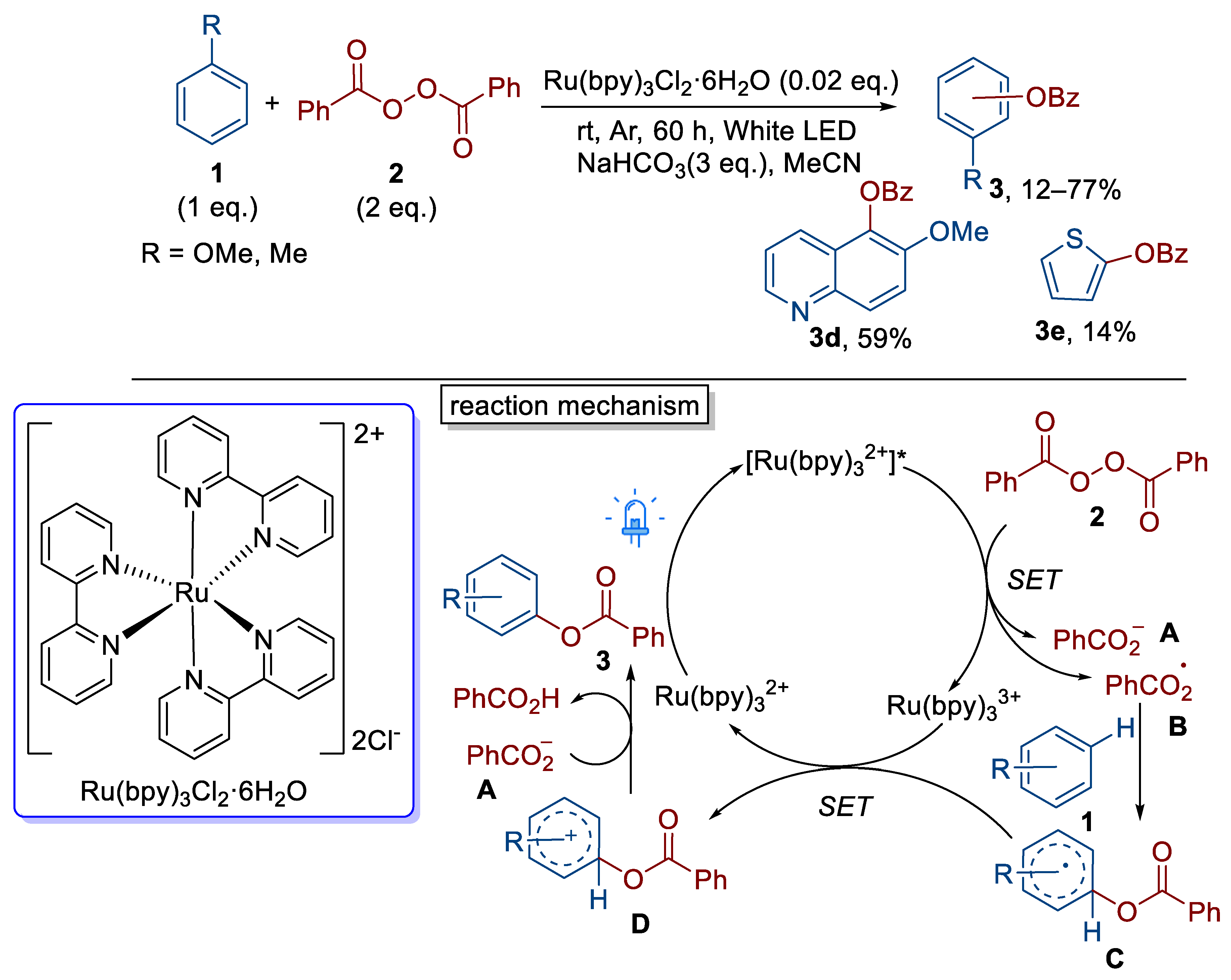
The pioneering work on visible-light photocatalysis using diacyl peroxides 2 was published in 2012 (Scheme 4) [43]. The authors demonstrated that organic peroxides 2 undergo peroxide bond cleavage via a single-electron transfer (SET) process to generate RO· radicals and RO anions under mild photochemical conditions. This strategy enables direct benzoyloxylation of electron-rich aromatic and heteroaromatic systems. Ru(bpy)3Cl2·6H2O was employed as the reductive photocatalyst. The benzoyloxylated products 3 were obtained in moderate-to-good yields with notable ortho/para-regioselectivity. For the disclosed process, a photoredox catalytic cycle initiated by the visible-light excitation of Ru(bpy)32+ was proposed. Diacyl peroxide 2 undergoes SET reduction to produce the PhCO2 anion A and the PhCO2· radical B, accompanied by the oxidation of [Ru(bpy)32+]* to Ru(bpy)33+. The resulting PhCO2· radical adds to the most electron-rich positions of arenes and heteroarenes, generating radical C. Subsequently, radical C participates in a second SET process with the strongly oxidizing photocatalyst Ru(bpy)33+, affording the reactive cation D while regenerating the ground-state photocatalyst. Finally, the previously formed anion B abstracts a proton from cation D to yield the benzoyloxylation product 3.
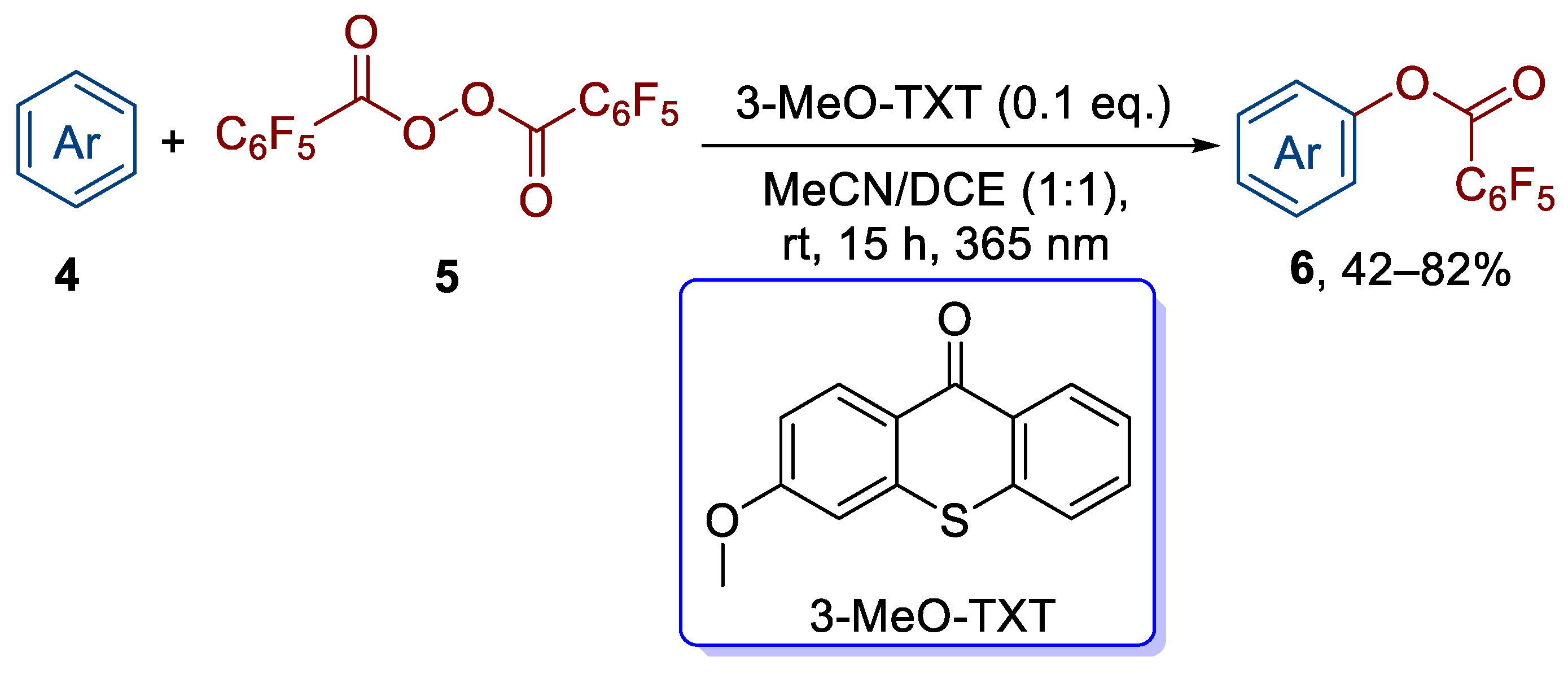
The photoredox aryl ketone-catalyzed C–H benzoyloxylation of arenes 4 has been reported (Scheme 5) [57]. The thioxanthone catalyst (3-MeO-TXT) in an excited state acts as a reductant. This system is applicable to the C–H acyloxylation of simple arenes, providing good yields.
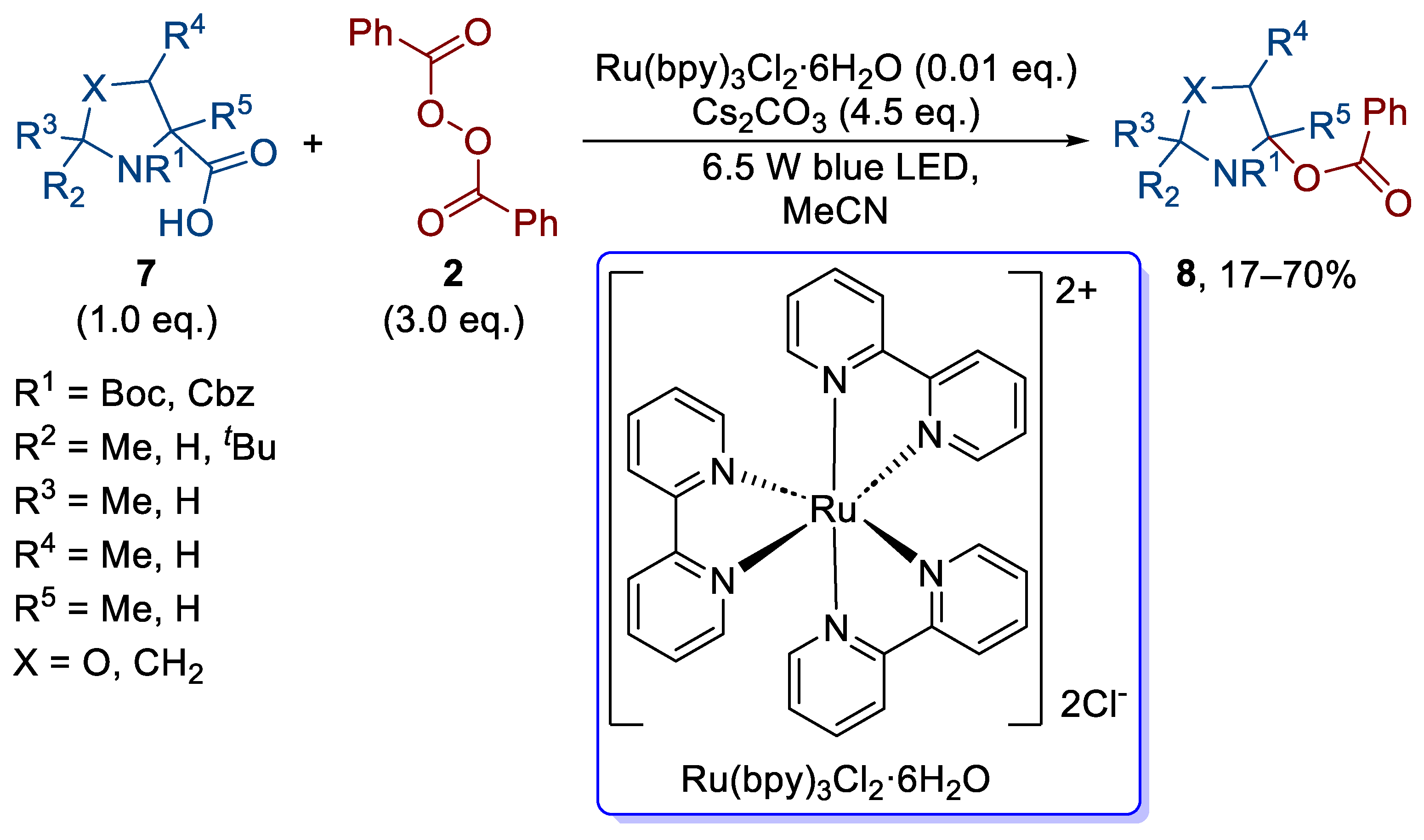
Sh. Inuki and colleagues demonstrated the visible-light-mediated decarboxylative benzoyloxylation of β-hydroxy amino acids 7 with Ru(bpy)3Cl2∙6H2O (Scheme 6) [58]. Commercially available benzoyl peroxide 2 and cesium carbonate were used. This approach has been successfully applied to the synthesis of various chiral amino acid derivatives 8 with different aryl or alkyl groups. The described process likely proceeds via photocatalytic cleavage of the peroxide 2 and closure of the catalytic cycle through oxidation of substrate 7 in anionic form. The product 8 forms via recombination of the resulting radicals.

2.2. Peresters

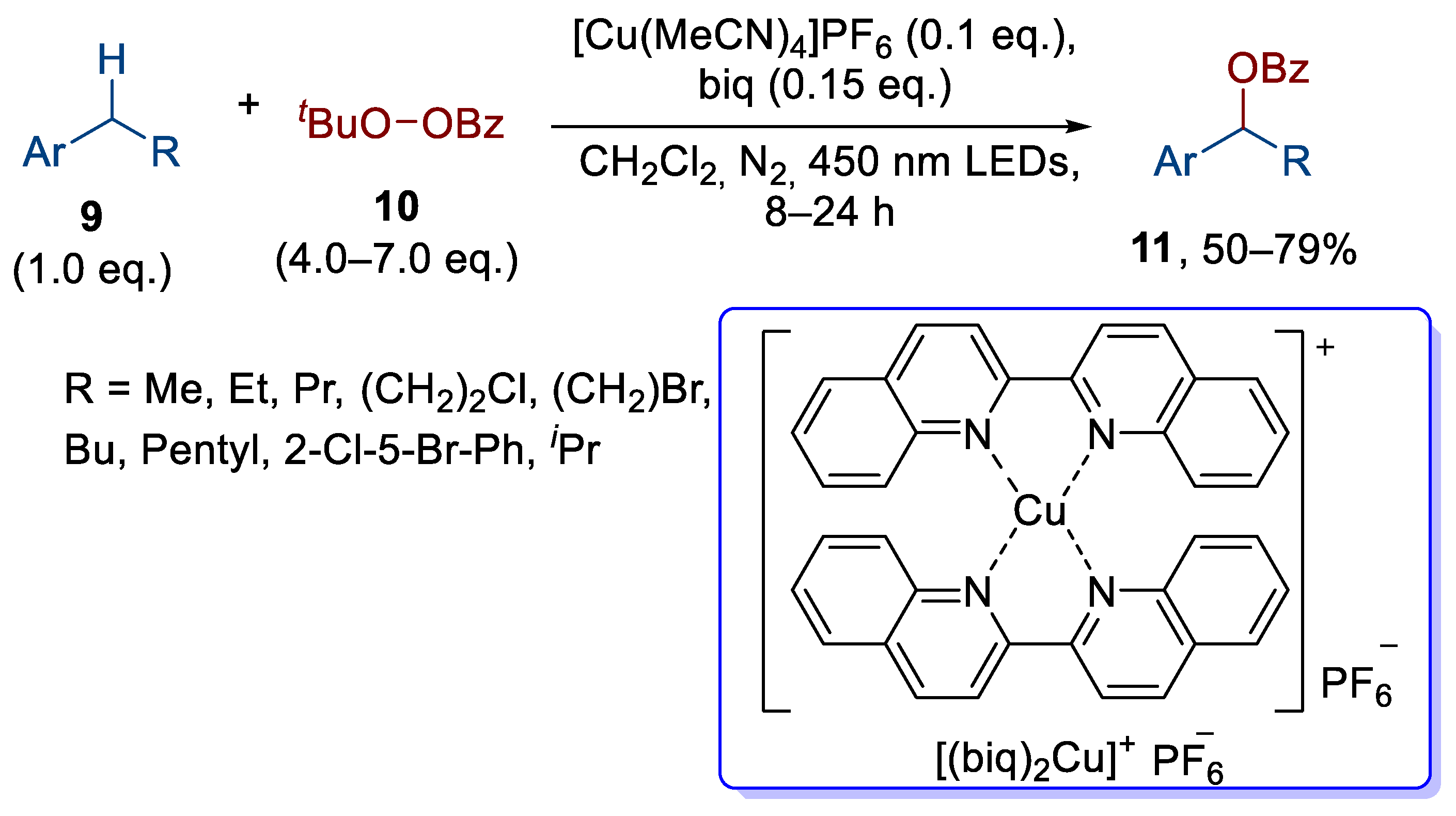
Shannon Stahl’s research group reported a modification of the Kharasch–Sosnovsky reaction employing a Cu/2,2′-biquinoline catalyst (Scheme 7) [59]. This method enables the visible light-promoted esterification of benzylic C–H substrates using tert-butyl peroxybenzoate (TBPB). Mechanistic investigations reveal that Cu(I) species react with tert-butyl peroxybenzoate 10 to generate an alkoxyl radical, which abstracts a hydrogen atom from the C–H substrate 9. The resulting C-centered radical then reacts with the “benzoyloxy radical—copper” complex, leading to the formation of esters 11 from benzylic substrates in good yields. Visible-light irradiation transforms Cu(II) complex into Cu(I) complex, regenerating the catalytically active form of the metal catalyst.

2.3. Dialkyl Peroxides

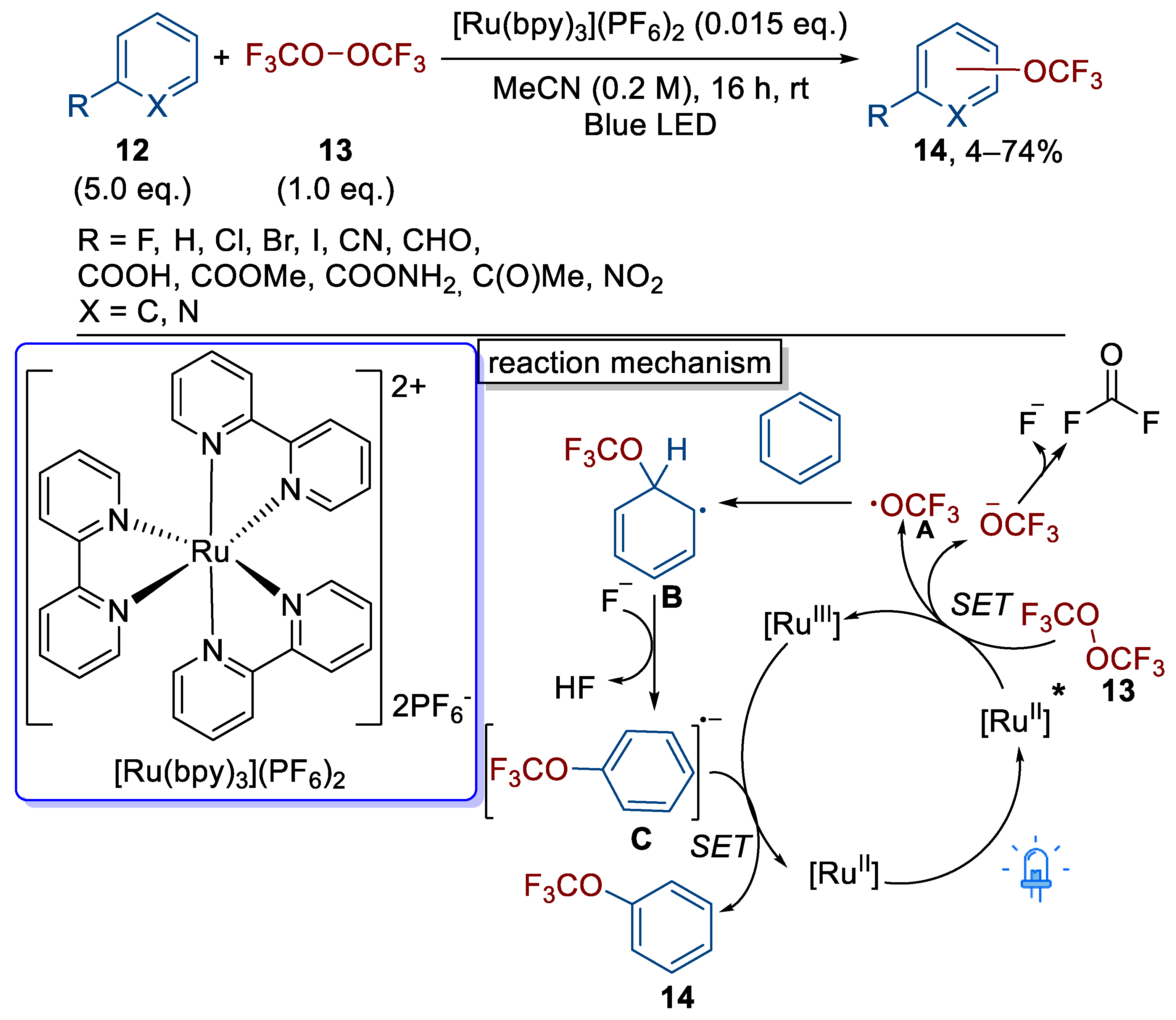
The trifluoromethoxylation of (hetero)arenes is a valuable method in agro- and medicinal chemistry; however, existing -OCF3 radical sources are costly and exhibit low atom economy. The group of Stefan Dix reported a selective visible-light-mediated method for generating -OCF3 radicals from bis(trifluoromethyl)peroxide (CF3OOCF3) 13 (Scheme 8) [60]. Ru(bpy)32+ was used as the photocatalyst, excited by blue light. Trifluoromethoxylated arenes 14 were prepared in good yields directly from unactivated aromatics 12. BTMP 13 is activated via SET with the excited photocatalyst [Ru(bpy)32+]* to generate the OCF3 radical A and the OCF3 anion. This anion may decompose into COF2 and fluoride. The subsequent step likely involves the addition of the OCF3 radical A to arene 12, leading to the formation of radical B. Deprotonation of B by fluoride or another base produces the anion-radical C. Finally, SET from C to Ru(bpy)33+ results in product 14 and the regeneration of the photocatalyst.

2.4. Hydroperoxides

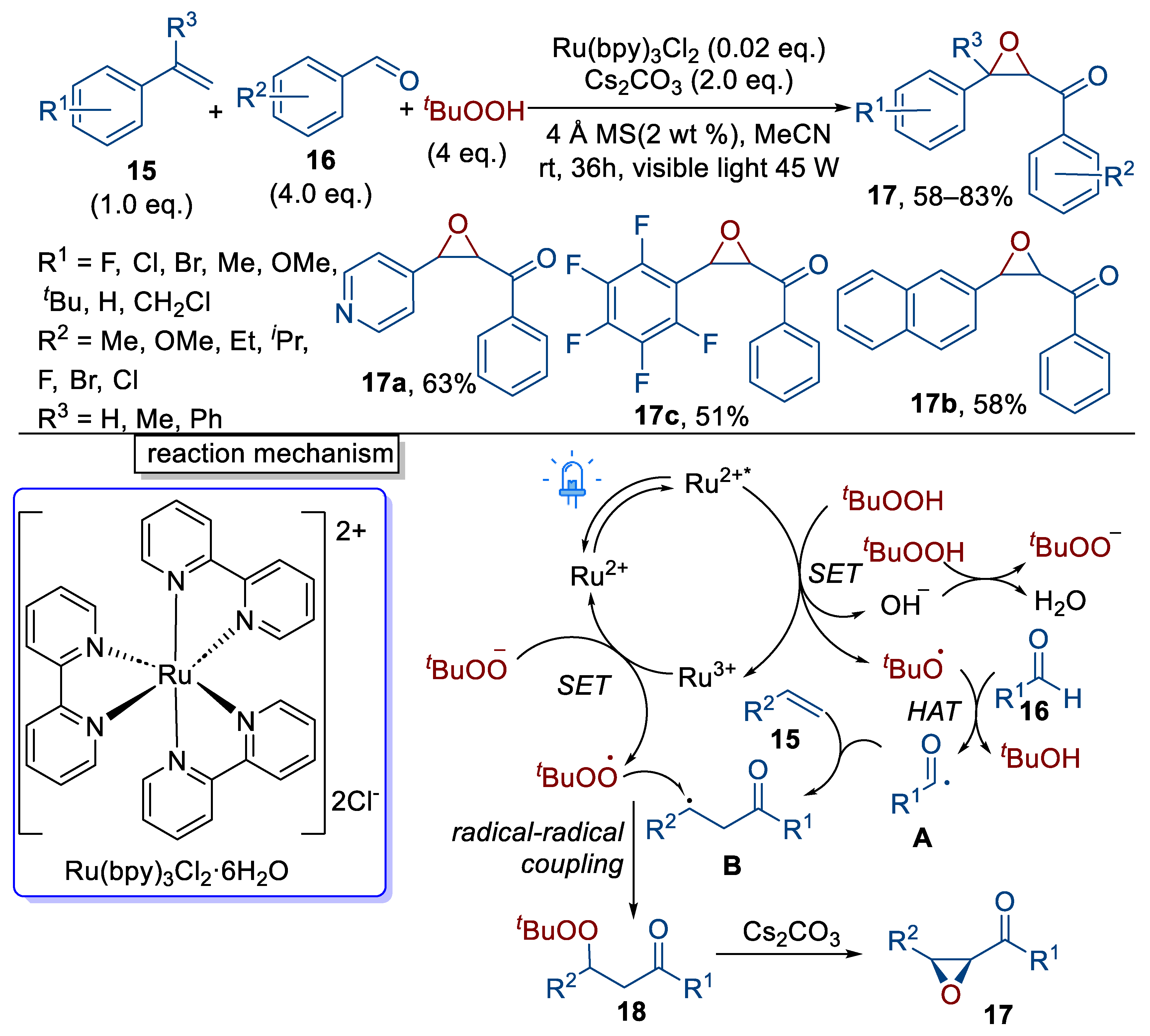
A method for the synthesis of α,β-epoxyketones 17 under visible-light irradiation was developed (Scheme 9) [61]. A variety of styrenes 15 and benzaldehydes 16 were combined to afford α,β-epoxyketones utilizing tert-butyl hydroperoxide, cesium carbonate (Cs2CO3), and Ru(bpy)3Cl2 as photocatalysts. The key step of this transformation is the visible-light-driven photocatalytic generation of acyl radicals. This protocol generally proceeds with moderate-to-good isolated yields of the corresponding α,β-epoxyketones 17. The reaction is initiated by visible-light irradiation, which excites the Ru(II) photocatalyst to its excited state Ru(II)*. A single-electron transfer from Ru(II) to tert-butyl hydroperoxide induces homolytic cleavage of the weak O–O bond, generating a hydroxide anion (HO−) and a tert-butoxy radical tBuO·, while oxidizing the photocatalyst to Ru(III). The tert-butoxy radical abstracts a hydrogen atom from aldehyde 16 to generate the key acyl radical intermediate A, which then adds to the alkene to form intermediate B. The hydroxide anion deprotonates another molecule of tBuOOH to form the tert-butyl peroxide anion tBuOO, which is subsequently oxidized by Ru(III) via SET to the tert-butyl peroxy radical tBuOO·, thus closing the photocatalytic cycle. The radical–radical coupling between tBuOO· radical and intermediate B affords the β-peroxy ketone intermediate 18, which, under alkaline conditions, eliminates tert-butanol to yield α,β-epoxyketone 17. Molecular sieves play a crucial role by scavenging water formed during the process, thereby preventing unwanted side reactions and maintaining reaction efficiency.
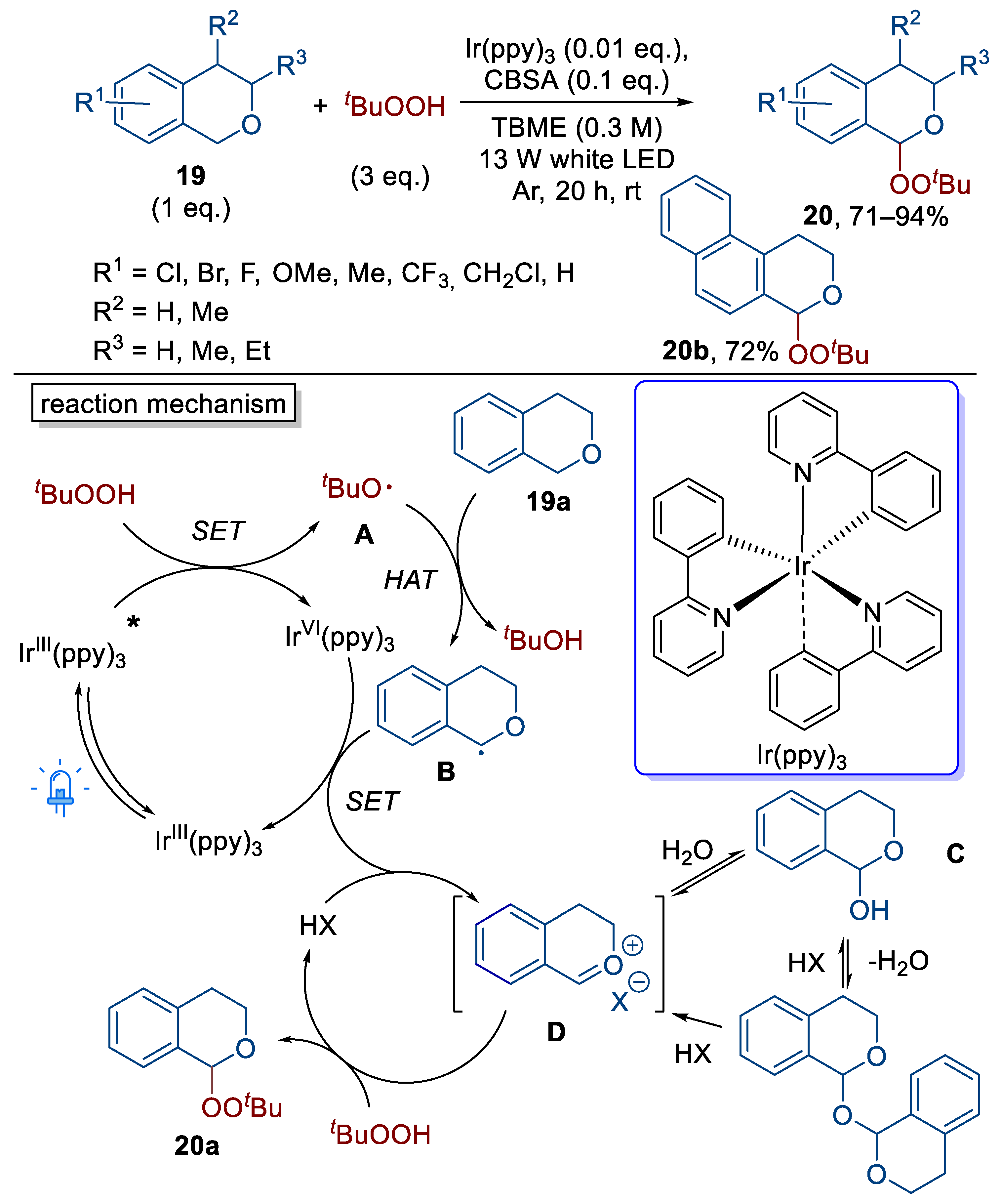
In 2017, the Qing Xia group developed a method for the synthesis of isochroman peroxyacetals 20 using tBuOOH under photochemical conditions (Scheme 10) [62]. The reactions employ an iridium complex as the photocatalyst at ambient temperature, resulting in excellent yields. The study demonstrated that the presence of a Brønsted acid is essential for successful transformation, with p-chlorobenzenesulfonic acid (CBSA) providing the optimal catalytic effect. The method shows broad substrate scope, accommodating various substituted esters 20 and benzylic methylene compounds, exhibiting high tolerance toward functional groups. Based on mechanistic studies, a plausible catalytic cycle involving two synergistic catalytic cycles can be proposed. The reaction is initiated by visible-light irradiation of the photocatalyst [IrIII(ppy)3], producing its excited state [IrIII(ppy)3]*. This excited species reduces tert-butyl hydroperoxide via single-electron transfer (SET), cleaving the O–O bond to generate a tert-butoxy radical and oxidizing the catalyst to IrIV(ppy)3. The tert-butoxyl radical abstracts a hydrogen atom from substrate 19 via hydrogen atom transfer (HAT) to form radical intermediate B along with tert-butanol (tBuOH). Interaction of radical B with IrIV(ppy)3 completes the photoredox catalytic cycle and generates the isochroman oxocarbenium ion. Concurrently, the Brønsted acid catalytic cycle is initiated through protonation of the isochroman oxocarbenium ion by H–X, forming the oxocarbenium p-chlorobenzenesulfonate intermediate D. Subsequent nucleophilic attack of tBuOOH on intermediate D gives product 20 and completes the Brønsted acid catalytic cycle.
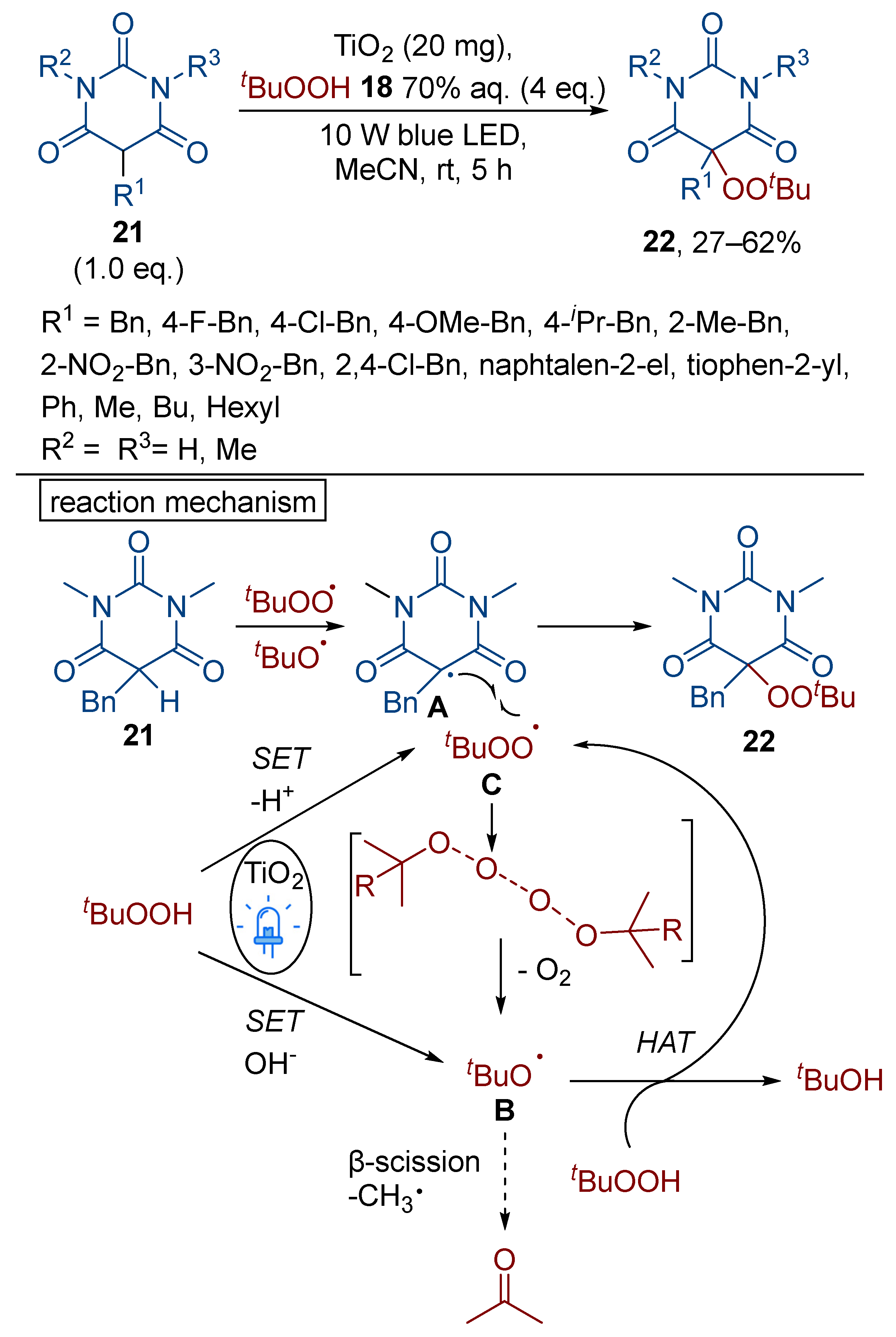
TiO2 is a readily available heterogeneous photoredox catalyst. However, due to the wide bandgap of TiO2, visible light energy is generally insufficient for its direct activation. In 2023, our group disclosed a method for activating TiO2 under visible light, enabling the generation of tert-butylperoxy radicals from tert-butyl hydroperoxide (Scheme 11) [46]. The potential of this approach was demonstrated in the selective C–H peroxidation of barbituric acids 21. This finding is significant and contrasts with the typical behavior of the conventional TiO2/H2O2/UV photocatalytic system, which is primarily used for deep oxidation of organic pollutants (Scheme 10). The mechanism can be initiated via two possible pathways. Under visible-light irradiation, tert-butyl hydroperoxide decomposes on TiO2 either through single-electron oxidation, generating a tert-butylperoxy radical C, or through single-electron reduction, yielding a tert-butoxy radical B. The tert-butoxy radical B can transform into tert-butanol by abstracting a hydrogen atom from tBuOOH, simultaneously producing an additional tert-butylperoxy radical C. These peroxy radicals C may decompose to form alkoxy radicals B. Both radical species B and C are capable of abstracting a hydrogen atom from barbituric acid 21, leading to the formation of a carbon-centered radical A. The recombination of radicals A and C subsequently affords the peroxide product 22. Formation of ketone byproducts arises from β-scission of the alkoxy radical B. This pathway is consistent with current understanding of TiO2 visible-light photocatalysis and radical-mediated C–H peroxidation processes.
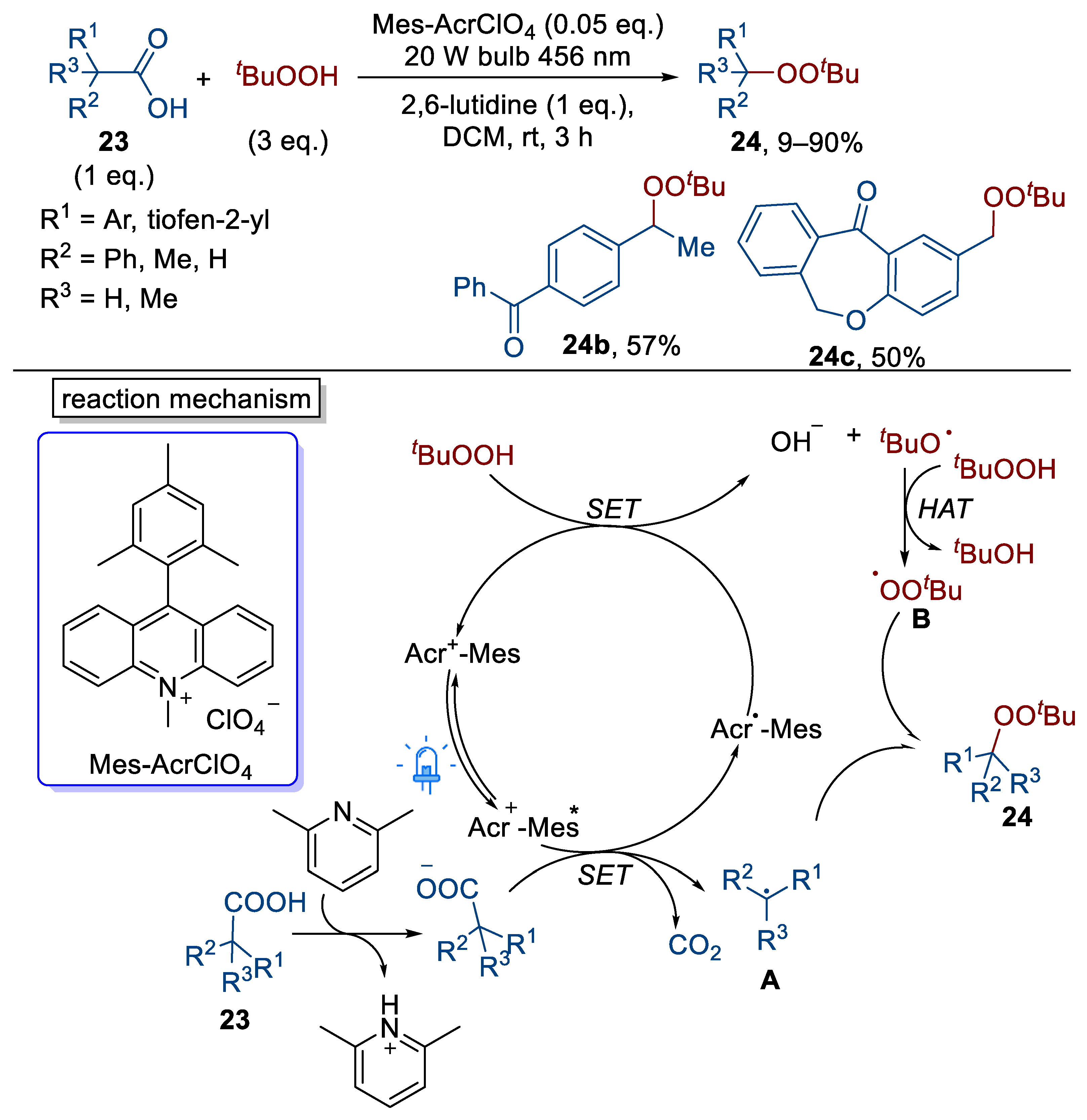
A visible light-mediated method for the decarboxylative peroxidation of carboxylic acids 23 was developed by L. Lv and Zh. Li (Scheme 12) [63]. In this protocol, mesityl acridinium salt serves as the visible-light-excited photocatalyst, while 2,6-lutidine functions as the base for proton abstraction from the carboxylic acid. tert-Butyl hydroperoxide acts both as the oxidant and the source of peroxy radicals, thereby eliminating the need for transition metals or additional oxidants. This method enables the efficient conversion of a variety of primary, secondary, and tertiary carboxylic acids into the corresponding tert-butyl peroxides 24 with isolated yields ranging from 9% to 90%, facilitated by a radical C–O coupling mechanism. The reaction is initiated by excitation of the photocatalyst under blue LED irradiation. Subsequently, deprotonation of the aliphatic carboxylic acid 23 by 2,6-lutidine generates the corresponding carboxylate anion, which is oxidized by the excited photocatalyst to form a benzyl radical A and carbon dioxide. Single-electron transfer from the reduced photocatalyst to tBuOOH regenerates the ground-state photocatalyst and produces hydroxide ions and the tert-butoxy radicals. The tert-butoxy radical then abstracts a hydrogen atom from TBHP to produce the tert-butyl peroxyl radical B. Finally, recombination between benzyl radical A and tert-butyl peroxyl radical B furnishes the peroxidation product 24.
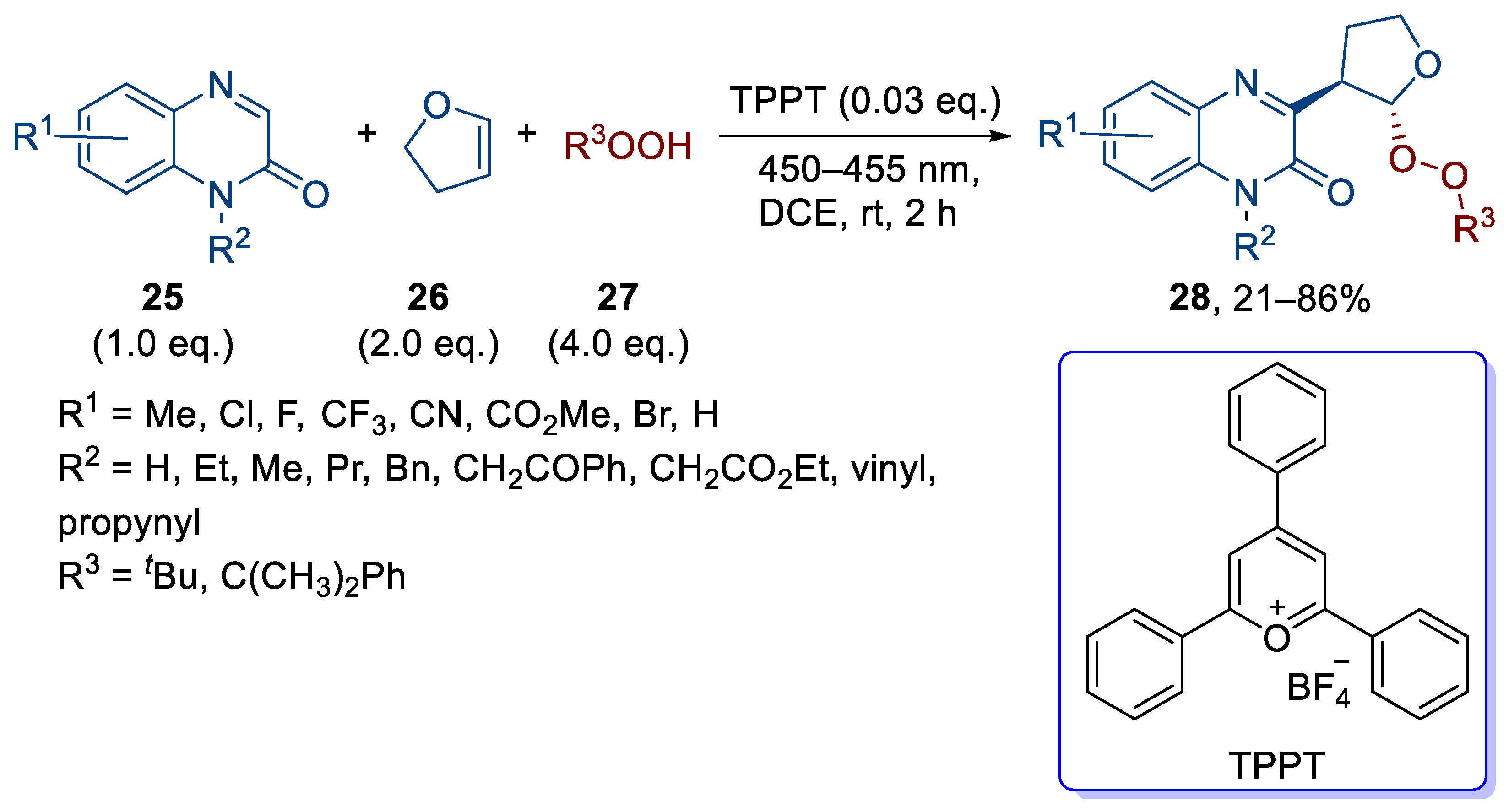
A visible light-induced difunctionalization of 2,3-dihydrofuran with quinoxalin-2(1H)-ones 25 and hydroperoxides 27, resulting in the formation of peroxides 28, has been disclosed under metal-free conditions using 2,4,6-triphenylpyrylium tetrafluoroborate (TPPT) as the photocatalyst (Scheme 13) [64]. This multicomponent reaction proceeds with selective anti-addition, affording products 28. The mild photochemical conditions and the use of TPPT as a dye photocatalyst allow for good functional group tolerance and moderate-to-good yields.
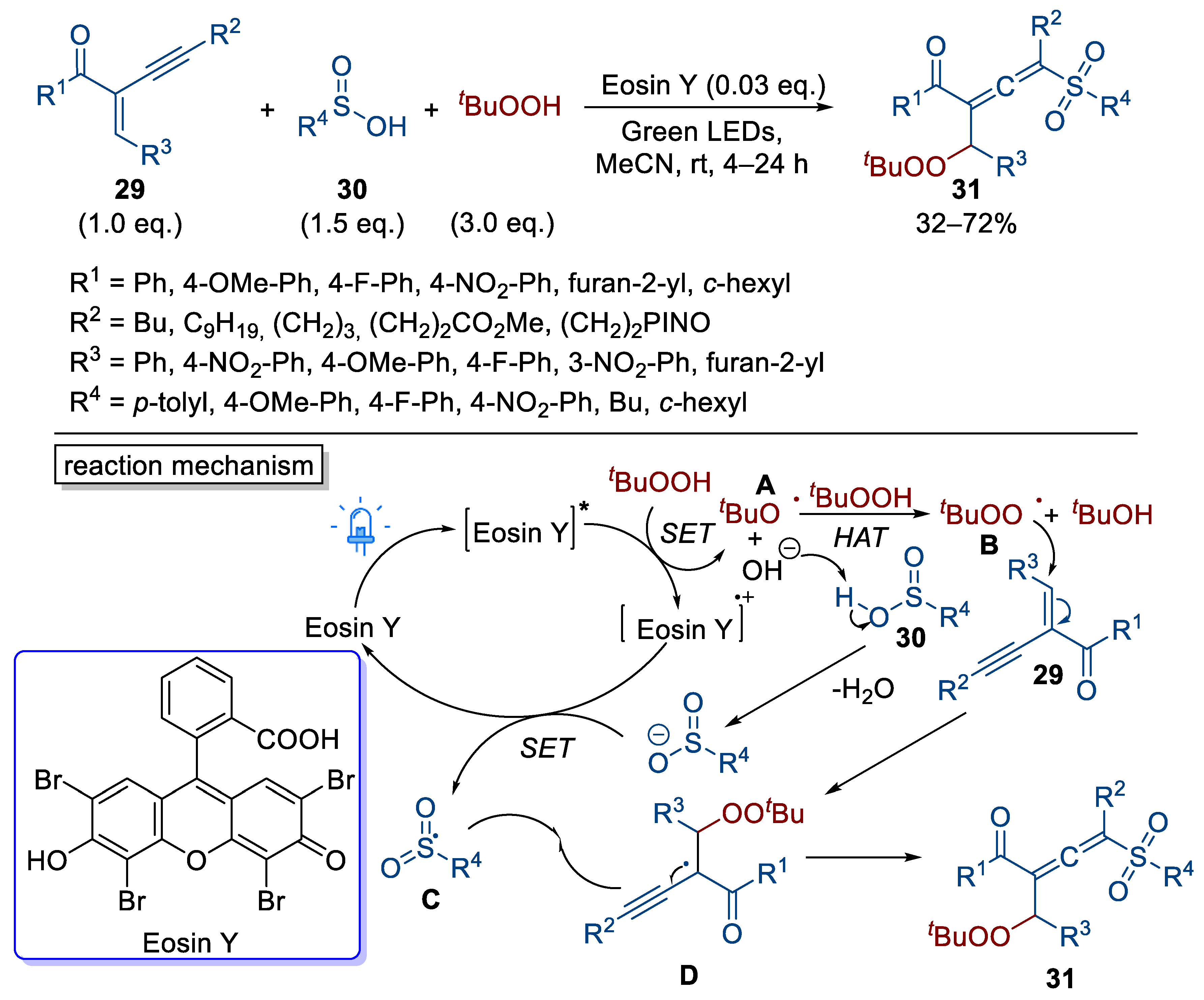
A visible-light-induced 1,4-peroxidation-sulfonylation of enynones 29 was reported by D. Bhatt’s group (Scheme 14) [65]. Sulfinic acid 30 serves as a precursor for the generation of sulfonyl radicals, while tBuOOH is employed to produce peroxy radicals. The photoredox catalysis employing Eosin Y under green light enabled the concurrent formation of peroxy and sulfonyl radicals. Regioselectivity is achieved due to the differential reactivity of these radicals: the peroxy radical preferentially attacks the C=C bond, while sulfonyl radicals accumulate in a higher concentration to intercept the intermediate C-centered radicals. This method demonstrates a regioselective 1,4-diradical addition strategy that proceeds with high yields under mild reaction conditions. The photoexcited state of Eosin Y is generated under green LED irradiation. This excited photocatalyst undergoes a single-electron transfer (SET) to tert-butyl hydroperoxide, producing a tert-butoxy radical A and a hydroxyl anion. Subsequently, the tert-butoxy radical can abstract a hydrogen atom from TBHP, generating a tert-butyl peroxy radical B and tert-butanol. Concurrently, the hydroxyl anion abstracts a proton from sulfinic acid 30, forming the sulfinate anion, which undergoes SET with the oxidized photocatalyst to produce a sulfonyl radical C and regenerate Eosin Y. The reactive peroxy radical B adds to the alkene moiety of enynones 29, yielding an α-keto radical intermediate D. Finally, the recombination between the sulfonyl radical C and the α-keto radical D occurs at the γ-carbon of the enynone, favoring the less sterically hindered site to afford the allene product 31.
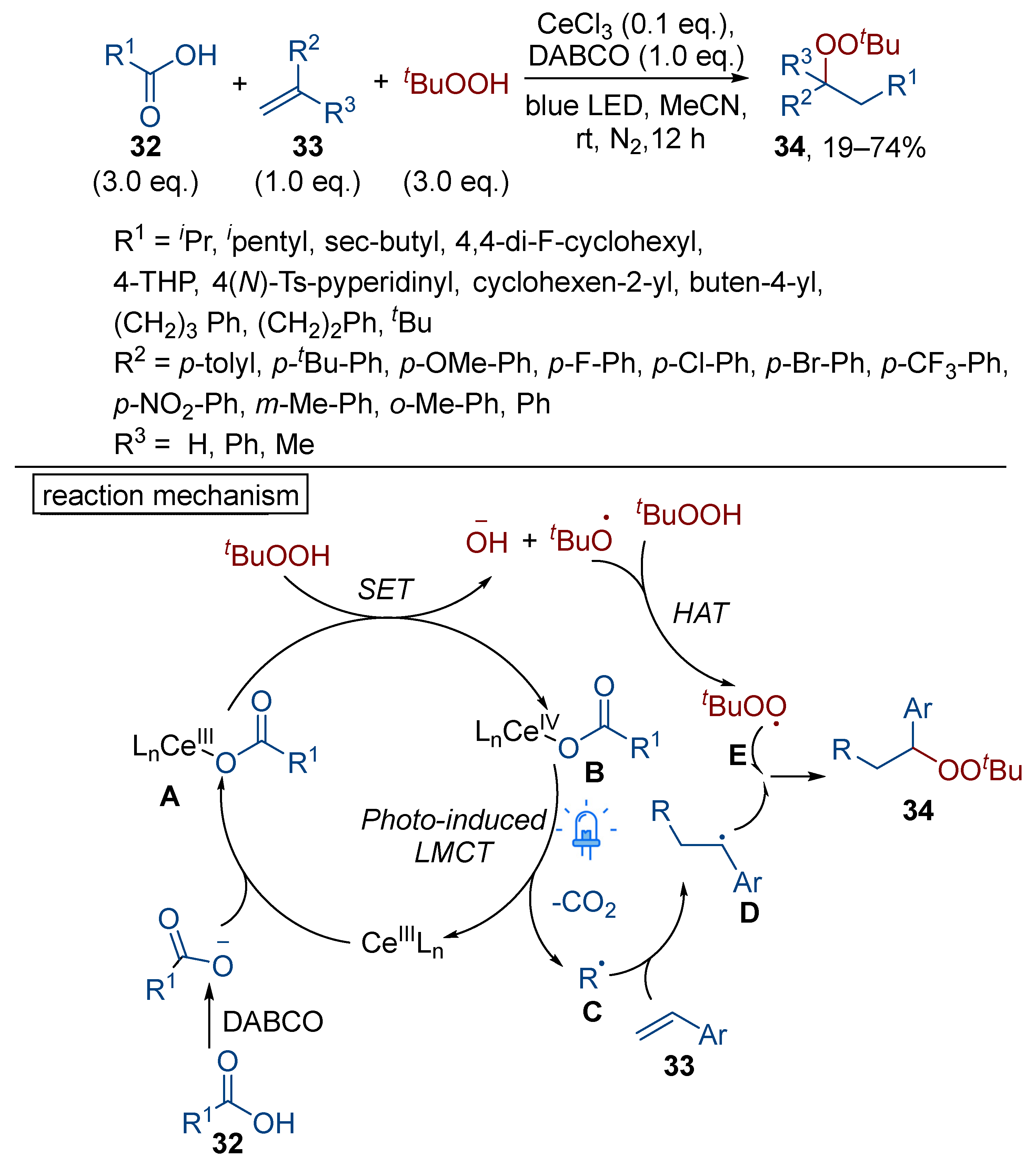
The photoinduced CeCl3-catalyzed synthesis of organic peroxides 34 via difunctionalization of alkenes 33 has been disclosed (Scheme 15) [66]. In this three-component decarboxylative reaction, carboxylic acids 32 serve as the source of C-centered radicals, while tert-butyl hydroperoxide is utilized for the generation of peroxy radicals. The authors employed a ligand-to-metal charge transfer (LMCT) excitation mode using CeCl3 as the catalyst. The combination of the photocatalyst and base facilitates the decarboxylative alkylation–peroxidation reaction under mild conditions. This method exhibits high compatibility with primary, secondary, and tertiary carboxylic acids 32. The reaction is proposed to be initiated by proton abstraction from alkyl carboxylic acids 32 by DABCO, generating the carboxylate ion, which coordinates with Ce(III) to form complex A. This complex is subsequently oxidized by tert-butyl hydroperoxide to generate the Ce(IV) species B. Upon blue light irradiation, the Ce(IV) complex undergoes a photoinduced ligand-to-metal charge transfer (LMCT) process, leading to rapid decarboxylation and release of the alkyl radical C, while regenerating the Ce(III) catalyst. The alkyl radical then adds to the alkene 33, producing a more stabilized benzyl radical D. Concurrently, the tert-butoxy radical abstracts a hydrogen atom from tBuOOH to form the tert-butylperoxy radical intermediate. Finally, the recombination between benzyl radical D and the tert-butylperoxy radical E yields peroxide 34.
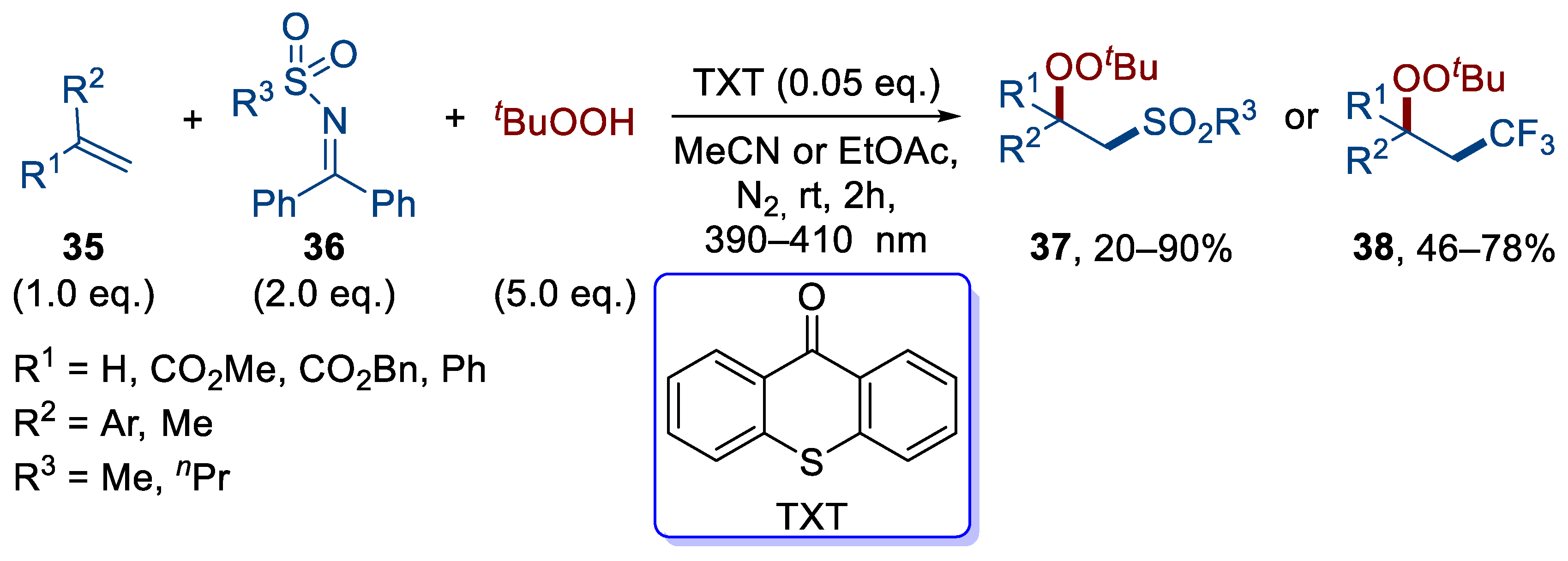
Zh. Li’s group disclosed the photocatalytic sulfonylation–peroxidation of alkenes 35 using N-sulfonyl ketimines 36 and tert-butyl hydroperoxides (Scheme 16) [67]. The key step in this transformation is the energy transfer-driven homolytic cleavage of the S–N bond in N-sulfonyl ketimines, generating S-centered radicals. These radicals add to alkene 35 with the formation of C–S and C–O bonds. In the case of trifluoromethane sulfonyl radical, a thermodynamically favored release of SO2 occurs, generating a CF3· radical that affords trifluoromethyl peroxides 38. The reaction proceeds smoothly under irradiation with a 390 nm LED lamp at an intensity of 40 W, using thioxanthone (TXT) as the photocatalyst. This method is characterized by high regioselectivity.
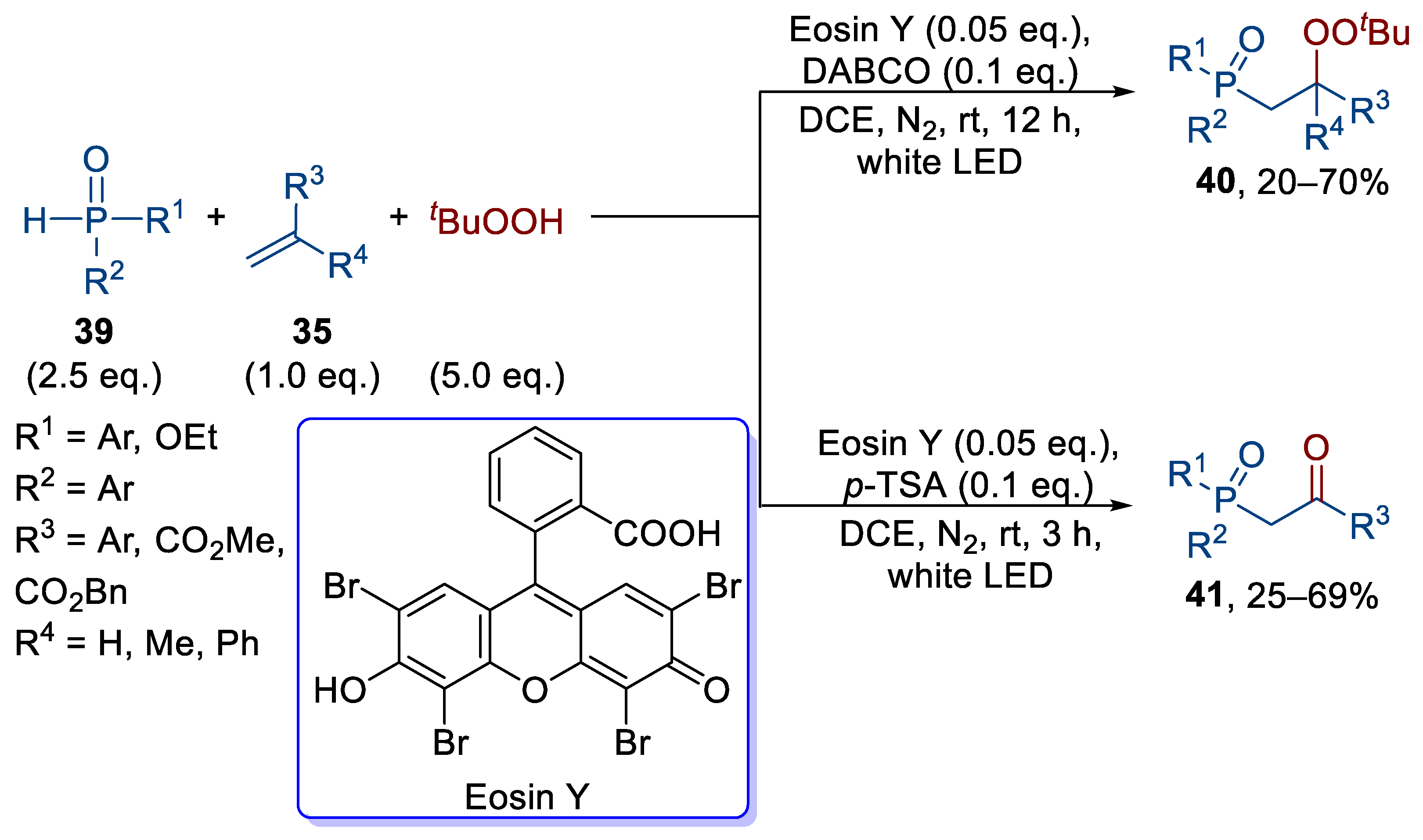
A visible-light-promoted phosphorylation–peroxidation and oxyphosphorylation of alkenes 35 with phosphine oxides 39 and tert-butyl hydroperoxide was recently reported (Scheme 17) [68]. Using commercially available Eosin Y as the photocatalyst under white light irradiation, β-peroxy-phosphine oxides 40 were selectively obtained in 20–70% yields in the presence of a catalytic amount of DABCO as the base. In contrast, the addition of acid exclusively led to the formation of β-keto-phosphine oxides 41 in 25–69% yields. The reaction is proposed to be initiated by oxidation of diphenylphosphine in tricoordinated phosphorus form by excited Eosin Y* to generate the phosphoryl radical and Eosin Y radical anion. The phosphoryl radical adds to the alkene 35, forming a C-centered radical. Meanwhile, oxidation of the Eosin Y radical anion by tBuOOH regenerates ground-state Eosin Y and produces a tert-butoxy radical, which abstracts a hydrogen from tBuOOH to yield the tert-butylperoxy radical. Recombination of the C-centered and tert-butylperoxy radicals affords the peroxidation product 40. Mechanistic studies revealed that Eosin Y can abstract a hydrogen atom from the product 40 to induce O–O bond cleavage of peroxides under acidic conditions.
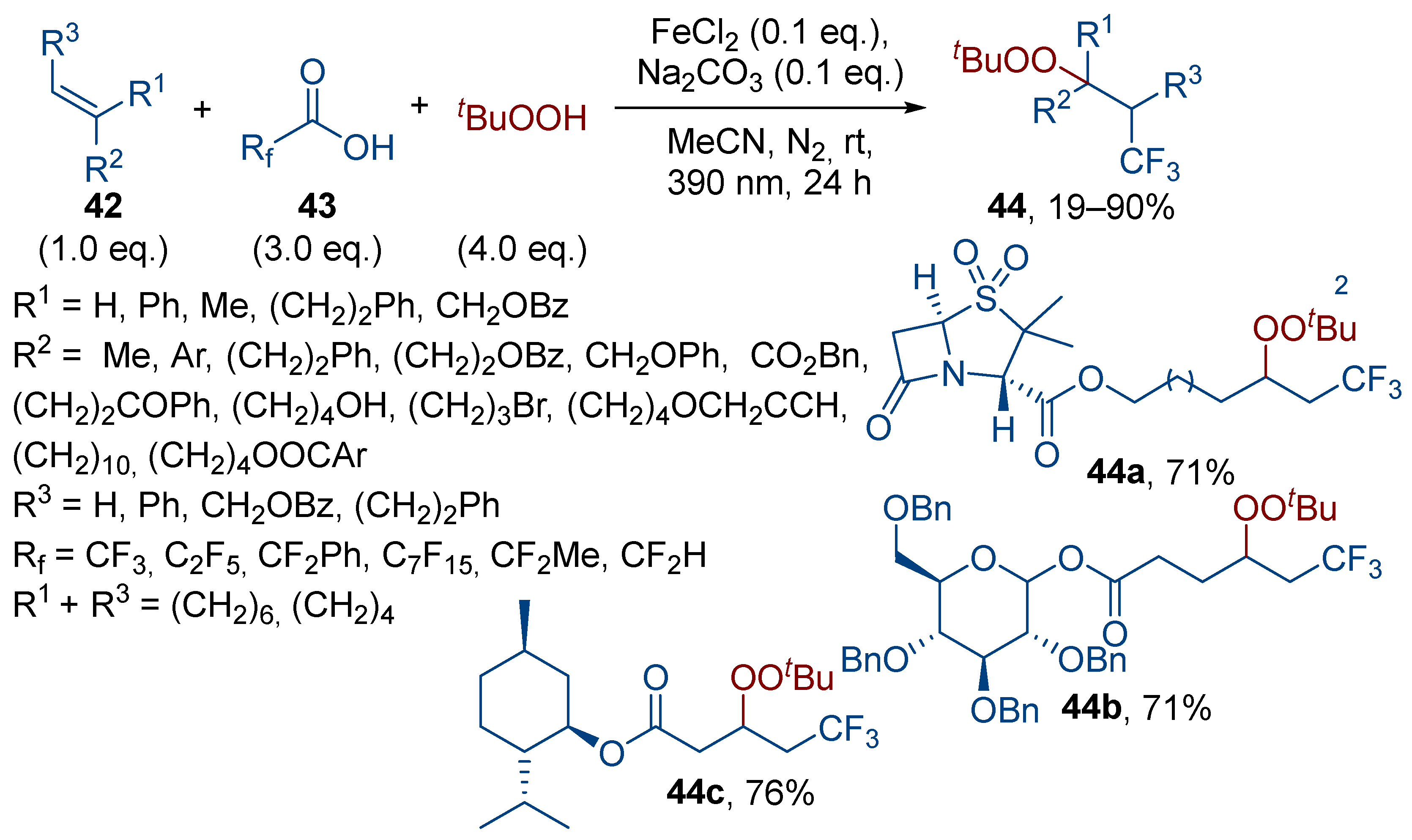
Zh. Li disclosed a photocatalytic fluoroalkylation–peroxidation of alkenes 42 using an iron-catalyzed ligand-to-metal charge transfer (LMCT) strategy (Scheme 18) [69]. This approach employs unactivated alkenes 42, fluoroalkyl carboxylic acids 43, and tert-butyl hydroperoxide with FeCl2 as the catalyst. A diverse array of fluoroalkylated organic peroxides 44 was synthesized in moderate-to-good yields under mild reaction conditions. The method’s utility was further demonstrated through the late-stage functionalization of drug and natural product derivatives, including L-menthol, sulbactam, and glucose.
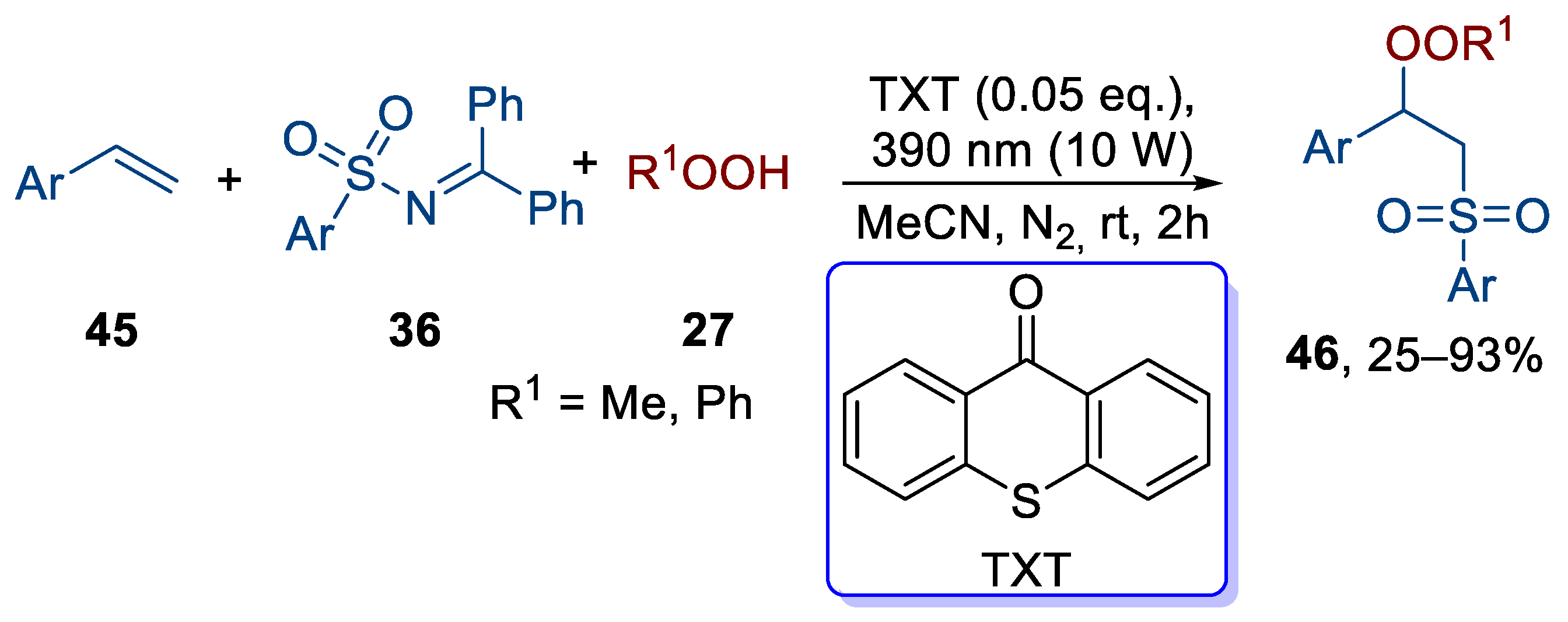
Zh. Li reports a photocatalytic difunctionalization of alkenes 45 using N-sulfonyl ketimines 36 and hydroperoxide 27 via visible light energy transfer (Scheme 19) [70]. This method enables efficient synthesis of diverse β-peroxyl sulfones and facilitates late-stage functionalization of bioactive molecules such as an 11-HSD1 inhibitor and the anticancer drug bicalutamide. The approach uses bench-stable N-sulfonyl ketimines as radical sulfonylation reagents with a lower N–S bond dissociation energy, allowing light-induced bond cleavage and radical pathway initiation without external strong oxidants or metals.
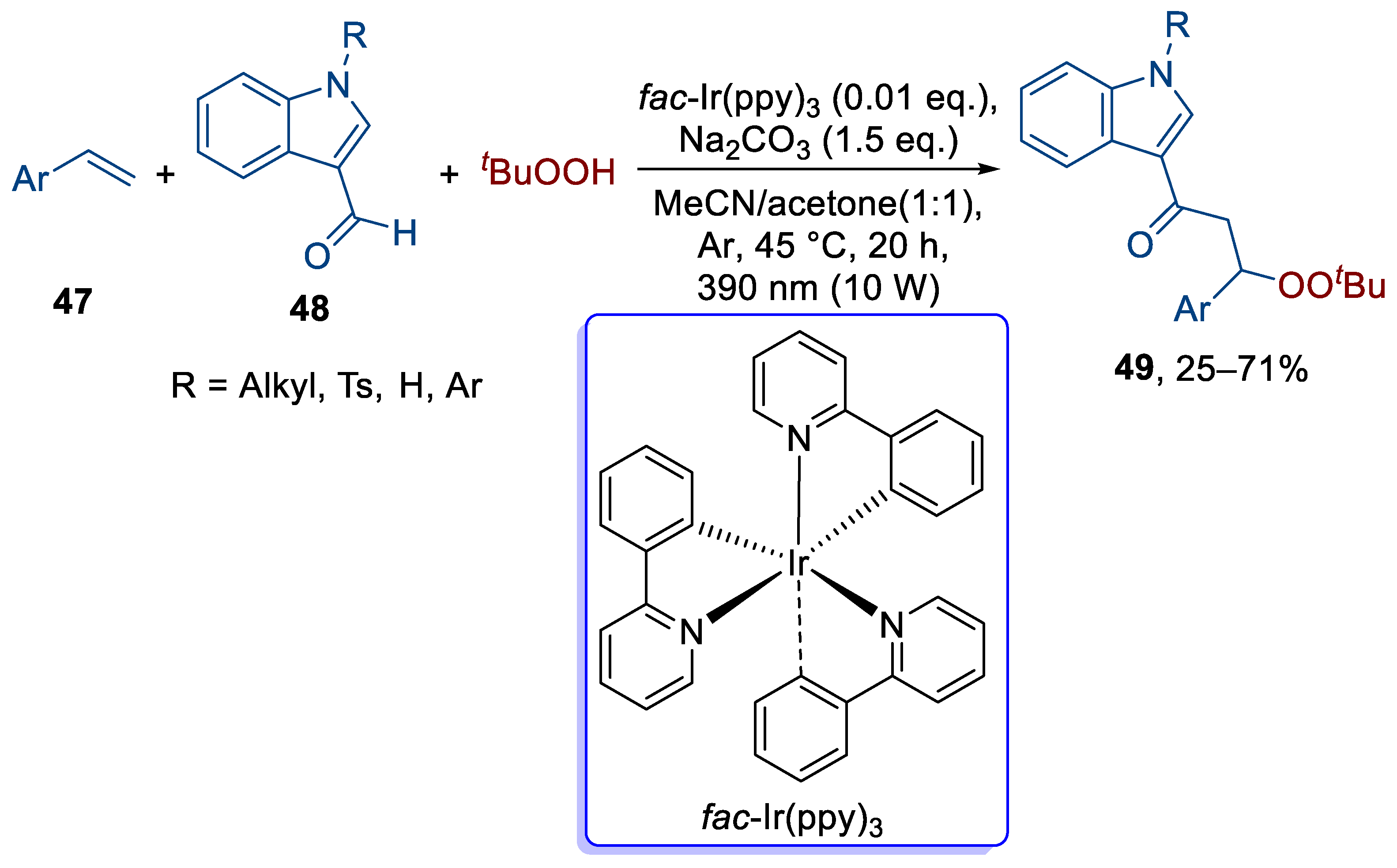
A three-component acylation/peroxidation of alkenes 47 via visible-light photocatalysis was reported (Scheme 20) [71]. The reaction involved various indole-3-carbaldehyde 48, styrene 47, and tert-butyl hydroperoxide, employing Na2CO3 as the base and fac-Ir(ppy)3 as the photocatalyst. The solvent system comprised acetone and acetonitrile (1:1), and the reaction proceeded under irradiation from a 23 W household fluorescent bulb at 45 °C for 20 h. The mechanism initiates with the reduction in TBHP by the excited state of the photocatalyst, generating a tert-butoxy radical. A key step is the formation of an acyl radical via a hydrogen atom transfer process, enabling subsequent radical addition and peroxidation. Various indole-3-carbaldehyde 48 and styrenes 47 were compatible with the photochemical conditions, affording β-peroxy ketones 49 in moderate-to-good isolated yields.
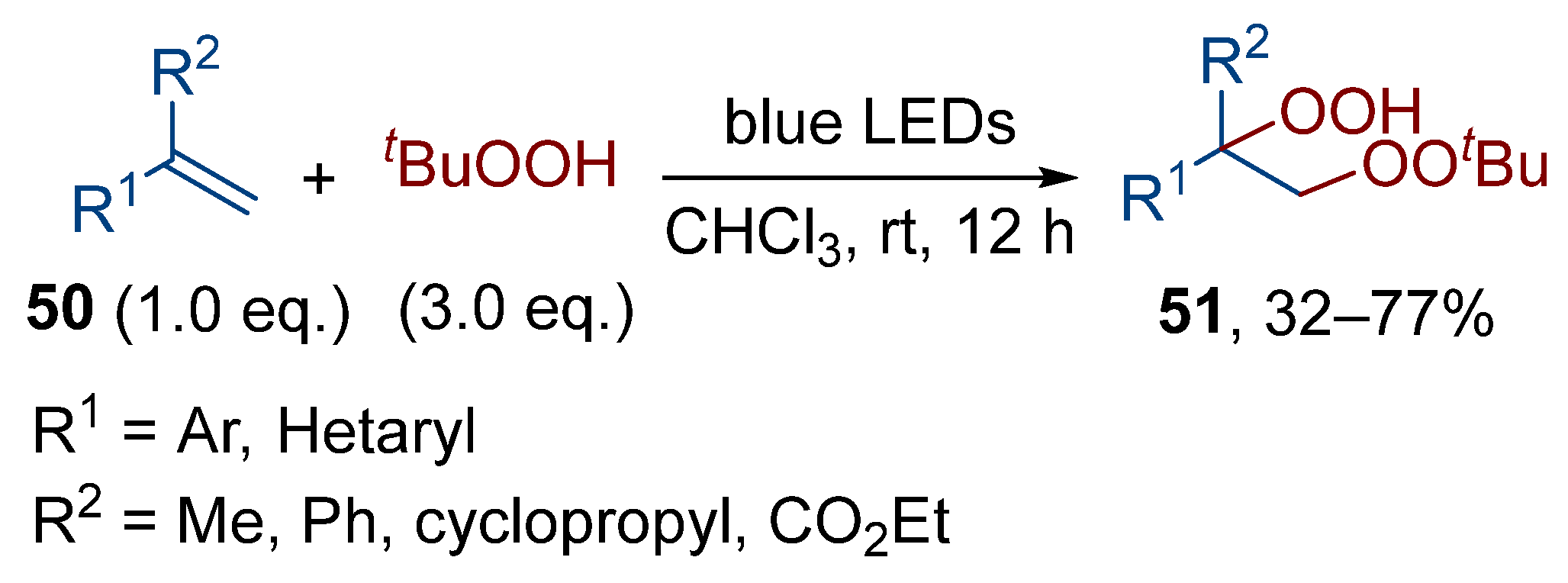
A visible-light-driven, photocatalyst-free bisperoxidation of vinyl arenes 50 with tBuOOH was developed, enabling the regioselective synthesis of α,β-bisperoxides 51 (Scheme 21) [40]. The reaction proceeds under blue light irradiation either in chloroform or solvent-free in an aqueous TBHP solution. Notably, the process occurs without a photocatalyst through direct visible-light activation of TBHP, which acts as a dual source of tert-butylperoxy and hydroperoxyl radicals. This method exhibits broad functional group tolerance and excellent regioselectivity. It allows for the late-stage functionalization of drug derivatives such as flurbiprofen and ibuprofen, offering potential for lead drug development. Additionally, allyl benzene derivatives undergo selective hydroperoxidation to yield allyl-substituted peroxyl alcohols.
In summary, photocatalytic C–O coupling involving organic peroxides is represented by epoxidation, trifluoromethoxylation, acyloxylation, and peroxidation processes. In almost all cases, the excited photocatalyst (both transition metal complexes and organic dyes, except for acridinium salts) undergoes oxidative quenching with peroxide, leading to the formation of the O-centered (alkoxy or acyloxy) radical from peroxide that is able to abstract a hydrogen atom, add to multiple bonds, or recombine with the C-centered radicals. In some cases, peroxide reduction occurs under the action of transition metals, and visible-light irradiation is needed to complete the catalytic cycle through photoinduced MLCT.

3. Peroxide as a Source of Carbon Functionality

3.1. Generation of C-Fragment via β-Scission of O-Centered Radical

A range of studies is devoted to photocatalytic processes of intermolecular C–C coupling, in which one of the C-fragments is generated from hydroperoxides or silyl peroxides via O-centered radical formation followed by β-scission (Scheme 22).

3.1.1. Hydroperoxides

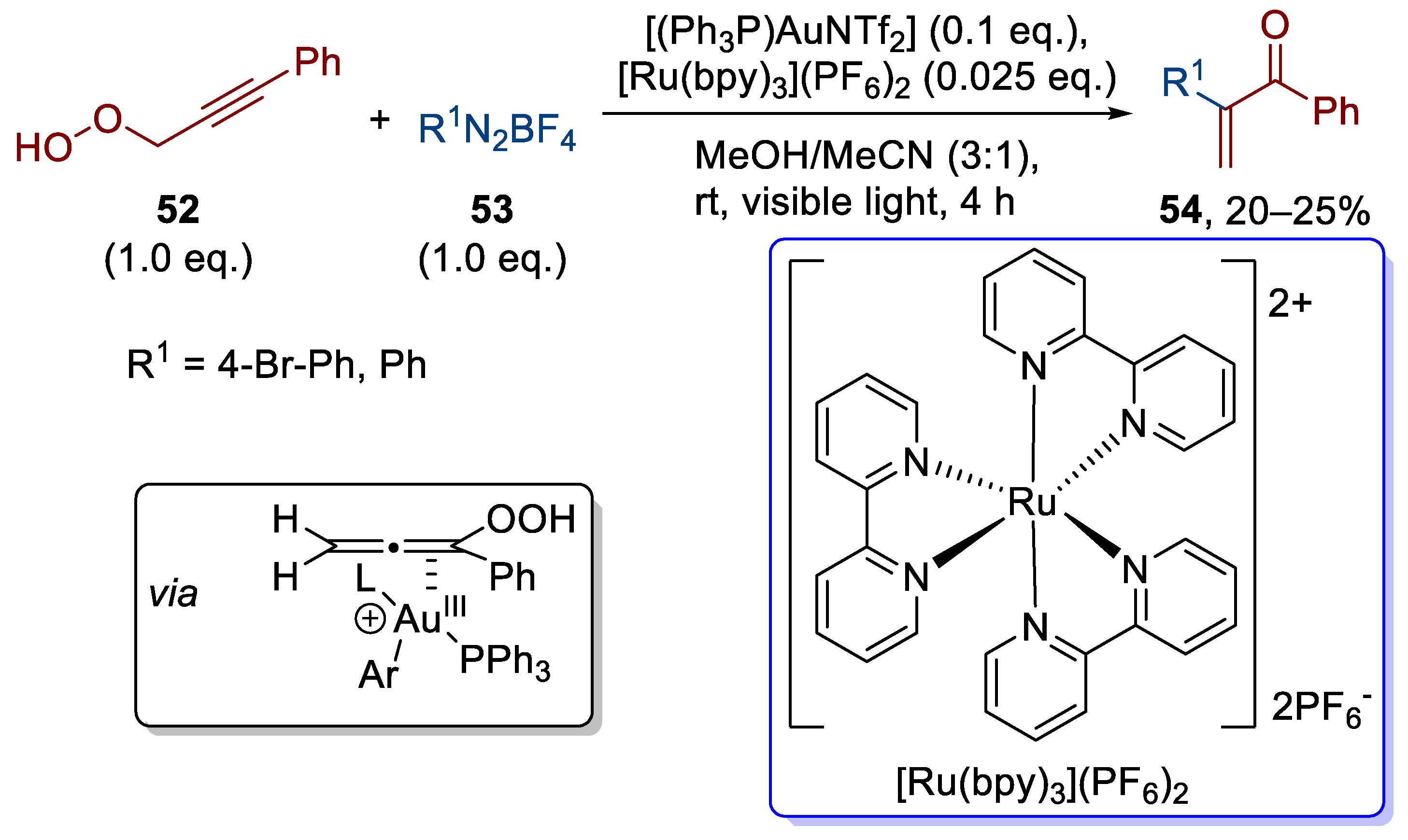
In 2016, a research group led by B. Alcaide developed a method for the arylative coupling of alkynyl hydroperoxides 52 with diazonium salts 53 under photochemical conditions (Scheme 23) [72]. This approach affords aryl-substituted α,β-unsaturated ketones 54 in 20–25% yields. The transformation was enabled by a dual catalytic system combining gold catalysis and photoredox catalysis.
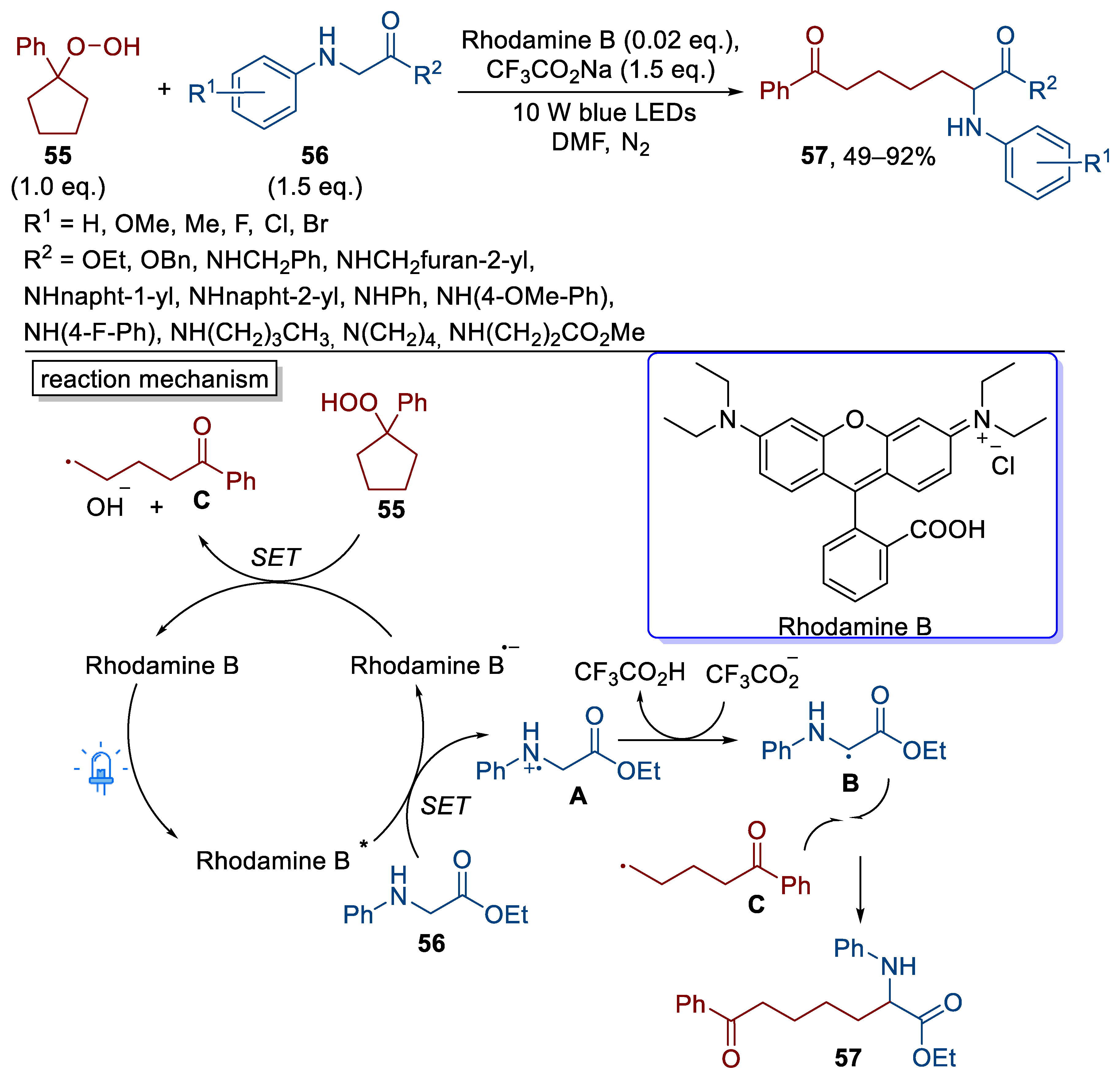
L.-N. Guo’s group developed a photochemical C–H ketoalkylation of glycine derivatives 56 using cycloalkyl hydroperoxides 55 (Scheme 24) [44]. Notably, the reaction is catalyzed by the photoexcitable organic dye Rhodamine B, which possesses oxidation and reduction potentials comparable to those of iridium photocatalysts. This transformation is also effective with peptides and drug molecules, providing good yields. Mechanistic study demonstrated that the discovered process is triggered by blue light irradiation, which causes the excitation of the photocatalyst. Electron transfer from the amino acid ester 56 to Rhodamine B in the excited state leads to the formation of a glycine ester cation radical A and Rhodamine B anion radical. Intermediate A is then deprotonated by CF3CO2Na, after which a hydrogen atom migrates to form the more stable C-centered radical B. Subsequent electron transfer from the Rhodamine B anion radical to cyclopentyl hydroperoxide 55 leads to the regeneration of Rhodamine B and the reduction in the hydroperoxide. As a result, an unstable alkoxyl radical is formed, the β-fragmentation of which leads to radical C. The recombination of C and B leads to the formation of the target product 57.
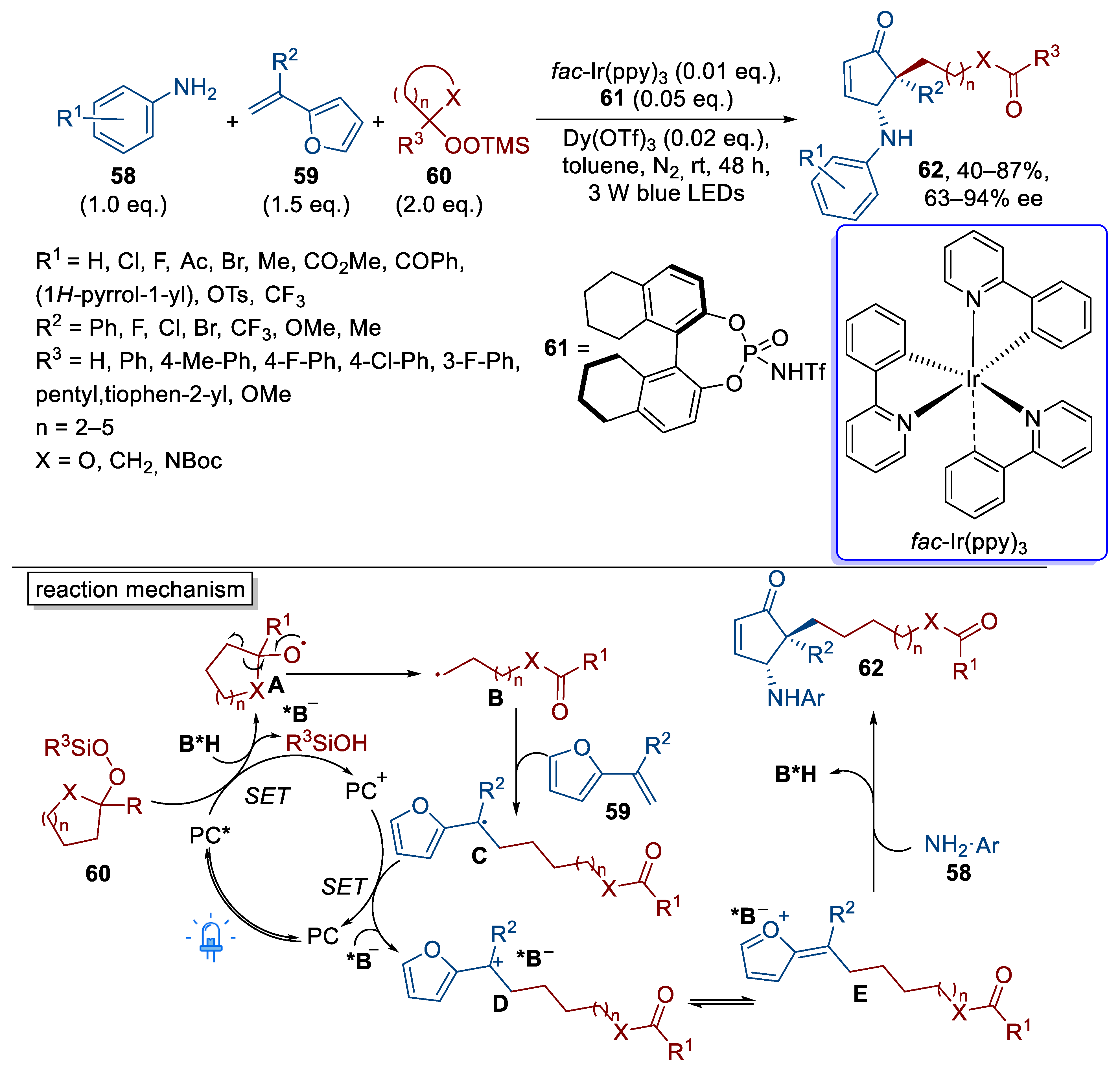
Y. Cai reported an enantioselective three-component reaction of alkenylfurans 59 with various cycloalkylsilyl peroxides 60 and anilines 58 (Scheme 25) [73]. The reaction proceeds under blue light irradiation in the presence of an iridium complex and a chiral Brønsted acid, affording high enantioselectivity. In addition to the chiral Brønsted acid 61 [H8]-BINOL-derived N-triflylphosphoramide (NTPA), the Lewis acid Dy(OTf)3 is also employed to enhance the reaction efficiency. A wide range of ketoalkyl-functionalized 4-aminocyclopentenones 62 was obtained in 40–87% yields with high enantioselectivity. The authors propose that the reaction is initiated by a single-electron transfer from the excited photocatalyst to the peroxide’s 60 O–O bond, generating trialkylsilyl alcohol and an unstable alkoxyl radical A. Subsequent β-scission of radical A produces a reactive ketoalkyl radical B, which undergoes radical addition to alkenylfuran 59, forming intermediate C. Further single-electron oxidation of radical C by the photocatalyst cation radical yields a stabilized chiral cation, the ketoalkyl-functionalized furanoxonium ion D. This is followed by sequential nucleophilic attack by the aryl amine, furan ring-opening, and chiral anion-controlled asymmetric 4π-electrocyclization, ultimately affording the target ketoalkyl-functionalized 4-aminocyclopentenones 62.
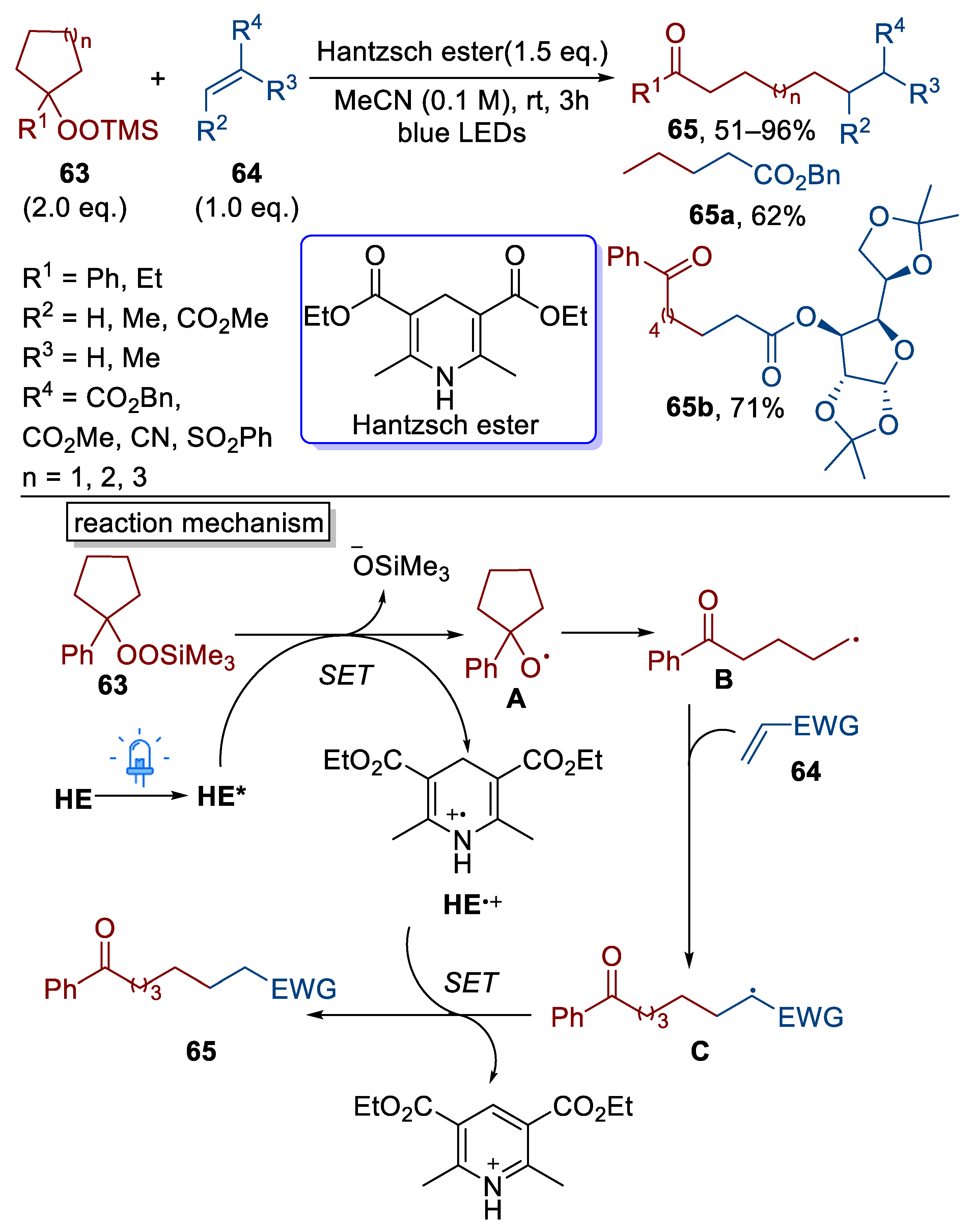
In 2023, K. Maruoka’s group reported a method for the synthesis of ketones 65 from alkylsilyl peroxides 63 under photochemical conditions (Scheme 26) [74]. The process is presumed to be initiated by the excitation of the Hantzsch ester under light irradiation. The excited state of the Hantzsch ester acts as a strong reducing agent, efficiently reducing peroxide 63 to generate an alkoxyl radical A and a Hantzsch ester cation radical. The unstable radical A undergoes β-scission to produce a carbon-centered radical B, which subsequently reacts with alkene 64 to form a new C(sp3)–C(sp3) bond in intermediate C. Finally, hydrogen atom transfer (HAT) from the Hantzsch ester cation radical to intermediate C affords the product 65.

3.1.2. Dialkyl Peroxides

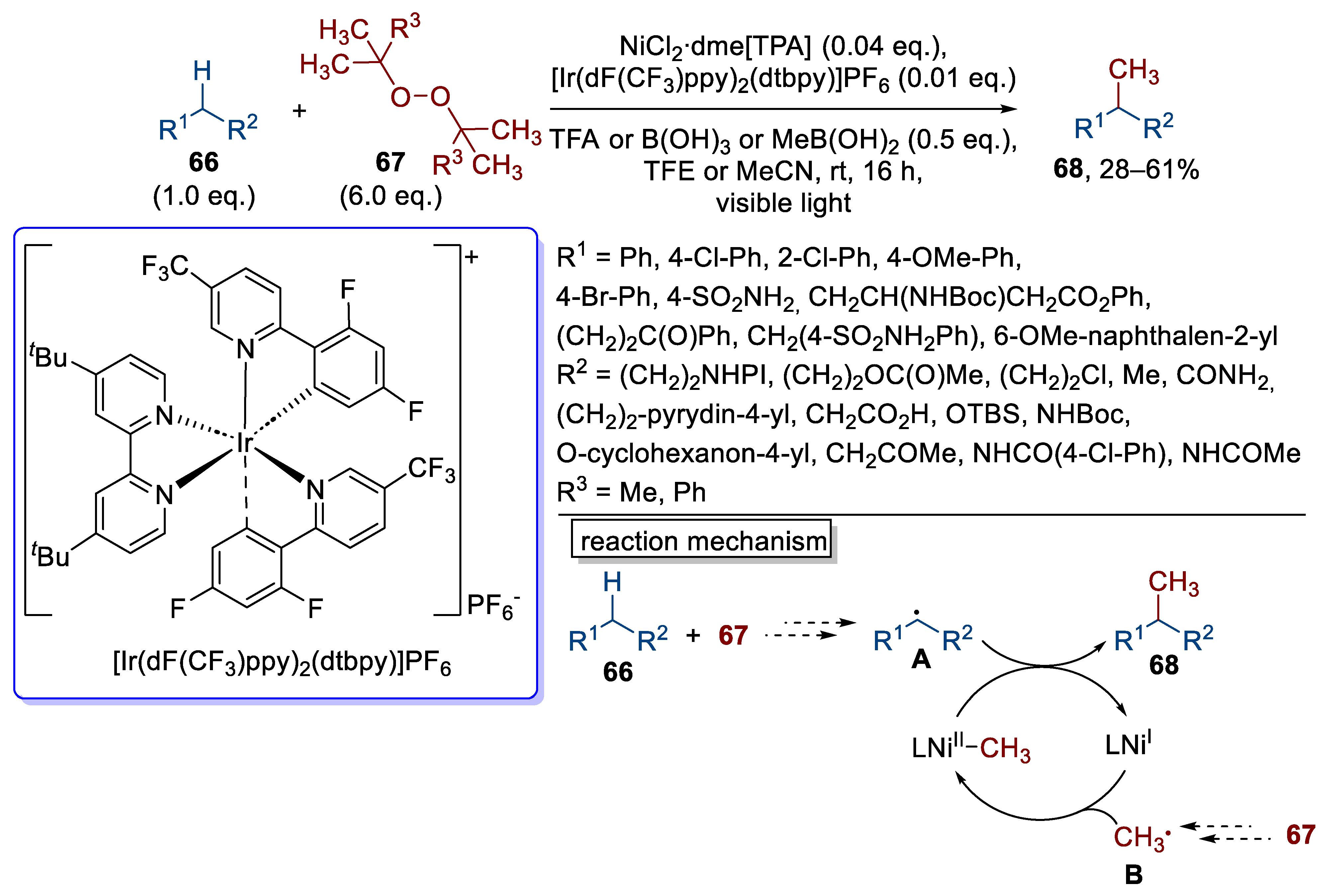
Methylation of the C(sp3)–H bond, including in various drugs and pharmaceutical building blocks, was developed by Sh. S. Stahl (Scheme 27) [75]. The synthesis strategy entails the utilization of two metal-containing catalysts based on iridium and nickel. An iridium photocatalyst excited by visible light acts as a reducing agent for peroxide 67, thereby producing alkoxy radicals. Alkoxy radicals can either undergo β-scission, turning into C-centered radicals, or abstract a hydrogen atom from the C–H fragment. The function of the nickel catalyst is to intercept the methyl radical B and facilitate radical cross-coupling reactions. The combination of these two catalysts exhibited a synergistic effect, enabling the methylation of even complex molecules 68 with yields ranging from 28 to 61%.

3.1.3. Peroxyesters

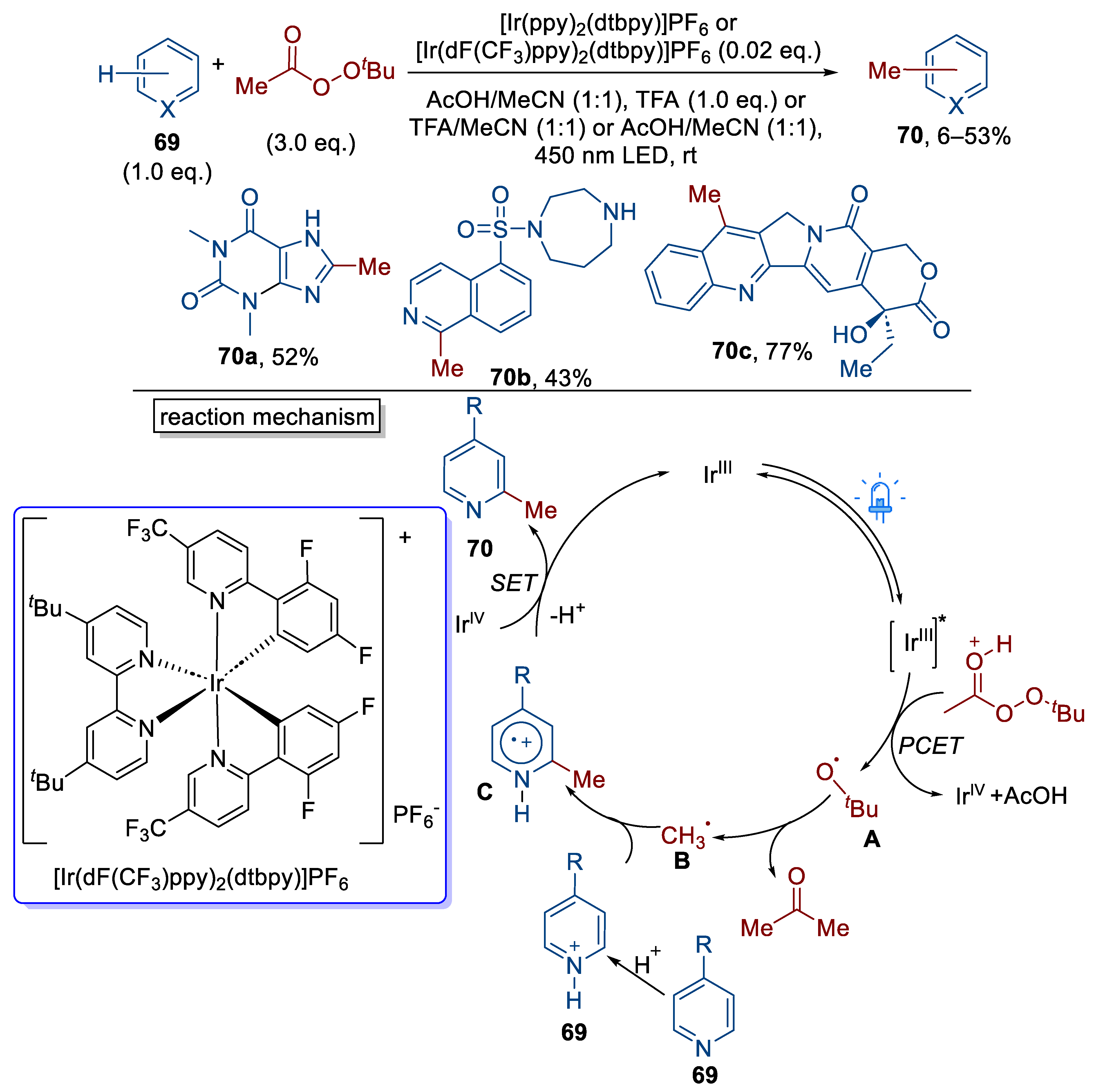
Dirocco developed a photocatalytic method for the alkylation of bioactive heterocycles 69 (Scheme 28) [76]. When exposed to visible light, an iridium photocatalyst initiates the decomposition of stable tert-butyl peroxy acetate with the formation of methyl radicals. It is proposed that tert-butyl peroxyacetate decomposition is initiated by single-electron transfer from the excited state of the catalyst under acidic conditions. A tert-butoxy radical A is generated, forming acetic acid. Subsequently, β-scission of radical A yields a methyl radical B and acetone. The reaction of B with a protonated heterocycle 69, followed by oxidation of the resulting intermediate by the oxidized form of the photocatalyst, results in product 70 and catalyst regeneration.

3.2. Generation of C-Fragment via Decarboxylation of O-Centered Radical

Researchers have extensively studied photocatalytic C–C bond formation between molecules, where acyl peroxides serve as precursors for C-fragments via the process of O-centered radical formation and its decarboxylation (Scheme 29).
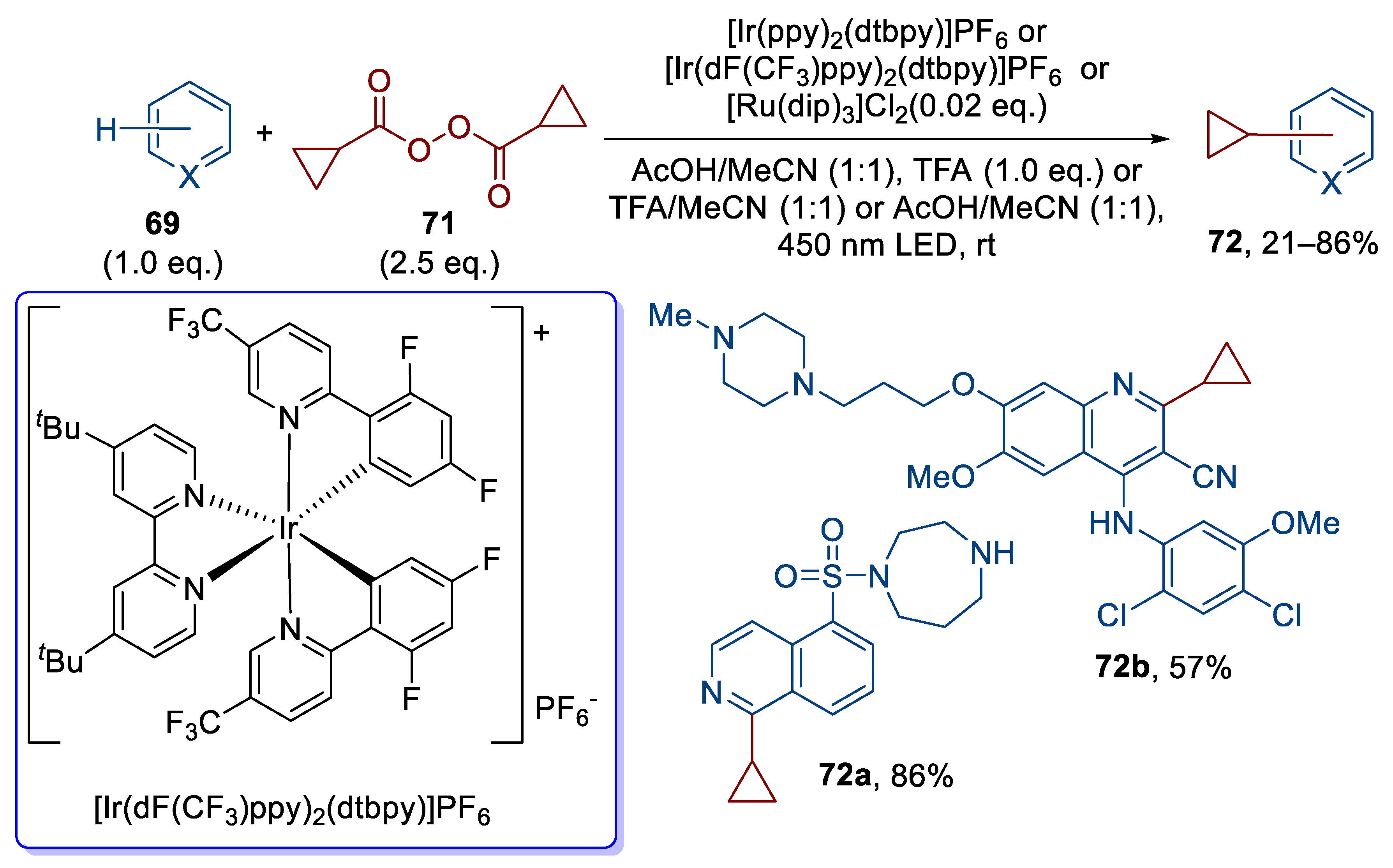
Diacyl peroxides have become widely utilized in radical polymerization due to their ability to decompose under relatively mild conditions, generating radicals that initiate chain reactions, such as the polymerization of vinyl monomers. More recently, their reactivity has been extended to organic synthesis via photoredox catalysis. In this context, D. A. Dirocco and his colleagues successfully achieved the direct methylation, ethylation, and cyclopropylation of various biologically active heterocycles 69 (Scheme 30) [76]. The interaction of diacyl peroxides 71 with the excited state of iridium or ruthenium photocatalysts generates carbon-centered radicals at room temperature under visible light. Notably, this method enables the late-stage functionalization of complex molecules.
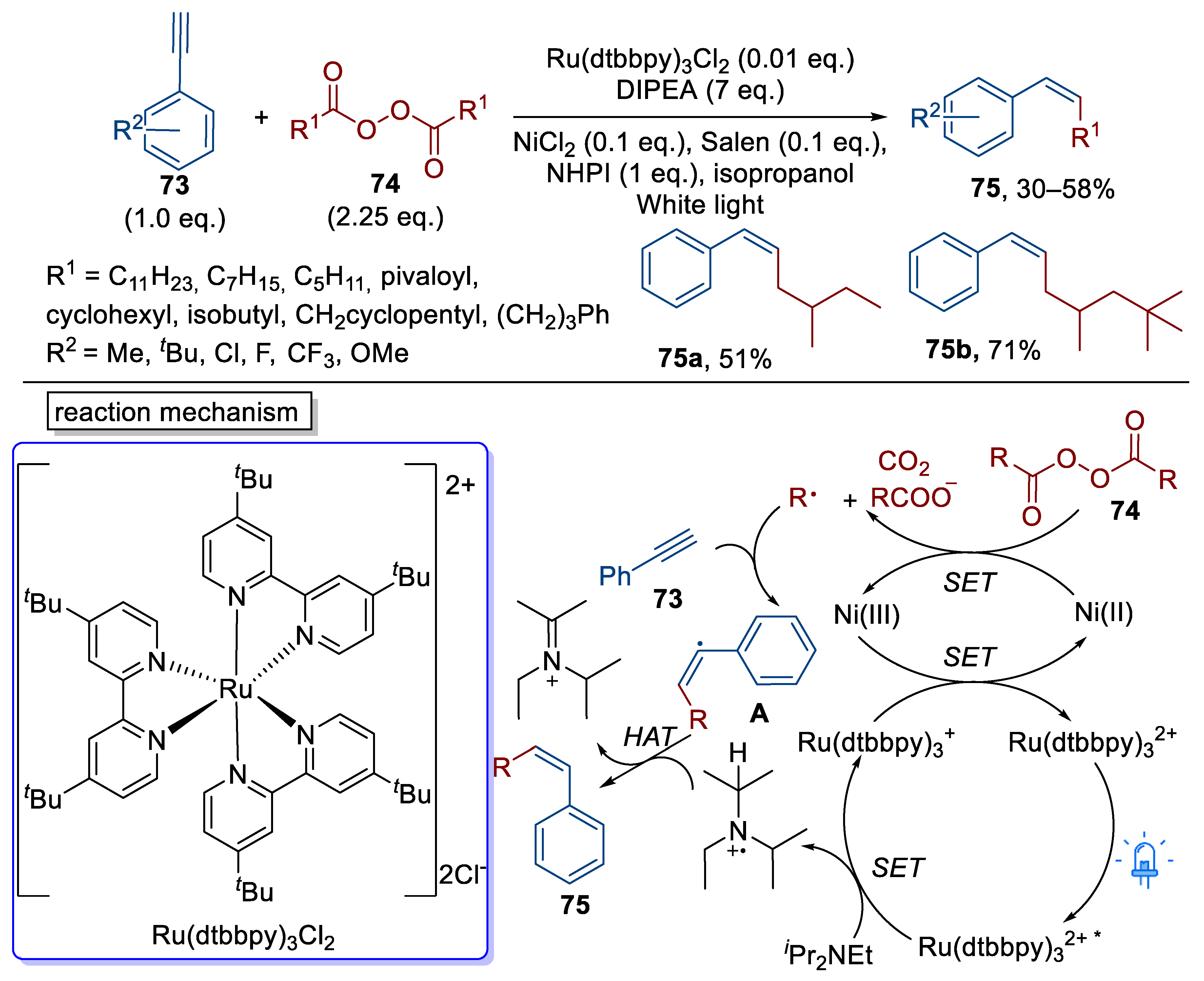
In 2016, the hydroalkylation of terminal aryl alkynes 73 was reported using a ruthenium photocatalyst in the presence of a catalytic amount of nickel chloride (Scheme 31) [77]. This approach enables the selective formation of Z-olefins 75 under photocatalytic conditions. DIPEA served as the hydrogen atom donor, while diacyl peroxides 74 functioned as alkylating agents, affording the products in moderate-to-high yields (Scheme 30). The Ni(II) complex transfers an electron to the diacyl peroxide 74, generating Ni(III) species and an alkyl radical. The alkyl radical adds to phenylacetylene 73, forming the radical intermediate A. The Ni(III) species is then reduced back to Ni(II) by the Ru(I) complex. Under photocatalytic conditions, Ru(II) is regenerated to Ru(I) in the presence of DIPEA, which is oxidized to its radical cation. In the final step, hydrogen is transferred from the DIPEA radical cation to the vinyl radical A, leading to the selective formation of the Z-olefin 75.
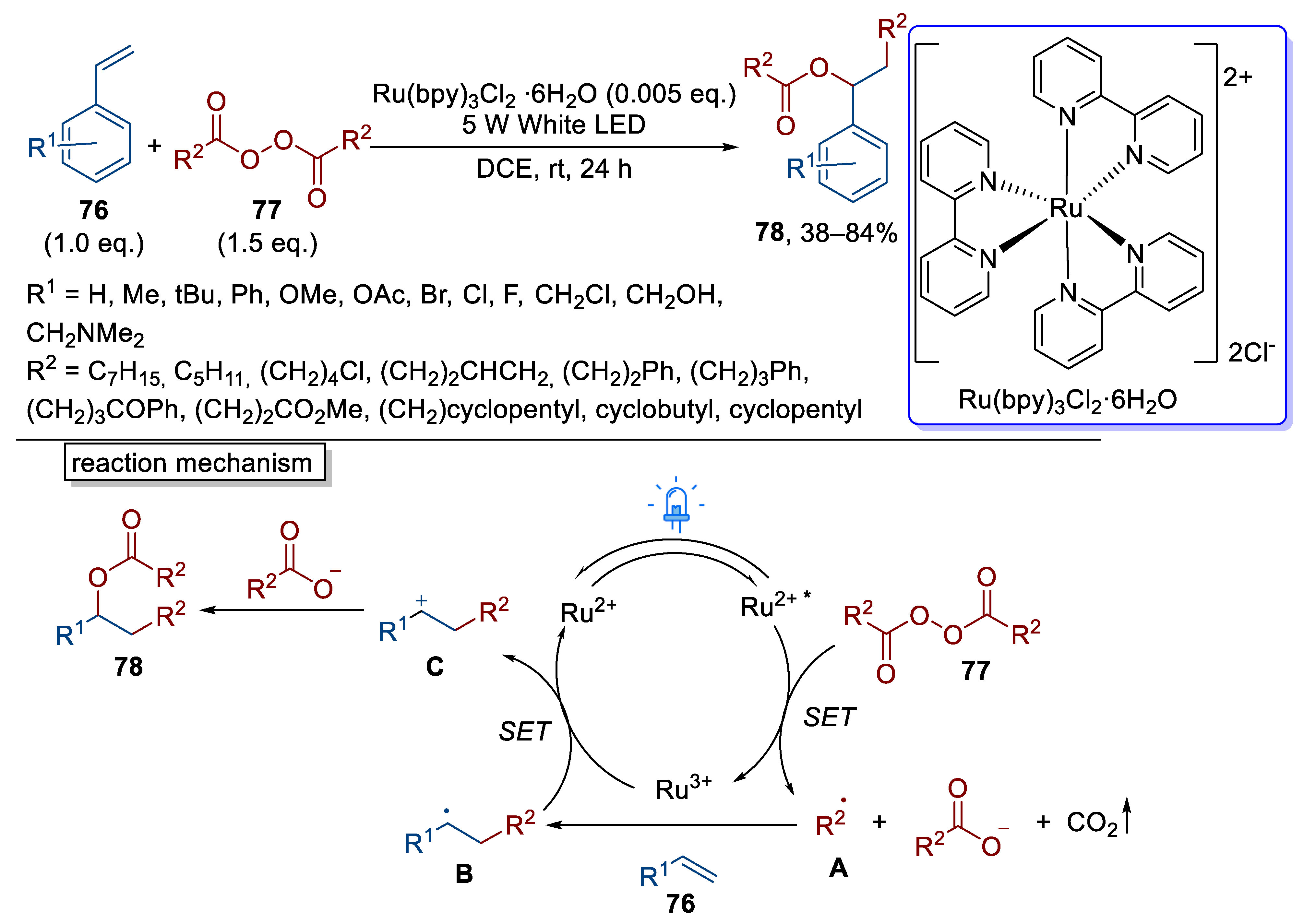
Alkyl esterification of vinylarenes 76, enabled by visible-light-induced decarboxylation, was reported by H. Bao (Scheme 32) [78]. Alkyl diacyl peroxides 77, readily prepared from alkyl carboxylic acids, served as both the alkylation and oxygenation sources. A ruthenium complex was employed for the photoactivation of the process. This methodology was applied to the synthesis of a broad range of benzyl alcohol esters 78, affording good yields. The reaction is initiated by electron transfer from the excited form of the photocatalyst to diacyl peroxide 77, forming a carboxylate anion and an alkyl radical A. The addition of the latter to vinylarene results in radical B, the single-electron oxidation of which, by the photocatalyst, results in a stable benzyl carbocation C and regeneration of the photocatalyst. Subsequent nucleophilic addition of the carboxylate anion to carbocation C leads to the formation of the target difunctionalization product 78.
The use of diacyl peroxides 80 as alkylating agents also enables the challenging introduction of a fluorine atom into complex molecules. For instance, the same group demonstrated an example of dual catalysis by reporting a three-component alkyl fluorination of olefins 79 under metallophotoredox catalytic conditions (Scheme 33) [79]. Notably, nucleophilic fluoride is employed as the fluorine source. This transformation proceeds efficiently across a wide range of styrenes, affording products 81 in moderate-to-high yields. Visible-light irradiation of [Ru(bpy)3]2+ generates the excited state complex [Ru(bpy)3]2+*, which then engages in a single-electron transfer with a Cu(II) species to generate a Cu(I) species and an oxidized [Ru(bpy)3]3+ complex. Upon further single-electron reduction in diacyl peroxide 80 with Cu(I), an alkyl radical A, a carboxylic acid anion, and carbon dioxide are formed, and Cu(II) is regenerated. The alkyl radical A reacts with olefin 79 to deliver the benzyl free radical B, which can be oxidized by the Ru(III) species to form the benzyl carbocation C and the regenerated Ru(II) species. Trapped by the nucleophilic fluoride ion from Et3N·3HF, intermediate C produces the carbofluorinated product 81.
In 2020, two research groups independently developed a method for the direct arylation of quinoxalin-2(1H)-ones 82 with diacyl peroxides 83 without the use of catalytic additives (Scheme 34) [80,81]. In the reported process, the photo-activated molecule is either the substrate 82 or the resulting product 84. This system facilitates direct C–H arylation, enabling the synthesis of a broad range of quinoxalin-2(1H)-ones 84 in moderate-to-good yields.
J.-H. Li’s group demonstrated the C(sp3)–N cross-coupling of alkyl radicals derived from diacyl peroxides 86 with heterocyclic nitrogen-containing compounds 85 (Scheme 35) [82]. Primary and secondary alkyl radicals are generated from diacyl peroxides 86 under visible-light irradiation and in the presence of an iridium photocatalyst. The subsequent reaction of these radicals with various indazoles affords N-substituted products 87 in good yields.
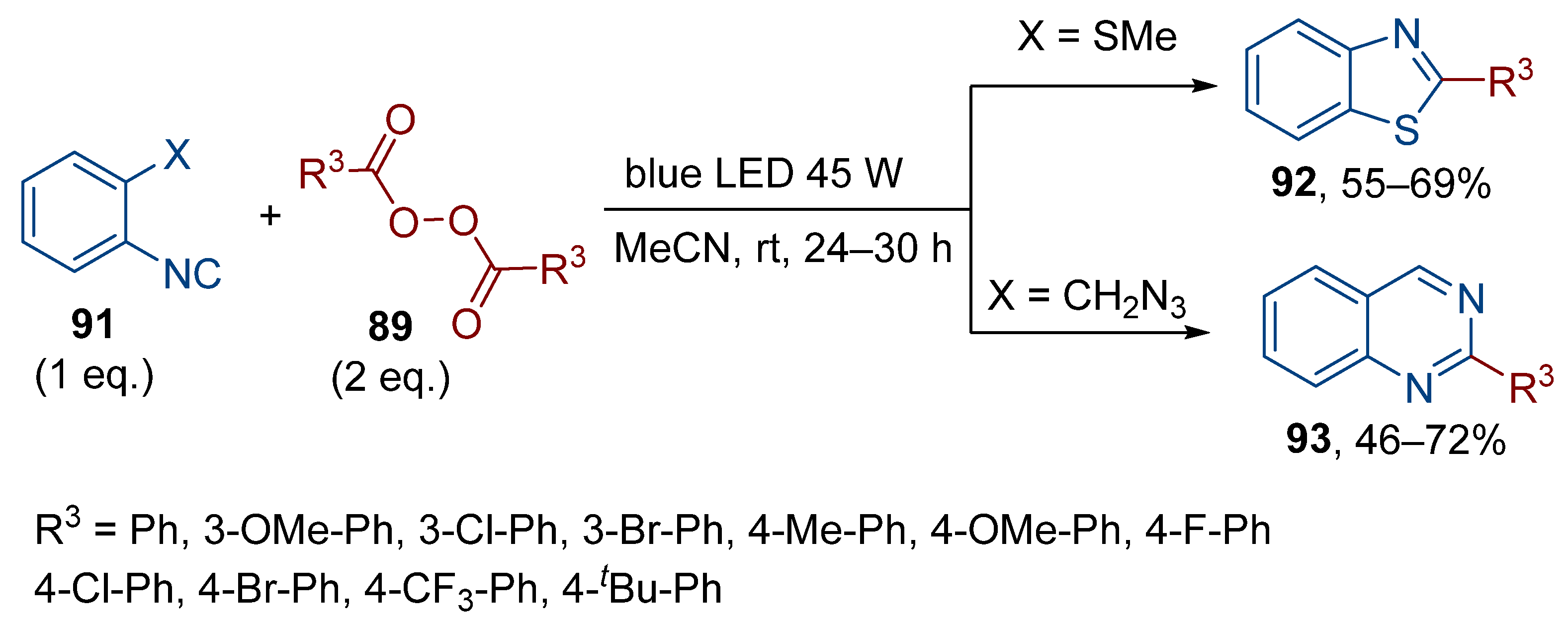
The study of N. Yadav reports a visible light-mediated protocol for synthesizing nitrogen-containing heteroarenes 90—isoquinolines, benzothiazoles, and quinazolines—via radical cascade cyclization using isocyanides 88 and diacyl peroxides 89 (Scheme 36) [83]. The authors demonstrate for the first time that singlet-excited isocyanides can induce decomposition of diacyl peroxides into aryl radicals, which then attack the isocyanides to form imidoyl radicals, leading to heteroarene products 90, without requiring any external photocatalysts, oxidants, additives, or bases. The method operates at room temperature with good-to-excellent yields. The mechanism is initiated by a single-electron transfer from the singlet-excited state of isocyanide 88a to dibenzoyl peroxide, resulting in the formation of the radical cation B. Concurrently, the peroxide undergoes reduction to generate a radical species and a benzoate anion. The benzoyl radical that is formed subsequently undergoes decarboxylation to yield a phenyl radical, which attacks the isocyanide 88a to afford the imidoyl radical intermediate C. This radical intermediate then undergoes intramolecular cyclization via attack on the aryl ring, producing the cyclohexadienyl radical D. Electron transfer from D back to radical cation B regenerates isocyanide 88a and forms the cationic intermediate E. The final step involves deprotonation of E by the benzoate anion, culminating in the formation of the isoquinoline product 90a and benzoic acid as a byproduct.
The researchers demonstrated that 2-isocyanoaryl thioesters 91 can be incorporated into the developed system. Consequently, various benzothiazole derivatives 92 were synthesized with good yields within 24 h under visible-light irradiation. Furthermore, 2-azidomethylphenyl isocyanides 91 were introduced into the photochemical reaction with diacyl peroxides 89, leading to the successful formation of the corresponding 2-arylquinazolines 93 (Scheme 37).
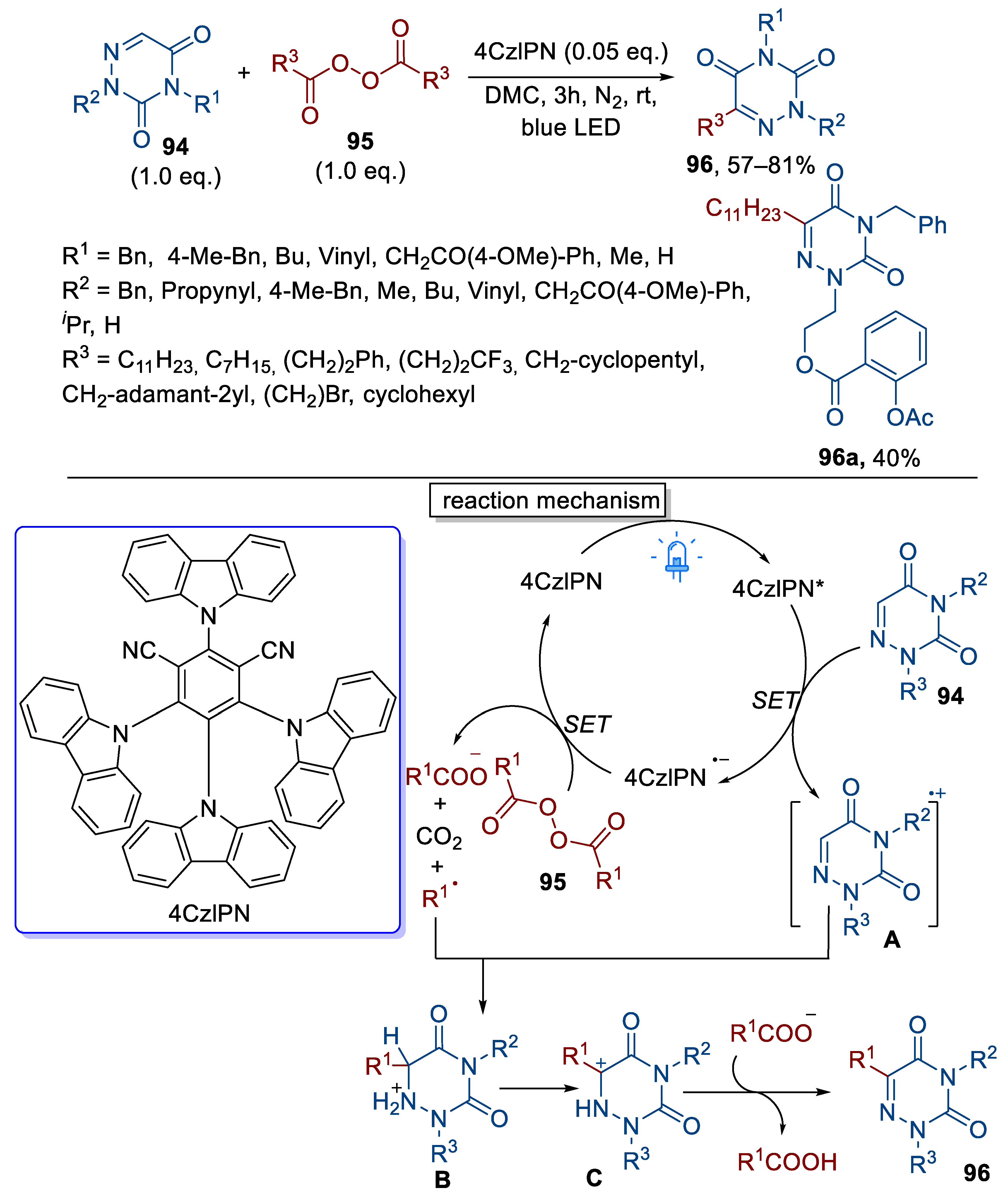
Direct alkylation of the C=N double bond in N-heteroaromatic compounds 94 was achieved utilizing diacyl peroxides 95 as alkyl radical precursors and the organic photocatalyst 4CzIPN under visible-light irradiation (Scheme 38) [45]. The alkylation reactions were conducted under metal-free conditions at room temperature using dimethyl carbonate (DMC) as an eco-friendly solvent. It is noteworthy that the reaction proceeds under visible-light irradiation, reaching completion within 3 h at room temperature. Initially, upon visible-light irradiation, 4CzIPN is excited to its singlet-excited state 4CzIPN*, which reacts with the heterocyclic substrate 94 to form the cation-radical A and the anion-radical of 4CzIPN. Subsequently, the photocatalyst anion-radical is oxidized by the diacyl peroxide 95 to regenerate the ground-state 4CzIPN. Concurrently, the 4CzIPN anion-radical reduces the diacyl peroxide, generating an alkyl radical and the corresponding carboxylate ion, along with the release of CO2. The alkyl radical then attacks the intermediate A, forming intermediate B. A subsequent 1,2-hydride shift leads to the formation of intermediate C. Further deprotonation of C by the carboxylate anion results in the formation of the product 96 and the corresponding carboxylic acid.
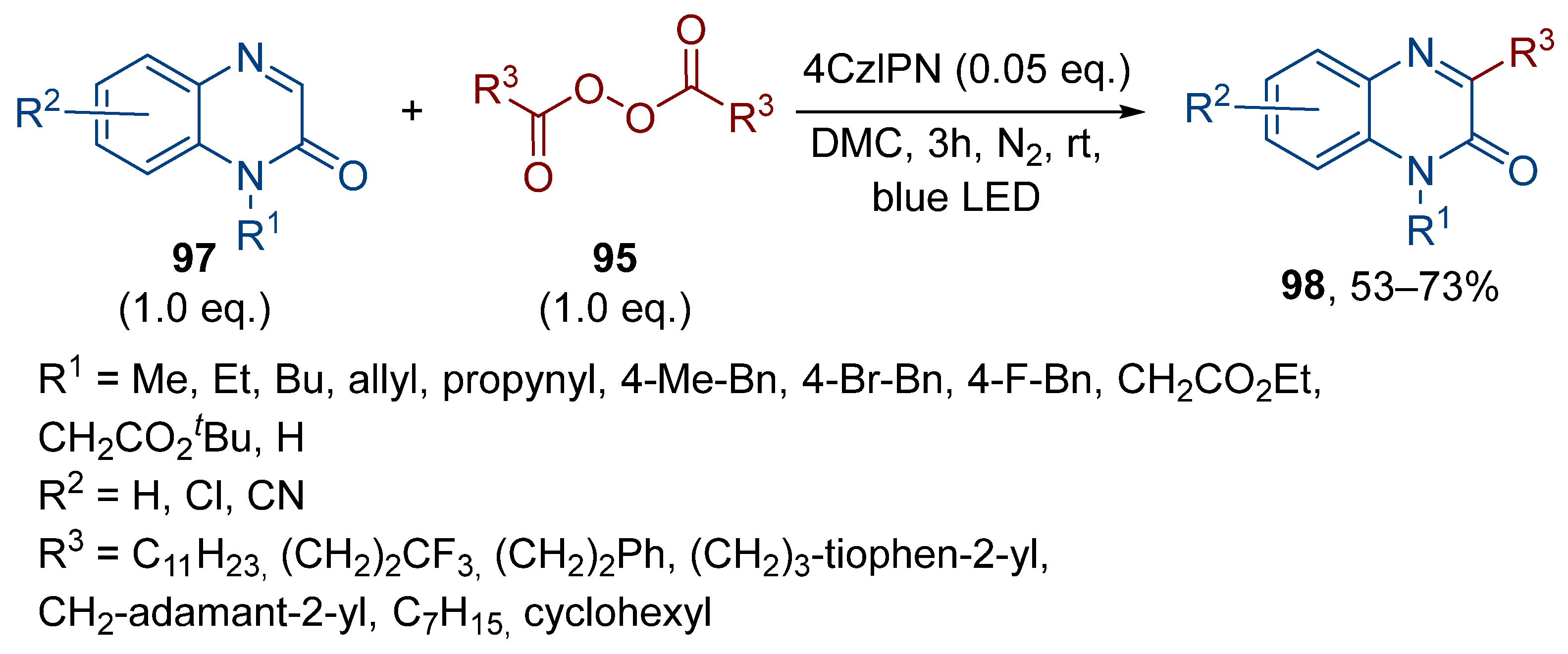
Demonstrating the broad applicability of the method, the researchers synthesized alkylated derivatives of azauracils 94, quinoxalin-2(1H)-ones 97, 2H-benzo[b]oxazin-2-ones, and quinoxalines—structures of significant interest in the development of pharmaceutical agents and fungicidal compounds (Scheme 39).
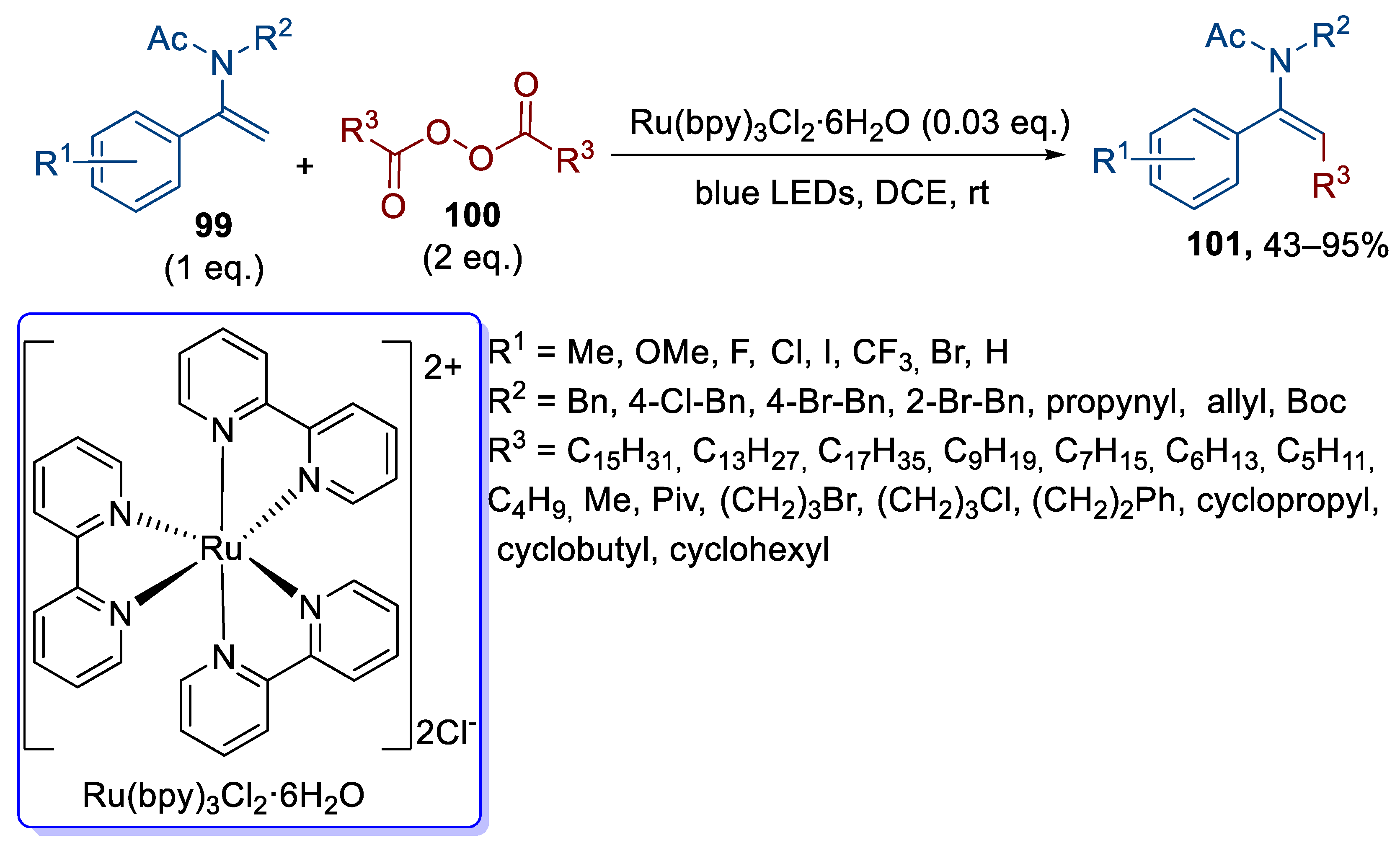
In 2023, a photochemical method for the alkylation of enamines 99 using diacyl peroxides 100 was developed, enabling the synthesis of a wide range of substituted primary and secondary (E)-alkenamides 101 with yields up to 95% (Scheme 40) [84]. The process proceeds under visible-light irradiation in the presence of a ruthenium catalyst. Notably, the stereoselectivity of this transformation can be explained by the preferential formation of a cationic intermediate that minimizes allylic strain.
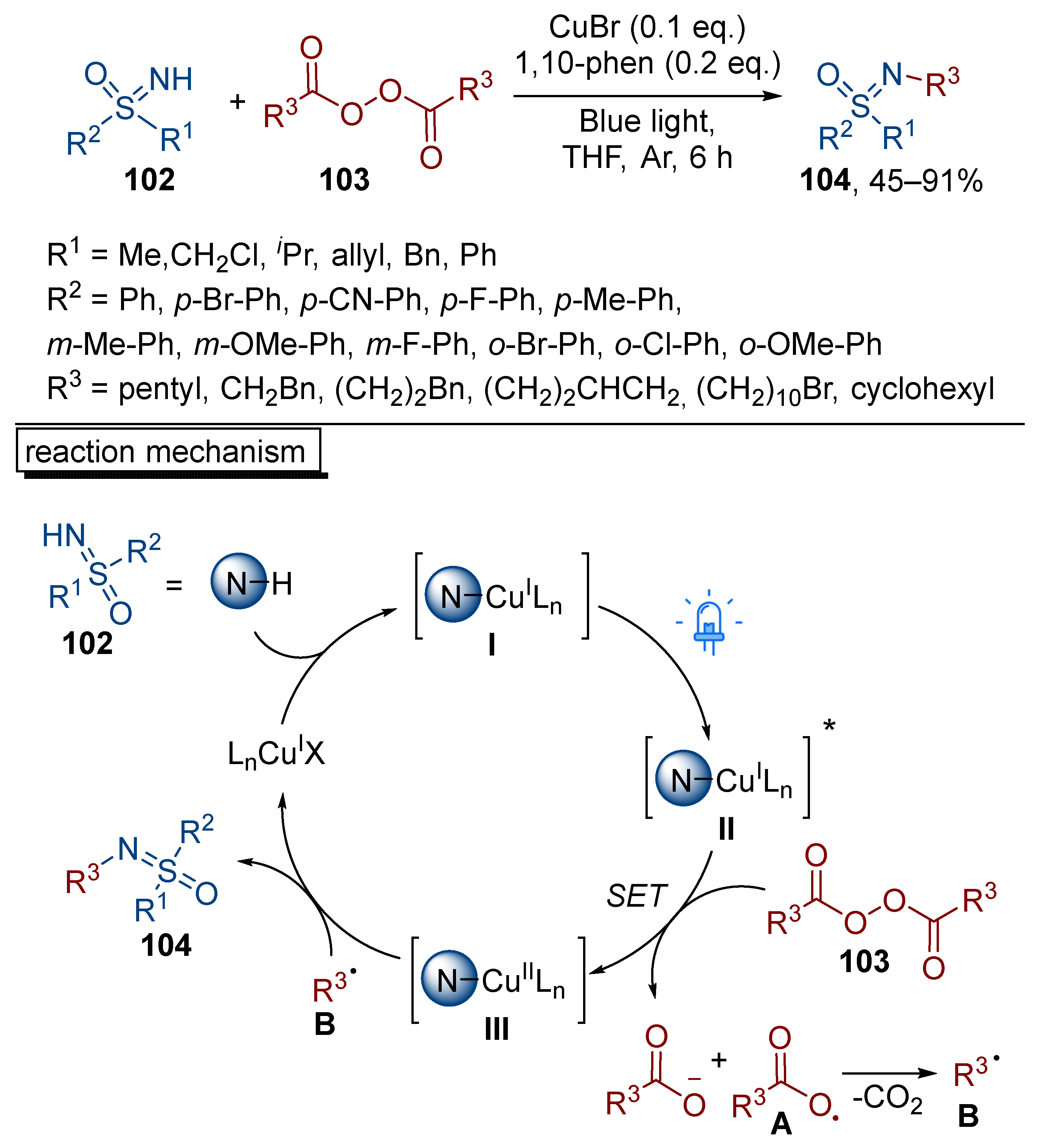
A copper-catalyzed visible-light-induced N-alkylation of NH-sulfoximines 102 using readily available diacyl peroxides 103 was reported (Scheme 41) [85]. Unlike classical methods employing copper and peroxides, the reactions proceed at room temperature and do not require a base. The developed method exhibits broad functional group tolerance, with product yields ranging from 45% to 91%. The photocatalytic cycle is initiated by coordination of the NH-sulfoximine 102 to the copper(I) complex. Visible light excitation of the resulting complex I renders it a strong reductant. A single-electron transfer from the excited copper(I) complex I to diacyl peroxide 103 generates the carboxylate radical A, which undergoes CO2 elimination to form the alkyl radical B. Radical B then attacks the copper(II)-sulfoximine complex III, leading to the formation of the target product 104 and regeneration of the copper(I) complex, which resumes the catalytic cycle.
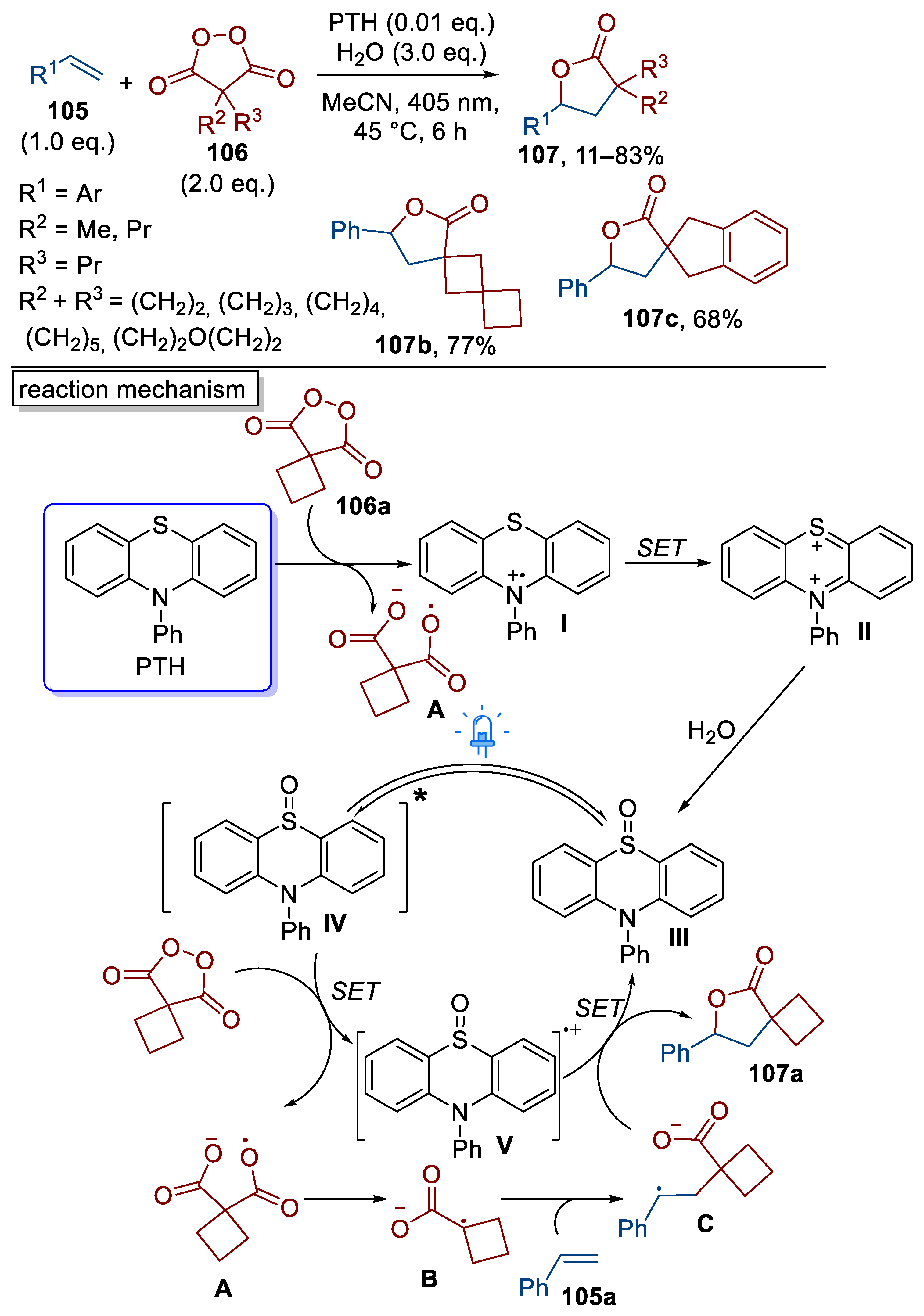
A method for the synthesis of spirocyclic lactones 107 from malonoyl peroxides 106 and styrenes 105 has been discovered (Scheme 42) [86]. The transformation begins with the formation of the active photocatalyst species. Initially, N-phenylphenothiazine is oxidized by peroxide 106 to generate cation-radical intermediate I. This intermediate undergoes either single-electron transfer or disproportionation, producing a transient phenylphenothiazine dication II. The dication II is then intercepted by water, resulting in the formation of the active photocatalyst, phenylphenothiazine sulfoxide III. The key reaction step involves the single-electron reduction in the peroxide bond 106, which leads to the formation of a carbon-centered radical B via decarboxylation of anion-radical A. Radical B adds to the olefin double bond, generating the stabilized benzyl radical C. Subsequent oxidation of this benzyl radical by the oxidized photocatalyst species V yields the target spirocyclic γ-lactone product 107 and closes the photocatalytic cycle.
In essence, the ability of organic peroxides serves as a source of C-moiety based on the two-step process: the generation of O-centered radical followed by their transformation: decarboxylation or β-scission. The efficiency of these processes is more strongly influenced by the structure of the O-centered radical and, consequently, the initial peroxide than by the nature of the catalyst employed in the peroxide reduction. However, it is crucial to carefully tailor the photocatalyst to ensure efficient production of O-centered radicals.

4. Peroxides as Oxidants

4.1. Hydroperoxides

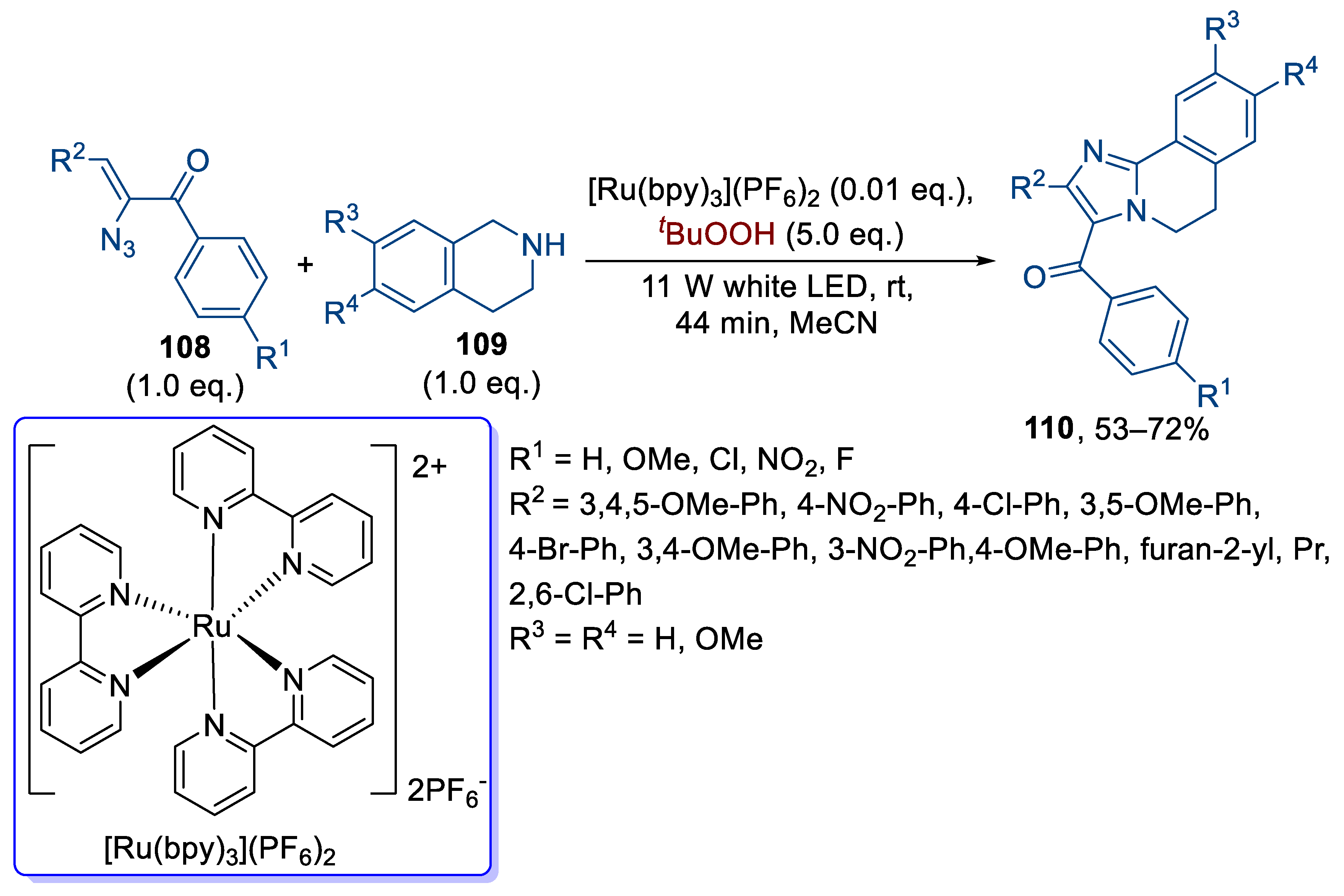
Tiwari disclosed a highly efficient photocatalytic transformation of vinyl azides 108 and amines 109 in the presence of the [Ru(bpy)3][(PF6)2] complex as a photocatalyst in a flow microreactor system for the synthesis of imidazole derivatives 110 (Scheme 43) [87]. Subsequent nucleophilic ring-opening of the azirine ring, derived from starting vinyl azides 108, with amines 109 and cyclization to form an imidazole heterocycle, is accompanied by the formation of three new C–N bonds. TBHP serves as an oxidant for photocatalyst regeneration.
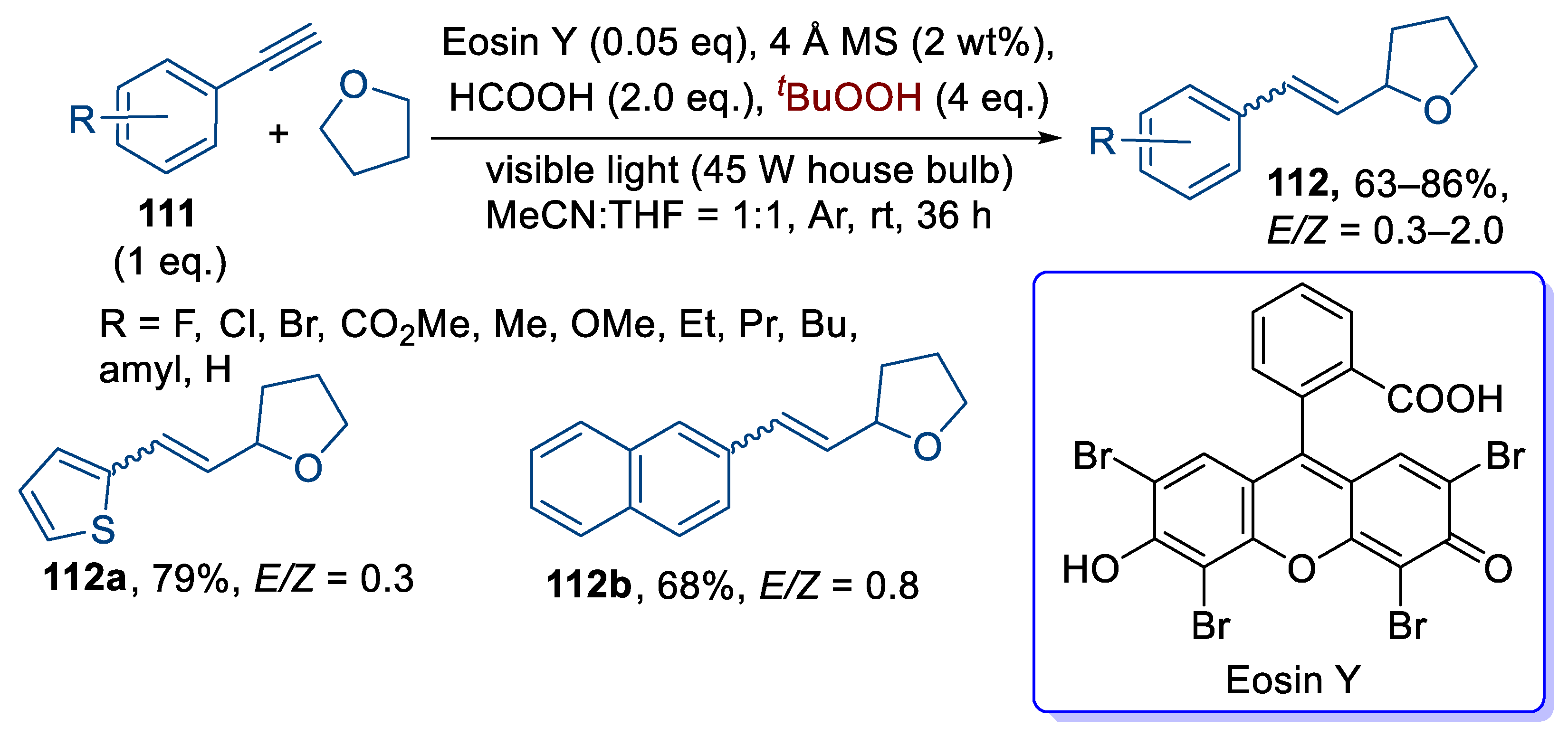
D. Zh. Wang and colleagues demonstrated a new photocatalytic method for the direct vinylation of C–H bonds in tetrahydrofuran for the synthesis of functionalized tetrahydrofurans 112 (Scheme 44) [88]. Combination of organic photocatalyst, tBuOOH, and visible light initiates radical processes, leading to the selective vinylation of the C–H bond.
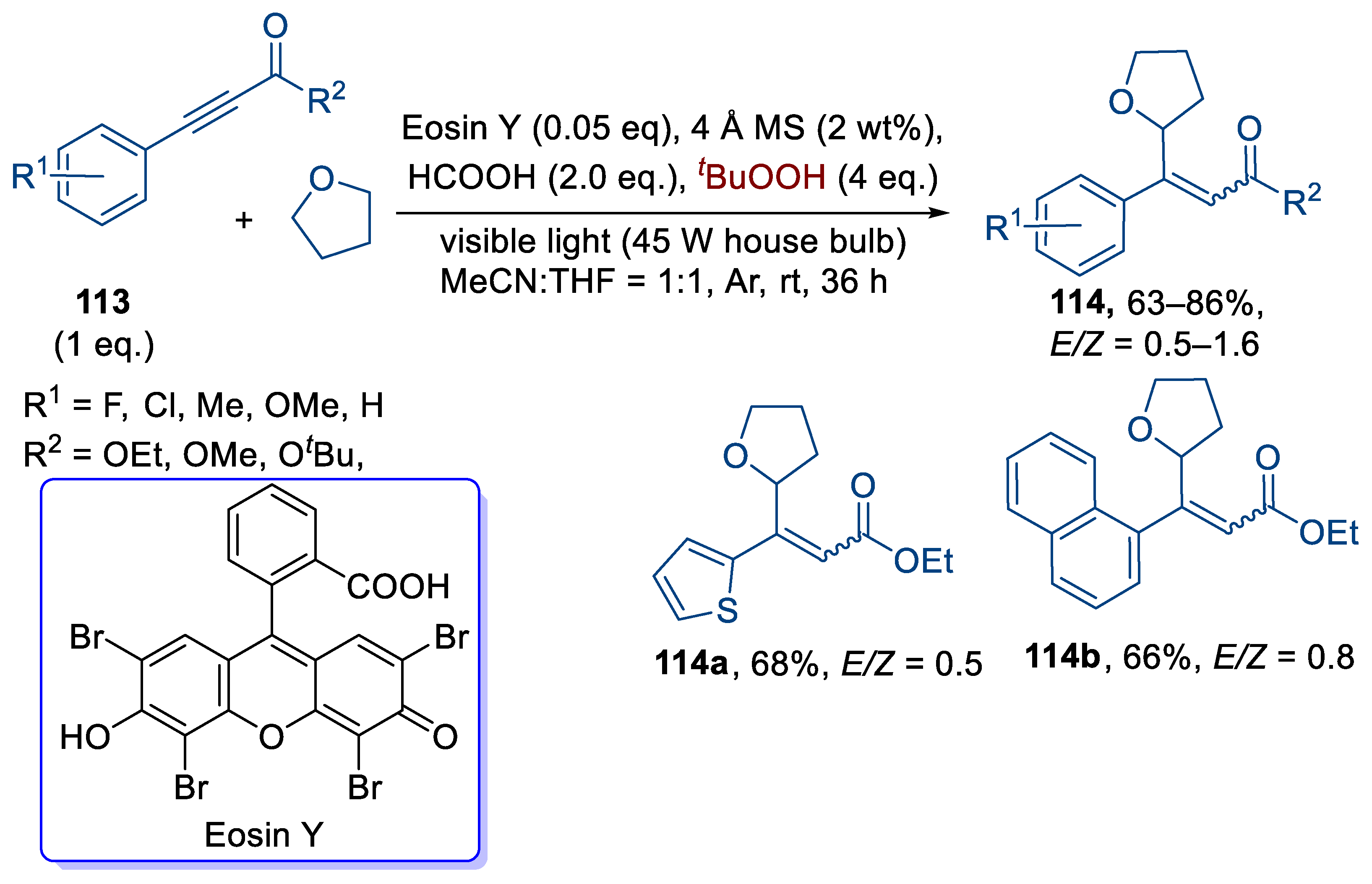
The procedure has been successfully applied to the synthesis of products 114 from the substituted alkynes 113, demonstrating minimal dependence of reactivity on steric congestion and the nature of the aryl substituent (Scheme 45).
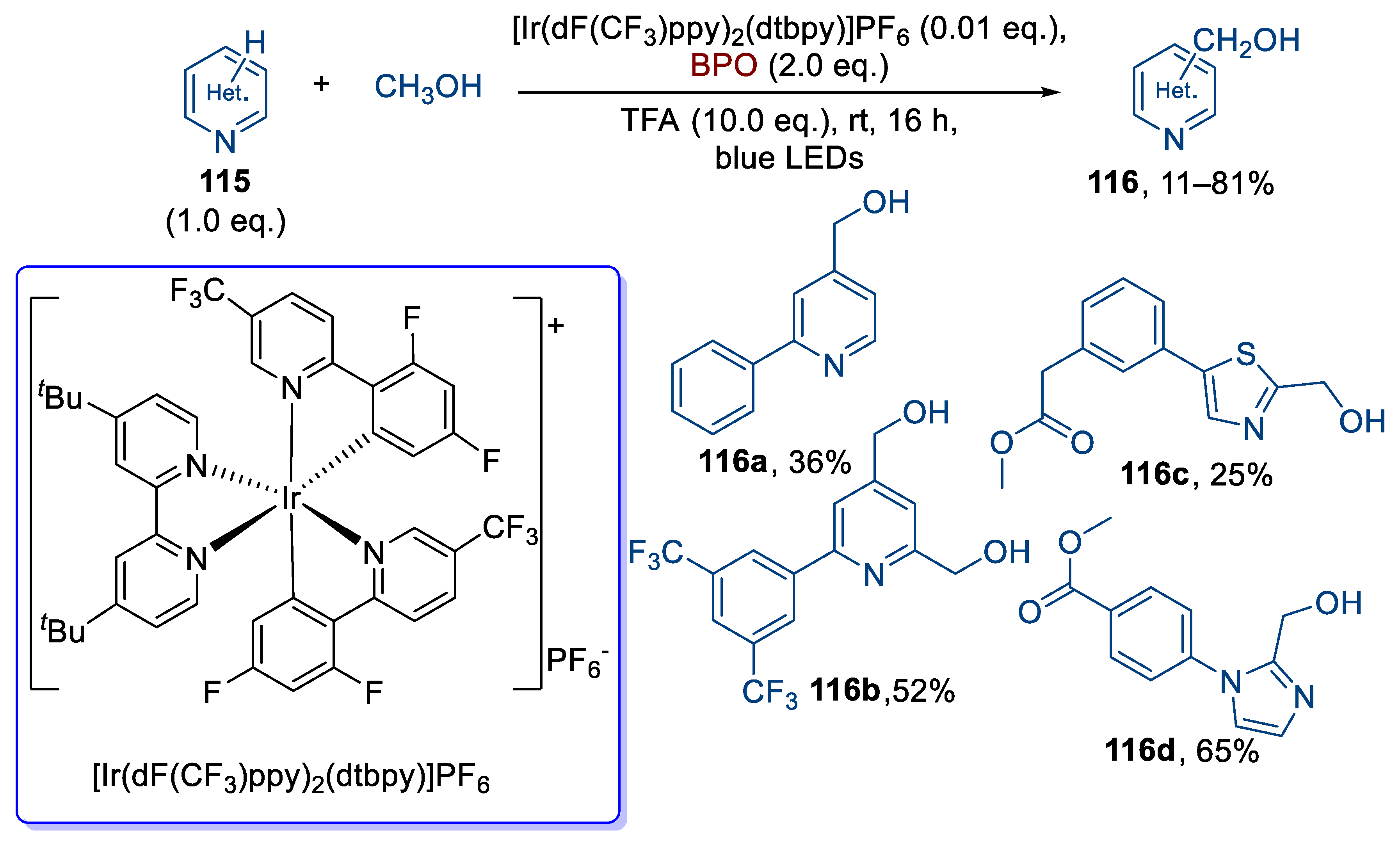
A photocatalytic approach for the C–H functionalization of heteroarenes 115 was described by DiRocco (Scheme 46) [89]. Visible light initiates radical processes, with an iridium complex acting as a photocatalyst. Dibenzoyl peroxide functions as an oxidizing agent, resulting in the selective synthesis of the hydroxymethylated heteroarenes 116.
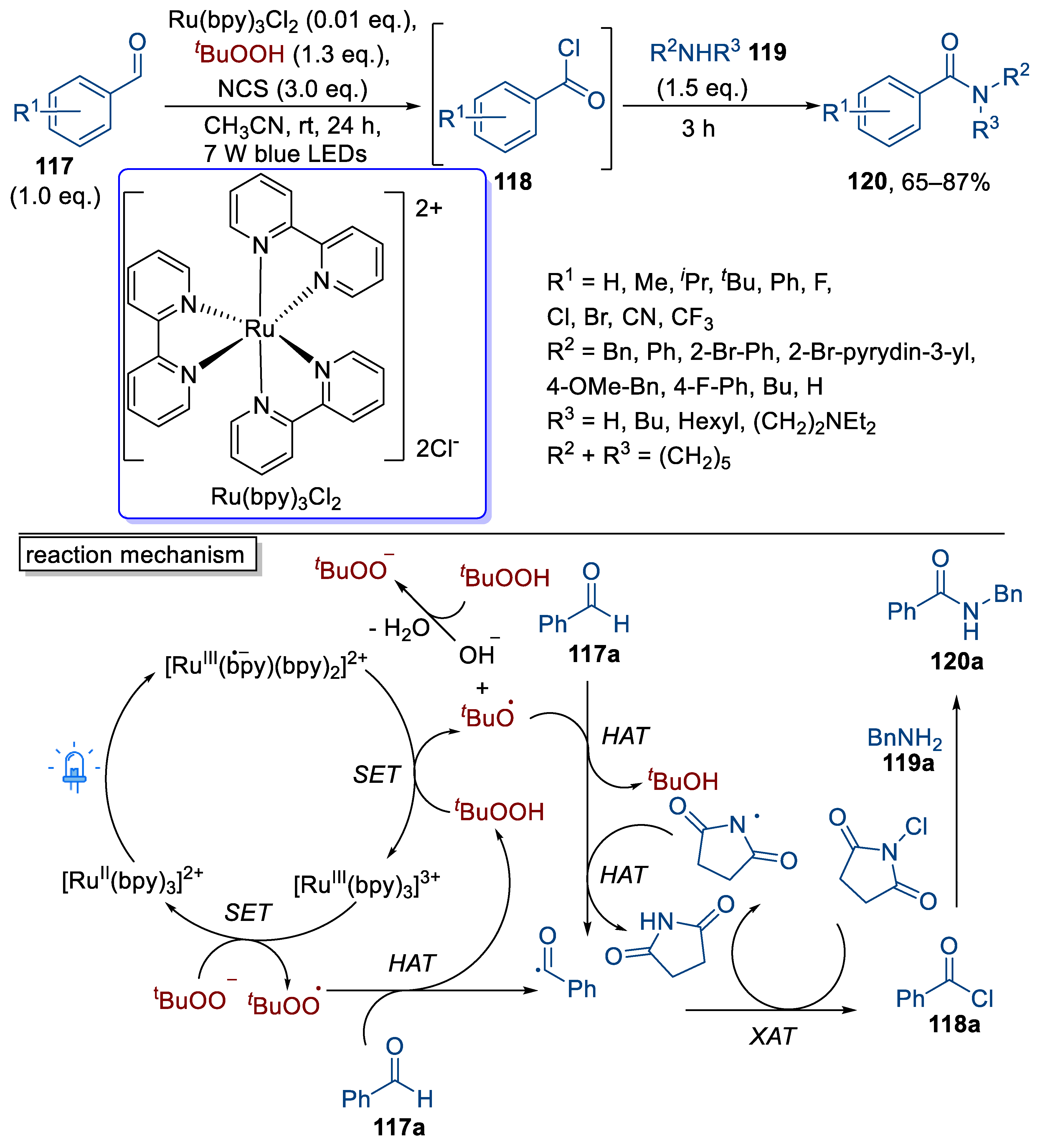
The photoinduced reaction of aldehydes 117 with tBuOOH and N-chlorosuccinimide (NCS) using the Ru(bpy)3Cl2 as a photocatalyst was disclosed (Scheme 47) [90]. Under the influence of visible light, the chloroanhydride 118 from the corresponding aldehyde 117 is formed. Chloranhydride 118 undergoes a nucleophilic substitution reaction with amine 119, thus leading to the synthesis of amide 120. The effectiveness of this method is demonstrated by the synthesis of two biologically active compounds: moclobemide and an intermediate product for the synthesis of a selective D3 receptor agonist. The proposed reaction pathway starts with photoexcitation of the ruthenium complex, followed by a one-electron reduction in tBuOOH, resulting in the generation of the tert-butoxy radical and hydroxide ion. The alkoxy radical abstracts a hydrogen atom from benzaldehyde 117a, initiating a chain of radical reactions leading to the formation of the corresponding chloroanhydride 118a. Reaction of chloroanhydride 118a with amine 119a yields the product. The hydroxide anion, in turn, can deprotonate tBuOOH. The tert-butyl hydroperoxide anion can reduce the oxidized form of the photocatalyst, thus closing the catalytic cycle.
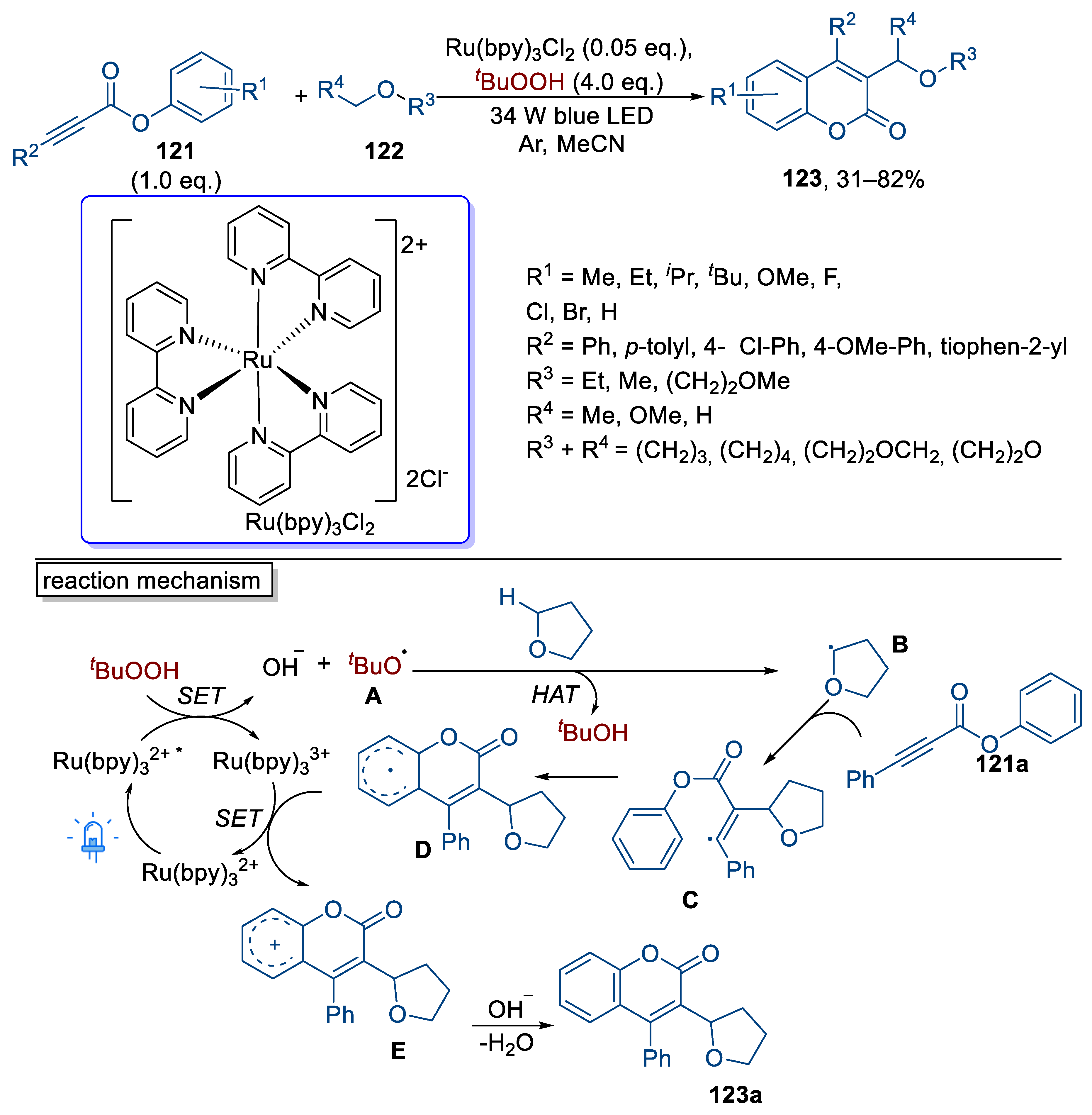
A photochemical approach for the synthesis of coumarin compounds 123 that involves the functionalization of alkynoates 121 with ethers 122 under blue light and a ruthenium complex as a catalyst has been developed (Scheme 48) [91]. Hydroperoxide acts as a radical initiator and precursor for the HAT reagent—an alkoxy radical. This method is highly regioselective and allows us to obtain the products in 31–82% yields. The reaction is initiated by photoexcitation of the catalyst with visible light. The excited catalyst reduces tert-butyl hydroperoxide (TBHP) to give the tert-butoxy radical A, which abstracts a hydrogen atom from THF, forming an α-oxo radical B and t-BuOH. Radical B then selectively adds to the carbonyl group of alkynoate 121a, forming the vinyl radical C. Radical C undergoes cyclization, generating cyclic radical intermediate D. Oxidation of radical D by the oxidized form of the ruthenium catalyst results in the formation of carbocation E. The final step is deprotonation of E to form coumarin 123a.
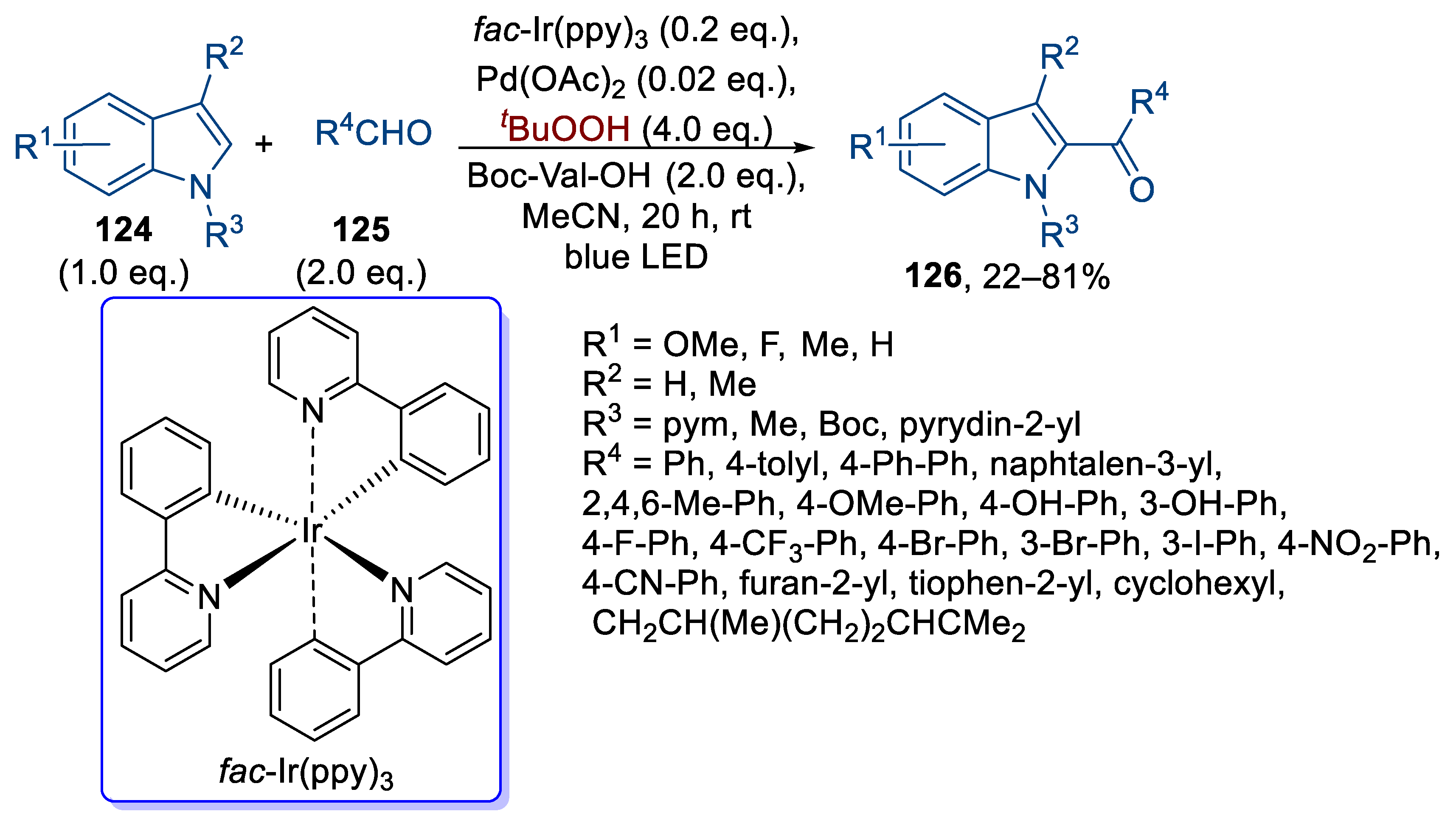
C–H Acylation of indoles 124 with aldehydes 125 via dual photocatalyst/transition metal catalysis in batch and flow photoreactors was carried out by E. V. Eycken (Scheme 49) [92]. An iridium complex was used as a photocatalyst, along with palladium acetate. The functionalization of the C–H bond occurred selectively at the C-2 position of N-substituted indoles 124. This approach tolerates a wide range of functional groups and enables the synthesis of a diverse array of acylated indoles 126. It is noteworthy that a substantial increase in the rate of reaction (from 20 h to 2 h) and enhanced yields were observed under microflow conditions.
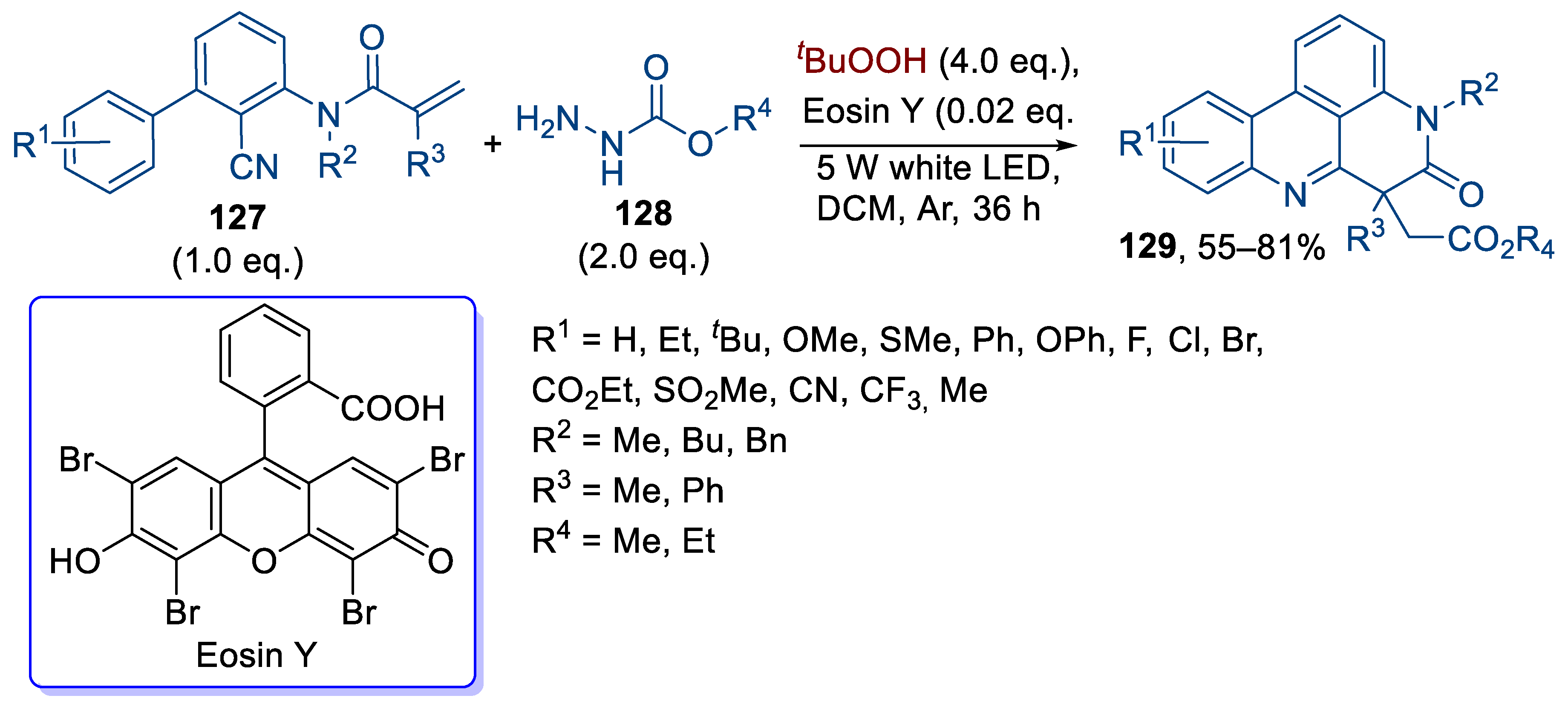
Cascade cyclization, occurring under visible light with the formation of esters of pyridophenanthridine derivatives 129, has been developed by P. Sun (Scheme 50) [93]. TBHP plays a dual role as both an oxidizing agent and a cascade initiator, along with an alkyl carbazate as a source of the ester fragment. The reaction is catalyzed by Eosin Y under white light. Radical addition of the ester fragment, generated from the alkyl carbazate 128 to the double bond of N-arylacrylamide derivatives 127, is followed by two sequential cyclizations. The polyheterocycles 129 were obtained in moderate-to-high yields.
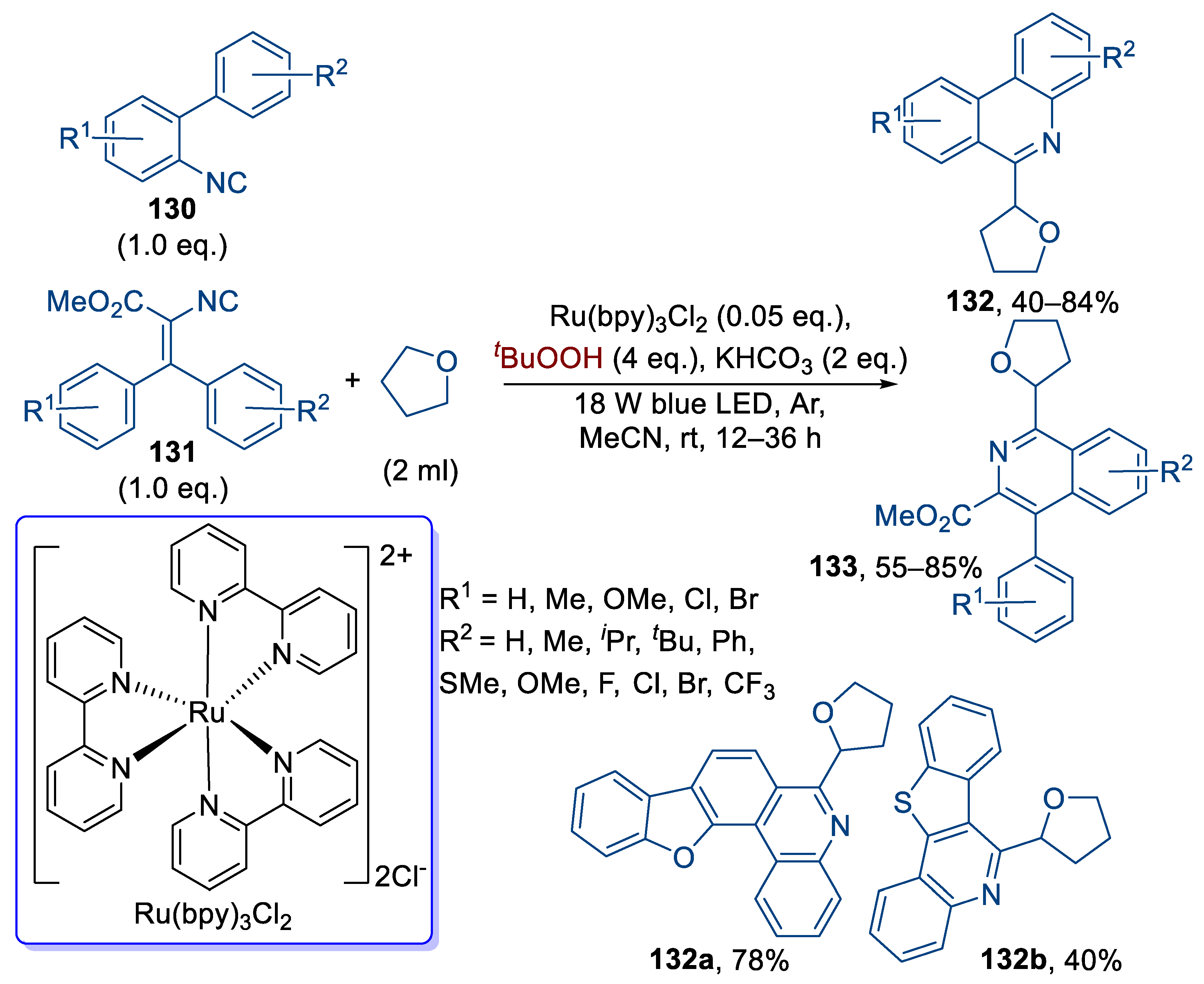
The photocatalytic reaction of various isocyanides 130 and vinyl isocyanides 131 with tetrahydrofuran results in the formation of phenanthridine 132 and isoquinoline derivatives 133 (Scheme 51) [94]. The application of photocatalysis with a ruthenium complex activates hydroperoxide, thereby generating radicals from THF under mild conditions under visible light. Consequently, the heterocycles are formed in yields ranging from 40% to 84%.
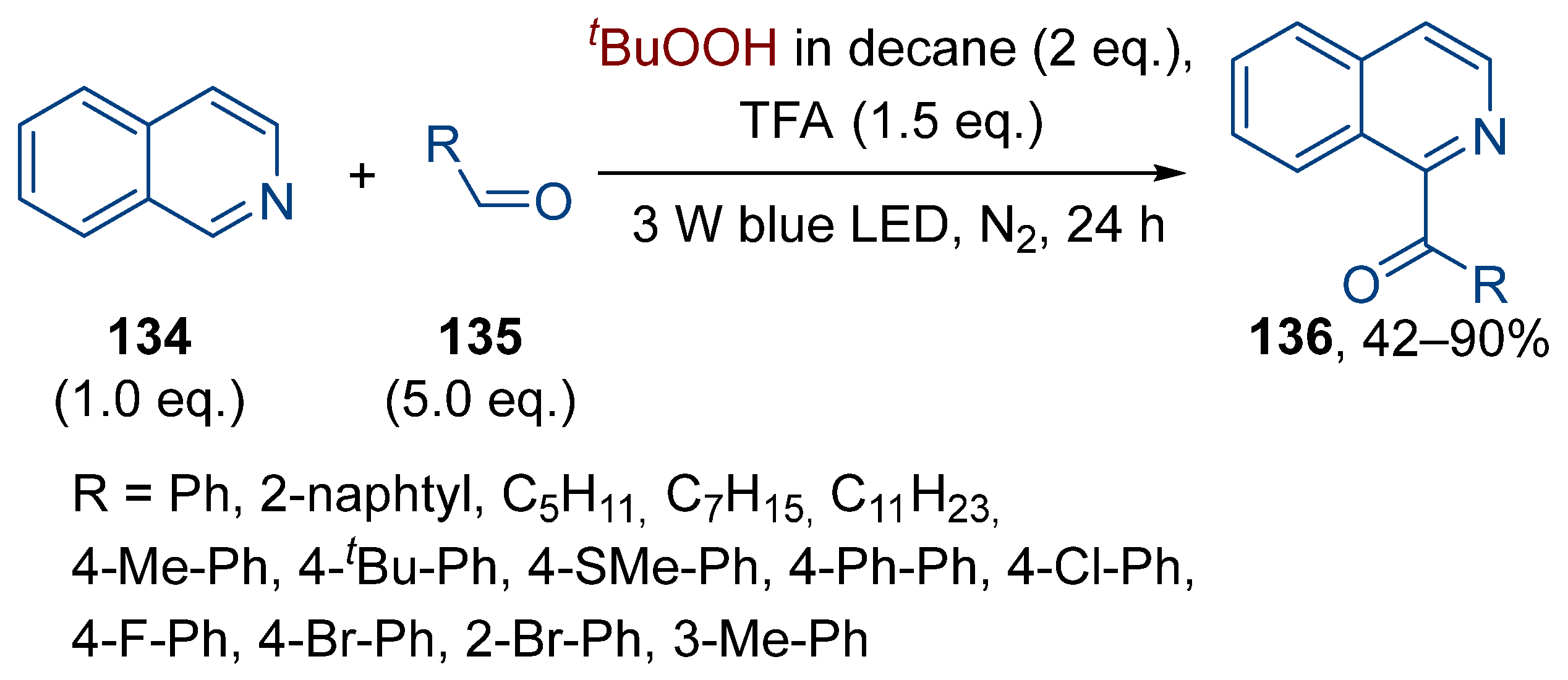
N-heterocycles 134 were successfully used in cross-coupling with aldehydes 135 under visible-light irradiation (Scheme 52) [95]. Various N-heterocycles were acylated with both aromatic and aliphatic aldehydes 135 in moderate yields. The absence of a photocatalyst makes this method appealing for synthetic organic chemistry. The authors proposed that the reaction proceeds via formation of a heteroarene–TBHP complex, which facilitates TBHP cleavage under visible-light irradiation (blue LED).
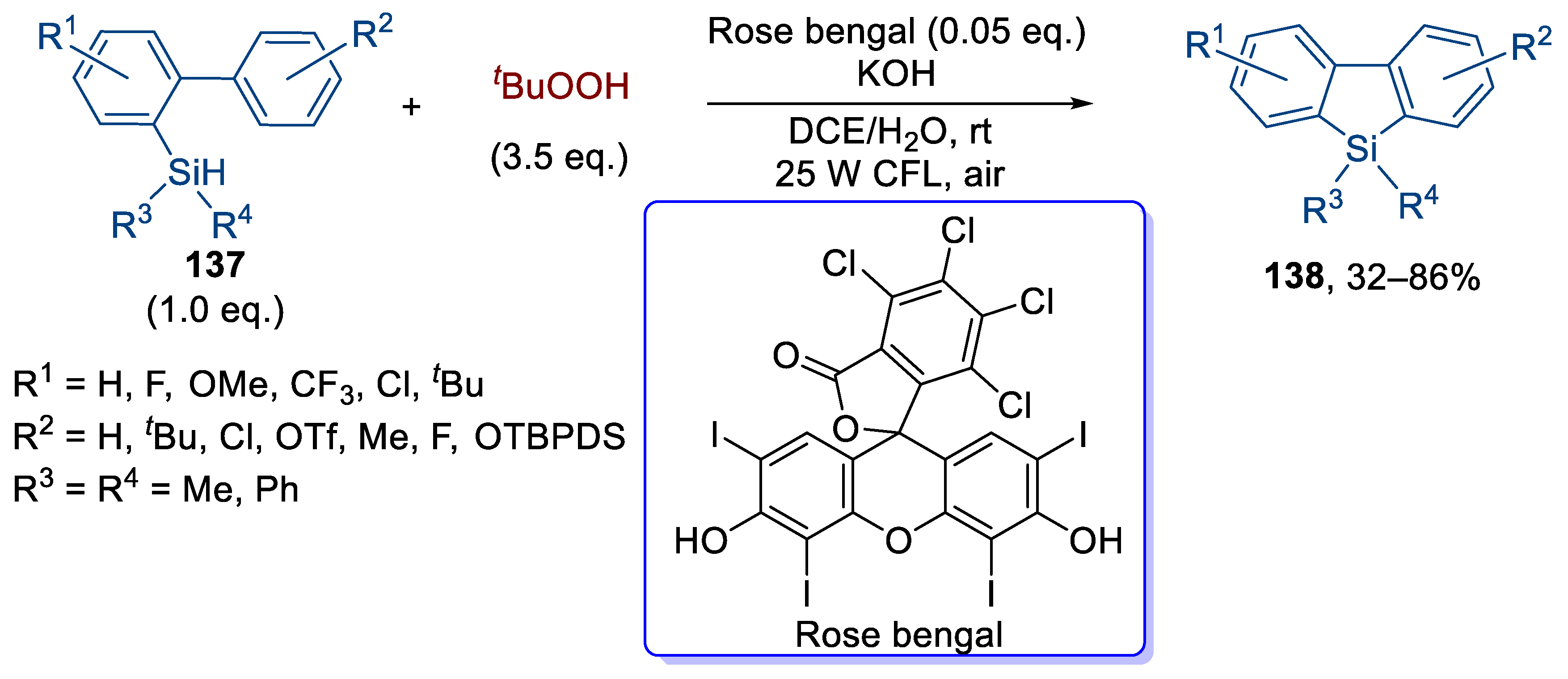
A photochemical method for the selective cyclization of biarylhydrosilanes 137 in a biphasic dichloroethane/water system under visible light was disclosed (Scheme 53) [96]. An available organic dye, Rose Bengal, was used as a photocatalyst. The results demonstrate the method’s high tolerance for functional groups and its broad range of applications. Mechanistic studies confirmed the photocatalytic nature of the reaction, ruling out the possibility of chain reactions.
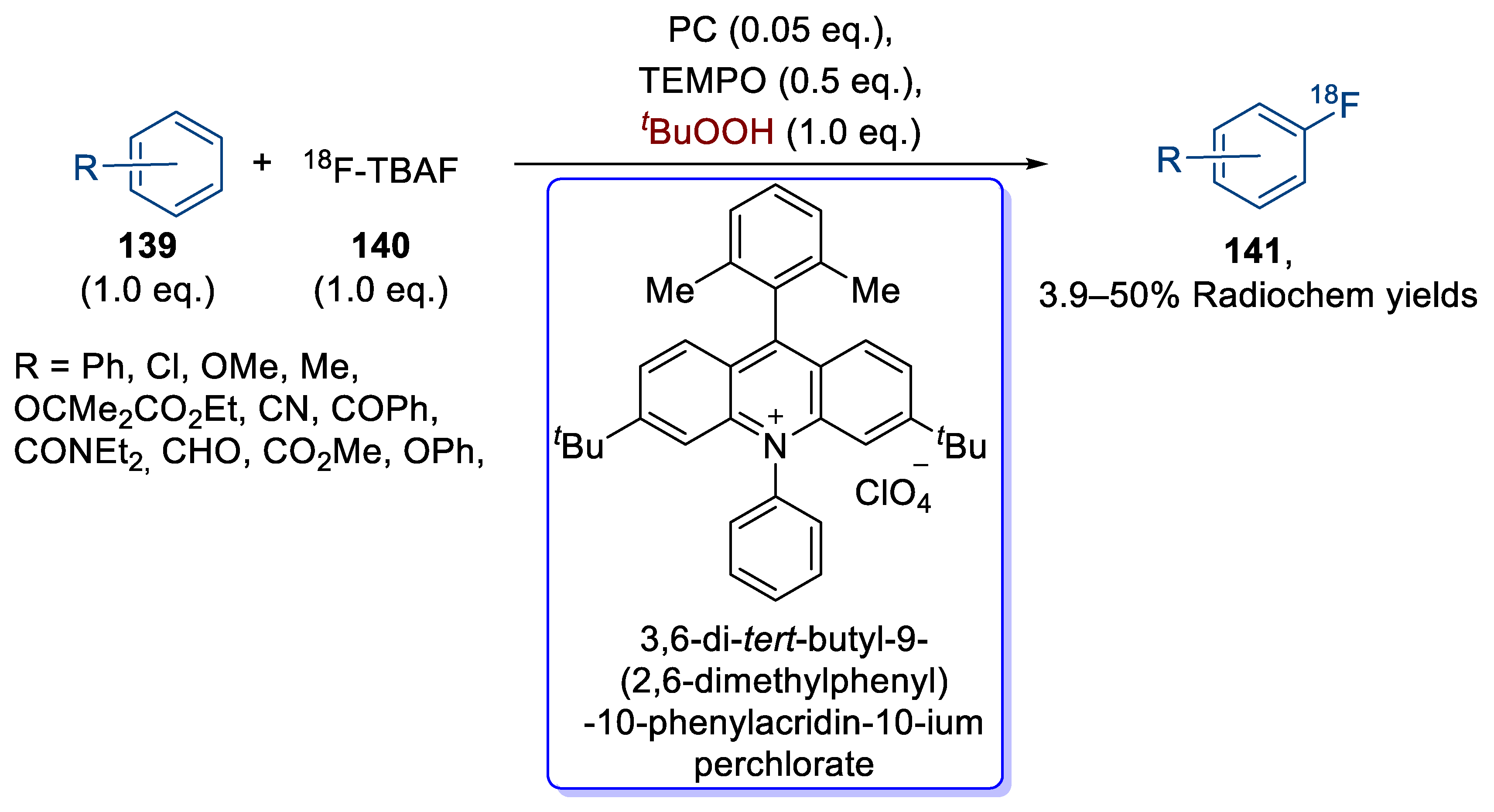
The photocatalytic fluorination of aromatic compounds 139 using tBuOOH in the presence of an organic photocatalyst was realized (Scheme 54) [97]. The mechanism probably involves photoinduced electron transfer and the formation of radical intermediates. The utilization of microreactors allows for enhanced process efficiency. The method exhibits high selectivity and facilitates the fluorination of various aromatic and heteroaromatic compounds 139.
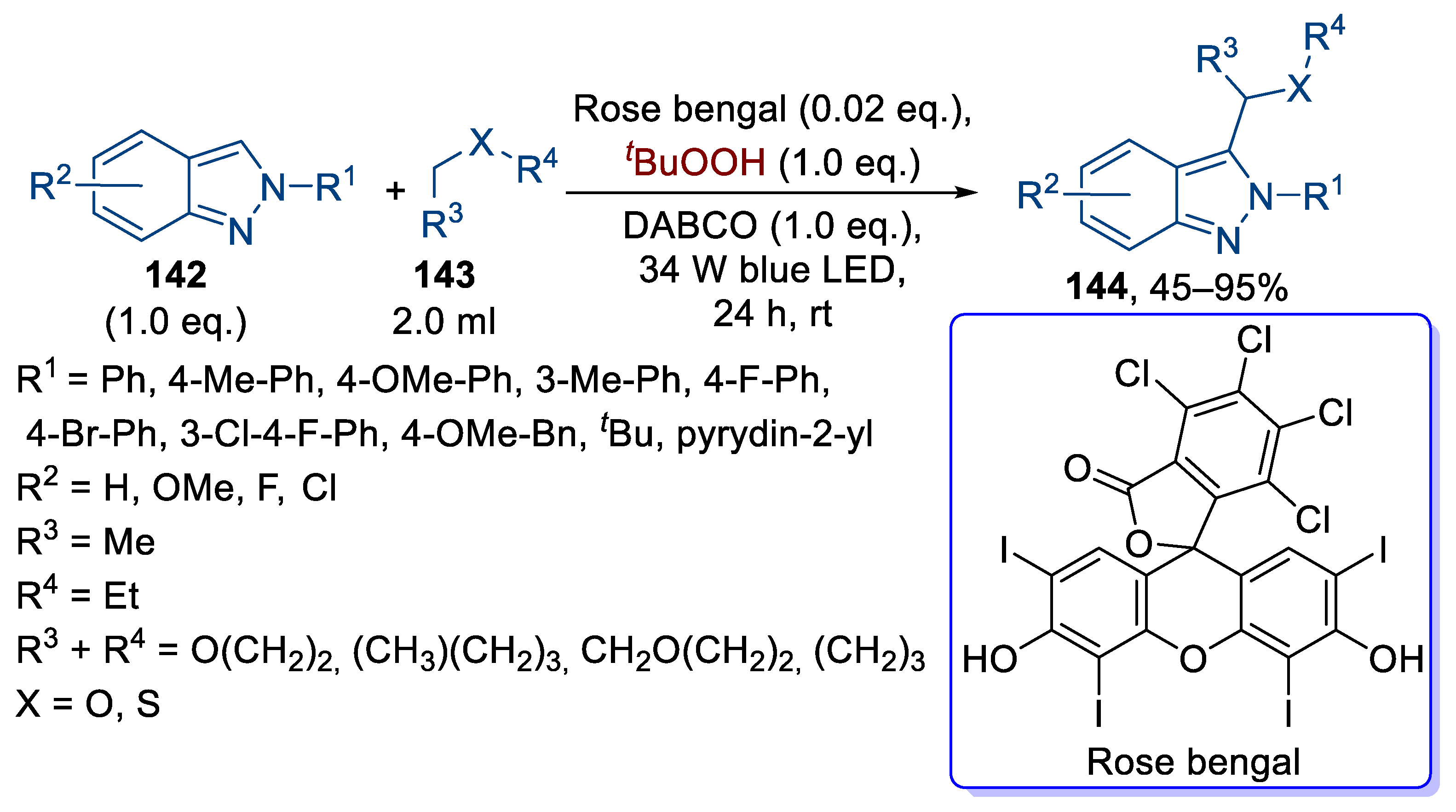
In A. Hajra’s work, a photocatalytic method for the selective cross-coupling of 2H-indazoles 142 with ethers 143 was described (Scheme 55) [98]. The organic dye Rose Bengal was utilized as the photocatalyst, while tBuOOH served as the oxidizing agent. The reaction readily proceeded at room temperature and in the air under visible light.
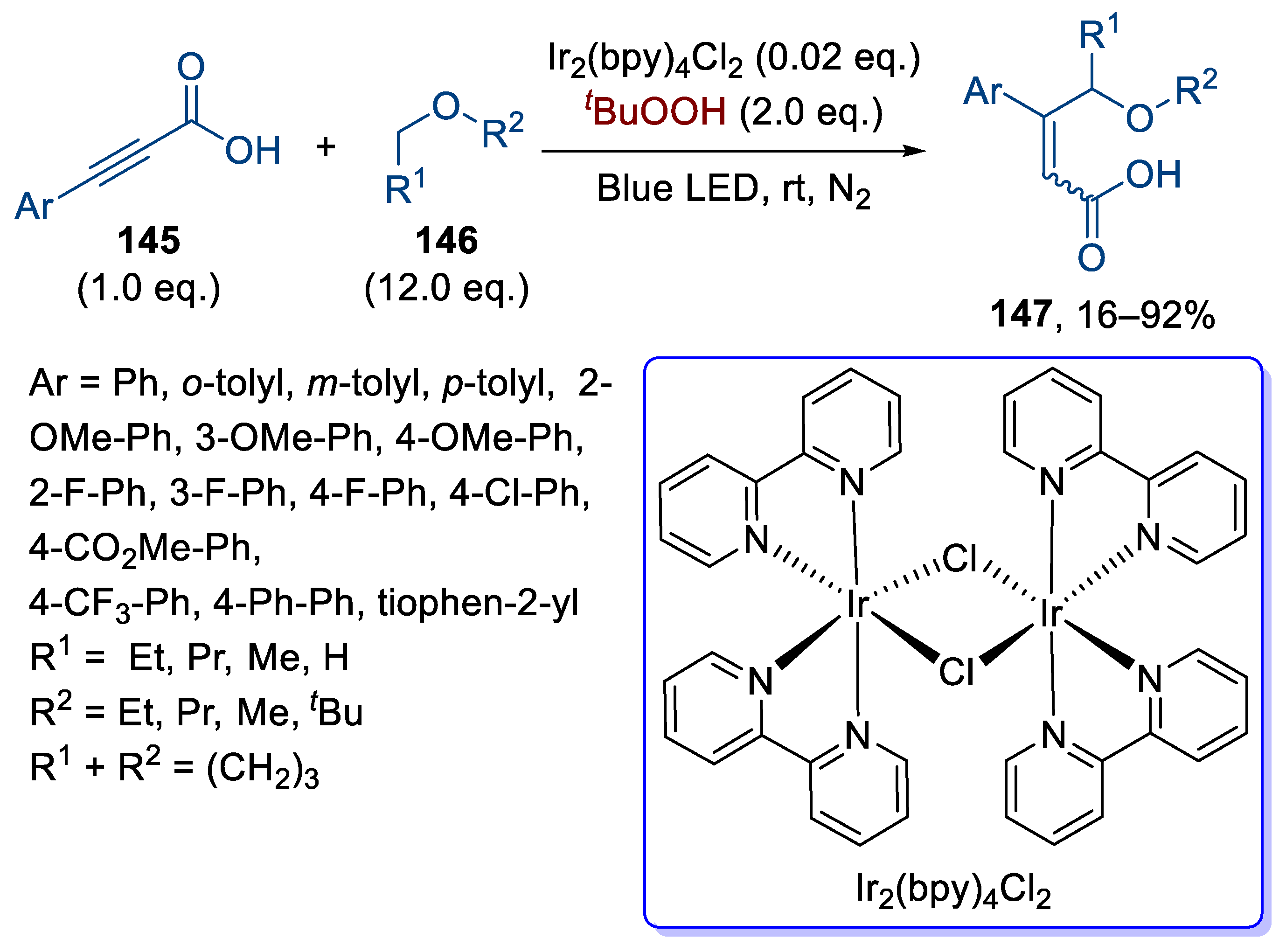
A photocatalytic method for the functionalization of triple bonds in acids 145 with ethers 146 was reported (Scheme 56) [99]. The transformation, catalyzed by an iridium complex, yields 3,3-bis-substituted acrylic acids 147. This catalytic system demonstrates compatibility with a wide range of arylpropionic acids and ethers. tert-Butyl hydroperoxide was used as a source of radical species, and high yields were achieved under photoredox catalysis conditions.
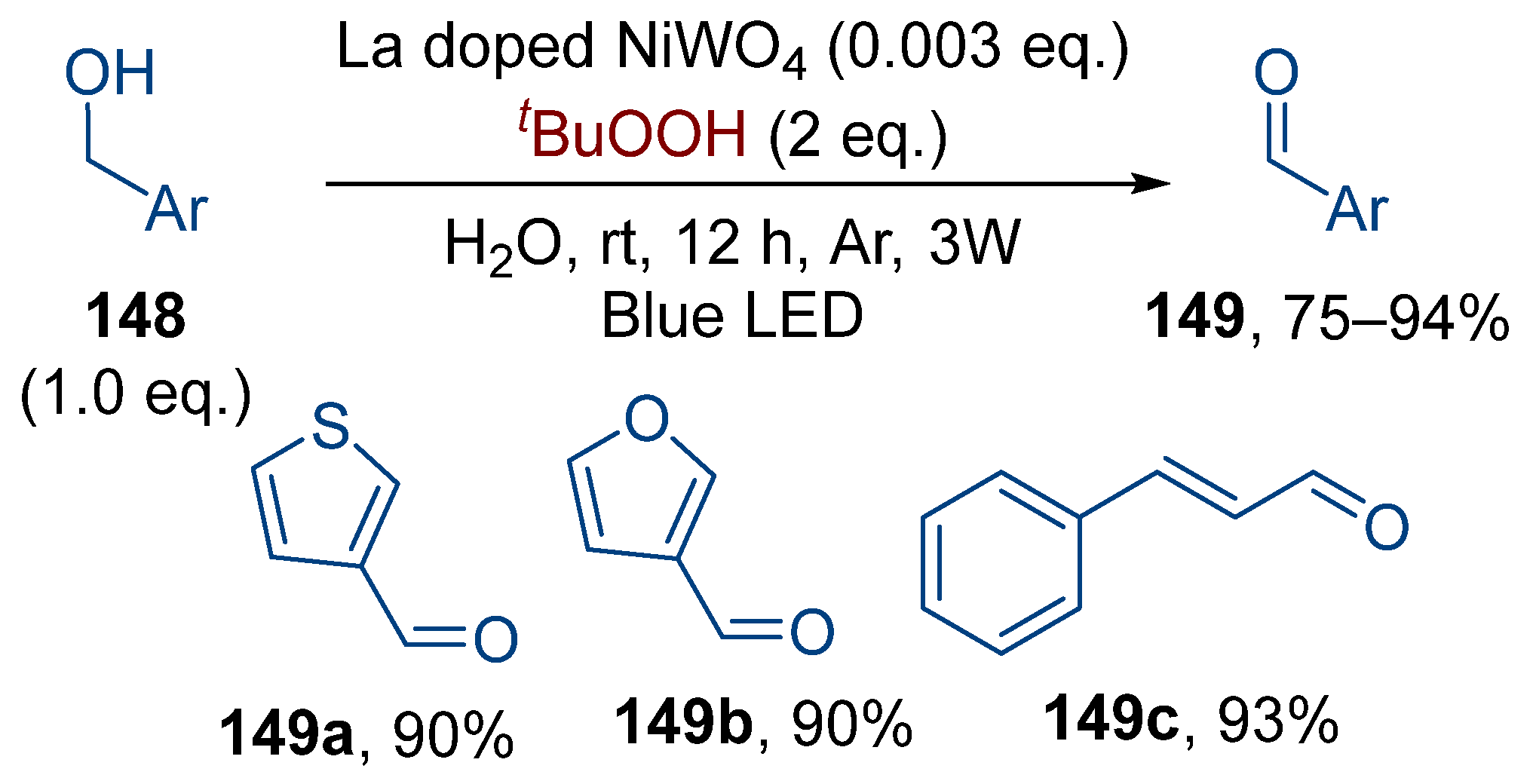
The photocatalytic oxidation of benzyl alcohols 148 was conducted in aqueous medium under the influence of visible light in the presence of an inorganic heterogeneous nickel-based photocatalyst (Scheme 57) [100]. This method facilitates the selective production of aldehydes or ketones 149 from various primary and secondary benzyl alcohols.
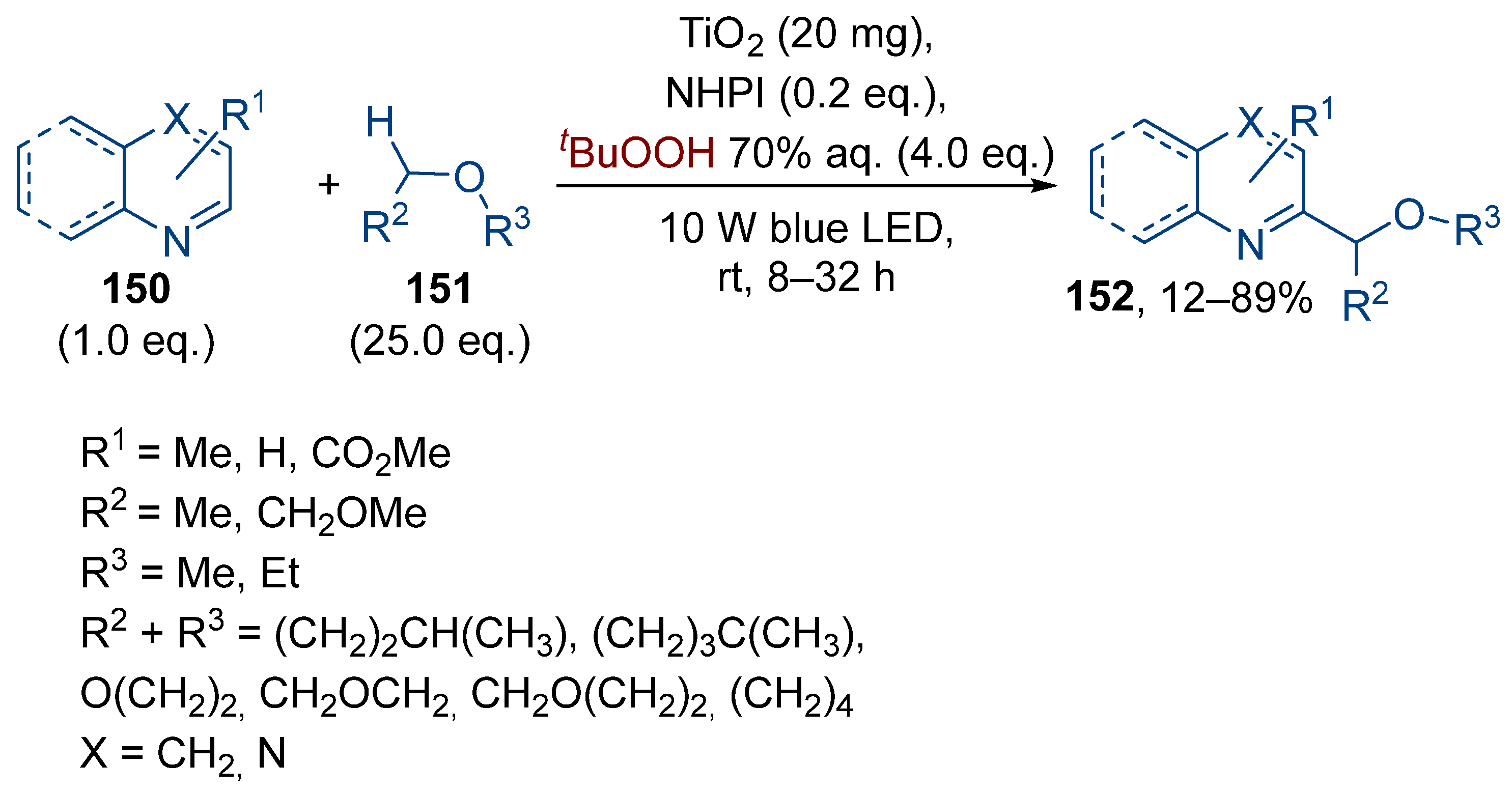
Efficient cross-coupling of N-heterocycles 150 with ethers 151 using a hybrid TiO2/NHPI photocatalytic system has been achieved in 2023 (Scheme 58) [101]. The combination of these two catalysts overcomes the limitations of traditional heterogeneous systems. The synergistic effect manifests itself through the absorption of visible light by TiO2/NHPI and the generation of highly reactive PINO radicals. These radicals then initiate a chain reaction, which ultimately results in the formation of products 152. Among the ethers, the most favorable outcome was achieved with THF, yielding 89% of 152 in 8 h. In contrast, the reaction with other ethers typically proceeds at a slower rate and with reduced selectivity.
Subsequently, the applicability of electron-deficient N-heterocycles 150 was examined (Scheme 58). The reaction is sensitive to steric hindrances: 2-chloro-5-bromoquinoline does not yield the coupling product, presumably due to the bulky Br-substituent near the 4-position of quinoline. The photochemical system is also inapplicable to quinoxalines and pyrazines.

4.2. Diacyl Peroxides

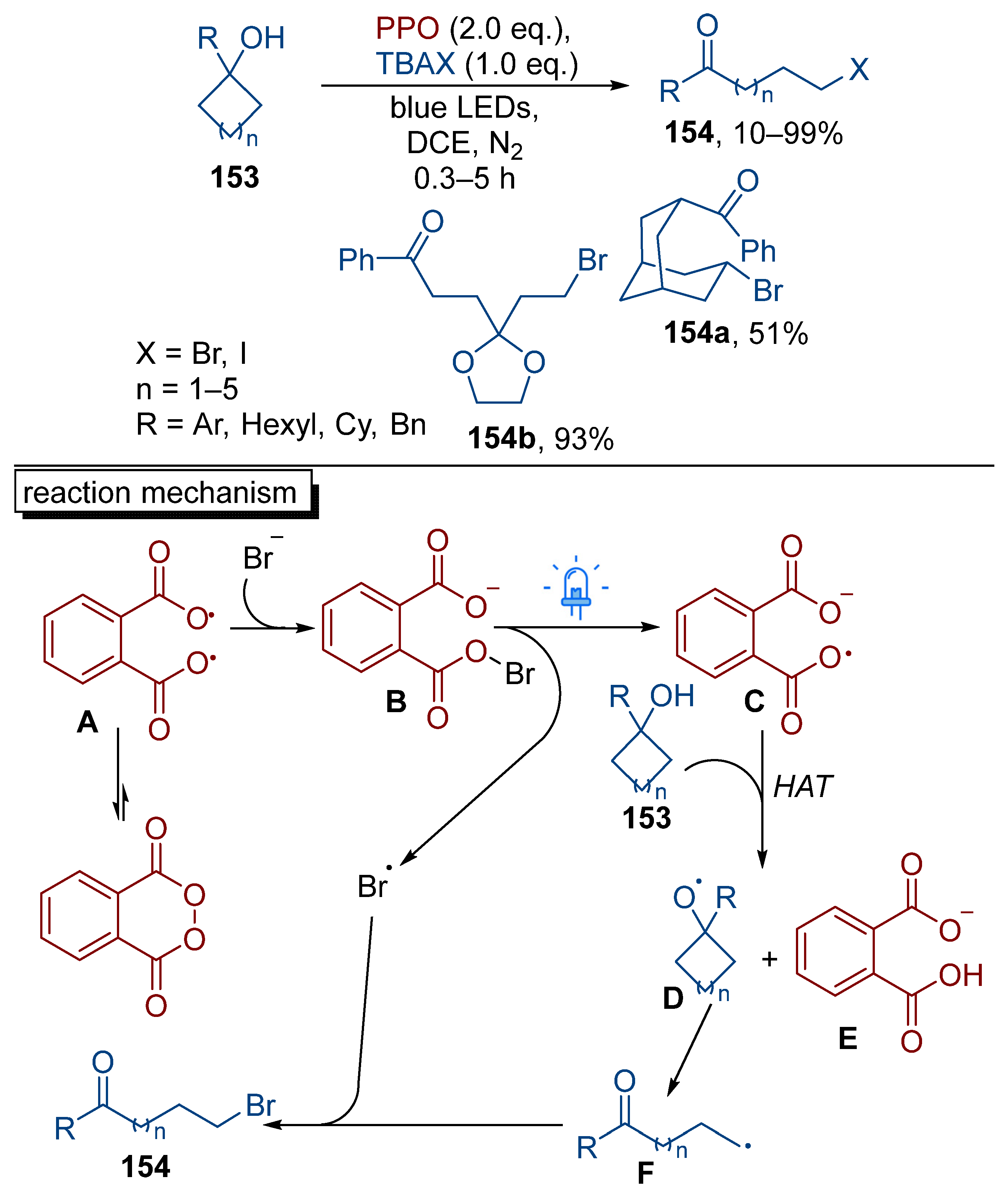
ω-Halogenated ketones 154 were synthesized via radical ring-opening of cyclic alcohols 153 followed by halogenation under photoredox catalysis conditions using a combination of phthaloyl peroxide and tetrabutylammonium halide (Scheme 59) [102]. The process is initiated by PPO (phthaloyl peroxide) homolysis with the formation of biradical A, followed by the generation of intermediate B via reaction A with bromide anion. The irradiation of intermediate B with blue light leads to homolytic cleavage of the O–Br bond to form radical anion C and the bromine radical. Abstraction of a hydrogen atom from the cycloalkanol 153 results in the generation of an alkoxy radical D. This radical subsequently undergoes a rearrangement, leading to ω-C-centered radical F. The final step in this sequence involves the interception of the ω-C-centered radical F by a bromine radical, culminating in the formation of brominated ketones 154.
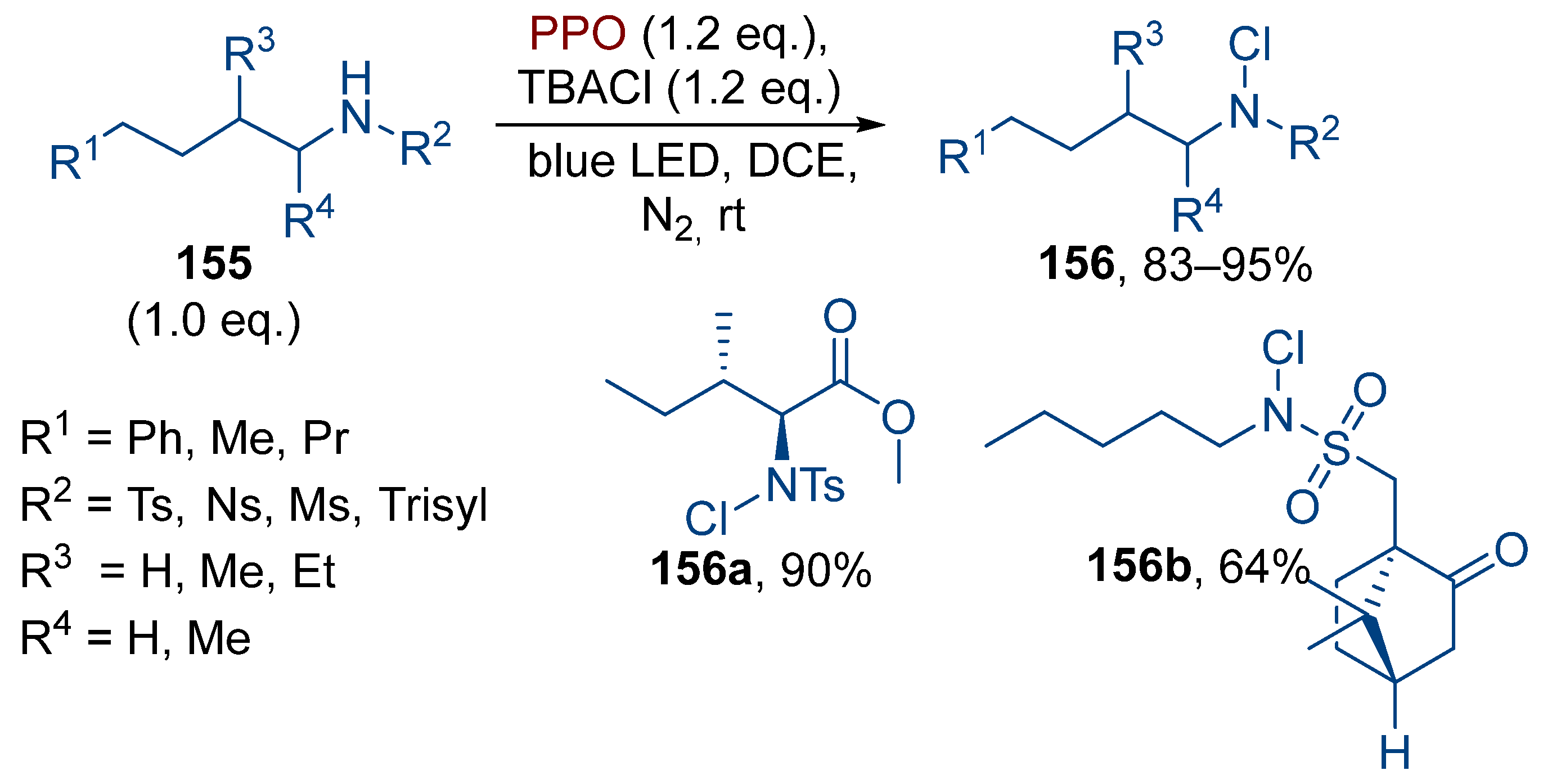
The successful coupling of cyclic peroxides with halide salts under visible light was applied for a Hofmann–Löffler–Freytag-like transformation of amines 155 (Scheme 60) [103]. This strategy allows for the formation of N-chloramides 156 in moderate-to-high yields.
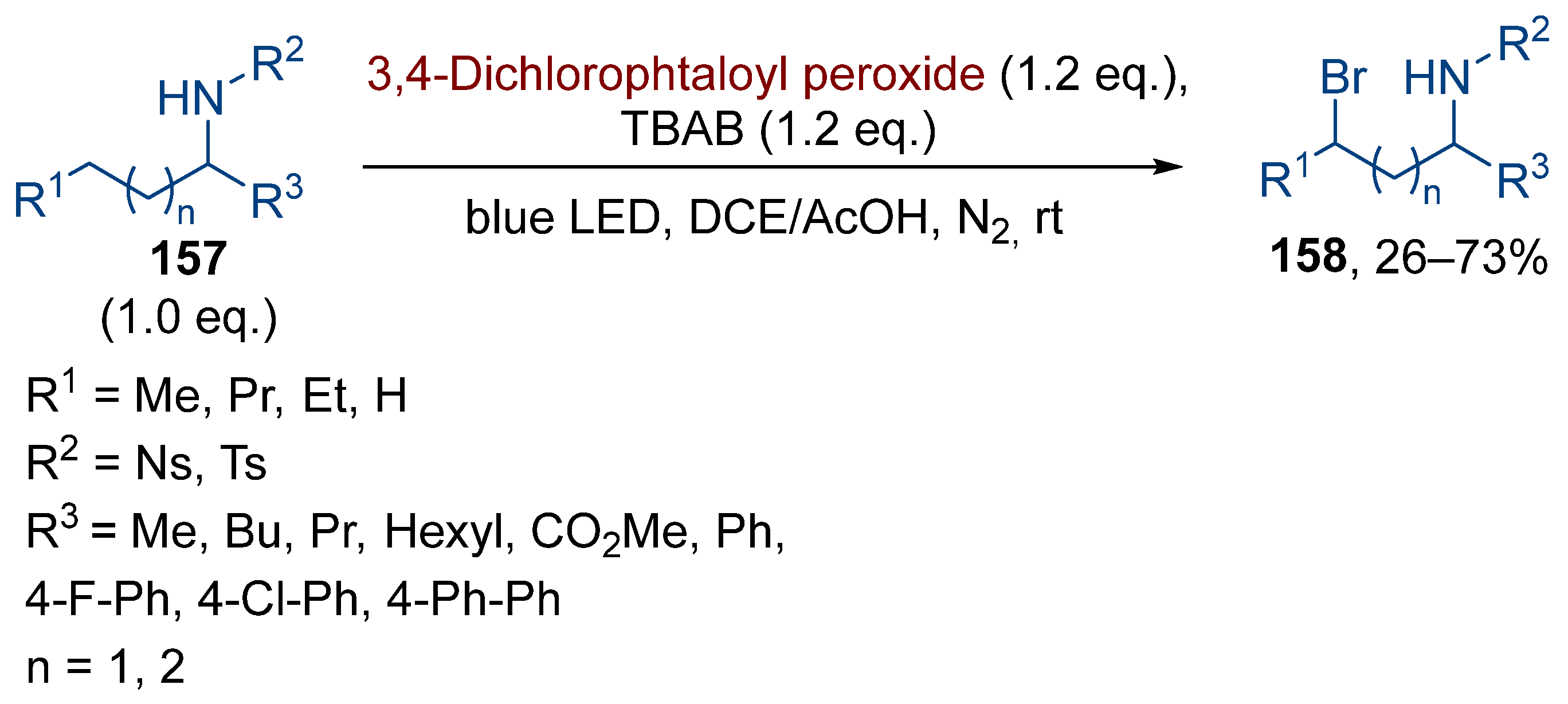
It was found that the combination of 3,4-dichlorophthaloyl peroxide and TBAB (tetrabutylammonium bromide) with visible-light irradiation promoted the bromination of remote C(sp3)–H bonds to afford δ-brominated products 158 from amines 157 in yields of up to 73% (Scheme 61) [103].
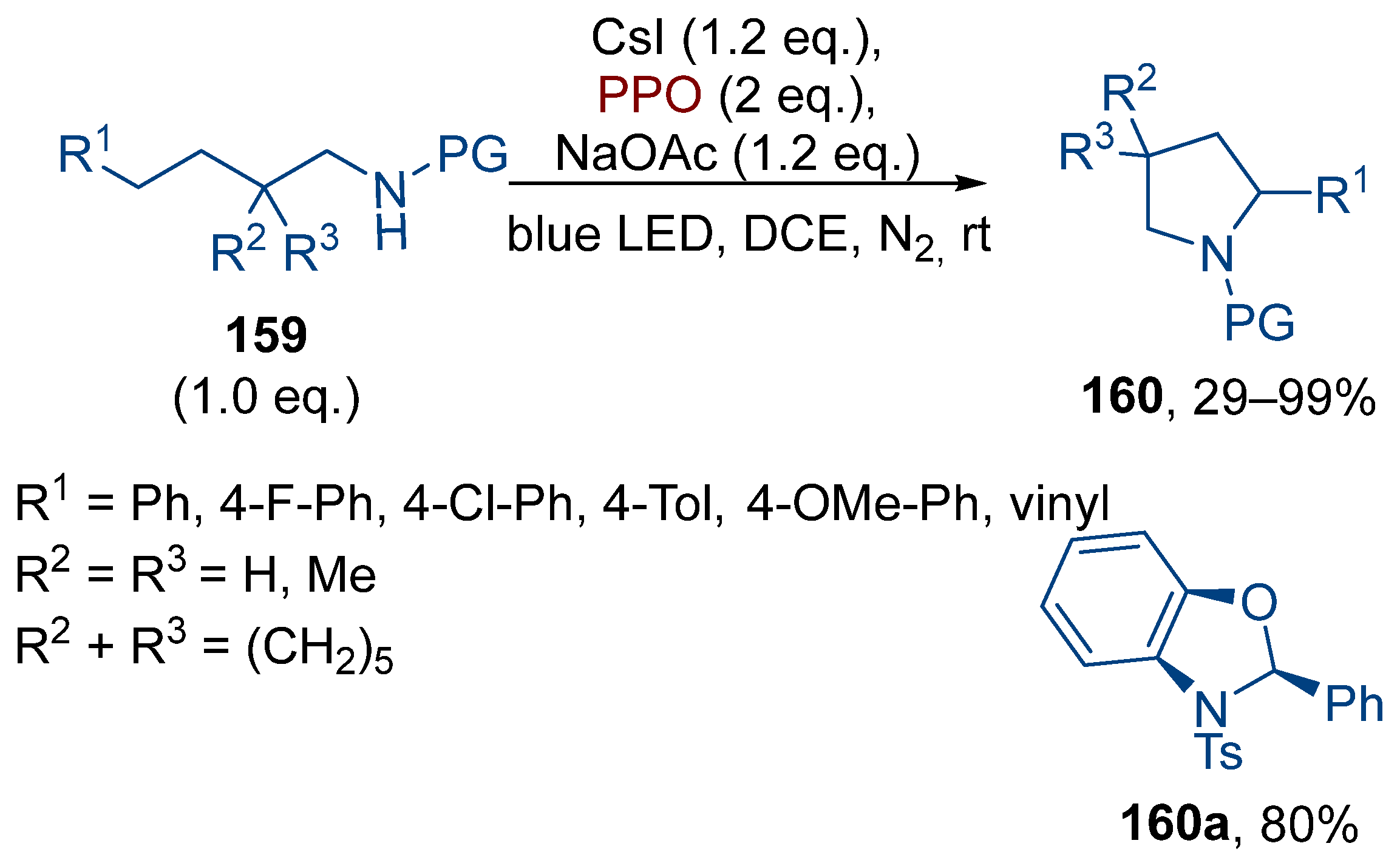
β-Alkyl-substituted sulfonamides 159 undergo a Hofmann–Löffler–Freytag type transformation with a combination of PPO and CsI, resulting in the formation of pyrrolidines 160 in quantitative yields (Scheme 62) [103]. The presence of electron-withdrawing (F, Cl) or electron-donating (Me, OMe) substituents on the aromatic ring did not exert a substantial influence on the reaction yield, thereby indicating that electronic factors do not play a significant role.
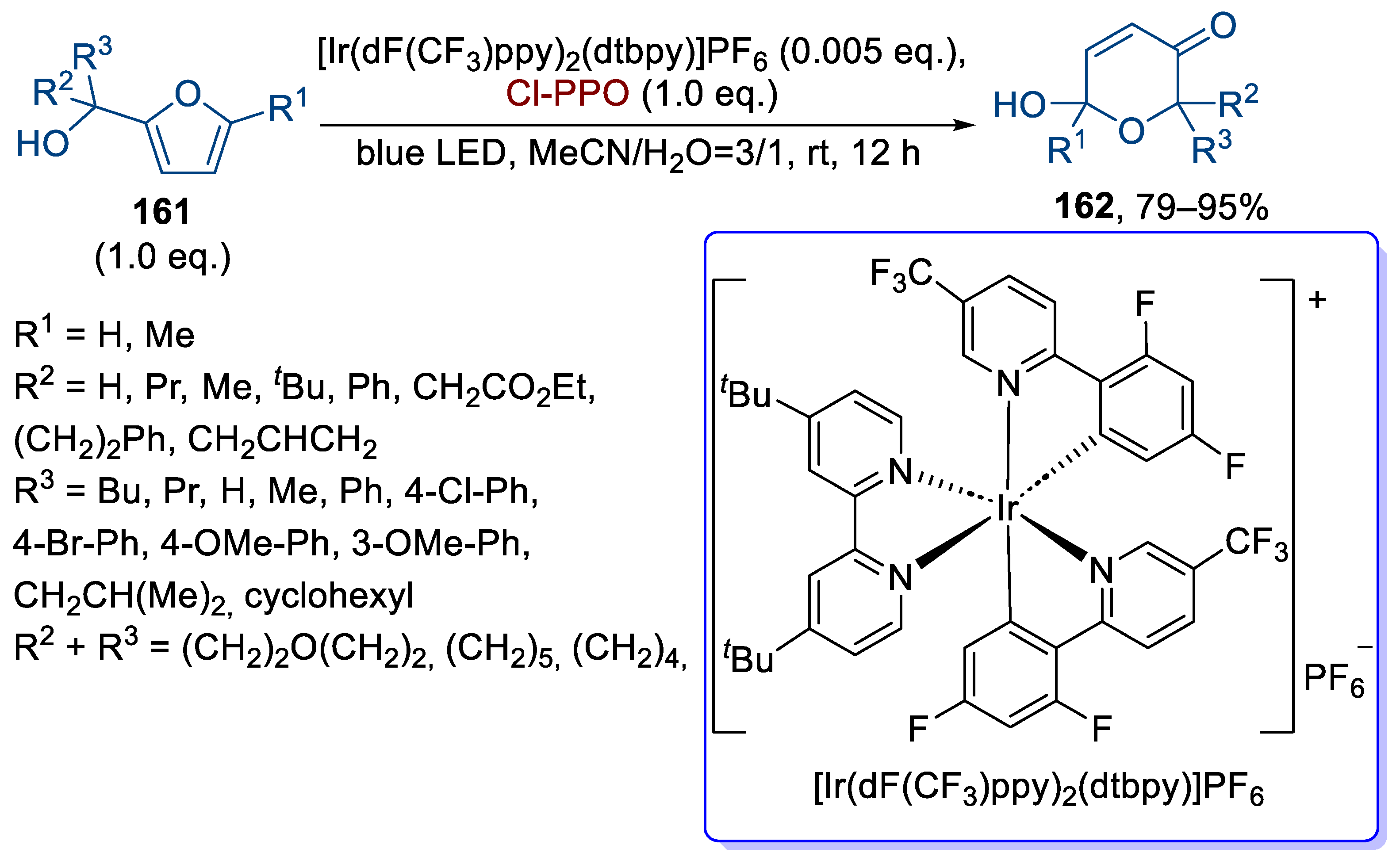
A photocatalytic Achmatowicz rearrangement of furfuryl alcohols 161 into dihydropyranones 162 with an iridium-based photocatalyst under visible light has been developed (Scheme 63) [104]. Cyclic diacyl peroxides are reduced by the catalyst, efficiently generating radicals that initiate the rearrangement. The method demonstrates compatibility with functional groups and enables the preparation of a wide range of dihydropyranones 162.
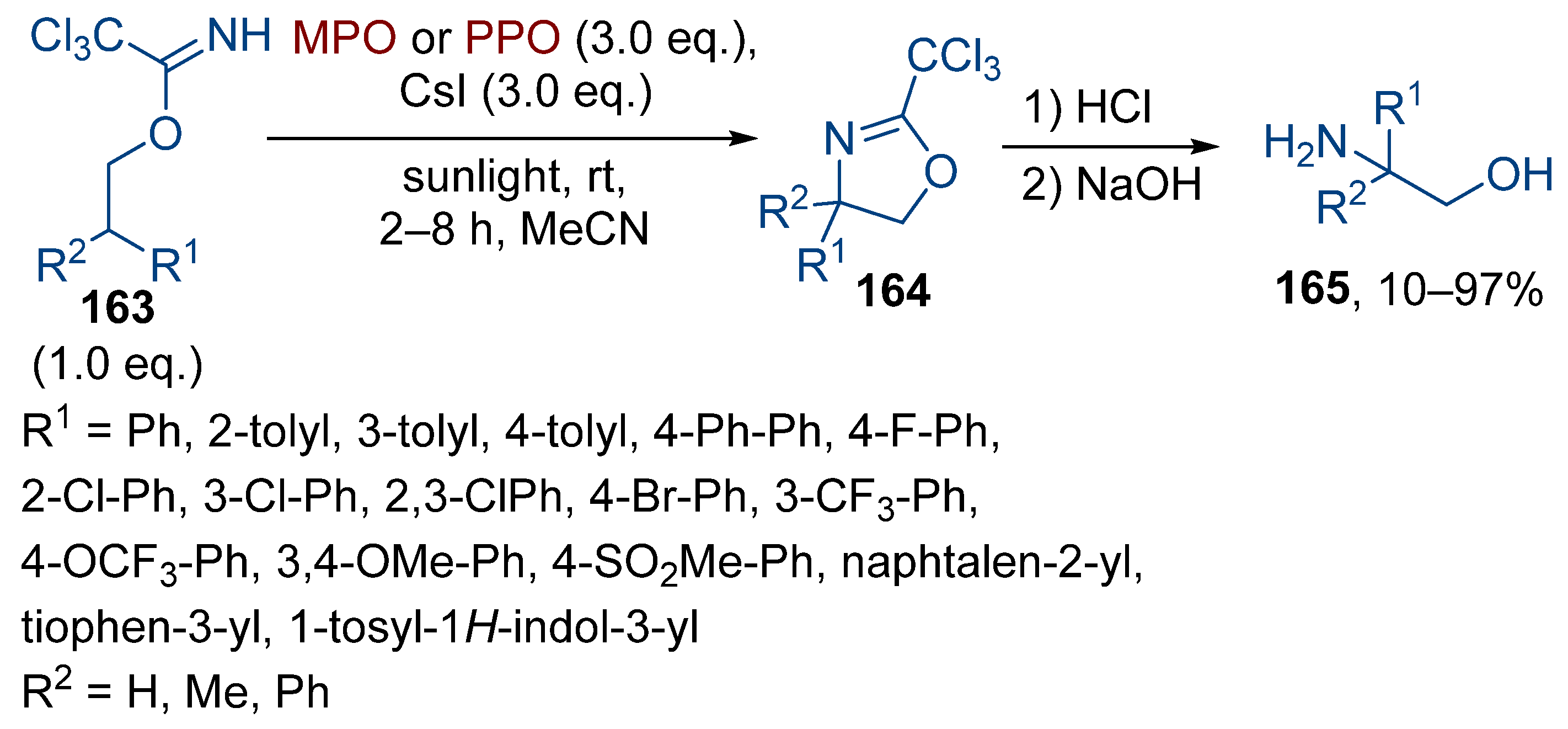
A method for the site-specific amination of imidates 163 with the formation of amino alcohols 165 without an external photocatalyst under the sunlight has been reported (Scheme 64) [105]. This method has been demonstrated to be applicable to a wide range of substrates and enables the late-stage functionalization of bioactive molecules. The reaction starts with the reaction of cyclopentylmalonoyl peroxide (MPO) and iodide ion to generate an intermediate, presumably an acyl hypoiodite, which undergoes homolytic cleavage of the O–I bond under visible-light irradiation, producing distonic radical anions and iodine radicals. Additionally, thorough study of the reaction mechanism has revealed that amination likely involves homolytic cleavage of N–H bonds, followed by controlled 1,5- or 1,6-hydrogen transfer.
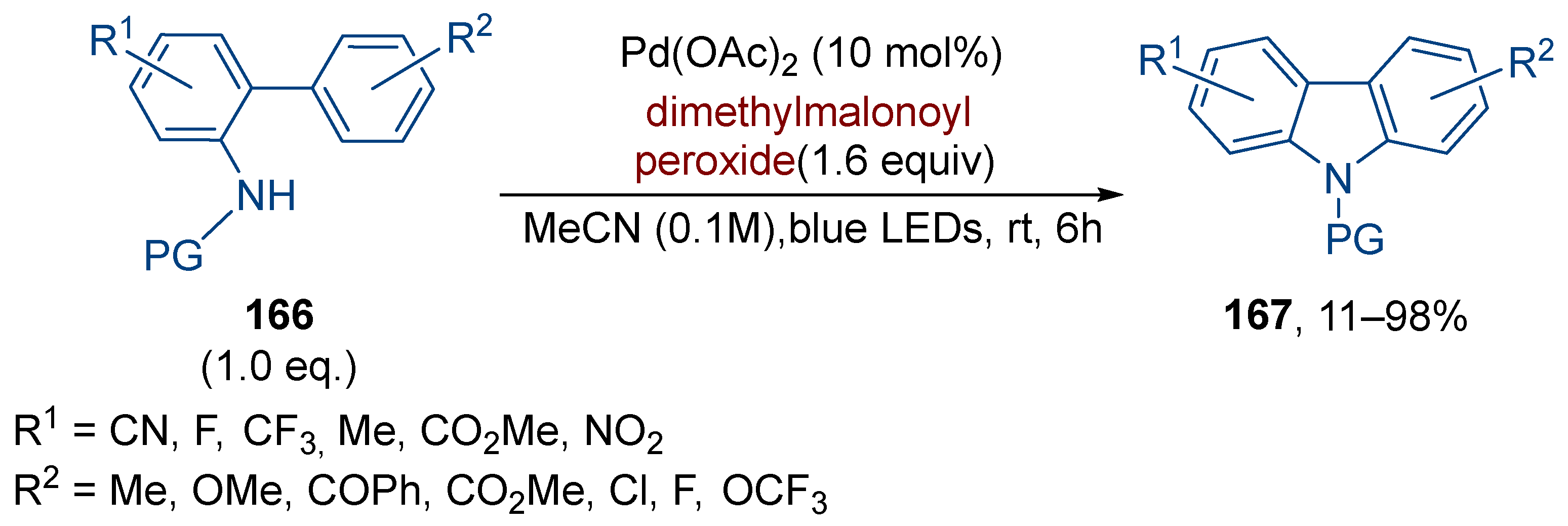
In a recent study, a catalytic approach for the synthesis of carbazole structures 167 from amines 166 via intramolecular oxidative amination of C–H bonds has been demonstrated by L. Shi (Scheme 65) [106]. The reaction is carried out under mild conditions, with palladium as the catalyst and dimethylmalonoyl peroxide as the oxidant. Mechanistic studies indicate a PdII/PdIV catalytic cycle. The function of the peroxide is to oxidize the PdII complex to a PdIV complex. The substrate coordination step is rate-limiting.
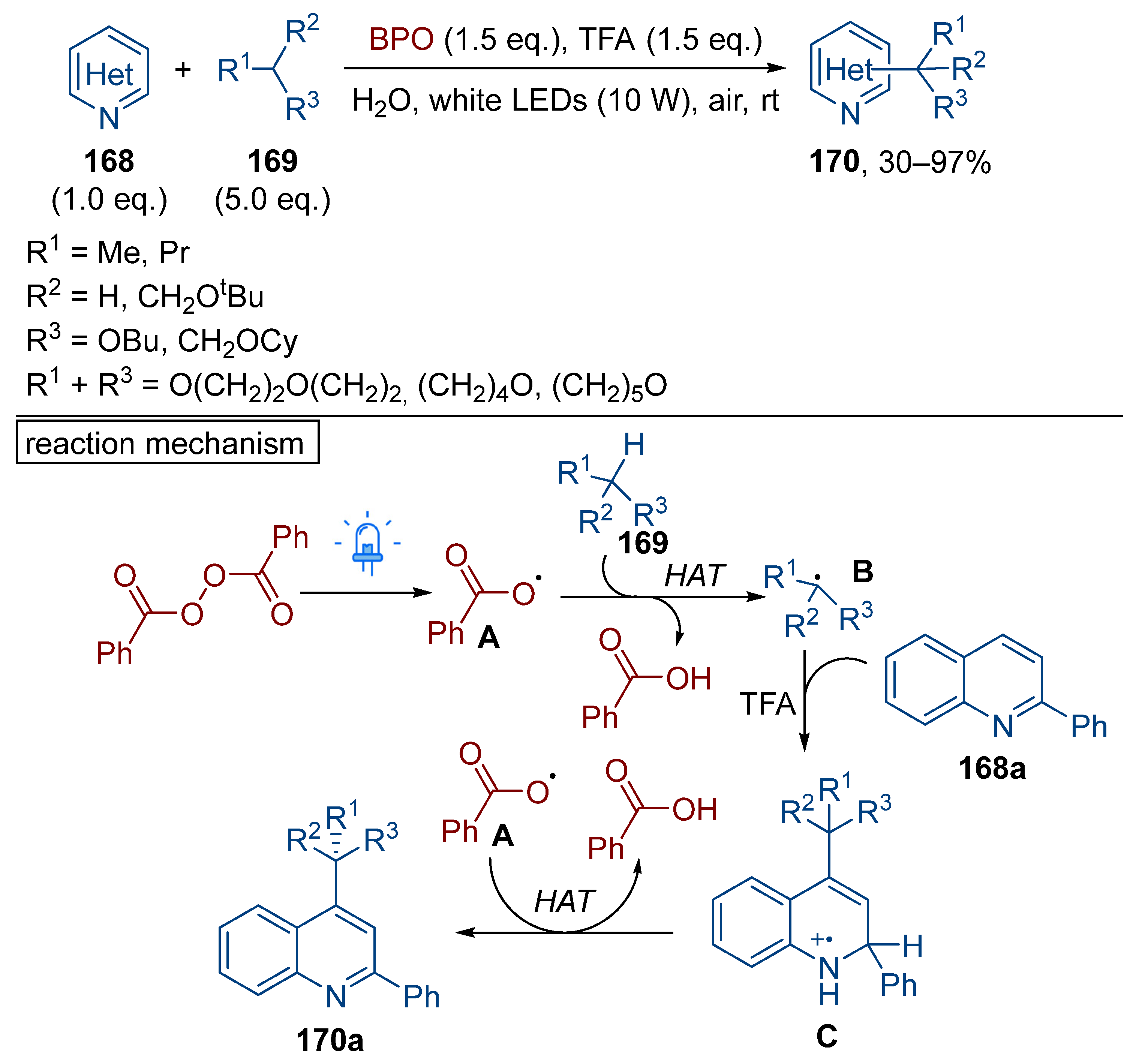
A Minisci-type reaction with substrates 168 and 169 that involves the generation of highly reactive benzoyloxy radicals generated by irradiation of BPO (benzoyl peroxide) with visible light has been reported (Scheme 66) [107]. BPO decomposes readily when exposed to visible light, releasing benzoyloxy radicals A. Subsequently, through intermolecular hydrogen atom transfer from 169 to radical A, a new nucleophilic radical B and benzoic acid are formed. The resulting radical B reacts with the protonated form of 168a to generate N-radical-cation C. Further HAT from intermediate C by A leads to the formation of 170a and a second molecule of benzoic acid.

4.3. Peroxyesters

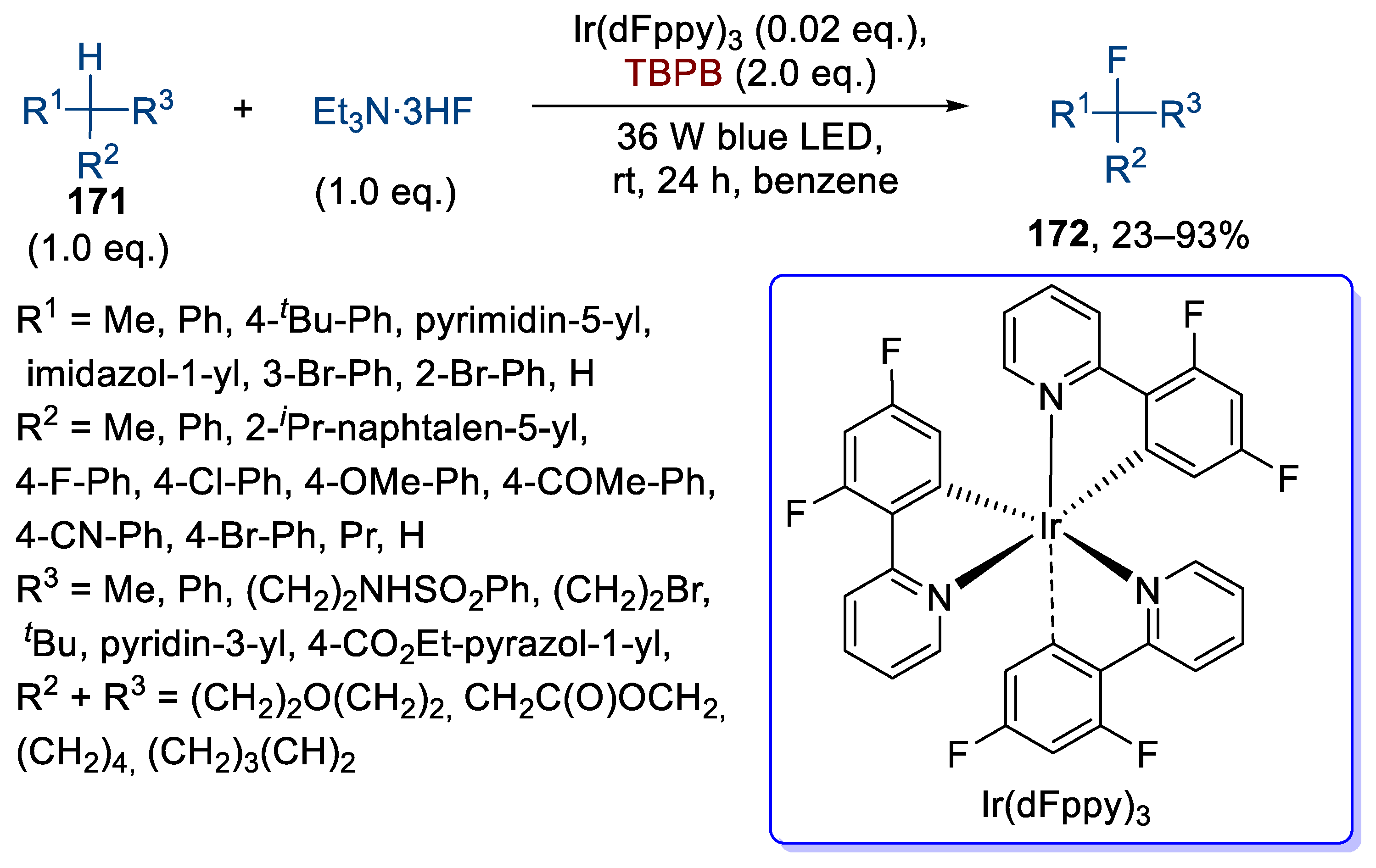
A photocatalytic approach for the fluorination of substrates 171 with organic peroxides serving as sources of alkoxy radicals was employed (Scheme 67) [108]. These radicals abstract a hydrogen atom from 171, generating C-centered radicals. The subsequent single-electron oxidation of these radicals enables the addition of fluoride anion from triethylamine trishydrofluoride. This method allows fluorination of various compounds 171, including commercially available drugs.
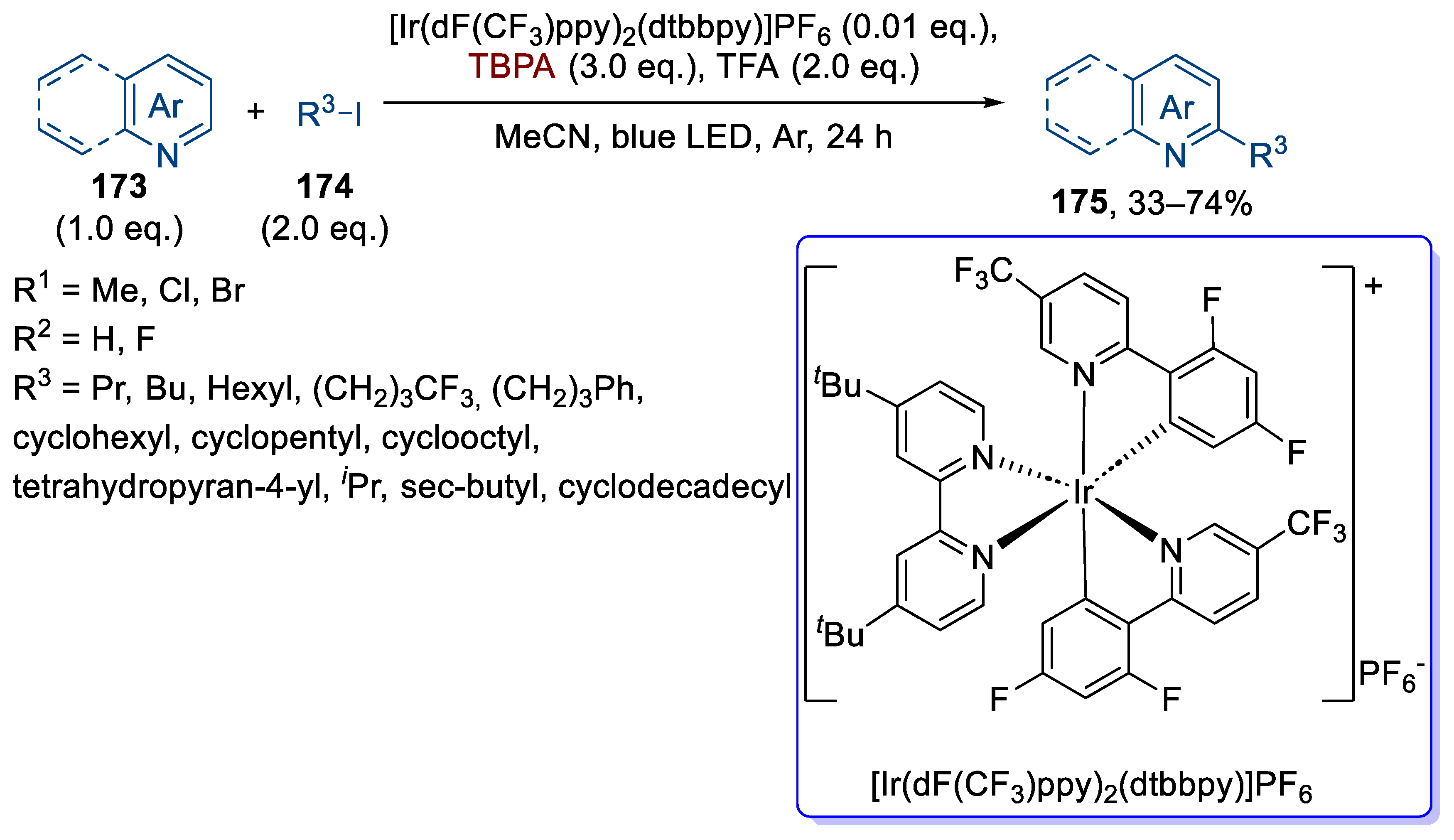
A photocatalytic alkylation of N-heteroarenes 173 with alkyl iodides 174 to form products 175 using the Minisci method is presented (Scheme 68) [109]. tert-Butyl peroxyacetate (TBPA) acts as an initiator for the generation of alkyl radicals from alkyl iodides 174. Alkyl radicals subsequently attack the aromatic ring of the N-heteroarene 173.
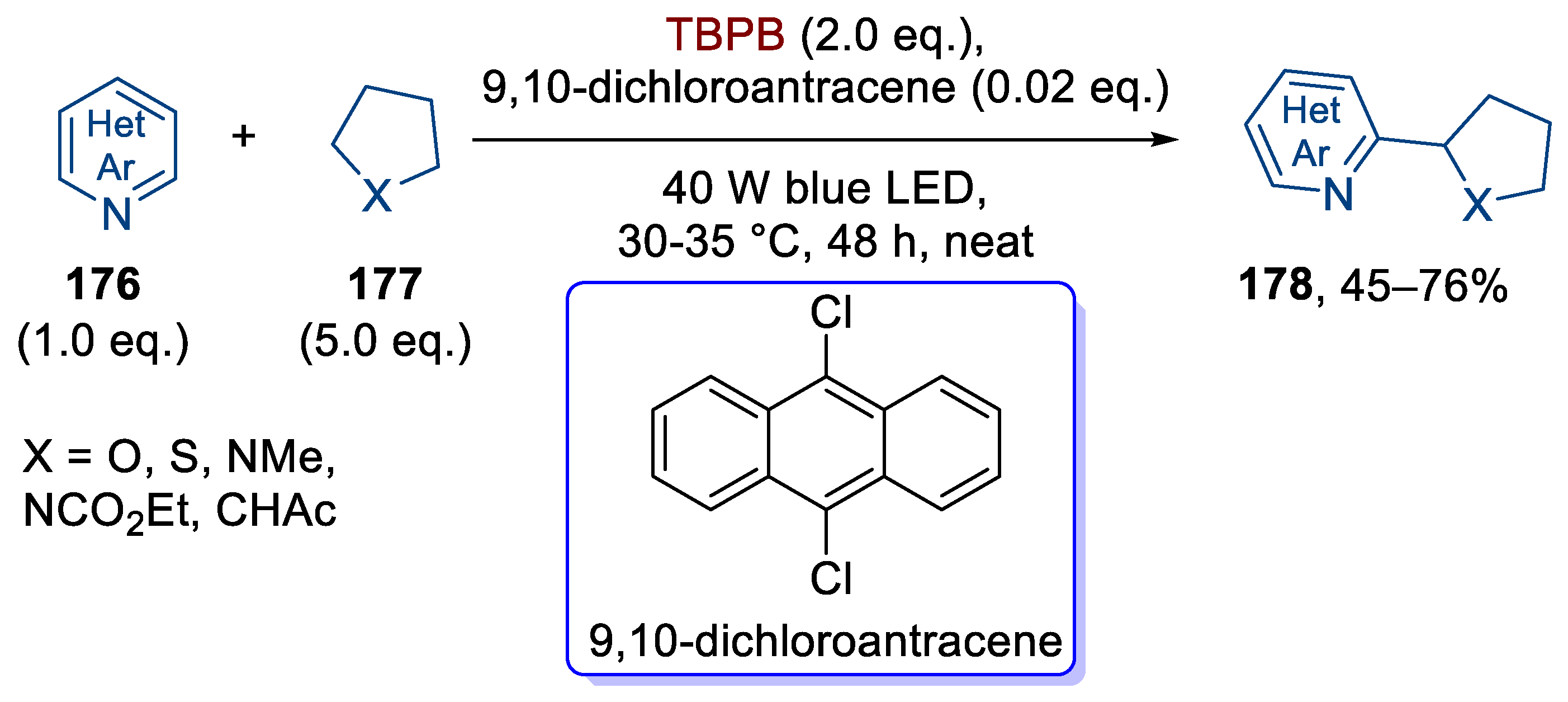
St. Zhou and colleagues have reported on the alkylation of both azoles and azines (5- and 6-membered heteroarenes) 176 using alkanes, ethers, carbamates 177, and tert-butyl peroxybenzoate under visible-light irradiation (Scheme 69) [110]. Using 9,10-dichloroanthracene as a photosensitizer allows reactions to be carried out under visible-light irradiation. The high efficiency benefits from homolytic cleavage of tert-butyl peroxybenzoate, which was enhanced by 9,10-dichloroanthracene and occurred via energy transfer via a singlet exciplex. The generated radicals abstract a hydrogen atom from substrate 177. The resulting radical then reacts with the heteroarene 176, leading to the formation of a C–C bond and an alkylation product 178.

4.4. Dialkyl Peroxides

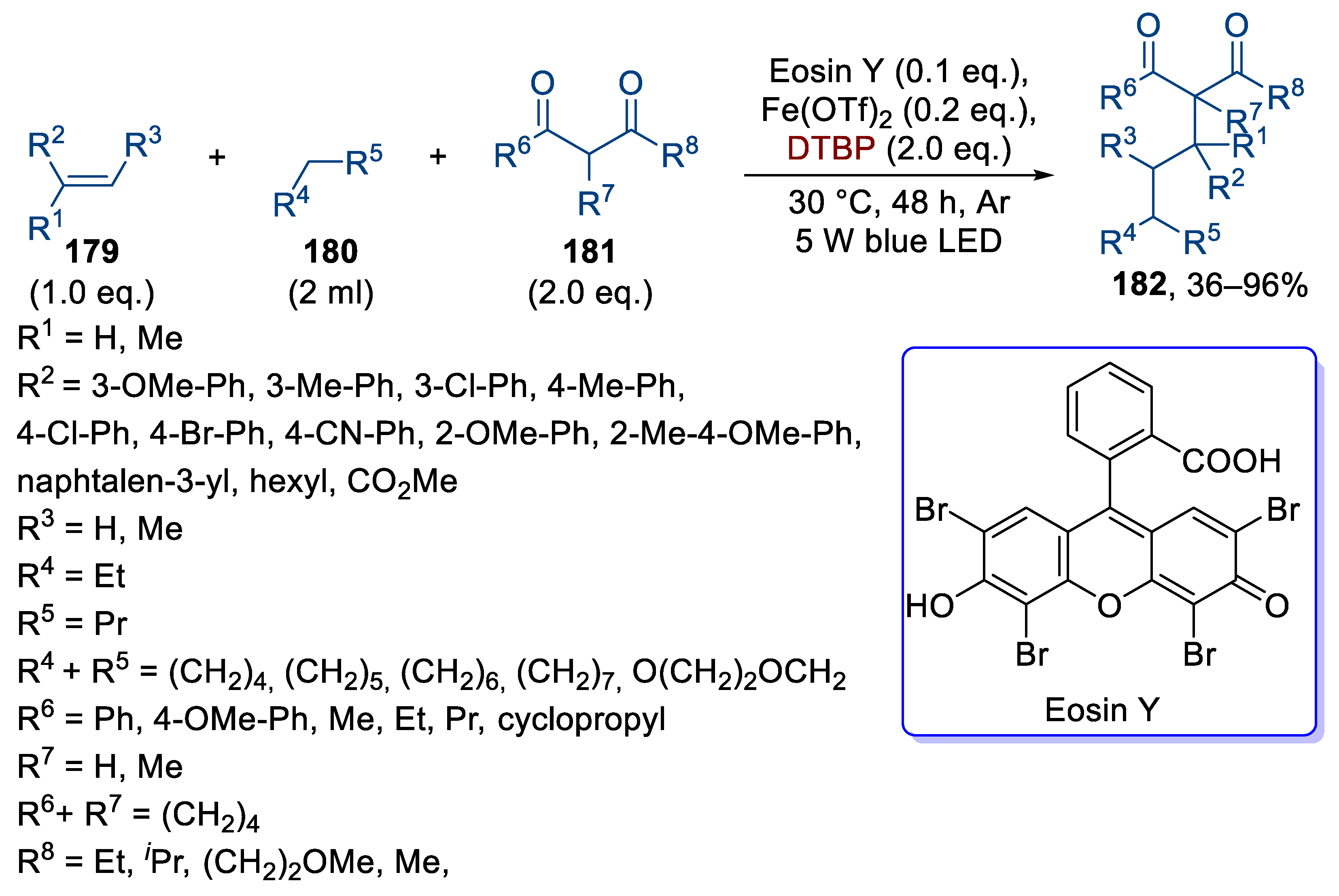
A three-component reaction of alkenes 179 with alkanes 180 and 1,3-dicarbonyl compounds 181, combining photooxidative and metal catalytic cycles, has been developed (Scheme 70) [111]. Di-tert-butyl peroxide acts as a multifunctional oxidant: ensuring photocatalyst regeneration, the generation of secondary alkyl radicals via HAT from substrate 180, and the promotion of 1,3-dicarbonyl anion formation. Eosin Y is the photocatalyst, while an iron(II) salt serves as the metal catalyst. The synergistic interaction between the photocatalyst and the metal complex enables efficient synthesis of the target compounds 182 under photocatalytic conditions.
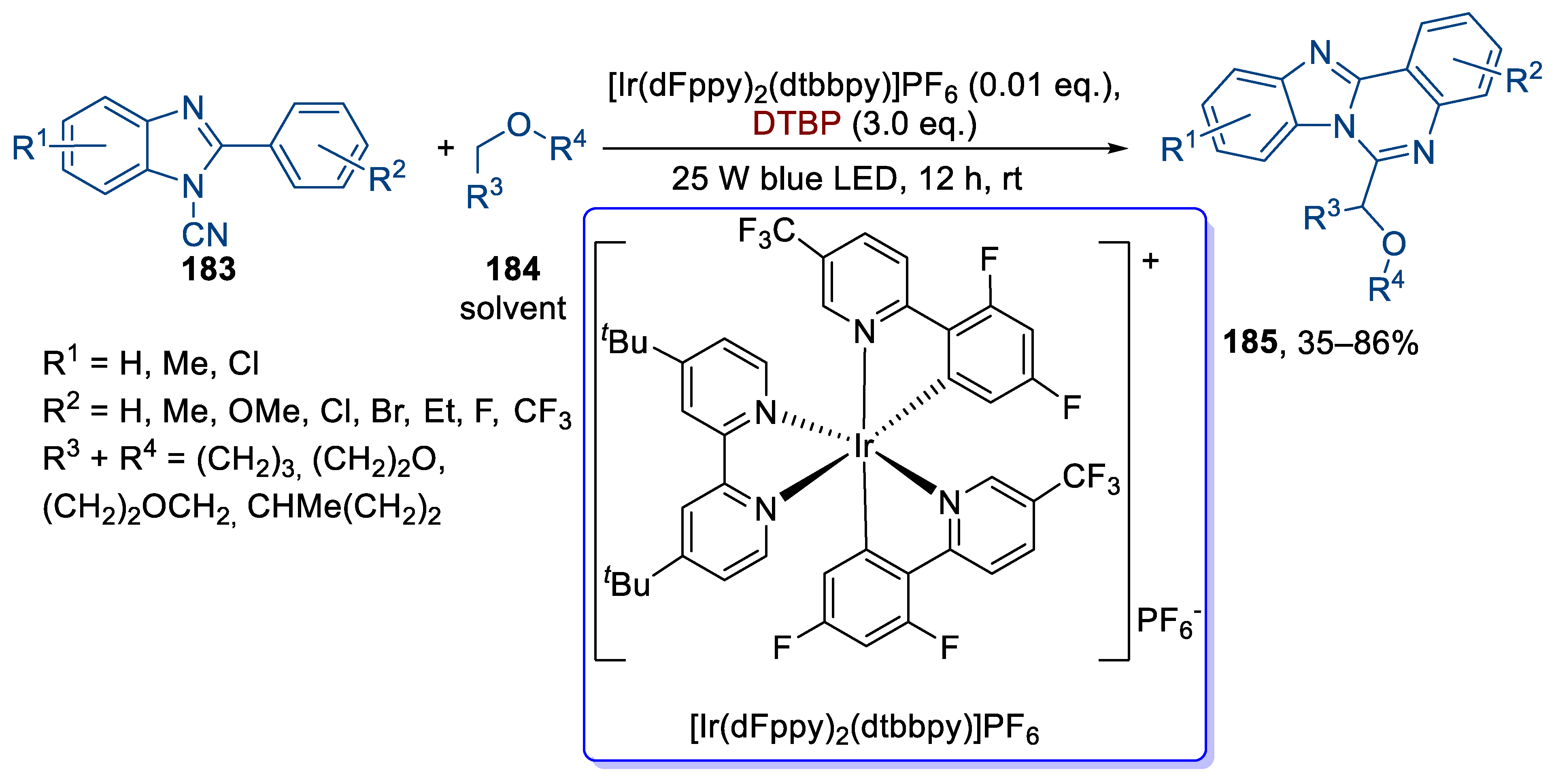
A photocatalytic radical cascade cyclization of cyanamides 183 with ethers 184 to yield tetracyclic benzo[4,5]imidazo[1,2-c]quinazolines 185 has been developed (Scheme 71) [112]. The reaction is carried out under mild conditions (room temperature, visible light), yielding the products in high yields. The process is based on the generation of highly reactive iminyl radicals, which initiate a cascade of reactions.
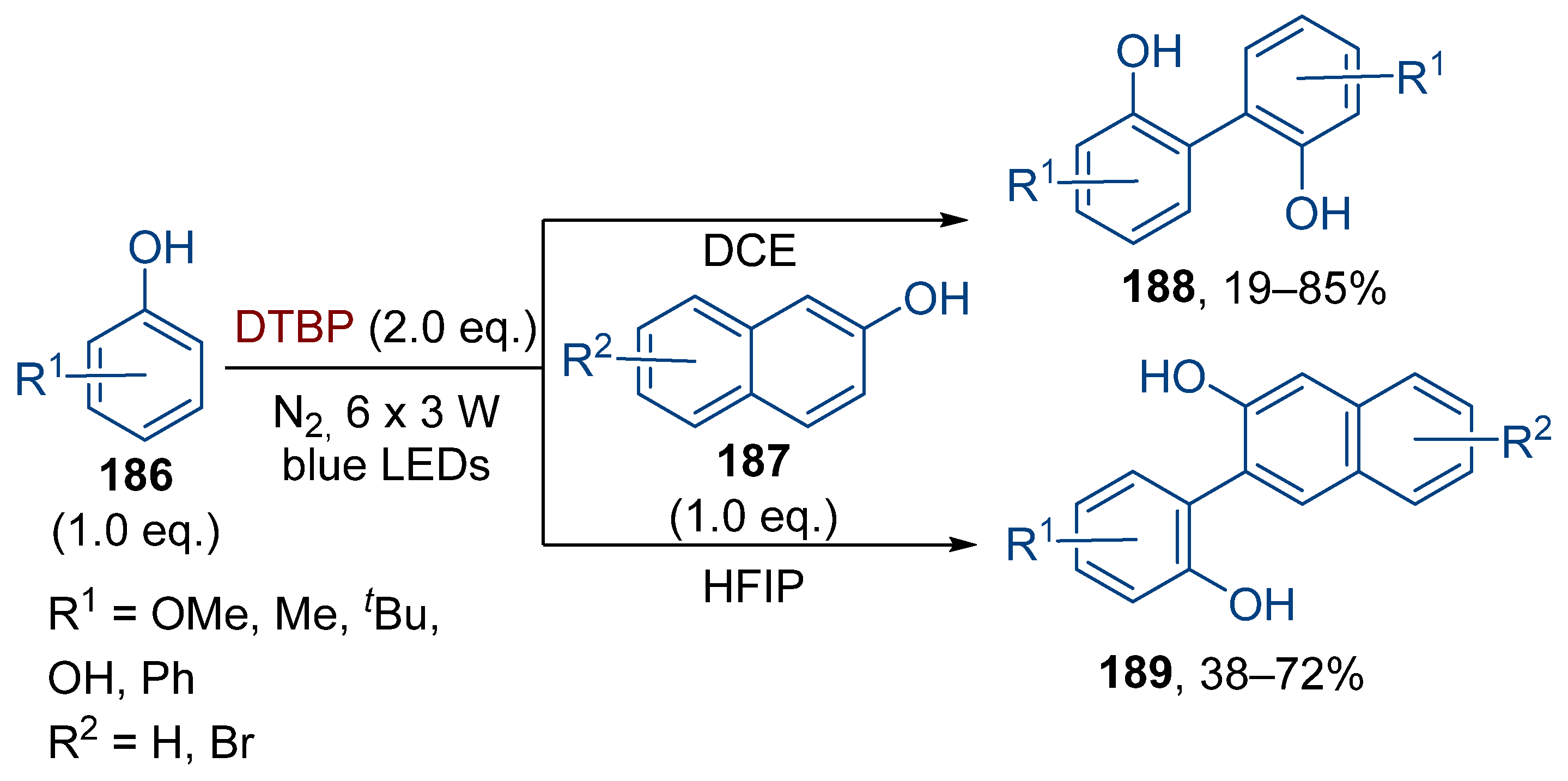
Photocatalytic homo- and cross-coupling reactions of phenols 186 using di-tert-butylperoxide as a source of radical species have been realized (Scheme 72) [41]. The irradiation of the reaction mixture with visible light leads to the homolytic cleavage of the O–O bond in DTBP, forming tert-butoxyl radicals. These radicals subsequently initiate oxidative conjugation of phenolic compounds, enabling the efficient synthesis of biaryl compounds 188 under mild conditions without the use of catalysts. Irradiation of the reaction mixture of phenol 186 and naphthol 187 in hexafluoroisopropanol in the presence of di-tert-butyl peroxide (DTBP) under blue light leads to the formation of cross-coupling products 189. Substituents on the phenol ring have been shown to have a significant impact on reaction efficiency. The presence of electron-donating substituents (e.g., alkoxy groups) in the ortho- or para- increased the yield of the products 189. However, in the case of 2,4-dimethoxyphenol, the predominant formation of the homocoupling product was observed, indicating certain limitations in the applicability of this method.
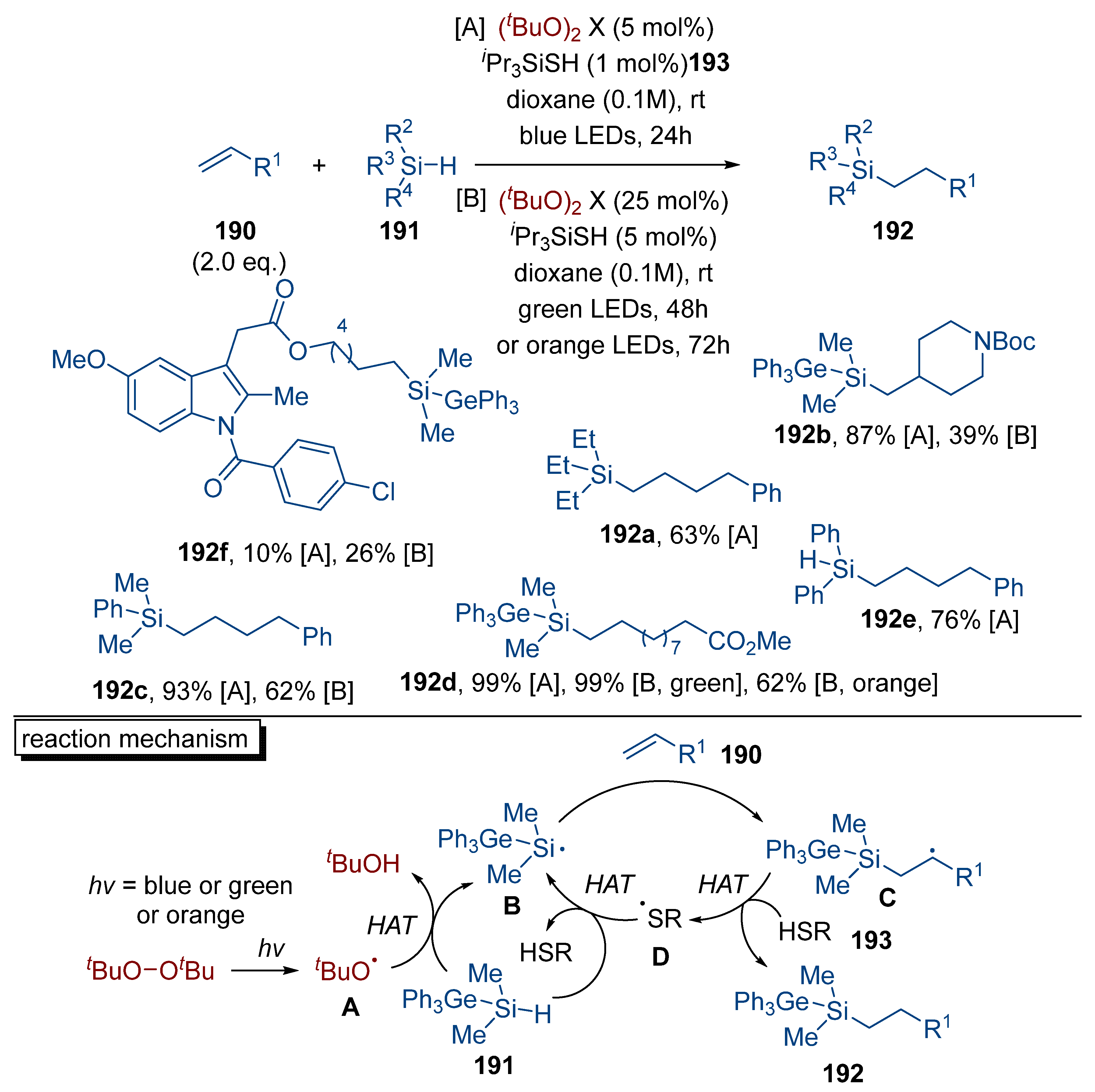
Y. Nagashima described di-tert-butyl peroxide (DTBP)-catalyzed photoinduced generation of a wide range of heteroatom-centered radicals from Het-H precursors. This method enables the formation of silyl, germyl, stannyl, alkyl, boryl, and phosphoryl radicals under blue (450 nm), green (530 nm), or orange (600 nm) light (Scheme 73) [113]. The in situ-generated active species participate in additional reactions to C=C and C≡C bonds, opening the way to functionalized element-containing organic compounds 192. The initial step involves the homolysis of the O–O bond in DTBP under visible light, resulting in the generation of tert-butoxy radicals A. tert-Butoxy radical A subsequently abstracts a hydrogen atom from 191, yielding tert-butanol and the silyl radical B. The addition of silyl radical B to the C=C bond of 190 leads to the corresponding C-centered radical C. Subsequently, a HAT process from RSH 193 to radical C results in the formation of product 192. The catalytic cycle is completed by the second HAT process, leading to a new Si-centered radical B.

5. Conclusions

This review gives a general overview of photocatalytic processes under visible light with organic peroxides, which have been widely explored during the past decades. It focuses on processes ranging from the application of peroxides as oxidants to regenerate photocatalysts to complex radical reactions involving peroxide and substrate redox transformations, enabling intermolecular C–C and C–O bond formation. The visible-light photocatalytic strategy, combined with organic peroxide chemistry, enables selective functionalization of various classes of organic compounds, including heterocyclic substrates (notably in late-stage functionalization), diverse multiple bonds, and unactivated C–H bonds (Scheme 74). The key feature of photocatalysis—the ability to generate radical species under mild conditions—in combination with organic peroxide chemistry, which offers the scope for O-centered radicals with different HAT reactivity, can enhance the regioselectivity of C–H bond functionalization.
The most widely used photocatalytic systems for generating oxygen- and carbon-centered radicals from peroxides are metal complexes, primarily based on Ru, Ir, Ni, and Cu. In contrast to classic Kharasch chemistry, these metal complexes react with peroxides only in their visible-light-excited states or activated forms. Significant advances have been achieved through the use of organic dyes and organic semiconductors as photocatalysts for the redox transformations of organic peroxides.
Most studies postulate that the redox reaction between the excited state of the photocatalyst and an organic peroxide takes place. The energy transfer pathway and other possible routes of visible-light photocatalysis remain unexplored in the context of organic peroxide chemistry. Energy transfer, primarily triplet–triplet EnT (TTEnT), excites substrates to triplet states without net charge movement, enabling various reactions under mild visible light. Organic peroxides, which have a weak O–O bond, tend to undergo homolytic bond cleavage; thus, energy transfer photocatalysis involving organic peroxides could be a promising approach for the near future.

Funding

This research was funded by the Ministry of Science and Higher Education of the Russian Federation, by the Project FFZZ-2024-0001.

Data Availability Statement

No new data were created or analyzed in this study. Data sharing is not applicable to this article.

Conflicts of Interest

The authors declare no conflicts of interest.

Abbreviations

The following abbreviations are used in this manuscript:
BPOBenzoyl peroxide
BTMPBis-(trifluoromethyl)peroxide
DTBPDi-tert-butyl peroxide
HATHydrogen atom transfer
PPOPhthaloyl peroxide
SETSingle-electron transfer
TBPATert-butyl peroxyacetate
TBPBTert-butyl peroxybenzoate

References

  1. Schultz, D.M.; Yoon, T.P. Solar synthesis: Prospects in visible light photocatalysis. Science 2014, 343, 1239176. [Google Scholar] [CrossRef]
  2. Cannalire, R.; Pelliccia, S.; Sancineto, L.; Novellino, E.; Tron, G.C.; Giustiniano, M. Visible light photocatalysis in the late-stage functionalization of pharmaceutically relevant compounds. Chem. Soc. Rev. 2021, 50, 766–897. [Google Scholar] [CrossRef]
  3. Srivastava, V.; Singh, P.K.; Singh, P.P. Recent advances of visible-light photocatalysis in the functionalization of organic compounds. J. Photochem. Photobiol. 2022, 50, 100488. [Google Scholar] [CrossRef]
  4. Cabanero, D.C.; Rovis, T. Low-energy photoredox catalysis. Nat. Rev. Chem. 2025, 9, 28–45. [Google Scholar] [CrossRef]
  5. Shatskiy, A.; Stepanova, E.V.; Kärkäs, M.D. Exploiting photoredox catalysis for carbohydrate modification through C–H and C–C bond activation. Nat. Rev. Chem. 2022, 6, 782–805. [Google Scholar] [CrossRef] [PubMed]
  6. Schade, A.H.; Mei, L.J.O.; Chemistry, B. Applications of red light photoredox catalysis in organic synthesis. Org. Biomol. Chem. 2023, 21, 2472–2485. [Google Scholar] [CrossRef] [PubMed]
  7. Marzo, L.; Pagire, S.K.; Reiser, O.; König, B. Visible-light photocatalysis: Does it make a difference in organic synthesis? Angew. Chem. Int. Ed. 2018, 57, 10034–10072. [Google Scholar] [CrossRef]
  8. Cheung, K.P.S.; Sarkar, S.; Gevorgyan, V. Visible light-induced transition metal catalysis. Chem. Rev. 2021, 122, 1543–1625. [Google Scholar] [CrossRef]
  9. Lang, X.; Chen, X.; Zhao, J. Heterogeneous visible light photocatalysis for selective organic transformations. Chem. Soc. Rev. 2014, 43, 473–486. [Google Scholar] [CrossRef] [PubMed]
  10. Alabugin, I.V.; Eckhardt, P.; Christopher, K.M.; Opatz, T. The photoredox paradox: Electron and hole upconversion as the hidden secrets of photoredox catalysis. J. Am. Chem. Soc. 2024, 146, 27233–27254. [Google Scholar] [CrossRef]
  11. Kwon, K.; Simons, R.T.; Nandakumar, M.; Roizen, J.L. Strategies to generate nitrogen-centered radicals that may rely on photoredox catalysis: Development in reaction methodology and applications in organic synthesis. Chem. Rev. 2021, 122, 2353–2428. [Google Scholar] [CrossRef] [PubMed]
  12. Rezaeifard, A.; Doraghi, F.; Akbari, F.; Bari, B.; Kianmehr, E.; Ramazani, A.; Khoobi, M.; Foroumadi, A. Organic Peroxides in Transition-Metal-Free Cyclization and Coupling Reactions (C–C) via Oxidative Transformation. ACS Omega 2025, 10, 15852–15907. [Google Scholar] [CrossRef] [PubMed]
  13. Žmitek, K.; Zupan, M.; Iskra, J. α-Substituted organic peroxides: Synthetic strategies for a biologically important class of gem-dihydroperoxide and perketal derivatives. Org. Biomol. Chem. 2007, 5, 3895–3908. [Google Scholar] [CrossRef]
  14. Terent’ev, A.O.; Borisov, D.A.; Vil, V.A.; Dembitsky, V.M. Synthesis of five-and six-membered cyclic organic peroxides: Key transformations into peroxide ring-retaining products. Beilstein J. Org. Chem. 2014, 10, 34–114. [Google Scholar] [CrossRef]
  15. Gandhi, H.; O’Reilly, K.; Gupta, M.; Horgan, C.; O’Leary, E.; O’Sullivan, T. Advances in the synthesis of acyclic peroxides. RCS Adv. 2017, 7, 19506–19556. [Google Scholar] [CrossRef]
  16. Bityukov, O.; Vil’, V.; Terent’ev, A. Synthesis of acyclic geminal bis-peroxides. Russ. J. Org. Chem. 2021, 57, 853–878. [Google Scholar] [CrossRef]
  17. Li, L.-B.; Zhai, C.; Wu, C.; Fan, W.-Q.; Li, C.; Zhang, Y.-B.; Wu, H.-L.; Zhu, C.; Wei, W.-T. Ternary Synthon Strategy for 1,3,5-Trisubstituted Benzenes via [3+3] Benzannulation of Propargyl Alcohols. Org. Lett. 2025, 27, 7001–7008. [Google Scholar] [CrossRef]
  18. Barsegyan, Y.A.; Vil’, V.A.; Terent’ev, A.O. Macrocyclic Organic Peroxides: Constructing Medium and Large Cycles with OO Bonds. Chemistry 2024, 6, 1246–1270. [Google Scholar] [CrossRef]
  19. Vil’, V.A.; Gomes, G.d.P.; Ekimova, M.V.; Lyssenko, K.A.; Syroeshkin, M.A.; Nikishin, G.I.; Alabugin, I.V.; Terent’ev, A.O. Five roads that converge at the cyclic peroxy-criegee intermediates: BF3-catalyzed synthesis of β-hydroperoxy-β-peroxylactones. J. Org. Chem. 2018, 83, 13427–13445. [Google Scholar] [CrossRef]
  20. Vil’, V.A.; Yaremenko, I.A.; Fomenkov, D.I.; Levitsky, D.O.; Fleury, F.; Terent’ev, A.O. Ion exchange resin-catalyzed synthesis of bridged tetraoxanes possessing in vitr o cytotoxicity against HeLa cancer cells. Chem. Heterocycl. Compd. 2020, 56, 722–726. [Google Scholar] [CrossRef]
  21. Vil’, V.A.; Barsegyan, Y.A.; Barsukov, D.V.; Korlyukov, A.A.; Alabugin, I.V.; Terent’ev, A.O. Peroxycarbenium Ions as the “Gatekeepers” in Reaction Design: Assistance from Inverse Alpha-Effect in Three-Component β-Alkoxy-β-peroxylactones Synthesis. Chem. Eur. J. 2019, 25, 14460–14468. [Google Scholar] [CrossRef] [PubMed]
  22. Fomenkov, D.I.; Budekhin, R.A.; Vil’, V.A.; Terent’ev, A.O. The Ozone and hydroperoxide teamwork: Synthesis of unsymmetrical geminal bisperoxides from alkenes. Org. Lett. 2023, 25, 4672–4676. [Google Scholar] [CrossRef]
  23. Vil, V.A.; Barsegyan, Y.A.; Kuhn, L.; Ekimova, M.V.; Semenov, E.A.; Korlyukov, A.A.; Terent’ev, A.O.; Alabugin, I.V. Synthesis of unstrained Criegee intermediates: Inverse α-effect and other protective stereoelectronic forces can stop Baeyer–Villiger rearrangement of γ-hydroperoxy-γ-peroxylactones. Chem. Sci. 2020, 11, 5313–5322. [Google Scholar] [CrossRef] [PubMed]
  24. Terent’ev, A.O.; Yaremenko, I.A.; Vil, V.A.; Dembitsky, V.M.; Nikishin, G.I. Boron trifluoride as an efficient catalyst for the selective synthesis of tricyclic monoperoxides from β, δ-triketones and H2O2. Synthesis 2013, 45, 246–250. [Google Scholar] [CrossRef]
  25. Yaremenko, I.A.; Terent’ev, A.O.; Vil’, V.A.; Novikov, R.A.; Chernyshev, V.V.; Tafeenko, V.A.; Levitsky, D.O.; Fleury, F.; Nikishin, G.I. Approach for the preparation of various classes of peroxides based on the reaction of triketones with H2O2: First examples of ozonide rearrangements. Chem. Eur. J. 2014, 20, 10160–10169. [Google Scholar] [CrossRef]
  26. Bayer, P.; Pérez-Ruiz, R.; Jacobi von Wangelin, A. Stereoselective photooxidations by the schenck ene reaction. ChemPhotoChem 2018, 2, 559–570. [Google Scholar] [CrossRef]
  27. Schenck, G.O. Zur Theorie der photosensibilisierten Reaktion mit molekularem Sauerstoff. Naturwissenschaften 1948, 35, 28–29. [Google Scholar] [CrossRef]
  28. Kawamura, S.; Mukherjee, S.; Sodeoka, M. Recent advances in reactions using diacyl peroxides as sources of O- and C-functional groups. Org. Biomol. Chem. 2021, 19, 2096–2109. [Google Scholar] [CrossRef]
  29. Walker, O.; Wild, G. 238. The thermal and photochemical decomposition of acetyl peroxide. J. Chem. Soc. 1937, 1132–1136. [Google Scholar] [CrossRef]
  30. Ogata, Y.; Tomizawa, K.; Furuta, K. Photochemistry and radiation chemistry of peroxides. In Peroxides; John Wiley & Sons, Inc.: Hoboken, NJ, USA, 1983; pp. 711–775. [Google Scholar]
  31. Chang, D.; Zhu, D.; Shi, L. [3+ 2] Cycloadditions of azides with arynes via photolysis of phthaloyl peroxide derivatives. J. Org. Chem. 2015, 80, 5928–5933. [Google Scholar] [CrossRef] [PubMed]
  32. Wei, C.; Fu, K.; Yu, Z.; Zhan, Z.; Chang, D.; Shi, L. Photochemical Generation and Cycloadditions of Strained Cycloalkynes. J. Am. Chem. Soc. 2025, 147, 14299–14307. [Google Scholar] [CrossRef]
  33. Zhu, N.; Yao, H.; Zhang, X.; Bao, H. Metal-catalyzed asymmetric reactions enabled by organic peroxides. Chem. Soc. Rev. 2024, 53, 2326–2349. [Google Scholar] [CrossRef] [PubMed]
  34. Žmitek, K.; Zupan, M.; Stavber, S.; Iskra, J. The Effect of Iodine on the Peroxidation of Carbonyl Compounds. J. Org. Chem. 2007, 72, 6534–6540. [Google Scholar] [CrossRef]
  35. Zhang, H.; Dong, D.-Q.; Hao, S.-H.; Wang, Z.-L. Bu4NI-catalyzed construction of tert-butyl peresters from alcohols. RCS Adv. 2016, 6, 8465–8468. [Google Scholar] [CrossRef]
  36. Terent’ev, A.O.; Zdvizhkov, A.T.; Levitsky, D.O.; Fleury, F.; Pototskiy, R.A.; Kulakova, A.N.; Nikishin, G.I. Organocatalytic peroxidation of malonates, β-ketoesters, and cyanoacetic esters using n-Bu4NI/t-BuOOH-mediated intermolecular oxidative C (sp3)–O coupling. Tetrahedron 2015, 71, 8985–8990. [Google Scholar] [CrossRef]
  37. Yu, H.; Shen, J. Peroxidation of C–H Bonds Adjacent to an Amide Nitrogen Atom under Mild Conditions. Org. Lett. 2014, 16, 3204–3207. [Google Scholar] [CrossRef]
  38. Yang, D.-Q.; Luo, X.-N.; Wu, C.; Yang, M.-Q.; Guo, J.-X.; Du, S.; Tong, Y.; Lei, K.-W.; Zhang, J.-Q.; Ge, G.-P.; et al. Iodine-Mediated Photocatalytic Disulfonylation of Allenes with Sodium Sulfinates. Org. Lett. 2025, 27, 7466–7472. [Google Scholar] [CrossRef]
  39. Bityukov, O.V.; Skokova, K.V.; Vil’, V.A.; Nikishin, G.I.; Terent’ev, A.O. Electrochemical Generation of Peroxy Radicals and Subsequent Peroxidation of 1,3-Dicarbonyls in an Undivided Cell. Org. Lett. 2024, 26, 166–171. [Google Scholar] [CrossRef]
  40. Su, R.; Zhang, J.; Jiang, Y.; Jiang, X.; Zhou, P.; Jiang, J.; Liu, W. Visible light-driven regioselective tert-butyl peroxidation and hydroperoxidation of alkenes using TBHP. Green Chem. 2025, 27, 9958–9967. [Google Scholar] [CrossRef]
  41. Jia, H.; He, M.; Yang, S.; Yu, X.; Bao, M. Visible-Light-Driven di-t-Butyl Peroxide-Promoted the Oxidative Homo-and Cross-Coupling of Phenols. Eur. J. Org. Chem. 2022, 2022, e202101469. [Google Scholar] [CrossRef]
  42. Porter, N.A.; Funk, M.O.; Gilmore, D.; Isaac, R.; Nixon, J. The formation of cyclic peroxides from unsaturated hydroperoxides: Models for prostaglandin biosynthesis. J. Am. Chem. Soc. 1976, 98, 6000–6005. [Google Scholar] [CrossRef] [PubMed]
  43. Rao, H.; Wang, P.; Li, C.J. Visible-light-triggered direct benzoyloxylation of electron-rich arenes at room temperature without chelation assistance. Eur. J. Org. Chem. 2012, 2012, 6503–6507. [Google Scholar] [CrossRef]
  44. Xin, H.; Yuan, Z.-H.; Yang, M.; Wang, M.-H.; Duan, X.-H.; Guo, L.-N. Metal-free, visible-light driven C–H ketoalkylation of glycine derivatives and peptides. Green Chem. 2021, 23, 9549–9553. [Google Scholar] [CrossRef]
  45. Cheng, F.; Fan, L.; Lv, Q.; Chen, X.; Yu, B. Alkyl radicals from diacyl peroxides: Metal-/base-/additive-free photocatalytic alkylation of N-heteroaromatics. Green Chem. 2023, 25, 7971–7977. [Google Scholar] [CrossRef]
  46. Lopat’eva, E.R.; Krylov, I.B.; Terent’ev, A.O. t-BuOOH/TiO2 Photocatalytic System as a Convenient Peroxyl Radical Source at Room Temperature under Visible Light and Its Application for the CH-Peroxidation of Barbituric Acids. Catalysts 2023, 13, 1306. [Google Scholar]
  47. Schuster, A.; Evans, B.W.; Redepenning, J.G.; Zhang, J.; Dussault, P.H. SET Cleavage of Peroxides: Influence of Reductant and Peroxide on the Reactivity and Regioselectivity of Alkoxy Radical Formation. J. Org. Chem. 2025, 90, 10580–10587. [Google Scholar] [CrossRef]
  48. Hassaan, M.A.; El-Nemr, M.A.; Elkatory, M.R.; Ragab, S.; Niculescu, V.-C.; El Nemr, A. Principles of Photocatalysts and Their Different Applications: A Review. Top. Curr. Chem. 2023, 381, 31. [Google Scholar] [CrossRef] [PubMed]
  49. Fox, M.A.; Dulay, M.T. Heterogeneous photocatalysis. Chem. Rev. 1993, 93, 341–357. [Google Scholar] [CrossRef]
  50. Li, X.; Xie, J.; Jiang, C.; Yu, J.; Zhang, P. Review on design and evaluation of environmental photocatalysts. Front. Environ. Sci. Eng. 2018, 12, 14. [Google Scholar] [CrossRef]
  51. Shaw, M.H.; Twilton, J.; MacMillan, D.W. Photoredox catalysis in organic chemistry. J. Org. Chem. 2016, 81, 6898–6926. [Google Scholar] [CrossRef]
  52. Romero, N.A.; Nicewicz, D.A. Organic Photoredox Catalysis. Chem. Rev. 2016, 116, 10075–10166. [Google Scholar] [CrossRef]
  53. Prier, C.K.; Rankic, D.A.; MacMillan, D.W.C. Visible Light Photoredox Catalysis with Transition Metal Complexes: Applications in Organic Synthesis. Chem. Rev. 2013, 113, 5322–5363. [Google Scholar] [CrossRef]
  54. Bityukov, O.V.; Serdyuchenko, P.Y.; Kirillov, A.S.; Nikishin, G.I.; Vil, V.A.; Terent’ev, A.O. Advances in radical peroxidation with hydroperoxides. Beilstein J. Org. Chem. 2024, 20, 2959–3006. [Google Scholar] [CrossRef]
  55. Zhang, J.; Su, R.; Liu, W. Radical di- and multi-functionalization of alkenes: Recent advances in diverse reaction modes utilizing TBHP as reactants. Org. Chem. Front. 2025, 12, 5683–5716. [Google Scholar] [CrossRef]
  56. Chang, L.; An, Q.; Duan, L.; Feng, K.; Zuo, Z. Alkoxy radicals see the light: New paradigms of photochemical synthesis. Chem. Rev. 2021, 122, 2429–2486. [Google Scholar] [CrossRef]
  57. Tripathi, C.B.; Ohtani, T.; Corbett, M.T.; Ooi, T. Photoredox ketone catalysis for the direct C–H imidation and acyloxylation of arenes. Chem. Sci. 2017, 8, 5622–5627. [Google Scholar] [CrossRef] [PubMed]
  58. Inuki, S.; Sato, K.; Fujimoto, Y. Visible-light-mediated decarboxylative benzoyloxylation of β-hydroxy amino acids and its application to synthesis of functional 1, 2-amino alcohol derivatives. Tetrahedron Lett. 2015, 56, 5787–5790. [Google Scholar] [CrossRef]
  59. Golden, D.L.; Zhang, C.; Chen, S.-J.; Vasilopoulos, A.; Guzei, I.A.; Stahl, S.S. Benzylic C–H esterification with limiting C–H substrate enabled by photochemical redox buffering of the Cu catalyst. J. Am. Chem. Soc. 2023, 145, 9434–9440. [Google Scholar] [CrossRef]
  60. Dix, S.; Golz, P.; Schmid, J.R.; Riedel, S.; Hopkinson, M.N. Radical C− H Trifluoromethoxylation of (Hetero) arenes with Bis (trifluoromethyl) peroxide. Chem. Eur. J. 2021, 27, 11554–11558. [Google Scholar] [CrossRef] [PubMed]
  61. Li, J.; Wang, D.Z. Visible-light-promoted photoredox syntheses of α, β-epoxy ketones from styrenes and benzaldehydes under alkaline conditions. Org. Lett. 2015, 17, 5260–5263. [Google Scholar] [CrossRef]
  62. Xia, Q.; Wang, Q.; Yan, C.; Dong, J.; Song, H.; Li, L.; Liu, Y.; Wang, Q.; Liu, X.; Song, H. Merging Photoredox with Brønsted Acid Catalysis: The Cross-Dehydrogenative C− O Coupling for sp3 C− H Bond Peroxidation. Chem. Eur. J. 2017, 23, 10871–10877. [Google Scholar] [CrossRef]
  63. Lou, C.; Feng, Y.; Huang, Q.; Lv, L.; Li, Z. Visible Light-Induced Decarboxylative Peroxidation of Carboxylic Acids: Metal-Free Synthesis of Benzyl Peroxides. Asian J. Org. Chem. 2023, 12, e202300408. [Google Scholar] [CrossRef]
  64. Li, L.; Gao, Y.; Wang, L.; Sun, M.; Liu, J.; Li, P. Visible-Light-Induced Site-Selective Difunctionalization of 2, 3-Dihydrofuran with Quinoxalin-2 (1H)-ones and Peroxides. Eur. J. Org. Chem. 2022, 2022, e202200373. [Google Scholar] [CrossRef]
  65. Bhatt, D.; Miyake, K.; Nakamura, S.; Kim, H.Y.; Oh, K. Photoredox-Catalyzed 1, 4-Peroxidation–Sulfonylation of Enynones: A Three-Component Radical Coupling Approach for the Synthesis of Highly Functionalized Allenes. Org. Lett. 2024, 26, 2955–2959. [Google Scholar] [CrossRef] [PubMed]
  66. Huang, Q.; Lou, C.; Lv, L.; Li, Z. Visible-light-induced Synthesis of Organic Peroxides via Decarboxylative Couplings of Carboxylic Acids, Alkenes and tert-Butyl Hydroperoxide. Chem. Res. Chin. Univ. 2024, 40, 863–873. [Google Scholar] [CrossRef]
  67. Feng, Y.; Lv, L.; Li, Z. Photo-Induced Sulfonylation/Trifluoromethylation-Peroxidation of Alkenes via EnT-Mediated N–S Bond Homolysis of N-Sulfonyl Ketimines. Asian J. Org. Chem. 2024, 13, e202400384. [Google Scholar] [CrossRef]
  68. Pan, J.; Feng, Y.; Lv, L.; Li, Z. Photoinduced Transition-Metal-Free Chemodivergent Phosphorylation-Peroxidation and Oxyphosphorylation of Alkenes. Adv. Synth. Catal. 2024, 366, 3860–3867. [Google Scholar] [CrossRef]
  69. Huang, Q.; Lou, C.; Lv, L.; Li, Z. Photoinduced fluoroalkylation-peroxidation of alkenes enabled by ligand-to-iron charge transfer mediated decarboxylation. Chem. Commun. 2024, 60, 12389–12392. [Google Scholar] [CrossRef]
  70. Feng, Y.; Chen, S.; Lv, L.; Yaremenko, I.A.; Terent’ev, A.O.; Li, Z. Photocatalytic Sulfonyl Peroxidation of Alkenes via Deamination of N-Sulfonyl Ketimines. Org. Lett. 2024, 26, 1920–1925. [Google Scholar] [CrossRef] [PubMed]
  71. Zhao, D.; Pan, Y.; Chen, X.; Han, Y.; Yan, C.; Shi, Y.; Hou, H.; Zhu, S. Three-Component Acylation/Peroxidation of Alkenes through Visible-Light Photocatalysis. ChemistrySelect 2021, 6, 10834–10838. [Google Scholar] [CrossRef]
  72. Alcaide, B.; Almendros, P.; Busto, E.; Luna, A. Domino Meyer–Schuster/arylation reaction of alkynols or alkynyl hydroperoxides with diazonium salts promoted by visible light under dual gold and ruthenium catalysis. Adv. Synth. Catal. 2016, 358, 1526–1533. [Google Scholar] [CrossRef]
  73. Wei, J.; Tang, Y.; Yang, Q.; Li, H.; He, D.; Cai, Y. Asymmetric Ketoalkylation/Rearrangement of Alkyenlfurans via Synergistic Photoredox/Brønsted Acid Catalysis. Org. Lett. 2022, 24, 7928–7933. [Google Scholar] [CrossRef]
  74. Nagano, S.; Maeda, N.; Kato, T.; Matsumoto, A.; Maruoka, K. Visible light-promoted alkylation of electron-deficient alkenes with alkylsilyl peroxides. Tetrahedron Lett. 2023, 122, 154486. [Google Scholar] [CrossRef]
  75. Vasilopoulos, A.; Krska, S.W.; Stahl, S.S. C (sp3)–H methylation enabled by peroxide photosensitization and Ni-mediated radical coupling. Science 2021, 372, 398–403. [Google Scholar] [CrossRef]
  76. DiRocco, D.A.; Dykstra, K.; Krska, S.; Vachal, P.; Conway, D.V.; Tudge, M. Late-stage functionalization of biologically active heterocycles through photoredox catalysis. Angew. Chem. Int. Ed. 2014, 53, 4802–4806. [Google Scholar] [CrossRef]
  77. Li, Y.; Ge, L.; Qian, B.; Babu, K.R.; Bao, H. Hydroalkylation of terminal aryl alkynes with alkyl diacyl peroxides. Tetrahedron Lett. 2016, 57, 5677–5680. [Google Scholar] [CrossRef]
  78. Ge, L.; Li, Y.; Jian, W.; Bao, H. Alkyl Esterification of Vinylarenes Enabled by Visible-Light-Induced Decarboxylation. Chem. Eur. J. 2017, 23, 11767–11770. [Google Scholar] [CrossRef] [PubMed]
  79. Deng, W.; Feng, W.; Li, Y.; Bao, H. Merging visible-light photocatalysis and transition-metal catalysis in three-component alkyl-fluorination of olefins with a fluoride ion. Org. Lett. 2018, 20, 4245–4249. [Google Scholar] [CrossRef]
  80. Xu, J.; Zhang, H.; Zhao, J.; Ni, Z.; Zhang, P.; Shi, B.-F.; Li, W. Photocatalyst-, metal-and additive-free, direct C–H arylation of quinoxalin-2 (1 H)-ones with aryl acyl peroxides induced by visible light. Org. Chem. Front. 2020, 7, 4031–4042. [Google Scholar] [CrossRef]
  81. Xie, L.-Y.; Peng, S.; Yang, L.-H.; Peng, C.; Lin, Y.-W.; Yu, X.; Cao, Z.; Peng, Y.-Y.; He, W.-M. Aryl acyl peroxides for visible-light induced decarboxylative arylation of quinoxalin-2 (1H)-ones under additive-, metal catalyst-, and external photosensitizer-free and ambient conditions. Green Chem. 2021, 23, 374–378. [Google Scholar] [CrossRef]
  82. Tang, Z.-L.; Ouyang, X.-H.; Song, R.-J.; Li, J.-H. Decarboxylative C (sp3)–N cross-coupling of diacyl peroxides with nitrogen nucleophiles. Org. Lett. 2021, 23, 1000–1004. [Google Scholar] [CrossRef]
  83. Yadav, N.; Bhatta, S.R.; Moorthy, J.N. Visible Light-Induced Decomposition of Acyl Peroxides Using Isocyanides: Synthesis of Heteroarenes by Radical Cascade Cyclization. J. Org. Chem. 2023, 88, 5431–5439. [Google Scholar] [CrossRef]
  84. Liu, H.; Wu, Y.; Liu, L.; Yu, J.-T.; Pan, C. Photocatalytic chemo-, regio-& stereoselective olefinic β-C–H decarboxylative alkylation of enamides with diacyl peroxides. Chem. Commun. 2023, 59, 8556–8559. [Google Scholar]
  85. Shi, P.; Tu, Y.; Ma, D.; Bolm, C. Copper-Catalyzed N-Alkylations of NH-Sulfoximines Under Visible Light. Adv. Synth. Catal. 2023, 365, 1613–1617. [Google Scholar] [CrossRef]
  86. Holter, N.; Rendel, N.H.; Spierling, L.; Kwiatkowski, A.; Kleinmans, R.; Daniliuc, C.G.; Wenger, O.S.; Glorius, F. Phenothiazine Sulfoxides as Active Photocatalysts for the Synthesis of γ-Lactones. J. Am. Chem. Soc. 2025, 147, 12908–12916. [Google Scholar] [CrossRef]
  87. Tiwari, D.K.; Maurya, R.A.; Nanubolu, J.B. Visible-Light/Photoredox-Mediated sp3 C-H Functionalization and Coupling of Secondary Amines with Vinyl Azides in Flow Microreactors. Chem. Eur. J. 2016, 22, 526–530. [Google Scholar] [CrossRef]
  88. Li, J.; Zhang, J.; Tan, H.; Wang, D.Z. Visible-light-promoted vinylation of tetrahydrofuran with alkynes through direct C–H bond functionalization. Org. Lett. 2015, 17, 2522–2525. [Google Scholar] [CrossRef] [PubMed]
  89. Huff, C.A.; Cohen, R.D.; Dykstra, K.D.; Streckfuss, E.; DiRocco, D.A.; Krska, S.W. Photoredox-catalyzed hydroxymethylation of heteroaromatic bases. J. Org. Chem. 2016, 81, 6980–6987. [Google Scholar] [CrossRef] [PubMed]
  90. Iqbal, N.; Cho, E.J. Visible-light-mediated synthesis of amides from aldehydes and amines via in situ acid chloride formation. J. Org. Chem. 2016, 81, 1905–1911. [Google Scholar] [CrossRef] [PubMed]
  91. Feng, S.; Xie, X.; Zhang, W.; Liu, L.; Zhong, Z.; Xu, D.; She, X. Visible-light-promoted dual C–C bond formations of alkynoates via a domino radical addition/cyclization reaction: A synthesis of coumarins. Org. Lett. 2016, 18, 3846–3849. [Google Scholar] [CrossRef]
  92. Sharma, U.K.; Gemoets, H.P.; Schroder, F.; Noel, T.; Van der Eycken, E.V. Merger of visible-light photoredox catalysis and C–H activation for the room-temperature C-2 acylation of indoles in batch and flow. ACS Catal. 2017, 7, 3818–3823. [Google Scholar] [CrossRef]
  93. Li, X.; Fang, X.; Zhuang, S.; Liu, P.; Sun, P. Photoredox Catalysis: Construction of Polyheterocycles via Alkoxycarbonylation/Addition/Cyclization Sequence. Org. Lett. 2017, 19, 3580–3583. [Google Scholar] [CrossRef]
  94. Feng, S.; Li, T.; Du, C.; Chen, P.; Song, D.; Li, J.; Xie, X.; She, X. Visible-light-mediated radical insertion/cyclization cascade reaction: Synthesis of phenanthridines and isoquinolines from isocyanides. Chem. Commun. 2017, 53, 4585–4588. [Google Scholar] [CrossRef] [PubMed]
  95. Zhang, L.; Zhang, G.; Li, Y.; Wang, S.; Lei, A. The synergistic effect of self-assembly and visible-light induced the oxidative C–H acylation of N-heterocyclic aromatic compounds with aldehydes. Chem. Commun. 2018, 54, 5744–5747. [Google Scholar] [CrossRef] [PubMed]
  96. Yang, C.; Wang, J.; Li, J.; Ma, W.; An, K.; He, W.; Jiang, C. Visible-Light Induced Radical Silylation for the Synthesis of Dibenzosiloles via Dehydrogenative Cyclization. Adv. Synth. Catal. 2018, 360, 3049–3054. [Google Scholar] [CrossRef]
  97. Wang, L.; White, A.R.; Chen, W.; Wu, Z.; Nicewicz, D.A.; Li, Z. Direct Radiofluorination of Arene C–H Bonds via Photoredox Catalysis Using a Peroxide as the Terminal Oxidant. Org. Lett. 2020, 22, 7971–7975. [Google Scholar] [CrossRef]
  98. Singsardar, M.; Laru, S.; Mondal, S.; Hajra, A. Visible-Light-Induced Regioselective Cross-Dehydrogenative Coupling of 2 H-Indazoles with Ethers. J. Org. Chem. 2019, 84, 4543–4550. [Google Scholar] [CrossRef]
  99. Wan, Z.-j.; Yuan, X.-f.; Luo, J. Visible light induced 3-position-selective addition of arylpropiolic acids with ethers via C (sp 3)–H functionalization. Org. Biomol. Chem. 2020, 18, 3258–3262. [Google Scholar] [CrossRef]
  100. Abinaya, R.; Rahulan, K.M.; Srinath, S.; Rahman, A.; Divya, P.; Balasubramaniam, K.; Sridhar, R.; Baskar, B. Visible light mediated selective oxidation of alcohols and oxidative dehydrogenation of N-heterocycles using scalable and reusable La-doped NiWO 4 nanoparticles. Green Chem. 2021, 23, 5990–6007. [Google Scholar] [CrossRef]
  101. Lopat’eva, E.R.; Krylov, I.B.; Segida, O.O.; Merkulova, V.M.; Ilovaisky, A.I.; Terent’ev, A.O. Heterogeneous photocatalysis as a potent tool for organic synthesis: Cross-dehydrogenative C–C coupling of N-heterocycles with ethers employing TiO2/N-hydroxyphthalimide system under visible light. Molecules 2023, 28, 934. [Google Scholar] [CrossRef]
  102. Zhao, R.; Yao, Y.; Zhu, D.; Chang, D.; Liu, Y.; Shi, L. Visible-Light-Enhanced Ring Opening of Cycloalkanols Enabled by Brønsted Base-Tethered Acyloxy Radical Induced Hydrogen Atom Transfer-Electron Transfer. Org. Lett. 2018, 20, 1228–1231. [Google Scholar] [CrossRef]
  103. Chang, D.; Zhao, R.; Wei, C.; Yao, Y.; Liu, Y.; Shi, L. Sulfonamide-directed chemo-and site-selective oxidative halogenation/amination using halogenating reagents generated in situ from cyclic diacyl peroxides. J. Org. Chem. 2018, 83, 3305–3315. [Google Scholar] [CrossRef] [PubMed]
  104. Wei, C.; Zhao, R.; Shen, Z.; Chang, D.; Shi, L. Two catalytic protocols for Achmatowicz rearrangement using cyclic diacyl peroxides as oxidants. Org. Biomol. Chem. 2018, 16, 5566–5569. [Google Scholar] [CrossRef]
  105. Zhao, R.; Fu, K.; Fang, Y.; Zhou, J.; Shi, L. Site-Specific C (sp3)–H Aminations of Imidates and Amidines Enabled by Covalently Tethered Distonic Radical Anions. Angew. Chem. 2020, 132, 20863–20871. [Google Scholar] [CrossRef]
  106. Yuan, T.; Fu, K.; Shi, L. Palladium (ii)-catalyzed intramolecular C–H amination to carbazole: The crucial role of cyclic diacyl peroxides. Org. Chem. Front. 2024, 11, 4529–4538. [Google Scholar] [CrossRef]
  107. Yang, J.-F.; Liu, Y.-F.; Wei, L.-L.; Qiao, K.-K.; Zhao, Y.-Q.; Shi, L. Minisci-Type Dehydrogenative Coupling of N-Heteroaromatic Rings with Inert C (sp3)–H Enabled by a Visible-Light-Catalyzed Intermolecular Hydrogen Atom Transfer Process. J. Org. Chem. 2024, 89, 4249–4260. [Google Scholar] [CrossRef]
  108. Zhang, Y.; Fitzpatrick, N.A.; Das, M.; Bedre, I.P.; Yayla, H.G.; Lall, M.S.; Musacchio, P.Z. A photoredox-catalyzed approach for formal hydride abstraction to enable Csp3–H functionalization with nucleophilic partners (F, C, O, N, and Br/Cl). Chem. Catal. 2022, 2, 292–308. [Google Scholar]
  109. Wang, Z.; Dong, J.; Hao, Y.; Li, Y.; Liu, Y.; Song, H.; Wang, Q. Photoredox-mediated Minisci C–H alkylation reactions between N-heteroarenes and alkyl iodides with peroxyacetate as a radical relay initiator. J. Org. Chem. 2019, 84, 16245–16253. [Google Scholar] [CrossRef]
  110. Zhang, L.; Zhu, D.-Y.; Hu, J.; Feng, M.; Sum, T.C.; Sun, H.; Hirao, H.; Chi, Y.R.; Zhou, J.S. Pursuing high efficiency in photocatalytic oxidative couplings of heteroarenes and aliphatic C–H bonds. Org. Chem. Front. 2023, 10, 1651–1659. [Google Scholar] [CrossRef]
  111. Ouyang, X.-H.; Li, Y.; Song, R.-J.; Hu, M.; Luo, S.; Li, J.-H. Intermolecular dialkylation of alkenes with two distinct C (sp3)─ H bonds enabled by synergistic photoredox catalysis and iron catalysis. Sci. Adv. 2019, 5, eaav9839. [Google Scholar] [CrossRef]
  112. Jiang, S.; Tian, X.-J.; Feng, S.-Y.; Li, J.-S.; Li, Z.-W.; Lu, C.-H.; Li, C.-J.; Liu, W.-D. Visible-light photoredox catalyzed double C–H functionalization: Radical cascade cyclization of ethers with benzimidazole-based cyanamides. Org. Lett. 2021, 23, 692–696. [Google Scholar] [CrossRef] [PubMed]
  113. Iimuro, H.; Dias, A.J.A.; Tanaka, K.; Uchiyama, M.; Nagashima, Y. Long-Wavelength Light-Induced Group 13–15 Elementalization Reactions of Alkenes/Alkynes. Angew. Chem. 2026, e21882. [Google Scholar] [CrossRef]
Scheme 1. Radical generation from organic peroxides.
Chemistry 08 00020 sch001
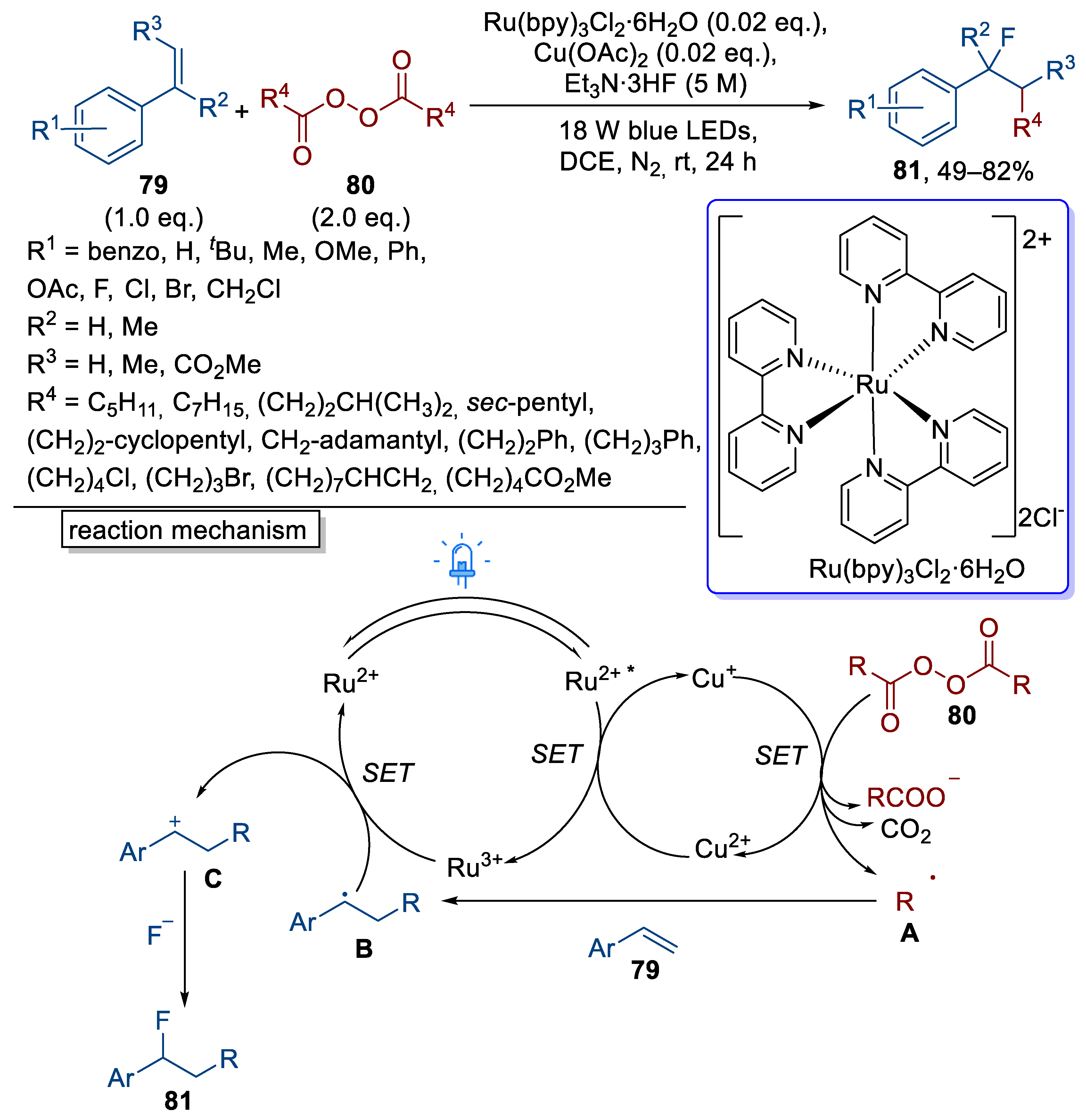
Figure 1. Organic peroxides in photochemistry: a timeline of key discoveries [29,42,43,44,45,46].
Chemistry 08 00020 g001
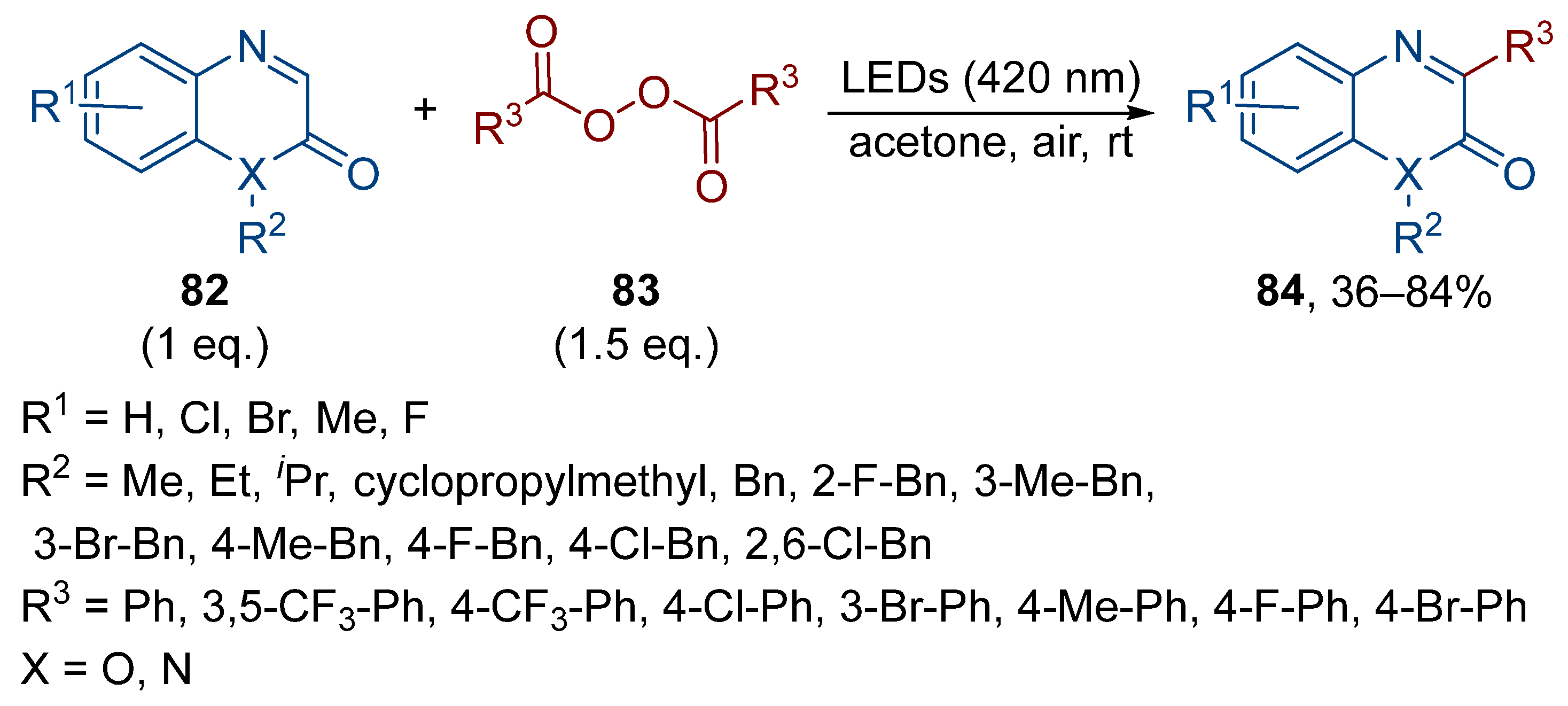
Scheme 2. Mechanistic pathways for photocatalytic process with organic peroxides.
Chemistry 08 00020 sch002
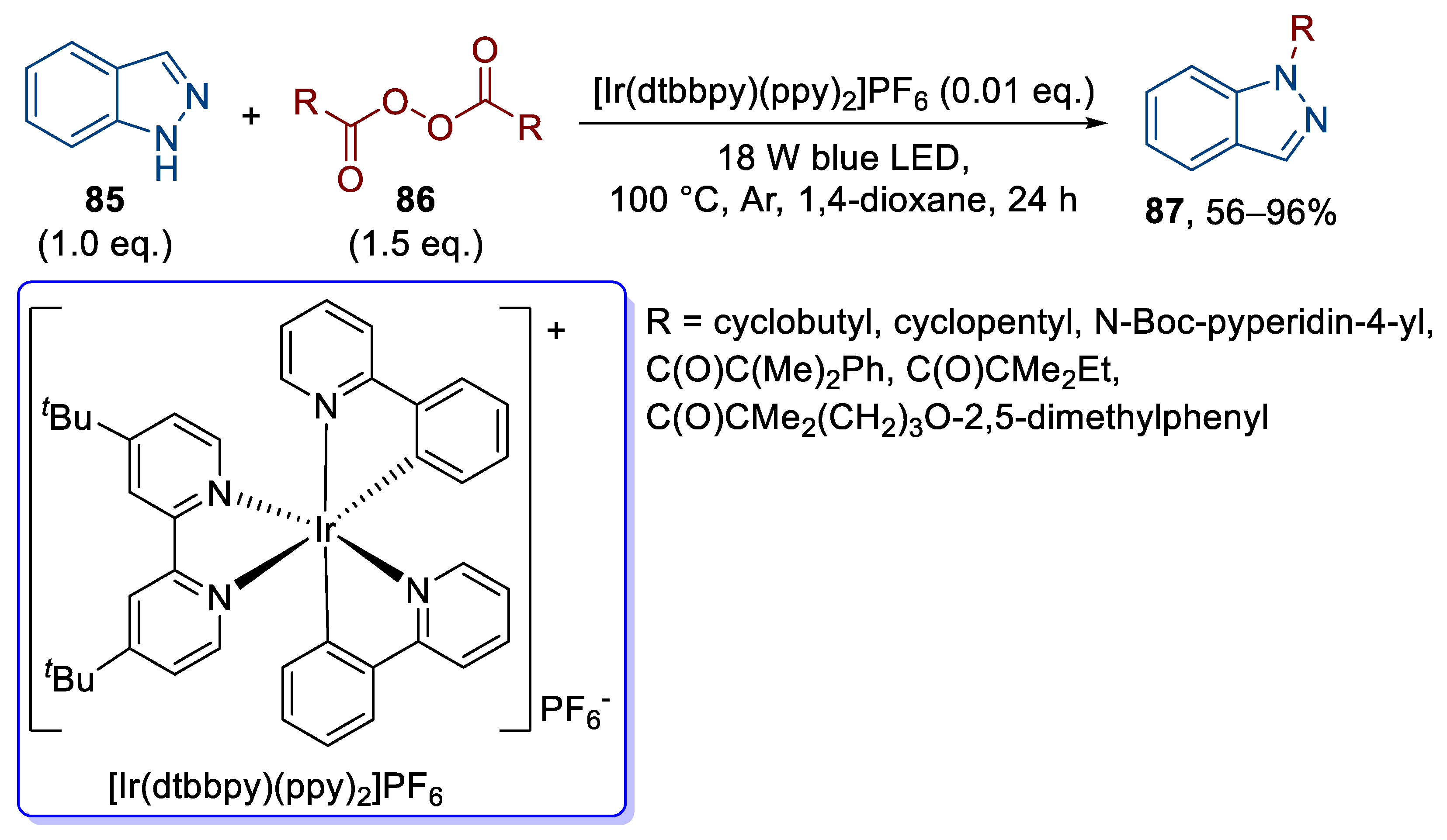
Scheme 3. Pathways of C–O coupling product formation.
Chemistry 08 00020 sch003
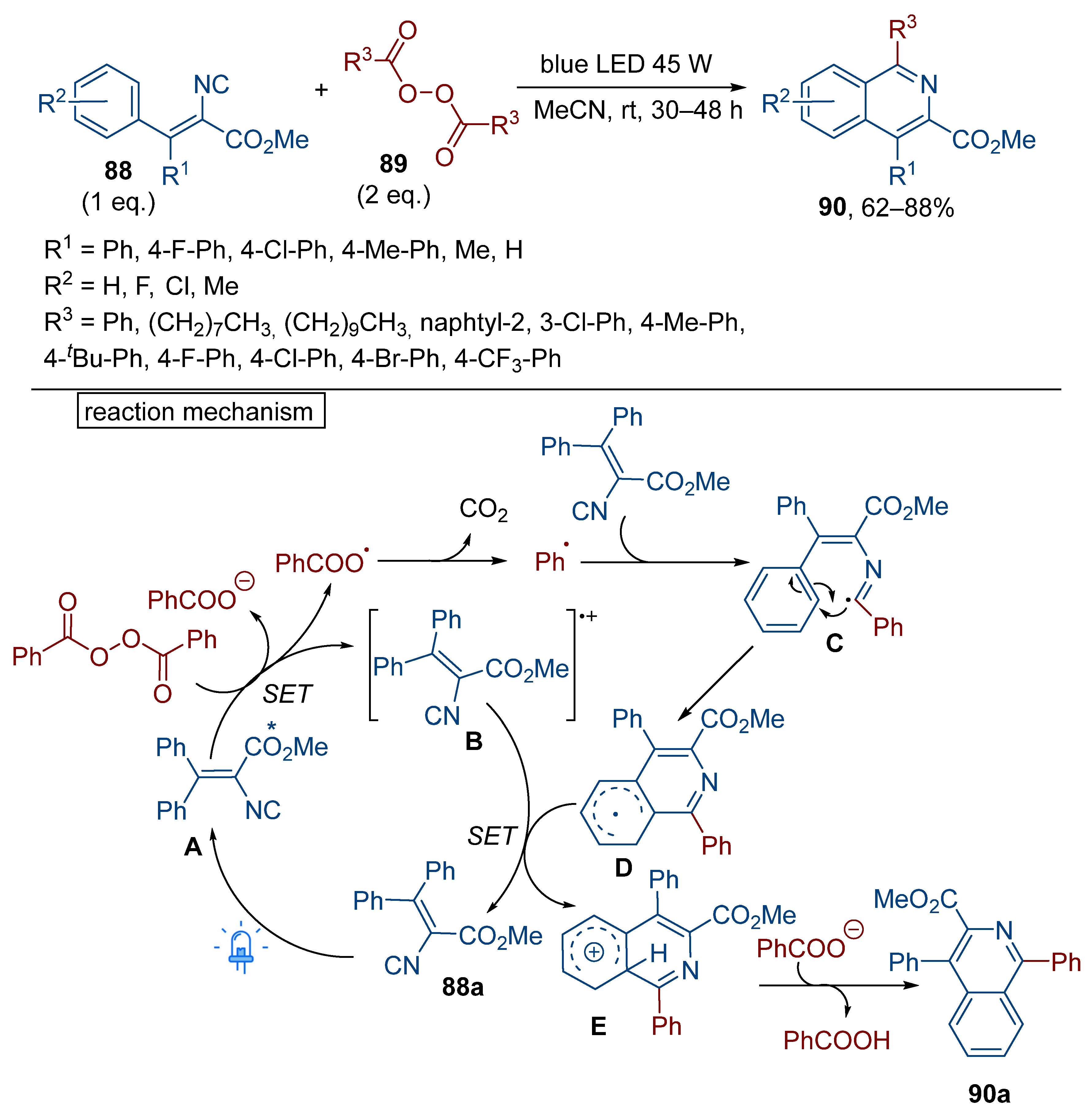
Scheme 4. Direct benzoyloxylation of electron-rich aromatic systems with BPO.
Chemistry 08 00020 sch004
Scheme 5. C–H acyloxylation of arenes 4.
Chemistry 08 00020 sch005
Scheme 6. Benzoyloxylation of β-hydroxy amino acids 7 with BPO.
Chemistry 08 00020 sch006
Scheme 7. Synthesis of esters 11 with TBPB.
Chemistry 08 00020 sch007
Scheme 8. The trifluoromethoxylation of arenes 12 with BTMP.
Chemistry 08 00020 sch008
Scheme 9. Synthesis of α,β-epoxyketones 17 with tBuOOH.
Chemistry 08 00020 sch009
Scheme 10. Synthesis of isochroman peroxyacetals 20 using tBuOOH.
Chemistry 08 00020 sch010
Scheme 11. C–H peroxidation of 21 with heterogeneous catalyst TiO2.
Chemistry 08 00020 sch011
Scheme 12. The decarboxylative peroxidation of carboxylic acids 23 with tBuOOH.
Chemistry 08 00020 sch012
Scheme 13. Difunctionalization of 2,3-dihydrofuran with quinoxalin-2(1H)-ones 25 and hydroperoxides 27.
Chemistry 08 00020 sch013
Scheme 14. The 1,4-peroxidation-sulfonylation of enynones 29.
Chemistry 08 00020 sch014
Scheme 15. Synthesis of peroxide 34.
Chemistry 08 00020 sch015
Scheme 16. The sulfonylation–peroxidation of alkenes 35.
Chemistry 08 00020 sch016
Scheme 17. Phosphorylation–peroxidation and oxyphosphorylation of alkenes 35 with phosphine oxides 39.
Chemistry 08 00020 sch017
Scheme 18. Fluoroalkylation–peroxidation of alkenes 42 with tBuOOH.
Chemistry 08 00020 sch018
Scheme 19. Synthesis of peroxides 46.
Chemistry 08 00020 sch019
Scheme 20. A three-component acylation/peroxidation of alkenes 47.
Chemistry 08 00020 sch020
Scheme 21. A bisperoxidation of aryl alkenes 50 with tBuOOH.
Chemistry 08 00020 sch021
Scheme 22. Generation of C-fragment via β-scission of O-centered radical from peroxides.
Chemistry 08 00020 sch022
Scheme 23. The arylative coupling of alkynyl hydroperoxides 52 with diazonium salts 53.
Chemistry 08 00020 sch023
Scheme 24. C–H ketoalkylation of glycine derivatives 56 using cycloalkyl hydroperoxides 55.
Chemistry 08 00020 sch024
Scheme 25. Three-component reaction of alkenylfurans 59 with cycloalkylsilyl peroxides 60 and anilines 58.
Chemistry 08 00020 sch025
Scheme 26. Synthesis of ketones 65 from alkylsilyl peroxides 63.
Chemistry 08 00020 sch026
Scheme 27. Methylation of C–H fragment with peroxides 67.
Chemistry 08 00020 sch027
Scheme 28. Alkylation of bioactive heterocycles 69 with TBPA.
Chemistry 08 00020 sch028
Scheme 29. Generation of C-fragment via decarboxylation of O-centered radical from acyl peroxides.
Chemistry 08 00020 sch029
Scheme 30. Alkylation of bioactive molecules with diacyl peroxides 71.
Chemistry 08 00020 sch030
Scheme 31. Synthesis of Z-olefins 75.
Chemistry 08 00020 sch031
Scheme 32. Alkyl esterification of vinylarenes 76 with diacyl peroxides 77.
Chemistry 08 00020 sch032
Scheme 33. A three-component alkyl fluorination of olefins 79.
Chemistry 08 00020 sch033
Scheme 34. The direct arylation of quinoxalin-2(1H)-ones 82 with diacyl peroxides 83.
Chemistry 08 00020 sch034
Scheme 35. The alkylation of heterocyclic nitrogen-containing compounds 85 with diacyl peroxides 86.
Chemistry 08 00020 sch035
Scheme 36. Synthesis of isoquinolines 90.
Chemistry 08 00020 sch036
Scheme 37. Synthesis of benzothiazole derivatives 92.
Chemistry 08 00020 sch037
Scheme 38. Alkylation of N-heteroaromatic compounds 94.
Chemistry 08 00020 sch038
Scheme 39. Synthesis of the alkylated quinoxalin-2(1H)-ones 98.
Chemistry 08 00020 sch039
Scheme 40. The alkylation of enamines 99 using diacyl peroxides 100.
Chemistry 08 00020 sch040
Scheme 41. Synthesis of N-alkylated sulfoximines 104.
Chemistry 08 00020 sch041
Scheme 42. Synthesis of spirocyclic lactones 107 from malonoyl peroxides 106 and styrenes 105.
Chemistry 08 00020 sch042
Scheme 43. Photocatalytic transformation of vinyl azides 108 and amines 109.
Chemistry 08 00020 sch043
Scheme 44. Vinylation of tetrahydrofuran with arylalkynes 111.
Chemistry 08 00020 sch044
Scheme 45. Synthesis of products 114.
Chemistry 08 00020 sch045
Scheme 46. C–H functionalization of heteroarenes 115 with methanol.
Chemistry 08 00020 sch046
Scheme 47. Synthesis of amides 120.
Chemistry 08 00020 sch047
Scheme 48. Synthesis of coumarin compounds 123.
Chemistry 08 00020 sch048
Scheme 49. C–H Acylation of indoles 124 with aldehydes 125.
Chemistry 08 00020 sch049
Scheme 50. Cascade cyclization of 127.
Chemistry 08 00020 sch050
Scheme 51. Synthesis of phenanthridine 132 and isoquinoline derivatives 133.
Chemistry 08 00020 sch051
Scheme 52. Cross-coupling N-heterocycles 134 with aldehydes 135.
Chemistry 08 00020 sch052
Scheme 53. Cyclization of biarylhydrosilanes 137.
Chemistry 08 00020 sch053
Scheme 54. Fluorination of aromatic compounds 139 using tBuOOH as oxidant.
Chemistry 08 00020 sch054
Scheme 55. Cross-coupling of 2H-indazoles 142 with ethers 143.
Chemistry 08 00020 sch055
Scheme 56. Synthesis of 3,3-bis-substituted acrylic acids 147.
Chemistry 08 00020 sch056
Scheme 57. Oxidation of benzyl alcohols 148.
Chemistry 08 00020 sch057
Scheme 58. Cross-coupling of N-heterocycles 150 with ethers 151.
Chemistry 08 00020 sch058
Scheme 59. Synthesis of ω-halogenated ketones 154.
Chemistry 08 00020 sch059
Scheme 60. Synthesis of N-chloramides 156.
Chemistry 08 00020 sch060
Scheme 61. Synthesis of δ-brominated products 158 from amines 157.
Chemistry 08 00020 sch061
Scheme 62. Hofmann–Löffler–Freytag type transformation with PPO.
Chemistry 08 00020 sch062
Scheme 63. Achmatowicz rearrangement of furfuryl alcohols 161 into dihydropyranones 162.
Chemistry 08 00020 sch063
Scheme 64. Synthesis of 1,2 amino alcohols 165 from imidates 163.
Chemistry 08 00020 sch064
Scheme 65. Synthesis of carbazole structures 167.
Chemistry 08 00020 sch065
Scheme 66. Minisci-type reaction with substrates 168 and 169.
Chemistry 08 00020 sch066
Scheme 67. Fluorination of C–H bond in substrates 171.
Chemistry 08 00020 sch067
Scheme 68. Alkylation of N-heteroarenes 173 with alkyl iodides 174.
Chemistry 08 00020 sch068
Scheme 69. Alkylation of azoles and azines 176 using alkanes, ethers, and carbamates 177.
Chemistry 08 00020 sch069
Scheme 70. Three-component reaction of alkenes 179 with alkanes 180 and 1,3-dicarbonyl compounds 181.
Chemistry 08 00020 sch070
Scheme 71. Radical cascade cyclization of cyanamides 183 with ethers 184.
Chemistry 08 00020 sch071
Scheme 72. Homo- and cross-coupling reactions of phenols 186.
Chemistry 08 00020 sch072
Scheme 73. DTBP-catalyzed photoinduced synthesis of element-containing organic compounds 192.
Chemistry 08 00020 sch073
Scheme 74. The overview of organic peroxide reactivity in visible-light photocatalysis.
Chemistry 08 00020 sch074
Disclaimer/Publisher’s Note: The statements, opinions and data contained in all publications are solely those of the individual author(s) and contributor(s) and not of MDPI and/or the editor(s). MDPI and/or the editor(s) disclaim responsibility for any injury to people or property resulting from any ideas, methods, instructions or products referred to in the content.