Article

Ultra-Short Laser Micro- and Nanopatterning of Polyethylene Terephthalate (PET): Towards Surface Topographies for Antibacterial and Self-Cleaning Applications


by
Liliya Angelova
1,*,
Aleksandra Zhelyazkova
1,
Laura L. E. Mears
2,
Daniela Miano
2,
Richard van Nieuwendhowen
2 and
Albena Daskalova
1,*
1
Institute of Electronics, Bulgarian Academy of Sciences, 1784 Sofia, Bulgaria
2
Core Facility Materials Testing and Characterization, Technische Universität Wien, 1040 Vienna, Austria
*
Authors to whom correspondence should be addressed.
Surfaces 2026, 9(3), 70; https://doi.org/10.3390/surfaces9030070

Submission received: 30 June 2026 / Revised: 24 July 2026 / Accepted: 27 July 2026 / Published: 31 July 2026
(This article belongs to the Special Issue Surface Engineering for Biomedical Applications)

Abstract

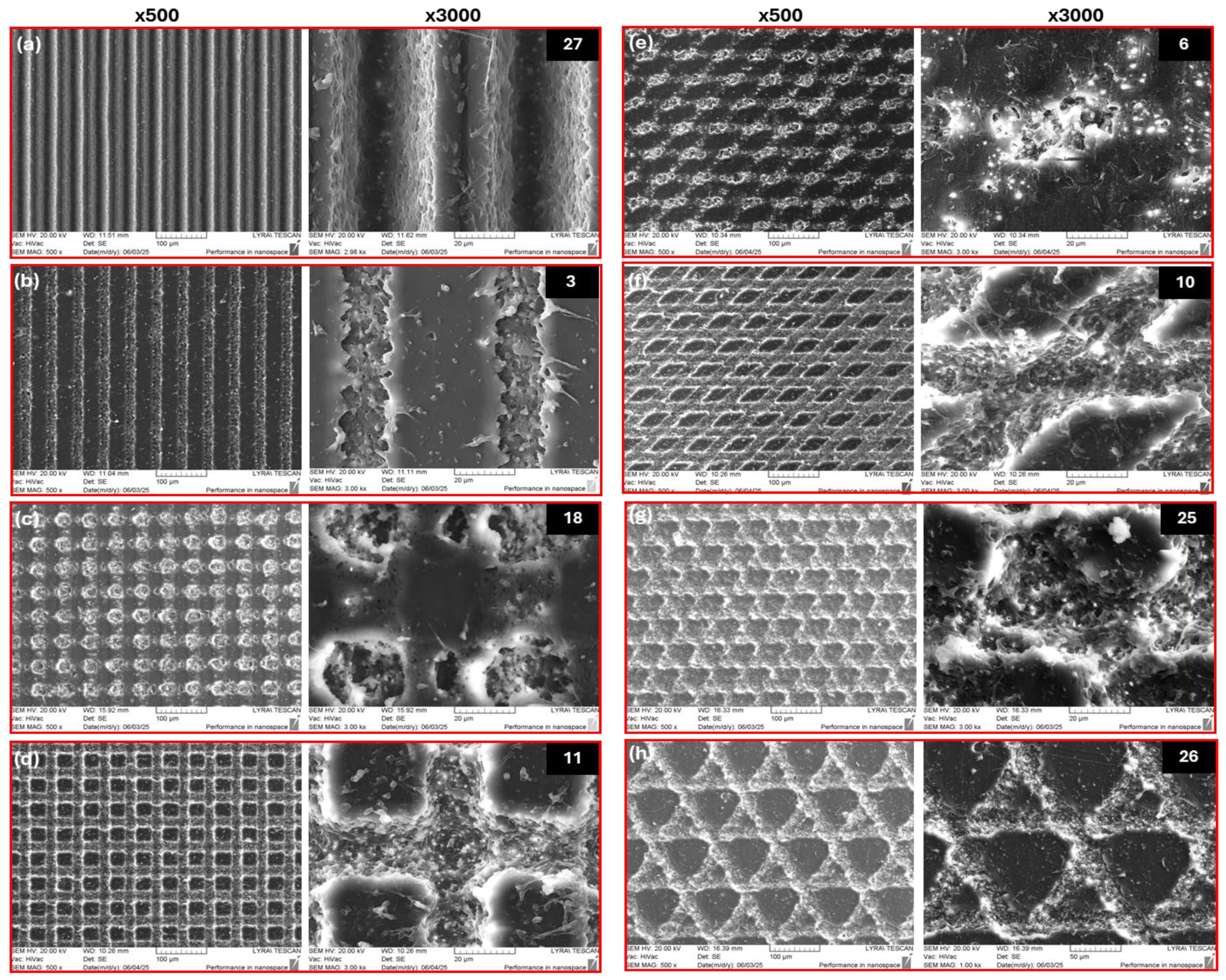
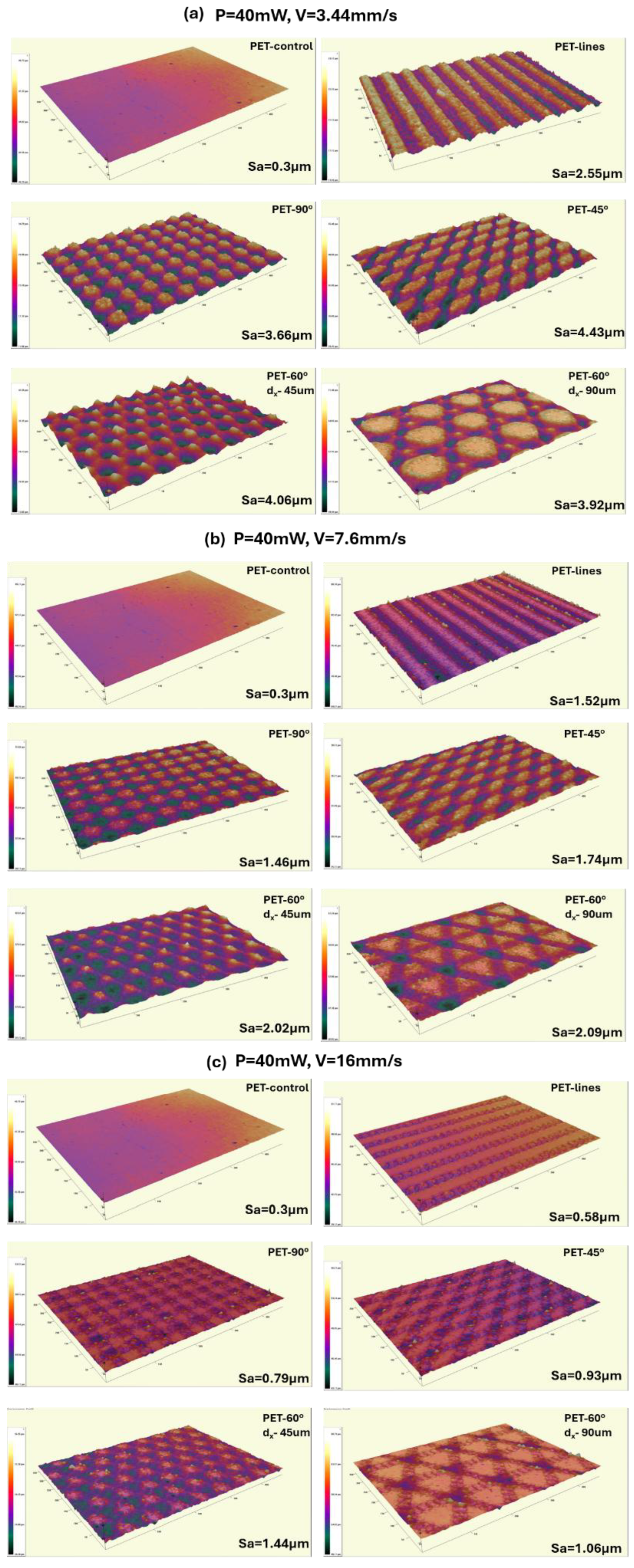
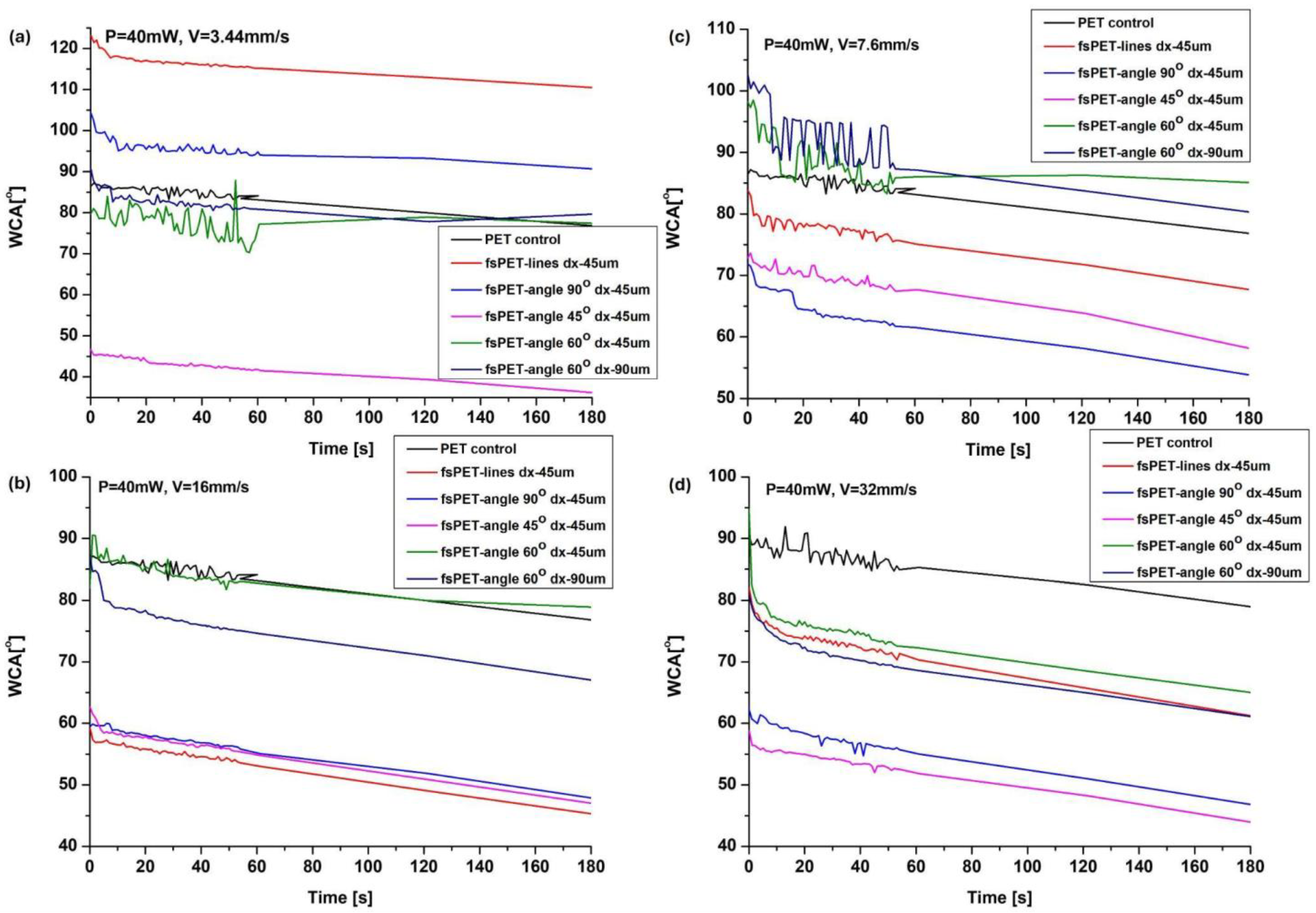
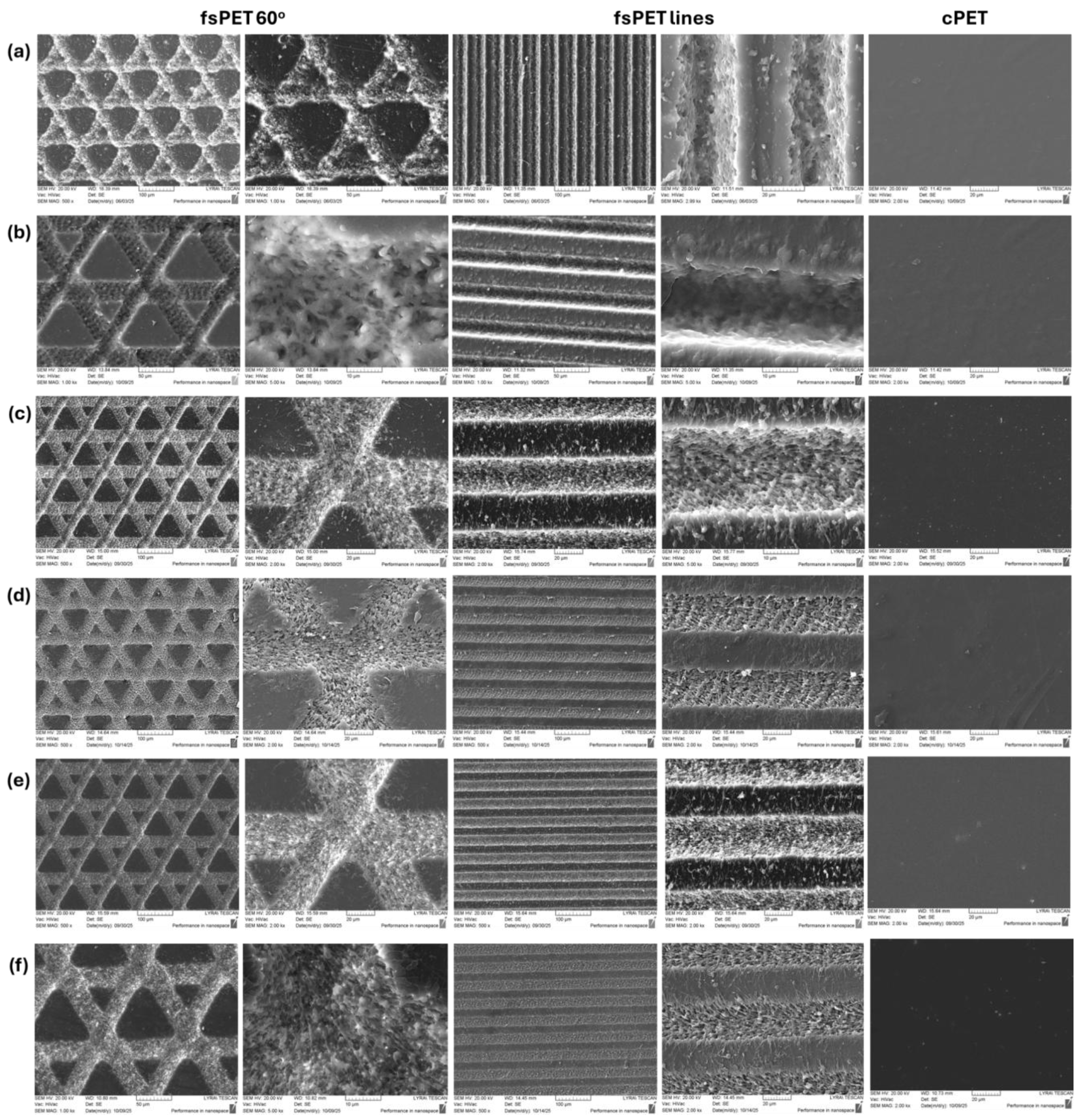
Antimicrobial resistance is a critical global challenge that necessitates the development of durable, material-based strategies to limit pathogen survival and transmission. Conventional cleaning and disinfection methods only provide transient protection due to rapid surface re-contamination. This study investigates the fabrication of polyethylene terephthalate (PET) surfaces designed for antibacterial applications via femtosecond laser-induced micro- and nanostructuring. Surface texturing was performed using a Ti:sapphire femtosecond laser (wavelength λ = 800 nm, pulse duration τ = 70 fs) at peak laser fluences (F) of 2.04 J/cm2 and 4.08 J/cm2, generating hierarchical surface textures with controlled morphology, spacing, and geometry through ultrafast, non-contact laser processing while preserving the bulk properties of PET. The resulting patterns, including parallel and intersecting microchannels decorated with laser-induced nanostructures, enabled tunable surface roughness and wettability, with water contact angles ranging from 33.21° to 118.2°. Comprehensive surface characterization, including morphological, topographical, and wettability analyses, was performed to establish structure–property relationships associated with previously reported antibacterial surface design principles. However, direct antibacterial performance was not evaluated in the present study and will be the subject of future investigations. In addition, the durability of the laser-structured PET was evaluated under simulated real-life conditions, including thermal cycling, ultraviolet exposure, abrasion, chemical resistance, and dust contamination. The structured surfaces demonstrated high structural and functional stability following environmental testing. The results indicate that the laser-induced surface modifications remain stable under conditions representative of prolonged practical use, supporting their potential long-term applicability for antibacterial and self-cleaning PET surfaces.
Keywords: polyethylene terephthalate (PET); antimicrobial resistance; micro/nano laser surface texturing; frequently touched surfaces; antibacterial surfaces polyethylene terephthalate (PET); antimicrobial resistance; micro/nano laser surface texturing; frequently touched surfaces; antibacterial surfaces