


Abstract
Cultural heritage, in all its tangible and intangible expressions, is undergoing a process of renewal driven by the integration of digital technologies and participatory approaches. This study presents a pilot project developed within the SAMOTHRACE Fundation, focused on the design of a Serious Game dedicated to the Norman Castle of Aci Castello in Sicily. The project explores how game-based learning and interactive storytelling can enhance visitor engagement, accessibility, and understanding of small-scale heritage sites that are often excluded from major cultural circuits. Using Unity and Blender, the prototype combines historical research, 3D reconstruction, and narrative interaction to transform the castle into an immersive educational environment. This initial phase also served as the basis for an academic thesis, laying the methodological groundwork for future expansion and evaluation. The results of this pilot provide preliminary quantitative evidence that serious games can support cultural communication strategies, foster emotional engagement, and stimulate curiosity toward minor heritage sites, while remaining compatible with the constraints of modest institutions. Ultimately, the project illustrates how even modest institutions can leverage digital innovation to revitalize their heritage assets, promote inclusive participation, and explore new models of interactive archaeology and community-centered cultural engagement.
1. Introduction
Cultural Heritage (CH), in its tangiblre and intangible components, is currently at the center of a revitalization process that is reshaping goals and tools of intervention. The focus is no longer only on safeguarding major monuments and museums, but also on including smaller, peripheral, and often less visible contexts within strategies capable of generating social, cultural, and economic value. From this perspective, the challenge lies in moving beyond an exclusively conservation-oriented approach and adopting a model of participatory fruition and regeneration, in which CH is recognized as an active resource rather than an immobile legacy [1,2].
Within this framework, the inclusion of minor CH sites located outside consolidated tourist circuits is assuming an increasingly evident strategic relevance. Their proximity to the everyday life of local communities makes them particularly suitable for experimenting with more equitable and sustainable forms of valorization, with a concrete potential to redistribute flows and strengthen local cultural capital. The Norman Castle of Aci Castello, on Sicily’s eastern coast, represents an emblematic case. It is a site of great historical and geological importance that, despite its interpretive and identity-related potential, remains marginal with respect to the mass tourism trajectories associated with the closest Catania or Taormina.
From this point of view, tools such as photogrammetry, augmented reality (AR), and game engines have become central for the representation, interpretation, and dissemination of cultural narratives [3,4]. This evolution also involves an epistemological dimension, since the digital environment influences the way knowledge is constructed, experienced, and shared. Within this panorama, Serious Games (SGs) emerge as particularly promising instruments. Their ability to integrate educational objectives with engaging ludic mechanics makes it possible to transform passive observation into active exploration. The literature reports positive effects on motivation, empathy, and long-term retention in museum settings and in CH contexts [5,6,7,8]. In addition, SGs can facilitate emotional and social engagement, contributing to the construction of affective bonds with places, objects, and collective memories [9]. Despite these results, the application and systematic validation of SG in minor CH sites remains less consolidated than in larger museum contexts or high-attendance cultural hubs, making it necessary to investigate agile, replicable models calibrated to limited resources.
This work represents the first phase of a broader pathway developed within the SAMOTHRACE project, funded by the Italian PNRR. The project was conceived as a pilot study to assess the feasibility and relevance of SG-based methodologies in small-scale sites, prior to an extended evaluation and subsequent public implementation. The main objective is to show how digital tools can strengthen the interpretive and communicative potential of local CH. From this perspective, the experimentation does not only test the general effectiveness of the medium, but also considers the role of the ludic structure in shaping the experience. The pilot project adopts an exploratory point-and-click game framework based on puzzle solving, with the aim of stimulating observation, inference, and narrative progression through a gradual interaction coherent with the site’s spaces and contents. This choice is particularly suited to a complex and stratified architecture such as that of the castle, where progressive discovery and a puzzle-based logic can function as an operational metaphor for reading the site’s historical and material layers, guiding visitors toward a level-by-level construction of understanding.
In terms of contributions, this study proposes a design framework for SG dedicated to minor CH sites, describes the integration of historical research, architectural modeling, and ludic interaction within a site-specific prototype, and discusses the value of the point-and-click genre as a choice consistent with an interpretive and non-competitive approach to monumental space. In this sense, the case of the Norman Castle of Aci Castello and its Civic Museum becomes a testing ground for a model that is potentially transferable to other comparable contexts.
Consistent with the pilot nature of the initiative, this phase prioritizes conceptual and methodological validation rather than a large-scale impact assessment. This approach should not be interpreted as a lack of ambition, but as part of a step-by-step pathway in which defining the narrative architecture, the interaction structure, and the technical pipeline constitutes a necessary condition for future structured testing campaigns and for measuring learning and engagement outcomes [10,11]. This experimental phase was also the subject of an academic thesis that defined the conceptual and technical framework of the prototype [12], providing a solid methodological basis for the present study. The following sections expand this approach by positioning the project within the current debate on digital heritage, describing in greater detail the methodological process and design choices, and discussing the prospects for scalability and replicability of the model. The aim is to highlight how the adoption of SG can contribute to a more direct dialogue between research, institutions, and territory, strengthening the capacity of CH to activate participation, awareness, and a sense of belonging. Although the project was conceived as a pilot, the present study is driven by a set of explicit research objectives aimed at evaluating whether a low-barrier serious game can meaningfully support engagement and learning in minor cultural heritage contexts. In particular, the pilot addresses the following research questions:
- RQ1: Can a point-and-click serious game foster perceived learning and interpretive understanding of a minor heritage site?
- RQ2: Does gameplay promote emotional engagement and curiosity toward visiting the real monument?
- RQ3: Is a modular, low-cost design-to-engine pipeline viable and replicable for small cultural institutions?
- RQ4: How do users perceive usability, accessibility, and clarity of interaction in such an exploratory heritage-oriented experience?
These questions frame the pilot both as a design experiment and as a preliminary empirical investigation, positioning the contribution of the paper at the intersection between digital heritage theory, experiential learning, and sustainable technological deployment.
2. Digital Innovation, SGs, and the CH Experience
The transition from preservation-centered approaches to participatory and regenerative models, becomes especially meaningful when applied to small-scale CH contexts. In these settings, digital strategies are not simply add-ons but potential enablers of continuity, accessibility, and interpretive depth. This section frames the theoretical and contextual foundation of the Aci Castello pilot by connecting current trends in digital museology with the specific affordances of SGs for minor CH sites, and by situating the project within the historical and institutional profile of the castle and its Civic Museum.
2.1. Transforming Museum Experiences Through Digital Innovation
Cultural institutions have undergone a profound transformation, prompted by the increasing integration of digital technologies into museum practices. Museums are no longer conceived merely as repositories of objects but as dynamic environments where knowledge, participation, and identity converge through interactive and multimodal languages [13,14]. Within this shift, the most relevant question is increasingly how digital tools are embedded within coherent interpretive strategies, rather than whether they are adopted at all.
According to the Digital Innovation Observatory at the Polytechnic University of Milan, nearly 86% of Italian museums have initiated some form of digitization process, although only 27% can be defined as truly “digital museums” with a long-term innovation strategy [14]. These efforts remain largely concentrated on online access and cataloguing, while immersive visitor engagement tools such as augmented and virtual reality are still less developed. At a European level, the European Museum Academy report 2022 [15] highlights how digital innovation is geographically uneven. Only twelve EU member states have institutional programs promoting immersive digital heritage applications, and post-pandemic recovery has been slowed by economic and infrastructural disparities [16]. Nonetheless, social media as a space for co-creation continues to reshape museum communication, enabling participatory storytelling and extending engagement beyond the on-site visit [13].
Inclusive design principles such as Design for All have also become central to contemporary museology, supported by innovations like tactile audio guides and AI-driven tools for accessibility [16,17]. Artificial intelligence is further expanding mediation through projects like Strike-a-Pose and Face-Fit, where visitors interact emotionally with artworks using computer vision [16]. Taken together, these developments indicate a shift toward more interactive and empathetic museum practices, which is particularly relevant for smaller institutions seeking sustainable, high-impact models of engagement.
2.2. The Role of SGs in Cultural Communication
Within this renewed framework, SGs are emerging as an essential tool for cultural communication. They blend play and learning, transforming historical knowledge into immersive narratives that stimulate cognitive and emotional engagement [5,6]. For minor CH sites, this is not only an educational opportunity but also a strategic one, because SGs can offer structured experiences without requiring the infrastructural scale of large museums.
Jenkins’ idea of “evocative narrative environments” helps clarify why this medium is particularly effective in heritage contexts. Game spaces allow users to explore through emotional discovery and interpretive decision-making [18]. In archaeology and CH education, this approach has already proven productive. The MUSINT and MUSINT II projects, for example, have shown how digitized artifacts embedded in virtual reconstructions can restore contextual meaning and transform static observation into dynamic understanding [19,20]. This perspective is reinforced by more recent contributions. While some works [21] emphasize that AR supports retention only when paired with clear interpretive frameworks and emotional resonance, other studies [22] frames this transition as a move from digital reproduction to digital interpretation, where the visitor becomes an agent in meaning construction. From this standpoint, SGs can operate as extensions of architectural narrative, supporting an active reading of space and evidence that aligns well with stratified historical sites.
2.3. Gamification, Empathy, and Visual Storytelling
Gamification can introduce a clearer narrative rhythm and a motivational structure into CH education, turning the visit into an interactive journey rather than a linear sequence of stops, where missions and discoveries work as interpretive cues that orient attention, keep curiosity alive, and facilitate learning without turning heritage into simple entertainment [14]. In this sense, SGs have been associated with measurable gains in visitors’ engagement when compared to purely observational experiences [23]. More broadly, video games can be understood as “cultural laboratories” where memory, collective behaviors, and shared ways of living are staged and negotiated, which helps frame interactive heritage not only as a didactic device but also as a space in which cultural meaning is rehearsed through experience [24]. What ultimately matters, however, is not graphical complexity, but the capacity of digital storytelling to elicit emotional participation and a sense of involvement that supports interpretation [14].
2.4. Aci Castello and the Civic Museum: Historical and Cultural Context
2.4.1. The Norman Castle of Aci Castello
The Norman Castle of Aci Castello, located on a black basalt cliff above the Ionian Sea, is among the most distinctive medieval fortifications in eastern Sicily. Built around 1076 CE by Norman settlers on pre-existing Byzantine foundations, it reflects both defensive pragmatism and symbolic representation of power [25,26]. The castle’s walls, carved from volcanic rock, embody the unique geological and architectural synthesis of the region.
Throughout its history, Aci Castello played a crucial role in coastal defense and governance. Under the Swabians and Aragonese, it functioned as a military fortress and administrative seat. Major earthquakes in 1169 and 1693 altered its structure, but its prominent tower and elevated courtyard continue to dominate the landscape. In the twentieth century, restoration campaigns helped stabilize and re-open the monument to public access, reinforcing its contemporary role as both historical landmark and civic cultural infrastructure [27,28,29].
Today, it stands as a key heritage landmark in the Aci Riviera, symbolizing both resilience and continuity [30]. While the castle is not presented as a stand-alone UNESCO World Heritage property, it is situated within a broader regional environment characterized by internationally recognized natural and cultural assets, including Mount Etna, inscribed on the UNESCO World Heritage List [10]. This territorial positioning is relevant for understanding both visitor expectations and the strategic value of scalable digital interpretation for sites that are culturally rich yet peripheral to mass-tourism routes.
2.4.2. The Civic Museum of Aci Castello
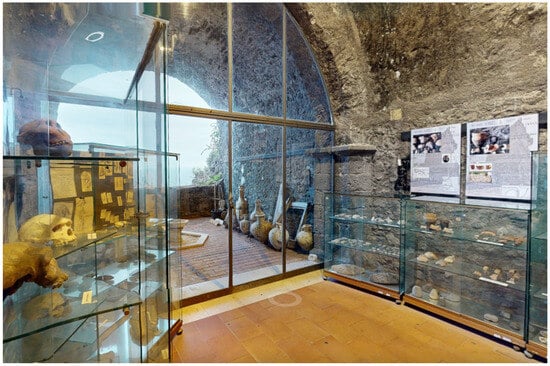
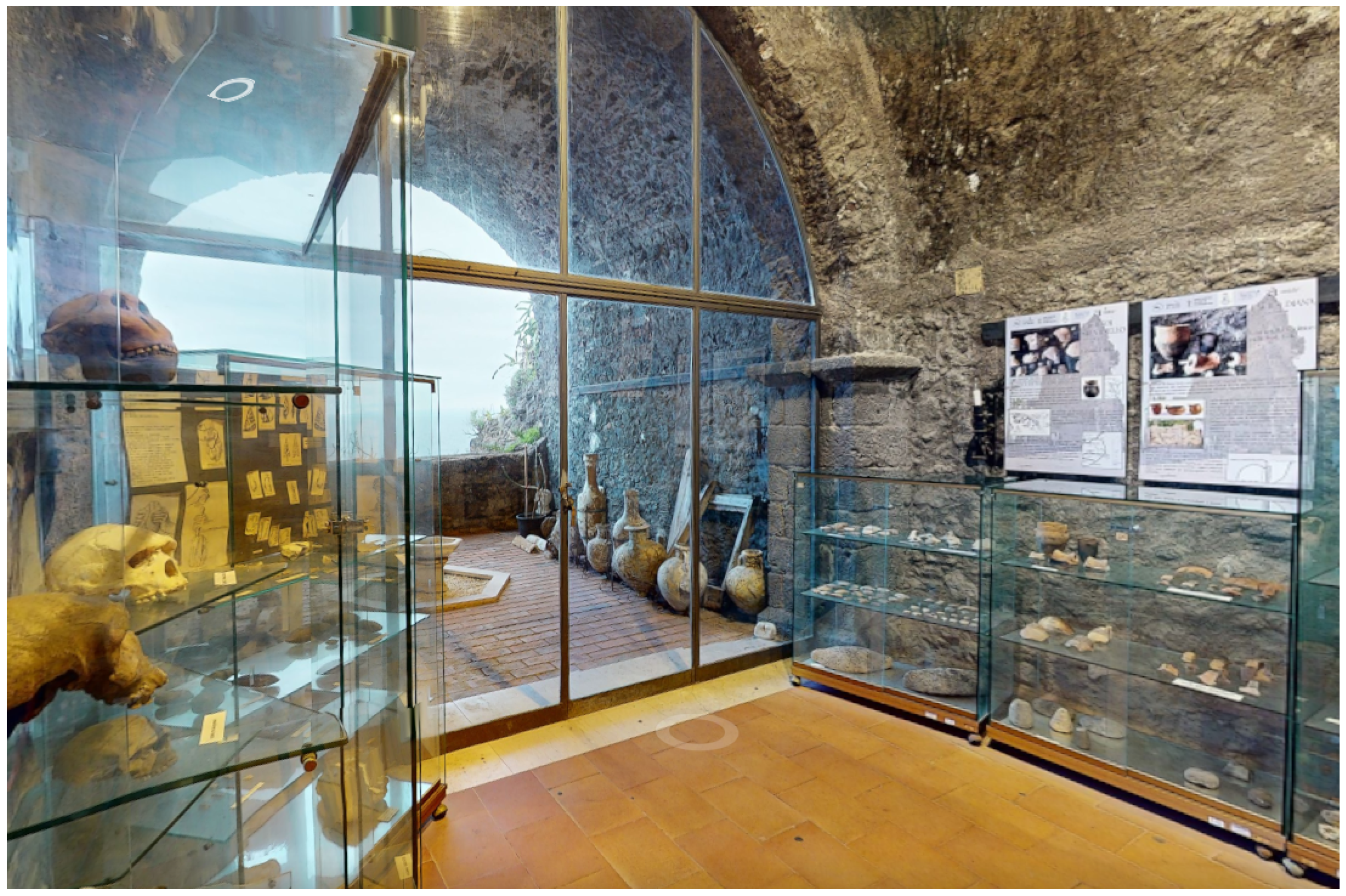
Since 1986, the castle has housed the Civic Museum of Aci Castello, a civic institution devoted to preserving the area’s geological, paleontological, and archaeological heritage. Its three permanent sections, mineralogy, paleontology, and archaeology, display a good sample of specimens and artifacts from the surrounding territory, linking natural and human history [30]. The museum’s educational mission emphasizes the connection between the volcanic landscape of Etna and the evolution of local civilization (Figure 1).
Figure 1.
A snapshot of the Civic Museum of Aci Castello.
Institutional sources and museum documentation underline the role of the Civic Museum as a local hub for the interpretation of both natural and cultural identities, with a collection that connects coastal environments, volcanic dynamics, and long-term settlement processes [26]. A distinctive element of this heritage narrative is also associated with the wider coastal context between Aci Castello and Aci Trezza, where the interpretation of landscape and material culture benefits from integrated readings across land and sea.
While the exhibitions remain largely traditional, recent efforts toward digital cataloguing and accessible documentation reflect a gradual shift toward innovation. The SG project developed around the castle aims precisely to expand this mission, offering an interactive narrative tool to complement the museum’s physical collection and support playful learning anchored in local CH [10]. This direction is further strengthened by the presence of research-driven content within the castle itself. Just for remark, recent archaeometric investigations of the fragmentary wall painting preserved in the so-called “Byzantine Chapel” illustrate how scientific analysis can unlock new interpretive layers even in partially preserved contexts, providing meaningful material for narrative design grounded in evidence and not only in atmosphere [31].
3. Methodology
The methodological approach behind the Aci Castello project integrates design theory, digital reconstruction, and heritage communication, with the aim of developing an SG prototype for cultural dissemination. Rather than pursuing a commercial product, the work uses interactive storytelling as a way to test public engagement strategies for local CH, weaving research, design, and education into a pilot digital archaeology initiative. The framework draws on constructivist learning and experiential museology, where understanding emerges most effectively when users can explore, interact, and actively construct meaning [5,32]; in CH settings, this translates into a shift from passive contemplation of artifacts to dynamic experiences that involve both emotion and cognition. Within this perspective, the Aci Castello SG is conceived as a hybrid narrative system, a digital environment where gameplay and storytelling converge to communicate historical reliability while leaving space for interpretive imagination, and its central methodological challenge is to translate the “feel” of a real monument into a playable world that remains authentic while encouraging participation.
3.1. Research Design and Conceptualization
The conceptual phase started by defining the project’s pedagogical and communicative objectives. Building on an analysis of comparable initiatives and on the museum’s educational mission, the work aimed to create an interactive learning experience for non-expert audiences, strengthen the relationship between the Norman Castle and its surrounding community, and test a design methodology that could be replicated across other small CH sites. The workflow was structured into four tightly connected phases: (i) research and documentation through the analysis of historical, architectural, and iconographic sources; (ii) concept design, where the interactive experience and narrative goals were established; (iii) visual and narrative development, including asset creation, storyline structuring, and interaction design; and (iv) technical implementation, integrating the content into the game engine with testing and optimization. The underlying hypothesis is that the site’s educational value increases when users can actively reconstruct its history through interactive actions, in line with evidence that highlights the cognitive benefits of ludic engagement [33].
3.2. Data Collection and Heritage Analysis
The methodological process began with a comprehensive heritage analysis of the Norman Castle of Aci Castello. Field surveys, photographic documentation, and archival research were conducted to examine the castle’s architectural structure, construction materials, and historical development. Rather than pursuing a strictly metric reconstruction, the project prioritized an interpretive digital representation, translating physical and historical data into visual and narrative forms suitable for public engagement.
The analysis of the site was structured into three interpretive layers:
- Spatial layer: the architectural configuration of the fortress and its relationship to the coastal topography;
- Temporal layer: the reconstruction of major chronological phases (Byzantine, Norman, Aragonese, and modern);
- Symbolic layer: the cultural and collective meanings attributed to the castle over time.
This interpretive framework enabled the transformation of the castle’s architectural spaces into narrative nodes. Each element—tower, courtyard, or chamber—was conceived as a storytelling environment, linking tangible built heritage with intangible memory. This process reflects the paradigm of narrative archaeology described by Tsaknaki et al. [34], in which digital simulation functions as a form of evidence-based storytelling.
3.3. Design and Storytelling Model
The game adopts a point-and-click adventure structure, chosen for its suitability in educational heritage contexts. This genre prioritizes exploration, observation, and problem-solving rather than competition or speed, thereby allowing users to interact with historical content in a contemplative and reflective manner. Through clickable objects, textual prompts, and visual cues, players progressively unlock fragments of the castle’s history, reconstructing its narrative in an incremental and discovery-driven way.
The narrative design follows a multi-layered structure grounded in different levels of understanding, each corresponding to a specific depth of engagement with the historical content:
- Descriptive Level: presentation of factual information about architecture, materials, and functions;
- Interpretive Level: explanation of historical transitions and social meanings;
- Reflective Level: stimulation of personal and emotional responses to heritage.
Each of the six game areas (courtyard, tower, armory, noble hall, garden, chapel) corresponds to one of these interpretive layers, ensuring a gradual expansion of the user’s knowledge. The storyline unfolds linearly but allows limited freedom of movement to encourage discovery and retention.
The narrative logic connects each scene through symbolic continuity, light transitions, environmental sounds, and visual motifs suggest the passage of time and evoke the castle’s historical stratigraphy. This design approach mirrors the environmental storytelling techniques used in Designing Stories from the Grave [34], where spatial and sensory cues replace explicit narration. From a constructivist learning perspective, the puzzles were explicitly designed to go beyond simple item-collection mechanics and linear task completion. Although the spatial progression of the experience follows a point-and-click structure, cognitive progression is intentionally non-linear: players are repeatedly required to interpret evidence, formulate hypotheses, and revise their understanding of the site’s historical phases as new information becomes available. Progression frequently depends on associating objects with their cultural or scientific context rather than merely retrieving them. For instance, architectural fragments, tools, or pigment samples collected in the environment are accompanied by partial archival excerpts or scientific annotations that invite players to infer construction periods, restoration campaigns, or functional transformations of spaces. Incorrect associations do not simply block advancement but trigger alternative dialogue cues or environmental feedback, encouraging reconsideration and reflective exploration. In the sequence dedicated to the Byzantine Chapel, recent archaeometric analyses of the frescoes were translated into gameplay challenges grounded in the actual identification of red ochre pigment in selected areas of the painting. Rather than simply informing players about this finding, the game introduces an interactive scanning tool that allows them to explore the wall surface and detect zones corresponding to those highlighted in the scientific study. The mechanic requires players to observe chromatic variations and areas of material alteration, compare them with archival and conservation notes stored in the inventory, and gradually reconstruct the logic of the original pictorial intervention and its subsequent degradation. In a further step, users are invited to virtually reintegrate the identified red areas, simulating a simplified act of conservation-based reconstruction. Through this process, archaeometric data are not presented as static information but become operative elements of the narrative progression. Information does not emerge exogenously; it is assembled through the player’s active synthesis of visual evidence, contextual annotations, and interactive experimentation. In this sense, the inventory system operates as a cognitive scaffold rather than as a mere progression trigger: it functions as a workspace in which hypotheses can be tested, clues recombined, and interpretive paths compared before unlocking subsequent narrative segments. This design fosters reflective engagement with heritage content by prompting players to reason about causality, chronology, and material processes, aligning the ludic structure with inquiry-based learning models commonly adopted in digital heritage interpretation.
3.4. Worked Example: Constructivist Puzzle Flow
To clarify how constructivist learning principles are concretely implemented within the prototype, this section presents a worked example drawn from the Byzantine Chapel pigment puzzle, which is fully integrated into the playable version of the serious game. The constructivist structure of the game becomes evident in the interactive sequence dedicated to the fresco preserved in the so-called Byzantine Chapel.
- 1.
- Clue (Observation Phase). Within the game environment, the player encounters visible chromatic irregularities on the chapel wall surface. Simultaneously, partial archival excerpts available in the inventory refer to the presence of “red ochre traces” identified through archaeometric analysis. These elements function as initial interpretive clues rather than as explicit explanations.
- 2.
- Hypothesis Formation. The player is required to actively select the virtual scanning tool available in the inventory and apply it to specific areas of the wall. By comparing visually altered zones with the conservation notes, the player formulates a hypothesis that certain areas correspond to original pigment layers rather than later deterioration or salt deposits.
- 3.
- Corrective Feedback. If the player selects incorrect zones, the system does not interrupt progression through simple failure states. Instead, it generates contextual feedback (e.g., “This area shows salt efflorescence rather than pigment residue”), encouraging reconsideration and reinterpretation of the available evidence.
- 4.
- Revised Interpretation. After correctly identifying the pigment traces, the player virtually reintegrates the red areas and unlocks a narrative segment explaining the archaeometric findings and their historical implications. This phase consolidates the interpretive process initiated by the player’s hypothesis.
In this sequence, knowledge is not transmitted as declarative content but constructed through iterative interpretation, feedback, aligning gameplay mechanics with inquiry-based heritage learning.
3.5. Visual and Technical Development Workflow
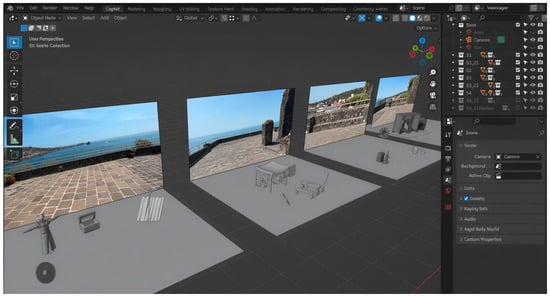
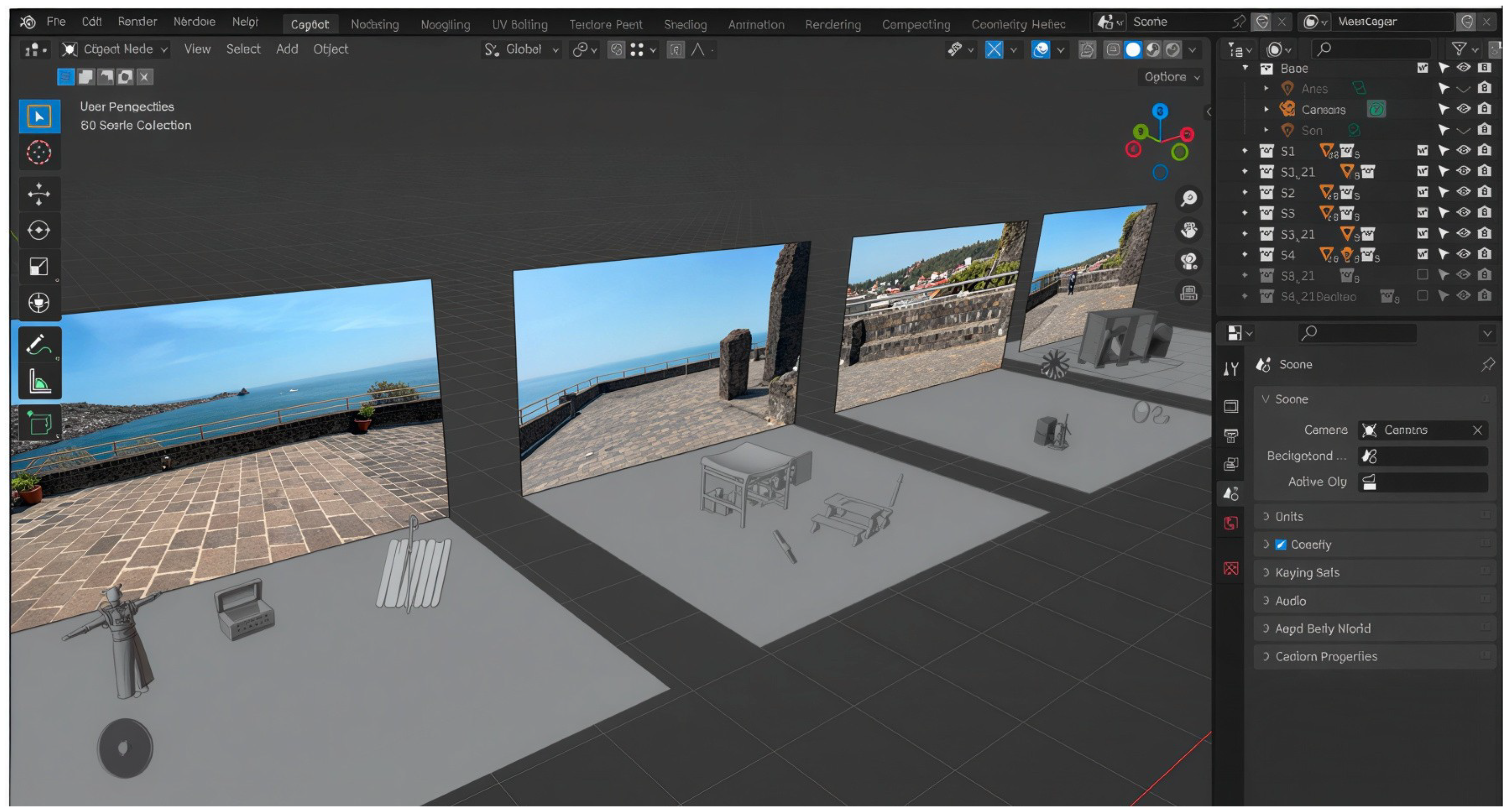
The technical workflow followed a design-to-engine pipeline that integrated 3D modeling, environment construction, content definition, and interactive implementation within Unity Engine (2022.3 LTS). The 3D models were created in Blender 3.6 (Figure 2) using simplified geometries aimed at interpretive clarity rather than photorealism. The models were then imported into Unity, where the six main game areas were assembled.
Figure 2.
Blender 3.6 workspace showing the 3D models and scene layout used for asset creation prior to integration into the game engine.
Within Unity, the game environment was structured through a coordinated set of engine components and dedicated scripts responsible for data management, inventory control, interaction logic, and scene navigation. This modular system ensured that the project remained scalable and easily extendable.
The Unity implementation was structured around several core elements. Navigation followed a point-and-click system, using raycasting to allow users to select objects and areas within the environment. The interface design was deliberately minimal, relying on subtle visual indicators to highlight interactive elements and maintain an unobtrusive user experience. Scene transitions were managed through fade effects, which helped preserve narrative continuity as users moved between different parts of the reconstruction. The graphical interface remained intentionally restrained, employing only essential on-screen cues to support interaction. Lighting was entirely static (baked) and characterized by warm tonalities, evoking the qualities of Mediterranean daylight and contributing to a coherent visual atmosphere.
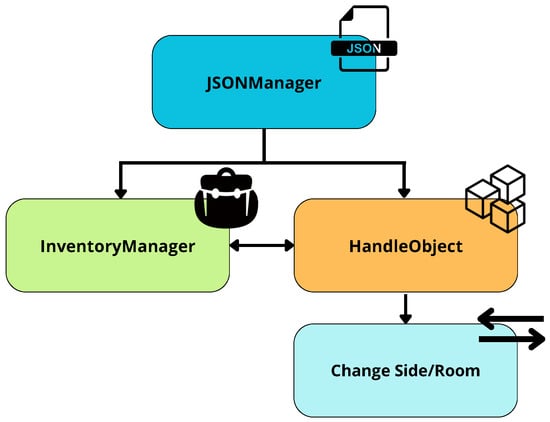
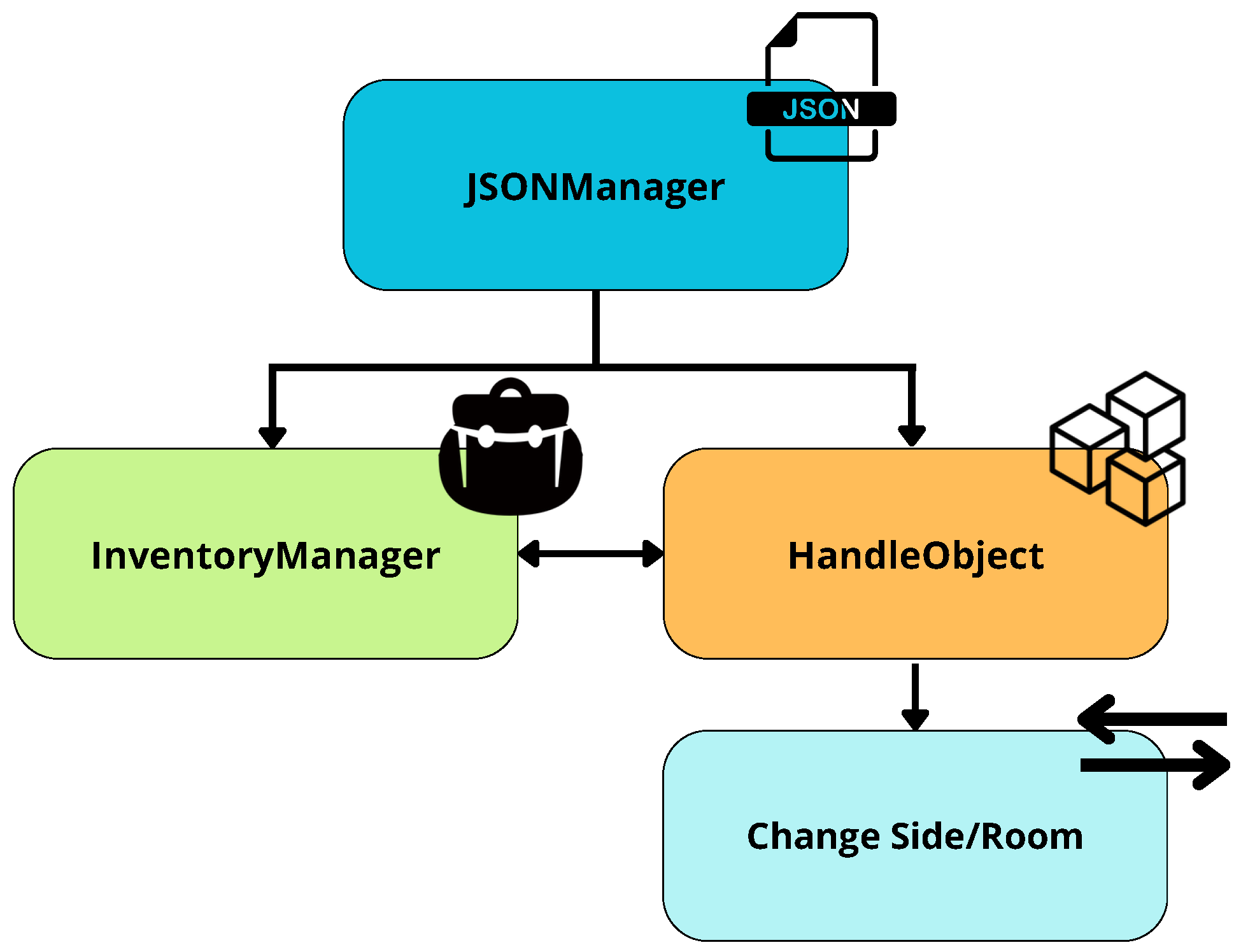
The gameplay logic was implemented through an object-oriented framework composed of four main modules, which regulate interaction flow and game-state management:
- JsonManager—The JsonManager functions as the central data layer of the system and is responsible for maintaining the game state throughout the user experience. It operates through a lightweight local JSON file, which serves as a flexible and easily updatable data repository (Figure 3).Its main functions include:
- –
- Mmnaging the loading and saving of game-state information;
- –
- Storing the activation state of objects, puzzles, and interactions;
- –
- Enabling or disabling elements within a scene based on logical conditions;
- –
- Allowing designers to update or expand content (e.g., puzzles, narrative states) without modifying compiled scripts.
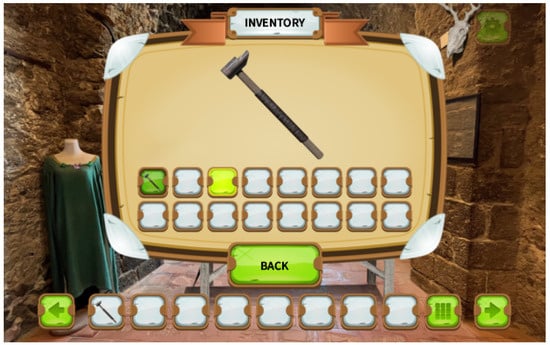
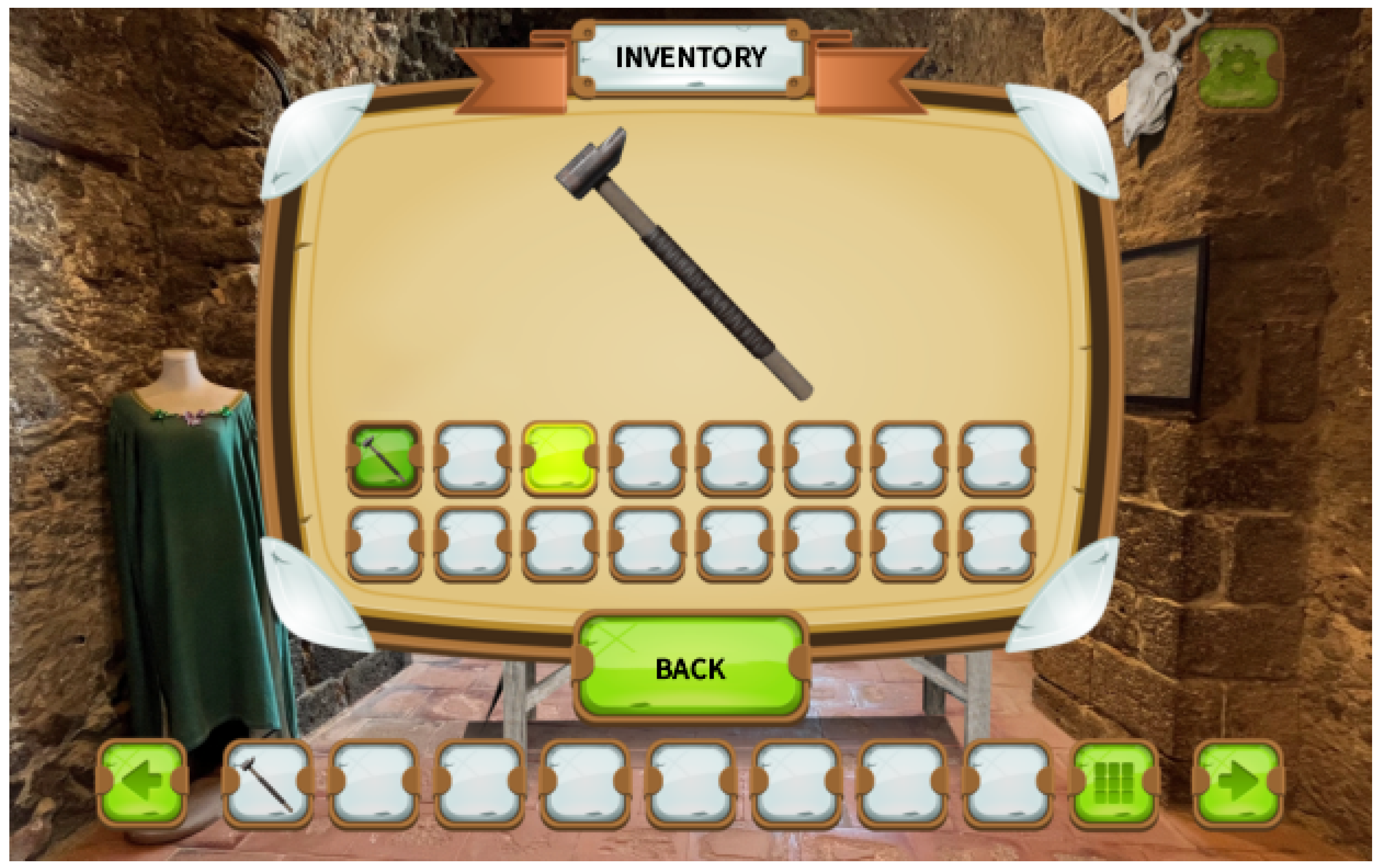
This modular data-driven approach ensures scalability and facilitates iterative refinement, a key requirement in serious game prototyping and digital heritage applications. - InventoryManager—The InventoryManager plays an important pedagogical role by reinforcing associative learning, requiring players to connect collected objects with their historical and contextual meaning in order to progress through the narrative. In operational terms, the InventoryManager handles all aspects of the player’s inventory and regulates which items are available for interaction at any given stage of the game (Figure 4).
- –
- Maintaining a structured list of acquired objects;
- –
- Managing the selection of the currently active item;
- –
- Ensuring compatibility between selected items and interactive hotspots in the environment;
- –
- Supporting object inspection or enlargement for educational purposes.
- HandleObject—The HandleObject module constitutes the core of the interaction system. It receives user input and determines how the environment responds based on game logic and current inventory conditions.Its functionality includes:
- –
- Detecting object clicks through raycasting;
- –
- Validating interactions depending on item possession or puzzle state;
- –
- Triggering events such as dialogue windows, object collection, or narrative reveals;
- –
- Initiating transitions, animations, or the activation of previously hidden elements;
- –
- Communicating with JsonManager and InventoryManager to update the global state.
As the central mediator between user action and system response, HandleObject shapes the experiential and educational rhythm of the game, transforming exploration into meaningful narrative progression (Figure 5). - ChangeSide/ChangeRoom—The ChangeSide and ChangeRoom modules manage spatial navigation within the virtual reconstruction of the castle. They enable both micro-navigation (rotating or shifting viewpoints within a room) and macro-navigation (moving between the main areas of the game).Their main functions include:
- –
- Receiving navigation triggers from HandleObject or UI elements;
- –
- Updating the active viewpoint or active scene;
- –
- Ensuring smooth transitions, typically implemented through fade effects;
- –
- Maintaining continuity in the spatial logic so that navigation remains intuitive;
- –
- Adapting visible or interactive objects according to the new context.
In heritage-oriented serious games, navigation is not merely functional but also interpretive: moving through spaces reinforces the architectural identity of the monument and supports situated learning.
Figure 3.
Modular system architecture of the serious game, showing the four core components and their functional relationships.
Figure 4.
Overview of the inventory display system.
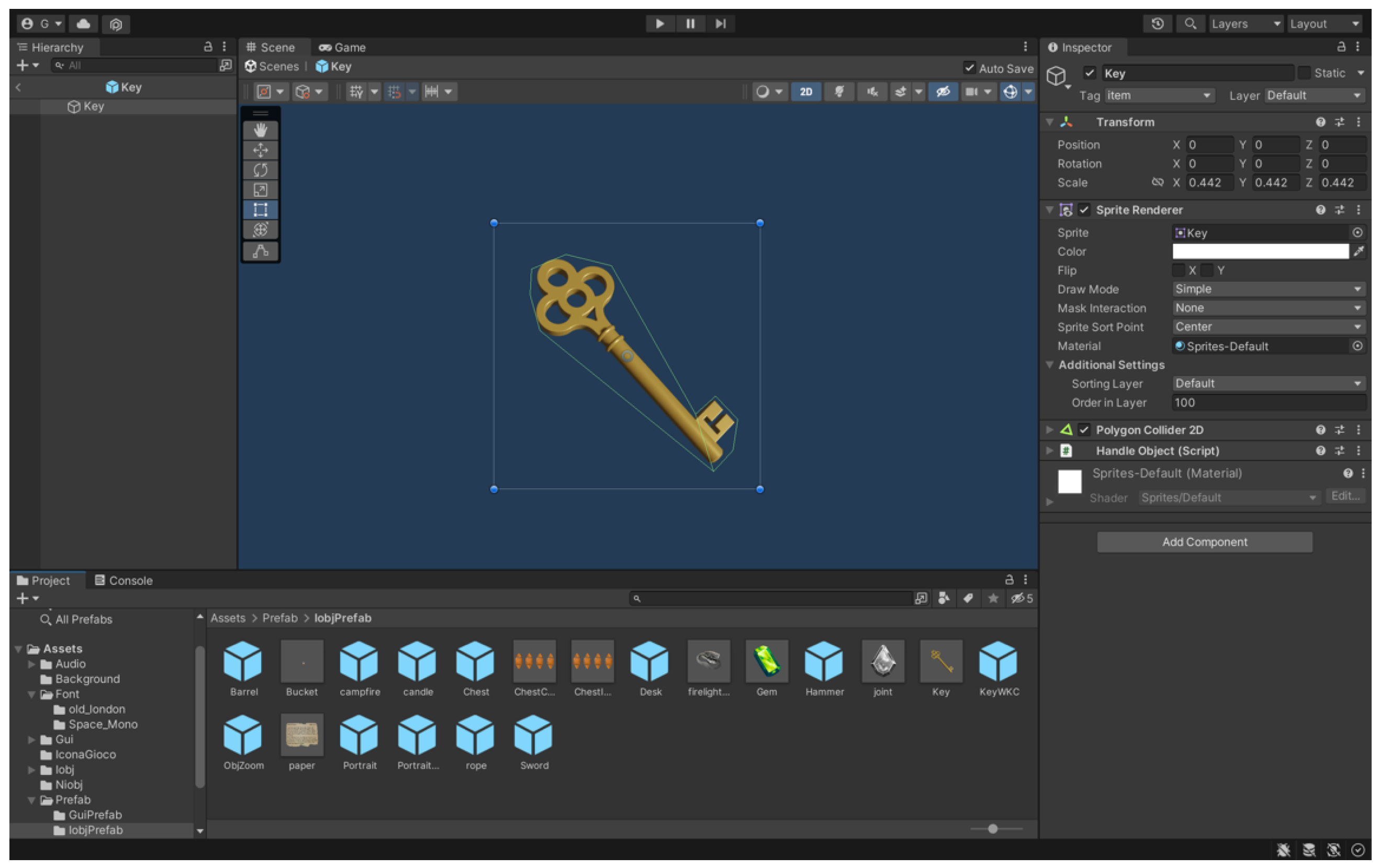
Figure 5.
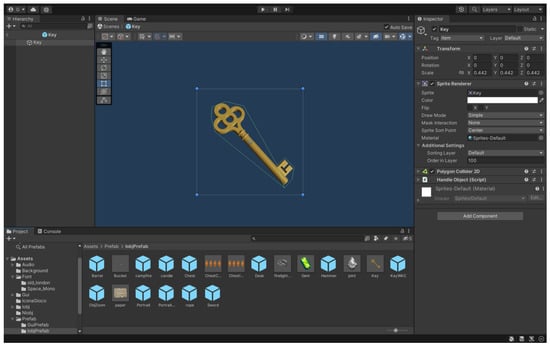
Example of a Blender-made object imported into Unity, with a collider used to trigger interactive actions.
This architecture integrates Unity’s engine capabilities with a modular and easily extendable system, enabling the addition of new environments, puzzles, or narrative features without altering the overall structure of the project (Figure 6). Qualitative testing conducted throughout development ensured system stability, smooth navigation, and a clear and accessible interface. From a production perspective, the pilot was developed by a small interdisciplinary team composed of a game developer, a 3D modeler, and heritage researchers. The prototype followed a streamlined design-to-engine pipeline, integrating photogrammetric processing, asset optimization in Blender, and implementation within the Unity engine. The development cycle was intentionally limited in scope, focusing on a modular architecture that allows incremental content expansion without restructuring the entire system. The project relied exclusively on widely available software tools and targeted deployment on standard museum desktop computers and laptops, avoiding dependence on dedicated immersive infrastructures or proprietary platforms. This lightweight production configuration was deliberately adopted to ensure technical and financial accessibility for minor cultural institutions. To render this production model operationally transparent and replicable, Table 1 provides a structured overview of the required roles and competencies, software toolchain (including license assumptions), approximate effort ranges per development stage (research and scriptwriting; modeling; integration; playtesting; iteration), and minimum hardware specifications for both development and museum deployment. The values reported are grounded in the concrete development experience of the pilot and are intended to offer an operational feasibility baseline for comparable small-scale heritage contexts, rather than a fixed production standard. Rather than aiming at a one-off, technology-intensive installation, the framework was conceived as a scalable and replicable starting point, where additional rooms, narrative modules, or interpretive layers can be integrated progressively without altering the core architecture. In this sense, the contribution of the pilot lies not only in the specific prototype developed for Aci Castello, but also in demonstrating a sustainable and transferable design model adaptable to other minor cultural heritage sites.
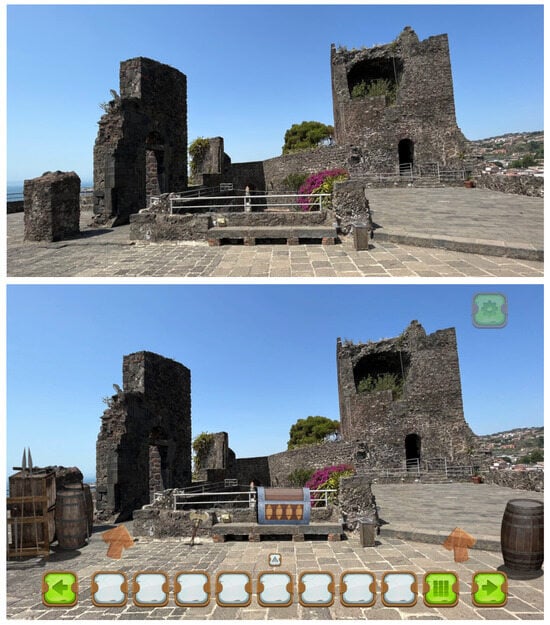
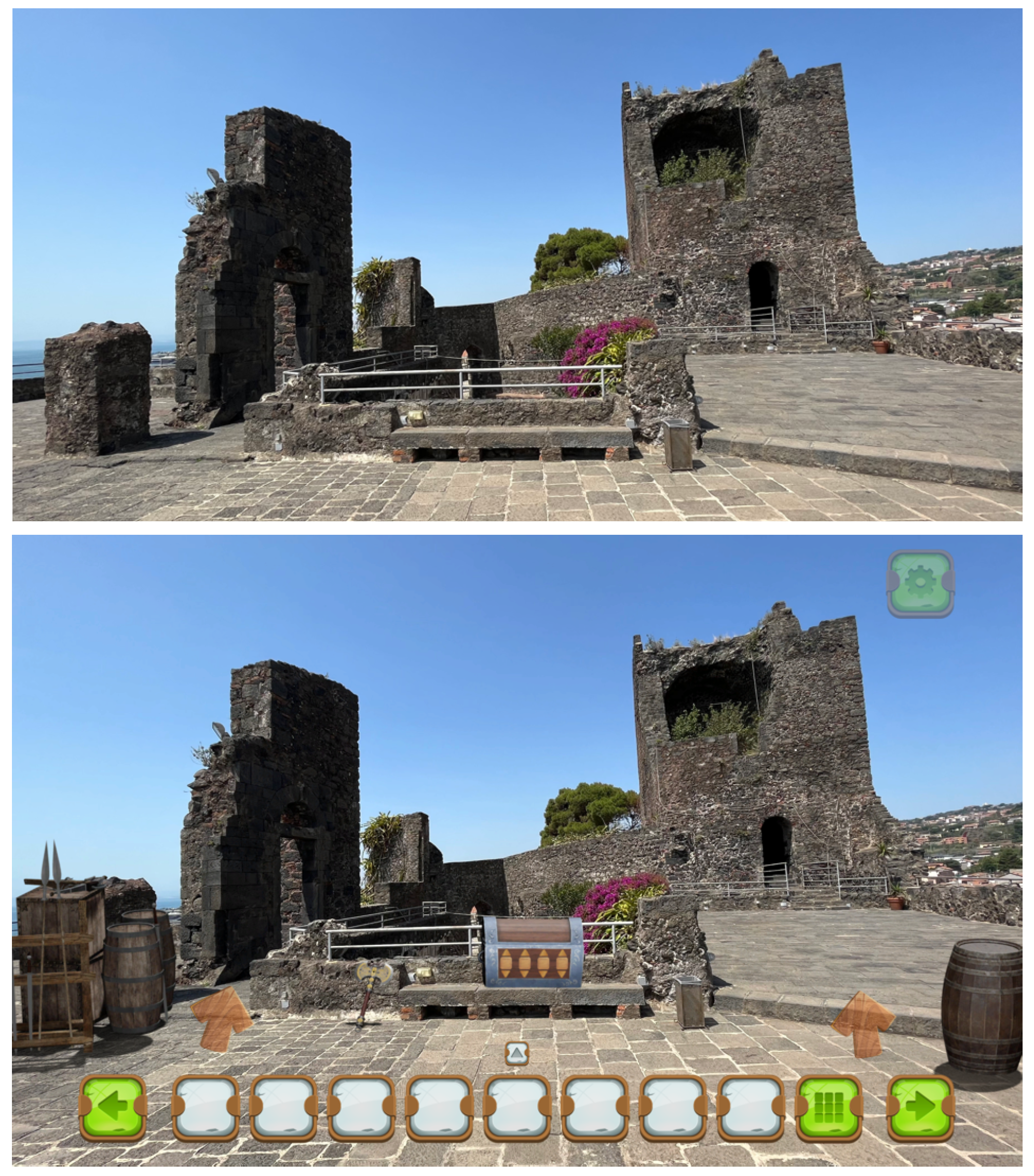
Figure 6.
Pilot project implementation. (top) a photograph of a gameplay area; (bottom) the gameplay area including its interactive elements.
Table 1.
Replicability framework for pilot-scale serious game development in minor cultural heritage contexts.
3.6. Pedagogical Structure and User Experience Design
At its core, the Aci Castello serious game functions as a non-linear learning environment. Users are not assessed through scores or tests; instead, learning emerges through self-directed exploration and reflection. The design follows experiential learning theory, which emphasizes perception, active experimentation, and conceptualization [32].
From a pedagogical perspective, the project aligns with the constructivist digital heritage model outlined by Paliokas and Sylaiou [6], in which knowledge is constructed through interaction with contextualized information. This framework supports a holistic understanding of the castle and its significance, its architecture, landscape, and social memory.
The pedagogical strategy is articulated into three complementary dimensions:
- Cognitive dimension: factual acquisition through interactive exploration;
- Emotional dimension: affective engagement supported by narrative and aesthetic coherence;
- Reflective dimension: development of critical awareness regarding heritage as an interpretive and reconstructive process.
The interface was intentionally designed to avoid textual overload, replacing extended descriptions with concise narrative fragments to enhance immersion and memory retention. Each scene adopts a situated-learning approach, whereby historical information is conveyed directly through the environment rather than through external explanatory content. This principle is consistent with the educational model employed in HeritageQuest [33], where interactivity fosters long-term retention through contextual storytelling.
3.7. Integration with Local Heritage Systems
The methodology also considered the need to integrate the serious game within the physical museum context. The prototype was conceived both as a standalone digital experience and as a complementary interpretive tool for the Civic Museum of Aci Castello. This dual configuration enables the project to support multiple modes of cultural engagement:
- On-site interaction, through interactive terminals or the potential incorporation of AR-guided tours;
- Remote access, allowing the experience to be used in educational settings such as schools or integrated into tourism platforms.
This hybrid dissemination strategy aligns with UNESCO’s Digital Heritage Ecosystem framework [10], promoting inclusive, sustainable, and resilient solutions for small-scale cultural institutions.
4. Evaluation and Results
To complement the design-oriented nature of the pilot, a preliminary user evaluation was conducted after participants played the demo version of the serious game. A total of 30 volunteer participants, all university students from the University of Catania, took part in the study. After completing the gameplay session, participants were asked to fill in an anonymous post-experience questionnaire. The questionnaire collected gameplay performance indicators (completion of the demo and completion time), and perceptual measures related to usability, clarity of instructions, interface quality, immersion, challenge balance, narrative motivation, and perceived learning outcomes. Additional items explored participants’ curiosity toward visiting the real Norman Castle of Aci Castello, their willingness to play a full version of the game, and their likelihood of recommending the experience to different audiences. Most attitudinal questions were formulated using Likert-scale items, complemented by open-ended questions aimed at gathering qualitative feedback on strengths, unclear elements, and suggestions for improvement. This mixed-method questionnaire approach, combining Likert-scale items with open-ended questions, follows established evaluation practices in serious game research for cultural heritage contexts, where triangulating quantitative perception measures with qualitative feedback is considered appropriate for exploratory pilot studies [5,6,8]. The questionnaire dimensions (usability, immersion, perceived learning, and engagement) were aligned with constructs commonly assessed in established serious game evaluation instruments such as the System Usability Scale (SUS) and the Game Experience Questionnaire (GEQ), while being adapted to the specific heritage context of the pilot [35,36]. The instrument was designed for exploratory purposes and does not constitute a standardized psychometric scale.
The post-experience questionnaire included eleven Likert-scale items (1 = strongly disagree, 5 = strongly agree) addressing usability, engagement, perceived learning, and cultural interest:
- The game was easy to use.
- The instructions were clear.
- The interface was clear and well organized.
- I felt immersed in the game experience.
- The challenges (riddles/puzzles) were stimulating but accessible.
- I found the informational content interesting.
- The game motivated me to continue until the end.
- I learned something new by playing HeriQuest.
- After playing, I feel more curious to visit the Norman Castle of Aci Castello.
- I would like to play the full version of the game.
- Overall rating of the experience.
The study was conceived as an exploratory pilot evaluation rather than a large-scale validation campaign. Its purpose was to provide first empirical evidence regarding user reception, learning perceptions, and experiential qualities, in line with the research questions outlined in the Introduction. The results of the pilot evaluation are reported in Table 2.
Table 2.
Pilot questionnaire results on usability, engagement, perceived learning, and cultural interest (Likert scale 1–5; ).
4.1. Sample Characteristics and Gameplay Completion
Ninety percent of participants reported completing the demo version of the serious game, while the remaining 10% did not finish the experience within the available session time. Most completions occurred within 15–20 min, suggesting compatibility with short museum or classroom sessions.
4.2. Usability and Interface Perception
Participants expressed high levels of perceived usability and clarity of interaction. On a five-point Likert scale, ease of use obtained a mean score of 4.20 (SD = 0.76) (Item #1), while clarity of instructions reached 4.03 (SD = 0.85) (Item #2). Interface organization was also positively evaluated, with a mean of 3.90 (SD = 1.03) (Item #3). Overall, these results indicate that the point-and-click navigation paradigm and the restrained graphical interface effectively supported accessibility across heterogeneous audiences.
4.3. Engagement and Immersion
Engagement-related items received consistently positive evaluations. Participants reported feeling immersed in the experience (M = 3.90, SD = 0.76) (Item #4) and motivated to continue until the end of the demo (M = 4.00, SD = 0.98) (Item #7). The puzzle structure was perceived as stimulating yet accessible (M = 4.00, SD = 0.83) (Item #5), suggesting an appropriate balance between challenge and cognitive load. These findings support the suitability of exploratory puzzle-based mechanics for heritage-oriented learning contexts.
4.4. Perceived Learning and Interpretation of Scientific Content
Learning-related questions showed particularly encouraging trends. Respondents agreed that they had learned new information by playing the game (M = 4.20, SD = 0.76) (Item #8) and found the informational content interesting (M = 4.10, SD = 0.84) (Item #6). With specific regard to the archaeometric theme associated with the Byzantine Chapel fresco, most participants reported that the scientific topic was understandable and engaging, although some respondents noted residual difficulties and suggested that additional explanatory cues could further improve clarity. These data indicate that complex research-driven heritage content can be effectively mediated through interactive storytelling when appropriately simplified for non-specialist audiences.
4.5. Cultural Interest and Intention to Visit
After gameplay, participants reported increased curiosity toward visiting the real Norman Castle of Aci Castello (M = 3.83, SD = 0.91) (Item #9). Interest in playing a full version of the serious game was similarly positive (M = 3.83, SD = 0.91) (Item #10), indicating good overall reception of the prototype. Recommendation patterns further support these results. Eighty percent of respondents stated that they would recommend the game to people already interested in culture or history, while only 3.3% would not. In addition, 50% declared that they would recommend the experience to audiences with little prior cultural interest, suggesting the potential of the game to reach broader publics beyond traditional heritage enthusiasts.
4.6. Overall Appreciation and Qualitative Feedback
The overall evaluation of the experience was positive, with an average global score of 3.87 out of 5 (SD = 0.78) (Item #11). Open-ended responses emphasized the narrative atmosphere, the integration between historical information and gameplay, and the exploratory structure of the environments as major strengths of the demo. Participants particularly appreciated the balance between guidance and freedom of exploration. Suggestions for improvement mainly concerned requests for longer gameplay sessions, access to additional rooms of the castle, and minor refinements to interface elements and interaction feedback. These comments provide concrete directions for future iterations of the prototype.
5. Discussion
To better understand the potential scope and practical implications of our pilot, it is useful to position it within the most recent trajectories of SG research and development. The current landscape shows a diversification of aims, formats, and implementation strategies, ranging from highly immersive heritage reconstructions to lightweight interpretive experiences designed for small museums and minor sites. This diversity suggests that evaluating a pilot like ours requires more than an internal assessment of features. It also requires a comparative lens able to clarify where our design choices align with established approaches and where they intentionally diverge [5,6].
For this reason, we selected four SG development models that, in different ways, form meaningful reference points for our project. Some share affinities with our approach in terms of narrative intent, interpretive logic, or the emphasis on visitor agency. Others represent more distant trajectories, either because of their technological scale, their target scenarios, or their underlying interaction philosophies. By placing these models side by side with the Aci Castello pilot, we aim to highlight the specific contribution of an exploratory point-and-click, puzzle-based framework for a minor CH site, and to reflect on its feasibility, sustainability, and transferability. This comparison also provides the conceptual bridge for discussing strengths, limits, and next steps in a way that is grounded in current practice rather than in abstract expectations.
To keep the comparison focused, we considered a limited set of criteria that are particularly relevant for minor CH contexts. These include the scale of technological implementation, the balance between narrative and evidential content, the type of interaction and progression logic, and the degree to which each model supports sustainable development and iterative refinement. We also paid attention to how each SG frames the relationship between place, visitor agency, and institutional or community mediation, since these dimensions directly affect both engagement and long-term maintainability in small museums. Within this frame, the Aci Castello pilot can be read as an attempt to combine interpretive clarity and manageable production effort, aligning with the broader emphasis on meaningful, research-informed digital storytelling rather than technology-driven spectacle [11,13,14].
5.1. Comparative Analysis with Related Serious Games (SG)
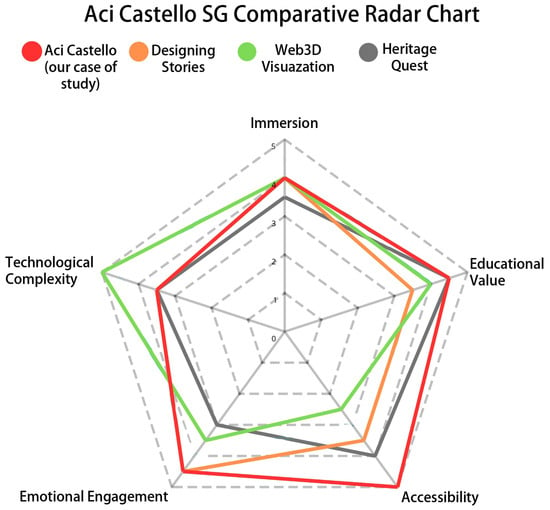
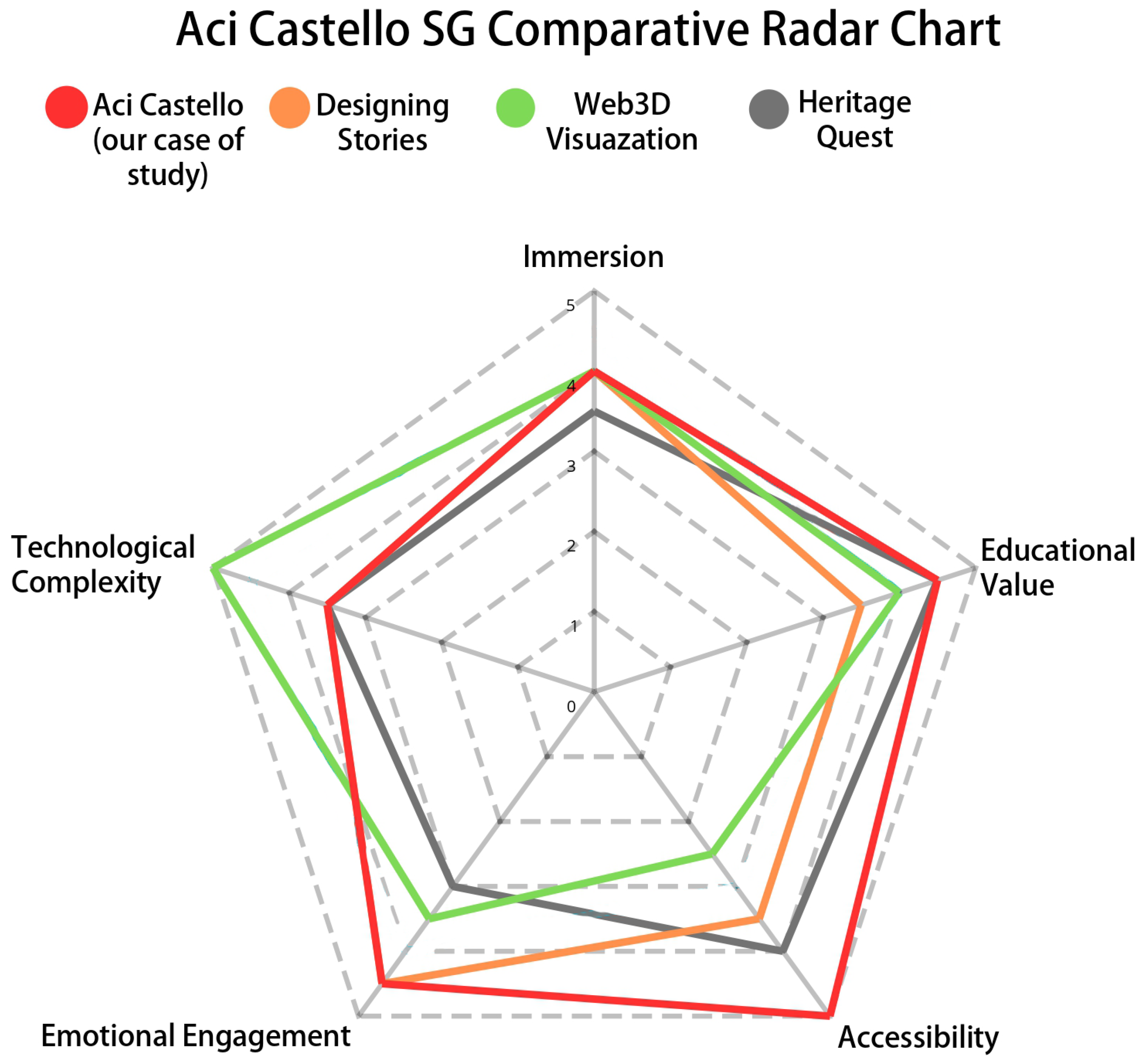
To better interpret the design implications of the Aci Castello pilot, we positioned it against four recent SG models that represent different but relevant trajectories in CH communication. The goal of this comparison is not to establish a hierarchy of effectiveness. Rather, it is to clarify what our site-specific, point-and-click approach enables in a minor context, and what it deliberately avoids in order to preserve feasibility and long-term maintainability (Table 3, Figure 7).
Table 3.
Comparative overview of serious games for cultural heritage and the Aci Castello Serious Game (ACSG).
Figure 7.
Qualitative comparative positioning of serious games across five key dimensions, derived from literature-informed criteria and interpreted in light of the pilot results.
When compared with projects such as HeritageQuest [33] and Designing Stories from the Grave [34], the Aci Castello prototype occupies a distinct position. HeritageQuest adopts a modular and multi-site logic across European locations, relying on structured tasks and quizzes to sustain progression. In contrast, our pilot concentrates on a single architectural complex and its landscape, privileging a tighter narrative cohesion and a slower interpretive rhythm. The Aci Castello model instead relies on a classic point-and-click structure, using puzzle solving to support narrative depth without requiring high-end immersive infrastructures.
A further comparison with Web3D Archaeological Visualization [37] helps refine this positioning. That model demonstrates the value of high-fidelity visualization and scholarly annotation for Roman contexts, but it also implies a technological and curatorial scale that is not always accessible to small institutions. Our pilot takes a different path by emphasizing low-barrier deployment and interpretive clarity, aiming for compatibility with standard museum PCs and laptops. This design stance is not a retreat from ambition. It is an attempt to align the game structure with the operational reality of minor CH sites and with the need for iterative, sustainable growth across time.
In this sense, the Aci Castello pilot resonates with participatory design perspectives that value locality, context, and user agency in heritage gamification [38]. Each interaction is intended to correspond to a layer of the castle’s historical evolution, whether structural, geological, or social, encouraging players to reconstruct meaning rather than receive it passively. The reflective micro-narratives inspired by Designing Stories from the Grave [34] reinforce this intention, while the broader comparison shows how a site-specific SG can remain methodologically ambitious even when it adopts a deliberately lightweight technical profile.
5.2. Interpretation of Pilot Results in Light of the Literature
The pilot evaluation reported in Section 4 provides preliminary quantitative evidence regarding usability, engagement, perceived learning, and cultural interest. High usability scores (M = 4.20) and clarity of instructions (M = 4.03) support RQ4 and are consistent with studies emphasizing the importance of simple interaction grammars and low cognitive overhead in museum-oriented serious games [5,8]. The effectiveness of a classic point-and-click paradigm for heterogeneous audiences aligns with prior findings suggesting that intuitive navigation structures can lower access barriers in heritage contexts.
Similarly, the positive perceived-learning ratings (M = 4.20) and interest in the informational content (M = 4.10) speak directly to RQ1 and echo results reported in reflective, narrative-driven heritage games, where discovery-based mechanics foster interpretation rather than rote transmission [6,34]. The relatively high immersion and motivation scores (M = 3.90 and M = 4.00) further suggest that site-specific storytelling and puzzle-based progression can support emotional engagement, in line with experiential learning theories applied to museum settings.
Participants’ reported curiosity toward visiting the real site (M = 3.83) and their willingness to recommend the experience also address RQ2 and corroborate earlier work showing that serious games can act as gateways to physical visitation and heritage awareness rather than substitutes for on-site experiences [5,14]. At the same time, these values, while positive, remain below ceiling levels, indicating areas for refinement in narrative pacing and interface feedback, as also suggested by qualitative comments.
Taken together, these findings neither contradict nor radically extend existing theories on serious games in museums, but they provide site-specific confirmation that low-barrier, narrative-centered designs can achieve engagement and learning outcomes comparable in direction, if not yet in scale, to more technologically intensive installations. This reinforces the contribution of the present pilot as a feasibility-oriented design experiment grounded in empirical user data rather than as a claim of generalizable impact.
5.3. The Pilot Nature and Its Methodological Boundaries
The radar visualization in Figure 7 was constructed as a qualitative analytical tool rather than as a quantitative benchmark. Scores were assigned through an author-driven comparative reading of the selected projects’ publications, based on five criteria derived from the serious games and digital heritage literature: educational depth, accessibility, technological complexity, narrative integration, and long-term feasibility.
For each criterion, specific indicators were considered. Educational depth was assessed by examining the presence of explicit learning objectives, interpretive scaffolding, and reported evaluation outcomes; accessibility by hardware requirements and interaction complexity; technological complexity by the number and specialization of development tools and infrastructures involved; narrative integration by the extent to which storytelling structured player progression; and feasibility by reported production scale and maintenance demands.
The resulting values should therefore be interpreted as relative qualitative positions intended to clarify design trade-offs among different approaches, rather than as standardized performance measures or rankings.
In practical terms, the present contribution lies in demonstrating that a point-and-click, puzzle-based structure can sustain an evidence-aware narrative while remaining compatible with the operational constraints of small museums. This becomes clearer when contrasted with the development trajectories of the selected models. Web3D Archaeological Visualization [37] highlight the interpretive value of technology-forward infrastructures, but also presuppose institutional conditions and maintenance capacities that are not always realistic for minor contexts. HeritageQuest [33] demonstrates how a multi-site, modular architecture can scale across locations, while Designing Stories from the Grave [34] shows the power of empathy-driven micro-narratives. Our pilot adopts the latter’s sensitivity to reflective storytelling, but grounds it in a single-site strategy that prioritizes feasibility and place-based coherence.
The methodological scope therefore focuses on stabilizing interpretive logic, interaction pacing, and a sustainable pipeline before moving toward broader evaluative claims. These elements create the necessary conditions for subsequent rounds of assessment that can address usability, learning outcomes, and emotional engagement following established evaluation pathways in the SG literature [7,8].
5.4. Socio-Cultural and Economic Implications
The same comparison also helps interpret the socio-cultural role of the pilot beyond its technical profile. By focusing on a single site and adopting a low-barrier structure, the Aci Castello SG emphasizes proximity to place and to community narratives, which is less central in multi-site or infrastructure-heavy models (Table 3). While HeritageQuest [33] is effective at encouraging exploration across broader European networks, the Aci Castello approach concentrates interpretive energy on one community landscape, suggesting a different type of value for local identity and long-term engagement.
This choice is especially relevant for communities such as Aci Castello, where digital mediation can function as a cultural catalyst while also supporting a realistic and sustainable engagement strategy. The pilot suggests that an SG can contribute to repositioning the castle and museum as spaces of active learning and shared meaning rather than static attractions. This direction aligns with the idea of “living heritage,” where digital experiences can feed a circular economy of cultural production and local value generation [39,40].
The site-specific narrative also has the potential to foster emotional attachment to local identity, encouraging participation in heritage care alongside tourism interest. The empathy-oriented stance that Designing Stories from the Grave [34] brings to funerary heritage is instructive here. It suggests how carefully scripted micro-narratives can activate reflection without requiring high technological complexity. This resonates with studies highlighting the role of storytelling in shaping public consciousness around Sicilian fortifications and local cultural memory [27,28].
5.5. Technological and Design Considerations
From the design angle, Table 3 and Figure 7 make explicit the core trade-off that defines our approach. The Aci Castello SG reduces dependence on expensive infrastructures in order to preserve usability and long-term maintainability in a minor CH setting. The use of Unity and Blender, together with a photogrammetry-informed workflow, supports a technically manageable pipeline that remains compatible with standard museum PCs and laptops, without sacrificing the possibility of future content expansion.
This positioning gains clarity when read alongside the selected models. Web3D Archaeological Visualization [37] foregrounds high-fidelity scholarly access. Our pilot deliberately steps back from these resource-intensive trajectories, choosing instead an interaction grammar that can be sustained by smaller institutions. At the other end of the spectrum, HeritageQuest [33] shows that modularity can support wider scalability, whereas our modular logic is oriented toward future replication across comparable minor sites rather than multi-site navigation in a single product.
The point-and-click, puzzle-based structure further strengthens this balance. It is not a decorative layer but an interpretive mechanism that guides attention toward architectural details, geological features, and micro-histories. In this sense, the Aci Castello SG aligns with the broader understanding that digital transformation in museums is not only technological but also relational and participatory [11,13,14].
6. Conclusions
Our pilot project tries to demonstrate that SGs can support the educational enhancement of minor CH sites through an interpretive model that prioritizes feasibility, narrative coherence, and place-based engagement. The case of the Norman Castle of Aci Castello suggests that interactive storytelling, when grounded in historical authenticity and cultural empathy, can strengthen the relationship between the monument, its Civic Museum, and the broader local identity. In this sense, the project aligns with UNESCO’s recommendations on inclusive digital transformation [10], showing that meaningful innovation can also emerge from modest-scale, carefully designed interventions.
From a methodological standpoint, the pilot provides a concrete framework for developing low-cost, narrative-driven SG adaptable to comparable contexts. Its modular structure and sustainable workflow support incremental growth rather than one-off technological showcases, reinforcing the idea that scalability for minor CH sites depends on maintainability as much as on creativity. The project’s main strength lies in its dual function: it works as an educational resource for the Civic Museum of Aci Castello while also offering a replicable starting point for community-oriented digital heritage strategies.
Nevertheless, the study acknowledges clear limitations. Although the study now includes a preliminary questionnaire-based evaluation with thirty participants, the pilot scale limits the generalizability of the findings. While the sample size (n = 30) limits statistical generalization, the evaluation strategy adopted in this study is consistent with exploratory pilot designs commonly reported in serious game research. Several early-stage serious game studies in academic and cultural contexts have relied on small-scale samples to assess usability, engagement, and perceived learning before conducting large-scale validation campaigns [35,36]. In particular, pilot studies frequently employ Likert-scale instruments to examine constructs such as immersion, usability, and perceived usefulness, focusing on feasibility and user reception rather than inferential statistical claims [41]. Within this framework, the present study should be understood as a feasibility-oriented empirical step aimed at establishing preliminary effect trends and informing subsequent iterations, rather than as a definitive validation of impact. Future research should therefore extend the sample size and introduce controlled comparative studies employing validated instruments for assessing empathy, memory retention, and behavioral effects [7,8]. At the same time, partnerships with educational institutions, tour guides, and local authorities could expand the project’s interpretive scope and embed the SG within broader regional heritage and tourism networks.
In conclusion, the Aci Castello SG illustrates that the future of minor CH communication can be shaped by thoughtful design, interdisciplinarity, and community-ready frameworks rather than by high-cost technology alone. The pilot positions small heritage institutions as credible laboratories for digital participation, where history is not only preserved but also reactivated through sustainable, research-informed, and locally grounded interactive experiences.
Author Contributions
Conceptualization, was discussed by R.R., P.T., M.V., D.A., E.P., A.M.G. and F.S.; responsible, F.S.; writing—original draft preparation, R.R., P.T. and M.V.; writing—Section 1, P.T.; writing—Section 2, P.T., E.P. and M.V.; writing—Section 3, R.R.; writing—Section 4, P.T.; visualization of writing phase, F.S., A.M.G. and D.A.; supervision, F.S., A.M.G. and D.A.; revision, F.S., A.M.G. and D.A. All authors have read and agreed to the published version of the manuscript.
Funding
The research activity was funded by European Union (NextGeneration EU), through the MUR-PNRR project SAMOTHRACE (ECS00000022) “SiciliAn MicronanOTecH Research And Innovation CEnter”—Ecosistema della innovazione (PNRR, Mission 4, Component 2 Investment 1.5, Avviso n. 3277 del 30 December 2021), Spoke 1_Università di Catania—Work Package 6 Cultural Heritage.
Data Availability Statement
Dataset available on request from the authors.
Conflicts of Interest
The authors declare no conflicts of interest.
References
- Dicks, B. Heritage, Place, and Community; Routledge: London, UK, 2000. [Google Scholar]
- Bagnall, G. Performance and performativity at heritage sites. Mus. Soc. 2003, 1, 87–103. [Google Scholar] [CrossRef] [Scilit]
- Champion, E. Critical Gaming: Interactive History and Virtual Heritage; Routledge: London, UK, 2015. [Google Scholar]
- Bekele, M.K.; Pierdicca, R.; Frontoni, E.; Malinverni, E.S.; Gain, J. A survey of augmented, virtual, and mixed reality for cultural heritage. J. Comput. Cult. Herit. 2018, 11, 1–36. [Google Scholar] [CrossRef] [Scilit]
- Mortara, M.; Catalano, C.; Bellotti, F.; Fiucci, G.; Houry-Panchetti, M.; Petridis, P. Learning cultural heritage by serious games. J. Cult. Herit. 2014, 15, 318–325. [Google Scholar] [CrossRef] [Scilit]
- Paliokas, I.; Sylaiou, S. A classification model for serious games used in museums, galleries and other cultural sites. Int. J. Comput. Methods Herit. Sci. 2019, 7, 24–38. [Google Scholar]
- Chernbumroong, S.; Ariya, P.; Yolthasart, S.; Wongwan, N.; Intawong, K.; Puritat, K. Comparing the impact of non-gamified and gamified virtual reality in museum environments. Heritage 2024, 7, 89. [Google Scholar] [CrossRef] [Scilit]
- Rizvic, S.; Boskovic, D.; Okanovic, V.; Sljivo, S.; Zukic, M. Interactive Digital Storytelling: Bringing Cultural Heritage in a Classroom. J. Comput. Educ. 2019, 6, 143–166. [Google Scholar] [CrossRef] [Scilit]
- Merchán, M.J.; Merchán, P.; Pérez, E. Serious games to enhance education: Play, technology, and archaeology in a Spanish museum. Rev. Colomb. Educ. 2023, 89, 155–172. [Google Scholar] [CrossRef] [Scilit]
- UNESCO. Digital Transformation in Cultural Heritage: Global Report 2024; UNESCO Press: Paris, France, 2024. [Google Scholar]
- Sandriester, J.; Harfst, J.; Kern, C.; Zuanni, C. Digital Transformation in the Cultural Heritage Sector and Its Impacts on Sustainable Regional Development in Peripheral Regions. Sustainability 2025, 17, 6661. [Google Scholar] [CrossRef] [Scilit]
- Guardo, G. Serious Game per la Valorizzazione del Castello Normanno di Aci Castello. Master’s Thesis, University of Catania, Department of Architecture, Catania, Italy, 2023. [Google Scholar]
- Gambaro, M. Il Museo Partecipativo: Strategie di Comunicazione e Coinvolgimento; FrancoAngeli: Milan, Italy, 2019. [Google Scholar]
- Salvietti, G.; Boiano, S.; Gaia, G. Digital Innovation in Italian Museums: Trends and Perspectives; Politecnico di Milano: Milan, Italy, 2023. [Google Scholar]
- European Museum Academy. European Museum Report 2022; European Museum Academy: The Hague, The Netherlands, 2022; Available online: https://europeanmuseumacademy.eu/wp-content/uploads/2023/01/230109-EMA-ANNUAL-REPORT-2022.pdf (accessed on 3 March 2026).
- Gaia, G.; Boiano, S. Musei Digitali e Narrazione Interattiva; Carocci: Rome, Italy, 2024. [Google Scholar]
- Hou, W.; Riccò, D. Accessible Design for Museums: A Systematic Review on Multisensory Experience Based on Digital Technology. In Advances in Design and Digital Communication V; Martins, N., Brandão, D., Eds.; Springer Nature Switzerland: Cham, Switzerland, 2025; pp. 291–305. [Google Scholar]
- Pearce, C. Playing Across the Divide: Digital Games and Cultural Memory; MIT Press: Cambridge, MA, USA, 2007. [Google Scholar]
- Jasink, A.; Bombardieri, L.; Dionisio, G.; Tucci, G.; Cini, D.; Nunziati, W. MUSINT Project: Towards a Digital Interactive Archaeological Museum. In Electronic Imaging & the Visual Arts: EVA 2012 Florence; Cappellini, V., Ed.; Firenze University Press: Florence, Italy, 2012; pp. 113–118. [Google Scholar]
- Jasink, A.; Faralli, C.; Kruklidis, P. MUSINT II: A Complex Project on a Virtual and Interactive Museum Involving Institutions of Florence, Rome and Heraklion. Stud. Digit. Herit. 2017, 1, 282–297. [Google Scholar] [CrossRef] [Scilit]
- Martusciello, F.; Muccini, H.; Bucchiarone, A. A Reference Architecture for Gamified Cultural Heritage Applications Leveraging Generative AI and Augmented Reality. arXiv 2025, arXiv:2506.04090. [Google Scholar] [CrossRef] [Scilit]
- Attademo, F. Architettura e Narrazione Nello Spazio Digitale; FrancoAngeli: Milan, Italy, 2023. [Google Scholar]
- Jin, S. Gamification in Empathy Museum: Applied Researches of Gamified Participatory Exhibition Design in Empathy Museum. Master’s Thesis, Politecnico di Milano, Milan, Italy, 2020. Available online: https://hdl.handle.net/10589/169482 (accessed on 3 March 2026).
- Pecchinenda, G. Videogiochi e Cultura della Simulazione: La Nascita dell’homo Game; Editori Laterza: Bari, Italy, 2014. [Google Scholar]
- Etna Riviera. Aci Castello: History and Architecture. 2024. Available online: https://etnariviera.com/en/localita/aci-castello/ (accessed on 3 December 2025).
- Enjoy Sicilia. Castello Normanno di Aci Castello. 2024. Available online: https://www.enjoysicilia.it/en/catania-etna-area/aci-castello/castello-normanno-aci-castello/ (accessed on 11 December 2025).
- Magnano di San Lio, E. La Rocca di Aci: La Storia e l’Architettura; Edizioni Caracol: Catania, Italy, 2021. [Google Scholar]
- Brocato, D.; Scarcella, G. Castelli e Luoghi Fortificati della Provincia di Catania; APT Edizioni: Catania, Italy, 2004. [Google Scholar]
- Raccuglia, S. Storia di Aci: Dalle Origini al 1528 d.C.; Accademia di Scienze, Lettere e Belle Arti degli Zelanti e dei Dafnici: Acireale, Italy, 1987. [Google Scholar]
- Touring Club Italiano. Museo Civico di Aci Castello. 2024. Available online: https://www.touringclub.it/destinazioni/aci-castello/vedere/253978-museo-civico (accessed on 5 December 2025).
- Gueli, A.M.; Galvagno, R.; Incardona, A.; Pappalardo, E.; Politi, G.; Paladini, G.; Stella, G. Correlation of Visible Reflectance Spectrometry and Portable Raman Data for Red Pigment Identification. Heritage 2024, 7, 2161–2175. [Google Scholar] [CrossRef] [Scilit]
- Kolb, D.A. Experiential Learning: Experience as the Source of Learning and Development; Prentice Hall: Englewood Cliffs, NJ, USA, 1984. [Google Scholar]
- Elian, E.R.P.; Gaddi, D.; Gaddy, N.J.B.; Gallentes, R.J.I.; Fernandez, R.B. Heritage Quest: A gamified historical learning experience. Int. J. Eng. Technol. Res. Manag. (IJETRM) 2025, 9, 120–124. [Google Scholar]
- Tsaknaki, E.; Anastasovitis, E.; Georgiou, G.; Alagialoglou, K.; Mavrokostidou, M.; Kartsiakli, V.; Aidonis, A.; Protopsalti, T.; Nikolopoulos, S.; Kompatsiaris, I. Designing Stories from the Grave: Reviving the History of a City through Human Remains and Serious Games. Zenodo 2023, 1–14. [Google Scholar] [CrossRef]
- Brooke, J. SUS: A “quick and dirty” usability scale. In Usability Evaluation in Industry; Jordan, P.W., Thomas, B., Weerdmeester, B.A., McClelland, I.L., Eds.; Taylor & Francis: London, UK, 1996; pp. 189–194. [Google Scholar]
- IJsselsteijn, W.; de Kort, Y.; Poels, K. The Game Experience Questionnaire; Eindhoven University of Technology: Eindhoven, The Netherlands, 2013. [Google Scholar]
- Galeazzi, F.; Callieri, M.; Dellepiane, M.; Charno, M.; Richards, J.; Scopigno, R. Web-based visualization for 3D data in archaeology: The ADS 3D viewer. J. Archaeol. Sci. Rep. 2016, 9, 1–11. [Google Scholar] [CrossRef] [Scilit]
- DaCosta, B.; Kinsell, C. Serious Games in Cultural Heritage: A Review of Practices and Considerations in the Design of Location-Based Games. Educ. Sci. 2023, 13, 47. [Google Scholar] [CrossRef] [Scilit]
- Mesić, H.; Banović, A.; Mavrin, I. Gamification and Immersive Experiences in Museums as Audience Development Strategy: The Case of Croatian Museums. Coll. Anthropol. 2023, 47, 287–296. [Google Scholar] [CrossRef] [Scilit]
- O’Connor, S.; Colreavy-Donnelly, S.; Dunwell, I. Fostering Engagement with Cultural Heritage Through Immersive VR and Gamification. In Visual Computing for Cultural Heritage; Liarokapis, F., Voulodimos, A., Doulamis, N., Doulamis, A., Eds.; Springer: Cham, Switzerland, 2020; pp. 301–321. [Google Scholar] [CrossRef] [Scilit]
- Chai-Arayalert, S.; Puttinaovarat, S. Fostering visitor engagement through serious game-based mediation in small local museums. Tour. Hosp. 2025, 6, 218. [Google Scholar] [CrossRef] [Scilit]

Disclaimer/Publisher’s Note: The statements, opinions and data contained in all publications are solely those of the individual author(s) and contributor(s) and not of MDPI and/or the editor(s). MDPI and/or the editor(s) disclaim responsibility for any injury to people or property resulting from any ideas, methods, instructions or products referred to in the content. |
© 2026 by the authors. Licensee MDPI, Basel, Switzerland. This article is an open access article distributed under the terms and conditions of the Creative Commons Attribution (CC BY) license.