


Abstract
Founded in 1703, St. Petersburg was the capital of the Russian Empire. Its historic center and associated monuments are inscribed as a UNESCO World Heritage Site. Its components are classified as cultural rather than natural or mixed. We hypothesized that a part of them has an additional ecotourism value. We carried out field observations along with a review of the literature. Our results confirmed the hypothesis: many of these sites retain important elements of biodiversity that can be used for environmental education. Large congregations of birds can be observed in close proximity to Heritage monuments. Wintering bats occupy the interiors of historic fortifications, and in summer, concentrations of feeding bats can be found nearby. Seal haul-out sites have been documented on small islands near the city. The ecotourism and nature-conservation value of these Heritage landscapes is usually linked to the original logic of their selection. The best locations were chosen for palace construction—dry, scenic areas with fertile soils suitable for park creation. Proximity to bodies of water was equally important, both for aesthetic reasons and for sanitation. These same qualities also make such areas highly favorable for biodiversity. Even after centuries of development, many natural features have persisted.
1. Introduction
Rapid urbanization remains one of the most powerful drivers of habitat conversion and biodiversity decline worldwide [1,2]. Reconciling urban development with the functioning of the biosphere is therefore a major societal challenge [3]. As cities expand, natural and semi-natural ecosystems are replaced by impervious surfaces, ecological connectivity is reduced, and many species are extirpated or relegated to marginal habitats [4]. However, contemporary conservation paradigms increasingly recognize that cities can host valuable biodiversity and play important roles in environmental education, citizen science, and human–nature interactions [5,6]. If cities contain cultural Heritage sites, balancing the needs of their preservation with high biodiversity presents a management challenge. Such sites typically attract large numbers of visitors, which is not conducive to preserving biodiversity. At the same time, the sites must be kept clean and tidy, and wildlife components—spontaneous vegetation, animals, fungi, and microorganisms—are often perceived as threats. They may directly damage monuments [7,8] or be considered aesthetically undesirable. This creates a paradox frequently observed in urban Heritage contexts: even legally protected species may be regarded as harmful or unwanted [6]. Sustainable development balancing Heritage conservation, intensive tourism, ongoing urbanization, and biodiversity preservation is particularly challenging. Is it possible to achieve this, and is it possible to effectively engage in ecotourism under these conditions, in addition to “conventional” tourism, which primarily targets urban structures? We address these questions using a case study of the large city of St. Petersburg (Russia) and its surrounding areas. Its historic center and associated groups of monuments are inscribed on the UNESCO World Heritage List. All components of the site are classified as cultural rather than natural or mixed. However, during our observations of several Heritage components, we noted that they possess not only cultural and historical significance but also host interesting natural objects. We hypothesized that they also have substantial ecotourism value. This is particularly relevant to the second part of the site’s designation—“related groups of monuments”—which encompass a large area around the city. In this study, we summarize the results of our research aimed at testing this hypothesis. Specifically, our objective was to identify which Heritage components and features support wildlife or natural history elements suitable for ecotourism. Specifically, our objective was to identify which Heritage components and landscape features support wildlife or natural history elements that are suitable for ecotourism development. In this context, we define ecotourism as visits to natural areas for the purpose of observing distinctive and particularly attractive natural features, with an emphasis on environmental education. Ecotourism encompasses a wide range of activities, including low-impact tourism, agro-tourism, rural tourism, soft tourism, and other forms of nature-based visitation [9]. However, our analysis focuses specifically on sites that possess clearly identifiable and compelling natural attractions capable of drawing visitors. This focus reflects our previous observations in protected areas [10], where the mere presence of relatively undisturbed landscapes was not sufficient to support meaningful ecotourism development. In some cases, extensive and uniform forest or wetland areas, limited accessibility, or the absence of visually or experientially distinctive features reduced their attractiveness to visitors. Ecotourists often seek unusual or memorable experiences—for example, observing birds at a ringing station, viewing a picturesque waterfall, or exploring caves inhabited by bats. Where protected areas consist primarily of homogeneous forest or swamp landscapes without prominent focal points, visitor interest tends to remain limited.
2. Materials and Methods
Saint Petersburg was founded in 1703 as the new capital of the Russian Empire. The city is located at the mouth of the full-flowing Neva River, which drains into the Gulf of Finland of the Baltic Sea. The section of the gulf adjacent to the river mouth is traditionally referred to as the Neva Bay. In recent decades, this bay has been separated from the open sea by a dam located 20–25 km west of the Neva mouth. Most of the major monuments are concentrated in the central part of the city, on the islands of the Neva delta and the adjacent mainland. These include the imperial palaces, residences of the aristocracy, and other historic buildings. In addition to the principal palaces, however, numerous summer residences and secondary structures were constructed, typically located up to 30 km from the city center. These sites are especially abundant along the shores of the Neva Bay. Defensive fortifications were historically constructed along the coastline and on both natural and artificial islands. Over time, these installations developed into a complex system comprising artificial islands, forts, dams, underwater barriers, embankments, and excavated depressions. Although most of these structures are no longer used for military purposes, they retain considerable historical significance and many are included in the World Heritage Site. In addition to architectural and military features, the Heritage complex includes several historic parks and a prominent natural formation known locally as the glint. This feature is a long, steep escarpment—locally precipitous in places—that extends for hundreds of kilometers along the southern coast of the Baltic Sea and is interpreted as a former ancient shoreline. Approximately 40 km of the glint (Izhorsky bench) are included within the World Heritage Site [11].
Our observations have been conducted since 2010. Initially, they were carried out primarily as part of work on the establishment of protected natural areas and within the framework of the project “Gap Analysis in Northwest Russia” [12], which aimed to identify and address major deficiencies in the regional system of nature conservation, and establishment of protected areas [10]. Undeveloped areas in the city were identified and assessed for their conservation value. The territories were surveyed along intersecting routes, and then, by comparing observation results, maps, and satellite images, biotope maps were created. On this basis, the conservation value of the identified sites was assessed. Criteria for determining value included high biodiversity, animal concentrations, the presence of threatened species, uniqueness, and aesthetics. A large number of specialists representing various disciplines participated in the project—botanists, geographers, entomologists, etc. Our own contributions included soil [13,14], vertebrate and macro-invertebrate research [15,16,17]. Finally, descriptions of the city’s valuable undeveloped areas and high-resolution maps describing their habitats, including those located near Heritage sites, were obtained. Based on results of these works, we revealed the objects suitable for the environmental education and continued to observe them, particularly for student education purposes. During 2023–2025 we updated information on these objects and status of Heritage components using UNESCO documentation and materials from local administrative bodies, and conducted a review of relevant literature. The literature search was performed using Russian Science Citation Index and Google Scholar. Only recent studies were considered, as the city has been developing rapidly in recent years, with new bridges, highways, and residential areas being constructed in and around the metropolitan area. We used 2010 as a conventional baseline marking the onset of the current phase of urban development. Information obtained from published sources was verified and refined through field observations. We identified objects that are likely to exist stably in the current conditions.
3. Results
3.1. Ecotourism Objects
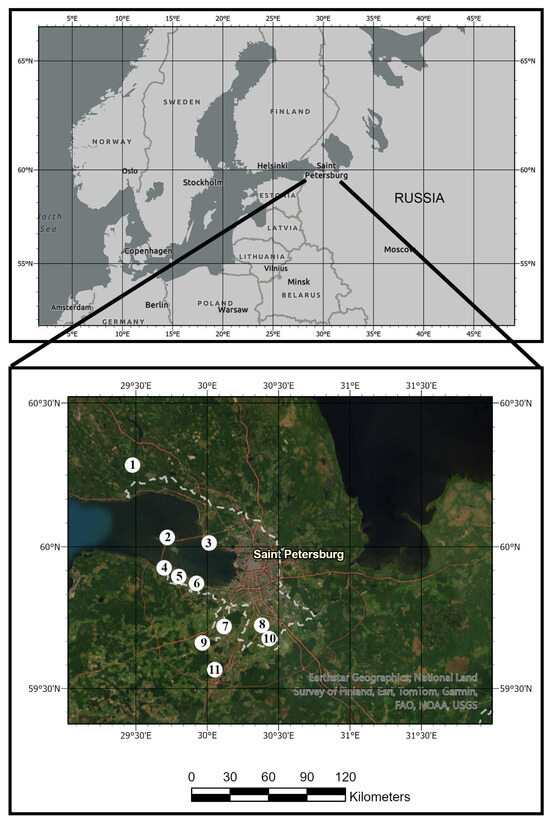
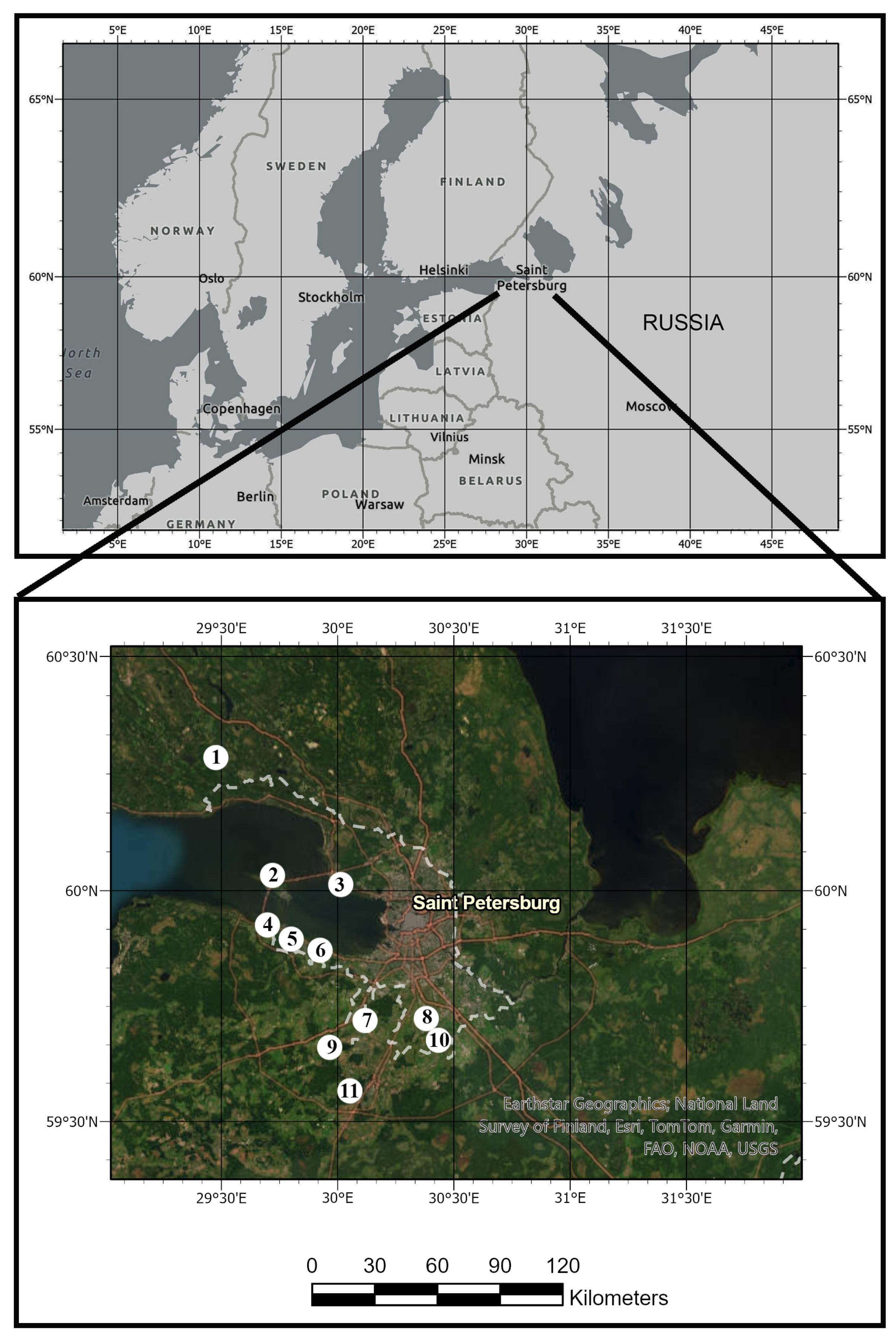
A total of 36 components are currently included within the UNESCO World Heritage Site. Some of these components consist of spatially dispersed structures or extended land areas. The overall number of components is large, and the inclusion of certain elements—such as historic roads—has been questioned. Many of these features have been repeatedly reconstructed, and their historical authenticity and integrity remain debated. In recent years, their inclusion in the World Heritage List has been challenged by some experts, and discussions regarding possible revisions are ongoing [18]. By contrast, the core elements of the Heritage—palace and park ensembles, fortifications, and associated landscapes—are generally regarded as uncontroversial. Among these core components, we identified 11 that exhibit particularly high potential for ecotourism and environmental education (Table 1, Figure 1 and Figure 2). There are several groups of objects especially suitable for the ecotouristm excursions:
Table 1.
Distribution of ecotourism objects over the Heritage Site Components of Saint-Petersburg (“+/−“—availability/absence of the object).
Figure 1.
Location of the objects under study (○), numbers correspond to Table 1.
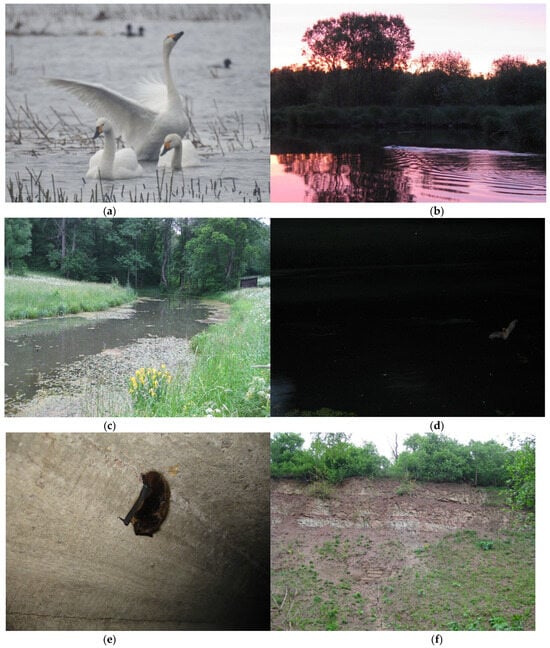
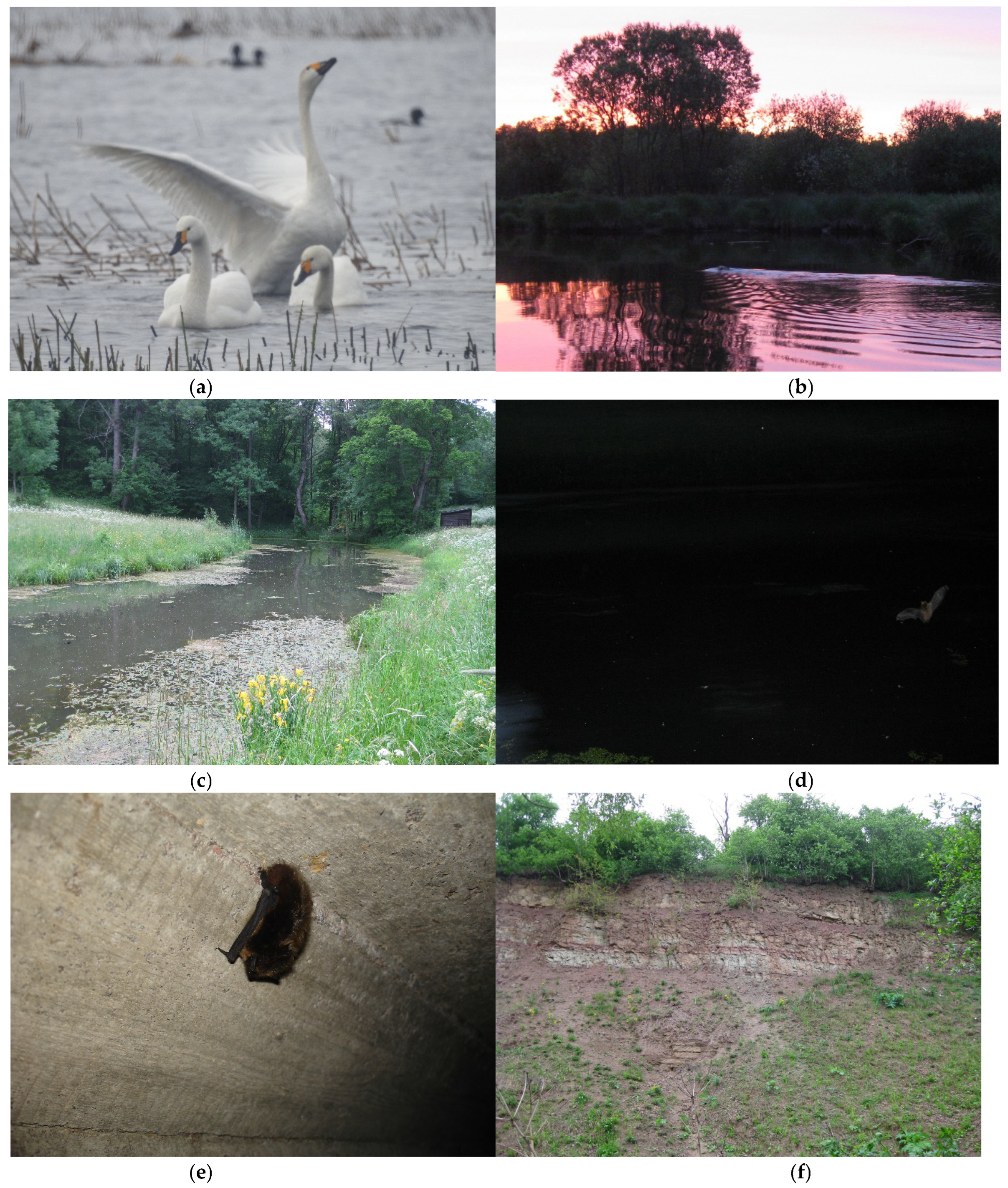
Figure 2.
Ecotourism objects of the Heritage site: waterbirds, mammals, plant communities and deposit of fossils; (a)—whooper swan Cygnus cygnus (The Northern Coast, N 59.99° E 30.05°); (b)—beaver Castor fiber (The Northern Coast, N 60.00°, E 30.17°); (c)—a pond surrounded by rich vegetation (Dudergofskie Heights, N 59.69°, E 30.12°), (d)—Daubenton’s bat Myotis daubentoni on the same pond, (e)—northern bat Eptesicus nilssonii (Forts of the Gulf of Finland, N 60.02°, E 29.75°), (f)—steep (near Town of Pavlovsk, N 59.66°, E 30.40°).
Waterbirds. Large aggregations of waterbirds form seasonally in several coastal areas near the mouth of the Neva River [19]. All such areas are directly adjacent to or overlap with World Heritage components, allowing birds to be observed directly from Heritage sites. During spring and early summer, hundreds or even thousands of birds may be observed simultaneously, creating a striking spectacle of high ecotourism value. Gulls, swans and ducks dominate these assemblages. Several conservation-relevant species occur among them, e.g., long-tailed duck (Clangula hyemalis) and velvet scoter (Melanitta fusca), which are considered vulnerable at the global scale [20]. These concentrations are shaped by the characteristics of the Atlantic migratory flyway. Waterbirds migrate along the Baltic Sea coast from the south and west into the Gulf of Finland, which progressively narrows eastward until it forms a “dead end” in the Neva Bay. The inflow of the large Neva River enriches the bay with nutrients and relatively warm water, resulting in high biological productivity and abundant food resources for birds [21]. After resting and feeding near the city, most birds continue migrating north and east, although a proportion remain to breed locally and can be observed in shallow waters throughout the summer [22]. Autumn migration occurs in the reverse direction but is more dispersed temporally and spatially, resulting in smaller and less conspicuous aggregations, although bird observation remains valuable for environmental education. Counting birds and analyzing their dynamics is problematic because birds often redistribute between different parts of the Neva Bay, flying in and out. However, this site is stable in terms of ecotourism observations—especially from April to June, the bird concentrations are always available.
Bats. Wintering bats have been recorded in several historic fortifications. Although population sizes are small, these sites are of particular educational interest because bats are easily observable, hanging openly on walls and vaults and resembling museum exhibits. When undisturbed, individuals show little reaction to human presence. We recorded two cold-tolerant species: the long-eared bat (Plecotus auritus) and the northern bat (Eptesicus nilssonii). Species richness is limited by the dry and cold microclimatic conditions typical of stone fortifications. During summer, feeding bats can be observed at several Heritage sites, particularly during the “white nights” of June, when twilight persists almost around the clock. Even without specialized equipment, bats are relatively easy to detect, especially near small park ponds and along forest edges. Photography is often possible using standard cameras. We recorded five species: Natterer’s bat (Myotis nattereri), Brandt’s bat (Myotis brandtii), northern bat, pond bat (Myotis dasycneme), and Daubenton’s bat (Myotis daubentonii). The pond bat is of particular interest, as it is a relatively rare species listed as Near Threatened on the IUCN Red List [20]. It was found to be widespread and locally abundant, occurring in all surveyed historic parks [17]. Bat numbers are small at Heritage sites, but they are always present, and at least a dozen can be seen during a tour.
Terrestrial Fauna. Several Heritage sites support a relatively high diversity of terrestrial animals. Birds are the most readily observed group, with up to several dozen species recorded at individual sites, predominantly passerines [23]. However, parks also support species that are unusual in densely urbanized environments, including owls [24] and diurnal raptors [25]. Mammals are less frequently observed directly, but their presence is often indicated by tracks, burrows, feeding signs, and other traces. The largest regularly occurring species is the Eurasian beaver (Castor fiber), which persists in small numbers in water bodies along the northern shore of the Neva Bay and is relatively easy to observe. At the beginning of our observation period, occasional visits by larger mammals such as wild boar (Sus scrofa), elk (Alces alces), lynx (Lynx lynx) and even bear (Ursus arctos) were recorded, but such occurrences have become extremely unlikely due to ongoing urban development. Currently, the urban fauna is dominated by insectivores, small rodents and carnivores. During our surveys, the following species were recorded: hedgehog (Erinaceus europaeus), common shrew (Sorex araneus), mole Talpa europaea, fox (Vulpes vulpes), muskrat (Ondatra zibethicus), squirrel (Sciurus vulgaris), flying squirrel (Pteromys volans), harvest mouse (Micromys minutus), bank vole (Clethrionomys glareolus), European pine marten (Martes martes), raccoon dog (Nyctereutes procyonoides), American mink (Neovison vison), ermine (Mustela erminea). Although broader inventories list several dozen mammal species within the city as a whole [26], such levels of diversity are unlikely to occur within individual Heritage components. In addition to birds and mammals, several Heritage sites support amphibian populations. Aggregations of newts and frogs are observed in small ponds and wetlands. These populations have declined in recent years due to the invasion of the Chinese sleeper (Perccottus glenii), although amphibians can still be encountered during educational excursions.
Plant Communities. Several Heritage components support distinctive plant communities suitable for environmental education. The Lindulovskaya Roshcha is particularly notable as an example of an early 18th-century forest plantation dominated by larch (Larix ssp.) and fur (Abies ssp.). Some trees from the original plantings have survived to the present day [27]. Unlike more recent ornamental plantings, these stands show signs of natural regeneration and partial naturalization. Another unusual vegetation type for the region consists of forests with a high proportion of oak (Quercus robur), maple (Acer platanoides), linden (Tilia cordata), and ash (Fraxinus excelsior)—species characteristic of more southerly regions [28]. These communities support relatively rich understory flora and associated fauna, enhancing their ecotourism appeal. Such assemblages are particularly evident in less intensively managed sections of historic parks and along parts of the glint. In addition, extensive reedbeds near several monuments host diverse assemblages of aquatic plants. These reedbeds also coincide with key areas of waterbird aggregation [29].
Pinniped Haul-out sites. Two pinniped species inhabit the Gulf of Finland: the ringed seal (Pusa hispida) and the grey seal (Halichoerus grypus). Both species use small islands near Saint Petersburg as haul-out sites [30,31]. Up to several dozen seals can be observed there; a maximal record of 69–70 ones was reported in 2017 and 2019. The ringed seal is occasionally observed within the city itself, even among built-up areas. This phenomenon is partly explained by the species’ presence in Lake Ladoga, from which the Neva River flows; the seals may enter the river and subsequently migrate downstream to the gulf, facilitated by ice drift or other factors.
Geological and Soil Features. Several heritage components include geological formations suitable for illustrating regional geological history [32]. In particular, the Pavlovsk heritage site borders the Popovka River, whose valley exposes cliffs containing Paleozoic fossil remains. The same feature well illustrates the formation of soil.
3.2. Ecotourism Development in Saint Petersburg
According to official information, local administration rejects the concept of purely museum tourism. Diversification of tourism products is increasingly being discussed. Emerging and promoted forms of tourism include creative industries tourism, gastronomy, industrial tourism, medical tourism, popular science tourism, event tourism, and patriotic tourism [33]. Ecotourism is not explicitly identified as a separate category and is only partially subsumed under popular science tourism. The number of publications addressing ecotourism development in the region is already increasing [34], although most studies do not yet consider the specific biodiversity features identified in this research. Usually, only the need for ecotourism and suitable plots of land are discussed. At the beginning of our observations, there were still unmanaged areas in the city (some coastal areas, forts on the islands). But now, almost all of them have been included in protected areas or otherwise developed. The city administration has designated six ecological trails within Saint Petersburg [35]. At present, designated ecological trails cover only a small fraction of the World Heritage Site and generally do not provide opportunities to observe most of the natural features identified in this study. One notable exception is the ecological trail along the northern shore of the Neva Bay, where visitors can regularly observe large aggregations of waterbirds, animal tracks, and occasionally the animals themselves. By contrast, most other trails primarily offer informational displays and a limited selection of plant species. The local administration believes that the development of ecotourism comes down to the development of such trails, and this is considered mandatory for the operation of the protected area.
4. Discussion
Our hypothesis was confirmed. Despite high population density and intensive tourist visitation at several locations, many Heritage components retain valuable elements of biodiversity that can be effectively used for environmental education and ecotourism. This potential remains underutilized; however, it is likely only a matter of time before it is more fully realized, as tourism in the city continues to grow. In 2019, Saint Petersburg received approximately 10 million visitors. Although visitor numbers declined sharply in 2020 due to the COVID-19 pandemic, they have since rebounded and now exceed pre-pandemic levels tending to increase [33]. The city’s resident population also contributes substantially to tourism and also continues to increase. Saint Petersburg currently has more than 5,5 million inhabitants, with several hundred thousand additional residents in the surrounding metropolitan area [36].
The ecotourism and conservation value of many Heritage components stems from the fact that these sites were established in locations that historically supported relatively high biodiversity, remnants of which have persisted to the present day. Palaces and their associated parks were typically constructed on dry, visually attractive sites with fertile soils, which facilitated landscaping and park development. Proximity to water bodies was also important, both for aesthetic reasons and for sanitation, while simultaneously enhancing local biodiversity. In contrast, the surrounding areas display the opposite pattern. Much of the city was built on poorly drained terrain, where fertile and dry plots were scarce. Historically, local populations relied primarily on fishing and occupied limited areas, while vast surrounding landscapes consisted of swamps and marshy forests. Over the past three centuries, these wetlands have been progressively drained, filled, and reclaimed—a process that continues today. Extensive swamp areas remain in the northern and eastern parts of the region, but their biodiversity is relatively low. To the south and southwest, larger dry and fertile areas exist; however, these have been almost entirely developed, resulting in similarly reduced biodiversity. Consequently, Heritage sites have become refuges for certain animal and plant species. Because these refuges are spatially limited, their biodiversity components are relatively easy to observe, creating favorable conditions for environmental education and ecotourism.
The identified ecotourism potential may decline over time as territorial development continues. This trend is particularly relevant for terrestrial mammals, which require extensive home ranges and functional overland migration routes; ongoing urban expansion will inevitably increase habitat fragmentation and reduce connectivity. However, other features identified in this study—such as geological formations, distinctive vegetation, and animal species tolerant of human presence—are likely to persist over the long term. In some cases, anthropogenic transformation may even have beneficial effects. For example, several bat species use buildings and other man-made structures as roosting sites, and landscaped park environments may provide more suitable foraging conditions than the surrounding taiga forests and wetlands typical of the region. Waterbirds also encounter a complex set of urban influences. While urbanization can impose ecological pressures, hunting within city limits is prohibited, effectively providing protection. In addition, urban runoff can increase nutrient input into adjacent water bodies, enhancing primary productivity and, consequently, food availability for certain aquatic species.
The features identified in Saint Petersburg’s Heritage sites likely reflect a broader global pattern. Although the contrast between Heritage sites and surrounding landscapes is particularly pronounced in this case, historically, the most favorable locations were selected for palaces, fortresses, and other prominent structures in many regions of the world. It is therefore plausible that such sites elsewhere also preserve natural elements that could be used for ecotourism. Nature-based solutions could help conserve these elements without compromising cultural values [6]. However, this dimension of cultural Heritage remains understudied. Evidently, research has prioritized the cultural and historical significance of them, their ecological and ecotourism potential has received comparatively little attention [37], while the research of ecotourism hardly addresses to cultural Heritage sites [9]. Nevertheless, as the tourism industry continues to expand and diversify, ecotourism research in urban contexts is likely to gain importance. New approaches to tourism development are continually emerging, and urban ecotourism may increasingly be integrated into broader tourism strategies. In parallel, the number of Heritage sites worldwide has increased in recent decades, raising concerns about declining site quality [38]. Incorporating ecotourism and ecological criteria into Heritage assessments may help counterbalance this trend by adding new dimensions of value and encouraging more holistic management approaches.
5. Conclusions
The case of Saint Petersburg demonstrates that detailed analysis of cultural Heritage sites can reveal substantial and often overlooked ecotourism potential. This potential arises because many cultural monuments were constructed in locations that historically supported high biodiversity, fragments of which have persisted where intensive development has been avoided. Given the continued growth of tourism and rising interest in educational and nature-based experiences, further development of ecotourism and relevant studies on the World Heritage Sites can be expected. Integrating biodiversity conservation and environmental education into Heritage management may thus contribute not only to more sustainable tourism but also to the long-term resilience of cultural landscapes.
Author Contributions
Conceptualization, I.P., E.A. and A.I.; methodology, I.P., E.A. and A.I.; software, I.P., E.A. and A.I.; validation, I.P., E.A. and A.I.; formal analysis, I.P., E.A. and A.I.; investigation, I.P., E.A. and A.I.; resources, I.P., E.A. and A.I.; data curation, I.P., E.A. and A.I.; writing—original draft preparation, I.P.; writing—review and editing, I.P., E.A. and A.I.; visualization, I.P.; supervision, I.P., E. A.; project administration, E.A.; funding acquisition, E.A. All authors have read and agreed to the published version of the manuscript.
Funding
This work was funded by Saint Petersburg State University, Project No. 132392751.
Data Availability Statement
The data are contained within the article.
Conflicts of Interest
The authors declare no conflicts of interest.
References
- Seto, K.C.; Güneralp, B.; Hutyra, L.R. Global forecasts of urban expansion to 2030 and direct impacts on biodiversity and carbon pools. Proc. Natl. Acad. Sci. USA 2012, 109, 16083–16088. [Google Scholar] [CrossRef] [Scilit] [PubMed]
- McDonald, R.I.; Mansur, A.V.; Ascensão, F.; Colbert, M.; Crossman, K.; Elmqvist, T.; Gonzalez, A.; Güneralp, B.; Haase, D.; Hamann, M.; et al. Research gaps in knowledge of the impact of urban growth on biodiversity. Nat. Sustain. 2020, 3, 16–24. [Google Scholar] [CrossRef] [Scilit]
- Andersson, E.; Barthel, S.; Borgström, S.; Colding, J.; Elmqvist, T.; Folke, C.; Gren, Å. Reconnecting cities to the biosphere: Stewardship of green infrastructure and urban ecosystem services. Ambio 2014, 43, 445–453. [Google Scholar] [CrossRef] [Scilit] [PubMed]
- Grimm, N.B.; Faeth, S.H.; Golubiewski, N.E.; Redman, C.L.; Wu, J.; Bai, X.; Briggs, J.M. Global change and the ecology of cities. Science 2008, 319, 756–760. [Google Scholar] [CrossRef] [Scilit]
- Aronson, M.F.J.; La Sorte, F.A.; Nilon, C.H.; Katti, M.; Goddard, M.A.; Lepczyk, C.A.; Warren, P.S.; Williams, N.S.G.; Cilliers, S.; Clarkson, B.; et al. A global analysis of the impacts of urbanization on bird and plant diversity reveals key anthropogenic drivers. Proc. R. Soc. B 2014, 281, 20133330. [Google Scholar] [CrossRef] [Scilit]
- Coombes, M.A.; Viles, H.A. Integrating nature-based solutions and the conservation of urban built heritage: Challenges, opportunities, and prospects. Urban For. Urban Green. 2021, 63, 127192. [Google Scholar] [CrossRef] [Scilit]
- ICCROM. A Guide to Risk Management of Cultural Heritage; International Centre for the Study of the Preservation and Restoration of Cultural Property: Rome, Italy, 2016; Available online: https://www.iccrom.org (accessed on 5 November 2025).
- Favero-Longo, S.E.; Viles, H.A. A review of the nature, role and control of lithobionts on stone cultural Heritage: Weighing-up and managing biodeterioration and bioprotection. World J. Microbiol. Biotechnol. 2020, 36, 100. [Google Scholar] [CrossRef] [Scilit]
- Hussain, I. An overview of ecotourism. IJNRD-Int. J. Nov. Res. Dev. 2022, 3, 122–136. [Google Scholar]
- Kovalev, D.N.; Noskov, G.A.; Noskova, M.G.; Popov, I.Y.; Rymkevich, T.A. Concept of formation of regional systems of protected natural areas (Saint Petersburg and Leningrad Region): Ecological aspects. Biosfera 2012, 4, 427–462. [Google Scholar]
- UNESCO World Heritage Centre. World Heritage List. 2025. Available online: https://whc.unesco.org/en/list/ (accessed on 8 November 2025).
- Kobyakov, K.; Jakovlev, J. (Eds.) Atlas of High Conservation Value Areas and Gap Analysis of the Protected Area Network in Northwest Russia; Finnish Environment Institute: Helsinki, Finland, 2013. [Google Scholar]
- Abakumov, E. Rendzinas of the Russian Northwest: Diversity, Genesis, and Ecosystem Functions: A Review. Geosciences 2023, 13, 216. [Google Scholar] [CrossRef] [Scilit]
- Chebykina, E.Y.; Nizamutdinov, T.I.; Abakumov, E.V.; Dinkelaker, N.V. Edaphic Diversity, Polychemical Soil Status of the Prinevskaya Lowland and Prospects for Soils Use. Land 2025, 14, 186. [Google Scholar] [CrossRef] [Scilit]
- Popov, I.Y. New Fish Species in the Russian Part of the Gulf of Finland and Inland Water Bodies of St. Petersburg and Leningrad Oblast. Russ. J. Biol. Invasions 2014, 5, 90–98. [Google Scholar] [CrossRef] [Scilit]
- Popov, I. Role of the Russian Section of the Gulf of Finland and Its Basin in the Ecosystems of the Baltic Sea. In Baltic and Black Sea: Ecological Perspectives, Biodiversity and Management; Oceanography and Ocean Engineering; Nova Science Publishers, Inc.: New York, NY, USA, 2016; pp. 1–22. [Google Scholar]
- Popov, I.; Markovets, M. Occurrence and population status of the pond bat (Myotis dasycneme) in Northwest Russia. Mammalia 2023, 87, 355–359. [Google Scholar] [CrossRef] [Scilit]
- Heritage Expert. Analytical Materials on World Heritage Sites. 2025. Available online: http://Heritage-expert.ru/ (accessed on 12 November 2025).
- Noskov, G.A.; Rymkevich, T.A. Saint Petersburg region in the system of bird migration routes in the Western Palearctic. Trans. Karelian Res. Centre RAS 2016, 1, 45–56. (In Russian) [Google Scholar]
- IUCN. The IUCN Red List of Threatened Species. 2025. Available online: https://www.iucnredlist.org (accessed on 10 March 2025).
- Noskov, G.A. Migrations of waterfowl and shorebirds in Northwestern Russia. Study Migr. Bird Popul. Russ. 1997, 1, 12–20. [Google Scholar]
- Mikhailov, Y.M.; Zainagutdinova, E.M. Nesting of waterbirds in wetlands of the protected area “Northern Coast of the Neva Bay”. Russ. J. Ornithol. 2015, 24, 1859–1866. (In Russian) [Google Scholar]
- Noskov, G.A.; Rymkevich, T.A.; Gaginskaya, A.R. Ornithofauna of Saint Petersburg: Retrospective and present-day diversity. Biosfera 2015, 7, 80–95. [Google Scholar]
- Pchelintsev, V.G. Distribution and abundance of some owl species in suburban parks of Saint Petersburg. Russ. J. Ornithol. 2017, 26, 4862–4866. (In Russian) [Google Scholar]
- Popov, I. Nesting of the merlin (Falco columbarius) in Babolovsky Park, Pushkin. Russ. J. Ornithol. 2022, 31, 5201–5203. (In Russian) [Google Scholar]
- Bublichenko, A.G. Mammals of protected natural areas of Saint Petersburg. In Sustainable Development of Protected Areas; Proceedings of the VIII All-Russian Scientific Conference; Prirodny Ornitologichesky Park v Imeretinskoy Nizmennosti: Sochi, Russia, 2021; pp. 83–91. (In Russian) [Google Scholar]
- Ozerova, S.D. Vegetation map of the “Lindulovskaya Roshcha” Nature Reserve. Geobot. Cartogr. 2021, 2021, 84–96. [Google Scholar] [CrossRef] [Scilit]
- Byalt, V.V.; Firsov, G.A.; Byalt, A.V.; Orlova, L.V. The cultural flora of Saint Petersburg (Russia) and its analysis. Vestn. Orenb. Gos. Pedagog. Univ. 2019, 2, 11–103. [Google Scholar] [CrossRef] [Scilit]
- Zhigulsky, V.A.; Shuisky, V.F.; Chebykina, E.Y.; Fedorov, V.A.; Panichev, V.V.; Uspenskiy, A.A.; Zhigulskaya, D.V.; Bylina, T.S.; Bulysheva, M.M.; Bulysheva, A.M. Macrophyte Thicket Ecosystems of the Neva Bay; Eco-Express-Service LLC: Saint Petersburg, Russia, 2020. [Google Scholar]
- Loseva, A.V.; Sagitov, R.A. New data on the distribution of Baltic ringed seal haul-out sites in the Gulf of Finland. Vestnik St. Petersburg Univ. 2015, 3, 15–40. [Google Scholar]
- Loseva, A.; Chirkova, O.; Shakhnazarova, V. Haul-out patterns of the Baltic grey seal in the suburbs of a metropolis. Reg. Stud. Mar. Sci. 2023, 65, 103104. [Google Scholar] [CrossRef] [Scilit]
- Knyazev, Y.P. Key paleontological sites in the UNESCO World Heritage List. Grani Pozn. 2013, 5, 21–27. (In Russian) [Google Scholar]
- Government of Saint Petersburg. Official Statistics and Tourism Development Reports. 2025. Available online: https://www.gov.spb.ru/ (accessed on 15 November 2025).
- Gadzhieva, E.A.; Zhigunov, E.A.; Zhigunova, T.S.; Zhukov, P.V.; Komissarova, T.S.; Morozova, O.N.; Olifir, D.I.; Pisarenko, S.V.; Sevastyanov, D.V.; Fomin, A.A.; et al. Ecological Tourism in Saint Petersburg; Pushkin Leningrad State University: Saint Petersburg, Russia, 2024. (In Russian) [Google Scholar]
- Directorate of Protected Areas of Saint Petersburg. Ecological Trails and Protected Areas. 2025. Available online: https://oopt.spb.ru/eco/ (accessed on 10 November 2025).
- Federal Service for the State Statistics. Available online: https://78.rosstat.gov.ru/about/ (accessed on 10 January 2026). (In Russian)
- Judijanto, L.; Malik, A.H. A Systematic Bibliometric Review of Cultural Heritage Conservation Research. Eastasouth J. Soc. Sci. Humanit. 2025, 3, 66–79. [Google Scholar] [CrossRef] [Scilit]
- Dattilo, M.; Padovano, F.; Rocaboy, Y. More is worse: The evolution of quality of the UNESCO World Heritage List and its determinants. J. Cult. Econ. 2023, 47, 71–96. [Google Scholar] [CrossRef] [Scilit]

Disclaimer/Publisher’s Note: The statements, opinions and data contained in all publications are solely those of the individual author(s) and contributor(s) and not of MDPI and/or the editor(s). MDPI and/or the editor(s) disclaim responsibility for any injury to people or property resulting from any ideas, methods, instructions or products referred to in the content. |
© 2026 by the authors. Licensee MDPI, Basel, Switzerland. This article is an open access article distributed under the terms and conditions of the Creative Commons Attribution (CC BY) license.