


Abstract
Along with the growth in the production of metallurgical grade silicon and high-silicon ferrous alloys, there is a significant increase in the formation of microsilica, which is an ultra-fine technogenic waste. The direct application of microsilica in ore-thermal furnaces is hindered by low bulk density, poor gas permeability, and high dusting. This paper explores the thermophysical and microstructure properties of briquettes based on microsilica, which includes various types of carbonaceous reducing agents such as semi-coke and coal. For manufacturing, the liquid glass was used as the inorganic binder for the preparation of microsilica briquettes. The best variants were chosen based on strength tests carried out during preliminary studies. In the laboratory tests, the stability of the briquettes at elevated temperatures was evaluated. Samples were heated to 1000–1500 °C and subjected to impact testing. Scanning Electron Microscopy with Energy Dispersive Spectroscopy (SEM/EDS) was used to investigate the microstructure and local elemental distribution. It was revealed that the calcinated briquettes of the microsilica–semi-coke mixture have better thermal stability compared to the samples with coal and withstand the temperature range up to 1500 °C. The microstructure of the briquette from the microsilica-semi-coke mixture is characterized by the formation of a more uniform silicate matrix with the presence of a homogeneously distributed carbonaceous component. Coal-based samples show higher heterogeneity and porosity. Therefore, it can be stated that the selection of carbonaceous reductants is one of the key factors influencing the thermal stability of microsilica briquettes.
1. Introduction
The contemporary development of the silicon industry is associated with a growing amount of metallurgical-grade silicon and its alloys used in electronics, photovoltaics, and aerospace industry [1,2,3,4,5]. Nevertheless, the development of technology brings serious environmental problems. When manufacturing metallurgical-grade silicon by carbothermal reduction of quartz (quartzite) in ore-thermal furnaces (OTF) at the temperature up to 2000 °C, large quantities of microsilica (silica fume) or silicon dust appear as one of the waste products [6,7].
Thus, according to some estimates, the amount of dust emitted by gas cleaning of OTF reaches from 300 to 1000 kg per ton of silicon produced and further accumulated as technological waste [6,7]. Worldwide production of microsilica is estimated to be millions of tons per year [7]. Although silicon dioxide contained in this technogenic raw material is highly valuable, only a small part is used for various purposes, whereas the rest is deposited in sludge fields or special warehouses [6,7]. Large deposits of fine-dispersed waste significantly load local ecosystems with air and soil pollution, and also require great costs for transportation and storage [6,7]. Under such conditions, the use of silicon-containing waste in the manufacturing process becomes the important scientific and technological problem, which may improve environmental protection and reduce costs [7,8,9,10].
Microsilica is a unique fine-dispersed material differing from natural raw materials with silicon dioxide by physical and chemical properties. It is characterized by content of 85–99% of amorphous silicon dioxide (SiO2) [6,11,12,13]. Its structure is represented by ultrafine spherical particles with a size of 0.1–0.2 μm, which is 100 times less than the cement particles size [6,11,12,13]. Due to the high degree of dispersion, microsilica displays a very large specific surface area of 15,000–30,000 m2/kg [13]. This makes it a highly active pozzolanic material having high chemical activity [13,14]. The structure of microsilica does not have regularity and crystalline lattice, which can be explained by wide amorphous halo in X-ray diffraction analysis [4]. High surface energy and ability of absorption usually cause spontaneous formation of large aggregates [6]. Particle surfaces are commonly contaminated by carbon in the form of soot and coal dust, making microsilica grayish-black color.
Due to unique properties, microsilica gained wide use in different industries. One of the main consumers is construction industry that uses microsilica as highly active mineral admixture in concrete and cement mixes [13,14]. Using microsilica increases the compressive strength, frost resistance and chemical stability of concrete while decreasing the permeability due to the matrix densification based on calcium silicate hydrates (C–S–H) phase [13,14]. Second area of application includes producing refractories, where microsilica is used as modifying agent that improves the thermomechanical characteristics of furnace lining in metallurgical furnaces [9]. Other areas of microsilica use include production of silicon carbide (SiC) [15,16,17,18,19], producing nanomaterials and polymer composites [20] and aluminum-silicon alloys (silumins) [21]. Despite wide application range, currently only 10–15% of obtained technogenic silica is processed [22,23]; most part is deposited on dumps.
The direct use of microsilica in silicon metallurgy is limited because of extremely fine grain size, poor mobility and low gas permeability, which lead to large dust emission, loss of materials and instability of furnace gas dynamics at loading to ore-thermal furnaces [10]. Preliminary agglomeration, such as briquetting, is considered as one of the most perspective approaches for the metallurgical processing of microsilica. Composite briquettes from microsilica with carbonaceous reductant make possible monocharging mode that provides intimate contact of the reactants at microlevel and intensifies carbothermic reduction process [16,24,25]. The usage of such briquettes allows using the finest carbonaceous raw materials such as semi-coking coal and bituminous coal; additionally, there is increase in electrical resistivity of furnace load, stabilizing of furnace operation and improving of the silicon output [10,24]. For successful industrial use, briquettes must possess high thermal stability during their rapid heating in furnace shaft [26,27,28].
Previous studies focused on the briquetting of technogenic wastes, but the problem of thermal stability of microsilica-containing briquettes under conditions of high temperatures and rapid heating has not been studied enough. In particular, it was not examined in detail how the carbonaceous reductant influences the high-temperature strength of such composites.
Therefore, this study aims to evaluate the influence of carbonaceous reductant type on the thermal stability and microstructure formation of microsilica-based briquettes produced using liquid glass as a silicate binder. Composite briquettes prepared from microsilica generated at Tau-Ken Temir LLP (Kazakhstan) with different reductants—semi-coke fines and bituminous coal fines—were investigated. The study includes microstructural analysis before and after thermal treatment using scanning electron microscopy and energy-dispersive spectroscopy (SEM/EDS), with particular attention to thermal stability during heating up to 1500 °C under conditions simulating industrial silicon smelting [25]. The obtained results provide a scientific basis for optimizing briquetted monocharges for metallurgical-grade silicon production.
2. Materials and Methods
Microsilica, a dust-like by-product collected from gas-cleaning systems during the smelting of metallurgical-grade silicon, was used as the silicon-containing mineral component in the production of experimental briquettes [7,9]. This material is characterized by a high content of amorphous silicon dioxide and a highly developed specific surface area, which confer high chemical reactivity and promote the formation of a strong silicate matrix in composite briquettes [4,13].
Fine fractions of semi-coke (85 wt.% fixed carbon) and long-flame bituminous coal (50–52 wt.% fixed carbon) were employed as carbonaceous reductants. To ensure sufficient green and dry strength of the briquettes, liquid glass (a sodium silicate solution) with a density of 1.10–1.15 g/cm3 was used as an inorganic binder in an amount of 5–8 wt.% of the total charge mass. This binder facilitates the formation of silicate bridges between mineral and carbonaceous particles during drying and subsequent thermal treatment [14,15].
According to the analysis, microsilica with a moisture content of 1.00% exhibited a high SiO2 content of 95.43 wt.% and low concentrations of impurity oxides, including Fe2O3 (0.122 wt.%), Al2O3 (0.302 wt.%), and CaO (0.551 wt.%). This composition confirms its suitability for use in silicon-containing composite systems. The carbonaceous reductants, in contrast, showed significant variation in moisture, ash, and volatile matter contents, which may substantially influence briquette structure formation and their behavior under high-temperature conditions. The technical and chemical compositions of these reductants are presented in Table 1.
Table 1.
Technical and chemical analysis of the raw materials.
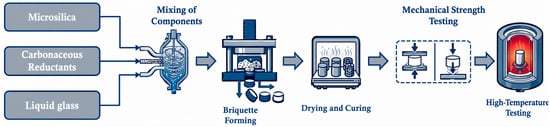
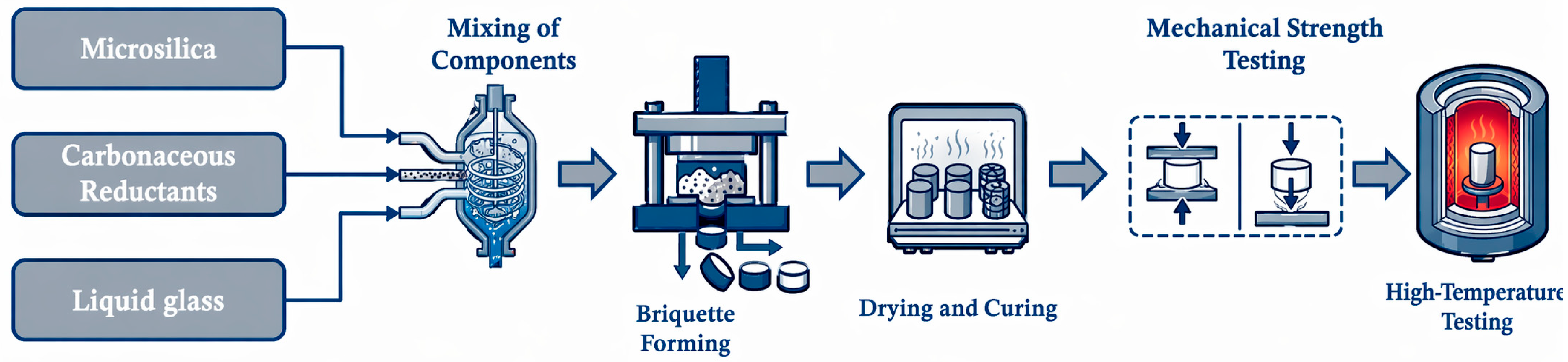
Prior to briquette production, all raw materials were dried and ground to the required particle size to ensure homogeneous distribution within the charge mixture. The mineral and carbonaceous components were then thoroughly mixed with liquid glass until a uniform plastic mass was obtained. A technological flowchart of the microsilica-based briquette production process is shown in Figure 1.
Figure 1.
Technological Flowchart for the Production of Microsilica-Based Briquettes.
Experimental briquettes were produced by pressing the prepared mixture into cylindrical specimens with a diameter of 50 mm and a height of 70 mm. Within the framework of this study, more than 20 different briquette compositions were prepared, varying in the ratio of microsilica to reductant, as well as in binder dosage.
The mechanical strength of the obtained briquettes was determined in accordance with GOST 21289. The results showed that the drop strength reached 91%, while the compressive strength was 83 kg/cm2 (8.2 MPa), indicating sufficient mechanical stability for subsequent thermal and microstructural investigations [29,30].
Based on preliminary screening tests, two optimal compositions were selected for detailed study:
- -
- 65 wt.% microsilica + 35 wt.% semi-coke;
- -
- 52 wt.% microsilica + 48 wt.% bituminous coal.
The technical and chemical characteristics of the selected briquettes are summarized in Table 2.
Table 2.
Technical and chemical characteristics of the selected briquettes.
These compositions demonstrated the best performance in terms of cold strength and resistance under thermal exposure.
2.1. Thermal Stability Testing
The evaluation of briquette thermal stability is a critical stage of this study, as briquettes in industrial silicon smelting are exposed to both high temperatures and mechanical stresses during furnace charging [26,27].
In the absence of a universally standardized method for assessing the thermal stability of composite briquetted materials, an experimental procedure was developed. This approach combines elements of quartzite thermal shock testing with mechanical impact simulation representative of furnace charging conditions.
The testing procedure was conducted as follows. A briquette sample was placed on a graphite substrate within the working zone of a laboratory Tammann-type electric furnace equipped with a carbon tubular heater, preheated to 1000 °C. The sample was held at this temperature for 10 min, after which mechanical impact was applied by lightly tapping it with a steel rod 15 mm in diameter, producing slight indentation. If no visible fracture occurred, the temperature was increased to 1500 °C, followed by repeated mechanical impact [28].
Briquettes that fractured either during heating at 1000 °C or after mechanical tapping were classified as having insufficient thermal stability. In contrast, samples that retained their structural integrity after heating to 1500 °C were considered thermally stable and suitable for further metallurgical application.
2.2. Microstructural Characterization
The microstructure of the briquettes before and after thermal treatment was investigated using scanning electron microscopy (SEM) combined with energy-dispersive X-ray spectroscopy (EDS) [20,22].
SEM analysis was employed to examine particle morphology, porosity, silicate matrix continuity, the distribution of carbonaceous phases, and fracture surface characteristics following thermal testing.
The local elemental composition of selected structural regions was determined using EDS, enabling the mapping of the principal elements Si, O, and C across different structural constituents of the briquettes. This approach made it possible to assess the uniformity of carbonaceous reductant distribution as well as the degree of silicate matrix densification after thermal exposure [21,23].
3. Results
The conducted studies revealed a clear relationship between briquette composition, thermal strength, and the characteristics of the resulting microstructure. It was demonstrated that replacing bituminous coal with semi-coke in microsilica-based briquettes enhances the thermal stability of the samples and promotes the formation of a more homogeneous composite structure.
These findings are supported by high-temperature testing, visual examination of fracture surfaces, and scanning electron microscopy combined with energy-dispersive X-ray spectroscopy (SEM/EDS). The analyses revealed distinct differences in the distribution of carbonaceous inclusions and in the state of the microsilica matrix across the investigated systems.
3.1. Thermal Strength of Experimental Briquettes
The evaluation of briquette thermal strength is an essential stage of this study, as briquetted materials in industrial silicon production are exposed to elevated temperatures and mechanical loads during charging into an electric furnace. To assess resistance to thermal degradation, tests were conducted under conditions simulating both entry into the high-temperature zone and mechanical impact from overlying charge layers.
The experiments were carried out in the temperature range of 1000–1500 °C, with a holding time of 10–16 min, followed by controlled mechanical impact. During testing, the resistance of the briquettes to fracture, their deformation behavior during heating, and their structural integrity after removal from the furnace were evaluated.
The results indicate that the thermal strength of the briquettes depends significantly on the type of carbonaceous reductant and the nature of the binder used. Briquettes produced with organic binders, despite exhibiting sufficient cold strength, were destroyed during heating due to burnout of the organic phase and were therefore excluded from further investigation.
Similarly, briquettes prepared using lime milk as a binder exhibited insufficient thermal stability. In these samples, structural degradation occurred within the temperature range of 1000–1200 °C, followed by partial disintegration of the briquette body. In contrast, the most stable behavior under high-temperature exposure was observed in briquettes produced using liquid glass as an inorganic binder. These samples retained their shape and structural integrity throughout the thermal testing procedure. The thermal strength results for representative briquette compositions are presented in Table 3.
Table 3.
Thermal strength results of the selected briquette compositions.
Analysis of Table 3 shows that microsilica–semi-coke briquettes exhibit higher thermal stability compared with microsilica–bituminous coal briquettes. Samples containing semi-coke maintained structural integrity during heating up to 1500 °C and after subsequent mechanical impact. In contrast, briquettes containing bituminous coal showed noticeable deformation and, in some cases, partial fracture after removal from the furnace.
These findings indicate the formation of a more stable composite structure in the microsilica–semi-coke system under conditions approaching industrial high-temperature silicon smelting. To further elucidate the observed differences in thermal behavior, a detailed analysis of the macro- and microstructural features of the studied briquettes was subsequently carried out.
3.2. Macro- and Microstructural Features of Calcined Briquettes
To elucidate the structural factors responsible for the observed thermal behavior, a comprehensive macro- and microstructural analysis of the calcined briquettes was performed. Macroscopic examination enabled the assessment of fracture surface morphology and the distribution of carbonaceous components throughout the briquette volume.
As shown in Table 2, the investigated calcined briquettes are characterized by a high silicon dioxide content, resulting from the use of microsilica as the primary component of the charge. The SiO2 mass fraction in both samples exceeds 97%, confirming the high silica content of the material and indicating its potential reactivity under carbothermic process conditions.
A comparative analysis of the technical composition reveals that calcined briquettes containing semi-coke are characterized by a higher fixed carbon content (31.54%) and a relatively low volatile matter content (3.77%). In contrast, samples containing bituminous coal exhibit a significantly higher volatile content (22.94%) and a lower fixed carbon content (26.03%). These differences are expected to have a pronounced effect on briquette structure formation, porosity development, and thermal stability during heating.
The mineral phase of the studied calcined briquettes is predominantly composed of silicon dioxide, with minor amounts of impurity oxides such as CaO, Al2O3, and Fe2O3, each present at levels below 2%. These components may contribute to the formation of silicate phases and influence sintering behavior and structural evolution during thermal treatment.
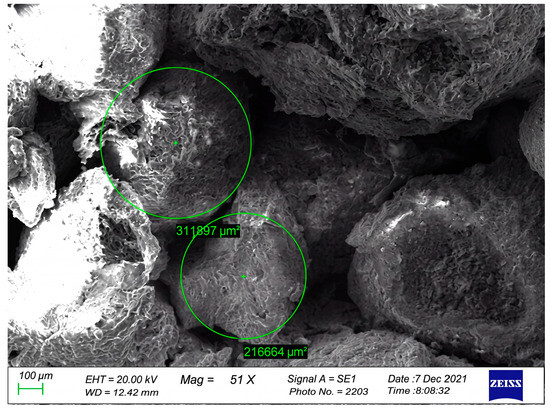
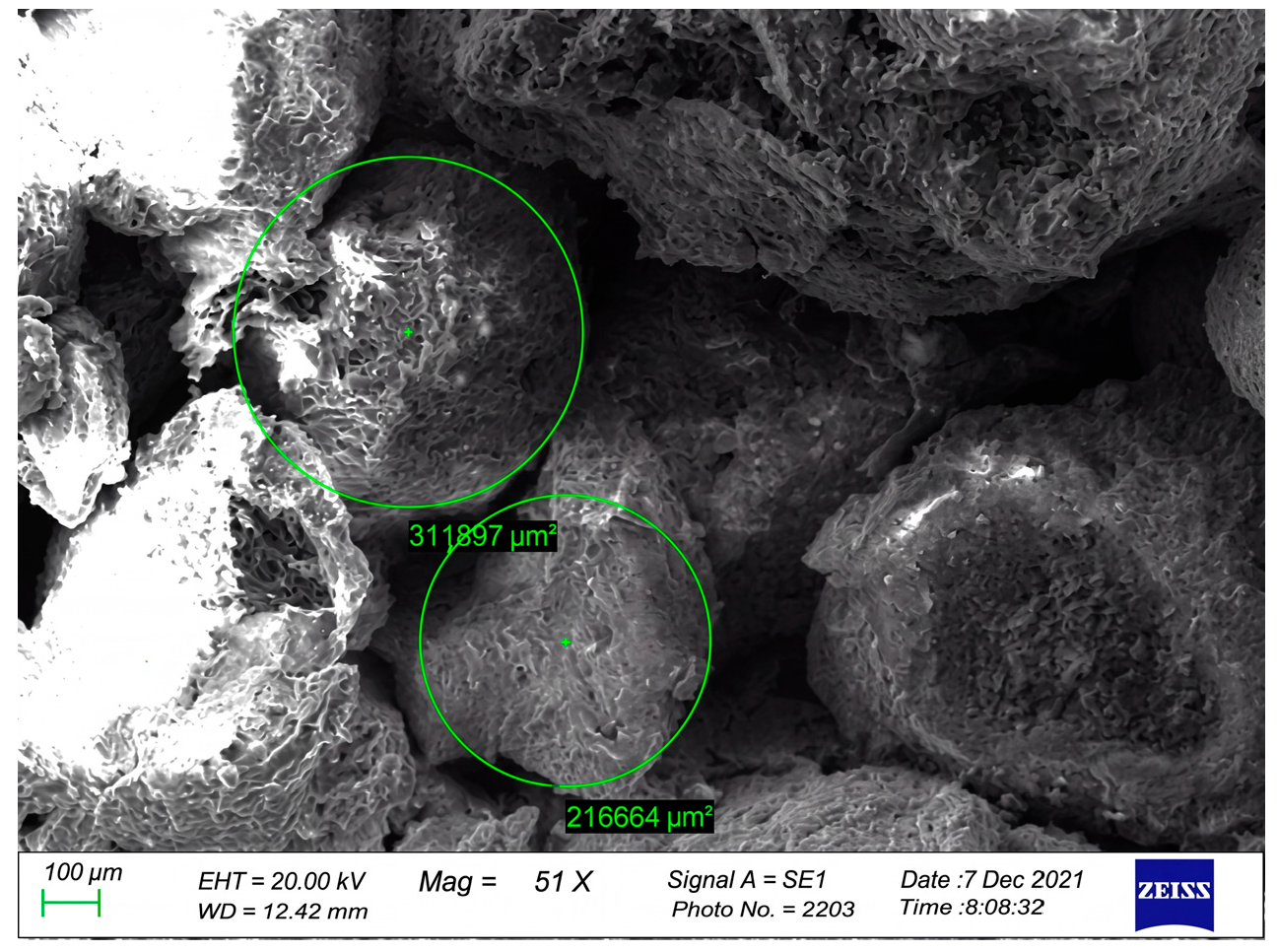
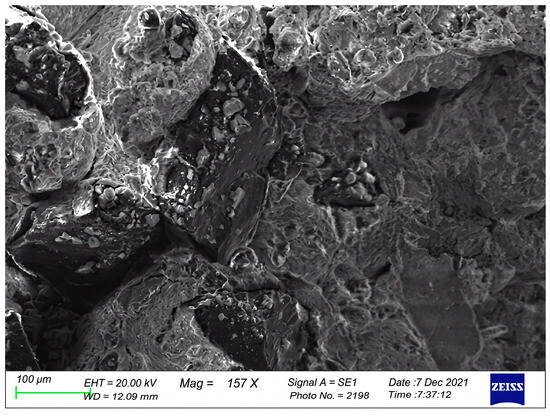
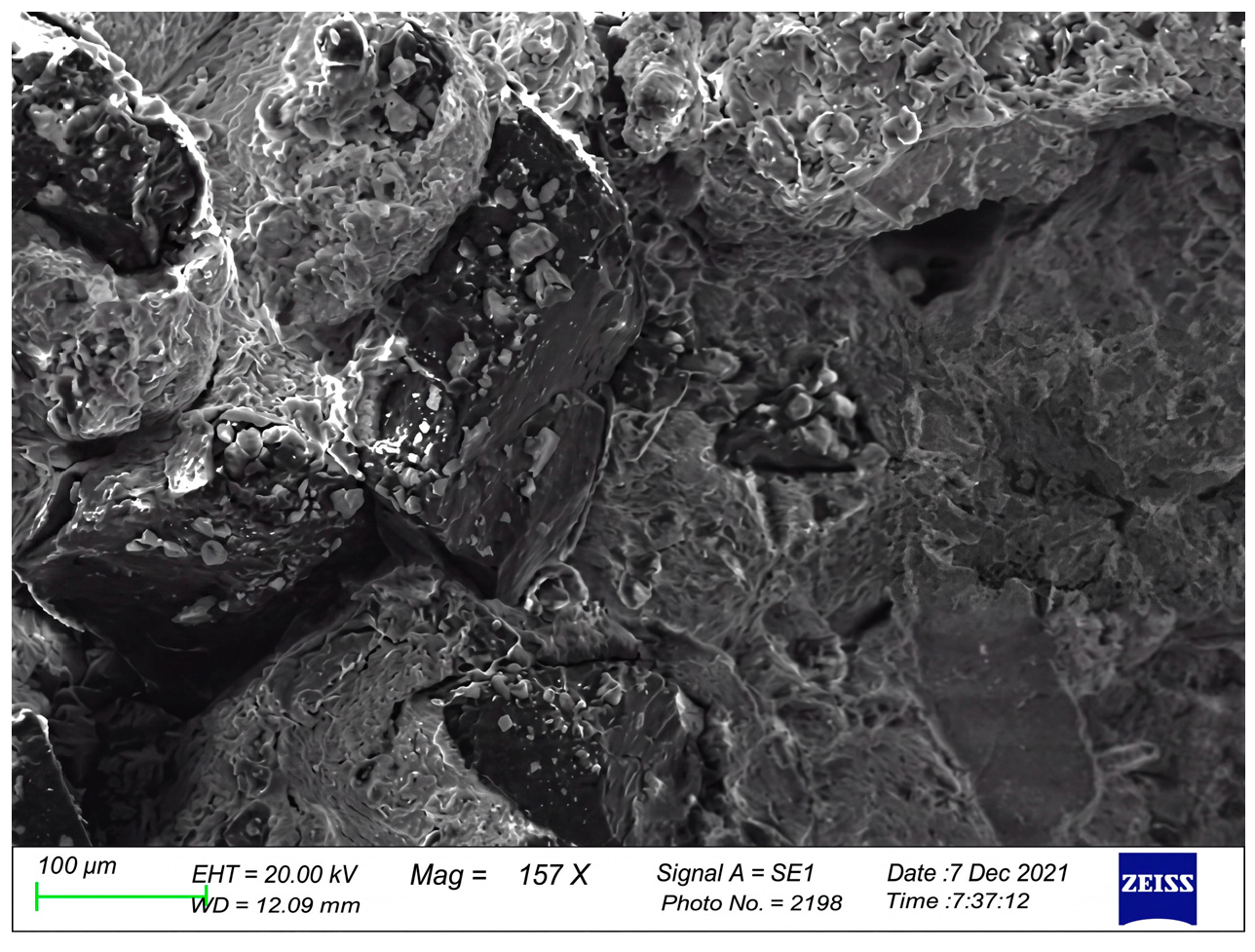
Microstructural analysis provided insight into particle shape, size distribution, and the degree of agglomeration, as well as the interaction between the microsilica matrix and carbonaceous components. The microstructure of the microsilica–semi-coke briquette is presented in Figure 2, while the structure of the microsilica–bituminous coal briquette is shown in Figure 3.
Figure 2.
SEM microstructure of the microsilica–semi-coke briquette fracture surface.
Figure 3.
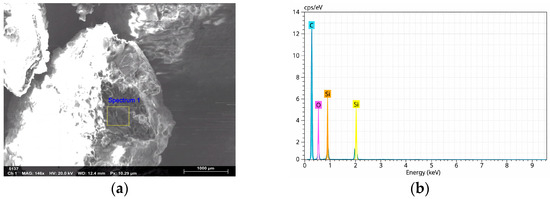
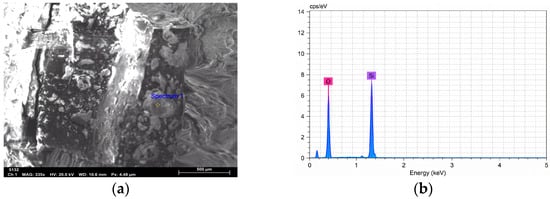
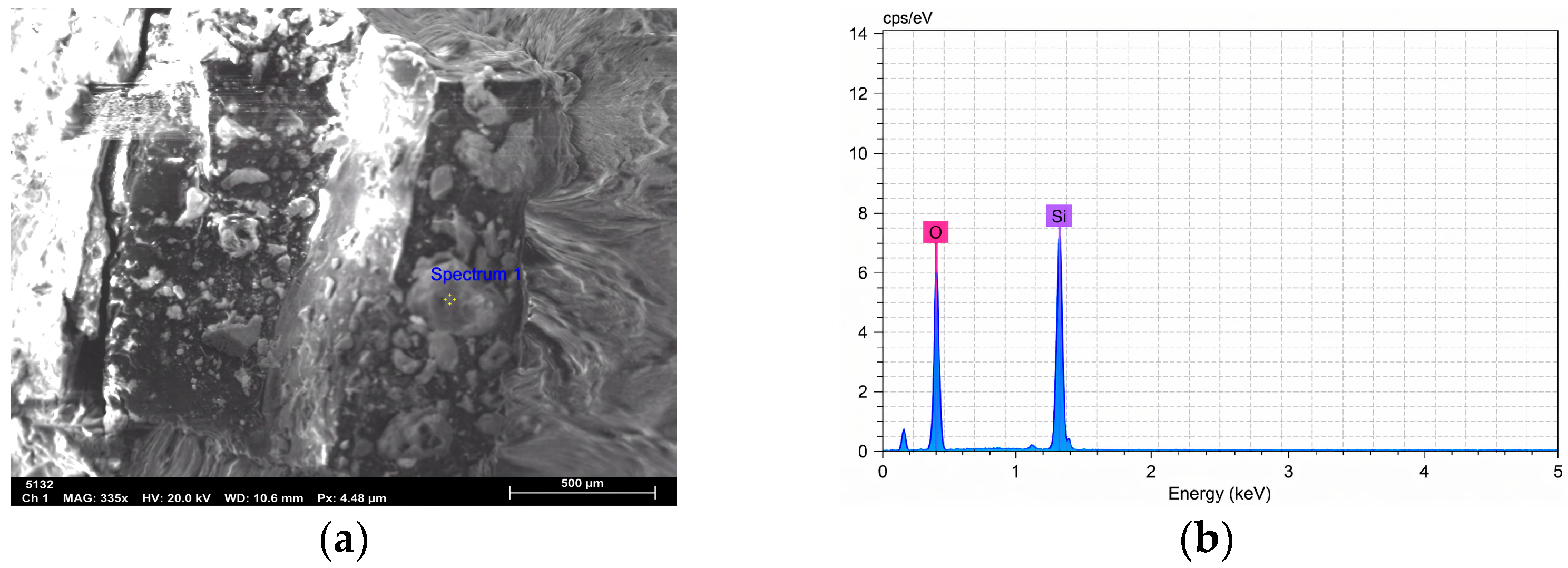
SEM image and EDS spectrum of the carbon–silica contact zone in the microsilica–semi-coke briquette: (a) SEM micrograph; (b) EDS spectrum.
3.2.1. SEM Morphology and EDS Analysis of the Microsilica–Semi-Coke Briquette
According to the results of scanning electron microscopy, the structure of the briquette obtained from a mixture of microsilica and semi-coke is characterized by the formation of agglomerated particles of predominantly rounded shape (Figure 2). The particles are represented by dense aggregates formed as a result of the coagulation of fine microsilica particles and their interaction with the carbonaceous component.
In the studied area, relatively large structural formations with characteristic sizes of about 200–310 μm are observed, indicating the development of agglomeration and sintering processes during briquette formation. The surface of the aggregates exhibits a pronounced rough and layered morphology, which is typical of structures formed from amorphous silicon dioxide particles with a high specific surface area. On the fracture surface, a relatively uniform distribution of phases is observed, while the boundaries between individual particles are weakly defined, indicating the formation of contact zones between the system components. Such zones may contribute to increased mechanical strength of the briquette and improved thermal stability.
In addition, the observed microstructure indicates the formation of a porous agglomerated matrix composed of microsilica particles, in which the carbonaceous component acts as a structure-forming and reactive element. Such morphology is favorable for subsequent carbothermic reduction reactions of silica, since the developed contact surface between SiO2 and carbon enhances the reactivity of the briquette during high-temperature treatment.
Overall, the microstructure of the studied sample is characterized by relatively uniform particle agglomeration and the absence of large structural defects, indicating effective formation of the briquetted matrix when using microsilica and semi-coke. For a more detailed study of the morphological features and component distribution within the briquette structure, energy-dispersive X-ray microanalysis (EDS) combined with SEM was performed.
The analysis of the briquette obtained from a mixture of microsilica and semi-coke showed that microsilica forms a densified silicate matrix within which particles of the carbonaceous component are located. In certain areas of the structure, partial densification of microsilica agglomerates is observed, as a result of which coke particles become partially encapsulated within the microsilica phase (Figure 3a,b).
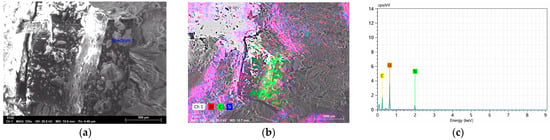
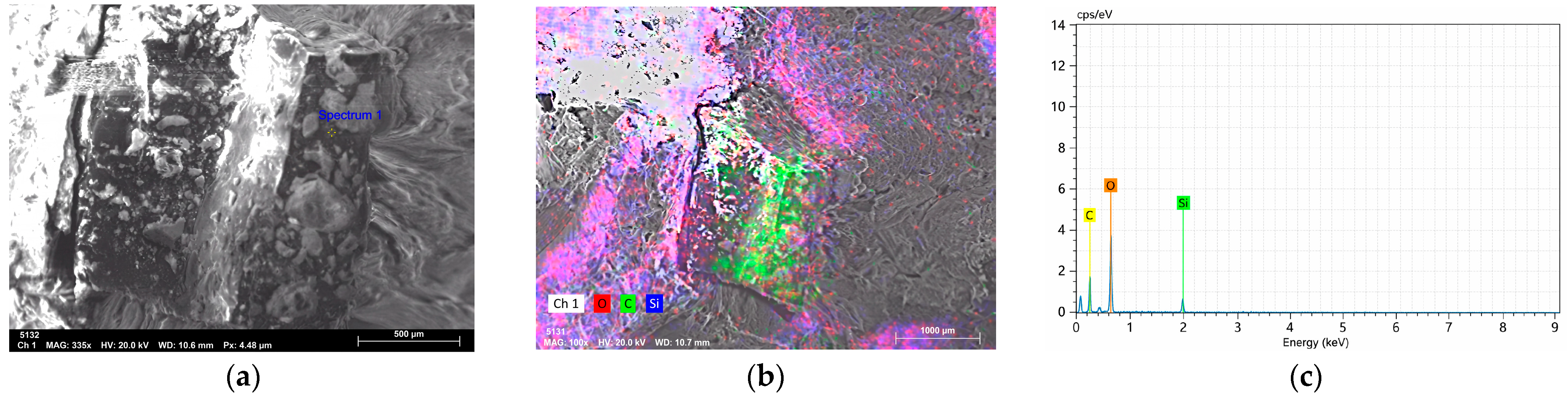
As can be seen from the micrograph (Figure 4a), the structure of the sample is characterized by a heterogeneous morphology and developed porosity caused by the agglomeration of microsilica particles and the carbonaceous phase of the reductant. The results of the energy-dispersive analysis of the investigated area (Figure 4b) show that the main elements of the sample are carbon, oxygen, and silicon. The highest mass fraction corresponds to carbon (77.07%), while oxygen and silicon contents are 19.17% and 3.76%, respectively.
Figure 4.
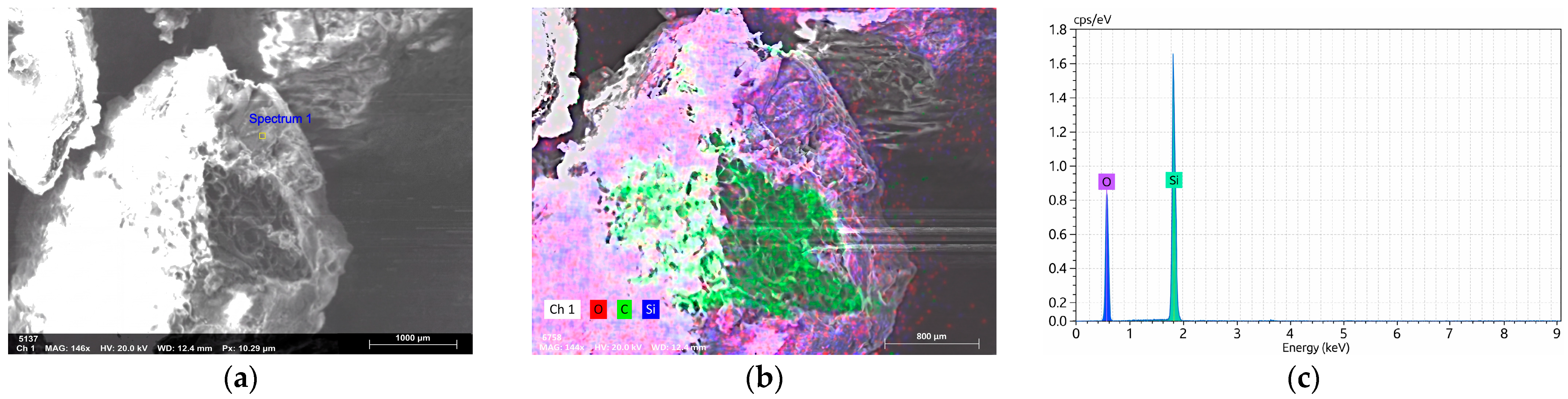
SEM micrograph, elemental distribution map, and EDS spectrum of the silica-rich matrix region in the microsilica–semi-coke briquette: (a) SEM image; (b) elemental mapping; (c) EDS spectrum.
The obtained results indicate the formation of a carbonaceous matrix in which inclusions of the silica phase are distributed. Further analysis of the silica-rich region (Figure 4) showed that the material structure is represented by dense agglomerates of the silica phase with a developed surface. The elemental distribution map demonstrates the predominant localization of silicon and oxygen within the analyzed region.
The EDS spectrum confirms that the analyzed region is mainly represented by the SiO2 matrix phase, with oxygen and silicon contents of 56.16% and 43.84%, respectively.
3.2.2. SEM Morphology of the Microsilica–Bituminous Coal Briquette
For comparison of structural formation features, a briquette sample obtained from a mixture of microsilica and bituminous coal was also investigated. The microstructure of this sample is shown in Figure 5.
Figure 5.
SEM microstructure of the microsilica–bituminous coal briquette fracture surface.
According to the results of scanning electron microscopy, the structure of the briquette obtained from a mixture of microsilica and bituminous coal is characterized by the formation of a microsilica matrix in which inclusions of the carbonaceous component are distributed (Figure 5). The basis of the sample structure is microsilica, forming a continuous silicate phase that acts as a binding matrix.
Within the briquette structure, individual inclusions of irregularly shaped coal particles of varying sizes are observed, partially embedded in the microsilica matrix. The surface of the microsilica matrix exhibits a developed porous-fibrous morphology typical of agglomerated amorphous silicon dioxide particles. Thus, the microstructure of the sample is characterized by the distribution of carbonaceous inclusions within the silicate matrix, which may enhance contact interactions between the system components and increase the structural density of the briquette.
A comparative analysis of the microstructure of calcined briquettes obtained using different carbonaceous reductants (Figure 2 and Figure 5) reveals noticeable differences in structure formation. In contrast, the microsilica–bituminous coal sample is characterized by the presence of discrete carbonaceous inclusions distributed within the microsilica matrix. These inclusions exhibit more pronounced boundaries and a less uniform distribution throughout the material volume.
3.2.3. EDS Analysis of the Microsilica–Bituminous Coal Briquette
Microstructural studies of the briquette obtained from a mixture of microsilica and bituminous coal showed that the material structure is characterized by more developed porosity and a less dense silicate matrix compared to the microsilica–semi-coke sample.
The SEM/EDS analysis of the carbonaceous inclusion (Figure 6) revealed that the main element in the analyzed area is carbon (63.72%), confirming the carbonaceous nature of the investigated inclusion.
Figure 6.
SEM image, elemental distribution, and EDS spectrum of a bituminous coal inclusion in the microsilica matrix: (a) SEM image; (b) elemental mapping; (c) EDS spectrum.
The analysis of the embedded microsilica region (Figure 7) showed that the main elements are silicon and oxygen, indicating the presence of silica-phase particles incorporated into the carbonaceous coal inclusion.
Figure 7.
SEM image and EDS spectrum of microsilica inclusions embedded in a bituminous coal particle: (a) SEM image; (b) EDS spectrum.
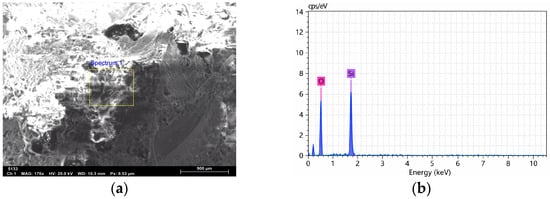
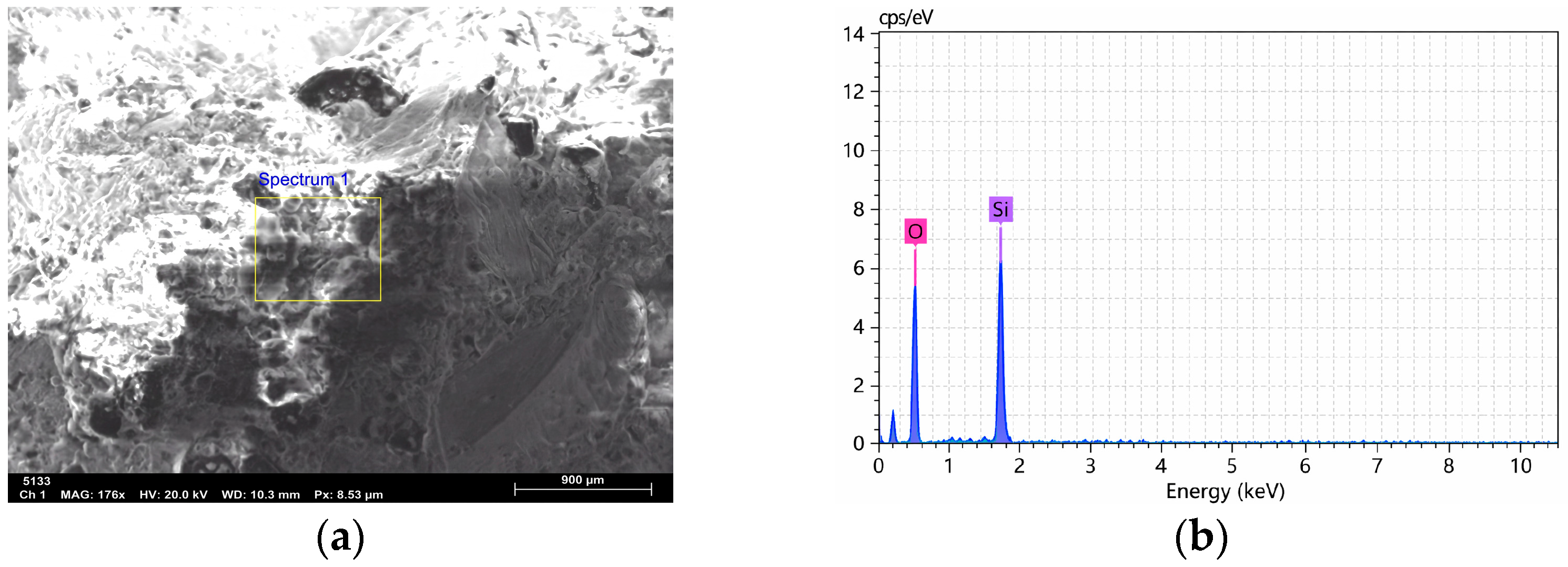
The silicate matrix region of this sample (Figure 8) is predominantly represented by silicon dioxide, which forms a relatively homogeneous agglomerated matrix.
Figure 8.
SEM image and EDS spectrum of the silicate matrix region in the microsilica–bituminous coal briquette: (a) SEM image; (b) EDS spectrum.
In general, the results of microstructural and energy-dispersive studies of the microsilica + bituminous coal sample (Figure 6, Figure 7 and Figure 8) show that the briquette structure consists of a silicate matrix of microsilica, within which inclusions of the carbonaceous phase of coal are distributed. Thus, the results of the conducted studies show that the composition of the carbonaceous reductant has a significant influence on the formation of briquette structure and their thermal stability. It has been established that the use of semi-coke promotes the formation of a more homogeneous and denser microsilica matrix with a developed system of contacts between silica and carbon phases, which ensures higher thermal strength of calcined briquettes when heated up to 1500 °C. In contrast, calcined briquettes based on bituminous coal are characterized by a more heterogeneous structure and increased porosity, which leads to a decrease in their structural stability under high-temperature exposure.
4. Discussion
The obtained results confirm the strong potential of microsilica as a secondary silicon-containing raw material in silicon metallurgy. However, its direct use in ore-thermal furnaces is limited by its ultrafine particle size, pronounced tendency toward dust entrainment, and low gas permeability of the charge layer. Therefore, preliminary agglomeration is a necessary stage of material preparation. Briquetting enables the integration of microsilica and a carbonaceous reductant into a single composite charge, ensuring a more stable material structure and improving conditions for carbothermic reduction processes [3,10].
The results of high-temperature testing clearly demonstrate that the type of carbonaceous reductant has a decisive influence on briquette thermal stability. According to the thermal strength data (Table 3), calcined briquettes of the microsilica–semi-coke composition retained their structural integrity when heated up to 1500 °C and subjected to subsequent mechanical impact. In contrast, microsilica–bituminous coal briquettes exhibited a pronounced tendency toward deformation and partial destruction after thermal exposure. This difference is primarily associated with the physicochemical properties of the carbonaceous reductants used.
Semi-coke is characterized by a higher fixed carbon content and a significantly lower proportion of volatile matter compared with bituminous coal (Table 3). The low volatile content helps preserve the carbon–silica contact framework during heating and minimizes internal pore formation. By contrast, the higher volatile content of bituminous coal promotes gas evolution during heating, leading to increased porosity and reduced mechanical integrity. Similar trends have been reported in studies addressing the reduction behavior of oxide materials and briquetted systems under high-temperature conditions [13].
Microstructural analysis strongly supports these findings. Scanning electron microscopy revealed that microsilica–semi-coke briquettes possess a denser and more homogeneous structure (Figure 2). The material consists of agglomerated microsilica particles forming a developed silicate matrix with a uniformly distributed carbonaceous phase. This morphology ensures extensive interfacial contact between silica and carbon, which is a key factor for efficient carbothermic reduction.
Additional evidence was obtained through SEM/EDS analysis. Examination of interfacial zones between the silicate matrix and carbonaceous phase revealed the simultaneous presence of Si, O, and C (Figure 3), indicating strong interphase interaction and well-developed phase boundaries. In silica-rich regions, the dominance of Si and O corresponds to silicon dioxide composition (Figure 4). Such structural organization enhances interfacial contact and reduces diffusion distances between reacting phases, thereby favoring carbothermic reduction kinetics.
In contrast, microsilica–bituminous coal briquettes exhibit greater structural heterogeneity and discrete carbonaceous inclusions distributed within the silicate matrix (Figure 5). The higher volatile content of bituminous coal contributes to pore formation and local structural defects during heating. Increased porosity and heterogeneity significantly reduce mechanical stability at elevated temperatures, consistent with previously reported behavior of furnace charge materials [1].
Within bituminous coal-based briquettes, carbonaceous inclusions of varying morphology were observed in the microsilica matrix (Figure 6). In some regions, microsilica particles embedded within carbonaceous inclusions were also detected (Figure 7), indicating mechanical interlocking during briquetting. At the same time, the silicate matrix exhibits a more developed porous structure (Figure 8), which further reduces overall structural stability under thermal load.
From a technological perspective, these results are highly significant. One of the main challenges in the use of microsilica is its tendency to be entrained by gas flows due to its extremely fine particle size. Briquetting increases the effective particle size, stabilizes the charge structure, and ensures more uniform distribution of both reductant and silica within the briquette volume [7,22]. This contributes to more stable furnace gas dynamics and improved reduction efficiency during silicon production.
Moreover, the utilization of technogenic materials in metallurgical processes is an important direction for improving environmental sustainability. Recycling microsilica and other silicon production by-products reduces environmental burden, minimizes waste disposal, and enhances comprehensive raw material utilization [20,21].
In summary, the conducted studies demonstrate that the type of carbonaceous reductant significantly influences briquette structure formation and thermal stability. The use of semi-coke promotes the development of a denser and more homogeneous structure, ensuring higher resistance to high-temperature degradation. The obtained results confirm the promising potential of microsilica–semi-coke briquettes as a composite charge component in metallurgical-grade silicon production.
5. Conclusions
In this study, the thermal stability and microstructural characteristics of microsilica-based briquettes with different carbonaceous reductants were investigated. The experimental results demonstrate that the composition of the carbonaceous component has a significant influence on both the structural stability and the high-temperature behavior of the briquettes.
It was established that briquettes of the microsilica–semi-coke composition exhibit higher thermal stability compared with samples containing bituminous coal. This improvement is attributed to the lower volatile matter content and higher fixed carbon content of semi-coke, which promote the formation of a more stable carbon–silica framework during heating. Microstructural analysis further revealed a more uniform distribution of the carbon phase within the microsilica matrix, resulting in a denser and more homogeneous briquette structure.
SEM/EDS analysis confirmed the formation of well-defined contact zones between carbonaceous inclusions and the silica matrix, creating favorable conditions for interfacial interaction between components. Such structural organization enhances thermal stability and may facilitate more efficient carbothermic reactions under metallurgical processing conditions.
From a technological perspective, briquetting microsilica with carbonaceous reductants represents an effective approach for the utilization of ultrafine technogenic materials generated during metallurgical silicon production. The use of semi-coke in briquette formulations significantly improves structural stability and expands the potential application of these materials as part of the burden in ore-thermal furnaces.
In conclusion, the results of this study confirm that the choice of carbonaceous reductant is a key factor governing the microstructure and thermal stability of microsilica-based briquettes. The microsilica–semi-coke composition can therefore be considered a promising candidate for the development of resource-efficient and environmentally sustainable technologies in silicon metallurgy.
Author Contributions
Conceptualization, A.C. and T.Z.; methodology, A.C.; validation, A.C. and Y.K.; formal analysis, A.C. and Y.K.; investigation, A.C., N.A., D.Y., A.M. and Y.M.; resources, A.Y.; data curation, A.M. and Y.M.; writing—original draft preparation, A.C.; writing—review and editing, T.Z.; visualization, A.C. and Y.K.; supervision, T.Z. and A.Y.; project administration, T.Z.; funding acquisition, T.Z. All authors have read and agreed to the published version of the manuscript.
Funding
This research was funded by the Science Committee of the Ministry of Science and Higher Education of the Republic of Kazakhstan, Grant No. AP23485002.
Data Availability Statement
The data supporting the findings of this study are available within the article.
Acknowledgments
The authors would like to acknowledge Tau-Ken Temir LLP for providing the microsilica samples used in this study.
Conflicts of Interest
Author Askar Chekimbayev was employed by Qaragandy Power Silicon LLP. The authors declare that the research was conducted in the absence of any commercial or financial relationships that could be construed as a potential conflict of interest.
References
- Tangstad, M.; Ringdalen, E. Small scalelaboratory experiments simulating an industrial silicon furnace. lnfacon12. In Proceedings of the Twelfth International Ferroalloys Congress: ‘Sustainable Future’, Helsinki, Finland, 6–9 June 2010; Outotec Oyj: Oslo, Norway; pp. 661–669. [Google Scholar]
- Gasik, M.; Dashevskii, V.; Bizhanov, A. Metallurgy of silicon and silicon carbide. In Ferroalloys: Theory and Practice; Springer: Berlin, Germany, 2020; pp. 35–55. [Google Scholar]
- Olsen, S.E.; Tangstad, M.; Lindstad, T. Production of Silicon and Silicon Alloys; Tapir Academic Press: Trondheim, Norway, 1998. [Google Scholar]
- Schei, A.; Tangstad, M.; Tveit, H. Raw materials for silicon production. In Silicon for the Chemical and Solar Industry; Tapir Academic Press: Trondheim, Norway, 2011. [Google Scholar]
- Schei, A.; Tuset, J.; Tveit, H. Production of High Silicon Alloys; Tapir Academic Press: Trondheim, Norway, 1998. [Google Scholar]
- Glazev, M.V. High-Temperature Phase Interactions in the Utilization of Fine-Dispersed Waste from Metallurgical Silicon Production. Ph.D. Thesis, Saint Petersburg Mining University, Saint Petersburg, Russia, 2022. [Google Scholar]
- Baisanov, A.; Vorobkalo, N.; Baisanova, A.; Mussin, A.; Sharieva, S.; Makishev, A. A new approach to the recycling of silicon production waste (microsilica) as a raw material for metallurgical processing. Silicon 2024, 16, 6361–6375. [Google Scholar] [CrossRef] [Scilit]
- Sariyev, O.; Kelamanov, B.; Dossekenov, M.; Davletova, A.; Kuatbay, Y.; Zhuniskaliyev, T.; Abdirashit, A.; Gasik, M. Environmental characterization of ferrochromium production waste and its carbonization product. Heliyon 2024, 10, e30789. [Google Scholar] [CrossRef] [Scilit] [PubMed]
- Wu, H.; Zheng, L.; Zhan, J.; Du, N.; Liu, W.; Ma, J.; Su, L.; Wang, L. Recycling silicon-based industrial waste as sustainable sources of Si/SiO2 composites for high-performance Li-ion battery anodes. J. Power Sources 2020, 449, 227513. [Google Scholar] [CrossRef] [Scilit]
- Protopopov, A.V.; Protopopov, M.A.; Suleimenov, E.A.; Aimenov, Z.; Altynbekov, R. Study of silicon production process in ore-smelting furnace and optimization of technological process. Complex Use Miner. Resour. 2023, 326, 68–80. [Google Scholar] [CrossRef] [Scilit]
- Kadkhodabeigi, M.; Tveit, H.; Johansen, S.T. Modelling the tapping process in submerged arc furnaces used in high silicon alloys production. ISIJ Int. 2011, 51, 193–202. [Google Scholar] [CrossRef] [Scilit]
- Safarian, J.; Kolbeinsen, L. Energy consumption in silicon production. Energy 2015, 90, 1797–1804. [Google Scholar]
- ACI Committee 234. Guide for the Use of Silica Fume in Concrete; ACI 234R-06 (Reapproved 2012); American Concrete Institute: Farmington Hills, MI, USA, 2012. [Google Scholar]
- Kulikov, B.P.; Tarasov, I.V.; Bezrukikh, A.I.; Voroshilov, D. Investigation of the properties of microsilica to assess the possibility of its use as an additive in concrete production. Constr. Mater. Prod. 2025, 8, 3. [Google Scholar] [CrossRef] [Scilit]
- Glazev, M.V.; Bazhin, V.Y. Refractory materials of metallurgical furnaces with the addition of silicon production waste. Non-Ferr. Met. 2022, 1, 32–39. [Google Scholar]
- Pascoal, A.L.; Rossoni, H.A.V.; Kaffash, H.; Tangstad, M. Study of the physical behaviour and the carbothermal reduction of self-reducing briquettes developed with iron ore fines, charcoal and silica fume residues. Sustainability 2022, 14, 10963. [Google Scholar] [CrossRef] [Scilit]
- Myrhaug, E.H.; Tangstad, M. Behavior of carbon materials in silicon furnaces. Metall. Mater. Trans. B 2016, 47, 132–142. [Google Scholar]
- Mousa, E.; Kazemi, M.; Larsson, M.; Karlsson, G.; Persson, E. Potential for developing biocarbon briquettes for foundry industry. Appl. Sci. 2019, 9, 5288. [Google Scholar] [CrossRef] [Scilit]
- Kelamanov, B.; Yessengaliyev, D.; Sariev, O.; Akuov, A.; Samuratov, Y.; Zhuniskaliyev, T.; Kuatbay, Y.; Mukhambetgaliyev, Y.; Kolesnikova, O.; Zhumatova, A.; et al. Technological analysis of the production of nickel-containing composite materials. J. Compos. Sci. 2024, 8, 179. [Google Scholar] [CrossRef] [Scilit]
- Sharifov, D.; Niyazbekova, R.; Mirzo, A.; Shansharova, L.; Serekpayeva, M.; Aldabergenova, S.; Ibzhanova, A.; Machnik, R.; Bembenek, M. The study of composite materials properties based on polymers and nano-additives from industrial wastes from Kazakhstan. Materials 2024, 17, 2959. [Google Scholar] [CrossRef] [Scilit]
- Akhmetova, G.E.; Tuyskhan, K.; Ulyeva, G.A.; Reshotkina, E.N. Development of new composite materials based on “metal–non-metal” with improved functional properties. Metallofiz. Noveishie Tekhnol. 2022, 44, 1137–1146. [Google Scholar] [CrossRef] [Scilit]
- Kuzmin, M.P.; Larionov, L.M.; Chu, P.K.; Qasim, A.M.; Kuz’mIna, M.Y.; Kondratiev, V.V.; Kuz’mIna, A.S.; Ran, J.Q. New methods of obtaining Al–Si alloys using amorphous microsilica. Int. J. Met. 2020, 14, 207–217. [Google Scholar] [CrossRef] [Scilit]
- Zhuniskaliyev, T.; Nurumgaliyev, A.; Chekimbayev, A.; Kelamanov, B.; Kuatbay, Y.; Mukhambetgaliyev, Y.; Mukhambetkaliyev, A.; Abdirashit, A. Experimental investigation of the influence of phase compounds on the friability of Fe–Si–Mn–Al complex alloy. Metals 2024, 14, 1091. [Google Scholar] [CrossRef] [Scilit]
- Nemchinova, N.V.; Mineev, G.G.; Tyutrin, A.A.; Yakovleva, A.A. Development of ore-thermal melting technology for agglomerated charge containing technogenic raw material in silicon production. Izv. Ferr. Metall. 2017, 60, 948–954. [Google Scholar] [CrossRef] [Scilit]
- Nurumgaliyev, A.; Zhuniskaliyev, T.; Shevko, V.; Mukhambetgaliyev, Y.; Kelamanov, B.; Kuatbay, Y.; Badikova, A.; Yerekeyeva, G.; Volokitina, I. Modeling and development of technology for smelting a complex alloy (Fe–Si–Mn–Al) from briquettes and high-ash coals. Sci. Rep. 2024, 14, 7456. [Google Scholar] [CrossRef] [Scilit] [PubMed]
- Zobnin, N.N.; Torgovets, A.K.; Pikalova, I.A.; Yussupova, Y.S.; Atakishiyev, S.A. Influence of thermal stability of quartz and the particle size distribution of burden materials on the process of electrothermal smelting of metallurgical silicon. Orient. J. Chem. 2018, 34, 1120–1125. [Google Scholar] [CrossRef] [Scilit]
- Ringdalen, E.; Tangstad, M. Carbothermic reduction of silica. Metall. Mater. Trans. B 2012, 43, 949–958. [Google Scholar]
- Tranell, G.; Monsen, B.; Tangstad, M. Thermodynamics of silicon production in submerged arc furnaces. Metall. Mater. Trans. B 2014, 45, 123–131. [Google Scholar]
- Baisanov, A.S.; Vorobkalo, N.R.; Makhambetov, Y.N.; Mynzhasar, Y.A.; Zulfiadi, Z. Studies of the thermal stability of briquettes based on microsilica. Kompleks. Ispolz. Miner. Syra 2023, 327, 57–63. [Google Scholar] [CrossRef] [Scilit]
- Baisanov, A.; Vorobkalo, N.; Shabanov, Y.; Mynzhasar, Y.; Makhambetov, Y. Optimization of the properties of microsilica-based composite briquettes depending on their granulometry. J. Compos. Sci. 2024, 8, 439. [Google Scholar] [CrossRef] [Scilit]

Disclaimer/Publisher’s Note: The statements, opinions and data contained in all publications are solely those of the individual author(s) and contributor(s) and not of MDPI and/or the editor(s). MDPI and/or the editor(s) disclaim responsibility for any injury to people or property resulting from any ideas, methods, instructions or products referred to in the content. |
© 2026 by the authors. Licensee MDPI, Basel, Switzerland. This article is an open access article distributed under the terms and conditions of the Creative Commons Attribution (CC BY) license.