


Abstract
Climate change increasingly challenges winter wheat production, making balanced nutrient management essential for maintaining crop productivity and grain quality. In this context, fertilization remains a key factor determining crop productivity and yield stability. This study was conducted during 2022–2025 within a long-term field experiment established in 1975 at the Agricultural Research and Development Station Secuieni, Romania, to evaluate the cumulative effects of nitrogen and phosphorus fertilization on winter wheat yield, yield components, grain quality, and soil chemical properties. The experiment was established on a medium-textured cambic chernozem using a two-factor split-plot design with five replications. Five phosphorus (P0, P40, P80, P120, and P160 kg ha−1 active ingredient) and nitrogen (N0, N40, N80, N120, and N160 kg ha−1 active ingredient) treatments were evaluated using the winter wheat cultivar Otilia grown in a bean–wheat–maize rotation. Fertilization significantly increased grain yield and improved grain quality. The highest winter wheat grain yield, 6897 kg ha−1, was obtained with the N80P160 fertilization treatment, indicating that this nitrogen and phosphorus combination provided the most favorable response under the experimental conditions. Higher nitrogen rates significantly increased grain quality parameters, with protein content rising from 9.15% at N0 to 14.20% at N160, wet gluten content increasing from 17.29% to 28.97% and starch content decreasing from 70.95% at N0 to 66.91% at N160; however, the application of higher fertilizer rates did not result in further increases in grain yield. These findings emphasize the importance of balanced nitrogen and phosphorus management for improving winter wheat productivity and grain quality under changing climatic conditions.
1. Introduction
Winter wheat (Triticum aestivum L.) is one of the most widely cultivated cereal crops worldwide and ranks among the leading cereals in terms of global production [1]. Owing to its high nutritional value, it constitutes a major component of human diets by providing essential carbohydrates, dietary fiber, and protein, thereby contributing substantially to global food security [2,3,4]. As a major staple crop, winter wheat plays a crucial role in global food security by providing a substantial proportion of the calories and nutrients required for human consumption [5]. Ensuring stable and sustainable wheat production is therefore essential to meet the increasing nutritional demands of a growing global population [6].
Among the essential plant nutrients, nitrogen (N) and phosphorus (P) play a fundamental role in crop productivity and grain quality by regulating key physiological processes, including photosynthesis, root system development, biomass accumulation, and protein synthesis [7,8]. The efficient use of phosphorus (P) is a key factor in crop production, sustainable resource management, and food security [9]. Consequently, understanding the influence of soil properties, cultivar selection, and crop rotation on phosphorus use efficiency is essential for optimizing fertilizer management in wheat production [9]. Furthermore, the localized placement of nitrogen, particularly in the ammonium (NH4+–N) form, together with phosphorus has been shown to improve phosphorus uptake, early plant growth, and grain yield compared with conventional broadcast fertilization. These beneficial effects have been confirmed in both controlled experiments and field studies, highlighting the importance of fertilizer placement for improving nutrient use efficiency [10,11]. Achieving high and stable grain yields and grain quality depends largely on adequate mineral nutrition, particularly nitrogen (N), which is the most yield-limiting nutrient in wheat production [12,13]. Appropriate nitrogen management strongly influences plant growth, photosynthetic activity, grain yield, grain protein content, and nitrogen use efficiency [13]. As a key macronutrient, nitrogen is essential for plant growth and development; therefore, a thorough understanding of the physiological processes governing nitrogen uptake and utilization is necessary to improve nitrogen use efficiency [14].
However, the efficiency of fertilizer use is influenced by numerous soil, climatic, and agronomic factors, while improper nutrient management may result in reduced crop productivity, lower nutrient use efficiency, and adverse environmental impacts due to nutrient losses [15,16,17,18]. Therefore, optimizing nitrogen and phosphorus fertilization strategies is essential for improving wheat yield, maintaining grain quality, and enhancing the sustainable use of agricultural inputs [12].
The application of mineral fertilizers to winter wheat improves crop nutrition, as its relatively poorly developed root system explores a limited volume of soil and has a low capacity to solubilize and absorb nutrients from soil reserves [19]. The maximum uptake of nitrogen and phosphorus by winter wheat occurs during the relatively short period from stem elongation to maturity, when plants absorb more than 80% of their total nitrogen and phosphorus requirements [20,21,22,23].
Worldwide, long-term fertilization and soil management experiments constitute essential research infrastructures for evaluating the cumulative effects of agricultural practices on crop productivity and soil fertility. Many of these experiments have been continuously maintained for periods ranging from 20 to more than 180 years, including the Rothamsted Experimental Station experiments in the United Kingdom, established in 1843, as well as numerous other long-term experimental platforms across Europe, North America, and Asia [24,25,26]. The results of these long-term experiments have demonstrated that long-term fertilization significantly influences nitrogen use efficiency, yield stability, and the dynamics of soil nutrient reserves [27].
In Romania, long-term fertilization experiments have been established within the network of agricultural research institutes and research stations, providing an important scientific basis for developing fertilizer recommendations adapted to different soil and climatic conditions. A representative example is the long-term experiment at the Agricultural Research and Development Station Secuieni, established in 1975, where the cumulative effects of different nitrogen and phosphorus application rates on crop yield and soil fertility have been investigated under a long-term crop rotation system [21,28,29].
Wheat grain yield and quality are the primary concerns of producers, as these parameters largely determine the economic efficiency of wheat production. To maximize grain yield and quality, producers can adopt and combine a range of agronomic practices, among which fertilizer application is one of the most effective measures [30].
Unlike short-term studies, long-term experiments enable the quantification of gradual changes in soil fertility, nutrient availability, and nitrogen and phosphorus use efficiency [31].
Although the effects of nitrogen and phosphorus fertilization on winter wheat are well documented, relatively few studies have simultaneously evaluated grain yield, technological grain quality, and the response of soil chemical properties across a wide N × P fertilization gradient within a long-term crop rotation under the specific pedoclimatic conditions of a cambic chernozem. Therefore, the present study provides an updated assessment of the long-term experiment at Secuieni under recent climatic conditions, with particular emphasis on identifying fertilization combinations that can achieve a balance among grain yield, grain quality, and soil fertility.
Therefore, the present study aimed to evaluate the response of the winter wheat cultivar Otilia to different N × P fertilization combinations within a long-term fertilization experiment conducted in Secuieni, Romania, during 2022–2025. The study investigated the effects of fertilization on grain yield, yield components, the main indicators of technological grain quality, and selected soil chemical properties under growing seasons characterized by contrasting weather conditions. The results contribute to the characterization of winter wheat responses to combined N and P fertilization and provide relevant information for assessing fertilization strategies under the specific pedoclimatic conditions of the study area.
2. Materials and Methods
2.1. Study Site and Environmental Conditions
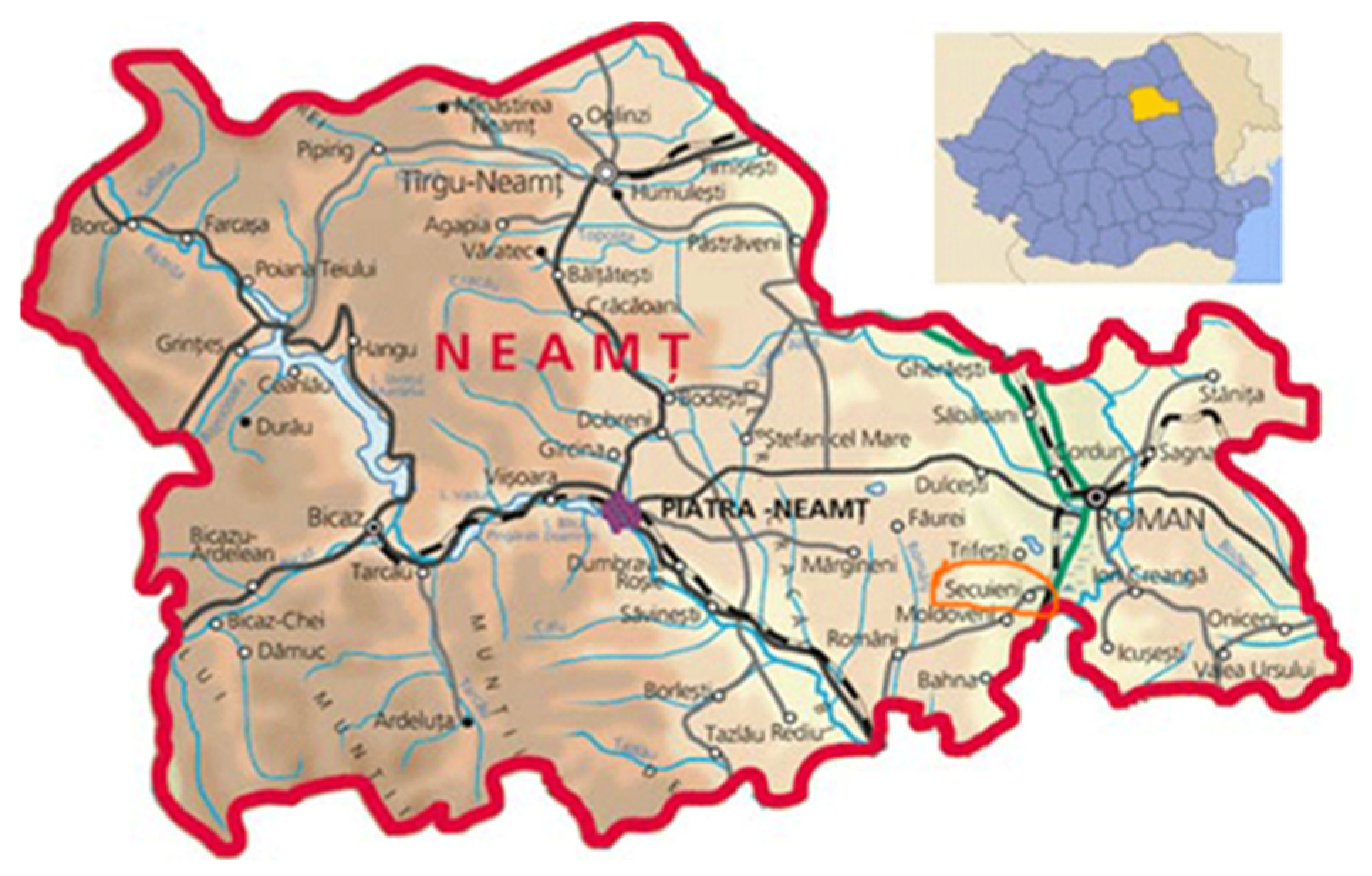
The research was conducted at the Agricultural Research and Development Station (A.R.D.S.) Secuieni–Neamț, Romania, located at 26°51′00″ E longitude and 46°51′15″ N latitude (Figure 1) [32]. The experimental fields are located on both the first terrace of the Siret River and the Siret River floodplain.
The study area is characterized by a temperate continental climate, with short springs, hot summers, and mild winters [33].
Figure 1.
Geographic location of the experimental site at the Agricultural Research and Development Station Secuieni–Neamț, Romania [34].
2.2. Experimental Design and Crop Management
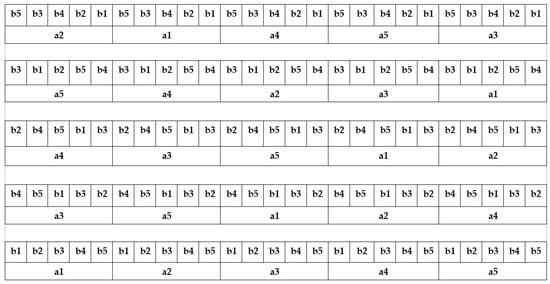
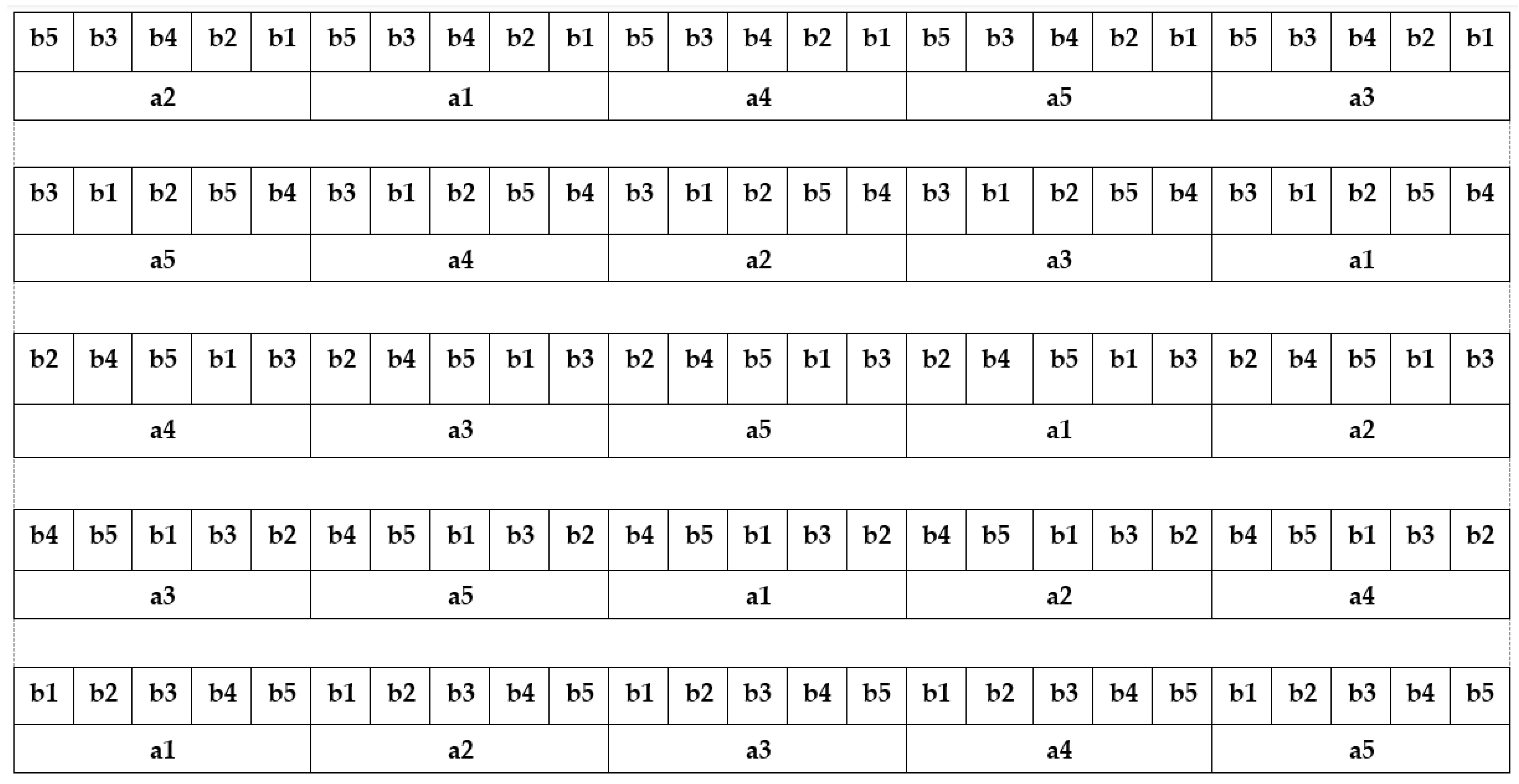
The field experiment was conducted from 2022 to 2025. A two-factor experiment was established using a split-plot design with five replications (Figure 2). The size of each experimental plot was 45.5 m2 (3.5 m × 13 m).
Figure 2.
Layout of the split-plot experimental design. Factor A—phosphorus (P2O5) fertilization rates: a1—P0; a2—P40; a3—P80; a4—P120; a5—P160. Factor B—nitrogen (N) fertilization rates: b1—N0; b2—N40; b3—N80; b4—N120; b5—N160.
Factor A included five phosphorus (P2O5) fertilization rates—0, 40, 80, 120, and 160 kg ha−1 active ingredient—whereas Factor B included five nitrogen (N) fertilization rates—0, 40, 80, 120, and 160 kg ha−1 active ingredient. For the preceding bean crop, lower nitrogen rates were applied, namely 0, 25, 50, 75, and 100 kg ha−1 active ingredient.
The research was conducted on a typical cambic chernozem with a medium-textured soil profile. The physicochemical properties of each experimental treatment were determined and are presented in Section 3.4.
The biological material used in the study was the winter wheat cultivar Otilia, developed by the National Agricultural Research and Development Institute (NARDI) Fundulea. Officially registered in 2013, Otilia is characterized by good resistance to lodging, winter conditions, drought, and heat stress, as well as tolerance to most of the major pathogens affecting small-grain cereals [35]. As only one cultivar was included in the experiment, the responses observed in this study are specific to Otilia, and no comparisons among genotypes or genotype × fertilization interactions were assessed.
During the study period, fertilization was carried out using ammonium nitrate and single superphosphate, with application rates corresponding to the experimental treatments. The experiment was part of a three-year crop rotation system (bean–winter wheat–maize), with winter wheat grown after bean.
Ammonium nitrate is one of the most widely used mineral fertilizers in agriculture because of its high nitrogen content (33.5% active substance) (Azomureș, Târgu Mureș, Romania). Ammonium nitrate was applied in spring, at the BBCH 30 growth stage, in a single application, with the entire nitrogen dose for each experimental treatment applied.
Single superphosphate, containing 20% active ingredient as phosphorus, is commonly used as a phosphorus fertilizer in agricultural yield (Alcedo SRL, Roman, Romania). In this study, it was applied in autumn and incorporated into the soil during seedbed preparation.
Soil preparation included moldboard plowing to a depth of 15–20 cm using a Lemken reversible plow (Lemken, Romania), followed by soil loosening and leveling with a Unia Atlas 4 cultivator (Apan Agriculture Equipments, Brăila, Romania) to produce a well-prepared seedbed.
Sowing was carried out within the optimal planting period for the research station’s agroecological region, between 15 and 25 October of each experimental year, using an Amazone grain drill for small-grain cereals (Proinvest, Teleorman, Romania). The crop was sown at a density of 550 viable seeds m−2, with a row spacing of 12 cm. Harvesting was performed at full crop maturity, between 1 and 20 July, depending on the climatic conditions of each experimental year and the progression of crop ripening. The experimental plots were harvested using a Wintersteiger Plot Combine (Wintersteiger Holding, Österreic, Austria).
Crop management practices focused on the control of monocotyledonous and dicotyledonous weeds. Throughout the entire five-year study period, the same systemic herbicide, based on amidosulfuron, iodosulfuron-methyl-sodium, and mefenpyr-diethyl, was applied at a rate of 0.15 L ha−1 (Sekator Progress OD, BAYER, Bucharest, Romania). In addition, a fungicide based on prothioconazole, spiroxamine, and tebuconazole was applied in a tank mixture with the herbicide at a rate of 0.6 L ha−1 (Impulse PRO 425 EC, BAYER, Bucharest, Romania) to control the complex of foliar diseases and prevent Fusarium head blight in wheat.
2.3. Data Collection and Measurements
During the growing season and at harvest, the following agronomic traits were evaluated: plant height (cm), number of grains per spike, grain weight per spike, thousand-kernel weight (TKW, g), test weight (TW, kg hL−1), grain yield (t ha−1), and the main grain quality parameters.
Plant height was determined after heading [36], at the BBCH 69 growth stage, to assess the influence of different nitrogen and phosphorus fertilization rates on plant growth and final plant height. Plant height was measured from the soil surface to the tip of the spike, excluding the awns. The number of grains per spike was determined by counting the grains from randomly selected spikes collected from each experimental treatment, after which the grain weight per spike was recorded. Thousand-kernel weight and test weight were determined according to standard laboratory procedures. Grain yield was determined by harvesting the net plot area of each experimental plot and expressing the results on a hectare basis (t ha−1).
Grain quality was evaluated by determining protein content (%), wet gluten content (%), starch content (%), Zeleny sedimentation index (mL), and grain hardness (%). Quality analyses were performed on grain samples collected from each experimental treatment using a Perten IM9500 Near-Infrared (NIR) Analyzer (Perten Instruments, Stockholm, Sweden) [37].
2.4. Influence of N and P Fertilization on the Soil
To assess the impact of fertilization on soil fertility status, agrochemical analyses were performed for soil pH, nitrogen, and phosphorus content under increasing phosphorus (P2O5) and nitrogen application rates ranging from 0 to 160 kg ha−1 active ingredient. The experiment was conducted on a cambic chernozem (typical chernozem) soil.
The first soil samples were collected in 2020 to assess the initial agrochemical characteristics of the experimental site. The results indicated a soil pH of 5.3, a total nitrogen content of 0.121%, and a phosphorus content of 34 mg/kg. In 2024, a new set of soil samples was collected from the same experimental field to enable a comparative assessment of changes in soil fertility over time. Soil sampling was performed before sowing the winter wheat crop. The soil samples were collected from the experimental field and analyzed at the National Research and Development Institute for Soil Science, Agrochemistry and Environmental Protection (ICPA Bucharest). Soil pH was determined using the potentiometric method [38], while nitrogen and phosphorus contents were determined by spectrophotometric analysis [39]. The analytical results obtained in 2020 and 2024 were used to characterize the agrochemical status of the soil and assess changes in soil fertility over the four-year period, providing a basis for the comparative evaluation of soil conditions before and after the preceding crop and prior to the establishment of the winter wheat experiment.
Given the descriptive and exploratory nature of the soil property assessment, these parameters were not subjected to statistical analysis. Soil samples were collected to monitor variations in soil nitrogen and phosphorus contents and to assess the potential relationship between these parameters and soil pH.
2.5. Statistical Analysis
Observations and measurements were performed on five replications for each experimental treatment. Grain yield data were subjected to factorial analysis of variance (ANOVA) to evaluate the effects of year (Y), phosphorus fertilization (P), nitrogen fertilization (N), and their interactions (Y × P, Y × N, P × N, and Y × P × N). The experimental data were statistically analyzed using the least significant difference (LSD) test. Differences among treatments were considered significant at p < 0.05, highly significant at p < 0.01, and very highly significant at p < 0.001. Pearson’s correlation analysis was performed using the Jamovi (Version 2.7) statistical software available online [40]. Second-order polynomial regression analysis was performed in PAST software to quantify the response of winter wheat grain yield to nitrogen and phosphorus application rates. The following model was fitted separately for each growing season:
where Y is grain yield (kg ha−1); a0, a1, a2, a3, a4 and a5 are regression coefficients; N is the nitrogen application rate (kg N ha−1); P is the phosphorus application rate (kg P2O5 ha−1); and NP represents the interaction between nitrogen and phosphorus fertilization.
Y = a0; + a1N + a2P + a3N2 + a4P2 + a5NP
2.6. Calculation of Nitrogen and Phosphorus Use Efficiency
Nitrogen use efficiency (NUE) and phosphorus use efficiency (PUE) were calculated as the ratio of grain yield to the amount of nitrogen or phosphorus fertilizer applied, respectively.
where Y is grain yield (kg ha−1), N is the nitrogen application rate (kg N ha−1), and P is the phosphorus application rate (kg P2O5 ha−1). NUE and PUE were expressed as kg grain kg−1 nutrient applied. Values were not calculated for N0 and P0 treatments.
2.7. Weather Characteristics
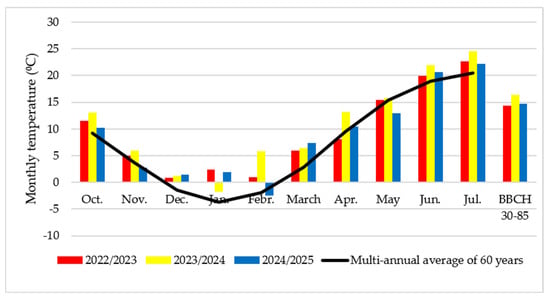
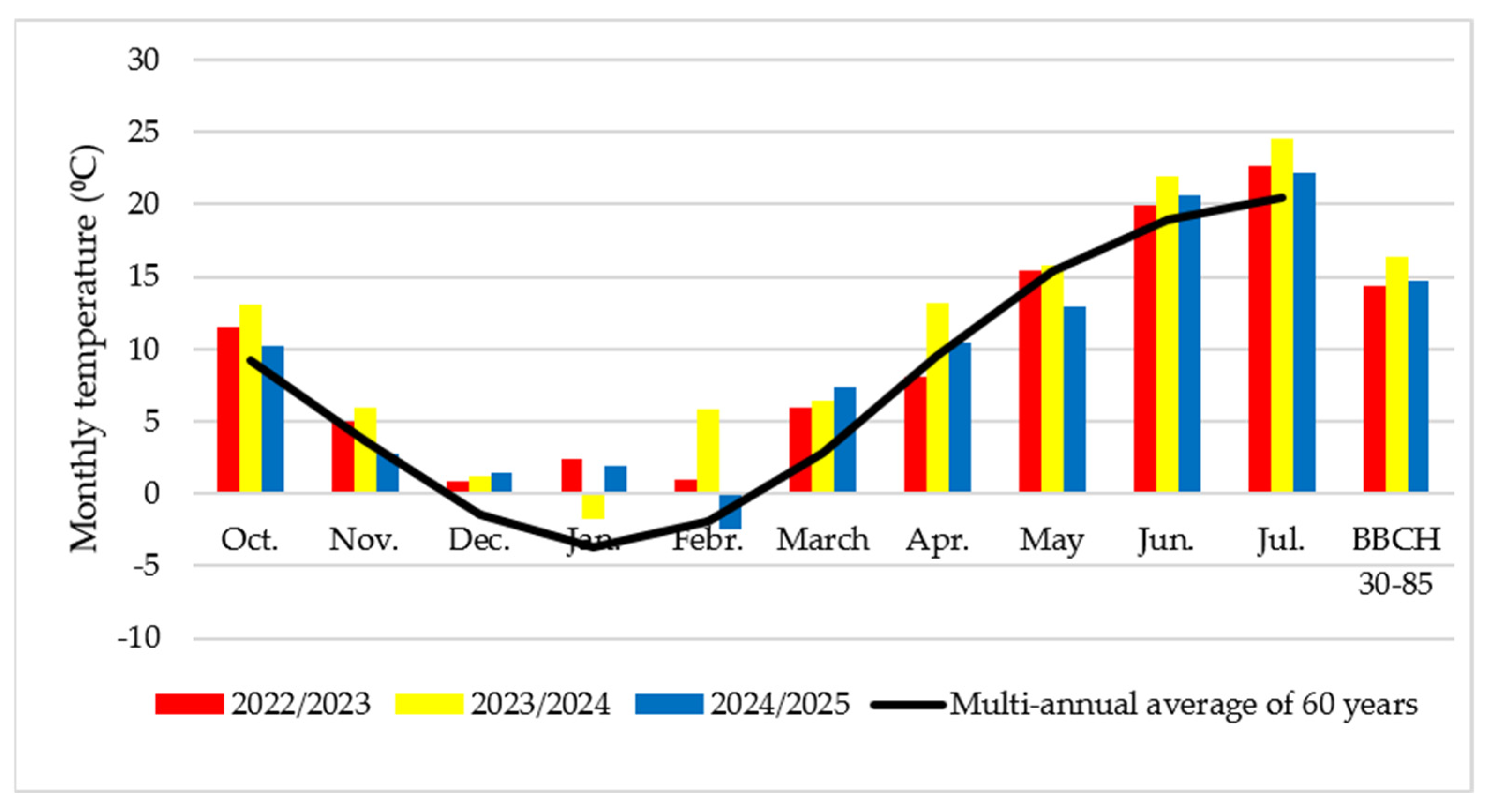
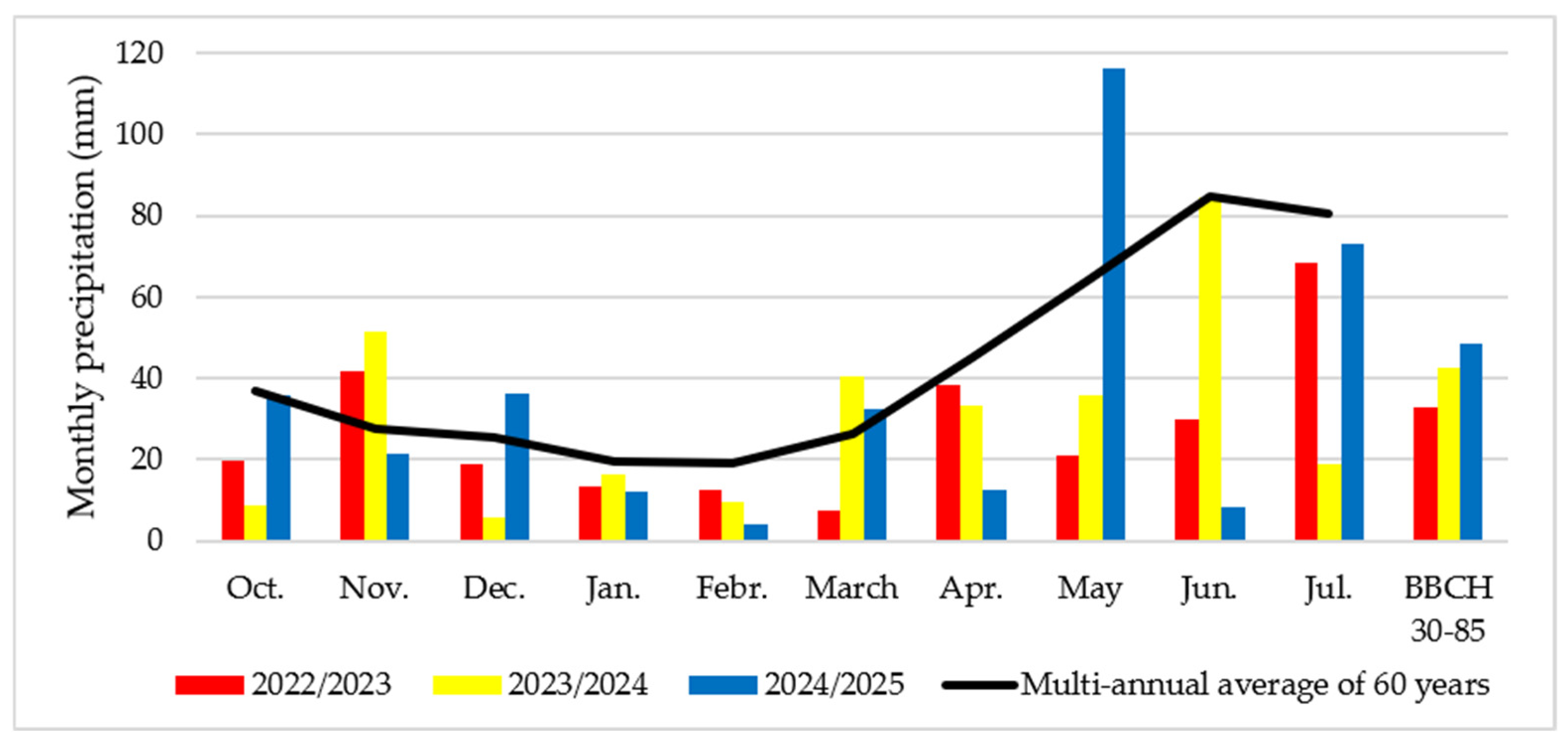
Average monthly air temperature and precipitation recorded in central Moldova during the three growing seasons (October 2022–July 2025), together with the 60-year long-term averages, are presented in Figure 3 and Figure 4 [41].
Figure 3.
Monthly temperature regime at ARDS Secuieni during the period October 2022–July 2025, compared with the 60-year average, including cumulative temperature for the BBCH 30–85 growth stages of winter wheat.
Figure 4.
Monthly precipitation regime at ARDS Secuieni during the period October 2022–July 2025, compared with the 60-year average, including cumulative temperature for the BBCH 30–85 growth stages of winter wheat.
From a thermal perspective, the monthly mean temperatures recorded during the 2022–2025 growing seasons showed considerable variation relative to the 60-year long-term averages, indicating a generally warmer climatic regime in recent years. During the autumn months, temperatures were consistently higher than the long-term averages in all study years, suggesting an extended period of favorable conditions for crop growth and a delayed onset of the cold season. In October, for example, mean air temperatures ranged from 10.2 °C to 13.0 °C, compared with the long-term average of 9.2 °C.
During the winter period (December–February), even greater deviations from the 60-year long-term averages were observed. In the study years, mean monthly temperatures were generally above or close to 0 °C, indicating milder winters and a reduced risk of severe freezing conditions. From an agronomic perspective, this is particularly relevant because temperatures well above the seasonal average may influence the vernalization process and the overwintering capacity of winter crops.
From March to July, a general trend of higher-than-average temperatures was observed, with the most pronounced positive deviations occurring in March, April, June, and July compared with the long-term averages (Figure 3).
From a pluviometric perspective, the three growing seasons exhibited considerable variability in precipitation patterns compared with the 60-year long-term average. Overall, rainfall distribution was highly uneven, with frequent alternations between months characterized by precipitation deficits and those with above-average rainfall.
During the autumn and winter seasons, precipitation amounts were generally close to or below the long-term average, indicating limited soil moisture availability during the early stages of crop development. In contrast, spring and early summer were marked by substantial fluctuations in rainfall, including episodes of excessive precipitation. The highest monthly rainfall was recorded in May 2025 (116 mm), considerably exceeding the long-term average.
June and July showed pronounced interannual variability, characterized by alternating periods of substantial rainfall deficits and excessive precipitation, highlighting the increasing instability of the hydrological regime during the late stages of crop development (Figure 4).
3. Results
3.1. Effect of Fertilization on Growth and Yield Components
Nitrogen (N) and phosphorus (P) fertilization positively affected the main growth traits and yield components of winter wheat (Table 1). Plant height ranged from 70 to 91 cm, spike density from 490 to 576 spikes m−2, spike length from 5.73 to 7.34 cm, the number of grains per spike from 27 to 42, and grain weight per spike from 1.03 to 1.25 g. The highest values for most of the measured traits were recorded under moderate-to-high fertilization rates, particularly in treatments receiving 80–160 kg N ha−1 in combination with 80–160 kg P ha−1.
Table 1.
Effect of nitrogen and phosphorus fertilization on plant growth and yield components of winter wheat (mean values).
No statistical comparisons were performed for plant height, spike density per m2, spike length, number of grains per spike, and grain weight per spike, as these traits were presented as mean values, primarily to highlight the general trends in plant response to the application of different fertilizer rates. Consequently, the differences among the experimental treatments are interpreted descriptively and are not considered statistically significant. The results presented in Table 1 are expressed as averages calculated across all experimental years included in the study.
3.2. Effects of Year and Nitrogen and Phosphorus Fertilization on Yield
Factorial analysis of variance revealed highly significant effects of year (Y), phosphorus (P), and nitrogen (N) on winter wheat grain yield (p < 0.001). Significant interactions were also observed for Y × P, Y × N, P × N, and Y × P × N (p < 0.001), demonstrating that the response of grain yield to N and P fertilization varied among growing seasons (Table 2). The particularly strong year effect was also reflected in the mean grain yields, which were 5145 kg ha−1 in 2023, 5175 kg ha−1 in 2024, and 7771 kg ha−1 in 2025.
Table 2.
Analysis of variance for the effects of year and phosphorus and nitrogen fertilization on winter wheat grain yield.
The significant Y × P interaction showed distinct phosphorus responses among growing seasons (Table 3). In 2023, grain yield increased only moderately with increasing P rates, from 4933 kg ha−1 at P0 to 5276 kg ha−1 at P160, with no significant difference between P120 and P160. In 2024, the response to phosphorus was considerably stronger, with grain yield increasing from 4532 kg ha−1 at P0 to 6154 kg ha−1 at P160. In contrast, in 2025, the highest yields were obtained at P80 (8101 kg ha−1) and P120 (7993 kg ha−1), which did not differ significantly, whereas increasing the P rate to P160 reduced yield to 7784 kg ha−1. These results indicate that the yield response to phosphorus was strongly dependent on growing-season conditions.
Table 3.
Interaction between growing season and phosphorus rate in winter wheat grain yield (kg ha−1).
A significant Y × N interaction was also observed (Table 4). In 2023, grain yield increased from 4597 kg ha−1 at N0 to a numerical maximum of 5418 kg ha−1 at N120, with no further yield improvement at N160. In 2024, yield increased progressively with N supply, reaching 5514 kg ha−1 at N160; however, N120 and N160 were not significantly different. A different response occurred in 2025, when N80 produced the highest grain yield (8294 kg ha−1) and was significantly superior to all other N rates. Increasing the nitrogen rate beyond N80 did not improve productivity, with yields declining to 7869 kg ha−1 at N120 and 7732 kg ha−1 at N160. Thus, the nitrogen rate associated with maximum yield differed among growing seasons.
Table 4.
Interaction between growing season and nitrogen rate in winter wheat grain yield (kg ha−1).
The P × N interaction significantly influenced winter wheat grain yield. The highest three-year mean yield was obtained with the P160N80 treatment (6897 kg ha−1), which was significantly higher than all other fertilization combinations. High yields were also recorded for P120N120 (6555 kg ha−1) and P160N120 (6540 kg ha−1), followed by P160N160 (6436 kg ha−1), P160N40 (6417 kg ha−1), and P120N80 (6411 kg ha−1). At lower phosphorus rates, increasing nitrogen generally increased grain yield, although the response was not consistently linear. At P0, yield increased from 4703 kg ha−1 at N0 to 5971 kg ha−1 at N160, whereas at P160, the highest yield was reached at N80, followed by a decline at N120 and N160. These results demonstrate a clear interaction between nitrogen and phosphorus fertilization and indicate that the yield response to increasing nitrogen depended on the level of phosphorus supply (Table 5).
Table 5.
Interaction between phosphorus and nitrogen fertilization (N × P) on three-year mean winter wheat grain yield (kg ha−1).
Pearson’s correlation analysis revealed significant positive relationships between grain yield and several yield-related traits in winter wheat (Table 6). Grain yield was strongly positively correlated with plant height (r = 0.722, p < 0.001), indicating that greater vegetative growth was associated with higher productivity. Significant positive correlations were also observed between grain yield and spike density (r = 0.479, p < 0.05), as well as between grain yield and spike length (r = 0.530, p < 0.01), highlighting the contribution of these traits to yield formation. Although positive, the correlations between grain yield and grain weight per spike (r = 0.372) and between grain yield and the number of grains per spike (r = 0.368) were not statistically significant. The strongest association was observed between spike length and the number of grains per spike (r = 0.919, p < 0.001), suggesting that spike development directly influenced grain set.
Table 6.
Pearson correlation coefficients (r) between yield and yield-related traits of winter wheat.
Quadratic Regression Analysis of Grain Yield Response to N and P Fertilization
To further evaluate the grain yield response to nitrogen and phosphorus fertilization, second-order polynomial regression models were developed separately for each growing season. The models included the linear effects of N and P, their quadratic terms (N2 and P2), and the N × P interaction (Table 7). All models were highly significant (p < 0.001), although their ability to explain yield variation differed among years. The highest coefficient of determination was recorded in 2024 (R2 = 0.799), followed by 2023 (R2 = 0.687) and 2025 (R2 = 0.606), showing that the relationship between grain yield and N and P fertilization varied considerably from one growing season to another.
Table 7.
Second-order polynomial regression models describing winter wheat grain yield response to nitrogen and phosphorus fertilization during 2023–2025.
In 2023, the model showed that yield increased with nitrogen up to a certain level, with the highest predicted yield occurring at about 119 kg N ha−1 and 160 kg P2O5 ha−1. In 2024, no clear optimum N × P combination was identified within the tested range. In 2025, the model indicated a maximum yield at about 88 kg N ha−1 and 96 kg P2O5 ha−1. These results show that the N and P rates associated with maximum yield differed among growing seasons.
3.3. Nitrogen and Phosphorus Use Efficiency
Nitrogen use efficiency decreased consistently with increasing N application rates in all growing seasons. NUE ranged from 123.78 to 196.62 kg grain kg−1 N at N40 and decreased to 33.34–48.33 kg grain kg−1 N at N160. The highest NUE values were recorded in 2025 (Table 8). A similar decline with increasing fertilizer rate was observed for PUE, although the magnitude of the response differed among growing seasons (Table 9).
Table 8.
Nitrogen use efficiency (NUE) of winter wheat as affected by nitrogen application rate and growing season.
Table 9.
Phosphorus use efficiency (PUE) of winter wheat as affected by phosphorus application rate and growing season.
3.4. Effects of Year and Nitrogen and Phosphorus Fertilization on Thousand-Kernel Weight and Test Weight
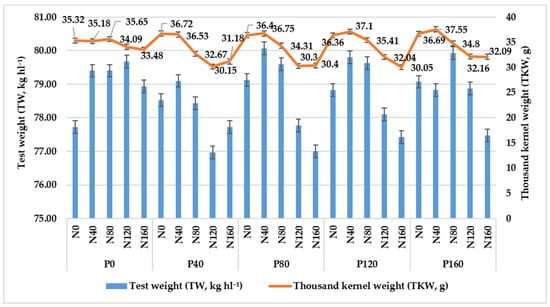
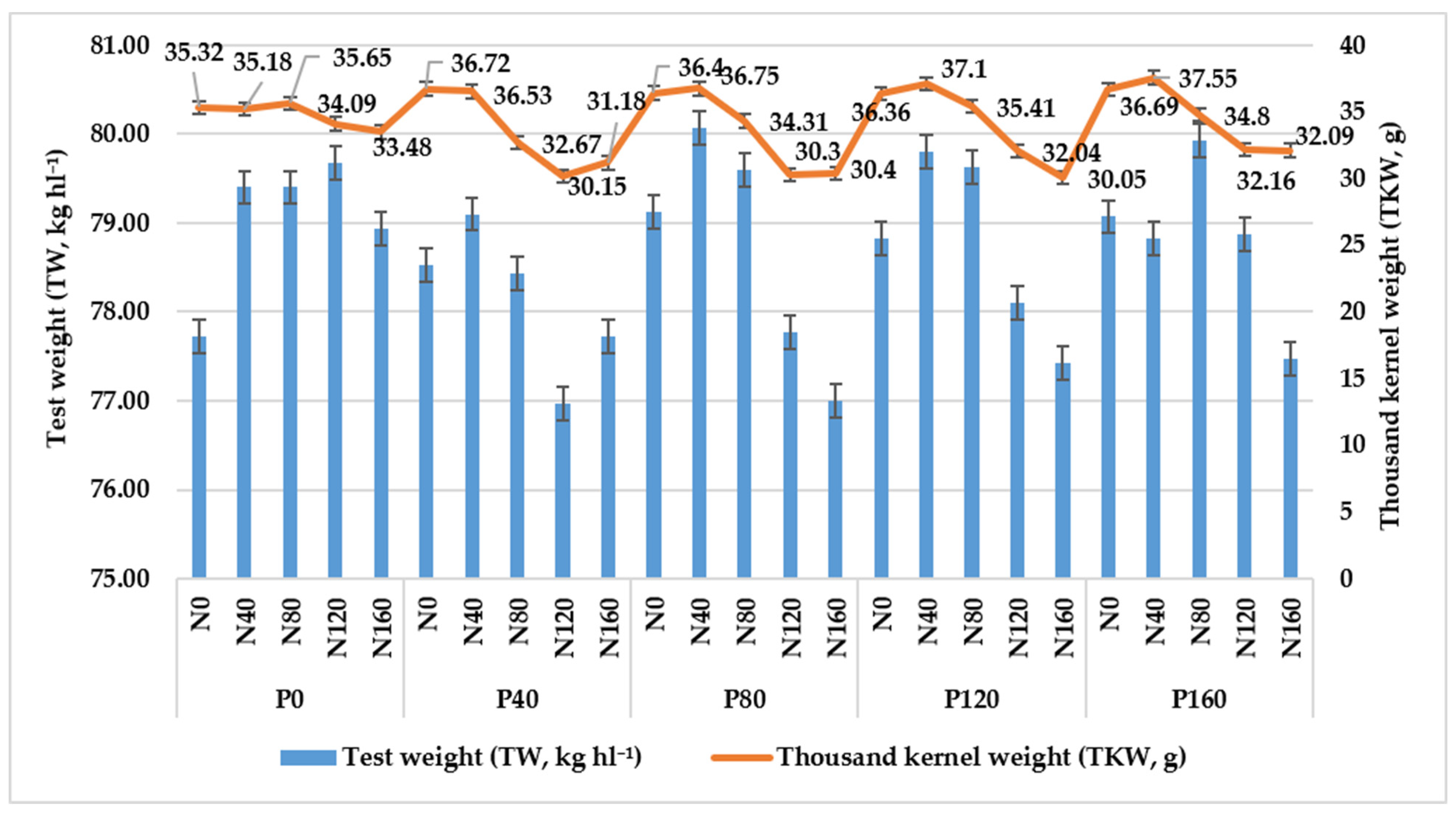
The combined application of nitrogen and phosphorus fertilizers significantly influenced grain physical characteristics and yield components. Thousand-kernel weight (TKW), an important yield component, ranged from 30.15 to 37.55 g, with the highest values observed in treatments receiving higher nitrogen and phosphorus application rates. Test weight (TW), an important indicator of grain physical quality and market value, showed less variation among treatments, ranging from 76.97 to 80.07 kg hL−1 (Figure 5).
Figure 5.
Effect of nitrogen and phosphorus fertilization on thousand-kernel weight (TKW) and hectoliter weight (HW) of winter wheat.
3.5. Effect of Fertilization on Grain Quality
Nitrogen fertilization had a pronounced effect on grain quality. Protein content increased progressively from 9.15% at N0 to 14.20% at N160, while wet gluten content increased from 17.29% to 28.97%. In contrast, starch content decreased progressively from 70.95% at N0 to 66.91% at N160. All nitrogen levels differed significantly according to Duncan’s multiple-range test. Phosphorus fertilization also significantly affected the three quality parameters, although the response was not progressive with increasing P rate. The highest protein and wet gluten contents were recorded at P40, whereas starch content varied only slightly among phosphorus treatments. Mean values among years were very similar for all three parameters (Table 10).
Table 10.
Effect of year and phosphorus and nitrogen fertilization on grain protein, wet gluten and starch content of winter wheat.
Correlation analysis revealed strong associations among the principal winter wheat quality parameters. Protein content, wet gluten content, the Zeleny sedimentation index, and grain hardness were all strongly and positively correlated with one another (r = 0.924–1.000; p < 0.001), demonstrating that these traits are closely associated and represent key determinants of wheat bread-making quality. In contrast, starch content was strongly and negatively correlated with all protein-related quality parameters, indicating that increased starch accumulation is associated with a decline in the technological quality of the grain (Table 11).
Table 11.
Pearson correlation coefficients (r) between yield and wheat quality parameters.
3.6. Effect of Fertilization on Soil Properties
The results showed that increasing nitrogen application rates progressively reduced soil pH, indicating a gradual acidification of the soil. The highest pH values were observed in treatments that did not receive nitrogen fertilization, ranging from 5.49 to 5.75, whereas the application of the highest nitrogen rate (160 kg N ha−1) reduced soil pH to between 5.33 and 5.51 (Table 12). Soil total nitrogen content was positively affected by nitrogen fertilization and generally increased with increasing nitrogen application rates. The measured values ranged from 0.123% in the unfertilized control treatment to 0.174%, with the highest concentration recorded in the P120N160 treatment.
Table 12.
Effects of nitrogen and phosphorus fertilization on soil chemical properties.
Available phosphorus content responded primarily to phosphorus fertilization, increasing significantly with higher phosphorus application rates. Specifically, available phosphorus increased from 41 mg kg−1 in the unfertilized control treatment (P0N0) to more than 200 mg kg−1 in the treatment receiving the highest phosphorus rate (P160) (Table 12).
4. Discussion
Throughout the winter wheat growing season, climatic factors play a fundamental role in determining crop productivity. They directly influence crop growth and yield by providing the temperature and moisture conditions required for plant development, while also exerting an indirect effect by promoting the absorption and utilization of soil nutrients.
According to Mahfoozi et al. [42], the influence of temperature varies across the different growth stages of wheat; however, it remains a key factor throughout the entire plant life cycle [43]. An optimum temperature range of 17–23 °C has been reported for the vegetative growth of wheat, whereas 0 °C and 37 °C are considered the lower and upper tolerance limits, respectively. In addition, previous studies have highlighted the remarkable ability of wheat to adapt to extreme temperature fluctuations [44].
The results of long-term experiments have demonstrated that the combined application of nitrogen and phosphorus significantly increases wheat yield and contributes to greater yield stability over time compared with the application of either nutrient alone [45,46,47]. Furthermore, the yield response of wheat to fertilization has been shown to depend on both soil fertility status and the climatic conditions of a given region [48,49].
Balanced N–P fertilization plays a crucial role in maximizing and maintaining stable wheat yields. When phosphorus availability is adequate, nitrogen application at rates of 80–160 kg ha−1 can significantly enhance grain yield, even under unfavorable environmental conditions [50].
The decline in thousand-kernel weight (TKW) and test weight (TW) observed at nitrogen application rates above 120 kg N ha−1 can be attributed to excessive vegetative growth, which promotes the allocation of assimilates to leaves and stems at the expense of grain filling. Furthermore, excessive nitrogen application may induce nutritional imbalances and reduce phosphorus use efficiency, thereby limiting dry matter accumulation in the grain and, consequently, decreasing grain weight and density [12,51].
Numerous studies have shown that nitrogen fertilization stimulates protein accumulation in the grain and increases wheat yield; however, nitrogen use efficiency is strongly influenced by phosphorus availability [8,52,53]. At the same time, long-term phosphorus fertilization contributes to maintaining plant-available phosphorus reserves in the soil and supports the productivity of intensive agricultural systems [54,55].
In the context of rising fertilizer costs and increasing demands to reduce environmental impacts, optimizing nitrogen and phosphorus application rates has become a key priority for the development of sustainable agricultural practices [17,56,57]. Recent studies have also demonstrated that the response of cereal crops to fertilization is closely related to environmental variability and to the ability of different genotypes to efficiently utilize available resources, thereby influencing both crop yield and grain quality parameters [58,59].
The marked decline in NUE with increasing N application rates indicates progressively lower grain yield per unit of applied nitrogen. This response was particularly evident at the highest N rates, where additional fertilizer produced only limited or no yield benefit. Together with the decrease in soil pH observed under higher N rates, these results indicate that increasing N input beyond the level required for maximum yield may reduce fertilizer-use efficiency and increase potential environmental risks.
Winter wheat yield is determined by the interaction among its principal yield components, namely spike density per unit area, the number of grains per spike, and thousand-kernel weight (TKW). The compensatory relationships among these components vary according to genotype and growing conditions, including nutrient availability [60].
In long-term experiments, the evaluation of the relationships between yield components and nitrogen and phosphorus application rates provides valuable insights into the mechanisms underlying yield formation and facilitates the identification of efficient fertilization strategies adapted to local conditions.
The statistical analysis showed that nitrogen fertilization had a pronounced effect on grain quality. Protein content increased progressively from 9.15% at N0 to 14.20% at N160, while wet gluten content increased from 17.29% to 28.97%. In contrast, starch content decreased from 70.95% at N0 to 66.91% at N160. Phosphorus fertilization also significantly influenced these quality parameters, although its effect was not progressive with increasing P rate. The highest protein and wet gluten contents were recorded at P40, whereas starch content showed relatively small variations among phosphorus treatments.
The highest three-year mean grain yield recorded for the N80P160 treatment may reflect a favorable balance between nitrogen and phosphorus availability under the conditions of the experiment. The significant interactions with year indicate that this combination should not be considered universally optimal. At higher nitrogen rates (N120–N160), the additional yield response became progressively smaller, suggesting that nitrogen was no longer the main factor limiting grain production and that other environmental, nutritional, or cultivar-related factors became more important. This interpretation is also supported by the decline in nitrogen use efficiency with increasing N rates. In contrast, protein and wet gluten contents continued to increase at higher nitrogen rates, suggesting that additional nitrogen contributed increasingly to grain protein accumulation rather than to further increases in grain yield.
In other studies, a high nitrogen contribution has also been reported to increase protein content, gluten, and protein fractions [8]. Correlation analysis revealed a very strong relationship between nitrogen application and the protein and wet gluten contents of wheat grain, confirming the essential role of nitrogen in improving grain quality. In contrast, phosphorus exhibited a more moderate influence on the quality parameters evaluated [61].
An et al. [62] reported that nitrogen fertilization increased grain protein content by more than 25%. Similarly, Landolfi et al. [63] documented increases of 15–18% following the application of 80 and 160 kg N ha−1, respectively, while Mor et al. [64] observed a 12% increase in grain protein content at nitrogen rates ranging from 120 to 160 kg N ha−1. Phosphorus fertilization has also been reported to positively influence grain protein content, although to a lesser extent, with increases ranging from 4% to 11% [65].
The results indicate that increasing nitrogen application rates progressively reduced soil pH, reflecting a gradual trend toward soil acidification. The highest soil pH values were observed in treatments that did not receive nitrogen fertilization, whereas the application of the highest nitrogen rate resulted in a decrease in soil pH.
Previous long-term studies have shown that nitrogen (N) and phosphorus (P) fertilization did not exert a significant effect on soil pH, nitrate (NO3−–N), ammonium (NH4+–N), or available potassium (K) concentrations. Nevertheless, both grain yield and phosphorus uptake by crops increased significantly in response to the application of N and P fertilizers [66]. Therefore, identifying optimal combinations of nitrogen and phosphorus application rates is essential, as the most effective fertilization strategy varies according to site-specific conditions and the environmental characteristics of each growing season in long-term wheat production systems [67,68].
Sun et al. [69] reported that nitrogen fertilization significantly decreased soil pH, with higher N application rates generally associated with greater reductions in soil pH. These findings indicate that increasing nitrogen availability can contribute to soil acidification, particularly under higher fertilization rates.
5. Conclusions
Grain yield of the Otilia cultivar increased progressively with increasing fertilizer application rates until the optimum application range was reached. All fertilized treatments produced significantly higher yields than the unfertilized control (P0N0), highlighting the essential role of mineral nutrition in enhancing the productivity of this winter wheat cultivar under the experimental conditions.
The results also demonstrated that increasing fertilization intensity, particularly through higher nitrogen application rates, significantly improved the principal quality characteristics of the Otilia cultivar. Protein content and wet gluten content increased progressively with increasing nitrogen application rates, whereas starch content exhibited a declining trend. In addition, the Zeleny sedimentation index and grain hardness were positively influenced by higher nitrogen application rates, reaching values substantially greater than those observed in the control treatment, particularly when nitrogen was applied in combination with phosphorus.
Since only the Otilia cultivar was evaluated, the absence of genotype comparison represents a limitation of the present study. Therefore, the present findings should be considered specific to the soil, crop rotation, cultivar, and environmental conditions of the experimental site. Further multi-site and multi-cultivar studies are needed to determine whether similar responses occur under different soil and climatic conditions.
Author Contributions
Conceptualization, A.L. and S.-A.P.; methodology, A.L. and A.-M.V.; software, S.F.I. and N.O.V.; validation, A.L., S.-A.P., S.F.I. and A.-M.V.; formal analysis, A.L.; investigation, S.-A.P. and N.O.V.; resources, S.F.I.; data curation, A.-M.V.; writing—original draft preparation, A.L.; writing—review and editing, A.L. and A.-M.V.; visualization, S.-A.P. and N.O.V.; supervision, A.-M.V.; project administration, A.L.; funding acquisition, S.F.I. All authors have read and agreed to the published version of the manuscript.
Funding
This research received no external funding.
Data Availability Statement
The original contributions presented in this study are included in the article, and further inquiries can be directed to the corresponding authors.
Acknowledgments
We would like to thank the Agricultural Research and Development Station Secuieni for organizing research in the experimental field.
Conflicts of Interest
The authors declare no conflicts of interest.
References
- FAOSTAT. Available online: https://www.fao.org/home/en/ (accessed on 15 July 2026).
- Rebouh, N.Y.; Khugaev, C.V.; Utkina, A.O.; Isaev, K.V.; Mohamed, E.S.; Kucher, D.E. Contribution of Eco-Friendly Agricultural Practices in Improving and Stabilizing Wheat Crop Yield: A Review. Agronomy 2023, 13, 2400. [Google Scholar] [CrossRef] [Scilit]
- Padhy, A.K.; Kaur, P.; Singh, S.; Kashyap, L.; Sharma, A. Colored Wheat and Derived Products: Key to Global Nutritional Security. Crit. Rev. Food Sci. Nutr. 2024, 64, 1894–1910. [Google Scholar] [CrossRef] [Scilit] [PubMed]
- Hazard, B.; Trafford, K.; Lovegrove, A.; Griffiths, S.; Uauy, C.; Shewry, P. Strategies to Improve Wheat for Human Health. Nat. Food 2020, 1, 475–480. [Google Scholar] [CrossRef] [Scilit] [PubMed]
- Shewry, P.R.; Hey, S.J. The Contribution of Wheat to Human Diet and Health. Food Energy Secur. 2015, 4, 178–202. [Google Scholar] [CrossRef] [Scilit] [PubMed]
- Mottaleb, K.A.; Kruseman, G.; Frija, A.; Sonder, K.; Lopez-Ridaura, S. Projecting Wheat Demand in China and India for 2030 and 2050: Implications for Food Security. Front. Nutr. 2023, 9, 1077443. [Google Scholar] [CrossRef] [Scilit] [PubMed]
- Fageria, N.K. The Use of Nutrients in Crop Plants; CRC Press: Boca Raton, FL, USA, 2016; ISBN 978-0-429-15077-7. [Google Scholar]
- Hawkesford, M.J. Reducing the Reliance on Nitrogen Fertilizer for Wheat Production. J. Cereal Sci. 2014, 59, 276–283. [Google Scholar] [CrossRef] [Scilit] [PubMed]
- Yan, X.; Chen, X.; Tou, C.; Luo, Z.; Ma, C.; Huang, W.; Cui, Z.; Chen, X.; Wu, L.; Zhang, F. Exploring Phosphorus Fertiliser Management in Wheat Production. Eur. J. Agron. 2024, 153, 127063. [Google Scholar] [CrossRef] [Scilit]
- Leikam, D.F.; Murphy, L.S.; Kissel, D.E.; Whitney, D.A.; Moser, H.C. Effects of Nitrogen and Phosphorus Application Method and Nitrogen Source on Winter Wheat Grain Yield and Leaf Tissue Phosphorus. Soil Sci. Soc. Am. J. 1983, 47, 530–535. [Google Scholar] [CrossRef] [Scilit]
- Nkebiwe, P.M.; Weinmann, M.; Bar-Tal, A.; Müller, T. Fertilizer Placement to Improve Crop Nutrient Acquisition and Yield: A Review and Meta-Analysis. Field Crops Res. 2016, 196, 389–401. [Google Scholar] [CrossRef] [Scilit]
- Lollato, R.; Figueiredo, B.; Dhillon, J.; Arnall, B.; Raun, W. Wheat Grain Yield and Grain-Nitrogen Relationships as Affected by N, P, and K Fertilization: A Synthesis of Long-Term Experiments. Field Crops Res. 2019, 236, 42–57. [Google Scholar] [CrossRef] [Scilit]
- Yokamo, S.; Irfan, M.; Huan, W.; Wang, B.; Wang, Y.; Ishfaq, M.; Lu, D.; Chen, X.; Cai, Q.; Wang, H. Global Evaluation of Key Factors Influencing Nitrogen Fertilization Efficiency in Wheat: A Recent Meta-Analysis (2000–2022). Front. Plant Sci. 2023, 14, 1272098. [Google Scholar] [CrossRef] [Scilit] [PubMed]
- Agapie, A.; Horablaga, M.N.; Bostan, C.; Popa, D. The Efficiency of Using Nitrogen Fertilizers in Wheat Crop. Life Sci. Sustain. Dev. 2021, 2, 1–6. Available online: https://www.lssd-journal.com/index.php/lssd/article/view/16/16 (accessed on 14 July 2026). [CrossRef] [Scilit]
- Raun, W.R.; Johnson, G.V. Improving Nitrogen Use Efficiency for Cereal Production. Agron. J. 1999, 91, 357–363. [Google Scholar] [CrossRef] [Scilit]
- Zhang, X.; Davidson, E.; Mauzerall, D.; Searchinger, T.; Dumas, P.; Shen, Y. Managing Nitrogen for Sustainable Development. Nature 2015, 528, 51–59. [Google Scholar] [CrossRef] [Scilit] [PubMed]
- Mălinaş, A.; Vidican, R.; Rotar, I.; Mălinaş, C.; Moldovan, C.M.; Proorocu, M. Current Status and Future Prospective for Nitrogen Use Efficiency in Wheat (Triticum aestivum L.). Plants 2022, 11, 217. [Google Scholar] [CrossRef] [Scilit] [PubMed]
- Arnó, J.; Escolà, A.; Sandonís-Pozo, L.; Martínez-Casasnovas, J.A. Variable-Rate Nitrogen Application in Rainfed Barley: A Drought-Year Case Study. Nitrogen 2025, 6, 118. [Google Scholar] [CrossRef] [Scilit]
- Chiriţă, S.; Rusu, T.; Urdă, C.; Cheţan, F.; Racz, I. Winter Wheat Yield and Quality Depending on Chemical Fertilization, Different Treatments and Tillage Systems. AgroLife Sci. J. 2023, 12, 34–39. [Google Scholar] [CrossRef] [Scilit]
- Burlacu, G.; Popescu, A.; Maravela, V. Rezultate Ale Cercetărilor în Domeniul Folosirii Raţionale a Îngrăşămintelor. INCDA Fundulea 2007, LXXV, 287–307. Available online: https://new.incda-fundulea.ro/images/anale/75/75.16.pdf (accessed on 14 July 2026).
- Lupu, C.; Druţu, C.; Popa, D.; Naie, M. Influence of Chemical Fertilizers Application on Autumn Wheat Yield in Long-Term Experiences at Agricultural Research and Development Secuieni, Neamţ County, Romania. Cercet. Agron. Mold. 2014, 47, 27–38. [Google Scholar] [CrossRef] [Scilit][Green Version]
- Waldren, R.P.; Flowerday, A.D. Growth Stages and Distribution of Dry Matter, N, P, and K in Winter Wheat. Agron. J. 1979, 71, 391–397. [Google Scholar] [CrossRef] [Scilit]
- Nitrogen Management for Winter Wheat: Principles and Recommendations. Available online: https://pubs.ext.vt.edu/content/pubs_ext_vt_edu/en/424/424-026/424-026.html (accessed on 15 July 2026).
- Johnston, A.; Poulton, P. The Importance of Long-Term Experiments in Agriculture: Their Management to Ensure Continued Crop Production and Soil Fertility; the Rothamsted Experience. Eur. J. Soil Sci. 2018, 69, 113–125. [Google Scholar] [CrossRef] [Scilit] [PubMed]
- Rasmussen, P.; Goulding, K.; Brown, J.; Grace, P.; Janzen, H.; Korschens, M. Long-Term Agroecosystem Experiments: Assessing Agricultural Sustainability and Global Change. Science 1998, 282, 893–896. [Google Scholar] [CrossRef] [Scilit] [PubMed]
- Laidig, F.; Feike, T.; Lichthardt, C.; Schierholt, A.; Piepho, H.-P. Breeding Progress of Nitrogen Use Efficiency of Cereal Crops, Winter Oilseed Rape and Peas in Long-Term Variety Trials. Theor. Appl. Genet. 2024, 137, 45. [Google Scholar] [CrossRef] [Scilit] [PubMed]
- Wu, H.; Wang, L.; Liu, X.; Li, Q.; Lu, C.; Dong, W. Layered-Strip Fertilization Improves Nitrogen Use Efficiency by Enhancing Absorption and Suppressing Loss of Urea Nitrogen. Agronomy 2023, 13, 2428. [Google Scholar] [CrossRef] [Scilit]
- Mărin, N.; Lupu, C.; Șerban, M.; Preda, C. Long Term Nitrogen and Phosphorus Fertilization Influence upon Soil. Rom. Agric. Res. 2021, 38, 183–191. [Google Scholar] [CrossRef] [Scilit]
- Leonte, A.; Agapie, A.; Pintilie, P.L.; Drutu, A.C.; Amarghioalei, G.; Esanu, S. Research Regarding the Influence of Nitrogen and Phosphorus Fertilizers on Winter Wheat, in the Pedoclimatic Conditions in Central of Moldavia. Life Sci. Sustain. Dev. 2021, 2, 52–57. [Google Scholar] [CrossRef] [Scilit]
- Wang, L.; Sun, J.; Zhang, Z.; Xu, P.; Shangguan, Z. Winter Wheat Grain Yield in Response to Different Production Practices and Soil Fertility in Northern China. Soil Tillage Res. 2018, 176, 10–17. [Google Scholar] [CrossRef] [Scilit]
- Blake, L.; Mercik, S.; Koerschens, M.; Moskal, S.; Poulton, P.R.; Goulding, K.W.T.; Weigel, A.; Powlson, D.S. Phosphorus Content in Soil, Uptake by Plants and Balance in Three European Long-Term Field Experiments. Nutr. Cycl. Agroecosyst. 2000, 56, 263–275. [Google Scholar] [CrossRef] [Scilit]
- Amarghioalei, R.-G.; Tălmaciu, N.; Herea, M.; Mocanu, I.; Pintilie, P.-L.; Pintilie, A.-S.; Trotuș, E.; Tălmaciu, M. Chemical Control of Western Corn Rootworm (Diabrotica virgifera virgifera Le Conte, Coleoptera: Chrysomelidae) in Eastern Romania. Insects 2025, 16, 293. [Google Scholar] [CrossRef] [Scilit] [PubMed]
- Kottek, M.; Grieser, J.; Beck, C.; Rudolf, B.; Rubel, F. World Map of the Köppen-Geiger Climate Classification Updated. Meteorol. Z. 2006, 15, 259–263. [Google Scholar] [CrossRef] [Scilit] [PubMed]
- Secuieni Municipality, Neamț County. Available online: https://site-vechi.primariasecuieni.ro/localizare.html (accessed on 14 July 2026).
- Lungu, E.; Trifan, D.; Mocanu, F.; Ionel Alin, G.; Ghiorghe, M.; Brăilă; Cioromele, G.; Nicoleta, A. Studiul Influenței Condițiilor Climatice Asupra Indicilor de Calitate la Soiurile de Grâu Testate la S.C.D.A. Brăila în Anul Agricol 2021–2022. In Proceedings “3rd International Conference About Rice and Engineering Sciences in Braila-2023”; 2023; pp. 1–12. Available online: https://www.researchgate.net/publication/385131725 (accessed on 14 July 2026).
- Sulaman, S.; Orman, S. Synergistic Effects of Varying Levels of Nitrogen and Potassium Application on Wheat (Triticum aestivum L.) Crop Morphology, Nutrients Assimilation and Grain Quality Under Different Irrigation Regimes. Nitrogen 2026, 7, 44. [Google Scholar] [CrossRef] [Scilit]
- Niță, S.; Niță, L.; Imbrea, F.; Hînda, I.A.; Bătrîna, Ș.; Botoș, L. Study of Quantitative and Qualitative Indicators in Wheat. Sci. Pap. Ser. Agron. 2024, LXVII, 581–586. [Google Scholar] [CrossRef] [Scilit]
- Eldeeb, M.A.; Dhamu, V.N.; Paul, A.; Muthukumar, S.; Prasad, S. Espial: Electrochemical Soil pH Sensor for In Situ Real-Time Monitoring. Micromachines 2023, 14, 2188. [Google Scholar] [CrossRef] [Scilit] [PubMed]
- Silva, A.F.; Löfkvist, K.; Gilbertsson, M.; Os, E.V.; Franken, G.; Balendonck, J.; Pinho, T.M.; Boaventura-Cunha, J.; Coelho, L.; Jorge, P.; et al. Hydroponics Monitoring through UV-Vis Spectroscopy and Artificial Intelligence: Quantification of Nitrogen, Phosphorous and Potassium. Chem. Proc. 2021, 5, 88. [Google Scholar] [CrossRef] [Scilit]
- Jamovi—Open Statistical Software. Available online: https://www.jamovi.org/index.html (accessed on 14 July 2026).
- Secuieni Weather Station. Available online: https://www.scda.ro/wdcm/statie/ (accessed on 14 July 2026).
- Mahfoozi, S.; Limin, A.; Ahakpaz, F.; Fowler, D. Phenological Development and Expression of Freezing Resistance in Spring and Winter Wheat under Field Conditions in North-West Iran. Field Crops Res. 2006, 97, 182–187. [Google Scholar] [CrossRef] [Scilit]
- Laurie, D.A.; Griffiths, S.; Dunford, R.P.; Christodoulou, V.; Taylor, S.A.; Cockram, J.; Beales, J.; Turner, A.; Laurie, D.A.; Griffiths, S.; et al. Comparative Genetic Approaches to the Identification of Flowering Time Genes in Temperate Cereals. Field Crops Res. 2004, 90, 87–99. [Google Scholar] [CrossRef] [Scilit]
- Trevaskis, B.; Hemming, M.N.; Dennis, E.S.; Peacock, W.J. The Molecular Basis of Vernalization-Induced Flowering in Cereals. Trends Plant Sci. 2007, 12, 352–357. [Google Scholar] [CrossRef] [Scilit] [PubMed]
- Hao, M.-D.; Fan, J.; Wang, Q.-J.; Dang, T.-H.; Guo, S.-L.; Wang, J.-J. Wheat Grain Yield and Yield Stability in a Long-Term Fertilization Experiment on the Loess Plateau1. Pedosphere 2007, 17, 257–264. [Google Scholar] [CrossRef] [Scilit]
- Cheng, L.; Chang, X.; Li, J. Effects of Recommended Fertilizer Application Strategies Based on Yield Goal and Nutrient Requirements on Drip-Irrigated Spring Wheat Yield and Nutrient Uptake. Agronomy 2024, 14, 2491. [Google Scholar] [CrossRef] [Scilit]
- Shrivastava, V.; Laasri, I. Nutrient Recovery Strategies and Agronomic Performance in Circular Farming: A Comprehensive Review. Nitrogen 2025, 6, 80. [Google Scholar] [CrossRef] [Scilit]
- Mallarino, A.; Sawyer, J.; Barnhart, S. A General Guide for Crop Nutrient and Limestone Recommendations in Iowa; Iowa State University Extension and Outreach: Ames, IA, USA, 2013. [Google Scholar]
- Ladha, J.; Pathak, D.S.; Krupnik, T.; Six, J.; Kessel, C. Efficiency of Fertilizer Nitrogen in Cereal Production: Retrospects and Prospects. Adv. Agron. 2005, 87, 85–156. [Google Scholar] [CrossRef] [Scilit]
- Șimon, A.; Ceclan, O.A.; Chețan, F.; Popa, A.; Bărdaș, M.; Șopterean, L.; Vălean, A.M. Influence of Preceding Crops and Fertilization Strategies on Wheat Performance and Disease Dynamics. Nitrogen 2026, 7, 21. [Google Scholar] [CrossRef] [Scilit]
- Liu, Y.; Liao, Y.; Liu, W. High Nitrogen Application Rate and Planting Density Reduce Wheat Grain Yield by Reducing Filling Rate of Inferior Grain in Middle Spikelets. Crop J. 2021, 9, 412–426. [Google Scholar] [CrossRef] [Scilit]
- Hirel, B.; Tétu, T.; Lea, P.J.; Dubois, F. Improving Nitrogen Use Efficiency in Crops for Sustainable Agriculture. Sustainability 2011, 3, 1452–1485. [Google Scholar] [CrossRef] [Scilit]
- Crews, B.; Fox, A.; Zarillo, G. Algae Valorization Pathways and Their Potential Relevance to Nutrient Recovery in Eutrophic Waters. Nitrogen 2026, 7, 49. [Google Scholar] [CrossRef] [Scilit]
- Buczko, U.; van Laak, M.; Eichler-Löbermann, B.; Gans, W.; Merbach, I.; Panten, K.; Peiter, E.; Reitz, T.; Spiegel, H.; von Tucher, S. Re-Evaluation of the Yield Response to Phosphorus Fertilization Based on Meta-Analyses of Long-Term Field Experiments. Ambio 2018, 47, 50–61. [Google Scholar] [CrossRef] [Scilit] [PubMed]
- Poulton, P.R.; Johnston, A.E.; White, R.P. Plant-Available Soil Phosphorus. Part I: The Response of Winter Wheat and Spring Barley to Olsen P on a Silty Clay Loam. Soil Use Manag. 2013, 29, 4–11. [Google Scholar] [CrossRef] [Scilit]
- Cassman, K.G.; Dobermann, A.; Walters, D.T. Agroecosystems, Nitrogen-Use Efficiency, and Nitrogen Management. Ambio 2002, 31, 132–140. [Google Scholar] [CrossRef] [PubMed]
- Yeasmin, S.; Noman, M.; Betto, Z.S.; Rahman, T.; Sarly, S.P.; Islam, A.K.M.M.; Anwar, M.P. Impact of Organic and Inorganic Sources of Nitrogen on Soil Fertility, Nitrogen Use Efficiency, and Carbon Accumulation Potential Under Subtropical Rice-Based Cropping Patterns in Farmers’ Fields. Nitrogen 2025, 6, 86. [Google Scholar] [CrossRef] [Scilit]
- Isticioaia, S.-F.; Leonte, A.; Gheorghe, M.; Popa, D.; Carabulea, V.; Pintilie, L.; Enea, A.; Pintilie, S.; Vlăduț, V.; Nenciu, F. The Economic Efficiency of Some Cereals Under the Influence of Climate Changes in the Central Area of Moldova, Romania. Sci. Pap. Ser. Manag. Econ. Eng. Agric. Rural Dev. 2024, 24, 501–510. [Google Scholar]
- Marinciu, C.M.; Lazăr, C.; Şerban, G.; Tilihoi, M.; Păunescu, G.; Bănăţeanu, C.; Melucă, C.; Lobontiu, I.; Domokoş, Z.; Isticioaia, S.F.; et al. Influence of Environmental Conditions on Rheological Parameters in Several Romanian Winter Wheat Varieties Released by Nardi Fundulea. Sci. Pap. Ser. Agron. 2025, LXVIII, 484–489. [Google Scholar]
- Mandea, V.; Mustățea, P.; Marinciu, C.M.; Șerban, G.; Meluca, C.; Păunescu, G.; Isticioaia, S.F.; Dragomir, C.; Bunta, G.; Filiche, E.; et al. Yield Components Compensation in Winter Wheat (Triticum aestivum L.) Is Cultivar Dependent. Rom. Agric. Res. 2019, 36, 27–33. [Google Scholar] [CrossRef] [Scilit]
- Agapie, A.L.; Horablaga, M.N.; Gorinoiu, G.; Horablaga, A.; Herbei, M.V.; Sala, F. Variation of Protein and Protein Fraction Content in Wheat in Relation to NPK Mineral Fertilization. Agronomy 2025, 15, 2076. [Google Scholar] [CrossRef] [Scilit]
- An, H.-Y.; Han, J.-J.; He, Q.-N.; Zhu, Y.-L.; Wu, P.; Wang, Y.-C.; Gao, Z.-Q.; Du, T.-Q.; Xue, J.-F. Influence of Nitrogen Application Rate on Wheat Grain Protein Content and Composition in China: A Meta-Analysis. Agronomy 2024, 14, 1164. [Google Scholar] [CrossRef] [Scilit]
- Landolfi, V.; D’Auria, G.; Nicolai, M.A.; Nitride, C.; Blandino, M.; Ferranti, P. The Effect of Nitrogen Fertilization on the Expression of Protein in Wheat and Tritordeum Varieties Using a Proteomic Approach. Food Res. Int. 2021, 148, 110617. [Google Scholar] [CrossRef] [Scilit] [PubMed]
- Mor, V.B.; Patel, A.M.; Chaudhary, A.N. Performance of Bread Wheat (Triticum aestivum) Under Different Nitrogen Levels and Its Split Application under North Gujarat Condition. Indian J. Agron. 2019, 64, 482–488. [Google Scholar] [CrossRef] [Scilit]
- Malik, R.; Scanlan, C.; van Burgel, A.; Singh, B. Wheat Response to Foliar-Applied Phosphorus Is Determined by Soil Phosphorus Buffering. Agronomy 2024, 14, 1630. [Google Scholar] [CrossRef] [Scilit]
- Mahmood, M.; Mehmood, S.; Ahmed, W.; Salah Elrys, A.; Tian, Y.; Hui, X.; Ayyoub, A.; Elnahal, A.S.M.; Li, W.; Wang, Z.; et al. Exploring Phosphorus Fraction Dynamics in Loess Soils: Impact of Long-Term Nitrogen and Phosphorus Fertilization on Cropland and Fallow Land. Sustainability 2023, 15, 12342. [Google Scholar] [CrossRef] [Scilit]
- Zhao, Y.; Li, Y.; Yang, F. Critical Review on Soil Phosphorus Migration and Transformation under Freezing-Thawing Cycles and Typical Regulatory Measurements. Sci. Total Environ. 2021, 751, 141614. [Google Scholar] [CrossRef] [Scilit] [PubMed]
- Hawkings, J.; Wadham, J.; Tranter, M.; Telling, J.; Bagshaw, E.; Beaton, A.; Simmons, S.-L.; Chandler, D.; Tedstone, A.; Nienow, P. The Greenland Ice Sheet as a Hot Spot of Phosphorus Weathering and Export in the Arctic. Glob. Biogeochem. Cycles 2016, 30, 191–210. [Google Scholar] [CrossRef] [Scilit]
- Sun, Y.; Chen, X.; Shan, J.; Xian, J.; Cao, D.; Luo, Y.; Yao, R.; Zhang, X. Nitrogen Mitigates Salt Stress and Promotes Wheat Growth in the Yellow River Delta, China. Water 2021, 14, 3819. [Google Scholar] [CrossRef] [Scilit]

Disclaimer/Publisher’s Note: The statements, opinions and data contained in all publications are solely those of the individual author(s) and contributor(s) and not of MDPI and/or the editor(s). MDPI and/or the editor(s) disclaim responsibility for any injury to people or property resulting from any ideas, methods, instructions or products referred to in the content. |
© 2026 by the authors. Licensee MDPI, Basel, Switzerland. This article is an open access article distributed under the terms and conditions of the Creative Commons Attribution (CC BY) license.