


Abstract
Dietary phytogenic additives and microalgae are increasingly investigated as natural alternatives to antibiotic growth promoters in rabbit production due to their potential effects on gut health and nutrient utilisation. This study evaluated the nutraceutical potential of Chlorella vulgaris and Laurus nobilis as plant-based additives for growing New Zealand White rabbits. A 45-day feeding trial was conducted using control and experimental diets enriched with 0.1% Chlorella and 0.1% Laurus. Productive performance, nutrient digestibility, blood biochemistry and faecal composition were monitored, and polyphenolic compounds were analysed in feed, blood, faeces and caecal microbiota using HPLC-DAD. Final body weight (3097 vs. 2909 g) and feed intake (142.7 vs. 145.0 g day−1) did not differ significantly between treatments. However, crude protein digestibility was significantly lower in the supplemented group than in the control group (54.39–47.79% vs. 63.73–62.33%; p < 0.05). Faecal chemical composition differed significantly between groups, particularly for dry matter, which was higher in the supplemented group across sampling times. Polyphenols detected across biological matrices confirmed the bioavailability of selected phytochemicals, with ferulic acid showing the highest stability. Correlation analysis indicated shared metabolic or absorptive pathways among several compounds. Overall, low-dose supplementation with C. vulgaris and L. nobilis appears safe and may support improved digestive physiology and nutrient utilisation without compromising rabbit health. Further research with larger sample sizes and detailed microbiome profiling is needed to clarify metabolic interactions and long-term effects of these nutraceutical strategies.
1. Introduction
Nutraceuticals are food-derived bioactive compounds that provide physiological benefits beyond basic nutrition and are increasingly used as natural alternatives to synthetic growth promoters in animal production [1,2,3]. Originally coined by DeFelice [4], the term refers to substances capable of modulating metabolic, immune and digestive functions, thereby improving animal health and welfare. According to [5], polyphenols not only contribute antioxidant activity but also interact with the gut microbiota, potentially enhancing digestive efficiency and health outcomes. In animal nutrition, these compounds can influence enzymatic activity, reduce inflammation, and strengthen mucosal barriers, thereby improving nutrient utilisation and immune responses. Wan et al. [6] emphasise that phenolic compounds of plant origin (flavonoids and carotenoids) and fat-soluble antioxidants can reduce oxidative stress, the main pathway for the development of cardiovascular diseases. Polyphenols have been shown to modulate the gut microbiota by promoting the growth of beneficial bacteria and inhibiting pathogenic ones. This modulation contributes to improved gut barrier function and overall intestinal health, which are crucial for efficient nutrient absorption [7,8]. It was found that 95% of the total amount of polyphenols consumed can accumulate in the colon and be transformed by commensal bacteria into useful biologically active compounds [9]; for example, incorporating bilberry pomace, rich in phenolic compounds, into rabbit diets was found to alter the gut microbiota composition favourably [10]. Previous studies indicate that plant-derived additives from aromatic plants may improve feed intake and growth performance, partly due to improved feed palatability, while their polyphenolic compounds may contribute additional antioxidant and physiological effects [11]. In rabbit nutrition, interest in nutraceuticals has grown substantially during the past decade, partly in response to the European ban on antibiotic growth promoters. Rabbits are highly sensitive to dietary changes, making them a suitable animal model for studying how bioactive compounds influence digestive physiology, gut microbiota and nutrient utilisation [2]. Improving feed efficiency is also of economic importance, as feed costs represent up to 70% of rabbit production expenses [12]. Among natural nutraceuticals, plant polyphenols and microalgae have received increasing attention due to their antioxidant, antimicrobial and immunomodulatory properties. Wang et al. [13] also obtained results indicating the potential health effects of chlorella and spirulina plant supplements from microalgae as prebiotics. Despite the promising biological effects of these compounds, their efficacy largely depends on their bioavailability, that is, the extent to which they are absorbed, metabolised and capable of exerting physiological effects. Polyphenols vary greatly in stability and absorption due to interactions with gut microbiota and digestive enzymes, making in vivo evaluation essential. Microalgae such as Chlorella vulgaris provide high-quality proteins and bioactive pigments with antioxidant potential, and recent studies highlight their use in functional feeds aimed at improving biochemical and physiological responses in animals [14]. Jung et al. [15] reported that dietary supplementation with fresh liquid chlorella can enhance growth performance, boost immune responses, and promote beneficial gut microbiota in broiler chickens, offering a potential natural alternative to antibiotic usage. Notably, species such as Chlorella sp. produce acidic polysaccharides rich in rhamnose (52%), along with arabinose and galactose. This complex is recognised for its immunostimulatory properties, which include the suppression of pathogenic bacteria [16]. Therefore, microalgae not only enhance animal health and productivity through direct nutrient supplementation but also indirectly support well-being by modulating the intestinal microbiota, leading to improved immune responses and disease resistance [17]. Bordignon et al. [18] note that the addition of C. vulgaris to the diet may increase the effectiveness of animal feed and improve the digestive activity and immune response of growing rabbits. L. nobilis leaves are rich in flavonoids and phenolic acids, which can modulate gut microbial activity and contribute to improved digestive stability [19]. Analysis of bay leaf essential oil composition has shown that it contains several bioactive compounds with antioxidant properties, including 1,8-cineole, linalool and sabinene [20]. In addition, biologically active components of bay leaf, such as saponin, terpenoid, flavonoid, polyphenol, alkaloid and essential oil, have been shown to affect insulin sensitivity and can lower cholesterol levels [20]. Spices such as bay leaf also stimulate appetite [21]. Studies have identified significant antioxidant activity in laurel leaf extracts, along with potential antidiabetic effects through alpha-glucosidase inhibition and anticholinergic activity by inhibiting acetylcholinesterase and butyrylcholinesterase enzymes. These properties may contribute to neurological and metabolic health [22]. Khalil et al. [23] found that bay leaf supplementation enhanced the production of short-chain fatty acids, including acetate, propionate, and butyrate, which are crucial for maintaining gut health and integrity in New Zealand White rabbit. Badawy et al. [24] also investigated the impact of dietary supplementation with Laurus nobilis extract on growing New Zealand White rabbits. The study found that higher levels of Laurus nobilis supplementation (3–4 g/kg) significantly improved growth parameters, including live body weight, body weight gain, feed intake, and feed conversion ratio. However, despite the documented effects of these additives when used individually, their combined dietary application and potential complementary effects on digestive physiology and polyphenol metabolism in rabbits have not been investigated.
Therefore, the aim of this study was to evaluate the nutraceutical potential and bioavailability of C. vulgaris and L. nobilis when used in combination as dietary supplements in growing rabbits. Particular attention was given to their effects on digestive physiology, nutrient digestibility, blood biochemical parameters and the presence of polyphenolic compounds in biological matrices.
2. Materials and Methods
2.1. Animals, Housing, and Experimental Design
The study was carried out at the National Agricultural and Food Centre, Research Institute for Animal Production Nitra (NPPC, Luzianky, Slovakia). The animal model for our experiment was the rabbit, which is a monogastric herbivore, belonging to the Lagomorpha order. Growing rabbits were handled following the guidelines for animal experiments, indicated in European directive governing the protection of animals used for scientific purposes, and national guidelines for the care and use of animals approved by the State Veterinary and Food Institute of the Slovak Republic (Permission code: SK CH 17 021). A total of 30 weaned New Zealand White rabbits (35 days of age; average weight of 1012 g), homogeneous in body weight, were used in the feeding trial conducted during a 45-day growing period (corresponding to the post-weaning fattening phase until approximately 80 days of age). Animals were completely randomly assigned to two experimental groups (n = 15): a control group (CON), receiving the basal diet, and an experimental group (EXP), receiving the basal diet supplemented with 0.1% of each feed additive (C. vulgaris and L. Nobilis). The dosage of feed additives was selected according to previous trials conducted at the NPPC institute [25].
Rabbits were housed in wire cages (600 × 500 × 330 mm; 3 animals per cage resulting in five cages per treatment) equipped with automatic nipple drinkers and standard hoppers. Environmental conditions were kept at 18 ± 4 °C, 70 ± 5% humidity, and a 16 h light/8 h dark cycle. Mortality and morbidity were monitored daily. Feed intake was recorded as the difference between feed supplied and refused. Rabbits were weighed on day 0, day 30, and day 45.
Experimental feed was prepared by grinding pelleted feed, mixing with laurel and chlorella powders in a 50 kg mixer, and repelling to obtain pellets identical in size to the original. Rabbits were fed ad libitum, and the average daily feed intake (ADFI) of the animals was recorded, using the method of weight of feed offered and refused.
2.2. Chemical Composition of Feed and Feed Additives
Table 1 shows the list of ingredients and the chemical composition of the control and experimental diets determined using standard Official Methods of Analysis (AOAC) methods [26]. Dry matter (DM) was measured using method 934.01. Approximately 100 g of each sample was placed in an air-forced oven at a constant temperature of 75 °C overnight until a constant weight was achieved. Moisture content was calculated by dividing the weight of the dry sample by the weight of the wet sample and multiplying by 100 to obtain a percentage.
In Table 2, crude protein (CP) content was determined using the Kjeldahl method (AOAC method 2001.11). Crude fibre (CF), neutral detergent fibre (NDF), and acid detergent fibre (ADF) were determined according to AOAC method 978.10. Hemicellulose content was calculated as the difference between NDF and ADF.
Nitrogen-free extract (Non-N substances) was calculated to represent non-structural carbohydrates such as starch and sugars by difference, using the formula: % Non-N substances = 100 − (% water + % CP + % CF + % Ash + % Fat). Crude fat was determined by Soxhlet extraction (method 2003.05). Ash content was measured by ashing the sample to burn off organic matter and determine the remaining inorganic matter. The procedure involved two stages: first, removing water and thoroughly charring the sample, and second, ashing at 550 °C in a muffle furnace. Ash content was determined according to the AOAC official method [26]. The starch was released by boiling the sample in dilute hydrochloric acid, which gelatinized the starch granules and hydrolyzed them to glucose in a single step. All analyses were performed in triplicate.
2.3. Sampling Procedures
Faecal samples were collected from each cage (five cages per group) at three time points: day 0 (T1), day 30 (T2), and day 45 (T3). The collected material was pooled, homogenised, and ground to a particle size of 1 mm. The prepared samples were then analysed using the same analytical procedures applied to the feed. Nutrient digestibility was calculated using the formula:
Digestibility (%) = [(Quantity of feed × Nutrients in feed) − (Quantity of faeces × Nutrients in faeces)] × 100/(Quantity of feed × Nutrients in feed).
During the experimental period, two blood samplings were performed (day 30 and day 45 of experiment, respectively). Blood samples were collected from all rabbits in both experimental groups (n = 15 per group). Samples were taken from the vena auricolaris marginalis by an Institute veterinarian and were collected in 5 mL vacutainer glass tubes (Venoject®, Terumo Europe N.V., Leuven, Belgium) with lithium heparin. The blood samples were immediately stored at 4 °C. All blood analyses were performed at the laboratory of the Animal Physiology Department at the Slovak University of Agriculture in Nitra, Slovak Republic, where samples were then centrifuged for 20 min at 2500× g at 4 °C to obtain plasma.
On plasma samples the following biochemical parameters were determined: triglycerides, total cholesterol, HDL cholesterol and LDL cholesterol, bilirubin, alanine aminotransferase (ALT), aspartate aminotransferase (AST), using a Fully automatic Abacus Vet5 (Diatron Mi Ltd., Budapest, Hungary) equipped with a Randox RX Monza analyzer (Crumlin, UK).
At the end of the experiment, animals were slaughtered according to standard procedures of the research facility in compliance the guidelines established by the European Community (n. 86/609/EEC). Caecal samples (approximately 2–3 cm) were collected immediately after slaughter, surgically removed from the intestinal tract, and the content was squeezed out into Eppendorf tubes for polyphenol and chemical analysis.
2.4. Polyphenol Analysis (HPLC-DAD)
The polyphenol composition was determined according to the method described by Russo et al. [27]. This was performed using an Agilent 1260 Infinity HPLC (Agilent Technologies GmbH, Waldbronn, Germany) quaternary solvent manager coupled with a degasser (G1311B), a sampler manager (G1329B), a Diode Array Detector (G1315C), and a column manager (G1316A). The analysis was performed using a Waters Cortecs RP-C18 analytical column (150 × 4.6 mm, 2.7 μm) from Waters Corp., Milford, MA, USA, maintained at a temperature of 30 °C. The mobile phases consisted of 0.1% orthophosphoric acid in water and acetonitrile. The flow rate was set at 0.60 mL/min, and the injection volume was 5 μL. The samples were kept at 4 °C in the sampler manager. The detection wavelengths were set at 265 nm for flavonoids and 320 nm for hydroxycinnamic acid and tannins. Data were analysed by Agilent Open Lab Chem Station software (version C.01.05, Waldbronn, Germany) for LC 3D systems.
2.5. Statistical Analysis
After the evaluation of the normality of frequency distribution, statistical analysis was performed with SPSS (2009) statistical package (version 18.0, 2009, SPSS Inc., Chicago, IL, USA), using Student’s t-test and Scheffe’s test for data regarding growing performances.
Differences between the two groups were evaluated using Student’s t-test for independent samples. We compared the average values of rabbit’s growth performance at the beginning, in the middle and at the end of the experiment. The significance was assumed to be p < 0.05.
Data regarding the chemical composition of faeces were processed using a mixed-design ANOVA for repeated-measures with dietary treatment, the sampling time and their interaction as fixed factors. The means were compared using Duncan’s test. For both analyses, the cage was the experimental unit.
Relationships between selected polyphenols present in different biological samples (CON feed, EXP feed, EXP blood, EXP cecum microbiota, and EXP faeces at three sampling times) were assessed by Pearson correlation coefficients, using the same statistical package software.
3. Results
The ingredients and chemical composition of the basal diet and the diet supplemented with 0.1% C. vulgaris and 0.1% L. nobilis are presented in Table 1.
Table 1.
Composition and chemical analysis (expressed on wet weight) of diets for growing rabbits [28].
The experimental diet showed slightly higher crude protein, fat and organic matter, and slightly lower crude fibre, ADF, NDF and starch compared with the basal diet. The chemical composition of the two feed additives is characterised by the following parameters: C. vulgaris contained notably higher crude protein (565.87 g.kg−1 in Chlorella and 100.67 g.kg−1 in Laurel) and starch (70.65 g.kg−1 in Chlorella and 56.52 g.kg−1 in Laurel), whereas Laurus nobilis showed higher crude fibre (138.5–215.25 g.kg−1), ADF (5.65–281.45 g.kg−1), NDF (3.70–340.90 g.kg−1), fat (16.28–41.31 g.kg−1) and ash (50.65–73.02 g.kg−1). Also, the chemical composition of faecal samples which were collected at day 0, day 30 and day 45 is shown in Table 2. Significant effects of diet, time, or their interaction were observed for several parameters. Dry matter was significantly higher (p < 0.05) in the experimental group at all sampling times. Moisture content decreased in the experimental group across the sampling period, with a significant diet × time interaction (p < 0.01). Crude protein content was significantly higher in the experimental group on day 45 (p < 0.01). No significant differences were observed between groups for crude fibre, fat and starch, although values varied across sampling times in both groups. Organic matter, ash, ADF, NDF and non-nitrogenous substances showed significant effects of sampling time, while differences between diets did not reach statistical significance.
Table 2.
Chemical analysis * (expressed on wet weight) of rabbit faeces (n = 5) during experimental period (0d, 30d, and 45d).
The digestibility coefficients of the two diets are presented in Table 3.
Table 3.
Apparent digestibility coefficients of the diets (%).
Digestibility values increased over time for most analysed nutrients in both groups. Significant differences between diets were detected for dry matter and crude protein digestibility (p < 0.05), which were lower in the experimental group on day 30 and day 45. No significant differences were observed for crude fibre, fat, organic matter, non-nitrogenous substances or starch digestibility. In relation with digestibility, the growth performance of rabbits during the 45-day feeding period was reported (Table 4).
Table 4.
Effect of C. vulgaris and L. nobilis supplementation on productive performance in growing rabbits (n = 15, 3 animals per cage).
No significant differences were observed between the control and experimental groups in initial body weight, body weight at day 30, final body weight or average daily feed intake. No mortality occurred in either group during the experiment. Blood biochemical parameters were measured at day 30 and day 45, and are presented in Table 5.
Table 5.
Effect of Chlorella vulgaris and Laurus nobilis supplementation on blood parameters in growing rabbits (n = 15).
No statistically significant differences were found between the control and experimental groups for any of the evaluated traits. All measured parameters remained within the physiological reference ranges for rabbits during the entire experimental period.
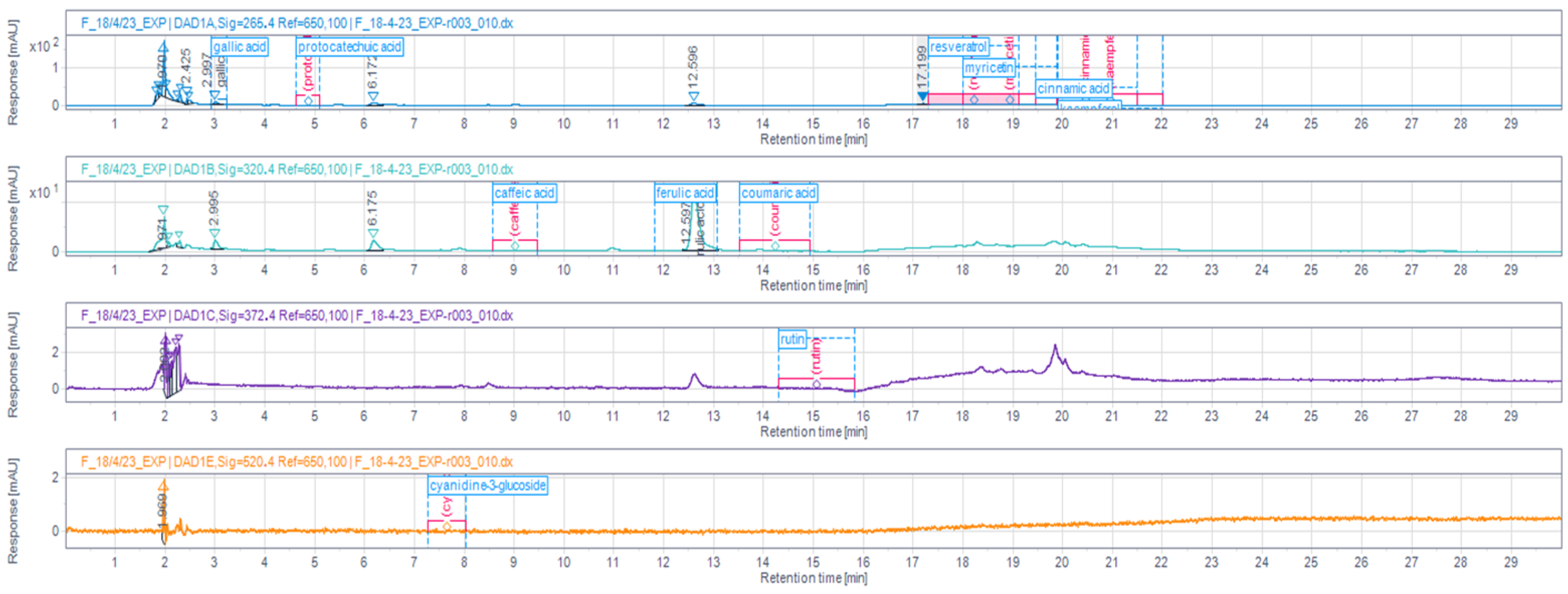
The polyphenol composition of the feed additives (Figure A1) revealed that rutin (123.68 mg/kg DW), resveratrol (93.82 mg/kg DW), and cinnamic acid (55.06 mg/kg DW) were the dominant compounds in bay leaf powder, followed by coumaric acid (37.31 mg/kg DW), myricetin (35.45 mg/kg DW), protocatechuic acid (23.57 mg/kg DW), ferulic acid (17.49 mg/kg DW) and caffeic acid (14.27 mg/kg DW). A low concentration of kaempferol (7.06 mg/kg DW) was also observed. C. vulgaris presented resveratrol (37.58 mg/kg DW) and protocatechuic acid (29.75 mg/kg DW) as the main components of polyphenols, followed by myricetin (15.24 mg/kg DW) and cinnamon acid (3.49 mg/kg DW) in lower amounts. Polyphenolic compounds detected in the experimental diet, control diet, faecal samples (day 0, day 30 and day 45), blood and caecal microbiota are reported in Table 6.
Table 6.
Polyphenols (mg/kg DW) in experimental and control feeds, and in biological samples (faeces, blood, and microbiota).
Several compounds present in the experimental diet were also detected in faeces, blood and microbiota samples, while no polyphenols were detected in the control diet except for ferulic acid, coumaric acid and rutin. The Pearson correlation matrix for polyphenolic compounds across feed, faecal, blood and microbiota samples is provided in Table 7.
Table 7.
Correlation matrix 1 of the polyphenolic compounds.
Several strong positive correlations were observed between specific compounds across sample types, while others showed weak or negative associations.
4. Discussion
Dietary supplementation significantly influenced several faecal parameters, particularly dry matter and crude protein content. The higher dry matter content in the experimental group aligns with previous findings that phytogenic additives can improve water absorption and faecal consistency by modulating gut function [29]. The observed increase in crude protein excretion at day 45 and the lower crude protein digestibility in the experimental group may reflect changes in nitrogen utilisation. Similar reductions in protein digestibility have been reported when diets include polyphenol-rich plant materials capable of forming complexes with dietary proteins or digestive enzymes [30]. The strong effect of sampling time confirms known developmental changes in rabbit digestive physiology between weaning and 80 days of age, including the maturation of the caecal microbiota and increased fermentation capacity [31]. The absence of significant differences in starch digestibility between groups suggests that the tested supplementation does not impair enzymatic carbohydrate utilisation, consistent with previous studies using microalgae or plant extracts [10]. Overall, the digestibility results observed in this study suggest that C. vulgaris and L. nobilis may influence caecal microbial activity and fermentation, potentially shifting nitrogen metabolism without compromising overall digestive efficiency.
Among growth performance data, no significant differences in body weight, daily feed intake or mortality were observed between treatments. These findings are consistent with previous research showing that low-dose supplementation of microalgae or herbal extracts rarely affects growth parameters in healthy, well-fed rabbits [3,32]. The absence of adverse effects on feed intake is also noteworthy. Some studies have reported reduced feed consumption with microalgal inclusion due to improved hindgut fermentation efficiency [32]. However, at the dose applied in the present study (0.1% for each additive), no such trend was observed, confirming that this level of supplementation is safe and well tolerated.
Effects on the blood biochemical profile were analysed, and blood parameters remained within physiological ranges, showing no significant differences between groups. These findings suggest that the tested supplementation did not induce metabolic stress or hepatic burden, consistent with reports indicating that C. vulgaris and L. nobilis are safe for use in rabbit nutrition [3,24,29]. Mild numerical increases in total protein, cholesterol and globulin in the supplemented group are consistent with previous observations where bioactive plant compounds modulated lipid metabolism and immunoglobulin synthesis without producing pathological effects [19,33]. The presence of polyphenols in faeces, blood and caecal microbiota samples from the experimental group confirms that compounds from C. vulgaris and L. nobilis were absorbed, metabolised and/or transformed throughout the digestive tract. The detection of ferulic acid, resveratrol and protocatechuic acid in both feed and biological samples indicates good stability and passage through the gastrointestinal tract. These observations agree with previous reports showing that certain phenolic acids possess high bioavailability in monogastric animals [27]. The presence of gallic acid in faeces and microbiota samples, despite its absence in the diet, strongly suggests microbial biotransformation of more complex polyphenols, a mechanism widely documented in rabbit and human caecal fermentation [34]. Correlation analysis revealed strong positive associations between several phenolic compounds, supporting the hypothesis that shared metabolic pathways or co-fermentation processes contribute to polyphenol transformation. High correlations between resveratrol, caffeic acid and ferulic acid are consistent with known interconnected metabolic routes of hydroxycinnamic acids [34]. Rutin is not detected in blood/faeces but appears in the microbiota, suggesting that it is transformed in the gut, possibly due to microbial hydrolysis. For future research, the findings of this study indicate that combined supplementation with C. vulgaris and L. nobilis at low inclusion levels modifies digestive processes and supports polyphenol bioavailability without compromising growth or health. These results are of practical interest for the development of functional feeds aimed at improving digestive physiology, antioxidant status and microbiota composition in rabbits. Future studies should focus on evaluating higher inclusion levels or different ratios of the two additives, investigating long-term effects on microbiota composition using molecular sequencing methods, conducting nitrogen balance studies to clarify the mechanisms behind crude protein digestibility changes, and assessing the bioavailability kinetics of individual polyphenols using plasma time-course profiling. Together, these directions could further clarify the nutraceutical potential of microalgal–herbal supplement combinations in the production of rabbit and other monogastric species.
5. Conclusions
The results of this study confirmed the safety of dietary supplementation with C. vulgaris and L. nobilis, with no adverse effects observed in body weight, blood biochemical parameters, animal welfare and mortality rate. The results confirmed that the animals’ livestock performances were not compromised by the dietary strategy, although the supplementation influenced certain digestive parameters, including crude protein digestibility. This observation needs more investigation to re-design nutritional requirements in the presence of feed additive supplementation.
Polyphenolic analysis confirmed the presence and transformation of several bioactive compounds from the experimental feed in faeces, blood, and caecal microbiota, indicating their bioavailability during digestion. Among the detected compounds, ferulic acid showed high stability across biological matrices.
Overall, combined supplementation with chlorella and laurel powder may represent a promising strategy for supporting digestive processes without negatively affecting rabbit health or growth. However, further studies with larger sample sizes, longer experimental periods, and microbiota sequencing are encouraged to fully elucidate the mechanisms behind these effects and confirm their long-term benefits.
Author Contributions
Conceptualization, F.V. and Ľ.O.; methodology, F.V., Ľ.O. and J.A.; investigation, A.K., A.S., R.J., Ľ.O., J.A., R.M. and F.V.; data curation, F.V., J.A. and A.S.; writing—original draft preparation, F.V. and A.S.; writing—review and editing, F.V., A.S. and A.K.; supervision, F.V.; funding acquisition, Ľ.O. All authors have read and agreed to the published version of the manuscript.
Funding
This research was funded by Project APVV-20-0037.
Data Availability Statement
The original contributions presented in this study are included in the article and Appendix A. Further inquiries can be directed to the corresponding author (F.V.).
Acknowledgments
The authors have reviewed and edited the output and take full responsibility for the content of this publication.
Conflicts of Interest
The authors declare no conflicts of interest.
Abbreviations
The following abbreviations are used in this manuscript:
| EXP | Experimental group |
| CON | Control group |
| AOAC | Association of Official Analytical Chemists |
| ADFI | Average daily feed intake |
| DM | Dry matter |
| CP | Crude protein |
| CF | Crude fibre |
| NDF | Neutral detergent fibre |
| ADF | Acid detergent fibre |
| HDL | High-density lipoprotein |
| LDL | Low-density lipoprotein |
| HPCL | High-performance liquid chromatography |
Appendix A
Figure A1.
Chromatogram obtained from the HPLC analysis.
References
- Ishak, K.A.; Mohamad Annuar, M.S.; Ahmad, N. Nano-delivery systems for nutraceutical application. In Nanotechnology Applications in Food Flavor, Stability, Nutrition and Safety; Oprea, A.E., Grumezescu, A.M., Eds.; Academic Press: Cambridge, MA, USA, 2017; pp. 179–202. [Google Scholar]
- El-Sabrout, K.; Khalifah, A.; Ciani, F. Current applications and trends in rabbit nutraceuticals. Agriculture 2023, 13, 1424. [Google Scholar] [CrossRef] [Scilit]
- Abdelnour, S.A.; Sheiha, A.M.; Taha, A.E.; Swelum, A.A.; Alarifi, S.; Alkahtani, S.; Ali, D.; AlBasher, G.; Almeer, R.; Falodah, F. Impacts of enriching growing rabbit diets with Chlorella vulgaris microalgae on growth, blood variables, carcass traits, immunological and antioxidant indices. Animals 2019, 9, 788. [Google Scholar] [CrossRef] [Scilit]
- DeFelice, S.L. The nutraceutical revolution: Its impact on food industry R&D. Trends Food Sci. Technol. 1995, 6, 59–61. [Google Scholar] [CrossRef] [Scilit]
- Williamson, G. The role of polyphenols in modern nutrition. Nutr. Bull. 2017, 42, 226–235. [Google Scholar] [CrossRef] [Scilit] [PubMed]
- Wan, S.; Luo, J.; Zhu, Y.; An, P.; Luo, Y.; Xing, Q. The effect of antioxidant polyphenol supplementation on cardiometabolic risk factors: A systematic review and meta-analysis. Nutrients 2024, 16, 4206. [Google Scholar] [CrossRef] [Scilit] [PubMed]
- Corrêa, T.A.F.; Rogero, M.M.; Hassimotto, N.M.A.; Lajolo, F.M. The two-way polyphenols–microbiota interactions and their effects on obesity and related metabolic diseases. Front. Nutr. 2019, 6, 188. [Google Scholar] [CrossRef] [Scilit] [PubMed]
- Oliveira, J.V.A.; Watanabe, P.H.; Vieira Neto, M.F.; Jerônimo do Nascimento, G.A.; Nepomuceno, R.C.; Lima Pacheco, P.N.; Costa Santos, M.E.; Rodrigues Freitas, E. Calcium anacardate as source of phenolic compounds in diet for New Zealand White female rabbits. Pesqui. Agropecuária Bras. 2024, 59, e03552. [Google Scholar] [CrossRef] [Scilit]
- Das, Q.; Islam, M.R.; Lepp, D.; Tang, J.; Yin, X.; Mats, L.; Liu, H.; Ross, K.; Kennes, Y.M.; Yacini, H.; et al. Gut microbiota, blood metabolites, and spleen immunity in broiler chickens fed berry pomaces and phenolic-enriched extractives. Front. Vet. Sci. 2020, 7, 150. [Google Scholar]
- Dabbou, S.; Ferrocino, I.; Kovitvadhi, A.; Dabbou, S.; Bergagna, S.; Dezzuto, D.; Schiavone, A.; Cocolin, L.; Gai, F.; Santoro, V.; et al. Bilberry pomace in rabbit nutrition: Effects on growth performance, apparent digestibility, caecal traits, bacterial community and antioxidant status. Animal 2019, 13, 53–63. [Google Scholar] [CrossRef] [Scilit]
- Waqas, M.; Salman, M.; Sharif, M.S. Application of polyphenolic compounds in animal nutrition and their promising effects. J. Anim. Feed Sci. 2023, 32, 233–256. [Google Scholar] [CrossRef] [Scilit]
- Velasco-Galilea, M.; Piles, M.; Ramayo-Caldas, Y.; Sánchez, J.P. The value of gut microbiota to predict feed efficiency and growth of rabbits under different feeding regimes. Sci. Rep. 2021, 11, 19495. [Google Scholar] [CrossRef] [Scilit]
- Wang, P.; Zhang, S.; Li, S.; Guo, W.; Wu, H. High-dose supplementation of Chlorella and Spirulina increases beneficial gut bacteria in healthy ICR mice: A 90-day feeding study. J. Funct. Foods 2025, 128, 106796. [Google Scholar] [CrossRef] [Scilit]
- Gouda, M.; Chen, K.; Li, X.; Liu, Y.; He, Y. Microalgae bioactive carbohydrates as a novel sustainable and eco-friendly source of prebiotics: Emerging health functionality and recent technologies for extraction and detection. Front. Nutr. 2022, 9, 806692. [Google Scholar] [CrossRef] [Scilit]
- Lee, J.Y.; Yoon, J.H.; An, S.H.; Cho, I.H.; Lee, C.W.; Jeon, Y.J.; Joo, S.S.; Ban, B.C.; Lee, J.Y.; Jung, H.J.; et al. Intestinal immune cell populations, barrier function, and microbiomes in broilers fed a diet supplemented with Chlorella vulgaris. Animals 2023, 13, 2380. [Google Scholar] [CrossRef] [Scilit]
- Gupta, S.; Gupta, C.; Prakash, D. Prebiotic efficiency of blue-green algae on probiotics microorganisms. J. Microbiol. Exp. 2017, 4, 00120. [Google Scholar] [CrossRef] [Scilit]
- Saadaoui, I.; Rasheed, R.; Aguilar, A.; Cherif, M.; Al Jabri, H.; Sayadi, S.; Manning, S.R. Microalgal-based feed: Promising alternative feedstocks for livestock and poultry production. J. Anim. Sci. Biotechnol. 2021, 12, 76. [Google Scholar] [CrossRef] [Scilit]
- Younis, M.; Hosny, M.; Elsagheer, M.A. Nutritional effects of Laurus nobilis leaf meal on growth performance, carcass criteria and some blood parameters of growing Dandarawi chicks. Egypt. Poult. Sci. J. 2023, 43, 635–646. [Google Scholar] [CrossRef] [Scilit]
- Bordignon, F.; Trocino, A.; Marín García, P.J.; Larsen, T.; Zardinoni, G.; Molin, M.; Birolo, M.; Stevanato, P.; Xiccato, G. Chlorella and vegetable oil inclusion in diets for growing rabbits: Effects on growth, digestibility, plasma metabolites, and caecal fermentations and microbiota. Animal 2024, 18, 101365. [Google Scholar] [CrossRef] [Scilit] [PubMed]
- El-Shahat, A.N.; Abdul Azeem, A.M.; Abd el Megid, M.H.M. Protective effect of Laurus nobilis extract against hypercholesterolemia damage in male rats. Pak. J. Zool. 2023, 55, 1613–1619. [Google Scholar] [CrossRef] [Scilit]
- Dalle Zotte, A.; Celia, C.; Szendrő, Z. Herbs and spices inclusion as feedstuff or additive in growing rabbit diets and as additive in rabbit meat: A review. Livest. Sci. 2016, 189, 82–90. [Google Scholar] [CrossRef] [Scilit]
- Altın, S.A.; Işık, M.; Alp, C.; Dikici, E.; Köksal, E.; Kırboğa, K.K.; Rudrapal, M.; Rakshit, G.; Beydemir, Ş.; Khan, J. Therapeutic potential of Laurus nobilis extract by experimental and computational approaches: Phenolic content and bioactivities for antioxidant, antidiabetic, and anticholinergic properties. Front. Chem. 2025, 13, 1541250. [Google Scholar] [CrossRef] [Scilit]
- Khalil, N.A.; ALFaris, N.A.; ALTamimi, J.Z.; Mohamed Ahmed, I.A. Anti-inflammatory effects of bay laurel (Laurus nobilis L.) towards the gut microbiome in dextran sodium sulfate induced colitis animal models. Food Sci. Nutr. 2024, 12, 2650–2660. [Google Scholar] [CrossRef] [Scilit]
- Badawy, M.; Attia, A.I.; Reda, F.; Sherasiya, A.; Swelum, A.A.; El-Mekkawy, M.M.F. Effects of dietary supplementation with Laurus nobilis extract on growth performance, carcass features, blood lipid profile, immunity, antioxidative status, digestive enzymes, and gut microbial load in growing New Zealand White rabbits. Trop. Anim. Health Prod. 2025, 57, 185. [Google Scholar] [CrossRef] [Scilit]
- Vizzarri, F.; Formelova, Z.; Chrastinova, L.; Ondruska, L. Modelling of feed additives combination effect in risk factor management. In Proceedings of the Risk Factors of Food Chain 2022 (XXII International Scientific Conference), Węgierska Górka, Poland, 10–12 October 2022. [Google Scholar]
- AOAC. Official Methods of Analysis of AOAC International, 17th ed.; AOAC International: Gaithersburg, MD, USA, 2000. [Google Scholar]
- Russo, R.; Pucci, L.; Giorgetti, L.; Árvay, J.; Vizzarri, F.; Longo, V.; Pozzo, L. Polyphenolic characterisation of plant mixture (Lisosan® Reduction) and its hypocholesterolaemic effect in high fat diet-fed mice. Nat. Prod. Res. 2019, 33, 651–658. [Google Scholar] [CrossRef] [Scilit]
- Vizzarri, F.; Speváková, I.; Kišová, A.; Slamečka, J.; Baláži, A.; Ondruška, Ľ. Effects of a phyto-additive mixture on reproductive performance in male and female rabbits. Sci 2026, 8, 32. [Google Scholar] [CrossRef] [Scilit]
- Casamassima, D.; Palazzo, M.; Vizzarri, F.; Corino, C. Dietary effect of dried bay leaves (Laurus nobilis) meal on some biochemical parameters and on plasma oxidative status in New Zealand White growing rabbit. J. Anim. Physiol. Anim. Nutr. 2017, 101, e175–e184. [Google Scholar] [CrossRef] [Scilit] [PubMed]
- Jha, R.; Fouhse, J.M.; Tiwari, U.P.; Li, L.; Willing, B.P. Dietary fiber and intestinal health of monogastric animals. Front. Vet. Sci. 2019, 6, 48. [Google Scholar] [CrossRef] [Scilit] [PubMed]
- Fu, C.; Ma, Y.; Xia, S.; Shao, J.; Tang, T.; Sun, W.; Jia, X.; Wang, J.; Lai, S. Study on changes in gut microbiota and microbiability in rabbits at different developmental stages. Animals 2024, 14, 1741. [Google Scholar] [CrossRef] [Scilit]
- Sikiru, A.B.; Arangasamy, A.; Alemede, I.C.; Egena, S.S.A.; Bhatta, R. Dietary supplementation effects of Chlorella vulgaris on performances, oxidative stress status and antioxidant enzymes activities of prepubertal New Zealand White rabbits. Bull. Natl. Res. Cent. 2019, 43, 162. [Google Scholar] [CrossRef] [Scilit]
- Adli, D.N.; Sugiharto, S.; Irawan, A.; Tribudi, Y.A.; Wibowo, S.; Azmi, A.F.M.; Sjofjan, O.; Jayanegara, A.; Tistiana, H.; Wahyono, T. The effects of herbal plant extract on the growth performance, blood parameters, nutrient digestibility and carcass quality of rabbits: A meta-analysis. Heliyon 2024, 10, e25724. [Google Scholar] [CrossRef] [Scilit]
- Cheng, H.; Zhang, D.; Wu, J.; Liu, J.; Zhou, Y.; Tan, Y.; Feng, W.; Peng, C. Interactions between gut microbiota and polyphenols: A mechanistic and metabolomic review. Phytomedicine 2023, 119, 154979. [Google Scholar] [CrossRef] [Scilit] [PubMed]

Disclaimer/Publisher’s Note: The statements, opinions and data contained in all publications are solely those of the individual author(s) and contributor(s) and not of MDPI and/or the editor(s). MDPI and/or the editor(s) disclaim responsibility for any injury to people or property resulting from any ideas, methods, instructions or products referred to in the content. |
© 2026 by the authors. Licensee MDPI, Basel, Switzerland. This article is an open access article distributed under the terms and conditions of the Creative Commons Attribution (CC BY) license.