


Abstract
Crumb rubber-modified asphalt concrete (CMAC) has gained increasing attention as a sustainable pavement material capable of improving mechanical performance while utilizing waste tire resources. This study investigates the rutting resistance and fatigue behavior of CMAC using a combined experimental and mechanistic–empirical modeling approach. Asphalt mixtures containing 0–25% crumb rubber by binder weight were prepared and evaluated through Marshall stability and indirect tensile fatigue tests, whereas Fourier-transform infrared spectroscopy (FTIR) was used to examine binder–rubber interactions. The results indicate that crumb rubber significantly influences both the volumetric and mechanical properties of asphalt mixtures. Mixtures containing 10–15% crumb rubber exhibited optimal performances, achieving up to 36% higher Marshall stability and improved fatigue life compared with conventional asphalt mixtures. FTIR analysis revealed that rubber particle swelling and limited chemical interactions enhanced binder elasticity and improved binder–aggregate compatibility. However, excessive rubber content (≥20%) resulted in reduced stability owing to increased binder absorption and decreased effective binder film thickness. A mechanistic–empirical model incorporating viscoelastic, viscoplastic, and fatigue damage parameters successfully reproduced the experimental trends and identified the same optimal rubber content range. The findings demonstrate that CMAC with a moderate rubber content can enhance pavement durability and structural performance while promoting environmentally sustainable road construction through the reuse of waste tires.
1. Introduction
Asphalt pavements are widely used in modern transportation infrastructure owing to their flexibility, cost-effectiveness, and ease of construction [1]. However, increasing traffic loads, higher tire pressures, and severe environmental conditions have intensified the occurrence of pavement distresses, particularly rutting and fatigue cracking [2,3,4,5,6,7]. Rutting refers to permanent deformation under repeated loading, whereas fatigue cracking results from the progressive accumulation of tensile strains within asphalt layers. These distress mechanisms significantly reduce pavement service life and increase maintenance costs, necessitating continuous improvements in asphalt material design and performance [8,9,10].
In recent decades, the modification of asphalt binders using polymers and recycled materials has emerged as an effective approach to enhance pavement performance. Among these modifiers, crumb rubber derived from waste tires has gained considerable attention owing to its ability to improve mechanical properties while addressing environmental concerns related to tire disposal [11,12,13,14]. The incorporation of crumb rubber into asphalt binders typically increases viscosity and elasticity, thereby improving resistance to permanent deformation at high temperatures and enhancing fatigue performance under cyclic loading conditions [15,16].
Numerous studies have demonstrated that crumb rubber-modified asphalt mixtures exhibit improved Marshall stability, enhanced stiffness, and increased resistance to rutting and fatigue [17,18,19,20,21]. Advanced experimental techniques, including dynamic shear rheometer (DSR) testing, wheel tracking, repeated-load permanent deformation tests, and fatigue testing, have further confirmed the beneficial effects of rubber modification on viscoelastic behavior and long-term performance [7,22,23,24,25]. In addition, recent studies have applied numerical and mechanistic approaches to evaluate the structural response of rubber-modified asphalt pavements under traffic loading and environmental conditions [26].
Despite these advances, several limitations remain in the current literature. Many previous studies have focused on either rutting resistance or fatigue behavior independently, without providing an integrated evaluation of both distress mechanisms [27,28,29,30]. Furthermore, most investigations are limited to laboratory-scale performance and do not establish a direct link between experimentally determined material properties and mechanistic–empirical predictions of pavement performance [30,31,32]. Consequently, the relationship between laboratory observations and long-term structural behavior remains insufficiently understood.
The novelty of this study lies in the integration of experimental investigation with mechanistic–empirical modeling to evaluate both rutting resistance and fatigue performance of crumb rubber-modified asphalt concrete (CMAC). By linking laboratory-derived material properties with mechanistic pavement responses, this research provides a more comprehensive assessment of structural performance than conventional experimental approaches. The specific objectives of this study are as follows:
- To evaluate the rutting resistance of CMAC using laboratory performance tests.
- To investigate the fatigue behavior of crumb rubber-modified asphalt mixtures under repeated loading.
- To apply mechanistic–empirical modeling techniques to predict pavement responses and distress development.
- To compare the performance of CMACs with conventional asphalt mixtures in terms of durability and long-term structural performance.
This integrated approach provides valuable insights into the mechanical behavior of rubber-modified asphalt mixtures and supports the development of more reliable and sustainable pavement design strategies. Furthermore, by promoting the effective utilization of waste tire rubber, the findings contribute to environmentally sustainable and resource-efficient infrastructure development.
2. Materials and Methods
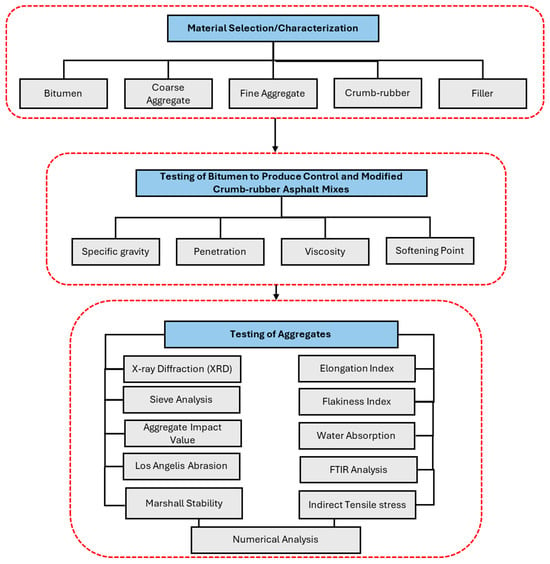
This study investigated the rutting and fatigue performances of crumb rubber-modified asphalt concrete (CMAC) for pavement applications using a structured experimental program, as shown in Figure 1. The methodology supports the achievement of key research objectives, including the optimization of crumb rubber content, assessment of long-term durability, evaluation of environmental impact, and development of practical implementation guidelines for CMAC in pavement applications. The selection of materials is a foundational element of this study because the quality and compatibility of these components directly influence the reliability and relevance of the experimental results. The primary materials used in this study are asphalt binders, mineral aggregates, and waste crumb rubber particles derived from recycled tires. The base bitumen (60/70 penetration grade) was supplied by MOL Group (Budapest, Hungary). Crumb rubber was obtained from a certified recycling facility, Green Tyre Recycling Hungary Ltd. (Győr, HU, Hungary). Mixing was performed using a high-shear laboratory mixer (Silverson Machines Ltd., Chesham, UK), operating at controlled speed and temperature conditions.
Figure 1.
Flow chart illustrating the research process on crumb rubber-modified asphalt concrete.
2.1. Sample Preparation
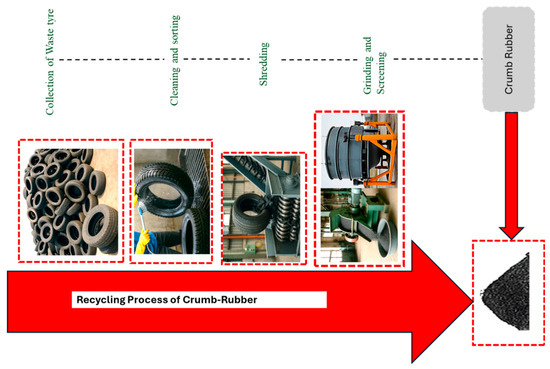
Multiple crumb rubber-modified asphalt concrete (CMAC) mixtures were prepared with crumb rubber contents of 0%, 5%, 10%, 15%, 20%, and 25% by weight of the asphalt binder. This range was selected based on commonly reported values in the literature [33,34], enabling a systematic evaluation of the influence of CMAC dosage on mixture performance. A wet process was adopted for binder modification; the base bitumen was heated to 160–170 °C, after which pre-weighed crumb rubber was gradually introduced and mechanically blended using a high-shear mixer at a constant speed for 45–60 min to ensure uniform dispersion and adequate interaction between the rubber particles and binder. The modified binder was then maintained at the target temperature prior to mixing with aggregates. Mineral aggregates were preheated to approximately 160 °C and mixed with the modified binder to produce a homogeneous asphalt mixture. The mixing temperature was controlled within the range of 155–165 °C to ensure proper coating of aggregates and workability of the mixture. All mixtures were prepared using identical aggregate gradation and binder type to isolate the effect of crumb rubber content on performance. Compaction was performed using the Marshall method in accordance with ASTM D6927 [35]. Cylindrical specimens (101.6 mm in diameter and 63.5 ± 1.5 mm in height) were compacted using 75 blows per face with a 4.54 kg hammer dropped from a height of 457 mm, representing heavy traffic conditions. The target air void content was maintained at 4 ± 1%. All specimens were allowed to cool at room temperature for 24 h before testing. Laboratory-controlled conditions were maintained throughout the preparation process to minimize variability and ensure the repeatability of the results. This approach enabled a reliable comparison of mechanical and volumetric properties across different crumb rubber contents, as illustrated in Figure 2, and facilitated the identification of an optimal CMAC dosage in terms of durability, rutting resistance and performance of fatigue.
Figure 2.
Recycling process of waste tires to crumb rubber.
2.2. Waste Crumb Rubber Particles
The crumb rubber used in this study was obtained from certified tire recycling facilities to ensure compliance with environmental regulations and material quality standards. The particles were processed by ambient grinding and sieved to achieve a controlled particle size distribution, typically within the 30–40-mesh range, suitable for dry or wet CMAC production methods. The use of recycled crumb rubber addresses both sustainability objectives and solid waste management challenges by repurposing discarded tires as functional construction materials. The inclusion of these rubber particles is central to the study’s aim of promoting environmentally friendly and high-performance asphalt solutions.
2.3. Aggregates
Mineral aggregates were sourced and selected to comply with the grading requirements specified for asphalt concrete production in accordance with relevant standards [36]. Appropriate gradation is essential to achieve optimal compaction, strength, and durability in asphalt mixtures. The aggregates underwent standard laboratory tests to evaluate their specific gravity, water absorption, and Los Angeles abrasion resistance, ensuring their suitability for structural use. Strict adherence to the gradation specifications mitigates the risk of performance deficiencies in the final CMAC product.
2.4. Testing Methods
2.4.1. Specific Gravity Test
The specific gravity of the bituminous material was determined as the ratio of the mass of a specified volume of material to the mass of an equal volume of water at 27 °C. A bitumen sample was placed in a calibrated pycnometer, and the combined mass was recorded. The remaining capacity of the pycnometer was filled with water and weighed again. The filled pycnometer was placed in a temperature-controlled liquid bath and heated to a specified temperature. The density of the bitumen was calculated from the mass of the sample and the displaced water. This procedure was performed as described in ASTM D70/D70M [37].
2.4.2. Penetration Test
A penetration test determines the hardness or softness of bitumen by measuring the depth (in tenths of a millimeter) at which a standard loaded needle penetrates the material vertically within five seconds, while the sample is maintained at 25 °C. This parameter provides an indirect measure of binder consistency and is used to classify performance grades. The procedure was performed in accordance with the standards outlined in ASTM D5 [38].
2.4.3. Viscosity Test
Viscosity, the inverse of fluidity, quantifies a material’s resistance to flow and is a critical parameter for evaluating the workability of asphalt binders. For bitumen, viscosity increases as the material transitions from a liquid to a semi-solid state. In pavement applications, excessively low viscosity can lead to inadequate cohesion because the binder merely lubricates the aggregate particles without forming a continuous film. Conversely, excessively high viscosity can impede compaction, producing a heterogeneous mix with reduced stability. In this study, the viscosity of an asphalt binder was measured according to ASTM D4402 [39] using a rotational viscometer. These procedures provided a precise determination of the flow resistance under controlled temperature conditions, ensuring compliance with industry standards and enabling reliable comparison with specification limits.
2.4.4. Softening Point
The softening point is the temperature at which bitumen or tar softens to a specific degree. This is the temperature in °C at which a standard ball passes through a sample of bitumen in a mold and falls through a height of 2.5 cm when heated under water or glycerine under the prescribed test conditions. The binder must be a suitable fluid before use in road construction. Therefore, it is critical to understand how hot bituminous binders can be heated in various applications. The softening point was determined using a ring-and-ball apparatus. The tests were performed in accordance with the standards of ASTM D36 [40].
2.4.5. Sieve Analysis
Sieving was used to determine the particle size distributions of the fine and coarse aggregates. This test method is primarily used to determine the grading of materials that are being considered for use as aggregates or that have already been utilized as aggregates. The findings were used to determine whether the particle size distribution complied with the applicable specification criteria and to provide data for controlling the production of various aggregate products and combinations. This information could also be useful in establishing correlations between porosity and packing. The use of this test procedure alone does not allow for the accurate determination of materials finer than 75 µm (No. 200). The tests were performed in accordance with the standards ASTM C136/C136M [36].
2.4.6. Elongation Index Test
The elongation index quantifies the proportion, by mass, of aggregate particles with a greatest dimension that exceeds 1.8 times their mean dimension. This parameter is primarily evaluated for aggregates with particle sizes greater than 6.3 mm and serves as an indicator of particle shape characteristics. Lower elongation index values are desirable because they improve aggregate interlock, enhance the packing density, and contribute to the mechanical stability of asphalt mixtures. The elongation index was determined in accordance with ASTM D4791 [41], ensuring compliance with internationally recognized testing protocols, using Equation (1).
2.4.7. Flakiness Index
The fraction of particles by weight, wherein the least dimension (thickness) is less than 0.6 of the mean dimensions of the aggregate, is known as the flakiness index. The physical shape of coarse aggregates significantly affects the performance of bituminous mixes in highway pavements. The percentage of stones in an aggregate with an ALD of less than 0.6 times their average diameter is known as the flakiness index (measured in mass). Flaky aggregates pack closer together than cubical aggregates, resulting in fewer voids in seals. Consequently, flaky particles require less binder. The tests were performed in accordance with the standards ASTM D4791 [41] and the formula in Equation (2).
2.4.8. Aggregate Impact Value
The aggregate impact value is a determining factor for an aggregate’s resistance to rapid shock or impact, as opposed to its resistance to progressively applied compressive forces in specific aggregates. The ability of a substance to endure impact is known as its toughness. Because of vehicle movement on the road, aggregates are subjected to impact, which causes them to break down into smaller pieces. Consequently, aggregates must be sufficiently durable to withstand impact disintegration. This feature was evaluated using an impact value test. The tests were performed in accordance with the standards ASTM D70/D70M [37].
2.4.9. Los Angeles Abrasion
The method explains how to utilize the Los Angeles Abrasion Test to assess the hardness property of an aggregate in terms of abrasion resistance and to test coarse aggregates with a maximum size of 37.5 mm for resistance to deterioration. The Los Angeles test analyzes the deterioration of standard-grading mineral aggregates caused by a combination of processes, such as abrasion, attrition, impact, and grinding, in a spinning steel drum containing a set number of steel spheres. The Los Angeles (L.A.) abrasion test is a popular method for determining aggregate toughness and abrasion quality. Aggregate abrasion properties are crucial because the constituent aggregates in asphalt must endure crushing, degradation, and disintegration to produce high-quality asphalt. The tests were performed in accordance with the standards ASTM C131 [42] and the formula in Equation (3).
2.5. Rutting and Fatigue Performances Testing
2.5.1. Marshall Stability and Flow Testing
The Marshall results confirm that moderate crumb rubber incorporation significantly enhances rutting resistance and structural capacity, making CMAC suitable for high-traffic and high-temperature applications, provided that the rubber dosage is optimized to prevent excessive flexibility. Marshall stability and flow were evaluated in accordance with ASTM D6927 [35]. Cylindrical specimens with a diameter of 101.6 mm and a height of 63.5 ± 1.5 mm were prepared at a design air void content of 4 ± 1%. Compaction was performed with a 4.54 kg hammer dropped from 457 mm, applying 75 blows per face to represent heavy-traffic conditions. Prior to testing, the specimens were conditioned in a thermostatic water bath at 60 ± 1 °C for 30–40 min and surface-dried. Testing was carried out at 60 °C using a Marshall loading head in a universal testing frame. A constant deformation rate of 50.8 mm/min was applied until failure occurred. The maximum load was recorded as the stability (kN), and the corresponding vertical deformation was recorded as the flow (mm). Each mixture was tested in triplicate, and the results are reported as mean values with standard deviations.
2.5.2. Indirect Tensile Fatigue Testing
Fatigue resistance was assessed using an indirect tensile (IDT) fatigue test in accordance with standard asphalt fatigue testing protocols. Cylindrical specimens (100–102 mm in diameter and 50–63.5 mm thick) were cut and ground from compacted Marshall pucks to ensure parallel faces with target air voids of 4 ± 1%. Each specimen was instrumented with two horizontal LVDTs positioned diametrically opposed at mid-height to measure tensile strain. Testing was conducted in an environmental chamber at 20.0 ± 0.5 °C, with specimens equilibrated for at least 2 h prior to loading. Equation (4) assumes a uniform stress distribution along the loading plane and is valid for cylindrical specimens with standard proportions. The IDT test provides a reliable and indirect measurement of the tensile cracking resistance of the asphalt mixture, which is critical for the fatigue performance under repeated loading and resistance to thermal cracking, as shown in Equation (4).
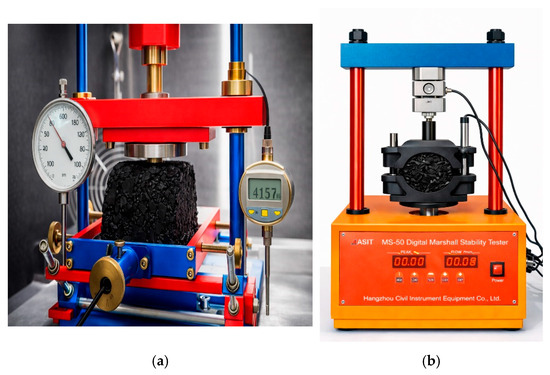
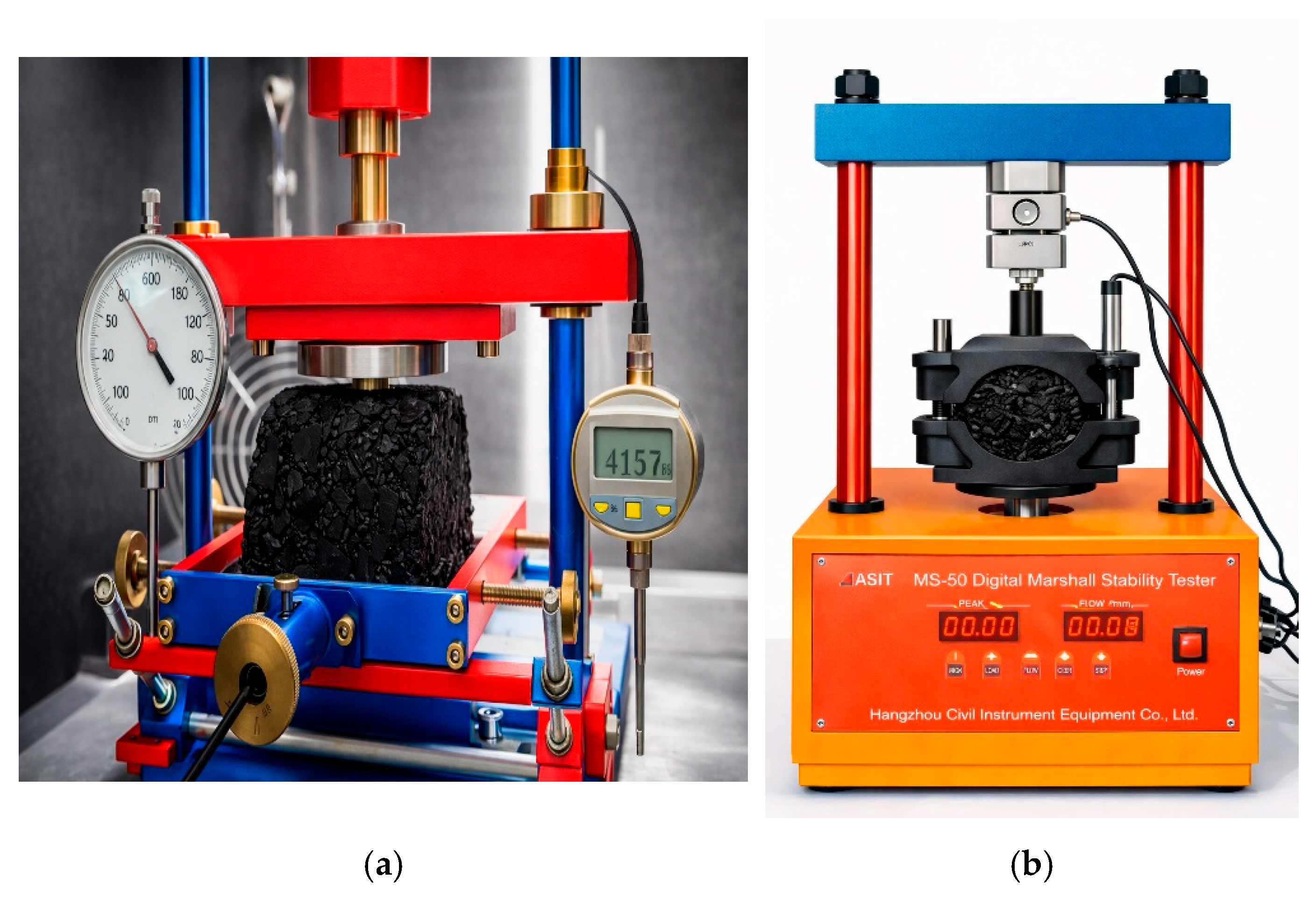
where = indirect tensile strength (MPa), P is the maximum applied load at failure (N), t is the thickness of the specimen (mm), D is the diameter of the specimen (mm), π = 3.1416, is the horizontal (induced tensile) strain, is the vertical (compressive) strain. Figure 3 shows rutting and fatigue performances testing using (a) indirect tensile testing; (b) Marshall stability testing.
Figure 3.
Rutting and fatigue performances testing using (a) indirect tensile testing; (b) Marshall stability testing.
3. Numerical Analysis Using Mechanistic–Empirical Model
3.1. Mechanistic–Empirical Modeling Framework
To complement the experimental investigation, a mechanistic–empirical (M–E) modeling framework was developed to simulate the mechanical response of crumb rubber-modified asphalt concrete (CMAC) under loading conditions. The objective of this framework was to establish a direct link between laboratory-measured material properties and predicted pavement performance, particularly in terms of rutting and fatigue behavior. The model integrates three fundamental components representing the dominant mechanisms governing asphalt mixture behavior:
3.1.1. Linear Viscoelastic Behavior
The time-dependent response of the asphalt mixture was modeled using a generalized Maxwell model expressed through a Prony series representation. This formulation captures stress relaxation and stiffness evolution under varying loading durations. The relaxation modulus is as shown in Equation (5).
where is the long-term equilibrium modulus, and are the modulus and relaxation time of the ith Maxwell element, and is the number of elements. The inclusion of crumb rubber modifies the viscoelastic response by increasing elasticity and broadening the relaxation spectrum. Moderate rubber contents (10–15%) enhance the stress redistribution capacity, whereas excessive rubber (>20%) reduces stiffness owing to binder absorption effects [43].
3.1.2. Viscoplastic Behavior (Rutting Model)
Permanent deformation was modeled using a Perzyna-type viscoplastic formulation with a Drucker–Prager equivalent stress criterion. The viscoplastic strain rate is expressed as in Equation (6).
where represents the stress function, is the threshold stress, is the stress exponent controlling nonlinearity, and is the temperature-dependent viscosity. This model captures the rate-dependent accumulation of permanent strain under repeated loading. The incorporation of crumb rubber increases the effective viscosity and threshold stress at the optimal content (10–15%), thereby reducing rutting susceptibility. At higher contents (>20%), reduced aggregate interlock and binder film thickness lead to accelerated viscoplastic deformation [7,44].
3.1.3. Fatigue Damage Modeling
Fatigue behavior was modeled using the simplified viscoelastic continuum damage (S-VECD) approach, which characterizes stiffness degradation under cyclic loading. Damage evolution is represented by a scalar variable , which reduces the pseudo-stiffness in Equation (7).
where is the initial stiffness, and represents the accumulated damage. The damage progression is governed by material-specific parameters calibrated from cyclic indirect tensile (IDT) fatigue tests. Failure is defined as a critical damage state corresponding to a 50% reduction in stiffness. Crumb rubber improves fatigue resistance by enhancing energy dissipation and delaying crack initiation. However, excessive rubber content reduces structural integrity and accelerates stiffness degradation [34].
3.2. Model Calibration
The model parameters were calibrated directly from laboratory experimental data to ensure consistency between the measured material behavior and numerical predictions. Each component of the mechanistic–empirical model (linear viscoelasticity, viscoplasticity, and fatigue damage) was calibrated using the corresponding test results.
- Linear viscoelastic (LVE) parameters were obtained by fitting a Prony series to indirect tensile (IDT) creep and relaxation responses, thereby capturing the time-dependent stiffness behavior of the mixtures.
- The viscoplastic parameters were calibrated using Marshall stability and load–deformation curves. The threshold stress and stress exponent were determined from the onset and progression of nonlinear deformation, whereas viscosity was adjusted to match the rate of permanent strain accumulation.
- Fatigue damage parameters were derived from cyclic IDT fatigue tests using the S-VECD framework. Damage evolution constants were fitted based on stiffness degradation, and failure was defined as a 50% reduction in the modulus [28,34,45,46].
To account for the effect of crumb rubber content, a dosage-dependent scaling function was incorporated into the selected model parameters based on experimentally observed trends. The calibrated model was validated by comparing the predicted rutting and fatigue responses with the experimental results, revealing good agreement across different rubber contents. It should be noted that the calibration was based on laboratory data, and further validation under field conditions is required.
3.3. Boundary Conditions and Loading Assumptions
The numerical simulations were conducted under conditions consistent with laboratory testing to ensure direct comparability.
- Rutting simulations: Quasi-static loading at controlled temperatures, with the peak load prior to plastic flow used as the performance indicator.
- Fatigue simulations: Strain-controlled cyclic loading, with failure defined as a 50% stiffness reduction (S-VECD criterion).
- Temperature effects: Incorporated through temperature-dependent viscosity and shift factors in the viscoelastic model.
These assumptions ensure that the modeling framework accurately reflects the experimental conditions and provides reliable predictions of the CMAC performance.
4. Results and Discussion
The results obtained from the experimental program are presented and discussed in relation to the influence of crumb rubber content on the volumetric, mechanical, and fatigue performance of asphalt mixtures. The data are summarized using tables and figures to highlight key trends across CMAC ranging from 0% to 25%. The discussion integrates experimental observations with microstructural (FTIR) evidence and mechanistic interpretations to provide a comprehensive understanding of CMAC behavior.
4.1. Physical and Chemical Properties of Bitumen
Physical and chemical characterization of 60/70 penetration-grade bitumen showed that the binder met all relevant international standards, confirming its suitability for use in crumb rubber-modified asphalt concrete (CMAC) production. Table 1 presents the measured results along with the recommended specification ranges from the ASTM standards.
Table 1.
Physical and Chemical Properties of 60/70 Pen. Bitumen.
The penetration value of 89 mm lies within the ASTM D5 [38]-specified range (80–100 mm), indicating an optimal balance between hardness and flexibility. This balance is critical in CMAC applications because the incorporation of crumb rubber tends to enhance elasticity. Therefore, the base binder must maintain sufficient softness to avoid brittleness at low temperatures. The softening point at 47 °C falls within the ASTM D36 [40] recommended range (45–52 °C), indicating adequate resistance to deformation at high service temperatures. The flash point (247 °C) exceeds the minimum safety threshold (232 °C), indicating that the binder can be heated and mixed without a significant risk of ignition, while also demonstrating thermal stability. A solubility of 99% confirmed a high level of purity, with negligible insoluble matter that could otherwise impair binder–aggregate adhesion. The specific gravity (1.02) was within the ideal range (1.01–1.06), supporting the volumetric stability of the asphalt mix. Collectively, these results demonstrate that the tested 60/70 penetration-grade bitumen possesses the necessary thermal, mechanical, and chemical characteristics for high-performance CMAC production. Its compliance with ASTM standards suggests that it positively contributes to both the durability and flexibility of the modified asphalt mix, particularly when subjected to varying traffic and environmental conditions.
4.2. Physical and Chemical Properties of Aggregate
The physical and chemical characteristics of the aggregates (Table 2 and Table 3) used in CMAC production play a pivotal role in determining the mechanical behavior, stability, and long-term serviceability of asphalt mixtures. These parameters govern the interaction between mineral aggregates and crumb rubber-modified binders, directly affecting the load-bearing capacity, deformation resistance, and moisture susceptibility. Properties such as strength, toughness, particle shape, abrasion resistance, and water absorption are particularly critical for achieving optimal mix performance under varying traffic and environmental conditions.
Table 2.
Physical Properties of Aggregates.
Table 3.
Chemical composition of aggregates used in CMAC production.
The aggregate impact value (22%) and Los Angeles abrasion value (27%) indicate good toughness and resistance to mechanical degradation under repeated loading. These results suggest that the aggregates can withstand the grinding and polishing effects of traffic, thereby maintaining the surface texture and skid resistance over the pavement service life. The aggregate crushing value (30%) lies exactly at the permissible limit, suggesting adequate strength but requiring attention during quality control to prevent the inclusion of weaker particles. Low water absorption (0.7%) indicates a dense and low-porosity material, which is advantageous for reducing moisture-induced damage and stripping in asphalt mixtures. Particle shape characteristics, as reflected by the flakiness and elongation indices (both 28%), were within acceptable limits, ensuring good interlocking and stability within the asphalt matrix. A specific gravity of 2.60 falls within the optimal range for asphalt mixture design, supporting adequate load distribution and volumetric stability [49,50].
The chemical composition reflects a silica-rich aggregate, which is typical of materials used in asphalt pavements. A high SiO2 content (45–65%) suggests good hardness and abrasion resistance, contributing to long-term durability. Moderate levels of Al2O3 and Fe2O3 indicate the presence of aluminosilicate minerals, which enhance mechanical stability but may require monitoring for potential reactivity. The CaO and MgO contents fall within the normal range, offering potential benefits for binder–aggregate adhesion through improved chemical bonding. Low alkali content (Na2O and K2O) and minimal loss on ignition (LOI) values indicate stability under thermal exposure and low susceptibility to deleterious chemical reactions. CMAC performance The combined physical and chemical characteristics of the aggregates indicate that they are well suited for use in CMAC mixtures. Their strength, low water absorption, and balanced particle shape promote high stability and durability, whereas their silica-rich mineral composition ensures excellent wear resistance. The only parameter warranting close control is the aggregate crushing value, which, being at the specification limit, requires careful selection and processing to avoid compromising the structural integrity under heavy traffic loads. Table 4. Indicating the Origin of model parameters and linkage between experimental data and mechanistic–empirical modeling inputs.
Table 4.
Origin of model parameters and linkage between experimental data and mechanistic–empirical modeling inputs.
4.3. Gradation of Aggregates for Design Mix of Crumb Rubber-Modified Asphalt Concrete
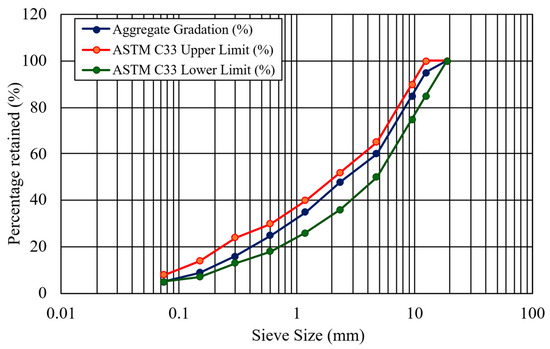
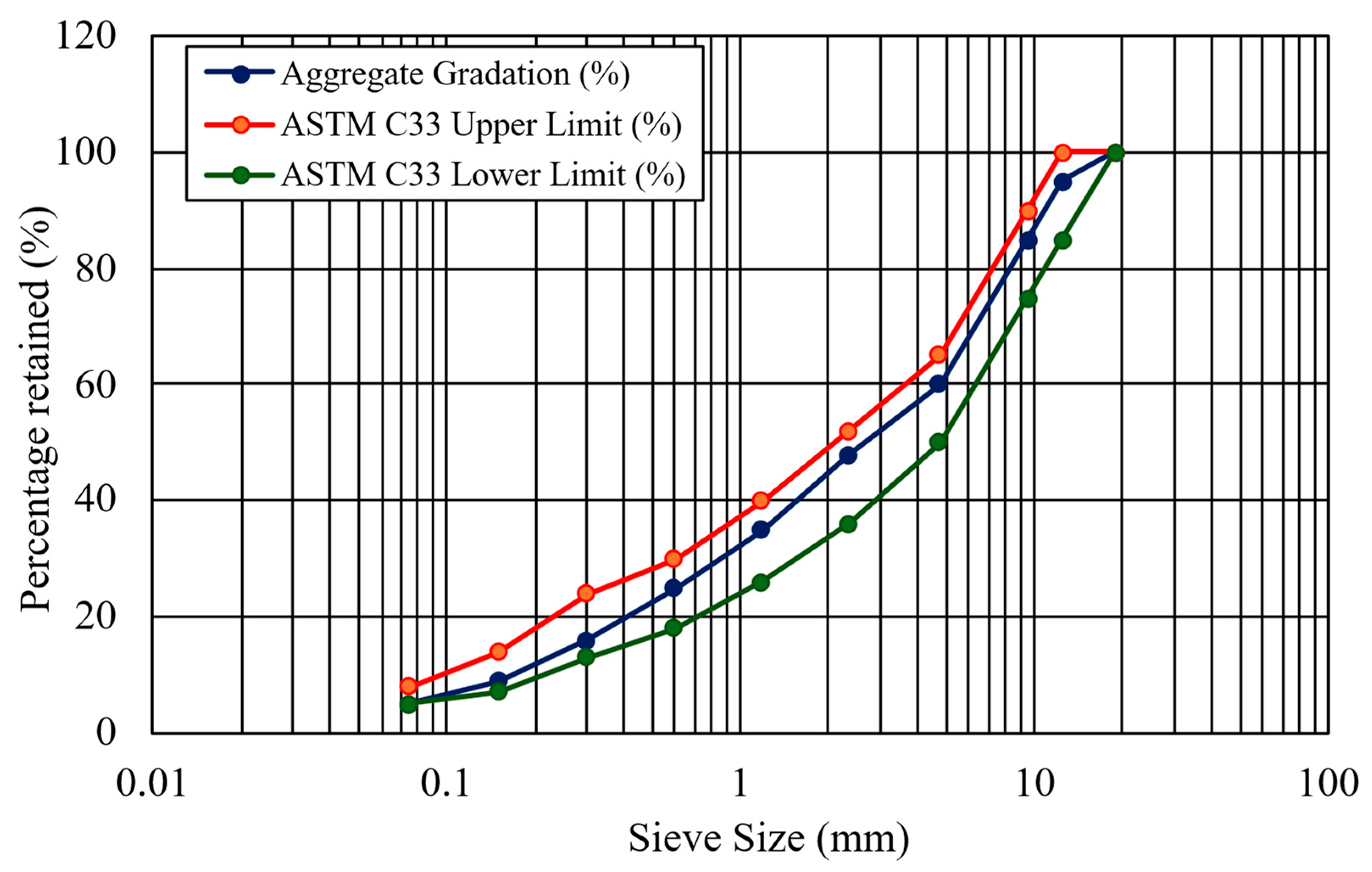
Aggregate gradation is a critical factor influencing the performance of crumb rubber-modified asphalt concrete (CMAC) because it determines the interlocking potential, stability, and void distribution within the mixture. Properly graded aggregates provide a dense structure with minimal voids, improving the load distribution and resistance to deformation while ensuring sufficient space for the binder to coat the particles and maintain flexibility. Figure 4 presents the gradation results of the aggregates used in this study compared with the American Society for Testing and Materials (ASTM) C33 [51] specification limits for CMAC.
Figure 4.
Gradation of Aggregates for Design Mix of Asphalt concrete.
4.4. Volumetric Properties of Crumb Rubber-Modified Asphalt Concrete
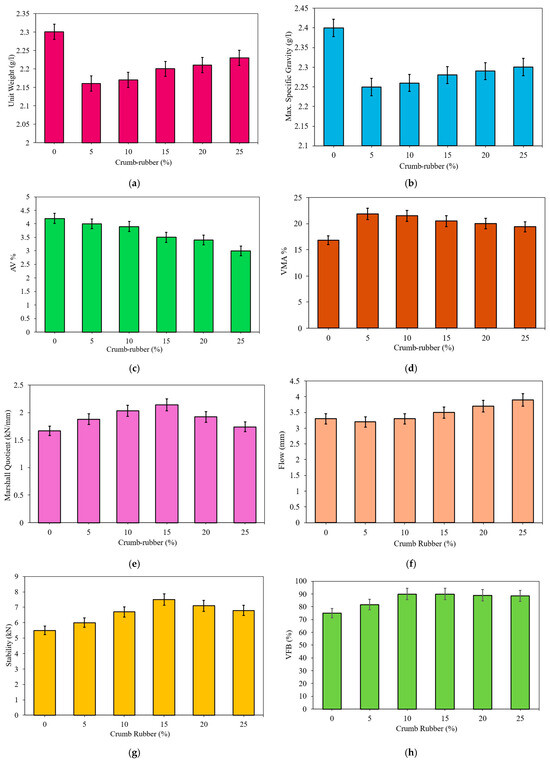
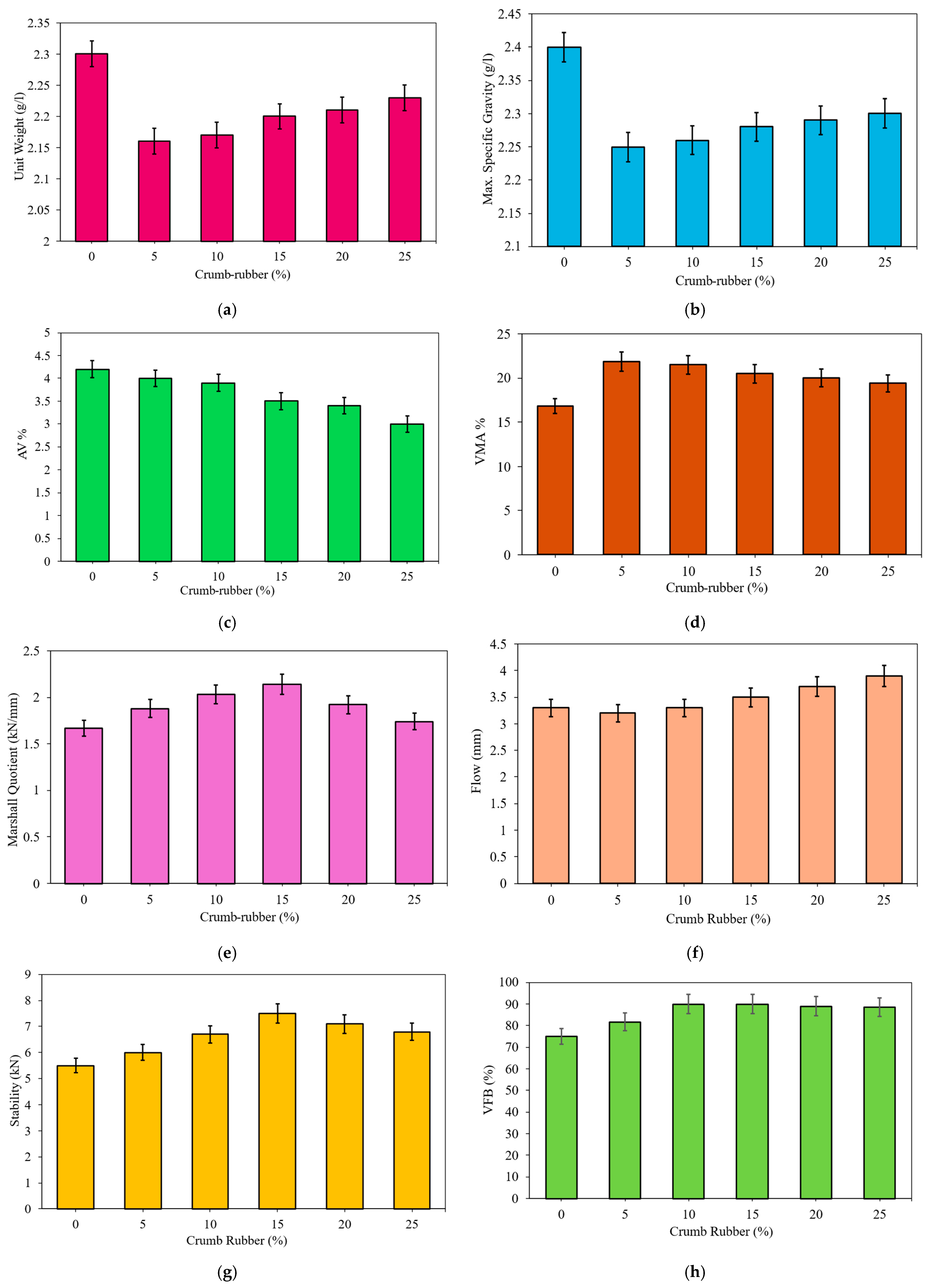
The volumetric properties of CMAC exhibited systematic variations with increasing crumb rubber content (Figure 5). The unit weight decreased progressively because of the lower specific gravity of rubber compared with mineral aggregates. Air voids (AVs) remained within specification limits up to 15% CMAC, beyond which a slight increase was observed, indicating reduced compatibility and increased binder absorption. Voids in mineral aggregates (VMAs) and voids filled with bitumen (VFBs) were optimized within the 10–15% CMAC range, suggesting improved binder distribution and aggregate interlock. At higher CMAC contents (≥20%), excessive binder absorption reduced the effective binder film thickness, potentially impairing durability and structural stability. These trends are consistent with previous studies reporting that moderate rubber incorporation improves the volumetric balance, whereas excessive amounts disrupt mixture homogeneity and performance.
Figure 5.
Marshall Properties and Volumetric Analysis: (a) Unit weight g/L; (b) Maximum specific gravity; (c) Air void %; (d) VMA %; (e) Marshall quotient KN/mm; (f) Flow mm; (g) Stability; (h) VFB %.
4.5. Effect of Rutting Performance on Crumb Rubber-Modified Asphalt Concrete
Marshall stability increased with CR content up to 15%, reaching a peak value of 7.5 kN (approximately 36% higher than the control mixture), indicating enhanced load-bearing capacity. This improvement is attributed to increased binder elasticity, improved aggregate–binder adhesion, and the stiffening effect of rubber–binder interaction [52]. Beyond 15% CMAC, stability declined, suggesting that excessive rubber content weakens the aggregate skeleton and promotes a softer binder phase. This reduces resistance to permanent deformation underload. Similar behavior has been reported in previous studies, where high rubber contents led to reduced interparticle friction and phase separation effects [53,54]. These results confirm that rutting resistance is maximized within an optimal CMAC range, beyond which structural integrity is compromised.
4.6. Microstructural/Chemical Evidence from FTIR
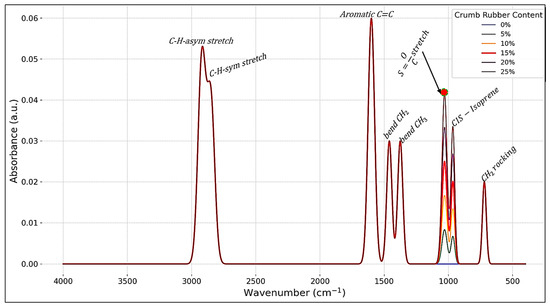
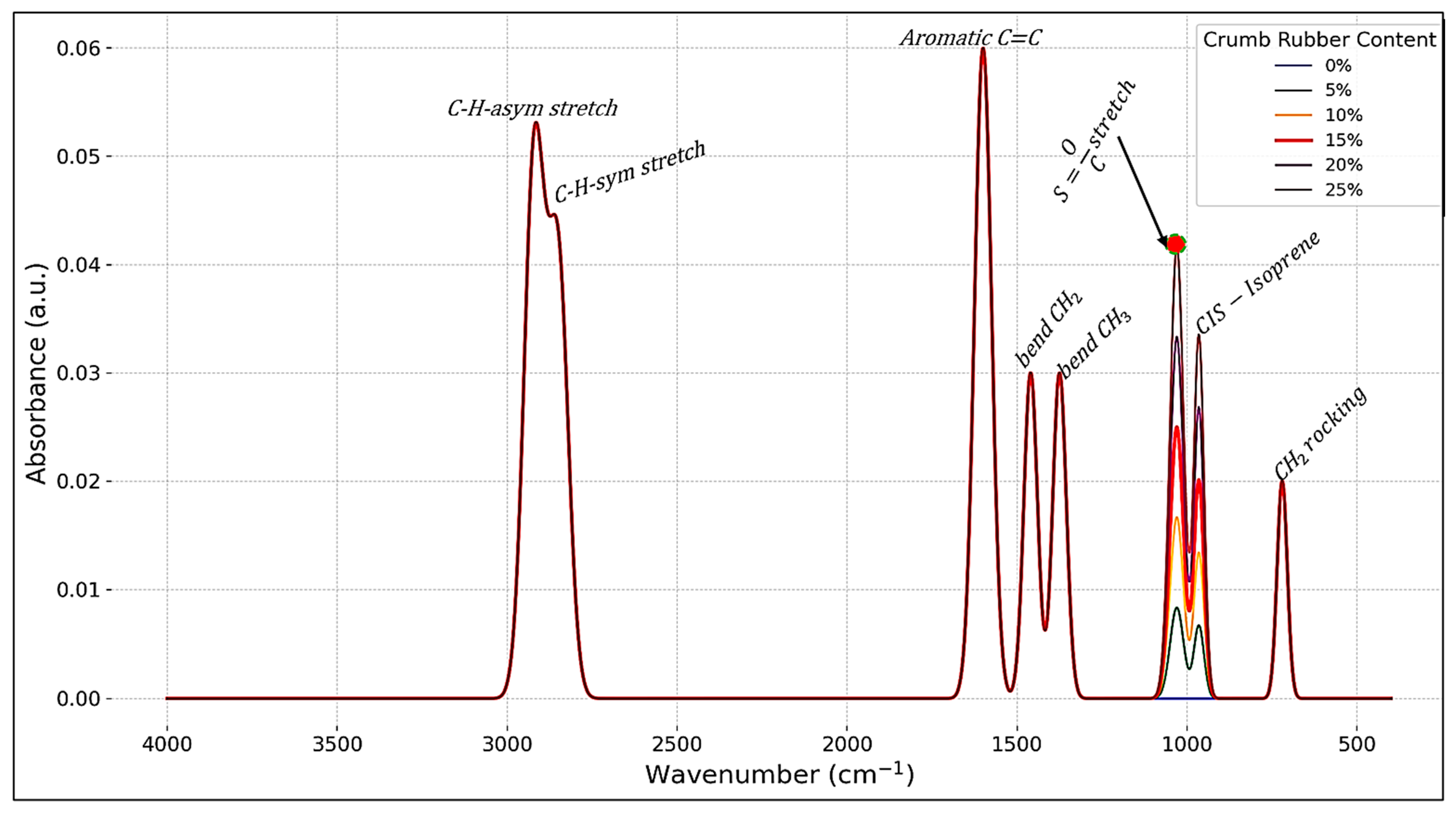
FTIR analysis revealed both physical and limited chemical interactions between crumb rubber and asphalt binders. The appearance of S=O and C–S bands (1030–1080 cm−1) and the presence of rubber chain signatures (~965 cm−1) indicate partial devulcanization and mild oxidation during mixing [1,4,11,12]. The most pronounced spectral changes occurred within the 10–15% CMAC range, coinciding with the optimum mechanical performance. This suggests that a balance between rubber swelling and limited chemical coupling enhances binder polarity and improves adhesion to silica-rich aggregates. At higher CMAC contents (>20%), no additional functional groups were observed, indicating that excess rubber primarily acted as an inert filler. This is consistent with the observed reduction in mechanical performance at elevated CMAC [28,31,55,56]. These findings are consistent with previous studies highlighting the combined role of physical swelling and chemical interactions in improving asphalt mixture performance. Figure 6 shows the FTIR spectra for various crumb rubber contents.
Figure 6.
FTIR spectra for various crumb rubber contents.
4.7. Fatigue Performance: Elasticity–Integrity Balance
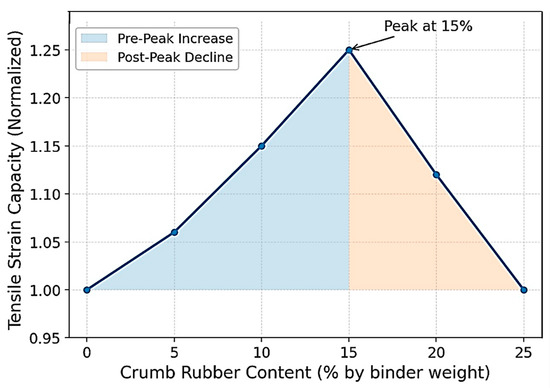
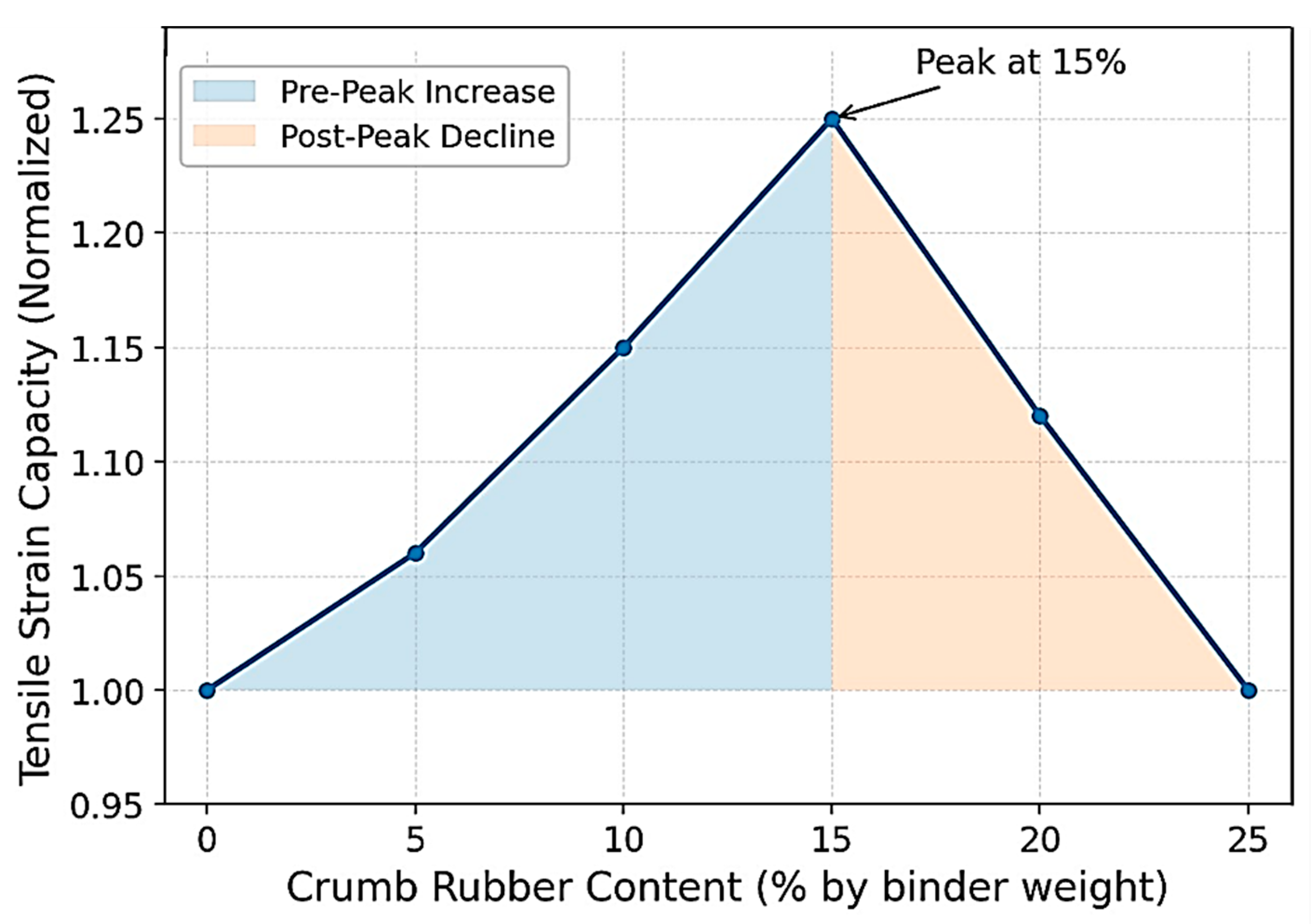
The fatigue performance results exhibited a clear dependence on CMAC (Figure 7). The tensile strain capacity increased with CMAC up to 15%, reaching a maximum normalized value of 1.25. This improvement is attributed to the elastic and energy-dissipating properties of rubber particles, which delay crack initiation and propagation under cyclic loading. Beyond this optimum range, the fatigue performance declined owing to excessive replacement of stiff binder–aggregate contacts with a more deformable rubber phase, reducing mixture cohesion. At ≥20% CMAC, this effect became more pronounced, leading to reduced resistance to cyclic tensile stress. These observations align with existing literature, which indicates [27,57,58] that an optimal balance between elasticity and structural integrity governs the fatigue performance of rubber-modified asphalt mixtures.
Figure 7.
Fatigue Performance of Crumb rubber-modified asphalt.
4.7.1. Stiffness Degradation Behavior
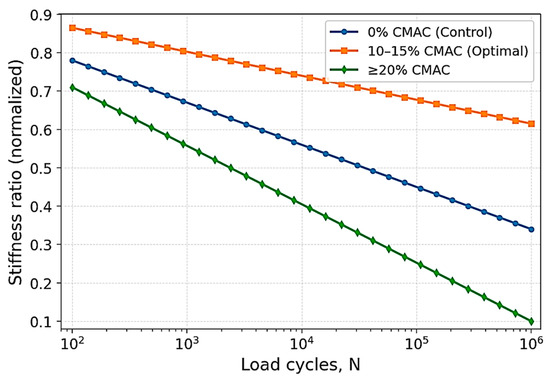
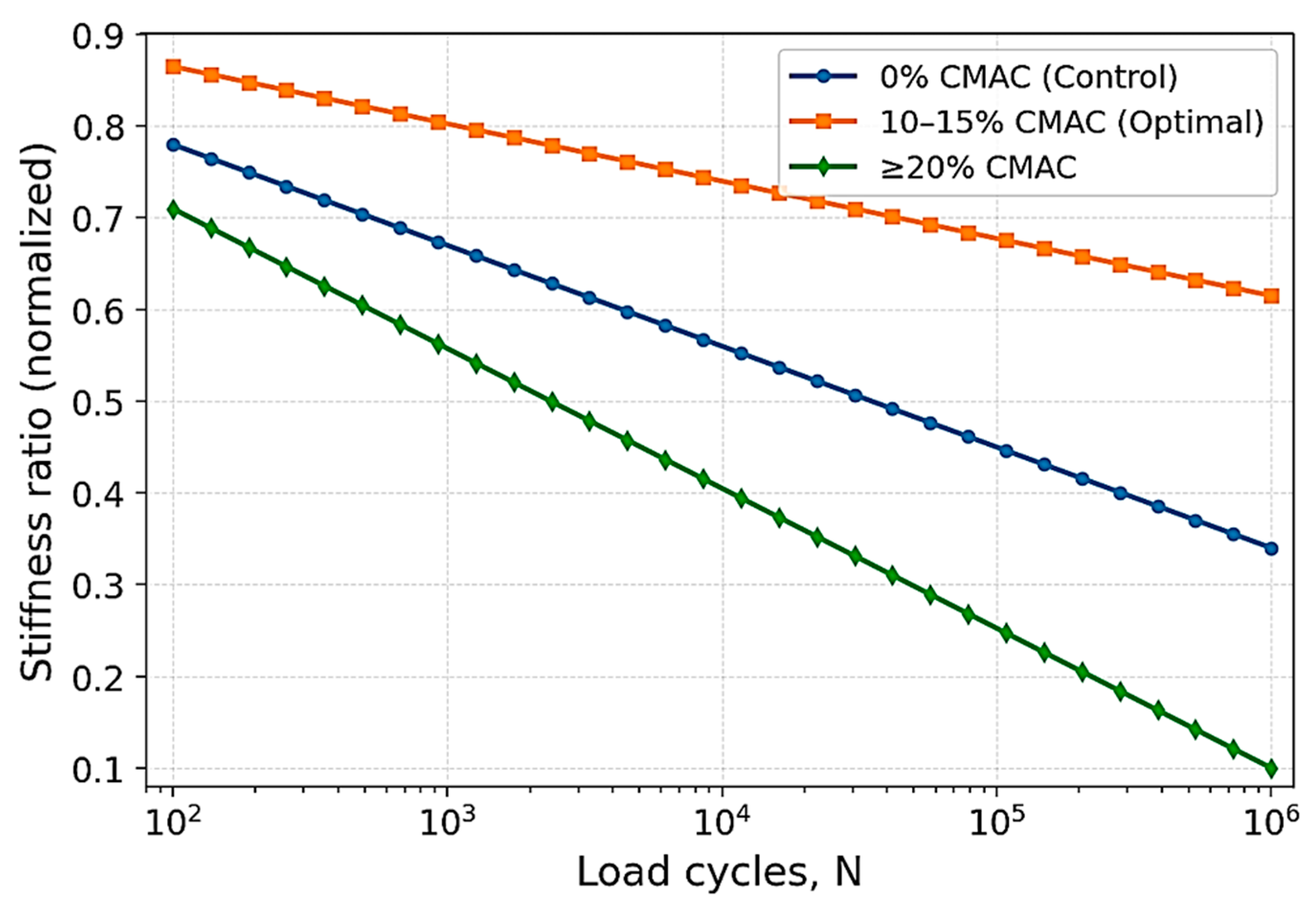
The evolution of the stiffness under repeated loading revealed the distinct effects of crumb rubber modification. Mixtures containing 10–15% rubber exhibited a slower rate of stiffness loss than the control, indicating an enhanced ability to resist fatigue-induced damage. This behavior was attributed to the elastic recovery and energy absorption capacity of the rubber particles, which delayed the accumulation of microcracks and microstructural weakening. at higher rubber contents (≥20%); however, the beneficial effect diminished. The reduced mixture stability and increased binder flow associated with excess rubber accelerated the onset of permanent deformation. Consequently, stiffness degradation occurred more rapidly, leading to a shortened fatigue life (Figure 8). These results confirm that rubber modification is most effective within an optimum range of 10–15%, beyond which performance deteriorates owing to instability and excessive viscous response [16,17,20].
Figure 8.
Stiffness degradation Behavior of Crumb rubber-modified asphalt (CMAC).
4.7.2. Performance Optimization and Trade-Offs
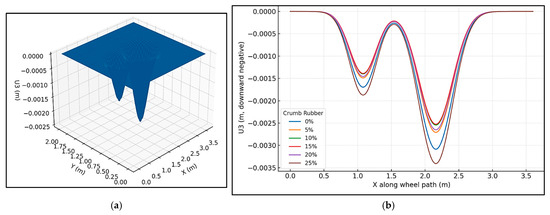
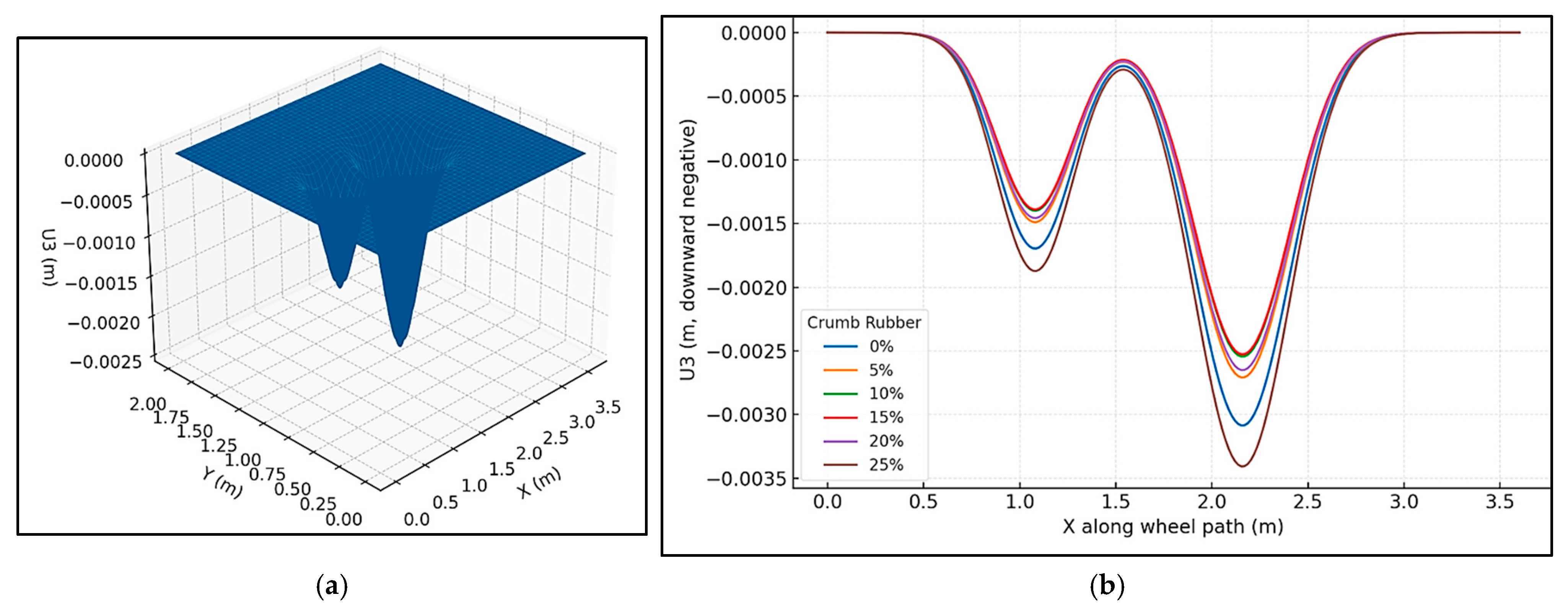
The combined evaluation of volumetric, rutting, and fatigue properties identified an optimal crumb rubber content in the range of 10–15% (Figure 9). Within this window, the mixture achieved a favorable balance between stiffness, elasticity, and durability. The improvement was governed by synergistic mechanisms, including rubber particle swelling, enhanced binder–aggregate adhesion, and improved stress distribution [17,20]. At higher contents (>20%), these benefits were offset by excessive binder absorption, reduced aggregate interlock, and increased deformation susceptibility. This trade-off highlights the importance of dosage optimization in achieving high-performance and durable CMAC mixtures [44].
Figure 9.
Rutting deformation (a) 3D Surface; (b) Longitudinal section.
4.8. Validation Metrics: Experimental and Mechanistic–Empirical Model
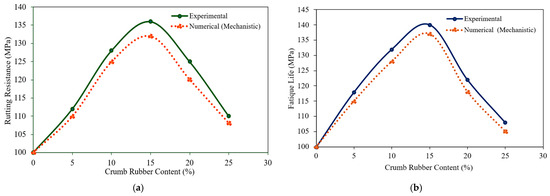
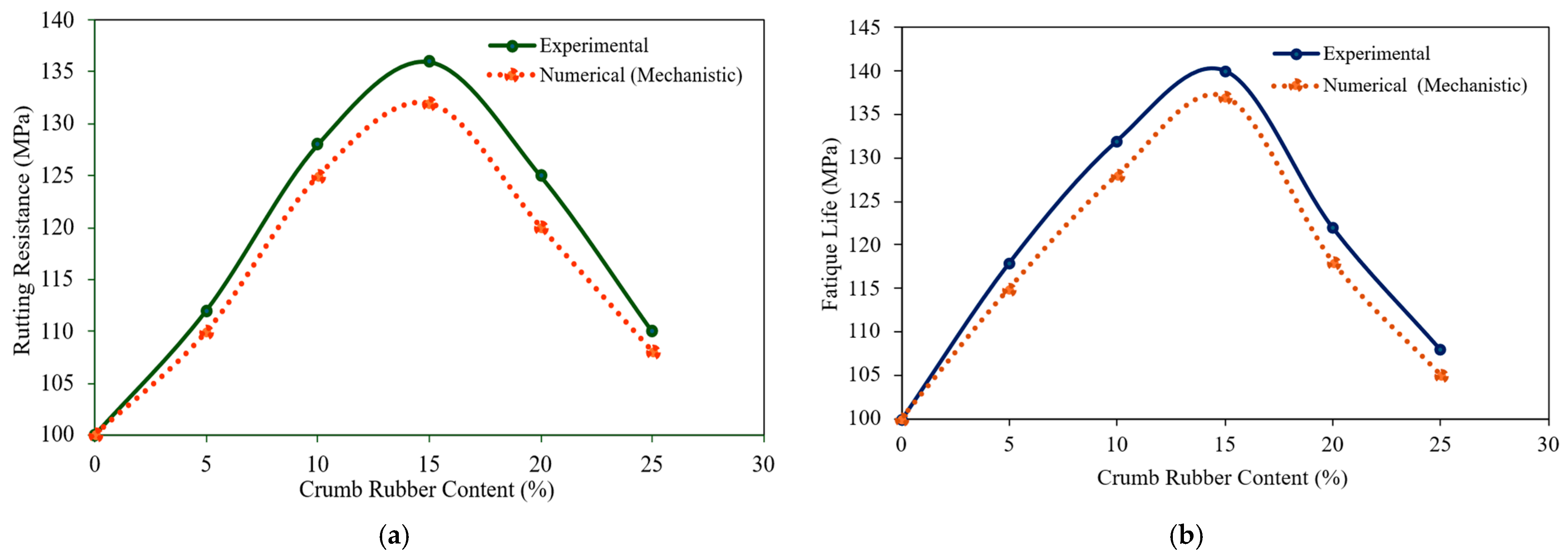
The predictive performance of the mechanistic–empirical (M–E) framework was evaluated by comparing model predictions with experimental observations for both rutting and fatigue responses for the investigated crumb rubber contents. Figure 10 presents the normalized performance trends obtained from laboratory testing and the corresponding numerical simulations. A strong agreement was observed between the experimental and predicted results, particularly within the optimal crumb rubber content range of 10–15%, where both rutting resistance and fatigue performance reached their peak values. The model successfully captured the nonlinear increase in performance up to the optimum range, followed by a gradual decline at higher rubber contents (≥20%), reflecting the influence of excessive binder absorption and reduced structural integrity [58]. To quantify the level of agreement, the root mean square error (RMSE) was calculated between the predicted and experimental values using Equation (8):
where and denote the predicted and experimental values, respectively, and is the number of data points. Based on the normalized performance data, the RMSE values were determined as RMSE (rutting) = 3.03 and RMSE (fatigue) = 3.32. These relatively low RMSE values indicate that the model reproduces the experimental trends with good accuracy. Slight deviations were observed at higher crumb rubber contents, which may be attributed to increased mixture heterogeneity and limitations in representing complex binder–rubber interactions within the simplified constitutive framework. Overall, the validation results confirm that the proposed mechanistic–empirical model provides a reliable tool for predicting the rutting and fatigue behavior of crumb rubber-modified asphalt concrete, particularly within the practical design range of rubber content.
Figure 10.
Experimental and Mechanistic–Empirical Model: (a) rutting resistance; (b) fatigue life.
5. Conclusions
This study evaluated the rutting resistance and fatigue performance of crumb rubber-modified asphalt concrete (CMAC) through a combined experimental and mechanistic–empirical (M–E) modeling approach. The following conclusions were drawn up based on the results obtained:
- CMAC mixtures containing 10–15% crumb rubber by binder weight exhibited the most favorable performance, achieving a significant increase in Marshall stability (up to approximately 36%) and improved fatigue resistance compared to the control mixture. This range provided an optimal balance between stiffness and elasticity.
- The improvement in mechanical performance is primarily attributed to the swelling of rubber particles within the binder and limited physicochemical interactions, which improve binder elasticity and binder–aggregate adhesion. FTIR analysis supports the presence of these interactions without indicating extensive chemical modification.
- The volumetric properties, including air voids, VMAs, and VFBs, remained within acceptable limits up to 15% crumb rubber content. At higher contents (≥20%), increased binder absorption and reduced effective binder film thickness led to a decline in mixture stability and durability.
- The mechanistic–empirical model successfully reproduced the observed experimental trends in both rutting and fatigue behavior. Validation using the root mean square error (RMSE) showed good agreement between the predicted and measured responses, confirming the model’s capability to represent CMAC behavior within the investigated range.
Overall, CMAC demonstrates strong potential as a durable and sustainable pavement material, enabling improved mechanical performance while contributing to waste tire reutilization. However, careful control of the crumb rubber dosage is essential to avoid performance deterioration associated with excessive rubber content.
6. Limitations and Future Works
This study provides an integrated evaluation of crumb rubber-modified asphalt concrete (CMAC) using laboratory testing and mechanistic–empirical modeling; however, several limitations should be acknowledged.
- The experimental program was conducted under controlled laboratory conditions, which may not fully represent field behavior under varying traffic loads, environmental conditions, and aging effects. The mixtures were evaluated using a single aggregate type and binder grade; therefore, the findings may not be directly generalizable to other material combinations or regional specifications.
- The mechanistic–empirical model was calibrated using laboratory-derived parameters and simplified constitutive relationships. Although the model captured the overall trends in rutting and fatigue performance, it did not explicitly account for factors such as moisture damage, oxidative aging, temperature cycling, and construction variability. In addition, the fatigue model assumes uniform stress and strain conditions, which may differ from actual pavement responses under complex loading scenarios.
- Future work should focus on validating the proposed findings through full-scale field trials and long-term pavement performance monitoring. The influence of environmental factors, including temperature variations, moisture susceptibility, and aging, should be incorporated into both experimental and modeling frameworks. Further studies are also recommended to evaluate different aggregate types, binder grades, and crumb rubber particle sizes to enhance the general applicability of the results.
- From a modeling perspective, future developments should include the integration of coupled thermo–mechanical effects, moisture damage models, and more advanced viscoelastic–viscoplastic formulations. The use of field-calibrated parameters and multistage modeling approaches may further improve prediction accuracy. In addition, life-cycle cost analysis and environmental impact assessment are necessary to support the practical implementation of CMAC in sustainable pavement design.
Author Contributions
U.U.I.: Writing—original draft, visualization, methodology, and formal analysis. D.A.: Writing—original draft, visualization, methodology, and formal analysis. M.M.R.: Writing, conceptualization, validation, data curation, review, editing, and supervision. All authors have read and agreed to the published version of the manuscript.
Funding
This research received no external funding.
Data Availability Statement
The data supporting the findings of this study are included in the article. Further details can be provided by the corresponding author upon reasonable request.
Conflicts of Interest
The authors declare that they have no known competing financial interests or personal relationships that could have influenced the work reported in this study and might be construed as a conflict of interest.
Abbreviations
The following abbreviations are used in this manuscript:
| AC | Asphalt Concrete |
| AVs | Air Voids |
| CMAC | Crumb Rubber-modified Asphalt Concrete |
| CR | Crumb Rubber |
| DSR | Dynamic Shear Rheometer |
| FTIR | Fourier Transform Infrared Spectroscopy |
| IDT | Indirect Tensile Test |
| LA | Los Angeles (Abrasion Test) |
| LVDT | Linear Variable Differential Transformer |
| LVE | Linear Viscoelastic |
| M–E | Mechanistic–Empirical |
| MQ | Marshall Quotient |
| VFBs | Voids Filled with Bitumen |
| VMAs | Voids in Mineral Aggregate |
| VP | Viscoplastic |
| S-VECD | Simplified Viscoelastic Continuum Damage |
| DMTA | Dynamic Mechanical Thermal Analysis |
| AMPT | Asphalt Mixture Performance Tester |
References
- Riaz, A.; Yasir, N.; Badin, G.; Mahmood, Y. Innovative Pavement Solutions: A Comprehensive Review from Conventional Asphalt to Sustainable Colored Alternatives. Infrastructures 2024, 9, 186. [Google Scholar] [CrossRef] [Scilit]
- Malluru, S.; Islam, S.M.I.; Saidi, A.; Baditha, A.K.; Chiu, G.; Mehta, Y. A State-of-the-Practice Review on the Challenges of Asphalt Binder and a Roadmap Towards Sustainable Alternatives—A Call to Action. Materials 2025, 18, 2312. [Google Scholar] [CrossRef] [Scilit]
- Kumar, A.; Gupta, A.; Anupam, K.; Premarathna, W.A.A.S. Analysis of Nonlinear Responses of Asphalt Pavements under Overloading and Tropical Climate Temperature Conditions. Case Stud. Constr. Mater. 2025, 22, e04760. [Google Scholar] [CrossRef] [Scilit]
- Styer, J.; Tunstall, L.; Landis, A.; Grenfell, J. Innovations in Pavement Design and Engineering: A 2023 Sustainability Review. Heliyon 2024, 10, e33602. [Google Scholar] [CrossRef] [Scilit] [PubMed]
- Imoh, U.U.; Adeboje, A.O.; Adekola, E.R.; Hassan, R.; Movahedi Rad, M. Effect of Sugarcane Bagasse Ash on the Sustainable Performance of Hot-Mix Asphalt: A Case Study of Experimental and Numerical Analysis. Case Stud. Constr. Mater. 2026, 24, e05769. [Google Scholar] [CrossRef] [Scilit]
- Imoh, U.U.; Nagy, R.; Movahedi Rad, M. Micro-Mechanical Characterization of Polymer-Modified Asphalt Mixtures Using Discrete Element Modelling with Soft-Bond and Linear Contact Bond Models. Constr. Build. Mater. 2025, 501, 144325. [Google Scholar] [CrossRef] [Scilit]
- Akinmade, D.; Anupam, K.; Kasbergen, C.; Erkens, S.; Samson, D.; Marco, P. Performance of Natural Asphalt as a Paving Material: A Laboratory and Field Evaluation. Case Stud. Constr. Mater. 2024, 21, e03823. [Google Scholar] [CrossRef] [Scilit]
- Imoh, U.U.; Apata, A.C.; Raji, S.O.; Adeboje, A.O.; Babafemi, A.J.; Movahedi Rad, M. Mechanical and Microstructural Performances of Hot-Mix Asphalt Modified with Recycled Polyethylene Terephthalate. Results Eng. 2026, 29, 109572. [Google Scholar] [CrossRef] [Scilit]
- Li, P.; Fu, J.; Sun, L.; Yue, J.; Zang, Q. Analysis of Rutting Formation Mechanisms and Influencing Factors in Asphalt Pavements Under Slow-Moving Heavy Loads. Materials 2025, 18, 4153. [Google Scholar] [CrossRef] [Scilit] [PubMed]
- Fernando, A.; Mithila, S.; Jayakody, S.; Gallage, C. Rutting Performance of Geosynthetic Reinforced Unbound Pavements Subjected to Repetitive Loading: A Review. J. Road Eng. 2026, 6, 34–50. [Google Scholar] [CrossRef] [Scilit]
- Phan, T.M.; Seo, J.-W.; Nguyen, A.Q.; Lee, C.-B.; Park, D.-W. Performances Assessment of Crumb Rubber Modification in Asphalt Mixtures: Dry, Wet, Hybrid, and Pellet Techniques. Constr. Build. Mater. 2025, 491, 142663. [Google Scholar] [CrossRef] [Scilit]
- Brasileiro, L.; Moreno-Navarro, F.; Tauste-Martínez, R.; Matos, J.; Rubio-Gámez, M.d.C. Reclaimed Polymers as Asphalt Binder Modifiers for More Sustainable Roads: A Review. Sustainability 2019, 11, 646. [Google Scholar] [CrossRef] [Scilit]
- Caccavo, D.; Iannone, M.; Russo, I.; Petrucci, A.M.; Petrucci, R.; Genovese, G.; Caliendo, C.; Lamberti, G. Evaluation of Binder and Mixture Performance in Crumb Rubber Asphalt Modified with Sasobit. Constr. Build. Mater. 2026, 516, 145674. [Google Scholar] [CrossRef] [Scilit]
- Al-Rubaie, A.H.; Joni, H.H. Assessment the Performance of Asphalt Mixtures Modified with Waste Tire Rubber at High Temperatures. J. Phys. Conf. Ser. 2021, 1895, 012026. [Google Scholar] [CrossRef] [Scilit]
- Oleiwi, S.I.; Albayati, A.H. Incorporating Recycled Crumb Rubber into Asphalt: A Comprehensive Review. J. Eng. 2024, 30, 184–202. [Google Scholar] [CrossRef] [Scilit]
- Ban, I.; Barišić, I.; Cuculić, M.; Zvonarić, M. Performance Evaluation of Waste Rubber-Modified Asphalt Mixtures: A Comparative Study of Asphalt Concrete and Stone Mastic Asphalt Gradings. Infrastructures 2025, 10, 107. [Google Scholar] [CrossRef] [Scilit]
- Wu, M.; Li, M.; Yin, L.; You, Z. Asphalt-Rubber Interaction in Crumb Rubber Modified Asphalt: A Review. J. Clean. Prod. 2026, 546, 147766. [Google Scholar] [CrossRef] [Scilit]
- Wu, X.; Zhu, C.; Wang, Z.; Yang, L.; Liu, F.; Chen, J.; Nuriddinov, K.; Giyasov, S.; Morozova, N.B.; Shi, W.; et al. Rheological Behaviors of Rubber-Modified Asphalt Under Complicated Environment. Polymers 2025, 17, 1753. [Google Scholar] [CrossRef] [Scilit]
- Mashaan, N.S.; Karim, M.R. Investigating the Rheological Properties of Crumb Rubber Modified Bitumen and Its Correlation with Temperature Susceptibility. Mater. Res. 2012, 16, 116–127. [Google Scholar] [CrossRef] [Scilit]
- Memon, N.A.; Ali, A.S.B.; Yusoff, N.I.M.; Al Allam, A.M.; Isleem, H.F.; Khishe, M. Statistical Optimization of Crumb Rubber Modified Bitumen Performance through Material Blending Analysis. Sci. Rep. 2025, 16, 2115. [Google Scholar] [CrossRef] [Scilit]
- Anupam, K.; Akinmade, D.; Kasbergen, C.; Erkens, S.; Adebiyi, F. A State-of-the-Art Review of Natural Bitumen in Pavement: Underlining Challenges and the Way Forward. J. Clean. Prod. 2023, 382, 134957. [Google Scholar] [CrossRef] [Scilit]
- Subhy, A. Advanced Analytical Techniques in Fatigue and Rutting Related Characterisations of Modified Bitumen: Literature Review. Constr. Build. Mater. 2017, 156, 28–45. [Google Scholar] [CrossRef] [Scilit]
- Ceccon Carlesso, G.; Trichês, G.; Staub de Melo, J.V.; Marcon, M.F.; Padilha Thives, L.; da Luz, L.C. Evaluation of Rheological Behavior, Resistance to Permanent Deformation, and Resistance to Fatigue of Asphalt Mixtures Modified with Nanoclay and SBS Polymer. Appl. Sci. 2019, 9, 2697. [Google Scholar] [CrossRef] [Scilit]
- Xu, S.; Zhao, Z.; Wang, H.; Wan, C.; Wang, X.; Wang, Z.; Zhang, X. Fatigue Failure Criteria of Asphalt Binders and Asphalt Mixtures: A Comprehensive Review. Materials 2025, 18, 3267. [Google Scholar] [CrossRef] [Scilit]
- Lee, H.J.; Lee, J.H.; Park, H.M. Performance Evaluation of High Modulus Asphalt Mixtures for Long Life Asphalt Pavements. Constr. Build. Mater. 2007, 21, 1079–1087. [Google Scholar] [CrossRef] [Scilit]
- Wang, T.; Dong, Z.; Xu, K.; Ullah, S.; Wang, D.; Li, Y. Numerical Simulation of Mechanical Response Analysis of Asphalt Pavement under Dynamic Loads with Non-Uniform Tire-Pavement Contact Stresses. Constr. Build. Mater. 2022, 361, 129711. [Google Scholar] [CrossRef] [Scilit]
- Yang, Q.; Ren, M.; Wu, Y.; Ma, L.; Han, Q.; Pei, Z.; He, Z. Modeling Fracture Evolution of Crumb Rubber Asphalt Concrete under Long-Term Vapor Exposure: A Coupled Moisture-Mechanical Approach. Clean. Mater. 2026, 19, 100384. [Google Scholar] [CrossRef] [Scilit]
- Roy, A.; Rajkumar, K.; Kapgate, B. Crumb Rubber Modified Asphalt: Fundamentals to Recent Developments. In Asphalt Materials—Recent Developments and New Perspective; IntechOpen: London, UK, 2024. [Google Scholar]
- Pszczola, M.; Dolzycki, B. Investigation of Rutting and Aging Performance of Gap-Graded Rubberized Asphalt Mixtures. Materials 2025, 18, 2263. [Google Scholar] [CrossRef] [Scilit] [PubMed]
- Kumar, A.; Choudhary, R. Application of Waste Rubber, Oil, and Rubber-Oil Composite in Asphalt Binder Modification: A Comprehensive Review. J. Traffic Transp. Eng. (Engl. Ed.) 2026, 13, 41–70. [Google Scholar] [CrossRef] [Scilit]
- Khamkhanpom, P.; Nguyen, Q.P.; La, V.C.; Le, X.Q.; Nguyen, Q.T. Mechanistic-Empirical Pavement Design Method and Applicability in Laos. Transp. Res. Procedia 2025, 85, 18–25. [Google Scholar] [CrossRef] [Scilit]
- Cho, J.; Hong, S.; Jung, J.; Kim, I. Experimental Investigation of the Hydraulic Performance of a Permeable Block Pavement System Using a Multi-Scale Testing Apparatus. Sustainability 2025, 17, 10535. [Google Scholar] [CrossRef] [Scilit]
- Cao, W.D.; Liu, S.T.; Cui, X.Z.; Yu, X.Q. Effect of Crumb Rubber Particle Size and Content on Properties of Crumb Rubber Modified (CRM) Asphalt. Appl. Mech. Mater. 2011, 99–100, 955–959. [Google Scholar] [CrossRef] [Scilit]
- White, G.; Kidd, A. Analysis of the Effects of Rubber Dosage and Digestion Time on the Mechanical Properties of Low Dosage Crumb-Rubber-Modified Asphalt Concrete Mixtures. Materials 2025, 18, 1419. [Google Scholar] [CrossRef] [Scilit] [PubMed]
- ASTM D6927; Test Method for Marshall Stability and Flow of Asphalt Mixtures. ASTM International: West Conshohocken, PA, USA, 2015.
- ASTM C136/C136M; Test Method for Sieve Analysis of Fine and Coarse Aggregates. ASTM International: West Conshohocken, PA, USA, 2025.
- ASTM D70/D70M; Test Method for Density of Semi-Solid Asphalt Binder (Pycnometer Method). ASTM International: West Conshohocken, PA, USA, 2021.
- ASTM D5; Test Method for Penetration of Bituminous Materials. ASTM International: West Conshohocken, PA, USA, 2020.
- ASTM D4402/D4402M; Test Method for Viscosity Determination of Asphalt at Elevated Temperatures Using a Rotational Viscometer. ASTM International: West Conshohocken, PA, USA, 2023. [CrossRef] [Scilit]
- ASTM D36; Test Method for Softening Point of Bitumen (Ring-and-Ball Apparatus). ASTM International: West Conshohocken, PA, USA, 2020.
- ASTM D4791; Test Method for Flat Particles, Elongated Particles, or Flat and Elongated Particles in Coarse Aggregate. ASTM International: West Conshohocken, PA, USA, 2023.
- ASTM C131; Test Method for Resistance to Degradation of Small-Size Coarse Aggregate by Abrasion and Impact in the Los Angeles Machine. ASTM International: West Conshohocken, PA, USA, 2020.
- Klug, A.; Ng, A.; Faxina, A. Application of the Viscoelastic Continuum Damage Theory to Study the Fatigue Performance of Asphalt Mixtures—A Literature Review. Sustainability 2022, 14, 4973. [Google Scholar] [CrossRef] [Scilit]
- Ma, F.; Dai, J.; Fu, Z.; Liu, J.; Dong, W.; Huang, Z. A New Type of Crumb Rubber Asphalt Mixture: A Dry Process Design and Performance Evaluation. Appl. Sci. 2020, 10, 372. [Google Scholar] [CrossRef] [Scilit]
- Youssf, O.; Mills, J.E.; Hassanli, R. Assessment of the Mechanical Performance of Crumb Rubber Concrete. Constr. Build. Mater. 2016, 125, 175–183. [Google Scholar] [CrossRef] [Scilit]
- ASTM D2042; Test Method for Solubility of Asphalt Materials in Trichloroethylene. ASTM International: West Conshohocken, PA, USA, 2022.
- ASTM C127; Test Method for Relative Density (Specific Gravity) and Absorption of Coarse Aggregate. ASTM International: West Conshohocken, PA, USA, 2025.
- Mohajerani, A.; Nguyen, B.T.; Tanriverdi, Y.; Chandrawanka, K. A New Practical Method for Determining the LA Abrasion Value for Aggregates. Soils Found. 2017, 57, 840–848. [Google Scholar] [CrossRef] [Scilit]
- Kuna, E.; Bögöly, G. Overview of the Empirical Relations between Different Aggregate Degradation Values and Rock Strength Parameters. Period. Polytech. Civ. Eng. 2023, 68, 375–391. [Google Scholar] [CrossRef] [Scilit]
- ASTM C33; Specification for Concrete Aggregates. ASTM International: West Conshohocken, PA, USA, 2024.
- Ohm, B.; Lee, S.Y.; Le, T.H.M. Utilizing Crushed Recycled Marble Stone Powder as a Sustainable Filler in SBS-Modified Asphalt Containing Recycled Tire Rubber. Polymers 2024, 17, 70. [Google Scholar] [CrossRef] [Scilit]
- Albayati, A.H. A Review of Rutting in Asphalt Concrete Pavement. Open Eng. 2023, 13, 20220463. [Google Scholar] [CrossRef] [Scilit]
- Piromanski, B.; Chegenizadeh, A.; Mashaan, N.; Nikraz, H. Study on HDPE Effect on Rutting Resistance of Binder. Buildings 2020, 10, 156. [Google Scholar] [CrossRef] [Scilit]
- Dudek, J.B.; Salomon, T.; Fanghänel, S.; Thorwirth, S. Carbon–Sulfur Chains: A High-resolution Infrared and Quantum-chemical Study of C3S and SC7S. Int. J. Quantum Chem. 2017, 117, e25414. [Google Scholar] [CrossRef] [Scilit]
- Innes, J.R.; Siddique, N.; Thompson, G.; Wang, X.; Coates, P.; Whiteside, B.; Benkreira, H.; Caton-Rose, F.; Lu, C.; Wang, Q.; et al. The Influence of Devulcanization and Revulcanization on Sulfur Cross-Link Type/Rank: Recycling of Ground Tire Rubber. ACS Omega 2024, 9, 41797–41806. [Google Scholar] [CrossRef] [Scilit]
- Gardziejczyk, W.; Plewa, A.; Pakholak, R. Effect of Addition of Rubber Granulate and Type of Modified Binder on the Viscoelastic Properties of Stone Mastic Asphalt Reducing Tire/Road Noise (SMA LA). Materials 2020, 13, 3446. [Google Scholar] [CrossRef] [Scilit] [PubMed]
- Gkyrtis, K.; Pomoni, M. An Overview of the Recyclability of Alternative Materials for Building Surface Courses at Pavement Structures. Buildings 2024, 14, 1571. [Google Scholar] [CrossRef] [Scilit]
- Valente de Liz, J.; Salgado Barra, B.; Mikowski, A.; Hughes, G.B.; Ferreira, A. Fatigue Testing in Asphalt Mixes: Emerging Trends and Findings from an Integrated Literature Review. Appl. Sci. 2025, 15, 10220. [Google Scholar] [CrossRef] [Scilit]

Disclaimer/Publisher’s Note: The statements, opinions and data contained in all publications are solely those of the individual author(s) and contributor(s) and not of MDPI and/or the editor(s). MDPI and/or the editor(s) disclaim responsibility for any injury to people or property resulting from any ideas, methods, instructions or products referred to in the content. |
© 2026 by the authors. Licensee MDPI, Basel, Switzerland. This article is an open access article distributed under the terms and conditions of the Creative Commons Attribution (CC BY) license.