
You are currently viewing a new version of our website. To view the old version click .

Biomimetics, Volume 7, Issue 2

June 2022 - 50 articles

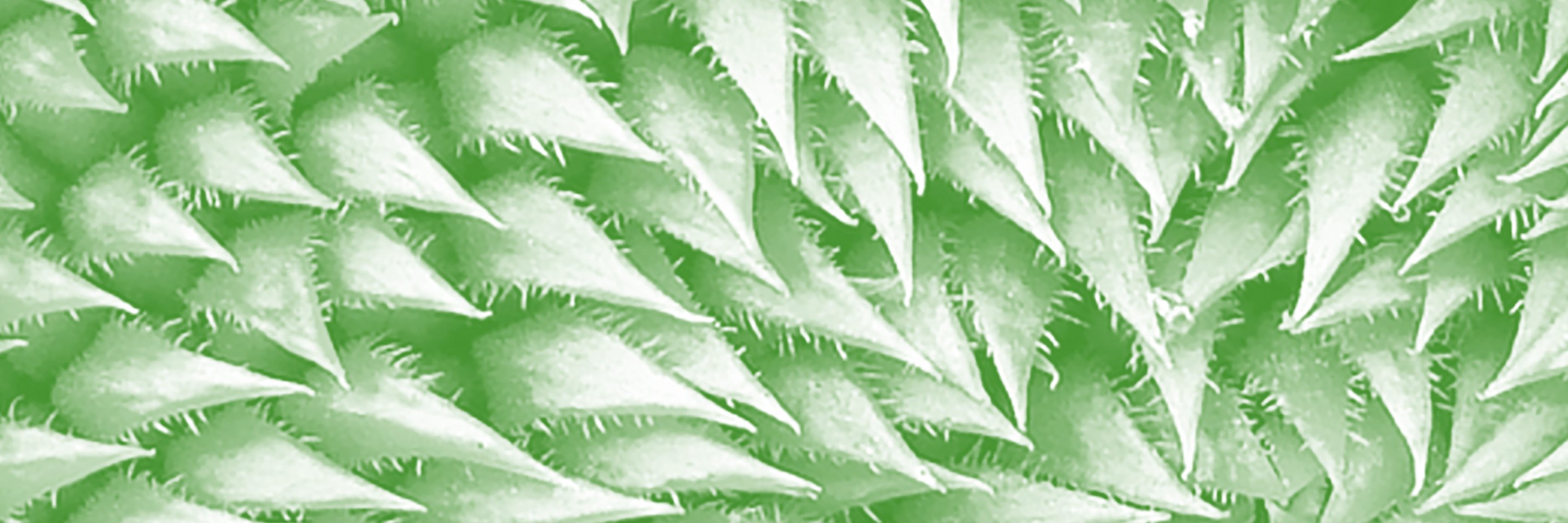
Cover Story: In recent years, the exciting characteristics of filamentous fungi have not gone unnoticed in the context of biodegradable materials, providing a low-cost and environmentally sustainable solution compared to the production and life cycle of petroleum-based materials. Due to the wide variety of reinforcement particles, mycelium composites can potentially be designed for specific functions and applications, such as fire resistance and mechanical improvement. The objectives of this work are to first determine whether mycelium materials reinforced with montmorillonite nanoclay can be produced given its inorganic nature, and then to study the influence of these nanoparticles on material properties. Nanoclay mycelium materials are evaluated in terms of morphological, chemical, and mechanical properties. View this paper
  • Issues are regarded as officially published after their release is announced to the table of contents alert mailing list .
  • You may sign up for email alerts to receive table of contents of newly released issues.
  • PDF is the official format for papers published in both, html and pdf forms. To view the papers in pdf format, click on the "PDF Full-text" link, and use the free Adobe Reader to open them.

Articles (50)

  • Article
  • Open Access
20 Citations
6,551 Views
19 Pages

Bio-inspired design (BID) has the potential to evolve the way engineers and designers solve problems. Several tools have been developed to assist one or multiple phases of the BID process. These tools, typically studied individually and through the p...

  • Article
  • Open Access
12 Citations
3,758 Views
13 Pages

Bio-Inspired Control System for Fingers Actuated by Multiple SMA Actuators

  • George-Iulian Uleru,
  • Mircea Hulea and
  • Adrian Burlacu

Spiking neural networks are able to control with high precision the rotation and force of single-joint robotic arms when shape memory alloy wires are used for actuation. Bio-inspired robotic arms such as anthropomorphic fingers include more junctions...

  • Article
  • Open Access
4 Citations
4,003 Views
12 Pages

Degradation of Hybrid Drug Delivery Carriers with a Mineral Core and a Protein–Tannin Shell under Proteolytic Hydrolases

  • Polina A. Demina,
  • Mariia S. Saveleva,
  • Roman A. Anisimov,
  • Ekaterina S. Prikhozhdenko,
  • Denis V. Voronin,
  • Anatolii A. Abalymov,
  • Kirill A. Cherednichenko,
  • Olesya I. Timaeva and
  • Maria V. Lomova

Hybrid carriers with the mineral CaCO3/Fe3O4 core and the protein–tannin shell are attractive for drug delivery applications due to reliable coupling of anticancer drugs with protein–tannin complex and the possibility of remote control ov...

  • Article
  • Open Access
7 Citations
5,848 Views
16 Pages

Are Mushrooms Parametric?

  • Dilan Ozkan,
  • Ruth Morrow,
  • Meng Zhang and
  • Martyn Dade-Robertson

Designing with biological materials as a burgeoning approach in the architecture field requires the development of new design strategies and fabrication methods. In this paper, we question if designers can use a parametric design approach while worki...

  • Article
  • Open Access
19 Citations
4,071 Views
13 Pages

Bone Remodeling Process Based on Hydrostatic and Deviatoric Strain Mechano-Sensing

  • Natalia Branecka,
  • Mustafa Erden Yildizdag,
  • Alessandro Ciallella and
  • Ivan Giorgio

A macroscopic continuum model intended to provide predictions for the remodeling process occurring in bone tissue is proposed. Specifically, we consider a formulation in which two characteristic stiffnesses, namely the bulk and shear moduli, evolve i...

  • Review
  • Open Access
9 Citations
5,271 Views
17 Pages

Since the first reported case of COVID-19 in 2019 in China and the official declaration from the World Health Organization in March 2021 as a pandemic, fast and accurate diagnosis of severe acute respiratory syndrome coronavirus 2 (SARS-CoV-2) has pl...

  • Article
  • Open Access
27 Citations
7,341 Views
23 Pages

Biological materials that are created by growing mycelium-forming fungal microorganisms on natural fibers can form a solution to environmental pollution and scarcity of natural resources. Recent studies on the hybridization of mycelium materials with...

  • Article
  • Open Access
7 Citations
3,362 Views
14 Pages

Sponge-like Scaffolds for Colorectal Cancer 3D Models: Substrate-Driven Difference in Micro-Tumors Morphology

  • Andrey Boroda,
  • Yuliya Privar,
  • Mariya Maiorova,
  • Anna Skatova and
  • Svetlana Bratskaya

Macroporous scaffolds (cryogels) for the 3D cell culturing of colorectal cancer micro-tumors have been fabricated by cross-linking chitosan and carboxymethyl chitosan (CMC) with 1,4-butandiol diglycidyl ether (BDDGE) under subzero temperature. Due to...

  • Article
  • Open Access
15 Citations
5,745 Views
11 Pages

The demand for sustainable materials derived from renewable resources has led to significant research exploring the performance and functionality of biomaterials such as mycelium and bacterial cellulose. Whilst the growing conditions and performance...

  • Article
  • Open Access
4 Citations
3,415 Views
8 Pages

The Role of Process-Directing Agents on Enamel Lesion Remineralization: Fluoride Boosters

  • Hamid Nurrohman,
  • Logan Carter,
  • Noah Barnes,
  • Syeda Zehra,
  • Vineet Singh,
  • Jinhui Tao,
  • Sally J. Marshall and
  • Grayson W. Marshall

The aim of this study was to investigate the effects of two process-directing agents (polyaspartic acid and osteopontin) used in a polymer-induced liquid-precursor (PILP) process on the remineralization of bacteria-induced enamel demineralization. En...

of 5

Get Alerted

Add your email address to receive forthcoming issues of this journal.

XFacebookLinkedIn
Biomimetics - ISSN 2313-7673