


Abstract
Tropical water lilies are a group of aquatic plants with high ornamental value and are widely favored in home gardening. However, most tropical water lily cultivars feature a large plant stature and vigorous spreading growth layout, making them unsuitable for cultivation in small containers. Therefore, developing miniaturization cultivation techniques for tropical water lilies in small containers is required. Plant growth retardants are effective in inducing plant dwarfing and overall miniaturization. In this study, the tropical water lily cultivar ‘Black Beauty’ was used as the experimental material to explore the effects of two plant growth retardants, chlormequat chloride (CCC) and paclobutrazol (PP333), on its growth and development, with the objective of screening optimal retardant types, application concentrations and treatment methods. The results showed that the growth rate of ‘Black Beauty’ slowed down under either CCC or PP333 treatment, and remained stable from day 21 to day 51. Compared with the control group, treated plants presented reduced crown spread, decreased leaf area and thickened leaves; the number of flowers and leaves declined slightly, and the key ornamental morphological traits (compact plant form, moderate leaf size, normal flowering) were maintained. PP333 exhibited a stronger dwarfing effect than CCC. When the plant growth retardants were dissolved in water for application, a 6-day treatment interval delivered better dwarfing efficacy than a 9-day interval. Among all treatments, 30 mg·L−1 PP333 applied at 6-day intervals achieved the optimal miniaturization effect. Following this treatment, the endogenous accumulation of chlorophyll, soluble protein and total sugar, together with the activity levels of antioxidant enzymes (SOD, POD, CAT), were markedly higher than those measured in the control and all other treatment groups, whereas the endogenous accumulation of malondialdehyde (MDA) decreased substantially. The contents of endogenous hormones IAA, GA3 and ZR in all treatment groups decreased with the increase in retardant concentration, whereas the ABA content showed an upward trend. The 30 mg·L−1 PP333 treatment applied every six days induced the minimal endogenous accumulation of IAA, GA3 and ZR, alongside the maximum endogenous ABA accumulation within plant tissues. For potted cultivation of ‘Black Beauty’ water lily, it is recommended to apply 30 mg·L−1 PP333 at 6-day intervals and use containers with an outer diameter of 30–35 cm.
1. Introduction
Water lilies (Nymphaea spp., Nymphaeaceae) are perennial aquatic floating plants with high ornamental value, often referred to as the ‘Queen of Aquatic Plants’ [1]. Since their introduction to China in the late 1990s, tropical water lilies have been welcomed by consumers due to their rich diversity in flower color, flower form, and plant architecture, including precious blue and purple flowers [2,3], as well as their strong fragrance. In South China, they can bloom year-round and are primarily cultivated as cut flower materials, with a small number of potted products also available on the market. Apart from the well-known miniature species such as the Rwandan dwarf water lily (Nymphaea thermarum) [4] and ‘Minuta’, most tropical water lily cultivars have large plant architectures, with floating leaves occupying a water surface diameter (crown diameter) of 80–200 cm. These plants require containers of at least 80 cm in diameter to grow well, making them unsuitable for small-container cultivation on home balconies, terraces, or indoors. Therefore, technical approaches to achieve dwarfing of water lily plants are required to support their wider use in household settings. To date, research on artificial dwarfing techniques for water lilies remains limited.
In horticultural production, a common and efficient approach to achieving plant dwarfing is the application of plant growth retardants [5]. The common effects of plant growth retardants include reduced plant height, increased lateral branching, promoted flowering, and enhanced root development [6,7,8]. Common plant growth retardants include chlormequat chloride (CCC), paclobutrazol (PP333), as well as daminozide (B9), uniconazole, prohexadione-calcium, and maleic hydrazide [9]. CCC is used to inhibit cell growth, control plant architecture, thicken stems, and deepen leaf color. It also enhances lodging resistance, salt tolerance, and increases tuber size [10,11]. Chaturvedi et al. demonstrated that CCC increased the proportion of inflorescence production in Dendrobium orchids, induced earlier flowering, and resulted in changes in inflorescence length, leaf number, and flower number [12]. It should be noted that CCC represses vacuolar expansion; metrics quantified based on fresh weight (FW) are prone to bias, and cell-based quantification is the biologically reliable measurement standard. Bidave et al. found that CCC at 500 mg·L−1 helped reduce plant height, increased internode number per plant, internode length, branch number per plant, and leaf area in okra (Abelmoschus esculentus L.), while also shortening the number of days to first flowering and increasing flower number per plant [13]. Li et al. reported that CCC application increased soluble sugar and soluble protein contents [14]. PP333 interferes with GA3 biosynthesis in plants, thereby shortening internode elongation, promoting flower bud differentiation, and achieving early and high yields [15,16]. Exogenous PP333 treatment indirectly alleviates membrane lipid peroxidation and cellular structural injury; such secondary responses associated with cellular physiological status further elevate antioxidant enzyme activities and ultimately strengthen plant stress resistance [17,18]. Li et al. applied PP333 at 10–50 mg·L−1 to bowl lotus (Nelumbo nucifera Gaertn.) and found that it inhibited the growth of the cultivar ‘Spark’. As the concentration increased, phenotypic traits such as erect leaf length, erect leaf width, flower number, flower height, and flower stem generally showed a decreasing trend [19]. Over time, physiological indicators including SOD, CAT, and soluble protein content initially increased and then decreased. Grossi et al. reported that PP333 application reduced plant height, stem diameter, and dry weight in ornamental pepper but increased leaf chlorophyll content [20]. Zhang et al. found that a combined treatment of 200 mg·L−1 PP333 and 200 mg·L−1 S3307 effectively inhibited gibberellin biosynthesis in Amorpha fruticosa and regulated the synthesis of various hormones, thereby achieving internode shortening, reduced leaf area, and compact plant architecture [8]. Jayanta reported that after PP333 treatment, oil sunflower plants became dwarf and compact, with dark green leaves and increased chlorophyll and carotenoid contents compared with the control [21].
However, existing studies on dwarf cultivation using such retardants mostly focus only on their morphological regulation effects on ornamental plants, while largely ignoring their ecological safety hazards. As synthetic plant growth retardants that suppress gibberellin synthesis, CCC and PP333 feature strong environmental mobility and long residual duration. When applied to water lily cultivation, they continuously enter the soil–water coupling system and retain toxic activity, which may disrupt the growth and reproduction of surrounding non-target aquatic and soil organisms and pose potential risks to aquatic ecosystems.
Against this research backdrop, the present study selected tropical water lily cultivar ‘Black Beauty’ as test material to explore artificial dwarfing approaches. Three concentration levels of CCC and PP333, together with two treatment intervals (6 days and 9 days), were arranged to characterize their influences on vegetative growth and flowering performance of ‘Black Beauty’, so as to screen optimal retardant types, concentrations and application regimes for dwarfing tropical water lilies. Multiple phenotypic indicators were comprehensively assessed to determine feasible dwarfing protocols, filling the existing research gap regarding artificial dwarfing techniques for tropical water lilies. The findings of this work can lay a preliminary technical foundation for dwarf culture of tropical water lilies suitable for small-space household planting and commercial nursery production. It should be noted that the present experiment only tracked plant performance during continuous retardant application; whether the compact dwarf phenotype can be sustained after stopping treatments requires further long-term verification. This research offers baseline technical references for miniature cultivation and commercial propagation of tropical water lilies, which may help expand the application of water lilies beyond conventional landscape use toward high-value domestic gardening, and carries valuable theoretical and practical significance.
2. Materials and Methods
2.1. Experimental Site and Plant Materials
The field experiment was carried out in a plastic greenhouse at the Water Lily Sub-garden, Tropical Herbaceous Flowers Germplasm Resource Nursery, Yazhou District, Sanya City, Hainan Province, China (geographical coordinates: 109°20′06.3″ E, 18°47′21.64″ N).
Prior to the formal experiment, unpublished preliminary trials were performed to determine the suitable concentration ranges for CCC and PP333. The concentration gradients applied in this study were finalized based on the preliminary phenotypic responses of tropical water lily seedlings. The screening criteria strictly included two core indicators: the presence of obvious dwarfing tendency in vegetative growth and the complete absence of phytotoxic symptoms. Specifically, seedlings exhibiting slowed plant height increment, reduced crown expansion, and compact leaf morphology were defined as showing positive dwarfing tendency. Seedlings with leaf chlorosis, leaf scorching, deformity, or growth stagnation caused by chemical overdose were excluded to guarantee non-phytotoxic growth status.
The experimental material was the tropical water lily cultivar ‘Black Beauty’. Uniform, robust, and disease-free seedlings with consistent growth status were selected for formal treatments (provided by Hainan Fodu Lianyuan Agricultural Ecology Co., Ltd., Haikou, China).
The tested retardant reagents included CCC (50% active ingredient, aqueous solution, manufactured by Sichuan Run’er Technology Co., Ltd., Chengdu, China) and PP333 (25% active ingredient, suspension concentrate, manufactured by Shandong Zouping Pesticide Co., Ltd., Zouping, China).
Slow-release fertilizer used in this experiment was supplied by Hainan Lianhua Ecological Culture Co., Ltd. (Haikou, China).
2.2. Experimental Design
Nymphaea plants were planted in small plastic pots (14 cm in diameter) filled with modified Hoagland nutrient solution with NPK at 0.5×, 1×, and 1.5× strengths, and these small pots were subsequently nested inside larger plastic pots (32 cm in diameter) filled with identical nutrient solution. Prior to treatment, the plant material was appropriately pruned to remove poorly growing leaves, followed by a several-day acclimation period to promote root growth and adaptation to the new environment, thereby avoiding phytotoxicity during treatment. Subsequently, the plants were subjected to chemical treatments. The plant growth retardants chlormequat chloride (CCC, designated as Treatment A) and paclobutrazol (PP333, designated as Treatment B) were used. All chemical agents were directly added into the nutrient solution of the large outer pots for uniform absorption by plant roots. The dosage of CCC and PP333 was accurately calculated based on the water volume of the large cylindrical plastic pots. The effective cultivation specifications of the large pots were defined as a radius of 16 cm and a height of 20 cm. According to the cylinder volume formula V = πr2h, the effective water-holding volume of each pot was calculated as approximately 16.08 L. The corresponding masses of CCC and PP333 were weighed and dissolved in the nutrient solution of each pot following the preset experimental concentration gradients to complete the unified treatment. The blank control group was only supplemented with an equal volume of pure water without adding any plant growth retardants, and all cultivation and management conditions were completely consistent with the treatment groups. CCC concentrations were 20 mg·L−1 (A1), 50 mg·L−1 (A2), and 80 mg·L−1 (A3); PP333 concentrations were 10 mg·L−1 (B1), 20 mg·L−1 (B2), and 30 mg·L−1 (B3). A blank control (CK) received no chemical treatment. Both retardants were applied at two treatment intervals: every 6 days (denoted as 6) and every 9 days (denoted as 9) (Table 1). All experimental groups were assigned unified combined treatment codes, in which the letter represents retardant type, the middle number represents concentration gradient, and the final number represents application interval. For instance, L-A1-6 indicates 20 mg·L−1 CCC applied at a 6-day interval, and L-B2-9 indicates 20 mg·L−1 PP333 applied at a 9-day interval. All treatment combinations are listed in detail in Table 1. Throughout the experimental period, water was added every three days until the pots were full. A total of three treatments were applied. Each treatment consisted of single-plant plots with five replications per treatment.
Table 1.
Experimental treatment details.
2.3. Experimental Observations
2.3.1. Morphological Trait Measurements
After three applications of the growth retardants, the following 12 phenotypic traits were measured on Day 7, Day 14, Day 21, and Day 51: leaf length, leaf width, leaf thickness, leaf area, leaf number, flower height, flower diameter, peduncle height, peduncle diameter, flower number, flower-to-leaf ratio, and plant crown diameter. On Day 51, plants were harvested to measure three additional traits: maximum plant length, fresh weight, and dry weight. Measurements were performed using a ruler, tape measure, electronic digital calipers, high-precision spiral micrometer (vernier micrometer), and a portable leaf area meter (L-3000 C).
2.3.2. Physiological Parameter Measurements
After the completion of observations on Day 51, fresh leaves were collected from five replicate pots per treatment. The samples were immediately frozen in liquid nitrogen and stored at −80 °C for subsequent determination of the following physiological parameters:
- (1)
- Chlorophyll content: The contents of chlorophyll a, chlorophyll b, and carotenoids were determined following the method of Jing et al. [22]. Total chlorophyll content was calculated as chlorophyll a + chlorophyll b;
- (2)
- Soluble protein content: Determined using the Coomassie Blue staining G250 method [23];
- (3)
- Total sugar content: Determined using the DNS method [24];
- (4)
- SOD activity: Assayed using the NBT method [25,26];
- (5)
- POD activity: Assayed using the guaiacol method [27,28];
- (6)
- CAT activity: Determined following the method of Aebi [29];
- (7)
- MDA content: Determined following the method of Kumar et al. [30];
- (8)
- Endogenous hormone content: IAA, GA3, ZR, and ABA were measured. Briefly, plant tissues were homogenized for hormone extraction, and hormone quantification was performed with commercial ELISA detection kits.
2.4. Data Processing
Raw data were preliminarily sorted with Microsoft Excel 2021. All statistical analyses were carried out in SPSS 27.0. This experiment adopted a single-factor experimental design with multiple gradient treatment levels, and each time point was analyzed independently without combined superimposed treatments or interactive effects between treatment and sampling time. Accordingly, one-way analysis of variance (ANOVA) was separately conducted for data from each sampling time point, followed by Duncan’s multiple range test for post hoc multiple comparisons at p < 0.05. All figures were visualized using GraphPad Prism 9.
2.5. Membership Function Analysis and Principal Component Analysis of Each Indicator
Principal component analysis (PCA) was performed on the 26 measured indicators. The membership function method was applied to standardize the data prior to PCA. The number of principal components was determined based on the cumulative contribution rate. The eigenvector of each indicator within each principal component and the weight of each principal component were calculated.
Formula for the membership function method:
where Yij is the standardized value of the corresponding indicator, Xmax is the maximum value of the given indicator, and Xmin is the minimum value of the given indicator. In this study, flower number, leaf thickness, leaf number, flower-to-leaf ratio, chlorophyll content, SOD, POD, and CAT were treated as positive indicators, using Formula (1). Peduncle height, flower height, flower diameter, leaf area, leaf length, leaf width, whole-plant height, crown diameter, and MDA were treated as negative indicators, using Formula (2).
Yij = (Xij − Xmin)/(Xmax − Xmin)
Yij = 1 − (Xij − Xmin)/(Xmax − Xmin)
3. Results
3.1. Effect of Plant Growth Retardants on Crown Diameter
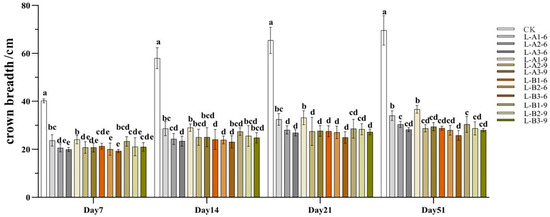
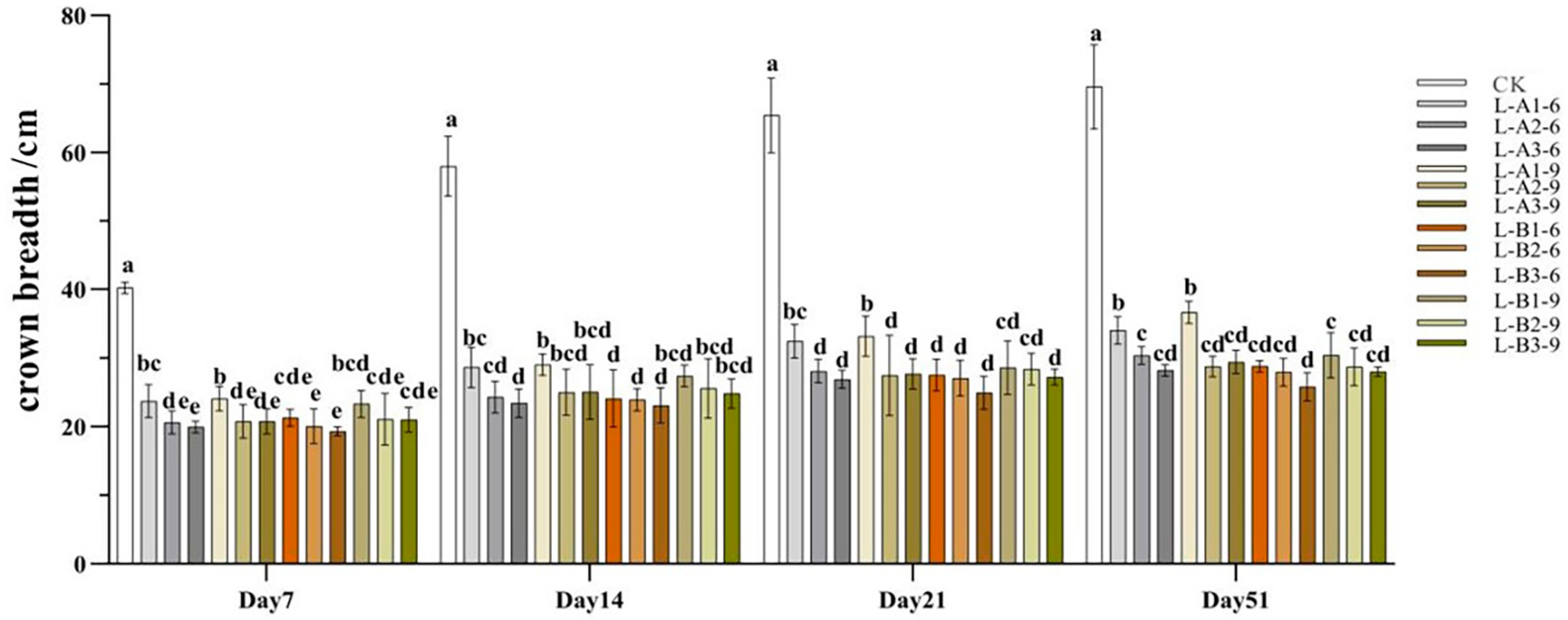
As shown in Figure 1, the crown diameter of water lilies in the CCC and PP333 treatment groups was significantly reduced compared to CK, and the magnitude of reduction increased with increasing treatment concentration. A treatment interval of 6 days resulted in a greater reduction in crown diameter than a 9-day interval. From Day 7 to Day 14, all treatment groups exhibited a significantly slower growth rate of crown diameter compared to CK. Although the application of growth regulators ceased after Day 18 and Day 27, respectively, the crown diameter of the treated plants remained relatively compact over time. By Day 51, crown diameter under all retardant treatments had nearly stabilized. Overall, PP333 showed a superior inhibitory effect compared to CCC.
Figure 1.
Effects of different growth retardants and different application intervals on crown breadth of ‘Black Beauty’. Different lowercase letters only represent that different treatments reached the 0.05 significant difference level in the same period of time (p < 0.05).
3.2. Leaf Length, Leaf Width, Leaf Area, Leaf Thickness
As shown in Figure S1, the CK group exhibited continuous growth, maintaining the maximum values across different measurement stages and sustaining a strong growth vigor. In the treatment groups, leaf area was reduced, leaf length shortened, leaf width narrowed, and leaf thickness increased, indicating a clear dwarfing effect. The effect of PP333 was greater than that of CCC, and the 6-day interval was more effective than the 9-day interval. On Day 7, leaf length and leaf area differed from those of the CK, whereas leaf width and leaf thickness showed no significant difference. By Day 14, all measured traits exhibited some degree of increase. From Day 21 to Day 51, significant differences were observed compared with the CK. Overall, the traits tended to decrease progressively with increasing concentration.
3.3. Peduncle Height, Peduncle Diameter, Flower Height, and Flower Diameter
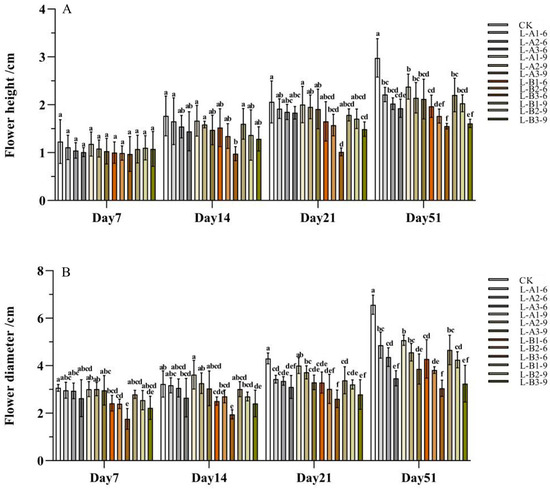
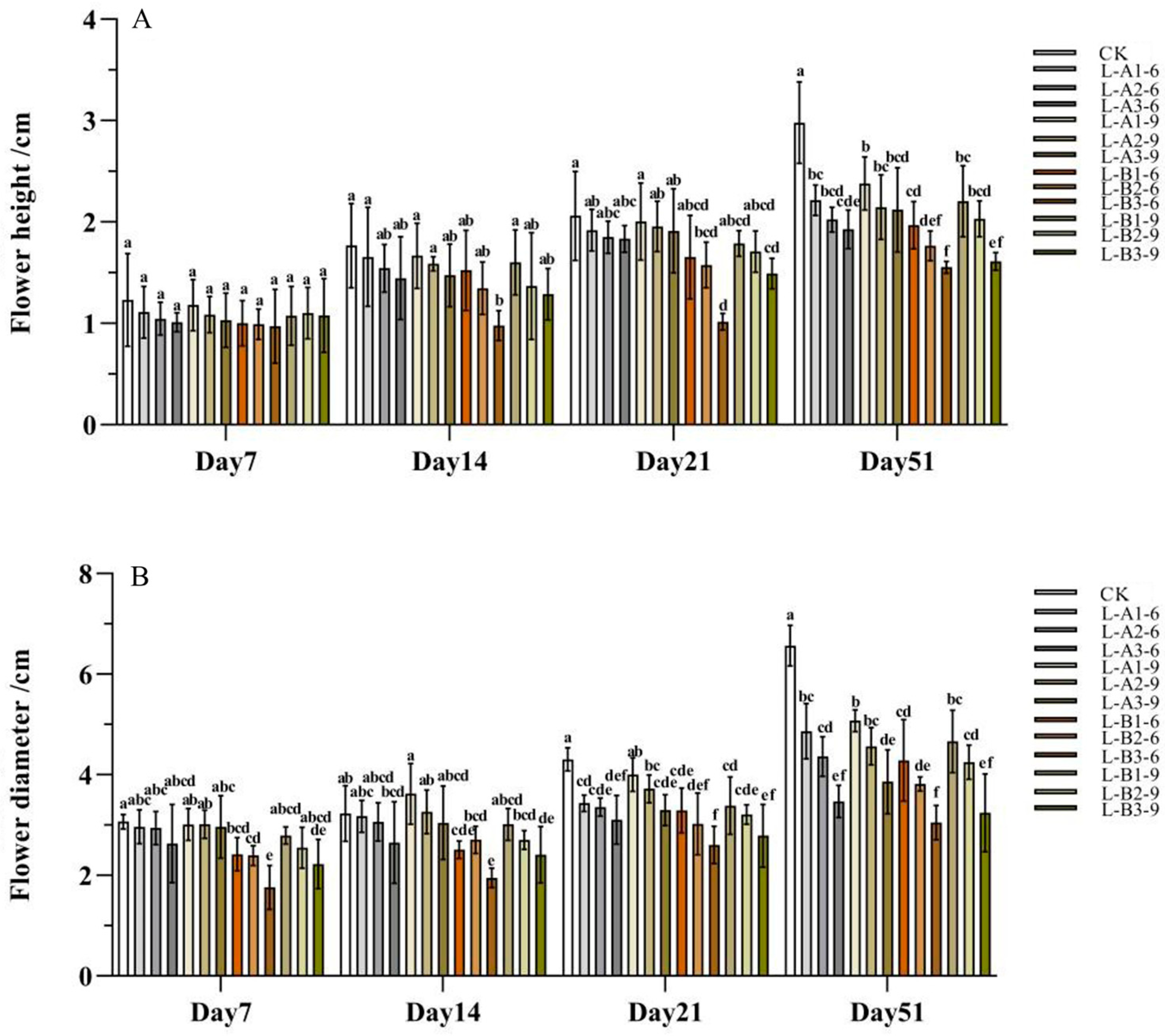
As shown in Figure S2 and Figure 2, the CK maintained a consistently strong growth vigor across all measured traits. Compared with the CK, the treatment groups exhibited significantly reduced values. Overall, flower diameter was reduced, peduncle height and flower height were shortened, and peduncle diameter was decreased, with the effects becoming more pronounced as concentration increased. PP333 demonstrated a more significant effect than CCC, and the 6-day interval was more effective than the 9-day interval. On Day 7, no significant difference in flower height was observed between the treatment groups and the CK, whereas for the other traits, the 6-day interval showed better effects than the 9-day interval. By Day 14, all measured traits had increased to some extent but remained inhibited by the growth retardants compared with the CK. On Day 21 and Day 51, all traits showed significant differences from the CK, characterized by shorter and thinner peduncles, reduced flower height, and smaller flower diameter. Overall, the growth trend of the CK was increasing. Although differences existed between the treatment groups and the CK, none of the measured traits had fully stabilized by the end of the experiment.
Figure 2.
Effects of different growth retardants and different application intervals on flowers growth and development of ‘Black Beauty’. (A) flower height; (B) flower diameter. Different lowercase letters only represent that different treatments reached the 0.05 significant difference level in the same period of time (p < 0.05).
3.4. Flower Number and Flower-to-Leaf Ratio
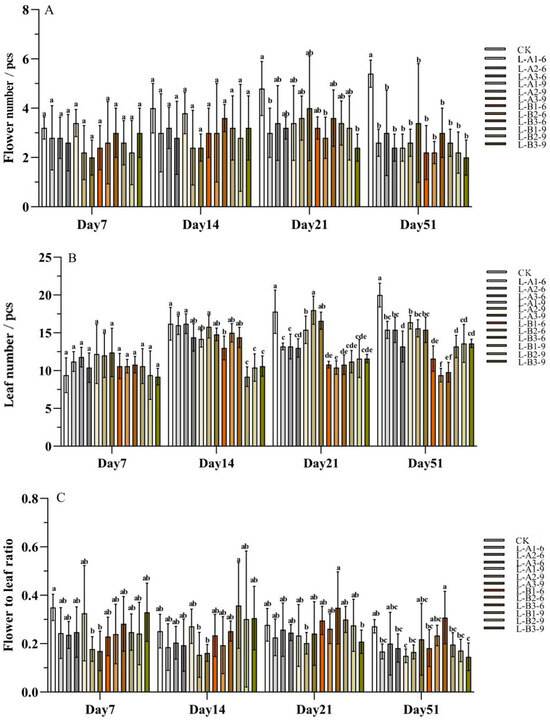
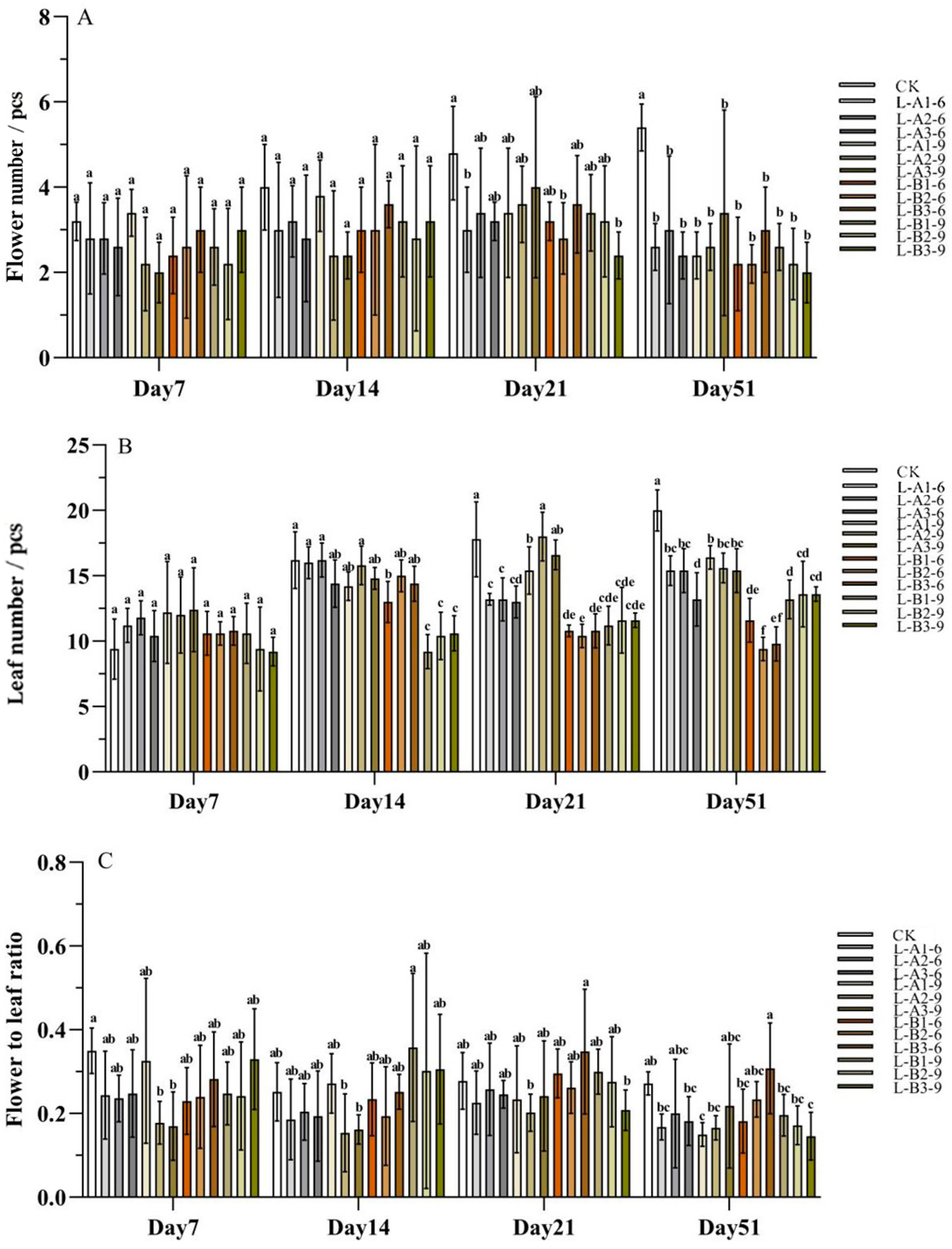
As shown in Figure 3, the growth of all treatment groups was retarded, with reduced flower number and a certain degree of regulation of the flower-to-leaf ratio. The inhibitory effect of CCC was smaller. On Day 7, no significant differences were observed in flower number or flower-to-leaf ratio between the treatment groups and the CK. By Day 14, flower number had increased compared with Day 7, but no significant differences were found among the treatment groups in terms of flower number during the same period. In the PP333 treatment with a 9-day interval, leaf number was lower, resulting in a relatively higher flower-to-leaf ratio. On Day 21, the CK exhibited the highest flower number, while no significant differences were observed among the treatment groups. Leaf number in the CCC treatments was significantly higher than that in the PP333 treatments, whereas no significant differences were found in the flower-to-leaf ratio. On Day 51, flower number showed a decreasing trend in all treatment groups except the CK, which maintained normal growth. CCC had a minor effect on leaf number, while the L-B 3-6 treatment exhibited a significantly distinct flower-to-leaf ratio.
Figure 3.
Effects of different growth retardants and different application intervals on flowers and leaves growth and development of ‘Black Beauty’. (A) flower number; (B) leaf number; (C) flower-to-leaf ratio. Different lowercase letters only represent that different treatments reached the 0.05 significant difference level in the same period of time (p < 0.05).
3.5. Maximum Plant Length and Biomass
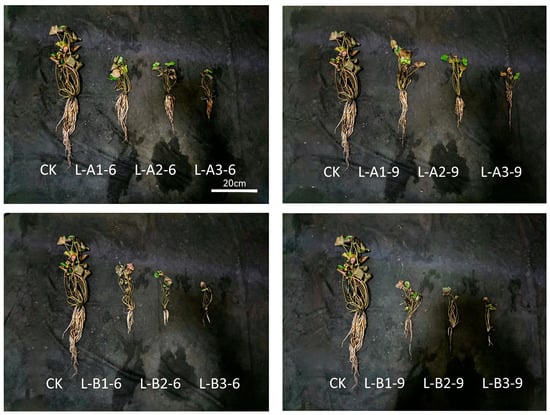
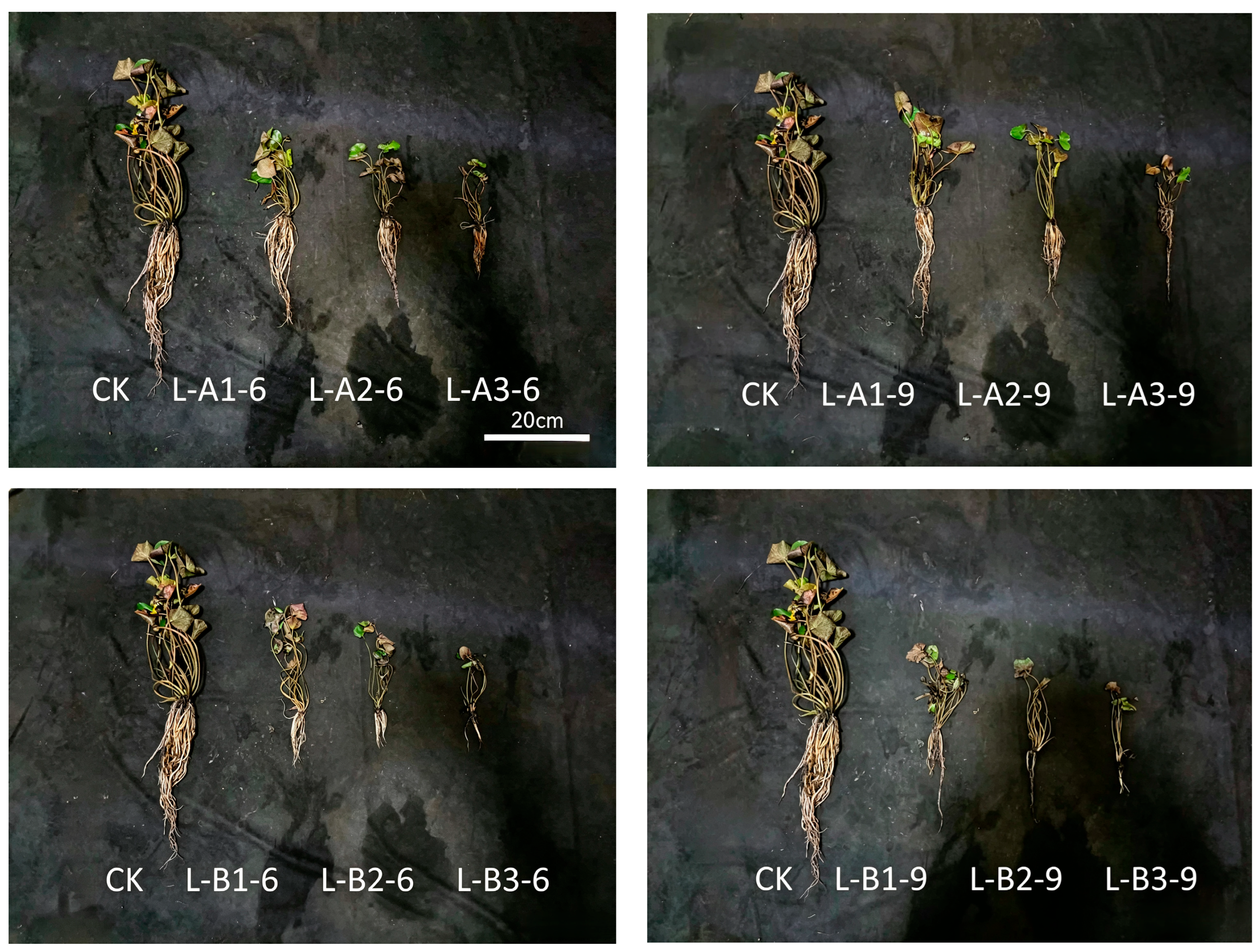
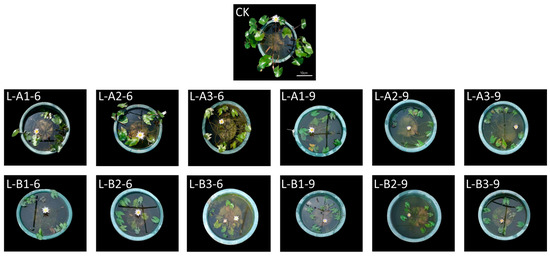
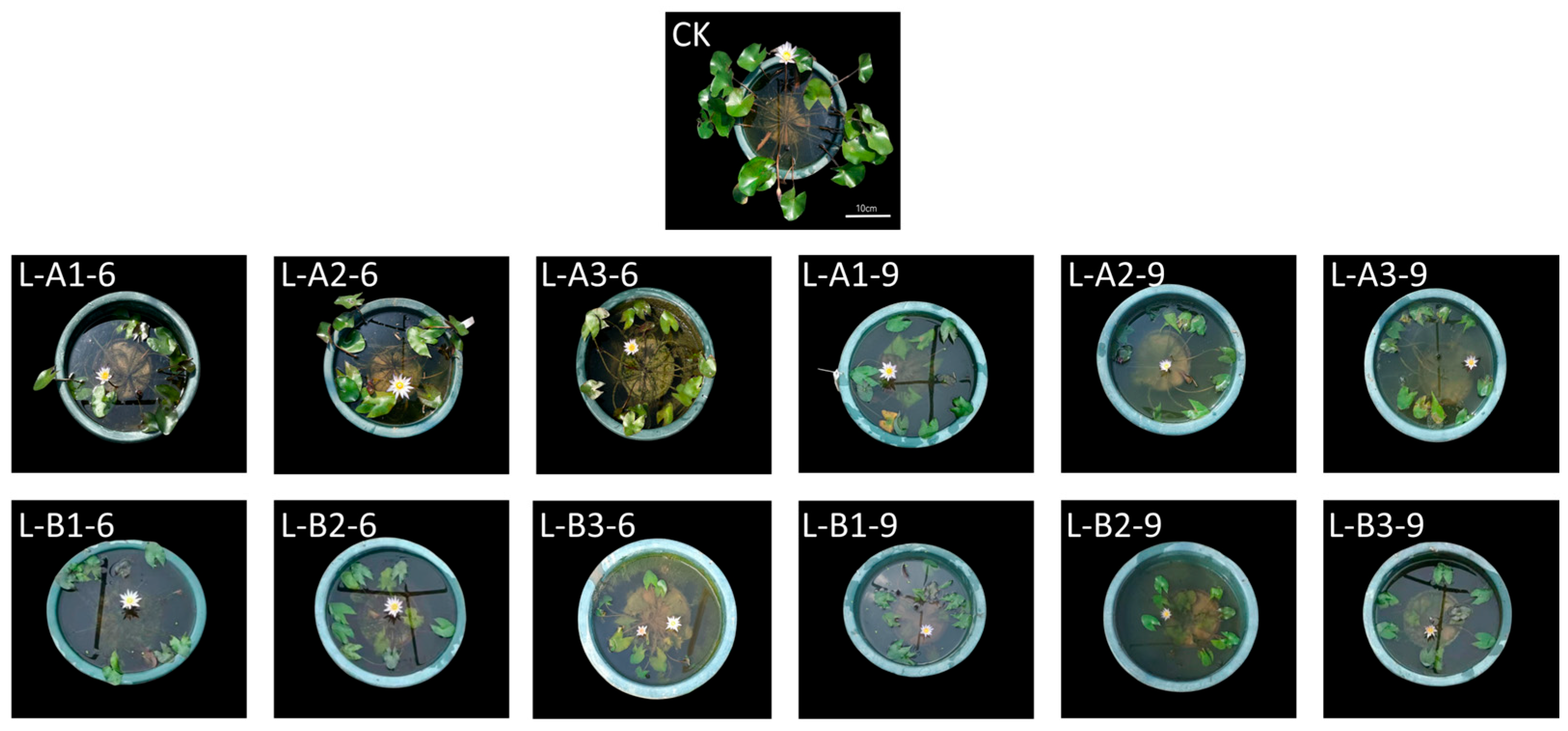
As shown in Table 2 and Figure 4, growth retardant treatments significantly suppressed plant longitudinal elongation, resulting in reduced maximum plant length. The CK exhibited the strongest growth vigor, while the L-B 3-6 treatment showed the strongest inhibitory effect, resulting in a marked dwarfing phenotype. As presented in Table 2 and Figure 5, the CK had the highest fresh weight and dry weight, whereas the L-B 3-6 treatment had the lowest. Both fresh weight and dry weight were lower in PP333 treatments than in CCC treatments. Plant height of water lilies was inversely correlated with the concentration of growth retardants. The most pronounced effect was observed with PP333 treatment, and the 6-day interval was more effective than the 9-day interval.
Table 2.
Effect of different concentrations of CCC and PP333, interval 6 d, 9 d on maximum length of the whole plant, biomass of ‘Black Beauty’. Different lowercase letters only represent that different treatments reached the 0.05 significant difference level in the same period of time (p < 0.05).
Figure 4.
Whole-plant maximum height of the experimental material under plant growth retardant treatment, ‘Black Beauty’.
Figure 5.
Potted plant appearance of the experimental material under plant growth retardant treatment, ‘Black Beauty’.
3.6. Chlorophyll and Carotenoid Content
As shown in Table S1, the contents of chlorophyll a, chlorophyll b, and total chlorophyll in leaves under the L-B 3-6 treatment were significantly higher than those in the CK, and this treatment exhibited the best effect among all treatment groups. Regarding the overall treatment effect on chlorophyll a, chlorophyll b, and total chlorophyll, PP333 was superior to CCC. The lowest chlorophyll a/b ratios were observed in the L-A 3-6 and L-B 3-6 treatments. Carotenoid content was higher under the 6-day application interval. Overall, high concentration combined with a 6-day application interval had a significant effect on regulating the chlorophyll a/b ratio and carotenoid content.
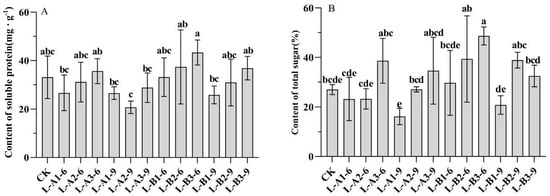
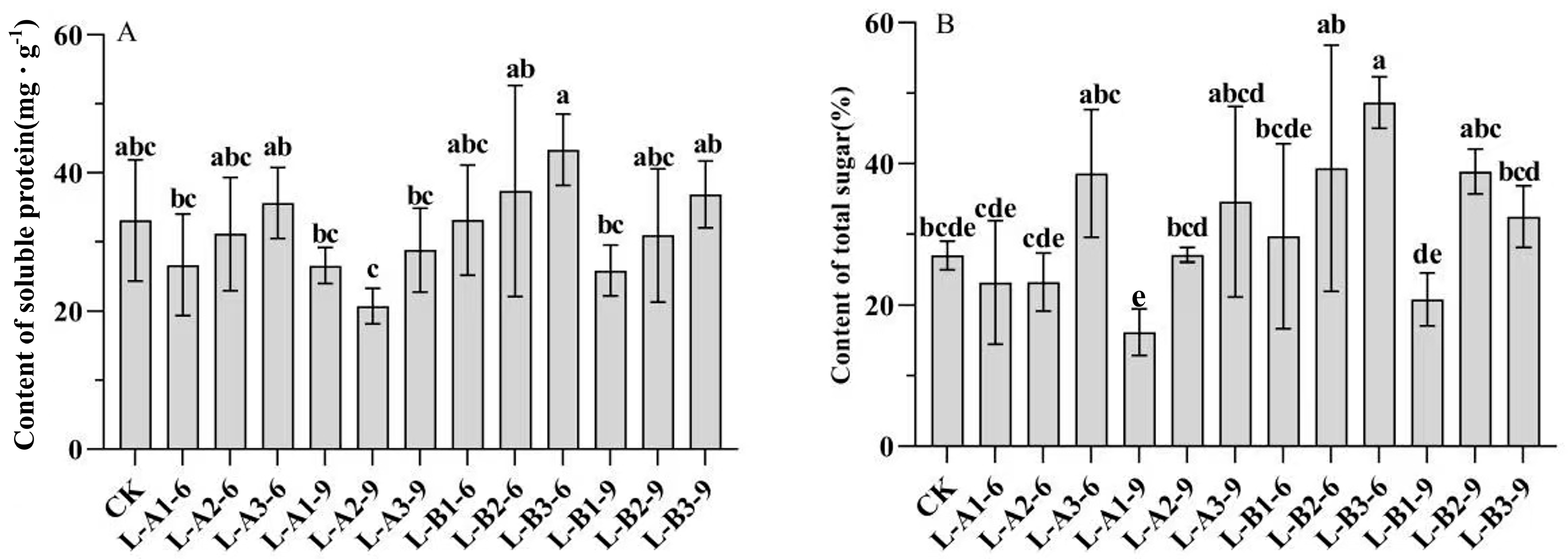
3.7. Soluble Protein and Total Sugar Content
As shown in Figure 6, the effects of the two growth retardants on soluble protein and total sugar content in water lilies were similar, with the 6-day interval treatment showing better results than the 9-day interval treatment. Overall, the effect of the 6-day interval treatment increased with increasing treatment concentration. Both soluble protein and total sugar contents were significantly higher in the L-B 3-6 treatment than in all other treatment groups. Soluble protein content was significantly different from the CK under high-concentration treatments of CCC at 80 mg·L−1 and PP333 at 30 mg·L−1, particularly in the PP333 30 mg·L−1 treatment with a 6-day interval.
Figure 6.
Effects of different growth retardants and different application intervals on content of soluble protein and total sugar of ‘Black Beauty’. (A) soluble protein content; (B) total sugar content. Different lowercase letters only represent that different treatments reached the 0.05 significant difference level in the same period of time (p < 0.05).
3.8. Activities of SOD, POD, and CAT
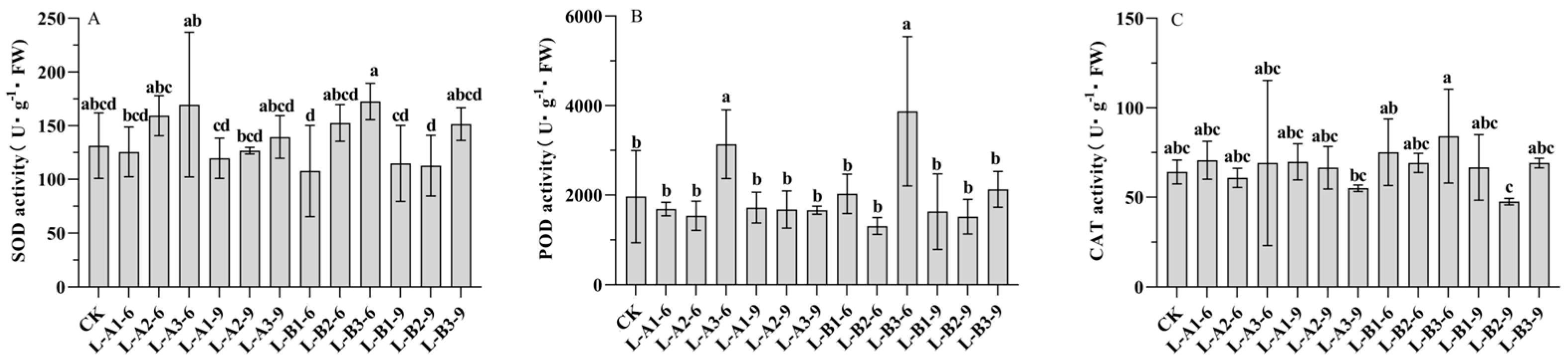
As shown in Figure 7, SOD activity in the treatment groups exhibited an increasing trend with rising retardant concentration. The L-A 3-6 and L-B 3-6 treatments showed significantly higher SOD activity compared with the CK. Regarding POD activity, the L-A 3-6 and L-B 3-6 treatments exhibited the highest values, which were significantly different from the CK, showing a similar pattern to that of SOD activity. However, no significant differences in POD activity were observed between the other treatment groups and the CK. In terms of CAT activity, the L-B 1-6 and L-B 3-6 treatments showed significantly higher CAT activity compared with the CK, while no significant differences were found among the other treatment groups. In summary, the L-B 3-6 treatment resulted in higher activities of SOD, POD, and CAT than those in the CK, and it also represented the highest values among all treatment groups.
Figure 7.
Effects of different growth retardants and different application intervals on activities of antioxidant enzymes of ‘Black Beauty’. (A) SOD; (B) POD; (C) CAT. Different lowercase letters only represent that different treatments reached the 0.05 significant difference level in the same period of time (p < 0.05).
3.9. MDA Content
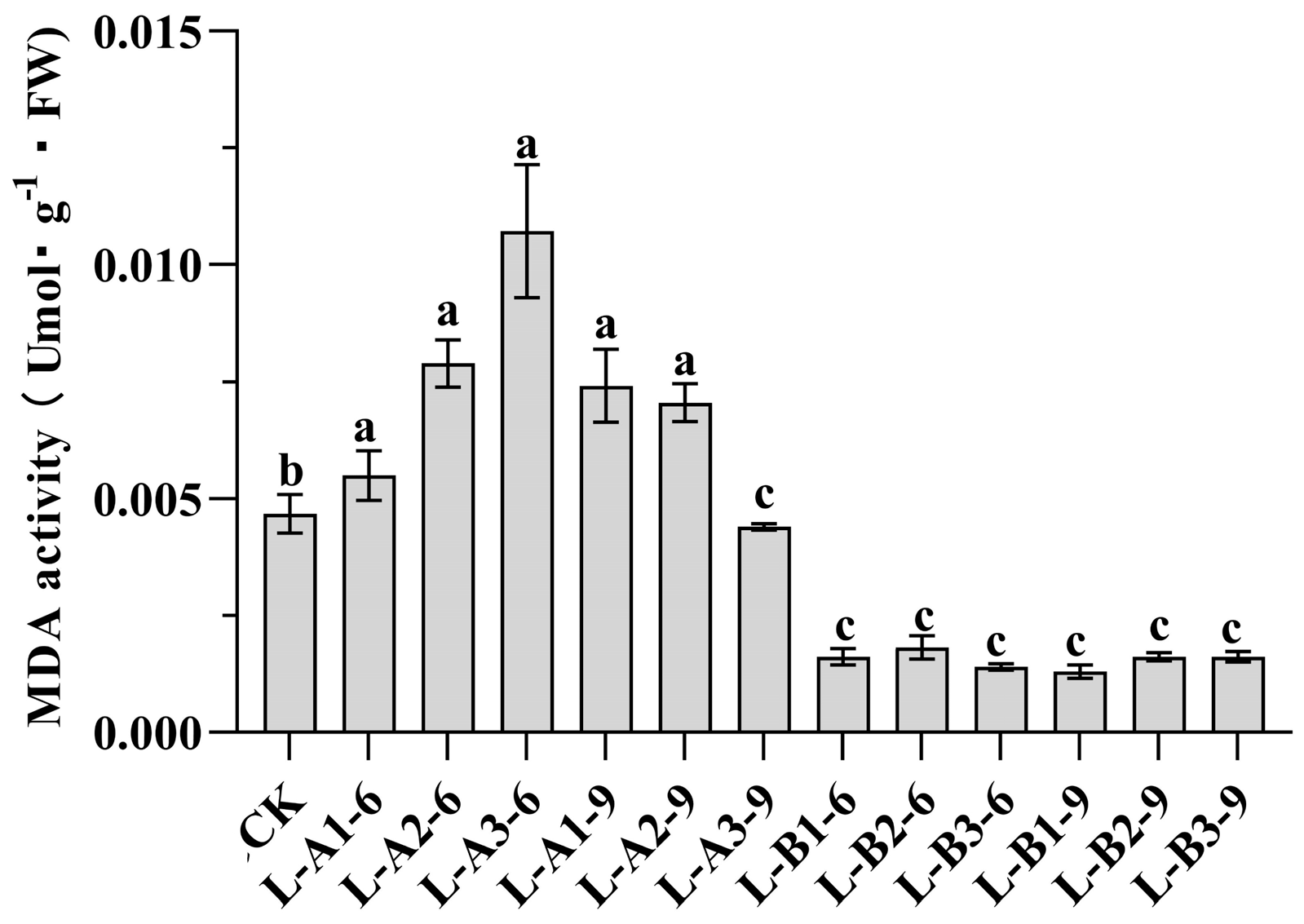
As shown in Figure 8, the MDA content under CCC treatment was generally higher, while that of the CK group was at an intermediate level, and the overall trend under PP333 treatment was lower. Although the MDA content of the CK remained relatively stable, the MDA content under PP333 treatment was significantly reduced.
Figure 8.
Effects of different growth retardants and different application intervals on MDA of ‘Black Beauty’. Different lowercase letters only represent that different treatments reached the 0.05 significant difference level in the same period of time (p < 0.05).
3.10. Endogenous Hormone Content
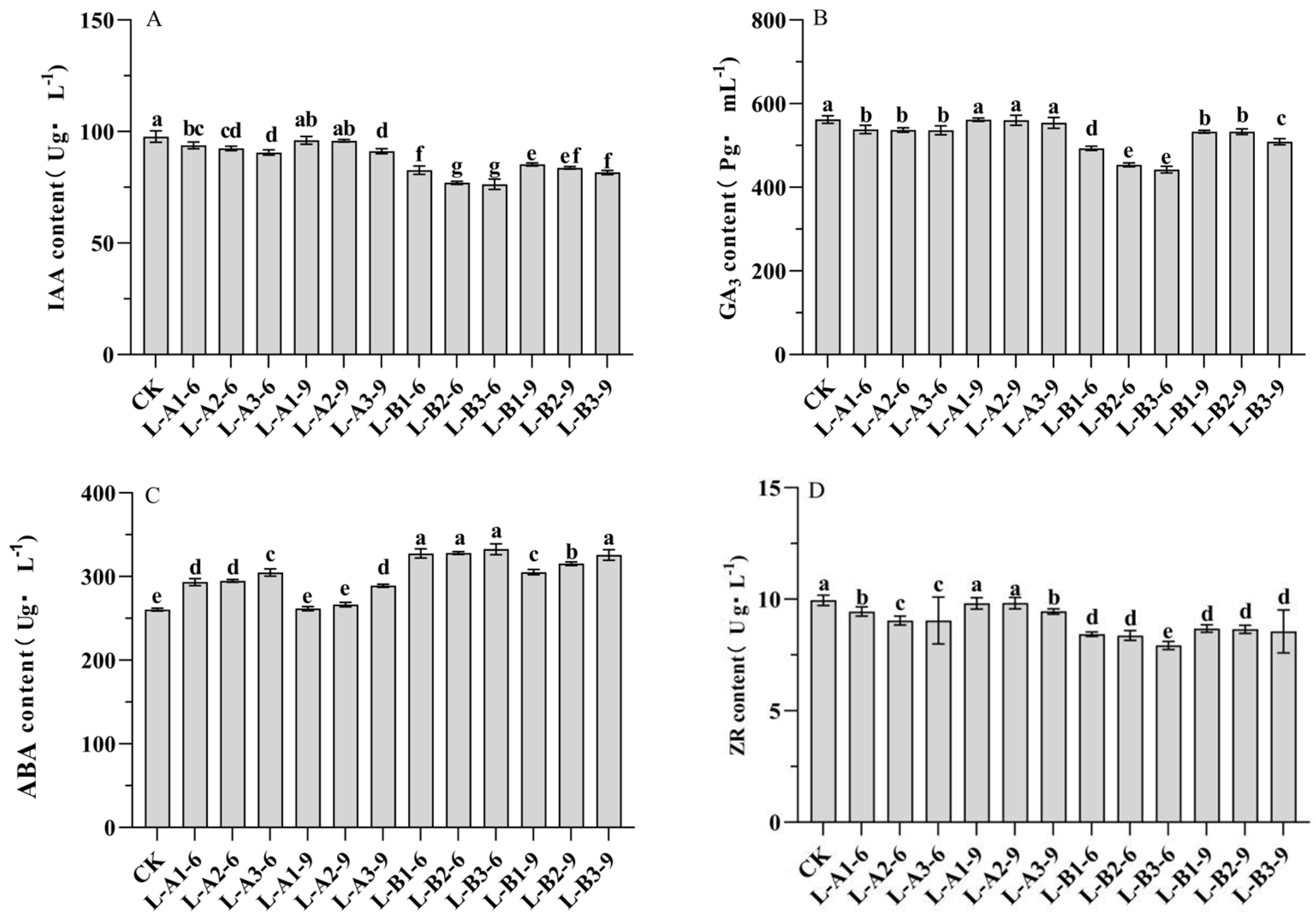
As shown in Figure 9A, endogenous IAA accumulation in all treatment groups declined gradually as the concentration of growth retardants increased. Collectively, PP333 treatments yielded lower IAA accumulation, with the minimum values detected under L-B 2-6 and L-B 3-6 treatments. Figure 9B revealed a comparable changing pattern for endogenous GA3 accumulation. The control group maintained the highest overall GA3 accumulation, whereas PP333 treatments applied at 6-day intervals exhibited the lowest GA3 levels. In Figure 9C, endogenous ABA accumulation rose progressively with elevated retardant concentrations, and all PP333 treatments displayed markedly greater ABA accumulation relative to every other group. As illustrated in Figure 9D, the control group possessed the maximum endogenous ZR accumulation; ZR pools declined steadily with rising chemical concentrations across all treatments, reaching the minimum under the L-B3-6 treatment. In summary, following application of either retardant, endogenous accumulations of IAA, GA3 and ZR were reduced compared with the untreated control, while ABA accumulation was elevated. Endogenous pools of IAA, GA3 and ZR were negatively correlated with retardant concentration, whereas ABA accumulation showed a positive correlation with treatment concentration.
Figure 9.
Effects of different growth retardants and different application intervals on endogenous hormone content of ‘Black Beauty’. (A) IAA; (B) GA3; (C) ABA; (D) ZR. Different lowercase letters only represent that different treatments reached the 0.05 significant difference level in the same period of time (p < 0.05).
Notably, these static measurements of hormone accumulation alone cannot fully reflect actual hormone bioactivity, as data regarding hormone translocation, metabolic turnover and in vivo utilization dynamics remain uncharacterized.
3.11. Comprehensive Evaluation of the Dwarfing Effect of Plant Growth Retardants on Tropical Water Lilies
3.11.1. Membership Function and Principal Component Analysis of Various Traits in Tropical Water Lilies
As shown in the principal component analysis (PCA) results listed in Table 3, the variance contribution rates of the first six principal components were 44.664%, 11.865%, 6.153%, 5.731%, 5.197%, and 4.422%, respectively. Each of these six principal components had an eigenvalue greater than 1, and their cumulative variance contribution rate amounted to 78.032%. Accordingly, retaining the six principal components to conduct a comprehensive evaluation of materials is statistically reasonable.
Table 3.
Principal component analysis results of ‘Black Beauty’.
For the first principal component (PC1), multiple morphological indicators exhibited absolute loading coefficients exceeding 0.700. The traits with prominent positive loadings included flower branch height (0.729), flower diameter (0.853), leaf area (0.917), leaf length (0.907), crown breadth (0.802), plant height (0.923), fresh weight (0.838), and dry weight (0.894). Meanwhile, leaf thickness (−0.915) and leaf number (−0.824) showed strong negative loadings on PC1.
The second principal component (PC2) was mainly represented by flower number (0.609) and flower-to-leaf ratio (0.657). The flower-to-leaf ratio (0.503) contributed most to the third principal component (PC3). MDA content dominated the fourth principal component (PC4) with a loading value of 0.621. CAT activity bore the largest negative loading (−0.511) on the fifth principal component (PC5), and leaf width had the highest loading (0.492) for the sixth principal component (PC6). Each principal component thus reflected a distinct set of correlated agronomic and physiological characteristics.
3.11.2. Comprehensive Evaluation of Plant Responses to Plant Growth Retardant Applications
Based on the results of the principal component analysis, the comprehensive score formula was derived as follows:
For the six principal components (F1, F2, F3, F4, F5, F6), the weights of their contribution rates were 0.5724, 0.1521, 0.0789, 0.0734, 0.0666, and 0.0567, respectively (Table 4).
F = F1 × 0.5724 + F2 × 0.1521 + F3 × 0.0789 + F4 × 0.0734 + F5 × 0.0666 + F6 × 0.0567
Table 4.
Principal component score of ‘Black Beauty’.
The comprehensive score (F value) was calculated using the above formula to evaluate the growth of water lilies under different retardant treatments. The treatments were then ranked according to their comprehensive scores.
As shown in Table 4, the top three treatments with the highest comprehensive scores were L-B 3-6, L-B 2-6, and L-B 3-9.
The treatment with the best comprehensive score was L-B 3-6, which can be considered a reference treatment for achieving dwarfing in the water lily cultivar ‘Black Beauty’.
4. Discussion
To achieve dwarfing cultivation of water lilies, it is necessary to reduce the crown diameter of the plants. The present study demonstrated that both growth retardants (PP333 and CCC) effectively reduced crown diameter, and PP333 produced stronger inhibitory effects than CCC. This was manifested as shortened petiole length, a reduced number of leaves, and no significant decrease in flower number, thereby essentially accomplishing the goal of dwarfing water lily plants. These findings are consistent with those of Tripathy et al. in chrysanthemum, who reported that PP333 at 90 mg·L−1 maximally reduced plant height and internode length, while CCC at 1000 mg·L−1 reduced plant height but increased plant spread and flower number per plant [31]. Similarly, Demir et al. found that PP333 at 2 mg·pot−1 significantly inhibited plant height and leaf length in narcissus (Narcissus tazetta var. chinensis Roem.) [32].
Our study showed that within the concentration range of 10–30 mg·L−1, the inhibitory effect of PP333 on water lily growth became more pronounced with increasing concentration, and no obvious phytotoxicity was observed. However, compared with the optimal PP333 drench concentration of 90 mg·L−1 for chrysanthemum and 60 mg·L−1 for poinsettia, the concentration used in this study has not yet reached the maximum threshold, indicating that water lilies possess good tolerance to PP333 [31,33]. In contrast, basil (Ocimum basilicum) required only 5 mg·L−1 PP333 to achieve growth inhibition, suggesting that water lilies are moderately sensitive to PP333 [34]. Therefore, it is recommended that future studies include higher concentrations and a wider gradient of PP333 to explore better dwarfing effects.
The 6-day treatment interval induced a more prominent dwarfing effect compared with the 9-day interval, a feature that may help shorten the production cycle of potted water lilies and bring forward their time to market. Moreover, dwarfing traits could still be observed at 51 days post-treatment, which only provides preliminary short-term evidence for dwarfing persistence under household cultivation environments within this monitoring period. Treated plants showed a lower incidence of tall growth reversion during the 51-day observation window; this trait might extend the ornamental period, improve consumer experience, and potentially cut down after-sales complaints. Overall, our findings offer tentative theoretical references for the cultivation of miniature potted water lilies, yet long-term continuous monitoring trials are still required to verify sustained dwarfing stability, permanent inhibition of growth reversion, stable consumer satisfaction and reliable commercial practicability of this treatment strategy.
Physiological indicators measured 51 days after treatment showed that soluble protein and soluble sugar contents increased in the PP333 treatment groups, and the activities of SOD, POD, and CAT were all higher than those in CK. These physiological responses are consistent with previous research regarding the dwarfing effects of plant growth retardants on Melaleuca alternifolia [35], which suggests that PP333 may maintain normal metabolic activity and stress resistance while inducing plant dwarfing. MDA content was significantly lower than that in the CK, indicating no membrane lipid peroxidation damage, further confirming that 30 mg·L−1 is a safe concentration. The contents of IAA, GA3, and ZR were lower than those in the CK, while ABA content was higher, which is consistent with the findings of Tabatabaei et al. in chemical and mechanical dwarfing studies on M7 apple rootstock [36]. Based on the existing literature, PP333 functions as a GA3 synthesis inhibitor [35]; inferred from published studies rather than direct evidence from the present results, the reduction in GA3 induced by PP333 may further regulate IAA and ZR homeostasis, potentially restraining cell elongation and division and consequently leading to plant dwarfing. Meanwhile, the accumulated ABA is hypothesized to be associated with improved plant stress tolerance.
Based on the above experimental results and related studies, the physiological mechanisms by which paclobutrazol induces dwarfing in water lilies are as follows: First, it inhibits gibberellin biosynthesis. PP333, a triazole plant growth retardant, effectively inhibits gibberellin biosynthesis in plants. Gibberellin is a key hormone promoting cell elongation and internode extension; its reduction directly leads to shortened internodes and reduced plant height, thereby achieving a dwarfing effect. Second, it alters the endogenous hormone balance. In addition to inhibiting gibberellin, paclobutrazol reduces the synthesis or metabolism of IAA and promotes ABA accumulation, further regulating the balance between growth and dormancy and suppressing vegetative growth. Meanwhile, increases in soluble protein and soluble sugar content indicate that cells maintain metabolic activity and energy supply through the accumulation of osmotic regulatory substances, without exhibiting decline due to dwarfing. Third, it affects cell structure and function. Studies have shown that paclobutrazol treatment shortens cell longitudinal length while increasing transverse width [37], resulting in thicker stems and compact internodes. It also enhances chlorophyll content and improves photosynthetic efficiency, leading to thicker leaves and darker green coloration. Finally, it promotes tillering and lateral bud sprouting. By inhibiting apical dominance, paclobutrazol stimulates lateral bud sprouting and tillering, resulting in a more compact plant architecture and enhanced lodging resistance.
Following growth retardant application, the crown diameter of water lilies was generally maintained at 20–30 cm. Accordingly, pots with an outer diameter of 30–35 cm are recommended for cultivation.
5. Conclusions
This study systematically investigated the dwarfing effects of two common plant growth retardants (CCC and PP333) with different concentrations and application intervals on the tropical water lily cultivar ‘Black Beauty’. Overall, exogenous retardant application effectively inhibited the vegetative and reproductive overgrowth of water lilies, producing stable compact plant architecture. The inhibitory effects on plant morphological traits were concentration-dependent, and treatment interval significantly modulated the dwarfing efficacy.
Between the two retardants, PP333 exhibited substantially superior dwarfing performance compared with CCC, and a 6-day application interval achieved a better regulatory effect than a 9-day interval. At the physiological level, optimal retardant treatment improved photosynthetic substrate accumulation and antioxidant enzyme activity, reduced membrane lipid peroxidation damage, and regulated endogenous hormone dynamic balance by decreasing IAA, GA3, and ZR accumulation while elevating ABA accumulation. These physiological changes jointly contributed to the formation of compact and dwarf plant phenotypes without impairing the basic ornamental characteristics of water lilies.
In summary, treatment with PP333 at 30 mg·L−1 applied at a 6-day interval effectively achieved a stable dwarfing effect in the water lily cultivar ‘Black Beauty’. To assess the potential environmental load, we propose a typical home garden scenario: a 1-m2 pond with a water depth of 0.3 m (volume ≈ 300 L). Following the recommended regimen (30 mg·L−1 × 300 L = 9 g per application × 5 applications per season), each garden would consume 45 g of paclobutrazol annually. For 100 such gardens, the total annual input reaches 4.5 kg. Assuming a worst-case scenario in which all applied paclobutrazol is released into the environment via overflow, drainage, or substrate leaching, this would result in 45 g per garden and 4.5 kg per 100 gardens entering the ecosystem each year. These estimates, even under small-scale horticultural conditions, indicate that cumulative environmental inputs are substantial, highlighting the urgency of adopting controlled application strategies and conducting further research on the environmental persistence and ecological risks of paclobutrazol in aquatic ecosystems.
Supplementary Materials
The following supporting information can be downloaded at https://www.mdpi.com/article/10.3390/horticulturae12070895/s1, Figure S1: Effects of different growth retardants and different application intervals on Leaf length (A), Leaf width (B), Leaf area (C), Leaf thickness (D) of ‘Black Beauty’; Figure S2: Effects of different growth retardants and different application intervals on Flower branch height (A), Thickness of flowering branches (B) of ‘Black Beauty’; Table S1: Effects of different growth retardants and different application intervals on Chlorophyll, Carotenoid of ‘Black Beauty’.
Author Contributions
Y.X.: Writing—review and editing, Funding acquisition; Q.N.: Writing—original draft; Y.Z.: Writing—Validation, Methodology; S.C.: Software, Conceptualization; R.J.: Visualization, Formal analysis; Z.Y.: Resources, Investigation; Q.J.: Supervision, Data curation; Y.W.: Supervision, Data curation. All authors have read and agreed to the published version of the manuscript.
Funding
This research was funded by Guangzhou Municipal Science and Technology Project on Agricultural and Social Development (Grant No. 2024B03J1348), the Key Research and Development Project of Hainan Province (Grant No. ZDYF2022XDNY266), and the Achievement Transformation Fund Project of Sanya Research Institute, Nanjing Agricultural University (Grant No. NAUSY-CG-YB09), and National Natural Science Foundation of China—Xinjiang Joint Fund (Grant Nos. U1803104, U2003113).
Data Availability Statement
The original contributions presented in this study are included in the article/Supplementary Materials. Further inquiries can be directed to the corresponding author.
Conflicts of Interest
The authors declare no conflicts of interest.
References
- Lin, F.; Kang, Y.; Al-Huqail, A.A.; Alshehri, D.; Li, Y.; Guo, Y.; Yang, G.; Tang, F.; Yin, J.; Ding, Z.; et al. Novel cultivation techniques for water lily (Nymphaea micrantha Guill. & Perr) production based on in vitro technology. Plant Methods 2025, 21, 56. [Google Scholar] [CrossRef] [Scilit] [PubMed]
- Wu, Q.; Wu, J.; Li, S.S.; Zhang, H.J.; Feng, C.Y.; Yin, D.D.; Wu, R.Y.; Wang, L.S. Transcriptome sequencing and metabolite analysis for revealing the blue flower formation in waterlily. BMC Genom. 2016, 17, 897. [Google Scholar] [CrossRef] [Scilit]
- Zhu, M.; Zheng, X.; Shu, Q.; Li, H.; Zhong, P.; Zhang, H.; Xu, Y.; Wang, L.; Wang, L. Relationship between the composition of flavonoids and flower colors variation in tropical water lily (Nymphaea) cultivars. PLoS ONE 2012, 7, e34335. [Google Scholar] [CrossRef] [Scilit] [PubMed]
- Thomas, A.; Marie, S.M.; Siegmar, S. Rediscovery of the waterlily Nymphaea thermarum Eb. Fisch. Rwanda Oryx 2024, 58, 600–602. [Google Scholar] [CrossRef] [Scilit]
- Ellis, G.D.; Knowles, L.O.; Knowles, N.R. Increasing the production efficiency of potato with plant growth retardants. Am. J. Potato Res. 2020, 97, 88–101. [Google Scholar] [CrossRef] [Scilit]
- Ren, X. Effects of different plant growth inhibitors on growth and flowering of narcissus. Hunan Agric. Sci. Technol. Newsl. 2003, 4, 6–9. [Google Scholar]
- Thakur, T.; Garg, A.; Kaur, P. Growth retardants: Efficient tool for regulating plant architecture and flowering in ornamental crops. S. Afr. J. Bot. 2025, 184, 911–922. [Google Scholar] [CrossRef] [Scilit]
- Zhang, J.; Liu, N.; Wu, K.; Zhang, X.; Gao, C.; Liu, F.; Sun, J.; Liu, C. Regulatory effects of Paclobutrazol and Uniconazole Mixture on the Morphology and Biomass Allocation of Amorpha fruticosa Seedlings. Plants 2025, 14, 3684. [Google Scholar] [CrossRef] [Scilit] [PubMed]
- Currey, J.C.; Walters, J.K.; Flax, J.N. Foliar Sprays of Flurprimidol, Paclobutrazol, and Uniconazole Suppress Height of Seed-propagated New Guinea Impatiens. HortTechnology 2016, 26, 20–25. [Google Scholar] [CrossRef] [Scilit]
- Kulkarni, R.; Ramteke, S.; Bankar, P.; Urkude, V.; Kalbhor, J.; Shelke, T.; Deshmukh, U.; Bhagwat, S. Effect of chlormequat chloride (CCC) on morphological parameters, fruitfulness, and residue in grapes. Indian Hortic. J. 2018, 8, 87–92. [Google Scholar]
- Zhang, C.; Li, W.; Gao, Y.; Xu, Z.; Tian, X. Artificial Regulation Effect of Plant Retardants on Leaf Anatomical Characteristics of Elaeagnus angustifolia. Front. Environ. Sci. 2022, 10, 900960. [Google Scholar] [CrossRef] [Scilit]
- Chaturvedi, A.; Tripathi, N.A.; Chaturvedi, S. Effect of plant growth regulators and floral preservatives on plant growth, spike yield and vase life of Dendrobium orchid hybrid Sonia-17. Progress. Hortic. 2016, 48, 62–65. [Google Scholar] [CrossRef] [Scilit]
- Bidave, S.; Munde, G. Effect of growth retardants on vegetative and flowering characters of okra (Abelmoschus esculentus L.) CV.PBN-OK-1. BIOINFOLET—Q. J. Life Sci. 2020, 17, 59–62. [Google Scholar]
- Li, F.; Huang, X.; Li, Z.; Li, M.; Wang, N.; Zhang, J.; Wang, Y.; Sun, T.; Wang, H. Effects of chlormequat chloride treatment on the growth and physiological indices of wheat. Cereal Res. Commun. 2024, 53, 1147–1158. [Google Scholar] [CrossRef] [Scilit]
- Desta, B.; Amare, G. Paclobutrazol as a plant growth regulator. Chem. Biol. Technol. Agric. 2021, 8, 1. [Google Scholar] [CrossRef] [Scilit]
- Yuan, X.; Yuan, T. Effect of GA and PP333 on autumn reflowering of two Chinese tree peony (Paeonia × suffruticosa Andrews) cultivars. S. Afr. J. Bot. 2025, 177, 312–319. [Google Scholar] [CrossRef] [Scilit]
- Waqas, M.; Yaning, C.; Iqbal, H.; Shareef, M.; Rehman, H.; Yang, Y. Paclobutrazol improves salt tolerance in quinoa: Beyond the stomatal and biochemical interventions. Agron. Crop Sci. 2017, 203, 315–322. [Google Scholar] [CrossRef] [Scilit]
- Meng, J.S.; Li, M.; Hao, Z.J.; Zhao, D.Q.; Tao, J. Paclobutrazol Can Enhance the Thermal-Tolerant on Herbaceous Peony (Paeonia lactiflora). Russ. J. Plant Physiol. 2022, 69, 57. [Google Scholar] [CrossRef] [Scilit]
- Li, X.; Jiang, J.; Xu, J.; Zhu, J.; Jiang, H. Effects of different mass concentrations of paclobutrazol on growth and some physiological indices of leaves in bowl lotus cultivar ‘Huohua’. J. Plant Resour. Environ. 2017, 26, 51–58. (In Chinese) [Google Scholar]
- Saraiva Grossi, J.A.; de Moraes, P.J.; de Araújo Tinoco, S.; Barbosa, J.G.; Finger, F.L.; Cecon, P.R. Effects of paclobutrazol on growth and fruiting characteristics of ‘Pitanga’ ornamental pepper. Acta Hortic. 2005, 683, 333–336. [Google Scholar] [CrossRef] [Scilit]
- Jayanta, S. Effect of paclobutrazol on physiology, growth and yield of sunflower (Helianthus annuus L.). Plant Physiol. Rep. 2023, 28, 231–237. [Google Scholar] [CrossRef]
- Li, J.; Zhou, X.; Zhou, J.; Shang, R.; Wang, Y.; Jing, P. Comparative Study on Several Determination Methods of Chlorophyll Content in Plants. IOP Conf. Ser. Mater. Sci. Eng. 2020, 730, 012066. [Google Scholar] [CrossRef] [Scilit]
- Serra, S.; Morgante, L. Method of determination of proteins with Coomassie brilliant blue G 250. I. General characteristics and comparative analysis with the biuret method and Lowry’s method. Boll. Della Soc. Ital. Biol. Sper. 1980, 56, 160–165. [Google Scholar]
- Brahimi, A.; El Ouardi, M.; Kaouachi, A.; Boudboud, A.; Hajji, L.; Hajjaj, H.; Mazouz, H. Characterization of the Biochemical Potential of Moroccan Onions (Allium cepa L.). Int. J. Food Sci. 2022, 2022, 2103151. [Google Scholar] [CrossRef] [Scilit] [PubMed]
- Beauchamp, C.; Fridovich, I. Superoxide dismutase: Improved assays and an assay applicable to acrylamide gels. Anal. Biochem. 1971, 44, 276–287. [Google Scholar] [CrossRef] [Scilit] [PubMed]
- Zhou, W.; Zhao, D.; Lin, X. Effects of waterlogging on nitrogen accumulation and alleviation of waterlogging damage by application of nitrogen fertilizer and mixtalol in winter rape (Brassica napus L.). J. Plant Growth Regul. 1997, 16, 47–53. [Google Scholar] [CrossRef] [Scilit]
- Quintanilla-Guerrero, F.; Duarte-Vázquez, M.A.; García-Almendarez, B.E.; Tinoco, R.; Vazquez-Duhalt, R.; Regalado, C. Polyethylene glycol improves phenol removal by immobilized turnip peroxidase. Bioresour. Technol. 2008, 99, 8605–8611. [Google Scholar] [CrossRef] [Scilit] [PubMed]
- Muñoz-Muñoz, J.L.; García-Molina, F.; García-Ruiz, P.A.; Arribas, E.; Tudela, J.; García-Cánovas, F.; Rodríguez-López, J.N. Enzymatic and chemical oxidation of trihydroxylated phenols. Food Chem. 2009, 113, 435–444. [Google Scholar] [CrossRef] [Scilit]
- Aebi, H. Catalase in vitro. In Methods in Enzymology; Academic Press: Cambridge, MA, USA, 1984; Volume 105, pp. 121–126. [Google Scholar]
- Kumar, G.N.M.; Knowles, N.R. Changes in lipid peroxidation and lipolytic and free-radical scavenging enzyme activities during aging and sprouting of potato (Solanum tuberosum) seed-tubers. Plant Physiol. 1993, 102, 115–124. [Google Scholar] [CrossRef] [Scilit] [PubMed]
- Tripathy, A.; Mandal, T.; Chakraborti, K.; Swathi, K. Plant Growth Retardent Mediated Changes in Growth, Development and Flowering of Pot Mum CV. Royal Purple. BIOINFOLET—Q. J. Life Sci. 2016, 13, 501–503. [Google Scholar]
- Demir, S.; Çelikel, G.F. Effects of plant growth regulators on the plant height and quantitative properties of Narcissus tazetta. Turk. J. Agric. For. 2019, 43, 105–114. [Google Scholar] [CrossRef] [Scilit]
- Botond, A.C.; Tatár, M.; Buta, E.; Molnár, K. Effects of Plant Growth Retardants on Development of Poinsettia “Christmas Feeling” Cultivar. Acta Biol. Marisiensis 2021, 4, 32–38. [Google Scholar] [CrossRef] [Scilit]
- Santos Filho, F.B.; Silva, T.I.; Dias, M.G.; Alves, A.C.L.; Grossi, J.A.S. Paclobutrazol reduces growth and increases chlorophyll indices and gas exchanges of basil (Ocimum basilicum). Braz. J. Biol. 2022, 82, e262364. [Google Scholar] [CrossRef] [Scilit] [PubMed]
- Li, Q.; Zhang, L.; Cao, S.; Li, J.; Yan, J.; Xiong, L.; Wang, F.; He, J. Dwarfing Effect of Plant Growth Retarders on Melaleuca alternifolia. Forests 2023, 14, 732. [Google Scholar] [CrossRef] [Scilit]
- Tabatabaei, M.G.; Zaare-Nahandi, F.; Dadpour, M.; Ghafariyan, M.H. Chemical versus mechanical dwarfing of M7 apple rootstock: Contrasting pathways induced by paclobutrazol and bonsai techniques. BMC Plant Biol. 2026, 26, 356. [Google Scholar] [CrossRef] [Scilit] [PubMed]
- Liu, W.; Cui, J.; Ran, C.; Zhang, Y.; Liang, J.; Shao, X.; Zhang, Q.; Geng, Y.; Guo, L. Paclobutrazol Enhanced Stem Lodging Resistance of Direct-Seeded Rice by Affecting Basal Internode Development. Plants 2024, 13, 2289. [Google Scholar] [CrossRef] [Scilit] [PubMed]

Disclaimer/Publisher’s Note: The statements, opinions and data contained in all publications are solely those of the individual author(s) and contributor(s) and not of MDPI and/or the editor(s). MDPI and/or the editor(s) disclaim responsibility for any injury to people or property resulting from any ideas, methods, instructions or products referred to in the content. |
© 2026 by the authors. Licensee MDPI, Basel, Switzerland. This article is an open access article distributed under the terms and conditions of the Creative Commons Attribution (CC BY) license.