


Abstract
Stone and pome fruit trees play a significant role in fruit production and consumption in China. As an economic fruit tree variety in Shaanxi Province, the cultivation area of Malus ‘Jinxiu’ has been gradually expanding. Brown rot, caused by several species of the genus Monilinia, can result in flower blight and fruit rot, leading to serious economic losses. In September 2025, brown rot symptoms were observed on Malus ‘Jinxiu’ fruits in orchards in Shaanxi Province, China. A total of 90 isolates recovered from symptomatic fruits were identified based on morphological characteristics, pathogenicity, and multi-locus sequence analyses of the internal transcribed spacer of ribosomal DNA (rDNA-ITS), β-tubulin gene (tub2), and laccase genes (lcc2). The results showed that the causal agent of Malus ‘Jinxiu’ brown rot in Shaanxi Province is Monilinia yunnanensis. Furthermore, upon artificial inoculation, M. yunnanensis isolates from both Malus ‘Jinxiu’ and ‘Fuji’ apple hosts can cross-infect and cause brown rot symptoms. At the same time, a M. yunnanensis isolate from Malus ‘Jinxiu’ showed similar virulence on five other local cultivated apple varieties. To our knowledge, this is the first report of M. yunnanensis infecting Malus ‘Jinxiu’. This study provides a basis for developing field diagnosis and integrated control measures for brown rot disease of Malus ‘Jinxiu’ in Shaanxi Province, China.
1. Introduction
Apple is one of the most important economic deciduous fruit trees in China, and its cultivation area and output account for more than 50% of the world, with an annual total output value of 210 billion yuan [1]. The Shaanxi Loess Plateau apple production area is one of the important apple production areas in China, and its cultivation area and yield rank first in China [2]. China is one of the global centers for the origin and evolution of apple cultivation and possesses a wealth of genetic resources. To address the problem of homogenization and simplification of apple varieties, a series of new varieties such as ‘Qincui’, ‘Ruixue’, ‘Venus Golden’ (all three belonging to Malus domestica), and Malus ‘Jinxiu’ have been bred by domestic scientific research institutions and are widely grown in the main apple-producing areas of Shaanxi Province [3].
Malus ‘Jinxiu’ apples (also known as “crab apple”) are small-sized edible fruits with a diameter of 3–5 cm and usually ripen in September in northern China. Malus ‘Jinxiu’ fruits are rich in phenolic compounds and bioactive nutrients, and they exhibit notable health benefits, including antiviral, antimicrobial, and antioxidant [4]. This variety is highly popular among consumers due to its unique qualities, vibrant appearance, fine texture, sweet-and-sour flavor, and rich aroma. In recent years, Malus ‘Jinxiu’ has been widely introduced and cultivated in the apple-growing regions of the Loess Plateau in Shaanxi. Its fruit is sold both domestically and internationally, yielding significant economic, social, and ecological benefits [3]. As a superior new apple variety, Malus ‘Jinxiu’ is primarily cultivated with a dense planting system on dwarf rootstocks in northern Shaanxi. However, the continuous expansion of cultivation areas and climate change have increased pest and disease outbreaks. These have become a serious threat to production. In September of 2025, during the pre-maturity stage of the Malus ‘Jinxiu’ apple, brown rot occurred extensively, causing widespread fruit rot, significant losses in yield, and a marked decline in fruit quality. The occurrence of this disease has become a serious challenge to the sustainable development of the Malus ‘Jinxiu’ apple industry.
Fruit brown rot caused by Monilinia species is one of the major diseases affecting stone and pome fruit cultivation worldwide. The disease primarily affects flowers, buds, twigs, and fruits, particularly those nearing maturity or at maturity, and continues to cause damage during post-harvest storage. It can lead to fruit rot in both orchard and cold storage environments, resulting in severe economic losses [5,6]. Currently, there are six dominant species responsible for brown rot in stone and pome fruits: Monilinia fructicola, M. fructigena, M. laxa, M. mumeicola, M. polystroma, and M. yunnanensis [7]. Worldwide, Monilinia spp. can infect various fruit trees, including apple, pear, peach, plum, apricot, cherry, and kiwifruit; however, there are significant differences in the host preferences and geographic distribution of Monilinia species among different fruit tree hosts [8,9,10,11,12,13,14,15,16]. The main species of Monilinia causing brown rot in cultivated apple in China are M. fructicola, M. polystroma, and M. yunnanensis, among which M. yunnanensis is the dominant species, widely distributed in western China, including Shaanxi and Gansu provinces [9,17,18]. In 2016, M. fructigena and M. laxa were found on both wild and cultivated apples in natural wild fruit forests in northern Xinjiang [19].
Brown rot of Malus ‘Jinxiu’ apple has been spreading rapidly in Shaanxi Province in recent years, yet there is currently a lack of research reports on the pathogens responsible for this disease. Malus ‘Jinxiu’ apples are typically cross-planted with ‘Fuji’ apples in the same orchard, raising the question of whether the pathogen causing brown rot on Malus ‘Jinxiu’ may be transmitted from infected ‘Fuji’ apples. It is also important to investigate the virulence of the Malus ‘Jinxiu’ brown rot pathogen on other excellent new apple varieties. Therefore, the main objectives of this study are: (i) to investigate the occurrence and symptomatic characteristics of brown rot on Malus ‘Jinxiu’ in Shaanxi Province; (ii) to identify the species of the brown rot fungus (Monilinia) through morphological and molecular analysis; and (iii) to determine the pathogenic characteristics of the brown rot pathogen on the fruits of major apple varieties cultivated in Shaanxi. The results of this study will provide a solid foundation and practical technical support for the development of a scientific control strategy for brown rot on Malus ‘Jinxiu’ apples.
2. Materials and Methods
2.1. Sample Collection and Fungal Isolation
Disease surveys and sample collection were conducted between September and October 2025 at three Malus ‘Jinxiu’ orchards in Baota District, Ansai District, and Wuqi County, Yan’an City, Shaanxi Province. Typical symptoms and signs of infected fruits were described and photographed. In each surveyed orchard, five trees were selected for incidence surveys, and typical fruits affected by brown rot were collected and placed in plastic bags. Single-spore isolation was performed as described by Zhu et al. (2016) [9]. Conidia were picked with a sterile inoculation needle from the surface of diseased fruits and transferred to sterile centrifuge tubes containing 50 μL of sterilized water, then spread onto plates of 2% water agar (WA) medium. After incubating in the dark at 22 °C for 24 hours, single-germinated conidia were transferred to potato dextrose agar (PDA) and incubated in a constant-temperature incubator at 22 °C. After 7 days of incubation, the purified isolates were transferred to PDA slants and stored at 4 °C for future use.
2.2. Cultural and Microscopic Characterization
Typical isolates from each orchard and region were selected for daily measurement of colony diameter, and the average daily growth rate was calculated, while morphological observations of the representative isolates were conducted. Conidia were collected from the surface of diseased Malus ‘Jinxiu’ and ‘Fuji’ fruits, and their morphological characteristics and mode of spore production were observed under an optical microscope (Panthera C2, Motic, Xiamen, China). The length, width, and length-to-width ratio of 50 conidia from representative isolates selected in each region were measured, and the average values for each isolate were determined.
2.3. Pathogenicity Test
Based on the morphological identification described above, four representative isolates (MBT2-4, MBTa2-1, MAS2-2, and MASa1-3) isolated from different regions and different hosts were selected for pathogenicity tests. In the first pathogenicity Test, Malus ‘Jinxiu’ and ‘Fuji’ apple fruits of similar size were collected from orchards. The fruits were rinsed with tap water, surface-disinfected with 75% alcohol, and then washed twice with sterile water. After air-drying, the fruits were placed in plastic storage containers for later use. Each fruit was wounded with a cork borer, (Jiangyin Elite Laboratory Instrument Co., Ltd. Jiangyin, China) (4 mm in diameter and 2 mm in depth) before inoculation. The four test isolates were cultured in the dark on PDA plates for 7 days. Using a 4 mm diameter sterile cork borer, a mycelial plug was cut along the edge of the culture and inoculated into the fruit wound, with the hyphal side facing the fruit wound site. Each treatment included three fruits, with two biological replicates per treatment. All inoculated fruits were sprayed with sterile water to maintain moisture. The inoculated fruits were incubated in the dark at 25 °C. The diameter of lesion expansion was measured daily, and the lesion growth rate was calculated. After 7 days of incubation, the fungus was re-isolated to observe whether the colonies and spores were consistent with those found in field infections.
In the second pathogenicity test, six apple varieties, ‘Envy’, ‘Qincui’, ‘Ruixue’, ‘Venus Gold’, ‘Fuji’ (all belonging to M. domestica), and Malus ‘Jinxiu’ were selected to compare the pathogenicity of the representative isolate MBT2-2 on fruits. Control fruits for treatment were inoculated with sterile PDA plugs. The inoculation method, experimental design, and disease assessment was the same as in Pathogenicity Test (I).
2.4. Phylogenetic Analysis
Twenty representative isolates were selected for DNA extraction and sequencing because they were collected from different locations and hosts, which showed typical Monilinia morphology with stable growth in culture. The isolates were cultured on PDA plates at 22 °C for 7 days. Approximately 50 mg of mycelium was collected from each isolate, placed in 1.5 mL centrifuge tubes, and genomic DNA was extracted using the CTAB method [11]. Using the extracted genomic DNA as a template, fragments of the internal transcribed spacer (ITS), the β-tubulin gene (tub2), and a portion of the laccase gene (lcc2) were amplified. The primers used to amplify the ITS region were ITS1 and ITS4 [20]; the primers for the β-tubulin region were Bt2a and Bt2b [21]; and the primers for the laccase gene fragment were LacaF and LacaR (Table 1) [22]. The PCR reaction volume was 50 μL, consisting of 25 μL 2 × Taq Mix (Sangon Biotech, Shanghai, China), 0.5 μL each of forward and reverse primers (10 mM), 2 μL DNA template, and 22 μL ddH2O. PCR reactions were performed on a Bio-Rad T100 PCR System (Bio-Rad, Hercules, CA, USA). Amplification products were subjected to 1% agarose gel electrophoresis, visualized using a gel imager (Beijing Junyi-Dongfang Electrophoresis Equipment Co., LTD, Beijing, China), and photographed. The PCR products were sent to Sangon Biotech (Shanghai, China) for sequencing.
Table 1.
Primers and PCR amplification procedures used in this study.
The sequences of the rDNA-ITS region, β-tubulin region, and laccase gene fragment from the test isolates were analyzed. The BLAST tool in the NCBI-GenBank online nucleotide database was used to search for similar nucleotide sequences and perform comparative analysis (https://blast.ncbi.nlm.nih.gov/, accessed on 15 December 2025). Then, the sequences of representative Monilinia species were downloaded from GenBank. All the sequences of the three gene fragments (ITS, β-tubulin, and lcc2) of representative and pathogenic isolates in this study were first aligned with ClustalX. Then, they were manually concatenated according to the ITS, β-tubulin, and lcc2 order. Finally, a maximum likelihood tree was constructed in MEGA 7.0 software, and Botrytis cinerea isolate BCE4 was selected as an outgroup. Gaps were defined as “missing”, and the bootstrap value was set to 1000 replicates.
2.5. Statistical Analysis
All data were expressed as mean ± standard deviation (SD). Normality and homoscedasticity of the data were assessed by the Shapiro–Wilk test and Brown-Forsythe test, respectively. Statistical comparisons among groups were performed by two-way ANOVA (isolate X apple variety) followed by Tukey’s post hoc test. Statistical significance was set at p < 0.05. All statistical analyses were performed using GraphPad Prism 10.6 software.
3. Results
3.1. Description of Symptoms in the Field
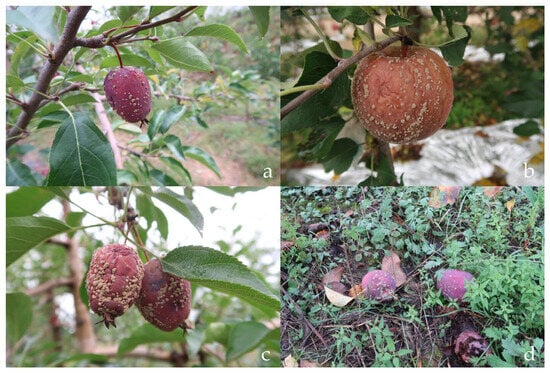
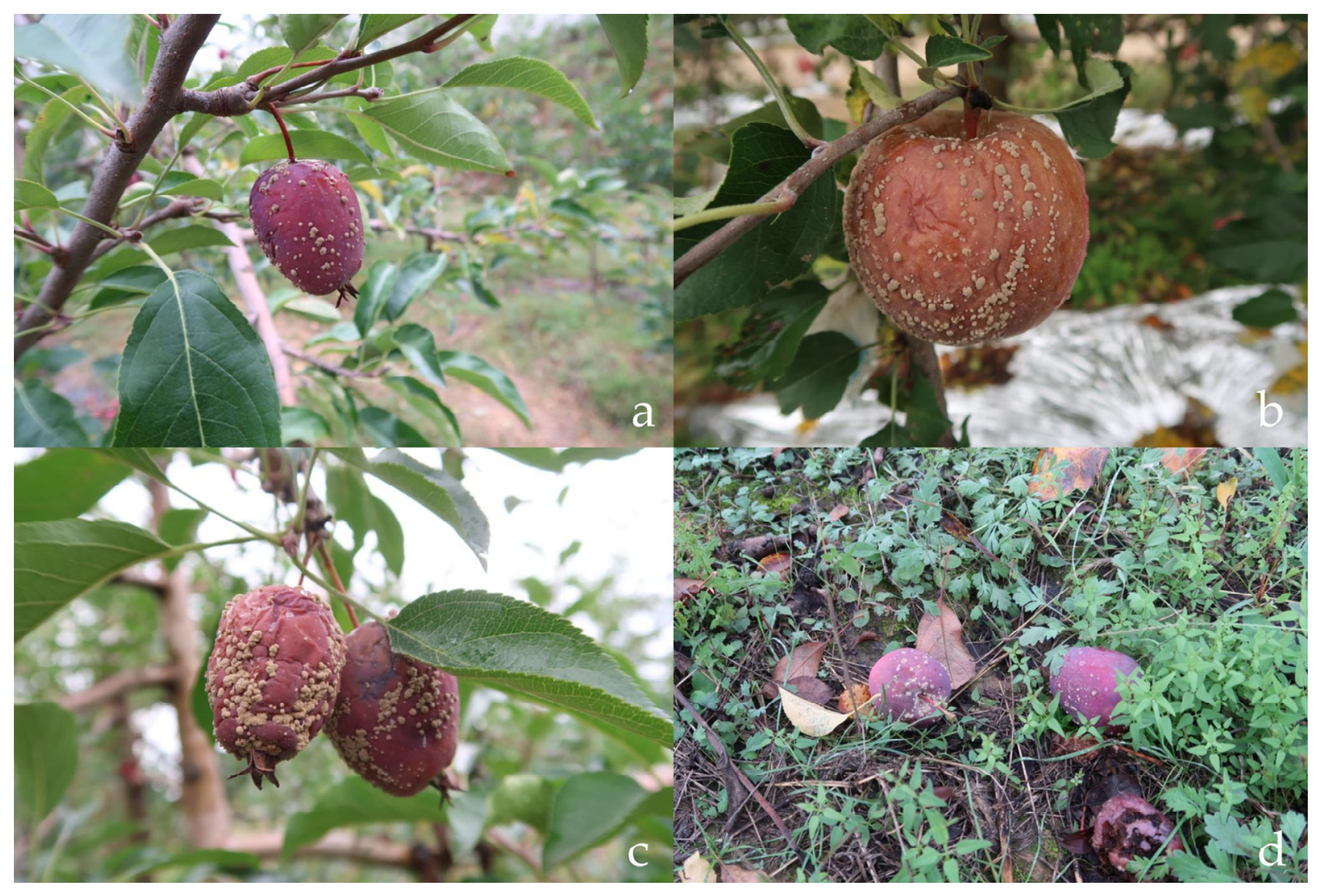
In September 2025, our field survey indicated that the average incidence of brown rot of Malus ‘Jinxiu’ was 85% from three orchards in Baota District, Ansai District, and Wuqi County, Yan’an City, Shaanxi Province. Early symptoms include brown, water-soaked, circular lesions on the fruit, then the infected fruit became soft and rotten, with a gray, velvety mold layer on the surface—representing the pathogen’s hyphae and conidia (Figure 1a). Infected ‘Fuji’ apples exhibit soft rot, with a gray, concentric ring-like mold layer on the surface (Figure 1b). At the later stage of symptoms, infected fruits lost moisture and shriveled, turning into mummies that hang on the branches; a large number of diseased fruits fell to the ground, potentially serving as source of inoculum for the following year’s disease outbreak in the orchard (Figure 1c,d).
Figure 1.
Symptoms and signs of Malus ‘Jinxiu’ and ‘Fuji’ brown rot caused by Monilinia yunnanensis in an orchard in Shaanxi, China: (a,b) infected fruits of Malus ‘Jinxiu’ and ‘Fuji’ during the growing season; (c) infected fruits during harvest time; (d) diseased fruits dropped on the orchard floor.
3.2. Morphological Identification of Monilinia Isolates
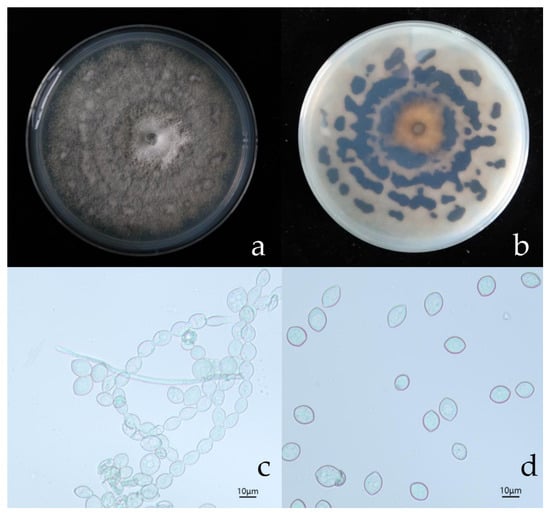
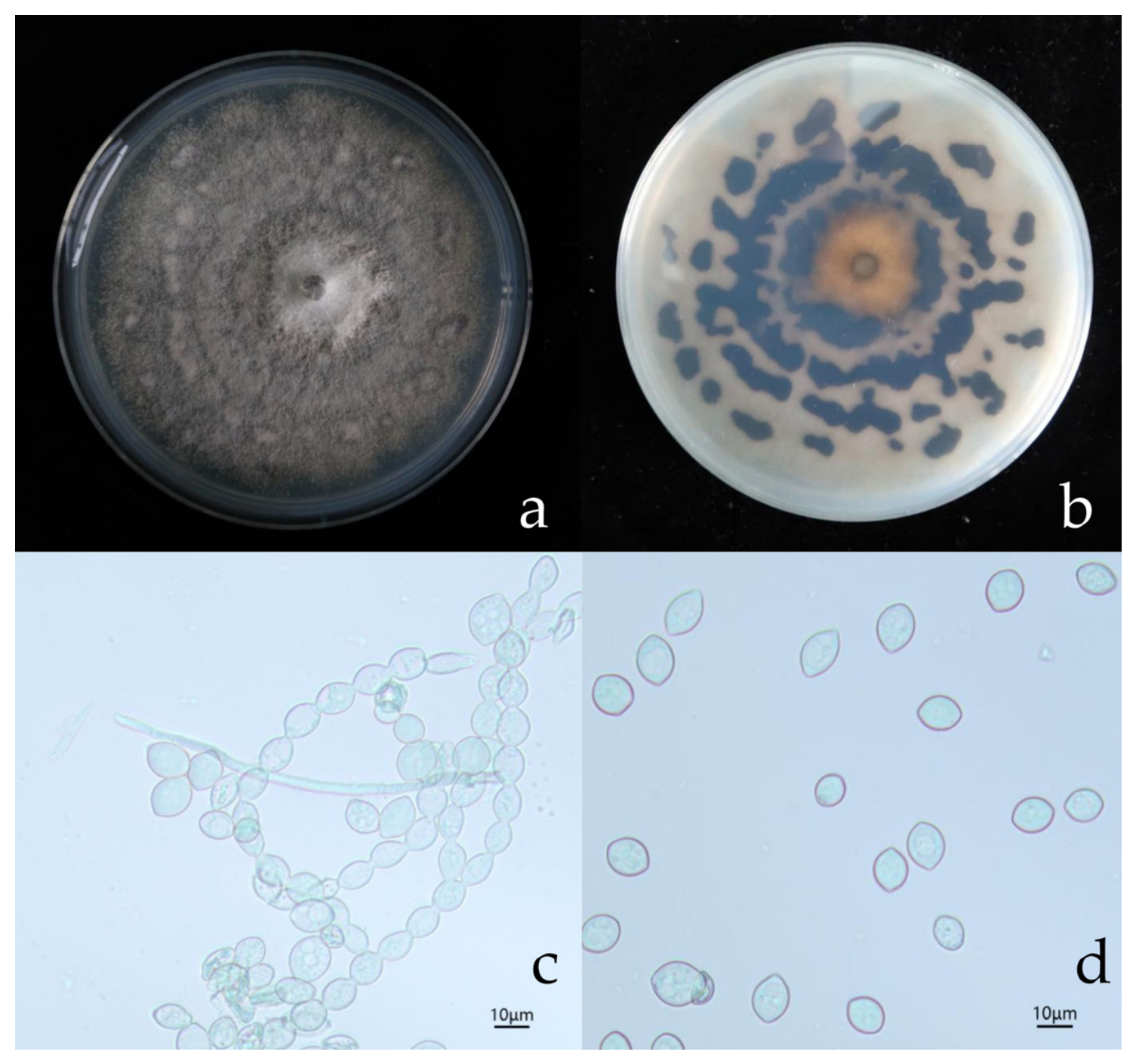
A total of 156 diseased fruit samples were collected from three orchards: 43 fruits from Baota District (40 Malus ‘Jinxiu’ and 3 ‘Fuji’), 52 fruits from Ansai District (41 Malus ‘Jinxiu’ and 11 ‘Fuji’), and 61 Malus ‘Jinxiu’ fruits from Wuqi County. Following isolation and purification, 90 single-spore isolates were obtained, including 70 isolates from Malus ‘Jinxiu’ fruits and 20 isolates from ‘Fuji’ apple fruits. All these isolates exhibited identical morphological characteristics as Monilinia-like fungi, and representative isolates MBT2-4, MAS2-2, and MASa1-3 were selected for morphological observation and description. When cultured at 22 °C for 3 days, the mycelium was white; after 7 days of incubation, the mycelium turned gray to gray-brown. The colony margins were entire, and a large number of black stromata were produced after 14 days of incubation (Figure 2a,b). The average daily growth rates of the representative isolates MBT2-4, MAS2-2, and MASa1-3 on PDA medium were 13.9 mm/day, 13.8 mm/day, and 13.1 mm/day, respectively. The conidiophores were bead-like, and the conidia were colorless and transparent, single-celled, and elliptical or lemon-shaped (Figure 2c,d). The dimensions of the conidia of the representative isolates MBT2-4, MAS2-2, and MASa1-3 were, respectively, 6.33 to 15.37 μm (mean = 10.87 μm) × 4.76 to 13.03 μm (mean = 8.53 μm), 6.85 to 16.93 μm (mean = 12.45 μm) × 5.20 to 11.38 μm (mean = 8.21 μm), and 7.54 to 15.68 μm (mean = 11.67 μm) × 6.02 to 10.95 μm (mean = 8.41 μm), n = 60. Based on colony and conidial morphological characteristics, the isolates obtained in this study were preliminarily identified as fungi of the genus Monilinia.
Figure 2.
Colony and conidial characteristics of Monilinia yunnanensis (MBT2-4) grown on potato dextrose agar at 22 °C after 14 days of incubation: (a,b) front and reverse view of colony; (c,d) conidial chain and conidia obtained from inoculated Malus ‘Jinxiu’ fruits.
3.3. Pathogenicity Tests
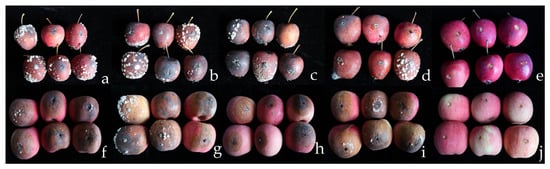
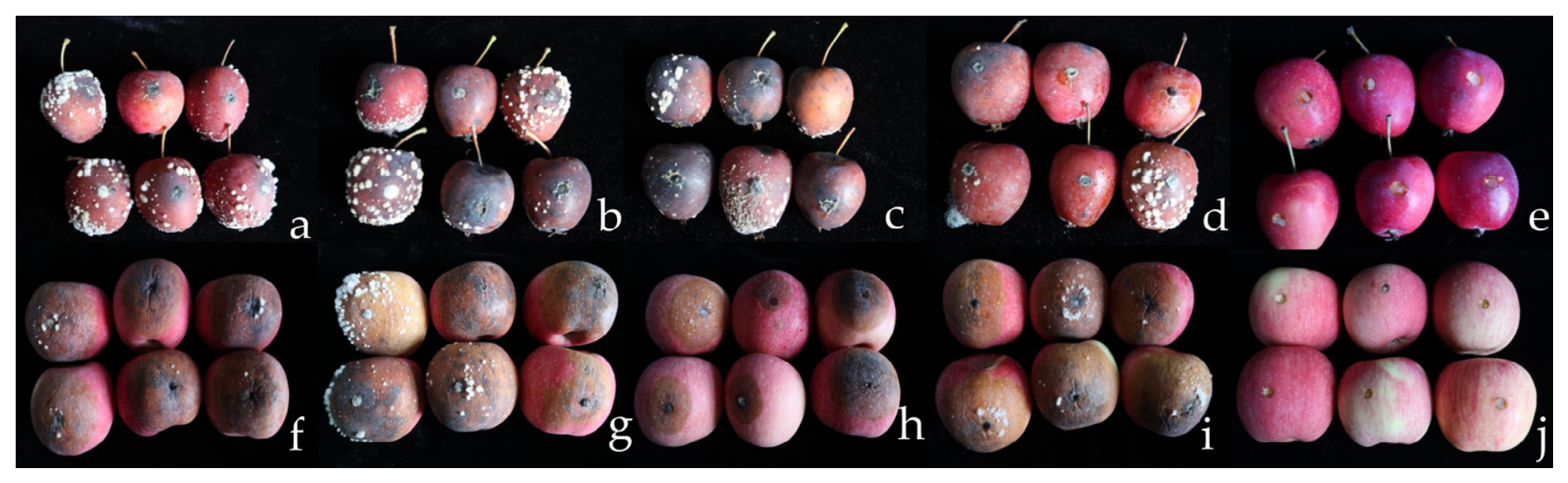
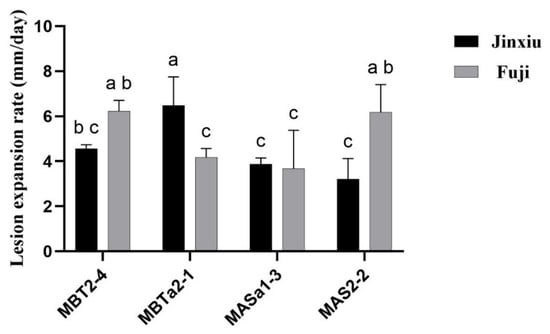
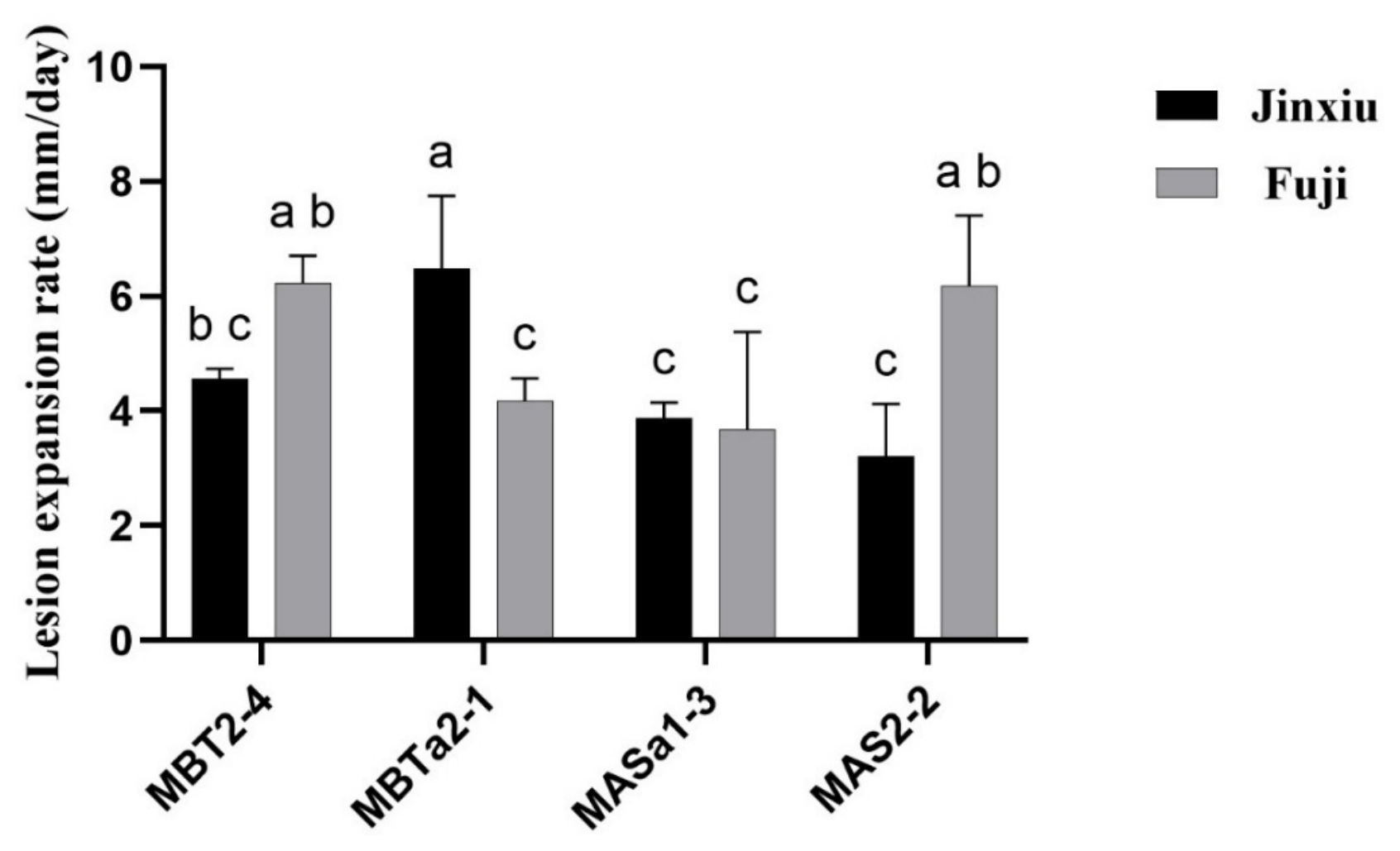
Four representative isolates MBT2-4, MBTa2-1, MAS2-2, and MASa1-3 were pathogenic and sporulated on inoculated Malus ‘Jinxiu’ and ‘Fuji’ apple fruits. Koch’s postulates were fulfilled by re-isolating the fungus from infected fruits and re-identifying the pathogen to the species level. On detached fruits, brown, water-soaked lesions appeared on the fruit epidermis at the inoculation site after 2 days. The fruits exhibited soft rot after 4 days, and gray mycelium and conidia were observed on the lesion after 7 days (Figure 3a–d,f–i). These symptoms were consistent with those of infected fruits under natural conditions, and none of the control fruits showed disease symptoms (Figure 3e,j). Results on the lesion expansion rates of the tested isolates on fruits indicated that the Malus ‘Jinxiu’ isolates from Baota and Ansai districts exhibited significantly higher lesion expansion rates on ‘Fuji’ than on Malus ‘Jinxiu’, with isolates MBT2-4 and MAS2-2 exhibiting lesion expansion rate of 6.2 mm/d on ‘Fuji’ apples, and 4.6 mm/d and 3.2 mm/d on Malus ‘Jinxiu’ apples. The lesion expansion rate of ‘Fuji’ isolates on Malus ‘Jinxiu’ was higher than that on ‘Fuji’. Specifically, the lesion expansion rates of isolates MBTa2-1 and MASa1-3 on Malus ‘Jinxiu’ fruits were 6.5 mm/d and 3.9 mm/d, respectively, while those on ‘Fuji’ fruits were 4.2 mm/d and 3.7 mm/d (Figure 4). The p-values for the main effects of fungus isolate, apple variety and their interaction were p = 0.0005, p = 0.0615, and p < 0.0001, respectively. Thus, the pathogenicity tests showed that M. yunnanensis isolated from both Malus ‘Jinxiu’ and ‘Fuji’ apple hosts could cross-infect and cause disease.
Figure 3.
Symptoms and signs of four representative isolates on detached Malus ‘Jinxiu’ and ‘Fuji’ apple fruits after 7 days of inoculation with mycelial plugs of Monilinia yunnanensis: (a–d) MBT2-4, MBTa2-1, MASa1-3, and MAS2-2 on Malus ‘Jinxiu’; (e) ‘Jinxiu’ fruits inoculated with a potato dextrose agar (PDA) plug as a control (CK); (f–i) MBT2-4, MBTa2-1, MASa1-3, and MAS2-2 on ‘Fuji’ apple; (j) ‘Fuji’ fruits inoculated with a PDA plug as CK.
Figure 4.
Lesion expansion rates of representative Monilinia yunnanensis isolates MBT2-4, MBTa2-1, MASa1-3, and MAS2-2 on Malus ‘Jinxiu’ and ‘Fuji’ apple after 7 days of inoculation. Error bars represent the standard deviation from six replicates; means associated with different letters are significantly different (p < 0.05) using Tukey’s HSD test.
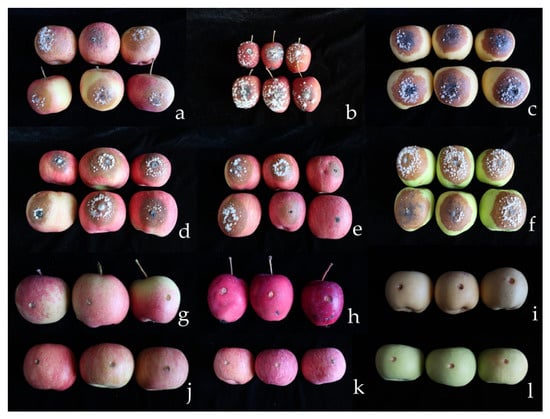
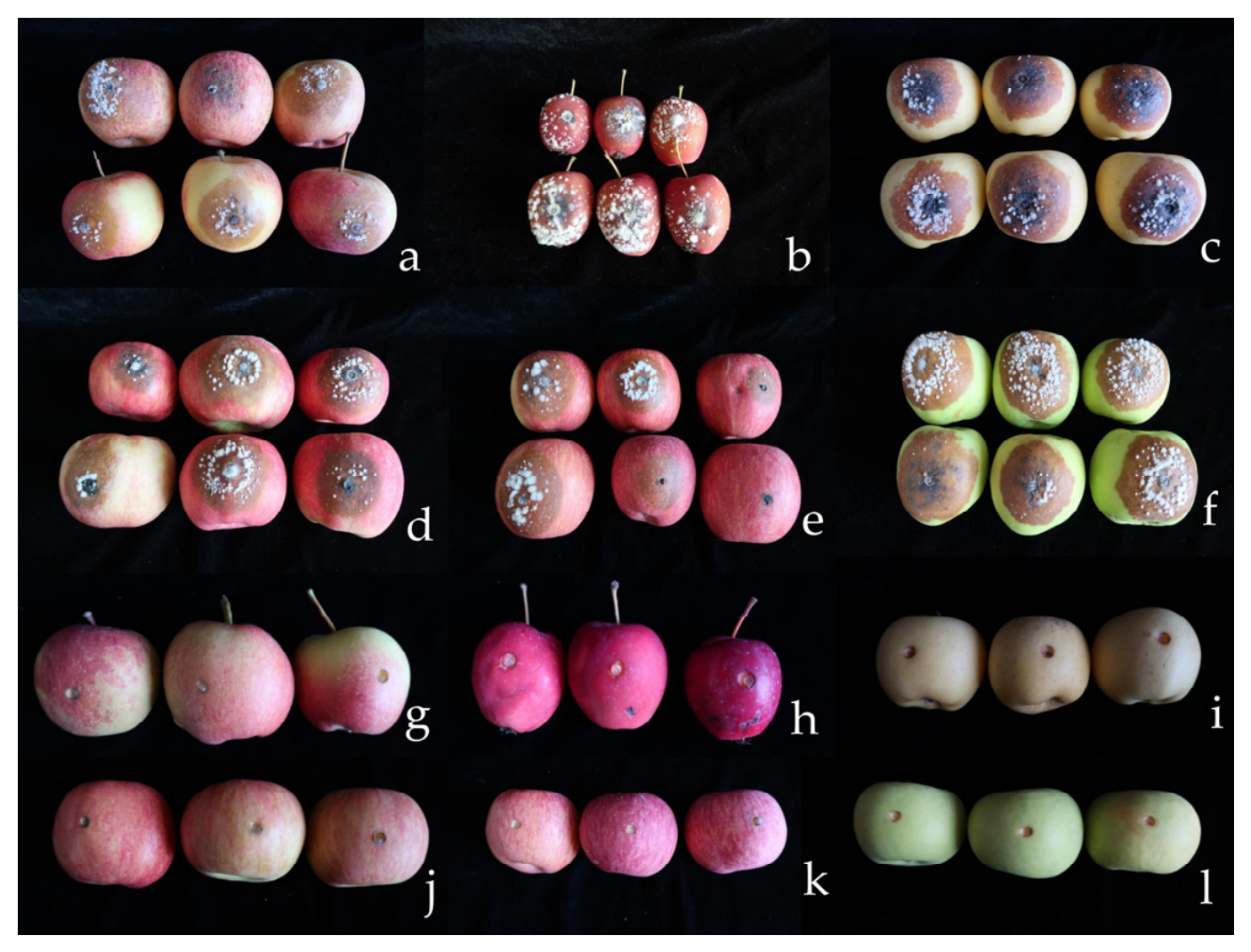
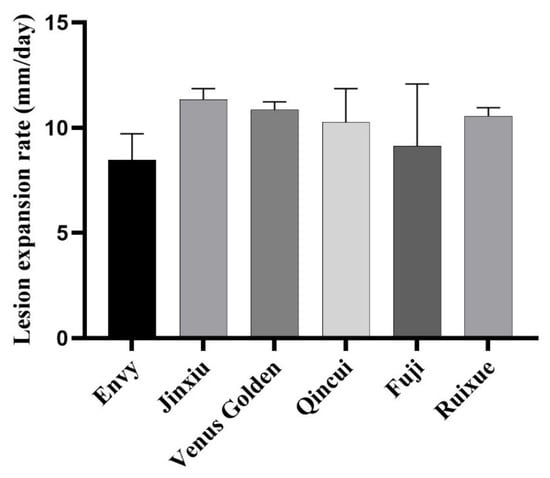
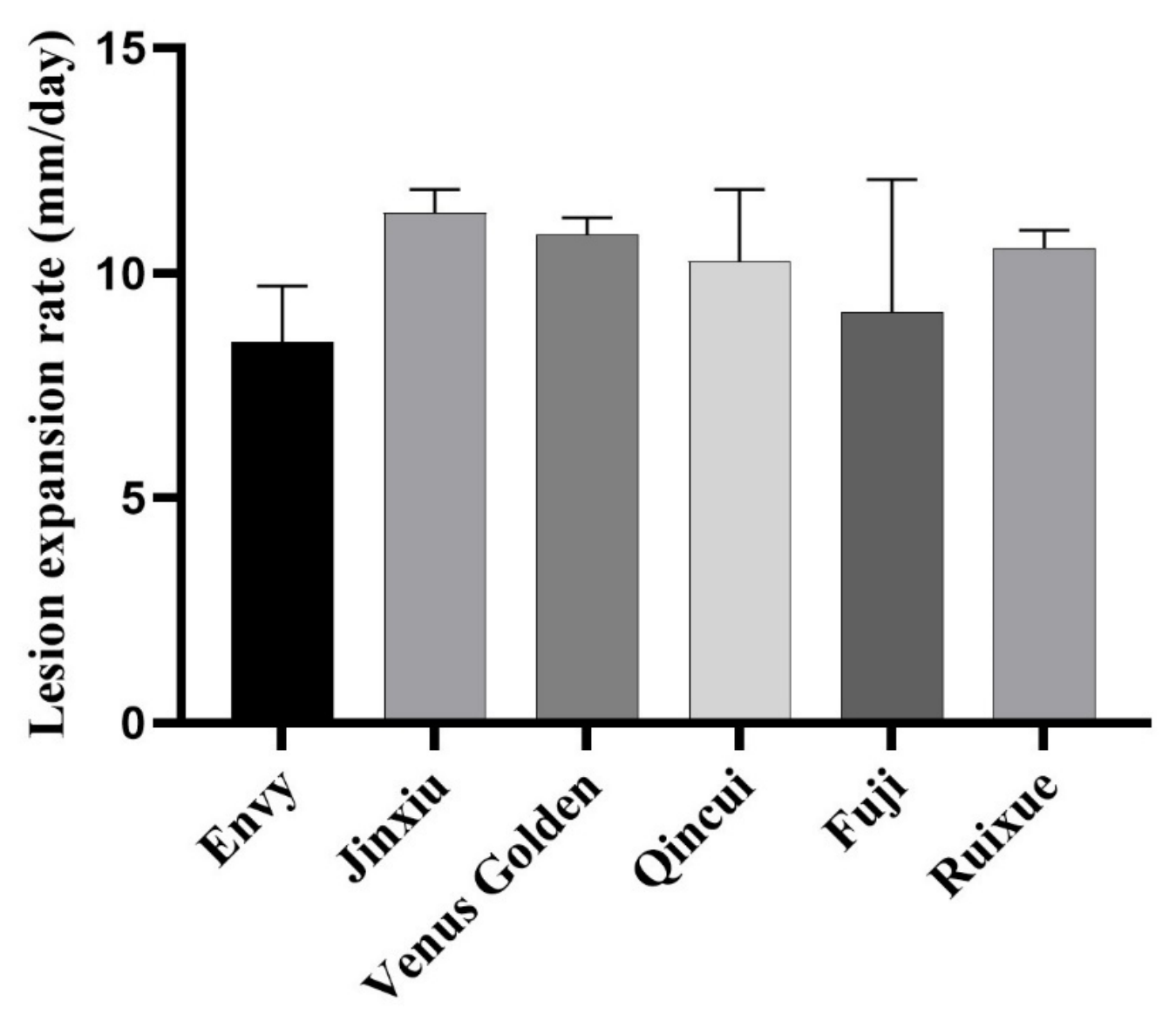
Pathogenicity testing on different apple varieties showed that isolate MBT2-2 caused disease on all tested apple varieties: ‘Envy’, ‘Qincui’, ‘Ruixue’, ‘Venus Golden’, ‘Fuji’, and Malus ‘Jinxiu’. Two days after inoculation, water-soaked brown lesions developed around the inoculation site on the fruit peel, and the fruits gradually softened and rotted. Seven days after inoculation, a gray mold layer formed on the surface of infected fruit, consisting of fungal mycelium and conidia (Figure 5a–f); no disease was observed in the control inoculations (Figure 5g–l). Results on lesion expansion rates across the six apple varieties showed that isolate MBT2-4 expanded most rapidly on ‘Jinxiu’ (11.4 mm/day) and most slowly on ‘Envy’ (8.5 mm/day) (Figure 6). There are no significant differences among these cultivars in pathogenicity (p = 0.109). Lesion expansion rates on the other four apple varieties were similar to those on Malus ‘Jinxiu’, suggesting that the brown rot isolates from Malus ‘Jinxiu’ pose a potential risk of infecting cultivated apple.
Figure 5.
Symptoms and signs caused by Monilinia yunnanensis isolate MBT2-2 on detached fruits of six apple varieties 7 days after inoculation with mycelial plugs: (a) ‘Envy’; (b) Malus ‘Jinxiu’; (c) ‘Venus Golden’; (d) ‘Qincui’; (e) ‘Fuji’; (f) ‘Ruixue’; (g–l) fruits of the six apple varieties inoculated with a sterile plug as control.
Figure 6.
Lesion expansion rates of Monilinia yunnanensis representative isolate MBT2-2 on detached fruits of six apple varieties after 7 days of inoculation. Error bars represent the standard deviation from six replicates.
3.4. Multilocus Phylogenetic Analysis
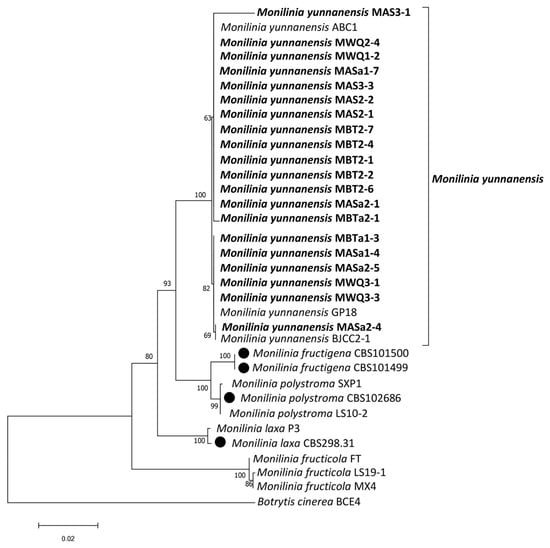
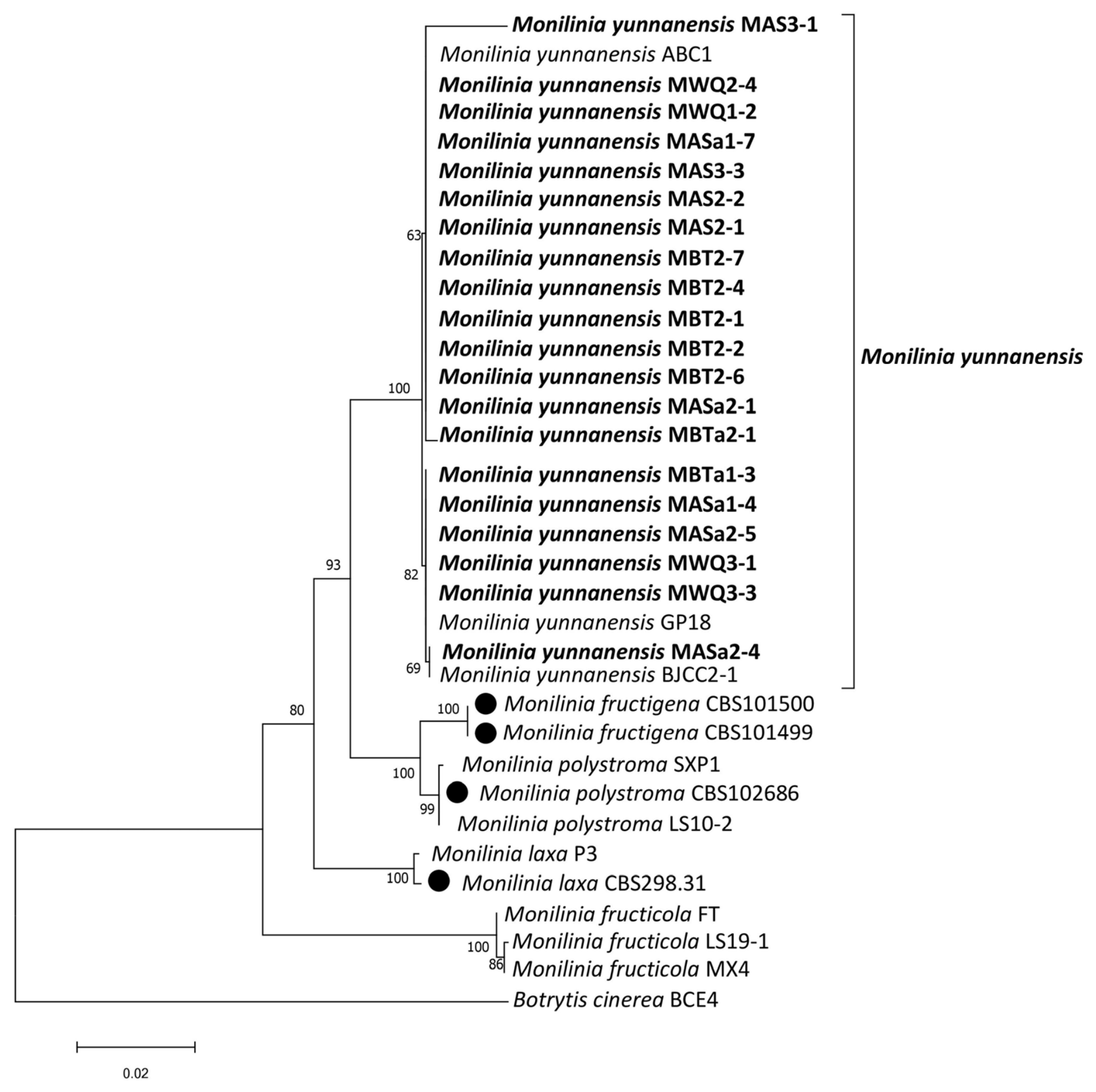
Twenty representative isolates from three orchards were selected for amplification of the rDNA-ITS region, the β-tubulin region, and a portion of the laccase gene. Online BLASTn (https://blast.ncbi.nlm.nih.gov/, accessed on 15 December 2025) alignment revealed that the rDNA-ITS region sequences of the obtained isolates ranged from 506 to 513 bp, and the ITS region sequences of the tested isolates showed 99.4% to 100% similarity with those of Monilinia (Monilia) yunnanensis. The β-tubulin gene sequences of the obtained isolates ranged from 402 to 449 bp, and the β-tubulin gene sequences of the test isolates showed 100% similarity with those of M. yunnanensis isolates BJCC2-1, ABC1, and GP18 isolated from apple and peach hosts in China (GenBank accession no. KR778951, KR778948, KR778969). The laccase gene sequences of the isolated isolates ranged from 873 to 890 bp in length. The laccase gene sequences of the tested isolates showed 99.47–100% similarity with those of M. yunnanensis isolates BJCC2-1, ABC1, and GP18 isolated from apple and peach hosts in China (GenBank accession no. KT194343, KT194341, KT194362). The gene sequences amplified from all tested isolates have been submitted to GenBank and assigned accession numbers (Table 2). Phylogenetic analysis revealed that the 20 representative isolates obtained in this study clustered with M. yunnanensis isolates BJCC2-1, ABC1, and GP18 from Chinese apple and peach hosts with 100% bootstrapping support values (Figure 7). Combining morphological observation with molecular phylogenetic analysis, the 20 representative isolates in this study were identified as M. yunnanensis.
Table 2.
Isolates used for multigene analysis and morphological characterization.
Figure 7.
Phylogenetic tree of Monilinia yunnanensis based on concatenated sequences of ITS region, tub2, and laccase genes using the Maximum Likelihood method. The isolates in this study are indicated in bold, and ● = ex-type isolates. Botrytis cinerea (BCE4) was used as the outgroup species. Numbers labeled at each node indicate bootstrap values (%).
4. Discussion
This study conducted a systematic investigation into the species and virulence of the brown rot pathogen affecting Malus ‘Jinxiu’ in Shaanxi Province, China. Through comprehensive morphological and molecular analyses, it was confirmed that M. yunnanensis is the pathogen causing brown rot on Malus ‘Jinxiu’ and ‘Fuji’ apples grown in mixed-cultivated orchards across three locations. M. yunnanensis isolated from Malus ‘Jinxiu’ and ‘Fuji’ apple could infect each other’s hosts and cause similar brown rot symptoms, and M. yunnanensis isolated from Malus ‘Jinxiu’ was also pathogenic to the local apple varieties ‘Envy’, ‘Qincui’, ‘Ruixue’, and ‘Venus Golden’. To our knowledge, this is the first report of M. yunnanensis causing brown rot of Malus ‘Jinxiu’ globally.
Brown rot is a worldwide distributed fungal disease, causing severe yield losses and significantly reducing the quality of stone and pome fruits in temperate regions [23]. The disease occurs both before fruit harvest and during post-harvest storage. The fungi primarily overwinter in fruit mummies. These fruit mummies, whether falling to the orchard ground or remaining on branches, typically serve as the source of initial infection in the following year [5,24,25,26]. During orchard disease surveys in September 2025, we frequently observed large numbers of infected fruits lying on the ground. However, the presence of the sexual stage of M. yunnanensis has not been discovered in orchard fields or in laboratory studies.
China is a vast country with a wide variety of stone and pome fruit trees cultivated extensively from north to south. Brown rot disease is widespread in China, with the pathogen comprising six Monilinia species currently reported [7]. M. yunnanensis was the most prevalent species distributed across 12 provinces and regions in previous studies on stone fruits, pome fruits, and berries such as peaches, plums, apricots, hawthorns, apples, pears, and kiwifruit [9,10,15,27,28,29,30]. In this study, M. yunnanensis was primarily identified as the pathogen causing brown rot of Malus ‘Jinxiu’ and ‘Fuji’ apple in Shaanxi Province. Our finding is consistent with the results of Zhu et al. [9]. Regarding the distribution of pathogens causing brown rot in Chinese cultivated apple and pear fruit.
Traditionally, Monilinia species have been differentiated based on morphological and cultural methods. In this study, colony and conidial morphological characteristics of the representative isolates were similar to those of M. yunnanensis isolates previously reported on apple and plum hosts in China. Representative isolates failed to produce conidia under laboratory culture conditions, and the isolates tested in this study demonstrated a faster hyphal growth rate compared with previous studies. Pathogenicity results indicated that M. yunnanensis isolated from Malus ‘Jinxiu’ fruits exhibits similar pathogenicity on fruits of other tested apple varieties. Consequently, this poses a potential threat to the occurrence and outbreak of brown rot in existing and newly established orchards in this region.
Due to the minor morphological differences among Monilinia spp. and variations in culture morphology between different isolates of the same species, as well as gradual morphological changes in hyphae during subculturing [31], species identification based solely on cultural characteristics is very difficult. Thus, multi-gene molecular phylogenetic analysis has been widely applied to the species identification of Monilinia spp. [32,33,34]. In this study, phylogenetic analysis was conducted using the rDNA-ITS, tub2, and laccase gene regions, grouping the representative isolates from Malus ‘Jinxiu’ with other published M. yunnanensis isolates into the same single clade. The phylogenetic analysis showed that isolates from different fruit hosts and geographical regions clustered together, indicating that M. yunnanensis is not a host-specific pathogen on Malus ‘Jinxiu’. This result is consistent with previous findings on M. yunnanensis from peach and plum hosts [10]. The phylogenetic tree from this study shows that M. yunnanensis is very closely related to both M. fructigena and M. polystroma, which is consistent with previous phylogenetic analyses of Monilinia spp. on apple and pear hosts in China [9].
Since Malus ‘Jinxiu’ is a newly introduced apple cultivar primarily cultivated in northern Shaanxi Province, the three sampled orchards in this study were geographically close to one another and no further surveys or sampling analyses of the brown rot pathogen on other apple varieties were conducted. Therefore, future studies need to expand the geographic scope of disease surveys and the range of fruit tree hosts. This is of great significance for the epidemiological monitoring and integrated management of brown rot in the extensive apple-growing regions of Shaanxi Province.
Monilinia species may differ in their etiology, biology, and epidemiology, which are important considerations for disease control strategy. For example, M. laxa prefers to infect flowers, while M. fructigena primarily infects fruits. M. yunnanensis and M. fructigena prefer to infect pome fruit, while M. fructicola and M. laxa usually occur on stone fruit [28]. At present, chemical control is the main effective method to control brown rot disease; however, Monilinia species have developed resistance to some fungicides in traditional orchards [35]. Therefore, it is necessary to monitor the Monilinia spp. population structure continuously to select effective fungicides according to different populations of brown rot pathogens.
5. Conclusions
In conclusion, based on morphological observations, molecular characterization, and pathogenicity tests, we determined that M. yunnanensis causes Malus ‘Jinxiu’ brown rot in Shaanxi, China. Pathogenicity tests on detached fruits confirmed that M. yunnanensis isolated from Malus ‘Jinxiu’ fruits may also infect other apple varieties. These findings provide a scientific basis for the development of targeted integrated management strategies for Malus ‘Jinxiu’ brown rot disease in Shaanxi Province. Further studies are necessary to investigate the epidemiology of M. yunnanensis in Malus ‘Jinxiu’ orchards, as well as effective strategies for disease prevention and control.
Author Contributions
Conceptualization, C.X.; methodology, G.Y.; software, D.D.; validation, J.Z.; formal analysis, C.X.; investigation, G.Y.; resources, D.D.; data curation, G.Y.; writing—original draft preparation, C.X. and G.Y.; writing—review and editing, C.X.; visualization, G.Y.; supervision, C.X.; project administration, C.X.; funding acquisition, C.X. All authors have read and agreed to the published version of the manuscript.
Funding
This research was funded by Key Research and Development Program of Shaanxi (Program No. 2025CY-JJQ-150), Youth Innovation Team Research Program of Shaanxi Education Department (Program No. 23JP194), Shaanxi Province “two chains” integration key project (Program No. 2023LLRH-01), and Program of Shaanxi Key Laboratory of Research and Utilization of Resource Plants on the Loess Plateau (Program No. zdsys-zj25-01).
Data Availability Statement
The original contributions presented in this study are included in the article. Further inquiries can be directed to the corresponding author.
Conflicts of Interest
The authors declare no conflicts of interest.
References
- Chen, X.S.; Wang, N.; Peng, F.T.; Mao, Z.Q.; Yin, C.M.; Jiang, Y.M.; Ge, S.F.; Hu, D.G.; Li, Y.Y.; Du, Y.P. Advances in Quality and Maturity Breeding of Important Deciduous Fruit Trees in China. Acta Hortic. Sin. 2024, 51, 8–26. [Google Scholar] [CrossRef]
- Shi, J.; Liu, J.L.; Lu, S.G. Current Situation and Countermeasures for High-Quality Development of Apple Industry in Yan’an, Shaanxi Province. China Fruits 2025, 12, 127–131. [Google Scholar] [CrossRef]
- Chen, X.S.; Wang, N.; Zhang, Z.Y.; Liu, W.J.; Wang, B.X.; Han, Y.Z.; Zhang, Y.M.; Tang, J.; Yi, K.; Zhang, J.J.; et al. Thoughts and Practices on the Optimization of Apple Variety Structure in China V: Synchronization of the Three Benefits: Westward-Northward Expansion of the Apple Industry and Ecological Governance in Western and Northeastern China. China Fruits 2026, 4, 1–4. [Google Scholar] [CrossRef]
- Zeng, X.; Li, H.; Jiang, W.; Li, Q.; Xi, Y.; Wang, X.; Li, J. Phytochemical Compositions, Health-Promoting Properties and Food Applications of Crabapples: A Review. Food Chem. 2022, 386, 132789. [Google Scholar] [CrossRef] [Scilit] [PubMed]
- Luo, C.X. Advances and Prospects on Researches of Brown Rot Disease on Fruits. Acta Phytopathol. Sin. 2017, 47, 145–153. [Google Scholar] [CrossRef]
- Silan, E.; Ozkilinc, H. Phylogenetic Divergences in Brown Rot Fungal Pathogens of Monilinia Species from a Worldwide Collection: Inferences Based on the Nuclear versus Mitochondrial Genes. BMC Ecol. Evol. 2022, 22, 119. [Google Scholar] [CrossRef] [Scilit] [PubMed]
- Zhu, X.Q.; Duan, W.J.; Hu, M.J.; Guo, L.Y. Research Progress on Brown Rot Pathogens of Stone and Pome Fruit. Mycosystema 2022, 41, 331–348. [Google Scholar] [CrossRef]
- Vasić, M.; Vico, I.; Jurick, W.M.; Duduk, N. Distribution and Characterization of Monilinia spp. Causing Apple Fruit Decay in Serbia. Plant Dis. 2018, 102, 359–369. [Google Scholar] [CrossRef] [Scilit] [PubMed]
- Zhu, X.-Q.; Niu, C.-W.; Chen, X.-Y.; Guo, L.-Y. Monilinia Species Associated with Brown Rot of Cultivated Apple and Pear Fruit in China. Plant Dis. 2016, 100, 2240–2250. [Google Scholar] [CrossRef] [Scilit] [PubMed]
- Yin, L.-F.; Huang, S.; Tan, Q.; Zhou, Y.; Li, G.-Q.; Luo, C.-X. Identification of Monilia Species in Tibet and Characterization of M. yunnanensis in China. Plant Dis. 2022, 106, 1669–1674. [Google Scholar] [CrossRef] [Scilit] [PubMed]
- Zhang, S.; Xiang, D.; Sun, C.; Han, K.; Li, T.; Zhou, J.; Xu, B. Morphological and Molecular Identification of Peach Brown Rot Disease in Tibet and Exploration of the Biocontrol Efficiency of Trichoderma. J. Fungi 2022, 8, 1174. [Google Scholar] [CrossRef] [Scilit] [PubMed]
- Hrustić, J.; Delibašić, G.; Stanković, I.; Grahovac, M.; Krstić, B.; Bulajić, A.; Tanović, B. Monilinia Spp. Causing Brown Rot of Stone Fruit in Serbia. Plant Dis. 2015, 99, 709–717. [Google Scholar] [CrossRef] [Scilit] [PubMed]
- Kostyukova, V.; Pozharskiy, A.; Dulat, B.; Gritsenko, D. Isolation and Molecular Identification of Monilinia fructigena in Almaty Region of Kazakhstan. Horticulturae 2025, 11, 1029. [Google Scholar] [CrossRef] [Scilit]
- Bellamy, S.; Shaw, M.; Xu, X. Field Application of Bacillus subtilis and Aureobasidium pullulans to Reduce Monilinia laxa Post-Harvest Rot on Cherry. Eur. J. Plant Pathol. 2022, 163, 761–766. [Google Scholar] [CrossRef] [Scilit] [PubMed]
- Yu, X.; Zhao, Z.; Guo, B.; Zhang, K.; Liu, J.; Song, W.; Ju, H.; Wang, X.; Xiang, W.; Zhao, J. First Report of Brown Rot Caused by Monilia yunnanensis on Kiwiberry (Actinidia arguta) in China. Crop Prot. 2025, 190, 107102. [Google Scholar] [CrossRef] [Scilit]
- Ozkilinc, H.; Yildiz, G.; Silan, E.; Arslan, K.; Guven, H.; Altinok, H.H.; Altindag, R.; Durak, M.R. Species Diversity, Mating Type Assays and Aggressiveness Patterns of Monilinia Pathogens Causing Brown Rot of Peach Fruit in Turkey. Eur. J. Plant Pathol. 2020, 157, 799–814. [Google Scholar] [CrossRef] [Scilit]
- Jiang, J.J.; Zhou, Z.X.; Du, H.; Lü, Z.L.; Wang, C.M.; Guo, J.G.; Zhang, X.R.; Li, J.P. Isolation and Identification of Apple Brown Rot Pathogen in Parts of Gansu and Screening of Antagonistic Bacteria. Biotechnol. Bull. 2023, 39, 209–218. [Google Scholar] [CrossRef]
- Lü, Z.L.; Jiang, J.J.; Li, J.P.; Zhai, Y.Q.; Hui, N.N.; Wang, L.; Ma, S.B.; Zheng, G.; Qi, Y.H.; Wang, S.S. Isolation and Identification of Brown Rot Pathogen of Apple Fruit. Acta Agric. Boreali-Occident. Sin. 2023, 32, 488–494. [Google Scholar] [CrossRef]
- Niu, C.W.; Wang, J.R.; Zhu, X.Q.; Chen, X.Y.; Guo, L.Y. Brown Rot Pathogens on Stone and Pome Fruit Trees in Xinjiang wild Forest. Mycosystema 2016, 35, 1514–1525. [Google Scholar] [CrossRef]
- White, T.J.; Bruns, T.; Lee, S.; Taylor, J. Amplification and Direct Sequencing of Fungal Ribosomal RNA Genes for Phylogenetics. In PCR Protocols: A Guide to Methods and Applications; Academic Press, Inc.: New York, NY, USA, 1990; Volume 18, pp. 315–322. [Google Scholar] [CrossRef] [Scilit]
- Glass, N.L.; Donaldson, G.C. Development of Primer Sets Designed for Use with the PCR to Amplify Conserved Genes from Filamentous Ascomycetes. Appl. Environ. Microbiol. 1995, 61, 1323–1330. [Google Scholar] [CrossRef] [Scilit] [PubMed]
- Hirschhäuser, S.; Fröhlich, J. Multiplex PCR for Species Discrimination of Sclerotiniaceae by Novel Laccase Introns. Int. J. Food Microbiol. 2007, 118, 151–157. [Google Scholar] [CrossRef] [Scilit] [PubMed]
- Luo, C.-X.; Schnabel, G.; Hu, M.; De Cal, A. Global Distribution and Management of Peach Diseases. Phytopathol. Res. 2022, 4, 30. [Google Scholar] [CrossRef] [Scilit]
- Byrde, R.J.W.; Willetts, H.J. The Brown Rot Fungi of Fruit: Their Biology and Control; Elsevier: Amsterdam, The Netherlands, 2013. [Google Scholar]
- Rungjindamai, N.; Jeffries, P.; Xu, X.-M. Epidemiology and Management of Brown Rot on Stone Fruit Caused by Monilinia laxa. Eur. J. Plant Pathol. 2014, 140, 1–17. [Google Scholar] [CrossRef] [Scilit]
- Pagano, M.M.; Oettl, S.; Deltedesco, E.; Pii, Y.; Spitaler, U. Variation in Growth, Morphology, and Fungicide Sensitivity Among Monilinia Species from South Tyrol’s Alpine Orchards. J. Fungi 2025, 11, 690. [Google Scholar] [CrossRef] [Scilit] [PubMed]
- Hu, M.-J.; Cox, K.D.; Schnabel, G.; Luo, C.-X. Monilinia Species Causing Brown Rot of Peach in China. PLoS ONE 2011, 6, e24990. [Google Scholar] [CrossRef] [Scilit] [PubMed]
- Yin, L.-F.; Chen, S.-N.; Chen, G.-K.; Schnabel, G.; Du, S.-F.; Chen, C.; Li, G.-Q.; Luo, C.-X. Identification and Characterization of Three Monilinia Species from Plum in China. Plant Dis. 2015, 99, 1775–1783. [Google Scholar] [CrossRef] [Scilit] [PubMed]
- Yin, L.; Cai, M.; Du, S.; Luo, C. Identification of Two Monilia Species from Apricot in China. J. Integr. Agric. 2017, 16, 2496–2503. [Google Scholar] [CrossRef] [Scilit]
- Zhao, Y.; Wang, D.; Liu, Z. First Report of Brown Rot on Crataegus pinnatifida var. Major Caused by Monilia yunnanensis in China. Plant Dis. 2013, 97, 1249. [Google Scholar] [CrossRef] [Scilit] [PubMed]
- Abate, D.; Pastore, C.; Gerin, D.; De Miccolis Angelini, R.M.; Rotolo, C.; Pollastro, S.; Faretra, F. Characterization of Monilinia Spp. Populations on Stone Fruit in South Italy. Plant Dis. 2018, 102, 1708–1717. [Google Scholar] [CrossRef] [Scilit] [PubMed]
- Hou, H.; Wang, Z.N.; Li, X.Q.; Shi, B.K.; Yuan, H.B.; Wang, L.; Zhou, B.B.; Tu, H.T. Pathogenic Species, Biological Characteristics and Fungicide Screening for the Control of Peach Brown Rot. Plant Prot. 2025, 51, 307–316. [Google Scholar] [CrossRef]
- Xue, Q.; Tang, Y.; Li, Z.; Yu, J.; Wang, Z.; Wang, L.; Feng, H. Identification of Monilinia yunnanensis Causing Brown Rot in Korla Fragrant Pear and Evaluation of Bacillus siamensis PL55 as a Biocontrol Agent. Agronomy 2025, 15, 2678. [Google Scholar] [CrossRef] [Scilit]
- Golmohammadi, H.; Arzanlou, M.; Jafary, H.; Bakhshi, M. Polyphasic Characterization and Mating Type Allele Distribution of Monilinia laxa in Iranian Stone Fruit Orchards. Sci. Rep. 2025, 15, 29336. [Google Scholar] [CrossRef] [Scilit] [PubMed]
- Yuan, N.-N.; Chen, S.-N.; Zhai, L.-X.; Schnabel, G.; Yin, L.-F.; Luo, C.-X. Baseline Sensitivity of Monilia yunnanensis to the DMI Fungicides Tebuconazole and Triadimefon. Eur. J. Plant Pathol. 2013, 136, 651–655. [Google Scholar] [CrossRef] [Scilit]

Disclaimer/Publisher’s Note: The statements, opinions and data contained in all publications are solely those of the individual author(s) and contributor(s) and not of MDPI and/or the editor(s). MDPI and/or the editor(s) disclaim responsibility for any injury to people or property resulting from any ideas, methods, instructions or products referred to in the content. |
© 2026 by the authors. Licensee MDPI, Basel, Switzerland. This article is an open access article distributed under the terms and conditions of the Creative Commons Attribution (CC BY) license.