


Abstract
Global warming and uneven rainfall distribution make it necessary to study not only yield but also crop quality when growing chili peppers. The yield of four chili pepper varieties (Hetényi Parázs, Unikal, Unijol and Habanero) and the changes in chlorophyll fluorescence (Fv/Fm), relative chlorophyll content (SPAD), capsaicin (CAP), dihydrocapsaicin (DC) and vitamin C content during fruit ripening were investigated in an open field experiment. The experiment covered two years of cultivation (dry and rainy years), three different water supply conditions and annual harvests. The aim of the experiments was to determine the most favourable harvest time for the yield of varieties under different environments, and explore the relationship between photosynthesis-related traits (SPAD and Fv/Fm) and bioactive compounds during fruit ripening. Three irrigation treatments were used: regular irrigation (I100 corresponds to 100% ET), deficit irrigation (I50 represents half of I100) and no irrigation (I0). The water supply had less influence on the CAP content but the DC content was higher under water scarcity. Late harvest resulted in low yield and high CAP and vitamin C content but differences were observed between varieties depending on water supply. During the ripening of the fruits, a negative relationship was observed between SPAD and the levels of capsaicin and dihydrocapsaicin, while the relationship between SPAD and vitamin C was positive. These correlations indicate that changes in SPAD during ripening are associated with changes in bioactive compounds, making it possible to identify the stages associated with better fruit quality.
1. Introduction
Chili peppers have been an integral part of human nutrition and culture for thousands of years. About a quarter of the world’s population consumes some form of hot pepper every day, as their distinctive pungency, spicy flavour, and health benefits are highly valued worldwide. Capsaicinoids are the compounds responsible for the pungency of peppers. Currently, several capsaicinoid compounds have been identified, of which capsaicin, dihydrocapsaicin, and nor-dihydrocapsaicin are the most common and abundant [1,2,3]. Capsaicin and dihydrocapsaicin are responsible for 90% of the pungency, and these compounds are responsible for the sensation of heat in the mucous membranes and mouth of mammals [4]. Capsaicin has anti-inflammatory, anticancer, and antioxidant properties, making it beneficial for the prevention of many diseases, such as gastrointestinal symptoms and cancer, and it is used to treat dermatological problems and chronic pain (rheumatoid arthritis) [5,6,7,8,9]. In addition to capsaicinoids, peppers contain large amounts of nutraceutical compounds such as phenols, ascorbic acid, lycopene, and carotenoids which have significant antioxidant properties [10]. Pepper varieties contain these compounds to varying degrees, and their amount can be influenced by growing conditions.
Global warming and uneven rainfall distribution make it necessary to study not only yield but also crop quality when growing chili peppers. Extreme climatic conditions, such as drought, flooding, and high temperatures, affect plant development and fruit formation. Under water scarcity, plants reduce water loss by closing stomata, resulting in a decrease in transpiration while also triggering an inhibition of photosynthesis associated with limited atmospheric CO2 uptake [11]. As a result of decreasing photosynthesis, plant growth is reduced, which ultimately leads to lower yields [12,13]. During droughts, yield losses can be mitigated through irrigation using modern irrigation systems, but the water requirements and water-use efficiency of the varieties must be taken into account [14,15]. Using drip irrigation reduces runoff and evapotranspiration losses, improving plant water use efficiency (WUE) [16]. In arid regions where the use of water resources for irrigating vegetable crops is limited, deficit irrigation is widely practiced [14,17]. This includes regulated deficit irrigation, which restricts water during less sensitive growth stages, and partial root zone drying [18]. Deficit irrigation may slightly reduce yields and affect fruit size and flesh thickness, yet still offers economic benefits [19,20]. During water shortage, growing pepper varieties grafted onto drought-tolerant rootstocks can be successful. Gisbert-Mullor et al. [21] found that under deficit irrigation, grafted plants produced higher marketable yields than ungrafted peppers, although deficit irrigation at 50% field capacity (FC) led to fewer and lighter fruits overall.
The optimal temperature for pepper development is 25–30 °C during the day and 18–19 °C at night [22]. When the temperature exceeds 30 °C, physiological changes occur, chloroplast degradation increases, and the efficiency of photosynthetic activity decreases [23,24,25]. Under water deficit and high temperatures, the chlorophyll content of leaves is damaged and the absorption of photosynthetic active rays is reduced, thereby reducing photosynthetic activity, which leads to a decrease in yield [26,27]. Photosynthetic capacity can be monitored by measuring the chlorophyll content of leaves, a non-destructive method that meets the requirements of precision agriculture [28,29,30,31,32]. Under drought conditions, fruit ripening accelerates, and the relative chlorophyll content of the leaves (SPAD) is related to fruit quality [33]. Extreme climatic conditions affect not only the growth of peppers, but also the capsaicinoid content [2]. Genotypes play a significant role in the metabolic processes of capsaicinoids, which are influenced by the developmental stages of the fruit, environmental factors, and external substances such as methyl jasmonate and salicylic acid [34]. Water deficit reduces yield and increases capsaicinoid accumulation in hot peppers, but the extent varies depending on the variety [35,36]. The degree of water deficit also affects the response of different varieties. Moderate drought can increase capsaicinoid levels in the crop [23], while severe drought can decrease them [37]; however, its effect on the capsaicin content of very hot chili pepper varieties is not significant [38]. In some varieties, the amount of capsaicinoids increases with increasing temperature [39], and the extent of the increase depends on the variety, harvest time, and weather conditions [40]. Since capsaicin is a major member of the capsaicinoid family and is largely responsible for the spiciness of peppers, several studies have examined the capsaicin content of chili peppers exposed to various stresses [38,41,42]. Kim et al. [43] showed that under water stress and high temperatures, yield decreases and the ratio of marketable to unmarketable fruits may change; however, small, unmarketable red chili peppers contained higher amounts of capsaicin and dihydrocapsaicin than larger fruits. Similarly, in green chili peppers, unmarketable fruits had higher capsaicin content than marketable fruits, but vitamin C content was at the same level. The vitamin C content of hot peppers is influenced by genetic factors, seasonal changes before harvest [37], temperature, light intensity [44], and water supply [45]. Vitamin C concentrations are much higher under optimal water supply than under water deficit [46].
Research investigating the effect of harvest time on the phytochemical properties of chili peppers under different water supplies is limited, raising the question of how this affects the phytonutrient content of the crop under these conditions. Although chili pepper cultivars respond differently to drought, little is known about the relationship between photosynthetic properties and fruit quality during the ripening. The aim of this study was to determine the most favourable harvest time for the yield and fruit quality of the varieties under different environmental conditions. A further aim was to explore the relationship between photosynthesis-related traits (SPAD and Fv/Fm) assessed through non-destructive measurements during ripening and bioactive compounds in dry and wet years.
2. Materials and Methods
2.1. Experimental Design
In two years (2019 and 2020), four chili pepper (Capsicum spp.) varieties were investigated under different water supply conditions in outdoor field experiments. The experiments were conducted at the Horticulture Institute experimental field of the Hungarian University of Agriculture and Life Sciences, Gödöllő, Hungary. The soil type was sandy loam in texture and consisted of 65% sand, 8% clay, 27% silt and 1.6% organic matter. The soil had a 16% field capacity and a bulk density of 1.54 g cm−3 when a depth of about 35 cm of the upper layer of the soil was considered. The chili pepper varieties tested in the experiment were the following: Hetényi Parázs F1 (HET) (Capsicum annuum) is an early ripening variety with an outstanding yield and has intensely red, thin-fleshed fruits. The Unikal (UNIK) variety (Capsicum annuum) is medium–late ripening and features elongated thin-fleshed, intensely coloured fruit and a high yield. Unijol F1 (UNIJ) is an indeterminate and interspecific hybrid (C. annuum × C. chinense) with strong growth, reaching twice the size of traditional peppers. The UNIJ variety is a classic, intensely red, thin-fleshed spicy pepper with high dry matter and capsaicin content. The Habanero (HAB) variety, with high capsaicinoid content, belongs to the C. chinense pepper species. The seedlings of these chili peppers were provided by Univer Product Zrt (Kecskemét, Hungary) for the experiments.
The varieties were sown in the experiment layout described by Silva e Souza [45]. Forty-day-old seedlings were transported for open field cultivation on 13 May in the dry year of 2019 and on 14 May in the wet year of 2020. The seedlings were planted in twin rows with 0.25 m spacing inside the rows and 0.25 m between plants in a row, where the plant density was 6.66 plants m−2 for HET and UNIK varieties. The UNIJ and HAB varieties form strong-growing, densely branched bushes; therefore, they were tested using a wider spacing of 0.5 m between plants within the rows and 0.5 m between the rows, resulting in a plant density of 3.33 plants m−2. The spacing between adjacent twin rows of all cultivars was 1.5 m in both years. The varieties were planted in four replicates in a split-plot randomized complete block design, where the main plots represented the irrigation treatments and the subplots represented the varieties.
A drip irrigation system was applied in both years. A pressure gauge and a water meter with control valves were placed in each treatment to manually adjust the water pressure, irrigation depth, uniformity, and water distribution. The crop water requirement (ETc) was determined using the AquaCrop 5.0 software (Land and Water Division, Food and Agriculture Organization of the United Nations, Rome, Italy) [47] where the reference evapotranspiration (ETo) was calculated by the software according to the FAO Penman–Monteith method and adjusted using the crop coefficient (Kc) [48,49].
Every test season, the Hungarian Meteorological Service’s weather forecasts from a nearby station were taken into account. Temperature, relative humidity, precipitation, and other factors were measured, along with their daily minimum and maximum values. During times of high rainfall, routine irrigation was halted and the crop coefficient (Kc) guideline was taken into consideration. Regular plant irrigation was resumed five to six days following the rainfall. The plants were irrigated once or twice a week, depending on the amount of rainfall.
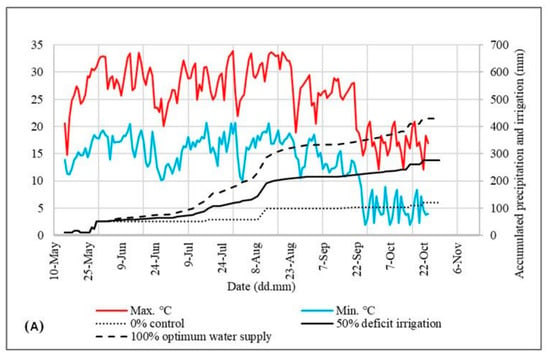
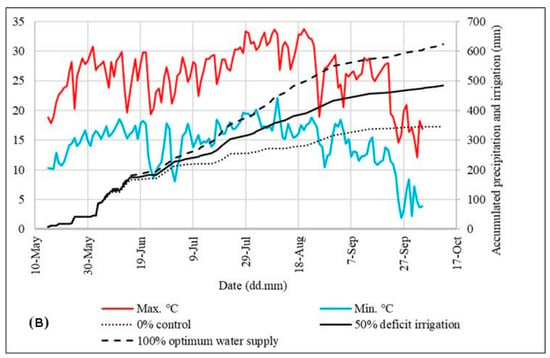
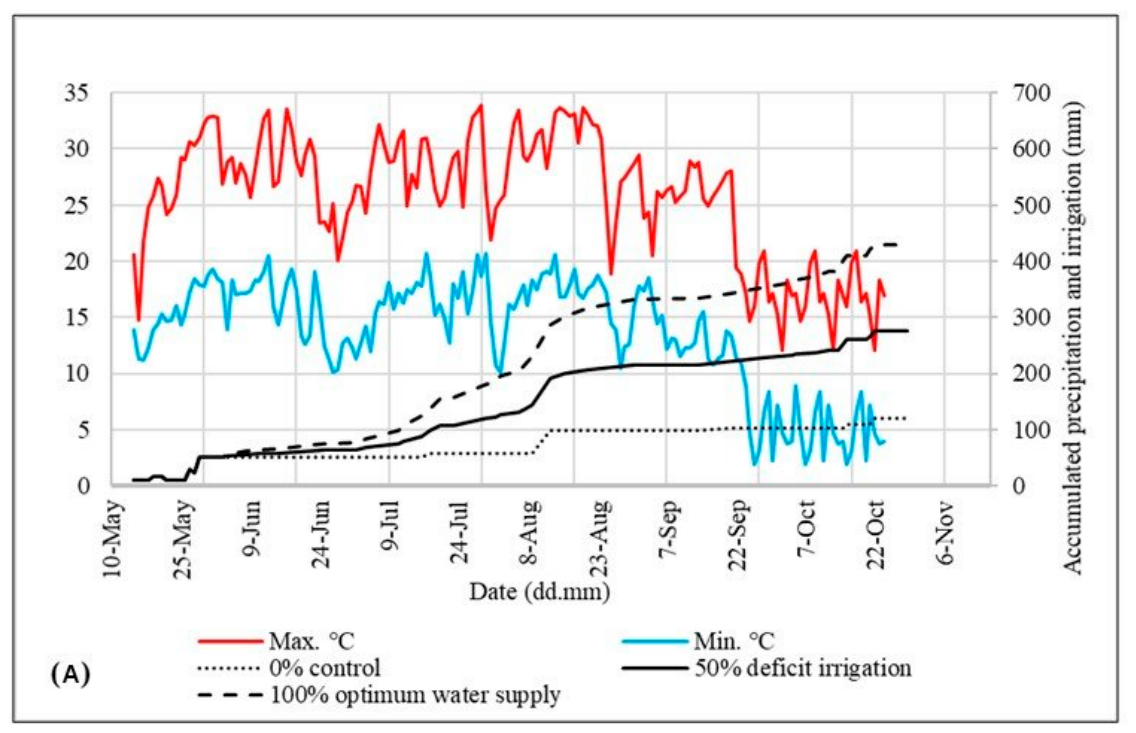
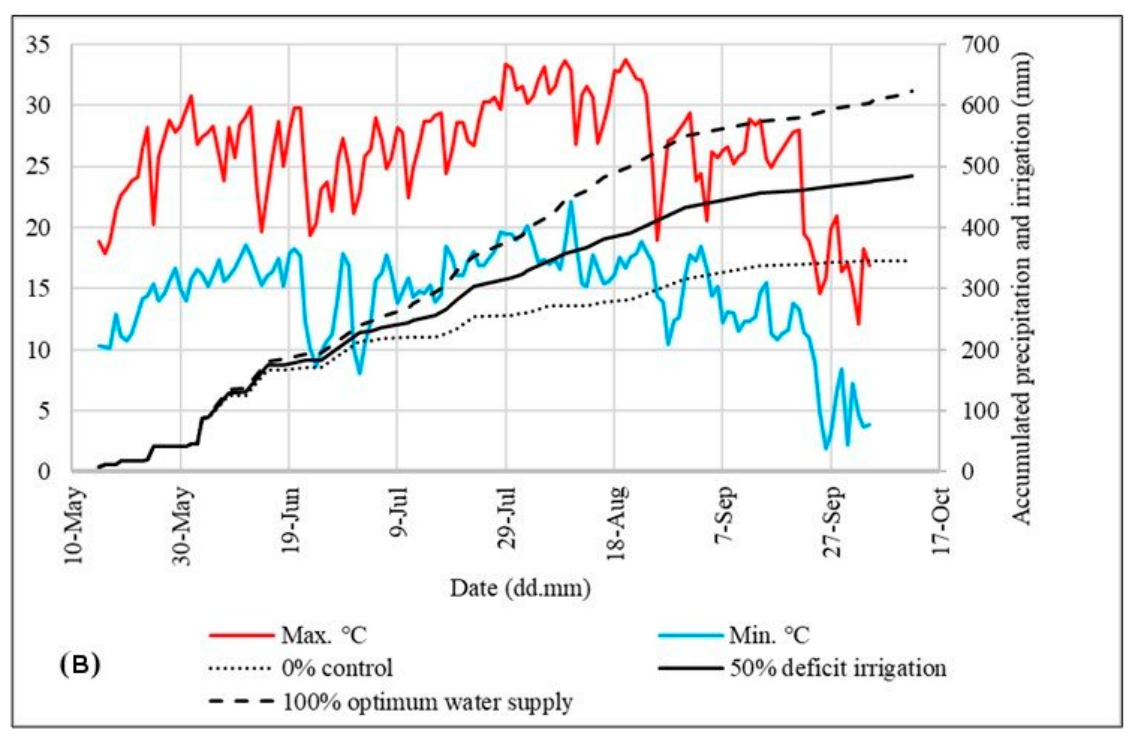
The following irrigation treatments were applied: optimal water supply (I100) corresponding to the demand of plants (100% of evapotranspiration), deficit irrigation (I50) providing 50% of the irrigated doses of optimal water supply and I0 treatment corresponding to the natural precipitation conditions (Table 1, Figure 1).
Table 1.
Precipitation and irrigation water during the chili pepper cropping cycle from planting to harvest.
Figure 1.
Data presented the maximum (Max.) and minimum (Min.) air temperature (°C), and accumulated precipitation and irrigation (mm) for the growing seasons in the dry year of 2019 (A) and the rainy year of 2020 (B).
To ensure the proper maintenance of the experimental treatments, the plants received uniform weekly fertilization with YaraMila Complex 12–11–18 (20% SO3; Yara & Co., Veszprém, Hungary), which is composed of ammonium nitrate (NO3−), phosphorus (P2O5), and potassium (K2O). Additionally, weeds were removed manually every 15 days to maintain uniform conditions across the experimental plots.
2.2. Measurements
At the flowering and harvesting stages of the peppers, the chlorophyll content of the leaves was determined using a portable Soil Plant Analysis Development SPAD–502 chlorophyll meter (Konica Minolta, Warrington, UK). This device measures the absorbance of the leaf in red and near-red regions and calculates a numerical SPAD value that is proportional to the chlorophyll content in the leaf [50]. The measurement was carried out in fully expanded leaves from the apex to the plant base.
A PAM 2500 (Heinz Walz GmbH, Effeltrich, Germany) portable fluorometer was used to measure the chlorophyll fluorescence of leaves. Measurements were done weekly on sunny days at noon during the experimental period. Four fully developed top leaves of a single plant from each replicate were affixed with leaf clips for a 35 min dark adaptation before fluorescence was measured. The Fv/Fm ratio, the maximum quantum efficiency of PSII, was quantified and determined by the fast kinetics method in the PamWin 3.0 software [51]. In each block, four plants were randomly selected and treated as biological subsamples. For each plant, four healthy and recently emerged leaves were randomly chosen, and duplicate readings were taken on each leaf for the determination of relative chlorophyll content (SPAD) and chlorophyll fluorescence (Fv/Fm). Measurements were conducted throughout the 2019 and 2020 growing seasons.
Of the SPAD and Fv/Fm data measured from flowering to harvest, only the data collected 35/40 days before the harvest period, that is during fruit ripening, were analyzed and their relationship with the nutrient content of the fruit was examined.
2.3. Yield Harvest for Chemical Analysis
In the dry year of 2019, the harvest was carried out in four stages: the 1st harvest was on 13 August, the 2nd on 10 September, the 3rd on 7 October, and the 4th on 28 October. In the rainy year of 2020, the harvest took place three times: the 1st harvest was on 9 September, the 2nd on 30 September and the 3rd on 28 October. During each harvest, the yield of the plants per m−2 in each replicate was collected; the weight of the fruits was measured, and the yield per hectare was determined based on these data. During each harvest, premium fruits were gathered in accordance with the species’ standardized commercial maturity criteria, based on the visual indicators such as colour and size which are typically employed by producers. From the same replication, fully ripened (deep red colour) and healthy fruits were randomly chosen for phytochemical analyses of vitamin C and capsaicinoids.
After harvest, the fruits were transported to the laboratory to be cleaned. Approximately 1 kg of peppers was cleaned, removing the seeds and pedicels, and homogenized in a glass blender. The sample of fresh and homogenized peppers was immediately sent for vitamin C analysis. The remaining material was kept at −20 °C until the next evaluation.
2.4. Chemical Analysis
The determination of capsaicinoids and vitamin C was performed using high-performance liquid chromatography (HPLC). All analytical grade solvents and chemicals, as well as high-performance liquid chromatography mass spectrometry (HPLC-MS)-grade organic solvents and standard capsaicin 95% (CAP) and dihydrocapsaicin 85% (DC) (Sigma-Aldrich via Merck, Budapest, Hungary) were used in the analyses. The capsaicinoid concentrations that appeared on the chromatogram were determined and calculated as described by Daood et al. [52].
A mixed sample of fruits collected from each variety was prepared from each plot. About 3 g of homogenized pepper fruit without seeds was crushed in a crucible mortar with quartz sand. A total of 50 mL of analytical-grade methanol was gradually added before the mixture was carefully transferred to a 100 mL Erlenmeyer flask with a stopper and the mixture was subjected to ultrasonication in an ultrasonic bath device for 3 min and then filtered through a filter paper. The filtrate was then 10-times diluted for ‘Hetényi Parázs’ and ‘Unikal’ and 50 times for Unijol and Habanero with chromatography-grade methanol and purified through a 0.22 μm PTFE (Chromfilter Healthcare Hungary Zrt, Budapest, Hungary) syringe into 1.5 mL vials for injection onto the HPLC column.
The HPLC separation of capsaicinoids was performed on a Cross-Linked Nucleodur C18, 150 × 4.6 mm, 3 um column (ISIS, from Machery Nagel, Dürer, Germany) with an isocratic elution of 50:50 water: acetonitrile and a flow rate of 0.8 mL/min. The compounds were detected fluorometrically at EX: 280 nm and EM: 320 nm. The capsaicinoid compounds were identified based on their retention time and mass data from LC-MS/MS analysis as compared to standard materials analysed by the same method. The capsaicin and dihydrocapsaicin concentrations that appeared on the chromatogram were determined and calculated as described by Daood et al. [52] and given in units of μg g−1 fresh weight.
Vitamin C (L-ascorbic acid) content was determined according to the method and HPLC protocols of Nagy et al. [53] and the analysis was conducted within 24 h after harvesting. A total of 3 g of homogenized pepper fruit without seeds were crushed in a crucible mortar with quartz sand and then 30 mL of 3% metaphosphoric acid solution was gradually added to the mixture. The mixture was filtered and purified before it was injected into an HPLC column.
Vitamin C (L-ascorbic acid) was separated from other organic acids on an aqua C18 column, 3μ, 150 × 4.6 mm (Nautilus from Machery Nagel, Dürer, Germany), using a gradient elution of acetonitrile in 0.01 M KH2PO4, with a flow rate of 0.7 mL/min and detection by DAD in the range of 190 to 400 nm. To quantify vitamin C, the peak area was integrated at 244 nm. Vitamin C was identified by comparing its spectral characteristics and retention time with those of a standard solution. The quantification was based on the calibration of the vitamin C concentration and the integrated peak area. The calibration curve ranged from 0 to 120 μg/mL. For the quantitative determination of ascorbic acid, sample data were compared to that generated using standard materials (Sigma-Aldrich, Budapest, Hungary). The amount of the vitamin C was expressed in μg g−1 fresh weight.
2.5. Statistical Analysis
All data were analyzed using a two-way analysis of variance (ANOVA) with SPSS 25.0 (IBM Hungary Ltd., Budapest, Hungary) for Windows to evaluate the effect of water supply and harvest period on each variety (water supply × variety, and harvest time × variety) in each year. The differences between the means from the four replicates of each treatment were compared by Tukey HSD post hoc test at the p < 0.05 level. Regression analysis was performed to reveal the relationship between the physiological traits (i.e., SPAD and Fv/Fm) and quality traits and yield under different water supplies and at different harvest times using the simple regression model in Excel. For the analysis, 16 samples (4 varieties × 4 replicates) collected from each water supply, along with physiological measurements taken during fruit ripening, were used. The simple regression model was used to perform linear, logarithmic, hyperbolic and exponential regression analyses and the highest correlation coefficient (r) and significance level were determined based on the best-fitting regression equation among them.
3. Results
3.1. Effect of Water Supply on the Photosynthetic Properties of Varieties and Yield at Harvest Times
In 2019, during the development of plants, there was little precipitation (132.6 mm) throughout the season (Table 1). The daytime temperature during flowering and fruit setting and fruit development stages was high, above 30 °C between 14 July and 13 August (Figure 1A). Additionally, the soil moisture content was 23.6% in non-irrigated plots (I0) and 27.6% under deficit irrigation (I50), both of which affected the yield. In 2020, significant precipitation (478.6 mm) fell during the growth of plants and the temperature was below 30 °C except for the end of July and mid-August (Figure 1B), as a result of which the first harvest was performed on 9 September.
In the dry year (2019), the SPAD value and chlorophyll fluorescence (Fv/Fm) were highest at the first harvest (13 August). Subsequently, in September and early October (second and third harvests), they remained high and indirectly contributed to a moderate decrease in photosynthesis, which finally decreased significantly in late October (fourth harvest) and led to an acceleration of fruit ripening. Under severe and moderate water deficits (I0 and I50) during fruit ripening, SPAD values were significantly higher compared to optimal water supply; however, the reaction of varieties differed depending on water supply (Table 2 and Table 3).
Table 2.
Photosynthetic traits and yields of chili pepper varieties under different water supplies in the dry year (2019).
Table 3.
Photosynthetic traits and yield of chili pepper varieties under different water supplies in the rainy year (2020).
The highest relative chlorophyll content (SPAD) was measured in the leaves of the HET and UNIK varieties, while it was lower in the UNIJ and HAB varieties (Table 2). During fruit ripening, specifically in the later harvests (third and fourth), the SPAD values were lower in most varieties under optimal water supply than under water deficit. At the October harvest, similarly to the SPAD, the Fv/Fm ratio decreased significantly with optimal water supply compared to water shortage, with the exception of the UNIJ variety, for which the water supply did not seem to affect the yield. The climatic conditions during the fruit setting and fruit development stages of the early pepper varieties (HET and UNIK) were favourable (Figure 1A); thus, the highest yield was achieved at the first harvest (August) and decreased thereafter. The UNIJ variety produced the highest yield in September and early October (second and third harvests), under moderate water shortage (I50), while the HAB variety had the highest yield at the third harvest, under optimal water supply (Table 2). In a dry year, based on total yield results, the UNIK and UNIJ varieties are capable of high yields (17.4 and 20.45 t ha−1) in moderate water shortages, while the HAB variety is only capable of high yields under optimal water supply (15.04 t ha−1). The HET variety has a relatively good yield both under water deficit and under optimal water supply.
In the rainy year (2020), harvest time significantly influenced the SPAD and Fv/Fm values during fruit ripening, but the water supply had no significant effect on these traits. The highest SPAD value was measured at the second harvest (30 September) and the lowest Fv/Fm value was measured at the third harvest (28 October) (Table 3). At the second harvest, the significantly highest SPAD values were detected in the HET, UNIK, and UNIJ varieties, while the Fv/Fm value was the lowest at the third harvest for all varieties. The low Fv/Fm values are attributed to low daytime temperatures of 20 °C and 15 °C (Figure 1B), very low temperatures (2.7 °C) at the end of October and significant rainfall (105 mm). In the rainy year, the response of the varieties varied at the different harvest times. In the first part of September (first harvest), under optimal water supply (I100), the UNIK variety had a low SPAD and a high Fv/Fm, while the HAB variety was characterized by a lower SPAD value and the same Fv/Fm value. At the second harvest, under optimal water supply, a lower SPAD could be measured for most of the varieties; among them, the UNIJ and HET varieties produced a higher yield than under water deficiency, in contrast to the UNIK and HAB varieties where the yield did not change. Depending on the amount of precipitation and air temperature, the impact of water supply treatments on overall productivity varied from year to year. Overall, productivity in 2020 was significantly higher (18.56 t ha−1) than in 2019 (13.25 t ha−1) (p < 0.05). The HET cultivar achieved its highest output in 2019 under the non-irrigated condition (I0), but its total productivity was significantly lower in 2020 (Table 2 and Table 3). In contrast, the cultivar UNIK showed higher production in 2020 than in 2019, reaching its maximum output under water deficit (I50) in 2019 and under optimal water supply (I100) in 2020. In the rainy year, all varieties, with the exception of the HAB variety, achieved their highest total yield under the regularly irrigated treatment (Table 3); however, the harvest date was a determining factor for the yield.
3.2. Changes in Phytochemicals Depending on Harvest Time and Water Supply
3.2.1. Changes in Capsaicin and Dihydrocapsaicin Content of Chili Pepper Varieties
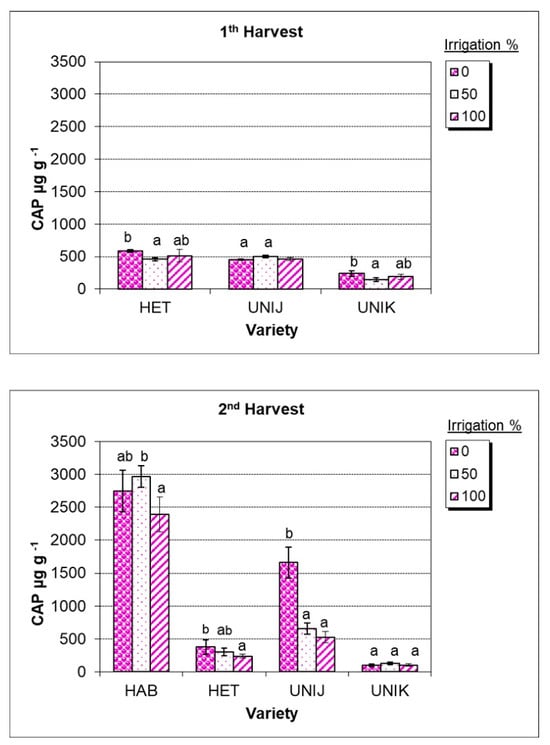
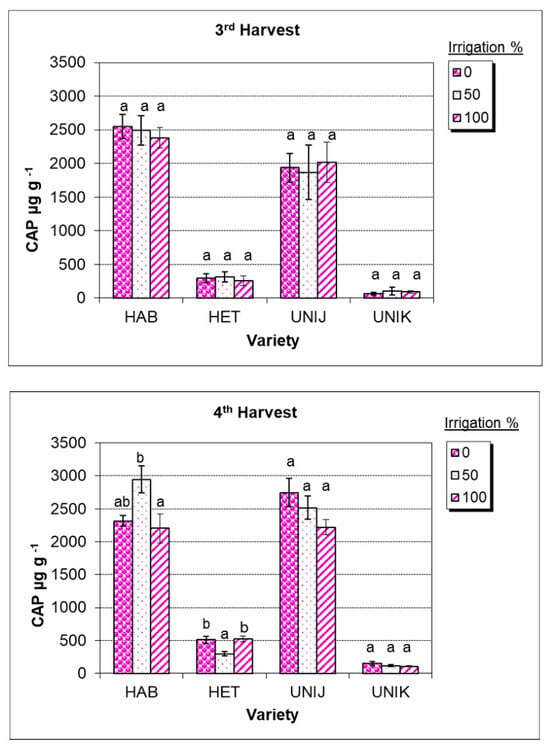
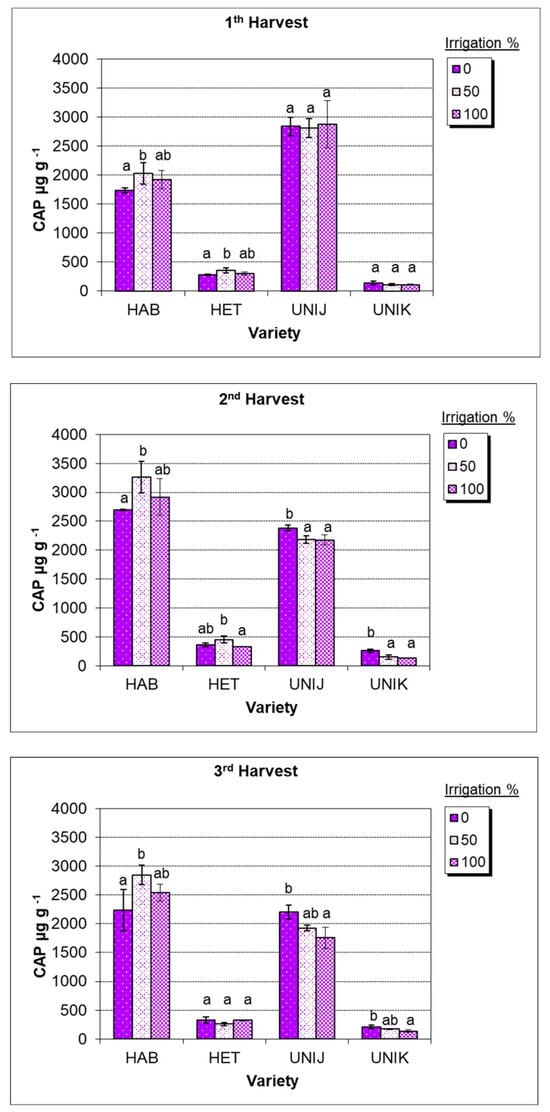
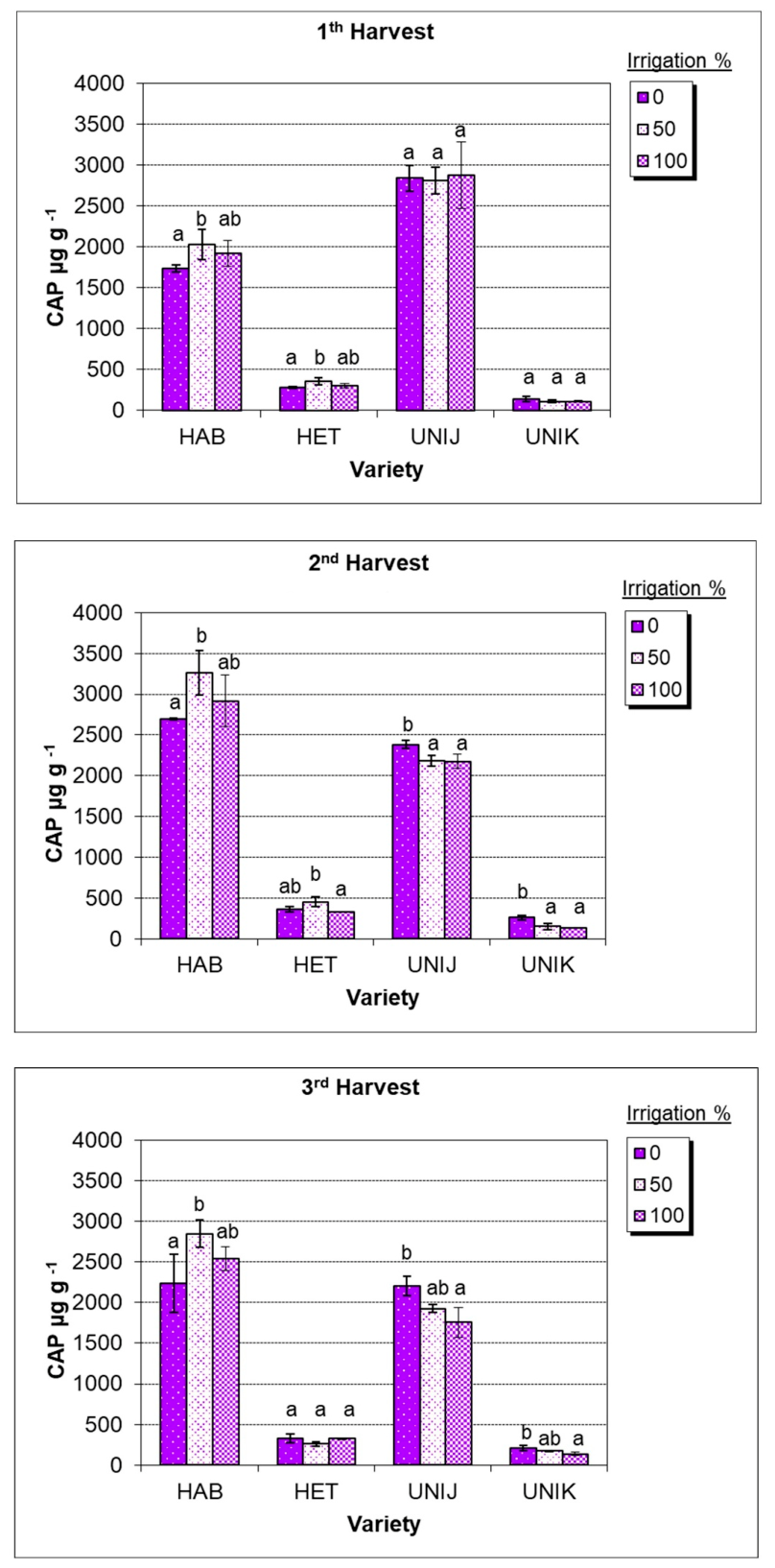
In the dry year, the water supply during fruit ripening had no significant effect on the capsaicin (CAP) content of the fruit; however, it varied significantly across different harvest times. During fruit ripening, the CAP content increased significantly from the first harvest to the last and the highest amounts were found in the fruit of HAB > UNIJ > HET > UNIK varieties. The rate of CAP accumulation varied during fruit ripening; at the first harvest, all varieties had low capsaicin content (187–584 μg g−1), but the HET and UNIK varieties showed higher CAP content under non-irrigated than irrigated conditions (Figure 2). The HAB variety was slow-growing, taking about 95–100 days to reach maturity; therefore, there were no suitable fruits for chemical analysis at the first harvest (13 August) in 2019.
Figure 2.
Effect of harvesting periods and water supply on the capsaicin (CAP) content of chili peppers in the dry year (2019). Data present the means ± SD. Means followed by different letters are significantly different at p < 0.05 using Tukey’s test. Harvest time is as discussed in the Section 2.
In early September (second harvest), the HAB variety produced a quality crop, at which time its CAP content was very high (2744 and 2969 μg g−1) under severe and moderate water deficit; similarly, the UNIJ variety also had an outstanding CAP content compared to the irrigated plants (Figure 2). Later (third and fourth harvest), CAP accumulation in the yield of the UNIJ variety increased by 42% and 65%; nevertheless, it was not affected by the water supply. In contrast, at the fourth harvest, the CAP content in the HAB variety was significantly higher under severe and moderate water deficits than under optimal water supply conditions (Figure 2).
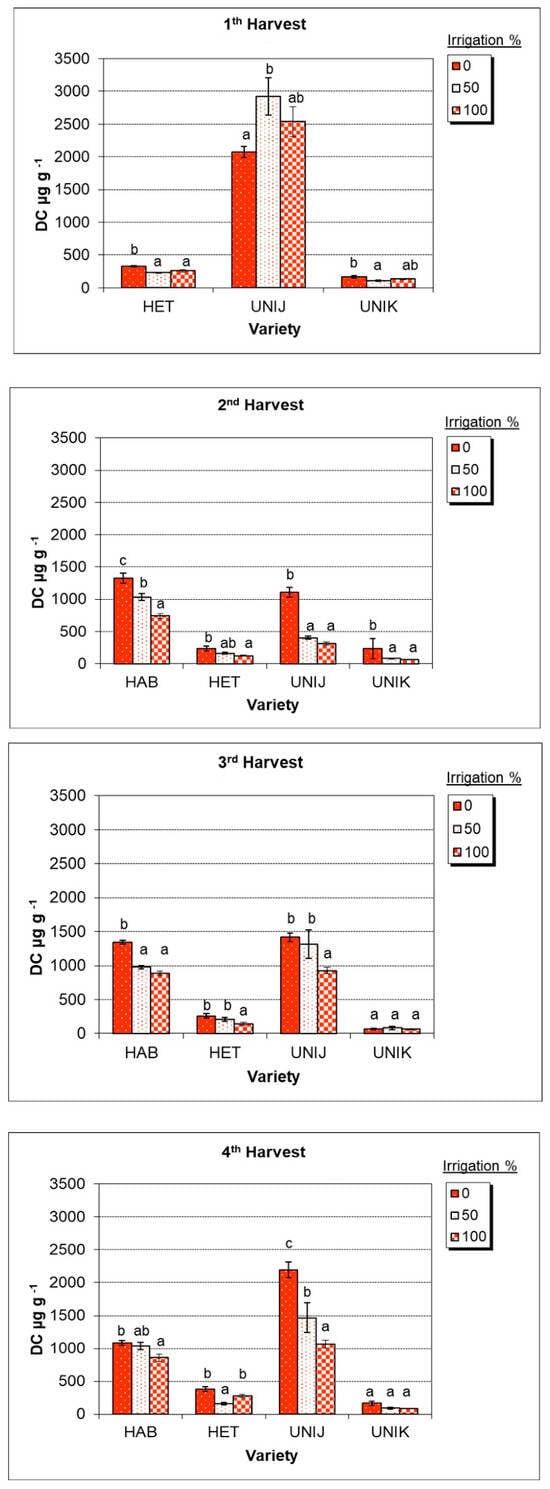
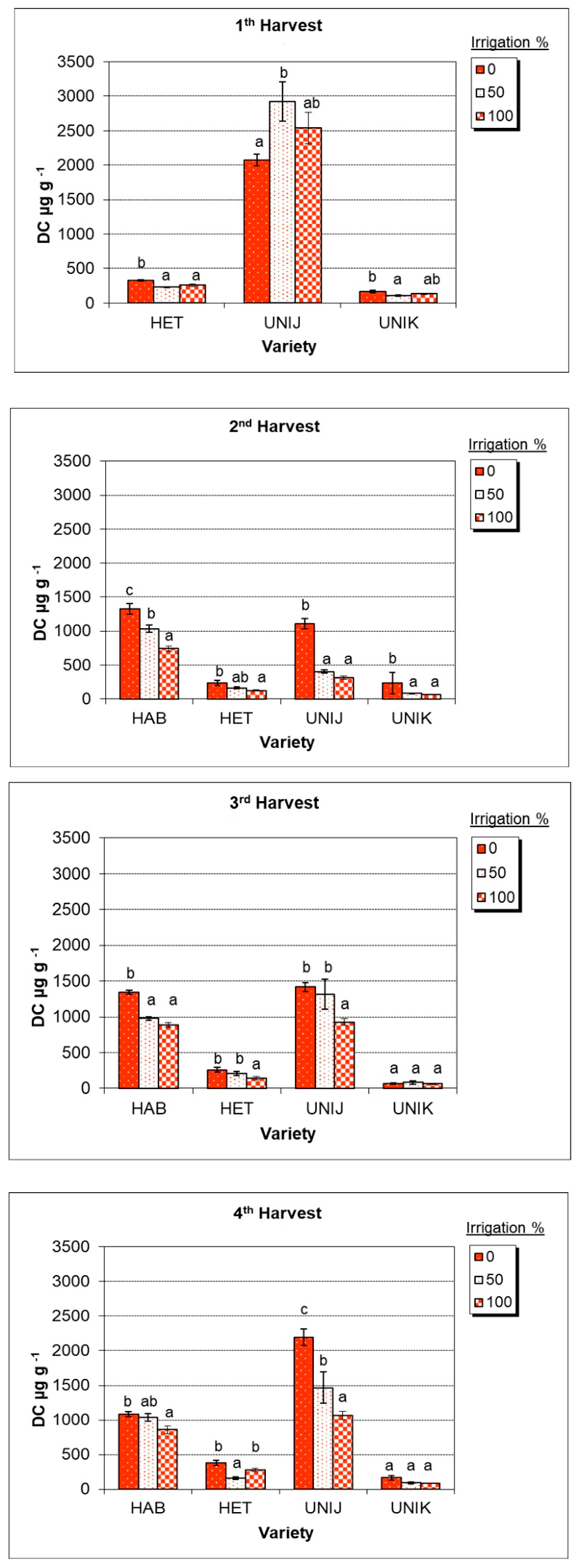
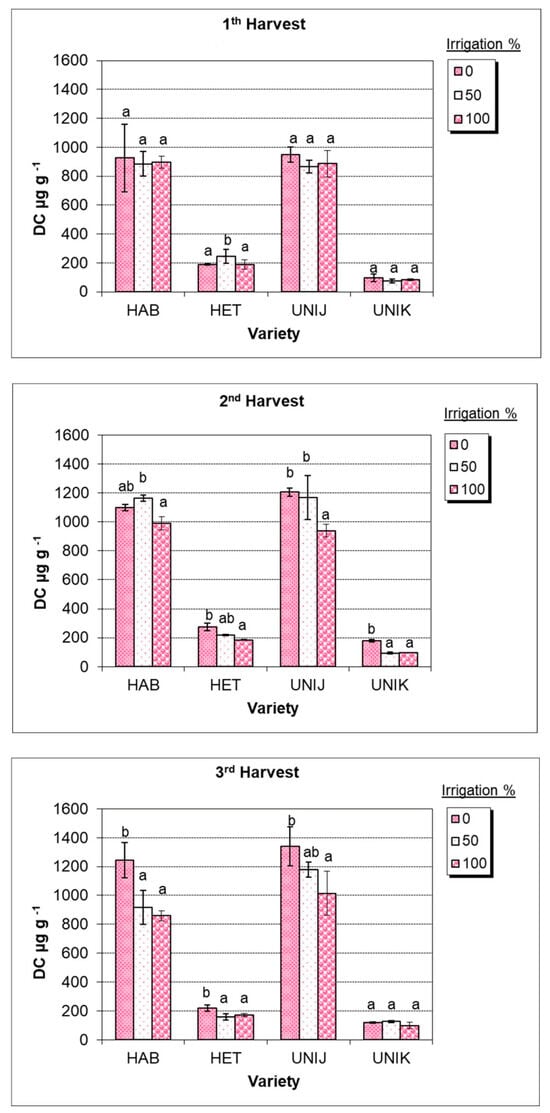
In a dry year, both water shortage and harvest time affect the dihydrocapsaicin content (DC) of chili peppers, which is significantly higher in water shortage. Comparing the DC and CAP content, it can be stated that in very pungent pepper varieties, such as UNIJ and HAB, the DC content is 28–50% less than the capsaicin (CAP) content. During fruit ripening, the ranking among the varieties based on DC content is UNIJ > HAB > HET > UNIK (1478.2, 1031.91, 230.79, and 111.33 μg g−1, respectively). The DC content of the UNIJ variety was outstanding at the first harvest; however, at the second harvest under dry conditions, it decreased to about half that of the previous harvest. At the second harvest, without irrigation, the DC content of the HAB variety was the highest while that of the HET and UNIK varieties remained low (Figure 3). Later, at the third and fourth harvests, under optimal water supply conditions, the DC content decreased significantly in almost all varieties compared to dry conditions.
Figure 3.
Effect of harvesting periods and water supply on dihydrocapsaicin (DC) content of chili peppers in the dry year (2019). Data present the means ± SD. Means followed by different letters are significantly different at p < 0.05 using Tukey’s test. Harvest times are as discussed in the Section 2.
In the rainy year, water supply did not affect the CAP content; however, the response of the varieties differed during harvests. At the September harvest (second harvest), under irrigated conditions (I50 and I100), an almost twice as high CAP content was measured for the HAB variety (3257 μg g−1 and 2918 μg g−1) than in the previous harvest, while a slight non-significant decrease in CAP content was observed for the UNIJ variety compared to the first harvest (Figure 4). At the later harvest in October, both HAB and UNIJ varieties showed a non-significant decrease in capsaicin content compared to the previous harvest but their responses to water supply were different; under irrigated conditions, the CAP content of the HAB variety was higher whereas that of the UNIJ variety was lower than under non-irrigated conditions.
Figure 4.
Effect of harvesting periods and water supply on the capsaicin (CAP) content of chili peppers in the rainy year (2020). Data present the means ± SD. Means followed by different letters are significantly different at p < 0.05 using Tukey’s test. Harvest times are as discussed in the Section 2.
Similar to 2019, the DC content in 2020 was higher (653.12 μg g−1) without irrigation than under irrigated conditions (534.03 μg g−1), and the highest amounts were measured in the UNIJ and HAB varieties (Figure 5). During fruit ripening, DC accumulation increased and reached its highest levels (634.34 μg g−1 and 620.70 μg g−1) at the second and third harvest. At the last harvest, in the very pungent pepper varieties such as HAB, UNIJ and HET, a significantly higher DC content was detected under non-irrigated conditions than under irrigated ones; however, the DC content of UNIK varieties remained low regardless of the harvest time and water supply conditions (Figure 5).
Figure 5.
Effect of harvesting periods and water supply on the dihydrocapsaicin (DC) content of chili peppers in the rainy year (2020). Data present the means ± SD. Means followed by different letters are significantly different at p < 0.05 using Tukey’s test. Harvest times are as discussed in the Section 2.
In summary, in a dry year, the early and middle-ripening varieties produced the highest yield under a moderate water deficit, whereas the late-ripening HAB variety produced the highest yield under optimal water supply. The HET and UNIK varieties produced the highest yield in August and early September (first and second harvest), but the CAP and DC content of their fruits were the lowest compared to the other varieties. The UNIJ variety produced the highest yield with high CAP and DC content in September and early October (second and third harvest), while the HAB variety produced its highest yield along with high CAP and DC content under optimal water supply in early October (third harvest).
In a rainy year, except for the HAB variety, the varieties produced their highest yields under optimal water supply but the water supply did not significantly affect the CAP content. At the later harvest in October (third harvest), the CAP content of the yield of the HAB and UNIJ varieties decreased compared to the previous harvest, but their DC content remained high without irrigation. The HET variety produced its highest yield at early harvest, while the UNIK variety produced a balanced yield from early September to late October. In the HET and UNIK varieties, the CAP and DC contents of the fruits remained low regardless of water supply and harvest time.
3.2.2. Changes in Vitamin C Content of Chili Pepper Varieties
In both growing seasons, harvest time and water supply influenced the vitamin C content of chili peppers. In the dry year (2019), variation in vitamin C content was observed from the first to the last harvest, depending on the variety. The highest value was recorded at the fourth harvest, followed by that of the first harvest, with the lowest observed at the second harvest. The highest vitamin C content was found in the fruits of non-irrigated plants. The ranking based on significantly higher vitamin C content was HET > UNIK > UNIJ > HAB varieties.
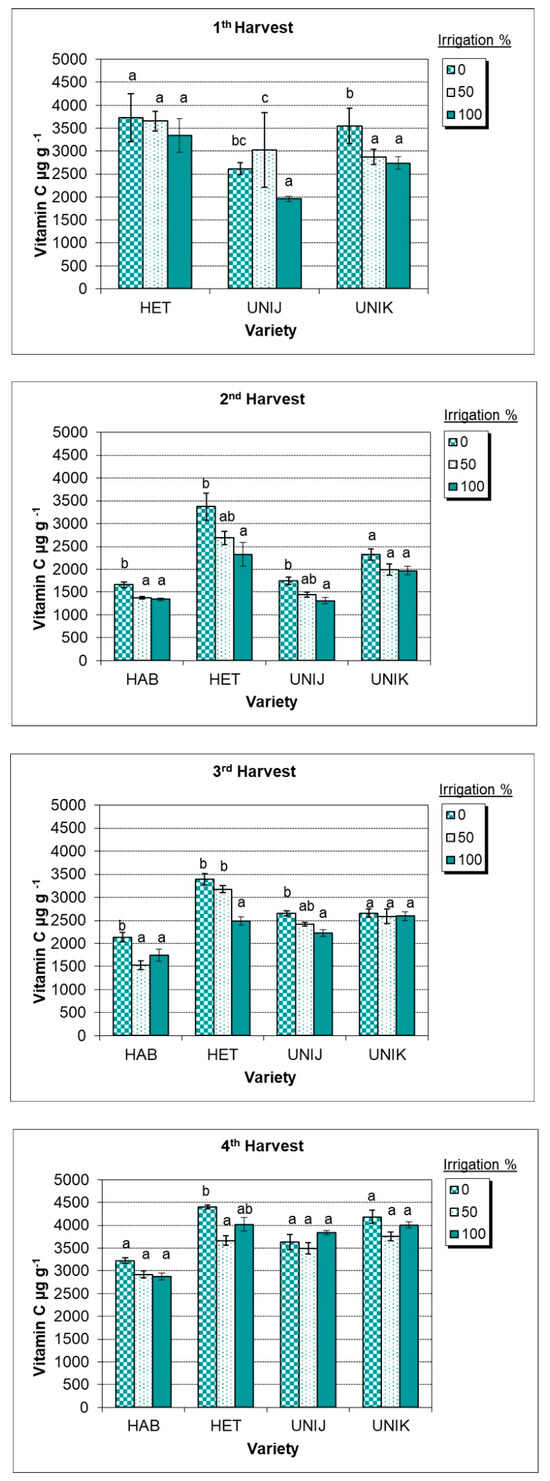
In the dry year, at the first harvest, the vitamin C content fluctuated between 3725 μg g−1 and 2615 μg g−1 in the non-irrigated plants (Figure 6). A significant decrease in vitamin C due to irrigation was only detected in the UNIK and UNIJ varieties; however, the high vitamin C content in the HET variety did not change. At the beginning of September (second harvest), the vitamin C content of the varieties temporarily decreased, and then an intensive accumulation was observed at a later harvest. In the crops harvested in early October (third harvest), the vitamin C content was significantly higher without irrigation than with an optimal water supply, with the exception of the UNIK variety. However, at the end of October (fourth harvest), vitamin C accumulation reached its highest value, ranging from 3220 to 4397 μg g−1, and the water supply did not affect its amount, except in the HET variety, where it was significantly higher without irrigation than in the irrigated treatments (I50 and I100) (Figure 6).
Figure 6.
Effect of harvesting periods and water supply on vitamin C content of chili peppers in the dry year (2019). Data present the means ± SD. Means followed by different letters are significantly different at p < 0.05 using Tukey’s test. Harvest times are as discussed in the Section 2.
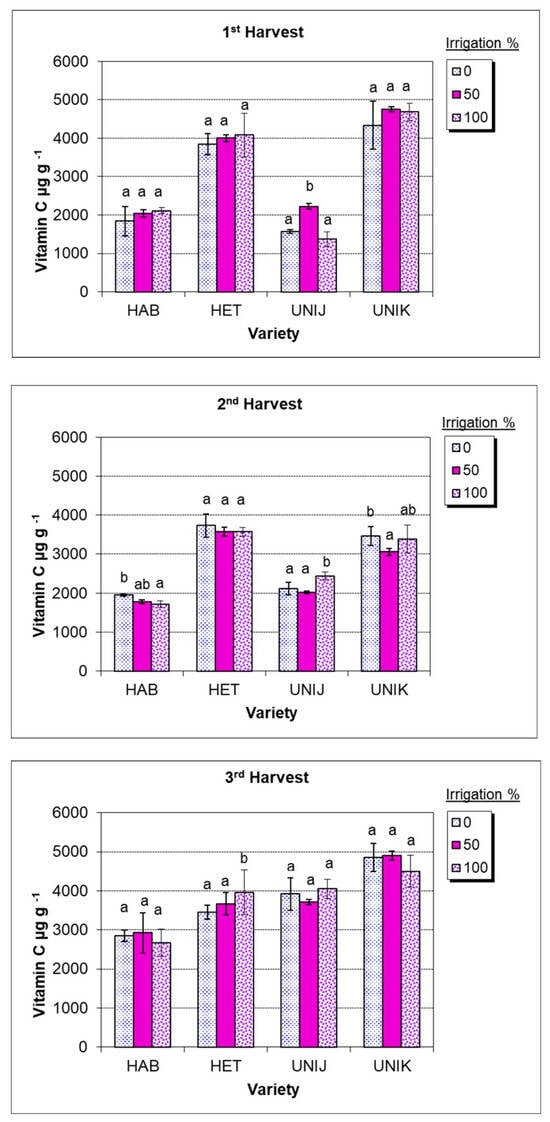
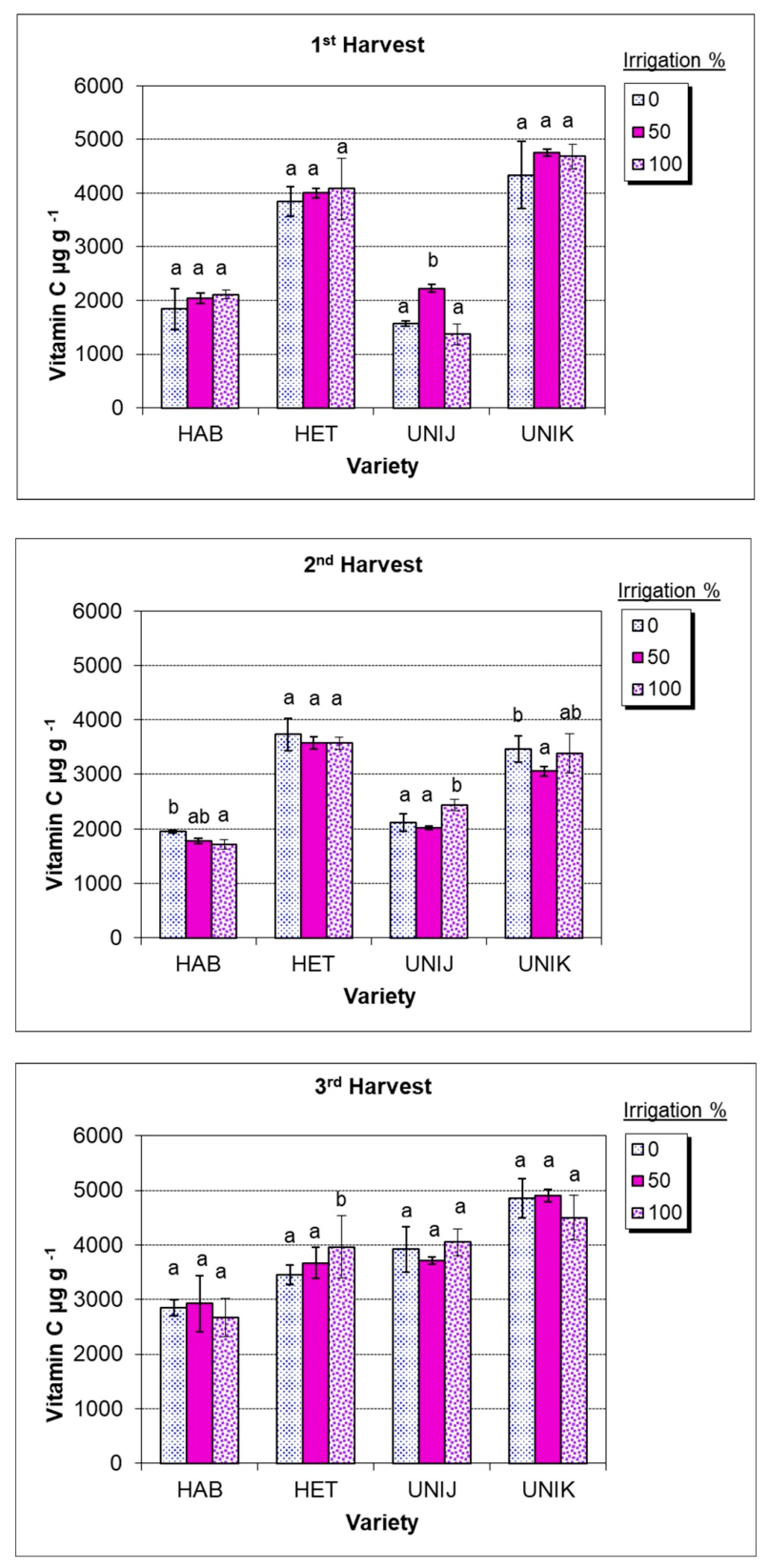
A wetter year was more favourable for the formation of vitamin C than a drier year but the water supply had no effect on the vitamin C content, which was 3126.68 μg g−1 and 3222.61 μg g−1 under non-irrigated and well-irrigated conditions, respectively. Vitamin C content varied significantly between harvest times; the highest amount was measured at the third harvest (3789.42 μg g−1) and the lowest at the second harvest (2732.92 μg g−1), but differences were also detected between the varieties. At early harvest, the highest vitamin C contents were detected in the HET and UNIK varieties (4000 and 4800 μg g−1, respectively) while the lowest were found in the HAB and UNIJ varieties (1500 and 2000 μg g−1, respectively) (Figure 7). Later (second harvest), a small increase in vitamin C accumulation was observed in the UNIJ variety, whereas a decrease was found in the UNIK variety compared to the previous stage. At the end of October (third harvest), the accumulation of vitamin C increased further in all varieties. It was outstanding in the UNIK variety (4200 μg g−1 and 4900 μg g−1), and the water supply, with the exception of the HET variety, had no significant effect on the vitamin C content (Figure 7).
Figure 7.
Effect of harvesting periods and water supply on vitamin C content of chili peppers in the rainy year (2020). Data present the means ± SD. Means followed by different letters are significantly different at p < 0.05 using Tukey’s test. Harvest times are as discussed in the Section 2.
Based on the results, it can be stated that in a dry year, the vitamin C content in the HET and UNIK varieties was highest in August and early September (first and second harvests), whereas the vitamin C content in the UNIJ variety harvested in early September and October (second and third harvests) was lower. The HAB variety produced the highest yield along with low vitamin C content in early October (third harvest) under an optimal water supply.
In the wet year, the HET variety produced a high yield at the early harvest, while the UNIK variety produced a high yield from the beginning of September to the end of October, and both varieties maintained a high vitamin C content. The vitamin C content in the UNIJ variety increased during the harvest period, reaching its highest level during the October harvest (third harvest). The yield of the late-maturing, very pungent HAB variety was not affected by water supply, and the highest yield, along with the highest vitamin C content, was harvested at the end of October (third harvest) in the wet year of 2020.
3.3. Relationship Between Physiological and Quality Traits, and Yield of Chili Peppers as a Function of Harvest Times and Water Supply
In both growing seasons, during the fruit ripening of chili peppers, a negative relationship was detected between the SPAD value and CAP and DC content and a positive one was found with the vitamin C content (Table 4 and Table 5). In the dry year, a significant negative correlation for chlorophyll fluorescence (Fv/Fm), CAP, and DC, as well as a positive correlation for vitamin C content, can be detected primarily under severe water deficit (I0) and at later harvests (third and fourth harvests) (Table 4). Under water deficit, the chlorophyll content of the leaves decreases; therefore, absorption of the photosynthetically active radiation also decreases and its reflection increases, leading to changed SPAD values.
Table 4.
Correlation coefficients (r) and significance levels between physiological and quality traits, and yields of chili peppers at different harvesting times under different water supplies in the dry year (2019) (n = 16).
Table 5.
Correlation coefficients (r) and significance levels between physiological and quality traits and yields of chili peppers during yield ripening under different water supplies in the rainy year (2020) (n = 16).
At the early harvest, a strong, significant relationship was demonstrated between the SPAD value and yield, but not at later harvests (Table 4). In September and the first part of October (second and third harvests), the SPAD value ranged between 60 and 80 and was significantly associated with the CAP and DC content. As the SPAD value increased, CAP and DC contents decreased significantly, whereas the vitamin C content increased. During this period, under severe water stress (I0), the highest CAP (2921.70 μg g−1) and DC (1695.65 μg g−1) values were associated with a low SPAD value (60). Under severe water deficit (I0), a significant negative relationship was found between the chlorophyll fluorescence (Fv/Fm) and capsaicinoid content of the fruit (Table 4). In the first half of October (third harvest), under severe water deficit, the Fv/Fm value ranged between 0.70 and 0.78. A relatively low chlorophyll fluorescence (0.70 Fv/Fm) was associated with high CAP (2623.02 μg g−1) and DC (1521.87 μg g−1) contents; however, their amounts are lower at a higher Fv/Fm (0.76) value.
In the rainy year (2020), at different harvest times and regardless of the irrigation, the SPAD value showed a close relationship with the CAP and DC content, contrary to the chlorophyll fluorescence (Fv/Fm), which had no remarkable effect; neither pungency nor vitamin C content increased, except under non-irrigated conditions (Table 5).
At the early harvest (first harvest), based on the relationship between SPAD and capsaicinoids and vitamin C content, as the SPAD value increased, CAP and DC content decreased, whereas vitamin C content increased under water deficit. Based on the correlation between them, the highest CAP (2944.70 μg g−1) and DC (987.40 μg g−1) contents are associated with low SPAD (60) values. Such a relationship can also be demonstrated in the later stages of fruit ripening (second and third harvest), where high CAP and DC content were associated with a low SPAD (50) value under no irrigation (I0) and deficit irrigation (I50). A higher SPAD value was associated with a higher vitamin C content in the fruit, both under moderate water deficit (I50) and under optimal water supply (I100).
In the rainy year, correlations between chlorophyll fluorescence (Fv/Fm) and both fruit pungency and vitamin C content could only be detected during the second and third harvests (30 September to 28 October) under non-irrigated conditions. During this period, the temperatures were quite low, at 16.2/12.3 °C Tmax/Tmin and 19.0/9.4 °C Tmax/Tmin, respectively (Figure 1B). In September (second harvest), in non-irrigated plants, an Fv/Fm value of 0.72 was associated with the highest CAP and DC amounts; at higher values (e.g., 0.76 Fv/Fm), their contents decreased significantly based on the correlation.
4. Discussion
Extreme climatic conditions, such as drought, excess water or high temperatures, inhibit the growth and fruit formation of peppers by damaging physiological processes in the leaves, including photosynthesis. Under drought, physiological and morphological adaptations, including stomatal regulation and osmotic balance, help plants maintain their water balance [18]. Under water stress, an increase in the amounts of auxin, ABA, jasmonic acid, osmoprotectants and antioxidants was demonstrated in water- and salt-tolerant pepper hybrid rootstock [54]. The CO2 balance of plants during water stress and recovery depends on the extent of photosynthetic recovery, the activity of photosynthetic genes during stress, and the upregulation of transcription factors (DREBs and MYC) [54,55]. Under soil water deficit, the physiological properties of chili peppers change; stomatal conductance, chlorophyll content, and leaf area decrease [56] and yield also decreases [46]. Under such stress conditions, the absorption of photosynthetically active rays in the leaves decreases and their reflection increases, which is manifested in high SPAD values [27,30]. In the leaves, photosystem II (PSII) is also sensitive to light and drought, and the level of chlorophyll fluorescence, i.e., the maximum quantum yield (Fv/Fm) of the PSII photochemical system, indicates whether photosynthesis is functioning smoothly or insufficiently [57]. Under optimal water supply, the Fv/Fm value for chili pepper varieties is around 0.81, but under drought stress it decreases to values between 0.76 and 0.78 for some varieties [58]. We found a different result; under severe and moderate water deficit (I0 and I50), both the SPAD value and chlorophyll fluorescence (FvFm) were significantly higher during chili pepper fruit ripening compared to those under optimal water supply, which varied depending on the harvest time and the varieties’ characteristics. The SPAD value in the leaves of the late-maturing HAB and UNIJ varieties was significantly lower than that of the HET and UNIK varieties. Under water shortage conditions, the early maturing varieties (HET and UNIK) produced their highest yield in August (first harvest), while the late-maturing HAB variety achieved its highest yield in October (third harvest) under optimal water supply (Table 2).
Chili peppers are one of the most sensitive horticultural crops to drought, especially during flowering and fruit set, resulting in significant yield losses [14]. At this stage of development, deficit irrigation produces shorter and thinner fleshed fruits, but only a minimal decrease in marketable yield [20,21]; however, the capsaicin content of the fruits may increase. The synthesis and content of capsaicinoids, which cause the pungency of chili peppers, are influenced by genotypes, fruit development stages, and environmental factors [34]. It has been shown that the activity of the capsaicinoid synthase enzyme in the synthesis of capsaicinoids is linked to a pun1 gene; in its presence, capsaicinoid production is increased [2]. During the first days of fruit ripening, the capsaicin content of hot peppers increases until reaching a maximum value, which can be attributed to the activity of the capsaicinoid synthetase enzyme, and then decreases in the following days [59,60], which can be attributed to the fact that the peroxidase enzyme begins to oxidize the dihydrocapsaicin and capsaicin compounds [61]. Other researchers [60,62] have also found that capsaicin synthesis begins in the green fruit, accumulates during ripening, and reaches its maximum content when the fruit turns red. Red chili peppers contain more capsaicin than green ones, making them spicier, and their capsaicin content can vary significantly among varieties [63]. The ratio of capsaicin to dihydrocapsaicin may vary among pepper varieties; for example, in the Cayenne pepper variety, depending on fruit ripening, 79% of the capsaicinoids are capsaicin, whereas a higher proportion, 90%, is dihydrocapsaicin [64]. Their content varies depending on the water supply, as observed in our experiment. In dry years, at a later stage of fruit ripening (third and fourth harvests), the CAP content of the Habanero (HAB) and Unijol (UNIJ) varieties is significantly higher and less affected by the water supply (Figure 2). In contrast, the DC content, although significantly lower than the CAP content, is significantly higher under water deficit than under optimal water supply (Figure 3). According to other studies [35], the capsaicinoid content of the spiciest variety, Orange Habanero, increases under severe water stress, while in the other varieties, Akanee Pirote and Bhut Jolokia, it decreases [36]. However, our results showed that in rainy years, the effect of irrigation on the CAP content of the fruit is less pronounced, whereas the DC content is significantly higher in deficit-irrigated plants. In addition, the harvest time significantly influenced both the CAP and DC contents, which were especially high during the later harvests (30 September, 28 October). These results are consistent with the findings of Sweat et al. [65], who reported that the amount of capsaicinoids in a variety varies with harvest time.
The vitamin C content of hot pepper varieties, similar to their capsaicinoid content, is influenced by temperature and water conditions. Zamljen et al. [46] found that the vitamin C content was higher in chili pepper varieties under optimal water supply than under water deficit. In contrast, we found a different result; in a dry year, without irrigation, the vitamin C content of the crop was higher in most varieties than under good water supply, especially during the last stage of fruit ripening (second and third harvest). The observed increase may be associated with water stress under high-temperature conditions, which increase the generation of reactive oxygen species. Under this scenario, the plant activates redox signalling pathways, inducing the biosynthesis of ascorbic acid as an antioxidant mechanism for cell protection. Our results showed that the accumulation of vitamin C in the fruits of the studied varieties was influenced by both the water supply and the harvest time. Regardless of the precipitation conditions during the year, the highest amount of vitamin C accumulated in the fruits during the October (third and fourth) harvest and the lowest amount occurred during the September (2nd) harvest, but significant differences were detected between the varieties. This result is consistent with the findings of Nagy et al. [53], who reported that the vitamin C content of chili pepper varieties increases with ripening time; however, in some hybrid varieties, the highest content may occur in the intermediate stage.
Environmental factors such as water shortage and high temperature during fruit ripening reduce photosynthesis, accelerate the ripening process, and change the quality characteristics of the fruit [33]. During the ripening of the chili pepper fruit, the temperature was the most favourable at the second harvest (26/12 °C Tmax/Tmin) (Figure 1A), which contributed partly to the maintenance of photosynthesis and partly to the development of the pungency and vitamin C content of the fruits. This was confirmed by the correlation between the SPAD and Fv/Fm values and the CAP, DC and vitamin C contents. Regardless of the water supply, there was a strong negative correlation between the SPAD value and the CAP and DC contents in the later stages of fruit ripening (second and third harvest). A higher SPAD value was associated with a higher vitamin C content in the fruits. The increase in vitamin C in the fruits was related to the fact that the increasing SPAD value was associated with a reduction in photosynthesis while the metabolic products were transferred from the leaves to the fruits. In the rainy year, the leaf chlorophyll content (SPAD value) was significantly associated with the yield, pungency and vitamin C content at different harvest times, while chlorophyll fluorescence (Fv/Fm) was not (Table 5). During crop ripening, at later harvest times, the chlorophyll content and photosynthetic intensity decreased, and a negative correlation could be observed between the SPAD and yield.
The question arises whether the optimal harvest time of chili peppers can be determined by non-destructive measurement of photosynthesis-related properties under field conditions to achieve the most favourable yield and fruit quality under different environmental stress conditions. In the cultivation of open-field vegetable crops, the use of remote sensing tools is increasingly important for assessing the drought tolerance of varieties and determining the timing of irrigation in order to ensure a reliable harvest. Drought stress responses can be assessed by measuring the chlorophyll content of plant leaves (SPAD) or by measuring spectral indices on the leaf canopy of plants, e.g., leaf area index (LAI) or normalized vegetation index (NDVI) [33,66]. Plants are most sensitive to water stress during generative development. In breeding for drought tolerance, photosynthetic traits (SPAD and Fv/Fm) during flowering and fruit setting, along with other important agronomic traits, can be used to select drought-tolerant genotypes [31,67]. During fruit ripening, based on the relationship between the chlorophyll content (SPAD value) measured in plant leaves and fruit quality, it is possible to select genotypes with favourable fruit quality [32,33]. Changes in leaf chlorophyll content on the leaf surface can be measured using remote sensing tools (vegetation indices) to determine the health status of the plant and the timing of irrigation [27], which can be useful in precision agriculture by helping farmers make quick decisions [28].
Based on our results, SPAD values were associated with changes in fruit quality traits during chili pepper fruit ripening in both dry and rainy years, which may be useful for the future development of non-destructive monitoring approaches. Since these results were based on measurements taken on a single plant, in production practice it may be more advantageous to perform measurements at the stand level for optimal harvest selection or yield prediction, e.g., by exploring the relationship between NDVI and yield; however, in the case of chili peppers, this requires further research.
5. Conclusions
During the ripening of chili pepper fruit, photosynthesis gradually decreased, which was reflected in a decline in photosynthetic properties such as chlorophyll content (SPAD value) and chlorophyll fluorescence (FvFm), while the accumulation of capsaicinoids and vitamin C content in the fruit increased. The finding showed that the yield and fruit quality varied with the growing season, variety, water supply and harvest timing. The capsaicinoid content of chili pepper cultivars varied depending on the water supply; dihydrocapsaicin was generally higher under water-deficit conditions, while the water supply affected the capsaicin content less. Capsaicin and vitamin C content tended to increase at later harvests; however, differences were observed between varieties. The SPAD values measured during fruit ripening were associated with changes in bioactive compounds; however, their practical use or the use of canopy-level indices for harvest selection requires further validation.
Author Contributions
Conceptualization, Z.P. and C.S.e.S.; methodology, C.S.e.S.; investigation C.S.e.S. and A.N. and S.T.; writing—original draft preparation, C.S.e.S. and E.N.; writing—review and editing, A.N. and Z.P. and L.H.; visualization, E.N.; supervision, Z.P. and H.D.; funding acquisition, L.H. All authors have read and agreed to the published version of the manuscript.
Funding
This research is a part of the EFOP-3.6.3-VEKOP-16-2017-00008 project and was financially supported by the Flagship Research Groups Program of the Hungarian University of Agriculture and Life Sciences, National Research Development and Innovation Office: 2020-1.1.2-PIACI-KFI-2021-00328, KA220-VET-779E2179 research grants.
Data Availability Statement
The original contributions presented in this study are included in the article. Further inquiries can be directed to the corresponding author.
Conflicts of Interest
The authors declare no conflicts of interest.
References
- Kothari, S.L.; Joshi, A.; Kachhwaha, S.; Ochoa-Alejo, N. Chilli peppers—A review on tissue culture and transgenesis. Biotechnol. Adv. 2010, 28, 35–48. [Google Scholar] [CrossRef] [Scilit] [PubMed]
- Han, K.; Jeong, H.J.; Sung, J.; Keum, Y.S.; Cho, M.C.; Kim, J.H.; Kwon, J.K.; Kim, B.D.; Kang, B.C. Biosynthesis of capsainoid is controlled by the Pun1 locus in pepper. Mol. Breed. 2013, 31, 537–548. [Google Scholar]
- Bosland, P.W.; Votava, E.J. Peppers Vegetable and Spice Capsicums. N. Z. J. Crop Hortic. Sci. 2013, 41, 102–103. [Google Scholar] [CrossRef] [Scilit]
- Huang, W.; Cheang, W.S.; Wang, X.; Lei, L.; Liu, Y.; Ma, K.Y.; Zheng, F.; Huang, Y.; Chen, Z.Y. Capsaicinoids but not their analogue capsinoids lower plasma cholesterol and possess beneficial vascular activity. J. Agric. Food Chem. 2014, 62, 8415–8420. [Google Scholar] [CrossRef] [Scilit] [PubMed]
- Tsuchiya, H. Biphasic membrane effects of capsaicin, an active component in Capsicum species. J. Ethnopharmacol. 2001, 75, 295–299, Erratum in J. Ethnopharmacol. 2001, 76, 313. [Google Scholar] [CrossRef] [Scilit] [PubMed]
- Prasad, B.C.N.; Gururaj, H.B.; Kumar, V.; Giridhar, P.; Ravishankar, G.A. Valine pathway is more crucial than phenyl propanoid pathway in regulating capsaicin biosynthesis in Capsicum frutescens Mill. J. Agric. Food Chem. 2006, 54, 6660–6666. [Google Scholar] [CrossRef] [Scilit] [PubMed]
- Patowary, P.; Pathak, M.P.; Zaman, K.; Raju, P.S.; Chattopadhyay, P. Research progress of capsaicin responses to various pharmacological challenges. Biomed. Pharmacother. 2017, 96, 1501–1512. [Google Scholar] [CrossRef] [Scilit] [PubMed]
- Hudita, A.; Galateanu, B.; Costache, M.; Negrei, C.; Ion, R.M.; Iancu, L.; Ginghina, O. In vitro cytotoxic protective effect of alginate-encapsulated capsaicin might improve skin side effects associated with the topical application of capsaicin. Molecules 2021, 26, 1455. [Google Scholar] [CrossRef] [Scilit] [PubMed]
- Sanatombi, K. Antioxidant potential and factors influencing the content of antioxidant compounds of pepper: A review with current knowledge. Compr. Rev. Food Sci. Food Saf. 2023, 22, 3011–3052. [Google Scholar] [CrossRef] [Scilit] [PubMed]
- Martínez-Ispizua, E.; Martínez-Cuenca, M.R.; Marsal, J.I.; Díez, M.J.; Soler, S.; Valcárcel, J.V.; Calatayud, Á. Bioactive compounds and antioxidant capacity of Valencian pepper landraces. Molecules 2021, 26, 1031. [Google Scholar] [CrossRef] [Scilit] [PubMed]
- Sing, S.K.; Reddy, K.R. Regulation of photosynthesis, fluorescence, stomatal conductance and water-use efficiency of cowpea [Vigna unguiculata (L.) Walp.] under drought. J. Photoch. Photobiol. B 2011, 105, 40–50. [Google Scholar] [CrossRef] [Scilit]
- Dorji, K.; Behboudian, M.; Zegbe-Dominguez, J. Water relations, growth, yield, and fruit quality of hot pepper under deficit irrigation and partial rootzone drying. Sci. Hortic. 2005, 104, 137–149. [Google Scholar] [CrossRef] [Scilit]
- Agbna, G.H.D.; Donglia, S.; Zhipeng, L.; Elshaikha, N.A.; Guangchenga, S.; Timm, L.C. Effects of deficit irrigation and biochar addition on the growth, yield, and quality of tomato. Sci. Hortic. 2017, 222, 90–101. [Google Scholar] [CrossRef] [Scilit]
- Yang, H.; Liu, H.; Zheng, J.; Huang, Q. Effect of regulated deficit irrigation on yield and water productivity of chili pepper (Capsicum annuum L.) in the arid environment of Northwest China. Irrig. Sci. 2018, 36, 61–74. [Google Scholar]
- Nemeskéri, E.; Molnár, K.; Pék, Z.; Helyes, L. Effect of water supply on the water use related physiological traits and yield of snap beans in dry seasons. Irrig. Sci. 2018, 36, 143–158. [Google Scholar] [CrossRef] [Scilit]
- Costa, J.M.; Ortuño, M.F.; Chaves, M.M. Deficit Irrigation as a Strategy to Save Water: Physiology and Potential Application to Horticulture. J. Integr. Plant Biol. 2007, 49, 1421–1434. [Google Scholar] [CrossRef] [Scilit]
- Ismail, S.M. Influence of deficit irrigation on water use efficiency and bird pepper production (Capsicum annuum L.). Metrol. Environ. Arid Land Agric. Sci. 2010, 21, 29–43. [Google Scholar] [CrossRef] [Scilit]
- Franco-Navarro, J.D.; Padilla, Y.G.; Álvarez, S.; Calatayud, Á.; Colmenero-Flores, J.M.; Gómez-Bellot, M.J.; Hernández, J.A.; Martínez-Alcalá, I.; Penella, C.; Pérez-Pérez, J.G.; et al. Advancements in Water-Saving Strategies and Crop Adaptation to Drought: A Comprehensive Review. Physiol. Plant. 2025, 177, e70332. [Google Scholar] [CrossRef] [Scilit] [PubMed]
- Sezen, S.M.; Yazar, A.; Şengül, H.; Baytorun, N.; Naşgan, Y.; Akyildiz, A.; Tekin, S.; Onder, D.; Ağçam, E.; Akhoundnejad, Y.; et al. Comparison of drip-and furrow-irrigated red pepper yield, yield components, quality and net profit generation. Irrig. Drain. 2015, 64, 546–556. [Google Scholar] [CrossRef] [Scilit]
- Abdelkhalit, A.; Pascual, B.; Nájera, I.; Domene, M.A.; Baixauli, C.; Pscual-Seva, N. Effects of deficit irrigation on the yield and irrigation water use efficiency of drp-irrigated sweet pepper (Capsicum annuum L.) under Mediterranean conditions. Irrig. Sci. 2020, 38, 89–104. [Google Scholar]
- Gisbert-Mullor, R.; Martín-García, R.; Bažon Zidarić, I.; Pascual-Seva, N.; Pascual, B.; Padilla, Y.G.; Calatayud, Á.; López-Galarza, S. A Water Stress–Tolerant Pepper Rootstock Improves the Behavior of Pepper Plants Under Deficit Irrigation Through Root Biomass Distribution and Physiological Adaptation. Horticulturae 2023, 9, 362. [Google Scholar] [CrossRef] [Scilit]
- Jang, Y.; Cho, Y.; Rhee, H.; Um, Y. Effects of rootstock and night temperature on the growth and yield of grafted pepper (Capsicum annuum L.). Hort. Environ. Biotechnol. 2008, 49, 63–71. [Google Scholar]
- Sachdev, S.; Ansari, S.A.; Ansari, M.I.; Fujita, M.; Hasanuzzaman, M. Abiotic stress and reactive oxygen species: Generation, signaling, and defense mechanisms. Antioxidants 2021, 10, 277. [Google Scholar] [CrossRef] [Scilit] [PubMed]
- Padilla, Y.G.; Ramón, G.; Salvador, L.; Angeles, C. Grafting in pepper to overcome drought, salinity, and high temperature. In Abiotic Stress in Crop Plants—Ecophysiological Responses and Molecular Approaches; Hasanuzzaman, M., Nahar, K., Eds.; IntechOpen: London, UK, 2024. [Google Scholar] [CrossRef] [Scilit]
- Jang, Y.; Schafleitner, R.; Barchenger, D.W.; Lin, Y.-P.; Lee, J. Evaluation of heat stress response in pepper (Capsicum annuum L.) seedlings under controlled environmental conditions using a high-throughput 3D multispectral phenotyping. Sci. Hortic. 2025, 345, 114136. [Google Scholar] [CrossRef] [Scilit]
- Nemeskéri, E.; Neményi, A.; Bőcs, A.; Pék, Z.; Helyes, L. Physiological Factors and their Relationship with the Productivity of Processing Tomato under Different Water Supplies. Water 2019, 11, 586. [Google Scholar] [CrossRef] [Scilit]
- Nemeskéri, E.; Helyes, L. Physiological Responses of Selected Vegetable Crop Species to Water Stress. Agronomy 2019, 9, 447. [Google Scholar] [CrossRef] [Scilit]
- Barmeier, G.; Hofer, K.; Schmidhalter, U. Mid-season prediction of grain yield and protein content of spring barley cultivars using high-throughput spectral sensing. Eur. J. Agron. 2017, 90, 108–116. [Google Scholar] [CrossRef] [Scilit]
- Blackburn, G.A. Hyperspectral remote sensing of plant pigments. J. Exp. Bot. 2007, 58, 855–867. [Google Scholar] [PubMed]
- Carter, G.A.; Knap, A.K. Leaf optical properties in higher plants: Linking spectral characteristics to stress and chlorophyll concentrations. Am. J. Bot. 2001, 88, 677–684. [Google Scholar] [CrossRef] [Scilit] [PubMed]
- Nemeskéri, E.; Molnár, K.; Víg, R.; Nagy, J.; Dobos, A. Relationships between stomatal behaviour, spectral traits and water use and productivity of green peas (Pisum sativum L.) in dry seasons. Acta Physiol. Plant. 2015, 37, 34. [Google Scholar] [CrossRef] [Scilit]
- Nemeskéri, E.; Molnár, K.; Rácz, C.s.; Dobos, A.C.s.; Helyes, L. Effect of Water Supply on Spectral Traits and Their Relationship with the Productivity of Sweet Corns. Agronomy 2019, 9, 63. [Google Scholar] [CrossRef] [Scilit]
- Nemeskéri, E.; Molnár, K.; Helyes, L. Relationships of spectral traits with yield and nutritional quality of snap beans (Phaseolus vulgaris L.) in dry seasons. Arch. Agron. Soil Sci. 2018, 64, 1222–1239. [Google Scholar]
- Yang, Y.; Gao, C.; Ye, Q.; Liu, C.; Wan, H.; Ruan, M.; Zhou, G.; Wang, R.; Li, Z.; Diao, M.; et al. The Influence of Different Factors on the Metabolism of Capsaicinoids in Pepper (Capsicum annuum L.). Plants 2024, 13, 2887. [Google Scholar] [CrossRef] [Scilit] [PubMed]
- Ruiz-Lau, N.; Medina-Lara, F.; Minero-García, Y.; Zamudio-Moreno, E.; Guzmán-Antonio, A.; Echevarría-Machado, I.; Martínez-Estévez, M. Water Deficit Affects the Accumulation of Capsaicinoids in Fruits of Capsicum chinense Jacq. HortScience 2011, 46, 487–492. [Google Scholar] [CrossRef] [Scilit]
- Jeeatida, N.; Techawongstiena, S.; Suriharna, B.; Chanthaib, S.; Boslandc, P.W.; Techawongstiena, S. Influence of water stresses on capsaicinoid production in hot pepper (Capsicum chinense Jacq.) cultivars with different pungency levels. Food Chem. 2018, 245, 792–797. [Google Scholar] [CrossRef] [Scilit]
- Peng, Q.; Tong, J.; Bo, L.; Xiao, L. Screening and Functional Analysis in Heat-Tolerance of the Upstream Transcription Factors of Pepper CaHsfA2. China Veg. 2015, 12, 44–47. [Google Scholar]
- Phimchan, P.; Techawongstien, S.; Bosland, P.W. Impact of Drought Stress on the Accumulation of Capsaicinoids in Capsicum Cultivars with Different. J. Am. Soc. Hortic. Sci. 2012, 47, 1204–1209. [Google Scholar] [CrossRef] [Scilit]
- González-Zamora, A.; Sierra-Campos, E.; Luna-Ortega, J.G.; Pérez-Morales, R.; Rodríguez Ortiz, J.C.; García-Hernández, J.L. Characterization of Different Capsicum Varieties by Evaluation of Their Capsaicinoids Content by High Performance Liquid Chromatography, Determination of Pungency and Effect of High Temperature. Molecules 2013, 18, 13471–13486. [Google Scholar] [CrossRef] [Scilit] [PubMed]
- Gyalai, I.M.; Helyes, L.; Daood, H.G.; Kovács, F.; Adrienn Szarvas, A.; Lantos, F. Genetic and Seasonal Factors Influence Pungent Pepper Capsaicinoid and Vitamin C Content. Horticulturae 2025, 11, 286. [Google Scholar] [CrossRef] [Scilit]
- Sung, Y.u.; Chang, Y.-Y.; Ting, N.-L. Capsaicin biosynthesis in water-stressed hot pepper fruits. Bot. Bull. Acad. Sin. 2005, 46, 35–42. [Google Scholar]
- Arrowsmith, S.; Egan, T.P.; Meekins, J.F.; Powers, D.; Metcalfe, M. Effects of salt stress on capsaicin content, growth, and fluorescence in a Jalapeño cultivar of Capsicum annuum (Solanaceae). Bios 2012, 83, 1–7. [Google Scholar] [CrossRef] [Scilit]
- Kim, W.-R.; Thiruvengadam, M.; Kim, S.-H. Metabolomic study of marketable and unmarketable chili peppers (Capsicum annuum L.) classified by the fruit size and shape. Food Chem. 2025, 480, 143897. [Google Scholar] [CrossRef] [Scilit] [PubMed]
- Lee, S.K.; Kader, A.A. Preharvest and postharvest factors influencing vitamin C content of horticultural crops. Postharv. Biol. Technol. 2000, 20, 207–220. [Google Scholar] [CrossRef] [Scilit]
- Silva e Souza, C. Impact of Water Supply, Harvest and Drying Methods on Phytochemical Content of New Chili Pepper Hybrids. Ph.D. Thesis, Hungarian University of Agriculture and Life Sciences, Gödöllő, Hungary, 2023. [Google Scholar]
- Zamljen, T.; Zupanc, V.; Slatnar, A. Influence of irrigation on yield and primary and secondary metabolites in two chilies species, Capsicum annuum L. and Capsicum chinense Jacq. Agric. Water Manag. 2020, 234, 106104. [Google Scholar] [CrossRef] [Scilit]
- Allen, R.G.; Pereira, L.S.; Raes, D.; Smith, M. Crop Evapotranspiration: Guidelines for Computing Crop Water Requirements; FAO Irrigation and Drainage Paper No 56; FAO: Rome, Italy, 1998. [Google Scholar]
- Hsiao, T.C.; Heng, L.; Steduto, P.; Rojas-Lara, B.; Raes, D.; Fereres, E. Aquacrop—The FAO crop model to simulate yield response to water: III. Parameterization and testing for maize. Agron. J. 2009, 3, 448–459. [Google Scholar] [CrossRef] [Scilit]
- Takács, S.; Csengeri, E.; Pék, Z.; Bíró, T.; Szuvandzsiev, P.; Palotás, G.; Helyes, L. Performance evaluation of AquaCrop model in processing tomato. Water 2021, 13, 3587. [Google Scholar] [CrossRef] [Scilit]
- Yadava, U.L. A rapid and nondestructive method to determine chlorophyll in intact leaves. HortScience 1986, 21, 1449–1450. [Google Scholar] [CrossRef] [Scilit]
- Van Goethem, D.; De Smedt, S.; Valcke, R.; Potters, G.; Samson, R. Seasonal, Diurnal and Vertical Variation of Chlorophyll Fluorescence on Phyllostachys humilis in Ireland. PLoS ONE 2013, 8, e72145. [Google Scholar] [CrossRef] [Scilit] [PubMed]
- Daood, H.G.; Halász, G.; Palotás, G.; Palotás, G.; Bodai, Z.; Helyes, L. HPLC Determination of Capsaicinoids with cross-linked C18 column and buffer-free eluent. J. Chromatogr. Sci. 2015, 53, 135–143. [Google Scholar] [PubMed]
- Nagy, Z.; Daood, H.; Ambrózy, Z.; Helyes, L. Determination of Polyphenols, Capsaicinoids, and Vitamin C in New Hybrids of Chili Peppers. J. Anal. Methods Chem. 2015, 2015, 102125. [Google Scholar] [CrossRef] [Scilit] [PubMed]
- Padilla, Y.G.; Gisbert-Mullor, R.; Bueso, E.; Zhang, L.; Forment, J.; Lucini, L.; López-Galarza, S.; Calatayud, Á. New Insights into Short-Term Water Stress Tolerance Through Transcriptomic and Metabolomic Analyses on Pepper Roots. Plant Sci. 2023, 333, 111731. [Google Scholar] [CrossRef] [Scilit] [PubMed]
- Chaves, M.M.; Flexas, J.; Pinheiro, C. Photosynthesis under Drought and Salt Stress: Regulation Mechanisms from Whole Plant to Cell. Ann. Bot. 2009, 103, 551–560. [Google Scholar] [PubMed]
- Goto, K.; Yabuta, S.; Ssenyonga, P.; Tamaru, S.; Sakagami, J.I. Response of leaf water potential, stomatal conductance and chlorophyll content under different levels of soil water, air vapor pressure deficit and solar radiation in chili pepper (Capsicum chinense). Sci. Hortic. 2021, 281, 109943. [Google Scholar] [CrossRef] [Scilit]
- Lambrev, P.H.; Miloslavina, Y.; Jahns, P.; Holzwarth, A.R. On the relationship between non-photochemical quenching and photoprotection of Photosystem II. Biochim. Biophys. Acta 2012, 1817, 760–769. [Google Scholar] [CrossRef] [Scilit] [PubMed]
- Widuri, L.I.; Lakitan, B.; Sakagami, J.; Yabuta, S.; Kartika, K.; Siaga, E. Short-term drought exposure decelerated growth and photosynthetic activities in chili pepper (Capsicum annuum L.). Ann. Agric. Sci. 2020, 65, 149–158. [Google Scholar] [CrossRef] [Scilit]
- Vázquez-Espinosa, M.; Fayos, O.; González-de-Peredo, A.V.; Espada-Belido, E.; Ferreiro-Gonzales, M.; Palma, M.; Garcés-Claver, A.; Barbero, G.F. Content of Capsaicinoids and Capsiate in “Filius” Pepper Varieties as Affected by Ripening. Plants 2020, 9, 1222. [Google Scholar] [CrossRef] [Scilit] [PubMed]
- Barbero, G.F.; de Aguiar, A.C.; Carrera, C.; Olachea, Á.; Ferreiro-González, M.; Martínez, J.; Barroso, C.G. Evolution of Capsaicinoids in Peter Pepper (Capsicum annuum var. annuum) During Fruit Ripening. Chem. Biodivers. 2016, 8, 1068–1075. [Google Scholar] [CrossRef] [Scilit]
- Bernal, M.A.; Calderon, A.A.; Pedreño, A.M.; Muñoz, R.; Barceló, A.R.; Cáceres, F.M. Capsaicin oxidation by peroxidase from Capsicum annuum (var. annuum) fruits. J. Agric. Food Chem. 1993, 41, 1041–1044. [Google Scholar] [CrossRef] [Scilit]
- Ananthan, R.; Subhash, K.; Longvah, T. Capsaicinoids, amino acid and fatty acid profiles in different fruit components of the world hottest Naga king chilli (Capsicum chinense Jacq.). Food Chem. 2018, 23, 51–57. [Google Scholar] [CrossRef] [Scilit]
- Ye, Z.; Shang, Z.; Li, M.; Zhang, X.; Ren, H.; Hu, X.; Yi, J. Effect of ripening and variety on the physiochemical quality and flavor of fermented Chinese chili pepper (Paojiao). Food Chem. 2022, 368, 130797. [Google Scholar] [CrossRef] [Scilit] [PubMed]
- Barbero, G.F.; Ruiz, A.G.; Liazid, A.; Palma, M.; Vera, J.C.; Barroso, C.G. Evolution of total and individual capsaicinoids in peppers during ripening of the Cayenne pepper plant (Capsicum annuum L.). Food Chem. 2014, 153, 200–206. [Google Scholar] [CrossRef] [Scilit] [PubMed]
- Sweat, K.G.; Broatch, J.; Borror, C.; Hagan, K.; Cahill, T.M. Variability in Capsaicinoid Content and Scoville Heat Ratings of Commercially Grown Jalapeño, Habanero and Bhut Jolokia Peppers. Food Chem. 2016, 210, 606–612. [Google Scholar] [CrossRef] [Scilit] [PubMed]
- Weber, V.; Araus, J.L.; Cairns, J.E.; Sanchez, C.; Melchinger, A.E.; Orsini, E. Prediction of grain yield using reflectance spectra of canopy and leaves in maize plants grown under different water regimes. Field Crop. Res. 2012, 128, 82–90. [Google Scholar] [CrossRef] [Scilit]
- Malika, L.Y.; Thilinika Deshabandu, K.S.H.; De Costa, W.A.J.M.; Ekanayake, S.; Herath, S.; Wijayasiri Weerakoon, W.M. Physiological traits determining tolerance to intermittent drought in the Capsicum annuum complex. Sci. Hortic. 2019, 246, 21–33. [Google Scholar] [CrossRef] [Scilit]

Disclaimer/Publisher’s Note: The statements, opinions and data contained in all publications are solely those of the individual author(s) and contributor(s) and not of MDPI and/or the editor(s). MDPI and/or the editor(s) disclaim responsibility for any injury to people or property resulting from any ideas, methods, instructions or products referred to in the content. |
© 2026 by the authors. Licensee MDPI, Basel, Switzerland. This article is an open access article distributed under the terms and conditions of the Creative Commons Attribution (CC BY) license.