


Abstract
We investigated the effects of a root-restricted cultivation experiment of netted melons in a greenhouse in south China over two cropping seasons (autumn–winter and spring–summer) with three root-zone volumes (R1: 15 L/plant, R2: 5 L/plant, and R3: 0.75 L/plant) on fruit production and quality. Seasonal temperature and light conditions significantly regulate the balance between yield and quality of netted melons. The high-temperature and strong-light environment in summer promotes vigorous plant growth, fruit expansion and the formation of coarse reticulation, achieving high yield, but it leads to a significant reduction in the content of soluble solids, Vc, soluble protein and antioxidant substances. Under the low-temperature and weak-light conditions in autumn, plants increase the angle between stems and leaves to enhance light interception. Although the fruits are small and the reticulation is fine, they accumulate higher levels of sugar, nutrients and antioxidant substances due to the large diurnal temperature difference. Furthermore, the effect of root restriction cultivation is significantly climate-dependent: severe root restriction (R3) can increase the harvest index in both seasons and improve the fineness of the reticulation in autumn, but it inhibits growth. Therefore, root-zone volume is the key to regulating comprehensive performance, and strategies should be optimized in combination with the climate background: moderate (R2) root restriction in autumn is suitable for improving quality and yield, while severe root restriction (R3) in summer has potential applications in specific quality indicators.
1. Introduction
The netted melon (Cucumis melo L.) is a widely cultivated annual herbaceous plant in the Cucurbitaceae family, predominantly grown in Asia [1]. Japan leads global production of netted melons, which are often exported as premium gift commodities [2]. China accounts for more than half of worldwide output, with extensive cultivation across diverse agroecological regions [3]. Nevertheless, high-tech-dependent coarse-netted varieties constitute less than 10% of the total planted area [3]. Northwestern China contributes 46% of the national yield, where multi-span greenhouse systems enable three-season fruit production [4]. In southern regions of China, favorable climatic conditions support the development of protected cultivation systems for off-season production of high-value melons [5]. Despite rapid industry growth and increasing policy emphasis on quality-driven development [6], the sector remains in a relatively early stage of maturation, with ongoing improvements needed in varietal breeding, cultivation practices, and marketing infrastructure.
Netted melons are valued for their distinctive reticulated skin, sweet and tender flesh, and rich nutritional profile [6,7,8]. Fruit quality is assessed based on external characteristics (40%) and internal attributes (60%), including sugar content, aroma compounds, and nutritional composition [8,9]. Environmental factors, particularly humidity, play a significant role in determining fruit quality [10,11]. Precision irrigation techniques, such as substrate bag culture, enhance net uniformity and reduce the incidence of fruit cracking [12]. Temperature management is crucial, with optimal daytime temperatures ranging from 25–35 °C and nighttime temperatures between 15–20 °C [13]. Short-term exposure to elevated temperatures (37–40 °C) has been shown to promote net formation and increase sugar accumulation. Light conditions also significantly affect fruit quality, with a photoperiod of 10–12 h and light saturation intensity of approximately 55,000 lx being optimal [4,14]. Nutrient management, including adequate potassium, zinc, and balanced nitrogen application, improves nutritional value, reduces cracking, and enhances net morphology [6,15,16,17]. Substrate culture enhances water and nutrient efficiency, regulates above-ground growth, and optimizes root and aerial development [18,19]. Root restriction troughs, with minimal substrate volumes (250 mL per plant), reduce root expansion and improve fruit quality in tomatoes [20]. Although root restriction may slightly reduce yield in some crops, it enhances soluble sugar content and quality parameters like vitamin C and lycopene [3,19,21,22].
Based on our previous applications of root restriction and precision nutrient management in tomatoes [20,23,24,25,26,27], its exploration in netted melon cultivation remains relatively limited, especially concerning the physiological mechanisms behind the interaction of root confinement and seasonal climate variations. To preliminarily explore this aspect, a study was carried out in a multi-span greenhouse in south China across two distinct growing seasons (spring–summer and autumn–winter). Three substrate volumes (15 L, 5 L, and 0.75 L per plant) were used to create a gradient of root-restriction stress, aiming to evaluate its influence on yield components and fruit quality. We hypothesize that root-zone restriction may reduce individual fruit weight while increasing the harvest index, suggesting a shift in photoassimilate allocation toward reproductive organs. Furthermore, these effects are expected to be modulated by the growing season, with autumn–winter conditions potentially favoring better fruit quality. This work seeks to offer preliminary insights into identifying suitable root-zone volumes that could help improve resource use efficiency and fruit quality in a season-dependent manner, thereby supporting sustainable year-round production strategies for high-value netted melons.
2. Materials and Methods
2.1. Plant Materials and Treatments
The netted melon cultivation experiment was conducted in the plastic greenhouse at the Horticulture College of South China Agricultural University from 16 September 2021 to 31 December 2021 and subsequently from 20 April 2022 to 1 August 2022 (Table 1).
Table 1.
Experiment Treatment.
The seeds of netted melon ‘Cucumis melo L. var. Reticulatus’ were soaked for a duration of six hours prior to germination at 28 °C in a controlled germination chamber. Once the germination rate reached at least two-thirds, the seeds were transplanted into 50-cell plug trays (approximately 60 mL per cell) filled with coco-peat. After germination, the seedlings were irrigated daily with a nutrient solution maintained at an electrical conductivity (EC) of 1.2 dS/m.
Upon reaching the three-leaf stage, healthy and uniform seedlings were selected for transplantation into coco-peat substrate with varying root-zone volumes: R1 (15 L/plant), R2 (5 L/plant), and R3 (0.75 L/plant) (Table 1). The root-zone volumes were selected based on our previous studies in tomatoes combined with common substrate volumes used in commercial netted melon production. Two cultivation seasons (autumn–winter and spring–summer) and three root-zone volume types (R1, R2, and R3) were combined to form a total of six treatments (AR1, AR2, AR3, SR1, SR2, SR3). The dates for seeds sowing, transplanting, pollination, and harvesting in both cropping seasons are presented in Table 1. Each treatment was replicated three times, with six plants per replication; the total number plants was 108. The spacing between plant rows was set at 1.2 m, while the in-row spacing between individual plants was maintained at 40 cm. Two lateral vines were chosen for fruiting between the 12th and 15th nodes of the main vine. Each lateral vine was retained with two leaves and was pruned two days before pollination. Pollination was performed manually. Following successful pollination and fruit set, when the melons reached approximately 5 cm in diameter, the desired fruits were selected and secured while all other lateral vines were removed. The main vine was pruned at the 30th node.
The ‘Enshi formula’ nutrient solution was used (Ca(NO3)2.4H2O: 949 mg/L, KNO3: 809 mg/L, NH4H2PO4: 153 mg/L, MgSO4.7H2O: 493 mg/L, EDTA–2NaFe: 20 mg/L, H3BO3: 3 mg/L, MnSO4.4H2O: 2 mg/L, ZnSO4.7H2O: 0.22 mg/L, CuSO4.5H2O: 0.05 mg/L, (NH4)6Mo7O24 4H2O: 0.02 mg/L). The flow rate of the nutrient solution pump was set at 60 mL/min. The supply duration was regulated by a timer controller. The supply volume was determined based on a drainage rate ranging from 20% to 30%. After 50 to 55 days post-pollination, when the fruits reached ripeness, nine fruits were selected as test samples for each treatment. The fruit flesh after seed removal was frozen in liquid nitrogen and stored at −80 °C for biochemical analysis.
2.2. Measurements of Greenhouse Temperature and Solar Radiation
The environmental data collection period was from 10 October to 31 December in autumn and from 9 May to 1 August in summer. The maximum and minimum daily air temperature were recorded by a temperature and humidity recorder (ST-WS-WZK series, Saitong Co., Ltd., Guangzhou, China). The sensor was suspended 80 cm above the ground and recorded every two hours. Data of solar radiation were download from https://wheata.cn/.
2.3. Determination of Growth Characteristic and Accumulation of Chlorophyll and Shoot Biomass
Four netted melon plants with uniform growth were randomly labeled for each replicate to determine their growth indexes. The measurement time was set during the pollination period of the netted melon. The height from the first cotyledon to the growing point was measured by a soft ruler as the plant height of netted melon. The diameter below the first true leaf was measured with digital vernier caliper as the stem diameter of netted melon. The number of leaves was calculated by the number of fully unfolded true leaves. The leaf area was calculated by measuring the leaf length and width of the largest functional leaf under the fruit with a soft ruler, and the leaf area was calculated by an equation (S = 0.8682 × length × width) [28]. The average angle between leaf and stem of the 16th and 17th leaves per plant was measured by a protractor. The relative chlorophyll content of the largest functional leaves was determined by SPAD-502Plus (Konica Minolta Business Associates Co., Ltd., Tokyo, Japan). Chlorophyll and carotenoid contents were measured and calculated according to Song et al. [28]. A total of 1.0 g of freeze-dried samples was homogenized using 20 mL of 80% acetone. The absorbance at 663 nm and 645 nm and 440 nm was determined by a UV spectrophotometer (Shimadzu UV-16A, Shimadzu, Corporation, Kyoto, Japan).
The fresh weight of the netted melon above ground of each plant was determined using an electronic balance with an accuracy of 1%. Subsequently, the plants were placed in an oven at 105 °C for 30 min to inactivate enzymes, followed by drying at 75 °C until a constant weight was achieved. The dry weight of the above-ground portion of the plants was then measured using an electronic balance with a precision of 1/10,000. The harvest index was calculated as the ratio between fruit biomass and total plant biomass from four plants representing four replications from each treatment [29].
2.4. Fruit Appearance Quality and Morphological Traits
The equatorial and longitudinal diameters of the melons were measured at 12, 15, 18, 21, and 24 days post-pollination (DPP) using a digital vernier caliper. The onset of fruit reticulation was determined when 60% of the fruits exhibited the first signs of netting. The number of net holes per 9 cm2 on the netted melon fruit surface was counted [30].
After ripening, individual fruit weight was measured using an electronic balance with 0.1% precision. Fresh and dry weights were recorded to calculate the fruit water content. The thickness of the flesh and pericarp was measured with vernier calipers, averaging four measurements per fruit. The harvest index was calculated as the ratio of individual fruit weight to the aboveground biomass of the netted melon plant.
2.5. Fruit Nutritional Characteristics and Antioxidant Properties
The total soluble solid content (TSSC) of fruit in each treatment was detected by a portable refractometer (Atago Co., Ltd., Tokyo, Japan). The soluble sugar content was detected using anthrone–sulfuric acid colorimetry, as described in previous research with slight adjustment [31]. Fresh fruit samples of 0.5 g were heated in a water bath with 50 mL of distilled water for 30 min. A measure of 0.2 mL of lotion was mixed with 1.8 mL of distilled water, 0.5 mL of anthrone ethyl acetate, and 5 mL of vitriol. The absorbance was measured at 630 nm with a UV spectrophotometer.
The vitamin C content was detected according to a previous method [32]. Fresh fruit samples of 0.5 g were ground into a pulp with 25 mL of oxalic acid EDTA solution (w/v). A measure of 10 mL of extract solution was mixed with 1 mL of phosphate-acetic acid, 2 mL of vitriol (5%), and 4 mL of ammonium molybdate. The content of vitamin C was detected by a UV spectrophotometer at 705 nm.
The soluble proteins content was measured by the Coomassie brilliant blue method [31]. Then, 0.5 g of fresh sample was homogenized in a mortar with liquid nitrogen, to which 5 mL of phosphate-buffered solution (pH 7.0) was added. The extract was centrifuged at 10,000× g for 10 min at 4 °C, and 0.3 mL of the supernatant was combined with 0.7 mL of distilled water and 5 mL of Coomassie brilliant blue G-250 solution (0.1 g/L). After 2 min, the absorbance at 595 nm was determined by a UV spectrophotometer.
A 2,2-diphenyl-1-picrylhydrazyl (DPPH) radical scavenging rate assay was carried out as described by former research [33]; 0.5 g freeze-dried samples were added into 2.5 mL of methanol solution of DPPH. The absorbance was recorded at 517 nm with a spectrophotometer in darkness after the mixture was vigorously shaken for 30 min.
A ferric reducing ability of plasma (FRAP) assay was carried out as described by former research [33]; 3.6 mL of the mixed solution containing acetate buffer (0.3 mol·L−1), TPTZ (10 mmol·L−1) and FeCl3 (20 mmol·L−1) = 10:1:1 was added into a 0.4 mL sample solution. The mixture was left at 37 °C for 10 min. The absorbance was taken at 593 nm by a UV spectrophotometer.
The total content of polyphenol was measured according to a previous method [34]. Fresh fruit samples of 0.5 g were mixed with 8 mL of ethanol then centrifuged at 3000 rpm for 15 min. A measure of 1 mL of supernatant was mixed with 0.5 mL of folin-phenol solution, 1.5 mL of 26.7% sodium carbonate solution, and 7 mL of distilled water. The absorbance was measured at 760 nm.
2.6. Statistical Analysis
The differences among the treatments were compared using analysis of variance (ANOVA), followed by Duncan’s multiple range tests in the IBM SPSS 22.0 Statistics software, with a significance level set at p ≤ 0.05. The Microsoft Excel 2020 software and Origin 2018 software were utilized for data visualization.
3. Results
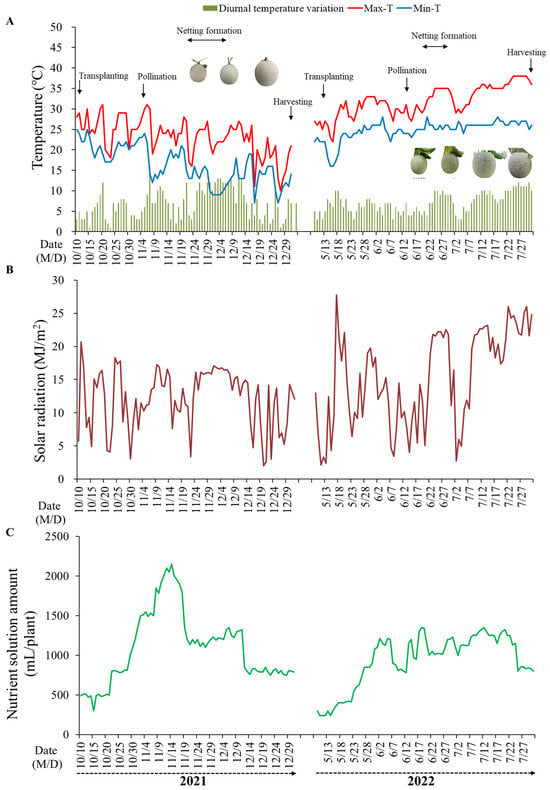
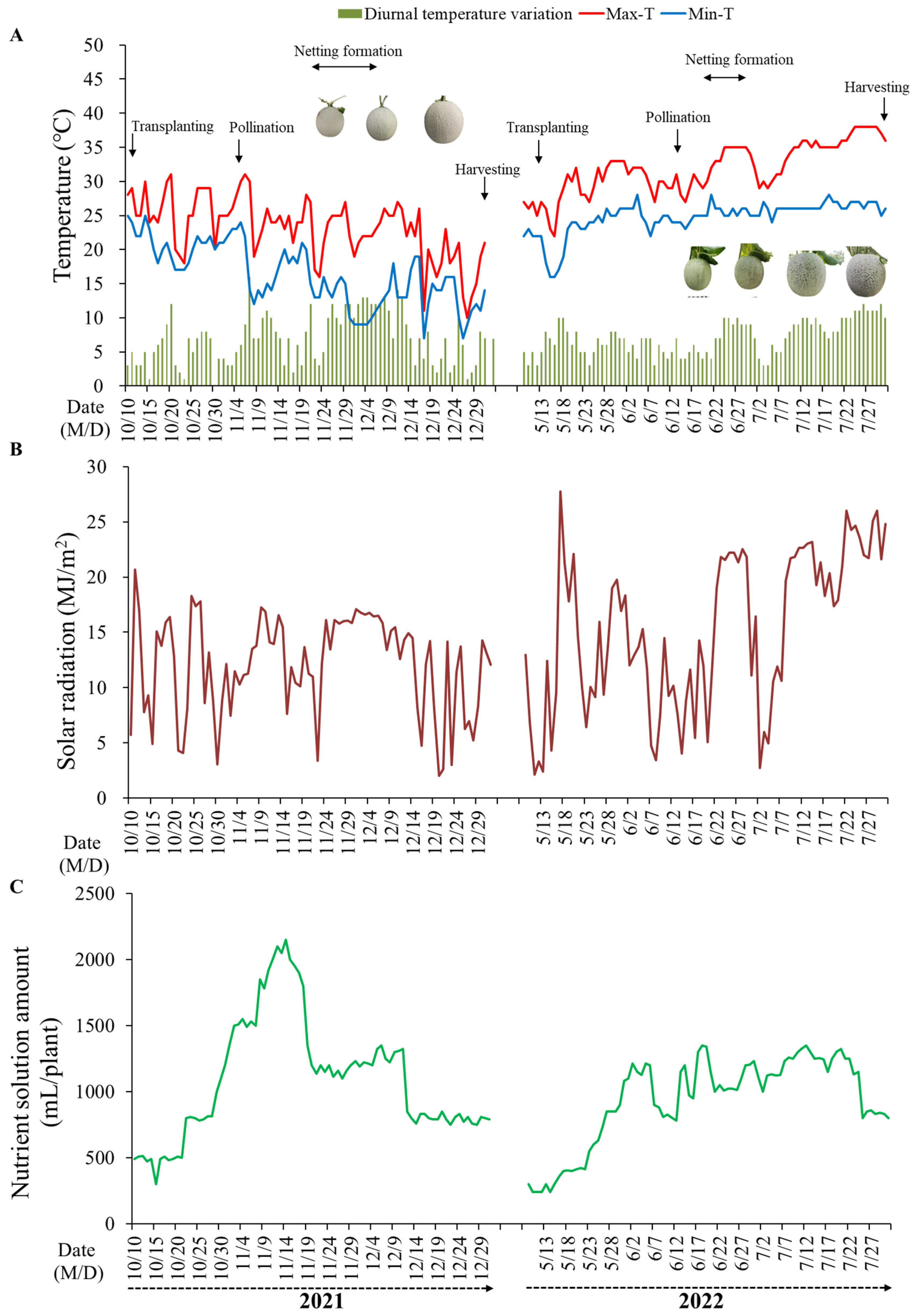
Figure 1A presents the daily maximum temperature (Max-T), minimum temperature (Min-T), and diurnal temperature variation (DTV) values of netted melons from transplanting to harvest. The 2022 growing season (May–July) experienced significantly higher and more stable temperatures compared to 2021 (October–December), with a notably larger DTV observed during the fruit expansion and net formation stages. As shown in Figure 1B, solar radiation intensity was greater in 2022, with a distinct peak occurring in mid-May and remaining at a high level until the end of the harvest period. In contrast, the 2021 growing season was characterized by lower and more variable solar radiation and more frequent cloudy days. Figure 1C illustrates that irrigation levels increased after transplanting in both years. However, in 2021, irrigation peaked around mid-November and gradually decreased before harvest. Irrigation remained relatively stable throughout most of the growing season in 2022. Overall, the light and temperature conditions in 2022 were more favorable for biomass accumulation, yield formation, and quality development of the melons. The observed irrigation patterns reflect adaptive responses to plant water demand: in 2021, adjustments were made to reduce the risk of fruit cracking and root rot while promoting maturity, while in 2022, the consistently high irrigation levels were necessary to meet the increased transpiration demand under conditions of high temperature and strong solar radiation.
Figure 1.
Changes in average maximum and minimum temperature ((A), inside greenhouse), solar radiation ((B), outside greenhouse) and nutrient solution irrigation amount (C) for netted melon cultivated during autumn–winter and spring–summer cropping seasons.
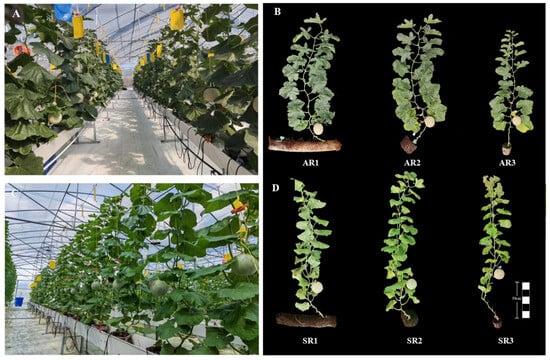
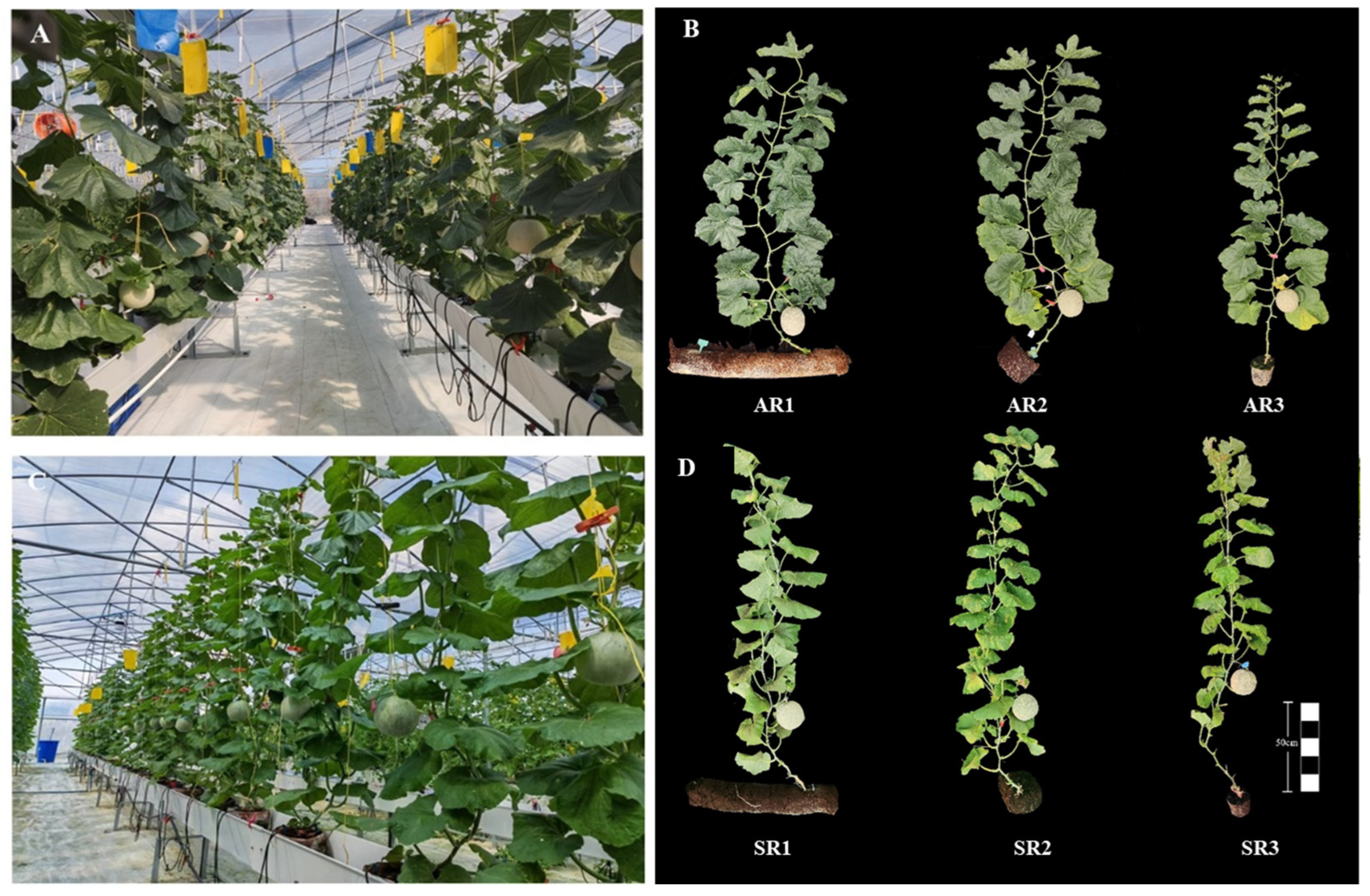
Climate conditions and root restriction treatments significantly influenced the morphology of netted melon (Figure 2). Autumn–winter-grown melons under AR1 treatment showed the most robust growth, with vigorous vegetative growth and larger leaf area. As the root-zone volume decreased, the plant size and leaf area reduced accordingly. Compared to AR1, AR2 plants had moderate growth attenuation, while AR3 plants exhibited dwarfing growth, with smaller leaves, shorter internodes, and reduced height (Figure 2A,B). A similar trend of growth attenuation with decreasing root-zone volume was observed during summer (Figure 2C,D). Additionally, plants grown during the autumn–winter season exhibited more horizontally oriented leaves and significantly larger stem–leaf angles than those grown in the spring–summer season (Figure 2B,D).
Figure 2.
The effects of different root-zone volume manipulation on plant appearance of netted melon cultivated during autumn–winter (A,B) and spring–summer (C,D) cropping seasons. The abbreviations AS1, AS2, AS3, SR1, SR2 and SR3 represent combinations of two cultivation seasons and three root-zone volumes of 15 L (R1), 5 L (R2), or 0.75 L (R3).
The results in Table 2 highlight significant interactions between root restriction and seasonal conditions (p < 0.05). AR3 plants had significantly lower plant height, leaf number, leaf area, fresh weight, and dry weight compared to AR1, while AR2 showed no significant differences from AR1. Both AR2 and AR3 had larger stem–leaf angles than AR1. Consequently, AR3 root restriction during autumn significantly reduced growth parameters of netted melons. In summer, leaf area, stem–leaf angle, and leaf chlorophyll content decreased significantly compared to autumn. However, plant height, leaf area, and dry weight showed no significant differences among treatments. Only SR3 had significantly lower chlorophyll a, carotenoids, and fresh weight compared to SR1 and SR2. This indicates that high summer temperatures and intense sunlight inhibited plant growth.
Table 2.
The effects of different root-zone volume manipulation on growth, leaf chlorophyll content and shoot biomass of netted melon cultivated during autumn–winter and spring–summer cropping seasons.
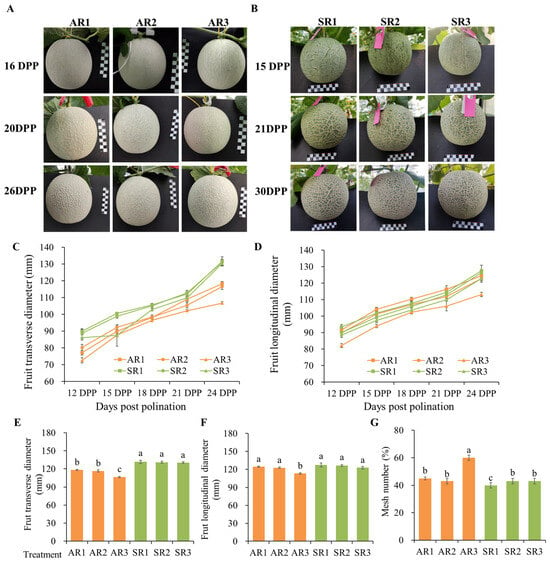
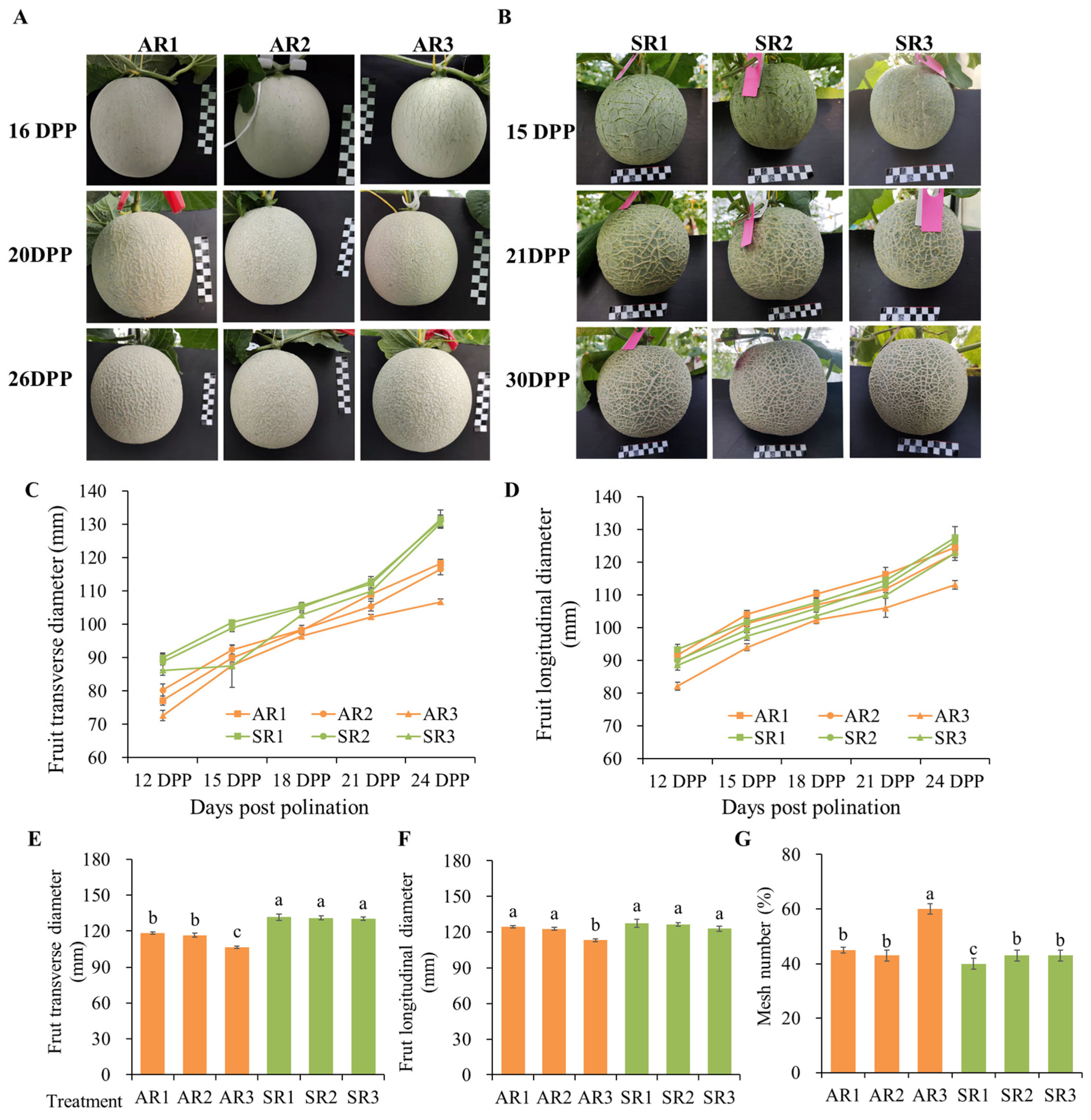
Figure 3 shows that two seasons and three root-zone volumes had distinct effects on the development of melon fruits, especially during the expansion period and the formation of net patterns. The net patterns of the AR group were overall sparse and thin, with low relief and shallow cracks, and the net pattern color was relatively light (Figure 3A). The net patterns of the SR group were thick, three-dimensional, and significantly raised, with wide and deep cracks (Figure 3B). As the days post-pollination (DPP) increased, the fruits of the SR group were always larger than those of the AR group in both transverse diameter and longitudinal diameter. This difference became more significant in the later stages (21 DPP and 24 DPP) (Figure 3C,D).
Figure 3.
The effects of different root-zone volume manipulation on the changes in fruit appearance during autumn–winter cropping season (A) and spring–summer cropping season (B), fruit transverse diameter (C), longitudinal diameter (D), fruit transverse diameter (E), fruit longitudinal diameter (F) and mesh number (G) of netted melon. The abbreviations AS1, AS2, AS3, SR1, SR2 and SR3 represent combinations of two cultivation seasons and three root-zone volume s of15 L (R1), 5 L (R2), or 0.75 L (R3). The values represented are means ± standard error from four replicates. Different letters indicate significant differences among treatments based on Duncan’s multiple range test (p ≤ 0.05).
The final transverse diameter of the SR group was significantly larger than that of the AR group. Within the AR group, AR1 and AR2 were significantly larger than AR3 (Figure 3E). The final longitudinal diameter of SR3 was significantly larger than that of AR3. Within the AR group, AR1 and AR2 were significantly larger than AR3 (Figure 3F). The mesh number was higher in AR3 than in AR1 and AR2 (Figure 3G). Overall, the net-patterned melons in summer were large and had thick net patterns, while the melons in autumn were more delicate (especially AR3) and characterized by “fragmented net patterns”.
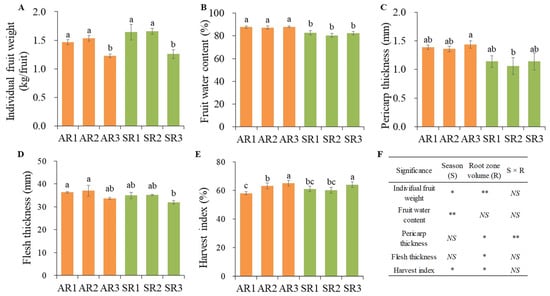
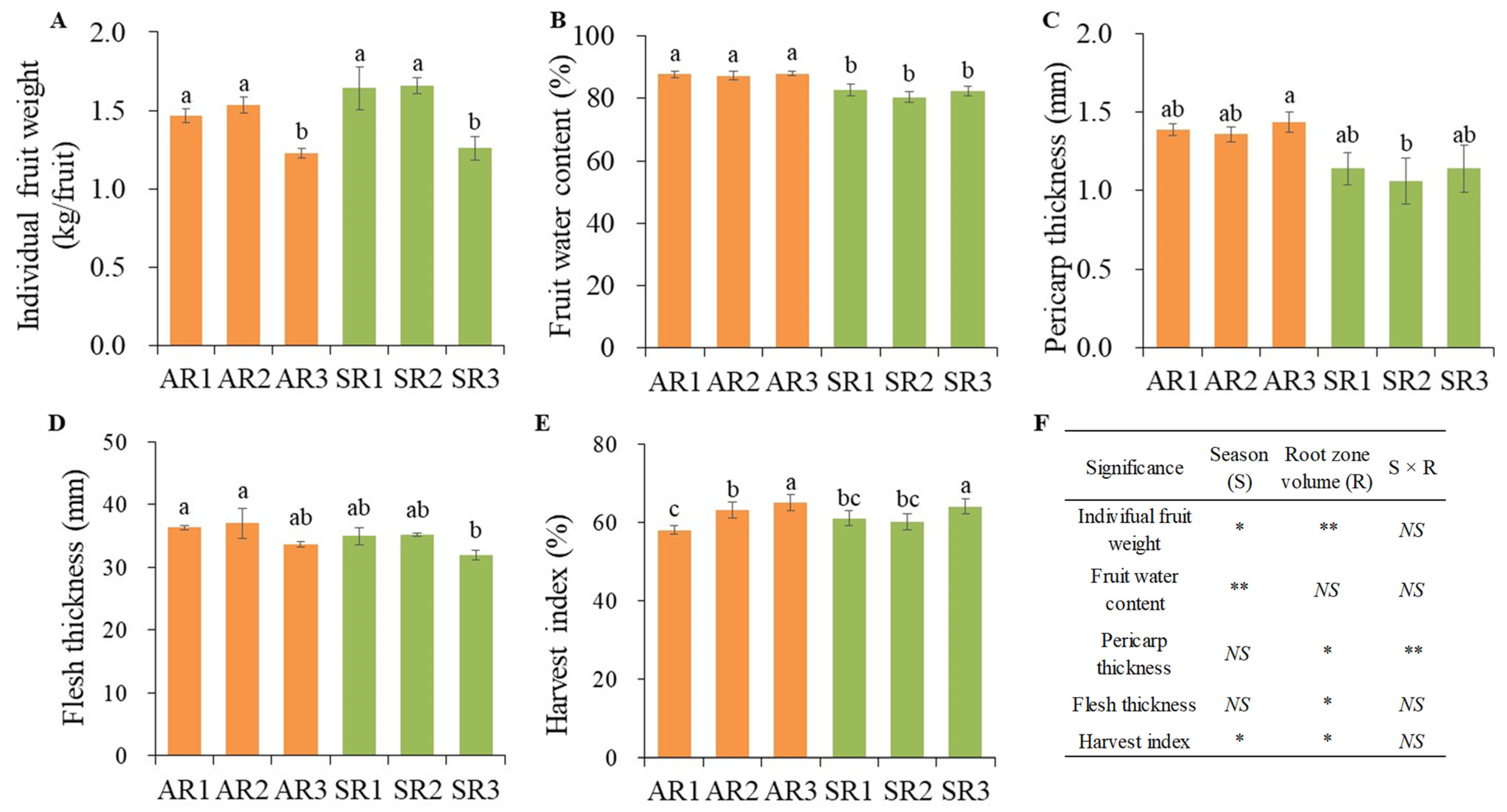
The individual fruit weight of spring–summer melons (SR1, SR2) was higher than that of autumn-crop melons (AR1, AR2, AR3) (Figure 4A). Climate had a significant effect on single fruit weight (Figure 4F). R3 significantly reduced the individual fruit weight in both seasons (Figure 4A). Root-zone volume had a highly significant effect on single fruit weight (p ≤ 0.01). The water content of autumn–winter melons was significantly higher than that of the SR group (Figure 4B). Fruit water content was only significantly affected by climate (p ≤ 0.01) and was not affected by root-zone volume. Summer-crop melons had a higher single fruit weight (Figure 4A), but a lower fruit water content (Figure 4B). The pericarp thickness of SR2 was relatively thin, but there was no significant difference statistically compared with other groups (Figure 4C). The flesh thickness of AR1 and AR2 was significantly higher than that of AR3 and SR3 (Figure 4D). Flesh thickness was not affected by climate but was significantly affected by root-zone volume (Figure 4F). The interaction between climate and root-zone volume had a significant effect on peel thickness (Figure 4F). The economic index of AR2 and AR3 was significantly higher than that of AR1, SR1 and SR2. The economic index of SR3 was also higher than that of AR1 (Figure 4E).
Figure 4.
The effects of different root-zone volume manipulation on individual fruit weight (A), fruit water content (B) pericarp thickness (C), flesh thickness (D), and harvest index (E) and interactive analysis (F) of netted melon cultivated during autumn–winter and spring–summer cropping seasons. Different letters indicate significant differences among treatments based on Duncan’s multiple range test (p ≤ 0.05); NS indicates no significant difference, while * and ** denote significant differences at the 5% and 1% levels, respectively.
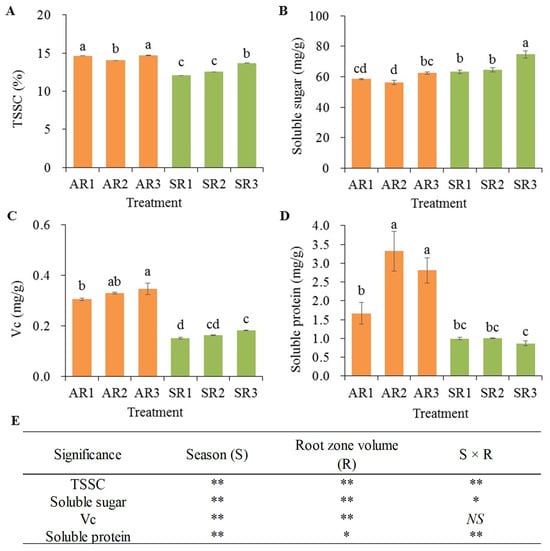
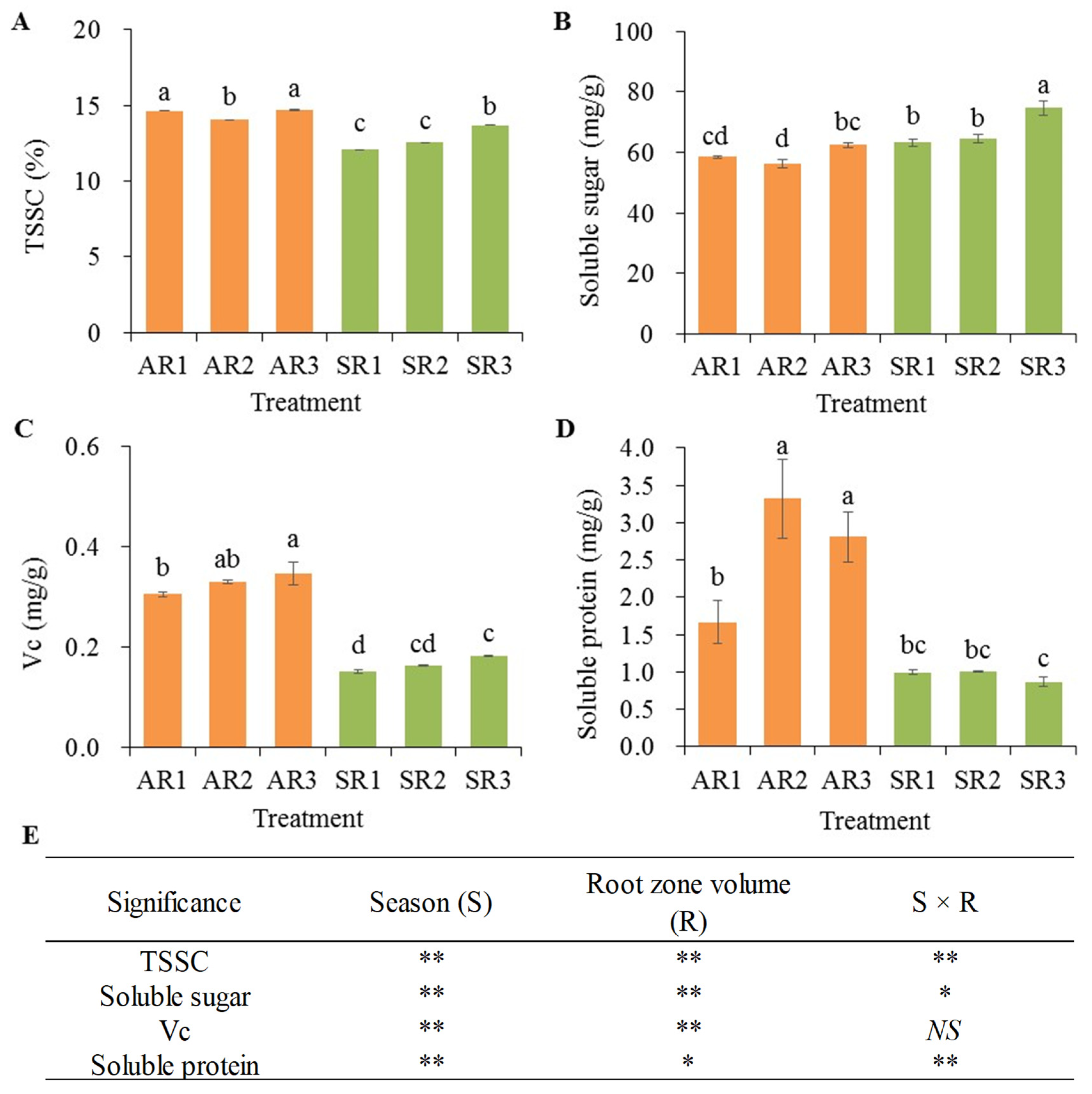
Figure 5 shows that in terms of the soluble solids content (TSSC), vitamin C (Vc), and soluble protein, the fruits cultivated in autumn–winter were significantly and consistently superior to those in spring–summer (Figure 5A,C,D). Autumn–winter was the best season to enhance the basic nutritional quality of netted melon. SR3 has the highest soluble sugar content (Figure 5B), but its TSSC, Vc, and protein contents were significantly lower than those of the autumn–winter season. Root-zone volume had a significant or extremely significant impact on all four quality indicators (Figure 5E). In conclusion, autumn–winter was the ideal season for comprehensive high-quality production. Spring–summer can produce high-sugar melons through small root-zone restriction (SR3) but at the expense of other nutritional indicators. Regardless of the season, root-zone volume was an important means to regulate the quality of netted melons. However, the direction of regulation (increase or decrease) and the intensity of the effect highly depended on the growth climate.
Figure 5.
The effects of different root-zone volume manipulation on nutritional quality of muskmelon cultivated during autumn–winter and spring–summer cropping seasons: total soluble solids (TSSC) (A), soluble sugar (B), vitamin C (C), soluble proteins (D) and interactive analysis of two factors (E). Different letters indicate significant differences among treatments based on Duncan’s multiple range test (p ≤ 0.05); NS indicates no significant difference, while * and ** denote significant differences at the 5% and 1% levels, respectively.
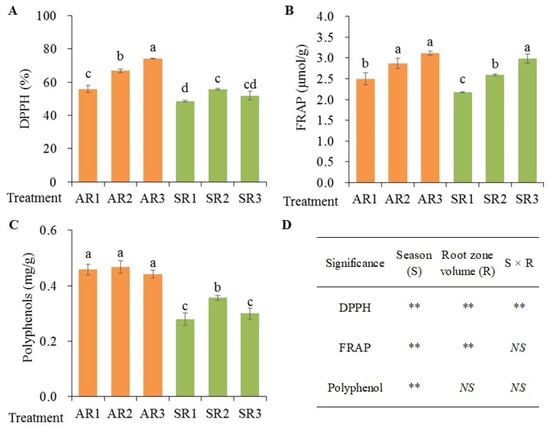
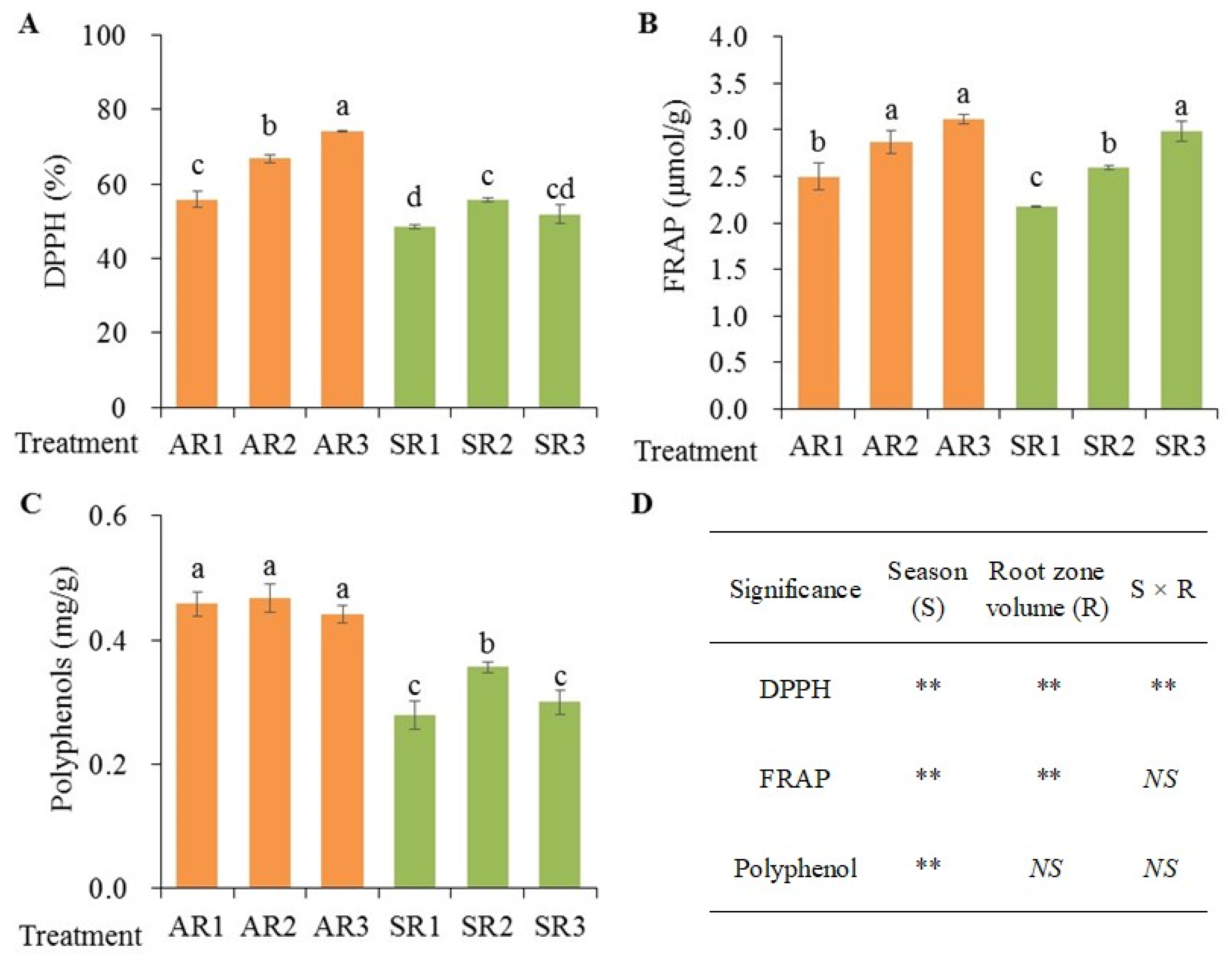
The results in Figure 6 show that compared with summer cropping, autumn cropping can significantly increase the DPPH (Figure 6A), FRAP (Figure 6B), and polyphenol content (Figure 6C) of netted melon, indicating that autumn–winter was more conducive to enhancing the antioxidant capacity of netted melon. Root restriction mainly affected DPPH and FRAP but had no significant effect on the polyphenol content. A smaller root-zone volume tended to enhance antioxidant capacity (DPPH, FRAP), but the specific effect may be influenced by the climate (DPPH). There was an interaction between climate and root restriction, which was reflected in DPPH.
Figure 6.
The effects of different root-zone volume manipulation on the antioxidant content and capacity of netted melon cultivated during autumn–winter and spring–summer cropping seasons: DPPH (A), FRAP (B), polyphenols (C) and interactive analysis of two factors (D). Different letters indicate significant differences among treatments based on Duncan’s multiple range test (p ≤ 0.05); NS indicates no significant difference, while ** denote significant differences at 1%.
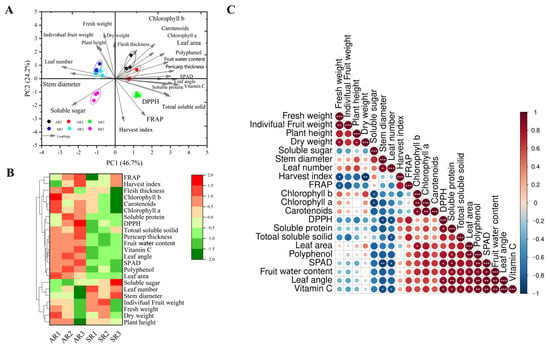
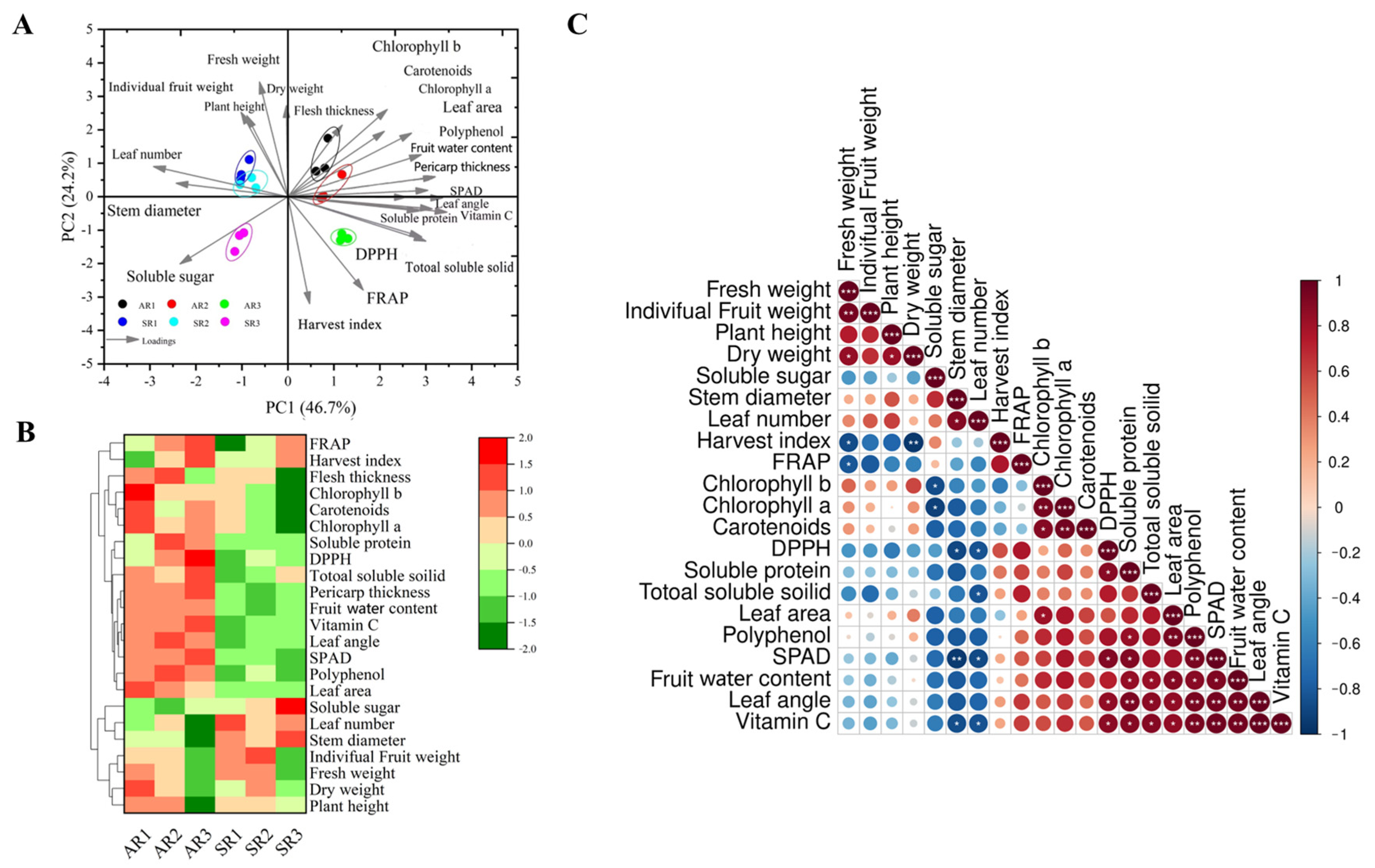
Based on a comprehensive analysis involving principal component analysis (PCA), heat maps combined with hierarchical clustering, and correlation matrices (Figure 7), the results reveal distinct patterns between the AR and SR groups. The PCA results show that PC1 and PC2 explain 46.7% and 24.2% of the variance, respectively, accounting for 70.9% of the total variance. The AR and SR groups are significantly separated, indicating differences in key variables. FRAP and the harvest index are prominent in the AR group, while soluble sugar is higher in the SR group. Fresh weight, dry weight, and plant height contribute significantly to PC2 (Figure 7A). Heat maps combined with hierarchical clustering show high intra-group consistency in variable expression. FRAP and the harvest index are high in the AR group, while soluble sugar is higher in the SR group (Figure 7B). The correlation matrix reveals a positive correlation between fresh weight and single fruit weight and a negative correlation between fresh weight and soluble sugar, indicating differences in variable performance across groups (Figure 7C). Overall, the AR group excels in plant growth and economic traits, while the SR group has advantages in soluble sugar and FRAP values, reflecting potential regulatory mechanisms of cropping seasons.
Figure 7.
Principle component analysis (A), cluster heat map analysis of the plant and fruit parameters (B) and correlation coefficients between parameters (C). Heatmap colors (B) represent relative abundance (red: high, green: low). Circle size and color in (C) indicate the strength and direction (red: positive, blue: negative) of correlation. *, ** and *** denote significant differences at the 5%, 1% and 0.1% levels, respectively.
4. Discussion
4.1. The Interplay of Seasonal Climates and Root Restriction in Regulating Yield Quality
High-quality netted melon requires a combination of attractive appearance and superior internal quality [8,9]. The present results confirm that netted melons from both seasons met these standards yet revealed a fundamental trade-off: the spring–summer (SS) season favored yield-related parameters (e.g., fruit size and weight), whereas the autumn–winter (AW) season enhanced nutritional and antioxidant qualities. This trade-off is intrinsically linked to distinct seasonal climates. The SS season, characterized by high temperatures and radiation, promoted vegetative growth and fruit enlargement but likely accelerated respiratory consumption, leading to the dilution of certain nutritional compounds [7]. The AW season, with cooler temperatures and larger diurnal variations (e.g., >12 °C), created conditions conducive to the accumulation of soluble solids, vitamins, and antioxidants [13,35]. This aligns with the principle that temperature fluctuations can enhance sugar accumulation and sucrose-related enzyme activity in melons [13]. This was not merely a passive outcome but an active physiological response, where the plant’s carbon partitioning is shifted under different environmental cues.
Critically, our findings demonstrate that the effects of root restriction (R2–R3) are not uniform but are significantly modulated by the seasonal context. While root restriction consistently reduced individual fruit weight, its impact on the harvest index—a measure of partitioning efficiency—was positive in both seasons. However, the agronomic implication of this increased harvest index differs seasonally. In the AW season, moderate restriction (e.g., AR2) coupled with high-quality potential could be commercially advantageous for premium markets. In contrast, in the high-yield SS season, the yield reduction from severe restriction (R3) might be less acceptable. This interaction underscores the necessity to disentangle the contributions of climate and root restriction. For instance, the decline in certain quality traits in the SS season was exacerbated under R3, suggesting that root confinement may limit the plant’s capacity to access water and nutrients, thereby impairing its ability to cope with climatic stress [18,29]. Conversely, the superior quality in the AW season under root restriction indicates a possible synergistic effect where mild root stress and favorable diurnal temperature variations both promote resource allocation to fruits [36,37].
4.2. Physiological Mechanisms and Agronomic Implications of Root Restriction
Beyond a simple “concentration effect,” the increase in soluble solids under root restriction, particularly in the AW season, likely involves more profound physiological adjustments. Root restriction acts as a form of controlled stress, altering root-sourced hormonal signals that can influence sink strength and carbohydrate partitioning in fruits [20,24,37]. While our study did not measure carbohydrate-metabolizing enzymes, the observed quality changes align with findings in tomatoes and grapes, where root restriction enhanced sugar accumulation by altering the activity of sucrose-metabolism-related enzymes and genes [24,37]. Therefore, the quality improvement under root restriction may involve an active re-programming of source–sink relationships.
Similarly, the improvement in net pattern fineness under root restriction cannot be explained by climate alone. Root restriction likely influences fruit skin development by moderating the fruit expansion rate, which, combined with optimal temperature and humidity control [10,38,39], promotes the formation of finer and denser netting. This interactive effect highlights root restriction ‘s potential as a cultivation technique for managing appearance quality.
The central agronomic question raised by our study is how to balance the increased harvest index against the reduced total biomass and fruit weight. A higher harvest index indicates superior partitioning efficiency. However, its commercial value is context-dependent. A cultivation system employing moderate root restriction with increased planting density could potentially offset the yield loss per plant, enhancing yield per unit area, as observed in crops such as tomatoes [40,41,42]. This strategy might be particularly suitable for protected horticulture aiming for high resource use efficiency and premium fruit quality [4,43].
The multivariate analyses (PCA, correlation matrices) provided deeper insights into trait integration. The strong correlation between stem–leaf angles and fruit quality indices underscores the role of canopy architecture in light capture and its subsequent effect on fruit metabolism [44,45,46,47]. This reinforces the argument that root restriction and season collectively influence plant physiology at a whole-plant level.
4.3. Limitations and Future Perspectives
We acknowledge that attributing the sugar increase solely to a “concentration effect” is simplistic. Future research should directly assess the activity of key enzymes in sugar metabolism and hormonal profiles to elucidate the precise mechanisms [24,37]. Furthermore, the practical implementation of root restriction requires economic analysis. The commercial viability of a high-harvest index, lower-yield system depends on market preferences for quality versus volume.
5. Conclusions
In conclusion, our study demonstrates that the root restriction effects on netted melon are season-dependent. The AW season, combined with moderate root restriction (R2), appears optimal for achieving a balance between good yield and high fruit quality. In contrast, the SS season is conducive for high yield. Selecting an appropriate root-zone volume according to the growing season allows growers to strategically manage the yield–quality trade-off, contributing to sustainable year-round production of high-value netted melons.
Author Contributions
Conceptualization, Y.Z.; methodology, Z.X.; formal analysis, Z.X.; investigation, Z.X.; writing—original draft preparation, Y.Z.; writing—review and editing, J.L., S.S., R.C. and T.Z.; funding acquisition, Y.Z. All authors have read and agreed to the published version of the manuscript.
Funding
This research was funded by the Guangdong Provincial Special Fund for Modern Agriculture Industry Technology Innovation Teams (2024CXTD01) and the China Agriculture Research System (CARS-23-B11).
Data Availability Statement
The original contributions presented in this study are included in the article. Further inquiries can be directed to the corresponding author.
Conflicts of Interest
The authors declare no conflict of interest.
References
- Supriyanta, B.; Florestiyanto, M.Y.; Widowati, I. Enhanced melon cultivation: An application of hydroponic nutrient formulation for superior yield and quality. IOP Conf. Ser. Earth Environ. Sci. 2023, 1242, 012006. [Google Scholar] [CrossRef] [Scilit]
- Yoshioka, Y.; Shimomura, K.; Sugiyama, M. Exploring an East Asian melon (Cucumis melo L.) collection for parthenocarpic ability. Genet. Resour. Crop Evol. 2018, 65, 91–101. [Google Scholar] [CrossRef] [Scilit]
- Wang, Z.; Zhao, J.; Mao, S.; Wu, J. Study on the regional advantage layout of Chinese muskmelon industry. Chin. J. Agric. Resour. Reg. Plan. 2014, 35, 128–133. (In Chinese) [Google Scholar]
- Wang, Y.; Yang, X.; Li, X.; Feng, Y.; Li, S. Key technologies for factory-scale production of spring crops of netted melon in multi-span greenhouses. Agric. Eng. Technol. 2020, 40, 21–27. (In Chinese) [Google Scholar]
- Xia, L.; Liang, X.; Wang, X.; Cao, M.; Yang, X. High-efficiency cultivation techniques for cantaloupe with net-like skin in Hainan region. Agric. Eng. Technol. 2020, 40, 28–30+34. (In Chinese) [Google Scholar]
- Yue, W.; Chen, S.; Gao, L.; Li, N.; Liu, L. Effects of water and nitrogen coupling on yield, quality, water and nitrogen use efficiencies of greenhouse muskmelon. Water 2023, 15, 2603. [Google Scholar] [CrossRef] [Scilit]
- Menon, S.V.; Ramana Rao, T.V. Nutritional quality of muskmelon fruit as revealed by its biochemical properties during different rates of ripening. Int. Food Res. J. 2012, 19, 1621–1628. [Google Scholar]
- Akiba, Y.; Ishibashi, A.; Sato, M.; Shima, H. Empirical rule of fruit rind fragmentation in muskmelon netting. J. Phys. Soc. Jpn. 2022, 91, 104801. [Google Scholar] [CrossRef] [Scilit]
- Bai, H.; Li, H.; Liu, S.; Han, L.; Hao, S.; Guo, X.; Cui, X. Changes in main quality indicators of netted melon fruits during ripening process. China Fruit Veg. 2024, 44, 34–42. (In Chinese) [Google Scholar]
- Chen, X. Research progress on formulation and development of rind netting muskmelon. China Veg. 2010, 18, 5–9. (In Chinese) [Google Scholar]
- Jiao, Z.; Wang, C.; Huang, Y.; Huang, Y.; Xiao, S.; Sun, J. How to enhance the netting pattern on muskmelon for better visual appeal? J. Rural New Technol. 2017, 9, 15. (In Chinese) [Google Scholar]
- Li, S.; Sun, Z. Study of netted melon cultivated in the plastic bag containing soilless substrate. J. Gansu Agric. Univ. 2004, 39, 534–536. (In Chinese) [Google Scholar]
- Ren, L. Effect of Temperature and Light Intensity to Sugar Accumulation and Sucrose Metabolizing Enzymes in Muskmelon. Master’s Thesis, Northwest A&F University, Yangling, China, 2010. (In Chinese) [Google Scholar]
- Xu, R.; He, Z.; Kong, X.; Xiao, R.; Li, J. Preliminary Report: Effects of different bagging materials on hami melon fruit quality. Guangdong Agric. Sci. 2008, 11, 39–40. (In Chinese) [Google Scholar]
- Yam, R.S.W.; Fan, Y.T.; Lin, J.T.; Fan, C.; Lo, H.F. Quality improvement of netted melon (Cucumis melo L. var. Reticulatus) through precise nitrogen and potassium management in a hydroponic system. Agronomy 2020, 10, 816. [Google Scholar] [CrossRef] [Scilit]
- Cui, Z. Effects of Zinc, Selenium and Calcium on Yield and Quality of Muskmelon and Fertilization Suggestions. Master’s Thesis, Northwest Agriculture Forestry University, Yangling, China, 2023. (In Chinese) [Google Scholar]
- Grasso, R.; Peña-Fleitas, M.T.; de Souza, R.; Rodríguez, A.; Thompson, R.B.; Gallardo, M.; Padilla, F.M. Nitrogen effect on fruit quality and yield of muskmelon and sweet pepper cultivars. Agronomy 2022, 12, 2230. [Google Scholar] [CrossRef] [Scilit]
- Meng, J.; Liu, S.; Fan, F.; Nie, L.; Li, Y.; Hou, D.; Wang, J.; Han, J. The effects of root-zone restriction on water consumption and fruit quality of greenhouse muskmelon under mulched drip irrigation. J. Irrig. Drain. 2021, 40, 56–62. (In Chinese) [Google Scholar]
- Fan, H.; Du, C.; Zhu, Z. The effect of different cubage pot culture on fruit quality and leaf nitrogen metabolism of Lycopersicon esculentum. Chin. Agric. Sci. Bull. 2012, 28, 150–154. (In Chinese) [Google Scholar]
- Zhang, Y.; Kiriiwa, Y.; Nukaya, A. Effects of lower nitrogen concentration of nutrient Solution combined with K supplementation and changing the concentration on growth, yield, and yellow-shoulder disorder for tomatoes grown in extremely low-volume substrate. Horticult. J. 2015, 84, 46–51. [Google Scholar] [CrossRef] [Scilit]
- Shi, K. The Changes of Energy Metabolism and Its Regulation in Response to Root Restriction in Fruit Vegetable Crops. Ph.D. Thesis, Zhejiang University, Hangzhou, China, 2007. (In Chinese) [Google Scholar]
- Zhang, H.; Li, D.; Hu, Y.; Wei, M.; Yang, F.; Shi, Q.; Wang, X. Effect of trough volume on root absorption, fruit yield and quality of elevated cultured tomato in solar greenhouse. China Veg. 2016, 8, 45–49. (In Chinese) [Google Scholar]
- Zhang, Y.; Kiriiwa, Y.; Nukaya, A. Influence of nutrient concentration and composition on the growth, uptake patterns of nutrient elements and fruit coloring disorder for tomatoes grown in extremely low-volume substrate. Horticult. J. 2015, 84, 37–45. [Google Scholar] [CrossRef] [Scilit]
- Liu, D.; Chen, J.; Hao, Y.; Yang, X.; Chen, R.; Zhang, Y. Effects of extreme root restriction on the nutritional and flavor quality, and sucrose metabolism of tomato (Solanum lycopersicum L.). Horticulturae 2023, 9, 813. [Google Scholar] [CrossRef] [Scilit]
- Ou, X.; Liu, D.; Liu, A.; Liu, H.; Chen, R.; Zhang, Y. Effects of nutrient solution management modes on fruit production and quality of tomatoes grown in extremely root restriction. Sci. Hortic. 2023, 321, 112366. [Google Scholar] [CrossRef] [Scilit]
- Xie, Z.; Chen, J.; Liu, H.; Chen, R.; Yang, X.; Song, S.; Zhang, Y. Influence of combined supplemental lighting and nutrient solution concentration on fruit production and quality of cherry tomato. Horticulturae 2024, 10, 990. [Google Scholar] [CrossRef] [Scilit]
- Li, J.; Xie, Z.; Zhao, T.; Li, H.; Chen, R.; Song, S.; Zhang, Y. Light-nutrient optimization enhances cherry tomato yield and quality in greenhouses. Horticulturae 2025, 11, 874. [Google Scholar] [CrossRef] [Scilit]
- Song, J.; Huang, H.; Hao, Y.; Song, S.; Zhang, Y.; Su, W.; Liu, H. Nutritional quality, mineral and antioxidant content in lettuce affected by interaction of light intensity and nutrient solution concentration. Sci. Rep. 2020, 10, 2796. [Google Scholar] [CrossRef] [Scilit]
- Zakaria, N.I.; Ismail, M.R.; Awang, Y.; Wahab, P.E.M.; Berahim, Z. Effect of root restriction on the growth, photosynthesis rate, and source and sink relationship of Chilli (Capsicum annuum L.) grown in soilless culture. Biomed Res. Int. 2020, 2020, 2706937. [Google Scholar] [CrossRef] [Scilit]
- Sun, X.; Ding, C. Varieties and cultivation characteristics of cantaloupe with netted rind. China Cucurbits Veg. 2000, 28–30. (In Chinese) [Google Scholar] [CrossRef]
- Li, H. Principles and Techniques of Plant Physiological and Biochemical Experiments; Higher Education Press: Beijing, China, 2000. (In Chinese) [Google Scholar]
- Khan, I.; Azam, A.; Mahmood, A. The impact of enhanced atmospheric carbon dioxide on yield, proximate composition, elemental concentration, fatty acid and vitamin C contents of tomato (Lycopersicon esculentum). Environ. Monit. Assess. 2013, 185, 205–214. [Google Scholar] [CrossRef] [Scilit]
- Chanwitheesuk, A.; Teerawutgulrag, A.; Rakariyatham, N. Screening of antioxidant activity and antioxidant compounds of some edible plants of Thailand. Food Chem. 2005, 92, 491–497. [Google Scholar] [CrossRef] [Scilit]
- Tadolini, B.; Juliano, C.; Piu, L.; Franconi, F.; Cabrini, L. Resveratrol inhibition of lipid peroxidation. Free Radic. Res. 2000, 33, 105–114. [Google Scholar] [CrossRef] [Scilit] [PubMed]
- Zhang, L. Study on the Correlation Between Fruit Development and Environmental Factors and Quality Comparison of Different Varieties of Thick-Skinned Muskmelon. Master’s Thesis, Ningxia University, Yinchuan, China, 2022. (In Chinese) [Google Scholar]
- Zahid, M.S.; Hussain, M.; Song, Y.; Li, J.; Guo, D.; Li, X.; Song, S.; Wang, L.; Xu, W.; Wang, S. Root-zone restriction regulates soil factors and bacterial community assembly of grapevine. Int. J. Mol. Sci. 2022, 23, 15628. [Google Scholar] [CrossRef] [Scilit] [PubMed]
- Duan, S.; Wu, Y.; Gao, Z.; Luo, M.; Wang, S.; Song, S.; Zhang, C.; Xu, W. Effects of root restriction on contents of carbohydrates and nitrogen compouds in ‘Kyoho’ grapevine at veraison and maturation stage. Acta Hortic. Sin. 2016, 43, 431–440. (In Chinese) [Google Scholar]
- Xiang, J. Monitorin Model Research of Greenhouse Muskmelon Water Content Based on Multi-Information Technology Fusion. Master’s Thesis, Shanghai Jiao Tong University, Shanghai, China, 2018. (In Chinese) [Google Scholar]
- Li, T.; Zhu, L.; Zeng, J.; Chen, Y.; Wang, Y.; Chen, D. Study of suitable ventilation temperature in the nets formation stage of muskmelon in greenhouse. China Cucurbits Veg. 2020, 33, 35–38. (In Chinese) [Google Scholar]
- Ayarna, A.W.; Tsukagoshi, S.; Nkansah, G.O. Effect of root restriction on the performance of three-truss-cultivated tomato in the low node pinching order at high-density cultivation system. Horticulturae 2021, 7, 60. [Google Scholar] [CrossRef] [Scilit]
- Zhang, Y.; Suzuki, K.; Liu, H.; Nukaya, A.; Kiriiwa, Y. Fruit yellow-shoulder disorder as related to mineral element uptake of tomatoes grown in high temperature. Sci. Hortic. 2018, 242, 25–29. [Google Scholar] [CrossRef] [Scilit]
- Saito, T.; Fukuda, N.; Iikubo, T.; Inai, S.; Fujii, T.; Konishi, C.; Eaura, H. Effects of root-volume restriction and salinity on the fruit yield and quality of processing tomato. J. Jpn. Soc. Hortic. Sci. 2008, 77, 165–172. [Google Scholar] [CrossRef] [Scilit]
- Zhang, G. “U”-shaped semi-climbing and semi-suspended cultivation of netted melon in solar greenhouses. China Veg. 2021, 110–112. (In Chinese) [Google Scholar] [CrossRef]
- Zhang, Q.; Zhang, P.; Xu, C.; Cong, Y.; Liu, L. Advances in genetic researches and molecular regulation mechanism of leaf angle in maize. J. Agric. Sci. Technol. 2021, 23, 15–24. (In Chinese) [Google Scholar]
- Ou, G.; Bei, L.; Zhang, J.; Han, X.; Peng, X.; Li, L.; Yang, T.; Huang, Y.; Wei, M. Effects of the leaf shape and growth posture on light use efficiency of cassava. Mol. Plant Breed. 2023, 21, 1–21. Available online: https://link.cnki.net/urlid/46.1068.S.20230529.0910.002 (accessed on 31 December 2025). (In Chinese)
- Long, S.P.; Zhu, X.; Naidu, S.L.; Ort, D.R. Can improvement in photosynthesis increase crop yields? Plant Cell Environ. 2006, 29, 315–330. [Google Scholar] [CrossRef] [Scilit] [PubMed]
- Ma, R.; Zhang, Y.; Li, B.; Du, C.; Zhang, Y.; Shi, Y.; Sun, Y. Effects of genetic, meteorological and cultivation factors on angle between stem and leaf of flue-cured tobacco. Acta Tabacaria Sin. 2023, 29, 36–45. (In Chinese) [Google Scholar]

Disclaimer/Publisher’s Note: The statements, opinions and data contained in all publications are solely those of the individual author(s) and contributor(s) and not of MDPI and/or the editor(s). MDPI and/or the editor(s) disclaim responsibility for any injury to people or property resulting from any ideas, methods, instructions or products referred to in the content. |
© 2026 by the authors. Licensee MDPI, Basel, Switzerland. This article is an open access article distributed under the terms and conditions of the Creative Commons Attribution (CC BY) license.