Review

Pre- and Postharvest Determinants, Technological Innovations and By-Product Valorization in Berry Crops: A Comprehensive and Critical Review


1
UEISTSA—Unidade Estratégica de Investigação e Serviços de Tecnologia e Segurança Alimentar, Instituto Nacional de Investigação Veterinária e Agrária, Av. da República, Quinta do Marquês, 2780-157 Oeiras, Portugal
2
GeoBioTec—GeoBioTec Research Institute, Faculdade de Ciências e Tecnologia, Universidade Nova de Lisboa, Campus da Caparica, 2829-516 Caparica, Portugal
3
MARE—Marine and Environmental Sciences Centre/ARNET—Aquatic Research Network, School of Tourism and Maritime Technology, Polytechnic Institute of Leiria, 2520-614 Peniche, Portugal
*
Author to whom correspondence should be addressed.
Horticulturae 2026, 12(1), 19; https://doi.org/10.3390/horticulturae12010019
Submission received: 1 December 2025 / Revised: 19 December 2025 / Accepted: 22 December 2025 / Published: 24 December 2025
(This article belongs to the Special Issue Postharvest Physiology and Quality Improvement of Fruit Crops)

Abstract

Berries—including strawberries, blueberries, raspberries, blackberries, cranberries, and several less commonly cultivated berry species—are highly valued for their sensory quality and rich content of bioactive compounds, yet they are among the most perishable horticultural products. Their soft texture, high respiration rate, and susceptibility to fungal pathogens lead to rapid postharvest deterioration and significant economic losses. This review synthesizes advances in berry postharvest management reported between 2010 and 2025. Conventional strategies such as rapid precooling, cold-chain optimization, controlled and modified atmospheres, and edible coatings are discussed alongside emerging non-thermal technologies, including UV-C light, ozone, cold plasma, ultrasound, biocontrol agents, and intelligent packaging systems. Particular emphasis is placed on the instability of anthocyanins and other phenolic compounds, microbial spoilage dynamics, and the influence of cultivar genetics and preharvest factors on postharvest performance. The review also highlights opportunities for circular-economy applications, as berry pomace, seeds, and skins represent valuable sources of polyphenols, dietary fiber, and seed oils for use in food, nutraceutical, cosmetic, and bio-based packaging sectors. Looking ahead, future research should prioritize integrated, multi-hurdle, low-residue postharvest strategies, the scale-up of non-thermal technologies, and data-driven cold-chain management. Overall, coordinated physiological, technological, and sustainability-oriented approaches are essential to maintain berry quality, reduce postharvest losses, and strengthen the resilience of berry value chains.

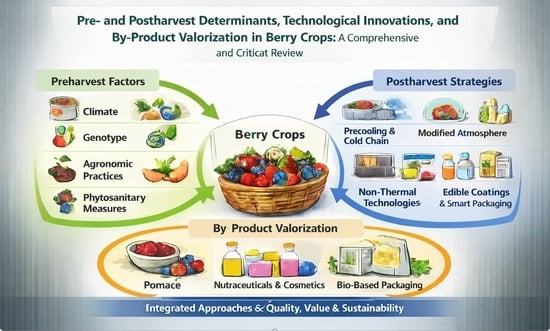
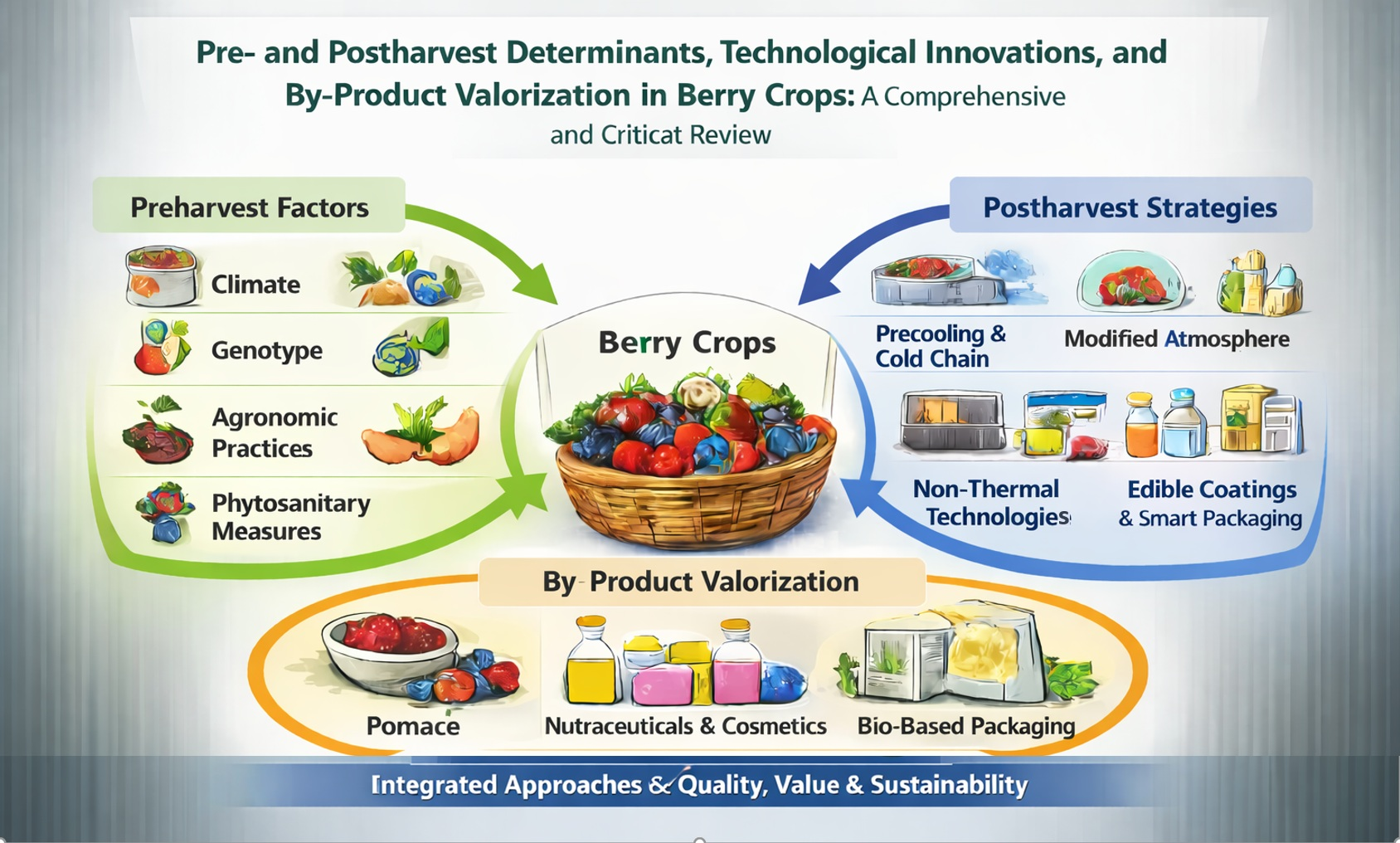
Graphical Abstract

1. Introduction

Berries are nutritionally dense and economically significant fruits that combine appealing flavor, intense color, and a rich profile of bioactive compounds. Major cultivated species—strawberries (Fragaria × ananassa), blueberries (Vaccinium spp.), raspberries (Rubus idaeus L.), blackberries (Rubus fruticosus L.), and cranberries (Vaccinium macrocarpon Aiton)—account for most of the global berry market, while several less commonly cultivated berry species, including currants (Ribes spp.), elderberries (Sambucus nigra L.), aronia (Aronia melanocarpa (Michx.) Elliott), goldenberries (Physalis peruviana L.), sea buckthorn (Hippophae rhamnoides L.), goji (Lycium barbarum L.), and the Portuguese crowberry (Corema album L.), are gaining commercial relevance through diversification and functional food innovation [1,2,3,4,5,6,7]. Their characteristic pigmentation—primarily anthocyanins, flavonols, and carotenoids—together with organic acids and vitamin C, underpins both their sensory appeal and health-promoting properties [8,9,10,11,12].
Despite their nutritional and economic importance, berries remain among the most perishable horticultural commodities. Their thin cuticle, high water activity, and elevated respiration rates lead to rapid softening and microbial spoilage, while susceptibility to Botrytis cinerea and Rhizopus stolonifer further constrains storage life [13,14,15,16,17,18]. These intrinsic limitations result in postharvest losses often exceeding 25% of production, underscoring the need for integrated technological and biological preservation strategies [19,20,21,22,23].
This challenge is magnified by the rapid expansion of berry production and trade. According to Eurostat (2025 preliminary release), total EU berry production increased from 1.23 million t in 2015 to approximately 1.57 million t in 2024, with projections reaching 1.60 million t in 2025 [24]. Production value rose from €3.8 billion to €6.2 billion, reflecting both acreage expansion and premium pricing, particularly for blueberries (Table 1).
EU imports of fresh and frozen berries averaged 480,000 t (€1.6 billion) in 2024, while exports reached 350,000 t (€1.2 billion), dominated by frozen raspberries and fresh blueberries [25,26,27]. In Portugal, berry cultivation—especially blueberries—expanded from less than 200 ha in 2010 to more than 4000 ha in 2024, with exports accounting for over 80% of production [5,24]. This sustained growth underscores the strategic importance of postharvest innovation in maintaining quality and competitiveness along export-oriented supply chains [13,14,28].
Consumer demand further reinforces these pressures. Berries hold a privileged position due to their perceived “natural healthiness,” attractive color palette, and convenience for fresh and processed consumption. Global consumption has increased steadily over the past two decades, driven by the functional food market and growing awareness of antioxidant, anti-inflammatory, and cardioprotective effects associated with regular berry intake [3,7,29,30,31,32,33,34,35,36]. Blueberries and strawberries dominate retail markets, while raspberries and blackberries are expanding in high-income and niche segments [15,25,27,37]. From an economic perspective, berries command some of the highest price-per-kilogram values among fruits, reflecting both premium branding and high postharvest handling costs [4,25,28,38]. However, consumer expectations for flawless visual quality and freshness also amplify waste, intensifying postharvest challenges [4,13,15,28].
The short shelf life of berries arises from a convergence of biological, physiological, and logistical factors. High respiration and transpiration rates accelerate softening and water loss, while the absence of a protective rind increases mechanical vulnerability; even minor bruising can trigger enzymatic oxidation and microbial infection [14,39,40,41,42,43]. Temperature and humidity management are therefore critical: deviations of only a few degrees from optimal cold-chain conditions (0–2 °C) can double respiration rates and fungal incidence, while inadequate relative humidity promotes either shriveling or pathogen proliferation [19,44,45,46,47,48,49]. Ethylene sensitivity, even in non-climacteric berries, further accelerates senescence when fruits are stored near ethylene-producing commodities [50,51,52,53].
Intrinsic biochemical composition also strongly influences postharvest stability. High concentrations of anthocyanins, ellagitannins, and ascorbic acid—although nutritionally valuable—are chemically unstable and prone to oxidation, resulting in pigment degradation and browning [54,55,56,57]. Genetic background modulates these traits: cultivars with firmer tissues and thicker cuticles, such as ‘Albion’ strawberries or ‘Duke’ blueberries, generally exhibit superior storability, whereas softer cultivars are more susceptible to mechanical and microbial damage [58,59,60,61,62].
In response to these challenges, postharvest research on berries has diversified rapidly, with increasing emphasis on sustainability, minimal processing, and digitalization. Non-thermal technologies—including UV-C, pulsed light, ozone, cold plasma, and high-pressure processing—have emerged as promising alternatives to conventional chemical fungicides, offering microbial control with reduced residue concerns [21,22,63]. Edible coatings based on chitosan, alginate, pectin, or pullulan, often enriched with essential oils or probiotics, provide semi-permeable barriers that limit respiration and water loss while imparting antimicrobial activity [64,65,66]. Biological control agents, such as lactic acid bacteria and antagonistic yeasts, are also being explored for suppressing Botrytis and Rhizopus under commercial conditions [65,67,68,69].
Beyond physical and biological interventions, digital technologies—including IoT-based cold-chain monitoring, machine vision, and predictive modeling—are transforming postharvest management from reactive to proactive paradigms [70,71,72,73]. Integration with foodomics and advanced analytical tools strengthens links between physiological responses, biochemical markers, and processing outcomes [36,74], while advances in genomics, hormone biology, and cell-wall metabolism are supporting breeding programs targeting firmness, pigment stability, and disease resistance [62,75,76,77,78]. Together, these developments signal a transition toward precision postharvest management.
Despite these advances, significant constraints remain. Many non-thermal technologies are still limited to laboratory or pilot scales due to cost, regulatory uncertainty, and cultivar-dependent variability [21,22,23,79]. Edible coatings and biological treatments may face sensory acceptance issues or limited shelf stability [64,80,81], while inconsistent cold-chain management and high logistics costs continue to challenge small and medium-sized enterprises. In breeding programs, postharvest quality traits are often underrepresented in selection indices, and data fragmentation across digital platforms hampers predictive quality management [75,82]. Moreover, knowledge gaps persist regarding the long-term nutritional stability of bioactive compounds under combined treatments and real supply-chain conditions.
Considering the growing global relevance of berry crops, their persistent postharvest fragility, and the urgent need for sustainable preservation strategies, this review critically synthesizes scientific advances published between 2010 and 2025 on berry postharvest handling, processing, and by-product valorization. By integrating evidence across physiology, biochemistry, and technology, the review aims to identify key determinants of berry shelf life, highlight technological and biological bottlenecks, and outline future research pathways to bridge laboratory innovation with commercial feasibility.

2. Materials and Methods

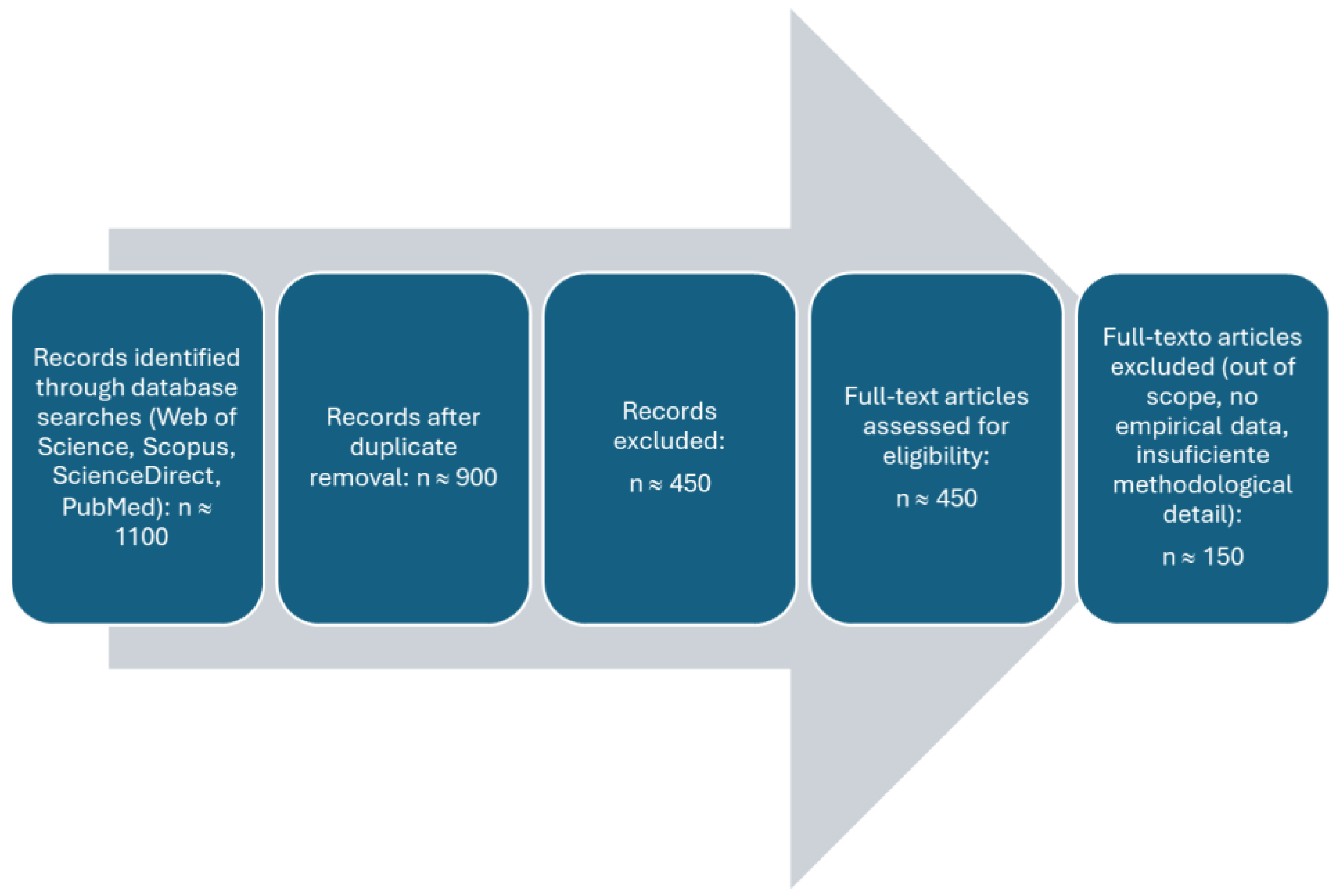
This review was designed as a comprehensive and critical narrative synthesis of peer-reviewed literature published between 2010 and 2025, integrating advances in postharvest management, processing technologies, valorization strategies, and genetic improvement of berry crops. Given the multidisciplinary scope of the topic—spanning plant physiology, food technology, microbiology, breeding, and circular-economy applications—the review was not structured as a formal systematic review. Instead, it follows a transparent, structured, and reproducible narrative-review methodology, suitable for synthesizing heterogeneous experimental evidence across diverse research domains. To enhance transparency in literature identification and selection, the review process was informed by the PRISMA 2020 reporting framework [83,84,85,86], which was adapted for narrative reviews. The PRISMA-style flow diagram is therefore used to illustrate the search, screening, eligibility assessment, and inclusion steps, but without applying the restrictive inclusion criteria, risk-of-bias assessments, or quantitative meta-analytical procedures that characterize systematic reviews (Figure 1).
A structured literature search was conducted in Web of Science, Scopus, ScienceDirect, and PubMed between January 2024 and September 2025. Search terms combined the botanical names of major berry species—Fragaria × ananassa, Vaccinium spp., Rubus idaeus, Rubus fruticosus, Vaccinium macrocarpon, and Corema album—with thematic descriptors related to postharvest physiology, preservation technologies, and circular-economy applications. Keywords included postharvest, cold storage, modified atmosphere, edible coating, UV-C, cold plasma, ozone, biocontrol, high-pressure processing, pulsed electric fields, ultrasound, valorization, pomace, anthocyanins, fungal decay, Botrytis cinerea, climate adaptation, and genomic breeding. Boolean operators and truncations were used to broaden coverage, and the search was restricted to peer-reviewed, English-language publications.
Studies were included when they provided empirical or mechanistic insights into berry postharvest physiology, biochemical stability, microbial ecology, or shelf-life extension; evaluated emerging or conventional preservation technologies; explored valorization pathways for berry by-products; or examined genetic and biotechnological innovations with relevance to postharvest quality. Publications without empirical data, studies focused exclusively on non-berry crops, and works outside the defined timeframe were excluded, except where seminal references were necessary to contextualize mechanistic or historical concepts.
The initial database search yielded over 1100 records, which were screened by title and abstract for relevance to berry postharvest physiology, preservation technologies, valorization pathways, and genetic improvement. After removing duplicates, non-peer-reviewed materials, non-berry studies, and publications falling outside the target timeframe, approximately 450 articles proceeded to full-text assessment. Following evaluation of methodological rigor, data quality, and thematic relevance, approximately 300 studies, including those describing methodological frameworks, were retained for inclusion in the final narrative synthesis. The overall identification, screening, and eligibility workflow is illustrated in Figure 1, which presents a PRISMA-style mapping of the literature selection process.
All retained studies were critically examined for experimental robustness, reproducibility, and applicability to commercial or near-commercial berry systems. Extracted data were then organized into four thematic pillars—(i) preharvest determinants and physiology, (ii) postharvest technologies and pretreatments, (iii) valorization strategies for by-products, and (iv) genetic and biotechnological advances—allowing the integration of biological, technological, and sustainability-driven findings. Quantitative results (e.g., changes in firmness, microbial reductions, or antioxidant retention) were normalized to comparable control conditions whenever possible to facilitate cross-study interpretation.
Through this structured and integrative methodology, the present review aims not only to summarize existing knowledge but also to critically evaluate converging evidence across complementary domains, supporting a holistic understanding of how preservation technologies, physiological mechanisms, and circular-economy strategies collectively shape the sustainability and efficiency of modern berry supply chains.

3. Berry Physiology, Microbiology, and Postharvest Determinants

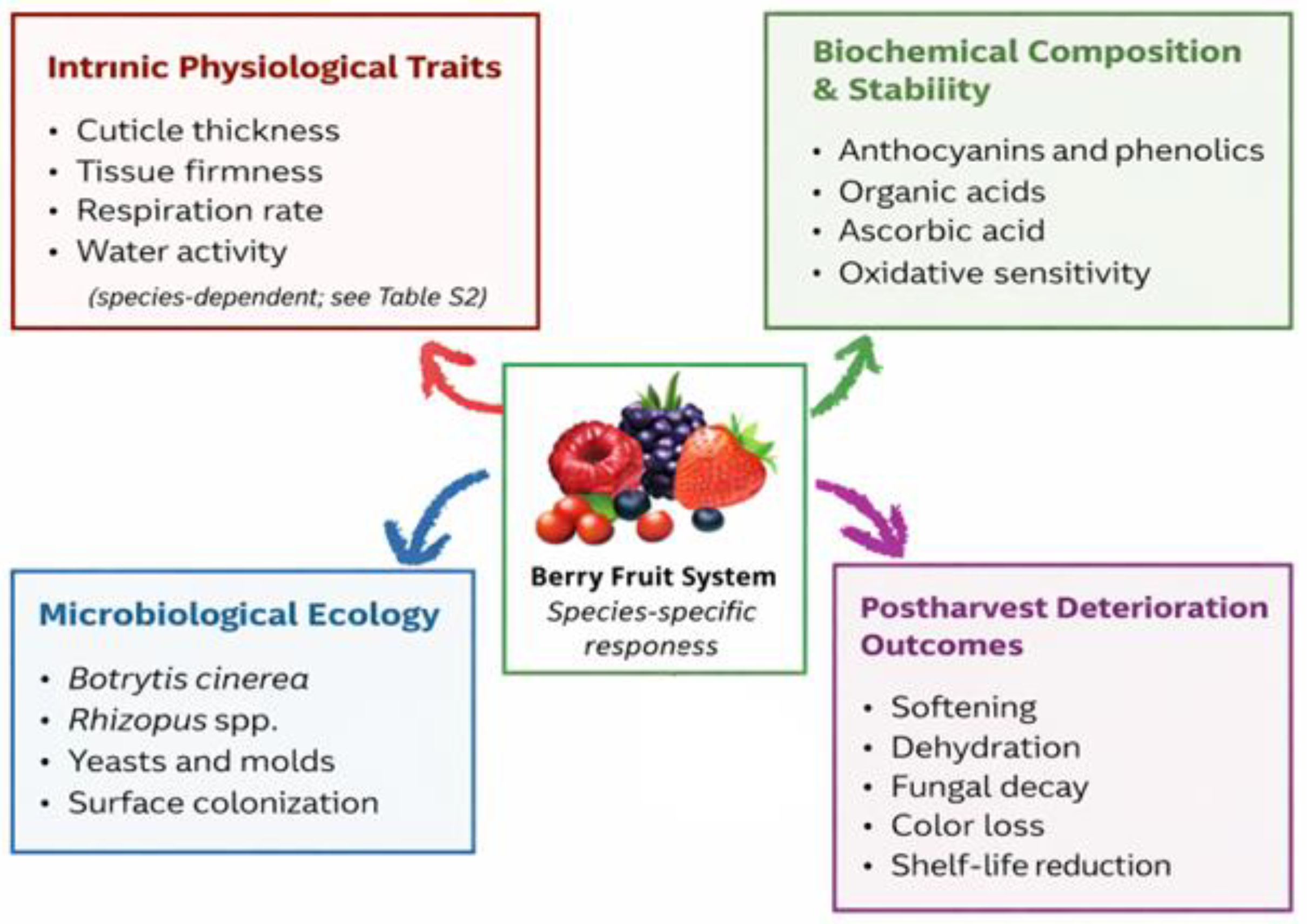
Berry postharvest behavior results from interacting physiological, biochemical, and microbial processes that govern softening, water loss, color fading, and decay (Figure 2). High metabolism, fragile tissues, hormonal signals, mechanical injury, and pathogen activity all shape the rapid decline in quality.
In the following section, these key mechanisms are described to provide a clearer understanding of the factors that determine berry shelf life.

3.1. General Physiological Characteristics

Berries are characterized by their soft pericarp, high surface-to-volume ratio, and thin cuticular layer, which collectively confer extreme fragility and accelerate postharvest deterioration. Their water content typically exceeds 85–90%, and respiration rates range from 15 to 70 mg CO2·kg−1·h−1 at 5 °C—values among the highest for non-climacteric fruits [87,88]. The high metabolic activity drives rapid depletion of organic acids and sugars, directly influencing flavor, firmness, and color stability [89].
Most commercial berries are non-climacteric, meaning that ripening does not continue significantly after harvest, and they exhibit limited responsiveness to ethylene compared with climacteric fruits such as bananas or tomatoes. Nevertheless, ethylene still plays a regulatory role in softening and color development, mainly through modulation of pectin-degrading enzymes such as polygalacturonase (PG) and pectate lyase (PL). This has been documented specifically in strawberries [50,77,90] and blueberries [52,53,62]. This sensitivity underscores the importance of minimizing ethylene exposure during cold storage and transportation to delay senescence and decay.

3.2. Respiration and Transpiration Dynamics

Respiration is the primary metabolic process dictating postharvest longevity, involving the oxidative metabolism of carbohydrates, organic acids, and other respiratory substrates into CO2, water, and energy, thereby sustaining essential cellular processes after detachment from the plant. In berries, the rate of respiration increases exponentially with temperature—doubling for every 10 °C rise between 0 and 20 °C (Q10 ≈ 2)—making temperature control the single most effective tool for maintaining postharvest quality [91,92,93].
Postharvest handling must also consider transpiration, which results in mass loss and wilting due to the thin epidermis and open stomatal pores, particularly in strawberries and raspberries. Water loss of merely 3–5% can lead to visible shriveling and firmness loss, negatively affecting consumer acceptance. Maintaining relative humidity between 90 and 95% and minimizing air circulation are essential to avoid dehydration while preventing condensation that fosters fungal growth [13,94,95,96].
Modified and controlled atmosphere storage (MAP/CA) that reduces O2 (2–5%) and elevates CO2 (10–15%) levels can slow respiration and microbial growth without inducing fermentation [46,49,97,98,99]. However, excessive CO2 (>20%) may cause off-flavors and tissue damage, emphasizing the need for optimized gas balances tailored to specific species and cultivars [65,100].

3.3. Ethylene Sensitivity and Hormonal Regulation

Although berries are classified as non-climacteric, ethylene modulates several aspects of ripening and senescence. In strawberries, the expression of ethylene biosynthesis genes (FaACS and FaACO) increases during late ripening, influencing aroma compound formation and abscission [50,77,90]. In blueberries, exogenous ethylene has been shown to accelerate softening by stimulating cell wall–degrading enzymes such as β-galactosidase and expansin [52,53].
Cross-talk between ethylene, abscisic acid (ABA), and auxins are critical to regulating color and firmness. ABA is recognized as the major promoter of berry ripening, triggering anthocyanin accumulation via activation of MYB–bHLH–WD40 transcription complexes [61,101]. Conversely, auxin gradients contribute to the spatial and temporal control of cell expansion, explaining cultivar-dependent differences in texture and shape [76]. Understanding these hormonal interactions provides opportunities for developing targeted preharvest treatments or postharvest inhibitors to modulate ripening kinetics without chemical residues.

3.4. Mechanical Damage and Physiological Disorders

Due to their delicate structure, berries are particularly prone to mechanical injuries during harvest, grading, and packaging. Even minimal pressure can rupture epidermal cells, releasing phenolic substrates that oxidize rapidly in the presence of polyphenol oxidase (PPO) and peroxidase (POD), resulting in browning and off-flavor formation [41,42,102,103]. Mechanical stress also facilitates pathogen entry, especially by Botrytis cinerea, which can infect microlesions and remain latent until cold storage [15,18,40,69].
Minimizing drop height, using soft-handling systems, and employing clamshell packaging designed for airflow and cushioning are proven strategies to reduce bruising. Recent advances include the application of smart packaging materials embedded with vibration sensors or mechanical shock indicators to monitor fruit integrity throughout distribution chains [46,97]. Such digital approaches complement traditional physical protection methods and can provide early warnings for logistic optimization [70,104].

3.5. Biochemical Stability: Color, Aroma, and Antioxidants

The sensory and nutritional quality of berries is closely tied to the stability of anthocyanins, phenolics, and aroma volatiles. Anthocyanins are highly sensitive to pH, temperature, and light, undergoing degradation to colorless chalcones or brown polymers through oxidation and condensation reactions [64,65]. Losses during storage have been widely reported in strawberries, raspberries, and blueberries [8,11,43].
Ascorbic acid degradation is another key indicator of biochemical quality. Its decline not only reduces nutritional value but also accelerates oxidative discoloration by diminishing antioxidant capacity [64,80,81,105]. Coatings enriched with natural antioxidants (e.g., chitosan, aloe vera, or green tea extracts) have been shown to mitigate vitamin C losses by forming semi-permeable films that regulate O2 exchange [81,106,107,108,109,110].
Volatile compounds, which define berry aroma, are among the most labile quality attributes. Alcohols, esters, and terpenes decline significantly during storage, particularly at suboptimal temperatures or under anaerobic conditions. For instance, the loss of furaneol and linalool in strawberries is directly correlated with declining consumer acceptability [8,38]. Maintaining volatile integrity thus requires an equilibrium between low-temperature preservation and controlled gas composition that avoids anaerobiosis.

3.6. Microbiological Deterioration and Pathogen Dynamics

Microbial decay is one of the main causes of postharvest losses in berries, accounting for up to 40% of total production waste under suboptimal handling or storage conditions. The high-water activity, delicate epidermis, and abundance of simple sugars create an ideal substrate for fungal and yeast proliferation. The predominant spoilage organisms are filamentous fungi such as Botrytis cinerea (gray mold), Rhizopus stolonifer, Alternaria alternata, and Colletotrichum acutatum, as well as spoilage yeasts belonging to Candida, Metschnikowia, and Pichia genera [15,17,18,65,69]. Among these, B. cinerea is the most economically damaging pathogen across berry species, capable of infecting flowers and fruits at early developmental stages and remaining latent until postharvest conditions favor sporulation [111,112,113].
The incidence and severity of fungal infection are highly dependent on environmental and physiological factors. Mechanical injuries sustained during harvest and handling provide entry points for pathogens, while elevated humidity and condensation during cold storage promote spore germination. Temperature fluctuations that interrupt the cold chain accelerate mycelial growth and compromise the efficacy of modified-atmosphere systems. In addition, the endogenous microbiota of the fruit surface can influence disease outcomes by competitive exclusion or metabolic antagonism [114,115]. Beneficial epiphytic microorganisms, including lactic acid bacteria and non-pathogenic yeasts, can suppress pathogenic colonization through nutrient competition and the production of antifungal metabolites [116,117].
Recent metagenomic analyses have revealed that the berry surface hosts a complex microbiome whose composition varies by cultivar, geographic origin, and agricultural practice [23]. Sustainable disease management, therefore, increasingly considers microbiome manipulation as a component of postharvest quality control. Treatments that maintain microbial diversity—such as mild washing, controlled humidity, and the avoidance of aggressive chemical sanitizers—help preserve natural antagonists and delay spoilage onset.
Emerging research also highlights the interplay between physiological stress and microbial infection [118]. Water loss and tissue softening expose internal tissues, while enzymatic degradation of the cell wall releases sugars and organic acids that fuel pathogen growth. In parallel, oxidative stress associated with ripening and senescence can weaken defense responses, facilitating infection [119,120]. This dynamic relationship underscores that microbiological deterioration is not an isolated event but an outcome of physiological decline and environmental imbalance.
Effective mitigation of postharvest spoilage thus depends on integrating microbiological understanding with technological intervention. Approaches such as UV-C irradiation, ozone treatment, and biological coatings—which will be discussed in later sections—target microbial populations without compromising fruit quality or leaving residues [21,46,63,121,122]. Continued investigation into the functional ecology of berry-associated microbiota promises to inform new strategies for sustainable, microbiome-based preservation systems.

3.7. Integrative Perspective

The determinants of berry shelf life are highly interconnected and cannot be interpreted in isolation. Physiological, biochemical, and microbiological processes operate simultaneously and interactively from the moment of harvest until consumption. Respiration and transpiration drive metabolic energy demand and water loss, while hormonal fluctuations involving ethylene and abscisic acid regulate ripening and senescence. Mechanical damage during harvesting and handling exposes internal tissues, accelerating oxidative reactions and releasing substrates that favor microbial colonization. These physiological injuries also alter gas exchange and local humidity, creating microenvironments that facilitate fungal and bacterial growth [94,123].
The microbial dimension amplifies these processes by converting damaged tissues into nutrient-rich niches, while host responses to infection further modify metabolic activity and tissue integrity. For example, the activation of oxidative defense mechanisms in response to Botrytis cinerea infection often leads to localized browning and softening, which in turn intensifies water loss and respiration [124]. Consequently, fruit deterioration results from a feedback loop in which physiological decline and microbial invasion reinforce each other.
Understanding this interplay underscores the necessity of integrated approaches to postharvest management. Strategies that simply target one aspect—such as refrigeration or chemical fungicides—cannot ensure durable preservation if the underlying physiological or microbial drivers remain unaddressed. Instead, effective preservation depends on synchronizing temperature and humidity control with the maintenance of tissue integrity, hormonal balance, and surface microbiome stability.
This integrative vision provides the conceptual bridge between the biological mechanisms described here and the technological interventions discussed in subsequent sections. It highlights that advances in storage technologies, biological control, and non-thermal treatments are most effective when grounded in a systemic understanding of berry physiology and microbial ecology. Such a perspective transforms postharvest management from a series of isolated technical adjustments into a coordinated biological and technological continuum designed to sustain quality, safety, and nutritional value throughout the supply chain.

3.8. Species-Oriented Synthesis of Physiological, Microbiological, and Postharvest Determinants

Although the physiological, biochemical, and microbiological determinants of berry postharvest behavior share common mechanistic foundations, their relative importance and expression vary markedly among berry species, resulting in substantial differences in shelf life, decay incidence, and sensitivity to storage conditions. Species such as strawberries (Fragaria × ananassa) and raspberries (Rubus idaeus L.) exhibit extremely high postharvest vulnerability due to their soft tissues, thin cuticles, high respiration rates, and elevated water activity, which collectively favor rapid softening and fungal development. In contrast, blueberries (Vaccinium spp.) and cranberries (Vaccinium macrocarpon Aiton) generally display improved storability, associated with firmer tissues, thicker cuticles, lower respiration rates, and higher organic acid content, which constrain microbial growth and delay physiological deterioration.
These intrinsic, species-dependent traits condition not only baseline postharvest stability but also the efficacy and limitations of preservation strategies, helping to explain the variable responses of different berry species to identical storage regimes or postharvest treatments. A comparative overview of key physiological characteristics, dominant spoilage microorganisms, typical postharvest sensitivity, and principal storage limitations across major and minor berry species is provided in Supplementary Table S1, supporting cross-species interpretation of postharvest behavior.
The complex interactions between intrinsic fruit traits, biochemical composition, microbial ecology, and postharvest deterioration pathways are conceptually summarized in Figure 2 (above), which integrates the mechanistic relationships discussed in this section. Together, this synthesis highlights the need for species-adapted postharvest strategies, rather than uniform approaches, to effectively reduce losses and preserve berry quality.

4. Preharvest Factors and Cultural Improvements Influencing Postharvest Quality

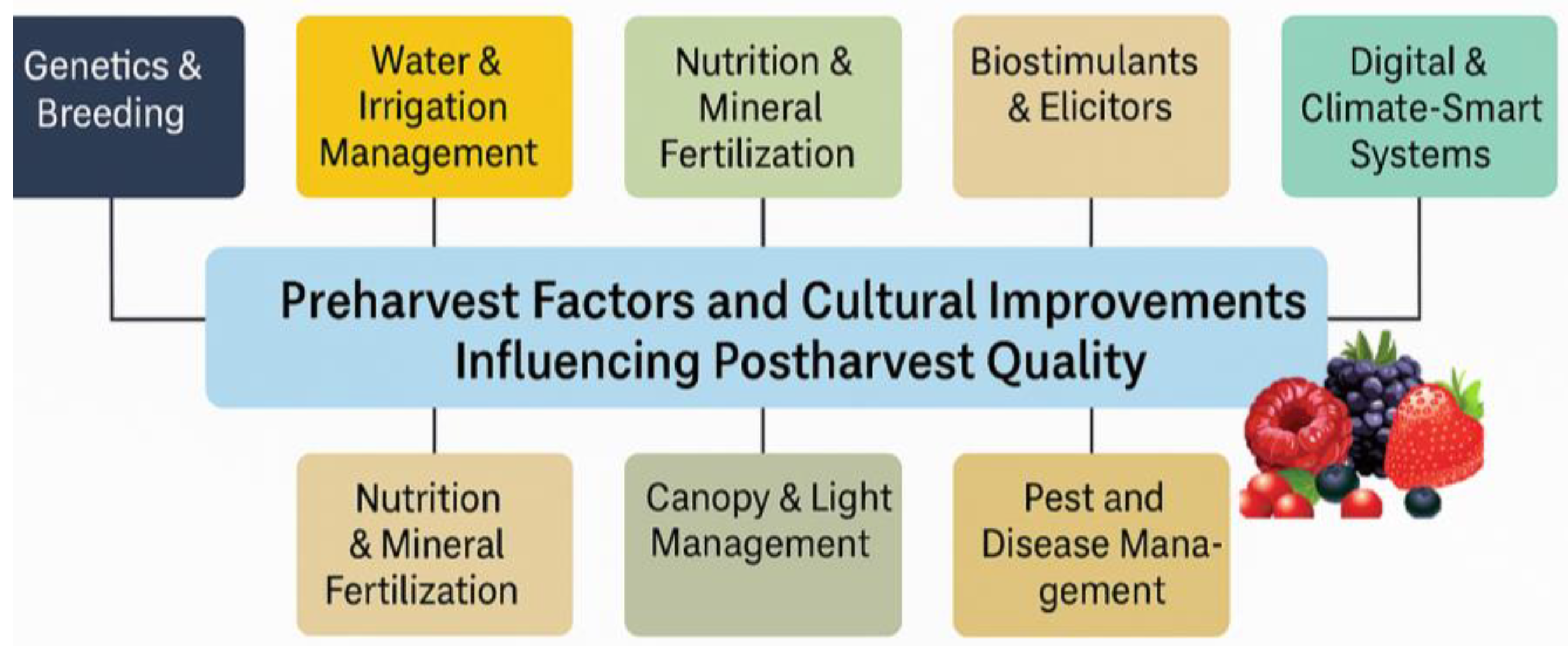
Preharvest conditions exert a defining influence on the postharvest performance of berries. Cultivar genetics, field management, environmental factors, and agronomic interventions shape fruit morphology, biochemical composition, and susceptibility to physiological disorders [4,59,125]. As illustrated in Figure 3, key preharvest factors—including nutrient supply, irrigation strategy, canopy structure, pest and disease pressure, and the use of biostimulants—determine the physiological status of berries at harvest and therefore their firmness, antioxidant capacity, and microbial resilience [14,126].
In the following section, we describe how advances in breeding, targeted nutrition, water management, biostimulant application, canopy optimization, and integrated pest control contribute to greater postharvest stability. Together, these approaches are redefining berry production toward systems that combine productivity with improved shelf life and sustainability.

4.1. Genetic and Breeding Improvements

Genetic background exerts the strongest influence on berry texture, firmness, and biochemical composition. Traditional breeding has long selected for yield and flavor, but recent programs incorporate postharvest traits—such as skin thickness, cuticle composition, and antioxidant stability—into genomic selection indices [58].
For example, strawberry cultivars such as ‘Albion’, ‘San Andreas’, and ‘Monterey’ exhibit significantly higher firmness and lower postharvest decay than older genotypes [127,128]. In blueberries, quantitative trait loci (QTL) linked to firmness and delayed softening have been identified on chromosomes 3 and 10, guiding marker-assisted breeding [58].
New genomic tools—genome-wide association studies (GWAS), CRISPR/Cas9, and transcriptomic profiling—enable fine-tuning of traits such as cuticular wax synthesis, phenylpropanoid metabolism, and pathogen resistance. CRISPR-mediated editing of ethylene-related genes has successfully delayed softening in strawberries without compromising sensory properties [129].
Despite these advances, regulatory and consumer acceptance barriers still constrain field application of gene-edited cultivars in Europe. Nonetheless, genomic information is now routinely integrated into breeding pipelines to guide the selection of cultivars naturally optimized for extended postharvest performance [130,131].

4.2. Irrigation and Water Management

Water availability directly affects berry size, firmness, and biochemical composition. Both deficit irrigation and excessive watering can compromise postharvest quality [96,126]. Moderate regulated deficit irrigation (RDI) applied during late fruit development enhances total soluble solids and anthocyanin content, improving flavor and antioxidant capacity without affecting yield [132,133].
However, severe water stress leads to smaller fruits and increased cuticle cracking, reducing marketability [134]. Drip irrigation systems with soil moisture sensors allow precise scheduling that balances yield and quality. Controlled water stress has been particularly effective in blueberries and raspberries, where mild dehydration stimulates secondary metabolism and enhances pigment intensity [126,135].
Emerging techniques such as partial root-zone drying (PRD) are under study to optimize water use efficiency while maintaining fruit firmness and nutritional quality [136,137].

4.3. Mineral Nutrition and Fertilization Strategies

Nutrient management influences both fruit composition and structural integrity. Calcium (Ca) is the most critical element for postharvest firmness because it strengthens cell walls and membranes by forming calcium pectates in the middle lamella [138,139]. Preharvest foliar sprays with CaCl2 or Ca-lactate significantly increase firmness and reduce leakage in fruits, as have been documented [140,141,142,143].
Potassium (K) and magnesium (Mg) are essential for sugar transport and color development, while excessive nitrogen (N) fertilization promotes soft, water-rich tissues more prone to decay [144,145,146]. Micronutrients such as silicon (Si) and zinc (Zn) are being explored as fortifiers to enhance mechanical resistance and oxidative stability [147,148,149].
Organic fertilization systems that improve soil microbiota diversity (e.g., compost or biochar amendments) also enhance nutrient uptake efficiency and phenolic biosynthesis, providing both environmental and qualitative benefits [150,151,152].

4.4. Biostimulants and Elicitors

The use of biostimulants [153,154]—including seaweed extracts, humic acids, protein hydrolysates, and microbial consortia—has expanded rapidly in berry cultivation as tools to improve resilience and fruit quality [155]. For instance, foliar applications of Ascophyllum nodosum extracts increase anthocyanin concentration and firmness in strawberries, while microbial inoculants such as Bacillus subtilis and Trichoderma harzianum enhance antioxidant content and disease tolerance [156,157].
Similarly, elicitors such as salicylic acid, jasmonic acid, and chitosan stimulate cereals and fruits defense responses, leading to thicker cuticles and higher phenolic accumulation [158,159]. These preharvest biochemical defenses often translate into better storability and reduced postharvest decay. Integration of biostimulants with precision irrigation and nutrition programs is a promising avenue for sustainable intensification.

4.5. Canopy Management and Light Modulation

Light intensity and spectral quality significantly influence pigment synthesis and fruit microclimate [160]. Shading nets with different spectral properties—particularly red and blue photoselective films—modulate anthocyanin and flavonol biosynthesis while reducing heat stress. In blueberries, 20–30% shading increased firmness and decreased fruit temperature by up to 3 °C, thereby lowering respiration rates and postharvest softening [161,162,163].
Pruning, training systems, and plant density also determine canopy ventilation, disease incidence, and uniform ripening. Open canopies facilitate airflow and reduce humidity around fruit clusters, minimizing gray mold infection [18,112]. The integration of canopy-level sensing technologies—including PAR sensors, multispectral imaging, and drone-based remote sensing—is rapidly expanding. These tools enable real-time assessment of light distribution, canopy vigor, and temperature hotspots, providing opportunities for precision light management and more accurate yield forecasting [82,164].

4.6. Integrated Pest and Disease Management

Fungal pathogens such as Botrytis cinerea, Colletotrichum acutatum, and Alternaria alternata are among the principal causes of pre- and postharvest losses in berry crops. Their management is increasingly shifting from reliance on synthetic fungicides toward biological control agents (BCAs), driven by regulatory restrictions and the demand for residue-free fruit in export markets [18,112].
Preharvest applications of antagonistic yeasts, lactic acid bacteria, and chitosan-based formulations have demonstrated strong efficacy in reducing field inoculum and suppressing latent infections that typically manifest during storage [165,166,167]. These biological treatments complement postharvest interventions and are particularly valuable in raspberries and strawberries, where infection by Botrytis and Colletotrichum often originates in the canopy before harvest [17,69,106].
Recent advances highlight the importance of induced systemic resistance (ISR) as a cornerstone of sustainable disease control. Beneficial microorganisms—including species of Bacillus, Pseudomonas, and Trichoderma—can activate plant defense pathways, enhance antioxidant enzyme activity, and limit pathogen colonization through both direct antagonism and immune priming [168,169,170]. ISR-based strategies provide a biological bridge between preharvest protection and improved postharvest performance.
Beyond spoilage fungi, berries are also vulnerable to contamination by foodborne pathogens such as Listeria monocytogenes, Salmonella enterica, and Escherichia coli O157:H7. Microorganisms can enter during pre-harvest through contaminated irrigation water or soil and may remain on fruit surfaces during post-harvest handling. Because berries are often consumed fresh and unpeeled, even low contamination levels pose significant public health risks [171,172]. Conventional chlorine-based sanitizers are being phased out due to regulatory and environmental concerns, prompting interest in non-thermal and residue-free decontamination technologies [122,173].

4.7. Digital and Climate-Smart Cultivation Practices

Digital agriculture technologies—including IoT sensor networks, remote and multispectral imaging, and AI-driven decision-support tools—are transforming berry cultivation into a data-centered production system. Continuous monitoring of environmental and physiological variables such as temperature, humidity, soil moisture, canopy vigor, and stress indicators enables precise control of fertigation, irrigation scheduling, and pest management, enhancing resource efficiency and improving fruit uniformity [82,164]. These digital tools also support predictive modeling for early detection of stress or disease risks, facilitating timely interventions and reducing preharvest variability that compromises postharvest quality.
Climate-smart cultivation practices are increasingly adopted to buffer climatic variability and reduce disease pressure. Protected environments—such as high tunnels, greenhouses, and semi-controlled structures—are rapidly expanding in both Northern and Southern Europe [174,175,176]. These systems allow season extension, improved temperature regulation, and reduced pathogen exposure while enabling the fine adjustment of irrigation, nutrition, and microclimate parameters. Hydroponic and soilless substrates further enhance control over root-zone conditions, increasing water-use efficiency and contributing to more predictable fruit quality at harvest [177,178,179]. Although these systems typically require higher capital investment and energy use, they offer substantial gains in yield stability, consistency, and postharvest performance under increasingly variable climate conditions.

4.8. Critical Overview

Collectively, pre-harvest innovations are redefining berry production from yield-oriented to quality-oriented systems. Cultivar selection, nutrient balance, and biostimulant use interact with environmental and technological factors to determine the physiological state of fruits at harvest—a determinant that no postharvest technology can fully compensate for if neglected. Future research must focus on the genotype × environment × management nexus, using integrative omics and precision tools to predict and control fruit quality trajectories. Such advances will enable growers to produce berries optimized not only for consumer appeal but also for logistical endurance and sustainable value chains.

5. Postharvest Technologies and Pretreatments

Postharvest technologies for berries aim to preserve firmness, color, nutritional value, and microbiological safety while minimizing physiological stress and decay. Because of their extreme perishability, berries require rapid cooling, optimized atmospheric conditions, and carefully selected physical or biochemical interventions to slow respiration, reduce water loss, and suppress pathogen development. Recent advances increasingly integrate non-thermal technologies, intelligent packaging, and biochemical pretreatments, contributing to more sustainable and residue-free postharvest systems [21,22].
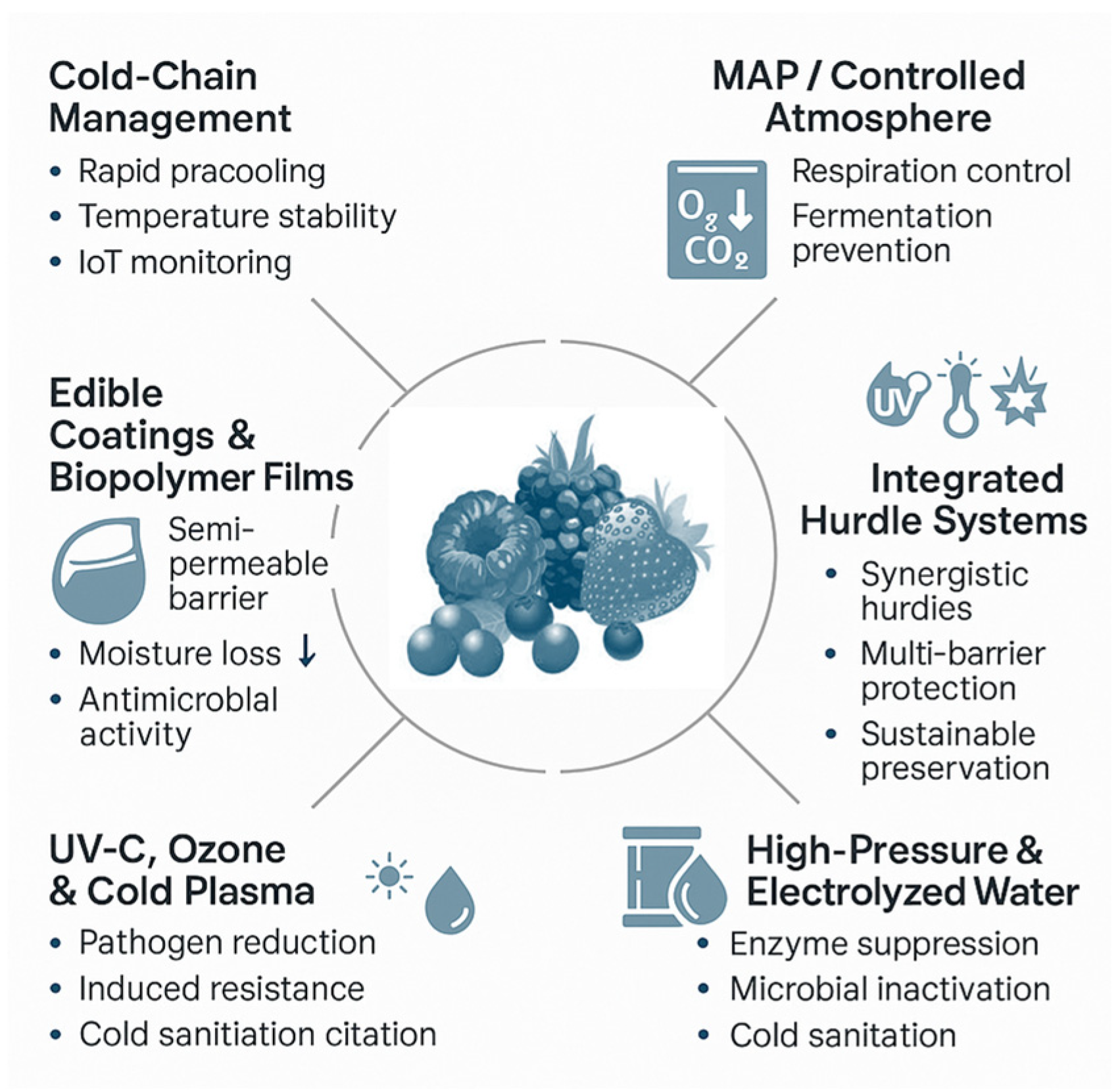
Given their inherently high respiration and transpiration rates, berries are particularly susceptible to softening, dehydration, and microbial breakdown. Immediate precooling and strict maintenance of an uninterrupted cold chain remain essential for preserving fruit quality [94]. However, emerging approaches—such as edible coatings, modified-atmosphere packaging (MAP), advanced sanitization methods, and smart monitoring systems—provide additional layers of protection and quality stabilization. Figure 4 provides an overview of the major postharvest technologies discussed in this section, illustrating how cold-chain management, atmosphere modification, edible coatings, non-thermal sanitization, high-pressure and electrical treatments, and integrated multi-hurdle systems collectively support berry preservation.
For clarity and cross-study comparison, Supplementary Table S2 provides a structured overview of the main non-thermal postharvest technologies applied to berry fruits, detailing representative processing conditions, microbial inactivation levels, and associated impacts on sensory and quality attributes. In the subsections that follow, each of these technologies is examined in detail, outlining their principles, advantages, limitations, and roles within modern, sustainable postharvest management frameworks.

5.1. Conventional and Smart Cold-Chain Management

Immediate pre-cooling after harvest remains the single most critical intervention for preserving berry quality. Forced-air, hydro-cooling, and vacuum-cooling systems rapidly remove field heat, lowering respiration and transpiration rates and slowing the metabolic reactions responsible for softening and decay [37,180,181]. For strawberries and raspberries, storage at 0–2 °C with 90–95% relative humidity generally maintains acceptable market quality for 5–7 days, whereas blueberries—owing to their lower respiration rate and thicker cuticle—may retain quality for 2–3 weeks under similar conditions [182,183,184]. Even short delays in pre-cooling have severe consequences: postponing cooling by only 3–4 h can increase respiration by more than 40%, greatly accelerating moisture loss and promoting Botrytis cinerea development. Timely temperature pull-down is therefore non-negotiable for preserving fruit integrity [185]. Innovations such as vacuum cooling, slurry-ice, and ice-spray systems improve cooling uniformity, especially in bulk-packed or densely loaded containers [186,187]. Nevertheless, temperature and humidity fluctuations during distribution remain among the leading causes of physiological stress, condensation, and microbial proliferation. Even deviations of 2–3 °C during transport can sharply increase respiration, enhance weight loss, and reduce storage potential. Preventing these fluctuations is central to maintaining firmness, color stability, and microbial safety throughout the storage period [188].
To achieve this, the sector is transitioning from conventional monitoring to smart cold-chain systems integrating wireless sensors, data loggers, and IoT-enabled platforms. Real-time measurements of temperature, relative humidity, and atmospheric composition at the pallet or package level offer unprecedented control over transport and storage environments. RFID tags, cloud-linked monitoring systems, and automated alerts now provide continuous traceability, enabling rapid intervention when cold-chain deviations occur [189,190,191].
Beyond basic environmental monitoring, predictive quality-control technologies are emerging as transformative tools in berry supply chains. Recent advances demonstrate that machine-learning models can accurately predict weight loss, softening, and deterioration based on storage temperature, humidity, and initial fruit physiology, as shown for blueberries [45,188] and other fruits [72]. In parallel, digital-twin simulations have been successfully applied to strawberry logistics, enabling virtual optimization of ventilation, cooling behavior, and moisture dynamics throughout transport [71]. These predictive systems provide actionable insights that support dynamic logistics decisions, allowing growers and distributors to reroute shipments, adjust storage atmospheres, or prioritize marketing channels before irreversible quality loss occurs [44,93].
The integration of these analytical tools with IoT-based monitoring technologies further strengthens supply-chain resilience. Wireless sensors, RFID platforms, and real-time data loggers—now increasingly common in fresh-produce logistics—enable continuous tracking of temperature, humidity, and gas composition from harvest to retail [70,104]. Such systems provide early alerts for cold-chain deviations, reducing the likelihood of condensation, microbial proliferation, and physiological stress. Broader digital agriculture frameworks, including smart-sensor networks and cloud-connected decision platforms [82,164], offer complementary support by improving traceability and facilitating automated quality assurance across all supply-chain nodes. Although blockchain is not yet widely implemented in berry logistics, it is increasingly proposed as an extension of these IoT-enabled traceability infrastructures [192].
Together, the integration of rapid pre-cooling, stable temperature management, and intelligent digital monitoring marks a transition from reactive quality control toward proactive, predictive preservation—an essential advancement for maintaining the postharvest quality of highly perishable berries.

5.2. Modified and Controlled Atmosphere Packaging (MAP/CA)

Controlled-atmosphere (CA) and modified-atmosphere packaging (MAP) systems are among the most effective tools for extending the shelf life of berries by reducing O2 and elevating CO2 concentrations around the fruit. Atmospheres containing approximately 2–5% O2 and 10–15% CO2 slow respiration, delay softening, and suppress fungal development without triggering anaerobic metabolism [46,47,193]. When properly optimized, elevated CO2 levels can substantially reduce Botrytis cinerea incidence and modulate cell-wall–degrading enzymes, thereby improving firmness retention in strawberries and blueberries [65,91]. Similar benefits have been demonstrated in other berries: mulberries stored under MAP show reduced weight loss, firmer texture, and slower pigment degradation, while sea buckthorn berries exhibit better oxidative stability and color preservation under tailored atmospheric conditions [194].
Atmosphere requirements, however, are strongly species- and cultivar-dependent. Blueberries exhibit relatively high tolerance to elevated CO2 and benefit from CO2 shock treatments that reduce softening and extend shelf life [37,91]. In contrast, raspberries are highly sensitive to CO2 injury, developing off-flavors, excessive softening, and darkening above ~20% CO2. Studies combining MAP with UV-C irradiation in raspberries demonstrate synergistic effects, including reduced decay incidence and improved antioxidant retention, suggesting that MAP effectiveness can be enhanced through compatible non-thermal pretreatments [193]. Strawberries exhibit intermediate CO2 tolerance: while enriched CO2 atmospheres suppress decay, concentrations exceeding physiological thresholds may induce internal browning or discoloration [92,97].
Recent advances in packaging engineering have enabled more precise modulation of in-package gas composition. Perforation-optimized polymer films, humidity-buffering clamshells, and nano-permeable membranes now allow dynamic gas exchange that responds to fruit respiration rates and temperature fluctuations, supporting more stable equilibrium atmospheres throughout distribution [47,93]. Further refinement has been achieved through equilibrium modified atmosphere packaging (EMAP), in which engineered films with customized O2/CO2 permeability and selectivity maintain stable microatmospheres tailored to the commodity. EMAP systems designed for strawberries have shown superior decay control, improved firmness retention, and greater shelf-life predictability, validated through both theoretical modeling and practical storage trials [195].
As MAP technologies evolve, the consumer dimension is becoming increasingly influential. Perceptions of packaging safety, sustainability, and environmental responsibility play an important role in shaping market adoption. A recent study of Portuguese consumers highlighted growing expectations for packaging that is non-toxic, traceable, and environmentally friendly, alongside strong preferences for renewable or biodegradable materials [196]. These emerging societal pressures are driving innovation toward MAP solutions that combine functional preservation performance with sustainability-focused material choices.
Building on these advances, smart-MAP systems represent the next technological frontier. Integrating micro-sensors, gas analyzers, and IoT connectivity, these systems enable real-time monitoring of O2/CO2 ratios, temperature, humidity, and volatile compounds during storage and transport. When coupled with machine-learning algorithms and digital-twin models, smart-MAP systems can predict spoilage kinetics, autonomously adjust gas composition, and optimize logistic decisions such as rerouting, shelf-life forecasting, and retail prioritization [71,72]. These adaptive, data-driven systems enhance stability, reduce waste, and strengthen traceability, aligning closely with both industry sustainability targets and evolving consumer expectations.

5.3. Edible Coatings and Biopolymer Films

Edible coatings function as semi-permeable barriers regulating the transfer of gases and moisture between berries and their surrounding environment. By reducing oxygen ingress, limiting transpiration, and modulating ethylene and CO2 exchange, coatings effectively delay oxidation, dehydration, softening, and pathogen colonization. Biopolymer matrices such as chitosan, alginate, cellulose derivatives, and pullulan are among the most widely studied due to their biodegradability, biocompatibility, and film-forming capacity [109,197,198]. Chitosan is particularly valued for its intrinsic antifungal activity, which disrupts fungal cell walls and inhibits pathogens such as Botrytis cinerea and Rhizopus stolonifer [17,69]. Its functionality can be further enhanced by incorporating essential oils (cinnamon, thyme, clove), plant phenolics, or organic acids, which broaden antimicrobial spectra and improve oxidative stability [109,199]. These enriched coatings also help maintain berry firmness, delay color degradation, and extend marketable shelf life.
The combination of polymers often yields superior performance. Pullulan–chitosan, alginate–LAB (lactic acid bacteria), and nanocellulose-reinforced starch films have demonstrated improved mechanical strength, moisture barrier properties, and antimicrobial activity. These composites have extended the shelf life of strawberries, blueberries, and cherries by 30–50% relative to untreated controls while preserving antioxidant capacity and sensory quality [105,106,107,200].
Coatings may also act as delivery systems for antioxidants (ascorbic acid, catechins, anthocyanin-rich extracts) or natural antimicrobials, creating synergistic interactions that protect both quality attributes (firmness, color, aroma) and nutritional value [201,202,203].
Recent innovations include polysaccharide-based smart films, stimuli-responsive coatings, and active packaging systems capable of modulating permeability or releasing antimicrobials based on environmental triggers [109,198]. Advances in nanostructured biopolymers enhance transparency, reduce brittleness, and optimize gas-selectivity profiles, addressing some of the longstanding limitations of edible films. These developments are complemented by “clean-label” formulations using natural extracts, probiotic cultures, or food-grade emulsifiers to meet EU sustainability guidelines and consumer preferences for safe, low-residue preservation technologies [196].

5.4. Ultraviolet-C (UV-C) Irradiation, Ozone, and Cold Plasma

Ultraviolet-C (UV-C) irradiation (200–280 nm) has emerged as a highly effective residue-free technology for controlling postharvest decay in fruits [204]. Low-dose exposures of 1–3 kJ·m−2 significantly reduce Botrytis cinerea incidence while triggering induced resistance mechanisms, including elevated phenolic biosynthesis and antioxidant enzyme activity [205,206,207]. In berries, UV-C pretreatments have delayed fungal proliferation by up to 80% after 7 days at 4 °C, with a corresponding 25% increase in total phenolics. Blueberries subjected to similar doses exhibit improved firmness, enhanced anthocyanin accumulation, and maintained sensory acceptability during cold storage [208,209,210]. Despite these benefits, UV-C requires careful management. Excessive irradiation may cause surface browning, tissue dehydration, or photochemical damage. Because berry surfaces are irregular, achieving uniform exposure is essential for consistent microbial inactivation. To address these constraints, pulsed UV systems, which deliver brief high-intensity bursts of energy and treatments in preharvest stages are being explored to improve microbial lethality while reducing overall treatment time and limiting heat load [211].
Ozone is a highly reactive triatomic oxygen molecule with well-documented oxidative and antimicrobial properties. It disrupts microbial membranes, denatures proteins, oxidizes cellular components, and inactivates fungal spores—all without leaving harmful chemical residues [212,213]. In berry systems, gaseous ozone applied at 0.3–0.5 ppm for 15–30 min has effectively suppressed Botrytis cinerea and Penicillium expansum, reducing decay during cold storage [214]. Recent research reinforces the dual antimicrobial and elicitor roles of ozone across multiple berry species. In Andean blackberries (Rubus glaucus), low-dose gaseous ozone functions as an elicitor of health-promoting metabolites, significantly increasing concentrations of anthocyanins, phenolic compounds, and antioxidant activity without inducing notable tissue damage [215]. Comparable effects have been documented in Chinese bayberry (Myrica rubra), where aqueous ozone treatments reduced microbial loads, delayed color degradation, and extended shelf life while maintaining firmness, supporting the feasibility of both gaseous and aqueous ozone applications [216]. Studies on juniper berries demonstrate that ozone applied under dynamic bed conditions can elevate levels of biologically active compounds, including polyphenols and flavonoids, suggesting that ozone-induced oxidative stimuli can beneficially influence secondary metabolism [217]. These characteristics underscore ozone’s suitability as a residue-free antimicrobial tool, aligning with market demands for minimally processed fresh fruit and reduced chemical inputs [207,218].
Cold plasma (CP) is a promising non-thermal technology for postharvest sanitation of fruits, offering strong antimicrobial action without leaving chemical residues [219]. In berries such as strawberries and blueberries, short CP treatments—typically 1–3 min—produce 2–4 log reductions in total microbial load while preserving key quality attributes, including firmness, color, and flavor [220,221]. This high efficacy is attributed to the reactive oxygen and nitrogen species (RONS) generated during plasma discharge, which rapidly inactivate decay-causing fungi and surface-associated bacteria.
Studies applying CP to fresh berries consistently show significant reductions in Botrytis cinerea and other spoilage organisms, with minimal detrimental effects on tissue integrity [222]. Recent work also suggests that CP may help delay softening and maintain antioxidant properties when doses are carefully optimized, though these physiological responses remain species- and treatment-dependent [223].
Cold plasma is particularly suited to berries due to their delicate epidermis and irregular surface topography, where conventional sanitizers often fail to achieve full coverage. CP’s compatibility with low temperatures further preserves the sensory traits that are easily damaged by heat-based methods [219,224].

5.5. High-Pressure, Electrolyzed Water and Pulsed Electric Field Processing

High-pressure processing (HPP) is widely recognized for its ability to inactivate microorganisms and degradative enzymes without the thermal damage associated with conventional heat treatments [225,226]. Broader evaluations of HPP in plant foods show that pressures in the range of 300–400 MPa can slow enzymatic activity and maintain antioxidant stability during storage without inducing severe tissue damage, whereas pressures above 500–600 MPa typically compromise cell structure [227,228]. These findings suggest that moderate-pressure strategies could be explored as a means of extending berry shelf life, particularly for species with firmer epidermal tissues, such as blueberries and lingonberries.
Nevertheless, when applied specifically to whole fresh berries, the evidence remains limited, as the technology has primarily been adopted for berry-based juices, purées, and semi-processed products rather than intact fruit [229,230]. This restricted application is largely due to the delicate structure of berries, which can undergo tissue damage or excessive softening when exposed to very high pressures. Nevertheless, the insights gained from studies on berries and other soft fruits demonstrate the potential of HPP as a postharvest tool under optimized conditions [231].
Electrolyzed water (EW), produced through the electrochemical activation of diluted salt solutions to generate hypochlorous acid (HOCl) and reactive oxidative species, has gained considerable attention as a residue-free, non-thermal sanitizer for postharvest fruits [232]. Its broad-spectrum antimicrobial activity, low chemical footprint, and compatibility with fresh-like quality make EW particularly suitable for delicate berries, which are highly susceptible to contamination yet intolerant of harsh sanitizing procedures [233,234,235].
Electrolyzed water (EW) has proven effective in reducing microbial contamination on highly perishable berries while preserving their delicate quality attributes. In strawberries, EW treatments significantly lower spoilage fungi and foodborne pathogens without affecting firmness, color, or flavor, offering microbial reductions comparable to or greater than conventional chlorine sanitizers but without chemical residues [236]. Blueberries similarly benefit from EW applications, which reduce Botrytis cinerea and bacterial loads while maintaining the integrity of the waxy cuticle essential for moisture retention and firmness [237,238]. Overall, EW provides an effective, residue-free sanitation option that supports microbial safety while preserving the natural sensory and structural traits of fresh berries [239].
Pulsed electric field (PEF) processing is a non-thermal preservation technology based on the application of short, high-voltage electrical pulses that induce electroporation of cell membranes [240]. In berry fruits, PEF treatments have been explored primarily to enhance microbial inactivation, improve mass transfer, and facilitate downstream processing while minimizing thermal damage to texture, color, and bioactive compounds [241,242]. At moderate field strengths, PEF can increase membrane permeability without extensive tissue disruption, thereby supporting quality retention and improving the efficiency of subsequent preservation or extraction steps [243]. Although its application to whole fresh berries remains limited at commercial scale, PEF represents a promising complementary technology within integrated, low-temperature postharvest and processing strategies.
Taken together, high-pressure processing (HPP), electrolyzed water (EW), and pulsed electric field (PEF) represent complementary, clean-label, non-thermal technologies whose relevance is increasing within integrated and low-temperature processing pipelines. When appropriately optimized and combined, these approaches offer synergistic potential to enhance microbial safety, preserve sensory and nutritional quality, and support the efficient valorization of berry products and by-products, aligning postharvest innovation with zero-waste and sustainability objectives.

5.6. Toward Integrated “Hurdle” Systems

Postharvest management of berries is increasingly shifting from single-point interventions toward integrated “hurdle” systems, in which multiple mild preservation technologies act synergistically to suppress microbial spoilage, delay senescence, and maintain nutritional quality [173,244]. This approach reflects a broader trend in fresh-produce technology, where the combination of physical, biochemical, and digital preservation strategies enhances efficacy while reducing dependence on harsh chemical treatments [21,173].
Temperature management remains the foundational preservation hurdle, with rapid pre-cooling and stable low-temperature storage essential for maintaining quality in highly perishable fruits [57]. However, temperature control alone is insufficient for berries, which are extremely vulnerable to microbial contamination and rapid softening. Integrating non-thermal preservation technologies—including ultraviolet-C irradiation, ozone, electrolyzed water, and cold plasma—provides additional antimicrobial barriers without compromising sensory properties [207,219,245,246,247].
Recent studies show that cold plasma, when combined with refrigerated storage, can slow metabolic deterioration and extend strawberry shelf life by modulating stress-related metabolite [221]. Likewise, ozone or UV-based treatments applied pre-packaging or during storage reduce fungal inoculum in blueberries and raspberries while enhancing antioxidant and defense-related pathways [121,209]. When applied sequentially or in combination, these interventions generate multiple inhibitory pressures on spoilage organisms, lowering the likelihood of microbial survival or regrowth [248,249,250].
Another critical hurdle involves advanced packaging technologies. Modern systems incorporate sensors, IoT-enabled monitoring, and predictive analytics to track gas composition, temperature, and humidity in real time, supporting more precise control of the storage environment [70,251].
Collectively, these interconnected hurdles—temperature control, non-thermal sanitization, and advanced packaging—constitute a cohesive multi-barrier preservation system that improves shelf-life extension, microbial safety, and nutritional retention in fresh berries. The integration of such technologies aligns with a broader movement toward sustainable, low-residue, and data-driven postharvest frameworks designed to enhance both quality and safety while reducing waste.

5.7. Critical Overview

The technologies outlined in this section offer a broad—though not exhaustive—view of current postharvest strategies for berries. Despite their diversity, several principles remain central. Temperature control is the primary preservation hurdle, providing the foundation for all subsequent interventions. Building on this, multi-hurdle systems that integrate mild physical, chemical, and digital approaches consistently achieve better preservation outcomes than single treatments.
Effective application, however, requires product-specific optimization, as the physiological and perishability characteristics of each berry species or cultivar demand tailored solutions. Ultimately, the real-world adoption of these technologies depends on their scalability, cost-effectiveness, and operational feasibility within commercial supply chains.
As innovation advances, aligning technological performance with sustainability goals—including energy efficiency and waste reduction—will be essential. Collectively, these insights highlight an ongoing transition toward more precise, adaptable, and sustainable postharvest management frameworks for fresh berries.

6. Valorization of Berry By-Products and Circular Economy Approaches

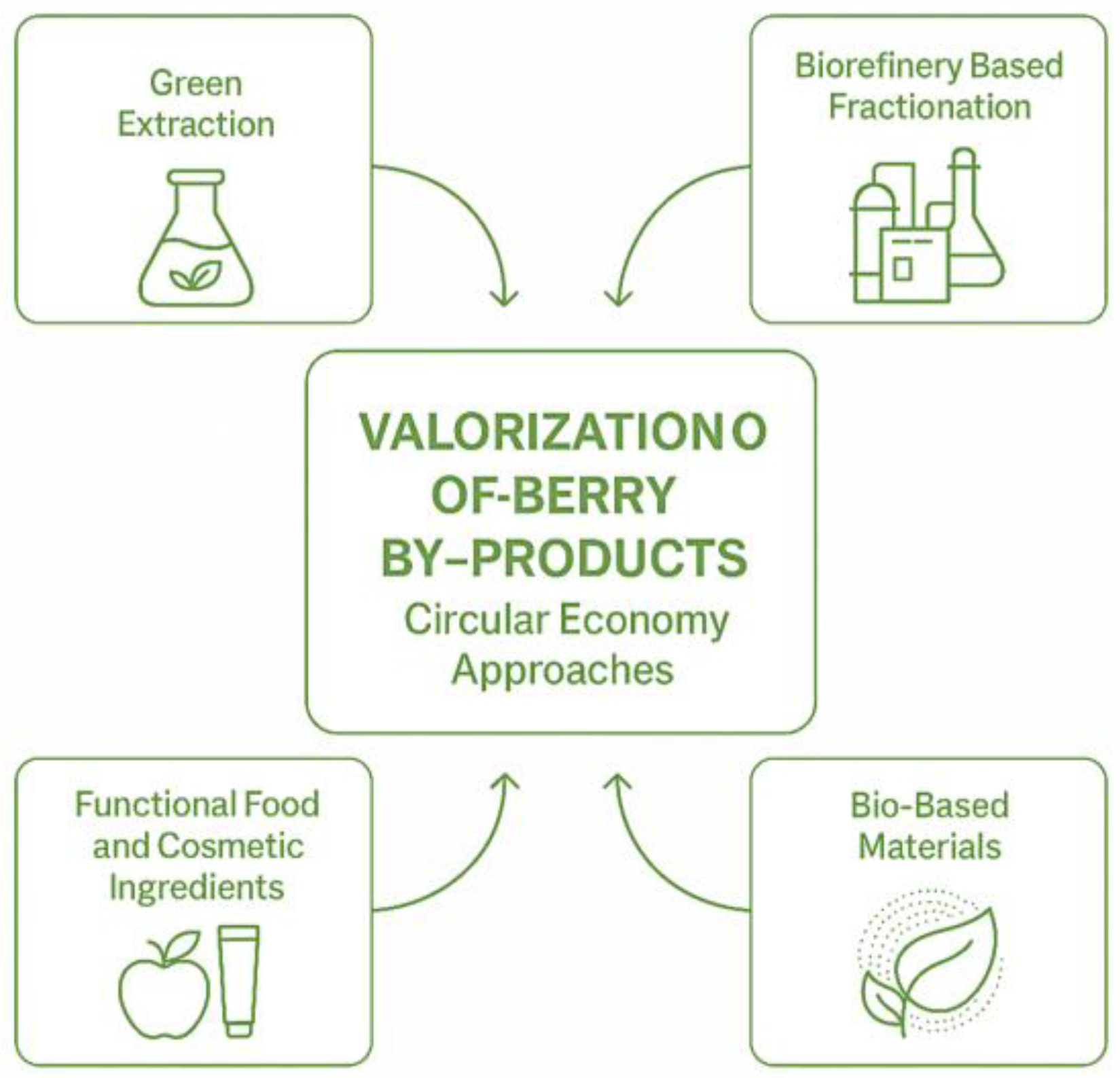
Growing interest in sustainability and resource efficiency has accelerated the valorization of berry processing residues. During juicing, puréeing, drying, or freezing, 25–35% of total berry biomass becomes pomace—a mixture of skins, seeds, and cell-wall fragments rich in polyphenols, dietary fibers, unsaturated lipids, and micronutrients [252]. Once regarded as low-value waste, these by-products are now viewed as strategic raw materials for high-value ingredients in food, cosmetic, and packaging applications [253]. Their integration into circular-economy frameworks reduces environmental burdens, supports zero-waste targets, and opens new economic opportunities across biorefinery, nutraceutical, and biomaterials sectors [254]. Figure 5 provides a schematic overview of the main valorization pathways, from green extraction to biorefinery-based fractionation and the development of functional ingredients and bio-based materials. In the subsections that follow, we examine these pathways in detail, discussing emerging extraction technologies, multifunctional pro-duct streams, and the challenges associated with scaling sustainable valorization strategies [255,256].
From a postharvest systems perspective, the valorization of berry processing by-products is intrinsically linked to quality retention and loss reduction beyond the fresh fruit stage. During postharvest processing, technologies aimed at preserving high-value components—such as phenolics, anthocyanins, dietary fiber, and seed oils—are critical to prevent oxidative, thermal, and enzymatic degradation. Retention and stabilization strategies, including low-temperature drying, freeze-drying, inert-atmosphere handling, microencapsulation, and mild green extraction processes (e.g., ultrasound-assisted or supercritical CO2 extraction), have therefore become integral components of postharvest management, enabling the recovery of functional compounds while maintaining their chemical stability and bioactivity. Such approaches are increasingly recognized as key enablers of circular-economy models in berry supply chains, aligning postharvest quality management with sustainability objective.

6.1. Composition and Functional Potential

Pomace from strawberries, blueberries, raspberries, and blackberries contains exceptionally high levels of anthocyanins, flavonols, ellagitannins, phenolic acids, and structural carbohydrates [3]. In many cases, the antioxidant capacity of pomace exceeds that of edible pulp [2]. Berry seeds, which may account for 10–15% of fruit weight, are particularly rich in polyunsaturated fatty acids, including linoleic and α-linolenic acid, as well as tocopherols and phytosterols, providing oxidative stability and nutritional value [257].
These compositional attributes make berry by-products ideal for functional foods, nutraceuticals, clean-label preservatives, and natural colorants. Raspberry and blackberry seed oils show oxidative stability comparable to conventional edible oils [258], while blueberry pomace has been incorporated successfully into bakery and dairy matrices to enhance fiber, phenolic content, and antioxidant activity [259,260]. These nutritional and technological advantages, together with sustainability credentials, have positioned berry pomace as a promising clean-label ingredient in food development.

6.2. Green Extraction and Biorefinery Technologies

The valorization of berry residues has advanced through the development of green extraction technologies capable of efficiently recovering anthocyanin- and polyphenol-rich fractions while minimizing solvent use and environmental impact. Studies on blueberry by-products show that methods such as supercritical CO2 extraction, pressurized liquid extraction, and ultrasound-assisted extraction enhance extraction efficiency, reduce processing time, and preserve thermolabile compounds [261,262]. Enzyme-assisted extraction further improves the release and bioavailability of bound phenolics by breaking down cell-wall matrices [263]. More recently, deep eutectic solvents (DES) and ionic liquids have emerged as tunable, biodegradable alternatives that selectively extract anthocyanins and flavonols with reduced environmental burden [264].
These advances are increasingly integrated into biorefinery frameworks, where a single pomace stream can yield high-value compounds—including polyphenol extracts, dietary fibers, and seed oils—followed by energy recovery through anaerobic digestion. Process optimization using response-surface modeling and sustainability assessment through life-cycle analysis support the design of efficient, low-impact valorization pipelines that maximize resource use and minimize waste [265,266].

6.3. Applications for Functional Foods

Berry pomace, flours, and phenolic extracts are increasingly incorporated into functional foods owing to their high concentrations of anthocyanins, flavonols, ellagitannins, and phenolic acids, which provide both technological and nutritional advantages [267,268]. These bioactive compounds enhance oxidative stability, contribute natural color, and deliver health-promoting antioxidant activity, making berry by-products valuable ingredients across diverse food matrices [253,269].
In bakery and dairy systems, the incorporation of blueberry or raspberry pomace has been shown to enhance dietary fiber content and increase antioxidant capacity without adversely affecting sensory quality when added at moderate levels [270,271]. These applications are consistent with broader observations that berry by-products function as excellent natural fortifying ingredients, improving not only the nutritional profile of baked goods but also contributing beneficial technological properties such as improved structure and moisture retention [271,272,273,274].
Phenolic-rich berry extracts have demonstrated strong potential as natural antioxidants in meat products, offering a sustainable alternative to synthetic preservatives. Studies show that berry-derived phenolic fractions can markedly reduce lipid and protein oxidation in pork and beef during refrigerated and frozen storage, improving both color and sensory quality [275]. Further research with blueberry, cranberry, chokeberry, and blackcurrant extracts confirm comparable or even superior reductions in TBARS and carbonyl formation relative to conventional additives [276,277]. These protective effects arise from the ability of berry phenolics to scavenge free radicals, chelate pro-oxidant metals, and stabilize myoglobin, thereby slowing discoloration and off-flavor development.
The incorporation of berries and berry-derived by-products into dairy systems has gained considerable attention due to their ability to enhance both nutritional quality and functional performance [278,279]. When added as purees, pomace, or phenolic extracts, blueberries, raspberries, and blackberries significantly increase the antioxidant capacity, phenolic content, and dietary fiber of yogurt and fermented milk, often without negatively affecting sensory acceptance at moderate inclusion levels [280,281,282,283,284]. Moreover, phenolic-rich extracts from berries such as cranberries and chokeberry also exhibit antimicrobial properties, helping extend the shelf life of dairy products and providing natural alternatives to synthetic stabilizers [51].
Berries and their by-products are also increasingly incorporated into jellies, juices, dehydrated products, and snack formulations, where they enhance both technological properties and nutritional value [285,286,287,288]. In jams and jellies, berry pomace contributes natural pectin and phenolics that improve gel formation, color stability, and antioxidant capacity [289,290]. In juice systems, the addition of berry extracts or residues increases anthocyanin content and oxidative stability while supporting clean-label, reduced-sugar formulations [291,292]. Dehydrated powders, fruit leathers, and cereal-based snacks fortified with berry pomace or microencapsulated phenolics show improved bioactive retention and enhanced fiber content, alongside better color preservation during processing [293,294,295].

6.4. Bioactive Ingredients for Cosmetics and Pharmaceuticals

Extracts and oils obtained from berry residues are increasingly incorporated into cosmetic [296,297] and pharmaceutical formulations [298,299]. Their rich content of ellagic acid, anthocyanins, and flavonoids provides strong antioxidants and anti-inflammatory activities that help mitigate skin aging and photo-oxidative stress. Seed oils from raspberries and blackberries serve as natural emollients, while phenolic-rich fractions display antimicrobial properties against common skin pathogens [29]. The stability and biocompatibility of these compounds make them excellent candidates for topical emulsions, sunscreens, and dermatological preparations, broadening the commercial relevance of berry waste beyond the food industry [298,299].

6.5. Bioplastic and Packaging Development

The high lignocellulosic fiber and phenolic content of berry pomace offer functional advantages for developing bio-based materials [300]. When incorporated into starch-, PLA-, or chitosan-based films, pomace particles improve mechanical strength, gas permeability, and antioxidant capacity [301,302]. Such active packaging materials can delay lipid oxidation and microbial spoilage in perishable foods, replacing synthetic additives [254]. In addition, pectin and cellulose recovered from berry waste are suitable to produce edible coatings, enabling a closed-loop approach in which residues from fruit processing contribute directly to extending the shelf life of fresh produce [110,303]. Research combining these materials with nanocellulose or biopolymer blends indicates promising prospects for scalable, compostable packaging solutions consistent with EU sustainability policies.

6.6. Critical Overview

Valorizing berry by-products offers clear environmental and economic benefits by reducing waste-disposal needs, lowering greenhouse-gas emissions, and creating new value streams from polyphenol extracts, fibers, and seed oils. Yet the practical impact of these approaches depends on consistent raw-material quality, regulatory alignment, and the ability to scale green extraction and biorefinery processes within existing processing infrastructures. Economic feasibility remains tightly linked to integrated operations that minimize energy use and logistics costs.
Looking ahead, berry by-product utilization stands as a strong model of circular-economy principles, but its full potential will require improved biorefinery designs, standardized quality metrics, and greater consumer confidence in upcycled ingredients. Continued advances in food science, biotechnology, and materials engineering—together with policy support from EU sustainability frameworks—will be essential for transitioning the berry sector from a linear processing model to a regenerative system where residues become strategic resources rather than waste.

7. Conclusions

Berries represent a high-value horticultural category distinguished by exceptional nutritional density, sensory appeal, and strong market demand; however, their intrinsic perishability continues to pose significant challenges for producers, distributors, and processors. This review demonstrates that the preservation of berry quality is governed by a continuum of interconnected factors extending from genetic background and preharvest management to postharvest technologies and by-product valorization, underscoring the need for system-level approaches rather than isolated interventions.
Recent advances in breeding, genomic tools, and precision cultivation are enabling the development of cultivars and production systems better adapted to climatic variability and capable of maintaining firmness, pigment stability, and microbial resilience. These improvements highlight the decisive role of preharvest practices—such as irrigation management, mineral nutrition, canopy architecture, and biostimulant application—in shaping fruit physiological status at harvest, which ultimately conditions postharvest performance and processing efficiency.
Postharvest innovation is increasingly oriented toward non-thermal, low-residue technologies—including UV-C irradiation, ozone, cold plasma, edible coatings, and optimized MAP/CA systems—that preserve quality while meeting sustainability and consumer-safety expectations. The integration of these treatments with intelligent monitoring tools, IoT-based cold-chain control, and predictive modeling is shifting postharvest management from reactive to proactive paradigms, enabling earlier detection of deterioration and more responsive logistics.
Equally important is the valorization of berry by-products, which extends postharvest management beyond fresh fruit by transforming pomace, seeds, and skins into functional ingredients for food, cosmetic, nutraceutical, and bio-based material applications. Green extraction methods, stabilization technologies, and emerging biorefinery concepts reinforce circular-economy principles by reducing waste and generating additional value streams.
Looking ahead, a key research priority lies in the integration of preharvest conditioning, postharvest preservation, and downstream processing into composite, multi-hurdle systems. Increasing evidence indicates that the efficiency of postharvest and extraction technologies is strongly influenced by the physiological and biochemical status of berries at harvest, while the combination of non-thermal preservation, green extraction, and stabilization strategies offers promising pathways to maximize quality retention and resource efficiency. Future progress will therefore depend on holistic optimization of integrated technological chains, supported by interdisciplinary research and regulatory alignment.
In conclusion, the modernization of berry production and postharvest management reflects a broader transition toward integrated, system-based approaches. By coupling advances in breeding, precision agriculture, non-thermal preservation, smart logistics, and circular-economy valorization, the berry sector is well positioned to develop more resilient, resource-efficient, and environmentally responsible supply chains capable of meeting evolving consumer and societal demand.

Supplementary Materials

The following supporting information can be downloaded at: https://www.mdpi.com/article/10.3390/horticulturae12010019/s1, Table S1. Comparative physiological and microbiological determinants influencing postharvest behavior of major berry species. Table S2. Overview of non-thermal postharvest technologies applied to berry fruits, including main processing parameters, microbial reductions, and effects on organoleptic quality.

Author Contributions

All authors contributed equally to the conceptualization, methodology, investigation, writing—original draft preparation, writing—review and editing, and visualization. All authors have read and agreed to the published version of the manuscript.

Funding

This study was funded by national funds through FCT—Fundação para a Ciência e a Tecnologia, I.P., under the project MARE (UIDB/04292/2020, https://doi.org/10.54499/UIDB/04292/2020, UIDP/04292/2020, https://doi.org/10.54499/UIDP/04292/2020), FCT—Fundação para a Ciência e a Tecnologia, I.P., under the project UIDB/04035/2025 (https://doi.org/10.54499/UID/04035/2025) granted to GeoBioTec Research Instituteand, the project LA/P/0069/2020 granted to the Associate Laboratory ARNET (https://doi.org/10.54499/LA/P/0069/2020) and IDfoods project: Food System of The Future—Research and Development in Sustainable Agrifood Systems and Healthy Nutrition with the reference POCI-01-0247FEDER-039364 supported financed by the Competitiveness and Internationalization Operational Program (POCI), within the scope of COMPETE2020.

Data Availability Statement

No new data was created or analyzed in this study. Data sharing is not applicable to this article.

Conflicts of Interest

The authors declare no conflicts of interest.

References

  1. Padmanabhan, P.; Correa-Betanzo, J.; Paliyath, G. Berries and Related Fruits. In Encyclopedia of Food and Health; Elsevier: Amsterdam, The Netherlands, 2016; pp. 364–371. [Google Scholar]
  2. de Souza, V.R.; Pereira, P.A.P.; da Silva, T.L.T.; de Oliveira Lima, L.C.; Pio, R.; Queiroz, F. Determination of the Bioactive Compounds, Antioxidant Activity and Chemical Composition of Brazilian Blackberry, Red Raspberry, Strawberry, Blueberry and Sweet Cherry Fruits. Food Chem. 2014, 156, 362–368. [Google Scholar] [CrossRef]
  3. Skrovankova, S.; Sumczynski, D.; Mlcek, J.; Jurikova, T.; Sochor, J. Bioactive Compounds and Antioxidant Activity in Different Types of Berries. Int. J. Mol. Sci. 2015, 16, 24673–24706. [Google Scholar] [CrossRef]
  4. Barkaoui, S.; Madureira, J.; Boudhrioua, N.; Cabo Verde, S. Berries: Effects on Health, Preservation Methods, and Uses in Functional Foods: A Review. Eur. Food Res. Technol. 2023, 249, 1689–1715. [Google Scholar] [CrossRef]
  5. Peixoto Araujo, N.M.; Berni, P.; Zandoná, L.R.; de Toledo, N.M.V.; da Silva, P.P.M.; de Toledo, A.A.; Maróstica Junior, M.R. Potential of Brazilian Berries in Developing Innovative, Healthy, and Sustainable Food Products. Sustain. Food Technol. 2024, 2, 506–530. [Google Scholar] [CrossRef]
  6. Cunha, A.M.; Pereira, A.; Cardoso, A.P.; da Silva, A.M.; Barroca, M.J.; Guiné, R.P.F. Rediscovering Portuguese White Crowberries (Corema album): Cultural Insights and Nutritional Significance. Foods 2024, 13, 1328. [Google Scholar] [CrossRef] [PubMed]
  7. Brito, C.; Bertotti, T.; Primitivo, M.J.; Neves, M.; Pires, C.L.; Cruz, P.F.; Martins, P.A.T.; Rodrigues, A.C.; Moreno, M.J.; Brito, R.M.M.; et al. Corema album spp.: Edible Wild Crowberries with a High Content in Minerals and Organic Acids. Food Chem. 2021, 345, 128732. [Google Scholar] [CrossRef]
  8. Howard, L.R.; Prior, R.L.; Liyanage, R.; Lay, J.O. Processing and Storage Effect on Berry Polyphenols: Challenges and Implications for Bioactive Properties. J. Agric. Food Chem. 2012, 60, 6678–6693. [Google Scholar] [CrossRef] [PubMed]
  9. Enaru, B.; Drețcanu, G.; Pop, T.D.; Stǎnilǎ, A.; Diaconeasa, Z. Anthocyanins: Factors Affecting Their Stability and Degradation. Antioxidants 2021, 10, 1967. [Google Scholar] [CrossRef]
  10. Wang, L.; Lan, W.; Chen, D. Blueberry (Vaccinium spp.) Anthocyanins and Their Functions, Stability, Bioavailability, and Applications. Foods 2024, 13, 2851. [Google Scholar] [CrossRef] [PubMed]
  11. Yang, W.; Guo, Y.; Liu, M.; Chen, X.; Xiao, X.; Wang, S.; Gong, P.; Ma, Y.; Chen, F. Structure and Function of Blueberry Anthocyanins: A Review of Recent Advances. J. Funct. Foods 2022, 88, 104864. [Google Scholar] [CrossRef]
  12. Wang, Y.; Liu, L.; Wei, Y. The Influence of Consumption Purpose on Consumer Preferences for Fruit Attributes: The Moderating Effect of Color Perception. Foods 2025, 14, 1902. [Google Scholar] [CrossRef]
  13. Horvitz, S. Postharvest Handling of Berries. In Postharvest Handling; InTech: Rijeka, Croatia, 2017. [Google Scholar]
  14. Kumar, S.; Baghel, M.; Yadav, A.; Dhakar, M.K. Postharvest Biology and Technology of Berries. In Postharvest Biology and Technology of Temperate Fruits; Springer International Publishing: Cham, Switzerland, 2018; pp. 349–370. [Google Scholar]
  15. Shah, H.M.S.; Singh, Z.; Kaur, J.; Hasan, M.U.; Woodward, A.; Afrifa-Yamoah, E. Trends in Maintaining Postharvest Freshness and Quality of Rubus Berries. Compr. Rev. Food Sci. Food Saf. 2023, 22, 4600–4643. [Google Scholar] [CrossRef] [PubMed]
  16. Alegbeleye, O.; Odeyemi, O.A.; Strateva, M.; Stratev, D. Microbial Spoilage of Vegetables, Fruits and Cereals. Appl. Food Res. 2022, 2, 100122. [Google Scholar] [CrossRef]
  17. Mohammadi, A.; Hashemi, M.; Hosseini, S.M. The Control of Botrytis Fruit Rot in Strawberry Using Combined Treatments of Chitosan with Zataria multiflora or Cinnamomum zeylanicum Essential Oil. J. Food Sci. Technol. 2015, 52, 7441–7448. [Google Scholar] [CrossRef]
  18. Herrera-Défaz, M.; Fuentealba, D.; Dibona-Villanueva, L.; Schwantes, D.; Jiménez, B.; Ipinza, B.; Latorre, B.; Valdés-Gómez, H.; Fermaud, M. Biocontrol of Botrytis cinerea on Grape Berries in Chile: Use of Registered Biofungicides and a New Chitosan-Based Fungicide. Horticulturae 2023, 9, 746. [Google Scholar] [CrossRef]
  19. Singh, S. Preservation Technologies for Fresh Fruits and Vegetables. Stewart Postharvest Rev. 2011, 7, 1–7. [Google Scholar] [CrossRef]
  20. Bisht, A.; Singh, S.P. Postharvest Losses and Management of Horticultural Produce: A Review. J. Sci. Res. Rep. 2024, 30, 305–320. [Google Scholar] [CrossRef]
  21. Palumbo, M.; Attolico, G.; Capozzi, V.; Cozzolino, R.; Corvino, A.; de Chiara, M.L.V.; Pace, B.; Pelosi, S.; Ricci, I.; Romaniello, R.; et al. Emerging Postharvest Technologies to Enhance the Shelf-Life of Fruit and Vegetables: An Overview. Foods 2022, 11, 3925. [Google Scholar] [CrossRef]
  22. Ashraf, M.A.; Khan, A.S.; Azam, M.; Ayyub, S.; Kaleem, M.M.; Nawaz, S.; Abubakar, M.; Khalid, B.; Riaz, T.; Asim, M.; et al. Innovative Technologies in Postharvest Management of Fruits and Vegetables: A Review. Eur. Food Res. Technol. 2025, 251, 3445–3463. [Google Scholar] [CrossRef]
  23. Iñiguez-Moreno, M.; González-González, R.B.; Flores-Contreras, E.A.; Araújo, R.G.; Chen, W.N.; Alfaro-Ponce, M.; Iqbal, H.M.N.; Melchor-Martínez, E.M.; Parra-Saldívar, R. Nano and Technological Frontiers as a Sustainable Platform for Postharvest Preservation of Berry Fruits. Foods 2023, 12, 3159. [Google Scholar] [CrossRef]
  24. Eurostat. How Much Fruit and Vegetables Does the EU Harvest? 25 August 2025. Available online: https://ec.europa.eu/eurostat/web/products-eurostat-news/w/ddn-20250825-1 (accessed on 12 October 2025).
  25. Sobekova, K.; Thomsen, M.R.; Ahrendsen, B.L. Market Trends and Consumer Demand for Fresh Berries. Appl. Stud. Agribus. Commer. 2013, 7, 11–14. [Google Scholar] [CrossRef]
  26. The European Market Potential for Frozen Berries. 2024. Available online: https://www.cbi.eu/market-information/processed-fruit-vegetables-edible-nuts/frozen-berries/market-potential (accessed on 25 November 2025).
  27. Yeh, D.A.; Kramer, J.; Calvin, L.; Weber, C. The Changing Landscape of U.S. Strawberry and Blueberry Markets: Production, Trade, and Challenges from 2000 to 2020; Economic Information Bulletin Number 257; U.S. Department of Agriculture, Economic Research Service: Washington, DC, USA, 2023. [Google Scholar]
  28. Farruggia, D.; Crescimanno, M.; Galati, A.; Tinervia, S. The Quality Perception of Fresh Berries: An Empirical Survey in the German Market. Agric. Agric. Sci. Procedia 2016, 8, 566–575. [Google Scholar] [CrossRef][Green Version]
  29. Golovinskaia, O.; Wang, C.-K. Review of Functional and Pharmacological Activities of Berries. Molecules 2021, 26, 3904. [Google Scholar] [CrossRef] [PubMed]
  30. Vahapoglu, B.; Erskine, E.; Gultekin Subasi, B.; Capanoglu, E. Recent Studies on Berry Bioactives and Their Health-Promoting Roles. Molecules 2021, 27, 108. [Google Scholar] [CrossRef]
  31. Wu, Y.; Han, T.; Yang, H.; Lyu, L.; Li, W.; Wu, W. Known and Potential Health Benefits and Mechanisms of Blueberry Anthocyanins: A Review. Food Biosci. 2023, 55, 103050. [Google Scholar] [CrossRef]
  32. Zhang, J.; Zhang, J.; Zhang, L.; Xue, Y.; Zhang, K. Mechanistic Insights into Vegetable Color Stability: Discoloration Pathways and Emerging Protective Strategies. Foods 2025, 14, 2222. [Google Scholar] [CrossRef]
  33. Xu, L.; Tian, Z.; Chen, H.; Zhao, Y.; Yang, Y. Anthocyanins, Anthocyanin-Rich Berries, and Cardiovascular Risks: Systematic Review and Meta-Analysis of 44 Randomized Controlled Trials and 15 Prospective Cohort Studies. Front. Nutr. 2021, 8, 747884. [Google Scholar] [CrossRef] [PubMed]
  34. Stull, A.J.; Cassidy, A.; Djousse, L.; Johnson, S.A.; Krikorian, R.; Lampe, J.W.; Mukamal, K.J.; Nieman, D.C.; Porter Starr, K.N.; Rasmussen, H.; et al. The State of the Science on the Health Benefits of Blueberries: A Perspective. Front. Nutr. 2024, 11, 1415737. [Google Scholar] [CrossRef]
  35. Dunford, N.T. Blueberries and Health. Funct. Food Sci. 2022, 2, 1–15. [Google Scholar] [CrossRef]
  36. Deng, S.; Wu, X.; Shi, Y.; El-Mesery, H.S.; Zhang, X. Uncovering Analytical Patterns for Hazardous Components in Agricultural Production Systems. Foods 2025, 14, 3261. [Google Scholar] [CrossRef]
  37. Cao, S.; Qiao, L.; Wang, X.; Huang, T.; Wu, C.; Zhang, Y.; Xue, Z.; Kou, X. Discussion on Postharvest Quality, Strategies of Storage and Transportation Techniques of Blueberries: A Comprehensive Review. Food Qual. Saf. 2025, 9, fyaf038. [Google Scholar] [CrossRef]
  38. Corfield, R.; Gomez Mattson, M.; Pérez, O.E.; Salvatori, D.; Schebor, C. Current State of Research on Health-Promoting Functional Properties in Berry-Based Foods. Curr. Nutr. Rep. 2025, 14, 22. [Google Scholar] [CrossRef] [PubMed]
  39. Lara, I.; Heredia, A.; Domínguez, E. Shelf Life Potential and the Fruit Cuticle: The Unexpected Player. Front. Plant Sci. 2019, 10, 770. [Google Scholar] [CrossRef]
  40. Nogales-Delgado, S. Polyphenoloxidase (PPO): Effect, Current Determination and Inhibition Treatments in Fresh-Cut Produce. Appl. Sci. 2021, 11, 7813. [Google Scholar] [CrossRef]
  41. Moon, K.M.; Kwon, E.-B.; Lee, B.; Kim, C.Y. Recent Trends in Controlling the Enzymatic Browning of Fruit and Vegetable Products. Molecules 2020, 25, 2754. [Google Scholar] [CrossRef]
  42. Sui, X.; Meng, Z.; Dong, T.; Fan, X.; Wang, Q. Enzymatic Browning and Polyphenol Oxidase Control Strategies. Curr. Opin. Biotechnol. 2023, 81, 102921. [Google Scholar] [CrossRef]
  43. Michalska, A.; Łysiak, G. Bioactive Compounds of Blueberries: Post-Harvest Factors Influencing the Nutritional Value of Products. Int. J. Mol. Sci. 2015, 16, 18642–18663. [Google Scholar] [CrossRef] [PubMed]
  44. Defraeye, T.; Nicolai, B.; Kirkman, W.; Moore, S.; van Niekerk, S.; Verboven, P.; Cronjé, P. Integral Performance Evaluation of the Fresh-Produce Cold Chain: A Case Study for Ambient Loading of Citrus in Refrigerated Containers. Postharvest Biol. Technol. 2016, 112, 1–13. [Google Scholar] [CrossRef]
  45. Ktenioudaki, A.; O’Donnell, C.P.; Emond, J.P.; do Nascimento Nunes, M.C. Blueberry Supply Chain: Critical Steps Impacting Fruit Quality and Application of a Boosted Regression Tree Model to Predict Weight Loss. Postharvest Biol. Technol. 2021, 179, 111590. [Google Scholar] [CrossRef]
  46. Pinto, L.; Palma, A.; Cefola, M.; Pace, B.; D’Aquino, S.; Carboni, C.; Baruzzi, F. Effect of Modified Atmosphere Packaging (MAP) and Gaseous Ozone Pre-Packaging Treatment on the Physico-Chemical, Microbiological and Sensory Quality of Small Berry Fruit. Food Packag. Shelf Life 2020, 26, 100573. [Google Scholar] [CrossRef]
  47. Habiba, U.; Bajpai, A.; Shafi, Z.; Pandey, V.K.; Singh, R. Advancing Sustainability through Modified Atmosphere Packaging (MAP) for Fresh Food Preservation: A Critical Review. J. Stored Prod. Res. 2025, 112, 102657. [Google Scholar] [CrossRef]
  48. Giannakourou, M.C.; Tsironi, T.N. Application of Processing and Packaging Hurdles for Fresh-Cut Fruits and Vegetables Preservation. Foods 2021, 10, 830. [Google Scholar] [CrossRef]
  49. Opara, U.L.; Caleb, O.J.; Belay, Z.A. Modified Atmosphere Packaging for Food Preservation. In Food Quality and Shelf Life; Elsevier: Amsterdam, The Netherlands, 2019; pp. 235–259. [Google Scholar]
  50. Merchante, C.; Vallarino, J.G.; Osorio, S.; Aragüez, I.; Villarreal, N.; Ariza, M.T.; Martínez, G.A.; Medina-Escobar, N.; Civello, M.P.; Fernie, A.R.; et al. Ethylene Is Involved in Strawberry Fruit Ripening in an Organ-Specific Manner. J. Exp. Bot. 2013, 64, 4421–4439. [Google Scholar] [CrossRef]
  51. Sun-Waterhouse, D.; Zhou, J.; Wadhwa, S.S. Drinking Yoghurts with Berry Polyphenols Added before and after Fermentation. Food Control 2013, 32, 450–460. [Google Scholar] [CrossRef]
  52. Wang, S.; Zhou, Q.; Zhou, X.; Zhang, F.; Ji, S. Ethylene Plays an Important Role in the Softening and Sucrose Metabolism of Blueberries Postharvest. Food Chem. 2020, 310, 125965. [Google Scholar] [CrossRef] [PubMed]
  53. Farneti, B.; Khomenko, I.; Ajelli, M.; Emanuelli, F.; Biasioli, F.; Giongo, L. Ethylene Production Affects Blueberry Fruit Texture and Storability. Front. Plant Sci. 2022, 13, 813863. [Google Scholar] [CrossRef]
  54. Kalt, W.; Forney, C.F.; Martin, A.; Prior, R.L. Antioxidant Capacity, Vitamin C, Phenolics, and Anthocyanins after Fresh Storage of Small Fruits. J. Agric. Food Chem. 1999, 47, 4638–4644. [Google Scholar] [CrossRef]
  55. Piljac-Žegarac, J.; Šamec, D. Antioxidant Stability of Small Fruits in Postharvest Storage at Room and Refrigerator Temperatures. Food Res. Int. 2011, 44, 345–350. [Google Scholar] [CrossRef]
  56. Šamec, D.; Piljac-Žegarac, J. Fluctuations in the Levels of Antioxidant Compounds and Antioxidant Capacity of Ten Small Fruits During One Year of Frozen Storage. Int. J. Food Prop. 2015, 18, 21–32. [Google Scholar] [CrossRef]
  57. Abeysuriya, H.I.; Bulugahapitiya, V.P.; Jayatissa, L.P. Variation of Vitamin C Content and Antioxidant Capacities during the Post-Harvest Storage of Fresh Fruits under Different Temperatures. J. Stored Prod. Res. 2024, 109, 102426. [Google Scholar] [CrossRef]
  58. Cappai, F.; Benevenuto, J.; Ferrão, L.F.V.; Munoz, P. Molecular and Genetic Bases of Fruit Firmness Variation in Blueberry—A Review. Agronomy 2018, 8, 174. [Google Scholar] [CrossRef]
  59. Kafkas, E.Y. Comparison of Fruit Quality Characteristics of Berries. Agric. Sci. 2021, 12, 907–915. [Google Scholar] [CrossRef]
  60. Okan, O.T.; Deniz, İ.; Yayli, N.; Şat, İ.G.; Öz, M.; Hatipoglu Serdar, G. Antioxidant Activity, Sugar Content and Phenolic Profiling of Blueberries Cultivars: A Comprehensive Comparison. Not. Bot. Horti Agrobot. Cluj Napoca 2018, 46, 639–652. [Google Scholar] [CrossRef]
  61. Neto, F.J.D.; Tecchio, M.A.; Junior, A.P.; Vedoato, B.T.F.; Lima, G.P.P.; Roberto, S.R. Effect of ABA on Colour of Berries, Anthocyanin Accumulation and Total Phenolic Compounds of ‘Rubi’ Table Grape (Vitis vinifera). Aust. J. Crop Sci. 2017, 11, 199–205. [Google Scholar] [CrossRef]
  62. Zapien-Macias, J.M.; Liu, T.; Nunez, G.H. Blueberry Ripening Mechanism: A Systematic Review of Physiological and Molecular Evidence. Hortic. Res. 2025, 12, uhaf126. [Google Scholar] [CrossRef]
  63. Alexandre, E.M.C.; Brandão, T.R.S.; Silva, C.L.M. Efficacy of Non-Thermal Technologies and Sanitizer Solutions on Microbial Load Reduction and Quality Retention of Strawberries. J. Food Eng. 2012, 108, 417–426. [Google Scholar] [CrossRef]
  64. Kerch, G. Chitosan Films and Coatings Prevent Losses of Fresh Fruit Nutritional Quality: A Review. Trends Food Sci. Technol. 2015, 46, 159–166. [Google Scholar] [CrossRef]
  65. Romero, J.; Albertos, I.; Díez-Méndez, A.; Poveda, J. Control of Postharvest Diseases in Berries through Edible Coatings and Bacterial Probiotics. Sci. Hortic. 2022, 304, 111326. [Google Scholar] [CrossRef]
  66. Dahbi, S.; Hanine, H.; Kodad, O.; Raouane, M.; Amghar, S. Physical and Biochemical Evaluation of Blueberries during Long Term Frozen Storage at −20 °C: Implications for Shelf-Life and Quality Preservation. Int. J. Hortic. Sci. Technol. 2025, 12, 387–396. [Google Scholar]
  67. Peian, Z.; Haifeng, J.; Peijie, G.; Sadeghnezhad, E.; Qianqian, P.; Tianyu, D.; Teng, L.; Huanchun, J.; Jinggui, F. Chitosan Induces Jasmonic Acid Production Leading to Resistance of Ripened Fruit against Botrytis cinerea Infection. Food Chem. 2021, 337, 127772. [Google Scholar] [CrossRef]
  68. Edo, G.S.; Godana, E.A.; Ngolong Ngea, G.L.; Wang, K.; Yang, Q.; Zhang, H. Improving Biocontrol Potential of Antagonistic Yeasts Against Fungal Pathogen in Postharvest Fruits and Vegetables Through Application of Organic Enhancing Agents. Foods 2025, 14, 3075. [Google Scholar] [CrossRef]
  69. Ramos-Bell, S.; Hernandez-Montiel, L.G.; Velázquez Estrada, R.; Moreno-Hernández, C.; Gutierrez-Martinez, P. Chitosan and Salicylic Acid as Alternatives for the Control of Postharvest Fungal Diseases in Blueberries (Vaccinium corymbosum). Int. Food Res. J. 2023, 30, 992–1000. [Google Scholar] [CrossRef]
  70. Alam, A.U.; Rathi, P.; Beshai, H.; Sarabha, G.K.; Deen, M.J. Fruit Quality Monitoring with Smart Packaging. Sensors 2021, 21, 1509. [Google Scholar] [CrossRef] [PubMed]
  71. Shrivastava, C.; Schudel, S.; Shoji, K.; Onwude, D.; da Silva, F.P.; Turan, D.; Paillart, M.; Defraeye, T. Digital Twins for Selecting the Optimal Ventilated Strawberry Packaging Based on the Unique Hygrothermal Conditions of a Shipment from Farm to Retailer. Postharvest Biol. Technol. 2023, 199, 112283. [Google Scholar] [CrossRef]
  72. Yin, M.; Huo, L.; Li, N.; Zhu, H.; Zhu, Z.; Hu, J. Packaging Performance Evaluation and Freshness Intelligent Prediction Modeling in Grape Transportation. Food Control 2024, 165, 110684. [Google Scholar] [CrossRef]
  73. Das, B.; Hoque, A.; Roy, S.; Kumar, K.; Laskar, A.A.; Mazumder, A.S. Post-Harvest Technologies and Automation: Al-Driven Innovations in Food Processing and Supply Chains. Int. J. Sci. Res. Sci. Technol. 2025, 12, 183–205. [Google Scholar] [CrossRef]
  74. Valdés, A.; Álvarez-Rivera, G.; Socas-Rodríguez, B.; Herrero, M.; Ibáñez, E.; Cifuentes, A. Foodomics: Analytical Opportunities and Challenges. Anal. Chem. 2022, 94, 366–381. [Google Scholar] [CrossRef]
  75. Varshney, R.K.; Sinha, P.; Singh, V.K.; Kumar, A.; Zhang, Q.; Bennetzen, J.L. 5Gs for Crop Genetic Improvement. Curr. Opin. Plant Biol. 2020, 56, 190–196. [Google Scholar] [CrossRef]
  76. Shi, Y.; Li, B.-J.; Grierson, D.; Chen, K.-S. Insights into Cell Wall Changes during Fruit Softening from Transgenic and Naturally Occurring Mutants. Plant Physiol. 2023, 192, 1671–1683. [Google Scholar] [CrossRef] [PubMed]
  77. Villarreal, N.M.; Marina, M.; Nardi, C.F.; Civello, P.M.; Martínez, G.A. Novel Insights of Ethylene Role in Strawberry Cell Wall Metabolism. Plant Sci. 2016, 252, 1–11. [Google Scholar] [CrossRef] [PubMed]
  78. Moya-León, M.A.; Mattus-Araya, E.; Herrera, R. Molecular Events Occurring During Softening of Strawberry Fruit. Front. Plant Sci. 2019, 10, 615. [Google Scholar] [CrossRef]
  79. Picart-Palmade, L.; Cunault, C.; Chevalier-Lucia, D.; Belleville, M.-P.; Marchesseau, S. Potentialities and Limits of Some Non-Thermal Technologies to Improve Sustainability of Food Processing. Front. Nutr. 2019, 5, 130. [Google Scholar] [CrossRef]
  80. Guimarães, A.; Abrunhosa, L.; Pastrana, L.M.; Cerqueira, M.A. Edible Films and Coatings as Carriers of Living Microorganisms: A New Strategy Towards Biopreservation and Healthier Foods. Compr. Rev. Food Sci. Food. Saf. 2018, 17, 594–614. [Google Scholar] [CrossRef]
  81. Sapna; Sharma, C.; Pathak, P.; Gautam, S. Chitosan Edible Coatings Loaded with Bioactive Components for Fruits and Vegetables: A Step Toward Sustainable Development Goals. Food Bioprocess Technol. 2025, 18, 4975–5009. [Google Scholar] [CrossRef]
  82. Chiamaka, O.T.; Adeoti, D. Integrating IoT Sensor Networks with Predictive Modeling to Reduce Post-Harvest Losses and Strengthen Sustainable Agricultural Value Chains. Int. J. Sci. Eng. Appl. 2021, 10, 187–197. [Google Scholar] [CrossRef]
  83. Page, M.J.; McKenzie, J.E.; Bossuyt, P.M.; Boutron, I.; Hoffmann, T.C.; Mulrow, C.D.; Shamseer, L.; Tetzlaff, J.M.; Akl, E.A.; Brennan, S.E.; et al. The PRISMA 2020 Statement: An Updated Guideline for Reporting Systematic Reviews. BMJ 2021, 372, n71. [Google Scholar] [CrossRef] [PubMed]
  84. Munn, Z.; Peters, M.D.J.; Stern, C.; Tufanaru, C.; McArthur, A.; Aromataris, E. Systematic Review or Scoping Review? Guidance for Authors When Choosing between a Systematic or Scoping Review Approach. BMC Med. Res. Methodol. 2018, 18, 143. [Google Scholar] [CrossRef]
  85. Greenhalgh, T.; Thorne, S.; Malterud, K. Time to Challenge the Spurious Hierarchy of Systematic over Narrative Reviews? Eur. J. Clin. Investig. 2018, 48, e12931. [Google Scholar] [CrossRef]
  86. Haddaway, N.R.; Macura, B.; Whaley, P.; Pullin, A.S. Roses Reporting Standards for Systematic Evidence Syntheses: Pro Forma, Flow-Diagram and Descriptive Summary of the Plan and Conduct of Environmental Systematic Reviews and Systematic Maps. Environ. Evid. 2018, 7, 7. [Google Scholar] [CrossRef]
  87. Xu, Y.; Wei, X.; Liu, Y.; Liu, C. Characterization of Postharvest Changes in Fruit Quality Traits of Highbush Blueberry (Vaccinium corymbosum L.) Cultivars. Horticulturae 2025, 11, 1250. [Google Scholar] [CrossRef]
  88. Ilea, M.I.M.; Díaz-Mula, H.M.; García-Molina, A.; Ruiz-Aracil, M.C.; Fernández-Picazo, C.; Guillén, F. Comparative Effect of GABA and 1-MCP in Maintaining Strawberry Fruit Quality During Cold Storage. Horticulturae 2025, 11, 370. [Google Scholar] [CrossRef]
  89. Zhou, J.; Yang, S.; Ma, Y.; Liu, Z.; Tu, H.; Wang, H.; Zhang, J.; Chen, Q.; He, W.; Li, M.; et al. Soluble Sugar and Organic Acid Composition and Flavor Evaluation of Chinese Cherry Fruits. Food Chem. X 2023, 20, 100953. [Google Scholar] [CrossRef] [PubMed]
  90. Sun, J.-H.; Luo, J.-J.; Tian, L.; Li, C.-L.; Xing, Y.; Shen, Y.-Y. New Evidence for the Role of Ethylene in Strawberry Fruit Ripening. J. Plant Growth Regul. 2013, 32, 461–470. [Google Scholar] [CrossRef]
  91. Toledo-Guerrero, J.D.; Álvarez, M.D.; Herranz, B.; Escribano, M.I.; Merodio, C.; Romero, I.; Sanchez-Ballesta, M.T. Effect of Short-Term High-CO2 Treatments on the Quality of Highbush and Rabbiteye Blueberries During Cold Storage. Plants 2024, 13, 3398. [Google Scholar] [CrossRef]
  92. Bovi, G.G.; Caleb, O.J.; Rauh, C.; Mahajan, P.V. Condensation Regulation of Packaged Strawberries under Fluctuating Storage Temperature. Packag. Technol. Sci. 2019, 32, 545–554. [Google Scholar] [CrossRef]
  93. Rashvand, M.; Matera, A.; Altieri, G.; Genovese, F.; Fadiji, T.; Linus Opara, U.; Mohamadifar, M.A.; Feyissa, A.H.; Carlo Di Renzo, G. Recent Advances in the Potential of Modeling and Simulation to Assess the Performance of Modified Atmosphere Packaging (MAP) Systems for the Fresh Agricultural Product: Challenges and Development. Trends Food Sci. Technol. 2023, 136, 48–63. [Google Scholar] [CrossRef]
  94. Umeohia, U.E.; Olapade, A.A. Physiological Processes Affecting Postharvest Quality of Fresh Fruits and Vegetables. Asian Food Sci. J. 2024, 23, 115915. [Google Scholar] [CrossRef]
  95. Hurtado, G.; Grimm, E.; Brüggenwirth, M.; Knoche, M. Strawberry Fruit Skins Are Far More Permeable to Osmotic Water Uptake than to Transpirational Water Loss. PLoS ONE 2021, 16, e0251351. [Google Scholar] [CrossRef]
  96. Gidado, M.J.; Gunny, A.A.N.; Gopinath, S.C.B.; Ali, A.; Wongs-Aree, C.; Salleh, N.H.M. Challenges of Postharvest Water Loss in Fruits: Mechanisms, Influencing Factors, and Effective Control Strategies—A Comprehensive Review. J. Agric. Food Res. 2024, 17, 101249. [Google Scholar] [CrossRef]
  97. Bovi, G.G.; Caleb, O.J.; Ilte, K.; Rauh, C.; Mahajan, P.V. Impact of Modified Atmosphere and Humidity Packaging on the Quality, off-Odour Development and Volatiles of ‘Elsanta’ Strawberries. Food Packag. Shelf Life 2018, 16, 204–210. [Google Scholar] [CrossRef]
  98. Kargwal, R.; Garg, M.; Singh, V.; Garg, R.; Kumar, N. Principles of Modified Atmosphere Packaging for Shelf Life Extension of Fruits and Vegetables: An Overview of Storage Conditions. Int. J. Chem. Stud. 2020, 8, 2245–2252. [Google Scholar] [CrossRef]
  99. Kowalczyk, B.A.; Bieniasz, M.; Błaszczyk, J. Effect of Short-Term Storage in Modified Atmosphere Packaging (MAP) and Controlled Atmosphere (CA) on Total Polyphenol Content and Antioxidant Activity in Juices from Haskap Berry (Lonicera caerulea L.). Agriculture 2025, 15, 253. [Google Scholar] [CrossRef]
  100. Romero, I.; Escribano, M.I.; Merodio, C.; Sanchez-Ballesta, M.T. Postharvest High-CO2 Treatments on the Quality of Soft Fruit Berries: An Integrated Transcriptomic, Proteomic, and Metabolomic Approach. J. Agric. Food Chem. 2022, 70, 8593–8597. [Google Scholar] [CrossRef]
  101. Wang, L.; Brouard, E.; Prodhomme, D.; Hilbert, G.; Renaud, C.; Petit, J.-P.; Edwards, E.; Betts, A.; Delrot, S.; Ollat, N.; et al. Regulation of Anthocyanin and Sugar Accumulation in Grape Berry through Carbon Limitation and Exogenous ABA Application. Food Res. Int. 2022, 160, 111478. [Google Scholar] [CrossRef]
  102. Gandhi, K.D.; Faldu, P.R.; Patel, K.G.; Solanki, V.H.; Kansara, R.V.; Singh, S.; Vyas, T.K. Plant Polyphenol Oxidase: Biochemical Properties and Browning of Fruits and Vegetables. Indian J. Agric. Biochem. 2018, 31, 1. [Google Scholar] [CrossRef]
  103. Singh, B.; Suri, K.; Shevkani, K.; Kaur, A.; Kaur, A.; Singh, N. Enzymatic Browning of Fruit and Vegetables: A Review. In Enzymes in Food Technology; Springer: Singapore, 2018; pp. 63–78. [Google Scholar]
  104. Alzuabi, R.O.; Hassan, N.M.; Bahroun, Z. Development and Implementation of an Innovative Smart Storage System for Fruit Quality Preservation. Food Bioprocess Technol. 2024, 17, 257–270. [Google Scholar] [CrossRef]
  105. Rodrigues, R.; Patil, S.; Dhakane-Lad, J.; Nadanathangam, V.; Mahapatra, A. Effect of Green Tea Extract, Ginger Essential Oil and Nanofibrillated Cellulose Reinforcements in Starch Films on the Keeping Quality of Strawberries. J. Food Process. Preserv. 2022, 46, e16109. [Google Scholar] [CrossRef]
  106. Muñoz-Tebar, N.; Pérez-Álvarez, J.A.; Fernández-López, J.; Viuda-Martos, M. Chitosan Edible Films and Coatings with Added Bioactive Compounds: Antibacterial and Antioxidant Properties and Their Application to Food Products: A Review. Polymers 2023, 15, 396. [Google Scholar] [CrossRef]
  107. Moradinezhad, F.; Adiba, A.; Ranjbar, A.; Dorostkar, M. Edible Coatings to Prolong the Shelf Life and Improve the Quality of Subtropical Fresh/Fresh-Cut Fruits: A Review. Horticulturae 2025, 11, 577. [Google Scholar] [CrossRef]
  108. Bajaj, K.; Adhikary, T.; Gill, P.P.S.; Kumar, A. Edible Coatings Enriched with Plant-Based Extracts Preserve Postharvest Quality of Fruits: A Review. Prog. Org. Coat. 2023, 182, 107669. [Google Scholar] [CrossRef]
  109. Pillai, A.R.S.; Eapen, A.S.; Zhang, W.; Roy, S. Polysaccharide-Based Edible Biopolymer-Based Coatings for Fruit Preservation: A Review. Foods 2024, 13, 1529. [Google Scholar] [CrossRef]
  110. Karnwal, A.; Kumar, G.; Singh, R.; Selvaraj, M.; Malik, T.; Al Tawaha, A.R.M. Natural Biopolymers in Edible Coatings: Applications in Food Preservation. Food Chem. X 2025, 25, 102171. [Google Scholar] [CrossRef]
  111. Li, H.; Chen, Y.; Zhang, Z.; Li, B.; Qin, G.; Tian, S. Pathogenic Mechanisms and Control Strategies of Botrytis cinerea Causing Post-Harvest Decay in Fruits and Vegetables. Food Qual. Saf. 2018, 2, 111–119. [Google Scholar] [CrossRef]
  112. Petrasch, S.; Knapp, S.J.; van Kan, J.A.L.; Blanco-Ulate, B. Grey Mould of Strawberry, a Devastating Disease Caused by the Ubiquitous Necrotrophic Fungal Pathogen Botrytis cinerea. Mol. Plant Pathol. 2019, 20, 877–892. [Google Scholar] [CrossRef] [PubMed]
  113. Yousef, S.A.M.; Ali, A.M.; Elsherbiny, E.A.; Atwa, A.A. Morphological, Genetic and Pathogenic Variability among Botrytis cinerea Species Complex Causing Gray Mold of Strawberry. Physiol. Mol. Plant Pathol. 2024, 134, 102395. [Google Scholar] [CrossRef]
  114. Lakimova, E.T.; Ty, A.J.; Hertog, M.L.A.T.M.; Nicolaï, B.M.; Woltering, E.J. Programmed Cell Death and Postharvest Deterioration of Fresh Horticultural Products. Postharvest Biol. Technol. 2024, 214, 113010. [Google Scholar] [CrossRef]
  115. Bano, A.; Gupta, A.; Prusty, M.R.; Kumar, M. Elicitation of Fruit Fungi Infection and Its Protective Response to Improve the Postharvest Quality of Fruits. Stresses 2023, 3, 231–255. [Google Scholar] [CrossRef]
  116. Zaman, W.; Amin, A.; Khalil, A.A.K.; Akhtar, M.S.; Ali, S. Plant–Microbe Interactions for Improving Postharvest Shelf Life and Quality of Fresh Produce Through Protective Mechanisms. Horticulturae 2025, 11, 732. [Google Scholar] [CrossRef]
  117. He, Y.; Degraeve, P.; Oulahal, N. Bioprotective Yeasts: Potential to Limit Postharvest Spoilage and to Extend Shelf Life or Improve Microbial Safety of Processed Foods. Heliyon 2024, 10, e24929. [Google Scholar] [CrossRef]
  118. Liu, S.; Wu, J.; Cheng, Z.; Wang, H.; Jin, Z.; Zhang, X.; Zhang, D.; Xie, J. Microbe-Mediated Stress Resistance in Plants: The Roles Played by Core and Stress-Specific Microbiota. Microbiome 2025, 13, 111. [Google Scholar] [CrossRef]
  119. Compant, S.; Samad, A.; Faist, H.; Sessitsch, A. A Review on the Plant Microbiome: Ecology, Functions, and Emerging Trends in Microbial Application. J. Adv. Res. 2019, 19, 29–37. [Google Scholar] [CrossRef] [PubMed]
  120. Ullah, F.; Ali, S.; Siraj, M.; Akhtar, M.S.; Zaman, W. Plant Microbiomes Alleviate Abiotic Stress-Associated Damage in Crops and Enhance Climate-Resilient Agriculture. Plants 2025, 14, 1890. [Google Scholar] [CrossRef]
  121. Allende, A.; Marín, A.; Buendía, B.; Tomás-Barberán, F.; Gil, M.I. Impact of Combined Postharvest Treatments (UV-C Light, Gaseous O3, Superatmospheric O2 and High CO2) on Health Promoting Compounds and Shelf-Life of Strawberries. Postharvest Biol. Technol. 2007, 46, 201–211. [Google Scholar] [CrossRef]
  122. Elbehiry, A.; Marzouk, E.; Alzaben, F.; Almuaither, A.; Abead, B.; Alamri, M.; Almuzaini, A.M.; Abu-Okail, A. Emerging Technologies and Integrated Strategies for Microbial Detection and Control in Fresh Produce. Microorganisms 2025, 13, 1447. [Google Scholar] [CrossRef]
  123. Pott, D.M.; Vallarino, J.G.; Osorio, S. Metabolite Changes during Postharvest Storage: Effects on Fruit Quality Traits. Metabolites 2020, 10, 187. [Google Scholar] [CrossRef] [PubMed]
  124. Li, R.; Cheng, Y. Recent Advances in Mechanisms Underlying Defense Responses of Horticultural Crops to Botrytis Cinerea. Horticulturae 2023, 9, 1178. [Google Scholar] [CrossRef]
  125. Aguilera, J.M. Berries as Foods: Processing, Products, and Health Implications. Annu. Rev. Food Sci. Technol. 2024, 15, 1–26. [Google Scholar] [CrossRef] [PubMed]
  126. Di Vittori, L.; Mazzoni, L.; Battino, M.; Mezzetti, B. Pre-Harvest Factors Influencing the Quality of Berries. Sci. Hortic. 2018, 233, 310–322. [Google Scholar] [CrossRef]
  127. Dong, W.; Lu, Y.; Yang, T.; Trouth, F.; Lewers, K.S.; Daughtry, C.S.T.; Cheng, Z.-M. Effect of Genotype and Plastic Film Type on Strawberry Fruit Quality and Post-Harvest Shelf Life. Int. J. Fruit Sci. 2020, 20, 750–767. [Google Scholar] [CrossRef]
  128. Zhang, Y.; Deng, M.; Gu, X.; Guo, C.; Chen, Y.; Lin, Y.; Chen, Q.; Wang, Y.; Zhang, Y.; Luo, Y.; et al. Ethylene Signaling Pathway Genes in Strawberry and Their Expression Patterns during Fruit Ripening. Agronomy 2023, 13, 1930. [Google Scholar] [CrossRef]
  129. Varadharajan, V.; Rajendran, R.; Muthuramalingam, P.; Runthala, A.; Madhesh, V.; Swaminathan, G.; Murugan, P.; Srinivasan, H.; Park, Y.; Shin, H.; et al. Multi-Omics Approaches Against Abiotic and Biotic Stress—A Review. Plants 2025, 14, 865. [Google Scholar] [CrossRef]
  130. Groover, E.; Njuguna, E.; Bansal, K.C.; Muia, A.; Kwehangana, M.; Simuntala, C.; Mills, R.L.; Kwakye, E.; Rocha, P.; Amedu, J.; et al. A Technical Approach to Global Plant Genome Editing Regulation. Nat. Biotechnol. 2024, 42, 1773–1780. [Google Scholar] [CrossRef] [PubMed]
  131. Lindberg, S.; Bain, C.; Selfa, T. Regulating Gene Editing in Agriculture and Food in the European Union: Disentangling Expectations and Path Dependencies. Sociol. Rural. 2023, 63, 348–369. [Google Scholar] [CrossRef]
  132. Calderón-Orellana, A.; Calderón-Orellana, M.; Atenas, C.; Contreras, C.; Aburto, F.; Alvear, T.; Antileo-Mellado, S. Late Water Deficits Improve Intrinsic Water Use Efficiency, Fruit Maturity, and Acceptability in Yellow-Fleshed Kiwifruit cv. Soreli. Plants 2025, 14, 2843. [Google Scholar] [CrossRef]
  133. Zhang, X.; Yang, H.; Du, T. Study of Regulated Deficit Irrigation Regime Based on Individual Fruit Weight and Quality Response to Water Deficit Duration: A Case Study in Tomato. Agric. Water Manag. 2025, 307, 109232. [Google Scholar] [CrossRef]
  134. Correia, S.; Schouten, R.; Silva, A.P.; Gonçalves, B. Sweet Cherry Fruit Cracking Mechanisms and Prevention Strategies: A Review. Sci. Hortic. 2018, 240, 369–377. [Google Scholar] [CrossRef]
  135. Yang, H.; Liu, H.; Wu, W.; Li, W.; Lyu, L. Drought-Induced Oxidative Damage and Antioxidant Responses in Blackberry Cultivar ‘Hull Thornless’. Pak. J. Agric. Res. 2020, 36, 643–651. [Google Scholar] [CrossRef]
  136. Jovanovic, Z.; Stikic, R. Partial Root-Zone Drying Technique: From Water Saving to the Improvement of a Fruit Quality. Front. Sustain. Food Syst. 2018, 1, 3. [Google Scholar] [CrossRef]
  137. Chen, Y.; Zhang, J.-H.; Chen, M.-X.; Zhu, F.-Y.; Song, T. Optimizing Water Conservation and Utilization with a Regulated Deficit Irrigation Strategy in Woody Crops: A Review. Agric. Water Manag. 2023, 289, 108523. [Google Scholar] [CrossRef]
  138. Jaime-Guerrero, M.; Álvarez-Herrera, J.G.; Fischer, G. Effect of Calcium on Fruit Quality: A Review. Agron. Colomb. 2024, 42, e112026. [Google Scholar] [CrossRef]
  139. Larocca, G.N.; Baldi, E.; Toselli, M. Understanding the Role of Calcium in Kiwifruit: Ion Transport, Signaling, and Fruit Quality. Horticulturae 2025, 11, 335. [Google Scholar] [CrossRef]
  140. Irfan, I. Effect of Foliar Application of Calcium Chloride on Yield and Quality of Apple Varieties. Pure Appl. Biol. 2020, 9, 1294–1303. [Google Scholar] [CrossRef]
  141. Vance, A.J.; Jones, P.; Strik, B.C. Foliar Calcium Applications Do Not Improve Quality or Shelf Life of Strawberry, Raspberry, Blackberry, or Blueberry Fruit. HortScience 2017, 52, 382–387. [Google Scholar] [CrossRef]
  142. Cieniawska, B.; Komarnicki, P.; Samelski, M.; Barć, M. Effect of Calcium Foliar Spray Technique on Mechanical Properties of Strawberries. Plants 2023, 12, 2390. [Google Scholar] [CrossRef]
  143. Eroğul, D.; Gundogdu, M.; Sen, F.; Tas, A. Impact of Postharvest Calcium Chloride Treatments on Decay Rate and Physicochemical Quality Properties in Strawberry Fruit. BMC Plant Biol. 2024, 24, 1088. [Google Scholar] [CrossRef]
  144. Sabahat, S.; Abbasi, J.; Ahmad, M.; Mumtaz, S.; Khan, T.N.; Tariq, S.; Imran, M. Role of Micronutrients in Improving Fruit Quality and Yield of Strawberry Cv. Chandler under Microclimatic Conditions. Pak. J. Agric. Res. 2022, 34, 897–904. [Google Scholar] [CrossRef]
  145. Nestby, R.; Retamales, J.B. Diagnosis and Management of Nutritional Constraints in Berries. In Fruit Crops; Elsevier: Amsterdam, The Netherlands, 2020; pp. 567–582. [Google Scholar]
  146. Finch, H.J.S.; Samuel, A.M.; Lane, G.P.F. Fertilisers and Manures. In Lockhart & Wiseman’s Crop Husbandry Including Grassland; Woodhead Publishing: Cambridge, UK, 2014; pp. 63–91. [Google Scholar] [CrossRef]
  147. Bhatti, S.M.; Panhwar, M.A.; Bughio, Z.U.R.; Sarki, M.S.; Gandahi, A.W.; Wahocho, N.A. Influence of Foliar Application of Zinc on Growth, Yield and Zinc Concentration in Strawberry. Pak. J. Agric. Res. 2021, 34, 486–493. [Google Scholar] [CrossRef]
  148. Chaturvedi, O.P.; Singh, A.K.; Tripathi, V.K.; Dixit, A.K. Effect of Zinc and Iron on Growth of Strawberry Cv. Chandler. Acta Hortic. 2005, 696, 237–240. [Google Scholar] [CrossRef]
  149. Singh, R.; Sharma, R.R.; Tyagi, S.K. Pre-Harvest Foliar Application of Calcium and Boron Influences Physiological Disorders, Fruit Yield and Quality of Strawberry (Fragaria × ananassa Duch.). Sci. Hortic. 2007, 112, 215–220. [Google Scholar] [CrossRef]
  150. García Gómez, P.; Moreno, D.A.; Conesa, E.; Martínez Ballesta, M.d.C. Effect of Biochar Amendment and Organic Fertilization on the Yield and Nutritional Quality of Artichoke (Cynara cardunculus L.). Horticulturae 2024, 10, 910. [Google Scholar] [CrossRef]
  151. Ali, A.; Jabeen, N.; Chachar, Z.; Chachar, S.; Ahmed, S.; Ahmed, N.; Laghari, A.A.; Sahito, Z.A.; Farruhbek, R.; Yang, Z. The Role of Biochar in Enhancing Soil Health & Interactions with Rhizosphere Properties and Enzyme Activities in Organic Fertilizer Substitution. Front. Plant Sci. 2025, 16, 1595208. [Google Scholar] [CrossRef]
  152. De Mastro, F.; Brunetti, G.; Farrag, K.; Zang, H. Sustainable Horticulture: Advancements and Challenges in Organic Fertilizer Applications. Horticulturae 2025, 11, 307. [Google Scholar] [CrossRef]
  153. Rabhi, M.L.; Derbak, L.; Bendif, H.; Boufahja, F.; Abu-Elsaoud, A.M.; Garzoli, S. Seaweed-Derived Biostimulants for Sustainable Crop Production: A Review. J. Biotechnol. 2025, 408, 201–216. [Google Scholar] [CrossRef] [PubMed]
  154. Arinaitwe, U.; Yabwalo, D.N.; Hangamaisho, A. Unlocking the Potential of Biostimulants: A Review of Classification, Mode of Action, Formulations, Efficacy, Mechanisms, and Recommendations for Sustainable Intensification. Int. J. Plant Biol. 2025, 16, 122. [Google Scholar] [CrossRef]
  155. Soltaniband, V.; Brégard, A.; Gaudreau, L.; Dorais, M. Biostimulants Promote Plant Development, Crop Productivity, and Fruit Quality of Protected Strawberries. Agronomy 2022, 12, 1684. [Google Scholar] [CrossRef]
  156. Ranasingha, R.; Perera, A.; Baghalian, K.; Gerofotis, C. Amino Acid-based Biostimulants and Microbial Biostimulants Promote the Growth, Yield and Resilience of Strawberries in Soilless Glasshouse Cultivation. J. Sustain. Agric. Environ. 2024, 3, e12113. [Google Scholar] [CrossRef]
  157. Shakya, R.; Capilla, E.; Torres-Pagán, N.; Muñoz, M.; Boscaiu, M.; Lupuţ, I.; Vicente, O.; Verdeguer, M. Effect of Two Biostimulants, Based on Ascophyllum Nodosum Extracts, on Strawberry Performance under Mild Drought Stress. Agriculture 2023, 13, 2108. [Google Scholar] [CrossRef]
  158. Gong, D.; Bi, Y.; Li, Y.; Wang, Y.; Prusky, D.; Alkan, N. Preharvest Elicitors Spray Improves Antioxidant Activity, Alleviates Chilling Injury, and Maintains Quality in Harvested Fruit. Horticulturae 2022, 8, 1208. [Google Scholar] [CrossRef]
  159. Park, C.H.; Yeo, H.J.; Park, Y.E.; Chun, S.W.; Chung, Y.S.; Lee, S.Y.; Park, S.U. Influence of Chitosan, Salicylic Acid and Jasmonic Acid on Phenylpropanoid Accumulation in Germinated Buckwheat (Fagopyrum esculentum Moench). Foods 2019, 8, 153. [Google Scholar] [CrossRef]
  160. Espley, R.V.; Jaakola, L. The Role of Environmental Stress in Fruit Pigmentation. Plant Cell Environ. 2023, 46, 3663–3679. [Google Scholar] [CrossRef]
  161. Wei, Z.; Yang, H.; Shi, J.; Duan, Y.; Wu, W.; Lyu, L.; Li, W. Effects of Different Light Wavelengths on Fruit Quality and Gene Expression of Anthocyanin Biosynthesis in Blueberry (Vaccinium corymbosm). Cells 2023, 12, 1225. [Google Scholar] [CrossRef]
  162. An, X.; Tan, T.; Song, Z.; Guo, X.; Zhang, X.; Zhu, Y.; Wang, D. Physiological Response of Anthocyanin Synthesis to Different Light Intensities in Blueberry. PLoS ONE 2023, 18, e0283284. [Google Scholar] [CrossRef]
  163. Milivojević, J.; Radivojević, D.; Djekić, I.; Spasojević, S.; Dragišić Maksimović, J.; Milosavljević, D.; Maksimović, V. Differentially Colored Photoselective Nets as a Sophisticated Approach to Improve the Agronomic and Fruit Quality Traits of Potted Blueberries. Agronomy 2025, 15, 697. [Google Scholar] [CrossRef]
  164. Mansoor, S.; Iqbal, S.; Popescu, S.M.; Kim, S.L.; Chung, Y.S.; Baek, J.-H. Integration of Smart Sensors and IOT in Precision Agriculture: Trends, Challenges and Future Prospectives. Front. Plant Sci. 2025, 16, 1587869. [Google Scholar] [CrossRef]
  165. Goñi, M.G.; Tomadoni, B.; Roura, S.I.; Moreira, M.d.R. Lactic Acid as Potential Substitute of Acetic Acid for Dissolution of Chitosan: Preharvest Application to Butterhead Lettuce. J. Food Sci. Technol. 2017, 54, 620–626. [Google Scholar] [CrossRef]
  166. Gajendran, V.P.; Rajamani, S. Recent Advancements in Harnessing Lactic Acid Bacterial Metabolites for Fruits and Vegetables Preservation. Probiotics Antimicrob. Proteins 2025, 17, 2673–2689. [Google Scholar] [CrossRef] [PubMed]
  167. Sánchez-Torres, P. Emerging Alternatives to Control Fungal Contamination. Curr. Opin. Food Sci. 2025, 61, 101255. [Google Scholar] [CrossRef]
  168. Jung, J.; Ahn, S.; Kim, D.-H.; Riu, M. Triple Interactions for Induced Systemic Resistance in Plants. Front. Plant Sci. 2024, 15, 1464710. [Google Scholar] [CrossRef]
  169. Yu, Y.; Gui, Y.; Li, Z.; Jiang, C.; Guo, J.; Niu, D. Induced Systemic Resistance for Improving Plant Immunity by Beneficial Microbes. Plants 2022, 11, 386. [Google Scholar] [CrossRef]
  170. Salwan, R.; Sharma, M.; Sharma, A.; Sharma, V. Insights into Plant Beneficial Microorganism-Triggered Induced Systemic Resistance. Plant Stress 2023, 7, 100140. [Google Scholar] [CrossRef]
  171. Oliveira, M.; Rodrigues, C.M.; Teixeira, P. Microbiological Quality of Raw Berries and Their Products: A Focus on Foodborne Pathogens. Heliyon 2019, 5, e02992. [Google Scholar] [CrossRef]
  172. Kniel, K.E.; Shearer, A.E.H. Berry Contamination. In The Produce Contamination Problem; Elsevier: Amsterdam, The Netherlands, 2014; pp. 313–339. [Google Scholar]
  173. Bigi, F.; Maurizzi, E.; Quartieri, A.; De Leo, R.; Gullo, M.; Pulvirenti, A. Non-Thermal Techniques and the “Hurdle” Approach: How Is Food Technology Evolving? Trends Food Sci. Technol. 2023, 132, 11–39. [Google Scholar] [CrossRef]
  174. Fanourakis, D.; Tsaniklidis, G.; Makraki, T.; Nikoloudakis, N.; Bartzanas, T.; Sabatino, L.; Fatnassi, H.; Ntatsi, G. Climate Change Impacts on Greenhouse Horticulture in the Mediterranean Basin: Challenges and Adaptation Strategies. Plants 2025, 14, 3390. [Google Scholar] [CrossRef]
  175. Rehman, H.; Bashir, O.; Dar, S.A.; Paul, S.; Rafiq, A.; Mir, I.A.; Bashir, U.; Simnani, S. Protected Cultivation of Horticultural Crops: Practices, Opportunities and Challenges-a Review. Int. J. Res. Agron. 2025, 8, 177–187. [Google Scholar] [CrossRef]
  176. Krzemińska, A.; Zaręba, A.; Adynkiewicz-Piragas, M.; Jia, H.; Alpuche Cruz, M.G.; Valle Cordero, L.A. Underground Food Farms as a Climate-Friendly Alternative Form of Urban Agriculture. Sustainability 2025, 17, 9392. [Google Scholar] [CrossRef]
  177. Lakhiar, I.A.; Yan, H.; Syed, T.N.; Zhang, C.; Shaikh, S.A.; Rakibuzzaman, M.; Vistro, R.B. Soilless Agricultural Systems: Opportunities, Challenges, and Applications for Enhancing Horticultural Resilience to Climate Change and Urbanization. Horticulturae 2025, 11, 568. [Google Scholar] [CrossRef]
  178. Dodiya, B.A.; Vahoniya, D.R.; Rajwadi, A.; Bagda, B. Hydroponics: A Sustainable Way of Farming. J. Sci. Res. Rep. 2025, 31, 312–321. [Google Scholar] [CrossRef]
  179. Naresh, R.; Jadav, S.K.; Singh, M.; Patel, A.; Singh, B.; Beese, S.; Pandey, S.K. Role of Hydroponics in Improving Water-Use Efficiency and Food Security. Int. J. Environ. Clim. Change 2024, 14, 608–633. [Google Scholar] [CrossRef]
  180. Saltveit, M.E. Respiratory Metabolism. In Postharvest Physiology and Biochemistry of Fruits and Vegetables; Elsevier: Amsterdam, The Netherlands, 2019; pp. 73–91. [Google Scholar]
  181. Dai, O.; Wang, Y.; Li, M.; Hong, W.; Lei, X.; Ye, Z.; Pang, J.; Sun, Y. Post-Harvest Precooling Technology and Fresh-Keeping Mechanism of Fruits and Vegetables: A Review. Postharvest Biol. Technol. 2025, 227, 113623. [Google Scholar] [CrossRef]
  182. Nunes, M.C.N.; Ėmond, J.P.; Brecht, J.K. Predicting Shelf Life and Quality of Rasberries Under Different Storage Temperatures. Acta Hortic. 2003, 628, 599–606. [Google Scholar] [CrossRef]
  183. Ikegaya, A.; Ohba, S.; Nakajima, T.; Toyoizumi, T.; Ito, S.; Arai, E. Practical Long-term Storage of Strawberries in Refrigerated Containers at Ice Temperature. Food Sci. Nutr. 2020, 8, 5138–5148. [Google Scholar] [CrossRef]
  184. Park, J.E.; Kim, H.M.; Hwang, S.J. Effect of Harvest Time, Precooling, and Storage Temperature for Keeping the Freshness of ‘Maehyang’ Strawberry for Export. J. Bio-Environ. Control 2012, 21, 404–410. [Google Scholar] [CrossRef]
  185. Li, H.; Yin, Y.; Affandi, F.Y.; Zhong, C.; Schouten, R.E.; Woltering, E.J. High CO2 Reduces Spoilage Caused by Botrytis cinerea in Strawberry Without Impairing Fruit Quality. Front. Plant Sci. 2022, 13, 842317. [Google Scholar] [CrossRef]
  186. Yang, F.-H.; Bryla, D.R.; Orr, S.T.; Strik, B.C.; Zhao, Y. Thermal Cooling with Sprinklers or Microsprinklers Reduces Heat Damage and Improves Fruit Quality in Northern Highbush Blueberry. HortScience 2020, 55, 1365–1371. [Google Scholar] [CrossRef]
  187. Defraeye, T.; Vrba, J.; Cloutier, J.; Beland, C.; Onwude, D.; Pereira da Silva, F.; Blyth, L. A Cooling Atlas for Preserving Fruit and Vegetables in Low- and Middle-Income Countries. J. Agric. Food Res. 2025, 21, 101806. [Google Scholar] [CrossRef]
  188. Ktenioudaki, A.; O’Donnell, C.P.; do Nascimento Nunes, M.C. Modelling the Biochemical and Sensory Changes of Strawberries during Storage under Diverse Relative Humidity Conditions. Postharvest Biol. Technol. 2019, 154, 148–158. [Google Scholar] [CrossRef]
  189. Arriaga-Lorenzo, P.; de Jesús Maldonado-Simán, E.; Ramírez-Valverde, R.; Martínez-Hernández, P.A.; Tirado-González, D.N.; Saavedra-Jiménez, L.A. Cold Chain Relevance in the Food Safety of Perishable Products. Foods Raw Mater. 2023, 11, 116–128. [Google Scholar] [CrossRef]
  190. Protopappas, L.; Bechtsis, D.; Tsotsolas, N. IoT Services for Monitoring Food Supply Chains. Appl. Sci. 2025, 15, 7602. [Google Scholar] [CrossRef]
  191. Ndraha, N.; Hsiao, H.-I.; Vlajic, J.; Yang, M.-F.; Lin, H.-T.V. Time-Temperature Abuse in the Food Cold Chain: Review of Issues, Challenges, and Recommendations. Food Control 2018, 89, 12–21. [Google Scholar] [CrossRef]
  192. Masa’deh, R.; Jaber, M.; Sharabati, A.-A.A.; Nasereddin, A.Y.; Marei, A. The Blockchain Effect on Courier Supply Chains Digitalization and Its Contribution to Industry 4.0 within the Circular Economy. Sustainability 2024, 16, 7218. [Google Scholar] [CrossRef]
  193. Gimeno, D.; Gonzalez-Buesa, J.; Oria, R.; Venturini, M.E.; Arias, E. Effect of Modified Atmosphere Packaging (MAP) and UV-C Irradiation on Postharvest Quality of Red Raspberries. Agriculture 2021, 12, 29. [Google Scholar] [CrossRef]
  194. Tinebra, I.; Sortino, G.; Inglese, P.; Fretto, S.; Farina, V. Effect of Different Modified Atmosphere Packaging on the Quality of Mulberry Fruit (Morus alba L. Cv Kokuso 21). Int. J. Food Sci. 2021, 2021, 8844502. [Google Scholar] [CrossRef]
  195. Zhang, Y.; Zhao, Y.; Feng, J.; Dong, H.; Liao, W.; Yang, X.; Chen, S.; He, Q. Development of Equilibrium Modified Atmosphere Packaging (EMAP) for Postharvest Strawberries Based on Material Modification of Permeability and Selectivity: Theoretical Design, Model Validation, and Application Effects. Postharvest Biol. Technol. 2024, 211, 112799. [Google Scholar] [CrossRef]
  196. Castillo, J.; Oliveira, L.; Ferreira-Pêgo, C.; Costa, J.G.; Fernandes, A.S. Preferences and Safety Perceptions Regarding Food Packaging Among Portuguese Consumers. Foods 2025, 14, 4020. [Google Scholar] [CrossRef]
  197. Matloob, A.; Ayub, H.; Mohsin, M.; Ambreen, S.; Khan, F.A.; Oranab, S.; Rahim, M.A.; Khalid, W.; Nayik, G.A.; Ramniwas, S.; et al. A Review on Edible Coatings and Films: Advances, Composition, Production Methods, and Safety Concerns. ACS Omega 2023, 8, 28932–28944. [Google Scholar] [CrossRef] [PubMed]
  198. Liyanapathiranage, A.; Dassanayake, R.S.; Gamage, A.; Karri, R.R.; Manamperi, A.; Evon, P.; Jayakodi, Y.; Madhujith, T.; Merah, O. Recent Developments in Edible Films and Coatings for Fruits and Vegetables. Coatings 2023, 13, 1177. [Google Scholar] [CrossRef]
  199. Oliveira, I.; Pinto, T.; Afonso, S.; Karaś, M.; Szymanowska, U.; Gonçalves, B.; Vilela, A. Sustainability in Bio-Based Edible Films, Coatings, and Packaging for Small Fruits. Appl. Sci. 2025, 15, 1462. [Google Scholar] [CrossRef]
  200. Wani, S.M.; Rizwan, D.; Khanday, F.A.; Mir, S.A.; Masoodi, F.A. Effect of Pullulan and Pullulan-Chitosan Composite Coating on the Antioxidant Activity, Texture, Color and Shelf-Life of a Local Cultivar of Sweet Cherry. Food Humanit. 2024, 3, 100432. [Google Scholar] [CrossRef]
  201. de Oliveira, I.; Santos-Buelga, C.; Aquino, Y.; Barros, L.; Heleno, S.A. New Frontiers in the Exploration of Phenolic Compounds and Other Bioactives as Natural Preservatives. Food Biosci. 2025, 68, 106571. [Google Scholar] [CrossRef]
  202. Grgić, J.; Šelo, G.; Planinić, M.; Tišma, M.; Bucić-Kojić, A. Role of the Encapsulation in Bioavailability of Phenolic Compounds. Antioxidants 2020, 9, 923. [Google Scholar] [CrossRef]
  203. Vasile, C.; Tantaru, G.; Creteanu, A. Recent Insights into the Research of (Bio)Active Additives for Advanced Polymer Materials. Polymers 2025, 17, 3139. [Google Scholar] [CrossRef] [PubMed]
  204. Zhang, W.; Jiang, W. UV Treatment Improved the Quality of Postharvest Fruits and Vegetables by Inducing Resistance. Trends Food Sci. Technol. 2019, 92, 71–80. [Google Scholar] [CrossRef]
  205. Darré, M.; Vicente, A.R.; Cisneros-Zevallos, L.; Artés-Hernández, F. Postharvest Ultraviolet Radiation in Fruit and Vegetables: Applications and Factors Modulating Its Efficacy on Bioactive Compounds and Microbial Growth. Foods 2022, 11, 653. [Google Scholar] [CrossRef]
  206. Naradisorn, M. Effect of Ultraviolet Irradiation on Postharvest Quality and Composition of Foods. In Food Losses, Sustainable Postharvest and Food Technologies; Elsevier: Amsterdam, The Netherlands, 2021; pp. 255–279. [Google Scholar]
  207. Jin, Y.; Adhikari, A. Emerging and Innovative Technologies for the Sanitization of Fresh Produce: Advances, Mechanisms, and Applications for Enhancing Food Safety and Quality. Foods 2025, 14, 1924. [Google Scholar] [CrossRef]
  208. Castillejo, N.; Martínez-Zamora, L.; Cano-Lamadrid, M.; Artés-Hernández, F. Postharvest UV-B and Visible LED Lighting Preserve Quality and Modulate Bioactive Compounds in Strawberries. Food Bioprocess Technol. 2025, 18, 10806–10820. [Google Scholar] [CrossRef]
  209. Takano, Y.; Hojo, D.; Sato, K.; Inubushi, N.; Miyashita, C.; Inoue, E.; Mochizuki, Y. Long-Term Blueberry Storage by Ozonation or UV Irradiation Using Excimer Lamp. AgriEngineering 2025, 7, 269. [Google Scholar] [CrossRef]
  210. Jaramillo Sánchez, G.; Contigiani, E.V.; Coronel, M.B.; Alzamora, S.M.; García-Loredo, A.; Nieto, A.B. Study of UV-C Treatments on Postharvest Life of Blueberries ‘O’Neal’ and Correlation between Structure and Quality Parameters. Heliyon 2021, 7, e07190. [Google Scholar] [CrossRef]
  211. Peng, H.; Pang, Y.; Liao, Q.; Wang, F.; Qian, C. The Effect of Preharvest UV Light Irradiation on Berries Quality: A Review. Horticulturae 2022, 8, 1171. [Google Scholar] [CrossRef]
  212. Fan, X. Gaseous Ozone to Preserve Quality and Enhance Microbial Safety of Fresh Produce: Recent Developments and Research Needs. Compr. Rev. Food Sci. Food Saf. 2021, 20, 4993–5014. [Google Scholar] [CrossRef] [PubMed]
  213. Fan, X.; Wang, W. Quality of Fresh and Fresh-Cut Produce Impacted by Nonthermal Physical Technologies Intended to Enhance Microbial Safety. Crit. Rev. Food Sci. Nutr. 2022, 62, 362–382. [Google Scholar] [CrossRef]
  214. Lemic, D.; Zorić, B.; Novak, A.; Ivić, D.; Galešić, M.A.; Viric Gasparic, H. The Effectiveness of Ozone Technology Application in Extending the Shelf Life of Berry Fruit. Appl. Fruit Sci. 2025, 67, 35. [Google Scholar] [CrossRef]
  215. Horvitz, S.; Urbano, M.; Arroqui, C.; Vírseda, P. Low Gaseous Ozone Doses as an Elicitor for Health-Promoting Compounds in Andean Blackberries (Rubus glaucus Benth). Sci. Hortic. 2024, 336, 113439. [Google Scholar] [CrossRef]
  216. He, Z.; Li, C.; Ji, X.; Peng, H.; Liu, S.; Wu, W. Effects of Aqueous Ozone on Microbial Growth, Quality, and Shelf Life Extension of Chinese Bayberry (Myrica rubra Sieb. et Zucc). J. Food Process. Preserv. 2025, 2025, 3838569. [Google Scholar] [CrossRef]
  217. Brodowska, A.J.; Śmigielski, K.; Nowak, A.; Czyżowska, A.; Otlewska, A. The Impact of Ozone Treatment in Dynamic Bed Parameters on Changes in Biologically Active Substances of Juniper Berries. PLoS ONE 2015, 10, e0144855. [Google Scholar] [CrossRef] [PubMed]
  218. Botondi, R.; Barone, M.; Grasso, C. A Review into the Effectiveness of Ozone Technology for Improving the Safety and Preserving the Quality of Fresh-Cut Fruits and Vegetables. Foods 2021, 10, 748. [Google Scholar] [CrossRef]
  219. Nikzadfar, M.; Kazemi, A.; Abooei, R.; Abbaszadeh, R.; Firouz, M.S.; Akbarnia, A.; Rashvand, M. Application of Cold Plasma Technology on the Postharvest Preservation of In-Packaged Fresh Fruit and Vegetables: Recent Challenges and Development. Food Bioprocess Technol. 2024, 17, 4473–4505. [Google Scholar] [CrossRef]
  220. Yudhistira, B.; Sulaimana, A.S.; Jumeri; Supartono, W.; Hsieh, C.-W. The Use of Low-Pressure Cold Plasma Optimization for Microbial Decontamination and Physicochemical Preservation of Strawberries. J. Agric. Food Res. 2023, 14, 100844. [Google Scholar] [CrossRef]
  221. Abouelenein, D.; Gebremical, G.G.; Tappi, S.; Cellini, B.; Shanbeh Zadeh, F.; Mustafa, A.M.; Caprioli, G.; Frolova, N.; Soboleva, A.; Frolov, A.; et al. Impact of Cold Plasma Treatment on the Shelf Life and Metabolite Profiles of Strawberries during Storage. ACS Food Sci. Technol. 2025, 5, 3929–3941. [Google Scholar] [CrossRef] [PubMed]
  222. Hu, X.; Sun, H.; Yang, X.; Cui, D.; Wang, Y.; Zhuang, J.; Wang, X.; Ma, R.; Jiao, Z. Potential Use of Atmospheric Cold Plasma for Postharvest Preservation of Blueberries. Postharvest Biol. Technol. 2021, 179, 111564. [Google Scholar] [CrossRef]
  223. Łata, B.; Wołosiak, R.; Majewska, E.; Drużyńska, B.; Piecyk, M.; Najman, K.; Sadowska, A.; Latocha, P. Physicochemical Changes and Antioxidant Metabolism of Actinidia Arguta Fruit (Kiwiberry) Under Various Cold-Storage Conditions. Molecules 2025, 30, 3742. [Google Scholar] [CrossRef]
  224. Li, Y.; Huang, X.; Yang, Y.; Mulati, A.; Hong, J.; Wang, J. The Effects of Cold-Plasma Technology on the Quality Properties of Fresh-Cut Produce: A Review. Foods 2025, 14, 149. [Google Scholar] [CrossRef] [PubMed]
  225. Houška, M.; Silva, F.V.M.; Evelyn; Buckow, R.; Terefe, N.S.; Tonello, C. High Pressure Processing Applications in Plant Foods. Foods 2022, 11, 223. [Google Scholar] [CrossRef]
  226. Pérez-Lamela, C.; Franco, I.; Falqué, E. Impact of High-Pressure Processing on Antioxidant Activity during Storage of Fruits and Fruit Products: A Review. Molecules 2021, 26, 5265. [Google Scholar] [CrossRef] [PubMed]
  227. Hu, K.; Peng, D.; Wang, L.; Liu, H.; Xie, B.; Sun, Z. Effect of Mild High Hydrostatic Pressure Treatments on Physiological and Physicochemical Characteristics and Carotenoid Biosynthesis in Postharvest Mango. Postharvest Biol. Technol. 2021, 172, 111381. [Google Scholar] [CrossRef]
  228. Xia, Q.; Liu, Q.; Denoya, G.I.; Yang, C.; Barba, F.J.; Yu, H.; Chen, X. High Hydrostatic Pressure-Based Combination Strategies for Microbial Inactivation of Food Products: The Cases of Emerging Combination Patterns. Front. Nutr. 2022, 9, 878904. [Google Scholar] [CrossRef]
  229. Marszałek, K.; Woźniak, Ł.; Skąpska, S.; Mitek, M. High Pressure Processing and Thermal Pasteurization of Strawberry Purée: Quality Parameters and Shelf Life Evaluation during Cold Storage. J. Food Sci. Technol. 2017, 54, 832–841. [Google Scholar] [CrossRef]
  230. Nawawi, N.I.M.; Ijod, G.; Senevirathna, S.S.J.; Aadil, R.M.; Yusof, N.L.; Yusoff, M.M.; Adzahan, N.M.; Azman, E.M. Comparison of High Pressure and Thermal Pasteurization on the Quality Parameters of Strawberry Products: A Review. Food Sci. Biotechnol. 2023, 32, 729–747. [Google Scholar] [CrossRef]
  231. Romanazzi, G.; Nigro, F.; Ippolito, A. Effectiveness of a Short Hyperbaric Treatment to Control Postharvest Decay of Sweet Cherries and Table Grapes. Postharvest Biol. Technol. 2008, 49, 440–442. [Google Scholar] [CrossRef]
  232. Zhang, W.; Cao, J.; Jiang, W. Application of Electrolyzed Water in Postharvest Fruits and Vegetables Storage: A Review. Trends Food Sci. Technol. 2021, 114, 599–607. [Google Scholar] [CrossRef]
  233. Ippolito, A.; Mincuzzi, A.; Surano, A.; Youssef, K.; Sanzani, S.M. Electrolyzed Water as a Potential Agent for Controlling Postharvest Decay of Fruits and Vegetables. In Postharvest Pathology: Next Generation Solutions to Reducing Losses and Enhancing Safety; Springer International Publishing: Cham, Switzerland, 2021; pp. 181–202. [Google Scholar]
  234. Iram, A.; Wang, X.; Demirci, A. Electrolyzed Oxidizing Water and Its Applications as Sanitation and Cleaning Agent. Food Eng. Rev. 2021, 13, 411–427. [Google Scholar] [CrossRef]
  235. Hadjila, C.; Incerti, O.; Celano, G.; Desopo, M.; Ippolito, A.; Sanzani, S.M. Electrolyzed Salt Solutions Used against Major Postharvest Diseases of Fresh Fruit and Vegetables. Foods 2024, 13, 2503. [Google Scholar] [CrossRef] [PubMed]
  236. Alnıak, N.Y.; Caner, C.; Yüceer, M. The Individual and Combined Effects of Electrolyzed Water and Chitosan Coating Applications on the Storage Stability of Fresh Strawberries. Food Bioprocess Technol. 2025, 18, 5683–5699. [Google Scholar] [CrossRef]
  237. Chen, Y.; Hung, Y.-C.; Chen, M.; Lin, H. Effects of Acidic Electrolyzed Oxidizing Water on Retarding Cell Wall Degradation and Delaying Softening of Blueberries during Postharvest Storage. LWT 2017, 84, 650–657. [Google Scholar] [CrossRef]
  238. Chen, Y.; Hung, Y.-C.; Chen, M.; Lin, M.; Lin, H. Enhanced Storability of Blueberries by Acidic Electrolyzed Oxidizing Water Application May Be Mediated by Regulating ROS Metabolism. Food Chem. 2019, 270, 229–235. [Google Scholar] [CrossRef] [PubMed]
  239. Saxena, J. Application of Electrolysed Water in Post-Harvest Treatment of Fruits and Vegetables. Sustain. Food Technol. 2024, 2, 281–291. [Google Scholar] [CrossRef]
  240. Jin, T.Z.; Bermudez-Aguirre, D. Application of Pulsed Electric Fields in Food Processing and Preservation. In Innovative Food Packaging and Processing Technologies; Elsevier: Amsterdam, The Netherlands, 2025; pp. 3–43. [Google Scholar]
  241. Giannoglou, M.; Xanthou, Z.-M.; Chanioti, S.; Stergiou, P.; Christopoulos, M.; Dimitrakellis, P.; Efthimiadou, A.; Gogolides, Ε.; Katsaros, G. Effect of Cold Atmospheric Plasma and Pulsed Electromagnetic Fields on Strawberry Quality and Shelf-Life. Innov. Food Sci. Emerg. Technol. 2021, 68, 102631. [Google Scholar] [CrossRef]
  242. Jin, T.Z.; Yu, Y.; Gurtler, J.B. Effects of Pulsed Electric Field Processing on Microbial Survival, Quality Change and Nutritional Characteristics of Blueberries. LWT 2017, 77, 517–524. [Google Scholar] [CrossRef]
  243. Piasecka-Lenartowicz, I.; Kalisz, S.; Wiktor, A.; Górska, A. Pulsed Electric Field Treatment of Berry Fruit Seeds: Effect on Phenolic Compound Recovery. Appl. Sci. 2025, 15, 13006. [Google Scholar] [CrossRef]
  244. Masilamani, S.; Natarajan, V.; Radhakrishnan, M. Recent Advances in Nonthermal Hurdle Approach in the Food Sector. Qual. Assur. Saf. Crops Foods 2025, 17, 19–36. [Google Scholar] [CrossRef]
  245. Bilgin, A.B.; Gunes, G. Effects of Ultraviolet–C Treatment on Postharvest Physiologies and Decay of Berries: A Review. ITU J. Food Sci. Technol. 2024, 2, 85–100. [Google Scholar]
  246. Bilea, F.; Garcia-Vaquero, M.; Magureanu, M.; Mihaila, I.; Mildažienė, V.; Mozetič, M.; Pawłat, J.; Primc, G.; Puač, N.; Robert, E.; et al. Non-Thermal Plasma as Environmentally-Friendly Technology for Agriculture: A Review and Roadmap. Crit. Rev. Plant Sci. 2024, 43, 428–486. [Google Scholar] [CrossRef]
  247. Alexandre, E.M.C.; Santos-Pedro, D.M.; Brandão, T.R.S.; Silva, C.L.M. Influence of Aqueous Ozone, Blanching and Combined Treatments on Microbial Load of Red Bell Peppers, Strawberries and Watercress. J. Food Eng. 2011, 105, 277–282. [Google Scholar] [CrossRef]
  248. Niveditha, A.; Pandiselvam, R.; Prasath, V.A.; Singh, S.K.; Gul, K.; Kothakota, A. Application of Cold Plasma and Ozone Technology for Decontamination of Escherichia Coli in Foods—A Review. Food Control 2021, 130, 108338. [Google Scholar] [CrossRef]
  249. Silva, F.; Sulaiman, A. Control of Enzymatic Browning in Strawberry, Apple, and Pear by Physical Food Preservation Methods: Comparing Ultrasound and High-Pressure Inactivation of Polyphenoloxidase. Foods 2022, 11, 1942. [Google Scholar] [CrossRef]
  250. Gumede, M.; Mditshwa, A.; Tesfay, S.Z.; Magwaza, L.S.; Mbili, N.C. The Effect of Ozone and UV-C Irradiation on Strawberry Postharvest Quality. Acta Hortic. 2020, 1201, 15–22. [Google Scholar] [CrossRef]
  251. Mastilović, J.; Kevrešan, Ž.; Kukolj, D.; Kovač, R.; Samek, D.U.; Stankovski, S.; Ostojić, G.; Đerić, M. Sensors in Postharvest Technologies: Evidence from Patent Portfolio Analysis. Postharvest Biol. Technol. 2024, 208, 112628. [Google Scholar] [CrossRef]
  252. Veloso, M.I.; Coelho, E.; Trabulo, O.; Coimbra, M.A. Elderberry Concentrate Juice Industrial By-Products Characterization and Valorisation. Appl. Sci. 2022, 12, 9463. [Google Scholar] [CrossRef]
  253. Raczkowska, E.; Serek, P. Health-Promoting Properties and the Use of Fruit Pomace in the Food Industry—A Review. Nutrients 2024, 16, 2757. [Google Scholar] [CrossRef]
  254. Scarano, P.; Sciarrillo, R.; Tartaglia, M.; Zuzolo, D.; Guarino, C. Circular Economy and Secondary Raw Materials from Fruits as Sustainable Source for Recovery and Reuse. A Review. Trends Food Sci. Technol. 2022, 122, 157–170. [Google Scholar] [CrossRef]
  255. Shahbaz, M.; Riaz, M.; Momal, U.; Rasool, I.F.U.; Naeem, H.; Raza, N.; Moreno, A.; Khalid, W.; Esatbeyoglu, T. Green Solvent Extraction and Eco-Friendly Novel Techniques of Bioactive Compounds from Plant Waste: Applications, Future Perspective and Circular Economy. Appl. Food Res. 2025, 5, 101434. [Google Scholar] [CrossRef]
  256. Kagueyam, S.S.; dos Santos Filho, J.R.; Contato, A.G.; de Souza, C.G.M.; Castoldi, R.; Corrêa, R.C.G.; Conte Junior, C.A.; Yamaguchi, N.U.; Bracht, A.; Peralta, R.M. Green Extraction of Bioactive Compounds from Plant-Based Agri-Food Residues: Advances Toward Sustainable Valorization. Plants 2025, 14, 3597. [Google Scholar] [CrossRef]
  257. Gallon-Bedoya, M.; Cortés-Rodríguez, M.; Gil-González, J.; Lahlou, A.; Guil-Guerrero, J.L. Influence of Storage Variables on the Antioxidant and Antitumor Activities, Phenolic Compounds and Vitamin C of an Agglomerate of Andean Berries. Heliyon 2023, 9, e14857. [Google Scholar] [CrossRef]
  258. Micić, D.M.; Ostojić, S.B.; Simonović, M.B.; Krstić, G.; Pezo, L.L.; Simonović, B.R. Kinetics of Blackberry and Raspberry Seed Oils Oxidation by DSC. Thermochim. Acta 2015, 601, 39–44. [Google Scholar] [CrossRef]
  259. Huang, T.; Zhang, Y.; Qiao, L.; Luo, D.; Ba, L.; Xu, S.; Meng, L.; Cao, S.; Wang, T.; Kou, X. Active Ingredients of Blueberry Pomace: A Comprehensive Review of Isolation, Identification, Health Benefits and Food Applications. Food Chem. X 2025, 27, 102459. [Google Scholar] [CrossRef] [PubMed]
  260. Trajkovska, B.; Nakov, G.; Prabhat, S.T.; Badgujar, P.C. Effect of Blueberry Pomace Addition on Quality Attributes of Buttermilk-Based Fermented Drinks during Cold Storage. Foods 2024, 13, 1770. [Google Scholar] [CrossRef] [PubMed]
  261. Alara, O.R.; Abdurahman, N.H.; Ukaegbu, C.I. Extraction of Phenolic Compounds: A Review. Curr. Res. Food Sci. 2021, 4, 200–214. [Google Scholar] [CrossRef] [PubMed]
  262. Capaldi, G.; Aimone, C.; Calcio Gaudino, E.; Radošević, K.; Bagović, M.; Grillo, G.; Cravotto, G. The Green Extraction of Blueberry By-Products: An Evaluation of the Bioactive Potential of the Anthocyanin/Polyphenol Fraction. Int. J. Mol. Sci. 2024, 25, 11032. [Google Scholar] [CrossRef]
  263. Granato, D.; Fidelis, M.; Haapakoski, M.; dos Santos Lima, A.; Viil, J.; Hellström, J.; Rätsep, R.; Kaldmäe, H.; Bleive, U.; Azevedo, L.; et al. Enzyme-Assisted Extraction of Anthocyanins and Other Phenolic Compounds from Blackcurrant (Ribes nigrum L.) Press Cake: From Processing to Bioactivities. Food Chem. 2022, 391, 133240. [Google Scholar] [CrossRef]
  264. Bi, Y.; Chi, X.; Zhang, R.; Lu, Y.; Wang, Z.; Dong, Q.; Ding, C.; Yang, R.; Jiang, L. Highly Efficient Extraction of Mulberry Anthocyanins in Deep Eutectic Solvents: Insights of Degradation Kinetics and Stability Evaluation. Innov. Food Sci. Emerg. Technol. 2020, 66, 102512. [Google Scholar] [CrossRef]
  265. Mari, A.; Kekes, T.; Boukouvalas, C.; Krokida, M. Integrating Life Cycle Assessment in Innovative Berry Processing with Edible Coating and Osmotic Dehydration. Foods 2025, 14, 1167. [Google Scholar] [CrossRef]
  266. Newson, W.R.; Johansson, E.; Papoutsis, K. Holistic Approach in the Valorization of Fruit and Vegetable By-Products Generated through Processing and Postharvest Storage. Crit. Rev. Biotechnol. 2025, 45, 1754–1771. [Google Scholar] [CrossRef]
  267. Diez-Sánchez, E.; Quiles, A.; Hernando, I. Use of Berry Pomace to Design Functional Foods. Food Rev. Int. 2023, 39, 3204–3224. [Google Scholar] [CrossRef]
  268. Vulic, J.; Tumbas, V.; Savatovic, S.; Djilas, S.; Cetkovic, G.; Canadanovic-Brunet, J. Polyphenolic Content and Antioxidant Activity of the Four Berry Fruits Pomace Extracts. Acta Period. Technol. 2011, 42, 271–279. [Google Scholar] [CrossRef]
  269. Vagiri, M.; Jensen, M. Influence of Juice Processing Factors on Quality of Black Chokeberry Pomace as a Future Resource for Colour Extraction. Food Chem. 2017, 217, 409–417. [Google Scholar] [CrossRef]
  270. Kirtaeva, T.N.; Martynova, A.S. The Usage of the Fruit-Berry Raw in the Production of Bakery Products. IOP Conf. Ser. Earth Environ. Sci. 2021, 666, 052029. [Google Scholar] [CrossRef]
  271. Silva, M.A.; Albuquerque, T.G.; Alves, R.C.; Oliveira, M.B.P.P.; Costa, H.S. Fruit Byproducts as Alternative Ingredients for Bakery Products. In Valorization of Agri-Food Wastes and By-Products; Elsevier: Amsterdam, The Netherlands, 2021; pp. 111–131. [Google Scholar]
  272. Alba, K.; Campbell, G.M.; Kontogiorgos, V. Dietary Fibre from Berry-processing Waste and Its Impact on Bread Structure: A Review. J. Sci. Food Agric. 2019, 99, 4189–4199. [Google Scholar] [CrossRef] [PubMed]
  273. Kolesárová, A.; Bojňanská, T.; Solgajová, M.; Mendelová, A.; Kopčeková, J.; Kolesárová, A. The Effects of the Addition of Lyophilized Berry Fruits on the Leavening Properties of Dough and Volume Properties of Bread. Food Feed Res. 2025, 52, 53–66. [Google Scholar] [CrossRef]
  274. Šarić, B.; Mišan, A.; Mandić, A.; Nedeljković, N.; Pojić, M.; Pestorić, M.; Đilas, S. Valorisation of Raspberry and Blueberry Pomace through the Formulation of Value-Added Gluten-Free Cookies. J. Food Sci. Technol. 2016, 53, 1140–1150. [Google Scholar] [CrossRef]
  275. Ganhão, R.; Estévez, M.; Armenteros, M.; Morcuende, D. Mediterranean Berries as Inhibitors of Lipid Oxidation in Porcine Burger Patties Subjected to Cooking and Chilled Storage. J. Integr. Agric. 2013, 12, 1982–1992. [Google Scholar] [CrossRef]
  276. Tarasevičienė, Ž.; Čechovičienė, I.; Paulauskienė, A.; Gumbytė, M.; Blinstrubienė, A.; Burbulis, N. The Effect of Berry Pomace on Quality Changes of Beef Patties during Refrigerated Storage. Foods 2022, 11, 2180. [Google Scholar] [CrossRef]
  277. Lorenzo, J.M.; Pateiro, M.; Domínguez, R.; Barba, F.J.; Putnik, P.; Kovačević, D.B.; Shpigelman, A.; Granato, D.; Franco, D. Berries Extracts as Natural Antioxidants in Meat Products: A Review. Food Res. Int. 2018, 106, 1095–1104. [Google Scholar] [CrossRef] [PubMed]
  278. Nicoleta Rațu, R.; Stoica, F.; Cristina Crivei, I.; Dumitru Veleșcu, I.; Nicolae Arsenoaia, V.; Carmen Mureșan, C.; Alina Marc, R.; Daniel Lipșa, F. Valorisation of Fruit and Vegetable By-Products in Dairy Product Technologies: A Sustainable Approach to Functional Food Development. In Food Processing-Novel Technologies and Practices [Working Title]; IntechOpen: Rijeka, Croatia, 2025. [Google Scholar]
  279. Kandylis, P.; Pissaridi, K.; Bekatorou, A.; Kanellaki, M.; Koutinas, A.A. Dairy and Non-Dairy Probiotic Beverages. Curr. Opin. Food Sci. 2016, 7, 58–63. [Google Scholar] [CrossRef]
  280. Al-aswad, S.; Shehata, R. Fruit-Fortified Yogurt: Enhancing Nutritional and Health Benefits: A Review. Turk. J. Agric.-Food Sci. Technol. 2025, 13, 2271–2278. [Google Scholar] [CrossRef]
  281. Dudarev, I. Development of Craft Drinks with Oat Milk and Fruit and Berry Powders. Commod. Bull. 2024, 17, 105–115. [Google Scholar] [CrossRef]
  282. Ivanova, G.V.; Kolman, O.Y.; Nikulina, E.O. Practical Basics of the Functional Fermented Milk Desserts Development with Fruit and Berry Additives. IOP Conf. Ser. Earth Environ. Sci. 2021, 848, 012019. [Google Scholar] [CrossRef]
  283. Velyamov, S.; Ospanov, A.; Tlevlessova, D.; Makeeva, R.; Tastanova, R. Production of Yogurt from Goat and Sheep Milk with a Fruit and Berry Concentrate. East.-Eur. J. Enterp. Technol. 2023, 1, 23–30. [Google Scholar] [CrossRef]
  284. Pascariu, O.-E.; Estevinho, L.M.; Seixas, N.L.; Dopcea, I.; Boiu-Sicuia, O.A.; Geicu-Cristea, M.; Israel-Roming, F. Antioxidant Properties and Microbiological Stability of Yogurt Enriched with Elderberry Extract. Foods 2025, 14, 1251. [Google Scholar] [CrossRef]
  285. Pedisić, S.; Zorić, Z.; Repajić, M.; Levaj, B.; Dobrinčić, A.; Balbino, S.; Čošić, Z.; Dragović-Uzelac, V.; Elez Garofulić, I. Valorization of Berry Fruit By-Products: Bioactive Compounds, Extraction, Health Benefits, Encapsulation and Food Applications. Foods 2025, 14, 1354. [Google Scholar] [CrossRef] [PubMed]
  286. Wieloch, D.; Konopacka, D. Black Chokeberry Extracts (Aronia melanocarpa) as an Ingredient of Functional Food—Potential, Challenges and Directions of Development. Molecules 2025, 30, 4237. [Google Scholar] [CrossRef] [PubMed]
  287. Divya; Joshi, S.; Appukuttan, J.; Chandrapala, J.; Majzoobi, M. Impact of Conventional and Advanced Techniques on Stability of Natural Food Colourants. Foods 2025, 14, 3187. [Google Scholar] [CrossRef]
  288. Seo, J.Y.; Jang, J.H.; Kim, J.-S.; Kim, E.-J.; Kim, J.-S. Development of Low-Sugar Antioxidant Jam by a Combination of Anthocyanin-Rich Berries. Appl. Biol. Chem. 2016, 59, 305–312. [Google Scholar] [CrossRef]
  289. Salo, H.M.; Nguyen, N.; Alakärppä, E.; Klavins, L.; Hykkerud, A.L.; Karppinen, K.; Jaakola, L.; Klavins, M.; Häggman, H. Authentication of Berries and Berry-based Food Products. Compr. Rev. Food Sci. Food Saf. 2021, 20, 5197–5225. [Google Scholar] [CrossRef]
  290. Schiassi, M.C.E.V.; Salgado, D.L.; Meirelles, B.S.; Lago, A.M.T.; Queiroz, F.; Curi, P.N.; Pio, R.; de Souza, V.R. Berry Jelly: Optimization Through Desirability-Based Mixture Design. J. Food Sci. 2019, 84, 1522–1528. [Google Scholar] [CrossRef] [PubMed]
  291. Huang, R.; Xie, X.; Xu, C. An Innovative Approach to Improve the Taste, Quality, and Shelf Life of Aronia Berry Juice by Integrating Food Ingredient Technology with High-pressure Processing (HPP) Technology. J. Food Sci. 2025, 90, e70146. [Google Scholar] [CrossRef]
  292. Schiassi, M.C.E.V.; Carvalho, C.D.S.; Lago, A.M.T.; Curi, P.N.; Pio, R.; Queiroz, F.; Resende, J.V.D.; Souza, V.R.D. Optimization for Sensory and Nutritional Quality of a Mixed Berry Fruit Juice Elaborated with Coconut Water. Food Sci. Technol. 2020, 40, 985–992. [Google Scholar] [CrossRef]
  293. Sette, P.; Franceschinis, L.; Schebor, C.; Salvatori, D. Fruit Snacks from Raspberries: Influence of Drying Parameters on Colour Degradation and Bioactive Potential. Int. J. Food Sci. Technol. 2017, 52, 313–328. [Google Scholar] [CrossRef]
  294. Samad, N.; Okonkwo, C.E.; Ayyash, M.; Al-Marzouqi, A.H.; Yuliarti, O.; Kamal-Eldin, A. Valorization of Fruit Pomace by Enzymatic Treatment and Microbial Fermentation. Fermentation 2025, 11, 376. [Google Scholar] [CrossRef]
  295. Jurevičiūtė, I.; Keršienė, M.; Bašinskienė, L.; Leskauskaitė, D.; Jasutienė, I. Characterization of Berry Pomace Powders as Dietary Fiber-Rich Food Ingredients with Functional Properties. Foods 2022, 11, 716. [Google Scholar] [CrossRef] [PubMed]
  296. Bandyopadhyay, A.; Selvan, S.A.; Patial, P.K.; Pal, T. Plant-based Ingredients in Cosmetic Science: Current Applications, Limitations, and Prospects. Int. J. Cosmet. Sci. 2025. [Google Scholar] [CrossRef] [PubMed]
  297. Oksman-Caldentey, K.; Nohynek, L.; Smolander, M.; Alakomi, H.; Rischer, H.; Puupponen-Pimiä, R. Sustainable Cosmetics–Berry-Based Ingredients for Bioactive Skin Care Products. Planta Med. Int. Open 2017, 4, S1–S202. [Google Scholar]
  298. Waikar, A.B.; Mandave, C.P. Berries: A New Paradigm for Nutraceuticals. In Edible Berries-New Insights; IntechOpen: Rijeka, Croatia, 2023. [Google Scholar]
  299. Zhang, M.; Shi, M.; Yang, A.; Xie, M.; Xiong, R.; Huang, C. From Berries to Health and Beauty: Studies and Applications of Antioxidant Components: A Review. Food Chem. 2025, 496, 146745. [Google Scholar] [CrossRef] [PubMed]
  300. Ural, Ç.; Aşkın, B. Potentials of Berry Fruits Pomaces for Bio-Based Films. Int. J. Innov. Approaches Agric. Res. 2023, 7, 558–568. [Google Scholar] [CrossRef]
  301. Kossalbayev, B.D.; Belkozhayev, A.M.; Abaildayev, A.; Kadirshe, D.K.; Tastambek, K.T.; Kurmanbek, A.; Toleutay, G. Biodegradable Packaging from Agricultural Wastes: A Comprehensive Review of Processing Techniques, Material Properties, and Future Prospects. Polymers 2025, 17, 2224. [Google Scholar] [CrossRef]
  302. Zheng, L.; Liu, L.; Yu, J.; Shao, P. Novel Trends and Applications of Natural PH-Responsive Indicator Film in Food Packaging for Improved Quality Monitoring. Food Control 2022, 134, 108769. [Google Scholar] [CrossRef]
  303. Tapias Benítez, V.E.; Gutiérrez Bernal, J.M. A Scoping Review of Goldenberry Calyx Used as a Reinforcing Fiber for Cassava Starch Biopolymers. Sustainability 2025, 17, 5724. [Google Scholar] [CrossRef]
Figure 1. PRISMA-style flow diagram illustrates the literature identification, screening, eligibility assessment, and inclusion process for the present review. Records were retrieved from Web of Science, Scopus, ScienceDirect, and PubMed (2010–2025). Following full screening, approximately 300 studies were included in the final narrative synthesis.
Horticulturae 12 00019 g001
Figure 2. Overview of the main factors determining berry postharvest quality.
Horticulturae 12 00019 g002
Figure 3. Overview of the major preharvest factors determining berry postharvest quality.
Horticulturae 12 00019 g003
Figure 4. Major postharvest technological interventions supporting berry quality and shelf life.
Horticulturae 12 00019 g004
Figure 5. Main circular-economy pathways for the valorization of berry by-products.
Horticulturae 12 00019 g005
Table 1. EU berry production, market value, and trends for major and emerging berry types (2025 estimates).
Berry TypeProduction
(t × 103, 2025 est.)
Trade Value
(€ million, 2025 est.)
Main EU ProducersTrend 2015–2025 *
Strawberries9003200Spain, Poland, Germany, Italy↑ moderate (+12%)
Blueberries3802100Poland, Spain, Portugal, Germany↑ strong (+65%)
Raspberries140550Poland, Serbia (EU partner), Portugal↑ steady (+22%)
Blackberries50210Hungary, Portugal, Romania↑ slight (+8%)
Other berries (currants, elderberry, aronia, etc.)100180Finland, Latvia, Portugal↑ limited (+5%)
* ↑ (symbol) denotes a positive growth trend during 2015–2025.
Disclaimer/Publisher’s Note: The statements, opinions and data contained in all publications are solely those of the individual author(s) and contributor(s) and not of MDPI and/or the editor(s). MDPI and/or the editor(s) disclaim responsibility for any injury to people or property resulting from any ideas, methods, instructions or products referred to in the content.