Article

Rootstocks and Root Systems in Citrus clementina (Hort ex Tan.) Plants: Ecophysiological, Morphological, and Histo-Anatomical Factors

Department of AGRARIA, Mediterranean University of Reggio Calabria, 89124 Reggio Calabria, Italy
*
Author to whom correspondence should be addressed.
Horticulturae 2026, 12(1), 21; https://doi.org/10.3390/horticulturae12010021 (registering DOI)
Submission received: 27 November 2025 / Revised: 17 December 2025 / Accepted: 20 December 2025 / Published: 25 December 2025

Abstract

Rootstock selection plays a pivotal role in determining the ecophysiological performance, growth dynamics, and hydraulic functioning of grafted citrus plants. This study evaluated three citrus rootstocks—Trifoliate Orange (TO), Swingle Citrumelo (SC), and Flying Dragon (FD)—grafted with Citrus clementina cv. SRA 63 (CLM), with the aim of elucidating how the rootstock genotype influences morphological traits, dry matter allocation, hydraulic conductance, and xylem anatomical features. Plants were monitored over two years under controlled agronomic conditions, and biometric, physiological, hydraulic, and anatomical traits were assessed. The results revealed distinct rootstock-dependent patterns. CLM/TO and CLM/SC exhibited greater vegetative vigor, higher total biomass, more extensive absorbing root systems, and larger conductive xylem areas, resulting in superior theoretical hydraulic flow. In contrast, CLM/FD demonstrated reduced growth, a smaller trunk diameter, lower biomass accumulation, and elevated hydraulic resistance in both root and graft union sectors, consistent with its known dwarfing behavior. Despite its lower hydraulic efficiency, FD promoted the highest stomatal conductance, suggesting a distinct water use strategy. Overall, the findings demonstrate that the rootstock genotype markedly influences the hydraulic architecture and growth partitioning of grafted Clementine plants. These insights contribute to our understanding of scion–rootstock interactions and support more informed selections of rootstocks in citrus orchards under diverse environmental and management scenarios.

1. Introduction

The use of rootstocks has ancient origins and, over the centuries, has evolved from a simple propagation technique into an essential tool for agronomic improvement [1]. Today, rootstocks provide plants with the capacity to adapt to adverse environmental conditions and to withstand numerous biotic and abiotic stresses [2,3]. In Italian citrus cultivation, the adoption of grafting expanded markedly at the end of the 19th century, when Phytophthora infections made the cultivation of citrus trees from their own roots unsustainable, thereby promoting the use of sour orange as the predominant rootstock owing to its hardiness and disease resistance [4]. Subsequently, the global spread of the Citrus Tristeza Virus (CTV), first reported over a century ago and responsible for large-scale declines of sour orange rootstock–grafted trees worldwide, required the development and selection of alternative and tolerant citrus rootstocks [5,6].
Rootstock selection has thus become a strategic component of crop management, as the scion–rootstock interaction influences vegetative vigor, productivity, the duration of the juvenile phase, and fruit quality traits [1,7,8,9]. This interaction is based on a complex bidirectional exchange of water, nutrients, hormones, and photoassimilates between the scion and rootstock, which together form a single functional unit. This unit exhibits physiological and hydraulic properties that emerge from the integration of two genetically distinct components, whose reciprocal functioning is essential for the overall performance of the plant [7].
In the current context, characterized by the increasing frequency and intensity of abiotic stresses due to climate change, the selection of resilient rootstocks has become a strategic priority for ensuring sustainable citrus production. Stresses such as drought, salinity, flooding, and extreme temperatures can cause significant yield losses, and it is estimated that more than 50% of cultivated land will be affected by such conditions in the near future [2,3,9]. Under these circumstances, the ability of rootstocks to mitigate the effects of environmental stresses is crucial for maintaining crop productivity and fruit quality.
From a physiological perspective, key parameters for rootstock characterization include their influence on plant water relations and dry matter distribution. Indeed, the hydraulic conductivity of the root system determines the plant’s capacity to transport water, nutrients, and root-derived hormones to the aerial organs, thereby affecting scion vigor, shoot physiology, and tolerance to water stress [2,8,9]. Hydraulic conductivity is primarily dependent on the anatomical features of xylem vessels and their relationship with both root and shoot structure, as well as on environmental factors that modulate vessel density and diameter [2]. Low-vigor rootstocks are often characterized by a denser vascular network with narrower vessels, which results in reduced water flow and diminished physiological performance [2].
The understanding of the physiological mechanisms governing scion–rootstock interactions is continually advancing. Detailed knowledge of hydraulic conductivity and rhizosphere adaptation processes forms the foundation for developing resilient and sustainable agronomic systems capable of coping with climate change [9,10].

2. Materials and Methods

2.1. Experimental Setup and Growth Environments

The trial was conducted in two different environments. The first experimental site was located in the Lamezia Terme area, where the plants were grown in a nursery until four months after grafting. Subsequently, the plants were transferred to the Reggio Calabria area, at the Department of Agriculture of the Mediterranean University of Reggio Calabria, where they remained for over two years until the end of the trial, 2023–2024.

2.2. Plant Material

Trifoliate Orange [Poncirus trifoliata (L.) Raf.], Flying Dragon, and Swingle Citrumelo seeds were sourced from the Research Centre for Citrus and Mediterranean Crops (CRA, Acireale), extracted from virus-free plants in the Mother Plant Seed Orchard. After extraction, seeds were heat treated (52 °C for 10 min) to inactivate Phytophthora spp. and then treated with fungicide. Stored at 4–5 °C, they retained high germinability for up to one year, with 4000–5000 seeds per kilogram. In the nursery, seeds were cold stored at 4 °C and sown in sanitized substrates. Due to polyembryony, seedlings were thinned to one per container during their translation into 12 L pots. Two-year-old seedlings were grafted with Clementine SRA 63 scions, using whip grafting following the heading back of the rootstock. The grafts were tied with biodegradable tape and covered to retain humidity. Standard agronomic practices (fertilization, irrigation, weed control, and phytosanitary management) were applied in the nursery. Over two years, the rootstocks grew unobstructed, and the plants were maintained in pots until the commercial sale stage.

2.3. Experimental Design

For each graft combination, the experimental design consisted of three replicates, each comprising 4 plants, for a total of 36 plants, corresponding to 12 plants per graft combination. For some parameters, data were compared over two years (dry weight of rootstock and scion components, gs, and leaf water potential), whereas other parameters (hydraulic resistance and xylem vessel diameter classes) were compared only between treatments.

2.4. Agronomic Management

The plants were placed in an area specifically prepared with an anti-algae ground net and shade net, ensuring a 40% reduction in the photosynthetic photon flux density (PPFD). Throughout both years, plants were maintained in the same 12 L containers. The plant spacing followed a rectangular layout, with 100 cm between rows and 50 cm within rows. Throughout the experiment, plants were subjected to standard agronomic and phytosanitary management. During the May–October period, the soil water potential was maintained within a range of 0–30 centibars by applying two daily irrigations (at 07:00 and 15:00) using a drip irrigation system (discharge rate of 2 L·h−1) for ten minutes for each application. All plants were irrigated with the following nutrient solution, as described by Hoagland and Arnon (1950) [11]: 3 mM Ca(NO3)2, 3 mM KNO3, 2 mM MgSO4, 2.3 mM H3PO4, and 17.9 µM Fe-EDDHA. The pH of the solution was adjusted to 6.0 with 1 M KOH or 1 M H2SO4, and the nutrient solution was applied during one of the two daily irrigations. To monitor the substrate water potential, three plants per graft combination were designated as test plants. In these plants, a Watermark™ sensor was installed in the substrate to control these values.

2.5. Biometric Measurements and Morphological Analyses

The biometric measurements were recorded to evaluate the vegetative performance of the graft combinations. At the time of grafting, plants with similar vigor were selected based on their height and collar diameter. Further measurements were carried out 16 and 28 months after grafting to assess scion vigor, recording the plant height and rootstock collar diameter. Furthermore, the number of leaves per plant was directly counted, and a random leaf sample was collected from each experimental block; the total leaf area of each sample was measured using a leaf area meter (LI-COR 3100, LI-COR Biosciences, Lincoln, NE, USA), and the mean individual leaf area was calculated. The total leaf area per plant was then estimated by multiplying the number of leaves by the mean leaf area.

2.6. Stomatal Conductance and Leaf Water Potential Measurements

Stomatal conductance (gs) was measured on the fully expanded leaves of each graft combination using a porometer (Delta-T Devices, AP4 Leaf Porometer, Cambridge, UK). Measurements were conducted during the month of August (after 18 months from grafting) under ambient light conditions between 09:00 and 11:00 h to minimize diurnal variation. Each leaf was enclosed in the porometer cuvette, and gs was recorded once a stable reading was achieved. The porometer was calibrated before the measurements according to the manufacturer’s instructions, using a standard calibration plate. Measurements were repeated on 3–5 leaves per plant, and the mean value per plant was used for statistical analyses. The leaf water potential (Ψₗ) was determined using a pressure chamber (Scholander-type, PMS Instrument Company, Albany, OR, USA). Leaves were excised in the early morning, immediately sealed in plastic bags, and transported to the chamber for measurement. The leaf was inserted into the chamber, and pressure was applied until xylem sap appeared at the cut surface. The resulting balancing pressure was recorded as Ψₗ. Measurements were conducted on 3 leaves per plant, and the mean value per plant was used for subsequent analyses. Both gs and Ψₗ measurements were carried out on all graft combinations to evaluate the physiological responses associated with scion–rootstock interactions.

2.7. Determination of Hydraulic Conductance Using High-Conductance Flow Meter (HCFM)

In the second year, three plants per graft combination were subjected to destructive sampling. Destructive measurements were carried out, including the determination of the leaf area, in order to assess the hydraulic resistance of different plant components: the leaves, shoots, graft union, and root system. Hydraulic resistance was calculated as the inverse of hydraulic conductance. A High-Conductance Flow Meter (HCFM GEN 3, Dynamax Inc., Houston, TX, USA) was used for this purpose. The HCFM is designed to generate a variable flow within a conduit by rapidly changing the applied pressure and simultaneously measuring the resulting flow rate. The dynamic relationship between the applied pressure and flow rate was monitored in real time on a computer display. The instrument can be used on various types of plant samples to determine hydraulic resistance, including branches, leaves, stems, and root systems. Two types of hydraulic conductance measurements were performed: steady-state and transient measurements. Steady-state measurements were obtained by applying a constant pressure and flow within the plant organ (inflow = outflow). Since maintaining constant values is not possible, the system operated under “quasi-steady-state” conditions, where the software recorded the pressure drop (ΔP) and corresponding flow rate. Transient measurements were obtained by applying gradually increasing pressures (up to 0.3 MPa) while continuously recording the outflow rate at a high frequency. These measurements were used to determine the hydraulic resistance of the absorbing roots and the rootstock stem. Root resistance values were normalized to the total leaf area, thus providing the root hydraulic resistance per unit leaf area (Kg s−1 m−2 MPa−1). Steady-state measurements were used to determine the hydraulic resistance of aboveground organs: the stem, graft union, and leaves.
Finally, in both years the shoot and root portions were separated, and roots were washed to free them from the substrate using a low-pressure water jet. Roots were then classified into fine (<1.5 mm diameter) and structural (>1.5 mm diameter) fractions. The rootstock axis was separated from the root system and the scion. Fine roots were weighed, and 10% of the subsample was used to determine the root length via an image acquisition and analysis system (SkyeRoot V2, Skye Instruments Ltd., Llandrindod Wells, Powys, UK). The total root length was then extrapolated and expressed in meters. All plant components (shoot and root fractions) were oven dried at 70 °C until a constant weight was obtained, and the dry matter content was determined. The distribution of the dry matter between the rootstock (absorbing roots, root shaft, and stems) and scion (stem, branches, and leaves) was calculated as well as the scion-to-rootstock dry mass ratio. The mean leaf area per plant was also determined for the destructively sampled plants

2.8. Anatomical and Histological Analyses of Xylem Conductive Structures

To investigate the relationship between the xylem anatomy and hydraulic functionality, the following traits were analyzed: total conductive xylem area, vessel number, vessel diameter class distribution, internal vessel area, and theoretical flow. Three plants per graft combination were infiltrated with phloxine (Sigma-Aldrich Co., Louis, MO, USA) for approximately three hours to visualize functional xylem rings for anatomical analyses. Transverse sections (30 µm thick) of both the rootstock and scion were prepared using a microtome (Cut 4055, SLEE Technik GmbH, Mainz, Germany). Sections were observed under a light microscope (DC350F LaborLuxS, Leica, Wetzlar, Hesse, Germany), and images were acquired and processed using Adobe Photoshop CS6 (Adobe Systems Incorporated, version 13.0, San Jose, CA, USA). The vessel number, internal vessel area, and theoretical flow were quantified from the images using Sigma Scan Pro software package v. 5.0 (Aspire Software International, Ashburn, VA, USA). To determine the total conductive xylem area, cross sections of the scion, rootstock, and graft union were photographed using a stereomicroscope equipped with a digital camera; they were calibrated and analyzed with the same software. The diameters of the entire section and the non-conductive area were measured; by difference, the total conductive xylem area was obtained. Finally, correlations were calculated between the root dry weight, root length, leaf area, and root hydraulic resistance.

2.9. Statistical Analysis

All data were analyzed using one-way and two-way ANOVAs. The one-way ANOVA was applied to evaluate the effect of the treatment on xylem vessel diameter classes and hydraulic resistance. The two-way ANOVA (Treatment × Year) was used for the gs, Ψleaf, dry weight of the rootstock (fine, structural, and total roots), dry weight of the scion (stem, branches, and leaves), and the scion/rootstock dry weight ratio. Mean comparisons were performed using Tukey’s test, and differences were considered significant at p < 0.05 (SPSS 21.0, IBM Corp., Armonk, NY, USA). Results are presented as means ± standard errors. To highlight the overall patterns of variation and the relationships among the different biometric, physiological, and anatomical parameters, a Principal Component Analysis (PCA) was performed, which was carried out using the XLSTAT statistical package (XLSTAT 2025.1, Addinsoft, Paris, France).

3. Results

Overall, the biometric and physiological analyses conducted over the two years of observation revealed significant differences among the grafting combinations (CLM/TO, CLM/SC, and CLM/FD), confirming that the rootstock choice strongly influences plants’ growth performance and overall development.

3.1. Vegetative Growth

The CLM/TO and CLM/SC combinations exhibited a significantly greater plant height and collar diameter than CLM/FD in both years, with mean increases exceeding 30% (Table 1). The leaf area also differed significantly across the three combinations in both the first and second years; the two most vigorous combinations (CLM/TO and CLM/SC) consistently maintained higher values compared with CLM/FD (Table 1). Regarding the stem base diameter of the rootstock, the values were not significantly different (Table 1). In contrast, the length of the absorbing roots was greater in CLM/TO and CLM/SC, indicating a more efficient development of the root system compared with CLM/FD, which consistently demonstrated the lowest values (Table 1).

3.2. Biomass Accumulation and Dry Weight Distribution

The results for 2023 and 2024 confirmed the superiority of CLM/TO and CLM/SC in terms of the total biomass accumulation, both below and above ground. In particular, CLM/SC exhibited the highest total plant dry weight (up to 251.03 ± 14.13 g in 2024), followed by CLM/TO, whereas CLM/FD demonstrated a reduced capacity for biomass accumulation (152.19 ± 10.54 g) (Table 2). In the second year after grafting, the biomass of fine (absorptive) and structural roots was similar in the CLM/SC and CLM/TO combinations, indicating a stabilization of the root system in these grafts (Table 2). In contrast, the CLM/FD combination still exhibited differences between the fine and structural root biomass, suggesting that the root system in this combination was less balanced. These results indicate that by the second year, the root system’s development reaches a functional equilibrium between absorptive and structural roots in SC and TO grafts, while FD grafts may require more time to achieve a similar balance (Table 2). The S/R ratio (scion/rootstock), in the second year was higher in the CLM/SC and CLM/TO combinations (0.72 and 0.75, respectively), indicating a balanced development between the scion and rootstock. In contrast, the CLM/FD combination demonstrated a lower ratio (0.49), suggesting that the scion growth was relatively limited compared with the rootstock development, reflecting the lower vigor of this graft combination.

3.3. Dry Matter Allocation in Rootstocks

In 2023, CLM/FD exhibited the highest proportion of dry matter allocated to the rootstock stem (72.20%), accompanied by the lowest percentages in both structural and absorbing roots (Table 3). This suggests a relatively stronger investment in aboveground rootstock tissues compared with root systems. Conversely, the CLM/TO combination displayed the greatest allocation to absorbing roots (19.91%) and a comparatively balanced distribution between the root fractions and stem biomass (Table 3). CLM/SC demonstrated an intermediate pattern, with a moderate allocation to both structural and absorbing roots and a high proportion of dry matter in the stem (68.48%) (Table 3). In 2024, all combinations exhibited a general trend toward an increased allocation to the rootstock stem, particularly in CLM/TO, where the stem biomass rose from 61.71% to 67.28% (Table 3). The structural root allocation decreased slightly in the same combination, whereas absorbing roots also declined. In contrast, CLM/FD demonstrated an increase in the structural root biomass (from 11.78% to 16.17%) accompanied by a reduction in the absorbing root allocation. CLM/SC demonstrated minimal year-to-year variation, indicating a relatively stable dry matter distribution pattern (Table 3). Taken together, these results suggest that the rootstock genotype plays a key role in determining dry matter allocation, with FD consistently promoting greater stem investment, while TO supports relatively higher root allocation. Year-to-year environmental or management factors may also have influenced the observed shifts—particularly the general increase in the stem biomass across all combinations in 2024. Further investigation would be required to determine whether these differences translate into meaningful variations in rootstock vigor, scion performance, or overall plant resilience.

3.4. Vascular Anatomy and Theoretical Flow

The anatomical analyses revealed that CLM/TO and CLM/SC had significantly larger xylem areas in both the rootstock and scion compared with CLM/FD (Table 4). These differences were reflected by a higher theoretical flow (∑πr4), indicating greater hydraulic efficiency and a potentially improved capacity for water and nutrient transport (Table 4). Although CLM/FD exhibited a comparable vessel density, it exhibited smaller average vessel diameters, resulting in a reduced total theoretical flow. Moreover, the positive correlation between the xylem area and total leaf area suggests a functional balance between transpiration capacity and hydraulic conductivity. Taken together, the CLM/TO and CLM/SC combinations demonstrated greater vegetative vigor, improved root architectures, and superior hydraulic efficiency compared with CLM/FD. The latter, despite its lower biomass accumulation and less developed conductive system, could nonetheless represent a suitable choice under cultivation conditions where reduced vegetative growth or an enhanced tolerance to water stress are desirable traits.

3.5. Hydraulic Resistance

The dataset (Figure 1) presents the hydraulic resistances of distinct plant compartments—the root, shoot, leaf, scion, graft union, and rootstock—across three graft combinations. These average values provide insight into how different rootstocks influence the water transport efficiency within the grafted plant. Across all combinations, the root and shoot compartments exhibit the highest resistances, confirming their predominant role as major limiting factors for the axial water flow (Figure 1). Among the root, CLM/FD demonstrates the highest root resistance (6.10), followed closely by CLM/SC (5.73), while CLM/TO displays the lowest (4.59) (Figure 1). This pattern suggests that Flying Dragon, a dwarfing rootstock, imposes a comparatively greater hydraulic limitation at the root level, consistent with its known influence on plant vigor. The shoot resistance follows a similar trend, with CLM/SC exhibiting the highest value (6.77), which is slightly higher than CLM/FD (6.26), and CLM/TO again also demonstrates the lower resistance (6.30), indicating a generally more conductive axial pathway (Figure 1). Leaf resistances, typically dominant in the overall water pathway, are lowest in CLM/TO (2.53) and highest in CLM/SC (3.06) (Figure 1), howere the differences were not significant. This suggests that Swingle Citrumelo may impose a greater evaporative constraint at the leaf level, potentially affecting the stomatal regulation under water-limited conditions. In contrast, CLM/FD exhibits an intermediate leaf resistance, aligning with its moderate leaf-level hydraulic control. Scion resistances remain relatively consistent across combinations, though they are slightly lower in CLM/FD (4.00), indicating a marginally more efficient water pathway in the upper portion of the canopy. Conversely, CLM/TO and CLM/SC present similar values (5.61 and 5.55, respectively), pointing to limited scion-driven hydraulic variation among these treatments (Figure 1). The graft union and the rootstock stem contribute less to the total hydraulic resistance. However, notable differences emerge: CLM/TO exhibits the lowest graft resistance (0.316), indicating a highly conductive graft interface, whereas CLM/SC and CLM/FD demonstrate substantially highest values (0.39 and 1.22, respectively) (Figure 1). The elevated graft resistance in CLM/FD may reflect anatomical discontinuities typical of dwarfing rootstocks, potentially contributing to reduced vigor. Similarly, the stem rootstock segment’s resistance is lowest in CLM/TO (0.70) and highest in CLM/SC and CLM/FD (both approximately 1.22), further supporting the notion that Trifoliate Orange promotes more efficient water flow compared to the other two rootstocks (Figure 1). Overall, the results indicate that Trifoliate Orange provides the most hydraulically efficient root system and graft interface, while Flying Dragon imposes the greatest resistance at both the root and graft levels, reflecting its dwarfing behavior. Swingle Citrumelo consistently exhibits intermediate-to-high resistances, particularly in the leaf and shoot compartments. These patterns highlight the strong influence of the rootstock genotype on the hydraulic architecture of grafted citrus plants and suggest that water transport efficiency may play a key role in determining differences in vigor and scion performance across the tested combinations (Figure 1).

3.6. Xylem Vessel Diameter Classes

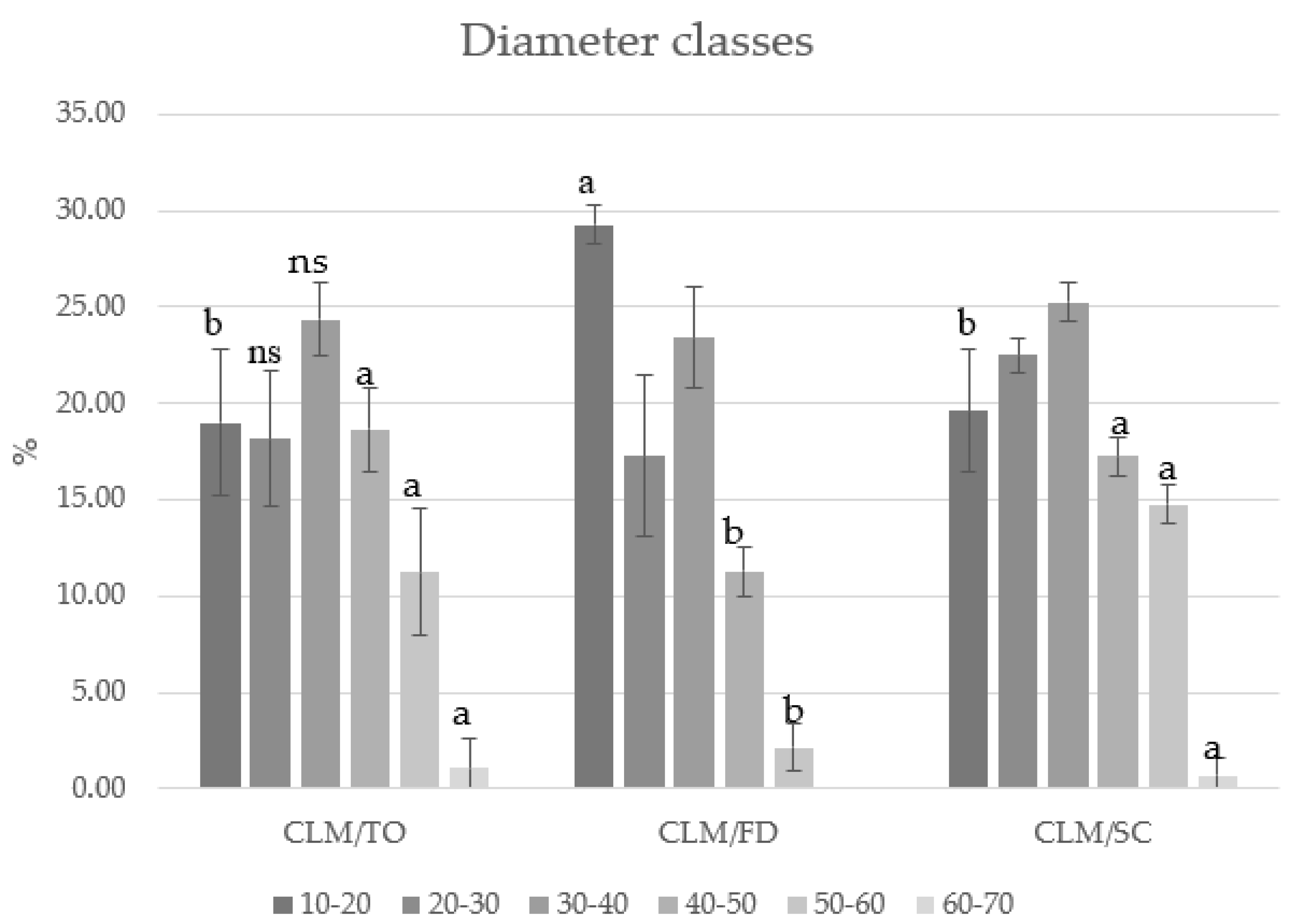
Figure 2 presents the distribution percentage of trees across diameter classes in a Clementine orchard grafted onto different rootstocks. Across the diameter classes, clear differences in size distribution emerge between the rootstocks (Figure 2). CLM/FD exhibits a higher proportion of trees in the smallest diameter class (10–20 µm, 29.25%) compared to CLM/TO (19.00%) and CLM/SC (19.61%), indicating a higher prevalence of smaller-diameter trees, which is consistent with the dwarfing effect of Flying Dragon. Conversely, CLM/TO and CLM/SC display a more even distribution across medium and large diameter classes (30–50 µm), suggesting more vigorous growth and greater canopy development (Figure 2). In the larger diameter classes (50–60 µm and 60–70 µm), CLM/FD has a negligible proportion of trees, confirming its strong dwarfing influence (Figure 2). In contrast, both CLM/TO and CLM/SC maintain a small but notable fraction of trees in these larger classes, reflecting their capacity to support greater trunk diameters and overall tree vigor. Overall, these results indicate that rootstock selection significantly affects the diameter structure of grafted Clementine trees, with Flying Dragon promoting smaller, more compact trees, while Trifoliate Orange and Swingle Citrumelo allow for more uniform growth across diameter classes, supporting greater overall vigor (Figure 2).
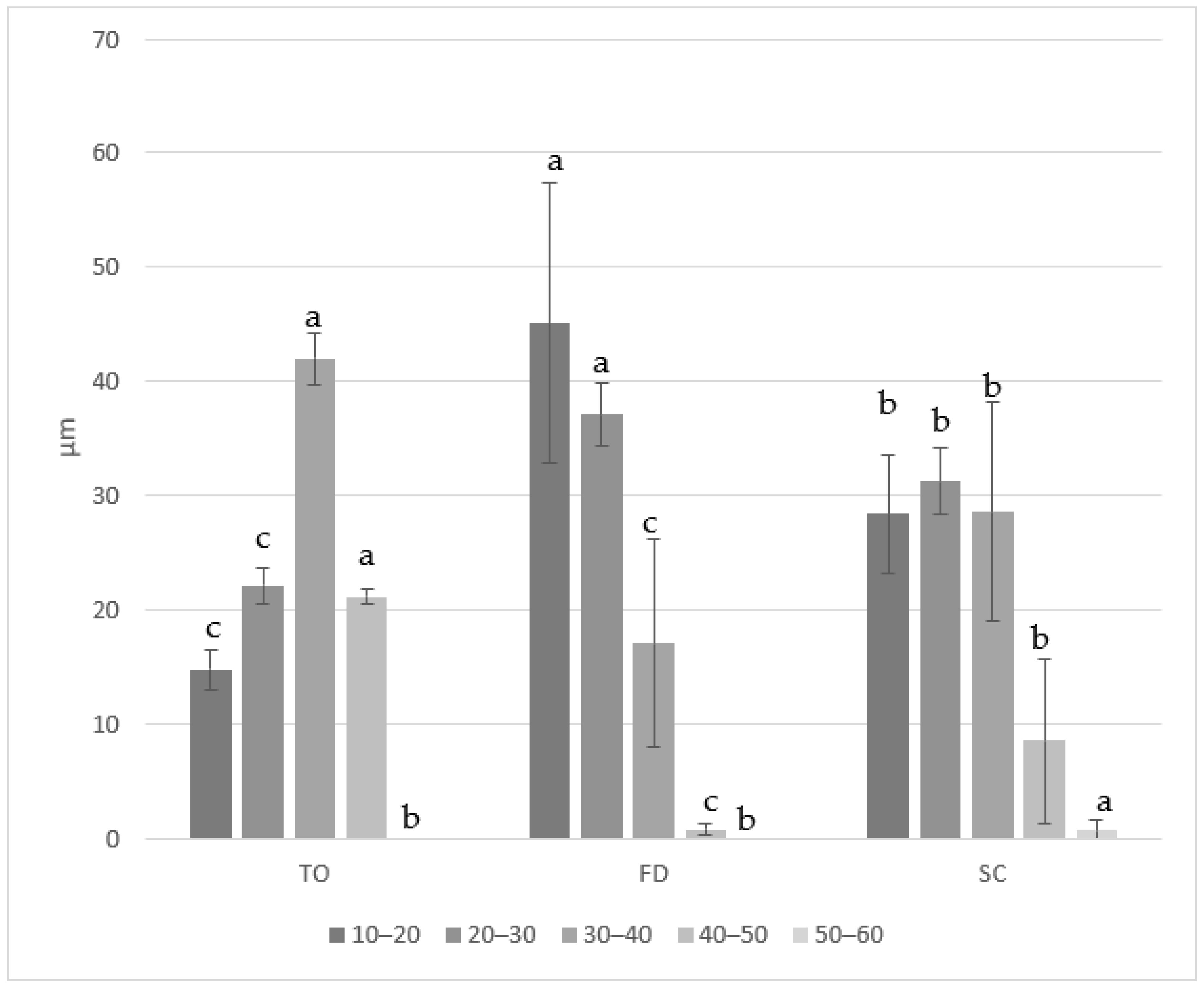
FD demonstrates a strong skew towards smaller diameter classes, with 45.12% of trees in the 10–20 cm class and 37.05% in the 20–30 cm class (Figure 3). Only a minor fraction of FD trees belong to the 30–40 cm class (17.06%), and very few attain diameters of 40–50 cm (0.76%), highlighting the pronounced dwarfing effect of this rootstock (Figure 3). In contrast, TO exhibits a more balanced distribution across diameter classes. The majority of TO trees are in the 30–40 cm class (41.98%), followed by the 20–30 cm (22.11%) and 40–50 cm (21.13%) classes, indicating greater overall vigor and a capacity for larger trunk development (Figure 3). SC exhibits an intermediate pattern, with trees more evenly distributed between the 10–20 cm (28.37%), 20–30 cm (31.27%), and 30–40 cm (28.59%) classes but fewer trees reaching the 40–50 cm class (8.49%) (Figure 3). This suggests a moderate growth potential between the dwarfing FD and the more vigorous TO. Overall, these results indicate that the rootstock choice strongly influences the diameter structure of grafted Clementine trees, with FD promoting compact, small-diameter trees, TO supporting more vigorous growth and larger diameters, and SC producing intermediate growth performance (Figure 4).
The results indicate that CLM/FD possessed the highest stomatal conductance (gs = 32.33 mmol m−2 s−1), suggesting enhanced gas exchange activity and potentially greater photosynthetic capacity (Table 5). This behavior may reflect a more efficient hydraulic connection between the scion and the FD rootstock or better water uptake capacity. Conversely, the CLM/SC combination exhibited the lowest leaf water potential (Ψleaf = −12.83 bar), implying a lower leaf hydration status or greater water stress compared to the other combinations (Table 5). The CLM/TO plants displayed intermediate values for both parameters, indicating a balanced physiological response under the tested conditions. Overall, these results highlight the influence of the rootstock on the water relations and stomatal behavior of Citrus clementina. Among the tested combinations, FD appears to promote a more favorable physiological performance during the 2023–2024 seasons.

3.7. Principal Component Analysis

The data were subjected to a Principal Component Analysis (PCA), with the aim of studying the relationships between the original variables in order to find a new, smaller set that expressed the commonalities between the original items. This allowed us to identify factors that were not directly observable (latent variables or common factors), while maintaining a high level of explained variability. The PCA is a statistical methodology adopted when the correlation pattern between the initial items is high, that is, when the Kaiser–Meyer–Olkin test (KMO test > 0.5) and Bartlett’s test of sphericity (p-value < 0.05) are statistically significant. The squared cosine values reveal a clear differentiation between morphological–biomass traits and hydraulic–anatomical variables (Table 6). Most growth-related parameters (e.g., height, leaf area, and dry weight fractions) are strongly represented on the first principal component (F1), indicating their dominant role in explaining vegetative vigor (Table 6). Conversely, variables linked to vascular anatomy and hydraulic efficiency (e.g., vessel density, vascular conductivity, and leaf water potential) load primarily on the second component (F2), underscoring their distinct contribution to hydraulic regulation (Table 6). This distribution confirms that the multivariate structure separates vigor-related attributes from hydraulic constraints, thereby supporting the interpretation of rootstock effects as systemic and multidimensional rather than trait-specific.
The squared cosine values reveal distinct factorial affiliations among the three graft combinations. FD is almost entirely explained by the first principal component (cos2 = 0.9944), suggesting a strong alignment with traits associated with vegetative vigor and dry matter accumulation (Table 7). In contrast, TO shows a predominant association with the second component (cos2 = 0.6710), indicative of a functional profile more influenced by hydraulic and anatomical traits. SC occupies an intermediate position, with a balanced representation across both components, reflecting its dual contribution to vigor and hydraulic coordination (Table 7). This distribution supports the interpretation of rootstock-driven variation as multidimensional, with each genotype expressing a unique physiological strategy within the PCA space (Table 7).
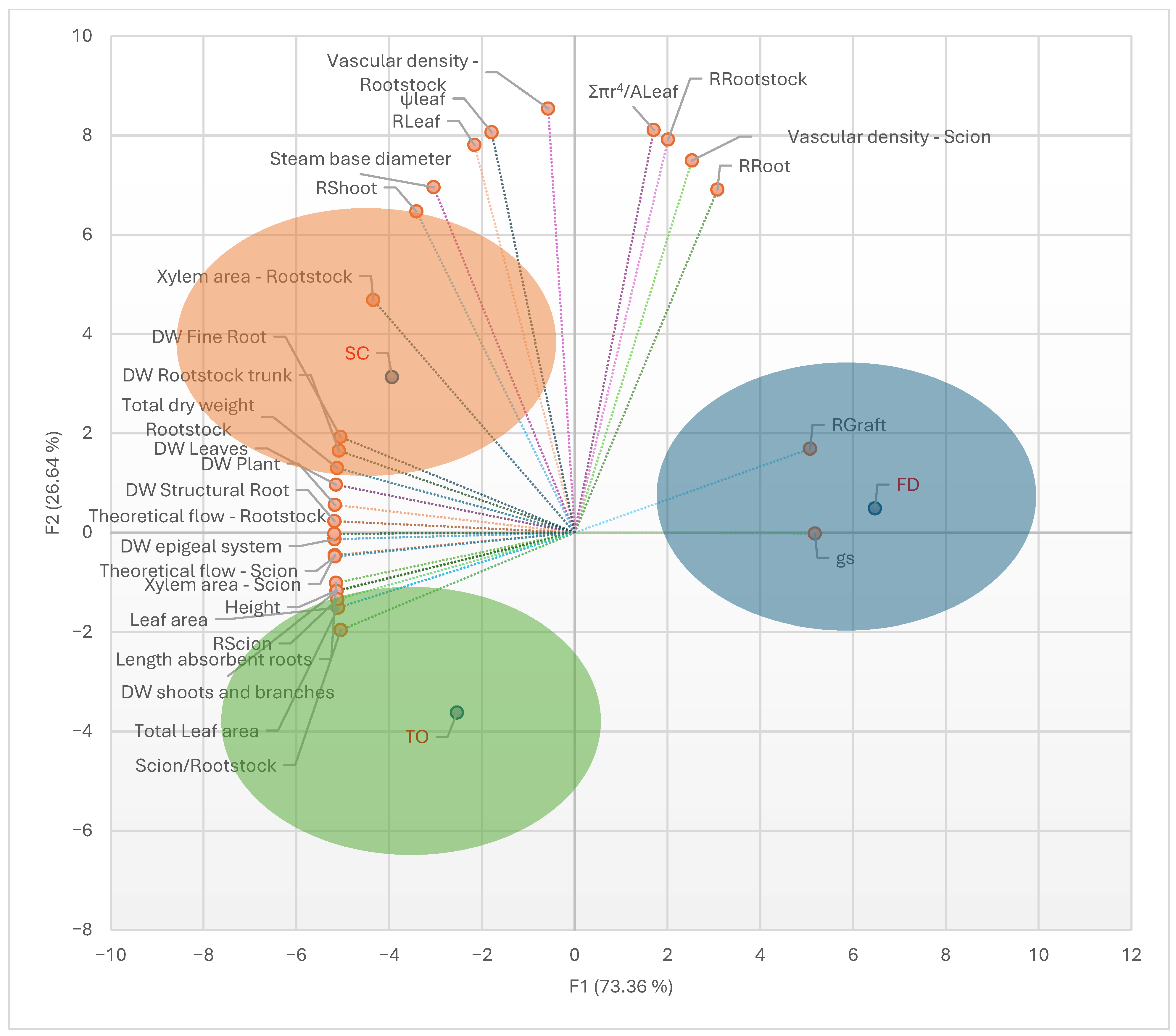
The PCA biplot illustrates a clear separation between the three graft combinations along the first two principal components (Figure 5). The first principal component (F1) accounts for 73.36% of the total variance, and the second component (F2) explains 26.64% of the variance. Along F1, the strongest discriminating axis, FD is positioned on the positive side and is associated with higher values of graft hydraulic resistance (RGraft), stomatal conductance (gs), and rootstock hydraulic resistance (RRootstock). These traits indicate a hydraulically conservative architecture consistent with the dwarfing behavior of Flying Dragon (Figure 5). In contrast, TO loads negatively on F1 and is associated with greater vegetative growth traits, including the leaf area, trunk diameter, total dry weight, absorbing root length, and theoretical hydraulic flow of both the scion and rootstock. This pattern reflects a more conductive hydraulic system supporting greater vigor (Figure 5). SC occupies an intermediate position close to the origin, indicating a balanced profile without extreme values for either hydraulic resistance or growth-related traits. Its proximity to variables such as the fine root biomass, structural root biomass, and total plant dry weight suggests moderate vigor combined with efficient resource allocation (Figure 5). Along F2, variables related to vascular anatomy, including the xylem area, vessel density (rootstock and scion), and Ψleaf, separate the combinations vertically (Figure 5). Traits with high positive loadings on F2 cluster above the origin, indicating that FD is more strongly associated with anatomical and hydraulic constraints than with biomass accumulation (Figure 5). Conversely, TO is positioned toward negative values of F2, reflecting its association with traits linked to canopy development and scion performance (Figure 5). The clustering ellipses further confirm these patterns: TO forms a distinct group characterized by high vigor and hydraulic efficiency, FD clusters separately due to elevated resistance and reduced conductive capacity, and SC remains as partially overlapping, supporting its intermediate functional profile. Overall, the PCA demonstrates that the rootstock genotype strongly determines the morpho-physiological configuration of the grafted plant, with TO promoting a highly integrated growth–hydraulic balance, SC maintaining functional equilibrium, and FD imposing structural and hydraulic limitations that restrict scion development (Figure 5).

4. Discussion

4.1. Functional Balance and Biomass Allocation in Graft Combinations

The results of the analysis of dry matter accumulation in the three graft combinations, considering the trunk as the hypogeal portion of the rootstock, demonstrate that the differences observed in the balance between root and shoot compartments are exclusively attributable to the rootstock genotype, since the scion CLM is genetically identical in all combinations. The growth of the rootstock portion reflects the different abilities of the rootstocks (TO, SC, and FD) to sustain and modulate the vegetative activity of the scion, leading to a differentiated functional response despite the presence of the same aboveground genome. In the CLM/TO and CLM/SC combinations, a balanced distribution of dry matter between hypogeal and epigeal compartments was observed, with values of 117.86 g and 124.98 g in the rootstock and 99.48 g and 105.05 g in the canopy, corresponding to a rootstock al-location of 54% and 55% of the total biomass, respectively. The R/S ratio, equal to 1.18 and 1.19, confirms that the scion is supported by a rootstock (root system plus trunk) that is proportional to the aboveground growth of the scion, an indication of the integrated and harmonious functioning of the graft complex. Conversely, CLM/FD exhibited a marked imbalance: the rootstock increased to 99.64 g, while the canopy reached only 50.56 g (34% of total biomass), resulting in an R/S ratio of 1.97—nearly double that of the other combinations. This marked predominance of the rootstock highlights a functional limitation of the canopy, which, despite being genetically identical, accumulates only about half the dry matter observed in CLM/SC and CLM/TO. Since the scion genotype is constant across the three graft combinations, these differences can be interpreted as effects that are due exclusively to the rootstock and its ability to modulate key physiological processes, such as water uptake, nutrient availability, root-derived hormone synthesis, and the regulation of hydraulic conductivity. It is well known that the rootstock influences scion growth through hormonal regulation, particularly via the production of cytokinins and gibberellins in the root system, which modulate the leaf and shoot growth [12,13]. In this regard, the greater accumulation of aboveground dry matter observed in CLM/TO and CLM/SC suggests that these rootstocks possess a root system that is not only more developed but also more physiologically efficient and capable of supporting the vigorous vegetative activity of the scion. Although it possesses a large rootstock biomass, CLM/FD appears to provide less effective physiologic hormonal and hydraulic responses, as indicated by the fact that, despite its large root biomass, the canopy accumulates only 34% of total dry matter compared with 46–49% in the other combinations. The interpretation of these results fits perfectly within the theoretical framework of the functional equilibrium theory, according to which plants regulate biomass allocation between roots and shoots to optimize the acquisition of limited resources [14,15,16]. This framework also aligns with the cyclical correlation model proposed by [17], which states that the ratio between the hypogeal and epigeal biomass reflects a functional equilibrium that is determined by the rootstock and closely linked to plant vigor [18]. In the present study, the scion genotype remains constant; therefore, the observed differences in the root/shoot ratio reflect the varying efficiency with which rootstocks modulate the functional balance of the plant. The CLM/TO and CLM/SC combinations demonstrate conditions close to the functional balance predicted by [14], whereas CLM/FD falls into a state of imbalance that is shifted toward the hypogeal compartment, consistent with a conservative growth strategy. Studies conducted on apple and other woody fruit species confirm that rootstocks with balanced root structures promote greater aboveground development of the scion, while rootstocks that impose hydraulic or hormonal limitations lead to reduced dry matter accumulation in the canopy [19,20]. Overall, the analysis demonstrates that, with the scion genotype held constant, the rootstock determines the plant’s overall physiological configuration and establishes the degree of balance between hypogeal and epigeal compartments. The greater symmetry of the biomass allocation observed in CLM/TO and CLM/SC is consistent with higher functional efficiency and better canopy support, whereas the imbalance induced by FD provides clear evidence of the rootstock’s ability to negatively modulate aboveground growth despite the presence of an abundant root biomass. These results underline the central role of the rootstock in determining scion growth and vigor, confirming the physiological basis expressed by other authors [14,15,16,21].

4.2. Hydraulic Architecture and Anatomical Determinants of Vigor

The hydraulic and anatomical traits provide additional insight into these growth patterns. Both CLM/TO and CLM/SC exhibited larger xylem conductive areas and higher theoretical hydraulic flows (Σπr4), confirming a more efficient axial water transport capacity. Although the vessel density did not differ consistently across combinations, conductive elements in TO and SC con-tributed substantially to their enhanced theoretical flow. These findings are in agreement with previous studies that indicate that the vessel diameter is a primary determinant of hydraulic conductance in woody plants [17,22]. The positive relationship between the total leaf area and xylem area observed in the present study further underscores the functional coordination between the transpiration demand and hydraulic supply, consistent with optimal hydraulic architecture theory. In contrast, the reduced xylem area and markedly lower theoretical flow in CLM/FD reveal a hydraulic architecture characterized by greater resistance. This limitation was further confirmed by the high resistance values measured in the root system and graft union of CLM/FD, supporting the hypothesis that dwarfing rootstocks impose hydraulic constraints that restrict scion vigor, as widely reported in studies on size-controlling rootstocks [23]. The elevated graft union resistance observed in CLM/FD is consistent with the anatomical discontinuities often described for dwarfing combinations [24] and likely contributes to the reduced growth observed in this treatment. Despite its lower hydraulic efficiency, CLM/FD exhibited the highest stomatal conductance. This seemingly paradoxical result may reflect compensatory physiological adjustments, such as greater stomatal opening under well-watered conditions, or a tighter stomatal control strategy aimed at maintaining carbon assimilation despite limited hydraulic supplies, as documented in several studies on rootstock-modulated stomatal behavior. Conversely, CLM/SC demonstrated the lowest leaf water potential, indicating a greater susceptibility to transient water deficits or higher evaporative demands relative to its hydraulic capacity, a pattern previously observed in genotypes with high shoot vigor but limited hydraulic safety margins [25]. These contrasting physiological responses highlight the complexity of scion–rootstock interactions and suggest that rootstock selection can modulate not only the hydraulic architecture but also stomatal behavior and leaf water relations [17]. Diameter class distributions observed in nursery and orchard conditions further corroborated the vigor hierarchy. CLM/FD consistently produced smaller-diameter plants, while CLM/TO and CLM/SC supported more uniform growth across medium and large classes. Such patterns are particularly relevant for orchard design, as reduced tree sizes may be advantageous under high-density planting designs or in systems prioritizing canopy control, whereas more vigorous rootstocks are desirable for maximizing productivity under conventional spacing [24]. Taken together, the morphological, hydraulic, and anatomical results reveal consistent genotype-dependent patterns that align with established vigor classifications. The integrated analysis of the structure and function presented here provides mechanistic insights into why certain combinations enhance or limit scion performance. Future research should focus on assessing these combinations under abiotic stress conditions, where differences in hydraulic capacity and stomatal regulation may have profound implications for field performance and resilience under climate change scenarios [2].

4.3. Integrated Responses and Implications for Rootstock Selection

The multivariate analysis further supports the physiological patterns observed across the graft combinations. The clear separation along the first principal component highlights the dominant role of the hydraulic architecture in determining scion performance, with TO clustering with traits associated with higher conductive capacities and biomass accumulation, while FD aligned with elevated hydraulic resistance and reduced vegetative vigor. SC occupied an intermediate position, confirming a balanced functional profile rather than an extreme strategy. These results indicate that rootstock-driven variation is not restricted to single traits but emerges from coordinated adjustments in the xylem anatomy, water transport efficiency, and dry matter allocation. Such integrated responses reinforce the conclusion that the rootstock genotype regulates whole-plant functioning through systemic rather than compartmental effects, with implications for both orchard design and rootstock selection under contrasting environmental conditions.

5. Conclusions

This study demonstrates that the rootstock genotype exerts a strong influence on the morphological development, hydraulic functioning, and anatomical structure of grafted Citrus clementina plants. Trifoliate Orange (TO) and Swingle Citrumelo (SC) promoted higher vegetative vigor, greater biomass accumulation, more developed absorbing root systems, and larger conductive xylem areas associated with enhanced theoretical hydraulic flow. Conversely, Flying Dragon (FD) imposed significant hydraulic and structural constraints, resulting in reduced growth, a smaller trunk diameter, and elevated resistance at both the root and graft union levels. These physiological and anatomical limitations are consistent with its dwarfing behavior and suggest potential suitability for high-density or size-controlled orchard systems. The findings also confirm that the hydraulic architecture and dry matter allocation patterns are closely related to scion vigor and canopy development. The selection of the rootstock should therefore be considered a strategic decision in citrus production, as it is capable of modulating plant water relations, growth potential, and adaptability to environmental challenges. By elucidating the mechanisms underlying rootstock-dependent variability, this work provides new insights to guide rootstock selection for resilient and efficient citrus orchards under evolving climatic and agronomic conditions.

Author Contributions

Conceptualization, G.G.; methodology, G.G. and A.D.; software, G.G. and A.D.; validation, G.G. and A.D.; formal analysis, G.G. and A.D.; investigation, G.G. and A.D.; resources, G.G.; data curation, G.G. and A.D.; writing—original draft preparation, G.G. and A.D.; writing—review and editing, G.G. and A.D.; visualization, G.G. and A.D.; supervision, G.G. and A.D.; project administration, G.G. and A.D.; funding acquisition, G.G. and A.D. All authors have read and agreed to the published version of the manuscript.

Funding

This research received no external funding.

Data Availability Statement

The original contributions presented in this study are included in the article. Further inquiries can be directed to the corresponding author.

Conflicts of Interest

The authors declare no conflicts of interest.

References

  1. Wang, P.; Liu, F.; Sun, Y.; Liu, X.; Jin, L. Physiological and Molecular Insights into Citrus Rootstock–Scion Interactions: Compatibility, Signaling, and Impact on Growth, Fruit Quality and Stress Responses. Horticulturae 2025, 11, 1110. [Google Scholar] [CrossRef]
  2. Modica, G.; Arcidiacono, F.; Puglisi, I.; Baglieri, A.; La Malfa, S.; Gentile, A.; Arbona, V.; Continella, A. Response to Water Stress of Eight Novel and Widely Spread Citrus Rootstocks. Plants 2025, 14, 773. [Google Scholar] [CrossRef]
  3. Santana-Vieira, D.D.S.; Freschi, L.; Almeida, L.A.d.H.; Moraes, D.H.S.; Neves, D.M.; dos Santos, L.M.; Bertolde, F.Z.; Soares Filho, W.d.S.; Coelho Filho, M.A.; Gesteira, A.d.S. Survival strategies of citrus rootstocks subjected to drought. Sci. Rep. 2016, 6, 38775. [Google Scholar] [CrossRef]
  4. Moreno, P. Citrus Tristeza Virus: A Pathogen That Changed the Course of the Citrus Industry. PLoS Pathog. 2008, 9, 251–268. [Google Scholar] [CrossRef]
  5. Lee, R.F.; Keremane, M.L. Mild Strain Cross Protection of Tristeza: A Review of Research to Protect Against Decline on Sour Orange Rootstock. Front. Microbiol. 2013, 4, 259. [Google Scholar] [CrossRef] [PubMed]
  6. Morales-Alfaro, J. Effect of Rootstock on Citrus Fruit Quality: A Review. J. Hortic. Sci. 2023, 39, 2835–2853. [Google Scholar] [CrossRef]
  7. Syvertsen, J.P. Hydraulic Conductivity of Four Commercial Citrus Rootstocks. J. Am. Soc. Hortic. Sci. 1981, 106, 378–381. [Google Scholar] [CrossRef]
  8. Vives-Peris, V.; López-Climent, M.F.; Moliner-Sabater, M.; Gómez-Cadenas, A.; Pérez-Clemente, R.M. Morphological, Physiological, and Molecular Scion Traits Are Determinant for Salt-Stress Tolerance of Grafted Citrus Plants. Front. Plant Sci. 2023, 14, 1145625. [Google Scholar] [CrossRef]
  9. Qureshi, M.A.; Ashraf, E.; Albaayit, S.F.A.; Shafqat, W.; Shareef, N.; Ud Din, S.; Sadaf, S.; Rashid, S.; Tasneem, S. Rootstock Influence on Performance of Different Citrus Scion Cultivars: A Review. J. Glob. Innov. Agric. Sci. 2023, 11, 273–283. [Google Scholar] [CrossRef]
  10. Aloni, B.; Cohen, R.; Karni, L.; Aktas, H.; Edelstein, M. Hormonal signaling in rootstock–scion interactions. Sci. Hortic. 2010, 127, 119–126. [Google Scholar] [CrossRef]
  11. Hoagland, D.R.; Arnon, D.I. The Water-Culture Method for Growing Plants Without Soil; (Circular 347); University of California, College of Agriculture, Agricultural Experiment Station: Berkeley, CA, USA, 1950. [Google Scholar]
  12. Ghanem, M.E.; Albacete, A.; Smigocki, A.C.; Frebort, I.; Pospíšilová, H.; Martínez-Andújar, C.; Acosta, M.; Sanchez-Bravo, J.; Lutts, S.; Dodd, I.C.; et al. Root-synthesized cytokinins improve shoot growth and fruit yield in salinized tomato (Solanum lycopersicum L.) plants. J. Exp. Bot. 2011, 62, 125–140. [Google Scholar] [CrossRef]
  13. Bloom, A.J.; Chapin, F.S., III; Mooney, H.A. Resource limitation in plants—An economic analogy. Annu. Rev. Ecol. Syst. 1985, 16, 363–392. [Google Scholar] [CrossRef]
  14. Poorter, H.; Nagel, O. The role of biomass allocation in the growth response of plants to different levels of light, CO2, nutrients and water: A quantitative review. Aust. J. Plant Physiol. 2000, 27, 595–607. [Google Scholar] [CrossRef]
  15. Poorter, H.; Sack, L. Pitfalls and possibilities in the analysis of biomass allocation patterns in plants. Front. Plant Sci. 2012, 3, 259. [Google Scholar] [CrossRef] [PubMed]
  16. Zucconi, F. Root/Shoot Relationships in Grafted Plants: A Cyclical Correlation Model; Atti del Convegno Sospensione e Attività Vegetative; Accademia Nazionale dei Lincei: Roma, Italy, 1981. [Google Scholar]
  17. Hacke, U.G.; Sperry, J.S.; Wheeler, J.K.; Castro, L. Scaling of angiosperm xylem structure with safety and efficiency. Tree Physiol. 2006, 26, 689–701. [Google Scholar] [CrossRef] [PubMed]
  18. Atkinson, C.J.; Else, M.A.; Taylor, L.; Dover, C.J. Root and stem hydraulic conductivity as determinants of growth potential in grafted trees of apple (Malus pumila Mill.). J. Exp. Bot. 2003, 54, 1221–1229. [Google Scholar] [CrossRef]
  19. Webster, A.D. Vigour mechanisms in dwarfing rootstocks for temperate fruit trees. In International Symposium on Rootstocks for Deciduous Fruit Tree Species; Moreno Sánchez, M.A., Webster, A.D., Eds.; Acta Horticulturae 658; International Society for Horticultural Science: Leuven, Belgium, 2004; pp. 29–41. [Google Scholar] [CrossRef]
  20. Zucconi, F. Control of development in woody plants: An introduction to the physiology of pruning. Riv. Frutticoltura 1992, 12, 7–12. [Google Scholar]
  21. Tyree, M.T.; Zimmermann, M.H. Hydraulic architecture of whole plants and plant performance. In Xylem Structure and the Ascent of Sap; Springer: Berlin/Heidelberg, Germany, 2002; pp. 175–214. [Google Scholar] [CrossRef]
  22. Tombesi, S.; Johnson, R.S.; Day, K.R.; DeJong, T.M. Interactions between rootstock, inter stem and scion xylem vessel characteristics of peach trees growing on rootstocks with contrasting size-controlling characteristics. AoB Plants 2010, 2010, plq013. [Google Scholar] [CrossRef]
  23. Clearwater, M.J.; Lowe, R.G.; Hofstee, B.J.; Barclay, C.; Mandemaker, A.J.; Blattmann, P. Hydraulic conductance and rootstock effects in grafted vines of kiwifruit. J. Exp. Bot. 2004, 55, 1371–1382. [Google Scholar] [CrossRef]
  24. Chen, X.; Li, J.; Niklas, K.J.; Peñuelas, J.; Hu, D.; Zhong, Q.; Cheng, D. Universal trade-off between vessel size and number and its implications for plant hydraulic function. Oecologia 2025, 207, 161–174. [Google Scholar] [CrossRef] [PubMed]
  25. Xu, H.; Ediger, D. Rootstocks with different vigor influenced scion–water relations and stress responses in Ambrosia™ apple trees (Malus domestica var. Ambrosia). Plants 2021, 10, 614. [Google Scholar] [CrossRef]
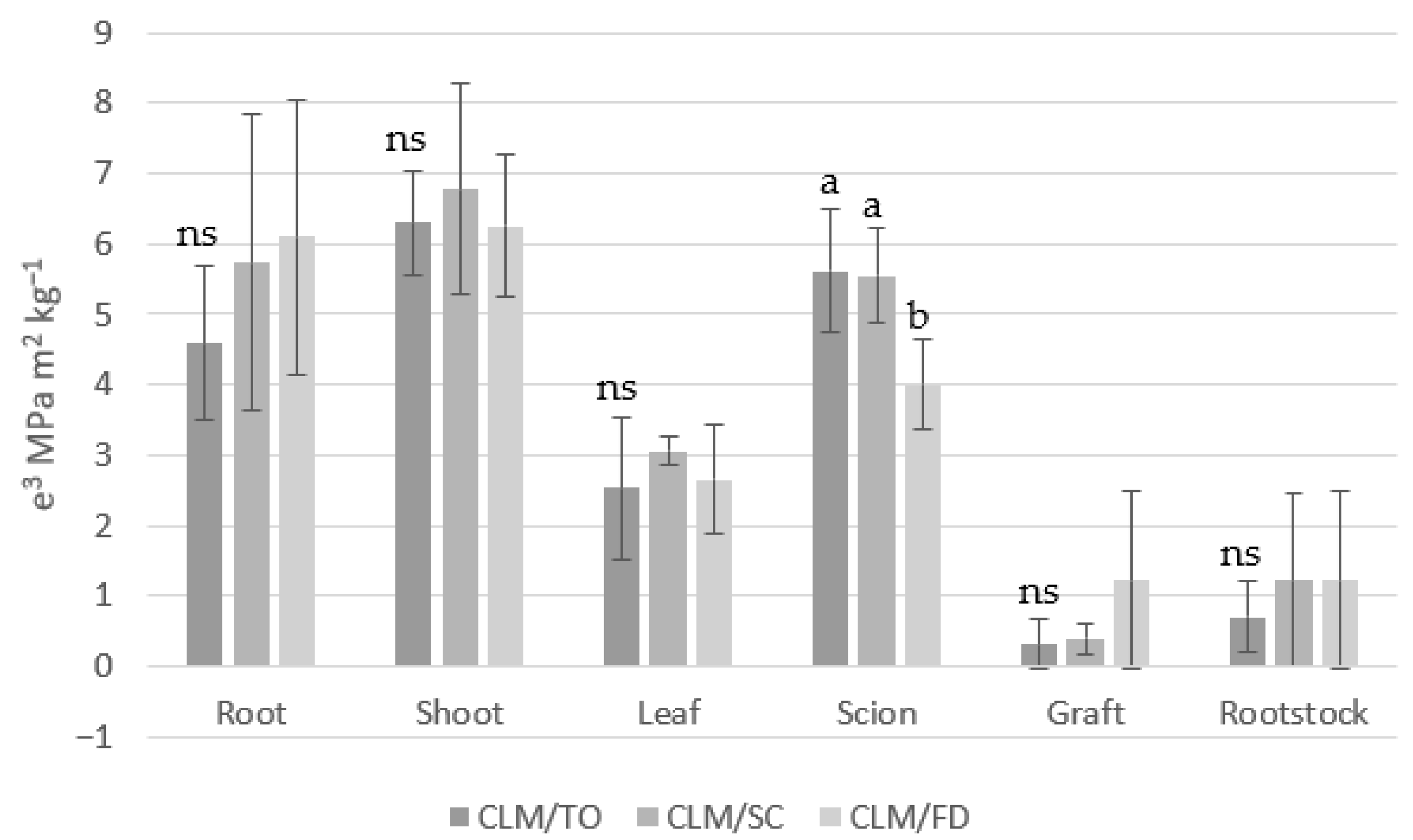
Figure 1. Hydraulic resistances of the root, shoot, leaf, scion, graft union, and rootstock segments in three Clementine (CLM) graft combinations [Trifoliate Orange (TO), Flying Dragon (FD), and Swingle Citrumelo (SC)]. Mean values ± standard error are reported. Different lowercase letters within each column indicate significant differences between treatments according to Tukey’s test (p ≤ 0.05). ns—differences are not significant.
Horticulturae 12 00021 g001
Figure 2. Distribution percentage of xylem vessel diameter classes in the Clementine scions (CLM) grafted onto three rootstocks [Trifoliate Orange (TO), Flying Dragon (FD), and Swingle Citrumelo)]. Mean values ± standard error are reported. Different letters within each columns indicate significant differences between treatments according to Tukey’s test (p ≤ 0.05). ns—differences are not significant.
Horticulturae 12 00021 g002
Figure 3. Distribution percentage of xylem vessel diameter classes in the three rootstocks grafted with Clementine (CLM) [Trifoliate Orange (TO), Flying Dragon (FD), and Swingle Citrumelo (SC)]. Mean values ± standard error are reported. Different letters within each row indicate significant differences between treatments according to Tukey’s test (p ≤ 0.05).
Horticulturae 12 00021 g003
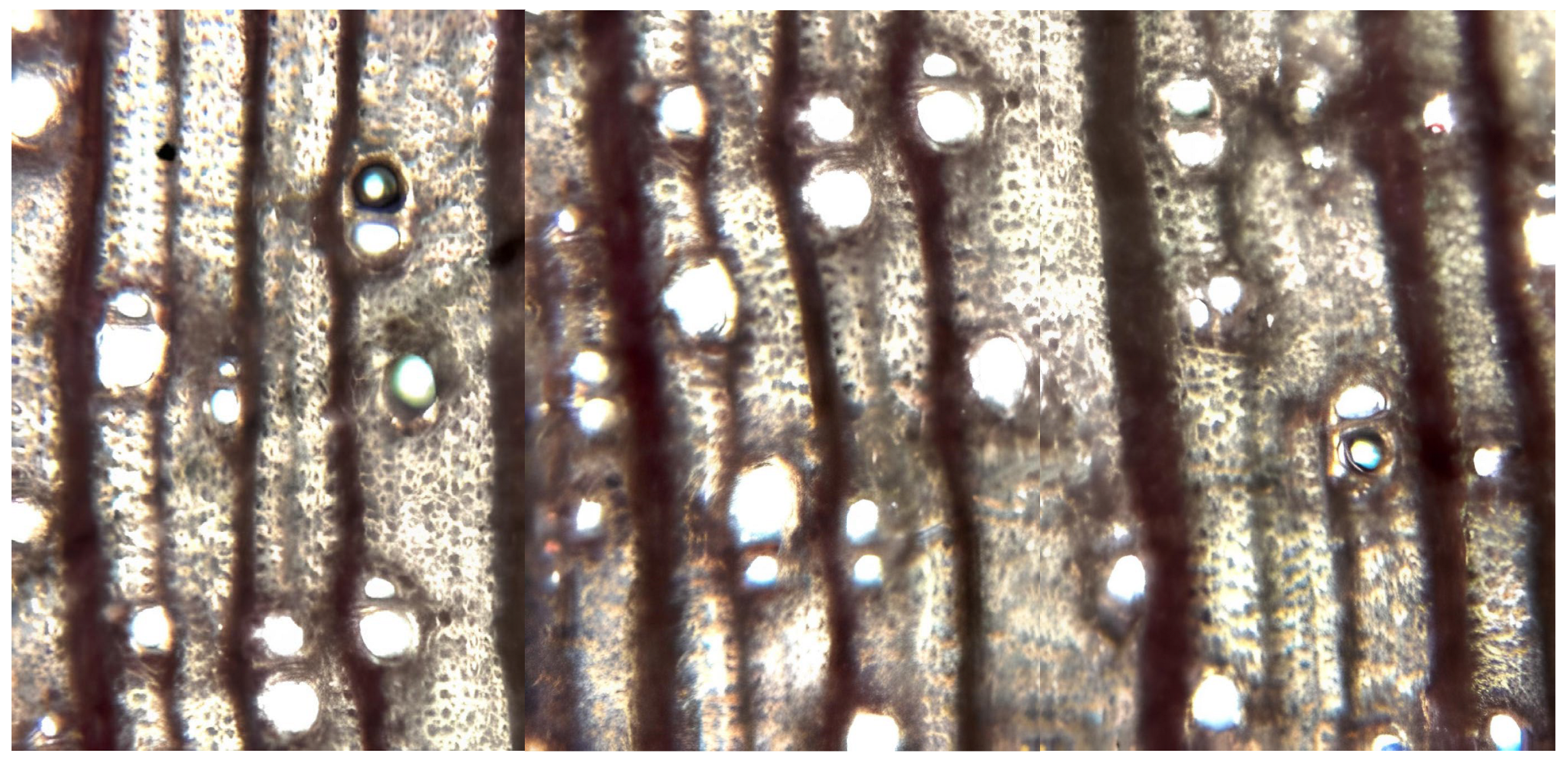
Figure 4. Transverse microscopic sections of rootstock wood anatomy. From left to right: Swingle Citrumelo, Trifoliate Orange, and Flying Dragon. The image highlights anatomical differences in xylem structure across the three genotypes, with visible variation in vessel diameter, density, and spatial organization.
Horticulturae 12 00021 g004
Figure 5. Principal Component Analysis (PCA) biplot illustrating the distribution of the different rootstocks and the contribution of the morpho-physiological variables (vectors) to the two principal components.
Horticulturae 12 00021 g005
Table 1. The height, leaf surface, diameter, and length of absorbent roots in the two observation years in the different grafting combinations [Trifoliate Orange (TO), Flying Dragon (FD), and Swingle Citrumelo (SC)].
Graft
Combination
Height cmLeaf Area
m2
Rootstock Base Diameter
mm
Absorbent Root Length
m
20232024202320242023202420232024
CLM/TO78.00 ± 6.25 a147.67 ± 10.89 a0.29 ± 0.06 a0.39 ± 0.06 a22.47 ± 1.09 ns26.74 ± 1.03 ns29.54 ± 3.05 a40.14 ± 4.06 a
CLM/SC79.67 ± 6.00 a147.14 ± 11.91 a0.29 ± 0.06 a0.38 ± 0.04 a21.75 ± 1.1430.53 ± 1.2229.44 ± 3.16 a40.21 ± 3.17 a
CLM/FD55.67 ± 5.13 b108.15 ± 4.50 b0.16 ± 0.04 b0.22 ± 0.01 b21.44 ± 1.0826.83 ± 0.4419.10 ± 2.78 b30.60 ± 1.14 b
Year****
Mean values ± standard error are reported. Different lowercase letters within each column indicate significant differences between treatments according to Tukey’s test (p ≤ 0.05). The asterisk (*) indicates statistically significant differences between years per p ≤ 0.05. ns—differences are not significant.
Table 2. The dry weight of rootstock and scion components, total plant dry weight, and scion/rootstock ratio recorded in 2023. The table illustrates the biomass portioning among the fine roots (diameter < 1.5 mm), structural roots (diameter > 1.5 mm), rootstock stem, and aboveground tissues (leaves, shoots, and branches) in the three grafting combinations [Trifoliate Orange (TO), Flying Dragon (FD), and Swingle Citrumelo (SC)].
YearGraft Combination (T)RootstockScionTotal Dry Weight Plant
g
S/R Scion/Rootstock
Fine Root
g
Structural Root
g
Rootstock Stem
g
Total dry Weight
g
Leaves
g
Stem, Shoots, and Branches
g
Total Dry Weight Scion
g
2023CLM/TO21.98 ± 2.2 a23.84 ± 3.2 a73.87 ± 6.8 b119.69 ± 9.55 b25.93 ± 2.0 a32.22 ± 3.2 a58.15 ± 5.01 a177.84 ± 14.24 b0.48 ± 0.08 a
CLM/SC18.07 ± 1.9 a24.72 ± 2.0 a92.96 ± 9.1a135.75 ± 3.83 a28.34 ± 2.8 a31.00 ± 2.5 a59.34 ± 2.38 a195.09 ± 15.92 a0.43 ± 0.02 a
CLM/FD10.12 ± 1.1 b13.75 ± 2.1 b62.01 ± 4.2 c85.88 ± 5.23 c16.85 ± 1.8 b16.15 ± 2.1 b33.00 ± 4.73 b128.88 ± 11.39 c0.34 ± 0.04 b
2024CLM/TO18.37 ± 2.73 a20.19 ± 1.90 a79.3 ±4.48 a117.85 ± 11.88 b44.53 ± 3.06 a54.95 ± 4.65 a99.48 ± 5.73 a231.33 ± 16.03 a0.75 ± 0.09 a
CLM/SC19.58 ± 2.29 a21.29 ± 2.26 a84.11 ± 6.11 a124.98 ± 12.15 b50.56 ± 6.13 a54.49 ± 3.91 a105.0 ± 7.12 a251.03 ± 14.13 a0.72 ± 0.04 a
CLM/FD16.11 ± 1.72 b14.49 ± 1.86 b69.04 ± 4.06 b99.63 ± 6.63 a25.93 ± 3.14 b24.63 ± 2.65 b58.56 ± 9.48 b152.19 ± 10.54 b0.49 ± 0.04 b
Y*nsns******
Y × T*nsns*nsnsnsnsns
Mean values ± standard error are reported. For each year, different lowercase letters within each column indicate significant differences among treatments according to Tukey’s test (p ≤ 0.05). The asterisk (*) indicates statistically significant differences between years per p ≤ 0.05. ns—differences are not significant.
Table 3. Dry matter distribution percentage in structural roots, absorbing roots, and rootstock stems for three Clementine (CLM) grafting combinations [Trifoliate Orange (TO), Flying Dragon (FD), and Swingle Citrumelo (SC)] in 2023 and 2024.
Graft
Combination
Structural RootsAbsorbing RootsRootstock StemStructural RootsAbsorbing RootsRootstock Stem
20232024
CLM/TO18.36 a19.91 a61.71 b15.58 b17.13 a67.28 b
CLM/SC13.31 b18.21 ab68.47 ab15.66 b17.03 a67.29 b
CLM/FD11.78 c16.01 c72.20 a16.16 a14.54 b69.28 a
Mean values ± standard error are reported. Different lowercase letters within each column indicate significant differences between treatments according to Tukey’s test (p ≤ 0.05).
Table 4. The leaf surface area, vascular density, xylem area, and theoretical hydraulic conductivity (∑πr4) of the scion and rootstock in the three grafting combinations [Trifoliate Orange (TO), Flying Dragon (FD), and Swingle Citrumelo (SC)].
Graft CombinationLeaf Area (cm2)Total Leaf Area
(m2)
Vascular Density—Rootstock
(n°/mm2)
Vascular Density—Scion (n°/mm2)Xylem Area—Rootstock (mm2)Xylem Area—Scion (mm2)Theoretical Flow—Rootstock
∑πr4
Theoretical Flow—Scion
∑πr4
∑πr4/Aleaf
(e−12 mm2)
CLM/TO15.71 ± 2.2 a0.35 ± 0.08 a70 ± 10 ns57 ± 11 ns345.65 ± 28 b227 ± 32 a18.77 ± 1.2 a20.99 ± 1.9 a53.12 ± 6.2 ns
CLM/SC14.17 ± 2 a0.34 ± 0.05 a90.5 ± 471.5 ± 12442 ± 26 a237 ± 30 a20.04 ± 2.1 a21.83 ± 2.1 a57.63 ± 5.5
CLM/FD9.36 ± 2.1 b0.18 ± 0.03 b80.5 ± 673.5 ± 12295 ± 26 b111 ± 25 b10.41 ± 1.7 b10.79 ± 1.4 b57.31 ± 4.4
Mean values ± standard error are reported. Different lowercase letters within each column indicate significant differences between treatments according to Tukey’s test (p ≤ 0.05). ns—differences are not significant.
Table 5. Mean stomatal conductance (gs) and leaf water potential (Ψleaf) of different graft combinations [Trifoliate Orange (TO), Flying Dragon (FD), and Swingle Citrumelo (SC)] of Citrus clementina Hort. Ex Art. (CLM) measured over the 2023–2024 seasons.
Graft Combinationgs
mmol m−2 s−1
Ψleaf
Bar
CLM/TO25.14 ± 2.21 ns−10.52 ± 0.31 a
CLM/SC24.00 ± 0.58−12.83 ± 0.33 b
CLM/FD32.33 ± 5.36−11.21 ± 0.32 a
Tns*
Ynsns
T × Ynsns
Data represent the mean ± standard error (SE) for each graft combination. Different letters within a column indicate statistically significant differences between treatments (p ≤ 0.05; Tukey’s test). “ns” indicates non-significant differences. The factors “T—Treatment”, “Y—Year”, and “T × Y—Treatment × Year” represent, respectively, the effects of the treatment, year, and their interaction. Asterisks denote statistically significant effects (p ≤ 0.05) according to the two-way ANOVA.
Table 6. Squared cosine values (cos2) for each variable with respect to the first two principal components (F1 and F2), indicating the degree of representation of each variable within the factorial space.
VariableF1F2
Height0.98160.0184
Leaf area0.96910.0309
Steam base diameter0.34440.6556
Length absorbent roots0.98610.0139
DW fine root0.94970.0503
DW coarse root0.99930.0007
DW rootstock trunk0.96310.0369
Total dry weight rootstock0.97710.0229
DW leaves0.98730.0127
DW shoots and branches0.98120.0188
DW epigeal system0.99980.0002
DW plant0.99580.0042
Scion/rootstock0.94800.0520
Total leaf area0.96910.0309
Vascular density—rootstock0.01210.9879
Vascular density—scion0.23880.7612
Xylem area—rootstock (mm2)0.70260.2974
Xylem area—scion (mm2)0.99720.0028
Theoretical flow—rootstock1.00000.0000
Theoretical flow—scion0.99690.0031
∑πr4/ALeaf0.10850.8915
RRoot0.35330.6467
RShoot0.43330.5667
RLeaf0.17400.8260
RScion0.97550.0245
RGraft0.96130.0387
RRootstock0.15110.8489
gs1.00000.0000
ψleaf0.11930.8807
Table 7. Squared cosine values (cos2) for each observation (TO, SC, and FD) with respect to the first two principal components (F1 and F2).
RootstockF1F2
TO0.32900.6710
SC0.61210.3879
FD0.99440.0056
Disclaimer/Publisher’s Note: The statements, opinions and data contained in all publications are solely those of the individual author(s) and contributor(s) and not of MDPI and/or the editor(s). MDPI and/or the editor(s) disclaim responsibility for any injury to people or property resulting from any ideas, methods, instructions or products referred to in the content.