

Article

Linking Grain Mineral Content to Pest and Disease Resistance, Agro-Morphological Traits, and Bioactive Compounds in Peruvian Coffee Germplasm

by
Ester Choque-Incaluque
1,
César Cueva-Carhuatanta
1,
Ronald Pio Carrera-Rojo
2,
Jazmín Maravi Loyola
2,
Marián Hermoza-Gutiérrez
1,
Hector Cántaro-Segura
1,
Elizabeth Fernández-Huaytalla
1,
Dina L. Gutiérrez-Reynoso
1,
Fredy Quispe-Jacobo
3 and
Karina Ccapa-Ramirez
3,*
1
Unidad Ejecutora de Inversión, Dirección de Recursos Genéticos y Biotecnología, Instituto Nacional de Innovación Agraria (INIA), Av. La Molina 1981, Lima 15024, Peru
2
Estación Experimental Agraria Pichanaki, Dirección de Recursos Genéticos y Biotecnología, Instituto Nacional de Innovación Agraria (INIA), Carretera Marginal Km. 74, Pichanaqui 12866, Peru
3
Laboratorio de Investigación Nutricional de Los Recursos Genéticos, Dirección de Recursos Genéticos y Biotecnología, Instituto Nacional de Innovación Agraria (INIA), Lima 15024, Peru
*
Author to whom correspondence should be addressed.
Horticulturae 2026, 12(1), 15; https://doi.org/10.3390/horticulturae12010015
Submission received: 3 November 2025 / Revised: 8 December 2025 / Accepted: 17 December 2025 / Published: 24 December 2025
(This article belongs to the Section Fruit Production Systems)

Abstract

Mineral composition modulates plant health, agro-morphological attributes, and functional quality in coffee, yet large-scale evaluations remain limited. In 150 Coffea arabica L. accessions, we quantified grain minerals (Ca, K, Mg, Na, P, Zn, Cu, Fe, Mn); resistance to coffee leaf miner (CLM), coffee berry borer (CBB), and coffee leaf rust (CLR); agro-morphological traits; bioactive compounds (phenolics, flavonoids, chlorogenic acid, trigonelline, caffeine); and antioxidant capacity (ABTS, DPPH, FRAP). Mn and Zn were associated with greater resistance to CBB and CLM, whereas P and Ca related with lower susceptibility to CLR; a P–Zn antagonism emerged as a critical nutritional axis. Phosphorus was linked to larger size and higher 100-bean mass; Ca and Mg to greater fruit number and fruit mass per plant; and Fe to improved filling and higher 100-bean mass in parchment coffee. For bioactive compounds, P and K were positively associated with total phenolics, total flavonoids, caffeine, and ABTS/FRAP antioxidant activity, while trigonelline and chlorogenic acid correlated positively with the micronutrients Zn, Cu, and Fe. Cluster analysis resolved groups associated with resistance, Zn/Fe biofortification, productivity, and functional quality. PER1002287, PER1002216, PER1002207, and PER1002197 emerged as promising accessions balancing plant health, yield, and phytochemical quality. Overall, grain mineral composition is linked to plant health, productivity, and functional quality in coffee, providing a foundation for precision nutrient management and breeding programs aimed at resilient and high–value-added coffee.

1. Introduction

Coffee (Coffea spp.) ranks among the world’s most important agro-industrial crops [1,2], owing to both its economic weight and social impact. Roasted, ground, and infused coffee seeds yield today’s most widely consumed non-alcoholic beverage [3,4]. Its global popularity is sustained not only by its recognized health benefits [5] but also by its importance as a primary source of income for millions of smallholder farmers throughout the tropics [6,7]. Its economic and sociocultural value rests on bean quality [8], which in turn depends on productive stability in the face of pests and diseases that threaten coffee systems across diverse geographical conditions [9]. Chief phytosanitary challenges include coffee leaf rust, caused by Hemileia vastatrix [10,11], the coffee berry borer, Hypothenemus hampei [12,13] and the coffee leaf miner, Leucoptera coffeella [14,15], whose selection pressure and population dynamics have driven integrated management and breeding strategies aimed at enhancing resistance and crop resilience [12,16,17].
Grain mineral composition encompasses both major elements (macronutrients) and trace elements (micronutrients) that are absorbed from the soil and translocated to coffee beans during fruit development [18,19,20]. Far from being a mere imprint of soil and environmental conditions, the bean’s elemental profile is a determinant of plant metabolic function, defense responses, and the secondary-metabolite landscape that shapes coffee flavor and aroma [21,22]. In parallel, nutritional imbalances have been linked to altered susceptibility to biotic stress, with profound implications for integrated pest management and crop resilience [23,24,25,26,27]. An optimal, well-balanced nutrient supply is required for proper expression of defense-related genes and for activation of the enzymatic systems underlying induced resistance [28,29,30]. Adequate nitrogen is essential for photosynthesis and vegetative growth; however, excessive N fertilization can increase susceptibility to certain pathogens by promoting tissue softening and nutrient leakage that favor pathogen proliferation [23,31]. Micronutrients, particularly Zn, B, and Cu, play critical roles in modulating plant defense [32]. Zinc participates in protein metabolism, cell-wall integrity, and the synthesis of defense compounds such as phenolics and lignin, which are necessary to mount effective responses against fungal pathogens like coffee leaf rust [33,34]. Mineral nutrition modulates plant resistance through multiple pathways, from cell-wall integrity and lignin deposition to redox regulation, root-exudate composition, and interactions with the microbiota, thereby affecting susceptibility or tolerance to pathogens and some herbivores. This underpins the hypothesis that grain mineral content may be associated with phenotypes exhibiting resistance to pests and diseases [35].
The influence of grain mineral composition extends beyond disease resistance to key agro-morphological attributes that determine plant vigor, fruit development, and yield [36]. Soil nutrient availability impacts vegetative growth via improvements in leaf area, branch length, and floral bud formation; accordingly, appropriate nitrogen fertilization produces significant increases in branch length and vegetative biomass [37,38]. These morphological enhancements, in turn, correlate with higher productivity and greater resilience to abiotic and biotic stressors such as drought and pests [39].
Mineral nutrients also shape the biochemical profile of coffee beans through their roles in metabolic pathways that synthesize secondary metabolites [40,41]. Caffeine, chlorogenic acid, trigonelline, and polyphenols are among the compounds whose biosynthesis is modulated by nutrient availability. Optimal nitrogen and potassium levels favor higher concentrations of these metabolites, improving aroma, flavor, and body in the cup [27]. Foliar applications of micronutrients such as B, Cu, and Zn have been shown not only to enhance yield parameters but also to positively influence cup quality [42,43]. In addition, polyphenol oxidase (PPO), which affects bean coloration, antioxidant properties, and cup quality, is regulated by adequate mineral nutrition, particularly by micronutrients and by chloride associated with potassium fertilizers [44].
Most studies to date have focused on assessing soil nutrient availability and examining the effects of fertilization or agronomic practices on yield and grain quality [35,45]. However, very few have investigated grain mineral composition within a multidimensional framework that captures its relationships with agro-industrial attributes, functional quality, and underlying physiological processes. Advances in coffee germplasm characterization—both globally and in Peru—have primarily relied on genetic diversity analyses and productive traits [46,47], with limited integration of grain mineral composition and its functional dimensions. In this context, it is important to highlight that the National Coffee Germplasm Collection of INIA is one of the most diverse in the country, bringing together accessions from various departments of Peru and spanning broad altitudinal and ecological ranges, from Amazonian areas to inter-Andean valleys.
Recent progress in coffee nutrition and quality research has not been accompanied by studies that simultaneously integrate grain mineral composition with resistance to pests and diseases, agro-morphological traits, and the biochemical and antioxidant profile. Currently, no analytical framework exists that employs the grain’s mineral signature as a multidimensional indicator of the plant’s physiological, sanitary, and functional status. The literature remains focused on soil nutrient availability and fertilization effects [48,49,50], without addressing how grain mineral composition may reflect metabolic processes associated with stress tolerance, redox dynamics, and the accumulation of bioactive compounds, revealing a substantial conceptual and methodological gap.
Accordingly, this study aimed to decipher the relationships between grain mineral content and (i) resistance to foliar pests and diseases, (ii) agro-morphological traits, (iii) bioactive compounds, and (iv) antioxidant capacity in 150 accessions from the National Coffee Germplasm Collection of the Instituto Nacional de Innovación Agraria (INIA), Peru. Through integrated univariate and multivariate statistics (correlation networks and association models), we present a map of grain mineral signatures associated with agronomic performance and resistance, with practical implications for germplasm selection and for designing nutrition strategies oriented toward crop quality and plant health.

2. Materials and Methods

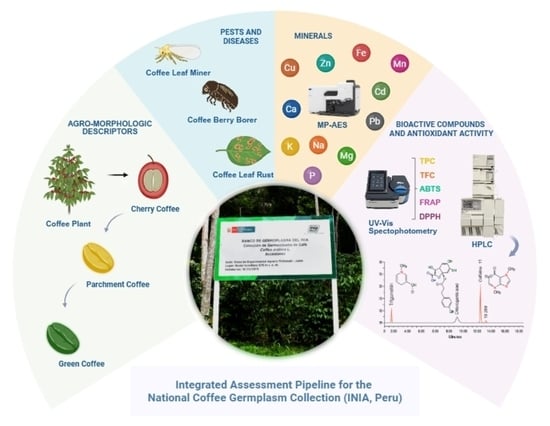
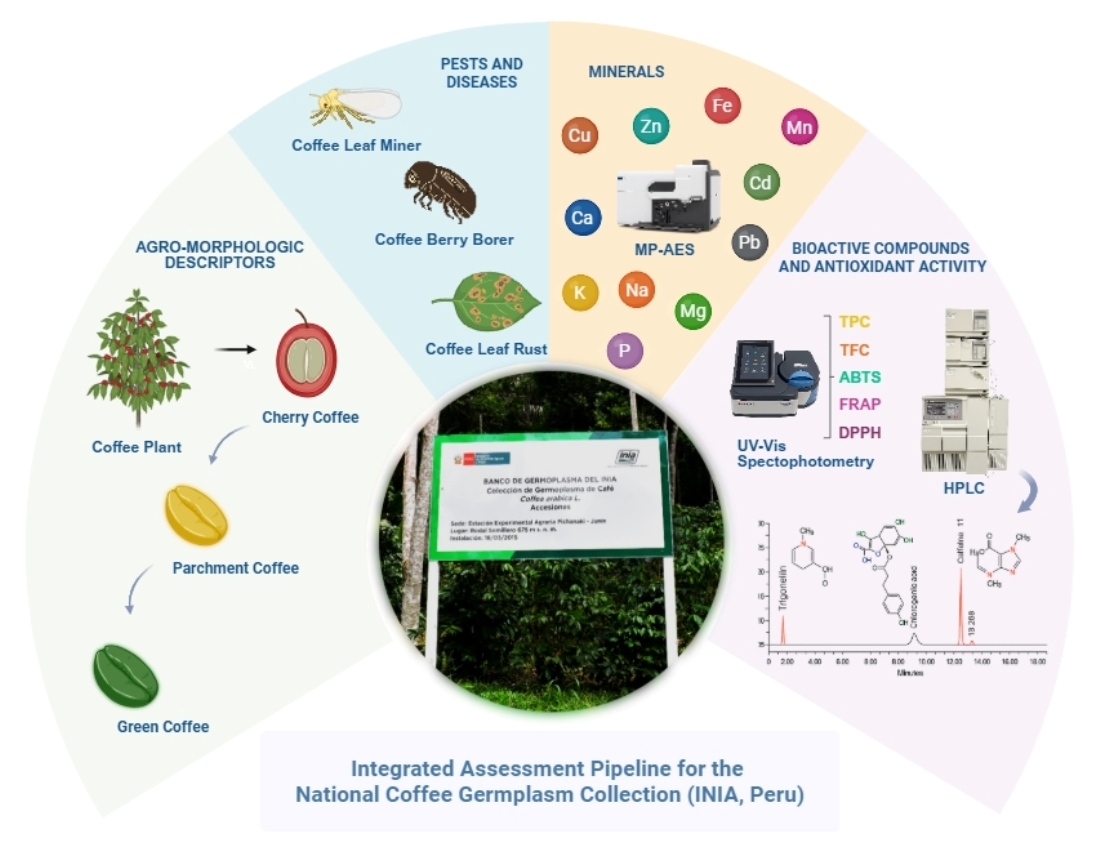
2.1. Plant Material and Experimental Site

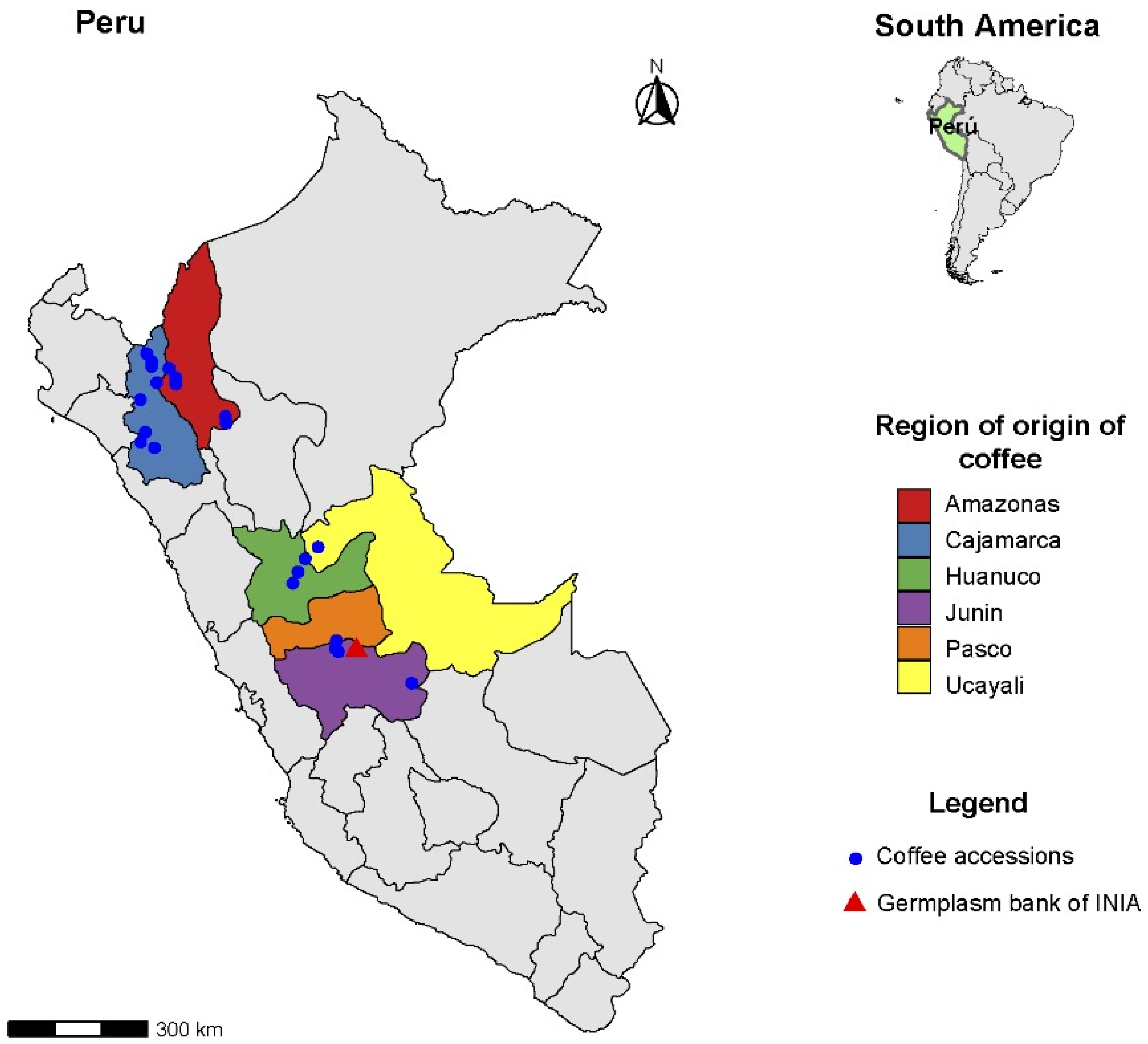
This study evaluated Coffea arabica L. germplasm conserved in Peru’s National Coffee Germplasm Collection, located at the Pichanaki Agricultural Experiment Station (EEA Pichanaki), Junin, Peru (Figure 1). The full collection comprises 169 accessions originating from the country’s principal coffee-growing regions: Amazonas, Cajamarca, Huanuco, Junin, Pasco, and Ucayali. EEA Pichanaki lies at 774 m a.s.l. in a humid tropical environment, with a mean annual temperature of 26.7 °C, relative humidity of 78%, and total annual precipitation of 1,589.6 mm. Predominant soils are silty clay loams, strongly acidic (pH 4.23 ± 0.15), with moderate effective cation-exchange capacity (4.74 ± 1.27 meq/100 g) and an average aluminum saturation of 25.50 ± 10.93% (Table S1).
Field layout consisted of ten plants per accession, established at a spacing of 2.5 × 1.0 m, under a conventional selective management regime that included planting, fertilization, and pruning. For this study, 150 accessions were evaluated. Selective harvests were conducted on five plants per accession at physiological maturity during the 2022–2023 season, corresponding to a coffee production cycle (June 2022 to July 2023). Harvest and wet postharvest operations—including selection, depulping, fermentation, and drying—were carried out following the protocols established by NTP 209.318 [51], Romero and Camilo [52], and INIA [53]. Fermentation was performed naturally for 12 to 16 h under the ambient conditions of the EEA Pichanaki. Subsequently, representative subsamples of green coffee beans were transferred to the INIA Nutritional Research Laboratory for Genetic Resources for their respective analyses.

2.2. Reagents

Analytical-grade reagents included nitric acid (65%), hydrochloric acid (37%), monopotassium phosphate, ammonium metavanadate, ammonium molybdate tetrahydrate, perchloric acid, Folin–Ciocalteu reagent, sodium carbonate, sodium nitrite, aluminum chloride, sodium hydroxide, potassium persulfate, ferric chloride, sodium acetate, ferrous sulfate, glacial acetic acid, 2,2-diphenyl-1-picrylhydrazyl (DPPH), 2,2′-azino-bis(3-ethylbenzothiazoline-6-sulfonic acid) (ABTS), 2,4,6-tri(2-pyridyl)-s-triazine (TPTZ), and HPLC-grade methanol, ethanol, and acetonitrile. All chemicals were purchased from Merck (Darmstadt, Germany), Sigma-Aldrich (St. Louis, MO, USA), and J.T. Baker (Phillipsburg, NJ, USA). Standards for quantification included gallic acid, catechin, caffeine, chlorogenic acid, trigonelline, and Trolox (Sigma-Aldrich, St. Louis, MO, USA). Single-element reference solutions (1000 mg/L) for Ca, K, Mg, Na, Fe, Zn, Cu, Mn, Cd, and Pb were purchased from Agilent Technologies (Santa Clara, CA, USA). Distilled and ultrapure water were used throughout.

2.3. Agro-Morphological Characterization and Assessment of Pests and Diseases

Agro-morphological descriptors included in the study were: fruiting duration (FMT), fruit length (FL), fruit width (FW), fruit thickness (FT), soluble solids (SC), fruit weight per plant (FWP), fruit number per plant (FNP), empty-fruit percentage (EFP), 100-parchment-bean weight (GW), and peaberry percentage (PBP). Descriptor evaluation followed IPGRI guidelines [54], considering five plants per accession.
Pests and diseases assessed were coffee leaf miner (CLM), coffee berry borer (CBB), and coffee leaf rust (CLR). Rust and leaf-miner incidence were evaluated on 10 leaves per plant (3 upper-canopy, 4 middle, 3 lower), estimating the percentage of leaves with visible fungal symptoms or larvae, respectively. For the assessment of CBB incidence, a branch located in the middle canopy of the plant was selected, and 20 fruits were randomly sampled and examined. Assessments were conducted during the period of maximum disease expression in the season, following standardized guidelines from SENASA [55], considering five plants per accession.

2.4. Spectrophotometric Analysis of Bioactive Compounds and Antioxidant Activity

2.4.1. Aqueous Extraction

Green coffee samples were milled using a Retsch ZM 200 (Retsch GmbH, Haan, Germany) and sieved (φ < 0.5 mm). All determinations were performed on the ground material. Aqueous extracts were prepared following AOAC 2017.13 [56], with minor modification. Ground coffee (50 mg) was dissolved in 50 mL distilled water (1 mg/mL), sonicated for 10 min (Branson 3510; Branson Ultrasonics, Danbury, CT, USA), and centrifuged at 7000 rpm for 10 min at 4 °C (Eppendorf 5430 R; Eppendorf AG, Hamburg, Germany). The supernatant was used to quantify total phenolics, total flavonoids, and antioxidant capacity by ABTS, DPPH, and FRAP assays. Extractions were performed in triplicate.

2.4.2. Total Phenolics and Total Flavonoids

Total phenolics were determined according to AOAC 2017.13 [56], with slight modifications. An aliquot of 0.25 mL extract was mixed with 3.75 mL distilled water and 0.25 mL 2 N Folin–Ciocalteu reagent. After 6 min, 0.75 mL of 20% (w/v) sodium carbonate was added; the mixture was incubated at 30 ± 2 °C for 120 min. Absorbance was read at 765 nm (Thermo GENESYS 150; Thermo Fisher Scientific, Waltham, MA, USA), and phenolics were calculated from a gallic-acid calibration curve (25–150 mg/L).
Total flavonoids were quantified following Abdeltaif et al. [57] and Haile et al. [58] with minor modifications. An aliquot of 0.5 mL extract was combined with 2.0 mL distilled water and 0.15 mL of 5% (w/v) sodium nitrite. After 5 min, 0.15 mL of 10% (w/v) aluminum chloride was added and incubated for 6 min, followed by 1.0 mL of 1 M sodium hydroxide and 1.2 mL distilled water. Absorbance was read at 510 nm, and total flavonoids were estimated from a catechin standard curve (20–100 mg/L).

2.4.3. Antioxidant Activity Assays

ABTS assay was adapted from Re et al. [59] and Bressani et al. [60], with minor modifications. The ABTS solution was prepared by mixing 7 mM ABTS with 2.45 mM potassium persulfate and adjusting absorbance with ethanol to 0.70 ± 0.02 at 750 nm. For measurement, 0.1 mL extract was mixed with 3 mL ABTS, incubated for 7 min, and read at 734 nm. Trolox (30–150 mg/L) served as the reference standard.
DPPH assay was conducted following Brand-Williams et al. [61] and Bressani et al. [60], with minor modifications. A 100 μM methanolic DPPH solution was adjusted to an absorbance of 0.70 ± 0.02 at 515 nm. Then, 100 μL extract was mixed with 2.9 mL DPPH solution and kept in the dark for 30 min; absorbance was read at 515 nm. A Trolox calibration curve (5–60 mg/L) was used.
FRAP assay was conducted following Benzie et al. [62], with minor modifications. An aliquot of 0.1 mL extract was mixed with 3 mL FRAP reagent (300 mM acetate buffer, 10 mM TPTZ in 40 mM HCl, and 20 mM FeCl3 in a 10:1:1 ratio). After 4 min in the dark, absorbance was read at 593 nm. Ferrous sulfate standards (20–150 mg/L) were used for quantification.

2.5. HPLC Analysis of Secondary Metabolites

Aqueous extracts for chromatography were prepared following Sualeh et al. [63], with minor modifications. Ground coffee (50 mg) was mixed with 50 mL of ultrapure water at 95 °C and shaken at 150 rpm for 20 min, then filtered before HPLC analysis. Extractions and determinations were performed in triplicate. Chromatographic separation followed Cho et al. [64], with modifications, on an HPLC system (Waters e2695; Waters Corporation, Milford, MA, USA) equipped with a PDA detector and a Hypersil Gold C18 column (150 × 4.6 mm, 5 μm). Injection volume was 20 μL; detection wavelength 280 nm; flow rate 1.5 mL/min; column oven 35 °C. The gradient used solvent A (water: acetic acid, 98:2) and solvent B (water: acetonitrile: acetic acid, 68:30:2): 0–4 min, 4% B; 4–10 min, 5% B; 10–14 min, 95% B; 14–14.10 min, 0% B; 14.10–17 min, 0% B; 17–19 min, 4% B. Retention times were 1.6 min (trigonelline), 10.2 min (chlorogenic acid), and 12.8 min (caffeine). Quantification used external calibration (5–100 mg/L) following Palmieri et al. [65], with minor modifications.

2.6. Ash Content and Mineral Composition

Ash content was determined according to AOAC 920.93-1920 [66], with modifications. A ground sample (2 g) was incinerated at 550 °C to a constant weight. For mineral quantification, a mineralized solution was prepared following AOAC 975.03 [67], with slight modifications: 10 drops of ultrapure water and 4 mL nitric acid (1:1) were added to the ash; the acidic solution was evaporated at 120 °C, and the sample was returned to the muffle furnace at 500 °C for 2 h. Finally, 10 mL hydrochloric acid (1:1) was added and brought to 50 mL with ultrapure water.
Phosphorus was analyzed according to AOAC 965.17 [68], with modifications: 0.5 mL mineralized solution was mixed with 1 mL MDB reagent and brought to 5 mL with ultrapure water; after 10 min, absorbance was read at 400 nm (Thermo GENESYS 150; Thermo Fisher Scientific, Waltham, MA, USA). Calibration used monopotassium phosphate (2–10 mg/L).
Microelements (Cu, Zn, Fe, Mn, Cd, Pb) were determined directly from the mineralized solution, whereas macroelements (Ca, K, Na, Mg) were quantified after 1:100 dilution with corresponding process blanks. A mixed calibration curve (0.025–10 μg/mL) was prepared from single-element standards (1000 μg/mL). Samples were quantified on an MP-AES 4210 (Agilent Technologies, Santa Clara, CA, USA) equipped with a standard torch (EasyFit MP-AES 4210), OneNeb Series 2 nebulizer, double-pass glass cyclonic spray chamber, five-channel peristaltic pump, AVS 4 switching valve accessory, and autosampler. Nitrogen was supplied by a Peak Scientific generator (Halo, Peak Scientific Instruments Ltd., Inchinnan, UK). MP ExPERT settings: replicates, 3; pump speed, 15 rpm; uptake time, 12 s; switching delay, 12 s; rinse time, 20 s; stabilization time, 12 s; pixels, 3; programmed pump speed, 15 rpm; system rinse, 3 min. Analytical wavelengths: Ca 393.366 nm; K 766.491 nm; Mg 285.213 nm; Na 588.995 nm; Fe 371.993 nm; Zn 213.857 nm; Cu 324.754 nm; Mn 403.076 nm; Cd 288.802 nm; Pb 405.781 nm. Cd and Pb were not reported as their concentrations did not exceed the instrumental limits of detection.

2.7. Multi-Trait Functional Selection Indices

A multicriteria ranking was implemented for accession prioritization. Each trait was first standardized to a 1–5 scale (5 = desirable performance). Variables were then grouped into five blocks: (i) minerals for biofortification (Zn + Fe), (ii) a macromineral index (Ca + K + Mg + P + Zn + Fe), (iii) resistance to pests and diseases (CLM, CBB, CLR), (iv) agro-morphological/productive attributes (FL, FWP, PBP), and (v) bioactive compounds (CGA, TGN, PHEN, FLAV, ABTS). For each accession, scores within each block were averaged; subsequently, the five block means were aggregated (block-sum) into a “Combined” column, from which the “Top-10” promising accessions were ordered by region of origin and PER code.

2.8. Statistical Analysis

All descriptive and inferential statistics reported in Table 1 were generated in GraphPad Prism v10.6 (GraphPad Software, San Diego, CA, USA). For each accession, laboratory replicates (triplicates for chemical/antioxidant assays; indicated subsamples for morphometry) were averaged, and accession-level means were analyzed. Mean, SD, range, and CV were calculated; distributional assumptions were assessed with the Shapiro–Wilk test and homoscedasticity with Levene’s test. Kruskal–Wallis with Dunn–Bonferroni post hoc tests was applied to geographic groups. Boxplots and multivariate bubble charts were produced in GraphPad Prism v10.6. Subsequent analyses were conducted using R software (version 4.5.1, R Foundation for Statistical Computing, Vienna, Austria) within RStudio (version 2025.09.0+387; RStudio Team, Boston, MA, USA). Pairwise associations were summarized as two-tailed Spearman rank correlations (ρ), and correlation heatmaps/scatter-matrix plots were generated using psych, MVN, corrplot, ggplot2 GGally, ggforce, and dplyr. PCA biplots were generated with readr, dplyr, ggplot2, RColorBrewer, and grid. The circular dendrogram was produced with dendextend, circlize, colorspace, and cluster. The geographical location map of the accessions was created using dplyr, tidygeocoder, ggplot2, sf, rnaturalearth, ggspatial, patchwork, and RColorBrewer packages.

3. Results

3.1. Descriptive Statistics of Mineral Content in Green Coffee and Incidence of Pests and Diseases

Across the 150 accessions, macrominerals in green coffee exhibited distinct central tendencies and dispersion (Table 1). Potassium was predominant element (1 591 mg/100 g; CV = 7.31%), with an approximately normal distribution (Shapiro–Wilk p = 0.0560) and slight negative skew; interquartile bounds (P25–P75: 1526–1670 mg/100 g) indicate limited spread. Magnesium (175.90 mg/100 g; CV = 10.73%) and phosphorus (169.60 mg/100 g; CV = 8.84%) showed moderate variability and deviated from normality (p < 0.05), with mild skew (negative for Mg; positive for P). Calcium (110.10 mg/100 g; CV = 17.05%) was more heterogeneous than K, Mg, and P, with a non-normal distribution and slight left skew. By contrast, sodium (77.26 mg/100 g) was the most variable macromineral (CV = 40.24%; range 22.06–153.10 mg/100 g), with positive skewness and negative kurtosis, suggesting a high dispersion of the element in accessions with high, medium, and low values.
Among microminerals, variability was significant and the distributions did not meet normality assumptions, except for Cu. Manganese (6.29 mg/100 g; CV = 39.86%) and iron (5.89 mg/100 g; CV = 21.50%) displayed positive skew and kurtosis > 1, indicating right-tailed distributions with more high values than expected under normality. Copper showed an intermediate pattern (1.30 mg/100 g; CV = 22.44%), with a normal distribution (p = 0.0960) and slight skew. Zinc was notably heterogeneous (CV = 40.24%) with a wide relative range (0.14–1.41 mg/100 g), strong right skew (skewness = 3.11), and marked leptokurtosis (kurtosis = 17.41), evidencing long tails and accessions with point enrichment in Zn. Interquartile widths were tighter for Fe (P25–P75: 5.08–6.45 mg/100 g) and Cu (1.08–1.49 mg/100 g) than for Mn (4.32–7.80 mg/100 g) and Zn (0.28–0.43 mg/100 g), reflecting the greater relative dispersion of the latter two. Total ash content was highly stable (3.99%; CV = 4.93%; normal distribution) and serves as a reliable indicator of the grain’s overall “mineral load”.
The incidence of pests and diseases also exhibited variability among the evaluated accessions. Coffee berry borer (CBB) showed the highest dispersion (6.51%; CV = 122.62%), with values ranging from 0% to 51%. Its distribution was right-skewed (skewness = 2.99) and markedly leptokurtic (kurtosis = 11.55), indicating a pronounced concentration of accessions with minimal to moderate infestation, together with a small subset exhibiting high CBB incidence. The interquartile range (P25–P75: 2–8%) confirms this broad disparity, and normality was rejected (p < 0.0001).
The incidence of coffee leaf miner (CLM) averaged 25.83% and showed high variability (CV = 59.30%), also failing to meet normality assumptions (p = 0.0001). The positive skewness (0.87) and moderately elevated kurtosis (1.23) indicate a concentration of accessions with low to intermediate infestation levels (P25–P75: 14–34%), along with an additional group presenting high CLM damage. Compared with CBB, CLM exhibited lower skewness and lighter tail weight.
Coffee leaf rust (CLR) showed the highest mean incidence (46.39%) among the three biotic stressors evaluated, accompanied by substantial dispersion (CV = 65.58%). Unlike CBB and CLM, CLR exhibited an almost symmetric distribution (skewness = −0.07) and slight platykurtosis (kurtosis = −1.28), suggesting a more even distribution of low, intermediate, and high infection levels across accessions. However, the Shapiro–Wilk test indicated a significant deviation from normality (p < 0.0001), likely due to the bounded nature of the variable (0–100%). The interquartile range (P25–P75: 16.5–74%) further highlights the broad epidemiological spectrum of CLR within the germplasm.

3.2. Association Between Mineral Content and Pest/Disease Incidence

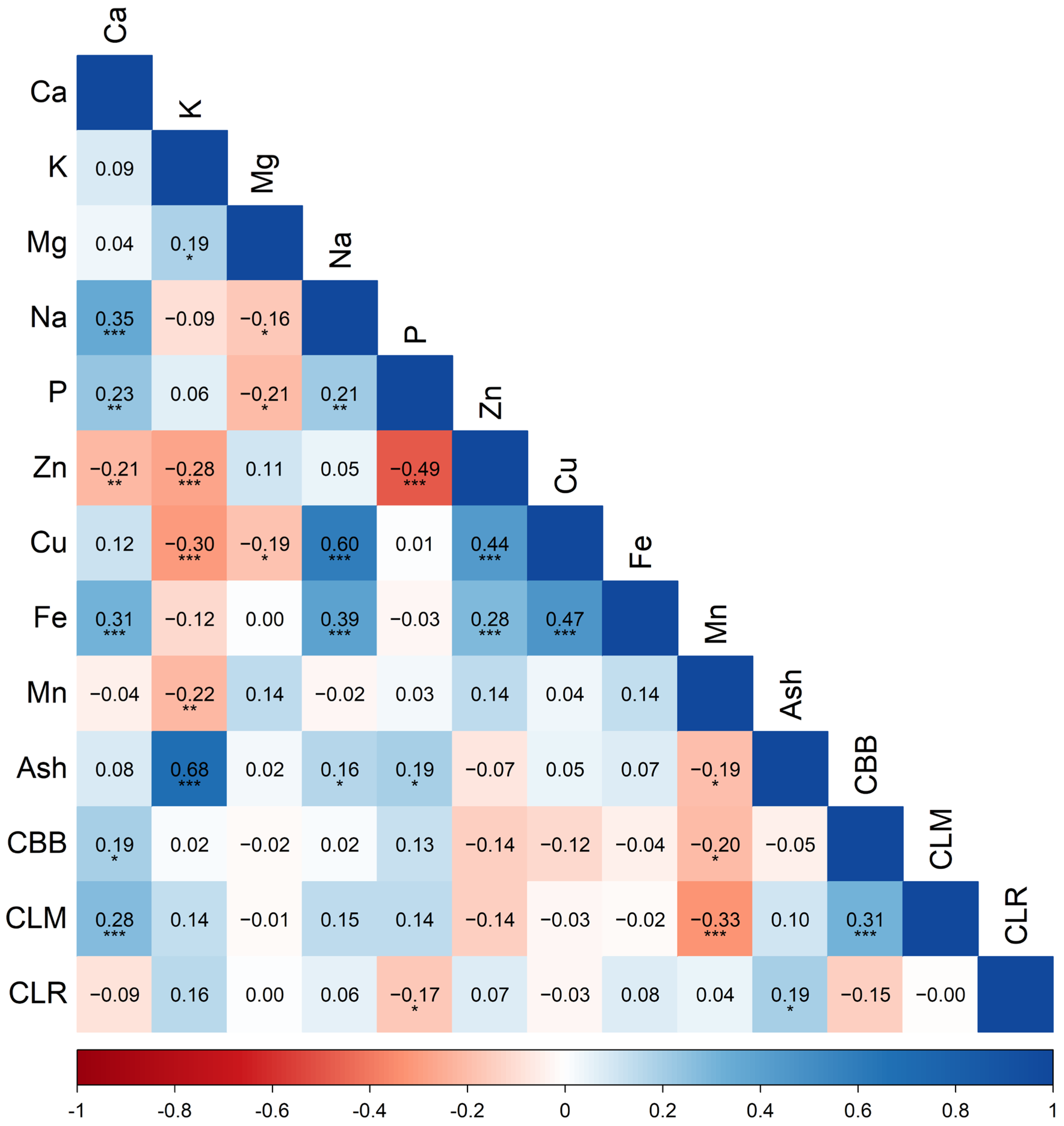
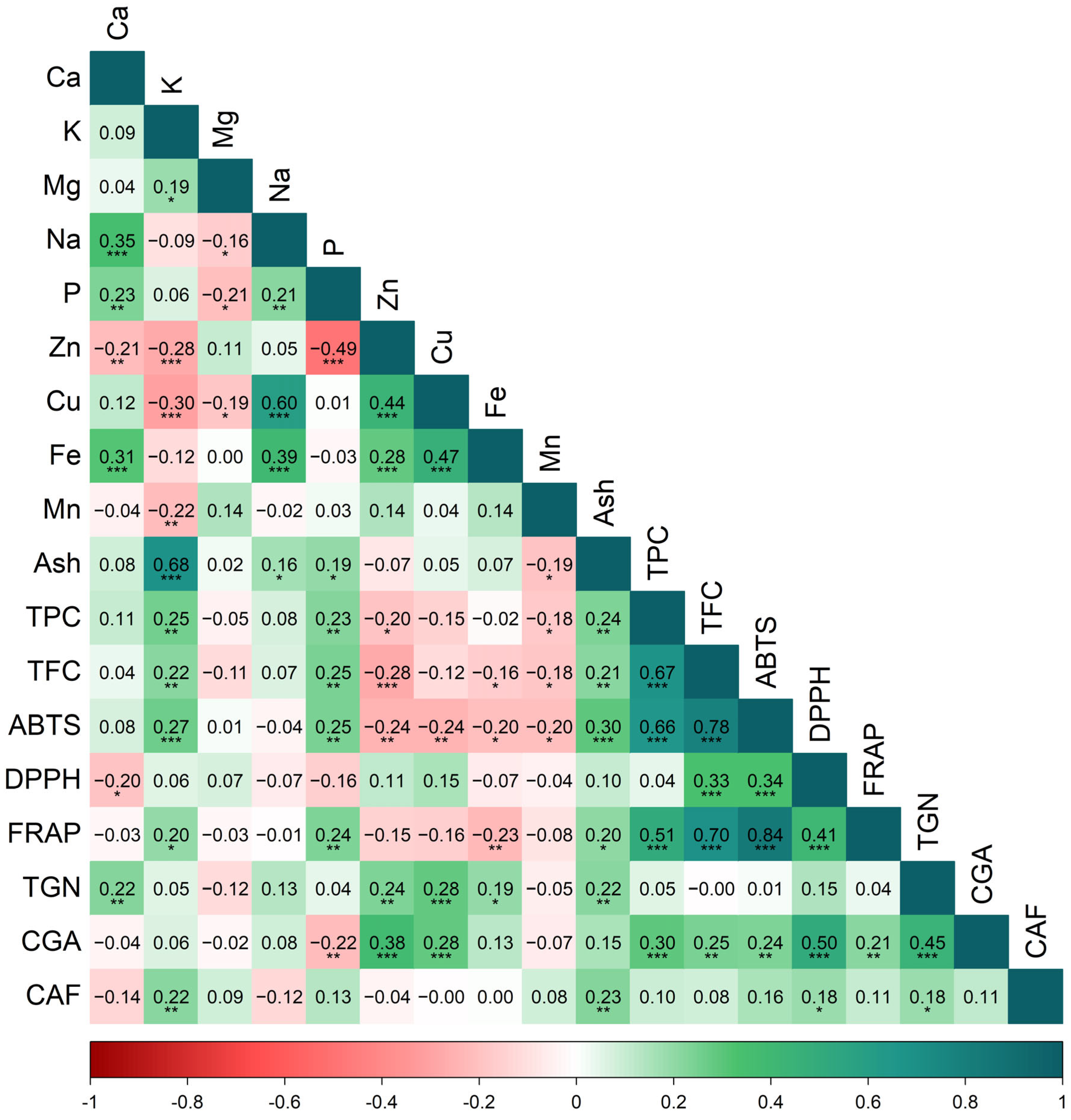
In the Spearman matrix (Figure 2), associations between green-bean mineral content and incidence metrics (lower incidence = greater resistance) were mostly low to moderate, with consistent signals for specific elements. For coffee berry borer (CBB), Zn (−0.14), Cu (−0.12), and Mn (−0.20, p < 0.05) showed negative correlations, consistent with higher resistance as their concentrations increase. In contrast, Ca (0.19, p < 0.05) and P (0.13) tended to correlate positively, suggesting greater susceptibility as these elements rise. For coffee leaf miner (CLM), Mn emerged as the principal correlate of resistance, exhibiting the strongest negative association in the block (−0.33, p < 0.001); most other mineral correlations hovered near zero, whereas Ca (0.28, p < 0.001), Na (0.15), and P (0.14) showed positive trends. For coffee leaf rust (CLR), trends were more subtle: weak negative correlation with P (−0.17; p < 0.05), and positive associations with K and ash content, the latter providing a salient consideration for fertilization management.
These mineral–resistance associations should be interpreted in light of ionic covariation among elements, which delineates blocks within the grain. First, a K–ash axis (0.68, p < 0.001) indicates that K is among the most abundant macronutrients and serves as a marker of overall mineral load; this may explain why K and ash tend to show positive relationships with CLR incidence. Second, a metallic Na–Cu–Fe block displays significant positive interactions (Na–Cu, 0.60; Cu–Fe, 0.47; Na–Fe, 0.39; p < 0.001), consistent with shared accumulation/transport routes; within this module, Cu retains a protective association against CBB despite its strong covariation with Na, pointing to a copper-specific effect beyond simple coaccumulation. Third, a moderate-to-strong P–Zn antagonism (−0.49, p < 0.001) is accompanied by negative K–Zn (−0.28, p < 0.001) and K–Cu (−0.30, p < 0.001) relationships; this pattern suggests that increases in P and K tend to coincide with lower Zn (and partly Cu), with potential functional consequences for Zn/Cu-dependent enzymes and thus for defense traits. Fourth, Ca aligns significantly with Na (0.35, p < 0.001) and Fe (0.31, p < 0.001), which may reflect co-selection of ionic profiles or shared soil/management effects driven by Ca-mediated pH shifts. Fifth, Mn shows a negative relationship with K (−0.22, p < 0.001) and positive associations with Zn and Fe, consistent with its relatively independent signaling role and its protective association against insect pests. Finally, Mg shows negative correlations (p < 0.05) with Na, P, and Cu, suggesting a distinct accumulation dynamic in the grain that depends on liming activity, which in-fluences the availability of these nutrients.
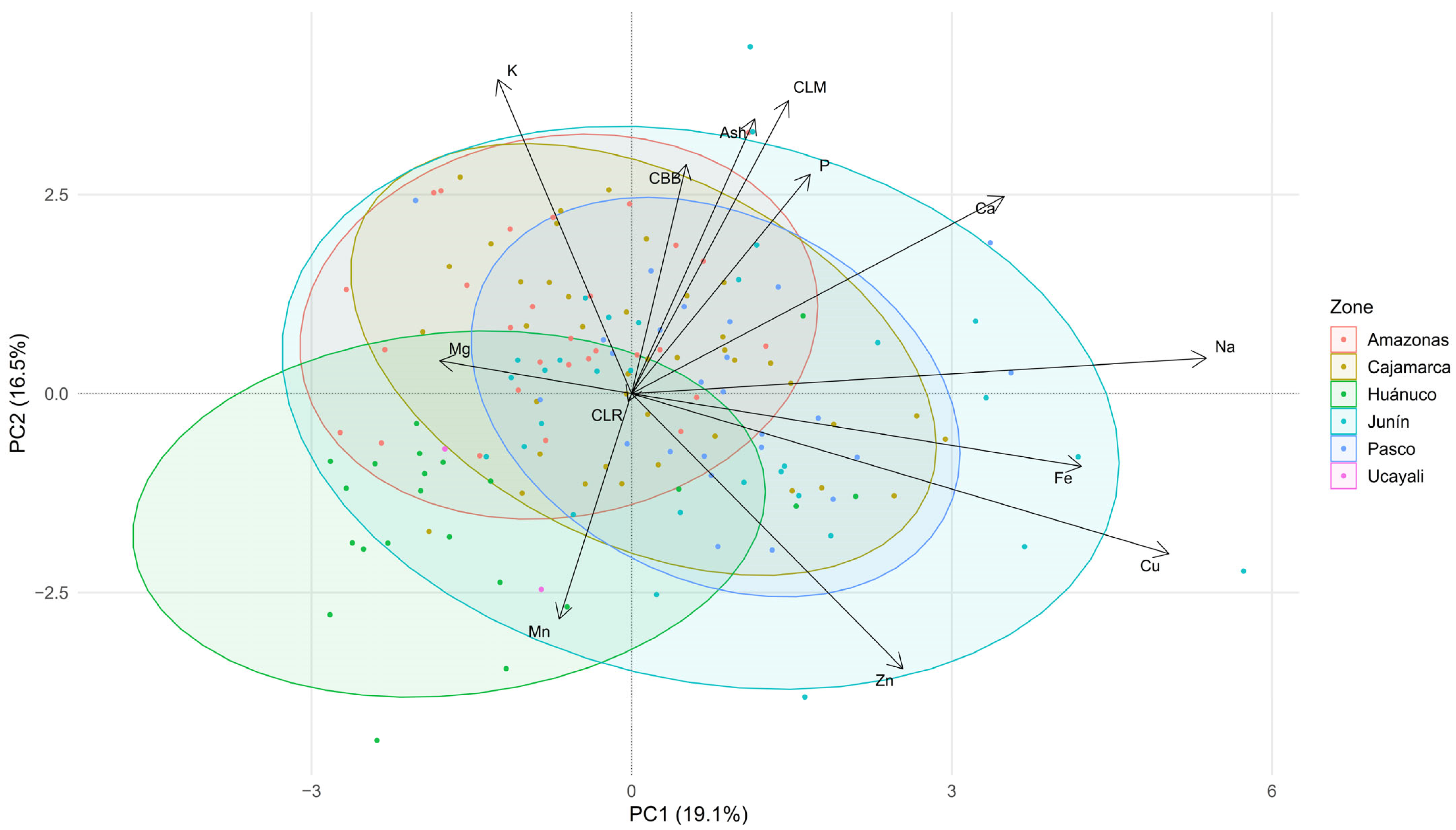
PC1 (19.1%) and PC2 (16.5%) captured the main variation patterns observed in the Spearman matrix (Figure 3), the grain’s mineral profile and its relationship with pest and disease incidence. PC1 separates, to the right, a set dominated by Na, Ca, Fe, Cu, and Zn (long vectors with small inter-vector angles, indicative of covariation) and, to the left, a block defined by K, Mg, and Mn, mirroring the P–Zn antagonism and the negative K–Zn/K–Cu relationships observed in the correlations. PC2 represents a chemical–phytosanitary gradient: CLM projects strongly in the positive direction, colinear with ash, P, and, more modestly, Ca; Mn loads in the opposite quadrant, reinforcing its protective association against CLM (higher incidence along the ash/P/Ca direction; lower incidence, greater resistance, toward Mn). CBB has a shorter vector with a moderate projection toward the ash/K half-plane, consistent with weak-to-moderate bivariate signals; Cu is oriented nearly orthogonal/opposite to CBB, in line with its negative association in the correlation matrix. CLR lies close to the origin, indicating low communality on the first two axes and supporting the generally small bivariate mineral–CLR relationships.

3.3. Association Between Mineral Content and Agro-Morphological Parameters

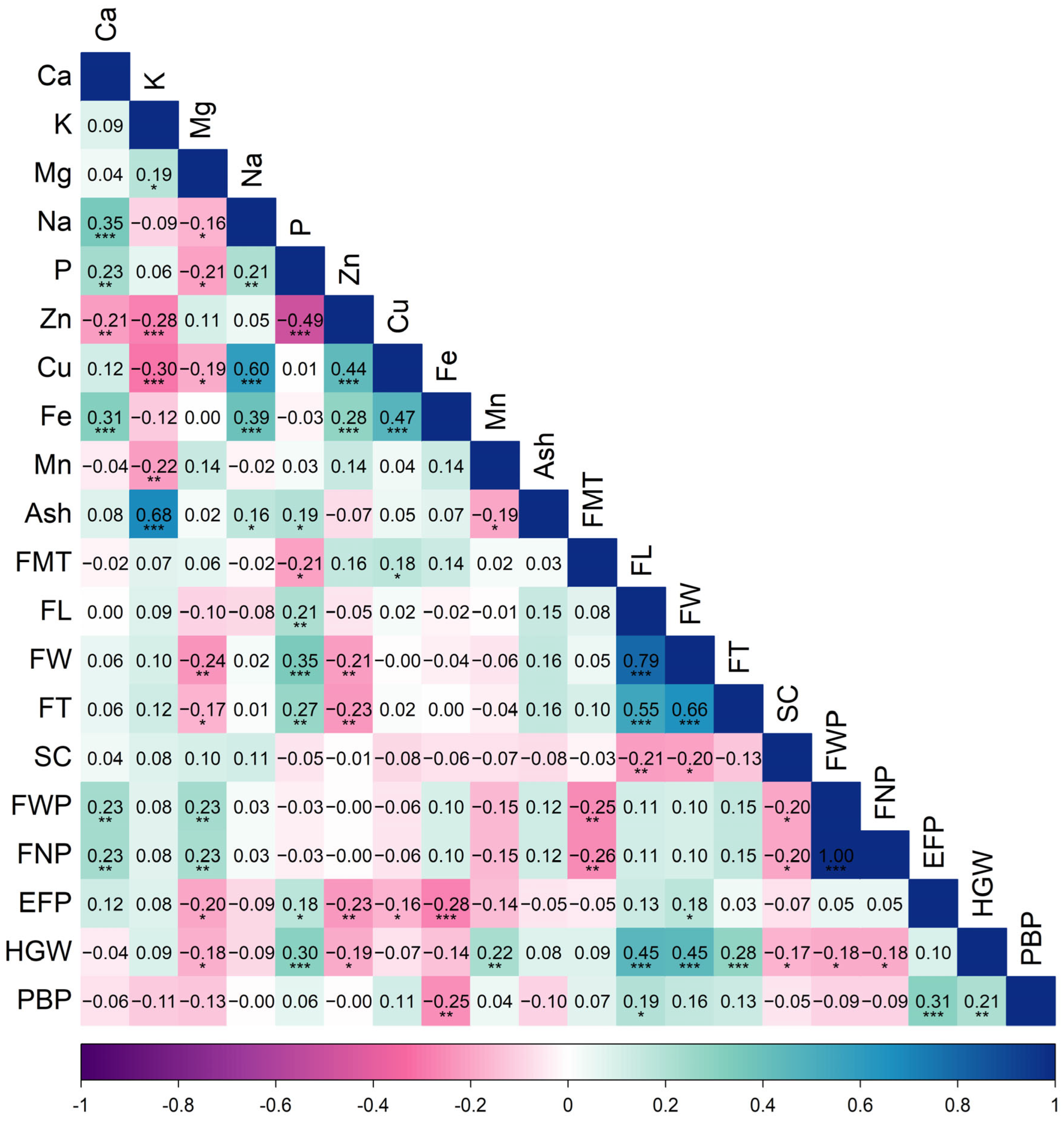
In the Spearman matrix integrating green-bean minerals with agro-morphological traits (Figure 4), the structural coherence of the fruit-size block is evident: fruit length (FL), width (FW), and thickness (FT) covary strongly (FL–FW, 0.79; FL–FT, 0.55; FW–FT, 0.66; p < 0.001) and associate differentially with minerals. Fruit width and thickness increase with K (FW–K, 0.10; FT–K, 0.12) and significantly with P (FW–P, 0.35; FT–P, 0.27; p < 0.01), whereas Zn relates negatively to thickness (FW–Zn, −0.21; FT–Zn, −0.23; p < 0.01). Mg associates negatively with width (Mg–FW, −0.24; p < 0.01) and thickness (Mg–FT, −0.17; p < 0.05), while K and Ca show non-significant effects on these dimensions (<0.12). Fruit length shows weak associations with minerals except for P (0.21; p < 0.01).
Soluble solids (SC) oppose the size block, SC decreases as fruit length and width increase (SC–FL, −0.21; SC–FW, −0.20; p < 0.05), and shows weak positive associations with macrominerals (K, Mg, Ca) and weak negative/near-zero associations with Zn, Cu, Fe, and Mn. This pattern suggests a relationship between size and sugar accumulation (°Brix), which can be partially modulated by the mineral status of the bean and may favor the development of larger structures.
In yield components, fruit weight per plant (FWP) and fruit number per plant (FNP) displayed positive, significant, and moderate associations with macrominerals, notably Ca and Mg (0.23; p < 0.01). By contrast, the empty-fruit percentage (EFP) decreased with higher Fe, Zn, and Cu (EFP–Fe, −0.28; EFP–Zn, −0.23; EFP–Cu, −0.16; p < 0.05) and increased with P (EFP–P, 0.18; p < 0.05), suggesting that adequate Fe/Zn/Cu status is associated with better fruit filling, whereas elevated P tends to relate to a higher proportion of empty fruits.
Regarding physical quality, 100-parchment-bean weight (HGW) correlated positively with P and Mn (HGW–P, 0.30; HGW–Mn, 0.22; p < 0.01). Meanwhile, the percentage of peaberry beans (PBP) is negatively related to Fe (−0.25; p < 0.01), indicating that higher iron content may be associated with a lower frequency of peaberry formation.
Mineral–mineral covariation contextualizes these agro-morphological associations. The K–ash synergy (0.68, p < 0.001) implies that part of K-attributed effects reflect a general mineralization gradient; the Na–Cu–Fe module (Na–Cu, 0.60; Cu–Fe, 0.47; Na–Fe, 0.39; p < 0.001) supports their joint negative projection on fruit size; and the P–Zn antagonism (−0.49, p < 0.001) helps explain why increases in P accompany larger, heavier fruits (FW/FT/HGW), whereas Zn associates with relatively thinner, lighter fruits. Overall, the results delineate a coherent map in which P and Fe relate to larger, heavier beans; Fe/Zn/Cu to improved filling (lower EFP); and Mn to greater fruit volume but lower soluble-solids concentration.
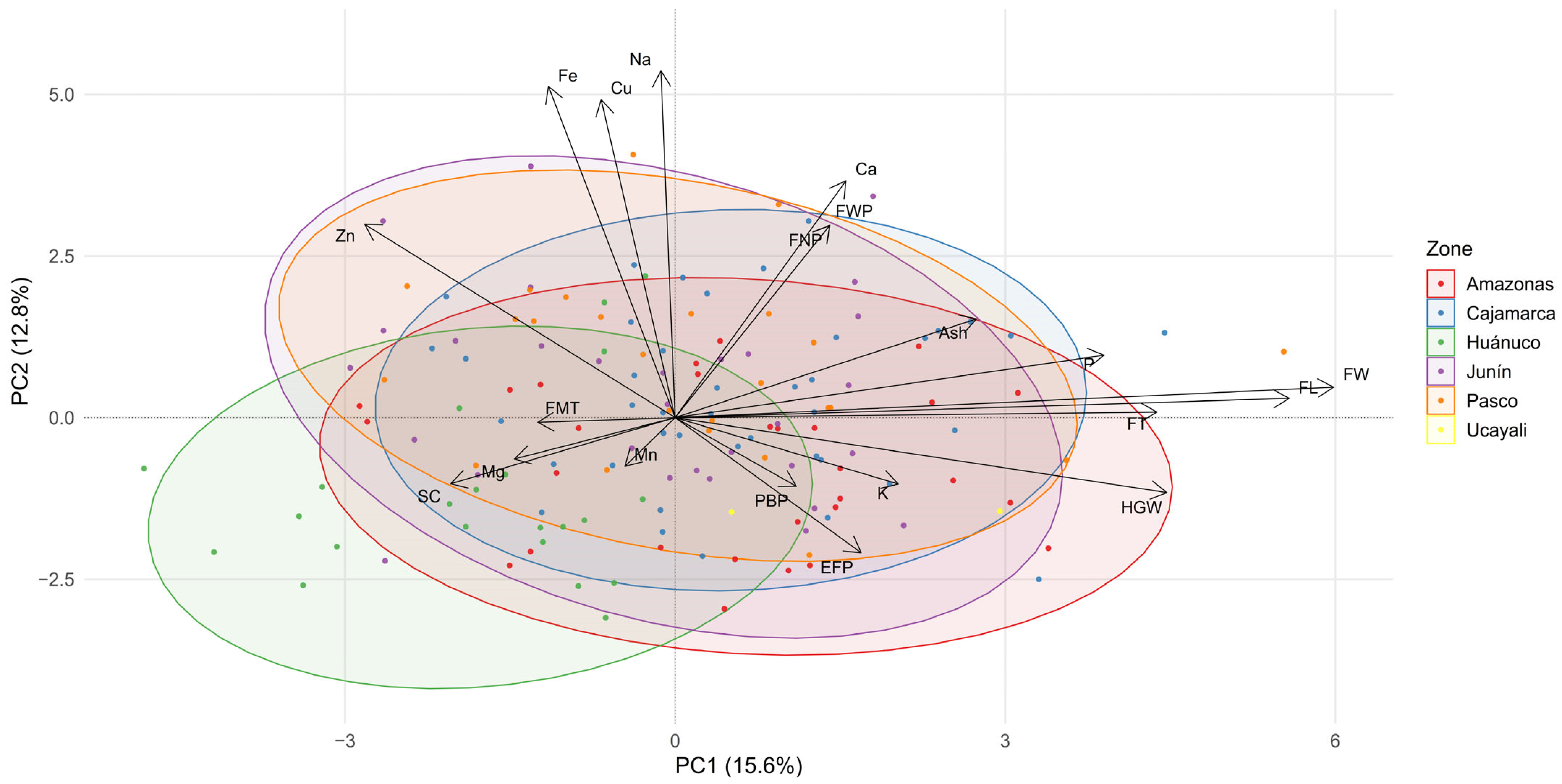
In Figure 5, PCA (PC1 = 15.6%; PC2 = 12.8%), two gradients jointly organize green-bean minerals and agro-morphological traits. PC1 clearly describes a size/weight axis for fruit and bean: vectors for width (FW), thickness (FT), and length (FL) load strongly and positively, colinear with P and ash, confirming that higher P (and greater overall mineralization, reflected by Ash) associates with larger fruits and heavier beans (HGW). In the opposite half-plane, Mg, Mn, and soluble solids (SC) project together, consistent with the negative correlations of SC with FW/FT/FL.
PC2 primarily separates an upper metallic block dominated by Na, Fe, and Cu (long, closely aligned vectors) together with Zn toward the upper-left quadrant; this geometry recapitulates mineral–mineral interrelationships and suggests partially shared accumulation routes. Yield components lie near the size block: FWP and FNP project into the FW/FT/P/Ash sector, indicating that higher availability of P and Ca covaries with larger fruits and greater yield. Conversely, EFP points toward the lower-right half-plane and forms wide angles relative to Fe, Zn, and Cu—consistent with its negative association with these micronutrients—while retaining a component toward P, in line with the positive P–EFP trend in the correlation matrix. Peaberry percentage (PBP) occupies the right quadrant with moderate projection and wide angles relative to Zn/Fe/Cu, reflecting its negative correlations with these microelements.
Regional ellipses overlap broadly with no sharp separation, indicating that the joint mineral–agronomic structure is consistent across regions and primarily governed by grain chemical gradients rather than geography. Taken together, the PCA conveys three messages: (i) P (together with ash) is related to fruit/bean size and weight; (ii) Ca associates with a greater number of fruits per plant and higher yield, whereas Mg relates to higher sugar content; and (iii) Mg/Mn/SC load opposite the size complex, suggesting a trade-off between sweetness and volume that can be modulated by the grain’s mineral status.

3.4. Association Between Mineral Content and Bioactive Compounds

In the Spearman matrix integrating green-bean minerals with bioactive compounds and antioxidant capacity (Figure 6), bioactives and antioxidant assays were highly correlated (p < 0.001). The strongest relationships were TPC–TFC (0.67), TPC–ABTS (0.66), and TFC–ABTS (0.78), while DPPH and FRAP aligned in the same direction with moderate magnitudes (DPPH–ABTS and DPPH–FRAP, 0.34–0.41; p < 0.001). This pattern confirms that increases in phenolics and flavonoids translate into greater antioxidant capacity across all three assays.
Three principal mineral–bioactive signals emerge. First, a global mineralization gradient, captured by ash content, correlates positively with TPC, TFC, ABTS, and FRAP (0.20–0.30; p < 0.05), indicating that accessions with a higher whole-grain mineral load tend to accumulate more phenolics and consequently exhibit stronger antioxidant activity. Second, among individual minerals, Fe and Cu show significant, albeit moderate, positive correlations with CGA and TGN, and negative correlations with ABTS/FRAP, suggesting shared accumulation routes linked to phenolic metabolism. Finally, Zn tends to correlate negatively with TFC/TPC and antioxidant activity (−0.15 to −0.28). Caffeine (CAF) displays weak or near-zero associations with most minerals, except for K (0.22, p < 0.01).
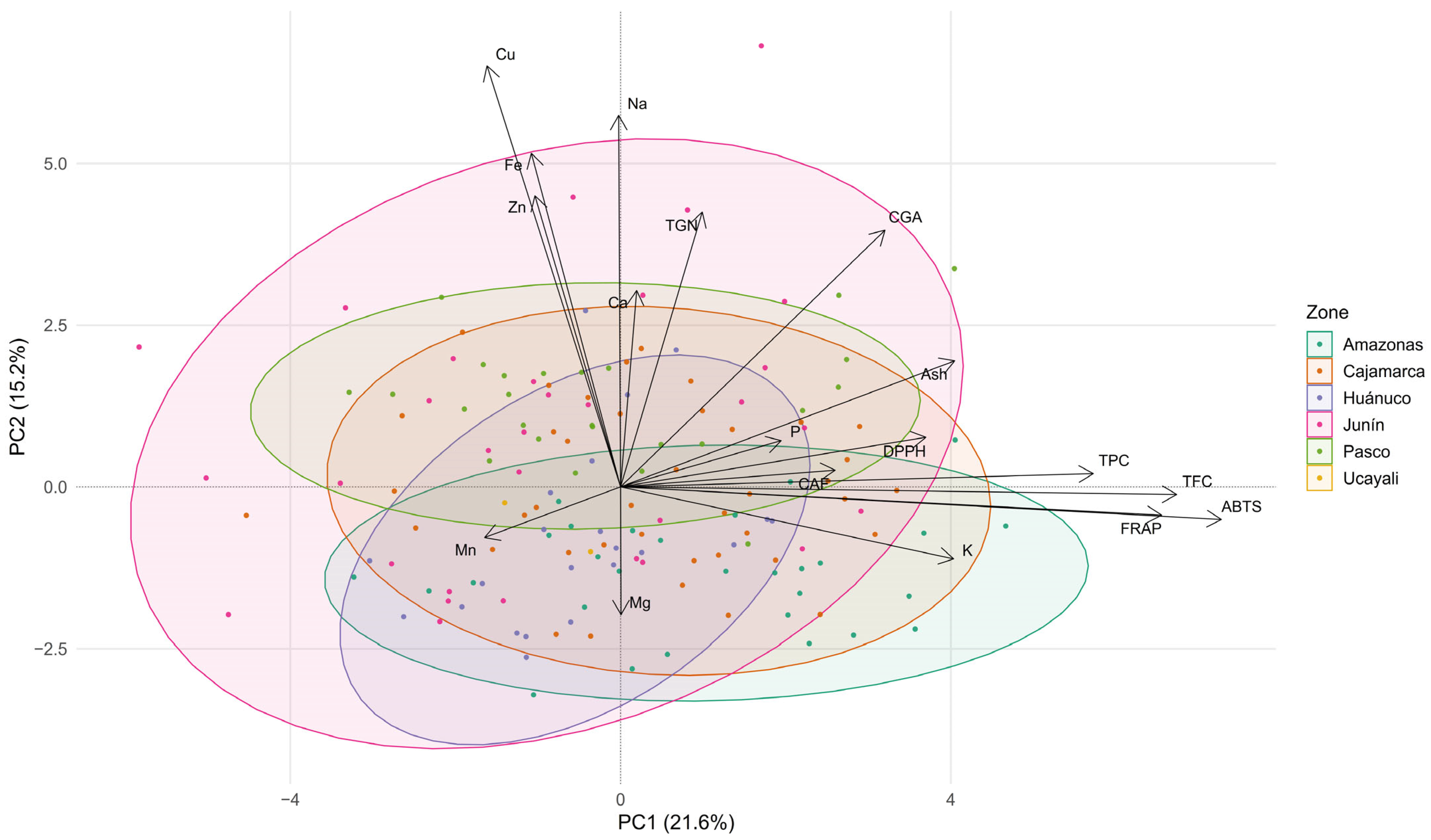
In the PCA biplot (Figure 7), two gradients jointly organize grain minerals with bioactives/antioxidants (PC1 = 21.6%; PC2 = 15.2%). PC1 defines a phenolic–antioxidant axis: vectors for TPC, TFC, FRAP, and ABTS project strongly to the right and are nearly colinear with P, K, and ash, accompanied by CGA and, to a lesser extent, DPPH. This geometry indicates that higher P and K, together with greater overall grain mineralization, covary with elevated phenolics/flavonoids and enhanced antioxidant capacity. In the opposite half-plane, Mg and Mn load in the lower quadrant, whereas Fe, Zn, and Cu orient toward the upper quadrant.
PC2 separates an upper metallic block (Na, Fe, Cu, Zn), long, closely aligned vectors, from Mn/Mg, which project toward negative scores; along the same axis, trigonelline (TGN) aligns with the upper quadrant, indicating that accessions with higher Na/Fe/Cu/Zn tend to exhibit higher TGN, whereas those richer in Mn/Mg occupy the opposite extreme. Caffeine (CAF) shows a short, near-axis projection, consistent with weak associations at the collection scale. Regional ellipses overlap broadly without marked spatial segregation, suggesting that the observed patterns are driven primarily by grain-chemistry gradients rather than geography.
Taken together, the PCA corroborates three central messages: (i) P, K, and ash define a phenolic/antioxidant axis (TPC, TFC, ABTS, FRAP, and DPPH), with CGA strongly aligned; (ii) the Na–Fe–Cu–Zn set characterizes a second gradient that co-varies positively with TGN; and (iii) Mg/Mn oppose the phenolic–antioxidant axis, reinforcing signals from the correlation matrix.

3.5. Hierarchical Clustering

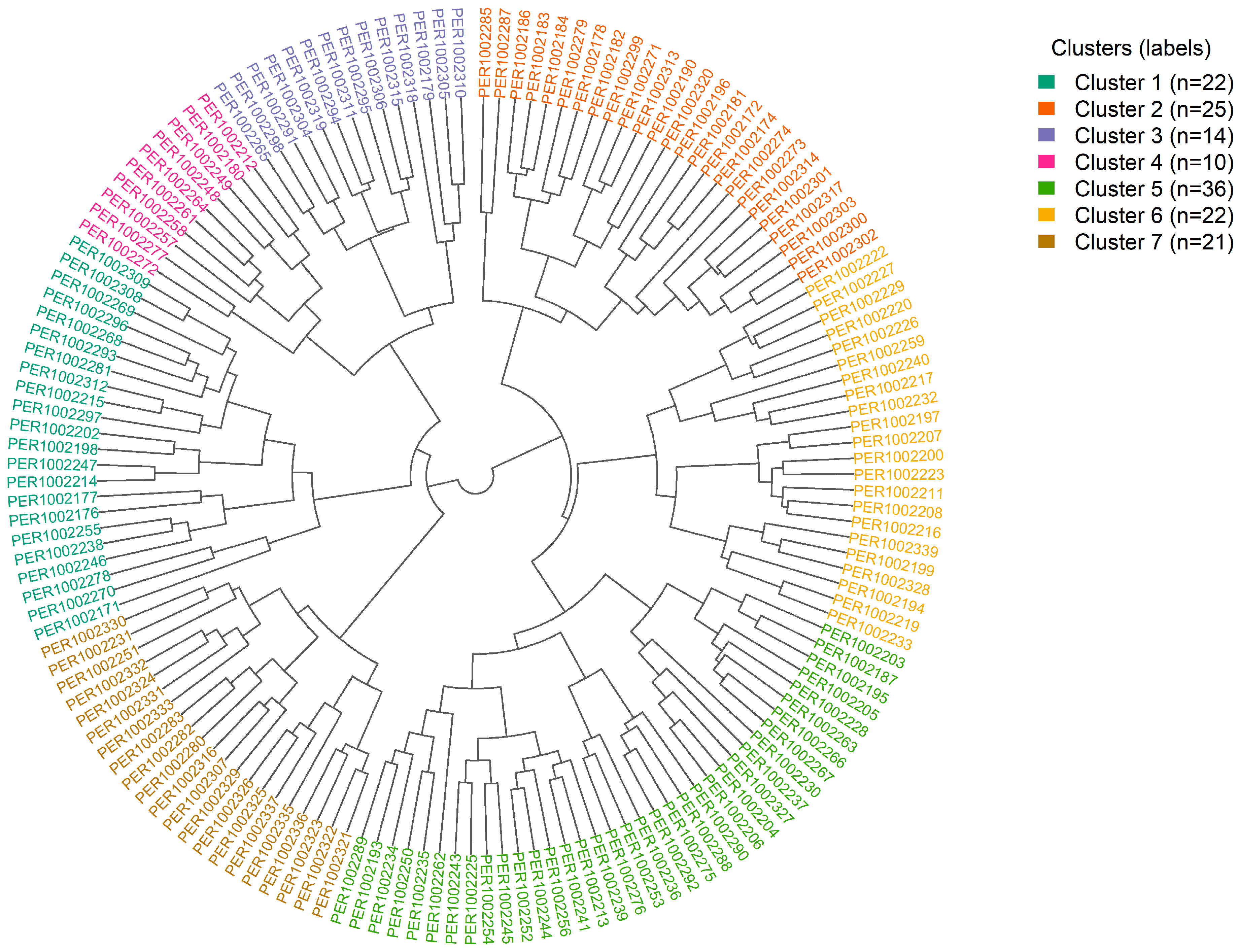
Hierarchical clustering of the 150 accessions revealed a seven-cluster structure (Figure 8). The optimal number of clusters (k = 7) was determined using the silhouette method, which reached a relative maximum at this value (Figure S1), indicating the best average separation among groups within the evaluated range. The circular dendrogram shows well-defined branches and consistent accession assignments to each cluster, with broad geographic representation in nearly all groups—evidence that clustering is governed chiefly by trait patterns rather than regional provenance.
Cluster sizes were C1 = 22, C2 = 25, C3 = 14, C4 = 10, C5 = 36, C6 = 22, and C7 = 21 (Table S2). The resulting clustering yielded crisp profiles that align with the PCA biplot. C1 concentrated accessions with elevated Fe and Ca (also Na), high fruit load but small beans, greater susceptibility to rust and leaf miner, and lower antioxidant potency. C2 grouped materials with high Cu and Zn, improved resistance to berry borer and reduced rust, together with an outstanding bioactive profile and good yield, emerging as a functional, productive cluster. C3 represented large-bean types with lighter fruit load, low borer incidence, but higher rust. C4 combined large fruit/beans with better rust resistance, albeit with lower phenolics/flavonoids and antioxidant capacity. C5 was distinguished by high P and Mn and the highest phenolic–antioxidant levels in the study, with low borer incidence but reduced load and intermediate-to-high rust. C6 showed low Cu, Fe, Mn, and Na, a high number of fruits but also more empty fruits, high berry borer and leaf miner incidence, low rust, and elevated ABTS/FRAP. C7 stood out for high Zn coupled with low Ca/P/Na, better performance against leaf miner, smaller size/yield, higher peaberry proportion, and intermediate bioactives.
Collectively, clusters 2, 5, and 6 anchor the functional/antioxidant axis (with 2 additionally favorable for borer resistance); 3 and 4 define the size/weight axis (with 4 advantaged against rust); 1 and 6 encompass high-yielding materials that will require targeted health management; and 7 offers a Zn–leaf-miner niche for biofortification and plant-health strategies, albeit with scope for improving caliber and crop load.

3.6. Regional Profiles of Macro- and Micronutrients

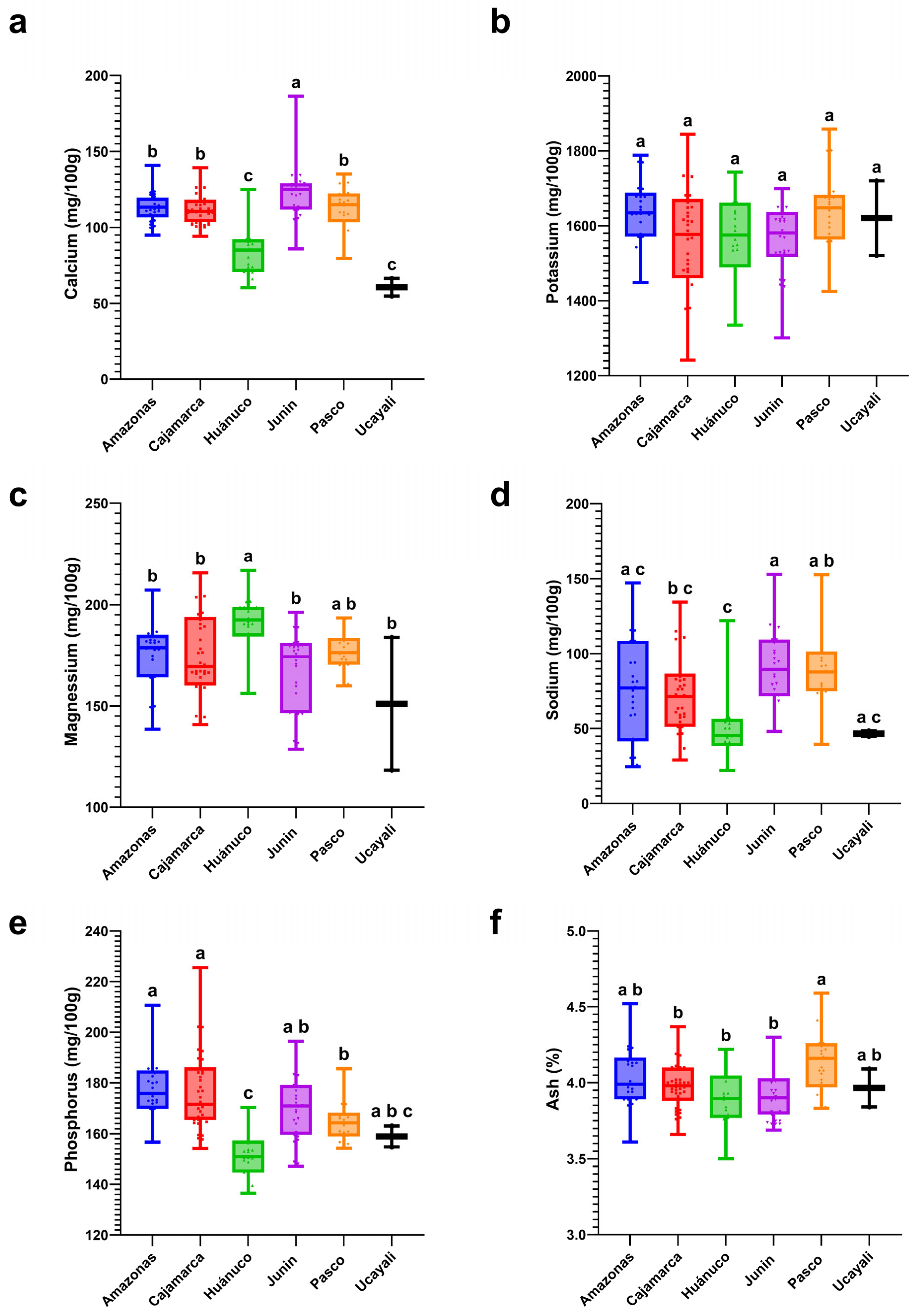
Figure 9 summarizes regional contrasts in green-bean macronutrient content. For Ca (panel a), Junin exhibits the highest concentrations, whereas Amazonas, Cajamarca, and Pasco occupy an intermediate tier and Huanuco and Ucayali show the lowest levels. For K (panel b), no significant differences were detected across regions, indicating broadly homogeneous translocation among provenances.
In Mg (panel c), Huanuco stands out with significantly higher concentrations than the other departments, except Pasco. For Na (panel d), contrasts are pronounced: Junin shows the highest levels, Huanuco the lowest, and Pasco an intermediate position. Amazonas spans a wide range, while Ucayali displays comparatively tight dispersion.
Phosphorus (e) is enriched in Cajamarca and Amazonas, followed by Junin and Pasco; Huanuco concentrates the lowest values. Ucayali shows consistent, relatively low medians with wide interval overlap, precluding statistical discrimination from other origins. Finally, ash percentage (f) is highest in Pasco, intermediate in Amazonas and Ucayali, and significantly lower in Cajamarca, Huanuco, and Junin.
Box and whisker amplitudes reveal appreciable intraregional variability, particularly for Na, consistent with the combined influence of genotype, edaphic environment, and management. Concurrently, overlap among provenances matches the lack of clear zonal separation observed in the PCAs, suggesting that grain-chemistry gradients dominate over geography.
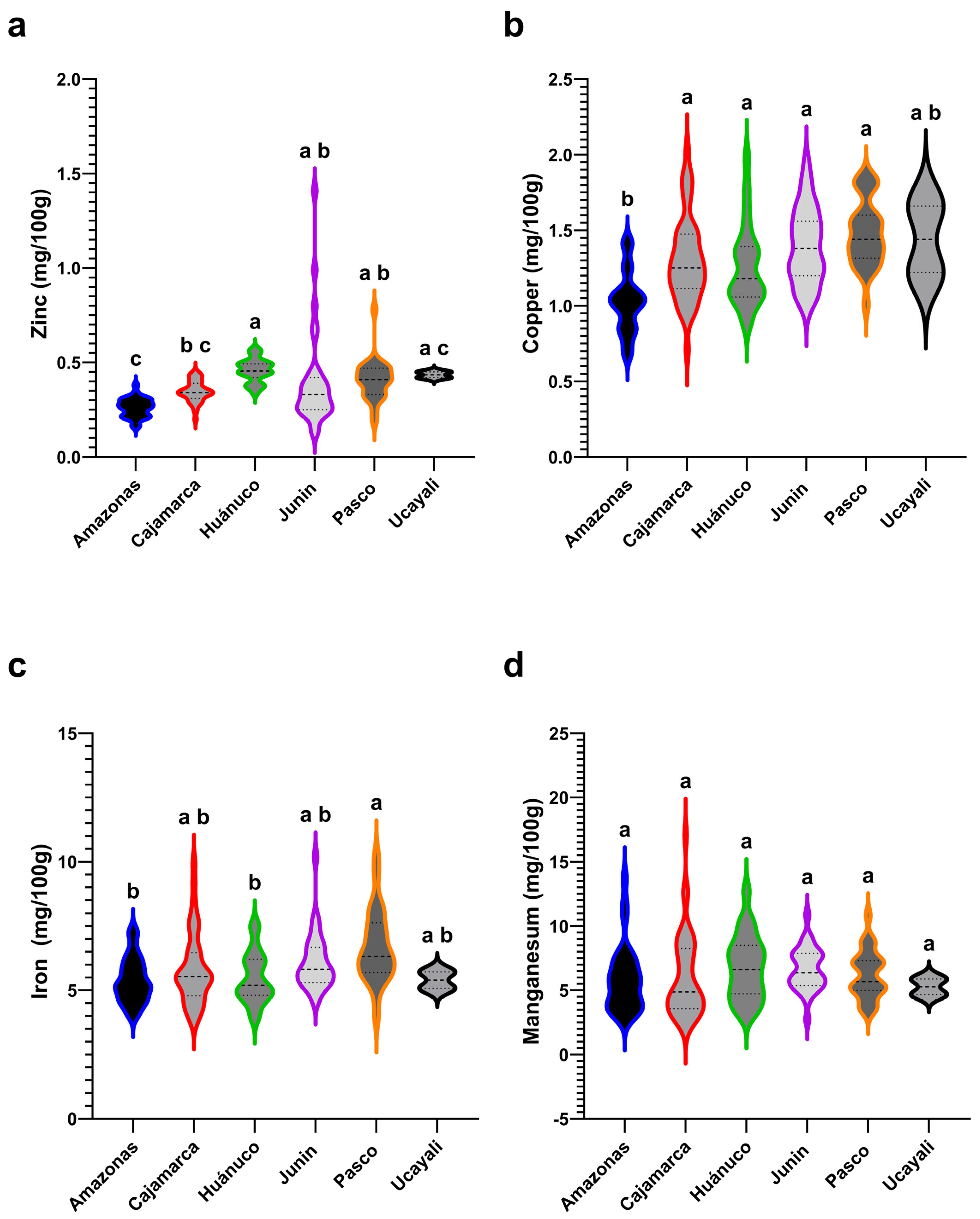
When micronutrients are compared by origin (Figure 10), Zn (a) shows the greatest spatial heterogeneity: Junin concentrates the highest values, followed by Pasco and Huanuco (not significantly different from each other); Ucayali sits at an intermediate range, whereas Cajamarca and Amazonas display the lowest concentrations. The tall, narrow violin shape for Junin indicates accessions with elevated Zn.
For Cu (b), the pattern is more homogeneous: Amazonas exhibits the lowest values, while Cajamarca, Huanuco, Junin, and Pasco do not differ significantly; Ucayali occupies an intermediate position. For Fe (c), a gradient emerges with Pasco at the top, Cajamarca and Junin at a high–intermediate tier, and Amazonas and Huanuco at the lowest levels; Ucayali overlaps the intermediate range. For Mn (d) there are no statistically significant contrasts among regions, although the violin plots suggest a higher density of elevated values in Cajamarca and Amazonas.
Taken together, regional variation is pronounced for Zn and Fe, moderate for Cu, and essentially null for Mn. The degree of overlap among regional distributions, visible in violin widths and the proximity of medians, reinforces that, despite some geographic foci, within-region variability remains large, consistent with genotype and local management strongly shaping micronutrient accumulation in Coffea arabica L.

3.7. Multivariate Analysis of Resistance to Berry Borer and Leaf Rust

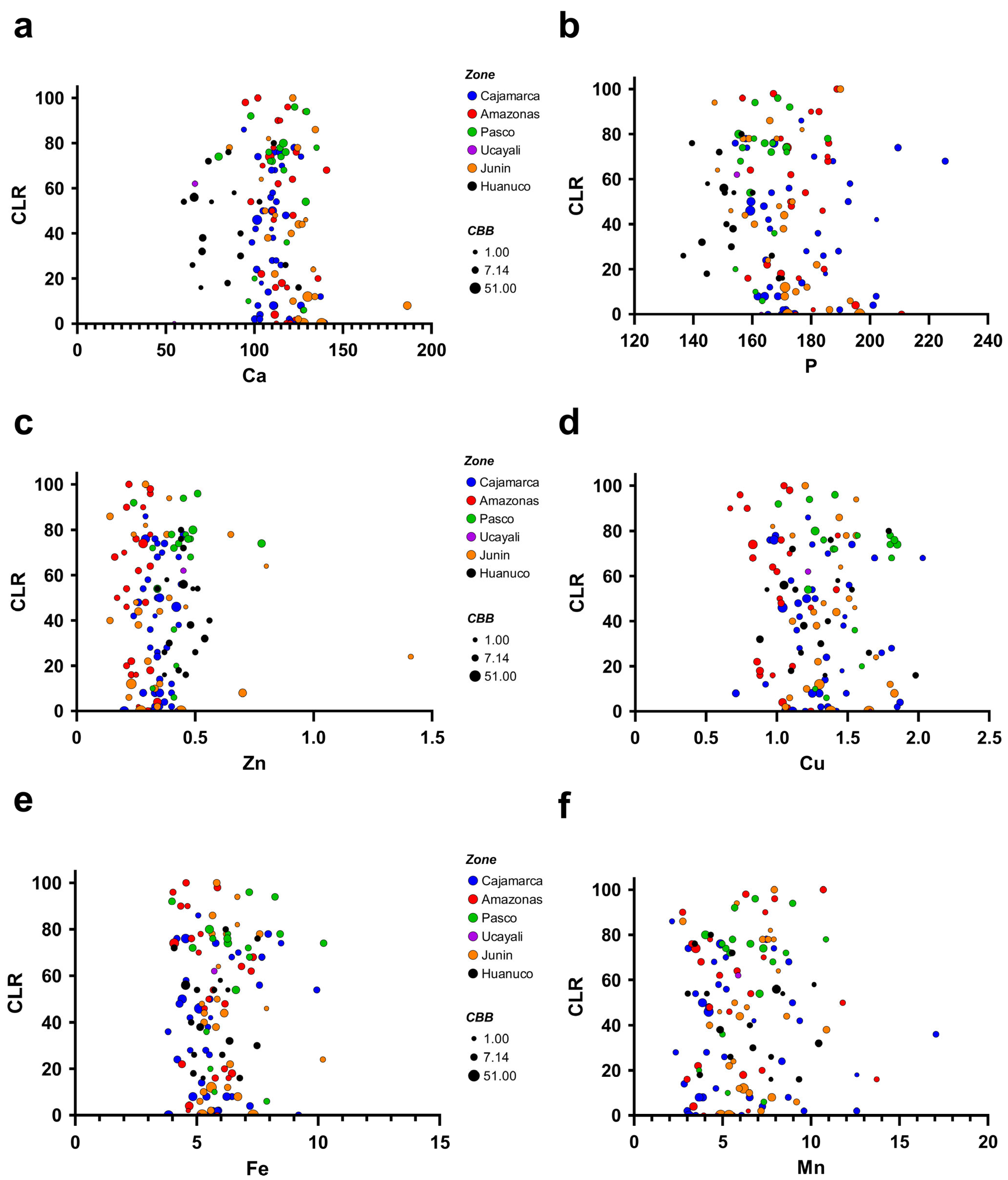
In the faceted scatterplots of Figure 11 (panels a–f), leaf rust incidence (CLR) is plotted against grain mineral concentrations, with point size encoding berry borer incidence (CBB) and color indicating geographic origin.
Overall, point clouds are diffuse with marked interregional overlap, indicating that CLR variation is only weakly explained by individual minerals and that there is no clear zonal segregation. Consistent with the Spearman matrix (Figure 2), a mild negative trend is apparent for CLR versus P (b) and, to a lesser extent, Ca (a): accessions with mid–high P (160–190 mg/100 g) and intermediate Ca (95–125 mg/100 g) tend to cluster at lower CLR (greater resistance), whereas CLR dispersion widens again at mineral extremes. For Zn, Cu, Fe, and Mn (c–f), patterns are essentially vertical, with no clear CLR gradient across concentration axes, confirming very small or null bivariate associations with rust.
Point size (CBB) shows no co-gradient with CLR: across panels, some accessions combine low CLR with small points (low CBB; dual resistance), whereas others display low CLR with medium/large points (rust resistance without concomitant borer resistance), suggesting partial independence between these phytosanitary outcomes at the collection scale. In summary, the figure supports three key insights: (i) rust resistance improves with higher P; (ii) Zn, Cu, Fe, and Mn show no monotonic bivariate relationship with CLR; and (iii) resistance to borer and rust does not systematically co-occur as a function of any single mineral, implying that identifying “dual-resistant” accessions requires multivariate approaches and direct selection on incidence phenotypes.

3.8. Promising Accessions

Table S3 summarizes the multicriteria ranking applied to the 150 accessions using a standardized 1–5 scoring scheme per trait (5 = desirable performance). In Table 2, five selection blocks were constructed: (i) minerals for biofortification; (ii) a macromineral index; (iii) resistance to pests and diseases; (iv) agro-morphological attributes; and (v) bioactive compounds. The Combined column aggregates these block scores into an overall “Top-10” ranking. This framework identifies both well-balanced accessions (concurrent strength across multiple blocks) and more specialized profiles, with full traceability by region of origin and PER codes.
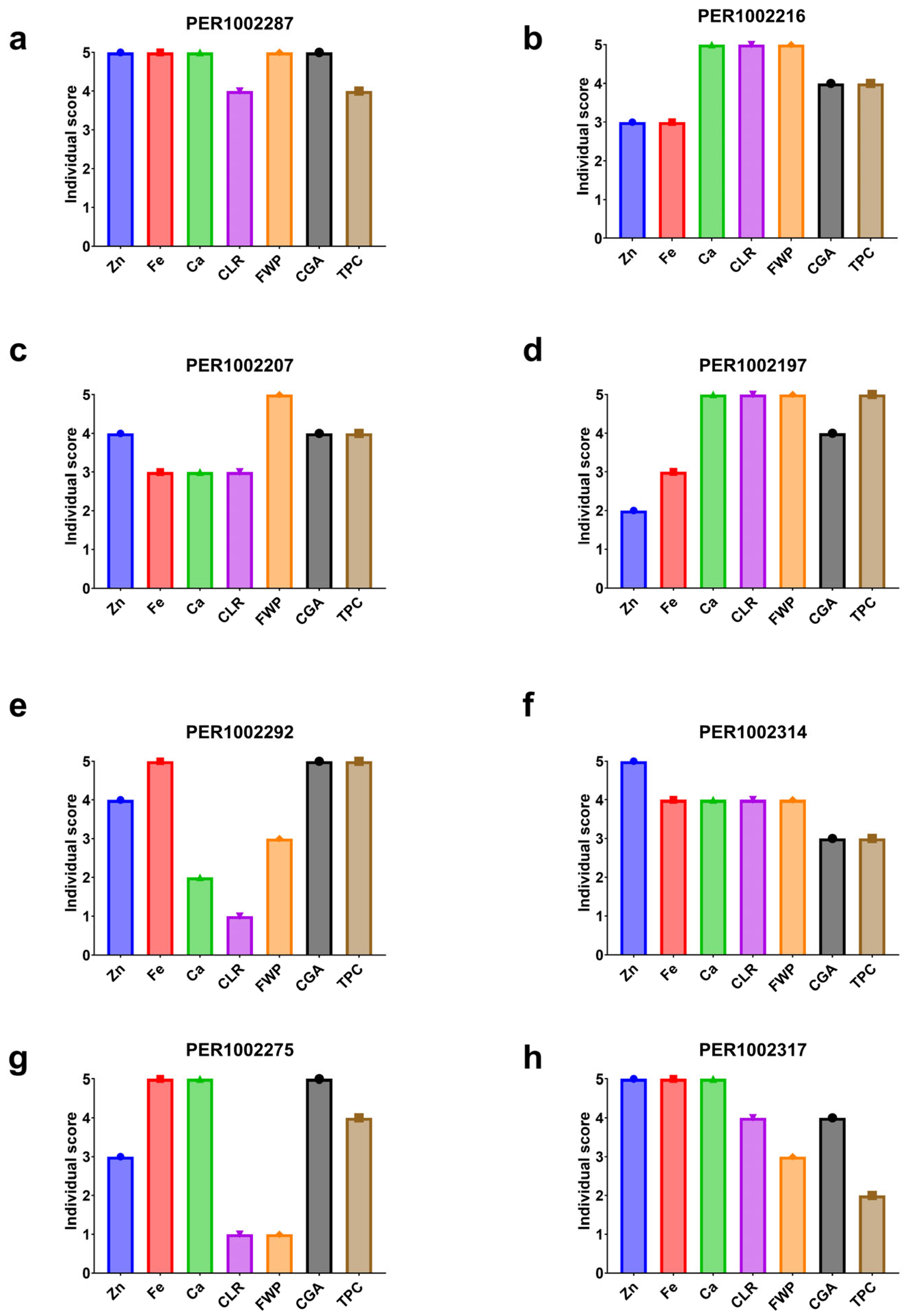
Figure 12 (panels a–h) shows individual (1–5 scale) profiles of the top-ranked accessions. Three actionable patterns guide selection: (i) Balanced profiles: accessions such as PER1002287 and PER1002216 show high combined scores with relatively even contributions from rust resistance (CLR), fruit weight per plant (FWP), and bioactives (CGA and TPC), while maintaining consistent mineral levels, strong candidates for integrated selection; (ii) Biofortification with agronomic trade-offs: materials such as PER1002287 and PER1002317 display very high Zn/Fe (and elevated Ca in some cases) together with high CGA/TPC, but lower CLR values; these are attractive for nutritional/functional quality programs provided health or cup-quality trade-offs are managed; and (iii) Productivity-focused: accessions such as PER1002207 excel in FWP and sustain mid-to-high CGA/TPC, albeit with more modest CLR—useful where yield gains are prioritized with acceptable chemical profiles. Intermediate cases (PER1002197, PER1002314, PER1002275) combine high Zn/Fe and robust CGA/TPC with mid-to-high CLR and FWP, offering flexibility depending on end use.
Taken together, the Top-10 includes: (i) all-round candidates (PER1002216, PER1002287, PER1002207, PER1002197, among others) that maximize adoptability by balancing plant health, yield, and functional quality; (ii) biofortification candidates, suited to elevating Zn/Fe and phenolics alongside strategies to improve CLR; and (iii) productivity candidates, tailored to environments where yield is the primary driver and chemical quality remains within competitive ranges. This multicriteria ranking translates a heterogeneous trait set into an operational roadmap for field validation and scaling, enabling targeted selection for resistance, productivity, biofortification, quality, or tailored combinations thereof, according to breeding objectives.

4. Discussion

The mineral composition of the coffee bean not only mirrors soil conditions but also shapes plant physiology, modulating primary metabolism, inducible defenses, and the secondary-metabolite profile that underpins flavor and aroma [69,70]. Multiple studies indicate that balanced mineral nutrition is essential to optimize resistance to biotic stress in coffee [11,31,71,72,73]. Adequate nutrient availability supports the proper expression of defense-related genes and the activation of key enzymes in induced immune responses [29,30], whereas nutritional imbalances can predispose plants to greater pest and pathogen pressure [23,31]. For example, excessive N fertilization can soften tissues and facilitate infection [74], while deficiencies of micronutrients such as Zn, B and Cu weaken physical and biochemical barriers [75,76,77]. Zinc contributes to cell-wall integrity and the synthesis of soluble phenolics and lignin defense components against pathogens like coffee leaf rust (Hemileia vastatrix) [18,78]. Likewise, Cu and Mn serve as cofactors in antioxidant and lignifying enzymes (e.g., Mn-dependent superoxide dismutase; Cu-dependent polyphenol oxidases), reinforcing tissues against microbial invasion and herbivory [32,34]. Consistent with this, micronutrient supplementation has shown marked sanitary benefits in coffee.
In hydroponic trials, Pérez et al. [79], found that an adequate supply of B, Zn, and Mn acts as a defense against coffee leaf rust. These micronutrients reduced disease severity (by 15%, 78%, and 52%, respectively) and increased phenolics and lignin levels in the leaves, thereby strengthening the plant’s defensive structure. Field reports similarly show that balanced micronutrient nutrition can suppress rust and other foliar diseases [31]. Overall, maintaining adequate levels of each nutrient is integral to integrated pest and disease management [16], both deficiency and excess can alter susceptibility [11,31]. Mechanistically, mineral nutrition modulates resistance via cell-wall reinforcement and lignin deposition, redox regulation, and shifts in root exudates–microbiome interactions, thereby affecting tolerance to fungal pathogens and some herbivores [26,31].
This physiological context explains the observed associations between bean minerals and resistance traits in the evaluated C. arabica germplasm. Higher Mn and Cu concentrations in the bean were associated with lower incidence of key pests, especially leaf miner (Leucoptera coffeella) and coffee berry borer (Hypothenemus hampei). Manganese emerged as the strongest correlate of resistance to leaf miner (−0.33, p < 0.001), consistent with roles in antioxidant enzymes and lignification that could thicken foliar tissues or elevate deterrent metabolites [80]. Beyond structural reinforcement, Mn participates in physiological pathways related to resistance against leaf-mining insects such as Leucoptera coffeella. Mn is a cofactor of multiple enzymes involved in the management of reactive oxygen species (ROS) and in lignification; therefore, its presence enhances redox and enzymatic responses that function as both signaling and defensive barriers [81,82,83]. In particular, the activity of Mn-dependent enzymes—such as Mn–SOD and oxalate oxidase—can increase localized H2O2 production, which acts both as a signaling molecule that induces defense pathways, including jasmonate-dependent routes against foliar herbivores [81,84,85], and as a chemical agent participating in the polymerization of phenolic monomers during lignification and cell-wall strengthening [83].
Localized lignification and the accumulation of phenolic compounds generate physical and chemical barriers that reduce tissue penetration and larval progression within the leaf mesophyll, thereby hindering feeding and development of the leaf miner [86,87,88,89]. Likewise, Mn may enhance the biosynthesis of phenolic compounds with antifeedant effects and modulate anatomical leaf traits—such as epidermal thickness and palisade tissue density—that reduce oviposition preference and penetration speed [88,90,91]. These mechanisms provide a physiological explanation consistent with the lower incidence of CLM observed in the accessions with higher Mn contents in our study.
Copper showed a modest but negative association with berry borer (−0.12), suggestive of fruit-level defenses, potentially increased endosperm hardness or oxidative reactions (via PPO and other cuproenzymes) yielding toxic or deterrent compounds [92,93,94]. Zinc likewise trended inversely with borer incidence (−0.14), aligning with Zn’s role in membrane integrity and defense metabolite production [95]. By contrast, Ca and P correlated positively with pest incidence (leaf miner: Ca, 0.28; P, 0.14; berry borer: Ca, 0.19; P, 0.13), suggesting that elevated Ca and P may coincide with greater susceptibility, as reported in other systems (e.g., apical dieback in eucalyptus) [96]. A possible explanation is that an excess of available P generates a nutritional imbalance antagonistic to Zn and other essential defense micronutrients, reducing their absorption. [97,98]. Indeed, the antagonistic interaction P–Zn is well known in plant physiology, excessive phosphate fertilization often induces Zn deficiency in the plant by inhibiting its root absorption [99,100]. This results in tissues that are zinc-poor and potentially more vulnerable to biotic attacks. The present study detected this P–Zn antagonism in the beans (−0.49, p < 0.001), accompanied by significant negative relationships between K–Zn (−0.28, p < 0.001) and K–Cu (−0.30, p < 0.001). Accordingly, accessions with high P and K concentrations tended to exhibit reduced Zn and Cu levels and simultaneously showed larger fruits but greater pest incidence, supporting the hypothesis that mineral imbalance can compromise resistance [39]. In agronomic practice, these findings underscore the importance of carefully managing phosphate fertilization in coffee to avoid excesses that induce relative deficiencies of protective micronutrients.
Conversely, although Ca is crucial for cell wall cohesion and defense signaling, its excessive accumulation may reflect alkaline soil conditions or other factors that reduce the availability of Fe, Zn, or B, which could, in turn, weaken the overall health of the coffee plant [31]. Notably, for coffee leaf rust (CLR; Hemileia vastatrix), mineral correlations were far more modest than for insect pests. Cu, Zn, Mn, and other micronutrients did not show a strong or consistent association with rust incidence across the accessions evaluated [10,101]. Only a weak trend toward lower rust severity was observed with higher P content (−0.17, p < 0.05) and, to a lesser extent, with Ca (−0.09), with the opposite tendency for K (0.16) and for total mineralization measured as ash (0.19, p < 0.05). This suggests that resistance to rust, being a complex, polygenic trait, does not depend on any single mineral element in the bean but rather on more integrated nutritional and physiological interactions [102,103]. Nevertheless, from a practical standpoint, balanced fertilization that prevents deficiencies (particularly of Zn, B, and Mn) may contribute to foliage less conducive to the germination and penetration of Hemileia spores [25,79]. Pérez et al. [79] showed that supplementing Zn and Mn significantly suppressed rust, reducing its progress by 70–80%, likely via induced accumulation of antifungal phenolics. In addition, balanced applications of Si and K have also been reported to reduce rust incidence through cuticular thickening and the induction of phytoalexins [11,28]. Taken together, these results indicate that mineral nutrition represents an important complementary component in coffee rust management strategies, although it cannot, by itself, replace genetic resistance or biological control. In the case of the coffee berry borer, the relationship with mineral nutrition has been less studied; however, our findings suggest that providing coffee plants with adequate micronutrients (such as Cu, Zn, and Mn) may enhance the chemical defenses of the endosperm—higher concentrations of caffeine, bitter phenolics, or heterocyclic alkaloids—that could reduce the survival or reproduction of Hypothenemus hampei [77,80]. Evidence indicates that caffeine alone does not guarantee resistance to the borer [104,105], but when combined with other compounds and with a denser grain structure (possibly associated with good nutritional status), it may hinder infestation [12]. In general, plants with adequate nutritional status tend to tolerate pests better because they can allocate resources to damage repair and defense metabolite synthesis, whereas nutrient deficiencies may induce stress that makes them more attractive or less capable of responding to herbivory. Therefore, integrated management of the coffee berry borer should include not only biological and cultural control but also balanced fertilization practices that maintain foliar and endosperm micronutrient levels within optimal ranges [13,17].
Beyond the plant health dimension, this study revealed significant associations between bean mineral composition and coffee agro-morphological traits, as well as with the accumulation of bioactive compounds relevant to the beverage’s functional quality. Regarding productivity, higher P content was linked to fruit size (FL, FW, and FT) and to the 100–parchment-bean weight (HGW); among all elements, P loaded most strongly on a principal axis of variation related to fruit size and bean weight. Genotypes with P-rich beans (and higher total mineral concentration, measured as ash percentage) tended to produce larger fruits with thicker pericarp (FT) and heavier beans [106]. In our study, these materials exhibited greater yield in terms of fruit weight per plant and fruit number per plant, since those yield variables projected along the same gradient as P and ash in the multivariate analysis. This outcome is consistent with the fundamental role of P in energy generation (ATP) and metabolism, supporting high rates of cell division and grain filling [19]. Consequently, phosphate fertilization in coffee often increases fruit set and fruit weight when P is limiting [107,108,109].
Similarly, Fe showed a positive association with the number of fruits per plant (FNP) and fruit weight per plant (FWP), as well as with better fruit filling (fewer empty fruits, EFP). This micronutrient is essential for respiration and enzyme synthesis; thus, its adequate presence may enhance photo-assimilate efficiency directed toward bean filling [18,110]. Fe, Zn, and Cu were also linked to a lower percentage of empty beans (EFP) or peaberries (PBP), consistent with other studies reporting that the proportion of empty fruits was negatively associated with Zn, Fe, and Cu contents in the beans [111]. This indicates that sufficient levels of these micronutrients promote proper seed development, reducing abortion or poor filling. Physiologically, Zn, Cu, and Fe participate in multiple reproductive processes—for instance, Zn is involved in seed formation and auxin synthesis, and its deficiency can lead to embryo abortion [98]. Likewise, Cu and Fe are essential for oxidoreductase activity during endosperm development [112]; their deficiency could limit energy availability or cause oxidative stress in developing fruits [113]. In contrast, high Na levels and elevated Na/K ratios may be associated with osmotic or nutritional stress leading to empty fruits, although in this study Na showed only moderate effects (Na–EFP, −0.09).
This study also explored the relationship between bean mineral composition and the occurrence of peaberries, an agro-morphological trait of interest due to its implications for yield and physical quality. Peaberry formation occurs when only one of the two seeds in the fruit develops, producing a single, small, rounded bean [114]. Typically, about 5–7% of beans in a harvest are spontaneous peaberries [115]. Although primarily regarded as a genetically driven anomaly, environmental and nutritional factors may influence its frequency [116]. Our findings suggest that the plant’s mineral status may be linked to peaberry incidence. Specifically, we detected negative correlations between the percentage of peaberries (PBP) and the contents of certain nutrients in the bean: Fe (−0.25), Mg (−0.13), and K (−0.11). In other words, accessions with higher Fe, Mg, and K levels tended to produce fewer peaberries. Conversely, a slight positive correlation was observed between peaberry frequency and Cu (0.11) and Mn (0.04), although these relationships were weak. Taken together, these data indicate that adequate nutrition in specific micronutrients may favor the normal development of both seeds within the fruit, reducing the likelihood of peaberry formation.
Deficiencies of Fe together with Zn—both crucial for cell division and embryo viability—may cause partial abortion of one of the ovules, resulting in a single bean. Studies in other plants have shown that inadequate Zn can lead to seed malformations and a reduced number of seeds per fruit [117]. Similarly, a low supply of K and Mg could limit seed development in coffee. Therefore, managing fertilization to ensure sufficient levels of Fe, Zn, K, and Mg could minimize the incidence of peaberries, although this requires targeted experimental validation. Nevertheless, genetics remains the predominant factor: specific varieties or individuals tend to produce more peaberries regardless of environment [115,116]. Garuma et al. [115] reported in Ethiopia that peaberry proportion varied with the production system, finding up to ~9% in intensive plantations versus much lower percentages in garden or semi-wild coffee. They suggest that greater nutrient competition in dense plantings—or perhaps the use of certain genotypes—may increase the occurrence of this anomaly and influence body in the beverage. From a commercial standpoint, however, peaberries are often separated due to their distinctive shape, whereas in other contexts they are considered minor defects that affect roast uniformity.
A salient finding was the apparent dichotomy between fruit size and soluble sugar concentration (SC): accessions bearing larger fruits (associated with high P, Fe, and ash) tended to exhibit lower soluble sugar concentrations (measured in pulp). In particular, higher Mn content in the bean was associated with smaller fruits and lower relative sweetness, suggesting an inverse relationship between size and sugar accumulation. This may be explained by the role of Mn as a cofactor for oxalate oxidase and other enzymes involved in carbon metabolism [118]; elevated Mn could enhance pathways that divert photo-assimilates toward structural components (cell wall, lignification) rather than free sugars, or larger fruits may simply dilute sugar concentration (a dilution effect) [83].
In fruit crops, high yields have been reported to reduce the concentration of sugars and other quality compounds unless photosynthetic source capacity compensates for the increased demand (i.e., an inverse relationship between °Brix and tonnage). Our results in coffee suggest a similar, nutrition-modulated phenomenon: adequate P availability promotes larger fruit size, whereas relatively high Mn concentrations may be associated with slightly less sweet fruits. From a sensory standpoint, however, moderate sugar content may not be undesirable if accompanied by other quality components; by contrast, high levels of phenolic compounds and minerals are often linked to poorer cup quality, possibly due to more pronounced bitterness or flavor imbalances associated with these compounds [119,120]. In our dataset, Mg and Mn were associated with lower polyphenol accumulation. This aligns with the idea that, while certain phenolics are beneficial for health, excessive amounts can adversely affect flavor by introducing bitter or astringent notes [121]. An appropriate nutritional balance in coffee plants could therefore optimize a chemical composition that favors both plant health and the beverage’s functional quality. Previous studies have shown that sustainable practices that improve soil nutrition (such as organic fertilization and mycorrhization) increase bioactive compounds, chlorogenic acid, caffeine, and trigonelline, while maintaining favorable sensory profiles [27,35].
In this study, high levels of P and ash were associated (p < 0.05) with greater contents of total phenolics and flavonoids, as well as with higher antioxidant capacity (ABTS and FRAP), suggesting that mineral nutrition enhances the synthesis of antioxidant secondary metabolites [122]. Notably, an inverse relationship was observed between bean Cu and Fe contents and antioxidant capacity (ABTS/FRAP), indicating shared pathways between the accumulation of these micronutrients and oxidative phenolic metabolism. Copper is a cofactor of enzymes such as polyphenol oxidase and laccases, which polymerize phenolics into antioxidant and structural compounds [123,124]. Likewise, Fe participates in enzymes (catalases and peroxidases) that mitigate oxidative stress and may indirectly influence antioxidant stability in the bean [65]. Furthermore, trigonelline, a flavor precursor alkaloid with antidiabetic properties, showed significant positive correlations (p < 0.05) with Ca, Fe, Cu, and Zn. This pattern suggests that mineral nutrition rich in these elements may favor trigonelline synthesis or accumulation, possibly by stimulating nicotinic acid metabolism in the seed. Trigonelline is linked to cup quality by contributing mild sweetness and aromatic complexity [125]; therefore, its increase in association with micronutrients is a noteworthy finding for producing high–cup-quality and functionally valuable coffees. Consistent with this view, Sualeh et al. [63] reported regional variations in trigonelline, caffeine, and chlorogenic acid attributable in part to edaphic and nutritional differences, reinforcing the notion that the coffee mineral terroir shapes its biochemical profile [22].
The results of this study support the hypothesis that cultivating coffee under optimal mineral nutrition—particularly with respect to micronutrients—can favor the development of desirable agro-morphological and quality traits. This finding opens a potential line of research and management focused on agronomic biofortification of coffee plants, which could not only increase seed nutrient content but also improve fruit health. The concept of biofortification, widely applied in cereals and legumes to increase Fe and Zn for human nutrition [126,127], is likewise relevant to coffee within a functional-food framework [128]. Although coffee intake does not substantially contribute to daily mineral requirements, the development of varieties with beans enriched in micronutrients and antioxidants represents an attractive opportunity for health-oriented market niches (functional coffees). In this study, we identified C. arabica accessions with Zn contents (0.14–1.41 mg/100 g) within the ranges reported by Martín et al. [129] and consistent with values observed by Xu et al. [130] in green coffee beans grown under agro-forestry systems (0.6–0.8 mg/100 g). For Fe (3.82–10.22 mg/100 g), we found concentrations up to nearly threefold those reported by Xu et al. [130] (3.0–3.5 mg/100 g) and above the average value listed in the Peruvian Food Composition Tables (2.90 mg/100 g) [131], together with elevated levels of polyphenols and chlorogenic acid. Such materials could be considered “naturally biofortified” and hold potential for blending or for breeding programs aimed at enhancing the nutraceutical value of coffee. However, some of these high–mineral-density genotypes exhibited imbalances in other attributes, such as reduced rust resistance or less distinctive sensory profiles. This pattern reflects the physiological trade-offs characteristic of biological systems, wherein maximizing certain beneficial components may entail penalties in defense or quality, likely due to constraints in resource allocation. For example, a plant that concentrates large amounts of Zn and Fe in seeds may invest less in foliar defense, or a bean with high phenolic content may display greater bitterness.
The challenge, therefore, is to achieve a functional balance that combines productivity, resilience, and quality. From a multidimensional plant-breeding perspective, it is feasible to select “all-around” varieties with adequate mineral levels, strong resistance, high yield, and superior functional quality [28]. Indeed, several genotypes evaluated (PER1002287, PER1002216, PER1002207, and PER1002197) combined high Zn/Fe contents and elevated concentrations of chlorogenic acid and total phenolics with superior resistance to at least one pest and satisfactory yield (fruit weight per plant). These materials constitute promising candidates for field validation and eventual release as new varieties that integrate productivity, resilience, and functional value.
Taken together, the main findings of this study underscore that elements such as Mn, Zn, Cu, Fe, Ca, and P are not merely components of coffee’s mineral fraction but active drivers of essential physiological processes. Mn and Cu are associated with antioxidant and structural defense systems that strengthen resistance to pests; Zn and Fe participate in defense pathways and reproductive development, reducing abortion or malformation; P and K promote yield and fruit size without compromising quality; and Fe and Mg contribute to vigorous, complete filling of both beans per fruit, preventing anomalies such as peaberries. In sum, a balanced interaction of macro- and micronutrients translates into healthier, more productive coffee plants bearing beans of high nutraceutical quality, rich in beneficial bioactive compounds. This integrated knowledge opens opportunities for precision nutritional management and the identification of elite germplasm in breeding programs, advancing toward a sustainable coffee sector that simultaneously optimizes the plant’s natural defenses and the quality of the final product.

5. Conclusions

This study demonstrates that bean mineral composition is not a mere edaphic reflection but a functional axis integrating plant health, agro-morphological traits, and functional quality. Three key findings emerge. First, with respect to pest resistance, Mn and Cu were consistently associated with lower pest incidence (greater resistance)—notably Mn against leaf miner and coffee berry borer, and Cu against the borer. In contrast, relative excesses of P and Ca were linked to higher pest incidence and reduced resistance to rust, suggesting that P–Zn antagonism and micronutrient imbalances may compromise coffee’s natural defenses. Second, for agro-morphological traits, P was associated with fruit size and the 100 g parchment coffee weight, while Fe was associated with improved filling (fewer empty fruits) and greater fruit weight per plant. Nevertheless, a trade-off was observed between larger fruit size and lower sugar concentration, modulated by K and Mn. Likewise, the frequency of peaberries showed signs of reduction at higher Fe, Mg, and K levels, suggesting that adequate nutrition may favor normal development of both seeds per fruit. Third, regarding functional quality, a mineralization gradient (P, K, and ash) covaried with phenolics, total flavonoids, caffeine, and antioxidant capacity (ABTS and FRAP), whereas Ca/Na/Fe/Cu/Zn aligned with trigonelline, and Zn and Cu with chlorogenic acid—indicating that balanced nutrition and defense could be reflected through functional quality. From an applied standpoint, our results support three recommendations: (i) implement precision nutritional management, avoiding phosphate over-fertilization and ensuring Zn, Cu, and Mn remain within optimal ranges for plant health; (ii) integrate multi-trait indices into germplasm selection to obtain superior materials and specialized lines (e.g., Zn/Fe biofortification); and (iii) validate nutritional and sensory profiles in multi-environment trials, incorporating advanced chemistry (targeted metabolomics of CGAs, trigonelline, and caffeine) and genomic tools to accelerate genetic gain. In sum, linking bean mineral nutrition with plant health, productivity, and functional quality charts a tangible path toward a resilient, high–value-added coffee sector capable of differentiating itself by functional attributes in demanding markets.

Supplementary Materials

The following supporting information can be downloaded at: https://www.mdpi.com/article/10.3390/horticulturae12010015/s1. Figure S1: Silhouette-based K selection. Table S1: Physicochemical characteristics of the soil in the INIA coffee germplasm bank. Table S2: List of clusters, origin zone, accessions and associated variables. Table S3: Complete list of scores by accession, including mineral composition (Zn, Fe, Ca, K, Mg, P), pest and disease tolerance (CBB, CLM, CLR), agro-morphological traits (FL, FWP, PBP), and biochemical parameters (CGA, TGN, PHEN, FLAV, ABTS).

Author Contributions

Conceptualization, D.L.G.-R., E.F.-H. and F.Q.-J.; methodology, E.C.-I., C.C.-C., K.C.-R., R.P.C.-R., J.M.L. and F.Q.-J.; validation, C.C.-C., E.C.-I., K.C.-R. and F.Q.-J.; formal analysis, H.C.-S., C.C.-C., E.C.-I., K.C.-R. and F.Q.-J.; investigation, F.Q.-J., K.C.-R., C.C.-C., E.C.-I., R.P.C.-R. and J.M.L.; resources, D.L.G.-R.; data curation, E.C.-I., C.C.-C., K.C.-R., R.P.C.-R., J.M.L., F.Q.-J. and H.C.-S.; writing—original draft preparation, H.C.-S., M.H.-G., C.C.-C., E.C.-I., K.C.-R., R.P.C.-R., J.M.L., F.Q.-J., E.F.-H. and D.L.G.-R.; writing—review and editing, D.L.G.-R., H.C.-S., E.F.-H. and F.Q.-J.; visualization, H.C.-S. and D.L.G.-R.; supervision, D.L.G.-R., E.F.-H. and F.Q.-J.; project administration, D.L.G.-R.; funding acquisition, D.L.G.-R. All authors have read and agreed to the published version of the manuscript.

Funding

This research was funded by the Instituto Nacional de Innovación Agraria (INIA) and the project “Mejoramiento de los Servicios de Investigación en la Caracterización de los Recursos Genéticos de la Agrobiodiversidad en 17 Departamentos del Perú—ProAgrobio” CUI N.° 2480490.

Data Availability Statement

The original contributions presented in this study are included in the article/Supplementary Material. Further inquiries can be directed to the corresponding author.

Acknowledgments

The authors would like to express their gratitude to Yudi Abad Romaní for her valuable assistance.

Conflicts of Interest

The authors declare no conflicts of interest.

References

  1. Spiral, J.; Leroy, T.; Paillard, M.; Petiard, V. Transgenic Coffee (Coffea Species). In Transgenic Trees; Bajaj, Y.P.S., Ed.; Springer: Berlin/Heidelberg, Germany, 2000; Volume 44, pp. 55–76. [Google Scholar]
  2. Legesse, A. Climate Change Effect on Coffee Yield and Quality: A Review. Int. J. For. Hortic. 2019, 5, 1–9. [Google Scholar] [CrossRef]
  3. Deribe, H. Review on Factors Which Affect Coffee (Coffea arabica L.) Quality in South Western, Ethiopia. Int. J. For. Hortic. 2019, 5, 12–19. [Google Scholar] [CrossRef]
  4. Mititelu, M.; Oancea, C.-N.; Neacșu, S.M.; Olteanu, G.; Cîrțu, A.-T.; Hîncu, L.; Gheonea, T.C.; Stanciu, T.I.; Rogoveanu, I.; Hashemi, F.; et al. Evaluation of Non-Alcoholic Beverages and the Risk Related to Consumer Health among the Romanian Population. Nutrients 2023, 15, 3841. [Google Scholar] [CrossRef] [PubMed]
  5. Yusni, Y.; Yusuf, H.; Murzalina, C. Coffee Drinking Patterns and Its Potential Impact on Body Weight and Body Mass Index among Young Adults. Med. J. Armed Forces India, 2025; in press. [Google Scholar] [CrossRef]
  6. Weldemichael, G. Review on Coffee (Coffea arabica L.) Genetic Diversity Studies Using Molecular Markers. J. Plant Sci. 2023, 11, 164–170. [Google Scholar] [CrossRef]
  7. Herrera Monroy, S.; Castro Brindis, R.; Pérez Moreno, J.; Valdés Velarde, E. Diversidad Endomicorrícica En Plantas de Café (Coffea arabica L.) Infestadas Con Roya (Hemileia vastatrix). Nova Sci. 2019, 11, 102–123. [Google Scholar] [CrossRef]
  8. Rendón-Mera, A.M.; Corrales, D.C.; Peñuela Mesa, G.A. A Systematic Mapping Study of Coffee Quality throughout the Production-to-Consumer Chain. J. Food Qual. 2022, 2022, 8019251. [Google Scholar] [CrossRef]
  9. Koutouleas, A.; Collinge, D.B.; Ræbild, A. Alternative Plant Protection Strategies for Tomorrow’s Coffee. Plant Pathol. 2023, 72, 409–429. [Google Scholar] [CrossRef]
  10. Torres Castillo, N.E.; Aguilera Acosta, Y.; Parra-Arroyo, L.; Martínez-Prado, M.A.; Rivas-Galindo, V.M.; Iqbal, H.M.N.; Bonaccorso, A.D.; Melchor-Martínez, E.M.; Parra-Saldívar, R. Towards an Eco-Friendly Coffee Rust Control: Compilation of Natural Alternatives from a Nutritional and Antifungal Perspective. Plants 2022, 11, 2745. [Google Scholar] [CrossRef]
  11. de Resende, M.L.; Pozza, E.A.; Reichel, T.; Botelho, D.M.S. Strategies for Coffee Leaf Rust Management in Organic Crop Systems. Agronomy 2021, 11, 1865. [Google Scholar] [CrossRef]
  12. Moreno-Ramirez, N.; Bianchi, F.J.J.A.; Manzano, M.R.; Dicke, M. Ecology and Management of the Coffee Berry Borer (Hypothenemus hampei): The Potential of Biological Control. BioControl 2024, 69, 199–214. [Google Scholar] [CrossRef]
  13. Aristizábal, L.F.; Johnson, M.A.; Mariño, Y.A.; Bayman, P.; Wright, M.G. Establishing an Integrated Pest Management Program for Coffee Berry Borer (Hypothenemus hampei) in Hawaii and Puerto Rico Coffee Agroecosystems: Achievements and Challenges. Insects 2023, 14, 603. [Google Scholar] [CrossRef]
  14. Leite, S.A.; Guedes, R.N.C.; dos Santos, M.P.; da Costa, D.R.; Moreira, A.A.; Matsumoto, S.N.; Lemos, O.L.; Castellani, M.A. Profile of Coffee Crops and Management of the Neotropical Coffee Leaf Miner, Leucoptera coffeella. Sustainability 2020, 12, 8011. [Google Scholar] [CrossRef]
  15. Martins, E.F.; Franzin, M.L.; Perez, A.L.; Schmidt, J.M.; Venzon, M. Is Ceraeochrysa Cubana a Coffee Leaf Miner Predator? Biol. Control 2021, 160, 104691. [Google Scholar] [CrossRef]
  16. Ferrucho, R.L.; Marín-Ramírez, G.A.; Gaitan, A. Integrated Disease Management for the Sustainable Production of Colombian Coffee. Agronomy 2024, 14, 1286. [Google Scholar] [CrossRef]
  17. Góngora, C.E.; Gil, Z.N.; Constantino, L.M.; Benavides, P. Sustainable Strategies for the Control of Pests in Coffee Crops. Agronomy 2023, 13, 2940. [Google Scholar] [CrossRef]
  18. Salvador, H.P.; Vieira, H.D.; Gontijo, I.; Marques, I.; Ramalho, J.C.; Partelli, F.L. Nutrient Dynamics in the Berry, Bean, and Husk of Six Coffea canephora Genotypes throughout Fruit Maturation. Sci. Rep. 2025, 15, 27570. [Google Scholar] [CrossRef]
  19. De Suoza Barros, V.M.; Martins, L.D.; Rodrigues, W.N.; Ferreira, D.S.; Christo, B.F.; do Amaral, J.F.T.; Tomaz, M.A. Combined Doses of Nitrogen and Phosphorus in Conilon Coffee Plants: Changes in Absorption, Translocation and Use in Plant Compartments. J. Plant Nutr. 2022, 45, 346–357. [Google Scholar] [CrossRef]
  20. Schmidt, R.; da Silva, C.A.; Dubberstein, D.; Dias, J.R.M.; Vieira, H.D.; Partelli, F.L. Genetic Diversity Based on Nutrient Concentrations in Different Organs of Robusta Coffee. Agronomy 2022, 12, 640. [Google Scholar] [CrossRef]
  21. Barker, A.V.; Pilbeam, D.J. Handbook of Plant Nutrition, 2nd ed.; CRC Press: London, UK, 2022. [Google Scholar]
  22. Cheng, B.; Furtado, A.; Smyth, H.E.; Henry, R.J. Influence of Genotype and Environment on Coffee Quality. Trends Food Sci. Technol. 2016, 57, 20–30. [Google Scholar] [CrossRef]
  23. Vilela, M.S.; Resende, L.S.; Pozza, E.A.; Netto, P.M.; de Cassia Roteli, K.; Guimarães, R.J. Nitrogen, Phosphorus, and Potassium Fertilization on the Incidence of Brown Eye Spot in Coffee Crop in Vegetative Stage. Trop. Plant Pathol. 2022, 47, 672–684. [Google Scholar] [CrossRef]
  24. Resende, L.S.; Vilela, M.S.; Pozza, E.A.; Castanheira, D.T.; Voltolini, G.B.; da Silva, L.C.; Botrel, É.P.; Diotto, A.V. Sustainable Coffee Leaf Rust Management: The Role of Soil Covering, Conditioners and Controlled-Release Fertilizers. Plant Pathol. 2025, 74, 568–577. [Google Scholar] [CrossRef]
  25. Ramirez-Builes, V.H.; Küsters, J.; Thiele, E.; Lopez-Ruiz, J.C. Physiological and Agronomical Response of Coffee to Different Nitrogen Forms with and without Water Stress. Plants 2024, 13, 1387. [Google Scholar] [CrossRef]
  26. Borgo, L.; Rabêlo, F.H.S.; Marchiori, P.E.R.; Guilherme, L.R.G.; Guerra-Guimarães, L.; Resende, M.L.V. de Impact of Drought, Heat, Excess Light, and Salinity on Coffee Production: Strategies for Mitigating Stress Through Plant Breeding and Nutrition. Agriculture 2024, 15, 9. [Google Scholar] [CrossRef]
  27. Wang, Z.; Yan, Q.; Zhang, Y.; He, G.; Yang, T.; Kong, C. Effects of Different Fertilization Treatments on Coffee Bean Quality and Rhizosphere Microorganisms. Arch. Agron. Soil Sci. 2025, 71, 1–17. [Google Scholar] [CrossRef]
  28. Zaidan, I.R.; da Silva Ferreira, M.F.; Pereira do Couto, D.; Santos, J.G.; Silva, M.A.; Canal, G.B.; de Oliviera Bernardes, C.; Azevedo, C.F.; Ferreira, A. Genome-Wide Association Analysis of Traits Related to Development, Abiotic and Biotic Stress Resistance in Coffea canephora. Sci. Hortic. 2025, 341, 114004. [Google Scholar] [CrossRef]
  29. Reichel, T.; de Resende, M.L.V.; Monteiro, A.C.A.; Freitas, N.C.; dos Santos Botelho, D.M. Constitutive Defense Strategy of Coffee Under Field Conditions: A Comparative Assessment of Resistant and Susceptible Cultivars to Rust. Mol. Biotechnol. 2022, 64, 263–277. [Google Scholar] [CrossRef]
  30. Yang, J.; Song, J.; Jeong, B.R. Drenched Silicon Suppresses Disease and Insect Pests in Coffee Plant Grown in Controlled Environment by Improving Physiology and Upregulating Defense Genes. Int. J. Mol. Sci. 2022, 23, 3543. [Google Scholar] [CrossRef]
  31. Pozza, E.A.; Pozza, A.A.A. Coffee Plant Diseases Affected by Nutritional Balance. Coffee Sci. 2023, 18, e182086. [Google Scholar] [CrossRef]
  32. Ramirez-Builes, V.H.; Küsters, J.; Thiele, E.; Leal-Varon, L.A. Boron Nutrition in Coffee Improves Drought Stress Resistance and, Together with Calcium, Improves Long-Term Productivity and Seed Composition. Agronomy 2024, 14, 474. [Google Scholar] [CrossRef]
  33. Rossi, L.; Fedenia, L.N.; Sharifan, H.; Ma, X.; Lombardini, L. Effects of Foliar Application of Zinc Sulfate and Zinc Nanoparticles in Coffee (Coffea arabica L.) Plants. Plant Physiol. Biochem. 2019, 135, 160–166. [Google Scholar] [CrossRef] [PubMed]
  34. Macedo, L.O.; Mattos, D., Jr.; Jacobassi, R.C.; Petená, G.; Quaggio, J.A.; Boaretto, R.M. Characterization and Use Efficiency of Sparingly Soluble Fertilizer of Boron and Zinc for Foliar Application in Coffee Plants. Bragantia 2021, 80, e3421. [Google Scholar] [CrossRef]
  35. Silva Viana, G.; Brandão Santana, D.; de Almeida Pereira, L.; Tieghi, H.; Fortes da Silva, V.; Ernesto Bernardes Ayer, J.; Ferreira Dias, D.; Gomes Soares, M.; Aparecida Chagas-Paula, D.; Luiz Mincato, R.; et al. Association between Higher Coffee Quality, Bioactive Chemical Profile and Sustainable Practices. Front. Agron. 2025, 7, 1645329. [Google Scholar] [CrossRef]
  36. Miner, G.L.; Delgado, J.A.; Ippolito, J.A.; Johnson, J.J.; Kluth, D.L.; Stewart, C.E. Wheat Grain Micronutrients and Relationships with Yield and Protein in the U.S. Central Great Plains. Field Crops Res 2022, 279, 108453. [Google Scholar] [CrossRef]
  37. Konlan, S.; Dogbatse, J.A.; Aidoo, M.K.; Ntiamoah, D.D.; Adu-Yeboah, P.; Quaye, A.K.; Anyidoho, E.K.; Pobee, P.; Segbefia, M.A. Growth and Yield Response of Coppiced Robusta Coffee to Application of Different Combinations of Nitrogen and Potassium. Int. J. Agron. 2025, 2025, 6278184. [Google Scholar] [CrossRef]
  38. Jiang, Z.; Liu, X.; Sun, W.; Cui, N.; Guo, J.; Chen, H.; Huang, W. Fertilizer Optimization Combined with Coffee Husk Returning to Improve Soil Environmental Quality and Young Coffee Tree Growth. J. Soil Sci. Plant Nutr. 2024, 24, 650–665. [Google Scholar] [CrossRef]
  39. Huber, D.M.; Graham, R.D. The Role of Nutrition in Crop Resistance and Tolerance to Diseases. In Mineral Nutrition of Crops: Fundamental Mechanisms and Implications; Rengel, Z., Ed.; CRC Press: Boca Raton, FL, USA, 2024; pp. 169–204. ISBN 9781040291979. [Google Scholar]
  40. Narvekar, A.S.; Tharayil, N. Nitrogen Fertilization Influences the Quantity, Composition, and Tissue Association of Foliar Phenolics in Strawberries. Front. Plant Sci. 2021, 12, 613839. [Google Scholar] [CrossRef]
  41. Raza, A.; Chaoqun, C.; Luo, L.; Asghar, M.A.; Li, L.; Shoaib, N.; Yin, C. Combined Application of Organic and Chemical Fertilizers Improved the Catechins and Flavonoids Biosynthesis Involved in Tea Quality. Sci. Hortic. 2024, 337, 113518. [Google Scholar] [CrossRef]
  42. Silvera-Pablo, C.; Julca, A.; Rivera-Ashqui, T.; Silva-Paz, R. Impact of Humic Acids and Biofertilizers on Yield and Sensory Quality of Organic Coffee Varieties in Peruvian Plantations. Int. J. Agric. Biosci. 2024, 13, 402–409. [Google Scholar] [CrossRef]
  43. Yashwanth, B.S.; Biswal, V.L.; Suhas, R.; Chaudhari, S.R.; Naveen, J.; Murthy, P.S. Fortification of Coffee with Iron Compounds to Enhance Its Micronutrient Profile. Food Chem. 2025, 489, 144964. [Google Scholar] [CrossRef]
  44. Santos, C.; Malta, M.R.; Gonçalves, M.G.M.; Borém, F.M.; Pozza, A.A.A.; Martinez, H.E.P.; de Souza, T.L.; Chagas, W.F.T.; de Melo, M.E.A.; Oliveira, D.P.; et al. Chloride Applied via Fertilizer Affects Plant Nutrition and Coffee Quality. Plants 2023, 12, 885. [Google Scholar] [CrossRef]
  45. Ahmed, S.; Brinkley, S.; Smith, E.; Sela, A.; Theisen, M.; Thibodeau, C.; Warne, T.; Anderson, E.; Van Dusen, N.; Giuliano, P.; et al. Climate Change and Coffee Quality: Systematic Review on the Effects of Environmental and Management Variation on Secondary Metabolites and Sensory Attributes of Coffea arabica and Coffea canephora. Front. Plant Sci. 2021, 12, 708013. [Google Scholar] [CrossRef]
  46. Bollen, R.; Kambale, J.-L.; Tas, A.-S.; Katshela, B.N.; Tshimi, E.A.; Wyffels, F.; Vandelook, F.; Honnay, O.; Stoffelen, P. Agro-Morphological Characterization of Coffea canephora (Robusta) Genotypes from the INERA Yangambi Coffee Collection, Democratic Republic of the Congo 2024. Available online: https://www.researchsquare.com/article/rs-5305587/v1 (accessed on 29 November 2025).
  47. Paredes-Espinosa, R.; Gutiérrez-Reynoso, D.L.; Atoche-Garay, D.; Mansilla-Córdova, P.J.; Abad-Romaní, Y.; Girón-Aguilar, C.; Flores-Torres, I.; Montañez-Artica, A.G.; Arbizu, C.I.; Guerra, C.A.A.; et al. Agro-morphological Characterization and Diversity Analysis of C Offea arabica Germplasm Collection from INIA, Peru. Crop Sci. 2023, 63, 2877–2893. [Google Scholar] [CrossRef]
  48. Khemira, H.; Medebesh, A.; Hassen Mehrez, K.; Hamadi, N. Effect of Fertilization on Yield and Quality of Arabica Coffee Grown on Mountain Terraces in Southwestern Saudi Arabia. Sci. Hortic. 2023, 321, 112370. [Google Scholar] [CrossRef]
  49. Dos Santos Espinelli, J.B., Jr.; Furlong, E.B.; Carapelli, R. Study on the Impact of Adopting Organic Practices on the Absorption and Extractability of Cu and Zn in Commercial Coffee Samples. Food Humanit. 2024, 3, 100353. [Google Scholar] [CrossRef]
  50. Li, R.; Cheng, J.; Liu, X.; Wang, Z.; Li, H.; Guo, J.; Wang, H.; Cui, N.; Zhao, L. Optimizing Drip Fertigation at Different Periods to Improve Yield, Volatile Compounds and Cup Quality of Arabica Coffee. Front. Plant Sci. 2023, 14, 1148616. [Google Scholar] [CrossRef]
  51. NTP 209.318; Café. Buenas Prácticas Agrícolas Para El Cultivo y Beneficio Del Café. Instituto Nacional de Calidad (INACAL): Lima, Peru, 2020.
  52. Romero, J.M.; Camilo, J. Manual de Produccion Sostenible de Cafe En La Republica Dominicana; Instituto Interamericano de Cooperacion para la Agricultura (IICA): San Jose, Costa Rica, 2019; ISBN 9789292488734. [Google Scholar]
  53. Instituto Nacional de Innovacion Agraria. Manual Del Cultivo de Cafe En El VRAEM; INIA: Lima, Peru, 2022; ISBN 978-9972-44-085-4. [Google Scholar]
  54. International Plant Genetic Resources Institute. Descriptores Del Café (Coffea Spp. y Psilanthus Spp.); IPGRI: Rome, Italy, 1996. [Google Scholar]
  55. Servicio Nacional de Sanidad Agraria. Guía Para El Cumplimiento de La Meta 36: Implementación de Acciones En El Manejo Integrado de Plagas de Cultivos Priorizados. 2017. Available online: https://www.senasa.gob.pe/senasa/descargasarchivos/2017/05/GUIA-META-36.pdf (accessed on 15 November 2025).
  56. Association of Official Analytical Chemists (AOAC). Total Phenolic Content in Extracts (AOAC 2017.13); Association of Official Analytical Chemists: Washington, DC, USA, 2018. [Google Scholar]
  57. Abdeltaif, S.A.; SirElkhatim, K.A.; Hassan, A.B. Estimation of Phenolic and Flavonoid Compounds and Antioxidant Activity of Spent Coffee and Black Tea (Processing) Waste for Potential Recovery and Reuse in Sudan. Recycling 2018, 3, 27. [Google Scholar] [CrossRef]
  58. Haile, M.; Kang, W.H. Antioxidant Activity, Total Polyphenol, Flavonoid and Tannin Contents of Fermented Green Coffee Beans with Selected Yeasts. Fermentation 2019, 5, 29. [Google Scholar] [CrossRef]
  59. Re, R.; Pellegrini, N.; Proteggente, A.; Pannala, A.; Yang, M.; Rice-Evans, C. Antioxidant Activity Applying an Improved ABTS Radical Cation Decolorization Assay. Free Radic. Biol. Med. 1999, 26, 1231–1237. [Google Scholar] [CrossRef]
  60. Bressani, A.P.P.; Batista, N.N.; Ferreira, G.; Martinez, S.J.; Simão, J.B.P.; Dias, D.R.; Schwan, R.F. Characterization of Bioactive, Chemical, and Sensory Compounds from Fermented Coffees with Different Yeasts Species. Food Res. Int. 2021, 150, 110755. [Google Scholar] [CrossRef]
  61. Brand-Williams, W.; Cuvelier, M.E.; Berset, C. Use of a Free Radical Method to Evaluate Antioxidant Activity. LWT Food Sci. Technol. 1995, 28, 25–30. [Google Scholar] [CrossRef]
  62. Benzie, I.F.F.; Strain, J.J. The Ferric Reducing Ability of Plasma (FRAP) as a Measure of “Antioxidant Power”: The FRAP Assay. Anal. Biochem. 1996, 239, 70–76. [Google Scholar] [CrossRef]
  63. Sualeh, A.; Tolessa, K.; Mohammed, A. Biochemical Composition of Green and Roasted Coffee Beans and Their Association with Coffee Quality from Different Districts of Southwest Ethiopia. Heliyon 2020, 6, e05812. [Google Scholar] [CrossRef] [PubMed]
  64. Cho, A.R.; Park, K.W.; Kim, K.M.; Kim, S.Y.; Han, J. Influence of Roasting Conditions on the Antioxidant Characteristics of Colombian Coffee (Coffea arabica L.) Beans. J. Food Biochem. 2014, 38, 271–280. [Google Scholar] [CrossRef]
  65. Palmieri, M.G.S.; Cruz, L.T.; Bertges, F.S.; Húngaro, H.M.; Batista, L.R.; da Silva, S.S.; Fonseca, M.J.V.; Rodarte, M.P.; Vilela, F.M.P.; Amaral, M. da P.H. do Enhancement of Antioxidant Properties from Green Coffee as Promising Ingredient for Food and Cosmetic Industries. Biocatal. Agric. Biotechnol. 2018, 16, 43–48. [Google Scholar] [CrossRef]
  66. Association of Official Analytical Chemists. Ash of Roasted Coffee. In Official Methods of Analysis, 20th ed.; AOAC 920.93-1920; Association of Official Analytical Chemists: New York, NY, USA, 2016. [Google Scholar]
  67. Association of Official Analytical Chemists. Metals in Plants. Atomic Absortion Spectrophotometric Method. In Official Methods of Analysis, 20th ed.; AOAC 975.03; Association of Official Analytical Chemists: Rockville, MD, USA, 2016. [Google Scholar]
  68. Association of Official Analytical Chemists. Phosphorous in Animal Feed. In Official Methods of Analysis, 20th ed.; AOAC 965.17; Association of Official Analytical Chemists: Rockville, MD, USA, 2016. [Google Scholar]
  69. Rosas Arellano, J.; Escamilla Prado, E.; Ruiz Rosado, O. Relationship of Soil Nutrients to Physical and Sensorial Characteristics of Organic Coffee. Rev. Terra Latinoam. 2008, 26, 375–384. [Google Scholar]
  70. Martinez, H.E.P.; Clemente, J.M.; De Lacerda, J.S.; Neves, Y.P.; Pedrosa, A.W. Nutrição Mineral Do Cafeeiro e Qualidade Da Bebida. Rev. Ceres 2014, 61, 838–848. [Google Scholar] [CrossRef]
  71. Salazar, J.C.S.; Burgos, E.R.; Bautista, E.H.D. Efecto de Las Condiciones de Cultivo, Las Características Químicas Del Suelo y El Manejo de Grano En Los Atributos Sensoriales de Café (Coffea arabica L.) En Taza. Acta Agron. 2015, 64, 342–348. [Google Scholar] [CrossRef]
  72. Gómez-Merino, F.C. Concentracion de Macronutrimentos y Micronutrimentos En Granos de Café (Coffea Sp.) de Diferentes Origenes. Agro Product. 2018, 11, 19–24. [Google Scholar] [CrossRef]
  73. Harelimana, A.; Rukazambuga, D.; Hance, T. Pests and Diseases Regulation in Coffee Agroecosystems by Management Systems and Resistance in Changing Climate Conditions: A Review. J. Plant Dis. Prot. 2022, 129, 1041–1052. [Google Scholar] [CrossRef]
  74. Wang, Y.; Shi, Q.; Du, X.; Chen, T.; Taha, M.F. Impact of Nitrogen on Downy Mildew Infection and Its Effects on Growth and Physiological Traits in Early Growth Stages of Cucumber. Horticulturae 2025, 11, 1182. [Google Scholar] [CrossRef]
  75. Clemente, J.M.; Martinez, H.E.P.; Pedrosa, A.W.; Poltronieri Neves, Y.; Cecon, P.R.; Jifon, J.L. Boron, Copper, and Zinc Affect the Productivity, Cup Quality, and Chemical Compounds in Coffee Beans. J. Food Qual. 2018, 2018, 7960231. [Google Scholar] [CrossRef]
  76. Gontijo, R.A.N.; Guimarães, R.J.; de Carvalho, J.G. Crescimento e Teor Foliar de Nutrientes Em Cafeeiro Decorrente Da Omissao Isolada e Simultanea de Ca, B, Cu e Zn. Coffee Sci. 2008, 3, 124–132. [Google Scholar]
  77. Carmo, D.D.; Nannetti, D.C.; Lacerda, T.M.; Nannetti, A.N.; Santo, D.D.E. Micronutrients in Soil and Leaf of Coffee Plants under an Agroforest System in the South of Minas Gerais. Coffee Sci. 2012, 7, 76–83. [Google Scholar]
  78. Negesa, H.; Gidisa, G.; Wubshet, Z.; Alemayehu, D.; Belachew, K.; Merga, W.; Beksisa, L.; Merga, D.; Zakir, M. Evaluating Lowland Coffee Genotypes against Leaf Rust and Wilt Diseases in Southwestern Ethiopia. Front. Plant Sci. 2025, 16, 1560091. [Google Scholar] [CrossRef] [PubMed]
  79. Pérez, C.D.P.; Pozza, E.A.; Pozza, A.A.A.; Elmer, W.H.; Pereira, A.B.; da Silva Gomes Guimarães, D.; Monteiro, A.C.A.; de Rezende, M.L.V. Boron, Zinc and Manganese Suppress Rust on Coffee Plants Grown in a Nutrient Solution. Eur. J. Plant Pathol. 2020, 156, 727–738. [Google Scholar] [CrossRef]
  80. Carvalho, E.R.; Oliveira, J.A.; Reis, L.V.; Ferreira, T.F. Mn Foliar Sobre a Qualidade Sanitária e Lignina de Sementes de Soja Convencional e Resistente Ao Glifosato. Rev. Ciência Agronômica 2015, 46, 135–143. [Google Scholar] [CrossRef]
  81. Broadley, M.; Brown, P.; Cakmak, I.; Rengel, Z.; Zhao, F. Function of Nutrients. In Marschner’s Mineral Nutrition of Higher Plants; Elsevier: Amsterdam, The Netherlands, 2012; pp. 191–248. [Google Scholar]
  82. Mansoor, S.; Ali Wani, O.; Lone, J.K.; Manhas, S.; Kour, N.; Alam, P.; Ahmad, A.; Ahmad, P. Reactive Oxygen Species in Plants: From Source to Sink. Antioxidants 2022, 11, 225. [Google Scholar] [CrossRef]
  83. Alejandro, S.; Höller, S.; Meier, B.; Peiter, E. Manganese in Plants: From Acquisition to Subcellular Allocation. Front. Plant Sci. 2020, 11, 517877. [Google Scholar] [CrossRef]
  84. Grujicic, J.; Allen, A.R. Manganese Superoxide Dismutase: Structure, Function, and Implications in Human Disease. Antioxidants 2025, 14, 848. [Google Scholar] [CrossRef]
  85. Wasternack, C.; Hause, B. Jasmonates: Biosynthesis, Perception, Signal Transduction and Action in Plant Stress Response, Growth and Development. An Update to the 2007 Review in Annals of Botany. Ann. Bot. 2013, 111, 1021–1058. [Google Scholar] [CrossRef] [PubMed]
  86. Magalhães, S.T.V.; Fernandes, F.L.; Demuner, A.J.; Picanço, M.C.; Guedes, R.N.C. Leaf Alkaloids, Phenolics, and Coffee Resistance to the Leaf Miner Leucoptera coffeella (Lepidoptera: Lyonetiidae). J. Econ. Entomol. 2010, 103, 1438–1443. [Google Scholar] [CrossRef] [PubMed]
  87. Magalhães, S.T.V.; Guedes, R.N.C.; Demuner, A.J.; Lima, E.R. Effect of Coffee Alkaloids and Phenolics on Egg-Laying by the Coffee Leaf Miner Leucoptera coffeella. Bull. Entomol. Res. 2008, 98, 483–489. [Google Scholar] [CrossRef] [PubMed]
  88. Dantas, J.; Motta, I.O.; Vidal, L.A.; Nascimento, E.F.M.B.; Bilio, J.; Pupe, J.M.; Veiga, A.; Carvalho, C.; Lopes, R.B.; Rocha, T.L.; et al. A Comprehensive Review of the Coffee Leaf Miner Leucoptera coffeella (Lepidoptera: Lyonetiidae)—A Major Pest for the Coffee Crop in Brazil and Others Neotropical Countries. Insects 2021, 12, 1130. [Google Scholar] [CrossRef]
  89. Sushmitha, S.; Ravi, G.; Banerjee, S.; Pramanik, A. Biochemical Profiling of Plant Defense Mechanisms against Spodoptera Frugiperda (J.E. Smith) Infestation in Selected Host Species. Sci. Rep. 2025, 15, 34193. [Google Scholar] [CrossRef]
  90. Ribeiro, S.P.; Londe, V.; Bueno, A.P.; Barbosa, J.S.; Corrêa, T.L.; Soeltl, T.; Maia, M.; Pinto, V.D.; de França Dueli, G.; de Sousa, H.C.; et al. Plant Defense against Leaf Herbivory Based on Metal Accumulation: Examples from a Tropical High Altitude Ecosystem. Plant Species Biol. 2017, 32, 147–155. [Google Scholar] [CrossRef]
  91. War, A.R.; Paulraj, M.G.; Ahmad, T.; Buhroo, A.A.; Hussain, B.; Ignacimuthu, S.; Sharma, H.C. Mechanisms of Plant Defense against Insect Herbivores. Plant Signal Behav. 2012, 7, 1306–1320. [Google Scholar] [CrossRef]
  92. Zhao, L.; Huang, Y.; Hu, J.; Zhou, H.; Adeleye, A.S.; Keller, A.A. 1H NMR and GC-MS Based Metabolomics Reveal Defense and Detoxification Mechanism of Cucumber Plant under Nano-Cu Stress. Environ. Sci. Technol. 2016, 50, 2000–2010. [Google Scholar] [CrossRef]
  93. Rivera-Jaramillo, Y.A.; Cadenas-Pliego, G.; Benavides-Mendoza, A.; Sandoval-Rangel, A.; Cabrera-De la Fuente, M.; González-Morales, S.; Narro, A.; Autónoma Agraria Antonio Narro, U. Complejo PVA-Quitosán-NCu Mejora El Rendimiento y La Respuesta de Defensa En Tomate. Rev. Mex. Cienc. Agric. 2021, 12, 970–979. [Google Scholar] [CrossRef]
  94. Zhang, J.; Sun, X. Recent Advances in Polyphenol Oxidase-Mediated Plant Stress Responses. Phytochemistry 2021, 181, 112588. [Google Scholar] [CrossRef]
  95. Cabot, C.; Martos, S.; Llugany, M.; Gallego, B.; Tolrà, R.; Poschenrieder, C. A Role for Zinc in Plant Defense Against Pathogens and Herbivores. Front. Plant Sci. 2019, 10, 448458. [Google Scholar] [CrossRef] [PubMed]
  96. Oliva, M.A.; De Barros, N.F.; De, M.M.; Gomes, M. Eucalypt Dieback and Nutritional Management of Plantation Forest: Physiological Aspects. Bosque 1995, 16, 77–86. [Google Scholar] [CrossRef]
  97. Quaglia, M.; Bocchini, M.; Orfei, B.; D’Amato, R.; Famiani, F.; Moretti, C.; Buonaurio, R. Zinc Phosphate Protects Tomato Plants against Pseudomonas Syringae Pv. Tomato. J. Plant Dis. Prot. 2021, 128, 989–998. [Google Scholar] [CrossRef]
  98. Marschner, H. Mineral Nutrition of Higher Plants, 3rd ed.; Marschner, P., Ed.; Academic Press: London, UK, 2011; ISBN 978-0-12-384905-2. [Google Scholar]
  99. Mousavi, S.R. Zinc in Crop Production and Interaction with Phosphorus. Aust. J. Basic Appl. Sci. 2011, 5, 1503–1509. [Google Scholar]
  100. He, H.; Wu, M.; Su, R.; Zhang, Z.; Chang, C.; Peng, Q.; Dong, Z.; Pang, J.; Lambers, H. Strong Phosphorus (P)-Zinc (Zn) Interactions in a Calcareous Soil-Alfalfa System Suggest That Rational P Fertilization Should Be Considered for Zn Biofortification on Zn-Deficient Soils and Phytoremediation of Zn-Contaminated Soils. Plant Soil 2021, 461, 119–134. [Google Scholar] [CrossRef]
  101. Júnior, J.H.; Debona, D.; Zambolim, L.; Rodrigues, F.Á. Factors Influencing the Performance of Phosphites on the Control of Coffee Leaf Rust. Bragantia 2021, 80, e0221. [Google Scholar] [CrossRef]
  102. Saavedra, L.M.; Caixeta, E.T.; Barka, G.D.; Borém, A.; Zambolim, L.; Nascimento, M.; Cruz, C.D.; de Oliveira, A.C.B.; Pereira, A.A. Marker-Assisted Recurrent Selection for Pyramiding Leaf Rust and Coffee Berry Disease Resistance Alleles in Coffea arabica L. Genes 2023, 14, 189. [Google Scholar] [CrossRef]
  103. Ferrão, M.A.G.; da Fonseca, A.F.A.; Volpi, P.S.; de Souza, L.C.; Comério, M.; Filho, A.C.V.; Riva-Souza, E.M.; Munoz, P.R.; Ferrão, R.G.; Ferrão, L.F.V. Genomic-Assisted Breeding for Climate-Smart Coffee. Plant Genome 2024, 17, e20321. [Google Scholar] [CrossRef]
  104. Góngora, C.E.; Tapias, J.; Jaramillo, J.; Medina, R.; González, S.; Restrepo, T.; Casanova, H.; Benavides, P. A Novel Caffeine Oleate Formulation as an Insecticide to Control Coffee Berry Borer, Hypothenemus hampei, and Other Coffee Pests. Agronomy 2023, 13, 1554. [Google Scholar] [CrossRef]
  105. Vega, F.E.; Emche, S.; Shao, J.; Simpkins, A.; Summers, R.M.; Mock, M.B.; Ebert, D.; Infante, F.; Aoki, S.; Maul, J.E. Cultivation and Genome Sequencing of Bacteria Isolated from the Coffee Berry Borer (Hypothenemus hampei), With Emphasis on the Role of Caffeine Degradation. Front. Microbiol. 2021, 12, 644768. [Google Scholar] [CrossRef]
  106. Ribeiro, N.D.; Mezzomo, H.C. Phenotypic Parameters of Macromineral and Phenolic Compound Concentrations and Selection of Andean Bean Lines with Nutritional and Functional Properties. Ciência Agrotecnol. 2020, 44, e000320. [Google Scholar] [CrossRef]
  107. Reis, T.H.P.; Guimarães, P.T.G.; Neto, A.E.F.; Guerra, A.F.; Curi, N. Soil Phosphorus Dynamics and Availability and Irrigated Coffee Yield. Rev. Bras. Cienc. Solo 2011, 35, 503–515. [Google Scholar] [CrossRef]
  108. Dias, K.G.D.L.; Neto, A.E.F.; Guimarães, P.T.G.; Reis, T.H.P.; de Oliveira, C.H.C. Coffee yield and phosphate nutrition provided to plants by various phosphorus sources and levels. Ciência Agrotecnol. 2015, 39, 110–120. [Google Scholar] [CrossRef]
  109. Reis, T.H.P.; Neto, A.E.F.; Guimarães, P.T.G.; Guerra, A.F.; De Oliveira, C.H.C. Estado Nutricional e Frações Foliares de P No Cafeeiro Em Função Da Adubação Fosfatada. Pesqui. Agropecu. Bras. 2013, 48, 765–773. [Google Scholar] [CrossRef]
  110. Inthasan, J.; Dechjiraratthanasiri, C.; Taksa-Udom, N. Influence of Zinc and Boron on Nutrient Concentration in Coffee Leaf and on Coffee Yield in Northern Thailand. Maejo Int. J. Sci. Technol. 2021, 15, 73–80. [Google Scholar]
  111. Hasheminasab, K.S.; Shahbazi, K.; Marzi, M.; Zare, A.; Yeganeh, M.; Bazargan, K.; Kharazmi, R. A Study on Wheat Grain Zinc, Iron, Copper, and Manganese Concentrations and Their Relationship with Grain Yield in Major Wheat Production Areas of Iran. J. Agric. Food Res. 2023, 14, 100913. [Google Scholar] [CrossRef]
  112. Jain, A.; Wilson, G.T.; Connolly, E.L. The Diverse Roles of FRO Family Metalloreductases in Iron and Copper Homeostasis. Front. Plant Sci. 2014, 5, 82570. [Google Scholar] [CrossRef]
  113. Patil, H.; Tank, R.V.; Bennurmath, P.; Doni, S. Role of Zinc, Copper and Boron in Fruit Crops: A Review. Int. J. Chem. Stud. 2018, 6, 1040–1045. [Google Scholar]
  114. Ghosh, B.N.; Gacanja, W. A Study of the Shape and Size of Wet Parchment Coffee Beans. J. Agric. Eng. Res. 1970, 15, 91–99. [Google Scholar] [CrossRef]
  115. Garuma, H.; Berecha, G.; Abedeta, C. Influence of Coffee Production Systems on the Occurrence of Coffee Beans Abnormality: Implication on Coffee Quality. Asian J. Plant Sci. 2015, 14, 40–44. [Google Scholar] [CrossRef]
  116. Wormer, T.M. Normal and Abnormal Development of Coffee Berries. Kenya Coffee 1964, 29, 91–106. [Google Scholar]
  117. Alloway, B.J. Zinc in Soils and Crop Nutrition; International Fertilizer Industry Association: Paris, France, 2008. [Google Scholar]
  118. Schmidt, S.B.; Husted, S. The Biochemical Properties of Manganese in Plants. Plants 2019, 8, 381. [Google Scholar] [CrossRef] [PubMed]
  119. Aispuro-Pérez, A.; Pedraza-Leyva, F.J.; Ochoa-Acosta, A.; Arias-Gastélum, M.; Cárdenas-Torres, F.I.; Amezquita-López, B.A.; Terán, E.; Aispuro-Hernández, E.; Martínez-Téllez, M.Á.; Avena-Bustillos, R.J.; et al. A Functional Beverage from Coffee and Olive Pomace: Polyphenol-Flavonoid Content, Antioxidant, Antihyperglycemic Properties, and Mouse Behavior. Foods 2025, 14, 1331. [Google Scholar] [CrossRef]
  120. Gobbi, L.; Maddaloni, L.; Prencipe, S.A.; Vinci, G. Bioactive Compounds in Different Coffee Beverages for Quality and Sustainability Assessment. Beverages 2023, 9, 3. [Google Scholar] [CrossRef]
  121. Clifford, M.N.; Ramirez-Martinez, J.R. Phenols and Caffeine in Wet-Processed Coffee Beans and Coffee Pulp. Food Chem. 1991, 40, 35–42. [Google Scholar] [CrossRef]
  122. Mazzafera, P. Mineral Nutrition and Caffeine Content in Coffee Leaves. Bragantia 1999, 58, 387–391. [Google Scholar] [CrossRef]
  123. Sullivan, M.L. Beyond Brown: Polyphenol Oxidases as Enzymes of Plant Specialized Metabolism. Front. Plant Sci. 2015, 5, 783. [Google Scholar] [CrossRef]
  124. Mayer, A. Laccase: New Functions for an Old Enzyme. Phytochemistry 2002, 60, 551–565. [Google Scholar] [CrossRef]
  125. Ogutu, C.; Cherono, S.; Ntini, C.; Wang, L.; Han, Y. Comprehensive Analysis of Quality Characteristics in Main Commercial Coffee Varieties and Wild Arabica in Kenya. Food Chem. X 2022, 14, 100294. [Google Scholar] [CrossRef]
  126. White, P.J.; Broadley, M.R. Biofortification of Crops with Seven Mineral Elements Often Lacking in Human Diets—Iron, Zinc, Copper, Calcium, Magnesium, Selenium and Iodine. New Phytol. 2009, 182, 49–84. [Google Scholar] [CrossRef]
  127. Bouis, H.E.; Saltzman, A. Improving Nutrition through Biofortification: A Review of Evidence from HarvestPlus, 2003 through 2016. Glob. Food Sec. 2017, 12, 49–58. [Google Scholar] [CrossRef]
  128. De Brito Mateus, M.P.; Tavanti, R.F.R.; Tavanti, T.R.; Santos, E.F.; Jalal, A.; Reis, A.R. dos Selenium Biofortification Enhances ROS Scavenge System Increasing Yield of Coffee Plants. Ecotoxicol. Environ. Saf. 2021, 209, 111772. [Google Scholar] [CrossRef]
  129. Martín, M.J.; Pablos, F.; González, A.G. Characterization of Green Coffee Varieties According to Their Metal Content. Anal. Chim. Acta 1998, 358, 177–183. [Google Scholar] [CrossRef]
  130. Xu, S.; Liu, Y.; Sun, Z.; Chen, G.; Ma, F.; Yang, N.; de Melo Virginio Filho, E.; Fisk, I.D. Effects of Agro-Forestry Systems on the Physical and Chemical Characteristics of Green Coffee Beans. Front. Nutr. 2023, 10, 1198802. [Google Scholar] [CrossRef] [PubMed]
  131. Reyes García, M.; Gómez Sánchez Prieto, I.; Espinoza Barrientos, C. Tablas Peruanas de Composición de Alimentos; Instituto Nacional de Salud: Lima, Peru, 2017; pp. 1–146. [Google Scholar]
Figure 1. Geographic origin of Coffea arabica L. accessions from the National Coffee Germplasm Collection of Peru conserved at the Pichanaki Agricultural Experiment Station (INIA).
Horticulturae 12 00015 g001
Figure 2. Spearman correlation matrix between green coffee bean mineral content and the incidence of coffee berry borer (CBB), coffee leaf miner (CLM), and coffee leaf rust (CLR) in Peruvian coffee germplasm. Abbreviations: Ca, calcium; K, potassium; Mg, magnesium; Na, sodium; P, phosphorus; Zn, zinc; Cu, copper; Fe, iron; Mn, manganese; Ash, ash content. Significance: p < 0.05 (*); p < 0.01 (**); p < 0.001 (***).
Horticulturae 12 00015 g002
Figure 3. Principal component analysis of green coffee bean mineral composition and the incidence of coffee berry borer (CBB), coffee leaf miner (CLM), and coffee leaf rust (CLR) in Peruvian coffee germplasm, grouped by geographic origin. Abbreviations: Ca, calcium; K, potassium; Mg, magnesium; Na, sodium; P, phosphorus; Zn, zinc; Cu, copper; Fe, iron; Mn, manganese; Ash, ash content.
Horticulturae 12 00015 g003
Figure 4. Spearman correlation matrix (α = 0.05) between green coffee bean mineral content and agro-morphological parameters. Abbreviations: Ca, calcium; K, potassium; Mg, magnesium; Na, sodium; P, phosphorus; Zn, zinc; Cu, copper; Fe, iron; Mn, manganese; FMT, fruiting duration; FL, fruit length; FW, fruit width; FT, fruit thickness; SC, soluble solids; FWP, fruit weight per plant; FNP, fruit number per plant; EFP, empty-fruit percentage; HGW, 100-parchment-bean weight; PBP, peaberry percentage. Significance: p < 0.05 (*); p < 0.01 (**); p < 0.001 (***).
Horticulturae 12 00015 g004
Figure 5. Principal component analysis of green coffee bean mineral composition and agro-morphological parameters in Peruvian coffee germplasm, grouped by geographic origin. Abbreviations: Ca, calcium; K, potassium; Mg, magnesium; Na, sodium; P, phosphorus; Zn, zinc; Cu, copper; Fe, iron; Mn, manganese; FMT, fruiting duration; FL, fruit length; FW, fruit width; FT, fruit thickness; SC, soluble solids; FWP, fruit weight per plant; FNP, fruit number per plant; EFP, empty-fruit percentage; HGW, 100-parchment-bean weight; PBP, peaberry percentage.
Horticulturae 12 00015 g005
Figure 6. Spearman correlation matrix between green coffee bean mineral content and bioactive compounds. Abbreviations: Ca, calcium; K, potassium; Mg, magnesium; Na, sodium; P, phosphorus; Zn, zinc; Cu, copper; Fe, iron; Mn, manganese; Ash, ash content; TPC, total phenolic content; TFC, total flavonoid content; ABTS, DPPH, FRAP, antioxidant activity assays; TGN, trigonelline; CGA, chlorogenic acid; CAF, caffeine. Significance: p < 0.05 (*); p < 0.01 (**); p < 0.001 (***).
Horticulturae 12 00015 g006
Figure 7. Principal component analysis of green coffee bean mineral composition and bioactive compounds in Peruvian coffee germplasm, grouped by geographic origin. Abbreviations: Ca, calcium; K, potassium; Mg, magnesium; Na, sodium; P, phosphorus; Zn, zinc; Cu, copper; Fe, iron; Mn, manganese; Ash, ash content; TPC, total phenolic content; TFC, total flavonoid content; ABTS, DPPH, FRAP, antioxidant assays; TGN, trigonelline; CGA, chlorogenic acid; CAF, caffeine.
Horticulturae 12 00015 g007
Figure 8. Circular dendrogram of hierarchical clustering based on green-bean mineral composition, pest and disease incidence, agro-morphological parameters, and phytochemical traits in 150 coffee accessions (Ward linkage, Euclidean distance).
Horticulturae 12 00015 g008
Figure 9. Regional variation in green coffee bean macronutrients by geographic origin: (a) Ca, (b) K, (c) Mg, (d) Na, (e) P, and (f) ash. Different letters above boxplots indicate significant differences among regions (p < 0.05, Dunn’s test).
Horticulturae 12 00015 g009
Figure 10. Regional variation in green coffee bean microelements by geographic origin: (a) Zn, (b) Cu, (c) Fe, and (d) Mn. Different letters indicate significant differences among regions (p < 0.05, Dunn’s test).
Horticulturae 12 00015 g010
Figure 11. Relationship between leaf rust (CLR), coffee berry borer (CBB), and green-bean mineral content: (a) Ca, (b) P, (c) Zn, (d) Cu, (e) Fe, and (f) Mn.
Horticulturae 12 00015 g011
Figure 12. Score profiles (1–5 scale) of the eight top-ranked green-coffee accessions in the combined index: minerals (Zn, Fe, Ca), coffee leaf rust resistance (CLR), fruit weight per plant (FWP), and bioactive compounds (CGA, TPC).
Horticulturae 12 00015 g012
Table 1. Descriptive statistics of the mineral and ash content of green coffee (dry basis), and the incidence of coffee berry borer (CBB), coffee leaf miner (CLM), and coffee leaf rust (CLR) in accessions of the Peruvian coffee germplasm.
ParameterUnitMeanSDCVMinMaxP25MedianP75SkewnessKurtosisShapiro
Kmg/100 g1591.00116.307.31%1242.001858.001526.001612.001670.00−0.450.210.0560
Mgmg/100 g175.9018.8710.73%118.30217.00164.30178.40189.30−0.470.020.0420
Pmg/100 g169.6015.008.84%136.60225.50159.30168.40179.300.600.880.0230
Camg/100 g110.1018.7817.05%54.73186.30101.90111.50121.80−0.261.98<0.0001
Namg/100 g77.2631.0940.24%22.06153.1051.5476.2798.490.32−0.510.0150
Mnmg/100 g6.292.5139.86%2.1417.064.325.857.801.051.89<0.0001
Femg/100 g5.891.2721.50%3.8210.225.085.666.451.091.55<0.0001
Cumg/100 g1.300.2922.44%0.672.031.081.271.490.31−0.340.0960
Znmg/100 g0.370.1540.24%0.141.410.280.350.433.1117.41<0.0001
Ash%3.990.204.93%3.504.593.843.974.120.340.110.2990
CBB%6.517.99122.620.0051.002.005.008.002.9911.55<0.0001
CLM%25.8315.3159.300.0084.0014.0024.0034.000.871.230.0001
CLR%46.3930.4265.580.00100.0016.5050.0074.00−0.07−1.28<0.0001
Table 2. Promising accessions based on a multicriteria ranking (1–5 scale) integrating grain mineral composition, pest and disease resistance, agro-morphological attributes, and bioactive compounds, stratified by region of origin: Amazonas (A), Cajamarca (C), Huanuco (H), Junin (J), and Pasco (P).
RankZn + FeCa + K + Mg + P + Zn + FePest ResistanceAgro-MorphologicBioactiveCombined
1PER1002279JPER1002312PPER1002229APER1002199CPER1002290PPER1002287J
2PER1002285JPER1002287JPER1002261JPER1002180CPER1002289PPER1002216C
3PER1002287JPER1002216CPER1002301PPER1002211CPER1002292PPER1002207C
4PER1002291PPER1002317HPER1002318UPER1002216CPER1002184CPER1002197C
5PER1002309PPER1002214CPER1002239APER1002248APER1002193CPER1002292P
6PER1002310PPER1002275JPER1002303PPER1002273JPER1002197CPER1002314H
7PER1002312PPER1002285JPER1002325HPER1002177CPER1002205CPER1002275J
8PER1002317HPER1002297PPER1002336HPER1002197CPER1002222CPER1002317H
9PER1002182CPER1002310PPER1002273JPER1002207CPER1002276JPER1002240A
10PER1002215CPER1002207CPER1002277JPER1002212CPER1002287JPER1002299P
Disclaimer/Publisher’s Note: The statements, opinions and data contained in all publications are solely those of the individual author(s) and contributor(s) and not of MDPI and/or the editor(s). MDPI and/or the editor(s) disclaim responsibility for any injury to people or property resulting from any ideas, methods, instructions or products referred to in the content.