


Abstract
This study investigated the changes in flavor and texture of duck meat during co-fermentation with Saccharomyces cerevisiae and Lactobacillus plantarum. Characteristic flavor compounds of duck meat, including hexanal, nonanal, octanal, (E)-2-octenal, and 1-octen-3-ol, were detected. With the extension of fermentation time, the variety and contents of alcohols, ketones, and esters increased. The contents of 1-hexanol, ethanol and 3-hydroxy-2-butanone increased from 0.24 ng/g, 0 ng/g and 0 ng/g prior to fermentation to 11.25 ng/g, 8.93 ng/g and 1.94 ng/g after fermentation. Respectively these compounds endow duck meat with intense fruity, alcoholic and creamy aromas. Meanwhile, the contents of compounds that produce a peculiar smell in duck meat, such as hexanal, heptanal, pentanal, and 1-octen-3-ol, decreased significantly. After fermentation, the hexanal content declined from 11.2 ng/g (before fermentation) to 2.7 ng/g, and the 1-octen-3-ol content decreased from 2.21 ng/g to 1.51 ng/g. Furthermore, under the interaction of S. cerevisiae and L. plantarum, the hardness of duck meat decreased from 1186.44 N to 561.48 N, and the chewiness decreased from 633.63 g to 167.16 g. These results demonstrate that co-fermentation with S. cerevisiae and L. plantarum is an effective approach to improve the flavor and quality of duck meat. This study provides a new strategy for the application of microbial fermentation in processing duck meat to enhance its flavor and quality.
1. Introduction
Duck meat is a valuable source of animal protein, distinguished by its low fat and cholesterol levels, high protein content, and rich profile of trace elements and vitamins [1]. However, traditional processing methods, which primarily rely on thermal regulation during stewing to develop flavor, often result in undesirable textural properties, such as excessive toughness, alongside limited palatability and monotonous flavor profiles [2]. The overall eating quality of duck meat is critically dependent on its tenderness, flavor complexity, and visual appeal. A significant barrier to consumer acceptance is the presence of characteristic off-odor compounds, including nonanal, hexanal, pentanal, heptanal, 2-pentylfuran, and 1-octen-3-ol, which are major contributors to negative sensory perceptions [3,4,5]. These sensory drawbacks substantially restrict both consumer consumption and the broader commercial development of duck meat products. Consequently, strategies aimed at enhancing texture and flavor diversity are essential for expanding market acceptance and promoting the sustainable growth of the duck meat industry.
Fermentation represents a pivotal bioprocessing strategy in the meat industry, offering dual benefits of extended shelf life and enhanced sensory and nutritional profiles [6]. During fermentation, meat undergoes complex physicochemical transformations, including changes in color, texture, and flavor, which are intrinsically linked to water activity reduction, pH decline, and proteolytic degradation [7,8]. The commonly used starter cultures in fermented meat products include lactic acid bacteria, staphylococci, yeast and molds, each of which has different metabolic activities [9,10,11]. S. cerevisiae is particularly valued for its ability to modulate free amino acid pools and volatile compound profiles, thereby generating distinctive aromatic notes and stabilizing product color [12]. Furthermore, key enzymatic systems within S. cerevisiae, such as aldehyde dehydrogenase and alcohol dehydrogenase, facilitate the biotransformation of potent off-odorants, potentially mitigating undesirable sensory attributes associated with lipid oxidation products [13]. Concurrently, LABs play a critical role in preservation by significantly lowering the pH through carbohydrate fermentation. This acidification creates an inhospitable environment for spoilage and pathogenic microorganisms, effectively extending product shelf life [14]. Beyond acidification, LABs synthesize broad-spectrum antimicrobial compounds, including bacteriocins, which exert strong inhibitory effects against major spoilage organisms such as Pseudomonas putida [15]. Moreover, mixed-strain fermentation strategies leverage synergistic interactions among diverse microbial communities. These consortia generate a richer array of flavor precursors and intermediates compared to single-strain systems, resulting in superior sensory complexity and overall product quality. This synergistic approach not only addresses the issue of monotonous flavors in traditional processing but also actively counteracts the formation of off-odors derived from lipid oxidation, such as hexanal and nonanal, which are known to cause consumer sensory rejection [16,17].
Consequently, the use of mixed strains for fermentation provides a strategic approach to improving the flavor of fermented meat products, establishing it as a critical area of investigation for fermented duck meat. However, few studies have examined the synergistic effects of S. cerevisiae and L. plantarum co-fermentation on the flavor and texture of duck meat. Therefore, this study aimed to investigate the impact of co-fermentation with these two strains on the physicochemical properties, volatile flavor compounds, and textural characteristics of duck meat, thereby elucidating their functional roles in the fermentation process.
2. Materials and Methods
2.1. Strains and Materials
The Saccharomyces cerevisiae and Lactobacillus plantarum strains employed were deposited at the Hubei Provincial Key Laboratory of Industrial Microbiology. L. plantarum was initially inoculated into de Man, Rogosa and Sharpe (MRS) medium and cultured at 37 °C for 24 h. In contrast, S. cerevisiae was inoculated into yeast extract–peptone–dextrose (YPD) medium and incubated at 30 °C for 24 h. A total of 2 kg duck breast meat (from Cherry-Valley ducks) were purchased from a local market (Wuhan, China). Fresh duck breast meat was obtained on the day of the experiment, with a refrigerated shelf life of 5 days (0–4 °C). The duck breast meat was transported to the laboratory within 1 h in an ice-packed insulated foam box at a temperature below 4 °C. Food-grade salt was provided by China Salt Dongxing Salt & Chemistry Co., Ltd. (Dingyuan, Anhui, China). The sugar was sourced from Lotus Health Industry Group Co., Ltd. (Zhoukou, Henan, China). D-ascorbic acid (≥98.0%) was obtained from Zhucheng Huayuan Bioengineering Co., Ltd. (Weifang, Shandong, China).
2.2. Fermented Duck Meat Preparation
The frozen duck breast meat was thawed at ambient temperature for 30 min, minced using a meat grinder (JR69D Supor, Hangzhou, Zhejiang, China) for 1 min, and then mixed with 2% salt, 1% sugar and 0.05% D-ascorbic acid sodium (w/w) for an additional 1 min. Both the S. cerevisiae and L. plantarum starter were added to the duck meat at a proportion of 2% (1:1, v/w) and mixed thoroughly. Fermentation was carried out in a sterile Petri dish at a temperature of 30 °C. The samples were taken at 8 h, 16 h, 24 h, 32 h, and 40 h for analysis. CK represents the control group. The control duck breast meat was treated with the same materials and treatment, without inoculation and fermented. Fermentation samples collected at different fermentation time points were prepared in independent batches, with separate sample preparation performed for each sampling time point.
2.3. pH Determination
Utilizing the approach suggested by Liu et al. [18] with standard solutions with slight modifications, the sample (5 g) was mixed with 50 mL distilled water, homogenized (8000 r/min, 30 s) using a homogenizer (T25 DS25, IKA, Staufen ,BW, Germany), and the pH was measured using a pH meter (PB-10 Sartorius Instruments Co., Ltd., Beijing, China).
2.4. Free Amino Acid (FAA) Analysis
The content of total FAAs was determined by the ninhydrin colorimetric method. The absorbance value was measured at a wavelength of 570 nm, with glycine used to plot the standard curve. The content of total FAAs was calculated according to the following formula:
C: Mass of amino acids obtained from the standard curve, expressed in milligram (mg);
V1: Total volume of the test solution, expressed in milliliter (mL);
V2: Volume of the test solution used for determination, expressed in milliliter (mL);
m: Mass of the sample, expressed in gram (g).
2.5. Thiobarbituric Acid Reactive Substance (TBAR)
The method referred by Xie et al. [19] was employed with minor modifications. 5 g of meat sample was weighed and homogenized, followed by the addition of 25 mL of 7.5% trichloroacetic acid (containing 0.1% EDTA). The mixture was shaken at 70 °C for 30 min. 5 mL of the sample solution was pipetted into a container, and 5 mL of 0.02 mol/L TBA (thiobarbituric acid) solution was added. The mixture was incubated in a water bath at 90 °C for 40 min, then taken out and cooled down to room temperature. Subsequently, 5 mL of chloroform was added and shaken thoroughly, followed by standing for phase separation. The supernatant was collected and centrifuged at 8000 r/min for 5 min (Sorvall Lynx 6000, ThermoFisher, Waltham, MA, USA). The absorbance values were measured at the wavelengths of 532 nm and 600 nm, respectively. The TBAR value was calculated using the following formula, and the content of TBAR was expressed as milligrams of malondialdehyde (MDA) per 1000 g of meat:
A532: Absorbance value measured at a wavelength of 532 nm;
A600: Absorbance value measured at a wavelength of 600 nm;
m: Mass of the sample, expressed in gram (g).
2.6. E-Nose Analysis
Using a modified version of the method described by Xie et al. [19], exactly 2.00 g of duck meat and 4 mL of 0.18 g/L NaCl solution were weighed into a 20 mL headspace vial. The vial was then placed in a thermostatic magnetic stirring water bath at 50 °C for 30 min of equilibration before instrumental analysis. Each sample was assayed in triplicate.
2.7. GC-MS Analysis of Volatile Components
The volatile compounds were determined by solid phase microextraction (SPME), following the method reported by Zhou et al. [20] with minor modifications. Exactly 2 g of the sample was weighed into a 20 mL headspace vial, followed by the addition of 4.0 mL of 0.18 g/mL NaCl solution and 50 μL of internal standard (0.86 mg/mL 2-octanol). The headspace vials were placed on a magnetic stirrer and stirred at 60 °C for 20 min. Volatile compounds were extracted for 40 min at 60 °C using an SPME fiber (DVB/CAR/PDMS, 50/30 μm, 2 cm). The coated fiber was then desorbed at 250 °C for 5 min. Each sample was analyzed in triplicate. The determination was performed using a gas chromatography mass spectrometry (GC-MS) system. Volatile compounds were separated on a DB-WAX capillary column (60 m × 0.25 mm, 0.25 μm). The rate of carrier gas (He) was 1.0 mL/min. Temperature program: The initial temperature was set at 40 °C, then increased at a rate of 2 °C/min to 100 °C; increased at a rate of 5 °C/min to 140 °C held for 2 min; finally, increased at a rate of 8 °C/min to 240 °C, and held for 2 min. The GC-MS was operated in the electron ionization (EI) mode at 70 eV. The ion source temperature was set at 230 °C and the transfer line temperature was set at 280 °C, using the full-scan mode.
2.8. Texture Profile Analysis (TPA)
Texture profile analysis (TPA) was performed following a procedure slightly adapted from Zhou et al. [21]. The sample was placed in the center of the stage. Two compression tests were performed using a TA-XT plus texture analyzer (TA-XT2 Plus, Stable Micro Systems Company, London, UK) operating in TPA mode. The probe was a P/36R, test speed was 1 mm/s before the test, test speed was 2 mm/s, and the test speed was 2 mm/s after the test. The compression degree was 50%, and the contact time was 2 s.
2.9. Extraction of Myofibrillar Protein (MP)
The method outlined by Piao et al. [22]. An amount of 10 g of duck meat sample was weighed. Mix the homogenized duck breast meat with the pre-cooled buffer (0.1 mol/L NaCl, 2 mmol/L MgCl2, 1 mmol/L EDTA, 50 mM Na2HPO4, 50 mM NaH2PO4, pH 7.0) at a weight-to-volume ratio of 1:4 (w/v). Homogenize the mixture at 8000 r/min in an ice-bath for 30 s using a homogenizer (T25 DS25, IKA, Staufen, BW, Germany). Subsequently, centrifuge the homogenized mixture at 8000 r/min for 10 min at 4 °C in a high-speed chilled centrifuge (Sorvall Lynx 6000, ThermoFisher, Waltham, MA, USA) and discard the supernatant. The above procedure was repeated 4 times. Before centrifugation in the 4th cycle, the mixture was filtered through double-layer gauze to obtain the filtrate. The filtrate was centrifuged to collect the precipitate, which was the purified MP. All the above operations were carried out at 4 °C. The extracted protein was stored in a refrigerator at 4 °C and used within 48 h.
2.10. Determination of Protein Molecular Weight
The method employed is slightly different from that of Shang et al. [23]. The MP samples were diluted to 5 mg/mL with 0.05 M PBS solution. Then, 1% β-mercaptoethanol and 1% bromophenol blue were added to the solution and this boiled for 5 min. The samples were cooled at room temperature for 5 min after treatment, 10 μL of the above sample treatment solution was taken for spotting.
2.11. Scanning Electron Microscopy (SEM)
The SEM measurement has been slightly modified according to Zhang [24]. Samples were fixed with 2.5% glutaraldehyde solution for 24 h; rinse three times with pre-cooled PBS buffer (0–4 °C) for 5 min each time. Dehydrated successively using ethanol solutions of 50%, 70%, 90%, 95% and 100% concentrations. Cut the central portion of the sample to a thickness of approximately 3 mm. Using forceps, place the sample on the tabletop and proceed with gold plating. Acquire the microscopic structural image of the sample using a scanning electron microscope (JEOL-JSM6390LV, Akishima, Tokyo, Japan) at 500× magnification.
2.12. Fourier Transform Infrared Spectroscopy (FTIR)
The MP sample was frozen at −80°C for 4 h, followed by a 48 h freeze-dried process (FD-1A-50, Biocool, Beijing, China), and subsequently ground into a fine powder using a grinder under dry conditions. Subsequently, introduce 150 mg of KBr anhydrous, grind it under infrared drying lamp irradiation, and compress it into sheet form using a pressure device at 1400 pascals for 5 min. The flakes underwent analysis with a FTIR spectrometer (Thermo Fisher, Waltham, MA, USA) under the following conditions: resolution of 4 cm−1, 32 cumulative scans, spectral range from 4000 to 500 cm−1. The amide Iregion was analyzed using PeakFit 4.12 software (SPSS Inc., Chicago, IL, USA).
2.13. Statistical Analysis
All experiments were performed in biological triplicates (n = 3). Data are presented as mean ± standard deviation. Using one-way analysis of variance (ANOVA) and combining with the Duncan multiple comparison method, with a significance threshold of p < 0.05, the statistical significance of differences among the groups was analyzed. Statistical analyses were conducted using SPSS 26.0 (IBM, Armonk, NY, USA). Origin 2022 (OriginLab, Northampton, MA, USA) was employed to prepare the figures.
3. Results and Discussion
3.1. Change in Flavor of Duck Meat During Cooperative Fermentation with Starters
3.1.1. Identification of Major Volatile Compounds in Fermented Duck Meat via GC‒MS
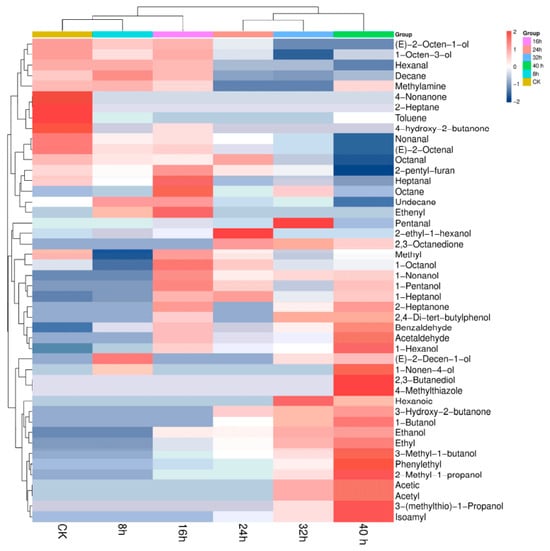
The volatile flavor compounds in fermented duck meat samples were analyzed by GC–MS and the results are listed in Table 1. A total of 51 volatile compounds were detected in the duck meat samples, including aldehydes, alcohols, ketones, esters, alkanes, and other substances. The results were visualized using a heat map in Figure 1 to facilitate a more effective comparison of the volatile components of fermented duck meat. On the heat map, darker blue indicates a lower concentration of volatile components, while darker red indicates a higher concentration. Compared with the control group, the variety and content of substances such as alcohols and esters in the fermented duck meat samples increased with prolonged fermentation time. The fermented duck meat contained more volatile flavor compounds than the control group, indicating that fermentation contributes significantly to the aroma and flavor of meat products.
Table 1.
The evolution of volatile compounds in fermented duck meat.
Figure 1.
Cluster analysis heatmap of volatile compounds in fermented duck meat.
Aldehydes are the principal products of lipid oxidation and amino acid degradation. Because of their fatty odor and low odor thresholds, aldehydes are regarded as important compounds contributing to the characteristic flavor of duck meat and other meat products. Hexanal imparts a grassy aroma at low concentrations, whereas it produces an oily, rancid odor at high concentrations. Hexanal is the most prominent volatile flavor compound in meat products, and its content is negatively correlated with acceptability [11]. During fermentation, compared with the control group, the hexanal content in the duck meat samples decreased significantly (p < 0.05) with prolonged fermentation time, declining from 11.2 ng/g to 2.7 ng/g by the end of fermentation. According to the research on meat odors, compounds such as heptanal, hexanal and pentanal are the main components causing the fishy odor in meat. In this study, the relative content of these compounds showed a downward trend. This indicates that the fermentation process helps reduce the intrinsic gamey odor of duck meat and the rancid off-flavor caused by lipid oxidation, thereby improving the flavor of the product. It has been reported [25] that in fermented duck legs, L. plantarum significantly inhibited lipid peroxidation, thereby reducing the TBAR value and the formation of hexanal.
In fermented duck meat, the diversity and concentration of alcohols increased progressively with fermentation duration. These alcohols primarily originate from the microbial reduction of lipid oxidation-derived aldehydes and the catabolism of amino acids and carbohydrates [26]. Alcohols significantly influence the aroma characteristics of fermented meat, imparting fruity, alcoholic, and earthy notes. Specifically, 1-hexanol was the predominant alcohol detected, contributing fruity aromas, while ethanol—the second most abundant—provided alcoholic notes. Ethanol is produced by the decarboxylation of pyruvate through the pyruvate decarboxylase enzyme and then it is reduced back to ethanol by the alcohol dehydrogenase enzyme. Consistent with previous findings [27], LAB fermentation has been shown to enhance alcohol content in meat products, thereby enriching flavor complexity. Notably, 1-octen-3-ol—a potent off-odorant with a low sensory threshold associated with lipid oxidation—decreased from 2.21 ng/g to 1.51 ng/g during fermentation. This reduction indicates that fermentation effectively mitigates key off-odorants, aligning with sensoric studies that identify microbial intervention as a viable strategy for inhibiting undesirable volatile compounds in duck meat. Consequently, the modulation of the volatile profile through fermentation not only reduces off-odors but also enhances the overall sensory quality of duck meat products.
Ketones in meat products are generally derived from lipid oxidation. 3-hydroxy-2-butanone was identified as the predominant ketone in fermented duck meat, which is a pivotal volatile flavor compound in fermented meat products. It mainly presents creamy and buttery notes, and can not only directly contribute to aroma formation, but also harmonize overall flavor and mask undesirable odors. In addition, 2,3-octanedione is formed via amino acid degradation or unsaturated fatty acid oxidation and also imparts typical creamy and buttery flavor characteristics.
Esters are commonly found in fermented foods, mainly including ethyl esters and acetates [28]. The contents of esters such as ethyl acetate increased in the late fermentation stage of duck meat, which could endow the product with fruity and floral–fruity aromas. 2-pentylfuran, the only furan compound detected in fermented duck meat, produces a potato-like flavor and is recognized as an oxidation product of ω-6 polyunsaturated fatty acids. Nevertheless, due to the low content of 2-pentylfuran and the high odor threshold, its impact on the final flavor of the fermented duck meat may be negligible [29].
3.1.2. E-Nose Analysis of Fermented Duck Meat
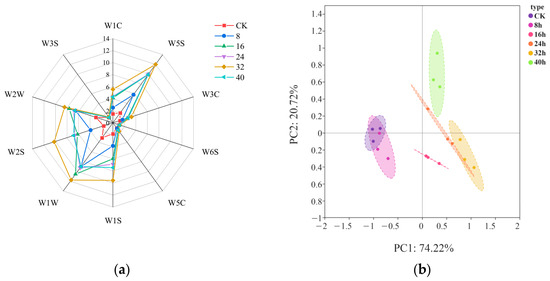
The radar chart of electronic nose response values for fermented duck meat is presented in Figure 2a. It can be observed from the radar fingerprint chart that the characteristic flavor of duck meat altered after fermentation. Differences in volatile compounds at various fermentation durations were mainly reflected in sensors W5S, W1S, W1W, W2S and W2W. As shown in Table 2, the contents of alcohols, aldehydes, ketones and aromatic substances produced by S. cerevisiae metabolism rose with prolonged fermentation time, causing obvious growth in response values of sensor W2S and W2W. High responses of W5S, W1S and W1W indicated increased levels of sulfide and nitrogen oxides. This was probably caused by microbial protease-mediated protein decomposition and amino acid hydrolysis, which destroyed protein frameworks and boosted nitrogen oxide generation.
Figure 2.
E-nose analysis: (a) the radar fingerprint of fermented duck meat; (b) principal component analysis of characteristic flavor of duck meat after being fermented.
Table 2.
Names and performance of electronic nose sensor arrays.
Principal component analysis (PCA) was indicated to response signals to further explore the effect of fermentation duration on flavor divergence of duck meat. As presented in Figure 2b, the contribution rate of the first principal component PC1 was 74.22%, and that of PC2 was 20.72%, with a cumulative contribution rate of 94.94%, which could reflect overall sample characteristics. The sample distribution shows a separation between the control group and the fermentation group, indicating remarkable flavor variations after fermentation. Samples fermented for 16 to 40 h gathered closely, suggesting similar flavor compositions.
3.2. Analysis of pH Value
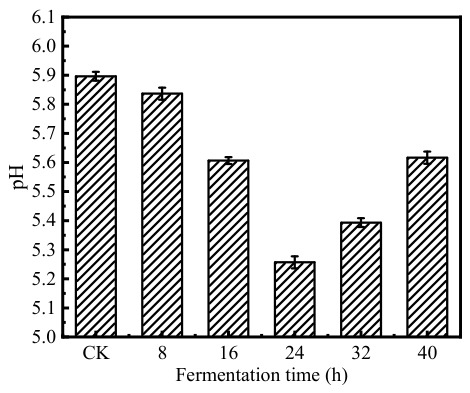
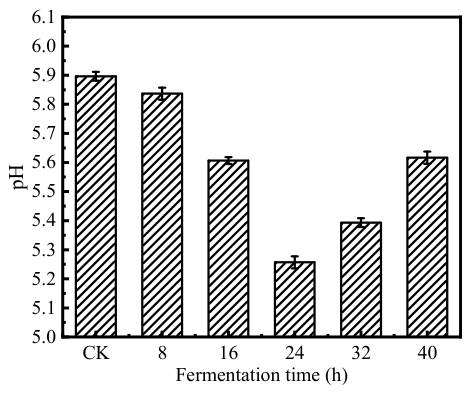
pH plays a crucial role in determining the freshness, flavor, and overall quality of meat products. Figure 3 depicts the pH dynamics of duck meat during fermentation. The pH decreased during the initial 24 h, followed by an increase. This initial decline in pH was primarily attributed to the accumulation of organic acids (e.g., lactic acid) resulting from carbohydrate fermentation by L. plantarum [30]. The resulting acidic environment inhibits the growth of spoilage and pathogenic microorganisms, thereby contributing to the microbial safety and extended shelf life of the fermented product [31]. The subsequent rise in pH during the later stages of fermentation may be associated with protein hydrolysis and the decomposition of amino acids [9]. Research indicates that excessive nitrogen sources, such as free amino acids, facilitate the metabolism of these amino acids by microorganisms into alkaline compounds—including ammonia and biogenic amines—which subsequently raise pH levels [32].
Figure 3.
The effect of fermentation time on the pH of duck meat.
3.3. Analysis of FAAs
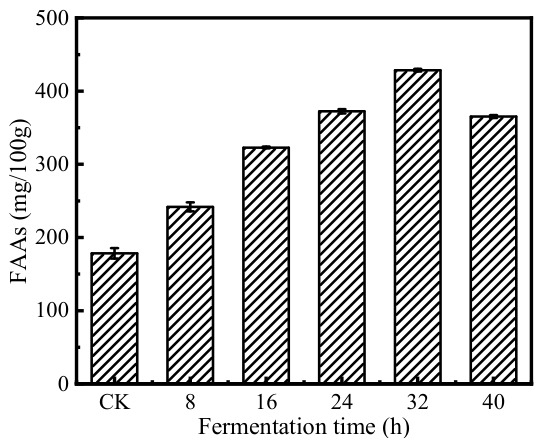
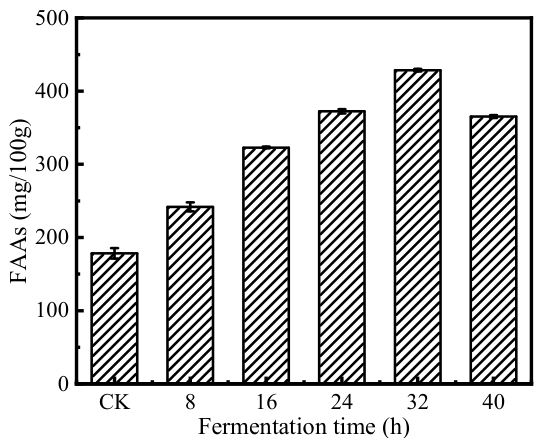
The FAAs are essential compounds that influence the flavor of fermented meat products and enhance both the taste and sensory texture of fermented duck meat. Figure 4 shows the changes in FAAs in duck meat at various fermentation periods. The concentration of FAAs was significantly higher in the fermented samples compared to the control group. Initially, the FAAs levels increased, followed by a decrease with extended fermentation. During the first 0 to 32 h, microorganisms rapidly produced acids and enzymes, resulting in a sharp increase in FAA content. From 32 to 40 h, although protein hydrolysis continued, the concentration of FAAs declined. This reduction occurred as microorganisms actively grew and utilized the abundant FAAs as high-quality nitrogen sources to support their growth, proliferation, and metabolism [33]. In summary, the fluctuations in FAA content during fermentation are both dynamic and complex. These variations not only determine the flavor characteristics of fermented foods but also reflect the extent of protein hydrolysis and microbial metabolism [34,35,36].
Figure 4.
The effect of fermentation time on the content of FAAs in duck meat.
3.4. Changes of TBARS in Fermented Duck Meat
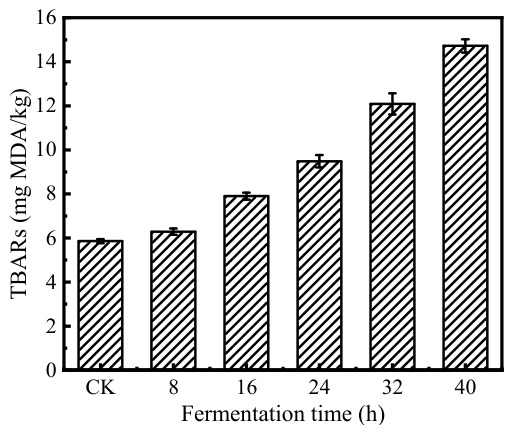
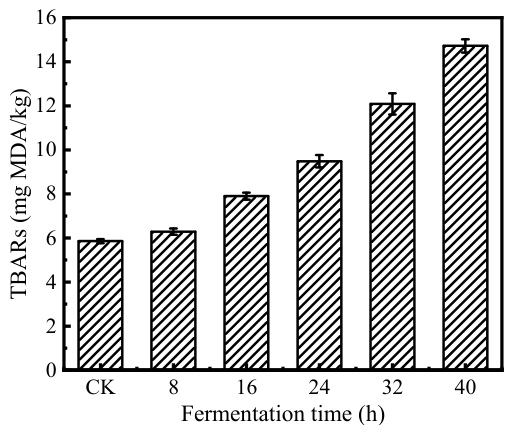
As shown in Figure 5, the TBAR values gradually increased during fermentation, rising from approximately 5.7 mg MDA/kg in the control group to approximately 14.5 mg MDA/kg after 40 h of fermentation. In comparison to the unfermented sample, the fermented duck meat demonstrated a sustained elevation in secondary lipid oxidation products, suggesting that microbial fermentation facilitated oxidative reactions during processing. The rise in TBAR may be linked to the metabolic activity of S. cerevisiae and L. plantarum, which can modify the microenvironment of fermented meat through acidification, enzymatic degradation, and substrate transformation, consequently influencing lipid oxidation pathways [37]. However, lipid oxidation during meat fermentation is a complex process. Although excessive oxidation generally leads to rancidity and undesirable flavor, moderate lipid oxidation contributes to the generation of volatile compounds associated with fermented meat flavor development [38,39]. In the present study, the increased TBAR values were accompanied by changes in volatile compounds detected by GC-MS. Notably, several lipid oxidation-derived aldehydes—including hexanal and 1-octen-3-ol—showed decreasing trends during fermentation, suggesting that secondary oxidation products may undergo further microbial transformation or participate in subsequent flavor-forming reactions rather than simply accumulating [40]. Similar changes have been reported in fermented meat products, where starter cultures influenced lipid metabolism and volatile compound formation during fermentation [41]. Compared with other fermented meat systems, the present study provides evidence that co-fermentation with S. cerevisiae and L. plantarum modifies lipid oxidation behavior in duck meat while contributing to flavor profile development.
Figure 5.
Effect of fermentation time on TBAR values of duck meat.
3.5. Changes in Texture Profile Characteristics of Fermented Duck Meat
Textural properties are generally associated with protein structure, moisture content, and muscle fibers in meat. The changes in texture parameters of inoculated fermented duck meat are presented in Table 3. Hardness and chewiness exhibited a continuous decline over the fermentation period. At 40 h, hardness decreased to 669.33 N, representing a reduction of 43.58% compared to the control group. Springiness and cohesiveness initially increased before declining, reaching their peaks at 0.79 and 0.56 at 24 h and 16 h, respectively, with increases of 64.58% and 40.0%. Inoculated fermentation resulted in reduced hardness and chewiness while simultaneously enhancing springiness and cohesiveness. These findings align with those of Xiao et al. [42], who indicated that fermentation improved the cohesiveness, springiness, and adhesiveness of fish meat. The observed changes in the textural properties of duck meat during fermentation, particularly the reductions in hardness and chewiness, are closely linked to microbial activities and the degradation of muscle proteins by secreted proteases [43]. This process disrupts the muscle fiber structure and enhances meat tenderness [44].
Table 3.
Effect of fermentation time on the texture characteristics of fermented duck meat.
3.6. Analysis of Protein Microstructure in Duck Meat Samples
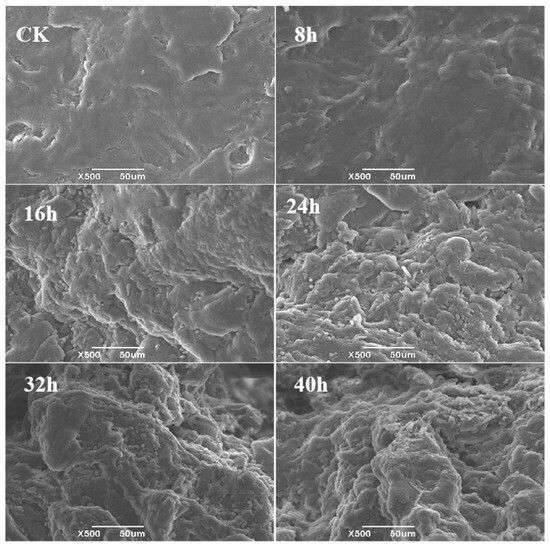
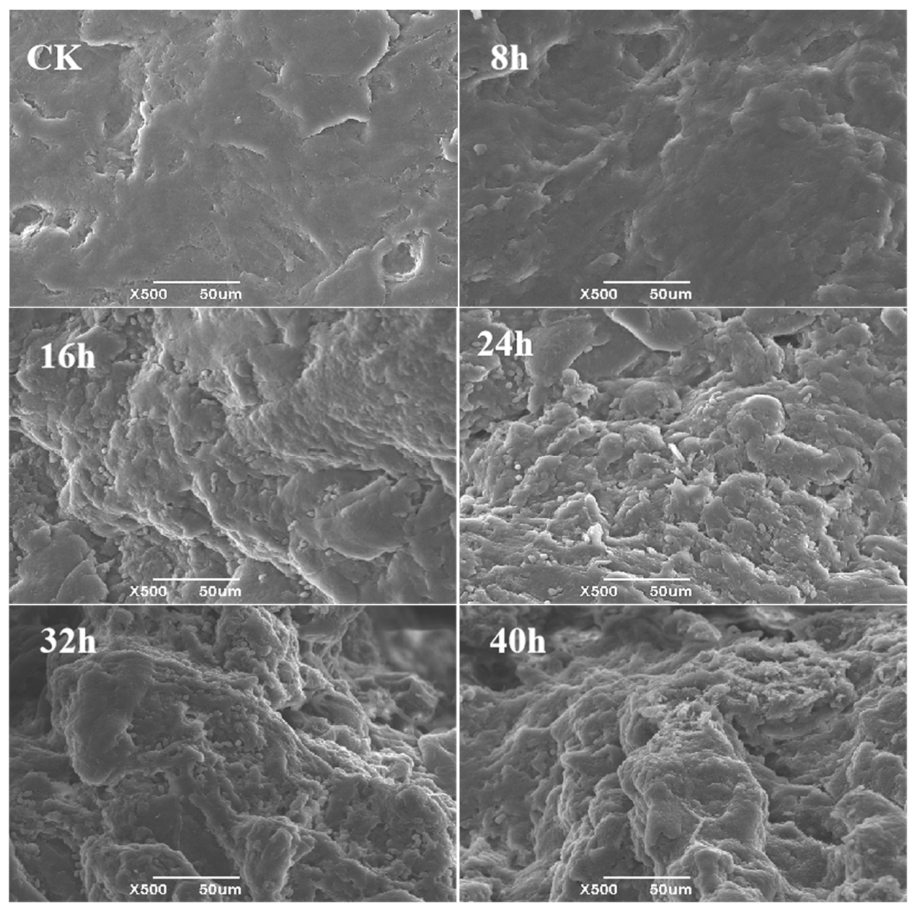
The evolution of microstructure in fermented meat results from the intricate interplay between microbial activity and enzymatic protein degradation. Scanning electron microscopy (SEM) images illustrate a distinct transition from a dense and compact structure to a rough and porous one. As depicted in the SEM images of fermented duck meat in Figure 6, the control group exhibited a relatively flat and compact microstructure. After 8 h of fermentation, the surface began to exhibit increased roughness, characterized by the emergence of depressions and pores. This surface roughness and porosity became more pronounced after 16 h. With further fermentation, the protein structure continued to loosen, resulting in a complex, irregular porous morphology. Microorganisms and their metabolites contributed to the breakdown of the compact protein structure, thereby accelerating protein degradation and leading to a progressively loose and intricate microstructure of duck meat [45]. The pore structure formed during fermentation significantly influences the texture and flavor of duck meat. Protein degradation creates numerous internal cavities and channels, enhancing water-holding capacity and reducing meat hardness [46].
Figure 6.
SEM images of duck meat sample. Magnification: 500×.
3.7. The Changes in Duck Meat Protein During Fermentation
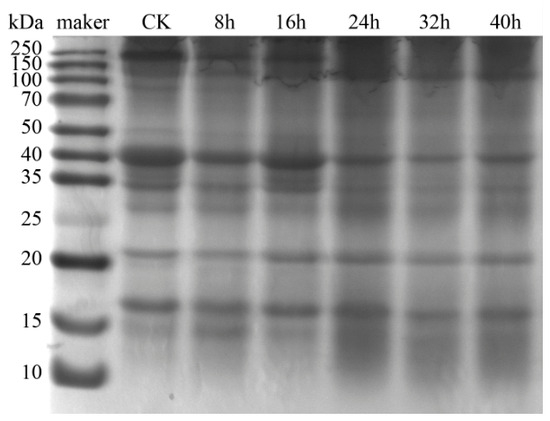
Myofibrillar protein (MP) primarily consists of myosin, actin, and actomyosin [47]. Myosin heavy chain (MHC) is one of the largest molecular weight proteins in muscle at approximately 200 kDa. Its degradation serves as a critical indicator of protein hydrolysis during fermentation. The SDS-PAGE (sodium dodecyl sulfate polyacrylamide gel electrophoresis) results for fermented duck meat samples are illustrated in Figure 7. The band intensity of MHC remained high during the early stages of fermentation but gradually diminished and ultimately disappeared due to protease degradation as fermentation progressed. The paramyosin band at 97.2 kDa faded after 16 h of fermentation. The MHC band, located near 200 kDa, became indistinct after 24 h, while new bands appeared around 150 kDa, representing intermediate products resulting from the degradation of MHC and other macromolecular proteins. Concurrently, the troponin band at 36 kDa progressively disappeared with extended fermentation. This observation indicates that myosin heavy chain and paramyosin were degraded during the initial fermentation stage. Subsequently, actin, tropomyosin, and myosin light chain (MLC) underwent varying degrees of degradation. This protein degradation is a crucial factor contributing to the development of flavor, the softening of texture, and the improvement of the nutritional value of fermented meat products [21,48,49].
Figure 7.
Electrophoresis profile of duck meat protein fractions during fermentation.
3.8. Effect of Fermentation on Secondary Structure of MP in Duck Meat
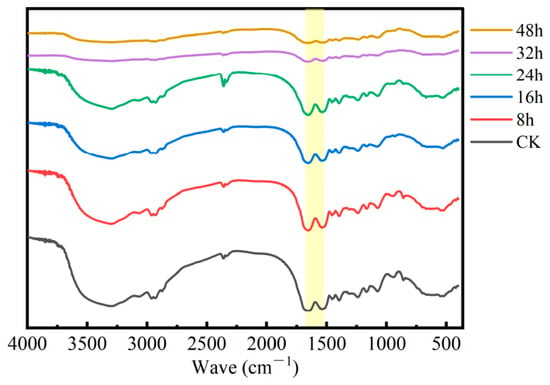
The secondary structure underpins protein functions, referring to specific spatial coiling and folding conformations of polypeptide chains. Different treatments alter the secondary structure of MP, further changing physicochemical properties. Figure 8 shows the FTIR spectra of duck meat MP within 4000~500 cm−1. The amide I band is the key region for secondary structure analysis, ranging from 1600~1700 cm−1. It originates from C=O stretching vibration of amide bonds and is highly sensitive to variations in α-helix, β-sheet, β-turn and random coil [50]. The amide II band ranges from 1500~1570 cm−1, mainly attributed to N-H bending vibration and C-N stretching vibration. Its spectral changes reflect the overall protein conformation and stability of hydrogen bond network [51].
Figure 8.
FTIR spectra of MP from fermented duck meat.
It can be observed from Figure 8 that the control group exhibited sharp and intense peaks, indicating intact native conformation of duck MP and the strong hydrogen bonding and vibrational activity of amide bonds. At the early fermentation stage of 8 h and 16 h, peak intensity declined and peak shape broadened. Enzymes generated by microbial metabolism began to degrade MP. Amide bond cleavage reduced functional group content, meanwhile protein conformation loosened and the hydrogen bond network was disrupted, disturbing N-H bending vibration and broadening spectral peaks [52].
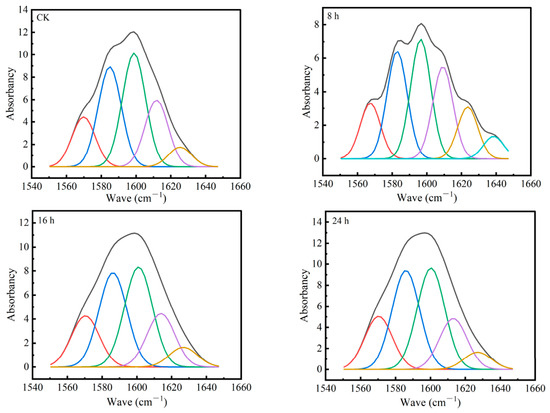
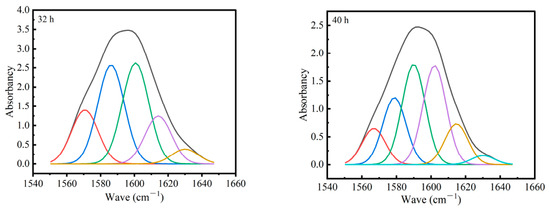
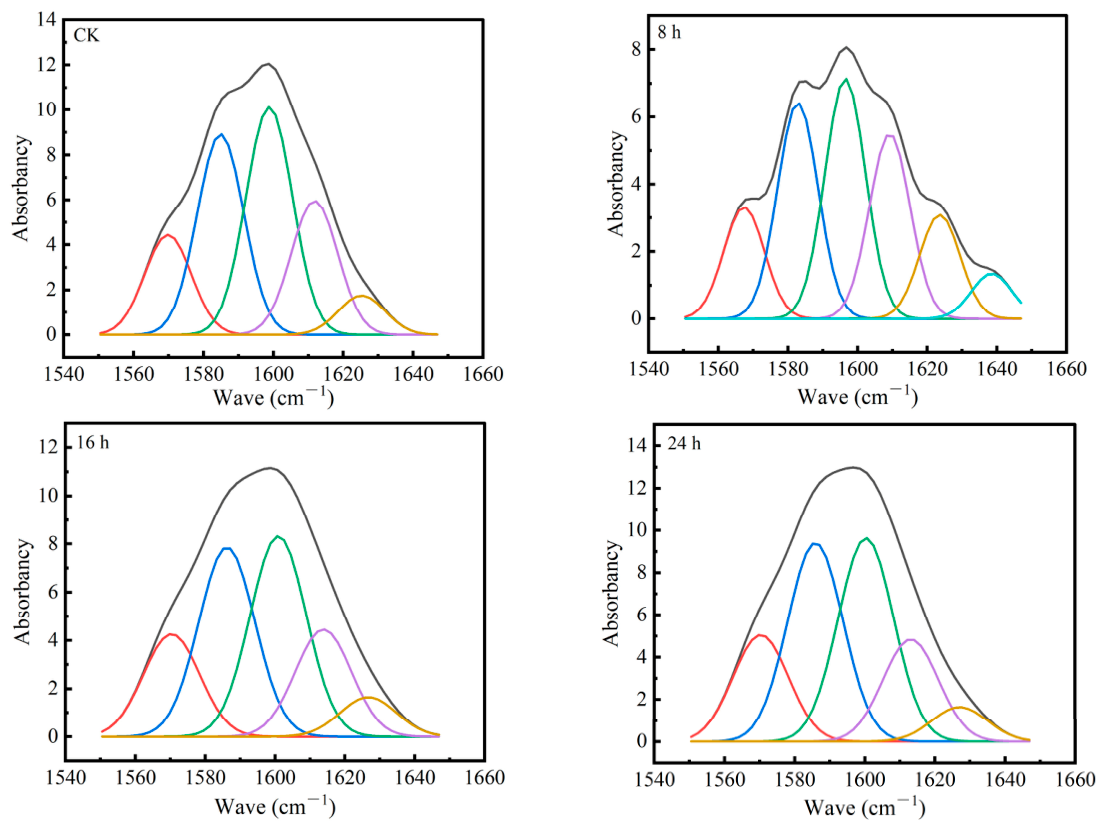
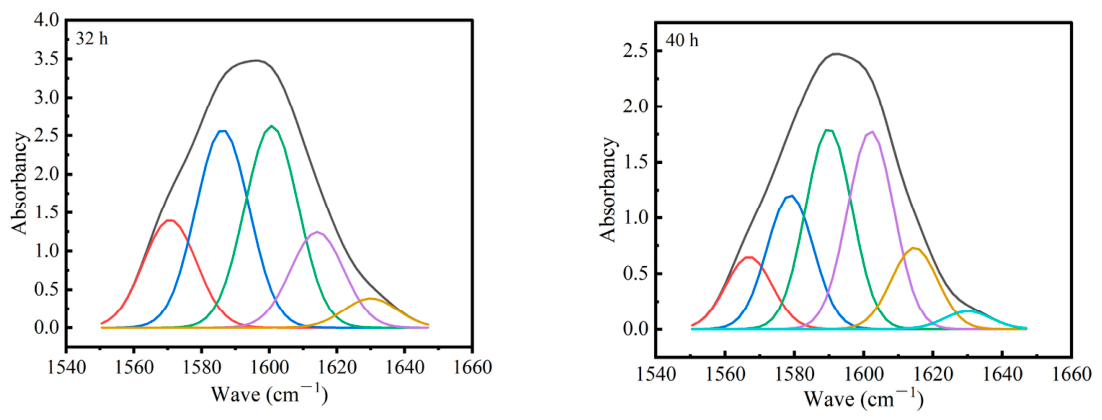
Baseline correction, second derivative calculation and deconvolution of Fourier transform infrared spectra were performed via PeakFit v4.12 (Systat Software, San Jose, CA, USA). Unnecessary sub-peaks were eliminated for fitting until the minimum residual error was achieved. The proportion of each secondary structure was calculated based on peak area. The corresponding relations between sub-peaks and secondary structures were as follows: α-helix at 1600~1610 cm−1, β-sheet at 1550~1590 cm−1, β-turn at 1610~1650 cm−1 and random coil at 1590~1600 cm−1. The curve-fitting spectrum of amide I band of fermented duck meat protein is shown in Figure 9.
Figure 9.
The curve-fitting spectrum of duck meat protein amide I band. The black lines represent the curve-fitting of the original spectrum, and each colored curve represents an individual deconvoluted subpeak for protein secondary structure fitting.
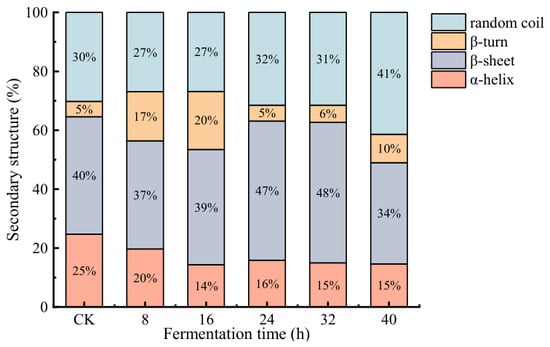
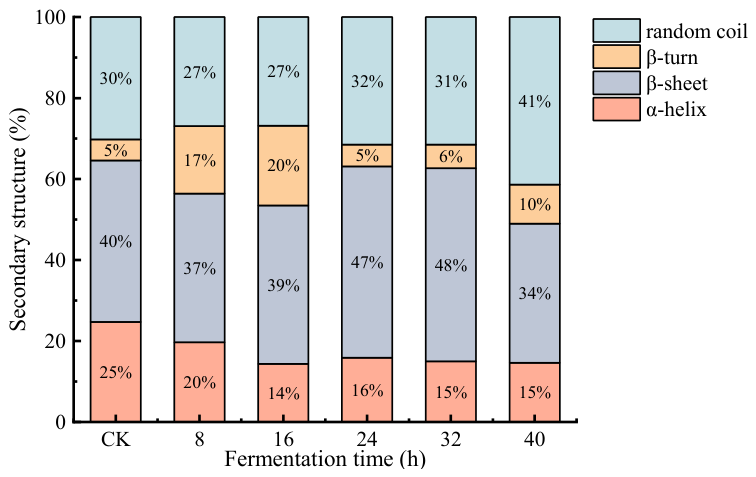
The impact of fermentation duration on the secondary structure content of MP in duck meat is illustrated in Figure 10. As fermentation progressed, the relative proportion of α-helix decreased, while the levels of β-sheet and random coil increased, indicating a gradual disordering of the ordered protein structure. The reduction of α-helix and the formation of β-sheet are indicative of protein unfolding [53]. The α-helix, which is stabilized by intramolecular hydrogen bonds, was compromised by proteolytic enzymes and the decreased pH during fermentation. Myosin underwent unfolding, exposing nonpolar groups, and a structural transformation from α-helix to β-sheet occurred through hydrogen bonding and hydrophobic interactions [22]. In the later stages of fermentation, excessive protein degradation resulted in the random coil becoming the predominant structure.
Figure 10.
Effect of different times on the content of secondary structure of duck meat MP.
4. Conclusions
In this study, basic physicochemical indicators of duck meat during mixed fermentation with S. cerevisiae and L. plantarum were monitored to comprehensively analyze the flavor profiles and textural properties of fermented duck meat, as well as to investigate the effects of fermentation on the variations in MP of duck meat. The results revealed that the interaction between S. cerevisiae and L. plantarum effectively reduced pH value during duck meat fermentation. Oxidation degree rose gradually with fermentation time, accompanied by increased TBAR value. The characteristic flavor compounds of fermented duck meat were identified. A total of 51 volatile compounds were detected, mainly including aldehydes, ketones, esters, and alcohols. The contents of volatile flavor substances, such as 1-hexanol, ethanol, ethyl acetate, and 3-hydroxy-2-butanone, increased significantly. Meanwhile, the concentrations of typical off-odor compounds in duck meat, including heptanal, hexanal, pentanal, and 1-octen-3-ol, decreased. These results indicated that the synergistic fermentation of S. cerevisiae and L. plantarum is an effective method to improve the flavor of duck meat. Furthermore, protein hydrolysis occurred in duck meat during fermentation, which was manifested by an increase in free amino acid content and variations in the band density of crude protein in SDS-PAGE. Fermentation reduced the α-helix content of proteins, while increasing the relative contents of β-sheet and random coil. Such structural alterations led to changes in duck meat texture. The loose protein structure reduced the hardness and chewiness of duck meat. This study clarified the variations in flavor and MP of duck meat during fermentation and provided novel insights for meat product processing. Meanwhile, the current study exclusively utilized instrumental detection to characterize flavor and textural alterations in fermented duck meat. The absence of subjective sensory evaluation to assess consumer acceptability represents a recognized limitation of this study. Subsequent investigations will incorporate sensory evaluation into the methodology. Moreover, further research should focus on the regulatory mechanism of microbial community succession on volatile flavor compounds and MP modifications in fermented duck meat.
Author Contributions
S.C.: Conceptualization, Methodology, Investigation, Data curation, Visualization, Formal analysis, Writing—original draft, Writing—review and editing. L.D.: Writing—review and editing, Methodology, Validation, Visualization. J.G.: Resources, Formal analysis, Writing—review and editing, Investigation. R.Z.: Software, Writing—review and editing, Formal analysis. J.C.: Conceptualization, Resources, Project administration, Writing—review and editing, Funding acquisition, Supervision. All authors have read and agreed to the published version of the manuscript.
Funding
This work was supported by National Natural Science Foundation of China (32302019); Research Fund for Key R&D projects in Hubei Province (2022BBA0053).
Institutional Review Board Statement
Not applicable.
Informed Consent Statement
Not applicable.
Data Availability Statement
The original contributions presented in this study are included in the article. Further inquiries can be directed to the corresponding authors.
Conflicts of Interest
The authors declare no conflicts of interest.
Abbreviations
The following abbreviations are used in this manuscript:
| FAAs | Free amino acids |
| FTIR | Fourier-transform infrared spectroscopy |
| GC–MS | Gas chromatography–mass spectrometry |
| MDA | malondialdehyde |
| SEM | Scanning electron microscope |
| SPME | Solid phase microextraction |
| SDS-PAGE | Sodium dodecyl sulfate polyacrylamide gel electrophoresis |
| TPA | Texture profile analysis |
| TBA | Thiobarbituric acid |
| TBAR | Thiobarbituric acid reactive substance |
| MP | Myofibrillar protein |
| MHC | Myosin heavy chain |
| MLC | Myosin light chain |
References
- Basic, M.; Ivanovic, J.; Mahmutovic, H.; Zenunovic, A.; Markovic, R.; Janjic, J.; Djordjevic, V.; Baltic, M. Duck meat in human nutrition. Tehnol. Mesa 2015, 56, 50–57. [Google Scholar] [CrossRef] [Scilit]
- Zhang, M.; Chen, M.; Fang, F.; Fu, C.; Xing, S.; Qian, C.; Liu, J.; Kan, J.; Jin, C. Effect of sous vide cooking treatment on the quality, structural properties and flavor profile of duck meat. Int. J. Gastron. Food Sci. 2022, 29, 100565. [Google Scholar] [CrossRef] [Scilit]
- Pu, D.; Shan, Y.; Zhang, L.; Sun, B.; Zhang, Y. Identification and Inhibition of the Key Off-Odorants in Duck Broth by Means of the Sensomics Approach and Binary Odor Mixture. J. Agric. Food Chem. 2022, 70, 13367–13378. [Google Scholar] [CrossRef] [Scilit] [PubMed]
- Ren, Y.; Wang, Y.; Zhang, Y.; Yang, Z.; Ma, Z.; Chen, J.; Chen, X.; Qiu, Z.; Tian, J.; Pu, A.; et al. Formation and regulation strategies for volatile off-flavor compounds in livestock meat, poultry meat, and their products: A comprehensive review. Trends Food Sci. Technol. 2024, 152, 104689. [Google Scholar] [CrossRef] [Scilit]
- Zhao, G.; Zhang, J.; Wang, S.; Yu, X.; Zhang, Q.; Zhu, C. Influence of heating temperatures and storage on the odor of duck meat and identification of characteristic odorous smell compounds. Food Chem. X 2024, 21, 101242. [Google Scholar] [CrossRef] [Scilit] [PubMed]
- Munekata, P.E.S.; Pateiro, M.; Tomasevic, I.; Domínguez, R.; da Silva Barretto, A.C.; Santos, E.M.; Lorenzo, J.M. Functional fermented meat products with probiotics—A review. J. Appl. Microbiol. 2022, 133, 91–103. [Google Scholar] [CrossRef] [Scilit] [PubMed]
- Ashaolu, T.J.; Khalifa, I.; Mesak, M.A.; Lorenzo, J.M.; Farag, M.A. A comprehensive review of the role of microorganisms on texture change, flavor and biogenic amines formation in fermented meat with their action mechanisms and safety. Crit. Rev. Food Sci. Nutr. 2021, 63, 3538–3555. [Google Scholar] [CrossRef] [Scilit] [PubMed]
- Hao, M.; Wang, W.; Zhang, J.; Chen, L. Flavour Characteristics of Fermented Meat Products in China: A Review. Fermentation 2023, 9, 830. [Google Scholar] [CrossRef] [Scilit]
- Wang, D.; Cheng, F.; Wang, Y.; Han, J.; Gao, F.; Tian, J.; Zhang, K.; Jin, Y. The Changes Occurring in Proteins during Processing and Storage of Fermented Meat Products and Their Regulation by Lactic Acid Bacteria. Foods 2022, 11, 2427. [Google Scholar] [CrossRef] [Scilit] [PubMed]
- Liu, M.; Luo, H.; Xiao, Q.; Chen, C.; Xu, B.; Li, P. Effect of Latilactobacillus sakei and Staphylococcus xylosus on the textural characteristics of dry fermented sausages. Food Biosci. 2024, 59, 103972. [Google Scholar] [CrossRef] [Scilit]
- Liu, Y.; Sun, D.; Peng, A.; Li, T.; Li, H.; Mu, B.; Wang, J.; Cui, M.; Piao, C.; Li, G. Hydrolysis of Beef Sarcoplasmic Protein by Dry-Aged Beef-Isolated Penicillium oxalicum and Its Associated Metabolic Pathways. Foods 2024, 13, 1038. [Google Scholar] [CrossRef] [Scilit] [PubMed]
- Cai, Z.; Ruan, Y.; He, J.; Dang, Y.; Cao, J.; Sun, Y.; Pan, D.; Tian, H. Effects of microbial fermentation on the flavor of cured duck legs. Poult. Sci. 2020, 99, 4642–4652. [Google Scholar] [CrossRef] [Scilit] [PubMed]
- Xu, Y.-X.; Jiang, Z.-D.; Du, X.-P.; Zheng, M.-J.; Fan-Yang, Y.; Ni, H.; Chen, F. The identification of biotransformation pathways for removing fishy malodor from Bangia fusco-purpurea using fermentation with Saccharomyces cerevisiae. Food Chem. 2022, 380, 132103. [Google Scholar] [CrossRef] [Scilit] [PubMed]
- Huang, L.; Hwang, C.-A.; Liu, Y.; Renye, J.; Jia, Z. Growth competition between lactic acid bacteria and Listeria monocytogenes during simultaneous fermentation and drying of meat sausages—A mathematical modeling. Food Res. Int. 2022, 158, 111553. [Google Scholar] [CrossRef] [Scilit] [PubMed]
- Duan, X.; Chen, S.; Duan, S.; Lan, C.; Yang, Z.; Cao, Y.; Miao, J. Antibiotic activities of the natural antimicrobial substance produced by Lactobacillus paracasei FX-6 against Pseudomonas putida. LWT 2020, 123, 109096. [Google Scholar] [CrossRef] [Scilit]
- Bai, W.; Mai, R.; Guo, S.; Li, X.; Zhao, W.; Yang, J. The contribution of inoculated probiotics to increased protein-derived volatile flavor compounds. Food Res. Int. 2023, 174, 113629. [Google Scholar] [CrossRef] [Scilit] [PubMed]
- Guo, B.; Wu, Q.; Jiang, C.; Chen, Y.; Dai, Y.; Ji, C.; Zhang, S.; Dong, L.; Liang, H.; Lin, X. Inoculation of Yarrowia lipolytica promotes the growth of lactic acid bacteria, Debaryomyces udenii and the formation of ethyl esters in sour meat. Food Microbiol. 2024, 119, 104447. [Google Scholar] [CrossRef] [Scilit] [PubMed]
- Liu, J.; Lin, C.; Zhang, W.; Yang, Q.; Meng, J.; He, L.; Deng, L.; Zeng, X. Exploring the bacterial community for starters in traditional high-salt fermented Chinese fish (Suanyu). Food Chem. 2021, 358, 129863. [Google Scholar] [CrossRef] [Scilit] [PubMed]
- Xie, Q.; Xu, B.; Xu, Y.; Yao, Z.; Zhu, B.; Li, X.; Sun, Y. Effects of different thermal treatment temperatures on volatile flavour compounds of water-boiled salted duck after packaging. LWT 2022, 154, 112625. [Google Scholar] [CrossRef] [Scilit]
- Zhou, M.; Liu, D.; Qiu, W.; Wang, C.; Yu, W.; Xiong, G.; Wang, L.; Shi, L.; Wu, W.; Chen, S.; et al. Lipidomics and GC-MS analyses of key lipids for volatile compound formation in crayfish meat under different thermal processing treatments. LWT 2023, 189, 115522. [Google Scholar] [CrossRef] [Scilit]
- Zhou, Y.; Zhang, Y.; Pang, G.; Wang, S. Effect of inoculation of starter on physicochemical properties and texture characteristics of fermented beef jerky. J. Food Process. Preserv. 2021, 45, e15744. [Google Scholar] [CrossRef] [Scilit]
- Piao, Y.-Z.; Bibat, M.A.D.; Hwang, S.-J.; Eun, J.-B. Protein degradation and texture properties of skate (Raja kenojei) muscle during fermentation. J. Food Sci. Technol. 2022, 59, 4713–4722. [Google Scholar] [CrossRef] [Scilit] [PubMed]
- Shang, S.; Wu, B.; Fu, B.; Jiang, P.; Liu, Y.; Qi, L.; Du, M.; Dong, X. Enzyme treatment-induced tenderization of puffer fish meat and its relation to physicochemical changes of myofibril protein. LWT 2022, 155, 112891. [Google Scholar] [CrossRef] [Scilit]
- Zhang, H.; Tang, D.; Yang, H.; Liu, X.; Cheng, J.; Wang, X.; Zou, J.; Lin, Y. Effects of high hydrostatic pressure assisted enzymatic tenderization on goose meat texture and myofibril protein. LWT—Food Sci. Technol. 2023, 184, 114845. [Google Scholar] [CrossRef] [Scilit]
- Chen, C.; Fan, X.; Hu, Y.; Zhou, C.; Sun, Y.; Du, L.; Pan, D. Effect of different salt substitutions on the decomposition of lipids and volatile flavor compounds in restructured duck ham. LWT—Food Sci. Technol. 2023, 176, 114541. [Google Scholar] [CrossRef] [Scilit]
- Xia, L.; Qian, M.; Cheng, F.; Wang, Y.; Han, J.; Xu, Y.; Zhang, K.; Tian, J.; Jin, Y. The effect of lactic acid bacteria on lipid metabolism and flavor of fermented sausages. Food Biosci. 2023, 56, 103172. [Google Scholar] [CrossRef] [Scilit]
- Yamashita, M.; Matsumoto, K.; Endo, T.; Ukibe, K.; Hosoya, T.; Matsubara, Y.; Nakagawa, H.; Sakai, F.; Miyazaki, T. Preventive Effect of Lactobacillus helveticus SBT2171 on Collagen-Induced Arthritis in Mice. Front. Microbiol. 2017, 8, 1159. [Google Scholar] [CrossRef] [Scilit] [PubMed]
- Gao, F.; Zhang, K.; Wang, D.; Xia, L.; Gu, Y.; Tian, J.; Jin, Y. Effect of Lactobacillus helveticus IMAUJBH1 on fat and volatile flavor substances in fermented mutton sausages. Food Chem. X 2024, 21, 101205. [Google Scholar] [CrossRef] [Scilit] [PubMed]
- Zhao, Q.; Shen, Q.; Guo, R.; Wu, J.; Dai, Z.-y. Characterization of Flavor Properties from Fish (Collichthys niveatus) Through Enzymatic Hydrolysis and the Maillard Reaction. J. Aquat. Food Prod. Technol. 2016, 25, 482–495. [Google Scholar] [CrossRef] [Scilit]
- Nie, X.; Zhang, Q.; Lin, S. Biogenic amine accumulation in silver carp sausage inoculated with Lactobacillus plantarum plus Saccharomyces cerevisiae. Food Chem. 2014, 153, 432–436. [Google Scholar] [CrossRef] [Scilit] [PubMed]
- Lv, J.; Xu, W.; Ji, C.; Liang, H.; Li, S.; Yang, Z.; Zhang, S.; Lin, X. Relationships between the bacterial diversity and metabolites of a Chinese fermented pork product, sour meat. Int. J. Food Sci. Technol. 2021, 56, 2742–2750. [Google Scholar] [CrossRef] [Scilit]
- Ding, S.; Tian, M.; Yang, L.; Pan, Y.; Suo, L.; Zhu, X.; Ren, D.; Yu, H. Diversity and dynamics of microbial population during fermentation of gray sufu and their correlation with quality characteristics. LWT—Food Sci. Technol. 2023, 180, 114711. [Google Scholar] [CrossRef] [Scilit]
- Kaveh, S.; Hashemi, S.M.B.; Abedi, E.; Amiri, M.J.; Conte, F.L. Bio-Preservation of Meat and Fermented Meat Products by Lactic Acid Bacteria Strains and Their Antibacterial Metabolites. Sustainability 2023, 15, 10154. [Google Scholar] [CrossRef] [Scilit]
- Xiao, N.; Xu, H.; Guo, Q.; Shi, W. Effects of flavourzyme addition on protein degradation and flavor formation in grass carp during fermentation. J. Food Biochem. 2022, 46, e14405. [Google Scholar] [CrossRef] [Scilit] [PubMed]
- Tian, Z.; Zhu, Q.; Chen, Y.; Zhou, Y.; Hu, K.; Li, H.; Lu, K.; Zhou, J.; Liu, Y.; Chen, X. Studies on Flavor Compounds and Free Amino Acid Dynamic Characteristics of Fermented Pork Loin Ham with a Complex Starter. Foods 2022, 11, 1501. [Google Scholar] [CrossRef] [Scilit] [PubMed]
- Wang, W.; Xia, W.; Gao, P.; Xu, Y.; Jiang, Q. Proteolysis during fermentation of Suanyu as a traditional fermented fish product of China. Int. J. Food Prop. 2017, 20, S166–S176. [Google Scholar] [CrossRef] [Scilit]
- Chen, H.; Liu, L.; Jiang, L.; Hu, W.; Cen, Q.; Zhang, R.; Hui, F.; Li, J.; Zeng, X. Effect of L. Plantarum Y279 and W. Cibaria Y113 on microorganism, lipid oxidation and fatty acid metabolites in Yu jiaosuan, A Chinese tradition fermented snack. Food Chem. X 2024, 21, 101246. [Google Scholar] [CrossRef] [Scilit] [PubMed]
- Chen, Q.; Kong, B.; Han, Q.; Xia, X.; Xu, L. The role of bacterial fermentation in lipolysis and lipid oxidation in Harbin dry sausages and its flavour development. LWT 2017, 77, 389–396. [Google Scholar] [CrossRef] [Scilit]
- Liu, Y.; Cao, Y.; Yohannes Woldemariam, K.; Zhong, S.; Yu, Q.; Wang, J. Antioxidant effect of yeast on lipid oxidation in salami sausage. Front. Microbiol. 2023, 13, 1113848. [Google Scholar] [CrossRef] [Scilit] [PubMed]
- Liu, Y.; Xiao, Y.; Feng, W.; Mo, Z. Bacterial community succession and its correlation with the dynamics of flavor compound during processing of Enshi bacon. Food Biosci. 2024, 62, 105337. [Google Scholar] [CrossRef] [Scilit]
- Jia, D.; Zhang, J.; Jin, S.; Luo, S.; Ma, Y.; Quek, S.-Y.; Yan, D.; Dong, X. Changes of physicochemical and volatile flavor compounds of dry-cured Diqing Tibetan pig hams during fermentation. Food Res. Int. 2024, 197, 115136. [Google Scholar] [CrossRef] [Scilit] [PubMed]
- Xiao, H.; Feng, T.; Yu, J.; Hu, M.; Liu, H.; Jiang, X.; Zhang, T.; Xue, Y.; Xue, C. Development of room-temperature fermented stinky sea bass and novel insights into its physicochemical and flavor formation and microbial diversity. Food Biosci. 2023, 56, 103089. [Google Scholar] [CrossRef] [Scilit]
- Fadda, S.; Vildoza, M.J.; Vignolo, G. THE ACIDOGENIC METABOLISM OF LACTOBACILLUS PLANTARUM CRL 681 IMPROVES SARCOPLASMIC PROTEIN HYDROLYSIS DURING MEAT FERMENTATION. J. Muscle Foods 2010, 21, 545–556. [Google Scholar] [CrossRef] [Scilit]
- Zhou, Y.; Ma, Y.; Yao, G.; Li, J.; Wang, S. Changes of protein composition and its relevance with textural properties during processing of fermented solid beef. J. Food Process. Preserv. 2017, 41, e13224. [Google Scholar] [CrossRef] [Scilit]
- Meng, D.; Liu, S.; Zhao, L.; Li, M.; Zhu, Y.; Lee, J.-H.; Sun, L.; Liang, D.; Liu, Y.; Ma, Y.; et al. Protein change based on spectral analysis: Effect of fermentation process on the degradation and multistage structure of sour meat proteins. J. Food Compos. Anal. 2025, 144, 107619. [Google Scholar] [CrossRef] [Scilit]
- Feng, J.; Luo, Y.; Su, Y.; Fang, C.; Huo, J.; Liu, S.; Lin, H.; Benjakul, S.; Zhang, B. Sous vide processing: Influence on the binding capacity of Litopenaeus vannamei myofibrillar protein to two flavor compounds (succinic acid and 1-octen-3-Ol). Food Chem. 2026, 504, 147915. [Google Scholar] [CrossRef] [Scilit] [PubMed]
- Sun, F.; Wang, H.; Liu, Q.; Xia, X.; Chen, Q.; Kong, B. Proteolysis and quality characteristics of Harbin dry sausages caused by the addition of Staphylococcus xylosus protease. Food Chem. 2022, 404, 134692. [Google Scholar] [CrossRef] [Scilit] [PubMed]
- Yang, F.; Xia, W.-S.; Zhang, X.-W.; Xu, Y.-S.; Jiang, Q.-X. A comparison of endogenous and microbial proteolytic activities during fast fermentation of silver carp inoculated with Lactobacillus plantarum. Food Chem. 2016, 207, 86–92. [Google Scholar] [CrossRef] [Scilit] [PubMed]
- Basso, A.L.; Picariello, G.; Coppola, R.; Tremonte, P.; Musso, S.S.; Luccia, A.D. PROTEOLYTIC ACTIVITY OF LACTOBACILLUS SAKEI, LACTOBACILLUS FARCIMINIS AND LACTOBACILLUS PLANTARUM ON SARCOPLASMIC PROTEINS OF PORK LEAN. J. Food Biochem. 2004, 28, 195–212. [Google Scholar] [CrossRef] [Scilit]
- Li, L.; Zhang, Q.; Yuan, X.; Yang, H.; Qin, S.; Hong, L.; Pu, L.; Li, L.; Zhang, P.; Zhang, J. Study of the molecular structure of proteins in fermented Maize-Soybean meal-based rations based on FTIR spectroscopy. Food Chem. 2024, 441, 138310. [Google Scholar] [CrossRef] [Scilit] [PubMed]
- Li, J.; Lu, S.; Wu, S.; Zhang, W.; Hua, M.; Pan, B. The breakdown of protein hydrogen bonding networks facilitates biotransformation of protein wastewaters during anaerobic digestion methanogenesis: Focus on protein structure and conformation. Environ. Res. 2022, 208, 112735. [Google Scholar] [CrossRef] [Scilit] [PubMed]
- Sun, W.; He, W.; Guo, D.; Xu, W. Effect of Capsaicin and Dihydrocapsaicin in Capsicum on Myofibrillar Protein in Duck Meat. Foods 2023, 12, 3532. [Google Scholar] [CrossRef] [Scilit] [PubMed]
- Zhao, S.; Li, Z.; Liu, Y.; Zhao, Y.; Yuan, X.; Kang, Z.; Zhu, M.; Ma, H. High-pressure processing influences the conformation, water distribution, and gel properties of pork myofibrillar proteins containing Artemisia sphaerocephala Krasch gum. Food Chem. X 2022, 14, 100320. [Google Scholar] [CrossRef] [Scilit] [PubMed]

Disclaimer/Publisher’s Note: The statements, opinions and data contained in all publications are solely those of the individual author(s) and contributor(s) and not of MDPI and/or the editor(s). MDPI and/or the editor(s) disclaim responsibility for any injury to people or property resulting from any ideas, methods, instructions or products referred to in the content. |
© 2026 by the authors. Licensee MDPI, Basel, Switzerland. This article is an open access article distributed under the terms and conditions of the Creative Commons Attribution (CC BY) license.