Article

Bioaugmentation Anaerobic Digestion of Huangshui by Saccharomyces cerevisiae

1
College of Environmental Science and Engineering, Qilu University of Technology (Shandong Academy of Sciences), Jinan 250353, China
2
College of Environment and Safety Engineering, Qingdao University of Science and Technology, Qingdao 266042, China
*
Author to whom correspondence should be addressed.
†
These authors contributed equally to this work.
Fermentation 2026, 12(8), 375; https://doi.org/10.3390/fermentation12080375
Submission received: 29 June 2026 / Revised: 1 August 2026 / Accepted: 7 August 2026 / Published: 9 August 2026
(This article belongs to the Section Industrial Fermentation)

Abstract

Huangshui (HS) is rich in organic matter from Baijiu production. Anaerobic digestion (AD) of HS offers a hopeful strategy for efficient waste utilization and energy recovery. However, high organic load often causes low methane (CH4) yield and process instability. The aim of this study was to explore the mechanism of Saccharomyces cerevisiae (S. cerevisiae) to favor AD systems for more CH4. And the results revealed that with an inoculation at 8% (v/v) addition of S. cerevisiae, CH4 yield was 219.7 mL/g COD, representing a 20% increase compared to the control without S. cerevisiae. The main manifestation of augmentation was the increased bioavailability of dissolved organic compounds. In addition, the ethanol produced by S. cerevisiae under anaerobic conditions served as an electron donor to supply metabolic intermediates supporting methanogenesis, enriching Bacteroidetes_vadinHA17, Longilinea and Methanosaeta. This strategy promoted organic matter degradation and increased CH4 yield, favoring the efforts of the industry to reduce pollution and carbon emissions.

1. Introduction

Baijiu, a famous traditional Chinese liquor with a long history, is made by natural microbial brewing technology and fermented with pure grain through traditional craftsmanship [1,2]. It is rich in a variety of trace components like organic acids, esters, phenols and trace minerals. During fermentation, free water gradually seeps into the bottom of the fermentation pit as the various components dissolve, eventually forming Huangshui (HS) wastewater [2]. Typically, approximately 0.3–0.4 tons of HS are produced for one ton of Baijiu yield [3]. In terms of composition, it contains large number of organic compounds, including nitrogen compounds, organic acids and some residual microbes from the Baijiu fermentation process [4]. If HS is released into water bodies without appropriate treatment, it can lead to oxygen depletion and aquatic organism death in the natural water body [3].
HS contains soluble and readily biodegradable organic constituents, being commonly treated with anaerobic digestion (AD) [5]. AD facilitates effective management of organic constituents and promotes energy recovery via methane (CH4) generation [6,7]. CH4 can serve as a fuel to generate electricity, thus contributing to the sustainability of Baijiu production. The AD process generally produces biogas with 50–70% CH4, which is purified and pressurized to be delivered to the gas network for daily use by residents [8]. During AD, organic matter is converted to CH4 through a series of reactions (hydrolysis, acidogenesis, acetogenesis and methanogenesis). In the AD process, acid-producing bacteria catalyze the hydrolysis of organic matter in wastewater, leading to the formation of volatile organic acids (VFAs) or hydrogen (H2) [8]. The methanogens then use the acetic acid (HAc) and carbon dioxide (CO2) in these substrates to further convert them to CH4, thereby achieving energy recovery. In essence, the products of one microbial group can serve as the substrates for subsequent microbial groups [9]. Due to the significant differences in physiological characteristics, nutritional requirements and environmental sensitivity of different microbes, conventional single-stage AD is difficult to maintain the balance between acid-producing bacteria and methanogens, likely causing VFAs accumulation and process instability. The accumulation of VFAs is one of the factors that lower the pH value of AD system beyond the suitable growth range of methanogens [8]. And the activity of methanogens is inhibited, leading to a decrease in CH4 yield [8]. The CH4 production efficiency of AD can be improved by alleviating acid inhibition, generally by adding alkaline substances such as NaOH and K2CO3 to react with VFAs. However, this method is costly and has the risk of inducing Na+ and K+ inhibition.
Bioaugmentation can improve CH4 yield rate and process stability, and shorten AD time [10,11]. Due to its ability to resist osmotic pressure, acidity, and possession of high metabolic efficiency, yeast is utilized in the treatment of wastewater with high organic loads, especially those containing toxic and refractory pollutants [12]. A previous study showed that adding Saccharomyces cerevisiae (S. cerevisiae) strains to AD systems for food waste treatment can increase CH4 production, where CH4 yield of the 2% S. cerevisiae group increased by 33.2% compared with the control yield without S. cerevisiae. It serves as a reliable agent for ethanol (EtOH) production [13]. The yeast in the AD process can convert degradable organic matter (e.g., glucose) in the substrate to EtOH instead of propionic acid (HPr) and butyric acid (HBu). EtOH is a vital precursor for methanogen. After being converted into HAc and H2/CO2 by H2- and HAc-producing bacteria, it is efficiently converted into CH4 by methanogen, obtaining more CH4. Thus, it can reduce the burden of VFAs accumulation in AD [8]. Moreover, EtOH can be further converted into HAc that can be used by methanogens, raising CH4 yield and AD stability. EtOH pre-fermentation as a vital part of biological process promoted the hydrolysis efficiency of AD by adding yeast to the substrate [14]. Interestingly, a previous study revealed that EtOH pre-fermentation stimulated direct interspecies electron transfer (DIET) in methanogenic communities, and raised sludge conductivity after AD process [15]. EtOH can act as an electron donor, promoting microbial electron transfer efficiency and CH4 production [16]. S. cerevisiae was used to pretreat some waste, for subsequent AD process, but S. cerevisiae and anaerobes worked together in this work.
The AD of wastewater mixtures (e.g., winery wastewater with sewage sludge) has demonstrated potential to enhance CH4 yield by optimizing feedstock ratios [6]. The process can deal with the effective treatment of winery wastewater, and integrate it with activated sludge, having low-cost advantages for investors [17]. The nutrients and trace elements in winery wastewater increased microbial diversity and enzymatic activity in sludge, promoting symbiotic and syntrophic relationships [6]. Notably, variations in feedstock mixing ratios affect the structure of the methanogenic archaea community, which in turn affects the overall efficiency of AD process [6]. Inhibition triggered by inappropriate raw material ratios can disrupt AD process, leading to organic overload and acidification of AD system [18]. Thus, exploring changes in microbial communities is vital to understand the effect of substrate on CH4 yield. AD systems can also exhibit complexity owing to the unique chemical properties of some substrates. So, it is crucial to determine optimal parameters, evaluating the extent of substrate degradation, and identifying potential limiting factors of CH4 yield. However, relatively few studies have been conducted on the direct addition of S. cerevisiae to AD systems. Therefore, it is critical to determine the optimal parameters to assess the extent of substrate degradation as well as to identify potential adverse factors affecting CH4 yield.
The aims of this work are (a) to evaluate the impact of different feedstock ratios and S. cerevisiae on CH4 yield, (b) to explain how S. cerevisiae affects the AD pathway and distribution of extracellular polymeric substances (EPS), (c) to reveal the effects of S. cerevisiae on microbial communities, (d) to elucidate the main role of S. cerevisiae in AD and provide theoretical guidance for improving CH4 yield in the future.

2. Materials and Methods

2.1. Characteristics of Anaerobic Sludge, Baijiu HS and S. cerevisiae

In this work, Baijiu HS and anaerobic sludge were used as inoculums. The CH4 yield from Baijiu HS was evaluated by setting different volume ratios under mesophilic condition. Then, the influence of yeast addition was explored by adding S. cerevisiae to the AD system of Baijiu HS.
Anaerobic sludge was gathered from a citric acid wastewater treatment plant of a company in Shandong Province. 2 L of raw sludge was placed in culture equipment (Guohua Instrument, Changzhou, China) at 37 ± 0.5 °C. 1.0 g glucose was added to culture for 20–25 days for enriching anaerobic microbes, which was the inoculum for the subsequent AD and its physical and chemical properties were as follows: pH 7.0 ± 0.1, chemical oxygen demand (COD) 13,022.7 ± 633.8 mg/L, ammonia nitrogen (NH4+-N) 632.8 ± 47.5 mg/L, total organic carbon (TOC) 2843 ± 108 mg/L and inorganic carbon (IC) 736 ± 2.8 mg/L. Baijiu HS came from a liquor factory in Linyi (Shandong, China); its physicochemical properties are as follows: pH 3.75 ± 0.05, COD 26,7120 ± 2000 mg/L, NH4+-N 2167 ± 61 mg/L, TOC 67,400 ± 1150 mg/L, total nitrogen (TN) 3598 ± 50 mg/L, and total phosphorus (TP) 1898 ± 10 mg/L. And Baijiu HS is rich in organic acids like lactic acid (LA) (68,845 ± 730 mg/L), propionic acid (HPr) (3982 ± 133 mg/L), HAc (14,109 ± 274 mg/L), HBu (492 ± 86 mg/L) and EtOH (1371 ± 120 mg/L), containing glucose of 1021 ± 82 mg/L. In addition, S. cerevisiae came from China Angel Yeast Company (Yichang, Hubei Province, China).

2.2. Batch Experimental Design

Batch AD was carried out in two sets of experiments using 500 mL serum vials with 100 mL anaerobic sludge and 125 mL headspace in each AD reactor. S. cerevisiae was first inoculated in yeast extract peptone dextrose medium (YPD) at 30 °C for 12 h as inoculum. Two AD groups were designed, labeled as groups A and B. Group A without S. cerevisiae and group B with activated S. cerevisiae. Group A was set up with different HS to inoculate sludge for volume ratios of 1:1, 1:1.5, 1:5, 1:10 and 1:15. The inoculated amount of S. cerevisiae in group B was 4%, 5%, 6%, 7% and 8% (v/v), and other components were assembled the same as group A. The rationale for selecting the inoculation levels (4–8%, v/v) was based on the pre-experiment effect and cost analysis. In addition, the pH of each reactor was adjusted to 7.0 ± 0.1 with 2 M NaOH and 2 M HCl. The reactors were swept with nitrogen for 1.0 min to ensure an anaerobic environment, incubated in a water bath at 37 °C for 15 d. CH4 yield was recorded every 24 h with 2–3 mL of supernatant being collected for further analysis. By using a 10% NaOH solution, the H2S and CO2 in biogas were absorbed, obtaining CH4, which was then converted to CH4 yield under standard conditions.

2.3. Kinetic Analysis

The evaluation of CH4 production kinetics by modified Gompertz model (Equation (1)) was obtained [19]:
Y ( t ) = P m e x p { − exp R m · e P m λ − t + 1 }
Here Y represented the cumulative CH4 yield (mL/g COD) at t (h), Pm described the maximum CH4 yield (mL/g COD), Rm revealed the maximum CH4 yield rate (mL/g COD·h), e = 2.718, λ was related to the lag time (h) and t was AD time (d).

2.4. Liquid Sample Analysis

COD, N H 4 + -N, TN and TP were determined according to a previous study [20]. TOC and IC were determined by a total organic carbon analyzer (LCPHCN200, Shimadzu, Kyoto, Japan). Protein and polysaccharides were measured by Kaumas Brilliant Blue and phenol sulfuric acid method [21]. The determination of the electron transfer capacity of fermentation broths by cyclic voltammetry (CV). The CV curve was revealed using an electrochemical workstation (Chenhua, Shanghai, China). CV was measured with 50 mL of AD broth in an electrolytic cell with a scanning voltage of −1–1 V and scanning rates of 20, 40, 60, 80 and 100 mV/s, where graphite was the working electrode, platinum sheet was the counter electrode and Ag/AgCl was the reference electrode. In addition, the sludge conductivity after AD was measured by conductivity meter (HQ40d HACH, Loveland, CO, USA).
Dissolved organic matter was determined via 3D-fluorescence spectrometer (E-7100, Hitachi, Tokyo, Japan). The thermal method was used to extract EPS, where the procedure was as follows [22]. Sludge samples were centrifuged at 6000 r/min for 8 min, followed by washing three times with phosphate buffer (39% NaH2PO4 and 61% NaHPO4, pH 7). Following the treatment of the samples at 80 °C for 15 min to enrich EPS, the samples were then centrifuged at 8000 r/min for 8 min. Meanwhile, the supernatant was collected and filtered with 0.22 μm filter membrane for subsequent analysis. The wavelengths of excitation (Ex) and emission (Em) were 200–600 nm, the scanning rate was 1200 nm/min with scanning interval of 5 nm. Coenzyme F420 was extracted from 5 mL of well-mixed sludge sample by centrifugal washing (6000 rpm, 10 min) with phosphate-buffered saline (pH 7.4), followed by resuspension in 5 mL of 50 mM Tris-HCl buffer (pH 7.5). The cells were disrupted by ultrasonication (20 kHz, 10 min, ice bath). After centrifugation at 12,000 rpm for 15 min at 4 °C, the supernatant was collected. The absorbance of the supernatant was measured at 420 nm using a UV-Vis spectrophotometer (Shimadzu, Kyoto, Japan). A standard curve was established using commercial coenzyme F420 (Sigma-Aldrich, St. Louis, MO, USA) with concentrations ranging from 0 to 200 µM (R2 > 0.999). The F420 content was expressed as µmol/g of volatile suspended solids (VSS). In addition, high-performance liquid chromatography equipped with a refractive index detector (HPLC20-AT, Shimadzu, Japan) was used to measure the soluble microbial products of glucose, HAc, HPr, HBu, EtOH and lactic acid (LA). The mobile phase was 5 mM sulfuric acid at flow rate of 0.6 mL/min. The column was Aminex HPX-87H column (Bio-Rad Laboratories Inc., Shanghai, China).

2.5. High-Throughput 16S rRNA Sequencing

The 16S rRNA high throughput was used to analyze the sludge samples from the 1:5 group and the inoculation at 4% and 8% groups to reveal the diversity of sludge microbial community. The standard V3–V4 regions were selected for amplicon building for bacteria. The upstream and downstream primers for PCR amplification were ACTCCTACGGGAGGCAGCA and GGACTACHVGGGTWTCTAAT. The standard V4–V5 regions were selected for amplicon building for archaea. The upstream and downstream primers for PCR amplification were TGYCAGCCGCCGCGGTAA and YCCGGCGTTGAVTCCAATT. And other details were described in a previous study [22].

2.6. Statistical Analysis

Each experiment was repeated three times. The results were expressed as mean ± standard deviation. One-way ANOVA was carried out using Origin 2024b software and was considered statistically significant when p < 0.05.

3. Results and Discussion

3.1. Effect of Different Feedstock Ratios and S. cerevisiae Additions on CH4 Yield

CH4 yield visually reveals AD performance. Figure 1a,b shows CH4 yield under various feedstock ratios and S. cerevisiae additions. The cumulative CH4 yield is arranged in descending order as follows: with the highest yield of 175.59 mL/g COD in the 1:5-group, followed by the 1:10 (162.7 mL/g COD) group and 1:15 (147.87 mL/g COD) group. The CH4 yields were low in 1:1 and 2:3 groups with 26.6 mL/g COD and 41.3 mL/g COD, respectively. This might be due to incompatible mixing ratios of the ingredients, leading to the acidification and failure of AD processes. In this work, different additions of S. cerevisiae were added to the AD system using a 1:5 raw material ratio along with the control group without S. cerevisiae. CH4 yield increased gradually with the increase in S. cerevisiae additions. When S. cerevisiae inoculation rate was 8% (v/v), CH4 yield was 219.7 mL/g COD, being 20% higher than that of the control yield. This revealed that CH4 yield would increase compared with the control without S. cerevisiae, being same as the previous study [23].
Figure 1c,d illustrates the influence of different feedstock ratios and S. cerevisiae additions on CH4 production rate, respectively. As shown in Figure 1c, CH4 production rates peaked on day 3 in the groups with feedstock ratios of 1:1, 2:3, 1:10 and 1:15, which were 4.33, 8.43, 2.11 and 29.25 mL/g COD/d, respectively. In contrast, the 1:5-group peaked on day 1 with the CH4 production rates of 37.26 mL/g COD/d. Subsequently, the CH4 production rate gradually decreased to zero level in all groups and ceased. The lower rates in the 1:1 and 2:3 groups might be due to the high load from Baijiu HS, disrupting the balance of syntrophic metabolism. Employing suitable feedstock ratios showed a favorable performance, reflecting in high CH4 yield and production rate. The CH4 production rates peaked on day 2 in all groups and increased with the rising inoculation of S. cerevisiae (Figure 1d). The possible reason is the existence of glycolytic metabolic pathway in S. cerevisiae [8]. S. cerevisiae converted biomass to EtOH, being further converted into HAc for easy utilization by methanogens, thus inhibiting the acidification of AD system. So, CH4 yield was increased and AD process could operate stably.

3.2. Kinetic Model Evaluation

To further reveal the effect of S. cerevisiae on CH4 yield, a modified Gompertz kinetic model was fitted to the maximal CH4 yield (Pm), CH4 production rate (Rm) and lag time (λ) in the AD system. The fitting results are described in Table 1, which shows that the correlation coefficients (R2) were all higher than 99%, indicating that the modified Gompertz kinetic model was in high agreement with the experimental data. According to the fitting results it could be observed that the cumulative CH4 yield gradually rose with the increase in S. cerevisiae. And the highest CH4 yield was 217.36 mg/L, which was 20.39% higher than that of the control group. It is basically the same as the experimental results in Section 3.1. Simultaneously, the Rm calculated by the modified Gompertz model increased from 42.36 to 46.72 mL/g/d, suggesting that S. cerevisiae was able to effectively increase hydrolysis rate and Rm. This improvement was primarily due to the balanced nutrient composition in the mixed substrate, efficiently stimulating the growth and activity of microbes [6]. In addition, lag time (λ) decreased with increasing S. cerevisiae, suggesting that S. cerevisiae was effective in shorting λ. It might be due to the ability of S. cerevisiae to alleviate the acid inhibition of AD, allowing anaerobes to carry out CH4 production faster. A previous study showed that the involvement of EtOH in AD system alleviated the inhibitory effects of acidification, shortened the lag time and promoted the growth of methanogens [9].

3.3. Changes in Dissolved Organic Matter in Anaerobic Digestion System

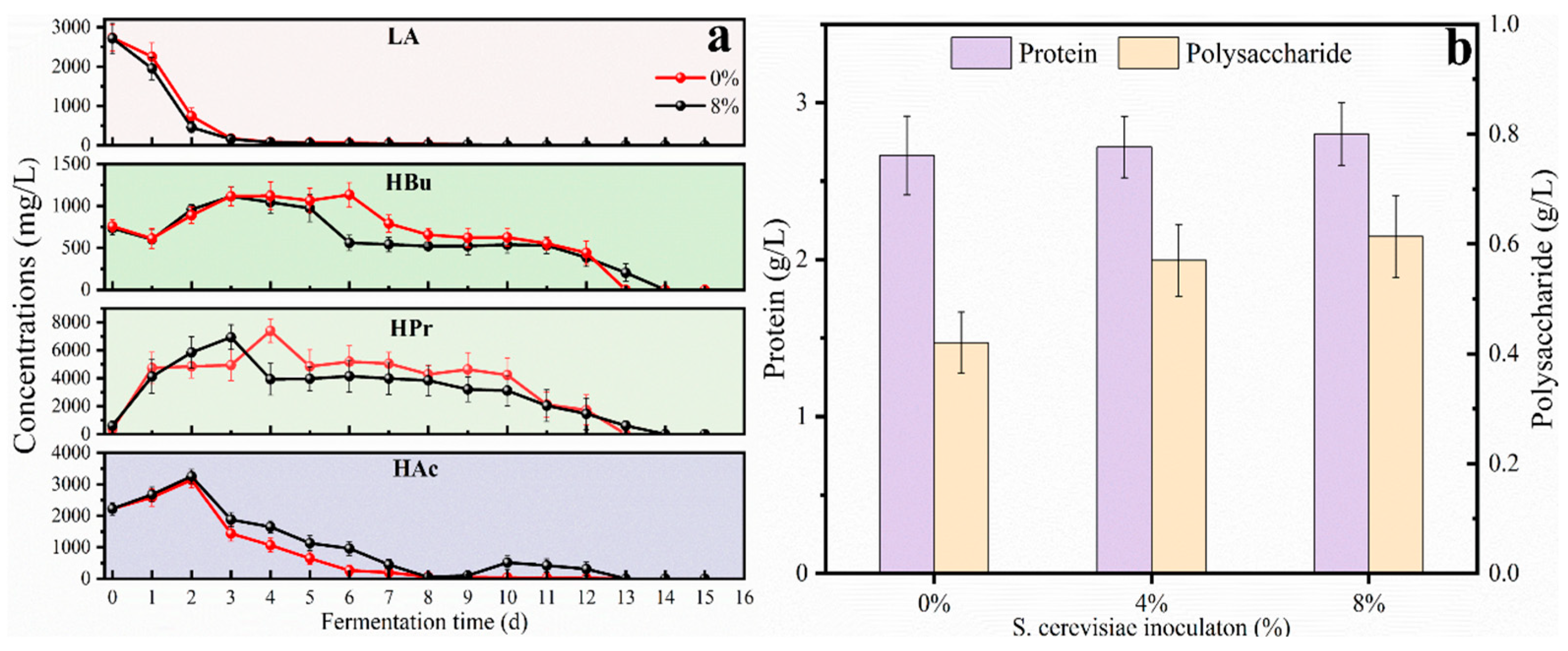
The changes in dissolved organic matter (e.g., VFAs and EtOH) in AD system are shown in Figure 2a. LA was rapidly degraded within 0–2 days, accompanied by small amounts of HAc, HPr and HBu production, which were all consumed in the following 2–15 days. The degradation of LA is a key biochemical step in AD process. LA enters the cells of anaerobic microbes via specific transporter protein, which recognizes and transports the lactate molecule. Upon entering the cell, LA is oxidized to HPr and HAc [24], both acting as potential available substrates for methanogensis. And the conversion pathway mainly relies on pH and microbial structure. However, the HPr accumulation leads to acid inhibition of the AD process, in turn lowering CH4 yield [24]. Theoretically, LA and HPr cannot be directly involved in CH4 generation; whereas, HAc can. Therefore, HPr is further converted to HAc, H2 and CO2, which serve as substrates for methanogens and are ultimately transformed into CH4 through a series of biochemical reactions.
Inoculation of S. cerevisiae resulted in an enhanced rate of LA degradation, further reducing the inhibitory effect of LA on methanogens. This explained why CH4 yield increased with increasing of S. cerevisiae. It is noteworthy that as the fermentation proceeded, the HPr concentration in the groups with and without S. cerevisiae reached highest concentration on days 3 and 4, respectively, after which it was gradually completely degraded. Therefore, it was speculated that S. cerevisiae could alleviate the accumulation of HPr. Namely it might be the fact that S. cerevisiae converted organic matter (e.g., glucose) in Baijiu HS into EtOH under anaerobic condition, where EtOH increased from 229 mg/L to 4814 mg/L within two days. And the EtOH could be used as a slow-release substrate that continuously releases HAc into AD process, alleviating process acidification. HAc was slightly higher than the control group on days 3–15 after inoculation with S. cerevisiae. In this process, EtOH was oxidized to HAc by acetogenic bacteria, where electrons and protons were released (Equation (2)) [25]:
C 2 H 5 O H + H 2 O → C H 3 C O O H + 2 H + + 2 e −
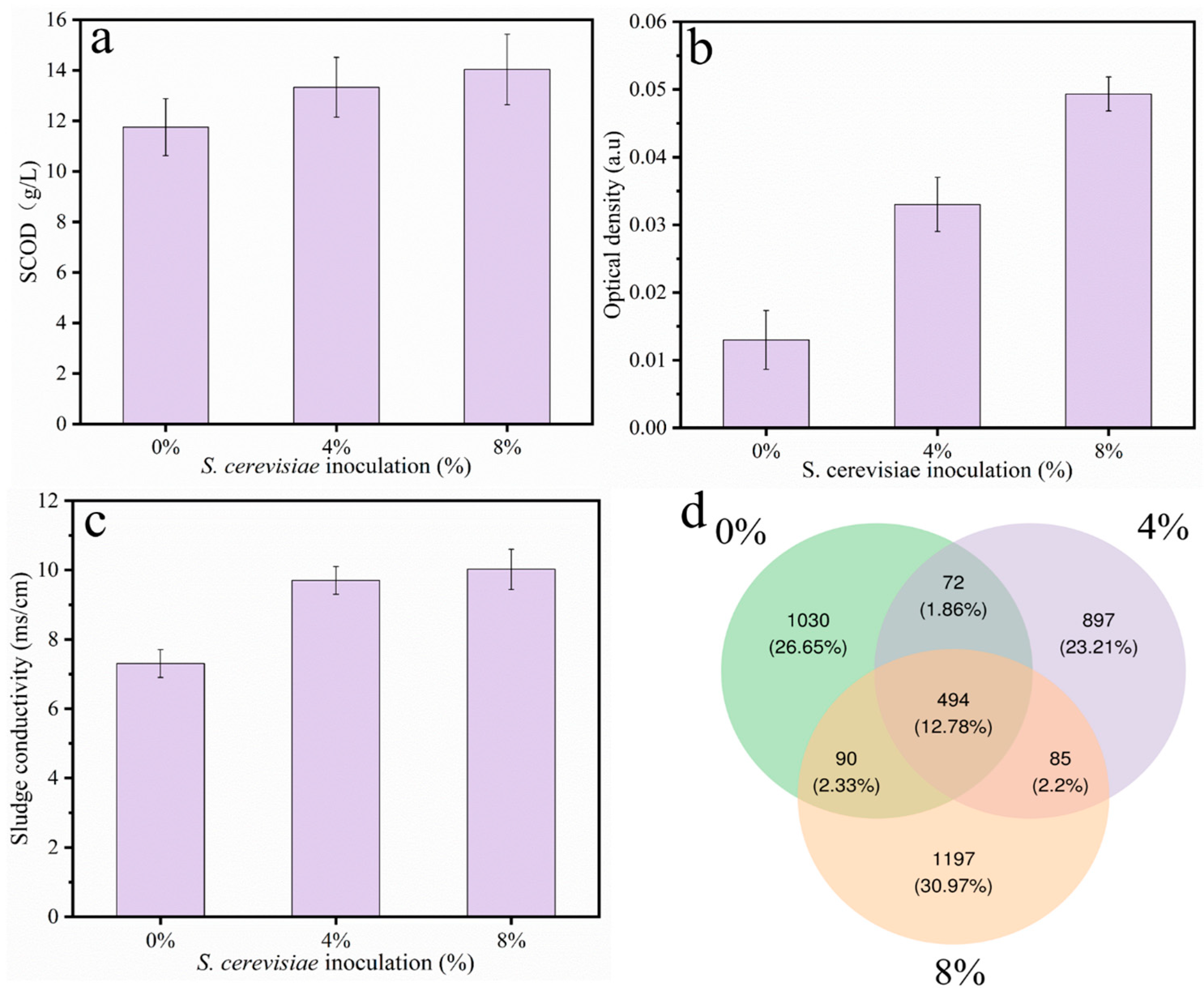
The resulting electrons were critical in driving redox reactions, which facilitated electron transfer between microbial communities and CH4 yield. S. cerevisiae was able to increase the stability of AD system and alleviate process acid inhibition [13]. The conversion of solid organic matter in sludge particles into liquid is the initial step in AD process, called solubilization. This transition is crucial for microbial utilization. Accelerating this process can increase the amount of substrate that can be easily degraded by anaerobes, in turn favoring the subsequent AD. Anaerobes rely heavily on the solubilized organic matter in AD. Thus, the effect of S. cerevisiae on the solubilization of inoculated sludge can be assessed using protein and polysaccharide contents. Figure 2b depicts the protein and polysaccharide contents of the broth in AD system after 48 h. The protein increased from 2.66 g/L in the control group without S. cerevisiae inoculation to 2.72 g/L and 2.8 g/L at S. cerevisiae inoculation levels of 4% and 8%, respectively. The polysaccharide content increased from 0.42 g/L in the control group to 0.57 g/L and 0.61 g/L at S. cerevisiae inoculation levels of 4% and 8%, respectively. And soluble COD (SCOD) rose from 11.75 g/L in the control to 13.35 g/L and 14.03 g/L at S. cerevisiae inoculation levels of 4% and 8%, respectively (Figure 3a). This suggested that S. cerevisiae was able to promote solubilization of the inoculated sludge, in turn releasing polysaccharides and proteins into liquid phase. Meanwhile, the microbes in AD received more nutrients and shortened the lag time. Gao et al. [13] and Rai et al. [26] pointed out that S. cerevisiae was an effective biological pretreatment option for sludge solubilization. Lv et al. [27] also revealed that S. cerevisiae promoted sludge dissolution, releasing more SCOD and protein into liquid phase.

3.4. Effects of S. cerevisiae Addition on Extracellular Polymeric Substances

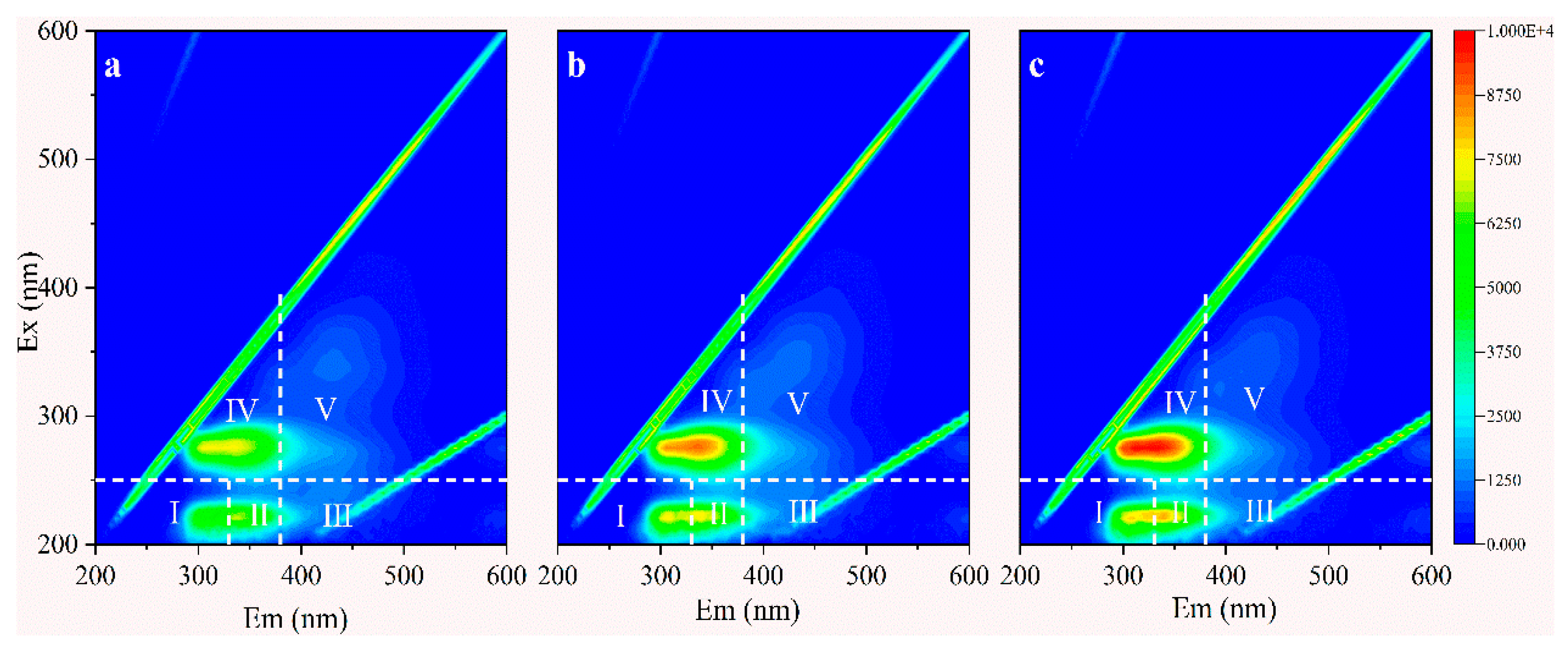
In AD systems, in addition to providing the necessary microbes, the organic matter present in the inoculated sludge is also released into the liquid phase. The solid organic matter in the sludge particles needs to be converted to the liquid state for microbial use, marking the initial step of AD called solubilization [28]. By speeding up the process, there will be more substrates that can be degraded by anaerobes, being favorable for subsequent AD processes. EPS is a complex mixture of high molecular weight aggregates, which can protect cells against dehydration and toxic substances [29]. To reveal the impact of S. cerevisiae on the sludge dissolution in AD process, EPS fluorescence characteristic was analyzed using 3D excitation-emission technique (Table 2). It revealed the dissolved organic matter characteristics by fluorescence region [30]. As described in Figure 4a–c, excitation emission matrix (EEM) fluorescence spectra showed that there was a difference in fluorescence intensity between regions I and II, which confirmed that S. cerevisiae could promote the secretion of proteins.
The protein-like substrates containing various cytochromes could participate in electron transfer and facilitate metabolism among mutualistic bacteria, thereby effectively degrading organic matter [30]. With the increase in S. cerevisiae, various fluorescence peaks were observed in Region IV (Figure 4a–c). The higher the content of S. cerevisiae, the deeper the fluorescence response intensity showing more soluble microbial byproducts appeared (Table 2). And these phenomena revealed S. cerevisiae promoted VFAs formation and metabolism for more CH4 production.
In addition, coenzyme F420 serves as a key enzyme involved in methanogenesis and is often used as an indicator of methanogenic capacity, given its unique participation in redox reactions associated with anabolism and catabolism. Ma et al. [6] found that the AD system of sewage sludge with winery wastewater enhanced enzyme activity. An increase in coenzyme F420 promoted electron transfer between bacteria and methanogens, further favoring methanogenic capacity. As shown in Figure 3b, the coenzyme F420 content increased from 0.08 ± 0.01 µmol/g VSS in the control group to 0.36 ± 0.03 µmol/g VSS in the 8% S. cerevisiae group (Figure 3b), indicating a significant expansion of the methanogenic coenzyme pool. This suggests that S. cerevisiae addition enhanced the metabolic readiness of methanogens, consistent with the observed higher CH4 production rate. This indicated that S. cerevisiae could raise the enzyme activity, thereby enhancing the methanogenic capacity.
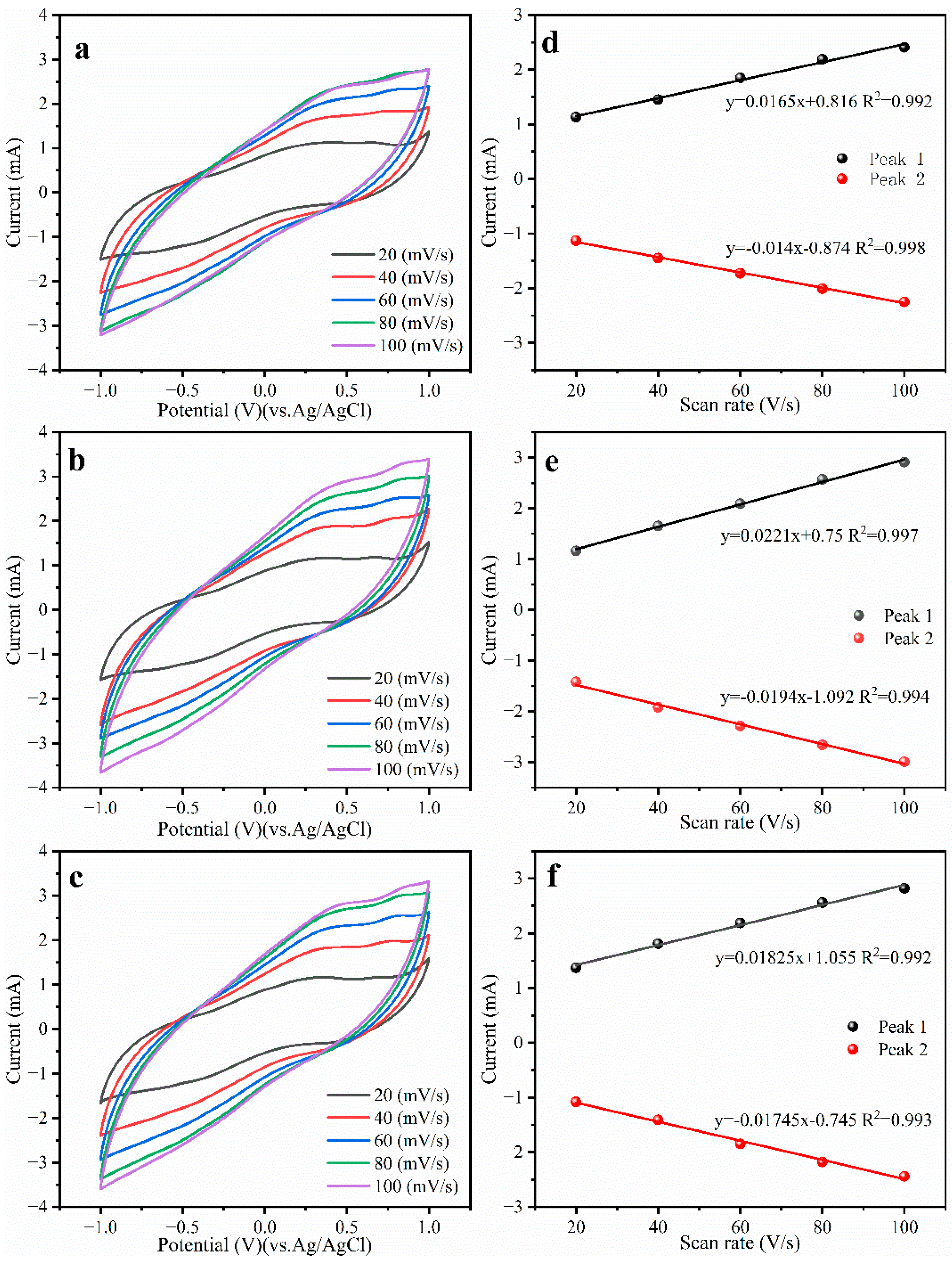
In addition, the electron transfer capacity of AD was assessed by electrochemical methods, showing two redox peaks (Figure 5). The height of the peak currents served as an indication of electrochemical capacity of the electro-active microbes, reflecting extracellular electron transfer capacity [31]. At a scan of 100 mV/s, the peaks of 1 and 2 of the control group had current of 2.41 mA and −2.25 mA, and voltages of 0.505 V and −0.497 V (Figure 5a,d). For 4% S. cerevisiae group, the currents of peaks of 1 and 2 were 2.82 mA and −2.44 mA, and voltages were 0.496 V and −0.429 V, respectively (Figure 5b,e)). For 8% S. cerevisiae, the currents of peaks 1 and 2 were 2.91 mA and −2.99 mA, and voltages were 0.509 V and −0.634 V, respectively (Figure 5c,f). As the scan rate increased, the peak current exhibited an upward trend. At a scan rate of 100 mV/s, the peak current increased with increasing S. cerevisiae, showing acceleration in the extracellular electron transfer rate due to the involvement of S. cerevisiae. Zhang et al. [32] found that, at the same scan rate, the reduction current of EtOH-based AD exhibited higher values compared to the control group, suggesting that EtOH could improve extracellular electron transfer. Furthermore, the anaerobic sludge conductivities of the control, 4% and 8% S. cerevisiae groups were 7.3 ms/cm, 9.7 ms/cm and 10.02 ms/cm, respectively (Figure 3c), reflecting the ability of S. cerevisiae to favor DIET between anaerobic microbes.

3.5. Effect of S. cerevisiae on the Structure of Microbial Communities

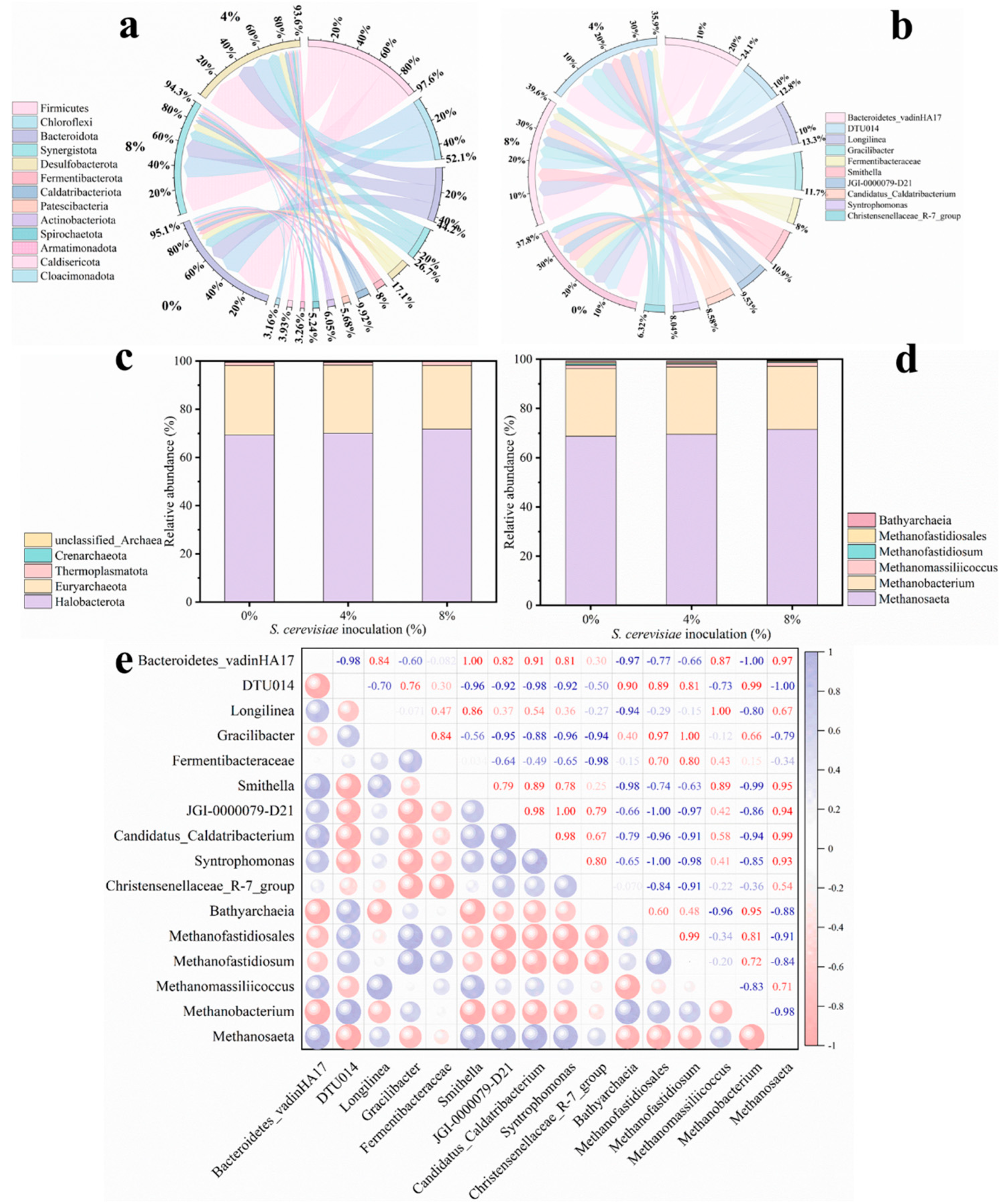
Different types of anaerobic microbes play different roles in various stages of the AD process, and their dynamic changes are directly related to the performance of AD. Therefore, this work revealed the variations in microbial diversity and abundance within the AD processes by the addition of S. cerevisiae through 16S rRNA high- throughput sequencing. The operational taxonomic units (OTUs) for bacteria in the control, 4% S. cerevisiae and 8% S. cerevisiae groups were 1686, 1548 and 1866, respectively (Figure 3d). Table 3 demonstrates the microbial community alpha diversity in AD bio-reactors, in which the coverage index of each AD exceeded 0.99, indicating good species coverage. Chao 1 index was used to indicate the abundance of species in community while Simpson index was used to reveal the community diversity [33]. Chao 1 indices of bacteria were 1693.25, 1548.74 and 1879.4. Simpson indices of bacteria and archaea added with S. cerevisiae decreased compared to the control, showing an increase in microbial diversity.
Microbiological adaptation to substrate degradation caused the changes in microbial structure [34]. Figure 6a depicts the distribution of bacteria microbial communities at phylum level. S. cerevisiae made significant differences in bacterial distribution. The dominant groups such as Firmicutes, Chloroflexim, Bacteroidetes and Synergistetes, are usually considered as typical microbes in anaerobic systems. In this work, Firmicutes exhibited the strongest competitive advantage and became the most competitive phylum. The relative abundance of the control, 4% and 8% S. cerevisiae groups were 32.8%, 30.62% and 34.62%, respectively. Especially, Frimicutes holds a significant role in the hydrolysis and acid production process of AD, being conductive to the generation of short-chain fatty acids [35]. When S. cerevisiae addition was 8%, an increase in the abundance of Firmicutes was observed in comparison to the control group, explaining that at the microbial level the ability of S. cerevisiae could promote the hydrolysis, acidification and HAc production stages of AD process. The relative abundance of Bacteroidetes increased with increasing S. cerevisiae. And Bacteroidetes was able to participate in hydrolysis, hydrolyzing polysaccharides to monosaccharides [36]. The relative abundance suggested that S. cerevisiae favored the hydrolysis process in AD system. For 8% S. cerevisiae group, the relative abundance of Chloroflexi increased slightly, promoting the conversion of intermediate products for more CH4. The relative abundance of Synergistetes in the control and 8% S. cerevisiae groups were 8.22% and 8.74%, respectively, where Synergistetes was the electrochemically active bacteria that took part in interspecies electron transfer [32].
Figure 6b depicts the distribution of bacteria microbial communities at the genus level. Bacteroidetes_vadinHA17 is the most dominant strain, being an acid-producing bacterium capable of decomposing organic matter into HAc and directly participating in electron transfer [34]. Wang et al. [37] found that Bacteroidetes_vadinHA17 raised the activity of relevant enzymes, contributing to a more efficient conversion of organic matter into SMPs, and promoted CH4 yield. Longilinea had electrochemical activity [38], whose relative abundance increased from 4.55% in the control to 5.08% in the group with S. cerevisiae (8%). Longilinea is a strictly anaerobic genus, fermenting carbohydrates to produce VFAs [37]. Longilinea has a highly expressed pilA gene that can regulate the growth of bacterial flagella and form conductive nanowires without external assistance for DIET with methanogens. Bacteroidetes_vadinHA17, Syntrophomonas and Synergistetes bacterium JGI-0000079-D21 could synergize with DIET for CH4 yield, likely being the reason why S. cerevisiae could promote CH4 production. Zhu et al. [39] found that Synergistetes bactrium JGI-0000079-D21 was enriched in AD systems, activating the DIET pathway for more CH4. While the presence of EtOH favored the enrichment of electro-active bacteria, thus improving electron transfer capability. Similarly, the combination of winery wastewater with sludge in AD process showed a 30% increase in electron transfer activity within AD [6]. So, it was speculated that the EtOH produced by S. cerevisiae under anaerobic conditions promoted the enrichment of electro-active microbes.
Figure 6c,d showed the microbial community composition of methanogenic archaea at the phylum and genus level. The dominant groups were Methanosaeta and Methanobacterium. Methanosaeta is an acetate-type methanogenic bacterium capable of producing CH4 using HAc as substrate. Its relative abundance was 68.7%, 69.49% and 71.48% in the control, S. cerevisiae addition of 4% and 8% groups, respectively. However, EtOH-oxidizing bacteria cannot survive alone and need to work closely with hydrogen consuming microbes (methanogenic archaea). High-throughput sequencing results indicated that the addition of S. cerevisiae resulted in the enrichment of acetate-type methanogen, being a vital reason for the increase in CH4 yield. Methanosaeta can participate directly in DIET, accelerating electron transfer between microbes and thus raising CH4 yield [39]. Methanobacterium is a hydrogenotrophic methanogenic bacterium, possessing the ability to convert CO2 into CH4 using H2 as an electron donor [40]. With the addition of S. cerevisiae, the relative abundance of Methanobacterium decreased to 27.36% and 25.63% as compared to 27.55% in the control group, respectively, but its higher proportion was still essential for metabolic homeostasis and efficiency of the AD system. Methanobacterium interacts with other microbes such as acid-producing bacteria to maintain process stability through their metabolic activities. Thus, the increase in CH4 yield from the S. cerevisiae groups could be attributed to the increase in relative abundance of the dominant community in methanogenesis.
The complex biochemical reactions exist between microbes in AD process. And exploring potential associations between strains can help to further understand microbial interactions. Figure 6e illustrates the correlation between bacteria and archaea genus. Most bacteria were positively correlated with Methanosaeta, except DTU014, Gracilibacter and Fermentibacteraceae. And Syntrophomonas is a typical bacterial representative in AD system that exists in a symbiotic relationship with methanogenic bacteria and can maintain the flow of electrons and carbon within microbial ecosystems [16]. It also effectively decomposed EtOH and HBu [41] under anaerobic conditions. In addition, Syntrophomonas was positively related to Synergistetes bacterium JGI-0000079-D21. Methanosaeta, Methanobacterium and Methanomassiliicocuus were enriched upon the addition of S. cerevisiae. A similar report revealed that Methanosaeta, that is acetoclastic methanogens, dominated in the microbial community, favoring more CH4 [34,42]. The initial oxidation of EtOH could induce DIET, providing more energy accessible for subsequent CH4 yield by HPr/HBu oxidation [43]. EtOH pre-fermentation and in situ yeast fermentation could enhance DIET using EtOH as an electron transfer source [5]. Li et al. [44] stimulated the methanogenic communities for DIET using food waste as an EtOH source and concluded that the EtOH produced by S. cerevisiae under anaerobic condition could serve as an electron donor for the DIET of CH4 yield. Bacteroidetes_vadinHA17 and Methanosaeta were enriched, thus increasing CH4 productivity.
It should be emphasized that the microbial compositional data presented in this study are based on relative abundances obtained from 16S rRNA amplicon sequencing. Due to the limited number of replicates (n = 3 per group), statistical power is constrained; therefore, formal differential abundance testing was not performed. Nevertheless, the observed microbial shifts are consistently supported by multiple functional indicators—including substrate degradation profiles, enzymatic cofactor levels, and electrochemical properties—which together provide convergent evidence for the proposed bioaugmentation mechanism. Future studies with larger biological replicates and functional gene expression analyses are warranted to verify the statistical significance and metabolic activity of these community changes.

3.6. Mechanisms of CH4 Yield Promotion by S. cerevisiae

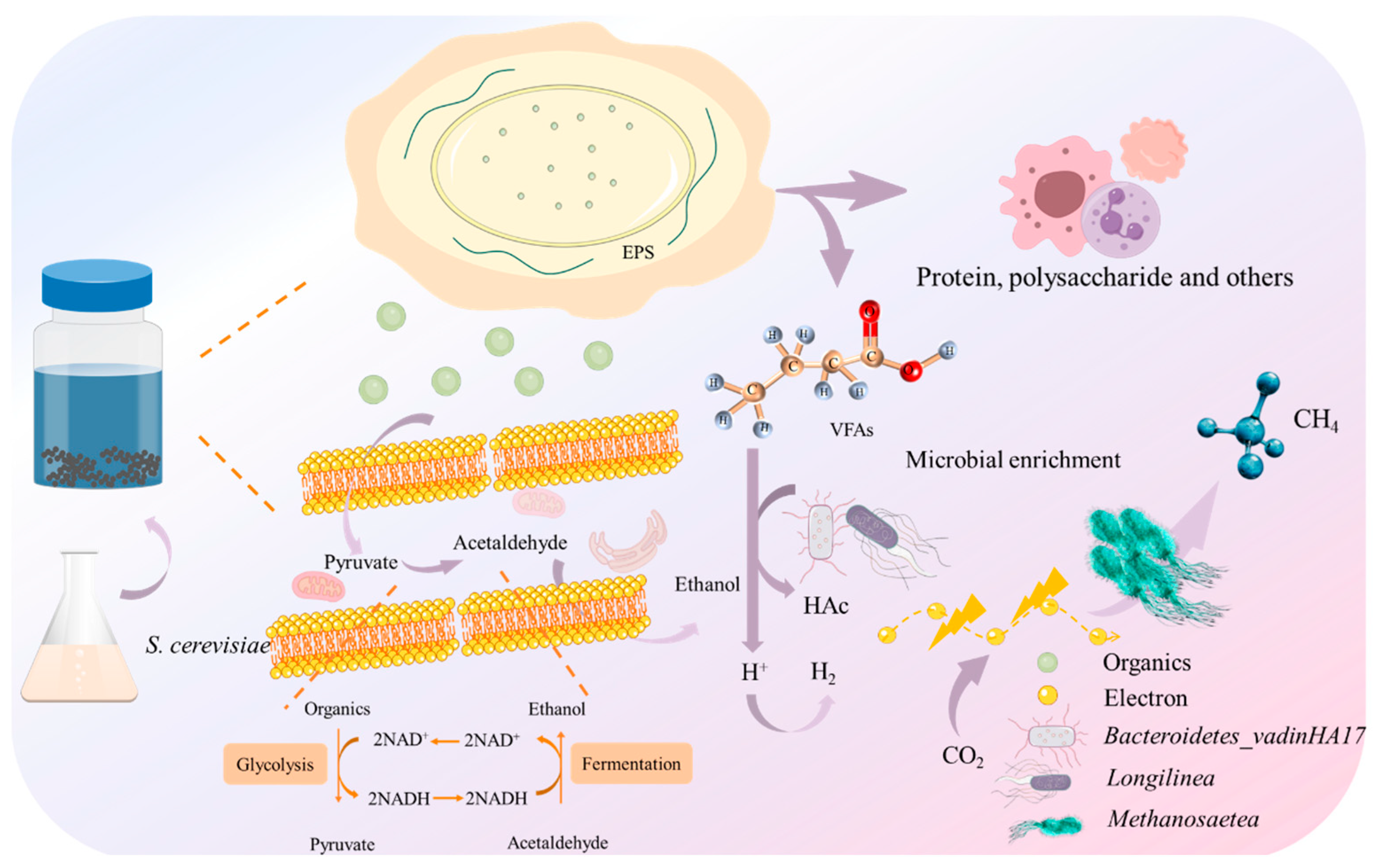
Yeast metabolism could release yeast extract, creating favorable conditions for bacterial growth [45]. S. cerevisiae tends to convert biodegradable organics into EtOH rather than HPr or HBu, thereby mitigating VFAs accumulation in AD systems. In addition, the oxidative metabolism of EtOH provides more energy compared to VFAs [46], allowing EtOH to play a unique role in favoring DIET, improving enzyme activity and stimulating the enrichment of functional microbial populations. The electron transfer between microbial communities including bacteria and archaea plays a pivotal role in the methanogenic bacteria to increase their ability to decompose complex substrates in EtOH-mediated AD processes. Recent studies revealed that in AD processes, EtOH served as both a substrate and as a precursor, promoting the DIET by enriching electrographic methanogens and exoelectrogens, improving the co-digestion of complex organic waste [47]. The EtOH from glucose fermented by S. cerevisiae favored the formation of conductive hyphae/cytochromes via electroactive bacteria, in turn raising the DIET [35]. Methanosaeta received electrons and utilized HAc to produce CH4. In addition, in the oxidation of EtOH, H2 is usually produced as a by-product, being further used by H2-consuming methanogens to produce CH4. S. cerevisiae promoted the development of microbial communities capable of engaging in DIET in the presence of a conductive material by EtOH as an electron donor. The potential electroactive bacterium Longilinea was enriched while the relative abundance of Methanosaeta rose. Bacteroidetes_vadinHA17 and Longilinea acted as electron donors in the oxidation of organic matter to HAc, with the resulting electrons being received by Methanosaeta and formed CH4. The enhancement of electron transfer between bacteria and archaea could obtain more CH4 (Figure 7). S. cerevisiae indirectly promoted electron transfer or stimulated conductive nanowire formation. The CV analysis of sludge showed that the EtOH-mediated DIET likely played a role in AD, but the concentration of reducing organic matter, electroactive microbes, abundance, and extracellular electron transfer medium content in sludge directly affected CV values.

3.7. Future Perspectives

Preliminary cost–benefit estimation was carried out based on laboratory scale. 1 g yeast and its operational costs of yeast inoculation were about 0.3 Yuan RMB, while 8% (v/v) S. cerevisiae group obtained more 0.53 m3 CH4 than the group without S. cerevisiae. And 2.12 Yuan RMB obtained from 0.53 m3 CH4 when the CH4 was used as industrial fuel (4 Yun RMB/m3 CH4), achieving more 1.82 Yuan RMB than the control group. Thus, the proposed strategy has potential industrial prospects. This study focused on the influence of S. cerevisiae itself on AD performance using HS as a substrate. Future work would comprehensively analyze the effects of other metabolites produced in fermentation (beyond EtOH) on microbial community structure and function. An 8% (v/v) S. cerevisiae addition achieved the highest CH4 yield enhancement (20%), but it was the highest dosage tested. However, further studies with higher dosages are needed to confirm whether a plateau occurs beyond 8% and to determine the truly optimal inoculation level. Additionally, optimal conditions identified at the laboratory scale may differ significantly from those under practical applications. It is also essential to conduct a cost–benefit analysis when applied in practical use.

4. Conclusions

S. cerevisiae addition favored CH4 production from the AD of HS. CH4 yield was positively correlated with 4–8% S. cerevisiae addition. When the inoculation amount was 8%, the CH4 yield reached 219.7 mL/g-COD, being 20% higher than that of the group without S. cerevisiae. Analysis of substrate degradation revealed that LA could be rapidly degraded. S. cerevisiae converted organic matter in HS into EtOH under anaerobic conditions. And EtOH served as a slow-release substrate, continuously releasing acetic acid into the AD system, which could alleviate process acidification and promote CH4 production. In addition, CV tests and conductivity analysis indicated that S. cerevisiae enhanced the redox capacity of AD system. When the inoculation amount of S. cerevisiae was 8%, its conductivity increased from 7.3 ms/cm in the control group to 10.02 ms/cm. Analysis showed that EtOH produced by S. cerevisiae in AD could act as an electron donor to quicken the electron transfer ability between microbes. The 16S rRNA sequencing results revealed that Bacteroidetes-vadinHA17, Longilinea and Methanosaetea were enriched, promoting CH4 synthesis. Nonetheless, future work will focus on the pilot-scale validation, economic evaluation, and direct evidence supporting DIET enhancement. In addition, the continuous industrial operation of anaerobic reactors for treating HS has been achieved, but the studies on co-treatment with other difficult to degrade wastewater based on the yeast in HS are also a future focus.

Author Contributions

Conceptualization, X.Z. and J.Z.; methodology, X.Z. and Y.Z.; validation, X.Z. and Z.D.; formal analysis, Y.Z., Z.L. and B.X.; investigation, X.Z.; resources, Y.Z. and J.Z.; data curation, X.Z. and R.W.; writing—original draft preparation, X.Z., R.W. and Y.Z.; writing—review and editing, Y.Z., Z.D. and J.Z.; visualization, X.Z.; supervision, J.Z.; project administration, J.Z.; funding acquisition, J.Z. All authors have read and agreed to the published version of the manuscript.

Funding

This research was funded by Shandong Provincial Natural Science Foundation, China (No. ZR2023MD031).

Data Availability Statement

The data that support the findings of this work are available from the corresponding author upon reasonable request.

Conflicts of Interest

The authors declare no conflicts of interest.

Abbreviations

The following abbreviations are used in this manuscript:
ADAnaerobic digestion
HSHuangshui
CH4Methane
CODChemical oxygen demand
DIETDirect interspecies electron transfer
HAcAcetic acid
HBuButyric acid
HPrPropionic acid
CO2Carbon dioxide
CVCyclic voltammetry
EPSExtracellular polymeric substances
VFAsVolatile organic acids
H2Hydrogen
NH4+-NAmmonia nitrogen
EtOHEthanol
TNTotal nitrogen
TOCTotal organic carbon
YPDYeast extract peptone dextrose medium
LALactic acid
OTUsOperational taxonomic units
EEMExcitation emission matrix

References

  1. Dong, W.; Dai, X.; Jia, Y.; Ye, S.; Shen, C.; Liu, M.; Lin, F.; Sun, X.; Xiong, Y.; Deng, B. Association between Baijiu Chemistry and Taste Change: Constituents, Sensory Properties, and Analytical Approaches. Food Chem. 2024, 437, 137826. [Google Scholar] [CrossRef] [Scilit] [PubMed]
  2. Gao, L.; Xie, F.; Ren, X.; Wang, J.; Du, L.; Wei, Y.; Zhou, J.; He, G. Correlation between Microbial Diversity and Flavor Metabolism in Huangshui: A by-Product of Solid-State Fermentation Baijiu. Lwt-Food Sci. Technol. 2023, 181, 114767. [Google Scholar] [CrossRef] [Scilit]
  3. Jiang, Y. Current Situation, Trend, and Prospects of Research on Functional Components from by-Products of Baijiu Production: A Review. Food Res. Int. 2024, 180, 114032. [Google Scholar] [CrossRef] [Scilit] [PubMed]
  4. Kang, J.; Sun, Y.; Huang, X.; Ye, L.; Chen, Y.; Chen, X.; Zheng, X.; Han, B.-Z. Unraveling the Microbial Compositions, Metabolic Functions, and Antibacterial Properties of Huangshui, a Byproduct of Baijiu Fermentation. Food Res. Int. 2022, 157, 111320. [Google Scholar] [CrossRef] [Scilit] [PubMed]
  5. Lauzurique, Y.; Fermoso, F.G.; Sánchez, N.; Castillo, A.; Salazar, R.; García, V.; Huiliñir, C. Biogas Production from Winery Wastewater: Effect of the Substrate-Inoculum Ratio on Fly Ash Addition and Iron Availability. J. Water Process Eng. 2022, 47, 102826. [Google Scholar] [CrossRef] [Scilit]
  6. Ma, Z.; Yu, L.; Wang, Z.; Tian, X.; Zheng, L.; Liu, R. Anaerobic Co-Digestion of Winery Wastewater with Sewage Sludge for Methane Production: Complementary Feedstocks and Potential Direct Interspecies Electron Transfer. Fuel 2025, 381, 133190. [Google Scholar] [CrossRef] [Scilit]
  7. He, Z.-W.; Jia, W.-L.; Tang, C.-C.; Zhou, A.-J.; Liu, W.; Ren, Y.X.; Wang, A.; Chen, R. Novel Insights to the Synergistic Effects of Magnetic Biochar in Anaerobic Digestion while Treating Synthetic Organic Wastewater for Biomethane Recovery. Chem. Eng. J. 2025, 524, 169186. [Google Scholar] [CrossRef] [Scilit]
  8. Ma, X.; Yu, M.; Song, N.; Xu, B.; Gao, M.; Wu, C.; Wang, Q. Effect of Ethanol Pre-Fermentation on Organic Load Rate and Stability of Semi-Continuous Anaerobic Digestion of Food Waste. Bioresour. Technol. 2020, 299, 122587. [Google Scholar] [CrossRef] [Scilit] [PubMed]
  9. Wu, C.; Wang, Q.; Yu, M.; Zhang, X.; Song, N.; Chang, Q.; Gao, M.; Sonomoto, K. Effect of Ethanol Pre-Fermentation and Inoculum-to-Substrate Ratio on Methane Yield from Food Waste and Distillers’ Grains. Appl. Energy 2015, 155, 846–853. [Google Scholar] [CrossRef] [Scilit]
  10. Xiao, M.; Wang, N.; Xu, L.; Cai, D.; Zhu, Y.; Shi, J.; Zhang, S.; Liu, L. Bioaugmentation with Caldibacillus Thermoamylovorans Improved Methane Production of Thermophilic Anaerobic Digestion via Enhancing Hydrolysis and Acidification Processes. J. Environ. Chem. Eng. 2025, 13. [Google Scholar] [CrossRef] [Scilit]
  11. Wang, R.; Li, Y.; Li, J.; Wu, W.; Qin, G.; Shi, H.; Sun, Y.; Zheng, G. Enhancement of Methanogenic Performance of Anaerobic Fermentation Systems by Propionic Acid-Degrading Bacteria at High Straw Organic Loads. Bioresour. Technol. Rep. 2025, 31, 102250. [Google Scholar] [CrossRef] [Scilit]
  12. Sun, J.; Sun, H.; Lv, W.; Zhang, Q.; Wan, P.; Jiang, L.; Zhong, Y. Quorum Sensing Mediates Yeast Cell Morphology to Improve Settleability: Implication for Wastewater Treatment. J. Environ. Chem. Eng. 2021, 9, 105817. [Google Scholar] [CrossRef] [Scilit]
  13. Gao, M.; Zhang, S.; Ma, X.; Guan, W.; Song, N.; Wang, Q.; Wu, C. Effect of Yeast Addition on the Biogas Production Performance of a Food Waste Anaerobic Digestion System. R. Soc. Open Sci. 2020, 7, 200443. [Google Scholar] [CrossRef] [Scilit] [PubMed]
  14. Yu, M.; Wu, C.; Wang, Q.; Sun, X.; Ren, Y.; Li, Y.-Y. Ethanol Prefermentation of Food Waste in Sequencing Batch Methane Fermentation for Improved Buffering Capacity and Microbial Community Analysis. Bioresour. Technol. 2018, 248, 187–193. [Google Scholar] [CrossRef] [Scilit] [PubMed]
  15. Zhao, Z.; Li, Y.; He, J.; Zhang, Y. Establishing Direct Interspecies Electron Transfer during Laboratory-Scale Anaerobic Digestion of Waste Activated Sludge via Biological Ethanol-Type Fermentation Pretreatment. ACS Sust. Chem. Eng. 2018, 6, 13066–13077. [Google Scholar] [CrossRef] [Scilit]
  16. Zamel, D.; Pan, X.; Ye, Z.-L. Ethanol-Mediated Anaerobic Digestion: Functional Bacteria and Metabolic Pathways. Chemosphere 2024, 367, 143560. [Google Scholar] [CrossRef] [Scilit] [PubMed]
  17. Ripoll, V.; Agabo-García, C.; Perez, M.; Solera, R. Improvement of Biomethane Potential of Sewage Sludge Anaerobic Co-Digestion by Addition of “Sherry-Wine” Distillery Wastewater. J. Clean. Prod. 2020, 251, 119667. [Google Scholar] [CrossRef] [Scilit]
  18. Sillero, L.; Solera, R.; Perez, M. Improvement of the Anaerobic Digestion of Sewage Sludge by Co-Digestion with Wine Vinasse and Poultry Manure: Effect of Different Hydraulic Retention Times. Fuel 2022, 321, 124104. [Google Scholar] [CrossRef] [Scilit]
  19. Zhao, S.; Guo, H.; Klitzsch, N.; Liu, X.; Li, G.; Xu, X. The Role of Biodegradable Plastics in Lignite Anaerobic Digestion: Changes of Organics Transformation and Metabolic Pathway. Bioresour. Technol. 2025, 419, 132021. [Google Scholar] [CrossRef] [Scilit] [PubMed]
  20. Gadaleta, G.; De Gisi, S.; Picuno, C.; Heerenklage, J.; Kuchta, K.; Sorrentino, A.; Notarnicola, M.; Oliviero, M. Assessment of Methane Production, Disintegration, and Biodegradation Potential of Bioplastic Waste in Anaerobic Digestion Systems. J. Environ. Chem. Eng. 2024, 12, 111658. [Google Scholar] [CrossRef] [Scilit]
  21. Yin, Y.; Zhang, T.; He, S.; Wang, J. Volatile Fatty Acids Recovery and Antibiotic Degradation from Erythromycin Fermentation Residues by Combined Thermal Pretreatment and Anaerobic Fermentation: Insights into Microbial Communities and Metabolic Pathways. Bioresour. Technol. 2023, 387, 129691. [Google Scholar] [CrossRef] [Scilit] [PubMed]
  22. Tian, K.; Zhang, J.; Zhou, C.; Liu, H.; Pei, Y.; Zhang, X.; Yan, X. Revealing the Roles of Carbonized Humic Acid in Biohydrogen Production. Bioresour. Technol. 2023, 386, 129506. [Google Scholar] [CrossRef] [Scilit] [PubMed]
  23. Zhu, Y.; Sun, C.; Zhang, Y. Focus on Co-Digestion of Waste Activated Sludge and Food Waste via Yeast Pre-Fermentation and Biochar Supplementation: The Optimization and Mechanism. Environ. Res. 2023, 238, 117146. [Google Scholar] [CrossRef] [Scilit] [PubMed]
  24. Guo, H.; Hua, J.; Cheng, J.; Yue, L.; Zhou, J. Microbial Electrochemistry Enhanced Electron Transfer in Lactic Acid Anaerobic Digestion for Methane Production. J. Clean. Prod. 2022, 358, 131983. [Google Scholar] [CrossRef] [Scilit]
  25. Zhao, Z.; Zhang, Y.; Holmes, D.E.; Dang, Y.; Woodard, T.L.; Nevin, K.P.; Lovley, D.R. Potential Enhancement of Direct Interspecies Electron Transfer for Syntrophic Metabolism of Propionate and Butyrate with Biochar in Up-Flow Anaerobic Sludge Blanket Reactors. Bioresour. Technol. 2016, 209, 148–156. [Google Scholar] [CrossRef] [Scilit] [PubMed]
  26. Rai, A.K.; Pandey, A.; Sahoo, D. Biotechnological Potential of Yeasts in Functional Food Industry. Trends Food Sci. Technol. 2019, 83, 129–137. [Google Scholar] [CrossRef] [Scilit]
  27. Lv, J.; Yao, L.; Liang, Y.; He, S.; Zhang, S.; Shi, T.; Gong, L.; Li, H.; Li, Y.; Yu, T.; et al. Synergistic Effect of Yeast Integrated with Alkyl Polyglucose for Short-Chain Fatty Acids Production from Sludge Anaerobic Fermentation. Bioresour. Technol. 2022, 364, 128092. [Google Scholar] [CrossRef] [Scilit] [PubMed]
  28. Yang, J.; Zhang, H.; Zhang, J.; Zhou, C.; Zhang, Y.; Zang, L. Understanding the Effect of Carbamazepine on the Recovery of Methane from Lactic Acid Wastewater by Anaerobic Digestion. J. Clean. Prod. 2023, 383, 135420. [Google Scholar] [CrossRef] [Scilit]
  29. Wang, S.; Wang, X.; Fessler, M.; Jin, B.; Su, Y.; Zhang, Y. Insights into the Impact of Polyethylene Microplastics on Methane Recovery from Wastewater via Bioelectrochemical Anaerobic Digestion. Water Res. 2022, 221, 118844. [Google Scholar] [CrossRef] [Scilit] [PubMed]
  30. Yang, J.; Liu, X.; Wang, D.; Xu, Q.; Yang, Q.; Zeng, G.; Li, X.; Liu, Y.; Gong, J.; Ye, J.; et al. Mechanisms of Peroxymonosulfate Pretreatment Enhancing Production of Short-Chain Fatty Acids from Waste Activated Sludge. Water Res. 2019, 148, 239–249. [Google Scholar] [CrossRef] [Scilit] [PubMed]
  31. Feng, D.; Xia, A.; Huang, Y.; Zhu, X.; Zhu, X.; Show, P.-L.; Liao, Q. Continuous Electromethanogenesis of Propionate Wastewater: Effect of External Voltage and Hydraulic Retention Time. Chem. Eng. J. 2023, 454, 140267. [Google Scholar] [CrossRef] [Scilit]
  32. Zhang, S.; Ren, Y.; Zhao, P.; Wang, X.; Wang, Q.; Sun, X. Ethanol-Type Anaerobic Digestion Enhanced Methanogenic Performance by Stimulating Direct Interspecies Electron Transfer and Interspecies Hydrogen Transfer. Bioresour. Technol. 2024, 410, 131280. [Google Scholar] [CrossRef] [Scilit] [PubMed]
  33. Gong, Y.; Jin, Z.; Wang, X.; Zhang, Y. Improving Methane Production and 4-Chlorophenol Removal in Anaerobic Digestion of Corn Straw by Adding Phanerochaete Chrysosporium and Biochar under Microaerobic Conditions. Water Res. 2025, 270, 122845. [Google Scholar] [CrossRef] [Scilit] [PubMed]
  34. Zheng, A.; Mei, J.; Zheng, J.; Chen, Q.; Wu, J. Effects of Iron Modified Walnut Shell Biochar on the Anaerobic Digestion Performance and Microbial Community Structure of Sludge. Process Biochem. 2026, 160, 244–254. [Google Scholar] [CrossRef] [Scilit]
  35. Zhao, Z.; Li, Y.; Quan, X.; Zhang, Y. New Application of Ethanol-Type Fermentation: Stimulating Methanogenic Communities with Ethanol to Perform Direct Interspecies Electron Transfer. ACS Sust. Chem. Eng. 2017, 5, 9441–9453. [Google Scholar] [CrossRef] [Scilit]
  36. Tsigkou, K.; Terpou, A.; Treu, L.; Kougias, P.G.; Kornaros, M. Thermophilic Anaerobic Digestion of Olive Mill Wastewater in an Upflow Packed Bed Reactor: Evaluation of 16S rRNA Amplicon Sequencing for Microbial Analysis. J. Environ. Manag. 2022, 301, 113853. [Google Scholar] [CrossRef] [Scilit] [PubMed]
  37. Wang, R.; Pei, Y.; Gu, Y.; Duan, Z.; Zhang, J.; Yu, F. Improved Biohydrogen Evolution by Activated Carbon Derived from Cigarette Butts. Int. J. Hydrogen Energy 2025, 115, 49–59. [Google Scholar] [CrossRef] [Scilit]
  38. Zhou, X.; Guo, M.; Fu, X.; Wang, D.; Liao, J.; Xu, W.; Han, H. Insights into Microbial Metabolic Coordination under Driving Force of Different Conductive Materials-Mediated Direct Interspecies Electron Transfer during Anaerobic Digestion. Chem. Eng. J. 2024, 496, 154230. [Google Scholar] [CrossRef] [Scilit]
  39. Zhu, G.; Feng, Q.; Wang, K.; Song, Y.-C.; Zhou, Y.; Zhou, Q. Investigating the Performance of Different Applied Voltages on Lignite Biomethanation in Microbial Electrolytic Cell Coupled Anaerobic Digestion. Int. J. Hydrogen Energy 2024, 52, 147–159. [Google Scholar] [CrossRef] [Scilit]
  40. Zhang, Y.; Guo, B.; Zhang, L.; Zhang, H.; Liu, Y. Microbial Community Dynamics in Granular Activated Carbon Enhanced Up-Flow Anaerobic Sludge Blanket (UASB) Treating Municipal Sewage under Sulfate Reducing and Psychrophilic Conditions. Chem. Eng. J. 2021, 405, 126957. [Google Scholar] [CrossRef] [Scilit]
  41. Basak, B.; Patil, S.M.; Saha, S.; Kurade, M.B.; Ha, G.-S.; Govindwar, S.P.; Lee, S.S.; Chang, S.W.; Chung, W.J.; Jeon, B.-H. Rapid Recovery of Methane Yield in Organic Overloaded-Failed Anaerobic Digesters through Bioaugmentation with Acclimatized Microbial Consortium. Sci. Total Environ. 2021, 764, 144219. [Google Scholar] [CrossRef] [Scilit] [PubMed]
  42. Bhatia, P.; Fujiwara, M.; Akizuki, S.; Maruyama, D.; Habtu, N.G.; Sato, S.; Toda, T. High-Rate Anaerobic Digestion of Water Hyacinth Juice in an Upflow Anaerobic Sludge Blanket Reactor with Observations on Granule Formation. J. Water Process Eng. 2025, 72, 107339. [Google Scholar] [CrossRef] [Scilit]
  43. Gu, J.; Liu, R.; Cheng, Y.; Stanisavljevic, N.; Li, L.; Djatkov, D.; Peng, X.; Wang, X. Anaerobic Co-Digestion of Food Waste and Sewage Sludge under Mesophilic and Thermophilic Conditions: Focusing on Synergistic Effects on Methane Production. Bioresour. Technol. 2020, 301, 122765. [Google Scholar] [CrossRef] [Scilit] [PubMed]
  44. Li, Y.; Tang, Y.; Xiong, P.; Zhang, M.; Deng, Q.; Liang, D.; Zhao, Z.; Feng, Y.; Zhang, Y. High-Efficiency Methanogenesis via Kitchen Wastes Served as Ethanol Source to Establish Direct Interspecies Electron Transfer during Anaerobic Co-Digestion with Waste Activated Sludge. Water Res. 2020, 176, 115763. [Google Scholar] [CrossRef] [Scilit] [PubMed]
  45. Elgarahy, A.M.; Eloffy, M.G.; Alengebawy, A.; El-Sherif, D.M.; Gaballah, M.S.; Elwakeel, K.Z.; El-Qelish, M. Sustainable Management of Food Waste; Pre-Treatment Strategies, Techno-Economic Assessment, Bibliometric Analysis, and Potential Utilizations: A Systematic Review. Environ. Res. 2023, 225, 115558. [Google Scholar] [CrossRef] [Scilit] [PubMed]
  46. Zhao, Z.; Li, Y.; Zhang, Y. Engineering Enhanced Anaerobic Digestion: Benefits of Ethanol Fermentation Pretreatment for Boosting Direct Interspecies Electron Transfer. Energy 2021, 228, 120643. [Google Scholar] [CrossRef] [Scilit]
  47. Feng, D.; Guo, X.; Lin, R.; Xia, A.; Huang, Y.; Liao, Q.; Zhu, X.; Zhu, X.; Murphy, J.D. How Can Ethanol Enhance Direct Interspecies Electron Transfer in Anaerobic Digestion? Biotechnol. Adv. 2021, 52, 107812. [Google Scholar] [CrossRef] [Scilit] [PubMed]
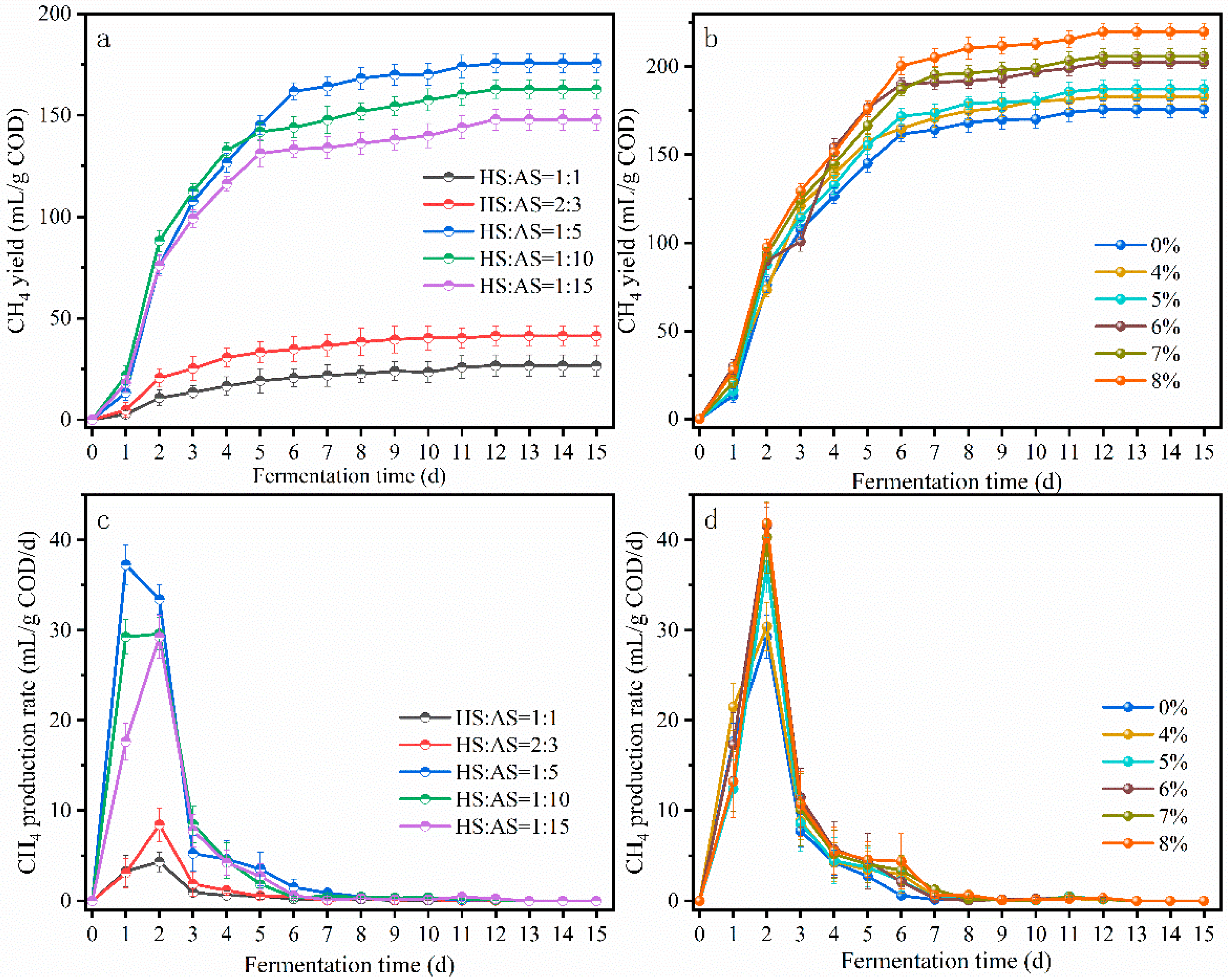
Figure 1. Effect of different Huangshui (HS) and anaerobic sludge (AS) inoculation ratios and S. cerevisiae additions on AD performance: (a) cumulative CH4 yield with different substrate ratios, (b) cumulative CH4 yield with different amounts of S. cerevisiae, (c) CH4 production rate with different substrate ratios, (d) CH4 production rate with different amounts of S. cerevisiae.
Fermentation 12 00375 g001
Figure 2. Effects of S. cerevisiae in the anaerobic digestion (AD) system on (a) volatile fatty acids (VFAs) and (b) protein and polysaccharides.
Fermentation 12 00375 g002
Figure 3. (a) Changes in soluble chemical oxygen demand (COD) in fermentation broth after 48 h, (b) changes in coenzyme F420, (c) sludge conductivity in each reactor, and (d) Venn diagram analysis of microbial community based on operational taxonomic units (OTUs).
Fermentation 12 00375 g003
Figure 4. EEM spectra under different yeast addition conditions: (a) 0%, (b) 4% and (c) 8%.
Fermentation 12 00375 g004
Figure 5. Effects of S. cerevisiae in the anaerobic digestion (AD) system on CV current: (a) control group (0% S. cerevisiae), (b) 4% S. cerevisiae group, (c) 8% S. cerevisiae group, (d–f) peak current expressed as a function of scan rate, corresponding to (a–c).
Fermentation 12 00375 g005
Figure 6. Microbial community of bacteria at phylum (a) and genus (b) levels, microbial community of archaea at phylum (c) and genus (d) levels, and correlation heatmap between bacteria and archaea at the genus level (e).
Fermentation 12 00375 g006
Figure 7. Potential mechanism for enhanced CH4 in AD with S. cerevisiae: under S. cerevisiae addition, the electroactive bacterium Longilinea was enriched in the AD system, while the relative abundance of the acetoclastic methanogen Methanosaeta increased. Bacteroidetes_vadinHA17 and Longilinea acted as electron donors during the oxidation of organic matter to acetate, and the released electrons were received by Methanosaeta for methanogenic metabolism. This process enhanced the interspecies electron transfer efficiency between bacteria and archaea, ultimately leading to increased CH4 production.
Fermentation 12 00375 g007
Table 1. Kinetic parameters from anaerobic digestion (AD) amended by S. cerevisiae.
Inoculation
(%S. cerevisiae)
Maximal CH4 Yield
(Pm, mL/g)
Maximal CH4 Production Rate (Rm, mL/g/d)Lag Time (λ, d)Correlation Coefficient
(R2, %)
0173.0342.360.4999
4180.2245.380.499
5184.2743.780.3899
6200.7245.980.3799
7203.1046.180.3399
8217.3646.720.2599
Table 2. Excitation (Ex) and emission (Em) wavelengths of fluorescence region and their meaning.
RegionsEx/Em Wavelengths (nm)Substances
I200–250/200–330Tyrosine-like protein
II200–250/330–380Tryptophan-like protein
III200–240/380–500Fluvic acid-like organic matter
IV250–280/200–380Soluble microbial byproducts
V150–400/380–500Humic acid-like organic matter
Table 3. The α-diversities of bacteria and archaea in anaerobic digestion system.
MicroorganismSampleChao 1SimpsonShannonGoods Coverage (%)
BacteriaControl (0%)1693.250.98927.92499
4%1548.740.98887.86899
8%1879.40.98787.87499
ArchaeaControl (0%)2360.66462.71299
4%215.010.60942.30799
8%191.490.6592.59199
Disclaimer/Publisher’s Note: The statements, opinions and data contained in all publications are solely those of the individual author(s) and contributor(s) and not of MDPI and/or the editor(s). MDPI and/or the editor(s) disclaim responsibility for any injury to people or property resulting from any ideas, methods, instructions or products referred to in the content.