


Abstract
In this study, kefir production was investigated using both commercial kefir cultures and kefir grains, with milk treated at different UV-C doses and flow rates. The flow rate was set to 25 or 50 mL/min, and doses of 43.2 and 21.6 J/mL were applied at each flow rate, respectively. In all samples subjected to UV-C treatment, pH values decreased during storage, while % titratable acidity values increased. The kefir samples produced with UV-C-irradiated milk showed increased hardness and consistency, while cohesion and the index of viscosity decreased. The highest effect was observed in samples produced with kefir grain and at a flow rate of 50 mL/min. Lactic acid bacteria, Streptococcus/Lactococcus, and yeast counts in kefir samples produced from UV-C-treated milk increased. Flow rate affected the increase in microorganism counts. The physicochemical, textural, and microbiological changes during storage were more pronounced in kefir samples produced with kefir grains than with powdered cultures. The organic acid levels of kefir samples produced from milk treated with UV-C decreased compared to those of control samples. Furthermore, organic acid values increased during storage in all samples. As the flow rate increased, the amount of organic acids formed decreased (except for malic and formic acid levels).
1. Introduction
Kefir is a traditional fermented drink made mainly from milk, though it can also be produced with non-dairy alternatives. This fermented beverage has a distinctive flavour, a creamy texture, and many health benefits, primarily due to its high probiotic content. The kefir fermentation process involves kefir grains, complex symbiotic cultures that include lactic acid bacteria, yeasts, and a matrix of proteins and polysaccharides [1].
Kefir not only serves as a source of probiotics but also provides essential nutrients, including protein, vitamins, and minerals. Its composition can vary significantly depending on the type of milk used (cow, goat, or plant-based) and the fermentation conditions [2].
In the kefir production process, traditional kefir grains or specified starter cultures comprising particular LAB and yeast strains may be utilised. The choice between these methods can influence the product’s microbiological diversity and organoleptic characteristics. Kefir grains are symbiotic complexes consisting of lactic acid bacteria (LAB), yeasts, and polysaccharides that form a gelatinous structure. These grains play a crucial role in the fermentation process due to their diverse microbial communities. Research indicates that bacteria such as Lactobacillus kefiri, Lactococcus lactis, and Acetobacter species, as well as yeasts such as Saccharomyces and Kluyveromyces, are commonly found in kefir grains, each contributing a distinctive metabolic profile to kefir production [3]. Conversely, kefir can also be produced using defined starter cultures comprising specific LAB and yeast strains. One key benefit of employing starter cultures in kefir production is enhanced control over the microbial population. Unlike natural kefir grains, which have highly variable compositions and cause unpredictable fermentation traits, starter cultures contain specific LAB and yeast strains that can be carefully chosen based on their fermentation properties [4]. This selectivity allows producers to maintain consistent product quality, including flavour, acidity, and textural properties, which are essential for consumer satisfaction and market appeal.
Ultraviolet-C (UV-C) radiation is a heat-free disinfection method that usually operates at 254 nm. It is highly effective at inactivating a broad range of microorganisms, including bacteria, viruses, and yeasts; this is especially significant for food safety in the dairy processing sector [5]. UV-C applications offer a less damaging alternative to thermal pasteurisation, particularly for milk, where traditional thermal methods can destroy key bioactive elements. UV-C can effectively inactivate pathogens while preserving these components [6]. The application of UV-C has been evaluated to be more advantageous than high-temperature, short-time (HTST) pasteurisation for preserving the nutritional quality of processed milk products [7].
This study aimed to compare the physicochemical, textural, and microbiological changes occurring during storage in kefir produced using two different production methods (kefir grain and commercial starter culture) from milk subjected to UV-C treatment at different flow rates with kefir samples produced from milk subjected to thermal processing using the standard pasteurisation method.
2. Materials and Methods
The bovine milk used in the study (dry matter: 11.32%; titratable acidity (% lactic acid): 0.163; pH: 6.55; protein: 3.03%; fat: 3.55%) was obtained from a local producer operating in Afyonkarahisar province. The kefir grains were obtained from Danem Milk and Milk Products Ltd., Co. (Isparta, Turkiye), and the kefir culture was obtained from Vivo Activ LLC (Brovary, Ukraine).
2.1. Starter Culture
The kefir grains used in the study (Danem Milk and Milk Products Ltd., Co., Isparta, Turkiye) consist of Lactobacillus kefiri, Lactobacillus kefiranofaciens subsp. kefiranofaciens, Lactobacillus kefiranofaciens subsp. kefirgranum, Lactobacillus parakefiri, Lactobacillus acidophilus, Lactobacillus casei, Lactobacillus reuteri, Lactobacillus bulgaricus, Lactobacillus helveticus, Lactobacillus fermentum, Leuconostoc mesentereoides, Lactococcus lactis, Streptococcus thermophiles, Bifidobacterium bifidum, Acetobacter pasteurianus, Kluyveromyces marxianus, Saccharomyces cerevisiae, and Kluyveromyces lactis.
The starter culture used in the study (Vivo Activ LLC, Brovary, Ukraine) consists of Lactococcus lactis subsp. lactis, Lactococcus lactis subsp. cremoris, Lactococcus lactis subsp. lactis var. diacetylactis, Leuconostoc mesenteroides subsp. cremoris, Streptococcus thermophilus, Kluyveromyces marxianus subsp. marxianus, and Debaryomyces hansenii.
2.2. Experimental Design
The raw milk in the control sample was pasteurised by heating it to 75 °C for 15 s. The milk intended for UV-C treatment was exposed to two different doses in the UV-C reactor by varying the milk flow rate. The flow rate was set to 25 or 50 mL/min, and doses of 43.2 and 21.6 J/mL were applied, respectively, at each flow rate. The milk exposed to UV-C was transferred to sterile glass bottles, and inoculation for kefir production was performed without delay.
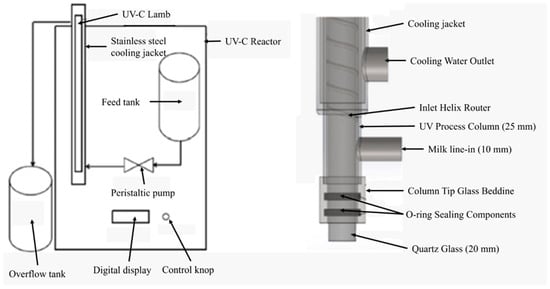
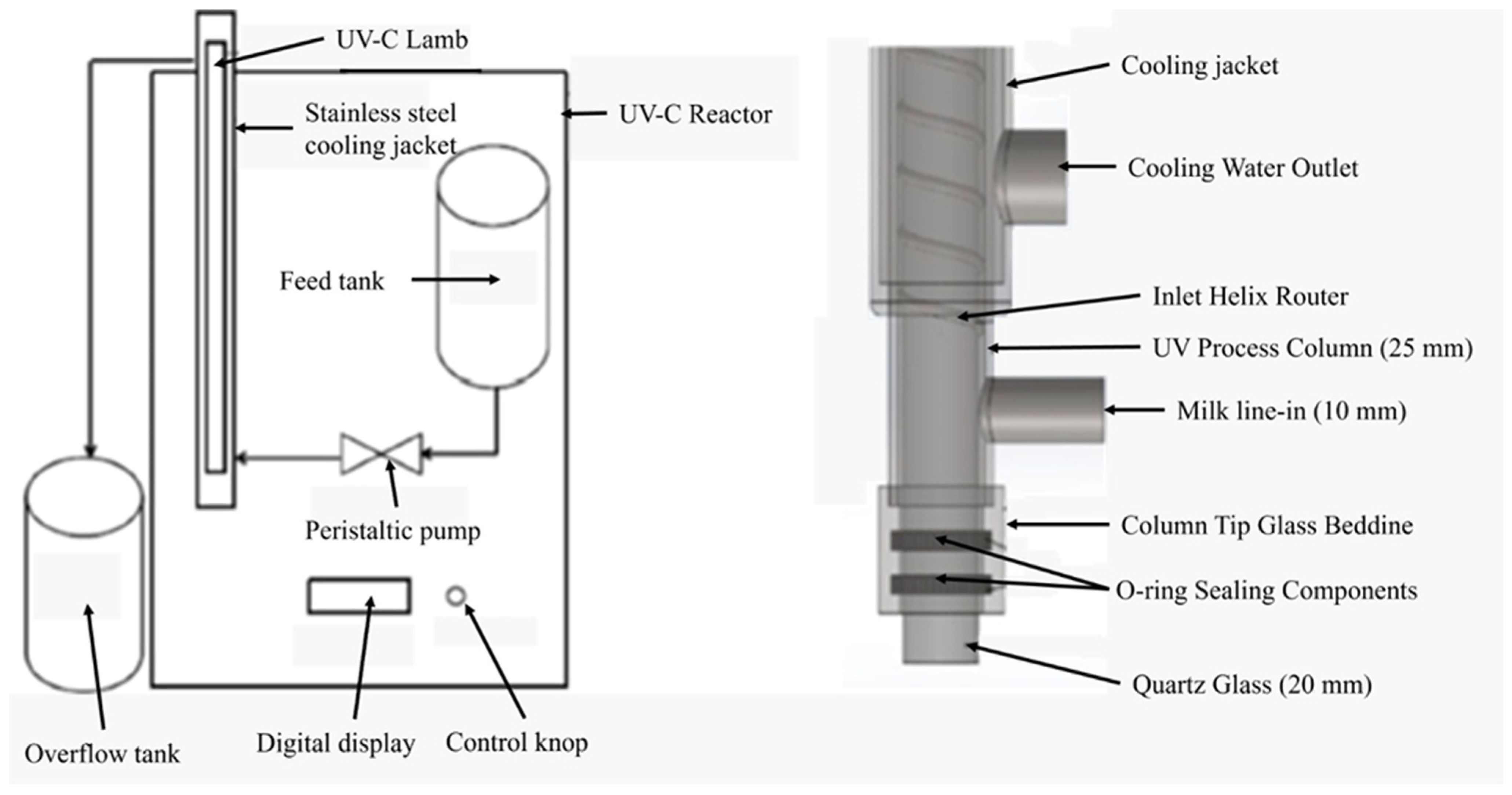
2.3. UV-C Treatment of Milk
The UV-C treatment of raw milk was performed according to the method described by Atik [8]. The UV-C reactor (Defne Engineering Laboratory Equipment/Afyonkarahisar, Turkiye) is shown in Figure 1. The lamp’s radiation power at 253.7 nm was 18 W. The UV-C reactor was turned on 15 min before the start of the study, and the column was disinfected with UV-C radiation.
Figure 1.
UV-C system used in the study.
2.4. Calculation of UV-C Radiation Dose
A Lightech (LightTech Lamp Technology Ltd., Dunakeszi, Hungary) GPH846T5L/HO/4 model UV-C lamp with a radiation power of 18 W at 253.7 nm was used in the reactor. The UV-C reactor was switched on 15 min before the start of the experiment, and the column was disinfected using UV-C radiation. The equation used in the calculation is given in Equation (1) [9].
Dose (J/mL) = Total UV-C output power (W)/Flow Rate (mL/s)
W = J/s
W = J/s
2.5. Cleaning of the UV-C Reactor
The reactor was cleaned after the application using the CIP system. According to this protocol, 250 mL of sterile water, followed by 250 mL of 0.1 N NaOH and again 250 mL of sterile water, were passed through the pump at the highest flow rate. After prewashing, the reactor parts were reassembled, and the final washing was performed with 1 L of 0.1 N NaOH and 1 L of sterile water [10].
2.6. Kefir Production
The milk samples were heated to 22 °C using a water bath, while the pasteurised control samples were cooled to the same temperature. Kefir grains (Danem Milk and Milk Products Ltd., Co., Isparta, Turkiye) and starter culture study (Vivo Activ LLC, Istanbul, Turkiye) were inoculated into the milk separately at concentrations of 2% w/v and 0.015 g/L, respectively. The kefir culture consists of microorganisms belonging to Lactococcus lactis subsp. lactis, Lactococcus lactis subsp. cremoris, Lactococcus lactis subsp. lactis var. diacetylactis, Leuconostoc mesenteroides subsp. cremoris, Streptococcus thermophilus, Kluyveromyces marxianus subsp. marxianus and Debaryomyces hansenii strains, while the kefir grains contain a much more complex community of microorganisms. The samples were subsequently positioned in an incubator (Incucell, MMM, Munich, Germany). All samples were incubated at 22 °C for 24 h. After incubation, the kefir grains produced in the samples were separated from the kefir using a sieve. All samples were subsequently cooled to 4 °C in a refrigerator under aerobic conditions [8].
2.7. Physicochemical Analyses
2.7.1. Proximate Analyses
The pH values of the kefir samples were determined using a digital pH metre (HI 2215 pH/ORP, Hanna Instruments, Singapore) calibrated to three different values (4, 7, and 10) prior to use, in accordance with the Association of Official Agricultural Chemists International (AOAC) standard no. 981.12 [11]. The titratable acidity values of the samples were measured as % (w/w) lactic acid equivalents in accordance with the method specified in AOAC Standard No. 947.05 [12]. The % dry matter values were determined according to AOAC Standard No. 990.20 [13]. The colour values (L*, a*, and b*) of the kefir samples were measured using a colourimeter (CR-400 Minolta Co., Osaka, Japan) calibrated before use, in accordance with the Hunter colour measurement system [14].
2.7.2. Analysis of Syneresis
10 g of each sample was weighed using a precision balance and individually placed on filter paper within a glass funnel for filtration. After 10 min of filtration at ambient temperature, the residual sample mass was measured, and the syneresis (%) of the samples was calculated [15].
2.8. Texture Analysis
The texture parameters (firmness, consistency, cohesiveness, and viscosity index) of the kefir samples were determined using a TA.XT Plus Texture Analyser (Stable Micro Systems, Godalming, Surrey, UK) equipped with a back extrusion rig (TA-30A, 7.62 cm diameter, cylindrical acrylic, 10 mm height) [16].
Using the reverse extrusion approach, force-time graphs were generated reflecting positive areas during probe insertion into each sample and negative areas after probe removal. The Texture Exponent 32 (2007) software (Stable Micro Systems, Godalming, UK) was used to determine the textural characteristics of the samples. The evaluated parameters were determined as hardness (g), representing the maximum positive force; consistency (gs), denoting the area of the positive region; cohesion, the maximum negative force; and viscosity index (gs), indicating the area of the negative region.
2.9. Method of Microbiological Analyses
Before conducting microbiological tests, 10 mL of each sample was taken and homogenised in a stomacher (Bagmixer 400P, Interscience, Saint Nom la Bretèche, France) with 90 mL of sterile Ringer solution prepared at ¼ strength using Ringer tablets (Merck Millipore, 1.15525, Darmstadt, Germany). Subsequently, further decimal dilutions were prepared from this dilution. Microbiological analyses were performed using the spread plate technique on these serial dilutions.
The counts of Lactobacillus spp. bacteria were determined using De Man, Rogosa and Sharpe (MRS) Agar (1.10660, Merck Millipore, Darmstadt, Germany) at 30 °C for 48–72 h in anaerobic conditions, whereas Lactococcus/Streptococcus spp. bacterial counts were determined using M17 Agar (Merck, Millipore, 1.15108, Darmstadt, Germany) following incubation for 24–48 h at 30 °C under aerobic conditions [17].
The total yeast and mould (TYM) count was determined using Dichloran Rose Bengal Chloramphenicol (DRBC) agar (Merck Millipore, 1.00466, Darmstadt, Germany) after a 5-day incubation at 25–28 °C [18].
2.10. Organic Acid Content Analysis
The samples’ organic acid contents were analysed using HPLC (Shimadzu Prominence, Shimadzu Corporation, Kyoto, Japan). Initially, 4 g of the kefir sample was weighed, and 20 mL of 0.01 N H2SO4 was added. The mixture was subsequently vortexed, filtered through a 0.45 µm filter, and injected into the system [19] (Güzel Seydim et al., 2000). The system specifications were as follows: CBM: 20ACBM; detector: DAD (SPD-M20A); column oven: CTO-10ASVp; pump: LC20 AT; autosampler: SIL 20ACHT; software: LC Solution 1.0; column: ODS 4 (250 mm × 4.6 mm, 5 µm; Inertsil ODS-4, GP Sciences, Nakatsugawa, Japan); mobile phase: ultrapure water adjusted to pH 3 with orthophosphoric acid. The mobile phase was run at a flow rate of 0.7 mL/min, with detection at 210 nm [20].
2.11. Research Design and Statistical Analyses
This research used a completely randomised design featuring a 2 × 3 × 3 factorial structure. The factorial design included the following factors: production method (kefir grains and kefir culture), kefir samples (control and UV-C-treated at 25 and 50 mL/min), and storage duration (0, 7, 14, and 21 days). A two-way analysis of variance was used to examine the differences among the samples. p values less than 0.05 were considered statistically significant. Correlations between samples, storage time, and production method applications were analysed by correlation analysis. The analytical results were subjected to ANOVA followed by Duncan’s multiple-range test using IBM SPSS Statistics 23 (IBM Corp., Armonk, NY, USA). The design was completely randomly repeated.
3. Results and Discussion
3.1. pH and Titratable Acidity
The UV-C treatment increased pH and decreased % titratable acidity in samples produced by both cultures and kefir grains (p < 0.05). Moreover, a decrease in flow rate enhanced the observed effect (p < 0.05). In all samples produced using two different ways and exposed to UV-C treatment at varying flow rates, the pH values decreased during storage, although the % titratable acidity values increased (p < 0.05). At the beginning of storage, the samples with the highest pH value and the lowest titratable acidity percentage were 3.49 and 0.12%, respectively, for samples produced using powder culture and exposed to a UV-C radiation dose of 43.2 J/mL (25 °C). Similarly, on the final day of storage, the highest pH and lowest titratable acidity were determined as 3.05 and 0.15%, respectively, in the same samples. Furthermore, the pH values of kefir samples produced using two different production methods decreased more significantly throughout the entire storage period in samples produced with kefir grains than in those produced with cultures (p < 0.05; Table 1).
Table 1.
Changes in pH and titratable acidity (%LA) of kefir samples during storage.
One of the main ways UV-C treatments influence milk pH is through protein denaturation and hydrolysis. Under UV-C exposure, milk proteins may partially denature. This process can release reactive carboxyl groups, which increases milk’s buffering capacity. As a result of the release of protons and shifts in the solution’s ionic balance, milk might show a higher pH or lower titratable acidity [21]. During the UV-C process, flow rate is a vital operational variable that influences the extent of UV-C-induced changes in pH and titratable acidity [22]. During storage, lactic acid bacteria (LAB) continue to produce acid. This significantly increases the lactic acid content during long-term storage. As a result, the pH decreases while the product’s titratable acidity percentage increases [23].
Kefir grains contain diverse microbial communities, including lactic acid bacteria (LAB), yeasts, and acetic acid bacteria, which participate in both lactic acid and alcohol fermentation. This symbiotic relationship enhances the production of lactic acid and other organic acids, leading to lower pH and increased acidity in kefir produced from kefir grains compared to starter-culture kefir [24].
3.2. Dry Matter (%)
The dry matter content of kefir samples increased with UV-C treatment. As the flow rate of the applied treatment increased, the rate of increase in dry matter content similarly increased (p < 0.05). Furthermore, the dry matter content of all samples decreased during the 21-day storage period (p < 0.05). The rate of increase in dry matter content was higher in samples produced with kefir grains than in those produced with commercial powdered culture (p < 0.05). At the end of storage, the samples with the highest dry matter content were those produced with kefir grain and exposed to a UV-C radiation dose of 21.6 J/mL, with a dry matter content of 10.58%. These were followed by samples produced with grain and exposed to a UV-C dose of 43.2 J/mL, with a value of 10.44% (Table 2).
Table 2.
Changes in dry matter (%) and syneresis (%) of kefir samples during storage.
UV-C applications preferentially promote the production of specific metabolites, such as bioactive compounds that are more viscous than lactic acid and water. The accumulation of these compounds contributes to the overall increase in dry matter [25]. Furthermore, the heightened microbial activity associated with UV-C treatment accelerates the breakdown of lactose and proteins. As lactose and proteins are metabolised, the concentration of soluble solids rises, thereby increasing the dry matter content [26].
The microbial flora of kefir continues its metabolic activities during storage, leading to the breakdown of solid components and a reduction in dry matter content over time [27]. Furthermore, during storage, kefir can be significantly affected by moisture loss, particularly when exposed to air, thereby substantially altering its dry matter content [28]. Fermentation with kefir grain involves a more complex series of fermentation products due to the activities of various microorganisms, thereby increasing the overall nutrient density of the product [29]. In contrast, commercial starter cultures designed for speed and efficiency can lead to rapid fermentation with relatively lower nutrient retention, which may negatively affect dry matter content [30].
3.3. Syneresis
The syneresis values of the samples decreased in parallel with the application of UV-C and the application speed (p < 0.05). Additionally, the syneresis value that occurred during storage increased in all samples (p < 0.05). The samples exposed to UV-C treatment at a flow rate of 50 mL/min (21.6 J/mL radiation dose) exhibited the lowest syneresis values at the beginning and end of storage, at 3.55% and 4.50%, respectively. Furthermore, it was determined that the amount of syneresis in samples produced with kefir grain is lower than in samples produced with commercial powdered culture (Table 2).
Syneresis in kefir results from protein denaturation, polysaccharide breakdown, and microbial dynamics during fermentation. Various enzymes and microbial metabolites play roles in these processes, ultimately affecting the kefir gel structure and leading to water separation [31]. UV-C treatment applications regulate/inhibit the activities of enzymes involved in polysaccharide degradation, thereby reducing syneresis [32].
The rise in syneresis levels during storage results from the ongoing metabolic activity of lactic acid bacteria and yeasts. As kefir is stored, these microorganisms continuously convert sugars into lactic acid and other metabolites. Lactic acid production not only contributes to the sour taste but also influences kefir viscosity and texture, thereby affecting syneresis levels [33]. Furthermore, the proteolytic and lipolytic activities of these microorganisms release bioactive compounds that can enhance syneresis [34]. Kefir grains, unlike commercial powder cultures, contain a variety of lactic acid bacteria and yeasts together that form a unique gel matrix, which can retain water more effectively and help reduce syneresis [35].
3.4. Colour Values
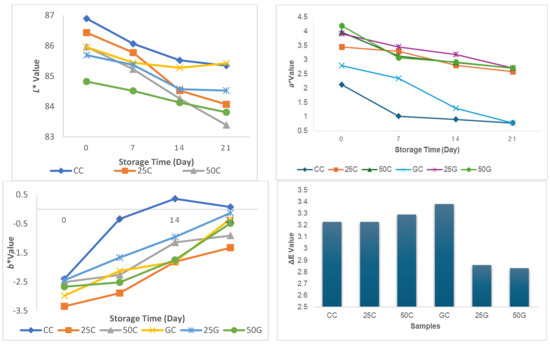
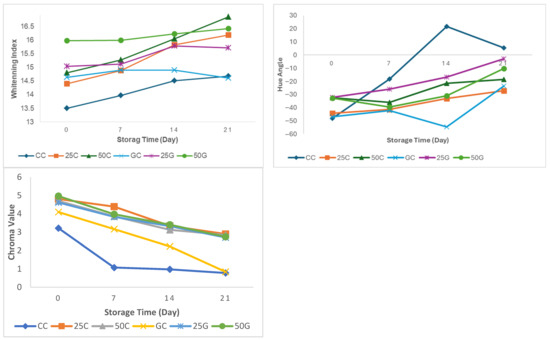
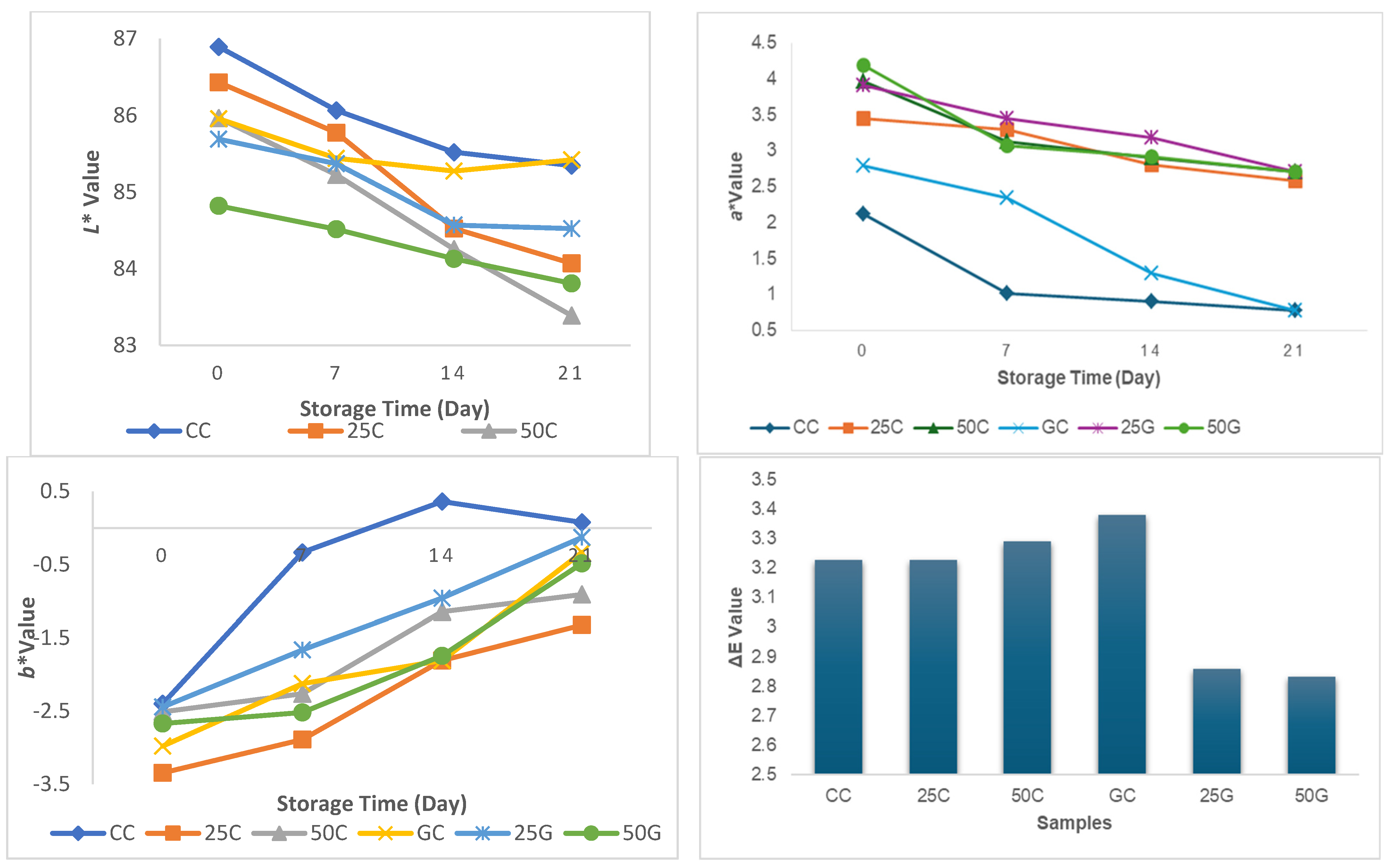
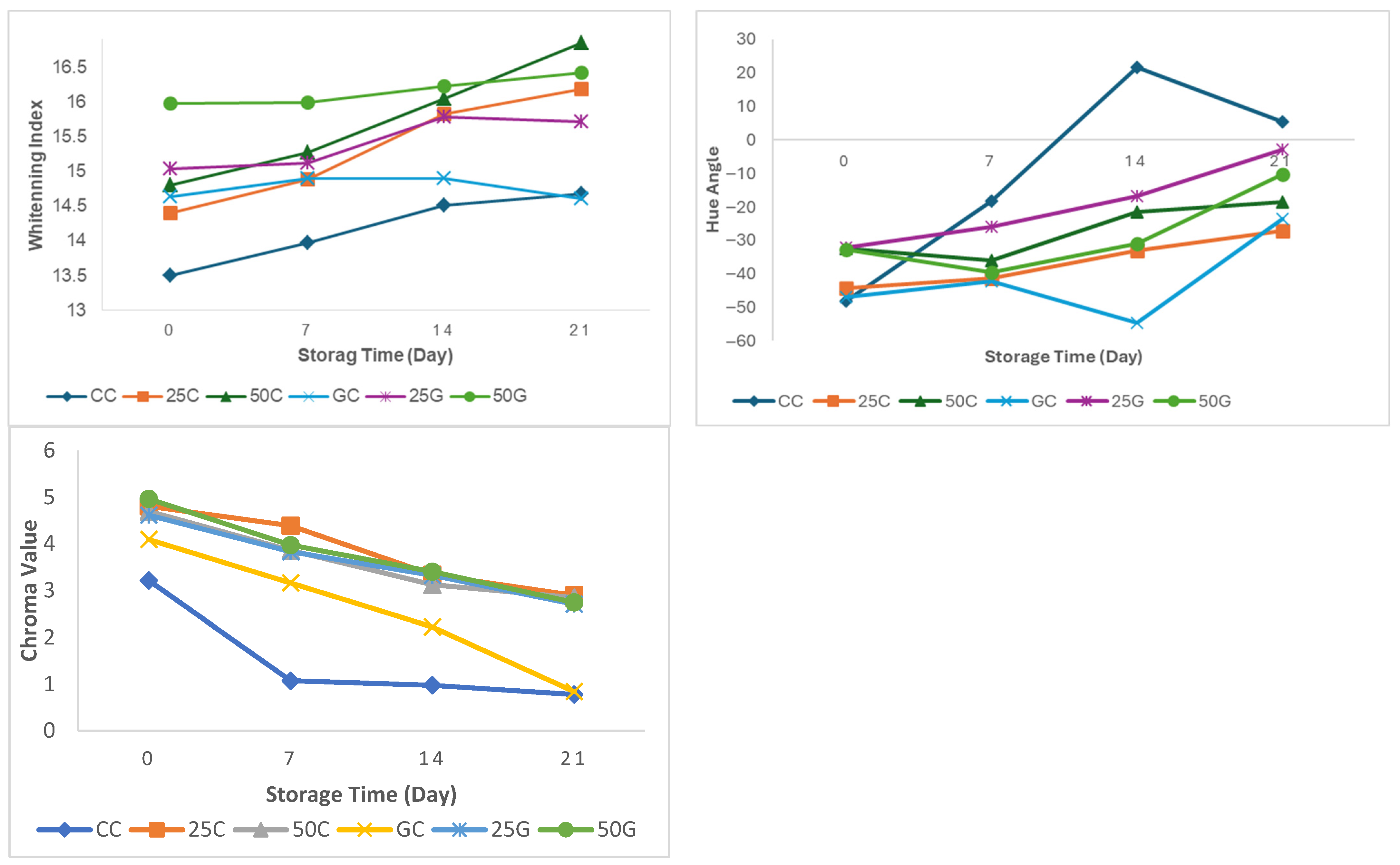
Although the L* and b* values of kefir samples produced from milk treated with UV-C decreased, the a* value increased (p < 0.05). Additionally, the L*, a*, and chroma values of all samples decreased during storage, while the b*, hue angle, and whiteness index values increased (p < 0.05). These changes have revealed significant differences, particularly between the control samples and the samples treated with UV-C. At the end of the storage period, the lowest L* value was 83.39 at a flow rate of 50 mL/min (21.6 J/mL radiation dose). In contrast, the lowest a* value was determined to be 0.77 in the grain control sample. During the entire storage period, the highest b* values were observed in control samples inoculated with commercial powder culture (Figure 2). It was found that the highest ΔE value among the samples was observed in the control (GC) samples inoculated with kefir grain.
Figure 2.
Colour values of kefir samples.
The ΔE value measures perceptual differences in colours. According to colour space standards, a ΔE value above 1 suggests that an average observer can perceive colour differences. As the ΔE value rises, the perceptual difference becomes more noticeable. A ΔE value over 2.5 is generally seen as a sign that the colour difference can be easily recognised by an observer [36]. Accordingly, as the ΔE values of all samples were detected above 2.5, the resulting colour change can be easily noticed by consumers.
The decline in L* values during kefir storage may be linked to factors such as microbial activity and pigment breakdown. Enzymatic processes in fermented products can cause biochemical changes that decrease light scattering by particles, resulting in lower L* values [37]. Similarly, the a* value decreases with storage time as kefir is stored. The decrease in a* values may be linked to the breakdown of anthocyanins or alterations in other colour-related compounds, which are affected by storage conditions such as temperature and pH [38]. Conversely, an increase in b* values indicating a shift towards a more yellow tone may result from the synthesis of new colour compounds or the breakdown of existing pigments in different ways. As kefir matures, metabolic processes involving lactic acid bacteria may lead to the production of compounds that impart yellowish colour tones, such as riboflavin and other carotenoids, which may not be dominant at the start of storage [39]. The colour of kefir varies depending on its microbial and biochemical environment. Depending on ambient conditions, metabolic activity would be changed, especially in lactic acid bacteria. This influences the production of pigments and other compounds that affect kefir colour [40]. The microbial community in kefir grains is significantly richer and more diverse than that in traditional starter cultures. This microbial diversity leads to the production of different polysaccharides, organic acids, and pigments, which contribute to the overall colour intensity of the final product [41].
Hue angle is a key concept in colour science, especially in colour spaces like CIELAB. It indicates the direction of colour perception associated with the property often called “colour” and differentiates among various shades such as red, green, and blue. Microbial activity significantly influences the hue angle of kefir during storage [42]. As kefir ferments over time, LAB activity, especially that of Lactobacillus species, influences the metabolism of various compounds that can alter pH and the beverage’s colour. For instance, the fermentation process can produce organic acids and other metabolites that interact with pigments, thereby increasing colour intensity [34]. Commercial kefir cultures contain significantly more lactic acid bacteria than kefir grains. Consequently, the hue angle was markedly higher in these samples, particularly compared with those produced using kefir grains.
The whitening index generally measures the degree of whiteness relative to a reference or standard. Meanwhile, the chroma value (C) is often defined in colour space models such as CIELAB (International Commission on Illumination-preferred for colourants, dyes, and paints (reflective surfaces)) and CIELUV ((International Commission on Illumination-preferred when colours are additive (light-emitting displays)) and represents the distance of a colour from the neutral grey axis within the hue circle [43]. UV-C treatments reduce pigment formation by exerting photochemical effects, particularly on active colour compounds. Consequently, this enhances the whitening effects in these products. The effect was increased in parallel with increases in the applied dose and duration.
Over time, various physicochemical parameters in kefir change, including pH, acidity, and structural integrity. As lactic acid accumulates, the pH generally decreases, resulting in a more stable product emulsion, which can enhance its whiteness and diminish its colour intensity [44,45].
3.5. Texture Profile Analysis (TPA) Parameters
The application of UV-C to milk intended for kefir production was effective in enhancing the firmness and consistency of the resulting kefir samples while reducing their cohesiveness and index of viscosity values (p < 0.05). It was found that the highest effect (excluding cohesiveness and index of viscosity values) was observed in samples produced with kefir grains and subjected to UV-C treatment at a flow rate of 50 mL/min. Furthermore, whilst the firmness and consistency values increased during storage in all samples, the cohesiveness and index of viscosity values decreased. (p < 0.05). The 50G sample had the highest firmness (31.75 g and 16.72 g), consistency (620.87 g·s and 350 g·s), and the lowest cohesiveness (−8.00 g and −4.82 g) and viscosity index (−1.98 and −0.51) at the start and on the 21st day of storage, respectively. The textural values of samples produced with kefir grain were found to be higher than those of kefir samples produced with commercial culture throughout the storage period (Table 3).
Table 3.
Firmness (g), consistency (g·s), cohesiveness, and index of viscosity (g·s) values of kefir samples during storage.
Kefir produced from milk treated with UV-C can maintain higher textural integrity during storage. Furthermore, the presence of biopolymers, such as exopolysaccharides produced during fermentation, particularly in UV-treated samples, significantly improves texture, resulting in higher consistency values [46]. Similarly, UV-C treatment may promote structural changes in milk proteins, thereby strengthening the kefir network by increasing their interactions with polysaccharides. Ultimately, the consistency of kefir increases largely due to protein aggregation and the stabilisation of the gel matrix [47].
The ongoing metabolic activity of cultures significantly affects the changing textural properties of kefir during storage. This prolonged fermentation process increases viscosity and firmness; this increase is primarily due to the formation of a gel-like structure resulting from increased lactic acid concentration and decreased pH, thereby increasing water-holding capacity and enhancing gel network formation [48]. Lactic acid bacteria, in particular, produce exopolysaccharides that enhance the rheological properties of kefir [49]. These exopolysaccharides also form a gel matrix that increases the product’s viscosity and stickiness, resulting in a more stable structure.
Unlike culture mixtures, kefir grains contain a wide variety of lactic acid bacteria and yeasts that are rich in polysaccharides, which are necessary for texture development. Furthermore, fermentation processes show significant differences between products produced with kefir grains and those produced with starter cultures. The complex microbial diversity in kefir grains creates a more complex fermentation environment, providing a wider variety of volatile compounds and metabolites that also affect sensory characteristics and mouthfeel [50].
3.6. Microbiological Analyses
Lactobacillus spp., Streptococcus/Lactococcus bacteria, and yeast counts increased in kefir samples produced from milk treated with UV-C (p < 0.05). The flow rate influenced the increase in microorganism counts. A flow rate of 25 mL/min had a greater effect than 50 mL/min (p < 0.05). In all samples, the counts of microorganisms analysed (Lactobacillus spp, Streptococcus/Lactococcus bacteria, and yeast) decreased during storage (p < 0.05). Additionally, the microbial counts of samples produced with kefir grain were higher than those produced with commercial powdered cultures (p < 0.05). On the first and twenty-first days of storage, the highest Lactobacillus spp. counts (6.77 and 5.78 log cfu/mL), Streptococcus/Lactococcus genus bacteria (6.82 and 5.70 log cfu/mL), and yeast (7.16 and 5.65 log cfu/mL) counts were determined in the samples produced with kefir grain and exposed to UV-C treatment at a flow rate of 25 mL/min (Table 4).
Table 4.
Microbiological count results of ayran and kefir samples (log cfu/mL).
Studies have demonstrated that UV-C applications effectively decrease pathogenic microorganisms in dairy products while encouraging the growth of beneficial microorganisms. Applying UV-C treatment to raw milk significantly modifies the microbial environment. The UV-C process not only reduces spoilage-causing organisms but also selectively promotes the growth of LAB and yeasts in the milk matrix, thereby positively contributing to fermentation in products such as kefir. This selective improvement stems from UV-C applications altering the environment, making it more favourable for specific microbial growth, particularly LAB and yeasts, which are necessary for the desired fermentation [51]. The decline in lactic acid bacteria and yeast counts in kefir samples during storage results from multiple interconnected factors, including environmental conditions (e.g., temperature), microbial competition, biochemical changes (e.g., pH and nutrient depletion), and the overall dynamics of the kefir microbial community [50,52].
Kefir grains contain a diverse array of lactic acid bacteria, including Lactobacillus, Lactococcus, and Leuconostoc, as well as yeast species such as Saccharomyces and Kluyveromyces. This microbial diversity supports robust fermentation through metabolic interactions that boost each other’s viability and growth rates, resulting in kefir products with higher counts of both lactic acid bacteria and yeast than those from starter cultures [53].
3.7. Organic Acid Levels
The organic acid levels in kefir samples produced from milk treated with UV-C were lower than in control samples (p < 0.05). Furthermore, organic acid levels increased during storage in all samples (p < 0.05). The UV-C dose applied, depending on the flow rate, was effective in increasing organic acid levels. As the flow rate increased, the amounts of organic acids formed decreased (except for malic and formic acid values). The organic acid levels in kefir samples produced with milk treated with UV-C at a flow rate of 50 mL/min were higher than those produced at 25 mL/min (p < 0.05). Furthermore, organic acid levels increased more in samples inoculated with kefir grains than in those inoculated with commercial powdered culture (p < 0.05). The highest levels of oxalic (5.15 mg/100 mL and 5.30 mg/100 mL), tartaric (35.99 mg/100 mL and 36.58 mg/100 mL), ascorbic (46.93 mg/100 mL and 49.04 mg/100 mL), malic (270.00 mg/100 mL and 287.50 mg/100 mL), formic (1636.65 mg/100 mL and 1675.85 mg/100 mL), lactic (15,950.31 mg/100 mL and 16,344.60 mg/100 mL), citric (487.83 mg/100 mL and 539.20 mg/100 mL), shikimic (16.69 mg/100 mL and 17.10 mg/100 mL), succinic (10,480.64 mg/100 mL and 10,694.95 mg/100 mL), and fumaric (5.14 mg/100 mL and 5.47 mg/100 mL) acids were determined in the classic control kefir samples produced by kefir grain inoculation. It was found that these kefir samples were followed by samples produced using kefir grains with milk treated with UV-C at a flow rate of 50 mL/min and those with milk treated with UV-C at a flow rate of 25 mL/min (Table 5).
Table 5.
Organic acid profile of kefir samples during storage (mg/kg).
Besides the reduction in organic acids, pH changes during storage can further complicate their preservation. As pH increases due to proton release and shifts in ionic equilibria, the activity of lactic acid-producing LABs decreases, leading to a decline in overall acidity [54]. Kefir grains contain a symbiotic matrix of diverse microorganisms, including lactic acid bacteria, yeasts, and acetic acid bacteria. This composition affects the fermentation process, resulting in different metabolic pathways that produce organic acids, such as lactic acid, acetic acid, and others, at higher concentrations during fermentation. The metabolic activities of the predominant lactic acid bacteria in kefir grains can produce not only lactic acid but also other by-products such as acetic acid, citric acid, and even short-chain fatty acids, depending on the strains present and their interactions within the grain matrix. In contrast, kefir produced with starter cultures tends to be dominated by fewer species, limiting the diversity of by-products produced during fermentation and, consequently, resulting in a lower overall organic acid yield [55].
4. Conclusions
This study aimed to determine the physicochemical, textural, and microbiological changes in kefir produced from milk using two different cultures subjected to UV-C treatment at two flow rates during storage.
Using milk treated with UV-C radiation in kefir production improves the microbiological safety of the final product. This decrease in microbial load, especially pathogens, enhances the viability and activity of the probiotic cultures required for kefir fermentation. Processing milk with UV-C light not only eliminates unwanted bacteria but also promotes the growth of beneficial microorganisms during fermentation. The improved viability of these probiotics enables the production of kefir with a higher probiotic content, which is essential for supporting gut health and boosting immune function through a more effective fermentation process.
Kefir produced by UV-C-treated milk also has beneficial effects due to its biochemical properties. Studies have shown that UV-C-treated milk fermentation can increase the production of bioactive compounds, including antioxidants and peptides with angiotensin-converting enzyme (ACE) inhibitory activity. Furthermore, the increased microbial activity caused by UV-C treatment also benefits the sensory properties of these products, such as taste and aroma.
Kefir produced from milk treated with UV-C has a longer shelf life compared to kefir made from untreated milk. Additionally, kefir made from UV-C-treated milk exhibits enhanced protein stabilisation, contributing to improved texture and consistency during storage. Enhanced organoleptic properties may make kefir more appealing to consumers, potentially increasing market acceptance and shelf life.
The application of UV-C treatment also facilitates more innovative approaches in dairy products and fermentation technologies. This technique, when combined with other fermentation methods such as mixed-culture fermentation, can further optimise the probiotic profiles and functional properties of kefir. Such innovations could lead to a new generation of kefir products enriched with health-promoting properties tailored to consumer preferences.
Author Contributions
Conceptualization, A.A.; resources, A.A.; writing—original draft preparation, A.A.; formal analysis, İ.A.; writing—review and editing, İ.A.; investigation, G.A.; data curation, G.A. All authors have read and agreed to the published version of the manuscript.
Funding
This research received no external funding.
Institutional Review Board Statement
Not applicable.
Informed Consent Statement
Not applicable.
Data Availability Statement
The original contributions presented in this study are included in the article. Further inquiries can be directed to the corresponding author.
Conflicts of Interest
The authors declare no conflicts of interest.
References
- Dahiya, D.; Nigam, P.S. Therapeutic and Dietary Support for Gastrointestinal Tract Using Kefir as a Nutraceutical Beverage: Dairy-Milk-Based or Plant-Sourced Kefir Probiotic Products for Vegan and Lactose-Intolerant Populations. Fermentation 2023, 9, 388. [Google Scholar] [CrossRef] [Scilit]
- Güzel-Seydim, Z.B.; Şatır, G.; Gökırmaklı, Ç. Use of Mandarin and Persimmon Fruits in Water Kefir Fermentation. Food Sci. Nutr. 2023, 11, 5890–5897. [Google Scholar] [CrossRef] [Scilit]
- Wang, L.; Deng, K.; Zhang, Y. Isolation and Screening of High-Quality Lactic Acid Bacteria and Yeast Strains in Kefir Grains and Preparation of Kefir Compound Fermentation Starter. J. Food Process. Preserv. 2022, 46, e17073. [Google Scholar] [CrossRef] [Scilit]
- Sooresh, M.M.; Jayawickrama, A.; Silva, A.M.M.d.; Nguyen, S.V.; Schmidt, S.A.; Sebastian, J.; Carey, S.; Harynuk, J.; Willing, B.P.; Bourrie, B.C.T. Fermentation of Kefir with Traditional Freeze-Dried Starter Cultures Successfully Recreates Fresh Culture Fermented Kefir. Front. Microbiol. 2025, 16, 1655390. [Google Scholar] [CrossRef] [Scilit]
- Ward, D.M.; Patras, A.; Kilonzo-Nthenge, A.; Yannam, S.K.; Pan, C.; Xiao, H.; Sasges, M. UV-C treatment on the safety of skim milk: Effect on microbial inactivation and cytotoxicity evaluation. J. Food Process Eng. 2018, 42, e12944. [Google Scholar] [CrossRef] [Scilit]
- Barbarska, O.; Strom, K.; Olędzka, G.; Calvo, J.; Gayà, A.; López-Mendoza, M.C.; Rutkowska, M.; Rosiak, E.; Wesołowska, A. Effect of Nonthermal Processing on Human Milk Bactericidal Activity Against Escherichia coli. J. Pediatr. Gastroenterol. Nutr. 2020, 70, 864–867. [Google Scholar] [CrossRef] [Scilit]
- Pendyala, B.; Vashisht, P.; Chen, F.; Sanchez, S.E.; Comstock, B.; Omsland, A.; Patras, A. Evaluating the UV-C Sensitivity of Coxiella burnetii in Skim Milk Using a Bench-Scale Collimated Beam System and Comparative Thermal Sensitivity Study by High-Temperature Short-Time Pasteurization. Front. Food Sci. Technol. 2023, 3, 1251069. [Google Scholar] [CrossRef] [Scilit]
- Atik, A. Non-Thermal UV-C Processing as an Alternative to Pasteurisation in Fermented Dairy Beverages: Ayran and Kefir. Fermentation 2025, 11, 557. [Google Scholar] [CrossRef] [Scilit]
- Cilliers, F.P.; Gouws, P.A.; Koutchma, T.; Engelbrecht, Y.; Adriaanse, C.; Swart, P. A Microbiological, Biochemical and Sensory Characterisation of Bovine Milk Treated by Heat and Ultraviolet (UV) Light for Manufacturing Cheddar Cheese. Innov. Food Sci. Emerg. Technol. 2014, 23, 94–106. [Google Scholar] [CrossRef] [Scilit]
- Atik, A.; Gumus, T. The Effect of Different Doses of UV-C Treatment on Microbiological Quality of Bovine Milk. LWT 2021, 136, 110322. [Google Scholar] [CrossRef] [Scilit]
- AOAC (Association of Official Analytical Chemists). Official Methods of Analysis of AOAC International (pH of Acidified Foods. 981.12), 19th ed.; AOAC: Gaithersburg, MD, USA, 2012. [Google Scholar]
- AOAC (Association of Official Analytical Chemists). Official Methods of Analysis of AOAC International (Acidity, Titrimetric Methods. 947.05), 19th ed.; AOAC: Gaithersburg, MD, USA, 2012. [Google Scholar]
- AOAC (Association of Official Analytical Chemists). Official Methods of Analysis of AOAC International (Solids (Total) in Milk. 990.20), 19th ed.; AOAC: Gaithersburg, MD, USA, 2012. [Google Scholar]
- Wang, X.; Kong, X.; Zhang, C.; Hua, Y.; Chen, Y.; Li, X. Comparison of Physicochemical Properties and Volatile Flavor Compounds of Plant-Based Yoghurt and Dairy Yoghurt. Food Res Int. 2023, 164, 112375. [Google Scholar] [CrossRef] [Scilit]
- Akarca, G.; Denizkara, A.J. Changes of Quality in Yoghurt Produced under Magnetic Field Effect During Fermentation and Storage Processes. Int. Dairy J. 2024, 150, 105841. [Google Scholar] [CrossRef] [Scilit]
- Sert, D.; Mercan, E.; Dertli, E. Characterization of Lactic Acid Bacteria from yogurt-Like Products Fermented with Pinecone and Determination of Their Role on Physicochemical, Textural and Microbiological Properties of Product. LWT-Food Sci. Technol. 2017, 78, 70–76. [Google Scholar] [CrossRef] [Scilit]
- Öner, Z.; Karahan, A.G.; Çakmakçı, M.L. Effects of Different Milk Types and Starter Cultures on Kefir. J. Food 2010, 35, 177–182. [Google Scholar]
- ISO 16212:2017; Microbiology-Enumeration of Yeast and Mould. ISO: Geneva, Switzerland, 2017.
- Guzel Seydim, Z.B.; Seydim, A.C.; Greene, A.K.; Bodine, A.B. Determination of Organic Acids and Volatile Flavor Substances in Kefir During Fermantation. J. Food Compos. Anal. 2000, 13, 35–43. [Google Scholar] [CrossRef] [Scilit]
- Aktaş, A.H.; Şen, S.; Yılmazer, M.; Cubuk, E. Determination of carboxylic acids in apple juice by RP HPLC. Iran. J. Chem. Chem. Eng. 2005, 24, 1–6. [Google Scholar]
- Kim, B.J.; Ryan, M.B.; Dallas, D.C. Ultraviolet-C Treatment Better Preserves the Proteomic Profile of Donor Human Milk than Holder Pasteurization. J. Agric. Food Chem. 2025, 73, 25076–25088. [Google Scholar] [CrossRef] [Scilit]
- Erol, K.F.; Kutlu, G.; Başlar, M.; Törnük, F. Effects of Heat Treatment and Ultraviolet Radiation on Physicochemical, Microbiological, and Bioactive Properties of Shalgam Juice. Food Sci. Nutr. 2024, 12, 8441–8453. [Google Scholar] [CrossRef] [Scilit]
- Putri, Y.D.; Setiani, N.A.; Warya, S. The Effect of Temperature, Incubation and Storage Time on Lactic Acid Content, pH, and Viscosity of Goat Milk Kefir. Curr. Res. Biosci. Biotechnol. 2020, 2, 101–104. [Google Scholar] [CrossRef] [Scilit]
- Ajam, F.; Koohsari, H. Effect of Some Fermentation Conditions on Antibacterial Activity of Fermented Milk by Kefir Grains. J. Food Process. Preserv. 2020, 44, e14913. [Google Scholar] [CrossRef] [Scilit]
- Pazla, R.; Jamarun, N.; Zain, M.; Yanti, G.; Chandra, R.H. Quality Evaluation of Tithonia (Tithonia diversifolia) with Fermentation Using Lactobacillus plantarum and Aspergillus ficuum at Different Incubation Times. Biodiversitas J. Biol. Divers. 2021, 22, 3936. [Google Scholar] [CrossRef] [Scilit]
- Borremans, A.; Bußler, S.; Sagu, S.T.; Rawel, H.M.; Schlüter, O.; Campenhout, L.V. Effect of Blanching Plus Fermentation on Selected Functional Properties of Mealworm (Tenebrio molitor) Powders. Foods 2020, 9, 917. [Google Scholar] [CrossRef] [Scilit]
- Taş, T.K. Effect of Storage Parameters on Freeze-Dried Kefir Grains. Int. J. Dairy Technol. 2014, 68, 434–440. [Google Scholar]
- Darvishzadeh, P.; Orsat, V. Storage Stability and In Vitro Digestion of Microencapsulated Russian Olive Water Kefir Using Spray-Drying. Food Bioprocess Technol. 2021, 15, 120–131. [Google Scholar] [CrossRef] [Scilit]
- Culpepper, T. The Effects of Kefir and Kefir Components on Immune and Metabolic Physiology in Pre-Clinical Studies: A Narrative Review. Cureus 2022, 14, e27768. [Google Scholar] [CrossRef] [Scilit]
- Sulmiyati, S.; Malaka, R.; Fahrodi, D.U.; Maruddin, F. Physicochemical. Microbiology, and Sensory Characteristics Kefir. Trop. Anim. Sci. J. 2019, 42, 152–158. [Google Scholar] [CrossRef] [Scilit]
- Sun, H.; Hao, D.; Tian, Y.; Huang, Y.; Wang, Y.; Qin, G.; Pei, J.; Abd El-Aty, A.M. Effect of chitosan/thyme oil coating and UV-C on the softening and ripening of postharvest blueberry fruits. Foods 2022, 11, 2795. [Google Scholar] [CrossRef] [Scilit]
- Kan, J.; Hui, Y.; Lin, X.; Liu, Y.; Jin, C. Postharvest Ultraviolet-C Treatment of Peach Fruit: Changes in Transcriptome Profile Focusing on Genes Involved in Softening and Senescence. J. Food Process. Preserv. 2021, 45, e15813. [Google Scholar] [CrossRef] [Scilit]
- Kovalenko, E.; Sheludchenko, M.; Shoshina, O.; Odintsova, V.; Koshechkin, S.I.; Volokh, O. Peptidome and Metabolome Profiling of the Fermented Milk Products Revealed Accumulation of Bioactive Compounds During Two Weeks of Cold Storage. bioRxiv 2025. [Google Scholar] [CrossRef] [Scilit]
- Ströher, J.A.; Flôres, S.H.; de Freitas, A.S.; Salazar, M.M.; da Silva, L.d.F.F.; Bresciani, L.; Sant’Anna, V.; Malheiros, P.d.S. Consumer Perception, Sensory Acceptance, and Microbial Characterization of Artisanal Milk Kefir During Shelf Life. J. Food Sci. 2025, 90, e70739. [Google Scholar] [CrossRef] [Scilit]
- Leite, A.M.d.O.; Miguel, M.A.L.; Peixoto, R.S.; Rosado, A.S.; Silva, J.T.; Paschoalin, V.M.F. Microbiological, Technological and Therapeutic Properties of Kefir: A Natural Probiotic Beverage. Braz. J. Microbiol. 2013, 44, 341–349. [Google Scholar] [CrossRef] [Scilit] [PubMed]
- Berndt, W.L.; Karcher, D.E.; Richardson, M.D. Color-Distance Modeling Improves Differentiation of Colors in Digital Images of Hybrid Bermudagrass. Crop Sci. 2020, 60, 2138–2148. [Google Scholar] [CrossRef] [Scilit]
- Gong, T.; Brecht, J.K.; Hutton, S.F.; Koch, K.E.; Zhao, X. Tomato Fruit Quality is More Strongly Affected by Scion Type and Planting Season than by Rootstock Type. Front. Plant Sci. 2022, 13, 948556. [Google Scholar] [CrossRef] [Scilit] [PubMed]
- Zhu, Y.; Chen, G.; Diao, J.; Wang, C. Recent Advances in Exploring and Exploiting Soybean Functional Peptides-A Review. Front. Nutr. 2023, 10, 1185047. [Google Scholar] [CrossRef] [Scilit]
- Izzo, L.; Luz, C.; Ritieni, A.; Mañes, J.; Meca, G. Whey Fermented by Using Lactobacillus plantarum Strains: A Promising Approach to Increase the Shelf Life of Pita Bread. J. Dairy Sci. 2020, 103, 5906–5915. [Google Scholar] [CrossRef] [Scilit]
- Fiorda, F.A.; Pereira, G.V.d.M.; Thomaz-Soccol, V.; Rakshit, S.K.; Soccol, C.R. Evaluation of a Potentially Probiotic Non-Dairy Beverage Developed with Honey and Kefir Grains: Fermentation Kinetics and Storage Study. Food Sci. Technol. Int. 2016, 22, 732–742. [Google Scholar] [CrossRef] [Scilit]
- Gökırmaklı, Ç.; Güzel-Seydim, Z.B. Water Kefir Grains vs. Milk Kefir Grains: Physical, Microbial and Chemical Comparison. J. Appl. Microbiol. 2022, 132, 4349–4358. [Google Scholar] [CrossRef] [Scilit]
- Abasi, S.; Fairchild, M.D. Fundamental Scales of Hue Appearance and Discrimination. Color Res. Appl. 2023, 48, 673–688. [Google Scholar] [CrossRef] [Scilit]
- Ajaj, A. Basics of Shade Selection and Importance of Laboratory Communication Restorative Dentistry. J. Dent. Health Oral Disord. Ther. 2015, 2, 215–217. [Google Scholar] [CrossRef] [Scilit]
- Alves, E.; Ntungwe, E.; Gregório, J.; Rodrigues, L.M.; Pereira-Leite, C.; Caleja, C.; Pereira, E.; Barros, L.; Aguilar-Vilas, M.V.; Rosado, C.; et al. Characterization of Kefir Produced in Household Conditions: Physicochemical and Nutritional Profile, and Storage Stability. Foods 2021, 10, 1057. [Google Scholar] [CrossRef] [Scilit]
- Morais, R.; Soares, P.I.; Morais, S.K.Q.; Oriente, S.F.d.; Nascimento, A.P.S.; Melo, M.O.P.; Sousa, F.M.; Cavalcanti-Mata, M.; Lisboa, H.M.; Gusmão, R.P.; et al. Development and Characterization of Symbiotic Buffalo Petit Suisse Cheese Utilizing Whey Retention and Inulin Incorporation. Foods 2023, 12, 4343. [Google Scholar] [CrossRef] [Scilit] [PubMed]
- Gül, L.B.; Bekbay, S.; Akgün, A.; Gül, O. Effect of Oleaster (Elaeagnus angustifolia L.) Flour Addition Combined with High-Pressure Homogenization on the Acidification Kinetics, Physicochemical, Functional, and Rheological Properties of Kefir. Food Sci. Nutr. 2023, 11, 5325–5337. [Google Scholar]
- Cardenete-Fernández, M.; Castillo-Rivas, A.; Durán-Barrantes, M.d.l.M.; Trujillo-Cayado, L.A.; Santos, J. Designing Spoonable Milk Kefir Gels: From Fermentation Optimization to Clean-Label Gel Structuring with Psyllium. Gels 2025, 11, 693. [Google Scholar] [CrossRef] [Scilit] [PubMed]
- Bielska, P.; Cais-Sokolińska, D.; Teichert, J.; Biegalski, J.; Kaczyński, Ł.K.; Chudy, S. Effect of Honeydew Honey Addition on the Water Activity and Water Holding Capacity of Kefir in the Context of Its Sensory Acceptability. Sci. Rep. 2021, 11, 22956. [Google Scholar] [CrossRef] [Scilit]
- Azizi, N.F.; Kumar, M.R.; Yeap, S.K.; Abdullah, J.O.; Khalid, M.; Omar, A.R.; Osman, M.A.; Mortadza, S.A.S.; Alitheen, N.B. Kefir and Its Biological Activities. Foods 2021, 10, 1210. [Google Scholar] [CrossRef] [Scilit] [PubMed]
- Montanuci, F.D.; Pimentel, T.C.; García, S.; Prudêncio, S.H. Effect of Starter Culture and Inulin Addition on Microbial Viability, Texture, and Chemical Characteristics of Whole or Skim Milk Kefir. Food Sci. Technol. 2012, 32, 580–865. [Google Scholar] [CrossRef] [Scilit]
- Makararpong, D.; Tantayanon, S.; Gowanit, C.; Jareonsawat, J.; Samgnamnim, S.; Wataradee, S.; Hogeveen, H.; Inchaisri, C. Enhancing Raw Bovine Milk Quality using Ultraviolet-C (UV-C) Irradiation: A Microbial and Lipid Peroxidation Study. Food Sci. Anim. Resour. 2024, 44, 372–389. [Google Scholar]
- Harmankaya, S. The Effect of Incubation Period on the Shelf Life of Kefir Beverage Prepared with Kefir Culture. Cauc. J. Sci. 2023, 10, 67–81. [Google Scholar] [CrossRef] [Scilit]
- Güzel-Seydim, Z.B.; Wyffels, J.T.; Seydim, A.C.; Greene, A.K. Turkish Kefir and Kefir Grains: Microbial Enumeration and Electron Microscobic Observation. Int. J. Dairy Technol. 2005, 58, 25–29. [Google Scholar] [CrossRef] [Scilit]
- Kim, D.; Kim, H.; Seo, K. Microbial Composition of Korean Kefir and Antimicrobial Activity of Acetobacter fabarum DH1801. J. Food Saf. 2019, 40, e12728. [Google Scholar] [CrossRef] [Scilit]
- Danilović, B.; Đorđević, N.; Savić, D. Microbiological and Chemical Changes During Two-Phase Fermentation of Kefir. Adv. Technol. 2019, 8, 5–9. [Google Scholar] [CrossRef] [Scilit]

Disclaimer/Publisher’s Note: The statements, opinions and data contained in all publications are solely those of the individual author(s) and contributor(s) and not of MDPI and/or the editor(s). MDPI and/or the editor(s) disclaim responsibility for any injury to people or property resulting from any ideas, methods, instructions or products referred to in the content. |
© 2026 by the authors. Licensee MDPI, Basel, Switzerland. This article is an open access article distributed under the terms and conditions of the Creative Commons Attribution (CC BY) license.