


Abstract
Soapstock (SS), a by-product of vegetable oil refining, is a promising source of a mixture of mono-, di-, triglycerides, and free fatty acids (MDTG-FFA), a valuable feedstock for biodiesel production. In this study, the selective extraction of MDTG-FFA from SS using green solvents (ethyl acetate, ethyl formate, methyl acetate, isopropyl acetate, and isobutanol) was investigated. Ethyl acetate showed the highest efficiency, allowing the elimination of the phosphatide (PL) precipitation step with acetone. The process optimization was carried out by response surface methodology with central composite design. Statistical analysis confirmed the significance of the obtained models: F-values were 4.55 (p = 0.013) for MDTG-FFA and 9.62 (p = 0.00074) for PL. Regression analysis revealed a good fit of the experimental data with quadratic models for MDTG-FFA and PL, with coefficients of determination (R2) of 0.804 and 0.897, respectively. The optimum extraction parameters were a solvent-to-dry-matter-of-SS ratio 5:1, time 10.2 min, and initial extraction temperature 21.7 °C. Under these conditions, maximum MDTG-FFA yields of 12.6% and 13.4% were achieved for the two batches of SS, respectively, with minimum PL yields of 0.02% and 0.1%. The obtained MDTG-FFA extracts rich in free fatty acids represent a promising feedstock for biodiesel production. The proposed method provides a rational, resource-efficient, and environmentally preferable extraction of valuable components from SS.
1. Introduction
In recent years, there has been considerable interest in inexpensive biomass by-products or waste products for biofuel production [1,2,3,4]. Current research emphasizes the importance of this area for the sustainable development of the energy sector. Traditional and advanced biomass waste processing technologies, such as esterification, hydrolysis, fermentation, pyrolysis, and gasification, not only improve the yield of the final product but also reduce the environmental impact [3,4,5].
Special attention has been given to the recycling of by-products and wastes from biofuel production, particularly soapstock (SS). These by-products, generated during the refining of vegetable oils, contain up to 80% free fatty acids (FFA) and other valuable components that can be used to produce second-generation biofuels [6,7]. Studies show that SS recycling not only contributes to the sustainable development of the biofuel industry but also reduces the negative environmental impacts associated with waste disposal [8,9,10]. An important aspect of SS utilization is to address the competition between food and biofuel production. Unlike first-generation biofuels, which often depend on food crops, the use of SS, which belongs to the second generation of biofuels, can reduce pressure on food resources, which is particularly relevant in the context of global population growth and climate change [11,12,13].
The process of extracting a mixture of mono-, di-, triglycerides, and free fatty acids (MDTG-FFA) from SS using various solvents plays a key role in biofuel production. The efficiency of solvents can vary significantly depending on the polarity and properties of the extracted substances. The non-polar solvent n-hexane is considered ideal for the extraction of non-polar compounds [14,15,16], but its use may be limited due to environmental and toxicological considerations [16,17,18,19]. Polar solvents, such as ethyl acetate and methyl acetate, allow the extraction of both polar and non-polar compounds, making them ideal for the extraction of FFA and some triglycerides [19]. Extracts obtained using these solvents may contain higher levels of antioxidants, which can improve the stability of the final product [20,21,22,23,24,25]. Various methods have been used to extract valuable components from biomass, including the traditional solvent extraction method and newer approaches such as supercritical fluid extraction, ultrasonic, and microwave extraction. When selecting an efficient extraction method, it is important to consider the amount of solvent used and the possibility of impurities that may limit the solubility of extractable contents [26].
The effect of temperature on the extraction process is also an important aspect. Increasing the temperature can increase the yield of extracts, but it must be taken into account that too high a temperature can lead to decomposition of the target compounds [2,26,27]. Therefore, the optimization of extraction conditions is an important factor to maximize process efficiency and obtain quality extracts [28,29]. This optimization is particularly important when dealing with different types of raw materials. By applying optimized extraction methods, the extraction of FFA and triglycerides from SS is able to improve the characteristics of the final product, opening up new possibilities for their application. For example, FFA can be used to produce high-quality biodiesel with improved combustion properties and lower emissions [26]. The development of this field is of particular importance in the context of tightening environmental legislation and increasing demand for clean energy sources [4].
Rapeseed is an important oilseed crop in the European Union, widely used for rapeseed oil and biofuel production [30]. With increasing production, the amount of oil refining by-products also increases. The research of our group aims to investigate the possibilities of using rapeseed SS for more sustainable and environmentally friendly biodiesel synthesis (sustainable advanced biodiesel synthesis). The main objective of this work was to investigate the effect of different hydrocarbon solvents on the separation of components suitable for biodiesel synthesis from acidified SS. The study focuses on FFA, mono-, di-, and triglycerides (MDTG), which need to be efficiently separated from aqueous solution, insoluble particles, and phosphatide (PL).
The novelty of our work lies in the selective extraction of MDTG-FFA using a green solvent, which ensures high yield in a short time and with lower energy consumption, without the need for preliminary preparation of raw materials to achieve homogeneity. Unlike methods for extracting lipids from biomass (plant seeds, rice bran, coffee grounds, or microalgae) [19,26,27,28], which require preliminary washing, drying, and grinding to optimize green solvents, the proposed approach allows working directly with rapeseed SS. Ethyl acetate is used as a solvent, which has a significantly lower toxicity (OSHA maximum permissible concentration of 400 ppm) compared to the traditional method of extracting lipids with n-hexane (50 ppm) [31]. This confirms the feasibility of using ethyl acetate within the framework of “green chemistry” in accordance with the recommendations of the GSK guidelines [32].
To optimize the extraction conditions, we apply central composite design (CCD), considering parameters such as solvent-to-dry-matter-of-SS ratio, extraction time, and process temperature. This research aims to develop more efficient and environmentally friendly methods for biodiesel production, which is particularly relevant in the context of the growing demand for alternative energy sources and the need to utilize by-products from the oils and fats industry.
2. Materials and Methods
2.1. Materials
Rapeseed SS were obtained from Bio-Venta Ltd. Commercial grade reagents were used without additional purification: sulfuric acid H2SO4 (Fluka, Buchs, Switzerland, 97%), cyclohexane and acetone (Chempur, Piekary Śląskie, Poland, 99%), n-heptane (Chempur, 99.5%), ethyl formate (Across Organics, Geel, Belgium, 98%), methyl acetate and isopropyl acetate (Alfa Aesar, Haverhill, MA, USA, 99%), ethyl acetate (Fisher Chemical, Loughborough, UK, 99.9%), isobutanol (Fisher Chemical, 99%). Gas chromatography utilized the following standards and reagents: rapeseed fatty acids (≥99%), monoolein (Sigma-Aldrich, St. Louis, MO, USA, ≥99%), diolein (Sigma-Aldrich, ≥99%), rapeseed oil (Iecavnieks & Co., Ltd., Iecava, Latvia, TG 97.5%), tricaprin (TCI Europe, Zwijndrecht, Belgium, 98%), N-methyl-N-(trimethylsilyl)trifluoroacetamide (Alfa Aesar, 97%), pyridine (Lach-Ner, Neratovice, Czech Republic, 99.5%), and dichloromethane (Chempur, 99%).
2.2. Methods
A Sigma 4K15 Sartorius centrifuge was used for the separation of particulates. J.P.Selecta Vaciotem-T vacuum drying oven was used for drying of PL. A Bandelin Sonorex (Berlin, Germany) (160/640 W power, 35 kHz frequency) ultrasonic bath was used for ultrasonic extraction, and a Heidolph Vibramax 100 orbital shaker was used for shaking the samples.
Quantitative analysis of all samples was performed using an Analytical Controls biodiesel analyzer equipped with an Agilent Technologies (Santa Clara, CA, USA) 7890A gas chromatograph. FFA, monoglycerides (MG), diglycerides (DG), and triglycerides (TG) were quantified using calibration curves prepared from purified rapeseed fatty acids, monoolein, diolein, and rapeseed oil, respectively, with tricaprin as the internal standard. Samples were derivatized with N-methyl-N-(trimethylsilyl)trifluoroacetamide in pyridine and diluted with dichloromethane. Analyses were conducted on a DB-5ht column (15 m, 0.32 mm ID, and 0.10 µm film) using a TPI splitless injector. The oven and injector were held at 50 °C for 5 min, and then heated to 180 °C at 15 °C/min, to 230 °C at 7 °C/min, and finally to 370 °C at 10 °C/min. Helium served as the carrier gas, and the detector temperature was set to 390 °C. Standard Soxhlet extraction was performed as in references [33,34] using cyclohexane (CH) as solvent. Prior to Soxhlet extraction, SS was acidulated with H2SO4, water removed by centrifugation, and the residue was mixed with clean sand and dried at 103 °C.
Phosphorus content was determined using the gravimetric quinoline–molybdophosphoric acid (Quimiociac) method [35,36].
The simple linear regression model was used for the results of standard solution measurements to determine sample composition by gas chromatography (GC). Table 1 shows the uncertainties of the measured and calculated parameters. Experiments were performed several times and averaged. Each analytical measurement was carried out twice, and the average value was used.
Table 1.
Uncertainties of measured and calculated parameters.
2.3. Extraction and Separation of MDTG-FFA from PL
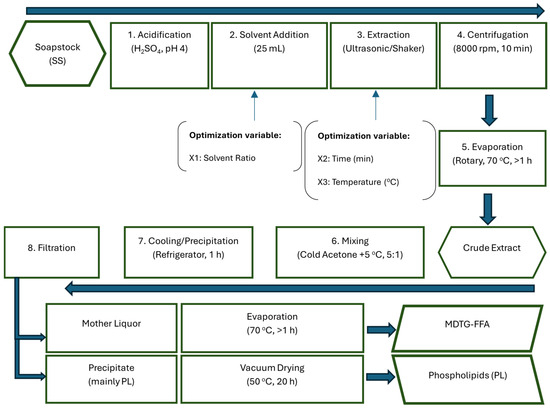
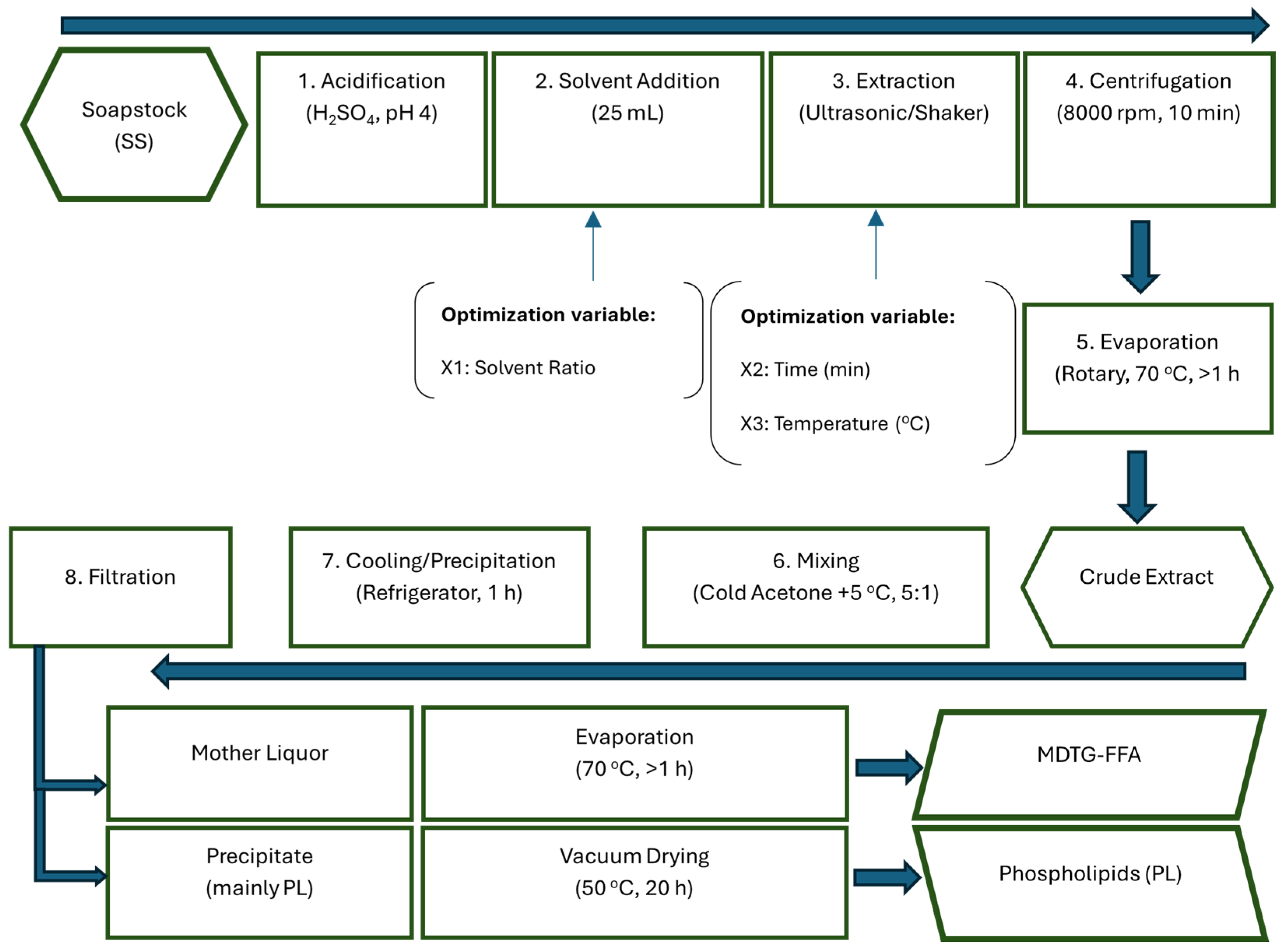
Soapstock (SS, 25 g) was acidified with concentrated H2SO4 (97%) under stirring to pH 4. To evaluate the effectiveness of various solvents for extraction, 25 mL of a selected solvent (cyclohexane, n-heptane, methyl acetate, ethyl acetate, ethyl formate, isopropyl acetate, or isobutanol) was added to the acidified SS. The mixture was extracted either in an ultrasonic bath for 30 min or by shaking on an orbital shaker. The resulting emulsion was separated by centrifugation at 8000 rpm for 10 min, and the solvent was evaporated using a rotary evaporator at 70 °C for at least 1 h, yielding crude extract. The collected solvent was used repeatedly for subsequent extractions. The crude extract was then mixed with cold acetone (5 °C) at a ratio of 5:1 (acetone/oil by weight) and placed in a refrigerator for 1 h. A precipitate formed upon cooling was filtered off. This precipitate (mainly PL) and the mother liquor (rich in MDTG-FFA) were processed separately: the precipitate was dried in a vacuum oven at 50 °C for 20 h, while the mother liquor was evaporated on a rotary evaporator at 70 °C for at least 1 h. The collected acetone was used repeatedly for subsequent precipitations. MDTG-FFA selectivity is the percentage of MDTG-FFA separated from the crude extract. Figure 1 presents a schematic diagram of the process.
Figure 1.
Method for obtaining and separation of MDTG-FFA and PL.
2.4. Extraction Optimization
Response surface methodology with CCD was used to optimize the extraction of MDTG-FFA and PL. In this study, ethyl acetate was used as a solvent. The independent variables were the solvent-to-dry-matter-of-SS ratio (X1), varying from 2 to 5 (mL/g), the mixing time in a shaker with a circular motion of the sample gripping surface of 1350 rpm (X2), varying from 2 to 30 (min), and the initial extraction temperature (X3), varying from 20 to 60 (°C). The CCD is based on a second-order polynomial model represented by the following equation:
where Y represents the response variables of MDTG output—FFA and PL (%); is the regression coefficient for the intercept; X1, X2, and X3 independent variables are the solvent-to-dry-matter-of-SS ratios, shaking time, and initial temperature; are linear coefficients; are interaction coefficients for each variable; and —are quadratic coefficients.
Each experiment was performed three times, and data was presented as mean ± standard deviation to ensure the validity of the results and data normality prior to analysis of variance (ANOVA). Experimental data processing and statistical analyses were performed using the free software JASP version 0.95.4, where ANOVA tests were used. Graphical dependencies were plotted using JASP and MATLAB software version R2024a Update 4.
3. Results and Discussion
3.1. Selection of Solvent for Extraction from SS
SS is a by-product of vegetable oil refining using an alkaline water solution. Its composition includes alkaline water (32–67%), FFA in soap form (10–28%), PL (5–9%), and acylglycerols (12–13%) [37]. The presence of PL in SS can complicate the production of biodiesel, as they can inactivate the catalyst used in biodiesel production [38].
In this study, lipid extraction methods from SS were investigated to selectively extract a mixture of MDTG-FFA without the need for additional purification with cold acetone. The extraction was carried out on two different batches of SS after acidification with sulfuric acid. Lipids were initially extracted by cyclohexane extraction in a Soxhlet apparatus, resulting in a crude extract containing a mixture of MDTG-FFA and PL. Subsequently, PL were separated from the crude extract by dissolution in six times the volume of cold acetone [39,40]. Table 2 summarizes the main characteristics of SS formulation. The mass yield of the crude extract, which contained a significant amount of PL, was determined to be 13.4% for SS batch No. 1 and 14.1% for SS batch No. 2. The result obtained is close to the oil yield of 12.82% extracted with hexane from spent coffee grounds using the Soxhlet method [41]. Using a similar method, lipids accounted for 18% of olive pomace extracted with petroleum ether [42]. The highest total oil content of 32.62% was achieved by n-hexane extraction from crambe seeds using the Soxhlet method [19]. However, the use of this method over a long period of time requires significant energy consumption [43].
Table 2.
Composition of SS used in the study.
Both non-polar solvents (n-hexane and cyclohexane) and green polar solvents (ethyl acetate, ethyl formate, methyl acetate, isopropyl acetate, and isobutanol) were chosen for screening. Non-polar solvents were selected for their known effectiveness in extracting lipids from biomass [16,43] and for use in comparison of the performance of green solvents. Green polar solvents were selected based on their low water solubility and sustainability [16,44]. The extraction was carried out in an ultrasonic bath at room temperature, 22 °C. The extracts obtained were treated with acetone to remove PL and obtain the MDTG-FFA mixture. Analysis of MDTG-FFA composition showed that the ratio of FFA to MDTG was approximately 1:1 in the first batch, whereas a decrease in the proportion of FFA was observed in the second batch. Solvent testing was performed to evaluate the number of layers formed, ease of separation, extraction yield, and PL content (Table 3).
Table 3.
Yield and content in weight per cent of extracts from SS.
All the solvents used during the study formed two easily separable layers after centrifugation, of which the upper one was analyzed. The extraction results demonstrated that in the first batch, isobutanol (15.9%), n-hexane (15.5%), cyclohexane (15.3%), and ethyl acetate (13.7%) gave the highest extract yields.
MDTG-FFA selectivity analysis showed that cyclohexane, n-hexane, and isobutanol showed the lowest values in both batches. At the same time, ethyl formate (97.7% and 95.9%), methyl acetate (91.7% and 92.6%), and ethyl acetate (91.2% and 92.7%) showed the highest MDTG-FFA selectivity at high extract yields of about 14%. The possible reason for this is the ability of these solvents to interact with a variety of polar and non-polar compounds, allowing the extraction of a wide range of lipids with minimal PL.
Ethyl acetate was selected as the preferred solvent due to its low toxicity and boiling point in the range of 60–100 °C, making it optimal for biodiesel production. The use of ethyl acetate also resulted in a reduction of phosphorus content in the extract to 0.07%, which is about 30% lower compared to the cyclohexane extract after purification with acetone, confirming its effectiveness as a solvent for subsequent use in biodiesel production.
After ethyl acetate extraction and centrifugation, residues remained, most of which were located between the aqueous solution and the ethyl acetate extract layer. These residues included a dense precipitate and a viscous phosphatide layer. This layer was further treated with cyclohexane to extract PL. The resulting cyclohexane extract contained 80–85% PL (as measured by acetone precipitation), and the residue was 4–5% of the weight of the feedstock. The total amount of extract and residues corresponded to the dry matter content of the feedstock.
3.2. Regression Modeling and Statistical Analysis of the Extraction Process by Response Surface and CCD Methods
Ethyl acetate was chosen to optimize the conditions for the extraction of MDTG-FFA and PL from SS, which eliminates the need to purify the extract with acetone and allows for maintaining a low process temperature. The extraction method was determined based on literature data described in [26]. The simple solvent extraction method has proven to be a cost-effective and efficient option for commercial applications. It not only outperforms alternative methods in terms of cost-effectiveness but also provides a high ability to transfer soluble components from the solid phase to the liquid medium. Preliminary experiments confirmed that the use of ultrasound just slightly increases the extract yield compared to the shaking method, so a simple shaker solvent extraction method combining efficiency and economic feasibility was chosen to find the optimal conditions. A three-level CCD with three independent variables was used to determine the optimal extraction parameters: solvent-to-dry-matter-of-SS ratio (X1, mL/g), shaking time (X2, min), and initial temperature (X3, °C). The ranges of X1, X2, and X3 were determined based on preliminary experiments in order to cover a technologically feasible region where the optimal process conditions were expected to be located, and the corresponding values and levels of these variables are presented in Table 4.
Table 4.
Independent variables and their coded and actual levels in CCD.
The experimental results obtained from the first batch of SS with a high FFA content of 48.9% demonstrated the influence of extraction factors on product yields. The main response parameters in the experimental design were the percentage yield of ethyl acetate extract (MDTG-FFA) purified from PL, which was required to be maximized, and the percentage yield of PL, which was required to be minimized.
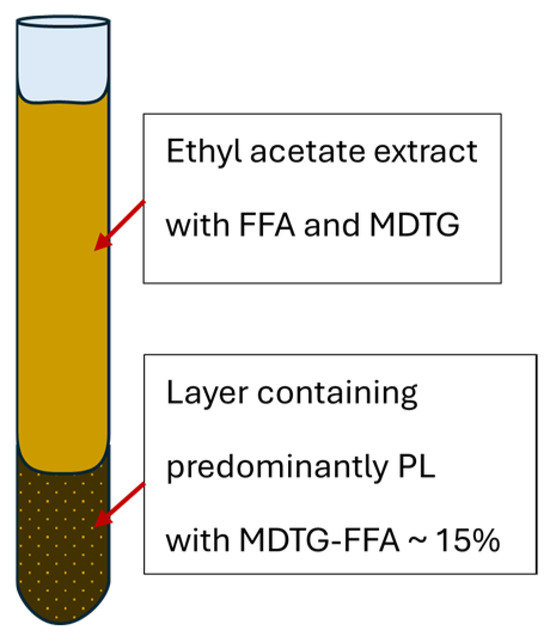
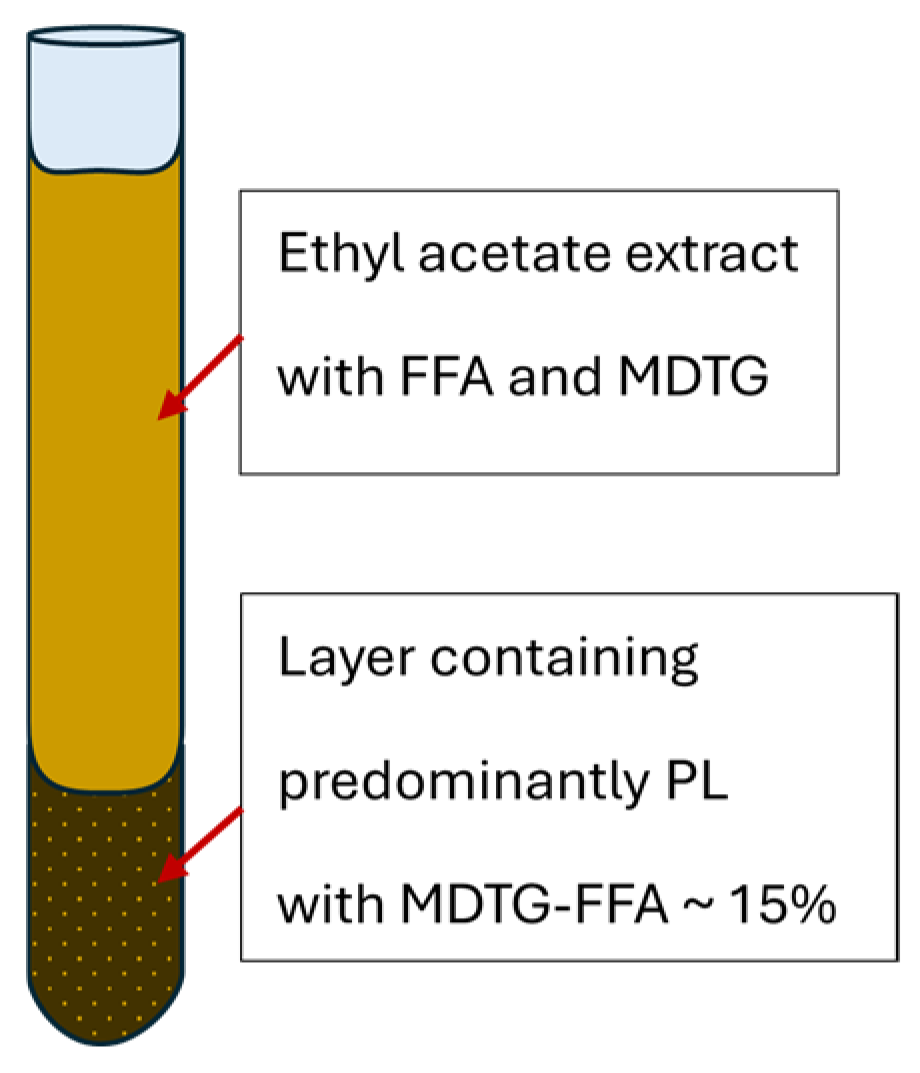
Preliminary tests revealed the dependence of the results on the ethyl acetate-to-dry-matter-of-SS ratio. At a high ratio, two lipid layers were formed: a large volume of ethyl acetate extract with FFA and MDTG on top and a smaller volume of viscous dark layer at the bottom containing predominantly PL with MDTG-FFA of about 15% (Figure 2).
Figure 2.
Phase separation during ethyl acetate extraction of SS.
At a low ratio (1:1), a single layer including all components was formed. As ethyl acetate acts as a selective solvent for MDTG-FFA, only the top layer of the ethyl acetate extract was considered in optimizing the extraction method when multiple layers were formed.
The use of randomization in the planning of the experiment minimized the influence of uncontrollable factors on the observed response. The planning matrix and experimental values of the response functions presented in Table 5 indicated the non-linear dependence of MDTG-FFA and PL on the variation factors. Analysis of 20 groups of experiments showed that the yield of MDTG-FFA ranged from 8.10 to 13.02%, and PL ranged from 0 to 4.55%. The highest MDTG-FFA values were obtained in experiment № 8, and the lowest PL values were obtained in experiments No. 10 and No. 17.
Table 5.
CCD-based experiment planning matrix with coded and actual levels of independent variables and response function values for 20 experimental sets.
The regression dependencies of MDTG-FFA and PL yields on extraction conditions were obtained as second-order polynomial equations for the coded and actual values of independent variables (2), (3) and (4), and (5). These equations have the following form:
where YMDTG-FFA and YPL are the yields of MDTG-FFA and PL (%), X1 is the solvent-to-dry-matter-of-SS ratio (mL/g), X2 is the shaking time (min), and X3 is the initial temperature (°C).
Analyses of models constructed from 20 experimental data sets allow us to describe the relative influence of independent variables on MDTG-FFA and PL outputs. Examination of the coded equations revealed that MDTG-FFA output is most influenced by factors X2X3, X1, and X1X3, while PL output is significantly influenced by X1, , X1X3, and X3.
Positive coefficients at factors X2X3 and X1 indicate an increase in MDTG-FFA yield when these variables increase. At the same time, negative coefficients at factors X1 and X1X3 favor a decrease in PL yield when these variables increase. Equations (4) and (5) in actual factors allow prediction of MDTG-FFA and PL yields in real units, which can be used to select optimal process parameters.
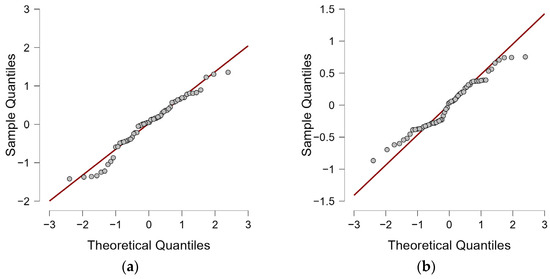
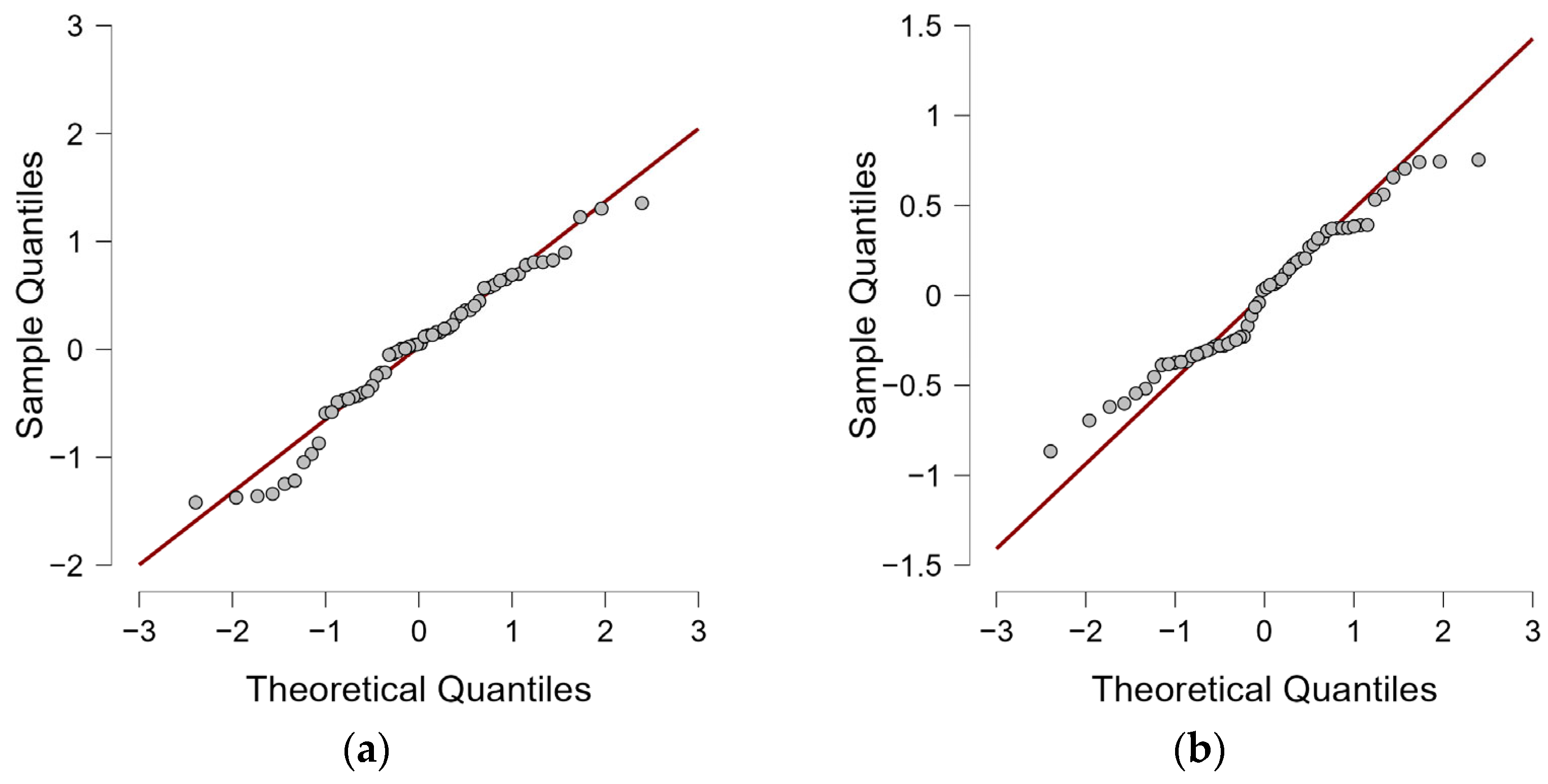
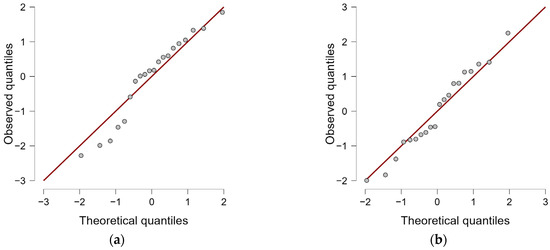
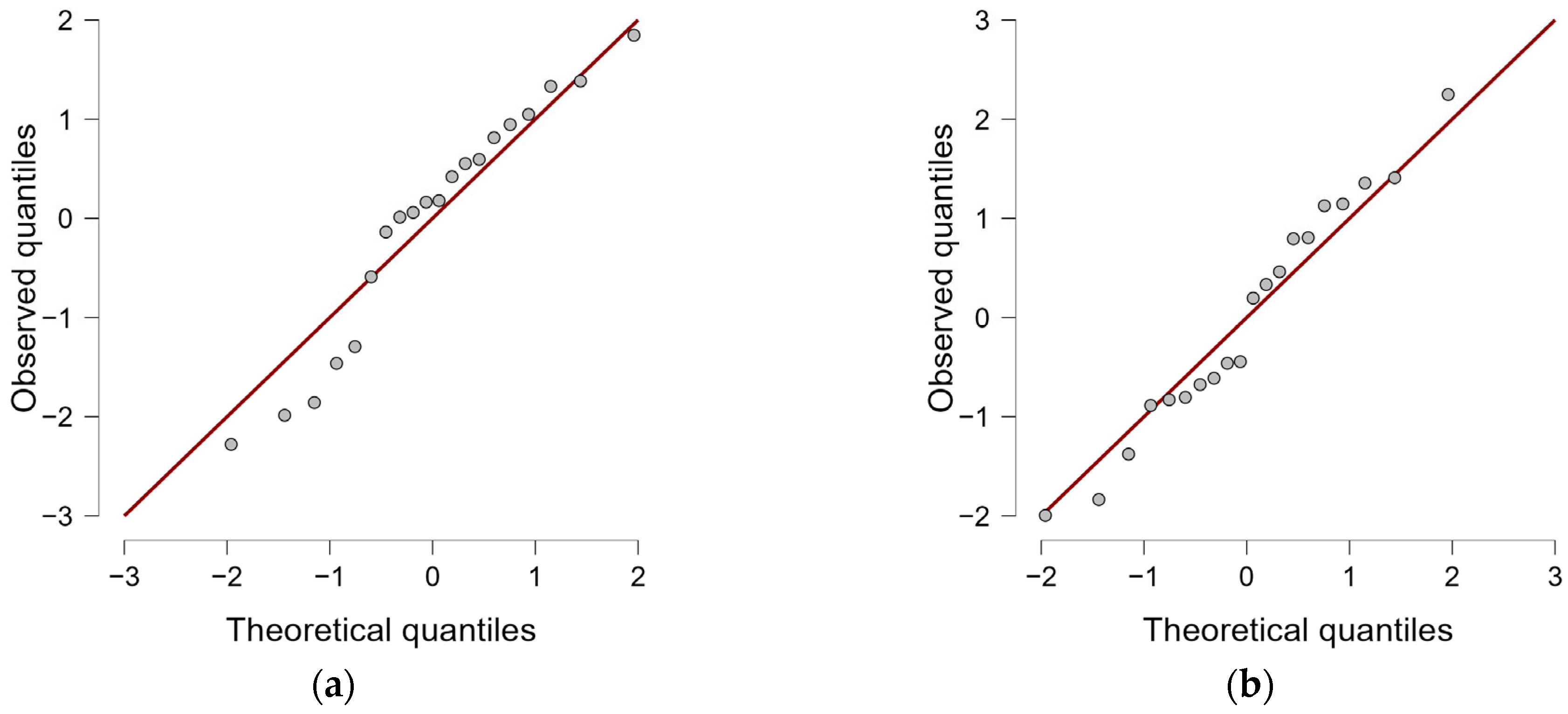
The normality assumption for MDTG-FFA and PL yields was tested using residual analysis from the CCD model. Since normality testing at individual experimental points (N = 3 repetitions per point) lacks statistical power, a standard design of experiments procedure was employed, evaluating a cumulative pool of N = 60 residuals for each product. The Shapiro–Wilk test of residuals yielded p = 0.125 for MDTG-FFA and p = 0.129 for PL. Both values exceeded the significance threshold (p > 0.05), confirming that residuals follow a normal distribution without significant deviation. Normal probability plots presented in Figure 3 (Q-Q plot) demonstrate that data points are closely aligned with the theoretical diagonal line for both products. MDTG-FFA (a) exhibits excellent alignment throughout the distribution, while PL (b) shows good agreement with slightly elevated scatter in the distribution tails. Both results remain consistent with the normality assumption and support the validity of parametric ANOVA analysis.
Figure 3.
Normal Probability plot for MDTG-FFA (a) and PL (b).
The results of ANOVA for MDTG-FFA and PL models are presented in Table 6. The analysis showed the significance of the regression models: the F-values were 4.55 (p = 0.013) for MDTG-FFA and 9.62 (p = 0.00074) for PL. These values confirm the statistical significance of the models (p < 0.05) [45]. The coefficients of determination (R2) for MDTG-FFA and PL models were 0.804 and 0.897, respectively, indicating good agreement between the experimental and predicted values of the regression model [46]. Statistical analysis confirms the sufficient accuracy of the developed models, making them suitable for predicting MDTG-FFA and PL yields under the extraction conditions investigated.
Table 6.
Analysis of variance (ANOVA) to assess the significance of quadratic models and the influence of variables.
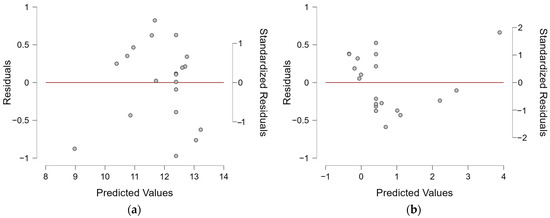
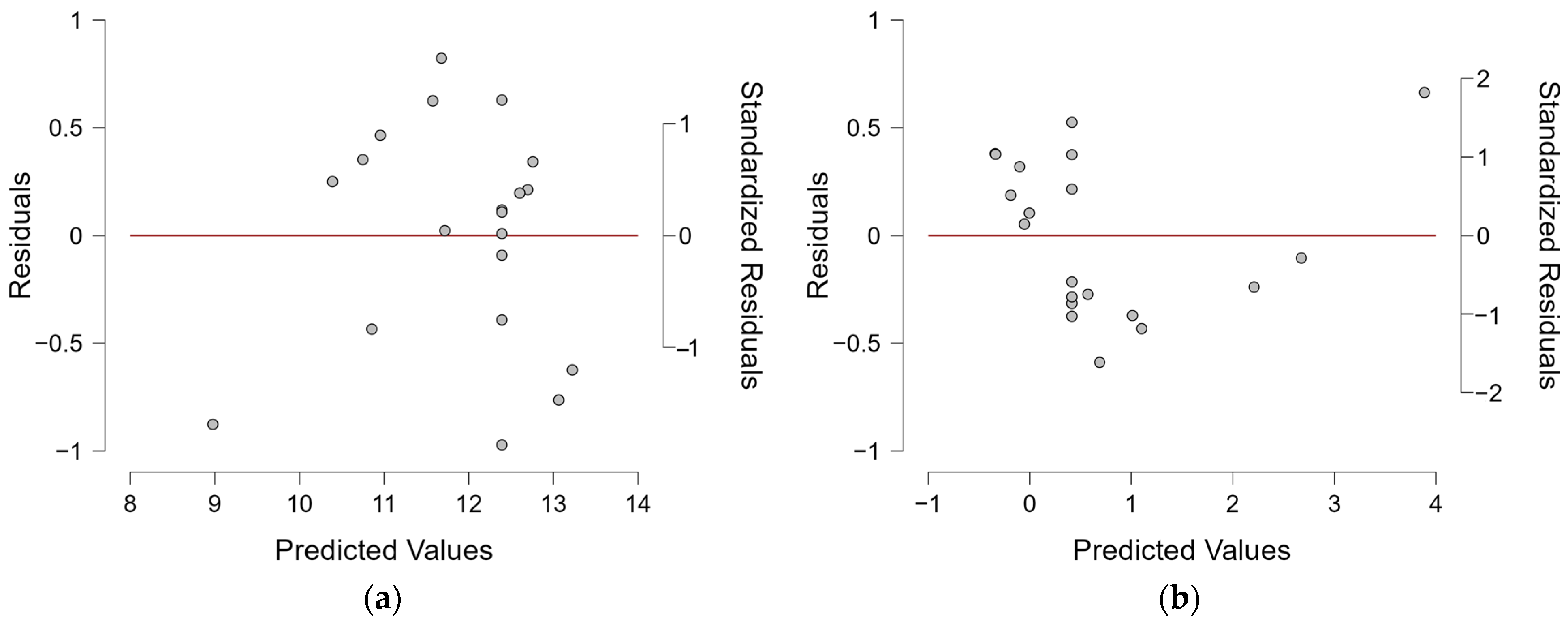
Diagnostic plots of residuals versus fitted values (Figure 4) and Q–Q plots of standardized residuals (Figure 5) were used to assess MDTG-FFA and PL response models, respectively. For both responses, the residuals are randomly scattered around zero without evident trends or indications of heteroscedasticity Figure 4, and the points on the Q–Q plots lie predominantly along the theoretical line, consistent with an approximately normal residual distribution (Figure 5). Minor deviations in the tails are not systematic and do not indicate substantial violations of the regression assumptions; therefore, the fitted models for both MDTG-FFA and PL can be regarded as adequate for describing the experimental data and for subsequent factor optimization.
Figure 4.
Diagnostic plots of residuals versus fitted values for (a) MDTG-FFA and (b) PL.
Figure 5.
Q–Q plots of standardized residuals for (a) MDTG-FFA and (b) PL.
3.3. Effect of Factor Interaction on MDTG-FFA and PL Extraction Yields
Based on statistical analysis and two- and three-dimensional plots of the response surface of the models, the influence of independent variables on MDTG-FFA and PL yields was evaluated. Statistical analysis (Table 7) revealed a significant effect of the solvent-to-dry-matter-of-SS ratio on MDTG-FFA (p = 0.00444) and PL (p < 0.0001) yields during extraction from SS.
Table 7.
Analysis of variance (ANOVA) to determine the effect of independent extraction process variables on MDTG-FFA and PL yields.
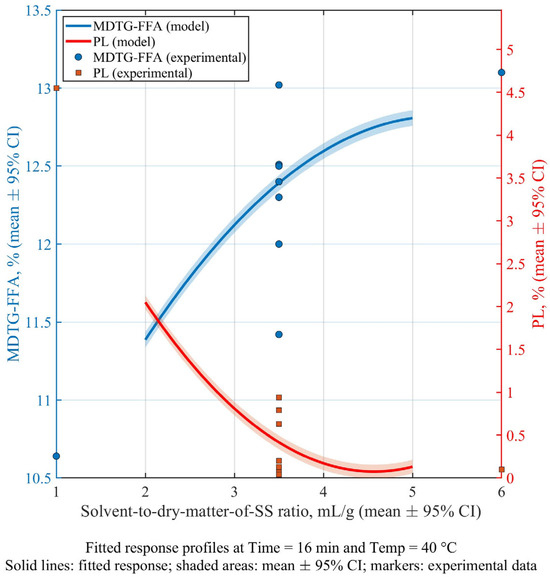
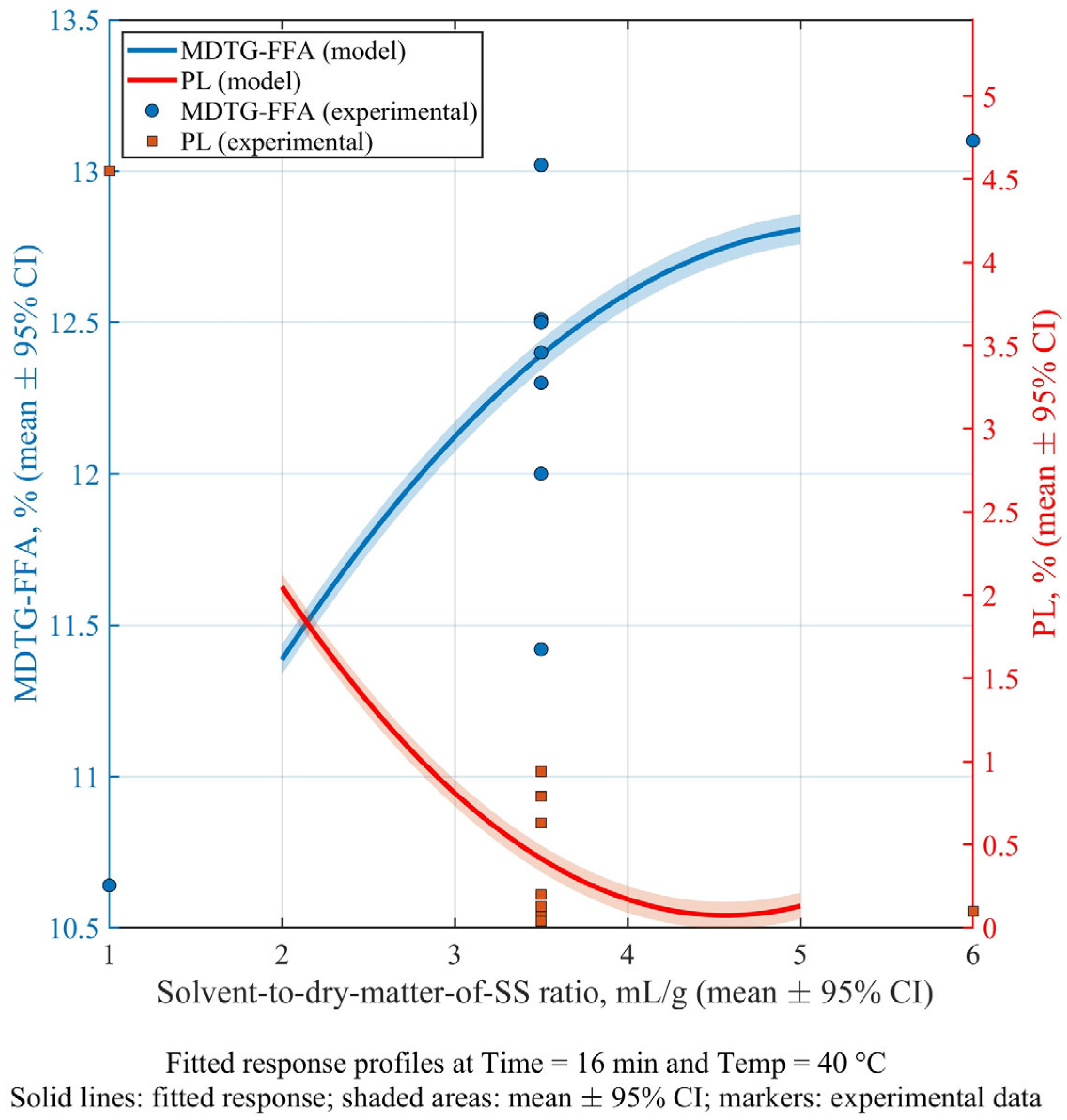
The graph in Figure 6 illustrates that increasing the solvent-to-dry-matter-of-SS ratio leads to process selectivity: a significant increase in MDTG-FFA yield and a decrease in PL yield during extraction. The reason for such behavior could be the MDTG-FFA mixture, being less polar, dissolves better in ethyl acetate, while PL polar groups remain, on the other hand, in the SS aqueous phase.
Figure 6.
Effect of solvent-to-dry-matter-of-SS ratio on MDTG-FFA and PL yields at fixed values of 16 min extraction time and 40 °C initial extraction temperature.
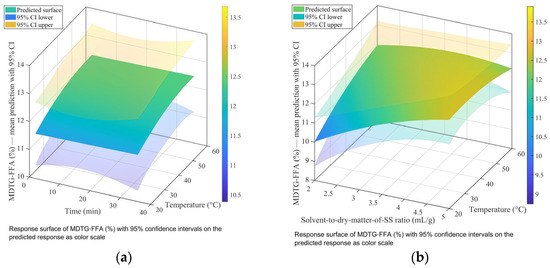
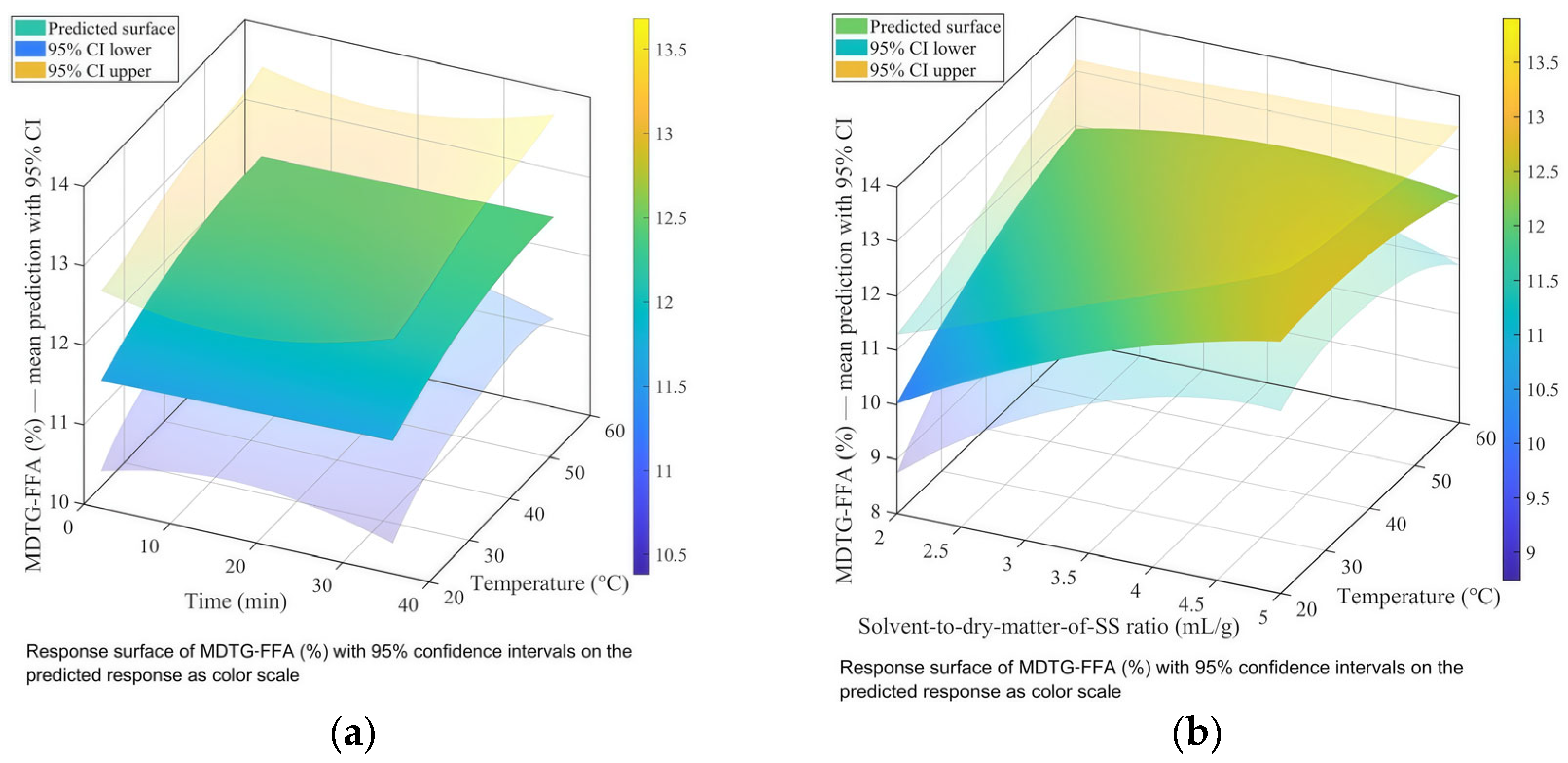
According to Table 7, shaking duration and initial extraction temperature have no significant effect on the extraction of MDTG-FFA and PL (p < 0.05), which may be due to the selected parameter range. However, an interaction effect of shaking time and temperature on MDTG-FFA yield was observed (p = 0.0051), while PL yield was not affected by this interaction (p = 0.6088). The three-dimensional plot in Figure 7a demonstrates that a simultaneous increase in shaking time and initial extraction temperature at a fixed solvent-to-dry-matter-of-SS ratio of 3.5:1 also increases the MDTG-FFA yield. This selective increase may be due to the fact that the MDTG-FFA mixture dissolves better at elevated temperatures, and prolonged shaking provides a more uniform temperature distribution in the extracted mixture and accelerates diffusion. PL are probably less sensitive to changes in temperature and shaking time.
Figure 7.
Three-dimensional response surface plots showing the dependency of MDTG-FFA yields from: (a) shaking time and initial extraction temperature at a fixed solvent-to-dry-matter-of-SS ratio of 3.5; (b) solvent-to-dry-matter-of-SS ratio and initial extraction temperature at a fixed extraction time of 16 min.
At a fixed shaking time of 16 min, the extraction temperature and the solvent-to-dry-matter-of-SS ratio influence the yield of MDTG-FFA (p = 0.0409), while their impact on the yield of PL is relatively minor (p = 0.0629). Figure 7b shows an increase in MDTG-FFA yield with increasing solvent-to-dry-matter-of-SS ratio and low temperature. This combination creates conditions selective for MDTG-FFA extraction but unfavorable for PL extraction. At low ethyl acetate concentrations, all system components—MDTG, FFA, PL, and ethyl acetate—are mutually soluble. When the concentration of ethyl acetate increases, the system separates into two phases: a solution of MDTG and FFA in ethyl acetate and a solution of ethyl acetate, MDTG, and FFA in PL. MDTG and FFA probably make PL more soluble at low ethyl acetate concentrations. The low extraction temperature has an additional effect, slowing down diffusion processes and minimizing the extraction of more polar PLs. Thus, the combination of low temperature and a high solvent-to-dry-matter-of-SS ratio creates conditions under which ethyl acetate acts as a selective solvent, ensuring the preferential extraction of MDTG-FFA due to differences in molecular polarity and interactions with the solvent.
3.4. Formatting of Mathematical Components
The aim of the study was to determine the optimal extraction conditions to maximize MDTG-FFA yield while minimizing PL yield, considering the rational use of resources. Numerical optimization resulted in the following parameters: solvent-to-dry-matter-of-SS ratio is 5, shaking time is 10.2 min, and initial temperature is 21.7 °C. For the convenience of the experiments and to confirm the practical applicability, the optimum conditions were slightly adjusted: solvent-to-dry-matter-of-SS ratio is 5, shaking time is 10 min, and initial temperature is 22 °C. To validate the models, three confirmatory experiments were conducted under optimal conditions with two batches of SS. The experimental and predicted values of the response variables and the composition of the MDTG-FFA mixture are presented in Table 8.
Table 8.
Comparison of predicted and experimental MDTG-FFA and PL yields and compositions of MDTG-FFA blends obtained from two batches of SS.
The average yield of MDTG-FFA from the first batch of SS was 12.6 ± 0.15% and the yield of PL was 0.02 ± 0.02%. From the second batch, MDTG-FFA yield was 13.4 ± 0.20% and PL 0.1 ± 0.05%. These results are close to the predicted values of 13.1% and 0%, respectively. The difference between the predicted and experimental values of maximum MDTG-FFA yield for the first batch of SS was 4.22% and 2.24% for the second batch, which is within the acceptable standard error (10%) [14], confirming that low measurement uncertainty correlates with high predictive power of the model (R2 > 0.8). Despite the small deviations, the results confirm that the models are sufficiently accurate to describe the extraction process. The results obtained in this work cannot be directly compared with those reported in the literature, since the optimal extraction conditions and starting materials are different. The results obtained in this work cannot be directly compared with those reported in the literature, since the optimal extraction conditions and starting materials are different. Studies on the extraction of lipids from biomass using environmentally friendly solvents have yielded higher yields. For example, Veitía-de-Armas et al. [26] found that the oil yields obtained by extraction from used coffee grounds and guava seeds using ethyl propionate as a separating medium were 16.4% and 24%, respectively. In turn, Najla Postaue et al. [19], using methyl acetate, reported 25.78% lipid extraction from crambe seed oil. However, the optimal extraction parameters in the aforementioned works were higher than those obtained in this study: temperature, extraction time, and solvent to biomass ratio (10 mL/g for guava seeds and 8 mL/g for crambe seed oil and used coffee grounds).
MDTG-FFA analysis of the two batch compositions (Table 8) by gas chromatography showed a high content of quantifiable components up to 97.5%, with a high FFA content of 53.4% in the first batch and 44.2% in the second batch. These compounds are valuable for various industries, especially for biodiesel production [6,8].
The obtained results confirm the efficiency of ethyl acetate in extracting MDTG-FFA without significantly affecting PL, eliminating the need for additional purification of the extract with acetone. Thus, the developed models demonstrate an efficient and resource-saving solution for the extraction of MDTG-FFA and PL from SS.
4. Conclusions
In this study, ethyl acetate was found to be a rational, selective, and less toxic solvent for extracting MDTG-FFA mixtures from soapstock (SS) during vegetable oil processing, eliminating the need for acetone purification. Optimization using response surface methodology identified the solvent-to-dry-matter-of-SS ratio as the most significant variable. The optimal conditions determined are as follows: a solvent ratio of 5, a shaking time of 10.2 min, and a temperature of 21.7 °C yielded up to 13.4% MDTG-FFA with negligible phosphatide contamination (<0.1%). Such high selectivity makes the extract a suitable direct feedstock for subsequent esterification and transesterification processes. This method is currently being used in scale-up experiments at Bio-Venta Ltd. and demonstrates a resource-efficient solution for soapstock utilization, successfully integrating the principles of solvent recovery and circular bioeconomy into advanced biodiesel production.
Author Contributions
Conceptualization, L.L.; methodology, S.Z.; validation, S.Z. and I.A.; formal analysis, S.Z. and I.A.; investigation, S.Z. and I.A.; resources, L.L.; data curation, S.Z.; writing—original draft preparation, S.Z.; writing—review and editing, L.L. and I.A.; visualization, I.A.; supervision, L.L.; project administration, L.L.; funding acquisition, L.L. All authors have read and agreed to the published version of the manuscript.
Funding
This research was funded by the EU Recovery and Resilience Facility, under the Latvian Recovery and Resilience Mechanism Plan: 5.1.r. reforms and investment direction, “Increasing productivity through increasing investment in R&D”; 5.1.1.r. reforms, “Innovation management and motivation of private R&D investments”; 5.1.1.2.i. investment, “Support instrument for the development of innovation clusters” operational program; project number 5.1.1.2.i.0/1/22/A/CFLA/005, “Significant improvement of advanced biodiesel production technologies available to Ltd. Bio-Venta from soapstock of vegetable oil production and design of experimental equipment ensuring the operation of the technology”.
Data Availability Statement
All data are contained within the article.
Conflicts of Interest
The authors declare no conflicts of interest. The funders had no role in the design of the study; in the collection, analyses, or interpretation of data; in the writing of the manuscript; or in the decision to publish the results.
References
- Cipolletta, M.; D’Ambrosio, M.; Moreno, V.C.; Cozzani, V. Enhancing the sustainability of biodiesel fuels by inherently safer production processes. J. Clean. Prod. 2022, 344, 131075. [Google Scholar] [CrossRef] [Scilit]
- Abreu-Jaureguí, C.; Reynel-Ávila, H.E.; Bonilla-Petriciolet, A. Biodiesel production from wastewater scum of dairy industry: Lipid extraction studies and reaction routes. Fuel 2023, 342, 127868. [Google Scholar] [CrossRef] [Scilit]
- Nisar, A.; Hashum, K.; Bashir, M.; Mubeen, N.; Younus, S.; Mehmood, S.; Haq, F.; Haroon, M. Advancing Sustainable Biofuel Production from Agricultural Residues: A Comprehensive Mini-Review. Sustain. Chem. Eng. 2023, 5, 116–129. [Google Scholar] [CrossRef] [Scilit]
- Suryasa, I.W.; Rodríguez, A.D.S.; Sotalin, D.M.H.; Quiñónez, T.I.M.; Ortiz, B.L.E.; Quintero, G.M.B. Cutting-Edge Biofuel Technologies for Environmental Management and sustainability. Acta Innov. 2024, 52, 60–69. [Google Scholar] [CrossRef] [Scilit]
- Quevedo-Amador, R.A.; Escalera-Velasco, B.P.; Arias, A.M.R.; Reynel-Ávila, H.E.; Moreno-Piraján, J.C.; Giraldo, L.; Bonilla-Petriciolet, A. Application of waste biomass for the production of biofuels and catalysts: A review. Clean. Technol. Environ. Policy 2024, 26, 943–997. [Google Scholar] [CrossRef] [Scilit]
- Sytnik, N.; Kunitsia, E.; Kalyna, V.; Petukhova, O.; Ostapov, K.; Ishchuk, V.; Saveliev, D.; Kovalova, T.; Kostyrkin, O.; Petrova, O. Technology development of fatty acids obtaining from soapstok using saponification. East.-Eur. J. Enterp. Technol. 2021, 5, 16–23. [Google Scholar]
- Ferrero, G.O.; Faba, E.M.S.; Vaschetto, E.G.; Eimer, G.A. Heterogeneous enzymatic catalysts: Comparing their efficiency in the production of biodiesel from alternative oils. ChemistrySelect 2023, 8, e202203962. [Google Scholar] [CrossRef] [Scilit]
- Casali, B.; Brenna, E.; Parmeggiani, F.; Tessaro, D.; Tentori, F. Enzymatic methods for the manipulation and valorization of soapstock from vegetable oil refining processes. Sustain. Chem. 2021, 2, 74–91. [Google Scholar] [CrossRef] [Scilit]
- Lin, C.Y.; Lin, Y.W.; Yang, H. Comparison of Engine Emission Characteristics of Biodiesel from High-Acid Oil and Used Cooking Oil through Supercritical Methanol and Alkaline-Catalyst Transesterifications. Processes 2023, 11, 2755. [Google Scholar] [CrossRef] [Scilit]
- Lin, C.Y.; Lin, Y.W. Engine performance of high-acid oil-biodiesel through supercritical transesterification. ACS Omega 2024, 9, 3445–3453. [Google Scholar] [CrossRef] [Scilit]
- Saini, R.; Osorio-Gonzalez, C.S.; Brar, S.K.; Kwong, R. A critical insight into the development, regulation and future prospects of biofuels in Canada. Bioengineered 2021, 12, 9847–9859. [Google Scholar] [CrossRef] [Scilit] [PubMed]
- Kichonge, B.; Kivevele, T. Viability of non-edible oilseed plants and agricultural wastes as feedstock for biofuels production: A techno-economic review from an African perspective. Biofuels Bioprod. Biorefining 2023, 17, 1382–1410. [Google Scholar] [CrossRef] [Scilit]
- Subramaniam, Y.; Al-Mulali, U. Biofuels, environment, and food security in Africa. Biofuels Bioprod. Biorefining 2024, 18, 203–210. [Google Scholar] [CrossRef] [Scilit]
- Mich, M.; Kong, S.; Say, M.; Nat, Y.; Tan, C.P.; Tan, R. Optimization of solvent extraction conditions of Cambodian soybean oil using response surface methodology. J. Food Technol. Res. 2023, 10, 1–10. [Google Scholar] [CrossRef] [Scilit]
- Tsirigka, A.; Ntoula, M.; Kontogiannopoulos, K.N.; Karabelas, A.J.; Patsios, S.I. Optimization of Solvent Extraction of Lipids from Yarrowia lipolytica towards Industrial Applications. Fermentation 2022, 9, 35. [Google Scholar] [CrossRef] [Scilit]
- De Jesus, S.S.; Filho, R.M. Recent advances in lipid extraction using green solvents. Renew. Sustain. Energy Rev. 2020, 133, 110289. [Google Scholar] [CrossRef] [Scilit]
- Anshori, M.; Jafar, R.M.; Lestari, D.; Kresnowati, M.T.A.P. Production of carotenoids from oil palm empty fruit bunches: Selection of extraction methods. J. Eng. Technol. Sci. 2022, 4, 220303. [Google Scholar] [CrossRef] [Scilit]
- Opololaoluwa, I. Comparative Investigation of n-Hexane and Ethanol Solvents Used in Eleais guinesis Kernel Oil Extraction and Optimization via Two Computational Modelling. Turk. J. Agric. Eng. Res. 2022, 3, 15–30. [Google Scholar] [CrossRef] [Scilit]
- Postaue, N.; de Mello, B.T.F.; Cardozo-Filho, L.; da Silva, C. Use of the Product from Low Pressure Extraction (Crambe Seed Oil and Methyl Acetate) for Synthesis of Methyl Esters and Triacetin Under Supercritical Conditions. Eur. J. Lipid Sci. Technol. 2020, 122, 2000004. [Google Scholar] [CrossRef] [Scilit]
- Indarti, K.; Apriani, E.F.; Wibowo, A.E.; Simanjuntak, P. Antioxidant Activity of Ethanolic Extract and Various Fractions from Green Tea (Camellia sinensis L.) Leaves. Pharmacogn. J. 2019, 11, 771–776. [Google Scholar] [CrossRef] [Scilit]
- Fathoni, A.; Rudiana, T.; Adawiah, A. Characterization and antioxidant assay of yellow frangipani flower (Plumeria alba) extract. J. Pendidik. Kim. 2019, 11, 1–7. [Google Scholar] [CrossRef] [Scilit]
- Baehaki, A.; Lestari, S.D.; Siregar, N. Phytochemical compounds and antioxidant activity of yellow velvetleaf fruit (Limnocharis flava) extract. Asian J. Pharm. Clin. Res. 2020, 13, 55–57. [Google Scholar] [CrossRef] [Scilit]
- Park, S.K.; Lee, Y.K. Antioxidant activity in Rheum emodi wall (Himalayan Rhubarb). Molecules 2021, 26, 2555. [Google Scholar] [CrossRef] [Scilit]
- Ridlo, A.; Pringgenies, D.; Perangin-angin, R.A.B.; Ariyanto, D. Phytochemicals and antioxidant activity of microalgae Dunaliella salina and Botryococcus braunii. JIPK 2023, 15, 438–447. [Google Scholar] [CrossRef] [Scilit]
- Sanan, A.O.; Hertiani, T.; Murti, Y.B. Characterization of antibacterial bioactive compounds from kusambi leaf extract (Schleichera oleosa (L) Oken). J. Pharm. Sci. Appl. 2024, 6, 21–30. [Google Scholar] [CrossRef] [Scilit]
- Veitía-de-Armas, L.; Reynel-Ávila, H.E.; Bonilla-Petriciolet, A.; Jáuregui-Rincón, J. Green Solvent-Based Lipid Extraction from Guava Seeds and Spent Coffee Grounds to Produce Biodiesel: Biomass Valorization and Esterification/Transesterification Route. Ind. Crop. Prod. 2024, 214, 118535. [Google Scholar] [CrossRef] [Scilit]
- Matchim Kamdem, M.C.; Tamafo Fouegue, A.D.; Lai, N. Comprehensive Study on DES Pretreatment Application to Microalgae for Enhanced Lipid Recovery Suitable for Biodiesel Production: Combined Experimental and Theoretical Investigations. Energies 2023, 16, 3806. [Google Scholar] [CrossRef] [Scilit]
- Pimpa, B.; Thongraung, C.; Sutthirak, P. Effect of solvents and extraction conditions on the properties of crude rice bran oil. Walailak J. Sci. Technol. 2021, 18, 9611–9617. [Google Scholar] [CrossRef] [Scilit]
- Arzuk, E.; Albayrak, G.; Ergüç, A.; Atış, E.; Tan, İ.; Baykan, Ş. Investigation of cytotoxic and apoptotic effects of Prangos heyniae H. Duman and M.F. Watson extracts on HepG2 2 cells. J. Fac. Pharm. Ank. Univ. 2024, 48, 46–55. [Google Scholar]
- IEA Bioenergy T39 Biofuel News, 2023, 62. Available online: https://www.ieabioenergy.com/wp-content/uploads/2023/09/IEA-BioenergyT39-Biofuel-News-62-final.pdf (accessed on 4 April 2025).
- National Institute for Occupational Safety and Health [NIOSH]. NIOSH Pocket Guide to Chemical Hazards. Available online: https://stacks.cdc.gov/view/cdc/21265 (accessed on 13 December 2025).
- Alder, C.M.; Hayler, J.D.; Henderson, R.K.; Redman, A.M.; Shukla, L.; Shuster, L.E.; Sneddon, H.F. Updating and further expanding GSK’s solvent sustainability guide. Green Chem. 2016, 18, 3879–3890. [Google Scholar] [CrossRef] [Scilit]
- Determination of Fat. CLG-FAT.03, 2009. Available online: https://www.fsis.usda.gov/sites/default/files/media_file/2020-11/CLG_FAT_03.pdf (accessed on 20 March 2025).
- Matissek, R.; Schnepel, F.M.; Steiner, G. Lebensmittelanalytik: Grundzüge, Methoden, Anwendungen, 2nd ed.; Springer-Lehrbuch: Berlin, Germany, 1992; ISBN 354-054-684-7. [Google Scholar]
- Alan Shaver, L.A. Determination of Phosphates by the Gravimetric Quimociac Technique. J. Chem. Educ. 2008, 85, 1097–1098. [Google Scholar] [CrossRef] [Scilit]
- Determination of Phosphate. CLG-PHS1.01, 2009. Available online: https://www.fsis.usda.gov/sites/default/files/media_file/2020-11/CLG_PHS_1_01.pdf (accessed on 20 March 2025).
- Echim, C.; Verhé, R.; De Greyt, W.; Stevens, C. Production of biodiesel from side-stream refining products. Energy Environ. Sci. 2009, 2, 1131–1141. [Google Scholar] [CrossRef] [Scilit]
- Kristiana, T.; O’Connell, A.; Baldino, C. Producing High Quality Biodiesel from Used Cooking Oil in Indonesia. ICCT Working Paper 2023, 2023-18, 1–15. [Google Scholar]
- Wanasundara, U.N.; Wanasundara, P.K.J.P.D.; Shahidi, F. Novel Separation Techniques for Isolation and Purification of Fatty Acids and Oil By-Products. In Bailey’s Industrial Oil and Fat Products; Shahidi, F., Ed.; John Wiley & Sons, Inc.: Hoboken, NJ, USA, 2005; pp. 1–32. [Google Scholar]
- Jin, B.; Zhu, M.; Fan, P.; Yu, L.-J. Comprehensive utilization of the mixture of oil sediments and soapstocks for producing FAME and phosphatides. Fuel Process. Technol. 2008, 89, 77–82. [Google Scholar] [CrossRef] [Scilit]
- Goh, B.H.H.; Ong, H.C.; Chong, C.T.; Chen, W.-H.; Leong, K.Y.; Tan, S.X.; Lee, X.J. Ultrasonic Assisted Oil Extraction and Biodiesel Synthesis of Spent Coffee Ground. Fuel 2020, 261, 116121. [Google Scholar] [CrossRef] [Scilit]
- Cruz, M.; Costa, E.; Almeida, M.F.; da Conceição, M. Recovery of By-Products from the Olive Oil Production and the Vegetable Oil Refining for Biodiesel Production. Detritus, 2018; in press. [CrossRef] [Scilit]
- Kampars, V.; Kampart, R. Method for Refining Soapstock by Acidulation and Solvent Extraction. EP Patent 4036197A1, 26 January 2022. [Google Scholar]
- Byrne, F.P.; Jin, S.; Paggiola, G.; Petchey, T.; Clark, J.H.; Farmer, T.J.; Hunt, A.J.; McElroy, C.R.; Sherwood, J. Tools and techniques for solvent selection: Green solvent selection guides. Sustain. Chem. Process. 2016, 4, 7. [Google Scholar] [CrossRef] [Scilit]
- Becze, A.; Babalau-Fuss, V.L.; Varaticeanu, C.; Roman, C. Optimization of high-pressure extraction process of antioxidant compounds from Feteasca regala leaves using response surface methodology. Molecules 2020, 25, 4209. [Google Scholar] [CrossRef] [Scilit]
- Gam, D.H.; Yi Kim, S.; Kim, J.W. Optimization of Ultrasound-Assisted Extraction Condition for Phenolic Compounds, Antioxidant Activity, and Epigallocatechin Gallate in Lipid-Extracted Microalgae. Molecules 2020, 25, 454. [Google Scholar] [CrossRef] [Scilit]

Disclaimer/Publisher’s Note: The statements, opinions and data contained in all publications are solely those of the individual author(s) and contributor(s) and not of MDPI and/or the editor(s). MDPI and/or the editor(s) disclaim responsibility for any injury to people or property resulting from any ideas, methods, instructions or products referred to in the content. |
© 2026 by the authors. Licensee MDPI, Basel, Switzerland. This article is an open access article distributed under the terms and conditions of the Creative Commons Attribution (CC BY) license.