


Abstract
Background: Logistics and supply chain resilience research typically assumes access to formal infrastructure, including contracted fleets, warehouses, inventory systems, and institutionalized contingency mechanisms. Yet many micro and small enterprises (MSEs) in emerging economies operate without these resources, leaving their logistics practices underexplored. This study examines how informal MSEs sustain operational continuity and recover from disruptions through tacit relational support. Methods: Fuzzy-set Qualitative Comparative Analysis (fsQCA) was applied to 400 informal MSEs in Ecuador’s manufacturing, services, and commerce sectors. Tacit network structure was measured using four function-specific name generators covering transport, storage, contingency management, and informal financing. Operational resilience was assessed through order fulfillment rate and recovery time after disruption. Results: No relational-support domain was individually necessary for resilience. Six sufficient configurations were identified, with consistency values from 0.817 to 0.978 and solution coverage of 0.433. One configuration combined contingency-management and informal-financing ties despite low membership in transport and storage networks, indicating a compensatory relational pathway. Conclusions: Tacit personal networks are better understood as context-dependent relational logistics support systems than as substitutes for formal infrastructure. The findings offer bounded, exploratory configurational evidence on selected pathways associated with operational resilience in informal MSEs.
1. Introduction
Logistics and supply chain systems are increasingly exposed to turbulent environments characterized by recurrent disruptions, resource scarcity, institutional fragility, and uneven access to formal infrastructure. In this context, supply chain resilience has become a central concern for logistics research and practice. However, most resilience models continue to assume the existence of formal logistics infrastructure, including contracted transportation providers, warehouses, inventory systems, supplier agreements, and institutionalized contingency mechanisms [1,2]. These assumptions are reasonable for formal supply chains, but they leave a large segment of economic activity theoretically underexplored: micro and small enterprises operating informally and without asset-based logistics systems.
This omission is especially relevant in emerging economies. According to the International Labour Organization, eight in ten enterprises worldwide operate informally, with informality rates exceeding 90% in low-income countries [3]. In Latin America, informal enterprises account for a substantial share of employment and economic activity, yet they remain marginal in empirical logistics and supply chain management research. The problem is not simply that these firms lack formal infrastructure. The deeper theoretical issue is that existing logistics frameworks have limited capacity to explain how firms sustain operations, fulfill orders, and recover from disruption when the infrastructure normally assumed by supply chain theory is absent or inaccessible.
This study addresses that gap by examining tacit personal networks as informal relational logistics support systems. In this article, this concept does not refer to infrastructure in the material, institutional, or long-term sense associated with formal logistics assets, such as fleets, warehouses, contracts, information systems, or institutionalized contingency mechanisms. Rather, it refers to recurrent, function-specific personal ties that may help informal MSEs access transport, temporary storage, disruption support, and short-term liquidity when formal logistics resources are unavailable. The study therefore does not claim that tacit networks are full substitutes for formal logistics infrastructure. Instead, it investigates whether and how different configurations of relational support are associated with operational resilience in resource-constrained informal settings.
This reframing has important implications for the study of resilience in turbulent environments. If tacit networks provide relational support for logistics continuity, then resilience cannot be explained only by asset endowment or by isolated organizational capabilities. It must also be understood as a configurational outcome associated with the topology, redundancy, density, and functional coverage of relational systems. Under these conditions, different combinations of relational-support domains may be linked to resilient outcomes, and weak membership in one domain may be partially compensated for by stronger membership in others. This logic is consistent with conjunctural, asymmetric, and equifinal causality, which cannot be adequately captured by methods focused on average net effects [4,5].
These considerations motivate the present study. If logistics continuity in these firms depends on personal ties rather than formal assets, then resilience must be examined as a relational and configurational phenomenon.
Based on this motivation, the study addresses three research questions. First, which configurations of tacit relational-support domains are associated with operational resilience in informal MSEs? Second, can some relational domains partially compensate for weak membership in others under resource-constrained conditions? Third, how can these configurations be interpreted across manufacturing, services, and commerce activities in Ecuador? These questions require a configurational approach because the expected relationship between tacit networks and resilience is conjunctural, asymmetric, and equifinal rather than additive.
Accordingly, this study applies fuzzy-set Qualitative Comparative Analysis (fsQCA) to 400 informal MSEs across the manufacturing, services, and commerce sectors in Ecuador. The empirical objective is to identify which configurations of tacit logistics networks are sufficient for operational resilience, measured behaviorally through order fulfillment rate and recovery time after disruption. Four function-specific network domains are examined: transport, storage, contingency management, and informal financing. These domains reflect both core logistics activities and relational mechanisms that may enable operational continuity when formal logistics resources are unavailable or difficult to access.
The study makes three contributions. First, it extends supply chain resilience theory by making informal MSEs visible as logistics actors rather than treating them as firms outside the analytical boundaries of supply chain management. Second, it develops a bounded operationalization of tacit networks as informal relational logistics support systems, linking logistics function theory with social network and social capital perspectives. Third, it provides an empirically derived typology of configurational paths to operational resilience, showing how different relational architectures are associated with logistics continuity in turbulent emerging-economy contexts. These contributions should be read as evidence of partial, context-dependent relational support rather than proof of institutional equivalence with formal logistics infrastructure.
The remainder of the paper is organized as follows. Section 2 develops the theoretical framework and reviews the relevant literature on supply chain resilience, informal logistics, tacit networks, and configurational causality. Section 3 describes the research design, sample, measurement instruments, calibration procedure, and fsQCA approach. Section 4 presents the results of the necessity and sufficiency analyses. Section 5 discusses the theoretical and practical implications of the findings. Section 6 concludes the paper and outlines future research directions.
2. Theoretical Framework
Supply chain resilience has been widely discussed in logistics research since Christopher and Peck conceptualized resilience as the capacity of a supply chain to return to its original state or move to a more desirable state after disruption [2]. Subsequent studies have identified flexibility, redundancy, visibility, collaboration, agility, and adaptive capacity as key antecedents of resilient supply chain performance [6,7]. More recently, configurational approaches have shown that resilience is rarely produced by a single capability. Instead, different combinations of capacities and strategies may generate equivalent resilient outcomes, consistent with the principle of equifinality [5,8].
Despite these advances, most supply chain resilience research remains anchored in formal institutional contexts. Resilience antecedents are generally conceptualized as organizational capabilities that presuppose access to formal structures, including contracts, information systems, logistics providers, planned redundancy, and institutionalized coordination mechanisms [1,2,9]. Even studies focused on smaller firms often assume some degree of formalization, such as access to documented transactions, structured supply relationships, or external logistics services [7]. This limits the explanatory power of existing resilience frameworks for informal MSEs, which often operate without contracts, inventory systems, proprietary facilities, formal credit mechanisms, or stable logistics partners.
The limitation is therefore both empirical and theoretical. It is empirical because informal enterprises represent a large share of economic activity in emerging economies but remain underrepresented in logistics research. It is theoretical because the mechanisms through which resilience is supported in informal settings may differ from those assumed in formal supply chains. Informal MSEs may not build resilience through supply chain integration, digital visibility systems, or planned redundancy. Instead, they may activate personal relationships to secure transport, access temporary storage, resolve disruptions, or obtain short-term liquidity. These practices require a theoretical lens capable of treating relational systems not as a peripheral social context, but as practical support mechanisms through which logistics-related resources are accessed and coordinated [10,11,12].
The concept of tacit networks as informal relational logistics support systems builds on two complementary theoretical traditions: embeddedness and social capital. Granovetter’s embeddedness perspective argues that economic action is situated within ongoing structures of social relations and that these relations shape the execution of economic transactions [12]. In informal MSEs, this implies that these tacit networks are not merely background conditions surrounding logistics operations. Rather, they may become channels through which selected logistics-related functions are activated when formal assets, contracts, or institutional mechanisms are unavailable.
Structural social capital theory further explains why the configuration of these networks matters. Burt’s work on structural holes emphasizes that network topology affects access to resources, information, and adaptive capacity [13]. Redundant ties within a given functional domain can provide alternative activation paths when disruptions occur, while ties spanning different functional domains can increase flexibility by connecting the firm to multiple types of resources. Nahapiet and Ghoshal’s social capital framework also highlights the importance of structural and relational dimensions, including tie availability, reciprocity, trust, and shared expectations [10]. These dimensions are directly relevant for informal logistics, where access to resources often depends on the quality and reliability of personal relationships rather than on formal contracts.
The connection between these theoretical perspectives and the measurement model is summarized in Table 1. Embeddedness theory informed the use of function-specific name generators because the study examines logistics-related actions that are situated within personal relationships rather than formal contracts [12]. Social capital theory informed the alter-level indicators because network structure and relational quality affect access to resources, information, reciprocity, and adaptive capacity [10,13]. Supply chain resilience theory informed the outcome indicators because resilience was operationalized through behavioral evidence of continuity and recovery after disruption, specifically order fulfillment and recovery time [1,2,14,15]. Thus, the measurement model links embedded relational access, social-capital resources, and observed operational resilience rather than treating the survey variables as isolated empirical proxies.
Table 1.
Theory-to-measurement mapping of constructs and indicators.
The logistics functions examined in this study are derived from both logistics theory and the specific operational conditions of informal MSEs. Ballou identifies transportation and storage as primary logistics activities because they directly create time and place utility [16]. These two functions represent the physical execution side of logistics. However, resilience to disruption also requires the ability to respond to unexpected events and restore operational continuity, making contingency management central to research on supply chain risk and resilience [1,2,14,15]. Informal financing is not a logistics function in the traditional sense, but it becomes operationally relevant when liquidity constraints determine whether a firm can pay for emergency transport, replace inputs, or maintain deliveries after disruption. For informal MSEs lacking formal credit access, financing ties can therefore act as an enabling condition for logistics continuity [10,17].
Together, transport, storage, contingency management, and informal financing represent a theoretically derived set of relational-support domains rather than logistics functions of identical status. Transport and storage are core physical logistics functions because they are directly related to the movement and temporary placement of goods [16]. Contingency management is not a routine logistics function in the same sense, but it is closely related to supply chain risk management and resilience, as it supports disruption response, problem-solving, and operational recovery [1,2,14,15]. Informal financing is even more clearly an enabling domain rather than a logistics function in the strict sense. It captures access to short-term liquidity that may allow informal MSEs to pay for emergency transport, replace inputs, secure temporary storage, or maintain deliveries when formal credit is unavailable [10,17]. Therefore, the four domains should be interpreted as complementary relational supports for logistics continuity: transport and storage capture physical-function support, while contingency management and informal financing capture adaptive and resource-access support.
From this perspective, tacit personal networks should not be understood as logistics infrastructure in the same material, institutional, or durable sense as formal logistics assets, such as fleets, warehouses, contracts, information systems, or formal contingency protocols [1,2,9,16]. Rather, they can be conceptualized as informal relational logistics support systems: recurrent, function-specific personal ties that may help MSEs access selected logistics-related resources when formal mechanisms are unavailable or difficult to activate [10,11,12]. This distinction is important because the present study does not seek to demonstrate that tacit networks possess infrastructure-level stability, long-term sustainability, or full functional substitutability. Instead, it examines whether different combinations of relational ties are associated with operational resilience in informal MSEs.
The comparison proposed in this study is therefore bounded and functional, not institutional or structural. Transport and storage ties may support physical logistics execution, while contingency management and informal financing ties may support adaptive response and short-term resource mobilization [1,16,17]. These relational mechanisms may partially compensate for weak access to selected formal resources under specific conditions, but they should not be interpreted as complete substitutes for formal logistics infrastructure. This bounded interpretation allows the study to connect logistics function theory, embeddedness, and social capital without overstating what the empirical analysis can demonstrate [10,11,12,13].
This theoretical framing leads to three empirical expectations. First, resilience in informal MSEs should be configurational rather than additive; it should depend on combinations of relational-support domains rather than on isolated relational assets. Second, multiple configurations may be associated with the same resilient outcome, because different relational architectures can partially compensate for different resource constraints. Third, the causal structure should be asymmetric: the conditions sufficient for high resilience are not necessarily the inverse of the conditions associated with low resilience.
These expectations justify the use of fuzzy-set Qualitative Comparative Analysis. fsQCA is designed to examine necessary and sufficient conditions under set-theoretic, conjunctural, asymmetric, and equifinal causality [4,8]. Unlike regression-based methods, which estimate average net effects, fsQCA identifies alternative configurations that can lead to the same outcome. This makes it especially appropriate for studying informal logistics resilience, where the theoretical claim is not that one relational-support domain has a uniform effect across all firms, but that different combinations of relational capacities may be associated with operational continuity under turbulent conditions.
Three research gaps motivate the present study and are summarized in Table 2. First, informal enterprises remain underrepresented in supply chain resilience research despite their economic importance in emerging economies. Second, logistics scholarship lacks an operational framework for analyzing tacit personal networks as informal relational logistics support systems. Third, configurational methods have been insufficiently applied to informal economy logistics, even though the partial compensation logic of relational support makes equifinal causality theoretically expected. Although prior research has advanced understanding of supply chain resilience, logistics functions, social capital, informal enterprises, supply chain finance, and configurational causality, these streams have rarely been integrated to explain how informal MSEs sustain logistics continuity and recover from disruptions when formal logistics infrastructure is unavailable or difficult to access. This study addresses this gap by examining how configurations of transport, storage, contingency management, and informal financing networks are associated with operational resilience among informal MSEs in Ecuador.
Table 2.
Research gap and positioning of the present study.
3. Materials and Methods
3.1. Research Design
This study used a cross-sectional survey design combining ego-network elicitation with fuzzy-set Qualitative Comparative Analysis (fsQCA). The design was appropriate because the objective was not to estimate the average net effect of individual variables, but to identify combinations of relational-support domains associated with operational resilience in informal micro and small enterprises (MSEs). The cross-sectional approach enabled the simultaneous measurement of network structure, relational support for logistics-related activities, and recent resilience outcomes across a relatively large sample of firms operating under comparable institutional conditions.
Ego-network elicitation was used to capture the personal relationships activated by each MSE to access logistics-related support, including transport, storage, contingency management, and informal financing. This approach is consistent with the theoretical premise that, in informal settings, logistics continuity may be embedded in the entrepreneur’s relational system rather than in formal assets or contractual arrangements.
fsQCA was selected because the study’s central proposition implies conjunctural, asymmetric, and equifinal logic. In other words, operational resilience may be associated with different configurations of relational-support domains; the same outcome may be linked to multiple relational architectures; and the conditions associated with resilience are not necessarily the inverse of those associated with non-resilience. Set-theoretic methods are therefore better aligned with the research objective than regression-based approaches focused on average net effects [4,5,8].
3.2. Sample and Sampling Procedure
The target population comprised micro and small enterprises (1–9 employees) operating in the informal economy across three productive sectors in Ecuador: manufacturing, services, and commerce. Purposive sector-stratified sampling was applied to ensure analytical comparability across sectors, with a target allocation of approximately 133 units per stratum. Within each stratum, firms were identified through municipal commerce registries and market association directories, supplemented by referrals from confirmed participants; firms with no registry presence were included if verified by the field team as actively trading. The final sample comprised 400 MSEs, services (n = 134, 33.5%), manufacturing (n = 133, 33.3%), and commerce (n = 133, 33.3%), with a mean operational age of 11.0 years (SD = 6.0) and a mean of 5.3 employees (SD = 3.4). Firms that declined to participate were replaced with the next eligible firm on the registry within the same stratum; the replacement rate was 12.4%, consistent with field survey norms in informal economy research [18].
The sample was restricted to firms with active market participation in the twelve months preceding data collection, defined as at least one completed commercial transaction. Firms with formal logistics contracts, proprietary warehouse facilities, or fleet ownership were excluded, as the study concerns logistics execution in the structural absence of asset-based infrastructure. Of the 400 MSEs included, 76.2% lacked a dedicated commercial premises and 83.5% lacked proprietary vehicles.
For the purposes of this study, informal MSEs were defined as micro and small enterprises with 1–9 employees that participated actively in the market but lacked formalized logistics arrangements such as contracted carriers, proprietary warehouse facilities, fleet ownership, or institutionalized contingency mechanisms. Active market participation was defined as having completed at least one commercial transaction during the 12 months preceding data collection. Firms were included when they relied primarily on informal, personal, or weakly formalized arrangements to move goods, access temporary storage, respond to disruptions, or mobilize short-term liquidity. Firms were excluded when they had formal logistics contracts, proprietary warehouse facilities, or fleet ownership, because these characteristics would indicate access to asset-based logistics infrastructure outside the scope of the study.
3.3. Measurement Instruments and Variable Construction
Tacit relational logistics support was measured through four domain-specific name generators corresponding to the relational-support domains derived from the theoretical framework: transport (TRA), storage (ALM), contingency management (CON), and informal financing (FIN). For each generator, respondents were asked to name the individuals or contacts they had activated during the previous 12 months to access the corresponding type of support. Each named alter was then evaluated using relational attributes specific to that domain.
The full wording of the name generator items, alter-level attributes, coding rules, and aggregation procedures is provided in Appendix A to improve measurement transparency and reproducibility.
Each domain used attributes tailored to its function—for example, urgency availability and response time for transport, peak-period availability and informal agreements for storage, disruption-resolution rate and multi-function capacity for contingency management, and pre-existing business ties and accessible credit for informal financing. The complete set of alter-level attributes, coding rules, and formative weights for all four domains is reported in Appendix A (Table A2 and Table A3).
The four network indices were specified as formative constructs rather than reflective scales. This specification is theoretically appropriate because the indicators represent distinct and complementary components of relational logistics-support capacity rather than interchangeable manifestations of a single latent construct. For example, urgency availability, reciprocity, response speed, redundancy, and accessible credit capture different properties of relational support. Under a formative specification, internal consistency coefficients such as Cronbach’s alpha are not appropriate because they assume indicator interchangeability, which is not expected in this measurement model [19,20].
The indicators were selected to operationalize the theoretical dimensions summarized in Table 1: embedded relational access, structural and relational social capital, adaptive disruption response, resource access, and observed operational resilience. Content validity was established by deriving the indicators from ego-network, social capital, logistics function, and supply chain resilience studies [10,11,16,21]. The indicators captured three complementary dimensions of tacit relational support: structural characteristics, such as alter count and redundancy; relational characteristics, such as reciprocity, informal agreements, pre-existing business ties, and disruption-resolution capacity; and functional characteristics, such as urgency availability, peak-period availability, response time, activation frequency, and accessible credit.
For formative constructs, multicollinearity among indicators was assessed as a key diagnostic criterion. Inter-indicator correlations were computed at the MSE level after aggregating alter-level information within each generator. Maximum pairwise correlations were low across all four constructs: TRA |r|max = 0.069, ALM |r|max = 0.080, CON |r|max = 0.124, and FIN |r|max = 0.106. These values are well below the 0.70 threshold commonly used to identify problematic multicollinearity in formative measurement models [20], confirming that each indicator contributed independently to its corresponding index.
Composite indices were constructed by aggregating alter-level responses at the MSE level for each domain-specific name generator. Indicators measured in different units, such as Likert-type ratings, counts, hours, binary attributes, and monetary values, were normalized to a common 0–1 scale before being combined. For indicators where lower raw values represented stronger relational capacity, such as response time, reverse coding was applied before normalization. The normalized indicators were then combined into domain-specific formative indices reflecting complementary dimensions of relational logistics-support capacity. The weighting procedure is reported in Appendix A, where each indicator is listed with its measurement basis, coding direction, and assigned formative weight. Weights were assigned according to the theoretical relevance of each indicator within its corresponding relational-support domain and summed to 1.00 within each domain. These weights reflect theory-driven researcher judgment about the relative centrality of each indicator within its domain, rather than empirically estimated coefficients; they were assigned a priori from the logistics-function, social-capital, and ego-network studies. MSEs with no active alters in a given generator were assigned a score of zero for that domain, treating the absence of a functional relational network as a theoretically meaningful condition rather than as missing data. Appendix A also provides the name generator items, alter-level attributes, coding directions, and aggregation procedures used to construct the four formative indices.
Operational resilience was measured through two behavioral indicators from the previous 12 months: order fulfillment rate and recovery time after disruption. Order fulfillment rate was calculated as the ratio of orders delivered in full to the total number of orders received and was interpreted as an indicator of operational continuity. Recovery time was measured as the number of days between the reported onset of the most severe disruption and the restoration of normal operations. Because recovery can only be observed when a disruption has occurred, firms reporting no disruptions during the reference period were not interpreted as having high recovery capacity. In the main calibration, the recovery component was therefore based only on firms with observed disruptions. As a conservative robustness specification, non-disrupted firms were treated as crossover cases in the recovery set, reflecting conceptual ambiguity rather than demonstrated recovery capacity. This approach is consistent with the conceptualization of resilience as the capacity to absorb, respond to, and recover after disruption [1,2,9,15], while avoiding the assumption that the absence of a shock is equivalent to demonstrated recovery ability. The primary resilience outcome used in the fsQCA analysis required simultaneous high membership in order fulfillment and observed recovery performance.
Several procedural steps were used to reduce the risk of common method bias, recall bias, and social desirability bias. First, the questionnaire separated the elicitation of network conditions from the measurement of resilience outcomes. Name-generator and alter-level relational questions were administered before the outcome questions, reducing the likelihood that respondents would anchor their network reports to perceived performance outcomes. Second, network utilization was measured through domain-specific name generators and alter-level attributes rather than through broad perceptual evaluations of resilience or logistics performance. Third, the outcome variables were anchored to behavioral indicators within a defined 12-month reference period: order fulfillment rate and recovery time after the most severe disruption. Respondents were asked to recall named contacts and concrete disruption events rather than general tendencies or subjective impressions. Fourth, respondents were informed that the study was academic, that individual responses would be treated confidentially, that there were no correct or incorrect answers, and that there was no expected or desirable number of network contacts. These procedures reduced, but did not eliminate, the possibility that respondents’ perceptions influenced both conditions and outcomes.
3.4. Calibration and fsQCA Procedure
All conditions and outcomes were calibrated into fuzzy sets using the direct calibration method. Calibration is a critical step in fsQCA because it defines the degree to which each case belongs to a theoretically meaningful set [4,8]. For each variable, the 10th percentile was used as the anchor for full non-membership (fs = 0.05), the median as the crossover point (fs = 0.50), and the 90th percentile as the anchor for full membership (fs = 0.95). These anchors were selected because the study examines relational logistics capacity in an informal-economy context, where no externally established thresholds for high or low tacit logistics-network capacity exist and where several network variables are right-skewed due to the structural absence of some logistics functions among part of the sample.
The percentile-based calibration was not treated as a purely mechanical distributional procedure. Each anchor was interpreted substantively. Full non-membership indicated very weak or structurally marginal membership in a given relational logistics-support set. In terms of network conditions, this corresponded to firms with no active or very limited function-specific relational support. The crossover point indicated the maximum ambiguity between membership and non-membership, representing firms with intermediate network capacity in the informal MSE context. Full membership indicated comparatively strong relational support within a given function, reflected in higher alter availability, stronger relational quality, greater redundancy, or faster activation capacity.
For the order fulfillment outcome, the calibration anchors were 0.672, 0.813, and 0.921. Order fulfillment was interpreted as a set of high operational continuity, where full membership represented comparatively high fulfillment rates and full non-membership represented clearly weak fulfillment performance. For the recovery-time component, calibration was applied to firms that reported at least one operational disruption during the reference period. Higher fuzzy-set membership indicated faster observed recovery. The inverted recovery-time anchors were 14.0, 23.0, and 28.0 days from the maximum recovery-time value, where higher values indicated shorter recovery. Firms with no reported disruption were not assigned full membership in the recovery set, because recovery capacity was not empirically observed in those cases. As a conservative robustness specification, the analysis was repeated using an all-sample approach in which non-disrupted firms were assigned crossover membership of 0.50 in the recovery set, representing maximum ambiguity rather than demonstrated recovery capacity. This procedure avoided equating the absence of disruption with the ability to recover from one.
For the four relational-support conditions, calibration anchors were defined using the 10th, 50th, and 90th percentiles of each domain-specific formative index, as summarized in Table 3. Because the indices were constructed on a normalized 0–1 scale and no external benchmarks exist for high or low relational logistics-support capacity in informal MSEs, these anchors were interpreted substantively rather than treated as purely mechanical distributional cutoffs. Full non-membership represented very weak or structurally marginal relational support, the crossover point represented maximum ambiguity between membership and non-membership, and full membership represented comparatively strong function-specific relational support within the observed informal-MSE context. Fuzzy scores were computed using a logistic transformation, with the crossover point defining maximum ambiguity between membership and non-membership. The primary resilience outcome used in the fsQCA analysis required simultaneous high membership in operational continuity and observed recovery performance.
Table 3.
Calibration criteria for fuzzy-set membership.
The fsQCA analysis proceeded in two stages. First, each of the four network conditions was tested for necessity with respect to the combined operational resilience outcome. Following established fsQCA standards, a consistency threshold of 0.90 was used to identify necessary conditions [4,8]. Second, a truth table with 24 = 16 logically possible configurations was constructed. Configurations with an empirical frequency of n ≥ 5 and fuzzy consistency ≥0.75 were classified as sufficient for the outcome. Logical remainders were treated as “don’t care” conditions in the standard analysis. The complete truth table, including all 16 logically possible configurations, empirical frequency, proportion of resilient cases, consistency, PRI, and outcome assignment, is reported in Appendix A, Table A4.
All analyses were conducted in R version 4.3.1 using the QCA package version 3.22. Robustness was assessed through three alternative specifications. First, the analysis was repeated with alternative calibration anchors based on the 5th, 50th, and 95th percentiles. Second, the truth-table frequency threshold was increased from n ≥ 5 to n ≥ 8. Third, the conservative all-sample recovery specification assigned crossover membership to firms without reported disruptions. These robustness checks assessed whether the identified configurational patterns were sensitive to calibration anchors, truth-table frequency thresholds, or the treatment of non-disrupted firms. The comparison focused on the number of retained configurations, consistency range, solution coverage, and recurrence of the main relational patterns across specifications.
To visualize the observed network structure for each sufficient configuration, one representative case was selected. The representative case was defined as the resilient MSE whose fuzzy condition profile minimized the Euclidean distance to the configuration centroid. This procedure allowed the graphical representation of empirically observed network topologies rather than hypothetical or idealized configurations.
4. Results
4.1. Descriptive Statistics
Across the four function-specific name generators, 3208 alter-level relational ties were recorded. Transport network activation was universal: all 400 MSEs named at least one transport alter (M = 3.31, SD = 1.43). Activation rates for the remaining generators were substantial but not universal: storage (n = 318, 79.5%; M = 1.93, SD = 0.97), contingency management (n = 337, 84.3%; M = 2.22, SD = 1.10), and informal financing (n = 292, 73.0%; M = 1.78, SD = 0.98). MSEs with no active alters in a given generator reflect genuine structural absence of that logistics function, not data loss.
Relational quality varied systematically across relational-support domains. Transport alters were rated 3.04 out of 5 on urgency availability, and 41.9% of ties exhibited reciprocity. In contingency networks, 72.1% of alters had a confirmed record of disruption resolution, and 32.7% operated across multiple logistics functions simultaneously, consistent with the multi-function redundancy that network theory predicts as a source of adaptive capacity [15]. In informal financing networks, 67.5% of alters maintained pre-existing business ties with the focal MSE, and mean accessible credit amounted to $ 1181 per relationship.
The mean order fulfillment rate was 0.801 (SD = 0.100, range: 0.409–0.966). Of the 400 MSEs, 273 (68.3%) reported at least one operational disruption in the preceding twelve months, with a mean recovery time of 9.30 days (SD = 5.88, max = 31). The remaining 127 MSEs reported no disruptions during the reference period. These firms were not interpreted as having demonstrated recovery capacity, because recovery performance is directly observable only after a disruption. Accordingly, they were not assigned full membership in the recovery set. Following calibration, the combined resilience outcome was interpreted as high operational continuity together with observed post-disruption recovery performance.
Table 4 reports the firm-level profile of the surveyed MSEs.
Table 4.
Profile of surveyed MSEs.
Since the unit of analysis is the enterprise, the table summarizes organizational and operational characteristics rather than individual respondent demographics. The sample was balanced across services, manufacturing, and commerce, and the firms were generally small, resource-constrained, and weakly equipped with asset-based logistics resources. This profile is consistent with the study’s focus on informal relational logistics support systems.
4.2. Necessary Condition Analysis
No condition, in either its presence or absence, constituted a necessary condition for operational resilience. As reported in Table 5, all consistency values fell below the 0.90 threshold, with the transport network (TRA) reaching the highest value among present conditions (0.675) and the absence of the storage network (~ALM) reaching the highest value among negated conditions (0.644).
Table 5.
Necessary condition analysis for operational resilience (n = 400).
The absence of any necessary condition establishes that operational resilience in informal MSEs is not contingent on any single logistics network function, no channel is indispensable, and the absence of any channel does not preclude resilience.
4.3. Sufficient Configurations
The configurations should be interpreted as sufficient set-theoretic patterns associated with operational resilience, not as direct proof of causal mechanisms. fsQCA identifies combinations of conditions that are consistently linked to high membership in the outcome set, but it does not by itself establish temporal ordering, causal process, or mechanism activation. Accordingly, the terms “pathway” and “configuration” are used in an associative and configurational sense.
A truth table with 24 = 16 logically possible configurations was constructed from the four relational-support domains. For readability, Table 6 reports the six configurations that met the sufficiency criteria and were retained in the sufficient solution. The complete truth table, including both sufficient and non-sufficient configurations, is provided in Appendix A, Table A4.
Table 6.
Sufficient configurations for operational resilience, fsQCA solution (n = 400).
Figure 1 presents the observed ego-network of the representative case for each configuration, the resilient MSE whose fuzzy condition profile is closest to the configuration centroid. Euclidean distance was used because the four calibrated conditions share a common 0–1 fuzzy-set metric, so straight-line distance in this space is a transparent and reproducible index of proximity to the configuration’s typical membership profile. Each panel therefore displays an empirically observed ego-network, an actual case, not an illustrative or idealized example; it is representative only in the specific sense of being the closest observed case to the configuration centroid, and should not be read as a statistical average of the cases in the configuration. Each node represents a named alter; node color encodes the logistics function through which the tie was activated; edge width is proportional to the relational quality weight of each tie (urgency availability for TRA; peak-period availability for ALM; disruption resolution rate for CON; pre-existing business tie for FIN). The six panels should be read comparatively: topological differences across configurations make visible the structural diversity of paths to resilience identified by the solution.
Figure 1.
Representative tacit logistics networks observed in sufficient configurations associated with operational resilience in informal MSEs. C1–C6 denote the six sufficient configurations identified in the fsQCA solution.
In each panel, the central node (dark purple) is the focal MSE (ego) and peripheral nodes are named alters coloured by logistics function. C5 (row 2, left) shows low observed membership in the transport and storage relational-support domains and higher membership in contingency management and informal financing ties. TRA = transport; ALM = storage; CON = contingency management; FIN = informal financing.
C1 (TRA·~ALM·~CON·~FIN; n = 25, consistency = 0.978) produced resilience through a transport network alone, with no active alters in the remaining three functions (Figure 1, panel C1). MSEs averaged 3.5 transport alters; storage, contingency, and financing activation was negligible. Service-sector firms accounted for 56.0% of cases.
C2 (TRA·~ALM·CON·~FIN; n = 23, consistency = 0.954) combined transport and contingency management networks in the absence of storage and financing ties (Figure 1, panel C2). This configuration produced the highest resilience rate in the solution (43.5%). MSEs averaged 3.6 transport alters and 2.6 contingency alters. Manufacturing firms accounted for 57.0% of cases.
C3 (TRA·~ALM·~CON·FIN; n = 20, consistency = 0.940) combined transport and informal financing networks in the absence of active storage and contingency management ties (Figure 1, panel C3). This configuration showed the highest average number of transport alters among the six configurations (M = 4.1), together with an average of 2.4 financing alters and accessible credit averaging $ 1181. Service-sector firms represented 50.0% of the cases in this configuration.
C4 (TRA·ALM·~CON·~FIN; n = 25, consistency = 0.899) combined transport and storage networks in the absence of contingency and financing ties (Figure 1, panel C4). Storage alters averaged 2.0 per MSE. Manufacturing firms accounted for 40.0% of cases.
C5 (~TRA·~ALM·CON·FIN; n = 28, consistency = 0.890) was characterized by high membership in contingency management and informal financing networks, together with low membership in the transport and storage network sets. This configuration should not be interpreted as showing that transport or storage functions were unnecessary. Rather, it indicates that, among the measured relational domains, these firms did not display strong transport- or storage-specific network membership. Contingency alters averaged 2.5 (mean fs = 0.835), and financing alters averaged 2.0 (mean fs = 0.839). MSEs in C5 recorded a mean order fulfillment rate of 0.802, close to the sample mean of 0.801, and a mean recovery time of 5.82 days, below the sample mean of 9.30. Commerce-sector firms accounted for 46.4% of cases. This pattern suggests a possible compensatory pathway in which contingency management and informal financing ties may support ad hoc problem-solving and short-term resource mobilization when strong membership in transport and storage networks is not observed.
C6 (TRA·ALM·~CON·FIN; n = 29, consistency = 0.817) activated three of four network channels, transport (M = 3.7 alters), storage (M = 2.1), and financing (M = 2.2), in the absence of contingency ties (Figure 1, panel C6). This configuration produced the largest group size (n = 29) and the highest individual coverage (9.2%) in the solution. Manufacturing firms accounted for 48.0% of cases.
The six sufficient configurations collectively covered 43.3% of resilient cases (solution coverage = 0.433), encompassing 150 of the 400 MSEs. This level of coverage should be interpreted cautiously. It indicates that the four relational domains examined in this study capture a relevant but incomplete portion of the configurational structure associated with operational resilience. The uncovered resilient cases suggest that additional mechanisms beyond transport, storage, contingency management, and informal financing may also contribute to resilience in informal MSEs. These may include customer relationships, supplier trust, family labor, neighborhood governance, digital communication groups, market associations, or local institutional intermediaries. The individual coverage values were relatively balanced across the six retained configurations, ranging from 0.058 to 0.092. This indicates that no single configuration dominated the solution and supports the interpretation that the identified patterns represent distinct, partial, and complementary relational pathways rather than one prevailing route to resilience. Therefore, the solution should be read as an exploratory typology of specific relational pathways rather than as a comprehensive model of informal MSE resilience.
Transport network membership appeared as a present condition in five of the six configurations (C1–C4, C6). Its presence in five paths without reaching the necessity threshold (consistency = 0.675, well below 0.90) indicates that transport-related relational support was the most recurrent element in the identified resilience pathways, but not an indispensable condition in all cases. C5 should therefore be interpreted cautiously. It shows that some firms with low membership in the measured transport and storage network sets also displayed resilient outcomes when contingency management and informal financing ties were jointly present.
The contingency–financing dyad appeared jointly in C5 and in complementary roles across C2 (contingency + transport) and C3 (financing + transport). In C5, this dyad was the dominant measured relational pattern associated with resilience, but it should not be interpreted as a structurally equivalent substitute for transport, storage, or formal logistics infrastructure. Rather, contingency ties may help firms identify alternative operational solutions during disruption, while informal financing ties may provide liquidity to activate those solutions. This interpretation is consistent with the configurational logic of fsQCA, but it remains associative and context-specific rather than proof of direct substitution.
4.4. Robustness Analysis
To assess the stability of the fsQCA solution, three robustness specifications were examined. The first used alternative calibration anchors based on the 5th, 50th, and 95th percentiles. The second retained the original calibration anchors but applied a stricter truth-table frequency threshold of n ≥ 8. The third used a conservative recovery specification in which firms without reported disruptions were assigned crossover membership in the recovery set. Table 7 summarizes the comparison across the main and alternative specifications.
Table 7.
Robustness analysis of fsQCA solution.
The robustness analysis examined whether the fsQCA solution was sensitive to alternative calibration anchors, a stricter truth-table frequency threshold, and the treatment of firms without reported disruptions. The stricter frequency threshold retained the same six configurations and the same consistency range as the main solution, since all retained configurations exceeded the higher frequency threshold. The alternative calibration and conservative recovery specifications also reproduced the same configurational structures, suggesting recurrence of the main relational patterns. However, their consistency values fell below the sufficiency threshold used in the main analysis. These results, therefore, indicate that the main configurational logic is structurally recurrent, but also sensitive to alternative calibration and recovery specifications. Accordingly, the robustness checks should be interpreted as evidence of sensitivity transparency and pattern recurrence rather than as full confirmation of sufficiency stability across all specifications.
5. Discussion
5.1. Main Findings and Configurational Interpretation
The findings show that informal micro and small enterprises (MSEs) can sustain operational performance and recover from disruptions despite lacking warehouses, contracted fleets, proprietary logistics assets, or formal supply agreements. Across the 400 firms analyzed, average order fulfillment reached 0.801, while the average recovery time after disruption was 9.30 days. This result challenges the implicit assumption that operational resilience necessarily depends on formal logistics infrastructure. Instead, the evidence suggests that, in informal MSEs, resilience may be partly associated with tacit relational systems through which selected logistics-related functions are accessed or coordinated.
This finding extends the supply chain resilience literature by shifting attention from asset-based and capability-based mechanisms toward relationally embedded forms of logistics support. Foundational resilience studies emphasize the capacity to anticipate, absorb, respond to, and recover from disruptions [1,2,15], while later research highlights flexibility, redundancy, visibility, collaboration, robustness, and relational competencies as important antecedents of resilience [6,7,22,23]. However, these perspectives generally assume some degree of formal supply chain structure. The present study suggests that, when formal structures are absent or difficult to access, tacit networks may provide partial and context-dependent support for logistics continuity.
The results are also consistent with embeddedness and social capital perspectives. Granovetter’s embeddedness argument [12] suggests that economic action is situated within ongoing social relations. In the context of informal logistics, these relations are not merely a background condition for exchange; they may become practical channels through which transport is secured, temporary storage is accessed, disruptions are resolved, and emergency liquidity is mobilized. Similarly, social capital theory helps explain why network structure, redundancy, reciprocity, and relational quality may matter for access to resources and adaptive capacity [10,13]. The fsQCA configurations show associations between combinations of relational-support domains and operational resilience, but they do not establish long-term stability, sustainability, or functional substitutability.
The study also contributes to research on informal and community-based responses to disruption. Carrero et al. [24], for example, show that informal networks of relatives, neighbors, friends, temples, and local clubs played a crucial role in disaster response after the 2015 Gorkha earthquake in Nepal. Although that context differs from everyday logistics operations among informal MSEs, the underlying mechanism is comparable: when formal systems are incomplete, delayed, or inaccessible, relational networks can become important channels for mobilizing resources. The present study extends this insight to routine logistics continuity by showing that informal relational systems may support order fulfillment and recovery after operational disruptions.
A second central finding is that no single relational-support domain is necessary for operational resilience. Transport, storage, contingency management, and informal financing all appeared in some sufficient configurations, but none reached the consistency threshold required for necessity. Even transport, which appeared in five of the six sufficient configurations, was not a necessary condition. This result supports the configurational interpretation of resilience: resilient outcomes in informal logistics systems are not explained by one indispensable resource, but by combinations of relational supports whose relevance depends on the broader configuration in which they appear [5,6,7,8].
The six sufficient configurations also confirm the relevance of equifinality. Different combinations of transport, storage, contingency management, and informal financing were associated with similar resilient outcomes. In formal supply chains, equifinality often reflects different combinations of formal capabilities, such as flexibility, redundancy, integration, visibility, or collaboration. In informal MSEs, the configurational logic appears to operate through partial relational compensation: weaker membership in one relational-support domain may co-occur with stronger membership in others in configurations associated with resilient outcomes, without implying that one domain functionally replaces another. This configurational reading must be qualified by the robustness results: under the alternative calibration and the conservative recovery specification, the six configurations recurred structurally but their consistency fell below the sufficiency threshold applied in the main solution. The configurational logic should therefore be read as structurally recurrent yet sensitive to calibration and recovery specification, not as a solution whose sufficiency is confirmed across all specifications.
Configuration C5 illustrates this logic but should be interpreted cautiously. In this configuration, firms with high contingency management and informal financing network membership showed resilient outcomes despite low membership in the measured transport and storage network sets. This does not mean that transport or storage functions were unnecessary, nor that contingency and financing ties replaced formal logistics infrastructure. Rather, C5 suggests that, under specific conditions, problem-solving ties and liquidity ties may help firms coordinate ad hoc responses, access temporary alternatives, or recover more quickly when strong transport- and storage-specific relational support is not observed. Therefore, C5 is best understood as a partial compensatory pathway, not as a general substitute mechanism.
The methodological implication is that average-effect models would be insufficient to capture this type of pattern. A regression-based model could estimate whether transport network strength is generally associated with resilience, but it would not show that some resilient firms combine low transport-network membership with other relational supports. fsQCA is appropriate for this study because it captures conjunctural causality, equifinality, and causal asymmetry [4,5,8]. In this context, the absence of one relational-support domain does not necessarily imply vulnerability; its meaning depends on the configuration in which that absence is embedded.
The following observations on sectoral composition are exploratory and descriptive; the study was not designed to test sector effects. With that caveat, the sectoral composition of the configurations offers additional descriptive insight into how industry-specific operating conditions may shape relational logistics-support patterns. Service-sector firms were more visible in C1 and C3, where transport-related ties played a central role. This may reflect the importance of rapid mobility, direct customer response, and flexible delivery arrangements in service activities. Manufacturing firms appeared more frequently in C2, C4, and C6, suggesting that production-oriented activities may require more combined relational support involving transport, contingency management, storage, or financing. These firms often need to coordinate inputs, production interruptions, temporary storage, and delivery commitments. Commerce-sector firms were especially visible in C5, where contingency management and informal financing ties appeared jointly despite low membership in the measured transport and storage network sets. This may reflect the importance of liquidity access, supplier flexibility, and ad hoc problem solving in trading activities exposed to demand fluctuations, stock shortages, and short-term cash-flow constraints. These sectoral patterns should be interpreted as descriptive and exploratory rather than causal, since the study was not designed to estimate sector-specific effects.
5.2. Theoretical, Managerial, and Social Implications
The findings generate theoretical, managerial, and social implications. Theoretically, the study extends supply chain resilience research by making informal MSEs visible as logistics actors. These firms are often treated as outside the analytical boundaries of logistics and supply chain management because they lack formal contracts, proprietary fleets, warehouses, inventory systems, and institutionalized contingency mechanisms. The present study shows that they can still be analyzed as logistics actors when attention shifts from formal infrastructure to relational logistics support systems.
A second theoretical implication concerns the bounded conceptualization of tacit personal networks. The findings do not support the claim that tacit networks are equivalent to formal logistics infrastructure. Rather, they suggest that function-specific personal ties may operate as informal relational logistics support systems under specific conditions. Transport and storage ties represent relational access to physical logistics functions, while contingency management and informal financing ties represent adaptive and enabling support domains. This distinction helps connect logistics function theory with embeddedness and social capital perspectives without overstating the empirical evidence.
Managerially, the results suggest that MSE owners, support organizations, and local policy actors should not treat resilience-building as a uniform process. The configurations indicate that firms depend on different relational architectures. For transport-dominant configurations, the priority may be to strengthen reliability and redundancy by identifying alternative carriers or backup delivery arrangements. For configurations involving storage, shared temporary storage schemes or trusted storage agreements may be more relevant. For contingency-dependent configurations, firms may benefit from stronger problem-solving ties, emergency coordination routines, trusted broker networks, and mutual-aid structures that can be activated during disruptions. For financing-dependent configurations, resilience may depend on access to short-term liquidity that allows firms to pay for emergency transport, replace inputs, or maintain deliveries.
These managerial and policy considerations are exploratory implications derived from configurational associations, not from tested interventions; they are offered as directions to be evaluated rather than as evidence-based prescriptions. These findings also have implications for public agencies, local governments, business associations, and development organizations. Standardized interventions, such as formal logistics platforms, warehouse-sharing programs, or credit schemes, may not benefit all firms equally because informal MSEs do not rely on the same relational configurations. A configuration-sensitive approach would first identify whether a firm’s resilience depends mainly on physical-function support, adaptive response ties, liquidity access, or a combination of these domains. Interventions could then reinforce existing relational capacities while reducing excessive dependence on a small number of informal contacts. For financing-dependent configurations, support mechanisms could include community finance cooperatives, rotating savings arrangements, or microcredit schemes linked to existing trust networks, provided that these mechanisms reduce vulnerability without undermining the relational arrangements through which informal firms currently access emergency liquidity.
Socially, the study highlights the importance of recognizing informal MSEs as active participants in local logistics systems rather than as marginal or deficient economic actors. These firms contribute to employment, local supply, and community-level economic continuity, yet their logistics practices are often invisible in formal policy frameworks. Resilience policies should therefore not focus exclusively on formalization or infrastructure provision. They should also recognize, map, and strengthen the relational systems through which informal firms access resources. At the same time, these networks should not be romanticized. Reliance on tacit networks may generate dependence, exclusion, limited scalability, or unequal access to support. Socially inclusive resilience policies should therefore reinforce useful relational capacities while creating safer, more transparent, and more accessible support mechanisms for firms that lack strong tacit networks.
5.3. Limitations and Future Research
This study has several limitations that should guide future research. First, the cross-sectional design captures network structure and resilience outcomes at a single point in time. As a result, the study identifies sufficient configurations associated with operational resilience but cannot establish the temporal process through which those configurations emerge, stabilize, or change after repeated disruptions. This limitation is especially relevant because recovery capacity can only be fully assessed when firms are observed before, during, and after disruptive events. Future studies should adopt longitudinal designs to examine how informal logistics networks evolve over time and how relational supports are activated during actual disruption episodes.
Second, the main condition and outcome variables were collected from the same respondents, creating potential risks of common method bias, recall bias, and social desirability bias. The study used several procedural remedies to reduce these risks, including confidentiality assurances, separation between network elicitation and outcome questions, function-specific name generators, alter-level questions, and behavioral indicators anchored to a 12-month reference period. Nevertheless, same-source bias cannot be fully ruled out. MSE owners may overstate network availability, fulfillment performance, or recovery speed, particularly when formal records are unavailable. Future research should triangulate self-reported data with delivery records, transaction histories, customer reports, mobile payment records, or observational field data where feasible, and should consider multi-informant designs in which key alters or business partners confirm network activation from their own perspective.
Third, recovery time is directly observable only for firms that experienced a disruption during the reference period. Firms without reported disruptions cannot be assumed to possess high recovery capacity, because the absence of a shock does not demonstrate the ability to recover from one. For this reason, the revised analysis treats non-disrupted firms conservatively and distinguishes operational continuity from observed post-disruption recovery. Although the absence of reported disruption may reflect preventive or absorptive capacity, this cannot be verified with the cross-sectional data used in this study. Future research should distinguish more explicitly between disruption exposure, prevention, absorption, operational continuity, and post-disruption recovery.
Fourth, the study was conducted in Ecuador, a national context with specific institutional conditions, informal economy structures, cultural norms of reciprocity, and sectoral characteristics. Although the theoretical logic may be relevant to other emerging economies, the empirical typology should not be assumed to be universally transferable. The sector-stratified sampling strategy improved analytical comparability across manufacturing, services, and commerce, but the use of purposive sampling limits generalization to all informal MSEs in Ecuador. The configurations should therefore be interpreted as empirically grounded patterns observed in the study sample rather than as population-level prevalence estimates. Comparative research across Latin America, Africa, and Asia would help determine whether the identified configurations are context-specific or reflect broader informal logistics-support architectures.
Fifth, the fsQCA solution coverage indicates that a substantial share of resilient cases remains outside the six sufficient configurations. The solution coverage of 0.433 shows that the four-domain framework captures a relevant but incomplete part of informal logistics resilience. Transport, storage, contingency management, and informal financing should therefore not be interpreted as explaining the entire structure of resilience among informal MSEs. Future studies should examine additional relational, organizational, sectoral, and institutional domains, such as customer networks, supplier trust, neighborhood governance, digital communication groups, family labor, market associations, local institutional intermediaries, entrepreneurial experience, and sector-specific operating routines.
Sixth, the fsQCA results are sensitive to calibration decisions, as in all set-theoretic analyses. Although the revised manuscript provides a substantive justification for the calibration anchors and reports robustness checks using alternative anchors, a stricter frequency threshold, and a conservative treatment of non-disrupted firms, the configurations should not be interpreted as deterministic causal laws. They represent empirically supported set-theoretic patterns under the calibration choices adopted in this study. Future research should compare alternative theoretically grounded calibration schemes, test additional robustness specifications, and report full truth tables and calibrated datasets where possible to strengthen transparency and reproducibility. Relatedly, the formative index weights were assigned on theoretical grounds and reflect researcher judgment; although the low inter-indicator multicollinearity limits the influence of any single weight, alternative theoretically defensible weighting schemes are possible, and future research should test the sensitivity of the indices to alternative weighting and aggregation choices.
Seventh, the study focuses on the presence and quality of function-specific ties but does not fully analyze the internal structure of alter networks. Future research could incorporate more detailed social network analysis, including tie multiplexity, network centrality, brokerage roles, clustering, and the overlap between logistics and non-logistics relationships. This would make it possible to distinguish between firms that rely on several independent alters and firms that depend on a small number of multi-function brokers. In addition, the representative network visualizations were selected using Euclidean distance to the fuzzy-set configuration centroid. Although this criterion is transparent and reproducible, future studies could compare Euclidean, Mahalanobis, and medoid-based procedures to improve representative-case visualization in configurational logistics research.
Finally, future research should examine the boundary conditions under which tacit networks support resilience and when they may create vulnerability. Relational logistics support systems may be flexible and adaptive, but they may also generate dependence, exclusion, limited scalability, or unequal access to resources. A more complete theory of informal logistics resilience should therefore examine not only the resilience benefits of tacit networks, but also their potential costs and failure modes.
6. Conclusions
This study shows that operational resilience in informal micro and small enterprises can be associated with configurations of tacit relational networks that support selected logistics-related functions when formal resources are unavailable or difficult to access. The fsQCA results identified six sufficient configurations associated with operational resilience, confirming that no single network domain is necessary and that multiple structurally distinct relational patterns may be linked to resilient outcomes. These configurations should be interpreted as set-theoretic associations rather than as direct proof of causal mechanisms. They are also sensitive to calibration choices: under alternative anchors and a conservative recovery specification, the same configurations recurred but with consistency below the sufficiency threshold, so the solution is best described as structurally recurrent rather than fully stable across specifications.
The most distinctive finding is the role of partial relational compensation: in some configurations, especially C5, firms showed resilient outcomes despite low membership in the measured transport and storage network sets when contingency management and informal financing ties were jointly present. This result should not be interpreted as evidence that transport or storage functions are unnecessary, but rather as suggesting that adaptive response and liquidity ties may support ad hoc operational solutions under specific conditions.
The study contributes to logistics and supply chain resilience research by extending the analysis of resilience to firms that operate outside formal logistics systems. Theoretically, it proposes a bounded conceptualization of tacit networks as informal relational logistics support systems, grounded in logistics function theory, embeddedness, social capital, and network topology. Methodologically, it demonstrates the value of fsQCA for examining informal logistics contexts where resilience is expected to be conjunctural, asymmetric, and equifinal. Practically, it offers a bounded, configuration-sensitive account of selected resilience-building pathways, distinguishing firms that depend primarily on physical-function support from those that rely more strongly on adaptive and enabling relational ties.
These findings are particularly relevant for turbulent emerging-economy environments, where formal logistics assets, contractual arrangements, and institutionalized contingency mechanisms are often limited or unevenly accessible. Strengthening resilience in such contexts requires more than providing standardized infrastructure. It also requires recognizing, mapping, and reinforcing the relational systems through which informal firms may organize logistics continuity, solve disruptions, and mobilize short-term resources. However, these relational systems should not be interpreted as full substitutes for formal logistics infrastructure, since the present study does not establish their long-term stability, durability, scalability, or institutional equivalence.
The conclusions should also be read within the explanatory scope of the fsQCA solution. The six configurations covered a relevant but incomplete portion of resilient cases. Therefore, the four relational domains examined in this study should not be interpreted as explaining the entire structure of resilience among informal MSEs. Rather, they identify specific relational mechanisms that may support operational resilience under certain conditions.
Future research should extend the typology to other national and sectoral contexts, incorporate longitudinal designs capable of tracking how tacit logistics networks evolve after disruptions, and develop more detailed instruments for measuring network dimensions such as multi-function alter capacity, informal credit depth, tie multiplexity, and broker dependence. Further studies should also examine the boundary conditions of relational logistics support systems, including when tacit networks enhance resilience and when they may generate vulnerability, exclusion, dependence, or limited scalability.
Author Contributions
Conceptualization, G.G.-V.; methodology, G.G.-V., L.G.-V. and A.S.-R.; validation, G.G.-V., R.P.-C. and L.G.-V.; formal analysis, A.S.-R. and R.P.-C.; investigation, G.G.-V., A.S.-R., R.P.-C., L.G.-V. and R.M.-V.; data curation, R.P.-C.; writing—original draft preparation, G.G.-V.; writing—review and editing, A.S.-R.; visualization, L.G.-V., A.S.-R. and R.M.-V.; supervision, R.M.-V.; project administration, R.P.-C. All authors have read and agreed to the published version of the manuscript.
Funding
This research received no external funding.
Institutional Review Board Statement
Ethical review and approval were waived for this study by Institution Committee due to Legal Regulations (According to the framework established in the Reglamento para la Aprobación y Seguimiento de los Comités de Ética de Investigación en Seres Humanos y los Comités de Ética Asistenciales de Salud, issued by the Ministry of Public Health under Acuerdo Ministerial No. 4889, Registro Oficial Suplemento No. 279, 1 July 2014, and updated by Acuerdo Ministerial No. 00005-2022, https://www.controlsanitario.gob.ec/wp-content/uploads/downloads/2016/12/A-4889-Reglamento-para-la-aprobaci%C3%B3n-y-seguimiento-de-CEISH-y-CEAS-L.pdf (accessed on 1 July 2026). https://www.salud.gob.ec/wp-content/uploads/2022/09/A.M.-00005-2022-JUL-29.-QUINTO-SUPLEMENTO-NO.-118-SUSTITUTORIO-4889_compressed.pdf (accessed on 1 July 2026). https://www.gob.ec/msp/tramites/emision-certificado-aprobacion-comites-etica-investigacion-seres-humanos-ceish (accessed on 1 July 2026), the present study was non-clinical, non-biomedical, non-interventional, anonymous/confidential, and of minimal risk, formal approval by a CEISH or Institutional Review Board was not required under the applicable national framework.)
Informed Consent Statement
Informed consent for participation was obtained from all subjects involved in the study.
Data Availability Statement
The original contributions presented in this study are included in the article. Further inquiries can be directed to the corresponding authors.
Acknowledgments
The authors thank the anonymous reviewers of the journal for their extremely helpful suggestions to improve the quality of the article.
Conflicts of Interest
The authors declare no conflicts of interest.
Appendix A. Name Generator Items and Measurement Procedures
This appendix reports the name generator items and measurement procedures used to construct the four relational-support domains included in the fsQCA analysis. All questions referred to the 12 months preceding data collection. Respondents were asked to identify individuals, contacts, or informal partners activated for each function. Each named alter was then evaluated using function-specific attributes. Responses were aggregated at the MSE level to construct formative indices for transport, storage, contingency management, and informal financing networks.
Table A1.
Name generator items and alter-level measurement attributes.
Table A2.
Measurement attributes and coding criteria.
Table A3.
Index construction: alter-level indicators, measurement, and weights.
Table A4.
Complete truth table for operational resilience, main fsQCA solution (n = 400).
References
- Pettit, T.J.; Fiksel, J.; Croxton, K.L. Ensuring Supply Chain Resilience: Development of a Conceptual Framework. J. Bus. Logist. 2010, 31, 1–21. [Google Scholar] [CrossRef] [Scilit]
- Christopher, M.; Peck, H. Building the Resilient Supply Chain. Int. J. Logist. Manag. 2004, 15, 1–14. [Google Scholar] [CrossRef] [Scilit]
- ILO. Women and Men in the Informal Economy: A Statistical Update; International Labour Organization: Geneva, Switzerland, 2023. [Google Scholar]
- Ragin, C.C. Redesigning Social Inquiry: Fuzzy Sets and Beyond; University of Chicago Press: Chicago, IL, USA, 2008. [Google Scholar]
- Fiss, P.C. Building better causal theories: A fuzzy set approach to typologies in organization research. Acad. Manag. J. 2011, 54, 393–420. [Google Scholar] [CrossRef] [Scilit]
- Nikookar, E.; Gligor, D.; Russo, I. Supply chain resilience: When the recipe is more important than the ingredients for managing supply chain disruptions. Int. J. Prod. Econ. 2024, 272, 109239. [Google Scholar] [CrossRef] [Scilit]
- Gaudenzi, B.; Pellegrino, R.; Confente, I. Achieving supply chain resilience in an era of disruptions: A configuration approach of capacities and strategies. Supply Chain Manag. Int. J. 2023, 28, 97–111. [Google Scholar] [CrossRef] [Scilit]
- Schneider, C.Q.; Wagemann, C. Set-Theoretic Methods for the Social Sciences: A Guide to Qualitative Comparative Analysis; Cambridge University Press: Cambridge, UK, 2012. [Google Scholar]
- Wieland, A.; Durach, C.F. Two perspectives on supply chain resilience. J. Bus. Logist. 2021, 42, 315–322. [Google Scholar] [CrossRef] [Scilit]
- Nahapiet, J.; Ghoshal, S. Social capital, intellectual capital, and the organizational advantage. Acad. Manag. Rev. 1998, 23, 242–266. [Google Scholar] [CrossRef] [Scilit]
- Borgatti, S.P.; Li, X. On social network analysis in a supply chain context. J. Supply Chain Manag. 2009, 45, 5–22. [Google Scholar] [CrossRef] [Scilit]
- Granovetter, M. Economic action and social structure: The problem of embeddedness. Am. J. Sociol. 1985, 91, 481–510. [Google Scholar] [CrossRef] [Scilit]
- Burt, R.S. Structural Holes: The Social Structure of Competition; Harvard University Press: Cambridge, MA, USA, 1992. [Google Scholar]
- Chowdhury, M.M.H.; Quaddus, M. Supply chain resilience: Conceptualization and scale development using dynamic capability theory. Int. J. Prod. Econ. 2017, 188, 185–204. [Google Scholar] [CrossRef] [Scilit]
- Ponomarov, S.Y.; Holcomb, M.C. Understanding the concept of supply chain resilience. Int. J. Logist. Manag. 2009, 20, 124–143. [Google Scholar] [CrossRef] [Scilit]
- Ballou, R.H. Business Logistics/Supply Chain Management, 5th ed.; Pearson Prentice Hall: Upper Saddle River, NJ, USA, 2004. [Google Scholar]
- Wuttke, D.A.; Blome, C.; Heese, H.S.; Protopappa-Sieke, M. Supply chain finance: Optimal introduction and adoption decisions. Int. J. Prod. Econ. 2016, 178, 72–81. [Google Scholar] [CrossRef] [Scilit]
- ILO. Transitioning from the Informal to the Formal Economy; International Labour Organization: Geneva, Switzerland, 2015. [Google Scholar]
- Diamantopoulos, A.; Winklhofer, H.M. Index construction with formative indicators: An alternative to scale development. J. Mark. Res. 2001, 38, 269–277. [Google Scholar] [CrossRef] [Scilit]
- Hair, J.F.; Risher, J.J.; Sarstedt, M.; Ringle, C.M. When to use and how to report the results of PLS-SEM. Eur. Bus. Rev. 2019, 31, 2–24. [Google Scholar] [CrossRef] [Scilit]
- Wasserman, S.; Faust, K. Social Network Analysis: Methods and Applications; Cambridge University Press: Cambridge, UK, 1994. [Google Scholar]
- Wieland, A.; Wallenburg, C.M. The influence of relational competencies on supply chain resilience: A relational view. Int. J. Phys. Distrib. Logist. Manag. 2013, 43, 300–320. [Google Scholar] [CrossRef] [Scilit]
- Brandon-Jones, E.; Squire, B.; Autry, C.W.; Petersen, K.J. A contingent resource-based perspective of supply chain resilience and robustness. J. Supply Chain Manag. 2014, 50, 55–73. [Google Scholar] [CrossRef] [Scilit]
- Carrero, R.; Acuto, M.; Tzachor, A.; Subedi, N.; Campbell, B.; To, L.S. Tacit networks, crucial care: Informal networks and disaster response in Nepal’s 2015 Gorkha earthquake. Urban Stud. 2019, 56, 561–577. [Google Scholar] [CrossRef] [Scilit]
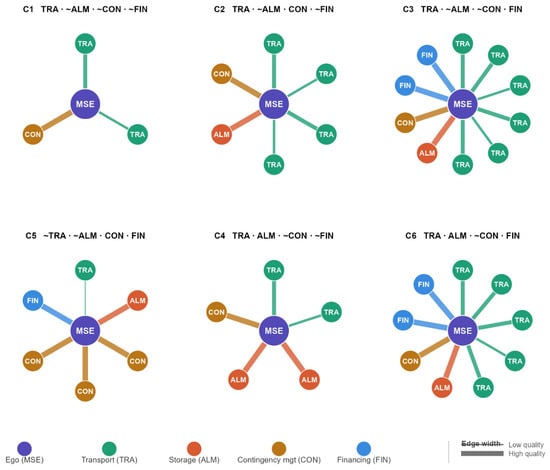
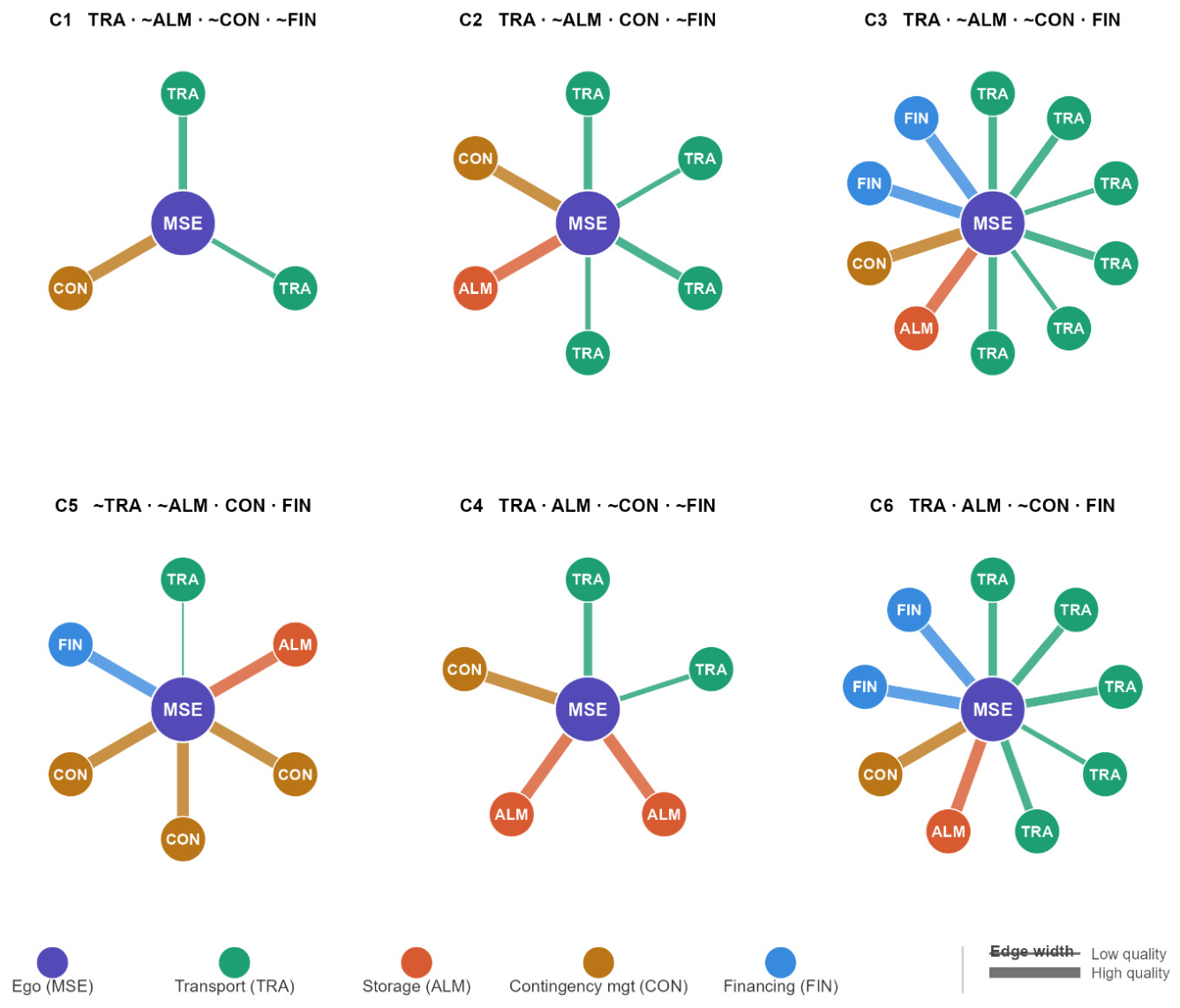

Disclaimer/Publisher’s Note: The statements, opinions and data contained in all publications are solely those of the individual author(s) and contributor(s) and not of MDPI and/or the editor(s). MDPI and/or the editor(s) disclaim responsibility for any injury to people or property resulting from any ideas, methods, instructions or products referred to in the content. |
© 2026 by the authors. Licensee MDPI, Basel, Switzerland. This article is an open access article distributed under the terms and conditions of the Creative Commons Attribution (CC BY) license.