


Abstract
Detecting naval vessels at extreme distances using infrared search and track (IRST) systems presents severe physical challenges, notably the complete loss of geometric texture and the non-linear submersion of weak target signals within high-dynamic-range sea clutter. Traditional pure data-driven convolutional neural networks (CNNs) rely heavily on visual appearances and suffer from critical feature blind spots under such extreme physical degradation. To overcome this, we propose a Physics-Aware Deep Coupling Network that shifts the detection paradigm from appearance-based feature extraction to physics-guided attribute recognition. Our method deconstructs the degraded infrared signal into three complementary physical domains: an adaptive radiation energy mapping, corresponding to the energy domain, to rescue weak targets; a bio-inspired spatial saliency filtering mechanism, corresponding to the frequency domain, to maximize the signal-to-clutter ratio; and a PSF-coherent gradient topology framework, corresponding to the gradient domain, to discriminate genuine point targets from chaotic sun glints and island edges. These processed priors, alongside the raw image, are integrated into a 4-channel tensor and fused via a Cross-Domain Attention Module, ensuring deep network coupling. To evaluate this architecture, we conduct extensive experiments on the real-world Maritime-SIRST dataset. Since the original dataset provides only pixel-level segmentation masks, we generate axis-aligned bounding-box detection labels from these masks and retrain both the proposed method and a suite of state-of-the-art YOLO detectors under a unified detection paradigm. Extensive benchmarking demonstrates that our physics-aware methodology consistently outperforms these detectors, achieving a mAP50 of 0.923 and an F1 score of 89.92%, thus providing a highly interpretable and robust solution for maritime domain awareness under extreme physical constraints.
1. Introduction
In the contemporary paradigm of maritime domain awareness and wide-area surveillance, infrared search and track (IRST) systems are essential for the over-the-horizon detection of naval vessels. As maritime defense perimeters extend further offshore, airborne and shipborne electro-optical platforms are required to detect surface targets at extreme ranges, often near the sea–sky line. Transitioning from coarse target discovery to reliable detection and localization under such distant imaging conditions introduces severe physical and algorithmic obstacles.
At extreme imaging distances, infrared ship detection is dominated by weak, small, dim, and heavily cluttered target signatures. The most fundamental obstacle is the complete loss of geometric texture: far-range targets project onto the focal plane array as strictly sub-pixel or extremely compact regions, frequently occupying fewer than 80 pixels in total area. Consequently, structural cues such as shape, contour, and length-to-width ratio are effectively erased. Second, extreme-range sensing suffers from an ultra-low Signal-to-Noise Ratio (SNR); target thermal radiation is heavily attenuated by atmospheric absorption and scattering, arriving at the detector as a critically weakened signal. Third, the dynamic marine environment generates intense and highly structured background clutter. Random wave fluctuations, breaking surf, island coastlines, and bright sun glints create a high-dynamic-range scene in which weak target signals are non-linearly submerged within the statistical tail of the background radiation distribution, making them virtually indistinguishable from high-intensity noise.
Conventional visual detection algorithms encounter a fundamental performance ceiling under these conditions. Traditional image processing methods rely on local contrast measures and filter-based anomaly detection, but because high-frequency sea clutter and sun glints share similar local contrast profiles with genuine targets, they produce unacceptably high false alarm rates. Conversely, modern deep learning architectures predominantly operate as purely data-driven black-box models that treat infrared images as ordinary grayscale matrices. These networks depend heavily on rich visual appearance and geometric texture; when applied to far-range targets stripped of such features, they fall into a feature blind spot and struggle to establish a reliable decision boundary between true thermal sources and transient environmental anomalies.
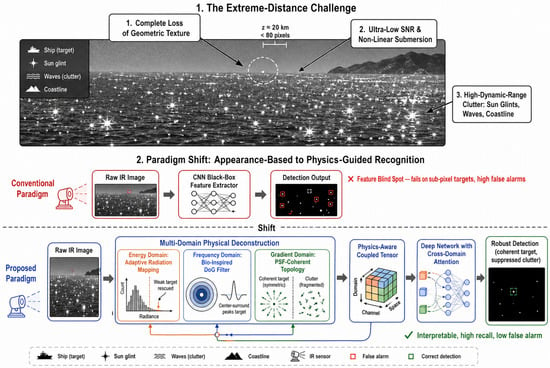
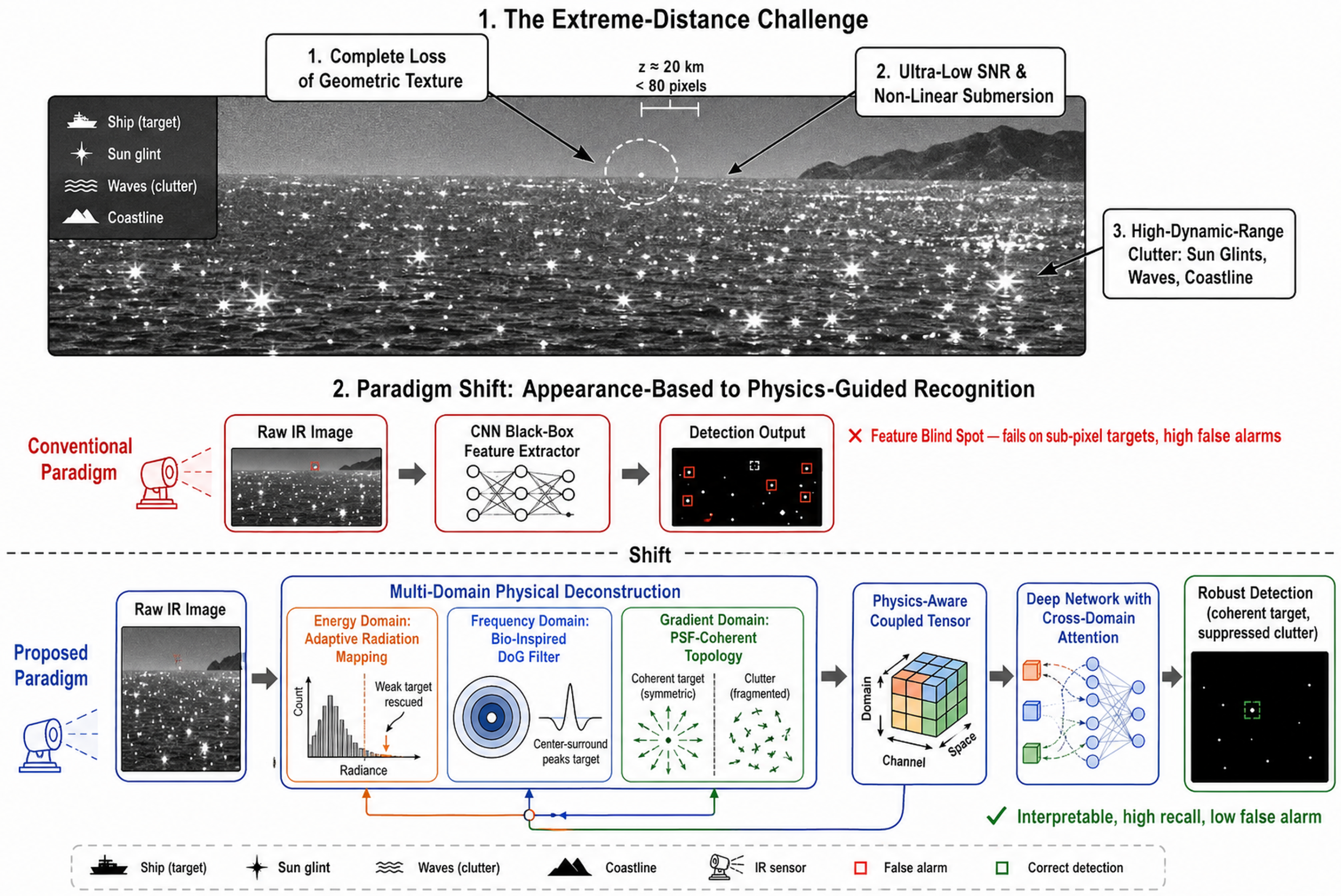
Figure 1 conceptually contrasts the conventional appearance-based pipeline with our physics-guided attribute recognition strategy.
Figure 1.
Conceptual comparison between appearance-based detection and the proposed physics-guided detection paradigm under extreme-distance maritime infrared imaging. At long ranges, ship targets suffer from texture loss, ultra-low SNR, and non-linear submersion in sea clutter. Instead of relying on degraded visual appearance, the proposed method decomposes the infrared signal into energy, frequency, and gradient-domain physical priors for robust target recognition. Arrows illustrate the processing pipeline and the correspondence between the identified challenges and the proposed physical-domain solutions.
To overcome the inherent limitations of purely data-driven paradigms, this paper proposes a novel Physics-Aware Deep Coupling Network that shifts the detection methodology from appearance-based feature extraction to physics-guided attribute recognition. By deconstructing the infrared imaging chain, we project the degraded image signal into complementary physical domains and deeply couple them to guide the neural network.
The three main contributions of this paper are summarized as follows:
- 1.
- An Adaptive Radiation Energy Mapping Model: We propose a localized statistical contrast restoration algorithm for the energy domain. This model restricts high-intensity background gain and effectively rescues weak target energies submerged in dynamic sea clutter, substantially mitigating the effect of non-linear target submersion.
- 2.
- A Bio-Inspired Spatial Saliency Filtering Mechanism: We introduce a mathematically rigorous multi-scale Difference of Gaussians (DoG) model inspired by the lateral inhibition mechanism of biological vision. This frequency-domain mechanism acts as a physical, scale-specific filter that maximizes the Signal-to-Clutter Ratio (SCR).
- 3.
- A PSF-Coherent Gradient Topology Framework: We address the sub-pixel true/false target ambiguity by explicitly exploiting gradient vector fields governed by the optical Point Spread Function (PSF). This gradient-domain framework successfully discriminates between the symmetric, coherent gradients of genuine distant targets and the asymmetric, fragmented reflections of false sea glints.
2. Related Work
Infrared small target detection (IRSTD) has attracted sustained attention in remote sensing, maritime surveillance, and electro-optical reconnaissance because it offers a practical means of detecting weak and distant objects under low-visibility or electromagnetically complex conditions. Compared with visible-light object detection, IRSTD is intrinsically more difficult: targets typically occupy only a few pixels, lack stable texture and shape cues, and are easily submerged by sensor noise, atmospheric degradation, and structured background clutter. These difficulties are further amplified in maritime infrared ship detection, where cloud edges, islands, ports, wave clutter, and specular reflections may produce radiometric responses similar to those of real ships. Existing studies can be broadly organized into six thematic directions: conventional model-driven detection, deep segmentation-based IRSTD, multi-scale and attention-guided feature fusion, flexible receptive-field modeling, prior- and physics-guided learning, and maritime-specific datasets and benchmarks.
2.1. Conventional Model-Driven Infrared Small Target Detection
Early IRSTD methods were primarily designed around hand-crafted assumptions concerning target saliency, background smoothness, or target–background structural differences. Filter-based approaches, such as Top-Hat transformation and related spatial-domain background prediction algorithms, enhance small bright regions by suppressing slowly varying backgrounds [1,2]. Frequency- or transform-domain methods further exploit the separation between target-related high-frequency responses and background-dominated low-frequency components [3]. Local contrast-based methods, including LCM, MPCM, and their variants, define targets as local anomalies whose intensity differs from that of surrounding neighborhoods [4,5]. In parallel, data-structure-based methods model infrared images through sparse representation, tensor decomposition, or low-rank background assumptions, treating small targets as sparse residual components separated from structured backgrounds [6,7].
These conventional methods remain attractive because of their interpretability, relatively low computational cost, and limited dependence on annotated data. However, their robustness is strongly constrained by the validity of the predefined priors. In simple sky or uniform sea-surface scenes, local contrast and sparsity assumptions may be sufficient; in complex maritime imagery, bright cloud boundaries, islands, port facilities, and wave-induced radiation clutter can simultaneously satisfy the same assumptions, leading to high false-alarm rates. Conversely, genuinely dim ships with low signal-to-clutter ratios may be suppressed as background. Thus, while model-driven methods provide an important theoretical foundation for IRSTD, their limited adaptability motivates the transition toward data-driven and hybrid learning frameworks.
2.2. Deep Semantic Segmentation-Based IRSTD
With the development of convolutional neural networks, IRSTD has increasingly been formulated as a pixel-level semantic segmentation problem rather than a purely handcrafted anomaly-detection task. Fully convolutional networks and encoder–decoder architectures, especially U-Net-like models, offer an effective framework for preserving spatial resolution while extracting hierarchical features [8,9,10]. Unlike general object detection methods, which often rely on bounding-box regression and high-level semantic cues, segmentation-based IRSTD is particularly well-suited to tiny targets because it directly predicts target masks and can retain fine localization information.
A representative early deep-learning framework is MDvsFA-cGAN, which explicitly decomposes infrared small object segmentation into two adversarially coupled subtasks: reducing missed detections and suppressing false alarms [11]. This formulation highlights a central tension in IRSTD: enhancing weak targets often increases false alarms, whereas suppressing clutter may eliminate dim targets. Later, ACM introduced asymmetric contextual modulation to improve cross-layer feature fusion by combining bottom-up local detail with top-down semantic guidance [12]. DNANet further advanced this direction by designing dense nested interaction modules and cascaded channel–spatial attention, enabling repeated fusion between shallow spatial details and deep semantic information so that small target responses are less likely to disappear after downsampling [13]. Other segmentation-oriented methods, such as ABCNet, exploit transformer-style correlation modeling and bilinear attention to strengthen target representation under cluttered backgrounds [14].
Although these models substantially improve detection accuracy over traditional methods, their performance remains limited by the extreme sparsity of infrared small targets. Multiple downsampling operations can erase weak target responses, while aggressive feature aggregation may blur the distinction between true point-like targets and high-intensity clutter. Consequently, recent IRSTD networks increasingly emphasize multi-scale fusion, attention mechanisms, and structure-preserving feature interaction.
2.3. Multi-Scale Context Modeling and Attention-Guided Feature Fusion
Because infrared small targets are spatially tiny yet contextually dependent on their surrounding background, multi-scale feature modeling has become a central design principle in modern IRSTD networks. Attention-guided pyramid context networks incorporate contextual information at multiple scales to improve discrimination between small targets and complex backgrounds [15]. LW-IRSTNet explores lightweight segmentation design for resource-constrained deployment, reflecting the practical need to balance accuracy, model size, and inference speed on airborne or spaceborne platforms [16]. MTU-Net introduces multilevel transformer-style fusion for space-based infrared tiny ship detection, demonstrating the value of global context when targets appear in large-scale remote-sensing scenes [17].
More recent transformer-based architectures further strengthen the interaction between spatial localization and channel-wise representation. SCTransNet proposes a spatial–channel cross-transformer network to jointly model spatial dependencies and channel relationships, thereby improving feature discrimination for weak target regions [18]. TCI-Former introduces a thermal-conduction-inspired transformer, using the analogy of heat diffusion to guide contextual propagation for infrared small target detection [19]. These studies indicate that long-range dependency modeling is beneficial when local evidence is insufficient. Nevertheless, in maritime IRSTD, global context alone may not be reliable, because large-scale clutter structures such as cloud clusters and coastlines can dominate the attention distribution. Therefore, attention mechanisms must be coupled with target-preserving local structures or domain-specific priors to avoid enhancing visually salient but physically irrelevant clutter.
2.4. Flexible Receptive Fields for Infrared Small Ship Detection
Another important research direction concerns the adaptability of convolutional receptive fields. Standard convolutions extract features from fixed geometric neighborhoods, which may be suboptimal for infrared small ships whose apparent shapes vary with imaging distance, sensor resolution, viewing angle, and atmospheric conditions. Dilated convolutions enlarge the receptive field without reducing feature-map resolution, allowing networks to capture broader contextual information while preserving spatial detail [20]. Deformable convolutions further relax the rigid sampling pattern of conventional kernels by learning spatial offsets, enabling more flexible aggregation around irregular or weak target structures [21,22].
FCNet explicitly exploits this idea for infrared small ship detection by integrating dilated and deformable convolutions into a flexible convolutional network tailored to maritime scenes [23]. Its feature enhancement module combines local and contextual representations, while its context fusion and semantic fusion modules aim to reduce information loss during encoding and decoding. In addition, FCNet introduces Maritime-SIRST, a dataset constructed from infrared satellite imagery and designed to contain more diverse maritime backgrounds than earlier maritime datasets. The success of FCNet indicates that adaptive receptive-field modeling is particularly relevant for maritime small ship detection, where a detector must simultaneously preserve tiny target details and incorporate sufficient context to reject clutter. However, although flexible convolution improves geometric adaptability, it does not guarantee that the learned features are physically consistent with the infrared imaging process. This limitation motivates the incorporation of explicit priors and physics-aware representations.
2.5. Prior-Guided and Physics-Aware Infrared Small Target Detection
To address the limitations of purely data-driven feature learning, recent studies have begun to integrate handcrafted priors, interpretable structures, or physical constraints into IRSTD networks. Deep unfolding methods provide one such bridge between model-driven and data-driven approaches. RPCANet unfolds robust principal component analysis into a trainable network, preserving the low-rank-plus-sparse interpretation of infrared images while improving representation flexibility [24]. Prior Guided Dense Nested Network introduces explicit prior descriptors, including structural and local feature information, into a dense nested segmentation architecture, showing that handcrafted priors can complement learned deep features when target evidence is weak [25].
Physics-aware IRSTD further extends this idea by modeling small targets according to their imaging formation mechanisms rather than relying solely on appearance statistics. TCI-Former already reflects this trend by using thermal conduction as an inspiration for feature propagation [19]. More directly, physics-driven feature decoupling formulates infrared small target detection as a process of separating physically meaningful feature components through a dual geometry-guided experts network [26]. Energy Diffusion Prior for Infrared Small Target Detection similarly argues that target representations should be built from object-related energy diffusion rather than scene-dependent appearance patterns [27]. These studies are highly relevant to extreme-distance maritime detection, because distant ships often degenerate into point-like thermal responses whose reliable cues are not semantic categories or contours, but radiation distribution, spatial-frequency behavior, and point-spread-function-related topology.
Compared with existing prior-guided and physics-inspired methods, the present work further emphasizes multi-domain physical coupling. Instead of merely adding a single prior map or using a physics-inspired network metaphor, the proposed framework decomposes the infrared input into radiation-energy, spatial-saliency, and PSF-coherent gradient domains. Such a formulation encourages the detector to distinguish whether a candidate region is not only visually salient, but also consistent with the physical behavior of an extreme-distance infrared ship target.
2.6. Maritime Infrared Ship Detection and Dataset Development
Maritime infrared ship detection is a specialized subproblem of IRSTD with distinctive challenges. Unlike generic infrared small target scenes, maritime environments contain dynamic wave patterns, cloud clusters, coastlines, islands, ports, and multi-ship formations, all of which can generate strong false alarms. Earlier maritime infrared ship detection studies explored lightweight CNNs, YOLO-based detectors, spatial-frequency analysis, and multi-source feature fusion for thermal infrared remote-sensing imagery [28,29,30,31]. Knowledge-driven context perception networks and spatiotemporal-cue-based maritime dim target detectors further demonstrate the need to exploit scene-specific contextual information [32,33,34].
Dataset construction has also played a decisive role in the development of this field. General IRSTD datasets such as SIRST, NUDT-SIRST, and IRSTD-1K provide important benchmarks for single-frame infrared small target segmentation, covering diverse backgrounds including sky, land, sea, and urban scenes [12,13,35]. However, these datasets are not specifically designed for maritime ship detection. ISDD and NUDT-SIRST-SEA represent important attempts to construct maritime-oriented infrared ship datasets, but they still suffer from limited scene complexity, imbalance between target and non-target samples, or insufficient representation of wave and cloud clutter [17,32]. FCNet’s Maritime-SIRST dataset addresses part of this gap by providing infrared maritime ship images with more complex backgrounds, including waves, clouds, islands, and ports [23]. More recently, maritime-specific deep models, such as the multi-scale enhancement network with semi-ellipsoid loss, have further confirmed that infrared ship detection at sea requires specialized modeling of target morphology and background interference [36].
Nevertheless, existing maritime datasets and algorithms remain limited in their ability to represent extreme-distance imaging conditions, where ships may occupy only a few pixels and where apparent shape is governed more by optical blur, atmospheric attenuation, and sensor point spread than by physical vessel geometry. This observation motivates the need for detection frameworks that combine maritime-specific learning with imaging-physics-aware representation.
2.7. Summary
In summary, IRSTD research has evolved from handcrafted local-contrast and low-rank models to deep segmentation networks, attention-guided feature fusion, flexible receptive-field architectures, and more recent prior- or physics-aware learning paradigms. Traditional methods offer interpretability but lack robustness in complex maritime clutter; segmentation networks improve representation learning but may lose weak targets during hierarchical feature extraction; attention and transformer-based methods enhance contextual modeling but can overemphasize visually dominant false alarms; and flexible convolutional networks improve geometric adaptability but still rely mainly on learned appearance cues. Recent prior-guided and physics-driven methods suggest a promising direction: embedding domain knowledge into trainable networks so that the learned representation is constrained by the physical behavior of infrared small targets.
Building upon these insights, the proposed method targets extreme-distance maritime infrared ship detection by explicitly coupling radiation-energy enhancement, bio-inspired spatial saliency, and PSF-coherent gradient topology within a unified deep network. In this manner, the model is encouraged to learn not only where a small bright response appears, but also whether its multi-domain structure is physically consistent with a genuine maritime infrared target.
3. Proposed Method
To overcome the inherent limitations of purely data-driven models, we propose a Physics-Aware Deep Coupling Network. The core principle of this methodology is “physics-guided attribute recognition,” which shifts the algorithmic focus from appearance-based feature fitting to the extraction of essential physical attributes.
3.1. Overall Architecture and Deep Coupling
Conventional CNNs treat single-channel grayscale infrared images as generic intensity matrices, effectively operating as black-box feature extractors. To break this paradigm, we introduce a multi-dimensional physical decoupling stage. We explicitly construct three complementary domains that capture fundamental properties of a spatial 2D signal: the intensity distribution (energy domain), spatial frequency content (frequency domain), and structural edges (gradient domain). Although these domains are not independent, they expose distinct statistical signatures that differentiate genuine targets from clutter. The present architecture prioritizes single-frame spatial processing to ensure low-latency operation, while multi-frame temporal dynamics are reserved for future work.
To prevent information loss, the raw grayscale intensity is retained as a baseline channel. The three decoupled physical priors are concatenated with the raw image to form a 4-channel Physics-Aware Feature Tensor , defined as
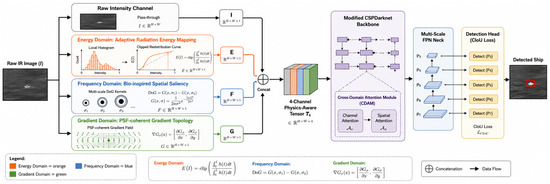
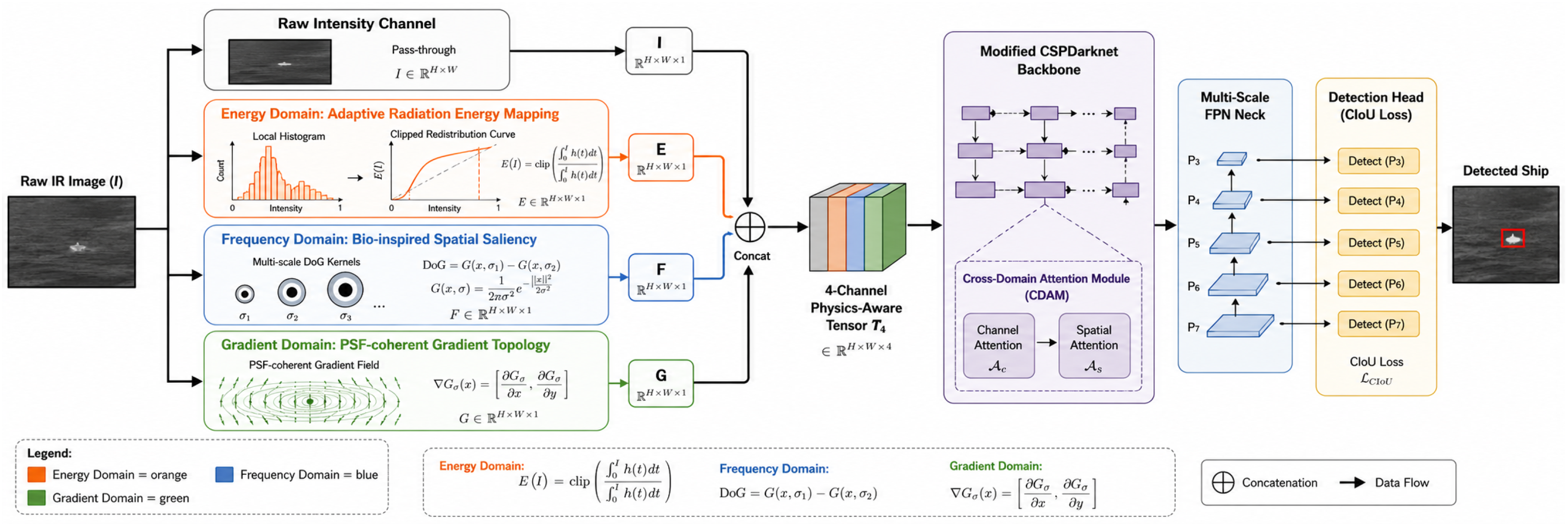
However, simple channel concatenation constitutes only pre-processing. To achieve genuine deep coupling, the tensor T is fed into a modified CSPDarknet backbone equipped with a Cross-Domain Attention Module (CDAM). The CDAM sequentially applies channel and spatial attention mechanisms across the four input channels, adaptively learning weighted inter-dependencies between the raw intensity data and the physical priors. The deeply coupled features are subsequently processed by a multi-scale Feature Pyramid Network (FPN) neck and evaluated by a detection head that employs Complete Intersection over Union (CIoU) loss, optimized for axis-aligned bounding-box regression of point-like anomalies. The complete architecture is illustrated in Figure 2.
Figure 2.
Overall architecture of the proposed Physics-Aware Deep Coupling Network. The raw infrared image is first transformed into three complementary physical priors: adaptive radiation energy mapping, bio-inspired spatial saliency, and PSF-coherent gradient topology. These priors are concatenated with the raw image to form a four-channel physics-aware tensor, which is then processed by a CDAM-enhanced backbone, FPN neck, and detection head.
3.2. Adaptive Radiation Energy Mapping
The primary physical obstacle is the non-linear submersion of weak target signals within high-dynamic-range (HDR) backgrounds. Sea clutter generates intense background radiation that dominates the image histogram, suppressing the faint signatures of distant vessels.
To address this challenge without resorting to computationally expensive inversions of the radiative transfer equation, we propose an Adaptive Radiation Energy Mapping based on local statistical contrast restoration. The image is partitioned into local sliding windows of size to account for the spatial non-uniformity of the sea surface. Within each window, we compute the local probability density function for gray level j.
To prevent the excessive amplification of sun glints and bright island edges, we define an adaptive contrast clipping threshold :
where L is the maximum gray level (e.g., 256 for 8-bit images) and is a tunable clipping factor that controls the maximum permissible local gain. The probability mass exceeding is redistributed uniformly across all bins. The modified cumulative distribution transform is then applied:
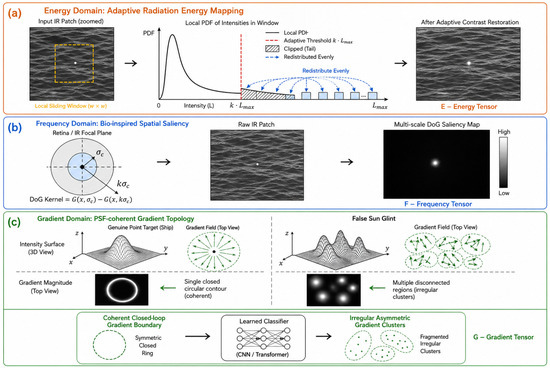
where k is the current pixel intensity. This localized mapping translates the target’s relative thermal variance into a highly discernible grayscale variance , thereby substantially mitigating signal submersion without artificially synthesizing background noise. This domain transformation is visually summarized in Figure 3.
Figure 3.
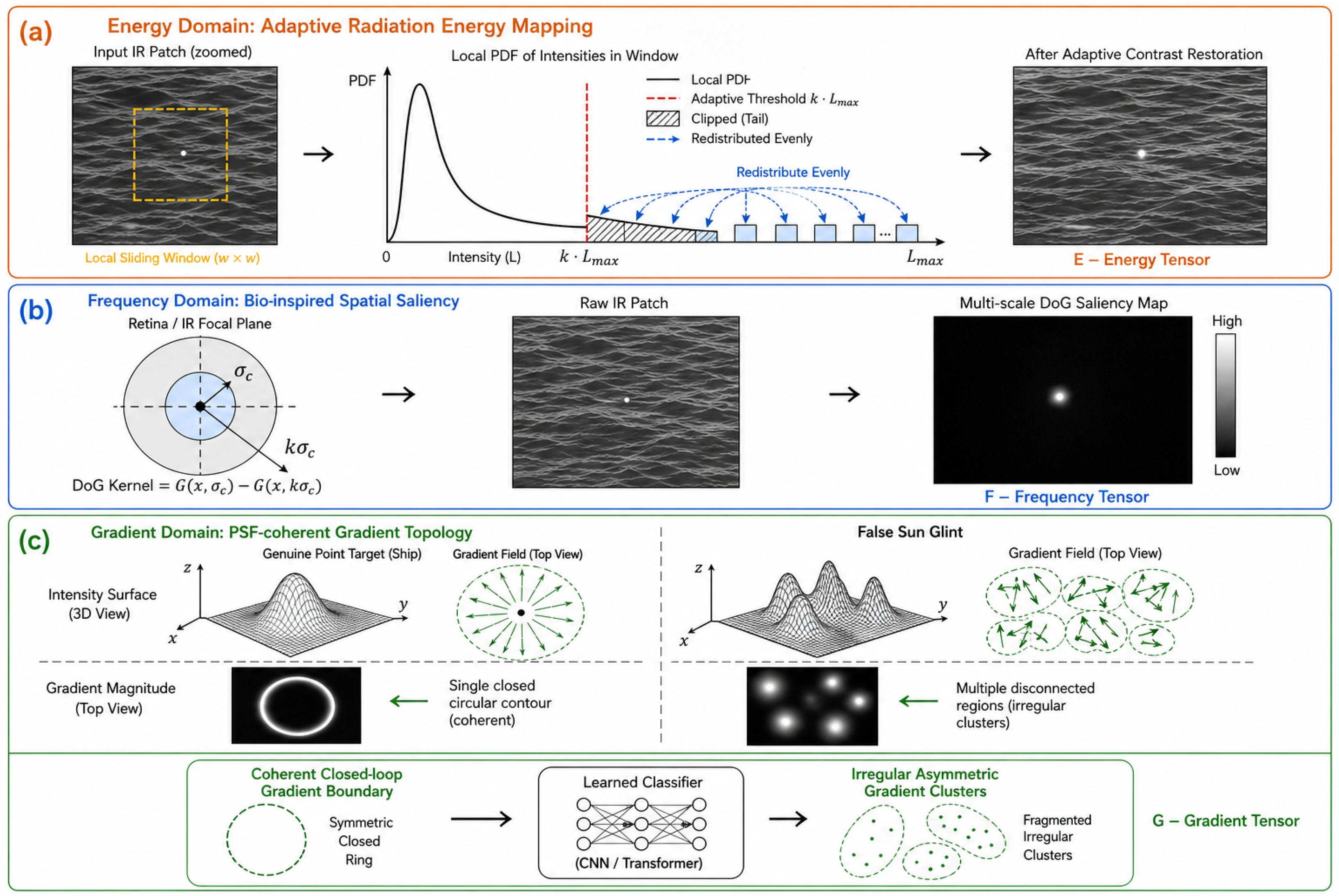
Visualization of the three physics-aware domain transformations. The energy domain enhances weak target radiation while suppressing excessive background gain; the frequency domain improves spatial saliency through lateral inhibition; and the gradient domain exploits PSF-induced topological coherence to distinguish genuine point targets from fragmented sea glints.
3.3. Bio-Inspired Spatial Saliency
At extreme distances, ships degenerate into point-like singularities, causing severe frequency aliasing between the target and the background. To achieve robust spatial saliency, we draw inspiration from the lateral inhibition mechanism found in biological retinas and simulate a center-surround antagonistic process using a multi-scale Difference of Gaussians (DoG) filter.
The 2D Gaussian function is defined as
The band-pass saliency map is obtained by convolving the raw image with two distinct Gaussian kernels:
The parameter defines the excitatory center and is constrained by the theoretical optical diffraction limit—specifically, the Airy disk radius, corresponding to a sub-pixel target. The inhibitory surround represents the local background neighborhood and is adaptively scaled as
where is typically set between 1.6 and 2.0. Convolution boundary effects are handled using zero-padding. This biologically motivated operation attenuates low-frequency cloud structures and smooths ultra-high-frequency sensor noise, while preserving spatial frequencies that match the target’s point spread function. The resulting spatial saliency map thus emphasizes target-like singularities against a suppressed background. A conceptual illustration of this process is provided in Figure 3.
3.4. PSF-Coherent Gradient Topology
The final physical barrier is the ambiguity between true and false targets. A common but flawed assumption in conventional reasoning is that the internal heat sources of a ship create discernible macro-structures at extreme distances. In reality, at sub-pixel scales, the geometric structure of the vessel is irrelevant; the spatial distribution of the target on the focal plane is dictated entirely by the optical system’s Point Spread Function (PSF).
A genuine distant ship behaves as a single, unified point source of thermal energy. When convolved with the optical PSF, it consistently produces a smooth, symmetric, and continuous 2D Gaussian-like intensity profile. In contrast, sea clutter and sun glints arise from specular reflections across multiple adjacent wave facets. These chaotic, multi-point-source reflections do not conform to a single symmetric PSF, resulting in irregular, fragmented intensity patterns at the pixel level. Figure 3 further illustrates this physical divergence between true targets and chaotic reflections.
To exploit this distinction, we compute the gradient vector field using the Sobel operator, applying convolution kernels to obtain the first-order partial derivatives in the horizontal () and vertical () directions. The gradient magnitude map is extracted as
In the resulting topological map, the PSF of a genuine point target manifests as a closed-loop, coherent gradient boundary. Conversely, multi-facet sun glints appear as asymmetric, inconsistent gradient clusters. Incorporating this physical gradient domain enables the network to discriminate between authentic targets and false alarms based on PSF-induced spatial coherence rather than on raw pixel intensity.
4. Dataset
Acquiring and accurately labeling real-world infrared imagery of maritime targets at extreme distances poses significant logistical and technical challenges. Real-world images are notoriously affected by uncontrollable environmental factors, dynamic clutter, and ambiguous annotations arising from severe target submersion. To rigorously evaluate our proposed Physics-Aware Deep Coupling Network under genuine physical constraints, we employed the publicly available, real-world Maritime-SIRST dataset.
This dataset comprises 1131 infrared images containing a total of 2647 targets, acquired using advanced short-wave, mid-wave, and long-wave infrared sensors in authentic maritime environments. Crucially, the Maritime-SIRST dataset faithfully replicates the extreme physical degradation described in our methodology:
- 1.
- Sub-pixel Degradation: Over 95% of the targets occupy fewer than 80 pixels, rendering them strictly sub-pixel or small anomalies devoid of macroscopic geometric texture. This forces detection models to operate near the diffraction limit, where shape priors are entirely ineffective.
- 2.
- High-Dynamic-Range Clutter: 65.43% of the images feature highly complex HDR backgrounds. The scenes are densely populated with severe wave clutter, island landmasses, and thick cloud cover, resulting in pronounced frequency aliasing and low Signal-to-Clutter Ratios (SCR).
It is important to note that the original Maritime-SIRST dataset provides exclusively pixel-level segmentation masks. While these fine-grained masks capture accurate target footprints, they do not directly supply the axis-aligned bounding-box annotations required for training modern object detectors. To construct a rigorous detection benchmark, we automatically derive tight axis-aligned bounding boxes from the provided segmentation masks by computing the minimal enclosing rectangle of each connected foreground component. The resulting bounding boxes serve as detection ground truth for all experiments, allowing us to train and evaluate both the proposed physics-aware detector and a representative suite of YOLO-series detectors under identical conditions. This conversion preserves the original extreme-distance target characteristics while enabling a fair comparison within the widely adopted detection paradigm.
5. Experiments and Results
To empirically validate the effectiveness of the proposed Physics-Aware Deep Coupling Network, rigorous comparative experiments were conducted against state-of-the-art YOLO detectors on the Maritime-SIRST dataset using the generated axis-aligned detection labels.
5.1. Experimental Setup
All deep learning models were trained and evaluated on a high-performance computing platform equipped with an NVIDIA GeForce RTX 4090 GPU. The software environment was built upon a Linux operating system, using the PyTorch 2.7.1 framework with CUDA 11.8 acceleration.
The Maritime-SIRST dataset was partitioned into training, validation, and testing sets following standard evaluation protocols. To ensure equitable comparisons, all baseline experiments were conducted under identical hardware configurations, dataset splits, and evaluation metrics: mean Average Precision at IoU threshold 0.5 (mAP50), mAP averaged over IoU thresholds from 0.5 to 0.95 (mAP50–95), Precision, Recall, and F1 score. Our network was optimized using Stochastic Gradient Descent (SGD) with a Cosine Annealing learning rate schedule to avoid convergence to suboptimal local minima. All YOLO variants were trained using their officially recommended settings and hyperparameters to guarantee a fair comparison.
5.2. Quantitative Results
We benchmarked our Physics-Aware Deep Coupling Network against eight YOLO detectors with lightweight and standard-capacity configurations: YOLOv8n, YOLOv8s, YOLOv8m, YOLOv9t, YOLOv9s, YOLOv11n, YOLOv11s, and YOLOv11m. We additionally compare it with four representative infrared small-target methods, namely MTUNet [17], ABCNet [14], AGPCNet [15], and LW-IRSTNet [16]. All methods are assessed for the infrared ship detection task using the same Maritime-SIRST test set.
Table 1 presents the quantitative comparison for infrared ship detection. The proposed method achieves the best overall detection performance, attaining an mAP50 of 0.9230 and an mAP50–95 of 0.5991. In particular, it improves upon the best YOLO baseline by 0.52 percentage points in mAP50 over YOLOv11m (0.9178) and by 1.28 percentage points in mAP50–95 over YOLOv9s (0.5863). The proposed method also achieves the highest Recall of 0.8901 and F1 score of 89.92%, demonstrating its ability to detect a greater proportion of weak and small ship targets. Although YOLOv9s attains higher Precision (0.9609) and the lowest false-alarm rate (0.0391), its Recall is limited to 0.8109. By contrast, our method improves Recall by 7.92 percentage points and F1 by 0.92 percentage points relative to YOLOv9s, while maintaining a false-alarm rate of 0.0915. These results indicate that the proposed multi-domain physical priors effectively improve target sensitivity in cluttered maritime scenes without an excessive increase in false alarms.
Table 1.
Quantitative comparison for infrared ship detection on Maritime-SIRST. denotes the false-alarm rate. “–” indicates that the corresponding mAP value is not reported. Bold values indicate the best results for each metric.
The comparison with dedicated infrared small-target methods further verifies the effectiveness of the proposed detector. Among all methods, it obtains the highest Recall and F1 score. Compared with ABCNet [14], the strongest non-YOLO baseline in terms of F1 score, the proposed method improves Recall from 0.8406 to 0.8901 and F1 from 87.36% to 89.92%, while reducing from 0.0940 to 0.0915. It achieves more substantial gains over MTUNet [17], AGPCNet [15], and LW-IRSTNet [16], with Recall improvements of 8.20, 7.46, and 14.28 percentage points, respectively. In addition to its accuracy advantage, the proposed method requires only 3.42 M parameters and 6.25 G FLOPs. This computational cost is markedly lower than that of ABCNet (73.51 M parameters and 83.13 G FLOPs) and AGPCNet (12.36 M parameters and 43.18 G FLOPs), while providing considerably stronger detection accuracy than the lighter LW-IRSTNet. Overall, these results demonstrate that the proposed network delivers a favorable balance of detection accuracy, target recall, false-alarm suppression, and computational efficiency for extreme-distance infrared ship detection.
5.3. Ablation Study
To rigorously assess the individual contribution of each decoupled physical domain, we conducted an ablation study on the Maritime-SIRST dataset. Starting from a baseline that processes only the raw infrared image through the same backbone, neck, and detection head, we incrementally integrated the energy, frequency, and gradient priors, and finally added the Cross-Domain Attention Module. The detection metrics are summarized in Table 2.
Table 2.
Ablation study of physical priors on maritime-SIRST (detection metrics). Bold values indicate the best results for each metric.
The baseline model, which uses only the raw infrared image, achieves an mAP50 of 0.9012 and an F1 score of 87.20%. This result reflects the difficulty of distinguishing dim ships from high-intensity maritime clutter without explicit physical guidance. Introducing the Adaptive Radiation Energy Mapping () increases mAP50 to 0.9124 and Recall from 0.8165 to 0.8482. The improved target sensitivity increases the F1 score to 88.34%. Adding the Bio-inspired Spatial Saliency prior () further improves mAP50 and mAP50–95 to 0.9189 and 0.5886, respectively, confirming that frequency-domain saliency enhancement suppresses background interference and facilitates the localization of weak ship targets.
Starting from the energy–frequency configuration, we separately evaluate the PSF-Coherent Gradient Topology () and the Cross-Domain Attention Module (CDAM). Adding only the gradient prior increases mAP50 from 0.9189 to 0.9209, mAP50–95 from 0.5886 to 0.5931, and F1 from 89.12% to 89.46%. This gain demonstrates that PSF-induced gradient coherence provides discriminative structural cues for separating genuine ship responses from fragmented glints and edges. Alternatively, adding only CDAM yields an mAP50 of 0.9214, an mAP50–95 of 0.5946, and an F1 score of 89.56%, indicating that adaptive cross-domain feature interaction is effective even without the additional gradient representation.
Combining the gradient prior with CDAM produces the full model and achieves the best mAP50 of 0.9230, mAP50–95 of 0.5991, Recall of 0.8901, and F1 score of 89.92%. Relative to the energy–frequency configuration, the complete model improves mAP50 by 0.41 percentage points, mAP50–95 by 1.05 percentage points, Recall by 2.03 percentage points, and F1 by 0.80 percentage points. The consistent gains from the individual components and their combination verify that the three physical priors are complementary and that CDAM effectively exploits their joint information for extreme-distance infrared ship detection.
5.4. Qualitative Results
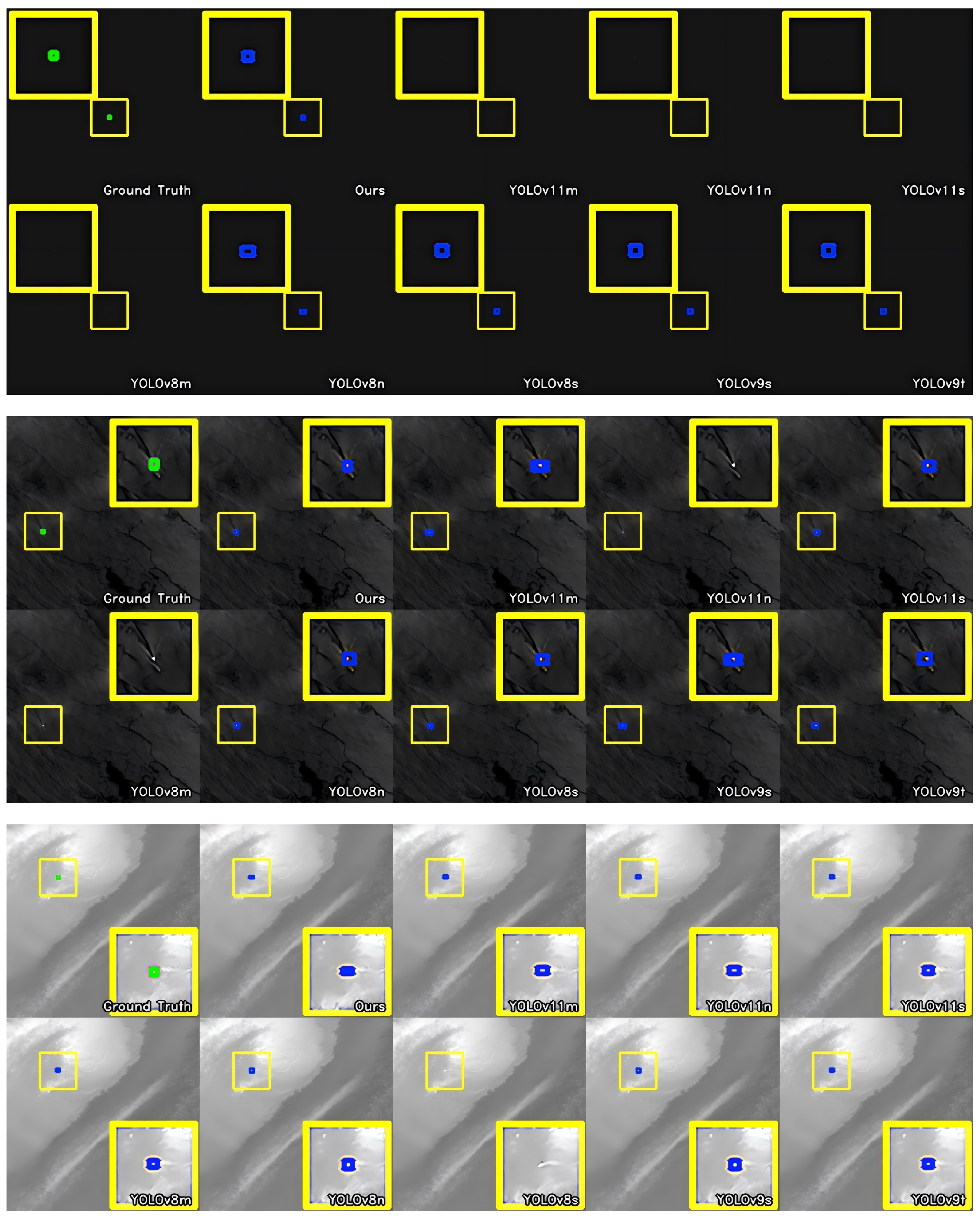
To illustrate the model’s robustness in realistic operational environments, qualitative comparisons were conducted on the most challenging scenes of the Maritime-SIRST dataset, as shown in Figure 4.
Figure 4.
Qualitative comparison of detection results in challenging Maritime-SIRST scenes. The proposed method maintains stable target localization under severe cloud cover, island-edge interference, wave clutter, and intense sun glint, while conventional YOLO detectors are more prone to missed detections and false alarms. Yellow thin boxes indicate target objects, and thick yellow boxes represent zoomed-in views of the targets.
In high sea states accompanied by intense sun glint and complex island coastlines, standard YOLO detectors frequently produced false positives on bright island edges or fragmented wave peaks. They also tended to miss genuine targets when the target’s grayscale intensity fell below the local background noise floor. In contrast, the proposed algorithm exhibited strong interference resistance. Even when the target’s visual contrast was nearly imperceptible against complex cloud formations, our method accurately localized the target centroid and generated high-confidence bounding boxes. This visual evidence indicates that the combined frequency-domain spatial saliency and gradient-domain PSF coherence effectively suppress false alarms while preserving weak targets.
5.5. Interpretability Analysis
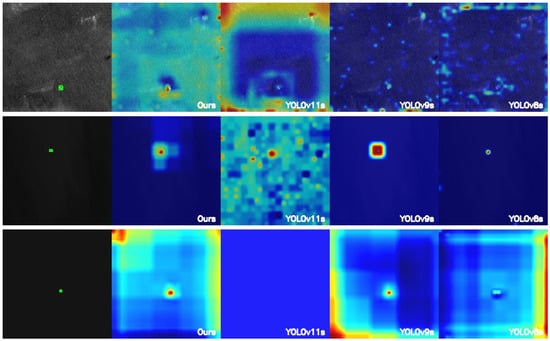
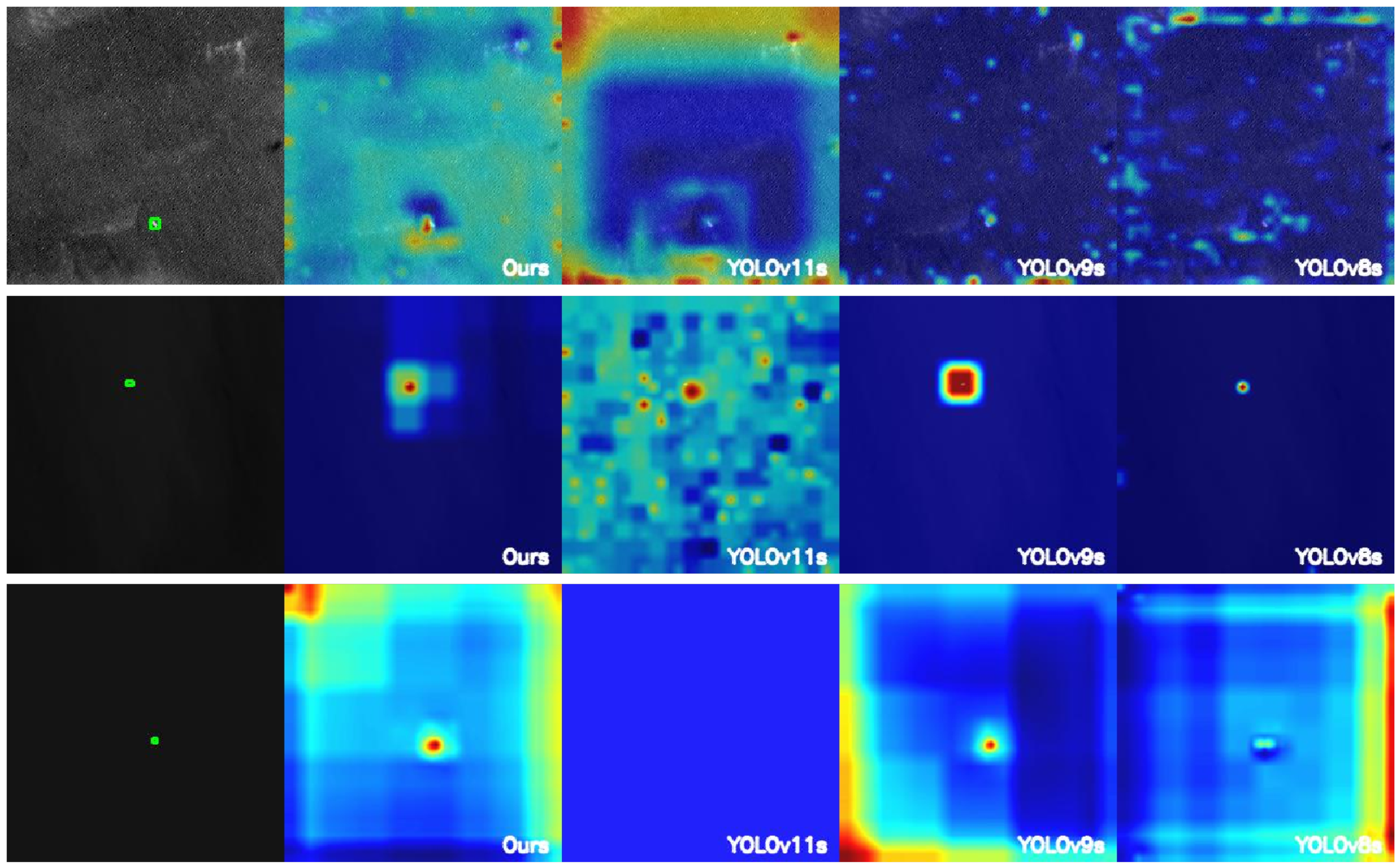
A key concern for deep learning models in defense applications is their “black-box” nature. To examine whether the proposed network captures physically meaningful target characteristics rather than superficial data patterns, we compared the interpretability of our method with several existing approaches using Gradient-weighted Class Activation Mapping (Grad-CAM) on real Maritime-SIRST imagery, as shown in Figure 5.
Figure 5.
Grad-CAM-based interpretability comparison between existing methods and the proposed physics-aware model. In this visualization, red regions correspond to higher model activation (strongest response), whereas blue regions represent lower activation (weakest response).
The resulting heatmaps reveal a clear qualitative difference. Existing data-driven models tend to produce scattered or inaccurately distributed attention: their activation is frequently diffused over bright sea clutter and island coastlines, responding primarily to regions of high intensity rather than to the target itself. Such behavior is consistent with the elevated false alarm rates observed in complex high-dynamic-range scenes.
In contrast, the heatmaps generated by our method are consistently concentrated and precisely centered on the target region, with negligible activation over background distractions. Notably, the activation patterns appear to coincide with regions exhibiting coherent, closed-loop gradient structures akin to those derived from the PSF-coherent gradient framework, and they largely avoid fragmented, asymmetric clutter. While Grad-CAM visualizations cannot provide conclusive proof of internal physical encoding, this observation is consistent with the hypothesis that the network learns to rely on PSF-induced spatial coherence and frequency singularities rather than on isolated high-intensity pixels. These results suggest that the Physics-Aware Deep Coupling Network effectively integrates physical priors with deep learning, yielding robust and more interpretable target localization in real maritime environments.
6. Conclusions and Future Work
In this paper, we addressed the critical physical bottlenecks associated with extreme-distance infrared ship detection by proposing a novel Physics-Aware Deep Coupling Network. We introduced a paradigm shift from the blind, pixel-level data fitting of traditional CNNs—which invariably fail when geometric textures are erased—toward physics-aware attribute recognition. By deconstructing the degraded infrared signal and injecting adaptive radiation energy mapping, a bio-inspired spatial saliency filtering mechanism, and PSF-coherent gradient topologies alongside the raw infrared signal into a unified four-channel physics-aware tensor, our network learned to identify genuine targets based on their intrinsic physical signatures. The integration of a Cross-Domain Attention Module enables deep internal coupling, consistently outperforming standard detectors.
Extensive evaluations on the challenging, real-world Maritime-SIRST dataset were conducted using axis-aligned detection labels derived from the original segmentation masks. Our method consistently surpassed a comprehensive suite of YOLO detectors, achieving a mAP50 of 0.923 and an F1 score of 89.92%. Ablation studies confirmed the distinct contribution of each physical prior, and Grad-CAM visualizations indicated that the network’s attention concentrates on target regions in a manner consistent with PSF-induced spatial coherence, supporting the hypothesis that the model relies on physically meaningful attributes rather than superficial brightness. This yields robust performance against complex marine backgrounds, island coastlines, and severe sun glints.
To transition this technology from laboratory validation to operational deployment, our future research will focus on three primary trajectories:
- 1.
- Model Optimization for Edge Deployment: To reduce the computational overhead of generating physical tensors on resource-constrained airborne or shipborne embedded platforms, we will investigate structured pruning and mixed-precision quantization (FP16, INT8), aiming to minimize model footprint while preserving detection accuracy.
- 2.
- Spatio-Temporal Tracking: The current methodology relies primarily on spatial characteristics. In future work, we will extend the spatial tensor to a spatio-temporal framework by incorporating Recurrent Neural Networks (e.g., LSTMs) or Vision Transformers. This will exploit the continuous motion trajectories of genuine ships relative to the high-frequency random flickering of sea waves, enabling a “Track-Before-Detect” capability to recover targets in ultra-low SCR environments.
- 3.
- Cross-Sensor Domain Adaptation: To address domain shifts when transitioning to novel infrared sensor payloads, we plan to employ Generative Adversarial Networks (GANs) and meta-learning strategies. This will allow the model to adapt physical tensors derived from one sensor type (e.g., SWIR) to the statistical noise and clutter profiles of another (e.g., LWIR), ensuring robust generalization across varied operational hardware.
Author Contributions
Conceptualization, R.W.; Methodology, R.W.; Software, R.W. and Z.Z.; Validation, R.W. and Z.Z.; Formal analysis, Z.W. and Z.Z.; Investigation, Z.W.; Resources, L.G.; Data curation, Z.W.; Writing—original draft, R.W.; Writing—review & editing, Z.W. and L.G.; Visualization, R.W. and Z.Z.; Supervision, L.G.; Project administration, R.W.; Funding acquisition, L.G. All authors have read and agreed to the published version of the manuscript.
Funding
This research received no external funding.
Institutional Review Board Statement
Not applicable.
Informed Consent Statement
Not applicable.
Data Availability Statement
The data presented in this study are not publicly available but can be obtained from the corresponding author upon reasonable request. Interested researchers may contact wangruiqi_bief@126.com to request access to the data.
Conflicts of Interest
The authors declare no conflicts of interest.
Abbreviations
The following abbreviations are used in this manuscript:
| IRST | Infrared Search and Track |
| IRSTD | Infrared Small Target Detection |
| SNR | Signal-to-Noise Ratio |
| SCR | Signal-to-Clutter Ratio |
| PSF | Point Spread Function |
| CDAM | Cross-Domain Attention Module |
| FPN | Feature Pyramid Network |
| YOLO | You Only Look Once |
References
- Bai, X.; Zhou, F. Analysis of New Top-Hat Transformation and the Application for Infrared Dim Small Target Detection. Pattern Recognit. 2010, 43, 2145–2156. [Google Scholar] [CrossRef] [Scilit]
- Han, J.; Liu, S.; Qin, G.; Zhao, Q.; Zhang, H.; Li, N. A Local Contrast Method Combined with Adaptive Background Estimation for Infrared Small Target Detection. IEEE Geosci. Remote Sens. Lett. 2019, 16, 1442–1446. [Google Scholar] [CrossRef] [Scilit]
- Qian, J.; Zhou, H.; Qian, K.; Zhao, D.; Qin, H.; Song, S.; Wu, Z. Infrared Dim Moving Target Tracking via Improved Context Learning. In Proceedings of the Selected Papers of the Chinese Society for Optical Engineering Conferences Held October and November 2016; SPIE: Bellingham, WA, USA, 2017; Volume 10255, pp. 1309–1317. [Google Scholar]
- Wei, Y.; You, X.; Li, H. Multiscale Patch-Based Contrast Measure for Small Infrared Target Detection. Pattern Recognit. 2016, 58, 216–226. [Google Scholar] [CrossRef] [Scilit]
- Chen, Y.; Zhang, G.; Ma, Y.; Kang, J.U.; Kwan, C. Small Infrared Target Detection Based on Fast Adaptive Masking and Scaling with Iterative Segmentation. IEEE Geosci. Remote Sens. Lett. 2021, 19, 7000605. [Google Scholar] [CrossRef] [Scilit]
- Guan, X.; Zhang, L.; Huang, S.; Peng, Z. Infrared Small Target Detection via Non-Convex Tensor Rank Surrogate Joint Local Contrast Energy. Remote Sens. 2020, 12, 1520. [Google Scholar] [CrossRef] [Scilit]
- Kou, R.; Wang, C.; Fu, Q.; Yu, Y.; Zhang, D. Infrared Small Target Detection Based on the Improved Density Peak Global Search and Human Visual Local Contrast Mechanism. IEEE J. Sel. Top. Appl. Earth Obs. Remote Sens. 2022, 15, 6144–6157. [Google Scholar] [CrossRef] [Scilit]
- Long, J.; Shelhamer, E.; Darrell, T. Fully Convolutional Networks for Semantic Segmentation. In Proceedings of the IEEE Conference on Computer Vision and Pattern Recognition; IEEE: New York, NY, USA, 2015; pp. 3431–3440. [Google Scholar]
- Ronneberger, O.; Fischer, P.; Brox, T. U-Net: Convolutional Networks for Biomedical Image Segmentation. In Proceedings of the Medical Image Computing and Computer-Assisted Intervention; Springer: Berlin/Heidelberg, Germany, 2015; pp. 234–241. [Google Scholar]
- Hou, Q.; Zhang, L.; Tan, F.; Xi, Y.; Zheng, H.; Li, N. ISTDU-Net: Infrared Small-Target Detection U-Net. IEEE Geosci. Remote Sens. Lett. 2022, 19, 7506205. [Google Scholar] [CrossRef] [Scilit]
- Wang, H.; Zhou, L.; Wang, L. Miss Detection vs. False Alarm: Adversarial Learning for Small Object Segmentation in Infrared Images. In Proceedings of the IEEE/CVF International Conference on Computer Vision; IEEE: New York, NY, USA, 2019; pp. 8509–8518. [Google Scholar]
- Dai, Y.; Wu, Y.; Zhou, F.; Barnard, K. Asymmetric Contextual Modulation for Infrared Small Target Detection. In Proceedings of the IEEE/CVF Winter Conference on Applications of Computer Vision; IEEE: New York, NY, USA, 2021; pp. 950–959. [Google Scholar]
- Li, B.; Xiao, C.; Wang, L.; Wang, Y.; Lin, Z.; Li, M.; An, W.; Guo, Y. Dense Nested Attention Network for Infrared Small Target Detection. IEEE Trans. Image Process. 2022, 32, 1745–1758. [Google Scholar] [CrossRef] [Scilit] [PubMed]
- Pan, P.; Wang, H.; Wang, C.; Nie, C. ABC: Attention with Bilinear Correlation for Infrared Small Target Detection. In Proceedings of the IEEE International Conference on Multimedia and Expo; IEEE: New York, NY, USA, 2023; pp. 2381–2386. [Google Scholar]
- Zhang, T.; Li, L.; Cao, S.; Pu, T.; Peng, Z. Attention-Guided Pyramid Context Networks for Detecting Infrared Small Target under Complex Background. IEEE Trans. Aerosp. Electron. Syst. 2023, 59, 4250–4261. [Google Scholar] [CrossRef] [Scilit]
- Kou, R.; Wang, C.; Yu, Y.; Peng, Z.; Yang, M.; Huang, F.; Fu, Q. LW-IRSTNet: Lightweight Infrared Small Target Segmentation Network and Application Deployment. IEEE Trans. Geosci. Remote Sens. 2023, 61, 5621313. [Google Scholar] [CrossRef] [Scilit]
- Wu, T.; Li, B.; Luo, Y.; Wang, Y.; Xiao, C.; Liu, T.; Yang, J.; An, W.; Guo, Y. MTU-Net: Multilevel TransUNet for Space-Based Infrared Tiny Ship Detection. IEEE Trans. Geosci. Remote Sens. 2023, 61, 5601015. [Google Scholar] [CrossRef] [Scilit]
- Yuan, S.; Qin, H.; Yan, X.; Akhtar, N.; Mian, A. SCTransNet: Spatial-Channel Cross Transformer Network for Infrared Small Target Detection. IEEE Trans. Geosci. Remote Sens. 2024, 62, 5002615. [Google Scholar] [CrossRef] [Scilit]
- Chen, T.; Tan, Z.; Chu, Q.; Wu, Y.; Liu, B.; Yu, N. TCI-Former: Thermal Conduction-Inspired Transformer for Infrared Small Target Detection. In Proceedings of the AAAI Conference on Artificial Intelligence; AAAI: Washington, DC, USA, 2024; Volume 38, pp. 1201–1209. [Google Scholar] [CrossRef] [Scilit]
- Chen, L.C.; Papandreou, G.; Kokkinos, I.; Murphy, K.; Yuille, A.L. DeepLab: Semantic Image Segmentation with Deep Convolutional Nets, Atrous Convolution, and Fully Connected CRFs. IEEE Trans. Pattern Anal. Mach. Intell. 2018, 40, 834–848. [Google Scholar] [CrossRef] [Scilit] [PubMed]
- Wang, W.; Dai, J.; Chen, Z.; Huang, Z.; Li, Z.; Zhu, X.; Hu, X.; Lu, T.; Lu, L.; Li, H. InternImage: Exploring Large-Scale Vision Foundation Models with Deformable Convolutions. In Proceedings of the IEEE/CVF Conference on Computer Vision and Pattern Recognition; IEEE: New York, NY, USA, 2023; pp. 14408–14419. [Google Scholar]
- Xiong, Y.; Li, Z.; Chen, Y.; Wang, F.; Zhu, X.; Luo, J.; Wang, W.; Lu, T.; Li, H.; Qiao, Y. Efficient Deformable ConvNets: Rethinking Dynamic and Sparse Operator for Vision Applications. arXiv 2024, arXiv:2401.06197. [Google Scholar]
- Guo, F.; Ma, H.; Li, L.; Lv, M.; Jia, Z. FCNet: Flexible Convolution Network for Infrared Small Ship Detection. Remote Sens. 2024, 16, 2218. [Google Scholar] [CrossRef] [Scilit]
- Wu, F.; Zhang, T.; Li, L.; Huang, Y.; Peng, Z. RPCANet: Deep Unfolding RPCA Based Infrared Small Target Detection. In Proceedings of the IEEE/CVF Winter Conference on Applications of Computer Vision; IEEE: New York, NY, USA, 2024; pp. 4809–4818. [Google Scholar] [CrossRef] [Scilit]
- Liu, C.; Song, X.; Yu, D.; Qiu, L.; Xie, F.; Zi, Y.; Shi, Z. Infrared Small Target Detection Based on Prior Guided Dense Nested Network. IEEE Trans. Geosci. Remote Sens. 2025, 63, 42232. [Google Scholar] [CrossRef] [Scilit]
- Lu, Y.; Liu, P.; Zhang, T.; Li, A.; Zhou, Q. Physics-Driven Feature Decoupling for Infrared Small Targets: A Dual Geometry-Guided Experts Network. Knowl.-Based Syst. 2026, 336, 115268. [Google Scholar] [CrossRef] [Scilit]
- Tong, Y.; Yang, H.; Liu, G.; Wang, Z. Energy Diffusion Prior for Infrared Small Target Detection: Build Representations for Objects Instead of Scenarios. Expert Syst. Appl. 2026, 324, 132503. [Google Scholar] [CrossRef] [Scilit]
- Wang, N.; Li, B.; Wei, X.; Wang, Y.; Yan, H. Ship Detection in Spaceborne Infrared Image Based on Lightweight CNN and Multisource Feature Cascade Decision. IEEE Trans. Geosci. Remote Sens. 2020, 59, 4324–4339. [Google Scholar] [CrossRef] [Scilit]
- Li, L.; Jiang, L.; Zhang, J.; Wang, S.; Chen, F. A Complete YOLO-Based Ship Detection Method for Thermal Infrared Remote Sensing Images under Complex Backgrounds. Remote Sens. 2022, 14, 1534. [Google Scholar] [CrossRef] [Scilit]
- Zhang, W.; Wu, Q.M.J.; Yang, Y.; Akilan, T.; Zhao, W.G.W.; Li, Q.; Niu, J. Fast Ship Detection with Spatial-Frequency Analysis and ANOVA-Based Feature Fusion. IEEE Geosci. Remote Sens. Lett. 2021, 19, 3506305. [Google Scholar] [CrossRef] [Scilit]
- Li, Y.; Xu, Q.; He, Z.; Li, W. Progressive Task-Based Universal Network for Raw Infrared Remote Sensing Imagery Ship Detection. IEEE Trans. Geosci. Remote Sens. 2023, 61, 5610013. [Google Scholar] [CrossRef] [Scilit]
- Han, Y.; Liao, J.; Lu, T.; Pu, T.; Peng, Z. KCPNet: Knowledge-Driven Context Perception Networks for Ship Detection in Infrared Imagery. IEEE Trans. Geosci. Remote Sens. 2022, 61, 5000219. [Google Scholar] [CrossRef] [Scilit]
- Li, Y.; Li, Z.; Zhang, C.; Luo, Z.; Zhu, Y.; Ding, Z.; Qin, T. Infrared Maritime Dim Small Target Detection Based on Spatiotemporal Cues and Directional Morphological Filtering. Infrared Phys. Technol. 2021, 115, 103657. [Google Scholar] [CrossRef] [Scilit]
- Yang, P.; Dong, L.; Xu, W. Infrared Small Maritime Target Detection Based on Integrated Target Saliency Measure. IEEE J. Sel. Top. Appl. Earth Obs. Remote Sens. 2021, 14, 2369–2386. [Google Scholar] [CrossRef] [Scilit]
- Zhang, M.; Zhang, R.; Yang, Y.; Bai, H.; Zhang, J.; Guo, J. ISNet: Shape Matters for Infrared Small Target Detection. In Proceedings of the IEEE/CVF Conference on Computer Vision and Pattern Recognition; IEEE: New York, NY, USA, 2022; pp. 877–886. [Google Scholar]
- Liu, Z.; Dong, L.; Li, C.; Gao, Y. Maritime Infrared Dim and Small Targets Detection via Multi-Scale Enhancement Network and Semi-Ellipsoid Loss. Infrared Phys. Technol. 2026, 155, 106527. [Google Scholar] [CrossRef] [Scilit]

Disclaimer/Publisher’s Note: The statements, opinions and data contained in all publications are solely those of the individual author(s) and contributor(s) and not of MDPI and/or the editor(s). MDPI and/or the editor(s) disclaim responsibility for any injury to people or property resulting from any ideas, methods, instructions or products referred to in the content. |
© 2026 by the authors. Licensee MDPI, Basel, Switzerland. This article is an open access article distributed under the terms and conditions of the Creative Commons Attribution (CC BY) license.