


Abstract
NiTi Shape Memory Alloys (SMAs) display notable thermomechanical properties such as superelasticity and the elastocaloric effect, which makes them of interest for emerging solid-state cooling and thermal management applications. It is recognized that a considerable amount of work has been recently conducted to improve the understanding of the uniaxial tensile and compressive response of Ni-Ti SMAs; however, there has been limited work on the response to bending, which is an important operational mode in the practical designs of devices. This work consists of an experimental study of the thermomechanical response of Ni-Ti cantilever beams to cyclic bending. Nitinol samples (100 mm × 20 mm × 1 mm) were shape-set at 550 °C for 30 min and tested at 1800 rpm. The sample surface temperature change was monitored with infrared thermography data and analyzed with the Profile Mono Segment and Area Rectangle methods. The findings show that there was a measurable elastocaloric temperature change of approximately 4–5 °C, and temperature change increased by 21–25% as bending deflection increased from 31 mm to 33 mm. This was further shown to be nonlinear with the applied strain amplitude, reinforcing the strong coupling between mechanical and thermal response. The results demonstrate that Ni-Ti cantilever beams have significant potential for compact, sustainable solid-state cooling and energy storage applications, with thermal energy transfer strongly dependent on strain and energy transfer optimization.
1. Introduction
Demand for cooling technology that is both energy-efficient and environmentally sustainable is rising rapidly due to the combination of climate targets and the need to reduce the environmental impact of conventional vapor compression refrigeration systems that depend on greenhouse refrigerants. A promising alternative for cooling technology has been brought to the forefront of research and development, namely solid-state caloric cooling, including elastocaloric devices. A growing number of articles on elastocaloric cooling have provided a strong basis for its attractiveness due to its high efficiency and minimal environmental impact compared to traditional technologies. Furthermore, elastocaloric cooling offers the capability of significantly larger reversible temperature changes (and thus, greater cooling capacity) than traditional refrigerants [1,2,3,4].
The elastocaloric response of SMAs occurs when an external force is applied to the material. As a result of applying a stress, the SMA will undergo a reversible phase change from martensite (low temperature phase) to austenite (ambient-temperature phase). When the stress is removed from an SMA, it will return to the martensitic form, and heat will be absorbed by this process [5]. In addition to the heat released during the austenitic to martensitic transformation, additional cooling may also occur through normal heat conduction. Because of these characteristics, SMAs are very appealing for use as self-centering seismic devices [6], compact solid-state refrigerators, and other thermal-management applications where large transformation heats and a high degree of cyclic durability are essential [7].
Research on Ni-Ti elastocaloric materials and devices has made significant progress in some key areas, including material optimization, actuator development, device fabrication, and experimental testing aimed at characterizing and diagnosing the elastocaloric performance of manufactured products [8,9,10]. In particular, research on materials includes efforts to improve alloy composition, heat treatment techniques and microstructure characteristics to increase transformation entropies and enhance the fatigue life of alloys [11,12,13,14]. It has also included the use of machine-learning methods to expedite the design of alloys with improved elastocaloric performance [15,16].
Simultaneously, device-level investigations have focused on low-force actuators for compressing and tensioning elastocalorically operated heat pumps and developing continuously rotating–bending mechanisms that produce practical elastocaloric heat pump products. The emphasis in device-level research is on large-scale heat-exchange integration and improving actuator efficiency for actual heat pump applications [17]. Using experiment-based techniques such as synchronized mechanical measurements and infrared thermography, researchers have mapped the spatial and temporal responses of elastocaloric materials, allowing for greater insight into the local transformation zones and limitations to heat transfer [18].
Though there have been many advances in elastocaloric materials, there continue to be significant gaps in the understanding of elastocaloric behavior, which limit the ability to convert laboratory results into real-world, reliable elastocaloric devices and systems. The primary reason these gaps remain is that most of the characterization of elastocaloric properties has been performed using uniaxial tension and compression. Compared with these uniaxial loading methods, bending as a method of deformation has received comparatively little attention, although bending represents an important mode of deformation for beams, cantilevers and other types of arrays used in compact elastocaloric devices. As a result of the way bending occurs, the tensile and compressive portions of the sample experience simultaneous deformation, and very high and low stress levels can occur within a given region, causing different transformation reactions to occur at different rates and temperatures; therefore, the transformation rate and temperature profile (spatial distribution) would differ between uniaxial load and bending tests [19]. Additionally, while a number of rotating bending studies have found positive results for , showing reasonable levels of operation and highly variable results, there is still very little data available on how the amplitude of the strain, as well as the effect of local restraints (i.e., clamps acting as heat sinks), will influence the distribution of , and the associated repeatability of the range of over cycles [20]. Lastly, the effect of functional fatigue (the continual loss of recoverable transformation and subsequently due to long-term cycling) continues to be a concern for practical applications and is also a significant concern due to the need for both thermomechanical and microstructural studies to provide extension limits and recovery mitigation [21].
Motivated by these gaps, the current work aims at investigating the elastocaloric and thermomechanical properties of Ni-Ti cantilevers undergoing cyclic bending, with a focus on spatial temperature mapping and the effect of small changes in deflection amplitude. In this study, four continuous cyclic bending experiments on Ni-Ti SMA were conducted, during which the surface temperature was measured using mid-wavelength infrared thermography. The temperature data were evaluated using two analysis techniques, Profile Mono Segment and Area Rectangle, to quantify the location of the maximum through the thickness gradients and the mean temperature values over the area. These test methods allowed us to determine (i) the dependence of temperature on bending deflection, (ii) the location of elastocaloric heating relative to the stress and cooling patterns, and (iii) the reproducibility of the elastocaloric output in the short term.
By focusing on bending and applying high-resolution thermographic diagnostics, this study addresses a significant experimental gap and provides guidance for the design of solid-state cooling and thermal energy storage systems using Ni-Ti alloys. However, most previous studies on bending-based elastocaloric systems have mainly focused on the development and performance evaluation of cooling devices using continuous rotating bending configurations of NiTi sheets. For example, Cheng et al. [20] conducted recent research demonstrating that the elastocaloric cooling capacity of NiTi sheets produces a 8–10 difference in temperature between the hot and cold sides when utilizing continuous rotationally bent elastocaloric cooling. While there is some prior research investigating elastocaloric behavior under cantilever bending conditions, it has not characterized the elastocaloric behavior of NiTi shape memory alloys or investigated the impact of different bending deflections on the evolution of elastocaloric temperature.
The purpose of this paper is to present new experimental results demonstrating the elastocaloric response of NiTi shape memory alloys under cyclic cantilever bending while also reporting the temperature evolution and distribution using an infrared thermograph.
The principal scientific contributions of this research are identified as follows:
- Investigation of the thermomechanical characterization of NiTi cantilever beams under cyclic bending.
- Utilization of infrared thermography to analyze the spatial distribution of temperature along the cantilever beam.
- Experimental investigation of the influence of the deflection of a cantilever beam’s bending on the elastocaloric response of NiTi shape memory alloy.
2. Experimental Setup
2.1. Material and Shape Setting
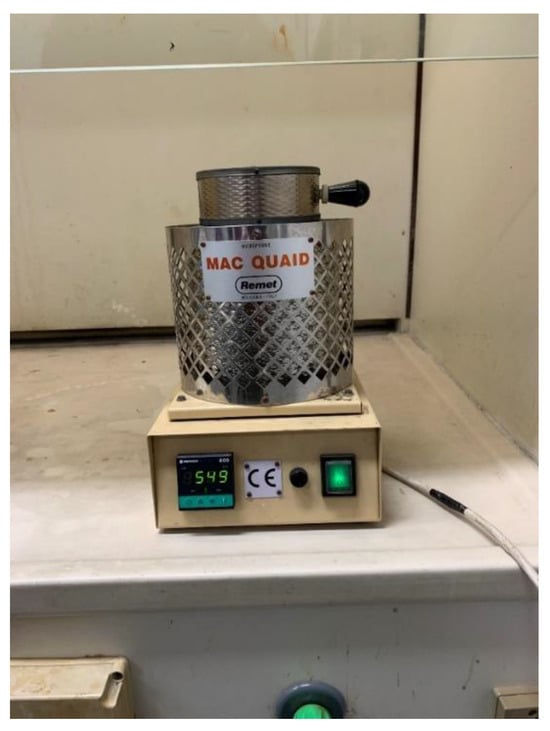
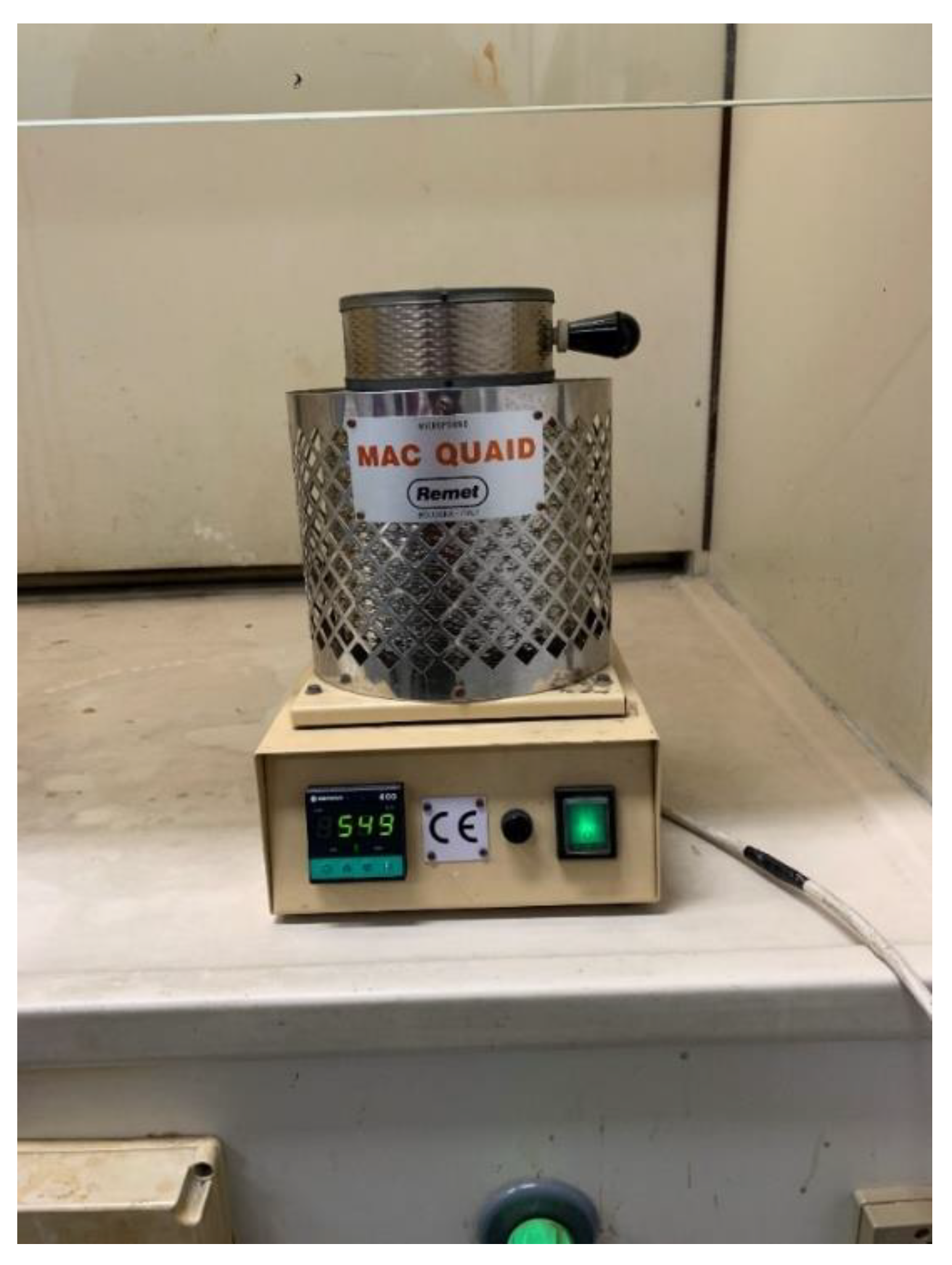
The material utilized in this research was a commercial Ni-Ti sheet with dimensions of 100 mm × 20 mm × 1 mm. The investigated material is a commercially available superelastic Ni-Ti sheet with a nominal chemical composition of approximately Ni50.8Ti49.2 (at.%), supplied by Nexmetal (Sheridan, WY, USA). To mitigate residual stresses and achieve uniform transformation behavior, specimens were shape-set in the laboratory furnace for 30 min at 550 °C, as shown in Figure 1, followed by air cooling. An electric furnace was used, specifically designed with a digital temperature control and monitoring system. During this treatment period, the internal lattice defects introduced during manufacturing, such as increased dislocation density, cold-work strain and local inhomogeneities, were significantly mitigated. Ultimately, this provided an optimized superelastic response, reduced hardness, and uniform bending deformation.
Figure 1.
Electric furnace with digital temperature control used for the shape setting of Ni-Ti SMA.
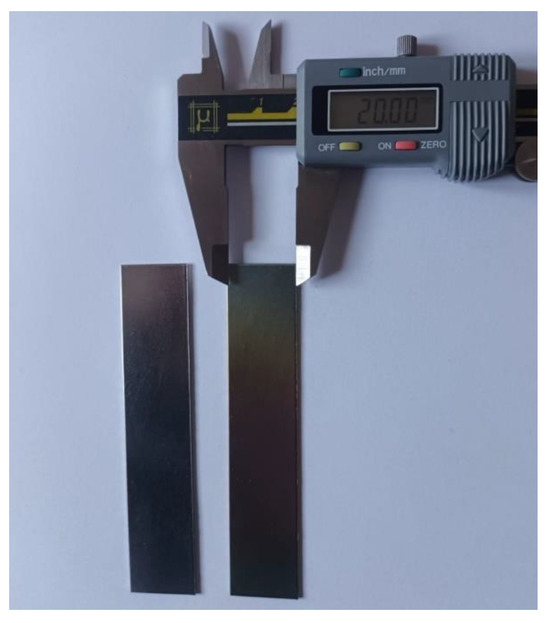
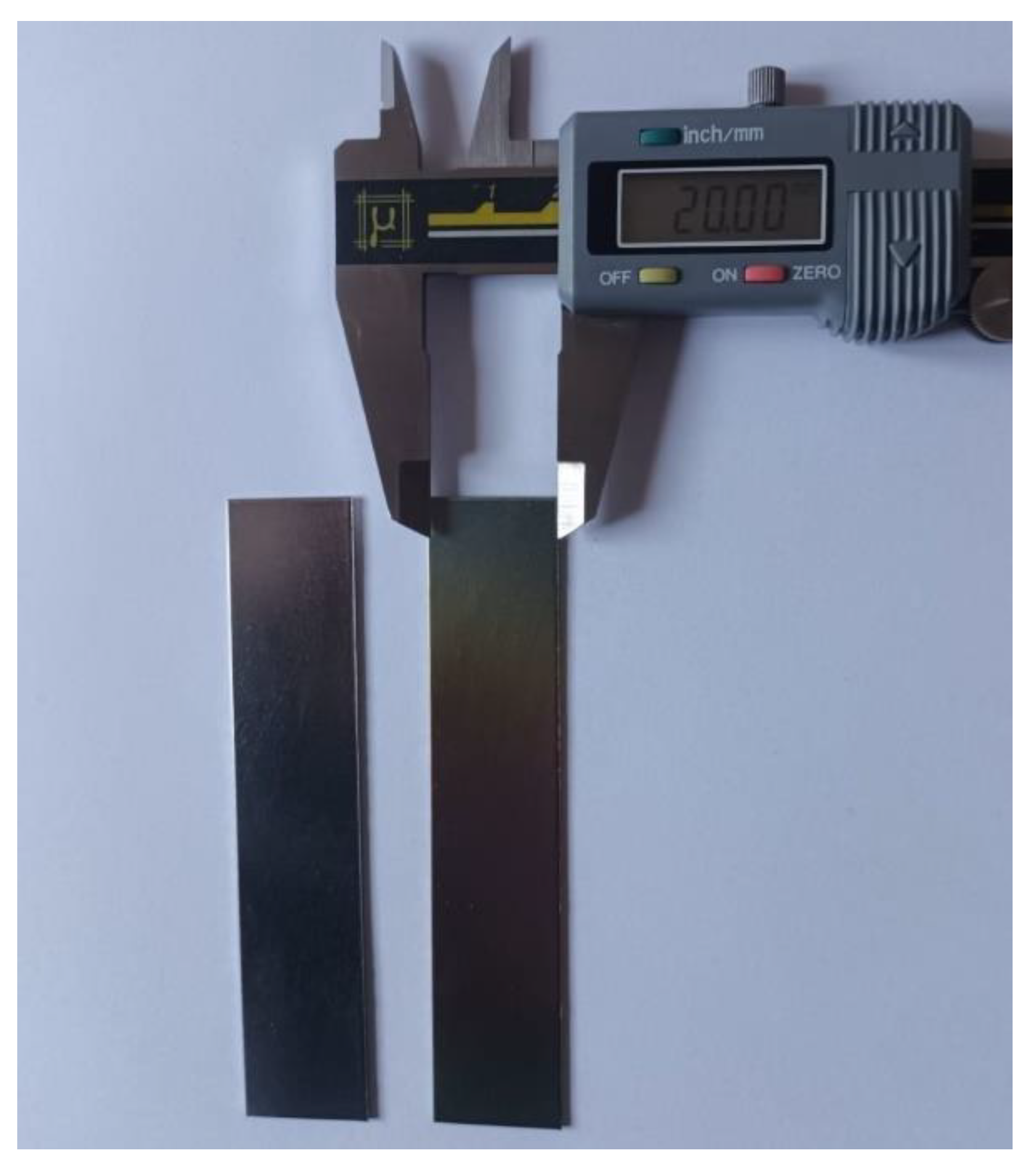
A picture of the SMA sheet before and after heat treatment is presented in Figure 2.
Figure 2.
Ni-Ti SMA before (left image) and after (right image) shape setting heat treatment.
2.2. Test Configurations
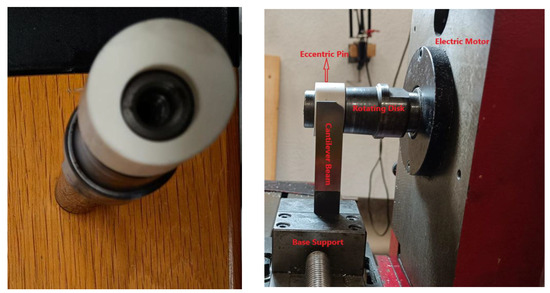
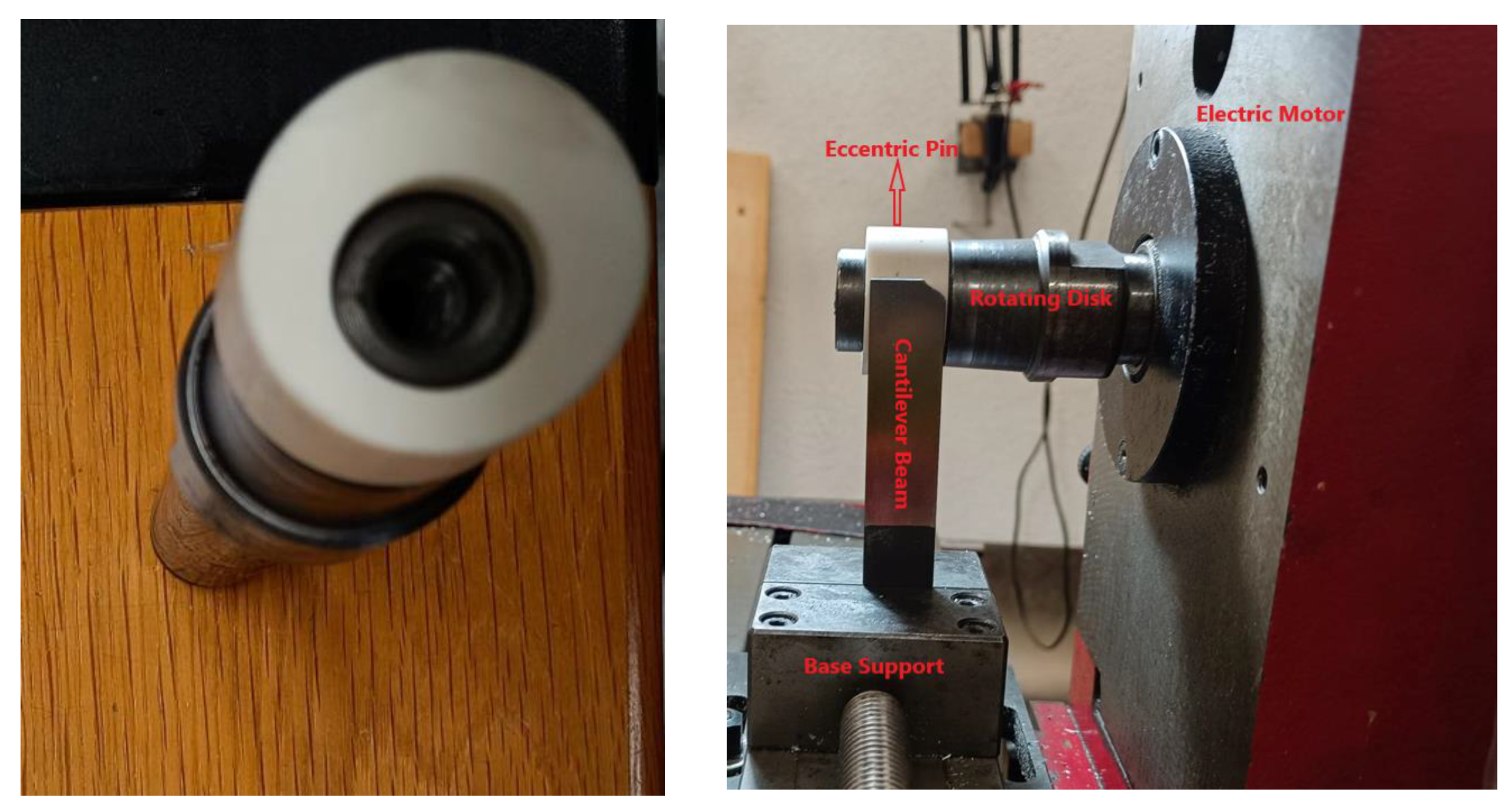
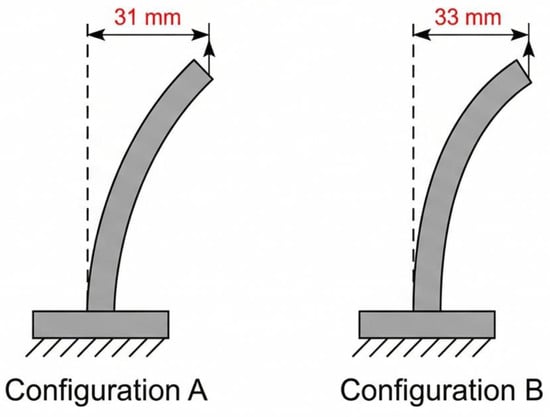
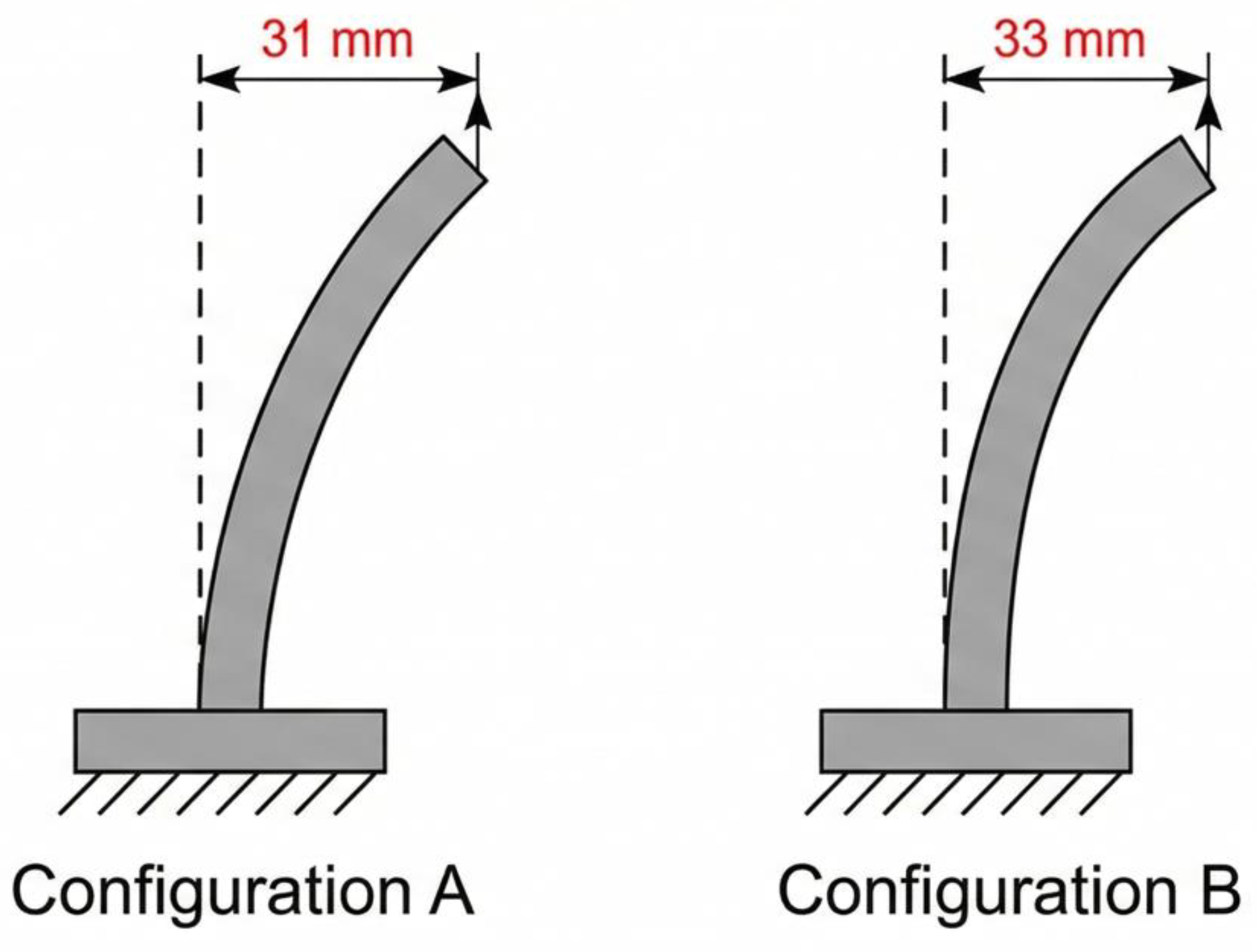
Experiments were conducted utilizing a cyclic bending system rotating at 1800 rpm, which was specifically created in the laboratory. Images of some components of this system are shown in Figure 3. One end of the Ni-Ti beam was held in place (cantilever configuration), while the other end was connected to an eccentric pin (28 mm radius). The working length of the beam was 52 mm, providing a well-defined deflection range. Two different deflection amplitudes, 31 mm and 33 mm (Figure 4), were employed to assess the effect of strain amplitude on the elastocaloric temperature change.
Figure 3.
Cyclic bending setup for Ni-Ti SMA cantilever beam experiments.
Figure 4.
Schematic representation of the two bending configurations.
The maximum bending strain induced during the cyclic bending tests was estimated using the classical cantilever beam relationship. Considering the specimen thickness of 1 mm and the free beam length of 52 mm, the imposed deflections of 31 mm and 33 mm correspond to maximum surface strains of approximately 1.72% and 1.83%, respectively.
Furthermore, assuming an elastic modulus of approximately 60 GPa for superelastic NiTi in the austenitic phase, the calculated maximum surface stresses were approximately 1.03 GPa and 1.10 GPa for the deflections of 31 mm and 33 mm, respectively.
2.3. Temperature Measurement and Data Acquisition
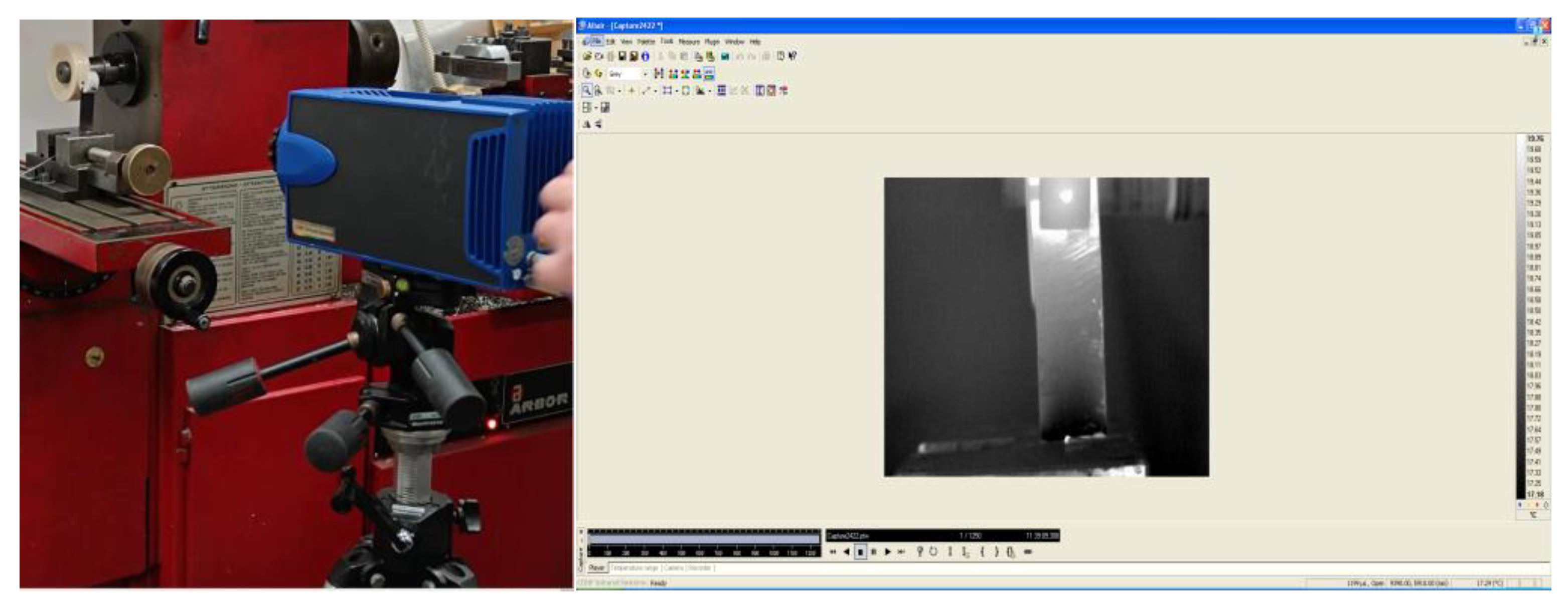
The evolution of surface temperature was monitored using an infrared (IR) thermography camera (Cedip Infrared Camera, Croissy-Beaubourg, France), oriented perpendicular to the beam. Data were recorded and analyzed using Altair software release 5.50to monitor both the spatial and temporal temperature fields (Figure 5).
Figure 5.
Infrared thermography camera (left image) and Altair Software (right image).
In this study, Altair software played a crucial role in managing the large datasets generated by the thermal camera, ensuring accurate temperature extraction and meaningful interpretation of the results.
Altair software facilitated precise calibration of thermal images to ensure accurate temperature readings. Since infrared data can be affected by emissivity variations and environmental factors, the software allowed for corrections based on predefined emissivity values. In this experiment, a graphitization process was applied to the SMA surface, increasing its emissivity to approximately 0.97 to minimize stray contributions arising from infrared radiation reflection. Altair enabled these emissivity corrections, resulting in more reliable temperature measurements.
To ensure that the experimental measurements accurately reflect real system conditions, the configuration parameters of the radiometric data and detector are presented in Table 1.
Table 1.
Configuration parameters of the thermal camera.
The accuracy of the thermographic temperature measurements was evaluated based on the manufacturer specifications of the infrared camera and the experimental conditions of the study. According to the manufacturer, the temperature accuracy of the thermal camera is generally ±2 °C or ±2% of the measured value. The Ni-Ti sample’s emissivity (approximately 0.97) produces a uniform and high amount of measurement uncertainty due to reflection and other sources of measurement variability. The emissivity value of 0.97 is reported in most infrared thermographic studies of graphite-coated metallic surfaces, and therefore was adopted for measuring the temperature of the Ni-Ti specimen.
Repeatability tests were performed under the same experimental conditions. Measurements were made with the same instrumentation on each test, and when compared to each other show an approximate difference of 0.8 °C from the peak measurement of the same sample taken in each test. The magnitude of this difference is minor compared to the magnitude of the measured elastocaloric temperature change of approximately 4–5 °C, thereby demonstrating that any changes in measured temperature are well above experimental uncertainty.
3. Results and Discussions
3.1. Overview of Experiments and Data Analysis Methods
To assess the thermomechanical response of the SMA sheet during cyclic bending, two distinct configurations were analyzed in the experiments: one with a preload corresponding to a deflection of 6 mm, which produces a total deflection of 31 mm; and the other with a deflection of 8 mm, yielding a total deflection of 33 mm. Within each preload, the experimentation run lasted 30 s at a maximum rotation rate of 1800 RPM. Four cyclic bending tests were done on the Ni-Ti cantilever specimen: Tests 1 and 2 (configuration A, free-end deflection of 31 mm) and Tests 3 and 4 (configuration B, 33 mm deflection). In each of the tests, thermal data was analyzed using two complementary methods.
The Profile Mono Segment was used to obtain temperature along the length of the sample. As the SMA sheet exhibited non-uniform heating while deflecting, the tool aided in observing defined regions of temperature variation. This study aimed at investigating specific temperature profiles along the borders and the middle line. The Area Rectangle tool was deployed to get the average temperature of an area defined by equal rectangles. This differs from the Profile Mono Segment because it examines an area or section by using average temperature over that area, rather than just a single line or point over a period of time. This method is expected to be useful in examining the distribution of heat in areas of interest while also providing insight on how and when average temperature is stabilized or trending up over time. Also, by examining the Area Rectangle, information relating to opposing ends of the sample can also be obtained, enabling comparisons between the fixed and free ends of the sample. Essentially, the Area Rectangle is expected to provide detailed information on how heat propagates across the SMA surface and can therefore be used to validate the temperature evolution obtained with the first method. If similar values are obtained with both methods, then the resulting measures can be regarded as reliable.
In the following section, each performed test will be described in detail, and then a comparative analysis with a deeper discussion of mechanisms, repeatability, and implications for elastocaloric device design will be presented.
3.2. Test 1 (δ = 31 mm)—Detailed Observations
Profile Mono Segment results Test 1:
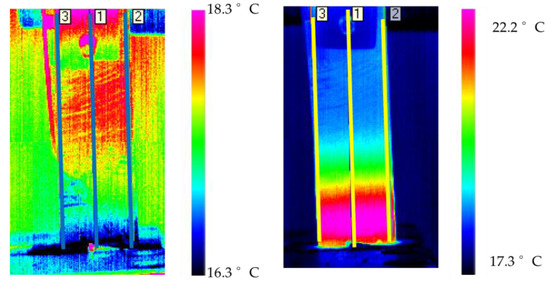
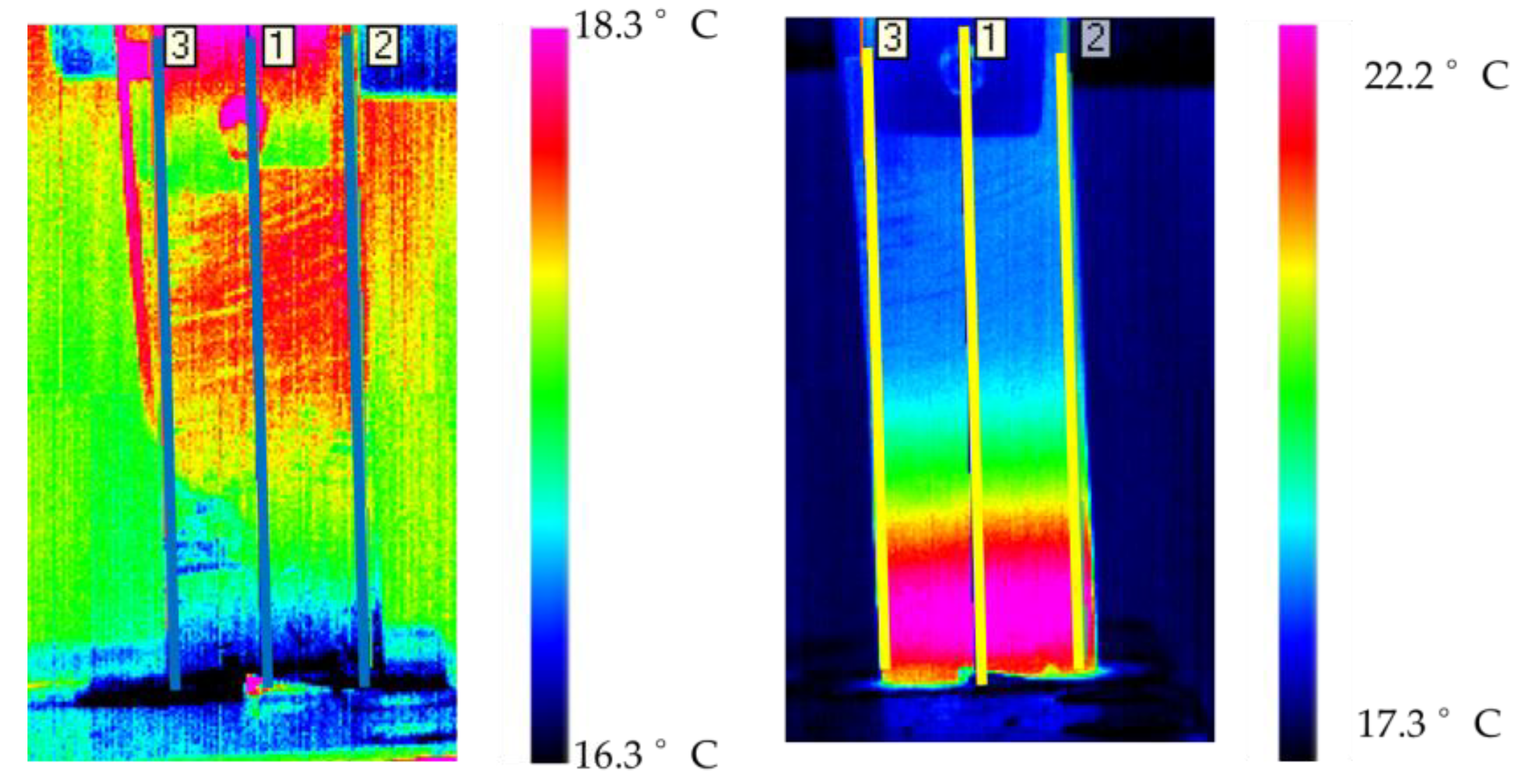
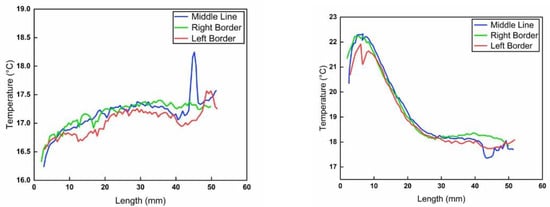
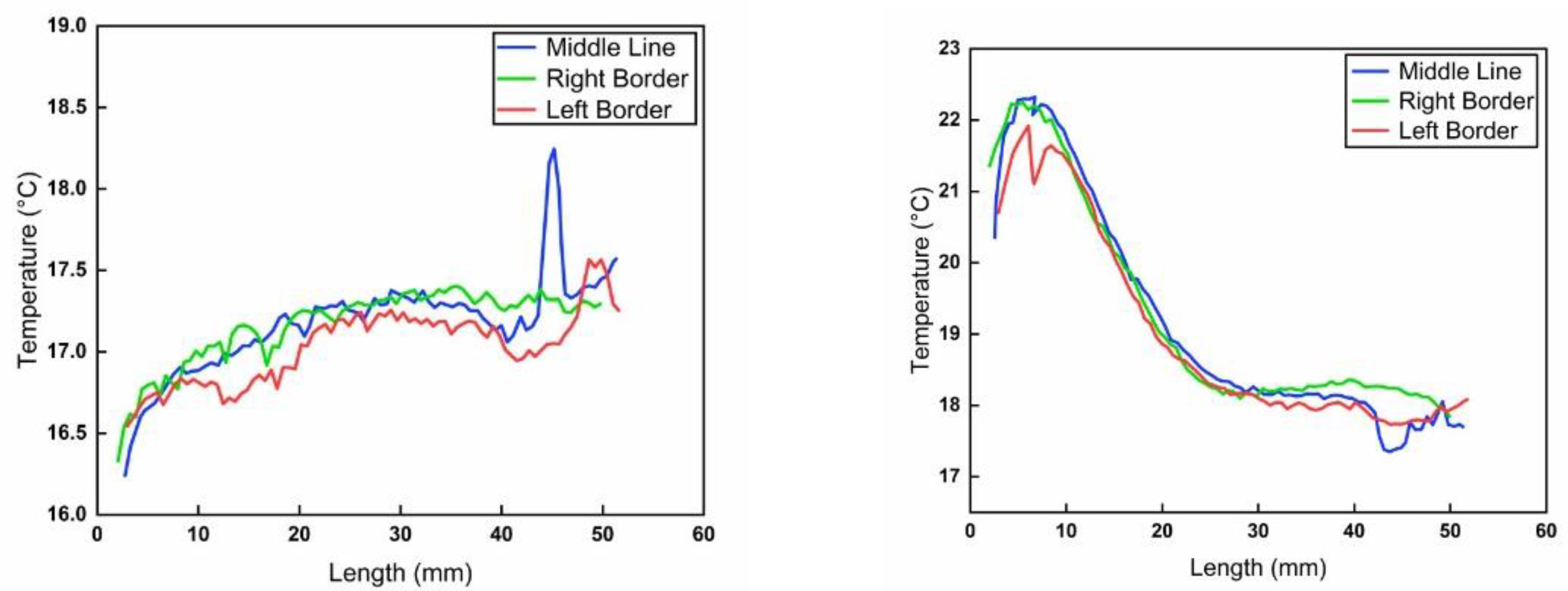
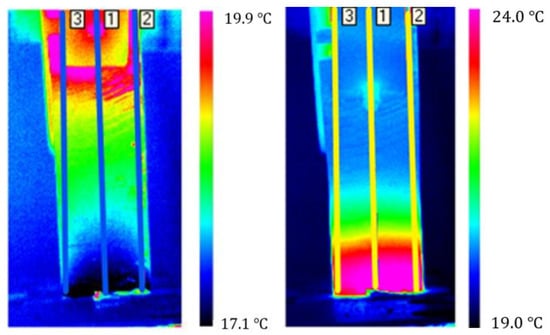
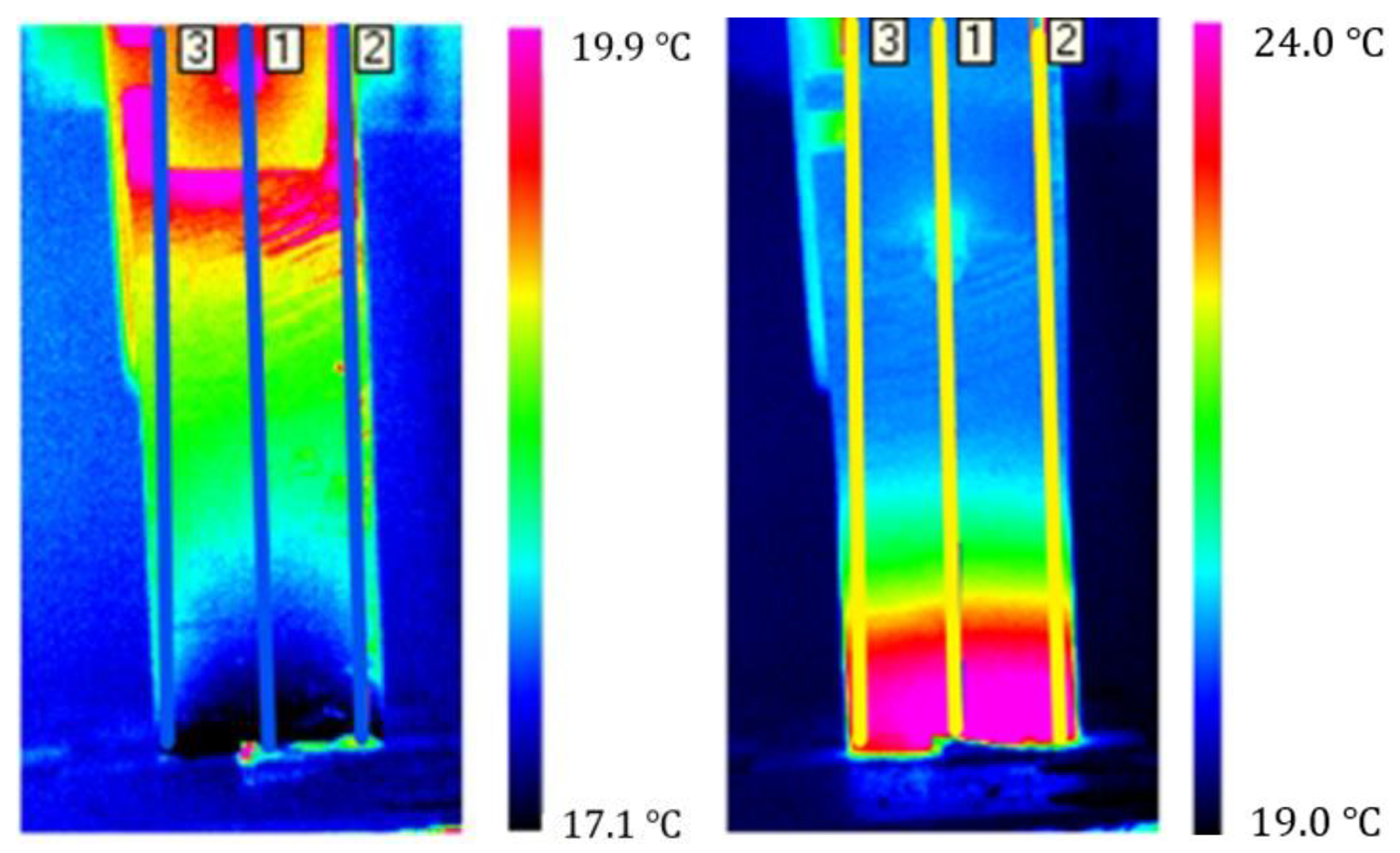
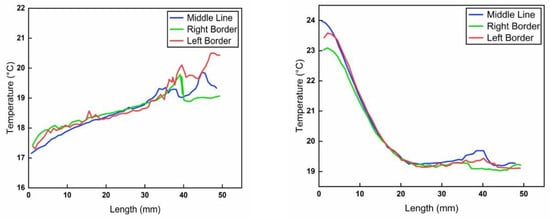
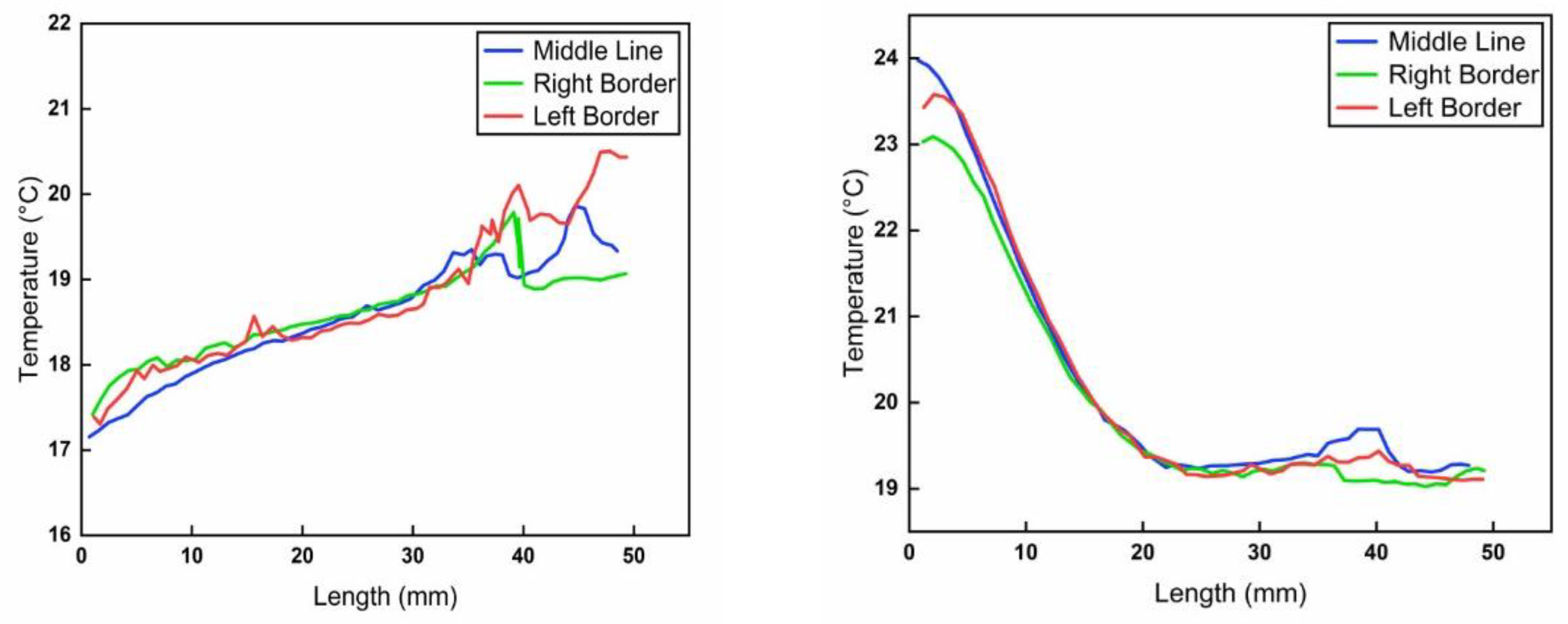
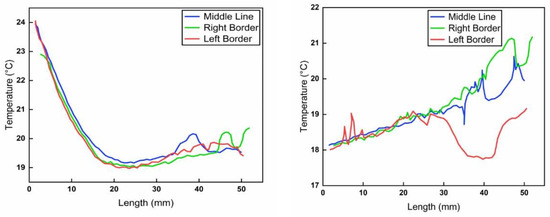
Figure 6 shows the Mono Segment tool used at the left border, middle line, and right border. Moreover, temperature evolution of the SMA sheet at t = 0, t = 30 s and at three vertical lines are depicted in Figure 7. Labels 1, 2, and 3 are related to the middle line, right and left lines, respectively.
Figure 6.
Thermal image of Test 1 at t = 0 (left) and t = 30 s (right). Lines 1, 2, and 3 refer respectively to the middle line, the right border, and the left border of the sheet.
Figure 7.
Temperature evolution of Test 1 at t = 0 s (left image) and at t = 30 s (right image).
At the beginning (t = 0), the temperature along the three vertical lines (left border, center, and right border) was almost uniform, with minor variation of around ~1 °C. This uniform pre-test field represents the original condition prior to elastocaloric heating. After 30 s of cyclic bending, the profiles changed considerably. The representative values taken at t = 30 s are as follows:
- Middle profile: Tmax ≈ 23.17 °C, Tmin ≈ 17.35 °C, Tmean ≈ 19.17 °C.
- Right profile: Tmax ≈ 22.32 °C, Tmin ≈ 17.68 °C, Tmean ≈ 19.30 °C.
- Left profile: Tmax ≈ 21.99 °C, Tmin ≈ 17.68 °C, Tmean ≈ 18.99 °C.
These traces illustrate that the center line reaches the highest peak temperature, and that the left trace is slightly lower overall. The profiles show the same general shape (a peak near the location of the clamped region, then trailing off toward the free end), but with small left and right asymmetries that we assigned to slight non-idealities in the experiment (e.g., very slight misalignment, slightly different boundary contact, potential local emissivity, etc.).
Area Rectangle results:
Based on this method, dividing the surface into regions provides another point of view. At the area means were as follows:
- Bottom area (clamp region) = 16.48 °C (range 16.12–16.73 °C).
- Top area (free end) = 17.48 °C (range 17.10–17.76 °C).
- Intermediate areas (top to bottom) = 17.15 °C (range 16.86–17.27 °C).
At t = 30 s, the area means become
- Bottom area = 21.11 °C (range 17.76–21.96 °C).
- Top area = 17.78 °C (range 17.08–18.38 °C).
- Intermediate areas (top to bottom): 19.2 °C (range 17.71–21.95 °C).
The area averages show a clear through-length gradient that intensifies with cyclic loading: the bottom (clamped) area underwent notable warming, while the free end remained somewhat close to ambient temperature. The mean of the bottom area, compared to its value at zero load, increased by ≈4.6 °C (16.48–21.11 °C), while the mean in the top area increased only modestly by ≈0.30 °C. In addition, the intermediate areas gradually increased from top to bottom, indicating that heating was largely localized spatially closer to the clamped/loading end. Finally, the higher peak temperature in the center line suggests the maximum fraction of martensitic transformation (and associated latent heat release) was spatially localized near the mid-span/clamp end of the beam.
3.3. Test 2 (δ = 31 mm)—Repeatability Check
Test 2 was carried out using the same protocol as Test 1 to evaluate the repeatability of the experiment. The results both qualitatively and quantitatively validate those of Test 1.
Profile Mono Segment results Test 2:
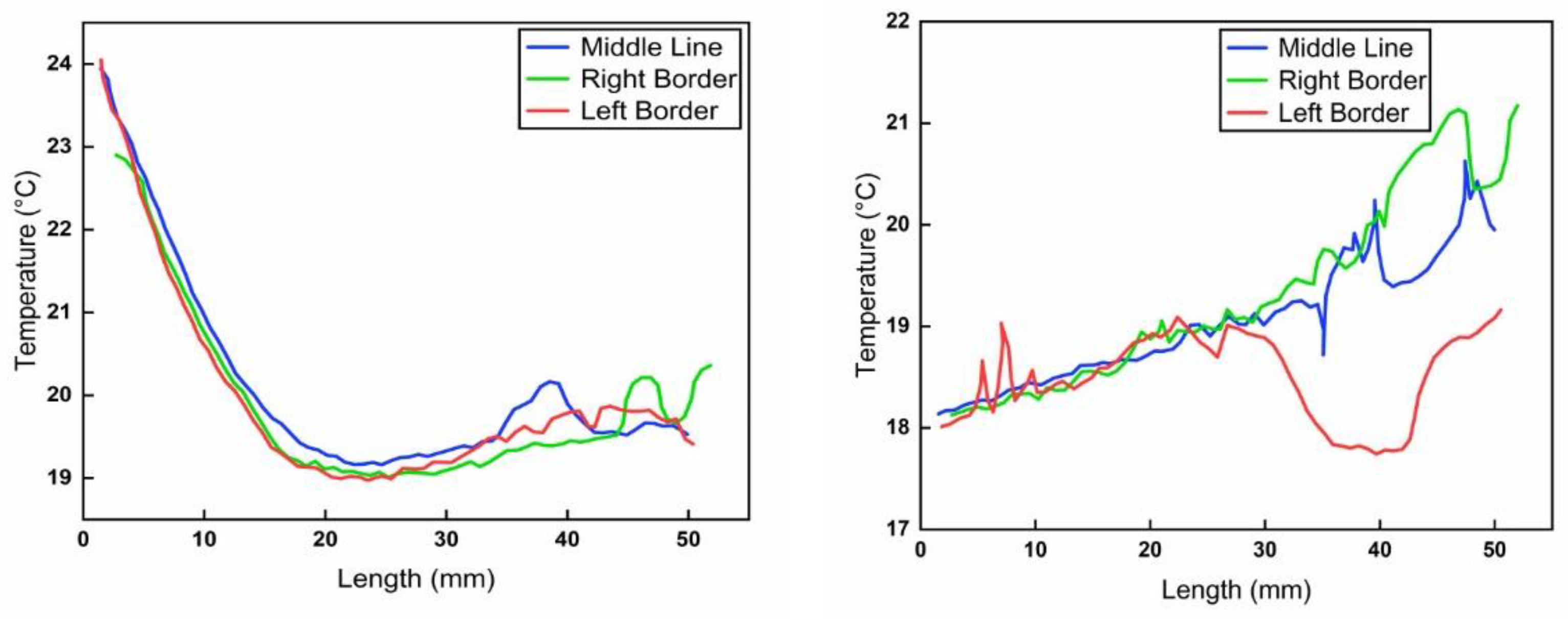
Similarly, at t = 0 the sheet had nearly uniform temperature (differences were less than 1 °C) across regions of the sheet. After 30 s, the temperature differences increased to the levels found in Test 1. For many regions the maximum minus the minimum across the sheet approached 4 °C, and a relatively large transient warming occurred in the clamped bottom region (Figure 8).
Figure 8.
Temperature evolution of Test 2 at t = 0 s (left image) and at t = 30 s (right image).
Area Rectangle results:
- t = 0: Bottom area mean = 16.79 °C (range 16.20–17.85 °C); top area mean = 17.55 °C (range 17.25–18.31 °C).
- t = 30: Bottom area mean = 21.57 °C (range 19.32–21.96 °C); top area mean = 17.98 °C (range 17.64–18.41 °C).
The close agreement between Tests 1 and 2 with respect to both spatial pattern and temperature magnitude (bottom mean ≈ 21.1–21.6 °C after 30 s) suggests substantially similar experimental repeatability for the δ = 31 mm configuration. The one intermediate zone that showed a relatively large temperature excursion likely occurred due to local transient or optical artifacts (e.g., reflection, emissivity local change) rather than indicating a systematic effect because it did not appear to sustain across the other test.
Small local differences between the temperature profiles of Tests 1 and 2 can be observed, particularly around the approximately 50 mm of beam length. These local differences mainly arose because of small variations between the contact conditions at the beam and eccentric pin, slight misalignments in the setup, and local heat transfer effects. Nevertheless, the overall temperature evolution and peak temperature levels remained comparable, confirming the repeatability of the thermomechanical response.
3.4. Test 3 (δ = 33 mm)—Increased Deflection
Test 3 followed the same workflow and showed a larger thermal response compared to Tests 1 and 2. The temperature evolution in this new configuration is shown in Figure 9.
Figure 9.
Thermal image of Test 3 at t = 0 (left) and t = 30 s (right). Lines 1, 2 and 3 refer respectively to the middle line, the right border and the left border of the sheet.
Profile Mono Segment results Test 3:
At t = 0, there was a slightly larger pre-test spread in the middle line (middle line range of 17.10–19.90 °C; mean ≈ 18.53 °C), most likely a result of a minor difference in ambient or local setup conditions at the time this test was conducted. The spread across the center line reveals an approximately 4.85 °C temperature fluctuation, denoting a relatively greater elastocaloric response than what occurred in the δ = 31 mm tests. This temperature evolution is shown in Figure 10 for the start and end of loading.
Figure 10.
Temperature evolution of Test 3 at t = 0 s (left image) and at t = 30 s (right image).
Area Rectangle results:
- t = 0: Bottom mean = 17.19 °C (range of 16.35–19.36 °C); top mean = 19.45 °C (range of 18.40–21.03 °C); intermediate means (top to bottom) 19.28, 19.17, 18.56, 18.24, 17.70 °C.
- t = 30: Area results show pronounced bottom heating; bottom peak ≈ 24.07 °C; intermediate areas rise from ≈20.52 °C to ≈24.02 °C (top to bottom; this trend compares to earlier tests, indicating stronger heating toward the bottom).
Increasing the free-end deflection to 33 mm heightened the peak temperatures and spatial area of heating. The bottom area reached around ~24 °C (≈3–4 °C higher than the corresponding bottom means in Tests 1 and 2), and the intermediate regions again showed higher means than the δ = 31 mm case. This is consistent with a larger transformed volume fraction (more of the beam undergoing stress-induced martensitic transformation), and/or higher local stresses that enhance the latent heat release.
3.5. Test 4 (δ = 33 mm)—Repeatability for Higher Deflection
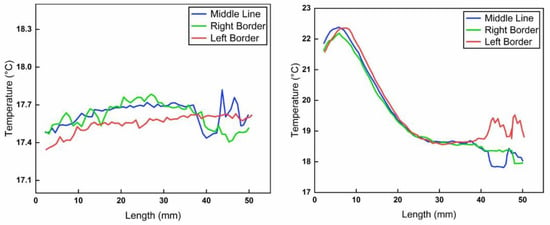
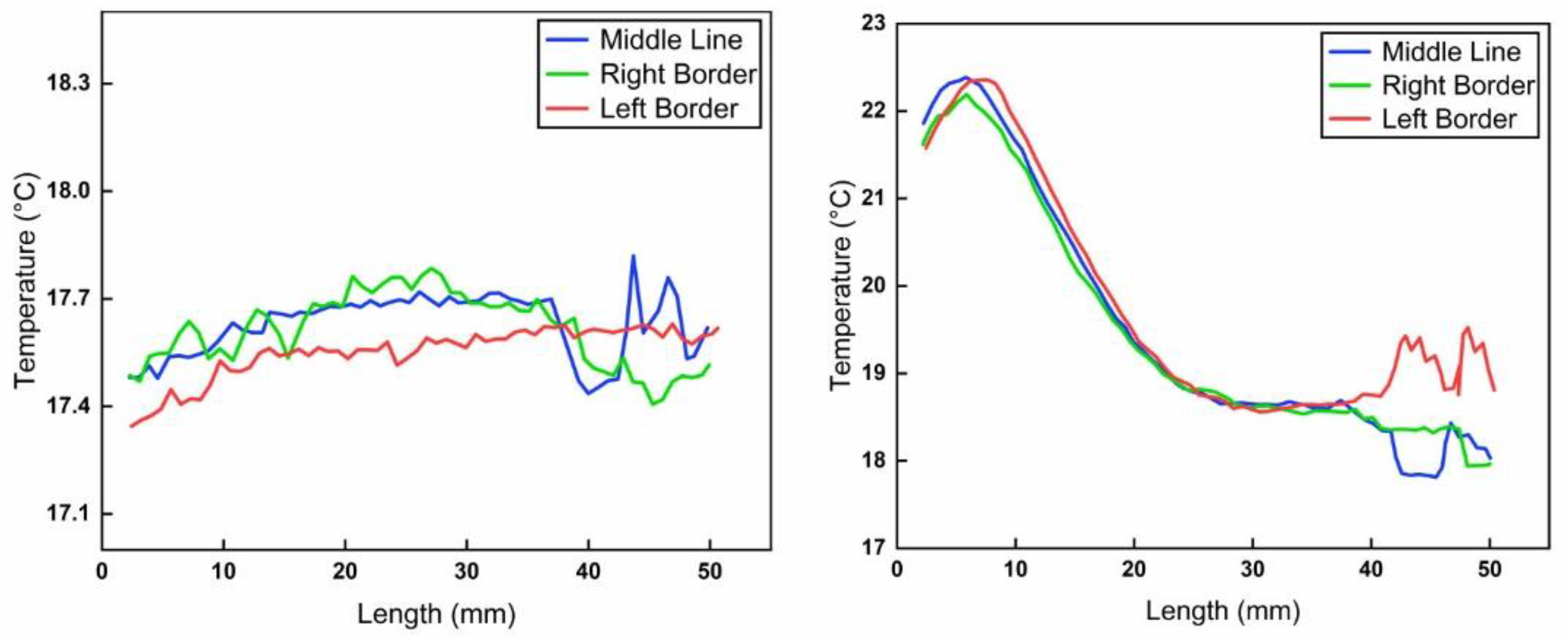
Test 4 was a repeat of Test 3 and confirmed the findings of Test 3. The maximum temperature achieved in Test 4 in both methods was 24.83 °C (adjacent to the ≈ 24.07 °C peak in Test 3), as shown in Figure 11, and the spatial and temporal patterns resemble those in Test 3 closely.
Figure 11.
Temperature evolution of Test 4 at t = 0 s (left image) and at t = 30 s (right image).
The close agreement between the results of the Test 3 and Test 4 provides evidence to support the reproducibility of the stronger elastocaloric response at δ = 33 mm. The small increase in peak temperature (24.07 → 24.83 °C) between Test 3 and Test 4 is still within normal run-to-run variability due to slight differences in the initial thermal conditions, emissivity, and experimental alignment.
4. Discussion
4.1. Comparative Quantification
As described in previous section, the SMA specimen was tested under two distinct maximum deflections: 31 mm (Tests 1 and 2) and 33 mm (Tests 3 and 4). Since the elastocaloric effect governs the temperature changes in cyclic bending, the comparison between the two configurations aims to characterize this phenomenon. To make a clear comparison, the most relevant thermal parameters are summarized in Table 2.
Table 2.
Comparison thermal parameters between first and second configurations.
The elastocaloric effect in Ni-Ti SMAs arises from the martensitic transformation, during which the mechanical work applied to the material is converted into latent heat. The results presented here clearly show that increasing the deflection leads to a larger temperature rise as the higher strain amplitude produces a greater transformed volume fraction and, consequently, more thermal energy. When comparing the configurations, increasing the deflection at the free end from 31 mm to 33 mm resulted in a larger elastocaloric effect, as indicated by the larger temperature peaks and larger temperature gradients across the SMA sheet. The temperature changes over the testing were high repeatable across all tests for each configuration, indicating the thermomechanical response of the material is stable and follows a predictable pattern under similar cycling conditions.
Notably, a relatively small increase in deflection (from 31 mm to 33 mm, i.e., a 6.45% geometrical increase) caused a substantial thermal output (about a 21–25% increase in ). This disproportionate rise highlights the inherent nonlinearity of the SMA’s phase-transformation behavior. Possible origins of this nonlinearity include local stress concentrations near the clamped region, a larger fraction of material experiencing transformation stresses, and/or minor adjustment in heat dissipation pathways as the temperature increases. These contributing factors will almost certainly increase local heating, which in turn affects the overall thermal distribution along the beam.
In summary, these results highlight the important role of strain amplitude in the design of elastocaloric SMA devices. Whether the application involves an SMA-based cooling application, thermal management, or energy harvesting, careful optimization of the strain range is essential to achieve thermal efficiency while also managing material fatigue, heat-transfer limitation, and long-term operational capabilities.
To further quantify the repeatability of the experiments, the peak temperatures obtained from the repeated tests were analyzed statistically. For the configuration with δ = 31 mm, the mean peak temperature was 21.36 ± 0.35 °C, while for = 33 mm, the mean peak temperature was 24.45 ± 0.54 °C (mean ± standard deviation). These results confirm the good reproducibility of the elastocaloric response under the tested conditions.
4.2. Mechanism-Based Interpretation of the Results
The observed spatial and amplitude-dependent temperature response can be understood by combining the mechanics of bending and the thermodynamic aspects of the martensitic transformation:
- Stress distribution in bending: In cantilever bending, the outer fiber close to the fixed end of the beam experiences the highest tensile (or compressive) stresses depending on the side; with the stress magnitude decreasing toward the free end. Thus, the highest stress magnitude close to the clamp promotes larger local transformation fractions and stronger thermal responses, which the IR camera records as exothermic (loading) and endothermic (unloading) events.
- Transformation volume fraction and nonlinearity: The latent heat release is proportional to the volume fraction undergoing the austenite–martensite transformation. At the beginning of the transformation, this fraction increases rapidly in response to stress increase, thus generating a nonlinear ∆T response to the applied deflection. For instance, increasing δ from 31 to 33 mm drives a larger portion of the of the specimen into the transformation regime, resulting in higher local stresses and thermal responses with an observed 21–25% increase.
- Effects of thermal conduction and boundary cooling: The clamps act as significant heat sinks that remain relatively cool; thus creating local gradients near the fixture and promoting effective heat extraction. In contrast, the free region of the beam experiences greater exposure to the environment, loses heat more readily, and has a larger surface area relative to the internal heat generated. As a result, it exhibits the lowest temperatures toward the free end.
- Stress gradient across thickness and local reversibility: Bending creates coexisting tensile and compressive regions through the thickness, so the local heating depends on which fibers reach transformation stress. As the transformation is reversible under the applied cyclic amplitude and loading rate, the response appears highly repeatable, as indicated by the periodic patterns observed after the first few cycles. Thus, the apparent elastocaloric effect is largely reversible, rather than being driven by cumulative irreversible plastic heating.
4.3. Engineering Implications and Relevance to Elastocaloric Device Design
The experimental findings have several immediate implications:
- Strain tuning for increased elastocaloric output: The sensitivity of ∆T to small increases in deflection (31 to 33 mm) indicates that modest adjustments in strain amplitude can lead to substantial thermal advantages. For designers of devices, this suggests that careful control of mechanical actuation can be applied to optimize cooling power versus fatigue.
- Geometry matters (localized heating vs. total heat transfer): Heating is localized near the clamped part of the beam; therefore, incorporating heat exchangers in the position of the maximum ∆T (i.e., the clamped end of the beam) would improve the overall device efficiency. In contrast, if more uniform distributed heating is desired, arrayed beam geometries or specifically designed stress distributions (such as variations in thickness, notches, or graded constraints) would be required.
- Trade-off with fatigue and durability: The experiments were of short duration (30 s) and showed reversible transformation with no evident degradation. Large transformation fraction concentrations close to the clamp, however, caused fatigue issues over a number of cycles. Consequently, long-term material life and higher ∆T which require larger stresses/deflections must be balanced in device designs.
- Potential for thermal-energy storage integration: The observed temperature variations (approximately 4 to 5 °C) are significant for small-scale thermal control and may be used in cyclic thermal energy storage, which combines heat-exchanger cycles, thermal reservoirs, and periodic mechanical input.
5. Future Works Directions
As a continuation of this work, a variety of recommendations for next steps are proposed in order to better connect experimental observations and elastocaloric device models:
- A more quantitative relationship between local stress states and measured temperature changes would be possible through the integration of infrared thermal imaging and synchronized high-resolution stress–strain mapping techniques.
- Finite element models should be developed to incorporate coupled thermomechanical behavior enabling the prediction of the transformed volume fraction and temperature fields. This would allow for a more accurate simulation and representation of the performance of elastocaloric devices under different applied loads.
- Long-term cyclic bending tests at different deflection amplitudes are very important to quantify the degradation of ∆T and estimate safe operating amplitudes. The strain–temperature response to extended cycles will provide valuable data on the material’s operational stability and longevity.
- Employing blackbody patches or other controlled emissivity calibration methods may reduce measurement uncertainties and improve trustworthiness of thermal data.
- Creating phenomenological models capable of predicting strain–temperature relationships for any amplitudes and frequencies could enable dynamic strain modulation to optimize elastocaloric efficiency in real time.
6. Conclusions
The present study experimentally investigated the thermomechanical behavior and elastocaloric response of Ni-Ti shape memory alloy cantilever beams under cyclic bending deformations using infrared thermography. The maximum bending strain measured when the two deflection amplitudes (31 mm and 33 mm) tested were approximately 1.72% and 1.83%, respectively; both of these values were also used to determine how strain amplitude has an effect on thermal response. The experimental results demonstrate consistent elastocaloric temperature changes of approximately 4–5 °C while experiencing cyclic loading at 1800 rpm. At 31 mm deflection, the maximum temperature was approximately 21–22 °C; however, by increasing the deflection to 33 mm, the maximum temperature reached approximately 24–25 °C. This indicates that there was a 21% to 25% increase in thermal output as a result of a 6.45% increase in deflection amplitude. The thermal maps generated from infrared thermography illustrate the localized nature of the temperature increase associated with the clamped (or fixed) end of the beam and areas of high bending stress and transformation activity. Additionally, the results provide evidence of repeatability from one test to the other, demonstrating the stability of the thermomechanical behavior of the Ni-Ti SMAs under cyclic bending for short periods. Collectively, these results demonstrate considerable coupling between mechanical deformation and thermal response for Ni-Ti SMAs; therefore, the utilization of bending as a means to actuate Ni-Ti SMAs would be a suitable method for producing elastocaloric cooling and/or thermal control.
Author Contributions
Writing—original draft, software, S.D.B. and I.P.; conceptualization, writing—review and editing, methodology, and supervision, G.C. and M.E.T.; software S.P. All authors have read and agreed to the published version of the manuscript.
Funding
This research received no external funding.
Data Availability Statement
The data that supports the finding of this study are available from the corresponding author upon reasonable request.
Conflicts of Interest
This research did not receive any specific grants from funding agencies in the public, commercial, or not-for-profit sectors. The authors declare no conflicts of interest.
References
- Wang, Y.; Liu, Y.; Xu, S.; Zhou, G.; Yu, J.; Qian, S. Towards practical elastocaloric cooling. Commun. Eng. 2023, 2, 79. [Google Scholar] [CrossRef] [Scilit]
- Dong, X.; Jiang, X.; Li, P. An efficient low-grade thermal energy dual-driven elastocaloric cooling system: Thermodynamic cycle analysis, economic and sustainability assessment. Energy Convers. Manag. 2025, 324, 119310. [Google Scholar] [CrossRef] [Scilit]
- Qian, S.; Geng, Y.; Wang, Y.; Ling, J.; Hwang, Y.; Radermacher, R.; Takeuchi, I.; Cui, J. A review of elastocaloric cooling: Materials, cycles and system integrations. Int. J. Refrig. 2016, 64, 1–19. [Google Scholar] [CrossRef] [Scilit]
- Elsayad, M.M.; Djuansjah, J.; Ataya, S.; Jang, S.; Meng, A.; Abdelgaied, M.; Sharshir, S.W. Case studies on elastocaloric technology- based solid-state cooling: A focus on materials and applications. Case Stud. Therm. Eng. 2025, 75, 107251. [Google Scholar] [CrossRef] [Scilit]
- Costanza, G.; Porroni, I.; Tata, M.E. Exploring the elastocaloric effect of Shape Memory Alloys for innovative biomedical devices: A review. Fract. Struct. Integr. 2024, 18, 257–271. [Google Scholar] [CrossRef] [Scilit]
- Costanza, G.; Mercuri, S.; Porroni, I.; Tata, M.E. Shape Memory Alloys for Self-Centering Seismic Applications: A Review on Recent Advancements. Machines 2024, 12, 628. [Google Scholar] [CrossRef] [Scilit]
- Manosa, L.; Planes, A. Elastocaloric Effect in Shape-Memory Alloys. Shap. Mem. Superelasticity 2024, 10, 89–98. [Google Scholar] [CrossRef] [Scilit]
- Li, X.; Hua, P.; Sun, Q. Continuous and efficient elastocaloric air cooling by coil-bending. Nat. Commun. 2023, 14, 7892. [Google Scholar] [CrossRef] [Scilit] [PubMed]
- Qian, S.; Catalini, D.; Muehlbaue, J.; Liu, B.; Mevada, H.; Hou, H.; Hwang, Y.; Radermacher, R.; Takeuchi, I. High-performance multimode elastocaloric cooling system. Science 2023, 380, 722–727. [Google Scholar] [CrossRef] [Scilit]
- Zhou, G.; Zhu, Y.; Yao, S.; Sun, Q. Giant temperature span and cooling power in elastocaloric regenerator. Joule 2023, 7, 2003–2015. [Google Scholar] [CrossRef] [Scilit]
- Hua, P.; Xia, M.; Onuki, Y.; Sun, Q. Nanocomposite NiTi shape memory alloy with high strength and fatigue resistance. Nat. Nanotechnol. 2021, 16, 409–413. [Google Scholar] [CrossRef] [Scilit]
- Cai, S.; Schaffer, J.E.; Shi, T.; Gao, J.; Kaderavek, L. Effect of Cu Alloying and Heat Treatment Parameters on NiTi Alloy Phase Stability and Constitutive Behavior. Shap. Mem. Superelasticity 2024, 10, 460–472. [Google Scholar] [CrossRef] [Scilit]
- Zhu, J.; Zhu, W.; Borisov, E.; Yao, X.; Riemslag, T.; Goulas, C.; Popovich, A.; Yan, Z.; Tichelaar, F.D.; Mainali, D.P.; et al. Effect of heat treatment on microstructure and functional properties of additively manufactured NiTi shape memory alloys. J. Alloys Compd. 2023, 967, 171740. [Google Scholar] [CrossRef] [Scilit]
- Zhang, P.; Li, N.; Feng, T.; Luo, Z.; Xiao, L.; Ma, X. Improving the mechanical properties and superelasticity of NiTiFe shape memory alloys through heterogeneous structures. Mater. Sci. Eng. A 2025, 932, 148284. [Google Scholar] [CrossRef] [Scilit]
- Gao, Y.; Hu, Y.; Zhao, X.; Liu, Y.; Huang, H.; Su, Y. Machine-Learning-Driven Design of High-Elastocaloric NiTi-Based Shape Memory Alloys. Metals 2024, 14, 1193. [Google Scholar] [CrossRef] [Scilit]
- Rahman, A.; Hossain, M.S.; Siddique, A. Review: Machine learning approaches for diverse alloy systems. J. Mater. Sci. 2025, 60, 12189–12221. [Google Scholar] [CrossRef] [Scilit]
- Czernuszewicz, A.; Griffith, L.; Slaughter, J.; Pecharsky, V. Low-force compressive and tensile actuation for elastocaloric heat pumps. Appl. Mater. Today 2020, 19, 100557. [Google Scholar] [CrossRef] [Scilit]
- Danaee Barforooshi, S.; Bizzarri, G.; Costanza, G.; Paoloni, S.; Porroni, I.; Tata, M.E. Thermographic Investigation of Elastocaloric Behavior in Ni-Ti Sheet Elements Under Cyclic Bending. Materials 2025, 18, 3546. [Google Scholar] [CrossRef] [Scilit]
- Cheng, S.; Xiao, Y.; Li, X.; Lin, H.; Hua, P.; Sheng, L. Continuous rotating bending NiTi sheets for elastocaloric cooling: Model and experiments. Int. J. Refrig. 2023, 147, 39–47. [Google Scholar] [CrossRef] [Scilit]
- Cheng, S.; Sun, W.; Li, X.; Zhang, J. Elastocaloric effect and cooling performance of NiTi sheets in a continuous rotating bending elastocaloric cooler. APL Mater. 2024, 12, 081116. [Google Scholar] [CrossRef] [Scilit]
- Kan, Q.; Zhang, Y.; Shi, W.; Xu, Y.; Yu, C.; Kang, G. Functional fatigue of superelasticity and elastocaloric effect for NiTi springs. Int. J. Mech. Sci. 2024, 265, 108889. [Google Scholar] [CrossRef] [Scilit]

Disclaimer/Publisher’s Note: The statements, opinions and data contained in all publications are solely those of the individual author(s) and contributor(s) and not of MDPI and/or the editor(s). MDPI and/or the editor(s) disclaim responsibility for any injury to people or property resulting from any ideas, methods, instructions or products referred to in the content. |
© 2026 by the authors. Licensee MDPI, Basel, Switzerland. This article is an open access article distributed under the terms and conditions of the Creative Commons Attribution (CC BY) license.