


Abstract
Deep coalbed methane resource evaluation is limited by weak coupling among key controlling factors and by the lack of unified methods for Computational Unit delineation. This study focuses on the No. 8 coal seam of the Benxi Formation in the Ordos Basin. A geological–engineering integrated framework for delineation and evaluation of deep coalbed methane units was established based on the concept of “one body and four levels.” Results indicate that a depth of 1500 m represents a critical boundary for changes in coalbed methane occurrence. Gas in deep coal seams occurs mainly as a combination of adsorbed gas saturation and free gas enrichment. Vitrinite reflectance was used to evaluate gas source conditions, and a threshold of Ro = 1.2% was identified. Cap rock sealing performance was evaluated using lithological assemblages, with mudstone–limestone combinations showing the most favorable preservation conditions. A brittle–ductile index based on rock mechanical parameters was applied to assess reservoir fracability. Gas source effectiveness, preservation conditions, and reservoir transformability were quantified using thermal simulation experiments, formation pressure and temperature analysis, sealing tests, and coal–rock mechanical experiments. GIS-based spatial overlay analysis was used to divide the No. 8 coal seam into 16 computational units. The total deep coalbed methane resources were estimated at approximately 16.49 × 10¹² m3. Accordingly, the research findings provide a crucial scientific basis for the rational delineation of computational units in deep coalbed methane systems. They also offer significant theoretical support for subsequent applications of machine learning and coupled geomechanics–flow modeling methods, enabling accurate dynamic prediction and optimal zone selection within the study area.
1. Introduction
Coalbed methane (CBM), as an important component of China’s unconventional natural gas resources, plays a critical strategic role in ensuring national energy security, promoting the low-carbon energy transition, and safeguarding coal mine production safety [1,2,3]. At present, the exploration and development of deep CBM resources—particularly those buried at depths exceeding 1500 m—have emerged as a highly promising frontier for meeting sustainable energy demands [4]. Relevant studies indicate that deep CBM resources in China, occurring at depths of 1500–6000 m, possess geological resources of up to 55.11 × 10¹² m3, demonstrating considerable development potential and favorable prospects [5].
Compared with shallow and medium-depth CBM, deep CBM exhibits significant differences in accumulation mechanisms, occurrence states, and development responses. Controlled by the coupled effects of high burial depth, high in situ stress, elevated geothermal temperature, and high formation pressure [6,7], deep CBM systems are generally characterized by high gas content, high gas saturation, and the coexistence of adsorbed and free gas, resulting in more complex enrichment and preservation mechanisms [1,8]. Consequently, these differences indicate that evaluation methods developed for shallow-to-medium-depth CBM cannot be directly applied to deep CBM, and there is an urgent need to establish computational units capable of reflecting its unique accumulation characteristics and development behavior. During resource assessment, the rational delineation of computational units constitutes the fundamental basis for multi-parameter integrated evaluation and reliable resource estimation. For deep CBM, however, pronounced variations in burial depth, complex geological conditions, and significant differences in reservoir transformability (stimulation potential) [9,10] severely restrict the comparability of evaluation parameters across different regions when a scientific computational unit delineation method is lacking, thereby limiting the engineering applicability of resource evaluation results. Nevertheless, current studies on deep CBM mainly focus on gas-bearing controlling factors or localized favorable zone analysis [11], while systematic research on computational unit delineation remains insufficient, and a unified, operational technical framework has yet to be established.
Previous studies have demonstrated that geological parameters, including coal seam thickness, gas saturation, water content, hydrogeological conditions, coal rank, and the sealing capacity of roof and floor strata, play critical roles in controlling deep CBM enrichment [10,12,13]. Meanwhile, deep coal reservoirs are generally characterized by dense structures, low permeability, and high in situ stress conditions, which significantly constrain gas migration and the formation of production capacity, making reservoir transformability a key engineering factor influencing development performance. Accordingly, engineering parameters such as permeability, rock mechanical properties, in situ stress characteristics, and brittle–ductile behavior have been progressively incorporated into deep CBM evaluation systems [14,15,16]. However, these parameters are commonly evaluated in a fragmented manner, lacking systematic integration within a computational unit-based framework. In particular, unified evaluation approaches remain absent for defining burial depth boundaries [5,17,18], identifying effective gas-source conditions, quantitatively characterizing preservation capacity [19,20], and conducting comprehensive evaluations of reservoir transformability [16,21].
In view of the aforementioned issues, this study takes the No. 8 coal seam of the Benxi Formation in the Ordos Basin as the research object. From an integrated geological–engineering perspective, a comprehensive system for deep CBM computational unit delineation and evaluation is proposed and established. Based on burial depth boundaries, the system focuses on three core dimensions: gas-source supply conditions, sealing and preservation capacity, and reservoir transformability. Through multi-parameter quantitative evaluation and spatial superposition analysis, scientific delineation of deep CBM computational units is achieved. This study defines the lower burial depth limit of deep CBM, establishes thermal maturity thresholds for effective gas supply, develops quantitative evaluation methods for the sealing capacity of coal-bearing strata, and integrates coal–rock mechanical parameters with brittle–ductile characteristics to comprehensively assess reservoir stimulation potential. The results provide theoretical support and technical guidance for computational unit delineation of deep CBM in the No. 8 coal seam of the Ordos Basin, and lay a solid foundation for subsequent favorable area selection and resource classification evaluation.
2. Computational Unit Partitioning Methods and Technical Approaches
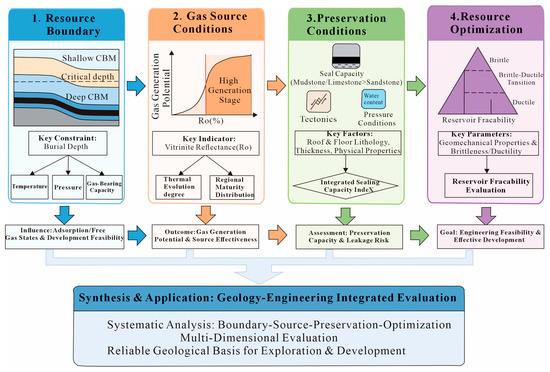
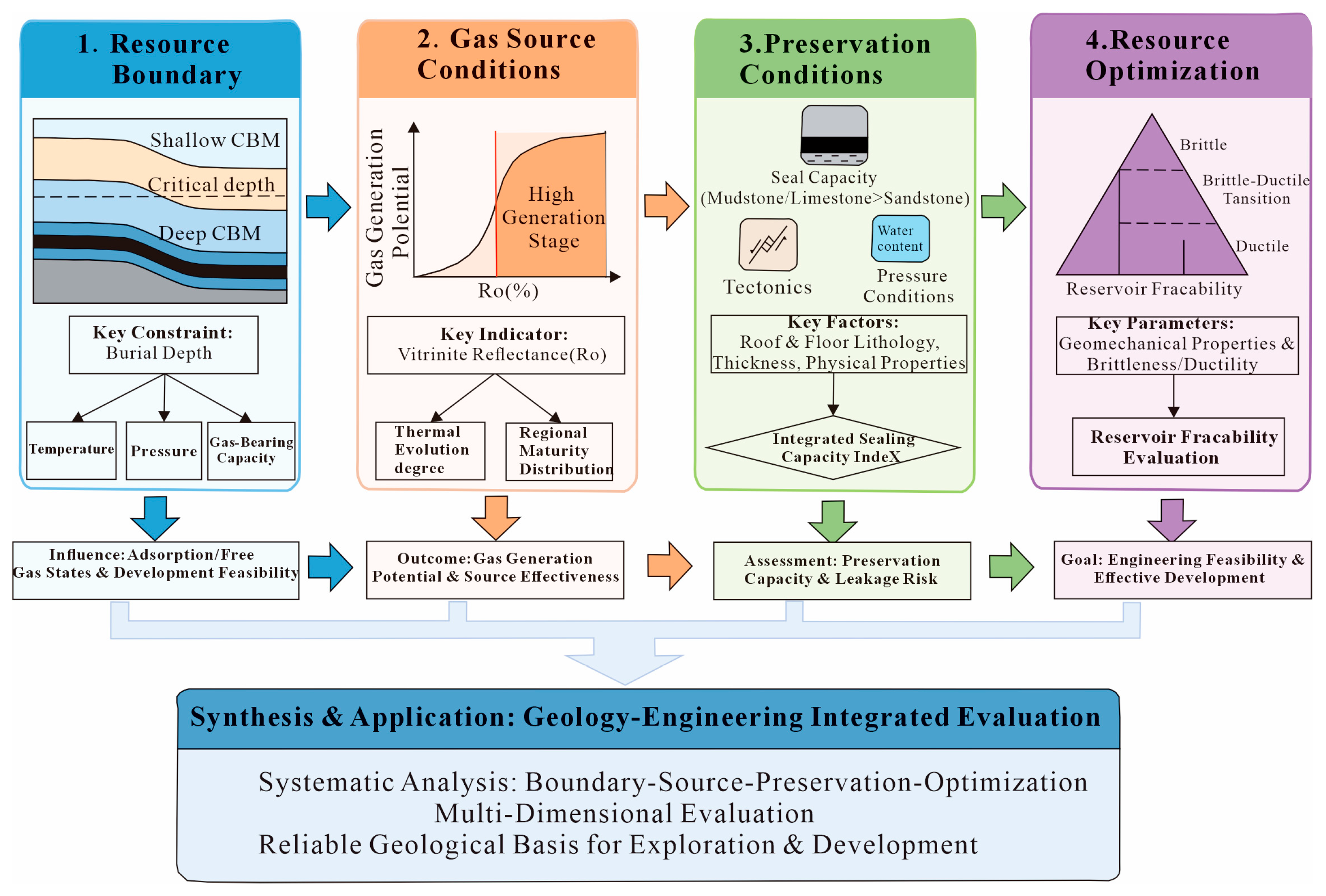
Based on the accumulation mechanism of deep coalbed methane (CBM) and its characteristics of resource occurrence and development, an evaluation system for delineating computational units of deep CBM in the Ordos Basin was established (Figure 1). Constrained by key geological parameters, this system comprehensively considers burial boundaries, gas source conditions, preservation conditions, and reservoir transformability. Following a systematic analytical framework of “boundary definition–source identification–preservation assessment–favorable target optimization,” a hierarchical and indicator-quantified evaluation scheme is formed, aiming to achieve an organic integration of geological conditions and engineering feasibility.
Figure 1.
Schematic Diagram of the Conceptual Framework and Evaluation Process for Deep Coalbed Methane Computational Unit Delineation in the Ordos Basin.
Within this evaluation framework, the boundary-definition level adopts coal seam burial depth as the fundamental constraint for classifying deep CBM resources. Burial depth exerts a first-order control on formation temperature, pressure, and in situ stress conditions, and therefore serves as the primary factor governing methane adsorption–desorption behavior and development feasibility of coal reservoirs [22]. By establishing burial depth as the principal evaluation indicator, the spatial extent and assessment scale of the study area are clearly defined, providing a foundational basis for subsequent hierarchical evaluations. At the source-identification level, the evaluation focuses on the gas-generation potential and source effectiveness of coal seams. Vitrinite reflectance (Ro), which reflects the degree of thermal evolution of coal-bearing strata, is selected as the core indicator. Combined with the regional maturity distribution, Ro is used to characterize gas-generation stages and their spatial variability, thereby delineating favorable gas source conditions and identifying the gas-generating potential of deep CBM across different structural zones [23]. The preservation-assessment level evaluates the spatial heterogeneity of CBM preservation conditions. This level comprehensively considers the lithological assemblages of the coal seam roof and floor, their thickness characteristics, and relevant physical property parameters. By constructing a composite sealing-capacity index, the sealing performance of different lithological combinations is quantitatively assessed, enabling evaluation of methane preservation capability and migration risk under deep burial conditions [19,20]. At the optimization-determination level, engineering development constraints are incorporated through the introduction of coal–rock mechanical parameters and brittle–ductile characteristics to evaluate reservoir transformability [2,15,16]. Coal and rock brittleness directly controls the initiation and propagation of hydraulic fracturing fractures and is therefore a critical parameter governing effective stimulation and large-scale development of deep CBM reservoirs [16]. By characterizing spatial variations in mechanical properties, this level provides essential engineering criteria for identifying favorable development targets.
Through the integrated evaluation and multi-parameter coupling across these hierarchical levels, a comprehensive zoning framework for deep coalbed methane resources in the Ordos Basin is established. This framework enables systematic screening and spatial delineation from burial-depth constraints, gas-generation potential, and preservation conditions to reservoir transformability. It embodies a geological–engineering integrated evaluation approach and provides a robust geological foundation for the delineation of computational units in deep coalbed methane resource assessment.
3. Establishment of a Comprehensive Evaluation-Unit Classification System
3.1. Principles for Delineating Computational Units Under Burial Depth Constraints
The geothermal gradient and reservoir pressure gradient are the primary factors governing the pressure–temperature equilibrium relationship in coal seams. Under conditions of similar coal rank and in situ stress fields, a decrease in the geothermal gradient delays the negative effect of temperature on methane adsorption, thereby increasing the critical depth [24]. In contrast, an increase in the reservoir pressure gradient enhances the positive effect of pressure on adsorption, thereby reducing the critical depth.
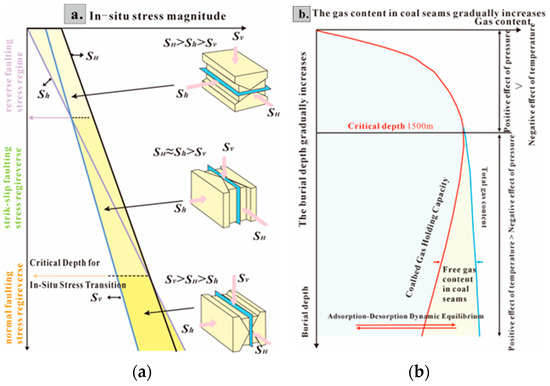
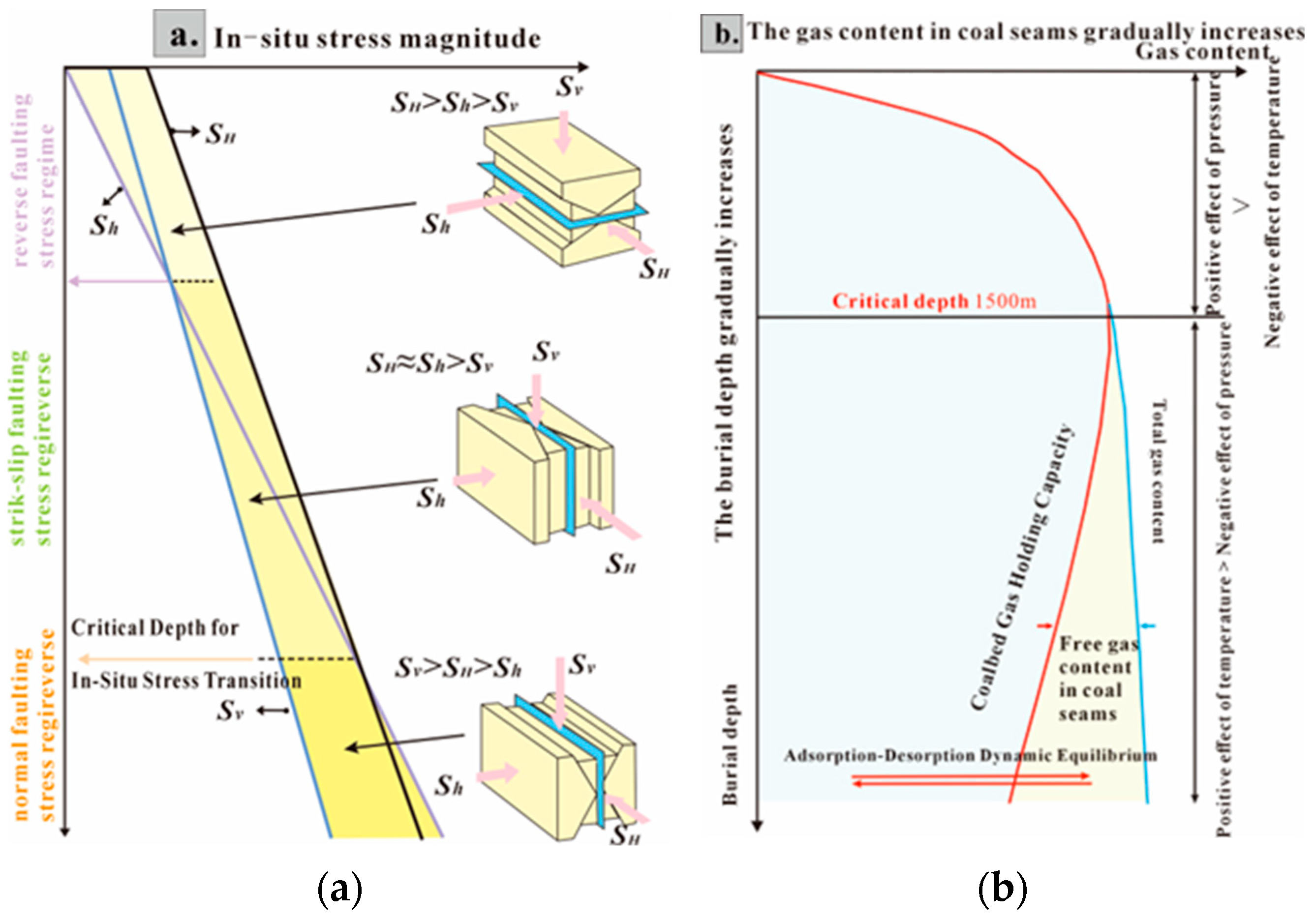
In situ stress characteristics represent one of the key controls on the occurrence and development of coalbed methane. Previous studies have demonstrated that horizontal principal stress exerts a significant influence on the pore–fracture system of coal seams and their sealing capacity [18]. Under otherwise comparable conditions, higher horizontal principal stress enhances reservoir sealing, suppresses gas dissipation, and may influence adsorption–desorption behavior by modifying pore structures, thereby promoting a deepening of the critical depth [18]. According to the variation in coalbed stress with burial depth (Figure 2a), horizontal principal stress dominates at burial depths shallower than approximately 1500 m, whereas vertical principal stress gradually becomes dominant beyond this depth. Overall, the coalbed stress field exhibits pronounced vertical zonation, with shallow zones characterized by strike-slip stress regimes, intermediate to deep zones displaying transitional stress regimes combining strike-slip and normal faulting, and deep zones predominantly governed by normal faulting stress regimes [15].
Figure 2.
Variation Characteristics of Geological Stress and Coalbed Gas Content with Burial Depth. (a) Geological stress variation adapted from [2,9]. (b) Coalbed gas content variation adapted from [13]. (Note: SH: Horizontal maximum principal stress; Sh: Horizontal minimum principal stress; Sv: Vertical stress).
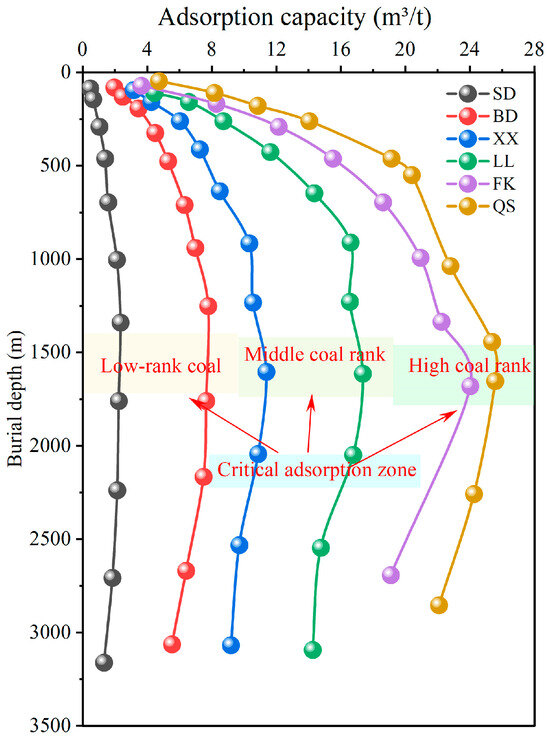
Analysis of the variation in coalbed gas content with burial depth (Figure 2b) indicates that adsorbed gas content initially increases and then decreases with increasing depth, whereas free gas content continues to rise before reaching a stable level. The inflection point between these trends occurs at a burial depth of approximately 1500 m, representing the median of the critical transition zone (1400–1600 m, 95% confidence interval) derived from linear regression and nonlinear fitting of 22 well data points in the Ordos Basin. Beyond this depth, the negative effect of temperature on adsorption becomes dominant, leading to adsorption saturation, and excess methane is mainly stored in the free state within the cleat and fracture systems of the coal seam. On this basis, isothermal adsorption experimental results obtained from coal samples of different ranks were further integrated with actual stratigraphic temperature and pressure gradient conditions (2.8 °C/100 m and 0.025 MPa/100 m for the study area). The pressure–temperature states corresponding to the maximum adsorbed gas volumes were converted into equivalent burial depths, thereby establishing the relationship between maximum adsorbed gas content and burial depth (Figure 3). The results reveal distinct responses of maximum adsorption capacity to burial depth among coal seams of different ranks. Low-rank coal seams exhibit a gradual increase in maximum adsorption capacity, followed by a peak and a subsequent slow decline. In contrast, medium- to high-rank coal seams display an evolutionary pattern characterized by a “rapid increase–gradual increase–peak–slow decline,” forming a well-defined critical depth zone for maximum adsorption capacity. In terms of depth distribution, the critical depth zone of maximum adsorption capacity for low-rank coal seams is mainly concentrated within the 1400–1600 m interval, whereas that for medium- to high-rank coal seams is shifted overall to greater depths, predominantly within the 1400–1700 m range.
Figure 3.
Relationship between adsorbed gas content and burial depth for coal seams of different ranks (modified from [25]).
Typical well data from several wells in the DND block indicate that, under favorable roof and floor sealing conditions, deep coal seams buried at depths greater than 1500 m commonly exhibit high gas contents (Table 1). The parameters selected in Table 1 are core indicators for characterizing methane occurrence states in coal reservoirs [26]. Langmuir Volume and Langmuir Pressure reflect the maximum adsorption capacity and adsorption equilibrium characteristics of coal rocks, respectively; the theoretical maximum adsorbed gas volume and methane adsorption saturation directly quantify the saturation degree of adsorbed gas; free gas content characterizes the methane occurrence state beyond the adsorption capacity of coal rocks. All wells in Table 1 show 100% methane adsorption saturation, indicating that coal rocks at depths greater than 1500 m have reached the maximum adsorption capacity, and excess methane exists in the form of free gas. With increasing burial depth, free gas content increases markedly (from 2.89 m3/t to 7.24 m3/t), which is highly consistent with experimental simulations and theoretical analyses. By comprehensively considering dynamic field characteristics, geothermal–pressure coupling relationships, in situ stress zonation, and gas content variation patterns, it is concluded that a significant transition in the occurrence state of deep coalbed methane exists at a burial depth of approximately 1500 m (1400–1600 m transition zone) in the Ordos Basin. This depth can therefore be regarded as a reasonable burial-depth boundary for the evaluation of deep coalbed methane resources in the study area (regarding the No. 8 Coal Seam in the Ordos Basin).
Table 1.
Statistical Results of Gas Content in Coal Seams of the Carboniferous–Permian Series in the DND Block (Data Source: [26]).
3.2. Source Determination of Computational Units Under Gas Source Constraints
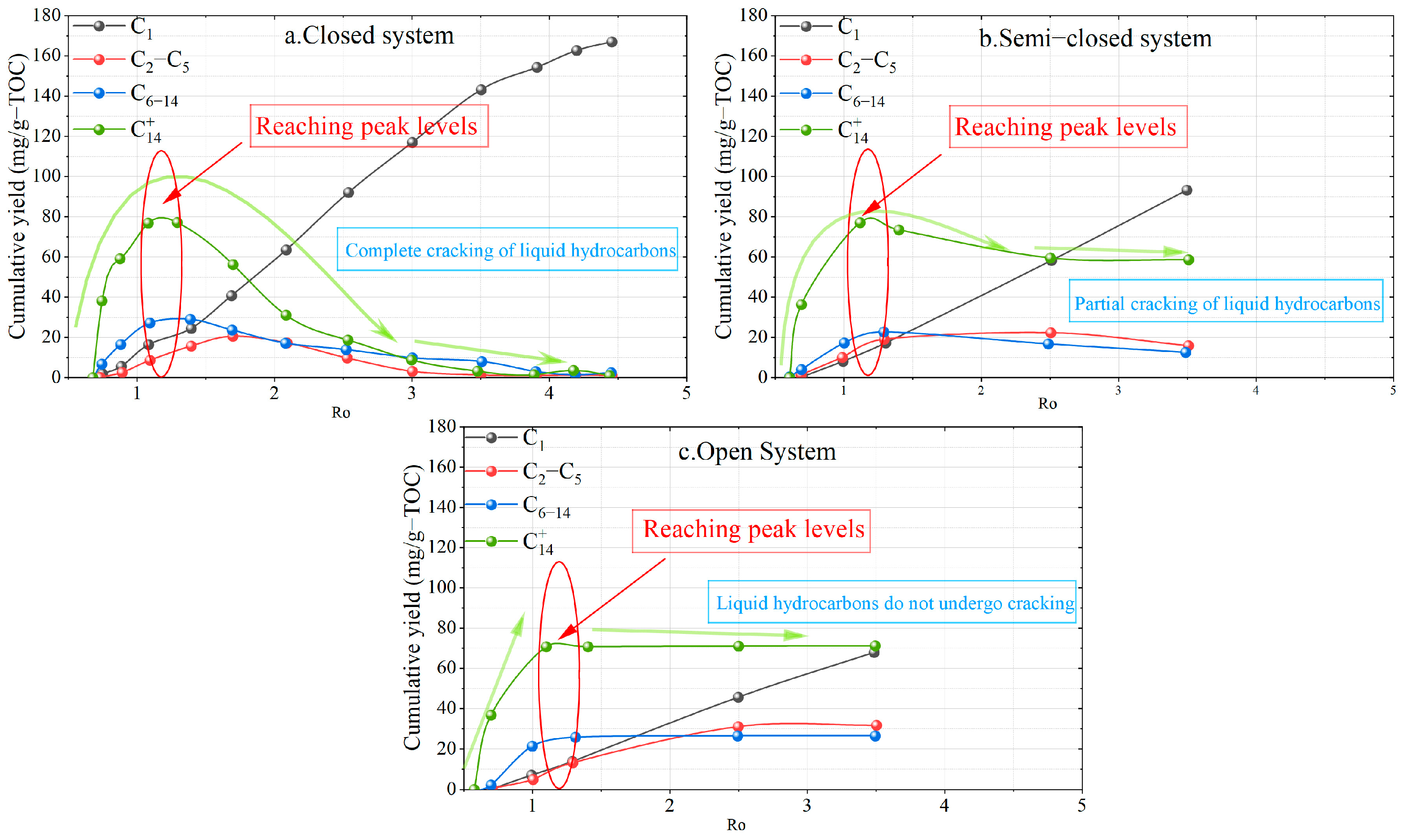
Thermal simulation experiments demonstrate that hydrocarbon generation and evolution characteristics of coal rocks vary significantly under different preservation conditions, with the cumulative yields of the three experimental systems exhibiting a pronounced stepwise pattern (Figure 4). Among them, the closed system provides the most favorable conditions for hydrocarbon preservation. Liquid hydrocarbons generated during hydrocarbon generation are difficult to expel; at high maturity stages, nearly all retained liquids undergo secondary cracking and are converted into gaseous hydrocarbons, resulting in the highest cumulative gas yield.
Figure 4.
Cumulative Yield of Coal No. 8 Under Different Storage Systems ((a): Closed System, (b): Semi-Closed System, and (c): Open System).
The semi-closed system exhibits relatively weaker preservation conditions. During hydrocarbon generation, part of the liquid hydrocarbons is expelled, while only a portion of the generated oil undergoes secondary cracking. Overall, this system is characterized by an evolutionary pattern of “simultaneous hydrocarbon generation and expulsion with partial cracking,” leading to an intermediate cumulative gas yield. In contrast, the open system shows the poorest preservation capacity. Generated liquid hydrocarbons are almost entirely expelled, and the contribution of secondary cracking gas is limited, resulting in the lowest cumulative gas yield. These differences clearly indicate that preservation conditions exert a strong regulatory control on gas generation intensity.
Quantitative analysis of the relationship between liquid hydrocarbon yield and thermal maturity further shows that, despite differences in preservation conditions and evolutionary pathways among the three systems, the maturity corresponding to peak liquid hydrocarbon yield is highly consistent, clustering around Ro ≈ 1.2% (95% confidence interval: 1.1–1.3%) in all experimental systems (Figure 4). This suggests that liquid hydrocarbon generation in coal rocks is primarily controlled by the thermal evolution stage of organic matter. In the closed system (Figure 4a), liquid hydrocarbon yield increases initially and then decreases with increasing Ro, reflecting significant secondary cracking of liquid hydrocarbons at high maturity stages. The yields of and hydrocarbons reach their maxima at approximately Ro ≈ 1.3% and Ro ≈ 1.2%, respectively. In the semi-closed system (Figure 4b), liquid hydrocarbon yield slightly declines after reaching its peak and then stabilizes, indicating the coexistence of hydrocarbon generation and expulsion processes. The peak yields of both and fractions also occur at around Ro ≈ 1.2%. In the open system (Figure 4c), liquid hydrocarbon yield remains largely stable after peaking, suggesting that hydrocarbon expulsion dominates over cracking processes, with peak maturity likewise concentrated near Ro ≈ 1.2%. Overall, Ro ≈ 1.2% corresponds to the stage of maximum liquid hydrocarbon generation in coal rocks and represents a critical maturity node during hydrocarbon evolution for the No. 8 coal seam in the Ordos Basin.
Geological evidence from the Jiaxian area further supports the experimental results. Regional maturity distribution indicates that coal rocks in the southern Jiaxian area generally exhibit Ro values higher than 1.2%, whereas those in the northern Jiaxian area and the Shenmu region are mostly characterized by Ro values below this threshold, forming a distinct maturity differentiation pattern. Core-based gas content and gas occurrence analyses (Table 2) show that coal seams with Ro > 1.2% in the southern Jiaxian area have an average gas content of 21.9 m3/t, with free gas accounting for approximately 20%, indicating high gas generation intensity, strong gas supply capacity, and favorable gas mobility. In contrast, coal seams within the Ro < 1.2% zone generally exhibit lower gas contents, with free gas proportions commonly below 10%. Gas in these seams mainly occurs in an adsorbed state, reflecting limited gas generation intensity and sustained gas supply capacity.
Table 2.
Gas Content and Free Gas Proportion Statistics for Coal Core Well No. 8.
Integrated thermal simulation experiments and geological case studies indicate that Ro ≈ 1.2% represents a critical maturity threshold controlling the effectiveness of deep coalbed methane gas sources in the study area. Once coal maturity exceeds this threshold, gas generation capacity increases significantly, and under favorable preservation conditions, a sustained and stable gas supply can be established, providing the foundation for large-scale enrichment and development of deep coalbed methane reservoirs. This finding offers an important criterion for gas source identification and favorable area selection in deep coalbed methane resource evaluation in the Ordos Basin.
3.3. Preservation Evaluation of Computational Units Under Preservation Constraints
This study systematically investigates the sealing performance differences among three typical lithological assemblages in coal-bearing strata—coal–sandstone, coal–mudstone, and coal–tuff—through a combination of sealing experiments and multi-parameter measurements. By integrating key parameters including porosity, permeability, breakthrough pressure, and gas diffusion coefficient, a quantitative. To enable unified characterization and comparative evaluation of sealing performance across roof strata with diverse lithological compositions, this study further proposes a Comprehensive Sealing Capacity Index (Ec). The index is constructed using a multi-parameter weighted evaluation model, in which breakthrough pressure, roof thickness, permeability, porosity, and gas diffusion coefficient are first normalized through dimensionless processing. Weighting coefficients are then assigned according to the relative contribution of each parameter to sealing capacity. The index is expressed as:
In the equation, , , , , and denote the dimensionless values of breakthrough pressure, roof thickness, permeability, porosity, and diffusion coefficient, respectively, and – represent the corresponding weighting coefficients.
The Ordos Basin is characterized by a weak groundwater hydrodynamic field with slow groundwater runoff [25], and the modification of caprock sealing capacity by groundwater flow, fault transmissibility, and fracture connectivity is negligible in the study area. Therefore, the Ec model is constructed based on lithological and physical parameters without incorporating hydrogeological factors, which is applicable to the stable coal-bearing strata in weak hydrodynamic fields. For coal-bearing strata in strong hydrodynamic or tectonically fractured areas, hydrogeological parameters should be incorporated into the Ec model for reconstruction.
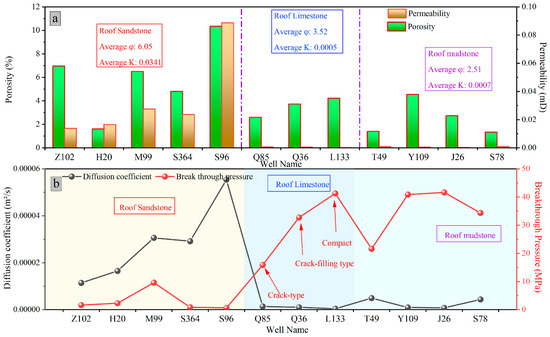
Research results indicate pronounced differences in sealing capacity among roof strata with different lithological compositions (Figure 5). Pore structure and permeability analyses (Figure 5a) show that sandstone roofs are characterized by well-developed pore systems with good connectivity, resulting in overall high porosity and high permeability. In contrast, mudstone roofs exhibit poorly developed pore structures and generally low permeability, displaying low-porosity and low-permeability characteristics that provide favorable physical conditions for the development of effective sealing. Analysis of key sealing parameters (Figure 5b) further reveals that sandstone caprocks are characterized by high gas diffusion coefficients and low breakthrough pressures, indicating weak overall sealing capacity and unfavorable conditions for effective coalbed methane preservation. Conversely, mudstone caprocks exhibit low diffusion coefficients combined with high breakthrough pressures, reflecting excellent sealing performance within coal-bearing strata and identifying mudstone as a highly effective caprock lithology. Limestone caprocks can be further classified into three types: fractured limestone, fracture-filled limestone, and compact limestone. Fractured limestone typically exhibits relatively high permeability and low breakthrough pressure, resulting in weak sealing capacity. In contrast, fracture-filled limestone and compact limestone are characterized by poorly developed pores and fractures, which significantly increase breakthrough pressure and consequently enhance sealing performance.
Figure 5.
Comprehensive Evaluation Results of Sealing Capabilities for Different Roof Rock Types ((a) Pore Permeability Characteristics; (b) Key Sealing Parameter Characteristics. Note: Data points are discrete values no continuous functional relationship, curves are only for visual guidance to show the overall trend of parameter changes with lithology.).
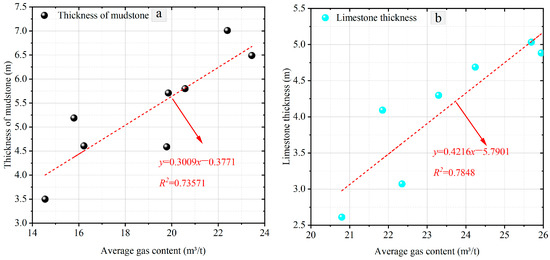
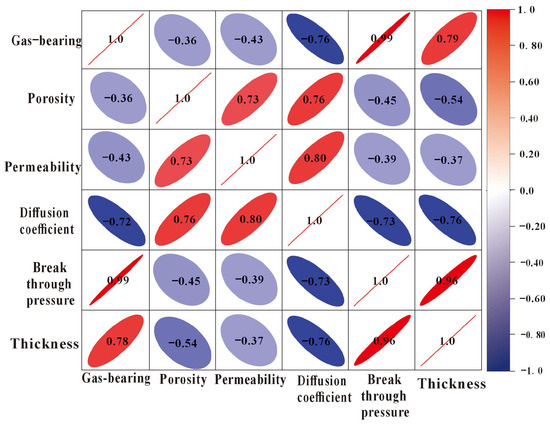
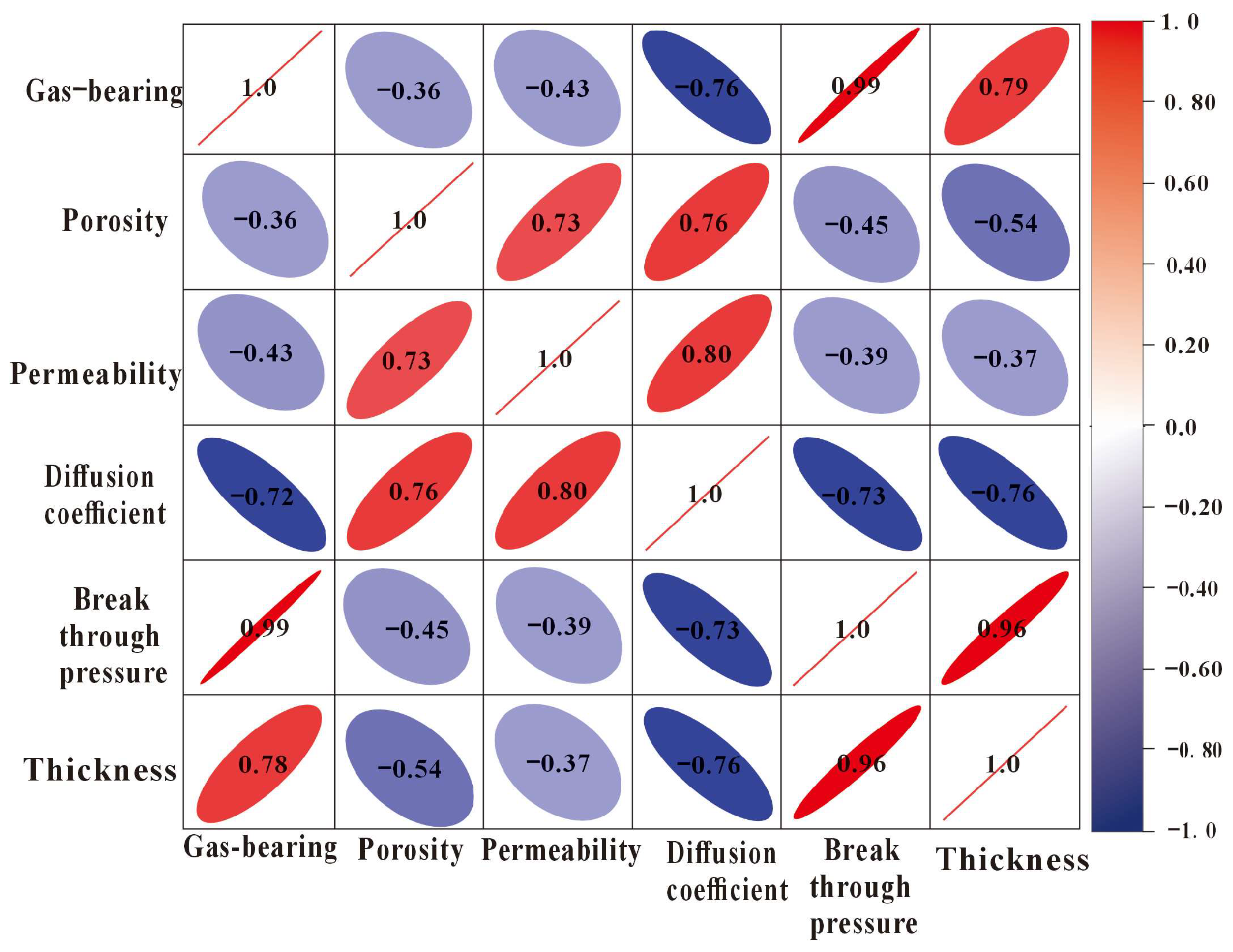
In addition to lithological differences, overburden thickness represents an important macroscopic factor influencing sealing capacity [20]. As shown in Figure 6, the thicknesses of mudstone and limestone roofs exhibit a significant positive correlation with coal seam gas content, indicating that increased overburden thickness enhances sealing effectiveness and promotes gas preservation. However, notable variations in gas content are observed among different well blocks with comparable overburden thicknesses, suggesting that sealing capacity is controlled by the combined effects of multiple parameters rather than a single factor. Further correlation analysis (Figure 7) demonstrates that coalbed methane content is positively correlated with breakthrough pressure and overburden thickness, while showing negative correlations with porosity, permeability, and gas diffusion coefficient.
Figure 6.
Correlation Analysis Results Between Mudstone and Limestone Thickness and Coal Seam Gas Content. ((a) Plot of the relationship between the thickness of the overlying mudstone and the average gas content; (b) Plot of the relationship between the thickness of the roof limestone and the average gas content).
Figure 7.
Heatmap of Key Parameters Related to Roof Sealing Capability (Note: The values in the figure are Pearson correlation coefficients (range: −1 to 1). Color gradient represents the strength and direction of correlation: red indicates positive correlation; purple indicates negative correlation. The darker the color, the larger the absolute value of the correlation coefficient and the stronger the correlation).
Based on factor analysis results (Table 3), breakthrough pressure and overburden thickness exhibit the highest weighting coefficients and are identified as the primary controlling factors governing sealing capacity. Permeability ranks as the second most influential parameter, whereas porosity and diffusion coefficient play secondary roles. Accordingly, a quantitative evaluation criterion is established Ec > 1.0 indicates excellent sealing capacity, whereas Ec < 0.5 corresponds to poor sealing capacity.
Table 3.
Calculation Results and Grading Criteria for Quantitative Evaluation Indicators of Containment Capability.
Applying the proposed evaluation model, quantitative assessments were conducted for three typical lithological assemblages: coal–sandstone, coal–mudstone, and coal–limestone (Table 4). The results demonstrate that roof assemblages composed of dense limestone and mudstone exhibit the most favorable sealing performance, thereby providing optimal conditions for coalbed methane preservation. In contrast, sandstone-dominated roof strata generally display weak sealing capacity, representing an unfavorable lithological combination for coalbed methane enrichment and retention.
Table 4.
Quantitative Evaluation Results for Sealing Capabilities of Different Roof Rock Types.
3.4. Optimization Evaluation of Computational Units Under Reservoir Stimulability Constraints
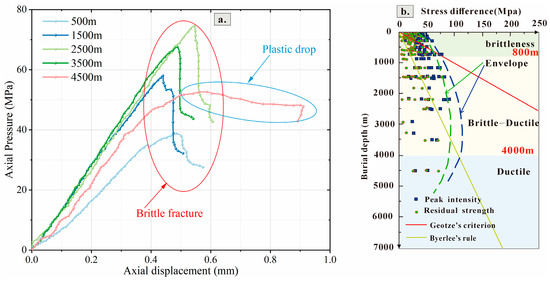
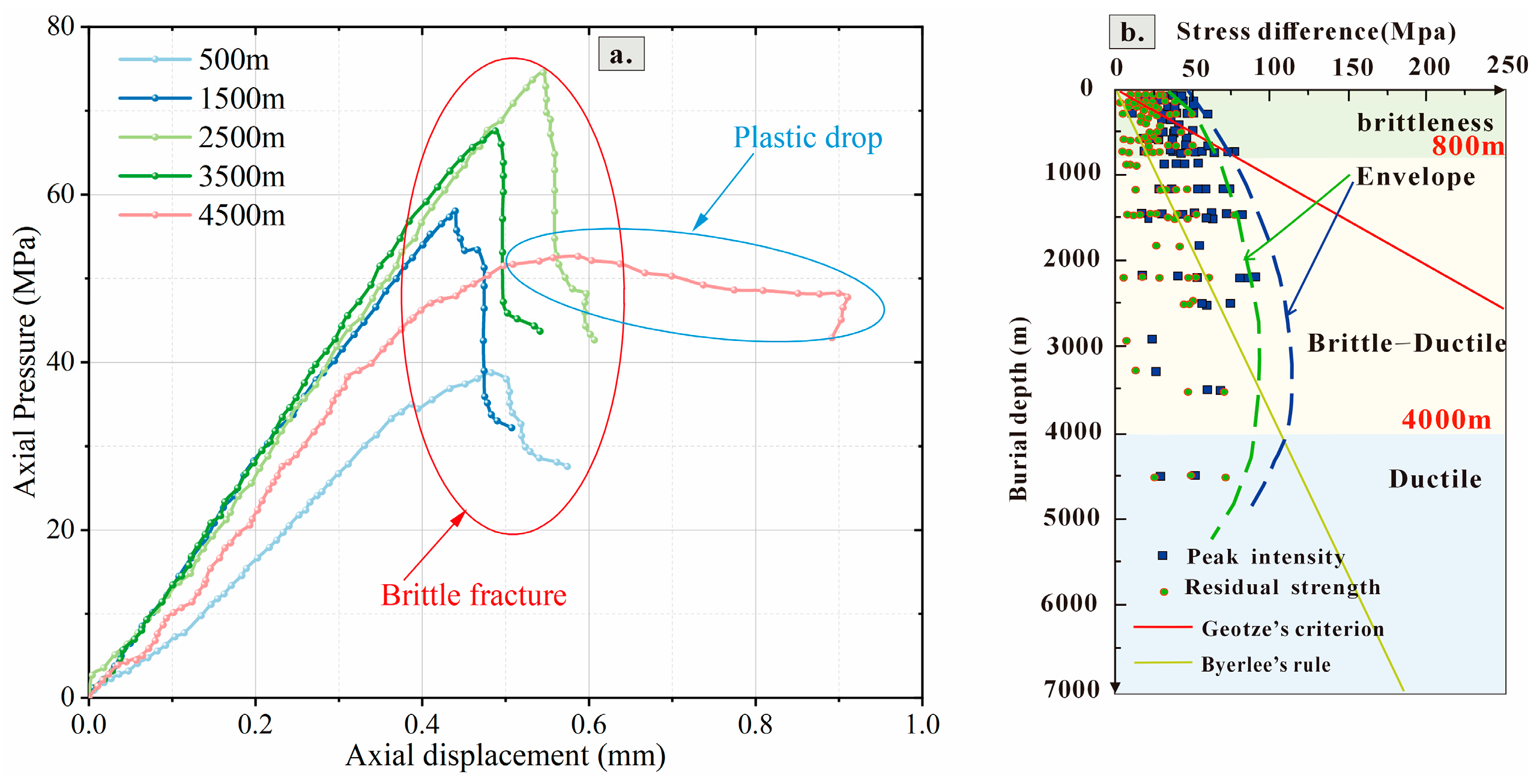
The brittleness of coal rock is a critical mechanical parameter governing the effectiveness of reservoir stimulation in deep coalbed methane (CBM) systems, as it directly controls fracture network complexity and, consequently, development efficiency and economic viability. To simulate the influence of formation burial depth, coal samples were subjected to corresponding temperature and pressure conditions, and axial stress–strain responses at different burial depths were obtained through mechanical experiments (Figure 8a).
Figure 8.
Evolution of coal–rock brittle–plastic transition characteristics with burial depth ((a). Axial deformation failure curves at different burial depths; (b). Map delineating coal–rock brittle–plastic zones).
The experimental results indicate that, under axial compression, coal rock generally experiences three successive deformation stages: elastic deformation, peak failure, and post-peak instability. Within the burial depth range of approximately 500–3500 m, the stress–strain curves exhibit pronounced brittle failure characteristics, manifested by a rapid post-peak stress drop. This behavior suggests that coal rock within this depth interval maintains high overall brittleness and favorable mechanical conditions for fracture initiation and propagation. Consequently, this depth range is conducive to the formation and development of high-quality reservoirs in deep CBM systems. As burial depth increases to approximately 4500 m, the post-peak mechanical response undergoes a marked transformation. Stress decreases gradually while strain continues to accumulate, indicating significant plastic deformation behavior. This response reflects a progressive transition from brittle failure to plastic deformation under elevated confining pressure and in situ stress conditions. Based on the systematic evolution of stress–strain characteristics with burial depth, the interval between 3500 and 4500 m (90% confidence interval) can be identified as a brittle–ductile transition zone for coal rock. Within this zone, reservoir stimulation becomes increasingly difficult, and the attributes associated with high-quality CBM resources deteriorate accordingly.
By further integrating Goetze’s criterion, Byerlee’s friction law, and the Mohr–Coulomb failure envelope, quantitative constraints on the brittle–ductile transition of coal rock were established (Figure 8b) [27,28]. The results demonstrate that with increasing burial depth, the continuous enhancement of confining pressure and effective stress drives coal rock failure mechanisms to evolve from tensile and shear-dominated brittle fracture toward frictional sliding and plastic flow. In the study area, a burial depth of approximately 4000 m represents the critical boundary marking the transition from brittle to plastic deformation behavior.
In summary, coal-bearing reservoirs at burial depths shallower than approximately 4000 m, characterized by dominant brittle failure mechanisms, are more favorable for hydraulic fracturing and complex fracture network development, and therefore represent key targets for high-quality deep CBM resources. In contrast, at greater depths, the increasing ductility of coal-bearing strata substantially elevates stimulation costs, highlighting the necessity for careful differentiation in resource evaluation and development strategy formulation.
4. Results and Applications of Computational Unit Partitioning for Deep Coalbed Methane
4.1. Results of Computational Unit Partitioning for Deep Coalbed Methane
Based on the integrated four-tier evaluation framework of “delineation–source identification–preservation assessment–optimization”, this study systematically conducted computational unit delineation for deep coalbed methane (CBM) resources in the No. 8 coal seam of the Benxi Formation within the Ordos Basin. The delineation procedure strictly followed a hierarchical and systematic evaluation strategy, emphasizing four fundamental controlling dimensions—burial depth, coal rank, preservation conditions, and reservoir transformability. Spatial quantitative characterization and superposition analyses of key controlling parameters were performed for each dimension to ensure objective and consistent unit division [29]. It should be noted that the computational unit delineation and optimization in this paper focus on geological-engineering feasibility and do not yet incorporate technical-economic factors. This falls under the resource evaluation phase of the pre-development stage, with economic feasibility analysis being a key component of subsequent development planning.
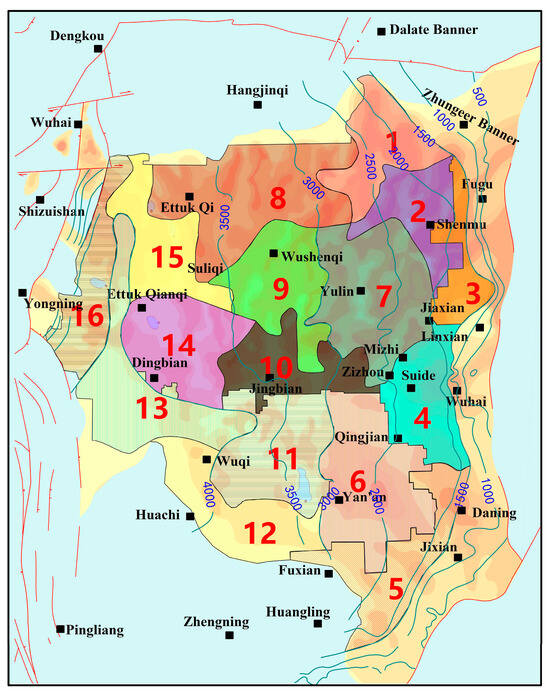
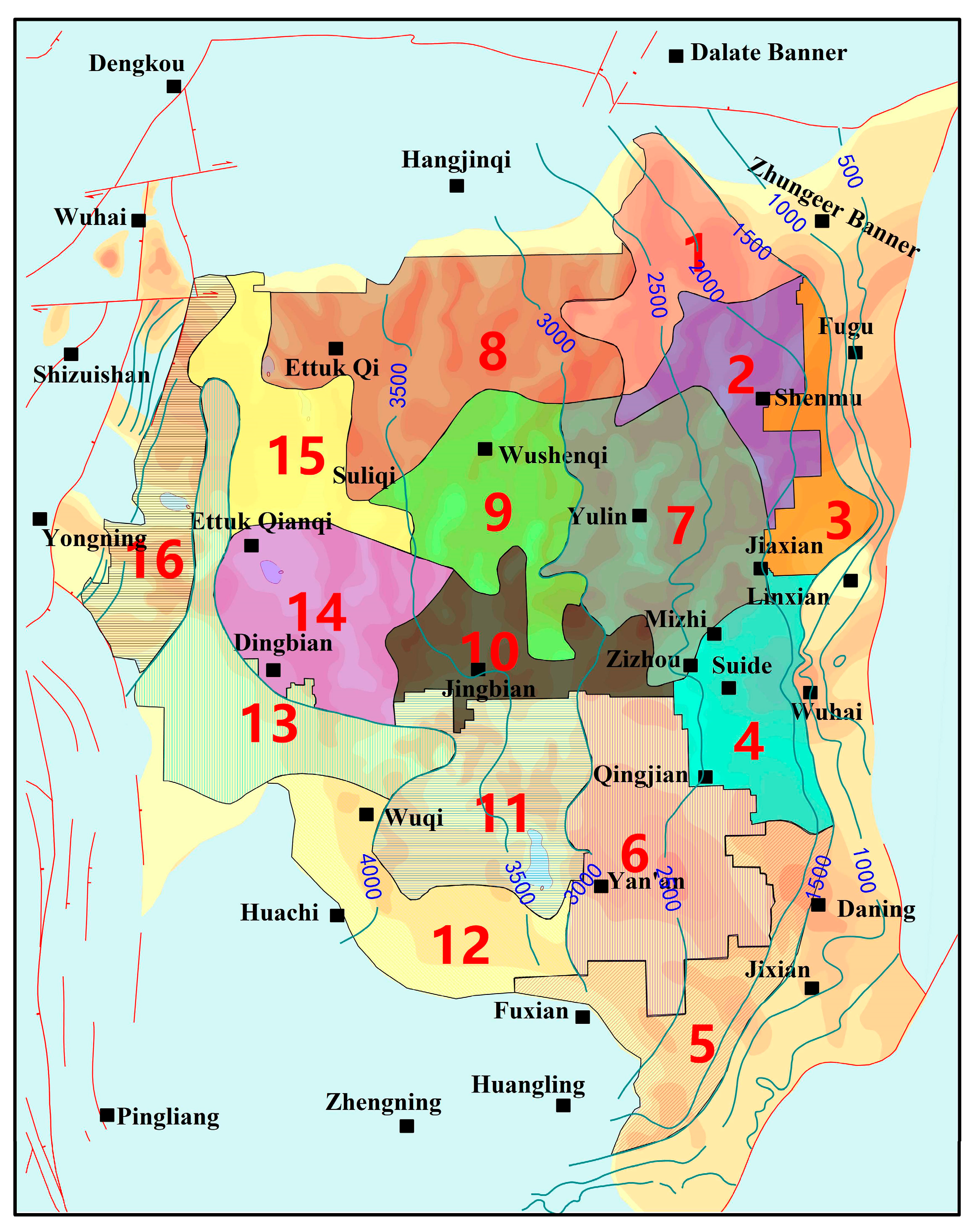
The selection of evaluation parameters comprehensively reflects the principal geological and engineering factors governing deep CBM accumulation and development. Specifically, burial depth constrains in situ stress conditions and controls variations in gas content; vitrinite reflectance (Ro) characterizes coalification evolution and indicates the gas generation stage; caprock lithology reflects sealing capacity and thus preservation effectiveness; and coal body brittleness–ductility properties determine fracturing feasibility and permeability enhancement potential. Based on the integrated analysis of these parameters, Geographic Information System (GIS)-based spatial analysis techniques were employed to overlay and synthesize multiple thematic evaluation maps [29,30]. As a result, the No. 8 coal seam within the study area was subdivided into 16 computational units (Figure 9). Each unit exhibits high internal parameter homogeneity and pronounced inter-unit heterogeneity with respect to areal extent, burial depth range, organic matter maturity (Ro) distribution, and coal–rock brittleness–ductility characteristics, thereby providing a robust geological basis for subsequent resource assessment and development optimization.
Figure 9.
Computational unit Division Results for the 8# Deep Coalbed Methane Layer in the Benxi Formation of the Ordos Basin.
4.2. Applications of Computational Units in Deep Coalbed Methane Exploration
The computational units delineated in this study are characterized by extensive and laterally continuous spatial distributions, rendering them suitable for resource evaluation using the volumetric method. Owing to its strong adaptability across different exploration stages and its clearly defined parameter framework, the volumetric method has become the most fundamental and widely applied approach in unconventional oil and gas resource assessment. The reliability of volumetric estimation is largely dependent on an accurate understanding of reservoir enrichment mechanisms, geological conditions, and the determination of key reservoir parameters. Based on the computational unit delineation described above, the volumetric method was employed to estimate the in situ geological resources of deep coalbed methane (CBM) for each computational unit (technical and economic recoverable resources are not included in this study, as they require coupling with development technology and economic conditions). The calculation formula is expressed as follows:
where G represents the in situ geological resource volume of deep CBM (108 m3); A denotes the gas-bearing area of the coal seam (km2); H is the effective thickness of the coal reservoir (m); ρ refers to the density of the coal–rock reservoir (t/m3); and C represents the total gas content of the coal seam (m3/t).
G = 0.01AhρC
Among these parameters, the areal extent of each computational unit was determined based on coal seam thickness contour maps. The effective thickness was calculated using the contour area-weighted method, with areal deductions applied to zones where coal seam thickness was less than 2 m. Coal seam density and gas content were preliminarily estimated by integrating coal rank information, well logging interpretations, and limited measured data obtained from exploratory wells within each unit [31,32]. The detailed parameter values are summarized in Table 5.
Table 5.
Evaluation Data Table for Deep Coalbed Methane In Situ Geological Resources in the No. 8 Coal Seam, Ordos Basin.
The volumetric calculations conducted for the 16 computational units within the study area (Table 5) were further validated by Monte Carlo simulation considering the variation coefficients of key parameters. The results indicate that the total in situ geological resources of deep CBM in the No. 8 coal seam of the Benxi Formation are approximately 16.49 × 10¹² m3 (P50), with P10 = 18.21 × 10¹² m3 and P90 = 14.76 × 10¹² m3. Based on the development technology level of deep CBM in the Ordos Basin [25], the technical recoverable resource volume is estimated to be 10–15% of the in situ geological resources, and the economic recoverable resource volume needs to be further calibrated by coupling with gas prices, drilling/fracturing costs, and operational risks. This evaluation approach not only effectively characterizes the spatial distribution of deep CBM resources but also enables the delineated computational units to function as fundamental geological entities for resource assessment, economic evaluation, and development planning. Consequently, it embodies a geology–engineering integrated evaluation framework and provides a solid basis for subsequent optimization of favorable development areas.
5. Conclusions
Based on the integrated geology–engineering concept, this study established a systematic methodological framework for delineating deep coalbed methane (CBM) computational units. Taking the No. 8 coal seam of the Benxi Formation in the Ordos Basin as a case study, the following conclusions were obtained:
- (1)
- The key geological boundaries and dominant controlling mechanisms governing deep CBM accumulation in the Ordos Basin were clarified. A burial depth of approximately 1500 m was identified as the critical transition boundary between adsorbed-gas-dominated and free-gas-dominated systems, reflecting a dynamic gas-state conversion interface under coupled temperature–pressure conditions. In addition, a vitrinite reflectance threshold of Ro > 1.2% was established as the maturity criterion for effective gas generation potential, confirming its fundamental control on sustained coal gasification capacity and gas supply intensity.
- (2)
- A multi-parameter, integrated quantitative evaluation model for the sealing capacity of coal-bearing strata in weak hydrodynamic fields was developed. By incorporating key indicators including breakthrough pressure, sealing layer thickness, and porosity–permeability characteristics, a comprehensive sealing capacity index (Ec) was proposed. This model enables quantitative comparison and hierarchical evaluation of sealing performance among different roof assemblages (coal–sandstone, coal–mudstone, and coal–tuff), providing an effective tool for refined characterization of CBM preservation conditions.
- (3)
- The vertical zoning characteristics of mechanical properties in deep coal–rock systems and their engineering implications were systematically revealed. The results indicate that coal–rock formations at burial depths shallower than approximately 4000 m are dominated by brittle failure behavior, which is favorable for hydraulic fracturing and reservoir stimulation. At greater depths, coal–rock progressively transitions to plastic deformation, substantially increasing stimulation difficulty. This delineation defines a clear mechanical depth boundary for evaluating reservoir stimulability and optimizing engineering operation intervals for deep CBM development.
- (4)
- A systematic “boundary–source–preservation–optimization” framework for delineating deep CBM computational units was proposed and successfully applied in the Ordos Basin. Through multi-level spatial superposition analysis of key geological and engineering parameters, the No. 8 coal seam in the study area was subdivided into 16 distinct computational units with differentiated characteristics, and total CBM resources were estimated at approximately 16.49 × 10¹² m3. This approach achieves organic integration of geological endowment and engineering feasibility, providing a direct scientific basis for CBM resource classification, favorable zone selection, and differentiated development strategy deployment.
Author Contributions
Conceptualization, B.L.; data curation, B.L. and L.Z.; formal analysis, B.L. and L.Z.; funding acquisition, W.T.; resources, W.T. and. H.C.; investigation, B.L.; methodology, B.L.; project administration, W.T. and H.C.; supervision, S.L., W.T. and H.C.; writing—original draft, B.L.; writing—review and editing, B.L. and S.L. All authors have read and agreed to the published version of the manuscript.
Funding
This research was supported by the National Natural Science Foundation of China (Project No.: 42130802) and the National Major Science and Technology Special Project (Project No.: 2025ZD1404200).
Data Availability Statement
The data presented in this study are available on request from the corresponding author.
Conflicts of Interest
The authors declare no conflicts of interest.
References
- Qin, Y.; Moore, T.A.; Shen, J.; Yang, Z.; Shen, Y.; Wang, G. Resources and geology of coalbed methane in China: A review. Int. Geol. Rev. 2018, 60, 777–812. [Google Scholar] [CrossRef] [Scilit]
- Li, S.; Qin, Y.; Tang, D.Z.; Shen, J.; Wang, J.J.; Chen, S.D. A comprehensive review of deep coalbed methane and recent developments in China. Int. J. Coal Geol. 2023, 279, 104369. [Google Scholar] [CrossRef] [Scilit]
- Yao, Y.; Wang, F.; Liu, D.; Sun, X.; Wang, H. Quantitative characterization of the evolution of in-situ adsorption/free gas in deep coal seams: Insights from NMR fluid detection and geological time simulations. Int. J. Coal Geol. 2024, 285, 104474. [Google Scholar] [CrossRef] [Scilit]
- Xu, S.; Li, Q.; Sun, F.; Yin, T.; Yang, C.; Wang, Z.; Qiu, F.; Zhou, K.; Chen, J. Geological Controls on Gas Content of Deep Coal Reservoir in the Jiaxian Area, Ordos Basin, China. Processes 2024, 12, 1269. [Google Scholar] [CrossRef] [Scilit]
- Li, G.; Zhang, J.; Zhao, Q.; Chen, H.; Chen, Y.; Zhang, G.; Tian, W.; Wang, M.; Deng, Z.; Xu, W. Evaluation methodology of coal-rock gas resources and explorationpotential of favorable areas inonshore China. Pet. Explor. Dev. 2025, 52, 1231–1245. [Google Scholar] [CrossRef] [Scilit]
- Huang, J.; Liu, S.; Tang, S.; Shi, S.; Wang, C. Study on the Coalbed Methane Development under High In Situ Stress, Large Buried Depth, and Low Permeability Reservoir in the Libi Block, Qinshui Basin, China. Adv. Civ. Eng. 2020, 2020, 6663496. [Google Scholar] [CrossRef] [Scilit]
- Li, X.; Zhang, J.; Li, C.; Li, B.; Zhao, H.; Li, R.; Qi, Q. Variation characteristics of coal-rock mechanical properties under varying temperature conditions for Shanxi Linfen coalbed methane well in China. J. Pet. Explor. Prod. Technol. 2021, 11, 2905–2915. [Google Scholar] [CrossRef] [Scilit]
- Li, S.; Tang, D.; Pan, Z.; Xu, H.; Tao, S.; Liu, Y.; Ren, P. Geological conditions of deep coalbed methane in the eastern margin of the Ordos Basin, China: Implications for coalbed methane development. J. Nat. Gas Sci. Eng. 2018, 53, 394–402. [Google Scholar] [CrossRef] [Scilit]
- Xu, H.; Tang, D.; Tao, S.; Li, S.; Tang, S.; Chen, S.; Zhang, P.; Deng, Y. Differences in geological conditions of deep and shallow coalbed methane and their formation mechanisms. Coalf. Geol. Explor. 2024, 52, 33–39. [Google Scholar]
- Xu, F.; Yan, X.; Li, S.; Xiong, X.; Wang, Y.; Zhang, L.; Liu, C.; Hu, J.; Fang, Y.; Zhao, H.; et al. Theoretical and technologicaldifficulties and countermeasures of deep CBM exploration and development in the eastern edge of Ordos Basin. Coalf. Geol. Explor. 2023, 51, 115–130. [Google Scholar]
- Jiang, L.; Song, Y.; Zhao, W.; Bo, D.; Liu, S.; Hao, J. Main controlling factor of coalbed methane enrichment area in southern Qinshui Basin, China. J. Pet. Explor. Prod. Technol. 2024, 14, 165–173. [Google Scholar] [CrossRef] [Scilit]
- Zhou, D.; Chen, G.; Chen, Z.; Liu, Z. Exploration and development progress, key evaluation parameters andprospect of deep CBM in China. Nat. Gas Ind. 2022, 42, 43–51. [Google Scholar]
- Qin, Y.; Shen, J.; Wang, B.; Yang, S.; Zhao, L. Accumulation effects and coupling relationship of deep coalbedmethane. Acta Petrrolei Sin. 2012, 33, 48–54. [Google Scholar]
- Chen, B.; Li, S.; Tang, D.; Pu, Y.; Zhong, G. Evaluation of recoverable potential of deep coalbed methane in the Linxing Block, Eastern Margin of the Ordos Basin. Sci. Rep. 2024, 14, 9192. [Google Scholar] [CrossRef] [Scilit] [PubMed]
- Zhang, K.; Li, S.; Zhong, G.; Feng, P.; Chang, C.; Li, H. Characteristics of in-situ stress field of coalbed methane reservoir in the eastern margin of Ordos basin. Int. J. Coal Geol. 2025, 301, 104715. [Google Scholar] [CrossRef] [Scilit]
- Xie, H.; Gao, M.; Fu, C.; Lu, Y.; Yang, M.; Hu, J.; Yang, B. Mechanical behavior of brittle-ductile transition in rocks atdifferent depths. J. Coal Soc. 2021, 46, 701–715. [Google Scholar]
- Shen, J.; Qin, Y.; Fu, X.; Chen, G.; Chen, R. Properties of Deep CoalbedMethane Reservoir-formingConditions and Critical DepthDiscussion. Nat. Gas Geosci. 2014, 25, 1470–1476. [Google Scholar]
- Wu, S.; Tang, D.; Li, S.; Chen, H.; Wu, H. Coalbed methane adsorption behavior and its energy variation features under supercritical pressure and temperature conditions. J. Pet. Sci. Eng. 2016, 146, 726–734. [Google Scholar] [CrossRef] [Scilit]
- Tian, F.C.; Liang, Y.T.; Wang, D.M.; Jin, K. Effects of caprock sealing capacities on coalbed methane preservation: Experimental investigation and case study. J. Cent. South Univ. 2019, 26, 925–937. [Google Scholar] [CrossRef] [Scilit]
- Xi, Z.; Tang, S.; Yang, W.; Yang, X.; Zhang, Q.; Wang, K.; Liu, J. Implications of coal reservoir self-sealing for the enrichment andstimulation of deep coalrock gas. Nat. Gas Ind. 2024, 44, 105–112. [Google Scholar]
- Clarkson, C.R.; Nobakht, M.; Kaviani, D.; Ertekin, T. Production Analysis of Tight-Gas and Shale-Gas Reservoirs Using the Dynamic-Slippage Concept. Spe J. 2012, 17, 230–242. [Google Scholar] [CrossRef] [Scilit]
- Chen, S.; Tang, D.; Tao, S.; Xu, H.; Li, S.; Zhao, J.; Ren, P.; Fu, H. In-situ stress measurements and stress distribution characteristics of coal reservoirs in major coalfields in China: Implication for coalbed methane (CBM) development. Int. J. Coal Geol. 2017, 182, 66–84. [Google Scholar] [CrossRef] [Scilit]
- Qiu, J.; Xia, Y.; Li, T. Correlation Study of Pyrolysis Product between Two Different ThermalSimulation Systems. Nat. Gas Geosci. 2011, 22, 144–148. [Google Scholar]
- Chen, S.; Tang, D.; Hou, W.; Li, Y.; Tao, S.; Xu, H.; Li, S.; Tang, S.; Pan, Y.; Zhang, B. Geological particularity andreservoir engineering response of deep coalbed methane. Acta Pet. Sin. 2023, 44, 1993–2006. [Google Scholar]
- Sun, F.; Zhao, G.; Tian, W.; Deng, Z.; Shen, J. Definition, connotation, formation and application of coalbed methanesystem: A case study on the Carboniferous-Permian coal seams in the Ordos Basin. Nat. Gas Ind. 2024, 44, 42–53. [Google Scholar]
- Chen, G.; Qin, Y.; Hu, Z.; Li, W.; Shen, J. Variations of Gas Content in DeepCoalbeds of Different Coal Ranks. J. Univ. Geol. 2015, 21, 274–279. [Google Scholar]
- Hackston, A.; Rutter, E. The Mohr–Coulomb criterion for intact rock strength and friction–a re-evaluation and consideration of failure under polyaxial stresses. Solid Earth 2016, 7, 493–508. [Google Scholar] [CrossRef] [Scilit]
- Wang, S.; Zhao, W.; Fu, X.; Zhang, Z.; Wang, T.; Ge, J. A universal method for quantitatively evaluating rock brittle-ductile transition behaviors. J. Pet. Sci. Eng. 2020, 195, 107774. [Google Scholar] [CrossRef] [Scilit]
- Cheng, W.J. Evaluation and Optimization of FavorableBlocks and Intervals for Co-Exploitation of Coal Bed Methane and Shale Gas Resources; China University of Mining and Technology: Xuzhou, China, 2021. [Google Scholar]
- Xiu, Y.; Liu, Q.; Fu, Q.; Yang, K.; Zhang, M.; Wu, B. Optimization of residual coalbed methane extraction wells and analysis of development and emission reduction benefits in the Songzao mining area. Sci. Rep. 2025, 15, 13731. [Google Scholar] [CrossRef] [Scilit] [PubMed]
- Niu, X.; Yu, J.; Xu, W.; Wang, K.; Wen, X.; Sun, Y.; Zhang, J. Reservoir-forming geologicalconditions and explorationdirections of Upper Paleozoic coal-rock gas in the Ordos Basin. Nat. Gas Ind. 2024, 44, 33–50. [Google Scholar]
- Niu, X.; Fan, L.; Yan, X.; Zhou, G.; Zhang, H.; Jing, X.; Zhang, M. Enrichment conditions and resource potential of coal-rock gas in OrdosBasin, NW China. Pet. Explor. Dev. 2024, 51, 972–985. [Google Scholar] [CrossRef] [Scilit]

Disclaimer/Publisher’s Note: The statements, opinions and data contained in all publications are solely those of the individual author(s) and contributor(s) and not of MDPI and/or the editor(s). MDPI and/or the editor(s) disclaim responsibility for any injury to people or property resulting from any ideas, methods, instructions or products referred to in the content. |
© 2026 by the authors. Licensee MDPI, Basel, Switzerland. This article is an open access article distributed under the terms and conditions of the Creative Commons Attribution (CC BY) license.