Article

Study on the Mechanism of Mechanical Strength Modification in Weakly Cemented Sandstone by Silica Sol Grouting


1
College of Geology and Mining Engineering, Xinjiang University, Urumqi 830017, China
2
Collaborative Innovation Center for Green Development and Ecological Restoration of Mineral Resources in Xinjiang Autonomous Region and Ministry of Education, Urumqi 830017, China
3
Zhongyun International Engineering Co., Ltd., Zhengzhou 450007, China
4
Kuqa Yushuling Coal Mine Co., Ltd., Aksu 843000, China
5
School of Mines, China University of Mining and Technology, Xuzhou 221116, China
*
Authors to whom correspondence should be addressed.
Processes 2026, 14(6), 930; https://doi.org/10.3390/pr14060930
Submission received: 18 February 2026 / Revised: 7 March 2026 / Accepted: 13 March 2026 / Published: 15 March 2026

Abstract

This study addresses the challenges posed by weakly cemented strata in mine tunnels, where surrounding rock softens and deforms upon water exposure, which promotes the development of seepage pathways, and exhibits insufficient stability in bolt (cable) support systems. This study conducts laboratory grouting tests using silica sol on typical weakly cemented sandstone from Xinjiang mining areas. The mineral composition and pore structure were characterized using XRD, SEM, and mercury porosimetry. The injectable mixing ratio parameters for silica sol and the catalyst were determined through viscosity-time evolution tests. Grouting was performed using a custom-built constant-pressure grouting apparatus. After curing, unconfined compressive strength (UCS) and porosity-permeability tests were conducted to evaluate the micro-mechanism of grouting effects on the mechanical and permeability properties of weakly cemented sandstone. The results indicate: (1) The sandstone exhibits a high clay mineral content of 39.8%, dominated by illite. Its pores are primarily small-scale (10–100 nm), accounting for 79.31% of the total pore volume. This scale matches that of silica sol nanoparticles (approximately 9–20 nm), facilitating slurry penetration into micro-pores; (2) microscopic analyses reveal that silica sol effectively reconstructs pore structures through permeation filling and surface coating. Compared to KCl-induced gelation (with approximately 8% gel coverage), NaCl-induced gelation forms a more continuous gel film with more complete pore filling, achieving coverage of around 22%. Furthermore, the larger surface area of the gel aggregates indicates a more thorough filling of micro- and nano-pores, effectively enhancing rock mass compactness. (3) Permeability decreased from 6.91 mD to 3.55 mD, a reduction of 48.6%, while porosity decreased from 16.94% to 13.55%, showing a phased reduction during the grouting process; (4) following pressure grouting stabilization, the uniaxial compressive strength of sandstone increased appropriately by approximately 7–14%, while the elastic modulus rose by about 18–28%. The failure mechanism shifted from shear brittleness to a shear-tension composite state, with enhanced post-peak bearing capacity. These findings provide support for optimizing silica sol grouting parameters in weakly cemented strata tunnels and for the synergistic reinforcement of rock mass permeability and strength.

1. Introduction

Xinjiang is estimated to hold approximately 40% of China’s total coal reserves [1]. As coal resources in eastern China gradually deplete, the focus of coal development is shifting to western mining areas such as Xinjiang. However, the region is extensively covered by weakly cemented strata from the Jurassic and Cretaceous periods, which feature short diagenetic times. These rock formations exhibit low cement strength and soften readily upon water exposure, making surrounding rock in mine tunnels prone to significant deformation and instability failure [2]. Consequently, targeted grouting reinforcement research addressing water-induced deterioration and strength reduction in weakly cemented rock masses holds significant engineering importance.
Regarding the fundamental properties and failure mechanisms of weakly cemented rock masses, existing studies have provided relatively clear insights from aspects such as mineral composition, water sensitivity, and mechanical-seepage responses. Guo et al. [3] indicated that the uniaxial compressive strength of weakly cemented rocks decreases with increasing clay mineral content, suggesting that mineral composition is a key factor controlling their bearing capacity. Song Chaoyang, Sun Lihui, Ji Hongguang et al. [4,5,6,7,8] analyzed weak-cemented sandstone samples from western China’s mining regions, integrating water content, strength, and acoustic emission responses to reveal water-induced softening and clayification effects, and classified water-induced softening characteristics. Zhang et al. [9] established a stress-damage–permeability relationship model based on triaxial permeability tests; Yang et al. [10] conducted unloading–seepage tests indicating that unloading rate and initial confining pressure significantly influence the post-peak permeability jump and fracture expansion characteristics in weakly cemented sandstones; Fu et al. [11] elucidated the coupled mechanism of pore structure rearrangement and damage accumulation during unloading in saturated sandstone from the perspectives of pore evolution and micro-damage. Liu Honglin et al. [12,13,14] systematically analyzed the mechanical response mechanisms of weakly cemented rocks under hydro-mechanical coupling across varying stress environments and saturation states. Xu et al. [15] proposed zoning criteria for deep weakly cemented overburden (“severely fractured zones–slightly fractured zones”) based on fracture development characteristics in weakly cemented strata. Zhu et al. [16] further elucidated, through discrete element analysis and field monitoring, the influence of weak-cemented overburden failure and collapse zone compaction processes on seepage channel connectivity and hydraulic pressure fluctuations. While these studies provide a foundation for understanding the softening and instability of weakly cemented rock masses, they predominantly focus on mechanical and hydraulic responses in “unreinforced states”, with insufficient discussion on the mechanisms underlying performance enhancement following grouting modification.
In rock reinforcement technology, grouting has been proven to be an effective method for enhancing the integrity and load-bearing capacity of tunnel rock masses [17]. However, due to the development of pores and microfractures in weakly cemented sandstone, traditional cement-based grouts are constrained by particle size and injectability. They are prone to filtration and clogging effects, making it difficult to effectively penetrate and seal minute pores. This limits their effectiveness in enhancing impermeability and modifying deep rock mass regions [18,19]. To overcome injection and sealing challenges in fine-pore media, silica sol has gained attention due to its small particle size, high permeability, and adjustable cementation properties, gradually finding application in geotechnical and mining reinforcement [20]. Funehag et al. [21] systematically investigated the rheological properties of silica sol and its permeation mechanism in porous media, proposing a method for calculating slurry diffusion length. Krishnan et al. [22] validated through cyclic triaxial tests that silica sol grouting significantly enhances sandy soil’s resistance to liquefaction. Pan et al. [23,24] revealed the grouting consolidation patterns of silica sol in fractured coal bodies; Zhexiang et al. [25,26] analyzed the consolidation and impermeability mechanisms of nano-silica sol in low-permeability mudstone, further exploring the impermeability reinforcement mechanism in soft rock consolidation by studying the macro- and micro-level sealing patterns of silica sol-based composite grout during injection in soft rock; Chai et al. [27] employed a constant-pressure grouting system to clarify the evolution of strength and permeability in silica sol-modified mudstone. Zhou [28] conducted laboratory and model tests on permeation grouting with silica sol at varying concentrations in low-permeability silt, investigating grouting pressure and effective diffusion radius within silt. The study analyzed the influence mechanism of silica sol concentration on permeation grouting pressure and effective diffusion radius. These investigations demonstrate silica sol’s potential for reinforcement and impermeability modification in fine-pore media.
Based on the central theme of deformation failure and seepage evolution in weakly cemented rock masses under water-bearing conditions, our team has conducted and accumulated a series of studies [29,30,31,32,33,34,35,36]. Building upon these prior insights, this research addresses the critical challenges of micro-pore development in weakly cemented sandstones and their susceptibility to softening and strength loss upon water exposure. Focusing on the more injectable silica sol grouting modification technology, we propose to explore the relationship between post-grouting strength enhancement and permeability reduction through a logical sequence: Material cementation properties → pore structure reconstruction → macroscopic mechanical strength and seepage evolution. By providing mechanism explanations validated through microscopic observations, this study aims to offer experimental evidence and theoretical support for selecting grouting materials and optimizing parameters for tunnel rock mass grouting in typical weakly cemented formations, such as those found in Xinjiang.

2. Materials and Methods

2.1. Test Materials and Properties

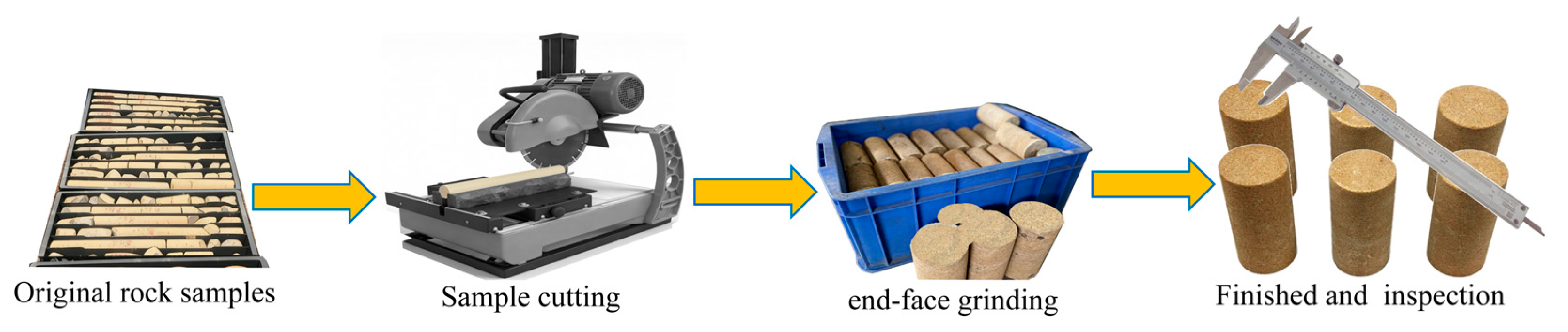
Test rock samples were extracted from the sandstone roof of the A4301 tunnel at Mine 6 of Xinjiang Saier Energy Mining Co., Ltd. This formation belongs to a weakly cemented Jurassic stratum. All rock samples were processed into standard cylindrical specimens measuring φ50 mm × 100 mm in strict accordance with the requirements of the International Society for Rock Mechanics (ISRM) and the National Standard for Test Methods of Engineering Rock Masses (GB/T 50266-2013) [37], ensuring the reliability and comparability of experimental results, as shown in Figure 1.
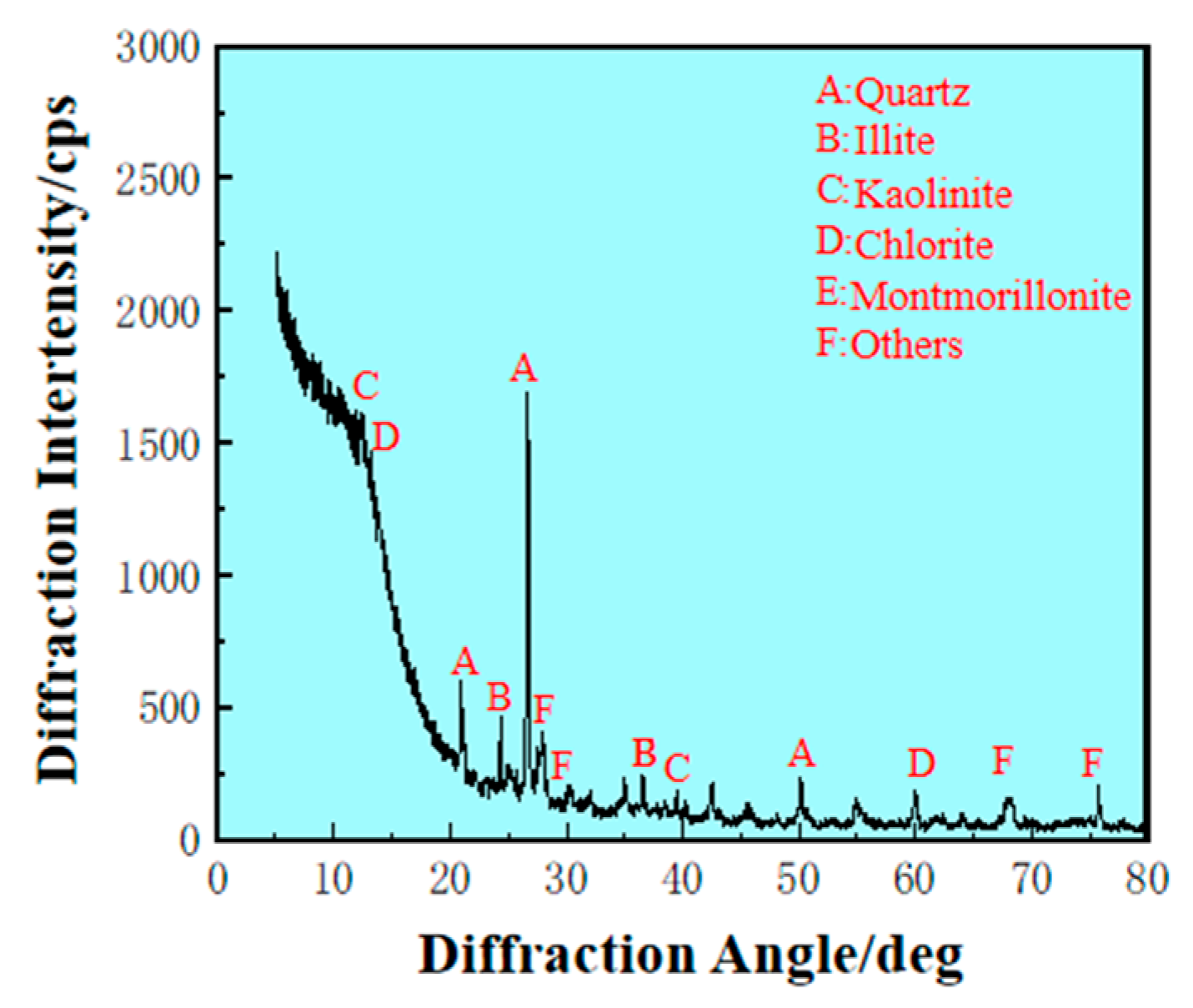
XRD diffraction analysis (see Figure 2) revealed its mineral composition, as shown in Table 1. The total clay mineral content reached 39.8%, with illite as the primary clay mineral accounting for 27.9%. It also contained 8.2% kaolinite and 2.3% montmorillonite, minerals that soften readily upon contact with water.
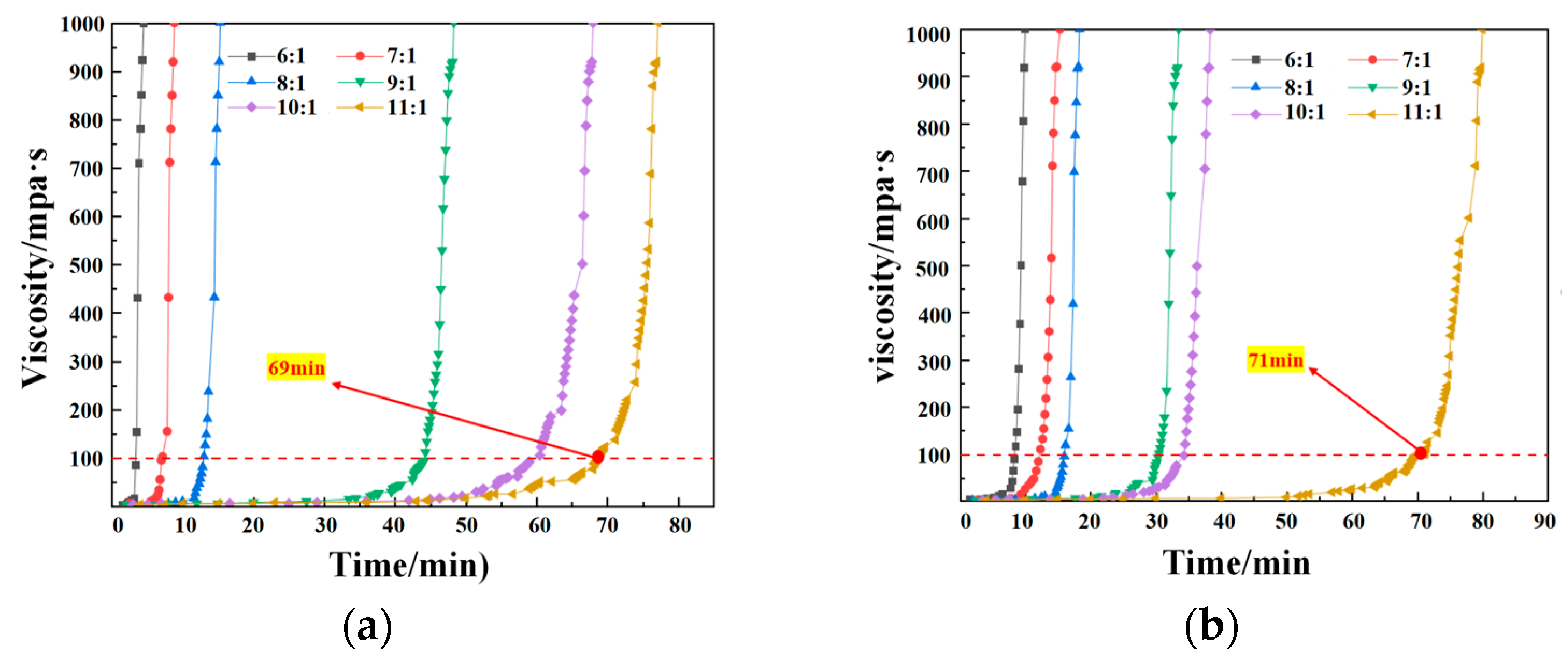
The silica sol selected for this study was sourced from Shandong Linyi Kehuan Silica Products Co., Ltd., model JN40. It is non-toxic and harmless, composed of SiO2 particles with an average diameter of 9–20 nm dispersed in an alkaline aqueous solution. The NDJ-8S rotary viscometer (Shanghai Changji Geological Instrument Co., Ltd., Shanghai, China) was used to measure the temporal variation in slurry viscosity under different catalyst types and ratios (silica sol to catalyst volume ranging from 6:1 to 11:1). The results are shown in Figure 3, which were used to determine subsequent grouting parameters.

2.2. Test Equipment

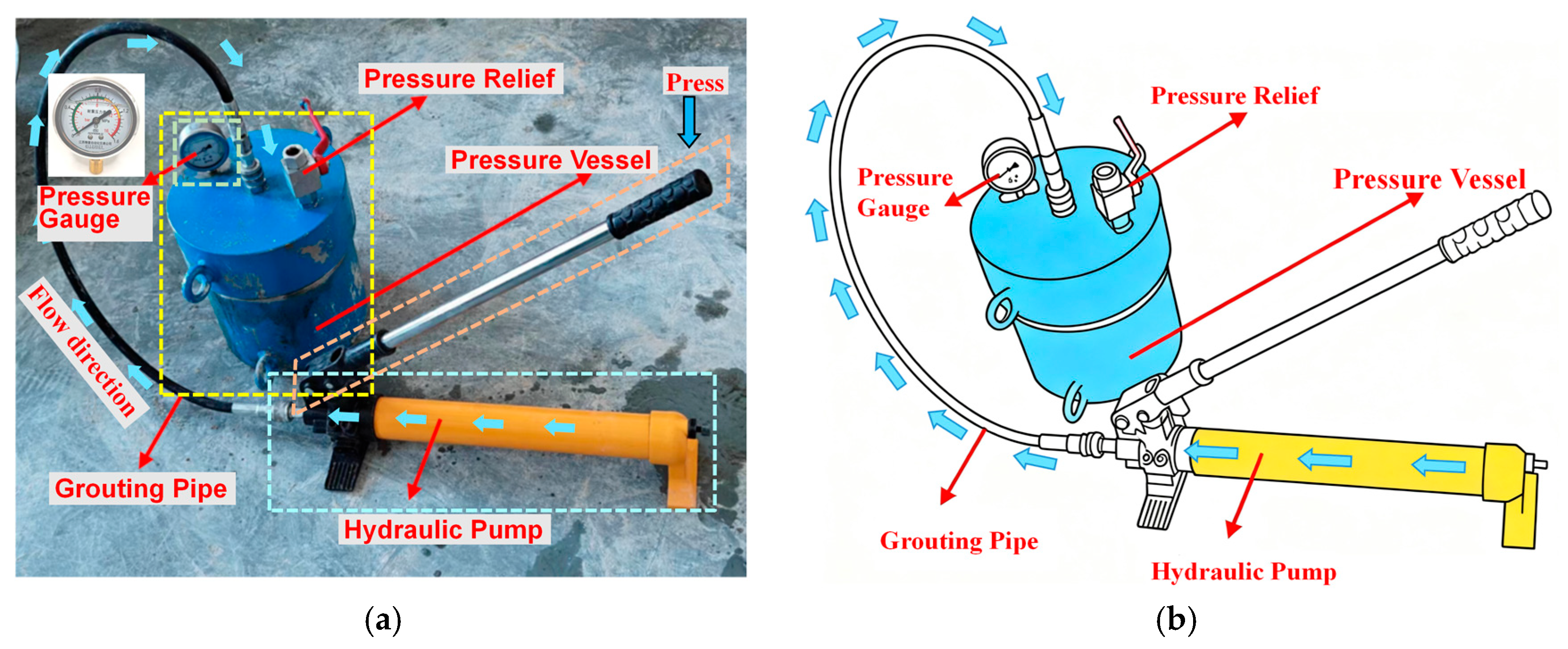
Our team independently designed a grouting test system capable of achieving stable pressure grouting through a hydraulic pump and pressure relief valve, as shown in Figure 4. This test system primarily consists of a pressure tank, a push-type manual hydraulic pump, grouting pipes, a pressure gauge, and a pressure relief valve. Operating within a pressure range of 0–10 MPa, it enables stable control of grouting pressure during the process.
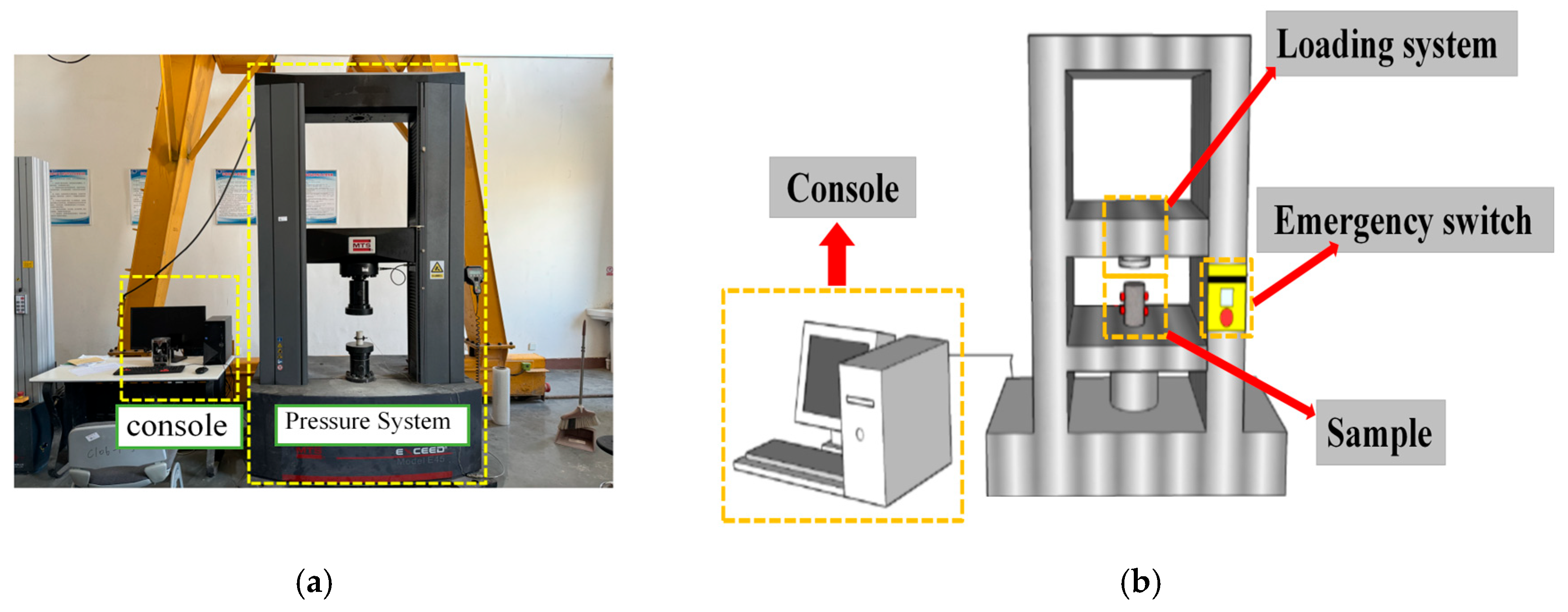
The uniaxial compression test employs the MTS-E45.605 mining rock mechanics testing system, equipped with a low-vibration motor drive unit and an integrated digital closed-loop control system. The system applies pressures ranging from 5 N to 600 kN. The test apparatus is shown in Figure 5.
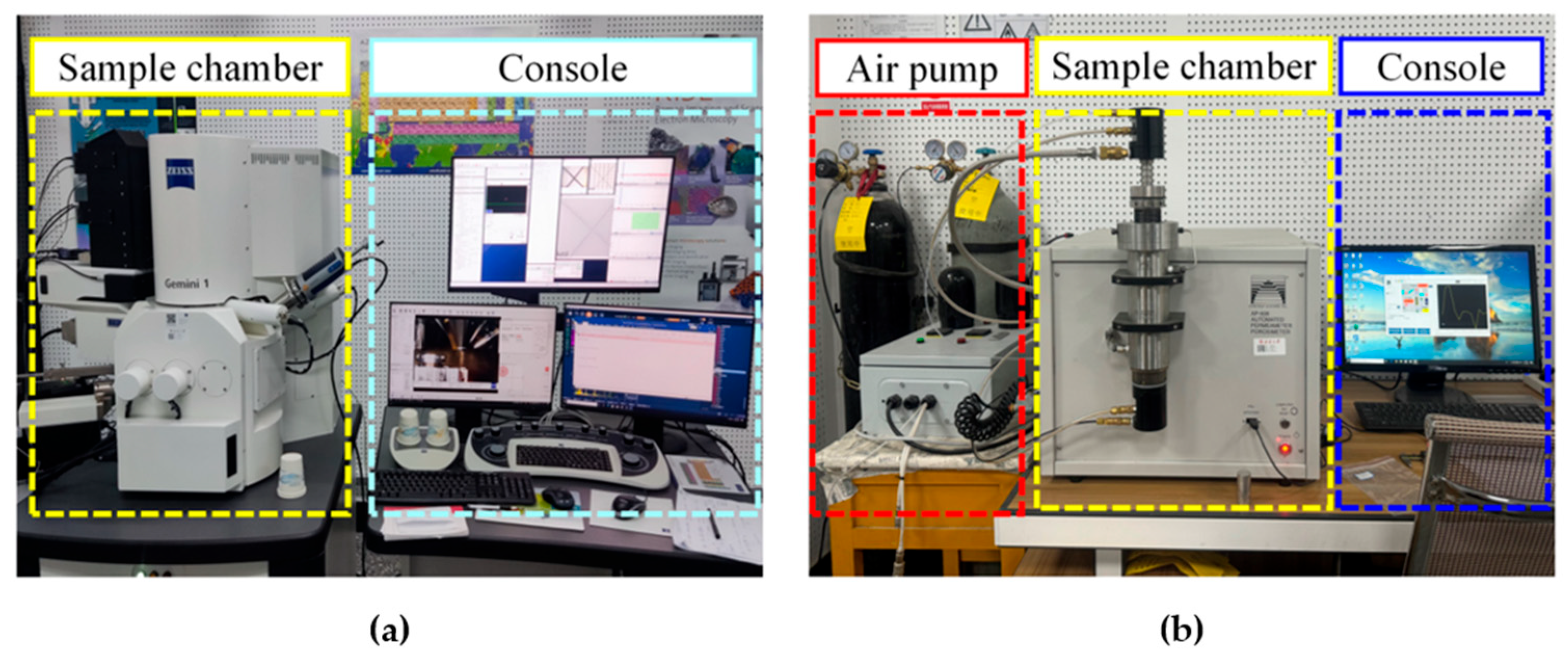
Microstructural changes were observed using a Sigma 300 high-resolution field emission scanning electron microscope (ZEISS, Oberkochen, Germany), while porosity measurements were conducted with an AP-608 automatic porosity and permeability tester (Coretest Systems, Mountain View, CA, USA). The experimental setup is shown in Figure 6.

2.3. Test Protocol

This study strictly followed standard grouting procedures for laboratory testing, ensuring all treatment processes met the technical requirements for grouting experiments. For comparative analysis, specimens were divided into three groups: Group I (SN-1, SN-2) served as the untreated control group; Group II (SN-3, SN-4) utilized sodium chloride (NaCl) as the grouting catalyst; and Group III (SK-1, SK-2) employed potassium chloride (KCl) as the grouting catalyst. Detailed information on the specimen grouping and corresponding preparation parameters is listed in Table 2. Based on the viscosity-time test results in Section 2.1 and considering the commonly used pressure range of 0–3 MPa in industrial grouting, this study adopts 2.0 MPa as the stabilization pressure level. This selection aligns with the conclusion from reference [27], which indicates that 2.0 MPa represents the optimal infiltration pressure within this range following investigations conducted at this pressure level. Additionally, the grouting duration is set at 50 min, with the optimal volume ratio of silica sol to catalyst determined as 11:1. The grouting process was conducted using a proprietary constant-pressure grouting system. All specimens were cured for 14 days under standard conditions (temperature 20 ± 2 °C, relative humidity ≥ 95%) post-grouting. Uniaxial compression (UCS) tests were performed on the cured specimens using an MTS servo testing machine (MTS Systems Corporation, Eden Prairie, MN, USA).

3. Results and Analysis

3.1. Analysis of the Effect of Silica Sol Grouting on the Mechanical Strength and Macro-Failure Characteristics of Weakly Cemented Sandstone

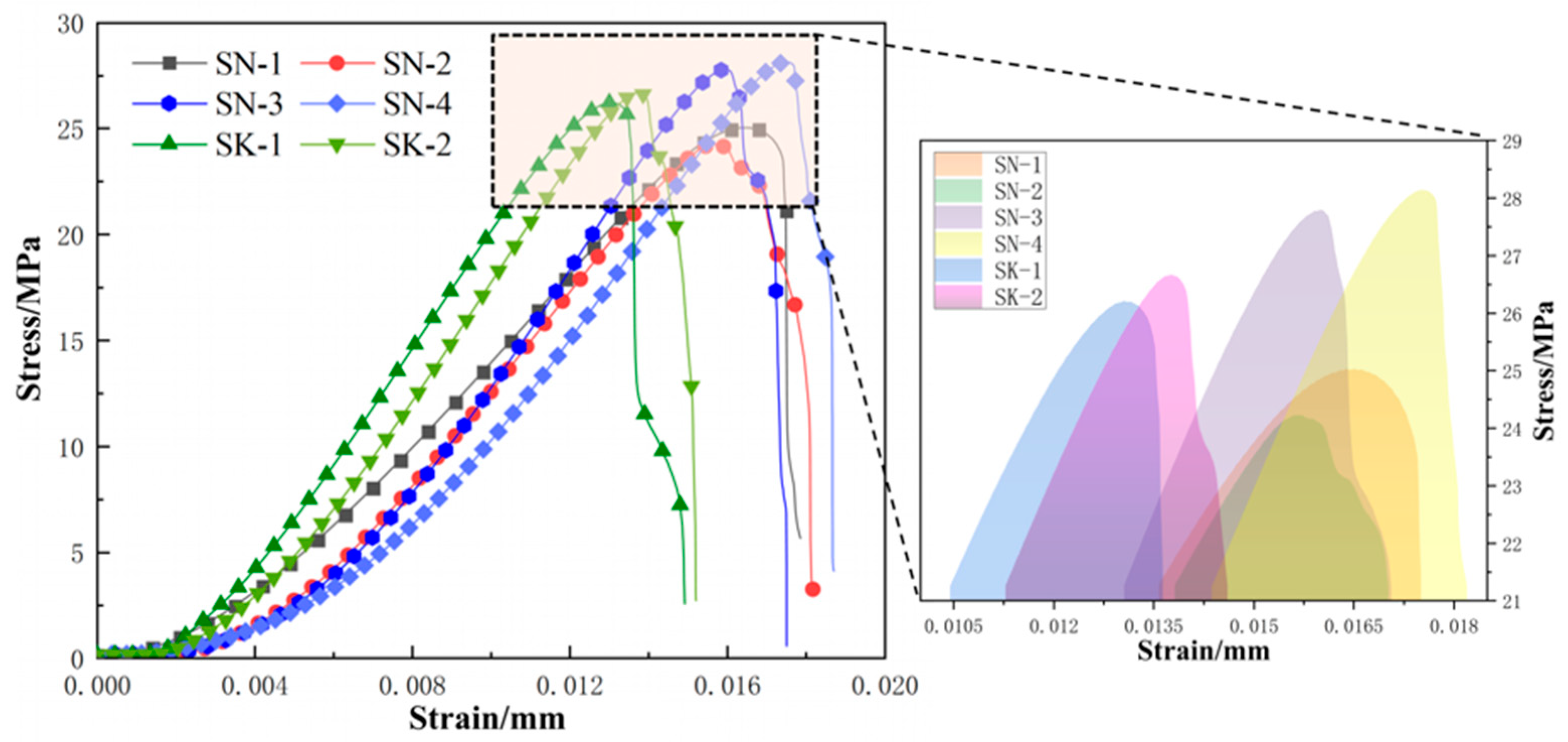
The mean ± sd analysis of the test results (see Figure 7 and Table 3) shows that, before grouting, the weakly cemented sandstone had an average uniaxial compressive strength of 24.62 MPa and an average elastic modulus of 2.28 GPa. The coefficients of variation for uniaxial compressive strength and elastic modulus were 2.44% and 8.70%, respectively, indicating a low overall dispersion of the specimens and good stability of the test results. After grouting, when potassium chloride (KCl) was used as the catalyst, the average uniaxial compressive strength of the sandstone increased to 26.43 MPa, representing an improvement of 7.35% compared with that before grouting, while the average elastic modulus increased to 2.92 GPa, corresponding to an increase of 28.07%. When sodium chloride (NaCl) was used as the catalyst, the average uniaxial compressive strength reached 27.96 MPa, which was 13.57% higher than that before grouting, and the average elastic modulus increased to 2.69 GPa, representing an improvement of 18.00%. In terms of grout intake, the average grout intake of the sandstone specimens increased by 6.40 g when potassium chloride was used as the catalyst, whereas it increased by 7.23 g when sodium chloride was used. The difference in grout intake between the two catalyst conditions was relatively small. Overall, both catalysts improved the mechanical properties of the weakly cemented sandstone to some extent. Comparatively, sodium chloride showed a more pronounced effect on enhancing uniaxial compressive strength, whereas potassium chloride was more effective in improving the elastic modulus.
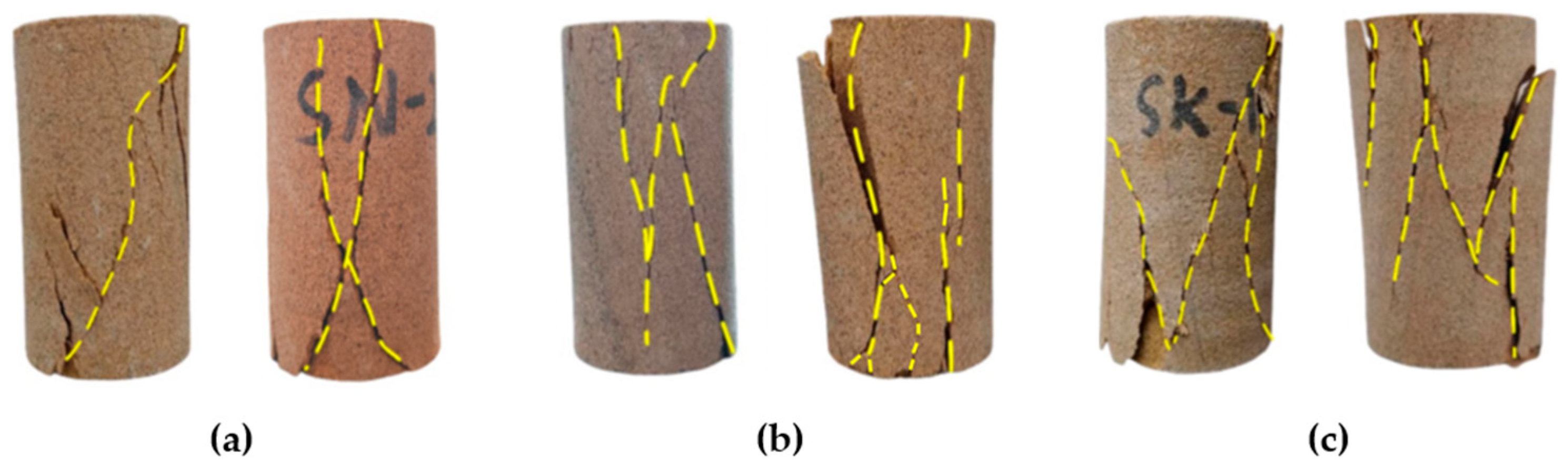
The enhancement of elastic modulus and compressive strength following grouting exhibits asynchrony (the KCl group showed a significant increase in modulus, while the NaCl group demonstrated superior strength improvement), with modulus gains generally exceeding strength gains. This discrepancy stems from the fundamental differences in their response mechanisms to grout reinforcement: Elastic modulus, as a stiffness indicator at small strain levels, is highly sensitive to cementation hardening at particle contact interfaces and the closure of microcracks [38]; grouting effectively mitigates the rock’s initial consolidation effect by filling micro voids, accelerating its transition into the linear elastic response stage and thereby causing the modulus to increase substantially first [39,40,41]. In contrast, compressive strength is more dependent on the repair extent of macroscopic defects and crack propagation resistance [39,40,41]. Since the efficiency of strengthening micro-contact stiffness far exceeds that of building macroscopic fracture resistance, this ultimately results in divergent evolutionary patterns between modulus and strength. The macroscopic failure patterns of ungrouted sandstone specimens under uniaxial compression are shown in Figure 8. The ungrouted specimens (Figure 8a) primarily exhibited X-shaped conjugate inclined plane shear failure and single inclined plane shear failure. Analysis of their stress–strain curves revealed a sharp decline after reaching peak stress. Following silica sol grouting modification, the sandstone’s failure pattern transformed into a composite failure mode combining shear and tensile failure (Figure 8b,c). This resulted in crack paths no longer being predominantly inclined cracks, but rather a coexistence of vertical and inclined cracks, with a single through-crack composed of both inclined and vertical segments. The failure path became more tortuous, and observation of the stress–strain curve revealed a significant increase in residual strength after the peak. This shift in failure mode indicates that silica sol grouting enhances intergranular cohesion, resulting in a more uniform internal strength distribution within the sandstone. Under loading, this enables the sandstone to distribute stress more evenly to its cemented grains, allowing them to share the load collectively. This improves ductile deformation capacity and mitigates the tendency toward rapid brittle failure under loading.

3.2. Analysis of Microstructural Changes in Weakly Cemented Sandstone Following Silica Sol Grouting

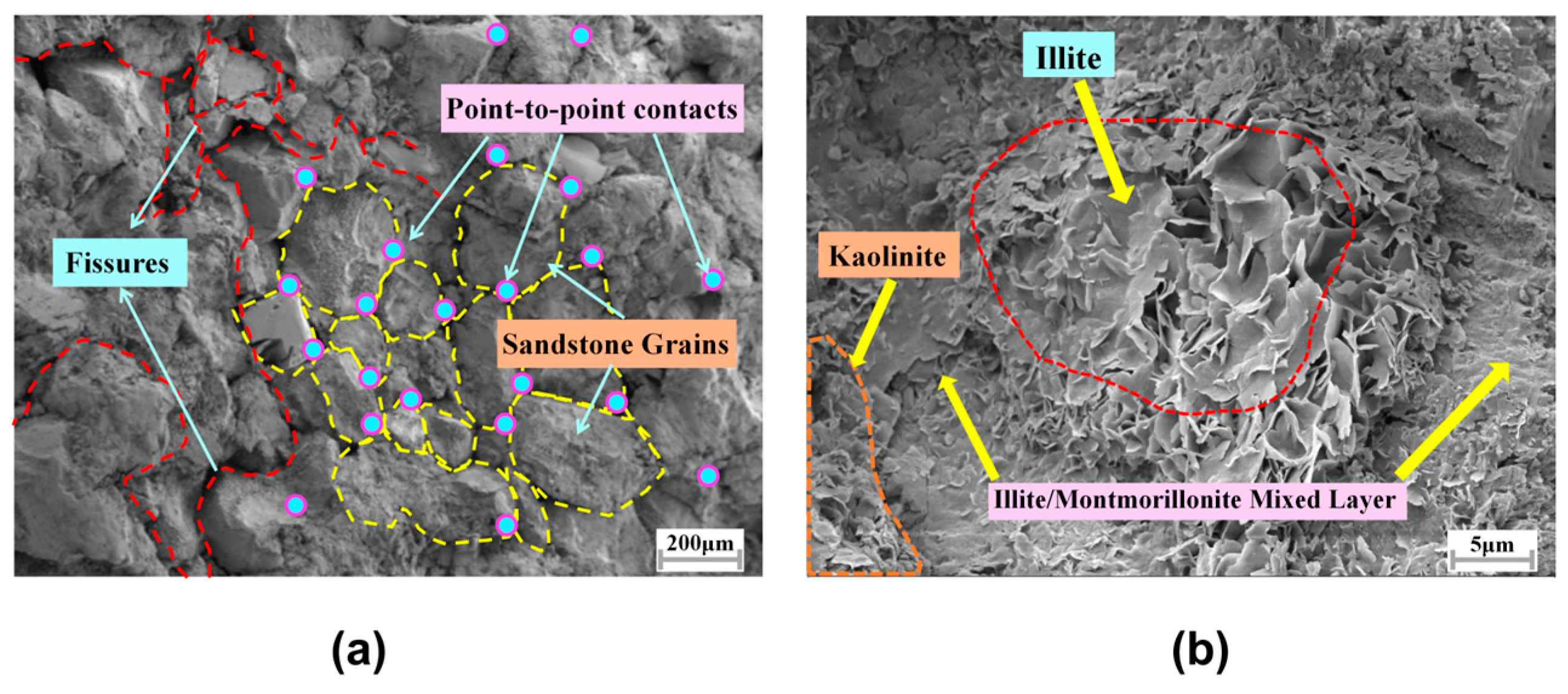
SEM observations of the ungrouted sandstone specimens are presented in Figure 9. The images clearly show that the cementation between sandstone particles is relatively loose, with well-developed pores, and that the interparticle contacts are dominated by unstable point-to-point contacts. At higher magnification, flaky and filamentous illite and kaolinite can be observed as irregularly distributed among the framework grains. Under applied loading, these point-to-point contacts are prone to rapid failure, leading to a sharp reduction in rock strength. Meanwhile, the abundant pores associated with such contact relationships can readily serve as flow channels. Once water enters the rock mass, the water-sensitive illite and kaolinite undergo softening, which ultimately promotes the disintegration of the rock.
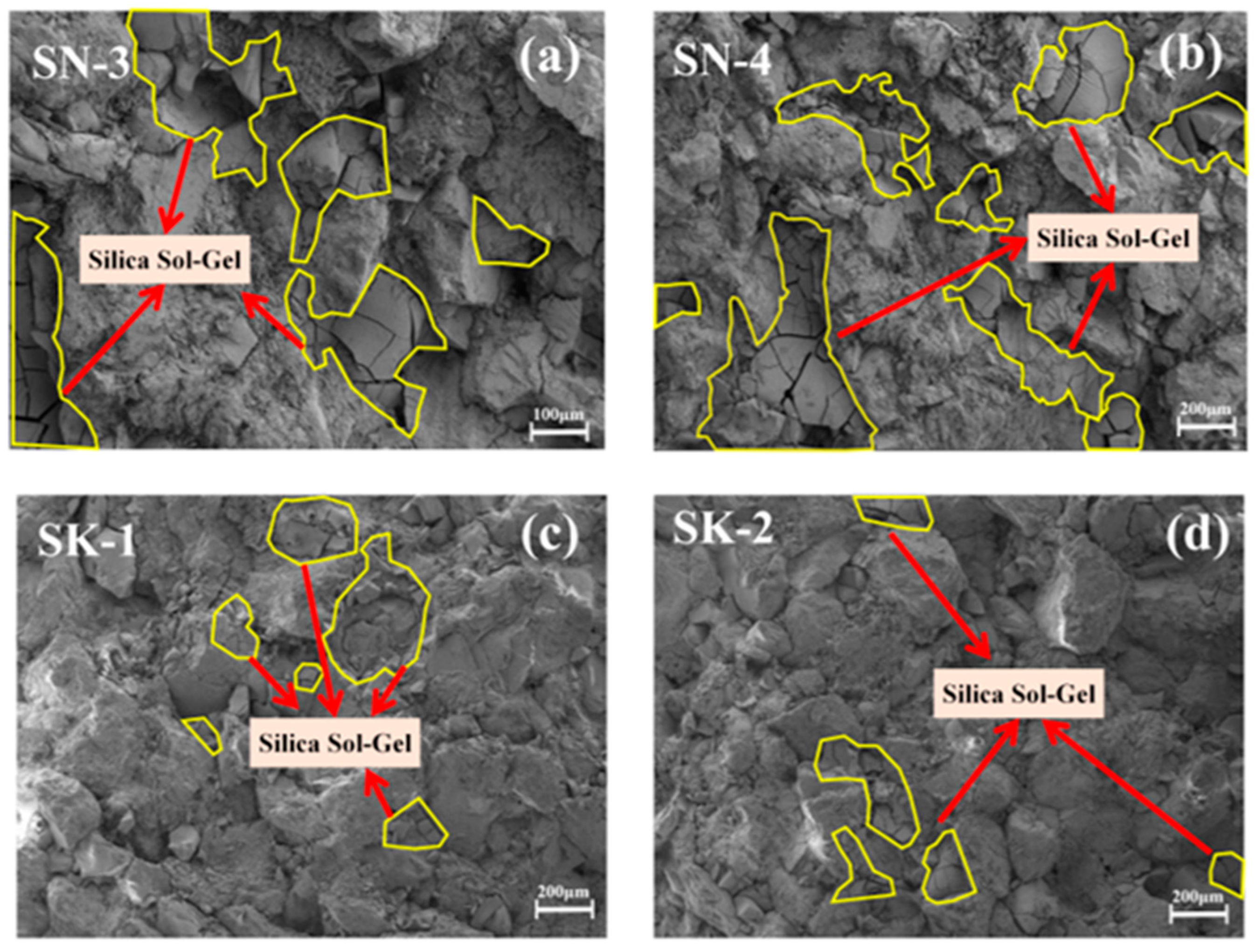
As can be seen from the SEM images shown in Figure 10a–d, after silica sol grouting treatment, the number of pores and microcracks between sandstone particles showed a significant decreasing trend. This suggests that the silica sol gel tends to effectively fill the pore space, and the cementitious material tends to be adsorbed and uniformly coated on the surface of sandstone particles. This phenomenon preliminarily indicates that the silica sol grout appears to be able to smoothly penetrate into the micro-nano pores inside the sandstone and shows a trend of effective filling. The number and size of pores exhibited a decreasing and shrinking tendency, which in turn showed an increasing trend in the compactness of the weakly cemented sandstone and has the potential to reconstruct the internal pore structure of the rock. From a mesoscopic mechanism perspective, such pore structure optimization appears to contribute to the improvement of the macroscopic mechanical properties of the rock, while the water softening resistance of the rock showed an increasing trend.
To further quantitatively characterize the changing trend of the filling and coating effects of the gel, Image-Pro Plus software 6.0 was used to conduct threshold segmentation and area statistical analysis on the gel phase regions in the representative SEM images of Figure 10a–d, so as to obtain quantitative indicators including gel coverage, number of gel aggregates and average projected area. The detailed statistical results are presented in Table 4.
According to the quantitative microstructural statistics of the gel phase in the SEM images obtained using Image-Pro Plus (Table 4), a comparison of the mesoscopic modification effects under different catalyst conditions shows that the NaCl-catalyzed specimens (Figure 10a,b) exhibited relatively better pore-filling integrity, with the formed gel film being more continuous and uniformly distributed. Their gel coverage ratios reached 21.66% and 22.79%, respectively, while the average projected areas of the gel agglomerates were 123,405.66 pixel2 and 110,873.59 pixel2, respectively. In contrast, although the KCl-catalyzed specimens (Figure 10c,d) also achieved pore filling to a certain extent, their microstructure appeared relatively more fragmented and showed weaker overall continuity. The corresponding gel coverage ratios were only 7.88% and 8.10%, and the average projected areas of the gel agglomerates were 43,975.46 pixel2 and 45,303.53 pixel2, respectively, all of which were lower than those of the NaCl-catalyzed group.

3.3. Mechanism of Silica Sol Grouting for Strengthening and Modification of Weakly Cemented Sandstone

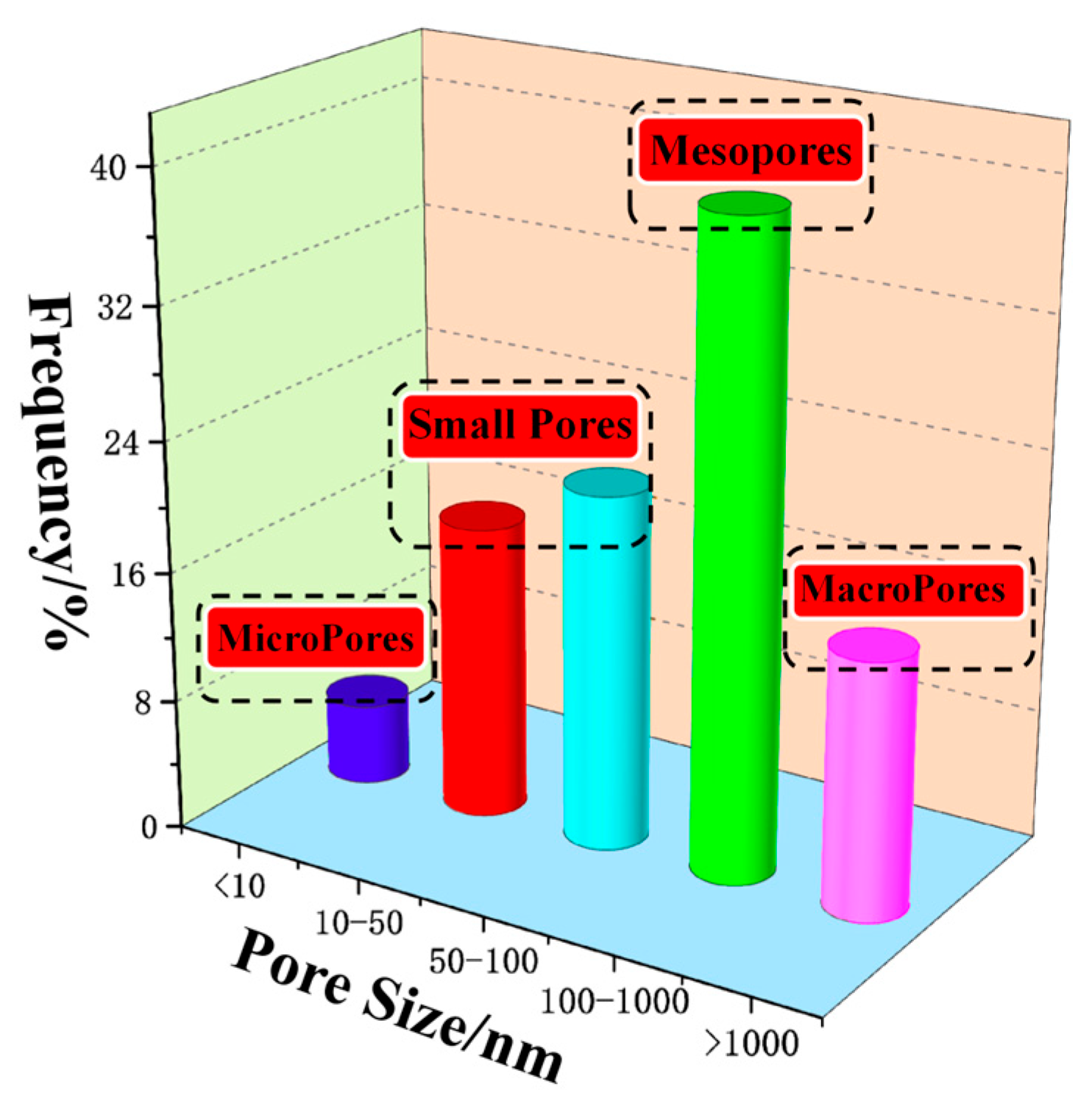
The pore structure of sandstone prior to grouting was tested using a mercury porosimetry experiment. Test results were classified according to the reference standard SY/T5612-2007 “Methods for Characterizing Rock Pore Structure” [42] in the petroleum and natural gas industry. The detailed pore size distribution is presented in Table 5.
According to pore size, the pores can be classified into micropores, small pores, medium pores, and large pores, with small pores further divided into two size ranges: 10–50 nm and 50–100 nm. The classification results show that the sandstone specimen is dominated by small pores, accounting for 39.90% of the total, followed by medium pores and large pores, accounting for 39.41% and 15.73%, respectively. The combined proportion of medium and small pores reaches 79.31%, which matches well with the particle size range of silica sol (9–20 nm), indicating that silica sol has a suitable particle-size basis for entering and filling such pore structures. The pore size distribution histogram is shown in Figure 11.
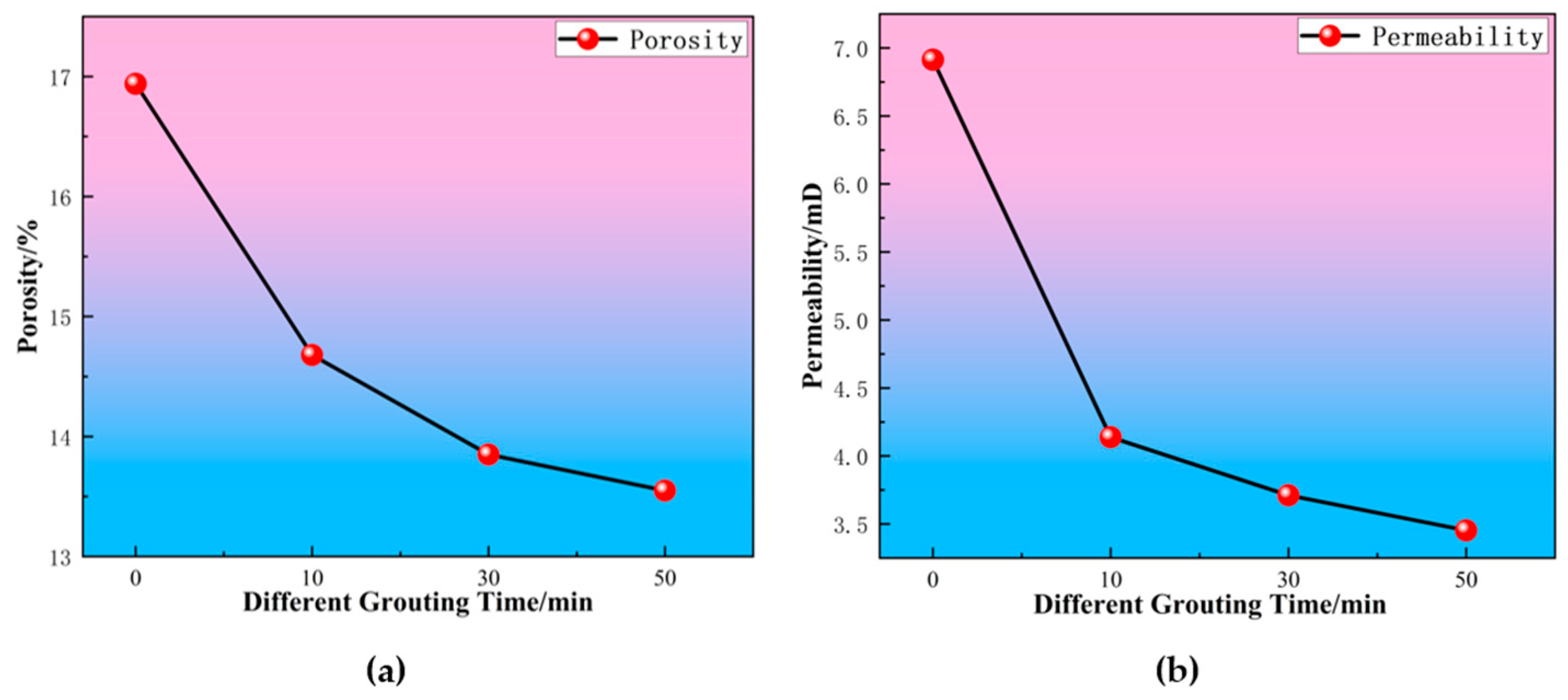
In this study, an overburden pressure porosity tester was used to monitor the silica sol grouting process, and the tests were carried out in strict accordance with the relevant standards for permeability and porosity testing of geotechnical specimens. The experiment focused on the time-dependent evolution of permeability and porosity during grouting. The test results (see Figure 12) show that, with increasing grouting time, both the permeability and porosity of the sandstone exhibited an overall stagewise decreasing trend. After 10 min of grouting, the permeability of the specimen decreased from an initial value of 6.91 mD to 4.24 mD, corresponding to a reduction of 38.7%, while the porosity decreased from 16.94% to 14.68%. This indicates that, at the initial stage of grouting, the grout preferentially filled the large pores and major fractures that dominated fluid flow within the specimen. When the grouting time was extended to 30 min and 50 min, the permeability further decreased to 3.81 mD and 3.55 mD, respectively, with the stagewise reductions narrowing to 10.1% and 7.3%. The porosity correspondingly decreased to 13.85% and 13.55%. By 50 min of grouting, the cumulative reduction in permeability reached 48.6% relative to the initial value, while the porosity decreased from 16.94% to 13.55%. Based on these results, it can be seen that the seepage behavior of the sandstone changed markedly after silica sol injection. The stagewise decreases in permeability and porosity with increasing grouting time indicate that silica sol effectively filled the internal pores and fractures of the sandstone, thereby reducing the connectivity of seepage channels and improving the compactness of the rock mass.
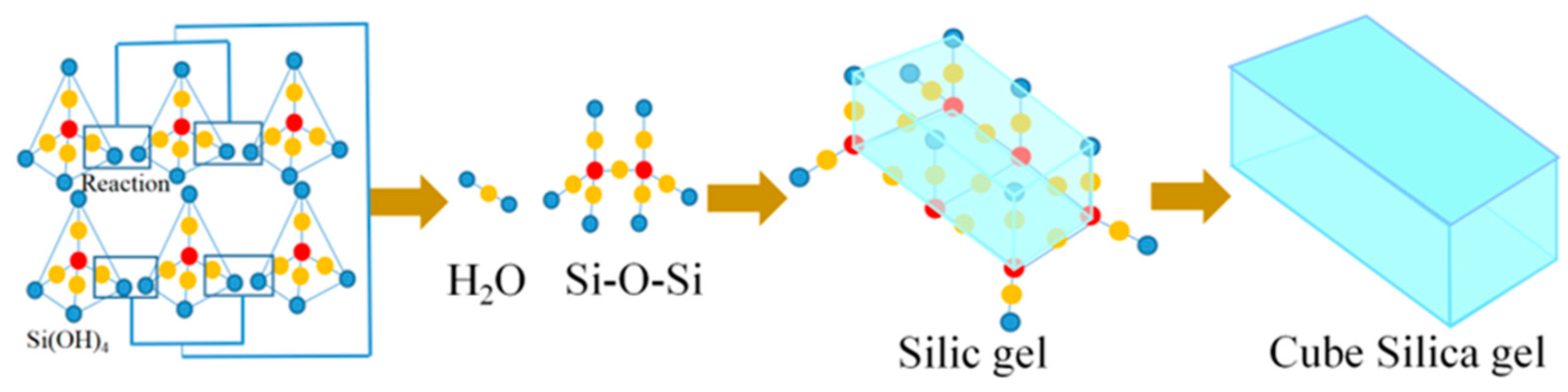
To further explain the modification effects reflected in the preceding mechanical tests, failure characteristic analysis, and SEM observations, this study, in conjunction with previous research, provides a brief analysis of the mechanism by which silica sol grouting reinforces weakly cemented sandstone. Previous studies have shown that, under electrolyte-induced gelation conditions such as NaCl or KCl, the electric double layer on the surface of silica sol particles is compressed, the electrostatic repulsion between particles is reduced, and the particles gradually approach one another and form Si–O–Si bonds through dehydration-condensation reactions, thereby constructing a three-dimensional gel network throughout the system. A schematic of this gelation process is shown in Figure 13 [20,27].
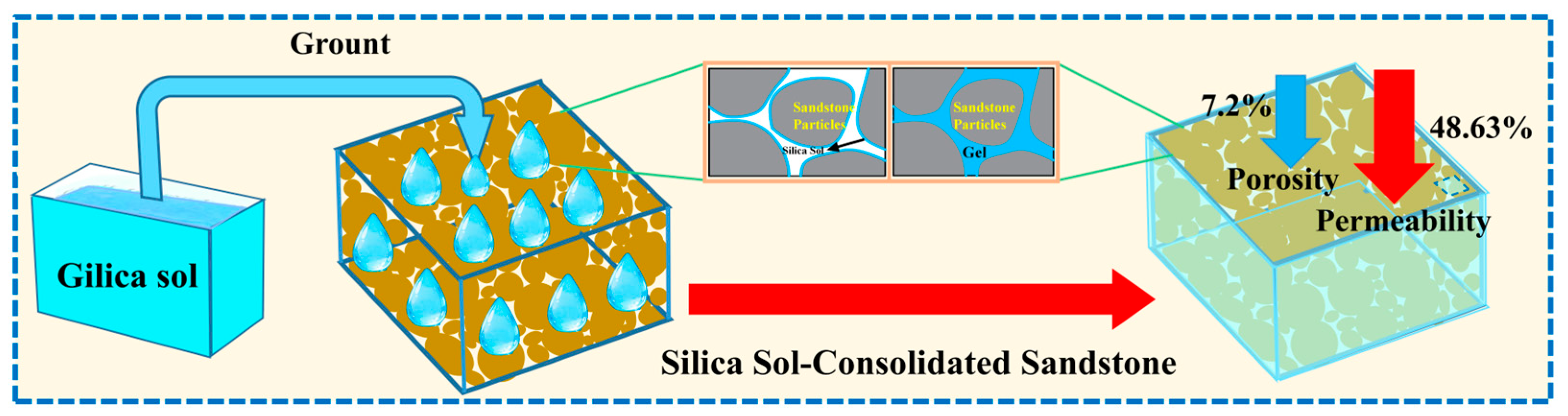
Combined with the experimental results of this study, it can be inferred that this gel network mainly acts on weakly cemented sandstone in two ways. On the one hand, the gel can precipitate within micro- and nanoscale pores and microcracks, filling and sealing these voids, thereby reducing porosity and pore connectivity and improving the compactness of the rock mass [21]. On the other hand, the continuously formed gel network can exert a certain bridging and coating effect on sandstone particles, enhancing interparticle connection and structural integrity, and thereby contributing to improvements in the mechanical properties and seepage resistance of the rock [22,23]. Therefore, the modification of weakly cemented sandstone by silica sol grouting can be understood as the combined result of gel formation, pore filling, and structural reconstruction, as schematically illustrated in Figure 14.

4. Discussion

4.1. Engineering Interpretation of Grouting Modification Effects and Comparison with Cement-Based Grouting Materials

(1)
Engineering Significance of Grouting Modification Effects. The experimental results in this study demonstrate that silica sol grouting enhances the uniaxial compressive strength and elastic modulus of weakly cemented sandstone, while significantly reducing porosity and permeability. Although the final permeability (3.55 mD) may not meet the stringent seepage control standards for hydraulic dams (<5 Lu), it falls within the “low-permeability” category (<10 mD) according to petroleum engineering standards. Furthermore, compared to recent experimental results on fractured rock grouting [43], which reported post-grouting permeability levels ranging from 15 to 300 mD, achieving a final value of 3.55 mD in this porous medium demonstrates the distinct advantage of silica sol in deep pore sealing. It should be noted that the modification effects described herein are based on laboratory conditions with constant grouting parameters and short-term curing. They primarily reflect improvements in the macro-mechanical and seepage properties of sandstone during the silica sol gel formation and initial solidification stages. These results should not be directly extrapolated to represent long-term engineering performance under various field conditions.
(2)
Differences in applicability between silica sol and cement-based grouting materials. Compared to traditional cement-based grouting materials, silica sol exhibits significant particle size advantages in weakly cemented sandstones with developed fine pores and microfractures. Cement-based grouting materials (including ultra-fine cement and various refined cementitious materials) typically feature particle sizes ranging from several micrometers to tens of micrometers, far exceeding the 9–20 nm range of silica sol. Consequently, cement-based slurries readily undergo filtration, bridging, and surface blocking within micro-pore throats, limiting their penetration into deeper and finer structures. This restricts their effectiveness in sealing micro-pores and enhancing overall impermeability modification. In contrast, silica sol particles exhibit small size and excellent injectability, enabling effective penetration into the pore and microfracture networks within sandstone. Through gelation, they form particle-coated structures and throat-filling mechanisms, optimizing particle contact states and reducing pore connectivity at the micro-level. This ultimately achieves enhanced strength and reduced permeability.
(3)
There are significant disparities in the responses of different mechanical indices to grouting modification. The elastic modulus, which reflects the small-strain stiffness of the rock mass during the initial loading stage, is more sensitive to the hardening of particle interface cementation and variations in contact network stiffness. Consequently, its enhancement trend typically emerges earlier and is more pronounced than that of the Uniaxial Compressive Strength (UCS). As an indicator of peak failure, UCS is governed by multiple factors, including the filling of pores and fissures, the repair of internal defects, and the inhibition of crack propagation; thus, its magnitude of increase is not entirely synchronous with that of the elastic modulus. This suggests that the modification value of silica sol grouting lies not only in the enhancement of peak bearing capacity but, more importantly, in the improvement of the overall stiffness and structural integrity of the rock mass during the initial deformation stage.
The tests in this study were conducted under a single grouting pressure and pressure-holding time, aiming to compare the modification patterns of sandstone induced by different coagulants. While the existing results elucidate the reinforcement and impermeability mechanisms of silica sol grouting under the experimental conditions, further in-depth research is required regarding parameter sensitivity and the optimal process window under different grouting parameters and complex in situ stress environments.

4.2. Durability Discussion and Field Application Constraints

(1)
Differences in long-term stability under hydrochemical environments. Although this study confirms the modification potential of silica sol under short-term (14 days) standard curing conditions, actual underground engineering involves complex coupled water-hydration-temperature-stress environments. Compared to cementitious materials prone to erosion, cracking, and efflorescence in acidic or high-salinity conditions, silica sol exhibits superior weathering resistance and chemical stability. Although performance degradation risks exist in prolonged alkaline environments, silica sol’s durability advantages remain significantly superior to conventional slurries in most groundwater chemical conditions.
(2)
Durability and interface stability under wet-dry cycling. Concrete-based grouts, being more brittle, are prone to shrinkage cracking and interfacial debonding under structural damage caused by wet-dry cycles in mine tunnels and clay mineral expansion/contraction. In contrast, silica sol, leveraging its nano-scale permeability and superior interfacial adhesion, theoretically offers greater adaptability and repair potential for micro-deformation and damage in rock masses. While this advantage is derived from material properties, it provides a crucial direction for subsequent research on the durability of systems under wet-dry cycles.
(3)
Applicability of pore characterization methods. Regarding the inherent limitations of mercury porosimetry for weakly cemented rocks (damage from high pressure), it should be noted that cement-based particles (micron-scale) readily bridge and clog pore throats, requiring higher mercury injection pressures and leading to significant testing deviations. In contrast, the silica sol (9–20 nm) focused on in this study aligns with the low-pore-size range in formations, which is less susceptible to high-pressure deformation. Therefore, despite methodological limitations, the results remain a reliable reference for evaluating the injectability and pore compatibility of silica sol.
In summary, this study confirms the potential of silica sol for short-term reinforcement and permeability modification of weakly cemented sandstones. Compared to traditional cement-based slurries, silica sol exhibits significant advantages in micro-pore permeability and corrosion resistance. However, its long-term performance in complex underground engineering—particularly stability in alkaline environments and durability evolution under multi-field coupling effects (water chemistry, wet-dry cycles, in situ stress)—remains a critical focus for future applied research.

4.3. Limitations and Future Work

This study investigates the modification of weakly cemented sandstone through silica sol grouting. It analyzes the strengthening and water-resistant effects of silica sol grouting on weakly cemented sandstone from aspects including macroscopic mechanical responses, seepage characteristics, and microscopic pore filling, while providing a preliminary explanation of the modification mechanism. It should be noted that due to limitations in current experimental conditions, sample scale, and research scope, the conclusions primarily reflect the phased modification effects of silica sol grouting under specific operating conditions. Further research is needed regarding long-term performance evolution in complex service environments, the influence of multi-factor coupling effects, and the applicability of these conclusions. Subsequent research will focus on systematically investigating the performance evolution of silica sol-grouted weakly cemented sandstone under long-term hydrochemical environments, wet–dry cycling, and load-seepage coupling conditions. In addition, more direct micro-chemical characterization will be introduced to further refine the understanding of the modification mechanism and improve the engineering applicability assessment.

5. Conclusions

(1)
The roof of the A4301 roadway at Xinjiang Saier Six Mines consists of weakly cemented sandstone with high clay mineral content, accounting for 39.8% of the total volume, along with 27.9% illite, exhibiting well-developed porosity. Mercury porosimetry results indicate that pores primarily consist of small pores (10–100 nm), accounting for 79.31% of the total. Combined small and mesopores exceed 85%, matching the particle size of silica sol (9–20 nm). This provides a structural foundation for silica sol injection into micro- and nano-scale pores.
(2)
Silica sol grouting leads to a moderate improvement in the mechanical properties and load-bearing capacity of weakly cemented sandstone. Compared to ungrouted specimens, the NaCl-accelerated group exhibited a moderate increase of approximately 13.6% in uniaxial compressive strength and 18% in elastic modulus; similarly, the KCl-accelerated group showed a moderate increase of approximately 7.4% in strength and 28.1% in elastic modulus. Post-grouting specimens exhibited a shift from predominantly shear brittle failure to combined shear-tension failure, with a moderate enhancement in residual strength after peak failure.
(3)
Silica sol grouting significantly reduces sandstone permeability and decreases pore connectivity. Over time, permeability decreased from 6.91 mD to 3.55 mD—a 48.6% reduction—while porosity dropped from 16.94% to 13.55%. Both parameters exhibited a phased response characterized by rapid initial decline followed by a slower rate of decrease.
(4)
At the microscopic level, silica sol primarily reconstructs the rock framework by permeating and filling micropores and nanopores while coating mineral grains. Quantitative analysis reveals that compared to the KCl group (coverage ~8%), the NaCl-catalyzed group formed a more continuous gel film (coverage ~22%) and larger gel aggregates. This achieved deep sealing and dense filling of micro- and nano-pores, effectively enhancing the overall compactness of weakly cemented sandstone.
(5)
Silica sol grouting enhances the mechanical strength and permeability of weakly cemented sandstone. Its mechanism involves silica sol particles infiltrating deeper pores within the sandstone. Upon catalytically induced gelation, a colloidal framework forms, strengthening intergranular contacts within weakly cemented sandstone. This optimizes stress transfer pathways within the rock mass, mitigates rapid brittle failure defects under loading, and simultaneously seals internal pores and microfractures to block water ingress. The process densifies the rock mass, enhancing its impermeability.

Author Contributions

H.L. and H.W. proposed the methodology and main content of this study. C.S. and F.Z. provided experimental materials and guidance. H.Y. and W.L. conducted the experiments and drafted the manuscript. H.L. and H.W. reviewed and edited the manuscript. All authors have read and agreed to the published version of the manuscript.

Funding

This research was supported by the Key Research and Development Program of Xinjiang Uygur Autonomous Region (2024B03017, 2023B01010), and the National Natural Science Foundation of China (52464008).

Data Availability Statement

The original contributions presented in this study are included in the article. Further inquiries can be directed to the corresponding authors.

Conflicts of Interest

Author Haitian Yan was employed by the company Zhongyun International Engineering Co., Ltd. Author Chengfang Shan was employed by the company Kuqa Yushuling Coal Mine Co., Ltd. The remaining authors declare that the research was conducted in the absence of any commercial or financial relationships that could be construed as a potential conflict of interest.

References

  1. Zhang, D.; Liu, H.; Fan, G.; Wang, X. Connotation and prospects of scientific mining in Xinjiang large coal bases. J. Min. Saf. Eng. 2015, 32, 1–6. [Google Scholar] [CrossRef]
  2. Fan, G.; Luo, T.; Zhang, D.; Zhang, S.; Fan, Z. Fractal characteristics of pore structure and nonlinear deterioration mechanism of weakly cemented siltstone under alkaline water. J. China Univ. Min. Technol. 2024, 53, 34–45. [Google Scholar] [CrossRef]
  3. Guo, S.; Pu, H.; Yang, M.; Liu, D.; Sha, Z.; Xu, J. Study of the Influence of Clay Minerals on the Mechanical and Percolation Properties of Weakly Cemented Rocks. Geofluids 2022, 2022, 1712740. [Google Scholar] [CrossRef]
  4. Song, C. Study and application of meso-structural characteristics and deformation–failure mechanism of weakly cemented sandstone. Chin. J. Rock Mech. Eng. 2018, 37, 779. [Google Scholar] [CrossRef]
  5. Song, C.; Ji, H.; Zhang, Y.; Tan, J.; Sun, L. Identification of acoustic emission signal sources and critical failure precursor information of weakly cemented sandstone with different particle sizes. J. China Coal Soc. 2020, 45, 4028–4036. [Google Scholar] [CrossRef]
  6. Song, C.; Ji, H.; Jiang, H.; Liu, Z.; Wang, H.; Liu, Y. Acoustic emission characteristics and mesoscopic deterioration mechanism of weakly cemented sandstone under wetting–drying cycles. J. China Coal Soc. 2018, 43, 96–103. [Google Scholar] [CrossRef]
  7. Sun, L.; Ji, H.; Yang, B. Physical and mechanical properties of weakly cemented rocks in typical mining areas of western China. J. China Coal Soc. 2019, 44, 866–874. [Google Scholar] [CrossRef]
  8. Ji, H.; Sun, L.; Song, C.; Zhang, Y.; Wang, J.; Meng, Z. Research progress on stability control of engineering surrounding rock in weakly cemented strata in western mining areas. Coal Sci. Technol. 2023, 51, 117–127. [Google Scholar] [CrossRef]
  9. Zhang, S.; Fan, G.; Zhang, D.; Li, W.; Luo, T.; Liang, S.; Fan, Z. A Model of Stress–Damage–Permeability Relationship of Weakly Cemented Rocks under Triaxial Compressive Conditions. Materials 2023, 16, 210. [Google Scholar] [CrossRef]
  10. Yang, Y.; Li, W.; Wang, Q.; Chen, W.; Zhou, K. Experimental study on mechanical behavior and permeability evolution of weakly cemented sandstone under unloading conditions. Bull. Eng. Geol. Environ. 2024, 83, 115. [Google Scholar] [CrossRef]
  11. Fu, J.; Chen, W.; Tan, Y.; Wang, J.; Song, W. Experimental study on pore variation and meso–damage of saturated sandstone under unloading condition. Rock Mech. Rock Eng. 2023, 56, 4669–4695. [Google Scholar] [CrossRef]
  12. Liu, H. Mechanism and Classification of Water-Preserved Mining for Extra-Thick Coal Seams in Weakly Cemented Strata in Yili. Ph.D. Thesis, China University of Mining and Technology, Xuzhou, China, 2020. [Google Scholar]
  13. Liu, H.; Xiao, J.; Zhen, W.; Zhu, C.; Chen, Z.; Luo, W. Evolution law of overburden permeability under repeated mining in weakly cemented strata. Coal Mine Saf. 2022, 53, 218–225. [Google Scholar] [CrossRef]
  14. Xia, Y.; Liu, H.; Qi, J.; Yu, H.; Zhang, M. Surrounding rock control technology for weakly cemented roadway under tectonic stress. Min. Res. Dev. 2024, 44, 156–164. [Google Scholar] [CrossRef]
  15. Xu, L.; Yu, F.; Tan, Y.; Zhang, C.; Zhou, K. The evolution of fractures in deep, weakly cemented overlying strata and the characteristics of severe and mild fracture zones. Geomech. Geophys. Geo-Energy Geo-Resour. 2024, 10, 94. [Google Scholar] [CrossRef]
  16. Zhu, J.; Li, W.; Li, D.; Wang, Q.; Li, X. Failure characteristics of weakly cemented overburden strata and compaction response behavior of caving materials in shadow buried panels: A study in Western China. Results Eng. 2025, 26, 105580. [Google Scholar] [CrossRef]
  17. Kang, H.; Feng, Z. Current status and development trend of grouting reinforcement technology for coal mine roadway surrounding rock. Coal Min. Technol. 2013, 18, 1–7. [Google Scholar] [CrossRef]
  18. Eklund, D.; Stille, H. Penetrability due to filtration tendency of cement-based grouts. Tunn. Undergr. Space Technol. 2008, 23, 389–398. [Google Scholar] [CrossRef]
  19. Zhu, Y.; Sun, H.; Xu, S.; Hu, L.; Cao, H.; Cai, Y.; Liu, J. Mechanics of the penetration and filtration of cement-based grout in porous media: New insights from CFD–DEM simulations. Tunn. Undergr. Space Technol. 2023, 133, 104928. [Google Scholar] [CrossRef]
  20. Søgaard, C.; Funehag, J.; Abbas, Z. Silica sol as grouting material: A physio-chemical analysis. Nano Converg. 2018, 5, 6. [Google Scholar] [CrossRef]
  21. Funehag, J.; Gustafson, G. Design of grouting with silica sol in hard rock—New methods for calculation of penetration length, Part I. Tunn. Undergr. Space Technol. 2008, 23, 1–8. [Google Scholar] [CrossRef]
  22. Krishnan, J.; Sharma, P.; Shukla, S.; Pancholi, V.; Dwivedi, V.K. Cyclic Behaviour and Durability Analysis of Sand Grouted with Optimum Colloidal Silica Content. Arab. J. Sci. Eng. 2020, 45, 8129–8144. [Google Scholar] [CrossRef]
  23. Pan, D.; Sun, Z.; Zhou, J.; Zhang, N.; Yang, Z.; Qin, Y. Incorporating Silica Sol as a Binder to Improve Long-Term Stability of Blocky Coal. Geotech. Geol. Eng. 2020, 38, 3597–3610. [Google Scholar] [CrossRef]
  24. Pan, D. Permeation Law of Silica-Sol Grouting in Loose Coal and Long-Term Consolidation Stability. Ph.D. Thesis, China University of Mining and Technology, Xuzhou, China, 2018. [Google Scholar]
  25. Xiang, Z.; Zhang, N.; Pan, D.; Xie, Z. Basic consolidation and impermeability laws for nano-silica-sol grouted mudstone. Constr. Build. Mater. 2023, 403, 133121. [Google Scholar] [CrossRef]
  26. Xiang, Z.; Zhang, N.; Pan, D.; Xie, Z.; Wang, P.; Liang, D. Macroscopic and microscopic characteristics of nanosilica sol-based composite grout in sealing fractured argillaceous rock: A comparative study with silica sol and cement slurry. J. Mater. Res. Technol. 2025, 34, 898–911. [Google Scholar] [CrossRef]
  27. Chai, Z.; Liu, X.; Yang, P.; Guo, R.; Yang, Z.; Liu, X. Experimental study on the physical properties of silica sol and silica-sol grouting-modified mudstone. Chin. J. Rock Mech. Eng. 2021, 40, 2681–2691. [Google Scholar] [CrossRef]
  28. Zhou, C. Study on Permeation and Diffusion Patterns and Reinforcement Effects of Nano-Silica Sol in Low-Permeability Silty Sands. Master’s Thesis, Xihua University, Chengdu, China, 2023. [Google Scholar] [CrossRef]
  29. Liu, H.; Zhang, D.; Zhao, H.; Chi, M.; Yu, W. Behavior of Weakly Cemented Rock with Different Moisture Contents under Various Tri-Axial Loading States. Energies 2019, 12, 1563. [Google Scholar] [CrossRef]
  30. Yu, H.; Liu, H.; Hang, Y.; Liu, J.; Ma, S. Deformation and Failure Mechanism of Weakly Cemented Mudstone under Tri-Axial Compression: From Laboratory Tests to Numerical Simulation. Minerals 2022, 12, 153. [Google Scholar] [CrossRef]
  31. Chen, Z.; Liu, H.; Zhu, C.; Ma, S.; Hang, Y.; Luo, W. Seepage Characteristics and Influencing Factors of Weakly Consolidated Rocks in Triaxial Compression Test under Mining-Induced Stress Path. Minerals 2022, 12, 1536. [Google Scholar] [CrossRef]
  32. Ju, J.; Liu, H.; Hu, H.; Hang, Y.; Shan, C.; Wang, H. Analysis of Control Technology for Large Deformation of a Geological Bedding Bias Tunnel with Weakly Cemented Surrounding Rock. Sustainability 2023, 15, 13702. [Google Scholar] [CrossRef]
  33. Zhen, W.; Liu, H.; Chi, M.; Liu, X.; Cao, W.; Chen, Z. Investigation into the Influence of Stress Conditions on the Permeability Characteristics of Weakly Cemented Sandstone. Appl. Sci. 2023, 13, 12105. [Google Scholar] [CrossRef]
  34. Xia, Y.; Zhen, W.; Huang, H.; Zhang, Y.; Tang, Q.; Liu, H. Research on the Fissure Development and Seepage Evolution Patterns of Overburden Rock in Weakly Cemented Strata under Repeated Mining. Sustainability 2025, 17, 2780. [Google Scholar] [CrossRef]
  35. Liu, H.; Xia, Y.; Bai, J.; Cao, Z.; Zhang, Z.; Zhao, H. Tri-axial compressive behavior of high-water material for deep underground spaces. Deep Undergr. Sci. Eng. 2025, 4, 482–497. [Google Scholar] [CrossRef]
  36. Liu, H.; Cao, W.; Cao, Z.; Sun, J.; Yu, B.; Zhao, H. Influence of stress path on the mechanical behavior of laterally confined coal: Laboratory investigation. Constr. Build. Mater. 2025, 466, 140287. [Google Scholar] [CrossRef]
  37. GB/T 50266-2013; Standard for Test Methods of Engineering Rock Mass. Ministry of Housing and Urban-Rural Development of the People’s Republic of China (MOHURD): Beijing, China; China Planning Press: Beijing, China, 2013.
  38. Dvorkin, J.; Nur, A.; Yin, H. Effective properties of cemented granular materials. Mech. Mater. 1994, 18, 351–366. [Google Scholar] [CrossRef]
  39. Zhao, X.G.; Cai, M.; Wang, J.; Li, P.F.; Ma, L.K. Objective determination of crack initiation stress of brittle rocks under compression using AE measurement. Rock Mech. Rock Eng. 2014, 48, 2473–2484. [Google Scholar] [CrossRef]
  40. Eberhardt, E.; Stead, D.; Stimpson, B.; Read, R.S. Identifying crack initiation and propagation thresholds in brittle rock. Can. Geotech. J. 1998, 35, 222–233. [Google Scholar] [CrossRef]
  41. Xie, S.; Han, Z.; Lin, H. A quantitative model considering crack closure effect of rock materials. Int. J. Solids Struct. 2022, 251, 111758. [Google Scholar] [CrossRef]
  42. SY/T 5612-2007; Methods for Characterization of Rock Pore Structure. China Standards Press: Beijing, China, 2007.
  43. Cao, Z.; Wang, P.; Li, Z.; Du, F. Migration mechanism of grouting slurry and permeability reduction in mining fractured rock mass. Sci. Rep. 2024, 14, 3446. [Google Scholar] [CrossRef]
Figure 1. Preparation of Sandstone Specimens.
Processes 14 00930 g001
Figure 2. XRD Diffraction Analysis.
Processes 14 00930 g002
Figure 3. Viscosity versus time curves under different catalyst dosages (a) NaCl (b) KCl.
Processes 14 00930 g003
Figure 4. Grouting test system and its working principle: (a) Physical diagram (b); Working principle.
Processes 14 00930 g004
Figure 5. MTS-E45.605 Mine Rock Mechanics Testing System (a) Rock Mechanics Testing System (b) Main Components of the System.
Processes 14 00930 g005
Figure 6. Microstructural testing equipment for silica sol grouting: (a) ZEISS Sigma 300 FE-SEM; (b) AP-608 Porosity-Permeability Analyzer.
Processes 14 00930 g006
Figure 7. Stress–strain curves of sandstone specimens after grouting under different catalysts.
Processes 14 00930 g007
Figure 8. Failure Characteristics of Weakly Cemented Sandstone Specimens After Grouting: (a) No grouting (b), NaCl grouting, (c) KCl grouting.
Processes 14 00930 g008
Figure 9. SEM Analysis of Ungrouted Sandstone Specimens: (a) Microscopic analysis of sandstone particles, (b) Microscopic distribution of clay minerals in the sample.
Processes 14 00930 g009
Figure 10. Comparison of Sandstone Microstructures After Grouting, (a,b): NaCl grouting; (c,d): KCl grouting.
Processes 14 00930 g010
Figure 11. Sandstone Pore Distribution Histogram.
Processes 14 00930 g011
Figure 12. Time-dependent variation curves of sandstone porosity and permeability (a) Sandstone porosity variation curve (b) Sandstone permeability variation curve.
Processes 14 00930 g012
Figure 13. Gelation Process of Silica Sol Particles.
Processes 14 00930 g013
Figure 14. Schematic Diagram of Silica Sol Modification of Weakly Cemented Sandstone.
Processes 14 00930 g014
Table 1. Mineral content in weakly cemented sandstone.
Mineral GroupClay Mineral ContentOther Mineral Content
MineralMontmorilloniteChloriteIlliteKaolinitePlagioclaseK-feldsparQuartz
Content (%)2.31.427.98.217.612.630.0
Table 2. Grouping of grouted specimens.
Test GroupSample NumberCatalyst TypeGrouting Time/minGrouting Pressure/MPaMass/g
ISN-1-00419.05
SN-2-00426.32
IISN-3NaCl502.0423.27
SN-4NaCl502.0418.84
IIISK-1KCl502.0424.58
SK-2KCl502.0426.08
Table 3. Summary of uniaxial compression test.
Specimen IDUniaxial Compressive Strength/MPaModulus of Elasticity/GPaMass Gain/g
SN-125.022.100
SN-224.222.450
Mean ± SD (n = 2)24.6 ± 0.62.3 ± 0.20.0 ± 0.0
SN-327.792.887.48
SN-428.132.496.97
Mean ± SD (n = 2)28.0 ± 0.22.7 ± 0.37.2 ± 0.4
SK-126.202.986.48
SK-226.662.856.32
Mean ± SD (n = 2)26.4 ± 0.32.9 ± 0.16.4 ± 0.1
Table 4. Microscopic Quantitative Analysis Results of the Gel Phase in SEM Images Using Image-Pro Plus.
SpecimenCatalystGel Coverage Ratio (%)Gel Clusters (N)Mean Cluster Area (pixel2)
SN-3NaCl21.665123,405.66
SN-4NaCl22.797110,873.59
SK-1KCl7.88643,975.46
SK-2KCl8.10545,303.53
Table 5. Pore size distribution of sandstone.
Pore Size/nmPore Size Distribution (%)Pore Size Classification
<104.96Microporous
10–5018.07Small Pores
50–10021.83
100–100039.41Mesopores
>100015.73MacroPores
Disclaimer/Publisher’s Note: The statements, opinions and data contained in all publications are solely those of the individual author(s) and contributor(s) and not of MDPI and/or the editor(s). MDPI and/or the editor(s) disclaim responsibility for any injury to people or property resulting from any ideas, methods, instructions or products referred to in the content.