


Abstract
During deepwater drilling operations in the Baiyun block of the eastern South China Sea, high-temperature and high-pressure formation leakage was frequently encountered. Traditional plugging materials lacked adequate stability under these conditions and failed to establish reliable plugs. As the development of the Baiyun Block progressed, it was found that the formation temperature at the BY5 area well reached 182.2 °C at a depth of 4527 m. At a depth of 5206 m, the bottom-hole temperature of the well increased to 223.81 °C, and the pressure rose to 10 MPa. An urgent need has emerged to develop a plugging system capable of operating stably under high-temperature and high-pressure conditions to enhance the safety and success rate of deepwater drilling. In this study, a high-temperature-resistant polymer for controlling leakage rate, an inorganic pressure-bearing particulate material with supporting capability, and a gel that gradually solidifies under high-temperature conditions were developed. Through systematic optimization, a synergistic plugging system was established. Laboratory evaluations demonstrated that the system maintained favorable fluidity and structural integrity under high-temperature and high-pressure conditions, rapidly constructed stable plugging layers across fractures of varying widths, and withstood high differential pressures while resisting backflow-induced erosion. The results indicate that the system exhibits significant plugging performance and strong potential for engineering application, providing reliable technical support for deepwater oil and gas development.
1. Introduction
Deepwater drilling in the eastern South China Sea has long been challenged by severe leakage in HTHP (high-temperature and high-pressure) formations. Natural fractures, induced fractures, and high-permeability channels coexist, and the wellbore wall is highly stress-sensitive and prone to instability, leading to complex and unpredictable leakage behaviors [1]. This requires a plugging layer that remains stable under HTHP while tolerating rapid aperture variations. Traditional plugging materials tend to experience uncontrollable fluid loss, unstable bridging structure formation, and inadequate temperature resistance under HTHP conditions, hindering the formation of a stable and dense pressure-bearing plugging layer [2,3]. In particular, filtration rate critically dictates whether a dense framework can be deposited and sustained. Therefore, developing a high-performance plugging system capable of adapting to HTHP conditions, regulating filtration rate, and self-strengthening its structure has become an urgent engineering requirement. However, most existing solutions are still single-mechanism approaches, which rarely address the coupled requirements of filtration control, framework stabilization, and in situ strengthening under HTHP conditions.
Numerous studies have been conducted on HTHP plugging technologies both domestically and internationally. With respect to pressure-bearing plugging materials, Helei et al. evaluated sepiolite and calcium carbonate through pressure-resistance tests [4]; however, the reported aging temperature was limited to 120 °C, which is below the 230 °C thermal demand of deep formations in the eastern South China Sea [5]. Similarly, Su Zhengqi et al. developed the LCC series, which can sustain pressures up to 7 MPa at 150 °C; nevertheless, its performance remains insufficient for HTHP strata approaching 230 °C [6]. These limitations indicate that pressure-bearing particles for deepwater HTHP applications must simultaneously provide high-temperature strength retention and mechanical compliance. Accordingly, in this study, high-temperature-resistant cement was selected as the primary framework material for pressure-bearing particles, and high-temperature-stable latex was incorporated to impart elastic deformability, enabling the particles to maintain load-bearing capability during formation “breathing” (cyclic aperture changes) under HTHP conditions. With respect to filtration-control materials, most existing filtration-control agents are designed primarily to reduce bulk fluid loss in conventional drilling-fluid systems, rather than to regulate filtration kinetics in fractured HTHP formations. At temperatures exceeding 200 °C, polymer degradation or filter-cake instability may still occur, leading to uncontrolled filtrate invasion and insufficient support for subsequent particle-framework deposition [7]. To address this limitation, an AM/AMPS-based high-temperature filtration-loss regulator (LS-1) was incorporated in the present work to enable early-stage filtration-rate regulation under HTHP conditions. Owing to the sulfonated backbone and improved thermal stability, LS-1 facilitates rapid formation of a dense, adherent filtration membrane at the fracture surface, thereby suppressing uncontrolled filtrate invasion and providing a stable hydraulic and structural foundation for subsequent particle-framework deposition and in situ gel reinforcement.
In the field of gel-based plugging, international research has primarily focused on synthetic polymer systems, such as the adjustable-curing acrylamide-acrylate gel developed by Heidari et al. However, this material is susceptible to dehydration-induced failure under extremely high temperatures. In China, modified natural polymer gels are predominantly applied, such as those developed by Lu Jun, which exhibit temperature resistance up to 180 °C; however, their elastic recovery under high pressure remains inadequate. Chemical-consolidation-based plugging materials offer advantages for treating large leakage channels. The phenolic resin system can generate high-strength consolidated structures at 180–200 °C, but its narrow curing window leads to a high risk of premature solidification [8]. The domestic “resin + inorganic” composite consolidation system can tolerate temperatures up to 220 °C and is applicable to wide-seam leakage, but its high viscosity restricts pumpability [9]. Although these technologies are effective under specific conditions, most materials exhibit low upper-temperature limits, insufficient elastic recovery, and poor adaptability to the complex channel structures of the eastern South China Sea—where wide and narrow seams coexist and pores and fractures interweave—resulting in mismatched bridging or rapid erosion and failure of the plugging layer [10,11,12]. However, limitations such as dehydration, narrow curing windows, or poor pumpability restrict their robustness and placement across multiscale leakage pathways in deepwater HTHP wells.
However, despite these advancements, a critical gap remains: most HTHP lost-circulation materials have been developed and evaluated as single-mechanism solutions (bridging, gelling, or chemical consolidation), whereas under HTHP conditions, a leakage-blocking system that can simultaneously control fluid loss, establish a stable bridging framework, and strengthen the post-sealing gel has not yet been demonstrated. In deepwater HTHP formations with multiscale fractures, current methods often suffer from (i) uncontrolled fluid loss that disrupts bridging-framework buildup, (ii) inadequate material stability at elevated temperature and pressure, and (iii) limited adaptability across fracture apertures spanning different scales. Therefore, a filtration-rate-regulated leakage-blocking system that enables in situ structural reinforcement is still lacking.
In response to the unique leakage characteristics of the HTHP strata in the Baiyun Block-characterized by high temperature, high pressure, and the coexistence of multi-scale fractures-this study proposes a plugging technology pathway based on filtration-rate regulation. By developing high-temperature filtration-loss regulators, temperature-resistant pressure-bearing support materials, and thermosensitive curing gels, a controllable-filtration-rate plugging system is established, and systematic evaluations are conducted on its rheological behavior, plugging performance, and anti-backflow stability. Accordingly, the aims of this study are to (i) develop a filtration-rate-regulated HTHP plugging system enabling in situ structural reinforcement, (ii) characterize its rheological behavior and filtration performance under representative HTHP conditions, and (iii) evaluate its plugging efficiency, pressure-bearing capacity, and anti-backflow stability in multiscale fracture models. A plugging technology system suitable for the complex leakage channels of HTHP formations is thus formulated, providing technical support for the safe and efficient development of deepwater oil and gas resources in the eastern South China Sea.
2. Analysis of Complex Leakage Characteristics and Plugging Challenges in the Baiyun Block
2.1. Leakage Characteristics of the Baiyun Block
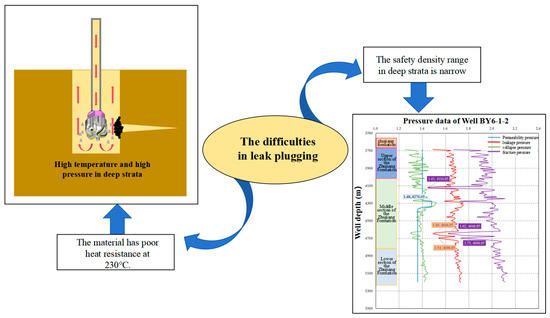
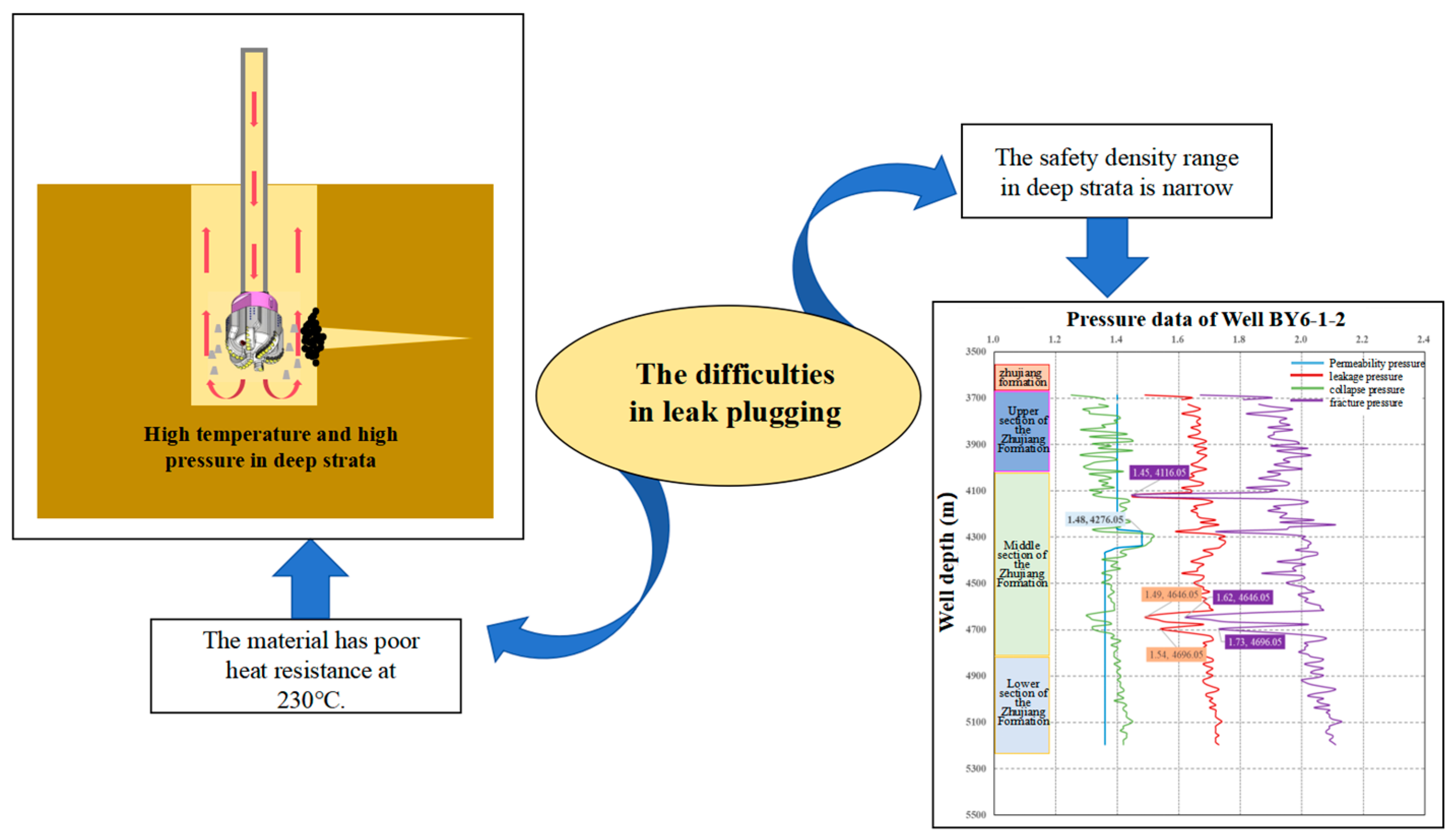
The Baiyun Block in the eastern South China Sea is situated within the deepwater region of the Pearl River Mouth Basin. The strata are influenced by intense tectonic stress fields and thermal-fluid activities, exhibiting typical deep high-temperature and high-pressure (HTHP) characteristics. Its leakage mechanisms and leakage modes differ markedly from those encountered in conventional well regions. Well depths in this block typically exceed 4000 m, and formation temperatures can reach 180–230 °C. The pore-pressure gradient is high and the pressure window is narrow, rendering wellbore stability and drilling-fluid density control highly sensitive and substantially increasing the likelihood of leakage.
The strata within the Baiyun Block commonly contain multiple types of flow channels, including natural fractures, induced fractures, and high-permeability pores. Natural fractures are controlled by fault-related tectonic activity and exhibit irregular spatial distributions, characterized by wide aperture ranges, high connectivity, and long extension distances. As shown in Figure 1, during drilling, wellbore-stress concentration and circulation-pressure fluctuations can promote the propagation of new induced fractures and the further development of existing channels. Fracture widths in this area typically range from 0.1 to 3.0 mm and may locally exceed 5 mm, exhibiting complex features in which narrow and wide fractures coexist and channel scales span multiple orders of magnitude.
Figure 1.
Challenges in Plugging Operations in the Baiyun Block.
2.2. Plugging Strategy for the Baiyun Block
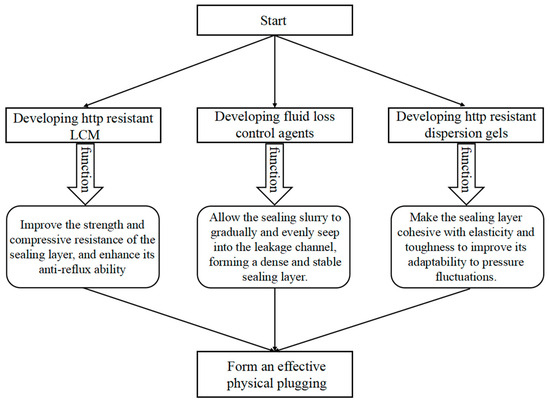
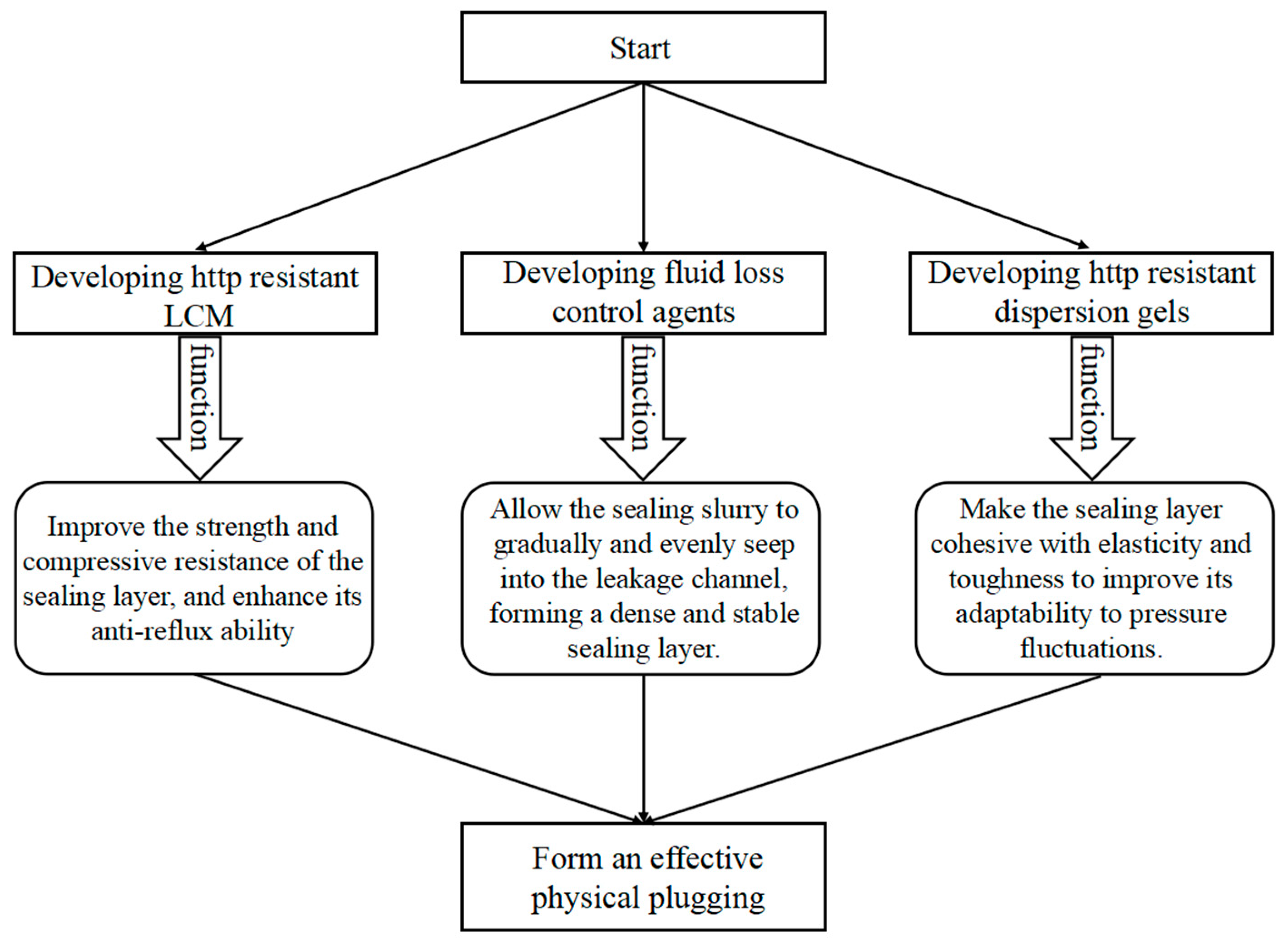
In view of the unique leakage characteristics of the high-temperature and high-pressure environment in the Baiyun Block—including complex fracture types, rapid fluid loss, and pronounced backflow-induced erosion—traditional particle-based or single-mechanism plugging systems are insufficient to form a stable, dense, and pressure-resistant plugging structure. As shown in Figure 2, this study proposes a plugging concept based on “enhanced pressure resistance-temperature-sensitive curing”.
Figure 2.
Conceptual Framework of the Plugging System.
To address the rapid fluid loss encountered during drilling in the HTHP environment of the Baiyun Block, the high-temperature filtration-control agent LS-1 is introduced to form an early filtration membrane, thereby regulating the filtration rate and reducing permeability at the initial stage, providing pressure support and a stable foundation for subsequent particle bridging. The thermal stability and molecular-chain integrity of LS-1 ensure that the filtration membrane remains intact at 180–250 °C without peeling or structural collapse.
To address the fracture-width distribution spanning multiple orders of magnitude-where narrow and wide fractures coexist-the temperature- and pressure-resistant supporting material LCM-1 is introduced. Through multi-size grading, a rapid “force-chain skeleton” is formed, enhancing the initial bridging capacity and pressure resistance of the plugging structure. LCM-1 exhibits high strength, excellent high-temperature stability, and strong resistance to pressure-induced powdering, enabling it to resist further fracture propagation under high pressure differentials [13].
To counter the pronounced backflow-induced erosion and frequent pressure fluctuations in the Baiyun Block, a dispersible gel material, FSGEL-1, capable of in situ curing, is designed. This material gradually concentrates and cures in the subsurface high-temperature environment, forming a flexible three-dimensional gel-reinforced network within the particle framework, significantly enhancing the toughness, erosion resistance, and overall stability of the plugging layer.
For system construction, orthogonal experiments are employed to optimize the ratios of LS-1, LCM-1, and FSGEL-1, thereby identifying the optimal plugging system. During the plugging process, a “filtration-membrane-framework-gel” three-in-one composite plugging structure is formed, enabling the system to maintain structural integrity and pressure tolerance under increasing wellbore temperature, pressure fluctuations, and backflow conditions.
3. Development of Key Plugging Treatment Agents for the Baiyun Block
In response to the leakage mechanisms and plugging requirements of the high-temperature and high-pressure strata in the Baiyun Block of the eastern South China Sea, this study centers on three major functional objectives: “controllable leakage, stable pressure-bearing, and toughening with anti-reflux performance.” Accordingly, a key treatment-agent system is developed, consisting of a high-temperature polymer leakage-control agent, a temperature-resistant pressure-bearing supporting material, and a high-temperature-stable toughening agent. These three components collectively construct a continuous, dense, and long-term stable plugging structure within multi-scale fractures.
All experiments were conducted with at least three independent replicates (n = 3) unless otherwise stated. Reported values are presented as mean ± standard deviation (SD). Error bars shown in the figures represent one standard deviation. For pressure-bearing and filtration tests, experimental uncertainty primarily arises from pressure-sensor resolution, temperature control fluctuation, and sample preparation variability. Repeatability was confirmed by consistent trends observed across independent tests under identical conditions.
3.1. Description of the HTHP Filtration Device, Fracture Simulator, and Curing Setup
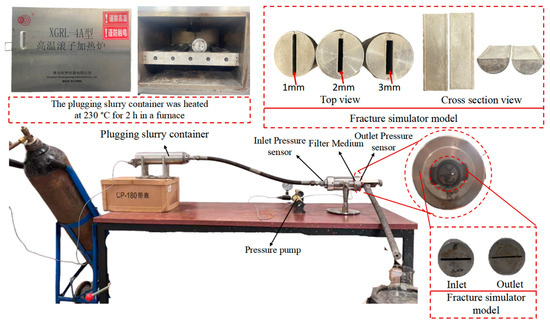
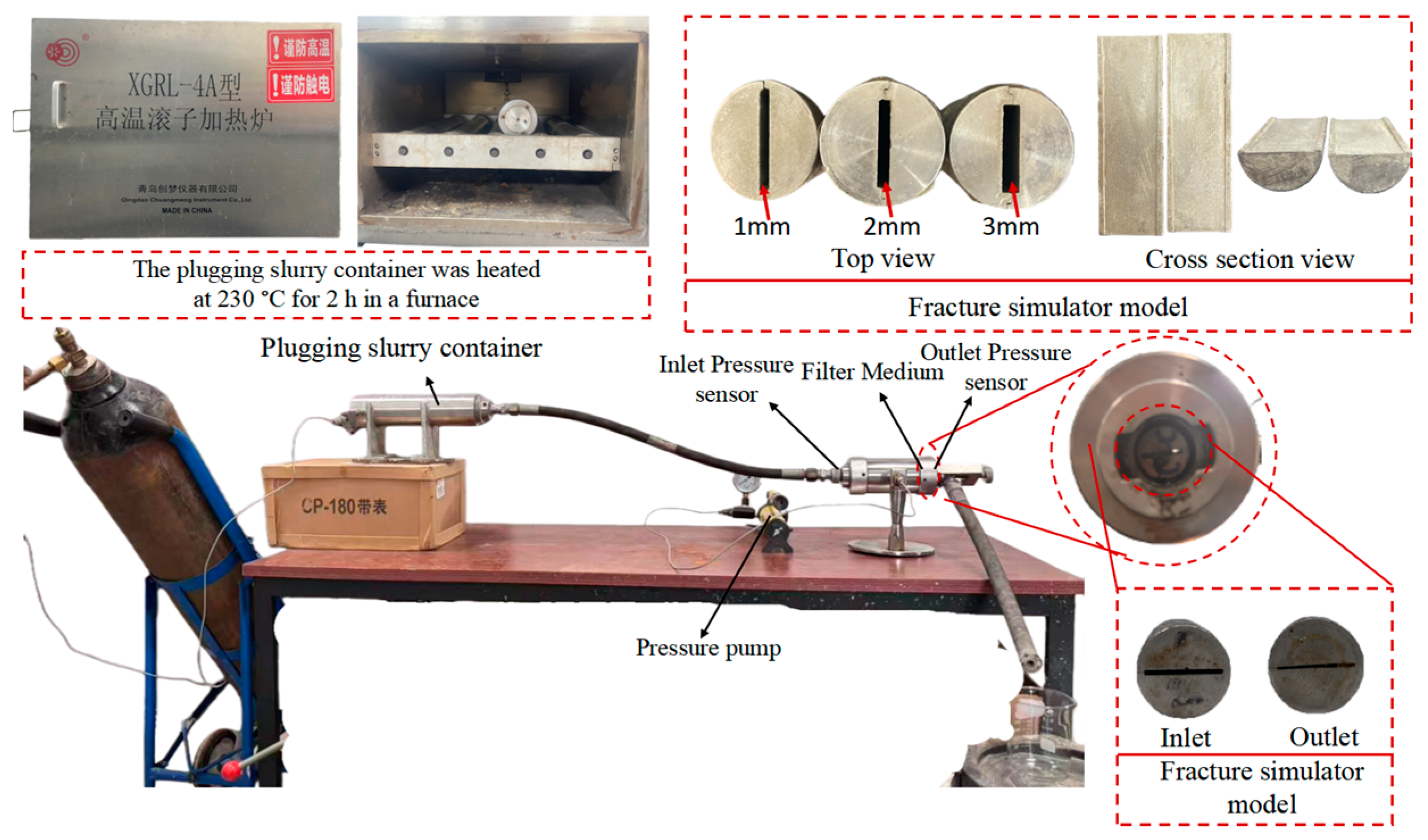
The HTHP filtration, fracture simulation, and curing experiments were conducted using a modified core-displacement-based apparatus, as shown in Figure 3. The system consists of a plugging slurry container, a high-pressure pump, inlet and outlet pressure sensors, and a core-fracture simulator mounted inside a core holder. The plugging slurry container was placed in a high-temperature furnace and heated at 230 °C for 2 h prior to testing to simulate downhole thermal conditioning.
Figure 3.
Experimental Setup for HTHP Filtration, Fracture Simulation, and Curing.
The fracture simulator model was fabricated from steel and designed in a split-core configuration, in which a wedge-shaped fracture was machined along the axial direction. By replacing wedge inserts with predefined opening widths, fracture apertures of 1, 2, and 3 mm could be reproducibly generated. During testing, the two core halves were assembled to form a closed fracture with a fixed aperture defined by the wedge geometry. The overall core diameter was approximately 25 mm, and the effective fracture length was 50 mm. No additional surface roughening treatment was applied; the fracture surfaces were mechanically machined, representing a smooth-to-moderate roughness condition typical of metal-based fracture simulators.
High-pressure flow was provided by a CP-180 type pressure pump, and the pressure difference across the fracture was monitored using inlet and outlet pressure sensors installed upstream and downstream of the fracture model. The pressure sensors were calibrated prior to testing using a standard hydraulic pressure calibrator, and the measurement uncertainty was within ±1% of full scale. During experiments, pressure evolution was continuously recorded to evaluate filtration behavior, plugging initiation, and pressure-bearing performance. The same core-fracture assembly was also used as the curing setup, allowing the plugging slurry to undergo in situ curing under controlled high-temperature and high-pressure conditions without disassembly.
3.2. High-Temperature Polymer Filtration-Control Agent LS-1
Controlling filtration loss constitutes the core of controllable-filtration-rate plugging technology. In this study, the synthesis conditions of LS-1 are shown in Table 1, high-temperature filtration-control agent LS-1 was synthesized via aqueous free-radical copolymerization of acrylamide (AM) and 2-acrylamido-2-methylpropanesulfonic acid (AMPS) [14]. AM and AMPS were dissolved in deionized water at a mass ratio of 6:4 with a total monomer concentration of 20 wt%, and the solution was stirred until homogeneous and purged with nitrogen for 30 min to remove dissolved oxygen. The pH was adjusted to 7.0–8.0 using dilute NaOH, and ammonium persulfate (APS) was added as the initiator at 0.5 wt% relative to the total monomer mass. Polymerization was conducted at 70 °C for 4 h under continuous stirring. After reaction, the mixture was cooled to room temperature, precipitated with excess ethanol, filtered, and washed with ethanol to remove residual monomers and low-molecular-weight species; the product was then vacuum-dried at 60 °C for 24 h, ground, and stored in sealed containers for subsequent use [15].
Table 1.
Synthesis conditions of LS-1.
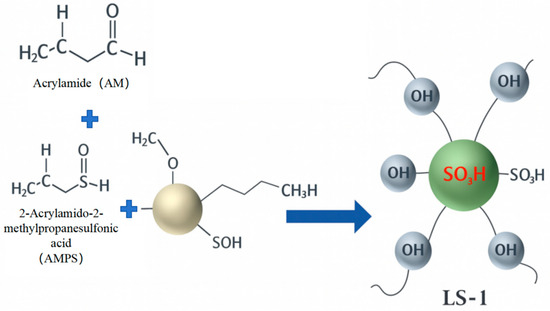
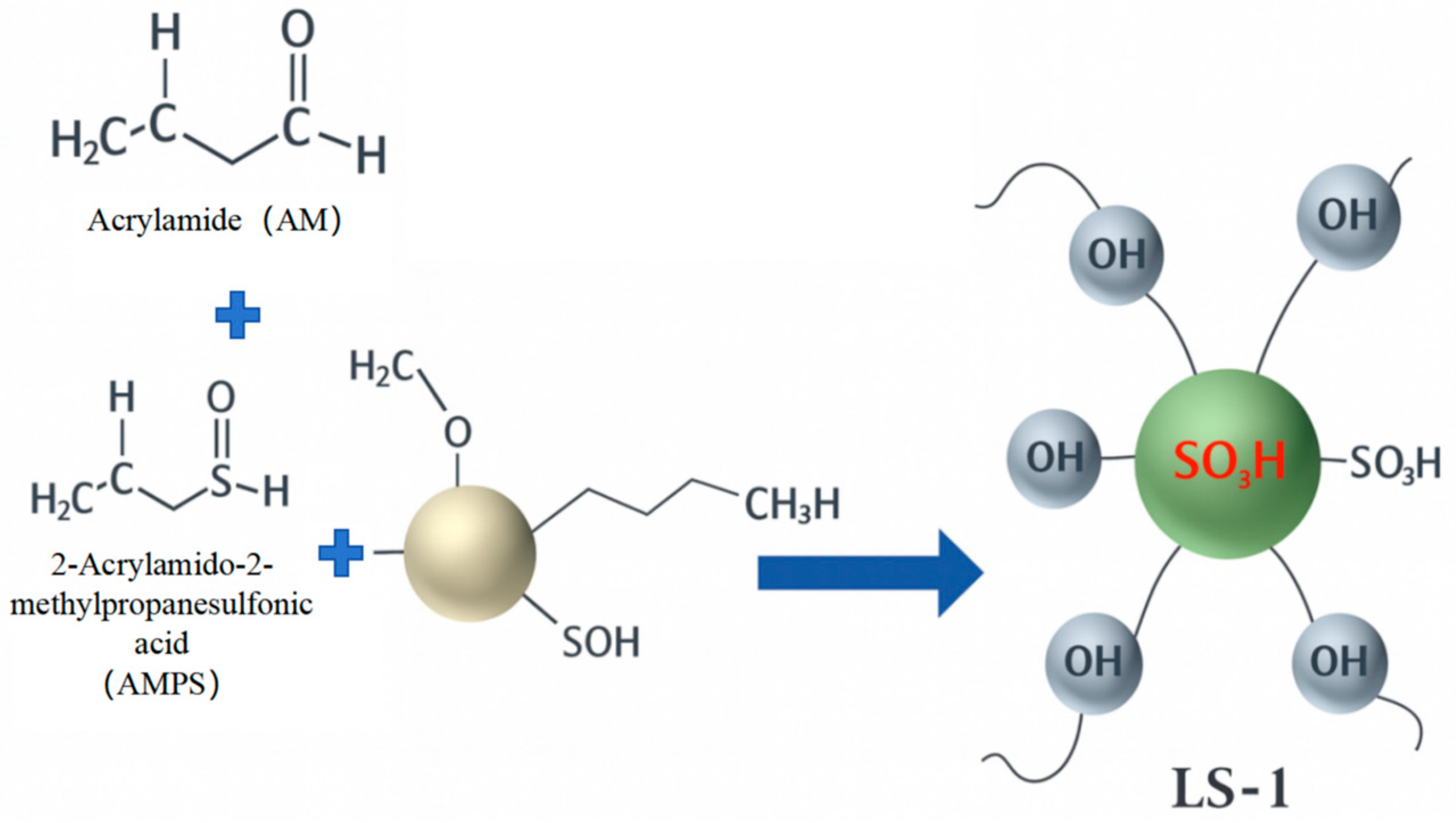
The LS-1 polymer exhibits excellent salt tolerance and thermal stability. As shown in Figure 4, the sulfonic-acid groups in the AMPS monomer substantially improve the thermal stability and solubility of the polymer molecular chain, enabling the polymer to retain strong hydration capacity and reliable film-forming performance under high-temperature conditions. The formation of a filtration membrane on the fracture wall by LS-1 effectively reduces the filtration-loss rate, allowing the plugging agent to deposit progressively at the fracture entrance and thereby facilitating the formation of the initial plugging structure [16].
Figure 4.
Synthesis Process of LS-1.
To assess its temperature resistance under HTHP conditions, LS-1 was incorporated into the base drilling fluid and the HTHP filtration loss was measured at different temperatures.
The temperature resistance of LS-1 was evaluated based on its HTHP filtration performance, as summarized in Table 2. As the temperature increased from 150 °C to 230 °C, the filtration-loss volume decreased from 11.3 mL to 7.0 mL, indicating that LS-1 maintained effective filtration control and showed improved sealing efficiency at elevated temperatures. When the temperature was further increased to 250 °C, the filtration loss increased slightly to 8.1 mL, suggesting the onset of partial thermal degradation; however, the overall filtration-control performance remained acceptable. These results demonstrate that LS-1 exhibits reliable temperature resistance over a wide temperature range relevant to HTHP drilling operations.
Table 2.
Effect of Temperature on HTHP Filtration Performance of LS-1.
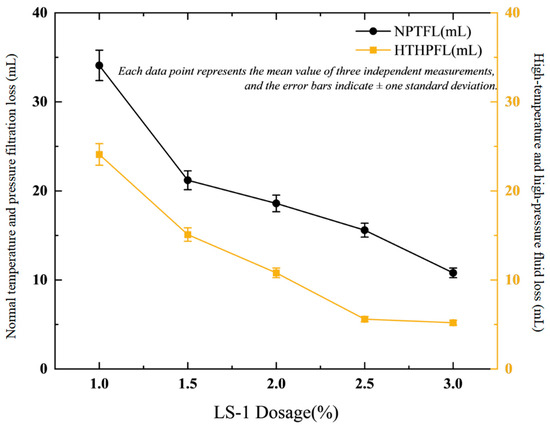
As shown in Table 3, the high-temperature and high-pressure filtration-loss performance was evaluated by adding LS-1 to the base slurry at different concentrations (1%, 1.5%, 2%, 2.5%, 3%) and measuring the HTHP filtration-loss volume under 230 °C and 10 MPa conditions. As shown in Figure 5, the results indicated that an LS-1 concentration of 2.5% yielded the lowest HTHP filtration-loss volume of 5.6 mL, representing the optimal filtration-loss performance.
Table 3.
Evaluation of High-Temperature and High-Pressure Fluid-Loss Performance of Filtration-Control Agents.
Figure 5.
Effect of LS-1 Dosage on Fluid-Loss Control Performance. Note: The experimental temperature is 230 °C and the pressure is 10 MPa; Error bars represent standard deviation based on three independent measurements (n = 3).
Using an independently designed high-temperature fracture-simulation apparatus, the filtration rate of the LS-1 regulator system was monitored in real time. As shown in Table 4, under test conditions of 150 °C, a fracture width of 2 mm, and a pressure differential of 3.5 MPa, the initial and steady-state filtration rates over 0–30 min were recorded. The dosage of the filtration-rate regulator was set to 1.0%, 1.5%, 2.0%, 2.5%, and 3.0%, and performance differences before and after hot-rolling treatment (150 °C, 16 h) were compared.
Table 4.
Effect of Filtration-Rate Regulator Dosage on Filtration Rate.
In the basic mud system, 5%, 10%, 15%, and 20% NaCl were added to prepare drilling fluids with varying salt concentrations. Subsequently, 2.5% LS-1 was incorporated into each formulation. The HTHP filtration-loss (HTHPFL) was measured under test conditions of 200 °C and 25 MPa. As shown in Table 5, The results indicated that a NaCl concentration of 15% yielded an HTHPFL of 10.2 mL. Compared with the freshwater-based slurry (8.5 mL), the variation was relatively small, indicating that LS-1 exhibits strong salt tolerance and can meet the operational requirements of saline formations in the Baiyun Block.
Table 5.
Evaluation of Salt-Tolerance Performance of Filtration-Control Agents.
3.3. Temperature-Resistant, Pressure-Bearing Support Material LCM-1
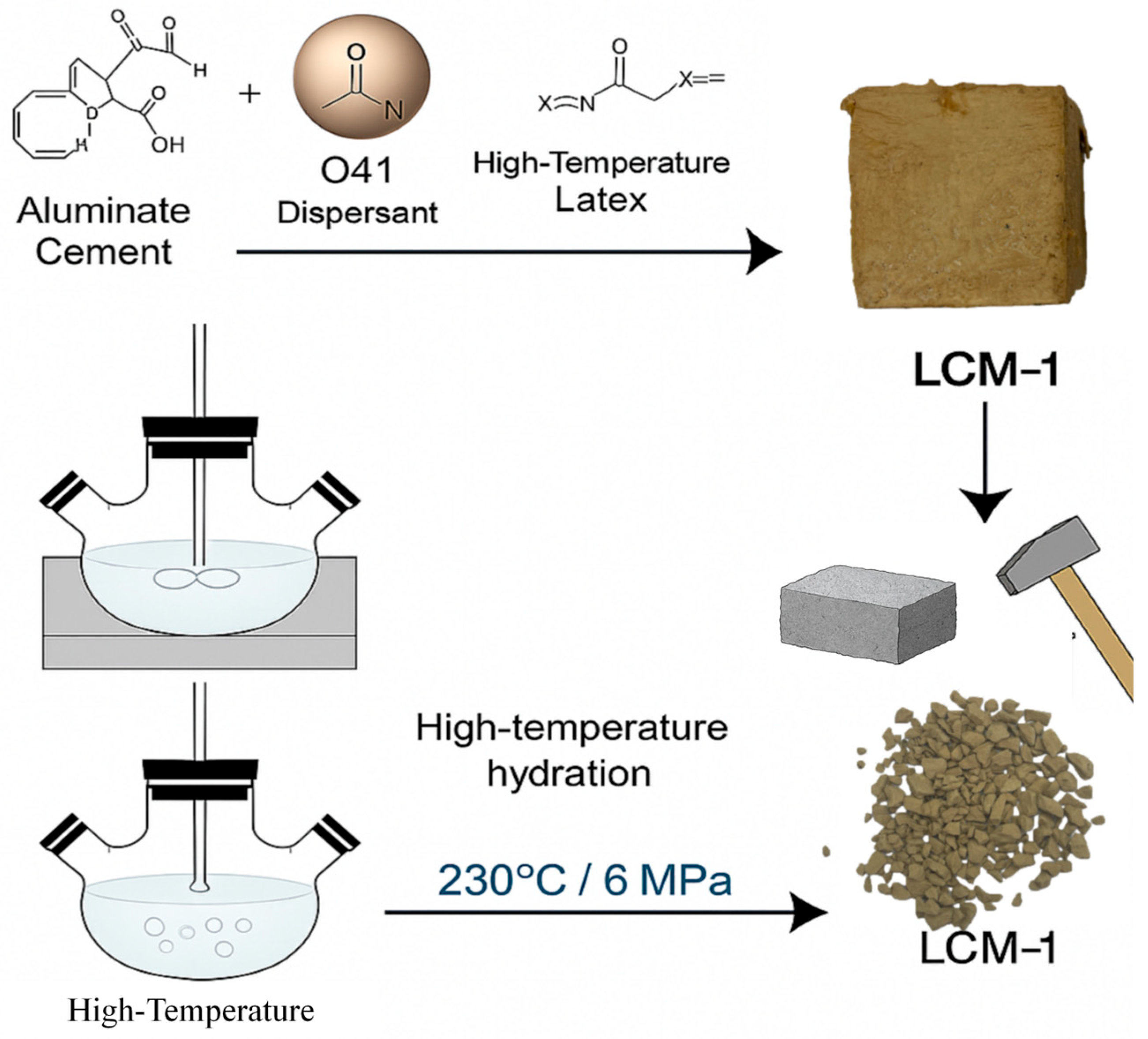
The synthesis conditions of LCM-1 are shown in Table 6, LCM-1 was prepared using aluminosilicate cement, O41 dispersant, and high-temperature-resistant latex at a mass ratio of 1:0.14:0.04. Deionized water was added at a water-to-solid ratio of 0.45, and the mixture was mechanically stirred for 10 min to obtain a uniform slurry. The slurry was cast into cubic molds to form block-shaped specimens, sealed to minimize moisture loss, and hydrated in a 90 °C water bath for 48 h to obtain the base LCM-1 material. For downhole thermal conditioning, selected specimens were further aged at 230 °C for 16 h in a high-temperature chamber prior to mechanical testing. After curing, specimens were demolded and cooled to room temperature; no additional chemical purification was applied.
Table 6.
Synthesis conditions of LCM-1.
The temperature-resistant and pressure-bearing supporting material (LCM) plays a critical role in plugging operations within high-temperature and high-pressure fractured formations. A force-chain structure is constructed by the LCM through particle embedding and interlocking, providing the primary pressure-bearing capacity for the plugging body and ensuring resistance to collapse and erosion under high pressure differentials and strong backflow-induced erosion. At the same time, the LCM synergizes with the filtration-loss control agent to promote the directional deposition of filter cake and gel on particle surfaces, forming a dense “particle-film-gel” composite plugging layer and thereby enhancing the overall stability and anti-reflux capacity of the plugging structure. Because high-temperature hydration-stabilized materials are used, the LCM can maintain its strength and morphology at 150–230 °C, making it a key component for constructing high-pressure, long-term stable plugging structures in controllable-filtration-rate plugging systems [17].
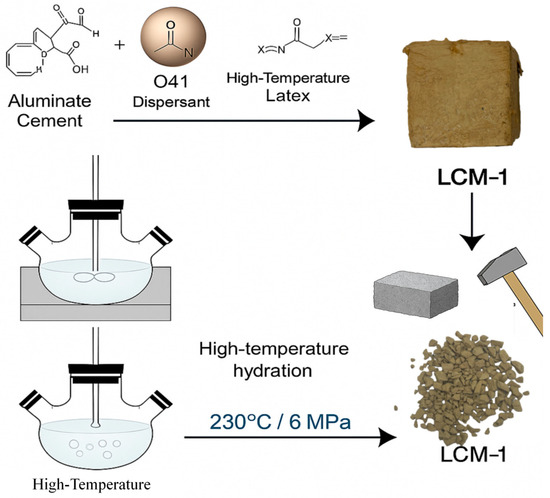
As shown in Figure 6, LCM-1 employs refractory cement (aluminate cement) as the primary inorganic framework, supplemented with O41 dispersant to enhance slurry uniformity, and incorporates high-temperature-stable latex to improve the material’s flexibility and thermal-shock resistance. Under high-temperature and high-pressure conditions, the three components undergo hydration, film formation, and composite crosslinking, ultimately forming a composite pressure-bearing material with excellent mechanical properties and high thermal stability [18].
Figure 6.
Synthesis Process of LCM-1.
To systematically evaluate the applicability of LCM-1 in the high-temperature and high-pressure fractured formations of the Baiyun area, three categories of experiments were conducted: high-temperature stability, pressure-bearing capacity, and particle-size embedding capability. These experiments comprehensively verified the feasibility of LCM-1 as a high-temperature, pressure-bearing supporting material.
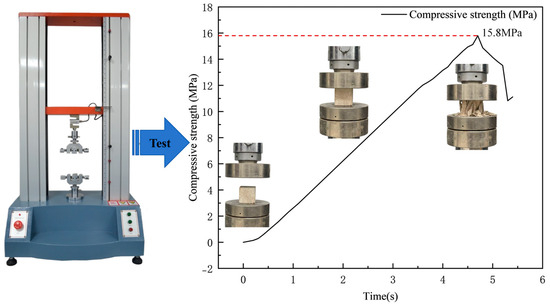
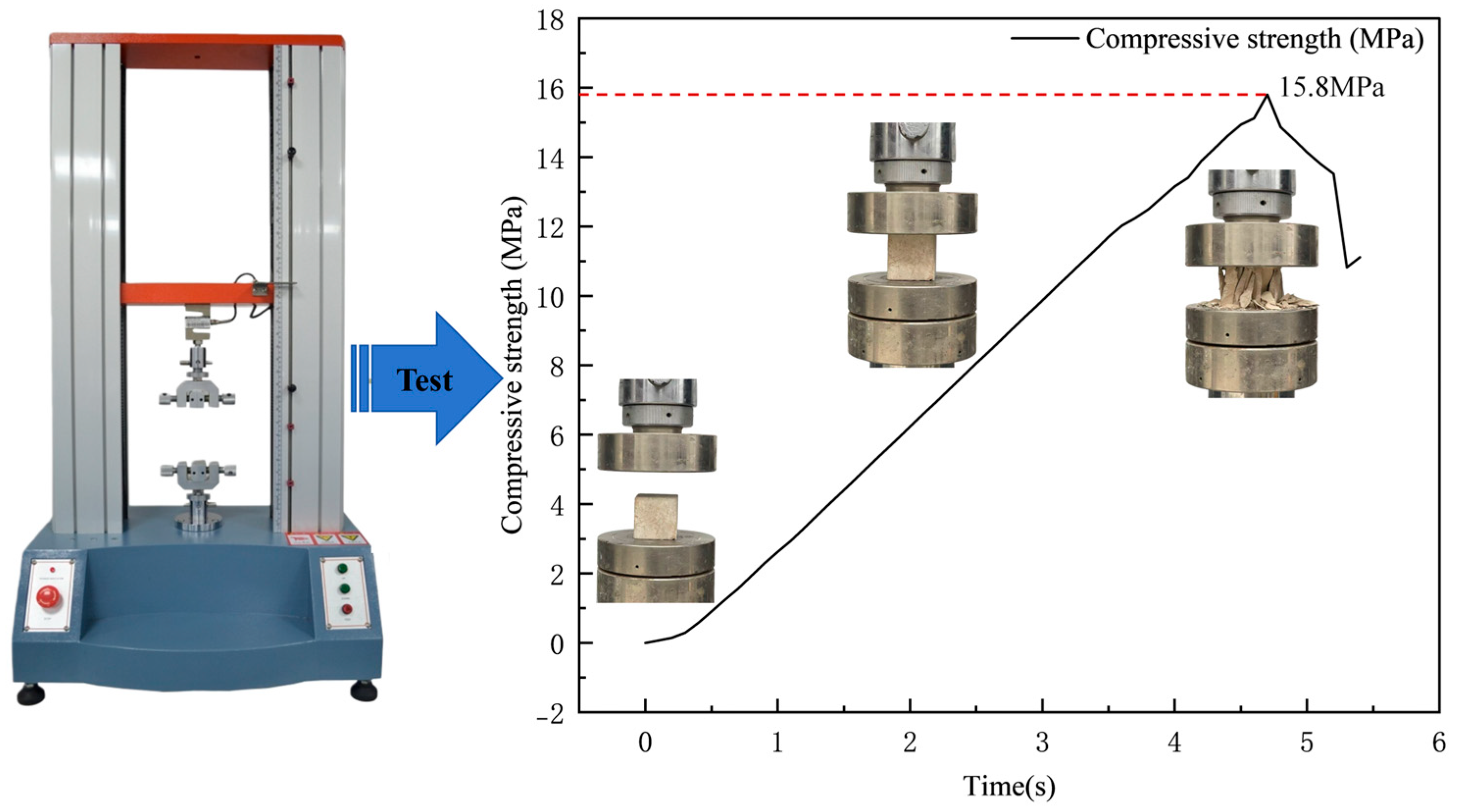
LCM-1 employs a composite system consisting of aluminosilicate cement and high-temperature-stable latex. Its high-temperature stability directly determines the service life of the plugging structure in subsurface conditions. After mixing, the formulation was hydrated at 230 °C for 16 h to evaluate its integrity and mechanical performance under high-temperature conditions. As shown in Figure 7, the pressure-bearing capacity of the block-shaped LCM-1 specimens was evaluated using a universal testing machine. Under monotonic compressive loading, the compressive strength increased progressively with loading time and reached a peak value of 15.8 MPa, which represents the ultimate compressive strength of the LCM-1 material prior to failure.
Figure 7.
Pressure-Bearing Capacity Test of LCM-1.
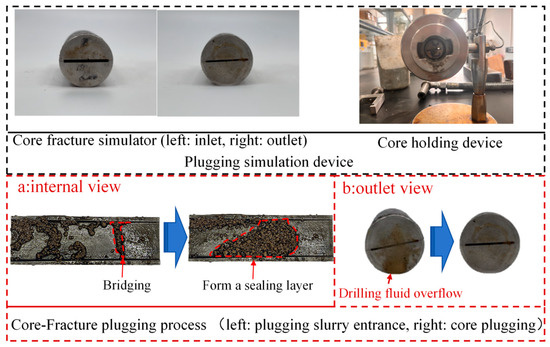
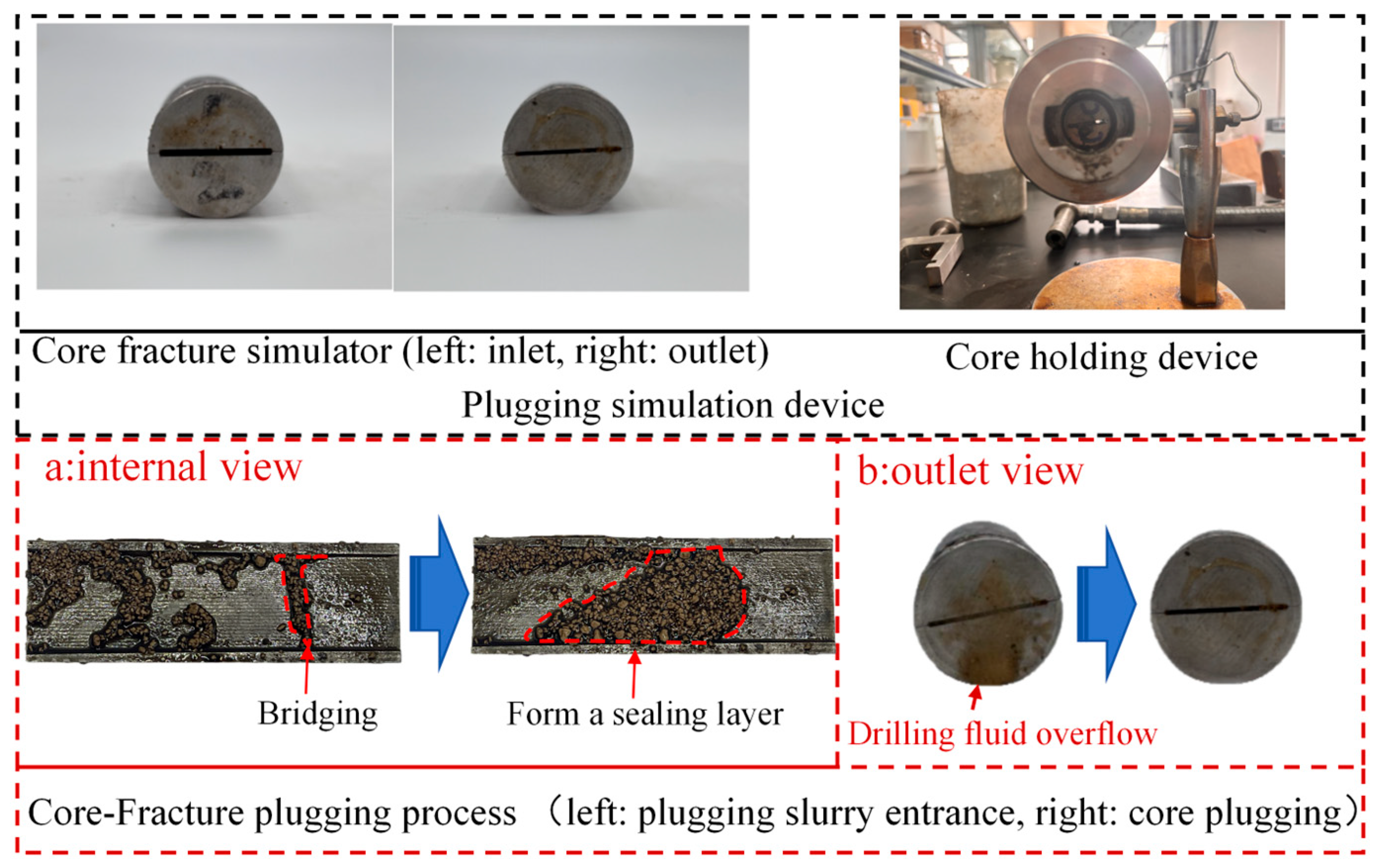
As shown in Figure 8, in the core-fracture plugging simulator, the fracture aperture was controlled by employing wedge-shaped fracture geometries with predefined widths machined into the core-fracture model. By replacing wedge inserts with different opening widths, fractures of different apertures were reproducibly generated. During testing, the two core halves were assembled to form a closed fracture structure with a fixed wedge-defined aperture, and the plugging slurry was injected from the inlet side. This design enables reliable control of fracture size without mechanical adjustment during the test and allows systematic evaluation of plugging performance under different fracture-width conditions.
Figure 8.
Fracture width control device and experimental process.
The fracture adaptability evaluation of LCM-1 was conducted using a high-temperature and high-pressure fracture-simulation apparatus with an adjustable fracture width. The fracture widths were set to 1, 2, and 3 mm, and three LCM-1 particle-size grades (1–2 mm, 2–3 mm, 3–5 mm) were injected into the fracture model at an identical flow rate. The deposition, bonding, and interlocking behaviors of the particles within the fractures were observed through the visual window and pressure monitoring. As shown in Table 7 and Table 8, the results indicated that smaller particles were more likely to generate multiple contact points within narrow fractures, whereas medium-sized particles constructed a continuous force-chain framework within 2 mm fractures and exhibited the highest embedding stability. Larger particles were primarily applicable to wide fractures, and their embedding depended on filter-cake or gel filling of interparticle voids. Through a comprehensive comparison of pressure-platform stability and structural morphology, the optimal particle-size matching rule for LCM-1 under varying fracture conditions was established.
Table 7.
Evaluation of Pressure-Bearing Capacity in Fractures.
Table 8.
Embedding and Anchoring Adaptability of LCM-1 in Fractures at Different Particle Sizes.
LCM-1 particles sized 2–3 mm were selected as representative samples for the high-temperature resistance test. The particles were placed in a high-temperature and high-pressure aging chamber and subjected to a 16 h hot-rolling treatment at 150 °C, 180 °C, 200 °C, and 230 °C. After hot-rolling, the mass-retention rate, appearance integrity, and compressive strength of the particles were measured, and the pre- and post-treatment changes were compared to evaluate their high-temperature stability. As shown in Table 9, the results indicated that within the 150–230 °C range, the particles maintained high structural density without softening, melting, or delamination; the mass-retention rate remained between 97% and 99%, compressive-strength loss was below 10%, and particle-integrity exceeded 95%. These findings demonstrate that LCM-1 exhibits excellent thermal resistance in the high-temperature fracture formations of the Baiyun Block and can serve as a stable plugging material for long-term pressure-bearing frameworks.
Table 9.
Evaluation of High-Temperature Resistance.
3.4. Dispersible Curing Gel FSGEL-1
The gel system exhibits pronounced temperature sensitivity, and its gelation process is strongly influenced by thermal conditions. As temperature increases, the crosslinking rate accelerates, and the gel transitions from an initial sol state to a spatial network, eventually forming a stable three-dimensional solidified structure. The gel material synergizes with particle-based materials in high-temperature fracture formations, thereby enhancing the construction of stable, high-pressure plugging structures [19].
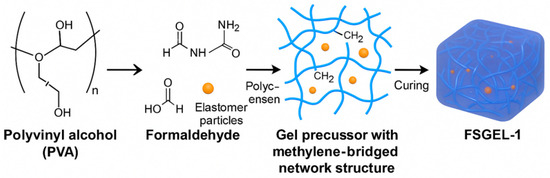
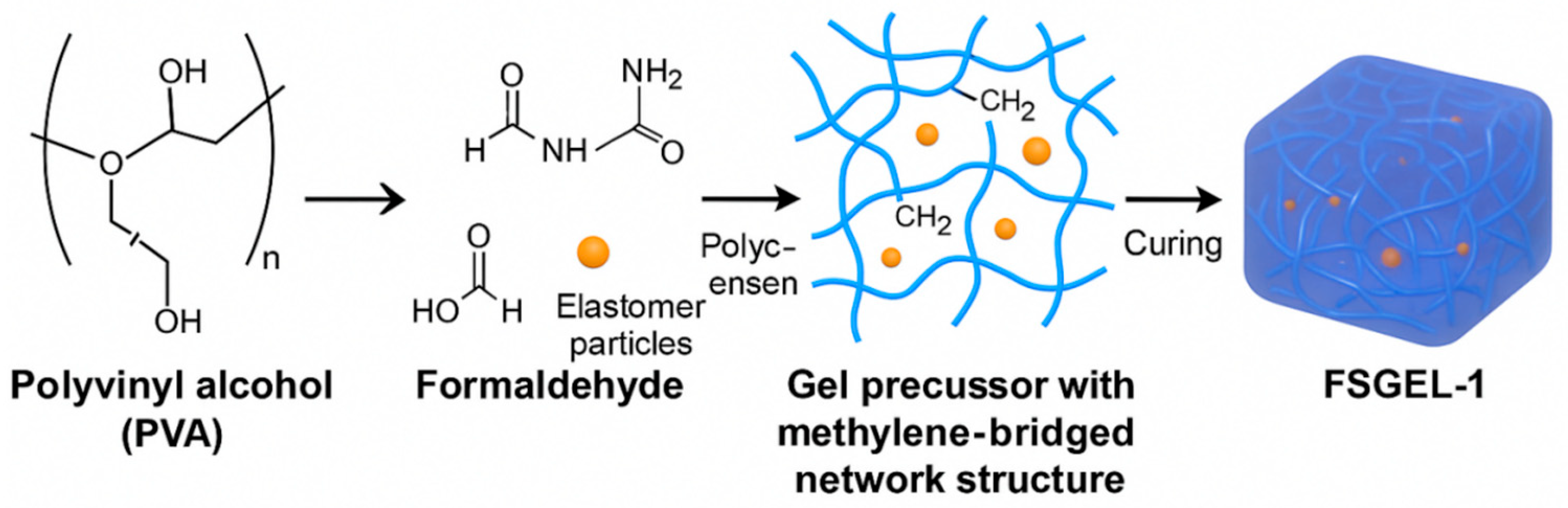
The synthesis conditions of FSGEL-1 are shown in Table 10, the dispersible thermosetting gel FSGEL-1 was synthesized via acid-catalyzed polycondensation using polyvinyl alcohol (PVA; degree of hydrolysis 98–99%, Mw 85,000–124,000 g·mol−1) as the backbone. PVA was dissolved in deionized water at 90 °C for 60 min to obtain a 10 wt% solution, after which formaldehyde (37 wt% aqueous solution) and urea were added at a molar ratio of F:U = 1.2:1 (adjustable within 1.0–1.5:1) [20]. The reaction pH was maintained at 2.0–3.0 using dilute HCl (1.0 mol·L−1) as the acid catalyst, and the mixture was reacted at 80 °C for 2 h under stirring to form a dispersible gel precursor. Residual small molecules were removed by repeated washing with deionized water (3–5 cycles, 10:1 wash-to-product volume ratio), and the product was stored at 4 °C in sealed containers until use; no radical initiator was used because gel formation was governed by acid-catalyzed polycondensation [21].
Table 10.
Synthesis conditions of FSGEL-1.
As shown in Figure 9, polyvinyl alcohol (PVA) was employed as the primary framework material, with formaldehyde and urea serving as the core condensation components, to synthesize a dispersible, thermally curable gel material (designated FSGEL-1). During synthesis, the PVA molecular chains form methylene-bridge linkages under the action of formaldehyde, followed by condensation with urea, enabling the system to gradually develop a gel precursor with a spatial network structure. By adjusting the formaldehyde-urea ratio, the degree of condensation can be effectively controlled, allowing precise regulation of the gel’s curing temperature and curing time, and enabling on-demand curing in high-temperature subsurface environments. The incorporation of elastic microspheres enhances the flexibility and deformation resistance of the solidified gel, significantly improving the backflow-erosion resistance of FSGEL-1 and providing a more reliable toughness-enhancing material for plugging deep fracture formations [22].
Figure 9.
Synthesis Process of FSGEL-1.
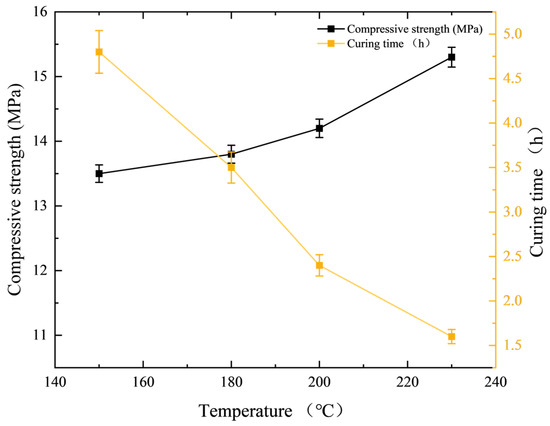
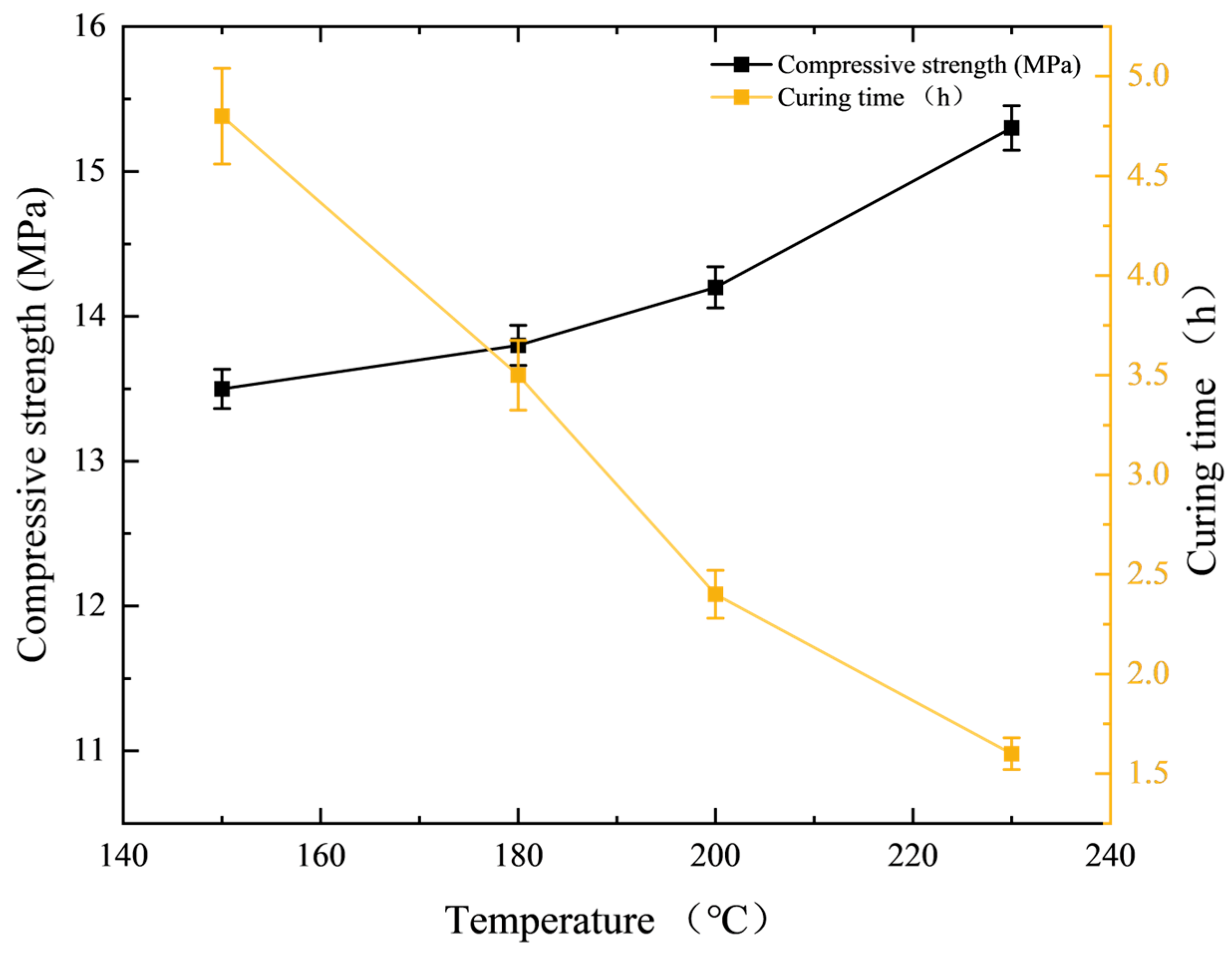
To systematically evaluate the applicability of the dispersed gel FSGEL-1 in high-temperature fractured formations, laboratory performance tests were conducted to assess its curing behavior, mechanical properties, and wellbore concentration capability, thereby verifying its effectiveness as a variable-concentration, curing-type plugging material. To determine the curing-triggering conditions of FSGEL-1 in the wellbore under high-temperature environments, the prepared gel was placed in sealed reaction vessels and subjected to isothermal curing experiments at different temperature levels [23]. By recording the time required for the gel to transition from an initial fluid state to an elastic solid, the curing-time curve was obtained. As shown in Figure 10, the results indicated that as temperature increased, the polycondensation rate accelerated significantly, and the curing time decreased from 4 to 5 h at 150 °C to 1–2 h at 230 °C. Moreover, by adjusting the formaldehyde-urea ratio, the curing-temperature window could be precisely controlled, enabling curing to initiate at the desired wellbore temperature and satisfying the requirements for fixed-point plugging. FSGEL-1 rapidly formed a stable three-dimensional network structure at 180–230 °C, and its curing behavior exhibited strong temperature-sensitive responsiveness.
Figure 10.
Evaluation of Curing Temperature and Curing Time of FSGEL-1. Note: Error bars represent standard deviation based on three independent measurements (n = 3).
The mechanical properties of the three-dimensional network structure formed after FSGEL-1 has cured can be evaluated using a shear-strength tester, a simple compression device, or a rheometer. After the gel is cured at the specified temperature and removed, parameters such as shear strength, loss modulus, and storage modulus are measured. As shown in Table 11, the results indicate that under curing conditions of 180–230 °C, the shear strength generally reaches 30–120 Pa and can be further enhanced by increasing the degree of crosslinking. Owing to the incorporation of elastic particles, the cured gel exhibits enhanced flexibility and deformation-recovery capability. After multiple compression cycles, the structure exhibited no visible fracture or fatigue failure.
Table 11.
Evaluation of Gel Strength After FSGEL-1 Solidification.
FSGEL-1 was placed in a high-temperature and high-pressure filtrate environment at 200 °C and 2.0 MPa. Samples were taken at regular intervals to monitor the concentration evolution of FSGEL-1 within the simulated fracture channel. As shown in Table 12, the results indicated that as the filtrate continued to flow, the water content of the system gradually decreased, and FSGEL-1 underwent significant enrichment within the channel. Its effective concentration exhibited a continuous upward trend. After approximately 6 h of testing, the concentration increased to nearly three times the initial value, indicating that the gel system possesses a pronounced self-concentration capability. It was able to rapidly accumulate to form a high-concentration precursor layer within the fracture, thereby effectively regulating the filtrate process and providing critical support for the subsequent stable development of the solidified plugging structure.
Table 12.
Evaluation of Concentration Performance.
4. Establishment and Performance Evaluation of a Controllable Filtration-Rate Plugging System
4.1. Optimization of the Controllable Filtration-Rate Plugging System Formulation
Based on the loss characteristics of high-temperature and high-pressure fractured formations in the Baiyun Block of the eastern South China Sea, the design of a controllable-filtration-rate plugging system must simultaneously satisfy multiple requirements, including rapid bridging, pressure-bearing stability, temperature-sensitive curing, and self-reinforcing plugging performance. Therefore, this study focuses on the synergistic interactions among the filtration-control agent LS-1, the pressure-bearing particles LCM-1, and the dispersible gel FSGEL-1. A systematic optimization of the system formulation was conducted based on indicators such as system viscosity, filtration rate, and pressure-bearing capacity [24].
An orthogonal experimental design was adopted to optimize the system formulation. The dosages of the filtration-control agent LS-1 (factor A), the dispersible gel FSGEL-1 (factor B), and the pressure-bearing supporting material LCM-1 (factor C) were selected as the primary factors, each assigned three levels. An L9(33) orthogonal table was constructed, and comparative experiments were conducted on nine formulation systems. The comprehensive evaluation indices included room-temperature rheological parameters, HTHP filtration loss, pressure-bearing capacity, and plugging stability in the fracture-simulation device. A weighted-scoring method was employed to normalize the multiple indices into a single comprehensive score, thereby identifying the optimal formulation.
The orthogonal experimental design adopted an L9(33) orthogonal table (Table 13), with the dosages of LS-1 (A: 0.8%, 1.0%, 1.2%), FSGEL-1 (B: 1.5%, 2.0%, 2.5%), and LCM-1 (C: 5%, 8%, 12%) selected as the influencing factors, each assigned three levels. The experimental results were analyzed using range analysis and variance analysis to determine the influence of each factor on system performance and to identify the optimal formulation.
Table 13.
Results of Orthogonal Experiments.
The final optimal formulation for the controllable-filtration-rate plugging system was determined as follows: water + 1.2% LS-1 + 1.5% FSGEL-1 + 12% LCM-1, supplemented with barite adjusted to meet formation-pressure requirements, achieving a final slurry density of 1.5–2.2 g/cm3.
4.2. Evaluation of Basic Rheological Properties
The basic rheological properties are key indicators for evaluating the pumpability, carrying capacity, and suspension stability of the plugging system in the wellbore. The evaluation parameters primarily include apparent viscosity (AV), plastic viscosity (PV), yield point (YP), and static shear forces at different standing times (G1 and G10). These rheological parameters not only determine the flow behavior of the plugging slurry but also directly influence the suspension and transport efficiency of the pressure-bearing particles LCM-1, the stability of LS-1 filter-membrane formation, and the uniformity of the early concentration process of FSGEL-1. According to API standards, the rheological properties of the optimized controllable-filtration-rate plugging system were evaluated under normal temperature and pressure conditions (25 °C, 0.1 MPa) using a six-speed rotational viscometer. The resulting data are presented in Table 14.
Table 14.
Basic Rheological Parameters of the Controllable Filtration-Rate Plugging System.
From Table 14, it can be observed that the apparent viscosity of the system is 30.5 MPa·s, while the plastic viscosity is 21.0 MPa·s. This finding indicates that the system possesses appropriate flow resistance, enabling smooth pumping in the wellbore and efficient transport of solid particles. The yield point (YP) is 11.5 Pa, providing adequate suspension capacity while avoiding excessive structural strength that could hinder pumping. The static shear forces G1 and G10 are 8.2 Pa and 14.0 Pa, respectively. Both values increase moderately with standing time, indicating good structural recovery, which helps reduce the displacement and sedimentation of LCM-1 particles and ensures the stability of the plugging slurry during wellbore shut-in. Overall, the controllable-filtration-rate plugging system exhibits excellent basic rheological properties, including moderate flowability, strong suspension capacity, and robust structural recovery, enabling it to fully satisfy the pumping, stability, and solids-carrying requirements of field plugging operations.
4.3. Evaluation of High-Temperature and High-Pressure Rheological Properties
To evaluate the rheological stability of the controllable-filtration-rate plugging system under high-temperature and high-pressure downhole conditions, an HTHP rheological test was performed under simulated formation conditions representative of the South China Sea. During downhole operations, the plugging system must withstand temperatures of 180–230 °C and formation pressures of 6–10 MPa, as well as cyclic shear. Therefore, viscosity retention, structural stability, and shear-recovery capacity under high-temperature and high-pressure conditions serve as key indicators for assessing its downhole applicability.
A high-temperature and high-pressure rheometer was employed in the experiment. Rheological scans were conducted at 180 °C/6 MPa and 230 °C/10 MPa, respectively. After the system reached equilibrium for 30 min under the target temperature and pressure, viscosity curves at different shear rates were recorded, and rheological parameters-including apparent viscosity (AV), plastic viscosity (PV), and yield point (YP)-were calculated. To evaluate structural retention under high-temperature and high-pressure conditions, the viscosity measured under HTHP conditions was compared with that at ambient temperature, and the corresponding viscosity-retention rate was calculated. The experimental results are presented in Table 15.
Table 15.
High-Temperature and High-Pressure Rheological Results of the Controllable Filtration-Rate Plugging System.
From Table 15, it can be observed that the system maintains good rheological stability under conditions of 180–230 °C and 6–10 MPa. Although the viscosity decreases slightly under high-temperature and high-pressure conditions, the apparent viscosity and plastic viscosity remain within an appropriate range, sufficient to satisfy the pumping and solids-carrying requirements of wellbore operations. The variation in yield point (YP) is minimal, indicating that the system structure has not experienced significant degradation and that the suspension and dispersion behavior of LCM-1 remains stable. In addition, the viscosity-retention rate remains above 70% at elevated temperatures, demonstrating strong thermal structural stability. Overall, the controllable-filtration-rate plugging system exhibits strong shear resistance and excellent thermal stability under high-temperature and high-pressure conditions, enabling it to fully meet the operational requirements of HTHP fractured formations in the eastern South China Sea.
5. Plugging Performance of the System
To comprehensively assess the applicability of the controllable-filtration-rate plugging system in the high-temperature and high-pressure fractured formations of the Baiyun Block, the plugging performance was evaluated from two perspectives: sealing performance in simulated natural fractures and structural stability under backflow and erosion. Through experimental testing, the system’s rapid bridging capability across different fracture scales, its pressure-bearing capacity, and the long-term integrity of the sealing structure under high pressure differentials and backflow conditions were verified. Thus, the system’s potential for field application was demonstrated.
5.1. Evaluation of Plugging Performance in Simulated Natural Fractures
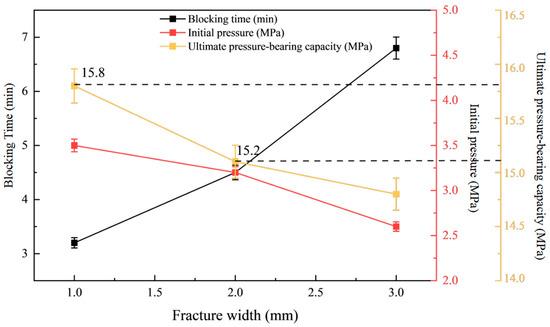
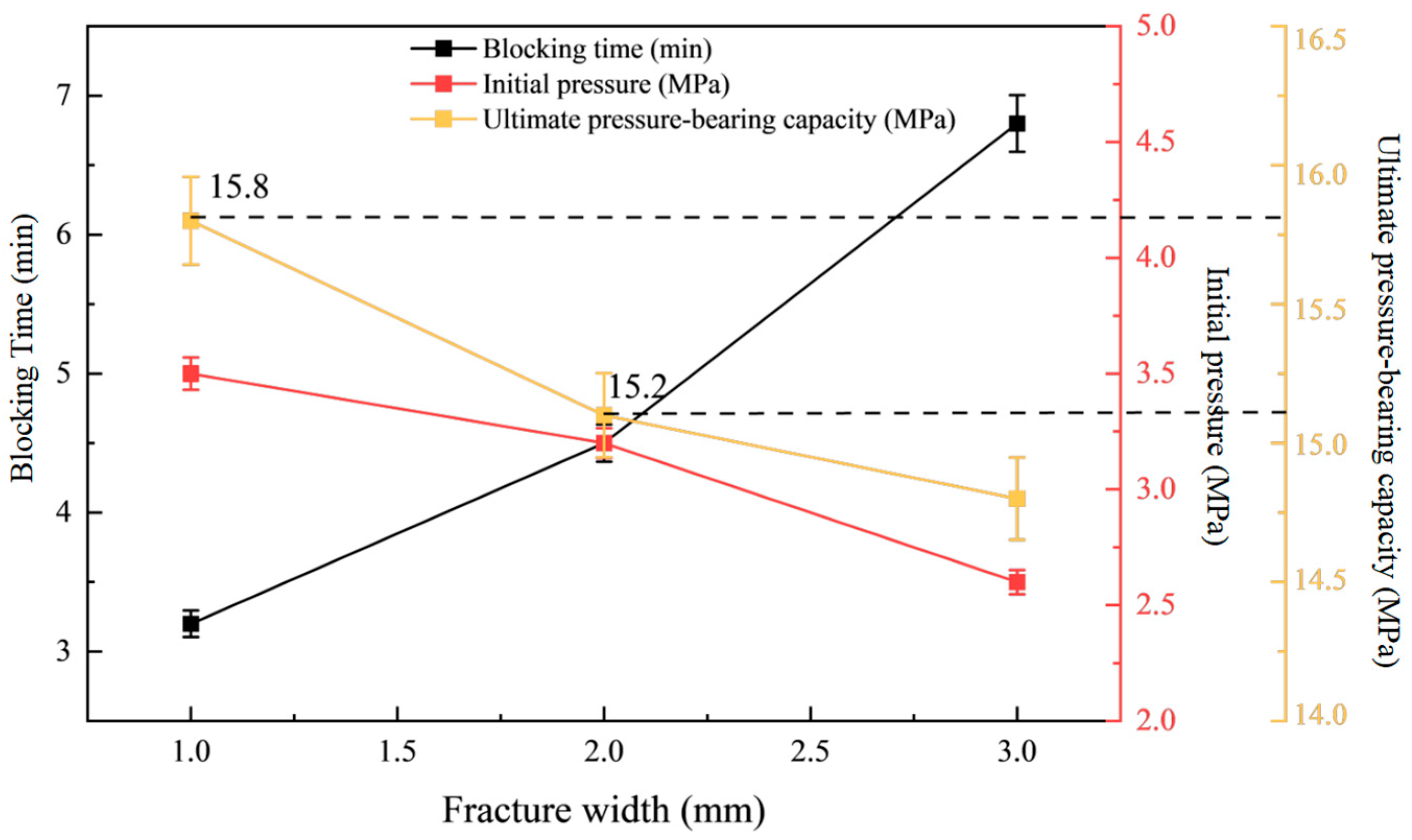
To evaluate the adaptability of the controllable-filtration-rate plugging system in the high-temperature and high-pressure fractured formations of the eastern South China Sea, an HTHP controllable-fracture plugging apparatus was employed to simulate typical fracture widths of 1.0 mm, 2.0 mm, and 3.0 mm representative of field conditions. The system’s sealing rate, sealing strength, and stable pressure-bearing capacity under high-temperature (230 °C) and high-pressure-differential (0–10 MPa) conditions were systematically evaluated.
The experimental procedure included injecting the plugging system at an initial circulation pressure of 2 MPa under the predetermined fracture width. Once a bridging structure formed at the fracture entrance, the back pressure was gradually increased, and the sealing time, initial pressure-bearing point, and ultimate pressure-bearing capacity were recorded. After a stable seal was achieved, the pressure was maintained for 15 min to assess the stability of the sealing layer.
As shown in Figure 11, the experimental results indicate that the system can rapidly bridge and form a stable sealing structure in fractures ranging from 1 to 3 mm. Among these conditions, the 2.0 mm fracture exhibited the best sealing efficiency and pressure-bearing capacity, with an ultimate pressure-bearing capacity reaching 15.2 MPa, sufficient to satisfy the requirements of high-pressure leakage formations in the eastern South China Sea. In the 1.0 mm fracture, the sealing layer was the densest, with an ultimate pressure-bearing capacity of 15.8 MPa. In the 3.0 mm fracture, although the pressure-bearing capacity decreased slightly, a sealing capacity greater than 14 MPa was still maintained, indicating that the system also exhibits strong adaptability to larger fractures. Overall, the plugging process follows a synergistic mechanism of particle bridging-filter-membrane formation-gel reinforcement, resulting in a highly stable plugging effect.
Figure 11.
Evaluation of Plugging Performance Under Different Fracture Width Conditions. Note: Error bars represent standard deviation based on three independent measurements (n = 3).
5.2. Evaluation of Anti-Backflow Performance
5.2.1. Experimental Conditions
To realistically simulate the backflow and erosion environment of the high-temperature and high-pressure fractured strata in the Baiyun Block, an HTHP backflow evaluation device was employed to conduct reverse-flushing tests after a stable sealing structure had been established in the system. Before the formal backflow test, the plugging system was injected into a 2.0 mm fracture and allowed to complete the sealing process, ensuring that the sealing layer reached a stable state and maintained a stable forward pressure-bearing capacity of 10 MPa, which served as the baseline condition for subsequent backflow evaluation. This pressure level was selected to represent the sustainable pressure-bearing capacity after structural stabilization, rather than the ultimate failure pressure. This pre-treatment process aimed to replicate the actual field conditions in which the plugging agent completes rapid bridging, filter-membrane stabilization, and gel reinforcement within the fracture channel before entering the backflow stage [25].
During the backflow evaluation, a graded reverse pressure of 2–6 MPa was applied to the sealing system using a backflow pump. Each pressure level was maintained for 10 min, and the backflow volume, loss rate, structural changes in the sealing layer, and pressure-differential retention were recorded. This pressure range encompasses the typical backflow-pressure fluctuations observed in the eastern South China Sea wells and can comprehensively reflect the stability and anti-erosion capacity of the sealing structure under reverse-flushing conditions.
5.2.2. Anti-Backflow Performance Evaluation
As shown in Table 16, at a backflow pressure of 2–4 MPa, the plugging structure was found to exhibit excellent resistance to erosion. The particle framework (LCM-1) remained stable, the filter-membrane layer (LS-1) retained its density, and the gel-reinforcement layer (FSGEL-1) contributed additional toughness, thereby preventing rupture or peeling of the overall plugging structure and maintaining low backflow volume and a stable pressure differential. When the backflow pressure increased to 5–6 MPa, localized structural damage was observed in the plugging layer; however, no overall structural failure occurred. The gel-reinforcement zone continued to preserve the overall morphology of the plugging system, indicating strong resistance to backflow-induced erosion. Overall, the controllable-filtration-rate plugging system demonstrated high stability under high-temperature and high-pressure reverse-flow conditions, effectively resisting wellbore backflow erosion and pressure fluctuations and exhibiting strong adaptability to the complex fractured formations in the eastern South China Sea.
Table 16.
Anti-Backflow Performance of the Controllable Filtration-Rate Plugging System.
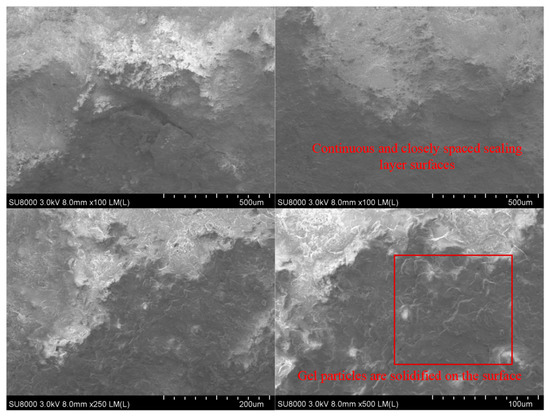
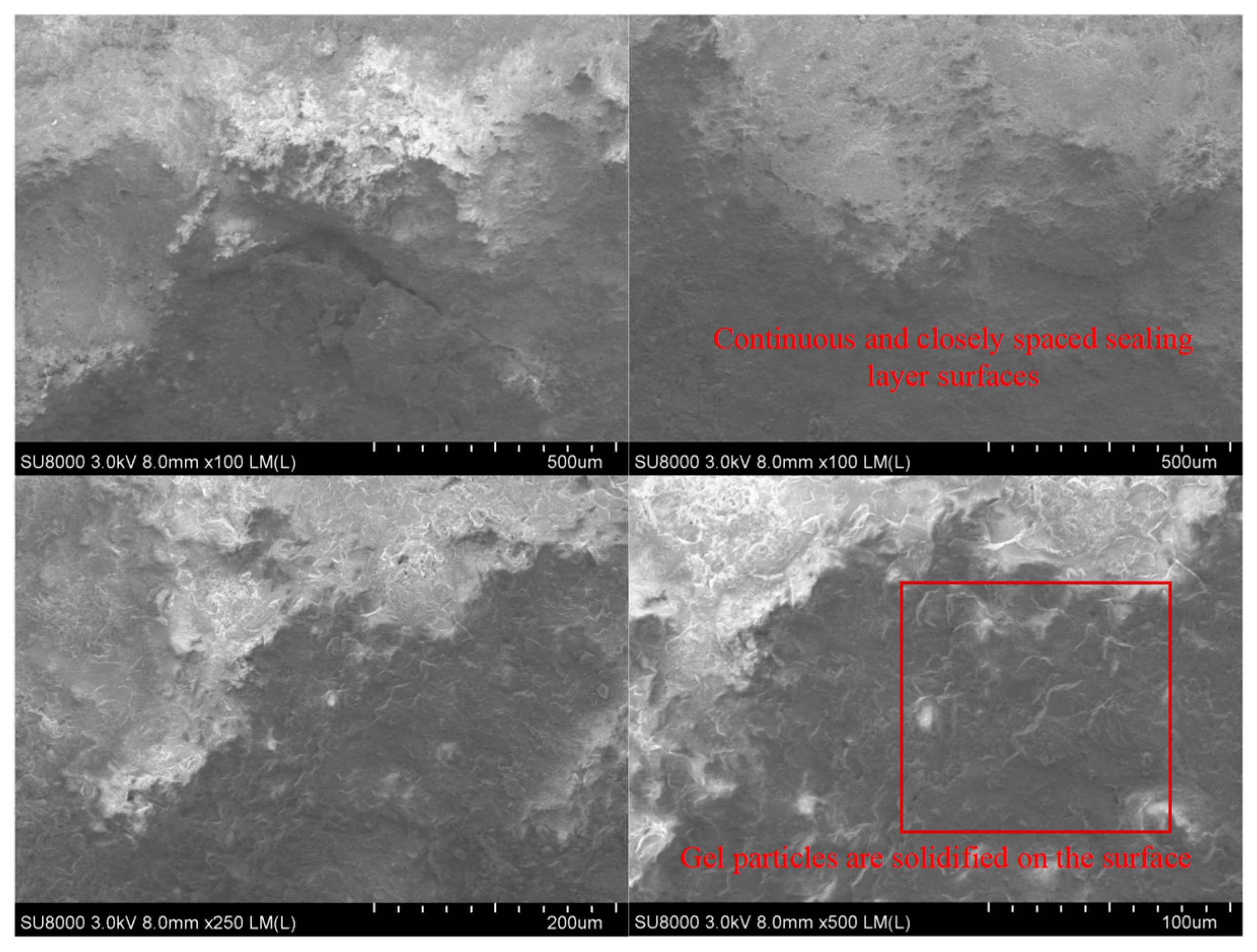
To further support the macroscopic anti-backflow performance observed, the microstructural morphology of the plugging layer after high-temperature backflow erosion was examined using scanning electron microscopy (SEM, SU8010, Hitachi High-Tech Corporation, Tokyo, Japan), as shown in Figure 12. At low magnification, the plugging layer exhibits a relatively continuous and compact surface without large-scale spalling or through-thickness cracks, indicating that the overall structural integrity was preserved under cyclic backflow conditions [26].
Figure 12.
SEM images of the filter cake.
At higher magnifications, a dense microstructure characterized by gel-coated particle surfaces and interconnected binding regions can be clearly observed. The cured gel phase forms a continuous matrix that bridges adjacent particles and fills interparticle voids, resulting in enhanced cohesion and reduced susceptibility to erosion-induced particle detachment. This microstructural feature is consistent with the observed stable pressure-bearing capacity (10 MPa) under high-temperature conditions and supports the interpretation that the synergistic interaction between filtration-induced framework formation and in situ gel reinforcement contributes to improved toughness and erosion resistance of the plugging layer.
5.3. Quantitative Comparison with Existing HTHP Plugging Technologies
Compared with existing HTHP plugging technologies reported in the literature, the controllable-filtration-rate plugging system developed in this study shows favorable quantitative performance under the tested conditions. For example, particle-based bridging systems reported by Helei et al. [4] and Su et al. [6] typically exhibit effective pressure-bearing capacities below 7–10 MPa at temperatures not exceeding 150–180 °C. Under the current experimental conditions, the leakage sealing system described in this paper has achieved the effect of withstanding a temperature of 230 °C and a pressure of over 10 MPa. Gel-based and chemical-consolidation materials reported in previous studies [7,8,9] can provide local sealing or strength enhancement, but often suffer from dehydration, narrow curing windows, or limited pumpability, which can compromise performance under cyclic pressure and backflow conditions. In contrast, the present system maintains a stable pressure-bearing capacity of 10 MPa under high-temperature conditions, suggesting improved structural integrity and erosion resistance. Moreover, while many existing technologies are designed for a single fracture scale, the proposed system demonstrates effective sealing across fracture widths ranging from 1 to 3 mm, reflecting improved adaptability to multiscale leakage channels commonly encountered in deepwater HTHP formations.
To further evaluate field relevance, a representative on-site application was conducted in the BY5 block. When drilling to 4972 m, the total gas volume increased rapidly from 0.3% to 8.2%, and the density of the weighted drilling fluid was adjusted from 1.48 to 1.50 sg. The leakage rate at this stage was 35 bbl/h. After the proposed leak-sealing material was applied, the leakage rate decreased to 2 bbl/h, and drilling operations were subsequently resumed. These field observations are consistent with the laboratory findings and support the practical feasibility of the proposed system under field operating conditions.
The observed trends in filtration control, pressure-bearing capacity, and anti-backflow performance were reproducible across independent tests, indicating good experimental repeatability despite the inherent variability of HTHP conditions.
The above quantitative comparisons indicate that the proposed filtration-rate-regulated strategy does not merely improve individual material properties, but fundamentally enhances the coupling between filtration control, framework stabilization, and in situ reinforcement, thereby extending the operational envelope of HTHP plugging technologies.
With respect to field-relevant conditions, it is acknowledged that the present work was performed under controlled laboratory settings and therefore does not fully capture long-term downhole aging or extended cyclic loading. Nevertheless, several key features of deepwater HTHP operations were incorporated into the experimental program, including thermal exposure up to 230 °C, pressure differentials representative of the Baiyun Block, saline drilling-fluid environments, and backflow-induced erosion. The stable sealing and pressure retention observed under these conditions indicate that the proposed system can maintain performance under short-term thermal conditioning and pressure fluctuations within the tested range. Further validation under prolonged aging and cyclic loading, together with field-scale pilot evaluation, will be pursued in future work.
6. Conclusions
(1) The leakage characteristics and plugging requirements of the high-temperature and high-pressure fractured formations in the Baiyun Block were clearly defined. These formations are characterized by temperatures exceeding 180 °C, high pressure differentials, and complex fracture development. Leakage progresses rapidly and is accompanied by pronounced backflow and erosion. Consequently, plugging materials for this environment must exhibit high-temperature resistance, strong pressure-bearing capacity, and enhanced toughness.
(2) The concept of plugging with a controllable filtration rate was proposed, and three key treatment agents were subsequently developed: the filtration-control agent LS-1, the structural support material LCM-1, and the variable-concentration curing dispersible gel FSGEL-1.
(3) Based on these materials, a controllable-filtration-rate plugging system consisting of “water + 1.2% LS-1 + 1.5% FSGEL-1 + 12% LCM-1 + barite’’ was constructed. This system exhibited favorable basic rheological properties together with favorable transport and suspension capabilities.
(4) The controllable filtration rate sealing system developed in this study can achieve rapid and stable sealing in fractures ranging from 1 to 3 mm. The final pressure-bearing capacity in the 1 mm fracture model can reach 15.8 megapascals, and in the 1–3 mm fracture model, the final pressure-bearing capacity can reach above 14 MPa. However, the formation pressure in the South China Sea high-temperature and high-pressure formation is only 10 MPa. Therefore, this sealing system demonstrates excellent pressure-bearing performance under the test conditions and shows the feasibility and potential applicability of high-temperature and high-pressure fracture formations within the scope of this study’s experiments. It should be noted that these conclusions are based on controlled conditions at the laboratory scale, and further field-scale verification is required.
Author Contributions
Y.H.: Writing—review and editing, Writing—original draft. Z.R.: Visualization, Validation. Y.Y.: Writing—review and editing, Writing—original draft, Conceptualization. L.C.: Supervision, Formal analysis. D.Y.: Investigation. P.X.: Resources, Methodology, L.P.: Validation. D.X.: Validation. All authors have read and agreed to the published version of the manuscript.
Funding
This paper is financially supported by the Production and Research Projects of the Shenzhen Branch of CNOOC “Research on Key Technologies for Drilling and Completion of HTHP Wells in the Eastern South China Sea” (No. SCKY-2023-SZ-18).
Data Availability Statement
The original contributions presented in this study are included in the article. Further inquiries can be directed to the corresponding author.
Conflicts of Interest
Authors Yiqiang Huang, Zhihua Rao, Yao You, Lei Chen and De Yan were employed by the company Shenzhen Branch of CNOOC (China) Co., Ltd. The remaining authors declare that the research was conducted in the absence of any commercial or financial relationships that could be construed as a potential conflict of interest.
References
- Howard, G.C.; Scott, P.P., Jr. An analysis and the control of lost circulation. J. Pet. Technol. 1951, 3, 171–182. [Google Scholar] [CrossRef] [Scilit]
- Ai, Z.; Ye, Y.; Liu, J.; Zhou, F.; Zhang, Q. A new plugging-while-drilling fluid of high bearing strength and acid solubility with multifaceted zigzag metal particles as a skeleton material. Nat. Gas Ind. 2017, 37, 74–79. [Google Scholar] [CrossRef]
- Su, X.; Lian, Z.; Fang, J.; Xiong, H.; Wu, R.; Yuan, Y. Lost circulation material for abnormally high temperature and pressure fractured-vuggy carbonate reservoirs in tazhong block, tarim basin, nw china. Pet. Explor. Dev. 2019, 46, 173–180. [Google Scholar] [CrossRef] [Scilit]
- He, L.; Su, G.C.; Ma, T.; Qi, Y.; Yang, Z. Research on Rapid Well Completion Pressure-bearing Technology in Dixin Block of Xinjiang Oilfield. Petrochem. Ind. Technol. 2025, 32, 285–287. [Google Scholar] [CrossRef]
- Magzoub, M.; Salehi, S.; Li, G.; Fan, J.; Teodoriu, C. Loss circulation prevention in geothermal drilling by shape memory polymer. Geothermics 2021, 89, 101943. [Google Scholar] [CrossRef] [Scilit]
- Su, Z.; Liu, L.; Dong, N.; Shao, P.; Yang, Z. Research Progress and Prospects of Anti-High-Temperature Leak-Stop Materials. Min. Eng. 2025, 13, 423–431. [Google Scholar] [CrossRef]
- Heidari, S.; Esmaeilzadeh, F.; Mowla, D.; Jokar, H.; Cortés, F.B.; Nassar, N.N.; Franco Ariza, C.A. Acrylamide-Acrylic Acid as Copolymer Gel for Water Shut-Off at High Pressure and Temperature Conditions. SSRN Electron. J. 2022. [Google Scholar] [CrossRef] [Scilit]
- Knudsen, K.; Leon, G.A.; Sanabria, A.E.; Ansari, A.; Pino, R.M. First Application of Thermal Activated Resin as Unconventional LCM in the Middle East. In Proceedings of the Abu Dhabi International Petroleum Exhibition and Conference, Abu Dhabi, United Arab Emirates, 9–12 November 2015. [Google Scholar] [CrossRef] [Scilit]
- Liu, W.; Li, J.; Zhu, M. Construction and Performance Evaluation of Polymer Modified Cement-Based Leak Sealing Work Fluid System. Chem. Eng. Technol. 2024, 14, 305–311. [Google Scholar] [CrossRef]
- Vivas, C.; Salehi, S. Screening of lost circulation materials for geothermal applications: Experimental study at high temperature. J. Energy Resour. Technol. 2022, 144, 033008. [Google Scholar] [CrossRef] [Scilit]
- Huang, Y.; Luo, M.; Zhang, Z.; Li, W.; Zhang, Y. Research on technology of drilling in high temperature and high pressure gas field in South China sea. IOP Conf. Ser. Earth Environ. Sci. 2019, 384, 012024. [Google Scholar] [CrossRef] [Scilit]
- Yang, J.; Sun, J.; Bai, Y.; Lv, K.; Zhang, G.; Li, Y. Status and Prospect of Drilling Fluid Loss and Lost Circulation Control Technology in Fractured Formation. Gels 2022, 8, 260. [Google Scholar] [CrossRef] [Scilit]
- Alsaba, M.; Nygaard, R.; Hareland, G.; Contreras, O. Review of lost circulation materials and treatments with an updated classification. In Proceedings of the AADE National Technical Conference and Exhibition, Houston, TX, USA, 15–16 April 2014; pp. 1–9. [Google Scholar]
- Li, Z.; Huang, X.; Lu, H.; Lv, K.; Geng, Y.; Ren, L.; Zhang, C. Synthesis and plugging performance evaluation of micro-nano polymeric high-temperature resistant plugging agent for water-based drilling fluids. Geoenergy Sci. Eng. 2025, 246, 213604. [Google Scholar] [CrossRef] [Scilit]
- Zhu, J.; Liang, H.; Liu, Y.; Yu, B.; Ma, C. Synthesis and evaluation of high-temperature resistant polymer plugging agent for water-based drilling fluids. ACS Omega 2024, 9, 8. [Google Scholar] [CrossRef] [Scilit]
- Guo, P.; Qiu, Z.; Zang, X.; Zhong, H.; Zhao, X.; Zhang, Y.; Mu, T. Epoxy resin microencapsulated by complex coacervation as physical-chemical synergetic lost circulation control material. Energy 2024, 293, 130630. [Google Scholar] [CrossRef] [Scilit]
- Lei, M.; Sun, J.; Huang, W.; Zhu, H. Environmentally friendly rosin-modified silica nanocomposite as high-performance plugging agent for drilling in nano-microporous formations. SPE J. 2024, 29, 18. [Google Scholar] [CrossRef] [Scilit]
- Quan, X.; Cui, K.; Huang, S.; Jiang, G.; Miao, Z. Intelligent ucst-responsive hydrogels with reversible swelling for enhanced wellbore stability. Colloids Surf. A Physicochem. Eng. Asp. 2025, 725, 137709. [Google Scholar] [CrossRef] [Scilit]
- Wagle, V.; Ramasamy, J.; Alanqari, K.; AlYami, A. Expandable Resin for Countering Severe Loss Circulation. In Proceedings of the SPE Middle East Oil and Gas Show and Conference, Manama, Bahrain, 7–8 March 2023; SPE: Bellingham, WA, USA, 2023; p. D031S100R004. [Google Scholar] [CrossRef] [Scilit]
- Chen, J.; Qiu, H.; Djouonkep, L.D.W.; Lv, J.; Xie, B. Preparation, evaluation and field application of thermally induced crosslinked polymer gel leakage plugging agent. J. Polym. Environ. 2024, 32, 5677–5688. [Google Scholar] [CrossRef] [Scilit]
- Yan, Y.; Xue, Z.; Wu, L.; Luo, Y.; Bai, X. Synthesis and application of a temperature sensitive poly(acrylamide-co-n-isopropylacrylamide-co-sodium p-styrene sulfonate) as a new water-based drilling fluid plugging agent. J. Appl. Polym. Sci. 2025, 142, 56733. [Google Scholar] [CrossRef] [Scilit]
- Xu, P.; Yu, J.; Xie, L. Synthesis and Evaluation of Plugging Gel Resistant to 140 °C for Lost Circulation Control: Effective Reduction in Leakage Rate in Drilling Process. Polymers 2024, 16, 1658. [Google Scholar] [CrossRef] [Scilit] [PubMed]
- Cui, K.; Jiang, G.; Xie, C.; Yang, L.; He, Y.; Shen, X.; Wang, X. A novel temperature-sensitive expandable lost circulation material based on shape memory epoxy foams to prevent losses in geothermal drilling. Geothermics 2021, 95, 102145. [Google Scholar] [CrossRef] [Scilit]
- Gautam, S.; Guria, C.; Rajak, V.K. A state of the art review on the performance of high-pressure and high-temperature drilling fluids: Towards understanding the structure-property relationship of drilling fluid additives. J. Pet. Sci. Eng. 2022, 213, 110318. [Google Scholar] [CrossRef] [Scilit]
- Nazemi, R.; Zargar, G.; Nooripoor, V. Experimental investigation of deformable additives as loss circulation control agent during drilling and well construction. Sci. Rep. 2024, 14, 30423. [Google Scholar] [CrossRef] [Scilit] [PubMed]
- Yang, C.; Yu, M.; Wang, Y.; Liu, Y.; Zhou, C.; Shi, J.; Bao, D.; Zhong, C.; Li, B.; Li, Y.; et al. Development and performance optimization of a micro–nano-polyamine drilling fluid system: Mechanistic study on wellbore stability in shaximiao formation. Arab. J. Sci. Eng. 2025, 50, 21363–21379. [Google Scholar] [CrossRef] [Scilit]

Disclaimer/Publisher’s Note: The statements, opinions and data contained in all publications are solely those of the individual author(s) and contributor(s) and not of MDPI and/or the editor(s). MDPI and/or the editor(s) disclaim responsibility for any injury to people or property resulting from any ideas, methods, instructions or products referred to in the content. |
© 2026 by the authors. Licensee MDPI, Basel, Switzerland. This article is an open access article distributed under the terms and conditions of the Creative Commons Attribution (CC BY) license.