


Abstract
Nylon-6 (PA6) is a widely used engineering plastic, with cyclohexanol as the key intermediate of the benzene–cyclohexene–caprolactam chain. Cyclohexene hydration is considered a green alternative to cyclohexane oxidation owing to its high atom economy and selectivity. This review compares direct and indirect hydration within a four-level framework (catalyst, process, system and industrial chain). Direct hydration is constrained by thermodynamic equilibrium and oil–water interfacial mass transfer, with an industrial single-pass conversion of about 10–13% under excess-water conditions. Reported intensification routes include synergistic acidity–hydrophobicity–diffusion design of HZSM-5, cosolvent screening, and RD → HPRD → RDWC integration. Indirect hydration reconstructs the reaction network via esterification–hydrogenation (or hydrolysis/transesterification), can reach conversions above 99%, but adds process complexity, catalyst-stability demands and hydrogen consumption. Benchmarking the schemes on a per-ton basis, route preference is discussed within a three-dimensional framework (plant scale, hydrogen price and carbon constraints). The data required for a fully quantitative ranking are identified. The framework may aid process selection under given hydrogen and carbon-market conditions.
1. Introduction
Nylon-6 (PA6), produced by ring-opening polymerization of caprolactam, is one of the most widely used engineering plastics and synthetic fibers [1,2]. As illustrated in Figure 1, industrial caprolactam production is dominated by three benzene-based routes: cyclohexane oxidation, cyclohexene hydration (direct and indirect) and phenol hydrogenation, all converging on cyclohexanone, which is converted to caprolactam via ammoximation and Beckmann rearrangement against a worldwide cyclohexanone-oxime capacity exceeding 5 Mt/a (industrial capacity) [3,4]. Cyclohexanol is the key intermediate of the cyclohexene route, and its production efficiency largely determines that route’s competitiveness [2,3].
Figure 1.
Industrial benzene-based synthetic network to nylon-6.
Table 1 summarizes the four industrial routes. Cyclohexane oxidation is mature but suffers from low KA-oil selectivity, large waste output and explosion hazards and still accounts for about 90% (estimated) of cyclohexanone production [2,3,4,5,6]. Phenol hydrogenation offers high conversion and selectivity (Pd-based catalysts approaching 100%) but is constrained by feedstock availability and precious-metal costs [2,5]. Direct and indirect cyclohexene hydration circumvent the oxidation step with high carbon atom utilization and are regarded as the most promising green alternatives [6]. China, the world’s largest caprolactam producer, faces a need under its “dual-carbon” strategy for low-energy, high-atom-economy cyclohexanol processes; with volatile hydrogen prices reshaping the chain, the practical question is which route is preferred under a given plant scale, hydrogen price and carbon constraint. The hydrogen price largely determines the operating cost of hydrogen-consuming routes such as esterification–hydrogenation; carbon constraints turn the emission gap between grey and green hydrogen into a cost; and plant scale decides whether the high recycle energy of direct hydration or the high fixed investment of indirect hydration dominates. No route is intrinsically superior, and the answer shifts with these three conditions.
Table 1.
Comparison of major industrial routes for cyclohexanol production.
Direct hydration is the one-step addition of water to cyclohexene over a solid acid catalyst. Its single-pass conversion is limited by two intrinsic, intertwined constraints: thermodynamic equilibrium (about 10–13% conversion near 393 K, with a measured thermodynamic equilibrium constant Ka of 0.125–0.135 at 393.15 K, activity basis [7]) and oil–water interfacial mass transfer (cyclohexene dissolves in water to only about 200–500 ppm, the 500 ppm value being an Aspen Plus simulation [6]). The two constraints interact: raising the temperature accelerates mass transfer and kinetics but shifts the equilibrium further left, while increasing the water-to-oil ratio favors the equilibrium but dilutes the oil-phase reactant at the catalyst surface; every intensification lever is therefore a trade-off within this “dual-constraint plane” rather than a simple activity increase. Indirect hydration instead reconstructs the reaction network by introducing a carboxylic acid medium: the equilibrium-limited hydration is split into esterification and hydrogenation (or hydrolysis/transesterification) steps, bypassing the equilibrium bottleneck as a whole and making conversions above 99% achievable, at the price of hydrogen consumption, process complexity and copper-catalyst stability.
Most existing reviews treat catalyst modification in isolation [8] or stop at route-specific process summaries, and none benchmarks direct and indirect hydration against each other under a unified framework. The present work therefore proposes a four-level assessment framework (catalyst → process → system → industrial chain), performs cross-route benchmarking under unified functional units and system boundaries, and constructs a three-dimensional decision framework incorporating plant scale, hydrogen price and carbon constraints to provide systematic decision support for process selection.
This review was compiled through a structured search of Web of Science, Scopus and patent databases (Espacenet/Derwent), covering 1990–2026 with keyword combinations such as “cyclohexene hydration”, “cyclohexanol”, “HZSM-5”, “reactive distillation”, “cyclohexyl acetate hydrogenation/hydrolysis” and “transesterification”. Records were screened by title/abstract and full text; priority was given to peer-reviewed experimental studies, validated simulations, pilot or industrial demonstrations, and patents disclosing operating data. Because the two route families are conventionally reported from different feedstock boundaries, all quantitative data throughout the manuscript are labeled by a unified evidence-type code (a = optimized simulation, b = pilot-scale, c = measured/experimental, d = engineering estimate, e = theoretical), and cross-boundary comparisons are kept semi-quantitative.
2. Direct Hydration: Catalysis and Process Intensification
The four-level framework begins with the direct-hydration family at its catalyst and process levels. As illustrated in Figure 2, direct cyclohexene hydration proceeds through protonation of the C=C bond to a cyclohexyl carbenium ion, which reacts with water to give cyclohexanol [2]; protonation is the rate-determining step [8]. The route has a short flowsheet, high selectivity, no hydrogen consumption and 100% theoretical atom economy. The only industrially demonstrated process is the Asahi slurry route, which suspends HZSM-5 in the water phase and operates near the equilibrium ceiling (about 10–13% for single-pass conversion), with the slurry configuration entailing catalyst attrition, solid–liquid separation and regeneration [2,4,9,10,11,12]. The industrial window of 373–403 K is a kinetic–selectivity compromise: higher temperature accelerates kinetics but favors oligomer by-products [2]. Recent modeling shows that the catalyst-layer efficiency factor is governed by two-phase fluid properties and reaction conditions rather than packing geometry, so catalyst “activity” and “accessibility” must be treated separately [13].
Figure 2.
Mechanism of direct cyclohexene hydration. Step 1 (slow, RDS): protonation of the C=C bond forms the secondary cyclohexyl carbocation; Step 2 (fast): water nucleophilic attack forms the oxonium ion; Step 3 (fast): deprotonation yields cyclohexanol and regenerates H+.
2.1. HZSM-5 Catalyst Design and Performance Evolution
At the catalyst level, HZSM-5 is the most widely used solid acid catalyst for direct hydration [8,14]. Its ten-membered-ring (10-MR) channels suppress side reactions and keep cyclohexanol selectivity above 99% [12]: ZSM-5 reached 99.2% selectivity at 7.5% conversion, whereas mordenite/ZSM-12 dropped to about 74% and 12-ring beta zeolite to only 35.4%, both through dicyclohexyl ether formation, with the hydrophobicity threshold requiring SiO2/Al2O3 ≥ 20 [12]. Conventional HZSM-5 has two key drawbacks, micropore diffusion resistance and surface hydrophilicity [8], and research has focused on three levers: acidity regulation, hierarchical-pore construction and surface hydrophobization.
(1) Acidity regulation. Conversion correlates with framework strong Brønsted acid sites, while Lewis acid sites initiate side reactions [2,8]. HNO3 treatment raised conversion from 9.0% to 12.2% at 99.7% selectivity (measured) [14]; Ce3+ incorporation created Si–OH–Ce strong Brønsted sites (strong Brønsted/Lewis ratio 9.2 vs. 2.3), giving 12.7% conversion and 99.9% selectivity [15]; and a SAR-tunable series showed that the strong Brønsted acid density peaks at SAR = 50, where the yield is highest [16]. The strong-acid-site logic is further supported across the modification strategies: Ga incorporation raised the Brønsted density from 0.4 to 0.5 mmol/g with conversion rising from 8.6% to 10.1%, and mild Na2CO3 alkali treatment raised the strong acid density from 330 to 350 µmol/g with conversion increasing from 10% to 13% [15].
(2) Hierarchical-pore construction. Alkaline treatment creates mesoporosity by desilication: across the Na2CO3 concentration series, the external surface area and mesopore volume reached 150 m2/g and 0.19 cm3/g, and the 0.5 M sample improved conversion/selectivity from 10.0%/98.1% to 13.0%/99.3% (measured). The window is narrow, since ≥1 M treatment destroys the MFI framework and lowers zeolite recovery from 86% to 68% [13]. NaOH, evaluated as an alternative base, was optimal at 0.2 M but slightly less effective than Na2CO3 (12.7%/99.2%) [17]. Acid treatment forms mesopores by dealumination (BET 320 → 368 m2/g) [14], and reducing the b-axis from 700 to 30 nm shortens diffusion paths (external area 28 → 80 m2/g) [18].
(3) Surface hydrophobization. Reducing surface polarity enriches cyclohexene at the pore mouths and promotes cyclohexanol desorption [19,20,21]. OTS grafting raised the water contact angle from 0° to 122.6–146.1° and the conversion from 4.15% to 20.87% at 403 K (measured) [19,20]. Combining acid treatment with OTS grafting (HCl-OTS-HZSM-5) reached 24.07% conversion with the hydration barrier lowered from 73.78 to 46.67 kJ/mol (measured) [21]. Stirring/static comparisons show that the Pickering emulsion eliminates the interfacial limitation: stirring raised unmodified HZSM-5 from 5.03% to 9.81% but barely affected OTS-HZSM-5 (20.87% static vs. 21.13% stirred) [19]. Acid-only hydrophobization is milder (contact angle 17° → 23.65°) and only partially relieves the limitation, since stirring still markedly improves the acid-treated catalyst [21]. The cost is acid-site coverage (total acidity 441 → 382 µmol/g), and the organic layer is prone to hydrothermal detachment [8,19]. Covalently grafted sulfonic acid (SFZ-15) doubled the Brønsted density (294 → 551 µmol/g), giving >12% conversion and >99% selectivity (measured) over five cycles, with the unoxidized thiol intermediate reaching only 11.4% conversion and confirming the sulfonic acid groups as the active sites [22].
(4) Crystal morphology and stability. A 30 nm b-axis nanosheet (NS-HZ5-30) raised initial conversion from 2.9% to 7.5% and reached 14.0% with 100% selectivity (TOF 3.1×, measured), with only 2.5% carbon after 20 cycles versus 4.88% for the bulk catalyst [18]. Template-free microparticles sustained 9.6% conversion over 1200 h with 96.8% selectivity (measured) [23]. Deactivation has two sources: reversible coking and irreversible dealumination, which together influence the regeneration strategy [23].
(5) Shaping. For reactive-distillation internals, powder catalysts must be shaped, but alumina binders dilute active sites, and zeolite thin films install only limited catalyst [4]. Template-free, seed-induced synthesis gives performance comparable to commercial ZSM-5 (10.7% vs. 10.2% yield) at lower cost [16].
Direct-hydration catalyst research has shifted from single-site acidity enhancement toward synergistic design of acidity, pore structure and wettability. Because activity gains were measured under different conditions, direct numerical comparison is unreliable; the qualitative pattern in Table 2 supports the working hypothesis that hydrophobization (20.87–24.07%) and cosolvent-assisted mass transfer (up to 47.5%) outperform acidity regulation alone (12.2–12.7%), with mass transfer and interfacial contact dominating apparent activity in the practical window. Testing this requires a unified kinetic basis, which the literature lacks.
Table 2.
Comparison of catalytic performance of modified HZSM-5 catalysts for cyclohexene hydration.
2.2. Cosolvent-Induced Phase-Behavior Regulation and Mass-Transfer Intensification
The catalyst-level levers in Section 2.1 raise intrinsic activity but leave the oil–water mass-transfer bottleneck untouched; cosolvents act directly on this bottleneck by regulating phase behavior [25]. Mechanistically, the hydrophilic solid acid catalyst is surrounded by the aqueous phase, so hydration proceeds there and the aqueous-phase cyclohexene concentration directly governs conversion; cosolvents reconstruct the phase behavior of the cyclohexene–water system, lowering the interfacial tension and enhancing local mass transfer [26]. Zhang et al. [25] built a dual-indicator (mutual-solubility, partition-coefficient) screening framework: from 2440 solvents, candidates that were unstable, reactive or unsuitable for distillation recovery were successively removed, leaving 306 for COSMO-RS prediction and finally 10 for experimental validation; m-cresol gave the highest cyclohexanol yield (47.5%, measured), with phenolic solvents showing the highest yields in the reported data (39.6–47.5%, vs. 36.3–36.7% for alcohols and 23.4–26% for ketones; 13.7% without solvent). Molecular dynamics traced the gain to the amphiphilicity of m-cresol: it thickens the interfacial layer (0.46 → 1.13 nm) and raises the cyclohexanol partition coefficient (4.88 → 23) [25]. Wang et al. [27] extended the molecular screening to process design: among about 40 solvents tested, only o-methylphenol, benzyl alcohol and acetophenone raised the yield without side reactions, with the effective solvents being partly miscible with water (extraction of cyclohexanol from the aqueous phase matters more than dissolving cyclohexene); acetophenone raised the yield from 12.3% to 27.6% (measured) but cut whole-process TAC and emissions by only about 8% and 17% (simulated), the cosolvent-recovery separation energy consuming most of the yield dividend, an economic ceiling for the cosolvent route. Mechanistically, the gain is not purely solubility: ethylene glycol lowers the apparent activation energy from 77.69 to 67.23 kJ/mol (measured) [7], and isophorone is the cosolvent of choice in reactive distillation (yield 12.0% → 24.3% in the patented process) [26].
Most cosolvents remain at the laboratory stage: weakly acidic solvents may attack HZSM-5 acid sites, cosolvent-based RD schemes can fail with real feeds containing cyclohexane, which must be purged from the organic decanter phase with large purge flows and severe cosolvent loss [11], cosolvent dosage has an optimum (excess cosolvent occupies active sites and distorts the equilibrium [7]), and cosolvent addition and surface hydrophobization may be partially mutually exclusive. These couplings constitute a clear research gap.
2.3. Reaction–Separation Coupling and Process-Intensification Routes
Catalyst and cosolvent levers improve the reaction rate, but the back-mixing and delayed product removal of conventional stirred-tank reactors still leave single-pass conversion equilibrium-limited. Reaction–separation coupling instead removes cyclohexanol in situ and shifts the equilibrium forward; with sufficient reboiler duty and catalyst holdup, each of the three schemes below can drive the hydration to near-complete conversion (99.9%, simulated specified for RD [11]; 99.86% optimized for RDWC [28]). These schemes belong to the process-intensification family [29,30]; catalytic RD is an industrially established technology [31,32] whose design is supported by established guidelines for tray hydraulics, catalyst holdup and feasibility screening [33,34] and by equilibrium- and rate-based column models [35].
(1) Reactive distillation (RD). The conventional RD configuration for cyclohexene hydration is shown in Figure 3. Chen et al. [11] designed an excess-water flowsheet with a water/cyclohexene molar ratio of 2.0 and a top decanter and stripper, specifying 99.9% conversion: the reboiler duty is 46.76% lower than the Asahi benchmark (simulated) [36] and 32.86% lower than the formic acid two-column flowsheet of Katariya et al. [37], the two baselines being non-comparable; Hu et al. [26] and Sun et al. [38] report no energy or TAC baseline. The high conversion is not free: for stoichiometric feed the simulated conversion drops to 99.4% (simulated), the reflux ratio and total reboiler duty rise to 91.1 and 28.42 MW, and the required 5 atm operation violates the Amberlyst-15 temperature ceiling of 393 K; the excess-water design needs only 6.55 and about 3.07 MW, which is why it makes the 99.9% specification both feasible and economical [11]. Sun et al. [38] experimentally validated a catalytic-distillation process over A-36 resin with isophorone as cosolvent, obtaining a simulated conversion of 40.63% under optimized conditions with 12 reaction trays, a reflux ratio of 3 and a distillate-to-feed ratio of 0.25; this value and Chen’s 99.9% specification come from different models and boundary conditions and are not directly comparable. A side-reactor configuration SRC cuts TAC by 11.41% (simulated) relative to the traditional process when catalyst effectiveness is low: in the evaluation of Ye et al., the traditional, idealized-RD, effectiveness-corrected-RD and SRC designs give annual costs of USD 4.12M, USD 3.90M, USD 6.60M and USD 3.65M, respectively [39]. Hu et al. [26] proposed a three-column process with 99.3% conversion and ≥99.2% purity with plant-wide control schemes.
Figure 3.
Conventional reactive distillation (RD) configuration for cyclohexene hydration.
(2) Heat-pump-assisted reactive distillation (HPRD). The organic-phase-refluxed RD with side stripper (ORDS) configuration is shown in Figure 4. Liu et al. [9] proposed organic-phase-refluxed RD with a side stripper ORDS, which cuts energy by 51% relative to organic-phase-refluxed conventional RD, OCRD; adding mechanical vapor recompression gives HPRD with 58% energy saving, 24% TAC reduction and 62% CO2 reduction relative to ORDS, with TAC −58% relative to OCRD, at a specific energy of only 718.78 kJ/kg versus 1388 kJ/kg (simulated) for Chen, 2607 for Asahi and 3827 for Zheng. Across the four RD configurations and HPRD, specific energy decreases stepwise from 3927 kJ/kg for ACRD through 3564 for OCRD, 2037 for ARDS and 1727 for ORDS to 719 for HPRD, with CO2 emissions falling from 0.26 to 0.04 kg/kg cyclohexanol; most of the ORDS saving comes from the RD integration itself, the heat pump being a secondary intensification [9]. Heat-pump assistance is feasible only when Q/W > 10 by the Plesu criterion: the Q/W ratios are 3.71 for ACRD and OCRD, 12.1 for ARDS and 25.5 for ORDS, which is why only ORDS qualifies [9]. The temperature-difference requirement is echoed in other systems: vapor-recompression integration is worthwhile only for close-boiling systems [40,41], and a double-heat-pump variant in an ethyl-acetate hybrid separation eliminated external heating steam entirely, cutting cooling-water demand by 86% and total CO2 emissions by about 59% under mixed/renewable electricity [42]. As a cross-system reference not transferable to the cyclohexene route, internally heat-integrated RD, R-HIDiC, achieves energy, TAC and CO2 reductions of 29.37%, 32.56% and 52.79% versus conventional RD [43].
Figure 4.
Organic-phase-refluxed reactive distillation with side stripper (ORDS) configuration.
(3) Reactive dividing-wall column (RDWC). RDWC integrates reaction and all separation functions in one column shell. Zheng et al. [28] optimized a cyclohexene-hydration RDWC by response-surface methodology with NSGA-II: 99.132 wt% cyclohexanol purity, 99.86% conversion, and energy-cost and TAC reductions of 7.76% and 5.74% relative to the pre-optimized design, with energy dominating the operating cost (reboiler duty and TAC correlate at 0.9965); the optimization used response-surface surrogates validated against rigorous Aspen Plus simulations (deviation below 1% over 100 Pareto-optimal solutions) with the final trade-off selected by CRITIC weighting, and the process is isophorone-assisted, linking it to the cosolvent-design discussion in Section 2.2. RDWC gains in other esterification systems (e.g., isopropyl acetate −21.31% TAC [44], ethyl acetate [45,46], heat-pump/dividing-wall combinations [40,41,47]) are system-specific and not transferable to the cyclohexene route.
As shown in Table 3, the three schemes follow a staged selection rule: RD for retrofitting and control simplicity [26,39], HPRD when deep energy and CO2 reduction dominate [9], and RDWC for grass-roots large plants [28]; in all three, catalyst holdup and two-phase hydraulics, rather than tray count alone, should be the primary design variables [43].
Table 3.
Comparison of three process-intensification schemes.
3. Indirect Hydration: Catalytic Pathways and Process Intensification
Because the equilibrium conversion of direct hydration cannot be fundamentally raised by engineering means, indirect hydration instead reconstructs the reaction network itself. The classic acetic-acid-mediated route comprises two steps (Figure 5):
Figure 5.
Indirect hydration reaction scheme.
Step 1 (esterification): C6H10 + CH3COOH ⇌ C6H11OOCCH3 (cyclohexyl acetate);
Step 2 (conversion): path a (hydrolysis) C6H11OOCCH3 + H2O ⇌ C6H11OH + CH3COOH; path b (hydrogenation) C6H11OOCCH3 + 2H2 → C6H11OH + CH3CH2OH.
This reconstruction transfers the equilibrium bottleneck: esterification is a homogeneous liquid-phase reaction with an equilibrium conversion above 68% (versus only about 10–13% for direct hydration) [6]. The hydrogenation step is strongly driven and near-quantitative, consuming 2 mol H2 per mole of product and coproducing ethanol; the hydrolysis step consumes no hydrogen but is equilibrium-limited and requires large acetic acid recycle and dehydration energy. The integrated esterification–hydrogenation process reaches a measured benzene-based atom economy of 99.4% [6]. Hydrogen from natural-gas reforming raises whole-process carbon intensity, whereas green-electrolysis hydrogen can lower it below that of the hydrolysis path; this is why hydrogen price and source are treated as a decision dimension.
3.1. Esterification Catalytic Systems and Medium Selection
In the reconstructed network, the first bottleneck is the esterification step itself: the catalytic difficulty is that the acidity must activate the cyclohexene double bond while suppressing dimerization and isomerization, and the catalyst must remain stable in the water- and acid-containing liquid phase; because the carbenium-ion intermediate can also react with cyclohexene to form dimers, stronger Brønsted acidity raises activity while aggravating this side reaction, making selectivity a trade-off in acid-strength design [29]. Guang et al. [48] established a pseudo-homogeneous kinetic model for cyclohexene–acetic acid esterification over Brønsted–Lewis bifunctional heteropolyacid-based ionic-liquid solid acids (BLA-HPA-ILs); the optimal ½Cu catalyst gave 65.92% conversion and 98.61% selectivity (measured) with stable activity over six reuses; the pseudo-homogeneous model spans 333.15–363.15 K with forward and reverse apparent activation energies of 56.21 and 92.34 kJ/mol (measured), and in the doping spectrum (Cu, Co, Ni, Zn, Fe, Al) 1/2Cu gave the best conversion (65.92%) while excess copper raised the Lewis acidity to the point of hindering acetic acid attack and the other metal-doped analogues (Fe, Co, Ni, Zn, Al) reached 51–56% conversion, while excessive copper doping reduced the conversion to 2.3–45%, with a reaction enthalpy of −43.7 kJ/mol [48].
In medium selection, the acetic acid system is the most industrially mature: less corrosive than formic acid, with a suitable boiling-point difference and full compatibility with the caprolactam chain. The formic acid route is more reactive but has intrinsic drawbacks: formic acid decomposes above about 333 K, forcing vacuum operation (below about 0.6 bar), and its azeotropic behavior demands dedicated NRTL parameters: a binary heterogeneous minimum-boiling cyclohexene–formic acid azeotrope and a ternary reactive azeotrope give rise to liquid–liquid phase splitting, requiring NRTL parameters from dedicated equilibrium experiments [4]. Imam et al. [36] showed from first principles that formic acid reacts faster below about 353 K and gives a reactive-distillation-feasible volatility ordering, whereas acetic acid makes high-purity separation from the reaction zone difficult; their idealized reactor–separator analysis indicates that a temperature-shifted equilibrium could in principle cut the energy requirement to about one-quarter of the Asahi benchmark (simulated), while the actual reactor–separator concepts (RS and two-stage R1S1 + R2S2) show that the hydrolysis step remains constrained by phase splitting and formic acid recovery [36]. Catalyst stability further favors the acetic route: formic acid collapses sulfonic-acid-functionalized UiO-66 within three reuses, whereas cyclohexanecarboxylic acid leaves it intact over five cycles [49,50].
As summarized in Table 4, esterification catalysts are dominated by solid acids: cation-exchange resins are active but thermally limited (about 393 K) [4,6,11]; zeolites offer tunable acidity but need suitable pore geometry for the bulky ester [2]; MOF-based solid acids allow molecular-level tuning of acid-site density: defect engineering (acetic acid modulator) raised the total acid content (Brønsted + Lewis, Lewis-dominated) of sulfonic-functionalized UiO-66 to 244.5 µmol/g at 1345 m2/g (measured) and restored activity, whereas the non-defective UiO-66–SO3H sample (367 m2/g) was completely inactive; the defect-engineered catalyst gave 50.5% conversion and 86.6% selectivity (measured) remaining at 45.4% conversion and 87.0% selectivity after five cycles [49], and Jiang et al. [50] further tuned the acid density up to 249.5 µmol/g (83.4% conversion, 99.8% selectivity in formic acid esterification); heteropolyacid-based solid acids combine strong acidity with good reusability [48]. Sun et al. [51] integrated esterification and hydrolysis on one hierarchical polystyrene-based solid acid bed, reaching 90.2% cyclohexanol yield (80.3% after ten recycles) with a per-active-site TOF of 447.3 h−1 (measured), versus 51.5% (TOF 228.7 h−1) for Amberlyst-15 and 31.4% (TOF 164.4 h−1) for HZSM-5.
Table 4.
Comparison of catalytic performance of representative systems for cyclohexene esterification.
A caveat applies to the esterification comparison in Table 4: the conversions were obtained at different acid-to-olefin ratios, temperatures and catalyst loadings, so the apparent ranking reflects reaction conditions at least as much as intrinsic activity. A fair comparison would require a common kinetic basis such as turnover frequency at matched conversion, which is currently missing, an important standardization gap for the field.
3.2. Conversion Pathways of Cyclohexyl Esters: Hydrolysis and Hydrogenation
Once esterification is established, the route choice splits at the ester intermediate. Hydrolysis generates cyclohexanol and the carboxylic acid by nucleophilic substitution: its advantages are high material utilization, no hydrogen consumption and 100% theoretical atom economy, but it is equilibrium-limited, requires excess water and incurs large water–acid separation energy; this trade-off of separation energy for zero hydrogen consumption favors high hydrogen prices and disfavors high steam/electricity prices. Independent analyses characterize the hydrolysis step as complex and energy-intensive, and Freund and coworkers deemed the route economically unviable without an appropriate catalyst [6]. Liu et al. [52] developed dual-SO3H heteropolyacid-based solid acids reaching 90.56% conversion with 94.86% selectivity (versus H2SO4 95.77%/60.63%, measured), reusable five times; the bare heteropolyacids are water-soluble and difficult to separate; the temperature window is bounded by β-elimination pyrolysis of the ester to cyclohexene and acetic acid, so hydrolysis runs under mild conditions. Kumar et al. [4] validated the two-step reactive-distillation concept experimentally with formic acid as a reactive entrainer in a 2.35 m mini-plant esterification column packed with SULZER-DX and KATAPAK-S (Amberlyst-15): esterification reached 98.3% conversion with 75.5 mol% ester (mini-plant, measured) in the bottom product, and the hydrolysis column gave 45–51% ester conversion at about 50% cyclohexanol purity in an unoptimized multi-purpose column, with optimized coupled-column simulations projecting near-complete conversion and >99 mol% purity (simulated). Ionic liquids can serve as phase-transfer catalysts reducing the water-to-ester ratio and suppressing acid volatilization, but their recovery cost and impurity accumulation during recycling remain bottlenecks to scale-up.
Hydrogenation breaks the ester C–O bond to give cyclohexanol and the corresponding alcohol; unlike the equilibrium-limited hydrolysis route, it is strongly exothermic with a theoretical conversion approaching 100%, allowing high conversion and selectivity under mild conditions with a suitable catalyst. Copper-based catalysts are the most widely used in industry [53], their activity originating from the synergy of Cu0 (H2 dissociation) and Cu+ (ester-carbonyl polarization). The ester hydrogenation network also includes transesterification with ethanol to ethyl acetate, pyrolysis to acetic acid and cyclohexene, and cyclohexanol dehydration/dehydrogenation to cyclohexanone and cyclohexane as by-product paths that set the selectivity ceiling [53].
Across these strategies, catalyst design has converged on the same activity model and a small set of practical levers. Because sintering or reduction of Cu+ destroys the Cu0/Cu+ synergy, the catalysts differ mainly in how the Cu particles are fixed, how Cu+ and oxygen vacancies are stabilized, and which support is chosen to suppress side reactions.
Sintering is the dominant deactivation mode of Cu catalysts: the Hüttig and Tamman temperatures of Cu are only 407 and 678 K [54], and confinement is a common countermeasure. The LDH-derived Cu/MgO/Al2O3 holds Cu in its layered structure and keeps 99.59% conversion and 98.94% selectivity for 500 h (measured), with the space–time yield falling only from 0.91 to 0.82 g g−1 h−1, against 0.92 to 0.50 for commercial Cu/ZnO/Al2O3 [54]. The carbon framework confines Cu-CeOx in the same way: after five recycles the Cu+ fraction moved from 45.4% to 45.0% and the oxygen-vacancy content from 72.1% to 69.7%, with no Cu2+ detected [55]. The same confinement strategy removes the need for hydrogen pre-reduction, since nascent CO from carbonization reduces the oxide in situ [55]. The MOF-derived Cu/CeO2 fixes Cu on its carrier skeleton, and the Cu loading fell only from 38.9 to 37.1 wt% over eight recycles [56]. Noble-metal systems use the same idea: in Au–Ag/SBA-15, Ag prevents Au aggregation, keeping the catalyst stable for 200 h, whereas monometallic Au loses 25% of its activity within 100 h [57].
Cu+ and oxygen vacancies are regulated through oxide supports or lattice doping, and the preparation method matters as much as the composition. The sol–gel Cu3Zr7 reached 97.4% conversion and stayed stable for 72 h (measured) at the low H2/ester ratio of 20, whereas its coprecipitated and impregnated counterparts managed only 9.4% and 8.7% despite the coprecipitated sample having smaller Cu particles (31 vs. 41 nm). Activity is thus governed by surface Cu+/oxygen-vacancy sites and the acid–base character of ZrO2, not by particle size [58]. The ternary Cu1Al1Mn1 spinel takes a different balance: a high Cu0 fraction (Cu+/(Cu0 + Cu+) of only 21.6%), the highest high-valent-Mn ratio of 4.2 and the most abundant oxygen vacancies (41.8% of total oxygen). With this combination it outperformed both binary spinels and ran for more than 500 h without Cu aggregation, the vacancies adsorbing and activating the carbonyl while Cu0 dissociates H2 [53]. The CeO2 systems give the clearest comparison: the Cu0–CeO2 electronic interaction raised the Cu+ fraction and oxygen-vacancy content to the highest of the series, and the Ce-free control fell to 64.1% conversion and 51.5% selectivity [55]; MOF-derived CeO2 lowered the apparent activation energy to 52.8 kJ/mol from 63.3 and 70.5 kJ/mol for cube- and rod-shaped CeO2 [56]. The LDH-derived catalyst also shows that the Cu+ fraction must stay within a defined window: conversion followed a volcano with reduction temperature, 56.8%, 78.9% and 56.4% at 453, 533 and 593 K, around an optimal Cu0/(Cu0 + Cu+) of about 0.70 [54].
Support identity strongly influenced selectivity: Cu/ZrO2 converted 84.3% but delivered only 15.4% selectivity, while Cu/Al2O3 and Cu/SiO2 reached 73.1% and 43.2% [56]. Interface studies explain why at the molecular level. At the Cu–O–Zr3+–O_v interfacial site (O_v, oxygen vacancy), H2 dissociates on interfacial Cu and spills over onto ZrO2; the TOF correlates linearly with the surface Zr3+ fraction rather than with Cu0/Cu+, the activation energy drops from 118 to 72 kJ/mol, and the catalyst loses less than 3% activity over 120 h while unmodified Cu deactivates within 80 h [59]. At the Cu–O–SiO2 interface, H2 is activated heterolytically into Cu–Hδ− and SiO–Hδ+; NaOH poisoning removes this pathway, the kinetic isotope effect falls back to 1.6, and DFT indicates that heterolytic splitting is thermodynamically favored [60]. The same balance between intermediate adsorption and H2 dissociation holds for subnanometric Cu clusters, whose nuclearity can be tuned from single atoms through Cu3/Cu4 to nanoparticles: they maintained a 95% intermediate yield and stayed stable for 100–150 h at a batch scale of at least 1 kg [61].
The pilot results are consistent with these design rules. Lanthanum promotion of Cu/ZnO/SiO2 strengthened surface basicity, suppressed acid-catalyzed side reactions, and raised the cyclohexanol selectivity from 98.3% to 99.7% without compromising conversion [6]. From laboratory screening to industrial scale-up, the logic of catalyst modification is the same: stabilize the active sites and suppress side reactions rather than simply push up activity. The hydrogenation pathway shows higher reported conversions and selectivities and has pilot-scale validation; the hydrolysis pathway keeps its structural advantages in atom economy and zero hydrogen consumption, but its process energy consumption remains under-reported, and a complete techno-economic comparison under the same boundary is a clear research gap.
3.3. Whole-Process Integration and Pilot Validation
Catalyst-level performance is already near-optimal; the remaining gains lie in whole-process integration. Industrialization of the hydrogenation pathway relies on direct esterification–hydrogenation coupling, in which the esterification-column bottom stream feeds the hydrogenation reactor directly. The Sinopec pilot (8000 t/a, >1000 h) achieved esterification and average hydrogenation conversions above 99%, cyclohexanol and ethanol selectivities of 99.4% and 99.5%, and a benzene-based atom economy of 99.4% (pilot-scale), with the reaction heat recovered in a waste-heat boiler for cascade steam use; the demonstration catalyst was La-promoted Cu/ZnO/SiO2, giving 99.5% conversion and 99.7% selectivity at 483 K, 5.0 MPa (pilot-scale) and a H2/ester molar ratio of 30 [1,6]. Later pilot studies point to two further conclusions. Structured catalytic packings are technically viable: in esterification RD over HY@SiC foam packing, raising the acid-to-olefin ratio increased the cyclohexene conversion while excess cyclohexene had the opposite effect, and a double-recycle design approached complete conversion, although the zeolite catalysis itself remained a research gap [62]. Process configuration and intermediate purity matter as much as catalyst performance: the transesterification route was validated on seepage catalytic packing in a reactive-column plus pressure-swing-column design, closing the material loop by hydrolyzing the methyl-acetate by-product back to acetic acid and methanol at lower cost than the baseline [63]; and intermediate purity is not always beneficial, since the 99.90 wt% scheme gave the lowest TAC while its methyl-acetate hydrolysis unit dominated the whole-process gas emissions [64].
Three intensification paths are relevant in whole-process integration [1,6]: cascade utilization of reaction heat, closed-loop management of carboxylic acid recycling, and cross-unit catalyst sharing (bifunctional catalysts with both esterification and hydrolysis activity); esterification–transesterification variants, by contrast, suffer from ether and olefin side reactions and are equilibrium-limited [6]. The competitiveness of the indirect route depends more on system-level factors than on remaining catalytic gaps: acetic acid synergy, hydrogen price and intermediate purity. The research focus shifts accordingly from catalyst discovery toward process integration and techno-economic optimization [63]. Beyond the 8000 t/a pilot, Sinopec has slated first commercialization at 200 kt·a−1 [1].
4. Unified Comparison and Industrial-Chain Decision-Making
Section 2 and Section 3 reviewed the catalyst- and process-level intensification levers of the two route families; the remaining question is which route is preferred at the system and industrial-chain levels. Table 5 addresses this by benchmarking the four representative routes on a unified functional unit (1 t cyclohexanol); because the two families are conventionally reported from different feedstock boundaries, the comparison is kept semi-quantitative, with the evidence-type labels defined in the footnote to Table 5.
Table 5.
Cross-route comparison of main technical routes for cyclohexanol production.
4.1. Cross-Route Benchmarking and Industrial-Chain Carbon Context
These comparisons rest on established methodological tools: atom economy [65], the E-factor [66], greenness metrics [67,68] and formal LCA under defined functional units and system boundaries [69]. Three conclusions follow from the benchmark (Figure 6), which is semi-quantitative because the route families are reported from different feedstock boundaries and some cells are not reported.
Figure 6.
Semi-quantitative cross-route comparison of cyclohexanol production routes. (a) Specific energy consumption of direct-hydration reaction–separation schemes; (b) benzene-based atom economy of the four industrial routes.
First, HPRD shows the lowest specific energy among direct-hydration schemes, 718.78 kJ/kg, 48–81% below Chen, Asahi and Zheng (simulated). These specific energies are equivalent-heat-load values defined as
where We is the compressor power, η the thermal efficiency, Q_th the flash/stripper heat duty and m_out the product mass flow; the values thus include compressor power converted at a common thermal efficiency, from Aspen Plus simulations [9]. The 1388/2607/3827 kJ/kg comparison values are transcribed from [9] and may use different energy bases.
SEC = (We/η + Qth)/mout, η = 0.384
Second, indirect esterification–hydrogenation reaches a benzene-based atom economy of 99.4% [6] (i.e., the mass fraction of benzene carbon atoms retained in the final cyclohexanol, calculated on the Trost atom-economy basis) versus 83.7% for cyclohexane oxidation, 95.5% for phenol hydrogenation and 99.3% for cyclohexene hydration, with per-pass yields of 3.7% (cyclohexane oxidation), 5.1% (cyclohexene hydration) and 14.9% (phenol hydrogenation) [6]; the transesterification RD flowsheet shows a total annualized cost of about 422,117 USD/a at 1000 t/a (≈422 USD/t for the 99.90 wt% intermediate scheme, simulated) [64], and a process-level comparison on the same 1 kt/a basis without separation places transesterification with a TACP of 74.46 USD/t below hydrolysis at 78.99 USD/t and far below ester hydrogenation at 313.60 USD/t, which is dominated by the high-pressure reactor [44]. Third, as compiled in Table 6, the reported TAC and CO2 savings are consistently positive but baseline-dependent and mutually non-additive, so they should be read as directional evidence rather than absolute benchmarks. Under the current data conditions, only condition-dependent preferential judgments can be offered, and the “not reported” cells define the measurement agenda for the field.
Table 6.
Benchmark of direct-hydration process-intensification schemes on a semi-quantitative basis.
Beyond the route-level benchmark, the industrial chain adds its own carbon and feedstock constraints: Hong et al. [70] showed that steam, electricity, benzene and process chemicals dominate the environmental impact of a Chinese 200 kt/a caprolactam plant (GWP 6.9–7.5 × 10³ kg CO2-eq/t, measured/LCA), with energy-source switching (GWP 6.4 × 10³ kg CO2-eq/t) and NOx/ammonia abatement (respiratory-inorganics, terrestrial-ecotoxicity and GWP cuts of 15.8%, 11.1% and 14.3%) as quantified levers. Downstream recycling matters as much: nylon-6 waste alcoholysis cuts GHG emissions by 63% (with 65% and 75% reductions in fossil-resource and water use) and converts real waste streams to ε-caprolactam at 67–76% yields (measured), at a recycled minimum selling price 30% below the five-year virgin-market average [71]. Grey hydrogen shifts emissions upstream, whereas renewable-power electrolysis can bring the hydrogenation route close to the carbon level of the hydrolysis route under the same boundary [69,72]; a cradle-to-gate LCA of the esterification–hydrogenation route as a function of hydrogen source remains missing and is the key data gap for the decision framework. Industrial practice has already demonstrated chain-level atom-economy optimization: in the Eversun process, rectification–dehydrogenation of the by-product cyclohexane back to benzene raises the benzene efficiency from 78% to 98% [3].
4.2. Three-Dimensional Decision Framework: Scale, Hydrogen Price and Carbon Constraints
Both the route-level benchmark and the chain-level carbon context leave route choice context-dependent; the framework below makes that context explicit. Within each route, the framework also applies at the process-structure level: the same chemistry can be arranged either as a conventional reaction-followed-by-distillation sequence, R-F-D, or as reactive distillation, RD. Direct hydration offers the most direct evidence: the industrial Asahi benchmark is an R-F-D-type flowsheet with a single-pass conversion near the equilibrium ceiling of about 10–13% [10], whereas RD raises the simulated conversion to 40.63% (model experimentally validated [38]) or to a design-specified 99.9% [11] and cuts the reboiler duty by 46.76% relative to Asahi [11]; Ye et al. [39] caution, however, that RD is not always superior, since low catalyst effectiveness inside the column favors a side-reactor configuration, and in the indirect routes RD has been validated at mini-plant [4] and pilot [44] scale. Under strong carbon constraints, the RD family, HPRD and RDWC, inherits this structural advantage [9,28]. Based on Table 5, this review proposes a three-dimensional decision framework with plant scale, hydrogen price and carbon constraints as its axes, as a heuristic rather than a predictive model. Dimension 1, plant scale: direct hydration has low fixed investment but high operating cost from large recycles; indirect hydration is the reverse, with a scale crossover around 104–105 t/a (estimated), illustrative and not calibrated. The upstream benzene-to-cyclohexene segment (selective hydrogenation of benzene) is not benchmarked here; the cost and purity of the cyclohexene feed propagate into both route families and remain an explicit data gap for chain-level techno-economic assessment. Dimension 2, hydrogen price and source: this dimension affects only the hydrogenation route; the hydrogen term is , about 40 kg H2 per tonne of product (stoichiometric), and the carbon intensity of the hydrogen source determines the emission benefit: grey hydrogen shifts emissions upstream, whereas green hydrogen can make the hydrogenation route the lowest-carbon option. Quantitatively, the life-cycle global-warming potentials of hydrogen production span roughly an order of magnitude, from about 11.3–12.3 kg CO2-eq/kg H2 for fossil and nuclear-thermal routes to about 1.0–2.4 kg CO2-eq/kg H2 (measured/LCA) for wind and solar electrolysis [72]. Dimension 3, carbon constraint: tight carbon constraints internalize emissions as and favor heavily heat-integrated configurations (HPRD, RDWC).
Formally, the unit-cost gap between the indirect and direct routes is:
where 40 kg H2 per tonne of product is the stoichiometric hydrogen demand of the indirect-hydrogenation route, the carbon term internalizes route-specific emission intensities at carbon price C, and is the baseline unit-cost gap before the hydrogen and carbon terms. For the grey-hydrogen case considered here, t CO2/t product (estimated), which mainly reflects the assumed grey-hydrogen contribution of the indirect route rather than a complete route-level life-cycle emission difference (from 9–13 kg CO2/kg H2 [72]), and is an illustrative estimate (−90 USD/t at 100 kt/a, band −60 to −100 USD/t); Δ0(S) assumes a 100 kt/a plant and a fixed-capital difference between the two route families, but its CapEx amortization basis has not been independently derived and the value must not be treated as a quantitative result. The quantitative thresholds are site-specific and deliberately not fixed; the framework specifies which data are needed to locate them in a given context.
Combining the three dimensions gives qualitative route preferences under four illustrative scenarios. First, at small scale with a high hydrogen price and weak carbon constraint, direct hydration with cosolvent enhancement appears the most suitable. Second, at large scale with a low hydrogen price from green hydrogen and a strong carbon constraint, indirect esterification–hydrogenation appears most advantageous. Third, at large scale with a high hydrogen price and moderate carbon constraint, transesterification–reactive distillation deserves priority evaluation, with no hydrogen consumption and pilot validation [63]. Fourth, under a strong carbon constraint with surplus steam/electricity, HPRD superimposed on direct hydration is worth considering [9]. The electricity source is the core carbon lever: with renewable power, HPRD CO2 drops from 0.04 to 0.03 kg/kg cyclohexanol [9]; cross-system evidence suggests that the electricity source largely determines the value of heat-pump integration, with thermodynamic efficiency rising from 10.01% to 16.95% under hydropower and CO2 savings widening from 23.56% to 25.80% in a dividing-wall column case [47].
To illustrate how the framework is applied with local data, Table 7 defines a benchmark case: 1–3 USD/kg H2 brackets the IEA (2024) gap between low-emissions and unabated fossil hydrogen projected for 2030, while today’s unabated natural-gas hydrogen costs 0.8–5.7 USD/kg (renewable hydrogen currently 1.5–6× more expensive [73]; IRENA projects green hydrogen ≤5 USD/kg by 2030 and <2 USD/kg by 2050 in most regions [74]; solar/wind alkaline-electrolysis green hydrogen is projected at 2.4–2.9 USD/kg by 2030 [75]); EU ETS spot prices fluctuated within about 51–90 EUR/t (≈55–100 USD/t, market data) over 2023–2026, with annual averages of 83, 65 and 74 EUR/t (market data) [76]. Figure 7 presents the crossover as a preference map; sensitivity-based route assessments of this type have been used in other energy-intensive chemical systems, where hydrogen and carbon prices are controlling exogenous factors [75,77]. A concrete example is the carbon-price-scheduled flexible methanol process of Pan et al. [77], which switches between renewable and fossil modes at a 144.2 USD/t carbon-price threshold and outperforms the purely renewable route by USD 10.65–11.21 M under Monte-Carlo-perturbed carbon prices, showing how route flexibility hedges price risk, a lesson directly transferable to the choice between the hydrogen-consuming and hydrolysis options of the cyclohexanol chain.
Table 7.
Benchmark-case parameters underlying the decision framework and Figure 7.
Figure 7.
Illustrative preference map between direct hydration and indirect esterification–hydrogenation as a function of hydrogen price and carbon price (basis: 100 kt/a; grey/SMR hydrogen). The map is qualitative and site-dependent (a heuristic, not a calibrated model); the plant scale is fixed at 100 kt/a and the scale crossover at 104–105 t/a (Section 4.2) is illustrative. The ~0.45 t CO2/t emission difference (Table 7) principally reflects the assumed grey-hydrogen contribution, not a complete route-level life-cycle emission difference; the favorable regions are therefore illustrative only under the assumed parameters.
4.3. Technology Maturity and Scale-Up Risk
Route preference alone does not guarantee feasibility. In terms of technology maturity: indirect esterification–hydrogenation has reached pilot-scale demonstration (Sinopec, 8000 t/a, >1000 h [6]) and underpins the first 200 kt·a−1 industrial unit of the green caprolactam technology (cyclohexanone oxime section) [1]; transesterification–reactive distillation has completed pilot validation [63]; the catalytic-distillation process of Kumar et al. is at the mini-plant stage [4]; direct-hydration intensification mostly remains at the laboratory and simulation stage [38]. The main scale-up risks are three bottlenecks. First, catalytic-packing engineering: powder catalysts must be shaped into structured packings, and such work accounts for a very small fraction of the literature; the risk is quantified by Ye et al. [39], where accounting for the catalyst effectiveness factor (0.35) raised the RD annual cost from USD 3.90 M to USD 6.60 M (simulated), turning RD from apparently superior to clearly infeasible. Second, long-term stability: durability data for hydrophobic modification layers are almost absent (OTS detaches at elevated temperature [8], and such layers preclude high-temperature regeneration), Cu0/Cu+ drift and sintering have been identified [54,55,56], Amberlyst-15 lost 18–20% of its initial activity (measured) over a single campaign [4], and public lifetime data remain on the order of hours to hundreds of hours, far from the thousands of hours required industrially; stability concerns extend downstream, where the TS-1 zeolite in ammoximation suffers framework silicon dissolution in the alkaline medium, mitigated industrially by reducing solvent polarity and replenishing amorphous silica [2]. Third, insufficient transparency of simulation assumptions: cyclohexene conversions set in different RD simulations span 40.63–99.9% without stated experimental bases; even design-specified conversions should pass a physical-feasibility check (Chen et al. tied their 99.9% specification to the Amberlyst-15 temperature ceiling that caps the RD pressure at 3 atm in the excess-water design [11]), and Kumar et al. [4] set a positive example by validating their column model against experimental concentration and temperature profiles. Reporting the experimental basis should become a basic norm for process-simulation studies.
5. Conclusions and Outlook
The comparative analysis leads to six conclusions. First, the two routes are constrained differently and cannot be judged by a single indicator: direct hydration is limited by two constraints—thermodynamic equilibrium (a single-pass equilibrium conversion of only about 10–13% under the industrial excess-water slurry configuration, no in situ product removal) and oil–water interfacial mass transfer. Its intensification levers—catalyst synergy, cosolvent design and RD energy integration—can act synergistically or mutually exclusively; indirect hydration bypasses the equilibrium bottleneck by reconstructing the reaction network and can reach conversions and selectivities above 99%, at the cost of process complexity, catalyst-stability demands and hydrogen consumption. Second, hydrophobicity regulation and diffusion-path shortening are the most effective levers in direct hydration, but the reported gains were measured under different conditions and are not directly comparable; the ranking of surface wettability > pore architecture > acid-site density serves as a working hypothesis that awaits unified kinetic verification [18]. Third, the cosolvent route has an economic ceiling: the yield dividend is largely consumed by the separation energy of cosolvent recovery, leaving only limited whole-process TAC and emission savings [27]. Fourth, the benefit of process intensification is largely system-dependent; simulated gains from other systems cannot be transferred directly and must be checked against catalyst effectiveness and operability. Fifth, indirect-route competitiveness depends mainly on system-level factors, namely acetic acid synergy, hydrogen price and intermediate purity, rather than on remaining catalytic gaps; the esterification–hydrogenation route has pilot validation and high atom economy [6], and a higher intermediate purity is not always beneficial [64]. Sixth, the literature suffers systematic comparability deficits, and the conclusions above are bounded by the same deficits: the quantitative thresholds are site-specific estimates rather than calibrated values, and the qualitative rankings should be read as working hypotheses. The key point of the framework is that route choice is condition-dependent: at small scale with expensive hydrogen, direct hydration with cosolvent enhancement appears the most suitable; at large scale with cheap green hydrogen, indirect esterification–hydrogenation appears most advantageous; and under strong carbon constraints with surplus renewable power, HPRD-based direct hydration or transesterification RD are worth considering. These conclusions position the review as a decision-support framework rather than a verdict on which route is intrinsically superior: the answer depends on scale, hydrogen and carbon context and on the data still needed to make the comparison quantitative.
These conclusions lead to the following recommendations. Catalyst research should treat long-term stability as the primary issue. Most stability data come from short laboratory tests under ideal feeds, lasting hours to hundreds of hours, and are not yet convincing enough to support engineering scale-up; the research focus should shift to stability under realistic feed compositions, toward the thousands of hours required industrially, while addressing the two dominant deactivation issues, hydrophobic-layer durability and Cu0/Cu+ drift, rather than merely reporting short-term performance. Process research should require all relative reductions to state their reference baselines and preferably adopt a common baseline, such as a conventional distillation process; simulation studies should also report the experimental basis of their conversion assumptions. Systems evaluation should complete a TEA and LCA comparison of the four routes under the same capacity and accounting boundary, with the hydrogen-source carbon intensity as an explicit variable. Engineering transfer should prioritize structured catalytic packings, a critical link in realizing simulated RD-type benefits.
Future work can proceed along the following directions (Figure 8). Catalyst design should shift from single-site acidity regulation toward synergistic design of HZSM-5 acidity, pore channels and hydrophobicity, with long-term stability as an explicit design target, accelerated by high-throughput experiments and machine learning. Process intensification and scale-up should deepen the coupling of RD internals, catalyst shaping and cosolvent recovery, with catalyst holdup and two-phase hydraulics as the primary design variables, to advance from laboratory to pilot. At the industrial-chain level, green-hydrogen coupling and bio-based cyclohexene will change the carbon footprint. Hydrogen dominates the unit production cost of CO2-based fuels, accounting for 70–80%, and green hydrogen from solar/wind alkaline electrolysis is projected to fall to 2.4–2.9 USD/kg by 2030 [75], so the hydrogen-price dimension of the decision framework will shift in favor of the indirect route as green hydrogen becomes competitive. Catalyst innovation advances along the chain, from commercial Pt-based cyclohexane dehydrogenation to Au-Pd-Pt/TS-1 systems bridging in situ H2O2 synthesis and ammoximation [3]. Closed-loop recycling of nylon-6 via acid-catalyzed alcoholysis back to caprolactam [71] will reshape feedstock and carbon constraints on the demand side, bio-based phenol from lignin is becoming a renewable source for the cyclohexanone route [5], and life-cycle assessment is the standard for defining process greenness. Dual-functional acid–amphiphilic solid catalysts (e.g., surface-modified HZSM-5/SBA-15) that remove the oil–water phase barrier without additives, reactive-distillation configurations such as RDWC with mechanical vapor recompression (RDWC-MVR) to lower thermal energy demand below 1000 kJ/kg, and cradle-to-gate life-cycle assessments that explicitly model grid-decarbonization trajectories and compare fossil versus green hydrogen inputs are priority directions.
Figure 8.
Outlook for cyclohexene hydration to cyclohexanol along the nylon-6 chain (Catalyst design, process intensification and life-cycle assessment directions; see Section 5).
Author Contributions
Conceptualization, X.G., D.P. and H.T.; methodology, D.P. and H.T.; investigation, D.P., H.T., L.C., H.L. and T.W.; writing—original draft preparation, H.T.; writing—review and editing, X.G., H.T. and L.C.; supervision, X.G.; project administration, X.G. All authors have read and agreed to the published version of the manuscript.
Funding
This research was funded by the National Natural Science Foundation of China, grant number 22378059.
Data Availability Statement
All data cited in this review are from the published literature listed in the References; no new data were generated.
Acknowledgments
During the preparation of this manuscript, the authors used GPT-5.6 (an AI-assisted writing tool) for language polishing and structural revision. The authors have reviewed and edited the output and take full responsibility for the content of this publication.
Conflicts of Interest
Authors Debiao Pan and Xuehui Ge are affiliated with Hengshen Holding Group Co., Ltd. The remaining authors declare that the research was conducted in the absence of any commercial or financial relationships that could be construed as a potential conflict of interest.
Abbreviations
The following abbreviations are used in this manuscript:
| 10-MR | ten-membered-ring |
| ACRD | aqueous-phase-refluxed conventional reactive distillation |
| ARDS | aqueous-phase-refluxed reactive distillation with side stripper |
| BET | Brunauer–Emmett–Teller (surface area) |
| BLA-HPA-ILs | Brønsted–Lewis bifunctional heteropolyacid-based ionic-liquid solid acids |
| COSMO-RS | conductor-like screening model for real solvents |
| CRITIC | criteria importance through intercriteria correlation |
| DFT | density functional theory |
| EU ETS | European Union Emissions Trading System |
| GHG | greenhouse gas |
| GWP | global warming potential |
| HPRD | heat-pump-assisted reactive distillation |
| HY | proton-exchanged Y zeolite |
| HZSM-5 | H-form ZSM-5 (high-silica ZSM-5) zeolite |
| IEA | International Energy Agency |
| IRENA | International Renewable Energy Agency |
| KA | ketone–alcohol (KA oil) |
| LCA | life-cycle assessment |
| LDH | layered double hydroxide |
| MFI | IZA framework-type code of ZSM-5 |
| MOF | metal–organic framework |
| MVR | mechanical vapor recompression |
| NRTL | non-random two-liquid (model) |
| NSGA-II | non-dominated sorting genetic algorithm II |
| OCRD | organic-phase-refluxed conventional reactive distillation |
| ORDS | organic-phase-refluxed reactive distillation with side stripper |
| OTS | octyltrimethoxysilane |
| PA6 | polyamide 6 (nylon-6) |
| PEG | polyethylene glycol |
| R-F-D | reaction–followed-by-distillation sequence |
| RD | reactive distillation |
| RDWC | reactive dividing-wall column |
| RDWC-MVR | reactive dividing-wall column with mechanical vapor recompression |
| R-HIDiC | reactive heat-integrated distillation column |
| SAR | SiO2/Al2O3 (silica-to-alumina) ratio |
| SEC | specific energy consumption |
| SMR | steam methane reforming |
| SRC | side-reactor configuration |
| STY | space-time yield |
| TAC | total annualized cost |
| TACP | total annual cost per ton of product |
| TEA | techno-economic assessment |
| TOF | turnover frequency |
| TS-1 | titanium silicalite-1 |
| ZSM-5 | Zeolite Socony Mobil-5 |
References
- Zong, B.; Sun, B.; Cheng, S.; Mu, X.; Yang, K.; Zhao, J.; Zhang, X.; Wu, W. Green Production Technology of the Monomer of Nylon-6: Caprolactam. Engineering 2017, 3, 379–384. [Google Scholar] [CrossRef] [Scilit]
- Wang, H.; Qin, M.; Wu, Q.; Cheng, D.-G.; Meng, X.; Wang, L.; Xiao, F.-S. Zeolite Catalysts for Green Production of Caprolactam. Ind. Eng. Chem. Res. 2022, 62, 2217–2224. [Google Scholar] [CrossRef] [Scilit]
- Huang, J.; Liu, Q.; Wu, W.; Ma, Y.; Huang, J. Industrial Process and Modern Technical Adaptations for Nylon 6 Monomer Caprolactam: A Mini Review. Mater. Sci. 2024, 30, 47–52. [Google Scholar] [CrossRef] [Scilit]
- Kumar, R.; Katariya, A.; Freund, H.; Sundmacher, K. Development of a Novel Catalytic Distillation Process for Cyclohexanol Production: Mini Plant Experiments and Complementary Process Simulations. Org. Process Res. Dev. 2011, 15, 527–539. [Google Scholar] [CrossRef] [Scilit]
- Chen, H.; Sun, J. Selective hydrogenation of phenol for cyclohexanone: A review. J. Ind. Eng. Chem. 2021, 94, 78–91. [Google Scholar] [CrossRef] [Scilit]
- Zhu, Y.; Gao, L.; Wen, L.; Zong, B.; Wang, H.; Qiao, M. Cyclohexene esterification–hydrogenation for efficient production of cyclohexanol. Green Chem. 2021, 23, 1185–1192. [Google Scholar] [CrossRef] [Scilit]
- Shan, X.; Cheng, Z.; Li, Y. Solvent Effects on Hydration of Cyclohexene over H-ZSM-5 Catalyst. J. Chem. Eng. Data 2011, 56, 4310–4316. [Google Scholar] [CrossRef] [Scilit]
- Tian, H.; Liu, S.; Liu, Q. HZSM-5 zeolite modification and catalytic reaction mechanism in the reaction of cyclohexene hydration. RSC Adv. 2022, 12, 24654–24669. [Google Scholar] [CrossRef] [Scilit] [PubMed]
- Liu, X.; Luo, H.; Lei, Y.; Wu, X.; Gani, R. Heat-pump-assisted reactive distillation for direct hydration of cyclohexene to cyclohexanol: A sustainable alternative. Sep. Purif. Technol. 2022, 280, 119808. [Google Scholar] [CrossRef] [Scilit]
- Tanabe, K. Industrial application of solid acid–base catalysts. Appl. Catal. A Gen. 1999, 181, 399–434. [Google Scholar] [CrossRef] [Scilit]
- Chen, B.-C.; Yu, B.-Y.; Lin, Y.-L.; Huang, H.-P.; Chien, I.L. Reactive-Distillation Process for Direct Hydration of Cyclohexene to Produce Cyclohexanol. Ind. Eng. Chem. Res. 2014, 53, 7079–7086. [Google Scholar] [CrossRef] [Scilit]
- Ishida, H.; Fukuoka, Y.; Mitsui, O.; Koono, M. Liquid-Phase Hydration of Cyclohexene with Highly Siliceous Zeolites. In Studies in Surface Science and Catalysis; Elsevier: Amsterdam, The Netherlands, 1994; Volume 83, pp. 473–480. [Google Scholar] [CrossRef] [Scilit]
- Wang, Q.; Zhang, F.; Huang, R.; Wang, X.; Yang, C.; Wang, H.; Qiu, T. Multiphase flow and multicomponent reactive transport study in the catalyst layer of structured catalytic packings for the direct hydration of cyclohexene. Chem. Eng. Process. Process Intensif. 2020, 158, 108199. [Google Scholar] [CrossRef] [Scilit]
- Deng, R.; Liu, Y.; Li, Y.; Zhao, F.; Yan, D.; You, K.; Luo, H. Enhanced hydration efficiency of cyclohexene to cyclohexanol over acid-modified HZSM-5 catalysts under solvent-free conditions. Chin. J. Chem. Eng. 2025, 79, 1–10. [Google Scholar] [CrossRef] [Scilit]
- Wang, H.; Hao, S.; Jiang, H.; Ma, X.; Khan, H.; Liu, J.; Qi, W. Ce3+-incorporated HZSM-5 as efficient catalysts with rich-strong Brønsted acid sites for cyclohexene hydration. Appl. Catal. A Gen. 2025, 705, 120451. [Google Scholar] [CrossRef] [Scilit]
- Jiang, Y.; Zhang, J.; Lv, Y.; Shi, Y.; Zhan, J.; Wang, T.; Zhang, A.; Liu, M.; Song, C.; Guo, X. Template-Free Synthesis of ZSM-5 Zeolite with Tunable Acidity and Diffusion for Efficient Cyclohexene Hydration. Energy Fuels 2025, 39, 23836–23845. [Google Scholar] [CrossRef] [Scilit]
- Meng, F.; Wang, Y.; Wang, S.; Wang, S. Hydration of cyclohexene over zeolite ZSM-5: Improved catalyst performance by alkali treatment. React. Kinet. Mech. Catal. 2016, 119, 671–683. [Google Scholar] [CrossRef] [Scilit]
- Hao, S.; Jiang, H.; Ma, X.; Qi, W.; Xu, Z.; Ruan, X.; Wang, H. HZSM-5 nanosheets with short b-axis boost cyclohexene hydration through enhancing molecular diffusion and acid site accessibility. Mater. Today Chem. 2026, 53, 103451. [Google Scholar] [CrossRef] [Scilit]
- Liu, S.; Sun, D.; Tian, H. Novel hydrophobic catalysts to promote hydration at the water–oil interface. RSC Adv. 2021, 11, 18299–18307. [Google Scholar] [CrossRef] [Scilit] [PubMed]
- Zhan, J.; Zhang, C.; Zhang, Y.; Jia, M. Optimizing the Hydrophobic Environment of Zeolite-Based Catalysts for Promoted Application in Heterogeneous Catalysis. Molecules 2025, 30, 3670. [Google Scholar] [CrossRef] [Scilit] [PubMed]
- Tian, H.; Liu, S.; Han, Y.; Yang, K.; Xu, W. Acid treatment to adjust zeolite hydrophobicity for olefin hydration reaction. J. Porous Mater. 2022, 29, 713–722. [Google Scholar] [CrossRef] [Scilit]
- Chen, Y.; Qin, H.; Zhang, Q.; Wang, Y.; Lv, Y.; Niu, L. Sulfonic acid group modified ZSM-5 zeolite as a highly active catalyst for the hydration of cyclohexene to cyclohexanol. J. Chem. Sci. 2025, 137, 34. [Google Scholar] [CrossRef] [Scilit]
- Wang, S.; Li, C.; Wen, Y.; Wei, H.; Li, B.; Wang, X. Microparticle HZSM-5 zeolite as highly active catalyst for the hydration of cyclohexene to cyclohexanol. Res. Chem. Intermed. 2016, 42, 8131–8142. [Google Scholar] [CrossRef] [Scilit]
- Gu, S.; Wang, X.; Liu, D. Highly Active PEG-Modified HZSM-5 Zeolite for Cyclohexene Hydration to Cyclohexanol. Ind. Eng. Chem. Res. 2024, 63, 15429–15437. [Google Scholar] [CrossRef] [Scilit]
- Zhang, Z.; Zhang, X.; Wang, K.; Xie, K.; Wang, S.; Song, Z.; Cheng, H.; Chen, L.; Qi, Z. Solvent-enabled intensification of liquid–liquid heterogeneous catalysis exemplified by direct hydration of cyclohexene. AIChE J. 2024, 71, e18698. [Google Scholar] [CrossRef] [Scilit]
- Hu, M.; Tian, H. Design of process and control scheme for cyclohexanol production from cyclohexene using reactive distillation. Chin. J. Chem. Eng. 2021, 40, 96–105. [Google Scholar] [CrossRef] [Scilit]
- Wang, X.; Zhao, Y.; Han, L.; Li, L.; Kiss, A.A. The quest for a better solvent for the direct hydration of cyclohexene: From molecular screening to process design. Chem. Eng. Sci. 2023, 274, 118678. [Google Scholar] [CrossRef] [Scilit]
- Zheng, M.; Xu, H.; Li, M.; Chen, X.; Tian, H. Process intensification of cyclohexene hydration via reactive dividing wall column: Design and global optimization. Chem. Eng. Process. Process Intensif. 2026, 222, 110746. [Google Scholar] [CrossRef] [Scilit]
- Russo, V.; Haase, S.; Tolvanen, P. Process Intensification in Chemical Reaction Engineering. Processes 2022, 10, 1294. [Google Scholar] [CrossRef] [Scilit]
- Stankiewicz, A.; Moulijn, J.A. Process intensification: Transforming chemical engineering. Chem. Eng. Prog. 2000, 96, 22–34. [Google Scholar]
- Schoenmakers, H.G.; Bessling, B. Reactive and catalytic distillation from an industrial perspective. Chem. Eng. Process. Process Intensif. 2003, 42, 145–155. [Google Scholar] [CrossRef] [Scilit]
- Kiss, A.A. Novel Catalytic Reactive Distillation Processes for a Sustainable Chemical Industry. Top. Catal. 2018, 62, 1132–1148. [Google Scholar] [CrossRef] [Scilit]
- Subawalla, H.; Fair, J.R. Design Guidelines for Solid-Catalyzed Reactive Distillation Systems. Ind. Eng. Chem. Res. 1999, 38, 3696–3709. [Google Scholar] [CrossRef] [Scilit]
- Shah, M.; Kiss, A.A.; Zondervan, E.; de Haan, A.B. A systematic framework for the feasibility and technical evaluation of reactive distillation processes. Chem. Eng. Process. Process Intensif. 2012, 60, 55–64. [Google Scholar] [CrossRef] [Scilit]
- Taylor, R.; Krishna, R. Modelling reactive distillation. Chem. Eng. Sci. 2000, 55, 5183–5229. [Google Scholar] [CrossRef] [Scilit]
- Imam, R.A.; Freund, H.; Guit, R.P.M.; Fellay, C.; Meier, R.J.; Sundmacher, K. Evaluation of Different Process Concepts for the Indirect Hydration of Cyclohexene to Cyclohexanol. Org. Process Res. Dev. 2013, 17, 343–358. [Google Scholar] [CrossRef] [Scilit]
- Katariya, A.; Freund, H.; Sundmacher, K. Two-Step Reactive Distillation Process for Cyclohexanol Production from Cyclohexene. Ind. Eng. Chem. Res. 2009, 48, 9534–9545. [Google Scholar] [CrossRef] [Scilit]
- Sun, D.; Tian, H.; Sun, J.; Xu, W. Reactive Distillation for the Production of Cyclohexanol. Chem. Biochem. Eng. Q. 2021, 34, 223–232. [Google Scholar] [CrossRef] [Scilit]
- Ye, J.; Li, J.; Sha, Y.; Lin, H.; Zhou, D. Evaluation of Reactive Distillation and Side Reactor Configuration for Direct Hydration of Cyclohexene to Cyclohexanol. Ind. Eng. Chem. Res. 2014, 53, 1461–1469. [Google Scholar] [CrossRef] [Scilit]
- Feng, S.; Lyu, X.; Ye, Q.; Xia, H.; Li, R.; Suo, X. Performance Enhancement of Reactive Dividing-Wall Column via Vapor Recompression Heat Pump. Ind. Eng. Chem. Res. 2016, 55, 11305–11314. [Google Scholar] [CrossRef] [Scilit]
- Jiang, Y.; Qian, J.; Yang, X.; Wei, R.; Xu, X.; Wang, L.; Li, W.; Zhang, Z.; Tang, J.; Qiao, X. Energy-Efficient Reactive Dividing Wall Column Coupled with Pressure-Swing Distillation for Ethyl Methyl Carbonate via Heat Pump Integration. Ind. Eng. Chem. Res. 2025, 64, 14159–14170. [Google Scholar] [CrossRef] [Scilit]
- Šulgan, B.; Furda, P.; Labovská, Z. Economic and environmental assessment of heat pump integration in thermally coupled hybrid separation. Chem. Eng. J. 2023, 471, 144298. [Google Scholar] [CrossRef] [Scilit]
- Teh, I.A.X.; Lee, H.-Y.; Kong, Z.Y.; Sunarso, J. Heat integration in reactive distillation: How far have we come and what is still missing? Sep. Purif. Technol. 2026, 382, 135437. [Google Scholar] [CrossRef] [Scilit]
- Gao, X.; Yang, Y.; Chen, M.; Cheng, Q.; Lu, K. Novel heat pump reactive distillation and dividing-wall column reactive distillation processes for synthesizing isopropyl acetate to save TAC and reduce CO2 emissions. Chem. Eng. Process. Process Intensif. 2022, 171, 108746. [Google Scholar] [CrossRef] [Scilit]
- Li, H.; Li, T.; Li, C.; Fang, J.; Dong, L. Reactive dividing-wall column for the co-production of ethyl acetate and n-butyl acetate. Chin. J. Chem. Eng. 2019, 27, 136–143. [Google Scholar] [CrossRef] [Scilit]
- Xie, J.; Li, C.; Peng, F.; Dong, L.; Ma, S. Experimental and simulation of the reactive dividing wall column based on ethyl acetate synthesis. Chin. J. Chem. Eng. 2018, 26, 1468–1476. [Google Scholar] [CrossRef] [Scilit]
- Liu, Y.; Zhai, J.; Li, L.; Sun, L.; Zhai, C. Heat pump assisted reactive and azeotropic distillations in dividing wall columns. Chem. Eng. Process. Process Intensif. 2015, 95, 289–301. [Google Scholar] [CrossRef] [Scilit]
- Guang, B.; Wu, Y.; Liu, W.; Wang, J.; Xiao, Y.; Liu, Y. Kinetics Study of the Esterification Reaction of Cyclohexene to Cyclohexyl Acetate Catalyzed by Novel Brønsted–Lewis Acids Bifunctionalized Heteropolyacid Based Ionic Liquids Hybrid Solid Acid Catalysts. Catal. Lett. 2021, 152, 75–86. [Google Scholar] [CrossRef] [Scilit]
- Ruan, Z.; Wang, X.; Yuan, X. Improved catalytic performance and stability of defected UiO-66–SO3H in the esterification reaction of cyclohexene with cyclohexanecarboxylic acid. J. Porous Mater. 2022, 29, 1957–1968. [Google Scholar] [CrossRef] [Scilit]
- Jiang, H.; Xue, C.; Sun, W.; Gong, Z.; Yuan, X. Acid Regulation of Defective Sulfonic-Acid-Functionalized UiO-66 in the Esterification of Cyclohexene with Formic Acid. Catal. Lett. 2022, 153, 836–849. [Google Scholar] [CrossRef] [Scilit]
- Sun, W.; Zhang, X.; Hou, Y.; Wang, Y.; Wang, X.; Xue, W. Polystyrene-Based Hierarchically Macro–Mesoporous Solid Acid: A Robust and Highly Efficient Catalyst for Indirect Hydration of Cyclohexene to Cyclohexanol by a One-Pot Method under Mild Conditions. Ind. Eng. Chem. Res. 2020, 59, 6435–6444. [Google Scholar] [CrossRef] [Scilit]
- Liu, Y.; Liu, W.; Wang, L.; Su, M.; Liu, F. Efficient Hydrolysis of Cyclohexyl Acetate to Cyclohexanol Catalyzed by Dual-SO3H-Functionalized Heteropolyacid-Based Solid Acids. Ind. Eng. Chem. Res. 2018, 57, 5207–5214. [Google Scholar] [CrossRef] [Scilit]
- Song, T.; Chen, W.; Qi, Y.; Wu, P.; Zhu, Z.; Li, X. Efficient Synthesis of Cyclohexanol and Ethanol via the Hydrogenation of Acetic Acid-Derived Cyclohexyl Acetate with the CuxAl1Mn2−x Catalysts. ChemCatChem 2021, 13, 3099–3111. [Google Scholar] [CrossRef] [Scilit]
- Yu, X.; Xin, M.; Yuan, H.; Gao, L.; Zheng, A.; Xing, E.; Zhang, X.; Zhang, C.; Zong, B. Cu-Based Catalysts with Enhanced Thermal Stability for Cyclohexyl Acetate Hydrogenation: Studies on Cu+ and Cu0 Sites at Different Reduction Temperatures. Catalysts 2023, 13, 737. [Google Scholar] [CrossRef] [Scilit]
- Pu, W.; Li, Z.; Guang, B.; Xiao, Y.; Liu, Y. Cu-CeOx confined by ordered mesoporous carbon for efficient hydrogenation of cyclohexyl acetate. Appl. Catal. A Gen. 2025, 704, 120412. [Google Scholar] [CrossRef] [Scilit]
- Zhuang, S.; Lei, Y.; Xue, F.; Wei, T.; Chu, J.; Cui, M.; Zhang, Z.; Wei, R.; Tang, J.; Qiao, X. Synergistic role of Cu0-Cu+ sites and oxygen vacancies on MOF-derived Cu supported CeO2 for enhancing hydrogenation of cyclohexyl acetate to cyclohexanol. Appl. Surf. Sci. 2025, 709, 163840. [Google Scholar] [CrossRef] [Scilit]
- Zheng, J.; Lin, H.; Wang, Y.-n.; Zheng, X.; Duan, X.; Yuan, Y. Efficient low-temperature selective hydrogenation of esters on bimetallic Au–Ag/SBA-15 catalyst. J. Catal. 2013, 297, 110–118. [Google Scholar] [CrossRef] [Scilit]
- Cui, K.; Qi, Y.; Song, T.; Wu, P.; Li, X. Efficient hydrogenation of cyclohexyl acetate to cyclohexanol with Cu–Zr catalysts. New J. Chem. 2024, 48, 6152–6160. [Google Scholar] [CrossRef] [Scilit]
- Cui, G.; Zhang, X.; Wang, H.; Li, Z.; Wang, W.; Yu, Q.; Zheng, L.; Wang, Y.; Zhu, J.; Wei, M. ZrO2−x modified Cu nanocatalysts with synergistic catalysis towards carbon-oxygen bond hydrogenation. Appl. Catal. B Environ. 2021, 280, 119406. [Google Scholar] [CrossRef] [Scilit]
- Xu, C.; Chen, G.; Zhao, Y.; Liu, P.; Duan, X.; Gu, L.; Fu, G.; Yuan, Y.; Zheng, N. Interfacing with silica boosts the catalysis of copper. Nat. Commun. 2018, 9, 3367. [Google Scholar] [CrossRef] [Scilit] [PubMed]
- Yao, D.; Wang, Y.; Li, Y.; Li, A.; Zhen, Z.; Lv, J.; Sun, F.; Yang, R.; Luo, J.; Jiang, Z.; et al. Scalable synthesis of Cu clusters for remarkable selectivity control of intermediates in consecutive hydrogenation. Nat. Commun. 2023, 14, 1123. [Google Scholar] [CrossRef] [Scilit] [PubMed]
- Hou, Z.; Ding, Q.; Geng, X.; Li, H.; Shu, C.; Gao, X. Pilot-scale validation and novel design of reactive distillation with HY@SiC foam catalytic packing for cyclohexyl acetate production. Sep. Purif. Technol. 2023, 317, 123935. [Google Scholar] [CrossRef] [Scilit]
- Hou, Z.; Geng, X.; Ding, Q.; Li, H.; Guo, Y.; Qiu, T.; Yang, C.; Wang, Q.; Gao, X. A green synthesis route of cyclohexanol via transesterification reaction intensified by reactive distillation technology. J. Clean. Prod. 2024, 442, 140997. [Google Scholar] [CrossRef] [Scilit]
- Hou, Z.; Wang, N.; Ding, Q.; Li, H.; Qiu, T.; Wang, H.; Yang, C.; Wang, Q.; Lei, Z.; Gao, X. Economic and environmental assessment of reactive distillation process for cyclohexanol production with different purity intermediates. Energy 2025, 317, 134691. [Google Scholar] [CrossRef] [Scilit]
- Trost, B.M. The Atom Economy—A Search for Synthetic Efficiency. Science 1991, 254, 1471–1477. [Google Scholar] [CrossRef] [Scilit] [PubMed]
- Sheldon, R.A. The E Factor: Fifteen years on. Green Chem. 2007, 9, 1273. [Google Scholar] [CrossRef] [Scilit]
- Jiménez-González, C.; Constable, D.J.C.; Ponder, C.S. Evaluating the “Greenness” of chemical processes and products in the pharmaceutical industry—A green metrics primer. Chem. Soc. Rev. 2012, 41, 1485–1498. [Google Scholar] [CrossRef] [Scilit] [PubMed]
- Curzons, A.D.; Jiménez-González, C.; Duncan, A.L.; Constable, D.J.C.; Cunningham, V.L. Fast life cycle assessment of synthetic chemistry (FLASC™) tool. Int. J. Life Cycle Assess. 2007, 12, 272–280. [Google Scholar] [CrossRef] [Scilit]
- Kralisch, D.; Ott, D.; Gericke, D. Rules and benefits of Life Cycle Assessment in green chemical process and synthesis design: A tutorial review. Green Chem. 2015, 17, 123–145. [Google Scholar] [CrossRef] [Scilit]
- Hong, J.; Xu, X. Environmental impact assessment of caprolactam production—A case study in China. J. Clean. Prod. 2012, 27, 103–108. [Google Scholar] [CrossRef] [Scilit]
- Wu, X.; Bangalore Ashok, R.P.; Wang, X.; Webber, M.S.; Brenner, A.E.; Drake, G.; Miscall, J.; Lincoln, C.; Van Roijen, E.; Haugen, S.J.; et al. Alcoholysis of nylon 6 waste to ε-caprolactam promoted by phosphoric acid. Chem 2026, 12, 102966. [Google Scholar] [CrossRef] [Scilit]
- Cetinkaya, E.; Dincer, I.; Naterer, G.F. Life cycle assessment of various hydrogen production methods. Int. J. Hydrogen Energy 2012, 37, 2071–2080. [Google Scholar] [CrossRef] [Scilit]
- IEA. Global Hydrogen Review 2024; International Energy Agency: Paris, France, 2024. [Google Scholar]
- IRENA. Global Hydrogen Trade to Meet the 1.5 °C Climate Goal: Part III—Green Hydrogen Cost and Potential; International Renewable Energy Agency: Abu Dhabi, United Arab Emirates, 2022. [Google Scholar]
- Do, T.N.; You, C.; Kim, J. A CO2 utilization framework for liquid fuels and chemical production: Techno-economic and environmental analysis. Energy Environ. Sci. 2022, 15, 169–184. [Google Scholar] [CrossRef] [Scilit]
- ESMA. EU Carbon Markets Report 2025; European Securities and Markets Authority: Paris, France, 2025. [Google Scholar]
- Pan, J.; Mu, J.; Ding, J.; Zhang, C.; Wan, H.; Guan, G. A flexible methanol production process scheduled by carbon price fluctuation: Techno-economic and risk analysis. J. Clean. Prod. 2026, 551, 147947. [Google Scholar] [CrossRef] [Scilit]
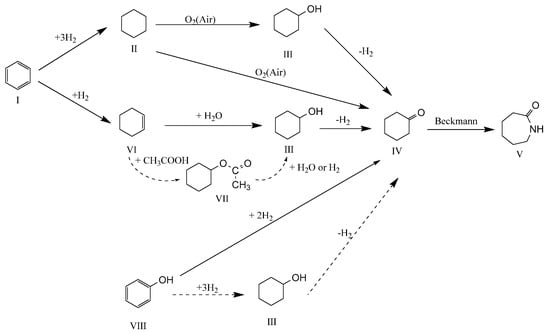
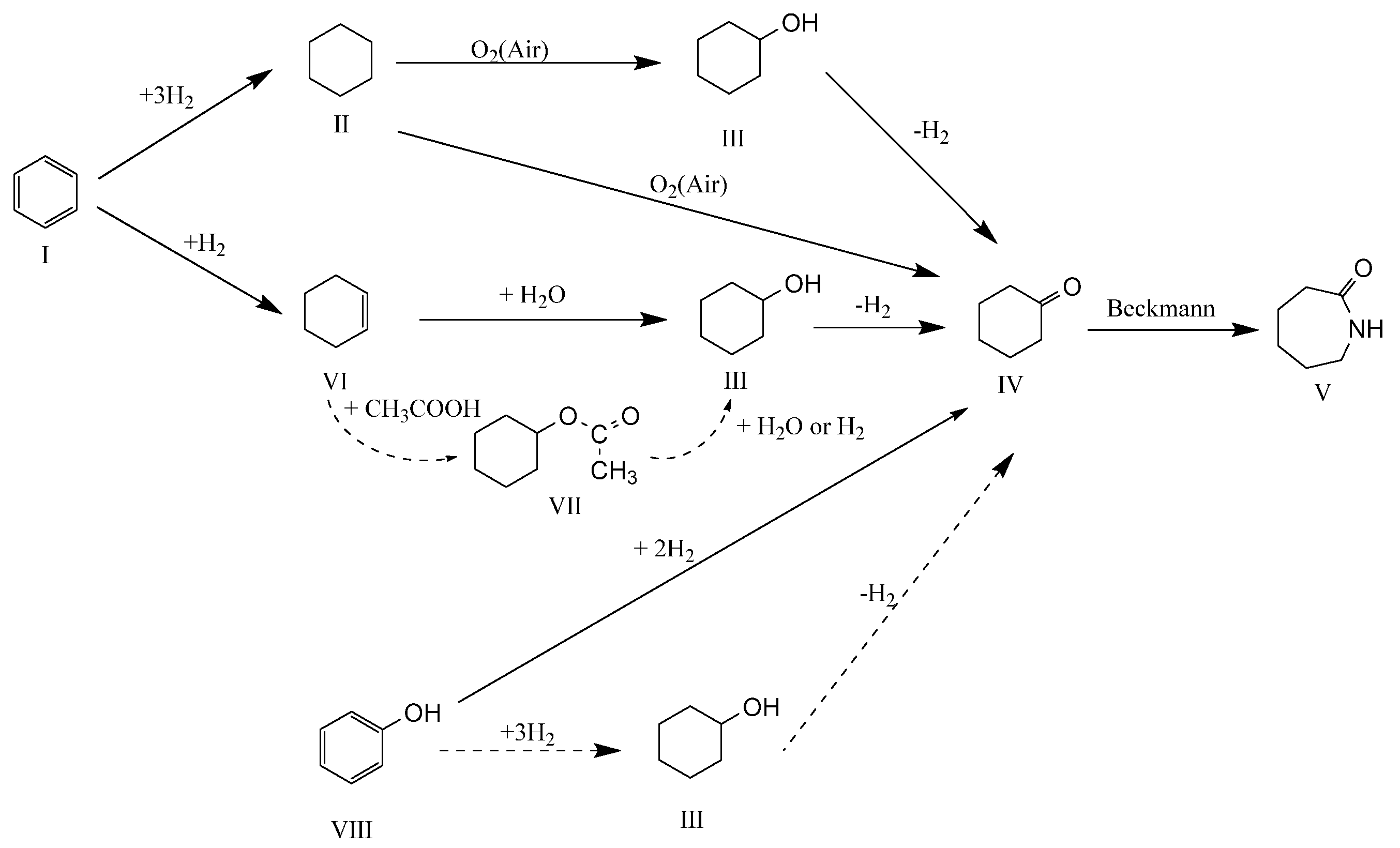
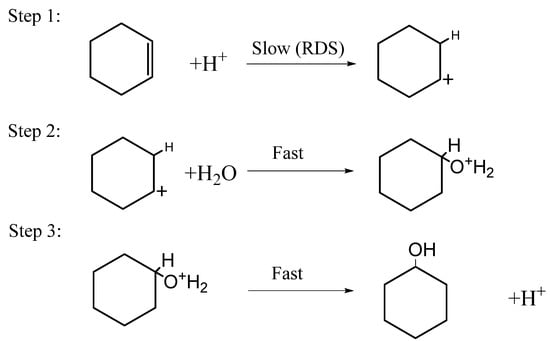
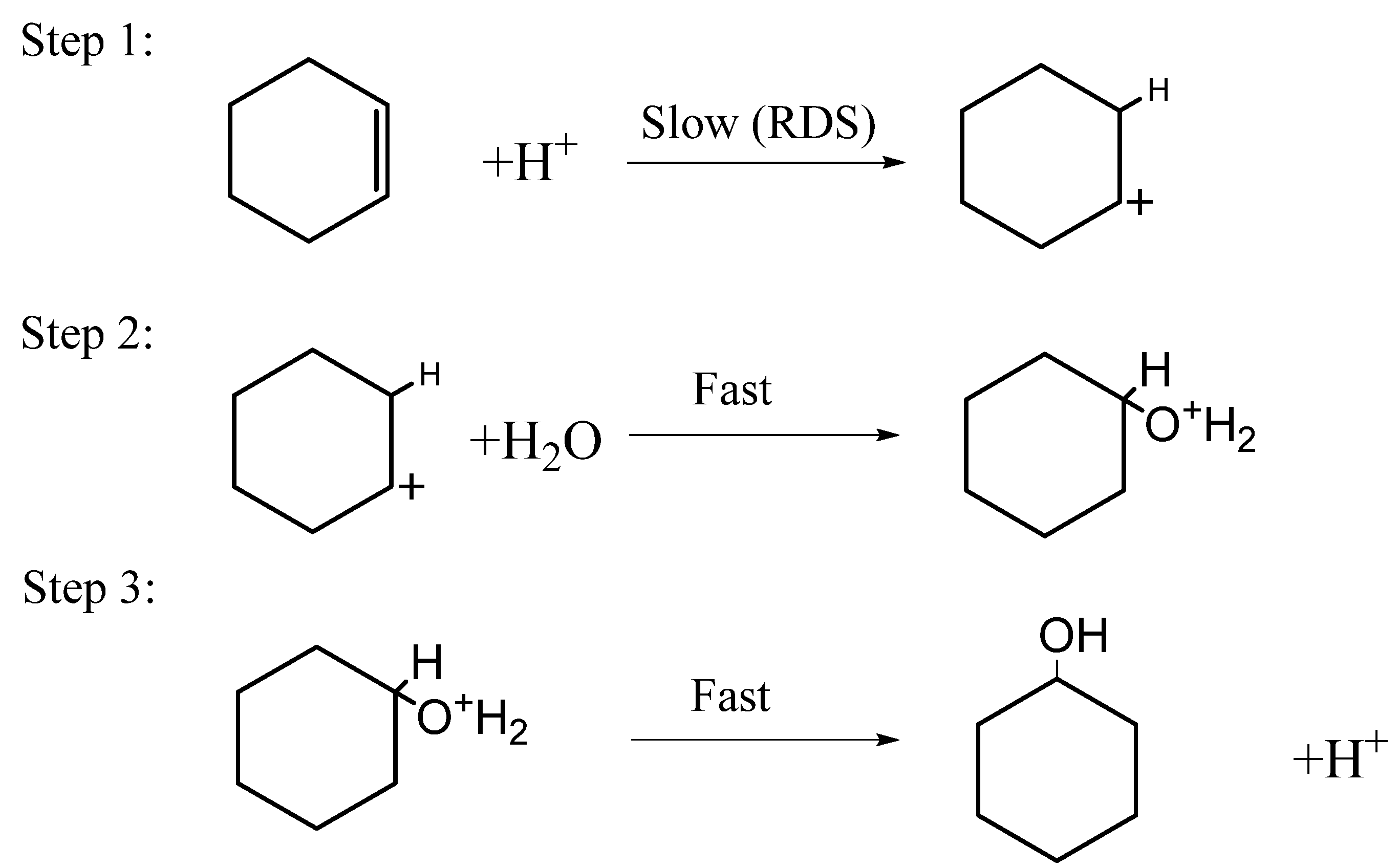
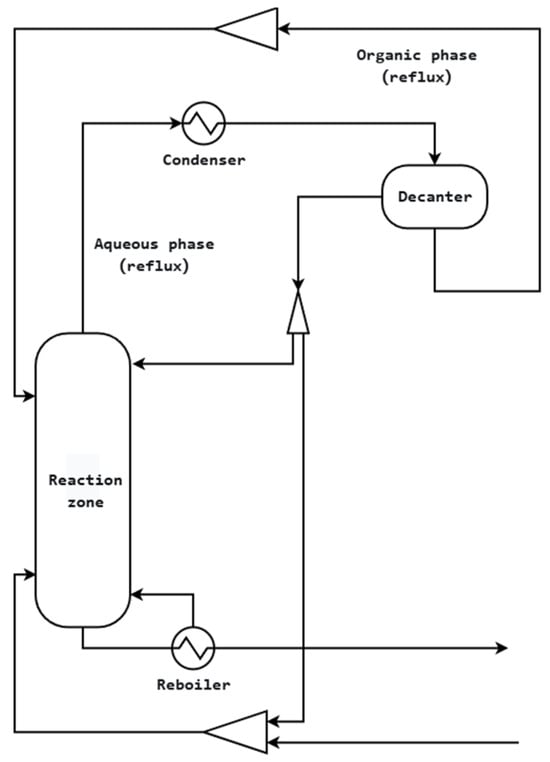
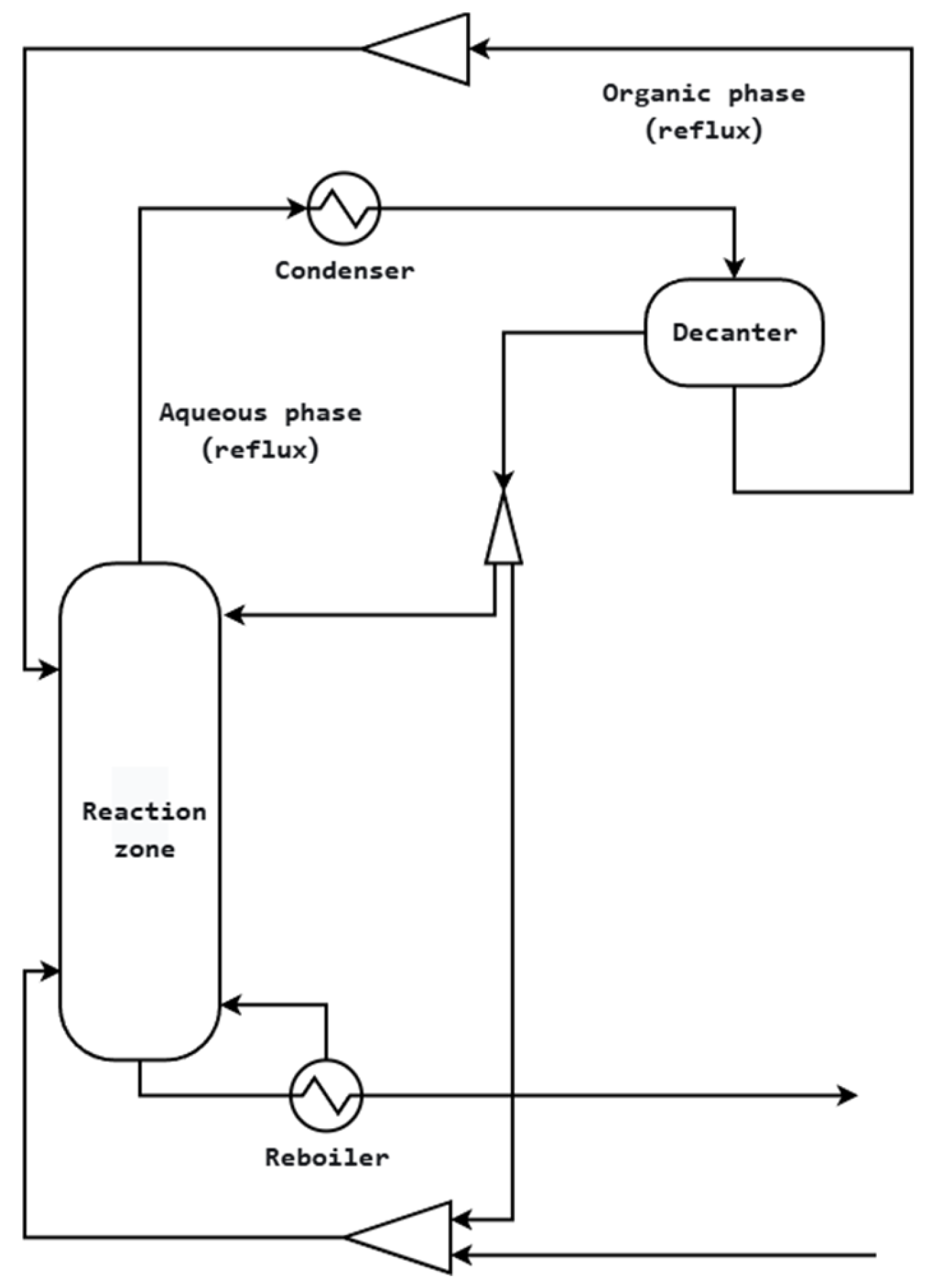
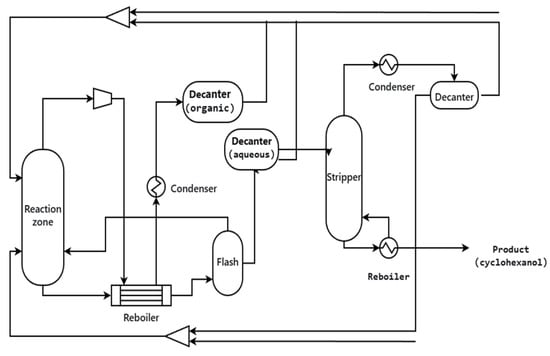
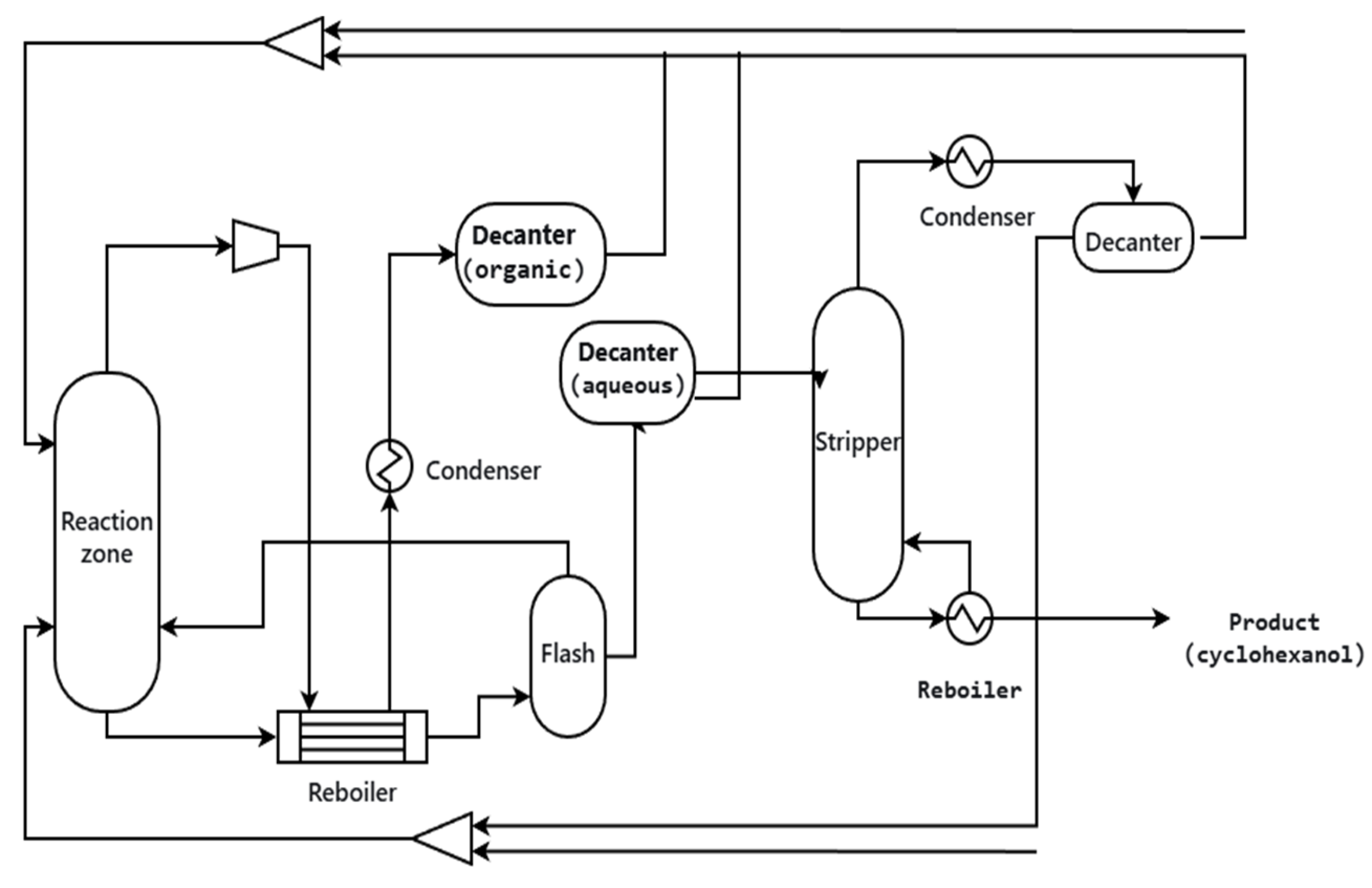
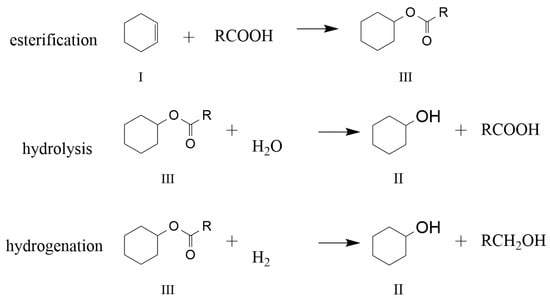
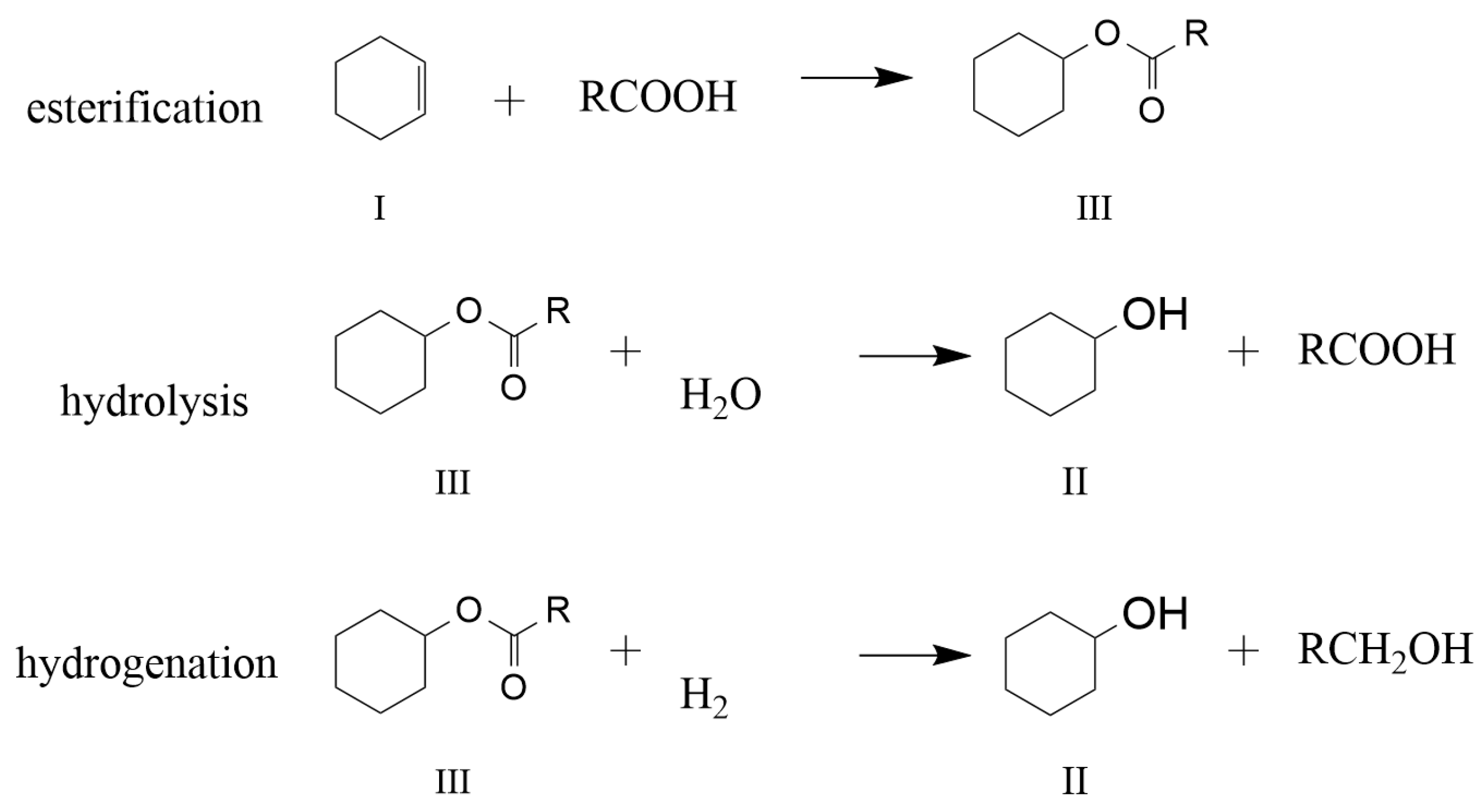
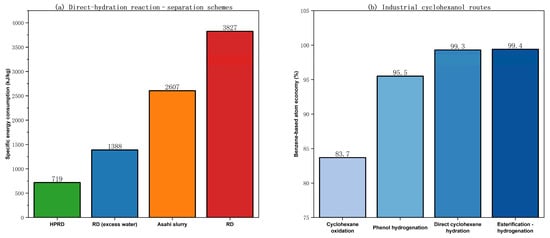
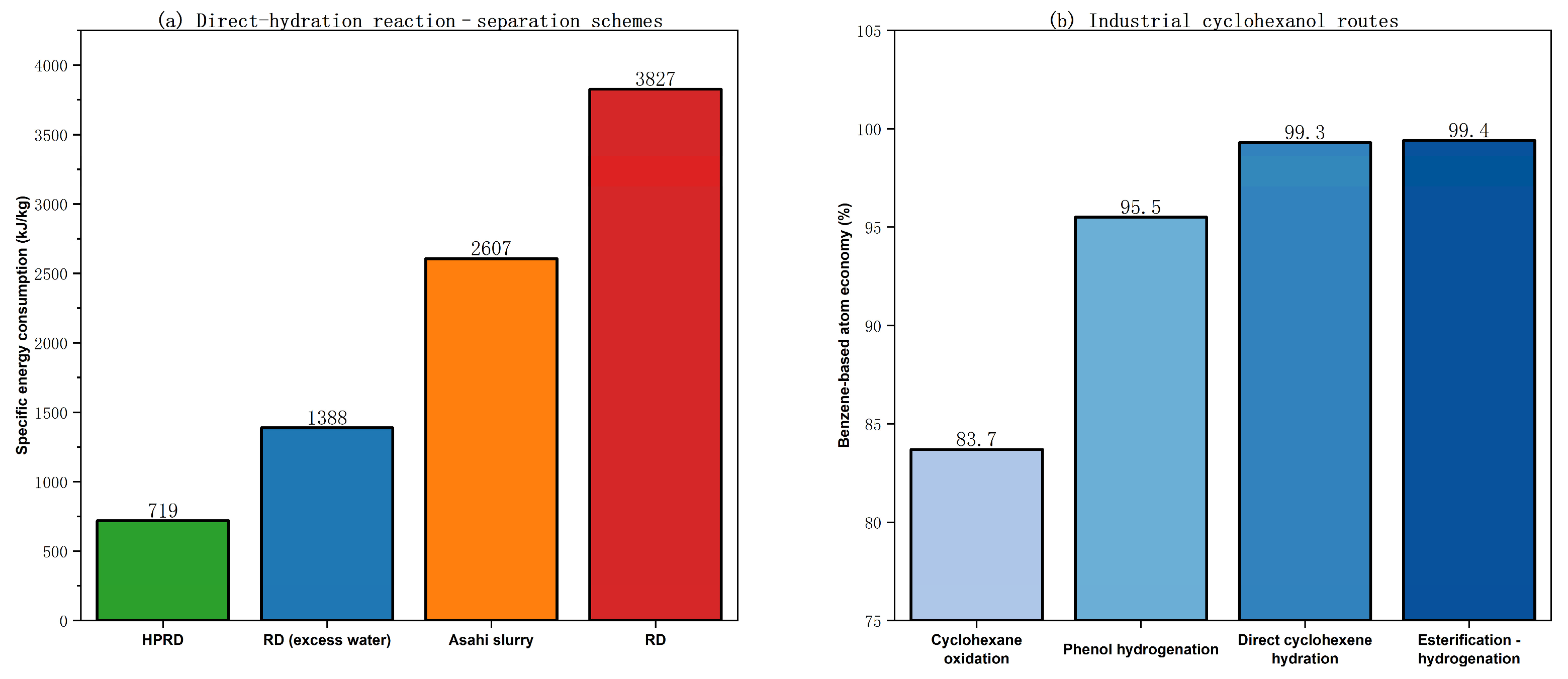
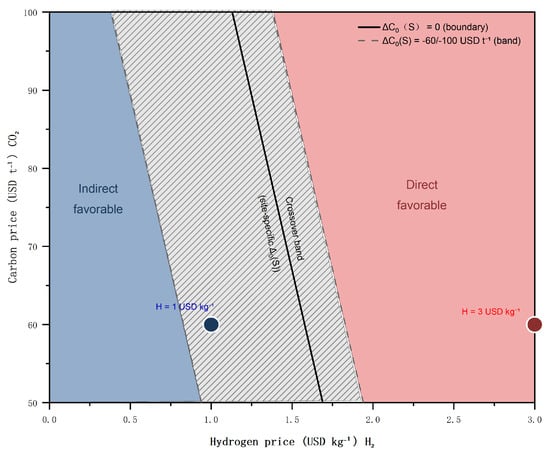
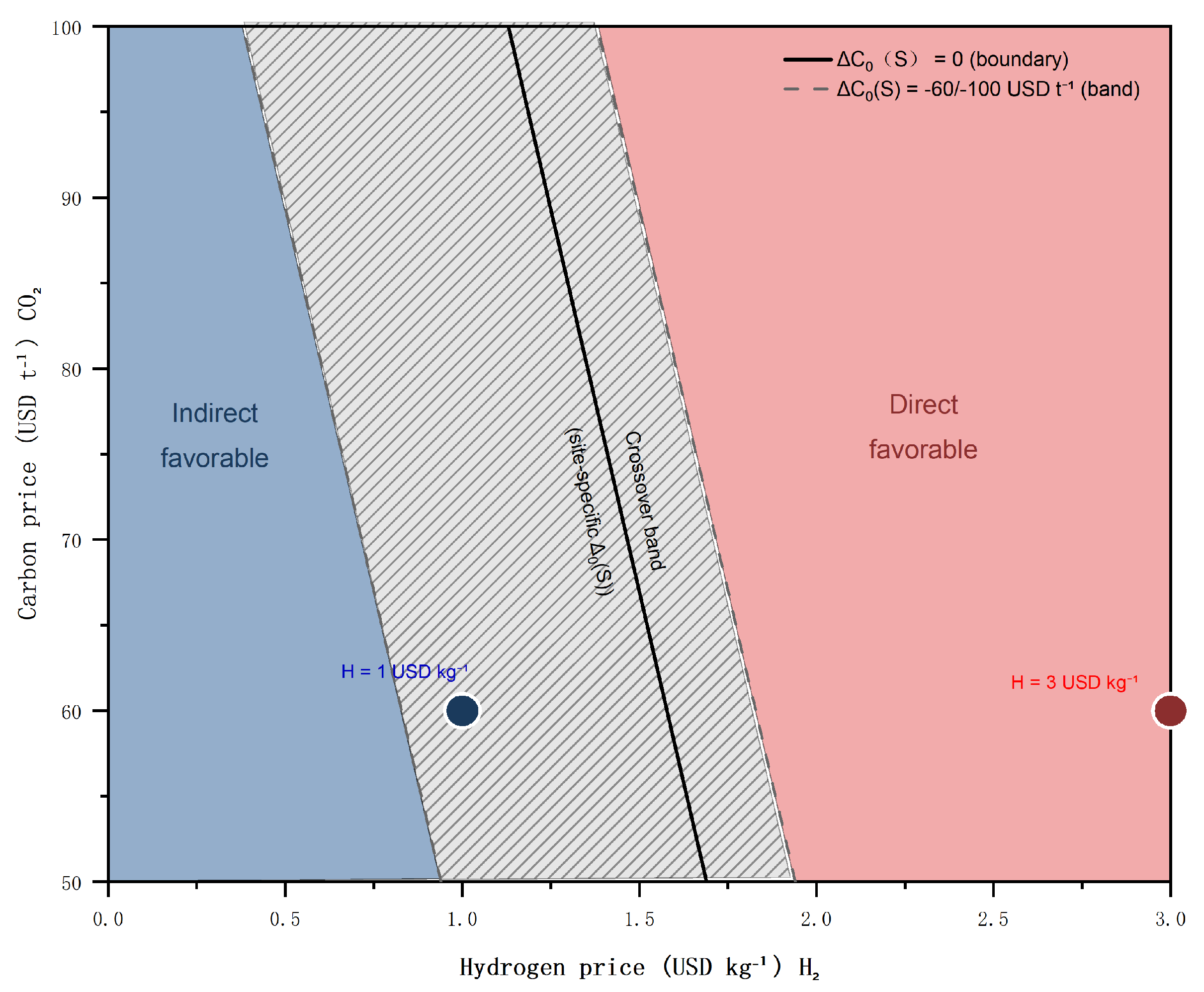
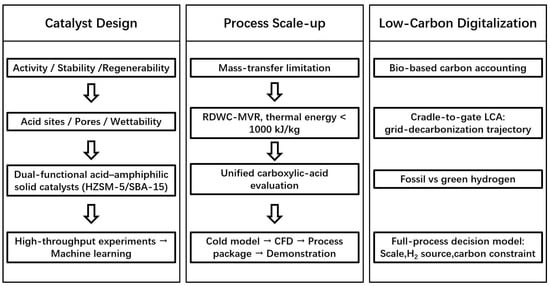
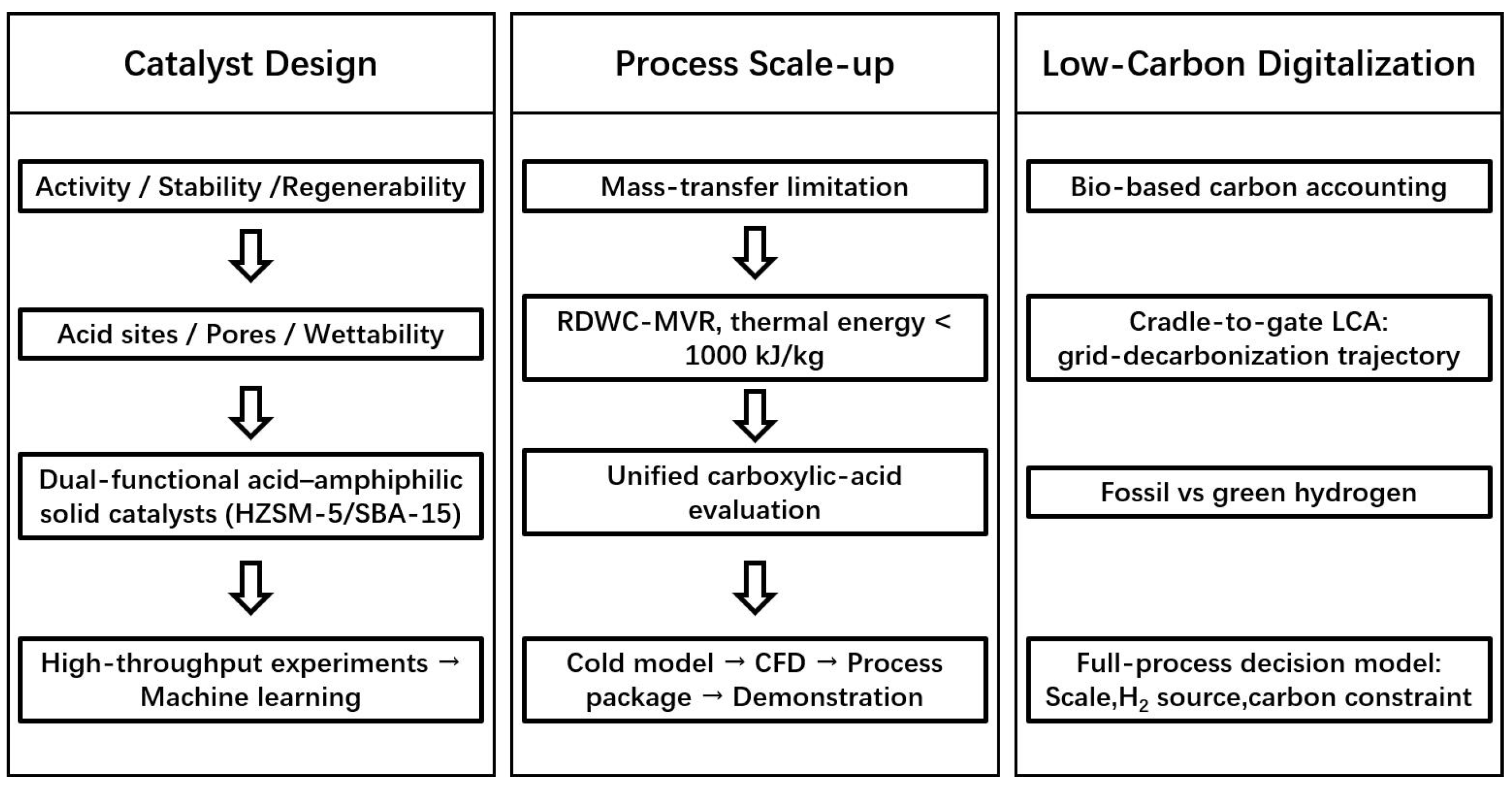

Disclaimer/Publisher’s Note: The statements, opinions and data contained in all publications are solely those of the individual author(s) and contributor(s) and not of MDPI and/or the editor(s). MDPI and/or the editor(s) disclaim responsibility for any injury to people or property resulting from any ideas, methods, instructions or products referred to in the content. |
© 2026 by the authors. Licensee MDPI, Basel, Switzerland. This article is an open access article distributed under the terms and conditions of the Creative Commons Attribution (CC BY) license.