


Abstract
Medical education requires learners to integrate complex basic science knowledge with clinical reasoning, with endocrinology posing particular challenges due to nonlinear feedback and system-level interactions. Although serious games may enhance learning, many implementations are individual/solitary, and evidence for analog serious trading card games is limited. This study evaluated a mnemonic-driven Medimon Learning Card Game (LCG) designed to support systems-based endocrine education. A quasi-experimental study was conducted with first-year medical students during an endocrine course block. All students received identical instruction, while a subset participated in a guided, competitive Medimon LCG session. Achievement was assessed using a pretest and a delayed posttest administered two weeks after the intervention, along with course examination performance. Engagement was measured using the Situational Interest Survey for Multimedia (SIS-M) and open-ended responses. Students who participated in the Medimon LCG demonstrated significantly greater delayed learning gains than controls, while course examination performance did not differ between groups. SIS-M results indicated high levels of interest and perceived value, and qualitative findings highlighted affective engagement, cognitive reinforcement, and social interaction. These findings suggest that an analog serious trading card game can enhance engagement and support longer-term retention of complex endocrine concepts, offering a transferable framework for socially mediated game-based learning in medical education.
1. Introduction
Medical education is widely recognized as cognitively demanding, requiring learners to integrate large volumes of foundational science knowledge with clinical reasoning under significant time pressure (Van Merriënboer & Sweller, 2010; J. Q. Young et al., 2014). Medical students consistently report high levels of cognitive overload, stress, and burnout, which have been linked to the density and complexity of curricular content as well as the rapid pace of instruction (Bhugra et al., 2021; Bhugra & Molodynski, 2024; Densen, 2011; Klatt & Klatt, 2011). Systems-based topics that require simultaneous consideration of physiology, pathophysiology, and pharmacologic intervention place particularly heavy intrinsic cognitive load on learners, as they require the integration of multiple interacting variables rather than linear cause–effect relationships (Mayer, 2012; Sweller, 1994).
Systems-based topics such as endocrinology exemplify these challenges in medical education (Çimer, 2012; Daemicke et al., 2020). Understanding endocrine systems requires learners to reason through nonlinear hormonal feedback loops, receptor signaling dynamics, and compensatory physiologic mechanisms that span multiple organ systems and temporal scales. These conceptual demands must be integrated with pharmacologic knowledge, including mechanisms of action, indications, and therapeutic tradeoffs of hormone replacement, suppression, and modulation strategies (Achike, 2010; Fasinu & Wilborn, 2024; Michael & White, 2025). Prior work has shown that learners frequently struggle with systems-level biomedical reasoning when instruction emphasizes fragmented facts rather than integrated conceptual models, contributing to misconceptions and poor long-term retention (Mayer, 2005; Samarasekera et al., 2018). Consequently, there is a growing need for instructional approaches that reduce extraneous cognitive load while supporting meaningful integration of endocrine concepts.
Game-based learning (GBL) has emerged as a promising pedagogical strategy in medical and health professions education, leveraging active engagement, motivation, and experiential learning to support complex knowledge acquisition (Abou Hashish et al., 2024; Khorammakan et al., 2023; Nadeem et al., 2023). GBL encompasses a range of approaches, from gamification—defined as the application of game elements in non-game contexts—to full serious games designed explicitly for educational purposes (Abt, 1987; Deterding et al., 2011). Systematic reviews have demonstrated that serious games can enhance learner engagement and motivation across medical disciplines, although effects on achievement and knowledge retention are more variable and appear highly dependent on design quality and alignment with learning objectives (Gentry et al., 2019; Graafland et al., 2012; Xu et al., 2023). Importantly, much of the existing literature has focused on digital serious games, leaving analog game formats comparatively underexplored despite their potential educational advantages (Cosimini et al., 2025; Edwards et al., 2025).
Analog serious games include board and card games and have shown educational value in health sciences education by promoting face-to-face interaction, collaborative problem solving, and strategic reasoning. Prior studies have reported improved engagement and conceptual understanding using analog games in pharmacology, veterinary medicine, and procedural training (Jones et al., 2015; Noda et al., 2019; Ober, 2018). However, educational trading card games (TCGs) remain rare within the serious games literature, particularly in medical education. Unlike traditional card or board games, TCGs introduce layered mechanics such as deck construction, resource management, and emergent strategy, which may afford unique opportunities for systems-based learning. To date, there are few empirical studies examining TCGs as educational interventions (Chen et al., 2009, 2017; Thomas et al., 2019), and none, to our knowledge, that integrate physiology, pathophysiology, and pharmacology within a single analog game framework.
Mnemonic-based instructional strategies offer another evidence-supported approach to managing cognitive load and enhancing long-term retention of complex biomedical information. Mnemonics facilitate encoding and retrieval by linking new information to memorable visual or linguistic cues (Bellezza, 1981; Putnam, 2015). Visual mnemonics, in particular, align with dual coding theory, which posits that information encoded through both verbal and visual channels is more likely to be retained and retrieved effectively (Clark & Paivio, 1991). Mnemonics are widely used in medical education to support recall of dense factual material, yet traditional mnemonic approaches often lack interactivity and may not promote deep conceptual understanding on their own (O’Hanlon & Laynor, 2019; Scruggs & Mastropieri, 1990).
The Medimon Learning Card Game (LCG) was developed to address these limitations by integrating mnemonic-based character design with the interactive mechanics of a serious trading card game. Medimon characters represent cells, organ systems, and diseases using visual and linguistic mnemonics embedded within gameplay mechanics that require strategic decision-making and social interaction (Bland & Guo, 2024). In a prior study examining an immunology-focused Medimon LCG, students reported high levels of engagement and satisfaction, although no significant differences in achievement outcomes were observed compared with traditional instruction alone (Singleton et al., 2025). Qualitative findings from that study highlighted several design barriers, including limited gameplay scaffolding, lack of therapeutic integration, and insufficient alignment between game mechanics and higher-order learning objectives.
Building on this prior work, the present study represents a next-generation design iteration of the Medimon LCG, expanded into the domain of endocrine education. The revised game introduces new endocrine-specific Medimon families (Thyroid, Adrenal, and Pancreas), treatment cards representing commonly used endocrine pharmacologic agents, and themed building cards that modify gameplay through contextual environmental effects. These additions were intentionally designed to improve usability, reduce cognitive friction, and strengthen conceptual links between physiology, disease states, and pharmacologic intervention. Structural refinement included prebuilt, balanced decks and an instructional how-to-play video, which were incorporated to address previously identified barriers related to rule clarity and cognitive load during gameplay.
In addition to its pedagogical design, the Medimon LCG emphasizes social interaction through competitive, multiplayer play. This analog, socially mediated learning environment contrasts with many digital serious games, which are often individual/solitary experiences and may limit peer-to-peer interaction (Sousa & Neves, 2025). Social interaction and collaborative learning have been shown to support engagement, motivation, and meaning-making in educational contexts, particularly in an era where learners report increasing digital isolation (Kuo et al., 2018; von Steinkeller & Grosse, 2022). By leveraging in-person gameplay, the Medimon LCG seeks to combine mnemonic learning, strategic reasoning, and social engagement within a unified educational intervention.
The purpose of this study was to evaluate the educational impact of an expanded, endocrine-focused Medimon Learning Card Game as a supplemental instructional tool in first-year medical education. Specifically, we examined learner engagement, preference, and learning outcomes using pre/post achievement measures, course examination performance, and the Situational Interest Survey for Multimedia (SIS-M). We hypothesized that students who participated in the Medimon LCG intervention would demonstrate improved delayed retention of endocrine concepts and report high levels of engagement and perceived educational value compared with students receiving traditional instruction alone.
2. Materials and Methods
2.1. Study Design and Setting
This study employed a quasi-experimental design conducted during the endocrine portion of a first-year medical school curriculum at the Idaho WWAMI site. The endocrine content was delivered as part of a six-week Cancer, Hormones, and Blood course, with the endocrine systems instruction occurring during the initial 2 weeks of the course. The Medimon LCG intervention was implemented as a supplemental educational activity in addition to the core endocrine lectures and course materials. All students received identical in-class instruction, learning objectives, and assessments, with the intervention designed to augment the standard curricular delivery but not as a replacement.
2.2. Participants
Participants were first-year medical students enrolled in the Cancer, Hormones, and Blood course at the Idaho WWAMI site. Participation in the study was voluntary. Students self-selected into one of two groups: a control group that completed only the achievement assessments, and a Card group that received the Medimon Endocrine LCG intervention and completed achievement assessments, the Situational Interest Survey for Multimedia (SIS-M), and a guided gameplay session.
The control group consisted of nine students who completed the pretest, six of whom also completed the posttest. The Card group consisted of 22 students who completed the pretest, 21 who completed the posttest, and 13 who completed the SIS-M survey. All participants were coded for anonymity, and SIS-M responses were collected anonymously. Participants who completed all study components received a $20 gift card in appreciation of their time and participation.
2.3. Intervention: Medimon Endocrine Learning Card Game
2.3.1. Game Overview
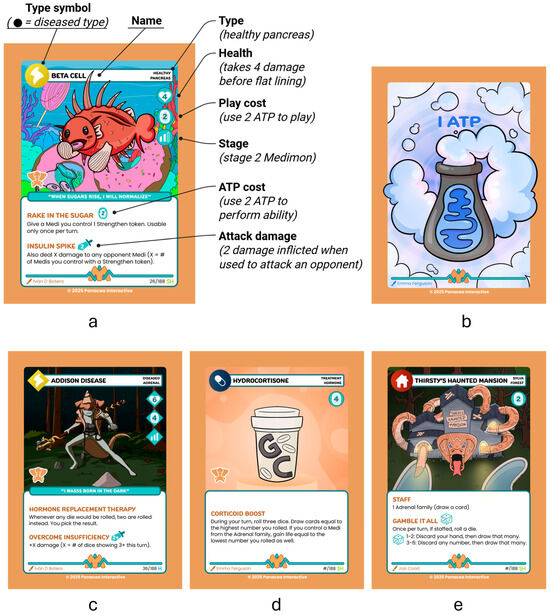
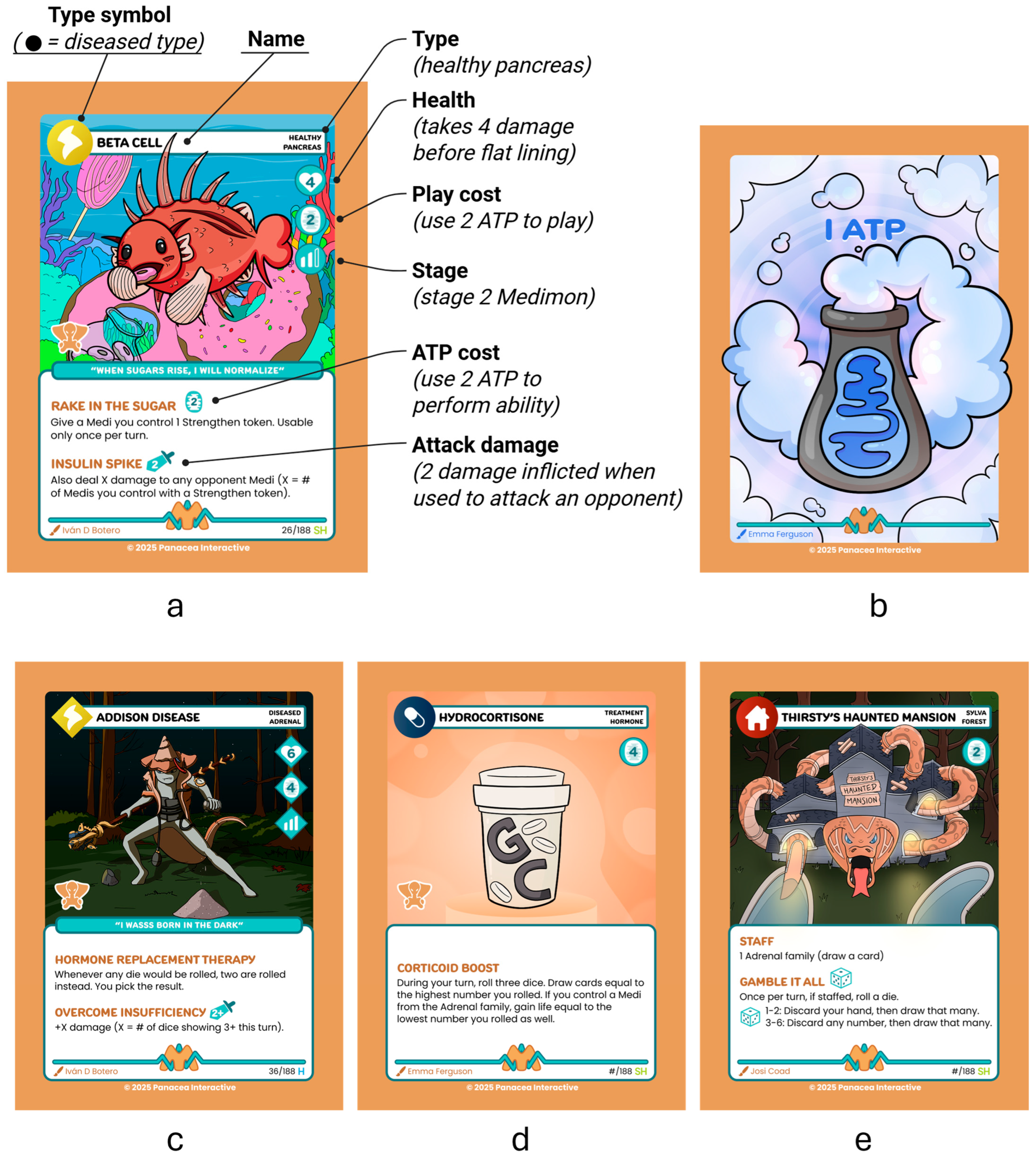
The Medimon Endocrine LCG is an analog serious trading card game designed to support systems-based learning through mnemonic-rich characters, strategic gameplay, and social interaction. The game mechanics draw inspiration from commercial trading card games while being intentionally aligned with educational objectives relevant to endocrine physiology, pathophysiology, and pharmacology. Each deck included Medimon, treatment, building, and ATP cards that are required to play the serious game (Figure 1). In a typical round of play, two to four players begin with prebuilt 60-card decks, draw a starting hand of seven cards, and determine turn order. Each turn proceeds through four phases: Draw, Play, Attack, and Rest. During the Play Phase, players deploy ATP cards as a renewable resource to play Medimon, activate abilities, and play treatment or building cards. Strategic decisions emphasize resource management, timing of abilities and treatments, and interactions between Medimon families. During the Attack Phase, Medimon may attack opposing players or be used defensively during an opposing player’s Attack Phase, with persistent damage and status effects influencing subsequent turns. The round concludes with a Rest Phase that allows limited card draw and hand management. Play proceeds in alternating turns until one player remains with life points remaining. Full game rules, prebuilt deck card lists, and print-n-play cards are provided in the Supplementary Materials (Methods S1–S3). A full list of the cards in the study is in Table 1.
Figure 1.
Types of cards in the Medimon Endocrine LCG. (a) Card stats and symbols. (b) ATP card that is used to play cards and perform certain actions. (c) Medimon card. (d) Treatment card. (e) Building card.
Table 1.
All cards in the Medimon Endocrine LCG.
2.3.2. Endocrine Medimon Families
Three endocrine-focused Medimon families were developed for this study:
- Thyroid family, emphasizing metabolic rate, energy balance, and cost modulation of actions.
- Adrenal family, emphasizing stress physiology, catecholamine signaling, and probabilistic (“gambling”) mechanics.
- Pancreas family, emphasizing glucose regulation, energy storage, and ATP accumulation and expenditure.
Each family included healthy Medimon representing normal endocrine cells or organs and diseased Medimon representing common endocrine pathologies. These families were designed to reinforce contrasts between physiologic homeostasis and disease-driven dysregulation.
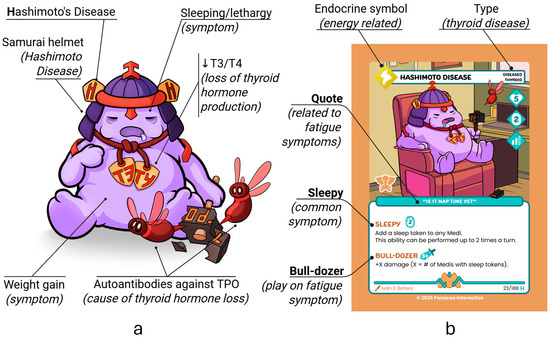
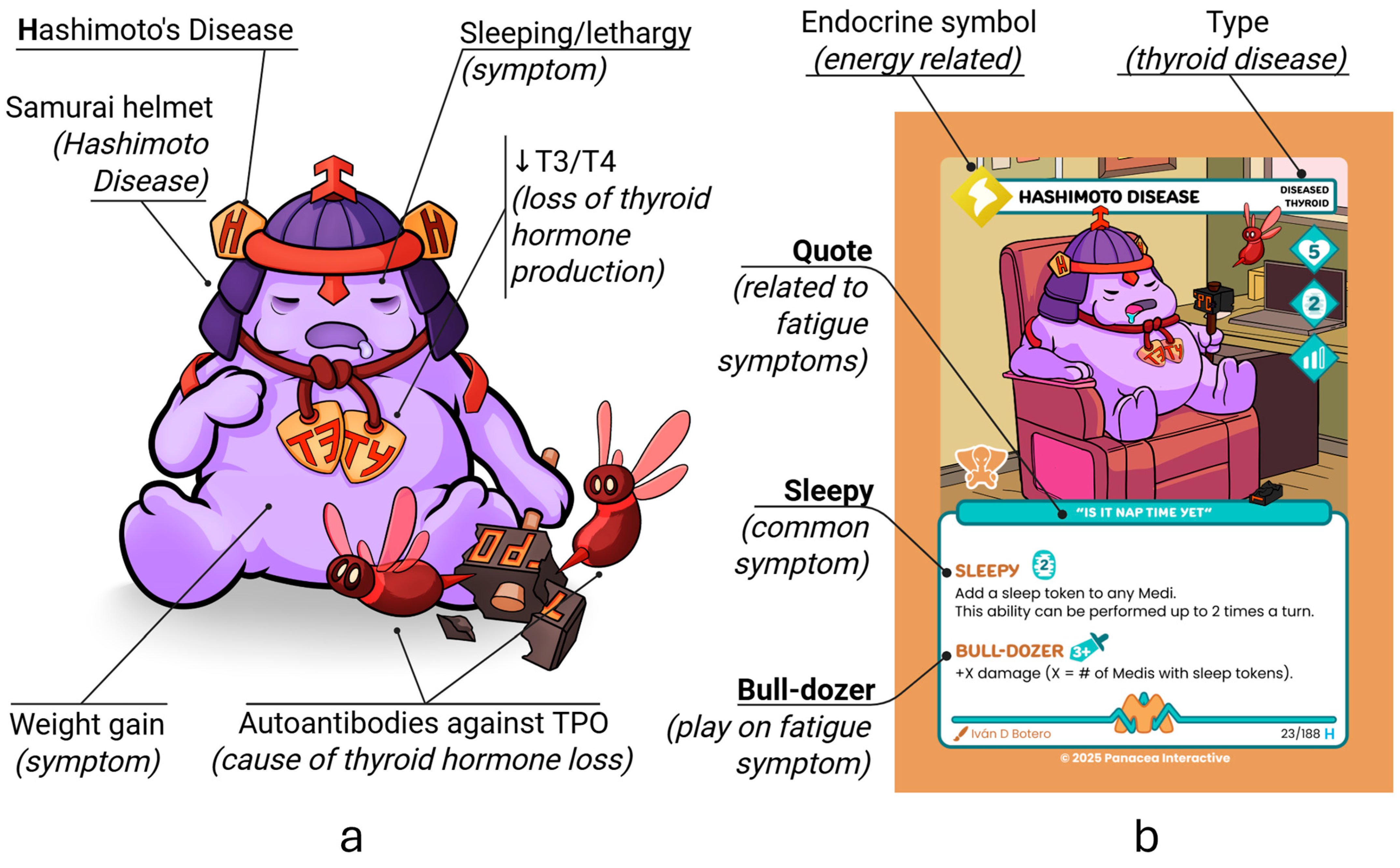
Each Medimon card incorporated both visual and textual mnemonic elements intended to support encoding, recall, and conceptual integration of endocrine concepts (Figure 2). Visual mnemonics were embedded directly into the character illustrations, with Medimon designs intentionally reflecting key physiologic or pathophysiologic features of the cells, organs, or diseases they represent. For example, visual attributes such as exaggerated size, color schemes, accessories, or environmental context were used to symbolize functional states (e.g., hyperactivity vs. insufficiency), hormonal effects, or system-level consequences. These visual cues were designed to serve as rapid recognition anchors during gameplay and to facilitate later recall of associated biomedical concepts.
Figure 2.
Example Medimon card with visual mnemonic descriptions. (a) Hashimoto Disease Medimon character and its related card in the LCG (b).
Textual mnemonics were incorporated through short Medimon quotes and through the naming and wording of attacks and abilities. Medimon quotes functioned as brief, memorable phrases that reinforced hallmark features of the represented concept (e.g., clinical manifestations or dominant physiologic effects). Similarly, the names and effects of moves and abilities were written to linguistically mirror underlying mechanisms of action or disease processes, translating biomedical relationships into gameplay-relevant language. Together, the visual and textual mnemonic layers were designed to align with dual coding principles and to reinforce learning through repeated exposure during active, socially mediated play.
2.3.3. Treatment Cards
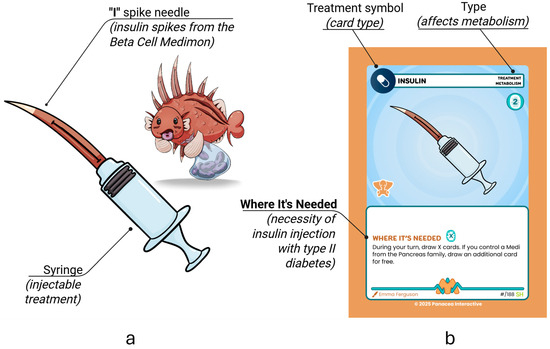
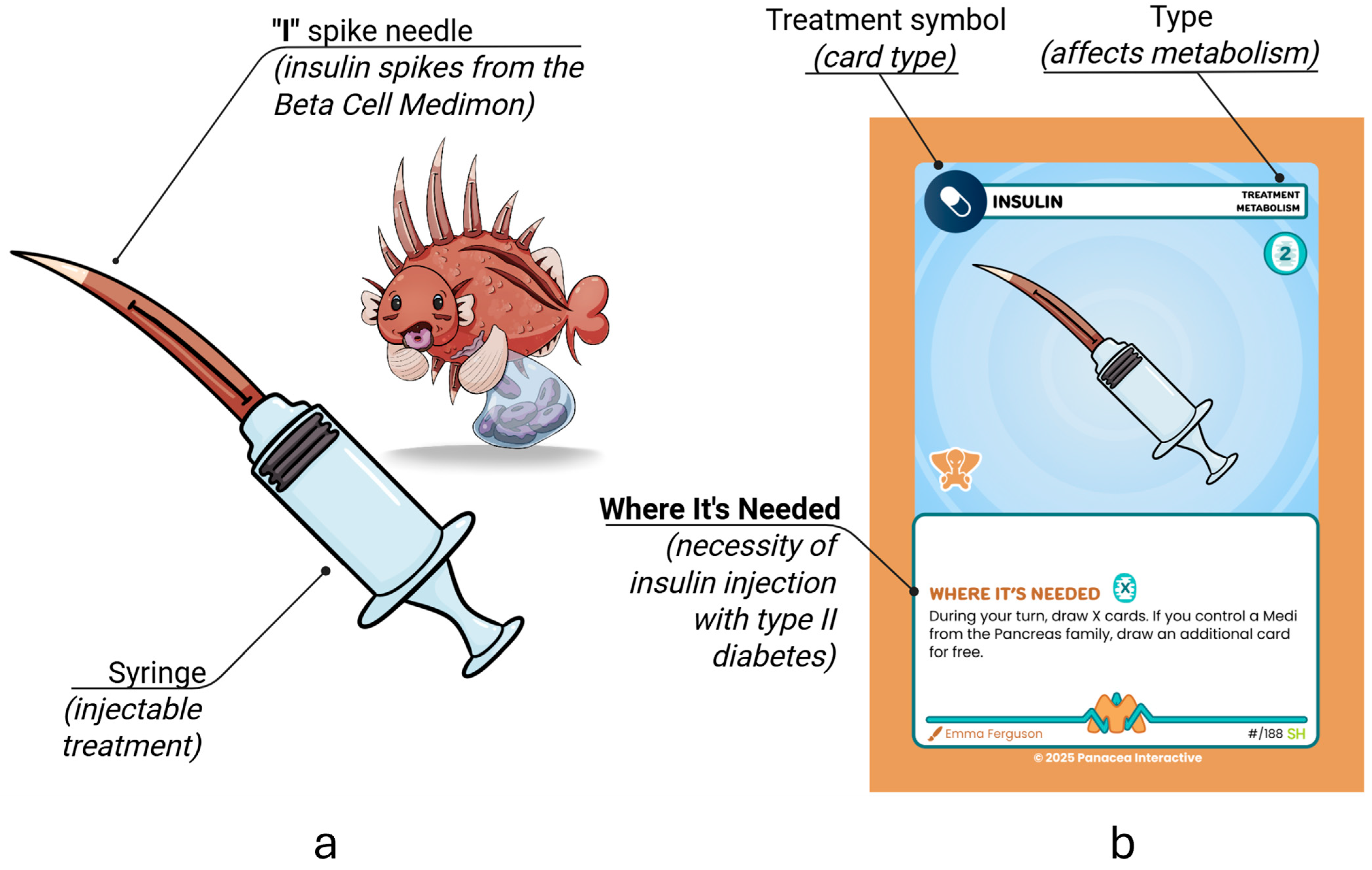
Treatment cards were introduced to integrate pharmacologic concepts into gameplay. Each treatment card represented a clinically relevant endocrine medication or intervention (e.g., levothyroxine, methimazole, insulin, glucocorticoids) and was associated with a specific endocrine family rather than a single diseased Medimon. This design choice allowed treatment cards to be used flexibly across multiple gameplay contexts while reinforcing mechanisms of action and clinical indications. Therapeutic effects were encoded as gameplay actions that conceptually mirrored real-world pharmacologic effects, such as cost reduction, resource augmentation, or removal of negative status effects. In addition, treatment card artwork incorporated visual mnemonics, such as symbolic imagery, color cues, and exaggerated visual elements, designed to reinforce key drug mechanisms, indications, or physiologic effects and to support rapid recognition and recall during gameplay (Figure 3).
Figure 3.
Example Treatment card with visual mnemonic descriptions. (a) Insulin treatment item and its related card in the LCG (b).
2.3.4. Building Cards
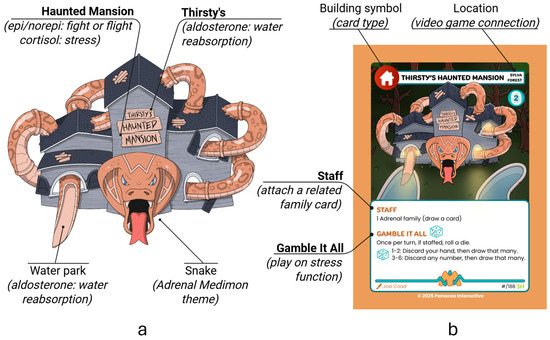
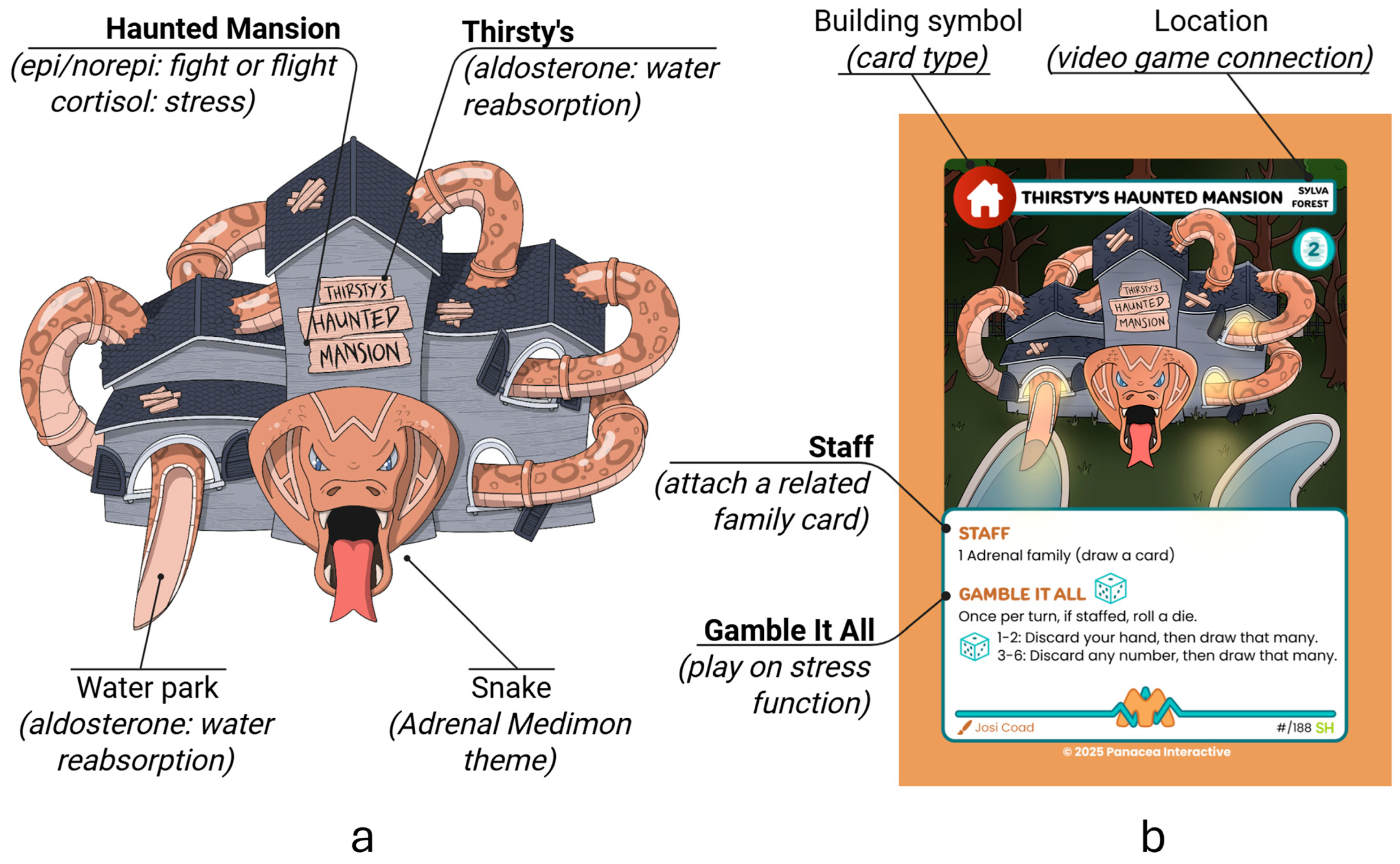
Themed building cards were added as environmental modifiers that provided passive or activated effects during gameplay when staffed by Medimon of the corresponding endocrine family (Figure 4). Building cards were designed to enhance usability and engagement by introducing contextual anchors rather than serving as explicit instructional content; however, their artwork also incorporated visual mnemonics, using exaggerated environmental features and symbolic imagery to cue underlying physiologic themes and reinforce conceptual associations during gameplay. Staffing a building required placing an in-play Medimon card of the matching family, which then enabled card draw or additional effects aligned with that family’s physiologic theme.
Figure 4.
Example Building card with visual mnemonic descriptions. (a) Thirsty’s Haunted Mansion building, which is the Adrenal Medimon building, and its related card in the LCG (b).
2.3.5. Status Tokens
Status tokens were used to represent persistent physiologic or pathophysiologic states within the game (e.g., inflammation, sleep, fatigue, strength). Status effects modified gameplay by altering damage output, resource use, or action availability, thereby reinforcing dynamic systems interactions and delayed consequences analogous to endocrine feedback mechanisms.
2.3.6. Structural and Usability Refinements
To reduce cognitive load and improve accessibility, the intervention incorporated prebuilt, balanced decks rather than requiring students to construct decks independently. Three two-family deck archetypes were created, and each deck was printed in multiple copies. Students selected their deck at the beginning of the study on a first-come, first-served basis. A brief instructional how-to-play video was also provided to clarify rules and mechanics prior to gameplay (Movie S1). These refinements were informed by barriers identified in prior Medimon LCG research.
2.4. Guided Gameplay Session
A 1.5-h guided gameplay session was conducted following completion of the 2-week endocrine instructional content. Gameplay was competitive and multiplayer, with students playing in small groups of 3–4 players. The session was facilitated by a second-year medical student (lead author) and a medical school faculty member (senior author), who were present to answer rules questions, ensure smooth gameplay, and support participant engagement. No direct instructional content was delivered during the session beyond clarification of game mechanics.
2.5. Assessments
2.5.1. Achievement Measures
Achievement was assessed using an 18-item multiple-choice questionnaire designed to resemble USMLE Step 1–style questions (Methods S4). The pretest was administered prior to the start of the endocrine instruction to establish baseline knowledge. The posttest was administered two weeks after the gameplay session to evaluate delayed learning and retention. While the achievement assessment was not previously validated as a standardized instrument, questions were independently reviewed by a subject-matter expert to ensure content accuracy and alignment with course learning objectives. This approach is consistent with common practice in educational intervention studies but represents a limitation with respect to formal psychometric validation.
In addition, performance on the first two course examinations, both of which assessed endocrine content, was collected as an objective measure of academic achievement. These examinations were identical across groups and administered at the same time and location.
2.5.2. Engagement and Preference
Learner engagement and perceived value of the intervention were assessed using the Situational Interest Survey for Multimedia (SIS-M) (Bland et al., 2024; Dousay, 2016; Dousay & Trujillo, 2019). The SIS-M measures triggered situational interest, maintained interest, maintained feeling, and maintained value using Likert-scale items (Appendix A). The survey also included a preference question asking whether students would prefer more of their medical education to be supported by Medimon Learning Cards, with an optional open-ended response for elaboration.
2.6. Data Analysis
Achievement outcomes were analyzed using Microsoft Excel (version 2511). Within-group changes from pretest to posttest were examined using paired Student’s t-tests. Between-group differences were assessed using independent-samples Student’s t-tests, as appropriate. Normalized change scores were calculated to account for differences in baseline performance and to evaluate relative learning gains.
Quantitative SIS-M data were summarized descriptively using means and standard deviations. Open-ended SIS-M responses were analyzed using an inductive, reflexive thematic analysis approach to identify, analyze, and report patterns within the data (Braun & Clarke, 2006). The analysis followed a six-phase process: data familiarization, initial code generation, searching for themes, reviewing themes, defining and naming themes, and reporting. The primary goal was to understand the reasons behind student preferences regarding the Medimon LCG, focusing on semantic content while remaining open to latent meanings. Analyst positionality was considered throughout to ensure a balanced interpretation of positive, neutral, and critical feedback. This thematic analysis was conducted using the Agentic Thematic Analysis workflow implemented in the Google Opal App, an AI-assisted qualitative analysis pipeline previously developed and reported by our laboratory (Massaad et al., 2025). The human-in-the-loop workflow utilized iterative code generation, refinement, and theme consolidation using the Gemini 2.5 Pro model, with researcher oversight maintained throughout the analysis process.
2.7. Ethical Oversight
This study (24-151) was reviewed by the University of Idaho Institutional Review Board and determined to be exempt. Participation was voluntary, and no course credit or academic incentives were provided. All data were anonymized prior to analysis, and SIS-M responses were collected without identifying information to protect participant confidentiality.
3. Results
3.1. Participant Overview
A total of 31 first-year medical students participated in at least one component of the study. The control group included nine students who completed the pretest (n = 9), with six completing both the pretest and posttest (n = 6). The Card group included 22 students who completed the pretest (n = 22), 21 who completed the posttest (n = 21), and 13 who completed the SIS-M engagement survey (n = 13).
3.2. Achievement Outcomes
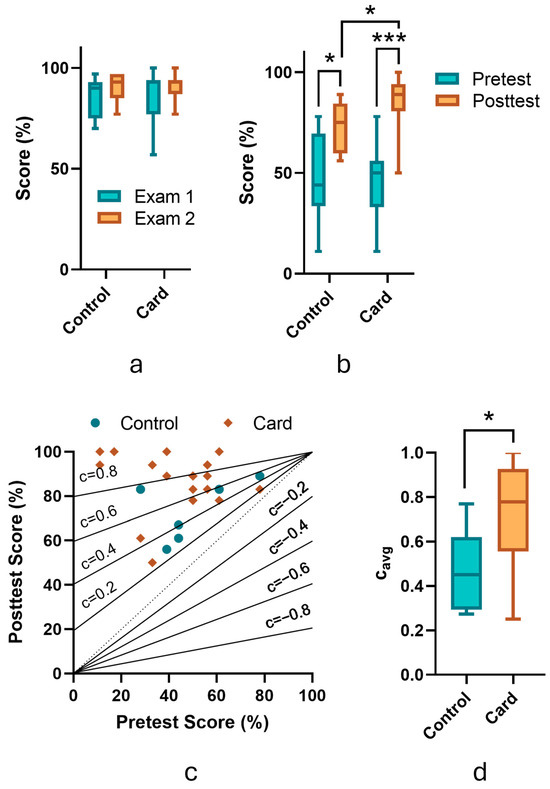
Performance on the two course examinations assessing endocrine content did not differ significantly between groups. Mean scores on Exam 1 and Exam 2 were comparable for students in the Card group and the control group, indicating that participation in the Medimon LCG intervention did not adversely affect overall course examination performance (Figure 5a).
Figure 5.
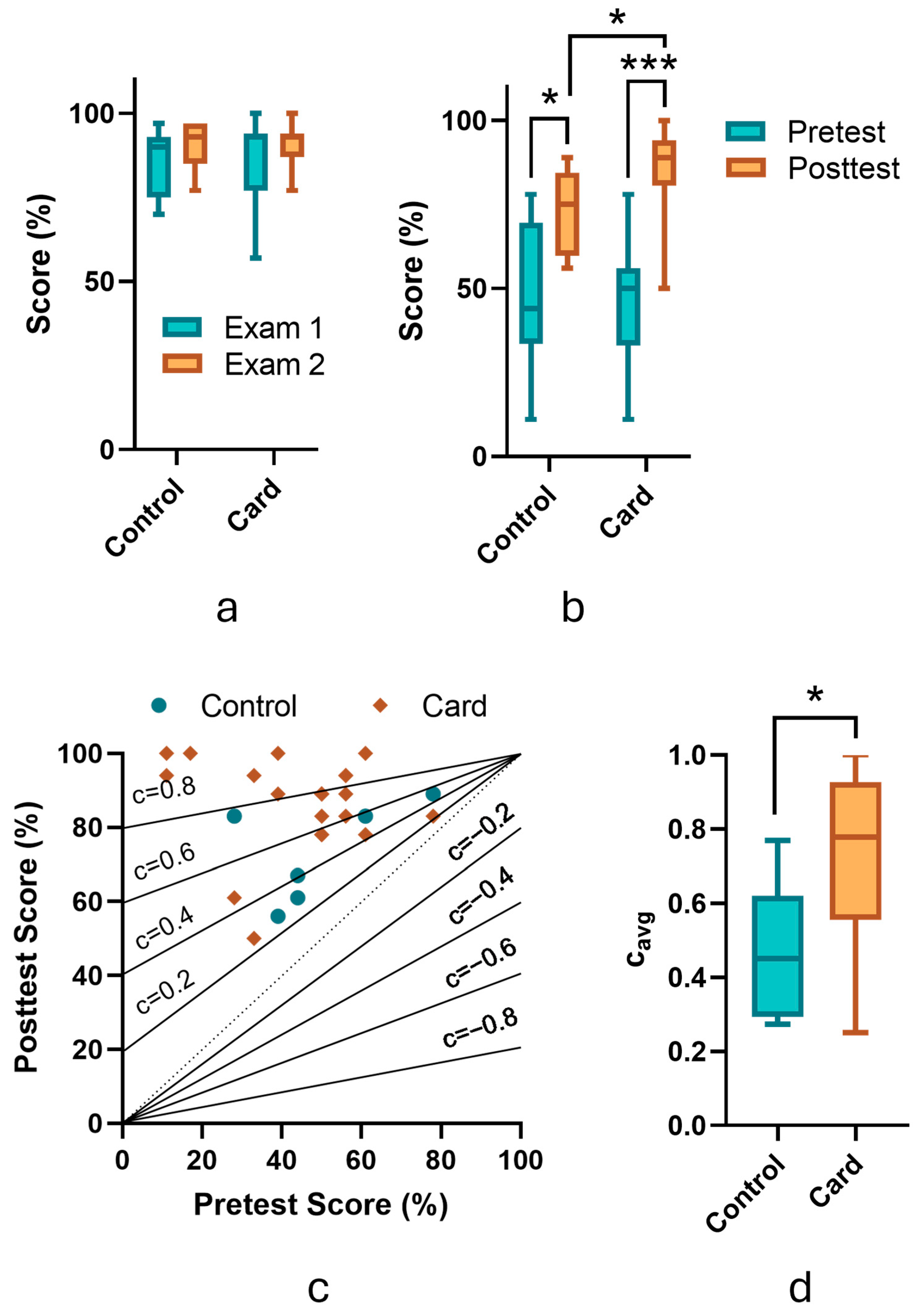
Achievement results. (a) Course exam scores of the participants in the control and Card groups. (b) Pre/posttest results for the control and Card groups. (c,d) Normalized change scores for the control and Card groups. Data are represented as the mean, with error bars representing the min/max. * p < 0.05, *** p < 0.001.
Both groups demonstrated improvements from pretest to posttest on the endocrine achievement assessment administered two weeks after the intervention. In the control group, mean scores increased from 49% on the pretest to 73% on the posttest, representing a statistically significant within-group improvement (p = 0.0141). In the Card group, mean scores increased from 45% on the pretest to 87% on the posttest, also representing a statistically significant improvement (p < 0.0001).
When comparing posttest performance between groups, students in the Card group scored significantly higher than those in the control group (p = 0.0352), whereas no significant difference was observed between groups at baseline on the pretest (p = 0.5273) (Figure 5b).
Normalized change scores were calculated to account for differences in baseline performance and to assess relative learning gains. The Card group demonstrated a significantly higher normalized change score (c = 0.73) compared with the control group (c = 0.47) (independent-samples t-test, p = 0.0212) (Figure 5c,d), indicating greater relative learning gains associated with participation in the Medimon LCG intervention.
3.3. Engagement and Learner Perceptions
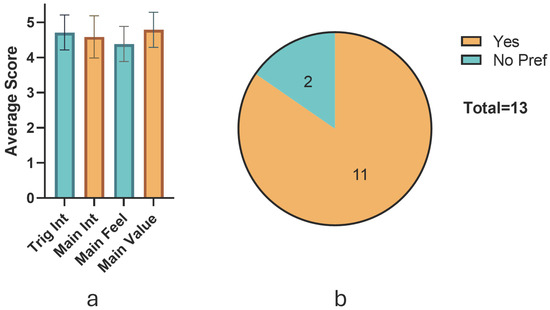
Students in the Card group reported high levels of situational interest and perceived value associated with the Medimon LCG intervention. Mean SIS-M scores across all four domains exceeded 4.0 on a 5-point Likert scale, corresponding to agreement with positive engagement statements. Mean scores (±SD) were as follows: triggered situational interest, 4.71 ± 0.50; maintained interest, 4.59 ± 0.60; maintained feeling, 4.38 ± 0.50; and maintained value, 4.79 ± 0.50 (Figure 6a).
Figure 6.
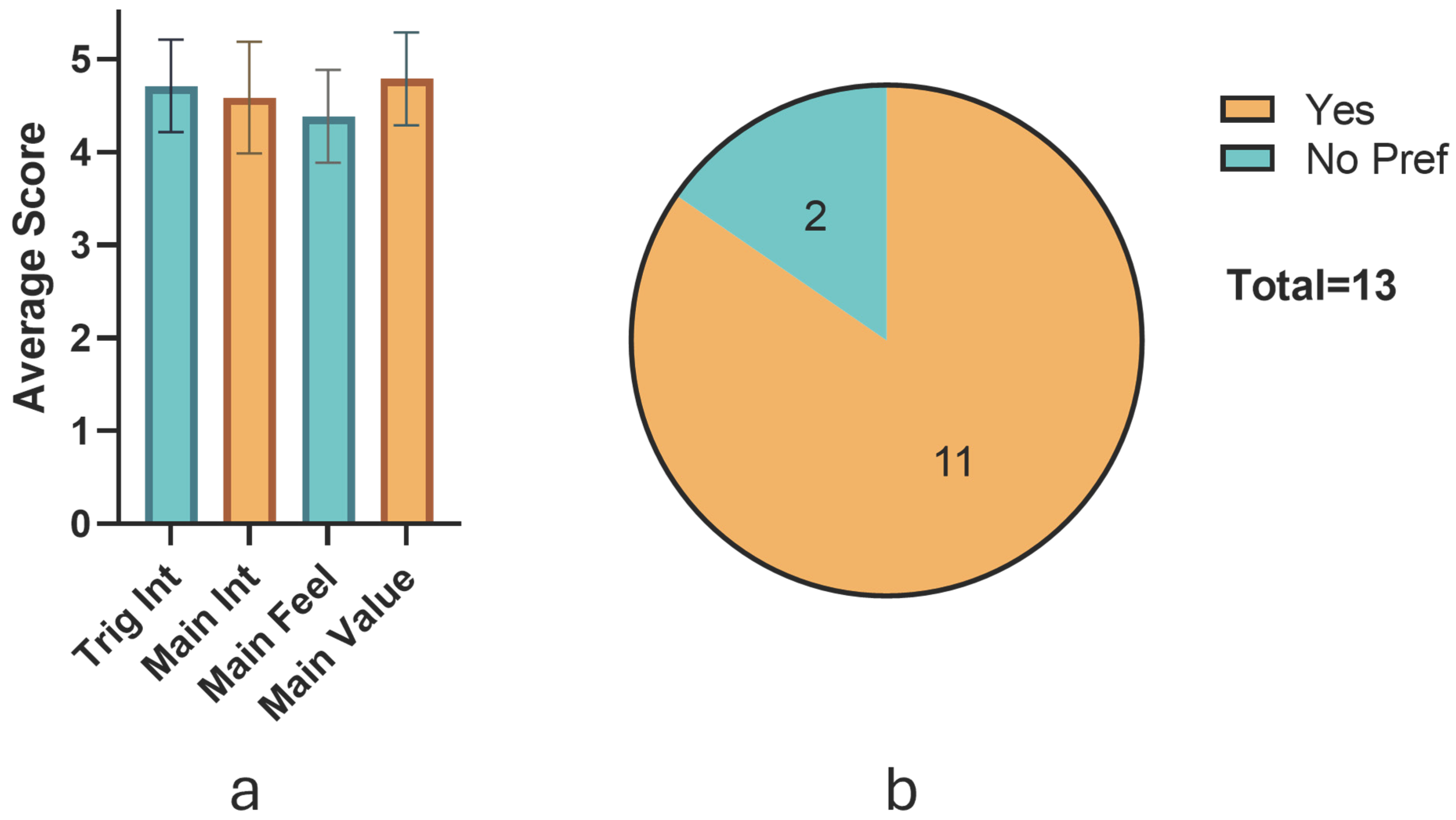
SIS-M results. (a) Average score on the Likert scale (1 = strongly disagree to 5 = strongly agree) for the different types of engagement. Data is represented as the average ± standard deviation. (b) Responses to the question “Would you prefer more of your medical education be supported by Medimon Learning Cards?” Trig: Triggered, Main: Maintained, Feel: Feeling, Int: Interest.
When asked whether they would prefer more of their medical education to be supported by Medimon Learning Cards, 11 of 13 respondents (85%) indicated a preference in favor of Medimon-supported instruction. The remaining two respondents (15%) indicated no preference, and no respondents indicated a preference against Medimon-supported learning (Figure 6b).
3.4. Qualitative Findings
Qualitative analysis of the open-ended SIS-M responses identified five recurring themes characterizing learners’ experiences with the Medimon LCG. Collectively, these themes describe the affective, cognitive, and social dimensions of engagement, as well as contextual factors influencing the intervention’s educational value.
Theme 1: Affective Engagement and Motivation. Students consistently described the LCG as highly engaging and enjoyable, often contrasting it with more passive or tedious aspects of traditional medical education. Participants emphasized the value of “learning through play,” noting that the game’s aesthetic design and interactive format transformed learning into an intrinsically motivating experience.
Theme 2: Cognitive Reinforcement of Learning. Learners reported that gameplay reinforced complex endocrine concepts and supported memory and recall. The interactive nature of the LCG was perceived as facilitating application of basic science knowledge and the formation of durable mental models, with students highlighting the integrated way in which card mechanics represented interconnected systems.
Theme 3: Social Learning as a Key Affordance. The multiplayer, analog format was identified as a distinct strength of the intervention. Students noted that gameplay prompted peer-to-peer discussion and verbalization of physiologic and pathophysiologic concepts, supporting collaborative sense-making and clarification of course material.
Theme 4: Implementation Barriers and Conditions for Efficacy. Participants identified initial rule complexity and strategic demands as barriers that could temporarily shift attention away from learning content. Variability in prior experience with card games influenced gameplay pace and immersion. Students suggested that repeated or routine gameplay would mitigate these challenges and enhance the educational benefit of the LCG.
Theme 5: Role as a Supplemental Learning Tool. Students consistently positioned the Medimon LCG as a valuable supplement to, rather than a replacement for, traditional study methods. The cards were viewed as useful both during gameplay and as standalone learning artifacts, with several participants expressing interest in expanding the approach to other areas of the medical curriculum.
4. Discussion
This study evaluated an expanded, endocrine-focused Medimon Learning Card Game (LCG) designed as an analog serious trading card game integrating visual and textual mnemonics, therapeutic mechanics, and social gameplay. The primary findings indicate that participation in the Medimon LCG was associated with significantly greater delayed learning gains compared with traditional instruction alone, as evidenced by higher posttest scores and normalized change scores measured two weeks after the intervention. Importantly, participation in the intervention did not negatively affect performance on summative course examinations, suggesting that the LCG functioned effectively as a supplemental learning tool rather than a distraction from core curricular objectives. In addition, students reported high levels of situational interest, perceived value, and preference for Medimon-supported learning. This was reinforced by qualitative findings where students characterized the game as a ‘fun and engaging’ alternative, contrasting it directly with a standard curriculum they perceived as ‘tedious and slow,’ thereby providing a clear rationale for their high engagement and motivation.
The observed improvements in delayed posttest performance align with prior literature suggesting that active, game-based learning approaches can support deeper learning and retention when thoughtfully designed and aligned with learning objectives (Gentry et al., 2019; Graafland et al., 2012; Xu et al., 2023). While many studies of serious games in medical education report mixed or modest effects on achievement, these outcomes are highly sensitive to game design, instructional alignment, and opportunities for meaningful learner interaction (Cook et al., 2013; Hundrup et al., 2025; van Gaalen et al., 2021). The present findings extend this literature by demonstrating that an analog serious trading card game can yield measurable learning benefits in a systems-based endocrine context.
This study builds directly on prior Medimon LCG research conducted in an immunology curriculum, which demonstrated high learner engagement but no significant differences in achievement outcomes compared with traditional instruction (Singleton et al., 2025). The current results suggest that the design refinements implemented in this next-generation iteration, such as the addition of therapeutic cards, building cards, and structured usability supports, may have addressed key barriers identified in the earlier study. This progression underscores the importance of iterative design and empirical evaluation in educational game development, consistent with calls for design-based research approaches in medical education (Reeves, 2011; Sandars et al., 2015).
The integration of visual and textual mnemonics across Medimon characters, treatment cards, and building cards likely contributed to the observed learning gains by supporting encoding and retrieval through multiple representational channels. Dual coding theory posits that information encoded both visually and verbally is more robustly retained than information presented through a single modality (Clark & Paivio, 1991; Paivio, 1991). In addition, mnemonic strategies have long been shown to enhance recall of complex biomedical information, particularly when learners are required to manage large volumes of interconnected content (Bellezza, 1981; Meenu et al., 2022; Putnam, 2015). This theoretical mechanism was reflected in student perceptions, as they explicitly noted the mnemonic value of the game components, stating it was ‘helpful to have the information on the cards alone,’ suggesting the artifacts served as effective cognitive aids both within and outside of gameplay.
Beyond recall, the Medimon LCG was intentionally designed to reduce extraneous cognitive load while maintaining high intrinsic load appropriate to endocrine systems learning. Prebuilt decks, an instructional how-to-play video, and constrained gameplay mechanics were implemented to minimize unnecessary cognitive burden associated with rule learning, consistent with cognitive load theory principles (Sweller, 1994, 2011; Van Merriënboer & Sweller, 2010). By offloading rule complexity and embedding mnemonics directly into gameplay artifacts, the intervention allowed learners to allocate cognitive resources toward conceptual integration rather than procedural navigation.
A distinguishing feature of this study was the integration of therapeutic cards and building cards as gameplay mechanics that map onto real-world pharmacologic and physiologic concepts. Therapeutic cards functioned as abstractions of drug mechanisms and indications, translating pharmacologic effects into strategic actions such as cost modulation, resource redistribution, or mitigation of negative states. Prior research suggests that abstraction can support mechanistic understanding and transfer, such as in STEM education (de Jong & van Joolingen, 1998; Vermehren et al., 2025).
Building cards served as environmental modifiers that provided contextual anchors without explicitly delivering instructional content. Situated cognition theory emphasizes that knowledge is constructed within and linked to the context in which it is learned (Brown et al., 1989; Lave & Wenger, 1991). By associating endocrine families with themed locations and environmental effects, building cards may have supported contextualized reasoning and system-level thinking, even though they were primarily intended to enhance usability and engagement.
The Medimon LCG differs from many digital serious games in its emphasis on in-person, multiplayer interaction. Social interaction has been shown to enhance motivation, engagement, and meaning-making in learning environments, particularly when learners engage in discussion, competition, and collaborative problem solving (Johnson et al., 2014; Vygotsky, 2019). While digital serious games dominate the medical education literature, they are often individual/solitary experiences that limit peer-to-peer interaction (Gentry et al., 2019; Graafland et al., 2012).
Analog games, by contrast, naturally afford social presence and shared experience. Prior studies have demonstrated that learners exhibit greater social engagement and communication during analog gameplay compared with digital gameplay (von Steinkeller & Grosse, 2022). In an educational landscape increasingly characterized by digital isolation, analog multiplayer interventions such as the Medimon LCG may offer unique benefits by combining active learning with social connection.
Although this study was conducted within a single institutional context and focused on endocrine content, the intent of the Medimon LCG is not curricular replication but conceptual transferability. The findings of this study suggest that well-designed educational trading card games can serve as effective supplemental tools in systems-based medical curricula by integrating physiology, pathophysiology, and pharmacology within a single interactive system rather than teaching these domains in isolation. The design principles underlying the intervention, which include mnemonic-rich visual and textual encoding, systems-based mechanics that mirror physiologic interactions, therapeutic abstraction, environmental modifiers, usability scaffolding, and socially mediated analog gameplay, are not domain-specific. These principles may be adapted to other foundational science domains, such as renal, neurologic, or cardiovascular education. Notably, serious trading card games remain rare within educational research, particularly in medical education, suggesting that this design space is underexplored and well-suited for future investigation across disciplines.
Importantly, the absence of differences in course examination performance between groups suggests that the intervention did not detract from traditional learning outcomes, addressing a common concern among educators considering the adoption of game-based approaches (Cook & Artino, 2016; M. F. Young et al., 2012). Instead, the observed gains in delayed posttest performance indicate that the Medimon LCG may support delayed retention of complex material. The absence of differences in course examination performance could also be limited by the Medimon LCG being designed with implicit alignment between learning objectives and gameplay mechanics rather than explicit one-to-one mapping. For example, hormone-stimulated energy production was represented through resource generation and cost modulation mechanics, disease states through persistent status effects, and pharmacologic interventions through treatment cards that altered system behavior rather than producing isolated effects. While these mappings were intentionally integrated at a conceptual level, future iterations could benefit from more explicit articulation of learning objective–mechanic alignment to further support instructional transparency and targeted assessment.
Several limitations should be considered when interpreting these findings. The study was conducted at a single site with a relatively small and uneven sample size, limiting generalizability. Additionally, the unequal group sizes and smaller number of control participants who completed both pre- and post-testing may limit statistical power and introduce potential sampling bias. Although normalized change scores were used to partially mitigate baseline differences, these factors should be considered when interpreting between-group comparisons.
Group assignment was not randomized, and participation in the intervention was voluntary, introducing potential self-selection bias. Gameplay exposure was limited to a single 1.5-h session, and some participants may have engaged minimally with the cards outside of the guided session. Furthermore, the qualitative data suggest that the game’s initial learning curve could be an implementation barrier, with students noting that repeated play would allow them to ‘focus on the content a bit more.
Furthermore, while the delayed posttest provides evidence suggestive of improved retention, longer-term follow-up assessments were not conducted. Course examinations may not have fully aligned with the specific learning objectives emphasized during gameplay, potentially attenuating detectable differences on summative assessments.
Future research should examine the impact of repeated or longitudinal gameplay on learning and retention, as well as the effects of earlier introduction of gameplay within a course sequence. Multi-site studies with randomized designs would strengthen causal inference and generalizability. Additional work could also explore digital or hybrid adaptations of the Medimon framework that preserve social interaction while enabling gameplay analytics and adaptive feedback.
Finally, qualitative analyses of learner experiences may provide further insight into how specific design elements influence engagement, motivation, and conceptual understanding.
5. Conclusions
The expanded Medimon Endocrine Learning Card Game demonstrates strong learner engagement and promising evidence of improved delayed learning outcomes when used as a supplemental instructional tool in medical education. By integrating mnemonic-rich design, therapeutic abstraction, environmental context, and social gameplay, the Medimon LCG offers a scalable design framework for serious analog games aimed at supporting complex systems-based learning.
Supplementary Materials
The following supporting information can be downloaded at: https://doi.org/10.5281/zenodo.18088502 (accessed on 25 May 2025). Methods S1: Medimon Learning Card Game Rules; Methods S2: Prebuilt deck card list; Methods S3: Print-and-play cards; Methods S4: Achievement tests; Movie S1: How-to-play video.
Author Contributions
Conceptualization, H.H., and T.B.; Methodology, H.H., S.S.-P., and T.B.; Formal analysis, T.B.; Investigation, H.H., S.S.-P., and T.B.; Data curation, T.B.; Writing—original draft, H.H., and T.B.; Writing—review & editing, T.B.; Visualization, C.B., E.F., J.C., and T.B.; Funding acquisition, T.B. All authors have read and agreed to the published version of the manuscript.
Funding
This research was funded by the University of Idaho WWAMI Medical Education Program and the Institutional Development Award (IDeA) from the National Institute of General Medical Sciences of the National Institutes of Health under Grant #P20GM103408.
Institutional Review Board Statement
The study was conducted in accordance with the Declaration of Helsinki, and approved as exempt by the Institutional Review Board of the University of Idaho (protocol code 24-151, with approval granted on 8 July 2024).
Informed Consent Statement
Informed consent was obtained from all subjects involved in the study.
Data Availability Statement
The datasets presented in this article are not readily available because of the sensitive nature of students’ grades. Requests to access the datasets should be directed to Tyler Bland (tbland@uidaho.edu).
Conflicts of Interest
The authors declare no conflicts of interest.
Abbreviations
The following abbreviations are used in this manuscript:
| GBL | Game-Based Learning |
| STEM | Science, Technology, Engineering, and Math |
| LCG | Learning Card Game |
| SIS-M | Situational Interest Survey for Multimedia |
| Trig | Triggered Interest |
| MT | Maintained Interest |
| MF | Maintained Feeling |
| MV | Maintained Value |
| MCQ | Multiple-Choice Question |
Appendix A
Table A1.
SIS-M items.
References
- Abou Hashish, E. A., Al Najjar, H., Alharbi, M., Alotaibi, M., & Alqahtany, M. M. (2024). Faculty and students perspectives towards game-based learning in health sciences higher education. Heliyon, 10(12), e32898. [Google Scholar] [CrossRef] [Scilit] [PubMed]
- Abt, C. C. (1987). Serious games. University Press of America. Available online: http://books.google.com/books?id=axUs9HA-hF8C (accessed on 25 May 2025).
- Achike, F. I. (2010). Teaching pharmacology in an innovative medical curriculum: Challenges of integration, technology, and future training. Journal of Clinical Pharmacology, 50(1), 6–16. [Google Scholar] [CrossRef] [Scilit] [PubMed]
- Bellezza, F. S. (1981). Mnemonic devices: Classification, characteristics, and criteria. Review of Educational Research, 51(2), 247–275. [Google Scholar] [CrossRef]
- Bhugra, D., & Molodynski, A. (2024). Well-being and burnout in medical students: Challenges and solutions. Irish Journal of Psychological Medicine, 41(2), 175–178. [Google Scholar] [CrossRef] [Scilit]
- Bhugra, D., Molodynski, A., & Ventriglio, A. (2021). Well-being and burnout in medical students. Industrial Psychiatry Journal, 30(2), 193. [Google Scholar] [CrossRef] [Scilit]
- Bland, T., & Guo, M. (2024). Visual mnemonics and gamification: A new approach to teaching muscle physiology. Journal of Technology-Integrated Lessons and Teaching, 3(1), 73–82. [Google Scholar] [CrossRef] [Scilit]
- Bland, T., Guo, M., & Dousay, T. A. (2024). Multimedia design for learner interest and achievement: A visual guide to pharmacology. BMC Medical Education, 24(1), 1–10. [Google Scholar] [CrossRef] [Scilit]
- Braun, V., & Clarke, V. (2006). Using thematic analysis in psychology. Qualitative Research in Psychology, 3(2), 77–101. [Google Scholar] [CrossRef] [Scilit]
- Brown, J. S., Collins, A., & Duguid, P. (1989). Situated cognition and the culture of learning. Educational Researcher, 18(1), 32–42. [Google Scholar] [CrossRef]
- Chen, P., Kuo, R., Chang, M., & Heh, J. S. (2009). Designing a trading card game as educational reward system to improve students’ learning motivations. In Lecture notes in computer science (Including subseries lecture notes in artificial intelligence and lecture notes in bioinformatics) (Vol. 5940 LNCS, pp. 116–128). Springer. [Google Scholar] [CrossRef] [Scilit]
- Chen, P., Kuo, R., Chang, M., & Heh, J. S. (2017). The effectiveness of using in-game cards as reward. Research and Practice in Technology Enhanced Learning, 12(1), 15. [Google Scholar] [CrossRef] [Scilit]
- Clark, J. M., & Paivio, A. (1991). Dual coding theory and education. Educational Psychology Review, 3(3), 149–210. [Google Scholar] [CrossRef] [Scilit]
- Cook, D. A., & Artino, A. R. (2016). Motivation to learn: An overview of contemporary theories. Medical Education, 50(10), 997. [Google Scholar] [CrossRef] [Scilit] [PubMed]
- Cook, D. A., Hamstra, S. J., Brydges, R., Zendejas, B., Szostek, J. H., Wang, A. T., Erwin, P. J., & Hatala, R. (2013). Comparative effectiveness of instructional design features in simulation-based education: Systematic review and meta-analysis. Medical Teacher, 35(1), e867–e898. [Google Scholar] [CrossRef] [Scilit] [PubMed]
- Cosimini, M., Zarandi, A., Edwards, S. L., Stiver, M. L., Chan, V., Augustin, O., Blain, B., & Chan, T. M. (2025). Print, play, and learn: Cataloging card and board games for medical education from 1980 to 2025. Cureus, 17(12), e99203. [Google Scholar] [CrossRef] [Scilit] [PubMed]
- Çimer, A. (2012). What makes biology learning difficult and effective: Students’ views. Educational Research Review, 7(3), 61–71. [Google Scholar]
- Daemicke, A. K., Galt, N. J., Samonds, K. E., & Bergan-Roller, H. E. (2020). Challenging endocrinology students with a critical-thinking workbook. Advances in Physiology Education, 44(1), 72–79. [Google Scholar] [CrossRef] [Scilit]
- de Jong, T., & van Joolingen, W. R. (1998). Scientific discovery learning with computer simulations of conceptual domains. Review of Educational Research, 68(2), 179. [Google Scholar] [CrossRef]
- Densen, P. (2011). Challenges and opportunities facing medical education. Transactions of the American Clinical and Climatological Association, 122, 48. [Google Scholar]
- Deterding, S., Dixon, D., Khaled, R., & Nacke, L. (2011). From game design elements to gamefulness: Defining “gamification”. In Proceedings of the 15th international academic MindTrek conference: Envisioning future media environments (pp. 9–15). MindTrek. [Google Scholar] [CrossRef] [Scilit]
- Dousay, T. A. (2016). Effects of redundancy and modality on the situational interest of adult learners in multimedia learning. Educational Technology Research and Development, 64(6), 1251–1271. [Google Scholar] [CrossRef] [Scilit]
- Dousay, T. A., & Trujillo, N. P. (2019). An examination of gender and situational interest in multimedia learning environments. British Journal of Educational Technology, 50(2), 876–887. [Google Scholar] [CrossRef] [Scilit]
- Edwards, S. L., Zarandi, A., Cosimini, M., Chan, T. M., Abudukebier, M., & Stiver, M. L. (2025). Analog serious games for medical education: A scoping review. Academic Medicine, 100(3), 375–387. [Google Scholar] [CrossRef] [Scilit] [PubMed]
- Fasinu, P. S., & Wilborn, T. W. (2024). Pharmacology education in the medical curriculum: Challenges and opportunities for improvement. Pharmacology Research & Perspectives, 12(1), e1178. [Google Scholar] [CrossRef] [Scilit] [PubMed]
- Gentry, S. V., Gauthier, A., Ehrstrom, B. L. E., Wortley, D., Lilienthal, A., Car, L. T., Dauwels-Okutsu, S., Nikolaou, C. K., Zary, N., Campbell, J., & Car, J. (2019). Serious gaming and gamification education in health professions: Systematic review. Journal of Medical Internet Research, 21(3), e12994. [Google Scholar] [CrossRef] [Scilit] [PubMed]
- Graafland, M., Schraagen, J. M., & Schijven, M. P. (2012). Systematic review of serious games for medical education and surgical skills training. The British Journal of Surgery, 99(10), 1322–1330. [Google Scholar] [CrossRef] [Scilit]
- Hundrup, M., Holte, J., Bordeaux, C., Ferguson, E., Coad, J., Soule, T., & Bland, T. (2025). Space medicine meets serious games: Boosting engagement with the medimon creature collector. Multimodal Technologies and Interaction, 9(8), 80. [Google Scholar] [CrossRef] [Scilit]
- Johnson, D. W., Johnson, R. T., & Smith, K. (2014). Cooperative learning: Improving University instruction by basing practice on validated theory. Journal on Excellence in College Teaching, 25, 85–118. [Google Scholar]
- Jones, J. S., Tincher, L., Odeng-Otu, E., & Herdman, M. (2015). An educational board game to assist pharmd students in learning autonomic nervous system pharmacology. American Journal of Pharmaceutical Education, 79(8), 114. [Google Scholar] [CrossRef] [Scilit]
- Khorammakan, R., Omid, A., Mirmohammadsadeghi, M., & Ghadami, A. (2023). Puzzle game-based learning: A new approach to promote learning of principles of coronary artery bypass graft surgery. BMC Medical Education, 23(1), 1–15. [Google Scholar] [CrossRef] [Scilit]
- Klatt, E. C., & Klatt, C. A. (2011). How much is too much reading for medical students? Assigned reading and reading rates at one medical school. Academic Medicine: Journal of the Association of American Medical Colleges, 86(9), 1079–1083. [Google Scholar] [CrossRef] [Scilit]
- Kuo, C. Y., Huang, Y. M., & Yeh, Y. Y. (2018). Let’s play cards: Multi-component cognitive training with social engagement enhances executive control in older adults. Frontiers in Psychology, 9(DEC), 2482. [Google Scholar] [CrossRef] [Scilit]
- Lave, J., & Wenger, E. (1991). Situated learning: Legitimate peripheral participation (Learning in doing: Social, cognitive and computational perspectives). Cambridge University Press. [Google Scholar]
- Massaad, C., Howe, H., Guo, M., & Bland, T. (2025). A multi-institution mixed methods analysis of a novel acid-base mnemonic algorithm. Multimodal Technologies and Interaction, 9(11), 113. [Google Scholar] [CrossRef] [Scilit]
- Mayer, R. E. (2005). Introduction to multimedia learning. In The Cambridge handbook of multimedia learning (pp. 1–16). Cambridge University Press. [Google Scholar] [CrossRef] [Scilit]
- Mayer, R. E. (2012). Cognitive theory of multimedia learning. In The Cambridge handbook of multimedia learning (pp. 31–48). Cambridge University Press. [Google Scholar] [CrossRef] [Scilit]
- Meenu, S., Mary Zachariah, A., & Balakrishnan, S. (2022). Effectiveness of mnemonics based teaching in medical education. International Journal of Health Sciences, 6(S2), 9635–9640. [Google Scholar] [CrossRef] [Scilit]
- Michael, J., & White, P. J. (2025). Reflections on the core concepts of physiology and pharmacology. Pharmacology Research and Perspectives, 13(4), e70146. [Google Scholar] [CrossRef] [Scilit] [PubMed]
- Nadeem, M., Oroszlanyova, M., & Farag, W. (2023). Effect of digital game-based learning on student engagement and motivation. Computers, 12(9), 177. [Google Scholar] [CrossRef] [Scilit]
- Noda, S., Shirotsuki, K., & Nakao, M. (2019). The effectiveness of intervention with board games: A systematic review. BioPsychoSocial Medicine, 13(1), 1–21. [Google Scholar] [CrossRef] [Scilit]
- Ober, C. (2018). Comparison of a novel card game and conventional case-based studying for learning urologic differential diagnoses in veterinary radiology. Education in the Health Professions, 1(2), 44. [Google Scholar] [CrossRef] [Scilit]
- O’Hanlon, R., & Laynor, G. (2019). Responding to a new generation of proprietary study resources in medical education. Journal of the Medical Library Association JMLA, 107(2), 251–257. [Google Scholar] [CrossRef] [Scilit]
- Paivio, A. (1991). Dual coding theory: Retrospect and current status. Canadian Journal of Psychology/Revue Canadienne de Psychologie, 45(3), 255–287. [Google Scholar] [CrossRef] [Scilit]
- Putnam, A. L. (2015). Mnemonics in education: Current research and applications. Translational Issues in Psychological Science, 1(2), 130–139. [Google Scholar] [CrossRef] [Scilit]
- Reeves, T. (2011). Can educational research be both rigorous and relevant. Educational Designer, 1(4), 1–24. [Google Scholar]
- Samarasekera, D. D., Goh, P. S., Lee, S. S., & Gwee, M. C. E. (2018). The clarion call for a third wave in medical education to optimise healthcare in the twenty-first century. Medical Teacher, 40(10), 982–985. [Google Scholar] [CrossRef] [Scilit]
- Sandars, J., Patel, R. S., Goh, P. S., Kokatailo, P. K., & Lafferty, N. (2015). The importance of educational theories for facilitating learning when using technology in medical education. Medical Teacher, 37(11), 1039–1042. [Google Scholar] [CrossRef] [Scilit] [PubMed]
- Scruggs, T. E., & Mastropieri, M. A. (1990). Mnemonic instruction for students with learning disabilities: What it is and what it does. Learning Disability Quarterly, 13(4), 271–280. [Google Scholar] [CrossRef] [Scilit]
- Singleton, V., Bordeaux, C., Ferguson, E., & Bland, T. (2025). An educational trading card game for a medical immunology course. Education Sciences, 15(6), 768. [Google Scholar] [CrossRef] [Scilit]
- Sousa, C., & Neves, J. C. (2025). Digital and analogue gaming in the daily lives of people with intellectual disability—A case study in the Portuguese context. In Education applications & developments X (pp. 267–278). inScience Press. ISBN 9789893572856. [Google Scholar] [CrossRef] [Scilit]
- Sweller, J. (1994). Cognitive load theory, learning difficulty, and instructional design. Learning and Instruction, 4(4), 295–312. [Google Scholar] [CrossRef] [Scilit]
- Sweller, J. (2011). Cognitive load theory. Psychology of Learning and Motivation—Advances in Research and Theory, 55, 37–76. [Google Scholar] [CrossRef] [Scilit]
- Thomas, M. K., Shyjka, A., Kumm, S., & Gjomemo, R. (2019). Educational design research for the development of a collectible card game for cybersecurity learning. Journal of Formative Design in Learning, 3(1), 27–38. [Google Scholar] [CrossRef] [Scilit]
- van Gaalen, A. E. J., Brouwer, J., Schönrock-Adema, J., Bouwkamp-Timmer, T., Jaarsma, A. D. C., & Georgiadis, J. R. (2021). Gamification of health professions education: A systematic review. Advances in Health Sciences Education: Theory and Practice, 26(2), 683–711. [Google Scholar] [CrossRef] [Scilit]
- Van Merriënboer, J. J. G., & Sweller, J. (2010). Cognitive load theory in health professional education: Design principles and strategies. Medical Education, 44(1), 85–93. [Google Scholar] [CrossRef] [Scilit]
- Vermehren, J. A. V., Trikoili, A., & Pittich, D. (2025). Abstract thought in STEM education: An integrative literature review. International Journal of STEM Education, 12(1), 54. [Google Scholar] [CrossRef] [Scilit]
- von Steinkeller, A., & Grosse, G. (2022). Children are more social when playing analog games together than digital games. Computers in Human Behavior Reports, 6, 100195. [Google Scholar] [CrossRef] [Scilit]
- Vygotsky, L. S. (2019). Mind in society: The development of higher psychological processes. Harvard University Press. [Google Scholar] [CrossRef] [Scilit]
- Xu, M., Luo, Y., Zhang, Y., Xia, R., Qian, H., & Zou, X. (2023). Game-based learning in medical education. Frontiers in Public Health, 11, 1113682. [Google Scholar] [CrossRef] [Scilit]
- Young, J. Q., Van Merrienboer, J., Durning, S., & Ten Cate, O. (2014). Cognitive load theory: Implications for medical education: AMEE Guide No. 86. Medical Teacher, 36(5), 371–384. [Google Scholar] [CrossRef] [Scilit]
- Young, M. F., Slota, S., Cutter, A. B., Jalette, G., Mullin, G., Lai, B., Simeoni, Z., Tran, M., & Yukhymenko, M. (2012). Our princess is in another castle: A review of trends in serious gaming for education. Review of Educational Research, 82(1), 61–89. [Google Scholar] [CrossRef] [Scilit]

Disclaimer/Publisher’s Note: The statements, opinions and data contained in all publications are solely those of the individual author(s) and contributor(s) and not of MDPI and/or the editor(s). MDPI and/or the editor(s) disclaim responsibility for any injury to people or property resulting from any ideas, methods, instructions or products referred to in the content. |
© 2026 by the authors. Licensee MDPI, Basel, Switzerland. This article is an open access article distributed under the terms and conditions of the Creative Commons Attribution (CC BY) license.