

Examining Recent Climate Changes in Ghana and a Comparison with Local Malaria Case Rates


Abstract
1. Introduction
2. Materials and Methods
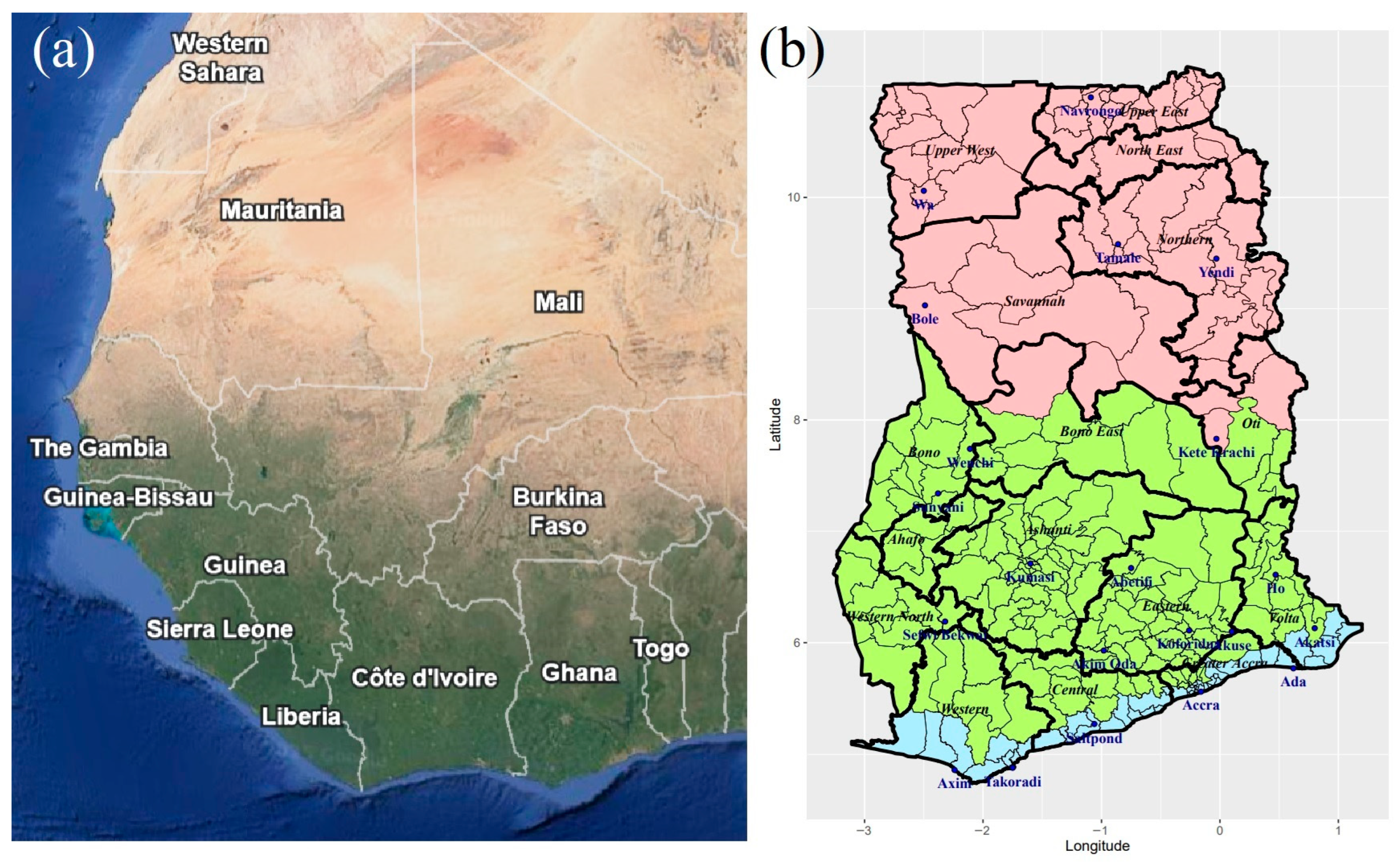
2.1. Study Area and Climate Zones in Ghana
2.2. Malaria Case and Case Rate Data
2.3. Meteorological Data
3. Results and Discussion
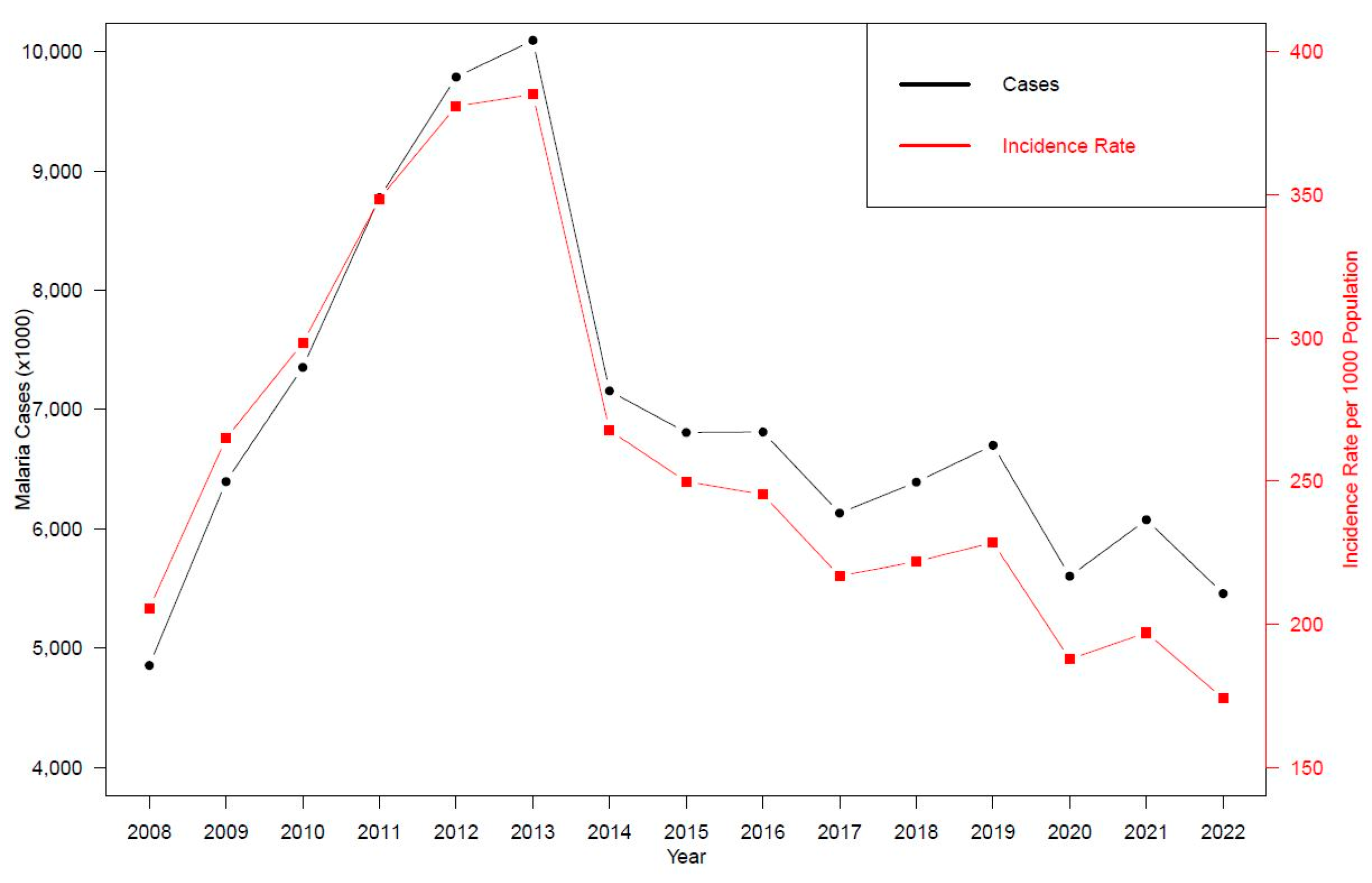
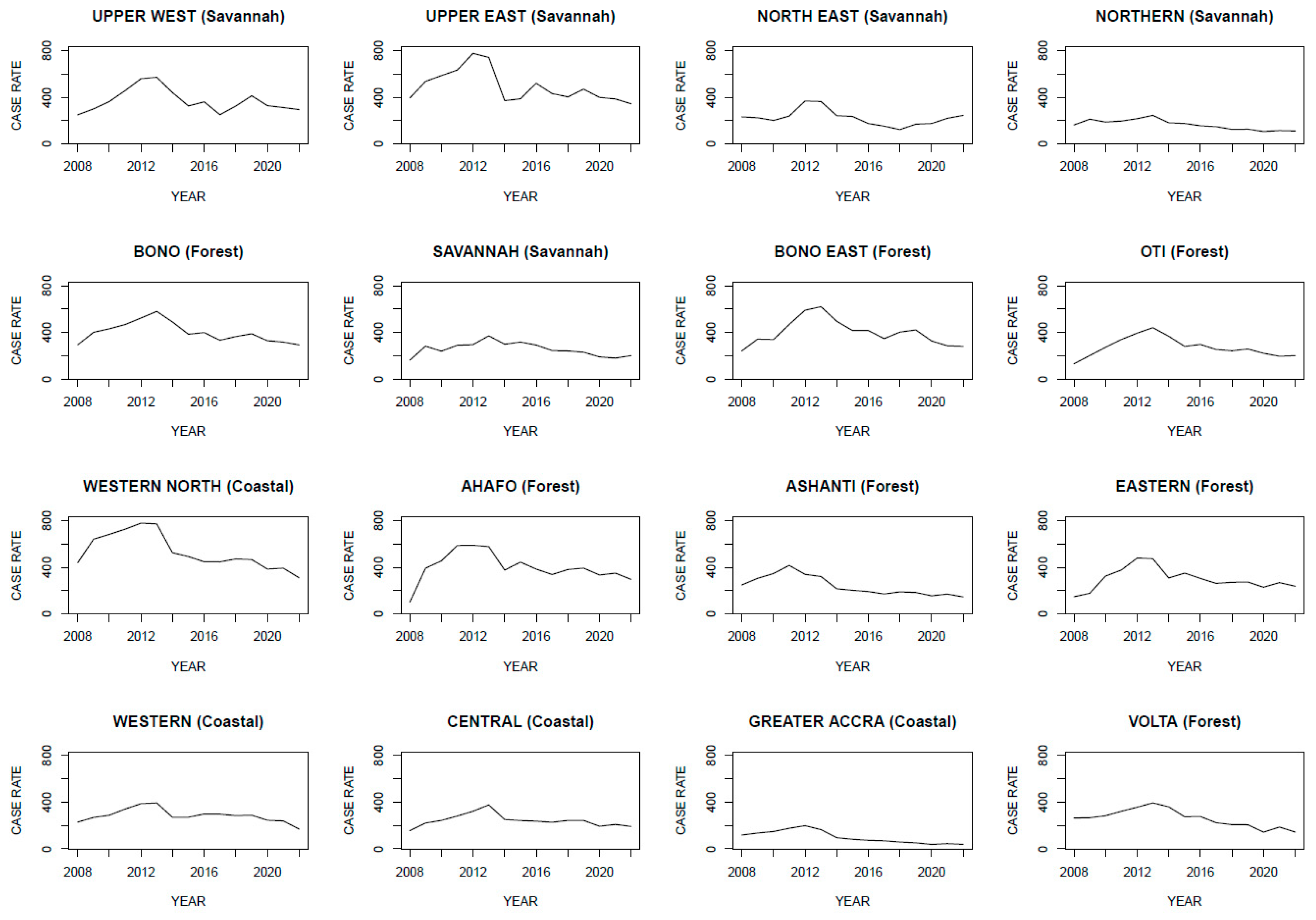
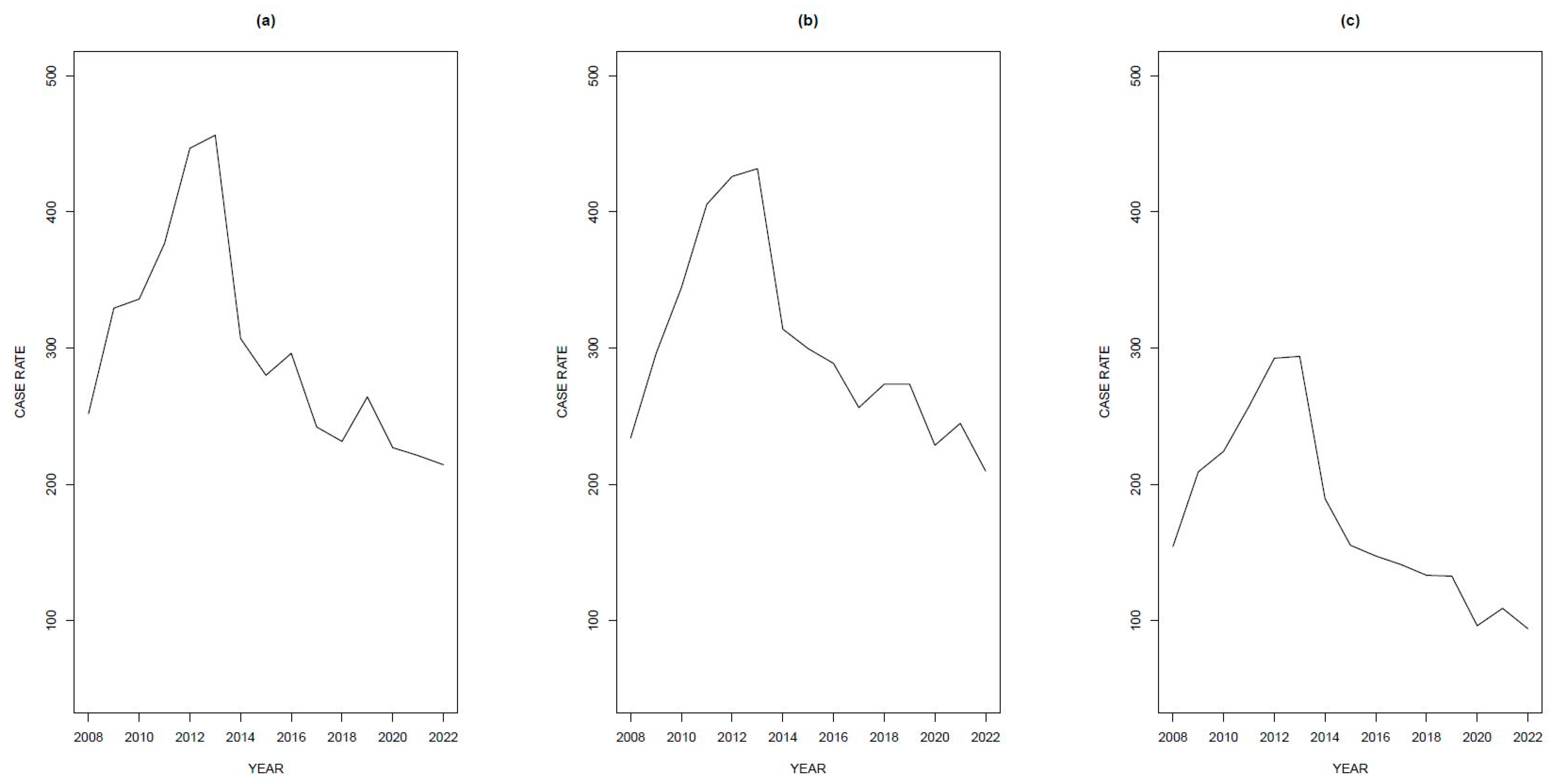
3.1. Summary of Annual Malaria Cases 2008–2022
3.2. Climate Analysis
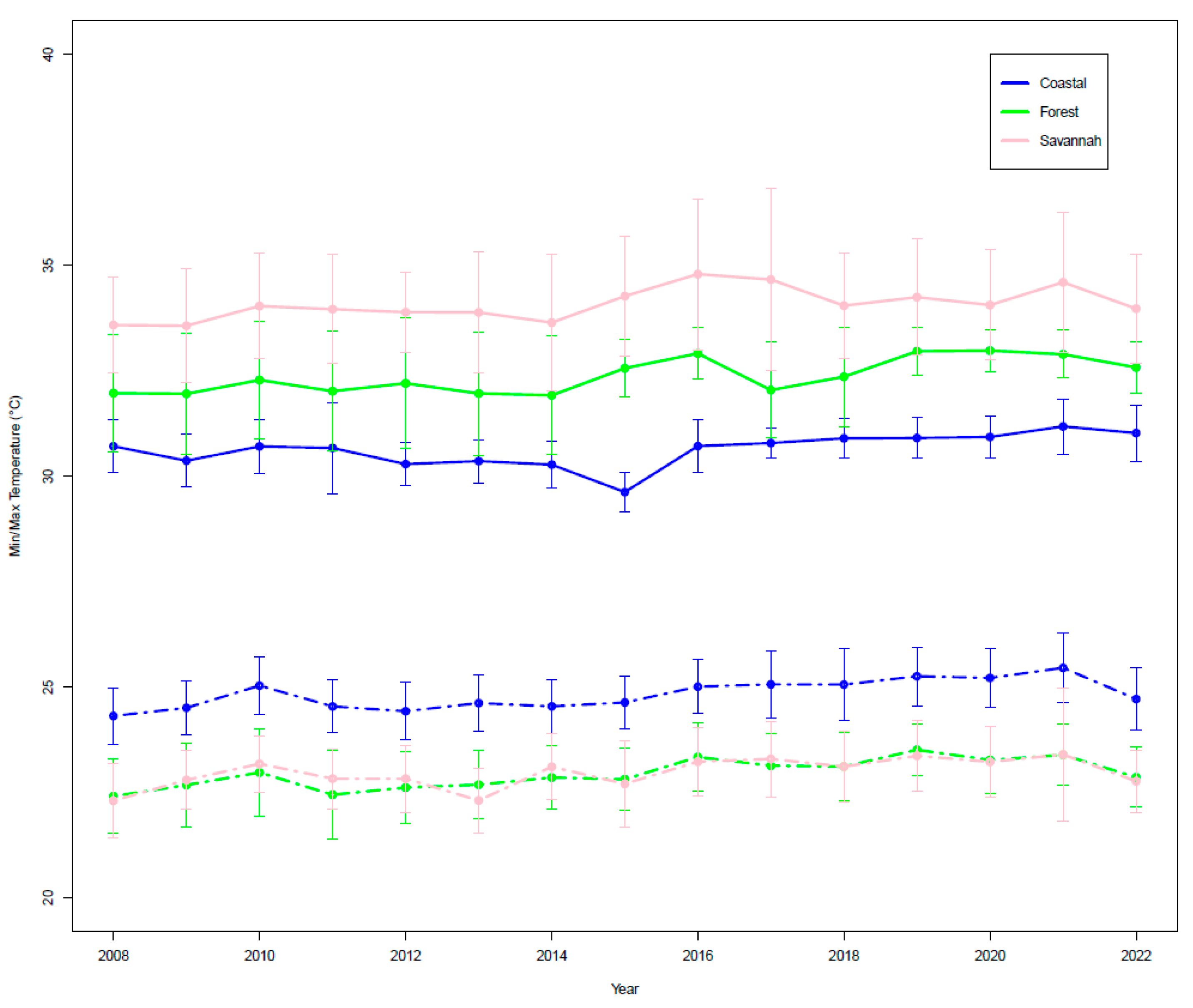
3.2.1. Interannual Temperature Variability
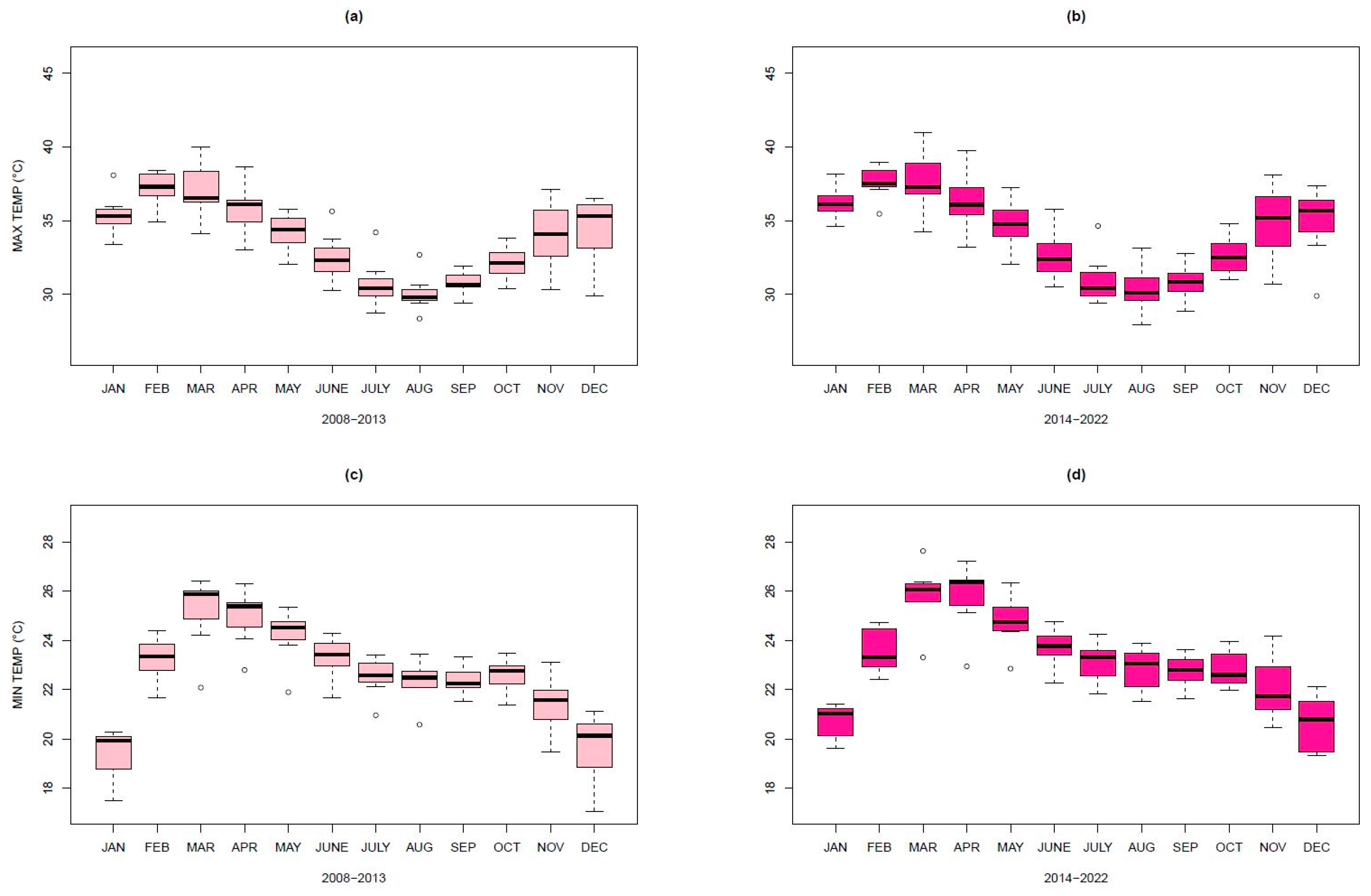
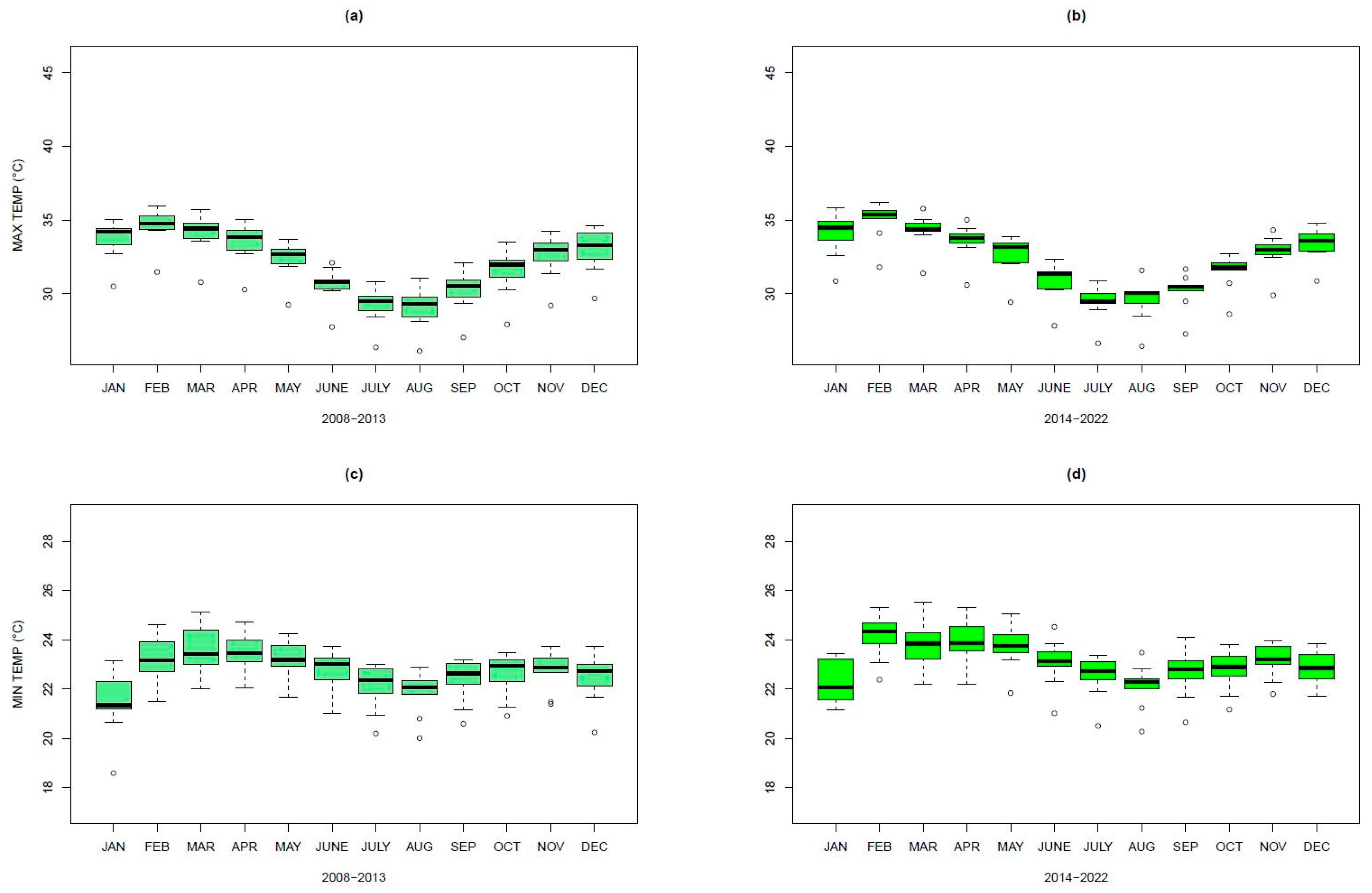
3.2.2. Annual Cycle of Temperature
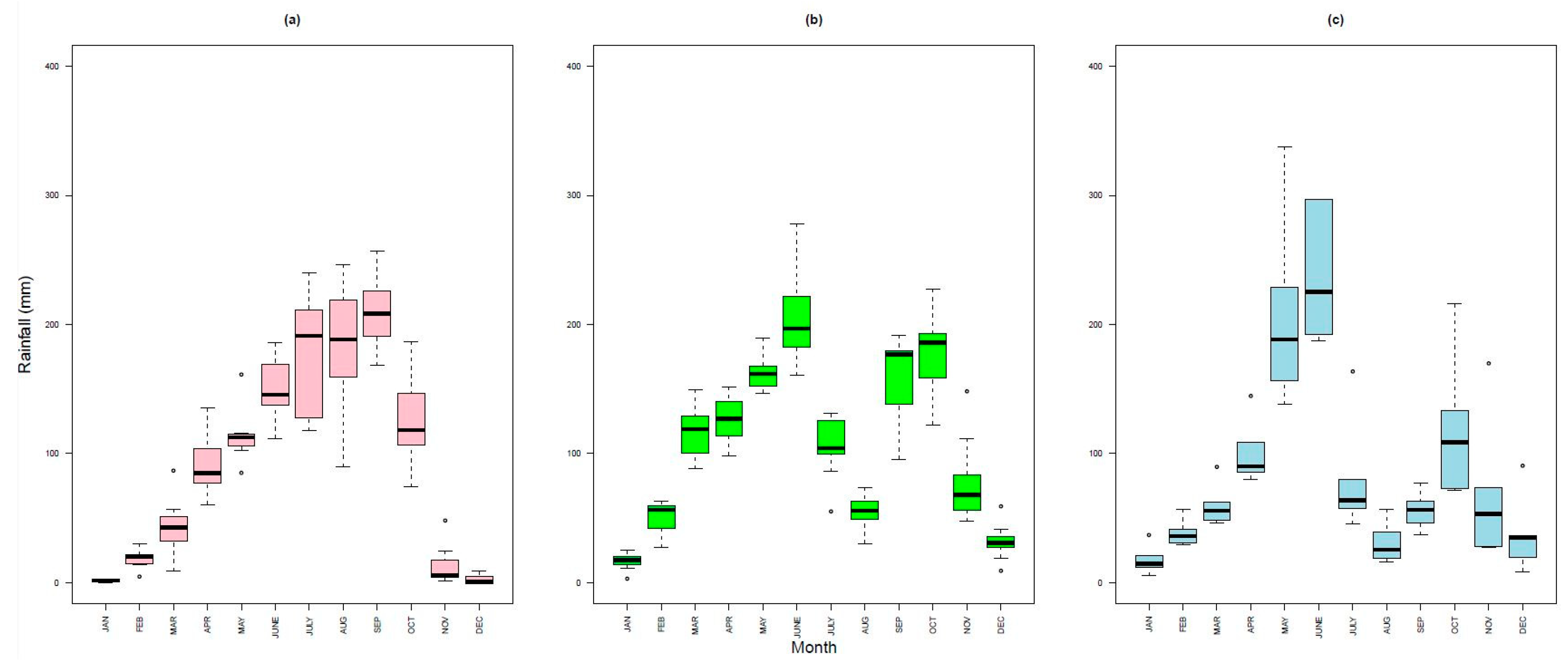
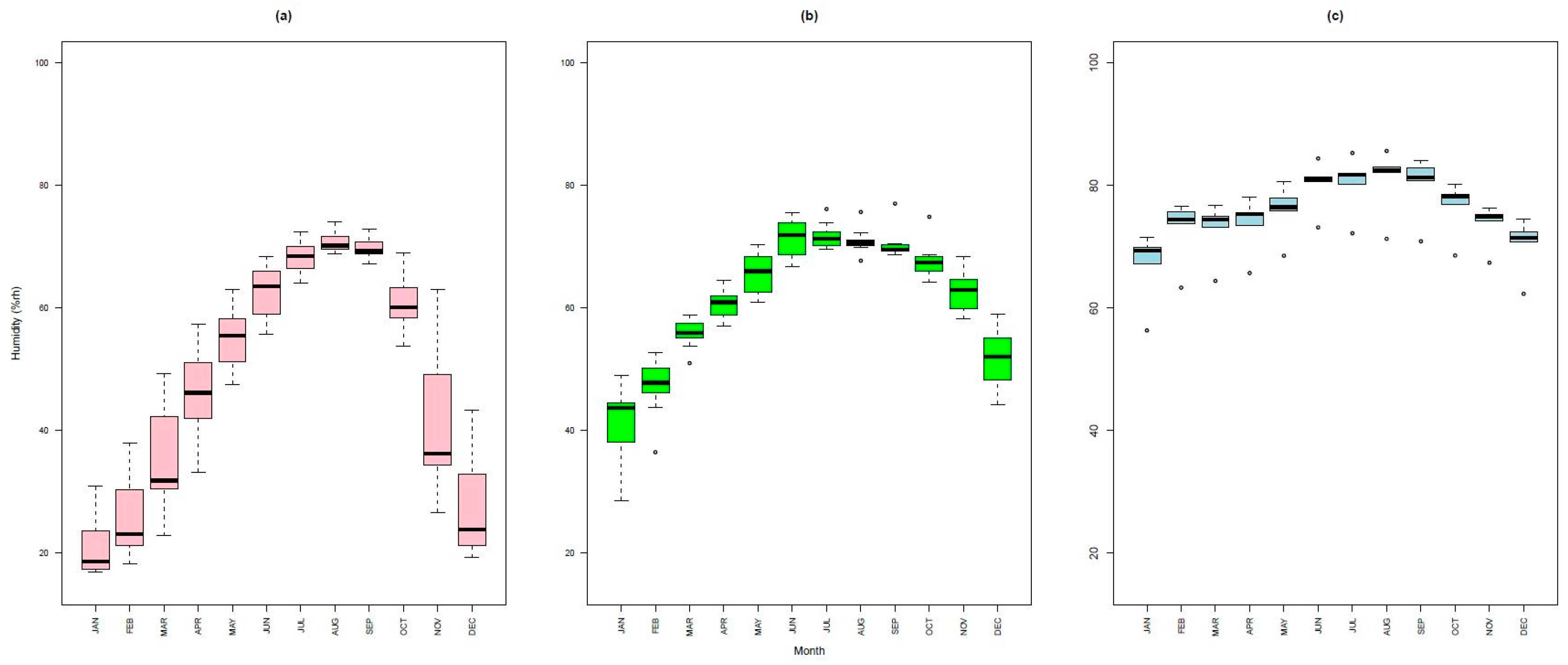
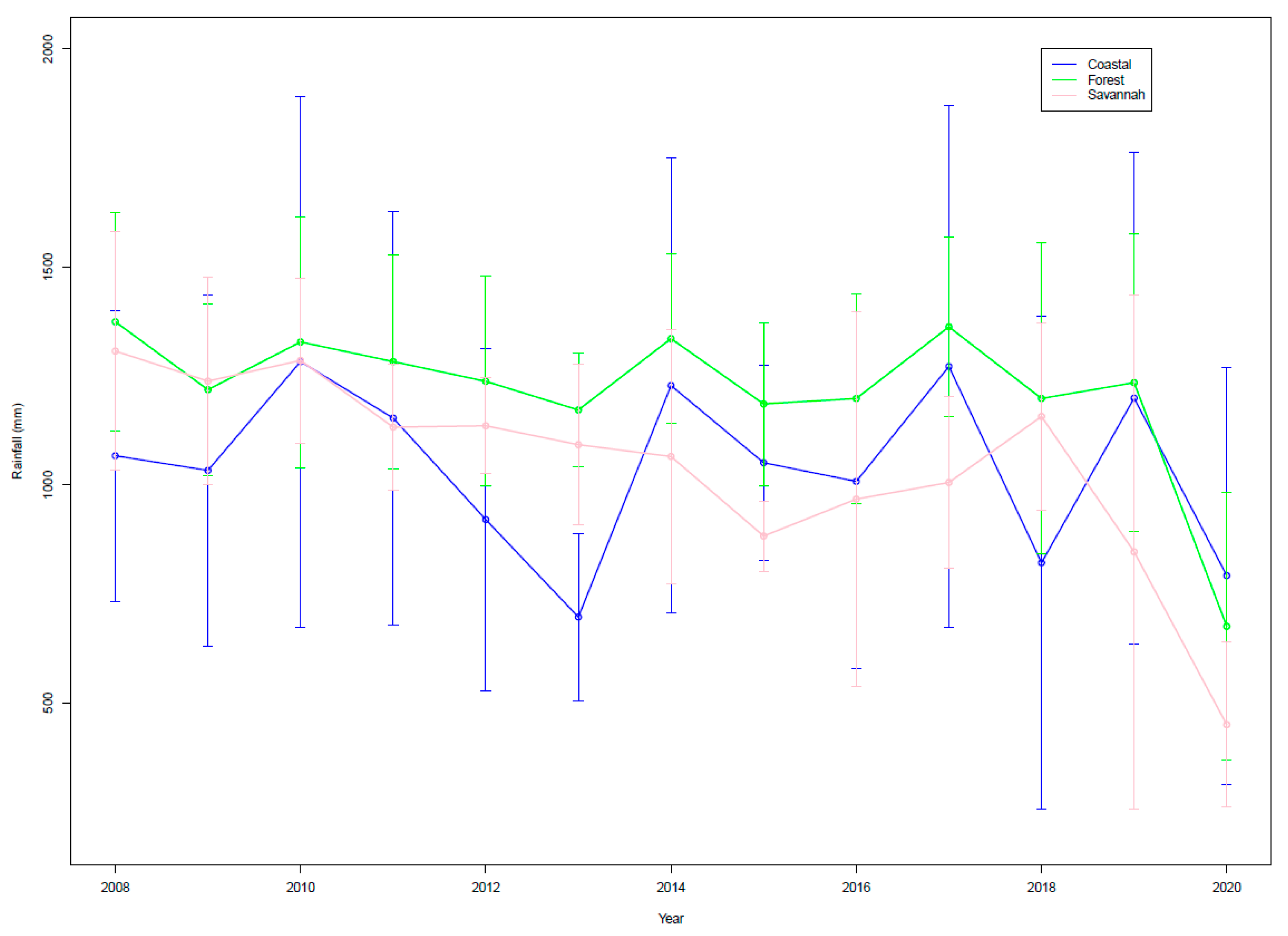
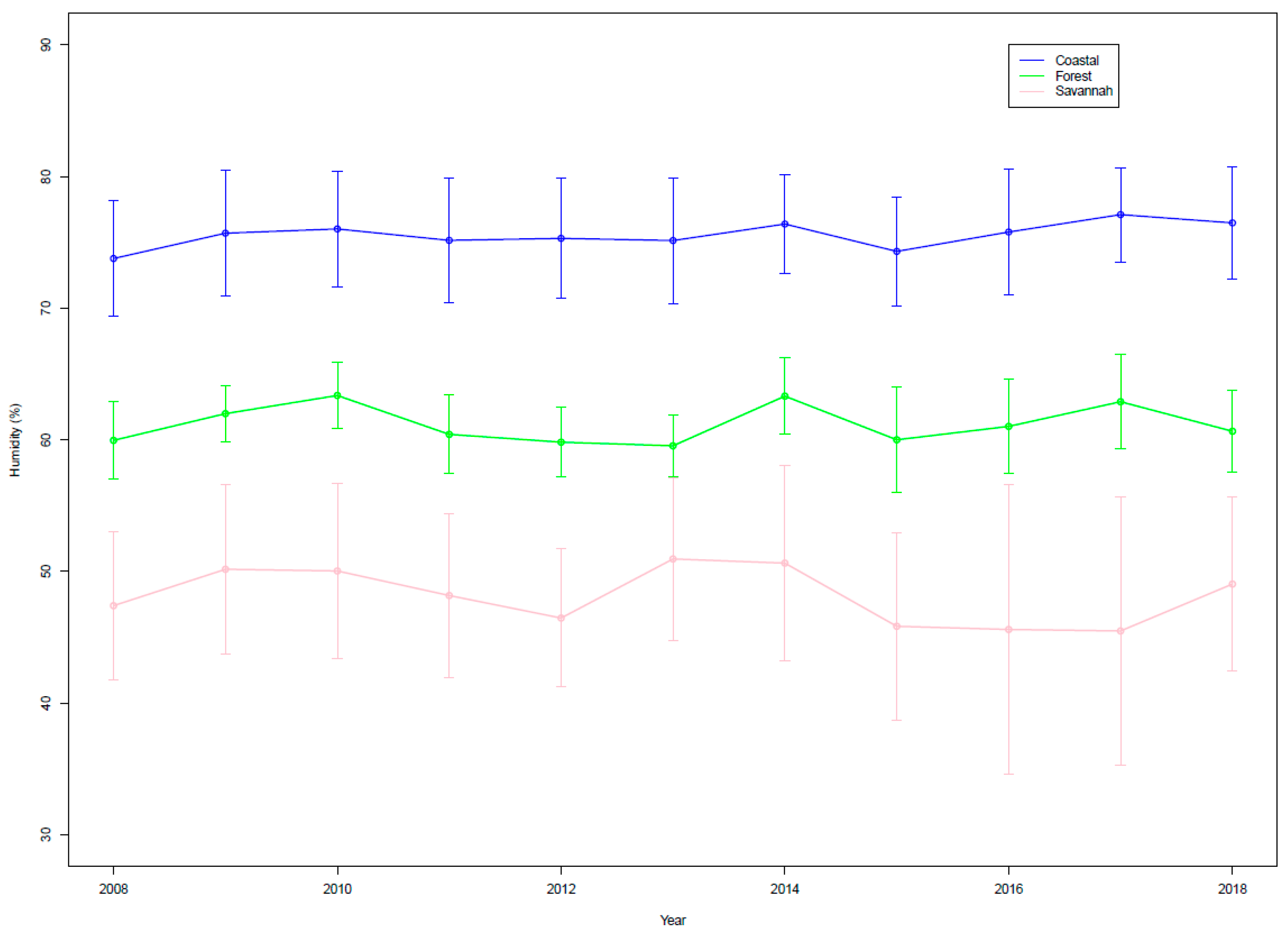
3.2.3. Interannual Variability and Annual Cycle of Precipitation and Relative Humidity
3.2.4. Summary of the Climate Analysis
3.3. Correlation of Malaria and Climate Variables
3.4. Discussion and Contextualisation
4. Conclusions
Author Contributions
Funding
Data Availability Statement
Conflicts of Interest
Abbreviations
| GMet | Ghana Meteorological Agency |
| RH | Relative Humidity |
| WHO | World Health Organization |
References
- Badmos, A.O.; Alaran, A.J.; Adebisi, Y.A.; Bouaddi, O.; Onibon, Z.; Dada, A.; Lin, X.; Lucero-Prisno, D.E. What sub-Saharan African countries can learn from malaria elimination in China. Trop. Med. Health 2021, 49, 86. [Google Scholar] [CrossRef] [Scilit] [PubMed]
- World Health Organization. World Malaria Report 2022. Available online: https://www.who.int/teams/global-malaria-programme (accessed on 13 January 2025).
- Ejigu, B.A.; Wencheko, E. Spatial Prevalence and Determinants of Malaria among under-five Children in Ghana. MedRxiv 2021. [Google Scholar] [CrossRef] [Scilit]
- U.S. President’s Malaria Initiative. Ghana Malaria Operational Plan FY2022; USPMI: Washington, DC, USA, 2022. [Google Scholar]
- Cissé, G.; McLeman, R.; Adams, H.; Aldunce, P.; Bowen, K.; Campbell-Lendrum, D.; Clayton, S.; Ebi, K.L.; Hess, J.; Huang, C.; et al. Health, Wellbeing, and the Changing Structure of Communities. In Climate Change 2022: Impacts, Adaptation and Vulnerability. Contribution of Working Group II to the Sixth Assessment Report of the Intergovernmental Panel on Climate Change; Pörtner, H.-O., Roberts, D.C., Tignor, M., Poloczanska, E.S., Mintenbeck, K., Alegría, A., Craig, M., Langsdorf, S., Löschke, S., Möller, V., et al., Eds.; Cambridge University Press: Cambridge, UK; New York, NY, USA, 2022; pp. 1041–1170. [Google Scholar]
- Klepac, P.; Hsieh, J.L.; Ducker, C.L.; Assoum, M.; Booth, M.; Byrne, I.; Dodson, S.; Martin, D.L.; Turner, C.M.R.; van Daalen, K.R.; et al. Climate change, malaria and neglected tropical diseases: A scoping review. Trans. R. Soc. Trop. Med. Hyg. 2024, 118, 561–579. [Google Scholar] [CrossRef] [Scilit]
- Klutse, N.A.B.; Aboagye-Antwi, F.; Owusu, K.; Ntiamoa-Baidu, Y. Assessment of Patterns of Climate Variables and Malaria Cases in Two Ecological Zones of Ghana. Open J. Ecol. 2014, 4, 764–775. [Google Scholar] [CrossRef]
- Asare, E.O.; Amekudzi, L.K. Assessing Climate Driven Malaria Variability in Ghana Using a Regional Scale Dynamical Model. Climate 2017, 5, 20. [Google Scholar] [CrossRef] [Scilit]
- Ankamah, S.; Nokoe, K.S.; Iddrisu, W.A. Modelling Trends of Climatic Variability and Malaria in Ghana Using Vector Autoregression. Malar. Res. Treat. 2018, 2018, 6124321. [Google Scholar] [CrossRef] [Scilit]
- Bessah, E.; Amponsah, W.; Owusu Ansah, S.; Afrifa, A.; Yahaya, B.; Senyo Wemegah, C.; Tanu, M.; Amekudzi, L.K.; Agyei Agyare, W. Climatic zoning of Ghana using selected meteorological variables for the period 1976–2018. Meteorol. Appl. 2022, 29, e2049. [Google Scholar] [CrossRef] [Scilit]
- Turell, M.J. Effect of environmental temperature on the vector competence of Aedes fowleri for rift valley fever virus. Res. Virol. 1989, 140, 147–154. [Google Scholar] [CrossRef] [Scilit]
- Egbendewe-Mondzozo, A.; Musumba, M.; Mccarl, B.A.; Wu, X. Climate Change and Vector-borne Diseases: An Economic Impact Analysis of Malaria in Africa. Int. J. Environ. Res. Public Health 2000, 8, 913–930. [Google Scholar] [CrossRef] [Scilit] [PubMed]
- Agusto, F.B.; Gumel, A.B.; Parham, P.E. Qualitative assessment of the role of temperature variations on malaria transmission dynamics. J. Biol. Syst. 2015, 23, 597–630. [Google Scholar] [CrossRef] [Scilit]
- Shapiro, L.L.M.; Whitehead, S.A.; Thomas, M.B. Quantifying the effects of temperature on mosquito and parasite traits that determine the transmission potential of human malaria. PLoS Biol. 2003, 15, e2003489. [Google Scholar] [CrossRef] [Scilit]
- Dasgupta, S. Burden of climate change on malaria mortality. Int. J. Hyg. Environ. Health 2018, 221, 782–791. [Google Scholar] [CrossRef] [Scilit] [PubMed]
- Mordecai, E.A.; Paaijmans, K.P.; Johnson, L.R.; Balzer, C.; Ben-Horin, T.; Moor, E.; Mcnally, A.; Pawar, S.; Ryan, S.J.; Smith, T.C.; et al. Optimal temperature for malaria transmission is dramatically lower than previously predicted. Ecol. Lett. 2012, 16, 22–30. [Google Scholar] [CrossRef] [Scilit]
- Paaijmans, K.P.; Read, A.F.; Thomas, M.B. Understanding the link between malaria risk and climate. Proc. Natl. Acad. Sci. USA 2009, 106, 13844–13849. [Google Scholar] [CrossRef] [Scilit]
- Oesterholt, M.J.A.M.; Bousema, J.T.; Mwerinde, O.K.; Harris, C.; Lushino, P.; Masokoto, A.; Mwerinde, H.; Mosha, F.W.; Drakeley, C.J. Spatial and temporal variation in malaria transmission in a low endemicity area in northern Tanzania. Malar. J. 2006, 5, 98. [Google Scholar] [CrossRef] [Scilit] [PubMed]
- Thomson, M.C.; Doblas-Reyes, F.J.; Mason, S.J.; Hagedorn, R.; Connor, S.J.; Phindela, T.; Morse, A.P.; Palmer, T.N. Malaria early warnings based on seasonal climate forecasts from multi-model ensembles. Nature 2006, 439, 576–579. [Google Scholar] [CrossRef] [Scilit] [PubMed]
- Akpalu, W.; Codjoe, S.N.A. Economic analysis of climate variability impact on malaria prevalence: The case of Ghana. Sustainability 2013, 5, 4362–4378. [Google Scholar] [CrossRef] [Scilit]
- Hay, S.I.; Rogers, D.J.; Randolph, S.E.; Stern, D.I.; Cox, J.; Shanks, D.; Snow, R. Hot topic or hot air? Climate change and malaria resurgence in East African highlands. Trends Parasitol. 2002, 18, 530–534. [Google Scholar] [CrossRef] [Scilit]
- Dev, V.; Dash, A.P. Rainfall and malaria transmission in north-eastern India. Ann. Trop. Med. Parasitol. 2007, 101, 457–459. [Google Scholar] [CrossRef] [Scilit]
- van der Hoek, W.; Konradsen, F.; Perera, D.; Amerasinghe, P.H.; Amerasinghe, F.P. Correlation between rainfall and malaria in the dry zone of Sri Lanka. Ann. Trop. Med. Parasitol. 1997, 91, 945–949. [Google Scholar] [CrossRef] [Scilit] [PubMed]
- Nsereko, G.; Kadobera, D.; Okethwangu, D.; Nguna, J.; Rutazaana, D.; Kyabayinze, D.J.; Opigo, J.; Ario, A.R. Malaria outbreak facilitated by appearance of vector-breeding sites after heavy rainfall and inadequate preventive measures: Nwoya District, Northern Uganda, February–May 2018. J. Environ. Public Health 2020, 2020, 5802401. [Google Scholar] [CrossRef] [Scilit] [PubMed]
- Nissan, H.; Ukawuba, I.; Thomson, M. Climate-proofing a malaria eradication strategy. Malar. J. 2021, 20, 190. [Google Scholar] [CrossRef] [Scilit] [PubMed]
- Bhattacharya, S.; Sharma, C.; Dhiman, R.C.; Mitra, A.P. Climate change and malaria in India. Curr. Sci. 2006, 90, 369–375. [Google Scholar]
- Haque, U.; Glass, G.E.; Bomblies, A.; Hashizume, M.; Mitra, D.; Haque, R.; Yamamoto, T. The role of climate variability in the spread of malaria in Bangladeshi highlands. PLoS ONE 2010, 5, e14341. [Google Scholar] [CrossRef] [Scilit]
- Tian, L.; Bi, P.; Cazelles, B.; Zhou, S.; Huang, C.; Yang, J. One-year delayed effect of fog on malaria transmission: A time-series analysis in the rain forest area of Mengla County, south-west China. Malar. J. 2008, 7, 110. [Google Scholar] [CrossRef] [Scilit] [PubMed]
- Asante, F.A.; Amuakwa-Mensah, F. Climate change and variability in Ghana: Stocktaking. Climate 2015, 3, 78–99. [Google Scholar] [CrossRef] [Scilit]
- Ghana Statistical Service: 2021 Population & Housing Census. Available online: https://statsghana.gov.gh/gssmain/fileUpload/pressrelease/Population_projection_280624_final_ffa2[1][2]_with_links[_final_website.pdf (accessed on 13 January 2025).
- FAO. Fertilizer Use by Crop in Ghana. Rome (2005): Food and Agriculture Organization of the United Nations. Available online: https://www.fao.org/4/a0013e/a0013e00.htm (accessed on 13 January 2025).
- Abass, K. A Regional Geography of Ghana for Senior High Schools and Undergraduates; Pictis Publications: Accra, Ghana, 2009. [Google Scholar]
- WHO: Ghana Malaria Incidence (per 1000 Population at Risk). Available online: https://data.who.int/indicators/i/B868307/442CEA8?m49=288 (accessed on 13 January 2025).
- U.S. President’s Malaria Initiative. Ghana Malaria Operational Plan FY2020; USPMI: Washington, DC, USA, 2020. [Google Scholar]
- Country Coordinating Mechanism (CCM) Ghana: Malaria in Ghana: 2018–2020 Principal Recipients. Available online: https://www.ccmghana.net/index.php/principal-recipients/2018-2020/malaria (accessed on 24 May 2022).
- Yamba, E.I.; Fink, A.H.; Badu, K.; Asare, E.O.; Tompkins, A.M.; Amekudzi, L.K. Climate Drivers of Malaria Transmission Seasonality and Their Relative Importance in Sub-Saharan Africa. GeoHealth 2023, 7, e2022GH000698. [Google Scholar] [CrossRef] [Scilit]
- Vitolo, C.; Scutari, M.; Ghalaieny, M.; Tucker, A.; Russell, A. Modeling Air Pollution, Climate, and Health Data Using Bayesian Networks: A Case Study of the English Regions. Earth Space Sci. 2018, 5, 76–88. [Google Scholar] [CrossRef] [Scilit]
- Harwood, H.; Hall, R.; Di Capua, G.; Russell, A.; Tucker, A. Using Bayesian Networks to investigate the influence of subseasonal Arctic variability on midlatitude North Atlantic circulation. J. Clim. 2021, 34, 2319–2335. [Google Scholar] [CrossRef] [Scilit]
- Danuor, S.; Tay, S.; Annor, T.; Forkuo, E.; Bosompem, K.; Antwi, V. The impact of climate variability on malaria incidence and prevalence in the forest zone of Ghana—A case study at two (2) hospitals located within the Kumasi Metropolitan area of the Ashanti Region of Ghana. In Proceedings of the 2nd International Conference: Climate, Sustainability and Development in Semi-Arid Regions, Fortaleza, Brazil, 16–20 August 2010; pp. 16–20. [Google Scholar]
- Tay, S.; Danuor, S.; Mensah, D.; Acheampong, G.; Abruquah, H.; Morse, A.; Caminade, C.; Badu, K.; Tompkins, A.; Hassan, H. Climate Variability and Malaria Incidence in Peri-urban, Urban and Rural Communities Around Kumasi, Ghana: A Case Study at Three Health Facilities; Emena, Atonsu and Akropong. Int. J. Parasitol. Res. 2012, 4, 83. [Google Scholar]





| Region | Population | Population Density (km−2) |
|---|---|---|
| Greater Accra (coastal/forest) | 5,455,692 | 1678.3 |
| Ashanti (forest) | 5,440,463 | 222.7 |
| Eastern (forest) | 2,925,653 | 151.0 |
| Central (forest/coastal) | 2,859,821 | 291.0 |
| Northern (savannah) | 2,310,939 | 87.1 |
| Western (forest/coastal) | 2,060,585 | 148.6 |
| Volta (forest/coastal) | 1,659,040 | 148.6 |
| Upper East (savannah) | 1,301,226 | 49.0 |
| Bono (forest) | 1,208,649 | 108.8 |
| Bono East (forest/savannah) | 1,203,400 | 51.8 |
| Upper West (savannah) | 901,502 | 173.6 |
| Western North (forest) | 880,921 | 87.4 |
| Oti (forest/savannah) | 747,248 | 67.5 |
| North East (savannah) | 658,946 | 72.6 |
| Savannah (savannah) | 653,266 | 18.7 |
| Ahafo (forest) | 564,668 | 108.6 |
| Total | 30,832,019 | 128.8 |
| Synoptic Station (Zone) | Latitude | Longitude | Missing Data |
|---|---|---|---|
| Tamale (savannah) | 9.42 | −0.85 | 2.40% |
| Yendi (savannah) | 9.45 | −0.02 | 2.58% |
| Bole (savannah) | 9.03 | −2.48 | 3.21% |
| Navrongo (savannah) | 10.90 | −1.10 | 1.47% |
| Wa (savannah) | 10.05 | −2.50 | 2.85% |
| Kete Krachi (savannah) | 7.82 | −0.03 | 2.06% |
| Kumasi (forest) | 6.72 | −1.60 | 1.20% |
| Sunyani (forest) | 7.33 | −2.33 | 2.06% |
| Wenchi (forest) | 7.75 | −2.10 | 2.98% |
| Ho (forest) | 6.60 | 0.47 | 1.70% |
| Akatsi (forest) | 6.12 | 0.80 | 3.07% |
| Koforidua (forest) | 6.08 | −0.25 | 2.71% |
| Akuse (forest) | 6.10 | 0.12 | 3.30% |
| Akim Oda (forest) | 5.93 | −0.98 | 4.52% |
| Abetifi (forest) | 5.60 | −0.17 | 2.75% |
| Sefwi Bekwai (forest) | 6.20 | −2.33 | 1.33% |
| Accra (coastal) | 5.60 | −0.17 | 1.68% |
| Tema (coastal) | 5.62 | 0.00 | 1.85% |
| Ada (coastal) | 5.38 | 0.63 | 2.16% |
| Saltpond (coastal) | 5.20 | −1.07 | 2.71% |
| Takoradi (coastal) | 4.88 | −1.77 | 2.79% |
| Axim (coastal) | 4.87 | −2.23 | 2.50% |
| Coastal | Forest | Savannah | |
|---|---|---|---|
| Malaria season | May–November | May–November | July–November |
| Temperature (interannual) | Within 21–33 °C optimum range for all years | Within 21–33 °C optimum range for all years | Exceeds 34 °C after 2014 (21–33 °C optimum range) |
| Temperature (annual cycle) | 21–33 °C all year | 21–33 °C in April–December | 21–33 °C in June–November |
| Precipitation (interannual) | Within 690–1300 mm, optimum range for all years | Within 670–1400 mm, optimum range for all years | Within 450–1400 mm, optimum range for all years |
| Precipitation (annual cycle) | Moderate to high April–September | Moderate to high March–October | Moderate to high March–October |
| RH (interannual) | 73–77% (within 55–80% optimum range) | 59–64% (within 55–80% optimum range) | 45–51% (outside 55–80% optimum range) |
| RH (annual cycle) | 55–80% in October–May | 55–80% in April–November | 55–80% in May–October |
| Climate Variable | r (National) | r (Coastal) | r (Forest) | r (Savannah) |
|---|---|---|---|---|
| Mean temp. | −0.54 (0.04) | −0.60 (0.02) | −0.50 (0.06) | −0.44 (0.10) |
| Max temp. | −0.55 (0.03) | −0.51 (0.05) | −0.47 (0.07) | −0.34 (0.22) |
| Min temp. | −0.49 (0.07) | −0.59 (0.02) | −0.48 (0.07) | −0.45 (0.09) |
| Rainfall | 0.42 (0.11) | 0.32 (0.24) | 0.47 (0.08) | 0.47 (0.08) |
| Humidity | 0.02 (0.96) | −0.19 (0.60) | −0.32 (0.33) | 0.32 (0.34) |
Disclaimer/Publisher’s Note: The statements, opinions and data contained in all publications are solely those of the individual author(s) and contributor(s) and not of MDPI and/or the editor(s). MDPI and/or the editor(s) disclaim responsibility for any injury to people or property resulting from any ideas, methods, instructions or products referred to in the content. |
© 2025 by the authors. Licensee MDPI, Basel, Switzerland. This article is an open access article distributed under the terms and conditions of the Creative Commons Attribution (CC BY) license (https://creativecommons.org/licenses/by/4.0/).
Share and Cite
Adade, E.; Smith, S.; Russell, A. Examining Recent Climate Changes in Ghana and a Comparison with Local Malaria Case Rates. Climate 2025, 13, 48. https://doi.org/10.3390/cli13030048
Adade E, Smith S, Russell A. Examining Recent Climate Changes in Ghana and a Comparison with Local Malaria Case Rates. Climate. 2025; 13(3):48. https://doi.org/10.3390/cli13030048
Chicago/Turabian StyleAdade, Ekuwa, Steven Smith, and Andrew Russell. 2025. "Examining Recent Climate Changes in Ghana and a Comparison with Local Malaria Case Rates" Climate 13, no. 3: 48. https://doi.org/10.3390/cli13030048
APA StyleAdade, E., Smith, S., & Russell, A. (2025). Examining Recent Climate Changes in Ghana and a Comparison with Local Malaria Case Rates. Climate, 13(3), 48. https://doi.org/10.3390/cli13030048