


Abstract
The popularity of herbal remedies is on the rise, but this often comes at the expense of general knowledge about non-native species. The frequency and versatility of the use of medicinal plants does not depend on their origin, while the use of species with proven efficacy is much more intensive. The most abundant plant families, according used taxa and use records, are Asteraceae, Rosaceae and Lamiaceae. The greatest consensus is on the choice of taxa suitable for the treatment of bloating/flatulence and diarrhea, most commonly treated with Carum carvi L. fruit tea and dried or fresh berries of Vaccinium myrtillus L., respectively. The most popular species for treatment of digestive disorders are Artemisia absinthium L. and Matricaria chamomilla L. The use of different taxa for the treatment of digestive disorders in Lithuania varies considerably for a number of reasons, one of which is the uneven distribution of medicinal plant species in the study areas.
1. Introduction
For centuries, people have turned to traditional healers, home remedies and ancient medical knowledge to address their health and well-being needs [1]. Traditional medicines are not only incorporated into people’s daily healthcare practices, but also hold symbolic significance in terms of national identity [2]. The study of the interactions between plants and people, including the influence of plants on human culture, is the focus of the interdisciplinary field of ethnobotany [3]. It is a multidisciplinary science that collaborates with many other disciplines, including chemistry and pharmacology [4]. In most cases ethnopharmacology can be considered as a branch of ethnobotany [5]. It draws on methodologies and methods from various disciplines, and various ethnobotanical indices are often used to transform primary data into statistical measures [6]. Ethnobotanical information and knowledge are believed to have contributed to the development of close to 30% of modern medicines [7]. Therefore, the identification, documentation, transmission, revitalization and promotion of traditional knowledge is essential to ensure its preservation and vitality [8].
However, the use of traditional medicines was challenged by the advent of semi-synthetic and synthetic drugs since the nineteenth century, and more so in the twentieth century [9]. Nevertheless, the use of herbal medicines has increased considerably over the last decades worldwide, as many people now turn to these products for a wide range of health problems [10]. Similarly, the use of medicinal plants is increasing in Lithuania, mainly due to preserved or revived traditions and the preference for natural products [11]. On the other hand, the popularity of certain natural remedies for human health has led to the popularization of common knowledge about some widely marketed, often non-native species, thus promoting the substitution of traditionally used native ones [12]. As a result, traditional knowledge is being lost with the increasing use of introduced plants [13]. Prakofjewa et al. [14], who studied traditional knowledge in rural settlements in the Vilnius region (Lithuania), found that a very large proportion (approximately 80%) of reported uses were associated with wild plant species. However, there is a fundamental difference between “wild” and “native,” as a number of naturalized alien medicinal plant species can be found in the wild [15,16]. There is no study examining the differences between the use of native and non-native plant species in traditional Lithuanian medicine.
In traditional medicine, plants are most often used to treat milder disorders, especially those of the digestive, dermal and respiratory systems [17,18,19,20]. Moreover, phytotherapy is also an important part of the treatment of these diseases in modern medicine [21,22,23]. Accordingly, among the herbal medicinal products listed in the Register of Medicinal Products of the Republic of Lithuania, the most common are those affecting the digestive system [24]. In the European Union, a common regulatory framework applies to all Member States, and harmonized quality standards for medicinal products are published in the European Pharmacopeia after adoption by the European Pharmacopeia Commission [25]. Meanwhile, the European Medicines Agency (EMA) is a decentralized agency of EU responsible for the scientific evaluation, supervision, and safety monitoring of medicines in the EU [26].
Unlike in Western European countries, attitudes toward traditional medicine in Lithuania were affected by the Soviet era. In Soviet Lithuania, traditional medicine was regarded as a historical relic, and according to researchers of the time, folk medicine was in decline; the data collected was considered to have only cognitive and historical significance [27]. Until the 21st century, ethnobotanical research in Lithuania was dominated by the ethnologist’s view of folk medicine, where the only thing that mattered was which herb cured which disorder [28]. Similarly, in all countries of Northeast Europe, data on the use of plants and people’s attitudes toward them have been studied primarily within the fields of the humanities (e.g., ethnology and folklore studies) [29]. In the last two decades, when pharmacy students at the Lithuanian University of Health Sciences began to choose ethnopharmacological research as the basis for their master’s thesis, research on traditional medicine in Lithuania has intensified [30]. The works published to date have been limited to ethnobotanical studies in small areas, involving a relatively small number of informants, and usually remain unpublished.
The aim of this study is to review and analyze ethnobotanical and ethnopharmacological research data related to the traditional use of plants and to identify trends in the use of plants for the treatment of digestive disorders in Lithuania.
2. Results
The number of respondents vary from 9 to 67 per study, with a total of 476 respond-ents, of which only 56 are men. There are no special studies on the differences between men and women’s knowledge about medicinal plant use in Lithuania, but according to Prakofjewa et al. [14], 50 women and 15 men reported on an average of 14.9 and 9.9 plant taxa, respectively, and this difference is statistically significant.
2.1. Influence of Plant Origin on Its Use
A total of 341 taxa are recorded, of which more than half, i.e., 184 plant taxa and one lichen species, are used to treat digestive disorders. In the studies reviewed, between 15.3% and 58% (an average of 37.1%) of the recorded taxa are used to treat digestive system disorders, while the relative proportion of use records for digestive system disorders ranges from 11.9% to 29.8% and averages 20.5%. Of the 185 taxa, 102 taxa are native and 83 non-native. Native plant taxa account for 46.9–87.9% (66.4% on average) in the reviewed studies, with the exception of Bajoraitė [31], who focused more on cultivated plants. Studies on medicinal plants used by ethnic minorities living in Lithuania [32,33,34] do not differ in this respect (67.4, 75.8, 64.4% of native taxa, respectively). The results of a study by Prakofjewa et al. [14], who investigated the plants used by Lithuanians and Poles living in the same area, show that respondents from both ethnic groups cited the same proportion of native plant species for treating digestive disorders (76.3% and 76.5%, respectively). Although native taxa are used slightly more frequently than non-native taxa, there are no statistically significant differences between them in the number of studies in which the taxon are recorded, the number of use records and the number of disorder groups (Table 1). Similarly, when comparing the use values (UV) of native and non-native plant taxa, no statistically significant difference was found in any of the five detailed studies (p > 0.05, Mann–Whitney U test). No statistically significant difference was found even in the study by Prakofjewa et al. [14] (Table 2), which reveals that approximately 80% of UV involved wild plant species. This can be explained only by the high proportion of native species (72.5%) recorded in the study.
Table 1.
Descriptive statistics (mean ± SD) and p-value from Mann–Whitney U test of medicinal plant taxa grouped by its origin and approval by European Medicines Agency [26], based on a review of 21 studies. NS = the number of studies in which the taxon are recorded; UR = the number of use records; DG = number of disorder groups.
Table 2.
The use values (mean ± SD) and p-value from Mann–Whitney U test of medicinal plant taxa grouped by its origin in the five most comprehensive surveys. n = number of taxa.
2.2. Influence of Plant Efficiency on Its Use
A total of 70 species of plants and one species of lichen are registered in EMA mono-graphs for the treatment of digestive disorders [26]. Of these, 35 plant taxa and one lichen species were registered in this study, representing 19.5% of the total number of registered taxa. All characteristics differed statistically between EMA-approved and EMA non-approved taxa groups (Table 1). EMA-approved species are much more popular than EMA non-approved taxa. When the taxa were divided into four groups according to their origin and EMA approval (Table 3), it was found that regardless of origin, EMA-approved taxa are used significantly more often. However, there are exceptions, e.g., Plantago lanceolata L., one of the three species of the genus widespread in Lithuania, approved by the EMA as a demulcent for the symptomatic treatment of oral irritation, which is mentioned in only one study (4.8%), while non-approved Plantago major L. is registered in 13 studies (61.9%).
Table 3.
Descriptive statistics (mean ± SD) on the characteristics of plant taxa used in Lithuania for the treatment of gastrointestinal disorders, and grouped according to origin and approval of European Medicines Agency [26], based on a review of 21 studies. NS = number of studies in which the taxon are recorded; UR = number of use records; DG = number of disorder groups.
2.3. Taxonomical Diversity
The registered plants belong to 63 families. The most abundant family is Asteraceae, which leads not only in the number of taxa (24) but also in the number of use records (293) and the proportion of EMA-approved species (37.5%). The next most abundant families are Rosaceae, Lamiaceae and Apiaceae (Table 4). However, in the Lamiaceae and Apiace-ae a large number of non-native taxa are used, while in the Ericaceae and Plantaginaceae families only native species are registered (Table 4). In general, Asteraceae, Rosaceae and Lamiaceae are the most commonly used families in all the studies reviewed. Among the recorded species, two plant species, namely Arnica montana L. (recorded in two studies), and Gentiana cruciata L. (one study) are rare and included in the Red Data Book of Lithuania [37].
Table 4.
The most abundant plant families used to treat digestive system disorders in Lithuania, based on a review of 21 studies. EMA-approved = relative proportion of taxa approved by European Medicines Agency [26]; UR = the number of use records.
2.4. Plant Use According Digestive Disorders Groups
The greatest consensus is on the choice of taxa suitable for the treatment of bloat-ing/flatulence and diarrhea (Fic = 0.64 and 0.60, respectively, Table 5). Bloating or flatulence is usually treated with Carum carvi L. fruit decoction (48% of studies). More often, this tea is used as a digestive (62% of studies). In some regions of Lithuania, Carum carvi decoction is usually used instead of regular tea [30]. Diarrhea is most commonly treated with dried or fresh berries of Vaccinium myrtillus L., tea of Artemisia absinthium L. and decoction or tincture of Quercus robur L. bark (registered in 76, 62 and 57% of studies, respectively). In addition to these species used to treat diarrhea, the most commonly agreed uses were Carum carvi for digestive problems (62%), Matricaria chamomilla for relieving of pain and spasms (52%), Calendula officinalis L. as a stomatic (48%) and Allium sativum L. as an anthelmintic (48%).
Table 5.
Medicinal plant taxa number (NT), use records (UR), consensus factor (Fic) and the most popular taxa according to disorders categories indicating the percentage (PS) of studies in which they are mentioned, from the 21 studies reviewed.
2.5. Traditional and Approved Uses of Plants
The use of two plant species, Artemisia absinthium and Matricaria chamomilla L., was mentioned in all of the studies reviewed. Matricaria chamomilla is used to treat almost all categories of ailments related to the digestive system, with the exception of ulcers and helminthiasis. It is most commonly used for pain and spasms, as a stomatic, carminative and digestive (Table 6). The European Union Herbal Monograph refers to almost the same therapeutic areas, while Artemisia absinthium herb preparations can be used for temporary loss of appetite or for mild heartburn and stomach/gut disorders [26]. Of the ten most popular species used to treat digestive disorders, only one species, Allium sativum, does not have EMA-approved indications. Furthermore, the main indications for the seven most popular species coincide with those listed in the EMA monographs [26].
Table 6.
Plant taxa registered at least in five of the 21 studies reviewed, the main disorders categories with number of study that mentioned it and EMA indications related to digestive system disorders. NS = number of studies in which the taxon are recorded; UR = number of use records; DG = number of disorder groups. The main disorders corresponding to the EMA indications are in bold.
2.6. Variation Between Localities
Due to a variety of reasons, one of which is the uneven distribution of the medicinal plant species in the study areas, the use of different taxa to treat digestive disorders in Lithuania varies widely. However, this cannot explain the differences in the use of the most popular species, which are common native or cultivated plants. The results of the five most comprehensive studies (Table 7) show that UV of even the most popular species varies considerably from one location to another. For example, the use of Artemisia absinthium for various digestive disorders was mentioned between 0.18 and 1.19 times per respondent.
Table 7.
The top seven plant taxa, registered at least in 80% of the 21 studies reviewed with use values (UV) in the five most comprehensive surveys. n = number of recipients.
3. Discussion
In the studies reviewed, the majority of respondents were women. This is because herbal medicine is a woman’s occupation in Lithuania [38]. Although men are also knowledgeable about herbs and use them in a veterinary context, herbal medicine is considered ‘not a man’s business’ [39]. Similarly, in Brazil and Northern Ecuador, women, especially older women, are the main providers of family and community health services [40,41]. Women’s double role of family food and care providers may explain their expertise in medicinal plant use [42].
The diversity of plants used in traditional medicine depends on cognitive characteristics, ecological factors and cultural history [43]. Ecological factors include the composition of the local flora and the availability of medicinal plant species. The most species-rich plant families in Lithuanian flora are Asteraceae, Poaceae, Cyperaceae and Rosaceae [44]. The largest number of native species used for treatment of digestive disorders belong to the families Asteraceae and Rosaceae, while only two native species of the Poaceae are recorded with five UR, and no plants belonging to the family Cyperaceae are used at all. The chemical compounds with medicinal value are not equally distributed among different botanical families and the underuse of Poaceae and Cyperaceae families can be explained by their low biological activity [45].
According to Zenderland et al. [46], the proportion of wild species among plants used for medicinal purposes in 19 studies varies from 28.2% to 90.9%, and use value is higher for cultivated plants than for wild plants. In Lithuania, native species slightly outnumber non-native species. It could be speculated that inexperienced researchers may have missed some of the less common and more difficult to identify native species, as only a few studies have mentioned unidentified plants. However, in a study conducted by a botanist [30], the proportion of native species was similar (64.9%).
Digestive diseases may be treated with a wide range of bioactive compounds, which might explain the large number of plants used for this purpose [47]. For functional gastrointestinal disorders, plants with a predominance of bitter substances that stimulate gastric secretion and gastrointestinal motility, essential oils with spasmolytic activity or with peristalsis-stimulating effects, spasmolytic alkaloids, and other constituents are used [23]. The main biologically active compounds in most of the popular species, namely Artemisia absinthium, Matricaria chamomilla, Carum carvi, Mentha spp., Achillea millefolium, and Melissa officinalis, are found in essential oils [48,49,50,51,52,53], and the EMA-approved indications for use of these plants are minor gastrointestinal disorders, including bloating and flatulence [26]. Artemisia absinthium and Achillea millefolium also contain biologically active compounds that provide bitterness, e.g., sesquiterpene lactones (absinthin and achillin) and volatile compounds (thujone and camphor), which stimulate the appetite and improve digestion [53,54,55,56]. The main active compounds in Calendula officinalis flowers are terpenoids with extensive anti-inflammatory activity and flavonoids, particularly quercetin, which have significant wound-healing properties [57]. The main biologically active compounds of Vaccinium myrtillus berries are classified as a tannin–anthocyanin complex [58]. The use of Vaccinium myrtillus berries to treat diarrhea is the most widely recognized in Lithuania and has been confirmed by as many as 76% of the studies reviewed. A decoction or alcoholic tincture of Quercus robur bark is also mentioned in many studies as a remedy for diarrhea. Because of its high tannin content, oak bark possesses astringent, desiccating, emplastic, antimicrobial and anti-inflammatory activities [59]. However, it is noted that this remedy is more suitable for veterinary use [30].
The most popular used plant species are common native or frequently cultivated species in Lithuania. Sometimes these groups overlap. Artemisia absinthium is found in poor soils, so its distribution in the country is very uneven, which is why it is often cultivated. Matricaria chamomilla used to grow in fields in Lithuania as a weed, but it is now rarely found in the wild and is only cultivated [30], like Calendula officinalis, which is traditionally grown as an undemanding annual ornamental and medicinal plant. The distribution of plant species can be important for differences in plant use between communities [47]. However, historical and cultural factors also play a significant role. For example, Chenopodium album L. is one of the six most popular species used to treat digestive disorders in Nepal [60], and Trifolium repens L. is the second most popular species used for this purpose in northern Pakistan [61], while there is not a single record of the use of these widespread species in Lithuania to treat gastrointestinal disorders. The results of our study also confirm that, according to De Medeiros and Albuquerque [47], the environment plays an important role in the selection of medicinal plants and individuals from different ethnic groups or origins inhabiting nearby or neighboring regions in similar environments tend to use similar repertoires of medicinal plants.
According to Juodelytė [62], 17% of the respondents use medicinal plants, with Mat-ricaria chamomilla, Carum carvi, Artemisia absinthium, Mentha spp. and Calendula officinalis being the most popular. The results of the above-mentioned survey, conducted in one Lithuanian city, are in line with the results of this study. Some medicinal plants, such as Ruta graveolens, Calendula officinalis, Tanacetum balsamita L., Mentha spp. and Tropaeolum majus L., have been cultivated in Lithuania for a long time, together with ornamental plants [63,64], while others, e.g., Perilla frutescens (L.) Britton, were introduced only at the end of the last century [65]. On the other hand, there are some plant species that are no longer used, or are used very rarely. Some of them are poisonous, such as Daphne mezereum L. and Datura stramonium L., used for dental treatment. Some plants, e.g., Bryonia alba L., Lysimachia nummularia L., Peucedanum palustre (L.) Moench and Thalictrum lucidum L., go into oblivion along with the methods of preparation and the disorders they treat [30]. One of such disorders is a rupture, the folk name for abdominal pain and loss of appetite caused by overwork or the lifting of too heavy a weight. According to Damskytė [66], a rupture seems to be the term for all abdominal diseases that cause sharp pains without diarrhea.
4. Materials and Methods
4.1. Study Area
Lithuania is located in the Baltic Sea region, in the temperate zone, and covers an area of 65,300 km2. The country is mostly flat, except for some hilly areas. The highest altitude is 294 m above sea level. The terrain is rich in lakes and wetlands and more than 33% of the country is forested. The native flora of Lithuania includes about 1350 species of vascular plants, of which 457 are considered medicinal [67,68].
4.2. Data Collection
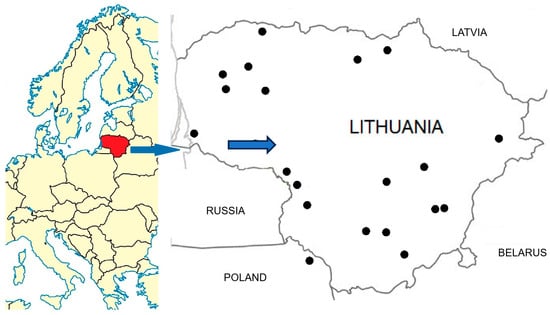
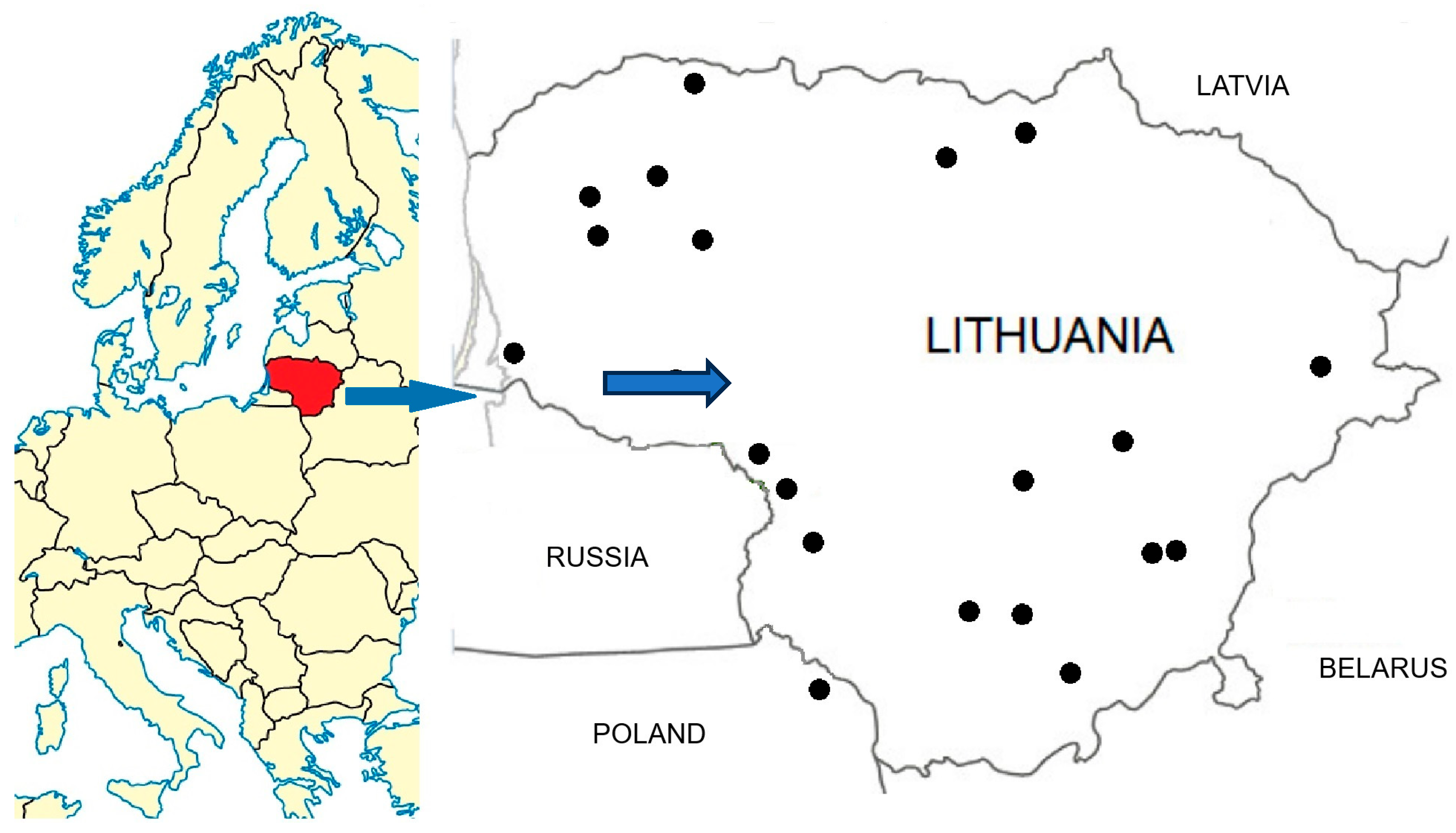
Published studies in online databases (PubMed) and final theses of the Lithuanian University of Health Sciences (LSMU) in institutional repository (https://lsmu.lt/biblioteka/ (accessed on 16 February 2026)) covering the period from 2000 to 2026 were checked for comprehensive ethnobotanical and ethnopharmacological studies in Lithuania. Original studies that specified the study location, the number of respondents, a complete list of plants, and their indications for use were selected. A PubMed search for “medicinal plants” and “Lithuania” yielded 94 results; adding “digestive” narrowed the results to eight, of which only four met the criteria for original research. A search of the LSMU institutional repository using the keywords ‘ethnopharmaceutical’ or ‘ethnobotanical’ in Lithuanian yielded 26 theses, eight of which either lacked a complete list of plants or were not related to digestive system disorders and two theses served as the basis for published papers. A total of five published original studies and 16 master’s theses were selected, examining the traditional use of medicinal plants to treat digestive disorders in various regions of Lithuania (Figure 1, Table 8). Among them, four studies investigated traditional medicinal knowledge of ethnic minorities [14,32,33,34]. Only five of the selected studies provided comprehensive information on the plant species listed, their medicinal uses, parts, preparation methods, and detailed usage reports [14,30,31,35,36].
Figure 1.
Locations in Lithuania of the studies reviewed (Table 8).
Table 8.
Data of ethnopharmacological and ethnobotanical studies reviewed in the research. DD = number of taxa used to treat digestive system disorders; DD UR = relative proportion of use records for digestive system disorders.
The digestive disorders mentioned in the studies were grouped into 15 groups (DG): digestive problems, diarrhea, constipation, pain and spasms, stomach problems, liver problems, mouth and teeth, lack of appetite, inflammation, acidity, gallbladder problems, gastric ulcer, helminths, and non-specified problems. It was not always clear which group to assign the disorder to, so the grouping is quite approximate.
The accuracy of the species names given in this document depends on the original sources, with some modifications. As most of the studies reviewed are by student pharmacists, the accuracy of identification of the more difficult to identify species is highly questionable. According to Łuczaj [82], in ethnobotanical studies, the most common species identification errors occur when an informant refers to a plant species by a local name that is identical or similar to the official scientific name of the species, and the plant is identified under the assumption that the local name refers to the same taxon. However, it is not possible to verify the identification because the voucher specimens were not made or were made from a plant collected by the author without the informant’s approval. Some apparently misidentified species were not included in the study. Several genera with more than one species occurring in Lithuania and that are difficult for non-botanists to identify, such as Alchemilla L., Aloe L., Arctium L., Betula L., Crataegus L., Dryopteris Adans., Mentha L., Rosa L., Rumex L., excluding Rumex acetosa, and Thymus L., were described at the level of genera. Therefore, the term taxon will be used hereafter to refer to plants identified at different levels (species and genus).
4.3. Data Analysis
All recorded taxa were grouped according to their occurrence in Lithuania: native (wild) and non-native (cultivated or purchased). The boundaries between wild and cultivated taxa are not very clear and the distinction is based on frequency. Some of the less common or often used native species, such as Artemisia absinthium, Origanum vulgare, Humulus lupulus, Rubus idaeus are sometimes cultivated. Nevertheless, such species were included in the native group. Conversely, Matricaria chamomilla used to be a common weed in fields, but now it is only cultivated and has been classified as non-native.
A further grouping was made on the basis of whether the taxon is included in the European Union Herbal Monograph published by the European Medicines Agency (EMA) as suitable for the treatment of gastrointestinal disorders [26]. The following therapeutic areas were covered: gastrointestinal disorders, loss of appetite, constipation, digestive disorders ant partial mouth and throat disorders (inflammations in the mouth of the oral mucosa). A group comprising species included in the European Pharmacopeia is referred to as EMA-approved and a group comprising species not included in the European Pharmacopeia is referred to as EMA non-approved.
The use record (UR) refers to the use of a particular taxon for the treatment of a specific group of disorders. This means that if the same taxon is mentioned in the same study to treat different groups of disorders, each of them is considered as a different use record. Only six studies (three of them by the author) provided use records for each taxon for a certain application. The data of these studies were analyzed to assess differences in the use of individual taxa in different locations across Lithuania and the use values (UV) for each taxon were calculated as follows:
where UR = use record, n = total number of respondents.
UV = ΣUR/n,
To test whether the DG for each taxon in the reviewed studies could at least partially replace the UR, a correlation was calculated between the UR and DG for each of the taxa in each of the six studies. A significant correlation between these indices was found (r = 0.74, p < 0.001, n = 245), so a modified use records (UR) related to the studies rather than the respondents was used to assess the intensity of use of plant taxa.
The consensus factor (Fic) was calculated according to Heinrich et al. [83] as follows:
where UR = use records in each DG, and NT = number of taxa used in each DG. A high Fic value (close to 1) indicates that a large proportion of the studies registered relatively few taxa, while a low value indicates that different taxa are used for a given group of disorders in different locations (studies).
Fic = (UR − NT)/(UR − 1)
Statistical analysis of the data was performed using the Statistica 10.0 software package (StatSoft Inc., Hamburg, Germany). The non-parametric Mann–Whitney U test was used to determine differences between two independent groups, e.g., taxa origin and EMA approval, while significant differences between multiple groups were tested using the Kruskal–Wallis test.
5. Conclusions
In Lithuania, more than half of all plant taxa traditionally used as medicinal are used to treat digestive disorders. The frequency and versatility of medicinal plant use is independent of their origin, while the use of species with proven efficacy is much more intense. Although only 36 of the 185 species used to treat digestive disorders are EMA-approved, as many as nine of them are in the top ten. More than half of the studies support the use of Vaccinium myrtillus, Artemisia absinthium and Quercus robur as an anti-diarrheal, Carum carvi as a digestive, and Matricaria chamomilla as a remedy for pain and spasms. The European Union Herbal Monograph lists almost the same therapeutic areas for these species. Local species distribution also plays an important role in medicinal plant use.
Funding
This research received no external funding.
Data Availability Statement
These data were derived from the following resources available in the public domain: [https://lsmu.lt/biblioteka/] (accessed on 20 January 2026).
Conflicts of Interest
The author declares no conflicts of interest.
Abbreviations
The following abbreviations are used in this manuscript:
| DD | The number of taxa used to treat digestive system disorders |
| DG | The number of disorder groups |
| EMA | European Medicines Agency |
| Fic | Consensus factor |
| n | Sample size |
| NS | The number of studies in which the taxon are recorded |
| NT | The number of taxa |
| PS | Percentage of studies |
| SD | Standard deviation |
| SN | The number of studies in which the taxon are recorded |
| spp. | Multiple species within a specific genus |
| UR | The number of use records |
| UV | Use value |
References
- WHO. Traditional Medicine Has a Long History of Contributing to Conventional Medicine and Continues to Hold Promise. 2023. Available online: https://www.who.int/news-room/feature-stories/ (accessed on 22 April 2026).
- Dew, K.; Liyanagunawardena, S. Traditional medicine and global public health. In Handbook of Social Sciences and Global Public Health; Liamputtong, P., Ed.; Springer: Cham, Switzerland, 2023; pp. 221–237. [Google Scholar] [CrossRef] [Scilit]
- Balick, M.J.; Cox, P.A. Plants, People, and Culture: The Science of Ethnobotany, 2nd ed.; CRC Press: Boca Raton, FL, USA, 2021. [Google Scholar]
- Prance, G.T. What is ethnobotany today? J. Ethnopharmacol. 1991, 32, 209–216. [Google Scholar] [CrossRef] [Scilit]
- Houghton, P.J. Traditional plant medicines as a source of new drugs. In Trease and Evans’ Pharmacognosy, 16th ed.; Saunders, W.B., Ed.; Saunders Ltd. (Elsevier): Edinburgh, UK, 2009; pp. 62–74. [Google Scholar] [CrossRef] [Scilit]
- Leonti, M. The relevance of quantitative ethnobotanical indices for ethnopharmacology and ethnobotany. J. Ethnopharmacol. 2022, 288, 115008. [Google Scholar] [CrossRef] [Scilit] [PubMed]
- Bhattarai, N.; Karki, M. Medicinal, food and aromatic plants. Medicinal and aromatic plants: Ethnobotany and conservation status. In Encyclopedia of Forest Sciences; Burley, J., Ed.; Elsevier: Oxford, UK, 2004; pp. 523–532. [Google Scholar] [CrossRef] [Scilit]
- Poorna, L.R.; Mymoon, M.; Hariharan, A. Preservation and protection of traditional knowledge—Diverse documentation initiatives across the globe. Curr. Sci. 2014, 107, 1240–1246. [Google Scholar]
- Mosihuzzaman, M. Herbal medicine in healthcare—An overview. Nat. Prod. Commun. 2012, 7, 807–812. [Google Scholar] [CrossRef] [Scilit] [PubMed]
- Ekor, M. The growing use of herbal medicines: Issues relating to adverse reactions and challenges in monitoring safety. Front. Pharmacol. 2014, 4, 177. [Google Scholar] [CrossRef] [Scilit]
- Natulkevičienė, A. The Influence of Advertising in the Usage of Healing Herbs and Preparations of Plant Origin. Master’s Thesis, The Lithuanian University of Health Sciences, Kaunas, Lithuania, 2016. Available online: https://portalcris.lsmuni.lt/server/api/core/bitstreams/71366809-26e3-48b9-a22b-272e0ca4c059/content (accessed on 26 January 2026).
- Quave, C.L.; Pardo-de-Santayana, M.; Pieroni, A. Medical ethnobotany in Europe: From field ethnography to a more culturally sensitive evidence-based CAM? Evid. Based Complement. Altern. Med. 2012, 2012, 156846. [Google Scholar] [CrossRef] [Scilit]
- de Albuquerque, U.P. Re-examining hypotheses concerning the use and knowledge of medicinal plants: A study in the Caatinga vegetation of NE Brazil. J. Ethnobiol. Ethnomed. 2006, 2, 30. [Google Scholar] [CrossRef] [Scilit]
- Prakofjewa, J.; Conte, L.; Ludwig, D.; Šarka, P.; Centorrino, P.; Kalle, R.; Sõukand, R. “I know a lot about medicinal plants. I read, I watch, and I search”: Towards hybrid knowledge systems in the modern era. J. Ethnobiol. Ethnomed. 2026, 22, 14. [Google Scholar] [CrossRef] [Scilit]
- Radušienė, J.; Karpavičienė, B.; Vilkickytė, G.; Marksa, M.; Raudonė, L. Comparative analysis of root phenolic profiles and antioxidant activity of five native and invasive Solidago L. species. Plants 2024, 13, 132. [Google Scholar] [CrossRef] [Scilit]
- Máximo, P.; Ferreira, L.M.; Branco, P.S.; Lourenço, A. Invasive plants: Turning enemies into value. Molecules 2020, 25, 3529. [Google Scholar] [CrossRef] [Scilit]
- Šavikin, K.; Zdunić, G.; Menković, N.; Živković, J.; Ćujić, N.; Tereščenko, M.; Bigović, D. Ethnobotanical study on traditional use of medicinal plants in South-Western Serbia, Zlatibor district. J. Ethnopharmacol. 2013, 146, 803–810. [Google Scholar] [CrossRef] [Scilit] [PubMed]
- Menendez-Baceta, G.; Aceituno-Mata, L.; Molina, M.; Reyes-García, V.; Tardío, J.; Pardo-de-Santayana, M. Medicinal plants traditionally used in the northwest of the Basque Country (Biscay and Alava), Iberian Peninsula. J. Ethnopharmacol. 2014, 152, 113–134. [Google Scholar] [CrossRef] [Scilit]
- Petelka, J.; Plagg, B.; Säumel, I.; Zerbe, S. Traditional medicinal plants in South Tyrol (northern Italy, southern Alps): Biodiversity and use. J. Ethnobiol. Ethnomed. 2020, 16, 74. [Google Scholar] [CrossRef] [Scilit]
- Sile, I.; Romane, E.; Reinsone, S.; Maurina, B.; Tirzite, D.; Dambrova, M. Medicinal plants and their uses recorded in the Archives of Latvian Folklore from the 19th century. J. Ethnopharmacol. 2020, 249, 112378. [Google Scholar] [CrossRef] [Scilit]
- Dattner, A.M. From medical herbalism to phytotherapy in dermatology: Back to the future. Dermatol. Ther. 2003, 16, 106–113. [Google Scholar] [CrossRef] [Scilit]
- Franova, S.; Nosalova, G.; Mokry, J. Phytotherapy of cough. Adv. Phytomed. 2006, 2, 111–131. [Google Scholar] [CrossRef] [Scilit]
- Kelber, O.; Bauer, R.; Kubelka, W. Phytotherapy in functional gastrointestinal disorders. Dig. Dis. 2018, 35, 36–42. [Google Scholar] [CrossRef] [Scilit]
- Barsteigienė, Z.; Janulis, V.; Skyrius, V.; Savickienė, N. Herbal medicinal preparations in the Lithuanian market. Medicina 2003, 39, 1–3. [Google Scholar]
- Knoess, W.; Wiesner, J. The Globalization of Traditional Medicines: Perspectives Related to the European Union Regulatory Environment. Engineering 2019, 5, 22–31. [Google Scholar] [CrossRef] [Scilit]
- European Medicines Agency. Available online: https://www.ema.europa.eu (accessed on 23 February 2026).
- Tilvikas, J. On the discourse of the folk medicine concept in the contexts of categories of the social environment, historicity and scientificity. Tiltai 2022, 88, 63–79. [Google Scholar] [CrossRef] [Scilit]
- Petkevičiūtė, Ž.; Mekas, T.A. The prospects of ethnopharmaceutical-botanical research in Lithuania. Med. Teor. Prakt. 2011, 17, 77–82. [Google Scholar]
- Pardo-de-Santayana, M.; Quave, C.L.; Sõukand, R.; Pieroni, A. Medical ethnobotany and ethnopharmacology of Europe. In Ethnopharmacology; Heinrich, M., Jäger, A.K., Eds.; John Wiley & Sons Ltd.: Hoboken, NJ, USA, 2015; pp. 343–356. [Google Scholar]
- Karpavičienė, B. Traditional uses of medicinal plants in South-Western part of Lithuania. Plants 2022, 11, 2093. [Google Scholar] [CrossRef] [Scilit]
- Bajoraitė, R. Ethnobotany Study of Medicinal Plants Grown in Tauragė District Home Gardens. Master’s Thesis, The Lithuanian University of Health Sciences, Kaunas, Lithuania, 2021. Available online: https://portalcris.lsmuni.lt/server/api/core/bitstreams/b18b483d-5233-4587-8963-5eb82e680da3/content (accessed on 26 January 2026).
- Bieliauskaitė, E. Ethno-Pharmaceutical Research of Medicinal Substances Used in Folk Medicine by the Community of Old Believers in Lithuania. Master’s Thesis, The Lithuanian University of Health Sciences, Kaunas, Lithuania, 2016. Available online: https://portalcris.lsmuni.lt/server/api/core/bitstreams/fe00055d-d47b-4423-af19-c32621233396/content (accessed on 20 January 2026).
- Kvederavičiūtė, A. Ethnopharmacy Study of Use of Medical Substances Among the Jews That Have Lived in the Territory of Lithuania. Master’s Thesis, The Lithuanian University of Health Sciences, Kaunas, Lithuania, 2019. Available online: https://portalcris.lsmuni.lt/server/api/core/bitstreams/52692648-2f7a-450a-950f-00ae7aa32576/content (accessed on 20 January 2026).
- Manafova, R. Use Medicinal Substances of the Muslim (Tatar and Azerbaijani) Living in the Territory of Lithuania Ethnopharmacy Study. Master’s Thesis, The Lithuanian University of Health Sciences, Kaunas, Lithuania, 2014. Available online: https://portalcris.lsmuni.lt/server/api/core/bitstreams/f74a1eb3-890f-4b72-9ce3-9552ee896af0/content (accessed on 20 January 2026).
- Pranskuniene, Z.; Dauliute, R.; Pranskunas, A.; Bernatoniene, J. Ethnopharmaceutical knowledge in Samogitia region of Lithuania: Where old traditions overlap with modern medicine. J. Ethnobiol. Ethnomed. 2018, 14, 70. [Google Scholar] [CrossRef] [Scilit]
- Ratkevičiūtė, K. Ethnopharmaceutical Study in Kaišiadorys Region. Master’s Thesis, The Lithuanian University of Health Sciences, Kaunas, Lithuania, 2018. Available online: https://portalcris.lsmuni.lt/server/api/core/bitstreams/5cbe95bb-5734-4705-afea-734afee4e791/content (accessed on 27 January 2026).
- Rašomavičius, V. (Ed.) Red Data Book of Lithuania. Animals, Plants, Fungi; Lututė: Vilnius, Lithuania, 2021. [Google Scholar]
- Gribauskaitė, V. Specific character of feminine activities in the field of folk medicine: East Lithuania and West Belarus. Liaudies Kultūra 2006, 3, 28–32. [Google Scholar]
- Trimakas, R. Traditions of folk healing in Lithuanian countryside (the end of the 19th c.–the first half of the 20th c.). Liaudies Kultūra 2001, 3, 18–27. [Google Scholar]
- Voeks, R. Are women reservoirs of traditional plant knowledge? Gender, Ethnobotany and globalization in northeast Brazil. Singap. J. Trop. Geogr. 2007, 28, 7–20. [Google Scholar] [CrossRef] [Scilit]
- Kothari, B. The invisible Queen in the plant kingdom: Gender perspectives in medical ethnobotany. In Women and Plants: Gender Relations in Biodiversity Management and Conservation; Howard, P., Ed.; Zed Books: London, UK, 2003; pp. 150–164. [Google Scholar]
- Alqethami, A.; Aldhebiani, A.Y.; Teixidor-Toneu, I. Medicinal plants used in Jeddah, Saudi Arabia: A gender perspective. J. Ethnopharmacol. 2020, 257, 112899. [Google Scholar] [CrossRef] [Scilit]
- Leonti, M. The future is written: Impact of scripts on the cognition, selection, knowledge and transmission of medicinal plant use and its implications for ethnobotany and ethnopharmacology. J. Ethnopharmacol. 2011, 134, 542–555. [Google Scholar] [CrossRef] [Scilit]
- Gudžinskas, Z. Lietuvos flora. In Visuotinė Lietuvių Enciklopedija. Available online: https://www.vle.lt/straipsnis/lietuvos-flora/ (accessed on 20 March 2024).
- Amiguet, V.T.; Arnason, J.T.; Maquin, P.; Cal, V.; Sánchez-Vindas, P.; Alvarez, L.P. A regression analysis of q’eqchi’ Maya medicinal plants from Southern Belize. Econ. Bot. 2006, 60, 24–38. [Google Scholar] [CrossRef] [Scilit]
- Zenderland, J.; Hart, R.; Bussmann, R.W.; Zambrana, N.Y.; Sikharulidze, S.; Kikvidze, Z.; Kikodze, D.; Tchelidze, D.; Khutsishvili, M.; Batsatsashvili, K. The use of “use value”: Quantifying importance in ethnobotany. Econ. Bot. 2019, 73, 293–303. [Google Scholar] [CrossRef] [Scilit]
- De Medeiros, P.M.; Albuquerque, U.P. Use patterns of medicinal plants by local populations. In Evolutionary Ethnobiology; Albuquerque, U., De Medeiros, P., Casas, A., Eds.; Springer: Cham, Switzerland, 2015; pp. 163–174. [Google Scholar] [CrossRef] [Scilit]
- El Mihyaoui, A.; Esteves da Silva, J.C.G.; Charfi, S.; Candela Castillo, M.E.; Lamarti, A.; Arnao, M.B. Chamomile (Matricaria chamomilla L.): A review of ethnomedicinal use, phytochemistry and pharmacological uses. Life 2022, 12, 479. [Google Scholar] [CrossRef] [Scilit]
- Baananou, S.; Bagdonaite, E.; Marongiu, B.; Piras, A.; Porcedda, S.; Falconieri, D.; Boughattas, N. Extraction of the volatile oil from Carum carvi of Tunisia and Lithuania by supercritical carbon dioxide: Chemical composition and antiulcerogenic activity. Nat. Prod. Res. 2013, 27, 2132–2136. [Google Scholar] [CrossRef] [Scilit]
- De Sousa Barros, A.; de Morais, S.M.; Ferreira, P.A.T.; Vieira, Í.G.P.; Craveiro, A.A.; de Santos Fontenelle, R.O.; de Menezes, J.E.S.A.; da Silva, F.W.F.; de Sousa, H.A. Chemical composition and functional properties of essential oils from Mentha species. Ind. Crops Prod. 2015, 76, 557–564. [Google Scholar] [CrossRef] [Scilit]
- Akram, M. Minireview on Achillea millefolium Linn. J. Membr. Biol. 2013, 246, 661–663. [Google Scholar] [CrossRef] [Scilit]
- Petrisor, G.; Motelica, L.; Craciun, L.N.; Oprea, O.C.; Ficai, D.; Ficai, A. Melissa officinalis: Composition, pharmacological effects and derived release systems—A review. Int. J. Mol. Sci. 2022, 23, 3591. [Google Scholar] [CrossRef] [Scilit]
- Deshmukh, D.; Baghel, V.S.; Shastri, D.; Nandini, D.; Chauhan, N.S. Plant as bitter. Int. J. Adv. Pharm. Sci. 2010, 1, 334–343. [Google Scholar]
- Bhat, R.R.; Rehman, M.U.; Shabir, A.; Rahman Mir, M.U.; Ahmad, A.; Khan, R.; Masoodi, M.H.; Madkhali, H.; Ganaie, M.A. Chemical composition and biological uses of Artemisia absinthium (Wormwood). In Plant and Human Health; Ozturk, M., Hakeem, K., Eds.; Springer: Cham, Switzerland, 2019; Volume 3, pp. 37–63. [Google Scholar] [CrossRef] [Scilit]
- Czigle, S.; Bittner Fialová, S.; Tóth, J.; Mučaji, P.; Nagy, M. Treatment of Gastrointestinal Disorders—Plants and Potential Mechanisms of Action of Their Constituents. Molecules 2022, 27, 2881. [Google Scholar] [CrossRef] [Scilit] [PubMed]
- Biro-Sandor, Z. Assessment Report on Achillea millefolium L., Herba; European Medicines Agency: London, UK, 2011; pp. 1–23. [Google Scholar]
- Shahane, K.; Kshirsagar, M.; Tambe, S.; Jain, D.; Rout, S.; Ferreira, M.K.M.; Mali, S.; Amin, P.; Srivastav, P.P.; Cruz, J.; et al. An updated review on the multifaceted therapeutic potential of Calendula officinalis L. Pharmaceuticals 2023, 16, 611. [Google Scholar] [CrossRef] [Scilit] [PubMed]
- Białoszycka, Ż.; Białoszycka, M.; Pachevska, A.; Istoshyn, V.; Biloshytska, A. Application of medicinal properties of blueberries (Vaccinium myrtillus). J. Educ. Health Sport 2025, 80, 58369. [Google Scholar] [CrossRef] [Scilit]
- Lorenz, P.; Heinrich, M.; Garcia-Käufer, M.; Grunewald, F.; Messerschmidt, S.; Herrick, A.; Gruber, K.; Beckmann, C.; Knoedler, M.; Huber, R.; et al. Constituents from oak bark (Quercus robur L.) inhibit degranulation and allergic mediator release from basophils and mast cells in vitro. J. Ethnopharmacol. 2016, 194, 642–650. [Google Scholar] [CrossRef] [Scilit]
- Rokaya, M.B.; Uprety, Y.; Poudel, R.C.; Timsina, B.; Münzbergová, Z.; Asselin, H.; Tiwari, A.; Shrestha, S.S.; Sigdel, S.R. Traditional uses of medicinal plants in gastrointestinal disorders in Nepal. J. Ethnopharmacol. 2014, 158, 221–229. [Google Scholar] [CrossRef] [Scilit]
- Rahman, I.U.; Ijaz, F.; Afzal, A.; Iqbal, Z.; Ali, N.; Khan, S.M. Contributions to the phytotherapies of digestive disorders: Traditional knowledge and cultural drivers of Manoor Valley, Northern Pakistan. J. Ethnopharmacol. 2016, 192, 30–52. [Google Scholar] [CrossRef] [Scilit]
- Juodelytė, E. Self-Medication in Gastrointestinal Disorders of the Citizens of Kaunas City. Master’s Thesis, The Lithuanian University of Health Sciences, Kaunas, Lithuania, 2006. Available online: https://portalcris.lsmuni.lt/server/api/core/bitstreams/e3c9f6d1-c13b-4872-967a-5893d577c6cb/content (accessed on 26 January 2026).
- Kudirkienė, L. Gėlių darželiai. In Gaidės ir Rimšės Apylinkės; Tyla, A., Barauskienė, V., Kardelytė, J., Milius, V., Stravinskas, A., Vėlius, N., Vidugiris, A., Eds.; Vaga: Vilnius, Lithuania, 1969; pp. 63–167. [Google Scholar]
- Kudirkienė, L. Darželiai—Sodybų puošmena. In Eržvilkas; Stravinskas, A., Balašaitis, A., Kubilius, J., Skrodenis, S., Eds.; Mintis: Vilnius, Lithuania, 1970; pp. 165–169. [Google Scholar]
- Ragažinskienė, O.; Gailys, V.; Jankauskienė, K.; Šimonienė, G.; Jurkštienė, V. Common perilla (Perilla frutescens (L.) Britton.) as a perspective immunomodulator. Medicina 2004, 40, 220–224. [Google Scholar] [PubMed]
- Damskytė, V. Senoji liaudies medicina. In Dieveniškės; Milius, V., Barauskienė, V., Stravinskas, A., Tyla, A., Vėlius, N., Vidugiris, A., Eds.; Vaga: Vilnius, Lithuania, 1968; pp. 170–176. [Google Scholar]
- Gudžinskas, Z. Lietuvos Induočiai Augalai; Institute of Botany Publishing House: Vilnius, Lithuania, 1999. [Google Scholar]
- Naumavičius, V. Integral Systemic Analysis of Biomedical and Ecological Data on Native Lithuanian Vascular Medicinal Plant Species. Ph.D. Thesis, The Vilnius University, Vilnius, Lithuania, 2013. Available online: https://epublications.vu.lt/object/elaba:2102757/index.html (accessed on 22 January 2026).
- Aleknavičienė, A. Ethno-Pharmacological Study of Natural Medicinal Substances Used in the Ethnographic Region of Lithuania Minor. Master’s Thesis, The Lithuanian University of Health Sciences, Kaunas, Lithuania, 2018. Available online: https://portalcris.lsmuni.lt/server/api/core/bitstreams/ec930897-42d8-4dc1-9316-e6164ebe3729/content (accessed on 26 January 2026).
- Ivaškevičienė, M. The Ethnopharmaceutical Survey of Plants Used as Ethnomedicine in Kaišiadorys District. Master’s Thesis, The Lithuanian University of Health Sciences, Kaunas, Lithuania, 2014. Available online: https://talpykla.elaba.lt/elaba-fedora/objects/elaba:2209561/datastreams/ATTACHMENT_2209564/content (accessed on 22 April 2026).
- Kvedaraitė, D. Use of Natural Remedies in Pakruojis District Ethnopharmacy Study on 2012‒2013. Master’s Thesis, The Lithuanian University of Health Sciences, Kaunas, Lithuania, 2014. Available online: https://portalcris.lsmuni.lt/server/api/core/bitstreams/0b326674-a431-44b1-9ca5-41b315a61bd8/content (accessed on 20 January 2026).
- Mališauskaitė, L. Ethnopharmaceutical Study of Natural Medicinal Substances Used in Alytus in 2020. Master’s Thesis, The Lithuanian University of Health Sciences, Kaunas, Lithuania, 2021. Available online: https://lsmu.lt/cris/bitstreams/74ad6e15-adf1-4691-a311-cf70e49e4f90/download (accessed on 20 January 2026).
- Narkutė, G. Ethno-Pharmaceutical Research of Mažeikiai District. Master’s Thesis, The Lithuanian University of Health Sciences, Kaunas, Lithuania, 2017. Available online: https://portalcris.lsmuni.lt/server/api/core/bitstreams/841c1deb-2e9b-4680-8a5e-f13784811c18/content (accessed on 26 January 2026).
- Los, K. Ethnopharmaceutical Study of Natural Medicinal Substances Used in Vilnius Region in 2016–2017. Master’s Thesis, The Lithuanian University of Health Sciences, Kaunas, Lithuania, 2018. Available online: https://portalcris.lsmuni.lt/server/api/core/bitstreams/1a74cbc1-0432-4ec7-8b9d-6e0d3e266652/content (accessed on 21 January 2026).
- Petkeviciute, Z.; Savickiene, N.; Savickas, A.; Bernatoniene, J.; Simaitiene, Z.; Kalveniene, Z.; Pranskunas, A.; Lazauskas, R.; Mekas, T.A. Urban ethnobotany study in Samogitia region, Lithuania. J. Med. Plant. Res. 2010, 4, 64–71. [Google Scholar]
- Puidokaitytė, G. Etnopharmaceutical Study of Natural Medicinal Substances Used in the Environs of Varėna District in 2014 Years. Master’s Thesis, The Lithuanian University of Health Sciences, Kaunas, Lithuania, 2015. Available online: https://portalcris.lsmuni.lt/server/api/core/bitstreams/6ffddd68-6ca0-4c39-8038-9337a3bf9c4b/content (accessed on 22 January 2026).
- Staugaitis, A. Ethno-Pharmaceutical Study of Natural Medicinal Substances Used in Suvalkija Ethnographic Region. Master’s Thesis, The Lithuanian University of Health Sciences, Kaunas, Lithuania, 2019. Available online: https://portalcris.lsmuni.lt/server/api/core/bitstreams/189cede3-0879-417a-a34d-0cd54174af82/content (accessed on 20 January 2026).
- Ščerba, E. Ethnopharmaceutical Survey of Natural Medicinal Substances Used in Alytus Region, Daugai Vicinity in 2013. Master’s Thesis, The Lithuanian University of Health Sciences, Kaunas, Lithuania, 2014. Available online: https://portalcris.lsmuni.lt/server/api/core/bitstreams/73a10fd6-29fa-4e8c-9ca2-542ab82c209f/content (accessed on 26 January 2026).
- Šimkutė, I. Ethnopharmaceutical Survey of Natural Officinal Materials, Used in Plungė District in 2009–2010. Master’s Thesis, The Lithuanian University of Health Sciences, Kaunas, Lithuania, 2011. Available online: https://portalcris.lsmuni.lt/server/api/core/bitstreams/240ebedb-ecdf-4d8d-acc4-0f7dcab4b229/content (accessed on 27 January 2026).
- Vinslauskaitė, U. Ethnopharmaceutical Research of Natural Medicinal Substances Used in Širvintos Area. Master’s Thesis, The Lithuanian University of Health Sciences, Kaunas, Lithuania, 2021. Available online: https://portalcris.lsmuni.lt/server/api/core/bitstreams/7d5143a6-4bc3-4d7c-b2b4-d4ddaf1ef1d7/content (accessed on 21 January 2026).
- Woznalis, R. An Ethnopharmaceutical Study of Natural Medicinal Substances Used in Punskas and Seinai. Master’s Thesis, The Lithuanian University of Health Sciences, Kaunas, Lithuania, 2015. Available online: https://portalcris.lsmuni.lt/server/api/core/bitstreams/d059a195-a11c-4324-94f1-59dbc2f885a7/content (accessed on 20 January 2026).
- Łuczaj, Ł.J. Plant identification credibility in ethnobotany: A closer look at Polish ethnographic studies. J. Ethnobiol. Ethnomed. 2010, 6, 36. [Google Scholar] [CrossRef] [Scilit]
- Heinrich, M.; Ankli, A.; Frei, B.; Weimann, C.; Sticher, O. Medicinal plants in Mexico: Healers’ consensus and cultural importance. Soc. Sci. Med. 1998, 47, 1859–1871. [Google Scholar] [CrossRef] [Scilit]

Disclaimer/Publisher’s Note: The statements, opinions and data contained in all publications are solely those of the individual author(s) and contributor(s) and not of MDPI and/or the editor(s). MDPI and/or the editor(s) disclaim responsibility for any injury to people or property resulting from any ideas, methods, instructions or products referred to in the content. |
© 2026 by the author. Licensee MDPI, Basel, Switzerland. This article is an open access article distributed under the terms and conditions of the Creative Commons Attribution (CC BY) license.