


Abstract
Tragia L. is a genus of plants belonging to the Euphorbiaceae family with worldwide intertropical distribution, composed of more than 150 species. In this literature review, 26 species of the genus used as medicinal plants were found, mainly in East Africa and the Indian subcontinent, with a variety of uses among which antibacterial, anti-inflammatory, anticancer and reproductive health are most common. Research has been done on a few of the species, mostly those of the Old World, with emphasis on four of them: Tragia involucrata Linn., Tragia spathulata Benth., Tragia benthamii Baker and Tragia plukenetii Radcl.-Sm., confirming several ethnomedicinal claims. Moreover, a variety of active phytochemicals have been isolated, mainly ethers, hydrocarbons, flavonoids and sterols. There is ample field for the evaluation of the activity of Tragia extracts and essential oils and the identification of their active compounds, particularly of the New World species, for which there is still very little research.
1. Introduction
Plants have been used as a source of medicinal substances for a long time, with a use that amply predates history and presumably even mankind [1,2,3], and the discovery of active species and their use has historically been characterized by a trial-and-error approach [4]. This empirical knowledge has been and is being alidated by systematic research and is used as a guideline to direct the search for better and new drugs, integrating ancestral knowledge and modern methods [5].
Among the plant families considered medicinal, Euphorbiaceae is well regarded. The ample geographical distribution of the family and the variety of stress conditions the plants grow in, which trigger the production of secondary metabolites [6], partially explain the abundance and variety of biologically active compounds found in the family and thus its medicinal activity [7,8].
This review endeavors to summarize the current knowledge about species of the Tragia genus, which belongs to the Euphorbiaceae family, concerning their medicinal properties, phytochemical basis, and in vitro and in vivo evidence and envisioning future research prospects.
2. Genus
The genus Tragia is one of the 317 genera in the Euphorbiaceae family. There are 161 accepted names belonging to 154 species in the Tragia genus, with “pantropical and warm temperate distribution” [9,10]. The etymology for the name of this genus comes from the Greek tragos, meaning goat. This name may stem either from the name of the German botanist Hieronymus Bock—Bock means “ram” or “he-goat” in German, or from the hairy appearance of the plant that would resemble a male goat [11].
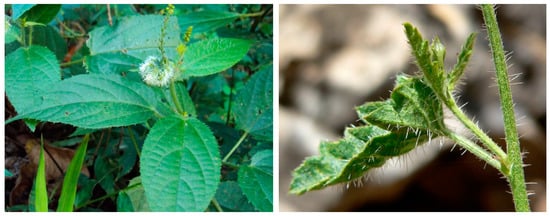
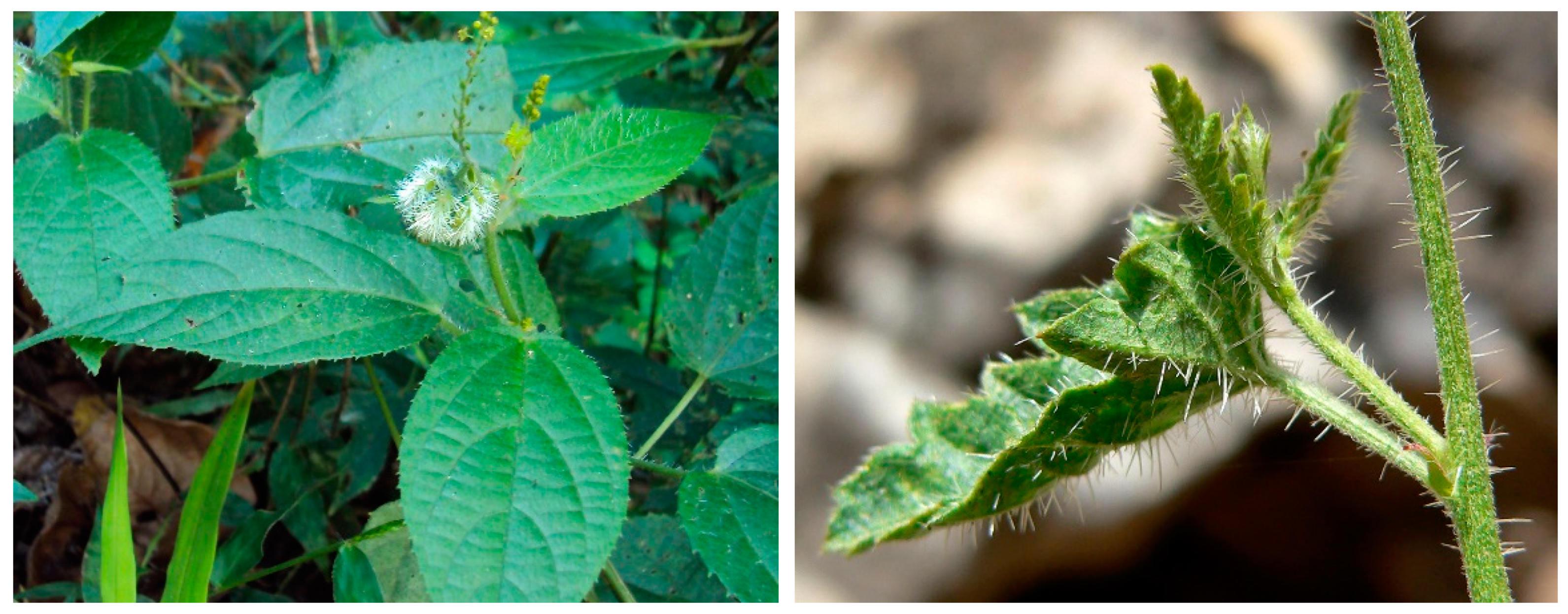
Tragia species exhibit very ample morphological characters: they are perennial plants with herb, shrub, subshrub and twining vine growth habits, with lanceolate leaves presenting either entire or serrated margins. Plants belonging to this genus sting when touched due to the presence of leaf hairs with a needle-shaped crystal of calcium oxalate (raphide) in the terminal cells that is expelled on contact and punctures the skin, allowing irritants to enter and cause transient stinging [12,13], presumably a defense mechanism against herbivores [14]. Several common names for Tragias, such as noseburn (Tragia spp.), Indian stinging nettle (T. involucrata), fireman (T. volubilis) or stinging nettle creeper (T. durbanensis), are due to this stinging property. Figure 1 shows T. involucrata leaf hairs with raphides visible, taken in Kerala, India, and T. ramosa with clearly visible raphides, taken in Nevada, USA.
Figure 1.
Tragia involucrata leaves, left. Tragia ramosa showing leaf and stem, covered by long, rough Scheme 3.0 license; right, Stan Shebs, GDFL license.
Species belonging to Euphorbiaceae in general and to Tragia in particular are still not fully settled [8], as new species are being discovered [15] and species are being reassigned to other genera [9,16], so the number of species in the genus is still subject to change.
3. Distribution and Localization
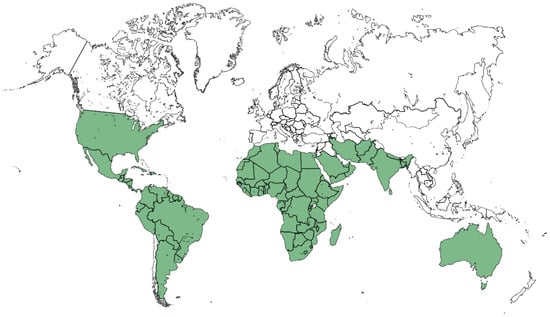
Species belonging to the Tragia genus are present in subtropical America, Eastern and Southern Africa, the Indian subcontinent and Northeastern Australia. Of the 154 species listed in the genus [17], 94 are found in Africa, 48 in America, 10 in Asia and 3 in Oceania, with some species such as T. arabica and T. plukenetii present both in Africa and Asia. The map in Figure 2 shows the intertropical distribution of Tragia species by country.
Figure 2.
Worldwide Tragia species distribution, by country.
4. Methodology
Published works (articles and patents) were searched on scientific databases—Science Direct, Google Scholar and Scopus—for each species of the genus, using inverted commas for an exact match, e.g., “Tragia acalyphoides”. Relevant articles were selected after removing search terms unrelated to the area of interest such as corrosion, reforestation or hare diet. When abundant results were obtained, the search was refined with more specific terms, for example “Tragia involucrata medicinal” or “Tragia involucrata ethnopharmacology”. Duplicate articles were removed, and the remaining articles were reviewed with a focus on ethnopharmacological uses, phytochemical composition and biological activity, both in vitro and in vivo. When possible, the latest articles, no older than 10 years, have been cited. Preprints were not included.
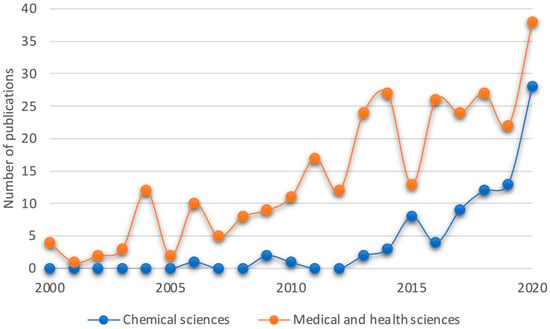
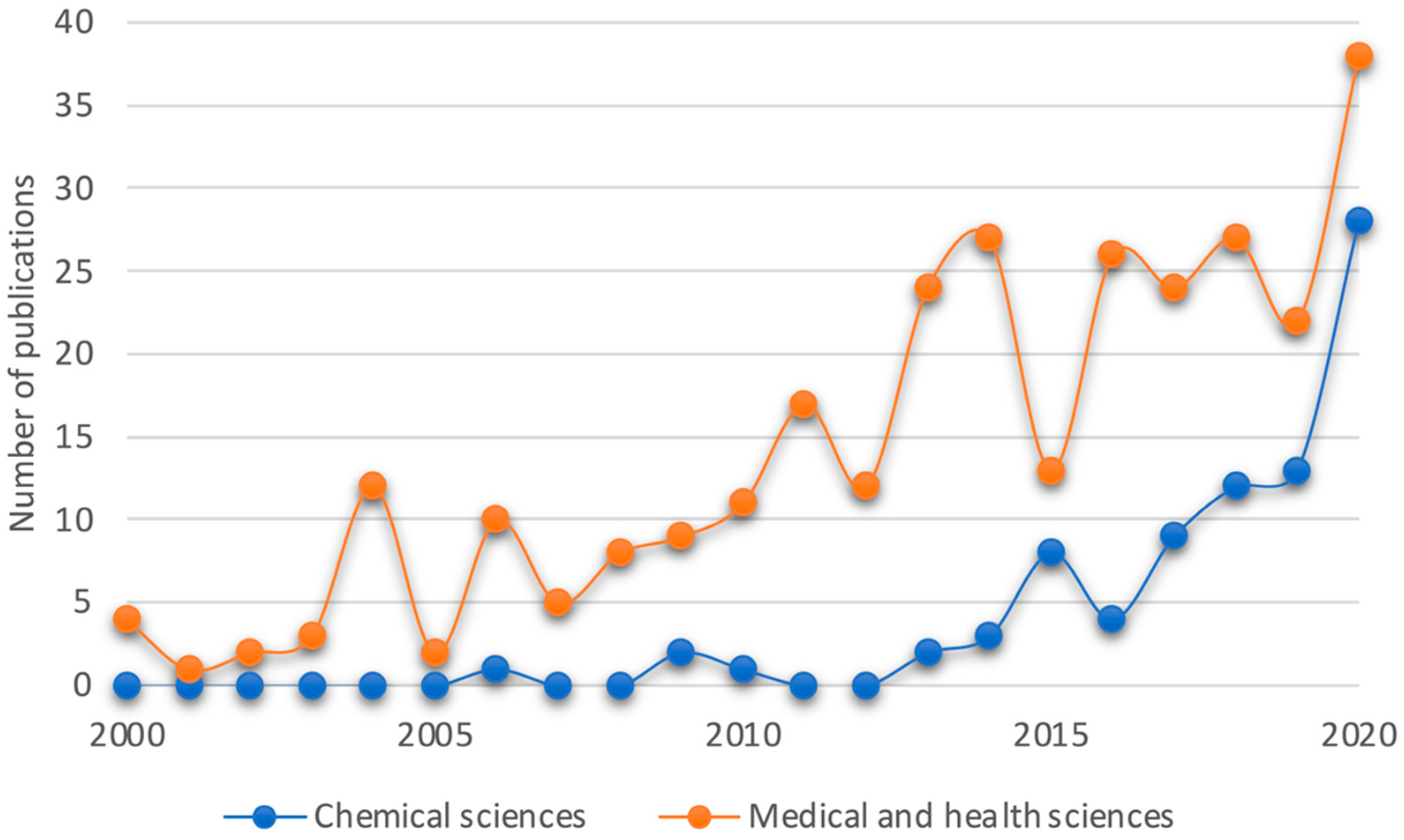
The research interest in Tragia species in medical and health sciences has increased during the last twenty years. Figure 3 shows the number of publications that include the word Tragia in their text in the fields mentioned. Even though the subject is not a very popular one, a steady increase in appearances can be seen, with a marked increase between 2019 and 2020 and the first half of 2021.
Figure 3.
Publications containing the word Tragia since the year 2000 in Medical and Health sciences and in Chemical sciences. Data source: [18].
Compared to the other genera in the Plukenieteae tribe, Tragia concentrates 67% of the research, compared to 12% for Cnesmone, 10% for Acidoton, 4% for Sphaerostylis and 1% each for Megistostigma, Pachystylidium, Platygyna and Tragiella [18].
5. Ethnopharmacological Usage
Of the more than 150 species of the genus, few appear in the scientific literature, and even fewer are mentioned from an ethnopharmacological perspective. Notwithstanding, Tragia species are a part of traditional medicinal systems of East Africa and the Indian subcontinent, such as Siddha and Ayurveda [19], with documented uses of T. involucrata appearing as early as the 1st century CE [20] and with only a handful of mentions of Tragia species in the New World pharmacopoeia, concerning mostly topical applications. There is concern over an excessive use of Tragia species, e.g., Tragia bicolor, which poses a conservation hazard [21,22].
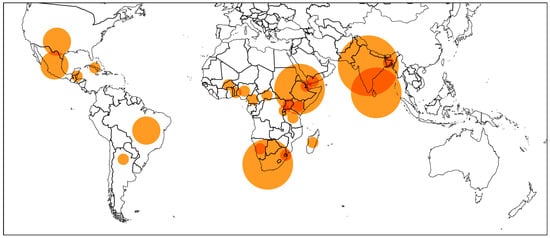
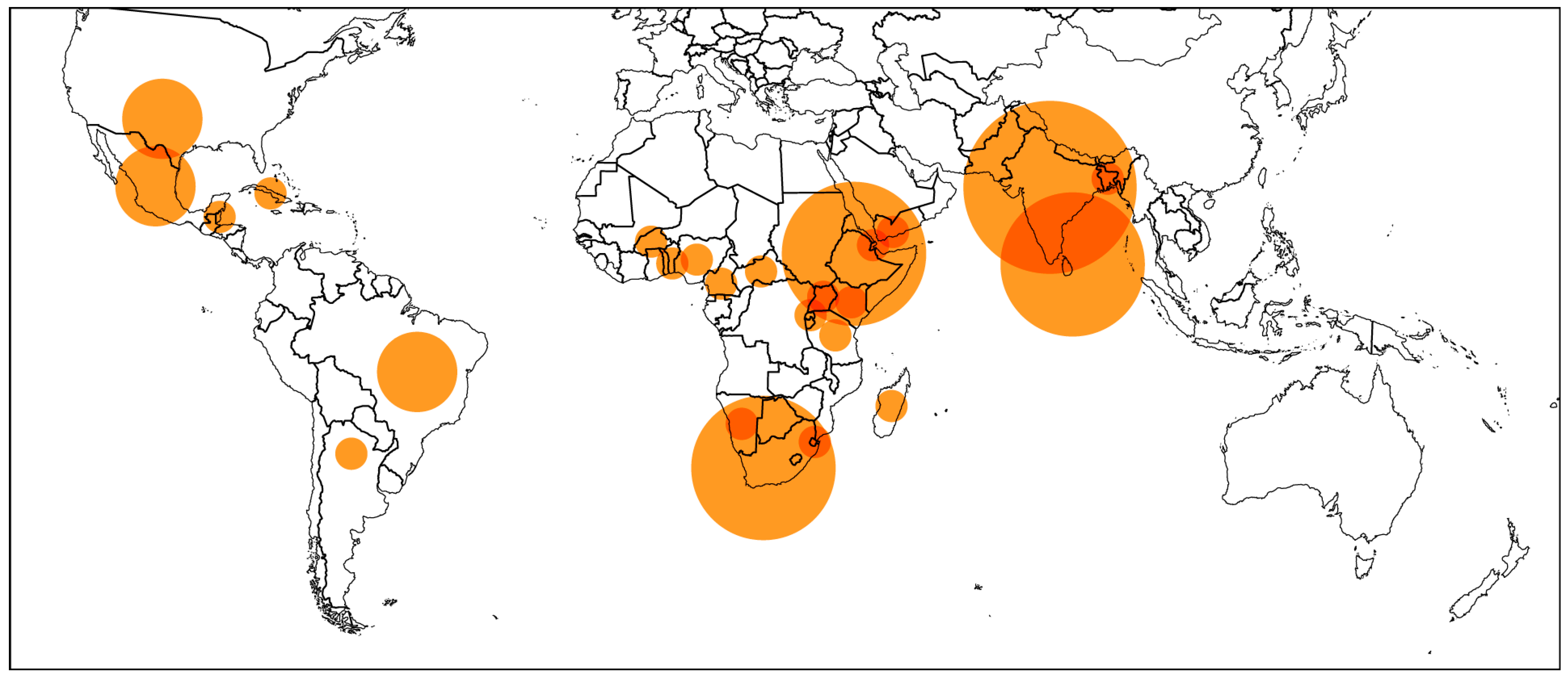
Most of the interest in this genus has been focused on four species: Tragia involucrata, Tragia spathulata, Tragia plukenetii and Tragia benthamii [23], with the bulk of the research focused on T. involucrata. Nevertheless, several more species and their medicinal uses appear in literature. Table 1 summarizes the species with reported medicinal use along with their stated ethnopharmacological uses, when available. The Anatomical Therapeutic Chemical (ATC) Classification by the World Health Organization (WHO) is used to classify the uses for each species [24]. Figure 4 shows the geographical distribution of the documented uses. The ethnomedical uses of Tragia spp are most abundant in the Indian subcontinent and East and Southern Africa.
Table 1.
Tragia species and their ethnopharmacological use. Species are listed in alphabetical order and validated against [25].
Figure 4.
Ethnomedicinal uses for Tragia spp. The circle diameter is proportional to the uses reported for each country.
According to the ATC classification, the most frequent ethnopharmacological uses of Tragia spp. in ethnopharmacology are: genitourinary system and sex hormones, with 19% of occurrences (15 of 77); nervous system, with 12%; and alimentary tract and metabolism, anti-infective for systemic use and antineoplastic and immunomodulating agents with 10% of occurrences each. The “various” classification presents 17% of occurrences, which include non-specified and vague uses, such as “toxic” or “medicinal”.
As for the morphological structures used per species, the most common are the leaves, 38%; followed by “not specified”, 33%; whole plant, 15%; roots, 13% and a single occurrence of endophytes (3%).
6. Biological Activity
Biological activity tests of Tragia, both in vitro and in vivo, are performed mostly with plant extracts and to a much lesser degree with essential oils: leaf, root or the whole plant, although ethnopharmacological uses mostly employ the plant via infusions, decoctions or ashes [23,35]. Different solvents and solvent mixtures have been used for the extracts, mainly methanol and ethanol. Due to the presence of Tragia in ethnomedical traditions in Africa and Asia, there is a team of research about the bioactivity of Old World Tragia extracts that have confirmed their activity and potency in some cases. Not all the health claims or traditional uses recorded have been validated through research. Again, the bulk of the research is centered on T. involucrata.
6.1. In Vitro Activity
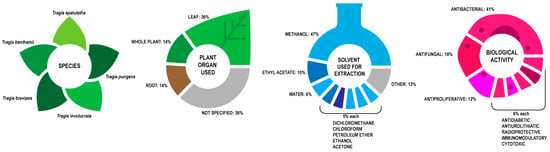
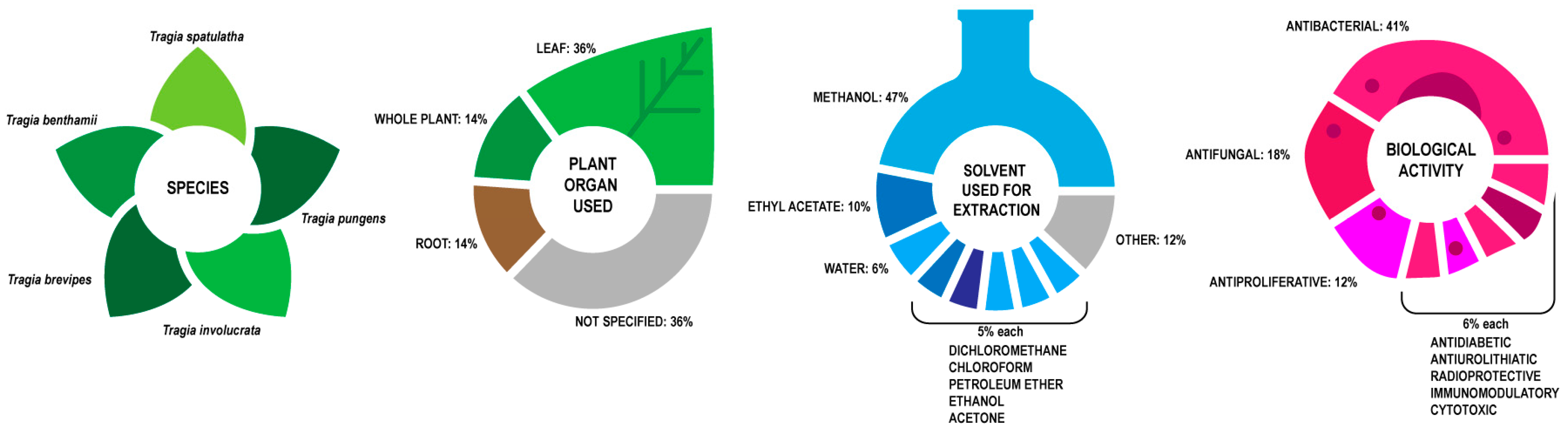
Extracts of T. benthamii, T. brevipes, T. involucrata, T. pungens and T. spatulatha have been tested to ascertain their in vitro activity for a variety of uses. The in vitro research is summarized in Figure 5.
Figure 5.
Summary of in vitro activity of Tragia species.
Cases in which the efficacy has been shown in vitro are listed in Table 2.
Table 2.
In vitro activity of Tragia extracts. Species are in alphabetical order.
In vitro biological activity tests devote the most attention to leaves (36%), with whole plant and root used to a lesser extent, with both 14%. Extraction solvents are methanol (47%), DCM (5%), Ethyl acetate (10%), water (6%), chloroform (5%), petroleum ether (5%), ethanol (5%) and acetone (5%). This solvent usage supports the assumption that most active compounds are moderately polar and are thus extracted with polar solvents.
Testing centers on antibacterial (41%) and antifungal (18%) activity of the extracts, with antiproliferative (12%) and antidiabetic, antiurolithiatic, radioprotective, immunomodulatory and cytotoxic effects (6% each) behind. This is a different profile than what was found in the ethnomedicinal claims, which centers on the genitourinary system and sex hormones. This is justified because aphrodisiacs do not have the expected properties [92].
6.2. In Vivo Activity
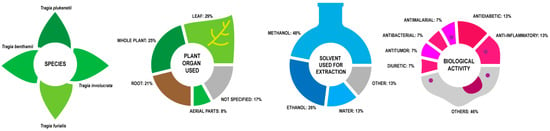
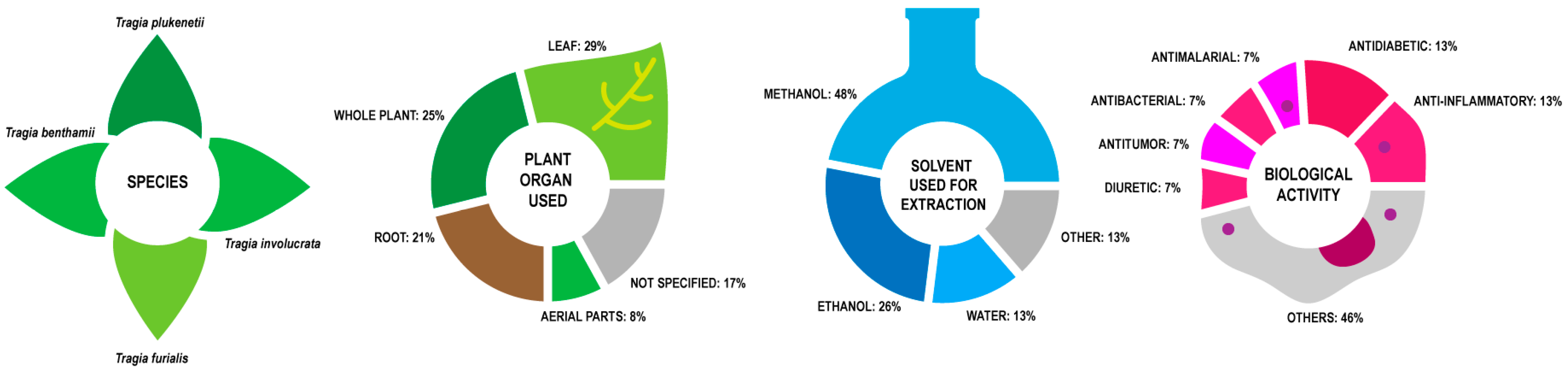
Besides in vitro activity testing, research has been done in animal models, mostly mice and also chicks, with at least one clinical trial performed in humans. The Tragia extracts evaluated in vivo, summarized in Figure 6 and Table 3, are obtained from four species: T. benthamii, T. furialis, T. involucrata and T. plukenetii.
Figure 6.
Summary of in vivo activity of Tragia extracts.
Table 3.
In vivo activity of Tragia extracts.
Most of the research (73%) centers on T. involucrata, with T. plukenetii (18%), T. benthamii (9%) and T. furialis (5%) behind. In vivo assay extracts were obtained from leaves (29%), whole plant (25%), root (21%) and aerial parts (8%). Solvents used are methanol (48%), ethanol (26%) and water (13%), which shows that most active compounds are polar and are thus extracted with polar solvents.
For both in vitro and in vivo testing, the most common effect is antibacterial and antimicrobial with 22% of the reviewed studies. This is higher than the 10% reported in the ethnopharmacological uses. Effects having to do with cancer prevention and treatment—antiproliferative, antitumor, cytotoxic immunomodulatory and radioprotective—add up to 17% of the reported effects, which makes it the second most frequent use. Analgesic and anti-inflammatory activity is equally reported in 10% of the tests.
The findings reported in literature validate several medicinal use cases for Tragia species and dismiss some claims, e.g., T. meyeriana as an antineoplastic [60].
7. Phytochemical Composition
Phytochemical studies allow for the identification, separation and isolation of compounds of interest [109]. Based on phytochemical screenings published in the literature, the main secondary metabolites found in Tragia species extracts are alkaloids, glycosides, flavonoids, and sterols [23,110].
Some compounds found in plants belonging to the Tragia genus, classified according to their chemical nature, are listed in Table 4. Where applicable, the biological activity of the identified compound has been mentioned.
Table 4.
Compounds isolated/identified in Tragia extracts and oils and their biological effect.
Identification of the compounds relies heavily on spectroscopic and spectrometric methods [109], and chromatography retention times and comparison with the literature are also used for tentative identification.
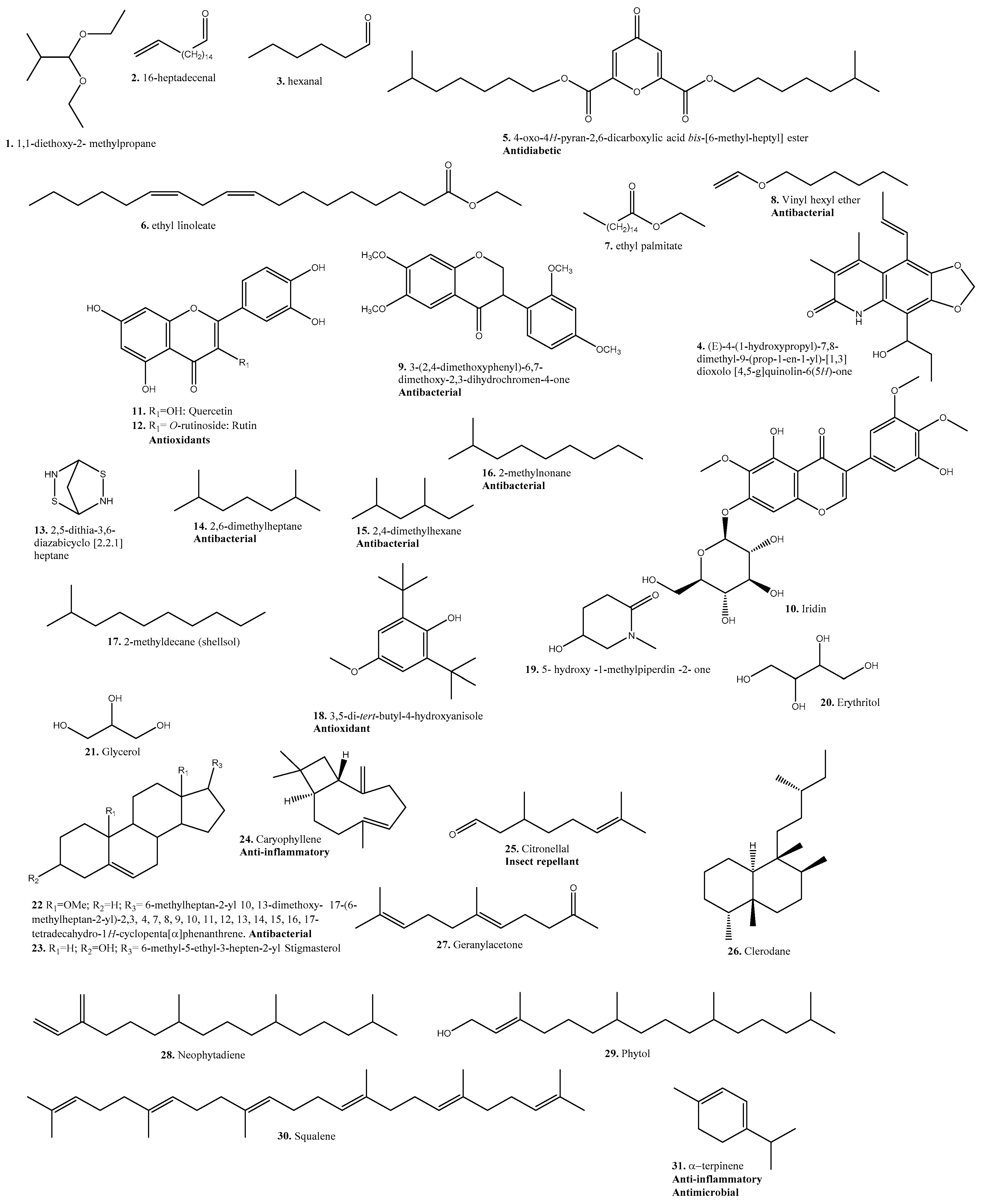
Figure 7 shows the structure of some of the compounds identified in Tragia extracts and oils, mentioning their biological activity in bold when reported. As expected in plant extracts, there is a variety of secondary metabolites in the form of terpenoids and flavonoids. Ethers and non-terpenoid hydrocarbons are reported as having antibacterial activity, and they are not in any of the common groups of secondary metabolites. There is more information about the activity of the extracts and essential oils than about the activity of compounds on their own. The recent discovery of anti-inflammatory peptides in Tragia benthamii extracts [93] opens a new area of interest in the research of Tragia species.
Figure 7.
Compounds identified in Tragia extracts and oils.
A strength of the genus is its diversity and its pantropical distribution, which makes it readily available in most tropical countries. A weakness would be that, despite the interest shown concerning T. involucrata and other traditionally medicinal species, there appear to be no drugs derived from plants of these species, remaining in the realm of herbal remedies and plant extracts, entailing less medicinal interest than other genera of the Euphorbiaceae family, notably Euphorbia [8]. This can be attributed to the stage of research, with most work performed in vitro or in vivo and with a single clinical trial [52]. Hopefully the current research will advance into new drugs.
8. Conclusions
Species belonging to the Tragia genus are present in traditional medicine in several cultures and have multiple uses, among which antibacterial, anticancer and aphrodisiac are most frequent. There is scientific evidence that supports the use of these species in medicine, both at the extract level and at the active compound level, with in vivo tests in rats and mice, but there are no drugs derived from the species yet. The activity reported most frequently for Tragia extracts is antimicrobial and cancer-related, which suggests further research in those areas.
Less than 20% of the Tragia species are considered medicinal. This implies vast potential for screening and discovery of active compounds.
Most ethnopharmacological reports come from Asia and Africa, mainly East Africa and the Indian subcontinent. New world Tragia species have not been sufficiently studied and may prove to be a rich source of extracts and phytochemicals for drug research. Future directions for research include nanoparticles, the research into peptides extracted from Tragia species and the validation of medicines containing Tragia extracts against SARS-CoV-2.
Author Contributions
Conceptualization, J.C.R.-B. and R.D.-C.; investigation, R.D.-C.; resources, J.C.R.-B.; writing, R.D.-C.; review and editing, J.C.R.-B. All authors have read and agreed to the published version of the manuscript.
Funding
This research received no external funding.
Institutional Review Board Statement
Not applicable.
Informed Consent Statement
Not applicable.
Acknowledgments
We are grateful to Natalia Bailón-Moscoso for her many valuable suggestions that improved this work. We are also grateful to the Universidad Técnica Particular de Loja (UTPL) for supporting this research and open access publication.
Conflicts of Interest
The authors declare no conflict of interest.
References
- Solecki, R.S. Shanidar IV, a Neanderthal Flower Burial in Northern Iraq. Science 1975, 190, 880–881. [Google Scholar] [CrossRef] [Scilit]
- Ur Rehman, F.; Kalsoom, M.; Adnan, M.; Fazeli-Nasab, B.; Naz, N.; Ilahi, H.; Ali, M.F.; Ilyas, M.A.; Yousaf, G.; Toor, M.D.; et al. Importance of Medicinal Plants in Human and Plant Pathology: A Review. Int. J. Pharm. Biomed. Res. 2021, 8, 1–11. [Google Scholar] [CrossRef] [Scilit]
- Marrelli, M. Medicinal Plants. Plants 2021, 10, 1355. [Google Scholar] [CrossRef] [Scilit]
- Jamshidi-Kia, F.; Lorigooini, Z.; Amini-Khoei, H. Medicinal Plants: Past History and Future Perspective. J. Herbmed Pharmacol. 2018, 7, 1–7. [Google Scholar] [CrossRef] [Scilit]
- Katiyar, C.; Kanjilal, S.; Gupta, A.; Katiyar, S. Drug Discovery from Plant Sources: An Integrated Approach. AYU Int. Q. J. Res. Ayurveda 2012, 33, 10–19. [Google Scholar] [CrossRef] [Scilit]
- Li, Y.; Kong, D.; Fu, Y.; Sussman, M.R.; Wu, H. The Effect of Developmental and Environmental Factors on Secondary Metabolites in Medicinal Plants. Plant Physiol. Biochem. 2020, 148, 80–89. [Google Scholar] [CrossRef] [Scilit]
- Coy Barrera, C.A.; Gómez, D.C.; Castiblanco, F.A. Importancia Medicinal Del Género Croton (Euphorbiaceae). Rev. Cuba. Plantas Med. 2016, 21, 234–247. [Google Scholar]
- Mwine, J.T.; Damme, P.V. Why Do Euphorbiaceae Tick as Medicinal Plants? A Review of Euphorbiaceae Family and Its Medicinal Features. J. Med. Plants Res. 2011, 5, 652–662. [Google Scholar]
- Gillespie, L.J.; Cardinal-McTeague, W.M.; Wurdack, K.J. Monadelpha (Euphorbiaceae, Plukenetieae), a New Genus of Tragiinae from the Amazon Rainforest of Venezuela and Brazil. PhytoKeys 2020, 169, 119–135. [Google Scholar] [CrossRef] [Scilit]
- POWO Tragia Plum. Ex L. | Plants of the World Online | Kew Science. Available online: http://powo.science.kew.org/taxon/urn:lsid:ipni.org:names:327688-2 (accessed on 25 October 2021).
- Urtecho, R. Tragia—FNA. Available online: http://dev.semanticfna.org/Tragia (accessed on 26 April 2021).
- Naudé, T.W.; Naidoo, V. Oxalates-containing plants. In Veterinary Toxicology; Elsevier: Amsterdam, The Netherlands, 2007; pp. 880–891. ISBN 978-0-12-370467-2. [Google Scholar]
- Prasad, R.; Shivay, Y.S. Oxalic Acid/Oxalates in Plants: From Self-Defence to Phytoremediation. Curr. Sci. 2017, 112, 1665–1667. [Google Scholar] [CrossRef] [Scilit]
- Ensikat, H.-J.; Wessely, H.; Engeser, M.; Weigend, M. Distribution, Ecology, Chemistry and Toxicology of Plant Stinging Hairs. Toxins 2021, 13, 141. [Google Scholar] [CrossRef] [Scilit]
- Freire de Sá Cordeiro, W.P.; Athiê-Souza, S.M.; Laurênio de Melo, A.; Ferreira de Sales, M. A New Endangered Species of Tragia (Euphorbiaceae) from the Brazilian Atlantic Forest. Syst. Bot. 2020, 45, 839–844. [Google Scholar] [CrossRef] [Scilit]
- Freire de Sá Cordeiro, W.P.; Athiê-Souza, S.M.; Buril, M.T.; de Melo, A.L.; de Sales, M.F. Chicomendes (Euphorbiaceae, Tragiinae): A New Amazonian Genus Segregated from Tragia. Plant Syst. Evol. 2021, 307, 46. [Google Scholar] [CrossRef] [Scilit]
- Govaerts, R. World Checklist and Bibliography of Euphorbiaceae (and Pandaceae); Royal Botanic Gardens: Kew, UK, 2000; Volume 1, ISBN 978-1-900347-83-9. [Google Scholar]
- Digital Science Dimensions [Software]. Available online: https://app.dimensions.ai/analytics/publication/overview/timeline (accessed on 18 June 2021).
- Kar, A.; Choudhary, B.K.; Bandyopadhyay, N.G. Comparative Evaluation of Hypoglycaemic Activity of Some Indian Medicinal Plants in Alloxan Diabetic Rats. J. Ethnopharmacol. 2003, 84, 105–108. [Google Scholar] [CrossRef] [Scilit]
- Pallie, M.S.; Perera, P.K.; Kumarasinghe, N.; Arawwawala, M.; Goonasekara, C.L. Ethnopharmacological Use and Biological Activities of Tragia involucrata L. Evid. Based Complement. Altern. Med. 2020, 2020, 1–17. [Google Scholar] [CrossRef] [Scilit] [PubMed]
- Abdulhameed, S.; Pradeep, N.S.; Sugathan, S. (Eds.) . Bioresources and Bioprocess in Biotechnology, 1st ed.; Springer: Singapore, 2017; ISBN 978-981-10-3571-5. [Google Scholar]
- Jose, P.A.; Hussain, K.H.; Sreekumar, V.B. Developing an Information System for the Rare Endangered and Threatened (RET) Plants of Southern Western Ghats; Kerala Forest Research Institute: Peechi, India, 2014; p. 42. [Google Scholar]
- Reddy, B.S.; Rao, N.R.; Vijeepallam, K.; Pandy, V. Phytochemical, Pharmacological and Biological Profiles of Tragia Species (Family: Euphorbiaceae). Afr. J. Tradit. Complement. Altern. Med. 2017, 14, 105–112. [Google Scholar] [CrossRef] [Scilit] [PubMed]
- WHO. Anatomical Therapeutic Chemical (ATC) Classification. Available online: https://www.who.int/tools/atc-ddd-toolkit/atc-classification (accessed on 8 June 2021).
- WFO. Tragia L. Available online: http://www.worldfloraonline.org/taxon/wfo-4000038765 (accessed on 7 November 2021).
- Trindade, M.T. Espécies úteis da família Euphorbiaceae no Brasil. Rev. Cuba. Plantas Med. 2015, 19. Available online: http://revplantasmedicinales.sld.cu/index.php/pla/article/view/113/105 (accessed on 8 June 2021).
- Oladosu, I.A.; Balogun, S.O.; Ademowo, G.O. Phytochemical Screening, Antimalarial and Histopathological Studies of Allophylus Africanus and Tragia benthamii. Chin. J. Nat. Med. 2013, 11, 371–376. [Google Scholar] [CrossRef] [Scilit] [PubMed]
- Cho-Ngwa, F.; Monya, E.; Azantsa, B.K.; Manfo, F.P.T.; Babiaka, S.B.; Mbah, J.A.; Samje, M. Filaricidal Activities on Onchocerca Ochengi and Loa Loa, Toxicity and Phytochemical Screening of Extracts of Tragia Benthami and Piper Umbellatum. BMC Complement. Altern. Med. 2016, 16, 326. [Google Scholar] [CrossRef] [Scilit] [PubMed]
- Ajao, A.A.; Sibiya, N.P.; Moteetee, A.N. Sexual Prowess from Nature: A Systematic Review of Medicinal Plants Used as Aphrodisiacs and Sexual Dysfunction in Sub-Saharan Africa. S. Afr. J. Bot. 2019, 122, 342–359. [Google Scholar] [CrossRef] [Scilit]
- Raimi, I.O.; Kopaopa, B.G.; Mugivhisa, L.L.; Lewu, F.B.; Amoo, S.O.; Olowoyo, J.O. An Appraisal of Documented Medicinal Plants Used for the Treatment of Cancer in Africa over a Twenty-Year Period (1998–2018). J. Herb. Med. 2020, 23, 100371. [Google Scholar] [CrossRef] [Scilit]
- Ochwang’i, D.O.; Kimwele, C.N.; Oduma, J.A.; Gathumbi, P.K.; Kiama, S.G.; Efferth, T. Cytotoxic Activity of Medicinal Plants of the Kakamega County (Kenya) against Drug-Sensitive and Multidrug-Resistant Cancer Cells. J. Ethnopharmacol. 2018, 215, 233–240. [Google Scholar] [CrossRef] [Scilit] [PubMed]
- Chekole, G. Ethnobotanical Study of Medicinal Plants Used against Human Ailments in Gubalafto District, Northern Ethiopia. J. Ethnobiol. Ethnomed. 2017, 13, 55. [Google Scholar] [CrossRef] [Scilit]
- Jeruto, P.; Too, E.; Mwamburi, L.; Omari, A. An Inventory of Medicinal Plants Used to Treat Gynaecological- Obstetric-Urino-Genital Disorders in South Nandi Sub County in Kenya. J. Nat. Sci. Res. 2015, 5, 136–152. [Google Scholar]
- Asmerom, D.; Kalay, T.H.; Araya, T.Y.; Desta, D.M.; Wondafrash, D.Z.; Tafere, G.G. Medicinal Plants Used for the Treatment of Erectile Dysfunction in Ethiopia: A Systematic Review. BioMed Res. Int. 2021, 2021, 1–12. [Google Scholar] [CrossRef] [Scilit]
- Pascaline, J.; Charles, M.; George, O.; Lukhoba, C. Ethnobotanical Survey and Propagation of Some Endangered Medicinal Plants from South Nandi District of Kenya. J. Anim. Plant Sci. 2012, 8, 28. [Google Scholar]
- Aumeeruddy, M.Z.; Mahomoodally, M.F. Global Documentation of Traditionally Used Medicinal Plants in Cancer Management: A Systematic Review. S. Afr. J. Bot. 2021, 138, 424–494. [Google Scholar] [CrossRef] [Scilit]
- Amare, F.; Getachew, G. An Ethnobotanical Study of Medicinal Plants in Chiro District, West Hararghe, Ethiopia. Afr. J. Plant Sci. 2019, 13, 309–323. [Google Scholar] [CrossRef] [Scilit]
- Bekele, G.; Reddy, P.R. Ethnobotanical Study of Medicinal Plants Used to Treat Human Ailments by Guji Oromo Tribes in Abaya District, Borana, Oromia, Ethiopia. Univers. J. Plant Sci. 2015, 3, 1–8. [Google Scholar] [CrossRef] [Scilit]
- Moges, A.; Moges, Y. Ethiopian Common Medicinal Plants: Their Parts and Uses in Traditional Medicine—Ecology and Quality Control. In Plant Science—Structure, Anatomy and Physiology in Plants Cultured in Vivo and in Vitro; Gonzalez, A., Rodriguez, M., Gören Sağlam, N., Eds.; IntechOpen: London, UK, 2020; ISBN 978-1-78984-746-8. [Google Scholar]
- Semenya, S.S.; Maroyi, A. Ethnobotanical Survey of Plants Used by Bapedi Traditional Healers to Treat Tuberculosis and Its Opportunistic Infections in the Limpopo Province, South Africa. S. Afr. J. Bot. 2019, 122, 401–421. [Google Scholar] [CrossRef] [Scilit]
- Tolossa, K.; Debela, E.; Athanasiadou, S.; Tolera, A.; Ganga, G.; Houdijk, J.G. Ethno-Medicinal Study of Plants Used for Treatment of Human and Livestock Ailments by Traditional Healers in South Omo, Southern Ethiopia. J. Ethnobiol. Ethnomed. 2013, 9, 32. [Google Scholar] [CrossRef] [Scilit] [PubMed]
- Ndhlovu, P.T.; Omotayo, A.O.; Otang-Mbeng, W.; Aremu, A.O. Ethnobotanical Review of Plants Used for the Management and Treatment of Childhood Diseases and Well-Being in South Africa. S. Afr. J. Bot. 2021, 137, 197–215. [Google Scholar] [CrossRef] [Scilit]
- Innocent, E.; Moshi, M.; Masimba, P.; Mbwambo, Z.; Kapingu, M.; Kamuhabwa, A. Screening of Traditionally Used Plants for in Vivo Antimalarial Activity in Mice. Afr. J. Tradit. Complement. Altern. Med. 2010, 6, 163–167. [Google Scholar] [CrossRef] [Scilit]
- Moshi, M.J.; Otieno, D.F.; Mbabazi, P.K.; Weisheit, A. Ethnomedicine of the Kagera Region, North Western Tanzania. Part 2: The Medicinal Plants Used in Katoro Ward, Bukoba District. J. Ethnobiol. Ethnomed. 2010, 6, 19. [Google Scholar] [CrossRef] [Scilit]
- Tida, M.M.A.; Nanjarisoa, O.; Rabearivony, J.; Ranarijaona, H.L.T.; Fenoradosoa, T.A. Ethnobotanical Survey Of Plant Species Used In Traditional Medicine In Bekaraoka Region, Northeastern Madagascar. Int. J. Adv. Res. Publ. 2020, 4, 107–114. [Google Scholar]
- Barboza, G.E.; Cantero, J.J.; Núñez, C.; Arisa Espinar, L.; Pacciaroni, A. del V. Medicinal Plants: A General Review and a Phytochemical and Ethnopharmacological Screening of the Native Argentine Flora. Kurtziana 2009, 34, 7–365. [Google Scholar]
- Goleniowski, M.E.; Bongiovanni, G.A.; Palacio, L.; Nuñez, C.O.; Cantero, J.J. Medicinal Plants from the “Sierra de Comechingones”, Argentina. J. Ethnopharmacol. 2006, 107, 324–341. [Google Scholar] [CrossRef] [Scilit]
- Carlomagno, A.; Pardini, A.; Contino Esquijerosa, Y. Medicinal Plants in Ethnobotanical and Religious Traditions in Cuba: A First Review and Updating. 2015. Available online: https://www.researchgate.net/profile/Anna-Carlomagno/publication/276886636_Medicinal_plants_in_ethnobotanical_and_religious_traditions_in_Cuba_a_first_review_and_updating/links/555b088a08aeaaff3bfaefa7/Medicinal-plants-in-ethnobotanical-and-religious-traditions-in-Cuba-a-first-review-and-updating.pdf (accessed on 15 April 2021).
- Shiddamallayya, N.; Rao, R.; Doddamani, S.; Venkateshwarlu, G. A Glimpse on Forest Flora and Indian System of Medicine Plants of Chitradurga District, Karnataka. Int. J. Herb. Med. 2016, 4, 25–33. [Google Scholar]
- Hmhl, K.; Nwgnd, G. Medical Formulas for Krimidanta (Dental Caries) in Indigenous Medicine in Sri Lanka—A Literary Review. Int. J. Ayurveda Pharma Res. 2016, 4, 52–56. [Google Scholar]
- Velma, W.N.; Isabel, N.W.; Meshack, A.O.; Josphat, C.M. Isolation, Identification and Bioactivity of Fungal Endophytes from Selected Kenyan Medicinal Plants. Afr. J. Microbiol. Res. 2018, 12, 405–412. [Google Scholar] [CrossRef] [Scilit]
- Pallie, M.; Perera, P.; Goonasekara, C.; Kumarasinghe, N.; Arawwawala, M. Efficacy and Safety of Freeze-Dried Form of Tragia involucrata L. Decoction in Treating Diabetes: A Randomized Controlled Clinical Trial. Clin. Trials Degener. Dis. 2020, 5, 31–36. [Google Scholar] [CrossRef] [Scilit]
- Panda, D.; Dash, S.K. Phytochemical Examination and Antimicrobial Activity of Various Solvent Extracts and the Selected Isolated Compounds from Roots of Tragia involucrata Linn. Int. J. Pharm. Sci. Drug Res. 2012, 4, 44–48. [Google Scholar]
- Hosahally, R.V.; Seru, G.; Sutar, P.S.; Joshi, V.G.; Sutar, K.P.; Karigar, A.A. Phytochemical and Pharmacological Evaluation of Tragia Cannabina for Anti-Inflammatory Activity. Int. Curr. Pharm. J. 2012, 1, 213–216. [Google Scholar] [CrossRef]
- Alimuzzaman, M.; Ahmed, M. Analgesic Activity of Tragia involucrata. Dhaka Univ. J. Pharm. Sci. 2007, 4, 35–38. [Google Scholar] [CrossRef] [Scilit]
- Pallie, M.S.; Perera, P.K.; Goonasekara, C.L.; Kumarasinghe, K.M.N.; Arawwawala, L.D.A.M. Evaluation of Diuretic Effect of the Hot Water Extract of Standardized Tragia involucrata Linn., in Rats. Int. J. Pharmacol. 2018, 13, 83–90. [Google Scholar] [CrossRef] [Scilit]
- Alanazi, A.; Anwar, M.J.; Ahmad, M.A. Hepatoprotective and Antioxidant Activity of Tragia involucrata Root Extracts against CCl4 Induced Hepatotoxicity in Rats. Pharm. Lett. 2015, 7, 146–152. [Google Scholar]
- Ediriweera, E.; Ratnasooriya, W. A Review on Herbs Used in Treatment of Diabetes Mellitus by Sri Lankan Ayurvedic and Traditional Physicians. Ayu 2009, 30, 373–391. [Google Scholar]
- Drewes, S.E.; Selepe, M.A.; Van Heerden, F.R.; Archer, R.H.; Mitchell, D. Unravelling the Names, Origins and Chemistry of “Muthis” Used for Male Sexual Disorders in KwaZulu-Natal, South Africa. S. Afr. J. Bot. 2013, 88, 310–316. [Google Scholar] [CrossRef] [Scilit]
- Charlson, A.J. Antineoplastic Constituents of Some Southern African Plants. J. Ethnopharmacol. 1980, 2, 323–335. [Google Scholar] [CrossRef] [Scilit]
- Ngcobo, M.; Gqaleni, N.; Naidoo, V.; Cele, P. The Immune Effects of an African Traditional Energy Tonic in In Vitro and In Vivo Models. Evid. Based Complement. Altern. Med. 2017, 2017, 1–14. [Google Scholar] [CrossRef] [Scilit]
- Yineger, H.; Yewhalaw, D.; Teketay, D. Ethnomedicinal Plant Knowledge and Practice of the Oromo Ethnic Group in Southwestern Ethiopia. J. Ethnobiol. Ethnomed. 2008, 4, 11. [Google Scholar] [CrossRef] [Scilit]
- Hassan-Abdallah, A.; Merito, A.; Hassan, S.; Aboubaker, D.; Djama, M.; Asfaw, Z.; Kelbessa, E. Medicinal Plants and Their Uses by the People in the Region of Randa, Djibouti. J. Ethnopharmacol. 2013, 148, 701–713. [Google Scholar] [CrossRef] [Scilit] [PubMed]
- Abdela, G.; Sultan, M. Indigenous Knowledge, Major Threats and Conservation Practices of Medicinal Plants by Local Community in Heban Arsi District, Oromia, South Eastern Ethiopia. Adv. Life Sci. Technol. 2018, 68, 19. [Google Scholar]
- Cheikhyoussef, A.; Shapi, M.; Matengu, K.; Mu Ashekele, H. Ethnobotanical Study of Indigenous Knowledge on Medicinal Plant Use by Traditional Healers in Oshikoto Region, Namibia. J. Ethnobiol. Ethnomed. 2011, 7, 10. [Google Scholar] [CrossRef] [Scilit] [PubMed]
- Setshogo, M.P.; Mbereki, C.M. Floristic Diversity and Uses of Medicinal Plants Sold by Street Vendors in Gaborone, Botswana. Afr. J. Plant Sci. Biotechnol. 2011, 6, 69–74. [Google Scholar]
- Vergiat, A.M. Plantes magiques et médicinales des Féticheurs de l’Oubangui (Région de Bangui). J. Agric. Tradit. Bot. Appliquée 1969, 16, 335–367. [Google Scholar]
- Al-Fatimi, M. Ethnobotanical Survey of Medicinal Plants in Central Abyan Governorate, Yemen. J. Ethnopharmacol. 2019, 241, 111973. [Google Scholar] [CrossRef] [Scilit]
- Mothana, R.A.A.; Abdo, S.A.A.; Hasson, S.; Althawab, F.M.N.; Alaghbari, S.A.Z.; Lindequist, U. Antimicrobial, Antioxidant and Cytotoxic Activities and Phytochemical Screening of Some Yemeni Medicinal Plants. Evid. Based Complement. Altern. Med. 2010, 7, 323–330. [Google Scholar] [CrossRef] [Scilit]
- Desta, B. Ethiopian Traditional Herbal Drugs. Part III: Anti-Fertility Activity of 70 Medicinal Plants. J. Ethnopharmacol. 1994, 44, 199–209. [Google Scholar] [CrossRef] [Scilit]
- Suryawanshi, V. Extraction and Isolation of Clerodane as a Bioactive Molecule from Tragia Ramosa. J. Pharmacogn. Phytochem. 2019, 8, 1135–1138. [Google Scholar]
- Welcome, A.K.; Wyk, B.-E.V. An Inventory and Analysis of the Food Plants of Southern Africa. S. Afr. J. Bot. 2019, 122, 136–179. [Google Scholar] [CrossRef] [Scilit]
- Magwede, K.; van Wyk, B.-E.; van Wyk, A.E. An Inventory of Vhavenda Useful Plants. S. Afr. J. Bot. 2019, 122, 57–89. [Google Scholar] [CrossRef] [Scilit]
- Agbor, G.A.; Ndjib, R. Systematic Review of Plants Used Against Respiratory Diseases Related to COVID-19 in Africa. J. Drug Deliv. Ther. 2021, 11, 141–153. [Google Scholar] [CrossRef] [Scilit]
- Amusan, O.O. Some Ethnoremedies Used for HIV/AIDS and Related Diseases in Swaziland. Afr. J. Plant Sci. Biotechnol. 2009, 3, 20–26. [Google Scholar]
- Ogundare, A.O.; Olorunfemi, O.B. Antimicrobial Efficacy of the Leaves of Dioclea Reflexa, Mucuna Pruriens, Ficus Asperifolia and Tragia spathulata. Res. J. Microbiol. 2007, 2, 392–396. [Google Scholar] [CrossRef] [Scilit]
- Tabuti, J.R.S.; Kukunda, C.B.; Waako, P.J. Medicinal Plants Used by Traditional Medicine Practitioners in the Treatment of Tuberculosis and Related Ailments in Uganda. J. Ethnopharmacol. 2010, 127, 130–136. [Google Scholar] [CrossRef] [Scilit] [PubMed]
- Silberbauer-Gottsberger, I. O Cerrado Como Potencial de Plantas Medicinais e Tóxicas. Oréades 1982, 8, 15–30. [Google Scholar]
- Ouöba, P.; Lykke, A.; Boussim, J.; Guinko, S. La flore médicinale de la Forêt Classée de Niangoloko (Burkina Faso). Etudes Flor Vég Burkina Faso 2006, 10, 5–16. [Google Scholar]
- Reko, B. La Hierba de Quetzalcoatl. Bot. Sci. 1946, 4, 13–14. [Google Scholar] [CrossRef] [Scilit]
- Jiofack, T.; Fokunang, C.; Guedje, N.; Kemeuze, V.; Fongnzossie, E.; Nkongmeneck, B.A.; Mapongmetsem, P.M.; Tsabang, N. Ethnobotanical Uses of Medicinal Plants of Two Ethnoecological Regions of Cameroon. Int. J. Med. Med. Sci. 2010, 2, 60–79. [Google Scholar]
- Arnason, T.; Uck, F.; Lambert, J.; Hebda, R. Maya Medicinal Plants of San Jose Succotz, Belize. J. Ethnopharmacol. 1980, 2, 345–364. [Google Scholar] [CrossRef] [Scilit]
- Seukep, J.A.; Ngadjui, B.; Kuete, V. Antibacterial Activities of Fagara Macrophylla, Canarium Schweinfurthii, Myrianthus Arboreus, Dischistocalyx Grandifolius and Tragia benthamii against Multi-Drug Resistant Gram-Negative Bacteria. SpringerPlus 2015, 4, 567. [Google Scholar] [CrossRef] [Scilit] [PubMed]
- Anthoney, S.T.; Ngule, M.C.; Jackie, O.K. In Vitro Antibacterial Activity of Methanolic-Aqua Extract of Tragia Brevipes Leaves. Int. J. Pharm. Life Sci. 2014, 5, 3289–3294. [Google Scholar]
- Chepng’etich, J.; Ngule, C.; Jepkorir, M.; Mwangangi, R.; Njuguna, D.; Ndung’u, J.; Kiboi, D.; Mwitari, P. Total Phenolic Content and in Vitro Antiproliferative Activity of Tragia Brevipes (Pax) and Tetradenia Riparia (Hochst) Leaves Extract. Eur. J. Med. Plants 2018, 22, 1–10. [Google Scholar] [CrossRef] [Scilit]
- Sivajothi, V.; Dakappa, S.S. In Vitro and in Silico Antidiabetic Activity of Pyran Ester Derivative Isolated from Tragia Cannabina. Asian Pac. J. Trop. Biomed. 2014, 4, S455–S459. [Google Scholar] [CrossRef] [Scilit] [PubMed]
- Gupta, S.M.; Kumar, K.; Dwivedi, S.K.; Bala, M. Bioactive Potential of Indian Stinging Plants Leaf Extract against Pathogenic Fungi. J. Complement. Integr. Med. 2019, 16, 20170125. [Google Scholar] [CrossRef] [Scilit]
- Perumal Samy, R.; Manikandan, J.; Al Qahtani, M. Evaluation of Aromatic Plants and Compounds Used to Fight Multidrug Resistant Infections. Evid. Based Complement. Altern. Med. 2013, 2013, 1–17. [Google Scholar] [CrossRef] [Scilit]
- Thomas, R.; Megha, K.; Surya, P.; Rosalin, T.; Varghese, S.; Elyas, K. Investigation on the Biological Attributes of Tragia involucrata Linn. Using in Vitro Methods. J. Pharmacogn. Phytochem. 2021, 10, 398–404. [Google Scholar] [CrossRef] [Scilit]
- Velu, V.; Das, M.; Raj, N.A.N.; Dua, K.; Malipeddi, H. Evaluation of in Vitro and in Vivo Anti-Urolithiatic Activity of Silver Nanoparticles Containing Aqueous Leaf Extract of Tragia involucrata. Drug Deliv. Transl. Res. 2017, 7, 439–449. [Google Scholar] [CrossRef] [Scilit] [PubMed]
- Nivya, M.T.; Patil, R.K.; Rao, G.M.A.; Khandagale, A.S.; Somashekarappa, H.; Ananda, D.; Manjunath, H.; Joshi, C.G. Cytotoxicity Based Screening for Radioprotective Properties of Methanolic Extract of Tragia involucrata L. on Cultured Human Peripheral Lymphocytes Exposed to Gamma Radiation. Indian J. Exp. Biol. 2019, 57, 469–477. [Google Scholar]
- Leonti, M.; Casu, L. Ethnopharmacology of Love. Front. Pharmacol. 2018, 9, 567. [Google Scholar] [CrossRef] [Scilit] [PubMed]
- Attah, A.F.; Omobola, A.I.; Moody, J.O.; Sonibare, M.A.; Adebukola, O.M.; Onasanwo, S.A. Detection of Cysteine-Rich Peptides in Tragia benthamii Baker (Euphorbiaceae) and in Vivo Antiinflammatory Effect in a Chick Model. Phys. Sci. Rev. 2021, 10151520200125. [Google Scholar] [CrossRef] [Scilit]
- Bhattacharya, K.; Chandra, G. Phagodeterrence, Larvicidal and Oviposition Deterrence Activity of Tragia involucrata L. (Euphorbiaceae) Root Extractives against Vector of Lymphatic Filariasis Culex Quinquefasciatus (Diptera: Culicidae). Asian Pac. J. Trop. Dis. 2014, 4, S226–S232. [Google Scholar] [CrossRef] [Scilit]
- Subramani, P.; Sampathkumar, N.; Ravindiran, G.; Rajalingam, D.; Kumar, B. Evaluation of Nephroprotective and Antioxidant Potential of Tragia involucrata. Drug Invent. Today 2009, 1, 55–60. [Google Scholar]
- Joshi, C.G.; Gopal, M.; Kumari, N. Antitumor Activity of Hexane and Ethyl Acetate Extracts of Tragia involucrata. Int. J. Cancer Res. 2011, 7, 267–277. [Google Scholar] [CrossRef] [Scilit]
- Islam, M.S.; Sana, S.; Haque, M.E.; Rahman, S.M.M.; Samad, A.; Noman, A.A.; Alam, R.; Rana, S.; Meem, R.I.; Mondol, D.; et al. Methanol, Ethyl Acetate and n-Hexane Extracts of Tragia involucrata L. Leaves Exhibit Anxiolytic, Sedative and Analgesic Activity in Swiss Albino Mice. Heliyon 2021, 7, e05814. [Google Scholar] [CrossRef] [Scilit]
- Samy, R.P.; Gopalakrishnakone, P.; Houghton, P.; Ignacimuthu, S. Purification of Antibacterial Agents from Tragia involucrata—A Popular Tribal Medicine for Wound Healing. J. Ethnopharmacol. 2006, 107, 99–106. [Google Scholar] [CrossRef] [Scilit]
- Varma, G.G.; Mathai, B.K.; Das, K.; Gowda, G.; Rammohan, S.; Einstein, J.W. Evaluation of Antiepileptic Activity of Methanolic Leaves Extract of Tragia involucrata Linn. in Mice. Int. Lett. Nat. Sci. 2014, 12, 167–179. [Google Scholar] [CrossRef] [Scilit]
- Thimmaiah, N.; Joshi, C.; Patil, R.; Khandagale, A.; Somashekarappa, H.; Ananda, D.; Manjunath, H. Mitigation of Radiation-Induced Oxidative Stress by Methanolic Extract of Tragia involucrata in Swiss Albino Mice. Pharmacogn. Res. 2019, 11, 236. [Google Scholar] [CrossRef] [Scilit]
- Dhara, A.K.; Suba, V.; Sen, T.; Pal, S.; Chaudhuri, A.K.N. Preliminary Studies on the Anti-Inflammatory and Analgesic Activity of the Methanolic Fraction of the Root Extract of Tragia involucrata Linn. J. Ethnopharmacol. 2000, 72, 265–268. [Google Scholar] [CrossRef] [Scilit]
- Samy, R.P.; Gopalakrishnakone, P.; Sarumathi, M.; Ignacimuthu, S. Wound Healing Potential of Tragia involucrata Extract in Rats. Fitoterapia 2006, 77, 300–302. [Google Scholar] [CrossRef] [Scilit] [PubMed]
- Dhara, A.K.; Pal, S.; Nag Chaudhuri, A.K. Psychopharmacological Studies on Tragia involucrata Root Extract. Phytother. Res. 2002, 16, 326–330. [Google Scholar] [CrossRef] [Scilit]
- Samy, R.P.; Gopalakrishnakone, P.; Houghton, P.; Thwin, M.M.; Ignacimuthu, S. Effect of Aqueous Extract of Tragia involucrata Linn. on Acute and Subacute Inflammation. Phytother. Res. 2006, 20, 310–312. [Google Scholar] [CrossRef] [Scilit]
- Sama, V.; Rajini, T.; Afrooz, H.; Balaraju, P.; Reddy, B.M.; Mullangi, R. Antihyperglycemic Effects of Tragia Plukenetii Ethanolic Extract. Int. J. Pharm. Sci. Nanotechnol. 2014, 7, 2436–2440. [Google Scholar] [CrossRef] [Scilit]
- Kalaivanan, M.; Jesudass, L. Pharmacological Studies on Ethanol Extract of Tragia Plukenetii R. Smith. IOSR J. Pharm. 2012, 2, 1–7. [Google Scholar]
- Muthuraman, M.; Dorairaj, S.; Rangarajan, P.; Pemaiah, B. Antitumor and Antioxidant Potential of Tragia Plukenetii R. Smith on Ehrlich Ascites Carcinoma in Mice. Afr. J. Biotechnol. 2008, 7, 3527–3530. [Google Scholar]
- Manoharan, S.K. Evaluation of Anticonvulsant Activity of Tragia Plukenetii R. Smith Leaf Extracts against Chemoshock Induced by Pentylenetetrazole in Mice. Res. J. Pharm. Biol. Chem. Sci. 2015, 6, 750–753. [Google Scholar]
- Altemimi, A.; Lakhssassi, N.; Baharlouei, A.; Watson, D.; Lightfoot, D. Phytochemicals: Extraction, Isolation, and Identification of Bioactive Compounds from Plant Extracts. Plants 2017, 6, 42. [Google Scholar] [CrossRef] [Scilit]
- Thangiah, A.S.; Mutuku, N.; Ngule, E.; Francis, R. Qualitative Analysis of Phytoconstituents in Tragia Brevipes Plant. Int. J. Pharm. Res. Anal. 2018, 3, 93–98. [Google Scholar]
- Antony, C. Phytochemical and Spectral Study of the Medicinal Plant: Tragia Plukenetii. J. Pharm. Res. 2012, 5, 1701–1703. [Google Scholar]
- Olaoye, S.B.; Ibrahim, A.O.; Zhiqiang, L. Chemical Compositions and Radical Scavenging Potentials of Essential Oils from Tragia benthamii (BAKER) and Cissus Aralioides (WELW). J. Biol. Act. Prod. Nat. 2016, 6, 59–64. [Google Scholar] [CrossRef] [Scilit]
- Gobalakrishnan, R.; Kulandaivelu, M.; Bhuvaneswari, R.; Kandavel, D.; Kannan, L. Screening of Wild Plant Species for Antibacterial Activity and Phytochemical Analysis of Tragia involucrata L. J. Pharm. Anal. 2013, 3, 460–465. [Google Scholar] [CrossRef] [Scilit] [PubMed]
- Balogun, O.S.; Oladosu, I.A.; Liu, Z. Isolation of 2, 5-Dithia-3, 6-Diazabicyclo [2.2.1] Heptane and GC-MS Analysis of Silylated Extract from Tragia benthamii. Ife J. Sci. 2020, 22, 75–80. [Google Scholar] [CrossRef] [Scilit]
- Alagar Yadav, S.; Ramalingam, S.; Jabamalai Raj, A.; Subban, R. Antihistamine from Tragia involucrata L. Leaves. J. Complement. Integr. Med. 2015, 12, 217–226. [Google Scholar] [CrossRef] [Scilit] [PubMed]

Publisher’s Note: MDPI stays neutral with regard to jurisdictional claims in published maps and institutional affiliations. |
© 2021 by the authors. Licensee MDPI, Basel, Switzerland. This article is an open access article distributed under the terms and conditions of the Creative Commons Attribution (CC BY) license (https://creativecommons.org/licenses/by/4.0/).