


Abstract
This study developed a facial skin care serum based on extracts from cornflower petals (Centaurea cyanus L.). The study applied the concept of loan extraction, in which the ingredients of the final cosmetic product were used as the extraction medium. The extracts obtained were analyzed for stability and physicochemical parameters, as well as phytochemical composition, total phenolic content (TPC) and antioxidant activity. Among the tested solvents, the extract prepared with 1,3-propanediol aqueous solution exhibited the highest TPC (13.5 mg GAE/g) and demonstrated the strongest antioxidant activity measured by ABTS (20.12 d ± 0.07 mgTE/g). HPLC-MS/MS analysis revealed that the extract obtained using this medium showed the most complex profile of bioactive compounds among all the studied samples. After the extraction process the borrowed ingredients were returned together with the extracted ingredients to prepare cosmetic preparations—facial skin care serums. The finished model cosmetic products were evaluated for physicochemical parameters (stability, viscosity, color) and irritation potential, considering the extract used, which varied depending on the extraction agent borrowed from the formulated composition. The preparation obtained on the basis of an aqueous solution of 1,3-propanediol as an extraction agent showed the most favorable properties in terms of irritation, determined on the basis of the zein number (15 ± 4 mgN/100 mL), compared to facial skin face serum without extract addition (21 ± 1 mg N/100 mL). This extract was also characterized by the highest values of TPC and antioxidant activity, hence the observed reduction in irritation potential can be attributed to the beneficial effects of bioactive compounds derived from Centaurea cyanus L. extract.
1. Introduction
The skin is the main organ that protects the human body and its internal systems from various environmental factors. It acts as a physical barrier against mechanical injury and contributes to thermoregulation, as well as acting as a chemical barrier limiting the penetration of harmful substances into the body [1,2]. External environmental agents can negatively affect skin health [3,4,5]. The skin is particularly exposed to damage caused by ultraviolet (UV) radiation and environmental pollution, and these factors impair its structural integrity and functional properties. Oxidative stress induced by the aforementioned factors may directly contribute to disruption of the skin’s hydrolipid barrier and to the development of multiple skin injuries. The impact of external factors can be minimized, for example, by avoiding smoking, protecting the skin from sun exposure without adequate sunscreen, and ensuring sufficient and quality sleep. Simultaneously reducing the risk of irritation and pigmentation, while limiting collagen loss, is essential for maintaining skin firmness over the long term [4]. The intrinsic condition and overall health of the skin are strongly influenced by proper nutrition and the maintenance of a healthy lifestyle, whereas external interventions, such as topical care, are equally essential for preserving its functional integrity and optimal performance. The use of appropriately selected cosmetic products can help prevent premature skin aging, the development of irritation, and excessive dryness of the epidermis [5].
Nowadays, increasing importance is being placed on skin care using cosmetics based on natural substances. This trend is largely influenced by a significant increase in consumer awareness of the impact of cosmetics on the appearance and condition of the skin [6]. Plant extracts obtained from various parts of plants are increasingly used as natural ingredients in cosmetics. Because they contain many biologically active compounds with a variety of effects, cosmetics containing plant extracts can be classified as multifunctional formulations. They are a very good source of valuable natural substances such as vitamins, flavonoids, phenolic compounds, and polyphenols [7]. Contact between these substances and the skin has a nourishing, healing, and antioxidant effect [8,9].
An example of natural products rich in bioactive health-promoting compounds are edible flowers, which are gaining importance due to the presence of bioactive health-promoting compounds. They are utilized not only in the food industry as natural coloring agents but also in the production of pharmaceutical and medicinal products like infusions, herbal blends, and ointments [10]. Cornflower (Centaurea cyanus L.), a species native to Europe and the Middle East, belongs to the Asteraceae family. The plant is characterized by slightly hairy stems and dark blue, basket-shaped blossoms. In Poland, Centaurea cyanus L. is generally classified as a weed due to its minimal soil requirements, thriving predominantly in cultivated fields. Conversely, in the United States, it is observed solely as an ornamental garden species [11]. For centuries, it has been regarded as a traditional remedy for ailments related to the circulatory and urinary systems, as well as ophthalmic diseases [12]. The petals of Centaurea cyanus L. are rich in valuable bioactive compounds, including flavonoids, coumarins, and alkaloids, alongside essential minerals such as magnesium, manganese, and potassium. The application of Centaurea cyanus L. extracts in cosmetic formulations is significant, primarily due to their soothing and anti-inflammatory properties. Furthermore, such extracts are known to normalize the skin’s balance and exhibit potent antioxidant activity [13].
In order to obtain a plant extract with an optimal composition, it is crucial to employ an extraction method that maximizes process efficiency and selectively isolates the largest possible quantity of bioactive compounds from the plant material. Solvent extraction is considered one of the most efficient methods of obtaining plant extracts. Its involves extracting active compounds from plant material using an extracting agent. This can be water, ethanol (alcohol) or another solvent selected according to the properties of the extracted components [14,15]. When selecting the extraction parameters, the type of plant material, temperature, and duration of the process must be taken into account, while monitoring the content of active substances in the resulting extract. One of the disadvantages of solvent extraction is its potentially negative impact on the environment resulting from the use of harmful substances as extractants. To reduce the release of hazardous compounds, in our work we use solvents with minimal environmental impact. The principles of green chemistry largely define the properties of solvents considered safe. These substances should be easily biodegradable, have low toxicity and high solubility, and should also be inexpensive and come from renewable sources [16]. In our previous work we used various aqueous solutions of natural organic solvents and surfactants to create effective extraction media for developing plant extracts for cosmetic use [17,18]. Moreover, we applied the concept of loan extraction, which involves using part of the intendent cosmetic product as an extraction agent [19]. This approach aims not only to improve the efficiency of obtaining bioactive ingredients from plant raw materials, but reduce costs, and minimize the use of chemical solvents and their negative influence on the environment.
The aim of the study was to develop eco-friendly cosmetic products in the form of facial skin care serum with high concentrations of bioactive ingredients. The concept of “loan extraction” was employed to develop a novel cost-effective production technology. The process involves using some of the ingredients of the target formulation as an extraction medium, preparing the appropriate extracts, and finally introducing obtained extracts into the developed product. In this way, the target cosmetic formulation contains only the necessary components and bioactive ingredients isolated from plant material. Importantly, this method eliminates the need for additional purification steps, thereby reducing production costs and enhancing economic efficiency. For this study, edible Centaurea cyanus L. flower petals were used as the plant material due to their beneficial skin-related properties and widespread availability, which makes them a cost-effective source of health benefits. The developed preparation is based on natural-derived ingredients, aligning with current market trends and growing consumer expectations for effective, safe cosmetics made from natural materials that maintain a high concentration of active ingredients and their beneficial effects on the skin. A key aspect of the study was developing cosmetics with a high concentration of extracts—up to 50% of the final formulation. Traditionally, such high extract levels would significantly increase manufacturing costs, making the products expensive. However, by employing the innovative “loan extraction” technology, which efficiently utilizes formulation components as extraction media, the process minimizes resource use and reduces costs, resulting in more affordable products without compromising quality or efficacy. The study primarily investigated how the borrowed components influenced the composition and properties of the extracts and, consequently, the characteristics of the final cosmetic formulations. Overall, this approach offers a cost-effective, sustainable, and consumer-appealing method for producing high-quality, natural skin care products with elevated levels of bioactive ingredients.
2. Materials and Methods
2.1. Chemicals and Reagents
Only standards with analytical purity of at least 99% were used in the studies. Amino acids (L-Tryptophan, L-Methionine, L-Valine, L-Leucine, L-Histidine, L-Threonine, L-Isoleucine, L-Lysine, L-Phenylalanine, L-Aspartic acid) and organic acids and phenolic compounds (Citric acid, Chlorogenic acid, Neochlorogenic acid, Syringic acid, Vanillic acid and Vanillin, trans-Ferulic acid, p-Coumaric acid, Caffeic acid, 3,4-dihydroxybenzoic, D-(−)-Quinic acid, DL-Malic acid, Glucuronic acid, and Rutin) were delivered by Merck (Darmstadt, Germany). Gallic acid and Quercetin were received from POL-AURA (Zabrze, Poland), and Delphinidin chloride from Phyto Lab (Vestenbergsgreuth, Germany). DPPH (2,2-diphenyl-1-picrylhydrazyl) compound was sourced from Sigma-Aldrich (St. Louis, MO, USA). To prepare the cosmetic formulations (facial skin care serums), plant-derived raw materials compliant with the COSMOS standard and certified by an accredited certification body—ECOCERT—were used. All ingredients are approved for use in natural cosmetics and are applied in commercial products. Glycerin was provided by Pure Chemical, Warka, Poland, while 1,3-propanediol (Cosphaderm, Propanediol natural) Cosphatec, Hamburg, Germany) and Xanthan Gum (Cosphaderm X 34) by Cosphatec, Hamburg, Germany. In addition, polyglyceryl-6 caprylate/caprate and polyglyceryl-4 laurate/sebacate (Natragem S140, Croda, UK), as well as sodium benzoate and potassium sorbate (Euxyl K712, Ashland, OR, USA), and distilled water were used. All ingredients in the plant extract and face serum have been selected for their natural origin and compliance with green chemistry criteria, thus meeting the specific safety and sustainability requirements of the above-mentioned certification organizations.
2.2. Plant Material
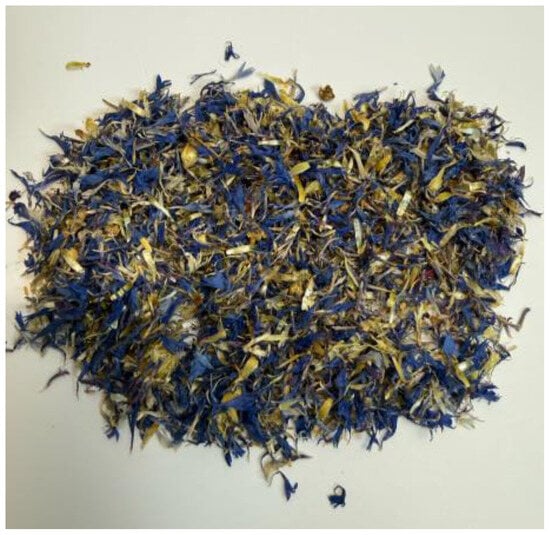
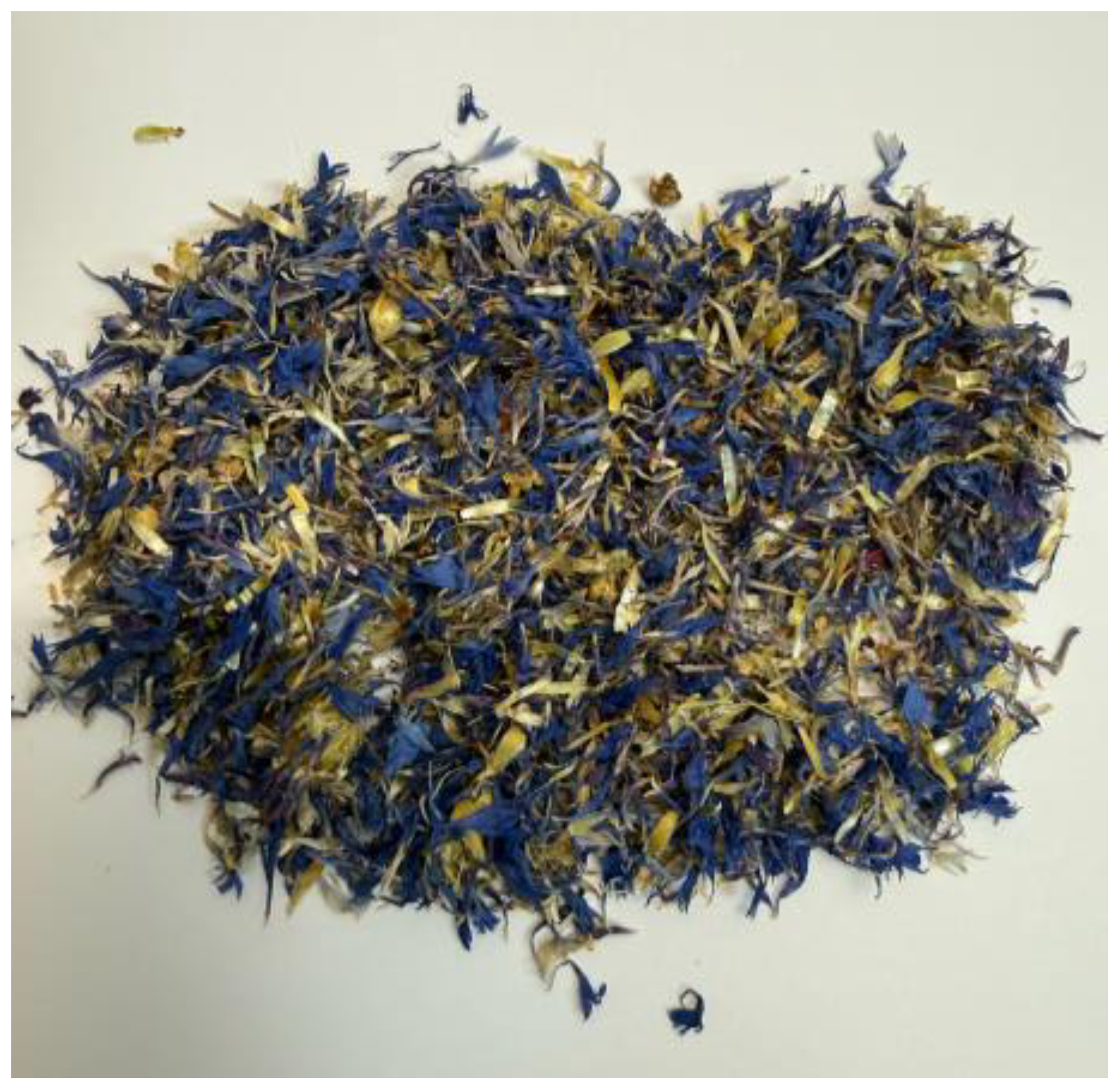
Cornflower (Centaurea cyanus L.) petals were obtained from the company Nanga Przemysław Figura Błękwit, Złotów, Poland. Dried petals of Centaurea cyanus L. were minced in a laboratory knife mill (Cutter Mixer R5 Plus, Robot Coupe, France), then the material was sieved and the fraction with a particle diameter of 1–2 mm was selected for further testing. The appearance of the flowers used in the study is presented in Figure 1.
Figure 1.
Appearance of Centaurea cyanus L. flower petals used in the study.
2.3. Sample Preparation
Extraction systems were prepared in a form of aqueous solution containing, respectively: pure water (Aqua), an aqueous solution of glycerin 10% (w/w) (G_10p), an aqueous solution of 1,3-propanediol 10% (w/w) (PD_10p), or a 2% (w/w) aqueous solution of a mixture of surfactants: polyglyceryl-6 caprylate/caprate and polyglyceryl-4 laurate/sebacate (S_2p). A total of 2 g of Centaurea cyanus L. petals were added to the extraction medium to obtain a 2% (w/w) suspension. To preserve the samples, a preservative system composed of potassium sorbate and sodium benzoate was added at a concentration of 0.225% (w/w). The ingredients used to prepare extracts are summarized in Table 1.
Table 1.
The ingredients used to prepare plant extracts.
The extraction process was carried out at room temperature under continuous, vigorous stirring (380 rpm) using a CAT R50D mechanical stirrer (M. Ziperer GmbH, Ballrechten-Dottingen, Germany) for 20 min. The resulting mixture was then purified by vacuum filtration using a Büchi V-700 vacuum pump and disposable Nalgene® bottle-top filter units with polyethersulfone membranes of 0.45 μm pore size (Thermo Fisher Scientific Inc., Waltham, MA, USA). The obtained filtrate was used for further investigations.
2.4. Formulations of Facial Skin Care Serum
The overall composition of the serum was optimized based on previous experience. Table 2 provides a breakdown of the facial skin care serum ingredients, which were determined by the type of medium used. The extract constituted 50% of the serum formulation. The qualitative and quantitative list of ingredients constitutes the complete composition of the cosmetic, while the ingredients introduced together with the extracts are highlighted in italics in gray cells. The formulations were labeled using abbreviations of the extraction media: FSCS_E_50p_Aqua (pure water was used as the extraction medium), FSCS_E_50p_G (an aqueous solution of glycerin was used), FSCS_E_50p_PD (an aqueous solution of 1,3-propanediol was used), and FSCS_E_50p_S (the extraction medium consisted of a solution of surfactants). The serum that did not contain the extract was designated as FSCS_E_0p.
Table 2.
Formulations of facial skin care serum.
2.5. Identification of Bioactive Compounds Using UPLC-ESI-MS/MS
The separation of components present in the extracts was performed using a Sciex ExionLC AD liquid chromatography system (AB Sciex, Concord, ON, Canada). The analytical column Kinetex XB-C18 (100 × 4.6 mm, 3.5 µm, 100 Å; Phenomenex) equipped with reversed-phase precolumn was used. The samples were filtered through 0.2 µm syringe filters prior to analysis. The separation process was conducted in a gradient elution system, using a 0.1% (v/v) solution of formic acid as mobile phase A and methanol as mobile phase B. The flow rate was 0.5 mL/min and the sample volume was 1 µL.
Mass spectrometric detection was performed using a 4500 QTRAP mass spectrometer (AB Sciex, Concord, ON, Canada) equipped with an electrospray ionization (ESI) source operating in both positive and negative ionization modes. To perform the chromatographic analysis, each extract at a volume of 1000 μL was placed in amber vials and introduced directly into the system without dilution. Quantification of bioactive compounds was carried out using the multiple reaction monitoring (MRM) mode to ensure high specificity and sensitivity. Calibration curves for each reference standard were generated based on the peak area of the most intense MRM transition using linear regression. A seven-point calibration in the range of 1 to 100 mg/L was established. The measurements were performed in triplicate. The details of chromatographic separation and mass spectrometric parameters were described in [17].
2.6. Total Phenolic Content (TPC)
TPC of Centaurea cyanus L. extracts was measured according to the Folin–Ciocalteu colorimetric method with slight adaptations as described by Singleton et al. (1999) [20]. Briefly, an extract previously tenfold diluted with distilled water (50 µL) was mixed with Folin–Ciocalteu reagent (200 µL) and 20% sodium carbonate solution (600 µL). The mixture was then filled up to a volume of 4 mL with distilled water and incubated for 120 min at room temperature in the dark. Absorbance was measured at a wavelength of 765 nm against a blank using a UV–Vis spectrophotometer. TPC was calculated as milligrams of gallic acid equivalents (GAEs) per gram of dry extract. All measurements were performed in triplicate.
2.7. Antioxidant Activity (ABTS Tests)
ABTS assays were used to evaluate the antioxidant activity of the extracts. The ABTS radical cation (ABTS•+) was generated and diluted to an absorbance of 0.90 ± 0.05 at 734 nm. A 300 µL portion of extract was combined with 2mL of the ABTS•+ solution, incubated at room temperature for 6 min, and the reduction in absorbance was recorded at 734 nm. Trolox was used for calibration, and antioxidant capacity was expressed as mg TE/g. All assays were performed in triplicate, and mean values with standard deviations were reported [21].
2.8. Turbidity
The cloudiness of the obtained extracts and final product samples was analyzed with a TN-100 Waterproof turbidimeter (Thermo Fisher Scientific Eutech Instruments Pte Ltd., Singapore). The results were reported in units of nephelometric turbidity (NTU).
2.9. Color Characterization
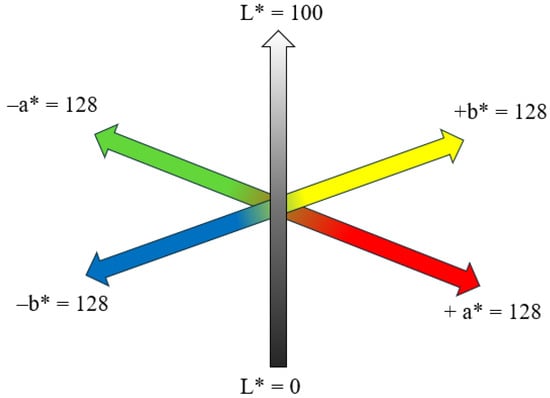
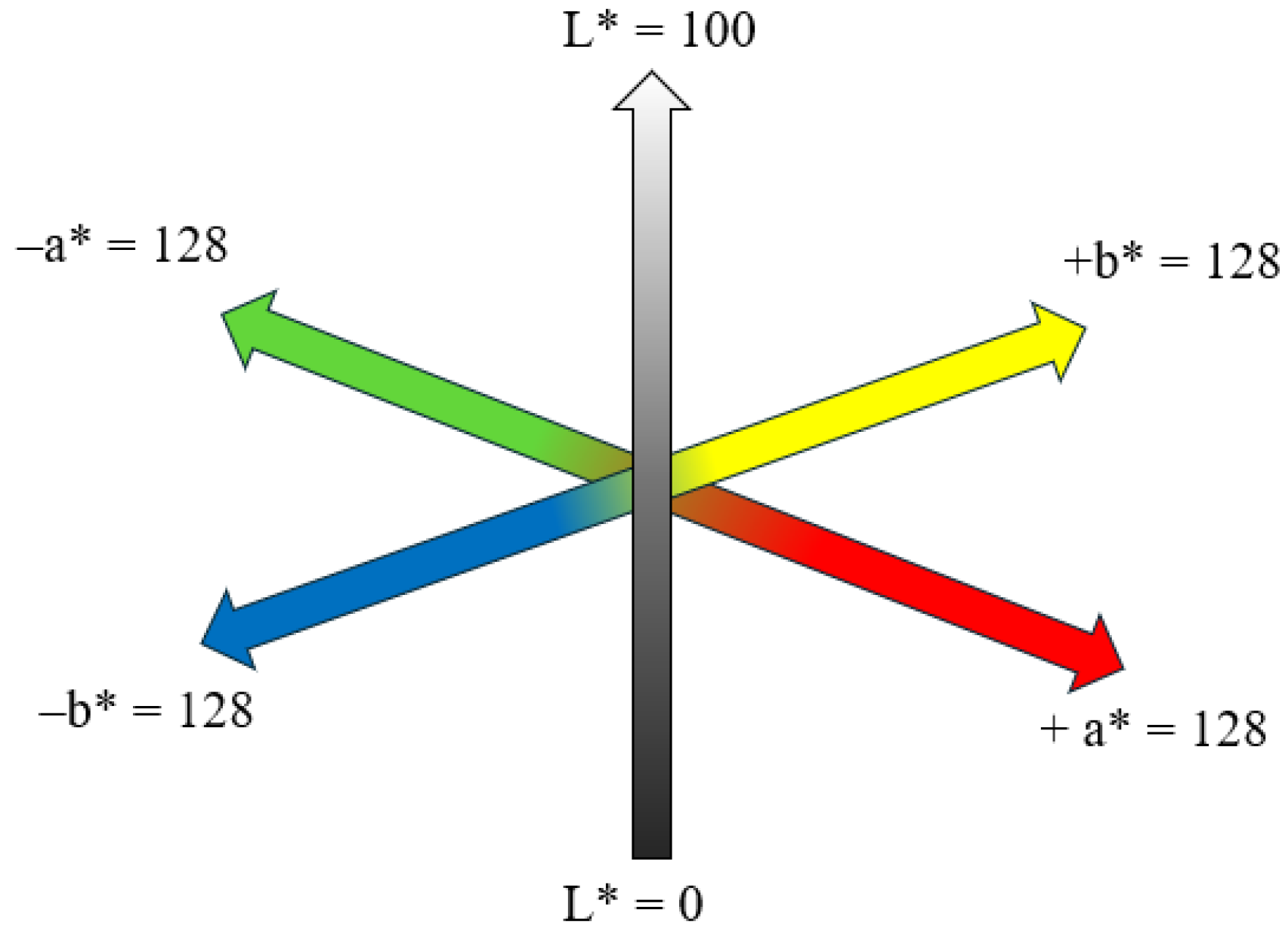
The color of the extracts and finished cosmetic products were measured using a reflectance method with a Konica Minolta CM-3600 spectrophotometer operated with CM-S100w software (SpectraMagic NX, version 1.07) and a D65 light source. The measurements were reported in the CIE LAB color space, where the L* value indicates lightness (0 representing black, and 100 representing white), while the a* and b* values correspond to the green–red and blue–yellow color axes, respectively. The distribution of L*, a* and b* values is shown in Scheme 1:
Scheme 1.
Distribution of L*, a*, and b* values in the CIE LAB color space.
Chromaticity coordinates (a*, b*) are recalculated into chroma (C*):
Color differences (ΔE) for both extracts and cosmetic products are determined as:
where ΔL*, Δa*, and Δb* denote the variations in the specific color parameters either between the extract and its extraction medium or between the cosmetic formulation containing the extract and the formulation lacking it.
2.10. Viscosity
The flow properties of the extraction media, extracts and the skin care serum were evaluated directly at 22 °C, with each measurement performed in triplicate. Calibrated Ubbelohde viscometers were used with a constant K = 0.00273 mm2/s2 for the extraction media and extracts, and K = 4512 mm2/s2 for the serum. From these readings, the kinematic viscosity was obtained directly, while the dynamic viscosity was calculated as the multiplication of the kinematic viscosity and the density of the analyzed samples.
2.11. Mechanical and Microbiological Stability
The designed model cosmetics were subjected to a mechanical stress test to assess their stability. Twenty-four hours after preparing the samples, they were centrifuged for 30 min at ambient temperature at 3000 rpm with a Hettich Universal 320R centrifuge (Hettich, Kirchlengern, Germany). Then, each sample was subjected to organoleptic evaluation. The stability of the products was also verified after 30 days of storage at room temperature. Organoleptic evaluation consists of a qualitative determination of signs of changes in the appearance of the preparation. In addition, a sensory evaluation was performed to assess how the preparation is perceived by the senses, which is an important element in analyzing its quality and acceptability. The products were evaluated for features such as appearance, smell and tactile sensations associated with the consistency of the product. Homogeneity, smoothness and tactile sensations during contact with the prepared product were assessed.
The extracts and the facial serum were assessed for their microbiological stability using Microcount® Duo microbiological testers (Schülke & Mayr GmbH, Norderstedt, Germany). Slides coated with agar were dipped into the samples to promote the growth of potential microbial colonies.
The slides were transferred to the corresponding test chambers and kept at a controlled temperature of 28 °C. The incubation period was set to three days for bacteria and fungi and extended to five days for yeast and mold detection. Following incubation, the slides were visually inspected for microbial growth. Microbial evaluation was performed using a standardized reference template provided by the manufacturer to ensure accurate colony quantification.
2.12. Determination of Irritant Potential—Zein Value
In the zein assay, 2 g of zein was dissolved in 40 g of the extraction medium. The resulting solutions were agitated on a shaker at 35 °C for 60 min. The amount of solubilized protein was determined using Kjeldahl analysis. For this, 1 mL of the filtrate was digested with concentrated sulfuric acid containing potassium sulfate and copper (II) sulfate pentahydrate. The resulting mixture was then transferred into a Wagner–Parnas apparatus flask with 50 mL of Milli-Q water, followed by the addition of 20 mL of 25% NaOH. Ammonia was subsequently distilled with steam and collected in 5 mL of 0.1 N H2SO4. Any excess acid was titrated using a Tashiro indicator with 0.1 N NaOH. The irritation potential is given as the amount of nitrogen (mg) released from dissolved zein protein for a volume of 100 mL of sample. Values are determined by calculating the arithmetic mean of three independent replicates. This procedure was initially described by Wasilewski et al. [22].
2.13. Statistical Analysis
The collected data were subjected to statistical analysis and reported as mean values with standard deviation based on three independent replicates (n = 3). ANOVA (one-way analysis of variance) was used to compare the data, and Tukey’s post hoc HSD test was applied to determine statistically significant differences between groups. For statistical analysis, Statistica software (StatSoft, Tulsa, OK, USA) version 10 was used.
3. Results
3.1. Characterization of Extraction Process Applying the Loan Extraction Concept
The first step in the present study was the development and preparation of a facial skin care serum formulation (Table 2). In the next step, the formulation ingredients were “borrowed” from the serum formulation and used as the extraction medium to obtain a plant extract from Centaurea cyanus L. flowers. The obtained extracts were incorporated into the previously developed cosmetic formulations at a high concentration of 50%.
Many techniques for isolating active ingredients such as polyphenols from plant materials have been described in the scientific literature, ranging from classic solvent methods to modern technologies supported by physical and enzymatic factors [23,24,25,26]. Research shows that the efficiency of isolating bioactive compounds depends largely on process parameters such as extraction time, temperature, solvent type and polarity, solid-to-liquid ratio, and the degree of material fragmentation. Proper preparation of the raw material, including drying, grinding, and homogenization, significantly increases the availability of active compounds and improves extraction results [26].
Increasing attention is also being paid to so-called “green extraction technologies,” which combine high efficiency with limited environmental impact. These solutions reduce the use of toxic chemicals and lower the ecological footprint of the entire production process [27]. The method, based on aqueous solutions of naturally delivered organic solvents, offered many advantages, which is why its use became so widespread. Its positive features include a low cost, simplicity of procedures, and high purity of the isolated compounds. Two of the cosmetic ingredients used in the tests—1,3-propanediol and glycerin—fit into the aforementioned concept of “green solvents” due to their origin. They are obtained from renewable plant-based raw materials, which means they can be discussed in the context of green chemistry. The use of such raw materials minimizes their destructive impact on the natural environment, and thanks to in-depth research into these raw materials, the cosmetics industry is developing, and currently places great emphasis on naturalness and non-toxicity. Aqueous solutions of these raw materials have been used to obtain plant extracts from dried cornflower blossoms.
At the same time, the extraction was performed in the presence of nonionic surfactants to compare the effect of their presence on the extraction of valuable bioactive compounds from cornflower petals. The addition of surfactants changes the hydrophilic–lipophilic balance (HLB), which can significantly affect the extraction efficiency.
Glycerin, a natural “green solvent,” is valued for its polarity, low toxicity, and environmental friendliness. It is widely used in cosmetics due to its complete water solubility and compatibility with many formulations. It provides beneficial moisturizing and skin-condition effects. Propanediol (1,3-Propanediol), produced via microbial fermentation of naturally sourced glycerin, is a water-soluble, biocompatible viscous liquid used as a moisturizer. Nonionic surfactants like Polyglyceryl-4 Laurate/Sebacate and Polyglyceryl-6 Caprylate/Caprate, made from glycerol units esterified with fatty acids, are natural, with an HLB of 14, and serve as effective surfactants in formulations [17,27,28,29,30,31,32]. The polarity and viscosity of the solvent are fundamental factors in the extraction process, affecting its effectiveness, efficiency, and selectivity. The viscosity values for water and aqueous solutions of glycerol, surfactants, and 1,3-propanediol were 0.899, 0.985, 1.011, and 1.247 mPa·s, respectively [17]. Better solvent penetration at low viscosity accelerates the substance exchange process, which increases the overall extraction efficiency. However, the right choice of solvent in terms of polarity is crucial for targeting the process to selected components.
The extraction was carried out by spreading chopped Centaurea cyanus L. petals in the extraction medium.
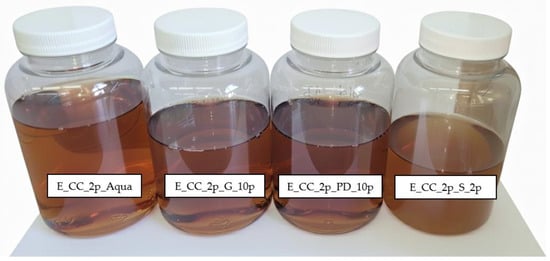
Dried petals are characterized by inflorescences composed of two morphologically distinct zones. The outer layer of the inflorescence is light blue in color, with petals loosely arranged around the inner inflorescence. The inner area is darker in color and characterized by a greater density of petals. The visual characteristics of the extracts obtained using individual media are presented in Figure 2. The samples were labeled as E_CC_2p_Aqua, E_CC_2p_G_10p, E_CC_2p_PD_10p, and E_CC_2p_S_2p for water, aqueous glycerin solution, aqueous 1,3-propanediol solution, and surfactant solution, respectively.
Figure 2.
Visual presentation of Centaurea cyanus L. extracts prepared in different extraction media and stored in 500 mL containers.
The extracts obtained were analyzed for their stability and physicochemical parameters, such as viscosity and color characteristics. Then their phytochemical composition and antioxidant properties were evaluated. The viscosity values and spectrophotometric analysis results are presented in Table 3.
Table 3.
Viscosity parameters and spectrophotometric analysis results of extracts. The ΔE value was determined relative to the appropriate extraction medium. The data are presented as the mean of five independent determinations ± standard deviation (n = 5). Different letters (a–d) in lowercase denote statistically significant differences (p < 0.05) among the mean values for the same properties obtained using various extraction media.
Following the completion of the extraction process, the viscosity values of the extracts obtained with solvents were found to be greater than that of the extraction media themselves. In the case of the extract based on the surfactant solution, the viscosity was lower than that of the extraction medium used to obtain it. In the three cases mentioned, the content of bioactive compounds that were extracted increased the viscosity of the extract, while in the case of the extract based on a medium containing surfactants, it decreased its viscosity, bringing it closer to the viscosity of the extract based on water alone. The extract containing surfactants, on the other hand, showed the highest turbidity among the others. In all the extracts obtained, the color could be described as straw yellow. Analysis of the color parameters in the CIE L*a*b* system revealed significant differences between sample E_CC_2p_S_2p and the other samples. This sample exhibited the highest L*, a*, and b* values. The calculated color differences between the extract and the extraction medium, expressed as ΔE, were greater than 10. According to established color difference standards, a ∆E value greater than 10 is perceived as a noticeable color change by the average observer [33]. The presence of natural pigments in Centaurea cyanus L. flowers contributed to the color of the obtained extracts. The most elevated ∆E value was obtained for sample E_CC_2p_S_2p.
3.2. Determination of Selected Compounds by UPLC-MS/MS
The UHPLC-MS/MS technique was used for qualitative and quantitative analysis of bioactive compounds, such as amino acids, phenolic compounds, and organic acids, in extracts obtained from Centaurea cyanus L., depending on the extraction agents used.
The results obtained are summarized in Table 4.
Table 4.
UPLC-ESI-MS/MS quantification of the detected compounds in tested cornflower extracts mean values ± standard deviation (n = 3). Different letters (a–d) in lowercase denote statistically significant differences (p < 0.05) among the mean values for the same compound across different extraction conditions, according to Tukey’s HSD test. Means sharing the same letter are not significantly different.
In terms of the results obtained for amino acid extraction, an aqueous solution without the addition of organic solvents proved to be the most effective extraction medium. Amino acids are polar compounds that dissolve easily in water, facilitating efficient extraction without the need for organic solvents. Among the amino acids analyzed, L-lysine was detected in the highest concentration in the aqueous extraction medium. Amino acids are key components of natural skin moisturizing factors and play a crucial role in maintaining skin hydration and pH balance, thereby supporting skin health. Due to their moisturizing properties, amino acids are widely used in cosmetic skin care products to increase skin hydration [34].
1,3-propanediol aqueous solution proved to be the most versatile and effective solvent in the extraction of phenolic compounds. Among the 13 analyzed compounds, the highest concentrations for 10 of them were recorded in the E_CC_2p_PD_10p extract. This solvent was particularly effective in the extraction of vanillin (357 mg/L), chlorogenic acid (67.7 mg/L), and delphinidin (4.33 mg/L).
In this case, water did not demonstrate as high an efficiency as in the extraction of amino acids; however, it is characterized by interesting selectivity. It proved to be a good extractant for caffeic acid (2.50 mg/L), achieving a result comparable to the water–propanediol-based extract. Moreover, it shows moderate efficiency regarding vanillin and chlorogenic acid.
The surfactant solution proved to be the least effective extractant, which resulted in lower concentrations of individual polyphenols. However, it should be emphasized that it is one of the mildest surfactants available on the market, according to information provided by the manufacturer [35]. It is often selected for cosmetic products with soothing and non-irritating effects. Therefore, the selection of the appropriate surfactant depends on the intended use of the final product—in some cases, the mildness of the formulation may be a priority, even at the expense of a lower content of phenolic compounds.
Among all determined phenolic compounds, vanillin occurs in by far the highest concentrations. Studies [36] indicate that this compound exhibits strong antioxidant properties, effectively scavenging free radicals. It is also valued for its antiseptic properties and for accelerating wound healing. The second compound in terms of content in the extracts is chlorogenic acid. It is valued for its protective properties against external factors, such as UV radiation, which is confirmed by research presented in paper [37].
The study demonstrated that aqueous propanediol solution is the most effective extractant for the majority of the analyzed phenolic compounds (including vanillin and chlorogenic acid), while water and the surfactant solution showed lower efficiency, yet offer specific selectivity or the mildness desired in cosmetics. Due to the high content of substances with antioxidant and protective properties, the obtained extracts exhibit significant application potential in regenerating and UV-protective products.
The analysis of the organic acid profile in the obtained extracts allowed for the identification and quantification of four compounds. Malic acid proved to be the distinct quantitative dominant in all samples, with its highest concentration recorded in the propanediol solution-based extract (E_CC_2p_PD_10p), reaching a value of 1095 mg/L. Malic acid belongs to the group of alpha-hydroxy acids (AHAs), which exhibit keratolytic (exfoliating), smoothing, and depigmenting activity, which determines their widespread application in modern cosmetic formulations [38]. The second organic acid in terms of content was citric acid, also classified as an AHA. Unlike malic acid, the most effective extractant for this compound proved to be the surfactant solution, allowing for a concentration of 453 mg/L to be obtained. This result is significantly higher than in the case of using propanediol or glycerin aqueous solutions. Like malic acid, citric acid is a valued ingredient in cosmetic preparations due to the brightening and antioxidant properties characteristic of this group of compounds.
In the case of quinic acid, to which the literature attributes protective properties, the highest extraction efficiency was again provided by the aqueous propanediol solution-based system (E_CC_2p_PD_10p), in which 66.7 mg/L of this compound was determined.
The varied efficiency of solvents allows for targeted control of the organic acid profile in the extract depending on the desired dermocosmetic properties, such as exfoliating or repair effects.
3.3. Total Phenolic Content (TPC) and Antioxidant Capacity (ABTS)
The present study evaluated the TPC and antioxidant activity of Centaurea cyanus L. extracts obtained using various solvents, with antioxidant capacity assessed through ABTS assays (Table 5). Among the tested solvents, the extract prepared with 10% propanediol aqueous solution exhibited the highest TPC (11–13.5 mg GAE/g) and demonstrated the strongest antioxidant activity, indicating that this solvent is highly effective in extracting phenolic compounds of varying polarity and high antioxidant potential. The glycerin extract showed comparably high activity in the ABTS assay. Water- and surfactant-based extracts displayed intermediate results.
Table 5.
Comparison of TPC and antioxidant activity of Centaurea cyanus L. extracts obtained using the LE method. Results are expressed as the mean ± standard deviation from three independent measurements (n = 3). Statistically significant differences between mean values under different extraction conditions (p < 0.05) were determined using Tukey’s HSD test and are denoted by different lowercase letters (a–d).
The TPC values obtained in this study are higher than those previously reported in the literature for aqueous and ethanolic extracts of Centaurea cyanus L. For instance, Escher et al. reported phenolic content ranging from 3.93 to 4.85 mg/g in aqueous petal extracts, depending on the extraction time and temperature [38]. Sharonova et al. found TPC values of 97.9 ± 1.15 mg GAE/L in 70% ethanol extracts [39], while Żbik et al. reported TPC in aqueous extracts at 8.58 mg GAE/g, in 70% methanol extracts at 8.75 mg GAE/g, and in methanol/acetic acid extracts at 8.96 mg GAE/100 g [40]. All these values are lower than those obtained in the present study, underscoring the efficiency of the extraction methods applied in these studies.
3.4. Model Cosmetics Characteristics
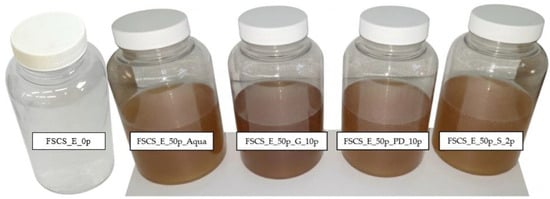
This study aimed to determine how the addition of the extract influences the functional and physicochemical properties of the final cosmetic preparations. For this purpose, a series of facial skin care serum formulations were developed where Centaurea cyanus L. petal extracts comprised 50% of the total composition. The serum samples varied based on the extract used and its composition, which allowed for their specific labeling: FSCS_E_50p_Aqua, FSCS_E_50p_G_10p, FSCS_E_50p_PD_10p, and FSCS_E_50p_S_2p. These designations directly corresponded to extracts prepared using, respectively, water, and an aqueous solution of glycerin, 1,3-propanediol, and a nonionic surfactant mixture. The extracts used to create the cosmetic facial skin care serum formulations were obtained via the loan extraction method, where a portion of the target cosmetic formulation is utilized to obtain the extract itself. Thanks to this procedure, the resulting face serum met the necessary safety requirements and aligned with environmental protection principles. The complete list of ingredients for the formulation is detailed in Table 1. Knowing the final, complete composition of the cosmetic formulation, the extract was prepared using the appropriate amounts of ingredients from the target formula, using the “loan extraction” technique. The serum obtained in this way, in which the ingredients used in the extraction were reincorporated into the final composition, was subjected to a detailed analysis of its physicochemical properties. The visual appearance of the developed cosmetics is illustrated in Figure 3.
Figure 3.
Visual appearance of the formulated face serums placed in 500 mL containers.
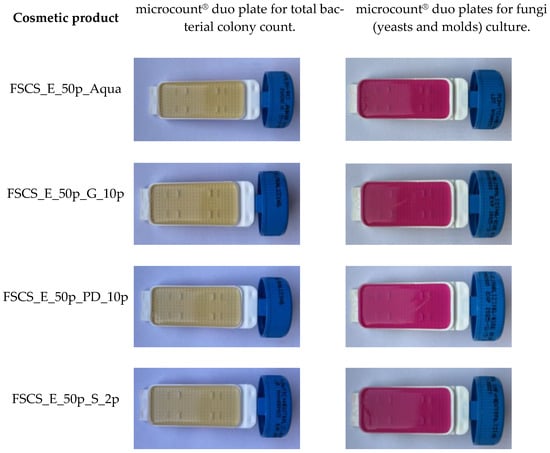
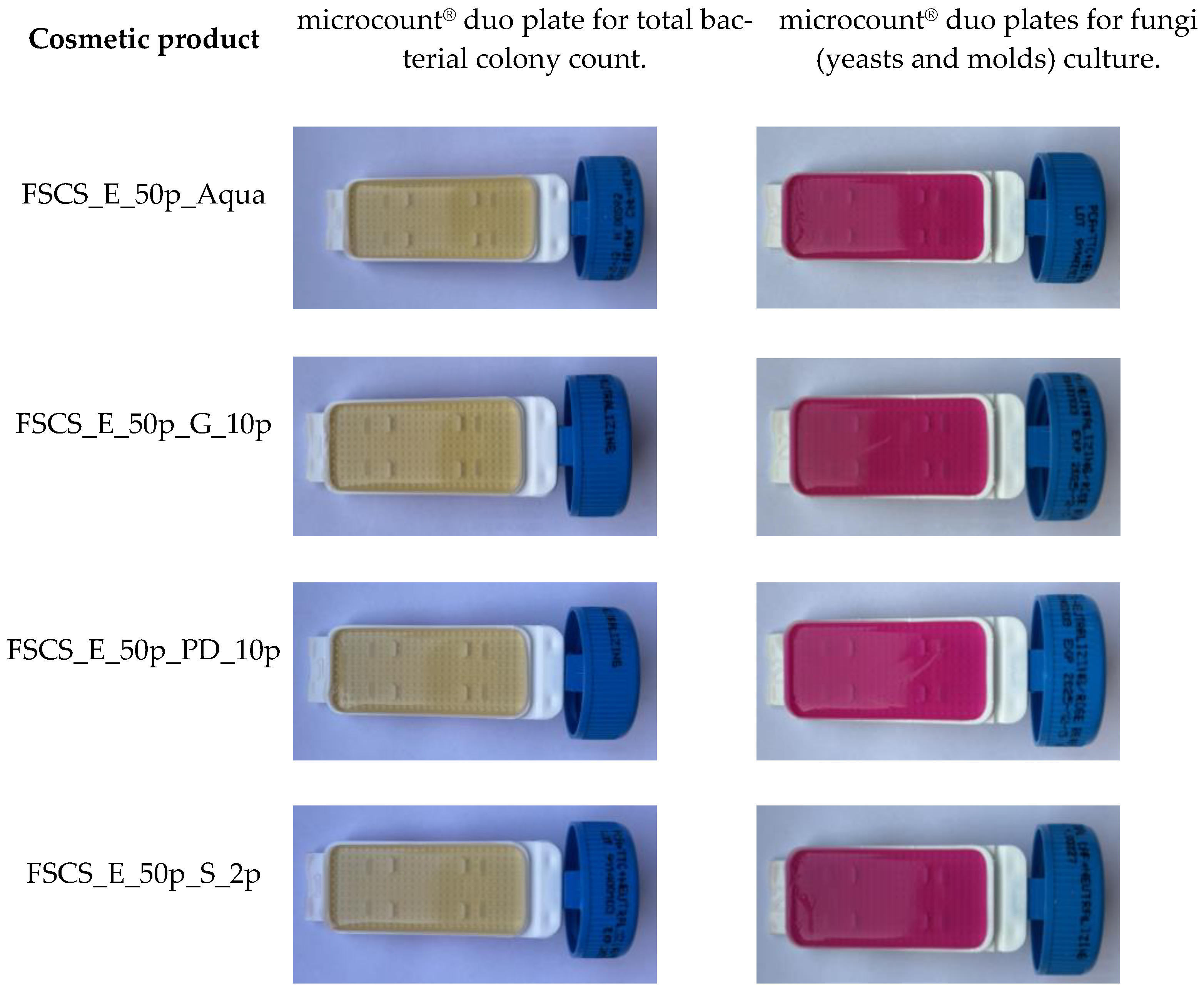
The stability tests clearly confirmed the stability of the developed serum formulations. No changes in the organoleptic characteristics of the products were observed over a period of 30 days. The formulas demonstrated resistance to storing conditions, maintaining their homogeneity—no phase separation or sedimentation was observed. These results demonstrate the effectiveness of the viscosity-regulating agent used, which ensured the homogeneity and preservation of the structure of the preparations, even in the face of external mechanical and environmental stresses. Key sensory parameters, including texture, aroma, and color, were mostly consistent across all variants tested. The facial skin care serums were distinguished by their velvety texture and characteristic plant scent. Equally important, the microbiological stability assessment showed that both the extracts and the final cosmetics were protected against the growth of bacterial and fungal contaminants (yeasts and molds). As documented in Figure 4, after a specified incubation period in a strictly controlled environment, no growth of microorganisms was observed on the test plates.
Figure 4.
Images of the duo-plate dipslides following a 5-day incubation period.
In addition, this study also thoroughly characterized the color parameters (L*, a*, b*, C*, and ΔE), which are summarized in Table 6.
Table 6.
Spectrophotometric measurements of the facial skin care serum recorded under D65 illumination. ΔE values were calculated relative to the base serum without extract. Data are presented as the mean ± standard deviation of five independent measurements (n = 5). Different letters (a–d) in lowercase denote statistically significant differences (p < 0.05) among the mean values for the same compound across different extraction conditions, according to Tukey’s HSD test. Means sharing the same letter are not significantly different.
The turbidity measurements of cosmetic samples showed variability depending on the extraction agent used. Among the samples, the highest turbidity value was found in sample FSCS_E_50p_G_10p. The lowest value was obtained for the sample without extract addition, which appeared transparent. These results correlate well with visual assessments, as turbidity levels exceeding the critical threshold of 10 NTU are usually visible to the human eye [41]. The addition of Centaurea cyanus L. extract to obtain facial skin care serum also affected the colorimetric properties of the preparations. In particular, the samples showed a light yellow chromaticity, accompanied by an increase in the L* parameter (lightness), which can probably be attributed to the dilution effect of the extracts. Significant changes were observed in the b* coordinate (yellow–blue chromaticity), with the most pronounced increase noted in the FSCS_E_50p_PD_10p samples. This particular sample also showed the highest saturation (C*), which correlates with the highest value of TPC, suggesting the highest concentration of bioactive compounds, including natural pigments. The color difference analysis (∆E) in relation to the face serum without extract showed a significant noticeable change (∆E > 10), indicating a considerable effect of the extract addition on the color properties of the preparation.
The cosmetic samples were characterized regarding their viscosity, density, and zein number. The obtained results are summarized in detail in Table 7.
Table 7.
Comparison of the facial skin care serum in terms of viscosity, density, and zein number. Results are reported as the mean ± standard deviation calculated from three independent measurements (n = 3). Different letters (a–c) in lowercase denote statistically significant differences (p < 0.05) among the mean values for the same compound across different extraction conditions, according to Tukey’s HSD test. Means sharing the same letter are not significantly different.
An appropriate viscosity is essential for facial skin care serums, as it directly affects the ease of application, product stability, and overall user acceptance. All developed serum formulations with extract addition had a viscosity ranging from 3122 to 4681 mPa·s. Comparing the viscosity values of samples with extract to the blank sample, a decrease in viscosity can be observed under the influence of the extract additive. However, all values ensure smooth and trouble-free application and spreading of the preparations, while guaranteeing the stability of the structure when the product is at rest. In summary, the use of xanthan gum was crucial for achieving the optimal rheological properties that are essential for both the durability and functionality of each cosmetic formulation developed. The results obtained prove that the serum will spread effectively on the skin’s surface, which increases the comfort of use and attractiveness to the consumer.
The chemical composition of cosmetics containing individual compounds or mixtures thereof may potentially cause skin irritation. The literature data indicate that the addition of appropriate plant extracts may reduce irritation [42]. In particular, the bioactive components of these extracts, such as polyphenols and amino acids, can not only alleviate irritation, but also have a beneficial effect on skin health, improving its condition.
In the context of the developed facial skin care serum, the addition of an extract enriched with bioactive ingredients influenced the measured potential irritant effect. The results highlight the key role of the extraction agent in modulating the irritant effect of cosmetic preparations. Zein values, which serve as a parameter for determining potential irritation, were determined for the designed cosmetic prototypes. The values obtained ranged from 15 to 24.0 mg N/100 mL. According to data presented in the literature [43], these values suggest that the preparations are unlikely to cause skin irritation.
The preparation without extract showed the highest zein number value. The addition of extract to the facial skin care serum resulted in a reduction in irritation potential in all cases. The preparation obtained using an aqueous solution of propanediol as an extraction agent showed the lowest zein value, indicating the least irritant effect. It should be emphasized that this extract showed the highest values of TPC and antioxidant activity in the studies. Furthermore, HPLC-MS/MS analysis showed that this extract had the most complex profile of bioactive compounds among all the samples tested. The observed reduction in irritation potential can probably be attributed to the presence of bioactive components in Centaurea cyanus L. extract, which contribute to reducing irritation and, moreover, may have a protective or soothing effect on the skin.
4. Discussion and Conclusions
The cosmetics industry is characterized by dynamic growth, constantly introducing innovative products with a wide range of applications to the market—from prevention and care to supporting the treatment of dermatological conditions. Current research trends focus on the search for alternative sources of active ingredients derived from natural raw materials, in order to reduce the use of synthetic ingredients. Commonly occurring plant species are a valuable and inexpensive source of bioactive compounds such as amino acids, phenols and organic acids, which are widely utilized and valued in the cosmetics industry.
A variety of product forms, combining the advantages of plant materials with modern technology, offer new prospects for the development of cosmetic products tailored to consumer demands. Modern technologies play a key role in increasing the effectiveness of plant extracts, while respecting the natural environment. A key aspect of the study was the development of cosmetics with a high concentration of extracts—up to 50% of the final formulation. In combination with the technology used, which employs the concept of “loan extraction,” cost-effective and environmentally friendly products were obtained. The research primarily analyzed the impact of borrowed ingredients on the composition and properties of the extracts obtained and, consequently, on the characteristics of the cosmetics produced. Importantly, the developed cosmetic preparations are based on natural derived ingredients, which is in line with current market trends and growing consumer expectations for effective, safe cosmetics made from natural materials that retain a high concentration of active ingredients and their beneficial effects on the skin. Our research provides important information on the impact of the type of extraction medium on the efficiency of extraction and the properties of the final cosmetics. The use of a variety of extraction systems results in different quantities and types of phytochemicals, thus affecting the biological activity profile of the extracts. Furthermore, the results showed that bioactive compounds obtained from Centaurea cyanus L. flower petals exhibit significant biological activity, including antioxidant properties. The extracts obtained differed in chemical composition and antioxidant potential, with the extract obtained from an aqueous solution of propanediol—the solvent with the lowest polarity—showing the highest TPC values and free radical neutralization capacity. The diversity of extraction media enables the selective isolation of specific groups of active ingredients, providing opportunities to optimize the extraction process to obtain products with the desired functional properties. The results obtained confirm the validity of further research into the use of commonly available and inexpensive plant raw materials as a source of bioactive compounds for application in the cosmetics industry. These data provide a solid basis for the development of the concept of loan extraction in the production of cost-effective cosmetics.
In the future, it is planned to deepen the research on the selection of the most effective extraction media, with particular emphasis on surface-active compounds. The mixture of surfactants used was found to be ineffective in the extraction process, which points to the need for a further optimization of extraction methods.
Author Contributions
Conceptualization, T.W., W.O. and Z.H.-B.; methodology, W.O., T.W., Z.H.-B., N.S.-W., J.F. and K.M.; validation, W.O., T.W., Z.H.-B., N.S.-W., J.F. and K.M.; formal analysis, W.O., T.W., Z.H.-B., N.S.-W., J.F. and K.M.; investigation, W.O., T.W., Z.H.-B., N.S.-W., J.F. and K.M.; resources, W.O., T.W., Z.H.-B., N.S.-W., J.F. and K.M.; data curation, W.O., T.W., Z.H.-B., N.S.-W., J.F. and K.M.; writing—original draft preparation, W.O., T.W., Z.H.-B., N.S.-W. and K.M.; writing—review and editing, W.O., T.W., Z.H.-B., N.S.-W., J.F. and K.M.; visualization, W.O., T.W., Z.H.-B., N.S.-W., J.F. and K.M.; supervision, T.W.; project administration, T.W. and Z.H.-B.; funding acquisition, T.W. and Z.H.-B. All authors have read and agreed to the published version of the manuscript.
Funding
This research received no external funding.
Institutional Review Board Statement
This research did not involve human participants; therefore, Institutional Review Board is not applicable.
Informed Consent Statement
This research did not involve human participants; therefore, Informed Consent is not applicable.
Data Availability Statement
The original contributions presented in this study are included in the article. Further inquiries can be directed to the corresponding author.
Acknowledgments
During the preparation of this manuscript/study, the authors used ChatGPT (GPT-5.2, OpenAI) for the purposes of partial language correction. The authors have reviewed and edited the output and take full responsibility for the content of this publication.
Conflicts of Interest
The authors declare no conflicts of interest.
Abbreviations
| LE | Loan extraction |
| FSCS | Facial skin care serum |
| E_CC_2p_Aqua | Extract from the petals of Centaurea cyanus L. obtained using aqueous solution |
| E_CC_2p_G_10p | Extract from the petals of Centaurea cyanus L. obtained using a 10% aqueous solution of glycerin |
| E_CC_2p_PD_10p | Extract from the petals of Centaurea cyanus L. obtained using a 10% aqueous solution of 1,3-propanediol |
| E_CC_2p_S_2p | Extract from the petals of Centaurea cyanus L. obtained using a 2% aqueous solution of surfactants |
| FSCS_E_0p | Facial skin care serum without extract |
| FSCS_E_50p_Aqua | Facial skin care serum containing 50% extract from the petals of Centaurea cyanus L. based on aqueous solution |
| FSCS_E_50p_G_10p | Facial skin care serum containing 50% extract from the petals of Centaurea cyanus L. based on 10% aqueous solution of glycerin |
| FSCS_E_50p_PD_10p | Facial skin care serum containing 50% extract from the petals of Centaurea cyanus L. based on 10% aqueous solution of 1,3-propanediol |
| FSCS_E_50p_S_2p | Facial skin care serum containing 50% extract from the petals of Centaurea cyanus L. based on a 2% aqueous solution of surfactants |
References
- Lefèvre-Utile, A.; Braun, C.; Haftek, M.; Aubin, F. Five Functional Aspects of the Epidermal Barrier. Int. J. Mol. Sci. 2021, 22, 11676. [Google Scholar] [CrossRef] [Scilit]
- Rawlings, A.V. Ethnic skin types: Are there differences in skin structure and function? Int. J. Cosmet. Sci. 2006, 28, 79–93. [Google Scholar] [CrossRef] [Scilit]
- Tomas, M.; Gunal-Koroğlu1, D.; Kamiloglu, S.; Ozdal, T.; Capanoglu, E. The state of the art in anti-aging: Plant-based phytochemicals for skin care. Immun. Ageing 2025, 22, 5. [Google Scholar] [CrossRef] [Scilit]
- Parrado, C.; Mercado-Saenz, S.; Perez-Davo, A.; Gilaberte, Y.; Gonzalez, S.; Juarranz, A. Environmental Stressors on Skin Aging. Mechanistic Insights. Front. Pharmacol. 2019, 10, 759. [Google Scholar] [CrossRef] [Scilit]
- Naidoo, K.; Birch-Machin, M.A. Oxidative Stress and Ageing: The Influence of Environmental Pollution, Sunlight and Diet on Skin. Cosmetics 2017, 4, 4. [Google Scholar] [CrossRef] [Scilit]
- Wasilewski, T.; Seweryn, A.; Pannert, D.; Kierul, K.; Domżał-Kędzia, M.; Hordyjewicz-Baran, Z.; Łukaszewicz, M.; Lewińska, A. Application of Levan-Rich Digestate Extract in the Production of Safe-to-Use and Functional Natural Body Wash Cosmetics. Molecules 2022, 27, 2793. [Google Scholar] [CrossRef] [Scilit]
- Gălbău, C.S.; Irimie, M.; Neculau, A.E.; Dima, L.; Pogačnik da Silva, L.; Vârciu, M.; Badea, M. The Potential of Plant Extracts Used in Cosmetic Product Applications—Antioxidants Delivery and Mechanism of Actions. Antioxidants 2024, 13, 1425. [Google Scholar] [CrossRef] [Scilit] [PubMed]
- Michalak, M. Plant Extracts as Skin Care and Therapeutic Agents. Mol. Sci. 2023, 24, 15444. [Google Scholar] [CrossRef] [Scilit] [PubMed]
- Nizioł-Łukaszewska, Z.; Wasilewski, T.; Bujak, T.; Gaweł-Bęben, K.; Osika, P.; Czerwonka, D. Cornus mas L. extract as a multifunctional material for manufacturing cosmetic emulsions. Chin. J. Nat. Med. 2018, 16, 284–292. [Google Scholar] [CrossRef] [Scilit] [PubMed]
- Khoo, H.E.; Azlan, A.; Tang, S.T.; Lim, S.M. Anthocyanidins and anthocyanins: Colored pigments as food, pharmaceutical ingredients, and the potential health benefits. Food Nutr. Res. 2017, 61, 1361779. [Google Scholar] [CrossRef] [Scilit]
- Klukoszowska, M.; Palacz-Wróbel, M. Moisturizing properties of cornflower (Centaurea cyanus L.) extract. Case report. Aesthetic Cosmetol. Med. 2024, 4, 13. [Google Scholar] [CrossRef] [Scilit]
- Sosnowicz, K.; Czerwińska, M.E. Plant materials used in eye diseases—From use in traditional medicine to research in antioxidant, anti—Inflammatory, and antibacterial activity. Prospect. Pharm. Sci. 2024, 22, 1–20. [Google Scholar] [CrossRef] [Scilit]
- Popowska, A.; Oracz, J. Influence of Copigmentation and Encapsulation on Stability and Antioxidant Activity of Anthocyanins from Blue and Pink Cornflower (Centaurea cyanus L.) Flowers. Molecules 2025, 30, 1467. [Google Scholar] [CrossRef] [Scilit]
- Chatepa, L.E.C.; Mwamatope, B.; Chikowe, I.; Masamba, K.G. Effects of solvent extraction on the phytoconstituents and in vitro antioxidant activity properties of leaf extracts of the two selected medicinal plants from Malawi. BMC Complement. Med. Ther. 2024, 24, 317. [Google Scholar] [CrossRef] [Scilit] [PubMed]
- Mróz, M.; Malinowska-Pańczyk, E.; Bartoszek, A.; Kusznierewicz, B. Comparative Study on Assisted Solvent Extraction Techniques for the Extraction of Biologically Active Compounds from Sideritis raeseri and Sideritis scardica. Molecules 2023, 28, 4207. [Google Scholar] [CrossRef] [Scilit]
- Chemat, F.; Vian, M.A.; Ravi, H.K.; Khadhraoui, B.; Hilali, S.; Perino, S.; Tixier, A.S.F. Review of Alternative Solvents for Green Extraction of Food and Natural Products: Panorama, Principles, Applications and Prospects. Molecules 2019, 24, 3007. [Google Scholar] [CrossRef] [Scilit]
- Orzechowicz, W.; Wasilewski, T.; Hordyjewicz-Baran, Z.; Stanek-Wandzel, N.; Malorna, K.; Fleszer, J. The Use of the Idea of Loan Extraction to Produce a Skin Care Serum (Cosmetic) Containing a High Concentration of Bioactive Ingredients Isolated from Calendula officinalis L. Petals. Appl. Sci. 2025, 15, 12444. [Google Scholar] [CrossRef] [Scilit]
- Wasilewski, T.; Hordyjewicz-Baran, Z.; Orzechowicz, W.; Fleszer, J.; Stanek-Wandzel, N.; Malorna, K. Use of Waste Material from Vineyards—Vine Tendrils—To Produce Natural Hair Care Cosmetics Using Loan Extraction. Sustainability 2025, 17, 10245. [Google Scholar] [CrossRef] [Scilit]
- Wasilewski, T.; Hordyjewicz-Baran, Z.; Zarębska, M.; Stanek, N.; Zajszły-Turko, E.; Tomaka, M.; Bujak, T.; Nizioł-Łukaszewska, Z. Sustainable Green Processing of Grape Pomace Using Micellar Extraction for the Production of Value-Added Hygiene Cosmetics. Molecules 2022, 27, 2444. [Google Scholar] [CrossRef] [Scilit] [PubMed]
- Singleton, V.L.; Orthofer, R.; Lamuela-Raventós, R.M. Analysis of total phenols and other oxidation substrates and antioxidants by means of folin-ciocalteu reagent. Methods Enzymol. 1999, 299, 152–178. [Google Scholar] [CrossRef] [Scilit]
- Re, R.; Pellegrini, N.; Proteggente, A.; Pannala, A.; Yang, M.; Rice-Evans, C. Antioxidant Activity Applying an Improved ABTS Radical Cation Decolorization Assay. Free Radic. Biol. Med. 1999, 26, 1231–1237. [Google Scholar] [CrossRef] [Scilit]
- Wasilewski, T.; Seweryn, A.; Bujak, T. Supercritical carbon dioxide blackcurrant seed extract as an anti-irritant additive for hand dishwashing liquids. Green Chem. Lett. Rev. 2016, 9, 114–121. [Google Scholar] [CrossRef] [Scilit]
- Özdemir, M.; Ak, İ.; Coşkun, S.; Ünverdi, N. Ultrasound-assisted extraction of bioactive compounds from plants. J. Food Feed Sci. Technol. 2025, 35, 1–12. [Google Scholar] [CrossRef] [Scilit]
- López-Salazar, H.; Camacho-Díaz, B.H.; Arenas Ocampo, M.L.; Jiménez-Aparicio, A.R. Microwave-assisted Extraction of Functional Compounds from Plants: A Review. BioResources 2023, 18, 6614–6638. [Google Scholar] [CrossRef] [Scilit]
- Yu, J.; Lou, Q.; Zheng, X.; Cui, Z.; Fu, J. Sequential Combination of Microwave- and Ultrasound-Assisted Extraction of Total Flavonoids from Osmanthus fragrans Lour. Flowers Mol. 2017, 22, 2216. [Google Scholar] [CrossRef] [Scilit]
- Palaiogiannis, D.; Chatzimitakos, T.; Athanasiadis, V.; Bozinou, E.; Makris, D.P.; Lalas, S.I. Successive Solvent Extraction of Polyphenols and Flavonoids from Cistus creticus L. Leaves. Oxygen 2023, 3, 274–286. [Google Scholar] [CrossRef] [Scilit]
- Choi, Y.H.; Verpoorte, R. Green solvents for the extraction of bioactive compounds from natural products using ionic liquids and deep eutectic solvents. Curr. Opin. Food Sci. 2019, 26, 87–93. [Google Scholar] [CrossRef] [Scilit]
- Lim, M.W.; Tang, Y.Q.; Aroua, M.K.; Gew, L.T. Glycerol Extraction of Bioactive Compounds from Thanaka (Hesperethusa crenulata) Bark through LCMS Profiling and Their Antioxidant Properties. Am. Chem. Soc. Omega 2024, 9, 14388−14405. [Google Scholar] [CrossRef] [Scilit]
- Kowalska, G.; Baj, T.; Kowalski, R.; Szymańska, J. Optimization of Glycerol–Water Extraction of Selected Bioactive Compounds from Peppermint and Common Nettle. Antioxidants 2021, 10, 817. [Google Scholar] [CrossRef] [Scilit] [PubMed]
- NatraGem S140 NP. Available online: https://www.crodabeauty.com/en-gb/products/product/2351-natragem_1_s140_1_np#product-resources (accessed on 12 December 2025).
- Wischral, D.; Fu, H.; Pellegrini Pessoa, F.L.; Pereira, N., Jr.; Yang, S.-T. Effective and simple recovery of 1,3-propanediol from a fermented medium by liquid–liquid extraction system with ethanol and K3PO4. Chin. J. Chem. Eng. 2018, 26, 104–108. [Google Scholar] [CrossRef] [Scilit]
- Griffin, W.C. Classification of surface-active agents by “HLB”. J. Soc. Cosmet. Chem. 1949, 1, 311–326. [Google Scholar]
- Abasi, S.; Amani Tehran, M.; Fairchild, M.D. Distance metrics for very large color differences. Color Res. Appl. 2020, 45, 208–223. [Google Scholar] [CrossRef] [Scilit]
- Solano, F. Metabolism and Functions of Amino Acids in the Skin. Adv. Exp. Med. Biol. 2020, 1265, 187–199. [Google Scholar] [CrossRef] [Scilit] [PubMed]
- Tai, A.; Sawano, T.; Yazama, F.; Ito, H. Evaluation of Antioxidant Activity of Vanillin by Using Multiple Antioxidant Assays. Biochim. Biophys. Acta (BBA) Gen. Subj. 2011, 1810, 170–177. [Google Scholar] [CrossRef] [Scilit]
- Xue, N.; Liu, Y.; Jin, J.; Ji, M.; Chen, X. Chlorogenic Acid Prevents UVA-Induced Skin Photoaging through Regulating Collagen Metabolism and Apoptosis in Human Dermal Fibroblasts. Int. J. Mol. Sci. 2022, 23, 6941. [Google Scholar] [CrossRef] [Scilit] [PubMed]
- Tang, S.-C.; Yang, J.-H. Dual Effects of Alpha-Hydroxy Acids on the Skin. Molecules 2018, 23, 863. [Google Scholar] [CrossRef] [Scilit]
- Escher, G.B.; Sousa Santos, J.; Deliberali Rosso, N.; Boscacci Marques, M.; Azevedo, L.; Araújo Vieira do Carmo, M.; Daguer, H.; Molognoni, L.; do Prado-Silva, L.; Sant’Ana, A.S.; et al. Chemical study, antioxidant, anti-1 hypertensive, and cytotoxic/cytoprotective activities of Centaurea cyanus L. petals aqueous extract. Food Chem. Toxicol. 2018, 18, 439–453. [Google Scholar] [CrossRef] [Scilit]
- Sharonova, N.; Nikitin, E.; Terenzhev, D.; Lyubina, A.; Amerhanova, S.; Bushmeleva, K.; Rakhmaeva, A.; Fitsev, I.; Sinyashin, K. Comparative Assessment of the Phytochemical Composition and Biological Activity of Extracts of Flowering Plants of Centaurea cyanus L., Centaurea jacea L. and Centaurea scabiosa L. Plants 2021, 10, 1279. [Google Scholar] [CrossRef] [Scilit]
- Żbik, K.; Onopiuk, A.; Szpicer, A.; Kurek, M. Comparison of the effects of extraction method and solvents on biological activities of phytochemicals from selected violet and blue pigmented flowers. J. Food Meas. Charact. 2023, 17, 6600–6608. [Google Scholar] [CrossRef] [Scilit]
- Kelley, C.D.; Krolick, A.; Brunner, L.; Burklund, A.; Kahn, D.; Ball, W.P.; Weber-Shirk, M. An Affordable Open-Source Turbidimeter. Sensors 2014, 14, 7142–7155. [Google Scholar] [CrossRef] [Scilit]
- Patra, J.K.; Das, G.; Lee, S.; Kang, S.S.; Shin, H.S. Selected commercial plants: A review of extraction and isolation of bioactive compounds and their pharmacological market value. Trends Food Sci. Technol. 2018, 82, 89–109. [Google Scholar] [CrossRef] [Scilit]
- Pezron, I.; Galet, L.; Clausse, D. Surface interaction between a protein monolayer and surfactants and its correlation with skin irritation by surfactants. J. Colloid Interface Sci. 1996, 180, 285–289. [Google Scholar] [CrossRef] [Scilit]

Disclaimer/Publisher’s Note: The statements, opinions and data contained in all publications are solely those of the individual author(s) and contributor(s) and not of MDPI and/or the editor(s). MDPI and/or the editor(s) disclaim responsibility for any injury to people or property resulting from any ideas, methods, instructions or products referred to in the content. |
© 2026 by the authors. Licensee MDPI, Basel, Switzerland. This article is an open access article distributed under the terms and conditions of the Creative Commons Attribution (CC BY) license.