


Abstract
The improper management of fats, oils, and grease (FOG) from food services is a major cause of sewer blockages and environmental damage. This study examines FOG management in the restaurant sector of the Guadalajara Metropolitan Area, Mexico, from three complementary perspectives: the performance of the authorized formal collection system, management practices in food establishments, and the physicochemical characteristics of grease trap residues. These perspectives were addressed using official administrative records and reports from environmental authorities, structured surveys applied to kitchen staff, and laboratory analyses of grease trap samples collected in restaurants. The results reveal important institutional and structural constraints affecting FOG management. Only a limited number of authorized collectors operate actively, serving a small fraction of potential generators, while most food service establishments are micro- or small-sized businesses with limited technical and financial capacity to comply with regulations. A large portion of the sector consists of small, low-cost food service establishments with intensive oil use (e.g., street food vendors, sandwich shops, and set-menu restaurants), which contribute to widespread oil reuse and inadequate disposal practices. Laboratory analyses showed a high free fatty acids (FFAs) content and compositional profiles consistent with repeated oil use, with negative implications for sewer systems and waste management. Overall, the findings highlight the need for stronger regulatory enforcement, collection schemes tailored to micro-scale generators, and awareness campaigns while also indicating opportunities for FOG valorization within circular economy approaches, particularly through energy recovery pathways.
1. Introduction
Fats, oils, and grease (FOG) residues are lipid-rich waste products from cooking and food processing in the home and commercial environments. They are comprised of solid and liquid animal fats, vegetable oils, cooking fats, sauces, dairy products, and fried or baked foods. The FOG composition is dependent on the source and processing and is lipid-rich, containing phospholipids, free fatty acids (FFAs), triglycerides, protein, carbohydrates, and trace elements. The presence of fatty acids occurs predominantly as glycerol esters, which are nonpolar and insoluble in water [1]. These lipids, also referred to as glycerides, present considerable challenges for wastewater treatment.
Preventing FOG from entering sewer systems is critical and requires the installation of grease management devices. These devices are classified as grease traps (FGIs, flow-based grease interceptors) or grease interceptors (RGIs, retention-based grease interceptors). FGIs are small units placed under sinks and work through a gravitational separation system, applicable to low-flow kitchens. In contrast, RGIs are large units usually located outside of a building, or underground, and they are intended for high-flow facilities including large restaurants, high-volume institutions, or institutional cafeterias [2,3].
The improper design or maintenance of grease management facilities can result in substantial amounts of FOG entering sewer systems. Once discharged, FOG compounds tend to adhere to pipe surfaces and accumulate through processes such as agglomeration, crystallization, and saponification, leading to the formation of insoluble deposits commonly known as fatbergs. These deposits preferentially develop in areas of low hydraulic energy, where reduced transport capacity favors adhesion and growth [4]. Previous studies have shown that such deposits are largely composed of calcium soaps formed through reactions between FFAs and calcium ions originating from wastewater or cementitious materials, creating rigid and highly adhesive matrices that trap additional solids and promote further accumulation [4,5,6].
As a result, FOG accumulation represents a major operational challenge for sewer networks and wastewater treatment systems. According to various reports, blockage rates attributed to FOG reach 50% in Ireland, 55% in Scotland, 60% in both the UK and Hong Kong, and up to 70% in Malaysia [3]. In the United States, FOG has also been linked to approximately 50% of sewer blockages, with associated annual maintenance costs estimated at $25 billion [7]. In wastewater treatment plants, FOG is particularly problematic due to its slow biodegradability and its potential to disrupt both biological and mechanical treatment processes, especially during primary treatment stages, particularly when grease interceptors are installed without adequate follow-up [8].
Evidence from different regions consistently highlights the scale of this problem. Studies from Europe, Asia, and North America report substantial volumes of FOG generation from households and food service establishments, as well as a strong association between FOG accumulation and sanitary sewer overflows [8,9,10]. Together, this international evidence underscores that FOG mismanagement is a widespread and costly issue that extends beyond local contexts and requires coordinated technical and regulatory responses.
The challenge is not only mechanical but also cultural, regulatory and economic. According to [10], kitchen workers and managers in Malaysian businesses are aware of FOG and its handling, but this is not always reflected clearly in practice. Rare maintenance, as well as the incorrect design of the community’s grease traps, was commonly found, leading directly to inefficient and increased FOG levels within wastewater. A study conducted in the United Kingdom reported that 69% of firms had no way to maintain an FOG management system and showed low levels of knowledge about its sources [9]. The service and quality of specialized FOG collection and treatment in food businesses is weak, and hence, improper waste disposal and sewer blocks, or services are also infrequently available or with inadequate coverage [11].
In Mexico, LGPGIR categorizes used vegetable or animal fats and oils as “special management waste” (RME) if they do not meet the hazard condition formulated in NOM-052-SEMARNAT-2005 [12]. Differential management will be needed for this classification, such as quantification, disposal, collection and recovery, and clearance and disposal [13]. NOM-161-SEMARNAT-2011 specifies criteria for the identification of RME that can be treated in a management plan, among other “used vegetable oil”, when annual production is at least 10 tons/year [14]. NOM-002-SEMARNAT-1996 establishes a max allowable volume of 50 mg/L for fats and oils at sewer discharges, while NOM-083-SEMARNAT-2003 sets standards for terminal disposal requirements [15,16]. In the Mexican state of Jalisco, used vegetable oils and animal fats will be the mainstay managed by a National regulation as prescribed through the Secretariat of Environment and Territorial Development (SEMADET, Spanish acronym) of the Jalisco State Government, which is responsible for the regulation. These regulations require authorized companies to arrange and transport these substances and dispose of them according to a schedule established by Jalisco City Council [17]. Waste traceability is enforced through a collection manifest, an official document that certifies delivery to an authorized handler; this process is a required part of the Annual Operating Certificate, according to the Government of Jalisco in 2024.
The Guadalajara Metropolitan Area (ZMG, Spanish acronym), concentrated around Guadalajara, Jalisco’s capital, is a densely populated urban center with over 5.08 million residents in a comparatively small geographic space [18]. This density, along with many food establishments, predominantly small or micro businesses, creates additional challenges since these establishments have limited financial and technical capacity to manage waste at larger volumes. This challenge is exacerbated by the lack of infrastructure for food and grease waste management, which causes significant environmental and public health hazards. These challenges are combined with institutional fragmentation and efficiency issues, making the efficient collection, treatment and disposal of FOG a difficult task [19].
Even though Mexico has a regulatory structure and there is global public acknowledgement of the FOG issue, the ZMG has not produced systematic studies that, when combined, analyze the official collection system, practices in food and beverage companies, and opportunities for salvaging waste. Such an information-poor environment complicates the work of tailoring effective management strategies specific to their local context.
The aim of this article is to analyze FOG waste disposal practices in the ZMG from several aspects with a view to discovering barriers and prospects for efficient sustainable management. To accomplish this, three methods are applied: evaluation of the formal organized collection system, description of the management behavior in food institutions using the survey results, and physicochemical characterization of grease trap samples based on the risk of clogs and energy recovery. This integrated strategy identifies most important impediments to a good management system for this urban waste and suggests how technical, regulatory and recovery schemes could convert the waste into a valuable resource within a circular economy framework through waste valorization and energy recovery pathways.
Despite the growing international literature on FOG management, studies addressing this issue in Mexico remain scarce and are often approached from isolated technical, regulatory, or operational perspectives. In this context, the present study adopts an integrated framework that jointly examines institutional arrangements within the formal collection system, on-site management practices in food service establishments, and the physicochemical characteristics of grease trap waste (GTW) within the ZMG.
2. Materials and Methods
This study employed a multi-perspective methodological approach that integrated institutional data analysis, field-based survey research, and laboratory characterization of GTW. This integration captures the complexity of FOG management as a system-level problem, in which regulatory frameworks and collection infrastructure, everyday practices within food service establishments, and the physicochemical properties of the generated waste are interdependent. Institutional data provide insight into the formal system capacity and regulatory coverage, survey data reflect on-site practices and behavioral constraints, and laboratory analyses document the technical characteristics of the residues that directly affect both the sewer performance and valorization potential. Together, these complementary components allow for a coherent assessment that would not be achievable through a single methodological perspective.
2.1. Evaluation of the Formal Collection System
This evaluation combined three sources: SEMADET regulatory records on authorized collectors; information on FOG-generating establishments from the National Statistics Directory of Economic Units (DENUE, Spanish acronym), prepared by the National Institute of Statistics and Geography (INEGI, Spanish acronym); and the Intermunicipal System of Potable Water and Sewerage Services (SIAPA, Spanish acronym) reports on sewer blockages. Together, these sources provide an overview of the system capacity, waste generation, and related operational impacts.
2.1.1. Data Collection: SEMADET Regulatory Records
Information on FOG waste management in the ZMG was obtained through an official request to SEMADET. The response included details of authorized service providers for the collection and disposal of waste edible fats and oils, including the provider’s name (company or individual), the types of waste authorized, the number of registered collection units, and the total transport capacity (L). In addition, the response included information reported by these providers on the number of establishments served and the volumes collected from them during two periods: January–July 2023 and July–December 2023. This information was organized to evaluate the operational capacity and performance of the authorized collection system. It is important to note that while SEMADET maintains a publicly available online list of companies authorized to collect FOG, it does not report detailed information on their operational characteristics or on the volumes collected.
2.1.2. Identification of Food Establishments
To characterize establishments that generate grease waste, we used DENUE data prepared by INEGI. We employed the most recent version available [20], with data updated to March 2025 and derived from the 2024 Economic Census and other supplementary sources. Establishments in the food preparation and sales sector were selected based on the following classes from the North American Industry Classification System (SCIAN): 722310 (food services for businesses and institutions), 722511 (full-service restaurants), 722512 (fish and seafood restaurants), 722513 (snack food services), 722514 (taco and sandwich shops), 722516 (self-service restaurants), 722517 (preparation of pizzas, hamburgers, hot dogs, and rotisserie chicken for take-out), and 722518 (other take-out food services). The analysis was limited to the six main municipalities out of a total of ten in the ZMG: Guadalajara, Zapopan, San Pedro Tlaquepaque, Tonalá, Tlajomulco de Zúñiga, and El Salto. Establishments were classified by size according to the number of employees: 0–5, 6–10, 11–30, and 31–50.
2.1.3. Sanitary Sewer Blockages
Data on reported sewer system blockages were obtained through an official information request submitted to SIAPA for the period 2020–2024 [21]. The response included general records of blockage reports in the ZMG, but it did not include a breakdown by specific cause. This data was included to provide background on the frequency and extent of drainage obstructions in the region, supporting the broader analysis of potential impacts associated with grease waste. Similarly, SIAPA does not provide a publicly accessible online platform that contains up-to-date records on this.
2.2. Characterization of Management Routines in Food Establishments Based on a Survey
To identify common practices related to the management and disposal of used cooking oils and fats in food service establishments within the ZMG, as well as behavioral and operational factors, a structured self-administered online questionnaire was developed. The idea behind the instrument was to have an exploratory tool designed to gather practical information from people working in commercial kitchens and catering environments, rather than to produce statistically generalizable estimates.
After stating the aims of the study and the target population, a literature review was performed to list existing instruments adopted for comparable purposes. However, such instruments were not sufficiently detailed; therefore, it was necessary to develop a validated and context-dependent tool that is able to provide a systematic assessment of the practices in the ZMG. In response to this gap, an initial version of a questionnaire was generated and tested by three expert individuals in the field to ascertain its clarity and relevance for the study. A first pilot test was carried out with five individuals familiar with the restaurant kitchen operations to improve the final questionnaire. The final questionnaire consisted of 14 items (closed-ended and open-ended questions) to allow for data collection in a structured and logical form.
To implement this instrument among staff working in food service establishments, the survey was made available on a shared drive and promoted through various social media platforms (Facebook, Instagram, WhatsApp). It was available for 10 days. Participation was voluntary, anonymous and not paid. The inclusion criterion was that participants had worked in the cooking kitchens of food service establishments in the ZMG presently or earlier and had direct experience with oil and grease management in these circumstances. Due to the exploratory and respondent-friendly nature of this study, the sampling strategy of the study was non-probabilistic convenience sampling. The complete questionnaire is contained in the Supplementary Material.
2.3. Physicochemical Analysis of Grease Trap Samples
To complement the institutional and survey-based perspectives, a physicochemical characterization of GTW was conducted. This analysis aimed to determine the composition and properties of FOG residues relevant to both sewer obstruction risks and their potential for energy recovery. The laboratory work focused on phase separation, water and FFA content, fatty acid profiles, and lipid distribution.
2.3.1. Feedstock and Treatment
To perform a physicochemical characterization of the waste collected from grease traps installed in restaurants in the ZMG, a collaboration agreement was established with a collection company authorized by SEMADET. This agreement allowed us to join them on their collection routes and obtain direct samples from the grease traps of selected restaurants of particular interest before the company cleaned and extracted the waste. Generally, one accompaniment was authorized every 10 days. A total of 19 restaurants were sampled. The sampling included burger-type fast-food outlets (BUR-01 to BUR-08), chicken-type fast-food outlets (CHX-01 to CHX-07), a full-service restaurant (RES-01), and small-scale diners or local eateries (DIN-01 to DIN-03). Grease traps were chosen over interceptors because they allow for on-site sampling with greater control over origin conditions and handling.
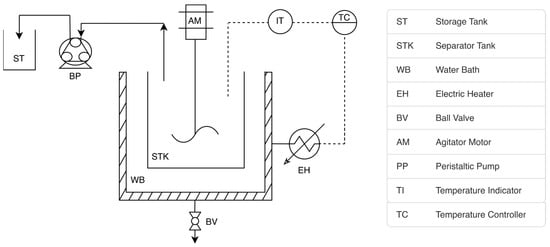
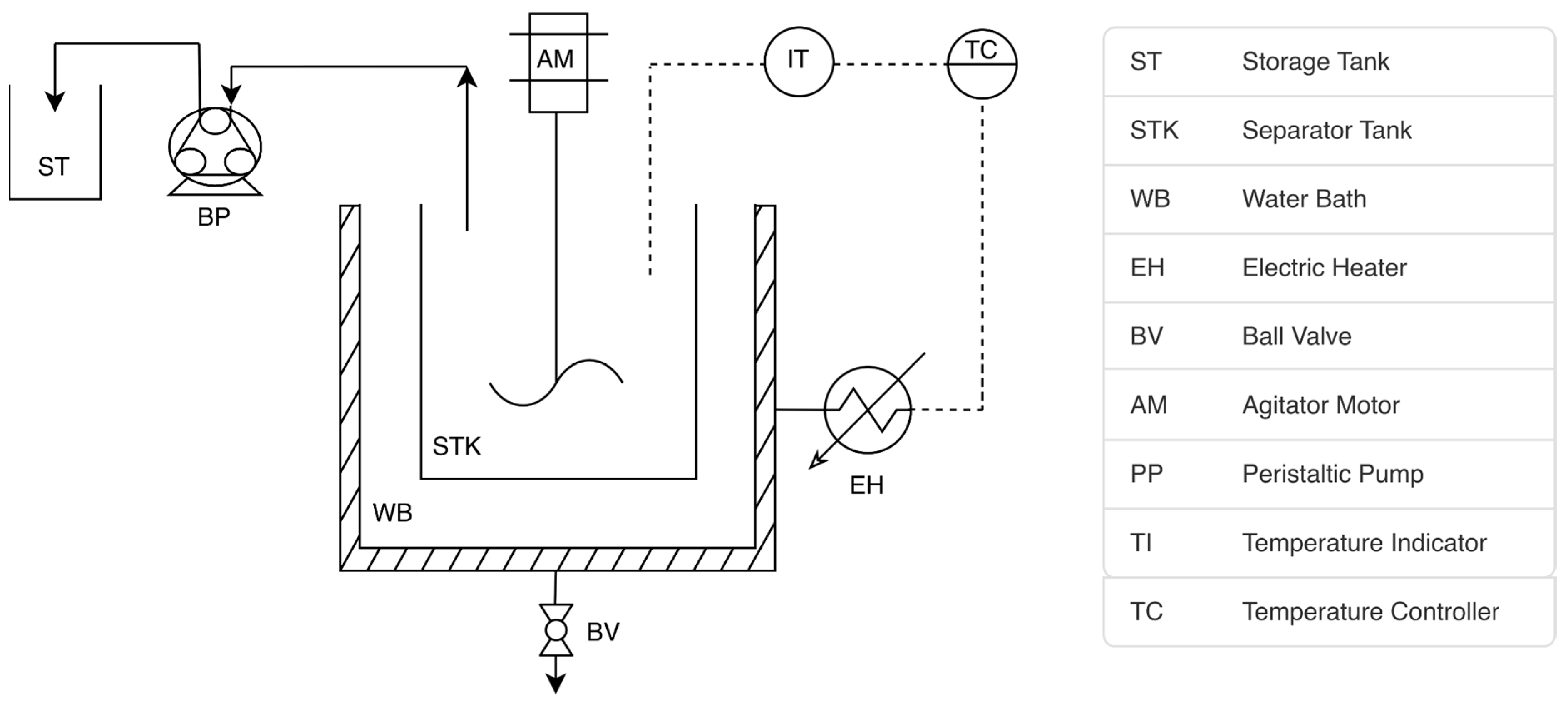
For each establishment, 15–20 L of GTW were collected directly from grease traps located in food preparation areas. An experimental system was constructed for GTW treatment, using the configuration proposed by [22] as a reference, with adaptations for this study. The system consisted of a Separator Tank (STK) for phase separation, a Water Bath (WB) equipped with an Electric Heater (EH) for heating, and a Storage Tank (ST) for collecting the separated oil-rich phase, as shown in Figure 1. GTW samples were transferred to the STK, where they were heated to 60 °C for six hours using the WB with the EH, while slow agitation was applied with an Agitator Motor (AM) to facilitate phase separation. Throughout the process, the temperature was monitored using a Temperature Indicator (TI) and controlled with a Temperature Controller (TC) to maintain stable operating conditions during treatment. This procedure enabled the separation of the waste into three distinct phases: an upper oil-rich phase (oil phase), an intermediate aqueous fraction, and a lower layer of settled solids. The oil phase was extracted using a Cole-Parmer Peristaltic Pump, Model 07554-80 (Cole-Parmer, Vernon Hills, IL, USA) (PP), and transferred to the ST for storage and subsequent quantification, expressed as a percentage relative to the total mass of each processed sample.
Figure 1.
Schematic diagram of GTW phase stratification after thermal treatment.
2.3.2. Water Content
The water content in the oil-rich phase recovered from GTW was measured by volumetric Karl Fischer titration according to ASTM E203 [23]. The results are reported as the mass percentage of water in each sample. This analysis was applied to a subset of samples to validate the procedure used to separate the oil phase from water and solids, as described in Section 2.3.1. The resulting values also provide a reference for evaluating the suitability of pretreated GTW in future recovery or valorization processes.
2.3.3. Free Fatty Acids
The FFAs content was determined using the official Cd 3d-63 method of the American Oil Chemists’ Society [24]. In this method, the sample is dissolved in a solvent mixture (50% isopropyl alcohol/50% toluene, Sigma-Aldrich, St. Louis, MO, USA) and then titrated with 0.1 M KOH (Fermont, Monterrey, Mexico) solution using phenolphthalein as an indicator (Sigma-Aldrich, St. Louis, MO, USA). The FFAs percentage was calculated using the formula , where V is the volume of KOH required to neutralize the sample of mass m (approximately 0.5 g).
2.3.4. Fatty Acid Profile
The fatty acid profiles of the oil-rich phases was analyzed by gas chromatography after conversion of fatty acids to their methyl esters. The derivatization procedure followed a boron-trifluoride-based method according to [25]. Briefly, approximately 300 mg of each sample was subjected to alkaline saponification and subsequent methylation under controlled heating. Fatty acid methyl esters were then extracted with n-heptane, and phase separation was facilitated by the addition of a saturated sodium chloride solution. This procedure was applied to a subset of samples.
Analyses were carried out using a PerkinElmer CLARUS 580 gas chromatograph (PerkinElmer Inc., Waltham, MA, USA) equipped with an HP-23 capillary column (Agilent Technologies, Santa Clara, CA, USA). Separation was achieved using a temperature program with sequential heating stages reaching 250 °C. Helium was employed as the carrier gas at a constant flow rate of 2 mL min−1, with a split injection (100:1) and an injection volume of 0.5 µL.
2.3.5. Lipid Distribution by Thin-Layer Chromatography (TLC)
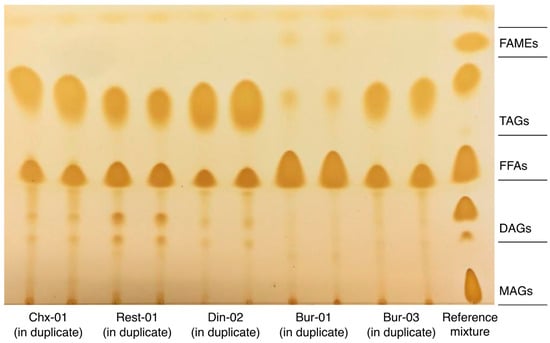
The lipid composition of the samples was analyzed using thin-layer chromatography (TLC), following established standard practices for lipid class separation as described by the American Oil Chemists’ Society [26]. Reference standards were employed to identify monoglycerides (MAGs), diglycerides (DAGs), free fatty acids (FFAs), triglycerides (TAGs), and fatty acid methyl esters (FAMEs). Samples were examined in duplicate to ensure the repeatability of the results. The analysis was conducted on a subset of samples.
2.4. Use of Artificial Intelligence Tools
Artificial intelligence tools were used as auxiliary support during specific data-processing stages of this study. In particular, ChatGPT (OpenAI, GPT-5 model) was employed to assist in the development and refinement of Python (v3.12, Python Software Foundation, Wilmington, DE, USA) code applied to two analytical tasks:
- (i)
- Processing and categorizing the commercial names of food service establishments obtained from DENUE data in order to identify predominant establishment types (see Section 2.1.2).
- (ii)
- Supporting the exploratory analysis of open-ended survey responses related to oil and grease management practices (see Section 2.2).
The use of AI was limited to code assistance and text preprocessing. All analytical decisions, data validation, interpretation of results, and scientific conclusions were performed exclusively by the authors. The AI-generated outputs were manually reviewed and verified prior to inclusion, ensuring compliance with scientific rigor, reproducibility, and transparency standards.
3. Results
The results are organized according to three analytical perspectives: formal collection systems, management routines in food establishments, and physicochemical analysis of GTW. Together, they provide an integrated view of FOG management in the ZMG.
3.1. Evaluation of the Formal Collection System
3.1.1. Authorized Management of FOG Waste
As described in the methodology section, SEMADET authorizes companies to collect and manage FOG waste generated by restaurants. Table 1 presents the company profiles and the reported volumes of waste collected from restaurants in 2023. SEMADET records indicate that only 34 of 66 authorized companies reported collection activity in 2023, accounting for 22.6 million L of FOG waste and 3919 serviced clients (Table 1).
Table 1.
Summary of data reported by companies authorized by SEMADET for the collection of grease and associated food-related waste.
Collection volumes were uneven across the year, with higher reported activity in the first semester (Table 1). This intra-annual variability may be associated with maintenance and collection cycles, as well as the quality of systematic information recording. Previous studies have shown that observable FOG removal outcomes in urban sewer systems are largely conditioned by maintenance practices, inspection regimes, and operational responses, rather than by waste generation alone [7].
The information revealed a high variability in collection volumes and operational capacities between the authorized companies. A small subset still dominates FOG recovery in the region, while many others handle only minimal quantities. Reported collection volumes and operational capacity varied widely between authorized companies, indicating a highly uneven recovery structure within the formal system (Table 1). Most firms operated at small scale, while a small subset concentrated substantially larger volumes and infrastructure, consistent with a long-tail pattern in which few operators dominate regional recovery.
Overall, the authorized FOG waste management system in the ZMG is characterized by a few dominant players handling most of the volume, a long tail of minor collectors, and a primary focus on used oils and grease among the waste types collected.
3.1.2. Waste-Generating Establishments
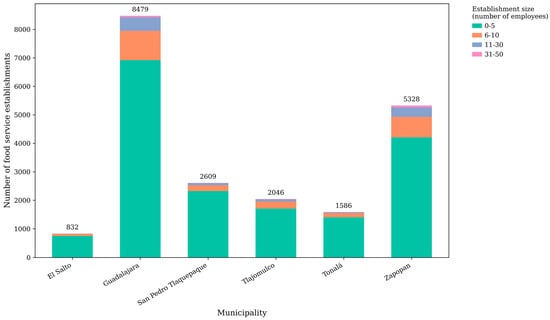
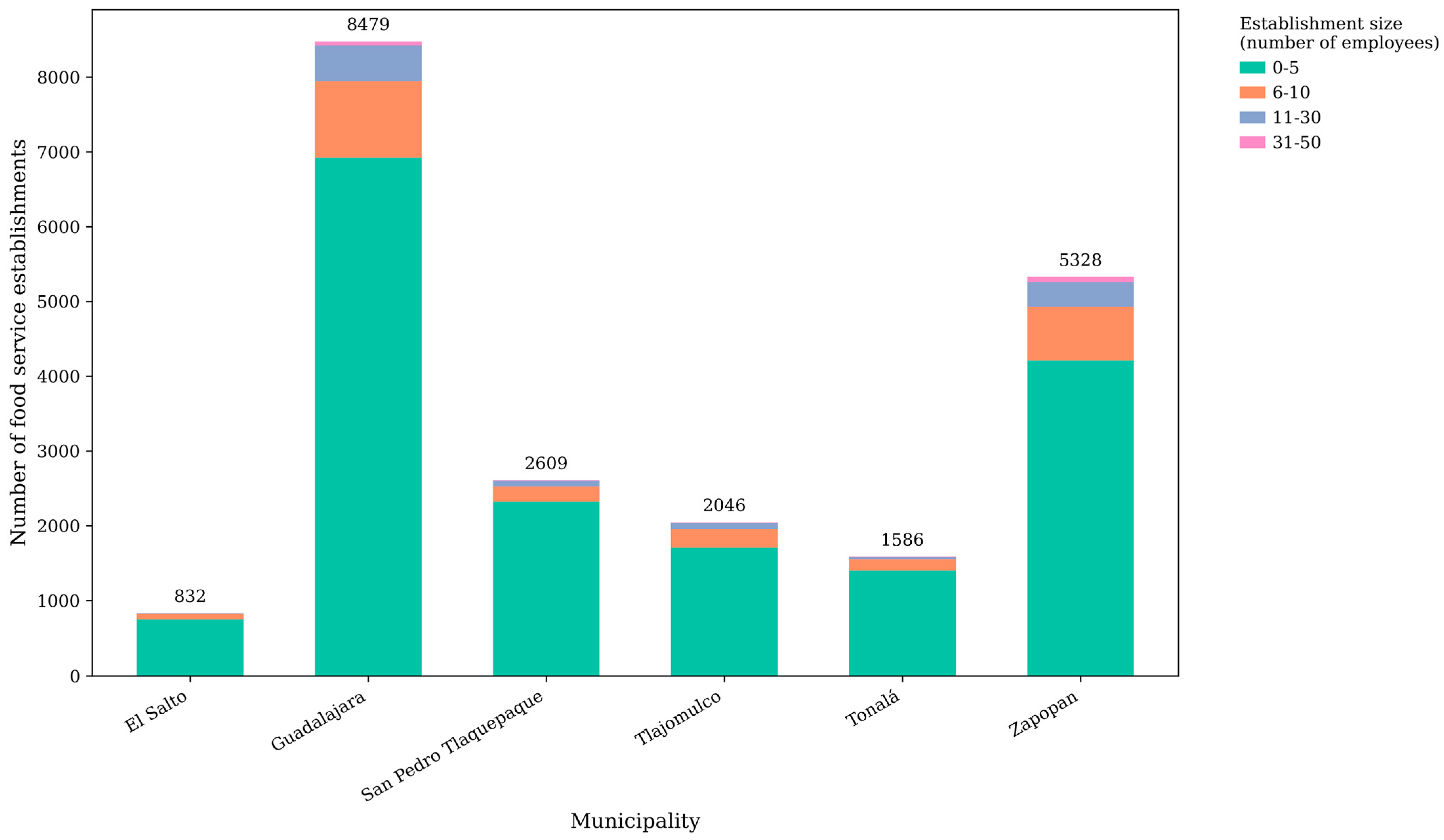
The ZMG has a large food service sector comprising 20,880 establishments, according to DENUE data. Most of these economic units are very small: 83% are microestablishments with 0–5 employees, followed by 11.5% that are classified as small (6–10 workers) (see Figure 2). This distribution clearly demonstrates the prominent presence of micro and small enterprises in the foodservice sector of the ZMG.
Figure 2.
Food service establishments by municipality and size in the ZMG. Source: Own elaboration based on DENUE [20].
Regarding the geographic distribution, Guadalajara, as the central municipality of the ZMG, contains 40.6% of establishments, a proportion that substantially exceeds its 27.3% share of the total population of the ZMG. In contrast, Zapopan accounts for 25.5% of establishments, slightly below its 29.1% share of the ZMG population. The remaining municipalities show lower shares of establishments in line with their demographic and commercial profiles (Figure 2).
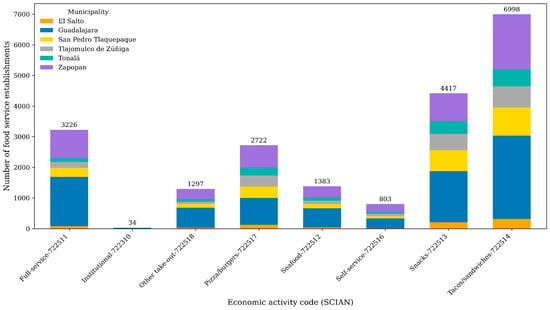
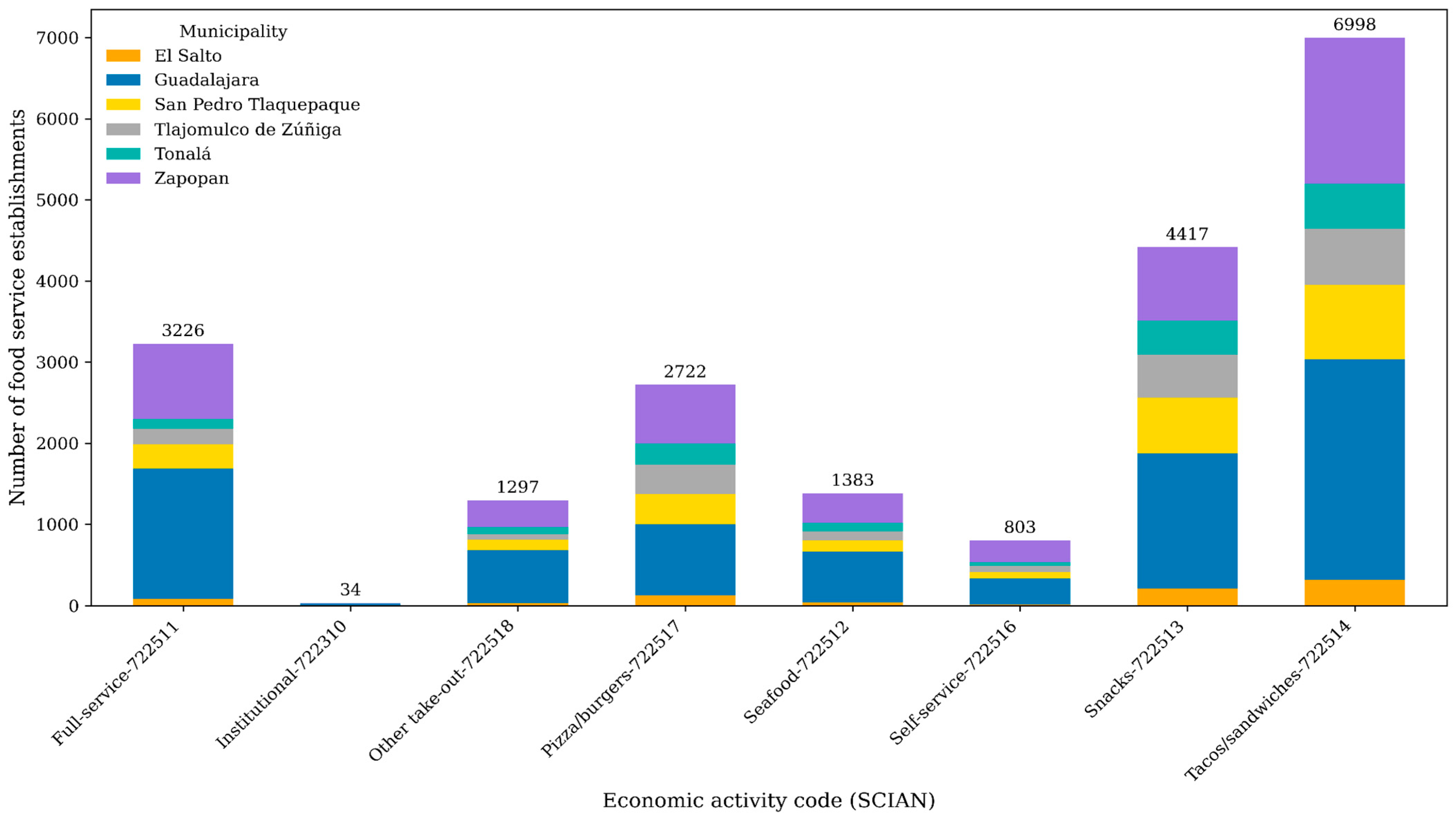
Another way to disaggregate and analyze the foodservice sector in the ZMG is in terms of its economic activity, which is mainly concentrated in three segments (Figure 3): establishments devoted to tacos and tortas (Mexican sandwich shops, SCIAN 722514), antojitos (traditional snack foods, 722513), and restaurants offering à la carte service or fixed daily menus (722511). Together, these three categories account for about 70% of all food service establishments. Notably, two of these types of establishments are characterized by frequent frying and the intensive use of edible oils, which directly increases the potential generation of FOG residues. Analyzing the distribution by municipality for each activity category, Guadalajara contains the highest share of establishments across all categories, followed by Zapopan, while the remaining municipalities show substantially lower participation. This spatial pattern reflects the predominance of traditional fast-food and à la carte dining models in the most densely populated and commercially active areas of the ZMG. Overall, the distribution of establishments by SCIAN category reveals a heterogeneous and spatially concentrated structure of food service offerings.
Figure 3.
Distribution of food service establishments in the ZMG by SCIAN economic activity code and municipality. Source: Own elaboration based on DENUE [20].
To better understand the types of food offered by these establishments in the ZMG, we processed their names using Python code developed with the support of artificial intelligence tools, as described in Section 2.4. The results indicate a clear predominance of taco-oriented and traditional Mexican food establishments, followed by tortas and other fried or roasted food categories. Together, these groups account for the largest share of establishments, while additional segments—including seafood; pizza; Asian food; hamburgers; and regional dishes, such as menudo, barbacoa, and birria—represent smaller but still relevant portions of the foodservice landscape. Additional categories with fewer than 300 mentions each were identified, while a residual group of around 20% could not be clearly classified due to generic or ambiguous commercial names.
Several predominant establishment types are characterized by frequent frying and intensive oil use, which increases the potential for FOG residue generation.
3.1.3. Reported Sanitary Sewer Blockages in the ZMG
Between 2020 and 2024, SIAPA reported 37,591 interventions related to sewer obstructions in the ZMG (Table 2), representing a 24% increase over five years. These records encompass all cases classified operationally as “blocked sewers”, including obstructions caused by sediment; solid waste; roots; and grease, oils, and food residues. However, SIAPA does not maintain disaggregated records identifying the specific cause of each blockage, and therefore, obstructions attributable exclusively to FOG cannot be quantified separately [21]. While this limitation precludes establishing a direct causal link at the local level, extensive international evidence has demonstrated that FOG is a frequent contributor to sewer blockages, particularly through its interaction with solid debris and its role in fatberg formation [4,9].
Table 2.
Reports of sanitary sewer blockages attended by SIAPA in the ZMG.
3.2. Characterization of Management Routines in Food Establishments Based on a Survey
An online survey was disseminated through social media, yielding 204 responses from individuals who work or have previously worked in food service establishments. Detailed survey items and response frequencies are provided in the Supplementary Material. The main points are summarized below.
Most respondents were young (16–24 years); 54.2% were female; and they reported experience in a wide range of settings, including restaurants (36.3%) and small eateries or fondas (15.5%), as well as fast-food eateries, cafeterias, street food stands, and other commercial kitchens. Approximately one-third of respondents had been formally trained on the handling of used cooking oil. When examining this training in terms of gender, a chi-square test identified a significant difference (p-value = 0.054), with less training for women (30.3%) than for men (44.6%). The grease trap was available in just under half of the kitchens. These findings indicate that systematic knowledge and infrastructure for proper oil-waste management remain insufficient among the sampled population.
The most common oil disposal method was storing used oil in containers for later collection (54.1%). However, many respondents reported improper practices: 17.9% disposed of cooled oil in general waste, and 11.4% acknowledged that some oil or grease was poured down the kitchen drain, a risky practice that can clog sewer lines and contaminate water. Use of professional waste services was limited. When asked whether an external company collected their used oil or cleaned their grease trap, 35.0% said yes, 40.9% said no, and 24.1% were unaware of such services. This pattern highlights the low uptake of formal waste management options and limited awareness of their availability.
Most respondents disclosed that frying oil was reused several times prior to disposal, with 33.0% of respondents reporting reusing oil two to three times or until the oil showed deterioration (e.g., color or texture alteration signs). In contrast, only 17.2% discarded oil after a single use. When examining these types of reuse in terms of staff training and gender, no association was detected (p-value = 0.726, p-value = 0.638).
The weekly waste oil production varied by establishment type and size: about one third generated more than 10 L/week, another third produced 5–10 L/week, and roughly a quarter produced less than 5 L/week. When asked whether their workplace would comply with a local waste-oil collection or recycling scheme, 55% said yes, 28% said no, and 17% were unsure.
Respondents also identified several consequences of improper disposal: 25% mentioned pipe blockages and 23% noted environmental contamination. Misconceptions were common, with 15% believing that small amounts cause no harm and another 15% saying the issue is often ignored in kitchens. Additionally, 10% viewed oil dumping as a routine task with minimal repercussions, while 7% considered it a punishable offense. These findings show that although some awareness exists, significant gaps in understanding proper disposal practices persist.
The survey included one open-ended question inviting respondents to share experiences or observations about oil or grease management at their workplace. Forty percent provided written comments, which were analyzed using Python-based text processing and AI tools (Section 2.4). The most frequently reported issue (37%) was poor oil management, including improper storage, disposal through drains, and general neglect. Additionally, 14% mentioned informal practices such as illegal oil resale or unregulated collection. In contrast, 11.5% described positive experiences or effective strategies for handling and disposing of oil.
3.3. Physicochemical Analysis of Grease Trap Samples
The physicochemical properties of GTW samples were analyzed to document their composition and evaluate the risks they pose for sewer obstruction.
3.3.1. Phase Separation in Grease Trap Waste
GTW comprises a heterogeneous mixture of FOG, water, and solids, with proportions varying by establishment type and management practices. In this study, the lipid (FOG) content of the analyzed samples ranged from 5.1% to 28.4% by weight, indicating high variability. This observation is consistent with previous studies reporting a broad range of lipid contents in GTW, from as low as 0.1% to as high as 40%, reflecting differences in source characteristics and operational conditions [27]. Additionally, recent studies have shown that under specific operational conditions and in grease trap waste streams enriched in the floated phase, the lipid fraction can reach substantially higher values, with reported contents of approximately 23% to 49% by weight, further highlighting the intrinsic heterogeneity and phase separation behavior of GTW [28].
3.3.2. Water and FFA Content
The water content in the oil phase recovered after thermal treatment of the samples ranged from 0.416% to 2.206%, with an average of 0.771% ± 0.61 (n = 7). These values reflect the residual moisture in the separated lipid fraction, an important parameter for assessing the material’s potential as a feedstock for energy recovery processes. In general, low water content facilitates storage and downstream processing of oils, while high moisture fractions can complicate conversion routes.
In this study, the recovered oil consistently showed low moisture levels. Experimental work on grease-derived residues has previously shown that thermal treatment can reduce the water content of the oil phase to values below 0.5% under favorable separation conditions [22]. More recent literature describing GTW and related oil fractions reports moisture contents below 2% for oils considered suitable for valorization, with higher water contents typically associated with more degraded or heterogeneous fractions [28]. The observed moisture range falls within the reported values, supporting the interpretation that the recovered oil fraction is suitable for energy recovery applications.
The analysis of FFAs in the same oil phase showed concentrations between 15% and 50% w/w, with an average of 37.1%, and 7 of the 19 samples presented values close to the upper bound (45–50%). Such high acidity reflects advanced degradation of triglycerides and indicates that the residues collected from grease traps were substantially hydrolyzed. Of the 19 samples analyzed, 8 were obtained from hamburger restaurants, 7 from fried chicken establishments, and 4 from cafeterias or general restaurants. The corresponding FFA levels were compared using a one-way ANOVA, which showed no significant differences between the groups (p-value = 0.202).
3.3.3. Fatty Acid Profile
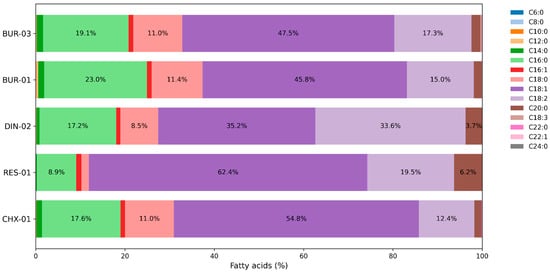
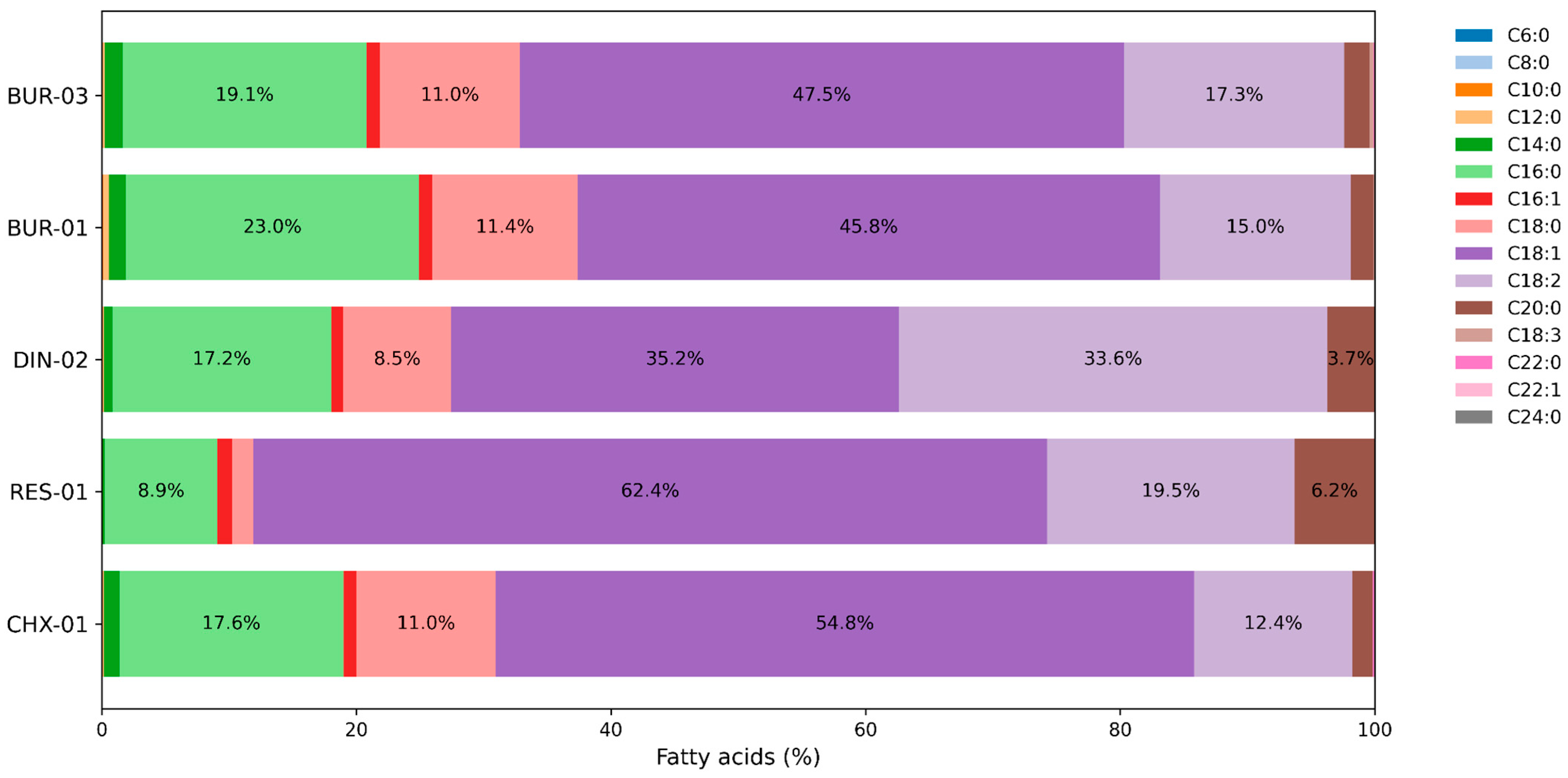
Chromatographic analysis (Figure 4) revealed that oleic acid (C18:1) was the predominant fatty acid in all the analyzed samples, with proportions ranging from 35.2% to 62.4%, the highest detected in the residue from the full-service restaurant (RES-01). In samples from fast food establishments (BUR-01 and BUR-03), higher proportions of palmitic acid (C16:0) were measured (23.0% and 19.1%, respectively), together with appreciable levels of stearic acid (C18:0) (11.4% and 11.0%).
Figure 4.
Fatty acid compositions (%) in GTW samples. Source: Own elaboration based on samples collected from restaurants in the ZMG.
By contrast, the samples DIN-02 and CHX-01 displayed a more balanced composition, with significant proportions of linoleic acid (C18:2) (33.6% and 12.4%, respectively). The DIN-02 sample showed the most even distribution between saturated and unsaturated fatty acids. RES-01 contained the lowest proportions of palmitic and stearic acids, while oleic acid predominated. Only trace levels of minor fatty acids, such as arachidic (C20:0) and linolenic acid (C18:3), were detected in this sample. Overall, the type of establishment influenced the relative abundances of saturated and unsaturated fatty acids in the residues.
3.3.4. Lipid Distribution by Thin-Layer Chromatography (TLC)
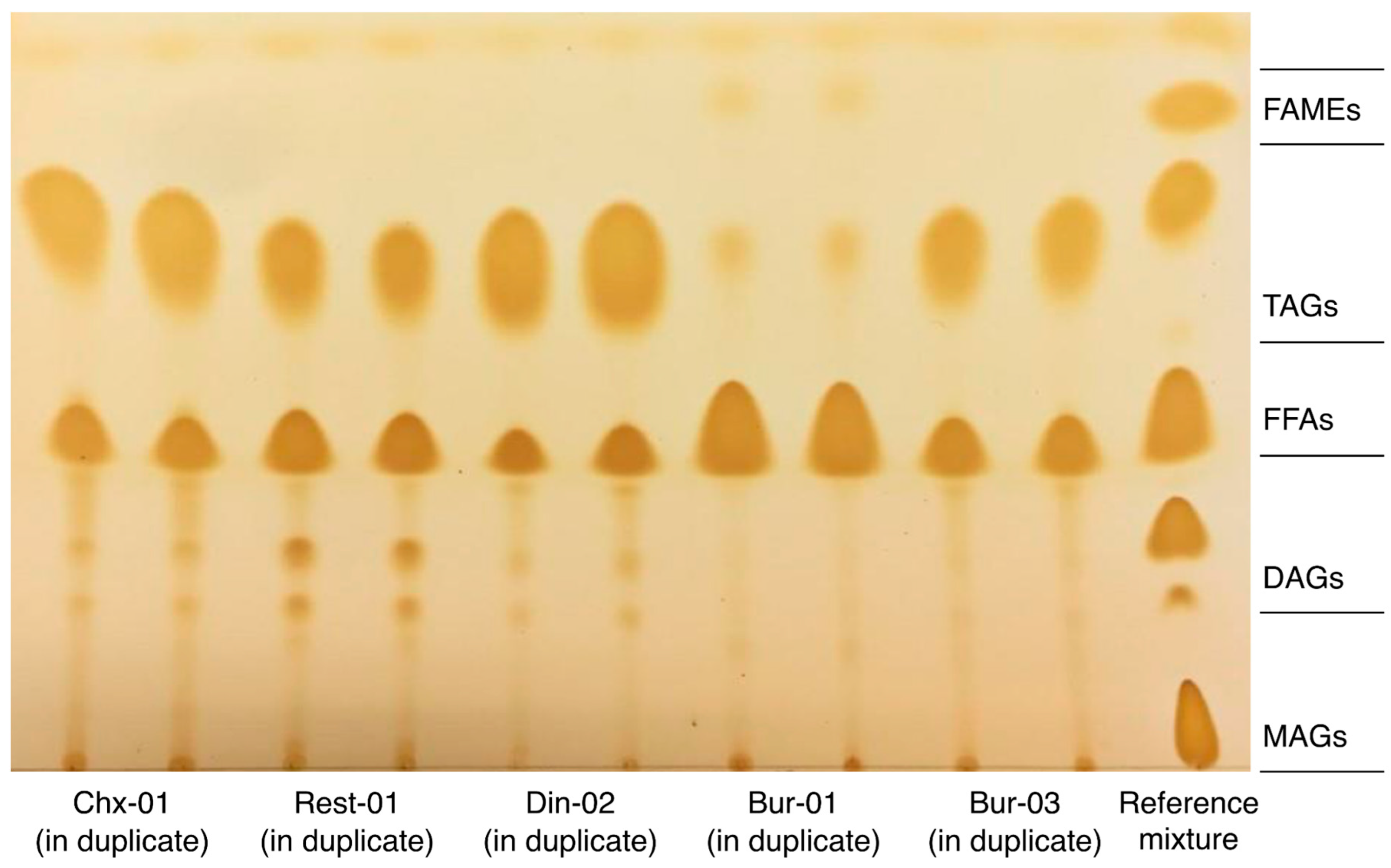
Thin-layer chromatography (TLC) of the analyzed samples (Figure 5) was used as a qualitative tool to identify the main lipid classes, including monoglycerides (MAGs), diglycerides (DAGs), free fatty acids (FFAs), triglycerides (TAGs), and fatty acid methyl esters (FAMEs). In most samples, a prominent band corresponding to FFAs was observed, accompanied by a weaker TAG band. This pattern was particularly noticeable in sample BUR-01, where the TAG signal was faint and the FFA band was dominant. The bands corresponding to MAGs and DAGs were weak or absent in nearly all cases. No FAMEs were detected in any of the analyzed samples.
Figure 5.
Thin-layer chromatography (TLC) of the lipid classes in the GTW samples, showing dominant FFA bands and faint TAG bands. Source: Own elaboration based on the samples collected from restaurants in the ZMG.
4. Discussion
The present study provides an integrated perspective on FOG management by jointly examining the institutional performance, on-site management practices, and physicochemical properties of GTW in the ZMG. This multi-perspective approach allows for a more comprehensive understanding of the structural, behavioral, and technical factors that shape FOG management outcomes, particularly in urban contexts dominated by micro- and small-scale food establishments.
The findings reveal important challenges in the management of FOG in the ZMG. Within the formal collection system, the effective operational coverage remains limited when contrasted with the size and structure of the foodservice sector as documented by DENUE, indicating that a substantial share of establishments operate outside the authorized collection scheme. This mismatch highlights structural gaps between the formal system capacity and actual waste generation, with potential implications for regulatory compliance.
The results of the survey administered to personnel who currently work or have previously worked in food service establishments support this interpretation. Limited use of formal collection and grease trap cleaning services was observed, alongside the persistence of improper disposal practices such as discarding used oil with general waste or discharging it into drains. These behaviors indicate regulatory non-compliance and limited awareness of the environmental implications of inadequate FOG management, consistent with observations reported in other regions [7].
The lack of systematic records within state agencies complicates the assessment of service coverage, the monitoring of authorized companies, and the identification of non-compliance. This limitation in data traceability restricts the capacity to evaluate system performance and to design evidence-based management strategies.
Operational implications of these deficiencies are evident in the recurrent occurrence of sewer blockages reported by SIAPA. Although the available records do not identify the specific cause of each event, the high frequency of blockages suggests a systemic problem consistent with inadequate FOG management and limited preventive control, as well as deficient information systems. Similar situations have been reported in many other countries, where the accumulation of FOG is recognized as a leading cause of sewer obstructions and sanitary sewer overflows. Hardened FOG deposits—commonly known as fatbergs—form through interactions between lipids and other materials in wastewater and have been shown to interfere with sewer operations and significantly increase maintenance requirements [6,29,30].
From a technical standpoint, the compositions of the GTW varied markedly between the samples. In all cases, the lipid fraction showed low moisture content but consistently high levels of free fatty acids, reflecting advanced degrees of degradation. These values are slightly higher than those reported for post-extraction residues by [22] and fall within typical ranges for highly degraded waste oils. High FFA contents are known to arise from repeated frying and prolonged exposure to heat, processes that favor the hydrolytic breakdown of triglycerides [31,32]. This interpretation is in line with the TLC results obtained in this study, with lipid class distributions pointing to advanced degradation. The fatty acid profile of the samples was dominated by oleic acid, in agreement with previous studies on GTW [6]. Higher proportions of palmitic and stearic acids in some samples suggest oil reuse or the use of partially hydrogenated fats [32,33]. These compositional features explain the potential for calcium soap formation and deposits in sewer systems [34]. Recent studies have highlighted the role of interactions between free fatty acids, calcium ions, and sanitary waste materials in shaping the formation and stability of FOG deposits in sewer environments [6], while also indicating opportunities for energy valorization, particularly in biodiesel or biogas production, provided that adequate pretreatment processes are implemented [35,36]. On this topic, recent techno-economic studies have also evaluated the feasibility of converting grease trap residues into biodiesel. For instance, [37] reported a best estimated production cost of US $1337.5 per tonne, suggesting that grease trap waste may represent a promising feedstock for biodiesel production, while emphasizing the importance of feedstock pretreatment and process scale. In addition, a recent review on biodiesel production from recycled grease trap waste highlights the growing interest in GTW as a low-cost feedstock and notes that fully integrated economic and marketability assessments are still limited in the literature [38]. This set of studies indicates that although the valuation methods are conceptually promising, formal economic feasibility studies adapted to the context of Guadalajara remain an important direction for future research.
The high content of saturated fatty acids, particularly palmitic acid, observed in the analyzed grease trap waste samples is consistent with findings by [7], who identified this compound as a key component in FOG deposits formed in sewer systems. The composition of FOG materials has also been shown to be influenced by co-disposed waste and the presence of metal ions such as Fe and Al [6]. While our study did not evaluate these interactions directly, the variability in GTW composition under real-world conditions reflects the complexity of FOG-related residues described in controlled experimental settings.
According to [3], commercial grease interceptors often fail to retain long-chain fatty acids effectively, particularly under poor maintenance conditions. Similarly, [28] identified technical limitations for GTW valorization, including the presence of sulfur and metal contaminants. In our study, the fatty acid composition of grease trap waste and the variability in cleaning practices reported by food establishments in the ZMG reflect operational conditions that may both hinder FOG retention at the source and reduce the feasibility of downstream valorization strategies.
The high free fatty acids content observed in grease trap waste poses technical challenges for its direct valorization. Elevated FFA levels are associated with saponification and emulsion formation, which can limit process compatibility and typically necessitate some form of prior conditioning or pretreatment before downstream recovery or utilization.
Beyond the regulatory and technical shortcomings, the structural characteristics of the foodservice sector in the ZMG strongly condition FOG management outcomes. According to DENUE data, the sector is largely composed of micro and small enterprises, which typically operate with limited financial and technical resources. This structural predominance limits their ability to invest in grease interceptors, contract authorized collection services, or train staff in best practices. Furthermore, the sector is highly concentrated in activities such as tacos, tortas, antojitos, and daily-menu restaurants, all of which rely heavily on frying and intensive oil use. This activity profile inherently increases the generation of lipid-rich residues, which is consistent with the high levels of FFAs detected in grease trap samples. The intersection of predominantly micro-scale businesses with oil-intensive cooking practices thus amplifies the challenges of FOG management in the region, making enforcement, capacity building, and sector-specific strategies essential.
While the analysis is grounded in the specific context of the ZMG, the conditions observed—such as fragmented institutional responsibilities, limited regulatory oversight, and the predominance of micro-scale food establishments—are widely shared across many urban regions. Consequently, the patterns and challenges described in this study may be relevant beyond the local scale and inform FOG management strategies in other metropolitan contexts.
Physicochemical analyses of grease trap waste confirmed the presence of high FOG contents, which several surveyed staff also recognized as posing environmental and operational risks. In parallel, although fragmented, records from the formal collection system indicate both the existence of regulatory controls and the need to strengthen their consistent enforcement.
4.1. Prospects
Overall, the results indicate that FOG management in the ZMG is characterized by insufficient coverage of the formal collection system, limited adoption of adequate practices in food establishments, and residues with properties that pose risks to sewer infrastructure but also offer potential for resource recovery. Addressing these challenges requires stronger regulatory enforcement and incentives to expand access to collection services for small and microenterprises, the implementation of training and awareness programs, and the development of systematic data collection within state agencies. In this regard, international reviews of FOG management report successful enduring programs, such as those in Dublin and several Scandinavian municipalities, where combinations of mandatory grease capture devices, regular inspection requirements, public education, and enforcement mechanisms have contributed to improved compliance and reduced sewer blockages [29]. Simultaneously, advancing scalable pretreatment technologies for high-FFA residues could reconcile infrastructure protection with the promotion of waste valorization strategies.
4.2. Limitations
The findings of this study should be interpreted within the context of the structural and operational conditions under which FOG management takes place. The analysis of the formal collection system reflects the fragmented nature of existing institutional information systems, which limits the availability of fully integrated datasets but also represents a key characteristic of the current regulatory and operational landscape addressed in this work.
The survey component was designed as an exploratory instrument to capture operational practices directly from individuals with experience working in commercial kitchens and food service environments. This approach prioritizes practice-based knowledge and provides insight into day-to-day management behaviors that are not systematically documented through institutional records. Given its exploratory nature and the non-probabilistic sampling strategy, the survey findings are intended to highlight prevailing patterns and contextual constraints rather than to support statistical inference or population-level generalization.
The physicochemical characterization of GTW was conducted under real-world collection conditions, requiring coordination with authorized waste management companies and adaptation to site-specific factors, such as the trap type, collection schedules, and access restrictions. While these conditions constrain the sampling flexibility, they ensure that the analyzed samples are representative of operational realities and support a context-specific interpretation of the results.
5. Conclusions
This study shows that FOG management in the Guadalajara Metropolitan Area (ZMG) faces structural limitations. Although authorized collection companies operate in the region, the overall service coverage remains limited, leaving a substantial number of micro and small food establishments outside the formal management system.
Survey-based findings indicate limited compliance with recommended management practices, including frequent oil reuse and inadequate disposal routes that increase the risk of sewer blockages. These patterns are closely associated with the predominance of small-scale businesses with restricted technical and financial capacity, as well as with foodservice activities characterized by intensive oil use.
The physicochemical characterization of grease trap waste further supports these observations, revealing high free fatty acids contents and profiles typical of repeatedly used oils, consistent with fragmented management and insufficient maintenance practices.
Taken together, the results highlight the need to strengthen regulatory implementation, expand service coverage for micro and small establishments, and promote training and awareness initiatives aimed at improving FOG management. At the same time, the compositional characteristics of these residues suggest opportunities for energy recovery within a circular economy framework, provided that appropriate conditioning or pretreatment strategies are considered.
Supplementary Materials
The following supporting information can be downloaded at: https://www.mdpi.com/article/10.3390/resources15030035/s1.
Author Contributions
Conceptualization, R.H.-M. and H.G.-P.; Methodology, R.H.-M. and H.G.-P.; Investigation, R.H.-M. and A.G.A.-M.; Data curation, R.H.-M., J.P.G.-S. and A.G.A.-M.; Writing—original draft, R.H.-M. and H.G.-P.; Writing—review and editing, R.H.-M., H.G.-P., J.P.G.-S. and A.G.A.-M.; Formal analysis, H.G.-P. and J.P.G.-S.; Validation, H.G.-P.; Visualization, J.P.G.-S. and A.G.A.-M. All authors have read and agreed to the published version of the manuscript.
Funding
This research received no external funding.
Institutional Review Board Statement
This study was conducted in accordance with institutional practices and applicable ethical guidelines for non-clinical, observational research. Due to the anonymous, voluntary nature of the survey and the absence of personal or sensitive data collection, the study did not require Institutional Review Board (IRB) review or approval.
Informed Consent Statement
Participants were provided with an information notice describing the purpose and voluntary nature of the study prior to completing the anonymous survey. Participation in the survey implied consent.
Data Availability Statement
The datasets generated and analyzed during the current study include information from public databases, as well as additional data that are not publicly available. Public data can be accessed through the corresponding institutions, while the remaining datasets are available from the corresponding author upon reasonable request.
Acknowledgments
During the preparation of this work, the authors used ChatGPT (OpenAI, GPT-5 model) to support Python code development, preliminary text processing during data analysis, and linguistic support and translation of select paragraphs. After using this service, the authors reviewed and edited the content as needed, and they take full responsibility for the content of the published article.
Conflicts of Interest
The authors declare no conflicts of interest.
References
- Mohana, A.A.; Roddick, F.; Maniam, S.; Gao, L.; Pramanik, B.K. Component analysis of fat, oil and grease in wastewater: Challenges and opportunities. Anal. Methods 2023, 15, 5112–5128. [Google Scholar] [CrossRef] [Scilit]
- Gallimore, E.; Aziz, T.N.; Movahed, Z.; Ducoste, J. Assessment of Internal and External Grease Interceptor Performance for Removal of Food-Based Fats, Oil, and Grease from Food Service Establishments. Water Environ. Res. 2011, 83, 882–892. [Google Scholar] [CrossRef] [Scilit]
- Sultana, N.; Roddick, F.; Gao, L.; Guo, M.; Pramanik, B.K. Understanding the properties of fat, oil, and grease and their removal using grease interceptors. Water Res. 2022, 225, 119141. [Google Scholar] [CrossRef] [Scilit] [PubMed]
- He, X.; de los Reyes, F.L., III; Ducoste, J.J. A critical review of fat, oil, and grease (FOG) in sewer collection systems: Challenges and control. Crit. Rev. Environ. Sci. Technol. 2017, 47, 1191–1217. [Google Scholar] [CrossRef] [Scilit]
- Kusum, S.A.; Pour-Ghaz, M.; Ducoste, J.J. Reducing fat, oil, and grease (FOG) deposits formation and adhesion on sewer collection system structures through the use of fly ash replaced cement-based materials. Water Res. 2020, 186, 116304. [Google Scholar] [CrossRef] [Scilit]
- Yadav, S.; Pramanik, B.K. Elucidating the impact of sanitary waste on the formation of fat, oil and grease deposits in sewer systems. Chemosphere 2024, 358, 142183. [Google Scholar] [CrossRef] [Scilit] [PubMed]
- Yusuf, H.H.; Roddick, F.; Jegatheesan, V.; Gao, L.; Pramanik, B.K. Tackling fat, oil, and grease (FOG) build-up in sewers: Insights into deposit formation and sustainable in-sewer management techniques. Sci. Total Environ. 2023, 904, 166761. [Google Scholar] [CrossRef] [Scilit]
- Azmi, N.A.; Aziz, H.A.; Abdullah, S.B.; Manaf, N.A.; Tan, L.S. Evaluation of risk associated with treatment of fat, oil, and grease: Grease interceptor from food processing industry effluent using bowtie analysis. Process Saf. Prog. 2024, 43, S90–S97. [Google Scholar] [CrossRef] [Scilit]
- Collin, T.; Cunningham, R.; MacAdam, J.; Villa, R.; Jefferson, B.; Jeffrey, P. Towards a risk ranking for improved management of discharges of fats, oils, and greases (FOG) from food outlets. H2Open J. 2023, 6, 29–39. [Google Scholar] [CrossRef] [Scilit]
- Arumugam, T.; Ravindran, P.; Sobri, S.; Ali, S.; Razak, M.A. Public Awareness and Performance Assessment of Communal Grease Traps in Klang Valley, Malaysia. Pertanika J. Sci. Technol. 2025, 33, 987–1005. [Google Scholar] [CrossRef] [Scilit]
- Lagos, A.S.; Landázuri, A.C. Impact of Water Circularity on Climate Change: Removal of Fats, Oils and Grease (FOG) from Water Using Green and Simple Extraction Methods. Sustainability 2023, 15, 4176. [Google Scholar] [CrossRef] [Scilit]
- NOM-052-SEMARNAT-2005; Que Establece las Características, el Procedimiento de Identificación, Clasificación y Los Listados de Los Residuos Peligrosos. Diario Oficial de la Federación: Ciudad de México, Mexico, 2006.
- LGPGIR. Ley General para la Prevención y Gestión Integral de los Residuos; Última reforma publicada el 8 de Mayo de 2023; Diario Oficial de la Federación: Ciudad de México, Mexico, 2003. [Google Scholar]
- NOM-161-SEMARNAT-2011; Que Establece Los Criterios Para Clasificar Los Residuos de Manejo Especial y Determinar Cuáles Están Sujetos a Plan de Manejo. Diario Oficial de la Federación: Ciudad de México, Mexico, 2013.
- NOM-083-SEMARNAT-2003; Especificaciones de Protección Ambiental Para la Selección del Sitio, Diseño, Construcción, Operación, Monitoreo, Clausura y Obras Complementarias de un Sitio de Disposición Final de Residuos Sólidos Urbanos y de Manejo Especial. Diario Oficial de la Federación: Ciudad de México, Mexico, 2004.
- NOM-002-SEMARNAT-1996; Que Establece los Límites Máximos Permisibles de Contaminantes en las Descargas de Aguas Residuales a Los Sistemas de Alcantarillado Urbano o Municipal. Diario Oficial de la Federación: Ciudad de México, Mexico, 1998.
- SEMADET, Secretaría de Medio Ambiente y Desarrollo Territorial de Jalisco. Clasificación de Residuos de Manejo Especial. Available online: https://semadet.jalisco.gob.mx/medio-ambiente/residuos/residuos-de-manejo-especial (accessed on 10 June 2024).
- INEGI—Instituto Nacional de Estadística y Geografía. Censo de Población y Vivienda 2020: Panorama Sociodemográfico de México. México, 2020. Available online: https://www.inegi.org.mx/programas/ccpv/2020/ (accessed on 5 May 2025).
- Vidal Becerra, E.; Mójica Mesinas, C.; Acosta Pintor, D.C.; Guerrero Nicolás, A. Generación de aceites y grasas residuales en establecimientos de preparación de alimentos. Rev. Tectzapic 2018, 4, 9–15. [Google Scholar]
- DENUE—National Statistical Directory of Economic Units. National Statistical Directory of Economic Units. National Institute of Statistics and Geography, Mexico, 2025. 2025. Available online: https://www.inegi.org.mx/app/mapa/denue/ (accessed on 8 June 2025).
- SIAPA—Sistema Intermunicipal de los Servicios de Agua Potable y Alcantarillado. Respuesta a Solicitud de Información Pública con Folio 140279225000385; Unidad de Transparencia del SIAPA: Guadalajara, Mexico, 2025. [Google Scholar]
- Kobayashi, T.; Kuramochi, H.; Maeda, K.; Tsuji, T.; Xu, K. Dual-fuel production from restaurant grease trap waste: Bio-fuel oil extraction and anaerobic methane production from the post-extracted residue. Bioresour. Technol. 2014, 169, 134–142. [Google Scholar] [CrossRef] [Scilit] [PubMed]
- ASTM E203-16; Standard Test Method for Water Using Volumetric Karl Fischer Titration. ASTM International: West Conshohocken, PA, USA, 2016.
- Firestone, D. Official Method Cd 3d-63: Acid Value. In Official Methods and Recommended Practices of the American Oil Chemists’ Society, 5th ed.; AOCS Press: Champaign, IL, USA, 1998. [Google Scholar]
- Rivera, I.; Villanueva, G.; Sandoval, G. Producción de biodiesel a partir de residuos grasos animales por vía enzimática. Grasas Aceites 2009, 60, 468–474. [Google Scholar]
- Firestone, D. (Ed.) Official Methods and Recommended Practices of the AOCS, 6th ed.; Official Methods and Recommended Practices; AOCS Press: Champaign, IL, USA, 2017. [Google Scholar]
- Hums, M.E.; Cairncross, R.A.; Spatari, S. Life-Cycle Assessment of Biodiesel Produced from Grease Trap Waste. Environ. Sci. Technol. 2016, 50, 2718–2726. [Google Scholar] [CrossRef] [Scilit] [PubMed]
- Mata, A.; Zhang, J.; Pridemore, J.; Johnson, K.; Holliday, N.; Helmstetter, A.; Lu, M. A Review of Grease Trap Waste Management in the US and the Upcycle as Feedstocks for Alternative Diesel Fuels. Environments 2024, 11, 159. [Google Scholar] [CrossRef] [Scilit]
- Wallace, T.; Gibbons, D.; O’Dwyer, M.; Curran, T.P. International evolution of fat, oil and grease (FOG) waste management—A review. J. Environ. Manag. 2017, 187, 424–435. [Google Scholar] [CrossRef] [Scilit]
- Woods, A.M.; Pettinger, C.J.; Harris, C.; Soule, T.; Farley, G.; Majumder, E.L.-W. Capacity of Microbial Strains and Communities to Degrade Sewerage Fats, Oils, and Grease Clog Deposits. Appl. Microbiol. 2025, 5, 116. [Google Scholar] [CrossRef] [Scilit]
- He, X.; Iasmin, M.; Dean, L.O.; Lappi, S.E.; Ducoste, J.J.; de los Reyes, F.L., III. Evidence for Fat, Oil, and Grease (FOG) Deposit Formation Mechanisms in Sewer Lines. Environ. Sci. Technol. 2011, 45, 4385–4391. [Google Scholar] [CrossRef] [Scilit]
- Nagy, K.; Iacob, B.-C.; Bodoki, E.; Oprean, R. Investigating the Thermal Stability of Omega Fatty Acid-Enriched Vegetable Oils. Foods 2024, 13, 2961. [Google Scholar] [CrossRef] [Scilit]
- Nayak, P.K.; Dash, U.; Rayaguru, K.; Krishnan, K.R. Physio-Chemical Changes During Repeated Frying of Cooked Oil: A Review: Deep Frying of Oil. J. Food Biochem. 2016, 40, 371–390. [Google Scholar] [CrossRef] [Scilit]
- Gross, M.A.; Jensen, J.L.; Gracz, H.S.; Dancer, J.; Keener, K.M. Evaluation of physical and chemical properties and their interactions in fat, oil, and grease (FOG) deposits. Water Res. 2017, 123, 173–182. [Google Scholar] [CrossRef] [Scilit]
- Lam, M.K.; Lee, K.T.; Mohamed, A.R. Homogeneous, heterogeneous and enzymatic catalysis for transesterification of high free fatty acid oil (waste cooking oil) to biodiesel: A review. Biotechnol. Adv. 2010, 28, 500–518. [Google Scholar] [CrossRef] [Scilit]
- Kolet, M.; Zerbib, D.; Nakonechny, F.; Nisnevitch, M. Production of Biodiesel from Brown Grease. Catalysts 2020, 10, 1189. [Google Scholar] [CrossRef] [Scilit]
- Tran, N.N.; Tišma, M.; Budžaki, S.; McMurchie, E.J.; Gonzalez, O.M.M.; Hessel, V.; Ngothai, Y. Scale-up and economic analysis of biodiesel production from recycled grease trap waste. Appl. Energy 2018, 229, 142–150. [Google Scholar] [CrossRef] [Scilit]
- Tran, N.N.; Tišma, M.; Budžaki, S.; McMurchie, E.J.; Ngothai, Y.; Morales Gonzalez, O.M.; Hessel, V. Production of Biodiesel from Recycled Grease Trap Waste: A Review. Ind. Eng. Chem. Res. 2021, 60, 16547–16560. [Google Scholar] [CrossRef] [Scilit]

Disclaimer/Publisher’s Note: The statements, opinions and data contained in all publications are solely those of the individual author(s) and contributor(s) and not of MDPI and/or the editor(s). MDPI and/or the editor(s) disclaim responsibility for any injury to people or property resulting from any ideas, methods, instructions or products referred to in the content. |
© 2026 by the authors. Licensee MDPI, Basel, Switzerland. This article is an open access article distributed under the terms and conditions of the Creative Commons Attribution (CC BY) license.