Article

Management of Common Land in the Context of Climate Change: A Multi-Scenario Simulation

by
Katarzyna Kocur-Bera
Department of Geoinformation and Cartography, University of Warmia and Mazury in Olsztyn, Oczapowskiego 2, 10-719 Olsztyn, Poland
Resources 2026, 15(3), 36; https://doi.org/10.3390/resources15030036
Submission received: 22 December 2025 / Revised: 5 February 2026 / Accepted: 21 February 2026 / Published: 25 February 2026

Abstract

Reducing greenhouse gas emissions and promoting biodiversity are currently among the key orientations of European climate policy. The increase in atmospheric greenhouse gas concentrations (including carbon dioxide) is caused, among others, by the environmental impacts of human activities. Carbon capture and storage are at the heart of climate and energy security. This study aimed to analyze scenarios that assume various ways of using and managing common land. Common land is found in many countries. However, the legal status of these lands varies. This status often determines how the land can be managed. The article uses online surveys (CAWI), the land morphology concept (LMC), the scenario method, and an analysis of precedent events. The scenarios considered the stakeholders in the process. The results demonstrated that the optimal approach is to use regenerative agriculture with cover cropping. The diagnosis of precedent events showed that this method of use may be difficult to apply under local conditions due to low social involvement in the process of obtaining autonomy and self-determination by the parties entitled to common land, as well as by national-level authorities.

1. Introduction

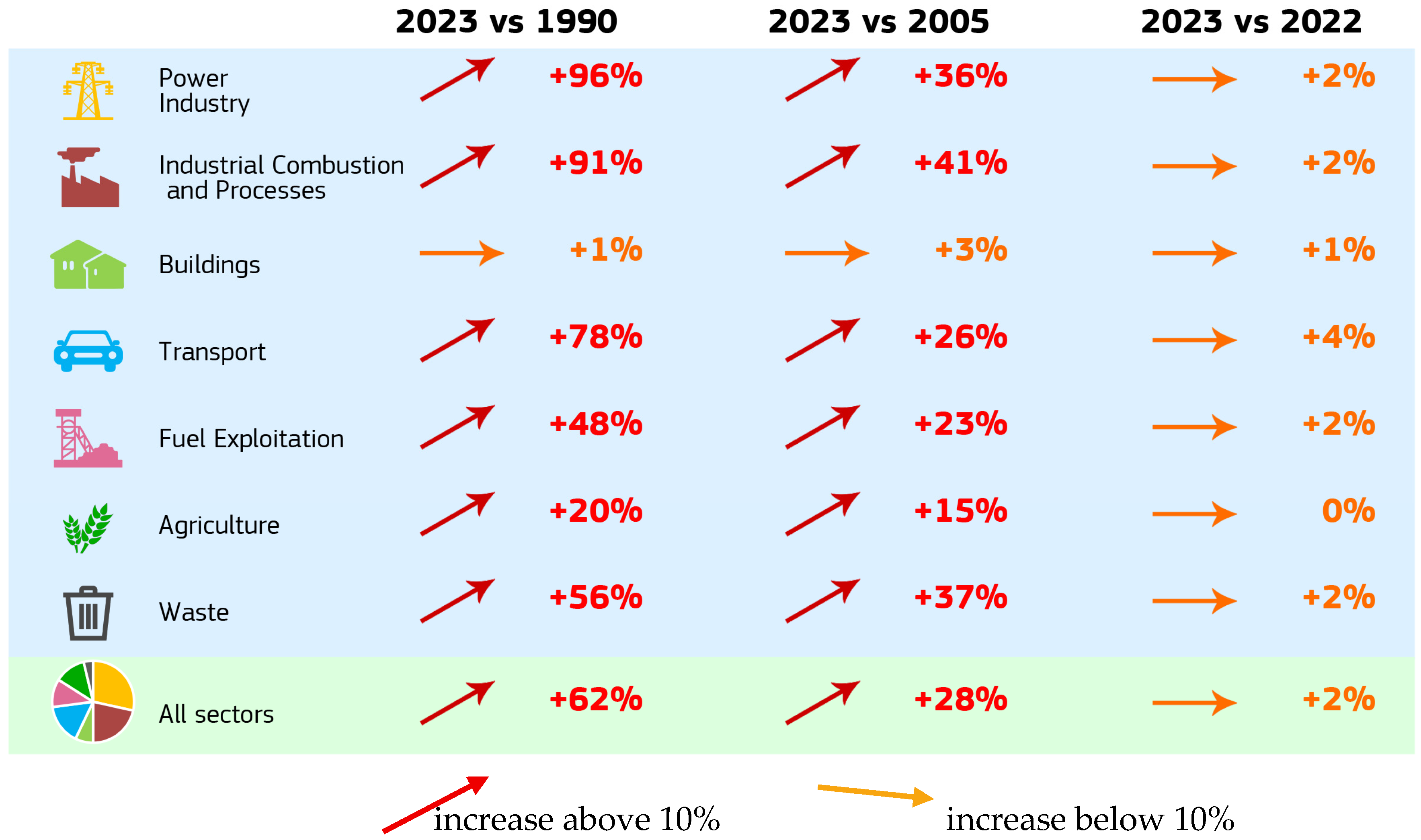
The European Union’s climate policy aims at to promote low-carbon technologies and to protect and improve the quality of the environment [1]. Measures that enhance improve the quality of the environment pursue targeted land-use strategies aimed at safeguarding existing ecosystems and increasing the extent of areas contributing to carbon dioxide sequestration [2]. Expanding such areas constitutes one of the fundamental directions in the implementation of pro-climate policy objectives (in the context of supporting climate protection, mitigating adverse environmental impacts) [3,4]. Global net anthropogenic greenhouse gas (GHG) emissions during the last decade (2010–2019) were higher than at any previous time in human history [5]. In 2023, the majority of GHG emissions consisted of fossil CO2 accounting for 73.7% of total emissions, while CH4 contributed for 18.9% to the total, N2O for 4.7% and F-gases for 2.7%. Global fossil CO2 emissions increased by 72.1% since 1990 [6] (see Figure 1). Carbon dioxide is the principal driver of global warming, while other gases act to amplify this effect [7]. Maintaining ecosystems is crucial for regulating the climate. Agricultural practice, as well, which directly affects soil, plants and the atmosphere, represents a strategic lever to counteract climate change by mitigating GHG emissions, and fostering soil C storage [3,8,9,10,11,12].
Natural processes occurring in areas with limited infrastructure and development play a decisive role not only in shaping the landscape but also in absorbing CO2. In public spaces, such areas include, for example, gardens, parks, forests, green zones, as well as unmanaged or neglected lands with spontaneous native vegetation commonly used by local communities. These areas differ in legal status and function, and some of them are classified as common land. The absence of clear legal regulation governing the status of common land has significant implications for both its patterns of use and its environmental and climatic functions. These areas—situated in diverse spatial contexts such as the margins of agricultural land, built-up zones, forest edges, or along water bodies—are typically covered with native vegetation and are subject to relatively low levels of anthropogenic pressure. Consequently, they are seldom incorporated into clearly defined economic functions, which in turn shapes the ecosystem services they provide, including water retention, habitat provision, and potential carbon accumulation in biomass and soils. In this context, and in light of contemporary climate policy challenges, an important question arises: Should categorical regulatory instruments be introduced to formalize the legal status and governance of common land and to define principles for its use? Evidence from jurisdictions where common land regimes have been institutionalized—most notably England—indicates that formalization can produce multidirectional effects. Regulatory interventions may enhance clarity of use-rights and facilitate the implementation of structured management mechanisms, yet they can also induce landscape transformations and shifts in land-use regimes, with consequences for biodiversity, social relations, and the broader climate-related functions of these territories. Comparative analyses suggest that although common land is embedded within varied legal frameworks across countries, it is generally conceptualized as a “resource governed collectively by a defined community with customary or formalized authority over decisions concerning its use and stewardship” [13]. Such arrangements differ fundamentally from classical private co-ownership, possessing distinctive historical, institutional, and territorial characteristics [13,14,15,16]. Common land have been documented on every continent and, in Europe, can be traced back at least to the early medieval period [17,18,19,20,21]. Over the years, common land in European countries has been gradually abolished. For example, in England, this process was particularly intense from the 16th to the 19th century [22,23,24,25]. Many rural communities’ lost access to resources, leading people to migrate to cities. Nowadays, common land is much rarer, yet it still exists in some countries and regions of Europe, often under different names and with different legal regulations. In the United Kingdom, the concept of common land is still very much alive and has a strong legal basis. Large areas, such as Dartmoor, the Lake District and the Yorkshire Dales, are, in part, common land. In addition to common use rights, common land in England and Wales has been subject to the “right to roam” since 2000, which gives the public the right to move freely across these areas [26,27]. In Spain and Portugal, land managed by local communities is used for agricultural, forestry, and pastural purposes [28,29]. In Ireland and Hungary, common land is managed at the regional level [30]. In Ireland, workshops, and policy analyses on “commonage” (the right to graze on common land) are conducted [31]. In Germany, Croatia, and Cyprus, part of the common land is included in the area used by farms [32]. In Switzerland, common land primarily refers to summer mountain pastures, but there is currently no accurate data on their area or the number of farms that use them [33].
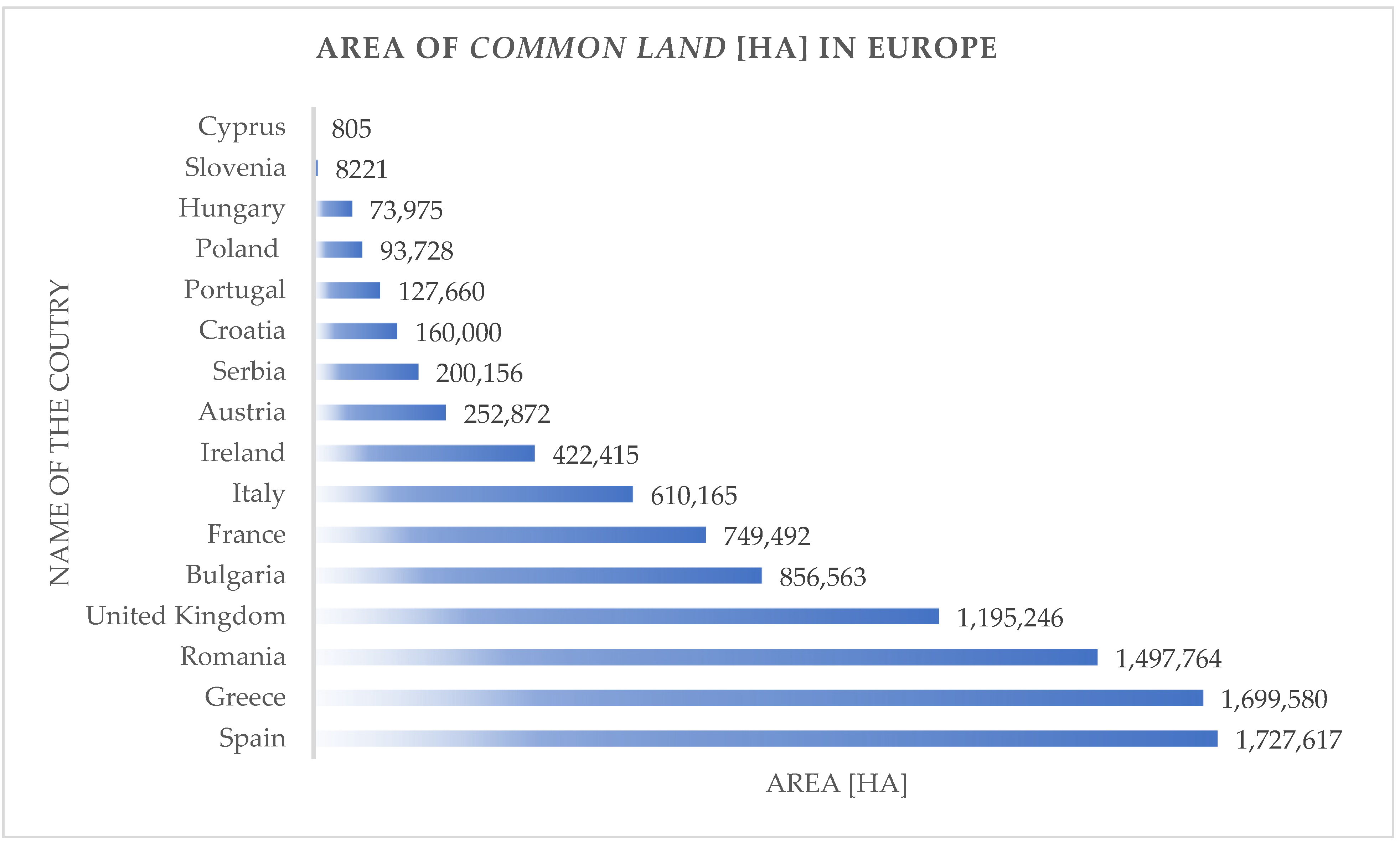
All over the world, common land systems are being registered and mapped. In Europe, these activities are fragmentary. Information is most often found in the literature, projects, and databases at the national level, which makes access difficult for a wider group of interested parties, political stakeholders, and the scientific community [13]. EUROSTAT [34] shows that common land covers approximately 9 million hectares (see Figure 2). Its largest areas are found in Spain (18%), Romania (17%), Greece (16%) and the United Kingdom (13%). European statistics indicate that “Common land is a problematic characteristic, when it comes to data comparability between countries and over time”. As “commons” is a generic term for a wide range of locally used words [35], this complicates the mapping and cataloguing of these systems, requiring collaboration with in-country commons specialists. For example, Bebbington et al. [36] (2024) wrongly classified “Communal Forests” as commons in France, when in fact Forêt Communal cannot be considered as a commons, as they are owned, governed and managed by the municipality without direct participation mechanisms for the local population.
This article focuses specifically on the examination of common land in Poland, considering its legal status, patterns of use, and relevance to contemporary environmental and climate governance challenges.
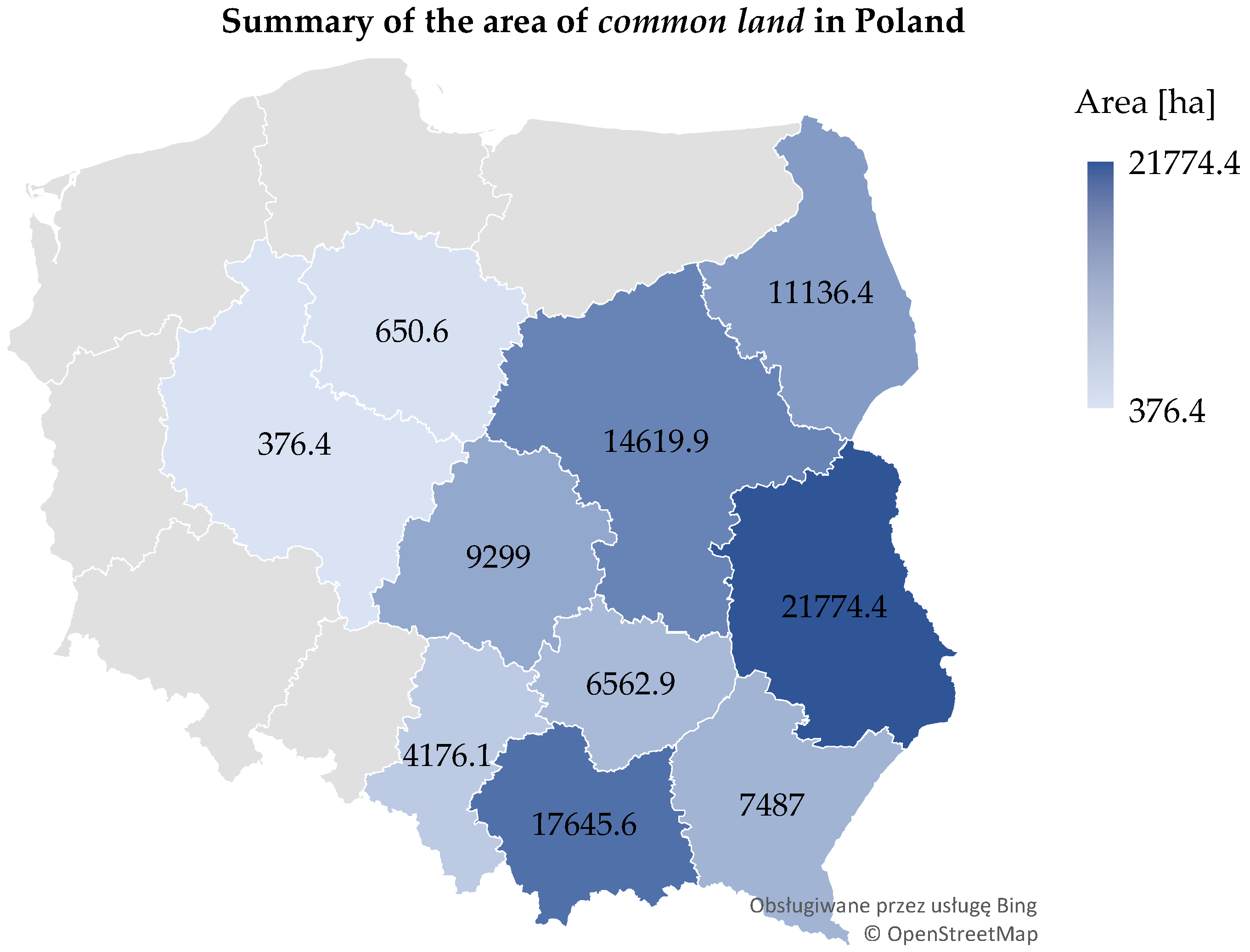
The legal status of common land in Poland has long remained an unresolved and conflict-prone issue. Early regulatory attempts during the partition period, including the concentration of ownership in a single holder with servitude rights or the maintenance of collective village co-ownership, failed to eliminate CL [37]. After 1918, the 1938 Act on the reorganization of land communities [38] introduced definitions, administrative procedures, and mechanisms for dissolving joint ownership—primarily through division in natura or, in exceptional cases, conversion into fractional co-ownership. Its implementation, however, was hindered by procedural costs and limited acceptance of mandated corporate management structures. Following World War II, the 1944 PKWN decree nationalized forest commons [39] exceeding prescribed thresholds, while communities based on contractual easements often lost legal recognition. The 1963 Act represented the final significant legislative effort but did not achieve a durable resolution [40]. Today, common land remains a persistent legal, administrative, and socio-economic challenge. The absence of effective governance produces mixed outcomes: although minimal human interference aids in preserving valuable natural and cultural heritage, unregulated areas are prone to environmental degradation and safety hazards. Legally, common land is non-transferable, constrains public and private investment, cannot serve as loan collateral, and generates multi-generational ownership disputes. Current estimates indicate that land communities in Poland cover approximately 94,000 hectares [41].
In the study, the following hypothesis was formulated: the development and analysis of alternative scenarios for common land use enable the identification of measures that support its sustainable use and management, while accounting for both personal and non-personal stakeholders.
The study used expert surveys (CAWI), the land morphology concept (LMC) and scenario simulations. Triangulation was also considered through precedents from the United Kingdom, France, Greece, Spain, Romania, and Germany. Detailed analyses were carried out for areas in Poland, for 10 voivodeships/regions in which common land is located.
The article is structured as follows. The section “Introduction”, “Origins of common land” and “Theoretical background of the research” present the idea of the establishment of common land along with their area share in Europe, and the characteristic attributes of common land that distinguish them from other properties. The section “Methods and data” describes the research methods employed, the stage at which they were applied, and the data sources used to develop the scenarios. Next, the study’s results are presented in the context of the area, methods of use, survey results, and the scenarios developed. The discussion includes considerations about the solutions used in other European countries. The study is summarized in the context of the research objectives and included in the final part of the article.

2. Materials and Methods

The analyses were performed for areas in Poland (10 regions/voivodeships). Poland is a unitary state. The division into voivodeships was established arbitrarily, without regard for historical, political, natural, cultural, or social regions. Implementing the research objective required dividing it into stages. Firstly, data on the area of common land obtained from the Ministry of Agriculture and Rural Development [41] were analyzed. Then, an anonymous online survey (CAWI—Computer-Assisted Web Interviewing) was conducted among experts to assess the possibilities for environmentally friendly agricultural development of common land. The anonymous survey was conducted between 20 March 2025 and 20 October 2025 using Microsoft Forms. The survey administered to experts included questions designed to identify which cultivation methods/techniques should be considered priority options from a research perspective, based on their environmental and climatic impacts and the level of involvement required from agricultural producers. These questions formed a key component of the study’s methodological framework, enabling the assessment of expert judgement regarding the relative desirability and feasibility of alternative management strategies. The survey offered 10 methods of soil cultivation. The survey was filled out by 275 individuals who are agricultural producers or students of agriculture-related fields (including agriculture, agribusiness, agricultural technology and agrotronics, environmental protection, bioeconomy, etc.). The group of respondents represented all regions of Poland. The land use plans indicated most frequently included: regenerative agriculture with cover cropping; regenerative agriculture; cultivation involving crop rotation and an intermediate crop; fresh meadows in use; meadow with natural succession; fallow land with forest succession; and agroforestry. Four land use methods were selected for further research: regenerative agriculture with cover cropping (S1), fresh meadows in use (S2), meadows with natural succession (S3), and fallow land with forest succession (S4). This choice was dictated not only by the number of expert indications, but also by differences in the involvement of agricultural producers in particular cultivation systems.
The group of respondents comprised people aged 22–44, representing all regions of the country. Quality control procedures included: checking the logical consistency of responses, conducting a pilot survey prior to the main study, verifying the clarity of the questions, and comparing the sample with the population (age, region). In the next step, the land morphology concept (LMC) method [42] was employed, which involved a detailed analysis of the data for scenario development. LMC is a research approach that analyses the morphology of the land surface in the context of its environmental impact and land use. The LMC was used primarily to determine the following: the area of common land in the voivodeship, classified as agricultural land (ACL); the cultivation system (S1–S4); average yield per hectare [AY] in PLN/t (according to statistical data in all analyzed regions, considering the dominant cereal cultivated in the region); production costs [C] (PLN/ha); production income (PLN); average CO2 sequestration level for various cultivation methods [SCO] (t/ha); average price of CO2 emission allowances in the emissions trading system [SCO2] (PLN/t); EU subsidies and premiums in the current financing period [S] (PLN/ha); income [I_SCO2] estimated on the basis of CO2 emission allowances according to the EU ETS emissions trading system (PLN). The analyses were performed under the following assumptions: (1) the area of common land was determined according to information obtained from the Ministry of Agriculture and Rural Development; (2) regenerative cultivation systems were based on the selection of the dominant crop according to the soil and agricultural complex prevailing in the analyzed voivodeship (the soil and agricultural complex is a classification of agricultural land in terms of the cultivation of crops that yield the best results under local conditions with regard to soil quality, climate zone and moisture content), with limited fertilization, surface tillage and cover crop taken into account; (3) the average yield per hectare was assumed for wheat, which, on the basis of statistical data and the occurrence of soil and agricultural complexes, is predominant in cultivation in individual regions of Poland; (4) the level of a possible EU subsidy for cultivation was based on the programme and financial perspectives for 2024–2027; (5) CO2 emission allowance prices in the emissions trading system were assumed on the basis of average prices (in EUR) from various markets, and converted at the current exchange rate of 1 EUR = 4.3 PLN; (6) the price of wheat was assumed on the basis of prices from 3 years, using statistical data [43]; (7) hay yields were assumed according to statistical data for regions of Poland [43]; (8) hay prices (averaged with the type of hay, seasonality and location considered) were adopted from free market turnover for the last 3 years [44,45]; (9) sequestration levels for regenerative agriculture with cover cropping, fresh meadow in use, meadow with natural succession, and fallow land were based on an analysis of studies conducted for European areas, with a focus on Eastern Europe and Poland, on the assumption that 1 tonne of C corresponds to 3.67 tonnes of CO2 eliminated from the atmosphere [43,44,45,46,47,48,49,50,51,52,53] (see Table 1).
The scenario method enables the preparation for different conditions that may arise in the future and allows decisions to be made regarding the orientation of strategic thinking, considering the surroundings and the factors that shape them [54,55,56,57]. The process of developing scenarios was validated through triangulation, which involves applying multiple perspectives to assess the same phenomenon, thereby improving the reliability of the research and making the reality under study more realistic [54,55,56,57]. The perspectives considered experiences and solutions from other European countries, with various beneficiary groups in mind. The developed scenarios were compared in terms of total net profit (Formula (1)), the agricultural producer’s total profit (Formula (2)), and the market valuation of carbon dioxide emission allowances (Formula (3)), representing environmental and climate benefits:
P S i m = A C L i m × [ ( A Y S i n × I p / I s ) C S i n + S S i n + S i n C O 2 × P C O 2 ]
P A S i m = A C L i m × [ ( A Y S i n × I p / I s ) C S i n + S S i n ]
I S i m = A C L i m × [ S i n C O 2 P C O 2 ]
where:
  • P S i m t o t a l   p r o f i t   f r o m   c o m m o n   l a n d   i n   t h e   r e g i o n ;
  • P A S i m t o t a l   p r o f i t   f o r   t h e   a g r i c u l t u r a l   p r o d u c e r ;
  • I S i m e n v i r o n m e n t a l   p r o f i t   f r o m   t h e   s e l e c t e d   c o m m o n   l a n d   u s e ;
  • A C L i m a r e a   o f   c o m m o n   l a n d   i n   t h e   r e g i o n ;
  • A Y S i n y i e l d   f o r   t h e   s e l e c t e d   c o m m o n   l a n d   u s e   s c e n a r i o ;
  • I p a v e r a g e   w h e a t / h a y   p r i c e ;
  • C S i n a g r i c u l t u r a l   p r o d u c t i o n   c o s t ;
  • S S i n E U   s u b s i d i e s   f o r   t h e   s e l e c t e d   c o m m o n   l a n d   u s e   m e t h o d ;
  • S i n C O 2 a v e r a g e   C O 2   s e q u e s t r a t i o n   v o l u m e   f o r   t h e   s e l e c t e d   c o m m o n   l a n d   u s e   m e t h o d   s c e n a r i o ;
  • P C O 2 a v e r a g e   p r i c e   o f   C O 2   e m i s s i o n   a l l o w a n c e s   i n   t h e   e m i s s i o n s   t r a d i n g   s y s t e m .
Cost-effectiveness (ZE) of the scenario was determined using Formula (4):
Z E = X i X j X j 100 %  
where:
  • ZE—cost-effectiveness of the scenario (%);
  • Xi—a higher-value scenario;
  • Xj—a lower-value scenario.
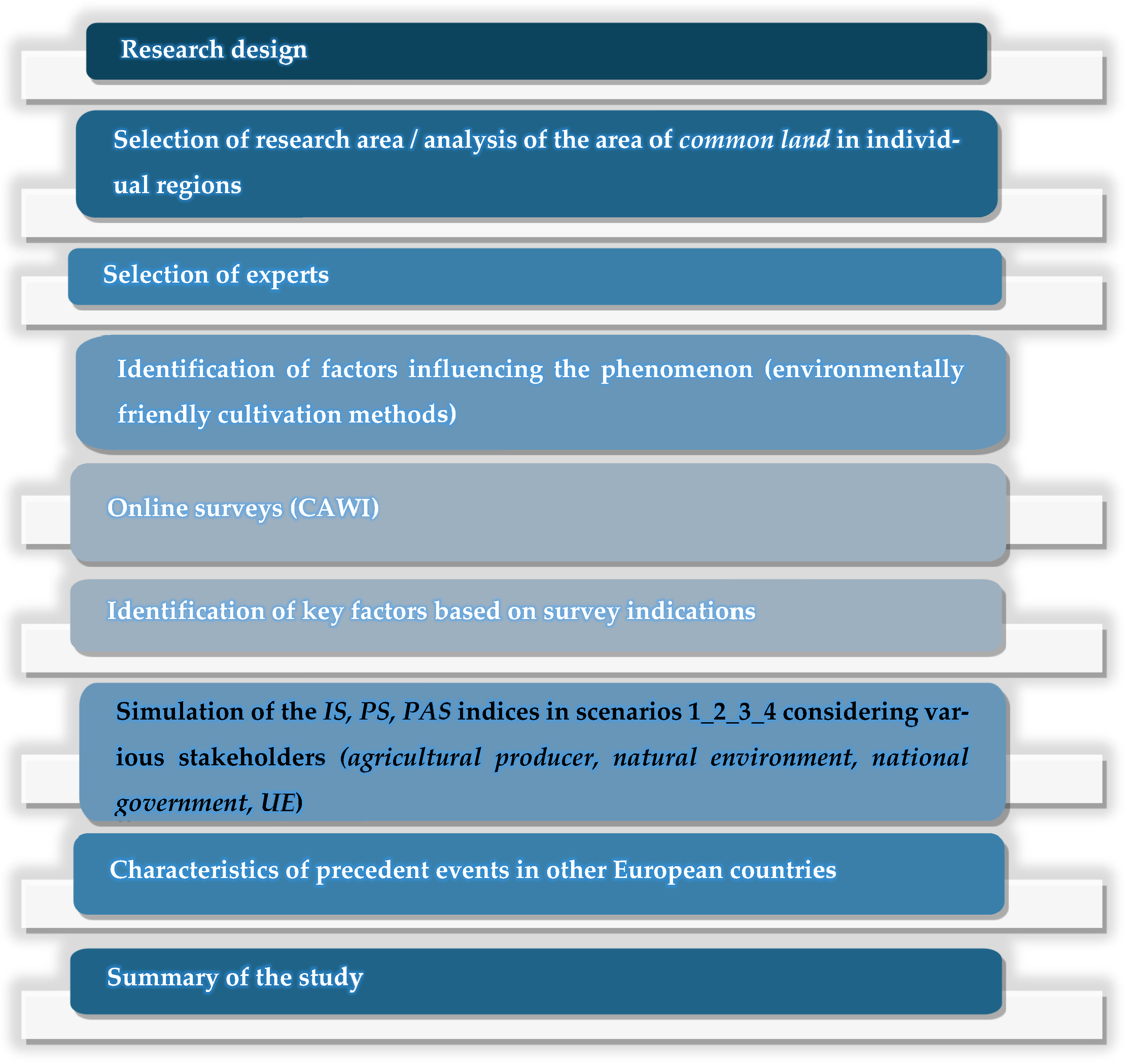
The individual stages of the study are summarized in Figure 3.

3. Results

3.1. Spatial Distribution and the Area of Common Land in Poland

Poland has approximately 94,000 hectares of land classified as common land, according to data from the Ministry of Agriculture and Rural Development [41]. In the voivodeships of northern and western Poland (West Pomeranian, Pomeranian, Warmian-Masurian, Lubusz, Opole, and Lower Silesian), according to the current administrative division, there is no common land. This results from historical and legal determinants, and, above all, from the nature of (a) the enfranchisement processes carried out in these areas, (b) agricultural reforms that led to the nationalization of land, (c) the lack of historical and legal continuity (the Land Communities Act of 1963 regulated a factual status that had not existed in these areas because of the previous administration by Germany), and (d) the form of ownership and settlement in this part of the country known as the Recovered Territories after the Second World War, where land, which had not been distributed, was incorporated into the public domain.
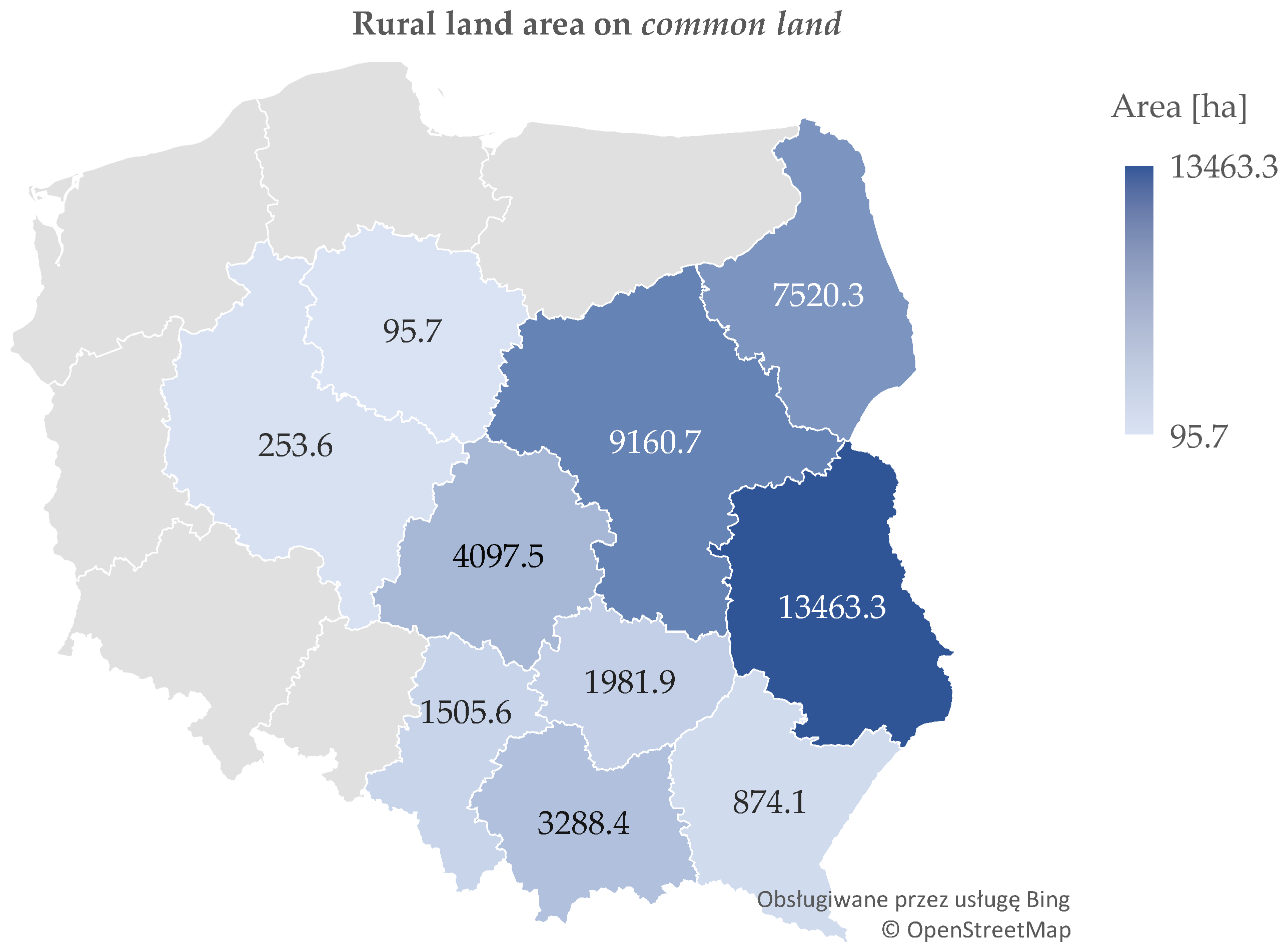
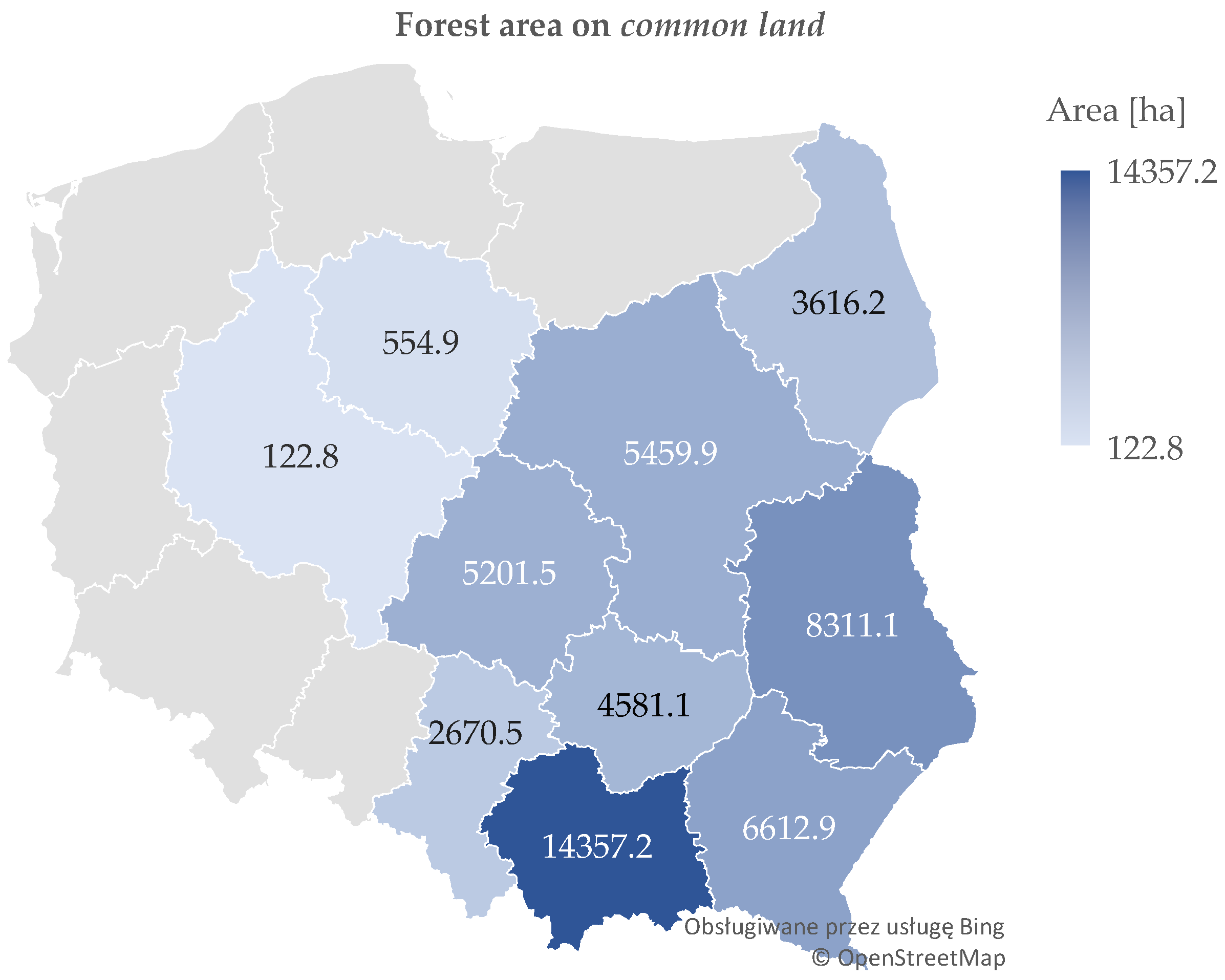
The largest area of all CL uses is found in the Lublin and Lesser Poland voivodeships (see Figure 3). These are areas of approximately 22,000 and 17,600 ha, respectively. The smallest area of common land is found in the Greater Poland and Kuyavian-Pomeranian voivodeships. Figure 4 and Figure 5 show the areas of CL divided into agricultural land and forests.
The largest area of agricultural land classified as CL is in Lublin, Podlaskie and Masovian voivodeships (see Figure 4), whereas most forests are found in Lesser Poland, Subcarpathian and Lublin voivodeships (see Figure 6).

3.2. Scenarios S1–S4 (Simulations)

The four scenarios developed in the study comprise: high involvement and high benefits for the agricultural producer (S1); lower involvement than in S1 combined with medium benefits for the agricultural producer (S2); very low involvement and medium benefits for the agricultural producer (S3); and no involvement of the agricultural producer and no financial benefits (S4). Comparisons were made for the voivodeship using three indices determined according to Formulas (1)–(3). In terms of geolocation, the indices PS, PAS, and IS stand out in three voivodeships: Lublin, Masovian, and Podlaskie (see Figure 6), where the largest area of common land is found.
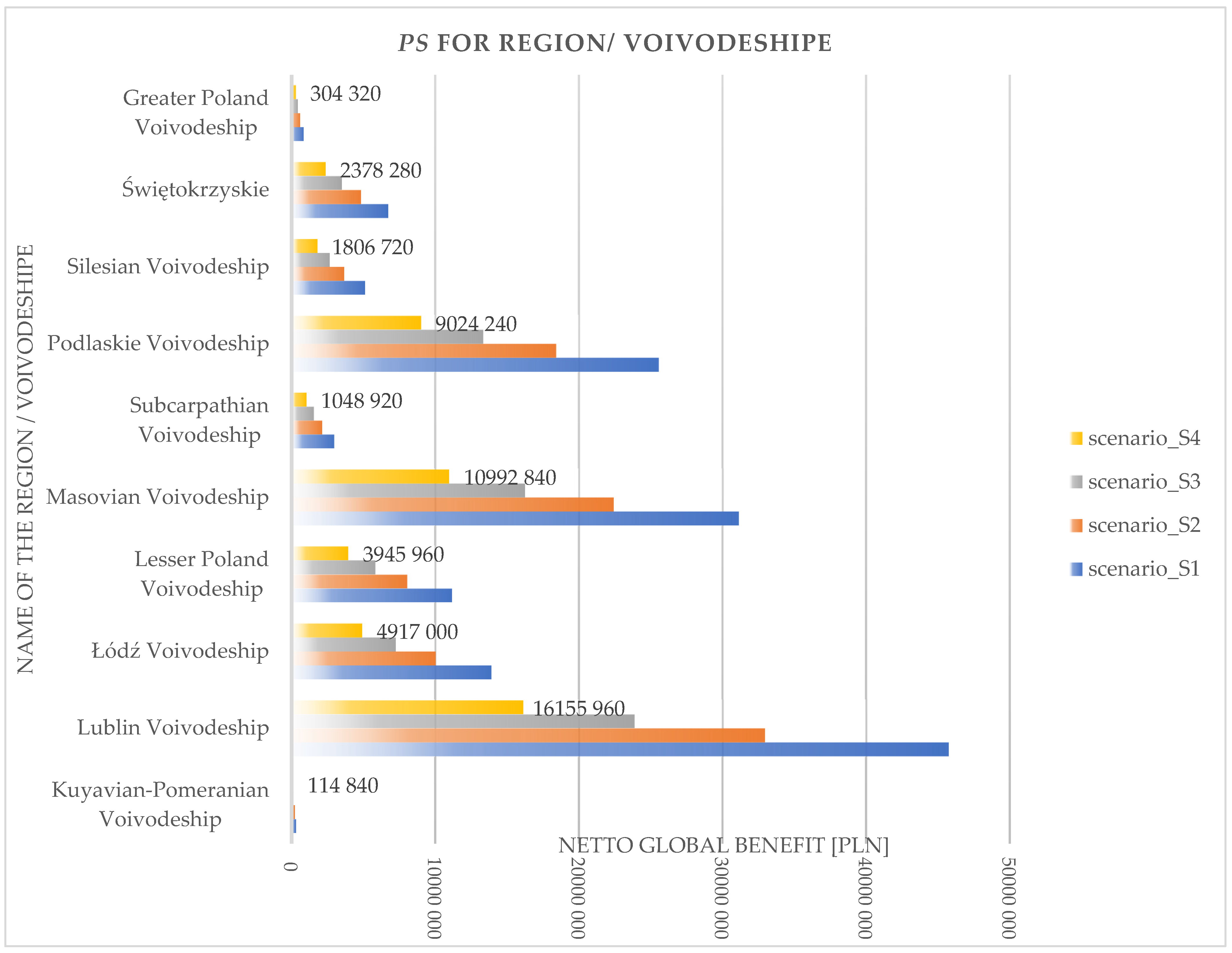
Analysis of total net profit (PS) for simulated scenarios S1, S2, S3 and S4 indicates that regenerative farming with cover cropping (S1) is the best option. It generates overall profit from production and for the producer (see Figure 7). The PS index for the first scenario is 35% higher than that for the second scenario (fresh meadow in use), 91% higher than that for the third scenario (meadow with natural succession), and 180% higher than that for fallowing the land and leaving it in its existing state (the fourth scenario).
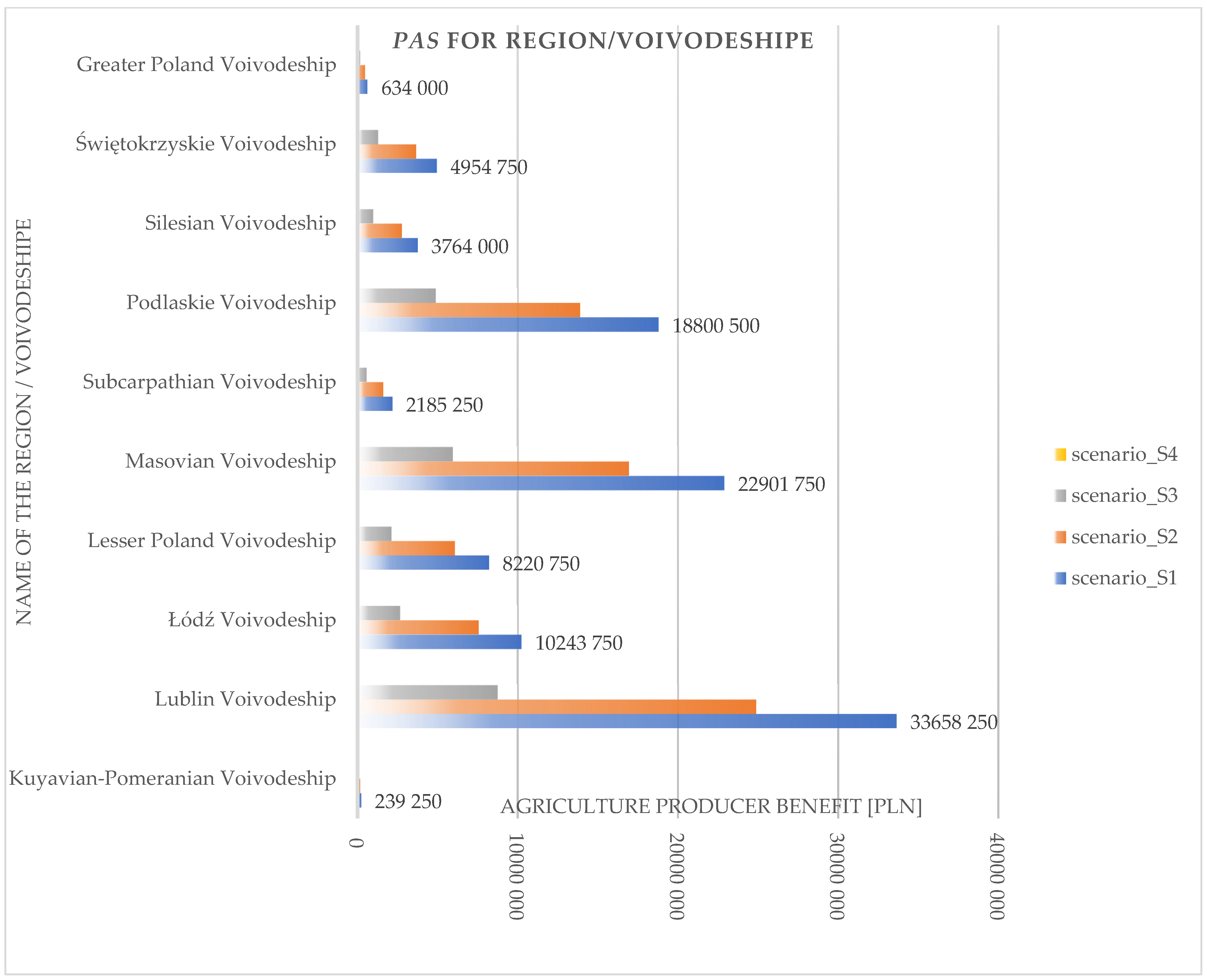
The (PAS) index for the agricultural producers is more valuable than PS. Agricultural land is a source of income, and every management method is analyzed and implemented based on its profitability under real conditions. Thanks to this, the agricultural producer who owns soil of known predispositions and production capabilities, tested over many years, can choose how to use it. The economic perspective and the level of involvement are crucial. Secondary determinants in the management process stages include the choice of cultivation techniques based on their impact and their suitability to the climate, environment, etc. The PAS index (see Figure 8) also considers the economic perspective of the agricultural producer, including the level of subsidies from the European Union and the state budget. The economic profitability based on the PAS index is as follows. The first scenario (S1) is more profitable than the second scenario (S2) by 35%, while the third scenario (S3) is less profitable than the first scenario (S1) by −285%. As for the fourth scenario (S4—fallow land with forest succession), the agricultural producer incurs no production costs but also makes no profits, and there are no subsidies from the EU or the national budget for this type of activity.
Considering the market value of carbon dioxide emissions (IS) into the atmosphere of common land (see Figure 9), the best scenario is to leave the land in the existing state (see Figure 8), i.e., to fallow it and allow it to become naturally overgrown with forest vegetation (S4). The fourth scenario (S4) is 6% more favourable than the third scenario (S3), 100% more favourable than the second scenario (S2) and 32% more favourable than the first scenario (S1).

4. Discussion

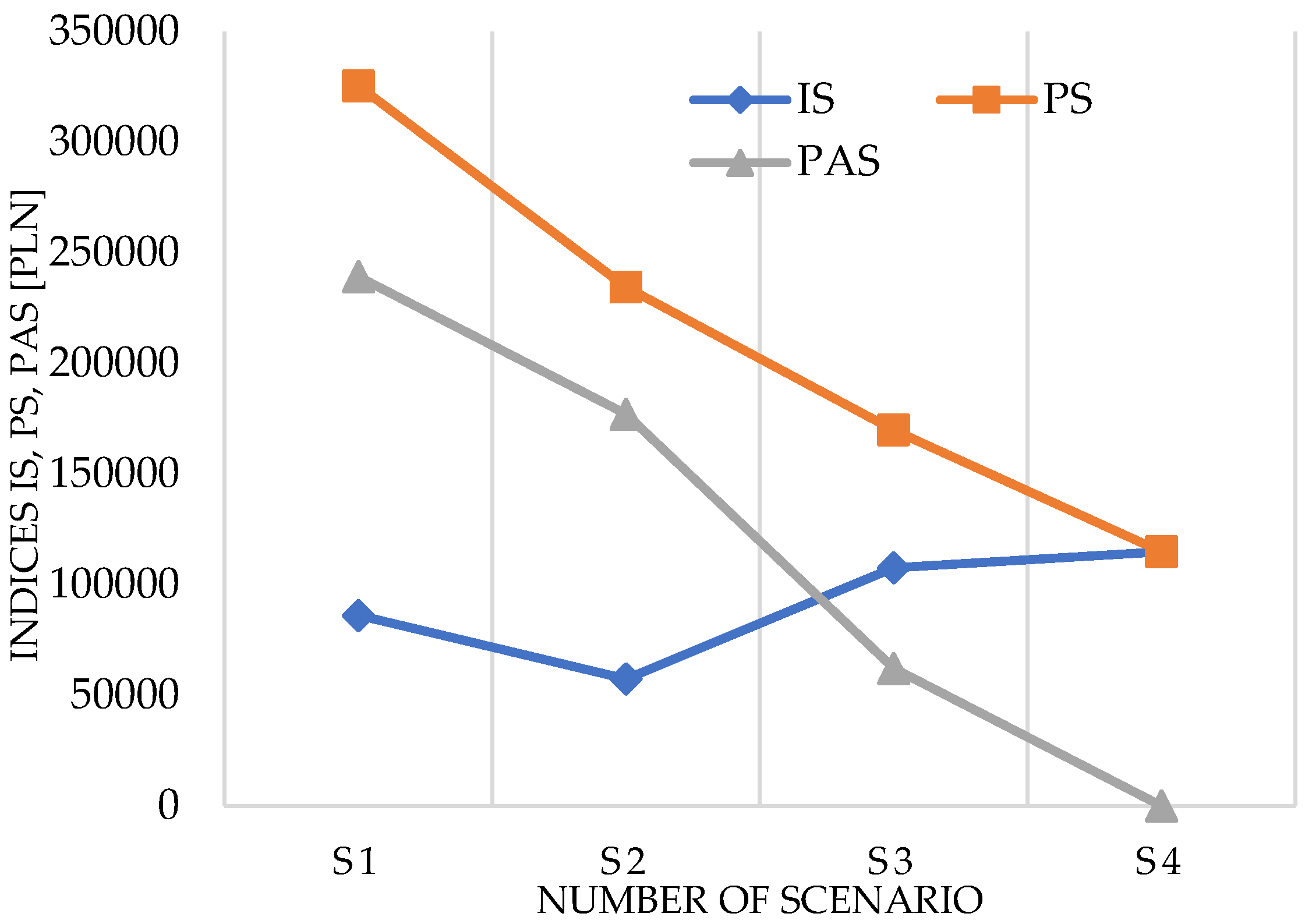
The IS indicator captures the environmental potential associated with successive land-use scenarios (S1–S4) and exhibits a monotonic increase along the gradient from active agricultural production toward natural succession. In contrast, PS reflects the economic cost burden, which decreases as management intensity is reduced, while PAS represents adaptive requirements that likewise decline as land use becomes less interventionist. Under regenerative agriculture (S1), IS remains comparatively low because the land is actively used and ecological benefits depend on continuous management inputs. At the same time, PS is high due to substantial up-front expenditures required for soil restoration and regenerative interventions, and PAS is also high because implementation demands considerable producer engagement, technical capacity, and organizational effort. Consequently, S1 can be characterized as simultaneously production-oriented and environmentally supportive, yet it entails the highest initial costs and the greatest implementation complexity. Previous research [46,47,48,49,50,51,52,53,58,59,60,61] demonstrates that such practices can restore ecosystems, enhance biodiversity, and improve soil fertility. However, their adoption is constrained by several factors. These include high initial investment costs, the need for specialized equipment, reliance on training and advisory services, and the requirement for audits, soil analyses, and environmental assessments. Farmers also face challenges related to weed and pest control, long time horizons needed to observe measurable outcomes, limited market support, and high sensitivity of regenerative systems to weather conditions. As survey results indicate, the significant financial burden and level of producer involvement required make farmer motivation and large scale implementation a considerable challenge. The last factor is particularly important under Poland’s conditions, as the duration of the growing season varies from 100 days (in mountainous areas) to 230 days (in western Poland), while climate change in the macroregion under analysis results in summer and winter droughts, torrential rainfalls and spring ground frosts occurring after the beginning of the growing season [62,63].
Scenario S2 achieves a moderate-to-high IS, primarily because meadow systems typically support high biodiversity and provide multiple ecosystem services. Both PS and PAS are moderate, reflecting the need for ongoing but less intensive management and a lower cost profile than S1. In strategic terms, S2 offers a practicable compromise between production and ecological performance, provided that an enabling legal framework is established to regulate rights and governance arrangements associated with common land (CL).
Scenario S3 (meadows under natural succession) is associated with a high IS, indicating strong potential for enhanced water retention and semi-natural habitat development. In this scenario, PS and PAS are low, suggesting minimal financial costs and limited management requirements. Scenario S4 (fallow land with forest succession) yields the highest IS, corresponding to the strongest environmental potential through reforestation trajectories, while PS and PAS approach zero because the scenario requires little or no intervention. However, this comes at the expense of direct economic benefits for agricultural producers, implying a trade-off between environmental gains and production-related outcomes. Given the complexity of formalizing CL legal status and the practical challenges of implementing comprehensive governance reforms, S4 may represent the most administratively straightforward pathway, albeit with limited socio-economic co-benefits.
From a policy perspective, S2 emerges as the most balanced option for Poland, conditional on legal clarification and institutional regulation of CL. Meadows combine high biodiversity values with moderate costs while preserving production functions. S1, although potentially delivering the strongest integrated environmental outcomes under active management, would require substantial capacity building (training), financial instruments (subsidies), and targeted investments in soil health and water retention. S3 and S4 are particularly relevant for climate objectives because they maximize CO2 uptake, strengthen water retention, and facilitate habitat restoration; nonetheless, their limited contribution to agricultural income may constrain broad adoption.
In terms of effectiveness versus feasibility, S1 offers the greatest long-term benefits but also the highest implementation risk, including the need for legislative change, intensified oversight, and strong social acceptance. This may generate administrative disputes, stakeholder resistance, and demands for compensation mechanisms in some regions.
Conversely, S2 and S3, despite lower overall effectiveness, are more readily implementable within existing legal and social contexts and require lower financial and regulatory burdens. Inaction framed as S4 may forgo economic opportunities and potentially exacerbate future regulatory pressures. Overall, selecting an optimal pathway necessitates explicit acknowledgement of unavoidable trade-offs and a policy choice that balances environmental effectiveness with institutional and socio-economic feasibility.
The first (S1), second (S2) and third (S3) scenarios are founded on the assumption that the legal status of common land will be regulated. Considering the measures taken so far by decision-makers and the government to regulate CL, it is worth noting that no attempt to implement a solution in Poland has been successful since the 1970s. Subsequent amendments to the 1963 Act on the development of land communities [37,40] have not resulted in the establishment of a list of all persons entitled to participate in common land, the size of the shares to which they are entitled, or the selection of an entity that would make crucial decisions regarding the management of CL. The application of scenarios S1–S3 requires the development and implementation of an effective strategy that will lead to legal regulations solving the problem of CL management at the ownership level. Based on previous experiences, such a task would be difficult to implement.
Leaving the analyzed common land in its existing state, with an unregulated legal status (the fourth scenario, S4), has multifaceted legal and environmental consequences. The natural processes of land overgrowth with various types of vegetation (grasses, weeds, shrubs and trees), and the storage processes occurring in the soil act as biological carbon sinks and actively bind CO2. Common land in S4 has other characteristics relevant to climate protection, primarily high biodiversity and low soil erosion [64,65,66].
Figure 10 shows the relationships between the analyzed PS, IS, and PAS indices for individual scenarios. The simulation was performed for the Kuyavian-Pomeranian voivodeship. The graph reveals that the level of CO2 sequestration for individual scenarios does not change dramatically, while PAS, i.e., the profit for the agricultural producer, has a significant impact on which scenario will be implemented, because the so-called “0” variant, i.e., no change at all, was also included in the comparisons, which means that the land remains in its existing state. The PS index, i.e., total net profit, is declining steadily and evenly across scenarios.
Based on the experiences of several European countries regarding the CL management method, similar circumstances may arise under Poland’s conditions. For example, in the United Kingdom (precedent “A”), circumstances such as incompleteness and inconsistency of land data, restrictions on the rights of the existing users, increased concentration of land ownership, and the disappearance of traditional forms of land management in line with local and ecological needs arose during regulation [67]. However, the regulation of CL’s legal status has led to greater involvement in management, which is especially important for land-use purposes. The implementation of the precedent event “A” model would allow for the application of all scenarios identified in the study (S1–S4). It is essential to determine how to achieve the final division of common land, given the incomplete data regarding the individuals entitled to it.
Experience originating in France (precedent “B”) shows that solutions have been introduced in that country that allow both municipalities and groups of private individuals to exercise control over CL [68,69,70], while management is undertaken by the municipal council, the mayor, or a meeting of co-owners. This enables the avoidance of restrictions on users’ rights and the preservation of the traditional management method. As demonstrated by analyses in France, the involvement in the CL management process is rather low [70]. Empirical practice indicates a diffusion of responsibility for the management of common land in France. The application of the precedent “B” would lead to the implementation of scenario S4.
In Germany (precedent “C”), common land functions as private joint ownership, municipal civil law companies or forest and pastural communities. CL management is carried out by community authorities, and the right to CL is inherited and assigned to an agricultural holding [71]. The German model, insofar as it links common land to an agricultural holding, exhibits substantial similarity to the regulatory solutions previously employed in Poland. Within this framework, there remains scope for an institutional arrangement that would reassign management competences to community authorities. Such a shift would, in turn, create the conditions necessary for the comprehensive implementation of all proposed scenarios.
In Spain (precedent “D”), CL functions as either community or municipal property. Management is actively undertaken by the community assembly, community council or local self-government bodies. CL rights are officially registered, indivisible, non-transferable, and inheritable [70,71]. Land communities in Spain are autonomous—they can conduct economic activities and benefit from EU subsidies. In certain regions of Spain (e.g., Galicia, Catalonia, Navarre), they can introduce their own regulations (statutes). This method of regulation enables the preservation of traditional land management practices in accordance with both local and ecological needs. Precedent “D” incorporates all targeted solutions and enables the implementation of scenarios S1–S4. However, Polish regions exhibit a pronounced degree of social heterogeneity. This demographic configuration substantially constrains the capacity to formulate a coherent local policy framework and impedes the development of a unified, community-level governance approach.
In Romania, CL (precedent “E”) has legal personality and operates in accordance with its own statutes [72,73]. The statutes define the rules of management, profit distribution, representation and decision-making. Its members are individuals who have inherited part of common land. CL in Romania is linked to the region’s tradition and identity, but generational conflicts and disputes over membership are common there. Despite the disputes, it is actively managed. Common land usually covers large areas of forests and pastures. Precedent “E” indicates that it is possible to resolve the legal issues associated with regulating the legal status of common land.
In Greece (precedent “F”), the form of common land ownership is often informal and based on customary community law, or such land is owned by the municipality. It is managed by an assembly of inhabitants, local community councils, or the municipality. Similarly to Poland, common land in Greece lacks a regulatory status, which, unfortunately, results in low involvement in its management or informal use [74].
The implementation of the scenarios proposed in this study constitutes a major challenge. As many authors indicate, the climate policy currently pursued by the EU tends to bypass public opinion [75,76]. The agricultural producer is the final actor responsible for executing policy assumptions. Shaping policy without social participation may lead to numerous difficulties [77,78]. An analogous issue concerns the regulation of the legal status of common land. Mechanisms imposed by successive governments have failed to resolve the problem. The key, therefore, may lie in seeking joint solutions.
An analysis of experiences from the United Kingdom, Germany, Spain, France, Greece, and Romania shows that engagement in CL management is determined by the degree of autonomy held. Self-governance stems either from tradition, as in Romania, or from legal regulations governing ownership status, as in Germany and Spain. In Poland, legal provisions allow the transformation of CL into a cooperative, collective form (a company established for the development of common land communities). However, to date, only about 20% of common lands have been converted into such entities [79]. Despite favourable legal frameworks (a two-tier regulatory system for groups of entitled parties), this process remains ineffective.
This raises the question of whether society is prepared to accept compromises related to the management and ownership of land. After the difficult period of socialism, there is a strong societal inclination toward full ownership in Poland, as confirmed by EUROSTAT statistics [80]. Under current conditions, scenarios S1–S3 are difficult to implement due to the low level of stakeholder engagement and the absence of incentives from decision-makers. Maintaining the land in its current state appears to be the optimal solution.
Future research work by the author will focus on seeking solutions that would enable the use of agricultural common land without formal legal regulation. Such approaches would allow the ad hoc use of common land, permitting management aligned with the intended objectives.
In the researcher’s assessment, the main uncertainties in the study relate to fluctuations in market prices of CO2 emission allowances, agricultural commodities, and changes in financial support for agricultural producers resulting from EU policy. The scenarios considered a selection of instruments (cultivation methods/technologies); however, not all possible solutions applicable to common land were included in the analysis

5. Conclusions

The present study addressed the issue of common land management through a scenario-based framework designed to identify land-use pathways compatible with climate-mitigation objectives. The proposed scenarios and indicators provide an analytical basis for selecting management options that differ in land-use intensity and governance requirements. A key finding is that CL management inherently involves multi-criteria decision-making, as it requires reconciling two partially competing policy goals: economic land use (production and livelihood functions) and climate–environmental performance (carbon and ecosystem-service outcomes). The results show that the environmental/carbon index (IS) increases monotonically along the gradient from active agricultural use to natural succession, thus systematically favouring low-intervention pathways. Consequently, the analysis highlights an explicit trade-off between economic utility and climate performance, which should be treated as a central design constraint in any policy instrument targeting CL. Among the evaluated options, regenerative agriculture emerges as the most desirable pathway from the perspective of integrating production with pro-environmental outcomes. However, its feasibility is conditional on enabling institutional arrangements, including coordinated engagement of CL users, effective governance structures, and supportive national-level policy instruments. In practice, implementation requires sustained stakeholder mobilization and capacity building, without which the technical potential of regenerative approaches is unlikely to be realized at scale. Conversely, maintaining the status quo, operationalized as fallow land with natural forest succession (Scenario 4), appears environmentally advantageous because it maximizes ecosystem functions relevant to climate mitigation. Yet, this pathway does not leverage land resources for productive use and may therefore limit socio-economic co-benefits unless alternative value-generation mechanisms are introduced.
The findings indicate that selecting an “optimal” CL management pathway cannot be reduced to a single criterion. Instead, it requires an explicit balancing of environmental effectiveness, institutional feasibility, and socio-economic acceptability.

Funding

The APC was funded by University of Warmia and Mazury in Olsztyn, Poland. Funding number: 29.610.012.

Institutional Review Board Statement

The study was conducted in accordance with the Declaration of Helsinki and approved by the Scientific Research Ethics Committee of the University of Warmia and Mazury in Olsztyn (approval no. 9/2026, 16 February 2026).

Informed Consent Statement

Informed consent was obtained from all subjects involved in the study.

Data Availability Statement

The original contributions presented in this study are included in the article. Further inquiries can be directed to the corresponding author.

Conflicts of Interest

The author declares no conflicts of interest.

Abbreviation

The following abbreviation is used in this manuscript:
CLCommon land

References

  1. Cifuentes-Faura, J. European Union policies and their role in combating climate change over the years. Air Qual. Atmos. Health 2022, 15, 1333–1340. [Google Scholar] [CrossRef] [PubMed]
  2. Choudhary, A.K.; Srivastava, D.; Lamba, V. Strategies to Increase Green Cover for Climate Change Mitigation. Ecol. Environ. Conserv. (0971765X) 2025, 31, S201–S211. [Google Scholar] [CrossRef]
  3. Rudnicki, R.; Biczkowski, M.; Wiśniewski, Ł.; Wiśniewski, P.; Bielski, S.; Marks-Bielska, R. Towards green agriculture and sustainable development: Pro-environmental activity of farms under the common agricultural policy. Energies 2023, 16, 1770. [Google Scholar] [CrossRef]
  4. Kuśmierz, S.; Skowrońska, M. Carbon farming and nutrient management. Influential factors of Polish farmers’ perception of pro-climate measures. Agron. Sci. 2024, 79, 5–20. [Google Scholar] [CrossRef]
  5. Intergovernmental Panel on Climate Change (IPCC) (Ed.) ‘Emissions Trends and Drivers’. In Climate Change 2022—Mitigation of Climate Change: Working Group III Contribution to the Sixth Assessment Report of the Intergovernmental Panel on Climate Change; Cambridge University Press: Cambridge, UK, 2023; pp. 215–294. [Google Scholar] [CrossRef]
  6. Crippa, M.; Guizzardi, D.; Pagani, F.; Banja, M.; Muntean, M.; Schaaf, E.; Monforti-Ferrario, F.; Becker, W.; Quadrelli, R.; Risquez, M.A.; et al. GHG Emissions of All World Countries; Publications Office of the European Union: Luxembourg, 2024. [Google Scholar]
  7. Mckinley, G.A. Revised estimates of CO2 sources and sinks improve global carbon accounting. Nature 2025, 649, 32–33. [Google Scholar] [CrossRef]
  8. Khan, M.Z.; Chabbi, A.; Felbacq, A.; Piton, G.; Bertrand, I.; Maron, P.A.; Rumpel, C. Whole soil warming promotes surface soil carbon loss but deep soil carbon gain, depending on land management practices in temperate climate. Soil Biol. Biochem. 2025, 207, 109832. [Google Scholar] [CrossRef]
  9. Solecki, W.; Roberts, D.; Seto, K.C. Strategies to improve the impact of the IPCC Special Report on Climate Change and Cities. Nat. Clim. Change 2024, 14, 685–691. [Google Scholar] [CrossRef]
  10. Xing, Y.; Wang, X. Impact of Agricultural Activities on Climate Change: A Review of Greenhouse Gas Emission Patterns in Field Crop Systems. Plants 2024, 13, 2285. [Google Scholar] [CrossRef]
  11. Kamyab, H.; SaberiKamarposhti, M.; Hashim, H.; Yusuf, M. Carbon dynamics in agricultural greenhouse gas emissions and removals: A comprehensive review. Carbon Lett. 2024, 34, 265–289. [Google Scholar] [CrossRef]
  12. Sikorska, A. Przyczyny i skutki zmian klimatu. Tutoring Gedanensis 2023, 8, 28–43. [Google Scholar] [CrossRef]
  13. Pagot, G.; Hribar, M.Š.; Rail, L.F.; Walters, G.; Hymas, O.; Liechti, K.; Heller, T.; Urbanc, M.; Dalla, T.C.; Joye, J.-F.; et al. Territories of commons: A review of common land organizations and institutions in the European Alps. Environ. Res. Lett. 2025, 20, 063001. [Google Scholar] [CrossRef]
  14. Rudol, K. Miejsce spółki wspólnoty gruntowej w systemie prawa polskiego. Stud. Iurid. 2018, 72, 323–332. [Google Scholar] [CrossRef]
  15. Marciniuk, K. Kilka uwag do założeń do projektu ustawy o zmianie ustawy o zagospodarowaniu wspólnot gruntowych. Stud. Iurid. Agrar. 2012, 10, 535. [Google Scholar] [CrossRef]
  16. Ciriacy-Wantrup, S.V.; Bishop, R.C. Common property as a concept in natural resources policy. Nat. Resour. J. 1975, 15, 713–727. [Google Scholar]
  17. Kissling-Näf, I.; Volken, T.; Bisang, K. Common property and natural resources in the Alps: The decay of management structures? For. Policy Econ. 2002, 4, 135–147. [Google Scholar] [CrossRef]
  18. Gatto, P.; Bogataj, N. Disturbances, robustness and adaptation in forest commons: Comparative insights from two cases in the Southeastern Alps. For. Policy Econ. 2015, 58, 56–64. [Google Scholar] [CrossRef]
  19. Bannon, C. Fresh water in Roman law: Rights and policy. J. Rom. Stud. 2017, 107, 60–89. [Google Scholar] [CrossRef]
  20. Conte, E. The many legal faces of the commons. A short historical survey. Quad. Stor. 2021, LVI, 625–640. [Google Scholar]
  21. Kocur-Bera, K. Nature of common lands in a post-communist country–The Polish perspective. Land Use Policy 2021, 108, 105532. [Google Scholar] [CrossRef]
  22. Short, C. Common land and ELMS: A need for policy innovation in England and Wales. Land Use Policy 2000, 17, 121–133. [Google Scholar] [CrossRef]
  23. Clark, G.; Clark, A. Common rights to land in England, 1475–1839. J. Econ. Hist. 2001, 61, 1009–1036. [Google Scholar] [CrossRef]
  24. Mota, T. Common Land in Britain: A history from the Middle Ages to the present day. Landsc. Hist. 2023, 44, 129–130. [Google Scholar] [CrossRef]
  25. Hale, M. The History and Analysis of the Common Law of England; The Lawbook Exchange, Ltd.: Clark, NJ, USA, 2000. [Google Scholar]
  26. Breen, T.; Flint, A.; Hickman, C.; O’Hara, G. Whose right to roam? Contesting access to England’s countryside. J. Transp. Hist. 2023, 44, 276–307. [Google Scholar] [CrossRef]
  27. Rodgers, C.P.; Straughton, E.; Winchester, A.J.; Pieraccini, M. Contested Common Land: Environmental Governance Past and Present; Earthscan, Routledge: Abingdon, UK, 2012; ISBN 978-1-84971-094-7. [Google Scholar]
  28. Nogueira, J.; Araújo, J.P.; Alonso, J.M.; Simões, S. Common lands, landscape management and rural development: A case study in a mountain village in northwest Portugal. Acta Geogr. Slov. 2023, 63, 51–67. [Google Scholar] [CrossRef]
  29. Sucena-Paiva, L.; Correia, O.; Rosário, L.; Chozas, S. Holm oak wood pastures in SE Portugal: A spatial and temporal multiscale approach. Agrofor. Syst. 2022, 96, 173–186. [Google Scholar] [CrossRef]
  30. Arvai, G. The liquidation of undivided common land ownership in Hungary. J. Agric. Environ. Law 2023, 18, 7. [Google Scholar]
  31. Danson, M.; Burnett, K.A. Current Scottish land reform and reclaiming the commons: Building community resilience. Prog. Dev. Stud. 2021, 21, 280–297. [Google Scholar] [CrossRef]
  32. Hadjikyriacou, A.; Papadias, E.; Vradis, C.; Chalkias, C. Combining historical maps and censuses of Cyprus from the sixteenth to the twentieth century: A geospatial approach. In Proceedings of the ICA 3; Copernicus Publications: Göttingen, Germany, August 2021; p. 7. [Google Scholar]
  33. Stuber, M.; Wunderli, R. Transformations of common pastures and woodlands in Switzerland: A historical perspective. In Balancing the Commons in Switzerland; Routledge: Abingdon, UK, 2021; pp. 17–34. [Google Scholar]
  34. Farm Structure Survey–Common Land. Available online: https://EC.europa.eu (accessed on 10 September 2025).
  35. van Gils, H.; Siegl, G.; Bennett, M.R. The living commons of West Tyrol, Austria: Lessons for land policy and land administration. Land Use Policy 2014, 38, 16–25. [Google Scholar] [CrossRef]
  36. Bebbington, A.; Shrestha Sangat, S.; Golden Kroner, R.E. Extent and diversity of recognized Indigenous and community lands: Cases from Northern and Western Europe. Ambio 2024, 54, 1074–1085. [Google Scholar] [CrossRef]
  37. Bracha, A. Reaktywacja i Zarządzanie Wspólnotami Gruntowymi. 2013. Available online: http://archiwum.kornica.org/pliki/pobierz/podrecznik_reaktywacja_i_zarzadzanie_wspolnotami_gruntowymi__1_.pdf (accessed on 10 May 2025).
  38. Act of 1938. Ustawa z Dnia 4 Maja 1938 r. o Uporządkowaniu Wspólnot Gruntowych (Dz.U. Nr 33, poz. 290). Available online: https://www.infor.pl/akt-prawny/DZU.1938.033.0000290,metryka,ustawa-o-uporzadkowaniu-wspolnot-gruntowych.html (accessed on 28 September 2025).
  39. Act of 1944. Ustawa z Dnia 12 Grudnia 1944 r. o Przejęciu Niektórych Lasów na Własność Skarbu Państwa. Available online: https://www.prawo.pl/akty/dz-u-1944-15-82,16778540.html (accessed on 28 September 2025).
  40. Act of 1963. Ustawa z Dnia 29 Czerwca 1963 r. o Zagospodarowaniu Wspólnot Gruntowych. Available online: https://sip.lex.pl/akty-prawne/dzu-dziennik-ustaw/zagospodarowanie-wspolnot-gruntowych-16785744 (accessed on 28 September 2025).
  41. Ministerstwo Rolnictwa i Rozwoju Wsi. Zestawienie Powierzchni Oraz Rodzaju Wspólnot Gruntowych Land w Polsce (Zbiorcze Zestawienie Niepublikowane); Data prepared at the request of the author, sign: DNI.sp.0182.1.2025, 09 October 2025; Ministerstwo Rolnictwa i Rozwoju Wsi: Warsaw, Poland, 2025.
  42. Cunha, N.S.; Magalhaes, M.R.; Domingos, T.; Abreu, M.M.; Withing, K. The land morphology concept and mapping method and its application to mainland Portugal. Geoderma 2018, 325, 72–89. [Google Scholar] [CrossRef]
  43. GUS. gov.pl. Available online: https://stat.gov.pl/wyszukiwarka/?query=tag:cena+pszenicy (accessed on 28 September 2025).
  44. Ogłoszenia–Sprzedam-Kupię. olx.pl. Available online: https://www.olx.pl/rolnictwo/produkty-rolne/q-siano/?srsltid=AfmBOop5cgLAUzEYbKmJ8UcFowIoBB6HzJXaW9FcdwQJXFWGdzeoGeWx (accessed on 20 June 2025).
  45. Mojarola.pl. Available online: https://www.mojarola.pl/?s=ceny+siana#google_vignette (accessed on 20 June 2025).
  46. Burzyńska, I.; Sztabkowski, K. Sekwestracja Wegla Organicznego w Glebach Użytkowanych Rolniczo i Leśnie–Szansa dla Ochrony Klimatu. 2020. Available online: https://www.pine.org.pl/wp-content/uploads/2020/06/8aBurzynska-GRUNTY.pdf (accessed on 6 November 2025).
  47. Rosa, A.; Pawłowska, A.; Dudek, M. Eco-Scheme—Carbon Farming and Nutrient Management—A New Tool to Support Sustainable Agriculture in Poland. Sustainability 2025, 17, 5067. [Google Scholar] [CrossRef]
  48. Villat, J.; Nicholas, K. Quantifying soil carbon sequestration from regenerative agricultural practices in crops and vineyards. Front. Sustain. Food Syst. 2024, 7, 1234108. [Google Scholar] [CrossRef]
  49. Lorenz, K.; Lal, R. Organic Agriculture and Climate Change; Springer: Berlin/Heidelberg, Germany, 2023. [Google Scholar]
  50. Datsko, O.; Kovalenko, N.; Hotvianska, A.; Sologub, I.; Bondarenko, O.; Hulenko, O.; Dubovyk, I.; Sakhoshko, M.; Davydenko, G.; Radchenko, M.; et al. Regenerative farming as a tool to combat climate change. Mod. Phytomorphology 2025, 19, 117–120. [Google Scholar]
  51. Sokołowska, J.; Józefowska, A.; Woźnica, K.; Zaleski, T. Succession from meadow to mature forest: Impacts on soil biological, chemical and physical properties—Evidence from the Pieniny Mountains, Poland. Catena 2020, 189, 104503. [Google Scholar] [CrossRef]
  52. Zgłobicki, W.; Karczmarczuk, K.; Baran-Zgłobicka, B. Intensity and Driving Forces of Land Abandonment in Eastern Poland. Appl. Sci. 2020, 10, 3500. [Google Scholar] [CrossRef]
  53. Kozak, M.; Pudełko, R. Impact Assessment of the Long-Term Fallowed Land on Agricultural Soils and the Possibility of Their Return to Agriculture. Agriculture 2021, 11, 148. [Google Scholar] [CrossRef]
  54. Guo, Z.; Sheffield, J. A paradigmatic and methodological examination of knowledge management research: 2000 to 2004. Decis. Support Syst. 2008, 44, 673–688. [Google Scholar] [CrossRef]
  55. Singleton, R.A., Jr.; Straits, B.C. Approaches to Social Research; Oxford University Press: New York, NY, USA, 2005; pp. 381–384. [Google Scholar]
  56. Denzin, A.N.K.; Lincoln, Y.S. Metody Badań Jakościowych; Wydawnictwo Naukowe PWN: Warszawa, Poland, 2009; Volume 1, pp. 623–654. [Google Scholar]
  57. AriMR. 2025. Available online: https://www.gov.pl/web/arimr/rolno-srodowiskowo-klimatyczne-kampania-2025 (accessed on 1 February 2026).
  58. Rehberger, E.; West, P.C.; Spillane, C.; McKeown, P.C. What climate and environmental benefits of regenerative agriculture practices? an evidence review. Environ. Res. Commun. 2025, 5, 052001. [Google Scholar] [CrossRef]
  59. Sher, A.; Li, H.; Ullah, A.; Hamid, Y.; Nasir, B.; Zhang, J. Importance of regenerative agriculture: Climate, soil health, biodiversity and its socioecological impact. Discov. Sustain. 2024, 5, 462. [Google Scholar] [CrossRef]
  60. Musto, G.A.; Swanepoel, P.A.; Strauss, J.A. Regenerative agriculture v. conservation agriculture: Potential effects on soil quality, crop productivity and whole-farm economics in Mediterranean-climate regions. J. Agric. Sci. 2023, 161, 328–338. [Google Scholar] [CrossRef]
  61. Kocur-Bera, K. Identyfikacja subpopulacji o podobnych charakterystykach w aspekcie ekstremalnych zjawisk pogodowych. Acta Sci. Pol. Adm. Locorum 2015, 14, 75–89. [Google Scholar]
  62. Kocur-Bera, K. Impact of land use on climate change. In Proceedings of the International Scientific Conference Engineering for Rural Development; LBTU ITZAC: Jelgava, Latvia, 2018; pp. 23–25. [Google Scholar]
  63. Boellstorff, D.; Benito, G. Impacts of set-aside policy on the risk of soil erosion in central Spain. Agric. Ecosyst. Environ. 2005, 107, 231–243. [Google Scholar] [CrossRef]
  64. Hodge, I.; Reader, M.; Revoredo, C.; Crabtree, B.; Tucker, G.; King, T. Project to Assess Future Options for Set-Aside; Final Report for the Department for Environment, Food and Rural Affairs; University of Cambridge, Department of Land Economy: Cambridge, UK, 2006. [Google Scholar]
  65. Bicknell, J.E.; O’Hanley, J.R.; Armsworth, P.R.; Slade, E.M.; Deere, N.J.; Mitchell, S.L.; Hemprich-Bennett, D.; Kemp, V.; Rossiter, S.J.; Lewis, O.T.; et al. Enhancing the ecological value of oil palm agriculture through set-asides. Nat. Sustain. 2023, 6, 513–525. [Google Scholar] [CrossRef]
  66. Navickas, K. Conflicts of power, landscape and amenity in debates over the British Super Grid in the 1950s. Rural Hist. 2019, 30, 87–103. [Google Scholar] [CrossRef]
  67. Act of Code Civil. Art. 815, Dalloz 2025. Available online: https://www.legifrance.gouv.fr/codes/article_lc/LEGIARTI000006432350/2025-11-07/ (accessed on 7 November 2025).
  68. Code Général des Collectivités Territoriales, Art. L1111-1, Version en Vigueur au 7 Novembre 2025. Available online: https://www.legifrance.gouv.fr/codes/texte_lc/LEGITEXT000006070633/ (accessed on 20 October 2025).
  69. Pantaloni, M.; Marinelli, G.; Neri, D. Common Property in Europe: Landscape Design Evolution Over Time. In Cultivating Continuity of the European Landscape; Agnoletti, M., Dobričič, S., Matteini, T., Palerm, J.M., Eds.; Environmental History; Springer: Cham, Switzerland, 2024; p. 15. [Google Scholar] [CrossRef]
  70. Royal Legislative Decree 7/2015 of 30 October 2015, Approving the Consolidated Text of the Land and Urban Rehabilitation Law (BOE No. 261, 31 October 2015). Available online: https://www.boe.es/buscar/act.php?id=BOE-A-2015-11723 (accessed on 20 October 2025).
  71. Legea nr. 247 din 19 Iulie 2005 Privind Reforma în Domeniile Proprietății și Justiției, Precum și Unele Măsuri Adiacente. Available online: https://legislatie.just.ro/Public/DetaliiDocument/63447 (accessed on 20 October 2025).
  72. Legea nr. 1 din 11 Ianuarie 2000 Privind Reconstituirea Dreptului de Proprietate Asupra Terenurilor Agricole și Forestiere, Solicitate Potrivit Prevederilor Legii Fondului Funciar nr. 18/1991 și ale Legii nr. 169/1997. Available online: https://lege5.ro/Gratuit/gi3domzz/legea-nr-1-2000-pentru-reconstituirea-dreptului-de-proprietate-asupra-terenurilor-agricole-si-celor-forestiere-solicitate-potrivit-prevederilor-legii-fondului-funciar-nr-18-1991-si-ale-legii-nr-169-19?pid=11543488&d=2025-12-20 (accessed on 20 October 2025).
  73. Delladetsimas, P.M.; Katsigianni, X.; Van den Broeck, P. Historical landed commons in Greece: A governance system at risk on Astypalaia Island. Landsc. Res. 2021, 47, 783–796. [Google Scholar] [CrossRef]
  74. Weitzel, M.; Vandyck, T.; Los Santos, L.R.; Tamba, M.; Temursho, U.; Wojtowicz, K. A comprehensive socio-economic assessment of EU climate policy pathways. Ecol. Econ. 2023, 204, 107660. [Google Scholar] [CrossRef]
  75. Dupont, C.; Moore, B.; Boasson, E.L.; Gravey, V.; Jordan, A.; Kivimaa, P.; Kulovesi, K.; Kuzemko, C.; Oberthür, S.; Panchuk, D.; et al. Three decades of EU climate policy: Racing toward climate neutrality? Wiley Interdiscip. Rev. Clim. Change 2024, 15, e863. [Google Scholar] [CrossRef]
  76. Rayner, T.; Szulecki, K.; Jordan, A.J.; Oberthür, S. The global importance of EU climate policy: An introduction. In Handbook on European Union Climate Change Policy and Politics; Edward Elgar Publishing: Cheltenham, UK, 2023; pp. 1–21. [Google Scholar]
  77. Saijo, E. Understanding the Role of Social Capital in Promoting Knowledge-Based Growth in Europe. J. Policy Options 2022, 5, 1–7. Available online: https://resdojournals.com/index.php/jpo/article/view/301 (accessed on 20 December 2025).
  78. Kabir, K.; de Vries Robbe, S.; Godinho, C. Climate change mitigation policies in agriculture: An overview of sociopolitical barriers. Wiley Interdiscip. Rev. Clim. Change 2024, 15, e916. [Google Scholar] [CrossRef]
  79. Komża, J. Uregulować Wspólnoty Gruntowe. 2015. Dziennik Warto Wiedzieć 15 Marca 2025. Available online: https://wartowiedziec.pl/legislacja/sejm-senat-i-prezydent/24714-uregulowa-wspolnoty-gruntowe (accessed on 10 January 2026).
  80. Housing in Europe–2025 Edition. Available online: https://ec.europa.eu/eurostat/web/interactive-publications/housing-2025 (accessed on 3 February 2026).
Figure 1. Global GHG emission trends by sector and key years. Source: [6].
Resources 15 00036 g001
Figure 2. Area of common land in Europe. Source: [34].
Resources 15 00036 g002
Figure 3. Stages of the study.
Resources 15 00036 g003
Figure 4. Summary of the area of common land in Poland. Source: own study [41].
Resources 15 00036 g004
Figure 5. The area of common land rural land use. Source: own study on [41].
Resources 15 00036 g005
Figure 6. The area of common land—forest land use. Source: own study on [41].
Resources 15 00036 g006
Figure 7. A comparison of simulation results for the assumed scenarios—total net profit (the PS index). Source: own study.
Resources 15 00036 g007
Figure 8. Profit of the stakeholder—agricultural producer (PAS index). Source: own study.
Resources 15 00036 g008
Figure 9. Carbon benefit metric. Source: own study.
Resources 15 00036 g009
Figure 10. S1–S4 relationship for the indices IS, PS, and PAS under study for the selected voivodeship/region. Source: own study.
Resources 15 00036 g010
Table 1. The assumptions adopted and parameters considered in the scenarios under analysis.
SymbolDescriptionUnitMin.Max.Assumptions
ACLAreaha35.511,471.74-
PCO2Average price of CO2 emission allowances in the emission trading systemt/PLN20320300
IpWheat price PLN/t740870800
IsHey pricePLN/t250350300
Yield [AY]
AYS1Regenerative agriculturet/ha3.78105
AYS2Fresh meadow in uset/ha354
AYS3Meadow with natural successiont/ha1.532
AYS4Fallow land with forest successiont/ha000
Agriculture production costs [C]
CS1Regenerative agriculturePLN/ha300045003500
CS2Fresh meadow in usePLN/ha7001000850
CS3Meadow with natural successionPLN/t7001000850
CS4Fallow land with forest successionPLN/t000
Subsidies [S]
SS1Regenerative agriculturePLN/ha100031002000
SS2Fresh meadow in use 1500 PLN/ha/year1500
SS3Meadow with natural succession 285 PLN/ha1500 PLN/ha900
SS4Fallow land with forest succession Common land with unregulated legal status, with no possibility of receiving subsidies00
CO2 sequestration [SCO2]
S1CO2Regenerative agriculturet/ha/year1.1 t CO2/ha/year5.5 t CO2/ha/year3
S2CO2Fresh meadow in use 1.5 t CO2/ha/year2.5 t CO2/ha/year2
S3CO2Meadow with natural succession 3.5 t CO2/ha/year4.0 t CO2/ha/year3.75
S4CO2Fallow land with forest succession 3 t CO2/ha/year4.5 t CO2/ha/year4
Source: [43,44,45,46,47,48,49,50,51,52,53].
Disclaimer/Publisher’s Note: The statements, opinions and data contained in all publications are solely those of the individual author(s) and contributor(s) and not of MDPI and/or the editor(s). MDPI and/or the editor(s) disclaim responsibility for any injury to people or property resulting from any ideas, methods, instructions or products referred to in the content.