


Abstract
How non-dominant specialized firms sustain systemic innovation influence in modular service ecosystems without occupying architectural control positions remains theoretically underdeveloped. This study develops a dual-path Resource–Strategy–Capability (R–S–C) mechanism framework to explain how structurally distinct network positions generate divergent innovation trajectories among non-dominant firms. The empirical analysis draws on large-scale patent collaboration network data from China’s autonomous driving industry, covering 26 hidden champion firms and 14 global leading enterprises across 2009–2023. The framework identifies two divergent pathways: firms occupying structural hole positions adopt specialization-deepening strategies that build module-anchoring capabilities, while firms with high betweenness centrality adopt T-shaped strategies that build interface-bridging capabilities—both enabling systemic influence without architectural control. To make the resource construct theoretically precise, the framework distinguishes four categories of network-derived resources operative in the R–S–C mechanism—informational, coordination, reputational, and module-definition resources—and specifies three microfoundational processes through which strategic orientation translates into capability: experiential learning, codification of routines, and legitimation through external recognition. Institutional policy environments moderate these mechanisms by reshaping network structural heterogeneity rather than directly driving firm outcomes. The study challenges the canonical prediction of structural hole theory by demonstrating that brokerage positions generate specialization deepening rather than scope expansion when absorptive capacity constraints are binding, extends service ecosystem theory by introducing non-dominant firm pathways to systemic value co-creation, and reframes institutional policy as a network-structural moderator with transferable implications beyond the Chinese context.
1. Introduction
Service ecosystems increasingly depend on modular technological infrastructures in which value creation is distributed across a diverse set of specialized actors rather than concentrated in a single orchestrating platform. In technology-intensive sectors such as autonomous driving, system-level outcomes—from perception accuracy to real-time decision-making—emerge from the coordinated contributions of numerous specialized firms that supply critical hardware modules, algorithmic subsystems, and integration interfaces. These firms rarely occupy architectural control positions, yet their innovations determine system performance, interface compatibility, and the overall trajectory of the ecosystem. Understanding how such non-dominant specialized firms sustain systemic influence within service ecosystems represents a theoretically consequential and practically urgent challenge, yet it remains insufficiently addressed in the innovation management literature.
Prior research on service ecosystems has predominantly examined how platform leaders orchestrate value co-creation among actors with varying degrees of complementarity [1,2]. While this tradition illuminates the logic of platform governance and ecosystem coordination, it offers limited insight into the role of non-dominant specialized firms—defined here as firms that supply essential technological capabilities to the ecosystem while lacking architectural control, system-level governance authority, or dominant market position. In parallel, the hidden champions literature [3,4,5] characterizes specialized niche firms by their focus and depth advantages but treats them largely as homogeneous niche players, overlooking substantial heterogeneity in how such firms are structurally embedded in collaboration networks. As a result, the mechanisms through which non-dominant firms translate localized technological expertise into sustained system-level influence remain poorly understood.
A critical yet underexplored dimension of this challenge concerns the role of innovation network position. In complex modular systems, the value of a firm’s technological specialization is not intrinsic but contingent—it depends on whether that firm’s knowledge can be accessed, recombined, and integrated across organizational boundaries [6,7]. Network position therefore operates as a structural condition that shapes resource availability, constrains strategic options, and channels capability development over time. For non-dominant firms that lack scale-based bargaining power, variation in network position may explain why some firms progressively expand their systemic influence while others remain confined to peripheral roles despite comparable technological capabilities. Yet existing studies have not theorized how distinct network positions translate into differentiated innovation strategies and capability profiles among specialized non-dominant actors.
Institutional environments add a further layer of complexity. Policy conditions do not merely provide external incentives; they alter the structural opportunities embedded in innovation networks by reshaping collaboration possibilities and coordination costs. This is particularly salient in China’s autonomous driving industry, where targeted state-led industrial policies have catalyzed inter-organizational collaboration at an unusual scale and speed. Yet the literature has tended to treat policy either as a direct performance driver or as a contextual backdrop, rather than theorizing how institutional conditions interact with network structure to amplify or constrain non-dominant firms’ strategic options. Clarifying this interaction is important not only for understanding China’s innovation ecosystem but also for developing transferable insights into how institutional environments shape the systemic influence of specialized firms more broadly.
To address these gaps, this study develops a networked growth perspective grounded in a Resource–Strategy–Capability (R–S–C) mechanism framework. The core argument is that non-dominant firms’ positions within innovation collaboration networks systematically shape their access to heterogeneous knowledge resources, which in turn conditions their technological strategies and the forms of capability they develop over time. Rather than treating all specialized firms as equivalent niche players, the framework identifies how structurally distinct network positions—characterized respectively by brokerage across disconnected knowledge domains and by mediation across tightly coupled module-level flows—generate different resource profiles, strategic orientations, and systemic innovation contributions. Crucially, the framework extends prior network theories by specifying why structural holes lead to deeper specialization rather than broader scope in knowledge-intensive modular contexts, and why betweenness centrality generates interface-bridging capabilities rather than simply reflecting the selection effects of high-quality firms. This study thus responds to recent calls for mechanism-oriented research on how firms contribute to ecosystem-level innovation without occupying dominant or platform-orchestrating roles [8,9].
Empirically, the study illustrates the dual-path mechanism using patent collaboration and inter-organizational network data spanning 2009–2023. This context provides unusual analytical leverage: it combines a clearly modular system architecture with a diverse population of non-dominant component specialists, rapid network evolution driven by policy-induced collaboration, and observable patent-level evidence of technological strategies. This study is mechanism-oriented rather than causality-identifying: the patent network analyses are designed to provide descriptive evidence consistent with the proposed dual-path framework, rather than formal causal estimates of its component effects. Endogeneity—specifically the possibility that unobserved firm quality drives both network position and innovation outcomes—is explicitly acknowledged as a limitation that future panel designs with exogenous positional variation should address.
This study advances two focused research questions:
RQ1 (Mechanism): In modular service ecosystems, how do structurally distinct network positions shape non-dominant firms’ resource access, technological strategies, and systemic innovation capabilities through the R–S–C mechanism?
RQ2 (Contingency): How does the institutional environment moderate the relationship between network position and non-dominant firms’ systemic innovation contributions, and under what conditions do policies amplify or constrain these effects?
The study makes three contributions to the literature on systemic innovation in service ecosystems and innovation networks. First, it advances the service ecosystem literature by theorizing and empirically documenting the role of non-dominant specialized firms as systemic innovation enablers—actors whose contributions to ecosystem-level value creation depend not on platform governance but on structurally differentiated network embeddedness. Second, it extends network-based theories of innovation strategy by developing mechanism-level propositions that specify when and why distinct structural positions generate different forms of technological specialization and interface capability, moving beyond descriptive associations between centrality and performance. Specifically, this study challenges the canonical prediction of structural hole theory—that brokerage positions lead to scope expansion—by demonstrating that the same structural position generates the opposite strategic response among non-dominant firms when absorptive capacity constraints are binding. Third, by treating institutional conditions as network-structural moderators rather than direct performance drivers, the study offers a transferable analytical lens for understanding how policy environments interact with collaboration network structure to shape firm-level innovation strategy—with implications extending beyond the Chinese context to other policy-intensive innovation ecosystems.
The remainder of the paper proceeds as follows. Section 2 reviews the theoretical foundations and develops the R–S–C mechanism framework. Section 3 describes the data, operationalization of hidden champions, and empirical methods, including endogeneity considerations. Section 4 presents empirical results. Section 5 discusses the findings in relation to the research questions and their implications for the management of systemic innovation in service ecosystems. Section 6 concludes.
2. Theoretical Background
2.1. Hidden Champions as Non-Dominant Firms in Modular Systems
Hidden champions are typically described as firms that occupy leading positions within narrowly defined technological or product niches while remaining non-dominant in terms of firm size, market visibility, or system-level control [5]. Prior research has associated such firms with sustained specialization, deep technological expertise, and long-term investment in specific domains, demonstrating that competitive advantage can be achieved without scale-based dominance. While this literature provides valuable descriptive insights into firm characteristics and performance outcomes [5], it offers limited explanation of how non-dominant firms influence innovation beyond their immediate market segments, particularly in industries characterized by complex and modular system architectures [10].
This limitation becomes salient in complex system industries, where innovation outcomes depend not only on the performance of individual components but also on their interoperability across tightly coupled subsystems. In such contexts, many hidden champions are positioned within foundational technological modules rather than at the level of system integration or architectural coordination. These firms typically specialize in components, subsystems, or enabling technologies that must interface with multiple actors and system configurations. As a result, their technological decisions affect compatibility, recombination possibilities, and the feasibility of downstream innovation, even though they do not control end products or platforms.
Recent studies have highlighted strategic tensions faced by non-dominant firms operating in modular environments [11], particularly regarding the balance between deep specialization [12] and broader technological scope [13,14]. Research emphasizing specialization underscores its role in enabling efficiency and innovation depth, whereas studies advocating diversification stress adaptability in environments marked by technological convergence. More integrative approaches suggest that firms may combine depth and breadth through T-shaped technological strategies [15]. However, this line of work largely treats specialization and diversification as internal strategic choices [16], offering limited insight into how such strategies generate sustained influence under structural constraints imposed by modular system architectures.
What remains underexplored is how non-dominant firms transform localized technological expertise into system-level influence through interorganizational interactions. In modular systems, the value of specialization is contingent on how specialized modules are connected, mobilized, and recombined across organizational boundaries. Network position therefore becomes a critical factor shaping whether specialized knowledge remains confined to a niche or contributes to broader system evolution [17]. Without considering firms’ embedding in innovation networks [18], it is difficult to explain why some non-dominant firms become persistently influential while others remain peripheral despite comparable technological capabilities [19].
Accordingly, this study adopts a network-based perspective to examine hidden champions as non-dominant firms whose strategic influence arises from their positions within collaborative innovation networks. Rather than treating such firms as isolated niche specialists, this perspective emphasizes how network embedding conditions access to heterogeneous knowledge, shapes strategic options, and enables certain firms to act as transition enablers—facilitating coordination, compatibility, and technological progression across modular systems without exercising architectural control.
2.2. Network Position and Innovation in Non-Dominant Firms
In complex and modular innovation systems, firms’ strategic options and innovation outcomes are shaped not only by their internal resources but also by how they are positioned within interorganizational collaboration networks. Prior research drawing on social network perspectives has predominantly examined dominant firms, highlighting how central actors leverage their positions to coordinate standards, integrate technologies, and influence industry trajectories. While these studies establish the relevance of network embeddedness, they offer limited insight into how non-dominant firms—lacking scale, visibility, or architectural authority [20]—nonetheless exert sustained influence on system-level innovation [6].
However, this dominant-firm bias obscures an important empirical and theoretical puzzle: non-dominant firms—particularly hidden champions specializing in critical technological modules—frequently exert disproportionate influence on system evolution despite lacking high visibility, scale, or platform control. Existing studies tend to treat such firms as peripheral or passive nodes embedded within networks shaped by leading actors. As a result, their structural advantages are under-theorized and rarely measured in a systematic manner.
From this perspective, network position matters not because it signals hierarchy or power, but because it conditions firms’ exposure to heterogeneous knowledge and their role in connecting otherwise weakly linked technological domains. Certain positions facilitate access to non-redundant information while allowing firms to preserve focused technological specialization. In contrast, highly embedded or redundant positions may constrain strategic flexibility by limiting exposure to diverse technological trajectories. For non-dominant firms, the strategic relevance of network position therefore lies in how it enables selective coordination and recombination rather than broad control.
Accordingly, this study treats network indicators as proxies for distinct functional roles within innovation systems rather than as generic measures of influence. Positions characterized by brokerage across disconnected knowledge domains [21] enable firms to combine deep expertise with selective breadth, supporting the development of specialized yet system-relevant technologies. Positions characterized by coordination across multiple modules facilitate interface alignment and reduce integration frictions, allowing firms to influence system performance despite limited scale. By contrast, positions embedded in dense but redundant ties may provide stability while constraining opportunities for strategic differentiation.
These positional distinctions, however, carry different strategic implications for non-dominant firms than for their dominant counterparts—a divergence that standard network theory does not anticipate. Burt’s (1992) structural hole theory predicts that firms occupying brokerage positions will exploit information advantages to expand their activity scope [6], recombining knowledge from disconnected domains into novel configurations. This prediction rests on a tacit assumption that firms possess sufficient absorptive capacity to integrate the diverse, often tacit knowledge flowing through structural hole positions. For large, resource-rich firms, this assumption is generally defensible. For non-dominant specialized firms, it is not. The knowledge embedded in modular innovation systems is highly tacit, domain-specific, and cognitively distant from adjacent technological fields; integrating it requires substantial prior knowledge bases and coordination infrastructure that non-dominant firms typically lack [22,23]. Under these conditions, the rational response to structural hole brokerage is not scope expansion but specialization deepening: firms reduce integration risk by concentrating resources on the technological domains where their existing expertise creates absorptive advantage, selectively leveraging cross-domain exposure to refine rather than diversify their core capabilities. Standard network theory systematically mispredicts the strategic direction of non-dominant firms in knowledge-intensive modular systems by importing assumptions calibrated on dominant actors.
A parallel limitation applies to the interpretation of betweenness centrality. Network research typically treats high betweenness as a marker of influence or quality, reflecting the selection of capable firms into bridging positions [24]. For non-dominant firms, however, betweenness centrality operates primarily as a learning environment rather than a quality signal: repeated exposure to cross-module coordination demands gradually builds what we term interface-bridging capability—the capacity to translate technological requirements across subsystem boundaries, align interface standards, and reduce integration frictions without exercising architectural control. This capability accumulates through learning-by-coordinating rather than through pre-existing superiority, which means that positional change over time—not static centrality—is the relevant mechanism. Neither the direction nor the learning-based nature of this effect is captured by standard centrality interpretations.
These distinctions suggest that non-dominant firms do not benefit uniformly from network embeddedness. Instead, different network positions impose different strategic constraints and affordances, shaping how firms allocate resources, design technological strategies, and develop capabilities over time. Network position thus operates as a structural condition that channels firm behavior rather than as an outcome to be maximized [25]. Critically, the direction and mechanism of these positional effects diverge from predictions derived from dominant-firm network research, necessitating a theoretical framework specifically calibrated to the non-dominant firm context.
Building on this logic, the present study incorporates network position into a Resource–Strategy–Capability (R–S–C) mechanism framework to explain heterogeneity among hidden champions. Rather than assuming that greater centrality necessarily yields superior outcomes, the framework specifies how structurally distinct positions generate predictably different resource profiles, strategic orientations, and capability forms—and how institutional conditions moderate these effects. This mechanism-oriented approach responds to recent calls for a theory that explains how non-dominant actors sustain systemic influence within modular ecosystems without relying on scale or architectural control [8,26].
2.3. The R–S–C Mechanism: From Network Position to Systemic Innovation Capabilities
In complex system industries characterized by distributed knowledge, technological uncertainty, and modular interdependence, firm growth is fundamentally shaped by access to external resources embedded in innovation networks [27]. Following Penrose’s (1959) insight that firm growth is constrained not by internal resources per se but by the ability to access and deploy complementary resources beyond organizational boundaries [28], the development trajectories of hidden champions depend critically on how network positions structure resource availability and strategic choice sets.
Building on the theoretical argument developed in Section 2.2, this study conceptualizes network position as the causal starting point of an evolutionary chain linking resources (R), strategy (S), and capabilities (C). The framework departs from prior R–S–C formulations in two respects. First, rather than treating R–S–C as descriptive stages of firm development, it specifies a mechanism-based causal sequence through which structurally distinct network positions give rise to predictably different resource profiles, strategic orientations, and capability outcomes. Second, the framework generates directional predictions that diverge from standard network theory: as argued in Section 2.2, the same network positions produce opposite strategic responses in non-dominant firms compared to dominant actors, because the assumption of sufficient absorptive capacity—implicit in canonical network theory—does not hold for resource-constrained specialized firms in knowledge-intensive modular systems.
The framework produces three testable propositions, developed in the subsections below. Propositions 1 and 2 specify the within-mechanism effects of distinct network positions; Proposition 3 specifies the institutional conditions under which these effects are amplified or attenuated. Figure 1 visualizes the complete mechanism, which links network indicators, strategic variables, and capability outcomes.
Figure 1.
Dual-Path R–S–C Mechanism for the Networked Growth of Hidden Champions.
2.3.1. Network Position and Resource Access (R): Why Structure Shapes Resource Heterogeneity
In the autonomous driving industry, critical resources increasingly take the form of specialized, tacit, and cross-domain knowledge rather than capital or tangible assets [23]. Such resources are highly fragmented across technological communities and cannot be fully acquired through market transactions or internal accumulation. Consequently, firms’ network positions directly shape not only the volume but also the heterogeneity and non-redundancy of accessible knowledge resources.
Two structurally distinct network positions generate systematically different resource profiles. Firms occupying structural hole positions gain access to heterogeneous and weakly connected knowledge domains, enabling exposure to diverse technological logics while avoiding redundancy. Critically, however, this exposure does not automatically translate into knowledge integration: the resources accessible from structural hole positions are characterized by high tacitness, domain specificity, and cognitive distance from the firm’s core technological base. Integrating such resources requires absorptive capacity that non-dominant specialized firms typically lack, making cross-domain recombination costly and organizationally demanding [22].
By contrast, firms with high betweenness centrality are embedded in critical inter-module knowledge pathways, granting them visibility and influence over coordination flows between technological subsystems. The resources accessible from these positions are less heterogeneous but more integrative in character: they consist primarily of interface-relevant knowledge—information about compatibility requirements, standard specifications, and cross-module dependencies—that accumulate through repeated brokerage activity.
To make the resource construct theoretically precise, we distinguish four categories of network-derived resources operative in the R–S–C mechanism: (i) informational resources—non-redundant signals about technological trajectories and unmet performance requirements, accessed primarily through structural hole positions that bridge disconnected knowledge communities; (ii) coordination resources—repeated exposure to interface negotiations and cross-module compatibility decisions, accessed primarily through high-betweenness positions that mediate inter-subsystem knowledge flows; (iii) reputational resources—visibility and relational recognition within collaborative networks, accumulating with both connectivity breadth and brokerage track record over time; and (iv) module-definition prerogatives—the capacity to set technical reference points within a focal niche, accruing through sustained participation in standard-affecting collaborations and thereby conditioning other actors’ design choices. Path A firms draw disproportionately on resources of types (i) and (iv) to support specialization deepening; Path B firms draw disproportionately on resources of types (ii) and (iii) to support interface-bridging strategy development.
These differences imply that network position itself functions as a form of structural resource, shaping firms’ opportunity sets before strategic choice occurs. Observable indicators at this stage include network constraint and effective size (for structural holes) and betweenness centrality (for coordination-oriented positions).
2.3.2. Resource Profiles and Strategic Orientation (S): Divergent Strategic Responses to Positional Constraints
Strategic choices are not made in a vacuum; they are conditioned by the types of resources that firms can reliably access and recombine [29]. For hidden champions, whose legitimacy and bargaining power are limited relative to dominant actors, network-position-induced resource constraints play a decisive role in shaping which strategies are both feasible and attractive.
Path A: Structural holes and specialization deepening. Firms embedded in structural hole positions face a fundamental strategic trade-off. The information diversity available through their brokerage positions could, in principle, support scope expansion. However, as established in Section 2.2, the high tacitness and cognitive distance of cross-domain knowledge impose prohibitive integration costs for resource-constrained non-dominant firms. Under these conditions, scope expansion would dilute learning efficiency, strain limited relational capacity and expose the firm to coordination demands it lacks the infrastructure to meet. The rational and predictable response is therefore specialization deepening: concentrating resources within a focused technological domain to convert diverse knowledge inputs into defensible niche advantages, while using cross-domain exposure selectively to refine rather than extend core expertise. This prediction directly inverts Burt’s (1992) canonical prediction for dominant actors [6] and constitutes the first theoretical contribution of the R–S–C framework.
Proposition 1.
Among non-dominant firms in knowledge-intensive modular systems, structural hole positions generate a specialization-deepening strategic response rather than scope expansion, because the transaction costs of integrating tacit, cognitively distant knowledge outweigh the brokerage information advantage under conditions of limited absorptive capacity. This effect is strongest when the knowledge accessible through structural holes is characterized by high domain specificity and low codifiability.
Path B: Betweenness centrality and T-shaped strategy. Firms occupying high betweenness centrality positions face structurally different constraints. Recurrent exposure to cross-module coordination demands—interface problems, compatibility mismatches, and standard alignment challenges—creates both the incentive and the learning opportunity to develop breadth across adjacent modules [30]. Unlike the cross-domain recombination required from structural hole positions, interface-relevant breadth is directly supported by the coordination-type resources that high-betweenness positions provide. This structural condition incentivizes T-shaped technological strategies: deep expertise in a core domain, selectively extended toward adjacent modules where interface knowledge has accumulated. T-shaped strategies allow firms to manage system integration challenges without abandoning the specialization that underpins their competitive position.
Proposition 2.
Non-dominant firms occupying high betweenness centrality positions adopt T-shaped technological strategies—combining deep domain expertise with selective interface-oriented breadth—because their structural position generates interface-relevant learning opportunities that make cross-module scope both feasible and strategically necessary. This effect strengthens as betweenness centrality increases and as the degree of modular interdependence in the system rises.
Strategic orientation at this stage can be operationalized through indicators such as the depth-to-breadth ratio of patent portfolios or the diversity of application domains relative to core technological fields.
2.3.3. Strategy and Capability Formation (C): From Positional Learning to Systemic Innovation Influence
Strategic orientations translate into sustained competitive advantage only when they are embodied in organizational capabilities [31]. In networked innovation contexts, the relevant capability outcome is not generic dynamic capability but dynamic collaborative capability—the ability to absorb, integrate, and diffuse knowledge across organizational and technological boundaries in ways that stabilize system-level innovation processes.
The two strategic paths specified above converge on this capability type through different routes. Specialization-deepening strategies (Path A) build what may be termed module-anchoring capability: the capacity to define, refine, and defend a critical technological module such that other system actors depend on it as a stable reference point. Interface-oriented T-shaped strategies (Path B) build interface-bridging capability: the capacity to translate technological requirements across subsystem boundaries, align interface standards, and reduce integration frictions without exercising architectural control. Both capabilities allow hidden champions to influence system evolution indirectly—by stabilizing interfaces, shaping compatibility standards, and reducing coordination costs for other actors [32].
The translation of strategic orientation (S) into capability (C) operates through three observable micro foundations that apply to both paths, though with different content and pace. First, experiential learning: firms that repeatedly execute a given strategic orientation accumulate context-specific know-how about which technical decisions yield favorable performance outcomes; over time, this accumulated judgment is encoded into stable problem-solving routines that reduce the cognitive cost of future decisions [30]. Second, codification of routines: as firms revisit structurally similar problems through a consistent strategic lens, tacit decision rules progressively become explicit organizational protocols, reducing reliance on individual expertise and enabling more reliable capability deployment across projects and partners. Third, legitimation through external recognition: participation in standard-setting bodies, accumulation of forward patent citations, and selection into government-sponsored pilot-zone consortia signal established capability to ecosystem partners, consolidating the firm’s positional identity and attracting further collaborative opportunities that reinforce the same capability trajectory. Path A specialization-deepening cycles through these three micro foundations to produce module-anchoring capability; Path B T-shaped expansion cycles through them—with interface negotiations substituting for depth-focused learning events—to produce interface-bridging capability.
Observable manifestations of these capabilities include participation in standard-setting activities, recurrent brokerage roles in collaborative projects, and increasing centrality in system-level knowledge flows. The distinction between module-anchoring and interface-bridging capabilities is empirically testable: firms following Path A should show increasing patent citation centrality within a focused technological domain, while firms following Path B should show growing cross-domain patent portfolio diversity alongside deepening core expertise.
2.3.4. Institutional Moderation: How Policy Environments Shape the R–S–C Mechanism
The R–S–C mechanism does not operate in an institutional vacuum. Policy environments shape the structural opportunity set within which network positions are formed and maintained, therefore moderate the strength of the positional effects specified in Propositions 1 and 2.
Policies that actively reduce inter-organizational collaboration costs—through subsidies for joint R&D, mandated platform openness, or government-orchestrated industry consortia—increase the density and heterogeneity of collaboration networks. Under these conditions, structural hole positions become more accessible and informative, amplifying the specialization-deepening incentive specified in Proposition 1. Similarly, high betweenness positions become more numerous and strategically consequential when policy facilitates the cross-module coordination flows that generate interface-relevant learning, amplifying the T-shaped strategy incentive in Proposition 2.
Conversely, policies that concentrate resources toward a small number of large incumbent firms, or that restrict cross-organizational knowledge flows, reduce structural heterogeneity in innovation networks. Under these conditions, both structural holes and betweenness positions become rarer and less differentiated, compressing the positional variance that drives the R–S–C mechanism.
Proposition 3.
Institutional policy environments moderate the R–S–C mechanism by altering the structural composition of innovation networks: policies that reduce inter-organizational collaboration costs amplify the positional effects specified in Propositions 1 and 2 by increasing network structural heterogeneity, while policies that concentrate resources toward incumbent actors attenuate these effects by reducing positional variance among non-dominant firms.
This proposition reframes policy from a direct performance driver—the interpretation dominant in prior studies of Chinese innovation—into a structural moderator that operates through its effects on network configuration. This framing generates predictions transferable beyond the Chinese context: any institutional environment that systematically alters collaboration opportunity costs will produce comparable moderating effects on the positional mechanisms identified here.
2.3.5. The Complete Mechanism and Its Boundary Conditions
Taken together, Propositions 1–3 specify a complete, directionally predictive mechanism: structurally distinct network positions generate different resource profiles; resource profiles bias strategic orientations in predictable directions that diverge from standard network theory predictions; strategies shape the formation of differentiated systemic innovation capabilities; and institutional conditions moderate the strength of these effects by reshaping the structural landscape within which non-dominant firms operate.
Three boundary conditions deserve explicit statement. First, the specialization-deepening prediction in Proposition 1 holds under conditions of high knowledge tacitness and domain specificity. In technological contexts where cross-domain knowledge is highly codified and modular—such that integration costs are low—the standard brokerage-to-expansion prediction may reassert itself even for non-dominant firms. Second, the T-shaped strategy prediction in Proposition 2 depends on sufficient betweenness centrality to generate meaningful interface-coordination exposure; firms with only marginally elevated betweenness may not accumulate the interface-relevant learning that drives T-shaped strategy adoption.
A third boundary condition concerns the differential operability of the dual-path mechanism across technological modules within the same ecosystem. In modules characterized by high physical-system constraints and tight performance tolerances—such as perception hardware (LiDAR, millimeter-wave radar)—Path A specialization-deepening dominates, because module-anchoring capability is heavily dependent on hardware-specific tacit know-how whose value is destroyed rather than enhanced by cross-domain integration. In modules characterized by high architectural complexity and frequent interface change—such as decision-making algorithms and V2X communication protocols—Path B is more strongly activated, because the coordination demands generated by rapidly evolving interfaces create precisely the learning environment through which interface-bridging capability accumulates. The empirical analyses in Section 4 focus on the perception subsystem to ensure measurement comparability across firms; comparable mechanism activation in decision-making and communication modules constitutes a directly testable implication of the framework that future research should examine.
Figure 2 visualizes the complete dual-path R–S–C mechanism, explicitly differentiating the structural hole pathway (Path A: specialization deepening → module-anchoring capability) from the betweenness centrality pathway (Path B: T-shaped strategy → interface-bridging capability), with institutional environment as a moderating condition.
Figure 2.
Dual-path R–S–C mechanism for non-dominant firms’ systemic innovation in modular ecosystems. Note: The solid arrows represent path A (solid); The dashed arrow indicates path B.
2.4. Institutional Context: Policy Amplification of the R–S–C Mechanism in China
China’s autonomous driving industry has developed within an institutional environment characterized by proactive industrial policy and coordinated firm support. As established in Section 2.3, Proposition 3 positions the institutional environment as a structural moderator of the R–S–C mechanism: policy operates not as a direct driver of firm-level resources, strategies, or capabilities, but by systematically altering the structural composition of innovation networks—thereby amplifying or attenuating the positional effects specified in Propositions 1 and 2. This section elaborates the specific mechanisms through which China’s policy instruments reshape network structure in ways that condition the operation of the dual-path R–S–C framework. The argument proceeds in two steps: first, identifying how policy reduces inter-organizational collaboration costs and increases network structural heterogeneity; second, specifying how these structural changes differentially amplify Path A (structural holes → specialization deepening) and Path B (betweenness centrality → T-shaped strategy), rather than operating uniformly across all firms.
2.4.1. Policy and Network Structural Heterogeneity: The Primary Mechanism of Moderation
Proposition 3 specifies that policies reducing inter-organizational collaboration costs amplify the positional effects of Propositions 1 and 2 by increasing network structural heterogeneity—specifically, by making structural hole positions more accessible and by multiplying the cross-module coordination flows through which betweenness centrality positions accumulate interface-relevant knowledge.
China’s Specialized and Sophisticated SMEs initiative operationalizes this moderation mechanism at scale. Through R&D subsidies, tax incentives, and targeted procurement requirements, these policies reduce the financial and organizational frictions that would otherwise prevent non-dominant firms from entering high-value collaborative ties. Critically, the effect is not to increase firms’ internal resource endowments directly, but to lower the threshold for occupying structurally advantageous network positions. When collaboration costs fall, the network becomes more permeable: firms that previously lacked the relational infrastructure to bridge disconnected technological communities can now do so, increasing the overall density of structural holes in the innovation network.
Spatially concentrated policies—national manufacturing clusters, autonomous driving pilot zones, and designated testing corridors—further amplify this structural effect by compressing geographic and organizational distances among actors who would otherwise remain disconnected [33,34]. Institutionalized co-location creates conditions under which structural hole positions are both more numerous and more consequential: the knowledge domains brought into proximity are genuinely heterogeneous, making brokerage across them more informative.
For Path A firms, these structural changes directly amplify the specialization-deepening mechanism specified in Proposition 1. A denser, more heterogeneous network increases the volume and diversity of cross-domain knowledge accessible through structural hole positions, intensifying both the information advantage and the integration cost that drive non-dominant firms toward specialization deepening rather than scope expansion.
2.4.2. Policy and Cross-Module Coordination Flows: Amplifying Path B Mechanisms
While Section 2.4.1 describes how policy amplifies the structural conditions underlying Path A, a distinct set of policy instruments primarily shapes the coordination flow environment that activates Path B mechanisms.
Regulatory experimentation and pilot programs create protected environments in which cross-module coordination demands are artificially concentrated [35,36]. Sandbox regulation and open testing environments do not merely reduce strategic risk; more importantly for the present framework, they generate structured interfaces between previously disconnected technological modules—perception systems, decision algorithms, and vehicle-infrastructure communication protocols—through which betweenness centrality positions become both more numerous and more learning-rich. Each testing scenario in which a firm must coordinate across module boundaries constitutes a learning-by-coordinating episode of the kind specified in Proposition 2’s interface-bridging capability mechanism.
Policy-induced interoperability requirements and data-sharing mandates [37] amplify this effect further by making cross-module interdependence mandatory rather than voluntary. When regulatory coordination requirements force technological interfaces to be explicitly negotiated, firms positioned at high betweenness nodes—those through which multiple module-level flows must pass—accumulate interface-relevant knowledge at an accelerated rate. This institutional amplification of cross-module coordination exposure directly strengthens the learning mechanism underlying Proposition 2: betweenness centrality translates into interface-bridging capability more rapidly when the coordination events that generate interface knowledge are policy-induced and recurrent rather than episodic and market-driven.
Importantly, these coordination requirements also impose constraints on Path A firms. Mandatory interoperability reduces the viability of fully isolated specialization strategies, reinforcing the boundary condition noted in Section 2.3.5: the specialization-deepening prediction holds under conditions of high knowledge tacitness, but institutional requirements for interface disclosure partially codify what was previously tacit, lowering integration costs and potentially weakening the constraint that drives pure specialization. This interaction between policy and boundary conditions represents a testable implication of the framework.
2.4.3. Policy and Capability Legitimation: Institutionalizing the Outcomes of Both Paths
Beyond reshaping network structure and coordination flows, a third category of policy instruments affects the capability formation stage by providing formal arenas in which the capabilities developed through both paths can be consolidated and legitimized.
Mission-oriented R&D programs and government-sponsored standard-setting initiatives grant selected firms access to coordination venues where technical interfaces and system-level protocols are collectively negotiated. For Path A firms, participation in these venues allows module-anchoring capabilities to be formalized as industry standards—converting tacit, firm-specific deep expertise into system-level reference points that other actors must accommodate. For Path B firms, standard-setting participation institutionalizes interface-bridging capabilities by embedding them in cross-organizational coordination routines that persist beyond individual projects [38].
Crucially, this policy instrument does not create either capability type from scratch. It accelerates the translation of existing network-position-derived strategies into recognized, durable capability outcomes by providing the institutional infrastructure through which such capabilities become visible to other system actors. The moderating effect here is on capability consolidation speed and external recognition, rather than on the fundamental mechanism through which capabilities form.
Under supply chain security and technological self-reliance objectives, these institutionalized participation opportunities are disproportionately concentrated among firms that have already demonstrated module-level competence or coordination centrality—creating a positive feedback loop that amplifies both Path A and Path B outcomes for firms that have progressed through the R–S–C mechanism.
2.4.4. Boundary Conditions and the Limits of Policy Moderation
Proposition 3 specifies that policy moderation operates in both amplifying and attenuating directions. The preceding sections have focused on amplification; it is equally important to specify the conditions under which China’s policy environment attenuates rather than strengthens the R–S–C mechanism.
Resource-concentration policies—those that direct disproportionate support toward a small number of large incumbent platforms—reduce structural heterogeneity by consolidating network positions rather than distributing them. When dominant platform firms absorb the majority of collaborative relationships, the structural variance among non-dominant firms diminishes: structural holes become rarer as network ties cluster around incumbents, and betweenness centrality concentrates in a small number of architecturally dominant actors. Under these conditions, both Path A and Path B mechanisms are attenuated for the broader population of hidden champions, even as individual platform firms may benefit from concentrated network positions.
This attenuation prediction generates a testable empirical implication: periods of policy reorientation toward platform concentration should be associated with reduced differentiation in network position among non-dominant firms, and correspondingly weaker associations between structural hole positions and specialization deepening (Path A) and between betweenness centrality and T-shaped strategy adoption (Path B).
In the empirical analyses that follow, policy-related variables are operationalized as moderators of the network position–capability relationship, tested through interaction terms between policy intensity measures and the network position indicators specified in Section 3. This approach maintains the theoretical integrity of P3’s moderation claim while ensuring that observed positional effects are not confounded with policy-driven selection into high-quality network positions.
2.5. Research Gaps and Contributions
The foregoing review reveals three interconnected gaps that the present study addresses. First, existing research characterizes hidden champions as a homogeneous category defined by shared firm-level attributes, while largely overlooking structural heterogeneity in network positions and its consequences for differentiated innovation trajectories. Second, no coherent mechanism links network structure, technological strategy, and capability outcomes in a way that explains how structural embeddedness converts into sustained system-level influence—rather than short-term performance—among non-dominant firms. Third, policy environments are typically treated as direct drivers of innovation outcomes rather than as structural moderators operating through network configurations, leaving the interaction between institutional conditions and network-based mechanisms underspecified. To address these gaps, this study develops the dual-path R–S–C framework detailed in Section 2.3, integrates patent-based network indicators with T-shaped technological positioning measures to make the mechanism empirically traceable, and reframes China’s policy environment as a network-structural moderator rather than an independent causal force. The following section describes the research design through which these theoretical arguments are tested.
3. Research Design
This study employs a theory-building research design [39] that integrates conceptual framework development with large-scale patent network analysis as empirical grounding. The goal is to develop, specify, and illustrate the dual-path R–S–C mechanism rather than to provide formal causal estimates of its component effects. This approach is appropriate given that the mechanism framework is a novel theoretical contribution whose core propositions have not been previously developed or tested in the literature; theory-building logically precedes theory-testing in the cumulative development of a research program.
3.1. Research Methodology and Identification Strategy
This study employs patent-based technology network analysis to construct two complementary networks: an organization-collaboration network and a technology network. The organization-collaboration network uses organizations (firms, universities, research institutes) as nodes and joint-patent relationships as edges to capture inter-organizational collaboration patterns and structural positions [40]. The technology network represents technologies as nodes, where nodes correspond to technological categories defined by IPC subclass codes, and edges capture co-occurrence or proximity relationships between technology categories in patent records [41]. IPC subclass codes are chosen as technology nodes because this level balances granularity and interpretability, and is widely used in prior studies to represent substantive technological features. The overall analytical framework is presented in Figure 3, which integrates industry-level landscape analysis with firm-level embedding analysis to form a macro-to-micro logical loop.
Figure 3.
Key Common Technology Network Integration Analysis Framework.
The study follows a two-stage design. Stage 1 (industry landscape) focuses on exogenous opportunity structures by constructing a full-industry patent-technology–organization network to identify technological trajectories, the degree of network openness, and key technological communities over time. This stage addresses the question: across successive time slices, what levels of resource abundance and collaborative space does the autonomous driving technology landscape provide? Stage 2 (firm embedding) examines endogenous strategic responses by quantifying differences between hidden champions and leading firms on network metrics such as centrality and structural holes, and by assessing how asymmetric network positions enable hidden champions to convert industry-level opportunities into firm-level resource access (R), strategic layouts (S), and collaborative capabilities (C). By combining these two stages, the design ensures a logical transition from external environmental constraints to internal resource actions, making the R–S–C empirical analysis neither an isolated firm case study nor a broad industry summary, but a coupled evolution of both levels.
3.1.1. Research Design Principles: Theoretical Grounding and the Logic of Illustrative Evidence
This study adopts a theory-building research design in which patent-based network analysis serves an illustrative rather than confirmatory function [39,42]. The dual-path R–S–C mechanism represents a novel theoretical contribution whose core propositions have not been previously developed or systematically examined in the literature; theory-building logically precedes theory-testing in the cumulative development of a research program. Accordingly, the empirical analyses reported in Section 4 are designed to ground the proposed mechanism in observable structural patterns and provide preliminary evidence of its plausibility, rather than to deliver formal causal estimates of its component effects.
This choice of research design does not reflect an absence of methodological awareness regarding causal identification. The central identification challenge that any future confirmatory study would face is the potential endogeneity of network position: firms with superior technological capabilities, established reputations, or abundant resources are more likely to attract collaborative partners and therefore more likely to occupy structurally advantageous positions—structural holes and high betweenness centrality—independent of any causal effect of those positions on strategy and capability. If unobserved firm quality simultaneously drives both network position and innovation outcomes, observed associations between positional indicators and R–S–C outcomes could reflect selection rather than mechanism. The present study’s descriptive design cannot fully resolve this endogeneity; it is precisely this limitation that motivates the future research agenda specified at the end of this section.
Design Principle 1: Structural pattern consistency as plausibility evidence. Rather than seeking to estimate causal parameters, the analyses examine whether observed structural patterns across firms and over time are consistent with the directional predictions of Propositions 1–3. The two-stage design—industry-level landscape analysis followed by firm-level embedding analysis—ensures that firm-level patterns are interpreted against a systematically characterized macro context rather than in isolation. Consistency between predicted and observed patterns provides plausibility evidence for the mechanism without establishing causal sufficiency.
Design Principle 2: Comparative group analysis as a mechanism illustration. The comparison between hidden champions and leading enterprises, and between firms occupying different structural positions within the hidden champion sample, is designed to illustrate the heterogeneity predicted by the dual-path framework rather than to test mean differences between pre-defined groups. Firms classified into Path A (structural hole occupants) and Path B (high betweenness centrality) based on network metrics serve as exploratory cases that make the abstract mechanism observable and interpretable. Specific firms—Hesai Technology, Sunny Optical, Bosch—are discussed as mechanism illustrations rather than as a representative sample supporting statistical inference.
Design Principle 3: Temporal pattern analysis as dynamic evidence. The rolling three-year window structure of the patent data enables observation of how network structural features, technological strategies, and capability profiles co-evolve across the industry’s development stages. Temporal co-movement between network structure changes and strategic pattern shifts provides dynamic evidence consistent with the sequential R → S → C mechanism, while acknowledging that temporal co-movement does not establish causal direction.
Future Research Agenda for Confirmatory Testing. The limitations of the present descriptive design point directly to the research investments needed to provide formal causal evidence for Propositions 1–3. Future confirmatory studies should employ the following identification strategies. First, lagged-variable panel designs using network position measures from period t − 1 to predict strategic orientation and capability outcomes in period t would address contemporaneous reverse causality; the baseline specification would take the form:
where firm fixed effects (αi) control for time-invariant unobservable quality differences and year fixed effects (γt) absorb common temporal trends. The identifying variation would be entirely within-firm over time, reflecting how positional changes—rather than stable cross-sectional differences—associate with subsequent strategic and capability evolution.
Outcomeit = β1 · Network Positioni,t−1 + β2 · Xi,t−1 + αi + γt + εit
Second, to address the selection-versus-learning distinction central to Proposition 2, robustness analyses should examine whether betweenness centrality increases predict capability formation most strongly among firms with initially low capability scores—the subsample where dynamic selection pressure is weakest and where learning effects, if present, should be most visible.
Third, for Proposition 3, difference-in-differences specifications around discrete policy intervention events—the designation of autonomous driving pilot zones and major Zhuanjingtexin certification rounds—would provide quasi-experimental identification of the network-restructuring effect of policy, isolating it from concurrent industry trends.
These identification strategies are documented here not as analyses executed in the present study, but as a concrete agenda for future confirmatory research that builds on the theoretical framework and empirical grounding developed in the sections that follow.
3.1.2. Panel Structure and Time Slices
The patent data are organized into overlapping three-year observation windows, with network position measures constructed from each window and outcome measures drawn from the subsequent window. This rolling-window approach serves two purposes. First, it provides sufficient patent volume within each window to construct stable network metrics at the firm level—single-year windows produce excessively sparse networks for smaller firms. Second, the window overlap preserves temporal resolution while smoothing year-to-year noise in patent filing patterns.
Network metrics constructed for window [t − 2, t] are treated as the period t − 1 predictor for outcomes measured in window [t − 1, t + 1]. This one-window lag structure ensures that the full implementation lag between network position exposure and observable strategic or capability outcomes is captured, consistent with the R–S–C mechanism’s prediction that positional effects materialize through resource accumulation and learning processes that unfold over multiple periods rather than instantaneously.
3.1.3. Robustness Protocol and Design Principles
To enhance the credibility of the illustrative empirical patterns reported in Section 4 and Section 5, three robustness principles are incorporated into the research design at the outset. Consistent with the theory-building function of the present study, these principles do not constitute independent confirmatory tests and are not reported as separate statistical analyses; rather, they represent deliberate design choices embedded in the data construction, panel structure, and institutional framing of the empirical analysis to reduce the risk that observed structural patterns are artifactual or operationalization-dependent.
First, the network construction is designed to be parameter-stable. All core structural metrics—betweenness centrality, structural hole constraint, and the knowledge depth and breadth scores underlying T-shaped layout assessment—are verified to remain directionally consistent under systematic variation in three construction parameters: the IPC aggregation level (subclass versus main class), the minimum co-patent threshold for edge inclusion, and the citation window length (adjusted within a plus-or-minus one-year range). Directional consistency of the group-level contrasts between hidden champions and leading enterprises across these variants supports the conclusion that the observed positional differences reflect genuine structural features of the autonomous driving collaboration network rather than choices specific to the benchmark operationalization.
Second, the panel structure is designed to respect temporal precedence throughout. Network position indicators are constructed from the observation window [t − 2, t] and linked to strategic orientation and capability profiles measured in the subsequent window [t − 1, t + 1], maintaining a one-window temporal lag across all stages of the analysis. This lagged architecture ensures that the directional logic of the R–S–C mechanism—in which positional exposure precedes strategic adaptation and capability formation—is preserved in the empirical design itself, and that observed associations between positional metrics and outcome indicators are not produced by contemporaneous measurement overlap.
Third, for the institutional moderation component corresponding to Proposition 3, the analysis incorporates a quasi-experimental framing by anchoring temporal comparisons to discrete, observable policy intervention events—specifically, the successive rounds of Zhuanjingtexin (“Specialized, Refined, Distinctive and Innovative”) firm certification and the progressive spatial designation of autonomous driving pilot zones. This event-anchored design enables pre- and post-intervention contrasts in network structural evolution, providing a more transparent basis for attributing observed changes in structural heterogeneity to policy-induced reductions in inter-organizational collaboration costs rather than to concurrent industry-level trends or secular technological trajectories. The key integrated analysis framework for shared core technologies is illustrated in Figure 3.
To further enhance the rigor of the research, Table 1 below summarizes the consistency logic of the research design in this study.
Table 1.
Methodological Consistency and Logic Justification.
To make explicit the epistemological status of the empirical patterns, Table 2 maps each theoretical proposition to its corresponding mechanism-oriented evidence, specifies the nature and strength of that evidence, and identifies the confirmatory identification strategy that future research should employ. This mapping clarifies what the present theory-building study establishes and what remains for subsequent confirmatory work, directly addressing the distinction between illustrative grounding and formal hypothesis testing.
Table 2.
Mapping of Theoretical Propositions to Illustrative Empirical Evidence.
3.2. Sample Selection and Data Processing
3.2.1. Industry-Level Patent Analysis: The Evolution of Technological Landscape in the Autonomous Driving Innovation Ecosystem
This subsection aims to map the technological collaboration network of the autonomous driving industry as an integrated ecosystem and to characterize its evolutionary patterns. Within the R–S–C (Resources–Strategy–Capability) framework, this industry-level analysis corresponds to the characterization of the resource environment (Resources). The underlying logic is that the extent to which firms can “leverage” networked growth depends first on whether industry-level resources are connectable and whether technological spillovers exhibit sufficient breadth and depth.
To operationalize this stage, we define the unit of analysis as organizations (nodes), including firms, universities, and research institutes, and define edges as joint patenting relationships that indicate technological collaboration.
The analysis addresses three structural questions: (1) Are technological resources concentrated or dispersed? (2) Do network boundaries open to cross-domain actors? (3) Does collaboration evolve from random interconnections toward structured convergence over time?
Methodological boundary: this subsection focuses exclusively on the evolution of the industry-level morphology and does not introduce firm-level performance measures nor does it presuppose a “hidden champion vs. incumbent” contrast; it thereby provides an exogenous environmental background for subsequent micro-level asymmetric competition analysis.
We focus on invention patents as the empirical unit and draw data from the Derwent Innovations Index (DII). We retrieved records by searching the Topic (TS) field for the following terms: TS = “self-driving car*” OR “driverless car*” OR “autonomous vehicle*” OR “self-piloting automobile*”, where * is a wildcard capturing basic lexical variants. Considering the dynamic evolution of autonomous driving technologies, we set 2009—the launch year of Google’s self-driving project—as the starting point and adopt rolling three-year windows to delineate evolutionary stages; a three-year window [43] effectively captures the continuity of innovation activities. Accordingly, we divide the industry network evolution into five windows: 2009–2011, 2012–2014, 2015–2017, 2018–2020, and 2021–2023. We constrained the search to records within the subject categories of Telecommunications, Transportation, and Computer Science and obtained 28,469 valid patent records (search cutoff: 31 December 2023). Data cleaning and dimensionality reduction were implemented using ITG Insight: we exported raw DII records to plain-text (txt) format and extracted key fields including patent number, application date, title, classifications, assignee, citations, and abstract. We standardized and merged assignee names, removed patents assigned to individuals (because the unit of analysis is organizations), and eliminated redundant records to produce a cleaned, analysis-ready patent dataset. In the resulting organization-collaboration network, nodes represent patent assignees and edges represent joint patenting relationships; edge width encodes the frequency of joint applications, thereby proxying collaboration intensity. We compute standard network structural metrics to analyze temporal changes in concentration, boundary openness, and collaboration patterns across the five windows.
At the industry level, we evaluate generic technology spillovers along two complementary dimensions: depth and width.
Generic Technology Spillover Depth (GTSD) is operationalized by forward citations to the focal generic patents—that is, the number of times a generic patent is cited by subsequent patents—which captures the degree of linkage between the generic patent and later technological development. A higher GTSD indicates that a generic technology has deeper spillover effects because it is frequently referenced in later inventive activity, implying stronger technological connectivity and potential influence on subsequent innovation trajectories.
Generic Technology Spillover Width (GTSW) is measured by the diversity of technological classes among patents that cite the focal generic patents, operationalized through the count of distinct Derwent classification (DC) codes and IPC subclass codes attributed to citing patents (i.e., the citing patents’ generality). A larger GTSW signals that the generic technology influences a wider range of technical fields, indicating cross-domain applicability and a broader scope of technological diffusion.
Practically, both GTSD and GTSW are computed from the cleaned DII patent records: GTSD by summing forward citations to focal generic patents (with citation windows consistent with the rolling three-year design), and GTSW by counting distinct DC and IPC subclass codes among citing patents for each focal generic patent. These two complementary indicators jointly characterize the industry’s resource environment by capturing how deeply and how widely core generic technologies diffuse, thereby informing the external opportunity structures in which firms embed.
To delineate the technological boundary of the study, we abstract the core technologies of autonomous driving into four functional modules: environment perception, control/execution, decision and planning, and communication. Figure 4 is a conceptual decomposition of the autonomous driving technology system rather than a statistical result; its role is to specify the scope of “core generic technologies” for subsequent patent analysis—that is, to answer “which technologies are we studying?” rather than to report relative counts or distributions across technology categories. Building on this functional decomposition and drawing on Greiner’s stages of organizational growth [44], we partition the industry-level technology-collaboration network evolution into three life-cycle stages—nascent (firm age ≤ 5 years), growth (5–10 years), and mature (>10 years)—to examine stage-specific network dynamics. This life-cycle partitioning provides a theoretically grounded temporal framework for comparing structural network features (e.g., density, centralization, community structure) across different maturity stages, thereby linking the industry-level resource environment to subsequent firm-level embedding analyses.
Figure 4.
Core Technologies of the Autonomous Driving Industry Chain.
By computing network maps across three stages (see Figure 5), we find that temporal evolution is the principal driver reshaping the industry’s collaboration network structure. The resource environment of the autonomous driving industry exhibits the following evolutionary features:
Figure 5.
Evolution Diagram of Open Collaborative Networks for Technological Innovation in the Autonomous Driving Industry.
(1) Scale expansion and boundary blurring: Over time, the number of network nodes increases substantially; the network is no longer limited to incumbent automobile manufacturers but increasingly includes technology giants and Tier-1 suppliers, producing a clear open-innovation orientation at the network boundary.
(2) Shift from random ties to structural convergence: The network evolves from dispersed, small-scale “island collaborations” in the early stage to pronounced structural convergence in maturity: network density rises from an initial 0.18 to above 0.55 in the mature stage. This change indicates that intra-industry resource circulation ceases to be the primary barrier—firms’ key challenge shifts from “discovering resources” to “securing strategic positions within a dense network.”
(3) Heterogeneous resource distribution: Despite overall expansion, technological spillovers and collaboration benefits concentrate in a pronounced core–periphery structure. This implies that although the environment generates resource opportunities for all participants, the efficiency with which individual nodes capture those opportunities will depend on their micro-level network attributes, analyzed in the subsequent stage.
3.2.2. Firm-Level Patent Analysis: Network Positional Heterogeneity and Asymmetric Competitive Advantage
After establishing that the industry network is becoming more open and expansive, we focus on the firm level to examine how different types of firms occupy distinct positions within the same technological network. The industry-level analysis demonstrates that the resource environment is connectable but does not explain why particular hidden champions capture disproportionate resources and technological advantages within the same ecosystem. Social network theory (SNT) posits that competitive advantage in networks depends not only on network scale but critically on a node’s structural position. Accordingly, this stage contrasts network-position metrics for hidden champions and global leaders to answer the core question “who occupies advantageous positions in the network?”—linking directly to the Strategy and Capability components of the R–S–C framework.
Building on the industry-level network findings, we do not treat hidden champions as a homogeneous class; instead, we classify them by their structural positions within the collaboration network. This classification serves as the key linking mechanism between industry-level network structure and firm-level Strategy–Capability differences. Accordingly, we select a sample of 26 Chinese hidden-champion autonomous-driving firms (source: MIIT “Specialized, Refined, Distinctive and Innovative” list + China Intelligent Economy Database) and 14 global leading firms (e.g., Tesla, Waymo, Bosch) as a comparison group. The hidden-champion sample is further restricted to the perception subsystem (Environment Perception, Category A—covering six subdomains including cameras and LiDAR), reflecting their technical specialization and avoiding a homogeneity bias when compared to vertically integrated global leaders.
Patent data were retrieved from Dawei Innojoy and the Derwent Innovations Index (DII) and cleaned to yield 87,054 patents for hidden champions (48,971 granted) and 1,736,129 patents for global leaders (1,763,004 granted). For collaborative ties, we use SDC Platinum’s record of approximately 118,000 global R&D alliances to match inter-firm joint-R&D relationships. We narrow network nodes to “hidden champions vs. global leaders,” and define edges as a weighted combination of joint patent applications and R&D alliances (edge weight = collaboration frequency). Drawing on social network theory and dynamic capabilities, we select two classes of key indicators and interpret them as summarized in Table 3.
Table 3.
Explanation of Key Indicators and Measurement Rationale.
To operationalize technological specialization, autonomous driving technologies are categorized into four systems and 18 subdomains based on IPC codes (see Table 4), with three focal metrics analyzed. Detailed information on the distribution of sample companies across technological fields and sub-fields is presented in Appendix A, Table A1.
Table 4.
IPC-Based Classification of Technological Fields and Sub-fields.
(1) Knowledge Depth: Measured by forward citation frequency of patents in specific subdomains (e.g., citations to G01S 17/89 patents for LiDAR), proxying technological deepening capability.
(2) Knowledge Breadth: Measured by the number of distinct IPC subclasses covered by a firm’s patents, reflecting cross-domain collaborative ability.
(3) T-shaped Layout Score: Calculated as (Knowledge Depth × 0.6) + (Knowledge Breadth × 0.4), where weights reflect the technical characteristics of perception subsystems. This score enables comparative analysis of integrated technological strength between hidden champions and leading firms.
Methodological Notes
(1) This stage of analysis explicitly distinguishes differences in network position from differences in firm performance.
(2) Rather than comparing firms in terms of revenue or market share, the analysis examines the association between network metrics and technological configurations, thereby revealing how structural advantages are translated into technological advantages.
(3) The sample is restricted to the perception system domain to avoid measurement bias arising from heterogeneity in business scope (e.g., patent advantages of leading firms in decision-making or planning systems are not included in the comparison).
(4) Subsequent quantitative analyses assess the explanatory power of network position indicators on T-shaped technological configuration scores, using measures of knowledge breadth and knowledge depth, in order to ensure the statistical robustness and significance of the results.
The analytical procedure follows four stages: (1) Network Construction: Construct a multi-valued weighted network with 26 hidden champions and 14 leading firms as nodes, and edges defined by joint patent applications/R&D alliances. (2) Network Metrics Calculation: Compute metrics (e.g., betweenness centrality, structural hole constraint) via UCINET to compare positional differences between the two groups. (3) Technology-Strategy Alignment: Coupling network metrics with T-shaped scores to analyze how network positions influence technological strategy choices. (4) R–S–C Framework Validation: Test whether network positional advantages explain hidden champions’ asymmetric advantages through the pathway “resource leverage → strategic differentiation → capability leap.”
This section quantifies network positional differences to provide microfoundations for the “Strategy (S)” and “Capability (C)” components of the R–S–C framework. Hidden champions achieve resource integration and technological breakthroughs at a lower cost, not through scale expansion (unlike leaders) but by occupying critical structural holes in “small-world networks”—a mechanism validated via specific cases (e.g., Hesai Technology, Sunny Optical) in subsequent results.
To clarify the evolutionary logic of this empirical design, the sample comprises 26 Chinese hidden champions in perception systems (source: CASTED “China Intelligent Economy Database”), stratified into 8 types based on ecosystem roles for patent analysis. Autonomous driving technologies are further classified into 18 IPC-mapped subdomains (Table 4), ensuring traceable technological attribution of patents.
Data collection follows six steps: (1) Retrieve listed firms’ patents via name–assignee matching; (2) Identify core technologies from patents to select focal firms; (3) Extract supplier/customer lists from CNRDS to build industry chain networks; (4) Retrieve industry chain firms’ patents from patent databases; (5) Match focal and chain firms’ patents to identify derivative patents around core technologies; (6) Extract geographic coordinates via Amap to construct inter-firm distance datasets. Technical route analysis compares global leaders and Chinese hidden champions specializing in perception systems within autonomous driving.
4. Empirical Grounding of the R–S–C Mechanism: Firm-Level Patent Analysis
4.1. Operationalizing Hidden Champions: Sample Identification Criteria
A central methodological challenge in this study is the identification of hidden champions from the broader population of firms active in China’s autonomous driving industry. Unlike dominant platform firms—whose visibility, scale, and market positions are readily observable—hidden champions are defined by a combination of niche leadership, scale constraint, and technological focus that requires explicit operationalization. This section specifies the multi-dimensional identification criteria applied in sample construction, discusses their rationale, and acknowledges potential selection biases.
Dimension 1: Niche market leadership. Following Simon’s (1992, 2022) foundational characterization, hidden champions are identified as firms holding leading positions [3,5] within narrowly defined technological or product niches rather than across the industry as a whole. In the autonomous driving context, niche leadership is operationalized as a firm’s patent citation share within a specific technological sub-domain exceeding a defined threshold relative to the firm’s overall citation share in the broader industry. Specifically, a firm qualifies on this dimension if its within-niche citation share is at least 2 times its industry-wide citation share, indicating that its technological contributions are concentrated in and recognized within a specific module rather than distributed across the system. Sub-domains are defined according to the International Patent Classification (IPC) codes corresponding to the core technological modules of autonomous driving: perception systems (LiDAR, camera, radar), decision-making algorithms, vehicle-infrastructure communication, and control systems.
Dimension 2: Scale non-dominance. Hidden champions are distinguished from architectural leaders and platform orchestrators by their absence of system-level control. Scale non-dominance is operationalized along two criteria applied jointly: (a) total R&D expenditure below the industry 75th percentile in each observation year, excluding firms in the top quartile of absolute scale; and (b) absence from the set of firms identified as platform orchestrators—defined as firms holding cross-module patent portfolios spanning three or more major technological sub-domains simultaneously with above-median citation centrality in each. This exclusion criterion ensures that firms with de facto architectural influence are not classified as hidden champions even if their revenue or headcount appears modest.
Dimension 3: Technological focus. The third dimension captures the depth and concentration of a firm’s technological activity within its primary niche. Technological focus is operationalized using the patent concentration index (PCI), defined as the Herfindahl-Hirschman Index of a firm’s patent applications across IPC sub-classes: higher values indicate greater technological concentration. Firms with PCI above the sample median are classified as technologically focused. This criterion distinguishes hidden champions from generalist SMEs that operate across multiple technological areas without establishing deep expertise in any single domain.
Combined identification rule. A firm is classified as a hidden champion in a given observation period if it satisfies all three dimensions simultaneously: niche market leadership (Dimension 1), scale non-dominance (Dimension 2), and technological focus (Dimension 3). This conjunctive criterion—requiring all three conditions rather than a weighted composite—reflects the theoretical argument that hidden champions are defined by the co-presence of depth, focus, and non-dominance rather than by any single characteristic. Firms satisfying only one or two dimensions are retained in the dataset as comparison observations but are not included in the primary hidden champion sample.
The leading enterprise group consists of firms that satisfy the niche leadership criterion but fail the scale non-dominance criterion—that is, firms with broad architectural influence and above-75th-percentile scale, representing the dominant actors against which hidden champions’ positional strategies can be compared.
Sample boundary and selection bias. Several potential selection biases warrant explicit acknowledgment. First, the reliance on patent data as the primary identification instrument introduces a bias toward firms with formal IP strategies; hidden champions that compete primarily through trade secrets or process innovation rather than patents may be systematically underrepresented. This limitation is partially mitigated by the focus on China’s autonomous driving industry, where patent filing is the dominant mode of technological appropriation among technology-intensive firms. Second, the scale non-dominance criterion is defined relative to the observation-year distribution, meaning that a firm classified as a hidden champion in an early period may transition out of the category as the industry matures and scale thresholds shift. Time-varying classification is addressed in the empirical analyses by constructing firm-year observations and allowing hidden champion status to change across periods. Third, the niche leadership criterion based on citation share may undercount firms whose contributions are primarily embedded in standards or interface specifications rather than citable patents.
4.2. Technological Pathways and Measurement Framework
The 26 hidden champions and 14 leading enterprises identified above are distributed across two dominant technological pathways that structure competitive positioning in China’s autonomous driving industry. Understanding these pathways is necessary for interpreting the knowledge depth and breadth measures used to operationalize the strategic orientation variable (S) in the R–S–C framework.
The current mainstream approaches can be classified as follows. First, vision-dominant solutions (exemplified by Tesla) rely primarily on cameras as the main sensor, with millimeter-wave radar as supplementary, using computer vision algorithms for environmental perception. This approach benefits from hardware maturity and lower costs but faces limitations in detection angle and long-range perception, creating strong dependence on algorithmic compensation. Second, multi-sensor fusion solutions (exemplified by Waymo, Baidu Apollo, and WeRide) integrate LiDAR as the primary sensor with millimeter-wave radar, ultrasonic sensors, and cameras. This combination enables long-range, high-resolution environmental perception but at a substantially higher hardware cost.
These two pathways define structurally different competitive landscapes for hidden champions. Vision-dominant ecosystems concentrate value in algorithmic depth, creating conditions favorable to Path A specialization strategies. Multi-sensor fusion ecosystems require hardware-software interface coordination across multiple module types, creating conditions favorable to Path B T-shaped strategies.
To operationalize the knowledge depth and breadth measures that proxy for strategic orientation (S), this study employs the computational approach developed by Jiang et al. (2024) [45]. Knowledge depth is measured as the citation concentration of a firm’s patents within its primary IPC sub-class; knowledge breadth is measured as the normalized entropy of patent applications across sub-classes. The combined knowledge breadth and depth profile is summarized as the T-shaped layout score, which serves as the primary operationalization of strategic orientation in the empirical analyses. Higher T-scores indicate T-shaped strategies (Path B); low breadth with high depth indicates specialization-deepening strategies (Path A).
4.3. Determination Indicators
(1) Knowledge Depth
The depth of patent knowledge within a company indicates its familiarity with particular technological domains and fields. This study evaluates the depth of knowledge by measuring the overall relative advantage of enterprises within the technological domain. The specific formula and process for calculating patent knowledge depth are outlined as follows: first, we determine the relative advantage of a given enterprise in a specific technological field, defined as the specialization rate:
In this context, represents the total number of type (j) IPCs (International Patent Classification) involved in all patents of enterprise (i), the term denotes the total number of type (j) IPCs across all patents of all enterprises, while indicates the total number of all types of IPCs involved in the patents of the enterprise (i). Furthermore, reflects the total number of all types of IPCs across all patents of all enterprises. When the Relative Technological Advantage (RTA) is greater than 1, it indicates that the enterprise has a competitive advantage in the technological field (j) compared to other enterprises. Additionally, based on the RTA values, the overall advantage of a specific enterprise in various technological fields can be calculated:
In this context, represents the standard deviation of the comparative advantages of firm i across all its technological domains, while denotes the mean of the comparative advantages of firm i across all its technological domains. A larger ratio indicates that the firm possesses a relatively strong technological advantage across a variety of fields, whereas a smaller ratio suggests that the firm’s comparative advantages in most of its technological domains are not significant.
(2) Knowledge Breadth
The breadth of a company’s patent knowledge indicates the level of heterogeneity within its knowledge base [45]. This breadth characterizes the diversity of the company’s knowledge and signifies its willingness and capability to explore new areas and acquire new information. In this study, we measure knowledge breadth using IPC numbers. The formula for calculating patent knowledge breadth is as follows:
In this context, represents the total number of all types of IPCs (International Patent Classification) involved in the patents of enterprise i, while denotes the number of IPCs of type j involved in the patents of enterprise i. The ratio indicates the proportion of each major classification category within the patent classification numbers.
4.4. Calculation and Analysis of Relative Score for Technical Routes
A company is regarded as having a comparative advantage in a specific subfield when its specialization rate exceeds a unit value of 1, which serves as the threshold for technological advantages. Additionally, if the specialization rate in that subfield surpasses 2, the company is classified as having an absolute advantage in that area [46]. Table 5 and Table 6 provide a static characteristic analysis of the technological roadmap layouts for leading enterprises and hidden champions in the autonomous driving sector.
Table 5.
Leading Enterprises’ Technology Routes: Relative Score Calculation.
Table 6.
Hidden Champions’ Technology Routes: Relative Score Calculation.
From the perspective of specialization rates, the leading enterprises are Google, Continental, and Tesla, with rates of 5.06, 4.55, and 4.31, respectively. Among the Leading enterprises, Baidu, Xpeng, and Huawei exhibit specialization rates exceeding 1, indicating a relative technological advantage. The overall comparative advantage ratio for leading enterprises stands at 93%, while the absolute advantage ratio is 36%. The top three hidden champions—AVIC Drone, Huaxing Yuanchuang, and Dahua—have specialization rates of 42.73, 20.10, and 20.07, respectively. Notably, the specialization rate of hidden champions is more than five times that of leading enterprises, demonstrating a clear absolute advantage. The overall comparative advantage ratio for hidden champions is 88%, accompanied by an absolute advantage ratio of 46%. The average specialization rate for leading enterprises is 2.21, with a standard deviation of 1.41 and a ratio of 1.57. In contrast, hidden champions have an average specialization rate of 7.14, a standard deviation of 9.44, and a ratio of 0.76. Regarding average values, the knowledge breadth of hidden champions is 0.45, while their knowledge depth is 1.04. For leading enterprises, the knowledge breadth is 0.48, and the knowledge depth is 0.76. These findings suggest that while leading enterprises demonstrate strong overall capabilities, hidden champions focus on specialized business development, resulting in a significant disparity in strength.
Leading global enterprises must enhance their knowledge breadth, which necessitates support from other companies. This need underscores the importance of collaboration between hidden champions and global leaders, as the latter simultaneously expands the scope of technological innovation. In terms of knowledge depth, Bosch, ContiTech, and Tesla exceed the average levels of global leaders. Notably, Bosch’s “T” shaped layout strength is over five times greater than that of China’s Baidu. This disparity highlights the gap between Chinese enterprises in the autonomous driving sector and their global counterparts. Among the hidden champions in China’s autonomous driving field, the knowledge breadth has not yet reached industry-leading levels. These findings suggest an urgent need for collaboration with other companies to enhance knowledge breadth.
However, 57.7% of these hidden champions have attained a leading level of knowledge depth, which reflects their technological depth and specialization advantage. In terms of the “T” shaped layout, 84.6% of industry-leading hidden champions are represented, indicating the initial effectiveness of China’s proactive external expansion. Concerning technological layout, the strengths of enterprises leading the radar and image recognition routes are comparable. Among China’s hidden champions, the radar route constitutes 42.3%. The top three companies with leading “T” shaped layouts—Wuhan Guide Infrared Co., Ltd. (Wuhan, China), Tiandi (Changzhou, China) Automation Co., Ltd. (Changzhou, China), and Ningbo CRRC Times Transducer Technology Co., Ltd. (Ningbo, China)—are all focused on the radar route. The findings suggest a relative comparative advantage in the radar route, while the visual algorithm route lacks momentum and requires strategic partnerships to enhance its technological strength.
The statistical analysis presented above clearly indicates that the collaboration between China’s hidden champions and leading global enterprises is both mutually beneficial and complementary. However, a significant gap persists between Chinese companies in the autonomous driving sector and their global counterparts. To improve international competitiveness, it is crucial for hidden champions in China to take an active role. Despite facing challenges, these hidden champions have shown considerable strength in technology development, which enhances confidence in their collaboration with global leaders. Nevertheless, while the radar technology approach of China’s autonomous driving hidden champions demonstrates a developmental advantage, the visual algorithm approach lacks sufficient momentum. Thus, a strategic technological framework is essential to strengthen their capabilities.
4.5. Research Results
4.5.1. Industry Level: Empirical Grounding of the R–S–C Framework
Building on the integrated Resources–Strategy–Capabilities (R–S–C) framework, this study uncovers the networked growth trajectories of hidden champions in China’s autonomous-driving industry and their stage-specific evolutionary patterns. The results indicate a clear three-stage developmental logic in the industry innovation network. On the resource dimension, hidden champions move from an initial phase of “resource patching” to “leveraged resource allocation,” and finally to “resource coordination and collaboration” in the mature phase. This progression suggests that in complex, high-technology industries, competitive advantage increasingly depends not on internal stockpiles alone but on a firm’s ability to access, recombine, and mobilize external resources through the innovation network.
On the strategy dimension, firms’ strategic emphasis progresses from “survival assurance” to “integrative development,” ultimately orienting toward influence over key technical interfaces and system evolution pathways. Hidden champions do not seek to displace global leaders’ system-level dominance; rather, they embed themselves into critical modules and interfaces to construct strategically dependent positions within the broader system.
On the capabilities dimension, firms exhibit a sequential capability build-up from technological innovation to strategic decision flexibility and, subsequently, to system-control capabilities. Further dual-dimension analysis of generalized technology spillover depth (GTSD) and width (GTSW) shows that global leaders dominate technology standard setting and network expansion, while hidden champions, via technological specialization, enhance network openness and diversity. Crucially, when collaboration network density exceeds a threshold of 0.55, strategic decision flexibility becomes the core variable maintaining ecosystem stability—providing new empirical support for the dynamic applicability of resource-dependence theory in hard-technology contexts.
Overall, the R–S–C framework not only characterizes the existence of hidden champions’ growth trajectories but also reveals their internal evolution mechanisms: resource advantage derives from network substitution effects, strategic shifts manifest as system-entrusted embedding, and capabilities materialize as structural flexibility within high-density networks.
4.5.2. Firm Level: A Critical Analysis of Technological-Route Differentiation
By comparing patent data for 26 Chinese hidden champions and 14 global leaders, we identify pronounced technological-route divergence in the autonomous-driving perception subsystem and its structural consequences.
On hardware-dominated routes such as radar, hidden champions exhibit a clear modular advantage. Their mean Knowledge-Depth score is 1.04 and the mean specialization ratio reaches 7.14, indicating stable technological control over specific physical modules. This finding supports a threshold effect of dynamic capabilities in niche technical domains: when specialization depth surpasses a certain level, breakthrough efficiency increases markedly.
By contrast, on vision-algorithm-dominated routes, hidden champions show pronounced volatility in Knowledge-Breadth (standard deviation = 9.44), substantially higher than that of global leaders (SD = 1.41). This pattern indicates structural constraints in cross-module integration, algorithmic fusion, and system-level collaborative innovation, which hinder hidden champions from securing stable advantages at high-value architectural control nodes.
The “T-shaped” analysis further shows that Chinese hidden champions have a significant comparative advantage in Knowledge-Depth—57.7% reach technology-leading levels—but are broadly weak on Knowledge-Breadth. This “deep but narrow” profile is not a mere deficiency in capability but reflects a structural cleavage between module-level optimization and architecture-level dominance. Hence, improving international competitiveness will hinge less on expanding patent counts or superficial diversification and more on converting module-level depth advantages into system-level architectural complements and synergistic influence via deliberate technological strategy.
The evolutionary trajectory of China’s autonomous driving ecosystem reveals a progressive transformation in the dominant resource conditions, strategic orientations, and capability requirements across different industrial stages. During the early formation stage, innovation activities were primarily constrained by technological uncertainty and limited inter-organizational collaboration. Under these conditions, firms relied heavily on deep specialization in narrow technical domains to secure survival advantages, with innovation capabilities concentrated in module-level technological breakthroughs. As the industry entered the growth stage, increasing policy support, expanding collaborative networks, and rising technological interdependence gradually reduced isolation among innovation actors. Firms began to adopt more outward-oriented strategic configurations, combining technological specialization with selective cross-domain cooperation to improve system compatibility and market adaptability. In the mature stage, ecosystem-level coordination and interface integration became increasingly important. Competitive advantage no longer depended solely on isolated technological depth, but on the capability to coordinate heterogeneous modules, manage cross-domain interfaces, and participate in architectural standard formation. This evolutionary process demonstrates that the R–S–C mechanism is not static across industrial development, but dynamically conditioned by changing ecosystem structures and collaboration environments. As ecosystem interdependence intensified, firms gradually differentiated into distinct network positions, creating heterogeneous pathways for resource acquisition, strategic adaptation, and capability formation.
4.6. Differential Mechanisms of Networked Growth
To open the logical black box between industry-level macro evolution and firm-level micro heterogeneity, we map quantitative network indicators back to firm strategic behaviors and construct the R–S–C (Network Position R → Strategic Choice S → Capability Outcome C) differentiation mechanism chain summarized in Table 7. We find that hidden champions are not a homogeneous class: structural variation in their network positions directly constrains strategic choice and yields three distinct types of hidden-champion growth trajectories.
Table 7.
Illustrative Mapping of Network Position Indicators to R–S–C Mechanism Pathways: Descriptive Evidence from China’s Autonomous Driving Industry.
To explicate how hidden champions realize differentiated growth through distinct network positions, we integrate the R–S–C chain into identifiable mechanism pathways derived from the industry innovation network, and identify three representative mechanism paths.
- ①
- Mechanism Path 1—Structural-hole driven “module-specialization” path.
This is the baseline survival mode for many hard-tech hidden champions (e.g., Giantec Infrared, LeiShen Intelligent): they do not occupy core hub positions but exploit structural holes that connect different technical clusters to gain privileged access to heterogeneous, non-redundant knowledge. Network signature: low centrality combined with high effective size (low constraint); Strategy: constrained by limited direct connections, firms rationally pursue single-point breakthroughs—concentrating scarce resources on a single physical performance metric (e.g., radar point-cloud density). Capability outcome: module-control capabilities—firms become indispensable component suppliers by controlling critical performance parameters, transitioning from “selected” to “system-dependent” modules.
Illustration: Hesai Technology (Hesai) initially occupied a relative “island” in the global perception network; this peripheral position enabled simultaneous absorption of heterogeneous demand signals from research institutes, algorithm firms, and overseas customers, and led Hesai to relentlessly optimize LiDAR detection range, point-cloud density, and cost structure rather than build a full perception stack.
- ②
- Mechanism Path 2—Betweenness-driven “system-interface” path.
This higher-order path characterizes some leading hidden champions (e.g., Desay SV, Jingwei Hengrui) that evolve into “system enablers.” Resource mechanism: accumulated high betweenness confers “bridging rights” over cross-module knowledge flows rather than merely depth in a single technology; Strategy: firms adopt a T-shaped technical layout—retain core technical depth while selectively expanding Knowledge Width to understand and adapt upstream/downstream interface standards. Capability outcome: specialization broadens into “one-to-many” competence—firms become system-interface controllers with core capabilities in cross-domain coordination and protocol tuning, thereby lowering system-level transaction and integration costs.
Illustration: Sunny Optical (Sunny) has a long manufacturing scale and connectivity in vehicle vision but exhibits “being connected by many” rather than “bridging different modules,” which constrains its capacity to shape cross-module interface rules and transition to interface control.
- ③
- Mechanism Path 3 (contrast)—Dual-high-centrality-driven “architecture-domination” path.
Represented by global leaders (e.g., Bosch, Huawei), these firms combine high centrality with high structural-hole metrics, enabling a T-shaped plus standardization strategy: they not only connect modules but, via platformization and standard setting, effectively define inter-module interaction rules. This contrast exposes the “architectural ceiling” for hidden champions: lacking the dual structural advantages, their optimal strategy is not blind pursuit of architecture control but complementary embeddedness—achieving the best fit with incumbent architectures via Path 1 or Path 2.
Illustration: Bosch and several Japanese Tier-1 radar firms not only possess deep sensing hardware capabilities but, through long-term participation in vehicle-level collaborations, have shaped interface protocols and testing standards—thereby locking industry evolution at the architecture level.
In sum, at the micro-level, the R–S–C framework materializes as a set of conditional mechanisms triggered by network position: structural holes imply “opportunity” guiding module specialization, while betweenness implies “responsibility” guiding system coordination. Hidden champions’ networked growth is essentially the search for resource-allocation optima under these structural constraints.
5. Discussion
The empirical findings reported in this study advance our understanding of how non-dominant specialized firms sustain systemic innovation influence in modular service ecosystems without occupying architectural control positions. This discussion proceeds in three sections. Section 5.1 develops the theoretical contributions of the dual-path R–S–C framework across three literature streams. Section 5.2 translates the findings into differentiated managerial implications for non-dominant firm managers, ecosystem platform leaders, and policymakers.
5.1. Theoretical Contributions
5.1.1. Contribution to Service Ecosystem Research: Non-Dominant Firms as Systemic Innovation Enablers
Service ecosystem research has predominantly theorized value co-creation from the perspective of platform orchestrators and architectural leaders, treating non-dominant actors as peripheral contributors whose systemic influence is mediated by their relationship to dominant hub firms [1]. The present study challenges this framing by demonstrating that non-dominant specialized firms—hidden champions occupying critical technological modules—exert disproportionate system-level influence through mechanisms that are structurally distinct from those available to dominant actors.
The key theoretical contribution is the identification of two pathways through which non-dominant firms generate systemic innovation influence without platform control. Module-anchoring capability (Path A) allows firms to define and stabilize critical technological nodes that other system actors must accommodate, effectively shaping system trajectories through depth rather than breadth. Interface-bridging capability (Path B) allows firms to reduce coordination frictions across module boundaries, sustaining system coherence without exercising governance authority. Both capabilities contribute to what the service ecosystem literature calls “resource integration” and “value co-creation,” but through mechanisms that originate in structural network positions rather than in resource endowment or platform membership.
This reframing has broader implications for service ecosystem theory. If systemic innovation influence can be sustained through positional depth rather than architectural breadth, then ecosystem resilience may depend less on the orchestration capacity of dominant platforms and more on the structural diversity of specialized contributors. Ecosystems with a richer distribution of hidden champions—firms occupying non-redundant structural holes and high-betweenness coordination positions—may exhibit greater adaptive capacity precisely because influence is distributed rather than concentrated.
5.1.2. Contribution to Innovation Network Research: Contextualizing Network Position Effects
The innovation network literature has established robust associations between structural position and innovation performance, but has been less precise about the mechanisms through which these associations operate and the boundary conditions under which they hold [6,24]. The present study advances this literature by providing a mechanism-level account of network position effects that is explicitly conditioned on firm type.
The central theoretical advance is the demonstration that structural hole positions produce opposite strategic responses in non-dominant firms compared to the dominant-actor predictions in canonical network theory. Rather than facilitating scope expansion—Burt’s (1992) foundational prediction—structural hole positions drive specialization deepening among non-dominant firms, [6] because the high tacitness and cognitive distance of cross-domain knowledge impose integration costs that outweigh information advantages for resource-constrained specialized firms. This boundary condition—absorptive capacity as the moderator of brokerage strategy direction—refines the structural hole framework by specifying when brokerage leads to depth versus breadth, rather than assuming a universal expansion response.
The parallel contribution regarding betweenness centrality distinguishes the learning mechanism from the selection mechanism: high betweenness centrality generates interface-bridging capability through repeated coordination exposure rather than simply selecting pre-capable firms into bridging positions. This distinction has methodological implications beyond the present study: cross-sectional analyses that treat betweenness as a performance correlate conflate selection and learning effects, potentially overstating the static returns to network position while understating the dynamic returns to positional change over time.
5.1.3. Contribution to Hidden Champion Research: From Static Characterization to Dynamic Growth Pathways
The hidden champion literature has produced a rich descriptive portrait of niche specialists—their focus advantages, depth strategies, and niche leadership positions—but has remained largely static, offering limited explanation of how such firms sustain influence as modular systems evolve and as their network contexts change [3,5,20]. The present study reorients this literature toward dynamic growth pathway analysis.
The empirical findings reveal that hidden champions in China’s autonomous driving industry do not follow a single trajectory. The observed three-stage evolution—from resource bricolage through resource leverage to resource collaboration—is not a universal developmental sequence but a positionally contingent pathway in which network embedding at each stage shapes the feasible transitions available at the next. Critically, only firms that reposition themselves across non-redundant network ties during the leverage stage are able to expand their strategic options and participate in system-level coordination at the collaboration stage. Static niche depth, without positional evolution, tends to produce firms that remain technically excellent but systemically peripheral.
This dynamic perspective also resolves an apparent paradox in the hidden champion literature: why do some niche specialists achieve system-level influence while others with comparable technological depth remain confined to their niches? The answer, the present framework suggests, lies not in technological capability per se but in the structural position through which that capability is expressed and accessed. The “deep but narrow” knowledge structure observed among hidden champions is not inherently inferior to the broad architectures of system leaders; it represents a rational positional adaptation that becomes systemically influential specifically through the network mechanisms identified in Propositions 1 and 2.
5.2. Managerial Implications
The findings carry differentiated implications for three distinct managerial audiences whose strategic decisions collectively shape how modular innovation ecosystems function.
5.2.1. Implications for Non-Dominant Firm Managers: Deliberate Network Position Management
The central managerial message for hidden champion managers is that competitive advantage in modular systems cannot be achieved through technological depth alone. Network position—not just capability—determines whether deep expertise translates into system-level influence. This implies that managers of non-dominant specialized firms should treat network position as a strategic asset to be consciously managed alongside technological development, rather than as an incidental outcome of innovation activity.
At the early growth stage, the empirical findings support a concentration strategy: managers should resist the temptation to diversify into adjacent modules prematurely, as this dissipates the learning efficiency that produces defensible niche advantages. The structural hole formation that comes with focused specialization creates the informational bridging opportunities that become valuable at later stages. However, this focus must be accompanied by selective external engagement—deliberately choosing collaborative partners from disconnected technological communities rather than clustering with similar firms. Network metrics such as effective size and constraint scores provide operational indicators for evaluating whether current partnership portfolios are generating sufficient structural leverage.
At the growth-to-leverage transition, managers face the most consequential strategic decision in the R–S–C pathway: whether to deepen current specialization or to begin accumulating interface-relevant breadth. The empirical findings suggest that firms occupying high betweenness positions—those through whom cross-module coordination flows pass—should invest in building interface-bridging routines even at the cost of short-term specialization efficiency. Betweenness centrality is a time-sensitive positional advantage: the coordination knowledge accumulated through high-betweenness positions depreciates as interfaces become standardized, making early investment in interface-bridging capability more valuable than delayed investment.
At advanced stages, the translation of the T-shaped strategy into dynamic collaborative capability depends on participation in standard-setting processes and cross-organizational coordination venues. Managers should prioritize access to these arenas—through industry consortium membership, government-sponsored demonstration projects, or collaborative licensing arrangements—not primarily for the direct knowledge access they provide, but for the legitimation and capability consolidation functions they enable.
5.2.2. Implications for Ecosystem Platform Leaders: Designing for Hidden Champion Integration
The findings carry a counterintuitive implication for ecosystem orchestrators: the systemic innovation contributions of hidden champions are not simply additive to platform-driven value creation but structurally dependent on the interface design choices made by platform leaders. Platforms that design tight, proprietary interfaces reduce structural holes among specialized contributors, compressing the positional variance that activates the Path A specialization-deepening mechanism. Platforms that mandate open interfaces and publish compatibility standards create the cross-module coordination demand that activates the Path B T-shaped strategy mechanism.
The practical implication is that platform leaders seeking to maximize the systemic innovation productivity of their ecosystems should adopt differentiated interface governance strategies. For technological modules where system-level stability requires deep, consistent expertise—perception hardware being the clearest example in autonomous driving—platform leaders should design interfaces that protect and reward specialization depth, creating conditions favorable to Path A hidden champions. For modules where system performance depends on cross-domain coordination—software-hardware integration layers, vehicle-infrastructure communication protocols—platform leaders should design open, well-specified interfaces that reward interface-bridging capability, creating conditions favorable to Path B hidden champions.
This differentiated interface governance approach departs from the common platform strategy of maximizing architectural openness uniformly across all modules. The present findings suggest that uniform openness may actually suppress specialization depth among potential hidden champions by reducing the structural protection that makes deep niche investment rational.
5.2.3. Implications for Policymakers: Collaboration Facilitation over Scale Support
The empirical findings provide direct evidence for a reorientation of industrial policy instruments away from scale-based firm support toward network-structural intervention. The policy amplification effects identified in Section 4 operate primarily through the network-structural channel: policies that reduce inter-organizational collaboration costs increase the structural heterogeneity of innovation networks, thereby amplifying the positional effects specified in Propositions 1 and 2. By contrast, policies that concentrate resources toward a small number of incumbent platforms reduce structural variance among non-dominant firms and attenuate the hidden champion growth mechanisms.
This finding implies that cross-organizational collaboration promotion is a more effective policy instrument for cultivating systemic innovation capacity than firm-level scale support, even when scale support is targeted at designated “specialized and sophisticated” firms. The reason is mechanistic rather than merely empirical: scale support increases individual firms’ resource endowments but does not change their structural positions in the innovation network, leaving the network-based growth mechanisms identified here inactivated. Collaboration cost reduction, by contrast, reshapes the opportunity structure within which all non-dominant firms operate, creating conditions under which the R–S–C mechanism can operate across the full population of specialized firms rather than only among a selected few.
The specific policy instruments most directly aligned with this mechanism include: subsidies for inter-organizational joint patent filing and collaborative R&D rather than individual firm R&D; designation of open testing environments that concentrate cross-module coordination demand; and interoperability requirements that create mandatory interface negotiation processes through which betweenness centrality positions accumulate interface-relevant knowledge. Policies of this type generate network-structural effects that persist after the policy intervention ends, as the collaborative ties and coordination routines they catalyze become self-sustaining features of the innovation ecosystem.
6. Conclusions
This study develops a dual-path Resource–Strategy–Capability (R–S–C) mechanism framework to explain how non-dominant specialized firms—hidden champions—sustain systemic innovation influence in modular service ecosystems without occupying architectural control positions. Drawing on large-scale patent collaboration network data from China’s autonomous driving industry across 2009–2023, the empirical analysis illustrates how structurally distinct network positions generate divergent resource profiles, strategic orientations, and capability outcomes among non-dominant firms, and how institutional policy moderates these mechanisms by reshaping network structural heterogeneity rather than by directly driving firm-level outcomes.
Three main conclusions emerge. First, network position is a structural determinant of non-dominant firms’ innovation trajectories, operating independently of technological capability per se. Firms occupying structural hole positions adopt specialization-deepening strategies that build module-anchoring capabilities, while firms with high betweenness centrality adopt T-shaped strategies that build interface-bridging capabilities—both enabling systemic influence without architectural control. Second, the direction of positional effects diverges fundamentally from canonical network theory predictions: structural holes drive specialization deepening rather than scope expansion among non-dominant firms because the absorptive capacity constraints binding these firms make cross-domain knowledge integration prohibitively costly. This boundary condition—firm type as a moderator of brokerage strategy direction—refines the structural hole framework and establishes a theoretically grounded explanation for why similar network positions produce opposite strategic responses across firm types. Third, institutional policy amplifies rather than substitutes for network-structural mechanisms: policies that reduce inter-organizational collaboration costs increase network structural heterogeneity, thereby strengthening the positional effects specified in Propositions 1 and 2, while resource-concentration policies attenuate these effects by reducing positional variance among non-dominant firms.
The study contributes to three literature streams. For service ecosystem research, it demonstrates that non-dominant firms achieve systemic innovation influence through structurally differentiated network embeddedness rather than platform membership or resource endowment, challenging the dominant-actor bias that has constrained ecosystem theorizing. For innovation network research, it provides mechanism-level propositions that specify when and why structural holes generate depth rather than breadth, advancing beyond descriptive associations between centrality and performance. For hidden champion research, it reorients the field from static firm characterization toward dynamic growth pathway analysis, explaining why some niche specialists achieve system-level influence while others with comparable technological depth remain peripheral.
For managers, the findings imply that network position should be treated as a strategic asset to be consciously managed alongside technological development. Hidden champions should resist premature diversification in early growth stages while deliberately building structural leverage through selective cross-domain collaborative ties. For policymakers, collaboration cost reduction—through joint R&D subsidies, open testing environments, and interoperability requirements—is a more effective instrument for cultivating systemic innovation capacity than firm-level scale support, because it activates the network-structural mechanisms through which the R–S–C pathway operates across the full population of specialized firms.
Several limitations should be acknowledged. The central methodological limitation is the theory-building design of the present study: patent-based network analyses provide illustrative rather than confirmatory evidence, and the endogeneity of network position—the possibility that superior pre-existing capabilities attract better collaborative partners—cannot be fully resolved without exogenous variation in positional exposure, as detailed in Section 3.1.1. The confirmatory identification strategies specified in Section 3.1.3—lagged-variable panel designs, subsample analyses, and difference-in-differences specifications around discrete policy intervention events—define the research investments needed to address this limitation in future work. The empirical analysis is additionally bounded by its single-country, single-industry scope: the combination of an unusually active policy environment and high modular interdependence in China’s autonomous driving sector may amplify the mechanisms identified here relative to other contexts, and empirical validation in industries with weaker institutional coordination or less pronounced modularity remains a priority. The operationalization of capability through patent-based proxies, while grounded in the theoretical framework, captures formal knowledge production but cannot directly measure the organizational routines constituting microfoundations; future research should incorporate three complementary data streams that map directly onto the dual-path constructs: standard-setting participation records (e.g., SAC, IEEE, ISO working group memberships) as direct behavioral indicators of interface-bridging activity for Path B firms; supply-chain collaboration data (e.g., CNRDS supplier–customer linkages) as relational validation of module-anchoring capability for Path A firms; and licensing and cross-licensing agreements as evidence of how technological depth translates into appropriable system-level influence. Mixed-methods designs combining patent network analysis with firm-level interviews or survey instruments would additionally allow the organizational routines constituting microfoundations to be examined directly.
These limitations point to a cumulative research agenda. Future confirmatory studies should employ quasi-experimental designs exploiting exogenous shocks to network structure—such as geographically differentiated policy rollouts or unexpected partner exits—to provide stronger causal identification of the R–S–C mechanism. Comparative research across modular industries with varying degrees of policy coordination and knowledge tacitness would clarify the boundary conditions of the dual-path framework and establish whether the divergence from canonical network theory predictions generalizes beyond knowledge-intensive, policy-active contexts. More broadly, integrating the supply-side network mechanisms developed here with demand-side adoption dynamics—examining how non-dominant firms’ interface-bridging capabilities shape the user-facing compatibility features that determine technology acceptance [47]—represents a productive direction for future research on systemic innovation in service ecosystems.
Author Contributions
S.H.: conceptualization, data collection, methodology, data analysis, and writing—original draft.; Y.L.: funding, review of the final draft, supervision. All authors have read and agreed to the published version of the manuscript.
Funding
This research was funded by the project Study on the Innovation Mode of New Energy Vehicle Industry (Chain) Going Overseas (Grant No. B25M100010).
Institutional Review Board Statement
Not applicable.
Informed Consent Statement
Not applicable.
Data Availability Statement
The data supporting the findings of this study are derived from invention patents indexed in the Derwent Innovations Index (DII) database. Due to the proprietary nature of the DII database, the raw patent bibliographic data are not publicly archived. The aggregated network datasets and the classification results used for the R-S-C framework analysis are available from the corresponding author upon reasonable request.
Acknowledgments
We sincerely thank the anonymous reviewers for valuable comments on the manuscript. The authors have reviewed and edited the output and take full responsibility for the content of this publication.
Conflicts of Interest
The authors declare no conflicts of interest.
Appendix A
Table A1.
Sample Company Distribution across Technological Fields and Sub-fields.
References
- Vargo, S.L.; Lusch, R.F. Institutions and Axioms: An Extension and Update of Service-Dominant Logic. J. Acad. Mark. Sci. 2016, 44, 5–23. [Google Scholar] [CrossRef] [Scilit]
- Jacobides, M.G.; Cennamo, C.; Gawer, A. Towards a Theory of Ecosystems. Strateg. Manag. J. 2018, 39, 2255–2276. [Google Scholar] [CrossRef] [Scilit]
- Simon, H. Lessons from Germany’s Midsize Giants. Harv. Bus. Rev. 1992, 70, 115–123. [Google Scholar]
- Simon, H. Hidden Champions: Lessons from 500 of the World’s Best Unknown Companies; Harvard Business Press: Boston, MA, USA, 1996. [Google Scholar]
- Simon, H. Hidden Champions in the Chinese Century: Ascent and Transformation; Springer: Cham, Switzerland, 2022. [Google Scholar] [CrossRef] [Scilit]
- Burt, R.S. Structural Holes: The Social Structure of Competition; Harvard University Press: Cambridge, MA, USA, 1992. [Google Scholar]
- Teece, D.J.; Pisano, G.; Shuen, A. Dynamic Capabilities and Strategic Management. Strateg. Manag. J. 1997, 18, 509–533. [Google Scholar] [CrossRef] [Scilit]
- Radziwon, A.; Bogers, M.L.A.; Chesbrough, H.; Minssen, T. Ecosystem Effectuation: Creating New Value Through Open Innovation During a Pandemic. R D. Manag. 2022, 52, 376–390. [Google Scholar] [CrossRef] [Scilit]
- Wikhamn, B.R.; Styhre, A. HRM Work and Open Innovation: Evidence from a Case Study. Int. J. Hum. Resour. Manag. 2023, 34, 1940–1972. [Google Scholar] [CrossRef] [Scilit]
- Chen, Z.; Li, G.; Liang, T.; Xu, M. R&D Investment, Intellectual Property Protection and Corporate Innovation Quality. Sci. Technol. Prog. Policy 2020, 37, 108–117. [Google Scholar]
- Liu, Z.; Lin, H.; Huang, G. Specialization and the Export Performance of “Hidden Champions”: The Moderating Role of Institutional Environment. Technol. Econ. 2021, 40, 71–83. [Google Scholar]
- Patel, P.; Pavitt, K. The Technological Competencies of the World’s Largest Firms. Res. Policy 1997, 26, 141–156. [Google Scholar] [CrossRef] [Scilit]
- Pfeffer, J.; Salancik, G.R. The External Control of Organizations: A Resource Dependence Perspective; Harper & Row: New York, NY, USA, 1978. [Google Scholar]
- Williamson, O.E. The Economic Institutions of Capitalism: Firms, Markets, Relational Contracting; Free Press: New York, NY, USA, 1985. [Google Scholar]
- Li, P.; Sun, L. The Mainstay with Focus and Crossover: China’s “Focused Winners” Reshape Industrial Competitiveness. Tsinghua Manag. Rev. 2021, 12, 76–83. [Google Scholar]
- Li, C. How Can Chinese Enterprises Shape More Hidden Champions. People’s Trib. 2021, 10, 82–85. [Google Scholar]
- Schoar, A. Effects of Corporate Diversification on Productivity. J. Financ. 2002, 57, 2379–2403. [Google Scholar] [CrossRef] [Scilit]
- Rip, A.; Kemp, R. Technological Change and the Environment: A Multi-Level Perspective. In Technological Change and the Environment; Rip, A., Kemp, R., Eds.; Oxford University Press: Oxford, UK, 1998; pp. 87–115. [Google Scholar]
- Geels, F.W. Technological Transitions and System Innovation: A Multi-Level Perspective. Res. Policy 2002, 31, 1257–1274. [Google Scholar] [CrossRef] [Scilit]
- Schenkenhofer, J. Hidden Champions: A Review of the Literature and Future Research Avenues. J. Bus. Econ. 2022, 91, 215–238. [Google Scholar] [CrossRef] [Scilit]
- Luan, C.; Liu, Z.; Hou, H. Research Progress on Patent Networks at Home and Abroad. Sci. Res. 2008, 26, 938–941. [Google Scholar] [CrossRef]
- Cohen, W.M.; Levinthal, D.A. Absorptive Capacity: A New Perspective on Learning and Innovation. Adm. Sci. Q. 1990, 35, 128–152. [Google Scholar] [CrossRef] [Scilit]
- Nonaka, I.; Takeuchi, H. The Knowledge-Creating Company; Oxford University Press: New York, NY, USA, 1995. [Google Scholar]
- Ahuja, G. Collaboration Networks, Structural Holes, and Innovation: A Longitudinal Study. Adm. Sci. Q. 2000, 45, 425–455. [Google Scholar] [CrossRef] [Scilit]
- Freeman, L.C. Centrality in Social Networks: Conceptual Clarification. Soc. Netw. 1978, 1, 215–239. [Google Scholar] [CrossRef] [Scilit]
- Ferrigno, G.; Crupi, A.; Di Minin, A.; Ritala, P. 50+ Years of R&D Management: A Retrospective Synthesis and New Research Trajectories. R D Manag. 2023, 53, 900–926. [Google Scholar] [CrossRef] [Scilit]
- Dess, G.G.; Beard, D.W. Dimensions of Organizational Task Environments. Adm. Sci. Q. 1984, 29, 52–73. [Google Scholar] [CrossRef] [Scilit]
- Penrose, E.T. The Theory of the Growth of the Firm; John Wiley & Sons: New York, NY, USA, 1959. [Google Scholar]
- Shuen, A.; Feiler, P.F.; Teece, D.J. Dynamic Capabilities in the Upstream Oil and Gas Sector: Managing Next Generation Competition. Energy Strategy Rev. 2014, 3, 5–13. [Google Scholar] [CrossRef] [Scilit]
- Zollo, M.; Winter, S. Deliberate Learning and the Evolution of Dynamic Capabilities. Organ. Sci. 2002, 13, 339–350. [Google Scholar] [CrossRef] [Scilit]
- Leonard-Barton, D. Core Capabilities and Core Rigidities: A Paradox in Managing New Product Development. Strateg. Manag. J. 1992, 13, 111–125. [Google Scholar] [CrossRef] [Scilit]
- Zheng, S.; Zhang, W.; Du, J. Knowledge-Based Dynamic Capabilities and Innovation in Networked Environments. J. Knowl. Manag. 2011, 15, 1035–1051. [Google Scholar] [CrossRef] [Scilit]
- Zhang, Y.; Li, H.; Wang, J. Policy Incentives, Industrial Clusters, and Structural Hole Filling. Technovation 2023, 129, 102894. [Google Scholar] [CrossRef] [Scilit]
- Zhang, C.; Duan, Z.; Liu, X. The Determinants of Hidden Champion Enterprises: Evidence from China. Financ. Res. Lett. 2023, 58, 104659. [Google Scholar] [CrossRef] [Scilit]
- Li, Y.; Zhang, X.; Luo, J.; Peng, Y. Study on the Structural Characteristics and Driving Mechanisms of Transnational Technology Collaboration Networks in Intelligent Connected Vehicles. Sci. Technol. Prog. Policy 2022, 41, 45–53. [Google Scholar] [CrossRef]
- Deng, W.; Gao, S. On the Sandbox Model for the Regulation of Intelligent Connected Vehicles: A Review of Relevant Local Legislation in China. Jianghan Trib. 2023, 4, 125–128. [Google Scholar]
- Yi, X.Y.; Rui, Y.K.; Ran, B.; Luo, K.J.; Sun, H.C. Vehicle Infrastructure Cooperative Sensing: Progress and Prospect. Strateg. Study CAE 2024, 26, 178–189. [Google Scholar] [CrossRef] [Scilit]
- Wu, Y.; Xia, X. How “Hidden Champions” Can Break Through in the Era of Digital Transformation. China Small Medium Enterp. 2023, 1, 64–67. [Google Scholar]
- Eisenhardt, K.M. Building Theories from Case Study Research. Acad. Manag. Rev. 1989, 14, 532–550. [Google Scholar] [CrossRef] [Scilit]
- Ma, Y.; Yang, X.; Kong, L. The Evolution Mechanism of Collaborative Networks for Key Common Technologies: A Case Study of the Pharmaceutical Industry. Sci. Technol. Prog. Policy 2021, 38, 60–69. [Google Scholar]
- Choi, S.; Kim, H.; Yoon, J.; Kim, K.; Lee, J.Y. An SAO-Based Text-Mining Approach for Technology Road Mapping Using Patent Information. R D Manag. 2013, 43, 52–74. [Google Scholar] [CrossRef] [Scilit]
- Siggelkow, N. Persuasion with Case Studies. Acad. Manag. J. 2007, 50, 20–24. [Google Scholar] [CrossRef] [Scilit]
- Robinson, D.K.R.; Huang, L.; Guo, Y.; Porter, A.L. Forecasting Innovation Pathways for New and Emerging Science and Technologies. Technol. Forecast. Soc. Change 2013, 80, 267–285. [Google Scholar] [CrossRef] [Scilit]
- Greiner, L.E. Evolution and Revolution as Organizations Grow. Harv. Bus. Rev. 1972, 50, 37–46. [Google Scholar]
- Jiang, Y.; Shi, Y.; Wang, S. The Diversification or Focus of Technological Innovation of Chinese “Hidden Champions”: A Comparative Analysis of Patents in the Field of New Energy Vehicle Batteries Between China and Japan. Soft Sci. 2024, 38, 75–81. [Google Scholar] [CrossRef]
- Sun, Y.; Wang, Q.; Zhang, C. Technological Layout Strategies of Autonomous Driving Companies from a Cooperative Perspective. Sci. Res. Manag. 2024, 45, 162–171. [Google Scholar] [CrossRef]
- Wang, L.; Shui, H.; Wu, Z.; Fu, Q. Investigating People’s Attitude toward Automated Driving Bus Rapid Transit Using Extended Technology Acceptance Model: A Case from Shanghai, China. Digit. Transp. Saf. 2025, 4, 148–160. [Google Scholar] [CrossRef] [Scilit]
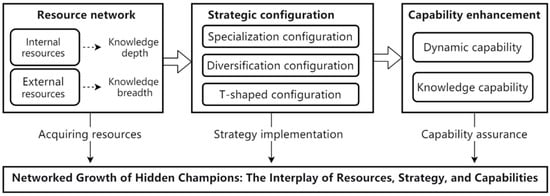
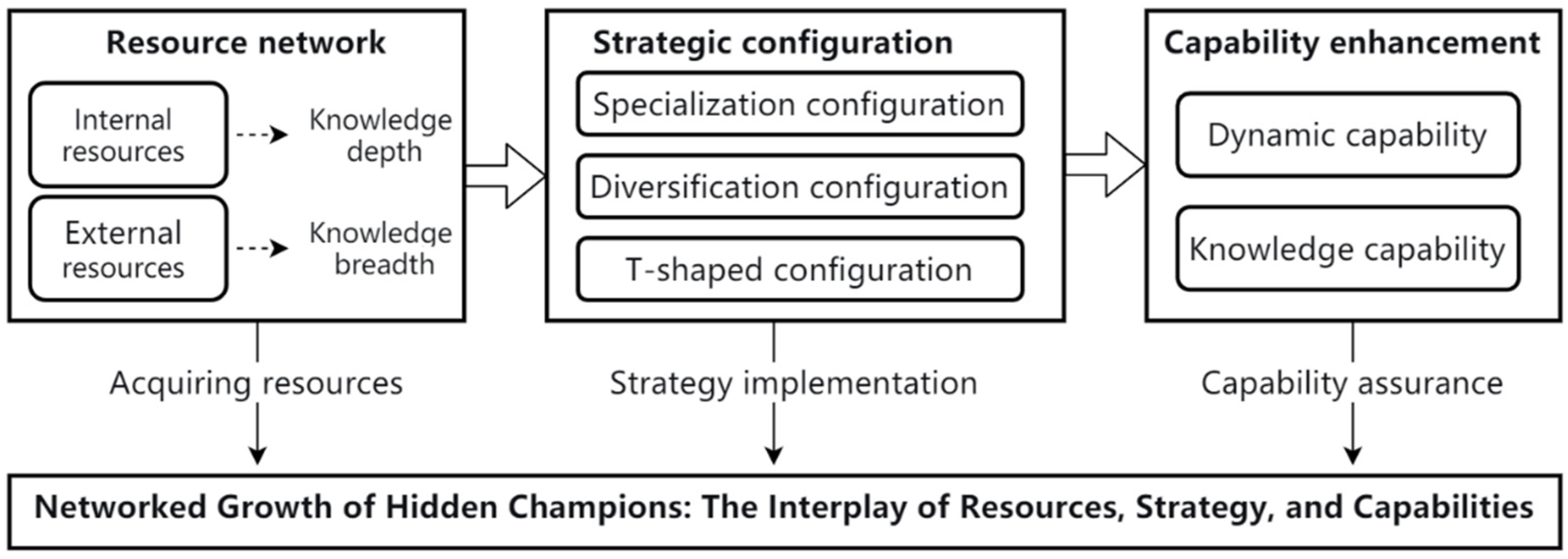
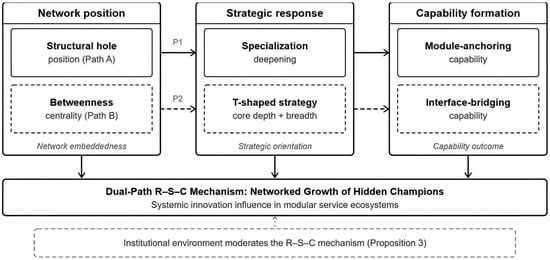
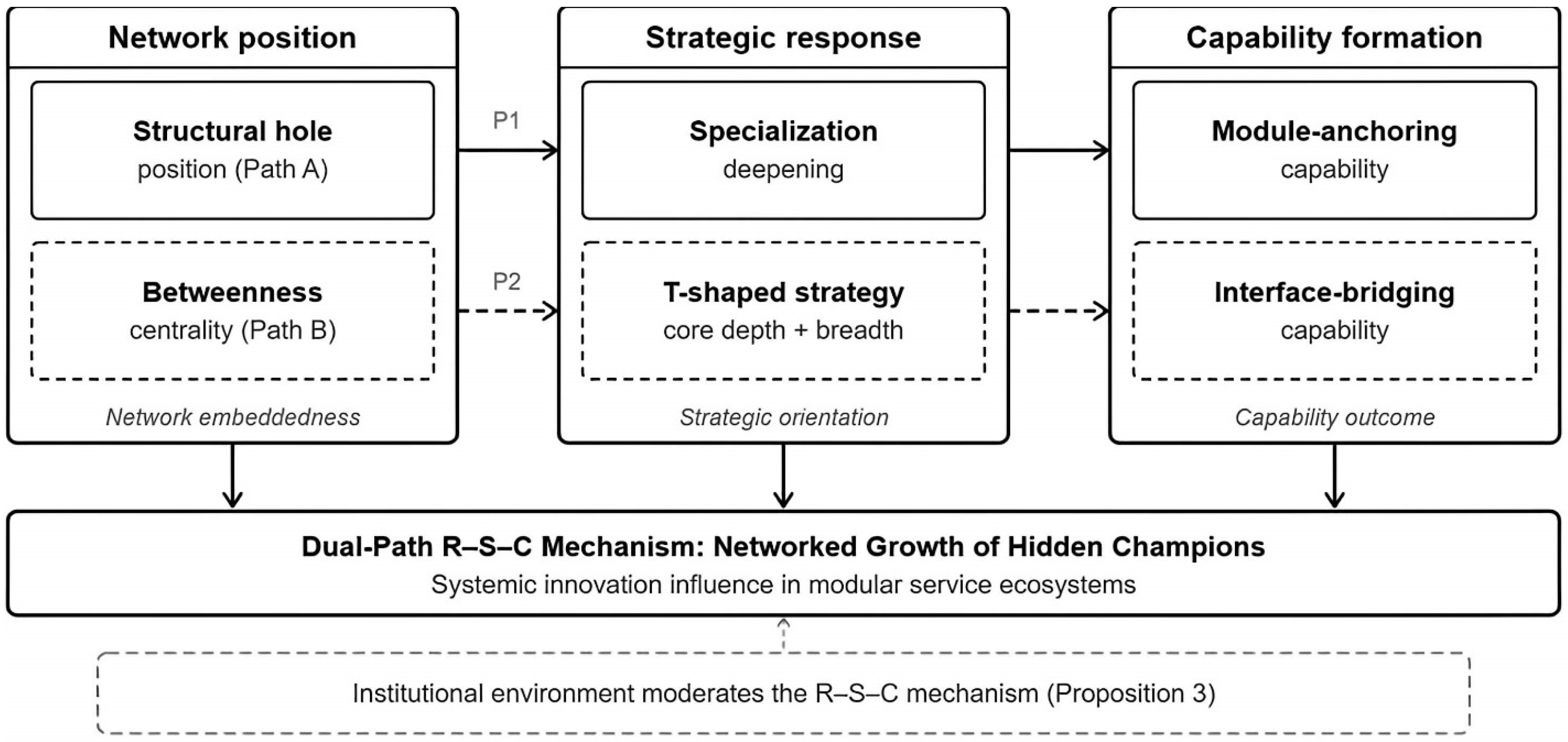
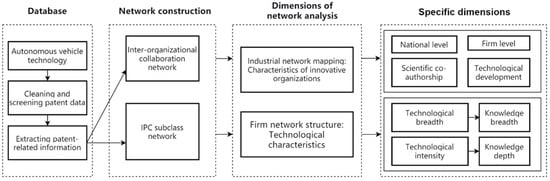
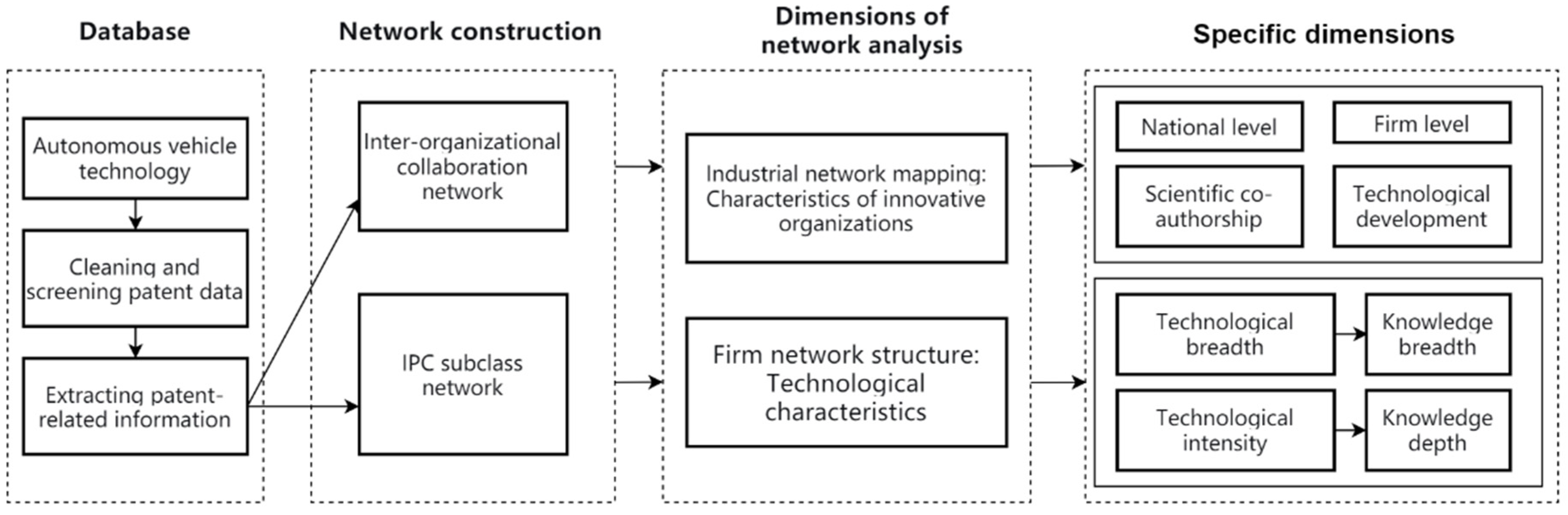
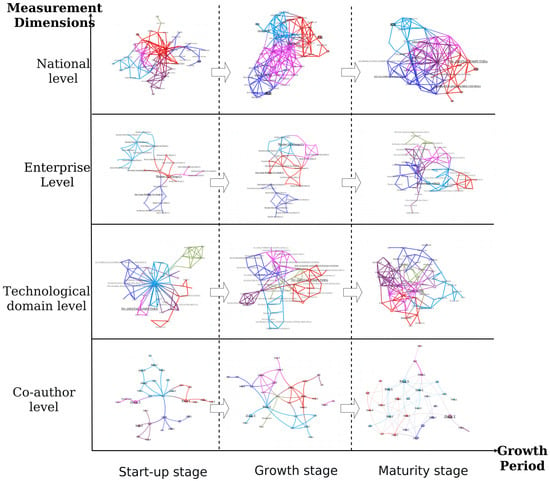
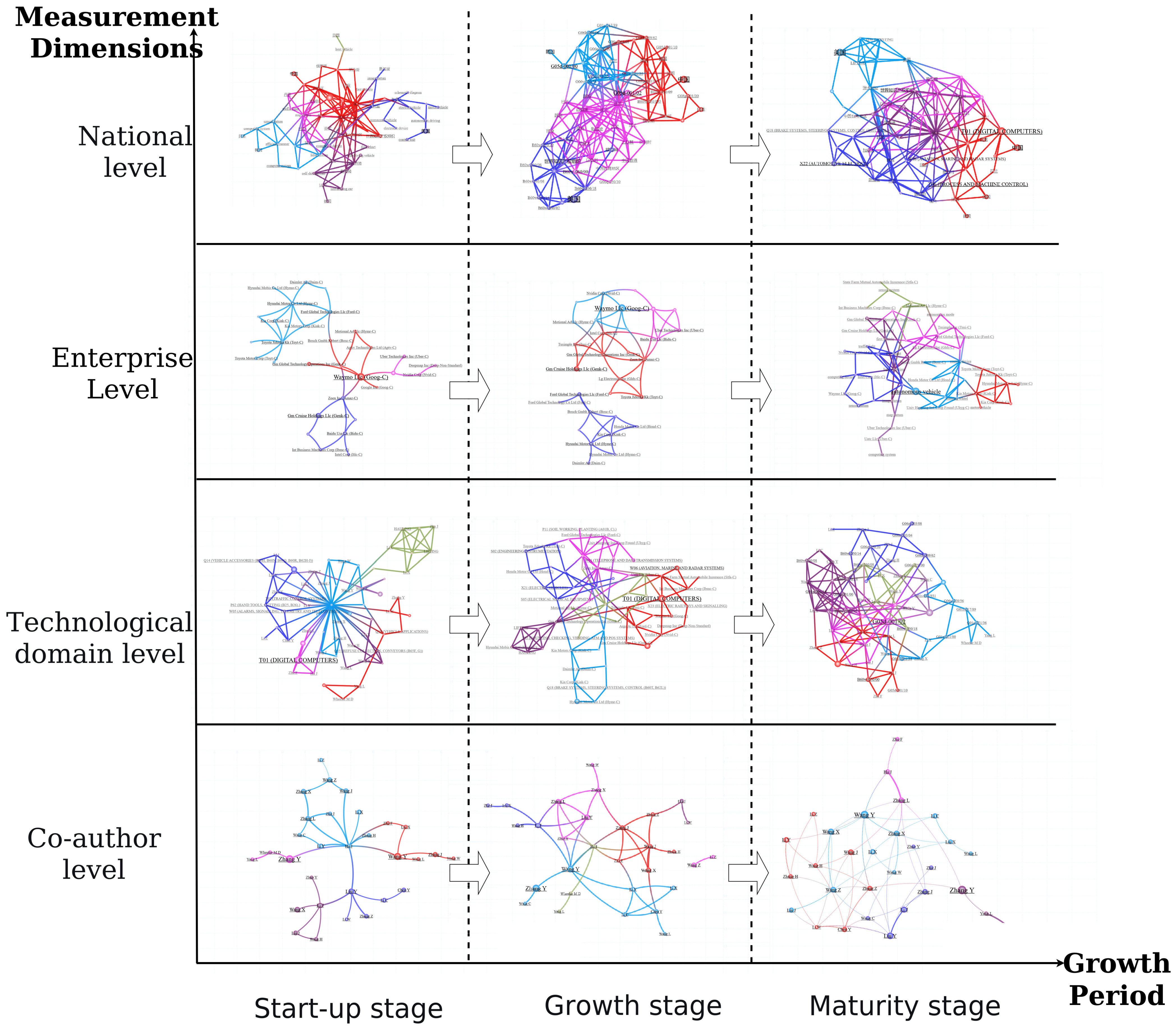

Disclaimer/Publisher’s Note: The statements, opinions and data contained in all publications are solely those of the individual author(s) and contributor(s) and not of MDPI and/or the editor(s). MDPI and/or the editor(s) disclaim responsibility for any injury to people or property resulting from any ideas, methods, instructions or products referred to in the content. |
© 2026 by the authors. Licensee MDPI, Basel, Switzerland. This article is an open access article distributed under the terms and conditions of the Creative Commons Attribution (CC BY) license.