


Abstract
Against the backdrop of deep integration of technological innovation and industrial innovation, this study constructs a theoretical model incorporating market and government behavior. Utilizing panel data from 284 prefecture-level cities across China from 2013 to 2023, it empirically analyzes the roles and mechanisms of efficient market and proactive government in facilitating the deep integration. Findings indicate that the market’s “push–pull mechanism” promotes the deep integration of technological and industrial innovation, enhancing output performance. However, market mechanism exhibits diminishing marginal output performance: beyond a certain threshold, the force to drive further performance improvements weakens. The government’s role can positively influence the market mechanism’s ability to drive deep integration of technological innovation and industrial innovation, and growth in output performance. In coordinating government and market efforts, the following principles should be observed: as market mechanism matures, gradually enhance technological innovation by allocating human capital to research activities, particularly basic research; formulate industrial policies that progressively prioritize science and technology innovation activities; and advance the development of public goods, such as technology transfer and commercialization platforms. To advance the deep integration of technological and industrial innovation, policy implications include consistently leveraging market mechanisms, coordinating government and market efforts to design policies for capital and talent mobility, and promoting the construction of conversion platforms like concept-validation centers and science incubators.
1. Introduction
Facing increasingly fierce international competition, how to effectively transform scientific and technological innovations into a real driving force for industrial development is a critical question that every country striving to enhance its national competitiveness and achieve economic catch-up must confront. For developing countries, this issue is all the more urgent and challenging. On one hand, developing countries urgently need scientific and technological innovation to play a leading role in achieving economic catch-up. On the other hand, they generally face the dilemma of “innovation failure,” characterized by a fragmented innovation system, poor conversion channels for scientific and technological achievements, and a disconnect between enterprises and research institutions. The decoupling of scientific and technological innovation from industrial innovation means that substantial R&D investment struggles to translate into real productivity, which has become a key bottleneck constraining their ability to cross the “middle-income trap” and achieve high-quality development.
The deep integration of scientific and technological innovation with industrial innovation (hereinafter referred to as the “deep integration of science, technology, and industry”) is precisely the core pathway to address this universal dilemma. It refers to the formation of a new pattern where scientific and technological innovation and industrial innovation advance as one integrated whole, mutually reinforcing each other (Yin Hejun, 2025) [1]. For China, which is undergoing a profound transformation of its development model, this proposition holds particularly significant strategic importance. The Fourth Plenary Session of the 20th Central Committee of the Communist Party of China explicitly called for “promoting the deep integration of scientific and technological innovation with industrial innovation.” The 2025 Central Economic Work Conference further emphasized “promoting the deep integration of scientific and technological innovation with industrial innovation around the development of new quality productive forces.” In this context, the deep integration of science, technology, and industry is not only a practical issue of mutually empowering the innovation chain and the industrial chain but also a strategic support for accelerating high-level self-reliance and strength in science and technology, leading the development of new quality productive forces, building a modern industrial system, and enhancing the overall efficiency of the national innovation system [2,3].
In the innovation practices of Western developed countries, the “big market, small government” model has long held a dominant position, emphasizing the decisive role of market mechanisms in the allocation of innovation resources. However, this model has gradually revealed its limitations when dealing with the public goods nature of basic research, coordination failures among innovation actors, and the “valley of death” challenge in the transformation of scientific and technological achievements. For many latecomer countries committed to innovation-driven development, relying solely on market forces often makes it difficult to bridge the gap from science and technology to industry in the short term. There is an urgent need to explore new institutional arrangements that leverage the coordinated synergy of both the government and the market. The concept of “coordinating government and market” proposed by China in the process of promoting the deep integration of science, technology, and industry is precisely a positive response to this universal challenge, and also offers institutional experience from which other developing countries can draw. The Fourth Plenary Session of the 20th Central Committee of the Communist Party of China proposed “adhering to the combination of an efficient market and a proactive government.” Through their synergy in the field of innovation, it is possible to restructure traditional production functions and realize their market value [4]. The core of this institutional practice is to ensure that while the market plays a decisive role in resource allocation, the government better fulfills its role in guiding and safeguarding activities such as basic research investment, innovation platform construction, and correction of market failures, striving to form a combined force between an “efficient market” and a “proactive government.”
Existing research has conducted preliminary explorations into the integration of scientific and technological innovation with industrial innovation. On one hand, innovation economics and national innovation system theory provide a solid theoretical foundation for understanding the integration of science, technology, and industry. From Schumpeter’s (1942) [5] theory of “creative destruction,” which emphasizes the decisive role of innovation in upgrading industrial structures, to Romer’s (1990) [6] endogenous growth theory, which endogenizes knowledge accumulation and reveals the sustained driving mechanism of R&D innovation, and further to Aghion and Howitt’s (1992) [7] quality ladder model, which depicts the dynamic relationship between innovation, industrial replacement, and economic growth, these classical theories collectively illustrate that the connection between scientific and technological innovation and industry is the wellspring of innovation-driven development. National innovation system theory (Freeman, 1987 [8]; Lundvall, 1992 [9]; Balzat & Hanusch, 2004 [10]) further situates innovation within institutional and organizational networks, emphasizing the interactions among enterprises, universities, research institutions, the government, and other actors, as well as the impact of institutional arrangements on the efficiency of knowledge production, diffusion, and application (Charles, 2011 [11]). From the perspective of knowledge transformation, Mokyr (1990) [12] points out that the effective linkage of different types of knowledge is key to transforming technological progress into economic performance, offering significant insights for understanding “deep integration.” Furthermore, Marx’s discourse on “science being included in the productive forces” also emphasizes, from a political economy perspective, the adaptive relationship between the development of productive forces and institutional arrangements.
On the other hand, building upon this solid theoretical foundation, a substantial body of research in recent years has delved into the practical pathways and mechanisms of the integration of science, technology, and industry from macro, meso, and micro perspectives. At the macro level, studies focus on comprehensively deepening institutional and systemic reforms [13], with emphasis on mechanisms for coordinating innovation actors [14], the technology and financial system [15], the education and talent support system [16], and the policy coordination system. These studies stress the role of the government in creating a favorable environment for integrated development through institutional supply. At the meso level, scholars mainly discuss the interactive relationships between the industrial system, industrial chain structure, and innovation activities [17], emphasizing the synergistic logic of “deploying the innovation chain around the industrial chain and arranging the industrial chain around the innovation chain” to promote the optimal allocation of innovation resources across industries [18,19,20]. At the micro level, research pays more attention to the selection and incentive roles of market mechanisms in the transformation of achievements [21]. By analyzing firm heterogeneity, technology transformation mechanisms, and platform support conditions [22], these studies explore how to improve market mechanisms to stimulate the innovation vitality of micro-entities. This body of research reveals the complexity and systematic nature of integrating science, technology, and industry from different dimensions, and identifies the critical roles of both government and market mechanisms within it [23,24,25].
In summary, previous research provides an important theoretical foundation and rich empirical reference for this study. However, as the concept of “integrated development of science, technology, and industry” has been elevated to the new level of “deep integration of science, technology, and industry,” existing research still exhibits the following shortcomings: First, this conceptual shift urgently requires the academic community to propose a theoretical basis and analytical framework grounded in China’s contemporary local practices—one that is highly explanatory, logically self-consistent, and capable of guiding the “deep integration of science, technology, and industry” in the new era. Existing research, however, remains confined to the perspective of “integrated development,” overlooking the new demands that the concept of “deep integration” itself places on both the market and the government. Second, existing studies are generally limited to proposing concrete measures to promote the “integrated development of science, technology, and industry” from macro or micro perspectives. Research on the roles of government and market is relatively fragmented, lacking systematic analysis within a unified framework, and thus fails to answer the question of “how government and market can synergize.” Third, current research on the “deep integration of science, technology, and industry” is predominantly qualitative analysis. There is a lack of empirical research that approaches the topic from a mathematical perspective and connects with classical theories of innovation economics in academic history.
Based on this, this paper develops a multi-sector equilibrium framework that mathematically operationalizes the key concepts of “deep integration of science, technology, and industry,” “market mechanisms,” and “government functions,” incorporating them into a unified model for analysis. Utilizing panel data from 284 prefecture-level cities in China from 2013 to 2023, it empirically analyzes the roles and mechanisms of an efficient market and a proactive government in promoting the deep integration of science, technology, and industry. The findings are as follows: First, an efficient market drives the deep integration of scientific and technological innovation with industrial innovation through a “push–pull mechanism,” thereby enhancing output performance. Second, the promoting effect of market mechanisms on output performance is subject to the law of diminishing marginal returns. Third, government action exerts a positive moderating effect on market mechanisms; that is, in regions or periods with stronger government policy support, each unit increase in the efficiency of market mechanisms leads to a more significant increase in output performance.
The innovations of this paper are threefold: First, it mathematically conceptualizes “deep integration” by constructing a multi-sector equilibrium framework encompassing market signals, knowledge spillovers, and government intervention, addressing the gap in defining the connotation and boundary conditions of “deep integration” in existing research. Current studies have not clearly defined the structural implications and boundary conditions of “deep integration” compared to “integrated development,” making it difficult to explain the new demands it places on the synergy between government and market. To address this gap, this paper explicitly proposes that the core of “deep integration” lies in forming a virtuous cycle where scientific and technological innovation and industrial innovation advance as one integrated whole, mutually reinforcing each other. This requires that while market mechanisms play a decisive role in resource allocation, the government must provide effective support in areas of market failure such as basic research, pilot-scale maturation, and standards certification, thereby clearly defining “deep integration” at the conceptual level. Second, it incorporates both market and government into a unified analytical framework, revealing their division of labor and synergy mechanisms in the integration process of science, technology, and industry. Existing analyses of the roles of government and market remain fragmented [2,7], generally confined to proposing concrete measures at macro, meso, and micro levels [13,14,15,16,17], lacking a systematic analysis within a unified framework of how the two divide labor and synergize to promote deep integration. To address this gap, this paper constructs a multi-sector equilibrium framework, mathematically operationalizing key concepts like “depth of integration of science, technology, and industry,” “efficiency of market mechanisms,” and “government functions” into a unified “government–market” framework for systematic analysis, revealing their division of labor boundaries and synergy conditions in the process of deep integration. Third, it advances the mathematical formalization and empirical rigor of research methodologies. Current research is predominantly qualitative, lacking mathematical models that connect with classical innovation economic theories and rigorous empirical testing, making it difficult to accurately depict the endogenous determination mechanisms of deep integration. To address this gap, this paper derives testable propositions based on theoretical analysis and conducts empirical tests using panel data from 284 prefecture-level cities nationwide, organically combining theoretical research with empirical analysis to provide a scientific basis for policy formulation.
2. Theoretical Model
Currently, mathematical model research on the roles and mechanisms of both market and government in the integration of technology and industry remains underdeveloped. While preliminary modeling explorations have been conducted—such as those by Meng et al. (2024) [26] on market roles and Chen et al. (2024) [2] on government roles—a comprehensive systematic study that incorporates both within a unified analytical framework is still lacking. In response, this part aims to construct a unified mathematical model that integrates market mechanisms and government functions. This model seeks to address the limitation in existing studies of treating these two forces in isolation. Through model derivation, we will analyze the mechanisms by which market and government jointly drive the Deep Integration of Technology and Industry within a unified framework from a mathematical analysis perspective, explore optimal synergistic pathways for their coordination, and thereby establish a theoretical foundation for subsequent analysis.
2.1. Theoretical Model for the Introduction of Market Mechanisms
2.1.1. Basic Setup
Drawing on the work of Meng et al. [26], this study designates the Research and Development (R&D) department as the proxy sector for technological innovation and the product department as the proxy sector for industrial innovation. To analyze the differential impacts of various R&D activities on performance enhancement, the production activities within the R&D department are categorized by function into basic research and applied research. Applied research is posited to build upon the foundation laid by basic research, with both categories of R&D activities conducted within the department under the assumption of zero-cost knowledge transfer. The R&D department engages in non-monopolistic R&D activities. Basic research employs labor for production, with a production function of , where represents labor input and denotes the effective research output per unit of labor. Applied research utilizes knowledge capital and labor for production-oriented activities, exhibiting constant returns to scale:
In this framework, represents the quantity of labor allocated, and denotes the quantity of knowledge capital employed. The amount of knowledge capital is computed by the formula , where is the quantity of basic research outputs utilized as an input. The parameter represents the efficiency of converting these basic research outputs into knowledge capital and is positively correlated with their quality. The exponent quantifies the knowledge spillover effect from basic to applied research. The factor scales the total factor productivity of the applied research sector, while captures the elasticity of substitution between labor and knowledge capital. Given , the resultant output for the applied research sector is determined to be:
The marginal costs of hiring basic research scientists and applied research personnel in the R&D department are denoted as and , respectively.
The economy comprises several product sectors, the aggregation of which constitutes an industry. Each product sector utilizes labor and knowledge capital for production, with different sectors producing different kinds of consumer goods. The set of consumer goods is denoted as J. Drawing on the model design by Zou et al. [27]. The catalytic effect of technological innovation on a sector’s output is determined by the volume of relevant scientific and technological outputs and their alignment with industrial demand. The production function is expressed as:
In this model, denotes distinct product sectors. For sector , the inputs are labor and knowledge capital . The knowledge capital in a product sector is defined as , where represents applied research output purchased from and deployed by the R&D sector. The parameter signifies the efficiency of converting applied research into knowledge capital, reflecting the contribution of technological progress to total factor productivity; this efficiency is intrinsically linked to the quality of the applied research. The quality of applied research outcomes, in turn, depends on the quality of information exchange, , between the R&D and product sectors, with being a positive function of (). The quality of market signals is primarily determined by the mode of inter-sectoral communication. With advancements in communication technologies and the timely implementation of supportive policies, communication modalities that foster high-quality exchange and facilitate the translation of outcomes into applications generate market signals of superior quality.
denotes the knowledge spillover effect from the R&D sector to the production sector, which is intrinsically correlated with the depth of technology-industry integration [28,29]. In other words, the magnitude of provides the most direct manifestation of how “deep” this integration is. Specifically, when , it represents a state of complete separation between technological innovation and industrial innovation, where the two operate independently and are mutually irrelevant. represents the constant elasticity of substitution, while denotes the initial total factor productivity.
The consumption sector is modeled by a representative consumer, who purchases the final good and possesses a constant elasticity of substitution utility function:
Here, denotes the quantity of product j consumed, and represents the elasticity of substitution among consumption goods. By normalizing the aggregate expenditure of the economy to 1 and solving the utility maximization problem, we derive the consumer’s demand function for product j:
Within this model, the aggregate price index for consumption goods is defined as .
Labor market equilibrium requires that . Product market equilibrium is characterized by and .
2.1.2. Market Mechanisms and Market Efficacy
To avoid subsequent endogeneity issues that are difficult to resolve, we assume the production activities of the product department exhibit constant returns to scale from the perspectives of labor and R&D output factors, expressed as . Considering that conveying market signals incurs costs, the product sector ensures information flow by dispatching market signals to the applied research department at a unit price . At this stage, the circulation of market signals creates the “technology push” effect of technological innovation on industrial innovation. This is reflected in the model as , where the knowledge spillover effect of R&D achievements on the industry varies in the same direction as the volume of circulating market signals (it will be further analyzed that under equilibrium conditions, the “technology push” mechanism of an efficient market drives the growth of final output performance). The economic implication is as follows: a perfected market-oriented mechanism encourages scientific and technological innovation to be directed toward meeting production demands, focusing on corresponding research fields. By fostering more thorough knowledge exchange, this mechanism generates greater intellectual achievements and higher knowledge spillover effects for applied research, thereby enhancing the translational potential of scientific and technological outcomes derived from research and development.
Obviously, in the early stages of market mechanisms being underdeveloped, it is challenging to effectively translate the outcomes of scientific and technological innovation into industrial development. As the volume of signal transmission increases, the efficiency of scientific and technological achievement transformation continually improves, with market mechanisms aiding in overcoming the “valley of death” obstacle. Technological advancement connects technological innovation with industrial innovation within the market framework, leading to an increase in the actual marginal output of R&D, while the marginal output of labor declines comparatively [2]. Upon receiving market signals, applied research departments relay them to basic research departments. There is a tendency for basic research departments to concentrate on overcoming significant challenges in applied research by achieving breakthroughs in foundational innovation, thus enhancing their knowledge spillover effects to applied research, resulting in a similarly positive effect, . denotes the aggregate signals circulating within the market, serving to measure the completeness of the market mechanism and is termed market efficacy.
Furthermore, from the perspective of integration of technology and industry, this model posits that market mechanisms do not merely amplify a unidirectional knowledge spillover from R&D to production activities. Instead, market signals transmitted by the product division provide empirical evidence that effectively informs R&D. By leveraging the market mechanism, the total factor productivity across all R&D stages is enhanced, thus satisfying the conditions where and .
In summary, the Deep Integration of Technology and Industry, viewed through the lens of market mechanisms, is influenced both by the quantity and quality of transmitted market signals. The quantity of signals affects the alignment of objectives between technological innovation and industrial innovation, while the quality of these signals impacts the caliber of R&D outcomes, consequently influencing total factor productivity.
2.1.3. Market Mechanism’s Impact on Deep Integration of Technological and Industrial Innovation and Output Performance
Let represents the wage rate for labor, and denotes the price of applied research output. The cost function for product sector j as , where
When , indicating that the marginal cost of hiring labor is substantially higher than the marginal cost of acquiring R&D output, then holds. Simultaneously, demonstrates that both the quantity and quality of market signals can reduce the production costs of the product sector. To further qualitatively derive the impact of market signal transmission by the product sector on costs, assume , , where represents the signal transmission efficiency. Let , then
is decreasing in . When satisfies (8), the product sector’s market signal transmission can reduce total cost. Given that the is the decreasing function of . When exceeds the critical price corresponding to the threshold value reached by the knowledge spillover effect in the short term, the product division terminates signal transmission prematurely, and market mechanism subsequently fails. When remains less than —meaning market signaling exhibits significant economies of scale— converges to zero more quickly. Provided the cost resistance to signal transmission is sufficiently low, the efficient market can reduce the production costs of the product sector to a level permissible in the short run. Let the total output value of product department serve as the proxy variable for output performance, where
For a detailed derivation, see Appendix A.1. Given that , it follows that and . Both the progressive refinement and high-quality market mechanisms enhance the output performance of product sector , with knowledge spillover effects further promoting growth in final output performance. Combining Equations (7) and (8), when is sufficiently small and the cost of acquiring research outcomes is low, the efficient market, through the “technology push” mechanism, exerts a positive influence on simultaneously improving the output performance.
Under cost-minimizing conditions, the product department j maintains an input ratio of labor to applied research output:
Clearly, the knowledge spillover effect facilitates the application of more technological innovations to industrial innovation. While promoting deep integration, this effect also exerts a positive, demand-driven incentive on the performance output of scientific and technological work.
From the preceding analysis, the following proposition is advanced:
Proposition 1.
Under the condition that the marginal cost of disseminating market signals and procuring R&D outputs is sufficiently low relative to the marginal cost of labor employment (), efficient market foster the integration of technological and industrial innovation, thereby enhancing output performance growth through “push–pull mechanism”.
In summary, an efficient market facilitates Deep Integration of Technology and Industry through the “push–pull mechanism”. Following the generation of scientific and technological innovations, there is a continuous drive for commercialization. An efficient market propels nascent discoveries through the new product development pipeline, while effective transmission of market signals enhances the contribution of basic research to applied research, and of applied research to output performance growth. This dynamic enables upstream and downstream segments of the innovation and industrial chains—previously operating in isolation—to synchronize their R&D and production activities in the efficient market. Consequently, it maximizes the impact of production activities across sectors on performance and provides a fundamental guarantee for the core phase of deep integration [30].
2.2. Market Failure and Diminishing Marginal Returns
As established in the preceding analysis, for a given product sector and parameter , if , the product sector prematurely ceases signal transmission. Under this condition, the knowledge spillover effect reaches the threshold set by the exogenous condition , and the market-driven impetus for the integration of technology and industry, alongside its enhancement of output performance, will falter. In this context, solving for the output performance of sector under its cost-minimization constraint yields
Here, is the threshold for the knowledge spillover effect in the short term, market failure manifests at this time [31].
Moreover, according to (11), output performance over the long run satisfies . This indicates that, as the deepening integration of technology and industry throughout the market mechanism, the further circulation of market signals will have a diminishing incremental effect on output performance, given constant levels of capital and talent allocation. When the primary modes of interaction between sectors do not change, and market signal quality stabilizes, diminishing marginal returns on output performance emerge (Figure 1).
Figure 1.
Market Failure and Diminishing Marginal Returns on Output Performance.
This theoretical model examines the root causes of market failure through the lens of information asymmetry. Market failure arises when natural disruptions—such as disasters or environmental degradation—or socio-economic factors—including immature production and supply chains, underdeveloped transportation and communication technologies, or conflict—fragment product markets. This fragmentation significantly increases the marginal cost of conveying market signals, thereby generating bidirectional information asymmetry. R&D and production sectors, each holding substantial proprietary information, lack effective channels to access information from the other. This leads to insulated, siloed operations within each sector. Furthermore, under conditions of constrained signal quality, the knowledge spillover effects from basic to applied research, and from applied research to production, become insufficient to drive further gains in output performance. This gives rise to diminishing marginal returns on output performance—a persistent challenge inherent to all technological markets over the long term.
2.3. The Optimal Principle of Government–Market Coordination
2.3.1. The Imperative of Government Intervention
The analysis of market failure indicates that addressing this issue fundamentally requires optimizing the allocation of production factors. Given established knowledge spillover effects, rationally adjusting the overall proportions of labor and capital across sectors can effectively enhance output performance. However, market mechanisms exhibit inherent limitations at the macro-level in factor allocation: resources are allocated to maximize sectoral benefits, which impedes the spontaneous achievement of optimal talent and capital distribution across departments and fails to provide sufficient factor support for critical production or R&D sectors. The theory of national innovation systems [8] posits that the national innovation systems are complex, interacting and overlapping with governmental, social, and market frameworks. Consequently, from a science-industry integration perspective, overcoming market failure necessitates governmental intervention. Governments must formulate industrial policies to rationally plan factor allocation while providing public goods to improve signal quality and transmission efficiency, thereby bolstering the contribution of technological progress to total factor productivity. Accordingly, this paper explores policy pathways for enhancing output performance from an active government standpoint, focusing on three dimensions in the context of market mechanism failure: governmental roles in talent allocation, capital allocation, and public good supply [32,33].
2.3.2. Principles of Optimal Talent Factor Allocation for Government–Market Coordination
Industrial policy (Mainly tax and subsidy policies), factor allocation, and the provision of public goods constitute the three primary pathways for the government to fulfill its functions [34].
Assuming an overall quantity n for the product department, the optimal labor allocation ratio is found to satisfy
In this equilibrium state, the optimal domestic allocation of human capital exhibits the following pattern: In regions where the market mechanism is relatively underdeveloped, talent should not be excessively concentrated in R&D sectors; rather, it is essential to simultaneously support downstream production activities. Conversely, in regions with well-developed market mechanisms, basic research generates significant knowledge spillovers to applied research, warranting a preferential allocation of R&D labor to the foundational scientific endeavor. This conclusion remains valid even after the marginal output performance of the market mechanism begins to diminish. The economic rationale stems from the dynamic evolution of intersectoral externalities: under conditions of market failure, the marginal output and, consequently, the positive externalities of scientific and technological innovation for production are limited, whereas the marginal output of lower-skilled labor is relatively higher. As the market mechanism gradually overcomes these failures, the positive externalities of R&D become increasingly salient. At this stage, talent allocation should favor R&D sectors characterized by positive externalities until the marginal output of labor—measured by final output—converges between upstream and downstream firms.
2.3.3. Principles of Optimal Industrial Policy Formulation and Public Goods Provision for Government–Market Coordination
Assume the government holds total budget as the initial total cost for policy implementation, where represents the subsidy () or tax () for basic research activities, and represents the subsidy () or tax () for applied research activities; indicates the subsidy () or tax () for product sector .
Derived from symmetry considerations, the government’s optimal tax-subsidy policy for sector j satisfies the condition
Here, . In cases of market failure or underdeveloped market mechanism, government should implement relatively accommodative tax policies toward the production sectors, or provide appropriate subsidies to stimulate production. Given the current uneven development of regional markets in our country, this conclusion offers a theoretical rationale for the industrial policies currently targeting underdeveloped regions. For instance, the National Development and Reform Commission’s Encouraged Industries Catalogue for the Western Region (2025 Edition) formulates a series of subsidy-centered support policies for downstream manufacturing enterprises in the western region, including tax incentives, special funds, guidance for distinctive industries, and complementary support measures, aiming to promote regional industrial development by lowering production costs. As the market mechanism progressively improves, the government’s relative taxation intensity on the product sector should be correspondingly strengthened. Furthermore, the government’s relative tax-subsidy intensity is also influenced by variables such as the elasticity of substitution for knowledge capital within the industry chain and total factor productivity. When the elasticity of substitution for knowledge capital and total factor productivity is higher, the government also tends to implement a relative taxation policy toward the product sector—that is, reducing subsidies or increasing taxation. Solving the profit maximization problem for the R&D department, the optimal tax-subsidy policy for R&D activities must satisfy
For a detailed derivation, see Appendix A.2. The analysis establishes that Equations (11), (13) and (14) define the principles for formulating an optimal tax and subsidy policy. The level of government subsidies for basic and applied research should be calibrated to the maturity of market mechanism. In contexts where these mechanisms remain underdeveloped, R&D outcomes exert limited influence on production activities. Consequently, while supporting the R&D sector, policymakers should implement proportional subsidies for product development to stimulate manufacturing. As market mechanism matures, the relative subsidy intensity for R&D—especially basic research—must be increased. This entails greater funding commitments, improved compensation for researchers in fundamental science, and stable, non-discriminatory support for applied research to sustain the innovation pipeline. Applied research constitutes the critical nexus between technological and industrial innovation, characterized by high capital intensity, extended timelines, and significant externalities. It functions as the essential conduit through which scientific advances empower industrial transformation. Sustained government subsidies in this domain provide core value by ensuring funding continuity, thereby mitigating decision-making uncertainties. This prevents promising technologies from stalling during pilot stages due to funding gaps, optimizes the allocation of capital and human resources across R&D and production, and ultimately deepens the integration of technology and industry.
In summary, the evolution pattern of optimal government policy can be summarized as follows: As the construction of an efficient market advances, the proportion of human resources allocated to basic research and applied research sectors should be continuously increased; a preferential subsidy policy should be implemented for basic research, while a stable non-preferential subsidy policy should be applied to applied research, accompanied by a gradually intensifying tax policy on the product sector. This combination not only reduces the labor costs of basic research but also effectively promotes output performance growth through knowledge spillover effects.
Based on the preceding analysis, this study posits Proposition 2.
Proposition 2.
Government policies that coordinate with the market to maximize societal final product output should satisfy the following two dimensions. (1) Factor allocation dimension: As market mechanism matures, progressively increase the labor allocation proportion to basic research activities, followed by applied research; the relative labor allocation to the product sector is determined solely by its labor substitution elasticity. (2) Policy dimension: With the enhancement of market mechanisms, gradually escalate taxation on the product sector, implement a preferential subsidy policy for the basic research sector, and enforce a stable, non-preferential subsidy policy for applied research.
The two aforementioned propositions demonstrate that the coordination of the efficient market and the proactive government plays crucial roles in the process of deep integration between science and industry (as illustrated in Figure 2), and the output performance. The market mechanism reinforces the goal orientation of R&D activities by transmitting market signals. Given the current context of finite total investment and “bottleneck” issues in key generic technologies, the market guides researchers to focus on major technological challenges hindering China’s socio-economic development, facilitates breakthroughs in critical fields and sectors, enhances the efficiency of transforming scientific and technological achievements, and promotes deep integration of technology and industry.
Figure 2.
Mechanisms of Efficient Market and Proactive Government.
However, the market is not omnipotent. The maximum utility of the market mechanism is constrained by signal transmission costs and economies of scope characteristics. Furthermore, if the market fails to achieve the optimal allocation of factors of production required to maximize macroeconomic output, the benefits resulting from the deepening integration of technological and industrial innovation will not be fully realized. The potential for market failure implies that during the initial stages of industrial development, government should avoid indiscriminately supporting the R&D sector at the expense of factor allocation for the production sector. Once market failure is mitigated, the government must formulate appropriate policy measures to further strengthen output performance growth. This can include, at the macro level, optimizing the allocation of capital and talent, thereby complementing the efficient market to jointly enhance the supply of high-quality technology, the efficiency of technology transfer, and overall performance, ultimately addresses the limitations of market mechanisms in effectively driving growth in output performance. From the perspective of coordinating the market and the government, the bias and intensity of industrial policy should be flexibly adjusted in response to the market mechanism across different stages of product market or economic development, achieving synergistic effects.
At this point, we have clearly outlined the underlying mechanisms of market–government coordination from a theoretical perspective: the market drives the integration and convergence of the innovation chain and the industrial chain, while the government coordinates with the market in the allocation of capital and talent, thereby achieving the convergence of the innovation chain, industrial chain, capital chain, and talent chain. The full-chain integration of the innovation and industrial chains, combined with the comprehensive integration of the capital and talent chains, provides the direct impetus and fundamental guarantee for the deep integration of scientific and technological innovation with industrial innovation.
Beyond the two empirically testable dimensions above, the theoretical model also yields implications regarding public goods provision. According to Equations (8) and (9), exploring new forms of intersectoral exchange likewise enhances the efficiency of market mechanism. Constructing public-good-type platforms for transforming scientific and technological achievements—such as technology incubators, exchange platforms, and maker spaces—helps improve the quality of market signals, thereby raising total factor productivity driven by technological progress, while reducing efficiency losses in signal transmission.
Specifically, three approaches merit consideration: First, establishing science-industry integration platforms by promoting novel interdepartmental communication formats, such as pilot zones for high-precision and advanced industries, concept verification centers, and industry incubation hubs, which facilitate “point-to-point” cross-departmental exchanges to improve market information quality; second, refining the innovation signal transmission mechanism by utilizing government procurement as an information exchange intermediary and encouraging user feedback to generate more realistic market signals, ensuring the efficient market’s long-term contribution to output performance; and third, developing the digital economy by leveraging data as a production factor to amplify knowledge spillover effects [35], providing more efficient channels for the circulation of market signals and further propelling the deep integration of science and industry.
3. Empirical Research Design
3.1. Model Specification
3.1.1. Baseline Regression
According to Proposition 1, the efficient market amplifies knowledge spillover effect via the “push–pull mechanism”, thereby facilitating technology-industry integration and enhancing output performance. To empirically validate Proposition 1, this study employs a dual fixed-effects model for verification:
Here, represents the depth of technology-industry integration, denotes output performance, and captures the efficacy of market mechanism. refers to the control variables, with and being the coefficient vectors for these controls. The terms and denote the individual and time fixed effects, respectively, while represents the stochastic disturbance term. Market mechanism exhibits a theoretically diminishing marginal effect on output performance, manifesting in reality as a weakening influence of efficient market. To test the diminishing marginal returns of market mechanism, a quadratic term for market mechanism was included in the baseline regression model. A value of , provided it passes tests of statistical significance, captures this property.
3.1.2. Modeling Government Intervention
Proposition 2 systematically summarizes the pathway to achieve deep integration of technological innovation and industrial innovation through synergistic government–market coordination. The coordination of an efficient market and a proactive government can overcome market failures and enhance output performance. To test Proposition 2, this study specifies the following regression model:
In this context, serves as the proxy variable for the role of government, encompassing factor allocation () and capital allocation (). Furthermore, Proposition 2 posits that the role of a productive government extends beyond the direct provision of factor inputs and public goods to encompass the formation of a dynamic synergy with the market mechanism. Optimal policy should adapt flexibly with the maturation of the mechanism; such coordinated governance serves not only as a driver of output performance but also as a critical catalyst for deepening the integration of technology and industry. To examine the government’s capacity to effectively moderate the functioning of market mechanism, this study establishes a moderation effect model for empirical testing:
Here, is the collection of dependent variables, including and .
3.2. Variable Definition
3.2.1. Dependent Variables: Depth of Technology-Industry Integration (Integration) and Output Performance (Output)
- (1)
- Depth of technology-industry integration (integration)
Drawing on prior research concerning the construction of indicators for science-technology and industrial innovation integration (Pang, et al., 2025 [36]; Yin, et al., 2025 [37]), and while considering data availability, we developed an integration index system (Table 1) to measure the depth of integration.
Table 1.
Index System for Depth of Technological and Industrial Innovation.
In analyzing technological innovation, Aghion & Howitt (1990) [7] posit that its essence extends beyond mere technical advancement, placing greater emphasis on the accumulation of scientific knowledge and its practical application. Consequently, the technological innovation indicator system encompasses two secondary indicators: “Knowledge Creation Agents” and “Knowledge Output Outcomes” [38]. These correspond, respectively, to the capacity for scientific knowledge accumulation and the efficacy of its transformation within the innovation process. Under the “Knowledge Creation Agents” indicator, “Number of Higher Education Institutions” is selected as the tertiary metric. Higher education institutions serve as the principal entities for fundamental research and knowledge generation, wherein their quantity is directly correlated with a region’s latent technological innovation potential. For the “Knowledge Output Outcomes” indicator, “Number of Invention Patents Authorized” is employed as the tertiary metric. This indicator exemplifies substantive knowledge creation capacity and reflects both the potential for outcome transformation and its inherent commercial value.
Regarding industrial innovation, Freeman’s (1987) [8] theory of National Innovation Systems posits that knowledge within its production, diffusion, and application processes is shaped by interactions among various actors, collectively forming a network system that drives innovation. Effective industrial innovation, therefore, requires both meaningful interaction among these actors and the efficient conversion of outcomes. Based on this framework, the construct of “Industrial Innovation” comprises two secondary indicators: ‘Industrial Innovation Actors’ and ‘Technology Commercialization’.
The latter, “Technology Commercialization” corresponds to the critical “knowledge flows” component within the innovation system, specifically the transformation of knowledge and technology generated by science and innovation subsystems into economically valuable goods, processes, or services. The number of new product development projects is selected as its tertiary metric.
The “Industrial Innovation Actors” indicator addresses the theoretical significance of actors within the system. Enterprises hold the strategic position as primary innovation actors (Kumiko & Nazrul, 2007) [39]. Consequently, this indicator is operationalized through two tertiary metrics: the number of high-tech enterprises and the number of enterprises above a designated size that possess internal R&D institutions. These metrics are designed to gauge the intrinsic driving force of the key actors within the innovation system.
The dependent variable should not merely gauge the developmental levels of technological and industrial innovation; it must more critically reflect their “integration depth”—that is, the degree of mutual synergy and penetration. To this end, this study employs the coupling coordination degree model, as its theoretical logic aligns closely with the conceptual essence of “deep integration.” Rooted in systems science, this model treats technological innovation and industrial innovation as two interrelated yet relatively independent subsystems, and evaluates both the intensity of their interaction and whether this interaction produces synergistic development. Compared with single-dimensional indicators such as patent counts or technology transfer volumes, this approach captures the bidirectional “mutual embedding and mutual reinforcement” between the two subsystems, which is precisely what “depth of integration” seeks to measure [40,41,42].
- (2)
- Output performance (output)
This study selects the main business income of industrial enterprises as the proxy variable for output performance, based on two primary considerations.
First, it aligns directly with theoretical logic. In the preceding theoretical model, output performance is defined as the final output level of the product sector under given factor inputs and knowledge spillovers. In actual economic activities, main business income serves as a core indicator for gauging the scale of value creation through production, directly reflecting an enterprise’s capacity to transform factor inputs into economic output in the product market. Compared to metrics like industrial value added that necessitate intricate accounting, this measure more intuitively captures the market realization of the product sector, closely fitting the conceptualization of “final product output” in the model.
Second, there is a practical rationale. Main business income is extensively adopted as a benchmark in China’s industrial enterprise performance evaluation frameworks. Additionally, the industrial economic benefit assessment system formulated by the National Bureau of Statistics employs product sales revenue to compute key efficiency indicators such as total asset contribution rate and current asset turnover rate, thereby substantiating its scientific validity and operational feasibility as a metric. Synthesizing theoretical alignment and practical endorsement, this research deems the use of main business income as a proxy for output performance both reasonable and reliable.
3.2.2. Core Independent Variable: Efficiency of Market Mechanism (Market)
Drawing from the theoretical model, the core of market mechanism efficiency lies in the magnitude of the knowledge spillover effect. Specifically the driving force of knowledge output on product production. The existing literature predominantly employs either the transaction value in the technology market or its proportion of regional GDP as a measurement [41], which reflects the absolute developmental level or relative scale of the technology market. However, such indicators place an overemphasis on the transaction scale of the technology market, neglecting the actual catalytic effect of new technologies on industrial development. Consequently, they struggle to accurately gauge the true knowledge spillover effect from technological innovation to industrial innovation, nor can they distinguish between “high transaction volume with low conversion” and “high transaction volume with high conversion.”
To address this limitation, this study constructs a ratio-based indicator: the ratio of high-tech industry revenue to technology market transaction value, incremented by one and log-transformed. This ratio captures the conversion efficiency from technology supply to industrial application—that is, the scale of industrialized output leveraged per unit of technology market transaction. The denominator reflects the scale of regional technology supply, while the numerator measures the capacity of the high-tech sector to absorb and commercialize technological achievements. Accordingly, this ratio serves as the empirical counterpart to the “knowledge spillover effect” in the theoretical model, quantifying market mechanism efficiency from the perspective of unit output contribution.
3.2.3. Moderator Variable: Government Functions
To examine the government’s regulatory role in the market, this paper selects regulatory variables from the dimensions of capital and talent to reflect the extent of government support in factor allocation. Drawing on the research by Ciaffi et al. (2024) [43], this study uses the ratio of local R&D expenditure to local fiscal expenditure, taken to the natural logarithm after adding 1, as a proxy variable for “capital allocation” (capital). This indicator measures the direct support provided by local government fiscal policies to science and technology innovation activities from the perspective of fiscal investment intensity, reflecting the policy orientation of local governments in guiding the allocation of R&D resources; We select the ratio of total R&D personnel to the regional workforce as a proxy variable for “talent allocation” (talent). This indicator reflects the policy efficiency of local governments in allocating talent resources from the perspective of R&D human capital density, demonstrating the government’s support for R&D activities in terms of talent.
3.2.4. Controlled Variables (Control)
In synthesizing the findings of Stuetzer et al. (2016) [44], Gourio & Roys (2014) [45], and Sarker & Serieux (2023) [46], this study incorporates a set of control variables to mitigate potential confounding factors in the regression analysis. These variables, comprising industrial structure (indus), per capita consumption expenditure (cons), the number of upstream and downstream enterprises (enterprises), urbanization level (urban), and foreign direct investment (invest), are selected to control for regional variations in supply-side fundamentals, demand-side dynamics, and industrial ecosystem disparities. Additionally, they are employed to offset the influence of foreign capital, thereby reducing bias in assessments of the domestic technology market’s development and subsequent evaluations of governmental impact.
3.3. Data Sources and Descriptive Statistics
This study focuses on industrial enterprises as the research subject, utilizing panel data from 284 prefecture-level cities in China spanning 2013–2023. All indicators were sourced from the China City Statistical Yearbooks, provincial statistical yearbooks, the EPS database, and annual statistical communiques on national economic and social development published by relevant provinces and cities. Variable definitions and descriptive statistics are presented in Table 2. Confronting diverse data sources, this study manually compiled and aggregated all variables for each subject, with iterative cross-verification ensuring the integrity of the sample data.
Table 2.
Descriptive statistics for the key indicators.
4. Analysis of Empirical Results
4.1. Baseline Regression Analysis
Table 3 presents the benchmark regression results on the effects of market mechanism efficiency on output performance and the depth of technology-industry integration. When the explanatory variable is the linear term of market mechanism efficiency (market), the regression coefficient for the depth of technology-industry integration (integration) is 0.2075, and for output performance (output) it is 0.0809. Both coefficients are significantly positive at the 1% level. The results indicate that the efficiency of the market mechanism has a positive promoting effect on both the depth of technology-industry integration and the enhancement of output performance. Regression results incorporating the quadratic term of the market mechanism show that while the coefficient of the linear term remains significantly positive, the coefficient of the quadratic term is significantly negative at the 1% level, further verifying the diminishing marginal output performance associated with market mechanism efficiency. The benchmark regression results validate the reliability of Proposition 1.
Table 3.
Results of Baseline Regressions for Market Mechanisms.
4.2. Endogeneity Testing
The impact of market mechanism efficiency on the depth of technology-industry integration and improvements in output performance may be distorted by endogeneity issues. On the one hand, the theoretical models and analyses presented earlier have demonstrated that efficient market mechanisms can drive improvements in output performance; on the other hand, industries with consistently growing output performance tend to possess greater strength, enabling them to transmit more market signals to R&D activities, thereby providing technological support for industrial development and further refining the market mechanism within that industry. This bidirectional causal relationship may lead to estimation bias.
To address potential endogeneity issues, drawing on the research by Lin et al. (2019) [47], this study selects topographic relief as an instrumental variable for the efficiency of market mechanisms. Topographic relief is determined by a combination of geographical characteristics, such as the difference between the highest and lowest elevations within a region and the proportion of flat land (Feng et al., 2007) [48]. As a naturally formed and long-term stable geographical variable, it possesses good exogeneity. It can be argued that topographic ruggedness does not directly affect current output performance or the depth of technology-industry integration, thereby satisfying the exogeneity constraint. At the same time, topographic ruggedness is highly correlated with the degree of development of regional market mechanisms. Topographic ruggedness significantly affects the construction costs of transportation infrastructure and the coverage efficiency of communication networks; the more rugged the terrain, the greater the physical barriers to transportation and information flow, and the greater the historical difficulty of market integration [49]. Such geographical constraints tend to shape relatively closed or inefficient market environments over the long term, restricting the cross-regional flow of factors such as technology and knowledge, and consequently affecting the development of the technology market and the realization of knowledge spillover effects. Therefore, topographic ruggedness possesses both exogeneity and correlation, making it an ideal instrumental variable for identifying the causal effects of market mechanisms.
It should also be noted that while topographic relief, as a geographical endowment variable, exhibits strong exogeneity, whether it strictly satisfies the excludence restriction requires careful examination. A potential concern is that topographic relief may directly influence regional output performance or the depth of technology-industry integration through non-market channels, such as by affecting transportation infrastructure, population agglomeration, and historical industrial layout. To address this identification challenge, this paper strengthens the argument for the excludence restriction in the following two aspects.
First, in terms of theoretical mechanisms and the sample period, this study covers the years 2013–2023. During this period, although China’s high-speed rail, expressway, and 4G/5G communication networks expanded significantly, the constraints imposed by topography on transportation and communication infrastructure in central and western regions have not been fully eliminated. Topographic ruggedness remains closely linked to the density and quality of transportation and communication infrastructure, thereby influencing the transmission costs of cross-regional market signals, the integration efficiency of technology markets, and the geographic scope of knowledge spillovers. In other words, the impact of topographic ruggedness on output performance is primarily transmitted through the “market mechanism” channel rather than acting independently.
Second, in the instrumental variable regression, this study further controls for confounding factors that may be directly influenced by topography to isolate the effects of non-market channels. Specifically, in the second-stage regression, three additional control variables were included: population density (density), the proportion of built-up area (percentage), and per capita transportation infrastructure density (trans). Population density and the proportion of built-up area are directly influenced by topographical conditions and are closely related to industrial agglomeration, the concentration of innovation factors, and output performance; per capita transportation infrastructure density reflects the direct impact of topography on physical connectivity. By incorporating these variables, we aim to block potential pathways through which topographical undulation might influence the dependent variables via non-market mechanisms.
Table 4 reports the results of the two-stage regression using the instrumental variables method. Based on the test statistics, the Kleibergen–Paap rk LM statistic significantly rejects the null hypothesis of insufficient identification at the 1% level, and the Kleibergen–Paap Wald rk F statistic exceeds the critical value of the Stock–Yogo test at the 10% level (16.38). This indicates that there is no issue of weak instrumental variables, and the selected instrumental variables satisfy the correlation requirements. The results of the first-stage regression show that the coefficient for terrain undulation (IV) is −0.5164 and is significantly negative at the 1% level. This indicates that in regions with higher terrain undulation, the efficiency of the market mechanism is lower, which is consistent with the theoretical expectations discussed earlier and further validates the relevance of the instrumental variable. The results of the second-stage regression show that, after accounting for and overcoming potential endogeneity issues, the regression coefficients for market mechanism efficiency on output performance improvement and the depth of technology-industry integration remain significantly positive. This result not only confirms the validity of the instrumental variables but also indicates that, even after addressing endogeneity issues, market mechanism efficiency continues to exert a robust positive influence on the depth of technology-industry integration and output performance improvement.
Table 4.
Regression Results Using the Instrumental Variables Approach.
4.3. Robustness Checks
This paper employs three approaches to conduct robustness checks on the baseline model. First, considering the potential lagged effect between knowledge spillovers from an efficient market and the commercialization of scientific and technological achievements, the market mechanism variable is lagged by one period for regression analysis. The results are presented in column (1) of Table 5. Second, the model’s robustness is further tested by replacing the core explanatory variable. The previous construction of the proxy variable for market mechanism efficiency focused on measuring the knowledge spillover efficiency in the “technology-push” stage. To provide complementary evidence from a “demand-pull” perspective, this paper selects a new proxy variable: the natural logarithm of the ratio of industrial enterprises’ expenditures on purchasing domestic technology to the transaction volume of the technology market plus one. Within this metric, the expenditures on purchasing domestic technology measure the initiative of industrial chains to seek technological solutions based on market demand, while the technology market transaction volume represents the overall supply scale of the technology market. Their ratio reflects the relative strength of market demand in overall technology market activity; a higher ratio indicates a stronger “demand-pull” effect within the market mechanism. The regression results after replacing the explanatory variable are shown in column (2) of Table 5.
Table 5.
Results of robustness checks.
Third, we simultaneously replaced both the core independent and dependent variables. For market mechanism efficiency, following Yu et al. [50], we adopted the ratio of technology market turnover to GDP, a commonly used indicator in the literature. For integration depth, we employed the ratio of new product sales revenue to main business revenue of industrial enterprises above designated size. This indicator directly captures the efficiency of converting R&D investment into commercially viable industrial output (Mairesse & Mohnen, 2010; Artz et al., 2010; Crépon et al., 1998) [51,52,53], making it a valid alternative measure of technology-industry integration depth. The results are presented in column (3) of Table 5.
Following the aforementioned analyses, the regression coefficients for market mechanism efficiency on both the depth of science-industry integration and output performance are significantly positive at the 1% level, demonstrating the robustness of the key findings. Of note, in the one-period lagged regression, the coefficient for the linear term of market mechanism efficiency on output performance is 0.0864, marginally higher than the 0.0809 observed in the baseline regression. This can be attributed to the ‘push–pull mechanism’ inherent in an efficient market, where the signaling-induced new technologies require a gestation period to more effectively facilitate achievement transformation, thus endowing prior market mechanism development with a stronger impetus on current output performance. Precisely due to this lag effect, the diminishing marginal returns feature of current market mechanism efficiency is not distinctly captured, as evidenced by the non-significant quadratic term coefficient in the lagged regression. Nevertheless, supplemental evidence from regressions with alternative explanatory variables reinforces this point; upon variable substitution, the quadratic term coefficient for current market mechanism efficiency turns significantly negative at the 5% level, aligning with the baseline results. In summary, the positive impact of an efficient market on fostering deep technology-industry integration and enhancing output performance, along with its characteristic diminishing marginal returns on output, is robustly supported by empirical evidence.
5. Further Analysis
5.1. Incorporating the Role of Government
To examine the effect of government regulation on the market, this study employs moderating variables from the dimensions of capital and talent, reflecting the extent of governmental support in factor allocation. The regression results in Table 6 indicate that, after controlling for the market mechanism and other variables, both proxy variables for government intervention—talent allocation and industrial policy—exert a statistically significant positive effect on output performance. Column (1) shows that after introducing the talent allocation variable, the coefficient for the market mechanism is 0.0792, significant at the 1% level, suggesting that the market mechanism independently promotes output performance even after accounting for government-led talent allocation. Concurrently, the coefficient for talent allocation is 3.8095, significant at the 5% level, indicating that the government can significantly enhance output performance by increasing the share of R&D personnel and optimizing the allocation of human capital. Column (2) demonstrates that after incorporating the industrial policy variable, the coefficient for the market mechanism is 0.0717, while that for industrial policy is 3.4896, both significant at the 1% level. This suggests that government measures such as raising the proportion of R&D expenditure and implementing subsidies or tax policies favoring innovation activities also robustly drive output performance. Column (3) introduces both factor allocation and industrial policy into the regression analysis while controlling for the market mechanism. The results confirm that governmental macro-factor allocation, industrial policy formulation, and the market mechanism all exert significant positive effects on output performance. The government can effectively enhance output performance through both talent allocation and industrial policy channels, with these effects remaining significant after controlling for the market mechanism. This implies that the roles of government and the market are not substitutive but rather complementary, working in concert to promote improved output performance.
Table 6.
Regression results of Incorporating Government Influence.
5.2. Analysis of the Moderating Effect of the Government’s Role
Columns (4) and (5) report the moderating effect of government intervention on the relationship between market mechanisms and output performance. In column (4), the coefficient for the interaction term () on output performance is 0.7547, which is positive and significant at the 1% level. This indicates that the stronger the industrial policy intensity, the more pronounced the promotional effect of an efficient market on output performance. In other words, government R&D funding not only directly enhances performance but also strengthens the efficacy of market mechanisms, allowing market signals to be transmitted more smoothly throughout the processes of technological and industrial innovation, thereby amplifying their “push–pull effect.” In column (5), the coefficient for the interaction between market mechanisms and talent allocation () on output performance is 3.4303, also positive and significant at the 1% level. This suggests that tilting the allocation of talent factors toward the R&D sector significantly enhances the positive impact of an efficient market on output performance. When R&D human capital is more abundant, the knowledge spillover effects generated by an efficient market become more substantial, thereby elevating the output efficiency of the entire system.
Columns (6) and (7) illustrate the moderating effect of government intervention on the market when the dependent variable is integration. In Column (6), the regression coefficient for the interaction term is 0.0043, which is significant at the 1% level. This indicates that government allocation of funds to the innovation and R&D phase also positively moderates the impact of market mechanisms on the depth of integration. In Column (7), the coefficient of the interaction term is 0.0054, significant at the 10% level, which provides suggestive evidence that allocating a larger proportion of human capital to the R&D phase will help positively moderate the role of market mechanisms in promoting the depth of integration.
The findings collectively indicate that government intervention exerts a positive moderating effect on market mechanisms. Specifically, in regions or periods characterized by robust policy support, incremental improvements in market mechanisms yield more substantial deepening of science-industry integration and enhanced output performance gains. This provides empirical corroboration for the core thesis of the theoretical model. Furthermore, the government not only directly addresses market deficiencies but also augments the operational efficiency and efficacy of market mechanisms through optimized factor provision and policy environment refinements, fostering a synergistic interplay between an “efficient market” and a “proactive government.”
5.3. Heterogeneity Analysis
To further examine the role of the coordinated interaction between market mechanisms and government intervention in promoting the depth of integration and output performance, we will now conduct heterogeneity tests. Given space constraints and to present and analyze the results in a more systematic manner, we will proceed in three steps for each heterogeneity test: First, we will test the impact of market and government coordination on the depth of integration; second, we will test the impact of market mechanisms on output performance and the nature of diminishing marginal returns on output performance; Third, we will examine the impact of the coordination of market and government on output performance.
- (1)
- Heterogeneity Analysis Based on Region
To comprehensively examine the interactive roles of efficient market and proactive government in driving the relationship between technology-industry integration and output performance across different city types, three categories of heterogeneity tests were conducted. First, a regional heterogeneity analysis was performed. The theoretical foundation suggests that regional development imbalances in China may result in varying stages of market mechanism efficiency across different geographic areas, thereby leading to potential differences in optimal government policy-making. To test this hypothesis, prefecture-level cities were categorized into eastern, central, and western regions, and the three parts analysis was conducted.
First, Table 7 reports the heterogeneous results regarding the impact of market mechanisms and government coordination on the depth of integration between the technology and industrial sectors across eastern, central, and western cities. First, the coefficient for market mechanisms (market) in the baseline regression model is positive and significant across the eastern, central, and western regions. The coefficient for eastern cities (0.2406) is significantly higher than those for the central and western regions (0.2098 and 0.2165), indicating that the more mature market system in the eastern region can more efficiently transform technology transactions into knowledge absorption and synergy within industrial chains. Second, the interaction term for government capital allocation (market × capital) is significantly positive only in the eastern region (0.0061), suggesting that only in regions with relatively well-developed market mechanisms can government R&D investment complement the market, further amplifying the market’s driving role in integration depth. The interaction term for talent allocation (market × talent) is significantly positive in the central and western regions (0.0082 in the central region and 0.0034 in the western region), but not significant in the eastern region. A possible explanation for this result is that, during the early stages of market development in the central and western regions, government guidance in directing R&D talent toward the industrial sector can significantly compensate for deficiencies in market signal transmission, additional government intervention in talent allocation yields diminishing marginal returns that may not be statistically detectable; whereas in the eastern region, talent aggregation has already been spontaneously achieved by the market, making the marginal effects of additional government intervention difficult to discern. Table 7 suggests that the central and western regions should prioritize “addressing weaknesses” through talent policies, while the eastern region should focus on deepening the coupling between capital and the market. Meanwhile, further optimize the allocation of talent flows based on the effectiveness of current market mechanisms to enhance the role of talent in regulating the market.
Table 7.
Heterogeneity Test of Cities in Different Locations (Part 1).
Second, Table 8 illustrates the differences in the linear and nonlinear effects of market mechanisms on output performance across the three major regions. In the eastern region, the coefficient of the linear term for market mechanisms is 0.2407 and significant, while the coefficient of the quadratic term is −0.0953 and significant, exhibiting a typical “inverted U-shaped” relationship, indicating that the eastern market has entered a phase of diminishing marginal returns on output performance. In the central region, although the linear term is positive (0.0224), the quadratic term is significantly positive (0.0239), indicating that the central market remains in the early stage of increasing returns to scale: as market signals accumulate and knowledge spillover effects accelerate, output performance grows at an accelerating rate. In the western region, the linear term is 0.0270 and significant, and the quadratic term is 0.0060 and significant, also showing an increasing trend, though the rate of increase is lower than in the central region. This pattern closely aligns with the reality of China’s regional development: the eastern technology market is mature but faces a “ceiling” in technology commercialization; while the central and western regions started later and have a lower baseline, so the marginal increase in output resulting from the improvement of market mechanisms per unit is actually greater. Therefore, policies should not pursue “market deepening” with a one-size-fits-all approach; the central and western regions should continue to expand the scale of their technology markets and reduce information barriers, while the eastern region needs to shift its focus toward quality improvement and support for basic research.
Table 8.
Heterogeneity Test of Cities in Different Locations (Part 2).
Third, according to the results in Table 9, The moderating effects of government capital and talent allocation on market mechanisms also exhibit regional heterogeneity. In the eastern region, market mechanisms, talent allocation, and capital allocation collectively and significantly drove the growth of output performance, with regression coefficients of 0.1114, 5.7190, and 8.9579, respectively; The interaction term between market and capital (market × capital) is 0.7505 and is significant at the 1% level, while the interaction term between market and talent (market × talent) is 4.5450 and is significant at the 5% level; moreover, the regression coefficients for both are far higher than those in the central and western regions. This indicates that in the highly market-oriented environment of the eastern region, for every unit increase in government R&D investment or the proportion of R&D talent, the market mechanism’s effect on driving output is significantly amplified. In the central region, the government’s role primarily drives output performance through a moderating effect: the interaction term between market and talent is 1.3540 and significant at the 10% level, but the interaction term between market and capital is not significant. This indicates that talent allocation in the central regions still has a positive effect on market synergy, while direct fiscal investment has not yet been able to effectively join forces with the market due to an inefficient conversion chain. In the Western Region, Neither the market × capital nor the market × talent interaction is significant. This reflects the region’s weak innovation infrastructure and limited enterprise absorption capacity, making it difficult for government investment to be converted into output through market channels in the short term. These findings imply that the eastern region should continue to leverage the dual effects of capital and talent; the central region needs to prioritize improving the efficiency of fiscal fund utilization; and the western region should prioritize cultivating and improving market mechanisms.
Table 9.
Heterogeneity Test of Cities in Different Locations (Part 3).
Based on an analysis of data from cities in the eastern, central, and western regions, there are marked regional differences in the development of market mechanisms and government coordination across China. In the eastern region, market mechanisms are mature, knowledge spillovers are substantial, and government investment complements the market in a positive way, jointly driving the deep integration of innovation chains and industrial chains. In the central region, market mechanisms are rapidly improving but have not yet reached the stage of diminishing marginal returns. Government talent policies have played a crucial role in addressing market signal deficiencies, though the conversion efficiency of fiscal funds remains to be improved. In the western region, market mechanisms are still in their early stages of development. Innovation infrastructure and corporate absorption capacity remain relatively weak, making it difficult for government investments to be effectively converted into output through market channels [54]. Future policies should adopt a region-specific approach: the eastern region needs to shift from expanding scale to improving quality, strengthening basic research and original innovation; the central region should prioritize bridging the critical gaps between R&D, pilot testing, and industrialization to enhance the efficiency of fiscal fund utilization; and the western region must first consolidate market foundations, improve the business environment, and enhance the effectiveness of market mechanisms [55,56].
- (2)
- Heterogeneity Analysis Based on Urban Industrial Structure
We conduct a heterogeneity analysis based on urban industrial structure. According to the National Plan for the Adjustment and Revitalization of Old Industrial Bases (2013–2022) ratified by the State Council, old industrial bases refer to those established during the First Five-Year Plan, Second Five-Year Plan, and Third Front construction periods, forming industrial clusters centered around key state-owned heavy industrial enterprises. These cities, once hailed as the cradle of New China’s industry, made historic contributions to establishing an independent and comprehensive industrial system. With the advent of industrial transformation and upgrading, these cities commonly exhibit a mono-industrial structure and an over-reliance on a single dominant sector, leading to significant challenges in industrial restructuring. The influence of efficiency markets and proactive government on technology-industry integration and output performance also demonstrates marked variations across cities with different industrial compositions, as detailed in Table 10, Table 11 and Table 12.
Table 10.
Heterogeneity Analysis Across Cities with Varying Industrial Structures (part 1).
Table 11.
Heterogeneity Analysis Across Cities with Varying Industrial Structures (part 2).
Table 12.
Heterogeneity Analysis Across Cities with Varying Industrial Structures (part 3).
First, Table 10 reports the differences in the impact of market–government coordination on the depth of integration between two types of cities: traditional industrial bases and non-traditional industrial bases. The coefficient for market mechanism effectiveness (market) is significantly positive in both types of cities, but the coefficient for non-traditional industrial base cities (0.2129) is significantly higher than that for traditional industrial base cities (0.1187). This indicates that in non-traditional industrial base cities, which have a more diversified industrial structure and a higher degree of marketization, market signals are transmitted more efficiently between the innovation chain and the industrial chain, thereby more effectively driving the enhancement of integration depth. Furthermore, the interaction term between government capital allocation and the market (market × capital) is significantly positive (0.0044), suggesting that in non-traditional industrial bases, government R&D investment, through complementary synergy with market mechanisms, can amplify the market’s role in promoting integration depth. In contrast, in traditional industrial bases, neither the capital nor the talent interaction terms are significant, reflecting that due to their monolithic industrial structures and rigid resource allocation, government intervention has yet to form an effective synergy with the market. The interaction term for talent allocation (market × talent) is significantly positive (0.0062) in non-traditional industrial bases, indicating that the concentration of R&D talent has a positive moderating effect on market-driven integration depth.
Second, Table 11 illustrates the differences in the linear and nonlinear effects of market mechanisms on output performance between the two types of cities. For cities outside the old industrial bases, the linear term of the market mechanism is significantly positive (0.0800), while the quadratic term is significantly negative (−0.0187), exhibiting a typical “inverted U-shaped” relationship. This indicates that their markets have entered a phase of diminishing marginal returns, and the driving force of further expanding the scale of technology transactions on output growth is slowing down. In contrast, for traditional industrial bases, the linear term is 0.0713 and significant, but the quadratic term is significantly positive (0.0448). A possible explanation is that the market in traditional industrial bases remains in the early stages of increasing returns to scale, suggesting that the technology market in these regions may possess potential “late-mover advantages.” In other words, as long as information barriers are broken down and technology transactions are activated, the market mechanism holds immense potential to drive output growth. Therefore, traditional industrial bases should prioritize expanding the scale of their technology markets and reducing transaction costs.
Third, Table 12 further examines the heterogeneity in the moderating effects of government capital and talent allocation on market mechanisms across the two types of cities. In non-traditional industrial bases, the interaction term between market and capital (market × capital) is 0.0044 and significant, while the interaction term between market and talent (market × talent) is not significant. However, the direct effect of talent (talent) is 3.3196 and significant, and the direct effect of capital (capital) is 3.6980 and significant. This indicates that in non-traditional industrial bases, both government fiscal investment and talent policies can directly enhance output performance, and fiscal investment can form a virtuous cycle with the market, while talent allocation primarily exerts its influence through direct channels. In contrast, in traditional industrial bases, the interaction term between market and talent (market × talent) is 3.3246 and significant, but the interaction term between market and capital is not significant, nor is the direct effect of capital. This suggests that in traditional industrial bases, due to inefficient innovation-to-commercialization pathways and limited enterprise absorption capacity, government fiscal investment struggles to translate into output through market mechanisms in the short term. However, directing R&D talent toward the industrial sector can partially compensate for the shortcomings in market signal transmission, serving as a more effective policy lever for driving output performance [57].
- (3)
- Heterogeneity Analysis Based on Endowments of Scientific and Educational Resources
Finally, heterogeneity testing was conducted for cities with varying endowments of scientific and educational resources. This study stratifies urban scientific and educational resource endowments into high and low levels based on the median number of regular higher education institutions across 284 prefecture-level cities. Cities with an institution count above the median are categorized as having a high endowment, while those below are classified as low. Cities with dense concentrations of universities and research institutes exhibit stronger foundational research and original innovation capabilities, accompanied by higher demand for and endowment of human capital in the innovation process. In cities with relatively weak scientific and educational resources, industrial innovation may rely more heavily on the refinement of market mechanisms, while growth in output performance lacks sufficient talent support.
First, Table 13 illustrates the differences in the impact of market–government coordination on the depth of integration across cities with varying endowments of science and education resources. The coefficient for the efficiency of market mechanism is significantly positive in both types of cities, but the coefficient for cities with high endowments of science and education resources (0.2298) is significantly higher than that for cities with low endowments (0.2056). This indicates that regions with a high concentration of universities and research institutions possess stronger capabilities for knowledge production and absorption, and that market signals are transmitted more efficiently between the innovation chain and the industrial chain. In terms of moderating effects, the interaction term market × capital is significantly positive (0.0037) in high-endowment cities, while market × talent is not significant; in low-endowment cities, the interaction term market × talent is significantly positive (0.0109), and market × capital is also significant (0.0040). This indicates that in high-endowment cities, talent resources along the innovation chain are already quite abundant, and the marginal effect of additional government intervention in talent is limited; however, fiscal investment can still significantly and positively regulate market efficiency at this stage. In low-endowment cities, due to insufficient talent stock, government efforts to guide R&D talent toward the industrial sector can effectively compensate for market shortcomings, while fiscal investment also needs to be coordinated with the market to be effective.
Table 13.
Heterogeneity test across cities with varying endowments in educational and scientific resources (part 1).
Second, Table 14 illustrates the differences in the linear and nonlinear effects of market mechanism effectiveness on output performance across the two types of cities. For high-endowment cities, the linear term of market mechanism effectiveness is 0.1083 and significant, while the quadratic term is −0.0249 and significant, forming an “inverted U-shape,” indicating that their markets have entered a stage of diminishing marginal returns. For low-endowment cities, the linear term is 0.0349 and significant, while the quadratic term is not significant, indicating that their markets are still in the early stages of increasing returns to scale. The direct implication of this difference is that, to meet the requirements for output performance growth, high-endowment cities should gradually shift their policy focus toward strengthening basic research and original innovation; low-endowment cities, on the other hand, should continue to expand the scale of their technology markets, reduce information barriers, and fully unleash their potential for catch-up growth.
Table 14.
Heterogeneity test across cities with varying endowments in educational and scientific resources (part 2).
Third, Table 15 examines the heterogeneity in the moderating effects of government capital and talent allocation on market mechanisms across the two types of cities. In high-endowment cities, the interaction term between market and capital is 0.9100 and significant, while the interaction term between market and talent is 3.5026 and significant; both are far higher than in low-endowment cities. This indicates that in regions with a high concentration of universities and research institutions, for every additional unit of government R&D investment or increase in the proportion of R&D talent, the market’s promotional effect on output performance is significantly amplified. In low-endowment cities, the interaction term between market and capital is 0.3923 and significant, and the interaction term between market and talent is 1.3880 and significant. Furthermore, the direct effects of capital and talent are also significantly positive, though their values are smaller than those in high-endowment cities. This disparity can be explained as follows: while government intervention in low-endowment cities also drives output performance, its effectiveness is constrained by weak local science and education foundations, making it difficult to convert funds and talent into output through efficient industry–academia–research networks. Therefore, low-endowment cities should prioritize the development of high-level research platforms and industrial technology research institutes to create “talent reservoirs” and “innovation incubators,” thereby enhancing the marginal return on government investment.
Table 15.
Heterogeneity test across cities with varying endowments in educational and scientific resources (part 3).
Differences in the endowment of science and education resources are a key factor in understanding the synergy between the market and the government. Cities with high endowments boast a dense network of universities and research institutions, forming a complete chain of knowledge production, diffusion, and application. Enterprises can readily access cutting-edge technologies through industry–academia–research collaboration, market mechanisms fully play a decisive role in resource allocation, and government investments are efficiently converted into output through established networks. Cities with low endowments lack high-level research institutions and industrial technology research institutes. Enterprises have limited channels for accessing high-quality R&D outcomes, and technological innovation relies more on external introductions or imitation. Knowledge spillover effects are weak, and government investments in talent and funding struggle to generate expected returns through fragile intermediary networks. Moving forward, high-endowment cities should focus on addressing bottlenecks in the transformation of research outcomes into industrialization, strengthening the development of proof-of-concept centers and pilot production platforms. Low-endowment cities, meanwhile, need to prioritize addressing shortcomings in science and education. By introducing university branches and jointly establishing industrial research institutes, they can solidify their innovation foundations, first creating platforms for the aggregation of innovation factors, and then gradually seeking deeper synergy with the market [58].
6. Discussion and Conclusions
This paper develops a multi-sector equilibrium framework that mathematically operationalizes the key concepts of “deep integration of science and technology with industry,” “market mechanisms,” and “government functions” within a unified analytical model. Based on panel data from 284 prefecture-level cities in China spanning 2013 to 2023, it empirically analyzes the roles and mechanisms of an efficient market and a proactive government in promoting the deep integration of science and technology with industry. The study finds that an efficient market drives this deep integration through a “push–pull mechanism,” thereby enhancing output performance. Furthermore, the marginal effect of market mechanism efficiency on output performance is subject to diminishing returns. These conclusions remain robust after addressing endogeneity issues and conducting multiple robustness checks. Heterogeneity analysis reveals that these impacts vary depending on a city’s location, industrial structure, and endowment of scientific and educational resources. Mechanism testing further indicates that government action exerts a positive moderating effect on market mechanisms; that is, in regions or periods with stronger government policy support, each unit increase in market mechanism efficiency leads to a more significant increase in output performance.
Existing research primarily qualitatively analyzes the integration of science and technology with industry from the perspective of specific measures [2,4,7] or fragmentedly examines the roles of government and market [2,9,10,23]. Diverging from existing studies, this paper deepens the discussion in three aspects: First, it mathematically conceptualizes “deep integration” by constructing a multi-sector equilibrium framework encompassing market signals, knowledge spillovers, and government intervention, addressing the gap in defining the connotation and boundary conditions of “deep integration” in current research. Second, it incorporates both market and government into a unified analytical framework, revealing their division of labor and synergy mechanisms in the integration process. Third, it advances the mathematical formalization and empirical rigor of research methodologies, providing a scientific basis for policy formulation.
The heterogeneity analysis yields the following conclusions: First, the maturity of the market mechanism determines its driving pattern for industrial integration and output performance. The study finds that in eastern regions, non-old industrial bases, and cities rich in scientific and educational resources, the market mechanism has entered a stage of “diminishing marginal returns,” indicating relatively mature market systems, efficient signal transmission, and active technology transactions. Conversely, in central-western regions, old industrial bases, and areas lacking scientific and educational resources, the market mechanism is still in a stage of “increasing returns to scale,” suggesting significant room for improvement in technology market integration and knowledge spillover efficiency, making the strengthening of market infrastructure a current priority. Second, the efficiency of government intervention is highly dependent on the adaptability of market mechanisms and factor endowments. The efficiency of transforming government funding and talent investment into output shows high consistency across the three heterogeneity tests: government R&D investment effectively translates into tangible output only in regions with high marketization (eastern regions), diversified industrial structures (non-old industrial bases), or abundant scientific and educational resources (high-endowment cities). Particularly regarding talent allocation, the regression coefficient in high-endowment cities is far higher than in low-endowment cities, revealing the objective law of “platform attracting talent”—without high-level scientific research carriers and industrial support, talent policies alone are unlikely to succeed. Third, industrial structure and scientific-educational resources are deep bottlenecks restricting the synergy of market and government. The rigid resource allocation caused by long-term reliance on a single industry in old industrial bases, and the “investment conversion dilemma” in low-endowment cities due to a lack of basic research capacity, jointly confirm a key principle: market mechanisms and government intervention are not simple substitutes but rather complementary symbiosis based on regional factor endowments. For underdeveloped regions, simply increasing technology investment may lead to a disconnect between the innovation chain and the industrial chain. For developed regions, the policy focus should gradually shift from direct intervention towards long-term support for basic research and original innovation. Based on the theoretical premise and empirical analysis of the “synergy between a proactive government and an efficient market,” the core implication for promoting the deep integration of technological and industrial innovation is: It is essential to firmly commit to unleashing market dividends through institutional reform and to enhancing government efficacy through strategic guidance. First, it is necessary to consolidate the institutional foundation of an “efficient market.” The key lies in leveraging digital technologies to break down information barriers, establishing a unified national technology market system, and improving mechanisms for intellectual property pricing and trading. This ensures that innovation factors can flow freely and be allocated efficiently according to market principles, fundamentally reducing the costs associated with the transformation and acquisition of scientific and technological achievements.
Second, it is crucial to enhance the precision of a “proactive government’s” policy implementation. The government should adhere to a tiered strategy: at the national level, it should focus on future-oriented industries such as quantum technology by deploying strategic scientific forces. At the local level, differentiated support should be provided based on the maturity of the market. In regions with relatively mature markets, policy resources should be gradually shifted towards supporting basic research and early-stage R&D phases, thereby compensating for market failures in long-cycle, high-risk investments.
Finally, a full-chain supporting ecosystem must be constructed. This involves building high-capability transformation platforms (such as concept verification centers and pilot-scale bases) to bridge the “last mile,” establishing a technology and financial system tailored for “early-stage, small-scale, long-term, and hard-tech investments” to diversify risks, and strengthening the leading role of enterprises in innovation. This fosters deep industry–academia–research integration driven by genuine market demands. Only through the coordinated synergy of the market’s invisible hand and the government’s visible hand can we truly cultivate new quality productive forces and achieve a comprehensive leap in the integration of the innovation and industrial chains.
Based on the theoretical premise of the “synergy between a proactive government and an efficient market,” and in consideration of the strategic needs of the 15th Five-Year Plan period, the core implication for deeply integrating technological innovation with industrial innovation is as follows: It is essential to firmly commit to unleashing market dividends through institutional reform and to enhancing government efficacy through strategic guidance. First, it is necessary to consolidate the institutional foundation of an “efficient market.” The key lies in leveraging digital technologies to break down information barriers, establishing a unified national technology market system, and improving mechanisms for intellectual property pricing and trading. This ensures that innovation factors can flow freely and be allocated efficiently according to market principles, fundamentally reducing the costs associated with the transformation and acquisition of scientific and technological achievements. Second, it is crucial to enhance the precision of a “proactive government’s” policy implementation. The government should adhere to a tiered strategy: at the national level, it should focus on future-oriented industries such as quantum technology by deploying strategic scientific forces. At the local level, differentiated support should be provided based on the maturity of the market. In regions with relatively mature markets, policy resources should be gradually shifted towards supporting basic research and early-stage R&D phases, thereby compensating for market failures in long-cycle, high-risk investments. Finally, a full-chain supporting ecosystem must be constructed. This involves building high-capability transformation platforms to bridge the “last mile;” establishing a technology and financial system tailored for “early-stage, small-scale, long-term, and hard-tech investments” to diversify risks; and strengthening the leading role of enterprises in innovation. This fosters deep industry–academia–research integration driven by genuine market demands. Only through the coordinated synergy of the market’s invisible hand and the government’s visible hand can we truly cultivate new quality productive forces and achieve a comprehensive leap in the integration of the innovation and industrial chains.
This study focuses on the factor allocation and policy dimensions of government functions. The empirical testing of the public goods dimension (e.g., platform construction for technology transfer and commercialization) is constrained by data availability at the prefecture-level and remains a direction for future research.
Author Contributions
Conceptualization, Y.L. and H.F.; methodology, Y.L., H.F. and Y.S.; software, Y.L.; validation, Y.L. and Y.S.; formal analysis, Y.L. and H.F.; data curation, Y.L.; writing—original draft preparation, Y.L. and H.F.; writing—review and editing, Y.S.; supervision, Y.S. All authors have read and agreed to the published version of the manuscript.
Funding
This research was funded by Key Project of the National Social Science Fund of China grant number 23AJY001 and The APC was funded by National Social Science Fund of China.
Data Availability Statement
The original data presented in the study are openly available in China City Statistical Yearbooks, provincial statistical yearbooks, the EPS database, and annual statistical communiques on national economic and social development published by relevant provinces and cities at: https://www.stats.gov.cn/sj/ndsj/, accessed on 20 February 2026. https://www.sts.org.cn/html/index.html, accessed on 20 February 2026. https://www.macrodatas.cn/article/1147471811, accessed on 20 February 2026. https://www.epsnet.com.cn/index.html#/Index, accessed on 20 February 2026.
Conflicts of Interest
The authors declare no conflict of interest.
Appendix A. Theoretical Derivation
Appendix A.1. Derivation of the Cost Function and Output Performance of the Product Department
Based on the previous setting, furthermore, the cost minimization condition for the downstream monopoly-competitive market is:
Here, represents the wage rate for labor, and denotes the price of applied research output. Solving this optimization problem yields the cost function for product sector j as , where:
The marginal cost for the product sector can be further derived as:
In a monopolistic competition market,
Combining Equations (5) and (A4),
Appendix A.2. Derivation of the Government’s Optimal Decision
Consider an economy comprising solely of final output from the industrial sector. The government’s socially optimal objective is to maximize total output within the industrial sector. Regarding model specification, this paper does not consider the scenario where the government implements industrial policy by controlling barriers to entry for downstream firms. Instead, we assume the number of downstream firms is exogenously given. Under this premise, the government utilizes policy instruments to optimize the resource allocation ratio of talent and capital among various sectors. Incorporating market clearing conditions, the government optimization problem, from the perspective of maximizing societal welfare, can be formulated as:
Assuming an overall quantity n for the product department, the optimal labor allocation ratio is found to satisfy:
According to the symmetry condition, we have:
Under the tax-subsidy policy, the marginal costs of employing a unit of labor in the basic and applied research sectors are () and ), respectively; the marginal cost of employing a unit of labor in product sector is ). The government’s budget constraint is:
Assuming symmetry in the product sector, we obtain, the government’s optimal tax-subsidy policy for sector j satisfies (12). Specifically, when the allocation of talent factors meets optimality criteria, the optimal tax rate should satisfy:
The profit maximization problem for the R&D department can be formulated as:
Solving the profit maximization problem yields that the optimal tax-subsidy policy for R&D activities must satisfy:
Specifically, as talent allocation achieves its optimum, the government’s optimal relative tax-subsidy policy for the innovation sectors satisfies:
References
- Yin, H. Promoting the Deep Integration of Scientific and Technological Innovation and Industrial Innovation; People’s Daily: Beijing, China, 2025. [Google Scholar]
- Chen, Z.; Zhang, J.; Sun, H.; Ren, Y. Industrial Policy in the Context of the Integration of Innovation Chains and Industrial Chains. Econ. Res. J. 2024, 59, 154–172. [Google Scholar]
- Mikalauskiene, A.; Korsakiene, R. A data-envelopment analysis-based systematic review of the literature on innovation performance. Heliyon 2022, 8, e11925. [Google Scholar]
- Chen, B.; Wu, N.; Dai, R. China’s Innovation Policy through the Lens of Technological Spillover. Soc. Sci. China Chin. Ed. 2025, 12, 69–87+200–201. [Google Scholar]
- Schumpeter, J.A. Capitalism, Socialism, and Democracy; Harper & Brothers: New York, NY, USA, 1942. [Google Scholar]
- Romer, P.M. Endogenous Technological Change. J. Political Econ. 1990, 98, S71–S102. [Google Scholar] [CrossRef] [Scilit]
- Aghion, P.; Howitt, P. A model of growth through creative destructio. Econometrica 1992, 60, 323–351. [Google Scholar] [CrossRef] [Scilit]
- Freeman, C. Technology Policy and Economic Policy: Lessons from Japan; Pinter: London, UK, 1987; pp. 5–24. [Google Scholar]
- Lundvall, B.A. National Systems of Innovation: Toward a Theory of Innovation and Interactive Learning; Pinter Publishers: London, UK, 1992; pp. 8–72. [Google Scholar]
- Balzat, M.; Hanusch, H. Recent trends in the research on national innovation systems. J. Evol. Econ. 2004, 14, 197–210. [Google Scholar] [CrossRef] [Scilit]
- Edquist, C. Design of innovation policy through diagnostic analysis: Identification of systemic problems (or failures). Ind. Corp. Change 2012, 20, 1725–1753. [Google Scholar] [CrossRef] [Scilit]
- Mokyr, J. The Lever of Riches: Technological Creativity and Economic Progress; Oxford University Press: New York, NY, USA, 1990. [Google Scholar]
- Acemoglu, D.; Restrepo, P. Automation and new tasks: How technology changes labor demand. J. Econ. Perspect. 2022, 36, 3–30. [Google Scholar]
- Hu, X.; Weng, X.; He, Z. Does enterprise digital transformation promote tech-nological innovation? Empirical evidence from China. Chin. Manag. Stud. 2024, 18, 1164–1193. [Google Scholar] [CrossRef] [Scilit]
- Hsu, P.H.; Tian, X.; Xu, Y. Financial development and innovation: Cross-country evidence. J. Financ. Econ. 2014, 112, 116–135. [Google Scholar] [CrossRef] [Scilit]
- Ito, K. Global value chains and domestic innovation. Res. Policy 2023, 52, 104699. [Google Scholar] [CrossRef] [Scilit]
- Lin, T.Y.; Chiu, S.H.; Yang, H.L. Performance evaluation for regional innovation systems development in China based on the two-stage SBM-DNDEA model. Socio-Econ. Plan. Sci. 2022, 82, 101148. [Google Scholar] [CrossRef] [Scilit]
- Quignon, A. Cluster and local science-industry collaborations: Evidence from a place-based innovation policy. Technol. Transf. 2025, 1–43. [Google Scholar] [CrossRef] [Scilit]
- Zhang, L. Understanding the new quality productive forces in the energy sector. Energy Nexus 2024, 16, 100352. [Google Scholar] [CrossRef] [Scilit]
- He, D.; Chen, T.; Liu, H.; Yang, F. Policy practices and counter-measures analysis on deep integration of technological innovation and industrial innovation. Bull. Chin. Acad. Sci. 2025, 40, 781–794. [Google Scholar] [CrossRef] [Scilit]
- Ding, X. Industry Linkages from Joint Production, STEG: Working Paper, GRP. 2023. Available online: https://grp.cepr.org/publications/steg-working-paper/industry-linkages-joint-production (accessed on 5 May 2026).
- Elert, N.; Henrekson, M. Collaborative innovation blocs and mis-sion-oriented innovation policy: An ecosystem perspective. In Questioning the En-Trepreneurial State; Springer: Berlin/Heidelberg, Germany, 2022; pp. 345–367. [Google Scholar]
- Ioannou, I.; Demirel, G. Blockchain and supply chain finance: A critical literature review at the intersection of operations, finance and law. J. Bank. Financ. Technol. 2022, 6, 83–107. [Google Scholar] [CrossRef] [Scilit]
- Hu, X.; Zhang, L. Research on the integration level measurement and optimization path of industrial chain, innovation chain and service chain. J.-Novation Knowl. 2023, 8, 100368. [Google Scholar] [CrossRef] [Scilit]
- Audretsch, D.; Feldman, M.P. R&D Spillovers and the Geography of Innovation and Production. Am. Econ. Rev. 1996, 86, 630–640. [Google Scholar]
- Meng, S.; Li, Y.; Yang, R. Market Structure, Distribution of Innovation Returns in Supply Chains, and Industrial Development. Econ. Res. J. 2024, 59, 58–76. [Google Scholar]
- Zou, W.; Xiong, Y. Does artificial intelligence promote industrial upgrading? Evidence from China. Econ. Res.-Ekon. Istraz. 2023, 36, 1666–1687. [Google Scholar] [CrossRef] [Scilit]
- Howoldt, D. Characterising innovation policy mixes in innovation systems. Res. Policy 2023, 52, 104902. [Google Scholar] [CrossRef] [Scilit]
- Acemoglu, D.; Restrepo, P. The Race between Man and Machine: Implications of Technology for Growth, Factor Shares, and Employment. Am. Econ. Rev. 2018, 108, 1488–1542. [Google Scholar] [CrossRef] [Scilit]
- Mazzucato, M. Mission-oriented innovation policies: Challenges and opportunities. Ind. Corp. Change 2021, 30, 291–316. [Google Scholar] [CrossRef] [Scilit]
- Tirole, J. Market failures and public policy. Am. Econ. Rev. 2015, 105, 1665–1682. [Google Scholar] [CrossRef] [Scilit]
- Rodrik, D. Normalizing Industrial Policy; Working Paper No. 3; Commission on Growth & Development: Washington, DC, USA, 2008. [Google Scholar]
- Dewatripont, M.; Aghion, P.; Harrison, A.; Legros, P.; Du, L. Industrial Policy and Competition; CEPR Discussion Papers; CEPR Press: Paris, France, 2011. [Google Scholar]
- Hevia, C.; Loayza, N.; Meza-Cuadra, C. Industrial Policies vs. Public Goods Under Asymmetric Information; World Bank Policy Research Working Paper, No. 8052; The World Bank: Washington, DC, USA, 2017. [Google Scholar]
- Correa, J.A. Does local knowledge spillover matter for firm productivity? The role of financial access and corporate governance. Res. Policy 2023, 52, 104837. [Google Scholar] [CrossRef] [Scilit]
- Pang, G.; Li, L.; Guo, D. How Does Intellectual Property Protection Empower the Integration of Technological and Industrial Innovation? Reform 2025, 12, 141–157. [Google Scholar]
- Yin, X.; Wang, X.; Chen, F. How Industrial Chain Policies Promote the Deep Integration of Technological and Industrial Innovation: Evidence from 278 Prefecture-Level Cities in China. J. Beijing Inst. Technol. Soc. Sci. Ed. 2025, 27, 130–150. [Google Scholar] [CrossRef]
- Yang, S.A.; Zhang, A.H. China Scaling AI Like Platform Company; The Asset: Hong Kong, China, 2026. [Google Scholar]
- Miyazaki, K.; Islam, N. Nanotechnology systems of innovation—An analysis of industry and academia research activities. Technovation 2007, 27, 661–675. [Google Scholar] [CrossRef] [Scilit]
- Wang, H.; Liu, J.; Xu, Y. A System Coupling Analysis on the Integration of Scientific and Technological Innovation with Industrial Innovation for Sustainable Regional Development in China. Sustainability 2025, 17, 1627. [Google Scholar] [CrossRef] [Scilit]
- Yu, L.; Wan, X.; Zhong, C.; Duan, Y.; Tang, X. Market Depth, Market Fluidity, and Innovation in High-Tech Industries. China Soft Sci. 2021, 1, 21–31. [Google Scholar]
- Cheng, M.; Li, Q.; Wen, Z. Coupling coordination degree analysis and driving factors of innovation network and eco-efficiency in China. Environ. Impact Assess. Rev. 2023, 99, 107008. [Google Scholar] [CrossRef] [Scilit]
- Ciaffi, G.; Deleidi, M.; Mazzucato, M. Measuring the macroeconomic responses to public investment in innovation: Evidence from OECD countries. Ind. Corp. Change 2024, 33, 363–382. [Google Scholar] [CrossRef] [Scilit]
- Stuetzer, M.; Obschonka, M.; Audretsch, B.D.; Wyrwich, M.; Rentfrow, P.J.; Coombes, M.; Shaw-Taylor, L.; Satchell, M. Industry structure, entrepreneurship, and culture: An empirical analysis using historical coalfields. Eur. Econ. Rev. 2016, 86, 52–72. [Google Scholar] [CrossRef] [Scilit]
- Gourio, F.; Roys, N. Size-dependent regulations, firm size distribution, and reallocation. Quant. Econ. 2014, 5, 377–416. [Google Scholar] [CrossRef] [Scilit]
- Bibhuti, S.; John, S. Multilevel determinants of FDI: A regional comparative analysis. Econ. Syst. 2023, 47, 101095. [Google Scholar] [CrossRef] [Scilit]
- Lin, B.; Tan, R. Economic Agglomeration and Green Economic Efficiency in China. Econ. Res. J. 2019, 54, 119–132. [Google Scholar]
- Feng, Z.; Tang, Y.; Yang, Y.; Zhang, D. The Relief Degree of Land Surface in China and Its Correlation with Population Distribution. Acta Geogr. Sin. 2007, 62, 1073–1082. [Google Scholar]
- Donaldson, D.; Hornbeck, R. Railroads and American economic growth: A ‘market access’ approach. Q. J. Econ. 2016, 131, 799–858. [Google Scholar] [CrossRef] [Scilit]
- Yu, D.; Wang, F. Intergovernmental Competition and Agricultural Science and Technology Innovation Efficiency: Evidence from China. Agriculture 2025, 15, 530. [Google Scholar] [CrossRef] [Scilit]
- Mairesse, J.; Mohnen, P. Using Innovation Surveys for Econometric Analysis. In Handbook of the Economics of Innovation; Hall, B.H., Rosenberg, N., Eds.; North Holland: Amsterdam, The Netherlands, 2010; Volume 2, pp. 1129–1155. [Google Scholar]
- Artz, K.W.; Norman, P.M.; Hatfield, D.E.; Cardinal, L.B. A Longitudinal Study of the Impact of R&D, Patents, and Product Innovation on Firm Performance. J. Prod. Innov. Manag. 2010, 27, 725–740. [Google Scholar] [CrossRef] [Scilit]
- Crépon, B.; Duguet, E.; Mairesse, J. Research, Innovation and Productivity: An Econometric Analysis at the Firm Level. Econ. Innov. New Technol. 1998, 7, 115–158. [Google Scholar] [CrossRef] [Scilit]
- Zhao, R.; He, P. Government spending efficiency, fiscal decentralization and regional innovation capability: Evidence from China. Econ. Anal. Policy 2024, 84, 693–706. [Google Scholar] [CrossRef] [Scilit]
- Wang, Y.; Wang, D.; Mou, X. Upgrading of Industrial Structure, Scientific and Technological Innovation, Government Intervention and Coordinated Development of Regional Economy. J. Syst. Sci. Inf. 2025, 13, 448–463. [Google Scholar] [CrossRef]
- Greenstone, M.; Hanna, R. Environmental regulations, air and water pollution, and infant mortality in India. Am. Econ. Rev. 2014, 104, 3038–3072. [Google Scholar] [CrossRef] [Scilit]
- Guo, F.; Li, L.; Zhou, M.; Sun, Y.; Ren, J. Evaluation and Influence Factors of Green Innovation Efficiency in Old Industrial Area of Northeast China: New Evidence Based on Spatial Econometric Models. Chin. Geogr. Sci. 2025, 35, 1315–1327. [Google Scholar] [CrossRef] [Scilit]
- Zhang, T.; Ye, L.; Zhang, Q. The contribution of enterprises, universities, and research institutes to regional innovation efficiency in China. Technol. Anal. Strateg. Manag. 2025, 37, 861–872. [Google Scholar] [CrossRef] [Scilit]
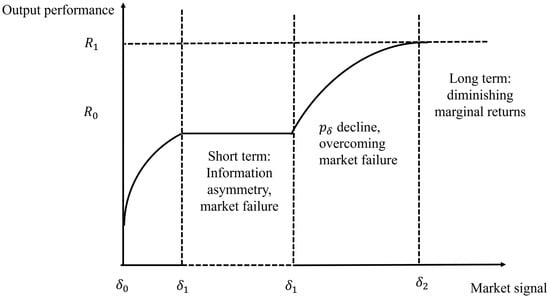
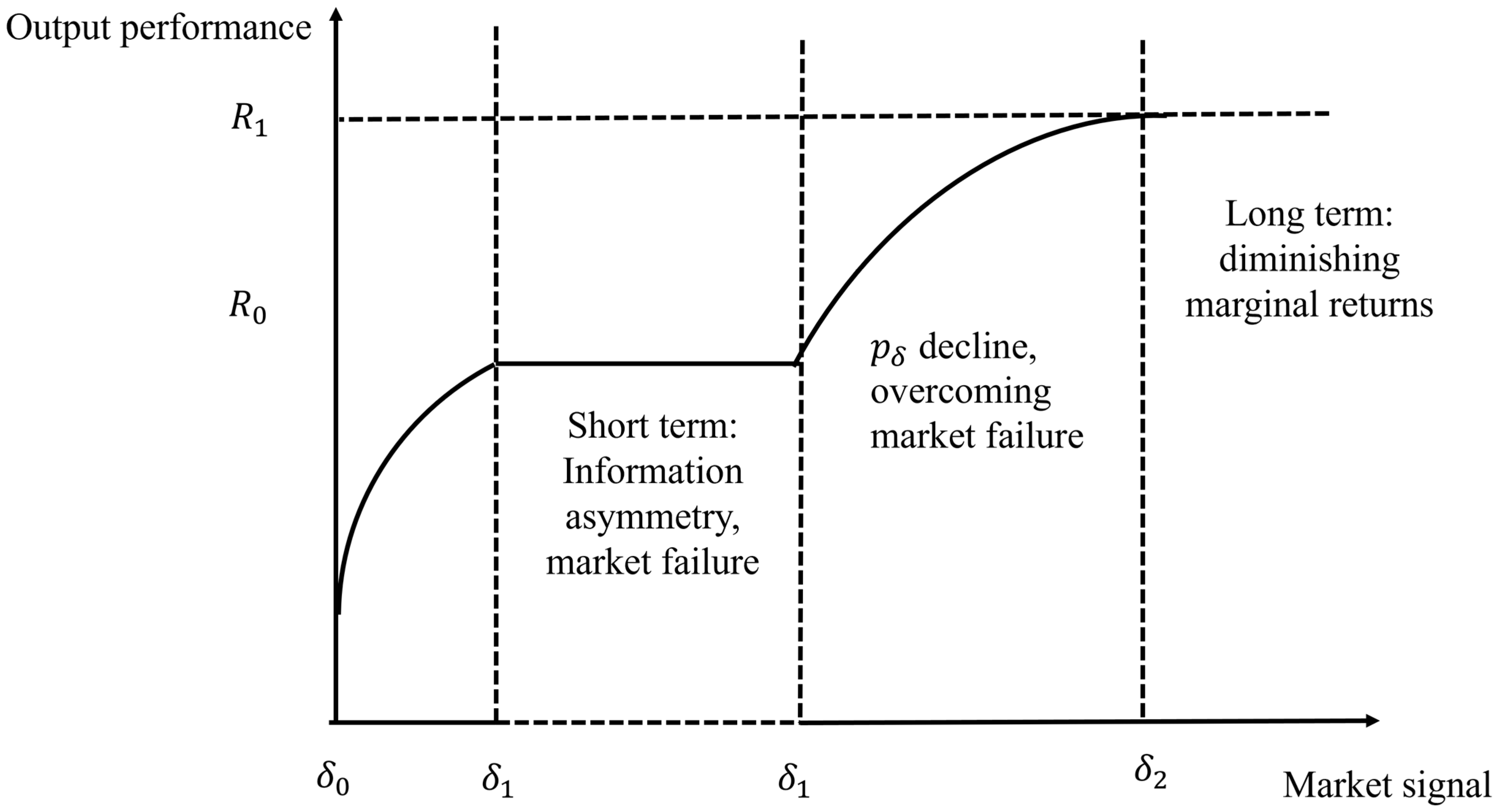
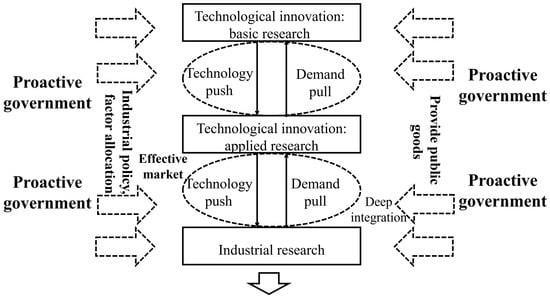
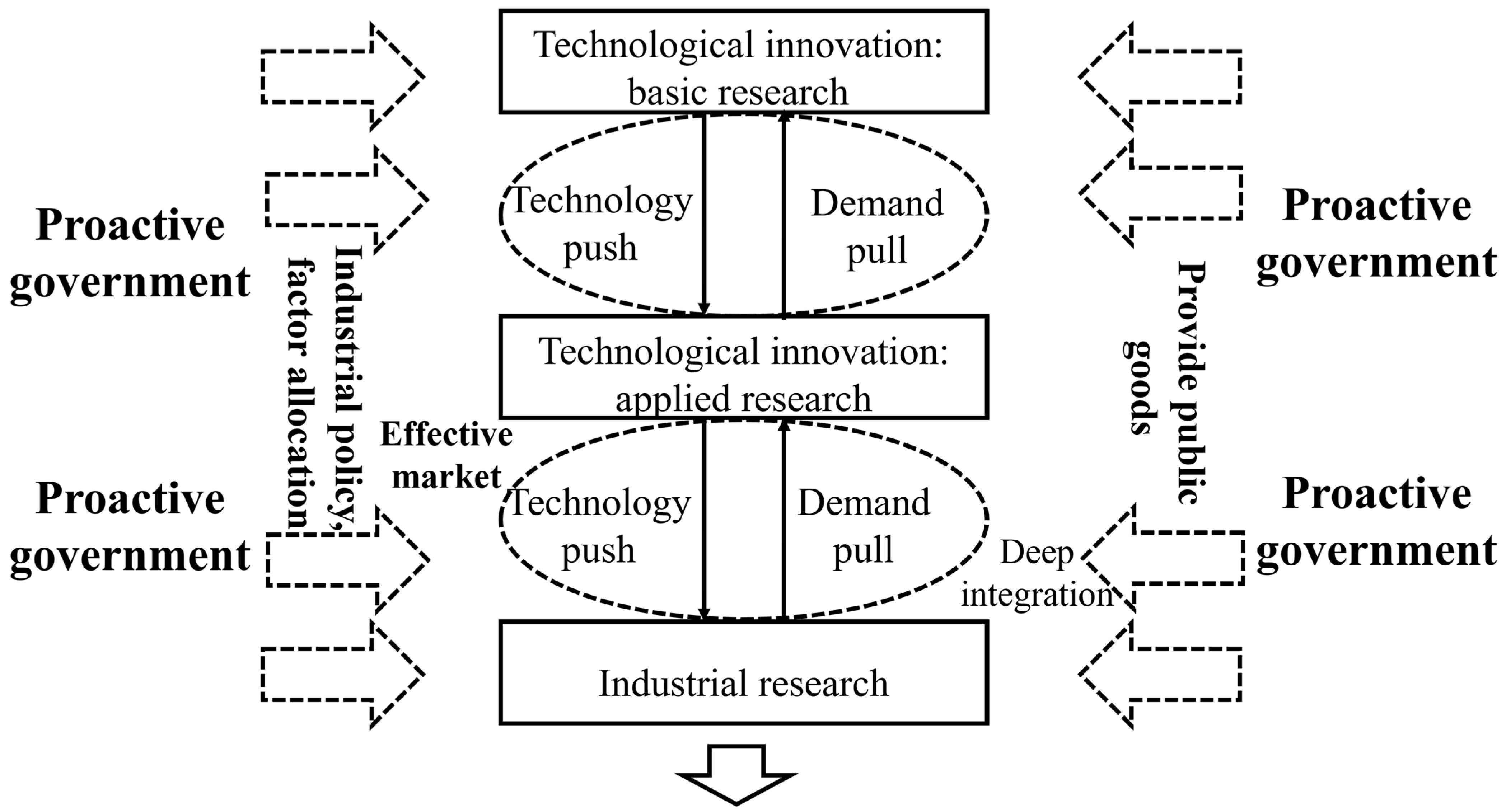

Disclaimer/Publisher’s Note: The statements, opinions and data contained in all publications are solely those of the individual author(s) and contributor(s) and not of MDPI and/or the editor(s). MDPI and/or the editor(s) disclaim responsibility for any injury to people or property resulting from any ideas, methods, instructions or products referred to in the content. |
© 2026 by the authors. Licensee MDPI, Basel, Switzerland. This article is an open access article distributed under the terms and conditions of the Creative Commons Attribution (CC BY) license.