


Simple Summary
Pig genomics now serves two main uses: improving pig breeding and supporting biomedical research. Many key variants lie in repeat-rich regions or involve structural changes, where older references and linear pipelines can lose sequence, place reads incorrectly, or miss real haplotypes. New assemblies that are breed-specific, near gap-free, and increasingly telomere to telomere reduce these problems and improve routine variant detection. Pangenomes and graph approaches also help by capturing sequences absent from a single reference, which makes comparisons across breeds and cohorts more reliable. Ancient DNA and time-resolved data further show that domestication involved repeated movements and gene flow, which affects how we interpret selection signals. For economic traits, the focus is shifting from locating signals to explaining what they change by linking associations to regulatory annotation and tissue or stage-specific expression. Consistent coordinates and variant definitions are essential for results that can be reproduced and applied in breeding.
Abstract
Pigs are a major source of animal protein and an important model for studying domestication, adaptation, and the genetics of complex traits. Over the past decade, pig genomics has progressed from generating reference assemblies and variant catalogues toward reconstructing population history and interpreting phenotypic divergence with greater resolution. Improvements in reference continuity, breed-matched assemblies, and pangenome/graph representations reduce reference bias in repeat-rich and structural-variant-prone regions, strengthening cross-population comparisons and fine-mapping across cohorts. Time-stratified ancient genomes provide an explicit temporal framework for evaluating lineage turnover and gene flow and support a multi-stage, network-based view of domestication. In parallel, genetic analyses of growth, carcass composition, meat quality, and disease resilience increasingly integrate association signals with regulatory annotation, gene expression, and tissue- or stage-specific context. Across these lines of work, maintaining comparability across reference frameworks remains central, including stable coordinate systems, robust imputation resources, and reproducible approaches for structural-variant genotyping. Together, these developments support more consistent inference and interpretation while providing a clearer basis for translation in breeding and biomedical research with attention to genetic diversity.
1. Introduction
Pork is a central component of the global meat supply and food security [1]. In 2022, it represented about one-third of global meat consumption. Accordingly, even modest shifts in pig supply or demand can ripple into feed markets and trade flows, amplify price volatility, and expose supply chain fragility [2]. The Organization for Economic Co-operation and Development/Food and Agriculture Organization of the United Nations(OECD/FAO) projections place global pork consumption at around 131 million tons (carcass weight equivalent) by 2033 [3]. In debates on sustainable and healthy diets, pork is frequently regarded as an affordable source of high-quality protein and essential micronutrients. Consequently, it occupies a central position at the intersection of nutrition, affordability, and environmental trade-offs [4].
Shock sensitivity differs across countries because production and consumption are large in absolute terms but heterogeneous in structure. Pork and poultry jointly provide the dominant animal source protein in many diets, but substitution elasticities and consumption profiles vary widely across regions [2,5]. Production is also concentrated: reports for 2024 to 2025 attribute roughly 49 percent of global output to China, about 18 percent to the European Union, and about 11 percent to the United States [6]. That concentration means animal health events, trade disruptions, or feed cost spikes in a few major producers can propagate quickly and show up as cross-regional volatility [7].
Pigs also occupy a distinctive position in biomedicine as large animal models. Compared with small laboratory species, their body size, organ anatomy, physiology, and immune features more closely resemble humans, enabling translational studies spanning cardiovascular and metabolic disease, transplantation and device testing, infection and immunity, and the gut microbiome [8,9,10]. Progress in pig genomics, therefore, informs both breeding and the genomic resources and functional annotation needed for disease control and biomedical innovation [11].
From an evolutionary perspective, domestication and dispersal in Sus reflect a network history rather than a linear narrative. Eurasian wild boar lineages were shaped by repeated movements, isolation, and secondary contact, with genome-wide evidence consistent with demographic contractions and expansions across glacial cycles and the persistence of multiple lineages [12]. Domestication likely involved more than one geographic unit, and subsequent patterns are best explained by sustained gene flow and recurrent backcrossing, yielding protracted admixture across regions [13]. Ancient DNA provides the necessary temporal resolution, including near genome-wide ancestry turnover in pigs introduced into Europe, with regional variation in the pace and magnitude of turnover linked to husbandry practices and wild boar recruitment [14]. With improved genome resources and haplotype-resolved methods, signals of domestication and adaptation can be localized more precisely, making it easier to connect historical processes with trait divergence [15]. Genomic analyses of human-mediated transport systems, including islands, further support repeated introductions, followed by admixture, shaping present day structure [16].
Industrial breeding has intensified selection and can narrow the genetic base over short timescales, elevating inbreeding and diversity loss risks [17,18]. While genomic selection improves response, durable programs typically require explicit constraints on inbreeding and diversity [18]. Three-way cross systems increase uniformity but may accelerate homogenization; changes in terminal sire usage can also shift growth, carcass composition, and meat quality in expected directions [19]. In China, the Duroc–Landrace–Yorkshire system dominates and is estimated to contribute at least 70 percent of pork output [20,21]. Although local breeds retain distinctive haplotypes and substantial variation, their structure is rapidly reshaped by industrialization and introgression, motivating optimization frameworks such as optimal contribution selection to balance gain, inbreeding rate, and external contributions [22,23]. Under African swine fever and other persistent disease pressures, resilience has become a central breeding objective, supported by emerging evidence that host genetic variation can influence infection outcomes [24,25].
In pigs, conclusions about domestication and complex traits increasingly rely on the representation and comparison of genetic variation across different reference frames. We summarize how the field moved beyond a single linear reference to breed-matched assemblies and pangenome/graph resources, making more sequence and structural variation accessible. Interpreting associations requires linking variant representations to regulatory annotation and expression. The goal is to specify the affected element, the likely target gene, and the tissue or developmental stage where the effect is measurable. This is most acute in repeat- and SV-rich regions, where reference choice changes read placement and breakpoint resolution, altering both SV discovery and fine-mapping results. Our goal is an inference that is both reproducible and portable across datasets and breeding settings, with a clear route to testing and application.
2. Building and Iterating Pig Reference Genomes
This section follows the technical logic behind pig references, from early drafts to chromosome-scale assemblies and, more recently, toward near gap-free and telomere-to-telomere (T2T) sequences. The aim is practical. Gaps and structural errors do not stay confined to the assembly. They change read placement, distort variant calling, and shift functional annotation, and those effects can cascade into downstream interpretation. We also discuss breed-specific assemblies and the rise of pangenome and graph frameworks, focusing on what they change for GWAS, structural variant (SV) discovery, and breeding inference. A recurring theme is reproducibility. If reference choice and processing steps are not fully specified, differences between studies can reflect coordinate and representation effects as much as biology.
2.1. Evolution of Pig Reference Assemblies
In 2012, the Swine Genome Sequencing Consortium released the first widely adopted pig reference, built from a purebred Duroc female using a BAC clone map combined with whole-genome shotgun sequencing. Sscrofa10.2 anchored about 2.60 Gb to chromosomes and left roughly 212 Mb in unplaced scaffolds, with scaffold and contig N50 values of around 0.64 Mb and 80.7 kb. It created a shared coordinate system, but repeat-rich and structurally complex regions still contained gaps and misassemblies, which are often where linear references first become unreliable in real analyses [26].
Later updates were driven by two recurring issues: a missing sequence and an incorrect structure. One objective was to reduce fragmentation and close gaps so that reads align more uniformly and gene models are less affected by assembly breaks. The other was to correct misjoins and collapsed repeats in repeat dense regions, including telomeric and centromeric neighborhoods, so that coordinates remain interpretable within complex sequence contexts and across diverse genetic backgrounds [27]. These changes matter because errors in repeat-dense regions tend to propagate. They bias alignments, perturb single-nucleotide polymorphism (SNP) and SV calling, and can shift gene models or regulatory annotations, creating cross-study differences that look biological on paper. Reference bias is, therefore, a reproducibility problem, not a minor technical nuisance [28,29].
As PacBio and Oxford Nanopore Technologies sequencing (ONT) long reads, together with chromosome-scale scaffolding such as High-throughput Chromosome Conformation Capture (Hi-C), became routine in livestock genomics, pig references improved in contiguity and base-level accuracy while better-preserving the repeat structure and gene space [30,31,32]. These improvements have several concrete downstream effects: fewer loci are located within assembly gaps or misassembled regions, fewer sequencing reads map ambiguously to repetitive regions, and coordinate consistency is enhanced when comparing different cohorts. That makes population structure analyses, GWAS peaks, and selection signals easier to reconcile across studies when datasets are aligned to the same reference and annotation backbone [33,34]. Updated references, such as Sscrofa11.1, also reduced fragmentation and improved annotation consistency, which supports integrative analyses that combine WGS with RNA-seq and ATAC-seq and reduce sensitivity to reference choice when results are contrasted across projects [35].
Two reported near-gap-free or T2T-level assemblies further illustrate recent progress toward improved genome continuity and structural resolution in pigs. Here, near-T2T refers to assemblies approaching telomere-to-telomere continuity that exhibit high contig and scaffold continuity together with substantial gap reduction in repeat-rich regions, enabling more stable read mapping and improved structural variant representation [36]. To make the link between assembly technology and reference evolution easier to follow, we provide a summary of representative pig references and near-T2T assemblies from the past decade in Table 1 and Supplementary Table S1. These tables include 39 references, near-T2T, and T2T assemblies published between 2012 and 2025, spanning about 29 breeds. They enable a side-by-side comparison of technical routes and continuity improvements, highlighting the progress toward more complete genome representation. Assembly continuity metrics, such as N50 and BUSCO, provide complementary indicators of genome quality. Higher N50 values reflect improved assembly continuity and facilitate read mapping and structural variant detection, while BUSCO scores indicate conserved gene completeness and annotation reliability. However, these metrics do not directly measure the resolution of repeat-rich or structurally complex regions and should, therefore, be interpreted as informative but partial indicators when evaluating assemblies for repeat- and SV-related analyses. We also provide a paired timeline schematic in Figure 1 that connects methodological transitions to the problems they addressed, so readers can track why each version mattered for analysis rather than memorizing version labels. Recent examples, including gap-free assemblies from Chinese local lineages and near-T2T assemblies for breeds such as the Jinhua pig, illustrate how increased continuity can stabilize read mapping, improve variant representation, and enhance interpretability in repeat-rich genomic landscapes [37,38]. In practice, the best evidence for these gains is not a single continuity statistic, but more consistent DNA and RNA mapping and cleaner variant representations across lineages [35].
Figure 1.
Timeline of reference assembly iteration. Specifically, red dots denote sequencing technologies applied in the corresponding assembly, whereas grey dots indicate technologies that were not used.
Preprints pursuing a single gap-free T2T pig reference are now emerging, and they sit alongside a second trajectory that is expanding multi-reference and graph representations to capture population diversity more directly [37,39]. In this review, we interpret each reference update by what it makes newly analyzable, especially SV discovery, gene gain or loss, and functional elements embedded in complex sequences.
Table 1.
Iteration of pig reference genomes and representative near-T2T assemblies.
2.2. Breed-Specific Assemblies and Emerging Pig Pangenome Resources
A single linear reference remains useful because it anchors annotation and keeps cross-study comparisons tractable. Its weak points, however, coincide with the hardest parts of the pig genome: SV-rich loci, repeat-complex regions, and sequence missing from the reference individual [53]. Breed-specific assemblies tackle these gaps by rebuilding sequence and structure in a matched background. The payoff is practical: the regions that a generic reference compresses, misplaces, or omits become visible, and the locus architecture becomes easier to interpret when divergence is structural or lineage-specific [47,54].
Chromosome-scale assemblies for Chinese local breeds and biomedical model pigs have grown quickly in the past few years. High-fidelity sequencing (HiFi) or ONT reads paired with Hi-C (or related scaffolding) have turned repeat resolution and SV-ready contiguity into a routine pipeline outcome rather than a special-case achievement [55]. Assemblies for breeds such as the Huai pig and the Banna miniature inbred pig typically include synteny against Sscrofa11.1 and highlight concrete structural differences, so continuity gains translate into tractable, trait-facing hypotheses rather than only improved summary statistics [34,47].
Once the question shifts from one individual to population-scale variation, the ceiling of a single reference becomes harder to ignore. Non-reference sequence, presence–absence variation, and complex SVs are systematically undercounted in linear workflows because they map poorly and are hard to represent consistently in one coordinate system [56,57]. Human pangenomes illustrate the consequence. Relative to GRCh38, they add a substantial polymorphic sequence and surface SVs that are missed or poorly resolved under linear-reference analysis [58,59]. Pigs will differ in magnitude, but the direction is the same: one reference tends to underestimate the variable sequence space.
As breed-specific assemblies expand from isolated case studies into multi-breed collections, pangenome analysis becomes feasible. Instead of treating diversity as deviations from a single baseline, pangenomes quantify core, variable, and private genes directly, along with presence–absence variation, SVs, and non-reference sequence [53]. This is particularly helpful for comparing gene-family turnover and SV landscapes across lineages, while still offering an accessible entry point for trait mapping [60].
Representation is also shifting from parallel assemblies toward graph genomes. Graph coordinates can place SNPs and SVs within a unified representation, potentially reducing mapping and localization bias and improving the stability of variant descriptions for population inference and functional interpretation [61]. Graph-based genotyping further matters because it brings SV genotyping closer to the accuracy and scale required for reuse with large short-read cohorts and for routine pipelines, rather than remaining a boutique analysis step [62]. As graphs scale beyond dozens of assemblies, engineering constraints become a first-order issue. Compressed structures, such as mutation-annotated networks, offer one route to store and share large multi-breed resources without losing sequence context [63].
Pig pangenome studies are increasingly measuring reference bias directly. A pan-pig pangenome built from 250 individuals recovered 308.3 Mb of non-reference sequence beyond Sscrofa11.1 and reported 3438 genes absent from the reference [64]. Graph analyses using multiple assemblies reported about 105 Mb of non-reference sequence and showed that incorporating this sequence into a graph can improve read mapping and downstream variant interpretation in resequencing data [65]. Together, these results imply that SNP-centric workflows on one linear reference can miss a meaningful fraction of variable sequence, including content plausibly relevant to immunity or environmental adaptation [61].
Evidence from other livestock points in the same direction. In a global cattle graph pangenome, 40.14% of SVs were poorly tagged by nearby SNPs (linkage disequilibrium r2 < 0.6), suggesting many SVs behave as largely independent signals even in SNP-dense regions [66]. Simply increasing SNP density, therefore, will not reliably recover SV-driven associations. Application-oriented integration is also accelerating: graph resources are increasingly combined with population resequencing and functional genomics to connect SVs and presence–absence variation with expression regulation, immune gene-family dynamics, and adaptation signals within a unified interpretive framework [59].
Breed-specific assemblies raise sequence and structural accuracy in a matched background, while pangenomes and graphs aim to represent variable sequence space more completely at the population scale. They are best treated as complementary extensions of linear workflows, not replacements that apply everywhere [66]. In practice, cross-lineage comparisons, structurally complex gene families, and SV-driven hypotheses benefit most from breed-specific or graph-based references. SNP-heavy population summaries can still use a linear baseline, with graph steps introduced where structural representation becomes limiting [65]. The advantages extend beyond simply increasing the number of detected variants. A more stable reference representation reduces coordinate inconsistencies across cohorts and analytical pipelines, thereby improving reproducibility in SV genotyping, ancestry decomposition, and fine mapping. From an analytical standpoint, genome representation should match study objectives. Sscrofa11.1 is sufficient for routine SNP-based analyses, genomic prediction, and compatibility with legacy datasets. Breed-specific assemblies are preferable when structural variation or a lineage-specific sequence is central, whereas pangenome or graph representations are most informative for multi-breed and SV-aware analyses requiring simultaneous haplotype representation. In practice, linear references suit SNP-dominated analyses, while breed-matched or graph-based frameworks become necessary when structural diversity, a non-reference sequence, or cross-lineage comparability are primary analytical targets.
2.3. Technical Implications for Downstream Analyses
Reference updates change analyses in a predictable order: read placement first, then variant detectability, and finally the pattern of systematic bias introduced by gaps and misassemblies [38]. Recovering a repeat-rich sequence, especially in telomeric and centromeric neighborhoods, can improve coverage uniformity, sharpen breakpoint localization, and reduce spurious SV signals that are, in fact, reference artifacts rather than true polymorphism [39]. This matters in pigs because gene families linked to immunity, adaptation, and production are often embedded in structurally complex regions. If the reference is incomplete or misassembled there, detection drops immediately, and annotation-based mechanism inference can be pulled off target because the underlying sequence context is distorted [43].
Equally important, mapping the same dataset to different references rarely yields fully comparable results. Coordinates can shift, allele encodings can change, and SV call sets can diverge, especially when updates close gaps, rebuild repeats, or alter how structural alleles are represented. Cross-study synthesis then depends on explicit lift over, harmonized representation rules, and re-annotation steps that keep variants comparable across versions [67]. Reference choice, therefore, belongs in the reproducibility record, not as background metadata. Beyond stating the reference and annotation versions, studies should name the conversion tools and chain files used, define normalization rules (e.g., left alignment), and specify conventions for SV and non-reference representation, filtering, and merging. When these choices are left implicit, technical drift can be mistaken for biological disagreement once cohorts and reference versions are combined [58,62].
Strategically, pangenomes and graphs move complex-trait analysis beyond SNP-only workflows toward joint modeling of SNPs and SVs. A unified representation reduces mapping and localization bias and stabilizes cross-lineage comparisons when the candidate mechanism is structural [48,61,68]. For breeding translation, representation advances also need matching inference infrastructure. High-quality references paired with large haplotype panels improve imputation from SNP chips or low-coverage data to sequence-level resolution, enabling fine mapping and genetic evaluation under cost constraints. As panels such as PHARP continue to expand, aligning cohorts under shared coordinates becomes easier, and the results become more reusable across studies, rather than being tied to a single platform or reference version [69,70].
Despite their advantages, graph-based and pangenome approaches require substantially greater computational resources and storage than linear-reference pipelines, and differences in graph construction and variant representation limit standardization across studies. Moreover, adoption in commercial genomic evaluation programs remains constrained by compatibility with SNP-chip platforms, imputation procedures, and routine quality-control practices. Taken together, these reference strategies present distinct advantages and practical trade-offs in pig genomics. To provide practical guidance for selecting reference strategies in pig genomics, a comparative summary of linear, breed-matched, and pangenome-based references is presented in Table 2.
Table 2.
Practical consequences of different genome reference strategies in pig genomics.
3. Sequencing-Based Reconstructions of Evolutionary History in Sus
This section asks not only where domestic pigs originated, but how the lineage structure seen today was assembled across time and space. Human migration, trade, and animal movement repeatedly reshaped husbandry and kept managed herds in long contact with wild boar. Under chronic backcrossing and admixture, lineages were repeatedly reconfigured across periods, producing the regional ancestry mosaics seen in modern genomes.
Earlier reconstructions relied on mtDNA, sparse nuclear loci, and microsatellites. These markers captured broad divergence patterns, but they struggled once the dominant processes were repeated dispersal and sustained gene flow. In that setting, inference can be highly sensitive to marker choice and sampling, and different studies can tell different stories from the same underlying history. Whole-genome resequencing, time-stratified ancient genomics, and haplotype-resolved inference have shifted the field from plausible narratives to directly testable scenarios that can be cross-validated across datasets.
Figure 2 summarizes the major regions and time windows used throughout this section. It summarizes major geographic theaters and key time windows and maps dispersal, admixture, and ancestry turnover events associated with changes in human management. This network interpretation is supported by multiple lines of analysis, including f-statistics-based tests of admixture, admixture graph modeling, haplotype-sharing analyses, and demographic inference methods that together reveal gene flow, ancestry mosaics, and temporally structured population divergence.
Figure 2.
Global evolutionary history of Sus: a network perspective on domestication and gene flow. Note: The schematic summarizes major geographic regions and temporally layered processes shaping pig domestication and dispersal. Arrows represent gene flow and population interactions: green arrows indicate the Near East-to-Europe dispersal of early domestic pigs accompanied by sustained introgression from European wild boar into domestic populations; yellow arrows denote regional expansion of East Asian domestic pigs; blue arrows represent domestic–wild hybridization and bidirectional introgression between domestic pigs and wild boar; brown arrows indicate extensive gene flow among Eurasian wild boar lineages, including contributions from extinct or unsampled ancestral populations; and red dashed arrows denote recent breeding-era admixture between Chinese and Western domestic pigs. Additional annotations highlight ancestry turnover in Europe and episodes of hybridization and introgression across Eurasia. The red star marks Central China as a key domestication region.
3.1. From Sparse Markers to Time-Stratified Ancient Genomes
Before high-throughput sequencing, Sus history was inferred mainly from mtDNA, limited nuclear fragments, and microsatellites. These data were sufficient for broad structure, but they often could not discriminate alternative domestication scenarios under recurrent movement and persistent gene flow, and could overemphasize maternal or local signals [71,72]. Whole-genome panels of modern pigs and wild boar reduced this ambiguity by placing inference in a consistent genome-wide variant background.
Ancient DNA added the decisive temporal dimension. Time-stratified archaeogenomics anchors observations to dated time points, making lineage turnover and gene exchange less dependent on indirect inference from present-day samples alone [73]. Because ancient DNA is fragmented and damage-prone, robust conclusions require authenticity checks, explicit damage modeling, and strict contamination control [74,75,76].
Europe illustrates how the temporal axis changes interpretation. Ancient genomes support the introduction of Near Eastern domestic pigs with early farming, followed by near genome-wide ancestry turnover driven largely by local wild boar contributions, so modern European domestic pigs retain only limited Near Eastern ancestry [14]. Population genomic analyses further show that gene flow and backcrossing vary spatially with ecological and management contexts [77]. This makes it possible to test, rather than assume, whether a region is better explained by repeated introductions or by sustained local backcrossing. Later breeding era movements also left genome-wide mosaics consistent with documented introductions and admixture [78,79]. Archaeogenomic results from Northwestern Europe underscore that husbandry strategies differed across sites, which is consistent with multiple coexisting pathways rather than a single standardized model [80].
In East Asia, time-stratified ancient genomes provide a similarly calibratable scaffold for dispersal and interaction, aligning shifts in genetic structure with human migration, trade, and husbandry change [73,81]. Whole-genome evidence for long-term divergence and regional adaptation in Eurasian wild boar further supplies an ecological reference for identifying source lineages, admixture partners, and conditions that favor replacement versus continuity [12,82]. Combining modern and ancient genomes makes it possible to estimate when transitions occurred and to distinguish replacement from continuity under explicit time constraints. That logic is what Figure 2 is meant to keep visible while the section moves across regions and time windows.
3.2. Multi-Stage Domestication and Regional Lineages: From Origins to Network History
Whole-genome and time-stratified ancient data increasingly support domestication as a network process rather than a simple branching tree. Domestication appears to involve multiple centers and recurrent incorporation of wild lineages, with persistent gene exchange and repeated reshuffling of ancestry [83,84,85]. Two early Neolithic centers are often discussed, the Near East (frequently linked to Anatolia) and East Asia (often placed in Central China), but early centers do not by themselves predict modern ancestry composition [83,84].
In Europe, Near Eastern domestic pigs were introduced early, yet sustained backcrossing with local wild boar drove near genome-wide turnover [14,80]. What varies is not the direction of gene flow, but its intensity and timing. Regional variation in management intensity likely explains heterogeneity in ancestry proportions and turnover pace [86]. In East Asia, ancient DNA supports regional continuity in maternal lineages alongside diversification [87], but whole-genome evidence is required to capture the admixture and replacement dynamics beyond uniparental markers [88,89].
Within China, large resequencing panels reveal strong differentiation among indigenous breeds and dense gene flow networks shaped by long-term husbandry, cross-regional movement, and historical hybridization [79,90]. Local breeds are, therefore, better interpreted as products of recombination and selection acting on mixed ancestry components under distinct environments and production systems, rather than as simple outcomes of linear divergence [20]. Recurrent gene exchange provides a second axis of evidence. Admixture with wild boar and more complex introgression can supply variation later acted upon by selection [84,91], and European datasets repeatedly detect domestic–wild admixture, with proposed adaptive contributions in some regions [86,92]. Modern improvement programs extend this network history into recent times, leaving bidirectional admixture between Chinese and Western pig populations [79,93,94]. Island systems, including Wallacea and Oceania, further highlight repeated introductions and renewed contact as recurring features of dispersal history [95].
Sex chromosomes offer an additional perspective. Pig Y haplotypes show patterns consistent with human-driven hybridization and selection, and expansions of specific paternal haplotypes align with recent breeding and breed introductions [78]. Comparing autosomes and sex chromosomes helps separate directional management from background demography and reduces the risk of over interpreting region specific patterns as purely ecological [79].
Overall, modern resequencing and time-stratified archaeogenomics favor a network-centered framework that integrates multi-stage domestication, regional lineage formation, and ancestry turnover [96]. Making gene flow and historical structure explicit is also the practical precondition for interpreting selection scans and trait associations across regions. It is easier to separate shared signals from lineage-specific ones when the time windows and routes are stated up front, as in Figure 2.
4. Genetic Diversity in Pigs
Pig genetic diversity reflects both deep demographic history and recent human-driven change. Long-term divergence among Eurasian wild boar lineages, shaped by climatic oscillations and geographic barriers, sets the baseline. Domestication and dispersal then added recurrent movement, backcrossing, and repeated reshuffling of ancestry, producing the region-specific mosaics observed in modern genomes. In the last decades, industrial breeding and global germplasm exchange have accelerated short-term change. Commercial lines tend to converge under strong selection, while local breeds increasingly serve as reservoirs of variation, including alleles relevant to adaptation and resilience.
This section moves from population structure to reusable resources and then to metrics that connect diversity to management. We first outline the global structure with a focus on Chinese indigenous pigs. We then summarize how harmonized coordinates and high-quality variant catalogues support cross-cohort comparison, imputation, SV mapping, and functional interpretation. Finally, we introduce inbreeding, runs of homozygosity (ROH), and mutational load as quantitative indicators of genetic health, emphasizing the need to interpret them against explicit demographic baselines.
4.1. Global Structure and Chinese Indigenous Resources
Local breeds and regional ecotypes remain widespread and often retain variation relevant to adaptation, fertility, resilience, and product quality [90]. Commercial production, by contrast, depends on a small number of globally distributed breeds and their crossbred composites. Three-way systems such as Duroc–Landrace–Yorkshire improve productivity, but sustained selection and large-scale germplasm movement also reshape structure and effective population size. A common contemporary pattern is, therefore, the coexistence of local resources with convergence among commercial populations [13,97]. China illustrates the scale of indigenous resources, with 147 breeds registered in 2024, about 23.5% of an estimated global total of 625 [98].
Global diversity does not collapse into a simple East–West contrast. Glacial cycles produced deep divergence among Eurasian wild boar lineages [82], yet domestication and dispersal repeatedly rewired haplotypes through migration and backcrossing, enabling rapid ancestry reshuffling and, in some cases, ancestry turnover in domestic populations [26]. It is, therefore, useful to separate two time layers in the interpretation: deep demographic history as a baseline and recent breeding plus industrial globalization as a fast perturbation capable of reordering structure over decades [89].
Chinese indigenous pigs contribute not only through breed richness but also through ecological breadth and historical depth. They span environments from tropical regions to cold high latitudes, and reflect heterogeneous management and selection histories, with differentiation in traits such as body size, fat deposition, fertility, roughage tolerance, and environmental adaptation. At the same time, commercial introductions in recent decades produced uneven European ancestry introgression across regions, complicating how local lineages connect to modern production systems [99]. Introgression is not uniformly detrimental. It can carry haplotypes with favorable effects, including signals linked to fertility and immune traits [100], and recent work also summarizes bidirectional introgression between Chinese and European populations on a broader scale [101].
Large whole-genome resources are turning these patterns into reusable infrastructure. The 1000 Chinese Indigenous Pig Genomes Project (50 local populations; 1011 individuals) provides a shared coordinate space for evaluating lineage relationships and demographic history, and supports data-driven conservation units and utilization strategies [102,103,104]. Diversity resources also matter beyond food production. Miniature pigs and laboratory strains are widely used in biomedicine and drug safety evaluation, and improved references and population resources strengthen standardization and traceability when these lineages serve as disease models and functional validation platforms [40,105].
4.2. Variant Catalogues and a Functional Annotation Framework
Mechanistic interpretation requires variant catalogues that remain comparable across breeds, together with an annotation framework that links variants to function and regulation. Haplotype reference panels and genotype imputation have become essential because they align heterogeneous SNP-chip platforms and cohorts to sequence-level representation, reducing platform-driven bias and improving cross-study comparability [69,106]. SWIM improved chip-to-sequence imputation, while PHARP 4.0 expanded the sample size and breed coverage, enabling broader cross-lineage comparison and fine mapping under shared coordinates [70,106].
As harmonization becomes routine, limitations of SNP-centric workflows are increasingly visible. Structural variation is being incorporated through large SV maps that improve cross-breed comparisons and expand candidate-variant prioritization [107,108,109]. Variant interpretation is also moving beyond a simple coding versus non-coding split toward criteria that combine evolutionary constraint, regulatory evidence, and tissue or cell-type specificity [110,111].
Regulatory resources help convert diversity patterns into testable mechanisms. PigGTEx links population variation to transcriptional regulation through multi-tissue eQTL and sQTL maps, supporting regulatory chains that connect elements, target genes, and tissue-specific effects [112]. Integration of PigGTEx with large-scale GWAS and meta-analyses is beginning to yield reusable workflows, including in reproductive traits [113,114,115]. PigBiobank further reduces barriers for reuse by organizing multi-cohort GWAS and functional resources in a searchable platform, facilitating joint analyses that connect diversity, traits, and mechanisms [116].
Finally, mutational load provides a quantitative view of the longer-term genetic costs of breeding. It connects effective population size, ROH structure, and the frequency spectrum of putatively deleterious variants [117,118]. Closed populations under strong selection often show a longer ROH and higher genomic inbreeding, while local breeds more often retain fragmented homozygosity and higher polymorphism. This shifts the probability that rare or recessive deleterious alleles become homozygous in high ROH backgrounds, with potential fitness costs [117,119]. Because purging and demographic history can reshape deleterious-allele frequencies, genetic cost should be interpreted on an explicit time scale and demographic baseline rather than through any single summary statistic [118,120].
5. Genetic Dissection of Major Economic Traits in Pigs
With genome-wide datasets, trait analysis increasingly prioritizes replicable association signals and their regulatory context rather than isolated candidate-gene claims. The central challenge is now portability: which signals replicate across breeding objectives and genetic backgrounds, and which are population-specific because of history, selection, and management. Functional annotation and tissue-resolved regulatory maps increasingly allow noncoding signals to be interpreted through regulatory elements and target genes, rather than relying on nearest-gene heuristics.
5.1. Growth and Carcass Composition
Growth rate, feed efficiency, and carcass composition remain core targets in commercial breeding because they determine output per unit time [121,122]. Their architecture typically combines a small set of larger-effect loci with a broad polygenic background, and leading signals can vary with breed history and selection direction [123]. Several classic loci remain informative because they connect association to plausible biology. A regulatory mutation in IGF2 that affects postnatal expression is associated with increased muscle growth and lean percentage, consistent with altered tissue-specific expression patterns [93]. A missense variant in MC4R is repeatedly associated with coordinated shifts in growth and fat deposition, consistent with coupling between intake regulation and body composition [124].
Other loci recur across datasets but are often more background-dependent. Variants near HMGA1 have been associated with body weight and body length, and are frequently discussed as candidates shaping growth trajectories [125,126]. LEPR commonly appears for backfat thickness and feeding-related traits, consistent with a recurring role in intake regulation and fat deposition across populations [127,128]. Functional variation in NR6A1 is associated with an increased vertebral number and downstream changes in body and carcass length, illustrating how discrete genetic changes can translate into yield-relevant morphology [129].
Large GWAS and meta-analyses generally map daily gain, backfat thickness, lean percentage, and loin muscle area to multiple clusters of small-to-moderate effect. The same trait can show locus turnover across populations, and effect directions can differ [123,130]. This makes cross-population synthesis essential for separating shared from population-specific signals [130]. Carcass composition is also intrinsically composite, integrating fat deposition, muscle accretion, skeletal development, and visceral allocation, so loci can influence correlated endpoints in different ways [130,131]. In practice, backfat thickness often yields more stable signals, while loin muscle area and lean percentage are more sensitive to genetic background, slaughter protocols, and measurement heterogeneity. This keeps standardized phenotyping and cross-cohort validation central [121,128,131].
A recent example illustrates what a more complete evidence trail can look like. In a Bama Xiang pig × Landrace F1 hybrid population, a study combining GWAS and selection scans identified a chromosome 12 variant associated with backfat thickness (chr12:52,370,063 G > A) and highlighted ALOX15 as a likely QTL gene. Haplotype–phenotype analyses showed a clear differentiation of favorable and unfavorable haplotypes between high- and low-backfat groups [132]. The value here lies in specificity: a defined variant, consistent haplotype effects, and selection evidence pointing to the same region.
For application, the multi-endpoint nature of growth and carcass traits favors joint models and multi-trait genomic prediction to improve accuracy while limiting adverse correlated responses [122]. For feed efficiency, systematic reviews and meta-analyses can distill regions that recur across cohorts and measurement systems [133]. Divergent selection experiments for residual feed intake also clarify why joint modeling of intake, efficiency, carcass traits, and meat quality is needed to make trade-offs explicit [134]. Mechanistic prioritization increasingly draws on tissue expression, cis-eQTL, and chromatin accessibility to narrow candidates and highlight the regulatory axes linked to muscle accretion, adipogenesis, and insulin signaling [135,136]. Commercial analyses are also beginning to analyze production together with immune and robustness traits to identify shared nodes that matter for both performance and health [137]. In practice, genomic selection captures much of the polygenic background, while a small number of replicable loci can be managed more directly when the effects are stable and trade-offs are understood [93,138].
5.2. Meat Quality and Muscle Metabolism
Meat quality includes intramuscular fat, tenderness, drip loss, color, ultimate pH, and flavor-related metabolites. Compared with growth traits, these phenotypes are more sensitive to slaughter procedures, transport stress, and batch effects, and their signals are often more context-dependent across genetic backgrounds, production systems, and slaughter stages [139,140]. Interpretation increasingly treats meat quality as an integrated physiological outcome shaped by energy metabolism, redox balance, membrane properties, and ion homeostasis [139,141].
Several loci have clear mechanistic links. PRKAG3 (RN) influences muscle glycogen metabolism and postmortem acidification, shifting pH, drip loss, and processing quality [142]. The HAL locus in RYR1 is linked to stress susceptibility and pale, soft, exudative meat risk, implicating calcium homeostasis and excitation-contraction physiology [143]. Unfavorable alleles increase the risk of paler color and higher drip loss, and RYR1 remains a classic marker used in quality control and selection [144].
Beyond these major loci, recurring signals often map to lipid deposition and fatty acid composition. SCD, genes such as FASN and ACACA, and members of the FABP family are repeatedly implicated, consistent with selection on lipid synthesis, transport, and storage networks within muscle [145,146]. In commercial populations, many associations appear polygenic and regulatory in nature and often converge on mitochondrial function, oxidative stress responses, and energy metabolism at the pathway level [139,147].
This helps explain the growing use of designs that integrate GWAS with transcriptomics or metabolomics in matched tissues and stages, especially for process traits such as drip loss, where membrane integrity, ion transport, and redox state recur as candidate axes [148,149]. With better standardization and integrated multi-omics, it becomes easier to distinguish variation driven mainly by slaughter processes from variation reflecting the baseline muscle metabolic state [150]. Breed-comparison studies that connect genes to metabolites also help shift the interpretation from isolated hits to pathways and actionable nodes [151].
As multi-reference assemblies and SV scanning become more common, some hypotheses now point to specific regulatory structures. A deletion SV in the first intron of AR, near an active promoter region, has been proposed as a regulatory change affecting AR expression and contributing to color-related phenotypes [152]. Because the causal chain linking SV, gene expression, and phenotype can depend strongly on tissue matching and developmental stage, this signal is best treated as a prioritized candidate until targeted functional tests establish causality.
Breeding decisions increasingly consider meat quality together with robustness traits, as welfare requirements and reduced antimicrobial use change the constraints under which quality must be maintained [137]. Phenotypic standardization and cross-batch comparability remain limiting steps, keeping large cohorts with unified protocols and multi-cohort validation essential [140]. As regulatory atlases mature, noncoding signals mapping to muscle-specific elements should become easier to validate and deploy in selection.
5.3. Reproduction and Litter Outcomes
Reproductive traits include the total number born, number born alive, survival to weaning, age at first farrowing, and maternal behavior. They typically show low heritability, strong environmental noise, and a complex correlation structure [153,154]. Large-scale recording and long-term data are, therefore, essential, and models must account for parity, farm, and management effects to reduce non-genetic variance [153]. Genetic parameters can also vary across parities, so parity-specific modeling can be appropriate [155].
Signals distribute across ovarian function, implantation, uterine capacity, placental development, and immune tolerance, and single variants rarely explain large shares of variance [154]. For composite outcomes such as litter size or weaning weight, component phenotypes can improve interpretability. Teat number, a proxy for nursing capacity, has produced multiple reproducible signals in GWAS and meta-analyses [48]. Male fertility is also increasingly analyzed under artificial insemination. A multi-breed meta-GWAS integrating PigGTEx identified reproducible loci and regulatory candidates for semen volume, sperm number, and motility, linking reproductive phenotypes to regulatory QTL and candidate genes [156].
Some loci remain operationally useful when they replicate across settings. ESR1 is a classic example, with favorable alleles associated with increased litter size or number born alive across multiple studies [157,158]. Studies that combine genomic selection and GWAS for litter traits in commercial populations are also increasing, which places the evidence closer to the real selection environment [159].
Regulatory anchoring is improving. Using cross-population meta-GWAS with PigGTEx annotation, one study proposed UGT2B31 as a highly expressed liver gene with a cis-eQTL (rs344053754) that may regulate expression and influence litter weight at weaning and related outcomes. In the same framework, gestation-length signals were more enriched in the ovary, supporting tissue-specific interpretation [114]. Joint modeling of intermediate phenotypes, including body weight dynamics, backfat, intake and energy traits, or blood and metabolomic markers, can also reveal variants acting through the maternal metabolic state and improve early prediction and portability [160,161].
In practice, genomic selection remains the most reliable path for steady gain under polygenicity, but it performs best when inbreeding and correlated responses are managed explicitly [162,163,164]. Reproduction is genetically correlated with growth, body composition, and health, so single-trait emphasis can create undesirable outcomes, including larger litters with lower survival or compromised sow condition [165]. Recent work treats piglet survival and maternal robustness as primary targets alongside litter size and uses finer phenotyping to partition losses by biological stage, improving both evaluation and mechanistic alignment with time- and tissue-resolved regulatory maps [112,116,136,165].
5.4. Disease Resistance
As disease pressure rises and antimicrobial use is reduced, disease resistance and robustness are increasingly treated as primary breeding objectives. Compared with growth traits, resistance phenotypes depend more on challenge experiments or detailed field records and are strongly affected by pathogen heterogeneity, immune status, and management. This keeps phenotyping design and model specification central, including an explicit representation of exposure and batch effects [166]. Where possible, resistance, meaning pathogen control, and tolerance, meaning maintained performance under infection, should be separated because they can have different genetic bases and different epidemiological consequences.
PRRS illustrates both the presence of major loci and the limits of single-locus thinking. Host response shows substantial genetic variation, and GWAS mapped a key SSC4 QTL represented by the WUR marker. A large polygenic background remains, so breeding populations often follow a major-locus plus polygenic architecture [167]. Validation suggests that favorable WUR alleles can be used without large penalties to production, supporting routine selection [168,169]. Mechanistic work connected this region to immune regulation involving candidates such as GBP5 [170].
CD163 editing is a clear example of functional translation. Removal of the SRCR5 domain preserves macrophage function while resisting PRRSV in cellular models, and pigs lacking CD163 SRCR5 show resistance to PRRSV-1 in challenge experiments [171,172]. Population-level evaluations suggest no obvious adverse consequences for growth and meat quality, making this one of the most advanced experimental cases reported so far [173].
For African swine fever (ASF), comparative hypotheses implicate immune signaling. Variants in RELA (NF-kB p65) have been proposed as contributors to tolerance in warthogs, providing a candidate axis for domestic pigs [174]. However, introducing warthog RELA variants into domestic pigs did not reproduce tolerance on its own, which argues against single-axis sufficiency [175]. Evidence from African local pig populations links RELA polymorphism and upregulation to outcome, but transferability still depends on controlled infection models and functional tests that establish directionality [176]. More broadly, ASF has become a major disease threat in global pig production, prompting increasing interest in host genetic determinants of disease outcome [177]. Emerging evidence suggests that ASF tolerance is shaped by complex interactions among immune regulation, host genetic background, and environmental context, indicating a polygenic architecture rather than single-locus control [174]. These observations highlight the need for integrative genomic and experimental approaches to identify breeding-relevant markers and improve the translation of ASF-related genetic findings into practical selection strategies.
In practice, disease improvement often combines broad genomic selection for robustness with the targeted use of a small number of high-confidence causal nodes when functional evidence is strong and side effects are manageable, as in CD163 for PRRSV [166,171,172,173]. A comparative summary of the representative loci, candidate genes, and pathways is provided in Table 3.
Table 3.
Candidate genes and pathways underlying major economic traits in pigs.
6. Summary and Outlook
Pig genomics is now being pulled into one chain of evidence: genome representation, population history, and trait mechanism. Better linear references, breed-matched assemblies, and graph-based pangenomes have made analyses in repeat-rich and SV-prone regions less biased, which is why cross-breed comparisons, ancestry inference, and fine-mapping have become more stable when cohorts share a coordinate space. Notably, genomic resources have progressed from single linear references to multi-assembly and graph-based representations, improving structural variant detection and cross-study comparability (Section 2). Time-stratified ancient genomes add a dated axis that keeps reinforcing a network history of Sus, with repeated domestication and dispersal, persistent gene flow, and, in some regions, substantial ancestry turnover. Trait genetics is also shifting in what counts as a useful result, not just where a signal sits, but which regulatory change acts in which tissue or stage, and whether that effect holds across breeding contexts. Genetic dissection of economically important traits reveals both major-effect loci and polygenic architectures relevant to production performance, reproduction, and disease resilience (Section 5).
What holds the field back is not another assembly, but consistency when moving across representations. Results can drift because coordinates, SV definitions, and normalization rules are handled differently, so disagreements appear that look biological but are often methodological. The most practical way forward is to make translation steps explicit and standardized: coordinates, SV normalization, and liftover or conversion should be reported as core methods; pangenomes and graphs should connect cleanly to the tools breeding programs already use at scale, especially imputation, high-throughput genotyping, and routine QC; and validation should begin with a specific element-to-gene hypothesis tested in matched tissues and stages, with readouts that let others follow the chain from perturbation to molecular change and, where possible, to organism-level outcomes.
In short, the next step is portability. If results remain comparable across studies and representations and validation stays traceable and context-matched, pig genomics can keep delivering genetic gain while treating diversity retention as a routine constraint rather than an after-the-fact repair. Building on this perspective, improved portability has direct implications for long-term genomic selection programs, as stable variant definitions and effect estimates across assemblies and cohorts allow breeding values to remain comparable over time, reduce reparameterization when reference systems change, and facilitate the joint use of historical and newly generated datasets. At the same time, several open questions remain, including the contribution of structural variants and regulatory elements to long-term selection response, practical integration of graph-based variation into genomic prediction, and the challenge of balancing sustained genetic gain with diversity retention under changing production environments. From a practical standpoint, improving reproducibility in pig genomics requires the explicit reporting of reference assemblies and annotation versions, standardized variant representation and coordinate translation procedures, and validation strategies based on matched tissues and developmental contexts. Ensuring compatibility between emerging pangenome resources and routine breeding pipelines, together with replication across independent cohorts, will be critical for maintaining cross-study comparability and supporting reliable long-term genetic improvement.
7. Conclusions
Pig genomics has developed rapidly in recent years, moving from the construction of reference genomes toward a broader understanding of evolutionary history and the genetic basis of economically important traits. Improvements in genome assemblies, together with the growing availability of breed-specific genomes and pangenome resources, have expanded the ability to capture structural and non-reference variation and improved the resolution of genomic analyses. At the same time, whole-genome sequencing and ancient DNA studies have reshaped our understanding of the complex demographic history of Sus, highlighting repeated domestication processes, gene flow, and regional ancestry turnover. Research on production traits is also shifting from the simple localization of association signals toward identifying the regulatory and biological mechanisms that link genetic variation to phenotype. Ensuring comparability across reference systems and analytical pipelines will remain essential for reliable interpretation and cross-study integration. Continued integration of genomic resources with functional annotation and gene expression data will further improve the interpretation of complex traits and support the effective use of genomic information in pig breeding and conservation.
Supplementary Materials
The following supporting information can be downloaded at https://www.mdpi.com/article/10.3390/biology15050447/s1: Table S1: Genome size of representative pig reference assemblies.
Author Contributions
Conceptualization, S.T. and J.W.; resources, H.W. and J.W.; data curation, D.L., Y.L., Z.G., B.W. and X.L.; writing—original draft preparation, S.T.; writing—review and editing, S.T., D.L., J.W. and H.W.; visualization, D.L., Y.L., Z.G., B.W. and X.L.; supervision, H.W. and J.W.; project administration, H.W. and J.W.; funding acquisition, H.W. and J.W. All authors have read and agreed to the published version of the manuscript.
Funding
This research was funded by the Yunnan Fundamental Research Projects (no. 202401AU070084) and the Key Science and Technology Project of Yunnan Province (no. 202202AE090032).
Institutional Review Board Statement
Not applicable.
Informed Consent Statement
Not applicable.
Data Availability Statement
No new data were created or analyzed in this study. Data sharing is not applicable to this article.
Conflicts of Interest
The authors declare no conflicts of interest.
References
- Yu, W.; Jensen, J.D. Sustainability Implications of Rising Global Pork Demand. Anim. Front. 2022, 12, 56–60. [Google Scholar] [CrossRef] [Scilit] [PubMed]
- Kim, S.W.; Gormley, A.; Jang, K.B.; Duarte, M.E. Current Status of Global Pig Production: An Overview and Research Trends. Anim. Biosci. 2024, 37, 719–729. [Google Scholar] [CrossRef] [Scilit] [PubMed]
- OECD. OECD-FAO Agricultural Outlook 2024–2033; OECD: Paris, France; FAO: Rome, Italy, 2024. [Google Scholar]
- Drewnowski, A. Perspective: The Place of Pork Meat in Sustainable Healthy Diets. Adv. Nutr. 2024, 15, 100213. [Google Scholar] [CrossRef] [Scilit] [PubMed]
- FAO Statistical Yearbook 2024 Reveals Critical Insights on the Sustainability of Global Agriculture, Food Security, and the Importance of Agrifood Systems in Employment. Available online: https://www.fao.org/newsroom/detail/fao-statistical-yearbook-2024-reveals-critical-insights-on-the-sustainability-of-agriculture-food-security-and-the-importance-of-agrifood-in-employment/en (accessed on 22 January 2026).
- Search|USDA Foreign Agricultural Service. Available online: https://www.fas.usda.gov/search (accessed on 22 January 2026).
- Blome, S.; Franzke, K.; Beer, M. African Swine Fever—A Review of Current Knowledge. Virus Res. 2020, 287, 198099. [Google Scholar] [CrossRef] [Scilit]
- Walters, E.M.; Prather, R.S. Advancing Swine Models for Human Health and Diseases. Mo. Med. 2013, 110, 212–215. [Google Scholar]
- Niu, D.; Wei, H.-J.; Lin, L.; George, H.; Wang, T.; Lee, I.-H.; Zhao, H.-Y.; Wang, Y.; Kan, Y.; Shrock, E.; et al. Inactivation of Porcine Endogenous Retrovirus in Pigs Using CRISPR-Cas9. Science 2017, 357, 1303–1307. [Google Scholar] [CrossRef] [Scilit]
- Meyerholz, D.K.; Burrough, E.R.; Kirchhof, N.; Anderson, D.J.; Helke, K.L. Swine Models in Translational Research and Medicine. Vet. Pathol. 2024, 61, 512–523. [Google Scholar] [CrossRef] [Scilit]
- Lunney, J.K.; Van Goor, A.; Walker, K.E.; Hailstock, T.; Franklin, J.; Dai, C. Importance of the Pig as a Human Biomedical Model. Sci. Transl. Med. 2021, 13, eabd5758. [Google Scholar] [CrossRef] [Scilit]
- Wang, Z.; Li, Z.; Huang, T.; Chen, J.; Xu, P.; Qiao, R.; Yin, H.; Song, C.; Zhang, D.; Liu, D.; et al. Genomic Insights into the Demographic History and Local Adaptation of Wild Boars across Eurasia. Cell Genom. 2025, 5, 100954. [Google Scholar] [CrossRef] [Scilit]
- Yang, B.; Cui, L.; Perez-Enciso, M.; Traspov, A.; Crooijmans, R.P.M.A.; Zinovieva, N.; Schook, L.B.; Archibald, A.; Gatphayak, K.; Knorr, C.; et al. Genome-Wide SNP Data Unveils the Globalization of Domesticated Pigs. Genet. Sel. Evol. 2017, 49, 71. [Google Scholar] [CrossRef] [Scilit]
- Frantz, L.A.F.; Haile, J.; Lin, A.T.; Scheu, A.; Geörg, C.; Benecke, N.; Alexander, M.; Linderholm, A.; Mullin, V.E.; Daly, K.G.; et al. Ancient Pigs Reveal a Near-Complete Genomic Turnover Following Their Introduction to Europe. Proc. Natl. Acad. Sci. USA 2019, 116, 17231–17238. [Google Scholar] [CrossRef] [Scilit] [PubMed]
- Tong, X.; Chen, D.; Hu, J.; Lin, S.; Ling, Z.; Ai, H.; Zhang, Z.; Huang, L. Accurate Haplotype Construction and Detection of Selection Signatures Enabled by High Quality Pig Genome Sequences. Nat. Commun. 2023, 14, 5126. [Google Scholar] [CrossRef] [Scilit] [PubMed]
- Horsburgh, K.A.; Gosling, A.L.; Cochrane, E.E.; Kirch, P.V.; Swift, J.A.; McCoy, M.D. Origins of Polynesian Pigs Revealed by Mitochondrial Whole Genome Ancient DNA. Animals 2022, 12, 2469. [Google Scholar] [CrossRef] [Scilit] [PubMed]
- Zanella, R.; Peixoto, J.O.; Cardoso, F.F.; Cardoso, L.L.; Biegelmeyer, P.; Cantão, M.E.; Otaviano, A.; Freitas, M.S.; Caetano, A.R.; Ledur, M.C. Genetic Diversity Analysis of Two Commercial Breeds of Pigs Using Genomic and Pedigree Data. Genet. Sel. Evol. 2016, 48, 24. [Google Scholar] [CrossRef] [Scilit]
- Howard, J.T.; Pryce, J.E.; Baes, C.; Maltecca, C. Invited Review: Inbreeding in the Genomics Era: Inbreeding, Inbreeding Depression, and Management of Genomic Variability. J. Dairy Sci. 2017, 100, 6009–6024. [Google Scholar] [CrossRef] [Scilit]
- Dos Santos, J.C.R.; Norenberg, A.; Correia, B.; Irgang, R.; Bianchi, I.; Moreira, F.; de Oliveira Júnior, J.M.; Nörnberg, J.L.; Peripolli, V. Evaluation of Different Percentages of Duroc Genes and Gender on Growth, Carcass and Meat Quality Traits for Pigs. Meat Sci. 2023, 205, 109314. [Google Scholar] [CrossRef] [Scilit]
- Huang, M.; Yang, B.; Chen, H.; Zhang, H.; Wu, Z.; Ai, H.; Ren, J.; Huang, L. The Fine-Scale Genetic Structure and Selection Signals of Chinese Indigenous Pigs. Evol. Appl. 2019, 13, 458–475. [Google Scholar] [CrossRef] [Scilit]
- Xie, Z.; Gan, M.; Du, J.; Du, G.; Luo, Y.; Liu, B.; Zhu, K.; Cheng, W.; Chen, L.; Zhao, Y.; et al. Comparison of Growth Performance and Plasma Metabolomics between Two Sire-Breeds of Pigs in China. Genes 2023, 14, 1706. [Google Scholar] [CrossRef] [Scilit]
- Škorput, D.; Špehar, M.; Luković, Z. Managing Genetic Diversity in Pig Populations: Implications of Optimal Contribution Selection in the Black Slavonian Pig. Ital. J. Anim. Sci. 2022, 21, 1259–1267. [Google Scholar] [CrossRef] [Scilit]
- Cao, L.; Meuwissen, T.H.E.; Berg, P.; Yu, X.; Yang, J.; Wu, Z. Reducing Foreign Genetic Contributions to the YDH Pig Population by Segment-Based Advanced Optimum Contribution Selection. Animal 2024, 18, 101292. [Google Scholar] [CrossRef] [Scilit]
- Qi, F.; Chen, X.; Wang, J.; Niu, X.; Li, S.; Huang, S.; Ran, X. Genome-Wide Characterization of Structure Variations in the Xiang Pig for Genetic Resistance to African Swine Fever. Virulence 2024, 15, 2382762. [Google Scholar] [CrossRef] [Scilit]
- Ogweng, P.; Bowden, C.F.; Smyser, T.J.; Muwanika, V.B.; Piaggio, A.J.; Masembe, C. Ancestry and Genome-Wide Association Study of Domestic Pigs That Survive African Swine Fever in Uganda. Trop. Anim. Health Prod. 2024, 56, 366. [Google Scholar] [CrossRef] [Scilit]
- Groenen, M.A.M.; Archibald, A.L.; Uenishi, H.; Tuggle, C.K.; Takeuchi, Y.; Rothschild, M.F.; Rogel-Gaillard, C.; Park, C.; Milan, D.; Megens, H.-J.; et al. Analyses of Pig Genomes Provide Insight into Porcine Demography and Evolution. Nature 2012, 491, 393–398. [Google Scholar] [CrossRef] [Scilit] [PubMed]
- Taylor, J.F.; Whitacre, L.K.; Hoff, J.L.; Tizioto, P.C.; Kim, J.; Decker, J.E.; Schnabel, R.D. Lessons for Livestock Genomics from Genome and Transcriptome Sequencing in Cattle and Other Mammals. Genet. Sel. Evol. 2016, 48, 59. [Google Scholar] [CrossRef] [Scilit] [PubMed]
- Ballouz, S.; Dobin, A.; Gillis, J.A. Is It Time to Change the Reference Genome? Genome Biol. 2019, 20, 159. [Google Scholar] [CrossRef] [Scilit]
- Aganezov, S.; Yan, S.M.; Soto, D.C.; Kirsche, M.; Zarate, S.; Avdeyev, P.; Taylor, D.J.; Shafin, K.; Shumate, A.; Xiao, C.; et al. A Complete Reference Genome Improves Analysis of Human Genetic Variation. Science 2022, 376, eabl3533. [Google Scholar] [CrossRef] [Scilit] [PubMed]
- Rhie, A.; McCarthy, S.A.; Fedrigo, O.; Damas, J.; Formenti, G.; Koren, S.; Uliano-Silva, M.; Chow, W.; Fungtammasan, A.; Kim, J.; et al. Towards Complete and Error-Free Genome Assemblies of All Vertebrate Species. Nature 2021, 592, 737–746. [Google Scholar] [CrossRef] [Scilit]
- Gao, Z.; Ying, L.; Chong, Y.; Li, M.; Hong, J.; Wu, J.; Wu, D.; Xi, D.; Deng, W. Beef Cattle Genome Project: Advances in Genome Sequencing, Assembly, and Functional Genes Discovery. Int. J. Mol. Sci. 2024, 25, 7147. [Google Scholar] [CrossRef] [Scilit]
- Liu, G.E. Exploring Cattle Structural Variation in the Era of Long Reads, Pangenome Graphs, and near-Complete Assemblies. J. Anim. Sci. Biotechnol. 2025, 16, 158. [Google Scholar] [CrossRef] [Scilit]
- Ma, H.; Jiang, J.; He, J.; Liu, H.; Han, L.; Gong, Y.; Li, B.; Yu, Z.; Tang, S.; Zhang, Y.; et al. Long-Read Assembly of the Chinese Indigenous Ningxiang Pig Genome and Identification of Genetic Variations in Fat Metabolism among Different Breeds. Mol. Ecol. Resour. 2022, 22, 1508–1520. [Google Scholar] [CrossRef] [Scilit]
- Chen, H.M.; Xu, K.X.; Yan, C.; Zhao, H.; Jiao, D.L.; Si, S.; Liu, Z.X.; Peng, G.Y.; Jamal, M.A.; Lv, M.J.; et al. A Chromosome-Scale Reference Genome of the Banna Miniature Inbred Pig. Sci. Data 2024, 11, 1345. [Google Scholar] [CrossRef] [Scilit] [PubMed]
- Warr, A.; Affara, N.; Aken, B.; Beiki, H.; Bickhart, D.M.; Billis, K.; Chow, W.; Eory, L.; Finlayson, H.A.; Flicek, P.; et al. An Improved Pig Reference Genome Sequence to Enable Pig Genetics and Genomics Research. Gigascience 2020, 9, giaa051. [Google Scholar] [CrossRef] [Scilit] [PubMed]
- Nurk, S.; Koren, S.; Rhie, A.; Rautiainen, M.; Bzikadze, A.V.; Mikheenko, A.; Vollger, M.R.; Altemose, N.; Uralsky, L.; Gershman, A.; et al. The Complete Sequence of a Human Genome. Science 2022, 376, 44–53. [Google Scholar] [CrossRef] [Scilit] [PubMed]
- Zong, W.; Chen, L.; Zhang, D.; Zhang, Y.; Wang, J.; Hou, X.; Chai, J.; An, Y.; Tian, M.; He, X.; et al. Two Telomere-to-Telomere Pig Genome Assemblies and Pan-Genome Analyses Provide Insights into Genomic Structural Landscape and Genetic Adaptations. Imeta 2025, 4, e70013. [Google Scholar] [CrossRef] [Scilit]
- Cao, C.; Miao, J.; Xie, Q.; Sun, J.; Cheng, H.; Zhang, Z.; Wu, F.; Liu, S.; Ye, X.; Gong, H.; et al. A near Telomere-to-Telomere Genome Assembly of the Jinhua Pig: Enabling More Accurate Genetic Research. Gigascience 2025, 14, giaf048. [Google Scholar] [CrossRef] [Scilit]
- Li, D.; Wang, Y.; Yuan, T.; Li, X.; Quan, Y.; Liu, W.; Schachtschneider, K.M.; Schook, L.B.; Crooijmans, R.P.M.A.; Groenen, M.A.M.; et al. A Gap-Free Telomere-to-Telomere Pig Reference Genome Provides Insight in Centromere Evolution and Breed-Specific Selection. bioRxiv 2025. bioRxiv:2025.10.02.679976. [Google Scholar] [CrossRef] [Scilit]
- Fang, X.; Mou, Y.; Huang, Z.; Li, Y.; Han, L.; Zhang, Y.; Feng, Y.; Chen, Y.; Jiang, X.; Zhao, W.; et al. The Sequence and Analysis of a Chinese Pig Genome. Gigascience 2012, 1, 16. [Google Scholar] [CrossRef] [Scilit]
- Zhang, L.; Huang, Y.; Wang, M.; Guo, Y.; Liang, J.; Yang, X.; Qi, W.; Wu, Y.; Si, J.; Zhu, S.; et al. Development and Genome Sequencing of a Laboratory-Inbred Miniature Pig Facilitates Study of Human Diabetic Disease. iScience 2019, 19, 162–176. [Google Scholar] [CrossRef] [Scilit]
- Zhou, R.; Li, S.-T.; Yao, W.-Y.; Xie, C.-D.; Chen, Z.; Zeng, Z.-J.; Wang, D.; Xu, K.; Shen, Z.-J.; Mu, Y.; et al. The Meishan Pig Genome Reveals Structural Variation-Mediated Gene Expression and Phenotypic Divergence Underlying Asian Pig Domestication. Mol. Ecol. Resour. 2021, 21, 2077–2092. [Google Scholar] [CrossRef] [Scilit]
- Schwartz, J.C.; Farrell, C.P.; Freimanis, G.; Sewell, A.K.; Phillips, J.D.; Hammond, J.A. A Genome Assembly and Transcriptome Atlas of the Inbred Babraham Pig to Illuminate Porcine Immunogenetic Variation. Immunogenetics 2024, 76, 361–380. [Google Scholar] [CrossRef] [Scilit]
- Kwon, D.; Park, N.; Wy, S.; Lee, D.; Chai, H.-H.; Cho, I.-C.; Lee, J.; Kwon, K.; Kim, H.; Moon, Y.; et al. A Chromosome-Level Genome Assembly of the Korean Crossbred Pig Nanchukmacdon (Sus scarofa). Sci. Data 2023, 10, 761. [Google Scholar] [CrossRef] [Scilit] [PubMed]
- Wang, Y.; Gou, Y.; Yuan, R.; Zou, Q.; Zhang, X.; Zheng, T.; Fei, K.; Shi, R.; Zhang, M.; Li, Y.; et al. A Chromosome-Level Genome of Chenghua Pig Provides New Insights into the Domestication and Local Adaptation of Pigs. Int. J. Biol. Macromol. 2024, 270, 131796. [Google Scholar] [CrossRef] [Scilit] [PubMed]
- Wy, S.; Kwon, D.; Park, W.; Chai, H.-H.; Cho, I.-C.; Kim, J. A Chromosome-Level Genome Assembly of the Korean Minipig (Sus scrofa). Sci. Data 2024, 11, 840. [Google Scholar] [CrossRef] [Scilit] [PubMed]
- Du, H.; Lu, S.; Huang, Q.; Zhou, L.; Liu, J.-F. Chromosome-Level Genome Assembly of Huai Pig (Sus scrofa). Sci. Data 2024, 11, 1072. [Google Scholar] [CrossRef] [Scilit]
- Li, D.; Wang, Y.; Yuan, T.; Cao, M.; He, Y.; Zhang, L.; Li, X.; Jiang, Y.; Li, K.; Sun, J.; et al. Pangenome and Genome Variation Analyses of Pigs Unveil Genomic Facets for Their Adaptation and Agronomic Characteristics. Imeta 2024, 3, e257. [Google Scholar] [CrossRef] [Scilit]
- Veith, A.C.; Meudt, J.J.; Reichert, J.L.; Frank, J.M.; Pavelec, D.M.; Ladell, B.; Speers, J.; Zeller, M.; Shin, T.; Hyman, J.R.; et al. The Draft Genome of the Wisconsin Miniature SwineTM, a Valuable Biomedical Research Tool. G3 2025, 15, jkaf067. [Google Scholar] [CrossRef] [Scilit]
- Luo, L.Y.; Wu, H.; Zhao, L.M.; Zhang, Y.H.; Huang, J.H.; Liu, Q.Y.; Wang, H.T.; Mo, D.X.; Eer, H.H.; Zhang, L.Q.; et al. Telomere-to-Telomere Sheep Genome Assembly Identifies Variants Associated with Wool Fineness. Nat. Genet. 2025, 57, 218–230. [Google Scholar] [CrossRef] [Scilit]
- Wang, Y.; Feng, R.; Hu, X.; Shan, D.; Zhang, X.; Gou, Y.; Zheng, T.; Li, Y.; Fei, K.; Zhang, Q.; et al. Latitude-Driven Adaptive Evolution of Body Length in Diverse Pig Breeds across China. BMC Biol. 2025, 23, 150. [Google Scholar] [CrossRef] [Scilit]
- Zhang, W.; Zhou, M.; Liu, L.; Lu, M.; Su, S.; Wang, C. A High-Quality Chromosome-Level Genome Assembly and Annotation of Anqing Six-End-White Pig (Sus scrofa). Sci. Data 2025, 12, 1656. [Google Scholar] [CrossRef] [Scilit]
- Jiang, Y.-F.; Wang, S.; Wang, C.-L.; Xu, R.-H.; Wang, W.-W.; Jiang, Y.; Wang, M.-S.; Jiang, L.; Dai, L.-H.; Wang, J.-R.; et al. Pangenome Obtained by Long-Read Sequencing of 11 Genomes Reveal Hidden Functional Structural Variants in Pigs. iScience 2023, 26, 106119. [Google Scholar] [CrossRef] [Scilit]
- Liu, X.; Zheng, J.; Ding, J.; Wu, J.; Zuo, F.; Zhang, G. When Livestock Genomes Meet Third-Generation Sequencing Technology: From Opportunities to Applications. Genes 2024, 15, 245. [Google Scholar] [CrossRef] [Scilit] [PubMed]
- Tian, X.; Li, R.; Fu, W.; Li, Y.; Wang, X.; Li, M.; Du, D.; Tang, Q.; Cai, Y.; Long, Y.; et al. Building a Sequence Map of the Pig Pan-Genome from Multiple de Novo Assemblies and Hi-C Data. Sci. China Life Sci. 2020, 63, 750–763. [Google Scholar] [CrossRef] [Scilit] [PubMed]
- Paten, B.; Novak, A.M.; Eizenga, J.M.; Garrison, E. Genome Graphs and the Evolution of Genome Inference. Genome Res. 2017, 27, 665–676. [Google Scholar] [CrossRef] [Scilit] [PubMed]
- Miga, K.H.; Wang, T. The Need for a Human Pangenome Reference Sequence. Annu. Rev. Genom. Hum. Genet. 2021, 22, 81–102. [Google Scholar] [CrossRef] [Scilit]
- Liao, W.; AsriM, M.; Ebler, J.; Doerr, D.; Haukness, M.; Hickey, G.; Lu, S.; Lucas, J.K.; Monlong, J.; Abel, H.J.; et al. A Draft Human Pangenome Reference. Nature 2023, 617, 312–324. [Google Scholar] [CrossRef] [Scilit]
- Fang, B.; Edwards, S.V. Pangenomes: New Tools for Ecological and Evolutionary Genomics. Trends Ecol. Evol. 2026, 41, 230–244. [Google Scholar] [CrossRef] [Scilit]
- Loegler, V.; Friedrich, A.; Schacherer, J. Dynamics of Genome Evolution in the Era of Pangenome Analysis. Cell Genom. 2026, 6, 101067. [Google Scholar] [CrossRef] [Scilit]
- Du, H.; Zhuo, Y.; Lu, S.; Li, W.; Zhou, L.; Sun, F.; Liu, G.; Liu, J.-F. Pangenome Reveals Gene Content Variations and Structural Variants Contributing to Pig Characteristics. Genom. Proteom. Bioinform. 2025, 22, qzae081. [Google Scholar] [CrossRef] [Scilit]
- Ebler, J.; Ebert, P.; Clarke, W.E.; Rausch, T.; Audano, P.A.; Houwaart, T.; Mao, Y.; Korbel, J.O.; Eichler, E.E.; Zody, M.C.; et al. Pangenome-Based Genome Inference Allows Efficient and Accurate Genotyping across a Wide Spectrum of Variant Classes. Nat. Genet. 2022, 54, 518–525. [Google Scholar] [CrossRef] [Scilit]
- Walia, S.; Motwani, H.; Tseng, Y.-H.; Smith, K.; Corbett-Detig, R.; Turakhia, Y. Compressive Pangenomics Using Mutation-Annotated Networks. Nat. Genet. 2026, 58, 445–453. [Google Scholar] [CrossRef] [Scilit]
- Li, Z.; Liu, X.; Wang, C.; Li, Z.; Jiang, B.; Zhang, R.; Tong, L.; Qu, Y.; He, S.; Chen, H.; et al. The Pig Pangenome Provides Insights into the Roles of Coding Structural Variations in Genetic Diversity and Adaptation. Genome Res. 2023, 33, 1833–1847. [Google Scholar] [CrossRef] [Scilit]
- Miao, J.; Wei, X.; Cao, C.; Sun, J.; Xu, Y.; Zhang, Z.; Wang, Q.; Pan, Y.; Wang, Z. Pig Pangenome Graph Reveals Functional Features of Non-Reference Sequences. J. Anim. Sci. Biotechnol. 2024, 15, 32. [Google Scholar] [CrossRef] [Scilit]
- Dai, S.; Zhao, P.; Li, W.; Peng, L.; Jiang, E.; Du, Y.; Zhang, W.; Dai, X.; Yang, L.; Li, Z.; et al. Global Pangenome Analysis Highlights the Critical Role of Structural Variants in Cattle Improvement and Identifies a Unique Event as a Novel Enhancer in IGFBP7+ Cells. Mol. Biol. Evol. 2025, 42, msaf205. [Google Scholar] [CrossRef] [Scilit] [PubMed]
- Zhao, H.; Sun, Z.; Wang, J.; Huang, H.; Kocher, J.-P.; Wang, L. CrossMap: A Versatile Tool for Coordinate Conversion between Genome Assemblies. Bioinformatics 2014, 30, 1006–1007. [Google Scholar] [CrossRef] [Scilit] [PubMed]
- Crysnanto, D.; Pausch, H. Bovine Breed-Specific Augmented Reference Graphs Facilitate Accurate Sequence Read Mapping and Unbiased Variant Discovery. Genome Biol. 2020, 21, 184. [Google Scholar] [CrossRef] [Scilit] [PubMed]
- Wang, Z.; Zhang, Z.; Chen, Z.; Sun, J.; Cao, C.; Wu, F.; Xu, Z.; Zhao, W.; Sun, H.; Guo, L.; et al. PHARP: A Pig Haplotype Reference Panel for Genotype Imputation. Sci. Rep. 2022, 12, 12645. [Google Scholar] [CrossRef] [Scilit]
- Wang, Q.; Zhang, Z.; Ye, X.; Gu, J.; Sun, J.; Cao, C.; Xiao, Q.; Chen, Q.; Xu, Z.; Wang, K.; et al. An Updated Pig Haplotype Reference Panel (PHARP 4.0) Comprising 13,298 Haplotypes. Commun. Biol. 2025, 8, 1625. [Google Scholar] [CrossRef] [Scilit]
- Xiang, H.; Gao, J.; Cai, D.; Luo, Y.; Yu, B.; Liu, L.; Liu, R.; Zhou, H.; Chen, X.; Dun, W.; et al. Origin and Dispersal of Early Domestic Pigs in Northern China. Sci. Rep. 2017, 7, 5602. [Google Scholar] [CrossRef] [Scilit]
- Cai, X.; Mao, X.; Zhao, Y. Methods and Research Progress on the Origin of Animal Domestication. Biodivers. Sci. 2022, 30, 21457. [Google Scholar] [CrossRef] [Scilit]
- Han, Y.; Zhao, Z.; Stanton, D.W.G.; Lei, X.-L.; Wu, Z.; Liu, Y.; Yu, C.; Chen, X.; Li, W.; Wang, J.; et al. Ancient Genomics Reveals the Origin, Dispersal, and Human Management of East Asian Domestic Pigs. Mol. Biol. Evol. 2025, 42, msaf214. [Google Scholar] [CrossRef] [Scilit]
- Dabney, J.; Meyer, M.; Pääbo, S. Ancient DNA Damage. Cold Spring Harb. Perspect. Biol. 2013, 5, a012567. [Google Scholar] [CrossRef] [Scilit]
- Jónsson, H.; Ginolhac, A.; Schubert, M.; Johnson, P.L.F.; Orlando, L. mapDamage2.0: Fast Approximate Bayesian Estimates of Ancient DNA Damage Parameters. Bioinformatics 2013, 29, 1682–1684. [Google Scholar] [CrossRef] [Scilit] [PubMed]
- Orlando, L.; Allaby, R.; Skoglund, P.; Der Sarkissian, C.; Stockhammer, P.W.; Ávila-Arcos, M.C.; Fu, Q.; Krause, J.; Willerslev, E.; Stone, A.C.; et al. Ancient DNA Analysis. Nat. Rev. Methods Primers 2021, 1, 14. [Google Scholar] [CrossRef] [Scilit]
- Iacolina, L.; Pertoldi, C.; Amills, M.; Kusza, S.; Megens, H.-J.; Bâlteanu, V.A.; Bakan, J.; Cubric-Curik, V.; Oja, R.; Saarma, U.; et al. Hotspots of Recent Hybridization between Pigs and Wild Boars in Europe. Sci. Rep. 2018, 8, 17372. [Google Scholar] [CrossRef] [Scilit] [PubMed]
- Ai, H.; Zhang, M.; Yang, B.; Goldberg, A.; Li, W.; Ma, J.; Brandt, D.; Zhang, Z.; Nielsen, R.; Huang, L. Human-Mediated Admixture and Selection Shape the Diversity on the Modern Swine (Sus scrofa) Y Chromosomes. Mol. Biol. Evol. 2021, 38, 5051–5065. [Google Scholar] [CrossRef] [Scilit]
- Peng, Y.; Derks, M.F.; Groenen, M.A.; Zhao, Y.; Bosse, M. Distinct Traces of Mixed Ancestry in Western Commercial Pig Genomes Following Gene Flow from Chinese Indigenous Breeds. Front. Genet. 2022, 13, 1070783. [Google Scholar] [CrossRef] [Scilit]
- Erven, J.A.M.; Mattiangeli, V.; Dreshaj, M.; Mullin, V.E.; Rossi, C.; Daly, K.G.; Jackson, I.; Parker Pearson, M.; Bradley, D.G.; Frantz, L.A.F.; et al. Archaeogenomic Insights into Commensalism and Regional Variation in Pig Management in Neolithic Northwest Europe. Proc. Natl. Acad. Sci. USA 2025, 122, e2410235122. [Google Scholar] [CrossRef] [Scilit]
- Wen, J.; Zheng, Z.; Gong, M.; Li, D.; Hu, S.; Cai, Y.; Wang, Y.; Nanaei, H.A.; Zhang, N.; Yu, T.; et al. Ancient Genomes Reveal the Genetic Inheritance and Recent Introgression in Chinese Indigenous Pigs. Sci. China Life Sci. 2022, 65, 842–845. [Google Scholar] [CrossRef] [Scilit]
- Khederzadeh, S.; Kusza, S.; Huang, C.-P.; Markov, N.; Scandura, M.; Babaev, E.; Šprem, N.; Seryodkin, I.V.; Paule, L.; Esmailizadeh, A.; et al. Maternal Genomic Variability of the Wild Boar (Sus scrofa) Reveals the Uniqueness of East-Caucasian and Central Italian Populations. Ecol. Evol. 2019, 9, 9467–9478. [Google Scholar] [CrossRef] [Scilit]
- Larson, G.; Burger, J. A Population Genetics View of Animal Domestication. Trends Genet. 2013, 29, 197–205. [Google Scholar] [CrossRef] [Scilit]
- Larson, G.; Fuller, D.Q. The Evolution of Animal Domestication. Annu. Rev. Ecol. Evol. Syst. 2014, 45, 115–136. [Google Scholar] [CrossRef] [Scilit]
- Leno-Colorado, J.; Hudson, N.J.; Reverter, A.; Pérez-Enciso, M. A Pathway-Centered Analysis of Pig Domestication and Breeding in Eurasia. G3 2017, 7, 2171–2184. [Google Scholar] [CrossRef] [Scilit] [PubMed]
- Schleimer, A.; Richart, L.; Drygala, F.; Casabianca, F.; Maestrini, O.; Weigand, H.; Schwartz, C.; Mittelbronn, M.; Frantz, A.C. Introgressive Hybridisation between Domestic Pigs (Sus scrofa domesticus) and Endemic Corsican Wild Boars (S. s. meridionalis): Effects of Human-Mediated Interventions. Heredity 2022, 128, 279–290. [Google Scholar] [CrossRef] [Scilit] [PubMed]
- Zhang, M.; Liu, Y.; Li, Z.; Lü, P.; Gardner, J.D.; Ye, M.; Wang, J.; Yang, M.; Shao, J.; Wang, W.; et al. Ancient DNA Reveals the Maternal Genetic History of East Asian Domestic Pigs. J. Genet. Genom. 2022, 49, 537–546. [Google Scholar] [CrossRef] [Scilit]
- Frantz, L.A.F.; Schraiber, J.G.; Madsen, O.; Megens, H.-J.; Cagan, A.; Bosse, M.; Paudel, Y.; Crooijmans, R.P.M.A.; Larson, G.; Groenen, M.A.M. Evidence of Long-Term Gene Flow and Selection during Domestication from Analyses of Eurasian Wild and Domestic Pig Genomes. Nat. Genet. 2015, 47, 1141–1148. [Google Scholar] [CrossRef] [Scilit]
- Groenen, M.A.M. A Decade of Pig Genome Sequencing: A Window on Pig Domestication and Evolution. Genet. Sel. Evol. 2016, 48, 23. [Google Scholar] [CrossRef] [Scilit]
- Tang, H.; Ouyang, J.; Liu, S.; Xiong, Y.; Wu, Y.; Wang, L.; Wang, C.; Yan, X.; Shen, Y.; Chen, H. Population Structure of 3907 Worldwide Pigs and the Introgression of Chinese Indigenous Pigs by European Pigs. Anim. Genet. 2022, 53, 599–612. [Google Scholar] [CrossRef] [Scilit]
- Ai, H.; Fang, X.; Yang, B.; Huang, Z.; Chen, H.; Mao, L.; Zhang, F.; Zhang, L.; Cui, L.; He, W.; et al. Adaptation and Possible Ancient Interspecies Introgression in Pigs Identified by Whole-Genome Sequencing. Nat. Genet. 2015, 47, 217–225. [Google Scholar] [CrossRef] [Scilit]
- Mary, N.; Iannuccelli, N.; Petit, G.; Bonnet, N.; Pinton, A.; Barasc, H.; Faure, A.; Calgaro, A.; Grosbois, V.; Servin, B.; et al. Genome-Wide Analysis of Hybridization in Wild Boar Populations Reveals Adaptive Introgression from Domestic Pig. Evol. Appl. 2022, 15, 1115–1128. [Google Scholar] [CrossRef] [Scilit]
- Van Laere, A.-S.; Nguyen, M.; Braunschweig, M.; Nezer, C.; Collette, C.; Moreau, L.; Archibald, A.L.; Haley, C.S.; Buys, N.; Tally, M.; et al. A Regulatory Mutation in IGF2 Causes a Major QTL Effect on Muscle Growth in the Pig. Nature 2003, 425, 832–836. [Google Scholar] [CrossRef] [Scilit]
- Wang, K.; Zhang, L.; Duan, D.; Qiao, R.; Li, X.; Li, X.; Han, X. Genomic Analysis Reveals Human-Mediated Introgression From European Commercial Pigs to Henan Indigenous Pigs. Front. Genet. 2021, 12, 705803. [Google Scholar] [CrossRef] [Scilit] [PubMed]
- Stanton, D.W.G.; Manin, A.; Evin, A.; Tabbada, K.; Linderholm, A.; Drinkwater, R.; Thalmann, O.; Ng’ang’a, S.I.; Amano, N.; Anderson, A.; et al. Genomic and Morphometric Evidence for Austronesian-Mediated Pig Translocation in the Pacific. Science 2026, 391, eadv4963. [Google Scholar] [CrossRef] [Scilit] [PubMed]
- Bosse, M.; Megens, H.-J.; Frantz, L.A.F.; Madsen, O.; Larson, G.; Paudel, Y.; Duijvesteijn, N.; Harlizius, B.; Hagemeijer, Y.; Crooijmans, R.P.M.A.; et al. Genomic Analysis Reveals Selection for Asian Genes in European Pigs Following Human-Mediated Introgression. Nat. Commun. 2014, 5, 4392. [Google Scholar] [CrossRef] [Scilit] [PubMed]
- Guan, R.; Zheng, Z.; Yu, H.; Wu, L.; Huang, H.; Jiang, P.; Li, X. Identification of Factors Affecting Fattening Efficiency of Commercial Pig Herds and Analysis of Their Impact at Different Performance Levels. Sci. Rep. 2024, 14, 20105. [Google Scholar] [CrossRef] [Scilit]
- Chen, X.; Lu, J.; Cheng, W.; Xue, M.; Yu, F. Conservation of Domestic Animal Genetic Resources in China: Overview of the Status, Activities, Policies, and Challenges. Life 2025, 15, 1420. [Google Scholar] [CrossRef] [Scilit]
- Huang, M.; Zhang, H.; Wu, Z.P.; Wang, X.P.; Li, D.S.; Liu, S.J.; Zheng, S.M.; Yang, L.J.; Liu, B.B.; Li, G.X.; et al. Whole-Genome Resequencing Reveals Genetic Structure and Introgression in Pudong White Pigs. Animal 2021, 15, 100354. [Google Scholar] [CrossRef] [Scilit]
- Chen, H.; Huang, M.; Yang, B.; Wu, Z.; Deng, Z.; Hou, Y.; Ren, J.; Huang, L. Introgression of Eastern Chinese and Southern Chinese Haplotypes Contributes to the Improvement of Fertility and Immunity in European Modern Pigs. Gigascience 2020, 9, giaa014. [Google Scholar] [CrossRef] [Scilit]
- Qiu, Y.; Liu, L.; Huang, M.; Ruan, D.; Ding, R.; Zhang, Z.; Zheng, E.; Wang, S.; Deng, S.; Meng, X.; et al. Origins, Dispersal, and Impact: Bidirectional Introgression Between Chinese and European Pig Populations. Adv. Sci. 2025, 12, e2416573. [Google Scholar] [CrossRef] [Scilit]
- Quan, J.; Gao, C.; Cai, Y.; Ge, Q.; Jiao, T.; Zhao, S. Population Genetics Assessment Model Reveals Priority Protection of Genetic Resources in Native Pig Breeds in China. Glob. Ecol. Conserv. 2020, 21, e00829. [Google Scholar] [CrossRef] [Scilit]
- Zhao, Q.-B.; Oyelami, F.O.; Qadri, Q.R.; Sun, H.; Xu, Z.; Wang, Q.-S.; Pan, Y.-C. Identifying the Unique Characteristics of the Chinese Indigenous Pig Breeds in the Yangtze River Delta Region for Precise Conservation. BMC Genom. 2021, 22, 151. [Google Scholar] [CrossRef] [Scilit]
- Du, H.; Zhou, L.; Liu, Z.; Zhuo, Y.; Zhang, M.; Huang, Q.; Lu, S.; Xing, K.; Jiang, L.; Liu, J.-F. The 1000 Chinese Indigenous Pig Genomes Project Provides Insights into the Genomic Architecture of Pigs. Nat. Commun. 2024, 15, 10137. [Google Scholar] [CrossRef] [Scilit]
- Bode, G.; Clausing, P.; Gervais, F.; Loegsted, J.; Luft, J.; Nogues, V.; Sims, J. Steering Group of the RETHINK Project. The Utility of the Minipig as an Animal Model in Regulatory Toxicology. J. Pharmacol. Toxicol. Methods 2010, 62, 196–220. [Google Scholar] [CrossRef] [Scilit]
- Ding, R.; Savegnago, R.; Liu, J.; Long, N.; Tan, C.; Cai, G.; Zhuang, Z.; Wu, J.; Yang, M.; Qiu, Y.; et al. The SWine IMputation (SWIM) Haplotype Reference Panel Enables Nucleotide Resolution Genetic Mapping in Pigs. Commun. Biol. 2023, 6, 577. [Google Scholar] [CrossRef] [Scilit] [PubMed]
- Steensma, M.J.; Lee, Y.L.; Bouwman, A.C.; Pita Barros, C.; Derks, M.F.L.; Bink, M.C.a.M.; Harlizius, B.; Huisman, A.E.; Crooijmans, R.P.M.A.; Groenen, M.a.M.; et al. Identification and Characterisation of de Novo Germline Structural Variants in Two Commercial Pig Lines Using Trio-Based Whole Genome Sequencing. BMC Genom. 2023, 24, 208. [Google Scholar] [CrossRef] [Scilit] [PubMed]
- Liu, L.; Yi, G.; Yao, Y.; Liu, Y.; Li, J.; Yang, Y.; Liu, M.; Fang, L.; Mo, D.; Zhang, L.; et al. Multiomics Analysis Reveals Signatures of Selection and Loci Associated with Complex Traits in Pigs. Imeta 2024, 3, e250. [Google Scholar] [CrossRef] [Scilit] [PubMed]
- Yang, L.; Yin, H.; Bai, L.; Yao, W.; Tao, T.; Zhao, Q.; Gao, Y.; Teng, J.; Xu, Z.; Lin, Q.; et al. Mapping and Functional Characterization of Structural Variation in 1060 Pig Genomes. Genome Biol. 2024, 25, 116. [Google Scholar] [CrossRef] [Scilit]
- Zhao, Y.; Hou, Y.; Xu, Y.; Luan, Y.; Zhou, H.; Qi, X.; Hu, M.; Wang, D.; Wang, Z.; Fu, Y.; et al. A Compendium and Comparative Epigenomics Analysis of Cis-Regulatory Elements in the Pig Genome. Nat. Commun. 2021, 12, 2217. [Google Scholar] [CrossRef] [Scilit]
- Yin, H.; Yang, L.; Zhao, Q.; Yao, W.; Teng, J.; Gao, Y.; Xu, Z.; Lin, Q.; Diao, S.; Liu, X.; et al. Multi-Dimensional Annotation of Porcine Variants Using Genomic and Epigenomic Features in Pigs. BMC Biol. 2025, 23, 188. [Google Scholar] [CrossRef] [Scilit]
- Teng, J.; Gao, Y.; Yin, H.; Bai, Z.; Liu, S.; Zeng, H.; PigGTEx Consortium Bai, L.; Cai, Z.; Zhao, B.; Li, X. A Compendium of Genetic Regulatory Effects across Pig Tissues. Nat. Genet. 2024, 56, 112–123. [Google Scholar] [CrossRef] [Scilit]
- Zhu, Z.; Zhang, F.; Hu, H.; Bakshi, A.; Robinson, M.R.; Powell, J.E.; Montgomery, G.W.; Goddard, M.E.; Wray, N.R.; Visscher, P.M.; et al. Integration of Summary Data from GWAS and eQTL Studies Predicts Complex Trait Gene Targets. Nat. Genet. 2016, 48, 481–487. [Google Scholar] [CrossRef] [Scilit]
- Xu, Z.; Lin, Q.; Cai, X.; Zhong, Z.; Teng, J.; Li, B.; Zeng, H.; Gao, Y.; Cai, Z.; Wang, X.; et al. Integrating Large-Scale Meta-GWAS and PigGTEx Resources to Decipher the Genetic Basis of 232 Complex Traits in Pigs. Natl. Sci. Rev. 2025, 12, nwaf048. [Google Scholar] [CrossRef] [Scilit] [PubMed]
- Li, X.; Lin, Q.; Zhuang, Z.; Rao, K.; Li, Z.; Shang, X.; Xia, P.; Zhu, L.; Zhang, Z.; Zhao, Y. Integrative pigGTEx Resource with GWAS Reveals Genetic Mechanism Underlying Semen Quality in Boars. J. Anim. Sci. Biotechnol. 2025, 16, 105. [Google Scholar] [CrossRef] [Scilit] [PubMed]
- Zeng, H.; Zhang, W.; Lin, Q.; Gao, Y.; Teng, J.; Xu, Z.; Cai, X.; Zhong, Z.; Wu, J.; Liu, Y.; et al. PigBiobank: A Valuable Resource for Understanding Genetic and Biological Mechanisms of Diverse Complex Traits in Pigs. Nucleic Acids Res. 2024, 52, D980–D989. [Google Scholar] [CrossRef] [Scilit] [PubMed]
- Schiavo, G.; Bovo, S.; Muñoz, M.; Ribani, A.; Alves, E.; Araújo, J.P.; Bozzi, R.; Čandek-Potokar, M.; Charneca, R.; Fernandez, A.I.; et al. Runs of Homozygosity Provide a Genome Landscape Picture of Inbreeding and Genetic History of European Autochthonous and Commercial Pig Breeds. Anim. Genet. 2021, 52, 155–170. [Google Scholar] [CrossRef] [Scilit]
- Ros-Freixedes, R.; Valente, B.D.; Chen, C.-Y.; Herring, W.O.; Gorjanc, G.; Hickey, J.M.; Johnsson, M. Rare and Population-Specific Functional Variation across Pig Lines. Genet. Sel. Evol. 2022, 54, 39. [Google Scholar] [CrossRef] [Scilit]
- Liu, Y.; Li, G.; Ayalew, W.; Zhong, Z.; Liu, X.; Sun, J.; Li, J. Runs of Homozygosity Preliminary Investigation in Pig Breeds. Animals 2025, 15, 988. [Google Scholar] [CrossRef] [Scilit]
- Chen, H.-M.; Zhao, H.; Zhu, Q.-Y.; Yan, C.; Liu, Y.-Q.; Si, S.; Jamal, M.A.; Xu, K.-X.; Jiao, D.-L.; Lv, M.-J.; et al. Genomic Consequences of Intensive Inbreeding in Miniature Inbred Pigs. BMC Genom. 2025, 26, 154. [Google Scholar] [CrossRef] [Scilit]
- Zhou, S.; Ding, R.; Meng, F.; Wang, X.; Zhuang, Z.; Quan, J.; Geng, Q.; Wu, J.; Zheng, E.; Wu, Z.; et al. A Meta-Analysis of Genome-Wide Association Studies for Average Daily Gain and Lean Meat Percentage in Two Duroc Pig Populations. BMC Genom. 2021, 22, 12. [Google Scholar] [CrossRef] [Scilit]
- Sharif-Islam, M.; van der Werf, J.H.J.; Wood, B.J.; Hermesch, S. The Predicted Benefits of Genomic Selection on Pig Breeding Objectives. J. Anim. Breed. Genet. 2024, 141, 685–701. [Google Scholar] [CrossRef] [Scilit]
- Zeng, H.; Zhong, Z.; Xu, Z.; Teng, J.; Wei, C.; Chen, Z.; Zhang, W.; Ding, X.; Li, J.; Zhang, Z. Meta-Analysis of Genome-Wide Association Studies Uncovers Shared Candidate Genes across Breeds for Pig Fatness Trait. BMC Genom. 2022, 23, 786. [Google Scholar] [CrossRef] [Scilit]
- Kim, K.S.; Larsen, N.; Short, T.; Plastow, G.; Rothschild, M.F. A Missense Variant of the Porcine Melanocortin-4 Receptor (MC4R) Gene Is Associated with Fatness, Growth, and Feed Intake Traits. Mamm. Genome 2000, 11, 131–135. [Google Scholar] [CrossRef] [Scilit] [PubMed]
- Kim, K.S.; Lee, J.J.; Shin, H.Y.; Choi, B.H.; Lee, C.K.; Kim, J.J.; Cho, B.W.; Kim, T.-H. Association of Melanocortin 4 Receptor (MC4R) and High Mobility Group AT-Hook 1 (HMGA1) Polymorphisms with Pig Growth and Fat Deposition Traits. Anim. Genet. 2006, 37, 419–421. [Google Scholar] [CrossRef] [Scilit] [PubMed]
- Zhang, H.; Zhuang, Z.; Yang, M.; Ding, R.; Quan, J.; Zhou, S.; Gu, T.; Xu, Z.; Zheng, E.; Cai, G.; et al. Genome-Wide Detection of Genetic Loci and Candidate Genes for Body Conformation Traits in Duroc × Landrace × Yorkshire Crossbred Pigs. Front. Genet. 2021, 12, 664343. [Google Scholar] [CrossRef] [Scilit] [PubMed]
- Suárez-Mesa, R.; Ros-Freixedes, R.; Pena, R.N.; Reixach, J.; Estany, J. Impact of the Leptin Receptor Gene on Pig Performance and Quality Traits. Sci. Rep. 2024, 14, 10652. [Google Scholar] [CrossRef] [Scilit]
- Gozalo-Marcilla, M.; Buntjer, J.; Johnsson, M.; Batista, L.; Diez, F.; Werner, C.R.; Chen, C.-Y.; Gorjanc, G.; Mellanby, R.J.; Hickey, J.M.; et al. Genetic Architecture and Major Genes for Backfat Thickness in Pig Lines of Diverse Genetic Backgrounds. Genet. Sel. Evol. 2021, 53, 76. [Google Scholar] [CrossRef] [Scilit]
- Mikawa, S.; Morozumi, T.; Shimanuki, S.-I.; Hayashi, T.; Uenishi, H.; Domukai, M.; Okumura, N.; Awata, T. Fine Mapping of a Swine Quantitative Trait Locus for Number of Vertebrae and Analysis of an Orphan Nuclear Receptor, Germ Cell Nuclear Factor (NR6A1). Genome Res. 2007, 17, 586–593. [Google Scholar] [CrossRef] [Scilit]
- Han, H.; Yu, P.; Zhang, Z.; Wei, R.; Zhao, W.; Hou, X.; Wang, J.; He, Y.; Fu, Y.; Wang, Z.; et al. Multi-Ancestry Genome-Wide Association Meta-Analysis Identifies Candidate Genes for Computed Tomography-Based Carcass Composition Traits in Pigs. Genet. Sel. Evol. 2025, 58, 5. [Google Scholar] [CrossRef] [Scilit]
- Xie, L.; Qin, J.; Rao, L.; Cui, D.; Tang, X.; Chen, L.; Xiao, S.; Zhang, Z.; Huang, L. Genetic Dissection and Genomic Prediction for Pork Cuts and Carcass Morphology Traits in Pig. J. Anim. Sci. Biotechnol. 2023, 14, 116. [Google Scholar] [CrossRef] [Scilit]
- Ji, H.; Tang, D.; Qin, R.; Rao, K.; Lu, Z.; Pang, Y.; Cen, Y.; Lin, X.; Chen, F.; Zhao, Y.; et al. Integrating Genome-Wide Association Analysis and Selection Signatures to Identify the Key Genes Affecting the Primary Economic Traits of Pigs. BMC Genom. 2026, 27, 147. [Google Scholar] [CrossRef] [Scilit]
- da Silva, M.R.G.; Veroneze, R.; Marques, D.B.D.; da Silva, D.A.; Machado, I.I.; Brito, L.F.; Lopes, P.S. A Meta-Analysis of Genome-Wide Association Studies to Identify Candidate Genes Associated with Feed Efficiency Traits in Pigs. J. Anim. Sci. 2025, 103, skaf010. [Google Scholar] [CrossRef] [Scilit]
- Delpuech, E.; Aliakbari, A.; Labrune, Y.; Fève, K.; Billon, Y.; Gilbert, H.; Riquet, J. Identification of Genomic Regions Affecting Production Traits in Pigs Divergently Selected for Feed Efficiency. Genet. Sel. Evol. 2021, 53, 49. [Google Scholar] [CrossRef] [Scilit] [PubMed]
- Giuffra, E.; Tuggle, C.K.; FAANG Consortium. Functional Annotation of Animal Genomes (FAANG): Current Achievements and Roadmap. Annu. Rev. Anim. Biosci. 2019, 7, 65–88. [Google Scholar] [CrossRef] [Scilit] [PubMed]
- Pan, Z.; Yao, Y.; Yin, H.; Cai, Z.; Wang, Y.; Bai, L.; Kern, C.; Halstead, M.; Chanthavixay, G.; Trakooljul, N.; et al. Pig Genome Functional Annotation Enhances the Biological Interpretation of Complex Traits and Human Disease. Nat. Commun. 2021, 12, 5848. [Google Scholar] [CrossRef] [Scilit] [PubMed]
- Jové-Juncà, T.; Crespo-Piazuelo, D.; González-Rodríguez, O.; Pascual, M.; Hernández-Banqué, C.; Reixach, J.; Quintanilla, R.; Ballester, M. Genomic Architecture of Carcass and Pork Traits and Their Association with Immune Capacity. Animal 2024, 18, 101043. [Google Scholar] [CrossRef] [Scilit]
- Huang, Y.; Wu, F.; Tang, X.; Li, J.; Ge, M.; Wang, M.; Wei, J.; Xiao, S.; Zhang, Z. Genome-Wide Association Study Implicates Possible Causal Genes for Growth, Fatness, and Reproductive Traits in Pig. Animal 2025, 19, 101654. [Google Scholar] [CrossRef] [Scilit]
- Wang, H.; Wang, X.; Li, M.; Sun, H.; Chen, Q.; Yan, D.; Dong, X.; Pan, Y.; Lu, S. Genome-Wide Association Study Reveals Genetic Loci and Candidate Genes for Meat Quality Traits in a Four-Way Crossbred Pig Population. Front. Genet. 2023, 14, 1001352. [Google Scholar] [CrossRef] [Scilit]
- Kamiński, S.; Tarczyński, K.; Oleński, K.; Zybert, A.; Sieczkowska, H.; Krzęcio-Nieczyporuk, E.; Antosik, K.; Szwaczkowski, T. Genome-Wide Association Study for Meat Quality Traits in a Multi-Breed Pig Population. Ann. Anim. Sci. 2024, 24, 767–777. [Google Scholar] [CrossRef] [Scilit]
- Deng, L.; Li, W.; Liu, W.; Liu, Y.; Xie, B.; Groenen, M.A.M.; Madsen, O.; Yang, X.; Tang, Z. Integrative Metabolomic and Transcriptomic Analysis Reveals Difference in Glucose and Lipid Metabolism in the Longissimus Muscle of Luchuan and Duroc Pigs. Front. Genet. 2023, 14, 1128033. [Google Scholar] [CrossRef] [Scilit]
- Milan, D.; Jeon, J.T.; Looft, C.; Amarger, V.; Robic, A.; Thelander, M.; Rogel-Gaillard, C.; Paul, S.; Iannuccelli, N.; Rask, L.; et al. A Mutation in PRKAG3 Associated with Excess Glycogen Content in Pig Skeletal Muscle. Science 2000, 288, 1248–1251. [Google Scholar] [CrossRef] [Scilit]
- Fujii, J.; Otsu, K.; Zorzato, F.; de Leon, S.; Khanna, V.K.; Weiler, J.E.; O’Brien, P.J.; MacLennan, D.H. Identification of a Mutation in Porcine Ryanodine Receptor Associated with Malignant Hyperthermia. Science 1991, 253, 448–451. [Google Scholar] [CrossRef] [Scilit]
- Silveira, A.C.P.; Freitas, P.F.A.; César, A.S.M.; Cesar, A.S.M.; Antunes, R.C.; Guimarães, E.C.; Batista, D.F.A.; Torido, L.C. Influence of the Halothane Gene (HAL) on Pork Quality in Two Commercial Crossbreeds. Genet. Mol. Res. 2011, 10, 1479–1489. [Google Scholar] [CrossRef] [Scilit] [PubMed]
- Hou, X.; Zhang, R.; Yang, M.; Niu, N.; Zong, W.; Yang, L.; Li, H.; Hou, R.; Wang, X.; Wang, L.; et al. Characteristics of Transcriptome and Metabolome Concerning Intramuscular Fat Content in Beijing Black Pigs. J. Agric. Food Chem. 2023, 71, 15874–15883. [Google Scholar] [CrossRef] [Scilit] [PubMed]
- Valdés-Hernández, J.; Folch, J.M.; Crespo-Piazuelo, D.; Passols, M.; Sebastià, C.; Criado-Mesas, L.; Castelló, A.; Sánchez, A.; Ramayo-Caldas, Y. Identification of Candidate Regulatory Genes for Intramuscular Fatty Acid Composition in Pigs by Transcriptome Analysis. Genet. Sel. Evol. 2024, 56, 12. [Google Scholar] [CrossRef] [Scilit] [PubMed]
- Gao, G.; Gao, N.; Li, S.; Kuang, W.; Zhu, L.; Jiang, W.; Yu, W.; Guo, J.; Li, Z.; Yang, C.; et al. Genome-Wide Association Study of Meat Quality Traits in a Three-Way Crossbred Commercial Pig Population. Front. Genet. 2021, 12, 614087. [Google Scholar] [CrossRef] [Scilit]
- Liu, X.; Zhang, J.; Xiong, X.; Chen, C.; Xing, Y.; Duan, Y.; Xiao, S.; Yang, B.; Ma, J. An Integrative Analysis of Transcriptome and GWAS Data to Identify Potential Candidate Genes Influencing Meat Quality Traits in Pigs. Front. Genet. 2021, 12, 748070. [Google Scholar] [CrossRef] [Scilit]
- Gao, H.; Tian, J.; Zhang, R.; Liu, X.; Liu, H.; Zhao, F.; Xue, Z.; Wang, L.; Jing, X.; Zhang, L. Integrative Analysis of Genome-Wide Association Study and Transcriptomics to Identify Potential Candidate Genes Influencing Drip Loss in Beijing Black Pigs. Anim. Res. One Health 2024, 2, 446–457. [Google Scholar] [CrossRef] [Scilit]
- Yang, W.; Hou, L.; Wang, B.; Wu, J.; Zha, C.; Wu, W. Integration of Transcriptome and Machine Learning to Identify the Potential Key Genes and Regulatory Networks Affecting Drip Loss in Pork. J. Anim. Sci. 2024, 102, skae164. [Google Scholar] [CrossRef] [Scilit]
- Kumar, S.T.; Zheng, Y.; Xu, J.; Zhao, Z.; Zhang, Q.; Zhang, Y.; Li, M.; Zou, H.; Azeem, R.M.; Sun, W.-S.; et al. Transcriptome and Metabolome Insights into Key Genes Regulating Fat Deposition and Meat Quality in Pig Breeds. Animals 2024, 14, 3560. [Google Scholar] [CrossRef] [Scilit]
- Kwon, D.; Park, N.; Wy, S.; Lee, D.; Park, W.; Chai, H.H.; Cho, I.C.; Lee, J.; Kwon, K.; Kim, H.; et al. Identification and Characterization of Structural Variants Related to Meat Quality in Pigs Using Chromosome-Level Genome Assemblies. BMC Genom. 2024, 25, 299. [Google Scholar] [CrossRef] [Scilit]
- Yang, Y.; Gan, M.; Yang, X.; Zhu, P.; Luo, Y.; Liu, B.; Zhu, K.; Cheng, W.; Chen, L.; Zhao, Y.; et al. Estimation of Genetic Parameters of Pig Reproductive Traits. Front. Vet. Sci. 2023, 10, 1172287. [Google Scholar] [CrossRef] [Scilit]
- Sell-Kubiak, E.; Dobrzanski, J.; Derks, M.F.L.; Lopes, M.S.; Szwaczkowski, T. Meta-Analysis of SNPs Determining Litter Traits in Pigs. Genes 2022, 13, 1730. [Google Scholar] [CrossRef] [Scilit] [PubMed]
- Ye, J.; Tan, C.; Hu, X.; Wang, A.; Wu, Z. Genetic Parameters for Reproductive Traits at Different Parities in Large White Pigs. J. Anim. Sci. 2018, 96, 1215–1220. [Google Scholar] [CrossRef] [Scilit] [PubMed]
- Lin, Q.; Cai, X.; Zhong, Z.; Li, T.; Chen, X.; Ayalew, W.; Xu, Z.; Wei, C.; Zhang, X.; Cheng, H.; et al. Meta-GWAS of Pig Semen Quality Traits Reveals Conserved Genes Regulating Mammalian Fertility. Adv. Sci. 2026, early view, e15203. [Google Scholar] [CrossRef] [Scilit] [PubMed]
- Short, T.H.; Rothschild, M.F.; Southwood, O.I.; McLaren, D.G.; de Vries, A.; van der Steen, H.; Eckardt, G.R.; Tuggle, C.K.; Helm, J.; Vaske, D.A.; et al. Effect of the Estrogen Receptor Locus on Reproduction and Production Traits in Four Commercial Pig Lines. J. Anim. Sci. 1997, 75, 3138–3142. [Google Scholar] [CrossRef] [Scilit]
- Drogemuller, C.; Hamann, H.; Distl, O. Candidate Gene Markers for Litter Size in Different German Pig Lines. J. Anim. Sci. 2001, 79, 2565–2570. [Google Scholar] [CrossRef] [Scilit]
- Hong, Y.; He, X.; Wu, D.; Ye, J.; Zhang, Y.; Wu, Z.; Tan, C. Genome Selection and Genome-Wide Association Analyses for Litter Size Traits in Large White Pigs. Animals 2025, 15, 1724. [Google Scholar] [CrossRef] [Scilit]
- Hu, L.; Che, L.; Wu, C.; Curtasu, M.V.; Wu, F.; Fang, Z.; Lin, Y.; Xu, S.; Feng, B.; Li, J.; et al. Metabolomic Profiling Reveals the Difference on Reproductive Performance between High and Low Lactational Weight Loss Sows. Metabolites 2019, 9, 295. [Google Scholar] [CrossRef] [Scilit]
- Kim, J.S.; Yang, X.; Baidoo, S.K. Relationship between Body Weight of Primiparous Sows during Late Gestation and Subsequent Reproductive Efficiency over Six Parities. Asian-Australas. J. Anim. Sci. 2016, 29, 768–774. [Google Scholar] [CrossRef] [Scilit]
- Knol, E.F.; Nielsen, B.; Knap, P.W. Genomic Selection in Commercial Pig Breeding. Anim. Front. 2016, 6, 15–22. [Google Scholar] [CrossRef] [Scilit]
- Kjetså, M.V.; Gjuvsland, A.B.; Nordbø, Ø.; Grindflek, E.; Meuwissen, T. Accuracy of Genomic Prediction of Maternal Traits in Pigs Using Bayesian Variable Selection Methods. J. Anim. Breed. Genet. 2022, 139, 654–665. [Google Scholar] [CrossRef] [Scilit]
- Zhao, F.; Zhang, P.; Wang, X.; Akdemir, D.; Garrick, D.; He, J.; Wang, L. Genetic Gain and Inbreeding from Simulation of Different Genomic Mating Schemes for Pig Improvement. J. Anim. Sci. Biotechnol. 2023, 14, 87. [Google Scholar] [CrossRef] [Scilit] [PubMed]
- Knol, E.F.; van der Spek, D.; Zak, L.J. Genetic Aspects of Piglet Survival and Related Traits: A Review. J. Anim. Sci. 2022, 100, skac190. [Google Scholar] [CrossRef] [Scilit] [PubMed]
- Knap, P.W.; Doeschl-Wilson, A. Why Breed Disease-Resilient Livestock, and How? Genet. Sel. Evol. 2020, 52, 60. [Google Scholar] [CrossRef] [Scilit] [PubMed]
- Boddicker, N.J.; Bjorkquist, A.; Rowland, R.R.R.; Lunney, J.K.; Reecy, J.M.; Dekkers, J.C.M. Genome-Wide Association and Genomic Prediction for Host Response to Porcine Reproductive and Respiratory Syndrome Virus Infection. Genet. Sel. Evol. 2014, 46, 18. [Google Scholar] [CrossRef] [Scilit]
- Abella, G.; Pena, R.N.; Nogareda, C.; Armengol, R.; Vidal, A.; Moradell, L.; Tarancon, V.; Novell, E.; Estany, J.; Fraile, L. A WUR SNP Is Associated with European Porcine Reproductive and Respiratory Virus Syndrome Resistance and Growth Performance in Pigs. Res. Vet. Sci. 2016, 104, 117–122. [Google Scholar] [CrossRef] [Scilit]
- Dunkelberger, J.R.; Mathur, P.K.; Lopes, M.S.; Knol, E.F.; Dekkers, J.C.M. A Major Gene for Host Response to Porcine Reproductive and Respiratory Syndrome Is Not Unfavorably Associated with Overall Performance under Nonchallenging Conditions in Commercial Pig Lines. J. Anim. Sci. 2017, 95, 2838–2847. [Google Scholar] [CrossRef] [Scilit]
- Schroyen, M.; Eisley, C.; Koltes, J.E.; Fritz-Waters, E.; Choi, I.; Plastow, G.S.; Guan, L.; Stothard, P.; Bao, H.; Kommadath, A.; et al. Bioinformatic Analyses in Early Host Response to Porcine Reproductive and Respiratory Syndrome Virus (PRRSV) Reveals Pathway Differences between Pigs with Alternate Genotypes for a Major Host Response QTL. BMC Genom. 2016, 17, 196. [Google Scholar] [CrossRef] [Scilit]
- Burkard, C.; Lillico, S.G.; Reid, E.; Jackson, B.; Mileham, A.J.; Ait-Ali, T.; Whitelaw, C.B.A.; Archibald, A.L. Precision Engineering for PRRSV Resistance in Pigs: Macrophages from Genome Edited Pigs Lacking CD163 SRCR5 Domain Are Fully Resistant to Both PRRSV Genotypes While Maintaining Biological Function. PLoS Pathog. 2017, 13, e1006206. [Google Scholar] [CrossRef] [Scilit]
- Burkard, C.; Opriessnig, T.; Mileham, A.J.; Stadejek, T.; Ait-Ali, T.; Lillico, S.G.; Whitelaw, C.B.A.; Archibald, A.L. Pigs Lacking the Scavenger Receptor Cysteine-Rich Domain 5 of CD163 Are Resistant to Porcine Reproductive and Respiratory Syndrome Virus 1 Infection. J. Virol. 2018, 92, e00415-18. [Google Scholar] [CrossRef] [Scilit]
- Nesbitt, C.; Galina Pantoja, L.; Beaton, B.; Chen, C.-Y.; Culbertson, M.; Harms, P.; Holl, J.; Sosnicki, A.; Reddy, S.; Rotolo, M.; et al. Pigs Lacking the SRCR5 Domain of CD163 Protein Demonstrate Heritable Resistance to the PRRS Virus and No Changes in Animal Performance from Birth to Maturity. Front. Genome Ed. 2024, 6, 1322012. [Google Scholar] [CrossRef] [Scilit]
- Palgrave, C.J.; Gilmour, L.; Lowden, C.S.; Lillico, S.G.; Mellencamp, M.A.; Whitelaw, C.B.A. Species-Specific Variation in RELA Underlies Differences in NF-κB Activity: A Potential Role in African Swine Fever Pathogenesis. J. Virol. 2011, 85, 6008–6014. [Google Scholar] [CrossRef] [Scilit]
- McCleary, S.; Strong, R.; McCarthy, R.R.; Edwards, J.C.; Howes, E.L.; Stevens, L.M.; Sánchez-Cordón, P.J.; Núñez, A.; Watson, S.; Mileham, A.J.; et al. Substitution of Warthog NF-κB Motifs into RELA of Domestic Pigs Is Not Sufficient to Confer Resilience to African Swine Fever Virus. Sci. Rep. 2020, 10, 8951. [Google Scholar] [CrossRef] [Scilit]
- Bisimwa, P.N.; Ongus, J.R.; Tonui, R.; Bisimwa, E.B.; Steinaa, L. Resistance to African Swine Fever Virus among African Domestic Pigs Appears to Be Associated with a Distinct Polymorphic Signature in the RelA Gene and Upregulation of RelA Transcription. Virol. J. 2024, 21, 93. [Google Scholar] [CrossRef] [Scilit]
- Dixon, L.K.; Sun, H.; Roberts, H. African Swine Fever. Antivir. Res. 2019, 165, 34–41. [Google Scholar] [CrossRef] [Scilit] [PubMed]
- Duo, T.; Liu, X.; Mo, D.; Bian, Y.; Cai, S.; Wang, M.; Li, R.; Zhu, Q.; Tong, X.; Liang, Z.; et al. Single-Base Editing in IGF2 Improves Meat Production and Intramuscular Fat Deposition in Liang Guang Small Spotted Pigs. J. Anim. Sci. Biotechnol. 2023, 14, 141. [Google Scholar] [CrossRef] [Scilit] [PubMed]
- Mashood, Q.; Karlsson, A.H.; Wallenbeck, A.; Eriksson, S.; Johansson, A.M.; Segerkvist, K.A. A Review on Pale, Soft, and Exudative (PSE)-like Zones in Pork: Current Knowledge on Underlying Factors and Identification of Knowledge Gaps for Further Research. Acta Agric. Scand. Sect. A Anim. Sci. 2024, 73, 203–212. [Google Scholar] [CrossRef] [Scilit]
- Jeon, R.L.; Cheng, J.; Putz, A.M.; Dong, Q.; Harding, J.C.S.; Dyck, M.K.; Plastow, G.S.; Fortin, F.; Lunney, J.; Rowland, R.; et al. Effect of a Genetic Marker for the GBP5 Gene on Resilience to a Polymicrobial Natural Disease Challenge in Pigs. Livest. Sci. 2021, 244, 104399. [Google Scholar] [CrossRef] [Scilit]
- Laghouaouta, H.; Fraile, L.J.; Estany, J.; Pena, R.N. Candidate Markers for Enhanced Host Response to PRRS Have Scarce Adverse Effects on Pigs’ Growth and Production. Porc. Health Manag. 2024, 10, 29. [Google Scholar] [CrossRef] [Scilit]
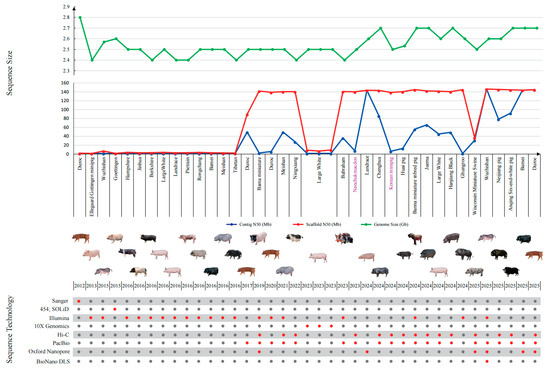
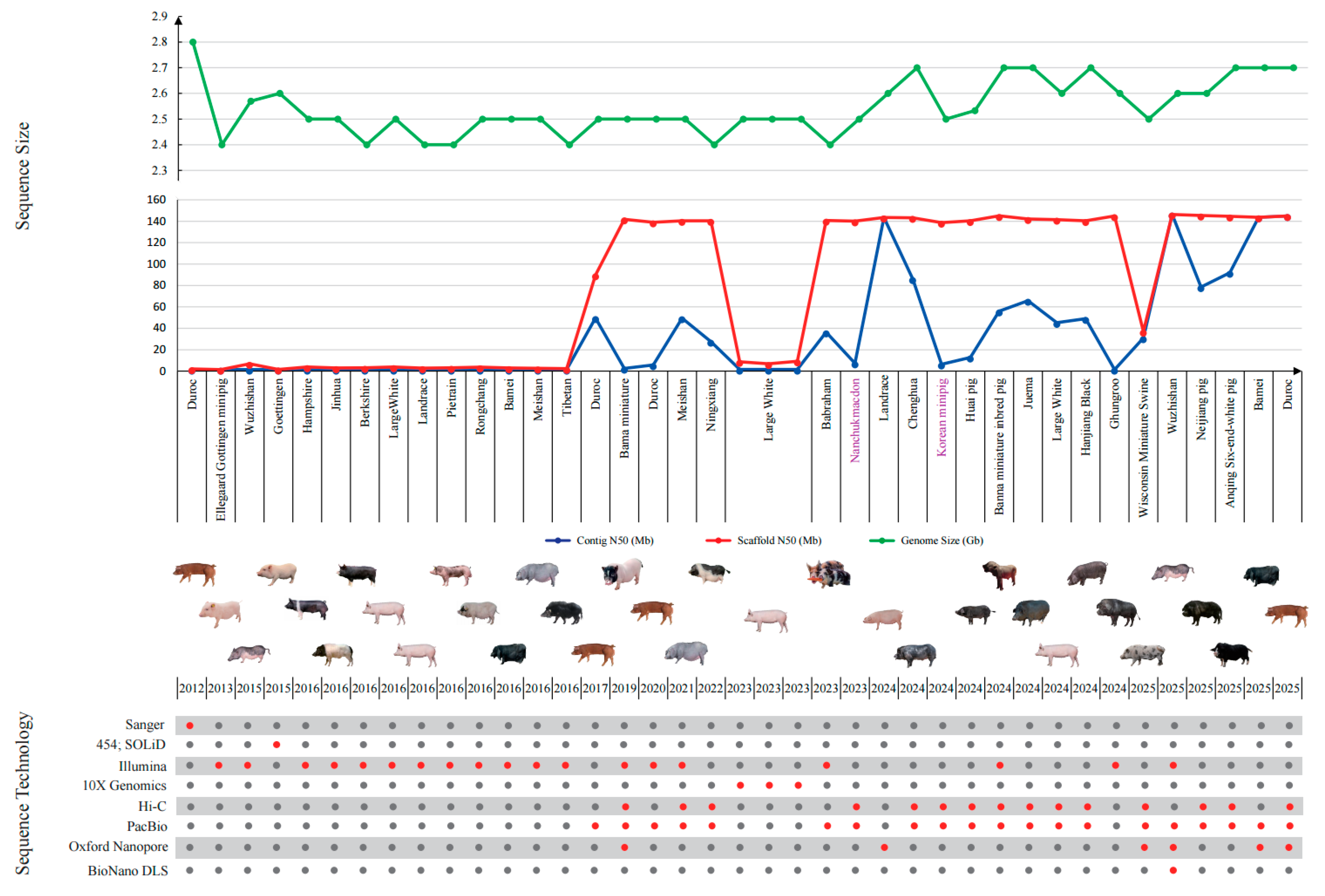
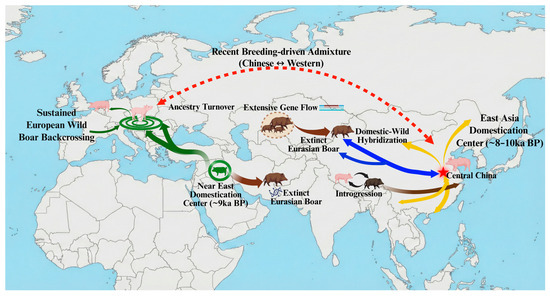
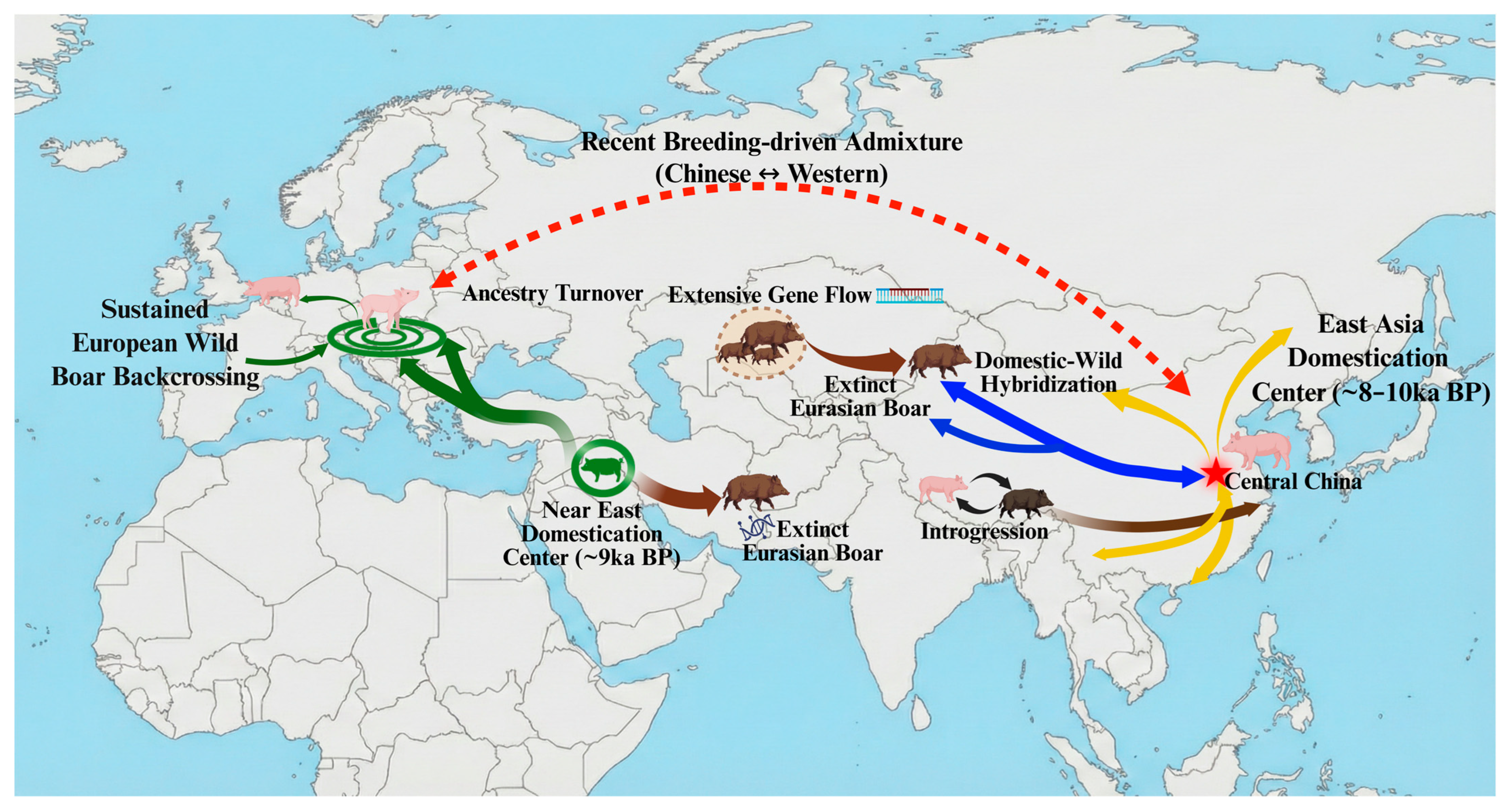

Disclaimer/Publisher’s Note: The statements, opinions and data contained in all publications are solely those of the individual author(s) and contributor(s) and not of MDPI and/or the editor(s). MDPI and/or the editor(s) disclaim responsibility for any injury to people or property resulting from any ideas, methods, instructions or products referred to in the content. |
© 2026 by the authors. Licensee MDPI, Basel, Switzerland. This article is an open access article distributed under the terms and conditions of the Creative Commons Attribution (CC BY) license.