


Highlights
What are the main findings?
- Overview of phosphorylation techniques across reagents, conditions, and lignocellulosic materials.
- Chemical/physical characterization and applications of phosphorylated fibers (flame retardants, ion exchange, biomedical).
What are the implications of these findings?
- Current methods remain lab-scale with limited data on cost and environmental impact.
- High-value materials with a need for scalable, eco-friendly phosphorylation processes.
Abstract
Natural fibers are among the most extensively exploited bio-based materials in industry due to their abundance, affordability, and biodegradability. However, their intrinsic properties often require improvement through chemical, mechanical, or enzymatic treatments to expand their applications. Phosphorylation is a highly effective chemical modification that enables the covalent grafting of phosphate groups onto the fiber backbone. These functionalities enhance hydrophilicity, anionic charge density, swelling capacity, and water uptake, while significantly improving flame-retardant performance. In addition, phosphorylation can reduce energy consumption and production costs in the manufacture of functionalized micro- and nanofibrillated fibers, as the increased swelling facilitates fibrillation. Consequently, phosphorylated fibers are suitable for water treatment, biomedical devices, construction materials, and other advanced materials. Dozens of reagents and various synthetic routes have been explored to perform this reaction, each producing materials with distinct properties. Phosphorus content remains the primary parameter used to assess modification efficiency. This literature review examines existing phosphorylation methods, including reagents, substrates, and characterization techniques, and discusses applications such as flame retardancy, thermal insulation, ion exchange, energy storage, electrodes, and battery recycling. It also briefly addresses key challenges, including limited hydroxyl accessibility, control of the degree of substitution, potential cellulose degradation, and scalability constraints.
1. Introduction
Phosphorylation is one of the chemical reactions used to modify polymers containing reactive hydroxyl groups in their structure. It enhances the hydrophilicity of the base material, thereby facilitating its use or incorporation in a wide range of applications. Numerous studies have explored the potential of this reaction for the chemical modification of biomass such as starch, chitosan, soy protein, casein, and cellulose [1,2,3]. Among these biopolymers, cellulose fibers remain the most extensively studied material due to their abundance, low cost, and ease of handling.
The first documented study on cellulose phosphorylation was published in 1948 by Julian F. Jurgens et al. at the Southern Regional Research Laboratory (New Orleans, LA, USA) [4]. In this work, cotton fibers were the cellulose source to produce phosphorylated cellulose intended for use as a cation-exchange material.
Generally, phosphorylation involves grafting phosphate groups (–O-PO3H2) onto the hydroxyl groups of the cellulose anhydroglucose units. Each phosphate group contains two ionizable hydrogen atoms, which can dissociate in water and interact with counter-ions. The ionization of these groups depends on the pH of the medium, with significant ionization occurring between pH 2 and 7. The acidic hydrogens of the phosphate groups are readily ionizable, facilitating efficient ion-exchange behavior [5]. The counter-ions can subsequently be exchanged through simple treatments, allowing the properties of the fibers to be tailored for specific applications. For example, Shi et al. investigated the acidic, sodium, and hybrid forms of phosphorylated kraft fibers and demonstrated that the nature of the counter-ion has a significant impact on the behavior of the fibers [6]. In particular, the sodium form exhibits a higher swelling capacity than the acidic and hybrid forms, due to its higher degree of dissociation, which facilitates water penetration into the fibers.
Accordingly, phosphorylated fibers, in comparison with carboxymethylcellulose, methylcellulose, nitrocellulose, hydroxypropyl methylcellulose, and cellulose acetate, are considered suitable materials for applications requiring high swelling capacity and strong hydrophilicity. These fibers could also show potential for innovative and sustainable products with reduced environmental impact.
Extensive research on cellulose phosphorylation has led to the development of numerous methods for conducting this reaction. Some of these methods significantly degrade the structure of the base material, making it suitable for the production of micro- or nanofibers. Others preserve the integrity of the cellulose structure, which is desirable for applications requiring longer fibers.
In general, the phosphorylation process involves the use of phosphorus-containing reagents such as H3PO4, P2O5, POCl3, (NH4)2HPO4, or Et3PO4, often in combination with nitrogen-containing bases such as urea, pyridine, or dimethylacetamide [7,8,9]. For example, Mucalo et al. used a combination of H3PO4 and urea to phosphorylate microcrystalline cellulose, with the aim of developing adsorbents for bone morphogenetic proteins in biomedical applications [10]. Similarly, Zhang et al. employed phytic acid (PA) in combination with urea to produce phosphorylated cellulose hydrogels for uranium removal from aqueous solutions [11]. In other studies, phosphate esters with varying alkyl chain lengths have been investigated as novel phosphorylating agents to reduce fiber degradation [5,12]. The resulting phosphorylated fibers are generally characterized by high charge density, elevated zeta potential, improved thermal stability, and enhanced flame-retardant properties, making them suitable for applications such as heavy metal recovery, ion exchange systems in batteries, drug delivery, and fire-resistant panels. One of the main advantages of phosphorylated cellulose compared with other cellulose derivatives is its relatively simple and low-cost synthesis, which can be scaled up easily. The reaction typically involves a limited number of reagents, most of them having relatively low toxicity.
Significant research efforts on lignocellulosic phosphorylation have enabled the development of multiple products and a wide array of applications, notably in flame retardancy, thermal insulation, ion exchange, and energy storage. Despite these advances, there is no recent comprehensive overview that critically evaluates the different phosphorylation strategies, their reagents, substrates, and performance. This review aims to summarize and compare chemical, enzymatic, and solvent-mediated phosphorylation methods, highlighting their advantages, limitations, and practical considerations. By focusing on both scientific and industrial aspects, it provides a clear guide for researchers and industries seeking to implement phosphorylated cellulose in advanced materials.
2. Natural Fiber Materials
2.1. Classification and Origin of Natural Fibers
Biomass is a general term used mainly in the field of biology to designate all organic matter of plant or animal origin, except fossil-derived or geological matter, present in terrestrial and aquatic environments [13]. The chemical composition of biomass mainly includes carbon, oxygen, hydrogen, nitrogen, and inorganic elements such as silicon, potassium, and calcium. Figure 1 illustrates the composition of lignocellulosic fibers and the spatial distribution of cellulose, hemicelluloses, and lignin within the fiber structure. Based on their origin and mode of formation, biopolymers derived from biomass can be classified into two categories.
Figure 1.
Illustration of lignocellulosic fibers composition and the spatial distribution of cellulose, hemicelluloses, and lignin in the fiber structure.
The first category includes biopolymers that are synthesized by living organisms using solar energy and carbon dioxide through photosynthesis, such as cellulose, starch, chitin, hemicelluloses, lignin, and proteins. In the second category, biopolymers are produced industrially by polymerization of bio-based monomers, for example, polylactic acid (PLA), which is synthesized from lactic acid monomers generally obtained by the fermentation of starch or sugarcane by microorganisms converting sugars into lactic acid [14,15,16]. Recently, the use of biomass in industry has been steadily increasing to produce new products that can replace those based on fossil fuels. Many countries are starting to use forest resources, generated during forestry operations, to convert biomass into gaseous, liquid, or solid fuels to produce energy to power various key sectors [17].
2.2. Lignocellulosic Fiber Structure and Composition
Lignocellulosic fibers are natural fibers extracted mainly from trees (wood) by various processes, but they can also be extracted from other types of plants (non-woody or herbaceous biomass) such as cotton, flax, hemp, bamboo, kenaf, and jute. The properties of fibers derived from different plants vary according to their chemical composition and the extraction method used. The lignocellulosic fibers used in industry are found in the tree trunk, which consists of two main parts: the bark (including the cambium), responsible for protecting the trunk, and the wood (sapwood and heartwood), where the lignocellulosic fibers are located [18,19]. Within wood, these fibers are organized into cells with complex walls, whose structure directly influences their mechanical and chemical properties. In general, the cell wall is composed of distinct layers that determine its structural and functional properties. First, the middle lamella, the outermost layer, is primarily composed of lignin and pectins and acts as an adhesive, binding adjacent cells together. Second, the primary wall, which surrounds the lumen, is thin and flexible, consisting of cellulose microfibrils embedded in a matrix of hemicelluloses and pectins. Third, the secondary wall is thicker and subdivided into three layers: S1, S2, and S3. In these sub-layers, cellulose is concentrated in oriented microfibrils surrounded by hemicelluloses, providing mechanical strength. Other components present in smaller amounts include proteins, extractives, starch, and inorganic compounds [20,21].
Lignin and hemicelluloses act as a matrix or cementing components that bind cellulose microfibrils together, leading to the hierarchical organization of the cell wall, from microfibrils to macrofibrils and ultimately fibers. The mass percentages of cellulose, lignin, and hemicellulose vary from species to species, depending on their botanical origin. In general, cellulose is the most abundant component in lignocellulosic fibers, with typical contents ranging from 40 to 50%, but sometimes higher or lower for certain species. The contents of lignin and hemicelluloses vary considerably depending on the species, with typical ranges of 10–30% for lignin and 20–30% for hemicelluloses (Table 1) [22,23]. As cellulose is the predominant component of lignocellulosic fibers, most chemical modification reactions discussed in this work primarily target cellulose hydroxyl groups.
Table 1.
Chemical composition and fiber dimensions of different types of natural fibers.
Cellulose, the main polymer in fibers, consists of crystalline and amorphous regions. Crystalline regions are highly ordered, with tightly packed chains stabilized by extensive hydrogen bonding, conferring high strength, density, and resistance to chemical or enzymatic degradation. Amorphous regions are disordered, with more accessible hydroxyl groups and greater flexibility, making them more reactive and susceptible to hydrolysis. The proportion of these regions dictates the overall solubility, mechanical properties, and chemical reactivity of cellulose fibers [24,25].
In the pulp and paper sector, it is necessary to remove a large proportion of lignin and other impurities during pulping to obtain pulp with a high cellulose content and improved quality. Accordingly, mechanical, thermal, or chemical treatments are applied to reduce lignin content, thereby facilitating bleaching and improving final paper quality [26]. Nowadays, some synthetic fibers traditionally used in industry are increasingly being replaced by natural fibers in a variety of consumer products, mainly due to sustainability considerations and the renewable nature of natural resources. For example, natural fibers are often integrated into polymer-based composites to produce lighter materials with adequate mechanical performance for automotive and aeronautical applications [27]. In addition, lignocellulosic biomass can be used for bioenergy production, as the combustion of wood or wood residues generates heat that can be converted into electricity [28].
3. Phosphorylation Systems for Natural Fibers
Natural fibers, such as lignocellulosic fibers, often exhibit limited properties, making them unsuitable for many advanced applications. To overcome these limitations, chemical modification using various reagents has proven effective in enhancing their overall performance. Cellulose, the main component of these fibers, contains anhydroglucose units with three hydroxyl groups of varying reactivity (two secondary and one primary), making it highly amenable to functionalization through relatively simple procedures. Among the different chemical modification strategies, phosphorylation is a well-established method used to introduce phosphate groups (PO3H2) onto the hydroxyls of the cellulose backbone. This reaction typically involves the use of phosphorus-based reagents in combination with nitrogenous bases, followed by thermal treatment. Depending on the targeted properties of the final product, phosphorylation can be carried out in a heterogeneous medium (solvent-free) or a homogeneous medium (with solvent) [29,30].
Many reagents can be used to phosphorylate cellulose fibers, and they can be classified into two main categories based on the oxidation state of phosphorus: +3 or +5. Phosphorus (+5) derivatives such as H3PO4, P2O5, and POCl3 are the most frequently used. The reaction between phosphorus (+3) and the cellulose chain leads to the formation of Cell-O-P(OH)2 phosphite groups, while phosphorus (+5) leads to Cell-O-P(O)(OH)2 phosphate groups or Cell-P(O)(OH)2 phosphonic acid groups [31,32,33]. In the following sections, we review the literature on the most used reagents for cellulose phosphorylation, highlighting the advantages and disadvantages of each.
3.1. Phosphorylating Agents
Cellulose phosphorylation can be achieved using a variety of phosphorus-containing reagents that differ in chemical structure, reactivity, and practical applicability. The choice of phosphorylating agent strongly influences the reaction conditions, the nature of the introduced phosphorus-containing groups, and the properties of the modified cellulose.
3.1.1. Phosphoric Acid and Its Derivatives
Phosphoric acid and its derivatives are the most widely used phosphorylating agents to date, due to their ability to give good yields, ease of handling, use in relatively small quantities, and low cost. Phosphoric acid reacts with molten urea to phosphorylate lignocellulosic fibers (Figure 2a). Commonly used phosphorus derivatives include phosphorus pentoxide (P2O5), phosphoryl chloride (POCl3) (Figure 2c), phosphorus trichloride (PCl3), and dimethylphosphate (C2H7PO4) (Figure 2b). Phosphorylation reactions in the presence of phosphoric acid and its derivatives, either individually or in combination, are typically carried out at moderate temperatures, generally between 100 and 160 °C (ideally 150 °C), in order to avoid severe degradation and dissolution of the fiber structure and to obtain materials with acceptable mechanical and physical properties [32,34]. The reaction time ranges from a few minutes to several hours, depending on the reaction conditions and the targeted degree of substitution. Nitrogenous bases are generally used as catalysts and solvents to increase fiber reactivity [35]. However, their exact role, particularly that of nitrogen-containing additives such as urea, remains insufficiently elucidated. In the absence of such bases, phosphorylating agents mainly induce fiber swelling, with little or no effective chemical reaction, even at elevated temperatures. Reaction yields depend on several adjustable parameters, such as the reagent molar ratio, temperature, reaction time, and whether the reaction is conducted in a homogeneous or heterogeneous medium.
Figure 2.
Phosphorylation of lignocellulosic fibers using phosphoric acid (a), dimethyl phosphate (b), and phosphoryl oxychloride (c) in the presence of urea or sodium hydroxide.
Inagaki et al. were among the first researchers applying the phosphorylation reaction to cellulose fibers in the 1970s to impart new properties [36]. They reported that the reaction between phosphoric acid and cellulose in the presence of urea produces a white, water-soluble product. Furthermore, the degree of substitution increased from 0.5 to 2.0 when the reaction time was extended from 0.5 to 8 h, without changing the temperature (150 °C). However, the process required 36 g of phosphoric acid (7 equivalents relative to the anhydroglucose unit) to phosphorylate only 7 g of cellulose, making the final product more expensive and less attractive for industrial applications.
To reduce the quantities of reagents used, Ablouh et al. investigated the phosphorylation of kraft pulp fibers using different molar ratios of phosphoric acid (2 and 3 equivalents) and urea [37]. The reactions were carried out in deionized water to reduce the effect of the high acidity of phosphoric acid on the fibers, and the water was subsequently removed under reduced pressure at 90 °C for 24 h using a rotary evaporator. Analytical results indicated that the nitrogen and phosphorus contents of the obtained fibers could reach 5 and 22%, respectively, when using 2 equivalents of phosphoric acid. The total charge also increased after the reaction, reaching a maximum value of 6608 mmol/kg, with a degree of substitution (DS) of 2.68. However, the average fiber length decreased significantly after phosphorylation, from 1.523 to 0.510 mm, resulting in short microfibers instead of long fibers.
This extensive fiber degradation has prompted some researchers to use phosphoric acid to produce low-cost crystalline nanocellulose. For example, Kusmono et al. reported that treatment of ramie fibers with 16 M phosphoric acid (85% v/v) led to hydrolysis and the formation of nanocellulose with a crystallinity index of 89.28%, an average length of 215.4 nm, and an average diameter of 21.4 nm [38]. Although this method allows to produce nanocellulose with low energy consumption, the recovery and recycling of phosphoric acid remained challenging. Other studies have attempted to use phosphoric acid derivatives with lower acidity to phosphorylate fibers without causing corrosion problems in production machinery or affecting the fibrous structure of the starting materials. Phosphoryl chloride and phosphorus pentoxide are generally the most widely used phosphorylating agents for cellulose fibers, due to their low cost and wide availability. Zeronian et al. phosphorylated cellulose using phosphoryl chloride and pyridine as the nitrogen base, with a molar ratio of 1:4:26 [39]. The reactions were carried out at 25 and 60 °C for 6–24 h to determine the optimum conditions for high phosphorus levels. The phosphorus content increased from 8.09% after 6 h at 25 °C to 9.48% after 24 h at 60 °C.
Although this pathway provides a good rate of phosphorylation at low temperatures, it is nevertheless limited by using pyridine, which is considered toxic and hazardous to human health, particularly upon long-term exposure. Blaine et al. used a chemical-mechanical treatment to prepare phosphorylated crystalline nanocellulose for the development of flame-retardant wood coatings [40]. The method involved phosphorus pentoxide (P4O10) as a phosphorylating agent in the presence of urea, with the reaction conducted in a mill (Retsch MM400 shaker mill, Retsch GmbH, Haan, Germany) for 90 min at 30 Hz. The reaction produces cellulose nanocrystals with a total charge of 3300 mmol/kg, which is very important for certain applications.
However, phosphorus pentoxide presents several drawbacks, most notably its strong hygroscopicity and high reactivity with water, which leads to the formation of phosphoric acid and poses significant safety risks when handled in large quantities. Accordingly, Wanrosli et al. employed a system combining phosphorus pentoxide, triethyl phosphate, and concentrated phosphoric acid (85%) in hexanol (H3PO4/P2O5/Et3PO4/hexanol) to produce a phosphorylated cellulose gel [41]. Even though this system can give degrees of substitution of up to 2.2 after 72 h, the excessive use of reagents and solvents severely limits its large-scale application.
3.1.2. Phosphate Salts
Phosphate salts are chemical compounds containing phosphate in ionic form with a counter-ion. In general, these salts are formed after a reaction between a phosphate and a salt carrying the counter-ion, or between phosphoric acid and a base. The solubility of phosphate salts in water makes them very useful in agriculture as an effective fertilizer for accelerating and stimulating plant growth [42]. They can supply plants with the elements they need for growth, such as nitrogen and phosphorus. They are also used in the food industry as additives to limit bacterial growth and extend shelf life [43]. In papermaking, phosphate salts are among the compounds that can phosphorylate fibers in the presence of a nitrogen base [44].
Commercially available compounds include ammonium dihydrogen phosphate, NH4H2PO4, diammonium hydrogen phosphate (DAHP) (NH4)2HPO4 (Figure 3a), and sodium dihydrogen phosphate NaH2PO4 (Figure 3b), but DAHP is the most widely used for phosphorylation reactions due to its availability in large quantities, low cost, and low toxicity [45,46,47].
Figure 3.
Phosphorylation of lignocellulosic fibers using diammonium hydrogen phosphate (a) and sodium dihydrogen phosphate (b) in the presence of urea.
For instance, Ranjan et al. have produced a phosphorylated cellulose gel for 3D printing that can be recycled instead of using cellulose gel from TEMPO oxidation, which is considered environmentally unfriendly [48]. Gels produced using this method are characterized by good rheological properties, high structural stability, ease of 3D printing, and good colorant remediation potential. The proposed method involved phosphorylating commercial viscose in an incubator at 60 °C for 6 h using 12% urea and 1% diammonium hydrogen phosphate ((NH4)2HPO4) as phosphorylating agent. The resulting gels exhibited a charge density of 1133 mmol/kg, a yield of over 87%, and a DS of 0.183. In addition, 3D-printed structures showed a water absorption capacity of 5408% and a swelling capacity of 700%.
Ghanadpour et al. also used diammonium hydrogen phosphate ((NH4)2HPO4) to phosphorylate pure cellulosic foams to improve their thermal stability and impart flame-retardant properties [49]. They prepared nanocomposites from phosphorylated foams and sepiolite clay using the cold-casting technique. Scanning electron microscopy (SEM) images showed that the synthesized product has a three-dimensional honeycomb-like structure with a pore diameter of 16.8 μm.
Noguchi et al. [31] achieved the phosphorylation of softwood pulp sheets by treating them with an aqueous solution of ammonium dihydrogen phosphate (NH4H2PO4) and urea, using hot air as the thermal activation method. Rol et al. used various phosphate salts, namely NH4H2PO4, (NH4)2HPO4, Na2HPO4, NaH2PO4, and LiH2PO4, to produce phosphorylated cellulose, which served as a pretreatment step for the production of cellulose nanofibrils (CNFs) [44].
However, the DS obtained using phosphate salts as a phosphorylating agent is very low, and large quantities of reagents are required to phosphorylate a small amount of fiber. In addition, removing chemical reagents from the final product at the end of the reaction is challenging and requires large quantities of solvents and materials.
3.1.3. Phosphate Esters
Phosphate esters are organic molecules that can be chemically synthesized using a variety of processes. They are widely used in industry due to their special physical and chemical characteristics that make them suitable for a variety of applications. Low toxicity is the most important property of these agents, enabling them to be used as detergents, surfactants, plasticizers, lubricants, ion exchangers, anticorrosion, and flame retardants [50,51]. In chemical terms, phosphate esters contain a phosphate group linked to one to three organic chains, forming phosphate mono-, di-, or triesters, depending on the conditions and reagents used. Phosphate esters have two parts of distinct polarity: a polar phosphate moiety and apolar organic chains. The hydrocarbon chains attached to the phosphate groups play an essential role in determining the solubility and physicochemical properties of phosphate esters [52,53,54]. For this reason, phosphate monoesters, diesters, and triesters are very different in their properties.
Monoesters are generally more soluble in water, which gives them good foaming and cleaning properties, but low solubility in nonpolar media. Most synthetic methods reported in the literature aim to obtain or enrich phosphate monoesters [55,56]. However, the esterification reaction is inherently non-selective, and it typically yields mixtures of products. Moreover, purification of these products is always difficult or impossible due to their surface-active nature, which leads to their simultaneous partitioning between organic and aqueous phases.
Phosphate esters can be obtained by reacting phosphate-containing, generally phosphoric acid or its derivatives, with fatty alcohols bearing hydroxyl groups under well-defined conditions. The high acidity of these reagents makes esterification more difficult than the esterification of carboxylic acids. There are several methods and protocols for synthesizing phosphate esters, each with its own advantages and disadvantages.
For example, Dueymes et al. used acetic anhydride-activated phosphoric acid as a phosphorylating agent to produce esters with a high percentage of phosphate monoesters [54]. Sakakura et al. carried out direct condensation of phosphoric acid with various alcohols using oxorhenium complexes as catalysts and dibutylamine (Bu2NH) as a stabilizer for acid-sensitive substrates [57]. Lira et al. used tetrabutylammonium phosphate as a phosphate donor in combination with trichloroacetonitrile to synthesize phosphate esters [55]. Belosinschi et al. carried out the synthesis using phosphorus pentoxide (P2O5) with two long-chain aliphatic alcohols (1-octanol and 1-octadecanol) in the presence of water. To ensure good selectivity, the molar ratio of three reagents (fatty alcohol, P2O5, and H2O) was set at 2:1:1 [58].
Phosphate esters were first reported as phosphorylating agents for natural fibers in 2014 (Figure 4) [59]. In this work, phosphate esters were initially used to formulate coating solutions for the production of recyclable release papers intended to replace silicone-based papers. The study revealed that phosphate ester dispersions allowed the surface energy of paper to be reduced from 40 to 18 mJ/m2, with peel forces varying between 2 and 3, comparable to those of siliconized paper (peel force ≈ 1), which was used as a reference [58]. However, phosphate esters exhibited poor adhesion to the paper surface, reducing residual adhesion by up to 10%, due to contamination of the adhesive tape by phosphate esters.
Figure 4.
Phosphorylation of lignocellulosic fibers using phosphate esters in the presence of urea.
To address this limitation, the same research group attempted to chemically graft the phosphate ester chains onto the hydroxyl groups of the fibers by treating the fibers at 160 °C for 3 h. Analyses showed that the phosphate group was grafted only onto the hydroxyl groups of the fibers, while the alkyl chains were hydrolyzed during the reaction. In contrast to other phosphorylating agents, the fibrous structure was not significantly affected by the reaction conditions, and fiber lengths greater than 1.3 mm were obtained [6].
Phosphorylation of cellulose using phosphate esters is governed by steric and ionic effects associated with the ester structure, which directly affect the degree of substitution and surface charge of the fibers. Shi et al. used phosphate esters synthesized from two fatty alcohols, 1-octanol and 1-dodecanol, to phosphorylate kraft pulp [5]. The phosphorus contents determined by the fiber digestion method were 7.23 and 5.17%, respectively. The decrease in phosphorus content was attributed to steric hindrance, which reduced the reactivity of phosphate esters bearing long alkyl chains. The authors then modified the counter-ion of the phosphate group, producing three types of fiber: Phosphorylated kraft pulp in the acid form (KFP-H), in the sodium form (KFP-Na+), and in the ammonium form (KFP-NH4+). The resulting surface charges were 255, 473, and 273 µeq/g, respectively, with an average fiber length of 1.3 mm. These properties make these fibers suitable for ion-exchange applications in wastewater treatment [5,11].
Lamoudan et al. utilized phosphorylated fibers with phosphate esters to manufacture flame-retardant sheets [60]. The high total charge of these fibers, exceeding 3300 mmol/kg, caused strong electrostatic repulsion between the fibers, resulting in sheets with poor properties. To address this issue, the authors employed retention agents such as flocculants and coagulants, which promoted fiber aggregation and reduced electrostatic repulsion. Sheets produced with retention agents achieved a Kaptra factor index (KFI) of 17, compared to 133 for sheets prepared without retention agents (lower KFI values indicate better sheet formation). Furthermore, the use of retention agents significantly improved the burst index, rupture index, and tensile energy absorption, with increases of 2.12×, 1.7×, and 2.77×, respectively.
Abenghal et al. developed a recyclable release paper by phosphorylating fibers with phosphate esters and subsequently alkylating them with different alkyl chains, as an alternative to siliconized paper [12]. Applying various coating solutions to the surface of unmodified base paper reduced surface energy to as low as 24.74 mJ/m2 and peel force to 2.02 N/cm, without significantly affecting residual adhesion.
However, phosphate esters present certain drawbacks, primarily related to their foaming behavior. After the reaction, the fibers require multiple washes with large quantities of water and solvents to eliminate all residues. Additionally, using phosphate esters instead of phosphoric acid or its derivatives can be costly due to the large amounts of raw materials required and the complexity of their synthesis.
3.1.4. Phytic Acid
Phytic acid, or myo-inositol-1,2,3,4,5,6-hexakisphosphate, is a natural compound present in most cereals, legumes, oilseeds, and some fruits at levels of 1–5%. It is considered essential for plant growth and development, as it is the main source of phosphorus. During germination, phytic acid is hydrolyzed by the enzyme phytase into inorganic phosphorus and other low-molecular-weight nutrients that can be utilized by the plant [61].
In terms of its chemical structure, phytic acid consists of a six-carbon ring bearing six phosphate groups, making it highly rich in phosphorus (28% by molecular weight). Phytic acid contains 12 ionizable hydrogen atoms and carries a negative charge at basic pH, enabling interactions with positively charged substances. The extraction of phytic acid from various sources, such as cereals, typically involves acid treatment of the plant matrix (e.g., with hydrochloric acid), followed by precipitation using a ferric chloride solution (FeCl3) [62,63].
Owing to its low toxicity and biocompatibility, phytic acid is used in a wide range of applications. In the food industry, it serves as an antioxidant; in cosmetics, it is applied to protect the skin against free radicals; while in industrial wastewater treatment, it is employed for the removal of heavy metals and hazardous chemicals [64].
Recently, several researchers have attempted to use phytic acid to prepare various composites to develop flame-retardant fibrous materials with a low risk to the environment and human health. Barbalini et al. used phytic acid/biochar dispersions to treat cotton fabrics for applications requiring flame retardancy, such as protective clothing for firefighters or military use [65]. This approach exploits the high phosphorus content of phytic acid, which enables phosphorylation of cellulose fibers. Cotton fabrics were impregnated with phytic acid/biochar dispersions and treated in an oven at 80 °C for 20 min to improve adhesion to the textile. Flammability tests showed that the addition of 8% by dry weight resulted in a self-extinguishing flame-retardant fabric. On the other hand, the washing cycle considerably reduces the flame-retardant effect, and the adhesion of phytic acid and biochar to the fabric was very low. Jiang and Tang phosphorylated kapok fibers using phytic acid in the presence of urea, followed by high-temperature treatment (Figure 5). Analyses show that by increasing the amount of phytic acid used from 2 to 6 g, the phosphorus content attached to the fiber also increased from 3.36 to 6.23%, respectively. This treatment increased the residual mass at 700 °C, as determined by thermogravimetric analysis (TGA), from 8.3% for virgin kapok fibers to 42.6% for phosphorylated kapok fibers. Moreover, vertical combustion showed that sheets made from phosphorylated kapok fibers had difficulty igniting, whereas sheets made from virgin fibers burned completely within 30 s [66]. Similarly, Yuan et al. used phytic acid to functionalize microcrystalline cellulose via the phosphorylation reaction [67]. The study showed that the use of 50 wt.% phytic acid results in a phosphorus content of 0.63%, and the carbonization residue increased from 1.1 to 31.9% after phosphorylation. This indicated that phosphate groups were covalently grafted onto the cellulose chains, leading to improved flame retardancy and thermal stability of the fibers.
Figure 5.
Phosphorylation of lignocellulosic fibers using phytic acid in the presence of urea.
Despite its previously noted advantages as a phosphorylating agent, phytic acid has several limitations that restrict its applicability, particularly at the industrial scale. Large amounts are required to phosphorylate relatively small quantities of fiber, and its separation from process effluents is challenging due to interactions with other components, which complicates wastewater treatment.
3.1.5. Enzymes
Enzymatic phosphorylation is considered a bio-based strategy used to introduce phosphate groups onto a receptor molecule under specific conditions. Unlike conventional chemical methods, which require high temperatures, high reagent concentrations, organic solvents, and extreme pH, enzymatic approaches operate in water at near-neutral pH and moderate temperatures, making them more sustainable and environmentally friendly. In general, enzymes act as transfer catalysts, enabling the transfer of a phosphate group from a donor molecule to the C6 hydroxyl group of the anhydroglucose units in cellulose under controlled conditions. The most commonly used system involves hexokinase, activated by Mg2+, which transfers the phosphate group from adenosine-5′-triphosphate (ATP) to cellulose in an aqueous buffer maintained around pH 7 [68] (Figure 6).
Figure 6.
Phosphorylation of lignocellulosic fibers using ATP in the presence of hexokinase.
The enzyme initiates the nucleophilic substitution by activating the phosphate donor (typically ATP), with the assistance of a divalent metal ion (M2+) that stabilizes the negative charges of ATP. The activated ATP intermediate subsequently reacts with the C6 hydroxyl group of the anhydroglucose units in cellulose, resulting in the formation of a covalently bound phosphate group on the cellulose chain and the release of ADP into the reaction medium. However, the reagents primarily penetrate the amorphous regions of cellulose, where hydroxyl groups are more accessible, whereas the crystalline regions remain largely inaccessible due to the dense network of intermolecular hydrogen bonds. In addition, the near-neutral pH conditions employed in this method limit fiber swelling, thereby restricting the diffusion of activated ATP into the cellulose structure and leading to a relatively low degree of substitution (DSp) [1,69,70]. Consequently, the physicochemical properties of the cellulose substrate play a crucial role in the efficiency of the phosphorylation process, and cellulose with lower crystallinity is generally preferred. In practice, cellulose is often pretreated with alkaline solutions (e.g., NaOH) to disrupt hydrogen bonding within the crystalline domains and increase the availability of reactive hydroxyl groups [71].
This system has been applied to phosphorylate lignocellulosic fibers. Tzanov et al. used hexokinase, ATP, and potassium phosphate buffer (pH 7.6) to phosphorylate bleached cotton fabric at 30 °C for 6 h [72]. Božić et al. used a similar system containing hexokinase and ATP in the presence of MgCl2 to enhance enzyme activity [70]. Cellulose nanofibers were phosphorylated, and phosphate groups were shown to attach selectively to the C6 hydroxyls. The same approach was used by Liu et al. to phosphorylate cellulose nanocrystals and nanofibers, which were then applied in adsorption studies, achieving ~100% removal of Ag+, Cu2+, and Fe3+ from model solutions at equilibrium [73].
Despite their sustainability and selectivity, enzymatic methods present some limitations for industrial applications. The high cost of enzymes and relatively long reaction times significantly increase the final product cost. In addition, the lower degree of substitution compared to chemical methods can restrict their use in certain applications.
3.2. Auxiliary Additives
Phosphorylation protocols frequently employ nitrogen-containing compounds (e.g., urea) as additives to facilitate reaction under the applied conditions. In the absence of such compounds, phosphorus-containing reagents, notably phosphoric acid, do not result in effective covalent modification of the cellulose structure. Nitrogen-containing additives promote the phosphorylation reaction, while physical effects such as fiber swelling primarily influence mass transport.
To date, the reaction mechanism describing the role of each reactant in cellulose phosphorylation remains poorly understood, and only a limited number of studies have addressed this process. Moreover, not all nitrogen derivatives can initiate the phosphorylation reaction due to their low affinity toward cellulose hydroxyl groups and phosphorous-containing reagents. Among these compounds, urea is the most widely used additive due to its low cost, low toxicity, availability, and ease of handling. Its chemical structure, which contains two amine groups, facilitates the phosphorylation reaction, since two amines are available for the reaction [74,75,76].
Urea is commercially available as a solid, which requires phosphorylation to be carried out above its melting point, which is 133 °C (generally 150 °C to avoid fiber degradation). TGA confirms that the decomposition rate of pure urea increases significantly above 150 °C, leading to the formation of ammonia and isocyanic acid. When urea is combined with phosphoric acid during phosphorylation, the onset temperature of decomposition shifts to 140 °C due to the formation of an eutectic mixture. The ammonia generated during the reaction can neutralize the protons of the phosphorylating agents, transforming them into salts which then react with the cellulose hydroxyls [33].
The amount of urea required for effective fiber phosphorylation can vary from 3 to 17 equivalents relative to the anhydroglucose unit. For example, Ablouh et al. investigated the effect of different urea loadings (4, 10, and 16 equivalents) on the phosphorylation of kraft pulp fibers [37]. SEM characterization of the fiber surface showed that the use of 10 equivalents of urea minimized severe fiber degradation. In addition, energy-dispersive X-ray spectroscopy (EDX) measurements indicated a phosphorus content of 19.23% for fibers treated with 10 equivalents of urea, compared with 14.87% and 18.92% for 4 and 16 equivalents, respectively. Low urea levels resulted in fiber softening, whereas excessive urea loadings weakened the fiber structure, leading to substantial degradation and a reduction in fiber length of more than 50%, thereby rendering the fibers unsuitable for further use.
Urea can also be used in conjunction with another nitrogen base or a solvent to phosphorylate certain fibers. For this purpose, Yuan et al. used a combination of urea and dicyandiamide to facilitate the dissolution of phytic acid for the phosphorylation of cellulose microfibers [67]. Oshima et al. phosphorylated bacterial cellulose using phosphoric acid and a mixture of urea and dimethylformamide [77]. However, the release of ammonia gas during the reaction is among the major drawbacks of using urea as a base. Additionally, ammonia prevents the scale-up of this reaction due to its high toxicity and its corrosive effect on processing equipment. To address this limitation, the phosphorylation reaction was carried out using N,N-dimethylacetamide (DMAc) instead of urea to phosphorylate kraft pulp. However, EDX analysis showed that the phosphorus content obtained by this method did not exceed 0.7%, compared with 4.8% using urea. Moreover, flame exposure tests indicated that sheets made from phosphorylated fibers using urea are much more flame-resistant than fibers obtained using DMAc [78]. Another approach to reducing the effect of ammonia during phosphorylation involved the use of a vacuum furnace equipped with a tank containing hydrochloric acid to capture ammonia and convert it to ammonium salts (NH4+) [61].
In summary, effective phosphorylation of cellulosic fibers under the conditions reported in the literature generally requires the presence of nitrogen-containing additives. Although urea is the most extensively studied system, other nitrogen-containing additives have also been examined, with mixed results in terms of efficiency and practical applicability.
No phosphorylation strategy has emerged as the winning formula among the multitude of reagents and reaction conditions. Three main reasons underlie this status quo: the uncontrolled degradation of the lignocellulosic substrate, the low efficiency of the phosphorylation process, and the lack of solutions for recovering and reusing the reaction by-products.
Thus, phosphoric acid and its derivatives exhibit high chemical aggressiveness, which very often leads to degradation of the fibrous substrate. This degradation manifests as a significant reduction in fiber dimensions and in the average degree of polymerization of the constituent polymers.
Phosphate salts do indeed have a milder impact on fibrous materials; however, they are more expensive than phosphoric acid and result in lower degrees of substitution. In addition, they require prior dissolution in water before the reaction, and the subsequent evaporation of this water incurs a high thermal energy cost, rendering the phosphorylation process unfeasible.
Phosphate esters do prove to be efficient reagents, delivering good reaction yields, high degrees of substitution, and, at the same time, minimal degradation of the fibrous substrate. Nevertheless, phosphate esters are more expensive than phosphate salts, and the recovery of the aliphatic chain after the reaction is extremely difficult.
Phytic acid and enzymatic phosphorylation remain niche phosphorylation systems for several complementary reasons, including the high cost of the reagents, stringent reaction conditions, and the requirement for specific cellulosic substrates.
However, perhaps the greatest problem with the phosphorylation reaction remains the lack of viable solutions for the recovery and reuse of reaction by-products. Urea decomposes, generating ammonia that must be efficiently captured to avoid poisoning and environmental pollution. Only a relatively small fraction of the phosphate reagent is grafted onto the fibrous material. The vast majority ends up as a by-product at the end of the reaction, and its recovery is mandatory both for economic reasons and for environmental protection.
3.3. Fiber Substrates
Phosphorylation can be applied to a variety of substrates that contain accessible hydroxyl groups. Natural fibers extracted from either softwood or hardwood are considered among the substrates that can be easily phosphorylated using phosphoric acid or other phosphorus derivatives. However, the reaction yield, generally assessed by the amount of phosphorus grafted onto hydroxyl groups, depends strongly on the nature of the fibers, their mechanical properties, inter- and intra-fiber bonding, the length of the fibers, and their chemical composition. Consequently, the extraction process plays a crucial role in determining the quality of the fibers and, ultimately, the properties of the final product.
Different extraction processes are used to produce fibers tailored for the desired application. In general, three major processes are employed for fiber extraction from wood: chemical, mechanical, and thermomechanical processes. In the chemical process, chemical reagents are used to dissolve lignin, whereas the mechanical process relies solely on mechanical refining to separate the fibers, resulting in a relatively high residual lignin content. The thermomechanical process combines mechanical treatment with pressurized steam to soften lignin, thereby facilitating the separation of fibers [79,80,81]. As a result, chemical pulp, among which kraft pulp is the most widely used, typically contains more cellulose and less lignin. Accordingly, most studies on cellulose phosphorylation have been carried out on kraft pulp derived from softwood species, which provide longer fibers.
Hou et al. studied the effect of time and the molar ratio of diammonium phosphate (NH4)2HPO4 and urea on the phosphorylation of softwood kraft pulp [47]. It was demonstrated that phosphorus content and yield increased with reaction time and diammonium phosphate molar ratio. Using a comparable approach, Carrillo-Varela et al. applied the same method, reagents, and conditions to prepare phosphorylated hydrogels based on kraft pulp from hardwood for adsorption applications [29]. Nemer Martins et al. used the phosphorylation reaction as a pretreatment of kraft pulp to reduce energy consumption during mechanical fibrillation to produce micro- and nanocellulose [71]. Thermomechanical pulping (TMP) can also be used in phosphorylation to prepare a pulp with a high charge and high phosphorus content, which has more available hydroxyls because it contains more lignin and hemicelluloses than kraft pulp. For this reason, Lamoudan and Brouillette attempted to phosphorylate this pulp for the first time and compare it with phosphorylated kraft pulp. The study showed that the total charge obtained after phosphorylation with phosphate esters is 3310 mmol/kg for TMP pulp and only 2700 mmol/kg for phosphorylated kraft pulp under the same conditions [82]. Recycled pulp or old corrugated containers (OCC) have also been phosphorylated to prepare release papers that can substitute for silicone. OCC contains a blend of different pulps, inks, and chemicals, making it a less expensive pulp [12]. In general, pulp with a lower lignin content tends to achieve higher phosphorus content, as lignin is a hydrophobic phenolic polymer that limits reagent penetration and reduces the accessibility of cellulose hydroxyl groups. Therefore, most researchers either use pure cellulose or treat the pulp with chemicals to reduce its lignin content.
Other biopolymers can also be phosphorylated to modify their surface state to obtain well-defined properties for certain applications. Among these is starch, which is the second most abundant biopolymer after cellulose and is composed of amylose (basic monomer is glucose linked by α(1→4) bonds) and amylopectin (branched chain linked by α(1→4) and α(1→6) bonds). Native starch contains small amounts of phosphate (generally <0.1%), which is linked to amylopectin [3,83]. Nevertheless, phosphorylation using chemical reagents increases the amount of phosphorus in its structure, generating new properties. The reaction can result in two classes of starch: MSP (monostarch phosphate) and DSP (distarch phosphate). MSP is formed when a single phosphate group is attached to the starch hydroxyl, while DSP is formed when the phosphate group is linked with two starch hydroxyls [7]. Several reagents can be used to phosphorylate starch, depending on the application and desired properties. J.Y. Park et al. have used phytic acid to phosphorylate starch to improve bonding behavior and inhibit retrogradation [84]. Similarly, Zhang et al. phosphorylated starch with sodium phosphate to produce a selective serpentine depressant in nickel sulfide ore flotation [85]. Table 2 summarizes the various methods, reagents, and substrates used to produce phosphorylated fibers, along with the resulting phosphorus content, total charge, and fiber length.
Table 2.
Summary of selected representative studies that employed various reagents and conditions to phosphorylate different types of cellulose fibers.
Phosphorylation of lignocellulosic materials is a reaction that has not yet been applied on an industrial scale and remains primarily explored at a niche level, in small laboratory research groups. Comparing the reactivity of different lignocellulosic substrates is further complicated by the highly empirical way each research group chooses to carry out the reaction, as highlighted in Table 2. Nevertheless, even under these conditions, a few conclusions can be drawn regarding the reactivity of the lignocellulosic substrates. The size is the most important characteristic of the material. A small size, like that of fibers—micrometers in width and on the order of millimeters in length—provides a sufficiently large surface area for the reaction to proceed with a high yield. As regards chemical composition, all the major components—cellulose, lignin, and hemicelluloses—offer abundant OH groups and are prone to phosphorylation. The difference becomes apparent after the reaction, mainly because of the post-reaction treatments. Thus, it is expected that a significant fraction of the phosphorylated hemicelluloses and degraded cellulose will dissolve and therefore leach more easily through the washing treatments. In contrast, lignin remains attached to the fiber even if phosphorylation reduces its hydrophobicity. This situation is perfectly reflected in the study by Boukind et al., in which the phosphorylated lignocellulosic material becomes lighter in color after being consecutively treated with an alkaline solution and then washed with water several times [90].
Chitosan is another biopolymer that has been phosphorylated for use in various fields and applications such as osteogenesis, bactericides, flame retardants, heavy metal removal, ionic conductivity, and drug delivery. For example, Sakaguchi et al. used phosphorylated chitin and phosphorylated chitosan for uranium adsorption [91]. The study revealed that uranium adsorption for these materials is higher than for copper, cadmium, cobalt, zinc, and nickel. Saikia and Gogoi investigated the role of phosphorylated chitosan in drug delivery applications, as the incorporation of a phosphoric group into the polymer backbone can increase the solubility of chitosan [92].
Typically, phosphorylation of chitosan takes place in heterogeneous media using phosphorus derivatives such as phosphoric acid, phosphorus pentoxide, and phosphorus oxychloride, in combination with a nitrogenous base, such as urea. The yield of the reaction depends on the degree of deacetylation, molecular weight, purity, crystallinity, and operating conditions. Jayakumar et al. used the H3PO4/P2O5/Et3PO4/hexanol method to prepare phosphorylated chitosan [93]. Suchyta et al. used phosphoryl chloride (POCl3) as a phosphorylating agent for chitosan to improve its water solubility [94]. However, the high cost of chitosan and the difficult handling of starch (difficult to separate from reagents) severely limit the use of these two biopolymers in phosphorylation.
4. Characterization of Phosphorylated Fibers
4.1. Chemical Structure and Functional Groups in Phosphorylated Fibers
Cellulose is characterized by structural heterogeneity at the supramolecular level, including variations in hydrogen bonding and local organization, as evidenced by spectroscopic and surface characterization studies [95]. The anhydroglucose unit of cellulose has three hydroxyl groups at positions C2, C3, and C6, with different reactivity depending on their steric hindrance. However, the hydroxyl in position C6 (primary hydroxyl group) is the most reactive and the most accessible to reagents. During the phosphorylation reaction, phosphorus derivatives in the +5 oxidation state, such as H3PO4, P2O5, POCl3, and organic phosphates, covalently bond mainly to the hydroxyl in position C6 via an esterification reaction, forming phosphorylated cellulose.
The phosphorylation reaction is a non-selective chemical process that does not produce a single product but a mixture of products. Cellulose reacts with the phosphorylating agent to form either phosphate groups Cell-O-P(O)(OH)2, phosphite groups Cell-O-P(OH)2, or phosphonic acid groups Cell-P(O)(OH)2, depending on the reaction conditions and reagents used. However, further reactions may occur after phosphate groups have been attached to the cellulose, leading to the formation of pyrophosphate structures, in which two phosphate groups are linked together and attached to the cellulose backbone. Phosphorylated diesters can also be formed, in which a phosphate group is attached to two anhydroglucose units. A study conducted by Noguchi et al. showed that phosphorylation can also contribute to fiber cross-linking [31]. This was demonstrated by measuring the total charge of phosphorylated fibers using conductometric titration. The phosphate group has two hydroxyls with different acid strengths. The graph obtained by titration showed two regions: the first corresponding to the titration of the strong acid (P1) and the second to that of the weak acid (P2). It was observed that in some experiments, as phosphorus content increased, the difference ΔP = P1 − P2 also increased, suggesting the formation of cross-linked structures lacking a weakly acidic hydroxyl group. The phenomenon occurs when the phosphorylation is extended beyond certain conditions of temperature and reaction time.
Moreover, carbamate groups can form as side products during the phosphorylation process. Upon thermal decomposition at elevated temperatures, urea releases isocyanic acid (HNCO), which can react with the hydroxyl groups of the cellulose backbone to form carbamate esters (–O–CO–NH2) (Figure 7) [31]. In a study by Zhao et al., a total nitrogen analyzer was used to quantify the amount of carbamate groups formed after phosphorylation [96]. The highest recorded value was 0.2 mmol/g for both hardwood and softwood phosphorylated fibers, and the nitrogen content was observed to increase almost linearly with heating time.
Figure 7.
Different possible structures of cellulose resulting from the phosphorylation reaction using phosphoric acid and urea.
Phosphorylated fibers possess counter-ions attached to the oxygen atoms of the phosphate groups. These counter-ions play a crucial role in both the ion-exchange processes for metal recovery and in influencing the physicochemical behavior of the fibers. In the hybrid form of phosphorylated fibers, the counter-ion is typically ammonium (NH4+), which can be replaced with sodium (Na+) through a simple NaOH treatment or converted to the acid form via HCl treatment (Figure 8) [6]. The sodium form exhibits a high degree of dissociation and a lower ability to form hydrogen bonds compared to the acid or hybrid forms, resulting in significantly higher water absorption. Moreover, the sodium form demonstrates stronger interactions with metal ions and cationic additives, thereby enhancing its ion-exchange capacity and making it particularly suitable for applications in water purification, metal recovery, or as a functional component in composites.
Figure 8.
Different ionic forms of phosphorylated fibers prepared using phosphate esters (PEs) in the presence of urea: KFP–NH4+, KFP–Na+, and KFP–H.
4.2. Structural, Thermal, and Physicochemical Properties
The introduction of phosphate groups into cellulose leads to changes in chemical, physical, and structural properties of the resulting fibers. For this reason, the characterization of fibers before and after the reaction is considered an essential step in identifying new properties and anticipating possible applications.
In most cases, the phosphorylation reaction is conducted in a heterogeneous phase. Therefore, EDX analysis can be used to identify elements present on the fiber surface, such as phosphorus, nitrogen, oxygen, and carbon. EDX was used to determine the phosphorus content after the phosphorylation reaction, and thus to assess the degree of substitution. In general, the phosphorus content after the reaction can vary between 0.1% and 20%, depending on the conditions and reagents used (Figure 9D). However, EDX can only detect elements present on the fiber surface, and even those only to a qualitative extent. For this reason, a digestion assay followed by quantitative detection by UV-Vis or atomic absorption spectroscopy is used to quantify the phosphorus content of the fibers (mass analysis) more accurately.
Figure 9.
(A) FT-IR spectra of Krat fibers (KF) and phosphorylated KF (KFP) in different ionic forms (KFP-HYB, KFP-H, KFP-Na); (B) Zeta potential of KF and KFP; (C) Total surface charge of KF and KFP; (D) EDX analysis of KF (a), KFP-HYB (b), KFP-H (c), and KFP-Na (d) confirming phosphorus incorporation; (E) SEM images of KF (a), KFP-HYB (b), KFP-H (c), and KFP-Na (d) samples showing morphological changes after phosphorylation.
FTIR and NMR (13C and 31P) are used to identify the phosphate group on the fibers after the reaction. Several studies have shown that the chemical displacement in the 13C NMR spectrum of phosphorylated fibers remains unchanged and identical to that of unmodified fibers. The peak between 57 and 68 ppm corresponds to C6, the peak between 69 and 82 ppm corresponds to C5, C3, and C2, and the broad peak between 102 and 108 ppm is attributed to C1 (Figure 10D). 31P NMR is also used to detect the presence of phosphate groups on cellulose fibers. According to the literature, 31P NMR shows two peaks: the first in the 0 to 10 ppm region corresponding to orthophosphate, and the second in the −5 to 10 ppm region corresponding to pyrophosphate (Figure 10C) [37].
Figure 10.
(A) Differential scanning calorimetry (DSC) curves of kraft fibers (KF) and phosphorylated kraft fibers (KFP); (B) Thermogravimetric analysis (TGA) curves of KF and KFP; (C) Solid state 31P NMR spectra of KFP; (D) Solid state 13C NMR spectra of KFP.
FTIR can be used to identify functional groups and determine the nature of the bonds established between cellulose and the phosphate group. Phosphate group grafting contributes to a decrease in the intensity of the band associated with cellulose hydroxyl around 3400 cm−1, resulting in a broad, less intense band. The appearance of intense bands at 1400 and 1250 cm−1 is attributed to the P=O vibration of the orthophosphate and the elongation vibrations of P=O. The presence of P-OH gives characteristic bands around 1100 cm−1. Finally, the bands around 830 and 930 cm−1 correspond to the elongation vibrations of P-O-C, confirming the bond between the cellulose and the phosphate group as a single bond (aliphatic bond) (Figure 9A) [6,12].
The total charge of unmodified fibers is very low and does not exceed 100 mmol/kg, while after phosphorylation, this charge can reach 6600 mmol/kg under certain phosphorylation conditions (Figure 9C). The zeta potential of unmodified fibers can vary widely between −60 and −20 mV, while that of phosphorylated fibers is relatively small and stable between −25 and −10 mV, depending on the conductivity of the solution (Figure 9B). The more ions are present in the aqueous solution, the lower the absolute value of the zeta potential is due to compression of the diffuse layer [97]. These zeta potential values indicate that the counterions of phosphorylated fibers are mainly concentrated in the compact Stern layer, whereas for unmodified fibers, they are more concentrated in the diffuse layer.
Structurally, the phosphorylation reaction can influence the average length of fibers, due to significant structural degradation after the reaction. In some studies, it has been observed that fiber length can decrease by up to 50% following this reaction (Table 3). The ratios of H3PO4 and urea have a significant impact on fiber dimensions. An increase in phosphoric acid concentration during the reaction can lead to fiber degradation. However, it was shown that using a high urea ratio combined with a low H3PO4 ratio helps prevent this degradation. Urea facilitates fiber wetting and acts as a solvent, thereby limiting structural damage [37]. In terms of surface morphology, SEM shows that phosphorylation reduces roughness, making fibers smoother (Figure 9E).
Table 3.
Dimensional properties of fibers before and after modification with varying ratios of H3PO4 and urea.
Phosphorylated fibers exhibit very different thermal properties, which were typically evaluated under a nitrogen atmosphere using differential scanning calorimetry (DSC) and thermogravimetric analysis (TGA). The DSC thermogram of phosphorylated fibers displays an endothermic peak at 97.40 °C, compared to 88.30 °C for unmodified fibers (Figure 10A). Both the intensity and the area of this peak are much higher in the case of phosphorylated fibers than in the pristine ones. This endothermic behavior is attributed to the evaporation of bound water. Due to the grafted phosphate groups, phosphorylated fibers have a higher affinity for water, which explains the shift in temperature and the much larger and more intense peak. As a result, the enthalpy (ΔH) associated with this transition increased by 142.54% following the phosphorylation treatment, indicating a greater energy required for water evaporation and reflecting the structural and chemical changes induced by the chemical modification. Furthermore, it is essential to highlight that in cellulose-based materials, the glass transition is often weak or overlapped with bound water relaxation, making it difficult to clearly distinguish from the dehydration endotherm. Nevertheless, the observed displacement of this thermal event toward higher temperatures, coupled with the elevated enthalpy, indicates a marked restriction in polymer chain mobility following phosphorylation. This behavior indicates a more rigid amorphous network due to enhanced intermolecular interactions and increased bound water stabilization. From an application perspective, this improved structural constraint is beneficial for maintaining dimensional and thermal stability under humid conditions, which is particularly relevant for adsorption, filtration, and other moisture-sensitive applications.
The TGA of unmodified fibers showed a significant weight loss of up to 85.2% upon reaching a temperature of 333 °C, indicating low thermal stability. In contrast, phosphorylated fibers exhibited a much lower weight loss of only 24.44%, even at temperatures as high as 650 °C (Figure 10B) [98]. This substantial difference highlights the effectiveness of the phosphorylation reaction in enhancing the thermal resistance of the fibers. The introduction of phosphate groups promotes the formation of a stable char layer, which acts as a thermal barrier, thereby improving flame retardancy. As a result, phosphorylated fibers demonstrate increased resistance to combustion and reduced flame propagation compared to their unmodified counterparts (Figure 11) [99].
Figure 11.
(A) Images from the flame test illustrating the difference in flammability between KF sheets (a) and KFP sheets (b); (B) the flame test of panels made from a mixture of KFP and textile waste, (a) before contact with the flame and (b) after contact with the flame.
Commonly used characterization techniques for phosphorylated fibers present several analytical challenges. FTIR confirms P–O and P=O bands but remains non-quantitative due to spectral overlap with cellulose. Solid-state NMR provides structural detail but requires high phosphorus loading and is hindered by signal broadening in amorphous regions. EDX offers elemental mapping but is strictly semi-quantitative and surface-sensitive, lacking bonding information. DSC/TGA tracks thermal stability and hydration changes, but cannot identify specific chemical species. Consequently, a multi-instrumental approach is required to accurately validate phosphorylation and structural modifications.
4.3. Kinetic Aspects and Activation Energy
To date, the phosphorylation reaction has not yet progressed beyond the laboratory stage, and its transfer to an industrial scale is complicated, as the operating conditions have not yet been mastered. In fact, activation energy is one of the parameters that must be controlled to produce low-cost and high-quality phosphorylated materials. This energy enables the phosphorylation reagents to interact and reduces the reaction time. Usually, phosphorylation is carried out at 150 °C under dry heating conditions or under reflux in an organic solvent. This approach has certain disadvantages related to reagent homogenization during the reaction, as the reagents primarily react with sites on the substrate surface, resulting in low phosphorus incorporation and significant fiber degradation. Microwaves, infrared radiation, and X-rays can be used as energy sources to activate the phosphorylation reaction. For instance, Gospodinova et al. used microwave radiation to phosphorylate microcrystalline cellulose without a solvent [100]. The results showed that the degree of cellulose substitution increased significantly to 2.8 after 120 min of irradiation at 105 °C compared to conventional heating. Sonnier et al. grafted two phosphorus-based compounds onto flax fibers, namely dimethyl(methacryloxy)methylphosphonate (MAPC1) and dimethylvinylphosphonate (MVP), using electron beam irradiation to impart flame retardant properties to the flax fibers [101]. The fibers were irradiated at a dose ranging from 10 to 100 kGy using an electron beam accelerator (energy of 9.8 MeV). It was observed that the phosphorus level obtained when using MVP is higher than that obtained with MAPC1, with a phosphorus content of 4% achieved in the 20–100 kGy range in the case of MVP grafting. Another research group phosphorylated viscose using atmospheric pressure plasma and compared it with the conventional thermal method. The results showed that the phosphorus content obtained by the thermal method was 4.09%, and that obtained by the plasma method was only 2.88%. However, reaction time and energy consumption were higher in the case of the thermal method (60 min, 9000 J/g), whereas the plasma method was carried out in a few minutes without much energy consumption (2 min, 15.6 J/g). The mechanical properties of viscose also remain unchanged, and only cellulose monophosphate is produced without any by-products after plasma treatment [102]. Similarly, Lopez-Perez et al. have grafted phosphate groups onto chitosan surfaces using plasma to enhance cell adhesion in biomedical applications [103].
Finally, the use of plasma, microwaves, or electron beam irradiation in the phosphorylation of cellulose or other biopolymers has become essential to reduce energy consumption. These methods excite the molecules and increase reactivity, facilitating the introduction of phosphate groups without the use of aggressive chemical agents or high temperatures.
4.4. Stability of Phosphorylated Fibers
The phosphate ester linkage (C-O-P(O)) is a stable bond under ambient conditions, but can be very easily cleaved by biological systems or under conditions of high humidity and temperature. Boukind et al. studied the biodegradation in an aqueous medium of the phosphorylated fibers and nanofibrils obtained from Giant Reed [90]. This study shows that both the fibers and, especially, the phosphorylated nanofibrils are more rapidly biodegradable than unmodified celluloses. Thus, following a study conducted over a period of 26 days at 25 °C, the authors recorded a degradation of 22% in the case of the phosphorylated nanofibrils, 12% in the case of the phosphorylated fibers, and only 10% in the case of the unmodified cellulosic fibers used as reference.
In a separate study, Sakiyama et al. produced phosphorylated fibers starting from dissolving pulp, which they subsequently converted into nanofibrils and ultimately into films. These phosphorylated nanofibril films were subjected to accelerated aging conditions for 42 days at 80 °C and 65% relative humidity [89]. Their results indicate that no less than 90% of the phosphate grafted onto the cellulose is cleaved and accumulates separately as inorganic phosphate salt at the end of the accelerated aging treatment. Moreover, the average degree of polymerization of the cellulose decreases from 500 to 100 units, while the average length of the nanofibrils drops from 500 nm to 200 nm. Most probably, this pronounced degradation is due to temperature-accelerated hydrolysis combined with the high alkalinity of the material, as the phosphorylated fibers were treated with NaOH to reach pH = 12 prior to the tests.
In conclusion, phosphorylated fibers present themselves as non-toxic materials with a high biodegradation rate. Nevertheless, these characteristics may prove to be weak points when the materials are asked to perform under extreme conditions. Priority should therefore be given to those applications that rely more on the material’s resilience than on its mechanical strength.
5. Applications of Phosphorylated Fibers
Phosphorylated fibers represent a versatile class of materials with a broad range of potential applications across multiple sectors, including papermaking, construction, environmental technologies, and biomedicine. Owing to their phosphate functionality, biocompatibility, and sustainable origin, they have also been explored for use in areas such as energy storage, controlled drug delivery, food-related applications, and agriculture [104,105,106]. In the following sections, selected applications of phosphorylated fibers are discussed in more detail, with particular emphasis on nanocellulose production and functional materials.
5.1. Biomedical Use
Phosphorylated lignocellulosic fibers are attractive for biomedical applications due to their water retention, mechanical strength comparable to hard tissue, biodegradability, and biocompatibility. Hydrogels derived from these fibers are non-toxic to human osteoblasts and fibroblasts and can induce apatite layer formation under physiological conditions, making them suitable as biomimetic scaffolds for bone regeneration [107].
The reduction of phosphorylated lignocellulosic fibers to the nanoscale leads to enhanced mechanical properties, which are crucial parameters in bone regeneration applications. However, the intrinsic mechanical properties of phosphorylated nanocellulose, such as elastic modulus and tensile strength, have not been directly measured due to the lack of studies on this specific derivative. Since phosphorylation primarily modifies surface hydroxyl groups without significantly altering the crystalline core of the fibers, its mechanical properties are generally assumed to be comparable to those of native cellulose nanocrystals (CNCs), cellulose nanofibrils (CNFs), or nanocellulose derived from other chemical modifications. Studies have reported that the elastic modulus of cellulose nanocrystals (CNCs) ranges from approximately 110 to 220 GPa, while their tensile strength can reach values between 2 and 7.5 GPa. These exceptional mechanical properties can even exceed those of some metals, which is attributed to their high crystallinity and strong intermolecular hydrogen bonding. In contrast, cellulose nanofibrils (CNFs), which contain both amorphous and crystalline regions, exhibit a lower elastic modulus (approximately 20 to 80 GPa) and tensile strength (about 0.5 to 2 GPa), due to their less ordered structure [106,108]. It is important to note that these properties are intrinsic to nanocellulose. When incorporated into polymeric matrices for bone regeneration applications, the overall mechanical performance may decrease depending on the composite formulation and interfacial interactions.
Therefore, many studies have investigated nanocellulose as a reinforcing agent in bone tissue engineering applications. For example, Q. Wang et al. studied the effect of incorporating only 0.1% of P-CNFs into a dextran/methacrylated gelatin matrix and demonstrated significant improvements in the mechanical properties of the composite [107]. J. T. Korkeamäki et al. investigated the use of TEMPO-oxidized CNFs combined with nano-hydroxyapatite as the inorganic mineral component, using a freeze-drying method for scaffold fabrication. The study showed that the use of CNFs with only 20% nano-hydroxyapatite resulted in scaffolds with an increase in Young’s modulus from 2.5 kPa to 6 kPa [109]. Overall, the biocompatibility and bioactivity of these nanocellulose-based materials make them promising candidates for biomedical applications, including direct contact with human tissues.
Furthermore, the high hydrophilicity imparted by the phosphate groups, combined with antimicrobial activity when loaded with metal ions, supports applications in wound dressings [105,110]. The anionic charge also enables drug binding and controlled release, offering potential in targeted therapy. Additionally, interactions with calcium and clotting factors suggest use in anticoagulant or blood-contacting materials. For instance, Leone et al. reported enhanced osteoblast differentiation with phosphorylated fiber hydrogels [111], Liebner et al. showed that cellulose phosphate aerogels reduced inflammatory responses while calcium salt forms increased platelet activation [112], and Wan et al. demonstrated that phosphorylated bacterial cellulose promoted uniform growth of nano-sized, carbonate-substituted hydroxyapatite crystals, closely mimicking natural bone mineral [113]. Although phosphorylated fibers show promising potential in various biomedical applications, their evaluation remains largely limited to in vitro studies, with insufficient in vivo validation and limited information on long-term stability and degradation behavior under physiological conditions.
5.2. Phosphorylation-Assisted Nanocellulose Production
The size of cellulosic fibers can be reduced to the micro- or nanoscale through various treatments, including chemical, mechanical, and biological processes [114,115]. Increasing the surface area of cellulose fibers enhances specific properties of the final product, thereby expanding its range of applications. In papermaking, micro- or nanofibers are used as additives primarily to enhance the mechanical properties of certain types of paper without significantly affecting the overall grammage. Moreover, nanocellulose can be utilized as a coating solution to enhance the barrier properties of base paper for packaging applications [116]. It forms a thin film on the paper surface, preventing the penetration of water, oil, water vapor, and oxygen.
The production process involves the pretreatment of fibers with chemicals or enzymes to reduce the energy consumption required during mechanical processes and overall costs, followed by mechanical treatment. Typically, cellulose derivatives such as carboxymethylcellulose, oxidized cellulose, and cellulose acetate are used in the preparation or modification of micro- or nanocellulose. Chemical pretreatments weaken the fibrous structure and degrade the amorphous regions, leading to fiber length reduction. Subsequently, mechanical processes such as refining, high-pressure homogenization, or microfluidization are applied to further reduce the fiber size to the nanoscale [31,117].
Phosphorylation can also be used as a chemical pretreatment to produce nanocellulose with a high charge density. Nanocellulose derived from phosphorylated fibers contains a higher cellulose content and is purer compared to other types of nanocellulose. These nanoparticles, with a high surface charge, form a uniform and stable suspension [30]. The negative charge of the phosphate group generates strong repulsion between fibers, preventing cornification during drying as well as aggregation and flocculation.
Lignocellulosic fibers from different types of pulps can be used to produce nanofibers, such as TMP, OCC, and kraft pulp. In general, lignin content limits the complete fibrillation of lignocellulosic fibers due to its hydrophobic nature and strong interfacial interactions within the cell wall. High lignin content restricts water penetration, reduces fiber swelling, and increases the energy required for fibrillation [118]. Conventional methods for micro- and nanofiber production are typically based on lignocellulosic fibers with high cellulose content and low lignin levels, such as sulfite and kraft pulps [114]. However, phosphorylation can reduce energy input and improve nanofibril quality and yield by decreasing interfibrillar bonding and increasing fiber swelling.
A recent patent proposes a new method for phosphorylating lignocellulosic fibers from various pulps with low energy input. The resulting nanofibers exhibit average diameters of 3–5 nm and lengths ranging from several hundred nanometers to a few micrometers. They form a gel at 1.5–2% consistency, and their surface charge can reach up to 800 µmol/g, indicating successful functionalization [119]. By introducing phosphate groups prior to mechanical fibrillation, this approach significantly reduces energy consumption while producing high-quality nanofibers. The resulting nanofibrils are characterized by a homogeneous morphology. The produced functionalized nanocellulose is versatile and can be used in various fields, with applications ranging from cosmetics, where it acts as a thickener, to papermaking, where it enhances mechanical strength, highlighting its broad technological potential.
5.3. Flame-Retardant Materials and Composites
One of the most significant applications of phosphorylated fibers is their use as flame-retardant materials for the development of fire-resistant products that comply with safety regulations. Fire remains a major threat in both industrial settings and daily life, often causing devastating consequences. Conventionally, halogen-based flame retardants, as well as systems containing nitrogen, aluminum, magnesium, boron, or antimony, have been widely used. However, their high toxicity poses serious health and environmental concerns.
In contrast, phosphorylated fibers offer a sustainable and less toxic alternative due to the strong covalent bond between the phosphate group and cellulose, reducing the release of harmful substances. These fibers can be incorporated into various composite materials to produce fire-resistant panels, helping to minimize fire damage and save lives. For instance, Lamoudan et al. have used a mixture of phosphorylated fibers and textile waste to form flame-retardant panels that can be used in construction [97]. This innovative method makes it possible to recycle textile waste, which is otherwise difficult to manage, while complying with green chemistry and environmental standards. The flammability of the panels was assessed using a vertical flammability chamber and the samples analyzed were classified as Class E materials. In addition, Mouandhoime et al. used a dispersion of phosphorylated kraft fibers in a glass-reinforced polyester resin to replace the aluminum trihydroxide (ATH) usually used [120]. The addition of 8% by weight of phosphorylated kraft fibers lowered the flame spread index to 48, compared with 75 for the sample containing no flame retardants. However, the high hydrophilicity of these fibers poses a problem when dispersed in the resin, resulting in non-uniform formation. In this perspective, Nourry et al. have proposed a simple, environmentally friendly method for alkylating phosphorylated fibers using different fatty alcohols activated by the tosylation method [121]. The proposed method enables phosphorylated fibers to be obtained with a degree of substitution of up to 72% for a fatty alcohol with 4 alkyl chains, without destroying the fibrous structure of the fibers.
Overall, phosphorylated fibers, when incorporated into a matrix or combined with other polymers, exhibit enhanced thermal stability. The phosphate groups present in the fibers promote early dehydration reactions upon exposure to heat or flame, leading to the elimination of hydroxyl groups and facilitating the formation of unsaturated carbon structures at lower temperatures. Under heating, these phosphate groups generate phosphoric and polyphosphoric acids, which act as strong dehydrating agents and favor crosslinking processes rather than volatilization. This pathway suppresses the formation of flammable degradation products and instead promotes solid-phase carbonization, resulting in the development of a stable, phosphorus-rich char layer. The resulting char acts as a protective barrier that limits heat transfer, oxygen diffusion, and mass loss, thereby significantly improving the thermal stability and flame-retardant performance of phosphorylated cellulose materials [122,123].
5.4. Ion Exchange Applications: Water Treatment and Recovery of Critical Raw Materials
Due to their ion exchange capacity, phosphorylated lignocellulosic fibers have been widely exploited to remove heavy metal ions for water decontamination, particularly in production factories. For example, Ablouh et al. studied the ability of sheets made from phosphorylated fibers to remove cadmium, a toxic metal that can be readily transferred from fish and plants to the human body [124]. The results showed that the prepared sheets can adsorb 194 mg of Cd2+ per gram of sheet at pH 2 and up to 479.92 mg/g at pH 5–6. This performance is promising compared to other modified fibers reported in the literature, such as carboxylated cellulose nanocrystals, which exhibit an adsorption capacity of 256.30 mg/g, and multifunctional-group-modified cellulose, which shows 277 mg/g. Another study conducted by Lehtonen et al. revealed the effectiveness of phosphorylated cellulose nanofibers in removing hexavalent uranium compared with native and TEMPO-oxidized nanocelluloses [125]. The Langmuir, Freundlich, and Sips isotherm models used in this study indicated an adsorption capacity of 1550 mg of uranium per gram of phosphorylated nanocellulose within a pH range of 3–6, compared to only 167 mg of uranium per gram of TEMPO-oxidized CNF reported in the literature. These materials can be considered as bio-resins with low environmental toxicity, offering an eco-friendly solution for water purification. In a previous study, the adsorption behavior of phosphorylated fibers in the hybrid, acid, and sodium forms of metal ions such as copper, nickel, cadmium, and lead was investigated. The results showed that the counterion plays an important role in adsorption capacity, with the alkaline form exhibiting a higher ion exchange capacity than the hybrid and acid forms [97].
The good adsorption capacity of lignocellulosic fibers makes them promising materials for battery recycling. In general, battery production involves the use of heavy and critical metals, which are costly and very harmful to the environment. The increasing contamination of soil and water by these metals can threaten our existence. This is why the reuse and recyclability of materials in batteries are considered crucial for the sustainability and advancement of this industry. Phosphorylated lignocellulosic fibers can adsorb the main metals used, such as nickel, manganese, and cobalt. Different proportions of these metals can be used for the total recovery of critical raw material from spent Li-ion batteries. Moreover, the material collected after adsorption can be reused after pyrolysis to manufacture other electrodes for energy storage.
Overall, phosphorylated fibers exhibit a wide range of functional applications, particularly in flame-retardant materials, environmental remediation, and advanced cellulose-based systems. Their phosphate functionality enables property tuning that is relevant for both material performance and sustainability-related requirements.
6. Conclusions
Phosphorylation significantly broadens the application potential of natural fibers, enabling their use in various fields from construction, as flame-retardant materials, to the medical sector, as drug delivery carriers. The reaction itself is relatively simple and typically involves just two main reagents: a phosphorus-based compound such as phosphoric acid, and a nitrogen-containing derivative like urea. Over the years, hundreds of methods have been developed to phosphorylate fibers, particularly lignocellulosic ones. However, these techniques remain suboptimal and require improvement to enable efficient scale-up for industrial applications. One of the major challenges faced by researchers working on this reaction is the high acidity of phosphorus derivatives, which accelerates equipment corrosion. Additionally, the release of ammonia gas during the process poses a serious toxicity concern. To overcome these obstacles, research efforts should focus on developing innovative phosphorylation methods that are both environmentally friendly and compatible with industrial production infrastructure.
Author Contributions
L.A.: Investigation, Methodology, Data curation, Formal analysis, Visualization, Writing—original draft. D.B.: Project administration, Supervision, Methodology, Resources, Funding acquisition, Writing—review & editing. A.M.: Methodology, Investigation, Visualization, Validation, Writing—review & editing. H.L.: Conceptualization, Methodology, Investigation, Visualization. F.B.: Supervision, Resources, Writing—review & editing. All authors have read and agreed to the published version of the manuscript.
Funding
This work was financially supported by the Lecturers Research Scholarship Award SCCUQTR-Fond-2122-002 granted to Dan Belosinschi by Quebec University at Trois-Rivieres Foundation and UQTR Union of Lecturers (3351, boul. des Forges, C.P. 500, Trois-Rivières, G8Z 4M3, Québec, Canada, Foundation registration number: 119001725 RR0002).
Data Availability Statement
The original contributions presented in this study are included in the article. Further inquiries can be directed to the corresponding authors.
Acknowledgments
The authors would like to express their sincere gratitude to all those who provided valuable guidance, insightful discussions, and continuous support throughout this research. Their expertise and encouragement greatly contributed to the successful completion of this work.
Conflicts of Interest
Author Dan Belosinschi was employed by the company Technologie Fiborizon, Ltd. Author Hamid Lamoudan was employed by the company CTT Group. The remaining authors declare that the research was conducted in the absence of any commercial or financial relationships that could be construed as a potential conflict of interest.
References
- Kumar, S.; Saini, M.; Dubey, S.K. Phosphorylation of Chitin and Chitosan: A Review on Its Significance and Various Synthesis Routes. Polym. Renew. Resour. 2024, 15, 278–306. [Google Scholar] [CrossRef] [Scilit]
- Romal, J.R.A.; Cheng, M.H.; Ong, S.K. The Recovery of Dysprosium(III) Using a Modified Phosphorylated Chitosan Resin by Rapid Small-Scale Column Testing and Its Environmental Impact Assessment. J. Environ. Manag. 2025, 380, 125117. [Google Scholar] [CrossRef] [Scilit] [PubMed]
- Compart, J.; Fettke, J. Starch Phosphorylation—A New Perspective: A Review. Int. J. Biol. Macromol. 2025, 298, 139889. [Google Scholar] [CrossRef] [Scilit] [PubMed]
- Jurgens, J.F.; Reid, J.D.; Guthie, J.D. Phosphorylated Cotton Cellulose as a Cation-Exchange Material. Text. Res. J. 1948, 18, 42–44. [Google Scholar] [CrossRef] [Scilit]
- Shi, Y.; Belosinschi, D.; Brouillette, F.; Belfkira, A.; Chabot, B. Phosphorylation of Kraft Fibers with Phosphate Esters. Carbohydr. Polym. 2014, 106, 121–127. [Google Scholar] [CrossRef] [Scilit] [PubMed]
- Shi, Y.; Belosinschi, D.; Brouillette, F.; Belfkira, A.; Chabot, B. The Properties of Phosphorylated Kraft Fibers. BioResources 2015, 10, 4375–4390. [Google Scholar] [CrossRef] [Scilit]
- Illy, N.; Fache, M.; Ménard, R.; Negrell, C.; Caillol, S.; David, G. Phosphorylation of Bio-Based Compounds: The State of the Art. Polym. Chem. 2015, 6, 6257–6291. [Google Scholar] [CrossRef] [Scilit]
- Rol, F.; Sillard, C.; Bardet, M.; Yarava, J.R.; Emsley, L.; Gablin, C.; Léonard, D.; Belgacem, N.; Bras, J. Cellulose Phosphorylation Comparison and Analysis of Phosphorate Position on Cellulose Fibers. Carbohydr. Polym. 2020, 229, 115294. [Google Scholar] [CrossRef] [Scilit]
- Jayakumar, R.; Reis, R.L.; Mano, J.F. Chemistry and Applications of Phosphorylated Chitin and Chitosan. E-Polymers 2006, 6, 035. [Google Scholar] [CrossRef] [Scilit]
- Mucalo, M.R.; Kato, K.; Yokogawa, Y. Phosphorylated, Cellulose-Based Substrates as Potential Adsorbents for Bone Morphogenetic Proteins in Biomedical Applications: A Protein Adsorption Screening Study Using Cytochrome C as a Bone Morphogenetic Protein Mimic. Colloids Surf. B Biointerfaces 2009, 71, 52–58. [Google Scholar] [CrossRef] [Scilit]
- Zhang, N.; Li, W.; Li, J.; Wang, Q.; Li, B.; Zhang, J.; Zhang, T.; Li, Z.; Li, Y.; Tian, B.; et al. Chemically and Physically Dual Cross-Linked Phosphorylated Cellulose Hydrogel for Uranium Removal from Aqueous Solution. Sep. Purif. Technol. 2025, 368, 132907. [Google Scholar] [CrossRef] [Scilit]
- Abenghal, L.; Lamoudan, H.; Brouillette, F. Alkylated Phosphorylated Fibers: A New Substitute for Silicone in Release Paper Manufacturing. BioResources 2023, 18, 2172–2186. [Google Scholar] [CrossRef] [Scilit]
- Tursi, A. A Review on Biomass: Importance, Chemistry, Classification, and Conversion. Biofuel Res. J. 2019, 6, 962–979. [Google Scholar] [CrossRef] [Scilit]
- Parenteau, W. L’utilisation de La Biomasse Forestière Comme Source d’énergie Au Québec: Perspectives de Réduction Des Émissions de Gaz à Effet de Serre et de Développement Durable. Master’s Thesis, Université de Sherbrooke, Sherbrooke, QC, Canada, 2020. [Google Scholar]
- Privas, E. Matériaux Ligno-Cellulosiques: “Elaboration et Caractérisation” Edwige Privas to Cite This Version: THÈSE Pour Obtenir Le Grade de Docteur Délivré Par L’École Nationale Supérieure Des Mines de Paris Spécialité “Science et Génie Des Matériaux”. Ph.D. Thesis, L’École Nationale Supérieure des Mines de Paris, Paris, France, 2014. [Google Scholar]
- Cao, Y.; Su, J.; Xiao, Y.; Ren, J.; Algadi, H.; Yeszhanova, E.; Sartayeva, A.; Huang, J.; Guo, Z.; Tynybekov, B.; et al. Functional Biomass/Biological Macromolecular Phase Change Composites and Their Applications in Different Scenarios: A Review. Int. J. Biol. Macromol. 2025, 306, 141377. [Google Scholar] [CrossRef] [Scilit] [PubMed]
- Holmberg, J.M.; Gustavsson, L. Biomass Use in Chemical and Mechanical Pulping with Biomass-Based Energy Supply. Resour. Conserv. Recycl. 2007, 52, 331–350. [Google Scholar] [CrossRef] [Scilit]
- Antoun, K.; Ayadi, M.; El Hage, R.; Nakhl, M.; Sonnier, R.; Gardiennet, C.; Le Moigne, N.; Besserer, A.; Brosse, N. Renewable Phosphorous-Based Flame Retardant for Lignocellulosic Fibers. Ind. Crop. Prod. 2022, 186, 115265. [Google Scholar] [CrossRef] [Scilit]
- Faugeras, P. Valorisation Des Fibres Lignocellulosiques de La Pâte à Papier. Ph.D. Thesis, Université du Québec à Trois-Rivières, Trois-Rivières, QC, Canada, 2012. [Google Scholar]
- Heinze, T. Cellulose: Structure and Properties. Adv. Polym. Sci. 2015, 271, 1–52. [Google Scholar] [CrossRef] [Scilit]
- Roy, D.; Semsarilar, M.; Guthrie, J.T.; Perrier, S.; Tada, H.; Roy, D.; Semsarilar, M.; Guthrie, T. Cellulose Modification by Polymer Grafting: A Review. Chem. Soc. Rev. 2009, 38, 2046–2064. [Google Scholar] [CrossRef] [Scilit]
- Rangappa, S.M.; Siengchin, S.; Parameswaranpillai, J.; Jawaid, M.; Ozbakkaloglu, T. Lignocellulosic Fiber Reinforced Composites: Progress, Performance, Properties, Applications, and Future Perspectives. Polym. Compos. 2022, 43, 645–691. [Google Scholar] [CrossRef] [Scilit]
- Hasan, A.; Rabbi, M.S.; Maruf Billah, M. Making the Lignocellulosic Fibers Chemically Compatible for Composite: A Comprehensive Review. Clean. Mater. 2022, 4, 100078. [Google Scholar] [CrossRef] [Scilit]
- Wang, Y.; Wang, X.; Xie, Y.; Zhang, K. Functional Nanomaterials through Esterification of Cellulose: A Review of Chemistry and Application. Cellulose 2018, 25, 3703–3731. [Google Scholar] [CrossRef] [Scilit]
- George, J.; Sabapathi, S.N. Cellulose Nanocrystals: Synthesis, Functional Properties, and Applications. Nanotechnol. Sci. Appl. 2015, 8, 45–54. [Google Scholar] [CrossRef] [Scilit] [PubMed]
- NagarajaGanesh, B.; Rekha, B.; Mohanavel, V.; Ganeshan, P. Exploring the Possibilities of Producing Pulp and Paper from Discarded Lignocellulosic Fibers. J. Nat. Fibers 2022, 20, 2137618. [Google Scholar] [CrossRef] [Scilit]
- Rahman, M.Z.; Rahman, M.; Mahbub, T.; Ashiquzzaman, M.; Sagadevan, S.; Hoque, M.E. Advanced Biopolymers for Automobile and Aviation Engineering Applications. J. Polym. Res. 2023, 30, 106. [Google Scholar] [CrossRef] [Scilit]
- Santos, C.M.; Santos, T.F.; Rao, H.J.; Silva, F.H.V.A.; Mavinkere Rangappa, S.; Boonyasopon, P.; Siengchin, S.; Souza, D.F.S.; Nascimento, J.H.O. A Bibliometric Review on Applications of Lignocellulosic Fibers in Polymeric and Hybrid Composites: Trends and Perspectives. Heliyon 2024, 10, e38264. [Google Scholar] [CrossRef] [Scilit]
- Carrillo-Varela, I.; Albornoz, M.; Reyes-González, I.; Aguayo, M.G.; Elgueta, E.; Reyes-Contreras, P.; Pereira, M.; Mendonça, R.T. Tailoring Cellulose-Based Hydrogels by Phosphorylation of Unbleached Kraft Pulps for Adsorption Applications; Springer: Dordrecht, The Netherlands, 2024; Volume 31, ISBN 0123456789. [Google Scholar]
- Kokol, V.; Božič, M.; Vogrinčič, R.; Mathew, A.P. Characterisation and Properties of Homo- and Heterogenously Phosphorylated Nanocellulose. Carbohydr. Polym. 2015, 125, 301–313. [Google Scholar] [CrossRef] [Scilit]
- Noguchi, Y.; Homma, I.; Matsubara, Y. Complete Nanofibrillation of Cellulose Prepared by Phosphorylation. Cellulose 2017, 24, 1295–1305. [Google Scholar] [CrossRef] [Scilit]
- Suflet, D.M.; Chitanu, G.C.; Popa, V.I. Phosphorylation of Polysaccharides: New Results on Synthesis and Characterisation of Phosphorylated Cellulose. React. Funct. Polym. 2006, 66, 1240–1249. [Google Scholar] [CrossRef] [Scilit]
- Belosinschi, D.; Benkaddour, A.; Tofanica, B.-M.; Ngo, T. Phosphorylation of Cellulose in the Presence of Urea. Mechanism of Reaction and Reagent Impact. Res. Sq. 2021. preprint. [Google Scholar] [CrossRef]
- Mokhena, T.C.; Sadiku, E.R.; Ray, S.S.; Mochane, M.J.; Matabola, K.P.; Motloung, M. Flame Retardancy Efficacy of Phytic Acid: An Overview. J. Appl. Polym. Sci. 2022, 139, e52495. [Google Scholar] [CrossRef] [Scilit]
- Nifant’ev, E.E. The Phosphorylation of Cellulose. Russ. Chem. Rev. 1965, 34, 942–949. [Google Scholar] [CrossRef] [Scilit]
- Inagaki, N.; Nakamura, S.; Asai, H.; Katsuura, K. Phosphorylation of Cellulose with Phosphorous Acid and Thermal Degradation of the Product. J. Appl. Polym. Sci. 1976, 20, 2829–2836. [Google Scholar] [CrossRef] [Scilit]
- Ablouh, E.H.; Brouillette, F.; Taourirte, M.; Sehaqui, H.; El Achaby, M.; Belfkira, A. A Highly Efficient Chemical Approach to Producing Green Phosphorylated Cellulosic Macromolecules. RSC Adv. 2021, 11, 24206–24216. [Google Scholar] [CrossRef] [Scilit] [PubMed]
- Kusmono; Affan, M.N. Isolation and Characterization of Nanocrystalline Cellulose from Ramie Fibers via Phosphoric Acid Hydrolysis. J. Nat. Fibers 2022, 19, 2744–2755. [Google Scholar] [CrossRef] [Scilit]
- Zeronian, S.H.; Adams, S.; Alger, K.; Lipska, A.E. Phosphorylation of Cellulose: Effect of the Reactivity of the Starting Polymer on the Properties of the Phosphorylated Product. J. Appl. Polym. Sci. 1980, 25, 519–528. [Google Scholar] [CrossRef] [Scilit]
- Fiss, B.G.; Hatherly, L.; Stein, R.S.; Friščić, T.; Moores, A. Mechanochemical Phosphorylation of Polymers and Synthesis of Flame-Retardant Cellulose Nanocrystals. ACS Sustain. Chem. Eng. 2019, 7, 7951–7959. [Google Scholar] [CrossRef] [Scilit]
- Wanrosli, W.D.; Rohaizu, R.; Ghazali, A. Synthesis and Characterization of Cellulose Phosphate from Oil Palm Empty Fruit Bunches Microcrystalline Cellulose. Carbohydr. Polym. 2011, 84, 262–267. [Google Scholar] [CrossRef] [Scilit]
- Leusbrock, I.; Metz, S.J.; Rexwinkel, G.; Versteeg, G.F. The Solubilities of Phosphate and Sulfate Salts in Supercritical Water. J. Supercrit. Fluids 2010, 54, 1–8. [Google Scholar] [CrossRef] [Scilit]
- Picard, K.; Griffiths, M.; Senior, P.A.; Mager, D.R.; Richard, C. Phosphorus Additives and Their Impact on Phosphorus Content in Foods—An Analysis of the USDAs Branded Foods Product Database. J. Ren. Nutr. 2023, 33, 443–449. [Google Scholar] [CrossRef] [Scilit]
- Duarte, M.C.S.; de Lima Souza, J.; Souza, C.F.; Faez, R. Phosphorylated cellulose films as biodegradable nutrient-delivery platforms for plant propagation. Polym. Bull. 2026, 83, 326. [Google Scholar] [CrossRef] [Scilit]
- Kröger, M.; Badara, O.; Pääkkönen, T.; Schlapp-Hackl, I.; Hietala, S.; Kontturi, E. Efficient Isolation Method for Highly Charged Phosphorylated Cellulose Nanocrystals. Biomacromolecules 2023, 24, 1318–1328. [Google Scholar] [CrossRef] [Scilit] [PubMed]
- Gao, X.; Zhang, L.; Cui, M.; Huang, R.; Qi, W.; Su, R. Pre-Phosphorylation for Facile Production of Phosphorylated Cellulose Nanocrystals with High Charge Content: An Optimised Design and Life Cycle Assessment. Green Chem. 2023, 25, 5041–5050. [Google Scholar] [CrossRef] [Scilit]
- Hou, G.; Zhao, S.; Peng, L.; Fang, Z.; Isogai, A. A Systematic Study for the Structures and Properties of Phosphorylated Pulp Fibers Prepared under Various Conditions. Cellulose 2022, 29, 7365–7376. [Google Scholar] [CrossRef] [Scilit]
- Ranjan, R.; Rai, R.; Naik, K.; Parmar, A.S.; Dhar, P. Scalable Phosphorylated Cellulose Production with Improved Environmental Sustainability, Crosslinkability and Processability Using 3D Bioprinting for Dye Remediation. Int. J. Biol. Macromol. 2024, 264, 130577. [Google Scholar] [CrossRef] [Scilit]
- Ghanadpour, M.; Wicklein, B.; Carosio, F.; Wågberg, L. All-Natural and Highly Flame-Resistant Freeze-Cast Foams Based on Phosphorylated Cellulose Nanofibrils. Nanoscale 2018, 10, 4085–4095. [Google Scholar] [CrossRef] [Scilit]
- Dou, M.; Wang, L. A Review on Organophosphate Esters: Physiochemical Properties, Applications, and Toxicities as Well as Occurrence and Human Exposure in Dust Environment. J. Environ. Manag. 2023, 325, 116601. [Google Scholar] [CrossRef] [Scilit]
- Johnson, D.W.; Hils, J.E. Phosphate Esters, Thiophosphate Esters and Metal Thiophosphates as Lubricant Additives. Lubricants 2013, 1, 132–148. [Google Scholar] [CrossRef] [Scilit]
- Abenghal, L.; Brouillette, F. Phosphate Esters: New Coating Materials for a Sustainable Release Paper. ChemistrySelect 2024, 9, e202400134. [Google Scholar] [CrossRef] [Scilit]
- Abenghal, L. Étude de L’application Par Couchage et de L’ancrage Des Fibres Phosphorylées sur un Matelas Fibreux. Ph.D. Thesis, Université du Québec à Trois-Rivières, Trois-Rivières, QC, Canada, 2023; 125p. [Google Scholar]
- Dueymes, C.; Pirat, C.; Pascal, R. Facile Synthesis of Simple Mono-Alkyl Phosphates from Phosphoric Acid and Alcohols. Tetrahedron Lett. 2008, 49, 5300–5301. [Google Scholar] [CrossRef] [Scilit]
- Lira, L.M.; Vasilev, D.; Pilli, R.A.; Wessjohann, L.A. One-Pot Synthesis of Organophosphate Monoesters from Alcohols. Tetrahedron Lett. 2013, 54, 1690–1692. [Google Scholar] [CrossRef] [Scilit]
- Domon, K.; Puripat, M.; Fujiyoshi, K.; Hatanaka, M.; Kawashima, S.A.; Yamatsugu, K.; Kanai, M. Catalytic Chemoselective O-Phosphorylation of Alcohols. ACS Cent. Sci. 2020, 6, 283–292. [Google Scholar] [CrossRef] [Scilit] [PubMed]
- Sakakura, A.; Katsukawa, M.; Ishihara, K. Selective Synthesis of Phosphate Monoesters by Dehydrative Condensation of Phosphoric Acid and Alcohols Promoted by Nucleophilic Bases. Org. Lett. 2005, 7, 1999–2002. [Google Scholar] [CrossRef] [Scilit] [PubMed]
- Belosinschi, D.; Chabot, B.; Brouillette, F. Release Paper: Can Phosphate Esters Be an Alternative to Silicone? BioResources 2012, 7, 902–912. [Google Scholar] [CrossRef] [Scilit]
- Belosinschi, D. Application de Dispersions D’Esters de Phosphate Par Couchage Pour La Production de Papier Antiadhésif. Ph.D. Thesis, Université du Québec à Trois-Rivières, Trois-Rivières, QC, Canada, 2014. [Google Scholar]
- Lamoudan, H.; Abenghal, L.; Brouillette, F. Improving the Mechanical Strength of Paper Sheets Made from Phosphorylated Fibers Through the Use of Forming Agents. J. Nat. Fibers 2024, 21, 2332705. [Google Scholar] [CrossRef] [Scilit]
- Lott, J.N.A.; Ockenden, I.; Raboy, V.; Batten, G.D. A Global Estimate of Phytic Acid and Phosphorus in Crop Grains, Seeds, and Fruits. In Food Phytates; CRC Press: Boca Raton, FL, USA, 2001; pp. 7–24. [Google Scholar] [CrossRef] [Scilit]
- Cheng, X.W.; Guan, J.P.; Chen, G.; Yang, X.H.; Tang, R.C. Adsorption and Flame Retardant Properties of Bio-Based Phytic Acid on Wool Fabric. Polymers 2016, 8, 122. [Google Scholar] [CrossRef] [Scilit]
- Park, E.Y.; Lim, S.T. Characterization of Waxy Starches Phosphorylated Using Phytic Acid. Carbohydr. Polym. 2019, 225, 115225. [Google Scholar] [CrossRef] [Scilit]
- Bloot, A.P.M.; Kalschne, D.L.; Amaral, J.A.S.; Baraldi, I.J.; Canan, C. A Review of Phytic Acid Sources, Obtention, and Applications. Food Rev. Int. 2023, 39, 73–92. [Google Scholar] [CrossRef] [Scilit]
- Barbalini, M.; Bartoli, M.; Tagliaferro, A.; Malucelli, G. Phytic Acid and Biochar: An Effective All Bio-Sourced Flame Retardant Formulation for Cotton Fabrics. Polymers 2020, 12, 811. [Google Scholar] [CrossRef] [Scilit]
- Jiang, X.L.; Tang, R.C. Phosphorylation of Kapok Fiber with Phytic Acid for Enhanced Flame Retardancy. Int. J. Mol. Sci. 2022, 23, 14950. [Google Scholar] [CrossRef] [Scilit]
- Yuan, H.B.; Tang, R.C.; Yu, C.B. Flame Retardant Functionalization of Microcrystalline Cellulose by Phosphorylation Reaction with Phytic Acid. Int. J. Mol. Sci. 2021, 22, 9631. [Google Scholar] [CrossRef] [Scilit]
- Patoary, M.K.; Islam, S.R.; Farooq, A.; Rashid, M.A.; Sarker, S.; Hossain, M.Y.; Rakib, M.A.N.; Al-Amin, M.; Liu, L. Phosphorylation of Nanocellulose: State of the Art and Prospects. Ind. Crop. Prod. 2023, 201, 116965. [Google Scholar] [CrossRef] [Scilit]
- Martinelli, A.; Giannini, L.; Branduardi, P. Enzymatic Modification of Cellulose To Unlock Its Exploitation in Advanced Materials. ChemBioChem 2021, 22, 974–981. [Google Scholar] [CrossRef] [Scilit] [PubMed]
- Božič, M.; Liu, P.; Mathew, A.P.; Kokol, V. Enzymatic Phosphorylation of Cellulose Nanofibers to New Highly-Ions Adsorbing, Flame-Retardant and Hydroxyapatite-Growth Induced Natural Nanoparticles. Cellulose 2014, 21, 2713–2726. [Google Scholar] [CrossRef] [Scilit]
- Martins, C.C.N.; Dias, M.C.; Mascarenhas, A.R.P.; Moulin, J.C.; Mulin, L.B.; Silva, L.E.; Bufalino, L.; Cunha, J.S.; Damásio, R.A.P.; dos Santos Muguet, M.C.; et al. Phosphorylation as a Means to Reduce Energy Consumption for Fibrillation When Producing Micro- and Nanofibrillated Cellulose from Unbleached Eucalyptus sp. Pulps. Eur. J. Wood Wood Prod. 2023, 81, 1291–1304. [Google Scholar] [CrossRef] [Scilit]
- Tzanov, T.; Stamenova, M.; Cavaco-Paulo, A. Phosphorylation of Cotton Cellulose with Baker’s Yeast Hexokinase. Macromol. Rapid Commun. 2002, 23, 962–964. [Google Scholar] [CrossRef] [Scilit]
- Liu, P.; Borrell, P.F.; Božič, M.; Kokol, V.; Oksman, K.; Mathew, A.P. Nanocelluloses and Their Phosphorylated Derivatives for Selective Adsorption of Ag+, Cu2+ and Fe3+ from Industrial Effluents. J. Hazard. Mater. 2015, 294, 177–185. [Google Scholar] [CrossRef] [Scilit]
- Xu, Y.J.; Zhang, K.T.; Wang, J.R.; Wang, Y.Z. Biopolymer-Based Flame Retardants and Flame-Retardant Materials. Adv. Mater. 2025, 37, 2414880. [Google Scholar] [CrossRef] [Scilit]
- Boukind, S.; Ablouh, E.H.; EL Achaby, M.; Sehaqui, H. Urea Effect on Cellulose Phosphorylation and Sustainable Valorization of Recycled Washing Filtrates. Waste Biomass Valorization 2024, 15, 3239–3254. [Google Scholar] [CrossRef] [Scilit]
- Bezerra, R.D.S.; Teixeira, P.R.S.; Teixeira, A.S.N.M.; Eiras, C.; Osajima, J.A.; Filho, E.C.S. Chemical Functionalization of Cellulosic Materials—Main Reactions and Applications in the Contaminants Removal of Aqueous Medium. In Cellulose—Fundamental Aspects and Current Trends; IntechOpen: London, UK, 2015. [Google Scholar] [CrossRef] [Scilit]
- Oshima, T.; Kondo, K.; Ohto, K.; Inoue, K.; Baba, Y. Preparation of Phosphorylated Bacterial Cellulose as an Adsorbent for Metal Ions. React. Funct. Polym. 2008, 68, 376–383. [Google Scholar] [CrossRef] [Scilit]
- Mouandhoime, Z.O.; Brouillette, F. A Simple One-Step Synthesis of Alkylated Phosphorylated Cellulose Fibers. Cellulose 2023, 30, 7363–7371. [Google Scholar] [CrossRef] [Scilit]
- Mboowa, D. A Review of the Traditional Pulping Methods and the Recent Improvements in the Pulping Processes. Biomass Convers. Biorefin. 2021, 14, 1–12. [Google Scholar] [CrossRef] [Scilit]
- Tian, H.; Lu, Q.; Gopaluni, R.B.; Zavala, V.M.; Olson, J.A. An Economic Model Predictive Control Framework for Mechanical Pulping Processes. Control Eng. Pract. 2019, 85, 100–109. [Google Scholar] [CrossRef] [Scilit]
- Myja, D.; Loranger, É.; Lanouette, R. TEMPO Mediated Oxidation Optimization on Thermomechanical Pulp for Paper Reinforcement and Nanomaterial Film Production. BioResources 2018, 13, 4075–4092. [Google Scholar] [CrossRef] [Scilit]
- Lamoudan, H.; Brouillette, F. Fabrication of high strength paper from different types of phosphorylated fibers using hot pressing and forming agents. Cellul. Chem. Technol. 2024, 58, 313–322. [Google Scholar] [CrossRef] [Scilit]
- Ramadan, M.F.; Sitohy, M.Z. Phosphorylated Starches: Preparation, Properties, Functionality, and Techno-Applications. Starch/Staerke 2020, 72, 1900302. [Google Scholar] [CrossRef] [Scilit]
- Park, J.Y.; Park, E.Y. Improvement of Pasting Behavior and Retrogradation Inhibition of Normal Corn Starch Treated with Phytic Acid and Malic Acid. Food Chem. 2025, 463, 141052. [Google Scholar] [CrossRef] [Scilit]
- Zhang, C.; Tan, Y.; Yin, F.; Zhao, J.; Gao, Z.; Sun, W.; McFadzean, B.; Cao, J. Utilization of Phosphorylated Starch as a Selective Depressant for Serpentine in the Flotation of Nickel Sulfide Ore. Miner. Eng. 2024, 217, 108906. [Google Scholar] [CrossRef] [Scilit]
- Khakalo, A.; Jaiswal, A.K.; Kumar, V.; Gestranius, M.; Kangas, H.; Tammelin, T. Production of High-Solid-Content Fire-Retardant Phosphorylated Cellulose Microfibrils. ACS Sustain. Chem. Eng. 2021, 9, 12365–12375. [Google Scholar] [CrossRef] [Scilit]
- Shi, J.; Zhang, P.; Zhang, C.; Zhu, P.; Wang, H. A Facile Surface Phosphorylation Grafting Strategy to Fabricate Durable Flame-Retardant Wool Fabric. Eur. Polym. J. 2024, 206, 112804. [Google Scholar] [CrossRef] [Scilit]
- Bahsis, L.; Ablouh, E.H.; Hanani, Z.; Sehaqui, H.; El Achaby, M.; Julve, M.; Stiriba, S.E. Copper Phosphorylated Cellulose Nanofibers Mediated Azide-Alkyne Cycloaddition Click Reaction in Water. Carbohydr. Polym. 2024, 324, 121501. [Google Scholar] [CrossRef] [Scilit]
- Sakiyama, A.; Saito, T.; Moores, A.; Kato, M.; Fujisawa, S. Aging of Phosphorylated Cellulose Nanofibers under Moist-Heat Conditions. Biomacromolecules 2026, 27, 451–458. [Google Scholar] [CrossRef] [Scilit] [PubMed]
- Boukind, S.; Najahi, A.; Khalili, H.; Jaworski, A.; Putaux, J.L.; Boufi, S.; Sehaqui, H. Phosphorylated Lignin–Cellulose Nanofibrils: Elucidating the Preparation Pathway and Structural Features. Biomacromolecules 2026, 27, 533–548. [Google Scholar] [CrossRef] [Scilit] [PubMed]
- Sakaguchi, T.; Horikoshi, T.; Nakajima, A. Adsorption of Uranium by Chitin Phosphate and Chitosan Phosphate. Agric. Biol. Chem. 1981, 45, 2191–2195. [Google Scholar] [CrossRef] [Scilit]
- Saikia, C.; Gogoi, P. Chitosan: A Promising Biopolymer in Drug Delivery Applications. J. Mol. Genet. Med. 2015, S4, 899–910. [Google Scholar] [CrossRef]
- Jayakumar, R.; Nagahama, H.; Furuike, T.; Tamura, H. Synthesis of Phosphorylated Chitosan by Novel Method and Its Characterization. Int. J. Biol. Macromol. 2008, 42, 335–339. [Google Scholar] [CrossRef] [Scilit] [PubMed]
- Suchyta, D.J.; Soto, R.J.; Schoenfisch, M.H. Selective Monophosphorylation of Chitosan via Phosphorus Oxychloride. Polym. Chem. 2017, 8, 2552–2558. [Google Scholar] [CrossRef] [Scilit]
- Kotelnikova, N.E.; Mikhailidi, A.M. Hydrate Cellulose Films and Preparation of Samples Modified with Nickel Nano- and Microparticles. II. Intercalation of Nickel into Hydrate Cellulose Films. Cellul. Chem. Technol. 2012, 46, 27–33. [Google Scholar]
- Zhao, M.; Ono, Y.; Noguchi, Y.; Fujisawa, S.; Saito, T. Comparative Characterization of Phosphorylated Wood Holocelluloses and Celluloses for Nanocellulose Production. Cellulose 2022, 29, 2805–2816. [Google Scholar] [CrossRef] [Scilit]
- Abenghal, L.; Ratier, A.; Lamoudan, H.; Belosinschi, D.; Brouillette, F. Thermodynamic Aspects of Ion Exchange Properties of Bio-Resins from Phosphorylated Cellulose Fibers. Polymers 2025, 17, 2022. [Google Scholar] [CrossRef] [Scilit]
- Lamoudan, H. Réduction de La Répulsion Interfibres Dans Des Suspensions de Fibres Phosphorylées. Ph.D. Thesis, Université de Lorraine, Nancy, France, 2023; pp. 104–116. [Google Scholar]
- Lamoudan, H.; Abenghal, L.; Belosinschi, D.; Brouillette, F.; Dolez, P.; Panneton, R.; Fonrouge, C. Sustainable Transformation of Cellulose-Containing Textile Waste into Multifunctional Panels with Tailored FR-Lignocellulosic Fibres. Polymers 2024, 16, 3242. [Google Scholar] [CrossRef] [Scilit]
- Gospodinova, N.; Grelard, A.; Jeannin, M.; Chitanu, G.C.; Carpov, A.; Thiéry, V.; Besson, T. Efficient Solvent-Free Microwave Phosphorylation of Microcrystalline Cellulose. Green Chem. 2002, 4, 220–222. [Google Scholar] [CrossRef] [Scilit]
- Sonnier, R.; Otazaghine, B.; Viretto, A.; Apolinario, G.; Ienny, P. Improving the Flame Retardancy of Flax Fabrics by Radiation Grafting of Phosphorus Compounds. Eur. Polym. J. 2015, 68, 313–325. [Google Scholar] [CrossRef] [Scilit]
- Kumari, N.; Jassal, M.; Agrawal, A.K. A Facile Method for the Phosphorylation of Cellulosic Fabric via Atmospheric Pressure Plasma. Carbohydr. Polym. 2021, 256, 117531. [Google Scholar] [CrossRef] [Scilit] [PubMed]
- López-Pérez, P.M.; Marques, A.P.; Silva, R.M.P.D.; Pashkuleva, I.; Reis, R.L. Effect of Chitosan Membrane Surface Modification via Plasma Induced Polymerization on the Adhesion of Osteoblast-like Cells. J. Mater. Chem. 2007, 17, 4064–4071. [Google Scholar] [CrossRef] [Scilit]
- Belosinschi, D.; Tofanica, B.M. A New Bio-Material with 3D Lightweight Network for Energy and Advanced Applications. Cellulose 2018, 25, 897–902. [Google Scholar] [CrossRef] [Scilit]
- Blanchette, V.; Belosinschi, D.; Lai, T.T.; Cloutier, L.; Barnabé, S. New Antibacterial Paper Made of Silver Phosphate Cellulose Fibers: A Preliminary Study on the Elimination of Staphylococcus Aureus Involved in Diabetic Foot Ulceration. Biomed Res. Int. 2020, 2020, 1304016. [Google Scholar] [CrossRef] [Scilit] [PubMed]
- Kalia, S.; Boufi, S.; Celli, A.; Kango, S. Nanofibrillated Cellulose: Surface Modification and Potential Applications. Colloid Polym. Sci. 2014, 292, 5–31. [Google Scholar] [CrossRef] [Scilit]
- Tamo, A.K. Nanocellulose-Based Hydrogels as Versatile Materials with Interesting Functional Properties for Tissue Engineering Applications. J. Mater. Chem. B 2024, 12, 7692–7759. [Google Scholar] [CrossRef] [Scilit]
- Murizan, N.I.S. Review on Nanocrystalline Cellulose in Bone Tissue. Polymers 2020, 12, 2818. [Google Scholar] [CrossRef] [Scilit]
- Korkeamäki, J.T.; Rashad, A.; Berstad, K.; Weber, F.; Syverud, K.; Haugen, H.J.; Mustafa, K. Biomimetic Highly Porous Nanocellulose–Nanohydroxyapatite Scaffolds for Bone Tissue Engineering. Cellulose 2024, 31, 2503–2521. [Google Scholar] [CrossRef] [Scilit]
- Seddiqi, H.; Oliaei, E.; Honarkar, H.; Jin, J.; Geonzon, L.C.; Bacabac, R.G.; Klein-Nulend, J. Cellulose and Its Derivatives: Towards Biomedical Applications; Springer: Dordrecht, The Netherlands, 2021; Volume 28, ISBN 1057002003. [Google Scholar]
- Bilici, A.; Gu, M. Schiff Base Substitute Polyphenol and Its Metal Complexes Derived from o -Vanillin with 2,3-diaminopyridine: Synthesis, characterization, thermal, and conductivity properties. Polym. Adv. Technol. 2008, 19, 1154–1163. [Google Scholar] [CrossRef] [Scilit]
- Liebner, F.; Dunareanu, R.; Opietnik, M.; Haimer, E.; Wendland, M.; Werner, C.; Maitz, M.; Seib, P.; Neouze, M.A.; Potthast, A.; et al. Shaped Hemocompatible Aerogels from Cellulose Phosphates: Preparation and Properties. Holzforschung 2012, 66, 317–321. [Google Scholar] [CrossRef] [Scilit]
- Wan, Y.Z.; Huang, Y.; Yuan, C.D.; Raman, S.; Zhu, Y.; Jiang, H.J.; He, F.; Gao, C. Biomimetic Synthesis of Hydroxyapatite/Bacterial Cellulose Nanocomposites for Biomedical Applications. Mater. Sci. Eng. C 2007, 27, 855–864. [Google Scholar] [CrossRef] [Scilit]
- Abenghal, L.; Bley, J.; Tolnai, B.; Njamen, G.; Chabot, B. Development of a New Sustainable Packaging Paper Based on Cellulose Filaments and Refined Kraft Pulp. Future Foods 2025, 11, 100540. [Google Scholar] [CrossRef] [Scilit]
- Industries, C.P. Cellulose-Based Product Industries; CP Industries: McKeesport, PA, USA, 2022; pp. 1–17. [Google Scholar]
- Wang, X.; Guo, J.; Ren, H.; Jin, J.; He, H.; Jin, P.; Wu, Z.; Zheng, Y. Research Progress of Nanocellulose-Based Food Packaging. Trends Food Sci. Technol. 2024, 143, 104289. [Google Scholar] [CrossRef] [Scilit]
- Naderi, A.; Lindström, T.; Weise, C.F.; Flodberg, G.; Sundström, J.; Junel, K.; Erlandsson, J.; Runebjörk, A.M. Phosphorylated Nanofibrillated Cellulose: Production and Properties. Nord. Pulp Pap. Res. J. 2016, 31, 20–29. [Google Scholar] [CrossRef] [Scilit]
- Lahtinen, P.; Liukkonen, S.; Pere, J.; Sneck, A.; Kangas, H. A Comparative Study of Fibrillated Fibers from Different Mechanical and Chemical Pulps. BioResources 2014, 9, 2115–2127. [Google Scholar] [CrossRef] [Scilit]
- Belosinschi, D. Method for Producing Lignocellulose Nanofibrils from Phosphorylated Fibers. International Patent Application on Nanofibril Production from Phosphorylated Fibers. Patent WO2023225740A1, 30 November 2023. [Google Scholar]
- Mouandhoime, Z.O.; Lebrun, G.; Brouillette, F. Dispersion of flame-retardant powdered phosphorylated kraft pulp fibers in polyester resin and their effect on the flammability of glass-reinforced composites. J. Appl. Polym. Sci. 2022, 139, 52231. [Google Scholar] [CrossRef] [Scilit]
- Nourry, G.; Belosinschi, D.; Boutin, M.P.; Brouillette, F.; Zerrouki, R. Hydrophobization of Phosphorylated Cellulosic Fibers. Cellulose 2016, 23, 3511–3520. [Google Scholar] [CrossRef] [Scilit]
- Zhang, Z.; Dong, C.; Liu, J.; Kong, D.; Sun, L.; Lu, Z. Preparation of a Synergistic Reactive Flame Retardant Based on Silicon, Phosphorus and Nitrogen and Its Application to Cotton Fabrics. Cellulose 2020, 27, 1799–1815. [Google Scholar] [CrossRef] [Scilit]
- Yang, Z.; Wang, X.; Lei, D.; Fei, B.; Xin, J.H. A Durable Flame Retardant for Cellulosic Fabrics. Polym. Degrad. Stab. 2012, 97, 2467–2472. [Google Scholar] [CrossRef] [Scilit]
- Ablouh, E.H.; Kassab, Z.; Semlali Aouragh Hassani, F.Z.; El Achaby, M.; Sehaqui, H. Phosphorylated Cellulose Paper as Highly Efficient Adsorbent for Cadmium Heavy Metal Ion Removal in Aqueous Solutions. RSC Adv. 2022, 12, 1084–1094. [Google Scholar] [CrossRef] [Scilit]
- Lehtonen, J.; Hassinen, J.; Kumar, A.A.; Johansson, L.S.; Mäenpää, R.; Pahimanolis, N.; Pradeep, T.; Ikkala, O.; Rojas, O.J. Phosphorylated Cellulose Nanofibers Exhibit Exceptional Capacity for Uranium Capture. Cellulose 2020, 27, 10719–10732. [Google Scholar] [CrossRef] [Scilit]
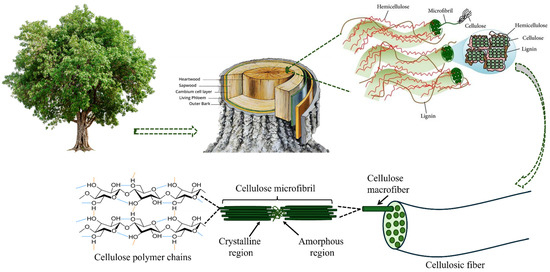
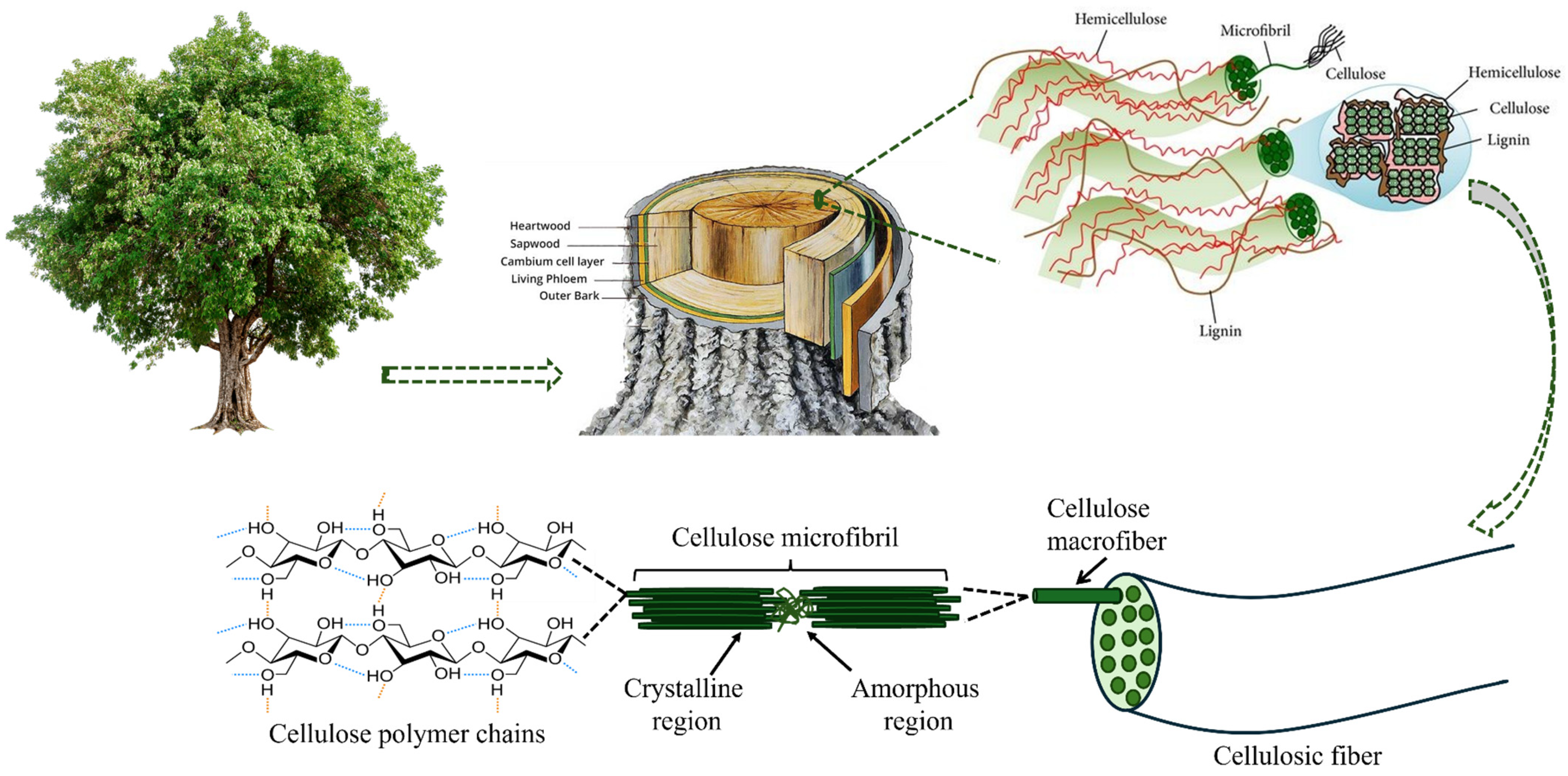
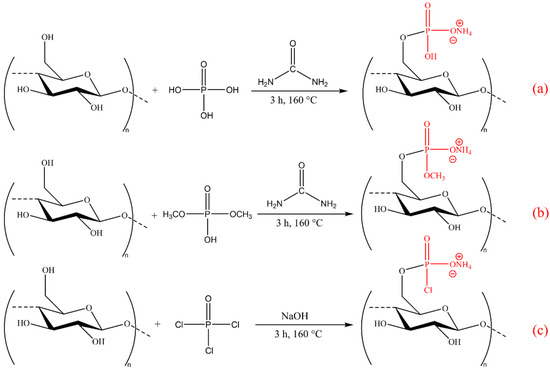
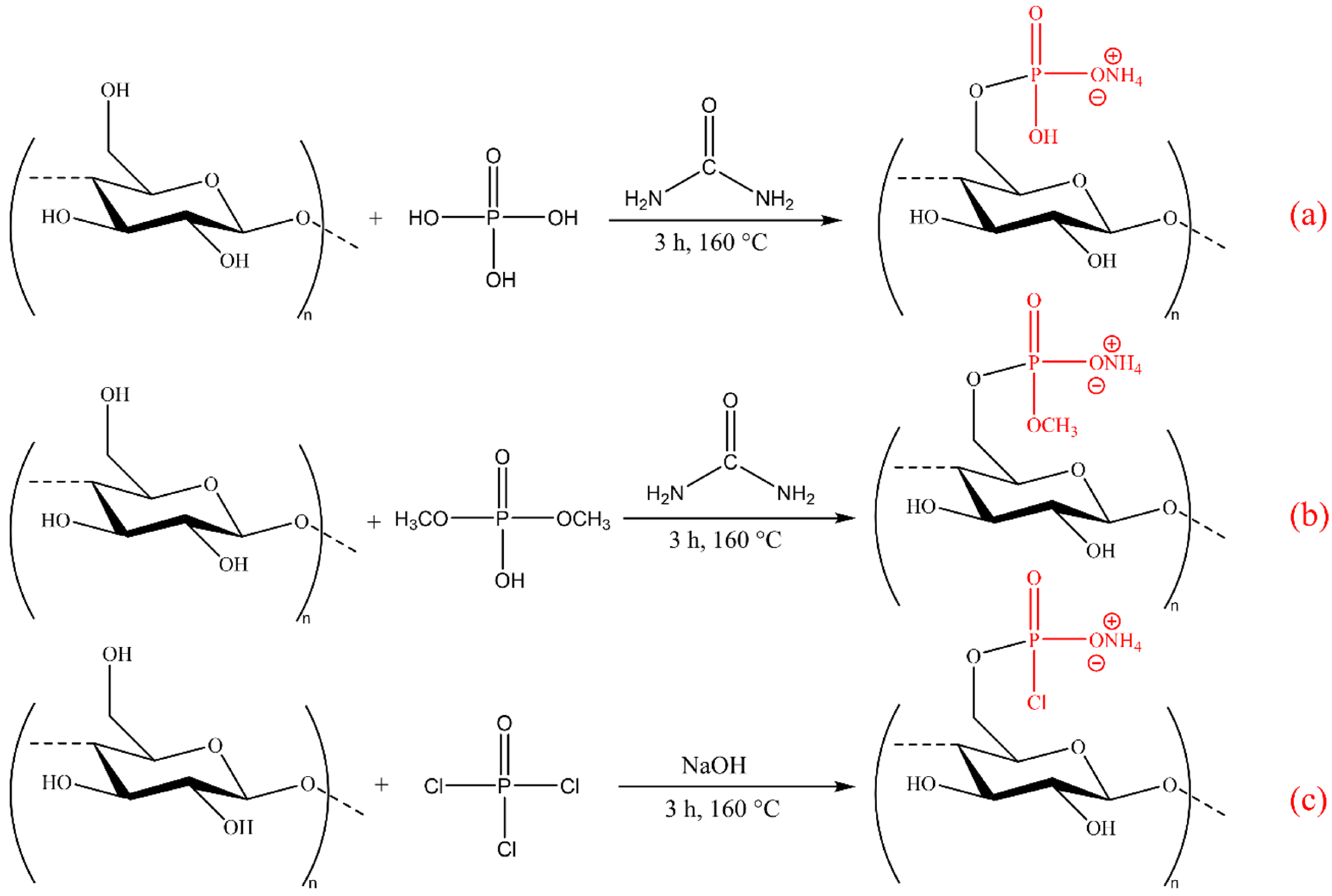
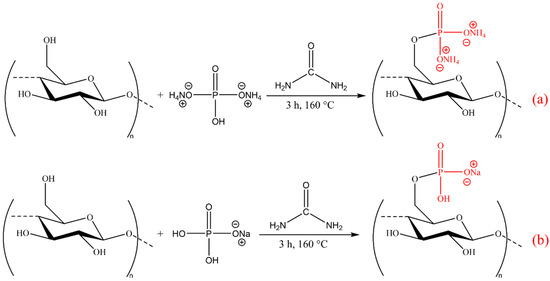
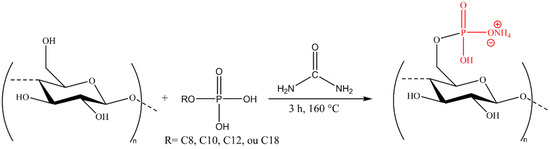
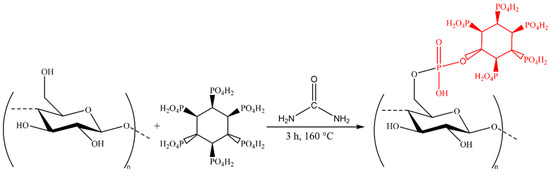
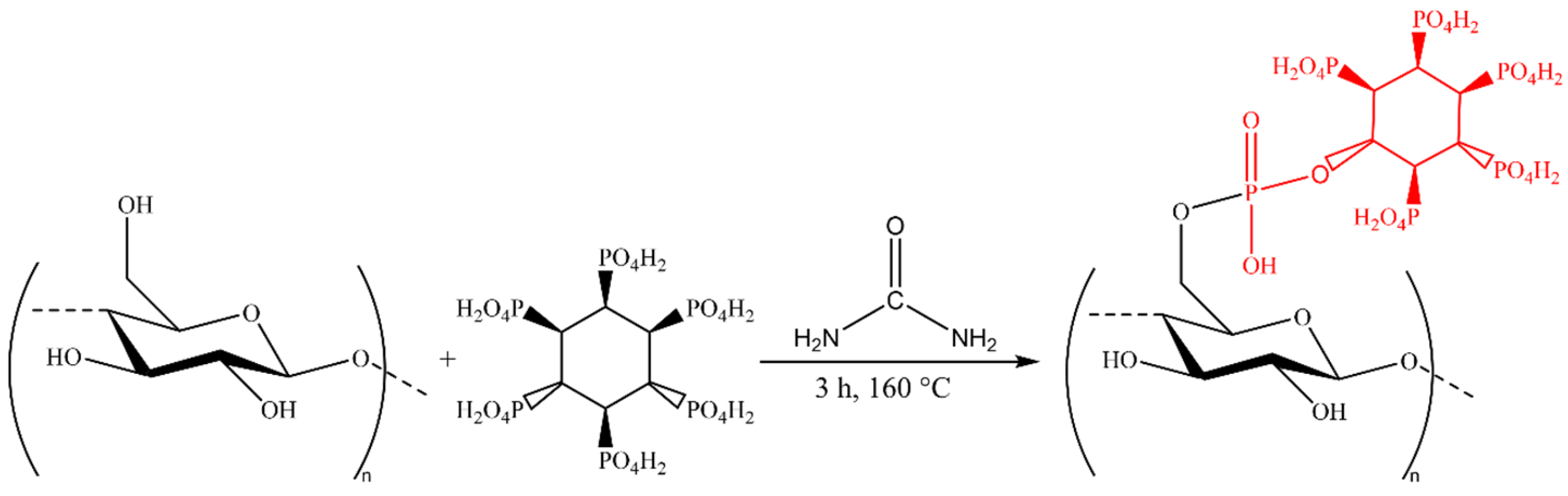
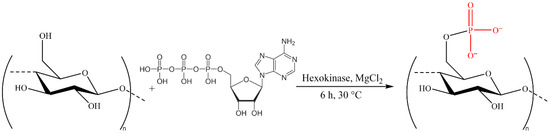
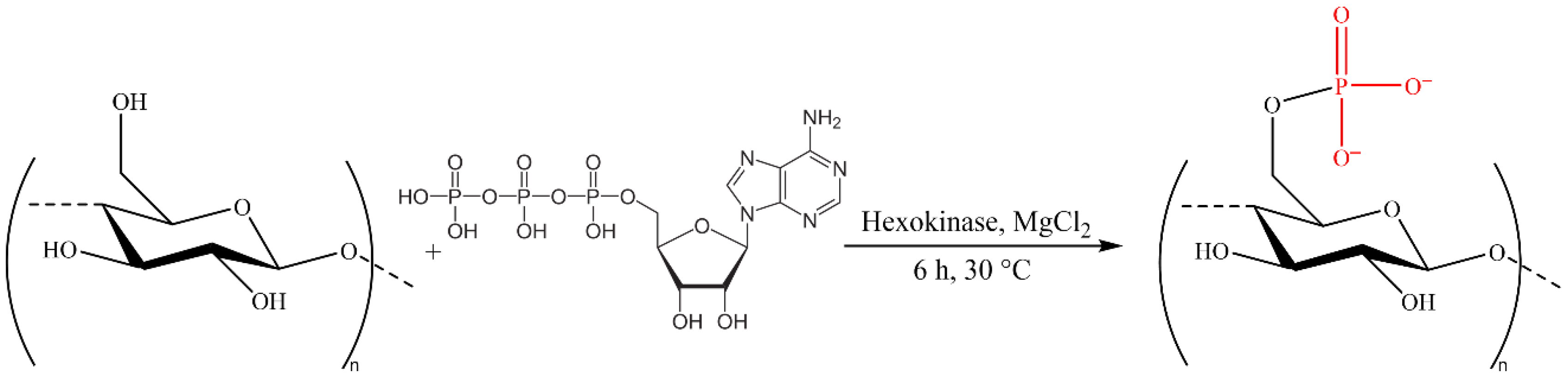
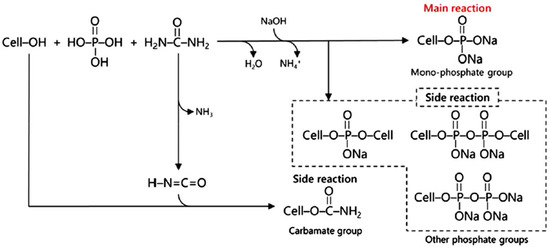
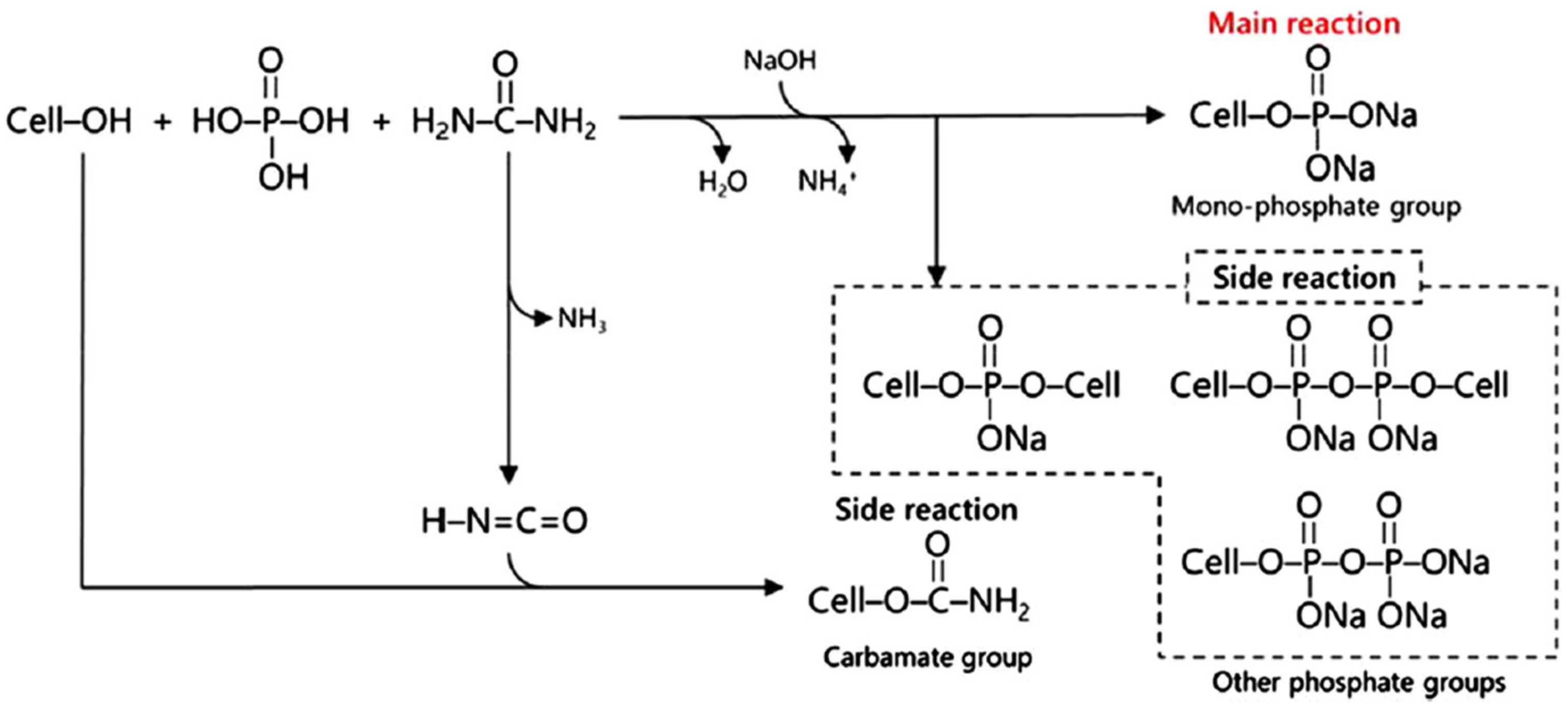


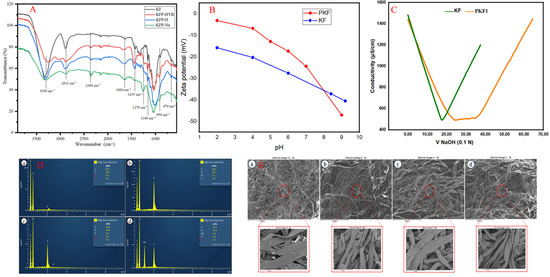
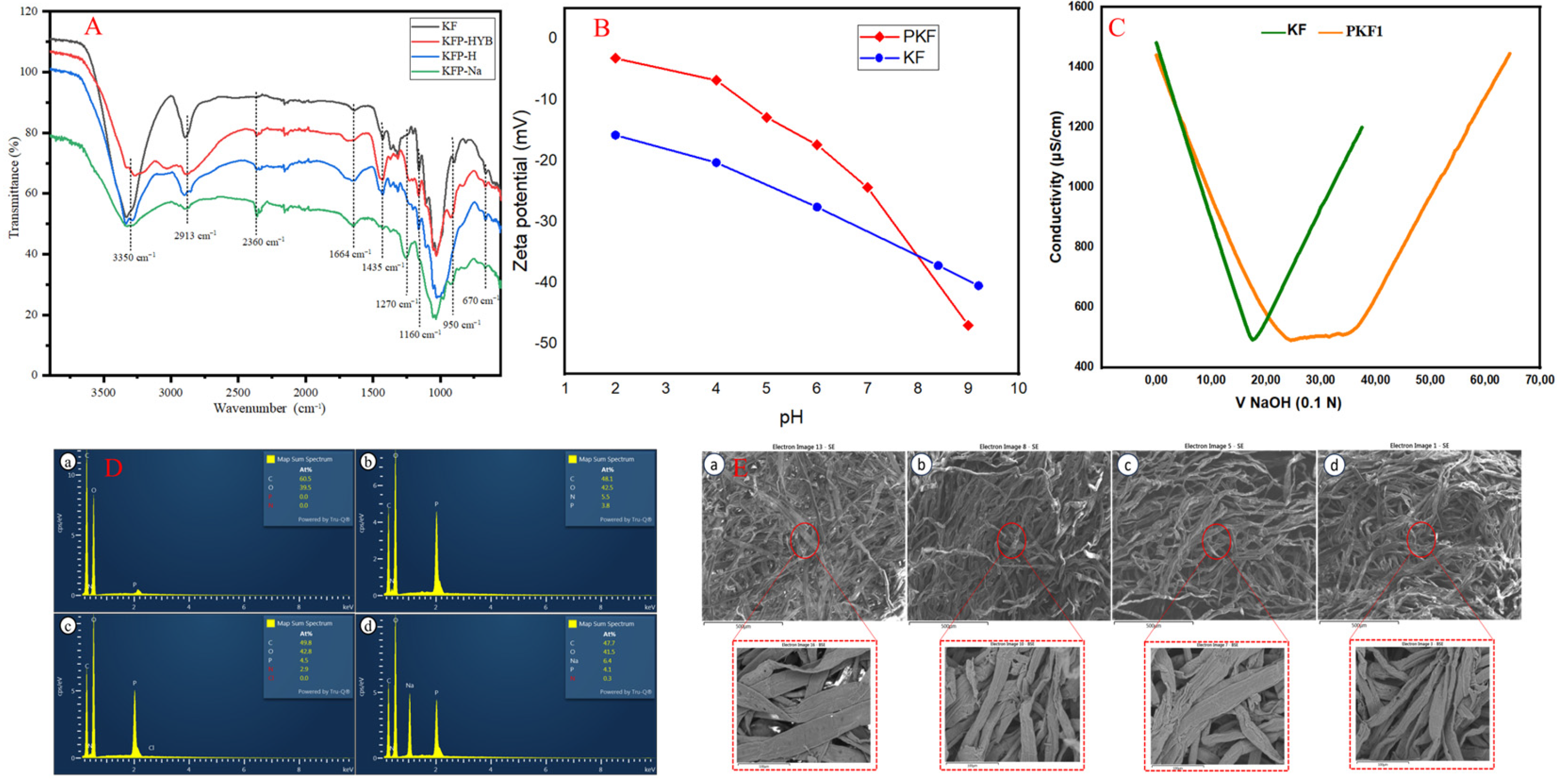
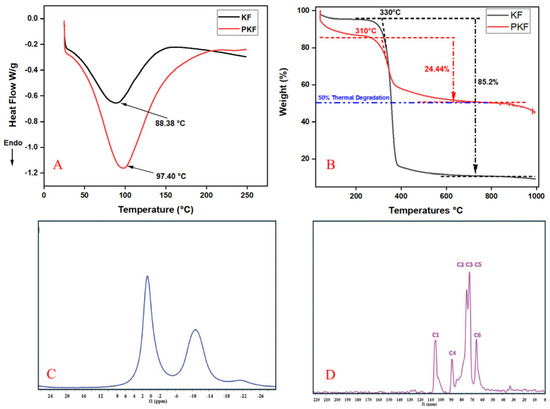
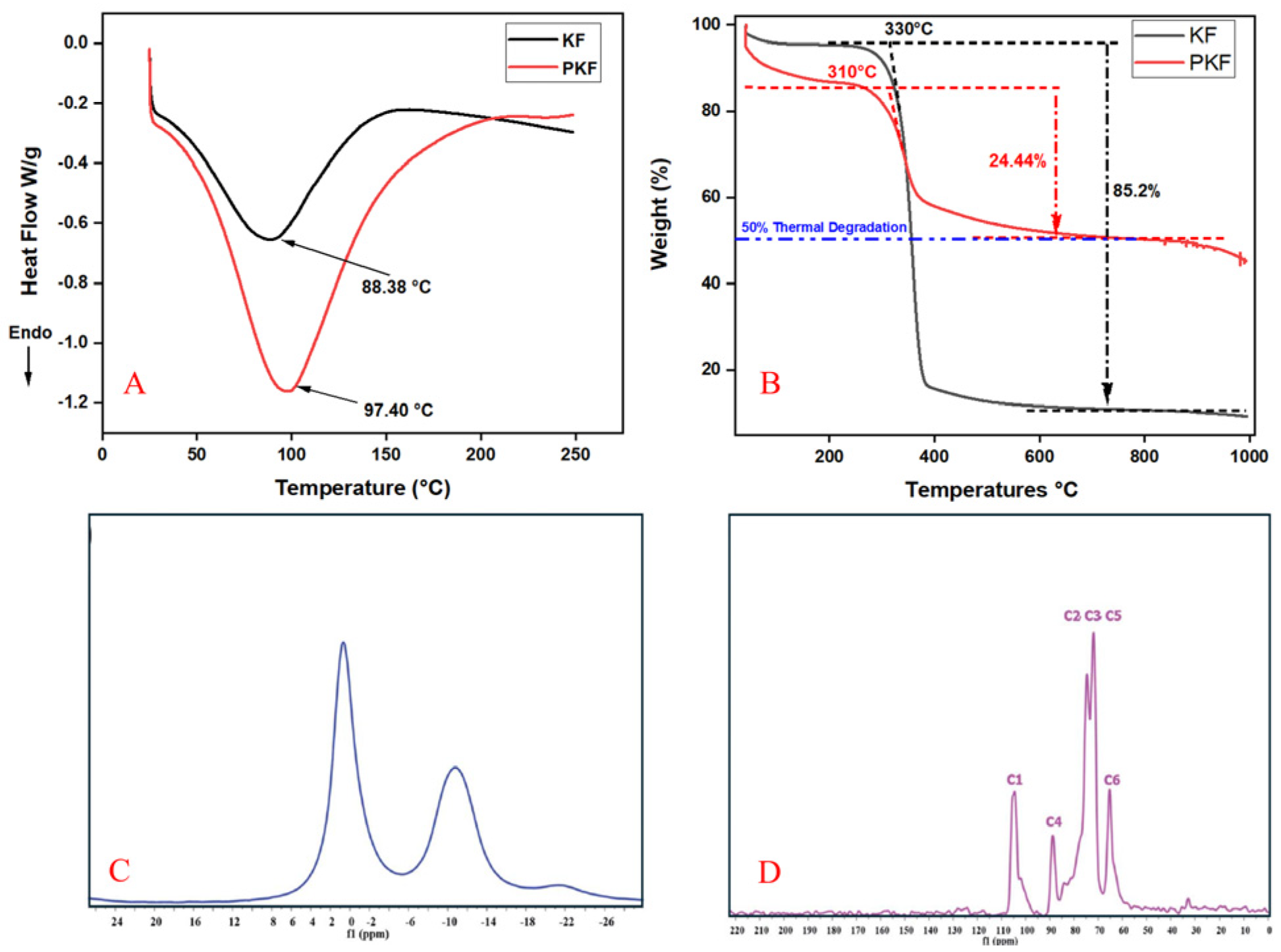
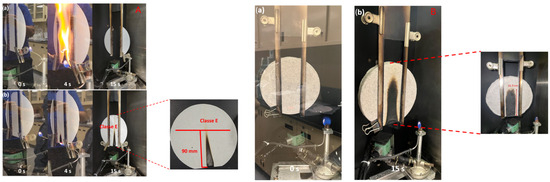
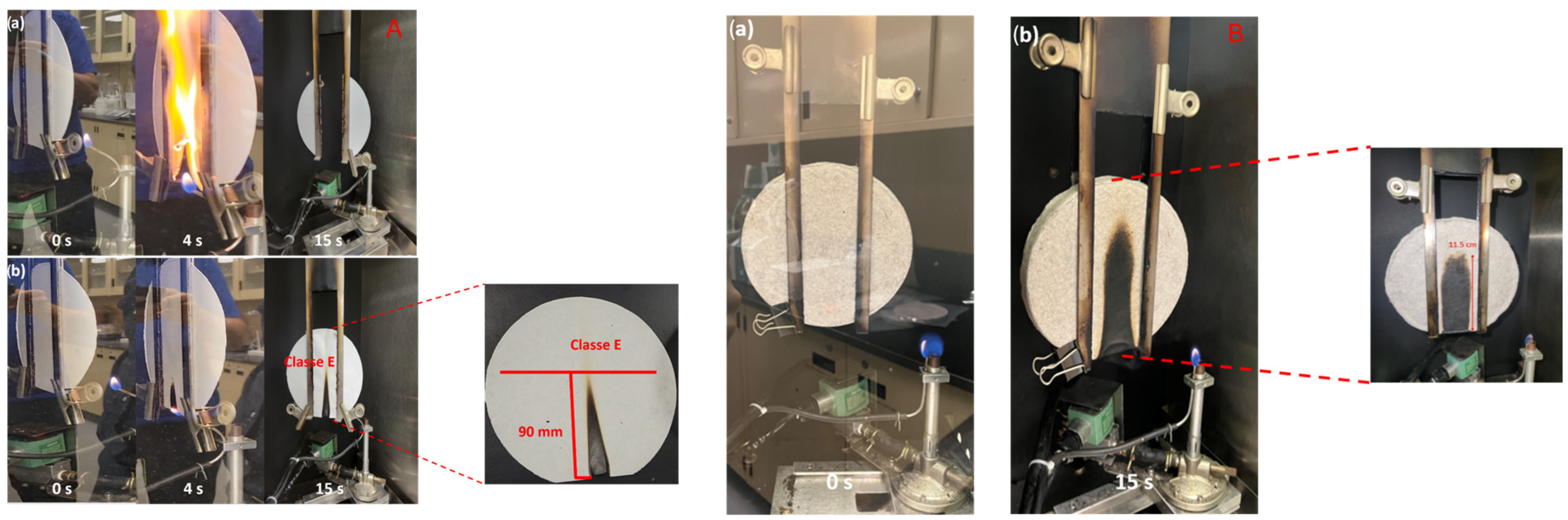

Disclaimer/Publisher’s Note: The statements, opinions and data contained in all publications are solely those of the individual author(s) and contributor(s) and not of MDPI and/or the editor(s). MDPI and/or the editor(s) disclaim responsibility for any injury to people or property resulting from any ideas, methods, instructions or products referred to in the content. |
© 2026 by the authors. Licensee MDPI, Basel, Switzerland. This article is an open access article distributed under the terms and conditions of the Creative Commons Attribution (CC BY) license.