


Abstract
Polyester resin biocomposites containing biochar have attracted attention for improving mechanical strength and thermal stability while promoting sustainability. The pyrolysis temperature of biochar and its proportion in the polymer matrix are key factors affecting biocomposite performance. This study examined how biochar pyrolysis temperatures (400, 600, 800 °C) and incorporation levels (10, 20, 30 wt.%) influence the physical, chemical, mechanical, flammability, and morphological properties of polyester-based biocomposites. The samples were analyzed for density, water absorption, FTIR, XRD, flexural and tensile strength, ignition time, structural degradation, volumetric loss, and SEM microstructure. Biocomposites with 30 wt.% biochar produced at 800 °C showed the best mechanical properties, with a flexural strength of 95.3 MPa and an elastic modulus of 4417.4 MPa, representing increases of 14.5% and 45.7%, respectively, over the control. FTIR and XRD results revealed decreased aliphatic groups and increased aromaticity at higher pyrolysis temperatures, improving interactions between the matrix and biochar. These biocomposites also demonstrated enhanced thermal stability, with an ignition time of approximately 963 s, delayed structural degradation, and reduced volumetric loss (~19.3%). Overall, pyrolysis temperature and biochar content significantly influence the structural, mechanical, and thermal properties of polyester biocomposites, showing that biochar serves as a sustainable, performance-enhancing component in thermoset polymer matrices.
1. Introduction
The decarbonization of resource-intensive production chains requires technological alternatives that maintain high technical performance while reducing dependence on non-renewable inputs [1,2]. In this context, efficient use of natural resources and eco-innovation have been identified as key strategies for mitigating environmental impacts while promoting economic development [1,3]. Among emerging solutions, polymeric biocomposites have gained increasing attention as a promising technological pathway, as they enable the incorporation of renewable raw materials and the valorization of residues within frameworks associated with industrial symbiosis and circular economy principles [4,5,6,7]. Polymer composites are widely recognized for their high durability and mechanical performance resulting from the synergistic interaction between the polymeric matrix and the dispersed phase [8,9]. Among thermosetting matrices, polyester resin has received considerable attention in the development of composite materials due to its processing versatility, relatively low cost, broad commercial availability, and favorable properties, including good dimensional stability and chemical resistance under various service conditions [10,11].
Composites containing natural-origin materials as particulate fillers offer several advantages over synthetic materials, including lower density, renewable origin, wide availability, and potential cost reductions [11]. Among these materials, biochar produced through the pyrolysis of lignocellulosic biomass (≥300 °C under inert or oxygen-limited conditions) [12] has attracted increasing interest due to its favorable physicochemical properties, such as high carbon content, developed porous structure, and significant specific surface area [13] as well as its high structural stability [14,15]. Eucalyptus species, particularly Eucalyptus saligna, represent an especially relevant biomass source for biochar production because of their widespread industrial availability, rapid growth, high lignocellulosic yield, and established use in thermochemical conversion processes, making them highly suitable precursors for value-added carbon materials in composite applications [16,17]. However, the performance of biochar in polymer composites depends directly on its physical, chemical, and morphological properties, which are strongly influenced by pyrolysis conditions, particularly the process temperature [6,18,19]. In addition, the mass fraction of biochar incorporated into the polymer matrix plays a significant role in determining the final performance of the composite, as it can affect interfacial interactions, stress transfer efficiency, and, consequently, the mechanical properties of the material [7,20,21].
Although it is well established that pyrolysis temperature and composite formulation significantly affect the physicochemical and mechanical properties of biocomposites, these parameters have predominantly been examined in isolation, particularly in polyester-based thermoset systems. As a result, the synergistic relationship between biochar pyrolysis temperature and biochar loading, and its influence on filler structure, interfacial interactions, and composite performance, remains insufficiently understood. Since pyrolysis temperature governs the degree of carbonization and structural ordering of biochar, while filler loading directly affects dispersion, matrix adhesion, and stress transfer mechanisms, a combined assessment of these variables is critical for the rational design of optimized materials. The novelty of this work lies in the systematic investigation of the coupled effects of pyrolysis temperature and biochar loading within a unified experimental framework, linking biochar physicochemical evolution to the resulting structural and mechanical performance of polyester biocomposites. Therefore, this study aims to evaluate the influence of pyrolysis temperature and biochar loading on the physicochemical and structural properties of biochar, as well as on the mechanical behavior of polyester-based biocomposites, in order to identify the most favorable conditions for enhanced material performance.
2. Materials and Methods
2.1. Biochar Production and Biocomposite Fabrication
Wood from Eucalyptus saligna (10 years old) was used as the raw material for biochar production. The physicochemical properties of the biomass feedstock were previously characterized in detail in earlier studies [6,22]. Initially, the material was oven-dried at 103 ± 2 °C until a constant mass was reached to remove residual moisture. Then, the wood was milled and sieved to obtain a standardized particle size (0.841 mm) before the pyrolysis experiments. Pyrolysis was conducted in an electric muffle furnace (Quimis, Diadema, Brazil) equipped with a condensation system designed to collect the pyroligneous liquid. Temperature control was achieved using a programmable controller (Contemp, model C704, São Caetano do Sul, Brazil) connected to thermocouples placed along the pyrolysis reactor, ensuring accurate and stable heating conditions. The vapors produced during the process were condensed using a cooling system circulating water and ice. The experimental apparatus used has been employed in similar studies [23,24].
For each pyrolysis run, approximately 500 g of oven-dried wood were placed in a closed cylindrical metallic reactor (8 cm in diameter and 15 cm in length), which was positioned inside the muffle furnace. The process was conducted under a low-oxygen atmosphere without external inert gas injection. Starting from an initial temperature of 30 °C, the system was heated at a rate of 10 °C min−1 until reaching final temperatures of 400, 600, and 800 °C. Once the final temperature was reached, it was maintained for 2 h, followed by natural cooling to room temperature. After pyrolysis, the resulting biochar particles were ball-milled (Marconi, model MA-500, Piracicaba, Brazil) for 3 h at a ball-to-powder mass ratio of 10:1 and a rotation speed of 300 rpm to reduce and homogenize particle size. The material was then sieved through a 250-mesh sieve (0.056 mm) to ensure granulometric uniformity. The structural, chemical, and morphological characteristics of the biochars obtained at each pyrolysis temperature were previously reported and discussed in our earlier work [6,22].
The biocomposites were made using unsaturated polyester resin (UC 2120 AC PLUS, molecular weight Mn = 9 × 10³ g/mol) [25] and hardener 2154 (Redelease, São Paulo, Brazil) as the polymer matrix. Additionally, the system included butanox catalyst (M-50), styrene monomer solvent, and white silicone rubber (PS), all supplied by Redelease (São Paulo, Brazil). Biochar produced at final pyrolysis temperatures of 400, 600, and 800 °C was used as the reinforcing phase. To achieve even dispersion of the particles within the matrix, the mixture was mechanically stirred at 300 rpm for three minutes. Different biochar mass fractions (0, 10, 20, and 30 wt.%) were tested for each pyrolysis temperature. The formulation without biochar (0 wt.%) served as the control sample. After blending, the mixtures and the control were poured into silicone molds following the standard dimensions required for mechanical testing ASTM D7264 (ASTM, 2021) [26] and ASTM D-3039 [27]. The samples were then placed in a pressurized reactor at a steady pressure of 90 psi, maintained for 24 h to ensure the polyester resin was fully cured.
2.2. Characterization of Biocomposites
2.2.1. Density and Water Absorption Determination
The density of the biocomposites was measured using the liquid displacement method with a high-precision microbalance, according to ASTM D792 [28]. The water absorption test was performed following ASTM D570-98 [29]. The samples were individually submerged in distilled water and kept for 30 days until a constant mass was reached. During the test, the specimens were removed every three days, excess surface water was gently wiped off, and the samples were immediately weighed to track mass gain. The water absorption percentage was calculated based on the change in sample mass before and after immersion, expressed as the ratio of mass gain to the initial mass of the composite.
2.2.2. Chemical Characterization
The functional groups and chemical bonds present in the biocomposite samples were investigated using Fourier Transform Infrared Spectroscopy (FTIR) with a Bruker spectrometer (model Tensor 27, Bruker Optik GmbH, Ettlingen, Germany) equipped with an Attenuated Total Reflectance (ATR) accessory. The spectra were recorded in the range of 4000–600 cm−1 with 32 scans. The samples were also analyzed using a Rigaku diffractometer (MiniFlex 600, Rigaku Corporation, Tokyo, Japan) equipped with a copper tube operated at 40 mA and 45 kV. The scan was performed from 5° to 100° with a step size of 0.03° (2θ) at a scanning rate of 3°·min−1 to evaluate the crystalline structure of the specimens. The crystallinity index was calculated using the Segal method [30], based on the empirical equation presented in Equation (1):
where : crystallinity index; : maximum density of the principal peak with crystallographic plane 200, which refers to the fraction of crystalline cellulose in the material; : intensity at the minimum between the 110 and 200 peaks, about 18.5° that representes amorphous cellulose.
2.2.3. Mechanical Tests
The mechanical strength properties of the biocomposites were evaluated using a universal testing machine (model EMIC, São José dos Pinhais, Brazil). All samples were subjected to flexural and tensile tests, following ASTM D7264 (ASTM, 2021) [26] and ASTM D3039 [27], respectively. The crosshead displacement speeds were set at 1 mm·min−1 for the flexural tests and 3 mm·min−1 for the tensile tests. A set of seven identical specimens was used to calculate the average flexural and tensile strengths.
2.2.4. Flammability Behavior of the Composites
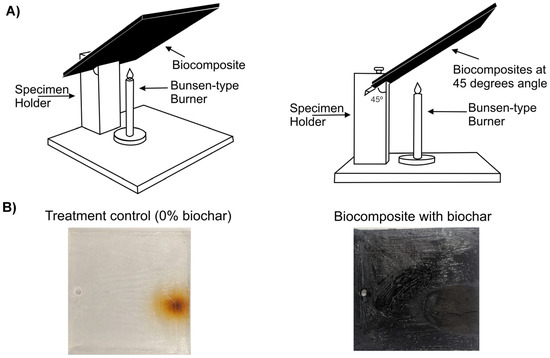
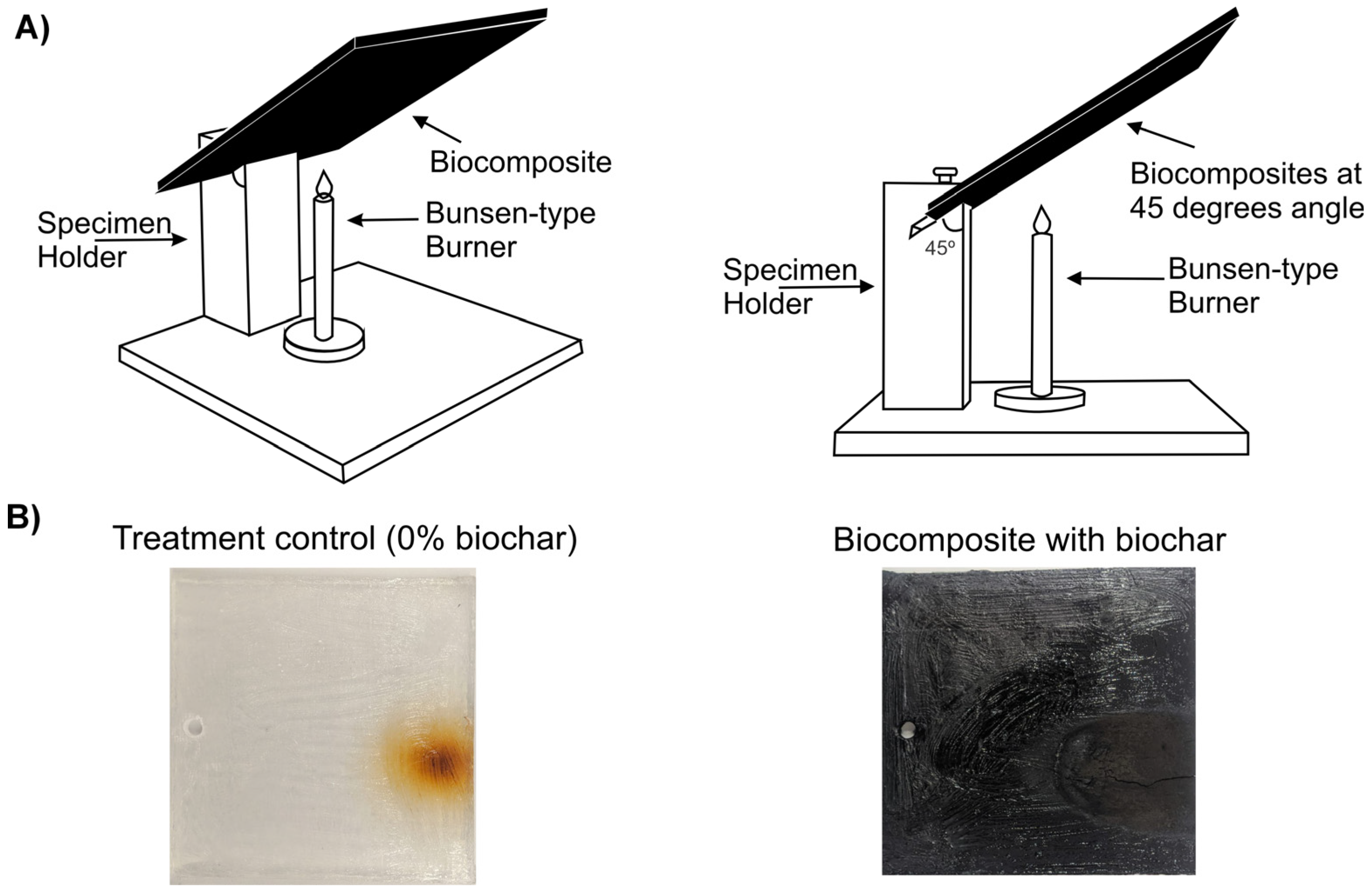
The fire resistance analysis was conducted in accordance with the procedures described by While et al. (1999) [31] and the principles of ASTM E119 [32], adapted for evaluating biocomposites. The biocomposite samples were positioned in an experimental apparatus at 45° inclinations and subjected to thermal exposure using a Bunsen-type flame. The specimens, measuring 150 mm in length, 130 mm in width, and approximately 9 mm in thickness, were secured to a support with a fastening screw, keeping the lower end approximately 27 mm from the flame. The schematic of the apparatus used is shown below, with the specimens positioned at a 45° angle to the Bunsen-type burner. This configuration allowed for controlled exposure to the flame, enabling the assessment of ignition timing and the onset of structural degradation. The experimental setup, as illustrated in Figure 1, demonstrates the key components of the apparatus, including the specimen holder and the Bunsen-type burner.
Figure 1.
(A) Fire resistance apparatus, adapted from While et al. (1999) [31]; (B) demonstration of the biocomposites after the fire resistance test.
The ignition time was determined using a stopwatch and recorded as the interval from the start of thermal exposure to the appearance of a visible flame in the region closest to the burner. The onset of structural degradation was defined as the moment when the first physical instability of the material was observed, characterized by deformation, cracking, or loss of surface integrity. Volumetric loss was determined by comparing the dimensions of the samples before and after the test, thereby quantifying the structural reduction resulting from thermal exposure.
2.2.5. Morphological Analysis
Scanning electron microscopy (SEM) was used to characterize the biocomposites morphologically. SEM analyses were performed on the fracture surfaces of specimens after tensile testing, specifically in the rupture region, to investigate the microstructural features associated with tensile failure. Biocomposite samples were previously mounted on metallic stubs with carbon tape and subsequently subjected to gold sputter coating on a Balzers Union metallization system (model SCD 030, Balzers Union AG, Liechtenstein). The analyses were performed using a JEOL microscope (model JSM-IT200, JEOL Ltd., Tokyo, Japan), operating at an accelerating voltage of 10 kV and a working distance of 10 mm to obtain the micrographs.
2.3. Experimental Design and Data Analysis
Data were collected in seven replicates and subjected to normality (Shapiro–Wilk) and homoscedasticity (Bartlett) tests. The analysis of variance (ANOVA) was performed using a completely randomized design in a 3 × 3 factorial arrangement, considering two predictor variables: biochar pyrolysis temperature (400, 600, and 800 °C) and biochar proportion (10, 20, and 30%). When significant differences were observed in the dependent variables, regression models were fitted to describe the data, and the model with the best predictive performance was selected based on coefficient significance and adjusted R2. Results are presented as contour plots, which provide an integrated visualization of response trends across the experimental domain and should be interpreted as interpolated trend representations rather than highly resolved response surfaces. All analyses were conducted at the 5% significance level. Additionally, dispersion measures based on the standard error were presented to aid interpretation of the confidence intervals for the evaluated variables.
3. Results
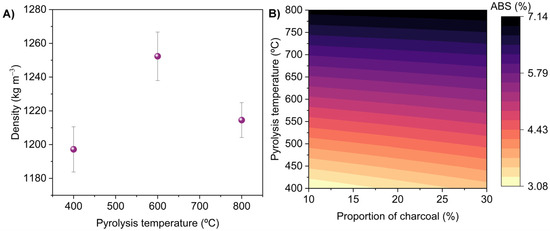
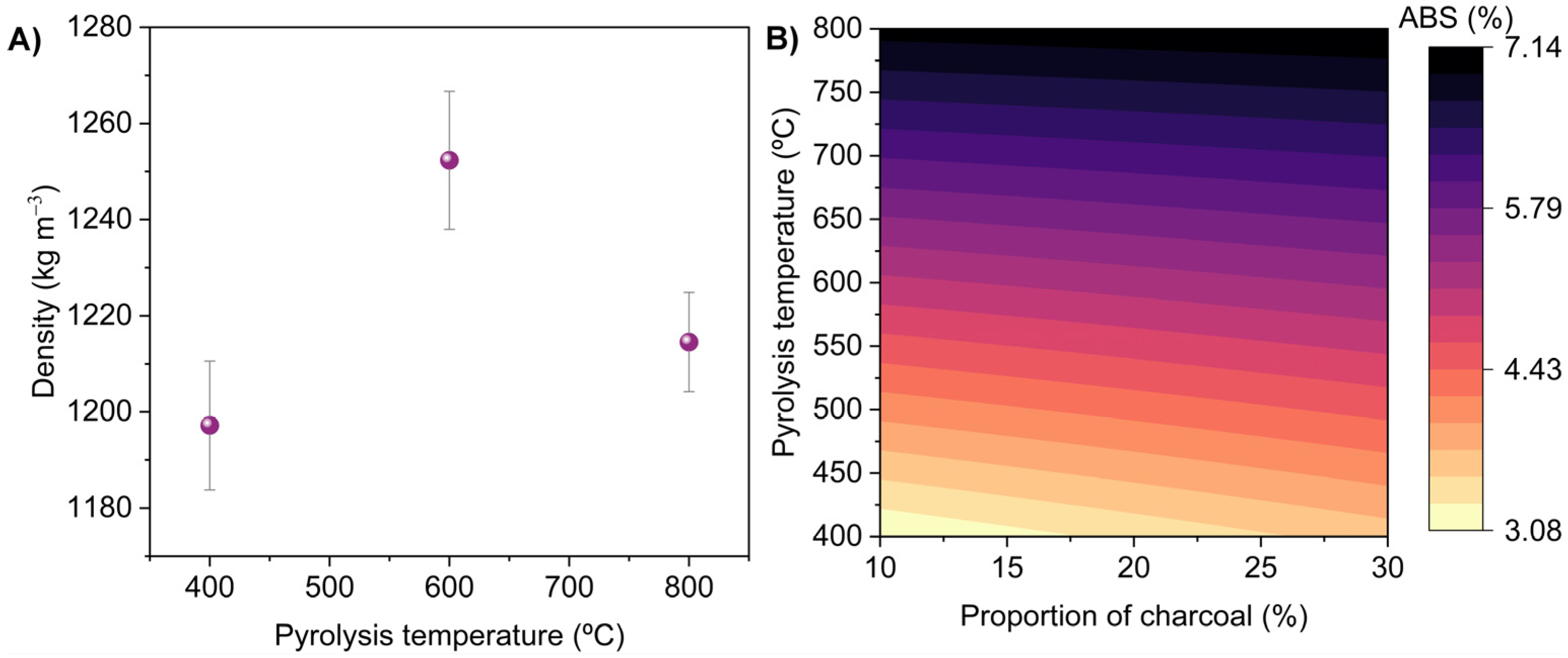
Figure 2 shows the density and water absorption capacity of the biochar-reinforced composites as a function of pyrolysis temperature and biochar proportion.
Figure 2.
(A) Density and (B) water absorption of biochar biocomposites at different pyrolysis temperatures and biochar proportions.
Figure 2A shows that the density of the biochar biocomposites (400 °C and 800 °C) is lower than that of the control treatment (1243.9 ± 0.02 kg m−3), which is composed solely of polyester resin, this behavior is associated with the lower density of biochar [33,34]. The density of the control composite (0% biochar) (Tables S1 and S2) was not influenced by biochar proportion, showing variation only as a function of pyrolysis temperature. This behavior is related to the physicochemical transformations occurring in biochar at higher temperatures, where devolatilization and condensation/aromatization reactions take place within the carbon matrix, accompanied by the release of volatile compounds (CO2, CO, and light hydrocarbons) and the formation of a more porous structure. These structural and surface-chemical changes influence particle packing and interfacial interactions with the polymeric matrix, which are reflected in the final density of the biocomposites. Composites with higher density are desirable because they generally exhibit better internal adhesion and lower porosity, characteristics that contribute to increased stiffness [35].
Figure 2B presents the water absorption behavior of the biocomposites, a property of practical relevance because it affects susceptibility to microbial attack and the dimensional stability of polymer composites containing biochar. The control composite exhibited a water absorption of 2.2% (±0.08). It can be observed that water absorption is significantly influenced by both biochar incorporation and pyrolysis temperature, with samples containing higher biochar proportions and produced at higher temperatures exhibiting greater water uptake. This behavior is associated with the structural and chemical characteristics of biochar, as pyrolysis-induced modifications alter its surface composition, including oxygen-containing functional groups and active sites that interact with water molecules [23,36]. Although higher temperatures may reduce the number of hydroxyl groups and, consequently, the intrinsic hydrophilicity of biochar, increased porosity favors the diffusion and retention of water within the biocomposite structure, thereby contributing to the higher moisture absorption observed [37,38]. A similar behavior was reported in another study when evaluating rice husk biochar produced at 600 °C as a bio-reinforcement in composites [38].
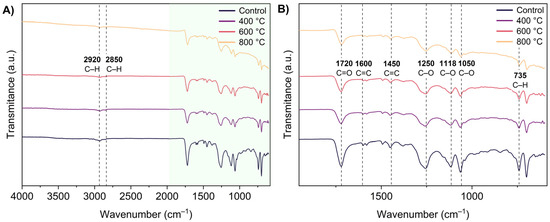
Fourier Transform Infrared Spectroscopy (FTIR) was used to identify functional groups in the control composite (0% biochar) and to evaluate chemical modifications resulting from incorporating biochar produced at different pyrolysis temperatures. The spectra recorded in the range of 4000–600 cm−1 are presented in Figure 3.
Figure 3.
(A) FTIR spectra of polyester matrix composites reinforced with biochar (30%) obtained at different pyrolysis temperatures; (B) magnified view of the 1800–800 cm−1 region to better visualize the changes induced by pyrolysis temperature.
The bands at 2920 and 2850 cm−1 are attributed to the C–H stretching vibrations of aliphatic chains, typical of the polyester matrix (Figure 3A) [39]. A gradual reduction in the intensity of these bands is observed as pyrolysis temperature increases, indicating a decrease in aliphatic groups and surface polarity of the biochar. This behavior is associated with the progression of the pyrolysis process, involving dehydrogenation and deoxygenation reactions that promote increased aromaticity and a higher degree of structural organization of the carbonaceous phase [39]. The reduction and, in some cases, disappearance of these C–H stretching vibrations indicate the structural evolution of biochar with increasing temperature, associated with the decomposition of aliphatic structures and the progressive aromatization of the carbon matrix during pyrolysis. The lower polarity of biochar produced at higher temperatures results from the reduction of oxygenated functional groups and the increased aromatization of the carbon matrix, which favors more stable interfacial interactions with the polymeric matrix and contributes to improved stress transfer in the biocomposites [38,40]. The intense band at approximately 1720 cm−1 corresponds to the stretching vibration of the carbonyl group (C=O) (Figure 3B), characteristic of the main chain of the polyester resin. The presence of this band in the control composite and its persistence after the incorporation of biochar suggest that the matrix’s chemical structure was preserved [41]. Studies using the same polymeric matrix have also reported a strong band in this region for unreinforced polyester, confirming that this vibration is inherent to the resin [42].
In this study, variations in the relative intensity of this band with increasing biochar content and higher pyrolysis temperatures suggest interfacial interactions between the oxygenated surface groups of the biochar and the carbonyl groups of the matrix, possibly through hydrogen bonding and dipole–dipole interactions [41]. The bands observed around 1600 and 1450 cm−1 are attributed to C=C stretching in aromatic structures [43]. An increase in intensity in this region is observed with increasing pyrolysis temperature, indicating a greater development of aromatic domains in the biochar. This result confirms the structural evolution of the reinforcement as the temperature rises, showing a higher degree of organization and stability in the carbonaceous phase [39,41,43]. In the region between 1250, 1118, and 1050 cm−1, the bands correspond to C–O stretching vibrations associated with ester, ether, and other oxygenated groups mainly present in the polymeric matrix [42]. The band observed between 770–730 cm−1 is linked to out-of-plane deformation of C–H bonds in aromatic structures or remaining aliphatic segments [44]. The analyzed functional groups, along with their respective peaks and molecular structures, are detailed in Table 1.
Table 1.
Infrared spectral bands and observed peaks with their corresponding vibrational assignments.
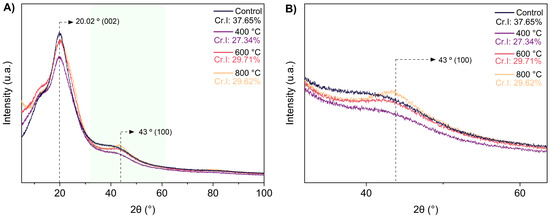
Figure 4 shows the X-ray diffractograms (XRD) of all biocomposite samples and the control.
Figure 4.
(A) X-ray diffractograms (XRD) of biochar composites (30%) produced at different pyrolysis temperatures; (B) magnified view of the 31–61° region to better visualize the changes induced by pyrolysis temperature.
The semi-crystalline nature of the thermosetting polyester matrix was clearly demonstrated by the diffraction peaks at 20.02°, corresponding to the 002 crystal plane, and at 43°, corresponding to the 100 plane (Figure 4A). As the pyrolysis temperature of the biochar used as reinforcement in the biocomposites increased, the intensity of both peaks decreased correspondingly, indicating degradation and transformation of the material’s crystalline structure [45]. Although analysis of the isolated biochar reveals significant structural changes with increasing temperature, including deoxygenation, aromatization, and increased porosity, incorporating these materials into the composite did not alter the crystalline structure of the thermosetting polyester, as evidenced by the maintenance of peak positions in FTIR [38] This suggests that in the composite, biochar primarily interacts physically and at the surface with the matrix, without altering the polymer network. This behavior is consistent with Zhang et al. (2020) [39], who observed a reduction in peak intensity as pyrolysis temperature increased in composites containing rice husk biochar and high-density polyethylene [38].
Furthermore, the increase in the peak intensity at 43° in samples containing biochar pyrolyzed at 800 °C (Figure 4B) indicates greater structural organization of the carbonized material. This peak is associated with the formation and ordering of aromatic carbon [46,47], and serves as an indicator of material crystallization [47,48]. Similar behavior has been reported in studies of biochar produced at pyrolysis temperatures ranging from 500 °C to 800 °C, where the formation of ordered carbon increased with temperature [47]. The highest crystallinity index (Figure 4A) was observed in the control biocomposites and in biocomposites with biochar produced at higher temperatures (600 °C and 800 °C), which is related to greater stiffness and structural stability. This supports the idea that a higher crystallinity index contributes to increased resistance to degradation and improved thermal stability, which are essential properties for biocomposites [49].
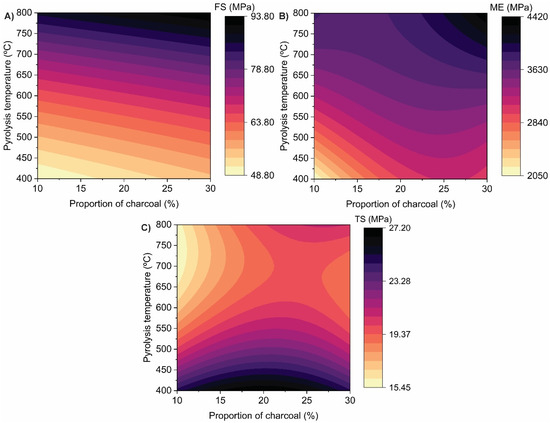
The ultimate strength, elastic modulus, and tensile strength of the composites without biochar (control treatment) were 83.2 (±0.27), 2399.7 (±231.07), and 51.6 (±0.71) MPa, respectively (Table S1). The behavior of the biocomposites strength as a function of biochar pyrolysis temperature and reinforcement proportion is shown in Figure 5.
Figure 5.
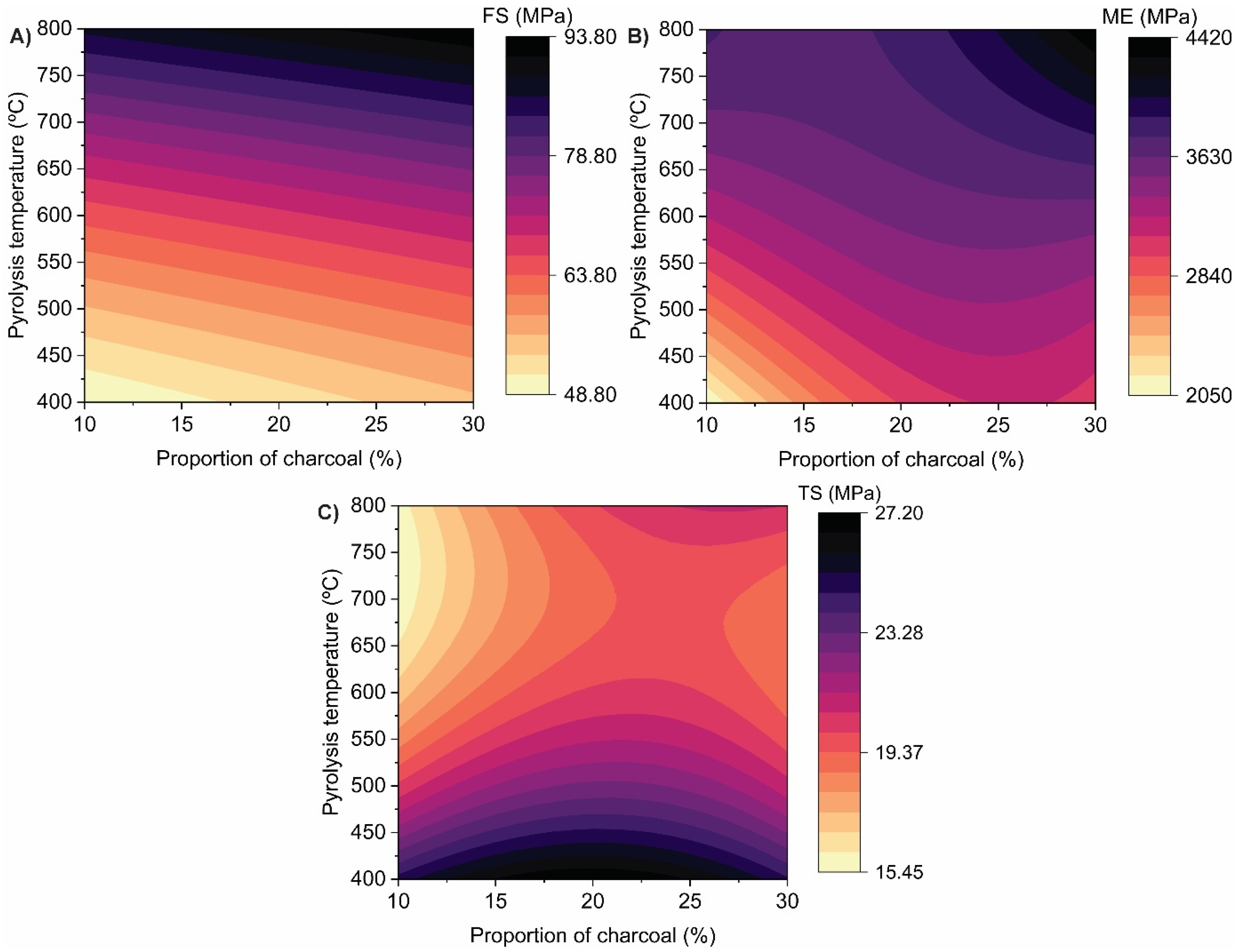
Flexural analysis of biocomposites produced using biochar at different pyrolysis temperatures and proportions as reinforcement, showing (A) flexural strength (FS), (B) elastic modulus (EM), and (C) tensile strength (TS). Contour maps represent interpolated response trends across the evaluated experimental domain.
The incorporation of biochar and changes in pyrolysis temperature significantly affected the flexural strength of the biocomposites. For the material produced at 400 °C, considering all biochar proportions, the average flexural strength was 52.2 ± 0.46 MPa. A steady increase in this property was observed with higher pyrolysis temperatures, reaching peak values at 800 °C (Figure 5A). Under this condition, flexural strengths of 86.0 MPa, 89.6 MPa, and 95.3 MPa were recorded for 10%, 20%, and 30% biochar fractions, respectively. Compared to the control treatment (83.2 ± 0.27 MPa), the composite containing 30% biochar produced at 800 °C showed an approximately 14.5% increase in flexural strength. These results suggest that the higher aromaticity and structural ordering of biochar at elevated pyrolysis temperatures increase its stiffness and load-bearing capacity, which is particularly beneficial under flexural loading, where combined tensile, compressive, and shear stresses act simultaneously. Polylactic acid-based (PLA) biocomposites reinforced with coconut shell biochar produced at 800 °C showed a flexural strength of 52 MPa for 10% reinforcement [50]. In the present study, composites with the same biochar content reached 86.0 MPa; however, direct comparison between these results is limited by differences in the polymer matrices (PLA versus polyester resin), since matrix type significantly influences mechanical behavior and matrix–filler interfacial interactions. Additionally, variations in biomass precursor composition may affect biochar structure and, consequently, its reinforcing efficiency in the composite system. These factors affect the interfacial interaction with the polymer matrix and, consequently, the mechanical performance of the composite [38,51,52].
The elastic modulus (Figure 5B) increased steadily with biochar content, following a pattern like that of flexural strength. The 30% fraction displayed the highest value across all tested temperatures. Compared to the control (0% biochar), composites with 30% reinforcement showed increases of 21.19% (400–3044.1 MPa), 31.95% (600–3526.2 MPa), and 45.67% (800–4417.4 MPa). The better performance seen in the composite with biochar pyrolyzed at 800 °C suggests that higher pyrolysis temperatures promote increased composite stiffness. Similar findings were found by other authors, who observed improvements in the mechanical properties of biocomposites reinforced with lignocellulosic waste subjected to pyrolysis [53]. However, in their study, the best results occurred at 600 °C, likely due to the type of biomass used and specific processing conditions of the biochar. These findings emphasize that the mechanical performance of biocomposites depends not only on pyrolysis temperature but also on the inherent properties of the biomass and the processing methods employed. FTIR analyses (Figure 3) revealed that higher temperatures decrease aliphatic and oxygenated groups while increasing aromaticity, while XRD analyses (Figure 4) indicated greater biochar crystallinity. These structural changes enhance reinforcement stability and interaction with the polyester matrix, leading to biocomposites with biochar obtained at 800 °C showing the highest flexural strength values (Figure 5), demonstrating that a higher degree of carbonization improves stress transfer efficiency.
Contrary to the behavior seen for flexural strength, tensile strength decreased as the pyrolysis temperature of the biochar used as reinforcement increased. For tensile strength (Figure 5C), the highest values for biocomposites pyrolyzed at 400 °C and 600 °C were observed at the 20% fraction, with values of 28.0 ± 0.88 MPa and 21.2 ± 1.44 MPa, respectively. However, both were still below the control treatment (51.6 ± 0.71 MPa). The composite with 30% biochar produced at 800 °C showed the highest tensile strength (22.5 ± 1.42 MPa), which represents a 5.7% increase over the composite reinforced with 30% biochar obtained at 600 °C (3526.20 ± 103.42 MPa). In tensile loading, unlike flexural loading, the applied stress is uniaxial and highly sensitive to localized defects such as particle agglomeration, voids, and interfacial discontinuities, which act as stress concentrators and promote premature crack initiation. Thus, even though higher pyrolysis temperatures improve biochar structural organization, these gains do not necessarily translate into proportional tensile strength increases if interfacial defects persist. Ho et al. (2015) [54], using bamboo biochar and a polylactic acid matrix, observed a similar trend, noting decreased tensile strength with increasing carbonization temperature due to inefficient interfacial interaction.
However, in the present study, the performance observed for biochar produced at 800 °C indicates that higher pyrolysis temperatures promote favorable structural modifications. The advanced carbonization process, involving dehydrogenation and deoxygenation reactions, results in increased aromaticity and a higher degree of organization of the carbonaceous phase [38], as shown in Figure 3. Therefore, the role of high-temperature biochar is distinct in each mechanical mode: it enhances stiffness and bending resistance under flexural stress, while tensile performance remains limited by defect-sensitive failure mechanisms at the matrix–biochar interface. Additionally, the results confirm that the biochar proportion is a key parameter for tensile performance, as highlighted in several studies [38,45,55,56,57], which emphasize the importance of the reinforcement fraction in optimizing the mechanical properties of polymer composites.
Figure 6 illustrates the fire resistance behavior of the composites.
Figure 6.
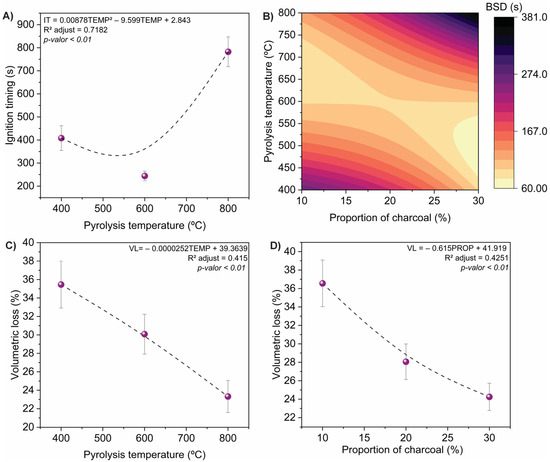
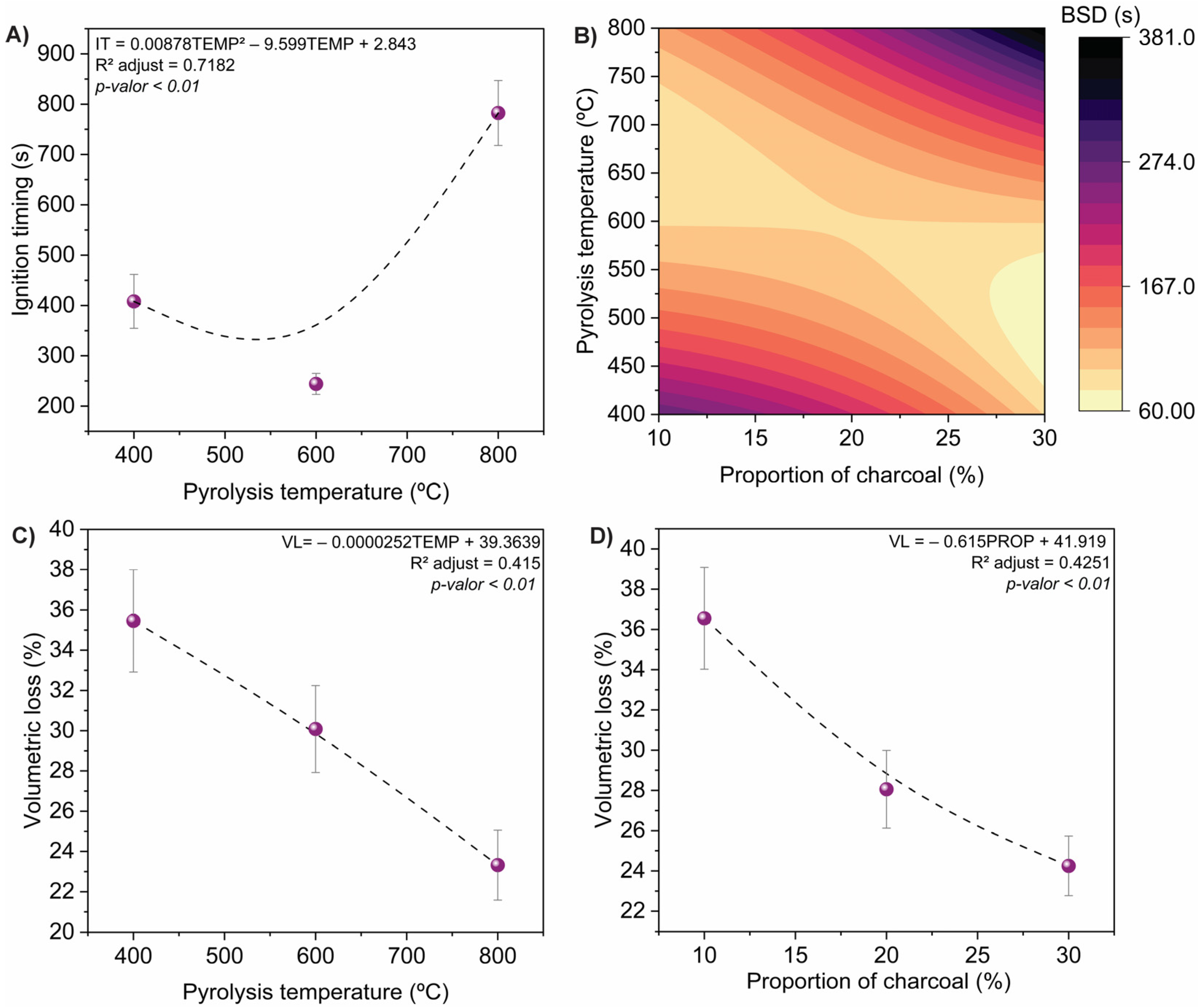
Fire resistance behavior of the biocomposites, showing (A) ignition time, (B) onset of structural degradation, and (C,D) volumetric loss at different pyrolysis temperatures and biochar proportions.
Both the ignition time (IT) and the onset of structural degradation (BSD) of the biochar-reinforced biocomposites were improved relative to the control composite (Tables S1 and S2). The composite containing 30% biochar produced at 800 °C exhibited an ignition time of 860 s, higher than that of the control, indicating greater thermal stability. This effect is illustrated in Figure 6A, where pyrolysis temperature was the only significant variable affecting IT, while biochar proportion showed no direct effect. The onset of structural degradation (BSD) was significantly influenced by both pyrolysis temperature and reinforcement content. The composite with 30% biochar at 800 °C exhibited a BSD delayed by 358 s compared to the control, as shown in Figure 6B and Tables S1 and S2. The increase in IT and BSD with higher pyrolysis temperatures and biochar fractions can be explained by the reduction in volatile components in the carbonized material, as observed in previous studies [6,22]. Composites containing biochar with lower volatile content exhibit higher thermal stability because volatiles accelerate combustion and shorten the time to ignition [6,58]. The enhanced thermal stability observed in composites produced at higher pyrolysis temperatures reflects profound chemical and structural modifications, including reduced volatile content, increased aromaticity, and decreased oxygenated groups [22,59,60,61]. Analysis of volumetric loss (VL) showed that both pyrolysis temperature and biochar content significantly affected the biocomposites, with no interaction between these variables (Figure 6C,D). Increasing the pyrolysis temperature reduced VL from approximately 35% at 400 °C to 23% at 800 °C (Figure 6C), and higher biochar fractions also decreased VL (Figure 6D), with the lowest value observed at 30% reinforcement.
These results indicate that composites with higher biochar content and produced at higher temperatures exhibit greater structural stability, consistent with the findings for IT, BSD, and VL. Structural degradation resistance (Figure 6B) increases with biochar content and pyrolysis temperature, suggesting that high-temperature particles enhance the physical barrier against heat propagation, delaying matrix degradation. The higher density and aromaticity of biochar at elevated temperatures reinforce the matrix, improve heat transfer, slow crack propagation, and minimize volumetric degradation [5,62,63]. Thus, biocomposites with biochar produced at higher temperatures and at appropriate proportions can offer greater thermal safety, durability, and resistance to degradation.
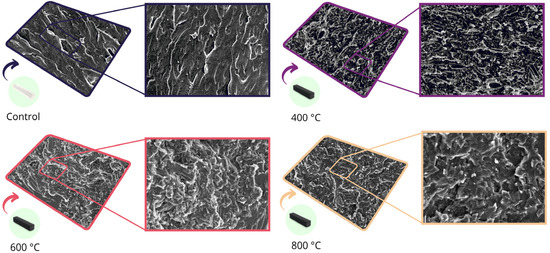
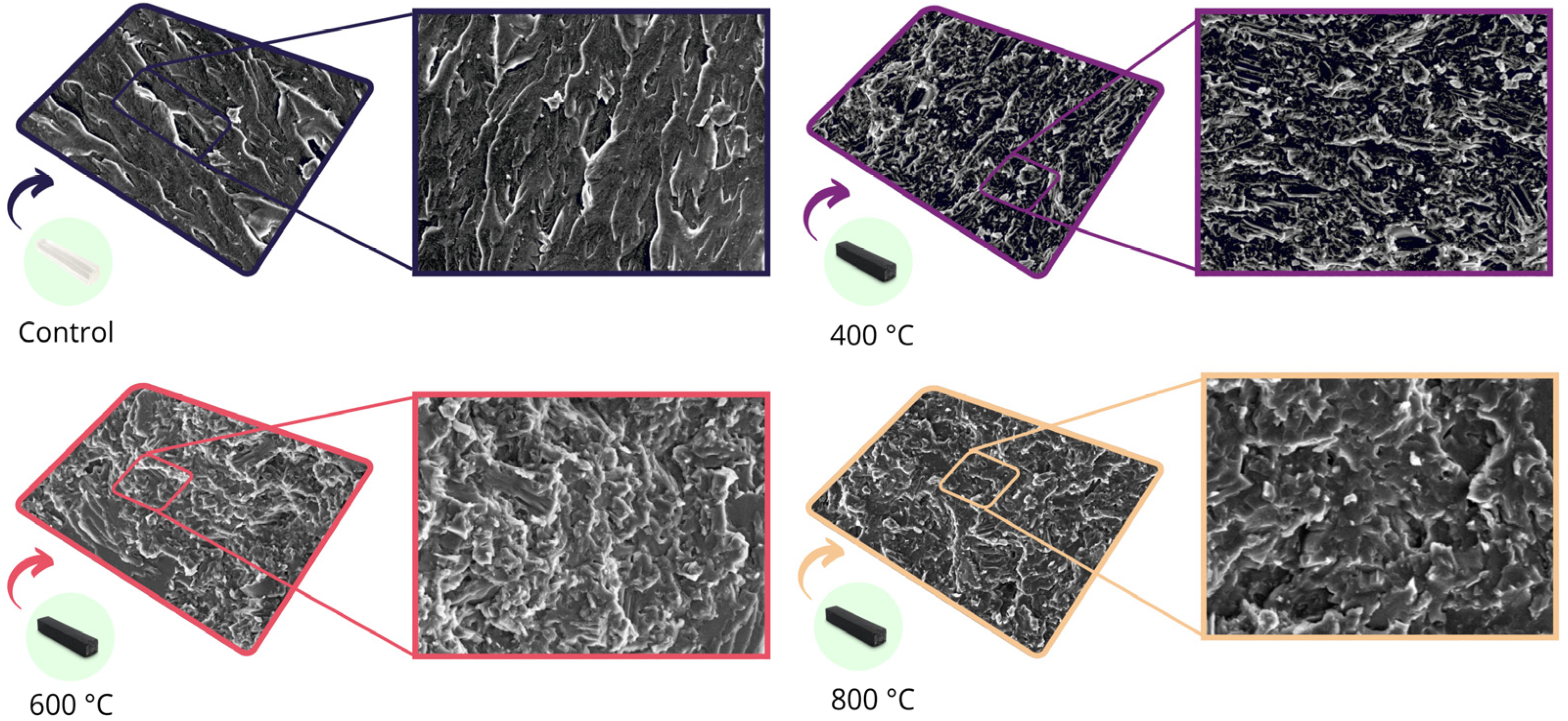
Figure 7 presents the microstructure of the flexural fracture surfaces of the biocomposites.
Figure 7.
SEM images of the flexural fracture surfaces of the control biocomposite (0% biochar) and biocomposites reinforced with biochar produced at different pyrolysis temperatures.
The SEM micrographs of the control treatment show a mostly smooth surface with irregular cracks typical of brittle fracture [50]. When biochar produced at 400 °C is added, there is an increase in cracks, surface roughness, and interfacial discontinuities. The presence of fissures and debonded regions indicates limited interfacial interaction and weaker physical/mechanical bonding between the matrix and reinforcement. This behavior aligns with the lower mechanical strength observed under these conditions [2,38,50,64]. Crack formation and growth serve as indicators of interfacial adhesion quality, as discussed [53,65], who linked higher crack density to reduced composite mechanical performance. As the pyrolysis temperature rises to 600 °C, the direction of crack propagation changes, showing a typical crack deflection mechanism often reported in composite materials. In this process, fine reinforcement particles act as physical barriers to crack growth, diverting their path and increasing the fracture length, which raises the energy needed for failure. This effect directly enhances the composite’s mechanical strength. Additionally, surface roughness and undulations suggest good dispersion of biochar within the matrix, with no significant particle clumping. For biochar produced at 800 °C, the microstructure reveals a more stable matrix–reinforcement interface and fewer critical cracks, consistent with the previously noted increase in flexural strength.
The decreased crack propagation in composites containing biochar produced at higher temperatures indicates more effective stress transfer and increased interfacial shear resistance. This behavior may be linked to the higher hydrophobicity of the biochar with advanced carbonization, improving compatibility with the polyester resin, as discussed by Delatorre et al. (2022) [6]. The microstructural improvement seen in samples produced at higher temperatures may also be related to the crystallinity index of the biocomposites. As shown earlier, XRD results (Figure 4) reveal that the control treatment (37.65%) and samples containing biochar produced at 600 °C (29.71%) and 800 °C (29.62%) show higher crystallinity than the biocomposite with biochar made at 400 °C (27.34%). Greater crystallinity is linked to better structural organization of both the polymeric and carbonaceous phases, which could improve stiffness and dimensional stability [49]. This trait contributes to the reduced crack propagation seen in the micrographs and supports a more stable matrix–reinforcement interface.
4. Practical Applications, Perspectives, and Future Challenges
Biochar, a renewable material made through the pyrolysis of lignocellulosic biomass, has become a promising reinforcement filler in biocomposites because of its availability and adjustable production parameters. Its addition to polymer matrices, especially widely used thermosetting systems, provides two main benefits: reducing reliance on fossil-based inputs and improving functional performance for industrial uses, such as construction, automotive, and packaging sectors. Biochar-based biocomposites not only meet the increasing demand for sustainable materials but also support the broader goals of the United Nations Sustainable Development Goals (SDGs), such as SDG 9 (Industry, Innovation, and Infrastructure), SDG 12 (Responsible Consumption and Production), and SDG 13 (Climate Action).
Despite these benefits, applying biochar on an industrial scale presents specific scientific and technological challenges. A major issue is its inherent variability: differences in the source lignocellulosic biomass and pyrolysis conditions directly affect volatile content, functional groups, porosity, and overall structure. These traits, in turn, influence surface energy, resin wettability, and the quality of the matrix–reinforcement interface, all of which are crucial for mechanical performance. As a result, successful implementation requires ongoing research and development, along with production systems capable of controlling pyrolysis parameters, managing gaseous emissions, and valorizing by-products key factors for sustainable biochar production.
Future research should focus on detailed structural analysis of biochar, including how porosity and specific surface area affect the mechanical performance of biocomposites, to determine optimal combinations that enhance compatibility between thermosetting matrices and natural reinforcements. Simultaneously, establishing standardized specification criteria for biochar tailored to composite applications is crucial, ensuring performance consistency across batches and enabling scale-up for industrial use. Furthermore, incorporating life cycle assessments in various scenarios is vital to measure environmental benefits, recognizing that recycling thermosetting composites may need specific strategies.
5. Conclusions
The properties of thermosetting polyester-based biocomposites can be customized by adjusting the pyrolysis temperature of biochar and its concentration in the matrix. Raising the pyrolysis temperature induces structural changes in the biochar, such as higher aromatization, fewer oxygenated groups, and increased porosity, which improve the stability of the matrix–biochar interface. Adding biochar, especially at 800 °C and 30%, notably enhances flexural strength, elastic modulus, resistance to crack growth, ignition time, and delays the onset of structural breakdown, showing that biochar functions as a proactive component of the matrix. Besides boosting stress transfer and structural integrity, these findings suggest that biochar helps create more durable and thermally stable biocomposites with less risk of dimensional changes. From an environmental standpoint, using biochar produced from lignocellulosic biomass offers a way to valorize waste, decrease reliance on fossil-based materials, and potentially sequester carbon within the polymer, supporting the development of high-performance materials aligned with circular economy principles and climate change mitigation.
Supplementary Materials
The following supporting information can be downloaded at: https://www.mdpi.com/article/10.3390/fib14050049/s1, Table S1: Physical, chemical, mechanical, and thermal properties of the control composites; Table S2: Physical, chemical, mechanical, and thermal properties of biochar-reinforced biocomposites at different pyrolysis temperatures and biochar fractions.
Author Contributions
F.M.D.: conceptualization, methodology, formal analysis, investigation, resources, data curation, writing—original draft preparation, writing—review and editing. A.K.S.P.: software, validation, writing—original draft preparation, writing—review and editing, visualization. G.F.M.C.: writing—review and editing, visualization. Á.M.d.S.: software, validation, writing—review and editing. M.P.O. and D.G.: validation, formal analysis, writing—review and editing, D.S.: investigation, writing—original draft preparation, writing—review and editing, visualization, supervision. A.F.D.J.: conceptualization, methodology, validation, formal analysis, investigation, resources, writing—original draft preparation; writing—review and editing, visualization, supervision, project administration, funding acquisition. All authors have read and agreed to the published version of the manuscript.
Funding
This research received no external funding.
Data Availability Statement
The original contributions presented in this study are included in the article/Supplementary Materials. Further inquiries can be directed to the corresponding authors.
Acknowledgments
Acknowledgements this study was funded by the Coordenação de Aperfeiçoamento de Pessoal de Nível Superior (CAPES–Finance Code 001), Conselho Nacional de Desenvolvimento Científico e Tecnológico (CNPq—Chamada Universal No. 18/2021, Chamada Bolsa de Produtividade em Desenvolvimento Tecnológico e Extensão Inovadora No. 08/2022, Apoio a Projetos Internacionais de Pesquisa Científica, Tecnológica e de Inovação No. 14/2023, Conhecimento Brasil–Rede de Colaboração No. 22/2024, Apoio a Projetos Internacionais de Pesquisa Científica, Tecnológica e de Inovação No. 16/2024), Fundação de Amparo à Pesquisa e Inovação do Espírito Santo (FAPES–Chamada Universal No. 13/2025, FAPES Extensão Tecnológica No. 09/2024) and Sociedade de Amparo ao Desenvolvimento Tecnológico e Cultural (Sadtec, Brasil). We also thank the Grupo de Pesquisa em Bioenergia e Bioprodutos de Base Florestal, the Laboratório de Energia de Biomassa (LEB/UFES), the Laboratório Central Analítico II (CECENS/Ufes), and the Laboratório de Engenharia Química for their invaluable assistance in carrying out the various analyses required for this study.
Conflicts of Interest
Author Álison Moreira da Silva was employed by the company Tellus-Plant I Ltd.a. The remaining authors declare that the research was conducted in the absence of any commercial or financial relationships that could be construed as a potential conflict of interest.
References
- Li, S.; Afshan, S.; Mamadiyarov, Z.; Bashir, M.F. Renewable Energy Investments, Climate Mitigation Technologies, Productive Capacity and Fiscal Policy Challenges: Responsible Resource Production and Consumption Implications from Top-10 Resource Exporting Economies. J. Environ. Manag. 2026, 400, 128715. [Google Scholar] [CrossRef] [Scilit]
- Lu, C.; Wang, K. Natural Resource Conservation Outpaces and Climate Change: Roles of Reforestation, Mineral Extraction, and Natural Resources Depletion. Resour. Policy 2023, 86, 104159. [Google Scholar] [CrossRef] [Scilit]
- Wen, Y.; Zhang, S. Assessing the Impact of Resource Efficiency on Sustainable Development: Policies to Cope with Resource Scarcity in Chinese Provinces. Resour. Policy 2024, 90, 104754. [Google Scholar] [CrossRef] [Scilit]
- Akaluzia, R.O.; Edoziuno, F.O.; Adediran, A.A.; Odoni, B.U.; Edibo, S.; Olayanju, T.M.A. Evaluation of the Effect of Reinforcement Particle Sizes on the Impact and Hardness Properties of Hardwood Charcoal Particulate-Polyester Resin Composites. Mater. Today Proc. 2021, 38, 570–577. [Google Scholar] [CrossRef] [Scilit]
- Das, C.; Tamrakar, S.; Kiziltas, A.; Xie, X. Incorporation of Biochar to Improve Mechanical, Thermal and Electrical Properties of Polymer Composites. Polymers 2021, 13, 2663. [Google Scholar] [CrossRef] [Scilit] [PubMed]
- Delatorre, F.M.; Cupertino, G.F.M.; Oliveira, M.P.; da Silva Gomes, F.; Profeti, L.P.R.; Profeti, D.; Júnior, M.G.; de Azevedo, M.G.; Saloni, D.; Júnior, A.F.D. A Novel Approach to Charcoal Fine Waste: Sustainable Use as Filling of Polymeric Matrices. Polymers 2022, 14, 5525. [Google Scholar] [CrossRef] [Scilit]
- Zhang, Q.; Khan, M.U.; Lin, X.; Cai, H.; Lei, H. Temperature Varied Biochar as a Reinforcing Filler for High-Density Polyethylene Composites. Compos. Part B Eng. 2019, 175, 107151. [Google Scholar] [CrossRef] [Scilit]
- Singleton, A.C.N.; Baillie, C.A.; Beaumont, P.W.R.; Peijs, T. On the Mechanical Properties, Deformation and Fracture of a Natural Fibre/Recycled Polymer Composite. Compos. Part B Eng. 2003, 34, 519–526. [Google Scholar] [CrossRef] [Scilit]
- Suyambulingam, I.; Arockiasamy, F.S.; Divakaran, D.; Rangappa, S.M.; Siengchin, S. Introduction to Polymer Composites—Historical Aspects and Building Blocks. In Sustainable Fillers/Plasticizers for Polymer Composites; Elsevier: Amsterdam, The Netherlands, 2025; pp. 1–25. [Google Scholar]
- Deshmukh, G.S.; Palanisamy, S.; Mubarak, S. Polyester Fiber: Composites and It’s Applications. In Synthetic and Mineral Fibers, Their Composites and Applications; Elsevier: Amsterdam, The Netherlands, 2024; pp. 251–268. [Google Scholar]
- Kolak, M.N. Utilization of Prangos ferulacea Waste Stems in Polymer Composites: Effects on Thermal Insulation and Mechanical Performance. J. Build. Eng. 2025, 108, 112914. [Google Scholar] [CrossRef] [Scilit]
- Arni, S. Al Thermochemical Hydrogen Production Routes from Biomass: Gasification, Reforming, and Pyrolysis. In Advances in Hydrotreating for Integrated Biofuel Production; Elsevier: Amsterdam, The Netherlands, 2024; pp. 347–369. [Google Scholar]
- Bartoli, M.; Giorcelli, M.; Jagdale, P.; Rovere, M.; Tagliaferro, A. A Review of Non-Soil Biochar Applications. Materials 2020, 13, 261. [Google Scholar] [CrossRef] [Scilit]
- Leng, L.; Huang, H.; Li, H.; Li, J.; Zhou, W. Biochar Stability Assessment Methods: A Review. Sci. Total Environ. 2019, 647, 210–222. [Google Scholar] [CrossRef] [Scilit]
- Tan, X.; Liu, S.; Liu, Y.; Gu, Y.; Zeng, G.; Hu, X.; Wang, X.; Liu, S.; Jiang, L. Biochar as Potential Sustainable Precursors for Activated Carbon Production: Multiple Applications in Environmental Protection and Energy Storage. Bioresour. Technol. 2017, 227, 359–372. [Google Scholar] [CrossRef] [Scilit]
- da Silveira, J.H.; Dorneles, R.H.T.; Sebben, V.H.A.; Gasparin, F.P.; da Silva, R.L.A. Characterization of Residual Biomass from the Harvest of Eucalyptus saligna for Thermal Conversion Processes. In Revista Eletrônica em Gestão, Educação e Tecnologia Ambiental (REGET); UFSM: Santa Maria, Brazil, 2020; pp. 1–24. [Google Scholar]
- Mesquita, M.d.S.; Tanabe, E.H.; Bertuol, D.A. Adsorption of Phenol Using Eucalyptus saligna Biochar Activated with NiCl2. Water Air Soil Pollut. 2024, 235, 311. [Google Scholar] [CrossRef] [Scilit]
- Pereira, A.K.S.; Júnior, D.L.; da Silva, Á.M.; de Souza, E.C.; Delatorre, F.M.; Rodrigues, B.P.; Júnior, A.F.D. Understanding the Impacts of Pyrolysis Temperature on the Energy Performance of Eucalyptus spp. Charcoal. Environ. Sci. Proc. 2021, 13, 25. [Google Scholar]
- Singh, J.; Roychand, R.; Al-Aghbari, A.-M.H.S.M.; Li, J.; Saberian, M.; Kilmartin-Lynch, S. Engineering Biochar-Enhanced Cementitious Materials: A Comprehensive Review of Production-Performance Relationships and Optimization Strategies for Sustainable Construction. J. Build. Eng. 2026, 120, 115404. [Google Scholar] [CrossRef] [Scilit]
- Ayrilmis, N.; Kwon, J.H.; Han, T.H.; Durmus, A. Effect of Wood-Derived Charcoal Content on Properties of Wood Plastic Composites. Mater. Res. 2015, 18, 654–659. [Google Scholar] [CrossRef] [Scilit]
- Dahal, R.K.; Acharya, B.; Saha, G.; Bissessur, R.; Dutta, A.; Farooque, A. Biochar as a Filler in Glassfiber Reinforced Composites: Experimental Study of Thermal and Mechanical Properties. Compos. Part B Eng. 2019, 175, 107169. [Google Scholar] [CrossRef] [Scilit]
- Delatorre, F.M.; Cupertino, G.F.M.; Pereira, A.K.S.; de Souza, E.C.; da Silva, Á.M.; Ucella Filho, J.G.M.; Saloni, D.; Profeti, L.P.R.; Profeti, D.; Dias Júnior, A.F. Photoluminous Response of Biocomposites Produced with Charcoal. Polymers 2023, 15, 3788. [Google Scholar] [CrossRef] [Scilit]
- Pereira, A.K.S.; Júnior, D.L.; da Silva, Á.M.; Cupertino, G.F.M.; de Souza, E.C.; Delatorre, F.M.; Ucella-Filho, J.G.M.; de Oliveira, P.R.S.; Rodrigues, B.P.; Dias Júnior, A.F. How Pyrolysis Conditions Shape the Structural and Functional Properties of Charcoal? A Study of Tropical Dry Forest Biomass. Renew. Energy 2025, 243, 122575. [Google Scholar] [CrossRef] [Scilit]
- Cupertino, G.F.M.; da Silva, Á.M.; Pereira, A.K.S.; Delatorre, F.M.; Ucella-Filho, J.G.M.; de Souza, E.C.; Profeti, D.; Profeti, L.P.R.; Oliveira, M.P.; Saloni, D.; et al. Co-Pyrolysis of Biomass and Polyethylene Terephthalate (PET) as an Alternative for Energy Production from Waste Valorization. Fuel 2024, 362, 130761. [Google Scholar] [CrossRef] [Scilit]
- Maradini, G.; Oliveira, M.; Guanaes, G.; Passamani, G.; Carreira, L.; Boschetti, W.; Monteiro, S.; Pereira, A.; de Oliveira, B. Characterization of Polyester Nanocomposites Reinforced with Conifer Fiber Cellulose Nanocrystals. Polymers 2020, 12, 2838. [Google Scholar] [CrossRef] [Scilit] [PubMed]
- ASTM D7264M-21; Standard Test Method for Flexural Properties of Polymer Matrix Composite Materials. ASTM International: West Conshohocken, PA, USA, 2021.
- ASTM D 3039-17; Standard Test Method for Tensile Properties of Polymer Matrix Composite Materials. ASTM International: West Conshohocken, PA, USA, 2017.
- ASTM D792; Standard Test Methods for Density and Specific Gravity (Relative Density) of Plastics by Displacement. ASTM International: West Conshohocken, PA, USA, 2013.
- ASTM D570-98; Standard Test Method for Water Absorption of Plastics. ASTM International: West Conshohocken, PA, USA, 2018.
- Segal, L.; Creely, J.J.; Martin, A.E.; Conrad, C.M. An Empirical Method for Estimating the Degree of Crystallinity of Native Cellulose Using the X-Ray Diffractometer. Text. Res. J. 1959, 29, 786–794. [Google Scholar] [CrossRef] [Scilit]
- White, R.H.; Dietenberger, M.A. Wood Handbook, Chapter 17: Fire Safety; Department of Agriculture, Forest Service, Forest Products Laboratory: Madison, WI, USA, 1999. [Google Scholar]
- ASTM E119-26; Standard Test Methods for Fire Tests of Building Construction and Materials. ASTM International: West Conshohocken, PA, USA, 2026.
- Sapuan, S.M.; Aulia, H.S.; Ilyas, R.A.; Atiqah, A.; Dele-Afolabi, T.T.; Nurazzi, M.N.; Supian, A.B.M.; Atikah, M.S.N. Mechanical Properties of Longitudinal Basalt/Woven-Glass-Fiber-Reinforced Unsaturated Polyester-Resin Hybrid Composites. Polymers 2020, 12, 2211. [Google Scholar] [CrossRef] [Scilit] [PubMed]
- de Oliveira, P.E.A.; Mendes, R.B.A.; da Costa, C.Y.M.; de Melo, R.R.; Pimenta, A.S.; de Oliveira, R.R.A.; de Souza, J.A.G. Mechanical characterization of a polyester matrix composite reinforced with natural fibers from Luffa cylindrica Hoen. Nativa 2021, 9, 558–562. [Google Scholar] [CrossRef] [Scilit]
- Nasi, A.; Ushe, K.; Dhoska, K.; Pramono, A. Correlations between Physical and Mechanical Properties of Composite Materials for Civil Structures: A Data-Supported Review. Mesopotamian J. Civ. Eng. 2025, 2025, 68–78. [Google Scholar] [CrossRef] [Scilit]
- Kumar, R.; Gunjal, J.; Chauhan, S. Effect of Carbonization Temperature on Properties of Natural Fiber and Charcoal Filled Hybrid Polymer Composite. Compos. Part B Eng. 2021, 217, 108846. [Google Scholar] [CrossRef] [Scilit]
- Pappu, A.; Pickering, K.L.; Thakur, V.K. Manufacturing and Characterization of Sustainable Hybrid Composites Using Sisal and Hemp Fibres as Reinforcement of Poly (Lactic Acid) via Injection Moulding. Ind. Crops Prod. 2019, 137, 260–269. [Google Scholar] [CrossRef] [Scilit]
- Zhang, Q.; Zhang, D.; Xu, H.; Lu, W.; Ren, X.; Cai, H.; Lei, H.; Huo, E.; Zhao, Y.; Qian, M.; et al. Biochar Filled High-Density Polyethylene Composites with Excellent Properties: Towards Maximizing the Utilization of Agricultural Wastes. Ind. Crops Prod. 2020, 146, 112185. [Google Scholar] [CrossRef] [Scilit]
- Zhang, Q.; Xu, H.; Lu, W.; Zhang, D.; Ren, X.; Yu, W.; Wu, J.; Zhou, L.; Han, X.; Yi, W.; et al. Properties Evaluation of Biochar/High-Density Polyethylene Composites: Emphasizing the Porous Structure of Biochar by Activation. Sci. Total Environ. 2020, 737, 139770. [Google Scholar] [CrossRef] [Scilit]
- Li, D.-C.; Jiang, H. The Thermochemical Conversion of Non-Lignocellulosic Biomass to Form Biochar: A Review on Characterizations and Mechanism Elucidation. Bioresour. Technol. 2017, 246, 57–68. [Google Scholar] [CrossRef] [Scilit]
- Nusyirwan, N.; Rispandi; Hendra, H.; Chu, C.-S. Flexural Performance of Unsaturated Polyester Composites Reinforced with Coconut Shell Charcoal Powder for Lightweight Structural Applications. J. Compos. Sci. 2026, 10, 80. [Google Scholar] [CrossRef] [Scilit]
- Edozíuno, F.; Akaluzia, R. Analytical Investigation of Microcrystalline Wood Charcoal Reinforced Polyester Composites Using ED-XRF, FTIR and SEM-EDS Techniques. Gazi Univ. J. Sci. 2024, 37, 44–52. [Google Scholar] [CrossRef] [Scilit]
- Bustamante-Ponce, G.; Molina-Balmaceda, A.; Triviño, J.J.; Rojas-Candia, V.; Tamayo, L.; Richter, P.; Arismendi, D. Synergistic and Sustainable Chitosan-Based Biochar Biocomposite for High-Performance Extraction of Carbamazepine and Its Metabolites from Environmental Waters. Carbohydr. Polym. 2026, 373, 124620. [Google Scholar] [CrossRef] [Scilit] [PubMed]
- Fenta, A.A.; Ali, A.N. Development of Biochar/HDPE Composites and Characterization of the Effects of Carbon Loadings on the Electromagnetic Shielding Properties. Heliyon 2024, 10, e24424. [Google Scholar] [CrossRef] [Scilit]
- Das, O.; Sarmah, A.K.; Bhattacharyya, D. A Novel Approach in Organic Waste Utilization through Biochar Addition in Wood/Polypropylene Composites. Waste Manag. 2015, 38, 132–140. [Google Scholar] [CrossRef] [Scilit]
- Keiluweit, M.; Nico, P.S.; Johnson, M.G.; Kleber, M. Dynamic Molecular Structure of Plant Biomass-Derived Black Carbon (Biochar). Environ. Sci. Technol. 2010, 44, 1247–1253. [Google Scholar] [CrossRef] [Scilit]
- Chatterjee, R.; Sajjadi, B.; Chen, W.-Y.; Mattern, D.L.; Hammer, N.; Raman, V.; Dorris, A. Effect of Pyrolysis Temperature on PhysicoChemical Properties and Acoustic-Based Amination of Biochar for Efficient CO2 Adsorption. Front. Energy Res. 2020, 8, 85. [Google Scholar] [CrossRef] [Scilit]
- Tushar, M.S.H.K.; Mahinpey, N.; Khan, A.; Ibrahim, H.; Kumar, P.; Idem, R. Production, Characterization and Reactivity Studies of Chars Produced by the Isothermal Pyrolysis of Flax Straw. Biomass Bioenergy 2012, 37, 97–105. [Google Scholar] [CrossRef] [Scilit]
- de Oliveira, C.M.; Gonçalves, B.M.M.; Candido, V.S.; da Costa, D.L.; Moulin, J.C.; Monteiro, S.N.; Oliveira, M.P. Assessment of Hydrothermal Treatment Effects on Coir Fibers for Incorporation into Polyurethane Matrix Biocomposites Derived from Castor Oil. Polymers 2023, 15, 4614. [Google Scholar] [CrossRef] [Scilit]
- Sahu, S.K.; Sreekanth, P.S.R.; Kumar, A.P.; El-Rayyes, A.; Ayrilmis, N. Effect of Pyrolysis Derived Coconut Shell Biochar on the Mechanical, Thermal, Rheological, and Water Absorption Properties of PLA Composites. Int. J. Thermophys. 2025, 46, 164. [Google Scholar] [CrossRef] [Scilit]
- Ahmad, R.K.; Sulaiman, S.A.; Yusup, S.; Dol, S.S.; Inayat, M.; Umar, H.A. Exploring the Potential of Coconut Shell Biomass for Charcoal Production. Ain Shams Eng. J. 2022, 13, 101499. [Google Scholar] [CrossRef] [Scilit]
- Edwin, T.; Komala, P.S.; Mera, M.; Zulkarnaini, Z.; Jamil, Z. Coconut Shell Biochar as a Sustainable Approach for Nutrient Removal from Agricultural Wastewater. J. Water Land Dev. 2025, 177–184. [Google Scholar] [CrossRef] [Scilit]
- Alshahrani, H.; Prakash, V.R.A. Mechanical, Fatigue and DMA Behaviour of High Content Cellulosic Corn Husk Fibre and Orange Peel Biochar Epoxy Biocomposite: A Greener Material for Cleaner Production. J. Clean. Prod. 2022, 374, 133931. [Google Scholar] [CrossRef] [Scilit]
- Ho, M.; Lau, K.; Wang, H.; Hui, D. Improvement on the Properties of Polylactic Acid (PLA) Using Bamboo Charcoal Particles. Compos. Part B Eng. 2015, 81, 14–25. [Google Scholar] [CrossRef] [Scilit]
- Das, O.; Bhattacharyya, D.; Sarmah, A.K. Sustainable Eco–Composites Obtained from Waste Derived Biochar: A Consideration in Performance Properties, Production Costs, and Environmental Impact. J. Clean. Prod. 2016, 129, 159–168. [Google Scholar] [CrossRef] [Scilit]
- Das, S.C.; Ashek-E-Khoda, S.; Sayeed, M.A.; Suruzzaman; Paul, D.; Dhar, S.A.; Grammatikos, S.A. On the Use of Wood Charcoal Filler to Improve the Properties of Natural Fiber Reinforced Polymer Composites. Mater. Today Proc. 2021, 44, 926–929. [Google Scholar] [CrossRef] [Scilit]
- Das, O.; Bhattacharyya, D.; Hui, D.; Lau, K.-T. Mechanical and Flammability Characterisations of Biochar/Polypropylene Biocomposites. Compos. Part B Eng. 2016, 106, 120–128. [Google Scholar] [CrossRef] [Scilit]
- Oliveira, T.R.; da Silva, Á.M.; Cupertino, G.F.M.; Delatorre, F.M.; Amorim, G.A.; de Souza, M.P.; Brito, J.O.; Dias Júnior, A.F. Influence of Pyrolysis Temperature on Critical Variables Related to Charcoal Spontaneous Combustion. Bioresour. Bioprod. 2025, 1, 6. [Google Scholar] [CrossRef] [Scilit]
- Batista, R.R.; Gomes, M.M. Effects of Chemical Composition and Pyrolysis Process Variables on Biochar Yields: Correlation and Principal Component Analysis. Floresta Ambient 2021, 28, e20210007. [Google Scholar] [CrossRef] [Scilit]
- Uzoagba, C.E.J.; Bello, A.; Ngasoh, F.O.; Onwualu, A.P. Effect of Pyrolysis Temperature on Physicochemical Characteristics of Biochar Derived from Rapid Pyrolysis of Prosopis africana Biomass. Biofuels 2026, 17, 57–64. [Google Scholar] [CrossRef] [Scilit]
- Elnour, A.Y.; Alghyamah, A.A.; Shaikh, H.M.; Poulose, A.M.; Al-Zahrani, S.M.; Anis, A.; Al-Wabel, M.I. Effect of Pyrolysis Temperature on Biochar Microstructural Evolution, Physicochemical Characteristics, and Its Influence on Biochar/Polypropylene Composites. Appl. Sci. 2019, 9, 1149. [Google Scholar] [CrossRef] [Scilit]
- Wang, L.; Joseph, S.; Feng, W.; Ye, Y.; Zhang, R.; Zhang, W.; Ning, J.; Yang, G.; Gao, J.; Quan, X.; et al. The Performance, Pyrolysis Mechanism and Environmental Functions of Forest Surface Fuel Biochar. Commun. Earth Environ. 2025, 6, 1037. [Google Scholar] [CrossRef] [Scilit]
- Kandola, B.K.; Kandare, E. Composites Having Improved Fire Resistance. In Advances in Fire Retardant Materials; Elsevier: Amsterdam, The Netherlands, 2008; pp. 398–442. [Google Scholar]
- Shah, A.U.R.; Imdad, A.; Sadiq, A.; Malik, R.A.; Alrobei, H.; Badruddin, I.A. Mechanical, Thermal, and Fire Retardant Properties of Rice Husk Biochar Reinforced Recycled High-Density Polyethylene Composite Material. Polymers 2023, 15, 1827. [Google Scholar] [CrossRef] [Scilit]
- de Oliveira Silva, L.; Mendonça, H.V.; Conforto, B.A.A.F.; Pinto, M.F.; de Carvalho, D.F. Production of Forest Seedlings Using Sewage Sludge and Automated Irrigation with Ozonated Cattle Wastewater. PLoS ONE 2022, 17, e0276633. [Google Scholar] [CrossRef] [Scilit]

Disclaimer/Publisher’s Note: The statements, opinions and data contained in all publications are solely those of the individual author(s) and contributor(s) and not of MDPI and/or the editor(s). MDPI and/or the editor(s) disclaim responsibility for any injury to people or property resulting from any ideas, methods, instructions or products referred to in the content. |
© 2026 by the authors. Licensee MDPI, Basel, Switzerland. This article is an open access article distributed under the terms and conditions of the Creative Commons Attribution (CC BY) license.