


Abstract
The guqin is a traditional Chinese musical instrument with a long history, and lacquering is a key step in modern guqin fabrication. Nevertheless, traditional raw-lacquer coatings on guqin soundboards possess poor wear and weathering resistance. During frequent use and varied storage conditions or in certain environments, these coatings are susceptible to bacterial contamination, as well as photothermally induced embrittlement and aging. In this study, while retaining the essential features of the traditional lacquering process, candidate modified raw-lacquer topcoats with potential for application to modern guqin soundboards were prepared. Natural raw lacquer was used as the matrix, methyltrimethoxysilane (MTMS) as the crosslinking agent, copper-loaded zeolite (Cu(II)-nZ) as the antibacterial agent, and boron nitride (BN) nanosheets together with nano-ZnO as functional modifiers. The modified lacquer coatings showed improved antibacterial property, wear resistance, interfacial adhesion, and UV aging resistance. Although Cu(II)-nZ addition was accompanied by a decrease in surface gloss, the resulting lower-gloss appearance may be compatible with the subdued visual character of traditional guqin finishes. The modified raw-lacquer coatings also showed low hemolysis in vitro. Collectively, compared with conventional raw lacquer, the modified raw-lacquer coatings exhibit improved material-level protective performance. They are worthy of further investigation as potential topcoats for guqin soundboards, with acoustic and vibrational validation to be performed.
1. Introduction
The guqin, also known as the seven-stringed qin, is one of the oldest traditional musical instruments in China [1]. With the revival of guqin culture, research on qin-making craftsmanship, material properties, and cultural heritage preservation has expanded. Devoid of a detached fingerboard, the guqin uses its full soundboard as the playing area, which endures continuous compression, friction and sliding contact from fingertips and nails. As a load-bearing structure prone to chronic abrasion, the soundboard is traditionally protected with raw lacquer, a practice used by luthiers for centuries [2]. As both a traditional stringed instrument and a classic lacquered artifact, the guqin is associated with China’s intangible cultural heritage. Its craftsmanship and transmission form part of this cultural tradition. Accordingly, the physical conservation and sustainable utilization of antique and contemporary guqins include preserving the outer lacquer coating [3,4]. The topcoat is applied atop the multi-layer ground coat and therefore does not make direct contact with the wooden core of the guqin. When subjected to fluctuating temperature and humidity or environments favorable to bacterial proliferation, conventional lacquer coatings tend to suffer from embrittlement, warpage and gloss fading. The consequent degradation of mechanical properties may expose inner undercoats, impair the structural integrity of the instrument, and ultimately degrade its playing performance. Functional modification of raw lacquer tailored for the conventional guqin finishing process is a possible approach to addressing these limitations [5,6,7,8].
Raw lacquer, a naturally bio-derived coating material with distinctive physicochemical properties, is extensively applied for surface protection and finishing of handicrafts, heritage architectures and wooden furniture [9]. Additionally, it serves as the core coating material for the wooden soundboards of guqin stringed instruments. Nevertheless, pristine raw-lacquer coatings inherently exhibit inadequate wear resistance and weathering durability, which may limit performance during long-term playing cycles, alternating display between open environments and museum storage, as well as cross-climate transportation [10]. Accordingly, functional modification may improve the protective performance of raw lacquer for guqin-related surfaces.
Inorganic nanofunctional modifiers such as TiO2, ZnO, SiO2, BN and so on are known to enhance both the physicochemical properties and weathering resistance of raw lacquer. Among these, nano-ZnO offers UV protection, mechanical reinforcement, and moderate antibacterial properties. Nano-ZnO can also reflect and scatter UV radiation, which may reduce UV-induced degradation of urushiol and improve coating weatherability [11]. Hexagonal BN nanosheets have high thermal conductivity and thermal stability, and their layered structure can form a physical barrier within a coating. Incorporating BN into raw lacquer can improve its heat resistance, flame retardancy, wear resistance, impact resistance, and weatherability [12]. However, raw-lacquer coatings modified with these inorganic nanofillers alone provide limited protection against microorganisms.
Copper-loaded antibacterial agents have been explored for use in coatings, food packaging, and medical substrates, as copper can provide broad antibacterial properties and can be incorporated at comparatively low cost [13]. Zeolite is a porous aluminosilicate with regular channels, a large specific surface area, and ion-exchange capacity, rendering it a suitable carrier for metal ions [14,15,16]. Copper-loaded zeolite can be synthesized via ion exchange, where copper species occupy exchange sites inside the zeolite. Studies of ion-exchanged zeolites report water-dependent ion release and antibacterial properties [17,18], providing a mechanistic basis for examining the antibacterial trends in the present coating system. Previous coating studies further indicate that zeolitic fillers and copper-containing additives may influence mechanical properties, curing, interfacial behavior, and environmental resistance [19,20,21,22].
Cu(II)-nZ is designed to function as a moisture-responsive ion reservoir in raw-lacquer coatings. During loading, Cu2+ replaces exchangeable charge-balancing cations in 13X zeolite, primarily Na+ in its common sodium form. When an interfacial water film forms, competing Na+, K+ or H+ can undergo ion-exchange and diffusion, displacing copper species for their gradual release from accessible zeolite sites [16,18,23]. This water dependence is beneficial for instrument coatings: copper mobility is expected to remain low during routine dry use and storage, whereas transient humidity, surface condensation, hand-derived moisture, or locally acidic metabolites associated with microbial colonization can promote localized ion transport. In the cured coating, the catechol groups of urushiol may coordinate a small fraction of mobilized copper, while the hydrophobicity introduced by MTMS restricts water access. Such matrix effects are anticipated to enhance copper retention and moderate ion transport instead of completely inhibiting it. Released copper can associate with negatively charged bacterial envelopes, compromise membrane integrity, and undergo Cu2+/Cu+ redox cycling that may promote Fenton-like oxidative stress, lipid peroxidation, and damage to intracellular targets [24,25].
In this study, modified raw-lacquer topcoats with potential application to modern guqin soundboards were prepared, with Cu(II)-nZ serving as the antibacterial agent and BN nanosheets and nano-ZnO as functional modifiers. In the present formulation, nano-ZnO is used primarily as a UV-shielding filler and provides supplementary antibacterial properties, whereas Cu(II)-nZ is the principal antibacterial modifier and provides a zeolite-hosted reservoir for controlled, multi-target, ion-mediated protection [16,18,23]. A One-Factor-At-a-Time (OFAT) formulation series was adopted to investigate the influences of different formulations on antibacterial properties, wear resistance, adhesion, and UV aging resistance. This work aims to develop potential multifunctional raw-lacquer topcoats for guqin soundboards that integrate the above-mentioned properties and provide a material-level foundation for the further advancement of traditional raw-lacquer materials.
2. Materials and Methods
2.1. Materials and Reagents
The 13X zeolite was purchased from Guangzhou Xincheng Environmental Protection Technology Co., Ltd. Raw lacquer was obtained from Xiaoli raw-lacquer Culture Co., Ltd. Copper nitrate, BN nanosheets, and nano-ZnO were purchased from Shanghai Aladdin Biochemical Technology Co., Ltd. Methyltrimethoxysilane (MTMS) was obtained from Shanghai Energy Chemical Technology Co., Ltd., and acetic acid was sourced from Xilong Scientific Co., Ltd. Absolute ethanol was purchased from Guangdong Guanghua Sci-Tech Co., Ltd. Phosphate-buffered saline (PBS) was procured from Shanghai Jizhi Biochemical Technology Co., Ltd. SYTO 9 and propidium iodide (PI) dyes were obtained from Nanjing KeyGen Biotech Co., Ltd. Glutaraldehyde (2.5%) was purchased from Shanghai Macklin Biochemical Co., Ltd. Fresh rabbit blood (4%) was sourced from Guangzhou Hongquan Biotechnology Co., Ltd. Nutrient broth and nutrient agar were obtained from Guangdong Huankai Microbial Science and Technology Co., Ltd. Escherichia coli (ATCC 8739) and Staphylococcus aureus (ATCC 6538) were acquired from the Guangdong Institute of Microbiology.
2.2. Synthesis of Cu(II)-nZ
A total of 1 g of zeolite powder was introduced into a 50 mL 0.2 mol/L copper nitrate aqueous solution, and the mixed suspension was magnetically stirred continuously at ambient temperature for 24 h. After the reaction, the mixture was centrifuged at a rotational speed of 4000 rpm to separate the solid and liquid phases. The recovered solid sediment was washed with deionized water for three to four centrifugal cycles to remove unbound copper species. The treated sample was then freeze-dried for 24 h, ground, and passed through a 200-mesh sieve to obtain Cu(II)-nZ powder.
2.3. Preparation of Modified Raw-Lacquer Topcoats
Modified raw-lacquer topcoats were prepared using raw lacquer as the matrix, MTMS as the crosslinking agent, Cu(II)-nZ as the antibacterial agent, and BN nanosheets and nano-ZnO as functional fillers. A total of 10 g of modified raw lacquer was prepared for each group according to the formulations listed in Table 1 and Table 2. The optimal loadings of the three inorganic functional additives are 1.5 wt% Cu(II)-nZ, 2.0 wt% BN, and 1.0 wt% ZnO. The sample was designated as Cu(II)-nZ-1.5%, and its formulation is identical to that of ZnO-1.0% or BN-2.0%.
Table 1.
Formulations of the raw-lacquer controls and Cu(II)-nZ modified raw-lacquer topcoats.
Table 2.
Formulations of the nano-ZnO- and BN-modified raw-lacquer topcoats.
An OFAT formulation strategy was used to examine loading-dependent changes in the integrated properties of the modified raw-lacquer coatings. Within each formulation series, the percentage in the sample name refers only to the loading of the named additive, while the remaining components were maintained as specified in Table 1 and Table 2. The results are therefore interpreted as concentration trends within each tested series rather than as quantitative estimates of independent or synergistic additive effects.
2.4. Fabrication of Potential Modified Raw-Lacquer Coatings for Guqin Soundboards
A series of modified raw-lacquer coating specimens with distinct geometrical dimensions were prepared for wear resistance, interfacial adhesion, surface gloss, pencil hardness, impact resistance, artificial accelerated aging, antibacterial property and static contact angle measurement. The specimen dimensions were as follows: circular substrates (10 cm diameter, 0.5 cm thickness) with a central 0.85 cm-diameter hole for wear resistance tests; 25 cm × 20 cm × 2 cm sheets for adhesion and gloss measurements; 10 cm × 10 cm × 2 cm sheets for hardness tests; 20 cm × 18 cm × 2 cm sheets for impact resistance tests; 9.5 cm × 6.5 cm × 0.5 cm sheets for aging experiments; 5 cm × 5 cm × 0.5 cm sheets for antibacterial assays; and 3 cm × 3 cm × 0.5 cm sheets for contact angle testing.
All modified raw-lacquer coating specimens were pretreated stepwise in accordance with classical lacquering techniques. The pretreatment workflow consisted of wood sealing lacquer priming, cloth wrapping padding, coating of the ash-powder putty ground layer, pore sealing treatment, and three repeated applications of the base lacquer. After thorough drying under room-temperature ambient environments, the functional modified raw-lacquer topcoat was deposited, yielding a target dry film thickness of 45 ± 5 µm. Ultimately, the finished specimens were placed in a shaded curing chamber maintained at 25 °C and 70%–80% RH for full crosslinking.
2.5. Characterization of the Composition and Structure of Cu(II)-nZ and the Modified Raw-Lacquer Coatings
The surface morphological features of Cu(II)-nZ were visualized by field-emission scanning electron microscopy (FE-SEM, model JEM-7600F, JEOL Ltd., Japan). An X-ray diffractometer (model MSAL-XD2, Bragg Technology Co., Ltd.) was employed to compare the crystalline structures of raw zeolite and Cu(II)-loaded zeolite (Cu(II)-nZ). XRD patterns were collected across a 2θ interval of 2.0–75.0° at a continuous scanning rate of 8.0° min−1. Fourier-transform infrared spectroscopy (FTIR, Spectrum Two, PerkinElmer) was carried out to probe surface functional groups of the above-mentioned materials; the scanning wavenumber ranged from 500 to 4000 cm−1, and the spectral resolution was fixed at 4 cm−1. At a constant temperature of 25 °C, particle size distribution and zeta potential were determined on a Zetasizer Nano ZS instrument (Malvern, UK), which enabled quantitative evaluation of particle dispersion stability and surface electrical properties of the above-mentioned materials. Zeta-potential measurements for the above-mentioned materials were conducted in triplicate.
High-resolution X-ray photoelectron spectra of the Al 2p, Si 2p and Cu 2p3/2 regions were acquired using a Thermo Scientific K-Alpha X-ray photoelectron spectrometer (Thermo Fisher Scientific, USA) for pristine 13X zeolite and Cu(II)-nZ. The experimental envelopes were fitted to compare binding-energy positions and evaluate the surface chemical state of copper.
Scanning electron microscopy (SEM) was used to characterize the surface and liquid-nitrogen-fractured cross-sectional morphologies of the modified raw-lacquer Cu(II)-nZ-1.5% coating, and EDS was further employed to analyze the corresponding surface elemental maps. Low-magnification secondary-electron images were acquired with a Hitachi FlexSEM 1000 (Japan) operated at 15.0 kV (surface: ×420, working distance 6.6 mm; cross-section: ×300, working distance 7.2 mm). High-magnification micrographs were captured using a Carl Zeiss Sigma 360 field-emission scanning electron microscope (Germany) equipped with an InLens detector at an accelerating voltage of 5.00 kV (surface: ×5000, working distance 8.1 mm; cross-section: ×5000, working distance 5.8 mm). Cross-sectional specimens were fabricated by liquid-nitrogen fracturing, and gold sputter-coating was applied to all samples prior to imaging. Elemental maps of C, Cu, B, Al, N, Si, O, Zn and Na were acquired from the coating surface to assess elemental distribution across the scanned field of view.
2.6. Basic Physicochemical Properties of the Modified Raw-Lacquer Coatings
Static water contact angle measurements were carried out on a contact angle goniometer (SDC-100, Dongguan Shengding Precision Instrument Co., Ltd.). A 2 μL deionized water droplet was placed on each coating surface, and three parallel measurements were conducted for every specimen group.
The cross-cut test specified in standard GB/T 9286-1998 was adopted to assess interfacial adhesion. A cross-cut tester (QFH-A, Zhejiang Airuipu Instrument Co., Ltd.) scribed uniform 1 mm × 1 mm grids into the coating layer. After clearing loose coating residues, transparent pressure-sensitive tape was firmly attached to the grid area and rapidly peeled off. Adhesion levels were classified by observing the extent of coating peeling.
A glossmeter model YG60S (3nh Technology Co., Ltd., Guangdong) was utilized to test surface gloss at a geometric angle of 60°.
Film pencil hardness was examined in line with GB/T 6739-2022 using a QHQ-A pencil hardness tester manufactured by Dongguan Huaguo Precision Instrument Co., Ltd. Pencils of successive hardness grades were mounted at a 45° inclination and pulled steadily over the coating surface. The highest pencil hardness that failed to create obvious surface scratches was recorded as the final hardness index of the coating.
Wear resistance tests were implemented referring to GB/T 1768-2006. Specimens were clamped onto a ZJ-5135 abrasion tester (Shenzhen Zhijia Instrument Equipment Co., Ltd.) and underwent 500 rotational abrasion cycles with a 500 g applied load. The wear mass loss was quantified by subtracting the post-abrasion sample weight from the initial weight. Wear-loss measurements were performed in triplicate for each formulation, and the results are reported as mean ± SD.
2.7. Accelerated UV Aging Test and Colorimetric Evaluation of the Modified Raw-Lacquer Coatings
Accelerated photoaging experiments were conducted to assess the UV aging resistance of modified raw-lacquer coatings. A 300 W full-spectrum solar simulating lamp (ULTRA-VITALUX, OSRAM, Germany) was adopted as the light source, and all coated specimens were positioned 50 cm away from the lamp. The aging program consisted of repeated 24 h cycles composed of 12 h continuous illumination and 12 h dark incubation.
Visual inspections were conducted at predetermined time intervals to record surface defects (color fading, chalking, crack formation) during aging. A WSB-2 colorimeter was employed to quantify colorimetric parameters, including total color difference (
) and lightness (L*), prior to and following photoaging exposure. The total color difference was computed relative to the day-0 unaged samples of the identical formulation via the CIE 1976 formula:
where , , are the pre-aging coordinates and , , are the coordinates obtained after t days of aging. CIE L*, a*, and b* values were collected under D65 standard illuminant with a 10° standard observer.
2.8. Film-Coverage Antibacterial Assay of the Modified Raw-Lacquer Coatings
The antibacterial property of modified raw-lacquer coatings was assessed via the film coverage method in accordance with GB/T 21866-2025. Prior to testing, the specimens (5 cm × 5 cm × 0.5 cm) were sterilized under UV irradiation for 30 min. E. coli and S. aureus were activated by culturing in nutrient broth at 37 °C with shaking until the logarithmic growth phase. The bacterial suspensions were then diluted with PBS (pH 7.2–7.4) to a concentration of 106 CFU/mL. An aliquot of 400 μL of the bacterial suspension was placed onto each specimen surface and covered with a polyethylene film. The film was flattened to ensure uniform contact between the suspension and the entire specimen surface. Specimens were transferred into sterile disposable Petri dishes and incubated at 37 °C under a relative humidity of no less than 90% for 24 h.
After incubation, the cover film was removed with sterile forceps. The specimen and the film were thoroughly rinsed with a suitable eluent to recover all adhered bacteria. The collected eluate was vortexed, serially diluted, and 100 μL aliquots were spread onto nutrient agar plates. The plates were incubated at 37 °C for 12 h (E. coli) or 24 h (S. aureus). All experiments were performed in triplicate. GB/T 21866-2025 permits antibacterial properties to be expressed as an antibacterial property value or an antibacterial rate; the directly traceable endpoint reported in this study is the antibacterial rate (%), calculated using the following formula:
where A1 is the bacterial count on the blank-group plate and A2 is the bacterial count on the control- or experimental-group plate.
2.9. Live/Dead Fluorescence Staining of Bacteria After Contact with the Modified Raw-Lacquer Coatings
E. coli and S. aureus suspensions (106 CFU/mL) were separately incubated with the modified coating specimens for 24 h. After incubation, 1 mL of the eluate was collected and centrifuged at 10,000 rpm for 5 min. The supernatant was discarded, and the bacterial pellet was resuspended in 200 µL of a mixed dye solution containing red PI and green SYTO 9. The specimens were incubated in the dark at 37 °C for 1 h. After incubation, the bacterial suspension was centrifuged, the supernatant discarded, and the cell pellets rinsed twice with PBS to remove residual dye. Finally, stained bacterial cells were resuspended in 200 µL PBS and imaged with an LSM 800 confocal laser scanning microscope (Carl Zeiss Microscopy GmbH, Jena, Germany).
2.10. Bacterial Morphology After Contact with the Modified Raw-Lacquer Coatings
E. coli and S. aureus suspensions (106 CFU/mL) were separately incubated with the modified coating specimens for 24 h. Subsequently, 1 mL of the eluate was centrifuged at 10,000 rpm for 5 min. The supernatant was discarded, and the bacterial cells were fixed with 2.5% glutaraldehyde at 4 °C for 12 h in the dark. After fixation, the cells were washed with PBS and dehydrated using a graded ethanol series (30%, 50%, 70%, 80%, 90%, and 100%) for 15 min per concentration. A 100 µL aliquot of the resulting bacterial suspension was pipetted onto a single-crystal silicon wafer. After air-drying and gold sputter-coating, the bacterial morphology was observed via SEM (FlexSEM 1000 II, Hitachi, Japan).
2.11. In Vitro Hemolysis Assay of the Modified Raw-Lacquer Coatings
Blood compatibility was evaluated using an in vitro hemolysis assay. A 1% rabbit erythrocyte suspension was incubated with the different modified raw-lacquer coatings at 37 °C for 4 h. The absorbance of the supernatant was measured at 540 nm, and the hemolysis rate was calculated. Specimens treated with deionized water and untreated specimens served as the positive and negative controls, respectively. A hemolysis rate below 5% was taken to indicate good blood compatibility. Because blood contact is not expected during normal guqin use, this assay was included as a preliminary screen for membrane-disruptive effects associated with potential coating-derived leachables. Each coating formulation was evaluated using three parallel replicates.
2.12. Statistical Analysis
Quantitative data obtained from replicated measurements are expressed as mean ± standard deviation (SD), with the replicate number specified in the corresponding method or figure caption. This presentation emphasizes transparent descriptive comparisons and reproducible trends across the tested formulations.
3. Results and Discussion
3.1. Morphology and Structure of Cu(II)-nZ
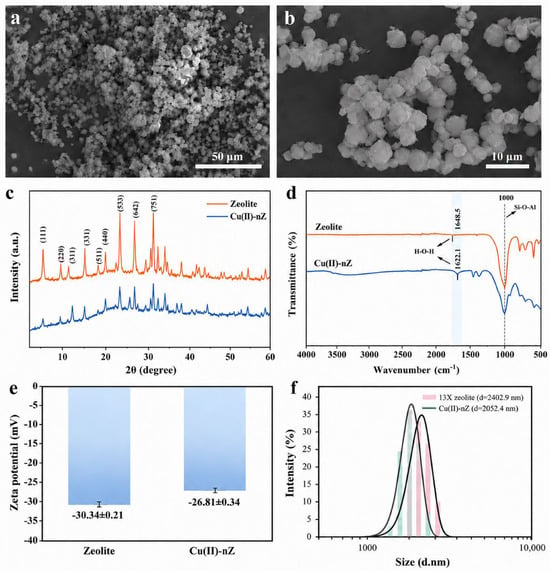
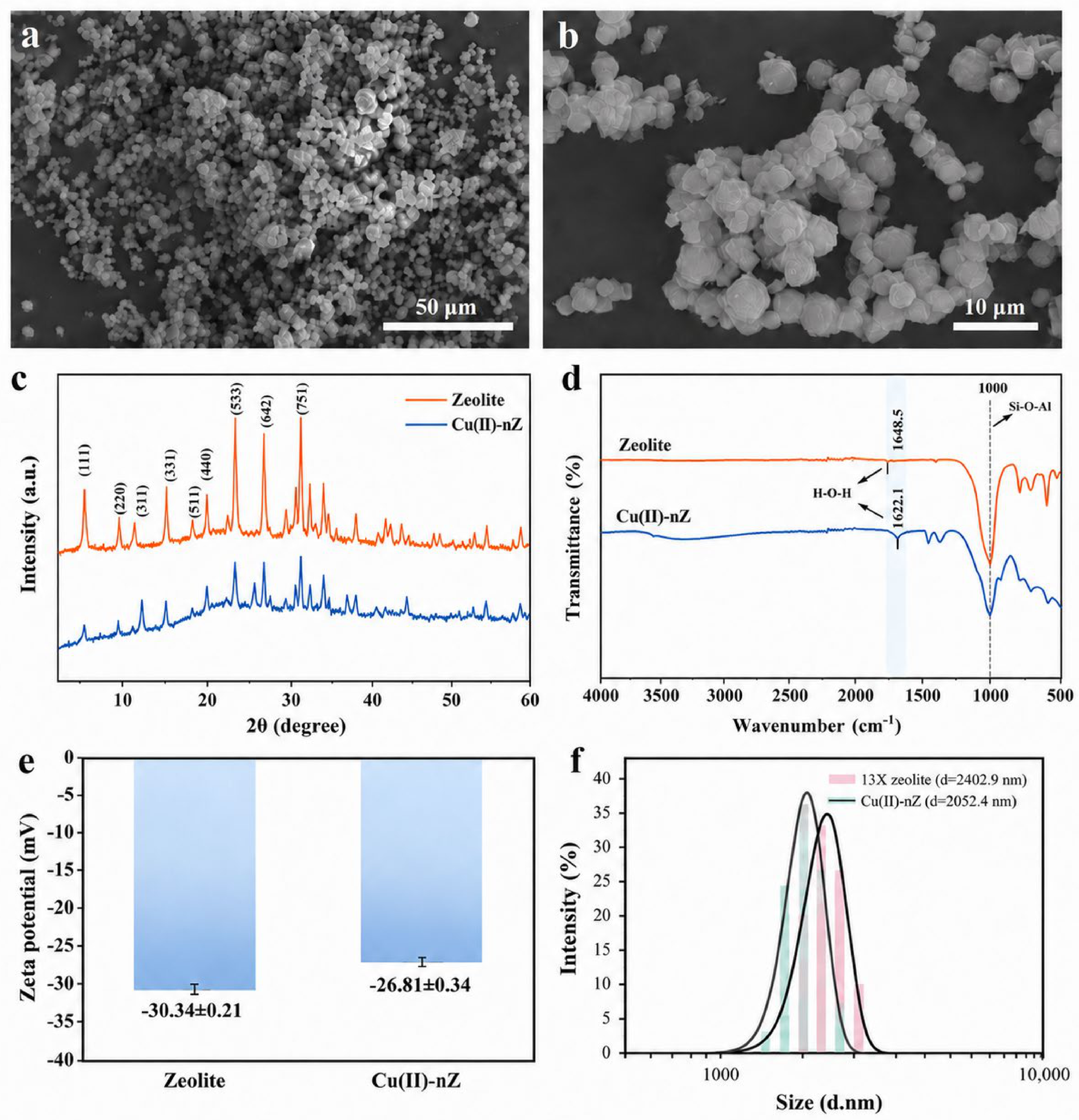
Figure 1a,b present SEM images of Cu(II)-nZ. Cu(II)-nZ exists primarily as aggregates of fine particles with flower-like or quasi-spherical morphologies. These particles exhibit relatively uniform distribution, with diameters predominantly ranging from 2 to 5 μm. The observed rough particle surfaces can contribute to increased interfacial contact area once the particles are incorporated into the raw-lacquer matrix.
Figure 1.
SEM images of Cu(II)-nZ at (a) ×650 and (b) ×2300; (c) XRD patterns of zeolite and Cu(II)-nZ; (d) IR spectrum of zeolite and Cu(II)-nZ; (e) zeta potentials of zeolite and Cu(II)-nZ; and (f) particle size distributions of zeolite and Cu(II)-nZ. For panel (e), values are presented as mean ± SD (n = 3).
As displayed in Figure 1c, pristine 13X zeolite exhibits distinct diffraction peaks at 2θ = 6.40°, 10.28°, 12.02°, 15.70°, 18.74°, 20.34°, 23.58°, 26.94° and 31.22°, assigned sequentially to the (111), (220), (311), (331), (511), (440), (533), (642) and (751) crystal lattice planes, respectively. After copper-loading treatment, Cu(II)-nZ retains most of the major diffraction peaks of the 13X zeolite framework; however, the original (642) diffraction peak is transformed into a double-peak signal. Meanwhile, the relative intensities of several diffraction peaks decrease, accompanied by slight peak broadening. Such a double-peak phenomenon may be ascribed to lattice distortion.
Figure 1d presents the FTIR spectra of pristine 13X zeolite and Cu(II)-nZ. The broad signal at approximately 3600 cm−1 is assigned to O–H stretching of surface hydroxyl groups and adsorbed water. The bands at 1648.5 and 1632.1 cm−1 for pristine 13X zeolite and Cu(II)-nZ, respectively, are attributed to the H–O–H bending vibration of adsorbed water, with the latter showing a slight shift to lower wavenumber and increased intensity. The two weak signals in the 1300–1200 cm−1 region and the intense band near 1000 cm−1 are tentatively assigned to asymmetric T–O–T stretching vibrations of the aluminosilicate framework (T = Si or Al), while the distinguishable bands below approximately 800 cm−1 are related to symmetric framework stretching and bending vibrations. These framework-related bands show no substantial positional changes after Cu loading. These results suggest that Cu loading modifies the local hydration environment of the zeolite while preserving its main aluminosilicate framework.
Figure 1e,f show the zeta potentials and average particle sizes of the as-prepared samples. Upon copper-ion loading, the zeta potential shifted from −30.34 mV to −26.81 mV, whereas the average particle size dropped from ca. 2402.9 nm to 2052.4 nm. These observations demonstrate that copper loading modifies the surface charge and reduces the measured average particle size.
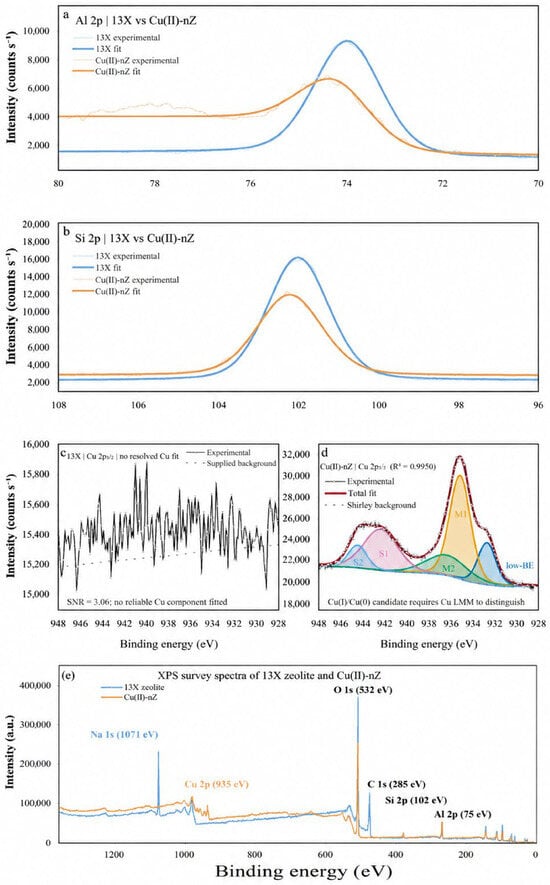
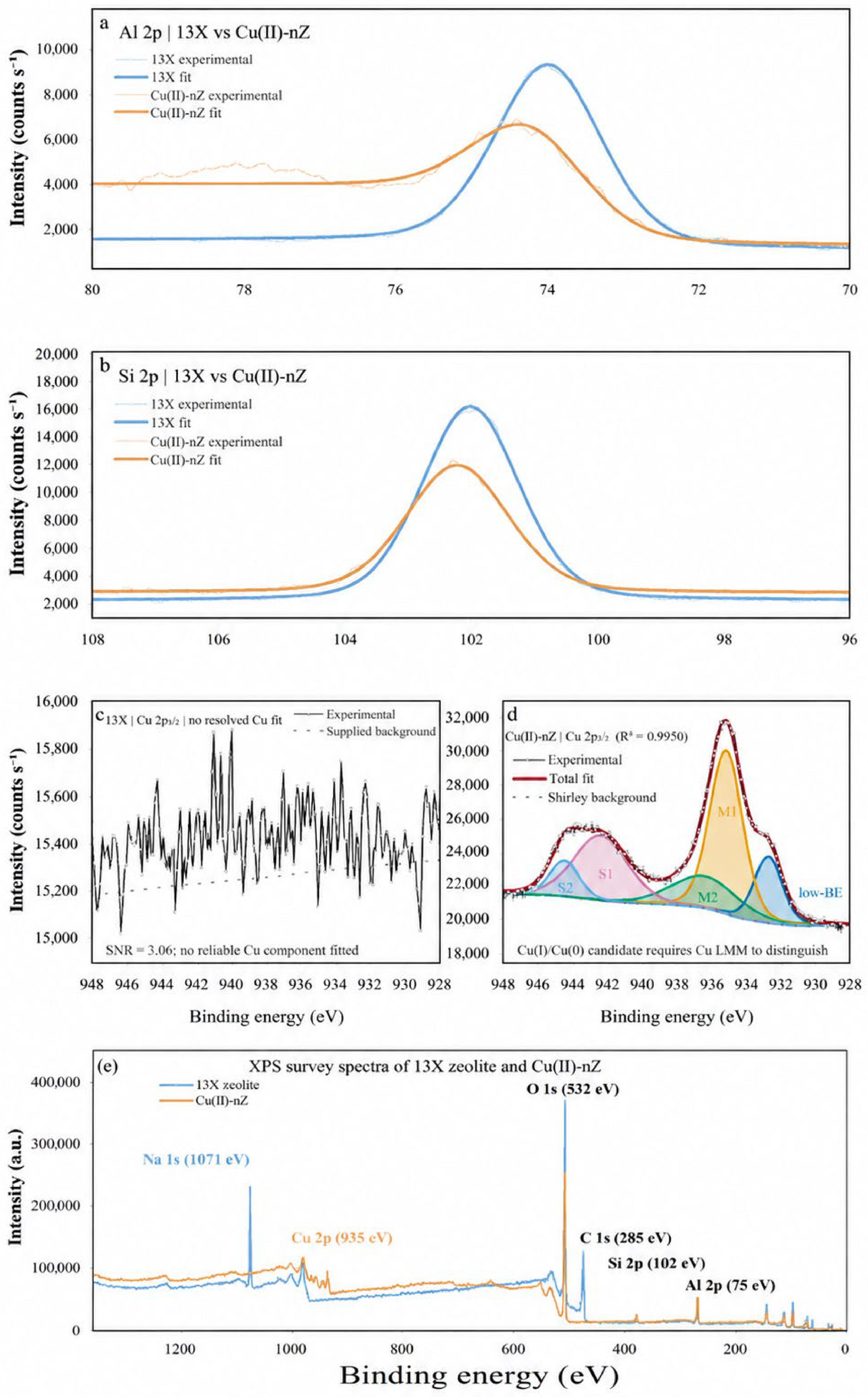
The XPS survey spectra of pristine 13X and Cu(II)-nZ are shown in Figure 2e. Both samples contain the expected O 1s, C 1s, Si 2p, and Al 2p signals. After copper loading, a Cu 2p signal appears at approximately 935 eV, while the Na 1s signal of pristine 13X is markedly reduced. These observations are consistent with the partial exchange of exchangeable Na+ for Cu-containing species, confirming successful copper incorporation while the primary zeolite framework elements remained detectable. The value of 6.10 at.% therefore represents the Cu fraction among this selected set of surface elements, rather than the total bulk copper content. Nevertheless, it provides valuable quantitative evidence for copper incorporation within the XPS sampling region and is consistent with the Cu 2p spectrum.
Figure 2.
XPS characterization of pristine 13X and Cu(II)-nZ: (a) Al 2p spectra; (b) Si 2p spectra; (c) Cu 2p3/2 region of pristine 13X; (d) fitted Cu 2p3/2 spectrum of Cu(II)-nZ; and (e) overlaid survey spectra of pristine 13X zeolite and Cu(II)-nZ. Experimental data, fitted envelopes, backgrounds and individual fitted components are shown in panels (a–d).
High-resolution XPS spectra further confirm copper incorporation and the concomitant alterations to the surface electronic structure of 13X. Compared with pristine 13X, the Al 2p and Si 2p envelopes of Cu(II)-nZ shift slightly toward higher binding energies and broaden (Figure 2a,b). This indicates a redistribution of electron density within the aluminosilicate framework and corroborates interactions between the introduced Cu species and framework-oxygen sites. In the Cu 2p3/2 region, pristine 13X acts as a reference and shows no reliably resolved Cu component (SNR = 3.06; Figure 2c). In contrast, Cu(II)-nZ displays a well-defined Cu signal, which is satisfactorily reproduced by the fitted envelope (R2 = 0.9950; Figure 2d). The dominant spectral contributions at 934–936 eV, alongside the characteristic shake-up satellites at 942–945 eV, identify Cu(II) as the predominant surface copper species. A minor contribution at 932–933 eV suggests the co-existence of small quantities of reduced Cu species. Nevertheless, given the substantial overlap between the Cu 2p3/2 binding energies of Cu(I) and Cu(0), Cu LMM Auger analysis is necessary for their unambiguous differentiation [26]. Collectively, the observed Al and Si binding-energy shifts together with the Cu 2p3/2 spectral features verify the surface incorporation of copper, with Cu(II) representing the dominant surface copper state in Cu(II)-nZ.
3.2. Morphology and Elemental Distribution of the Modified Raw-Lacquer Cu(II)-nZ-1.5% Coating
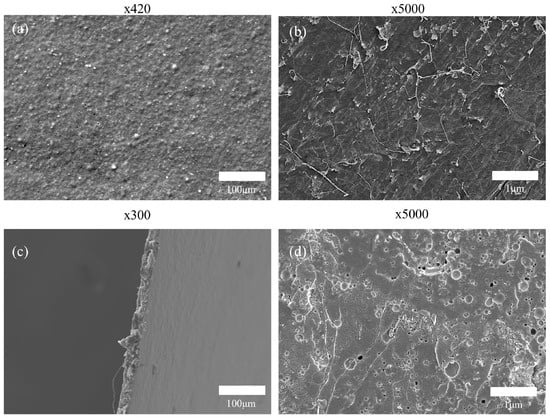
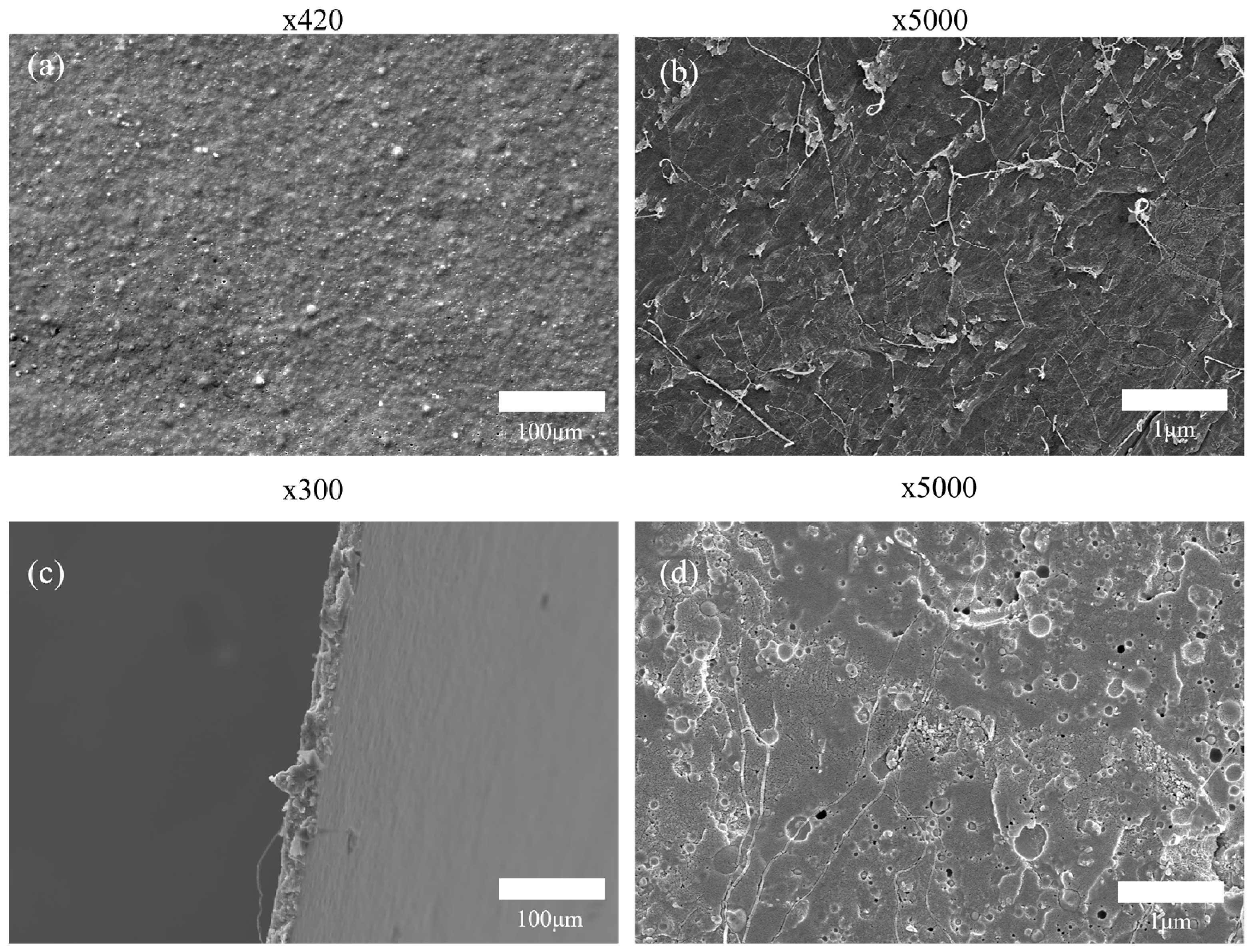
The SEM micrographs in Figure 3a–d display the surface morphology and liquid-nitrogen-fractured cross-section of the Cu(II)-nZ-1.5%-modified raw-lacquer coating. At ×420 magnification, the surface across the observed area appears continuous, showing fine bright features together with only a few isolated depressions (Figure 3a). At ×5000 magnification, flake-like and filament-like structures can be observed interwoven within the raw-lacquer matrix (Figure 3b). Rather than forming large concentrated agglomerates, these structures are distributed throughout the field-of-view, and the coating exhibits a continuous surface.
Figure 3.
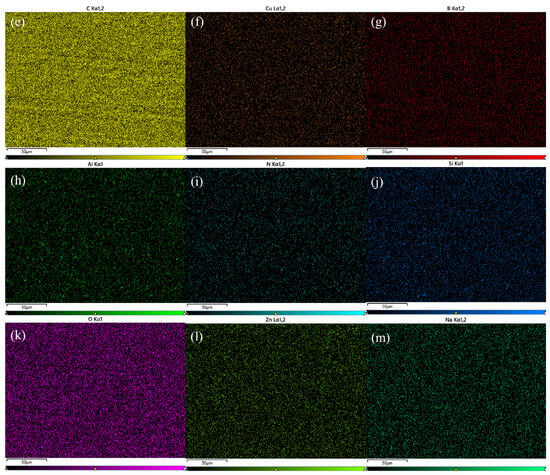
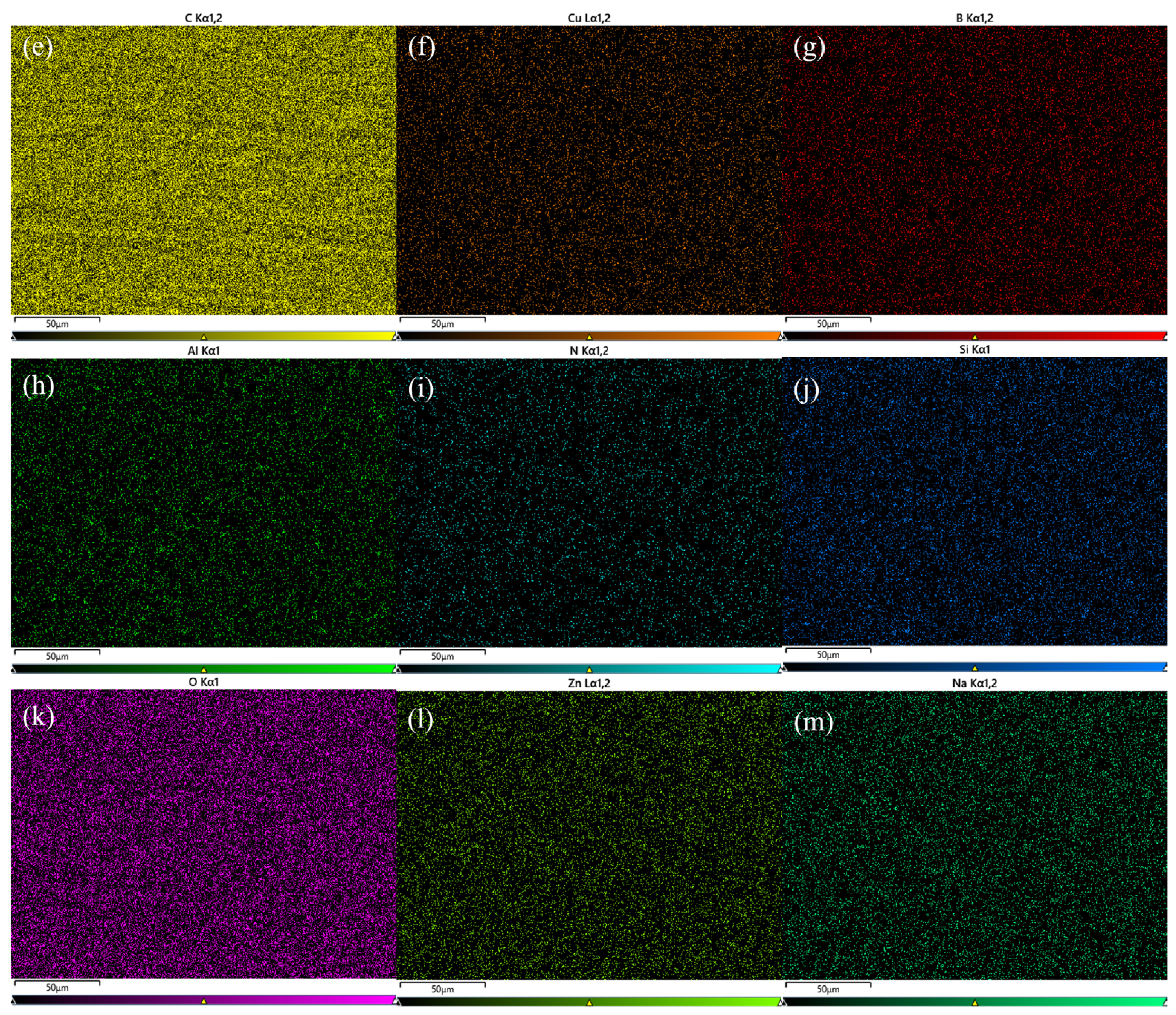
SEM morphology and elemental distribution of the Cu(II)-nZ-1.5% modified raw-lacquer coating. (a) Surface morphology at ×420 magnification; (b) surface morphology at ×5000 magnification; (c) liquid-nitrogen-fractured cross-sectional morphology at ×300 magnification; (d) liquid-nitrogen-fractured cross-sectional morphology at ×5000 magnification; corresponding surface EDS elemental maps showing the distributions of (e) C, (f) Cu, (g) B, (h) Al, (i) N, (j) Si, (k) O, (l) Zn, and (m) Na. Scale bars: 100 μm in (a,c), 1 μm in (b,d), and 50 μm in (e–m).
At low magnification, the liquid-nitrogen-fractured cross-section exhibits a well-defined, continuous layer (Figure 3c). The higher-magnification micrograph shows interconnected matrix domains, rounded features, and fine interlaced structures (Figure 3d). The tortuous fracture path suggests that solid components are embedded within the cured raw-lacquer phase and that the film forms an integrated composite structure.
EDS mapping was performed on the surface of the identical reference coating. Carbon (C) and oxygen (O) are distributed throughout the field of view, deriving primarily from the lacquer-rich matrix. Cu, Al, and Si signals can be detected across the mapped region, which is consistent with the presence of Cu(II)-nZ and other Si-bearing components. Zn is likewise distributed across the field-of-view, consistent with the presence of nano-ZnO in the formulation. The B and N elemental maps also yield detectable signals over the observed area, confirming that BN is distributed across the mapped surface. Na produces scattered signals derived from residual sodium within the zeolite. No large continuous enrichment domains are observed in the Cu, Zn or B maps. Collectively, these elemental maps reveal that the inorganic components are homogeneously dispersed within the raw-lacquer matrix over the examined region.
3.3. Adhesion, Hardness and Gloss of the Modified Raw-Lacquer Coatings
Table 3 presents the adhesion grade, pencil hardness, and gloss of modified raw-lacquer coatings with different Cu(II)-nZ loadings. Compared with raw lacquer and MTMS modified raw lacquer, the Cu(II)-nZ modified raw-lacquer coatings exhibit improved adhesion and pencil hardness: the adhesion rating increases from grade 2 to grade 1, and pencil hardness rises from H to 2H. In contrast, the surface gloss decreases from 72.3 GU to 55.0 GU as the Cu(II)-nZ loading increases from 0 wt% to 1.5 wt%. The enhancement in adhesion and hardness may be attributed to interactions between Cu2+ and the ortho-phenolic hydroxyl groups of urushiol, whereas the reduction in gloss originates from enhanced visible-light scattering by embedded filler particles. Visually, lower gloss weakens specular reflection and endows the coating with a softer, more subdued appearance. This feature matches the restrained aesthetic characteristic of traditional guqin finishes; meanwhile, the Cu(II)-nZ dosage can be adjusted when a higher-gloss finish is required.
Table 3.
Adhesion, hardness, and gloss of modified raw-lacquer coatings with different Cu(II)-nZ contents.
3.4. Surface Wettability of the Modified Raw-Lacquer Coatings
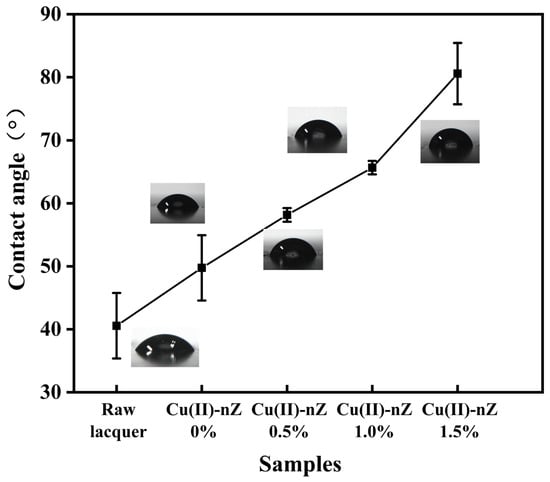
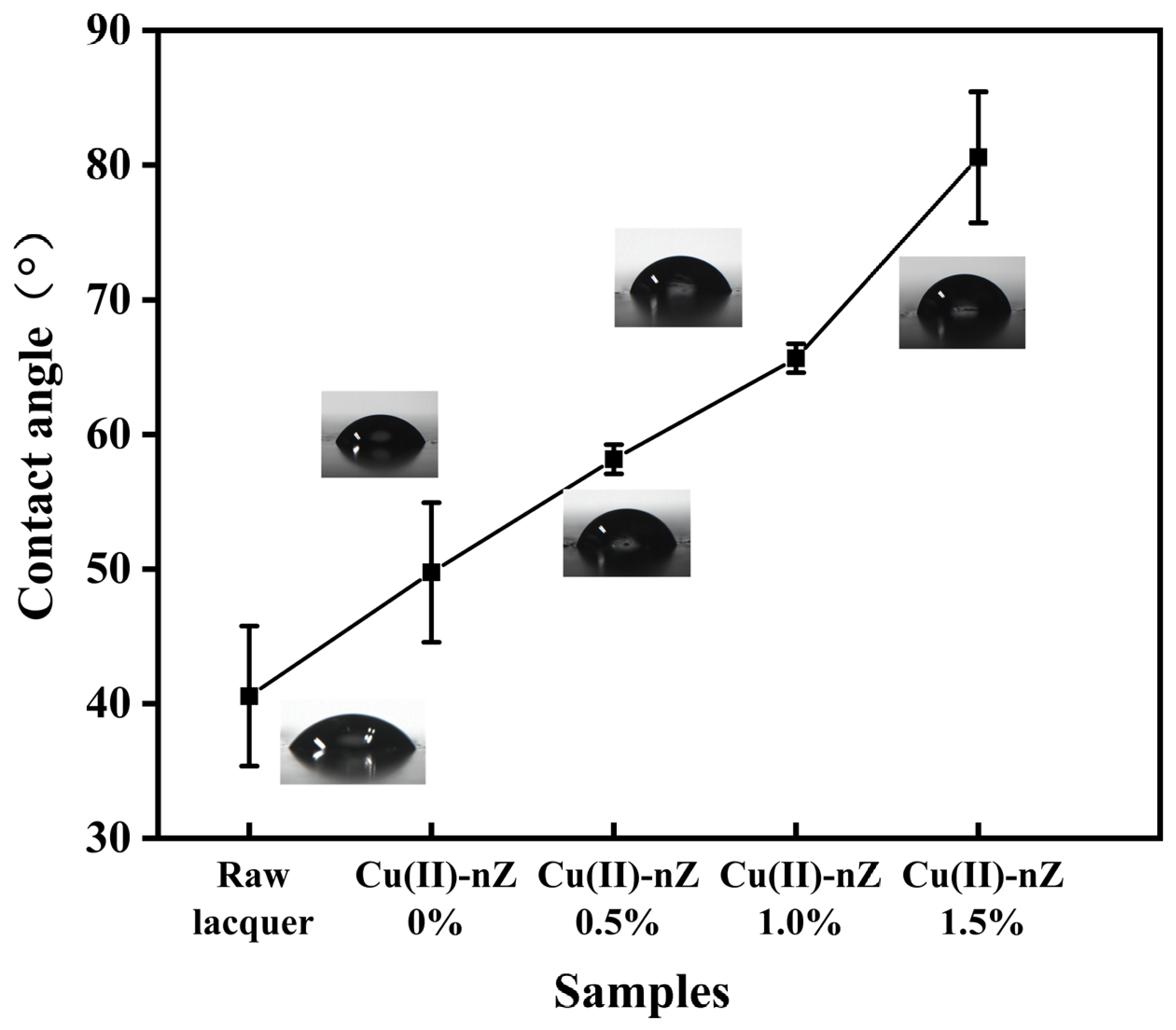
Figure 4 illustrates the influence of Cu(II)-nZ loading on the water contact angle of the modified raw-lacquer coatings. The pristine raw-lacquer wood coating exhibited a water contact angle of 40°, confirming its hydrophilic nature. The raw-lacquer/MTMS formulation yielded a contact angle of around 50°. Within the Cu(II)-nZ loading gradient, the contact angle increased with filler content and reached 80° at 1.5 wt% Cu(II)-nZ. Such a tendency originates from the modified surface chemistry and altered accessibility of polar groups following filler incorporation; local surface roughness and filler dispersion further govern the resultant wettability. For wood coatings intended for potential guqin applications, elevated contact angles reflect suppressed water wettability under test conditions.
Figure 4.
Influence of Cu(II)-nZ loading on the water contact angle of modified raw-lacquer coatings. Values are presented as mean ± SD (n = 3).
3.5. Wear Resistance of the Modified Raw-Lacquer Coatings
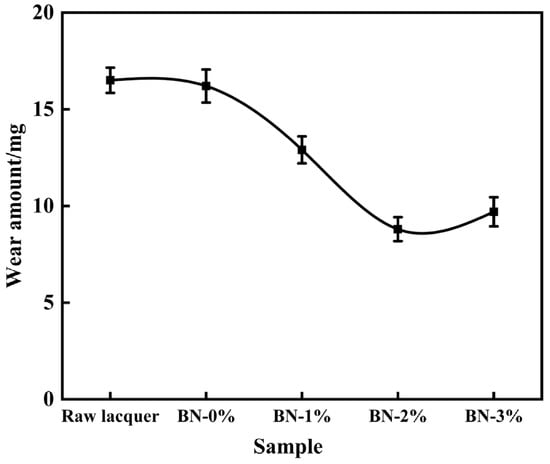
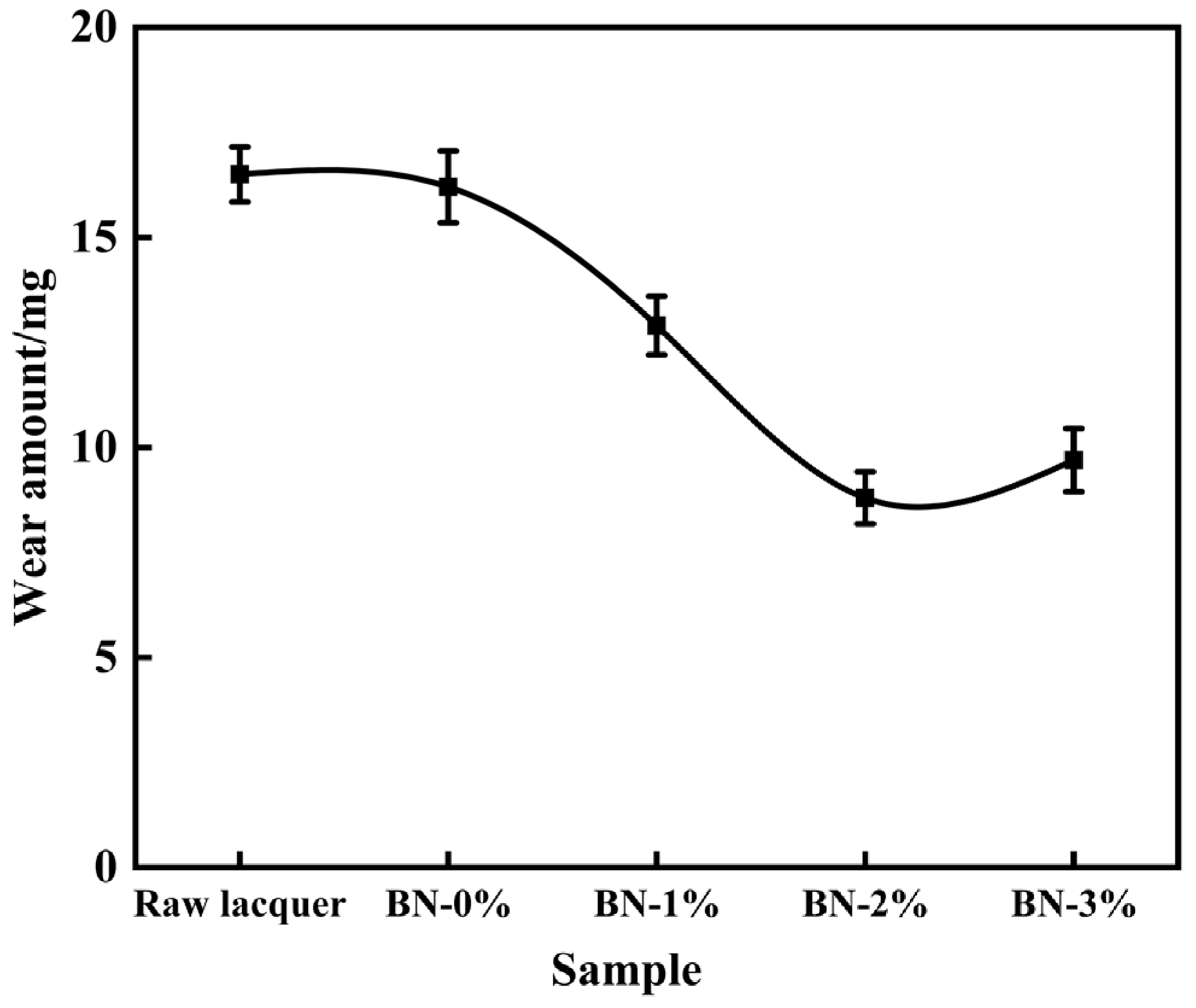
Figure 5 shows how the wear loss of modified raw-lacquer coatings varies with the BN nanosheet content. Increasing the BN nanosheet content from 0 wt% to 2 wt% led to reduced wear loss. This phenomenon originates from the barrier and load-bearing functions of layered BN nanosheets, accompanied by improved coating compactness at moderate filler loadings. By contrast, wear loss rose when the BN nanosheet fraction reached 3 wt%, which demonstrates that filler dispersion homogeneity and local coating microstructure become dominant factors at high filler loadings. Although these microstructure-related mechanisms reasonably account for the experimental trend, direct morphological analysis of the coatings is still required for verification. Among all tested samples, the 2 wt% BN-loaded coating exhibited the lowest wear loss [27].
Figure 5.
Influence of BN nanosheet loading on the wear loss of modified raw-lacquer coatings. Values are presented as mean ± SD (n = 3).
3.6. Aging Resistance of the Modified Raw-Lacquer Coatings
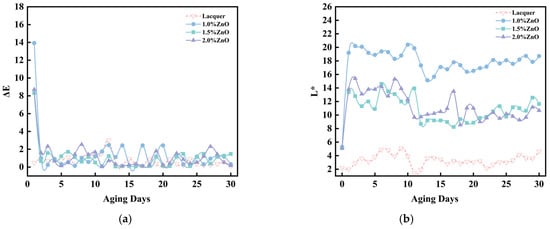
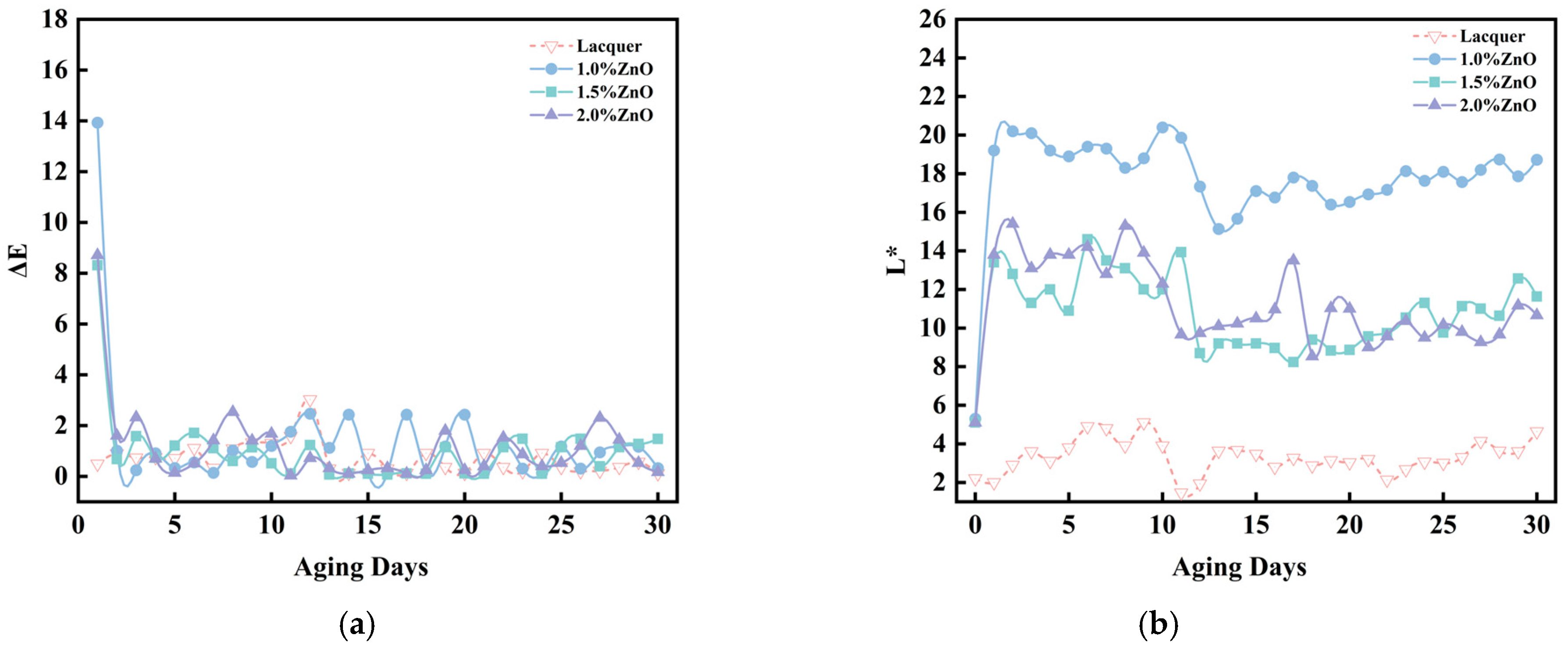
Figure 6 illustrates the UV-aging performance of modified raw-lacquer coatings with varying nano-ZnO loadings. Compared with the neat raw-lacquer coating, all ZnO-modified raw-lacquer coatings maintained higher L* values over the entire UV aging period. Among the tested samples, the coating incorporated with 1.0 wt% nano-ZnO delivered the highest L* value. ZnO modified raw-lacquer coatings underwent an initial color change, and the color difference gradually leveled off after approximately 2 days of UV aging. After 30 days of UV aging, the values for all ZnO modified raw-lacquer coatings remained below 3. Moreover, the 1.0 wt% nano-ZnO-modified coating possessed a lower than both the pristine raw lacquer and the other two nano-ZnO-modified coatings. The values of the ZnO-modified raw-lacquer coatings increased initially, followed by a decrease before attaining a steady state. This non-monotonic trend could be attributed to the photocatalytic activity of nano-ZnO. At the early UV aging stage, nano-ZnO accelerates the oxidation of incompletely cured and readily degradable organic constituents on the coating surface, including low-molecular-weight urushiol and residual gums. Under UV irradiation, polysaccharides degrade preferentially, which is subsequently followed by photo-oxidative chain scission of urushiol macromolecules and the formation of chromophoric low-molecular-weight aldehydes and ketones. Once the readily degradable surface-located organic fractions are completely consumed, nano-ZnO predominantly acts as a long-lasting UV-shielding filler, which stabilizes the color of the coating system [28].
Figure 6.
Influence of nano-ZnO content on (a) total color difference () and (b) CIE L* lightness of modified raw-lacquer coatings.
Collectively, nano-ZnO enhanced the color stability of raw-lacquer coatings under the investigated UV aging conditions via absorption and scattering of incident UV radiation, thereby mitigating the degradation of chromophores and chemical linkages within the raw-lacquer matrix [29]. Considering that long-term indoor display and intermittent light exposure can induce gloss loss, color shift and cracking in raw-lacquer coatings for guqins, nano-ZnO confers improved UV aging resistance to such coatings within the present experimental range. Visual inspection following the 30-day UV aging test revealed no evident surface cracking for any of the raw-lacquer coatings. Nevertheless, post-aging variations in hardness, stiffness, adhesion and other mechanical properties were not quantified in the present study. These mechanical attributes, alongside crack evolution upon prolonged or combined environmental exposure, warrant further investigation in future work.
3.7. Antibacterial Property of the Modified Raw-Lacquer Coatings
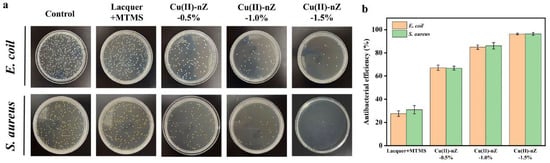
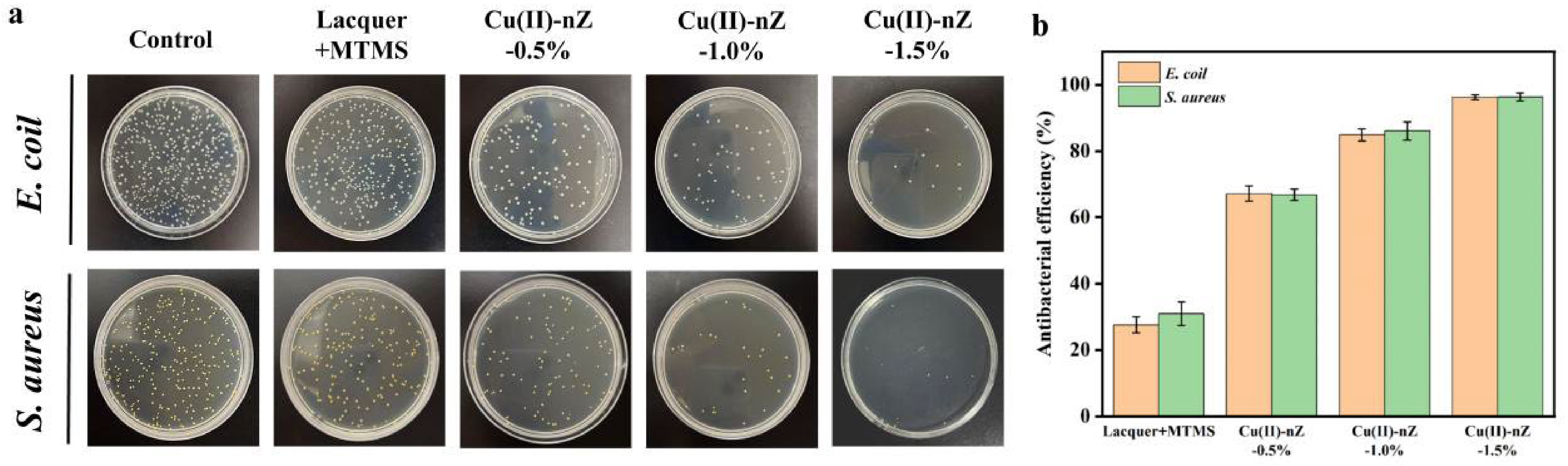
The colony-count results are shown in Figure 7. The blank control showed little reduction in viable E. coli or S. aureus, whereas the raw-lacquer + MTMS group showed antibacterial rates of approximately 25% and 30%, respectively. Across the Cu(II)-nZ modified raw-lacquer coatings, increasing Cu(II)-nZ loading effectively enhanced the antibacterial rates of the coatings. At a Cu(II)-nZ loading of 0.5 wt%, the coating achieved antibacterial rates of approximately 65% against E. coli and 70% against S. aureus. At a Cu(II)-nZ loading of 1.5 wt%, the antibacterial rates exceeded 90% for both bacterial strains. Since the Cu(II)-nZ modified formulations also employed fixed loadings of ZnO and BN, these results confirm a consistent within-series correlation between increasing Cu(II)-nZ content and antibacterial property. This correlation provides a valuable experimental basis for future factorial evaluation to disentangle the individual contributions of each additive.
Figure 7.
(a) Colonies of E. coli and S. aureus following treatment with the blank group, raw-lacquer + MTMS, and modified raw-lacquer coatings with varying Cu(II)-nZ loadings; (b) antibacterial rates against E. coli and S. aureus. Data in panel (b) are expressed as mean ± SD of three independent experiments (n = 3).
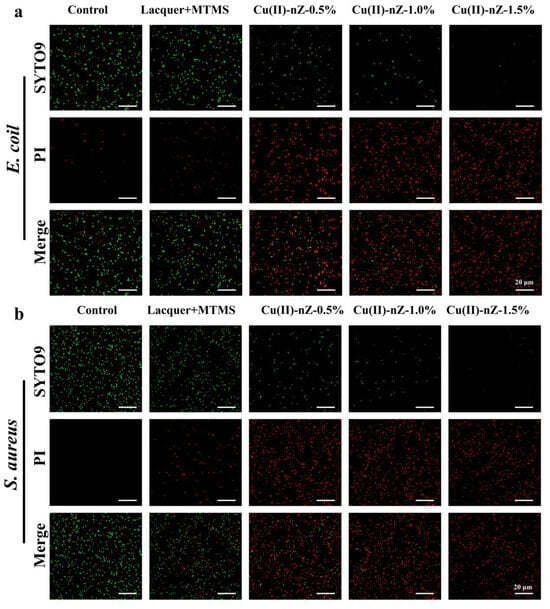
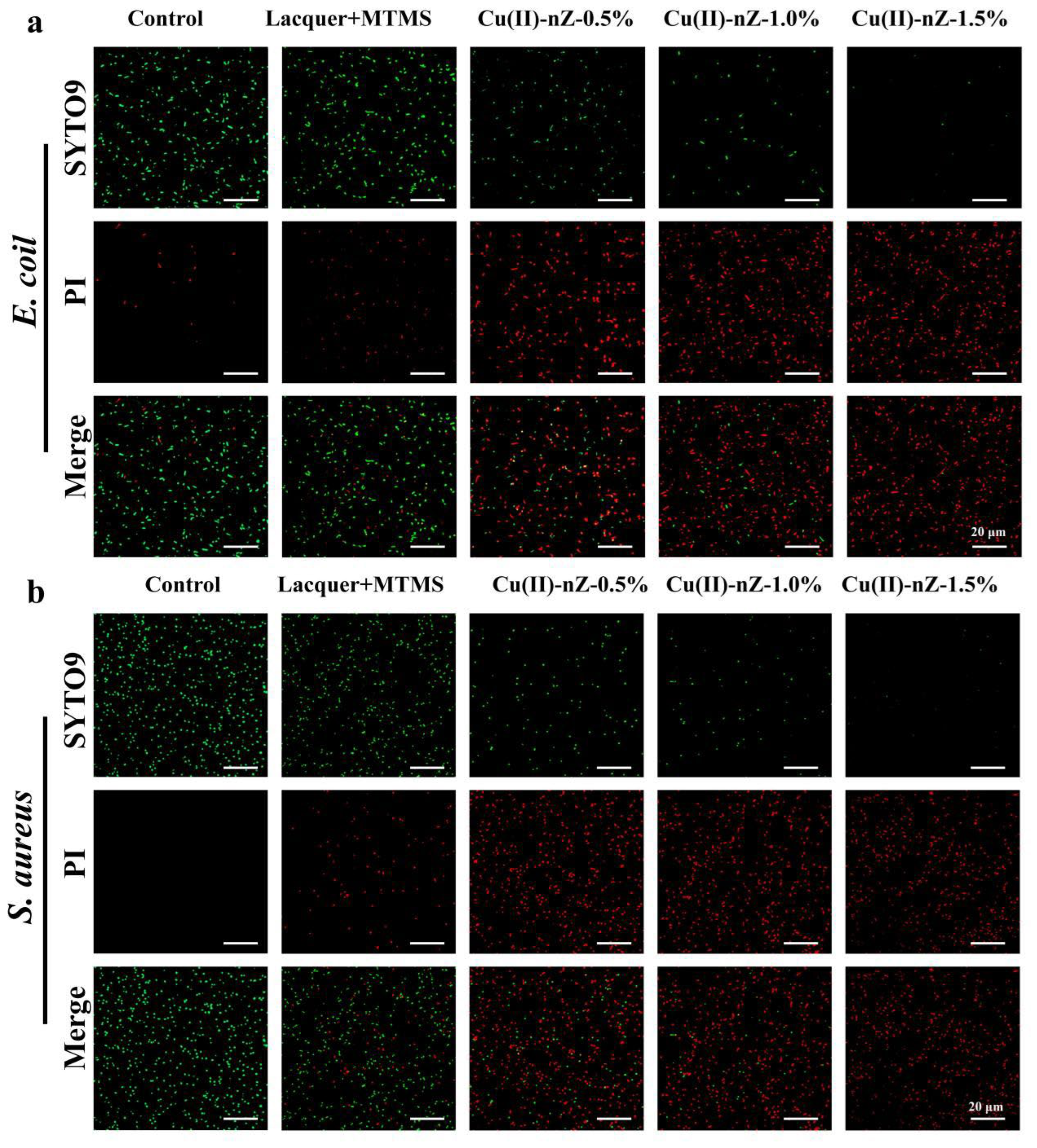
Live/dead fluorescence images are shown in Figure 8. For both bacterial strains, green fluorescence dominated in the blank control and MTMS-modified raw-lacquer groups, while red fluorescence remained faint, indicating a relatively high fraction of cells with intact membranes. As the Cu(II)-nZ loading rose, green fluorescence diminished and red fluorescence intensified. For the modified raw-lacquer coating with 1.5 wt% Cu(II)-nZ, red fluorescence predominated, consistent with a larger population of membrane-compromised bacterial cells under the tested conditions.
Figure 8.
Live/dead fluorescence images of (a) E. coli and (b) S. aureus following treatment with the blank group, raw-lacquer + MTMS, and modified raw-lacquer coatings with varying Cu(II)-nZ loadings.
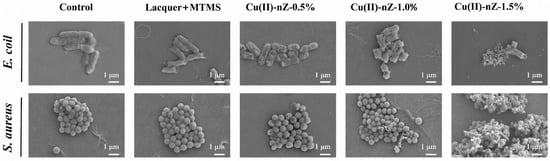
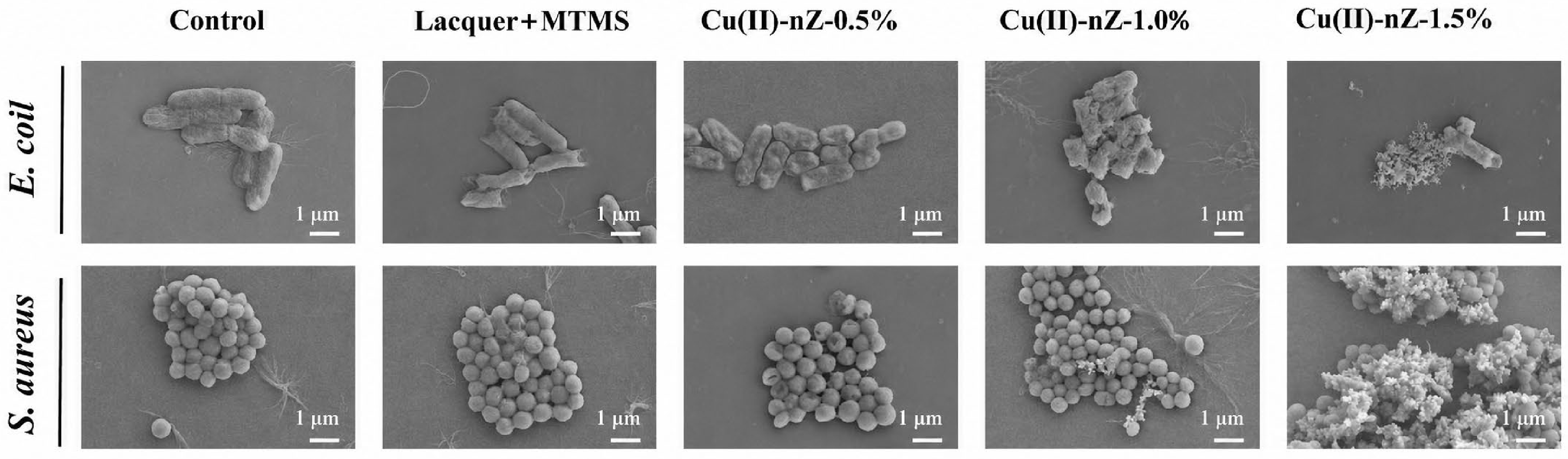
Figure 9 presents SEM micrographs of E. coli and S. aureus following 24 h contact with the tested coating groups. Bacterial cells from the blank control generally exhibited plump, intact morphologies, whereas cells in the raw-lacquer + MTMS group displayed only minor surface deformation. Morphological deterioration became progressively more evident with increasing Cu(II)-nZ loading. At a Cu(II)-nZ loading of 0.5 wt%, bacterial cells suffered mild deformation and surface roughening. At 1.0 wt%, membrane disruption and morphological features suggestive of intracellular leakage were observed. At 1.5 wt%, numerous cells appeared fragmented and were accompanied by amorphous aggregates. These observations align with enhanced membrane damage under the tested experimental conditions.
Figure 9.
SEM images of E. coli and S. aureus upon contact with the blank group, raw-lacquer + MTMS, and modified raw-lacquer coatings with varying Cu(II)-nZ loadings.
During the preparation of Cu(II)-nZ, Cu2+ replaces the exchangeable charge-balancing cations within 13X zeolite, predominantly Na+ for the sodium-form zeolite. At the hydrated interface, competing cations such as Na+, K+ and H+ may undergo partial ion-exchange and diffusion, gradually mobilizing copper species from accessible zeolite sites. Copper-bearing zeolites exhibit leaching resistance that depends on synthesis conditions and particle location. Although the MFI-type framework investigated by Yashnik et al. is structurally distinct from 13X, its limited leaching of channel-confined Cu species supports the general concept of a stable zeolite-hosted copper reservoir [23]. In the present antibacterial assay, water originates directly from the 400 μL bacterial suspension and is sustained via incubation at ≥90% relative humidity. Under the typical dry conditions of guqin-instrument service, baseline copper mobility is anticipated to remain low. Transient ambient humidity, surface condensation, moisture derived from human contact, and locally acidic microenvironments generated by microbial metabolism can facilitate localized copper release. The cured urushiol/MTMS matrix serves as a durable immobilizing and dispersing medium for Cu(II)-nZ. Catechol moieties within urushiol may coordinate a minor fraction of mobilized copper species, whereas MTMS-imparted hydrophobicity limits water ingress. Collectively, these attributes are expected to stabilize the copper reservoir and mitigate premature ion leaching. Mobilized copper species can electrostatically associate with negatively charged bacterial envelopes, disrupt membrane integrity, and trigger intracellular leakage. Subsequent Cu2+/Cu+ redox cycling and Fenton-like reactions may induce oxidative stress, lipid peroxidation, and damage to intracellular components. This mechanism aligns with the enhanced red fluorescence and bacterial membrane deformation observed in Figure 8 and Figure 9 [13,24,25]. ZnO was incorporated mainly for UV-shielding and delivers supplementary antibacterial properties. The distinct function of Cu(II)-nZ is to act as the primary zeolite-hosted reservoir of exchangeable copper, offering a controlled, multi-target, ion-mediated antibacterial pathway that complements ZnO [16,18,23]. Collectively, the formulation design, well-controlled assay conditions, XPS evidence for a Cu(II)-dominant surface state, and bacterial morphological observations support the proposed mechanism. Direct time-resolved quantification of copper leaching from modified raw-lacquer coatings represents a promising direction for future work to elucidate long-term copper transport behavior and its contribution to sustaining antibacterial properties.
3.8. Blood Compatibility of the Modified Raw-Lacquer Coatings
Direct blood contact with the coatings is not expected under routine guqin performance conditions. Nevertheless, minor fingertip abrasions or cuts may arise during prolonged playing or instrument handling, allowing damaged skin to come into brief contact with the coated surface or trace amounts of coating-derived leachables. To address this scenario, a hemolysis assay was conducted as a conservative preliminary screening to determine whether potentially leachable components could cause acute erythrocyte membrane damage in vitro. It should be emphasized that this assay does not replicate actual exposure during guqin use or establish clinical safety. Rather, the low hemolysis values obtained provide initial supporting evidence of the blood compatibility of the modified raw-lacquer coatings under the test conditions.
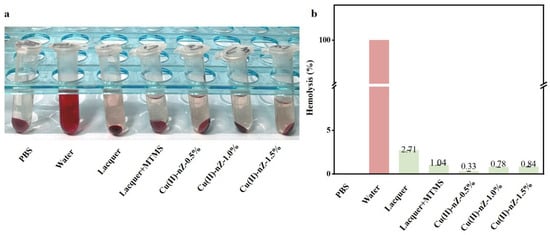
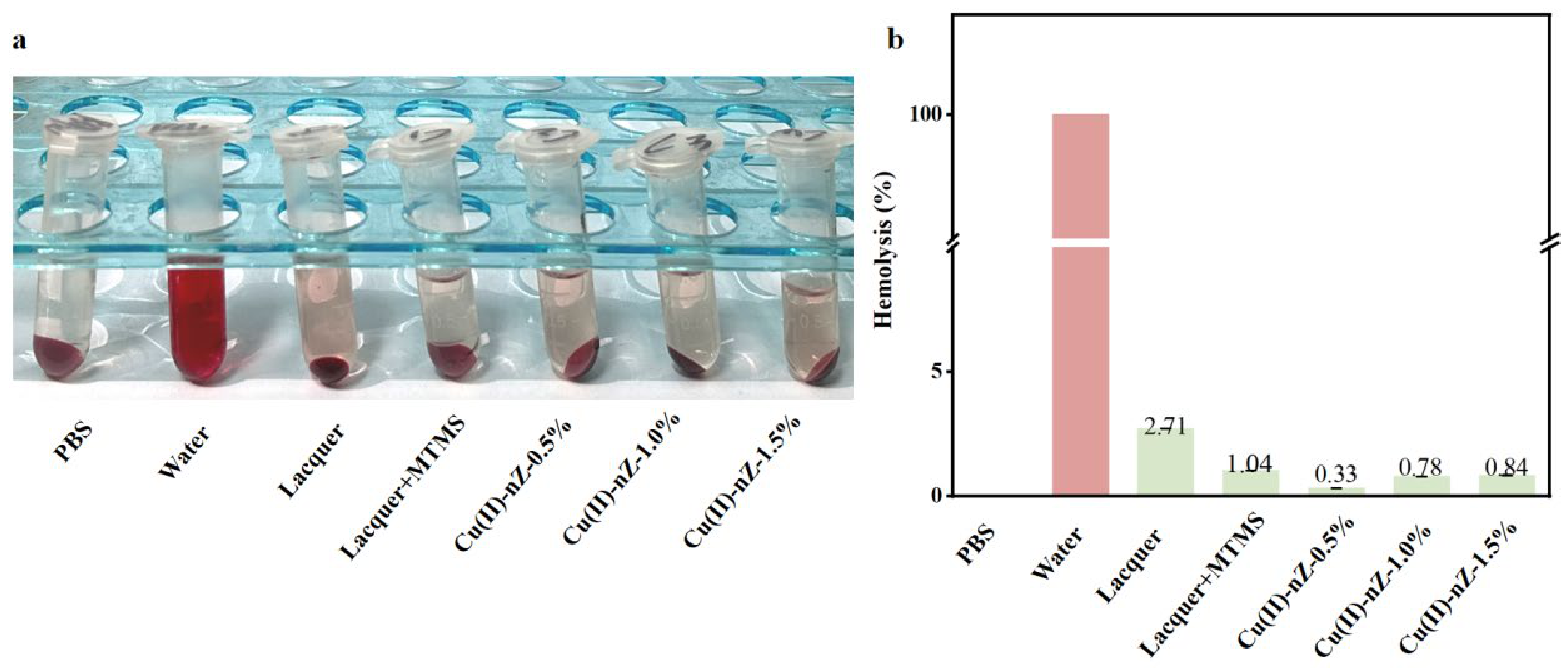
Quantitative data from the in-vitro hemolysis assays are summarized in Figure 10. Nearly complete erythrocyte lysis (100%) was observed for the positive-control sample. The blank raw-lacquer coating and MTMS-modified lacquer coating exhibited hemolysis ratios of 2.71% and 1.04%, respectively, both of which satisfy the widely recognized safety threshold of 5% reported in the prior literature. Upon incorporation of Cu(II)-nZ at mass fractions of 0.5 wt%, 1.0 wt%, and 1.5 wt%, the corresponding modified lacquer-based coatings yielded hemolysis rates of 0.33%, 0.78%, and 0.84%, in that order.
Figure 10.
Hemolysis evaluation of modified raw-lacquer coatings: (a) representative photographs of the hemolysis-test samples for PBS (negative control), water (positive control), raw lacquer, raw lacquer + MTMS, Cu(II)-nZ-0.5%, Cu(II)-nZ-1.0%, and Cu(II)-nZ-1.5%; (b) corresponding hemolysis percentages. Quantitative values in (b) were obtained from three parallel replicates (n = 3).
Taken together, the modified raw-lacquer coatings exhibited favorable antibacterial performance coupled with low hemolysis under the tested in vitro conditions. The hemolysis assay acted as a preliminary screening to assess the blood compatibility of potentially leachable components.
4. Conclusions
In this work, modified raw-lacquer topcoats were fabricated with raw lacquer serving as the matrix, MTMS as the crosslinking agent, Cu(II)-nZ as the antibacterial modifier, and BN nanosheets together with nano-ZnO as functional fillers. The investigated formulations exhibited composition-dependent variations in adhesion, hardness, gloss, wettability, wear resistance, antibacterial property, and UV aging resistance. For the Cu(II)-nZ loading series, higher nominal Cu(II)-nZ contents corresponded to greater antibacterial rates and larger contact angles, alongside reduced gloss. Among the BN-containing series, the formulation with 2 wt% BN delivered the minimum wear loss. Formulations incorporating nano-ZnO exhibited enhanced color stability under the tested UV aging conditions. The OFAT experimental design reveals these composition-governed performance trends across the tested sample sets and lays a foundation for subsequent factorial analysis to disentangle the individual and combined contributions of each additive.
The multi-component formulation enhanced the antibacterial property, wear resistance, and UV aging resistance of the investigated modified raw-lacquer coatings. Under the tested conditions, the modified raw-lacquer coatings exhibited mitigated wear and UV-triggered color alteration, alongside favorable antibacterial properties against E. coli and S. aureus. These findings warrant further assessment of the modified raw-lacquer coatings as candidate protective topcoats for potential application on guqin soundboards.
The present study characterizes the material-level protective performance of the candidate topcoat and lays a foundation for the subsequent validation phase, which will assess its acoustic and vibrational compatibility for guqin soundboards. Since filler incorporation and concomitant variations in coating hardness may affect the effective stiffness, internal damping, and vibrational response of the soundboard-coating system [30], future work will integrate modal and acoustic measurements with coating characterization to identify whether the modified topcoat alters the sound quality of the guqin. From the perspective of conservation practice, the natural raw-lacquer matrix and preservation of key features of the traditional lacquering process ensure continuity with conventional guqin finishing techniques.
Building upon this continuity, future conservation-oriented evaluations of reversibility and compatibility with cleaning, repair, and recoating treatments will aid in defining suitable protocols for its considered deployment on historically significant instruments. Since the formulation preserves a natural raw-lacquer matrix, the conventional multi-layer preparation workflow, and tunable topcoat composition, it can potentially be adapted to established workshop practices. Practical implementation ought to be assessed via collaborative trials with guqin artisans, focusing on process handling, curing behavior, surface appearance, tactile performance, repairability, and acoustic-vibrational response of the instrument.
Author Contributions
Y.L.: Writing—Original Draft, Methodology, Conceptualization. X.L.: Writing—Methodology, Conceptualization. Y.C.: Validation, Investigation. Y.F.: Writing—Original Draft, Supervision, Software, Methodology, Formal Analysis, Conceptualization. S.T.: Writing—Review and Editing, Supervision. All authors have read and agreed to the published version of the manuscript.
Funding
The authors acknowledge financial support from the Special Project for Chaozhou Culture Studies (GD25CW05), the open experimental project by GETRC of Graphene-like Materials and Products (GETRCGL-202608), and the Teaching Research Project of Jinan University (2026JXDY024).
Data Availability Statement
All data needed to evaluate the conclusions in the paper are present in the paper. Additional data related to this paper may be requested from the authors.
Conflicts of Interest
The authors declare that they have no known competing financial interests or personal relationships that could have appeared to influence the work reported in this paper.
References
- Hao, X.; You, L.; Li, L.; Ma, L.; Li, M.; Schilling, M.R.; Shen, X. Multimodal Micro-Area Analysis Deciphers Qing Dynasty Guqin Lacquer Technology and Acoustic Design Principles. J. Archaeol. Sci. 2026, 186, 106455. [Google Scholar] [CrossRef] [Scilit]
- Tamburini, D. Analytical Pyrolysis Applied to the Characterisation and Identification of Asian Lacquers in Cultural Heritage Specimens–A Review. J. Anal. Appl. Pyrolysis 2021, 157, 105202. [Google Scholar] [CrossRef] [Scilit]
- Liu, S.-Y.; Nodari, L.; Tomasin, P.; Bonaduce, I.; Paolino, F.; Boscolo Marchi, M.; Meneghetti, M.; Zoleo, A. Urushi Lacquer in Three Asian Artifacts from MAO: Comparison between Non-Invasive and Microinvasive Analytical Techniques. Spectrochim. Acta Part A Mol. Biomol. Spectrosc. 2026, 348, 127103. [Google Scholar] [CrossRef] [Scilit] [PubMed]
- Liu, X.; Liu, M.; Chen, Y.; Wang, W.; Liu, X. Application and Challenges of Chinese Lacquer Identification Techniques in the Conservation of Cultural Relics. Coatings 2025, 15, 1361. [Google Scholar] [CrossRef] [Scilit]
- Du, X.; Feng, Y.; Olarescu, A.; Chen, Y.; Liu, X. Preparation and Properties of Composite Coatings Fabricated from Carved Lacquer Waste and Waterborne Acrylic Resin. Coatings 2025, 15, 1230. [Google Scholar] [CrossRef] [Scilit]
- Liu, W.; Liu, X.; Lv, J. Comparative Study on UV Degradation of Black Chinese Lacquers with Different Additives. Materials 2023, 16, 5607. [Google Scholar] [CrossRef] [Scilit] [PubMed]
- Le Hô, A.S.; Fabre-Francke, I.; Thiphavong, C. Properties of Polymer-Composite Used as Fills of Asian Lacquerware: Issues on Restoration Processes of Lacquered Objects from Cultural Heritage. Int. J. Polym. Sci. 2015, 2015, 729132. [Google Scholar] [CrossRef] [Scilit]
- Wu, T.; Xu, W. Preparation of Tung Oil-Modified raw-lacquer Films and Application for Mechanical Carving Technique. Coatings 2024, 14, 1264. [Google Scholar] [CrossRef] [Scilit]
- Lu, R.; Ma, X.; Kamiya, Y.; Honda, T.; Kamiya, Y.; Okamoto, A.; Miyakoshi, T. Identification of Ryukyu Lacquerware by Pyrolysis–Gas Chromatography/Mass Spectrometry. J. Anal. Appl. Pyrolysis 2007, 80, 101–110. [Google Scholar] [CrossRef] [Scilit]
- Le Hô, A.S.; Duhamel, C.; Daher, C.; Bellot-Gurlet, L.; Paris, C.; Regert, M.; Dumas, P. Alteration of Asian Lacquer: In-Depth Insight Using a Physico-Chemical Multiscale Approach. Analyst 2013, 138, 5685–5696. [Google Scholar] [CrossRef] [Scilit] [PubMed]
- Roy, S.; Majumder, P.; Singha Mahapatra, T. UV-Shielding Efficiency of Polymer/ZnO Nanocomposites: Recent Developments and Prospects. J. Vinyl Addit. Technol. 2026, 32, 456–483. [Google Scholar] [CrossRef] [Scilit]
- Do, N.B.D.; Imenes, K.; Aasmundtveit, K.E.; Nguyen, H.V.; Andreassen, E. Thermal Conductivity and Mechanical Properties of Polymer Composites with Hexagonal Boron Nitride—A Comparison of Three Processing Methods: Injection Moulding, Powder Bed Fusion and Casting. Polymers 2023, 15, 1552. [Google Scholar] [CrossRef] [Scilit] [PubMed]
- Borkow, G.; Gabbay, J. Copper as a Biocidal Tool. Curr. Med. Chem. 2005, 12, 2163–2175. [Google Scholar] [CrossRef] [Scilit] [PubMed]
- Gelaw, M.; Palamara, D.; Freni, A.; De Antonellis, S.; Proverbio, E.; Calabrese, L. Adsorption and Mechanical Properties of Composite Coatings Based on Zeolite 13× and Sulfonated Polymer for Thermal Energy Storage in Electric Vehicles. Prog. Org. Coat. 2025, 208, 109460. [Google Scholar] [CrossRef] [Scilit]
- Beving, D.E.; O’Neill, C.R.; Yan, Y. Hydrophilic and Antimicrobial Low-Silica-Zeolite LTA and High-Silica-Zeolite MFI Hybrid Coatings on Aluminum Alloys. Micropor. Mesopor. Mater. 2008, 108, 77–85. [Google Scholar] [CrossRef] [Scilit]
- Chen, S.; Popovich, J.; Zhang, W.; Ganser, C.; Haydel, S.E.; Seo, D.K. Superior Ion Release Properties and Antibacterial Efficacy of Nanostructured Zeolites Ion-Exchanged with Zinc, Copper, and Iron. RSC Adv. 2018, 8, 37949–37957. [Google Scholar] [CrossRef] [Scilit] [PubMed]
- Fuentes-Alburquenque, S.; Cañón-Mancisidor, W.; Toledo, Á.; Mendoza, A.; Soto-Rioseco, P.; Delgado, K. A Copper-Based Coating for the Control of Airborne Viable Bacteria in a Prison Environment. Coatings 2024, 14, 1281. [Google Scholar] [CrossRef] [Scilit]
- Cui, J.; Yeasmin, R.; Shao, Y.; Zhang, H.; Zhang, H.; Zhu, J. Fabrication of Ag+, Cu2+, and Zn2+ Ternary Ion-Exchanged Zeolite as an Antimicrobial Agent in Powder Coating. Ind. Eng. Chem. Res. 2020, 59, 751–762. [Google Scholar] [CrossRef] [Scilit]
- Chow, G.; Bedi, R.S.; Yan, Y.; Wang, J. Zeolite as a Wear-Resistant Coating. Micropor. Mesopor. Mater. 2012, 151, 346–351. [Google Scholar] [CrossRef] [Scilit]
- Rotella, G.; Candamano, S. Fabrication and Characterization of Zeolite Coatings on Aluminum and Magnesium Alloys. Eng. Sci. Technol. 2020, 23, 1273–1278. [Google Scholar] [CrossRef] [Scilit]
- Yang, J.; Zhu, J.; Shen, F.; Cai, J.; Zhou, M. Promotion by Copper(II)-Modified Montmorillonite of the Drying Property of Oriental Lacquer Sap. Prog. Org. Coat. 2018, 118, 72–81. [Google Scholar] [CrossRef] [Scilit]
- Mohammed, S.F.; Yhaya, M.F.; Nongman, A.F.; Al-Rawas, M.; Arbilei, M.N.; Noorani, T.Y. From Industry to Dentistry: A Comprehensive Review of Zeolite as a Next-Generation Multifunctional Filler for Enhanced Mechanical Reinforcement and Antimicrobial Efficacy. Dent. J. 2025, 13, 540. [Google Scholar] [CrossRef] [Scilit] [PubMed]
- Yashnik, S.A.; Surovtsova, T.A.; Salnikov, A.V.; Parmon, V.N. Leaching Stability and Redox Activity of Copper-MFI Zeolites Prepared by Solid-State Transformations: Comparison with Ion-Exchanged and Impregnated Samples. Materials 2023, 16, 671. [Google Scholar] [CrossRef] [Scilit] [PubMed]
- Grass, G.; Rensing, C.; Solioz, M. Metallic Copper as an Antimicrobial Surface. Appl. Environ. Microbiol. 2011, 77, 1541–1547. [Google Scholar] [CrossRef] [Scilit] [PubMed]
- Hong, R.; Kang, T.Y.; Michels, C.A.; Gadura, N. Membrane Lipid Peroxidation in Copper Alloy-Mediated Contact Killing of Escherichia coli. Appl. Environ. Microbiol. 2012, 78, 1776–1784. [Google Scholar] [CrossRef] [Scilit] [PubMed]
- Biesinger, M.C.; Lau, L.W.M.; Gerson, A.R.; Smart, R.S.C. Resolving Surface Chemical States in XPS Analysis of First Row Transition Metals, Oxides and Hydroxides: Sc, Ti, V, Cu and Zn. Appl. Surf. Sci. 2010, 257, 887–898. [Google Scholar] [CrossRef] [Scilit]
- Li, Y.X.; Shen, J.X.; Peng, S.S.; Zhang, J.K.; Wu, J.; Liu, X.Q.; Sun, L.B. Enhancing Oxidation Resistance of Cu(I) by Tailoring Microenvironment in Zeolites for Efficient Adsorptive Desulfurization. Nat. Commun. 2020, 11, 3206. [Google Scholar] [CrossRef] [Scilit] [PubMed]
- Wang, N.; Gu, A.; Lei, Y. Characterization and Evaluation of UV-Irradiation Aging of Urushi by Micro-UV/Py-GC/MS System. Sci. China Technol. Sci. 2023, 66, 2258–2270. [Google Scholar] [CrossRef] [Scilit]
- Li, X.; Qian, Y.; Wu, X.; Zheng, Y.; Feng, X.; Liu, X. Recent Advances in Modification Strategies and Functional Applications of Raw Lacquer: A Comprehensive Review. Materials 2026, 19, 2489. [Google Scholar] [CrossRef] [Scilit] [PubMed]
- Obataya, E.; Ohno, Y.; Norimoto, M.; Tomita, B. Effects of Oriental Lacquer (Urushi) Coating on the Vibrational Properties of Wood Used for the Soundboards of Musical Instruments. Acoust. Sci. Technol. 2001, 22, 27–34. [Google Scholar] [CrossRef] [Scilit]

Disclaimer/Publisher’s Note: The statements, opinions and data contained in all publications are solely those of the individual author(s) and contributor(s) and not of MDPI and/or the editor(s). MDPI and/or the editor(s) disclaim responsibility for any injury to people or property resulting from any ideas, methods, instructions or products referred to in the content. |
© 2026 by the authors. Licensee MDPI, Basel, Switzerland. This article is an open access article distributed under the terms and conditions of the Creative Commons Attribution (CC BY) license.