


Abstract
As a crucial intersection of flexible electronics and embodied intelligent robotics, electronic skin is evolving from single flexible sensors toward a skin-like intelligent system integrating flexible support, signal sensing, environmental protection, signal transmission, and intelligent feedback. With expanding application scenarios, materials must simultaneously meet requirements for softness, stretchability, high strength, self-healing, wear resistance, and long-term stability. Bio-based self-healing polyurethane, leveraging tunable soft–hard segment structures, a wide range of mechanical properties, facile dynamic bond formation, and renewable raw materials, offers a novel material design pathway for highly reliable electronic skin. This review examines the structural and performance modulation of bio-based components—such as castor oil, nanocellulose, lignin, chitosan, tannic acid, and vanillin—in polyurethane coatings, analyzes the mechanisms of non-covalent interactions, dynamic covalent bonds, and multi-dynamic networks in segment motion, energy dissipation, damage repair, and interface reconstruction, and further discusses their adaptation strategies in encapsulation layers, sensing layers, circuit layers, and base layers. Particular attention is paid to polyurethane coatings as protective and functional interface layers, where coating structure, adhesion, mechanical durability, and damage recovery determine the long-term reliability of electronic skin devices. Finally, this review summarizes current challenges in multi-performance synergy, conductive network stability, bio-based component consistency, long-term service, and large-scale fabrication, while envisioning future directions such as intelligent encapsulation, multi-layer synergy, and data-driven material design.
1. Introduction
Electronic skin (e-skin) is a type of flexible electronic system inspired by the sensory functions of human skin, typically composed of a flexible substrate, sensing functional layers, conductive networks, encapsulation protective layers, and signal acquisition/readout modules. It can convert external stimuli such as pressure, strain, bending, temperature, humidity, sliding, and vibration into recognizable electrical signals. Compared with traditional rigid sensors, e-skin features softness, stretchability, conformability to complex curved surfaces, and large-area integration capabilities, making it widely recognized in fields like wearable health monitoring, human–machine interaction, smart prosthetics, soft robotics, and humanoid robotics [1]. With advancements in materials, device structures, and signal processing technologies, e-skin has evolved from early large-area flexible sensing arrays primarily focused on single-pressure detection to a flexible intelligent interface with multimodal sensing capabilities, including pressure, temperature, shear, and torsion, and further progressing toward integrated signal processing, intelligent recognition, and interactive feedback [2,3,4,5]. In recent years, the number of related publications has continued to grow, and research content has expanded from early flexible pressure/strain sensing to multimodal tactile perception, robotic tactile feedback, and intelligent interaction systems, indicating that e-skin is becoming a significant research direction at the intersection of flexible electronics and intelligent robotics. From the perspective of coating technology, polyurethane coatings provide multifunctional surface protection and interface engineering solutions for electronic skins, including mechanical reinforcement, environmental barrier protection, adhesion enhancement, and damage repair.
From the perspective of technological development, the importance of electronic skin can be understood through the progressive process of “flexible sensing human–machine interaction embodied intelligent robot intelligent perception closed-loop”. The flexible sensing stage mainly solves the problem of “perception ability”, which is to detect physical signals such as pressure, strain, and temperature through flexible materials and sensing structures. The focus is on the flexibility, sensitivity, response speed, and surface fitting ability of the materials [6,7,8]. In the human–machine interaction stage, electronic skin is no longer just a one-way signal collector but has become a flexible tactile interface between humans and machines. It can recognize touch, pressing, sliding, gestures, and human movements, convert natural human behavior into input signals that machines can understand, and further combine tactile feedback to enhance the naturalness and immersion of interaction [9,10,11,12]. After entering the stage of embodied intelligent robots, the importance of electronic skins has further increased. Embodied intelligence emphasizes that robots interact physically with the real environment through their “body”, so robots not only need visual, speech, and algorithmic reasoning abilities, but also need tactile, force, temperature, and deformation perception abilities. For humanoid robots and dexterous robotic hands, stable grasping, slip detection, contact safety, object recognition, and compliance control all rely on distributed tactile information [13,14,15]. At a higher level, electronic skins can be combined with signal acquisition, machine learning algorithms, and robot control systems to form an intelligent perception loop of “external stimuli electronic skin perception signal processing intelligent judgment action feedback re perception”, thereby supporting robots to move from passive perception to active interaction and autonomous control [16,17]. Therefore, in the context of this review, electronic skin is considered primarily as a distributed tactile and multimodal perception interface for embodied intelligent robots, providing sensory information for robot perception, physical interaction, and closed-loop control.
The development of electronic skin has also put forward higher requirements for coatings materials. An ideal coating material for electronic skin should not only be soft, stretchable, and adhesive, but also possess mechanical strength, wear resistance, fatigue resistance, sensing stability, self-healing ability, and environmental adaptability [1,14,18,19]. The currently commonly used flexible coating systems for electronic skin mainly include silicone rubber coatings, hydrogel coatings, polyurethane coatings, etc. Silicone rubber coatings, such as PDMS and Ecoflex, has good flexibility, transparency, and chemical stability, and is widely used in flexible sensors. However, its molecular chain structure is relatively inert, and the introduction of dynamic bonds and the construction of self-healing functions usually require additional modifications. Moreover, its wear resistance, tear resistance, and multifunctional integration ability still have shortcomings in long-term robot applications [6,19,20,21]. Hydrogel coatings have skin-like softness, extensibility and ionic conductivity characteristics, and are suitable for wearable sensors and biological interface devices. However, hydrogel coatings generally face problems such as easy dehydration, low temperature freezing, insufficient mechanical strength and poor long-term stability, which limit their application in complex environments and long-term service electronic skin [22,23,24]. In contrast, polyurethane coatings have a typical soft–hard segment structure, where the soft segment endows the material with flexibility and elasticity, while the hard segment provides strength, modulus, and wear resistance. By adjusting the ratio of soft and hard segments, chain extender structure, crosslinking density, and filler system, polyurethane coatings can achieve synergistic control of softness, strength, toughness, and wear resistance over a wide range, exhibiting a wide mechanical performance window [25,26].
Further incorporation of bio-based components into polyurethane coatings can expand both the structural regulation and functional design space. Importantly, these components are not necessarily combined within a single formulation; rather, they can be introduced through different routes depending on their molecular structures and targeted functions. Plant oils such as castor oil can serve as renewable polyol components and participate directly in polyurethane network formation, whereas nanocellulose can act primarily as a reinforcing phase while forming hydrogen-bonding interactions with the polyurethane matrix. Other biomass-derived components, including lignin, chitosan, tannic acid, and vanillin, contain rigid structural units and/or abundant hydroxyl, amino, phenolic, and aldehyde groups, enabling them to act as structural or functional building blocks and to provide sites for hydrogen bonding, imine formation, metal coordination, and other dynamic interactions. Consequently, different bio-derived components can be selected according to the required functions of electronic skin, such as flexibility, mechanical reinforcement, adhesion, energy dissipation, self-healing, and environmental stability. The resulting dynamic interactions can regulate polymer-segment motion through reversible dissociation, exchange, and recombination, achieving functions such as damage repair, stress relaxation, energy dissipation, interface reconstruction, and recyclability, providing new material design ideas for alleviating the performance degradation of electronic skin coatings during repeated stretching, friction, and local damage processes [27,28,29,30]. Therefore, bio-based self-healing polyurethane coatings are expected to balance flexibility, strength, reparability, and sustainability, becoming an important candidate material for highly reliable electronic skin coatings for embodied intelligent robots.
Based on this, this article provides a review of bio-based self-healing polyurethane coatings for electronic skin, focusing on the regulatory effects of different bio-based components on the structure and properties of polyurethane coatings. The mechanism of dynamic networks in chain segment movement, damage recovery, energy dissipation, and interface reconstruction is analyzed, and the construction strategies of non-covalent dynamic networks, dynamic covalent networks, and multiple dynamic networks are summarized. On this basis, the paper further discusses the adaptation relationship of these coatings in the electronic skin packaging layer, sensing layer, circuit layer, and substrate layer; analyzes the main problems currently existing in multi performance collaboration, long-term reliability, stable conductive network, and large-scale preparation; and looks forward to its future development direction in embodied intelligent robot electronic skin.
2. Compatibility of Bio-Based Self-Healing Polyurethane with Electronic Skin
Biobased self-healing polyurethane refers to a type of intelligent elastic material that replaces traditional petroleum-based raw materials with some or all renewable biomass components and introduces reversible dynamic effects into the polyurethane molecular chain. Compared with ordinary polyurethane, its uniqueness lies in its ability to simultaneously have “structural designability, green source, and damage repair capability” [27,30,31,32]. In this review, “bio-based self-healing polyurethane” refers to polyurethane systems in which one or more renewable biomass-derived components are incorporated as structural or functional constituents of the polymer network, together with reversible interactions that enable damage recovery. By contrast, self-healing polyurethane systems without an explicitly demonstrated biomass-derived component are considered general self-healing polyurethane systems and are discussed only when they provide mechanistic insights relevant to bio-based network design. Here, “self-healing” primarily refers to the reconstruction of material continuity after actual damage, such as scratches, cracks, or cuts in the polyurethane layer. At the damaged interface, polymer chain diffusion and re-entanglement, together with the reversible dissociation, exchange, and reformation of dynamic interactions, can reconnect the separated polymer networks and restore stress-transfer pathways. This process should be distinguished from the recovery of temporary dents or reversible deformation, which may mainly arise from elastic recovery, viscoelastic relaxation, or shape-memory behavior and does not necessarily involve reconstruction of a damaged polymer network. Polyurethane itself is composed of soft segments and hard segments. The soft segments endow the material with flexibility, elasticity, and low modulus, while the hard segments provide strength, modulus, and wear resistance through hydrogen bonding aggregation and microphase separation [25]. Further introduction of bio-based polyols, natural macromolecules, or bio-based aromatic monomers can not only reduce the dependence of materials on petroleum resources, but also construct dynamic networks such as hydrogen bonds, imine bonds, disulfide bonds, Diels–Alder bonds, and metal coordination bonds through active groups such as hydroxyl, carboxyl, amino, phenolic hydroxyl, and aldehyde groups. These dynamic networks can undergo reversible fracture and reorganization under external forces, thereby achieving self-healing, stress relaxation, energy dissipation, and interface reconstruction [28,33,34]. For electronic skin, this material system can respond to its comprehensive needs for flexibility, strength, stability, and long-term reliability under repeated stretching, bending, friction, and local damage conditions. Therefore, bio-based self-healing polyurethane is gradually becoming an important research direction in the design of flexible substrates, encapsulation protective layers, and adhesive interfaces for electronic skin. The performance improvement mainly arises from two structural factors. First, different bio-based components can regulate the soft–hard segment structure, mechanical properties, and interfacial interactions of polyurethane. Here, interfacial regulation refers to the modification of interactions between the polyurethane matrix and reinforcing components, conductive fillers, or adjacent functional layers through hydrogen bonding, coordination, covalent bonding, or other reversible interactions, thereby improving adhesion, stress transfer, and resistance to interfacial debonding. Second, dynamic interactions can provide self-healing, energy dissipation, and structural reconstruction capabilities. Secondly, different dynamic covalent bonds endow materials with self-healing, energy dissipation, and structural reconstruction capabilities. Therefore, it is necessary to further analyze the adaptation relationship between bio-based component types and dynamic bonding mechanisms and the performance requirements of electronic skin.
2.1. The Enhancing Effect of Different Bio-Based Components on the Performance of Polyurethane Electronic Skin
The improvement effect of different biomass materials on the properties of polyurethane is not the same, and its essence lies in the different molecular structures, functional group types, and rigid flexible characteristics of bio-based monomers. The common value of these bio-based components is that they are not only renewable raw materials, but also the “functional sites” of dynamic networks, which can enable polyurethane to simultaneously achieve strength, self-healing, adhesion, and green sustainability [35].
2.1.1. Castor Oil and Vegetable Oil-Based Polyurethane
Plant oils are among the most important renewable sources for bio-based polyurethane. Castor oil contains naturally occurring hydroxyl groups and can therefore directly serve as a renewable polyol, reacting with isocyanates to become covalently incorporated into the polyurethane network. In contrast, vegetable oils with insufficient hydroxyl functionality generally require prior chemical modification to introduce reactive hydroxyl groups before polyurethane synthesis. The long fatty chain structure in castor oil molecules can endow materials with excellent flexibility, elasticity, and hydrophobicity, while reducing the glass transition temperature and improving the material’s ability to undergo large deformations [36]. Zhang et al.’s research on vegetable oil-based polyurethane shows that by adjusting the type of vegetable oil, hydroxyl value, and hard segment content, the tensile strength, elongation at break, and modulus of polyurethane can be significantly changed, indicating that vegetable oil-based polyurethane has a wide range of performance control [27]. In addition, hydroxyl groups in plant oil chain segments can also participate in hydrogen bonding, improving the energy dissipation capacity of the material. Therefore, plant-based polyurethane has both renewability and excellent flexibility, making it an important raw material for constructing high ductility polyurethane.
2.1.2. Nanocellulose-Based Polyurethane
Nanocellulose includes cellulose nanocrystals (CNCs) and cellulose nanofibers (CNFs), which have characteristics such as high specific surface area, high modulus, and abundant hydroxyl groups. It is a typical green reinforcement material. A large number of hydroxyl groups on its surface can form hydrogen bonding networks with the amino ester group, urea group, and hydroxyl group in polyurethane, thereby improving the strength and toughness of the material [37,38]. Kargarzadeh et al. have pointed out in their review that nanocellulose is widely used in sustainable polymer composites due to its excellent mechanical properties and abundant surface-active groups [29]. Meanwhile, the hydrogen bonding network formed by nanocellulose can also promote energy dissipation, improving the material’s tear resistance and cycle stability [39]. Therefore, nanocellulose is not only a reinforcing filler, but also an important component of dynamic networks. In electronic skin, nanocellulose can not only serve as a reinforcing phase to improve the mechanical stability of the substrate and encapsulation layers, but also participate in dynamic energy dissipation through hydrogen bonding networks, thereby alleviating the problem of material brittleness after strength enhancement.
2.1.3. Lignin-Based Polyurethane
Lignin is a natural polymer with aromatic structure and phenolic hydroxyl groups. Its rigid aromatic skeleton can enhance material strength, thermal stability, and UV resistance, while phenolic hydroxyl groups can participate in hydrogen bonding, metal coordination, or dynamic crosslinking reactions [40,41]. The review by Laurichesse and Av é rous points out that lignin is suitable as a functional building block in bio-based polymers due to its renewability, aromatic structure, and multifunctional characteristics [28]. By introducing lignin into polyurethane system, the heat resistance, wear resistance and environmental stability of the material can be effectively improved and, at the same time, the aging resistance of the material can be given [42,43]. Therefore, lignin is considered an important functional component for achieving high-strength bio-based polyurethane.
2.1.4. Chitosan-Based Polyurethane
Chitosan is a natural polysaccharide that contains abundant amino and hydroxyl groups and has good biocompatibility and reactivity. The amino group can undergo a condensation reaction with the aldehyde group to form reversible imine bonds, while the hydroxyl group can participate in the construction of hydrogen bonding networks, thereby improving the adhesion and self-healing ability of the material. In addition, chitosan can also improve the hydrophilicity and interfacial compatibility of polyurethane [44,45]. Therefore, when constructing self-healing polyurethane networks, it can not only provide dynamic reaction sites but also improve the adhesion and biocompatibility of the material [46,47].
2.1.5. Tannic Acid- and Vanillin-Based Polyurethane
Tannic acid and vanillin are natural small molecule functional monomers that have received widespread attention in recent years. Tannic acid is rich in catechol and polyphenol structures, which can form multiple hydrogen bonds, metal coordination bonds, and strong interfacial interactions, thereby improving the adhesion and energy dissipation ability of materials [48,49]. Vanillin is derived from lignin degradation products and contains aldehyde groups, phenolic hydroxyl groups, and aromatic structures. It can not only serve as a rigid structural unit to improve material strength but also construct dynamic imine networks through Schiff base reactions [50]. Previous studies have shown that polyphenolic natural molecules play an important role in dynamic polymer systems, as they can synergistically enhance material strength, adhesion, and self-healing properties through multiple hydrogen bonds, metal coordination, and dynamic interface interactions [51].
As summarized in Table 1, bio-based components influence polyurethane performance through different structural mechanisms. Rigid aromatic components such as lignin improve tensile strength and thermal stability, while flexible plant-oil-derived segments enhance elongation and chain mobility. Nanocellulose provides reinforcement through hydrogen bond interactions, but excessive rigid components may restrict molecular mobility and reduce self-healing efficiency.
Table 1.
Representative bio-based self-healing polyurethane systems and their properties.
2.2. Dynamic Interactions in Bio-Based Self-Healing Polyurethane
Dynamic interactions are central to the self-healing behavior of bio-based polyurethane because they provide reversible connection points within the polymer network. When mechanical damage generates a new interface, dynamic interactions near the damaged region can dissociate or exchange, increasing local chain mobility and allowing polymer segments on the opposite surfaces to approach, diffuse, and reorganize. Subsequent reformation of these interactions reconnects the damaged network and restores stress-transfer pathways. Depending on their chemical nature, dynamic interactions can be broadly divided into reversible non-covalent interactions and dynamic covalent bonds. Non-covalent interactions, such as hydrogen bonding and metal–ligand coordination, generally act as reversible physical crosslinks with relatively rapid association–dissociation behavior, thereby facilitating stress dissipation, chain rearrangement, and interfacial reconnection. In contrast, dynamic covalent bonds, including imine, disulfide, and reversible Diels–Alder linkages, enable network reconstruction through reversible chemical bond exchange and generally provide greater structural stability after healing. Therefore, effective self-healing depends on an appropriate balance among bond reversibility, exchange kinetics, segmental mobility, and network stability, rather than simply on the presence or strength of a particular dynamic bond. It should be noted that the fundamental mechanisms of these reversible interactions are not exclusive to bio-based polyurethane systems. Therefore, selected general self-healing polyurethane systems are also discussed in this section to illustrate dynamic bond exchange and network reconstruction mechanisms. These examples serve as mechanistic references rather than being classified as bio-based polyurethane systems.
2.2.1. Hydrogen Bonding
Hydrogen bonding is one of the most widely utilized reversible non-covalent interactions in self-healing polyurethane. Urethane groups inherently provide hydrogen bond donors and acceptors, while bio-based components containing hydroxyl, amino, carboxyl, or phenolic groups can further increase the density and diversity of hydrogen bonding sites. Under mechanical deformation, reversible hydrogen bonds can dissociate and reform, facilitating stress dissipation, chain rearrangement, and recovery of the polymer network. Compared with permanent covalent crosslinks, hydrogen-bonded networks generally retain greater molecular mobility, which is favorable for autonomous or mild-condition healing. However, excessive hydrogen bond density may restrict segmental mobility and consequently reduce healing kinetics. Therefore, the contribution of hydrogen bonding depends on the balance between reversible association and chain mobility rather than simply on bond strength.
2.2.2. Metal–Ligand Coordination
Metal–ligand coordination represents another important class of reversible non-covalent interactions for self-healing polyurethane. Metal ions can interact reversibly with ligands containing catechol, carboxyl, pyridine, or related functional groups, forming dynamic coordination crosslinks [60]. Bio-derived polyphenolic components can provide abundant coordination sites and facilitate the construction of such networks. Under mechanical loading, reversible coordination bonds may dissociate to dissipate energy and subsequently reform after unloading, contributing to toughness, damage tolerance, and network recovery [61,62]. Their mechanical contribution and exchange behavior depend strongly on the metal ion, ligand chemistry, coordination number, pH, and surrounding environment.
2.2.3. Imine Bonds (Schiff Base Chemistry)
Imine bonds, commonly referred to as Schiff base linkages, are dynamic covalent bonds typically formed through condensation reactions between aldehyde or ketone groups and primary amines. Bio-derived compounds such as vanillin, oxidized polysaccharides, and chitosan provide abundant aldehyde or amino functionalities for constructing imine-containing polyurethane networks. Depending on temperature, pH, moisture, and molecular environment, imine bonds can undergo reversible hydrolysis, reformation, or transimination, thereby facilitating chemical network reconstruction at damaged regions [44,63]. Their relatively mild formation conditions and compatibility with biomass-derived functional groups make imine chemistry particularly attractive for bio-based self-healing polyurethane.
2.2.4. Disulfide Bonds
Disulfide bonds are reversible dynamic covalent bonds that can undergo exchange reactions under thermal, photochemical, or other suitable stimuli, with their exchange kinetics depending strongly on molecular structure and the surrounding chemical environment [64]. In polyurethane networks, disulfide exchange enables covalent network rearrangement after mechanical damage and can contribute to stress relaxation, self-healing, and reprocessability [33,65]. Aromatic disulfides are particularly attractive because their relatively active exchange behavior can facilitate healing under comparatively mild conditions. Nevertheless, healing efficiency remains closely related to chain mobility, bond-exchange kinetics, and the applied stimulus, and therefore cannot be attributed to disulfide exchange alone.
2.2.5. Diels–Alder Chemistry
Diels–Alder reactions, most commonly based on reversible furan–maleimide chemistry, provide thermally reversible covalent crosslinks. Forward Diels–Alder reactions establish network connectivity, whereas retro-Diels–Alder reactions at elevated temperatures enable network rearrangement and subsequent reconstruction [66,67]. This thermoreversible behavior can provide polyurethane with healing, reprocessing, and recycling capabilities. However, because effective bond exchange often requires thermal activation, Diels–Alder networks are generally more suitable for scheduled or stimulus-assisted repair than for rapid autonomous healing during continuous operation.
As summarized in Table 2, different dynamic interactions provide distinct contributions to polyurethane coating performance. Hydrogen bonding mainly contributes to energy dissipation and interfacial adhesion, whereas dynamic covalent bonds such as disulfide and imine bonds provide higher healing efficiency through reversible network reconstruction. However, improving self-healing ability usually involves a trade-off with mechanical strength and environmental stability. Therefore, the design of polyurethane coatings requires synergistic regulation of dynamic bond strength, exchange kinetics, and network rigidity to achieve balanced mechanical durability and autonomous repair capability. It should be emphasized that self-healing efficiency is highly dependent on healing temperature, duration, applied stimulus, and testing protocol. Therefore, the values summarized in Table 2 should be interpreted together with their corresponding healing conditions rather than directly compared solely on the basis of healing efficiency.
Table 2.
Representative dynamic interactions and properties of self-healing polyurethane systems used to illustrate dynamic network mechanisms.
2.3. Adaptability of Bio-Based Self-Healing Polyurethane to Different Levels of Electronic Skin
For the purposes of this review, electronic skin for embodied intelligent robots can be conceptually divided into four functional layers: the encapsulation layer, sensing layer, circuit layer, and substrate layer, which primarily provide environmental protection, stimulus perception, signal transmission, and mechanical support, respectively [75]. This four-layer framework facilitates analysis of material requirements across the device architecture rather than representing a universal configuration for all electronic skin systems. Because each layer imposes distinct mechanical, electrical, and interfacial requirements, the applicability of bio-based self-healing polyurethane should be considered according to the specific function of each layer.
In the substrate layer, the material mainly provides mechanical support, conformability to curved surfaces, and mechanical compatibility with the underlying robotic structure, and therefore requires a low modulus, high elongation, good resilience, and fatigue resistance [76]. The flexible segments of polyurethane enable electronic skin to accommodate repeated deformation at robotic fingers, wrists, and joints, while dynamic hydrogen bonds and other reversible interactions can dissipate mechanical energy, promote network reconstruction, and suppress the accumulation of microdamage during cyclic deformation. Self-healing polyurethane is therefore a promising candidate for flexible supporting substrates, providing a mechanically stable deformation platform for the overlying functional layers [77,78].
In the sensing layer, polyurethane can serve both as an elastic matrix for sensing materials and as a host for conductive fillers, ionic media, and other functional components. For example, incorporating carbon-based materials, metal nanowires, or ionically conductive components into polyurethane matrices can enable piezoresistive, capacitive, or ionic sensing systems for detecting pressure, strain, and bending during robotic contact and manipulation [79]. Experimental studies on self-healing conductive composites have demonstrated that dynamic polymer networks can facilitate matrix reconstruction and, in some cases, partial recovery of conductive pathways after damage. However, the extent to which such electrical recovery can be reproduced in bio-based self-healing polyurethane systems remains dependent on the conductive architecture, filler–matrix interactions, and dynamic network design. Therefore, their use in bio-based polyurethane sensing layers should currently be regarded as a promising but system-dependent strategy rather than a universally demonstrated capability [80].
In the circuit layer, polyurethane does not replace conventional chips or metallic electronic components; instead, it can function as a supporting matrix for stretchable conductors, flexible interconnects, insulating layers, conductive composites, and connection interfaces. Mechanical deformation can disrupt conductive pathways and increase interfacial resistance, compromising signal transmission. In dynamically crosslinked conductive composites, reversible network reconstruction can promote recontact between separated conductive domains and partially restore electrical continuity following mechanical damage, thereby reducing the risk of interconnect failure [79].
In the encapsulation layer, polyurethane is expected to protect the underlying sensing and circuit components from friction, scratching, water vapor, and environmental contaminants while maintaining sufficient mechanical compliance for effective transmission of external stimuli. Reversible dynamic interactions can dissipate local stresses and facilitate structural reconstruction after minor damage, thereby delaying crack propagation toward the underlying functional layers. Stable interfacial adhesion is also important for maintaining structural integrity between the encapsulation layer, underlying functional layers, and supporting surfaces [81]. Bio-based components containing hydroxyl, amino, carboxyl, or phenolic groups may further provide functional sites for hydrogen bonding, coordination, and other reversible interfacial interactions, offering additional opportunities for interfacial regulation and reconstruction.
Overall, bio-based self-healing polyurethane can play different roles within the four-layer electronic skin framework, including flexible mechanical support, integration of sensing components, support for stretchable electrical interconnects, and environmental protection. Rather than relying on a single material formulation for all layers, its tunable soft–hard segment structure, dynamic interactions, and interfacial adaptability provide opportunities for layer-specific material design. Such adaptability may contribute to the development of electronic skins with improved mechanical compliance, damage tolerance, and long-term reliability for embodied intelligent robots.
3. Research Status and Challenges of Bio-Based Self-Healing Polyurethane Electronic Skin
The development of electronic skin towards wearable health monitoring, human–machine interaction, and embodied intelligent robots has put forward comprehensive requirements for materials such as softness, stretchability, self-healing, wear resistance, stable conductivity, and long-term reliability [82]. Bio-based self-healing polyurethane, which combines renewable sources and dynamic network characteristics, has gradually become an important research direction in the field of electronic skin due to its adjustable soft and hard segment structure, wide mechanical performance window, and ease of constructing dynamic networks [83]. At present, research mainly focuses on three aspects: mechanical performance regulation, self-healing network construction, and integration of conductive sensing functions.
In terms of mechanical property regulation, researchers have introduced bio-based components such as vegetable oil, lignin, and nanocellulose to regulate the microstructure of polyurethane, in order to obtain materials that combine flexibility and strength. Kargarzadeh et al.’s research on nanocellulose-reinforced polymers shows that nanocellulose can significantly improve the strength, toughness, and cycling stability of polymers by constructing multiple hydrogen bond networks [29]. Zhang et al. used castor oil to construct bio-based polyurethane and obtained an elastic system with both high elongation and excellent rebound performance, proving that bio-based polyurethane can meet the flexibility and mechanical stability requirements of the electronic skin substrate layer [27]. In terms of self-healing function, current research mainly focuses on dynamic network design. Chen et al. proposed a design strategy for multiphase self-healing elastomers in Nature Chemistry, one which achieves synergistic optimization of strength and repair performance by providing strength through hard segments and chain diffusion through dynamic soft segments [62]. Wang et al. utilized dynamic hydrogen bonding and disulfide bonding to construct a polyurethane network, achieving rapid self-healing and high tensile performance at room temperature [84]. In recent years, researchers have further introduced bio-based components such as vanillin and tannic acid into dynamic networks, obtaining flexible electronic materials with both high strength and good self-healing ability. This indicates that current research is gradually moving from simple material repair to functional recovery and long-term reliability [85]. In terms of conductive sensing function, carbon nanotubes, graphene, and MXene have introduced conductive phases such as liquid metals and ionic liquids into polyurethane networks to construct piezoresistive, capacitive, or ionically conductive electronic skins. This type of composite strategy not only endows the polyurethane matrix with a stable electrical response but also utilizes its elastic network to buffer the relative displacement of conductive fillers during stretching and bending processes, thereby reducing the risk of conductive path breakage and signal drift. The dual modal electronic skin system proposed by Mu et al. achieves the integration of tactile perception and feedback, indicating that research on electronic skin is no longer limited to single signal acquisition, but is gradually developing towards the integration of multimodal perception, signal feedback, and intelligent interaction [9].
Despite significant progress in flexible sensing, self-healing, and multifunctional integration of bio-based self-healing polyurethane electronic skin, there is still a significant gap between long-term stable service and complex environmental applications. Electronic skin needs to meet multiple requirements such as high strength, high flexibility, wear resistance, self-healing ability, and stable conductivity, and there is often a natural contradiction between these properties. For example, increasing strength often limits the movement of chain segments; enhancing self-healing capability may reduce structural stability; and improving flexibility can easily sacrifice wear resistance. Additionally, though increasing the content of conductive fillers can improve conductivity, it may cause the material to become brittle and reduce elongation. Overall, the development of bio-based self-healing polyurethane electronic skin has gradually shifted from single performance optimization to multi performance synergistic regulation. Therefore, the question of how to achieve multi performance collaboration is still a key issue facing current research.
Electronic skin inevitably produces scratches, cracks, and local damage during long-term use, so materials need to have high self-healing capabilities to maintain device lifespan and functional stability. However, it is often difficult to achieve both high intensity and fast repair simultaneously. High strength typically relies on higher cross-linking density and hard segment aggregation structure, while rapid repair requires segments to have high migration and interfacial diffusion capabilities, which are clearly contradictory [86]. Although improving structural rigidity can enhance material strength and tear resistance, it can also limit segment movement and slow down the repair process. On the contrary, enhancing the fluidity of the chain segment is beneficial for damage recovery, but it can easily reduce the material modulus and structural stability [87]. Therefore, the balance between high strength and high self-healing ability remains an important challenge in current material design. In addition, electronic skin needs to adapt to large deformations and repeated bending, while also withstanding long-term friction, compression, and environmental changes. Therefore, the material not only needs to have excellent flexibility, but also high wear resistance and long-term stability. Dahiya et al. pointed out that flexible electronic devices are prone to stress relaxation, creep, and performance degradation during cyclic stretching [21]. Typically, improving flexibility requires increasing the proportion of soft segments or reducing the degree of cross-linking, but this can weaken the material’s wear resistance and dimensional stability. Although increasing the content of hard segments and crosslinking degree helps to enhance wear resistance, it may lead to material hardening, decreased elongation at break, and reduced fatigue life [88]. In addition, during long-term service, materials may also be affected by factors such as humid and hot environments, oxidation, and ultraviolet aging, further leading to the degradation of mechanical and sensing properties. Therefore, the synergistic unity between flexibility, wear resistance, and long-term stability still faces challenges.
A stable conductive network is the foundation for electronic skin to achieve high-sensitivity sensing and reliable signal output. At present, conductive materials such as carbon nanotubes, graphene, MXene, and liquid metals are commonly used to construct conductive pathways. However, during repeated stretching and bending processes, conductive fillers are prone to agglomeration, sliding, and interface debonding, leading to the fracture of the conductive network and signal drift [89,90]. The interface bonding ability between conductive fillers and polymer matrix directly affects the cycling stability and repeatability of the device. Importantly, mechanical self-healing of the polyurethane matrix does not necessarily result in equivalent electrical or sensing recovery. Mechanical recovery is primarily governed by polymer chain diffusion, dynamic bond exchange, interfacial reconnection, and restoration of the load-bearing network. Electrical recovery, however, additionally requires reconstruction of conductive pathways among conductive fillers or conductive phases. Even after macroscopic crack closure and substantial recovery of mechanical strength, the original filler spacing, contact geometry, tunneling distance, and interfacial resistance may not be fully restored [91]. As a result, electrical resistance, sensitivity, gauge factor, hysteresis, and signal baseline may remain different from their initial states. Moreover, mechanical and electrical recovery may proceed on different timescales because polymer network reconstruction and conductive path reestablishment are governed by different kinetic processes. Therefore, the healing performance of electronic skin should not be evaluated solely from crack closure or mechanical-strength recovery, but should include simultaneous assessment of mechanical recovery, electrical resistance recovery, sensing sensitivity, baseline drift, and cyclic signal repeatability.
These contradictions indicate that it is difficult to meet the needs of electronic skin in complex service environments when relying solely on traditional static structural design. Therefore, it is necessary to further explore new material design strategies from the perspectives of molecular networks and structural regulation. The major performance trade-offs currently limiting bio-based self-healing polyurethane electronic skins are summarized in Figure 1.
Figure 1.
Key performance trade-offs in bio-based self-healing polyurethane electronic skins. (a) Mechanical strength and self-healing balance [92]. (b) Flexibility and durability balance [93]. (c) Electrical recovery and sensing stability [94]. (d) Bio-based component integration and multifunctional design [95]. Gray dashed boxes delineate the individual panels; arrows indicate structural evolution, damage/healing processes, or property relationships; and different colors and symbols distinguish the material formulations or treatment conditions as labeled in each subpanel.
4. Why Dynamic Network Design Is Needed: The Mechanism of Dynamic Network Design
Based on the aforementioned multi performance collaborative dilemma, the key to material design is no longer simply to improve a certain performance, but to establish a controllable balance between molecular chain motion, network stability, and interface reconstruction. In recent years, the proposal of dynamic networks has provided new ideas for solving this problem. By introducing reversible chemical bonds or dynamic physical interactions into polyurethane networks, materials can achieve local structural reconstruction while maintaining overall structural stability, thereby establishing a dynamic balance between mechanical properties, damage repair, and sensing stability. Therefore, dynamic network design has gradually become an important direction in the research of high-performance electronic skin materials.
4.1. Basic Concepts and Chain Segment Regulation Mechanism of Dynamic Network Design
Dynamic network refers to a type of evolving polymer network composed of dynamic covalent bonds or dynamic non-covalent interactions. Its characteristic is that network nodes can undergo reversible exchange, dissociation, and recombination under thermal, optical, mechanical stimulation, or thermodynamic driving, thereby achieving continuous updating of connectivity relationships [96]. Unlike traditional permanent cross-linking structures, dynamic networks are not fixed and unchanging, but rather a dynamic equilibrium system that combines structural continuity and topological reconfigurability. Their macroscopic behavior is controlled by the network connection mode, bond exchange rate, and segment dynamics.
For polyurethane systems, their interior is usually composed of a microphase separation structure consisting of flexible soft segments and rigid hard segments. The soft segment has a large free volume and a low glass transition temperature, and is the main region of chain segment motion; hard segments aggregate through hydrogen bonding to form nanoscale hard domains, providing physical cross-linking and stress support for the system. In traditional static networks, the positions of cross-linking nodes are relatively fixed, and the movement of chain segments mainly relies on local thermal motion and limited free volume diffusion. Therefore, the network topology is difficult to effectively adjust with external stimuli [97,98].
The introduction of dynamic networks has changed the motion mode of polyurethane segments. When there are dynamic interactions such as imine bonds, disulfide bonds, metal coordination bonds, or multiple hydrogen bonds in the system, network nodes can undergo exchange reactions, allowing polymer chains to achieve larger scale migration through chain crawling, conformational recombination, and interface diffusion, thereby transforming segment motion from being dominated by local vibrations to being dominated by exchange-assisted migration [99]. Meanwhile, the dynamic key exchange process will affect the chain segment relaxation behavior, and its exchange rate determines the characteristic relaxation time of the network. When the external loading time is shorter than the key exchange time, the system exhibits elastic characteristics similar to a permanently cross-linked network. When the loading time is longer than the network reconstruction time, the chain segments can achieve stress relief and structural adjustment through dynamic exchange [96].
In addition, dynamic effects can also regulate the microstructure evolution of polyurethane soft and hard segments. The existence of dynamic bonds can affect the degree of hydrogen bond aggregation, hard domain size, and interfacial state, transforming the hard segment aggregation structure from relatively fixed physical cross-linking points to controllable dynamic constraint regions, thereby changing the stress transfer path and energy distribution mode. At the same time, dynamic networks can also promote the rearrangement of segments at the interface or damage interface, enhance interface continuity through key exchange and chain entanglement reconstruction, and gradually transform the interface region from obvious separation to a more continuous transition structure [100]. Therefore, the essence of dynamic network design is not simply to endow materials with specific properties, but to change the internal energy distribution and topological evolution of materials by regulating the migration ability of polyurethane chain segments, network relaxation behavior, microstructure evolution, and interface reconstruction process, providing a molecular level structural basis for achieving multi performance synergy in complex environments.
4.2. Mechanism of Dynamic Network Design on Key Performance of Electronic Skin
Electronic skin not only requires complex mechanical deformation, but also long-term maintenance of sensing signal output and interface stability. Therefore, its service process involves the coordinated maintenance of structural integrity, continuity of conductive network, and interface bonding state. The introduction of dynamic networks has transformed electronic skin from a traditional static load-bearing structure to a dynamic system with adaptive regulation capabilities, demonstrating unique advantages in damage recovery, energy dissipation, signal stability, and environmental adaptation.
Firstly, dynamic networks can enhance the structural repair capability of electronic skin. When the electronic skin is scratched or cracked, local stress concentration will form near the crack tip, exposing the fracture interface and active sites [101]. Dynamic bonds, due to their reversible exchange characteristics, can dissociate and recombine at the interface region, allowing the polymer chains on both sides to reestablish physical entanglement and chemical connections, thereby restoring stress transmission paths and network continuity. Therefore, dynamic networks not only achieve surface crack closure, but more importantly, restore internal connection relationships, interface bonding states, and structural integrity. Secondly, dynamic networks can improve the anti-fatigue performance and mechanical stability of electronic skin. During repeated stretching, compression, and bending processes, electronic skin is prone to periodic stress concentration and accumulation of microcracks inside. Reversible interactions in dynamic networks can serve as “sacrificial bonds” that preferentially respond to external loads, absorbing some mechanical energy through breakage, exchange, and recombination, while stable main chains or hard segment structures maintain their overall shape. As a result, external input energy is dispersed into multiple reversible action units, reducing local stress peaks and suppressing crack propagation trends, thereby improving the reliability of the material under long-term cyclic deformation conditions [102].
For sensing functions, the continuity of the conductive network directly determines the accuracy and repeatability of the electronic skin output signal. During the cyclic deformation process, conductive fillers are prone to relative slip, contact loss, and interface debonding, leading to resistance drift or signal attenuation. Dynamic networks can enhance the coupling between conductive fillers and polymer matrices through interface reconstruction, buffer the relative displacement between fillers during deformation, and promote re-contact after local detachment, thereby maintaining the effective flow structure of conductive pathways, reducing baseline drift, and improving the stability of sensing response [103,104]. In addition, electronic skin usually needs to work in complex environments such as humidity, oxidation, friction, and long-term mechanical disturbances, and internal defects and interface aging of materials will continue to accumulate. Dynamic networks can alleviate defect accumulation through continuous connection updates and local structural reorganization, maintaining a relatively stable microstructure and interface state of materials during long-term service, thereby improving their environmental adaptability and service life.
Overall, dynamic network design is not simply about improving a single performance but rather establishing a multi-level collaborative mechanism between molecular scale, interface scale, and network scale, enabling electronic skin to form a dynamic balance between structural stability, self-healing ability, fatigue resistance, conductivity stability, and long-term reliability, providing new material design ideas for building high reliability electronic skin for embodied intelligent robots.
5. Dynamic Network Strategy in Bio-Based Polyurethane Electronic Skin
After clarifying that dynamic networks can alleviate the contradiction between the multiple properties of electronic skins by regulating segment motion and interface reconstruction, the question of how to construct a reasonable dynamic network system becomes the key to high-performance electronic skin design. According to different forms of action, the current dynamic network strategies in bio-based polyurethane electronic skin mainly include non-covalent-based dynamic networks, reversible networks based on dynamic covalent bonds, and multiple dynamic network collaborative design. Among these, multi-scale collaborative networks are considered an effective approach to balance strength, self-healing, and stability by coupling the dynamic effects of different energy levels and response rates, and are also an important development trend in current research on electronic skin materials.
5.1. Dynamic Network Design Based on Non-Covalent Interactions
Non-covalent dynamic networks are mainly constructed through reversible physical interactions such as hydrogen bonding, metal coordination, ion interactions, and host–guest interactions. The core of this type of strategy is not to form permanent cross-linking points, but to introduce dynamically responsive linking units between polyurethane molecular chains, allowing the material to achieve structural adjustment through weak dissociation and recombination under external forces [105].
In bio-based polyurethane systems, non-covalent networks are typically constructed based on the multifunctional characteristics of natural molecules themselves [106]. For example, biomass components such as nanocellulose, chitosan, and tannic acid contain a large number of hydroxyl, amino, or phenolic hydroxyl groups, which can form multi-point hydrogen bonds with the amino ester and urea groups in the polyurethane chain segments. This multi-point connection method can form reversible physical cross-linking regions between molecular chains, keeping the material stable under small deformations and releasing local stress through weak bond dissociation under large deformations.
The metal coordination network relies more on the reversible binding between polyphenol structures and metal ions. Bio-based molecules containing catechol structures such as tannic acid and dopamine can form dynamic coordination nodes with metal ions such as Fe 3+ and Zn 2+. Compared with ordinary hydrogen bonds, metal coordination has higher binding strength and more obvious controllability. The network strength and dynamic response rate can be adjusted by changing the type of metal ions, coordination ratio, and pH conditions [107]. Therefore, this strategy is suitable for electronic skin adhesion layers or encapsulation layers that require a balance between adhesion, toughness, and cycling stability.
Overall, the advantages of non-covalent dynamic networks lie in their mild construction method, fast response speed, and easy binding with bio-based components, making them suitable for rapid repair, interface adhesion, and flexible response scenarios. But its limitations are also quite obvious, that is, a single weak acting network is prone to structural relaxation under high temperature, humid heat, or long-term loads. Therefore, in high reliability electronic skins, non-covalent interactions are usually not suitable as the sole network, but are more suitable as fast response units for synergistic use with other high-strength networks.
5.2. Reversible Network Design Based on Dynamic Covalent Bonds
Dynamic covalent network refers to the introduction of reversible covalent bonds into the main chain, side chains, or crosslinking agents of polyurethane, enabling the material to maintain high network stability while possessing a certain degree of structural reconstruction ability [108]. Compared with non-covalent networks, the design focus of dynamic covalent networks is to balance the stability of covalent connections and the reversibility of bond exchanges, making them more suitable for structural layers in electronic skins that require high mechanical strength, durability, and maintainability.
In terms of specific construction methods, dynamic covalent bonds can be introduced into different structural positions of polyurethane. If the dynamic key is located in the soft segment area, the material usually has good chain segment activity and fast damage recovery ability, while if the dynamic keys are located in hard segments or cross-linking nodes, it is more conducive to maintaining network strength and morphological stability [109]. Therefore, the design of dynamic covalent networks is not simply about selecting a reversible bond, but requires adjusting the position, density, and exchange conditions of dynamic bonds according to the functional requirements of different levels in the electronic skin.
Imine bond networks are often constructed through bio-based components containing aldehyde and amino groups, such as vanillin, oxidized polysaccharides, and chitosan, which can serve as reaction units. Its advantages lie in mild reaction conditions and green raw material sources, making it suitable for constructing flexible substrates or adhesive layers with interface reconstruction capabilities. Disulfide bond networks are more suitable for elastic systems that require mild stimulus response and reprocessing properties and can improve the structural recovery ability of materials after repeated deformation through bond exchange. The Diels–Alder network has good thermal reversibility and network stability, making it suitable for use as a thermally repairable and recyclable encapsulation protective layer. However, its application in the real-time repair of electronic skin is limited due to its usual need for temperature triggering [110,111].
Therefore, the advantage of dynamic covalent networks lies in their ability to provide high structural stability and good maintainability, making them suitable for undertaking host support, encapsulation protection, and long-term durability functions in electronic skins. However, single dynamic covalent networks often have problems such as slow exchange rates and limited repair conditions, making them more suitable for combining with fast non-covalent networks to form multi-level collaborative systems.
5.3. Multiple Dynamic Networks Collaborative Design
The synergistic integration of multiple dynamic networks represents a promising strategy for the development of bio-based polyurethane electronic skins. Rather than relying on a single reversible interaction, this approach combines dynamic interactions with different bond strengths, exchange kinetics, and spatial distributions within the same material system, allowing different network components to contribute to rapid stress relaxation, structural reinforcement, interfacial regulation, and damage recovery. Such complementary interactions provide a potential route to overcoming the inherent trade-offs associated with single dynamic networks.
From a functional perspective, multiple dynamic networks can be designed by combining relatively fast and reversible interactions with more stable dynamic crosslinks. Hydrogen bonds, ionic interactions, and certain metal–ligand coordination bonds may provide rapid stress dissipation and structural rearrangement, whereas dynamic covalent bonds such as imine, disulfide, and Diels–Alder bonds can contribute to network integrity and long-term structural stability [112]. However, the response of a dynamic bond is not determined solely by its bond energy; it also depends on the exchange mechanism, activation energy, temperature, local molecular mobility, and surrounding chemical environment. Therefore, the key to multi-network design lies in matching the kinetics and stability of different dynamic interactions with the characteristic deformation and damage timescales of electronic skin.
At the structural level, multiple dynamic networks can also be organized through a “rigid reinforcement–flexible matrix–dynamic interface” framework. For example, nanocellulose can act as a rigid reinforcing phase, plant-oil-derived segments can provide a compliant polyurethane matrix, tannic acid or dopamine can introduce interfacial interaction sites, and vanillin- or chitosan-derived functional groups can participate in reversible network formation. In such systems, different bio-based components are no longer used merely as independent modifiers but can contribute cooperatively to reinforcement, flexibility, interfacial regulation, and network reconstruction at different length scales.
For electronic skin, the significance of multiple dynamic networks lies in shifting material design from simple component modification toward programmable network architecture. By regulating the type and proportion of dynamic interactions, crosslinking density, filler–matrix interactions, and hierarchical organization, materials can be tailored to the requirements of different functional layers. Within the four-layer framework adopted in this review, the substrate layer primarily requires low modulus and fatigue resistance; the encapsulation layer emphasizes wear resistance, environmental stability, and damage tolerance; the sensing layer requires stable conductive pathways and signal repeatability; and the circuit layer requires reliable flexible interconnections and electrical continuity [113]. In addition to homogeneous multi-network systems, gradient networks, dual-network architectures, and biomimetic hierarchical structures have also attracted increasing attention. Gradient structures can mitigate abrupt mechanical mismatch through spatial variations in modulus, crosslinking density, or dynamic bond distribution; dual networks can enhance damage tolerance through complementary rigid and flexible components; and biomimetic hierarchical structures can facilitate stress redistribution and local damage confinement by mimicking the multiscale organization of natural skin [114,115].
Overall, dynamic network design in bio-based polyurethane electronic skin is evolving from the introduction of individual reversible bonds toward the coordinated construction of multiscale and multifunctional networks. Future research should therefore focus not only on identifying new dynamic chemistries, but also on controlling their type, spatial location, density, exchange kinetics, and interfacial distribution according to the functional requirements of different electronic-skin layers. Through the coordinated integration of non-covalent interactions, dynamic covalent bonds, and bio-based reinforcing structures, multiple dynamic networks may provide a more effective route toward balancing flexibility, mechanical robustness, self-healing capability, electrical stability, and long-term reliability.
6. Current Evidence and Prospective Applications of Dynamic Network Design in Electronic Skin
The embodied intelligent electronic skin is not a single flexible sensing material, but a multi-level system composed of environmental protection, stimulus perception, signal processing and transmission, mechanical support, and other functions. Referring to the typical structure of bionic robot electronic skin, it can be divided into packaging layer, sensing layer, circuit layer, and substrate layer [75]. The encapsulation layer simulates the stratum corneum of human skin and is responsible for resisting external mechanical and environmental damage; the sensing layer is responsible for obtaining pressure, strain, and contact information; the circuit layer is responsible for converting, encoding, integrating, and transmitting the raw sensing signals to the processing center; and the basal layer simulates subcutaneous tissue, providing cushioning and flexible support for upper level devices. It is important to distinguish experimentally demonstrated applications from prospective material design concepts in the following discussion. Self-healing sensing composites, electrically recoverable conductive materials, and repairable flexible interconnects have already been experimentally demonstrated in the broader field of electronic skin and soft electronics. However, the direct implementation of bio-based self-healing polyurethane in all functional layers of an integrated electronic skin system remains relatively limited. Therefore, in this section, experimentally validated examples are explicitly identified as demonstrated systems, whereas proposed layer-specific functions of bio-based self-healing polyurethane are discussed as prospective design strategies based on their reported mechanical, interfacial, and dynamic-network characteristics.
There are significant differences in the tasks undertaken by different levels on the surface of the robot body, so the design goals of dynamic networks should not be completely consistent. The encapsulation layer emphasizes wear-resistant protection, environmental stability, and damage tolerance; the sensing layer emphasizes sensitive response, signal continuity, and cyclic stability; the circuit layer emphasizes conductive interconnection, signal transmission, and electrical recovery after damage; and the base layer emphasizes low modulus, high recovery, and long-term fatigue resistance. Therefore, the application focus of dynamic networks in embodied intelligent electronic skin has gradually shifted from improving the strength or self-healing performance of a single material to constructing directional networks and collaborative design between different functional layers. The layer-specific functions and corresponding dynamic-network design strategies are schematically summarized in Figure 2.
Figure 2.
Multilayer architecture and functional design of self-healing electronic skin based on polyurethane coatings. (a) Overall multilayer architecture of the electronic skin system [75]. (b) Encapsulation layer with a damage-tolerant protective network [116,117]. (c) Sensing layer with a reconfigurable and signal-stable sensing network [118]. (d) Circuit layer with a self-healable dynamic interconnection network [94]. (e) Substrate layer with a compliant and fatigue-resistant supporting network [119,120]. (f) Interlayer coordination and interfacial regulation for maintaining mechanical and functional integrity [121].
6.1. Encapsulation Protection Layer: Dynamic Protection Network Facing External Disturbances
The encapsulation layer forms the outermost protective interface of electronic skin and plays a critical role in shielding the underlying sensing and circuit components from mechanical abrasion, scratching, moisture, oxidation, and environmental contaminants while maintaining sufficient compliance for tactile signal transmission. As embodied intelligent robots move toward long-term operation in manufacturing, logistics, rehabilitation, and service environments, electronic skin may experience repeated contact, friction, local impact, and environmental exposure. Consequently, the long-term reliability of electronic skin increasingly depends on the mechanical durability and environmental stability of its encapsulation layer.
To address these requirements, bio-based polyurethane encapsulation materials can be designed by integrating mechanical reinforcement with reversible network reconstruction. Rigid bio-based components such as lignin and nanocellulose may enhance stiffness, toughness, and resistance to surface damage, whereas flexible polyurethane segments preserve deformability and conformability [122]. Reversible interactions, including hydrogen bonding, metal–ligand coordination, and dynamic covalent bonds, may further dissipate local stresses and facilitate structural reconstruction after minor damage. Importantly, the relaxation behavior of the encapsulation network must be carefully controlled: excessive molecular mobility may compromise dimensional stability and wear resistance, whereas overly restricted chain motion can hinder damage recovery. Therefore, the encapsulation layer requires an appropriate balance between network stability, molecular mobility, and interfacial reconstruction.
Overall, dynamic network design in the encapsulation layer should focus on maintaining mechanical protection and environmental resistance without excessively compromising flexibility or tactile transmission. More detailed requirements for long-term reliability and hierarchical encapsulation design are discussed in Section 7.
6.2. Sensing Function Layer: Dynamic Sensitive Network for Stable Perception
The sensing layer is responsible for detecting mechanical stimuli such as pressure, strain, bending, slip, and contact, and therefore directly determines the quality of tactile information supplied to the robotic control system. For embodied intelligent robots, reliable tactile perception is particularly important during continuous grasping, manipulation, and physical interaction, where sensing performance must remain stable under repeated mechanical deformation rather than merely exhibit high instantaneous sensitivity.
During cyclic stretching and repeated contact, conductive fillers may undergo relative displacement, aggregation, or interfacial debonding, resulting in disruption of conductive pathways, resistance drift, and deterioration of sensing repeatability [123,124]. Consequently, the design of dynamic sensing networks should emphasize the coupling among conductive fillers, the polyurethane matrix, and their interfaces.
Conductive components such as carbon nanotubes, graphene, MXene, liquid metals, and ionic conductors can be incorporated into polyurethane matrices to form percolated or ionically conductive sensing networks. Reversible hydrogen bonding, coordination interactions, π–π interactions, or dynamic covalent bonds may improve filler–matrix interactions and promote reconstruction of conductive contacts after local disruption. Such dynamic interfacial regulation can help accommodate filler displacement during deformation and improve the recovery of conductive pathways, thereby reducing baseline drift and enhancing sensing repeatability. However, recovery of the polyurethane matrix does not necessarily guarantee full recovery of sensing performance. In percolated conductive networks, even small changes in filler spacing, contact geometry, or interfacial resistance after healing may lead to substantial variations in electrical resistance and sensitivity. Therefore, an experimentally demonstrated self-healing sensor should ideally show simultaneous recovery of the polymer matrix, electrical conductivity, and characteristic sensing parameters, rather than mechanical crack closure alone.
Accordingly, the design objective of the sensing layer should extend beyond maximizing sensitivity toward achieving stable and recoverable perception. An effective dynamic sensing network should provide reversible electrical responses during deformation and minimize residual changes after unloading or minor damage, thereby supporting reliable tactile information acquisition during long-term robotic operation.
6.3. Flexible Circuit Layer: Dynamic Interconnection Network for Signal Transmission
The circuit layer provides the electrical pathway between sensing elements and downstream signal-processing units and may perform functions including signal conversion, integration, and transmission. Unlike the sensing layer, which primarily converts external stimuli into electrical responses, the circuit layer is mainly concerned with maintaining electrical continuity and reliable interconnection under mechanical deformation.
Repeated bending, twisting, and stretching can induce cracking of flexible conductors, increased contact resistance, or degradation of conductive interfaces. Even when the sensing component remains functional, failure of the electrical interconnection can interrupt signal transmission [125]. Therefore, dynamic polymer networks in this layer should primarily support flexible conductors, stretchable electrodes, conductive composites, insulating materials, and soft–rigid interfaces rather than being regarded as replacements for conventional chips or metallic electronic components.
Liquid metals, conductive polymers, nanowire networks, and ionic conductors can be integrated with dynamically crosslinked polymer matrices to construct deformable electrical interconnects. Following local mechanical damage, polymer network reconstruction may facilitate recontact between separated conductive domains and partially restore electrical continuity [126]. However, mechanical healing does not necessarily guarantee complete electrical recovery because the original conductive path topology, contact resistance, and interfacial configuration may not be fully reconstructed. This distinction is particularly important for percolated conductive composites, in which relatively small variations in filler spacing can result in large changes in resistance. Circuit layer evaluation should therefore consider mechanical recovery and electrical functionality independently, including resistance–recovery ratio, signal integrity, and stability over repeated damage–healing cycles.
Dynamic interfaces may also provide opportunities for modular and reconfigurable electronic systems. Reversible or programmable interfaces can enable functional modules to be connected, removed, replaced, or reconfigured after localized failure [127]. Accordingly, future circuit-layer design should increasingly consider not only stretchability but also repairability, replaceability, and reliable soft–rigid integration.
6.4. Flexible Base Layer: Dynamic Support Network for Body Movement
The substrate layer provides the mechanical foundation for the sensing, circuit, and encapsulation layers and allows the overall electronic skin system to deform conformally with the robotic body. In regions undergoing frequent bending, stretching, compression, or twisting, such as fingers and joints, the substrate is continuously subjected to cyclic mechanical loading. Therefore, low modulus, high resilience, dimensional stability, and fatigue resistance are particularly important for maintaining long-term mechanical compatibility.
Conventional elastomeric substrates may gradually develop residual deformation, stress concentration, and fatigue damage during repeated loading. Such irreversible deformation can in turn disturb overlying conductive structures, promote interfacial delamination, and contribute to signal drift. Dynamic network design can provide a potential means of reducing these effects by combining sufficient chain mobility with reversible network constraints.
In polyurethane substrates, flexible soft segments provide deformability, whereas reversible hydrogen bonds, coordination interactions, or dynamic covalent bonds can introduce temporary network constraints and facilitate stress redistribution. Under cyclic loading, reversible interactions may dissipate mechanical energy and reorganize after unloading, thereby reducing the accumulation of local damage [128]. The effectiveness of this mechanism, however, depends on the exchange kinetics, network architecture, and segmental mobility rather than simply on the strength of individual dynamic bonds.
Accordingly, the substrate layer should be designed to provide a stable yet compliant mechanical environment for the overlying functional layers. Its dynamic network should minimize mechanical mismatch with the robotic body, delay fatigue damage accumulation, and reduce irreversible deformation that may otherwise affect sensing and electrical stability.
6.5. Layer Collaboration: Multi-Layer Dynamic Network Design for System Integration
The encapsulation, sensing, circuit, and substrate layers do not operate independently but form an interconnected mechanical and electrical system through their interfaces [129]. Differences in modulus, deformation behavior, and interfacial adhesion between adjacent layers can generate stress concentrations and promote delamination during repeated loading. Moreover, deformation of the substrate can influence the electrical stability of the circuit layer, while the mechanical properties of the encapsulation layer can affect the transmission of external stimuli to the sensing layer. Therefore, overall electronic skin reliability depends not only on the performance of individual layers but also on their mechanical compatibility and interfacial integrity [130].
Multilayer dynamic network design should therefore consider both layer-specific functions and interlayer mechanical matching. Rather than assigning dynamic interactions solely according to bond strength, their spatial distribution, exchange kinetics, crosslinking density, and relaxation behavior should be tailored to the requirements of each layer. The encapsulation layer requires sufficient structural stability and damage tolerance, the sensing and circuit layers require stable functional interfaces and electrical continuity, and the substrate layer requires high compliance and fatigue resistance. Gradient modulus, spatially varying crosslinking density, and graded dynamic interactions provide possible approaches to reducing abrupt mechanical transitions and interfacial stress concentrations [131].
Dynamic interfacial interactions may further improve adhesion between functional layers and accommodate small relative displacements during repeated deformation. Bio-derived components containing hydroxyl, amino, carboxyl, or phenolic groups can provide sites for hydrogen bonding, coordination, electrostatic interactions, and other reversible interfacial interactions, offering opportunities for interface reconstruction after minor damage [132]. In modular electronic skin systems, reversible or detachable interfaces may additionally facilitate replacement and reinstallation of damaged functional units [133].
Overall, the design of embodied-intelligence electronic skin should evolve from the optimization of individual layers toward coordinated multilayer engineering. Integrating layer-specific dynamic networks with mechanically compatible and potentially reconfigurable interfaces may provide a more effective route toward maintaining protection, sensing, signal transmission, and mechanical support during long-term deformation and complex physical interaction.
7. Electronic Skin Packaging Protective Layer for Long-Term Reliability and Engineering Applications
7.1. Requirements of Embodied Intelligent Applications for Electronic Skin Encapsulation Layer
As electronic skin expands from localized flexible sensors toward large-area systems covering robotic fingers, palms, joints, limbs, and other body regions, long-term reliability becomes increasingly important for embodied-intelligence applications [134]. Unlike many wearable electronic devices, robotic electronic skin may experience repeated grasping, cyclic bending, friction, local impact, and prolonged exposure to moisture, dust, oils, and ultraviolet radiation. These combined mechanical and environmental loads can induce surface wear, microcracking, interfacial delamination, and degradation of underlying sensing and conductive components, thereby compromising signal stability and device reliability [135].
The encapsulation layer forms the outermost interface between the external environment and the underlying functional components. In addition to limiting the penetration of moisture, oxygen, and contaminants, it must provide mechanical protection and stress buffering while allowing external tactile stimuli to be efficiently transmitted to the sensing layer. Once scratches or cracks develop in the encapsulation layer, environmental species may penetrate through the damaged region and accelerate degradation of conductive materials, polymer matrices, and interlayer interfaces, potentially resulting in resistance drift, sensitivity degradation, and eventual device failure [136]. Therefore, the encapsulation layer plays a critical role in determining the environmental durability and long-term operational stability of electronic skin.
An effective encapsulation material for robotic electronic skin should therefore balance wear and scratch resistance, flexibility, stretchability, environmental barrier performance, damage tolerance, and tactile transmission [137,138]. For large-area and conformal electronic skin systems, additional engineering considerations include low-temperature processing, scalable fabrication, interfacial compatibility, modular maintenance, and durability under repeated deformation. Accordingly, encapsulation design should move beyond simple environmental isolation toward integrated protective systems that combine mechanical durability, barrier performance, damage recovery, and long-term functional stability.
7.2. Function Mechanism and Hierarchical Structure Design of Encapsulation Protection Layer
The encapsulation protective layer not only plays a traditional role in environmental isolation, but also directly affects the mechanical reliability, electrical stability, and tactile transmission efficiency of electronic skin. For robotic electronic skin, the encapsulation layer needs to protect the internal conductive network and sensing units while ensuring that external stimuli such as pressure, deformation, and temperature can be effectively transmitted to the sensing layer. Therefore, its design always faces the contradiction between protective capability and flexible transmission [139]. Increasing the thickness and rigidity of the encapsulation layer is beneficial for enhancing wear resistance and barrier performance, but it will reduce tactile sensitivity and response speed. However, excessive pursuit of softness and thinness can easily lead to insufficient wear resistance, rapid crack propagation, and decreased environmental stability. Therefore, the design focus of the encapsulation layer should gradually shift from traditional single-layer protective films to multi-level dynamic structures that balance mechanical protection, dynamic repair, and tactile transmission.
During long-term service, the electronic skin encapsulation layer usually undergoes a failure process of “external load–local damage formation–environmental medium invasion–internal functional decay”. When the robot grabs, collides, or continuously rubs, local stress concentration first occurs on the surface of the encapsulation layer, followed by the formation of scratches and microcracks. After the crack further expands, water vapor, oxygen, and pollutants enter the interior along the damaged interface, causing the conductive network and interface to gradually degrade, ultimately leading to tactile signal drift and even device failure [140]. Dynamic networks can first dissipate local stress through reversible bond fracture during the early stages of crack formation and utilize segment migration and bond exchange to achieve interface reconstruction, thereby delaying crack propagation, restoring structural continuity, and reestablishing barrier layers. Therefore, dynamic networks not only achieve crack closure, but more importantly, restore the barrier ability and protective function of the encapsulation layer.
Because it is difficult for a single homogeneous material to simultaneously maximize mechanical protection, environmental barrier performance, damage recovery, and tactile transmission, hierarchical encapsulation provides a promising design strategy. A conceptual hierarchical encapsulation architecture can consist of four functional regions: an abrasion-resistant and antifouling surface layer, a dynamic damage recovery layer, a water/oxygen barrier layer, and a mechanically compliant transition layer.
The outer surface layer primarily resists scratching, abrasion, impact, and contaminant adhesion. Beneath this layer, a dynamic damage recovery region can dissipate mechanical energy and promote crack closure and structural reconstruction through appropriately selected reversible interactions. The barrier layer is designed to suppress moisture and oxygen permeation, whereas the innermost compliant transition layer reduces mechanical mismatch between the encapsulation and sensing layers and facilitates efficient transmission of external stimuli.
The effectiveness of such a hierarchical architecture depends strongly on interlayer compatibility. Large differences in modulus, strain capacity, or adhesion between adjacent layers may generate stress concentrations and initiate delamination during cyclic deformation. Gradient modulus, intermediate compliance layers, and reversible interfacial interactions therefore provide possible approaches for coordinating deformation across the multilayer structure. Future evaluation of hierarchical encapsulation systems should consider not only individual material properties but also abrasion loss, critical scratch damage, barrier retention, interfacial adhesion, mechanical recovery, tactile signal attenuation, and performance stability under repeated deformation and damage–healing cycles.
Due to the difficulty of balancing protection, repair, and tactile transmission with a single homogeneous packaging layer, multi-level packaging structures have gradually become an important development direction. A typical hierarchical packaging system can be composed of a wear-resistant and stain-resistant layer, a dynamic repair layer, a water oxygen barrier layer, and a flexible transition layer. Among these, the outermost layer is mainly responsible for scratch resistance, wear resistance, and pollution resistance. The intermediate dynamic repair layer achieves stress dissipation and crack repair through a dual dynamic network. The barrier layer is used to reduce the permeation of water vapor and oxygen. The innermost flexible transition layer achieves modulus matching between the encapsulation layer and the sensing layer, improving interlayer bonding stability and tactile signal transmission efficiency. The collaborative work between different layers is achieved through gradient modulus and dynamic interface connection, which reduces interlayer debonding and stress concentration while ensuring mechanical protection capability, providing reliable guarantee for the long-term stable operation of electronic skin. The typical failure evolution and dynamic repair process of an electronic-skin encapsulation coating are illustrated in Figure 3.
Figure 3.
Failure evolution and dynamic repair mechanism of electronic skin encapsulation coatings. (a) Structural and molecular design of the self-healing encapsulation layer. (b) Mechanical and environmental hazards encountered during electronic skin operation [116]. (c) Environmental barrier and protective performance of the encapsulation layer [141]. (d) Crack evolution, shape recovery, and dynamic network reconstruction during self-healing. (e) Stability and recovery of sensing performance under environmental and cyclic stimuli [92]. Based on these requirements, a hierarchical intelligent encapsulation architecture is proposed and summarized in Figure 4.
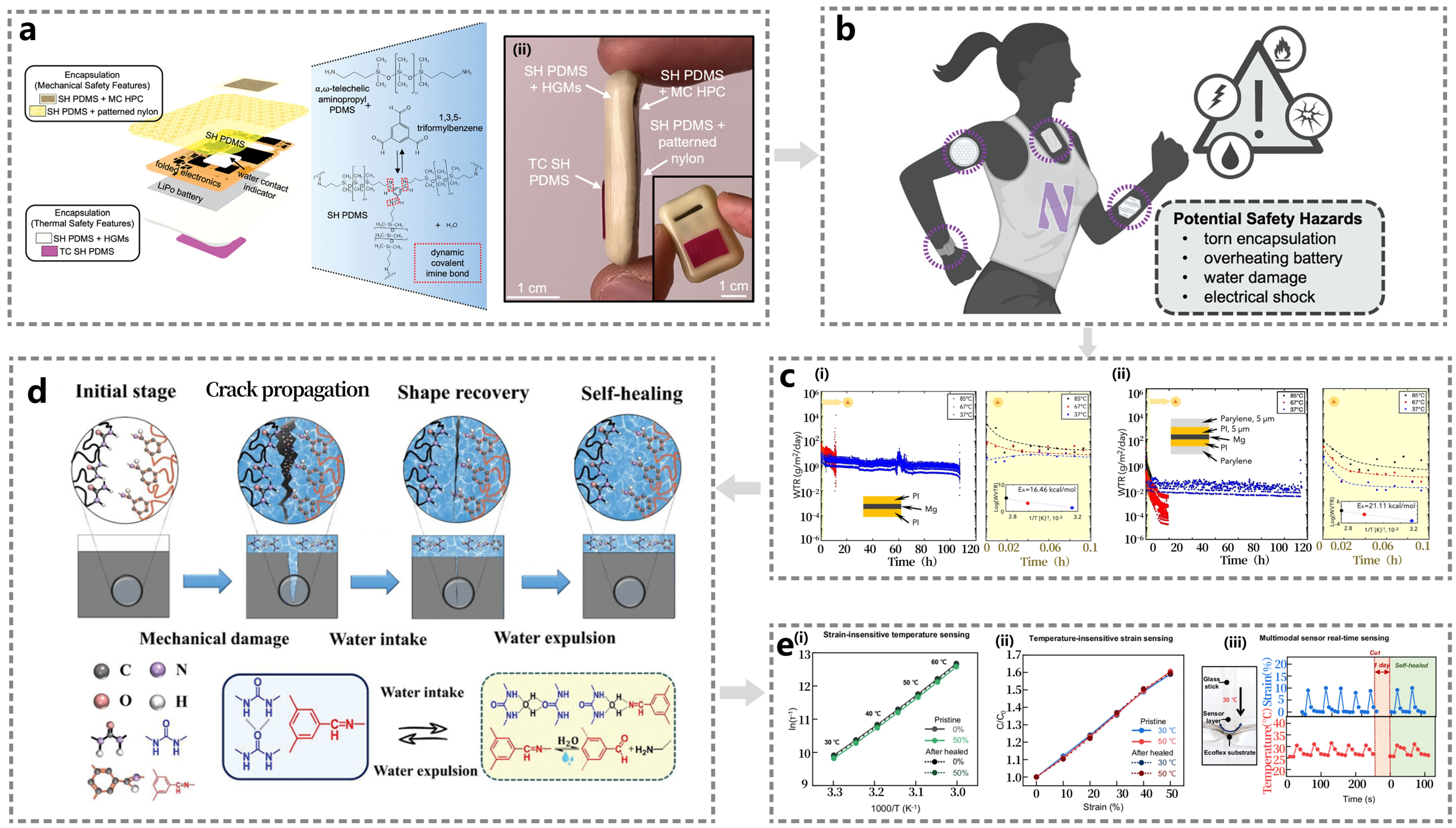
Figure 4.
Hierarchical intelligent encapsulation architecture for embodied-intelligence electronic skin. (a) Abrasion-resistant and antifouling surface layer [142]. (b) Dual-dynamic stress-dissipating and self-healing layer [143]. (c) Organic–inorganic water/oxygen barrier layer [144]. (d) Modulus-matched flexible transition layer [143,144].
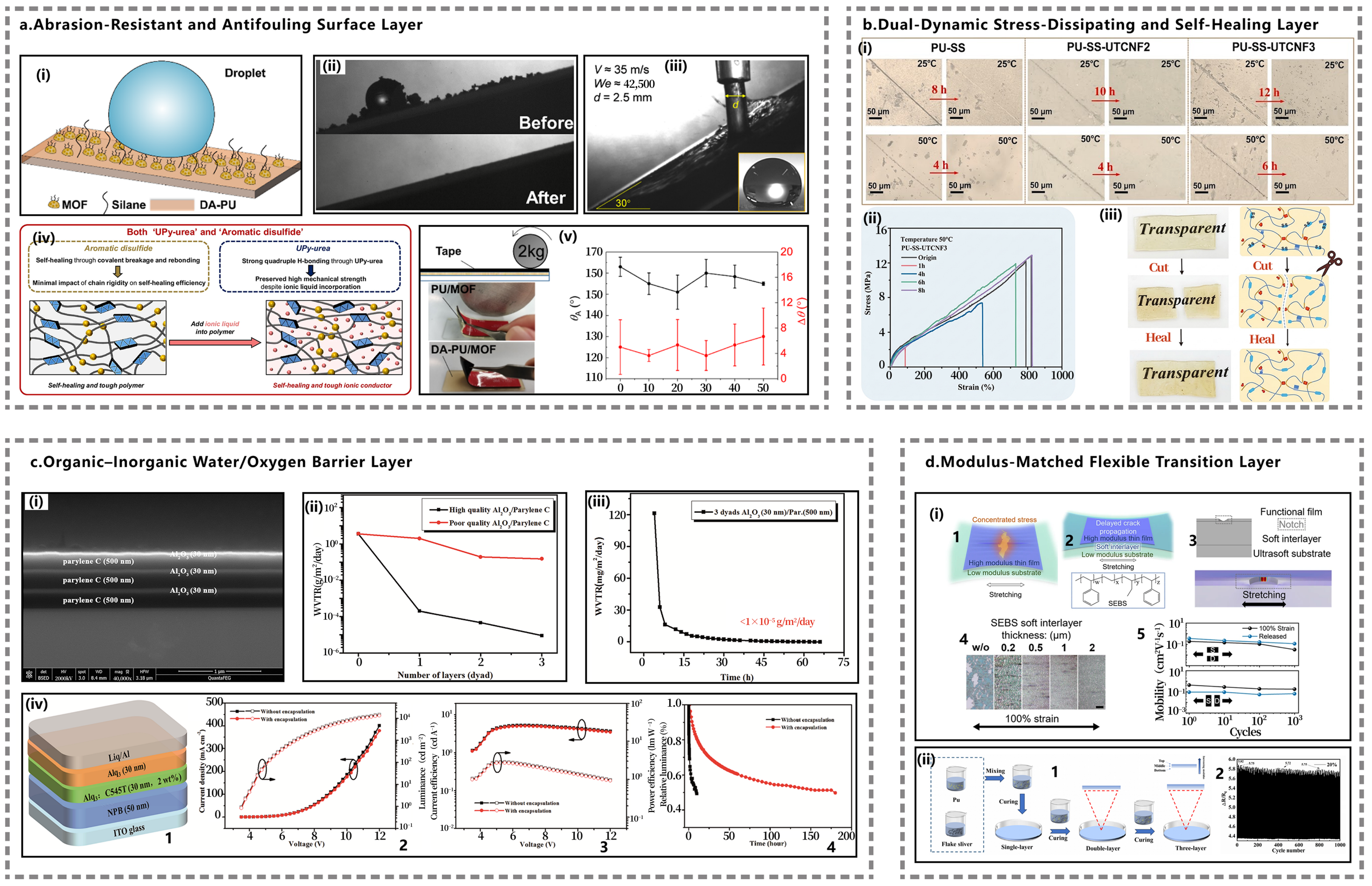
7.3. Future Development Directions of the Encapsulation Layer
As electronic skin moves toward long-term operation in embodied intelligent robots, the role of the encapsulation layer is expected to extend beyond passive environmental isolation. Future encapsulation systems will need to simultaneously consider mechanical protection, damage recovery, environmental stability, tactile transmission, and maintainability. Accordingly, research should increasingly focus on coordinated dynamic network design, smart damage-responsive protection, data-assisted material optimization, and region-specific encapsulation architectures.
First, encapsulation materials are expected to evolve from single dynamic interactions toward coordinated multiple-network designs. Rather than simply combining “weak” and “strong” bonds, future systems should integrate reversible interactions with complementary exchange kinetics, structural stability, and molecular mobility. Rapidly reorganizing interactions can facilitate stress relaxation and local network rearrangement, whereas more persistent dynamic crosslinks can help maintain structural integrity under sustained loading. The effectiveness of such networks depends not only on bond strength but also on coordination environment, exchange mechanism, temperature, and polymer-chain mobility [145]. Bio-based reinforcing or functional components, such as nanocellulose, lignin, and tannic acid, may further contribute to mechanical reinforcement, interfacial regulation, and reversible network construction. Their rational integration with polyurethane dynamic networks may provide a route toward balancing abrasion resistance, flexibility, self-healing capability, and environmental stability.
Second, the encapsulation layer may progressively evolve from passive protection toward smart protective interfaces capable of integrating damage sensing, state monitoring, and stimulus-assisted repair. Shape-memory-assisted healing and stimulus-responsive optical behavior have demonstrated the possibility of coupling structural recovery with visible state changes in polymer systems [146]. In future electronic skin encapsulation, similar concepts may be extended to monitor cracks, wear, or environmental degradation through optical, electrical, or dielectric responses. When combined with light-, heat-, or electrically responsive dynamic networks, localized repair could potentially be triggered after damage. However, such additional functions should be introduced without excessively increasing structural complexity, energy consumption, or interference with tactile signal transmission.
Third, data-driven methods may provide new opportunities for accelerating encapsulation material development. Machine learning has already been explored for the multi-objective design of polymer systems with competing properties such as toughness and degradability [147], while material-informatics frameworks have been developed for screening polymers according to durability, recyclability, synthetic accessibility, and sustainability [148]. These approaches provide transferable strategies for electronic-skin encapsulation design. In the future, machine learning, high-throughput calculations, and molecular simulations could be used to establish relationships among material composition, dynamic network architecture, processing conditions, and service performance, thereby assisting the optimization of dynamic interactions, crosslinking density, bio-based component content, and hierarchical structures. The effectiveness of such approaches, however, will depend strongly on the availability of standardized and high-quality datasets containing comparable mechanical, healing, barrier, interfacial, electrical, and aging parameters.
Finally, as electronic skin progresses from localized patches toward large-area and potentially full-body robotic coverage, encapsulation design may shift from uniform material systems toward region-specific, graded, and modular architectures. Large-area stretchable electronic skins have already demonstrated distributed sensing and morphological reconstruction on soft robotic systems [149], while multimodal electronic skins have shown the feasibility of integrating multiple sensing functions within flexible platforms [150]. These developments suggest that future robotic electronic skins may require differentiated encapsulation strategies according to local service conditions. Regions subjected to frequent grasping or contact may require greater abrasion and impact resistance, whereas joints require higher flexibility and fatigue resistance, and areas intended for delicate interaction may prioritize efficient tactile transmission. Combining region-specific material design with modular replacement and local repair may therefore improve maintainability and reduce the need to replace large-area electronic skin systems after localized failure.
Overall, future electronic skin encapsulation research is likely to develop along several interconnected directions, including coordinated dynamic network design, smart damage-responsive protection, data-assisted material optimization, and region-specific modular encapsulation. Progress in these areas should be evaluated not only by self-healing efficiency but also by the recovery and retention of mechanical, barrier, interfacial, and sensing functions under realistic service conditions. Establishing quantitative reliability criteria and standardized damage–healing protocols will be essential for translating self-healing encapsulation materials from laboratory demonstrations toward durable, repairable, and maintainable electronic skin systems for embodied intelligent robots. The major future research directions for intelligent encapsulation coatings in embodied electronic skin are summarized in Figure 5.
Figure 5.
Future development roadmap for encapsulation coatings in embodied-intelligence electronic skin. (a) Dual-dynamic networks [145]. (b) Smart encapsulation and active repair [146]. (c) AI-assisted materials design [147,148]. (d) Full-body electronic skin and modular encapsulation [136,149,150].
8. Current Challenges and Future Development Suggestions
In recent years, significant progress has been made in material system construction, dynamic network design, and device integration of bio-based self-healing polyurethane electronic skin. However, at present, most research still mainly stays at the laboratory scale verification stage, and there is still a significant gap from the long-term stable application of embodied intelligent robots. Future research needs to gradually move from material innovation to systematic design and engineering applications.
Firstly, the functional design of bio-based components still needs further deepening. At present, most research focuses on increasing the bio-based content and replacing petroleum based raw materials. However, for electronic skin, simply increasing the bio-based proportion cannot directly translate into device performance advantages. Future research should pay more attention to the structural functional relationships of bio-based components in dynamic network construction, interface regulation, and environmental stability enhancement; establish a quantitative correlation between bio-based molecular structure and electronic skin performance; and achieve the transformation from “renewable sources” to “functional design units”.
Secondly, the dual dynamic network system still has significant room for development. At present, most research focuses more on the introduction of dynamic key types, but there is still insufficient understanding of the collaborative relationship between different dynamic effects and their hierarchical organizational rules. Future research should further explore the functional division, response sequence, and long-term evolution behavior of different dynamic units in the network, establish system design principles from molecular structure to device performance, and thus achieve the transformation of electronic skin from empirical optimization to predictable design.
In addition, the electronic skin encapsulation layer is expected to become an important research growth point in the future. At present, research resources on electronic skin are still mainly focused on the sensing functional layer, and attention to the role of the packaging layer in device lifespan, environmental adaptability, and system reliability is relatively limited. In fact, during long-term service, the encapsulation layer is often the first structural unit to come into contact with the external environment and directly withstand wear and aging, and its performance will directly affect the stability of the entire electronic skin system. Therefore, the future development direction of the encapsulation layer should not only include the improvement of protective functions, but also focus on the construction of repairable, maintainable, and sustainable service capabilities, gradually developing it into an intelligent protection system with active response characteristics.
At the same time, the development of artificial intelligence and data-driven methods has provided a new research path for the design of electronic skin materials. By combining molecular simulation, high-throughput experiments, and machine learning methods, it is expected to establish predictive models between bio-based components, dynamic network structures, and device performance, thereby improving material development efficiency, shortening experimental iteration cycles, and achieving intelligent design of electronic skin materials.
Overall, the development focus of bio-based self-healing polyurethane electronic skin in the future will gradually shift from simply optimizing material properties to synergistically improving structural design, functional integration, and application reliability. Especially in the development of bio-based functional units, the precise construction of dual dynamic networks, and the design of intelligent encapsulation layers, there is still broad room for development. With the continuous advancement of material design methods, manufacturing technology, and artificial intelligence tools, electronic skins are expected to gradually move from laboratory concept verification to long-term stable service, providing important support for the development of embodied intelligent robots, high-end human–machine interaction systems, and next-generation flexible electronic equipment.
9. Conclusions
This review summarizes recent progress in bio-based self-healing polyurethane for electronic skin, with particular emphasis on bio-based building blocks, dynamic network mechanisms, network construction strategies, and their potential adaptation to different functional layers of electronic skin for embodied intelligent robots. Electronic skin is evolving from a single flexible sensing element toward an integrated intelligent interface that combines mechanical compliance, tactile perception, signal transmission, environmental protection, and interactive feedback. This evolution places increasingly stringent demands on materials, which must maintain mechanical integrity and sensing functionality under repeated deformation, friction, local damage, and environmental exposure.
Bio-based polyurethane offers a versatile platform for addressing these requirements because its segmented structure, mechanical properties, and intermolecular interactions can be widely tailored. Renewable components such as castor oil, nanocellulose, lignin, chitosan, tannic acid, and vanillin can serve as structural or functional building blocks while providing abundant reactive groups for the construction of hydrogen-bonding, imine, coordination, and other reversible interactions. Through the rational combination of non-covalent interactions, dynamic covalent bonds, and reinforcing structures, multiple dynamic networks may improve the balance among flexibility, mechanical robustness, damage recovery, interfacial stability, and functional durability. However, these improvements depend not only on the type of dynamic bond but also on its exchange kinetics, spatial distribution, network architecture, and compatibility with conductive and interfacial components.
Overall, the research conducted to date has brought bio-based self-healing polyurethane closer to practical electronic skin applications, but primarily at the material and individual functional-layer levels. Studies on bio-based polyurethane have demonstrated that renewable components can provide flexible segments, reinforcing structures, and reactive sites for constructing dynamic networks, while self-healing polyurethane systems have established feasible routes for restoring structural integrity after mechanical damage. Meanwhile, advances in self-healing conductive composites and flexible electronic systems indicate that reconstruction of electrical pathways and sensing functions is also achievable under appropriate material and network designs. These developments collectively establish an important material and mechanistic foundation for repairable electronic skin.
However, a fully integrated bio-based polyurethane electronic skin capable of simultaneously maintaining mechanical durability, self-healing, electrical continuity, sensing accuracy, environmental resistance, and long-term cyclic stability has not yet been comprehensively demonstrated. From the perspective of robotic perception, the most critical challenge is therefore no longer simply maximizing tensile strength or mechanical healing efficiency, but achieving synchronized recovery of the polymer matrix, conductive network, and sensing function after damage. Stable interfaces between the encapsulation, sensing, circuit, and substrate layers are equally important because local interfacial failure can interrupt stress transfer or signal transmission even when the individual materials remain functional. Future research should therefore prioritize system-level mechanical–electrical–sensory recovery, durable conductive network reconstruction, interlayer compatibility, standardized damage–healing evaluation, and scalable fabrication. Addressing these issues will determine whether bio-based self-healing polyurethane can progress from promising material-level demonstrations toward durable and autonomous electronic skin systems for embodied intelligent robots.
Author Contributions
Conceptualization, X.L.; methodology, X.Z. and H.Y.; formal analysis, H.Y.; investigation, X.Z., H.Y., Z.W., G.X. and C.M.; resources, X.L.; data curation, X.Z. and H.Y.; writing—original draft preparation, X.Z. and H.Y.; writing—review and editing, Z.W., G.X., C.M. and X.L.; visualization, X.Z., H.Y. and Z.W.; supervision, X.L.; project administration, X.L.; funding acquisition, X.L. All authors have read and agreed to the published version of the manuscript.
Funding
This research received no external funding.
Data Availability Statement
No new data were created or analyzed in this study. Data sharing is not applicable to this article.
Conflicts of Interest
The authors declare no conflict of interest.
References
- Hammock, M.L.; Chortos, A.; Tee, B.C.-K.; Tok, J.B.-H.; Bao, Z. 25th anniversary article: The evolution of electronic skin (e-skin): A brief history, design considerations, and recent progress. Adv. Mater. 2013, 25, 5997–6038. [Google Scholar] [CrossRef] [Scilit]
- Someya, T.; Sekitani, T.; Iba, S.; Kato, Y.; Kawaguchi, H.; Sakurai, T. A large-area, flexible pressure sensor matrix with organic field-effect transistors for artificial skin applications. Proc. Natl. Acad. Sci. USA 2004, 101, 9966–9970. [Google Scholar] [CrossRef] [Scilit]
- Someya, T.; Kato, Y.; Sekitani, T.; Iba, S.; Noguchi, Y.; Murase, Y.; Kawaguchi, H.; Sakurai, T. Conformable, flexible, large-area networks of pressure and thermal sensors with organic transistor active matrixes. Proc. Natl. Acad. Sci. USA 2005, 102, 12321–12325. [Google Scholar] [CrossRef] [Scilit]
- Pang, C.; Lee, G.-Y.; Kim, T.-I.; Kim, S.M.; Kim, H.N.; Ahn, S.-H.; Suh, K.-Y. A flexible and highly sensitive strain-gauge sensor using reversible interlocking of nanofibres. Nat. Mater. 2012, 11, 795–801. [Google Scholar] [CrossRef] [Scilit]
- Chou, H.-H.; Nguyen, A.; Chortos, A.; To, J.W.F.; Lu, C.; Mei, J.; Kurosawa, T.; Bae, W.-G.; Tok, J.B.-H.; Bao, Z. A chameleon-inspired stretchable electronic skin with interactive colour changing controlled by tactile sensing. Nat. Commun. 2015, 6, 8011. [Google Scholar] [CrossRef] [Scilit]
- Mannsfeld, S.C.B.; Tee, B.C.-K.; Stoltenberg, R.M.; Chen, C.V.H.-H.; Barman, S.; Muir, B.V.O.; Sokolov, A.N.; Reese, C.; Bao, Z. Highly sensitive flexible pressure sensors with microstructured rubber dielectric layers. Nat. Mater. 2010, 9, 859–864. [Google Scholar] [CrossRef] [Scilit]
- Lipomi, D.J.; Vosgueritchian, M.; Tee, B.C.-K.; Hellstrom, S.L.; Lee, J.A.; Fox, C.H.; Bao, Z. Skin-like pressure and strain sensors based on transparent elastic films of carbon nanotubes. Nat. Nanotechnol. 2011, 6, 788–792. [Google Scholar] [CrossRef] [Scilit]
- Webb, R.C.; Bonifas, A.P.; Behnaz, A.; Zhang, Y.; Yu, K.J.; Cheng, H.; Shi, M.; Bian, Z.; Liu, Z.; Kim, Y.-S.; et al. Ultrathin conformal devices for precise and continuous thermal characterization of human skin. Nat. Mater. 2013, 12, 938–944. [Google Scholar] [CrossRef] [Scilit]
- Mu, S.; Zhao, R.; Lin, Z.; Huang, Y.; Li, S.; Li, C.; Zhang, X.-P.; Ding, W. Dual-modal tactile e-skin: Enabling bidirectional human-robot interaction via integrated tactile perception and feedback. In Proceedings of the 2024 IEEE International Conference on Robotics and Automation (ICRA), Yokohama, Japan, 13–17 May 2024; IEEE: New York, NY, USA, 2024; pp. 1026–1032. [Google Scholar] [CrossRef] [Scilit]
- Yamada, T.; Hayamizu, Y.; Yamamoto, Y.; Yomogida, Y.; Izadi-Najafabadi, A.; Futaba, D.N.; Hata, K. A stretchable carbon nanotube strain sensor for human-motion detection. Nat. Nanotechnol. 2011, 6, 296–301. [Google Scholar] [CrossRef] [Scilit]
- Wang, C.; Hwang, D.; Yu, Z.; Takei, K.; Park, J.; Chen, T.; Ma, B.; Javey, A. User-interactive electronic skin for instantaneous pressure visualization. Nat. Mater. 2013, 12, 899–904. [Google Scholar] [CrossRef] [Scilit]
- Moin, A.; Zhou, A.; Rahimi, A.; Benatti, S.; Menon, A.; Tamakloe, S.; Ting, J.; Yamamoto, N.; Khan, Y.; Burghardt, F.; et al. An EMG gesture recognition system with flexible high-density sensors and brain-inspired high-dimensional classifier. In Proceedings of the 2018 IEEE International Symposium on Circuits and Systems (ISCAS), Florence, Italy, 27–30 May 2018; IEEE: New York, NY, USA, 2018; pp. 1–5. [Google Scholar] [CrossRef] [Scilit]
- Ahanat, K.; Juan, A.; Veronique, P. Tactile sensing in dexterous robot hands-review. Rob. Auton. Syst. 2015, 74, 195–220. [Google Scholar] [CrossRef] [Scilit]
- Dahiya, R.S.; Metta, G.; Valle, M.; Sandini, G. Tactile sensing—From humans to humanoids. IEEE Trans. Robot. 2010, 26, 1–20. [Google Scholar] [CrossRef] [Scilit]
- Dong, S.; Yuan, W.; Adelson, E.H. Improved GelSight tactile sensor for measuring geometry and slip. In Proceedings of the 2017 IEEE/RSJ International Conference on Intelligent Robots and Systems (IROS), Vancouver, BC, Canada, 24–28 September 2017; IEEE: New York, NY, USA, 2017; pp. 137–144. [Google Scholar] [CrossRef] [Scilit]
- Calandra, R.; Owens, A.; Jayaraman, D.; Lin, J.; Yuan, W.; Malik, J.; Adelson, E.H.; Levine, S. More than a feeling: Learning to grasp and regrasp using vision and touch. IEEE Robot. Autom. Lett. 2018, 3, 3300–3307. [Google Scholar] [CrossRef] [Scilit]
- Luo, S.; Bimbo, J.; Dahiya, R.; Liu, H. Robotic tactile perception of object properties: A review. Mechatronics 2017, 48, 54–67. [Google Scholar] [CrossRef] [Scilit]
- Tee, B.C.-K.; Chortos, A.; Berndt, A.; Nguyen, A.K.; Tom, A.; McGuire, A.; Lin, Z.C.; Tien, K.; Bae, W.-G.; Wang, H.; et al. A skin-inspired organic digital mechanoreceptor. Science 2015, 350, 313–316. [Google Scholar] [CrossRef] [Scilit]
- Park, C.B.; Chang, G.; Chong, J.; Kang, J. Design guidelines for self-healing materials in soft electronics. Nano Converg. 2026, 13, 18. [Google Scholar] [CrossRef] [Scilit]
- Mark, J.E. Some interesting things about polysiloxanes. Acc. Chem. Res. 2004, 37, 946–953. [Google Scholar] [CrossRef] [Scilit]
- Dahiya, R.; Yogeswaran, N.; Liu, F.; Manjakkal, L.; Burdet, E.; Hayward, V.; Jörntell, H. Large-area soft e-skin: The challenges beyond sensor designs. Proc. IEEE 2019, 107, 2016–2033. [Google Scholar] [CrossRef] [Scilit]
- Sun, J.-Y.; Zhao, X.; Illeperuma, W.R.K.; Chaudhuri, O.; Oh, K.H.; Mooney, D.J.; Vlassak, J.J.; Suo, Z. Highly stretchable and tough hydrogels. Nature 2012, 489, 133–136. [Google Scholar] [CrossRef] [Scilit]
- Li, W.; Xu, C.; Li, J.; Liu, Y.; Chen, Z.; Liu, H.; Yin, Y.; Zhai, W.; Zhou, K.; Dai, K. Highly stretchable, adhesive and self-healing hydrogel electronics for human motion detection and electrophysiological signal monitoring. J. Colloid Interface Sci. 2025, 703, 139173. [Google Scholar] [CrossRef] [Scilit]
- Liu, Y.; Pharr, M.; Salvatore, G.A. Lab-on-skin: A review of flexible and stretchable electronics for wearable health monitoring. ACS Nano 2017, 11, 9614–9635. [Google Scholar] [CrossRef] [Scilit]
- Akindoyo, J.O.; Beg, M.D.H.; Ghazali, S.; Islam, M.R.; Jeyaratnam, N.; Yuvaraj, A.R. Polyurethane types, synthesis and applications—A review. RSC Adv. 2016, 6, 114453–114482. [Google Scholar] [CrossRef] [Scilit]
- Wang, Y.; Ameer, G.A.; Sheppard, B.J.; Langer, R. A tough biodegradable elastomer. Nat. Biotechnol. 2002, 20, 602–606. [Google Scholar] [CrossRef] [Scilit]
- Zhang, C.; Madbouly, S.A.; Kessler, M.R. Biobased polyurethanes prepared from different vegetable oils. ACS Appl. Mater. Interfaces 2015, 7, 1226–1233. [Google Scholar] [CrossRef] [Scilit]
- Thakur, V.K.; Thakur, M.K. Recent advances in green hydrogels from lignin: A review. Int. J. Biol. Macromol. 2015, 72, 834–847. [Google Scholar] [CrossRef] [Scilit]
- Kargarzadeh, H.; Mariano, M.; Gopakumar, D.; Ahmad, I.; Thomas, S.; Dufresne, A.; Huang, J.; Lin, N. Advances in cellulose nanomaterials. Cellulose 2018, 25, 2151–2189. [Google Scholar] [CrossRef] [Scilit]
- Liu, J.; Urban, M.W. Dynamic interfaces in self-healable polymers. Langmuir 2024, 40, 7268–7285. [Google Scholar] [CrossRef] [Scilit]
- Yang, Y.; Urban, M.W. Self-healing polymeric materials. Chem. Soc. Rev. 2013, 42, 7446–7467. [Google Scholar] [CrossRef] [Scilit]
- Das, A.; Theato, P. Activated ester containing polymers: Opportunities and challenges for the design of functional macromolecules. Chem. Rev. 2016, 116, 1434–1495. [Google Scholar] [CrossRef] [Scilit]
- Roy, N.; Bruchmann, B.; Lehn, J.-M. DYNAMERS: Dynamic polymers as self-healing materials. Chem. Soc. Rev. 2015, 44, 3786–3807. [Google Scholar] [CrossRef] [Scilit]
- Winne, J.M.; Leibler, L.; Du Prez, F.E. Dynamic covalent chemistry in polymer networks: A mechanistic perspective. Polym. Chem. 2019, 10, 6091–6108. [Google Scholar] [CrossRef] [Scilit]
- Gandini, A. Polymers from renewable resources: A challenge for the future of macromolecular materials. Macromolecules 2008, 41, 9491–9504. [Google Scholar] [CrossRef] [Scilit]
- Mutlu, H.; Meier, M.A.R. Castor oil as a renewable resource for the chemical industry. Eur. J. Lipid Sci. Technol. 2010, 112, 10–30. [Google Scholar] [CrossRef] [Scilit]
- Habibi, Y.; Lucia, L.A.; Rojas, O.J. Cellulose nanocrystals: Chemistry, self-assembly, and applications. Chem. Rev. 2010, 110, 3479–3500. [Google Scholar] [CrossRef] [Scilit]
- Siqueira, G.; Bras, J.; Dufresne, A. Cellulosic bionanocomposites: A review of preparation, properties and applications. Polymers 2010, 2, 728–765. [Google Scholar] [CrossRef] [Scilit]
- Benítez, A.J.; Walther, A. Cellulose nanofibril nanopapers and bioinspired nanocomposites: A review to understand the mechanical property space. J. Mater. Chem. A 2017, 5, 16003–16024. [Google Scholar] [CrossRef] [Scilit]
- Upton, B.M.; Kasko, A.M. Strategies for the conversion of lignin to high-value polymeric materials: Review and perspective. Chem. Rev. 2016, 116, 2275–2306. [Google Scholar] [CrossRef] [Scilit]
- Kai, D.; Tan, M.J.; Chee, P.L.; Chua, Y.K.; Yap, Y.L.; Loh, X.J. Towards lignin-based functional materials in a sustainable world. Green Chem. 2016, 18, 1175–1200. [Google Scholar] [CrossRef] [Scilit]
- Sen, S.; Patil, S.; Argyropoulos, D.S. Thermal properties of lignin in copolymers, blends, and composites: A review. Green Chem. 2015, 17, 4862–4887. [Google Scholar] [CrossRef] [Scilit]
- Rinaudo, M. Chitin and chitosan: Properties and applications. Prog. Polym. Sci. 2006, 31, 603–632. [Google Scholar] [CrossRef] [Scilit]
- Rowan, S.J.; Cantrill, S.J.; Cousins, G.R.L.; Sanders, J.K.M.; Stoddart, J.F. Dynamic covalent chemistry. Angew. Chem. Int. Ed. 2002, 41, 898–952. [Google Scholar] [CrossRef] [Scilit]
- Lee, H.; Dellatore, S.M.; Miller, W.M.; Messersmith, P.B. Mussel-inspired surface chemistry for multifunctional coatings. Science 2007, 318, 426–430. [Google Scholar] [CrossRef] [Scilit]
- Croisier, F.; Jérôme, C. Chitosan-based biomaterials for tissue engineering. Eur. Polym. J. 2013, 49, 780–792. [Google Scholar] [CrossRef] [Scilit]
- Dash, M.; Chiellini, F.; Ottenbrite, R.M.; Chiellini, E. Chitosan—A versatile semi-synthetic polymer in biomedical applications. Prog. Polym. Sci. 2011, 36, 981–1014. [Google Scholar] [CrossRef] [Scilit]
- Ejima, H.; Richardson, J.J.; Liang, K.; Best, J.P.; van Koeverden, M.P.; Such, G.K.; Cui, J.; Caruso, F. One-step assembly of coordination complexes for versatile film and particle engineering. Science 2013, 341, 154–157. [Google Scholar] [CrossRef] [Scilit]
- Liu, Y.; Meng, H.; Qian, Z.; Fan, N.; Choi, W.; Zhao, F.; Lee, B.P. A moldable nanocomposite hydrogel composed of a mussel-inspired polymer and a nanosilicate as a fit-to-shape tissue sealant. Angew. Chem. Int. Ed. 2017, 56, 4224–4228. [Google Scholar] [CrossRef] [Scilit]
- Fache, M.; Boutevin, B.; Caillol, S. Vanillin production from lignin and its use as a renewable chemical. ACS Sustain. Chem. Eng. 2016, 4, 35–46. [Google Scholar] [CrossRef] [Scilit]
- Jin, Y.; Yu, C.; Denman, R.J.; Zhang, W. Recent advances in dynamic covalent chemistry. Chem. Soc. Rev. 2013, 42, 6634–6654. [Google Scholar] [CrossRef] [Scilit]
- Du, R.; Zhou, G.; Wang, X. Vanillin oxime-enabled castor-oil-based waterborne polyurethane with tunable mechanical, self-healing, and fluorescent properties. Macromol. Chem. Phys. 2025, 226, 2400493. [Google Scholar] [CrossRef] [Scilit]
- Shi, M.; Yang, J.; Wang, X. Preparation castor oil-modified high bio-based waterborne polyurethane and its application. J. Polym. Res. 2021, 28, 351. [Google Scholar] [CrossRef] [Scilit]
- Fan, X.; Zhang, L.; Dong, F.; Liu, H.; Xu, X. Room-temperature self-healing polyurethane–cellulose nanocrystal composites with strong strength and toughness based on dynamic bonds. Carbohydr. Polym. 2023, 308, 120654. [Google Scholar] [CrossRef] [Scilit]
- Peng, J.; Wang, H.; Chen, S.; Liu, W.; Qiu, X. Mechanically robust, reprocessable, and light-controlled healable solvent-free lignin-containing polyurethane elastomers based on dynamic phenol-carbamate network. Macromolecules 2025, 58, 836–854. [Google Scholar] [CrossRef] [Scilit]
- Gupta, A.; Kim, B.S. Shape memory polyurethane biocomposites based on toughened polycaprolactone promoted by nano-chitosan. Nanomaterials 2019, 9, 225. [Google Scholar] [CrossRef] [Scilit]
- Liang, K.; Qi, X.; Xiao, X.; Wang, L.; Zhang, J. Tannic acid-based hyperbranched polyurethane with superior mechanical properties, room-temperature self-healability, and ultrahigh adhesion for scalable production. Macromolecules 2025, 58, 11216–11228. [Google Scholar] [CrossRef] [Scilit]
- Wang, Y.; Yu, Z.; Zhang, P.; Wang, Y.; Chang, Z.; Jiang, P.; Xia, J.; Gao, X.; Bao, Y. Development of a bio-based self-healing waterborne polyurethane with dynamic phenol-carbamate network for enhanced antimicrobial and antiseptic performance. J. Polym. Sci. 2024, 62, 4277. [Google Scholar] [CrossRef] [Scilit]
- Zhang, Y.; Liu, R.; Wu, Z.; Lyu, B.; Liu, L. Vanillin-based polyol combined with castor oil to fabricate water-borne polyurethane with recyclability and self-healing properties for fluorescent ink and flexible sensor applications. ACS Sustain. Chem. Eng. 2024, 12, 16834–16846. [Google Scholar] [CrossRef] [Scilit]
- Holten-Andersen, N.; Harrington, M.J.; Birkedal, H.; Lee, B.P.; Messersmith, P.B.; Lee, K.Y.C.; Waite, J.H. pH-induced metal-ligand cross-links inspired by mussel yield self-healing polymer networks with near-covalent elastic moduli. Proc. Natl. Acad. Sci. USA 2011, 108, 2651–2655. [Google Scholar] [CrossRef] [Scilit]
- Li, C.-H.; Wang, C.; Keplinger, C.; Zuo, J.-L.; Jin, L.; Sun, Y.; Zheng, P.; Cao, Y.; Lissel, F.; Linder, C.; et al. A highly stretchable autonomous self-healing elastomer. Nat. Chem. 2016, 8, 618–624. [Google Scholar] [CrossRef] [Scilit]
- Filippidi, E.; Cristiani, T.R.; Eisenbach, C.D.; Waite, J.H.; Israelachvili, J.N.; Ahn, B.K.; Valentine, M.T. Toughening elastomers using mussel-inspired iron-catechol complexes. Science 2017, 358, 502–505. [Google Scholar] [CrossRef] [Scilit]
- Billiet, S.; Hillewaere, X.K.D.; Teixeira, R.F.A.; Du Prez, F.E. Chemistry of crosslinking processes for self-healing polymers. Macromol. Rapid Commun. 2013, 34, 290–309. [Google Scholar] [CrossRef] [Scilit]
- Amamoto, Y.; Kamada, J.; Otsuka, H.; Takahara, A.; Matyjaszewski, K. Repeatable photoinduced self-healing of covalently cross-linked polymers through reshuffling of trithiocarbonate units. Angew. Chem. Int. Ed. 2011, 50, 1660–1663. [Google Scholar] [CrossRef] [Scilit]
- Amamoto, Y.; Otsuka, H.; Takahara, A. Self-healing of covalently cross-linked polymers by reshuffling thiuram disulfide moieties in air under visible light. Adv. Mater. 2012, 24, 3975–3980. [Google Scholar] [CrossRef] [Scilit]
- Chen, X.; Dam, M.A.; Ono, K.; Mal, A.; Shen, H.; Nutt, S.R.; Sheran, K.; Wudl, F. A thermally re-mendable cross-linked polymeric material. Science 2002, 295, 1698–1702. [Google Scholar] [CrossRef] [Scilit]
- Liu, Y.-L.; Chuo, T.-W. Self-healing polymers based on thermally reversible Diels–Alder chemistry. Polym. Chem. 2013, 4, 2194–2205. [Google Scholar] [CrossRef] [Scilit]
- Huang, H.; Huang, Z.; Yin, X.; Lin, X.; Ji, L.; Sun, Y.; Lin, W.; He, J.; He, J.; Yi, G. Construction of polyurethane with excellent water-tolerant and self-healing properties by the efficient synergy of imine bonds and aliphatic long chains. Ind. Eng. Chem. Res. 2025, 64, 7407–7418. [Google Scholar] [CrossRef] [Scilit]
- Sun, Q.; Liu, Y.; Fan, Z.; Gu, Y.; Liu, P.; Li, D.; Chang, H.; Wang, M. Preparation and performance of self-healing polyurethane sensing materials enabled by synergistic dynamic interactions between hydrogen and disulfide bonds. J. Polym. Sci. 2026, 64, 2298–2312. [Google Scholar] [CrossRef] [Scilit]
- Li, Y.; Zhou, G.; Wang, L.; Zhou, Y.; Lei, Z.; Wang, X. A biomass-derived imine-linked waterborne polyurethane for self-healable anticorrosive coating. ACS Appl. Polym. Mater. 2025, 7, 11998–12006. [Google Scholar] [CrossRef] [Scilit]
- Xie, J.; Fan, L.; Yao, D.; Su, F.; Mu, Z.; Zheng, Y. Ultra-robust, self-healable and recyclable polyurethane elastomer via a combination of hydrogen bonds, dynamic chemistry, and microphase separation. Mater. Today Chem. 2022, 23, 100708. [Google Scholar] [CrossRef] [Scilit]
- Zhu, D.; Guo, C.; Liu, H.; Ye, J.; Chen, H.; Zhang, J.; Liu, Y.; Feng, L. Thermo-reversible DA bonds-based polyurethanes with both excellent comprehensive mechanical property and remarkable room temperature self-healing capability. Colloids Surf. A 2025, 711, 136398. [Google Scholar] [CrossRef] [Scilit]
- Ouyang, C.; Zhao, C.; Li, W.; Wu, X.; Le, X.; Chen, T.; Huang, W.; Gao, Q.; Shan, X.; Zhg, R.; et al. Super-tough, self-healing polyurethane based on Diels-Alder bonds and dynamic zinc–ligand interactions. Macromol. Mater. Eng. 2020, 305, 2000089. [Google Scholar] [CrossRef] [Scilit]
- Sun, Q.; Liu, Y.; Fan, Z.; Gu, Y.; Liu, P.; Li, D.; Chang, H.; Wang, M. Preparation and properties of self-healing polyurethane sensing materials synergistically regulated by thermoresponsive imine bonds and metal coordination bonds. ACS Appl. Polym. Mater. 2026, 8, 10729–10742. [Google Scholar] [CrossRef] [Scilit]
- Gao, Y.; Zhang, J.; Zhang, H.; Chow, L.; Zhao, G.; Guo, G.; Yiu, C.K.; Zhang, B.; Huang, Y.; Zhou, J.; et al. A neuromorphic robotic electronic skin with active pain and injury perception. Proc. Natl. Acad. Sci. USA 2025, 122, e2520922122. [Google Scholar] [CrossRef] [Scilit]
- Chortos, A.; Liu, J.; Bao, Z. Pursuing prosthetic electronic skin. Nat. Mater. 2016, 15, 937–950. [Google Scholar] [CrossRef] [Scilit]
- Cordier, P.; Tournilhac, F.; Soulié-Ziakovic, C.; Leibler, L. Self-healing and thermoreversible rubber from supramolecular assembly. Nature 2008, 451, 977–980. [Google Scholar] [CrossRef] [Scilit]
- Terryn, S.; Brancart, J.; Lefeber, D.; Van Assche, G.; Vanderborght, B. Self-healing soft pneumatic robots. Sci. Robot. 2017, 2, eaan4268. [Google Scholar] [CrossRef] [Scilit]
- Tee, B.C.-K.; Wang, C.; Allen, R.; Bao, Z. An electrically and mechanically self-healing composite with pressure-and flexion-sensitive properties for electronic skin applications. Nat. Nanotechnol. 2012, 7, 825–832. [Google Scholar] [CrossRef] [Scilit]
- Amjadi, M.; Kyung, K.-U.; Park, I.; Sitti, M. Stretchable, skin-mountable, and wearable strain sensors and their potential applications: A review. Adv. Funct. Mater. 2016, 26, 1678–1698. [Google Scholar] [CrossRef] [Scilit]
- Yuk, H.; Zhang, T.; Lin, S.; Parada, G.A.; Zhao, X. Tough bonding of hydrogels to diverse non-porous surfaces. Nat. Mater. 2016, 15, 190–196. [Google Scholar] [CrossRef] [Scilit]
- Someya, T.; Amagai, M. Toward a new generation of smart skins. Nat. Biotechnol. 2019, 37, 382–388. [Google Scholar] [CrossRef] [Scilit]
- Kumar, S.A.; Yadav, M.S.; Karmakar, S.; Kundu, A.; Etacheri, V.; Ratha, S.; Pal, V.K.; Sahoo, S. Smart self-healing polymers: Innovations in material design and applications for electronic skin and energy devices. J. Mater. Chem. A 2026, 14, 9177–9206. [Google Scholar] [CrossRef] [Scilit]
- Aida, T.; Meijer, E.W.; Stupp, S.I. Functional supramolecular polymers. Science 2012, 335, 813–817. [Google Scholar] [CrossRef] [Scilit]
- Wool, R.P. Self-healing materials: A review. Soft Matter 2008, 4, 400–418. [Google Scholar] [CrossRef] [Scilit]
- Wu, J.; Cai, L.-H.; Weitz, D.A. Tough self-healing elastomers by molecular enforced integration of covalent and reversible networks. Adv. Mater. 2017, 29, 1702616. [Google Scholar] [CrossRef] [Scilit]
- Chen, Y.; Kushner, A.M.; Williams, G.A.; Guan, Z. Multiphase design of autonomic self-healing thermoplastic elastomers. Nat. Chem. 2012, 4, 467–472. [Google Scholar] [CrossRef] [Scilit]
- Prisacariu, C. Polyurethane Elastomers: From Morphology to Mechanical Aspects; Springer Science & Business Media: Berlin, Germany, 2011. [Google Scholar]
- Xu, G.; Wang, Z.; Qian, Y.; Ma, C.; Liu, X. Synthesis, structure, and properties of MXene-enhanced polyurethane containing urea bonds. Materials 2026, 19, 725. [Google Scholar] [CrossRef] [Scilit]
- Cao, X.; Wei, X.; Li, G.; Hu, C.; Dai, K.; Guo, J.; Zheng, G.; Liu, C.; Shen, C.; Guo, Z. Strain sensing behaviors of epoxy nanocomposites with carbon nanotubes under cyclic deformation. Polymer 2017, 112, 1–9. [Google Scholar] [CrossRef] [Scilit]
- Duan, L.; Fu, S.; Deng, H.; Zhang, Q.; Wang, K.; Chen, F.; Fu, Q. The resistivity–strain behavior of conductive polymer composites: Stability and sensitivity. J. Mater. Chem. A 2014, 2, 17085–17098. [Google Scholar] [CrossRef] [Scilit]
- Jung, J.; Lee, S.; Kim, H.; Lee, W.; Chong, J.; You, I.; Kang, J. Self-healing electronic skin with high fracture strength and toughness. Nat. Commun. 2024, 15, 9763. [Google Scholar] [CrossRef] [Scilit]
- Kwiatkowski, K.; Nachman, M. The abrasive wear resistance of the segmented linear polyurethane elastomers based on a variety of polyols as soft segments. Polymers 2017, 9, 705. [Google Scholar] [CrossRef] [Scilit]
- Pu, W.; Fu, D.; Wang, Z.; Gan, X.; Lu, X.; Yang, L.; Xia, H. Realizing crack diagnosing and self-healing by electricity with a dynamic crosslinked flexible polyurethane composite. Adv. Sci. 2018, 5, 1800101. [Google Scholar] [CrossRef] [Scilit]
- Sun, X.; Yang, X.; Zhang, J.; Shang, B.; Lyu, P.; Zhang, C.; Liu, X.; Xia, L. Fabrication of silane-grafted cellulose nanocrystals and their effects on the structural, thermal, mechanical, and hysteretic behavior of thermoplastic polyurethane. Int. J. Mol. Sci. 2023, 24, 5036. [Google Scholar] [CrossRef] [Scilit]
- Kloxin, C.J.; Bowman, C.N. Covalent adaptable networks: Smart, reconfigurable and responsive network systems. Chem. Soc. Rev. 2013, 42, 7161–7173. [Google Scholar] [CrossRef] [Scilit]
- Denissen, W.; Winne, J.M.; Du Prez, F.E. Vitrimers: Permanent organic networks with glass-like fluidity. Chem. Sci. 2016, 7, 30–38. [Google Scholar] [CrossRef] [Scilit]
- Sonnenschein, M.F. Polyurethanes: Science, Technology, Markets, and Trends; John Wiley & Sons: Hoboken, NJ, USA, 2021. [Google Scholar]
- Doi, M.; Edwards, S.F. The Theory of Polymer Dynamics; Oxford University Press: Oxford, UK, 1988. [Google Scholar]
- Yilgör, I.; Yilgör, E.; Wilkes, G.L. Critical parameters in designing segmented polyurethanes and their effect on morphology and properties: A comprehensive review. Polymer 2015, 58, A1–A36. [Google Scholar] [CrossRef] [Scilit]
- Anderson, T.L. Fracture Mechanics: Fundamentals and Applications; CRC Press: Boca Raton, FL, USA, 2005. [Google Scholar]
- Lake, G.J.; Thomas, A.G. The strength of highly elastic materials. Proc. R. Soc. Lond. Ser. A 1967, 300, 108–119. [Google Scholar] [CrossRef] [Scilit]
- Zou, Z.; Zhu, C.; Li, Y.; Lei, X.; Zhang, W.; Xiao, J. Rehealable, fully recyclable, and malleable electronic skin enabled by dynamic covalent thermoset nanocomposite. Sci. Adv. 2018, 4, eaaq0508. [Google Scholar] [CrossRef] [Scilit]
- Stassi, S.; Cauda, V.; Canavese, G.; Pirri, C.F. Flexible tactile sensing based on piezoresistive composites: A review. Sensors 2014, 14, 5296–5332. [Google Scholar] [CrossRef] [Scilit]
- Brunsveld, L.; Folmer, B.J.B.; Meijer, E.W.; Sijbesma, R.P. Supramolecular polymers. Chem. Rev. 2001, 101, 4071–4098. [Google Scholar] [CrossRef] [Scilit]
- Sileika, T.S.; Barrett, D.G.; Zhang, R.; Lau, K.H.A.; Messersmith, P.B. Colorless multifunctional coatings inspired by polyphenols found in tea, chocolate, and wine. Angew. Chem. Int. Ed. 2013, 52, 10766–10770. [Google Scholar] [CrossRef] [Scilit]
- Guo, J.; Ping, Y.; Ejima, H.; Alt, K.; Meissner, M.; Richardson, J.J.; Yan, Y.; Peter, K.; von Elverfeldt, D.; Hagemeyer, C.E.; et al. Engineering multifunctional capsules through the assembly of metal–phenolic networks. Angew. Chem. Int. Ed. 2014, 53, 5546–5551. [Google Scholar] [CrossRef] [Scilit]
- Podgórski, M.; Fairbanks, B.D.; Kirkpatrick, B.E.; McBride, M.; Martinez, A.; Dobson, A.; Bongiardina, N.J.; Bowman, C.N. Toward stimuli-responsive dynamic thermosets through continuous development and improvements in covalent adaptable networks (CANs). Adv. Mater. 2020, 32, 1906876. [Google Scholar] [CrossRef] [Scilit]
- Yilgör, E.; Yilgör, İ. Influence of soft segment structure, hydrogen bonding, and diisocyanate symmetry on morphology and properties of segmented thermoplastic polyurethanes and polyureas. Turk. J. Chem. 2023, 47, 1007–1017. [Google Scholar] [CrossRef] [Scilit]
- Belowich, M.E.; Stoddart, J.F. Dynamic imine chemistry. Chem. Soc. Rev. 2012, 41, 2003–2024. [Google Scholar] [CrossRef] [Scilit]
- Canadell, J.; Goossens, H.; Klumperman, B. Self-healing materials based on disulfide links. Macromolecules 2011, 44, 2536–2541. [Google Scholar] [CrossRef] [Scilit]
- Herbst, F.; Döhler, D.; Michael, P.; Binder, W.H. Self-healing polymers via supramolecular forces. Macromol. Rapid Commun. 2013, 34, 203–220. [Google Scholar] [CrossRef] [Scilit]
- Cromwell, O.R.; Chung, J.; Guan, Z. Malleable and self-healing covalent polymer networks through tunable dynamic boronic ester bonds. J. Am. Chem. Soc. 2015, 137, 6492–6495. [Google Scholar] [CrossRef] [Scilit]
- Claussen, K.U.; Giesa, R.; Schmidt, H.-W. Longitudinal polymer gradient materials based on crosslinked polymers. Polymer 2014, 55, 29–38. [Google Scholar] [CrossRef] [Scilit]
- Gong, J.P.; Katsuyama, Y.; Kurokawa, T.; Osada, Y. Double-network hydrogels with extremely high mechanical strength. Adv. Mater. 2003, 15, 1155–1158. [Google Scholar] [CrossRef] [Scilit]
- Liu, C.; Kim, J.-T.; Yang, D.S.; Cho, D.; Yoo, S.; Madhvapathy, S.R.; Jeong, H.; Yang, T.; Luan, H.; Avila, R.; et al. Multifunctional materials strategies for enhanced safety of wireless, skin-interfaced bioelectronic devices. Adv. Funct. Mater. 2023, 33, 2302256. [Google Scholar] [CrossRef] [Scilit]
- Wang, Y.; Huang, X.; Zhang, X. Ultrarobust, tough and highly stretchable self-healing materials based on cartilage-inspired noncovalent assembly nanostructure. Nat. Commun. 2021, 12, 1291. [Google Scholar] [CrossRef] [Scilit]
- Son, D.; Kang, J.; Vardoulis, O.; Kim, Y.; Matsuhisa, N.; Oh, J.Y.; To, J.W.F.; Mun, J.; Katsumata, T.; Liu, Y.; et al. An integrated self-healable electronic skin system fabricated via dynamic reconstruction of a nanostructured conducting network. Nat. Nanotechnol. 2018, 13, 1057–1065. [Google Scholar] [CrossRef] [Scilit]
- Yoo, S.; Yang, T.; Park, M.; Jeong, H.; Lee, Y.J.; Cho, D.; Kim, J.; Kwak, S.S.; Shin, J.; Park, Y.; et al. Responsive materials and mechanisms as thermal safety systems for skin-interfaced electronic devices. Nat. Commun. 2023, 14, 1024. [Google Scholar] [CrossRef] [Scilit]
- Wang, J.; Wu, B.; Wei, P.; Sun, S.; Wu, P. Fatigue-free artificial ionic skin toughened by self-healable elastic nanomesh. Nat. Commun. 2022, 13, 4411. [Google Scholar] [CrossRef] [Scilit]
- Zhang, Y.; Yang, J.; Hou, X.; Li, G.; Wang, L.; Bai, N.; Cai, M.; Zhao, L.; Wang, Y.; Zhang, J.; et al. Highly stable flexible pressure sensors with a quasi-homogeneous composition and interlinked interfaces. Nat. Commun. 2022, 13, 1317. [Google Scholar] [CrossRef] [Scilit]
- Cheng, B.-X.; Gao, W.-C.; Ren, X.-M.; Ouyang, X.-Y.; Zhao, Y.; Zhao, H.; Wu, W.; Huang, C.-X.; Liu, Y.; Liu, X.-Y.; et al. A review of microphase separation of polyurethane: Characterization and applications. Polym. Test. 2022, 107, 107489. [Google Scholar] [CrossRef] [Scilit]
- Melchert, D.S.; Collino, R.R.; Ray, T.R.; Dolinski, N.D.; Friedrich, L.; Begley, M.R.; Gianola, D.S. Flexible conductive composites with programmed electrical anisotropy using acoustophoresis. Adv. Mater. Technol. 2019, 4, 1900586. [Google Scholar] [CrossRef] [Scilit]
- Dickey, M.D. Stretchable and soft electronics using liquid metals. Adv. Mater. 2017, 29, 1606425. [Google Scholar] [CrossRef] [Scilit]
- Markvicka, E.J.; Bartlett, M.D.; Huang, X.; Majidi, C. An autonomously electrically self-healing liquid metal–elastomer composite for robust soft-matter robotics and electronics. Nat. Mater. 2018, 17, 618–624. [Google Scholar] [CrossRef] [Scilit]
- Alhais Lopes, P.; Santos, B.C.; de Almeida, A.T.; Tavakoli, M. Reversible polymer-gel transition for ultra-stretchable chip-integrated circuits through self-soldering and self-coating and self-healing. Nat. Commun. 2021, 12, 4666. [Google Scholar] [CrossRef] [Scilit]
- Tan, D.; Qiu, M.; Chung, K.Y.; Fang, C.; Gao, Y.; Wang, Y.; Yin, X.; Guan, X.; Shu, L.; Fu, H.; et al. Self-healing, reconfigurable modular-architectured e-skin systems with thermally programmable interfaces. Device 2026, 101215. [Google Scholar] [CrossRef] [Scilit]
- Ducrot, E.; Chen, Y.; Bulters, M.; Sijbesma, R.P.; Creton, C. Toughening elastomers with sacrificial bonds and watching them break. Science 2014, 344, 186–189. [Google Scholar] [CrossRef] [Scilit]
- Cooper, C.B.; Root, S.E.; Michalek, L.; Wu, S.; Lai, J.-C.; Khatib, M.; Oyakhire, S.T.; Zhao, R.; Qin, J.; Bao, Z. Autonomous alignment and healing in multilayer soft electronics using immiscible dynamic polymers. Science 2023, 380, 935–941. [Google Scholar] [CrossRef] [Scilit]
- Rogers, J.A.; Someya, T.; Huang, Y. Materials and mechanics for stretchable electronics. Science 2010, 327, 1603–1607. [Google Scholar] [CrossRef] [Scilit]
- Naserifar, N.; LeDuc, P.R.; Fedder, G.K. Material gradients in stretchable substrates toward integrated electronic functionality. Adv. Mater. 2016, 28, 3584–3591. [Google Scholar] [CrossRef] [Scilit]
- Kang, B.; Yan, X.; Zhao, Z.; Song, S. Dual-sensing, stretchable, fatigue-resistant, adhesive, and conductive hydrogels used as flexible sensors for human motion monitoring. Langmuir 2022, 38, 7013–7023. [Google Scholar] [CrossRef] [Scilit]
- Shi, C.; Zou, Z.; Lei, Z.; Zhu, P.; Nie, G.; Zhang, W.; Xiao, J. Stretchable, rehealable, recyclable, and reconfigurable integrated strain sensor for joint motion and respiration monitoring. Research 2021, 2021, 9846036. [Google Scholar] [CrossRef] [Scilit]
- Zheng, W.; Guo, D.; Yang, W.; Liu, H. A large-area robotic skin for intelligent tactile interaction of collaborative robots. IEEE/ASME Trans. Mechatron. 2025, 1–11. [Google Scholar] [CrossRef] [Scilit]
- Dai, X.; Liang, Q.; Zhao, Z.-H.; Wu, Y.; Yang, J.; Han, J.; Cao, Y.; Wang, Y.; Li, C.-H.; Zhong, A.; et al. Self-powered sensors for flexible electronic skins capable of self-healing under multiple extreme environments. Nano Energy 2024, 121, 109239. [Google Scholar] [CrossRef] [Scilit]
- Shao, Y.; Yan, J.; Zhi, Y.; Li, C.; Li, Q.; Wang, K.; Xia, R.; Xiang, X.; Liu, L.; Chen, G.; et al. A universal packaging substrate for mechanically stable assembly of stretchable electronics. Nat. Commun. 2024, 15, 6106. [Google Scholar] [CrossRef] [Scilit]
- Yoo, H.; Lee, S.-H.; Kwak, J.-Y.; Kim, S.-M.; Jeong, H.-Y.; Jo, J.-H.; Kim, Y.; Sim, Y.; Kim, D.-H.; Jeon, J.; et al. Materials, processing, and structural strategies for encapsulation in stretchable and flexible optoelectronics. npj Flex. Electron. 2026, 10, 42. [Google Scholar] [CrossRef] [Scilit]
- Li, F.; Xu, Z.; Hu, H.; Kong, Z.; Chen, C.; Tian, Y.; Zhang, W.; Ying, W.-B.; Zhang, R.; Zhu, J. A polyurethane integrating self-healing, anti-aging and controlled degradation for durable and eco-friendly e-skin. Chem. Eng. J. 2021, 410, 128363. [Google Scholar] [CrossRef] [Scilit]
- Kim, N.; Graham, S. Development of highly flexible and ultra-low permeation rate thin-film barrier structure for organic electronics. Thin Solid Films 2013, 547, 57–62. [Google Scholar] [CrossRef] [Scilit]
- Diyaroglu, C.; Mohammadi Anaei, M.T.; Kim, K. A finite element framework on water vapor transmission rates by pinhole damages in inorganic ultrabarriers for flexible electronics. Appl. Surf. Sci. 2024, 659, 159870. [Google Scholar] [CrossRef] [Scilit]
- Mariello, M.; Rosenthal, J.D.; Cecchetti, F.; Gao, M.; Skrivervik, A.K.; Leterrier, Y.; Lacour, S.P. Wireless, battery-free, and real-time monitoring of water permeation across thin-film encapsulation. Nat. Commun. 2024, 15, 7443. [Google Scholar] [CrossRef] [Scilit]
- Zhang, J.; Singh, V.; Huang, W.; Mandal, P.; Tiwari, M.K. Self-healing, robust, liquid-repellent coatings exploiting the donor–acceptor self-assembly. ACS Appl. Mater. Interfaces 2023, 15, 8699–8708. [Google Scholar] [CrossRef] [Scilit]
- Yang, W.; Zhu, Y.; Liu, T.; Puglia, D.; Kenny, J.M.; Xu, P.; Zhang, R.; Ma, P. Multiple structure reconstruction by dual dynamic crosslinking strategy inducing self-reinforcing and toughening the polyurethane/nanocellulose elastomers. Adv. Funct. Mater. 2023, 33, 2213294. [Google Scholar] [CrossRef] [Scilit]
- Wu, J.; Fei, F.; Wei, C.; Chen, X.; Nie, S.; Zhang, D.; Su, W.; Cui, Z. Efficient multi-barrier thin film encapsulation of OLED using alternating Al2O3 and polymer layers. RSC Adv. 2018, 8, 5721–5727. [Google Scholar] [CrossRef] [Scilit]
- Park, H.; Kang, T.; Kim, H.; Kim, J.-C.; Bao, Z.; Kang, J. Toughening self-healing elastomer crosslinked by metal–ligand coordination through mixed counter anion dynamics. Nat. Commun. 2023, 14, 5026. [Google Scholar] [CrossRef] [Scilit]
- Wang, X.; Xu, J.; Zhang, Y.; Wang, T.; Wang, Q.; Li, S.; Yang, Z.; Zhang, X. A stretchable, mechanically robust polymer exhibiting shape-memory-assisted self-healing and clustering-triggered emission. Nat. Commun. 2023, 14, 4712. [Google Scholar] [CrossRef] [Scilit]
- Amamoto, Y.; Koganemaru, C.; Kojio, K.; Takahara, A.; Yamamoto, S.; Okazawa, K.; Tsuji, Y.; Aritake, T.; Terayama, K. A machine learning approach to designing and understanding tough, degradable polyamides. npj Comput. Mater. 2025, 11, 198. [Google Scholar] [CrossRef] [Scilit]
- Kern, J.; Su, Y.-L.; Gutekunst, W.; Ramprasad, R. An informatics framework for the design of sustainable, chemically recyclable, synthetically accessible, and durable polymers. npj Comput. Mater. 2025, 11, 182. [Google Scholar] [CrossRef] [Scilit]
- Shu, S.; Wang, Z.; Chen, P.; Zhong, J.; Tang, W.; Wang, Z.L. Machine-learning assisted electronic skins capable of proprioception and exteroception in soft robotics. Adv. Mater. 2023, 35, 2211385. [Google Scholar] [CrossRef] [Scilit]
- Shang, C.; Xu, Q.; Liang, N.; Zhang, J.; Li, L.; Peng, Z. Multi-parameter e-skin based on biomimetic mechanoreceptors and stress field sensing. npj Flex. Electron. 2023, 7, 19. [Google Scholar] [CrossRef] [Scilit]
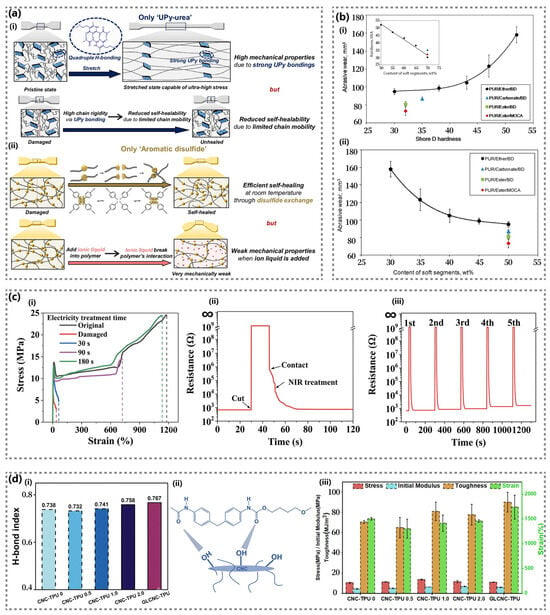
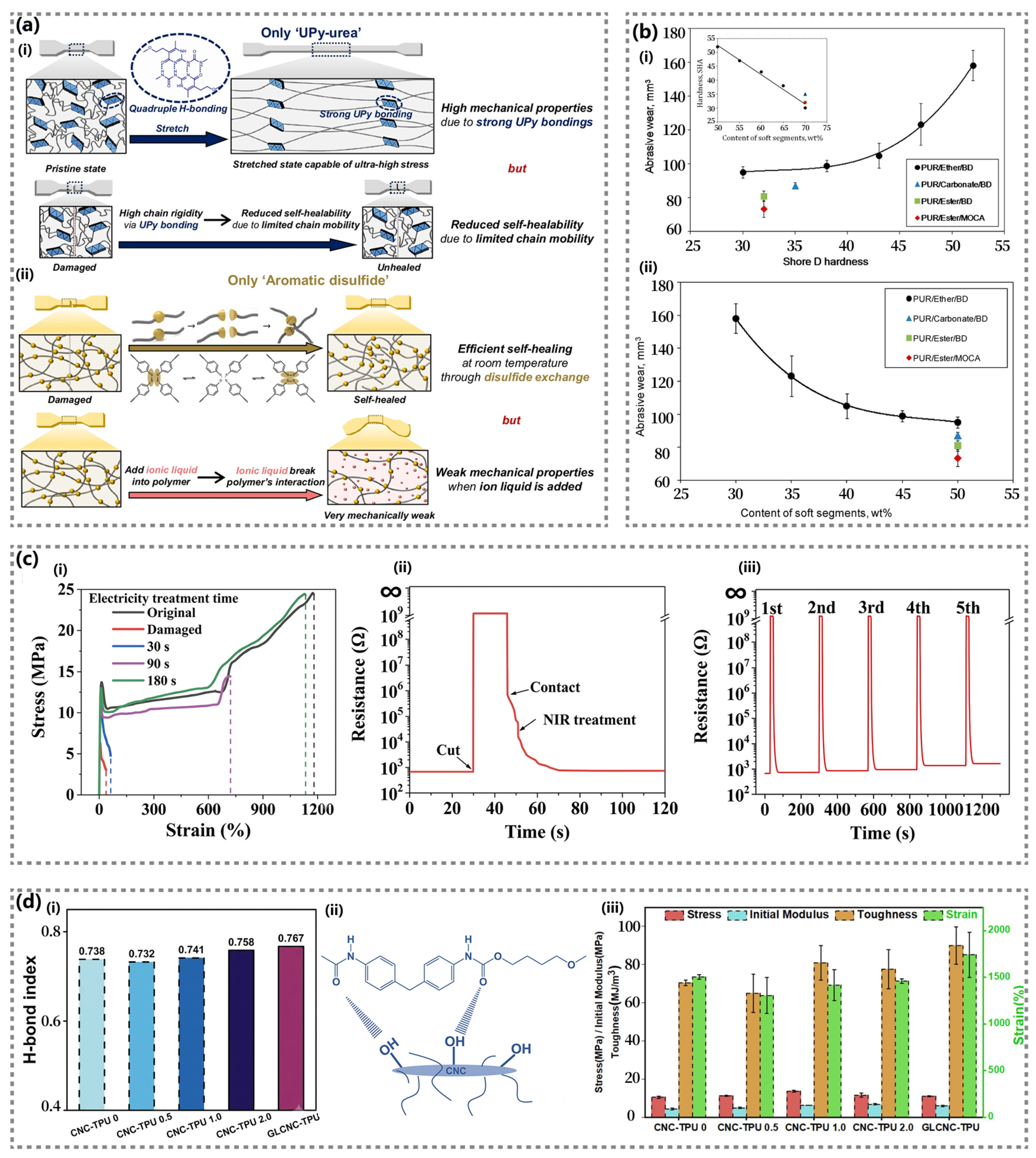
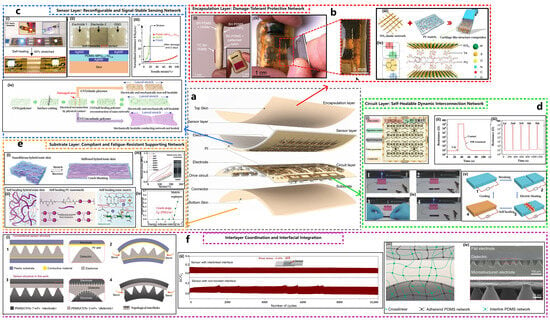
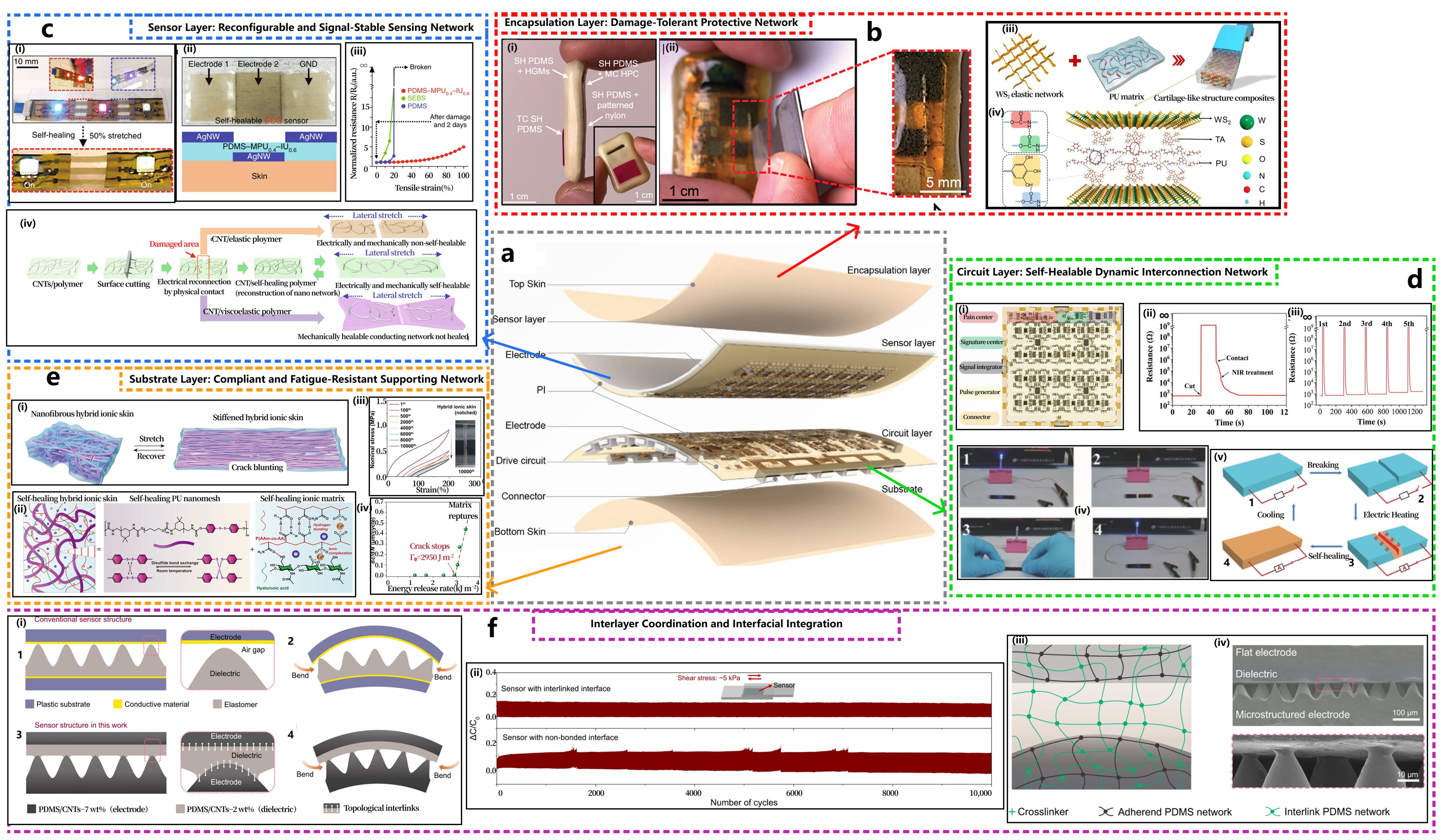
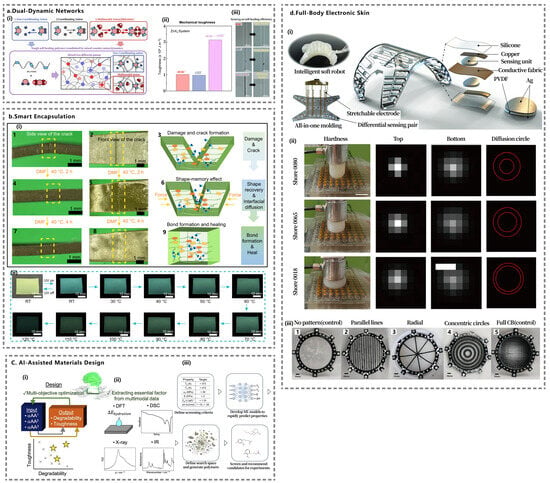
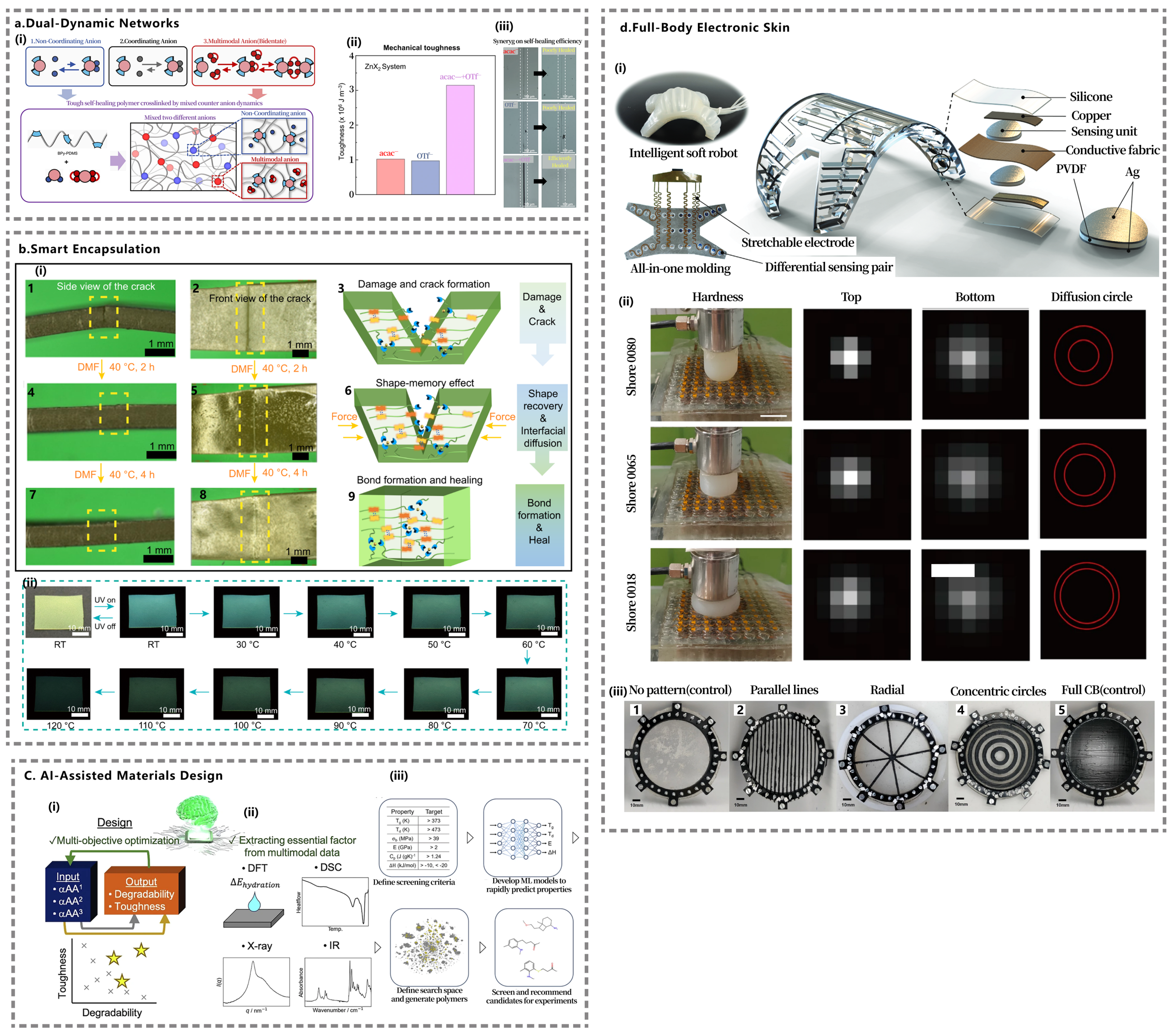

Disclaimer/Publisher’s Note: The statements, opinions and data contained in all publications are solely those of the individual author(s) and contributor(s) and not of MDPI and/or the editor(s). MDPI and/or the editor(s) disclaim responsibility for any injury to people or property resulting from any ideas, methods, instructions or products referred to in the content. |
© 2026 by the authors. Licensee MDPI, Basel, Switzerland. This article is an open access article distributed under the terms and conditions of the Creative Commons Attribution (CC BY) license.