


Abstract
The dust generated during coal mining poses a significant threat to miners’ health and safety. Surfactants, as effective agents for improving coal wettability, require a deeper exploration of their microscopic action mechanisms. This study systematically investigates the micro-interaction behaviors and wetting regulation mechanisms of four types of surfactants—anionic (SDBS), cationic (CTAB), zwitterionic (BS-12), and nonionic (AEO-9)—with lignite, bituminous coal, and anthracite through molecular simulations and dynamic contact angle experiments. To correlate the wettability differences with the physical and chemical properties of different coal ranks, XRD and SEM observations were employed to analyze the mineral composition and surface microstructure. The results demonstrate that SDBS has the strongest adsorption capacity on coal, with the wettability capacity ranked as follows: SDBS > CTAB > BS-12 > AEO-9. This research reveals the regulation mechanism of surfactants on coal wettability, providing a theoretical basis for optimizing dust prevention technologies and fostering the development of green mining.
1. Introduction
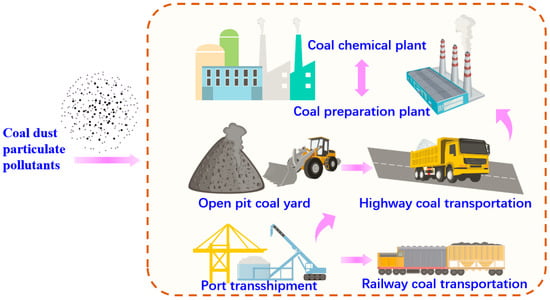
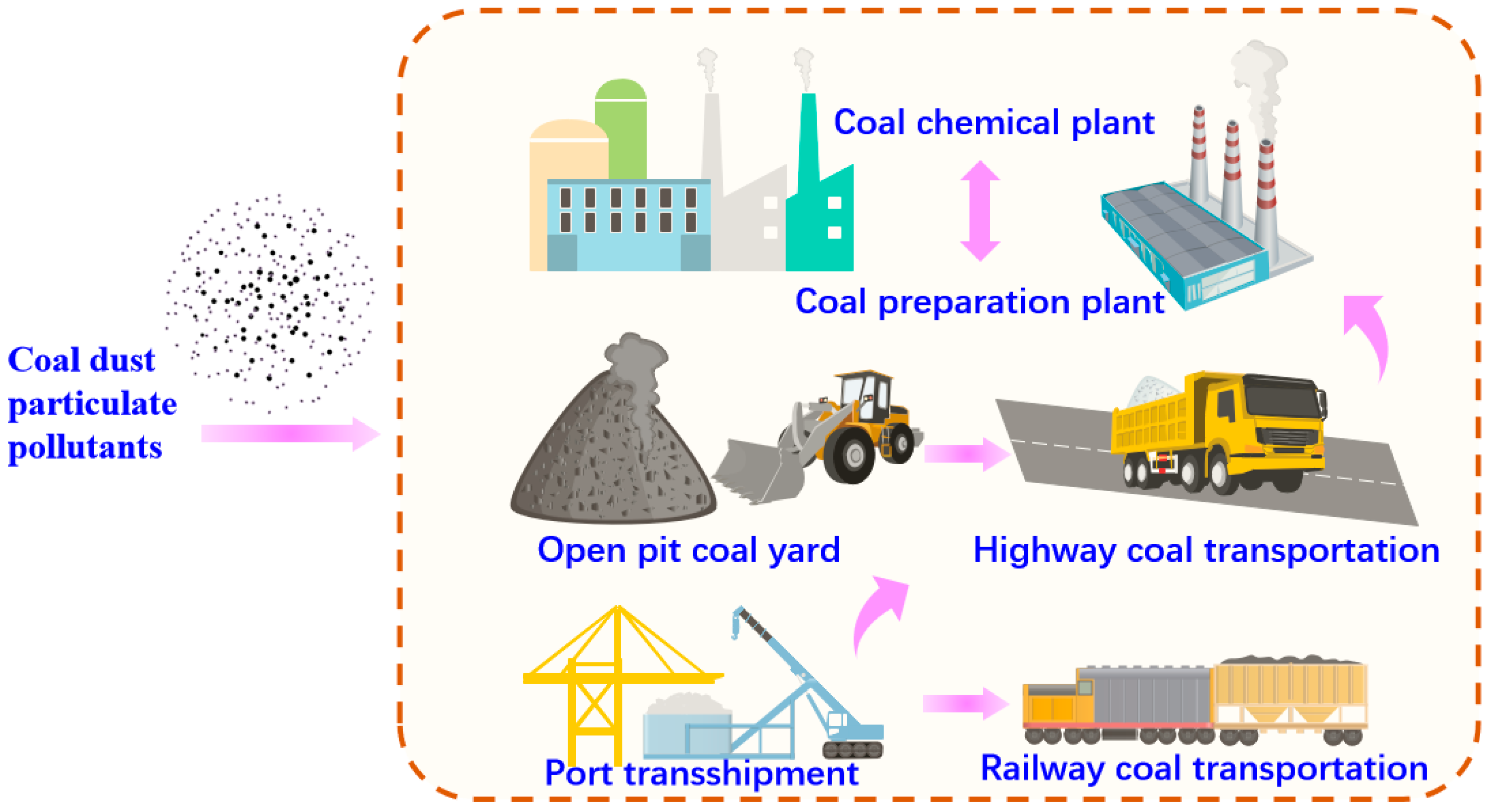
Coal, one of the most important fossil energy sources worldwide, has an irreplaceable advantage in the global energy supply, supporting industrialization and socio-economic development [1,2,3]. China possesses abundant coal resources, providing a solid material basis for national energy security [4,5,6,7]. With the significant increase in mechanized mining, the problem of dust pollution in coal mines has severely intensified; Simultaneously, coal dust particle pollution occurs during port transshipment, stockyard handling, road transport, rail transport, and at coal preparation plants and coal chemical enterprises, as illustrated in Figure 1. Coal mine dust has become the primary threat to workers’ occupational health. The core objective of coal mine dust control lies in mitigating the adverse impacts of dust on occupational health, production safety, and the ecological environment [8,9,10,11,12].
Figure 1.
Schematic diagram of major coal dust emission sources and pathways.
Dust prevention is a systematic project involving various fields such as technology, management, and materials science [13,14,15,16]. Surfactants, as chemicals that can significantly reduce surface tension, are widely used in research on improving coal properties [17,18,19,20,21,22,23]. The wetting effect of surfactants on coal dust has shown potential in laboratory studies, but their microscopic action mechanisms still require in-depth exploration. Scholars at home and abroad have conducted extensive research on the addition of surfactants to improve dust suppression efficiency. For instance, Bao et al. [24] employed molecular dynamics simulations and quantum chemistry calculations to analyze the interaction patterns between sodium dodecyl sulfonate (SDSO), sodium dodecyl sulfate (SDS), sodium fatty alcohol polyoxyethylene ether carboxylate (SSN), and sodium lauryl phosphate (LSN) with coal, summarizing the fundamental reasons affecting the wettability of long-flame coal. Bai et al. [25] investigated the impact of alkyl chain length of surfactants on their adsorption on anthracite surfaces and underlying microscopic mechanisms. They evaluated the differences in critical micelle concentration and micelle morphology of surfactants with varying alkyl chains in solution systems through surface tension measurements and thermodynamic theories and analyzed the interaction mechanisms of surfactants with anthracite particles in the aqueous phase. Zhang et al. [26] studied the wetting characteristics and kinetic behavior of zwitterionic surfactants on the microscopic “solid–liquid” interface of coal, revealing how surface chemical characteristics influence coal wettability, thereby promoting the development and improvement of water-injection dust-suppression technologies and clean production in coal mines. Nie et al. [27] utilized macro experiments and simulations of surfactant solution droplets coupled with airborne coal dust to examine the molecular properties of organosilicon surfactants (GT-248), finding that at optimal concentrations, GT-248 droplets collide with coal particles dynamically, reflecting its rapid encapsulation characteristics. Ding et al. [28] conducted multiscale studies on the wetting and agglomeration mechanisms of short-chain fluorocarbon surfactants in suppressing coal dust, demonstrating that FS-50 outperforms FS-3100 with a higher dust suppression rate and shorter inhibition time, indicating better wettability of FS-50 and more complete agglomeration on coal particles.
The adsorption of surfactant molecules on coal surfaces is a complex process involving various forces such as electrostatic interactions, hydrogen bonding, and van der Waals [29]. By simulating the microscopic interaction behaviors of surfactants with coals of different metamorphic degrees, one can gain insight into the influence mechanisms that surfactants have on coal properties [30], providing theoretical guidance and technical support for coal mining and utilization [31].
Despite these advances, several research gaps remain: (1) systematic comparisons of anionic, cationic, zwitterionic, and nonionic surfactants on coals of different metamorphic grades are lacking; (2) the correlation between simulated interaction energies and experimental contact angles has not been quantitatively established; and (3) the influence of coal surface functional groups and pore structures on surfactant adsorption mechanisms remains superficially understood.
To address these gaps, four surfactants were selected: SDBS (anionic, with a sulfonate headgroup and benzene ring), CTAB (cationic, with a quaternary ammonium headgroup), BS-12 (zwitterionic, with both positive and negative charges), and AEO-9 (nonionic, with a polyoxyethylene chain). This selection allows systematic investigation of the effects of ionic type, charge characteristics, and molecular structure on coal wettability.
This study employs molecular simulations to explore the microscopic interaction behaviors of surfactants with coals of different metamorphic degrees, calculating the interaction energies of the simulation systems, analyzing the dynamic adsorption processes, and utilizing dynamic contact angle testing to observe the macroscopic wetting processes. This provides a scientific basis for the rapid screening and precise wetting of surfactants to enhance the overall effectiveness of dust prevention in coal mines, thus offering strong protection for miners’ occupational health and safe production.
2. Model Construction and Simulation Methods
2.1. Construction of Surfactant Molecular Models
Four types of surfactants were selected for experiments: the anionic surfactant sodium dodecylbenzenesulfonate (SDBS), the cationic surfactant cetyltrimethylammonium bromide (CTAB), the zwitterionic surfactant dodecyl dimethyl betaine (BS-12), and the nonionic surfactant fatty alcohol polyoxyethylene ether (AEO-9), all provided by Shanghai Macklin Biochemical Technology Co., Ltd. (Shanghai, China); the characteristics of the surfactants used are shown in Table 1.
Table 1.
Characteristics of the surfactants used in this study.
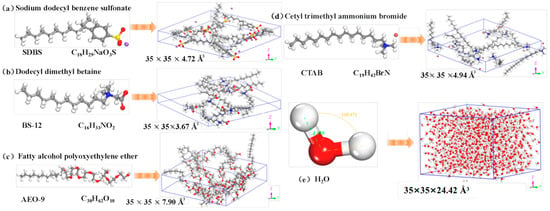
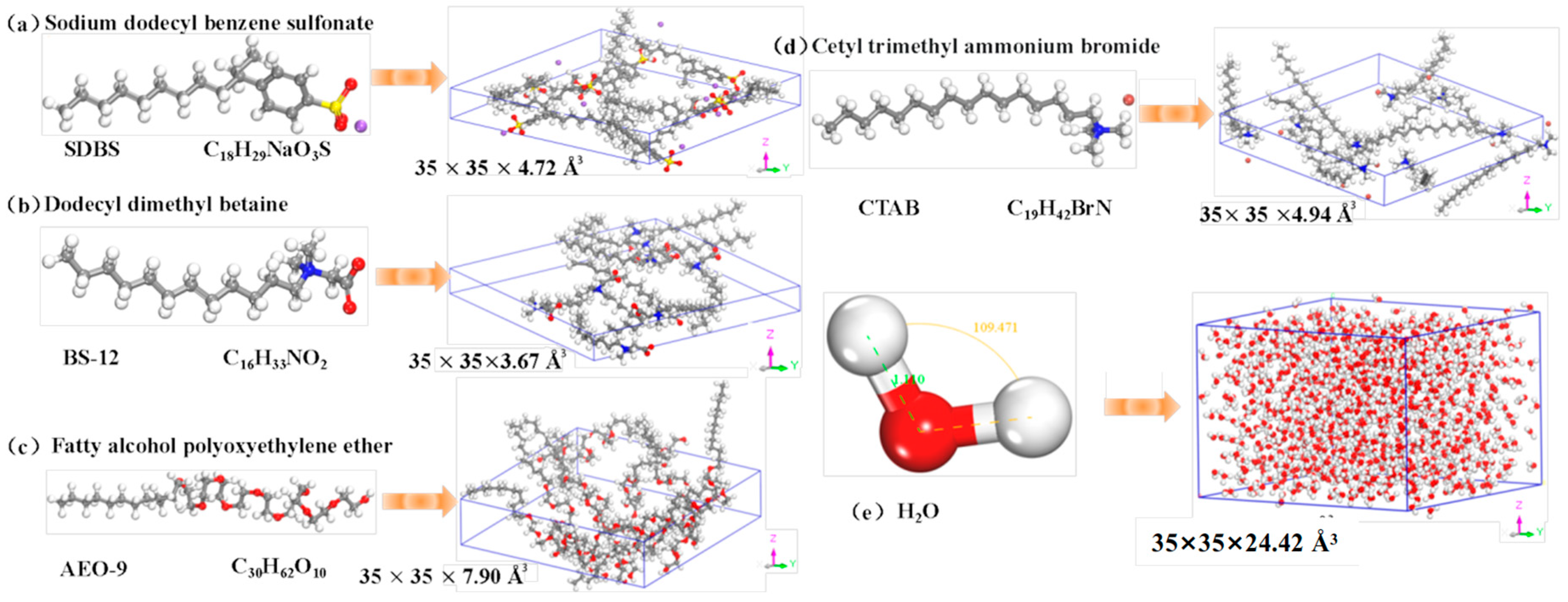
Using the Amorphous Cell module in Material Studio (MS) version 8.0, a surfactant box of orthorhombic type was constructed, containing 10 surfactant molecules and 1000 water molecules, with a box size of 35 × 35 Å and an undefined length along the Z-axis. The molecular model is shown in Figure 2.
Figure 2.
Construction of surfactant and water molecule models.
2.2. Model Construction, Simulation Methods, and Experimental Procedures
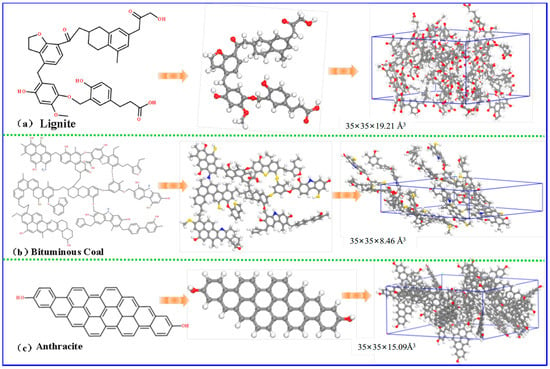
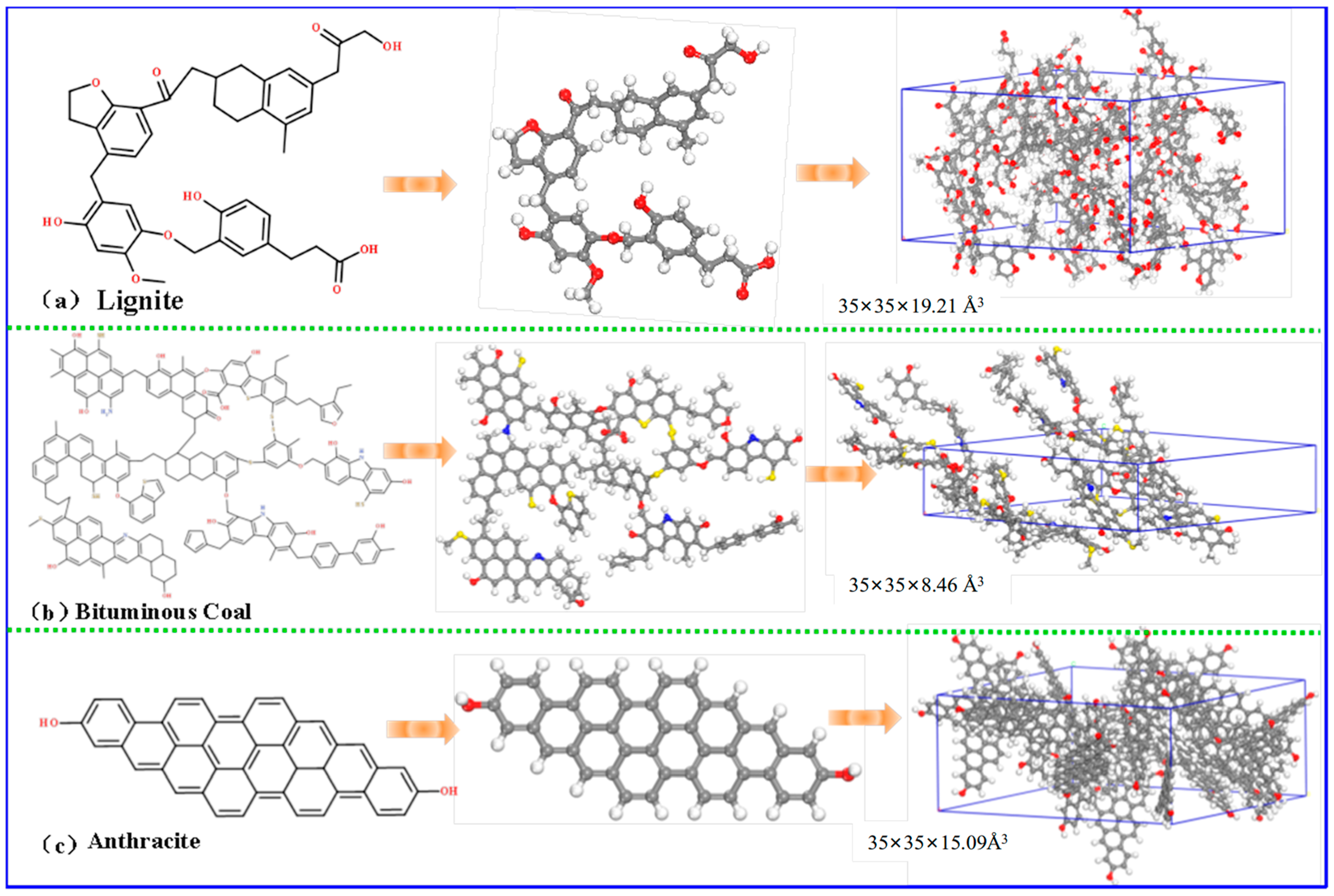
Using the Amorphous Cell module in MS, box models for lignite, bituminous coal, and anthracite were constructed, as shown in Figure 3. The bituminous coal model was constructed based on the elemental and structural parameters of a sample obtained from the Zhaozhuang Mine (Shanxi, China), which is classified as bituminous coal according to the Chinese National Standard GB/T 5751-2009 [32] based on its volatile matter yield (Vdaf ≈ 28%–32%). The chemical structure parameters of the coal molecules are listed in Table 2. Meanwhile, the geometries of the three coal molecular structures were optimized using the Forcite module in MS and then relaxed via the annealing algorithm to achieve the most stable low-energy molecular conformation. The Compass force field was selected with a medium precision setting, and the smart algorithm was employed. For geometric optimization and annealing tasks, both the electrostatic and van der Waals summation algorithms were adopted in an atom-based manner.
Figure 3.
Construction of coal molecular boxes.
Table 2.
Structural parameters of coal molecular chemical structure model.
2.3. Simulation Methods
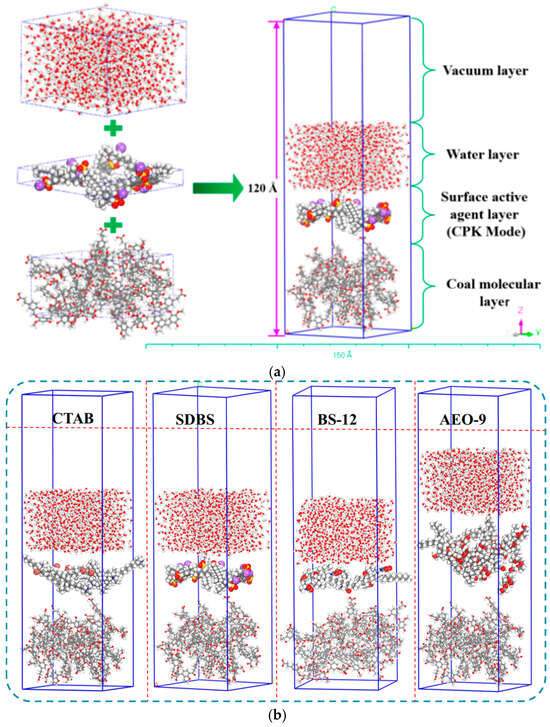
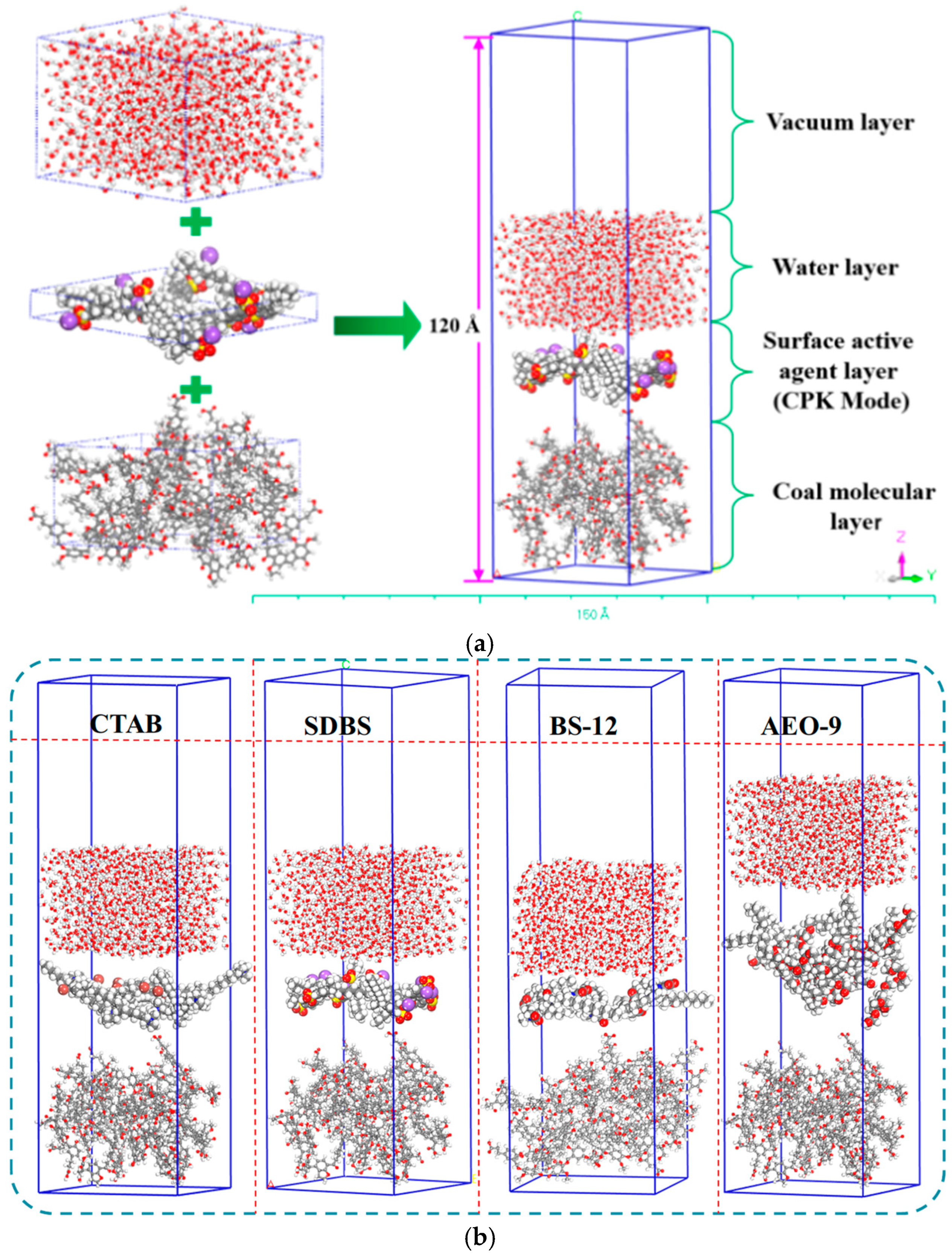
The Forcite module in MS was employed for the lignite, bituminous, and anthracite molecular structures to obtain the most stable molecular configuration. Then, the Build-Layers tool was used to construct the lignite–surfactant–water system model, with a vacuum layer established along the Z-axis to eliminate the effects of periodic structures, resulting in a model size of 35 × 35 × 120 Å, as shown in Figure 4. For dynamic calculations, the dynamic task from the Forcite module was selected, using the classical molecular force field Compass, NVT ensemble, and medium precision setting, with temperature controlled by the Nosé thermostat and pressure managed through the Andersen method. Electrostatic and van der Waals summation algorithms were also applied in an atom-based manner, with a cutoff radius of 12.5 Å. Charge settings employed the assigned force field method. The total simulation time was set at 300 ps, with 300,000 steps. Based on the simulation results, the interaction energies of the systems were statistically calculated, and the interaction behaviors were observed.
Figure 4.
Initial configuration diagram of the three-phase system. (a) Schematic representation of the combination of the initial configuration. (b) Initial configuration diagram of the lignite–surfactant–water system in the simulation box.
2.4. Dynamic Contact Angle Testing
The contact angle was measured using a Kruss DSA30 optical contact angle instrument (Kruss GmbH, Hamburg, Germany). The coal sample used for testing was bituminous coal. The coal powder was pressed into a circular tablet under a continuous pressure of 15 MPa for 5 min using an NL-4 powder tablet press. The tablet had a diameter of 13 mm and a thickness of approximately 2 mm, with a smooth and uniform surface. Four surfactants—SDBS, CTAB, BS-12, and AEO-9—were dissolved in deionized water at their respective critical micelle concentrations (CMCs): SDBS at 2.5 g/L, CTAB at 0.9 g/L, BS-12 at 1.2 g/L, and AEO-9 at 0.05 g/L. The CMC values were determined by surface tension measurements prior to the contact angle experiments. Deionized water was used as a control.
The sessile drop method was employed. A droplet of 5 μL of each solution was gently deposited onto the coal tablet surface. Dynamic contact angle images were captured at 2 s, 4 s, 6 s, 8 s, and 10 s after droplet deposition. All measurements were conducted at room temperature (25 ± 1 °C) and relative humidity of 50 ± 5%. Each test was repeated three times, and the average contact angle values were reported. Image J software (version 1.53t) was used to analyze the contact angles from the captured images.
2.5. X-Ray Diffraction and Scanning Electron Microscopy Characterization
To investigate the influence of physical microstructure—including phase composition, morphological characteristics, and pore features—on the wettability of coal samples, phase analysis was performed using a D8 Advance X-ray powder diffractometer. The scanning speed was 10°/min with a scanning range of 5–80°. The surface microstructures of lignite, bituminous coal, and anthracite samples were imaged using an Apreo S HiVac field emission scanning electron microscope, with an electron beam current range of 1 pA–400 nA and an acceleration voltage range of 200 V–30 kV.
3. Results and Discussion
3.1. Calculation of Interaction Energy of Coal–Surfactant–Water System
The interaction energy is a critical indicator for evaluating the strength of interactions within a system. After system equilibrium, coal molecules, surfactant molecules, and water molecules exist in an adsorptive energy-released state, where greater energy release results in lower system energy and a more stable adsorption structure favorable for wetting. The interaction refers to the difference between the total energy of the system and the sum of the energies of the monomers constituting the system’s complex. The system interaction energy, van der Waals energy, electrostatic energy, and non-bond energy can be computed using Equations (1)–(4):
where represents the interaction energy of the system; Δ Etotal is the total energy of the system; , and denote the energies of the coal, surfactant, and water molecules, respectively, each obtained by removing the other two components during energy computation; represents van der Waals interaction energy; represents electrostatic interaction energy; and represents non-bonding interaction energy. In the Compass force field, non-bond energy is the sum of van der Waals and electrostatic interaction energies.
From the simulation calculations, the energy variations in lignite, bituminous coal, and anthracite systems are presented in Table 3, Table 4 and Table 5. The interaction energy E can be decomposed into van der Waals (Evdw) and electrostatic (Eelec) components. Across all three coal types, the absolute value of Eelec is significantly larger than that of Evdw, indicating that electrostatic interactions dominate the adsorption process. For example, in the lignite–SDBS–water system, Eelec = −14,677.79 kcal/mol, while Evdw = 2175.89 kcal/mol (Table 2). This suggests that the charged headgroups of ionic surfactants (especially SDBS and CTAB) interact strongly with polar sites on coal surfaces. According to the formulas for calculating interaction energies, in the lignite system, under the influence of surfactants SDBS, CTAB, BS-12, and AEO-9, the interaction energies were −15,175.61 kcal/mol, −11,105.17 kcal/mol, −14,326.21 kcal/mol, and −12,849.80 kcal/mol, respectively. All four systems exhibited negative interaction energies, signifying that adsorption readily occurs within the system, and the HM-SDBS-H2O system demonstrated the lowest interaction energy, indicating the strongest interaction strength. The adsorption between water molecules, SDBS, and lignite is notably stable, highlighting SDBS’s critical role in system interactions. In the bituminous coal system, interaction energies were also negative, with the YM-SDBS-H2O system having the lowest interaction energy. In contrast, in the anthracite system, all interaction energies were positive, indicating that interactions among system phases are less likely, reflecting that anthracite is a type of coal that is difficult to wet. However, as shown in Figure 7, from the equilibrated adsorption conformation, it can be observed that there is mutual adsorption among anthracite molecules, surfactants, and water molecules, where water molecules penetrate into the anthracite molecules, indicating a wetting phenomenon.
Table 3.
Energy change in lignite–surfactant–water system (Kcal/mol).
Table 4.
Energy change in bituminous coal–surfactant–water system (Kcal/mol).
Table 5.
Energy change in anthracite–surfactant–water system (Kcal/mol).
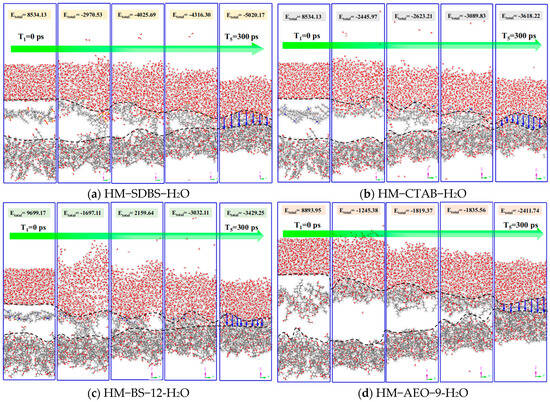
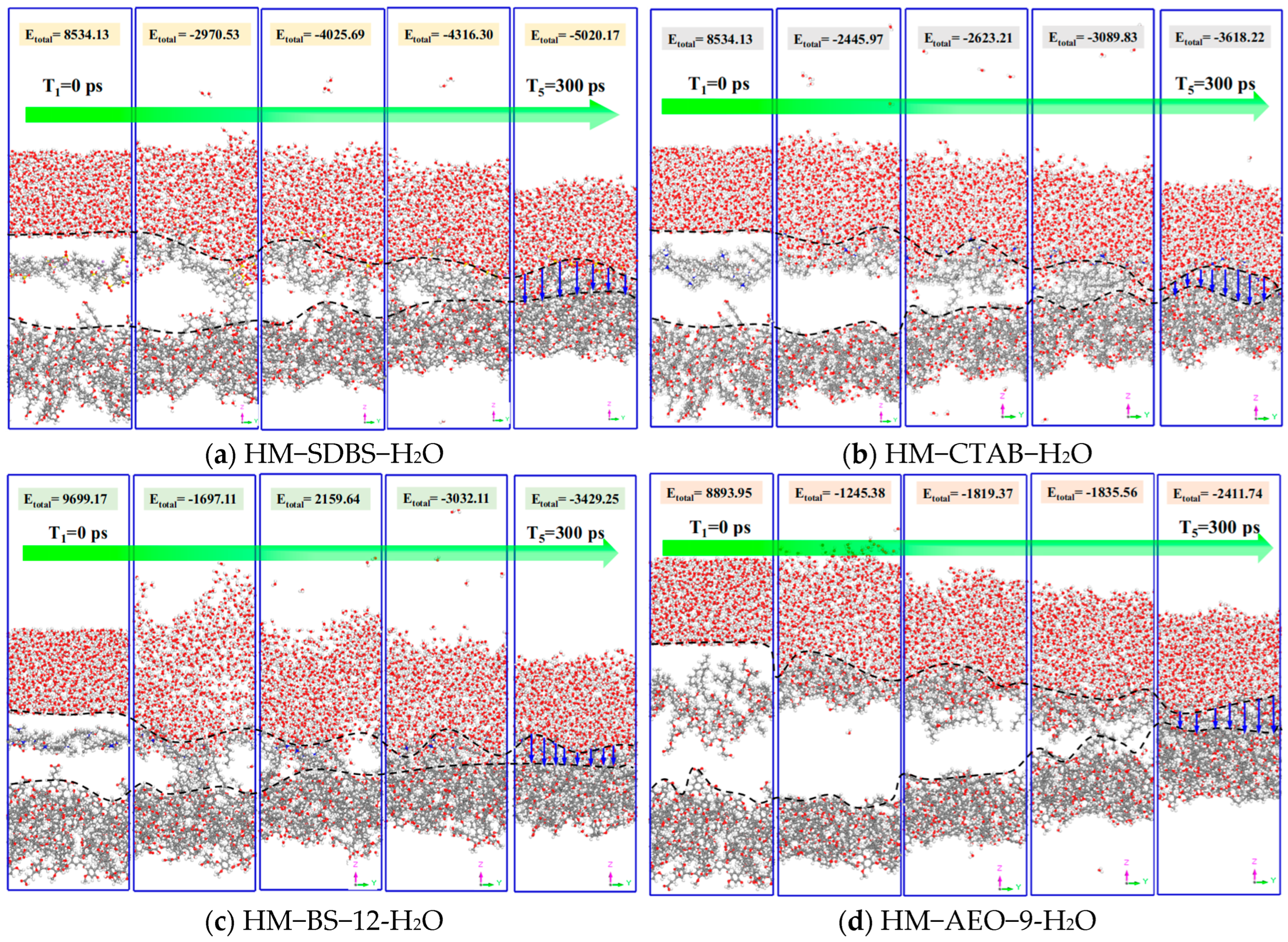
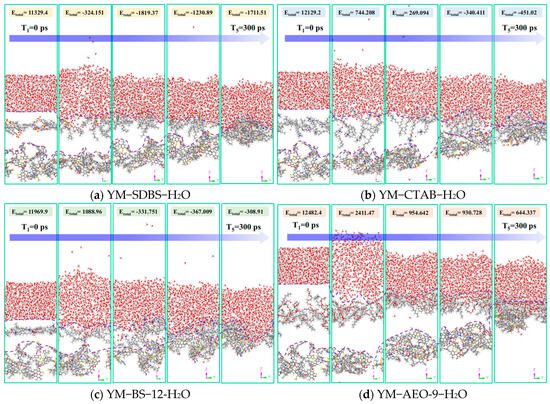
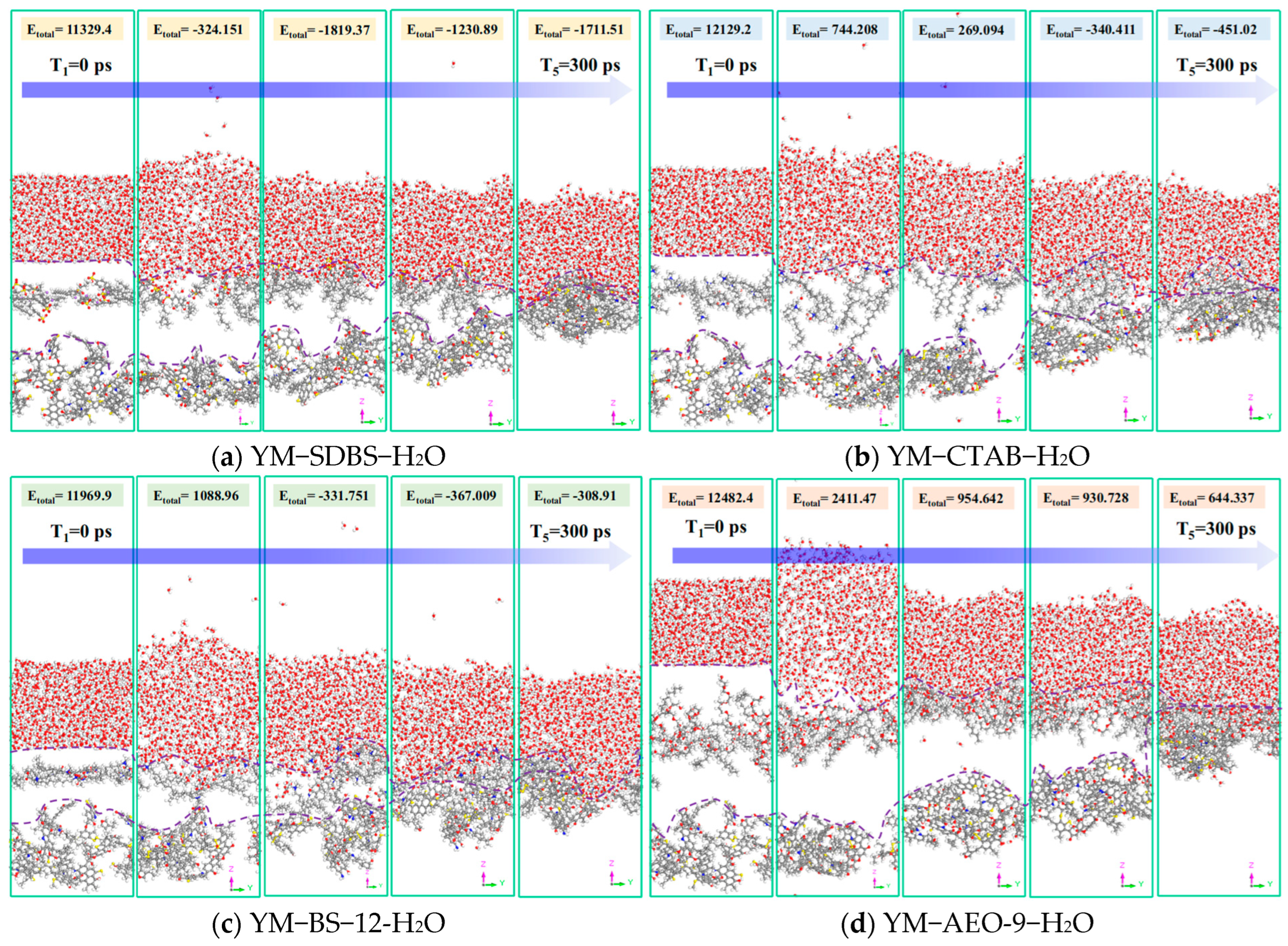
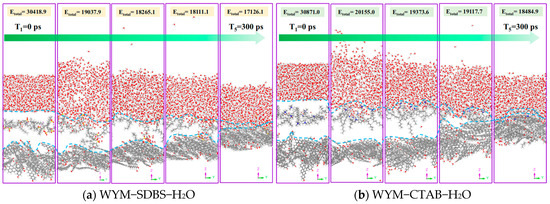
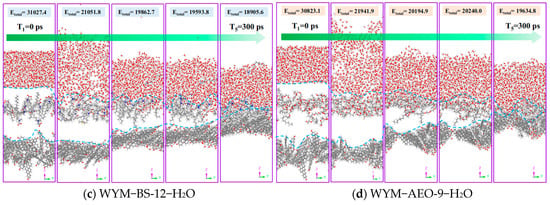
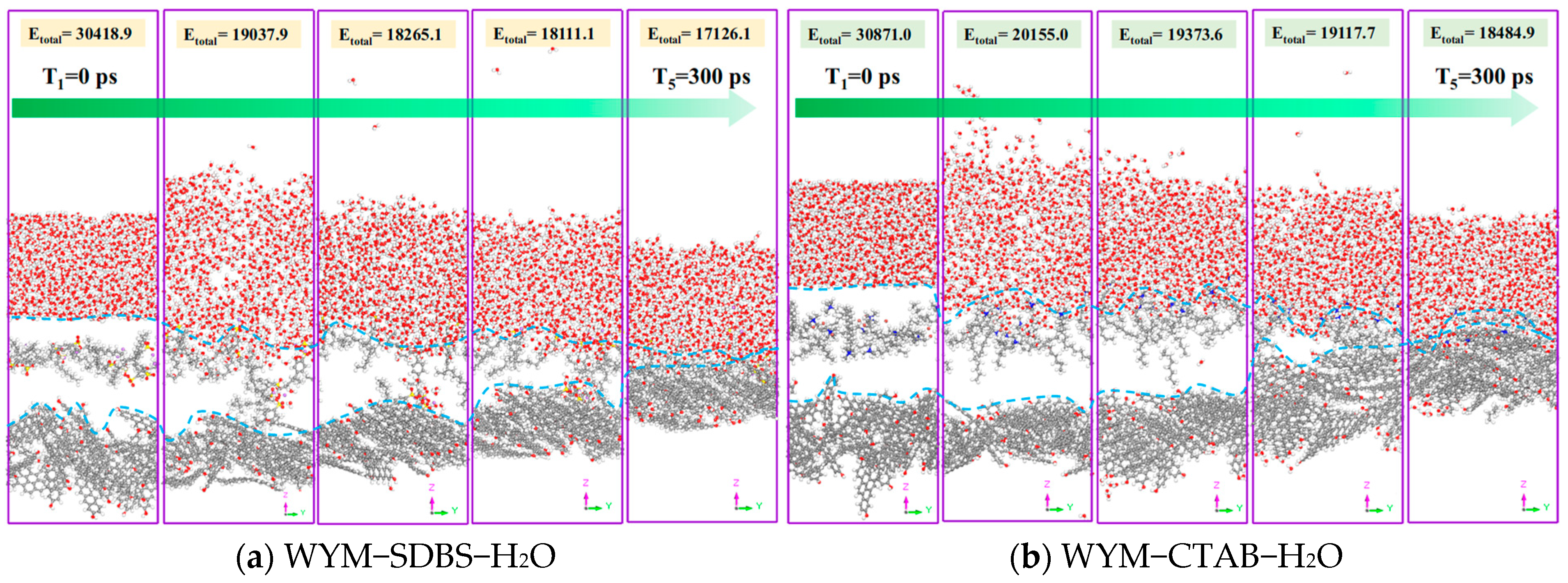
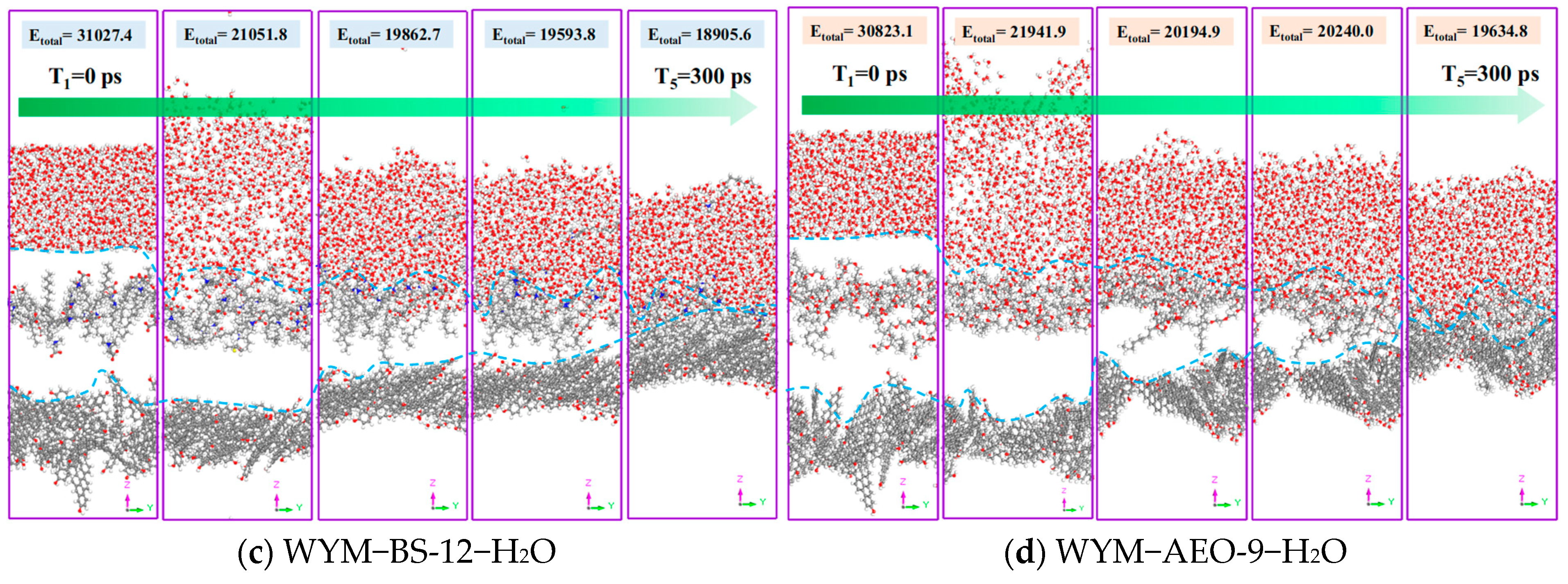
Regarding adsorption configurations, as shown in Figure 5, Figure 6 and Figure 7, the surfactant molecules gradually approach the coal surface over time, with hydrophilic heads oriented toward the aqueous phase and hydrophobic tails pointing to the coal surface. This orientation reduces the coal–water interfacial tension and promotes water spreading. Notably, SDBS exhibits the most compact and stable adsorption layer among the four surfactants, consistent with its lowest interaction energy. As seen in Table 2, Table 3 and Table 4, interaction energies within the systems vary significantly under the influence of different types of surfactants, implying that surfactants exhibit a certain regulatory effect on the wettability of coal. A comprehensive comparison of interaction energies allows us to ascertain that the order of surfactants’ ability to regulate coal wettability is as follows: SDBS > CTAB > BS-12 > AEO-9.
Figure 5.
Configuration of lignite–surfactant–water system changing over time on the (0 0 1) plane.
Figure 6.
Configuration of bituminous coal–surfactant–water system changing over time on the (0 0 1) plane.
Figure 7.
Configuration of anthracite–surfactant–water system changing over time on the (0 0 1) plane.
It should be noted that the interaction energy reported here is defined as the total potential energy difference between the combined system and its separated components. A negative value indicates thermodynamic favorability for adsorption and wetting, while a positive value indicates an overall energy penalty. However, a positive interaction energy does not preclude localized adsorption, as the system may be trapped in kinetically accessible configurations where local interactions—such as van der Waals forces and π–π stacking between the highly aromatic anthracite surface and surfactant tails—drive partial water penetration and surfactant attachment. Thus, the equilibrated configurations reflect kinetically accessible local minima rather than the global thermodynamic minimum, resolving the apparent discrepancy between the positive interaction energies and the observed adsorption phenomena for anthracite.
3.2. Study on the Interaction Behavior of Coal–Surfactant–Water System
Outputting the configuration diagrams during the simulation time of 0–300 ps, Figure 5, Figure 6 and Figure 7 show the configurations of lignite, bituminous coal, and anthracite with surfactants and water molecules over time on the (0 0 1) plane. Observing the lignite–surfactant–water system in Figure 5, it is found that as simulation time increases, there are significant spatial conformation changes in the system. Driven by the interaction forces within the system, lignite molecules gradually move upward while water molecules move downward, with the distances between the three phases continuously decreasing. At the moment of simulation equilibrium, there are no gaps between the three phases; water molecules penetrate the surfactant layer to reach the lignite molecules, enhancing the wetting effect. This is mainly due to the strong interactions between the oxygen-containing functional groups in lignite molecules and water molecules, facilitating the adsorption of water. The apparent volume of the surfactant layer decreases during simulation, which is attributed to the relaxation of the initially constructed low-density amorphous configuration toward a more compact equilibrium state. Concurrently, the total energy of the system decreases with the simulation time, reaching a minimum during the equilibrium phase, indicating that the system spontaneously transitions from a high-energy unstable state to a low-energy stable state, entering an energy-release phase.
In Figure 6 and Figure 7, similar to the lignite system, the spatial conformation changes in the three-phase systems in bituminous coal and anthracite also tend towards a stable equilibrium state. It can also be observed that the total energy during the equilibrium phase across the twelve conformations of the three systems follows the order ESDBS < ECTAB < EBS-12 < EAEO-9, demonstrating that surfactants exhibit varying abilities in reducing coal–water interface surface tension. However, from the post-equilibrium adsorption conformations of surfactants, it can be seen that the hydrophilic groups of surfactants orient toward the water, while the hydrophobic groups face the coal molecules, indirectly indicating that surfactants can lower the surface tension at the coal–water interface and the surface tension of the aqueous solution, thus reducing the contact angle of water molecules on coal surfaces and enhancing the wetting capacity of water on coal.
3.3. Analysis of Dynamic Contact Angle Testing Results
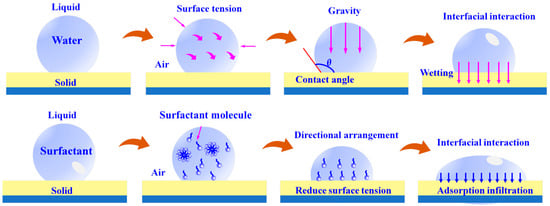
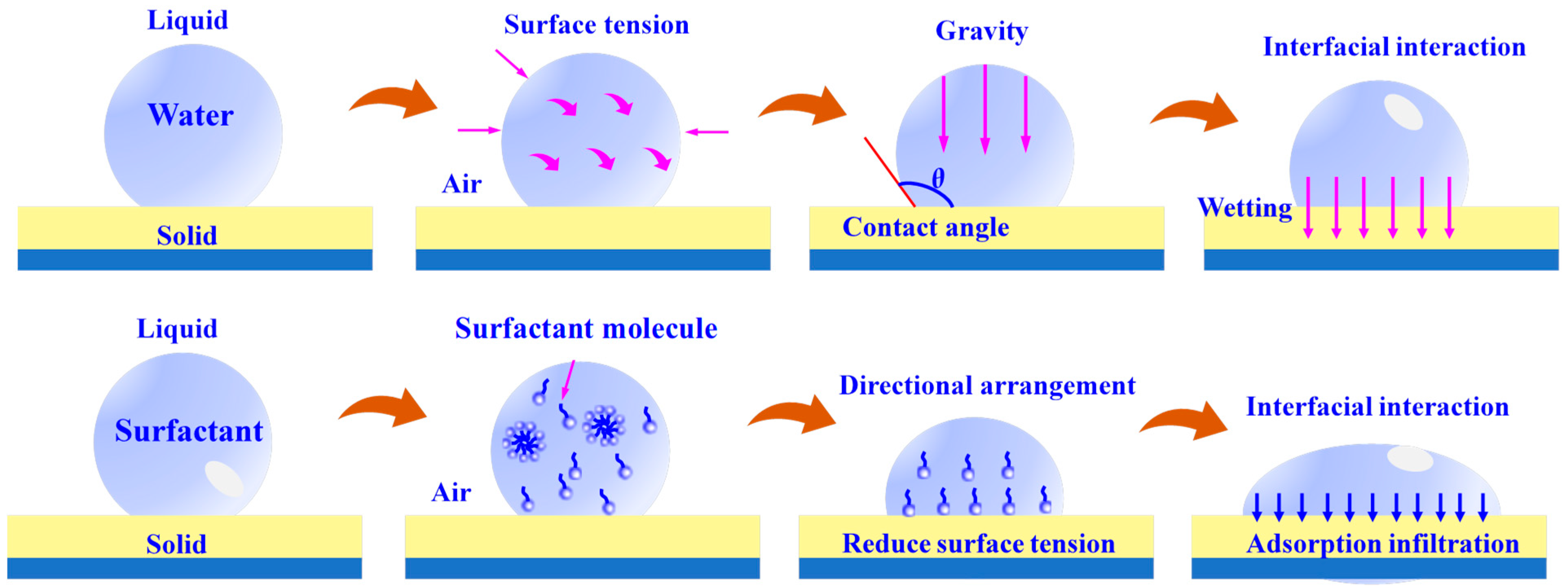
Surfactants effectively reduce the surface tension of solutions. Their hydrophilic head groups and hydrophobic tail chains arrange directionally to minimize interactions at the contact interface. Compared to aqueous solutions, surfactant solutions lower the surface tension at the solid–liquid interface, thereby reducing the time required to wet coal dust, as shown in Figure 8. To verify the enhanced wetting capability of surfactants on coal dust at the microscopic level in molecular simulations, macroscopic dynamic contact angle experiments were conducted.
Figure 8.
Schematic diagram of dynamic wetting at the solid–liquid interface between deionized water, surfactant solution, and coal.
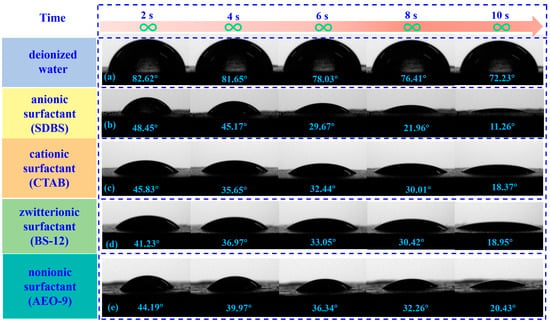
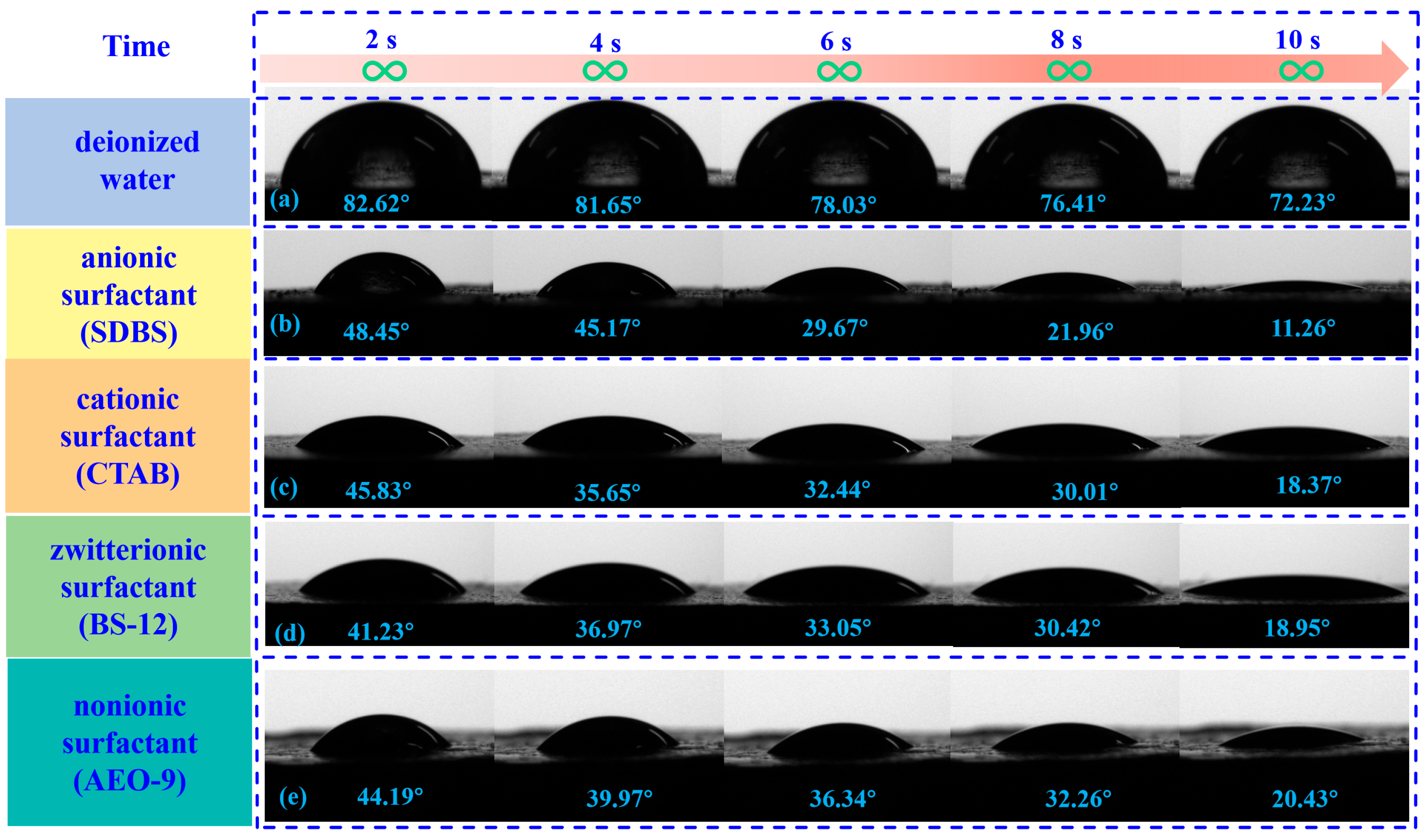
By measuring the contact angle variations in different types of surfactants on the surface of bituminous coal within 0–10 s using a contact angle measuring device, as shown in Figure 9, it can be observed that from left to right, as time increases, the contact angles dynamically decrease. Figure 9a presents the contact angle of deionized water, which starts at 82.62° at t = 2 s and decreases to 72.23° at 10 s, indicating a reduction of 10.4° over 10 s, with a change rate of 12.57%, suggesting that deionized water is not effective in wetting coal dust. In contrast, the dynamic contact angles of the four surfactants show significantly improved wetting effects on coal samples compared to deionized water within 10 s. For example, as depicted in Figure 9b, sodium dodecylbenzenesulfonate’s angle decreases from 48.45° at the initial measurement to 11.26° at 10 s, resulting in a change of 37.19° and a reduction rate of 76.75%. A comparative analysis reveals that all four surfactant solutions quickly wet coal samples upon contact, with a more rapid reduction in contact angles compared to deionized water, demonstrating the significant effectiveness of surfactants in lowering the surface tension of liquids on coal surfaces.
Figure 9.
Measurement results of dynamic contact angle for different surfactant solutions: (a) water, (b) SDBS, (c) CTAB, (d) BS-12, and (e) AEO-9.
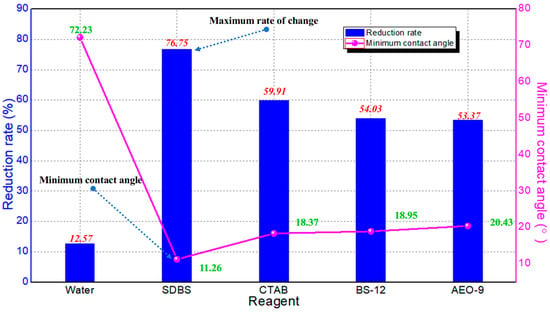
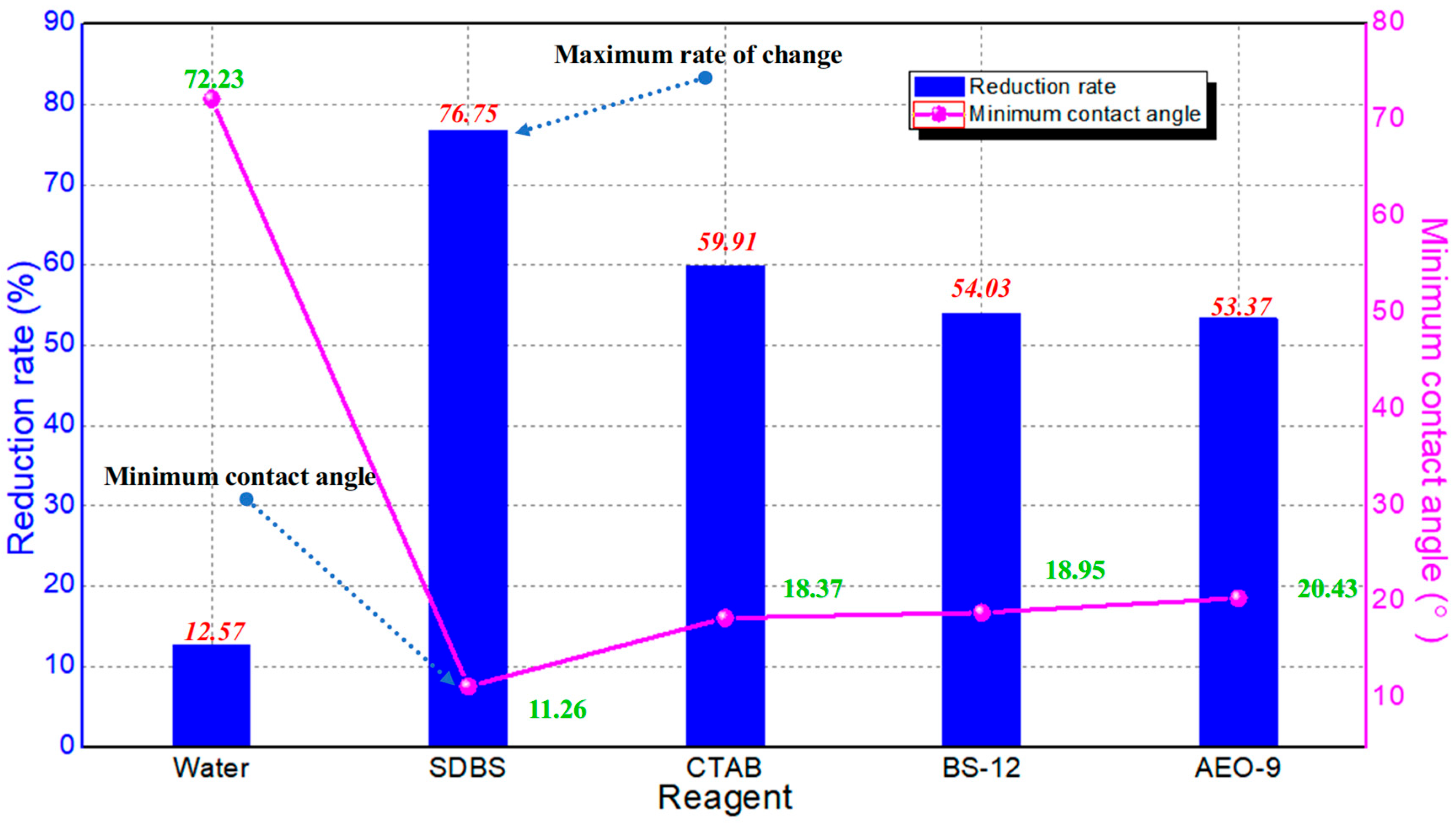
By comprehensively comparing the wettability capabilities of the four surfactants, the relative reductions in the measured contact angles and minimum contact angles were statistically analyzed. As shown in Figure 10, relative reduction rates in contact angles within 10 s from greatest to smallest were as follows: SDBS (76.75%) > CTAB (59.91%) > BS-12 (54.03%) > AEO-9 (53.37%) > deionized water (12.57%). After 10 s, the ordering of contact angles from smallest to largest was as follows: SDBS (θ = 11.26°) < CTAB (θ = 18.73°) < BS-12 (θ = 18.95°) < AEO-9 (θ = 20.43°) < deionized water (θ = 72.23°).
Figure 10.
Contact angle relative reduction and the minimum among all measured contact angles for deionized water and various surfactant solutions.
In summary, the order of surfactants’ wettability capabilities is established as follows: SDBS > CTAB > BS-12 >AEO-9 > deionized water. Notably, the ranking of surfactants’ macroscopic wettability capabilities based on contact angle tests is highly consistent with the ordering of the total energies of the systems from molecular simulations (SDBS < CTAB < BS-12 < AEO-9), confirming the inherent correlation mechanism between lower energy states and stronger interfacial activities. The findings indicate that SDBS demonstrates the best application potential in the field of coal layer wetting modification due to its optimal interfacial energy regulation capability.
3.4. Analysis of X-Ray Powder Diffraction and Scanning Electron Microscopy Observations
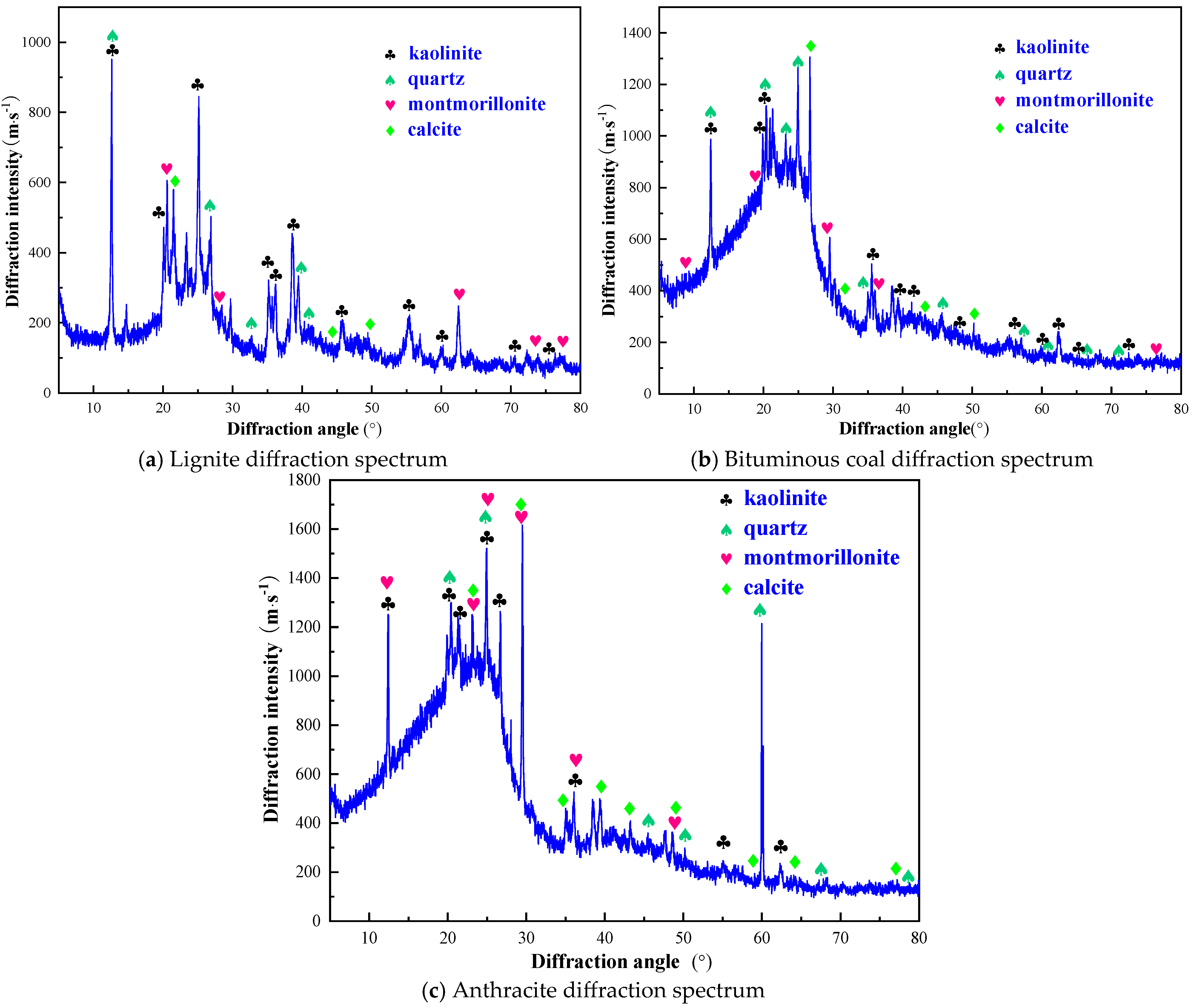
Figure 11a, Figure 11b and Figure 11c display the XRD patterns of lignite, bituminous coal, and anthracite, respectively. Analysis reveals similar peak positions and shapes across samples, with a pronounced diffraction background in the 20–30° range. The diffraction peak observed at 2θ ≈ 25° corresponds to the 002 (002) plane of the graphite-like microcrystallites in the coal matrix. By comparing with standard patterns using MID Jade 6 software, the primary mineral components in the coal samples were identified as kaolinite, quartz, montmorillonite, and calcite. Clay minerals in all three coal types are predominantly kaolinite, which exhibits strong water absorption capacity. Variations in mineral composition and content among the samples are mainly attributed to differences in coal-forming environments.
Figure 11.
XRD patterns of (a) lignite, (b) bituminous coal, and (c) anthracite.
It should be noted that in Figure 11, the intensity of clay mineral peaks (e.g., kaolinite and montmorillonite) in anthracite appears higher than that in bituminous coal. This seems contradictory to the fact that anthracite is more hydrophobic. However, XRD peak intensity reflects the crystallinity and relative abundance of minerals, not their surface exposure or accessibility. In anthracite, clay minerals may be embedded within a highly compact organic matrix, rendering them inaccessible to water or surfactant solutions. In contrast, bituminous coal has a more porous structure (Figure 12b), allowing better exposure of clay minerals to the surface. Therefore, the bulk mineral content does not directly determine surface wettability; the combination of mineral accessibility and surface organic functional groups is more relevant.
Figure 12.
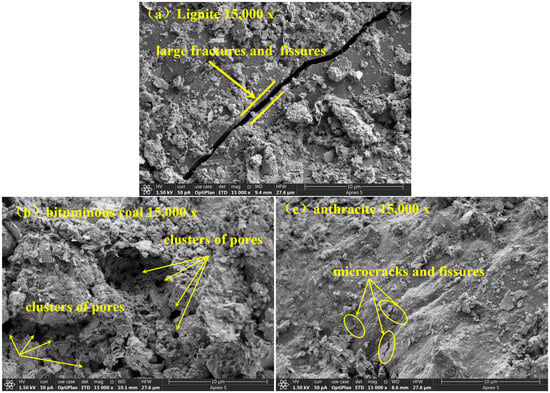
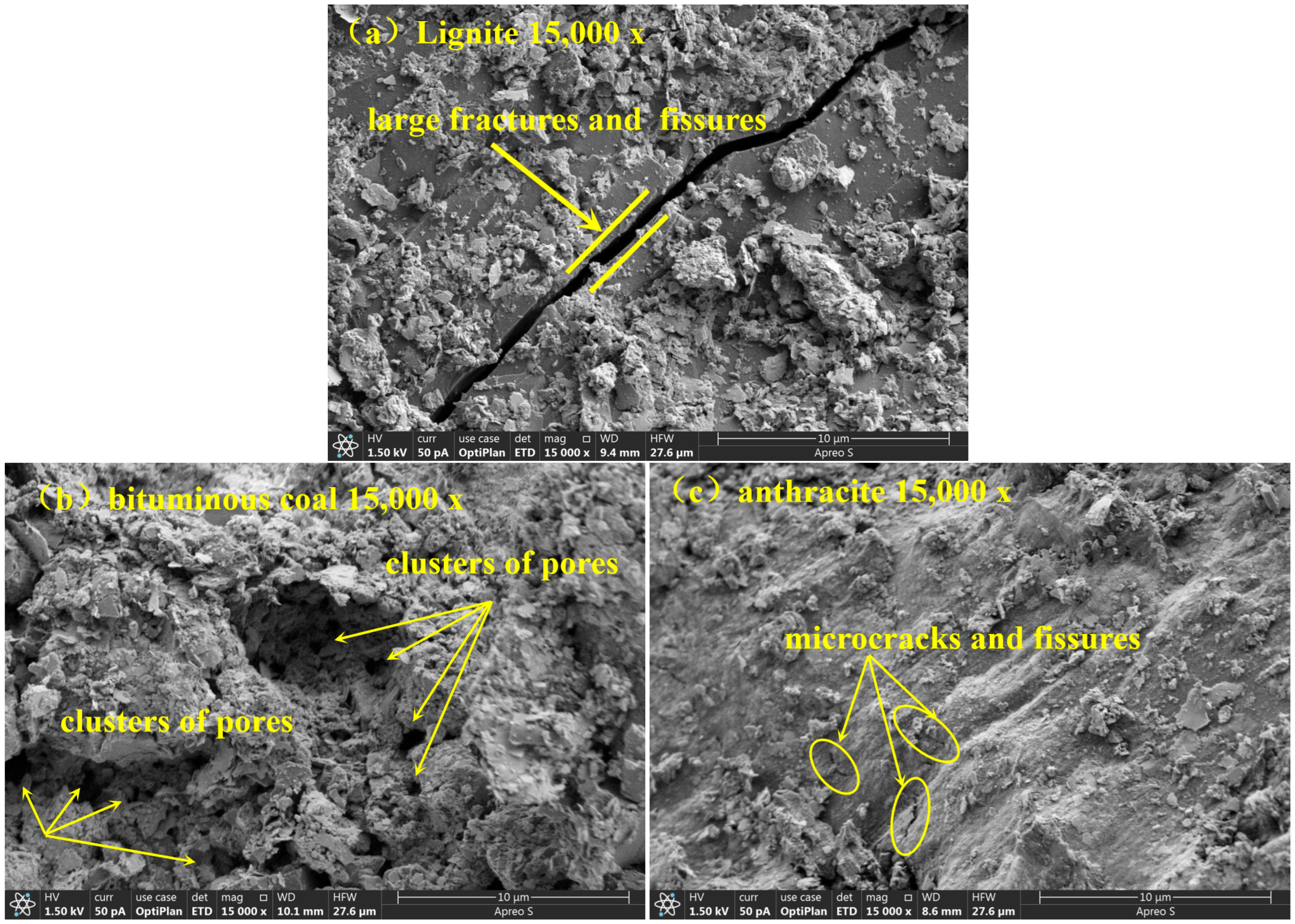
Scanning electron microscopy images of three types of coal. (a) Lignite coal in a 15,000× scanning electron microscopy image. (b) Bituminous coal in a 15,000× scanning electron microscopy image. (c) Anthracite in a 15,000× scanning electron microscopy image.
Figure 12a,b,c present SEM images of the coal samples at a 15,000× magnification. The surfaces exhibit complexity and heterogeneity, resulting from coalification processes and subsequent geological evolution. Figure 12a reveals distinct large fractures and well-developed fissures on the lignite surface, indicating a loose overall structure. These fractures serve as critical pathways for fluid migration and storage, providing natural reservoirs for water molecules and thereby enhancing permeability and wettability. Figure 12b shows a relatively dense bituminous coal surface containing numerous clusters of pores with approximately circular or elliptical shapes, though poor pore connectivity is observed. Figure 12c demonstrates a smooth, dense, and hard anthracite surface with limited microcracks and fissures. Comparative analysis indicates that lower-rank coals exhibit better-developed pore structures, leading to superior wettability and permeability.
It should be noted that while anthracite shows relatively higher peak intensities for clay minerals (e.g., kaolinite and montmorillonite) in the XRD patterns (Figure 11c), its surface is actually more hydrophobic, as evidenced by the positive interaction energies in Table 4 and the limited wetting observed in molecular simulations. This apparent contradiction is resolved by the SEM images (Figure 12c), which show that anthracite has a dense, compact, and non-porous surface that may encapsulate the hydrophilic clay minerals within the organic matrix, reducing their accessibility to water or surfactant solutions. In contrast, bituminous coal (Figure 12b) exhibits a more porous structure with better pore connectivity, allowing greater exposure of clay minerals to the surface. Therefore, surface wettability is governed not simply by the bulk mineral content determined by XRD, but rather by the combined effects of surface functional groups, pore structure, mineral distribution, and the accessibility of hydrophilic components to the external surface.
4. Conclusions
This study utilizes the Material Studio software to construct a coal–surfactant–water three-phase system model, calculating interaction energies and analyzing dynamic adsorption processes, combined with dynamic contact angle tests to validate macroscopic wettability effects. The research indicates the following:
(1) The surfactants’ ability to regulate coal wettability closely relates to their molecular structures and the degree of coal metamorphism. The interaction energies between surfactants and coal are predominantly dominated by electrostatic interactions, with SDBS exhibiting the strongest adsorption capabilities on lignite and bituminous coal (interaction energies of −15,175.61 kcal/mol and −11,277.96 kcal/mol, respectively). On the contrary, the adsorption capacity within the anthracite system significantly decreases due to the reduction in surface oxygen-containing functional groups.
(2) The synergistic validation of molecular simulations and dynamic contact angle experiments reveals the connection between microscopic mechanisms and macroscopic wettability performance. Surfactants reduce the contact angle by decreasing the coal–water interface tension, with SDBS exhibiting the strongest interfacial energy regulation capability, yielding the best reduction rate (76.75%) and minimum contact angle (11.26°) compared to other surfactants.
(3) Surfactants lower the coal–water interface tension through the oriented arrangement of hydrophilic and hydrophobic groups, with the order of wettability capabilities being SDBS > CTAB > BS-12 > AEO-9.
(4) Over time, spatial adsorption conformations of coal with surfactants directly confirm the existence of interactions among the molecules, explaining the rapid wetting of coal by water molecules under surfactant influence. Furthermore, studying the interactions between different types of surfactants with water molecules and coal can facilitate the rapid screening of surfactants that effectively enhance coal wetting.
(5) The experimental validation was conducted on bituminous coal as a representative intermediate rank, with the trends for lignite and anthracite supported by simulation results and the prior literature. Future work will aim to expand the experimental validation to include all three coal ranks.
Author Contributions
H.J.: Conceptualization, Methodology, Software, Investigation, Writing—Original Draft, Review and Editing. Y.Z.: Methodology. Q.J.: Resources, Writing—Review and Editing, Supervision, Data Curation. J.W.: Resources, Writing—Review and Editing. M.J.: Resources, Writing—Review and Editing. M.Z.: Software, Review and Editing. J.L.: Data Curation, Review and Editing. All authors have read and agreed to the published version of the manuscript.
Funding
This work was funded by the Shandong Provincial Natural Science Foundation project (ZR2025QC525), the Talent Introduction Project of Shandong Jiaotong University (BS2023029), the Research Fund of Shandong Jiaotong University (Z202514), and the Innovative Team Project of Ji’nan Government (202333036).
Institutional Review Board Statement
Not applicable.
Informed Consent Statement
Not applicable.
Data Availability Statement
The data that support the findings of this study are available from the corresponding author, [Meng Zhang], upon reasonable request.
Conflicts of Interest
The authors declare no conflicts of interest.
References
- Aubourg, M.A.; Livi, K.J.T.; Sawtell, G.G.; Sanchez-Gonzalez, C.C.; Spada, N.J.; Dickerson, R.R.; Chiou, W.A.; Kamanzi, C.; Ramachandran, G.; Rule, A.M.; et al. Use of electron microscopy to determine presence of coal dust in a neighborhood bordering an open-air coal terminal in Curtis Bay, Baltimore, Maryland, USA. Sci. Total Environ. 2024, 957, 176842. [Google Scholar] [CrossRef] [Scilit] [PubMed]
- Tirado-Ballestas, I.P.; Taylor, M.K.; Caballero-Gallardo, K.; Olivero-Verbel, J.; Callaham, M.A., Jr. Effects of bituminous coal dust exposure on reproduction of Sinella curviseta (Collembola) and Eisenia fetida (Clitellata). Appl. Soil Ecol. 2025, 209, 106038. [Google Scholar] [CrossRef] [Scilit]
- Liu, Q.; Zhu, Z.L.; Hua, Y.; Guo, L.D. Study on dust control technology and parameters for a coal washing plant screening workshop based on CFD technology of positive-negative pressure dust removal systems. Powder Technol. 2024, 448, 120250. [Google Scholar] [CrossRef] [Scilit]
- Bałaga, D.; Siegmund, M.; Kalita, M.; Williamson, B.J.; Walentek, A.; Małachowski, M. Selection of operational parameters for a smart spraying system to control airborne PM10 and PM2.5 dusts in underground coal mines. Process Saf. Environ. Prot. 2021, 148, 482–494. [Google Scholar] [CrossRef] [Scilit]
- Jin, H.; Zhang, Y.S.; Dong, H.T.; Zhang, Y.N.; Sun, Y.J.; Shi, J.; Li, R.T. Molecular dynamics simulations and experimental study of the effects of an ionic surfactant on the wettability of low-rank coal. Fuel 2022, 320, 123951. [Google Scholar] [CrossRef] [Scilit]
- Nie, W.; Tong, K.; Bao, Q.; Niu, W.J.; Tian, Q.F.; Li, R.X.; Zhang, X.H.; Zhang, Z.H. Regulation mechanism of the surfactant hydrophilic headgroup on the wettability of bituminous coal: Experiments and molecular dynamics simulations. Constr. Build. Mater. 2025, 458, 139685. [Google Scholar] [CrossRef] [Scilit]
- Tian, Q.F.; Nie, W.; Bao, Q.; Niu, W.J.; Li, R.X.; Zhang, X.H.; Llele, F.M.; Akanyange, S.N. Research on coal dust pollution prevention and control based on co-solvent association: Macro-micro experiments and molecular dynamics simulations. Appl. Surf. Sci. 2024, 651, 159289. [Google Scholar] [CrossRef] [Scilit]
- Zhao, B.; Xiao, P.; Yan, D.J.; Li, S.G.; Hu, B.; Lin, H.F.; Liu, X.X. Experimental study of influence of coal dust physical–chemical properties on indirect dust suppression effect. Chem. Eng. Sci. 2025, 302, 120799. [Google Scholar] [CrossRef] [Scilit]
- Cao, Y.; Xiao, Y.; Wang, Z.P.; Li, Q.W.; Shu, C.M.; Jiang, X.H.; Wu, S.L. Recent progress and perspectives on coal dust sources, transport, hazards, and controls in underground mines. Process Saf. Environ. Prot. 2024, 187, 159–194. [Google Scholar] [CrossRef] [Scilit]
- Jin, H.; Zhang, Y.; Zhang, M.; Wang, J.H.; Chen, P.; Chen, Z.X. Molecular simulation study of the influence of different surfactants on the wetting characteristics of anthracite. Arab. J. Chem. 2024, 17, 105637. [Google Scholar] [CrossRef] [Scilit]
- Nie, W.; Xu, Z.H.; Li, R.X.; Bao, Q.; Niu, W.J.; Tian, Q.F.; Zhang, X.H.; Shi, C.F.; Tong, K.; Zhang, Z.H. Construction of high-precision macromolecular model of Zhaozhuang anthracite based on microscopic level and optimization of surfactant applicability: Efficient control of coal dust. Process Saf. Environ. Prot. 2025, 195, 106762. [Google Scholar] [CrossRef] [Scilit]
- Akanyange, S.N.; Nie, W.; Mwabaima, F.I.; Liu, F.; Niu, W.J.; Jiang, S.Q.; Zhang, Y.; Adom-Asamoah, G.; Yeboah, M.L.; Qiu, B.; et al. A systematic review of the physiological and environmental impacts of coal dust and its control technologies. Fuel 2024, 371, 131876. [Google Scholar] [CrossRef] [Scilit]
- Wang, Q.G.; Zhang, X.; Wang, W.X.; Zhao, H.Y.; Liu, S.H.; Gan, J.; Wang, H. Effect of fluorocarbons and inorganic salts on wetting and foaming characteristics of hydrocarbon surfactants. Colloids Surf. A 2025, 704, 135416. [Google Scholar] [CrossRef] [Scilit]
- Nian, J.; Du, L.M.; Ge, S.C.; Sun, L.Y.; Wang, X.Y.; He, C.; Zhang, Y.J. Experimental Optimization of Wetting Agents for Different Coal Types and Study of Wetting Mechanisms. Chem. Eng. Res. Des. 2025, 214, 49–63. [Google Scholar] [CrossRef] [Scilit]
- Niu, W.J.; Nie, W.; Bao, Q.; Tian, Q.F.; Li, R.X.; Zhang, X.H.; Shi, C.F.; Tong, K.; Zhang, Z.H. Molecular mechanisms of coal dust wettability: Hydrophilic group modulation for enhanced surface interactions. Appl. Surf. Sci. 2025, 686, 162146. [Google Scholar] [CrossRef] [Scilit]
- Belhaj, A.F.; Fakir, S.H.; Javadi, A.H.; Sarma, H.K. Integrated experimental and core-scale modeling study of hybrid low-salinity surfactant EOR in tight carbonates. Appl. Sci. 2026, 16, 7253. [Google Scholar] [CrossRef] [Scilit]
- Jin, H.; Zhang, Y.S.; Chen, K.; Niu, K.; Wu, G.A.; Wei, X.R.; Wang, H.W. Preparation and characterization of a composite dust suppressant for coal mines. Polymers 2020, 12, 2942. [Google Scholar] [CrossRef] [Scilit] [PubMed]
- Han, F.W.; Yang, P.; Zhao, Y.; Hu, F.H.; Peng, Y.Y. Wetting permeability of surface active agent droplets impacting on a layer of coal dust. Powder Technol. 2024, 442, 119869. [Google Scholar] [CrossRef] [Scilit]
- Nie, W.; Tian, Q.F.; Bao, Q.; Niu, W.J.; Li, R.X.; Akanyange, S.N. Low micelle, high activity series gemini dust suppressant: Targeted dust suppression based on nucleophilic substitution. Constr. Build. Mater. 2025, 458, 139547. [Google Scholar] [CrossRef] [Scilit]
- Jin, H.; Nie, W.; Zhang, Y.S.; Wang, H.K.; Zhang, H.H.; Bao, Q.; Yan, J.Y. Development of environmental friendly dust suppressant based on the modification of soybean protein isolate. Processes 2019, 7, 165. [Google Scholar] [CrossRef] [Scilit]
- Bao, Q.; Nie, W.; Niu, W.; Mwabaima, I.F.; Tian, Q.F.; Li, R.X. Molecular simulation and wetting study on the mechanism and capability of hydrophilic surfactants used as spray dust suppressants for dust reduction in coal mines. Sustain. Chem. Pharm. 2023, 36, 101253. [Google Scholar] [CrossRef] [Scilit]
- Jin, H.; Zhang, Y.S.; Li, N.; Yang, J.J.; Xi, Y.; Cai, L.; Pan, Z.C. Preparation and performance characterization of a new dust suppressant with a cross-linked network structure for use in open-pit coal mines. Environ. Sci. Pollut. Res. 2021, 29, 7001–7013. [Google Scholar] [CrossRef] [Scilit] [PubMed]
- Nie, W.; Zhang, X.H.; Niu, W.J.; Bao, Q.; Tian, Q.F.; Li, R.X.; Shi, C.F.; Tong, K.; Zhang, Z.H.; Lian, J. Synergy of chelating agents and surfactants on the wettability and pore structure of coal dust: Experimental study and molecular simulation. Chem. Eng. J. 2024, 502, 157954. [Google Scholar] [CrossRef] [Scilit]
- Bao, Q.; Nie, W.; Niu, W.; Mwabaima, I.F.; Akanyange, S.N.; Tian, Q.F.; Li, R.X. Qualitative analysis of hydrophilic headgroup water molecular space dependence and wetting effects of solution systems on polluting coal dust. J. Environ. Chem. Eng. 2024, 12, 113387. [Google Scholar] [CrossRef] [Scilit]
- Bai, X.Y.; Zhang, J.W.; Yan, G.C.; Kong, S.Q.; Song, Z.X.; Zhang, Y.; Dong, X.K.; Wu, S.K. Mechanism of anthracite dust suppression by surfactants with different alkyl chain lengths: Thermodynamic micelle morphology, adsorption probability, and interfacial forces. Chem. Eng. Sci. 2025, 309, 121475. [Google Scholar] [CrossRef] [Scilit]
- Zhang, Q.T.; Wang, B.; Xing, X.Y.; Li, J.H.; Wang, Z.X. Wetting characteristics and kinetic behavior of amphoteric ionic surfactant on the microscopic “solid-liquid” interface of coal-A case study. J. Mol. Liq. 2023, 392, 123497. [Google Scholar] [CrossRef] [Scilit]
- Nie, W.; Shi, C.F.; Niu, W.J.; Bao, Q.; Li, R.X.; Tian, Q.F.; Zhang, X.H.; Liu, F. Study of organosilicon surfactants against bituminous coal dust: A macro-and microscale multiscale interaction study. Chem. Eng. Sci. 2025, 305, 121112. [Google Scholar] [CrossRef] [Scilit]
- Ding, X.H.; Wang, K.; Luo, Z.M.; Fu, Q.Y.; Wang, T.T.; Xu, Q.; Yi, X.; Dai, R.K.; Jiang, H.P.; Xing, Z.Q. The investigation of wetting and agglomerating mechanism of short-chain fluorocarbon surfactant suppressing coal dust from macro and molecular scales. Chem. Eng. J. 2024, 487, 150475. [Google Scholar] [CrossRef] [Scilit]
- Bai, X.Y.; Kong, S.Q.; Zhang, J.W.; Li, G.; Li, J.; Wen, P.; Yan, G. Molecular mechanism study of nonionic surfactant enhanced anionic surfactant to improve the wetting ability of anthracite dust. Colloids Surf. A Physicochem. Eng. Asp. 2024, 686, 133455. [Google Scholar] [CrossRef] [Scilit]
- Tang, X.Y.; Tong, Y.Y.; Zhang, Y.H.; Yang, P.J.; Wang, C.Y.; Liu, J.H. Study on mechanism of surfactant adsorption at oil–water interface and wettability alteration on oil-wet rock surface. Molecules 2025, 30, 2541. [Google Scholar] [CrossRef] [Scilit] [PubMed]
- Liu, Z.; Zhang, M.M.; Yang, H.; Zhu, M.Y.; Jiao, L.S.; Xu, Y.Q.; Jiao, L.L. Molecular simulation of the regulation mechanism of surfactant on microscopic chemical wetting of coal. J. Mol. Liq. 2024, 404, 124896. [Google Scholar] [CrossRef] [Scilit]
- GB/T 5751-2009; Chinese Classification of Coals. Standards Press of China: Beijing, China, 2009.

Disclaimer/Publisher’s Note: The statements, opinions and data contained in all publications are solely those of the individual author(s) and contributor(s) and not of MDPI and/or the editor(s). MDPI and/or the editor(s) disclaim responsibility for any injury to people or property resulting from any ideas, methods, instructions or products referred to in the content. |
© 2026 by the authors. Licensee MDPI, Basel, Switzerland. This article is an open access article distributed under the terms and conditions of the Creative Commons Attribution (CC BY) license.