


Abstract
Traditional structural strengthening methods involve high costs, increased self-weight of the structure, and complex construction procedures. In this context, there is a need for alternative materials that improve the mechanical performance of concrete without compromising its functionality. The objective of this study was to evaluate the effect of applying fiberglass layers to concrete with a design compressive strength of f’c = 20.59 MPa (210 kg/cm2). An applied research approach was used, with a quantitative methodology and a quasi-experimental design. Cylindrical concrete specimens measuring 12 cm × 6 cm were cured for 28 days and then coated with 1, 2, and 3 layers of fiberglass. The results showed that fiberglass has a chemical composition dominated by sodium (54.28%), silicon (25.64%), magnesium (9.98%), and aluminum (7.19%), which contributes to its stiffness and stability. Regarding compressive strength, the control specimens achieved an average strength of 20.69 MPa, while specimens coated with 1, 2, and 3 layers of fiberglass reached average strengths of 21.72 MPa, 23.49 MPa, and 25.71 MPa, respectively. These values represent increases of 4.98%, 13.53%, and 24.26% compared to conventional concrete. In terms of flexural strength, the control beams reached an average value of 3.50 MPa, whereas beams reinforced with 1, 2, and 3 fiberglass layers achieved average strengths of 3.66 MPa, 3.89 MPa, and 4.10 MPa, respectively. The results demonstrate that fiberglass improves both the compressive and flexural performance of concrete by providing external confinement, delaying crack propagation, and increasing the load-bearing capacity of the structural elements. It is concluded that fiberglass constitutes an effective and technically viable alternative for strengthening concrete structures.
1. Introduction
Currently, concrete is one of the most widely used materials in infrastructure works and buildings due to its strength and durability. However, many concrete structures present cracking, loss of strength, and progressive deterioration caused by factors such as wear, the end of their service life, structural design errors [1], environmental conditions, chemical attacks, and mechanical loads, all of which can significantly reduce their service life and structural capacity [2]. These conditions create the need to implement rehabilitation and strengthening methods that improve structural performance and extend the service life of buildings.
Likewise, in severe environments, such as areas exposed to thermal cycles of heat and cold, concrete suffers damage that affects its durability and mechanical behavior. These temperature variations generate cracks, deformations, and progressive deterioration processes that reduce the strength and stability of structures over time. Continuous exposure to adverse environmental conditions also promotes the wear of structural elements and decreases their service life, compromising their ability to withstand service loads. In Peru, the constant seismic activity due to its location on the Pacific Ring of Fire further increases the risk of structural failures in vulnerable buildings [3,4]. Therefore, it is essential to evaluate and optimize the mechanical properties of concrete in order to ensure better structural performance and greater safety against seismic events and extreme environmental conditions.
In the city of Lima, this problem is further aggravated by accelerated urban growth and the widespread presence of informal construction practices carried out without adequate technical supervision or compliance with current building regulations. As a result, many structures present deficiencies in design, material quality, and construction processes, leading to reduced load-bearing capacity and lower resistance to seismic actions [5]. In addition, the use of conventional concrete in these vulnerable constructions often contributes to premature cracking and deterioration under environmental and mechanical stresses. This situation represents a significant risk to public safety, especially in densely populated urban areas exposed to frequent seismic events.
Previous studies related to the use of fibers in concrete elements have shown favorable results in regard to improving mechanical properties. Tobbala et al. [6] evaluated fiberglass sheets applied as coatings on concrete cylinders, cubes, and beams, reporting increases in both compressive and flexural strength. Similarly, Colque [7] analyzed concrete columns reinforced with different materials and concluded that these significantly enhance structural capacity and improve failure behavior. Likewise, de Diego et al. [8] found that external coatings with fiber-reinforced polymers improved the compressive load-bearing capacity of low- and medium-strength concrete columns, achieving significant increases in ductility and structural strength. In the same context, Lam and Teng [9] demonstrated that FRP-confined concrete exhibits substantial improvements in compressive strength and deformation capacity due to the lateral confinement effect provided by the composite material. Furthermore, Teng et al. [10] reported that externally bonded FRP systems improve the structural performance of concrete elements by delaying crack propagation and increasing load-carrying capacity under different loading conditions.
Moreover, Siddika et al. [11] highlighted that fiber-reinforced polymer composites constitute an efficient solution for structural strengthening due to their high tensile strength, low weight, corrosion resistance, and ease of installation. Similarly, Alhorani et al. [12] reported significant improvements in flexural capacity and crack control in beams strengthened with fiberglass textile systems. In addition, Triantafillou and Plevris [13] demonstrated that FRP jacketing considerably enhances the ultimate load capacity and confinement efficiency of concrete columns, particularly in structures subjected to seismic actions. Consistently, Toutanji [14] confirmed that concrete elements confined with glass fiber-reinforced polymers develop higher compressive strength and improved post-peak behavior, while Salesa et al. [15] concluded that increasing the number of FRP layers enhances the strength, ductility, and energy absorption capacity of concrete elements subjected to compression. These findings demonstrate the potential of fiberglass-based systems as an effective alternative for improving the mechanical performance and durability of concrete structures.
Although there are studies on the use of fibers in concrete elements, limitations still exist regarding the specific study of external coatings using fiberglass layers applied to conventional concrete with f’c = 210 kg/cm2, especially under construction conditions similar to those used in residential buildings. Most studies focus on high-strength concrete, specialized structural elements, or fibers directly incorporated into the mix, leaving a gap in the analysis of the mechanical behavior of elements externally coated with different numbers of fiberglass layers.
This research is theoretically justified because it seeks to expand knowledge regarding the mechanical behavior and durability of conventional concrete through the application of a novel external reinforcement material. Despite advances in the study of composite materials applied to structural elements, limitations still exist concerning the experimental analysis of external coatings in concrete commonly used in residential buildings. In this sense, this study evaluates how different reinforcement configurations influence properties such as strength, stiffness, and crack control, generating technical information that may serve as a basis for future research and applications in the field of civil engineering. Furthermore, the study contributes to the body of knowledge supporting the implementation and validation of strengthening techniques in accordance with internationally recognized standards and guidelines, such as the provisions of the American Concrete Institute for externally bonded reinforcement systems and the recommendations of the International Federation for Structural Concrete (fib Bulletin 90). The findings may provide experimental evidence useful for the future development, adaptation, and optimization of structural strengthening practices in reinforced concrete elements.
From a social perspective, this research is justified by the need to develop efficient alternatives that contribute to improving the safety and service life of constructions, especially in areas with high seismic vulnerability and exposure to adverse environmental conditions. Many buildings present structural deficiencies due to the use of conventional materials and inadequate construction practices, increasing the risk to the population. Therefore, the evaluation of new strengthening techniques represents an opportunity to develop more resistant, accessible, and sustainable solutions capable of reducing structural damage and contributing to the protection of people and urban infrastructure.
In this context, the novelty of this research lies in evaluating the influence of 1, 2, and 3 fiberglass layers on the mechanical properties of conventional concrete, specifically compressive and flexural strength, proposing an accessible, lightweight, and easy-to-apply strengthening alternative to improve the structural performance and durability of concrete elements.
2. Materials and Methods
The research was of an applied type, as it seeks to propose operational alternatives to specific problems affecting the population, with the aim of achieving the general objective more effectively [16]. In this sense, the study is oriented toward evaluating a construction solution based on the use of fiberglass as an external coating, considering its potential to improve the mechanical performance of conventional concrete without significantly modifying its manufacturing process or basic on-site application conditions.
The present study employed a quasi-experimental design, which allows the introduction of experimental treatments or conditions without a completely random assignment of study units. This design incorporates additional elements into the experiment in order to control, as far as possible, external interferences or risks, establishing cause-and-effect relationships between independent and dependent variables, which are subsequently observed and analyzed [17]. In this case, the experimental treatment consisted of applying 1, 2, and 3 layers of fiberglass to the concrete specimens, evaluating their influence on the mechanical behavior of the material. Although the quasi-experimental approach provides a practical and reliable framework for assessing the effects of the proposed reinforcement system under controlled laboratory conditions, it has certain limitations. The absence of full randomization may increase the possibility of uncontrolled factors influencing the results and may reduce the generalizability of the findings. To minimize these effects, all specimens were manufactured, cured, reinforced, and tested under the same procedures and environmental conditions, ensuring consistency throughout the experimental process.
The study adopted a quantitative approach, as it focused on the collection and analysis of numerical data obtained through standardized laboratory tests, allowing the objective measurement and evaluation of the variables under investigation. The data obtained were analyzed using statistical methods to identify trends, compare results, and draw evidence-based conclusions regarding the research problem. This approach contributed to a reliable assessment of the experimental behavior of the studied materials under controlled laboratory conditions [18].
The study population consisted of cylindrical concrete specimens measuring 12 × 6 cm, prepared with a conventional concrete mix corresponding to f’c = 210 kg/cm2. These specimens were subjected to a standard 28-day curing process to ensure the proper development of their mechanical properties and to guarantee homogeneous conditions before the experimental phase. Subsequently, the specimens were classified into experimental groups and externally coated with 1, 2, and 3 layers of fiberglass in order to evaluate the influence of the number of layers on the mechanical behavior of concrete, specifically compressive and flexural strength. Additionally, a control group without coating was considered to establish a baseline for comparison and objectively determine the effectiveness of the applied strengthening system.
The observation technique was applied throughout the experimental testing process, allowing the systematic recording of the behavior and performance of the specimens during each laboratory test. To collect and document the information obtained, an observation sheet was used for each experimental procedure. This instrument provided a standardized format for recording the measured parameters and observed responses, ensuring the acquisition of real, consistent, and homogeneous data under controlled laboratory conditions. Furthermore, the use of observation sheets minimized potential sources of bias, improved data reliability and traceability, and facilitated the subsequent analysis and interpretation of the experimental results [19,20].
For the preparation of the specimens, conventional materials suitable for structural concrete were used and previously evaluated through physical and granulometric tests to verify their quality and performance. The fine aggregate presented a moisture content of 3.10%, a fineness modulus of 2.77, and a specific gravity of 2.59, demonstrating an adequate gradation for conventional concrete mixtures. Likewise, the coarse aggregate showed a moisture content of 0.70%, a specific gravity of 2.75, and an absorption of 0.80%, indicating a dense material with low porosity. The mix design was developed according to the ACI 211.1 [21] method, considering a cement dosage of 42.5 kg, a fine aggregate proportion of 1.2 kg/kg-cement, and a coarse aggregate proportion of 1.8 kg/kg-cement, in addition to 24.2 L of water per bag of cement. Furthermore, a water/cement ratio of 0.57 was used to achieve a characteristic compressive strength of f’c = 210 kg/cm2 and a required average strength of f’cr = 280 kg/cm2. Finally, the slump value of 3 to 4 inches provided adequate workability, cohesion, and stability during the specimen manufacturing process. Subsequently, the specimens were subjected to a curing process for 28 days in order to ensure the proper development of mechanical strength and achieve the properties established in the mix design.
During the curing period, the specimens were maintained under the typical environmental conditions of Lima, Peru, characterized by moderate temperatures ranging from approximately 18 °C to 25 °C and relative humidity generally between 75% and 90%. These conditions contributed to reducing moisture loss and ensuring adequate hydration of the cementitious matrix throughout the curing process.
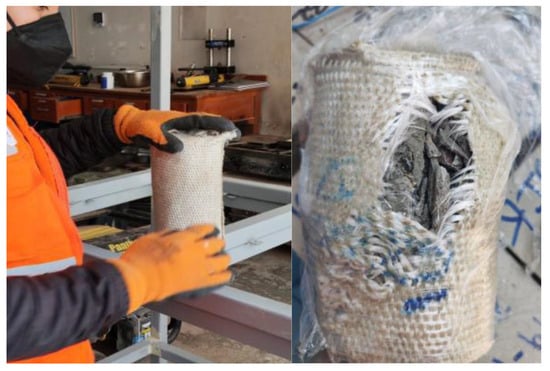
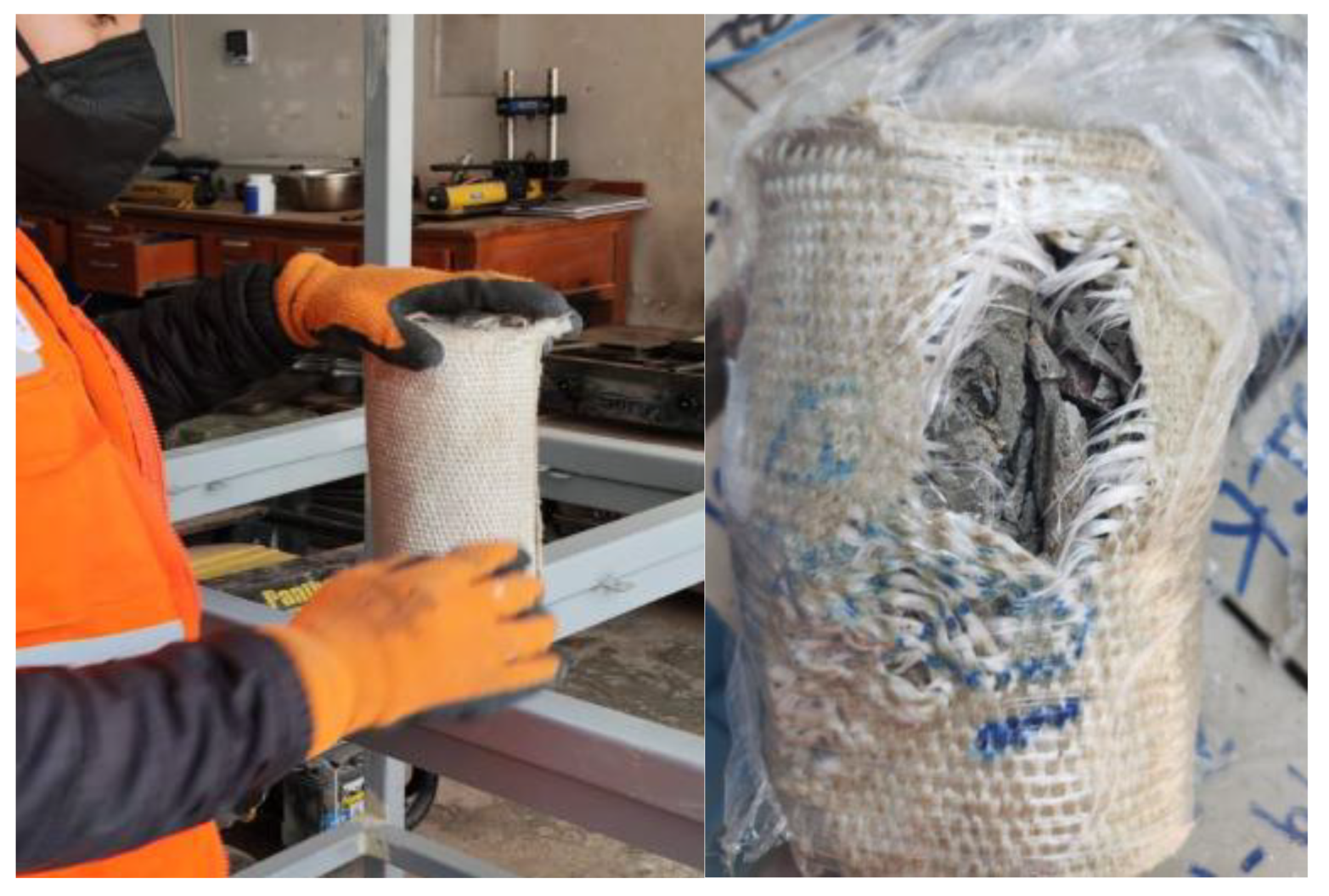
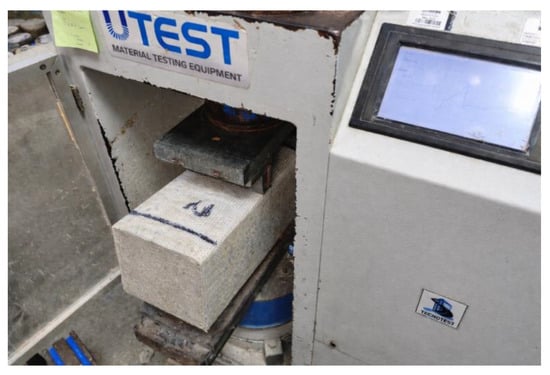
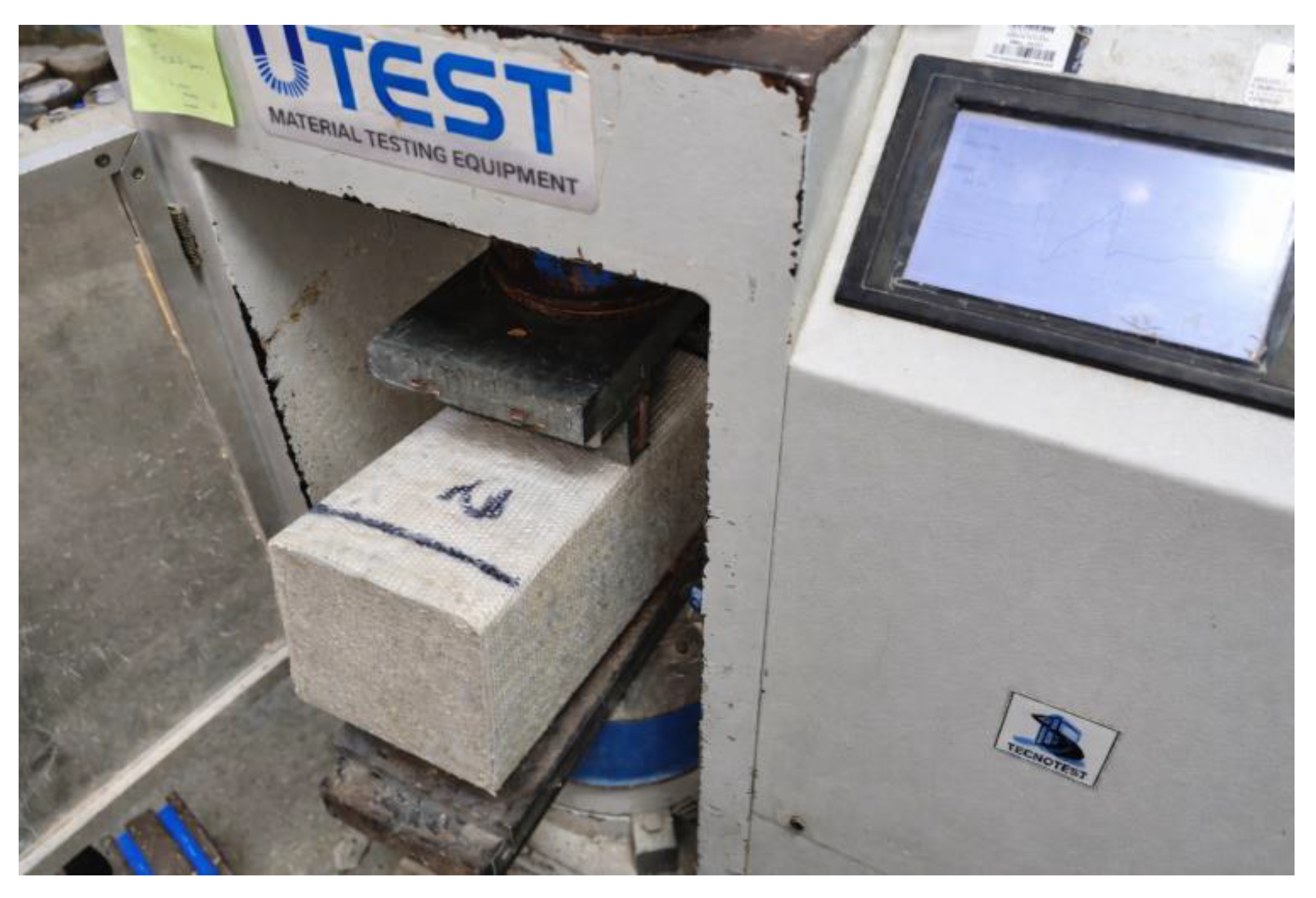
After the 28-day curing process, the concrete specimens were prepared for the application of the fiberglass coating. First, surface cleaning was carried out in order to remove dust, loose particles, and impurities that could affect the adhesion of the material. Then, the epoxy adhesive Sikadur 31 HMG was applied to the concrete surface, acting as a bonding agent between the specimens and the fiberglass layers due to its high adhesion capacity and mechanical strength. Subsequently, the fiberglass layers were carefully placed around the specimens, ensuring a uniform distribution and proper contact with the surface to avoid voids or detachment. Depending on the test configuration, different numbers of fiberglass layers were applied while maintaining a homogeneous coating on each sample. To ensure a uniform and consistent coating thickness, the epoxy adhesive was applied using a spatula and roller in controlled quantities over the entire surface of the specimen. Each fiberglass layer was carefully pressed and leveled to eliminate air bubbles, wrinkles, and excess resin, thereby promoting a continuous bond and a similar coating thickness among all specimens. The fiberglass sheets were cut and installed with their edges positioned as close as possible to each other to minimize discontinuities. Each layer was applied independently, ensuring proper adhesion and continuity of the confinement system. Finally, the strengthened specimens were left at rest for the necessary time to allow the proper hardening of the adhesive and ensure the correct adhesion of the strengthening system before carrying out the corresponding mechanical tests. Subsequently, compression and flexural strength tests were performed in order to evaluate the influence of the fiberglass coating on the mechanical behavior and structural performance of the concrete specimens (Figure 1 and Figure 2). During compression testing, no evidence was observed that these joints acted as preferential crack initiation points or significantly influenced the failure mechanism.
Figure 1.
Concrete specimens coated with fiberglass layers.
Figure 2.
Flexural testing of fiberglass-reinforced beams.
3. Results
3.1. Characteristics of Fiberglass
For this study, fiberglass supplied by the company Aisla Perú (Breña, Peru) was used. This material consists of glass filaments arranged in yarns oriented in two main directions, corresponding to the warp and weft, positioned at 0° and 90°, which gives it an anisotropic behavior and suitable mechanical properties. Likewise, the fabric exhibits high fire resistance, being capable of continuous operation at temperatures close to 500 °C and withstanding intermittent exposure up to 550 °C. In order to ensure its properties and evaluate its compositional characteristics, the material was subjected to chemical composition analysis. The fiberglass presents an approximate thickness of 1/32″, as well as a surface weight of 680 g/m2, with an allowable variation of ±10%. Additionally, the weight per roll is 21 kg, with a tolerance of ±0.6 kg. Regarding fabric density, 40 yarns per 10 cm were recorded in the warp direction and 78 yarns per 10 cm in the weft direction, indicating a suitable textile configuration for its application as a reinforcing material. For all reinforced specimens, the fiberglass fabric was installed maintaining a consistent orientation. The warp direction (0°), corresponding to 40 yarns per 10 cm, was aligned parallel to the longitudinal axis of the specimen, while the weft direction (90°), corresponding to 78 yarns per 10 cm, was oriented around the perimeter of the specimen. This arrangement was maintained throughout the experimental program to ensure uniform confinement and consistency in the mechanical response of the strengthened specimens.
Table 1 shows the results of the elemental analysis performed using X-ray fluorescence spectrometer (EDX-800HS, Shimadzu Corporation, Kyoto, Japan) on fiberglass sample M1, revealing a chemical composition mainly dominated by sodium (Na) at 54.28% and silicon (Si) at 25.637%. The high silicon content confirms the vitreous nature of the material, as this element forms the structural base of glass fibers and is responsible for providing stiffness, chemical stability, and mechanical strength. On the other hand, the high sodium content acts as a glass network modifier, improving workability and facilitating the fiber manufacturing process.
Table 1.
X-ray fluorescence (XRF) analysis of fiberglass.
Additionally, significant proportions of magnesium (Mg) at 9.982% and aluminum (Al) at 7.194% were identified, both of which contribute notably to enhancing the physical and thermal properties of the material. Magnesium improves wear resistance and stability under thermal variations while aluminum increases hardness and mechanical strength, which are relevant for the application of fiberglass as an external coating in concrete elements subjected to mechanical stresses.
In smaller proportions, calcium (Ca) at 2.262%, potassium (K) at 0.120%, barium (Ba) at 0.072%, iron (Fe) at 0.071%, zirconium (Zr) at 0.011%, and strontium (Sr) at 0.006% were detected. Although present in low amounts, these elements influence specific properties of the material, such as chemical resistance, thermal stability, and durability in aggressive environments. In particular, calcium and barium contribute to improving structural resistance and the stability of the glass matrix, whereas zirconium enhances resistance to corrosion and high temperatures.
3.2. Compressive Strength
The compressive strength test of concrete cylinders is one of the most important procedures in civil engineering, as it allows for the determination of the mechanical capacity of concrete under axial loads and the verification of whether it meets the required design strength to ensure the safety and durability of structures. This test is essential for concrete quality control, as it enables the evaluation of possible deficiencies in mix proportioning, manufacturing, curing, or placement of the material, as well as the analysis of the behavior of reinforced elements, such as those coated with fiberglass, by determining the influence of the reinforcement on the concrete’s strength and deformation. For its execution, ASTM C39/C39M [22] was applied, which corresponds to the standard test method for compressive strength of cylindrical concrete specimens. The tests were performed under load control using a hydraulic compression testing machine. Load was applied continuously and without shock until specimen failure, following the requirements of ASTM C39/C39M and NTP 339.034. The loading rate was maintained at 0.25 ± 0.05 MPa/s throughout the test. The reported deformation values correspond to the axial displacement recorded along the loading axis of the specimen at the moment of failure, associated with the maximum load reached during the test.
Table 2 presents the results of the compressive strength test of conventional concrete specimens and specimens coated with different numbers of fiberglass layers. The traditional samples reached an average strength of 20.69 MPa, a value close to the design strength of 20.59 MPa, and also exhibited shorter failure times. This behavior is due to the fact that unreinforced concrete has a limited capacity to resist internal tensile stresses generated during compression, which promotes the rapid initiation and propagation of cracks, leading to failure. On the other hand, specimens coated with one layer of fiberglass reached an average strength of 21.72 MPa, showing an increase compared to conventional samples. This improvement is attributed to the fiberglass acting as external confinement, which partially restricts the lateral expansion of concrete, reduces crack propagation, and enhances internal stress distribution. Likewise, the increase in average failure time indicates a greater energy absorption capacity before failure. For specimens with two fiberglass layers, an average strength of 23.49 MPa was obtained, showing a more significant increase due to the greater coating thickness, which provides more efficient confinement and improves the structural stiffness of the system. This allows crack formation to be delayed and lateral deformations to be controlled during loading. Finally, specimens coated with three layers exhibited the highest average strength, reaching 25.71 MPa, as well as lower deformations and longer failure times. This behavior is attributed to the increased confinement effect generated by the additional fiberglass layers, which limit internal crack growth, redistribute compressive stresses, and enhance the ductility of the concrete.
Table 2.
Compressive strength comparison with layers.
3.3. Flexural Strength
The flexural strength test of concrete beams allows determining the mechanical behavior of structural elements under transverse loads, evaluating their capacity to resist tensile stresses, deformations, and cracking processes before failure occurs. This procedure is essential because beams are elements primarily subjected to flexural stresses during structural service; therefore, knowing their load-bearing capacity contributes to ensuring the safety and stability of buildings. Likewise, in beams coated with fiberglass layers, the test allows verifying the influence of external reinforcement on the increase in load capacity, stiffness, and crack control in concrete. For the execution of the test, ASTM C78/C78M [23] was applied, corresponding to the standard test method for flexural strength of concrete using the third-point loading method.
Table 3 presents the results of the flexural strength test of concrete beams with and without fiberglass coating, showing a progressive improvement in mechanical behavior as the number of applied layers increased. The conventional beams recorded strengths between 3.48 and 3.51 MPa, with an average of 3.50 MPa, as well as shorter failure times. These results reflect the typical behavior of conventional concrete under flexural stresses, where cracks rapidly develop in the tensile zone due to the material’s limited tensile resistance. Beams reinforced with one layer of fiberglass reached an average strength of 3.66 MPa, showing an improvement compared to the control specimens. This increase is associated with the ability of fiberglass to act as a barrier against crack propagation, allowing a more uniform stress distribution and reducing stress concentrations in critical zones. As a result, the structural element sustained higher loads and exhibited a longer time before failure. In specimens with two layers, the average strength increased to 3.89 MPa. This improved performance is attributed to the greater external confinement effect, which provides higher stiffness to the beam surface, reduces crack propagation speed, and promotes a more stable structural response during testing. This also explains the increase in failure times observed. Finally, beams coated with three layers exhibited the highest average strength, reaching 4.10 MPa, along with the longest failure times. This behavior demonstrates that increasing the coating thickness significantly enhances the element’s ability to resist tensile stresses and deformations caused by bending. Fiberglass delays crack initiation and increases the system’s energy absorption capacity, resulting in a more resistant and ductile structural behavior compared to conventional beams.
Table 3.
Flexural strength with fiberglass layers.
Regarding the failure modes, the control specimens exhibited a typical brittle flexural failure characterized by the rapid formation and propagation of cracks in the tensile zone until complete rupture occurred. In contrast, the fiberglass-reinforced beams showed a more gradual failure process, with reduced crack widths and delayed crack propagation. As the number of fiberglass layers increased, the specimens maintained their structural integrity for a longer period, indicating that the coating contributed to stress redistribution and enhanced post-cracking behavior. This change in failure mechanism suggests that fiberglass reinforcement not only increases flexural strength but also improves the ductility and toughness of the concrete elements.
4. Discussion
The results obtained regarding the influence of fiberglass layer coating on the properties of concrete are consistent with the findings reported by Ortiz et al. [24], who highlight that fiber-reinforced polymers, applied both internally and externally, have gained significant importance in civil engineering due to their high mechanical performance, durability, and resistance to chemical agents and aggressive environmental conditions. Likewise, Kaeseberg et al. [25] demonstrated that concrete confinement using fiber-reinforced composites significantly affects its structural behavior and increases its compressive strength. In agreement with these studies, the results of the present research, based on strength tests, deformation analysis, number of layers, and failure time, show that fiberglass coating progressively improves the mechanical performance of concrete as the number of applied layers increases. This is attributed to the external confinement generated by the fiberglass, which reduces crack propagation, controls lateral deformations, and promotes a better distribution of internal stresses, thereby increasing load-bearing capacity and resulting in a more stable and reliable structural behavior.
Regarding the characteristics of the fiberglass used as a coating in the concrete specimens, several studies emphasize its importance as a reinforcement material due to its mechanical resistance, durability, and stability against chemical agents. Vijayan et al. [26] point out that advances in fiber-reinforced polymers have significantly improved their structural performance in civil engineering applications. In the present study, the fiberglass used presented an approximate thickness of 1/32″ and a surface weight of 680 g/cm2, characteristics suitable for external coating applications [27]. Additionally, chemical analysis showed a predominance of sodium and silicon, elements that contribute to cohesion, stiffness, and mechanical strength, while magnesium, aluminum, and calcium enhance durability and stability. Similarly, Colque [7] determined that fiberglass offers advantages in workability and adhesion compared to other fiber types, improving the behavior of reinforced concrete. Overall, these results demonstrate that fiberglass has appropriate physical, chemical, and mechanical properties to be used as an alternative reinforcement material for concrete structures.
Regarding specific objective 2, the influence of 1/8″ (3.175 mm) fiberglass used as external coating on the compressive strength of concrete was evaluated. In this context, Tobbala et al. [6] state that research on concrete strengthening aims to identify materials and procedures capable of improving the initial mechanical properties of structural elements. In the present study, the control concrete reached an average compressive strength of 20.69 MPa at 28 days, equivalent to 100.47% of the design strength. On the other hand, specimens externally reinforced with fiberglass achieved average compressive strengths of 21.72 MPa, 23.49 MPa, and 25.71 MPa for one, two, and three layers, respectively, representing increases of 4.98%, 13.53%, and 24.26%, respectively, compared to conventional concrete.
These results demonstrate that increasing the number of layers progressively improves the load-bearing capacity of concrete due to the confinement effect generated by fiberglass, which limits lateral expansion, reduces crack propagation, and enhances internal stress distribution during loading. Likewise, the increased coating thickness improves the stiffness and energy absorption capacity of the system, allowing specimens to withstand higher stresses before failure. The findings are consistent with those reported by Vijayan et al. [23], who evaluated rectangular concrete columns reinforced with fiberglass of varying thicknesses, obtaining compressive strength increases of up to 50% compared to unreinforced specimens. Similarly, Yahiaoui [28] analyzed concrete under different levels of confinement using two, four, and six fiberglass layers, reporting axial strength increases of 20%–35% with two layers, 50%–75% with four layers, and up to 110% with six layers. Compared to these studies, the results of the present research show a similar trend, confirming that increasing the number of layers and coating thickness directly improves concrete compressive strength.
Although the results demonstrate a continuous improvement in compressive strength with the increase in the number of fiberglass layers, it is important to consider the economic and technological implications associated with the application of additional reinforcement layers. While the three-layer configuration exhibited the best mechanical performance in this study, the incremental gains obtained with each additional layer should be evaluated against the corresponding increase in material, labor, and installation costs. Therefore, future studies should incorporate cost–benefit analyses to determine the optimum number of fiberglass layers that provides the most efficient balance between structural performance and economic feasibility for practical engineering applications.
Regarding the influence of fiberglass coating on the flexural strength of concrete beams, the control specimens achieved an average flexural strength of 3.50 MPa at 28 days. In contrast, beams reinforced with fiberglass coating exhibited average flexural strengths of 3.66 MPa, 3.89 MPa, and 4.10 MPa for one, two, and three fiberglass layers, respectively. These results represent increases of 5.11%, 12.38%, and 19.04% relative to the control concrete, demonstrating that the application of fiberglass layers contributes positively to the enhancement of flexural performance, with greater improvements observed as the number of layers increases. These results indicate that increasing the number of layers progressively enhances the flexural capacity of the beams, as fiberglass acts as an external reinforcement that controls crack propagation, improves internal stress distribution, and increases energy absorption capacity before failure. Additionally, the greater coating thickness provides higher stiffness and structural stability to the concrete element. Likewise, Cornejo [29] reported strength increases of up to 44% in elements reinforced with fiberglass strips compared to control specimens, which is consistent with the trend observed in this study. Overall, the scientific background and obtained results demonstrate that fiberglass is an efficient alternative for improving the flexural strength and mechanical performance of structural concrete.
5. Conclusions
The fiberglass used as an external coating exhibited suitable physical, chemical, and mechanical properties for application in concrete elements. The material consists of glass filaments arranged in two principal directions (0° and 90°), corresponding to the warp and weft of the fabric, which provide a bidirectional textile configuration. It also presented an approximate thickness of 1/32″, a surface weight of 680 g/m2, and high thermal resistance, withstanding continuous temperatures close to 500 °C. Chemical analysis revealed a composition mainly dominated by sodium (54.28%) and silicon (25.637%), elements associated with the material’s stiffness and mechanical performance, while the presence of magnesium, aluminum, and calcium contributes to its durability and stability. These characteristics support the suitability of fiberglass as an external reinforcement material for concrete elements.
The coating with fiberglass layers significantly increased the compressive strength of concrete with a design strength of 20.59 MPa, reaching average values of 21.72 MPa, 23.49 MPa, and 25.71 MPa with one, two, and three layers, respectively. This increase is mainly due to the confinement effect generated by the fiberglass, which restricts the lateral expansion of the concrete under load, reduces the propagation of internal cracks, and improves stress distribution. Likewise, the increase in the number of layers enhances the thickness and stiffness of the coating, allowing the specimens to withstand higher loads and exhibit a more controlled and ductile failure.
The flexural strength of the concrete beams also showed progressive increases with the application of fiberglass layers, with average values of 3.66 MPa, 3.89 MPa, and 4.10 MPa for one, two, and three layers, respectively, compared to 3.50 MPa for conventional beams. This behavior is attributed to the fiberglass acting as an external reinforcement in the tensile zone, controlling crack propagation and reducing stress concentration at critical points. Furthermore, the increase in the number of layers improves system adhesion and stiffness, enhancing energy absorption capacity and allowing the beams to withstand greater deformations before failure.
This research demonstrates the technical feasibility of using fiberglass layers as an external strengthening method to improve the mechanical properties of conventional concrete, constituting an efficient alternative for increasing the strength and durability of structural elements. However, the results should be interpreted considering the limited number of specimens tested and the absence of long-term durability evaluations. Therefore, future studies should assess the behavior of full-scale structural elements under cyclic and seismic loads, analyze durability under aggressive environmental conditions, and investigate the long-term adhesion between fiberglass and concrete.
Author Contributions
Conceptualization, B.J.A.A.; methodology, C.S.F.C.; formal analysis, C.S.F.C.; investigation, S.A.D.L.C.V.; writing—original draft preparation, S.A.D.L.C.V.; writing—review and editing, S.A.D.L.C.V. and C.S.F.C.; visualization, B.J.A.A.; supervision, S.A.D.L.C.V. All authors have read and agreed to the published version of the manuscript.
Funding
This research received no external funding.
Data Availability Statement
The data presented in this study are available on request from the corresponding author.
Acknowledgments
The authors express their sincere gratitude to the Universidad Tecnológica del Perú for the financial support provided for the development and publication of this research article.
Conflicts of Interest
The authors declare no conflicts of interest.
References
- Rodriguez, J.S.T.; Vallejos, C.C.; Reyes, L.C.; Salardi, E.P.; Libia, C.R.; Barrientos, C.B. Fibra para mejorar el desempeño mecánico de elementos estructurales de concreto. Aporte Santiaguino 2021, 14, 66–77. [Google Scholar] [CrossRef] [Scilit]
- Mehta, P.K.; Monteiro, P.J.M. Concrete: Microstructure, Properties, and Materials, 4th ed.; McGraw-Hill Education: New York, NY, USA, 2014; pp. 1–35. [Google Scholar]
- Ma, D.; Liu, J.; Wang, L.; Wang, Q. Assessment of Glass-Fiber-Reinforced Polymer (GFRP)–Concrete Interface Durability Subjected to Simulated Seawater Environment. Buildings 2024, 14, 1732. [Google Scholar] [CrossRef] [Scilit]
- Olivera, D. Uso de Fibra de Carbono Como Reforzamiento Estructural en Vigas de Concreto Armado. Bachelor’s Thesis, Universidad Continental, Abancay, Perú, 2022. [Google Scholar]
- Orrego, J. Comparación de Reforzamiento Estructural Con Fibra de Carbono y Vidrio en la I.E. N° 440 Las Flores La Pradera, Chiclayo. Bachelor’s Thesis, Universidad Católica Santo Toribio de Mogrovejo, Chiclayo, Perú, 2024. [Google Scholar]
- Tobbala, D.E.; Abo Khashaba, M.I.; El-Baghdadi, A.; El-Mawsly, E.; Korat, A.; AboEl-Maaty, M.R.; Naga, K.; El-Katta, M.; Kotb, O.; Elbilgihy, A.; et al. Strengthening of Concrete Specimens with Glass Fiber Reinforced Polymer Sheets. Nile J. Arch. Civ. Eng. 2023, 2, 1–16. [Google Scholar] [CrossRef] [Scilit]
- Romero, A.G.C. Concreto reforzado con textil para el refuerzo y rehabilitación de columnas de hormigón armado. Rev. Ing. 2021, 5, 59–77. [Google Scholar] [CrossRef] [Scilit]
- De Diego, A.; Martínez, S.; Castro, V.J.; Echevarría, L.; Barroso, F.J.; Gutiérrez, J.P. Experimental investigation on the compressive behaviour of FRP-confined rectangular concrete columns. Arch. Civ. Mech. Eng. 2022, 22, 131. [Google Scholar] [CrossRef] [Scilit]
- Lam, L.; Teng, J.G. Design-oriented stress-strain model for FRP-confined concrete. Constr. Build. Mater. 2003, 17, 471–489. [Google Scholar] [CrossRef] [Scilit]
- Dai, J.G.; Bai, Y.L.; Teng, J.G. Behavior and Modeling of Concrete Confined with FRP Composites of Large Deformability. J. Compos. Constr. 2011, 15, 914–927. [Google Scholar] [CrossRef] [Scilit]
- Siddika, A.; Al Mamun, M.A.; Alyousef, R.; Amran, Y.H.M. Strengthening of reinforced concrete beams by using fiber-reinforced polymer composites: A review. J. Build. Eng. 2019, 25, 100798. [Google Scholar] [CrossRef] [Scilit]
- Alhorani, R.A.; Rabayah, H.S.; Abendeh, R.M.; Salman, D.G. Assessment of flexural performance of reinforced concrete beams strengthened with internal and external AR-glass textile systems. Buildings 2023, 13, 1135. [Google Scholar] [CrossRef] [Scilit]
- Triantafillou, T.C.; Plevris, N. Strengthening of RC beams with epoxy-bonded fibre-composite materials. Mater. Struct. 1992, 25, 201–211. [Google Scholar] [CrossRef] [Scilit]
- Toutanji, H.A. Stress-strain characteristics of concrete columns externally confined with advanced fiber composite sheets. ACI Mater. J. 1999, 96, 397–404. [Google Scholar] [CrossRef] [Scilit]
- Salesa, A.; Esteban, L.M.; Barris, C. Confinement of FRP concrete columns: Review of design guidelines and comparison with experimental results. Mater. Constr. 2022, 72, e274. [Google Scholar] [CrossRef] [Scilit]
- Khan, R. Various Types and Characteristics of Applied Research. J. Res. Dev. 2021, 9, 177. [Google Scholar] [CrossRef]
- Capili, B.P.; Anastasi, J.K.P. An Introduction to Types of Quasi-Experimental Designs. AJN Am. J. Nurs. 2024, 124, 50–52. [Google Scholar] [CrossRef] [Scilit] [PubMed]
- Ghanad, A. An Overview of Quantitative Research Methods. Int. J. Multidiscip. Res. Anal. 2023, 6, 3794–3803. [Google Scholar] [CrossRef] [Scilit]
- Martinez Barrios, H.E.; Mosquera Sánchez, J.D.; Romero Sánchez, A. Observation as a Research Technique (Reflections, Types, Recommendations and Examples). Russ. Law J. 2022, 10, 792–798. [Google Scholar] [CrossRef] [Scilit]
- Abell, L.; Maher, F.; Begum, S.; Booth, S.; Broomfield, J.; Lee, S.; Smith, E.; Stannard, R.; Teece, L.; Vounzoulaki, E.; et al. Incorporation of patient and public involvement in statistical methodology research: A survey assessing current practices and attitudes of researchers. Res. Involv. Engag. 2023, 9, 100. [Google Scholar] [CrossRef] [Scilit] [PubMed]
- ACI PRC-211.1-22; Selecting Proportions for Normal-Density and High-Density Concrete—Guide, 1st ed. American Concrete Institute: Farmington Hills, MI, USA, 2022.
- ASTM C39/C39M-23; Standard Test Method for Compressive Strength of Cylindrical Concrete Specimens. ASTM International: West Conshohocken, PA, USA, 2023.
- ASTM C78/C78M-22; Standard Test Method for Flexural Strength of Concrete (Using Simple Beam with Third-Point Loading). ASTM International: West Conshohocken, PA, USA, 2022.
- Ortiz, J.D.; Khedmatgozar Dolati, S.S.; Malla, P.; Nanni, A.; Mehrabi, A. FRP-Reinforced/Strengthened Concrete: State-of-the-Art Review on Durability and Mechanical Effects. Materials 2023, 16, 1990. [Google Scholar] [CrossRef] [Scilit] [PubMed]
- Kaeseberg, S.; Messerer, D.; Holschemacher, K. Experimental Study on Concrete under Combined FRP–Steel Confinement. Materials 2020, 13, 4467. [Google Scholar] [CrossRef] [Scilit] [PubMed]
- Issa, M.E.; El-Shafey, N.F.; Baraghith, A.T.; Balat, E.N. Flexural strengthening of LWRC beams using RSHCC reinforced with glass fiber textile mesh. J. Eng. Appl. Sci. 2024, 71, 132. [Google Scholar] [CrossRef] [Scilit]
- Tela de Fibra de Vidrio. Aisla Perú. Available online: https://aislaperu.com/product/tela-de-fibra-de-vidrio (accessed on 18 May 2026).
- Yahiaoui, D.; Saadi, M.; Bouzid, T. Compressive Behavior of Concrete Containing Glass Fibers and Confined with Glass FRP Composites. Int. J. Concr. Struct. Mater. 2022, 16, 37. [Google Scholar] [CrossRef] [Scilit]
- Cornejo, C. Comportamiento Experimental de Columnas Cortas con Refuerzo Externo. Master’s Thesis, Pontificia Universidad Católica del Perú, Lima, Peru, 2019. [Google Scholar]

Disclaimer/Publisher’s Note: The statements, opinions and data contained in all publications are solely those of the individual author(s) and contributor(s) and not of MDPI and/or the editor(s). MDPI and/or the editor(s) disclaim responsibility for any injury to people or property resulting from any ideas, methods, instructions or products referred to in the content. |
© 2026 by the authors. Licensee MDPI, Basel, Switzerland. This article is an open access article distributed under the terms and conditions of the Creative Commons Attribution (CC BY) license.