


Abstract
Wet–dry cycling triggers progressive degradation of the physical and mechanical properties of silt soils, severely compromising the long-term serviceability and structural safety of silt subgrade infrastructure. This study proposes a sustainable nano-hydrophobic material (NSHM) modification strategy to enhance the W-D cycle durability of silt. A multi-scale experimental program integrating wettability characterization, mechanical testing and microstructural analysis was conducted to elucidate the modification mechanism, performance attenuation law and microstructural evolution of NSHM-treated silt under cyclic wetting–drying. Results reveal that NSHM effectively imparts robust water repellency to silt, with a distinct dosage threshold effect and a synergistic enhancement from soil relative density. Silt modified with 0.5% NSHM maintains stable hydrophobicity after 5 W-D cycles, with a contact angle reduction of less than 1.3%. Compared with untreated specimens, the 0.5% NSHM-treated silt exhibits only 3%–8% unconfined compressive strength loss, 20%–30% higher cohesion and 8%–20% higher internal friction angle after 5 cycles. The superior durability originates from the synergistic effect of chemical anchoring and physical coating, which firmly immobilizes the hydrophobic network on particle surfaces and overcomes the inherent drawbacks of easy leaching and poor durability in conventional modification methods. This work provides a sustainable soil improvement strategy for W-D-prone regions, with significant engineering value for mitigating performance degradation of geotechnical infrastructure.
1. Introduction
Silt is widely distributed across multiple regions of China, characterized by high particle roundness, low plasticity, low intrinsic strength and poor water stability. Driven by precipitation infiltration and capillary action, silt subgrade is prone to wetting-induced softening. The coupled effects of complex climatic environments and traffic loads further accelerate performance degradation of wetted subgrade, triggering engineering defects such as differential settlement and uneven deformation [1,2,3,4], which pose considerable challenges to the design and construction of silt subgrade [5]. Consequently, raw silt is generally deemed unsuitable for direct use as subgrade fill material [6,7].
Conventional subgrade improvement strategies primarily aim to enhance strength and stability, typically relying on chemical stabilizers such as cement, lime and fly ash [8,9,10,11]. While these traditional binders are effective in improving the immediate strength of subgrade soils, they fail to effectively inhibit external water infiltration and capillary water rise [12,13]. As a result, long-term wet–dry cycling significantly alters the physical and mechanical properties of subgrade soils, including porosity, moisture content and shear strength [14,15], inducing shrinkage cracks, reduced strength and bearing capacity, deteriorated stability, and increased permeability. Moreover, the production of these chemical stabilizers is associated with substantial natural resource consumption, heavy environmental burdens and considerable emissions of greenhouse gases and particulate matter [16,17]. For example, carbon dioxide and sulfur dioxide emitted during production exert adverse impacts on ecosystems, and the leaching of chemical stabilizers may also cause groundwater contamination [18].
With advances in materials science, an increasing number of novel materials have been applied for soil hydrophobic modification [19,20,21,22], which can improve soil service performance across multiple dimensions [23,24,25,26]. Previous studies have demonstrated that incorporating silicone resins or waxes can transform hydrophilic soils into highly hydrophobic states and impart robust water repellency [27,28,29,30]. A low dosage of hydrophobic agent has been reported to achieve satisfactory hydrophobicity in sandy soils [31]. Regarding modification mechanisms, the interaction between nano-silica gel and soil particles plays a critical role in subgrade reinforcement by effectively sealing interparticle voids [32], while nano-clay can enhance interparticle cohesion in silt via hydration reactions [33]. The degree of soil hydrophobicity is generally positively correlated with the concentration of hydrophobic compounds [34]. For well-modified hydrophobic subgrade, capillary water rise is suppressed, rainfall infiltration is impeded, and vertical water migration within the hydrophobic layer is largely restricted [35,36].
However, the hydrophobic properties of modified soils may degrade under repeated wet–dry cycles, which can compromise their long-term service performance [37]. Although the feasibility of novel materials for soil hydrophobic modification has been widely verified, systematic research on the long-term performance of hydrophobic silt subgrade under wet–dry cycling remains scarce [38,39,40,41,42,43,44]. Accordingly, investigating the long-term service performance of hydrophobically modified silt under wet–dry cycling is of great engineering and scientific significance.
This study aims to reveal the performance attenuation law of hydrophobically modified silt under wet–dry cycling. Water droplet penetration time and surface contact angle tests are conducted to investigate the evolution of hydrophobic properties under cyclic wetting–drying. Unconfined compressive strength and direct shear tests are performed to examine the effects of wet–dry cycles on the mechanical properties of modified silt. Fourier transform infrared spectroscopy and scanning electron microscopy are employed to elucidate the hydrophobic modification mechanism and the microstructural evolution induced by wet–dry cycling. On this basis, the optimal dosage range of the modifier is proposed to satisfy the long-term service requirements of subgrade engineering.
2. Materials and Methods
2.1. Soil
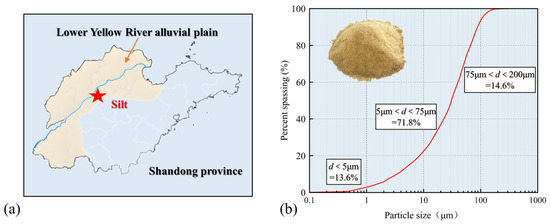
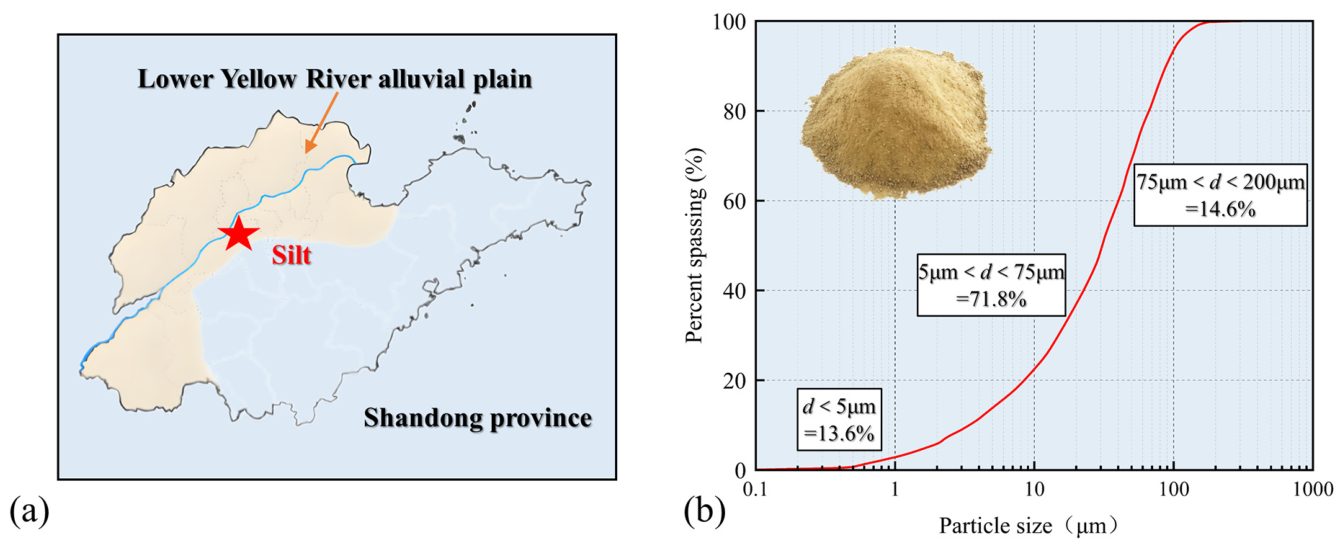
Test soil samples were collected at a depth of 40 cm from a construction site in Jinan, Shandong Province, China; the geographic location of the sampling site is illustrated in Figure 1a. The soil in its natural state exhibits a light-yellow appearance. Particle size distribution was determined via laser particle size analysis, with the results presented in Figure 1b. Particle sizes are predominantly distributed in the range of 1–200 μm, with the soil comprising 13.6% sand (>75 μm), 71.8% silt (5–75 μm) and 14.6% clay (≤5 μm) by mass. In accordance with ASTM D2487, the soil is classified as low-plasticity silt. The basic physical properties of the tested soil, are summarized in Table 1.
Figure 1.
Experimental soil: (a) location of silt, (b) silt particle size distribution.
Table 1.
Basic parameter of soil.
2.2. Hydrophobic Material
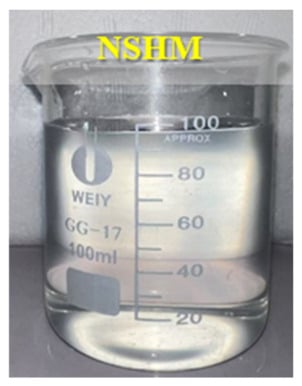
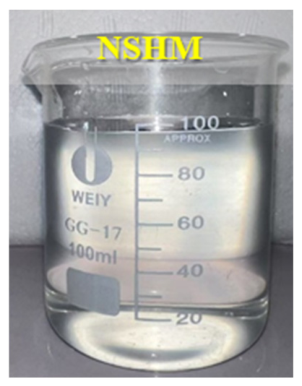
In this study, an environmentally friendly nano-hydrophobic material (NSHM), independently developed by Shandong University, was employed as the soil modifier. NSHM is an aqueous composite modifier formulated by blending sodium methyl silicate aqueous solution and colloidal nano-silica sol at a mass ratio of approximately 95:5; both raw liquid components have a solid content of around 30%. The basic physical properties of NSHM are summarized in Table 2. As illustrated in Figure 2, NSHM is a semi-transparent liquid, featuring facile preparation, non-toxicity, low cost, and favorable hydrophobic modification performance [45,46].
Table 2.
Basic parameter of NSHM.
Figure 2.
NSHM.
2.3. Sample Preparation
All specimens were prepared in accordance with the Test Methods of Soils for Highway Engineering (JTG 3430-2020, Chinese Industry Standard; China Communications Press: Beijing, China, 2020) [47] at the optimum moisture content of 12.1%. Prior to mixing, the field-collected silt was oven-dried, ground, and sieved through a 2 mm standard sieve. The sieved soil was thoroughly homogenized with NSHM modifier at the target mass ratios specified in Table 3. The mixtures were subsequently sealed and cured for 24 h to ensure uniform dispersion of the modifier throughout the soil matrix. Compaction was then performed to fabricate specimens at three relative densities (RD): 90%, 93%, and 96%.
Table 3.
Mix proportion design of test sample.
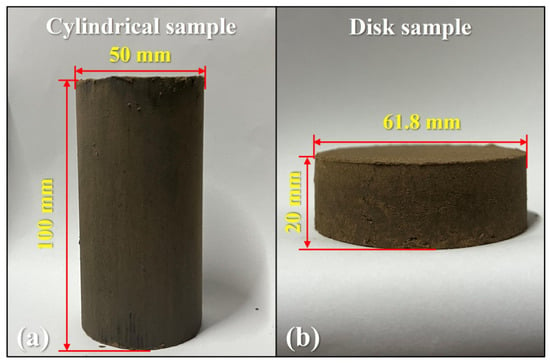
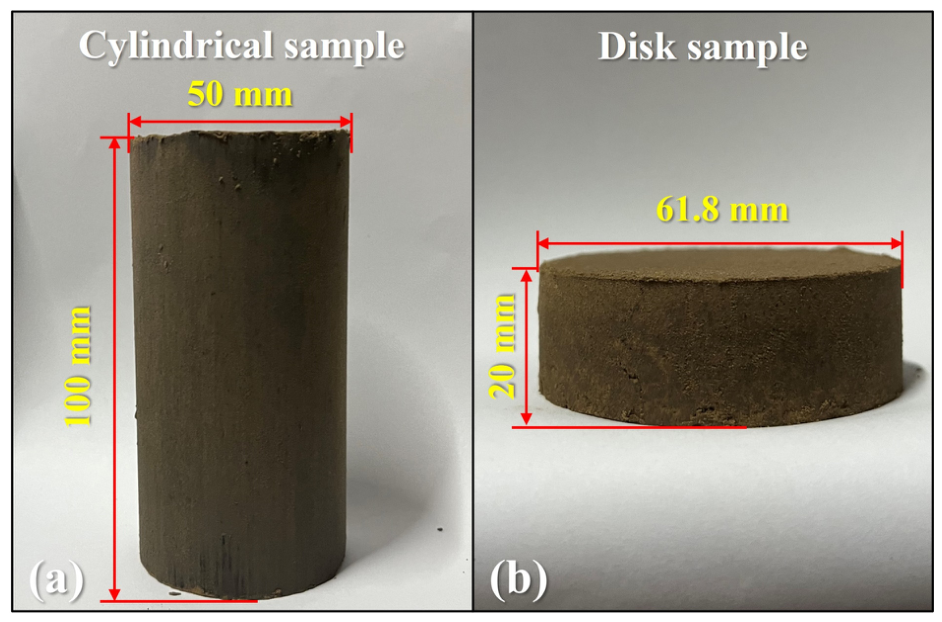
Two specimen geometries were prepared for subsequent testing: disk specimens with a diameter of 61.8 mm and a height of 20 mm, and cylindrical specimens measuring 50 mm in diameter and 100 mm in height. Representative as-fabricated specimens are illustrated in Figure 3.
Figure 3.
Test sample: (a) cylindrical sample, (b) disk sample.
2.4. Test Methods
2.4.1. Dry–Wet Cycle
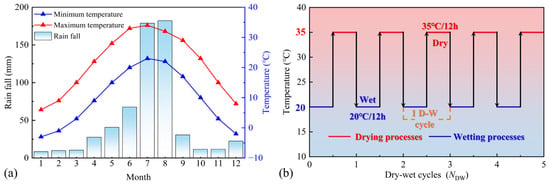
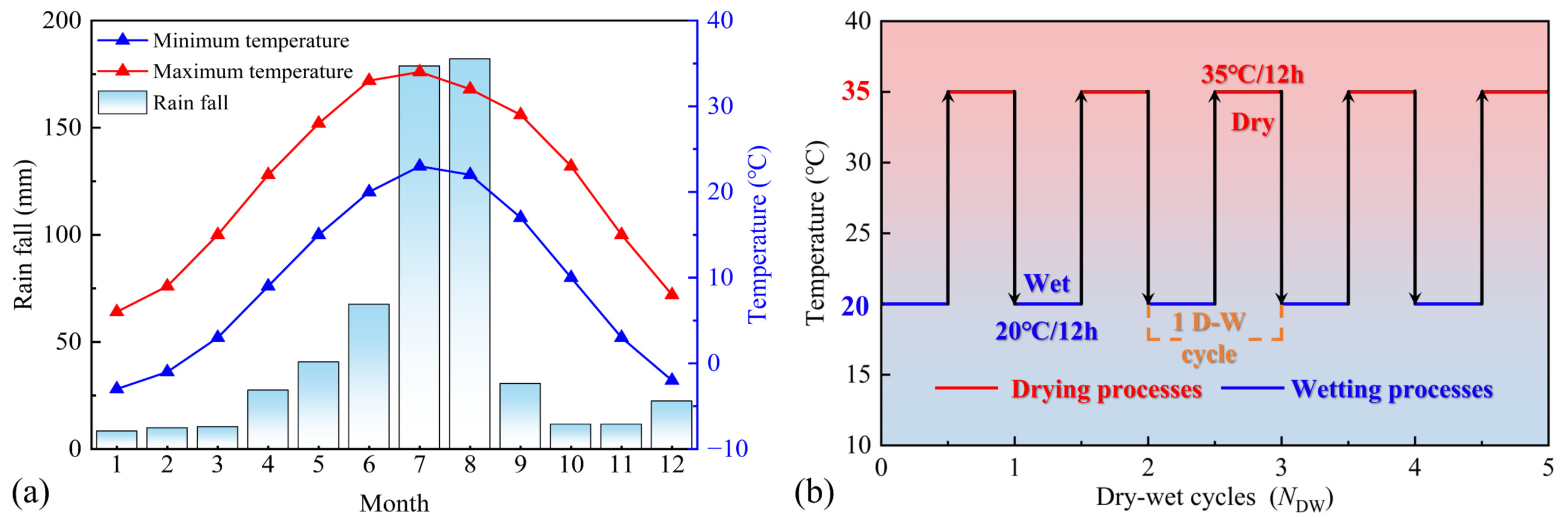
Durability is a critical performance metric for hydrophobically modified subgrade soils, as it directly governs long-term service safety under field conditions. As depicted in Figure 4a, the study area experiences concentrated rainfall from June to August, coinciding with the highest annual temperatures; this climatic pattern induces frequent wet–dry cycling in the silt subgrade. Accordingly, the drying and wetting temperatures were set at 35 °C and 20 °C, respectively, based on local climatic data and prior research [4].
Figure 4.
Schematic of the wet–dry cycle test design: (a) Monthly maximum/minimum temperatures and rainfall in the study area over the past decade. (b) Schematic workflow of one wet–dry cycle.
Wet–dry cycle tests are widely performed in accordance with Standard Test Methods for Wetting and Drying Compacted Soil-Cement Mixtures (ASTM D559/D559M-15, ASTM Standard; ASTM: West Conshohocken, PA, USA, 2015) [48] in geotechnical engineering. A standard cycle consists of a humidification phase and a drying phase, with target moisture content as the conventional control index. However, conventional immersion-based wetting is unsuitable for hydrophobically modified silt due to its inherent water repellency. Thus, a time-controlled wetting–drying protocol was adopted in this study, following established methodologies for hydrophobic soil testing [6,7]. Each full cycle comprised 12 h of humidification and 12 h of drying, as schematically illustrated in Figure 4b. Previous studies have demonstrated that the mechanical properties of silt subgrade tend to stabilize after five wet–dry cycles [49]; accordingly, tests were conducted after 0, 1, 3, and 5 cycles to characterize the performance degradation pattern of hydrophobically modified silt.
Field subgrade soils are subject to fluctuating moisture and compaction states under climatic and groundwater actions; hence, the testing protocol must reliably replicate these field conditions. Various specimen preparation methods for wet–dry cycle testing have been documented in the literature (Table 4). The drip wetting method typically yields non-uniform moisture distribution within specimens, while high-temperature constant-temperature drying deviates from actual field thermal conditions for silt subgrade. After systematic evaluation of available protocols, a self-developed atomization humidification system was selected for the wetting phase, and a constant-temperature oven was used for the drying phase.
Table 4.
Existing dry–wet cycle methods.
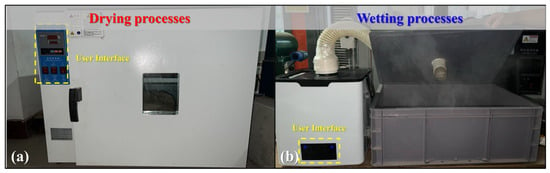
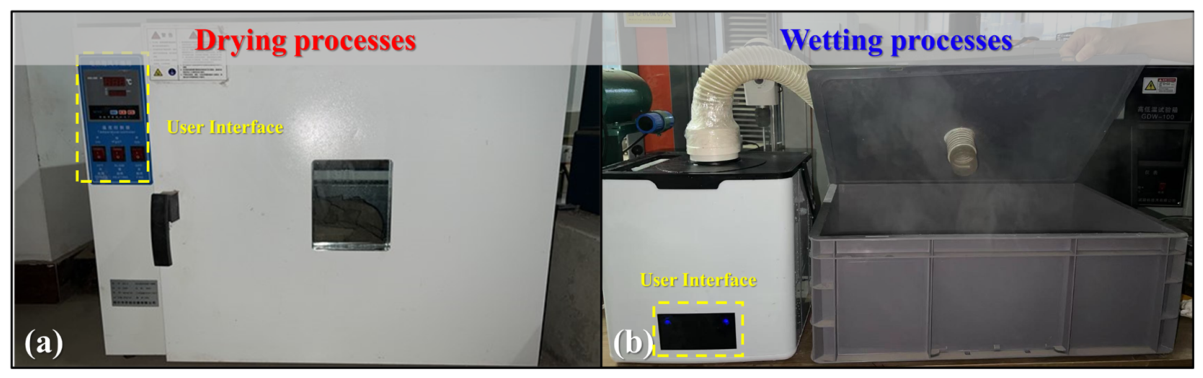
The drying process was conducted in a constant-temperature oven at 35 °C (Figure 5a). To prevent uneven moisture migration and soil particle loss during drying, each specimen was wrapped with plastic film prior to placement in the oven. The wetting process was carried out in a transparent closed chamber equipped with an ultrasonic atomization humidifier (Figure 5b), with a water atomization rate of 1.8 L/h and a controlled ambient temperature of 20 °C. Permeable stones were placed on both the top and bottom of each specimen to promote uniform moisture ingress and avoid localized structural damage induced by uneven humidification.
Figure 5.
Dry–wet cycle process of the sample: (a) drying setup, (b) atomization-based wetting apparatus.
2.4.2. WDPT Test
Soil wettability, encompassing hydrophilic and hydrophobic states, is a core property governing water infiltration and moisture migration in subgrade soils. In this study, the water droplet penetration time (WDPT) method was adopted to quantify the hydrophobicity of the tested silt. This method assesses the degree of soil water repellency by recording the time required for a standard water droplet to fully infiltrate the soil surface; a longer WDPT value indicates stronger hydrophobic performance.
The classification of soil hydrophobicity follows a widely accepted threshold-based criterion [53], with detailed grading indicators presented in Table 5. All tests were conducted at a constant ambient temperature of 25 °C using disk specimens measuring 61.8 mm in diameter and 20 mm in height. For each measurement, an 80 μL water droplet was dispensed onto the specimen surface with a micropipette, and the elapsed time from droplet contact to complete infiltration was recorded as the WDPT value. To account for test variability and ensure data reliability, five replicate droplets were tested at evenly distributed positions on each specimen, and the mean value was adopted as the representative hydrophobicity index.
Table 5.
Classification of water repellence of soil (WDPT method).
2.4.3. Surface Contact Angle Test
Unlike conventional hydrophobic materials typically applied as surface coatings, NSHM is utilized as an admixture for subgrade soil improvement in this study. The surface contact angle was measured to quantitatively characterize the wettability of silt specimens before and after NSHM modification, using a DSA100 contact angle analyzer (Krüss GmbH, Hamburg, Germany).
All tests were performed on disk specimens. Each specimen was placed horizontally on the test stage, and a 20 μL droplet of distilled water was deposited onto the specimen surface via the sessile drop technique. The equilibrium contact angle at the solid–liquid interface was recorded. Five replicate measurements were carried out at evenly distributed positions on each specimen, and the mean value was adopted as the representative contact angle of the sample.
The droplet profile was fitted using the Young–Laplace equation (Equation (1)) to derive the contact angle:
where γ denotes the surface tension of the liquid, ΔP represents the pressure difference across the liquid–gas interface, and R1 and R2 are the two principal radii of curvature of the droplet surface. At the microscale, Equation (1) can be simplified as expressed in Equation (2):
where θ is the solid–liquid contact angle, and a refers to the channel height of the large slit channel. In accordance with the standard wettability classification criterion, a surface is defined as hydrophobic when θ ≥ 90° and hydrophilic when θ < 90°.
2.4.4. UCS
Unconfined compressive strength (UCS) is a core mechanical index for evaluating the structural stability of geotechnical structures. UCS tests on NSHM-modified silt specimens under wet–dry cycles were performed in accordance with Test Methods of Soils for Highway Engineering (JTG 3430-2020, Chinese Industry Standard; China Communications Press: Beijing, China, 2020) [47] using a universal testing machine. Cylindrical specimens measuring 50 mm in diameter and 100 mm in height were adopted for all tests. A constant axial loading rate of 1 mm/min was applied, and three replicate specimens were prepared for each test condition to ensure data reliability.
2.4.5. Direct Shear
Shear strength is a fundamental parameter governing the stability of soil masses under shear loading. Direct shear tests were conducted following Test Methods of Soils for Highway Engineering (JTG 3430-2020, Chinese Industry Standard; China Communications Press: Beijing, China, 2020) using a Huakan automatic direct shear apparatus (Huakan Testing Instrument Co., Ltd., Nanjing, Jiangsu, China), at a constant shear rate of 0.8 mm/min until specimen failure occurred. The shear strength follows the Mohr–Coulomb failure criterion, as expressed in Equation (3):
where τ is the shear strength of the specimen, c is the cohesion, σ is the normal stress acting on the shear plane, and φ is the internal friction angle. In compliance with Test Methods of Soils for Highway Engineering, shear failure is defined at a horizontal displacement equal to 1/10 of the specimen diameter. For disk specimens with a diameter of 61.8 mm, the corresponding failure displacement threshold was set to 6 mm.
2.4.6. California Bearing Ratio
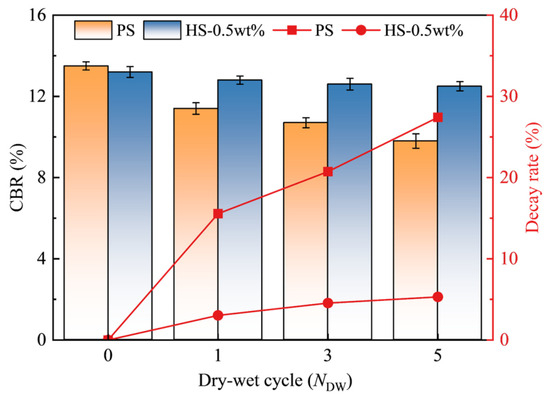
The California Bearing Ratio (CBR) is a core index for assessing the pavement performance of subgrade fill materials, which characterizes the local shear resistance and load-bearing capacity of highway subgrade soils. To examine whether the hydrophobically modified silt subgrade meets engineering application requirements, CBR tests were performed in compliance with the Chinese standard Test Methods of Soils for Highway Engineering (JTG 3430-2020). All specimens were fabricated with a compaction degree of 96%, and three parallel replicates were prepared for each test group. CBR measurements were conducted on specimens subjected to 0, 1, 3, and 5 wet–dry cycles, respectively.
To quantify the evolution of bearing capacity under cyclic wetting and drying, the CBR retention ratio is defined as the evaluation parameter, as expressed in Equation (4). In the equation, CBR0 is the initial CBR value of the specimen prior to wet–dry cycles, CBRx refers to the CBR value after x wet–dry cycles, and T denotes the CBR retention ratio. This parameter represents the proportion of residual bearing capacity of the specimen relative to its initial state after wet–dry cycle action, which directly reflects the durability of subgrade bearing performance.
2.4.7. Infrared Spectrum
The Nicolet IS50 Fourier transform infrared spectrometer (Thermo Fisher Scientific, Waltham, MA, USA) was used to analyze the light energy spectrum before and after the silt was modified. The wavenumber range was 4000 cm−1 to 400 cm−1, with a resolution of 0.2 cm−1. Functional groups of both unmodified silt and NSHM-modified silt specimens were assayed before and after five dry–wet cycles in this experimental program.
2.4.8. SEM
This study employed the ZEISS GeminiSEM 500 field emission scanning electron microscope (Carl Zeiss AG, Oberkochen, Baden-Württemberg, Germany) to characterize microstructural evolution in unmodified and NSHM-modified silt under dry–wet cycles. The specific steps of the experiment are as follows: First, the round cake sample was dried until completely dry, and then the 0.5 mm × 0.5 mm-sized sample was taken out via the sampler and pasted to the conductive adhesive. In the third step, the sample needs to be sprayed with gold to improve the conductivity of the sample. Finally, the sample stage is put into the scanning instrument for testing. According to research experience, the test process uses a 20 μm scale for scanning [54].
2.4.9. BET
Previous studies have indicated that silt particles and pore sizes predominantly fall below 100 nm [55]. Therefore, nitrogen adsorption methodology was employed to quantify the specific surface area, pore volume distribution, and average pore diameter. Surface area and porosity measurements were conducted using a Micromeritics ASAP 2460 specific surface area and pore size analyzer (Micromeritics Instrument Corporation, Norcross, GA, USA) with BET theory implementation.
3. Results and Discussion
3.1. Hydrophobic Performance Analysis
3.1.1. WDPT
Previous studies have indicated that relative density affects the absolute values of water droplet penetration time (WDPT) but does not alter the overall variation trend of WDPT with hydrophobic modifier dosage. Accordingly, specimens with a relative density of 96% were selected as the representative group for detailed analysis to determine the optimal NSHM dosage for wet–dry cycle resistance. The influence of relative density on WDPT performance under the optimal NSHM dosage was subsequently examined. All WDPT values reported represent the average of five replicate droplet measurements per specimen.
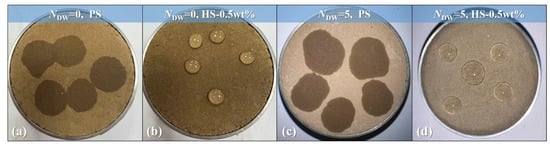
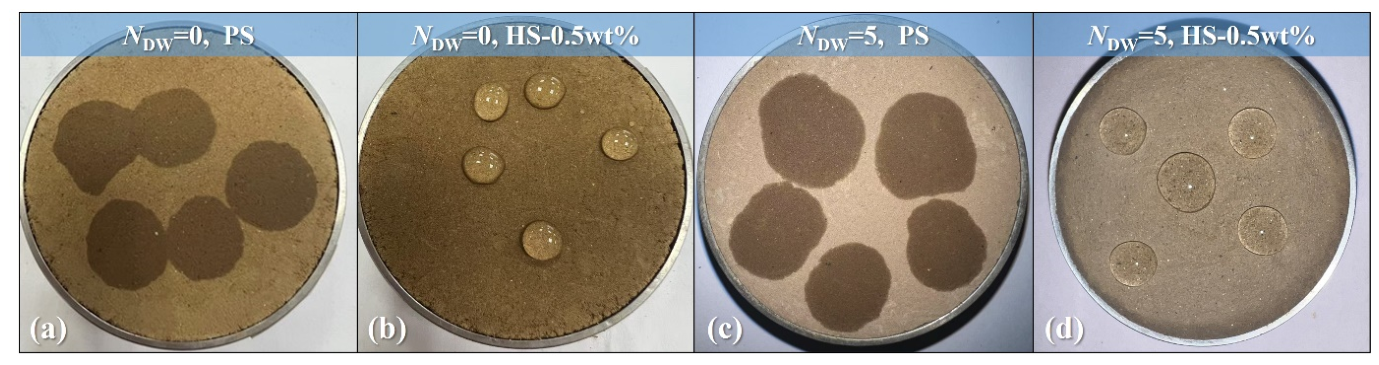
Figure 6 presents representative observations from the WDPT tests. PS remains consistently hydrophilic before and after wet–dry cycles, with water droplets infiltrating immediately upon surface contact. In contrast, NSHM-modified silt maintains well-defined droplet morphology both before and after cyclic wetting–drying (Figure 6b,d), confirming that NSHM incorporation effectively imparts hydrophobicity to the silt matrix.
Figure 6.
Representative WDPT test observations (WDPT = 5 s):(a) NDW = 0, PS, (b) NDW = 0, HS-0.5%wt, (c) NDW = 5, PS, (d) NDW = 5, HS-0.5%wt.
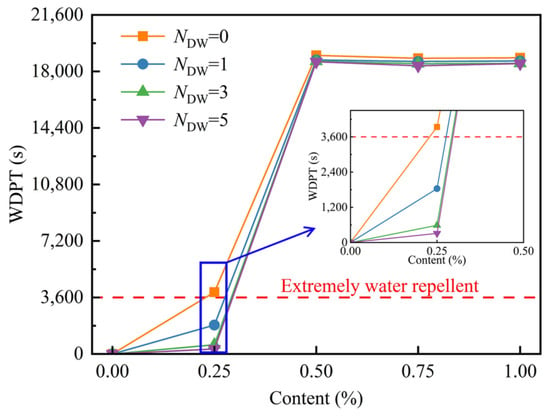
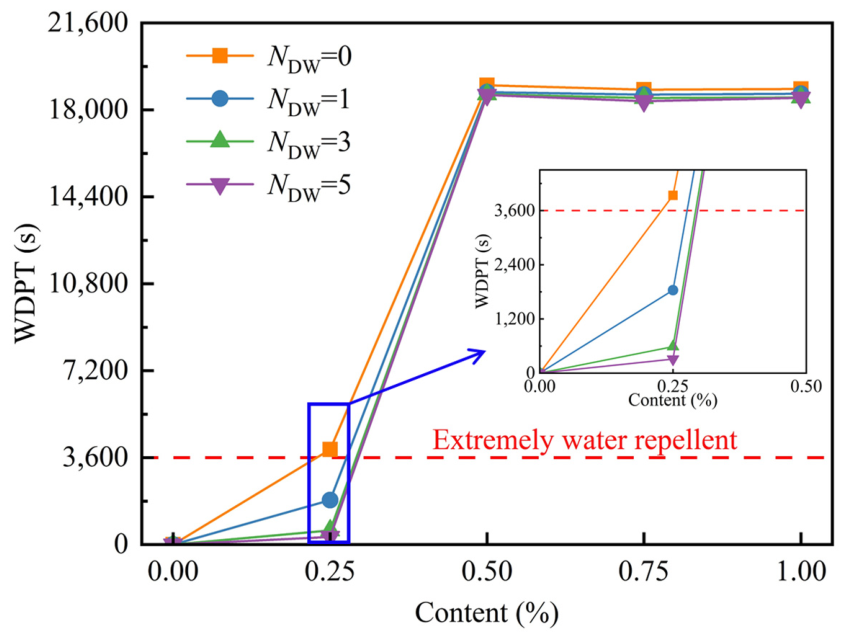
Figure 7 depicts the variation in WDPT with NSHM dosage for specimens at 96% relative density. For a fixed number of wet–dry cycles, WDPT increases sharply with increasing NSHM content and then approaches a plateau, indicating a threshold dosage for effective hydrophobic modification. As the number of wet–dry cycles rises, WDPT values decrease to varying degrees for all NSHM dosages.
Figure 7.
Variation in WDPT with NSHM dosage.
At an NSHM dosage of HS-0.25, the modified silt exhibits initial hydrophobicity, but the hydrophobic film fails to fully encapsulate all silt particle surfaces. During repeated wet–dry cycles, water progressively infiltrates through unmodified particle regions, causing internal structural deterioration and a gradual decline in hydrophobic performance. After five wet–dry cycles, the WDPT of the HS-0.25 specimen decreases by 92%, which is insufficient to meet subgrade service requirements.
At HS-0.5 NSHM, a continuous and intact hydrophobic film forms on the surfaces of silt particles, endowing the soil with strong water repellency. This hydrophobic barrier effectively blocks water ingress, so wet–dry cycles exert minimal impact on the internal structure and surface wettability of the specimen. As a result, the HS-0.5 specimen maintains an extremely water-repellent state even after five wet–dry cycles.
When NSHM dosage exceeds HS-0.5, the silt particle surfaces are already fully covered by a saturated hydrophobic film; excess modifier is not firmly anchored to particle surfaces and can be gradually washed away by water migration during cyclic wetting–drying. Since the intact saturated film already provides sufficient water-blocking capacity, the overall hydrophobic performance remains stable and well-preserved after wet–dry cycles, with no further significant improvement at higher dosages.
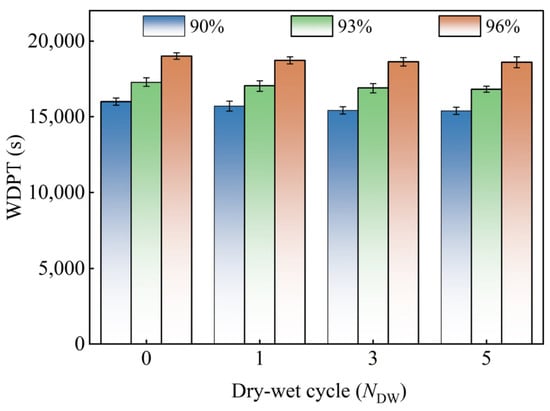
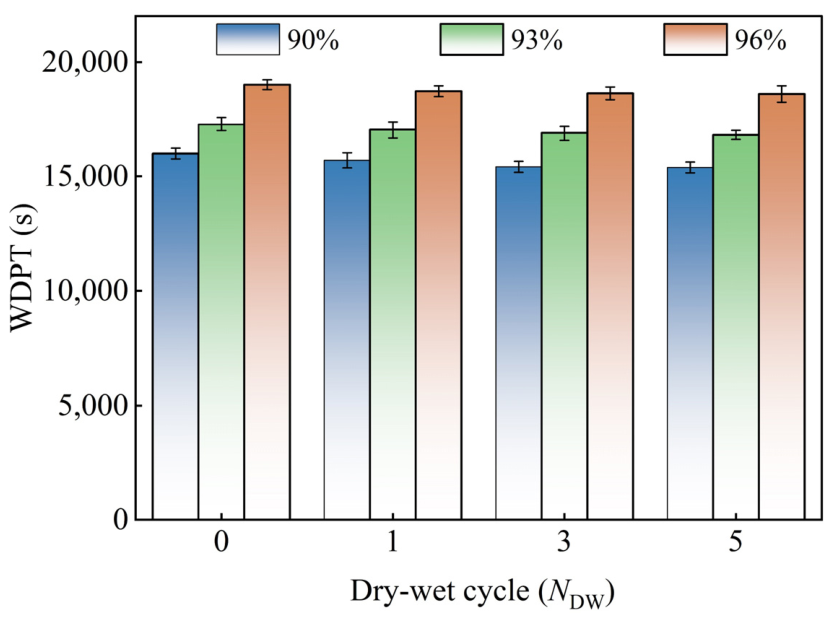
Figure 8 illustrates the evolution of WDPT during wet–dry cycles for HS-0.5 NSHM specimens at different relative densities. At a constant NSHM dosage, WDPT is positively correlated with specimen relative density. All specimens exhibit a gradual reduction in WDPT as wet–dry cycles progress. After five cycles, WDPT decreases by 3.8%, 2.8% and 2.1% for specimens with relative densities of 90%, 93% and 96%, respectively, indicating that the WDPT attenuation rate is negatively correlated with relative density. This trend arises because specimens with lower relative density have larger internal pore volumes, which facilitate water absorption and penetration during wet–dry cycles, leading to more pronounced hydrophobicity attenuation. Nevertheless, all HS-0.5 NSHM specimens retain strong hydrophobicity after five wet–dry cycles, satisfying the long-term service requirements of subgrade engineering.
Figure 8.
Effect of specimen relative density on WDPT under wet–dry cycles.
3.1.2. Surface Contact Angle
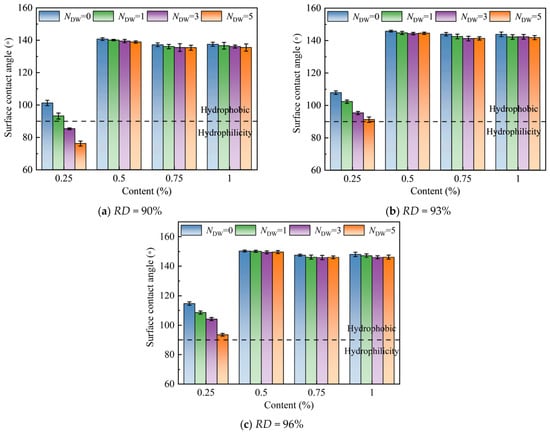
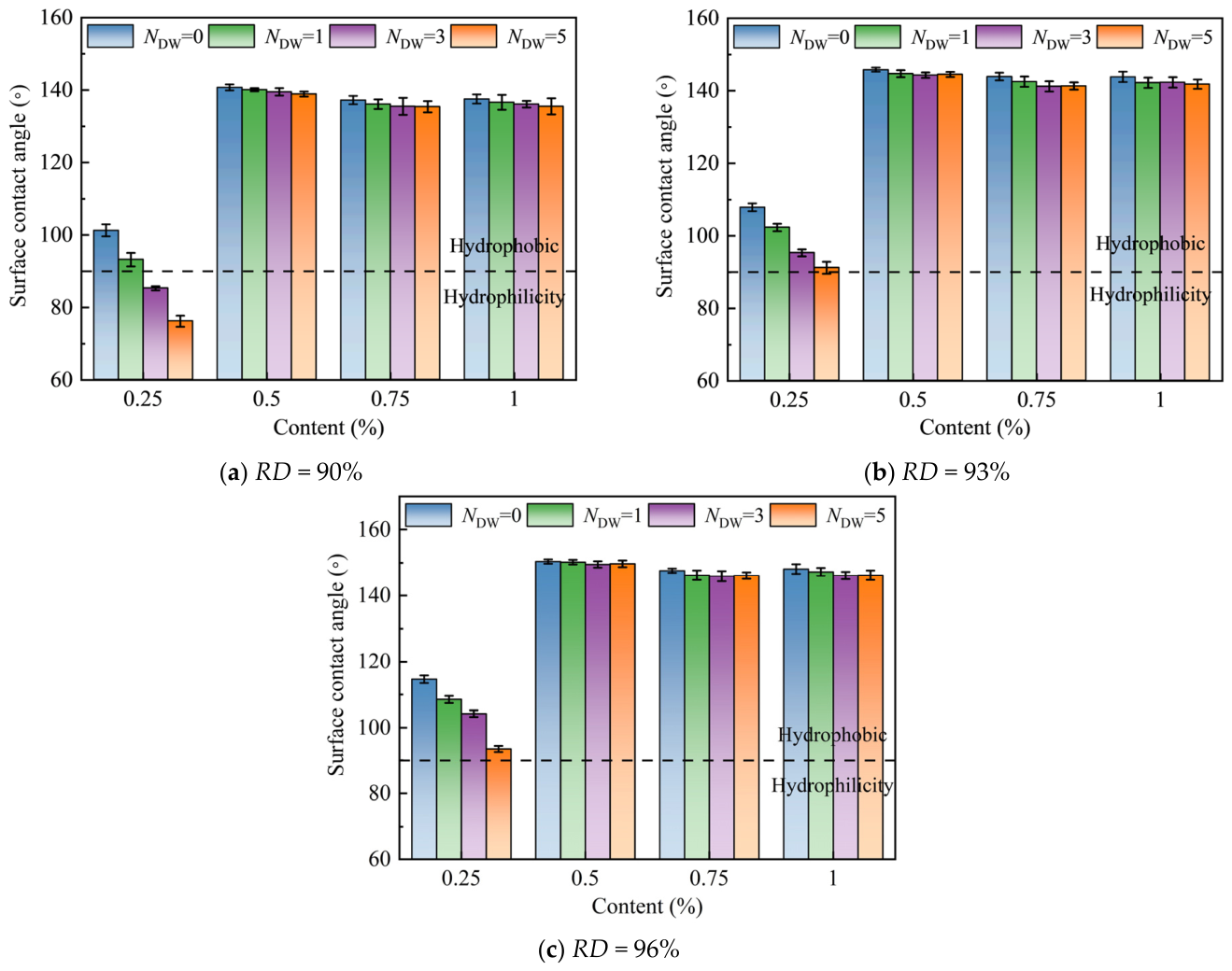
Due to the inherently strong hydrophilicity of raw silt, water droplets rapidly infiltrate into specimens upon surface contact, making reliable measurement of the intrinsic surface contact angle unachievable. For this reason, only the contact angle results of NSHM-modified silt are presented in this section, as illustrated in Figure 9, where the dashed line denotes the critical boundary separating hydrophobic and hydrophilic states.
Figure 9.
Surface contact angle of HS under dry–wet cycle.
As illustrated in Figure 9, NSHM incorporation effectively imparts hydrophobicity to the silt matrix. For specimens at all three relative densities (90%, 93% and 96%), the surface contact angle peaks at an NSHM dosage of approximately HS-0.5. Beyond this threshold, the hydrophobic coating on particle surfaces approaches saturation; excess modifier introduces additional hydrophilic functional groups at the periphery of particle surfaces via polarity effects, resulting in a slight decline in contact angle.
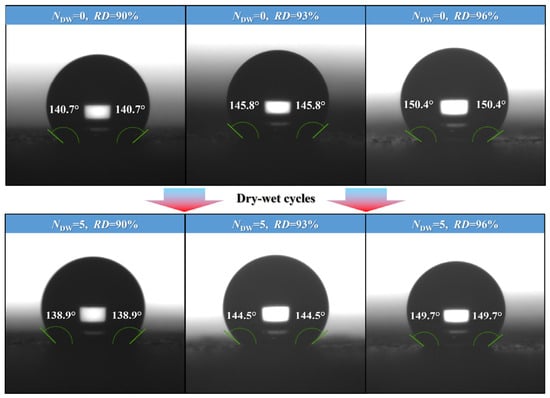
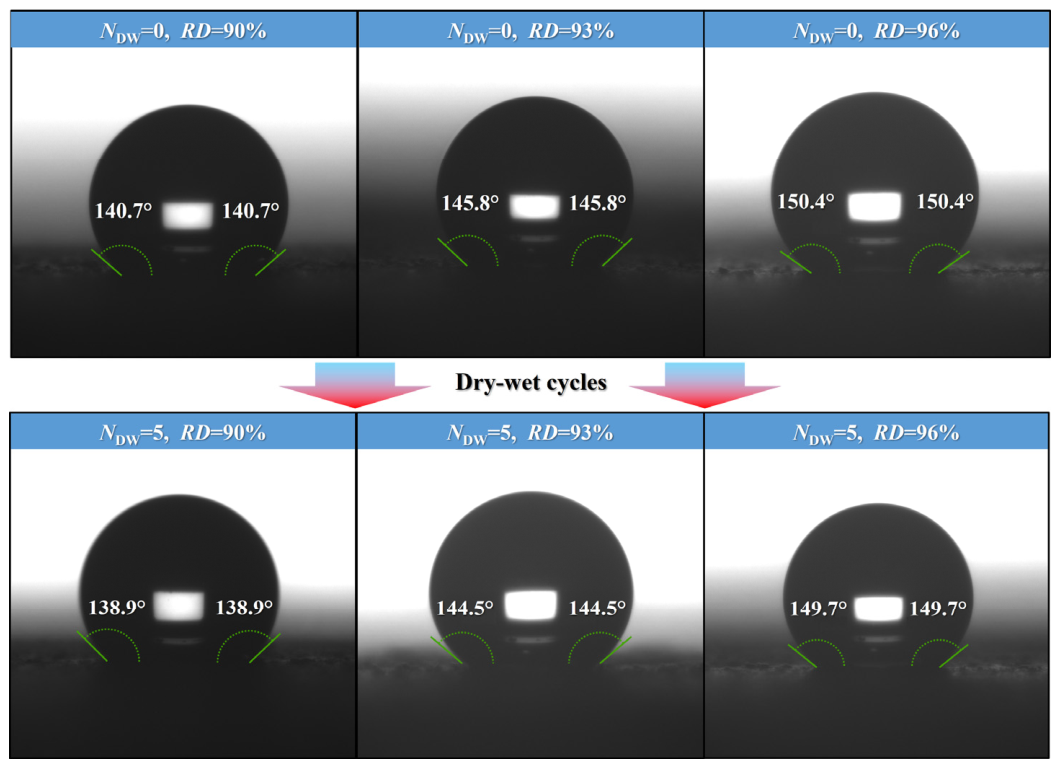
Progressive wet–dry cycling induces notable degradation in surface contact angle. Specimens with HS-0.25 NSHM exhibit the most severe attenuation: for the 90% relative density group at this dosage, surface wettability transitions from hydrophobic to hydrophilic after five cycles, indicating this dosage fails to meet long-term subgrade performance requirements. At 0.5% NSHM, hydrophobic functional groups fully envelop soil particles to form a dense hydrophobic film. Embedded nano-silica particles increase microscale surface roughness of particles while partially filling internal pore structures within the silt matrix. After five wet–dry cycles, the surface contact angles decrease by only 1.3%, 0.9% and 0.5% for specimens with relative densities of 90%, 93% and 96%, respectively (Figure 10). When NSHM content exceeds 0.5%, the saturated hydrophobic film effectively blocks water ingress during cyclic wetting–drying; thus, wet–dry cycles exert negligible influence on the surface contact angle at higher dosages.
Figure 10.
Surface contact angles of HS-0.5 NSHM specimens before and after wet–dry cycles.
Cross-comparison across compaction states reveals that surface contact angle increases monotonically with rising relative density. This trend arises from denser particle packing at higher compaction degrees, which increases interparticle contact points, reduces interparticle spacing and decreases total internal pore volume. Consequently, specimens with higher compaction exhibit larger contact angles at an identical NSHM dosage. Despite minor differences in contact angle across compaction levels, the target hydrophobic performance can be achieved as long as the minimum required compaction degree is satisfied in construction.
Overall, an NSHM dosage of 0.5% satisfies the long-term service requirements of subgrade engineering in terms of hydrophobic performance.
3.2. Mechanical Properties Analysis
3.2.1. Analysis of UCS
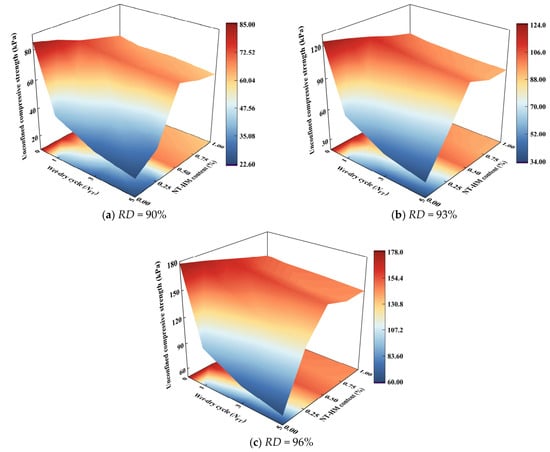
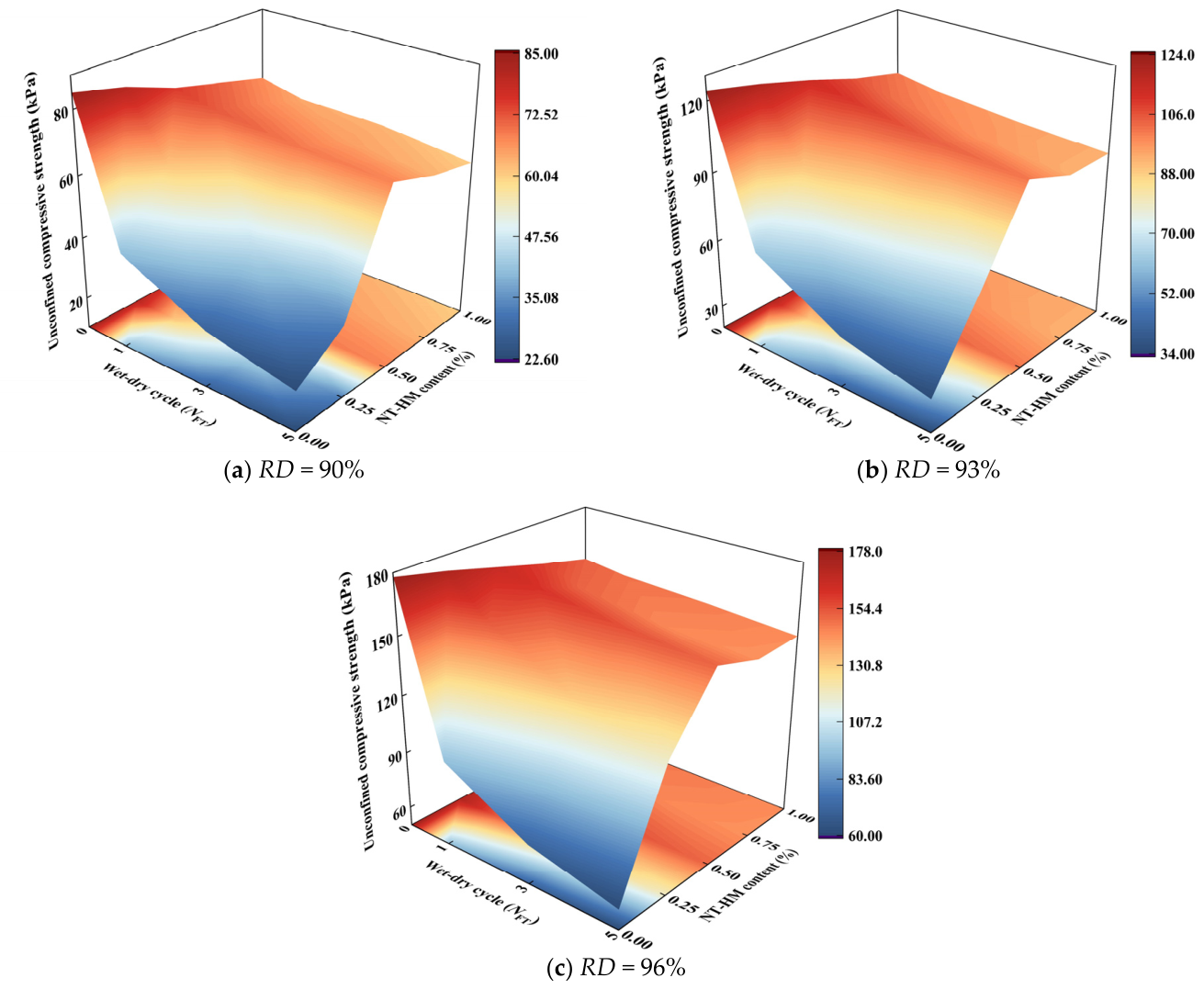
The variations in UCS of NSHM-improved silt with dry–wet cycles under 90%, 93% and 96% relative densities are shown in Figure 11. The experimental results indicate that the introduction of NSHM leads to a slight reduction in the UCS of the samples in their initial state. This reduction can primarily be attributed to the interaction between NSHM and silt. Consequently, the UCS of the HS samples in their initial state is lower than that of the PS samples. Additionally, the UCS of HS samples in their natural state exhibits a negative correlation with the presence of NSHM.
Figure 11.
Unconfined compressive strength of silt under dry–wet cycle.
With each dry–wet cycle, the damage to the sample progressively increased. After five dry–wet cycles, the UCS of the PS specimens at three different compaction degrees decreased by 73.2%, 72.4%, and 66.1%, respectively, compared to those not subjected to dry–wet cycles. Following the incorporation of NSHM, the silt samples gradually developed hydrophobic properties. After five dry–wet cycles, the samples retained a relatively intact structural appearance. The HS-0.25 sample retains its appearance after five dry–wet cycles. However, since not all particles are fully hydrophobically modified, the hydrophobic properties are limited, and water migration cannot be entirely prevented during the dry–wet cycles. The internal structure of the sample appears to display pores and cracks under the action of dry and wet cycles. Therefore, the reduction in UCS is obvious. When the NSHM content exceeds 0.5%, the UCS of the sample remains relatively stable during the dry–wet cycle, with strength attenuation ranging from 3% to 8% after five cycles. This is primarily because, when the NSHM content reaches 0.5%, the silt particles are completely encapsulated by the hydrophobic oil film. During the dry–wet cycle, water penetration into the soil is hindered, resulting in minimal impact on the internal structure of the sample. Consequently, the sample retains its strong performance after the cycle. Normalized against the initial UCS of HS-0.5 specimens prior to dry–wet cycles, the UCS exhibited reductions of 2.4%~4.1%, 6.1%~8%, and 8.5%~9.3% after one, three, and five cycles, respectively. It can be seen that the rate of UCS degradation in HS-0.5% specimens progressively decelerated with increasing numbers of dry–wet cycles. The trend of UCS of HS-0.75% and HS-1% samples with dry–wet cycles is similar to that of HS-0.5, and the UCS of the samples is less affected by dry–wet cycles.
For untreated silt, repeated wet–dry cycles induce extensive microcrack initiation and structural deterioration; subsequent water infiltration further weakens inter-particle cementation, resulting in brittle splitting failure dominated by large penetrating cracks, which accounts for the dramatic UCS loss. In contrast, the hydrophobic coating on NSHM-treated particles effectively restrains water ingress and suppresses crack propagation. After cyclic wetting–drying exposure, treated specimens mainly exhibit ductile shear failure with sparse, fine cracks, hence retaining stable mechanical properties.
In summary, although the initial strength of the NSHM-modified silt is slightly lower than that of the unmodified silt, from the perspective of long-term subgrade performance, the NSHM-modified silt demonstrates superior durability and better fulfills the requirements for safe, long-term service.
3.2.2. Shear Strength Analysis
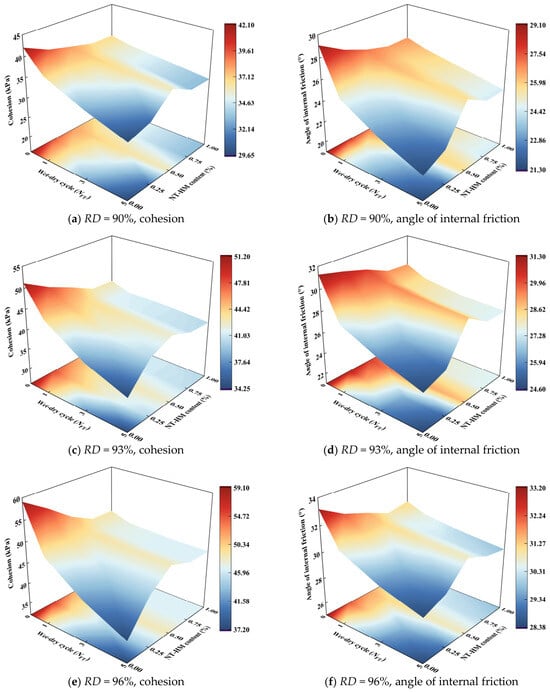
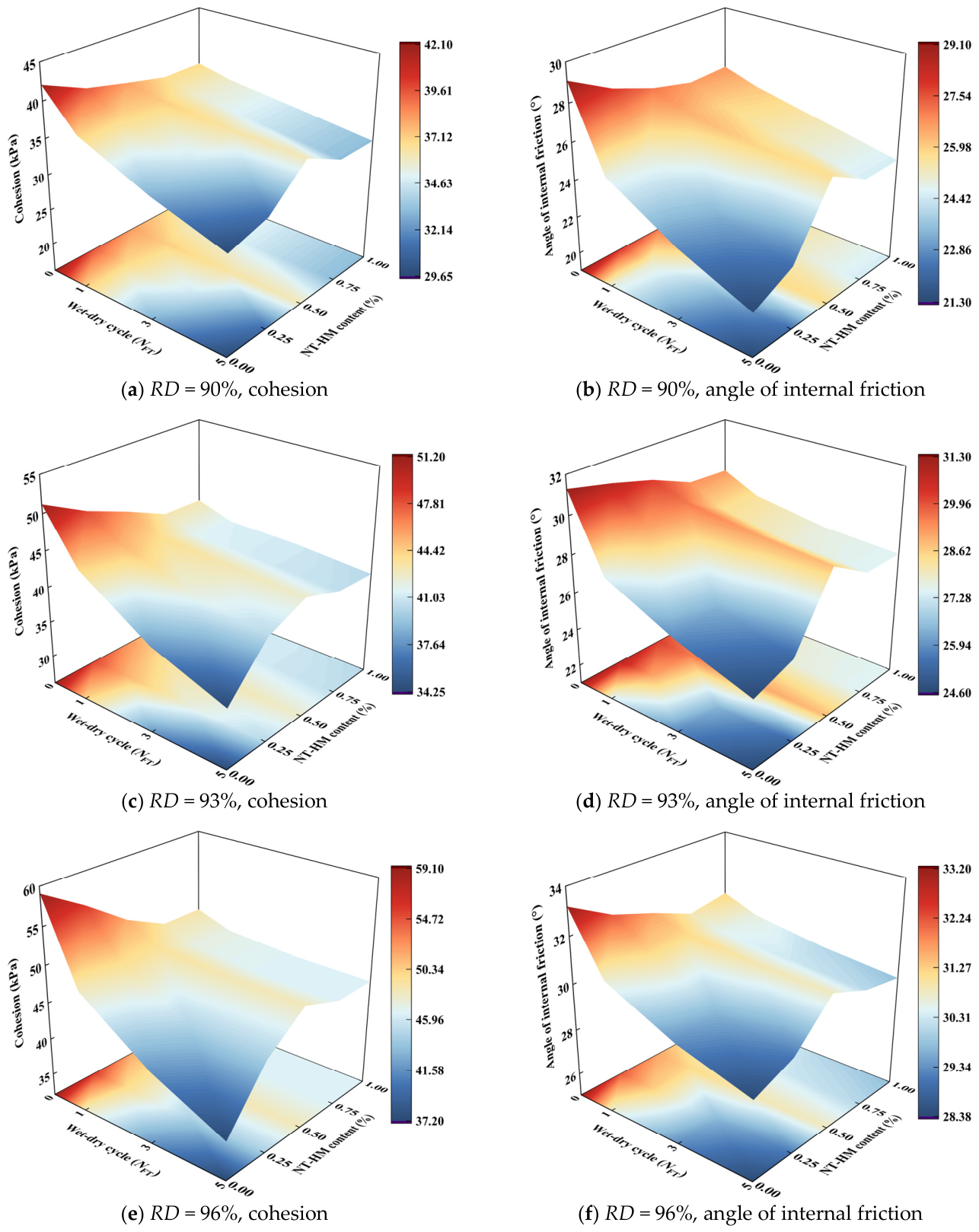
Figure 12 depicts the degradation curves of shear strength parameters for HS silt specimens with varying relative densities under wet–dry cycling. For PS, both cohesion and internal friction angle decline significantly with increasing cycle number, following a two-stage pattern: rapid initial attenuation followed by gradual stabilization. After five wet–dry cycles, the cohesion of PS specimens with relative densities of 90%, 93% and 96% decreases by 29.5%, 33.0% and 37.1%, respectively, while the corresponding internal friction angle declines by 26.8%, 21.4% and 14.5%, respectively.
Figure 12.
Shear strength parameter of silt under dry–wet cycle.
This degradation behavior arises from cumulative microstructural damage induced by cyclic wetting–drying: repeated water ingress softens interparticle contacts, dissolves soluble cementitious constituents, and induces pore dilation and particle rearrangement. The most pronounced deterioration occurs during the first cycle, as the initially dense soil skeleton undergoes initial breakdown. After five cycles, the internal structure approaches a relatively stable damaged state, leading to a markedly reduced degradation rate.
In the uncycled state, NSHM incorporation induces a slight reduction in both the cohesion and internal friction angle of the silt, with the magnitude of reduction increasing with NSHM dosage. This initial strength loss is primarily governed by the hydrophobic polysiloxane film: the uniform coating of low-surface-energy methylsiloxane on particle surfaces weakens capillary adhesion and van der Waals forces, which constitute the main sources of cohesion in raw silt. Meanwhile, the organic film exerts a mild lubricating effect at particle contact interfaces, reducing mechanical interlocking and frictional resistance during shear sliding and consequently lowering the internal friction angle. Although embedded nano-silica particles have the potential to reinforce interparticle bonding, their cementing effect is limited at the initial curing stage and is insufficient to offset the strength reduction caused by the hydrophobic coating.
Nevertheless, NSHM-modified silt demonstrates pronounced advantages in shear strength retention under prolonged wet–dry cycling. Specimens with an NSHM dosage of 0.5% and above retain excellent water repellency, which effectively impedes water ingress and prevents water-induced softening and erosion of particle interfaces. Accordingly, the internal microstructure of HS specimens remains largely intact under cyclic wetting–drying action.
Among all tested dosages, 0.5% NSHM delivers the optimal overall performance. After five wet–dry cycles, the cohesion attenuation rates of HS specimens with relative densities of 90%, 93% and 96% are only 5.5%, 7.2% and 6.2%, respectively, and the internal friction angle decreases by merely 5.2%, 4.6% and 2.5%, respectively. Compared with PS specimens subjected to the same number of cycles, the cohesion of HS specimens is 21.2%, 23.9% and 30.1% higher, and the internal friction angle is 20.7%, 17.1% and 8.5% higher, respectively.
The superior durability of HS arises from the synergistic effect of the two functional components. The continuous hydrophobic film serves as the primary barrier against water ingress, fundamentally eliminating the driving force of wet–dry-induced deterioration. Meanwhile, nano-silica particles refine the pore structure via a pore-filling effect and act as crosslinking centers to form stable interfacial bonds with soil particles, further restricting particle displacement and structural degradation under cyclic action.
Overall, wet–dry cycling exerts a substantial deteriorating effect on the shear strength of raw silt. Although NSHM treatment causes a minor reduction in initial shear strength, it drastically enhances the long-term structural stability of silt under repeated environmental actions. From an engineering standpoint, subgrade structures are subjected to long-term cyclic wetting and drying throughout their service life; accordingly, the superior durability of hydrophobically modified silt holds greater practical significance and underpins the long-term performance and safety of subgrade engineering.
3.2.3. CBR Analysis
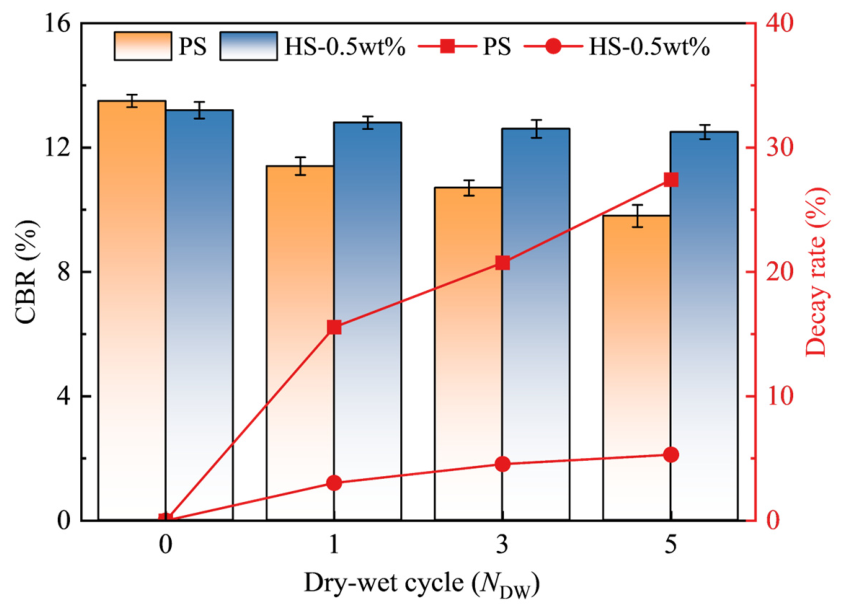
Based on the comprehensive evaluation of hydrophobic and mechanical performances, the 0.5% NSHM dosage yields the optimal modification effect. Accordingly, PS and HS-0.5 specimens at 96% relative density were selected for comparative analysis of the California Bearing Ratio (CBR), with test results illustrated in Figure 13. Prior to wet–dry cycling, the two groups exhibit comparable CBR values. Owing to the high-water sensitivity of raw silt, the CBR of PS specimens decreases progressively with increasing cycle number, with the most pronounced attenuation occurring during the first cycle. In contrast, the CBR of the HS-0.5 declines by only 5.03% after five wet–dry cycles. This superior performance arises from the excellent water repellency conferred by NSHM: during the 4-day soaking phase of the CBR test, the hydrophobic barrier effectively impedes external water infiltration, preserving the structural strength of the soil matrix. Meanwhile, the nano-silica component in NSHM reinforces interparticle bonding, further enhancing the structural stability and moisture resistance of the specimens. Consequently, after five wet–dry cycles, the CBR value of the HS-0.5 is 212.86% higher than that of its PS counterpart.
Figure 13.
The influence of dry–wet cycle on CBR.
In accordance with the Specifications for Highway Subgrade Design (JTG D30-2015, Chinese Industry Standard; China Communications Press: Beijing, China, 2015), the minimum required CBR value for highway subgrade fill is 8%. Test results confirm that NSHM-modified subgrade material fully satisfies the design criteria for subgrade construction. Taking into account hydrophobic performance, mechanical properties and construction cost comprehensively, an NSHM dosage of 0.5% is identified as the optimal scheme for hydrophobic modification of the tested silt.
3.3. Microscopic Characteristics Analysis
3.3.1. FTIR Analysis
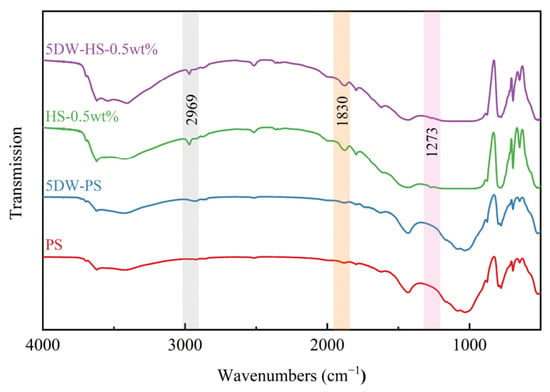
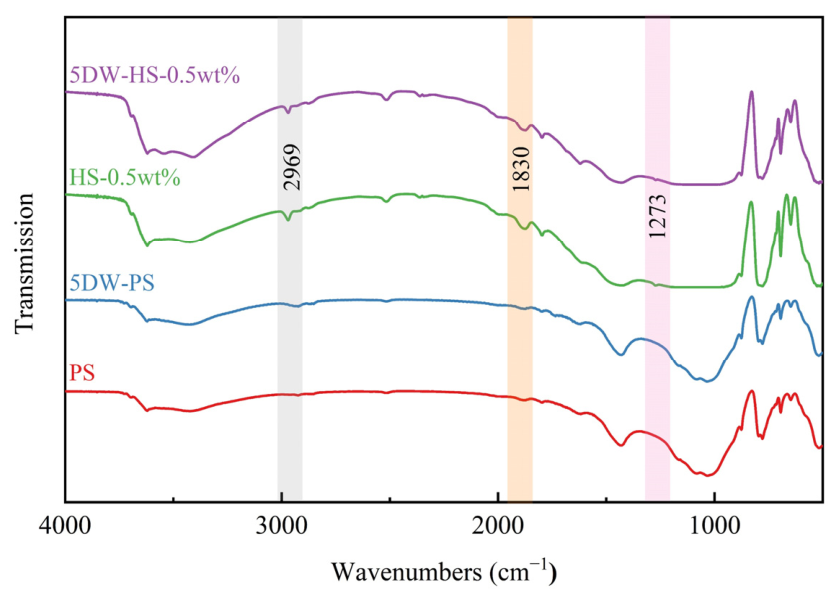
PS and HS-0.5% specimens compacted at 96% relative density were selected for testing. As shown in Figure 14, the overall spectral profiles of PS and HS-0.5% are highly similar, indicating that NSHM incorporation does not significantly alter the inherent functional groups of the silt matrix. This observation is consistent with previous findings on polymer-modified soil systems [23,25,56,57].
Figure 14.
FTIR spectra of PS and HS-0.5% during dry–wet cycles.
Three distinct characteristic absorption peaks appear in the HS-0.5% spectrum compared with PS: the peak at 1273 cm−1 corresponds to the bending vibration of Si-CH3 groups; the peak at 1832 cm−1 is assigned to the stretching vibration of Si-O bonds; and the peak at 2969 cm−1 is attributed to the stretching vibration of aliphatic C-H groups. No detectable changes in the position or intensity of these functional group peaks are observed for either specimen group before and after wet–dry cycles. This demonstrates that the hydrophobic functional groups introduced by NSHM remain structurally stable after cyclic wetting and drying at this dosage. Combined with macroscopic hydrophobicity test results, it can be inferred that the hydrophobic performance of 0.5% modified silt is well retained after cycles.
3.3.2. SEM Analysis
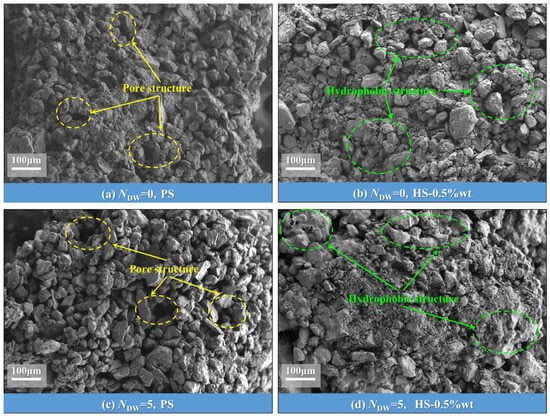
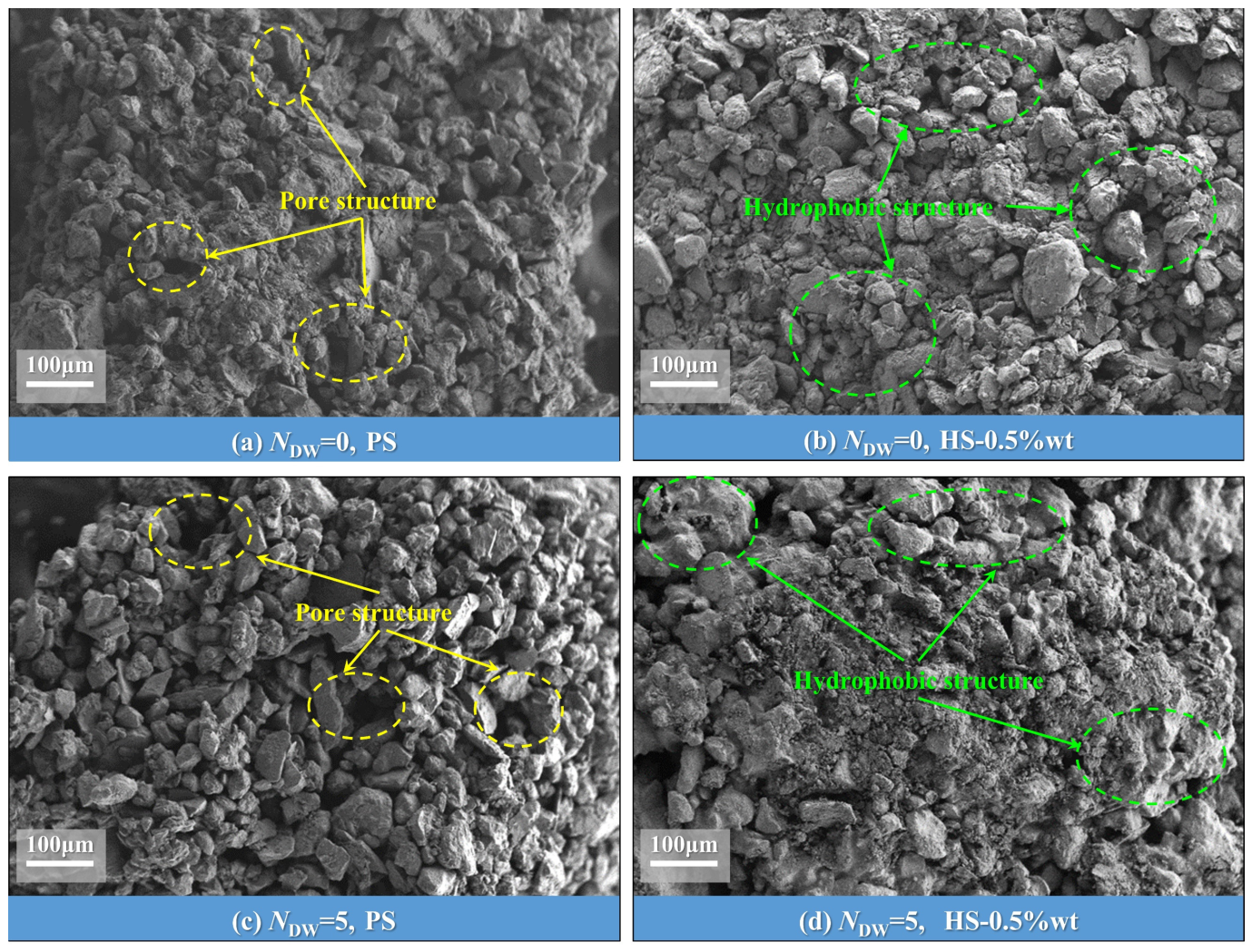
SEM was conducted to characterize the micro-morphology and pore structure of PS and HS-0.5% before and after wet–dry cycles, providing morphological evidence for the modification mechanism. All observations and inferences herein are limited to this dosage and cannot be directly generalized to all NSHM contents. As shown in Figure 15a, raw PS particles are irregular and angular with rough surfaces, forming a skeleton of discrete point contacts and abundant large intergranular pores. These open pore channels facilitate water infiltration, consistent with the strong hydrophilicity and water sensitivity of raw silt at the macro scale.
Figure 15.
The internal structure of silt before and after a dry–wet cycle.
For HS-0.5% (Figure 15b), particle surfaces appear smoother with a visible continuous coating layer. Combined with macro hydrophobic results, this layer is inferred to be the hydrophobic film formed by NSHM. The original particle size distribution and mineral skeleton remain intact, indicating NSHM acts as a surface modifier without damaging the soil’s internal structure. Large intergranular pores are reduced in size and quantity, and inter-particle contacts shift from discrete points to more continuous surfaces. Quantitative statistics show a notable decrease in large-pore area ratio, consistent with the pore refinement trend from BET tests. This pore optimization is speculated to result from NSHM filling voids or improving particle packing via surface coating.
After five wet–dry cycles, PS exhibits severe microstructural degradation (Figure 15c): fine particles detach from mineral surfaces, and small pores expand into interconnected large voids and microcracks, matching the notable loss of macro mechanical strength and water stability. In contrast, HS-0.5% retains a dense and intact microstructure (Figure 15d): the coating layer remains largely complete with no obvious peeling or particle spalling, and only isolated microcracks appear. Quantitative analysis confirms the modified sample has a far lower crack area ratio, demonstrating favorable microstructural stability at this dosage.
In summary, microscopic observations at 0.5% dosage show NSHM improves particle surface morphology and optimizes pore structure. Combined with macro results, it is inferred that NSHM’s surface coating and pore-filling effects may block water infiltration paths and suppress microcrack propagation during cycles, mitigating silt microstructural deterioration. This stability forms the morphological basis for retaining the hydrophobic and mechanical properties of modified subgrade soil.
3.3.3. Pore Size Distribution
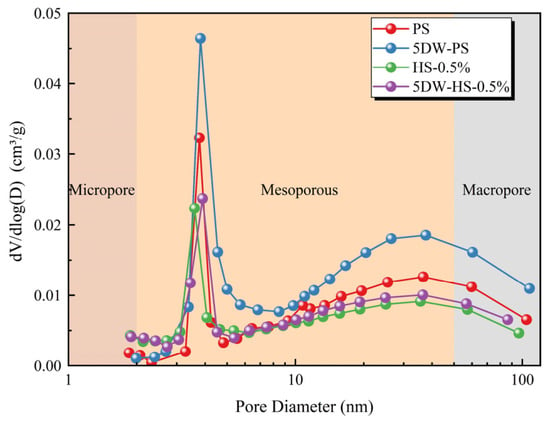
Nitrogen adsorption–desorption (BET) tests were performed on PS and HS-0.5% specimens (96% relative density) to quantitatively characterize pore structure evolution induced by NSHM modification and assess microstructural stability under wet–dry cycles.
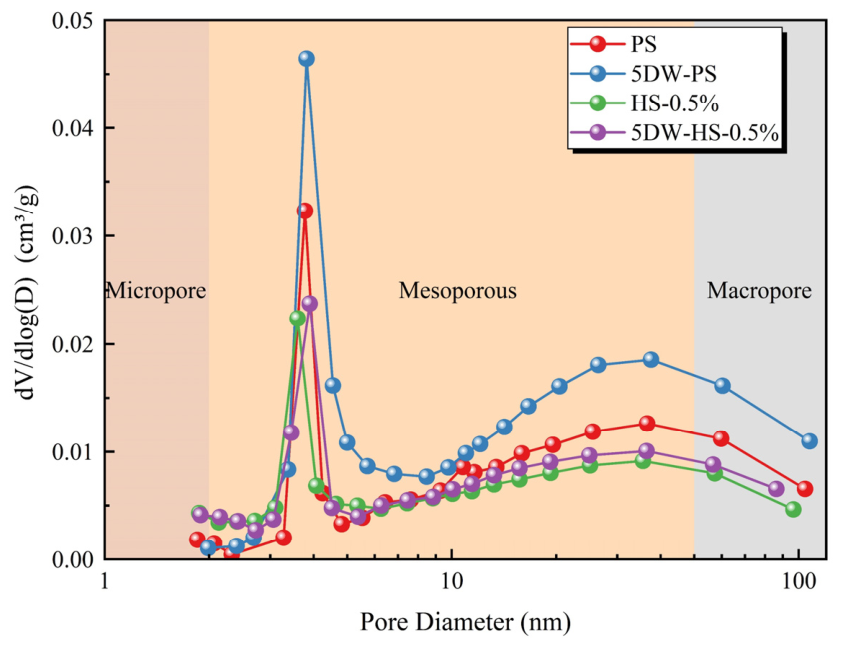
As shown in Figure 16, NSHM modification causes moderate changes in pore size distribution: the volume fraction of micropores increases slightly, while the proportions of mesopores and macropores decrease moderately, leading to a slight overall reduction in total pore volume. Combined with SEM morphological observations, this pore refinement trend may be associated with the surface coating and partial pore-filling effects of NSHM. However, BET data alone cannot directly verify the occurrence of physical pore filling, and the specific action mechanism requires further characterization.
Figure 16.
The distribution law of pore volume under dry–wet cycle.
Quantitative pore structure parameters are summarized in Table 6. After five wet–dry cycles, the PS sample exhibits evident microstructural deterioration, with specific surface area, porosity and average pore diameter increasing by 23.6%, 34.2% and 12.2%, respectively. In contrast, the HS-0.5% sample shows only marginal changes under the same cyclic conditions: specific surface area increases by 0.6%, porosity by 2.1%, and average pore diameter by 0.8%. This superior pore structure stability is consistent with SEM observations, and provides microstructural supporting evidence for the durable macroscopic performance of modified silt.
Table 6.
Specific surface area, pore volume and average pore diameter of soil samples.
In summary, NSHM modification optimizes the pore size distribution of silt, and the HS-0.5% sample maintains good microstructural stability with negligible pore structure variation after wet–dry cycles. This finding aligns with the long-term retention of hydrophobic and mechanical properties of modified subgrade soil at the macroscopic scale.
3.4. Mechanism Analysis
Based on the macroscopic performance, micro-morphological and spectroscopic characterizations in this work, a plausible modification mechanism of NSHM on silt is proposed in Figure 17, with interpretations explicitly differentiated between experimentally verified observations and literature-derived hypotheses.
Figure 17.
Mechanism of NSHM-modified silt.
FTIR spectra confirm the presence of Si-CH3, Si-O and aliphatic C-H groups in modified specimens, verifying the successful introduction of hydrophobic components. According to well-established silane reaction principles, sodium methyl silicate hydrolyzes in aqueous media to form reactive methylsilanol, which further undergoes dehydration condensation with nano-silica particles and itself via silanol groups, constructing a three-dimensional polymethylsiloxane crosslinked network with nano-silica as the backbone [58].
SEM observations reveal a continuous coating layer on modified particle surfaces, which remains largely intact after wet–dry cycles, consistent with the retained hydrophobicity and mechanical stability in macroscopic tests. It is postulated, supported by previous interfacial studies on silane-modified minerals, that terminal silanol groups of the crosslinked network form Si-O-Si/Si-O-Al covalent bonds with mineral surfaces, enabling chemical anchoring in addition to physical adhesion.
The coating layer with nanoscale protrusions, superimposed on the inherent micron-scale roughness of silt particles, optimizes the surface topography. Combined with the measured high water contact angle, the wetting behavior is interpreted via the Wenzel model: the coupling of low surface energy from oriented methyl groups and micro–nano hierarchical roughness reduces the effective solid–liquid contact area and restrains capillary water infiltration. This theoretical interpretation aligns with macroscopic hydrophobic performance, while the microscale wetting state has not been directly characterized.
Overall, the improved water stability of NSHM-modified silt is attributed to the synergistic effects of surface hydrophobic modification and pore structure optimization.
4. Conclusions
This study investigates the performance attenuation and microstructural evolution of silt modified by nano-hydrophobic material (NSHM) under wet–dry cycling, aiming to advance sustainable geotechnical engineering practice. A multi-scale experimental framework integrating wettability characterization, mechanical testing and micro-analytical techniques was employed to systematically clarify the modification effect, strength retention behavior and underlying mechanism. The main conclusions are drawn as follows:
- (1)
- NSHM effectively imparts hydrophobicity to silt with a clear dosage threshold effect. Hydrophobic performance rises rapidly at 0%–0.5% dosage and plateaus at higher contents. Relative density exerts a synergistic enhancement effect: at 0.5% NSHM, specimens with 90%, 93% and 96% relative densities achieve surface contact angles of 140.7°, 145.8° and 150.4°, respectively.
- (2)
- Hydrophobic durability under wet–dry cycling is highly dosage-dependent. After five cycles, the 0.5% NSHM specimen maintains strong water repellency with a contact angle attenuation rate below 1.3%. Further dosage increase yields marginal improvement in cycle resistance, which facilitates cost control and resource conservation in green construction.
- (3)
- NSHM-modified silt exhibits significantly superior mechanical durability compared to plain silt under wet–dry cycling. Despite a slight reduction in initial strength, mechanical performance stabilizes at dosages above 0.5%. After five cycles, the unconfined compressive strength of 0.5% specimens decreases by only 3%–8%, while cohesion and internal friction angle are 20%–30% and 8%–20% higher than plain silt, respectively.
- (4)
- The durable modification effect originates from the synergism of microstructural stabilization and chemical anchoring. Plain silt undergoes severe structural degradation after five cycles, including pore expansion and fine particle detachment, whereas modified silt retains a dense cemented structure with only minor microcracks. The hydrolyzed methylsilanol from NSHM dehydrates and condenses with nano-silica to form a three-dimensional hydrophobic polymethylsiloxane network, which achieves firm chemical anchoring on silt mineral surfaces via covalent bonds. Combined with physical coating, this mechanism fundamentally suppresses capillary water migration and improves the long-term performance of silt.
- (5)
- An NSHM dosage of 0.5% is identified as the optimal scheme for silt subgrade modification. It achieves peak water repellency, maintains the best comprehensive mechanical performance after wet–dry cycling, and fully meets highway subgrade design specifications. With the lowest material cost increment among effective schemes, it delivers the optimal balance between long-term service performance and engineering economy.
Author Contributions
H.C.: Methodology, Funding acquisition. S.G.: Formal analysis, Methodology, Writing—original draft. Z.S.: Project administration. X.Z.: Formal analysis, Validation. J.T.: Methodology, Conceptualization. T.C.: Methodology, Conceptualization. H.Z.: Resources. All authors have read and agreed to the published version of the manuscript.
Funding
This study is supported by the National Natural Science Foundation of China (No. U22A20235, 52478456), Shandong Provincial Natural Science Foundation, China (No. ZR2024LZN001), which is gratefully acknowledged.
Institutional Review Board Statement
Not applicable.
Informed Consent Statement
Not applicable.
Data Availability Statement
Data will be made available on request.
Conflicts of Interest
Author Hongxu Cui, Zhihao Song and Jikang Tie were employed by Shandong Expressway Infrastructure Construction Company Limited and Shandong Expressway Qingzhang Expressway Company Limited. The remaining authors declare that the research was conducted in the absence of any commercial or financial relationships that could be construed as a potential conflict of interest.
References
- Li, Y.; Wei, A.; Hu, P.; Cheng, Y.; Yao, K.; Zheng, A.; Satchithananthan, U.; Yao, Z. Contrastive study on mechanical and microstructure properties of silt improved by nano material stabilizers. Constr. Build. Mater. 2024, 429, 136392. [Google Scholar] [CrossRef] [Scilit]
- Lin, H.; Lourenço, S.D.N.; Yao, T.; Zhou, Z.; Yeung, A.T.; Hallett, P.D.; Paton, G.I.; Shih, K.; Hau, B.C.H.; Cheuk, J. Imparting water repellency in completely decomposed granite with Tung oil. J. Clean. Prod. 2019, 230, 1316–1328. [Google Scholar] [CrossRef] [Scilit]
- Liu, Y.; Liu, J.; Xia, X.; Bi, H.; Huang, H.; Ding, R.; Zhao, L. Land subsidence of the Yellow River Delta in China driven by river sediment compaction. Sci. Total Environ. 2021, 750, 142165. [Google Scholar] [CrossRef] [Scilit] [PubMed]
- Zhang, X.N.; Cui, X.Z.; Ding, L.Q.; Luan, J.Y.; Wang, Y.L.; Jiang, P.; Hao, J.W. Effects of a novel hybrid polymer material on the hydro-mechanical behavior of subgrade silts considering freeze-thaw cycles. Cold Reg. Sci. Technol. 2023, 205, 103698. [Google Scholar] [CrossRef] [Scilit]
- Bao, Z.; Cui, X.; Du, Y.; Jin, Q.; Hao, J.; Cao, T.; Li, X.; Zhang, X. Development and verification of subgrade service performance test system considering the principal stress rotation. Transp. Geotech. 2025, 50, 101474. [Google Scholar] [CrossRef] [Scilit]
- Chen, L.; Wang, Y.; Wang, Z.-F.; Chang, H.; Fan, F. Diffusion resisting performance of concrete modified with sodium methyl silicate in saline soil area. Constr. Build. Mater. 2022, 350, 128767. [Google Scholar] [CrossRef] [Scilit]
- Huang, G.; Lin, H.; Li, J.; Liu, J. Inducing hydrophobicity in saline soils: A comparison of hydrophobic agents and mechanisms. Powder Technol. 2023, 424, 118475. [Google Scholar] [CrossRef] [Scilit]
- Wang, S.; He, X.; Gong, S.; Cai, G.; Lang, L.; Ma, H.; Niu, Z.; Zhou, F. Influence Mechanism of Fulvic Acid on the Strength of Cement-Solidified Dredged Sludge. Water 2022, 14, 2616. [Google Scholar] [CrossRef] [Scilit]
- Zhang, J.; Shang, Y.; Liu, J.; Fu, J.; Cui, M. Improved ecological development model for lower Yellow River floodplain, China. Water Sci. Eng. 2020, 13, 275–285. [Google Scholar] [CrossRef] [Scilit]
- Shu, H.; Yu, Q.; Niu, C.; Sun, D.; Wang, Q. The coupling effects of wet-dry and freeze–thaw cycles on the mechanical properties of saline soil synergistically solidified with sulfur-free lignin, basalt fiber and hydrophobic polymer. Catena 2024, 238, 107832. [Google Scholar] [CrossRef] [Scilit]
- Qin, B.; Li, X.-A.; Wang, L.; Gao, R.; Chai, H. Model interpretation and microscopic characteristics of collapsibility evolution of compacted loess under dry-wet cycles. Catena 2024, 246, 108413. [Google Scholar] [CrossRef] [Scilit]
- Yin, S.; Yan, P.; Li, X.; Wang, Y.; Zhang, X.; Sun, Y.; Chen, C. Experimental Study on the Strength and Microstructure of Red Mud-Based Silty Sand Modified with Lime–Fly Ash. Buildings 2024, 14, 1336. [Google Scholar] [CrossRef] [Scilit]
- Zhang, X.; Cui, X.; Jin, Q.; Jiang, P.; Du, Y.; Chen, L. Experimental Investigation of Automatic Drainage Reinforcement for Overwet Subgrades in Yellow River Alluvial Plain of China. Geotech. Geol. Eng. 2023, 41, 985–1003. [Google Scholar] [CrossRef] [Scilit]
- Li, X.; Liang, Z.; Ren, K.; Yin, S.; Sun, Y. The Effect of Hydraulic History on Shear Strength of Silt. Int. J. Geomech. 2023, 23, 04023137. [Google Scholar] [CrossRef] [Scilit]
- Sai, Z.; Wang, L.; Han, H.; Wu, W.; Sun, Z.; Wei, J.; Zhang, L.; Hu, G.; Wu, H. Mechanical and Self-Healing Performance of Yellow River Alluvial Silt Treated with Composite Flexible Curing Agent. Coatings 2022, 12, 870. [Google Scholar] [CrossRef] [Scilit]
- Wan, Y.; Hui, X.; He, X.; Xue, J.; Feng, D.; Chen, Z.; Li, J.; Liu, L.; Xue, Q. Utilization of flue gas desulfurization gypsum to produce green binder for dredged soil solidification: Strength, durability, and planting performance. J. Clean. Prod. 2022, 367, 133076. [Google Scholar] [CrossRef] [Scilit]
- Lang, L.; Chen, B.; Li, N. Utilization of lime/carbide slag-activated ground granulated blast-furnace slag for dredged sludge stabilization. Mar. Georesour. Geotechnol. 2021, 39, 659–669. [Google Scholar] [CrossRef] [Scilit]
- Sadiq, A.; Fattah, M.Y.; Aswad, M.F. Enhancement of the Acid Resistance of Silty Clay Using Nano-Magnesium Oxide. Materials 2023, 16, 5035. [Google Scholar] [CrossRef] [Scilit] [PubMed]
- Jagadeesh, P.; Puttegowda, M.; Rangappa, S.M.; Siengchin, S. Accelerated weathering of sustainable and micro-filler Basalt reinforced polymer biocomposites: Physical, mechanical, thermal, wettability, and water absorption studies. J. Build. Eng. 2023, 80, 108040. [Google Scholar] [CrossRef] [Scilit]
- Siddique, S.N.; Akter, M.; Mohamedelhassan, E. Utilizing Micronized Recycled Plastic Waste for Increasing the Shear Strength and Permeability of Root-Reinforced Soil. Transp. Infrastruct. Geotechnol. 2024, 11, 2999–3018. [Google Scholar] [CrossRef] [Scilit]
- Aswad, M.F.; Al-Gharbawi, A.S.A.; Fattah, M.Y.; Mustfa, R.H.; Hameed, H.R. Improvement of Clayey Soil Characteristics Using Poly Acrylamide Geopolymer. Transp. Infrastruct. Geotechnol. 2024, 11, 1673–1690. [Google Scholar] [CrossRef] [Scilit]
- Chen, D.; Cao, L.; Han, M.; Li, J.; Tong, Z.; Tang, C.; Yang, Y.; Zhang, S. A hydrophobic and high-toughness elastomer-modified bio-based film-coated controlled-release fertilizer. Sustain. Mater. Technol. 2026, 47, e01877. [Google Scholar] [CrossRef] [Scilit]
- Liu, Z.; Wang, J. TEOS modified with PMHS as consolidating coating to improve the strength and hydrophobicity of earthen structures. Constr. Build. Mater. 2022, 322, 126165. [Google Scholar] [CrossRef] [Scilit]
- Hu, H.; Cheng, Z.; Song, H.; Li, H.; Wang, H.; Wang, Y.; Zhang, Q.; Lu, Y. Preparation and properties of loess-based hydrophobic materials. Mater. Chem. Phys. 2023, 305, 127962. [Google Scholar] [CrossRef] [Scilit]
- Zhou, H.; Han, C.; Li, X.; Xue, H.; Zhao, J.; Yin, G.; Zong, Y.; Li, Y.; Liu, Z.; Song, X. Research on waterproof performance and mechanism of organic silicon hydrophobic material for roadbed soil. Road Mater. Pavement Des. 2023, 24, 2113–2132. [Google Scholar] [CrossRef] [Scilit]
- Fattah, M.Y.; Al-Ani, M.M.; Al-Lamy, M.T.A. Wetting and drying collapse behaviour of collapsible gypseous soils treated by grouting. Arab. J. Geosci. 2015, 8, 2035–2049. [Google Scholar] [CrossRef] [Scilit]
- Bardet, J.-P.; Jesmani, M.; Jabbari, N. Permeability and compressibility of wax-coated sands. Géotechnique 2014, 64, 341–350. [Google Scholar] [CrossRef] [Scilit]
- Salifu, E.; El Mountassir, G. Fungal-induced water repellency in sand. Géotechnique 2021, 71, 608–615. [Google Scholar] [CrossRef] [Scilit]
- Ng, S.H.Y.; Lourenço, S.D.N. Conditions to induce water repellency in soils with dimethyldichlorosilane. Géotechnique 2016, 66, 441–444. [Google Scholar] [CrossRef] [Scilit]
- Lourenço, S.D.N.; Saulick, Y.; Zheng, S.; Kang, H.; Liu, D.; Lin, H.; Yao, T. Soil wettability in ground engineering: Fundamentals, methods, and applications. Acta Geotech. 2018, 13, 1–14. [Google Scholar] [CrossRef] [Scilit]
- Chan, C.S.H.; Lourenço, S.D.N. Comparison of three silane compounds to impart water repellency in an industrial sand. Géotechnique Lett. 2016, 6, 263–266. [Google Scholar] [CrossRef] [Scilit]
- Balapour, M.; Joshaghani, A.; Althoey, F. Nano-SiO2 contribution to mechanical, durability, fresh and microstructural characteristics of concrete: A review. Constr. Build. Mater. 2018, 181, 27–41. [Google Scholar] [CrossRef] [Scilit]
- Cui, H.; Jin, Z.; Bao, X.; Tang, W.; Dong, B. Effect of carbon fiber and nanosilica on shear properties of silty soil and the mechanisms. Constr. Build. Mater. 2018, 189, 286–295. [Google Scholar] [CrossRef] [Scilit]
- Keatts, M.I.; Daniels, J.L.; Langley, W.G.; Pando, M.A.; Ogunro, V.O. Apparent Contact Angle and Water Entry Head Measurements for Organo-Silane Modified Sand and Coal Fly Ash. J. Geotech. Geoenviron. Eng. 2018, 144, 04018030. [Google Scholar] [CrossRef] [Scilit]
- Wan, W.; Zhang, Y.; Wang, Y.; Jin, W.; Nie, A.; Han, C. Research on waterproof performance and mechanism of organic silane waterproof membrane. Case Stud. Constr. Mater. 2024, 20, e02696. [Google Scholar] [CrossRef] [Scilit]
- Wan, W.; Han, C.; Chen, B.; Jin, W.; Dong, Q.; Wang, Y. Study on single-direction water-blocking of waterproof membrane in silt subgrade. Road Mater. Pavement Des. 2024, 25, 1772–1789. [Google Scholar] [CrossRef] [Scilit]
- Shu, H.; Yu, Q.; Niu, C.; Liu, J.; Xia, W.; Sun, X.; Wang, Z.; Wang, Q. Effect of dry-wet cycles on the mechanical properties of saline soil solidified with sulfur-free lignin and hydrophobic polymer. J. Build. Eng. 2023, 76, 107116. [Google Scholar] [CrossRef] [Scilit]
- Zhang, J.; Hu, H.; Peng, J.; Zhang, Y.; Zhang, A. Enhanced understanding of subgrade soil hydraulic characteristics: Effects of wetting–drying cycles and stress states on subgrade water migration. J. Hydrol. 2024, 635, 131165. [Google Scholar] [CrossRef] [Scilit]
- Razali, R.; Rashid, A.S.A.; Lat, D.C.; Horpibulsuk, S.; Roshan, M.J.; Rahman, N.S.A.; Rizal, N.H.A. Shear strength and durability against wetting and drying cycles of lime-stabilised laterite soil as subgrade. Phys. Chem. Earth Parts A/B/C 2023, 132, 103479. [Google Scholar] [CrossRef] [Scilit]
- Wu, H.; Wu, M.; Wu, X.; Zhang, F.; Zhang, J.; Qiao, H.; Zhang, Y.; Zhang, Y. Study on the performance of collapsible loess subgrade improved by steel slag. J. Build. Eng. 2024, 84, 108642. [Google Scholar] [CrossRef] [Scilit]
- Tasuji, M.A.; Ghadir, P.; Hosseini, A.; Javadi, A.A.; Korayem, A.H.; Ranjbar, N. Experimental investigation of sandy soil stabilization using chitosan biopolymer. Transp. Geotech. 2024, 46, 101266. [Google Scholar] [CrossRef] [Scilit]
- Chen, C.; Fu, H.; Gao, Q.-F.; Zeng, L.; Jia, C. Polyurea reinforcement of disintegrated mudstone embankments and the underlying mechanism. Transp. Geotech. 2022, 37, 100874. [Google Scholar] [CrossRef] [Scilit]
- Al-Atroush, M.E.; Sebaey, T.A. Stabilization of expansive soil using hydrophobic polyurethane foam: A review. Transp. Geotech. 2021, 27, 100494. [Google Scholar] [CrossRef] [Scilit]
- Yan, L.; Yang, J.; Wu, Y.; Li, F. Degradation mechanism of red mud solidified/stabilized by solid waste-based binder: Role of freeze-thaw, dry-wet, and immersion. Sustain. Mater. Technol. 2026, 48, e01962. [Google Scholar] [CrossRef] [Scilit]
- Gao, S.; Cui, X.; Ma, X.; Jin, Q.; Zhang, X.; Zeng, H. Experimental investigation on dynamic characteristics of hydrophobic modified silt after freezing-thawing under cyclic loading. Cold Reg. Sci. Technol. 2025, 239, 104606. [Google Scholar] [CrossRef] [Scilit]
- Gao, S.; Cui, X.; Jin, Q.; Zhang, X.; Zhang, W.; Ye, S. Evolution of cumulative plastic strain in hydrophobically modified subgrade silt during dry-wet cycles and dynamic loading. Transp. Geotech. 2026, 56, 101787. [Google Scholar] [CrossRef] [Scilit]
- JTG 3430-2020; Test Methods of Soils for Highway Engineering. Minister Transport People’s Republic of China: Beijing, China, 2020.
- ASTM D559/D559M; Standard Test Methods for Wetting and Drying Compactedsoil-Cement Mixtures. ASTM: West Conshohocken, PA, USA, 2015.
- Huang, W.; Mou, Y.; Li, Y.; Zhao, B.; Li, J.; Wu, X.; Zhou, M. Study on durability of MICP treated cohesive soils under dry–wet cycle and freeze–thaw cycle. Arab. J. Geosci. 2022, 15, 422. [Google Scholar] [CrossRef] [Scilit]
- He, X.; Xue, J.; Liao, M.; Wan, Y.; Liu, X.; Chen, Y.; Xue, Q. Strength and hygroscopic behavior of biopolymer-treated silty sand under remodeling and dry-wet cycles. Constr. Build. Mater. 2023, 408, 133642. [Google Scholar] [CrossRef] [Scilit]
- Ma, C.; Li, J.; Jiao, F.; Liu, Y.; Feng, H.; Wang, K.; Jiang, H.; Jiang, C.; Li, Y.; Geng, X. Physical and Mechanical Behaviors of Compacted Soils under Hydraulic Loading of Wetting–Drying Cycles. Processes 2023, 11, 1084. [Google Scholar] [CrossRef] [Scilit]
- Liu, X.; Han, M.; Liu, T.; Liu, L. Macroscopic and Microscopic Characteristics of Strength Degradation of Silty Soil Improved by Regenerated Polyester Fibers under Dry–Wet Cycling. Polymers 2023, 15, 4367. [Google Scholar] [CrossRef] [Scilit] [PubMed]
- Bisdom, E.B.A.; Dekker, L.W.; Schoute, J.F.T. Water repellency of sieve fractions from sandy soils and relationships with organic material and soil structure. Geoderma 1993, 56, 105–118. [Google Scholar] [CrossRef] [Scilit]
- Ai, X.; Luo, F.; Ma, W.; Qi, Y.; Zhu, Z. The study on the dynamic deformation characteristics of loess reinforced by nano-silica based on shakedown theory. Constr. Build. Mater. 2025, 458, 139546. [Google Scholar] [CrossRef] [Scilit]
- Zhang, Q.; Cui, Y.; Cao, Z.; Cai, Y.; Gu, C.; Wang, J. Experimental investigation into the shakedown state of unsaturated road base aggregate at various fine contents and matric suctions. Eng. Geol. 2022, 306, 106744. [Google Scholar] [CrossRef] [Scilit]
- Lu, S.; Wang, M.; He, P.; Sun, X.; Wang, X.; Tang, D.; Jia, D. Effect of sodium methyl-silicate on the performance and structure of geopolymer. Mater. Lett. 2023, 350, 134893. [Google Scholar] [CrossRef] [Scilit]
- Rosa, D.; Al-Jamaei, L. Enzyme-Induced Carbonate Precipitation Process for Soil Improvement Using Expired Soybean Seeds as Urease Source. J. Environ. Chem. Eng. 2026, 14, 122237. [Google Scholar] [CrossRef] [Scilit]
- Wenzel, R.N. Resistance of Solid Surfaces to Wetting by Water. Ind. Eng. Chem. 1936, 28, 988–994. [Google Scholar] [CrossRef] [Scilit]

Disclaimer/Publisher’s Note: The statements, opinions and data contained in all publications are solely those of the individual author(s) and contributor(s) and not of MDPI and/or the editor(s). MDPI and/or the editor(s) disclaim responsibility for any injury to people or property resulting from any ideas, methods, instructions or products referred to in the content. |
© 2026 by the authors. Licensee MDPI, Basel, Switzerland. This article is an open access article distributed under the terms and conditions of the Creative Commons Attribution (CC BY) license.