


Abstract
The 5E model (1. Engagement; 2. Exploration; 3. Explanation; 4. Elaboration; 5. Evaluation) is a well-known instructional framework for promoting active learning. Augmented reality (AR) has been integrated into the educational process to support interactive learning. Building on these foundations, this study examines the usability of an AR application developed within the framework of the 5E instructional model to support biology in high school. The proposed AR app consists of a structured sequence of activities aligned with the 5E stages. Moreover, a usability study was conducted to evaluate the app’s usability among 195 users across three participant groups emerging from various educational levels and with different backgrounds: education students (novice adults), engineering students (expert adults), and 1st year high school students (students). The findings indicate perceived acceptable usability, with younger and less experienced users indicating the need for more guidance. Rather than evaluating learning outcomes or pedagogical effectiveness, this study focuses on investigating usability perceptions and interactions of the AR app designed within the 5E learning model. The findings highlight usability-related issues relevant to the design of AR applications and emphasize the importance of combining user-centered design with instructional frameworks in secondary education.
1. Introduction
In the 21st century, one of the core skills essential for well-being and success in the workplace is problem-solving [1]. Hence, educational settings have reformed their curricula and enriched them with inquiry-based learning that can promote students’ active participation, problem-solving strategies, and scientific knowledge gain [2]. Accordingly, educators incorporated the theory of constructivism into their teaching to support their students in engaging with new information and various materials, exploring, and communicating their opinions and ideas, thereby leading them to a deeper understanding of concepts. The 5E learning model, developed by the Biological Sciences Curriculum Study (BSCS) in 1987, is built on the science learning cycle by Atkin and Karplus [3]. Based on this, learning can be effective, provided that the learners discover knowledge themselves. This was further formalized by Bybee, who shapes it as a constructive means of inquiry-based learning encompassing five stages [4,5]. Specifically, 5E stands for five stages beginning with the letter “E”: 1. Engagement; 2. Exploration; 3. Explanation; 4. Elaboration; and 5. Evaluation. The 5E model provides an instructional framework that guides teachers in organizing learning activities and supporting students’ active participation to enhance their understanding of new knowledge [4]. While it is rooted in constructivism, it encompasses traits of behaviorism and cognitivism [6]. It begins with the students’ existing experiences (behaviorism), by sparking their curiosity and focusing on observable responses, trial, and feedback that are provided [7]. Furthermore, motivation is built by constructing new knowledge based on prior information students have been exposed to (constructivism) [8]. Within this framework, focus is given to information processing to create learning schemas [9]. Moreover, students are supported in creating connections between current and new knowledge (connectivism) by participating actively in the learning process while working in peer networks [10,11]. Finally, they are given clear and suitable instructions by the teacher to co-create effective learning opportunities [12].
This can be further assisted and empowered with innovative technologies such as augmented reality (AR) that utilizes computer-generated information that overlays onto physical objects or environments in real time, thereby augmenting the learning process while making information concrete [13]. Prior research has highlighted the potential value of AR in educational settings [14], as it can create experiences difficult to encounter in real life [15], increase motivation [16], and promote students’ active participation in learning [17].
Despite growing interest, few researchers have explored the combination of the 5E model with AR to create sensory and effective learning experiences. For instance, Chen and Yang [18] found that when AR is integrated into the 5E model, it may increase students’ motivation. In addition, Patil et al. [19] concluded that students’ understanding of difficult concepts might be enhanced via interactive learning activities in the framework of AR integrated into the 5E model. Hence, this combination has led Lestary et al. [20] to develop teaching materials having the potential to create joyful and effective learning experiences.
In parallel, the interest of the majority of researchers has been in examining the usability of AR in educational contexts. Accordingly, students’ engagement was found to be increased [21], and positive attitudes toward technology were developed [22,23], emphasizing ease of use [24,25,26], accessibility [15], and increased interaction and communication among students and between students and teachers [27]. However, there are also some studies that report challenges of AR, referring to the complexity of using it [27,28,29,30]. As a consequence, this highlights the importance of creating easy-to-use AR experiences and identifies usability as a prerequisite for successful AR adoption in education.
Following this direction, the current paper proposes an AR application consisting of a sequence of learning activities explicitly designed within the framework of the 5E instructional model for 1st year high school biology lessons. The emphasis of the study is neither on evaluating the learning outcomes of the AR nor on the instructional effectiveness of the 5E learning model, but rather on examining the usability of the proposed AR application in high school biology by users at different educational levels and from backgrounds, which consists of a sequence of activities designed with the 5E instructional model. The rest of the paper is organized as follows: In Section 2, a literature review is presented regarding the utilization of the 5E model in various educational contexts, with a particular focus on its integration with AR in science and biology education. The implementation and the structure of the proposed educational AR app are detailed in Section 3, while in Section 4, the research design and data collection technique are described. Then Section 5 presents the results, followed by a discussion in Section 6. Finally, Section 7 concludes the paper and presents the limitations and future work.
2. Literature Review
The 5E learning model may be a useful contributor to teachers’ design and structure of inquiry-based learning activities [31] related to various domains [32,33,34] and integrated into several educational levels [35,36,37]. In addition, the 5E model of the constructivist approach might eliminate students’ misunderstandings in various fields and support them in constructing their knowledge based on previously gained information and experiences [38]. This could be further assisted by innovative technologies such as AR, which improve laboratory activities and create flexible and joyful learning experiences [39].
Related to the 5E model combined with AR in the field of biology in upper middle school and secondary education, Abdusselam et al. [40] found that students are allowed to thoroughly examine organisms utilizing the application of MicrosAR within a 5E-based learning context, developing thinking skills. Regarding the 5E model, AR, and sciences, Sari et al. [41], developed a teaching material that could facilitate chemistry-learning and specifically the reaction rate. In addition to this, Cheng and Chu [21] proposed an AR mobile learning system based on the 5E model, tested on 80 high school students. Their work suggests that the combination of the 5E model and AR technology can be used to design structured and interactive learning environments tailored to constructivism.
In the field of the 5E learning model and biology, Sadi and Cakiroglu [33] conducted a study including an experimental and a control group of 60 11th-grade students to explore the effectiveness of the 5E model compared to traditional methods. The 5E model was found to be more effective for students’ better understanding of the human circulatory system during student-centered activities. Furthermore, Ajaja [35] conducted research with 259 secondary students and found that the 5E cycle model and the cooperative method among biology teaching and concept mapping can contribute to students’ high engagement in the learning process. Yet, appropriate laboratory facilities should exist, and suitable training for teachers and students should be provided. In addition, activities based on the 5E model are presented in Ylostalo’s study [37], in the field of undergraduate students’ learning of basic genetic concepts. Based on the findings from this study, students participated in joyful and interactive activities.
Related to the 5E learning model and sciences, several studies have investigated its application in the domain of physics [32,42,43,44,45], mathematics [34,46] and STEM [36,47]. These studies mainly focus on learning outcomes, conceptual understanding, and skill development [32,34,36,42,43,44,45,46,47], highlighting the wide adoption of the 5E model in different domains and educational levels. A systematic review was conducted by Koyunlu and Dökme [48], examining 74 empirical studies, further confirming the extensive use of the 5E model in science education, concluding that the 5E model can enhance students’ thinking levels and develop 21st-century skills.
Regarding the use of AR in education, several studies have explored the usability of AR applications from both student and teacher perspectives. From the students’ point of view, AR technology is generally easy to use [49,50], making it an attractive means of effective learning [50] that can form positive attitudes toward digital technology [22]. Similarly, teachers support that AR can be effectively integrated into the teaching process [49] and increase scaffolded science learning [23]. Other studies emphasize the importance of user-centered design approaches [51,52] and the incorporation of gamified elements [49] in order to provide greater value to the educational community [53].
Nevertheless, some studies present contradictory results, stating that AR may be complex [27,28,29,30] and quite expensive [54,55,56] to utilize, requiring experience [56] and technical skills [54,57], as well as time investment to be effectively integrated into the educational process [55,56,57]. Despite these challenges, there is a majority of research that highlights the educational benefits of AR in education, demonstrating its positive impact on enriching traditional teaching methods, increasing motivation, skill development, attention, and engagement [30,58,59,60,61,62,63,64].
Based on the above, numerous studies have compared the 5E model to traditional teaching methods, exploring its impact on learning outcomes and skill development in science education. In addition, several studies have investigated the educational use and usability-related characteristics of AR technology. The combination of the 5E learning model with AR has been explored mainly in terms of learning and engagement, while usability is often treated as a secondary factor. Furthermore, based on the scope of the reviewed literature, AR applications that are structured within the 5E learning model are rarely examined from a usability perspective, particularly in the field of high school biology. Therefore, the present study addresses this gap, aiming to enrich this evidence by specifically examining the usability of an AR application designed within the instructional framework of the 5E model in the context of high school biology education, focusing on how users from different ages and educational backgrounds can interact with the technology, rather than on learning outcomes or instructional effectiveness.
3. The Design Philosophy of the AR App
3.1. Integration of the 5E Model
In the present study, the 5E model is employed exclusively as a design framework for structuring the sequence and organization of the AR activities. The five stages of the 5E instructional model are operationalized through a combination of teacher-led activities and system-supported interactions, as outlined below.
Engagement: In this first stage of the 5E model, the teacher introduces the new topic of the biology curriculum. Through appropriate questions and stimuli, students’ prior knowledge regarding specific topics (such as “organisms”, “cells”, etc.) is activated. This stage is implemented without direct use of the AR application and serves to help students adopt the information effortlessly for the next stage of the activities.
Exploration: During this stage, which is the main point of interaction with the AR app, students are encouraged to reinforce their prior understanding, to reconstruct ideas and engage with the content. This discovery learning is developed at ease and can be achieved by doing organized activities provided to students via the AR app, through which they solve problems, discover and explore new concepts based on their understanding, and handle potential misconceptions about each topic presented. The AR app consists of five different activities that are presented in detail in Section 3.2: (a) “Organisms”; (b) “Cells”; (c) “Foods”; (d) “Vertebrates/Invertebrates”; and (e) “Organ Systems”. Within the proposed AR application, the Exploration phase is operationalized through interactive tasks that require students to actively manipulate digital objects, test assumptions, and make classification decisions without prior direct instruction. For example, in the “Organisms” activity, students explore biological concepts by categorizing entities into living, dead, and inanimate objects, enabling discovery learning and conceptual clarification through interaction and visual cues.
Explanation: In the Explanation stage, students are inspired to explain their understanding of the above topics through dialogue and organize their new knowledge retrieved from the AR activity. The teacher facilitates discussion and clarification by scaffolding reflection, while the AR application functions as a visual reference.
Elaboration: During this stage, students are guided to delve deeper into their new knowledge through activities of graded difficulty (more complex levels) and scenarios linked to real life, conducted outside the AR environment. Accordingly, the teacher facilitates students’ communication of ideas and collaboration with peers.
Evaluation: At the end of each AR activity, feedback in the form of a score is given, which in the current version functions as an indicator of task completion and correctness rather than as detailed formative feedback. While this supports basic self-monitoring, it does not currently provide explanatory guidance or adaptive hints. Nevertheless, the score allows teachers to evaluate the whole learning process and their educational objectives.
3.2. Specifications and Characteristics of the AR App
The AR application (the download link is provided in the Supplementary Materials) is intended for the 1st year students attending Greek high schools and has been specifically designed for teaching biology. It was developed using the Unity platform and the Vuforia SDK, enabling students to scan QR codes embedded in their textbooks. A detailed overview of the AR application is provided below.
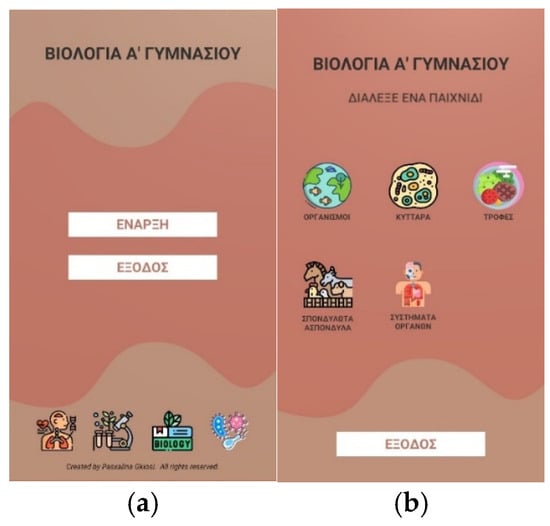
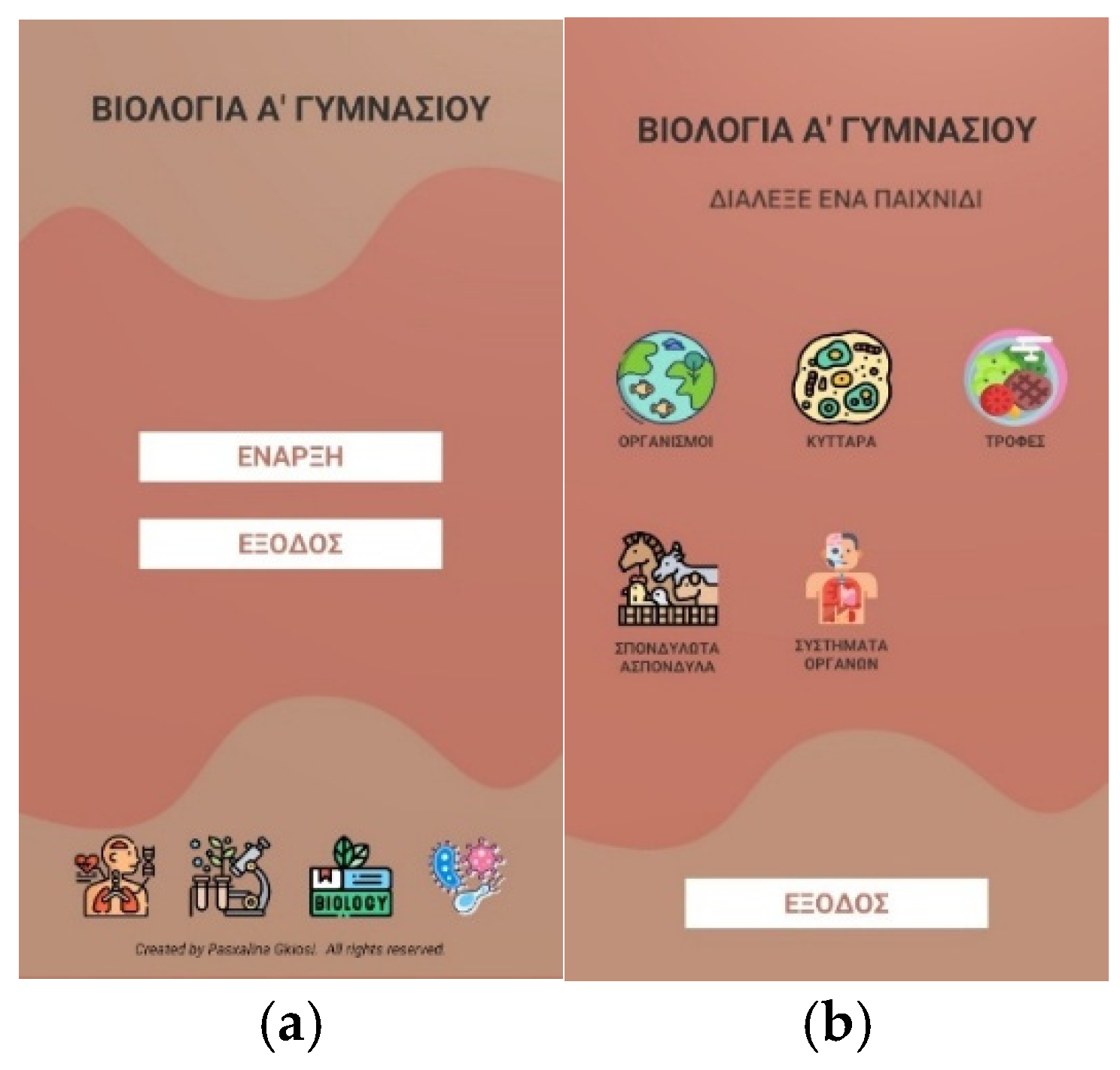
Main menu: Upon launching the application, the initial screen appears, featuring two buttons (Figure 1a). The first button opens the menu of learning activities, while the second exits the application. Selecting the first button brings up the main menu, which displays five learning activities (Organisms, Cells, Foods, Vertebrates/Invertebrates and Organ Systems)—each represented by an image and a title (Figure 1b). An additional exit button is located at the bottom of the screen. After selecting an activity, the student is prompted to read the instructions and then continuously scan the corresponding QR code found in the textbook. At the end of each activity, feedback is provided.
Figure 1.
(a) Launch screen and (b) main menu.
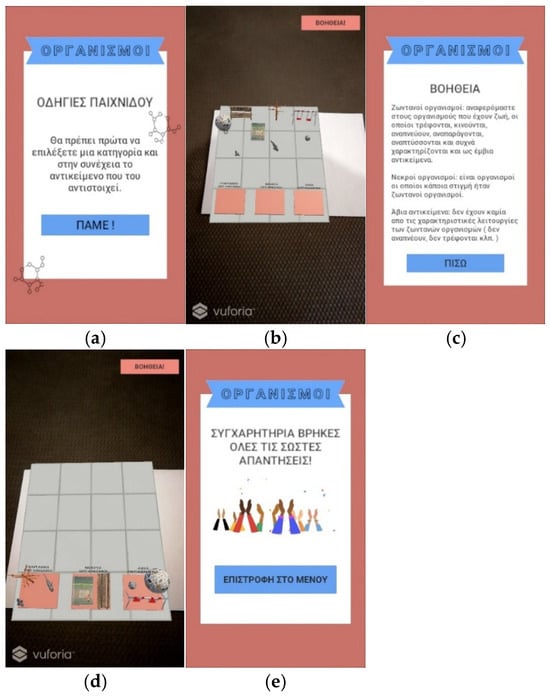
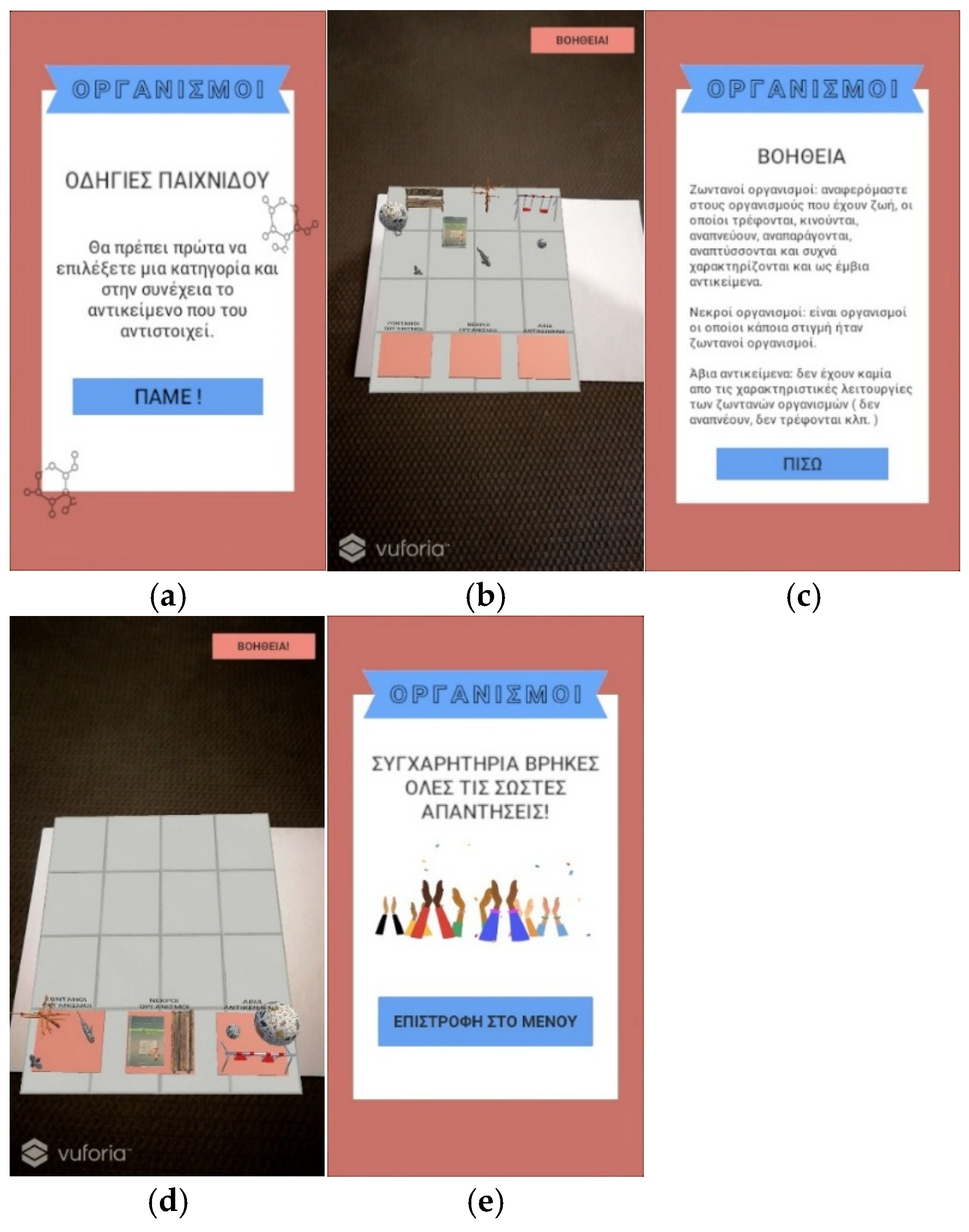
“Organisms”: The first AR learning activity is titled “Organisms”, which belongs to the textbook chapter “Characteristics of organisms”. Before starting the activity, the instructions are displayed (Figure 2a). By pressing the “Start” button, the student scans the corresponding QR code and then the AR environment appears. The activity displays some objects at the top, while the three categories (living organisms, dead organisms and inanimate objects) are displayed at the bottom (Figure 2b). At the top right, there is a “Help” button, offering helpful information related to the activity’s categories (Figure 2c). To complete the activity, the student places all the objects in the correct categories (Figure 2d). Once this is done, a feedback message is displayed (Figure 2e), and they can return to the main menu by pressing the button at the bottom of the screen.
Figure 2.
(a) Instructions, (b) “Organisms” activity, (c) help, (d) attempt, and (e) feedback.
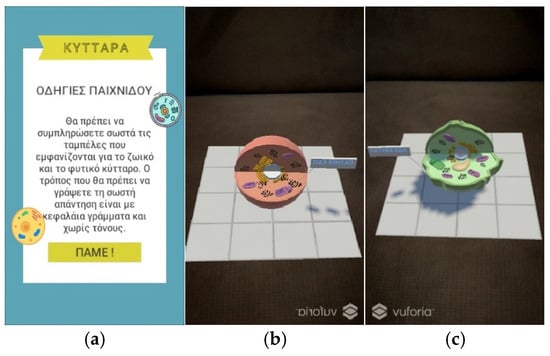
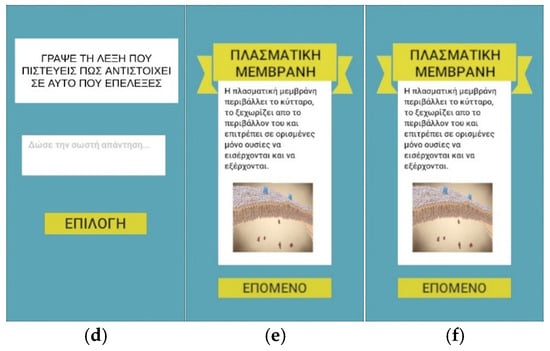
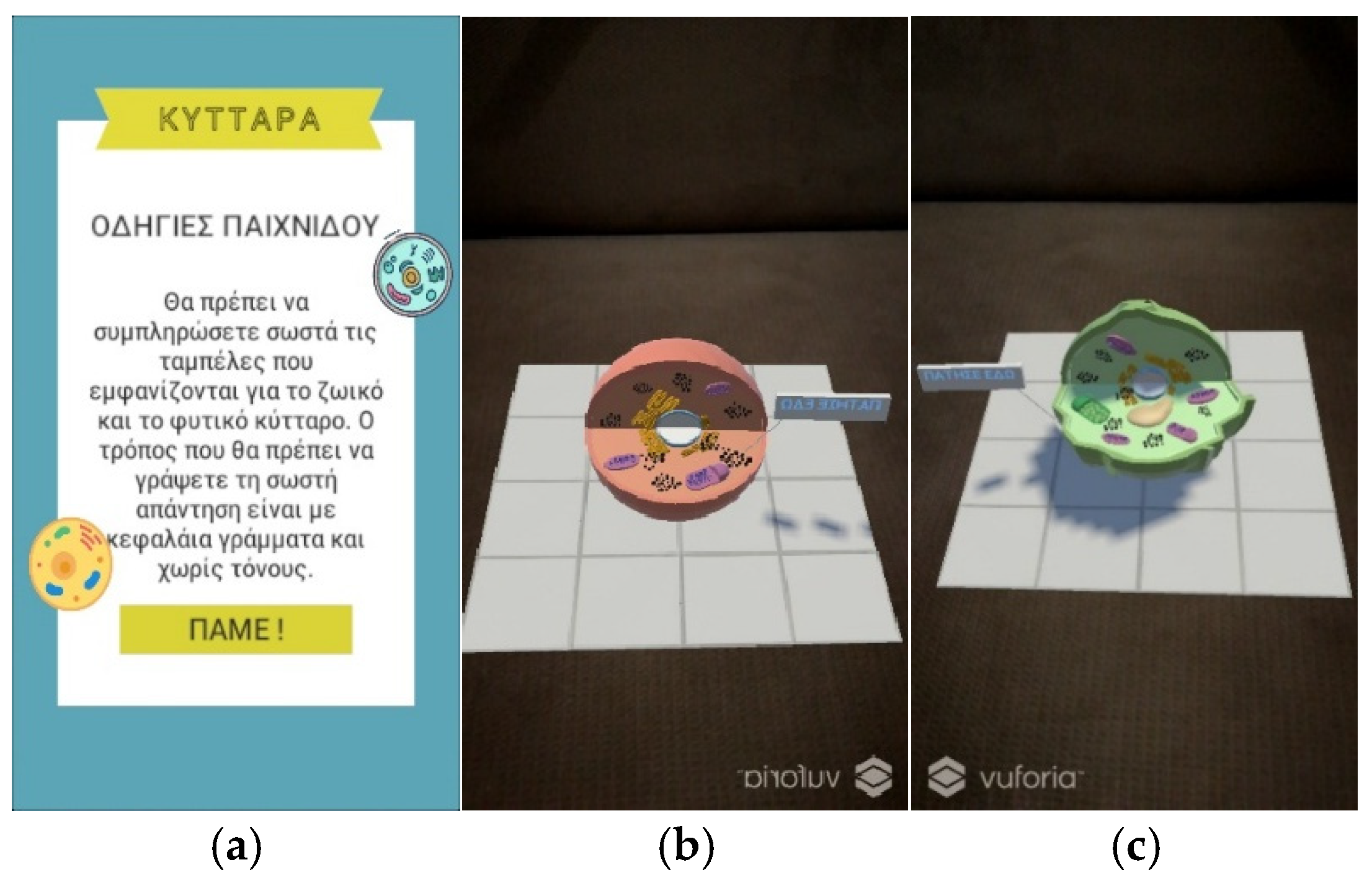
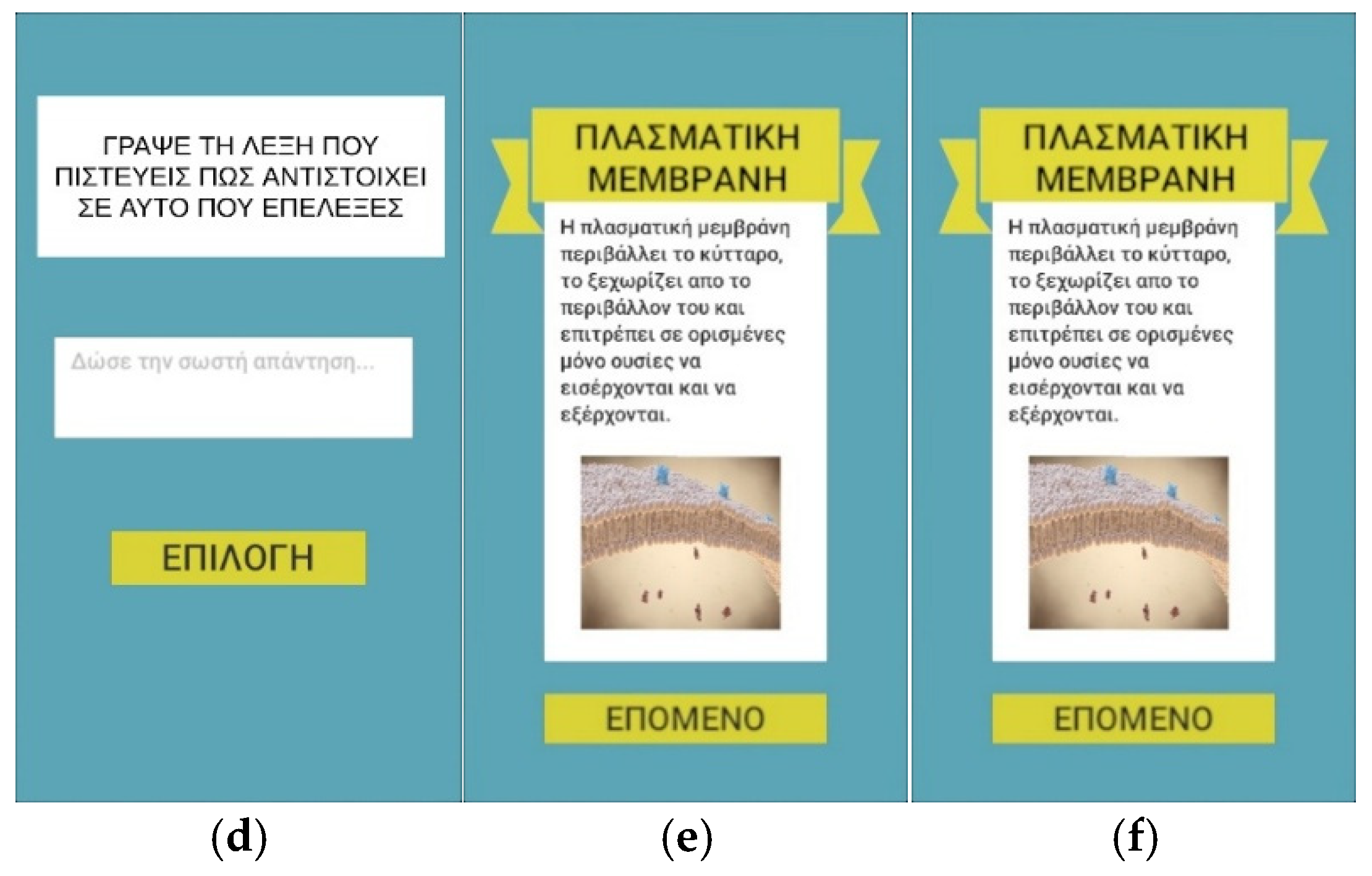
“Cells”: The second learning activity corresponds to the chapter “Cell: The Unit of Life”. In the first screen, the student reads the instructions (Figure 3a) and then scans the QR code to display the AR environment. The activity consists of animal and plant cells (Figure 3b,c). In the cell, a label is displayed, and the student clicks on the label and fills in the correct term (Figure 3d). Once they find the correct term, information about what they found is displayed (Figure 3e), and then they proceed to the next label. The activity is completed when the student correctly fills in all the labels, and then feedback is provided with a button to return to the main menu (Figure 3f).
Figure 3.
(a) Instructions, (b) animal cell, (c) plant cell, (d) field of filling in the correct term of cell, (e) information of the correct term, and (f) feedback.
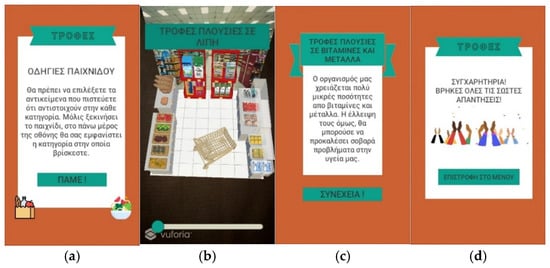
“Foods”: The third learning activity is titled “Foods” and is related to the chapter “Substance Prevention and Digestion in Humans”. The activity begins with on-screen instructions (Figure 4a), followed by scanning a corresponding QR code to launch the AR experience. A virtual supermarket then appears, displaying a label at the top that lists various nutritional categories, such as foods rich in fats, carbohydrates, proteins, and vitamins. The student is tasked with selecting items that match each category. Once selected, the items are placed into a virtual shopping trolley (Figure 4b). A progress bar at the bottom of the screen indicates how many items remain to be found for each category, helping students track their progress. After completing a category, an informative text appears. By clicking “Next”, the student proceeds to the following category (Figure 4c). Once all categories have been completed, feedback is provided to conclude the activity (Figure 4d).
Figure 4.
(a) Instructions, (b) “Foods” activity, (c) informative text, and (d) feedback.
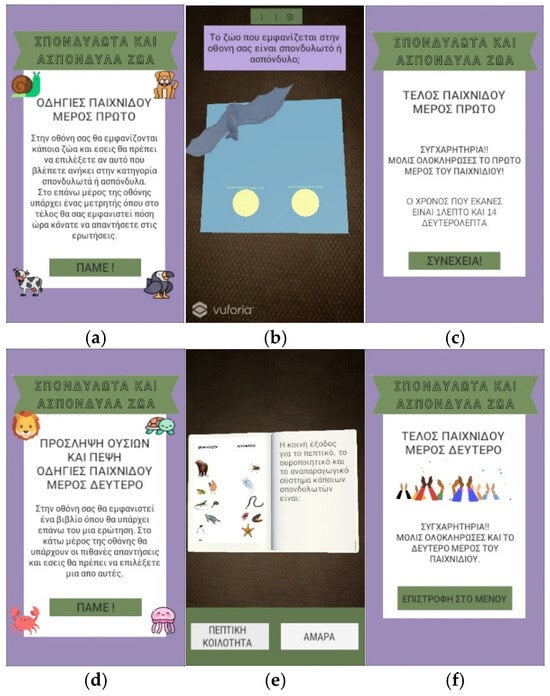
“Vertebrates/Invertebrates”: The fourth AR activity is about vertebrate and invertebrate animals. The activity is divided into two parts. The first part corresponds to the chapter “Organization of Multicellular Organisms”. The student begins by reading the instructions on the activity (Figure 5a), and then scans the corresponding QR code. A timer appears at the top of the screen, measuring the time required to complete the task. In the center of the screen, various animals are displayed, and the student must identify whether each one is a vertebrate or an invertebrate by selecting the appropriate button (Figure 5b). Once the student completes the task, feedback is provided along with a “Next” button to proceed to the second part of the activity (Figure 5c).
Figure 5.
(a) Instructions on the 1st part, (b) attempt of the 1st part, (c) feedback on the 1st part, (d) instructions on the 2nd part, (e) attempt of the 2nd part, and (f) feedback on the 2nd part.
The second part is based on the chapter “Substance prevention and digestion in animal organisms”. First, the activity instructions are displayed (Figure 5d), and by scanning the QR code, the student enters a virtual environment featuring a textbook interface. On the left side of the screen, different vertebrate and invertebrate animals are displayed, while on the right side, a random question related to the topic appears. Answer options are provided at the bottom of the screen (Figure 5e). To complete the task, the student must answer correctly to all the questions presented. Once finished, feedback is displayed (Figure 5f).
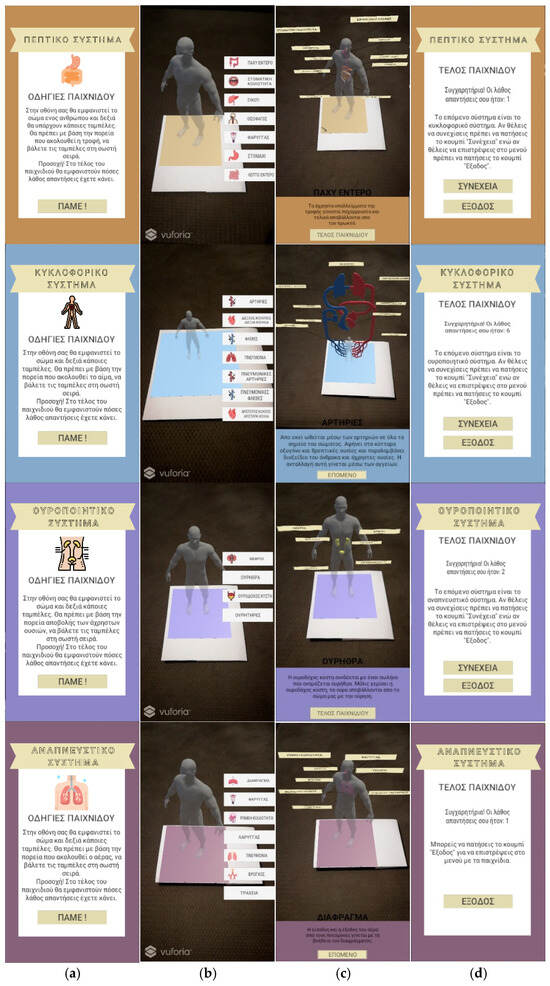
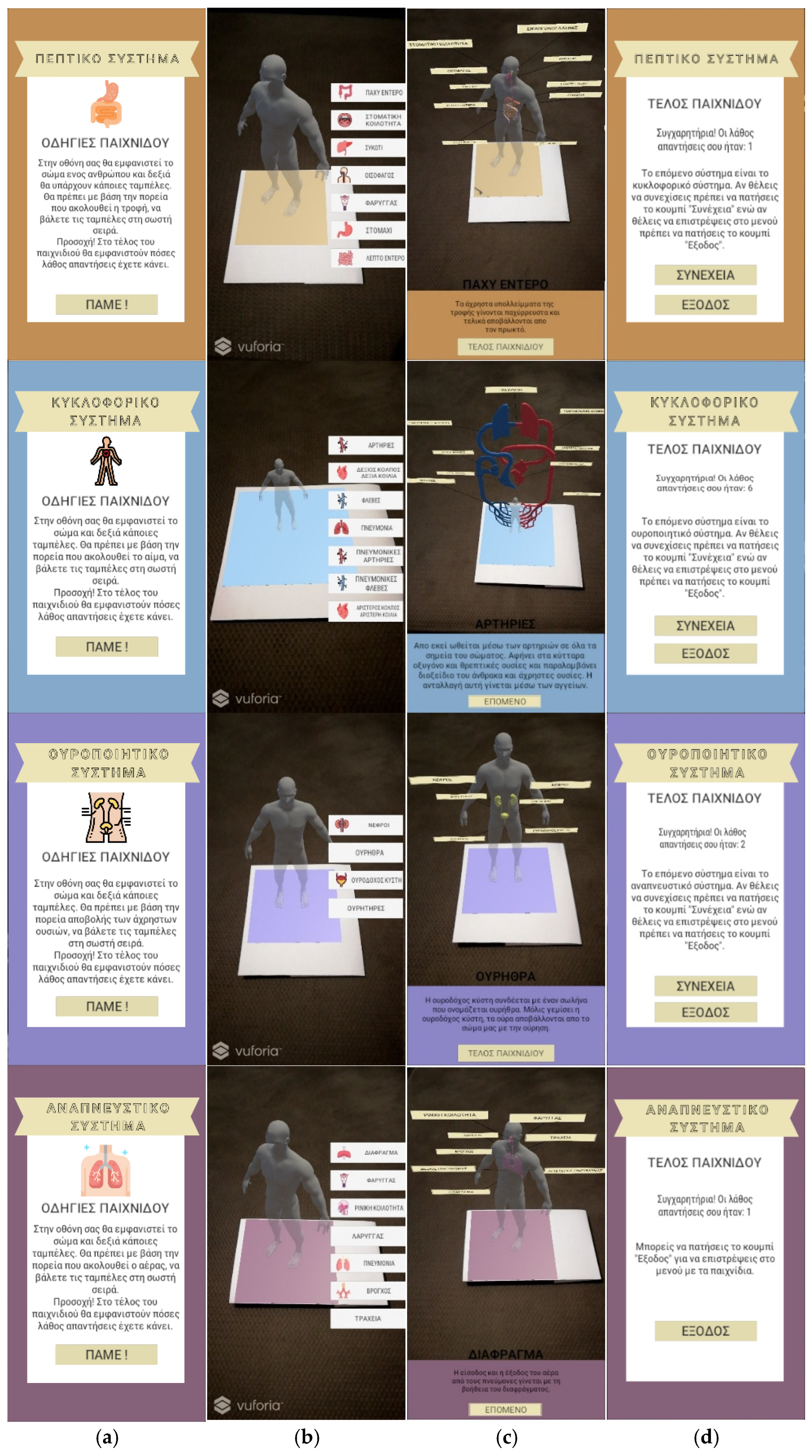
“Organ Systems”: The fifth learning activity titled “Organ Systems” consists of four tasks, each corresponding to a specific body system: (a) the digestive system, (b) the circulatory system, (c) the urinary system, and (d) the respiratory system. The process the student follows is the same for all four tasks. After selecting a task, the student begins by reading the on-screen instructions (Figure 6a). The device’s camera is then activated to scan the corresponding QR code. Once scanned, a human body appears on the screen, accompanied by a set of labels displayed on the right side (Figure 6b). The student’s goal is to select the labels in the correct sequence. When a label is selected correctly, relevant information appears at the bottom of the screen, and the corresponding organ is placed in the appropriate location within the human body (Figure 6c). This process continues until all labels have been used. Throughout the activity, incorrect selections are tracked by a counter. At the end of the activity, the number of incorrect choices made by the student is displayed as part of the feedback (Figure 6d).
Figure 6.
(a) Instructions, (b) human body with a set of labels, (c) attempt of the activity, and (d) feedback.
4. Methods
4.1. Research Design
A case study [65] was conducted, aiming to evaluate the usability of the proposed AR application across different participant groups. To achieve the goal of the study, the following research questions were addressed:
RQ1.
Does the usability of the AR app differ among users from different educational levels?
RQ2.
What is the perceived usability of the AR app based on user responses from various educational levels?
To address the research questions, three separate evaluations were carried out with distinct participant groups: (a) a 4 h workshop with undergraduate students from the Department of Education (novice adults); (b) a 4 h workshop with undergraduate students from the Department of Information Technology and Electronic Systems Engineering (expert adults); and (c) five 45 min biology lessons, over a week, delivered to 1st year high school students (students). The two workshops (cases a and b) followed a consistent structure: phase 1 involved a 15 min introduction outlining the purpose of the study, followed by phase 2, a 45 min session during which participants experimented with the first AR activity; the workshop was structured according to the 5E instructional model (Table 1). The duration allocated to each stage of the 5E model (Engagement, Exploration, Explanation, Elaboration, Evaluation) was defined with the guidance of two biology teachers, based on their expertise and knowledge of typical classroom practices, ensuring that each stage had sufficient time to be completed. Phase 2 was repeated for each of the five AR activities included in the proposed AR app. The structure of the high school sessions (case c) mirrored that of the workshops, with the difference that the sessions of phase 2 were conducted on separate days over the course of a week, in alignment with the constraints of the school’s time schedule and curriculum.
Table 1.
The five stages of the 5E model, the content, and the duration for each one of the five AR activities.
4.2. Participants
A total of 195 participants from Greece were involved in the case study, consisting of three distinct participant groups (Table 2):
Table 2.
Participant groups’ info.
- A total of 65 undergraduate students (novice adults) from the Department of Education at the Aristotle University of Thessaloniki (AUTH), enrolled in the “Teaching Methods and New Technologies” course (8th semester). Of these participants, 15 were males and 50 were females. They were categorized as “novice” users, as they had either used an AR application fewer than 10 times or had been exposed to AR through videos.
- A total of 63 undergraduate students (expert adults) from the Department of Information Technology and Electronic Systems Engineering at the International Hellenic University (IHU), attending the “Human Machine Interaction” course (5th semester). Among these participants, 49 were males and 14 were females. They were categorized as “expert” users, as they had either developed at least 1 AR application or had used AR extensively.
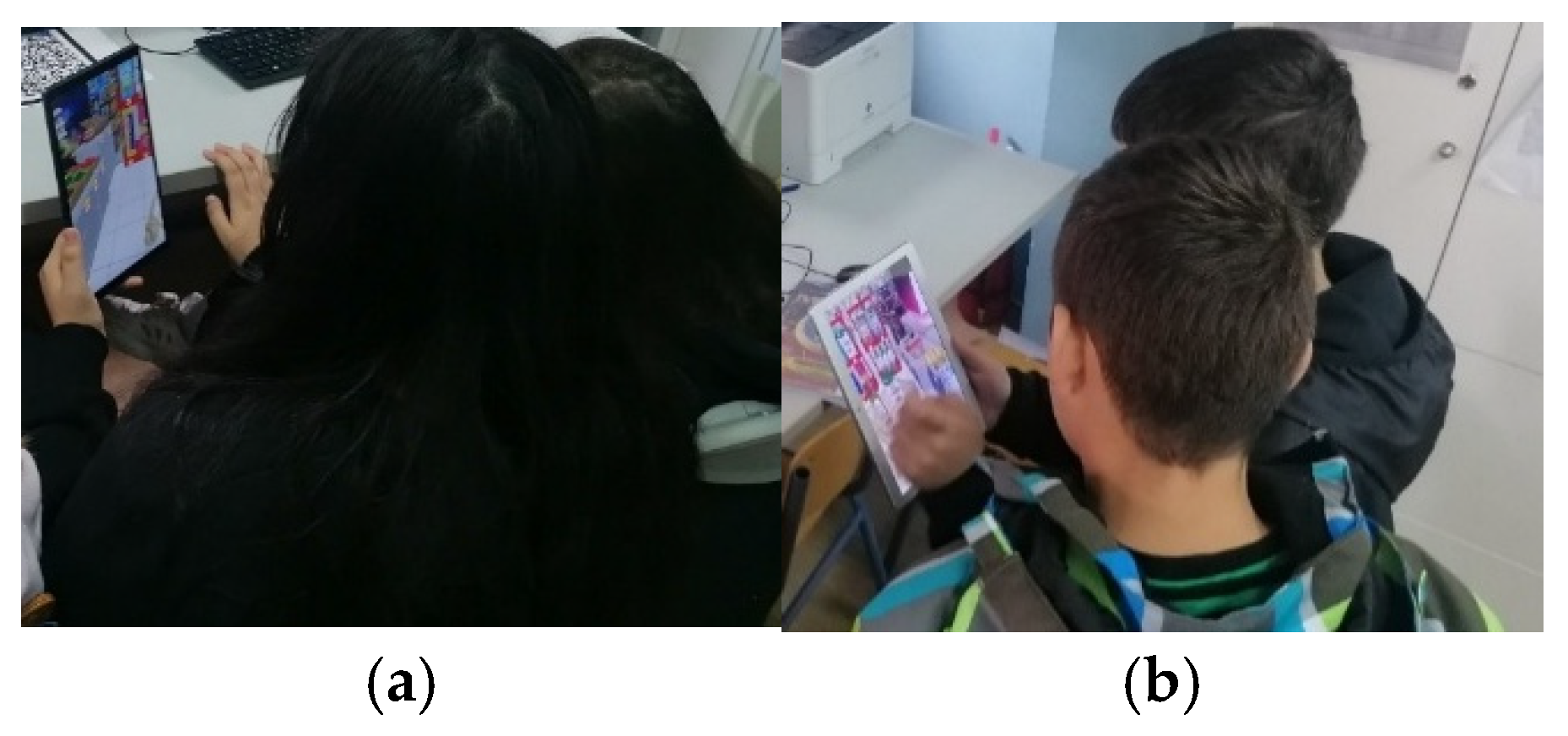
- A total of 67 1st year students (students) from a high school in Florina (Figure 7). It is worth mentioning that the high school students were divided into two subgroups: those who had prior experience (N = 10) and those who did not (N = 57). Of these participants, 35 were males and 32 were females. Users were classified as “non-experienced” or “experienced” based on the frequency of their prior AR use.Figure 7. (a,b) 1st year students from high school in Florina.
All participants provided informed consent, and all data gathered during the study were treated as anonymous and confidential
4.3. Data Collection
The System Usability Scale (SUS) questionnaire [66], which was translated into Greek [67], was used to assess the usability of the AR application. Participants scored their degree of agreement with each of the 10 statements in the SUS (Table 3) using a 5-point Likert scale that goes from 1 (strongly disagree) to 5 (strongly agree).
Table 3.
SUS Questionnaire.
In addition to the SUS questionnaire, observational data were collected by the researchers during the workshops. While participants interacted with the AR application, the researchers observed usability-related behaviors such as navigation difficulties, requests for assistance, hesitation during task execution, and time required to understand instructions. Comments made by participants while using the AR were also documented, as researchers encouraged them to provide any type of feedback that appears to be valuable to the research. These observations were documented in real time as written field notes by the researchers during each workshop session and throughout participants’ interaction with the AR application. The researchers reviewed the notes after each session to ensure clarity and completeness, and to support the interpretation of the SUS results. Yet, the observational data were not subjected to formal qualitative coding; they were collected with the participation of diverse user groups, including high school students and university students from different disciplinary backgrounds. In this sense, the observational notes and participants’ comments function as contextual triangulation, supporting and contextualizing the SUS findings rather than providing independent analytic conclusions [68].
5. Results
5.1. SUS Results
The SUS scores indicated a positive perception of the AR app’s usability across all participant groups (Table 4). Specifically, an average SUS score of 77 was reported by education students (novice adults), 78 by engineering students (expert adults), and 72 by 1st year high school students (students). Among the secondary cohort, experienced students achieved a notably higher SUS score of 82, compared to a score of 70 reported by the non-experienced group.
Table 4.
Total SUS score per participant group.
According to Bangor et al. [69], SUS scores above 70 are considered to reflect acceptable usability, suggesting that all three groups evaluated the AR app as functional, easy to use, and satisfactory.
A one-way ANOVA was conducted to compare the SUS scores between the three participant groups: education students (novice adults), engineering students (expert adults), and 1st year high school students (students) (Table 5). The analysis revealed a statistically significant difference (p = 0.034). A Tukey post hoc test indicated that the SUS scores of students were statistically significantly lower than both adult groups (p < 0.05).
Table 5.
ANOVA.
To further explore the role of prior experience within the student group, an independent t-test was conducted between the non-experienced and experienced groups (Table 6). Results revealed a statistically significant difference, with the non-experienced group reporting lower SUS scores (t = −3.389, p = 0.003). Given the small and imbalanced size of the experienced subgroup (N = 10), this comparison is considered exploratory.
Table 6.
Independent t-test.
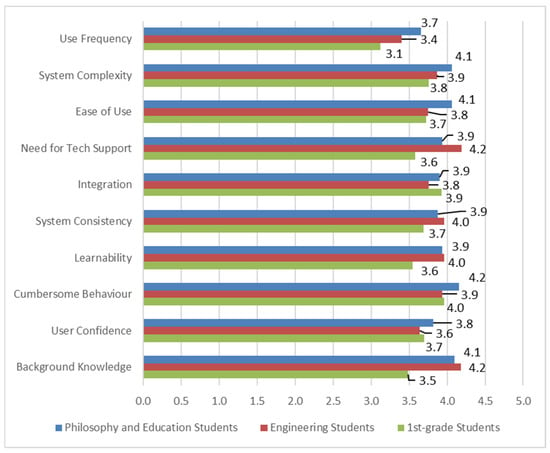
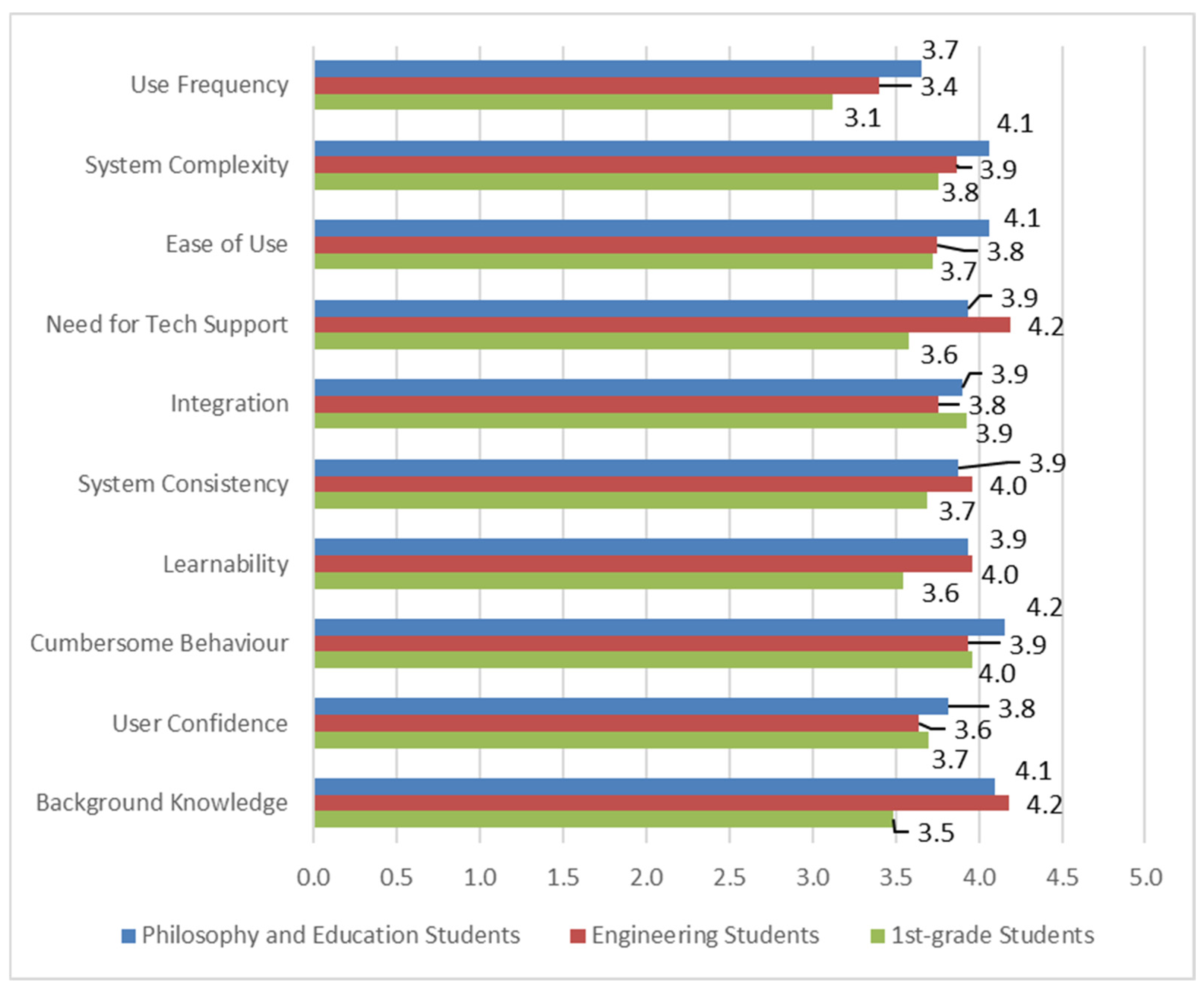
Figure 8 illustrates the mean scores for each SUS statement across the three participant groups, adjusted to reflect the positive interpretation of each item (i.e., higher scores correspond to better perceived usability or satisfaction). Among all items, “Use Frequency” item received the lowest scores among all participant groups, particularly from 1st year high school students (3.1). Both “System Complexity” (a reversed item) and “Ease of Use” were rated highly by all participants. “Need for Tech Support” item (a reversed item) showed high variation between the users’ scores, with engineering students (expert adults) rating it relatively high (4.2), suggesting less need for support, while 1st year high school students gave a lower rating (3.6), indicating a greater need for assistance. Items related to “Integration” and “System Consistency” (a reversed item) were rated relatively high among all groups. “Learnability” received a relatively low score, particularly among 1st-year high school students (3.6). “Cumbersome Behaviour” item (a reversed item) was rated highly among all participants. Participants also reported high levels of “User Confidence”, while “Background Knowledge” (a reversed item) scored relatively lower among 1st year high school students, indicating less prior familiarity with AR apps compared to the other groups.
Figure 8.
SUS Score per SUS Question.
The standard deviations and mean Likert-scale scores of each item for each of the three participant groups are presented in Table 7. Overall, positive items (such as Q1, Q3, Q5, Q7, and Q9) obtained higher mean scores, generally above 3.5, while negatively phrased items (such as Q2, Q4, Q6, Q8, and Q10) rated lower, mostly below 2.0. In contrast to the other groups, 1st-year high school students tended to indicate slightly greater variability in their responses.
Table 7.
Mean values and standard deviations of responses.
5.2. Observational Findings
Observational notes collected during the workshops provided supporting descriptive insight into the interactions related to the ways participants across different educational levels encounter usability issues while using the AR application. While observational data largely aligns with SUS results, they provide contextual enrichment which is not directly captured by questionnaire scores. Undergraduate participants explored the application more independently and required minimal external guidance, whereas 1st year high school students asked for assistance more often. Among undergraduate participants, education students were observed to have more difficulties in navigation compared to engineering students.
In addition, 1st year high school students were observed to hesitate more frequently during initial navigation and often requested clarification regarding task instructions, especially during their first interaction with each activity. The aforementioned is further supported by the participants’ comments that were documented during the workshops. Some indicative examples are presented in Table 8.
Table 8.
Indicative examples of participants’ comments.
6. Discussion
This study presents an AR application designed using the 5E instructional model as a structuring framework, focusing on usability as perceived by users across different educational levels and backgrounds. The contribution of the paper lies in providing empirical usability evidence supported by descriptive observational insights for an AR application in the context of biology education, with the 5E model serving as a structural design framework rather than an explanatory claim about learning outcomes and pedagogical effectiveness.
Related to RQ1 and whether the usability of the AR app varies between participants from different educational levels, although the differences in scores are relatively minor, they provide insights into how users with different backgrounds and technological familiarity perceive the system (RQ2). The observational findings support the SUS results by illustrating differences in how participant groups navigated and interacted with the AR app. In particular, undergraduate participants interacted with the AR app more independently, whereas 1st year high school students more often required guidance. Among undergraduate students, education students (novice adults), due to their theoretical background, more frequently commented on the structural organization and sequencing of the AR application from a usability and interaction perspective, as reflected in their comments. In contrast, engineering students (expert adults)—technologically more literate—seemed to focus more on functional and interface-related aspects of the AR app (Figure 8). This is consistent with existing literature underscoring that technological, digital literacy may affect the intention and way of using technology [70].
High school students, especially those in the non-experienced group, reported lower usability scores (Table 4). Observational notes and comments suggest that they had difficulties and required more assistance while using AR. One plausible interpretation is that limited prior exposure to AR or similar technologies may influence initial navigation perceptions. The significant t-test results between experienced and non-experienced students reinforce this interpretation, suggesting that technological familiarity plays a role in shaping user experience and perceived usability. However, this relationship was not directly measured, and the interpretation is exploratory as it is constrained by the small size of the experienced subgroup (Table 6). It should be noted that this subgroup comparison was not a research objective of the study, but an exploratory analysis intended to provide insights into the role of prior AR experience on perceived usability. This finding aligns with the previous research, which highlights that one of the most important challenges related to AR learning is the usability issue, which should be handled within a framework of pedagogical, technological, and learning parameters [3,15].
The lower rating for “Use Frequency” suggests that while the AR app was usable, it may not encourage repeated use. A possible explanation, according to user’s feedback, could be the limited AR content, which includes five discrete activities aligned with the 5E model, and once these activities are completed, users might perceive little motivation to revisit them, which may affect repeated use. However, engagement was not directly measured in this study. Prior research suggests that aligning AR content with learners’ characteristics and expectations can enhance sustained engagement [71]. Furthermore, creating content that combines the two types of AR, the static and the dynamic, may further urge students to interact with the app.
Additionally, lower scores in “Background Knowledge”, indicate that younger users may find the application less intuitive or may require more guidance before using it. A plausible explanation could be the lack of familiarity with AR technology; however, this interpretation remains inferential. In addition, since AR is a relatively new technology in education, and students have not been very familiar with it, step-by-step guidance on how to use it could facilitate smoother initial use [71]. Regarding the age factor and its potential effect on the AR tools, this might play a role in the criteria that students obtain while using such technologies [72].
Conversely, high ratings in “System Complexity” and “Cumbersome Behaviour” suggest that users found the AR app simple, well-structured, and not very complex, while high ratings in “Integration” and “System Consistency” indicate that the activities were well-integrated and worked smoothly according to user expectations. These findings align with existing literature that emphasizes the importance of interface clarity, consistency, and perceived ease of use [16,19,49,51,52,53], facilitating active participation [17].
Overall, the combined SUS results and observational findings indicate that usability is multifaceted—shaped by interface design, content structure, and users’ prior technological experience. The SUS results and observational notes provide a form of contextual triangulation, allowing for the interpretation of usability perceptions captured through the questionnaire about how users actually interacted with the AR app. These observations are interpreted strictly in terms of interaction clarity, navigation, and user support, and not as indicators of instructional quality or learning effectiveness. Although the AR application demonstrates high usability, user engagement and sustained use appear to depend on content depth and appropriate design support. Importantly, while usability is a prerequisite for the adoption of educational technologies, it should not be interpreted as evidence of educational value, instructional effectiveness, or learning impact. Furthermore, although the AR application was designed within the 5E instructional model, the present findings do not allow conclusions regarding the pedagogical effectiveness of the 5E framework itself. Instead, this paper highlights usability issues for AR applications designed around structured instructional models in secondary education.
7. Conclusions and Future Work
Leveraging the aforementioned, the current study introduces an AR app whose activities are designed and structured within the framework of the 5E instructional model to support biology classes, and presents how users belonging to various educational levels and with different backgrounds assessed its usability. The contribution of the study lies in providing empirical usability evidence for a 5E-structured AR app in the context of biology education, rather than assessing learning outcomes of pedagogical effectiveness, supplemented by descriptive observations on user interaction. The usability evaluation involved three participant groups—education students (novice adults), engineering students (expert adults), and 1st year high school students (students)—and assessed the proposed AR app using the System Usability Scale (SUS), complemented by observational findings.
The findings confirmed that the current AR app demonstrates acceptable usability across all participant groups, with slightly higher usability scores reported by undergraduate students. The usability of the proposed AR app may vary by users’ prior experience, technological familiarity, and educational level. Engineering students (expert adults) showed the highest scores, likely due to their familiarity with AR, while 1st-year high school students rated the lowest scores, reflecting the need for additional user support and more guidance during initial interaction. Thus, successful integration of AR into educational settings should be accompanied by careful user-centered design, particularly when targeting younger or novice users.
Despite the potential of the current AR app, certain limitations exist, and should be taken into consideration in future development. Firstly, the usability evaluation relied on SUS data complemented with observational notes that were not subjected to qualitative coding. While SUS provides a reliable measure of usability, the absence of task-oriented performance metrics, systematically analyzed qualitative data, and learning outcome measures, limits deeper interpretation of specific design or pedagogical factors influencing user experience. Secondly, the study examined a single AR application, meaning the findings do not constitute a comparative case analysis of different systems, but rather reflect usability perceptions across different user groups interacting with the same system. Thirdly, study conditions were not fully equivalent across participant groups, and the relatively small size of the experienced high school subgroup limits the statistical power and generalizability of subgroup comparisons. These findings should therefore be interpreted cautiously and verified in future studies with larger and more balanced samples. Another limitation of the current AR application is that the Evaluation phase is limited to score-based feedback, and not to formative feedback such as explanatory and adaptive suggestions. Finally, the 5E model was used as an integrated design framework; as a result, the present study cannot distinguish whether usability perceptions are attributable to the AR medium itself, the interface design, or the specific sequencing of activities.
Future work should address the aforementioned limitations. Additionally, future iterations of the AR application could incorporate a broader range of interactive modules, game-based challenges, adaptive content, and help features to scaffold less experienced users, contributing to the intuitiveness and ease of use of the AR app. Lastly, a longitudinal evaluation could be conducted to provide valuable insights into how users’ perceptions of usability evolve and how engagement can be sustained over time.
In conclusion, the study confirms that AR technology can achieve acceptable usability across diverse participant groups and can be successfully structured using the 5E instructional model as a design framework. By focusing on usability rather than learning outcomes and effectiveness, the study contributes to the design and evaluation of AR educational applications, particularly for secondary biology education. In addition, positioning an AR app in high school biology within the 5E model can provide useful insights into the design of relevant lessons. Specifically, in the Engagement stage, the use of stimuli and visual cues were utilized to support initial orientation without requiring extensive prior instruction. In the Exploration phase, allowing users to interact with AR and manipulate visual elements at their own pace and recover easily from errors appeared to reduce hesitation among less experienced users. During the Explanation phase, usability was supported by the presentation of visual AR content that facilitated users’ articulation and reflection of their understanding, while the interface minimized additional interaction demands. The Elaboration phase highlighted the importance of content variability, as repeated interaction with fixed activities appeared to limit perceived reuse. Finally, in the Evaluation phase, feedback based on scores suggests the need for richer, usability-oriented feedback mechanisms to better support user reflection. These observations point to specific design considerations for aligning structured instructional frameworks such as the 5E model with easy-to-use AR interfaces, rather than claims about learning effectiveness.
Supplementary Materials
The following APK can be downloaded at https://drive.google.com/file/d/1fbctyxn0wsHf6gsgfw9TvH9-5ZXvCqF7/view?usp=drive_link.
Author Contributions
Conceptualization, C.V.; methodology, C.V.; software, P.G.; validation, C.V. and C.O.; formal analysis, C.V.; data curation, C.O.; writing—original draft preparation, C.V. and S.R.; writing—review and editing, C.V., S.R. and T.S.; supervision, E.K. All authors have read and agreed to the published version of the manuscript.
Funding
This research received no external funding.
Institutional Review Board Statement
The study was conducted according to the guidelines of the Declaration of Helsinki and was approved by the Ethics Committee of Aristotle University of Thessaloniki (protocol code 49437/2022 and date of approval 25 February 2022).
Informed Consent Statement
Informed consent was obtained from all subjects involved in the study.
Data Availability Statement
Data presented in this study are available on request from the corresponding author.
Acknowledgments
The authors of the paper wish to warmly thank all the participants for their constructive comments and for the support that they offered.
Conflicts of Interest
The authors declare no conflicts of interest.
References
- Saxena, S. How Do You Teach the 4Cs to Students (Part 1). In Creativity and Innovation Nioda Dehli; NCR: New Delhi, India, 2015. [Google Scholar]
- Pedaste, M.; Mäeots, M.; Siiman, L.A.; de Jong, T.; van Riesen, S.A.N.; Kamp, E.T.; Manoli, C.C.; Zacharia, Z.C.; Tsourlidaki, E. Phases of inquiry-based learning: Definitions and the inquiry cycle. Educ. Res. Rev. 2015, 14, 47–61. [Google Scholar] [CrossRef] [Scilit]
- Atkin, J.M.; Karplus, R. Discovery or Invention? In The Science Teacher; National Science Teachers Association: Richmond, VA, USA, 1962; Volume 29. [Google Scholar]
- Bybee, R.W. The BSCS 5E instructional model and 21st-century skills. In A Workshop on Exploring the Intersection of Science Education and the Development of 21St Century Skills; BSCS: Colorado Springs, CO, USA, 2009. [Google Scholar]
- Bybee, R.W. The Case for Education: STEM Challenges and Opportunities; NSTA (National Science Teachers Assocation): Richmond, VA, USA, 2013. [Google Scholar]
- Ruiz-Martín, H.; Bybee, R.W. The cognitive principles of learning underlying the 5E Model of Instruction. Int. J. STEM Educ. 2022, 9, 21. [Google Scholar] [CrossRef] [Scilit]
- Moore, J. Behaviorism. Psychol. Rec. 2011, 61, 449–463. [Google Scholar] [CrossRef] [Scilit]
- Olusegun, S. Constructivism Learning Theory: A Paradigm for Teaching and Learning. J. Res. Method Educ. 2015, 5, 66–70. [Google Scholar]
- Garcia, C.; Badia, A. “I as a practicum mentor”: Identities of mentors of student teachers. Mentor. Tutoring Partnersh. Learn. 2023, 31, 335–351. [Google Scholar] [CrossRef] [Scilit]
- Downes, S. Connectivism. Asian J. Distance Educ. 2022, 17. [Google Scholar]
- Siemens, G. Connectivism. In Foundations of Learning and Instructional Design Technology; Book Oven Inc.: Montreal, QC, Canada, 2017. [Google Scholar]
- Desouza, J.M.S. Conceptual play and science inquiry: Using the 5E instructional model. Pedagogies 2017, 12, 340–353. [Google Scholar] [CrossRef] [Scilit]
- Kye, B.; Kim, Y. Investigation on the Relationships among Media Characteristics, Presence, Flow, and Learning Effects in Augmented Reality Based Learning. J. Educ. Technol. 2008, 24, 193–223. [Google Scholar] [CrossRef] [Scilit]
- Cai, S.; Wang, X.; Chiang, F.K. A case study of Augmented Reality simulation system application in a chemistry course. Comput. Hum. Behav. 2014, 37, 31–40. [Google Scholar] [CrossRef] [Scilit]
- Wu, H.K.; Lee, S.W.Y.; Chang, H.Y.; Liang, J.C. Current status, opportunities and challenges of augmented reality in education. Comput. Educ. 2013, 62, 41–49. [Google Scholar] [CrossRef] [Scilit]
- Cai, S.; Liu, C.; Wang, T.; Liu, E.; Liang, J.C. Effects of learning physics using Augmented Reality on students’ self-efficacy and conceptions of learning. Br. J. Educ. Technol. 2021, 52, 235–251. [Google Scholar] [CrossRef] [Scilit]
- Radu, I.; Schneider, B. What can we learn from augmented reality (AR)? Benefits and Drawbacks of AR for Inquiry-based Learning of Physics. In Proceedings of the Conference on Human Factors in Computing Systems 2019, Glasgow, Scotland, 4–9 May 2019. [Google Scholar] [CrossRef] [Scilit]
- Chen, C.H.; Yang, Y.C. Revisiting the effects of project-based learning on students’ academic achievement: A meta-analysis investigating moderators. Educ. Res. Rev. 2019, 26, 71–81. [Google Scholar] [CrossRef] [Scilit]
- Patil, S.; Prabhu, C.; Neogi, O.; Joshi, A.R.; Katre, N. E-learning system using augmented reality. In Proceedings of the 2nd International Conference on Computing, Communication, Control and Automation, ICCUBEA 2017, Pune, India, 17–18 August 2017. [Google Scholar] [CrossRef] [Scilit]
- Lestary, H.P.; Munzil, M.; Yulianti, E. Development of augmented reality teaching materials of human movement system based on 5E learning cycle. AIP Conf. Proc. 2021, 2330, 030011. [Google Scholar] [CrossRef] [Scilit]
- Cheng, S.H.; Chu, H.C. An interactive 5E learning cycle-based augmented reality system to improve students’ learning achievement in a microcosmic chemistry molecule course. In Proceedings of the 5th IIAI International Congress on Advanced Applied Informatics, IIAI-AAI, Kumamoto, Japan, 10–14 July 2016. [Google Scholar] [CrossRef] [Scilit]
- Kozcu Cakir, N.; Guven, G.; Celik, C. Integration of Mobile Augmented Reality (MAR) Applications into the 5E Learning Model in Biology Teaching. Int. J. Technol. Educ. 2020, 4, 93–112. [Google Scholar] [CrossRef] [Scilit]
- Wei, X.; Wang, L.; Lee, L.K.; Liu, R. Multiple Generative AI Pedagogical Agents in Augmented Reality Environments: A Study on Implementing the 5E Model in Science Education. J. Educ. Comput. Res. 2025, 63, 336–371. [Google Scholar] [CrossRef] [Scilit]
- Di Serio, A.; Ibanez, M.B.; Kloos, C.D. Impact of an augmented reality system on students’ motivation for a visual art course. Comput. Educ. 2013, 68, 586–596. [Google Scholar] [CrossRef] [Scilit]
- Martín-Gutiérrez, J.; Fabiani, P.; Benesova, W.; Meneses, M.D.; Mora, C.E. Augmented reality to promote collaborative and autonomous learning in higher education. Comput. Hum. Behav. 2015, 51, 752–761. [Google Scholar] [CrossRef] [Scilit]
- Middleton, B.M.; Murray, R.K. The impact of instructional technology on student academic achievement in reading and mathematics. Int. J. Instr. Media 1999, 26, 109. [Google Scholar]
- Akçayır, M.; Akçayır, G. Advantages and challenges associated with augmented reality for education: A systematic review of the literature. Educ. Res. Rev. 2017, 20, 1–11. [Google Scholar] [CrossRef] [Scilit]
- Dey, A.; Billinghurst, M.; Lindeman, R.W.; Swan, E. A Systematic Review of 10 Years of Augmented Reality Usability Studies: 2005 to 2014. Front. Robot. AI 2018, 5, 37. [Google Scholar] [CrossRef] [Scilit]
- Garzón, J.; Pavón, J.; Baldiris, S. Systematic Review and Meta-Analysis of Augmented Reality in Educational Settings. Virtual Real. 2019, 23, 447–459. [Google Scholar] [CrossRef] [Scilit]
- Radu, I. Augmented reality in education: A meta-review and cross-media analysis. Pers. Ubiquitous Comput. 2014, 18, 1533–1543. [Google Scholar] [CrossRef] [Scilit]
- Anil, Ö.; Batdi, V. A Comparative Meta-Analysis of 5E and Traditional Approaches in Turkey. J. Educ. Train. Stud. 2015, 3, 212–219. [Google Scholar] [CrossRef] [Scilit]
- Çepni, S.; Şahin, Ç. Effect of Different Teaching Methods and Techniques Embedded in the 5E Instructional Model on Students’ Learning about Buoyancy Force. Int. J. Phys. Chem. Educ. 2012, 4, 97–127. [Google Scholar] [CrossRef] [Scilit]
- Sadi, Ö.; Çakiroǧlu, J. Effects of 5E learning cycle on students’ human circulatory system achievement. J. Appl. Biol. Sci. 2010, 4, 63–67. [Google Scholar]
- Tezer, M.; Cumhur, M. Mathematics through the 5E instructional model and mathematical modelling: The geometrical objects. Eurasia J. Math. Sci. Technol. Educ. 2017, 13, 4789–4804. [Google Scholar] [CrossRef] [Scilit]
- Ajaja, O.P. Which strategy best suits biology teaching? Lecturing, concept mapping, cooperative learning, or learning cycle? Electron. J. Sci. Educ. 2013, 17, 20–21. [Google Scholar]
- İzgi, S.; Kalayci, S. The effect of the STEM approach based on the 5E model on academic achievement and scientific process skills: The transformation of electrical energy. Int. J. Educ. Technol. Sci. Res. 2020, 5, 1578–1629. [Google Scholar]
- Ylostalo, J.H. Engaging students into their own learning of foundational genetics concepts through the 5E learning cycle and interleaving teaching techniques. J. Biol. Educ. 2020, 54, 514–520. [Google Scholar] [CrossRef] [Scilit]
- Tegegne, T.A.; Kelkay, A.D. Comparative study of using 5E learning cycle and the traditional teaching method in chemistry to improve student understanding of water concept: The case of primary school. Cogent Educ. 2023, 10, 2199634. [Google Scholar] [CrossRef] [Scilit]
- Purwaningtyas, D.A.; Prabowo, H.; Napitupulu, T.A.; Purwandari, B. The integration of augmented reality and virtual laboratory based on the 5E model and Vark assessment: A conceptual framework. J. Pendidik. IPA Indones. 2022, 11, 449–460. [Google Scholar] [CrossRef] [Scilit]
- Abdusselam, M.S.; Kilis, S.; Şahin Çakır, Ç.; Abdusselam, Z. Examining Microscopic Organisms under Augmented Reality Microscope: A 5E Learning Model Lesson. Sci. Act. 2019, 55, 68–74. [Google Scholar] [CrossRef] [Scilit]
- Sari, E.P.K.; Munzil, M.; Retnosari, R. Development of Teaching Materials Based on Learning Cycle 5E and Enriched with Augmented Reality for Rate of Reaction Topic. In Proceedings of the International Conference on Learning Innovation (ICLI); Atlantis Press: Dordrecht, The Netherlands, 2020; pp. 63–67. [Google Scholar] [CrossRef] [Scilit]
- Arslan, H.Ö. The Effect of 5E Learning Cycle Instruction on 10th-Grade Students’ Understanding of Cell Division and Reproduction Concepts. Doctoral Dissertation, Middle East Technical University, Ankara, Türkiye, 2014. [Google Scholar]
- Namgyel, T.; Buaraphan, K. The development of simulation and game in 5E learning cycle to teach photoelectric effect for grade 12 students. Asia-Pac. Forum Sci. Learn. Teach. 2017, 18, 1. [Google Scholar]
- Ong, E.T.; Govindasamy, D.; Singh, C.K.S.; Ibrahim, M.N.; Wahab, N.A.; Borhan, M.T.; Tho, S.W. The 5E inquiry learning model: Its effect on the learning of electricity among Malaysian students. Cakrawala Pendidik. 2021, 40, 170–182. [Google Scholar] [CrossRef] [Scilit]
- Sari, U.; Hassan, A.H.; Güven, K.; Şen, Ö.F. Effects of the 5E Teaching Model Using Interactive Simulation on Achievement and Attitude in Physics Education. Int. J. Innov. Sci. Math. Educ. 2017, 25, 20–35. [Google Scholar]
- No, J.K.N. The 5E learning cycle model in an effort to foster students’ mathematical communication skills viewed from academic level. J. Phys. Conf. Ser. 2020, 1657, 012091. [Google Scholar] [CrossRef] [Scilit]
- Chayati, N.; Masykuri, M.; Utomo, S.B. Development Learning Cycle 5E Module Integrated with Science, Technology, Engineering, and Mathematics (STEM) in Thermochemistry. JKPK (J. Kim. Dan Pendidik. Kim.) 2020, 5, 282–292. [Google Scholar] [CrossRef] [Scilit]
- Koyunlu Ünlü, Z.; Dökme, İ. A systematic review of 5E model in science education: Proposing a skill-based STEM instructional model within the 21st century skills. Int. J. Sci. Educ. 2022, 44, 2110–2130. [Google Scholar] [CrossRef] [Scilit]
- Volioti, C.; Keramopoulos, E.; Sapounidis, T.; Melisidis, K.; Zafeiropoulou, M.; Sotiriou, C.; Spiridis, V. Using Augmented Reality in K-12 Education: An Indicative Platform for Teaching Physics. Information 2022, 13, 336. [Google Scholar] [CrossRef] [Scilit]
- Yunianto, A.E.; Yulianti, E.; Sudrajat, A.K. Guided Inquiry Module Based on Augmented Reality to Improve Cognitive Learning Outcomes and Science Process Skills In Biology Technology Innovation. J. World Sci. 2025, 4, 1334–1351. [Google Scholar] [CrossRef] [Scilit]
- Volioti, C.; Keramopoulos, E.; Sapounidis, T.; Melisidis, K.; Kazlaris, G.C.; Rizikianos, G.; Kitras, C. Augmented Reality Applications for Learning Geography in Primary Education. Appl. Syst. Innov. 2022, 5, 111. [Google Scholar] [CrossRef] [Scilit]
- Volioti, C.; Orovas, C.; Sapounidis, T.; Trachanas, G.; Keramopoulos, E. Augmented Reality in Primary Education: An Active Learning Approach in Mathematics. Computers 2023, 12, 207. [Google Scholar] [CrossRef] [Scilit]
- Zafeiropoulou, M.; Volioti, C.; Keramopoulos, E.; Sapounidis, T. Developing Physics Experiments Using Augmented Reality Game-Based Learning Approach: A Pilot Study in Primary School. Computers 2021, 10, 126. [Google Scholar] [CrossRef] [Scilit]
- Belda-Medina, J.; Calvo-Ferrer, J.R. Integrating augmented reality in language learning: Pre-service teachers’ digital competence and attitudes through the TPACK framework. Educ. Inf. Technol. 2022, 27, 12123–12146. [Google Scholar] [CrossRef] [Scilit]
- Da Silva, M.M.O.; Radu, I.; Schneider, B.; Cavalcante, P.; Teichrieb, V. An investigation on how teachers are using augmented reality in their lessons. In Proceedings of the Brazilian Symposium on Computers in Education (Simpósio Brasileiro de Informática na Educação-SBIE), Fortaleza, Brazil, 2018. [Google Scholar] [CrossRef] [Scilit]
- Heintz, M.; Law, E.L.C.; Andrade, P. Augmented reality as educational tool: Perceptions, challenges, and requirements from teachers. In European Conference on Technology Enhanced Learning; Springer: Cham, Switzerland, 2021; pp. 315–319. [Google Scholar] [CrossRef] [Scilit]
- Tzima, S.; Styliaras, G.; Bassounas, A. Augmented reality applications in education: Teachers point of view. Educ. Sci. 2019, 9, 99. [Google Scholar] [CrossRef] [Scilit]
- Chiang, T.H.C.; Yang, S.J.H.; Hwang, G.J. An augmented reality-based mobile learning system to improve students’ learning achievements and motivations in natural science inquiry activities. Educ. Technol. Soc. 2014, 17, 352–365. [Google Scholar]
- Fidan, M.; Tuncel, M. Integrating augmented reality into problem based learning: The effects on learning achievement and attitude in physics education. Comput. Educ. 2009, 142, 103635. [Google Scholar] [CrossRef] [Scilit]
- Koutromanos, G.; Jimoyiannis, A. Augmented Reality in Education: Exploring Greek Teachers’ Views and Perceptions. In Proceedings of the International Conference on Technology and Innovation in Learning, Teaching and Education; Springer Nature: Cham, Switzerland, 2022; pp. 31–42. [Google Scholar] [CrossRef] [Scilit]
- Rahmawati, F.; Achdiani, Y.; Maharani, S. Improving students’ learning outcomes using 5e learning cycle model. ASEAN J. Sci. Eng. Educ. 2021, 1, 97–100. [Google Scholar] [CrossRef] [Scilit]
- Rapti, S.; Sapounidis, T.; Tselegkaridis, S. Enriching a Traditional Learning Activity in Preschool through Augmented Reality: Children’s and Teachers’ Views. Information 2023, 14, 530. [Google Scholar] [CrossRef] [Scilit]
- Turan, Z.; Meral, E.; Sahin, I.F. The impact of mobile augmented reality in geography education: Achievements, cognitive loads and views of university students. J. Geogr. High. Educ. 2018, 42, 427–441. [Google Scholar] [CrossRef] [Scilit]
- Xefteris, S.; Palaigeorgiou, G.; Tsorbari, A. A Learning Environment for Geography and History Using Mixed Reality, Tangible Interfaces and Educational Robotics. In The Challenges of the Digital Transformation in Education; Auer, M., Tsiatsos, T., Eds.; ICL 2018; Advances in Intelligent Systems and Computing; Springer: Cham, Switzerland, 2019; Volume 917. [Google Scholar] [CrossRef] [Scilit]
- Runeson, P.; Host, M.; Rainer, A.; Regnell, B. Case Study Research in Software Engineering: Guidelines and Examples; John Wiley & Sons: Hoboken, NJ, USA, 2012. [Google Scholar]
- Brooke, J. SUS: A “quick and dirty” usability scale. Usability Eval. Ind. 1996, 189, 4–7. [Google Scholar]
- Katsanos, C.; Tselios, N.; Xenos, M. Perceived usability evaluation of learning management systems: A first step towards standardization of the System Usability Scale in Greek. In Proceedings of the 16th Pan-Hellenic Conference on Informatics, PCI 2012, Piraeus, Greece, 5–7 October 2012; IEEE CPS: Piscataway, NJ, USA, 2012. [Google Scholar] [CrossRef] [Scilit]
- Heale, R.; Forbes, D. Understanding triangulation in research. Evid.-Based Nurs. 2013, 16, 98. [Google Scholar] [CrossRef] [Scilit]
- Bangor, A.; Kortum, P.T.; Miller, J.T. An Empirical Evaluation of the System Usability Scale. Int. J. Hum.-Comput. Interact. 2008, 24, 574–594. [Google Scholar] [CrossRef] [Scilit]
- Nikou, S.; De Reuver, M.; Mahboob Kanafi, M. Workplace literacy skills—How information and digital literacy affect adoption of digital technology. J. Doc. 2022, 78, 371–391. [Google Scholar] [CrossRef] [Scilit]
- Hu, X.; Goh, Y.M.; Lin, A. Educational impact of an Augmented Reality (AR) application for teaching structural systems to non-engineering students. Adv. Eng. Inform. 2021, 50, 101436. [Google Scholar] [CrossRef] [Scilit]
- Beketov, V.; Lebedeva, M.; Taranova, M. The impact of VR and AR technologies on the academic achievements of medical students: The age aspect. Interact. Learn. Environ. 2024, 32, 6451–6461. [Google Scholar] [CrossRef] [Scilit]

Disclaimer/Publisher’s Note: The statements, opinions and data contained in all publications are solely those of the individual author(s) and contributor(s) and not of MDPI and/or the editor(s). MDPI and/or the editor(s) disclaim responsibility for any injury to people or property resulting from any ideas, methods, instructions or products referred to in the content. |
© 2026 by the authors. Licensee MDPI, Basel, Switzerland. This article is an open access article distributed under the terms and conditions of the Creative Commons Attribution (CC BY) license.