


Abstract
Soil microbes are central to carbon and nutrient cycling; however, the influence of tillage practices on plant–soil microbe interactions, particularly their contribution to carbon stabilization under increasing atmospheric CO2, remains insufficiently understood. This systematic review evaluated 238 studies published between 2010 and 2025 from Scopus, Web of Science (WoS), and Google Scholar, of which 113 met the inclusion criteria related to carbon dynamics, agro-climatic conditions, and soil–microbial processes. Evidence indicates that conventional plowing (CP) disrupts microbial structure, habitat, and function, resulting in lower soil organic carbon (SOC) stocks and elevated CO2 emissions. Conversely, conservation tillage promotes rhizodeposition, microbial biomass carbon (MBC) accumulation, and enhanced nitrogen (N) and phosphorus (P) availability, thereby increasing SOC sequestration and reducing CO2 emissions. Overall, insights from this study will enhance our understanding of beneficial microbes that enhance carbon stabilization and root exudate compounds, which trigger specifically needed nutrients in the rhizosphere.
1. Introduction
Greenhouse gases (GHGs), which consist of nitrous oxide (N2O), methane (CH4), water vapor, Ozone (O3), hydrofluorocarbons (HFCs), perfluorocarbons (PFCs), sulfur hexafluoride (SF6), nitrogen trifluoride (NF3), and carbon dioxide (CO2), are highly significant in the sustainability of life on Earth. The agricultural sector emits more than 10% of the total GHGs worldwide every year [1]. Moreover, approximately 10% of the atmospheric CO2 flux is estimated to pass through agricultural soils annually due to microbial and root respiration, chemical decomposition, and soil respiration. Soil microbes regulate carbon (C) cycling through soil organic matter (SOM) decomposition, controlling CO2 fluxes between the soil and atmosphere while acting as key drivers of biogeochemical processes in the rhizosphere [2,3,4,5]. Rhizosphere microbes, including bacteria, fungi, actinomycetes, arbuscular mycorrhizal fungi (AMF), and protozoa, regulate the balance between soil respiration and C stabilization, enhancing plant stress tolerance, nutrient availability, water retention, and soil C sequestration [6,7]. The process of C cycling process is controlled by the trade-off between photosynthesis and respiration. Autotrophic organisms are responsible for the process of C-fixation from atmospheric CO2 to organic C materials in the soil, and they are responsible for the annual net fixation of 7 × 10¹⁶ g of C [8]. The reverse happens during decomposition of organic materials in the soil, primarily by heterotrophic organisms, which consume and utilize C substrate as an energy source for their metabolism. Thereafter, heterotrophic organisms retain a portion of C in their biomass, while the rest is released as C deposits (metabolites) into the root zone or as CO2 into the atmosphere [4].
Conversely, plant roots release diverse exudates that act as both nutrient sources and signaling compounds, attracting beneficial microbes and facilitating symbiotic interactions that enhance nutrient uptake [9,10,11]. These exudate-driven microbial associations regulate rhizosphere nutrient cycling, with AMF increasing phosphorus (P) availability and nitrogen-fixing microbes enhancing nitrogen (N) acquisition in response to plant demand [12]. However, soil disturbance caused by tillage practices such as conventional plowing (CP) can disrupt these interactions by breaking microbial hyphal networks and altering soil moisture and temperature regimes [1,13], thereby limiting microbial access to C and N and impairing C and nutrient cycling in the rhizosphere [14,15]. Tillage intensity fundamentally reshapes the rhizosphere by altering the distribution of root exudates and organic residues, which creates a concentrated nutrient zone in the upper soil profile under conservation practices. Mechanical disturbance physically severs fungal hyphal networks and destroys stable microhabitats, leading to a loss of microbial diversity and a shift toward stress-tolerant bacterial taxa. These modifications directly impact ecosystem services by stabilizing soil moisture and temperature, which ultimately enhances microbial C-use efficiency and the mineralization of essential nutrients like N and P [16]. Although tillage is known to influence root exudation, microbial network structure, and soil microhabitats, how these changes collectively regulate plant–microbe interactions is not yet fully understood. This knowledge gap is driven by pronounced variability in soil properties, local climate, cropping systems, and tillage regimes, compounded by differences in experimental approaches used to characterize rhizosphere processes and microbial activity. As a result, establishing consistent mechanistic links between tillage-induced disturbance, microbial dynamics, and soil C stabilization remains challenging.
Soil microbes obtain different forms of C from their environment solely to fulfil their key mandate, which is survival through reproduction [4]. The labile organic compounds, which are readily available substrates for microbes, have a high turnover rate due to the plant–soil microbe interactions [17]. Another study indicated that plant debris on the soil surface contains unstable organic C, which is readily available for microbial decomposition and utilization [18]. However, soil–atmosphere C cycling is strongly influenced by agroclimatic factors, including climate, soil type, temperature, pH, soil organic matter (SOM), and nutrient availability. The second factor consists of distal drivers, which are caused by human activities such as land use, land cover, organic amendments, and the use of fertilizers [1]. Studies show that soils under different tillage practices experience significant variations of organic C in the form of CO2 emissions as a result of soil microbial activity interference and exposure to harsh environmental conditions. A study done by Buragienė et al. [19] indicated that deep tillage significantly increased CO2 emissions up to seven times higher than the emissions under no-tillage. Contrary to these findings, Jia et al. [2] found no significant difference in the rates of soil CO2 efflux between tillage practices, but the average annual CO2 efflux under CP was 7.8% higher than in no-tillage (p > 0.05), with no significant difference between CP and ridge tillage. Lower CO2 efflux during the growing season under no-tillage and ridge tillage was associated with enhanced microbial respiration and microbial biomass carbon (MBC) accumulation in the upper soil layer under ridge tillage, suggesting potential benefits for increased soil organic carbon (SOC) stocks. Overall, these contrasting results highlight the complexity of soil CO2 fluxes and the lack of a clear mechanistic explanation linking tillage practices to emission responses.
The function of soil as both a C source and sink depends entirely on land use changes, environmental factors, and management practices. Tradeoffs between C losses from autotrophic and heterotrophic respiration [17] and C gains through the addition of organic matter have led to changes in SOC. One of agriculture’s main GHGs mitigation strategies is soil C sequestration, wherein crops remove CO2 from the atmosphere during photosynthesis, and non-harvested residues and roots are converted to soil organic matter [20].
Environmental factors such as temperature and soil moisture play an important role in soil behavior [21], and the microbial activities influence CO2 emissions and nutrient availability to a large extent [22]. However, these abiotic factors can be easily manipulated by anthropogenic activities to accelerate or reduce microbial activities, which influences nutrient availability and organic C from microbial biomass, rhizo-deposits, and litter in the soil [23], especially through appropriate tillage and soil amendment practices.
Plant–soil associated microbes, ranging from diverse taxa including bacteria, fungi, protozoa, actinomycetes, algae, and AMF, play pivotal roles in enhancing plant growth and development, nutrient uptake and cycling, plant tolerance against abiotic stresses, and reduction of CO2 emissions [24]. However, their functions differ because fungal and bacterial communities respond differently to variations in abiotic changes. For instance, bacteria tend to be more sensitive to fluctuations in soil abiotic factors like moisture and temperature than the fungal community. The fungal community tends to lag due to its massive structure [25], which makes it better able to adapt than bacteria. In this regard, tillage practices that alter soil moisture content and temperature may have the capacity to change and interfere with microbial communities and habitats in the soil, thus affecting plant–soil microbe interactions within the rhizosphere. These changes in moisture and temperature as a result of tillage tend to have a crucial influence on both the nutrient and C cycling processes in the soil ecosystem.
Generally, the interaction between microbes and plants in soil has a great influence on carbon cycling. However, the emission and sequestration of CO2 in the soil rely on both tillage practices and nutrient availability. The biotic and abiotic interactions within the root zone are very complex and dynamic, and this review highlights key elements towards understanding how the microbial interactions in the soil affect CO2 emissions, SOC stocks, and nutrient availability under conventional (plowing) and conservational tillage practices. The output of this review would provide vital information for evaluating the significance of microbial interactions on C and nutrient cycling in the soil for agricultural sustainability and climate adaptation.
2. Materials and Methods
Data Collection and Synthesis
The literature of this review was collected from Scopus, Web of Science (WoS), and Google Scholar databases published between the years 2010 and 2025, and literature older than 2009 was excluded (Figure 1). The peer-reviewed publications were searched on 19th September 2025 using the following queries: “soil microbial interactions” OR “CO2 emissions” OR “Carbon cycling” OR “tillage practices” OR “nutrient interactions and availability” OR “soil organic carbon” OR “root exudates”. A total of 238 publications were retrieved, including reviews, articles, conference papers, and book chapters. The publications spanned multiple subject areas, with a primary focus on climate change mitigation, conservation agriculture, soil science, particularly soil health and biology. The 238 publication records were subjected to screening using predefined inclusion and exclusion criteria (Table 1). The studies were retained only if they explicitly analyzed (i) microbial-mediated CO2 pathways, (ii) interactions between soil microbes and C dynamics, and/or (iii) the effects of tillage practices on CO2 emissions, nutrient availability, and microbial processes in the soil. Publications not meeting these analytical criteria, as well as non-English language studies, were excluded. Following screening, 113 publications were selected for synthesis. The selected publications were thematically analyzed to find patterns and research gaps in sustainable soil management practices.
Figure 1.
Flowchart summarizing literature screening and selection.
Table 1.
Literature selection on inclusion and exclusion criteria.
3. Plant-Microbe Interaction in the Rhizosphere
3.1. Mechanisms of Plant-Microbial Communications
Plants, animals, and microbes continuously respire, contributing to the atmospheric CO2 emissions. While some C is stabilized as SOC, enhancing soil structure and fertility, much of it cycles rapidly through these biological processes (Figure 2), which are impacted by tillage to a considerable level. SOC is primarily sourced from plants, which influence the soil C turnover through photosynthesis [3]. The involvement of microbes in plant–soil activities offers significant benefits to soil C cycling through mineral formation, detritus food chain, and stabilization of C and soil structure.
Figure 2.
Carbon cycle within the soil-plant-atmosphere system. Through photosynthesis, plants assimilate CO2 in the atmosphere and convert it into organic matter. A portion of this biomass enters the soil via plant residues, dead animals, and root exudates, undergoing microbial and chemical decomposition, which contributes to the formation of SOC. Concurrently, CO2 is returned to the atmosphere through respiration by roots, soil microorganisms, animals, and plants (Source: Author).
Approximately 20–30% of total photosynthetically fixed C through root exudates is metabolized and incorporated by microorganisms. Studies have confirmed that the increasing rate of atmospheric CO2 concentration leads to an increased rate of photosynthetic assimilation through the AM hyphae extension networks in the soil [3]. A symbiotic relationship exists where plant roots create a C sink in the soil as the host plant provides carbohydrates for the AMF, as plants lose approximately 4–20% of the C.
The rhizosphere is full of roots and different types of macro and microorganisms. However, it is always enriched with root exudates, which attract a massive number of microbes and provide a conducive niche for their growth and C cycling [3]. The transfer of C from plant roots into the soil in the form of exudates leads to a large amount of C deposits or rhizodeposits. These exudates attract beneficial soil microbes, consequently improving the soil aggregates, structure, and population of the microbial community under conservation tillage, while on the other hand, these features are destroyed by CP [26]. The preserved microbial habitat increases the MBC in the soil due to the increased number of microbes.
3.2. The Role of Soil Microbes in Carbon Cycling
The beneficial microbes associated with plants in the rhizosphere have the potential to directly or indirectly shape the flow of C [27], and they are classified into three major categories, namely rhizospheric microbes, which include Rhizobium, Pseudomonas, and Azospirillum (they dwell in the soil surrounding plant roots), among others. Secondly, the epiphytic microbes (e.g., Bacillus and Methylobacteria) have been recorded to colonize the phyllosphere and roots, thus promoting plant growth, nutrient uptake, especially P, and increasing tolerance against environmental stresses [18,28]. Hence, the phyllospheric microbes indirectly play a big role in the accumulation of SOM on the soil surface, consequently decomposing to form SOC. Then endophytic microbes like Enterobacter, Trichoderma, and Burkholderia live inside plant tissues during all or part of their life cycle [29], alter the plant physiology, affecting the soil C cycle indirectly because they serve as chemical signals, thus stimulating plant growth [30]. For instance, endophytes can activate a plant’s defense response against disease-causing microorganisms through a process known as induced systemic resistance [31], thereby leading to healthier plant growth and ultimately resulting in more C through roots and aboveground biomass [18]. Additionally, endophytes enhance the survival of plants against extreme conditions, indirectly leading to the continuous accumulation of organic C in the soil [32] after the death of plants. Rhizospheric microbes are major contributors to soil CO2 efflux, mostly through SOM decomposition and utilization of root exudates, thus transforming it into MBC (Table 2). They have a direct impact on the soil C cycle by enhancing the solubilization of minerals, N fixation, and C sequestration, more so when soils are undisturbed for a long time.
The rhizospheric microbes are primarily involved in the extraction of atmospheric CO2 through C sequestration, which sequentially increases SOC stocks [32]. C sequestration has been defined by Don et al. [33] as the removal of C from the atmosphere in the form of CO2 and subsequently stored in the soil through plants. It has been argued by Lei et al. [34] that approximately 60% of rhizospheric CO2 efflux is due to respiration of decomposing organisms, root exudation, and respiration. Similarly, the findings by Spohn et al. [35] suggest that SOC formed by microbes in the rhizosphere from CO2 contributes to the soil C pool, due to high microbial detritus stability in the soil compared to plant detritus under conservation tillage practices.
On the contrary, epiphytes minimally contribute to C turnover, whereas endophytes indirectly influence rhizospheric microbial respiration and CO2 efflux through boosting plant biomass and root activity [29]. Additionally, approximately 30% of the C from photosynthetic fixation is sequestered through root exudates as a result of microbial metabolism [3]. For instance, AMF plays a direct role in soil C cycling as an obligate symbiont by obtaining C from the host plant [4], while the facultative symbiont, like Ectomycorrhizal fungi, mineralizes the organic C by producing enzymes that oxidize the SOM [4,27]. The AMF hyphae transport photosynthates from plant roots into the undisturbed soil matrix. This process is made seamless through the generated arbuscules within their cells, which primarily serve as the nutrient exchange sites and eventually facilitate C cycling between plants and soils. During N fixation in leguminous plants, photosynthetic C is provided to the symbiotic N-fixing bacteria by plants. Other fungi, like ecto- and ericoid mycorrhizal, have been found to enhance soil C by approximately 70% more than the AMF due to their ability to enhance decomposition rates (Table 2). However, a reverse process facilitated by the microbes takes place through autotrophic and heterotrophic respiration, which releases the sequestered C back into the atmosphere [4]. This process characterizes a short-circuit of the soil C cycle, and it can be accelerated by CP if not managed well. Research confirms that the primary and heterotrophic respiration processes release more than 8% of the CO2 into the atmosphere every year, especially under the CP.
Table 2.
Microbial contributions to soil organic carbon cycling.
3.3. Carbon Fixation Pathway in the Soil
Soil microorganisms that fix CO2 as soil inorganic C can be classified into chemical, light, and photoelectron microbes based on their energy source [43]. Some of the metabolic pathways utilized by microbes in C fixation include CO2 induction to form carbonate crystals like calcite, photosynthesis, ammonification, and denitrification processes in the soil. The reductive pentose phosphate cycle or Calvin–Benson cycle is the primary metabolic pathway that autotrophic microbes use to assimilate inorganic C into organic matter within the plant–soil microbe interactions [8,43]. In these systems, stable soil aggregates and higher MBC under conservation tillage promote ongoing autotrophic activity. In contrast, CP disrupts soil aggregates, structure, and microbial habitats, which reduces the role of autotrophic C fixation and instead increases heterotrophic C turnover, limiting long-term C sequestration [44,45]. Moreover, Berg [8] reported that microbial distribution, shaped by tillage, modulates the activation of different metabolic pathways towards C fixation. Hence, the adoption of conservation tillage will go a long way to enhance soil aggregates, stratified microhabitats, and C fixation.
On the other hand, heterotrophic microbes can also fix C through dark fixation pathway [43]. This metabolic process takes place in a wide range of environmental conditions, including temperate, semi-arid, and cropland soils [35]. All microbes use inorganic carbon (CO2) for metabolism, which is the primary source of C for chemotrophs and phototrophs to derive energy, in contrast to heterotrophs, which rely on organic C and inorganic C through pathways such as dark CO2 fixation [27]. So, the addition of organic C has been found to enhance microbial respiration, which is highly related to dark CO2 fixation. Hence, the different microbial communities found in a specific soil type may significantly influence the process of dark CO2 fixation, especially bacteria. Spohn et al. [35] reported that bacteria play a vital role in the dark CO2 fixation compared to fungi. In this case, gram-positive bacteria were found to enhance dark CO2 fixation in temperate forest soils more than the fungi. Hence, the fixation of CO2 through the dark metabolic pathway remains a key element of the soil C cycle.
Despite limited research on dark CO2 fixation under different tillage practices, we can assume that no-tillage systems enhance dark CO2 fixation indirectly by preserving soil aggregates and microbial biomass, fostering stable microhabitats for bacteria that drive these pathways [46]. CP disrupts soil aggregates, exposes soil to oxidation, and accelerates heterotrophic turnover [47], initially suppressing dark CO2 fixation by reducing autotrophic competitors. Therefore, due to the complexity of the soil nexus, various metabolic pathways can be utilized by heterotrophic or autotrophic microbes to fix CO2 into soil inorganic or organic C [27]. However, other pathways of C sequestration and distribution of chemoautotrophic microbe metabolism have been suggested by Wu et al. [27] to be limited; hence, more research should be conducted to gain more understanding.
4. Microbial Nutrient Interactions Under Different Tillage Practices
The natural soil systems, in most cases, are deficient in essential nutrients, especially N and P, which are the most restrictive nutritional elements [48]. However, studies confirm that N and P have a direct effect on soil nutrient status and the microbial activities [49]. Due to this challenge, soil microbes come in handy to fill in the gap during the plant–soil microbe interactions, as they provide nutrients to the host plant roots and, in return, obtain energy and C for their metabolism. Fungi and bacteria are the most important microbes and play key roles in nutrient cycling in their symbiotic relationship between plants and soils in the rhizosphere. However, tillage practices have a significant effect on the availability and uptake process of nutrients in the soil [50].
Generally, tillage systems are categorized into two basic groups: conventional (plowing) and conservation tillage. CP involves the disturbance of the entire soil surface [51] while leaving less than 15% of crop residue. It is associated with accelerated decay of organic matter, nutrient-depleted soils, and erosion, especially when followed by bare soil surfaces, increased rates of soil moisture loss, high costs due to the usage of machinery at different stages of tillage, and increased soil temperature [52]. These outcomes threaten the quality of soils [53], eventually leading to increased GHG emissions, especially CO2 [54] and the decline of SOC. Additionally, primary nutrient elements like N, P, and K have high chances to be lost under such conditions [55,56]. Conservation tillage, on the other hand, entails the retention and management of crop residues on the soil surface with minimum soil disturbance [51] with the intention to reduce erosion, conserve moisture, and enhance soil health through increased nutrients and microbial activities [57]. Several types of conservation tillage practices include no-tillage, minimum tillage, ridge tillage, and strip tillage.
No-tillage favors fungal biomass and mycorrhizal networks by minimizing disturbance, enhancing P uptake via extended hyphae, and stabilizing organic N, as shown in a meta-analysis by Bowles et al. [58] who reported 30% higher mycorrhizal colonization under no-tillage. In long-term trials, soil under CP contained 21% less amino sugar C across the entire plow layer (0–20 cm) compared to soil under no-tillage, reflecting a lower accumulation of microbial cell wall residues [59]. This difference is primarily attributed to a lower deposition of fungal-derived C in the microaggregates contained within macroaggregates in plowed soils, which affects soil structural stability.
Most studies indicate conservation tillage to be of great significance towards sustainable soil health and agricultural production. Gashi et al. [21] reported that reduced tillage significantly enhanced soil biodiversity, offering a conducive niche for microbial communities to thrive. Additionally, they indicated that the improved soil structure due to undisturbed microbial habitat and soil aggregates promoted the mobilization of nutrients in the soil and uptake by plants. The soil aggregates protect the microbial necromass and metabolites against any physical changes in the soil, leading to stabilization of SOC [60]. Under no-tillage practices, there is a tendency for enhanced plant diversification, which eventually leads to a more balanced, rich, and diverse soil food web with increased nutrient availability. A related study by Pelosi et al. [61] confirmed that there was enhanced MBC accumulation and diversity of species under reduced tillage, which improved SOM decomposition and soil structure. Nugroho et al. [62] reported that the increased capacity of soil-nutrient supply due to extended periods of conservation tillage offers a promising management strategy for the sustainability of essential nutrients. This creates an enabling environment for plant-available nutrients in the soil. Hence, the diverse microbial communities in the soil facilitate nutrient recycling and keep disease-causing microorganisms in check. A high amount of organic matter under conservation tillage, coupled with a high level of resistance to erosion, contributed to a higher concentration of available nutrients in organic forms, especially potassium (K), NH4, Ca, NO3, and total P in the upper layer of the soil [62].
Plant nutrient availability is also influenced by specific rhizospheric microbes, which can convert the insoluble nutrients into soluble forms, making them readily available for uptake and utilization. The AMF is a good example with an extensive network of hyphae that enhance solubilization of P minerals for easy plant assimilation [50]. P is an immobile nutrient element that can only be accessed where it is placed; thus, the AMF is key in its acquisition and supply to the roots. Similarly, some bacteria are able to convert the insoluble forms of micronutrients, for example, zinc (Zn) and iron (Fe), to soluble forms, which leads to enhanced uptake and utilization. However, these accrued benefits from microbes might be easily impeded by CP. For instance, studies confirm that CP can destroy the habitat of microbes, reduce bacterial populations and biomass, therefore breaking the soil aggregates and structure [16]. This affects nutrient availability to plants, formerly enhanced by microbes, coupled with reduced MBC and total N.
Even so, bacteria enhance nutrient cycling in plants through processes such as N fixation, solubilization of P, and regulation of hormones like auxins, ethylene, gibberellins, and cytokinins [63]. Moreover, they have a multifaceted ability to add to the availability of plant nutrients, hormone regulations, and stress resistance. These bacterial processes are essential for making nutrient elements more bioavailable to plant roots. The filamentous actinomycete bacteria play a major role in plant health and protection due to their comprehensive ability to produce compounds that protect crops against abiotic factors like soil-borne diseases. The deferoxamine actinomycetes, which can produce siderophores, enhance the acquisition of iron, which is an essential nutrient element for microbes and plant utilization [63]. Additionally, soil aggregate and structure are enhanced by actinomycete bacteria through breaking down complex organic matter, thus enriching the soil microbiome and enhancing nutrient availability. This process, in turn, encourages root development, consequently improving the overall plant growth and soil health.
Fungi are well known for their ability to break down recalcitrant organic matter, which is high in cellulose and lignin. Furthermore, they tend to have a high C use efficiency ranging between 40 to 55%, which allows them to recycle and store more C and less N in their cells (at a C: N ratio of 10:1) than bacteria. The AMF hyphae, in particular, form a symbiotic relationship with plant roots, which results in an extended network in the soil, increasing the capacity of nutrient acquisition, especially P [63]. AMF have the capacity to colonize both root tissues and soil particles, leading to the formation of stable soil aggregates, thus enhancing soil C sequestration (carbon stabilization). More emphasis is laid by Morris et al. [64], who found that AMF improves soil structure as a result of enhanced soil aggregation, thus contributing immensely towards increased MBC, total N, and SOC stocks. This is attributed to its high surface area coupled with reduced hyphae diameter, which enables them access the interiors of soil aggregates and small soil pores that tend to be inaccessible by roots [27]. It is evident that fungi have larger and longer hyphae under non-rotated tillage systems compared to CP. This is mainly ascribed to less soil disturbance, which results in improved soil moisture content [65] that provides a conducive environment for fungal growth. The moist soil stimulates enzymatic activities and other biological processes, which eventually facilitate the stabilization of SOC. Studies have also indicated algae to be beneficial due to their ability to photosynthesize effectively in the rhizosphere, producing oxygen, which ensures an oxygen-rich environment. This improves microbial activities in the soil, increasing chances for MBC, SOC accumulation, and nutrient cycling [60]. In addition, Ammar et al. [66] reported that algae have been found to immobilize harmful metals in the soil, leading to improved soil health.
During conservation tillage, especially no-tillage, the diversification of both bacteria and the microscopic fungi increases, leading to elevated levels of microbial activities and biomass [67]. This, however, suggests that in the absence of tillage, the population and activities of soil microbes can be greater due to the preservation of organic matter in the soil. The improved soil aggregate stability leads to reduced loss of mineral nutrients, and increased C and N substrates, which are converted into microbial biomass and necromass. Hence, enhanced proportions of microbial necromass bind with other nutrients and clay particles to form mineral-associated organic C, thus stabilizing SOC [68]. Moreover, it is recorded that microbial necromass could contribute up to 50% of SOC under croplands when using amino sugar biomarkers.
A study carried out by Sandor et al. [65], found that soil loosening (strip tillage) had a more favorable effect on parameters influencing soil biological activities. This was evident in the significant increase in MBC and microbial biomass N by over 80%, in addition to the enhanced rate of dehydrogenase activity. Another study done by Liu et al. [69] reported a strong correlation between N and soil enzymatic activities; thus, the alteration of soil conditions through tillage causes a significant effect on soil enzymatic activities, which in turn negatively influences the availability of nutrients, like N. Additionally, soil microbial and enzymatic activities were found to be more active in C cycling and N fixation processes than during P cycling in warm seasons [70]. Similarly, warming the soil enhances root respiration and metabolic processes, which in turn accelerate the aging and senescence of roots, eventually increasing the rate of rhizodeposits and sugar components, which are primary sources of food and energy for microbes [71]. As microbes thrive, they drive the soil nutrient cycling process through the secretion of extracellular enzymes, which actively regulate the decomposition of litter [70]. These findings clearly indicate that there is a direct relationship between plant–soil microbe interactions and mineral nutrient cycling within the rhizosphere. Therefore, it is of great importance to ensure a conducive environment for enhanced microbial activities in the soil through sustainable management practices (conservation tillage) towards improved plant nutrient availability.
5. Influence of Tillage Systems on Soil Organic Carbon and CO2 Emissions
A study done by Engell et al. [72] in four countries, namely Germany, Spain, Romania, and Sweden, found that tillage systems with less CP were recommended because minimum and no-tillage resulted in microbial biomass C and N accumulation on the upper soil layers, with variation on specific sites. Similar to this finding, Gashi et al. [21] also recorded increased microbial dynamics at the upper layer of the soil under reduced tillage. Thus, the increased number of microbes in the soil pool may translate to high accumulation of MBC after the death of both fungi and bacteria, which adds to the soil C pool. This could have the potential to enhance microbial activities and C stocks in the soil [72].
Tillage has been found to significantly affect both CO2 emissions and SOC stock in the soil. For instance, less disturbed soils have a greater chance to sequester C in the soil, hence reducing the emissions of CO2 into the atmosphere [73]. Research by Nugroho et al. [62] also confirmed that less soil disturbance significantly yielded high concentrations of total organic C and labile C under conservation tillage treatments. They also reported a significant increase in organic matter in the upper soil layer. In a study done by Jia et al. [2], no-tillage and ridge tillage were found to significantly increase SOC concentration in the upper soil layer (0–5 cm). This was attributed to the higher rate of microbial respiration, which consequently led to the accumulation of MBC. However, there was a significant reduction of SOC in the lower soil layers. On the other hand, approximately 6.1 Mg ha−1 CO2 can be emitted annually, attributed to the increased rate of organic matter decomposition and enhanced microbial activities under CP practices [74]. Moreover, research by Casazza et al. [75] has confirmed that soil disturbance through CP reduces the presence of fungi, which is the primary source of C in the soil, and reduces the population of bacteria because of the fluctuating temperature and soil moisture during and after tillage (Table 3). This takes place because the C supply network, which happens in the symbiotic relationship in the rhizosphere between plant roots and fungi hyphae, is cut off as the soil is disturbed with CP [76]. Plant diversification under conservation tillage, especially no-tillage, is a prerequisite element that can enhance root C input and soil microbial activities and metabolic processes through increased root C concentration in the rhizosphere [3]. Similarly, the interaction of plant microbes with the AMF under elevated CO2 has been reported to increase SOC residence time, decomposition process, as well as deposition of the mycorrhizal residues, which improves C sequestration in the soil.
Table 3.
Tillage practices and their effect on CO2 emissions.
Similarly, as reported by Mühlbachová et al. [79], the lower intensity tillage practices reduced the rate of CO2 emissions approximately by 45 to 51% under reduced and no-tillage, respectively, as compared to CP [79]. Regional variations can have a huge influence on this emission, including local climate, soil type, and management factors. Li et al. [80] showed using structural equation modeling that no-tillage reduced annual CO2 emissions by about 20%, with the magnitude of reduction strongly controlled by soil type and crop system, being more pronounced in fine-textured, C-rich soils. A global meta-analysis showed that tillage emitted 27% more CO2 than no-tillage in arid climates. This difference was larger compared to humid areas, where tillage emitted 16% more CO2 than no-tillage [81]. The general context supporting this difference is that high soil moisture at humid sites favors high decomposition rates, resulting in small differences between tilled and untilled soils, while large differences develop in arid climates with much lower soil moisture content.
Studies have put more emphasis and focus on the positive impact of conservation tillage and how the whole process influences soil nutrient accumulation and enzyme activity. Research by Sadiq et al. [82] found that conservation tillage significantly enhances the nutrient circulation in the soil, especially SOM, N, P, and microbial activity, contributing to long-term soil fertility and sustainable agricultural production. Furthermore, Liang et al. [83] reviewed the effects of conservation tillage on GHG emissions, highlighting its role in reducing CO2 and CH4 emissions while improving soil C sequestration towards the enhancement of general soil health. Isaboke et al. [84] found that farmers who left crop residues on their farms after harvesting increased the SOC content, which is a fundamental factor influencing the enhancement of C accumulation [85], and increased soil aggregation. Likewise, conservation tillage contributes to climate resilience by indirectly or directly lowering GHG emission rates and improving SOC stocks [86], which in turn helps in the mitigation of environmental pollution. Additionally, Mohammed et al. [22] observed the highest emissions in the tillage systems as compared to no-tillage systems. They reported that the no-tillage system conferred positive impacts on the mitigation of soil C towards minimizing GHG emissions from agricultural soils.
One of the major contributions of conservation tillage to the soil is the maintenance, stabilization, and enhancement of the SOC in various climatic zones. It is easier and more effective to increase the amount of C in the soil using conservation tillage rather than using CP, which might decrease the soil C rates after continuous cultivation of the same piece of land for a long time [85]. Conservation tillage has been proven to enhance C sequestration and, to a larger extent, boost the levels of organic C and SOM [86]. No-tillage and minimum tillage have gained global attention in recent decades due to their effective contribution in agriculture towards enhancing climate change mitigation and food security [87]. Similarly, during no-tillage, most farmers leave crop residues on the soil surface to act as mulch, which conserves moisture and later decomposes to provide beneficial nutrients to crops and microorganisms as food and energy. These will, in turn, establish a physical barrier between organic materials and microbes in the soil, thus enhancing the development of long-term micro and macro soil aggregates, which improve the soil structure (Figure 3). They further concluded that regarding microbial activities and interactions in the soil, the region’s climatic and soil characteristics must be put into consideration for each applied tillage practice.
Figure 3.
Comparison of conventional tillage (left) and conservation tillage (right), highlighting their contrasting effects on SOC stabilization and microbial activity. Under conventional tillage (plowing), disturbance leads to fewer and less stable soil aggregates, decreased microbial activity, and reduced SOC retention. In contrast, conservation tillage practices enhance microbial activity, promote the formation of microaggregates and macroaggregates, and increase the stabilization and storage of SOC (Source: Author).
Heterogeneity of CO2 Emissions Under Conservation Tillage
The impact of conservation tillage on soil CO2 emissions varies based on multiple interacting factors. Conservation tillage can either reduce or increase soil CO2 emissions, depending on the interplay between C inputs, microbial processes, and soil protection mechanisms [87]. Less soil disturbance encourages residue retention, higher root-derived C, buildup of microbial biomass, and aggregate formation, all promoting C stabilization and reduced CO2 emissions [88]. However, greater substrate availability near the surface can boost microbial activity, leading to a short-term increase in respiration, especially with optimal moisture and temperature [87]. Contrary to popular expectations, some studies have indicated specific cases where increased rates of CO2 were observed under conservation tillage due to elevated rates of temperatures. This does not undermine soil C sequestration as a climate mitigation approach but instead highlights the short- to medium-term equilibrium between C inputs and microbially mediated losses [88]. For instance, deep tillage resulted in an overall increase in CO2 emissions by 4.9–37.7% compared to rotational tillage, even though it was intended to conserve soil moisture and reduce heat. Wang et al. [67], Basheer et al. [1], and Li et al. [80] indicated that no-tillage increased CO2 emissions by 50% as compared to CP. These higher emissions are typically linked to boosted microbial respiration triggered by warmer soil conditions fostered by residue retention and minimal soil tillage [89].
Soil properties and environmental conditions have been reported to play a key role in the emissions of CO2 into the atmosphere [87]. For instance, elevated levels of soil temperature and moisture will enhance the rate of CO2 emissions due to increased rates of respiration in the soil. Therefore, multiple factors should always be put under analysis to evaluate the interactions affecting CO2 emissions under conservation tillage. The highest CO2 emissions were observed under 10–12 cm chiseling was done [90]. Additionally, chiseling to 10–12 cm with only 15% of residues on the soil surface increased CO2 emissions twice as compared to those tillage practices with above 30% cover. This could be due to less soil cover, leading to an increased rate of evaporation and increased soil temperatures. Similarly, the basal SOM mineralization was increased by 38% when temperatures increased from 15–20 °C, which consequently led to higher CO2 emissions. Another research by Mühlbachová et al. [79] indicated that straw residues left on the soil surface increased the CO2 fluxes. This clearly means that well-incorporated residues in the soil increase the rate of CO2 emissions due to enhanced microbial activities and faster decomposition. Residue retention conserves soil moisture and moderates temperature fluctuations, conditions that favor microbial activity and accelerate decomposition, particularly in the early years following adoption [91]. Straw residues are attributed to conserving soil moisture, which is essential for enhancing microbial activities in the soil. Other findings show that crop residues, for instance, the incorporation of maize straw, led to an approximate increase of 32% CO2 emissions under reduced tillage [92]. Contrary to this finding, Wegner et al. [93] found that using corn residue with cover crops (soybean) had a significant reduction in CO2 emissions under reduced tillage.
The microbial activities in the rhizosphere, which are activated by the C substrates from the organic residues, determine the stabilization of C or the respiration of CO2. Jiao et al. [94] recorded that higher soil moisture provides a conducive environment for soil microbial activities, thus promoting CO2 production. Increased soil temperatures attributed to the warmer soil surfaces lead to increased rates of CO2 emissions. In another study, CO2 emissions increased significantly at the beginning of September 2020, coinciding with the season’s warm weather and previous precipitation [90]. However, under hot and dry weather, decreased CO2 emissions were observed in both conservation and CP [79]. The hot and dry weather might have led to reduced soil microbial activities and decomposition of organic matter [95].
6. Plant–Microbe Interactions, CO2 Emissions, and Microbe Availability Under Different Agro-Climatic Conditions
Agro-climatic conditions have been found to modulate soil moisture, temperature, structure, and, to a significant level, the nutrient cycling process, which consequently affects plant-microbe interactions in the soil. Research evidence by Juhász et al. [96], found that the best-fitting models of factors affecting soil CO2 emissions are dependent on the local environmental conditions. However, they also concluded that in the future, an increase in CO2 emissions is expected from bare soil in the warm, dry, and temperate agro-climatic zones. A meta-analysis in 2023 found that soil respiration increased by approximately 33% with elevated precipitation, indicating that moisture availability significantly enhances microbial activity and CO2 emissions [97]. On the contrary, according to Wang et al. [98], high rainfall reduced the rate of soil respiration due to decreased microbial activities in the soil, negatively affecting soil nutrient cycling. This could be attributed to the high moisture levels in the soil hindering the microbes from functioning normally.
Recent research has revealed a significant relationship between soil biological activities and the supply of mineral nutrients, both of which are greatly influenced by environmental factors [62]. Less extreme environmental conditions enhanced a balanced and slower decomposition of organic matter under conservation tillage as compared to CP, which culminated in a balanced rate of nutrient mobilization and gradual release of nutrients into the soil [62]. Mohammed et al. [22] found that CO2 emissions were higher in a semi-arid agro-ecological region than in the continental region. Nevertheless, they also found that the highest CO2 emissions were recorded under cultivated or tillage systems compared to the no-tillage system in both agro-climatic regions. This clearly indicates that, as much as environmental factors influence CO2 efflux, anthropogenic activities, especially tillage, play a primary role in the acceleration of CO2 emissions from the soil.
Acidic soil conditions caused by acidic rains were recorded to have reduced enzyme activities in the soil (urease, sucrase, invertase). Moreover, the gram-negative biomass decreased significantly, whereas gram-positive bacteria, fungi, and actinomycete biomass increased, contrary to several studies where soil moisture as a result of precipitation has been reported to increase microbial activities [99]. This signifies that the gram-negative bacteria are more sensitive to any slight changes in the soil than gram positive bacteria, especially soil pH [100]. This is because bacteria have different types of cell membranes, which make them adapt to specific environments. However, to enhance plant-microbe interactions, manipulations can be done during agricultural production to cushion the negative effects of agroclimatic factors and enhance microbial activity and biomass. Some of these anthropogenic manipulations include mulching, precision irrigation, use of cover crops, incorporation of organic matter such as organic manure into the soil, and agroforestry.
Therefore, it is evident that plant populations tend to struggle to survive or even exist in a new environment without the fundamental role of bacteria in the soil. This is due to their ability to modify the soil environment and ecosystem for the survival, existence, and proliferation of most plant species. Moreover, certain photosynthetic bacteria usually form and colonize areas where soil genesis is taking place, which simultaneously take part in the cycling of essential elements such as C, N, P, and other micro elements towards the production of the first organic matter. Some of the beneficial microbes within the root zone, especially the AMF with some specific types of rhizobacteria, have been found to enhance drought tolerance through promotion of plant water uptake using their hyphae network system and increased rate of root development. Additionally, the accumulation of osmolytes has also been recorded, which helps retain water within the plant cells and tissues [3].
7. Climate Change Impacts on Soil Microbial CO2 Emissions
Climate change disrupts the intricate interactions between soil, plants, and the atmosphere by altering critical processes such as C exchange, water cycling, and photosynthesis, processes essential for agricultural productivity and ecological balance. Persistent changes in rainfall patterns and rising temperatures impact soil and plant functions, threatening the ecosystem services they provide and undermining natural climate regulation [101]. The effects of climate change on soil microbes and their role in nutrient cycling and GHG emissions, especially CO2, vary widely across local environments and remain difficult to predict [102]. Generally, increasing temperatures accelerate microbial decomposition of SOC, leading to elevated CO2 emissions [103]. Long-term soil warming experiments across temperate and boreal ecosystems have consistently shown sustained increases in microbial respiration, with reported soil CO2 efflux increases ranging from up to 40% under 4 °C warming scenarios, confirming the strong temperature control of microbial activity. Similarly, a 12-month study confirmed warming enhanced microbial metabolic quotients and heterotrophic respiration by more than 20% in cool seasons, aligning with temperate patterns via fast-growing taxa shifts [34].
However, this response depends heavily on the nature and stability of soil C. Soils rich in clay or with strong mineral associations tend to chemically and physically protect organic C by sorbing and isolating it from microbial decomposition, thereby reducing decomposition sensitivity to temperature and limiting CO2 release under warming [104]. Earth system model simulations incorporating mineral-associated organic C pools further predict that such soils exhibit delayed C losses under future warming compared to sandy soils dominated by particulate organic matter [105]. This occurs because the climatological temperature sensitivity of particulate C is, on average, 28% higher than mineral-associated C, as stated by Georgiou et al. [88]. Conversely, soils containing more labile C exhibit heightened microbial activity and temperature sensitivity, often resulting in increased CO2 emissions.
Beyond decomposition rates, climate change profoundly shapes the composition and functional traits of soil microbial communities. Factors such as warmer temperatures, altered moisture regimes under conservation tillage, and elevated CO2 prompt microbes to acclimate and adapt, modifying their growth dynamics and metabolic processes [106]. Field-based warming and drought manipulation experiments, such as those of Lei et al. [34], have shown that grassland communities shift toward copiotrophs, with metabolic quotients and boosted C-decomposition enzymes under +2 °C warming, and that drought amplifies shifts toward stress-tolerant taxa. Similarly, Knight et al. [107] demonstrated multi-site convergence to drought or heat-resistant taxa, with functional genes for C-cycling upregulated under combined stresses, confirming broader changes in microbial structure and enzyme production for C and N cycling. This adaptive process frequently shifts community composition toward fast-growing or stress-tolerant species [108]. For example, microbial communities in tropical croplands exposed to simulated drought and warming demonstrated increased growth, respiration, and C use efficiency after rewetting, indicating improved drought resilience [109].
Such shifts in microbial communities can significantly influence ecosystem functions. Adapted microbial populations may accelerate decomposition rates, causing higher soil CO2 emissions and amplifying climate-warming feedback loops [110]. Process-based soil C models integrating microbial functional traits predict that acclimated microbial communities can offset initial thermal suppression, ultimately sustaining or increasing long-term CO2 emissions under warming scenarios, leading to twice the projected global soil C losses in the next 100 years [111]. Variations in microbial community composition strongly affect the temperature sensitivity of microbial growth and respiration, which in turn regulates soil C mineralization and CO2 fluxes in warmer environments. Because microbial temperature responses are often phylogenetically conserved, climate-driven changes in community structure can alter the soil’s overall respiration sensitivity, impacting global climate feedback mechanisms [112]. Ultimately, as microbes adjust to these environmental pressures, they contribute substantially to increasing GHG emissions, perpetuating a feedback cycle that both responds to and accelerates climate change [113].
8. Conclusions
This review primarily examines how tillage practices directly influences plant–soil microbe interactions under climate change and their role in advancing sustainable agriculture production. Studies confirm that conventional plowing (CP) has a great influence on soil physical, chemical, and biological properties as it negatively affects microbial activities and nutrient cycling, accelerates SOC depletion, and increases CO2 emissions. However, most reviewed studies confirm that conservation tillage, especially strip, ridge, and no-tillage, increased the microbial community, which enhanced the MBC, consequently increasing the SOC stocks in the upper soil layers. Similarly, increased root respiration under conservation tillage speeds up the accumulation of rhizodeposits, which are not only a primary source of food for microbes but also add to the pool of SOC storage and increased availability of mineral nutrients for plants. Moreover, enhanced SOC stabilization and optimization of nutrient utilization under conservation tillage practices are evident as microbial habitats are preserved, enabling the microbial fungi (AMF, which is attracted by flavonoids) and bacteria to facilitate nutrient exchange and uptake by plant roots. This study also suggests that conservation tillage (no till) enhances dark CO2 fixation due to the preserved soil aggregates and stable microhabitat for bacteria to thrive and drive the process.
Although conservation tillage practices are applied to reduce CO2 emissions and enhance SOC stocks, several challenges remain, particularly variations in soil types and differences in agro-climatic zones, which require the application of site-specific problem-solving strategies. It is therefore imperative to expand research on beneficial microbes that enhance C stabilization and root exudate compounds, which trigger the specifically needed nutrients in the rhizosphere under conservation tillage. With advancements in agricultural technology, there is significant potential to improve the tillage application techniques towards enhancing nutrient availability, utilization, and stabilization of C in the soil for both plants and microbes. Therefore, the incorporation of these scientific findings into practical measures and policies towards better tillage practices and enhancing plant-beneficial microbes will lead to future sustainability in soil health, crop production, and climate change adaptation.
Author Contributions
Conceptualization and manuscript planning, E.W. and N.G.; methodology, E.W.; software, N.G.; validation, J.C., and J.Z.; formal analysis, E.W. and N.G.; resources, J.C.; writing—original draft preparation, E.W.; writing—review and editing, C.G.; visualization, N.G.; project administration and supervision, J.C. and J.Z. All authors have read and agreed to the published version of the manuscript.
Funding
This research was funded by the University of Debrecen Program for Scientific Publication, the Ministry of Culture and Innovation of Hungary from the National Research, Development and Innovation Fund, financed under the TKP2021-NKTA funding scheme (project ID TKP2021-NKTA-32). This work was also funded by the Research Excellence Programme of the Hungarian University of Agriculture and Life Sciences.
Data Availability Statement
No new data were created or analyzed in this study. Data sharing is not applicable to this article.
Acknowledgments
The authors acknowledge the administrative and technical support.
Conflicts of Interest
The authors declare no conflicts of interest.
References
- Basheer, S.; Wang, X.; Farooque, A.A.; Nawaz, R.A.; Pang, T.; Neokye, E.O. A Review of Greenhouse Gas Emissions from Agricultural Soil. Sustainability 2024, 16, 4789. [Google Scholar] [CrossRef] [Scilit]
- Jia, S.; Zhang, X.; Chen, X.; McLaughlin, N.B.; Zhang, S.; Wei, S.; Sun, B.; Liang, A. Long-Term Conservation Tillage Influences the Soil Microbial Community and Its Contribution to Soil CO2 Emissions in a Mollisol in Northeast China. J. Soils Sediments 2016, 16, 1–12. [Google Scholar] [CrossRef] [Scilit]
- Giri, A.; Pant, D.; Chandra Srivastava, V.; Kumar, M.; Kumar, A.; Goswami, M. Plant-Microbe Assisted Emerging Contaminants (ECs) Removal and Carbon Cycling. Bioresour. Technol. 2023, 385, 129395. [Google Scholar] [CrossRef] [Scilit]
- Gougoulias, C.; Clark, J.M.; Shaw, L.J. The Role of Soil Microbes in the Global Carbon Cycle: Tracking the below-Ground Microbial Processing of Plant-Derived Carbon for Manipulating Carbon Dynamics in Agricultural Systems. J. Sci. Food Agric. 2014, 94, 2362–2371. [Google Scholar] [CrossRef] [Scilit]
- Abbas, F.; Siddique, T.; Fan, R.; Azeem, M. Role of Gypsum in Conserving Soil Moisture Macronutrients Uptake and Improving Wheat Yield in the Rainfed Area. Water 2023, 15, 1011. [Google Scholar] [CrossRef] [Scilit]
- Trivedi, P.; Singh, B.P.; Singh, B.K. Chapter 1-Soil Carbon: Introduction, Importance, Status, Threat, and Mitigation. In Soil Carbon Storage; Singh, B.K., Ed.; Academic Press: Cambridge, MA, USA, 2018; pp. 1–28. [Google Scholar]
- Masika, W.E.; Okello, H.O.; George, D.O. Effect of Intercropping Maize with Selected Agroforestry Species on Maize Yields and Harvest Index in Kisumu and Kisii Counties, Kenya. Int. J. Innov. Sci. Res. Technol. 2024, 9, 1996–2002. Available online: https://www.ijisrt.com/assets/upload/files/IJISRT24JAN1567.pdf (accessed on 21 January 2026).
- Berg, I.A. Ecological Aspects of the Distribution of Different Autotrophic CO2 Fixation Pathways. Appl. Environ. Microbiol. 2011, 77, 1925–1936. [Google Scholar] [CrossRef] [Scilit]
- Fan, X.; Ge, A.-H.; Qi, S.; Guan, Y.; Wang, R.; Yu, N.; Wang, E. Root Exudates and Microbial Metabolites: Signals and Nutrients in Plant-Microbe Interactions. Sci. China Life Sci. 2025, 68, 2290–2302. [Google Scholar] [CrossRef] [Scilit]
- Hiremath, S.S.; Prasanna, N.L.; S, S.; M, A.; C.K., A.; Nigam, R.; Kumar, S.; Elangovan, M. A Review on Role of Root Exudates in Shaping Plant-Microbe-Pathogen Interactions. J. Adv. Microbiol. 2024, 24, 1–17. [Google Scholar] [CrossRef] [Scilit]
- Chepsergon, J.; Moleleki, L.N. Rhizosphere Bacterial Interactions and Impact on Plant Health. Curr. Opin. Microbiol. 2023, 73, 102297. [Google Scholar] [CrossRef] [Scilit]
- Pantigoso, H.A.; Manter, D.K.; Fonte, S.J.; Vivanco, J.M. Root Exudate-Derived Compounds Stimulate the Phosphorus Solubilizing Ability of Bacteria. Sci. Rep. 2023, 13, 4050. [Google Scholar] [CrossRef] [Scilit]
- Shen, Y.; McLaughlin, N.; Zhang, X.; Xu, M.; Liang, A. Effect of Tillage and Crop Residue on Soil Temperature Following Planting for a Black Soil in Northeast China. Sci. Rep. 2018, 8, 4500. [Google Scholar] [CrossRef] [Scilit] [PubMed]
- Shi, Y.; Gahagan, A.C.; Morrison, M.J.; Gregorich, E.; Lapen, D.R.; Chen, W. Stratified Effects of Tillage and Crop Rotations on Soil Microbes in Carbon and Nitrogen Cycles at Different Soil Depths in Long-Term Corn, Soybean, and Wheat Cultivation. Microorganisms 2024, 12, 1635. [Google Scholar] [CrossRef] [Scilit]
- Hu, X.; Liu, J.; Liang, A.; Li, L.; Yao, Q.; Yu, Z.; Li, Y.; Jin, J.; Liu, X.; Wang, G. Conventional and Conservation Tillage Practices Affect Soil Microbial Co-Occurrence Patterns and Are Associated with Crop Yields. Agric. Ecosyst. Environ. 2021, 319, 107534. [Google Scholar] [CrossRef] [Scilit]
- Kesharwani, A.; Goyal, G.; Kumar, D.; Kumari, R.; Pandey, A.K.; Innazent, A. Evaluating the Impact of Tillage on Soil Biological Communities: Fungi, Bacteria and Actinomycetes. Orient. J. Chem. 2025, 41, 1785–1795. [Google Scholar] [CrossRef] [Scilit]
- Abbas, F.; Hammad, H.M.; Ishaq, W.; Farooque, A.A.; Bakhat, H.F.; Zia, Z.; Fahad, S.; Farhad, W.; Cerdà, A. A Review of Soil Carbon Dynamics Resulting from Agricultural Practices. J. Environ. Manag. 2020, 268, 110319. [Google Scholar] [CrossRef] [Scilit]
- Dang, R.; Liu, J.; Lichtfouse, E.; Zhou, L.; Zhou, M.; Xiao, L. Soil Microbial Carbon Use Efficiency and the Constraints. Ann. Microbiol. 2024, 74, 37. [Google Scholar] [CrossRef] [Scilit]
- Buragienė, S.; Šarauskis, E.; Romaneckas, K.; Adamavičienė, A.; Kriaučiūnienė, Z.; Avižienytė, D.; Marozas, V.; Naujokienė, V. Relationship between CO2 Emissions and Soil Properties of Differently Tilled Soils. Sci. Total Environ. 2019, 662, 786–795. [Google Scholar] [CrossRef] [Scilit]
- Raihan, A. A Review of Climate Change Mitigation and Agriculture Sustainability through Soil Carbon Sequestration. J. Agric. Sustain. Environ. 2023, 2, 23–56. [Google Scholar] [CrossRef] [Scilit]
- Gashi, N.; Szőke, Z.; Czakó, A.; Fauszt, P.; Dávid, P.; Mikolás, M.; Stündl, L.; Gál, F.; Remenyik, J.; Sándor, Z.; et al. Gypsum and Tillage Practices for Combating Soil Salinity and Enhancing Crop Productivity. Agriculture 2025, 15, 658. [Google Scholar] [CrossRef] [Scilit]
- Mohammed, S.; Mirzaei, M.; Törő, Á.; Anari, M.G.; Moghiseh, E.; Asadi, H.; Szabó, S.; Széles, A.; Harsányi, E. Soil Carbon Dioxide Emissions from Maize (Zea mays L.) Fields as Influenced by Tillage Management and Climate. Irrig. Drain. 2022, 71, 228–240. [Google Scholar] [CrossRef] [Scilit]
- Zapata, D.; Rajan, N.; Mowrer, J.; Casey, K.; Schnell, R.; Hons, F. Long-Term Tillage Effect on with-in Season Variations in Soil Conditions and Respiration from Dryland Winter Wheat and Soybean Cropping Systems. Sci. Rep. 2021, 11, 2344. [Google Scholar] [CrossRef] [Scilit]
- Sangeetha, C.G.; Devappa, V.; Archith, T.C. Commercial Exploitation of Various Microbes in Agriculture. In Industrial Applications of Soil Microbes: Volume 4; Bentham Science Publishers: Sharjah, United Arab Emirates, 2024; pp. 129–143. [Google Scholar]
- Lyu, L.; Wang, C.; Fan, K.; Li, J.; Yang, T.; Gao, G.; Sun, R.; Wang, J.; Xu, X.; Zhang, Y.; et al. Microbial Life-History Strategies Mediate Temperature Effects on Organic Carbon Pools in Black Soils. Soil Ecol. Lett. 2025, 7, 250306. [Google Scholar] [CrossRef] [Scilit]
- Canarini, A.; Kaiser, C.; Merchant, A.; Richter, A.; Wanek, W. Root Exudation of Primary Metabolites: Mechanisms and Their Roles in Plant Responses to Environmental Stimuli. Front. Plant Sci. 2019, 10, 157. [Google Scholar] [CrossRef] [Scilit] [PubMed]
- Wu, H.; Cui, H.; Fu, C.; Li, R.; Qi, F.; Liu, Z.; Yang, G.; Xiao, K.; Qiao, M. Unveiling the Crucial Role of Soil Microorganisms in Carbon Cycling: A Review. Sci. Total Environ. 2024, 909, 168627. [Google Scholar] [CrossRef] [Scilit]
- Tiwari, P.; Bose, S.K.; Park, K.-I.; Dufossé, L.; Fouillaud, M. Plant-Microbe Interactions under the Extreme Habitats and Their Potential Applications. Microorganisms 2024, 12, 448. [Google Scholar] [CrossRef] [Scilit]
- Valente, I.d.L.; Wancura, J.H.C.; Zabot, G.L.; Mazutti, M.A. Endophytic and Rhizospheric Microorganisms: An Alternative for Sustainable, Organic, and Regenerative Bioinput Formulations for Modern Agriculture. Microorganisms 2025, 13, 813. [Google Scholar] [CrossRef] [Scilit]
- Pérez-Montaño, F.; Aparicio, N.; Arenas, F.; Arjona, J.M.; Camacho, M.; Fernández-García, N.; García-Fraile, P.; Goicoechea, N.; Macías-Naranjo, S.; Matías, J.; et al. Emerging Crops and Plant Growth-Promoting Bacteria (PGPB): A Synergistic Approach to Climate-Resilient Agriculture. Microbiome 2025, 13, 228. [Google Scholar] [CrossRef] [Scilit] [PubMed]
- Beris, D.; Vassilakos, N. Chapter 2-Plant Beneficial Microbes: Do They Have a Role as Antiviral Agents in Agriculture? In Molecular Aspects of Plant Beneficial Microbes in Agriculture; Sharma, V., Salwan, R., Al-Ani, L.K.T., Eds.; Academic Press: Cambridge, MA, USA, 2020; pp. 19–33. [Google Scholar]
- Chauhan, P.; Sharma, N.; Tapwal, A.; Kumar, A.; Verma, G.S.; Meena, M.; Seth, C.S.; Swapnil, P. Soil Microbiome: Diversity, Benefits and Interactions with Plants. Sustainability 2023, 15, 14643. [Google Scholar] [CrossRef] [Scilit]
- Don, A.; Seidel, F.; Leifeld, J.; Kätterer, T.; Martin, M.; Pellerin, S.; Emde, D.; Seitz, D.; Chenu, C. Carbon Sequestration in Soils and Climate Change Mitigation—Definitions and Pitfalls. Glob. Change Biol. 2024, 30, e16983. [Google Scholar] [CrossRef] [Scilit]
- Lei, J.; Su, Y.; Jian, S.; Guo, X.; Yuan, M.; Bates, C.T.; Shi, Z.J.; Li, J.; Su, Y.; Ning, D.; et al. Warming Effects on Grassland Soil Microbial Communities Are Amplified in Cool Months. ISME J. 2024, 18, wrae088. [Google Scholar] [CrossRef] [Scilit]
- Spohn, M.; Müller, K.; Höschen, C.; Mueller, C.W.; Marhan, S. Dark Microbial CO2 Fixation in Temperate Forest Soils Increases with CO2 Concentration. Glob. Change Biol. 2020, 26, 1926–1935. [Google Scholar] [CrossRef] [Scilit]
- Niu, J.; Li, X. Effects of Microbial Inoculation with Different Indigenous Bacillus Species on Physicochemical Characteristics and Bacterial Succession during Short-Term Composting. Fermentation 2022, 8, 152. [Google Scholar] [CrossRef] [Scilit]
- Kumar, R.V.; Jyothishree, K.L.; Patil, P.; Mubeen. The Role of Soil Microorganisms in Carbon Sequestration and Climate Change Mitigation in Agroecosystems. Glob. Agrivis. 2024, 11, 62–69. [Google Scholar]
- Kumar, J.; Singh, D.; Ghosh, P.; Kumar, A. Endophytic and Epiphytic Modes of Microbial Interactions and Benefits. In Plant-Microbe Interactions in Agro-Ecological Perspectives: Volume 1: Fundamental Mechanisms, Methods and Functions; Singh, D.P., Singh, H.B., Prabha, R., Eds.; Springer: Singapore, 2017; pp. 227–253. [Google Scholar]
- Hayat, R.; Ali, S.; Amara, U.; Khalid, R.; Ahmed, I. Soil Beneficial Bacteria and Their Role in Plant Growth Promotion: A Review. Ann. Microbiol. 2010, 60, 579–598. [Google Scholar] [CrossRef] [Scilit]
- Chen, J.; Song, D.; Liu, D.; Sun, J.; Wang, X.; Zhou, W.; Liang, G. Soil Aggregation Shaped the Distribution and Interaction of Bacterial-Fungal Community Based on a 38-Year Fertilization Experiment in China. Front. Microbiol. 2022, 13, 824681. [Google Scholar] [CrossRef] [Scilit]
- Liu, R.; Liang, B.; Zhao, H.; Zhao, Y. Impacts of Various Amendments on the Microbial Communities and Soil Organic Carbon of Coastal Saline–Alkali Soil in the Yellow River Delta. Front. Microbiol. 2023, 14, 1239855. [Google Scholar] [CrossRef] [Scilit]
- Sjöberg, S.; Yu, C.; Stairs, C.W.; Allard, B.; Hallberg, R.; Henriksson, S.; Åström, M.; Dupraz, C. Microbe-Mediated Mn Oxidation—A Proposed Model of Mineral Formation. Minerals 2021, 11, 1146. [Google Scholar] [CrossRef] [Scilit]
- Jiang, P.; Xiao, L.Q.; Wan, X.; Yu, T.; Liu, Y.F.; Liu, M.X. Research Progress on Microbial Carbon Sequestration in Soil: A Review. Eurasian Soil Sci. 2022, 55, 1395–1404. [Google Scholar] [CrossRef] [Scilit]
- U.S. Department of Agriculture (USDA); Natural Resources Conservation Service (NRCS); Soil Quality Institute. Effects of Residue Management and No-Till on Soil Quality; Soil Quality-Agronomy Technical Note No. 3; U.S. Department of Agriculture: Washington, DC, USA, 1996.
- Liu, C.; Xie, J.; Luo, Z.; Cai, L.; Li, L. Soil Autotrophic Bacterial Community Structure and Carbon Utilization Are Regulated by Soil Disturbance—The Case of a 19-Year Field Study. Agriculture 2022, 12, 1415. [Google Scholar] [CrossRef] [Scilit]
- Purohit, H.J.; Pandit, P.; Pal, R.; Warke, R.; Warke, G.M. Soil Microbiome: An Intrinsic Driver for Climate Smart Agriculture. J. Agric. Food Res. 2024, 18, 101433. [Google Scholar] [CrossRef] [Scilit]
- Zheng, H.; Liu, W.; Zheng, J.; Luo, Y.; Li, R.; Wang, H.; Qi, H. Effect of Long-Term Tillage on Soil Aggregates and Aggregate-Associated Carbon in Black Soil of Northeast China. PLoS ONE 2018, 13, e0199523. [Google Scholar] [CrossRef] [Scilit] [PubMed]
- Elser, J.J.; Fagan, W.F.; Kerkhoff, A.J.; Swenson, N.G.; Enquist, B.J. Biological Stoichiometry of Plant Production: Metabolism, Scaling and Ecological Response to Global Change. New Phytol. 2010, 186, 593–608. [Google Scholar] [CrossRef] [Scilit] [PubMed]
- Hu, Y.-F.; Shu, X.-Y.; He, J.; Zhang, Y.-L.; Xiao, H.-H.; Tang, X.-Y.; Gu, Y.-F.; Lan, T.; Xia, J.-G.; Ling, J.; et al. Storage of C, N, and P Affected by Afforestation with Salix cupularis in an Alpine Semiarid Desert Ecosystem. Land Degrad. Dev. 2018, 29, 188–198. [Google Scholar] [CrossRef] [Scilit]
- Lu, X.; Lu, X.; Tanveer, S.K.; Wen, X.; Liao, Y. Effects of Tillage Management on Soil CO2 Emission and Wheat Yield under Rain-Fed Conditions. Soil Res. 2015, 54, 38–48. [Google Scholar] [CrossRef] [Scilit]
- Bramdeo, K. Effect of Crop Management Factors on Yield of Maize (Zea mays L.) Hybrids. Ph.D. Thesis, University of Debrecen, Debrecen, Hungary, 2021. [Google Scholar]
- Ebabu, K.; Tsunekawa, A.; Haregeweyn, N.; Adgo, E.; Meshesha, D.T.; Aklog, D.; Masunaga, T.; Tsubo, M.; Sultan, D.; Fenta, A.A.; et al. Exploring the Variability of Soil Properties as Influenced by Land Use and Management Practices: A Case Study in the Upper Blue Nile Basin, Ethiopia. Soil Tillage Res. 2020, 200, 104614. [Google Scholar] [CrossRef] [Scilit]
- Birkás, M.; Dekemati, I.; Kende, Z.; Pósa, B. Review of Soil Tillage History and New Challenges in Hungary. Hung. Geogr. Bull. 2017, 66, 55–64. [Google Scholar] [CrossRef] [Scilit]
- Tóth-Naár, Z.; Molnár, M.; Vinogradov, S.A. Impact of Land Use Change on Land Value in Hungary. Ann. PAAAE 2014, 16, 500–504. [Google Scholar] [CrossRef]
- Shinoto, Y.; Matsunami, T.; Otani, R.; Maruyama, S. Effects of Tillage on Growth, Yield and Root Lodging of Six Maize Hybrids in Upland Fields Converted from Paddy Fields in Andosol. Plant Prod. Sci. 2020, 23, 39–47. [Google Scholar] [CrossRef] [Scilit]
- Bogunovic, I.; Pereira, P.; Kisic, I.; Sajko, K.; Sraka, M. Tillage Management Impacts on Soil Compaction, Erosion and Crop Yield in Stagnosols (Croatia). CATENA 2018, 160, 376–384. [Google Scholar] [CrossRef] [Scilit]
- Kovács, G.P.; Simon, B.; Balla, I.; Bozóki, B.; Dekemati, I.; Gyuricza, C.; Percze, A.; Birkás, M. Conservation Tillage Improves Soil Quality and Crop Yield in Hungary. Agronomy 2023, 13, 894. [Google Scholar] [CrossRef] [Scilit]
- Bowles, T.M.; Jackson, L.E.; Loeher, M.; Cavagnaro, T.R. Ecological Intensification and Arbuscular Mycorrhizas: A Meta-Analysis of Tillage and Cover Crop Effects. J. Appl. Ecol. 2017, 54, 1785–1793. [Google Scholar] [CrossRef] [Scilit]
- Wang, Y.; Sha, Y.; Ren, Z.; Huang, Y.; Gao, Q.; Wang, S.; Li, X.; Feng, G. Conservative Strip Tillage System in Maize Maintains High Yield and Mitigates GHG Emissions but Promotes N2O Emissions. Sci. Total Environ. 2024, 932, 173067. [Google Scholar] [CrossRef] [Scilit]
- Xu, H.; Huang, L.; Chen, J.; Zhou, H.; Wan, Y.; Qu, Q.; Wang, M.; Xue, S. Changes in Soil Microbial Activity and Their Linkages with Soil Carbon under Global Warming. CATENA 2023, 232, 107419. [Google Scholar] [CrossRef] [Scilit]
- Pelosi, C.; Pey, B.; Hedde, M.; Caro, G.; Capowiez, Y.; Guernion, M.; Peigné, J.; Piron, D.; Bertrand, M.; Cluzeau, D. Reducing Tillage in Cultivated Fields Increases Earthworm Functional Diversity. Appl. Soil Ecol. 2014, 83, 79–87. [Google Scholar] [CrossRef] [Scilit]
- Nugroho, P.A.; Juhos, K.; Prettl, N.; Madarász, B.; Kotroczó, Z. Long-Term Conservation Tillage Results in a More Balanced Soil Microbiological Activity and Higher Nutrient Supply Capacity. Int. Soil Water Conserv. Res. 2023, 11, 528–537. [Google Scholar] [CrossRef] [Scilit]
- Anas, M.; Khalid, A.; Saleem, M.H.; Ali Khan, K.; Ahmed Khattak, W.; Fahad, S. Symbiotic Synergy: Unveiling Plant-Microbe Interactions in Stress Adaptation. J. Crop Health 2024, 77, 18. [Google Scholar] [CrossRef] [Scilit]
- Morris, E.K.; Morris, D.J.P.; Vogt, S.; Gleber, S.-C.; Bigalke, M.; Wilcke, W.; Rillig, M.C. Visualizing the Dynamics of Soil Aggregation as Affected by Arbuscular Mycorrhizal Fungi. ISME J. 2019, 13, 1639–1646. [Google Scholar] [CrossRef] [Scilit] [PubMed]
- Sándor, Z.; Magdolna, T.; Kincses, I.; László, Z.; Kátai, J.; Vágó, I. Effect of Various Soil Cultivation Methods on Some Microbial Soil Properties. DRC Sustain. Future J. Environ. Agric. Energy 2020, 1, 14–20. Available online: https://dea.lib.unideb.hu/server/api/core/bitstreams/a9bbb4ad-c41f-40b5-9e38-f85848c56fab/content (accessed on 21 January 2026).
- Ammar, E.E.; Aioub, A.A.A.; Elesawy, A.E.; Karkour, A.M.; Mouhamed, M.S.; Amer, A.A.; EL-Shershaby, N.A. Algae as Bio-Fertilizers: Between Current Situation and Future Prospective. Saudi J. Biol. Sci. 2022, 29, 3083–3096. [Google Scholar] [CrossRef] [Scilit]
- Wang, H.; Wang, S.; Yu, Q.; Zhang, Y.; Wang, R.; Li, J.; Wang, X. No Tillage Increases Soil Organic Carbon Storage and Decreases Carbon Dioxide Emission in the Crop Residue-Returned Farming System. J. Environ. Manag. 2020, 261, 110261. [Google Scholar] [CrossRef] [Scilit]
- Wang, P.; Kuzyakov, Y.; Wang, Y.; Liu, Y.; Liu, J.; Qi, Z.; He, Y.; Jiang, Q. Quantifying Microbial Necromass Contributions to Soil Carbon Sequestration under Diverse Cropland Management Practices: A Meta-Analysis. J. Environ. Manag. 2025, 388, 126008. [Google Scholar] [CrossRef] [Scilit]
- Liu, C.; Song, Y.; Dong, X.; Wang, X.; Ma, X.; Zhao, G.; Zang, S. Soil Enzyme Activities and Their Relationships with Soil C, N, and P in Peatlands from Different Types of Permafrost Regions, Northeast China. Front. Environ. Sci. 2021, 9, 670769. [Google Scholar] [CrossRef] [Scilit]
- Xu, X.; Wang, J.; Tang, Y.; Cui, X.; Hou, D.; Jia, H.; Wang, S.; Guo, L.; Wang, J.; Lin, A. Mitigating Soil Salinity Stress with Titanium Gypsum and Biochar Composite Materials: Improvement Effects and Mechanism. Chemosphere 2023, 321, 138127. [Google Scholar] [CrossRef] [Scilit]
- Kengdo, S.K.; Ahrens, B.; Tian, Y.; Heinzle, J.; Wanek, W.; Schindlbacher, A.; Borken, W. Increase in Carbon Input by Enhanced Fine Root Turnover in a Long-Term Warmed Forest Soil. Sci. Total Environ. 2023, 855, 158800. [Google Scholar] [CrossRef] [Scilit] [PubMed]
- Engell, I.; Gerigk, J.; Linsler, D.; Joergensen, R.G.; Potthoff, M. Tillage and Land Use Management Effects on Soil Organic Matter and Soil Microbial Biomass in a Field Network of Practical Farms in France, Romania, and Sweden. Appl. Soil Ecol. 2024, 202, 105584. [Google Scholar] [CrossRef] [Scilit]
- Toro, A.; Tamás, A.; Ratonyi, T.; Harsányi, E. Effects of Soil Tillage Systems and Fertilization on the CO2 Emission of Chernozem Soil. Columella 2017, 4, 65–68. [Google Scholar]
- Lal, R. Digging Deeper: A Holistic Perspective of Factors Affecting Soil Organic Carbon Sequestration in Agroecosystems. Glob. Change Biol. 2018, 24, 3285–3301. [Google Scholar] [CrossRef] [Scilit]
- Casazza, G.; Lumini, E.; Ercole, E.; Dovana, F.; Guerrina, M.; Arnulfo, A.; Minuto, L.; Fusconi, A.; Mucciarelli, M. The Abundance and Diversity of Arbuscular Mycorrhizal Fungi Are Linked to the Soil Chemistry of Screes and to Slope in the Alpic Paleo-Endemic Berardia subacaulis. PLoS ONE 2017, 12, e0171866. [Google Scholar] [CrossRef] [Scilit] [PubMed]
- Wilkes, T.I. The Influence of a Soil Amendment on the Abundance and Interaction of Arbuscular Mycorrhizal Fungi with Arable Soils and Host Winter Wheat. Access Microbiol. 2024, 6, 000581.v5. [Google Scholar] [CrossRef] [Scilit] [PubMed]
- Lupwayi, N.Z.; Lafond, G.P.; Ziadi, N.; Grant, C.A. Soil Microbial Response to Nitrogen Fertilizer and Tillage in Barley and Corn. Soil Tillage Res. 2012, 118, 139–146. [Google Scholar] [CrossRef] [Scilit]
- Yue, K.; Fornara, D.A.; Heděnec, P.; Wu, Q.; Peng, Y.; Peng, X.; Ni, X.; Wu, F.; Peñuelas, J. No Tillage Decreases GHG Emissions with No Crop Yield Tradeoff at the Global Scale. Soil Tillage Res. 2023, 228, 105643. [Google Scholar] [CrossRef] [Scilit]
- Mühlbachová, G.; Růžek, P.; Kusá, H.; Vavera, R. CO2 Emissions from Soils under Different Tillage Practices and Weather Conditions. Agronomy 2023, 13, 3084. [Google Scholar] [CrossRef] [Scilit]
- Li, Z.; Zhang, Q.; Li, Z.; Qiao, Y.; Du, K.; Yue, Z.; Tian, C.; Leng, P.; Cheng, H.; Chen, G.; et al. Responses of Soil CO2 Emissions to Tillage Practices in a Wheatmaize Cropping System: A 4-Year Field Study. Field Crops Res. 2023, 294, 108832. [Google Scholar] [CrossRef] [Scilit]
- Abdalla, K.; Chivenge, P.; Ciais, P.; Chaplot, V. No-Tillage Lessens Soil CO2 Emissions the Most under Arid and Sandy Soil Conditions: Results from a Meta-Analysis. Biogeosciences 2016, 13, 3619–3633. [Google Scholar] [CrossRef] [Scilit]
- Sadiq, M.; Rahim, N.; Tahir, M.M.; Alasmari, A.; Alqahtani, M.M.; Albogami, A.; Ghanem, K.Z.; Abdein, M.A.; Ali, M.; Mehmood, N.; et al. Conservation Tillage: A Way to Improve Yield and Soil Properties and Decrease Global Warming Potential in Spring Wheat Agroecosystems. Front. Microbiol. 2024, 15, 1356426. [Google Scholar] [CrossRef] [Scilit]
- Liang, X.; Rehman, S.U.; Zhiqi, W.; Raza, M.A.; Haider, I.; Khalid, M.H.B.; Saeed, A.; Iqbal, Z.; Fatima, S.; Siddiqa, A.; et al. Impacts of Conservation Tillage on Agricultural Land Development: A Review. J. Soil Sci. Plant Nutr. 2025, 25, 428–449. [Google Scholar] [CrossRef] [Scilit]
- Isaboke, J.; Osano, O.; Humphrey, O.S.; Dowell, S.M.; Njoroge, R.; Watts, M.J. Influence of Agricultural Land Use Management on Soil Particle Size Distribution and Nutrient Adsorption in Western Kenya. Chem. Afr. 2025, 8, 1599–1610. [Google Scholar] [CrossRef] [Scilit]
- Corsi, S.; Friedrich, T.; Kassam, A.; Pisante, M.; de Moraes Sà, J. Soil Organic Carbon Accumulation and Greenhouse Gas Emission Reductions from Conservation Agriculture: A Literature Review; Food and Agriculture Organization of the United Nations: Rome, Italy, 2012. [Google Scholar]
- Shrestha, A.; Grimm, M.; Ojiro, I.; Krumwiede, J.; Schikora, A. Impact of Quorum Sensing Molecules on Plant Growth and Immune System. Front. Microbiol. 2020, 11, 1545. [Google Scholar] [CrossRef] [Scilit]
- Li, Z.; Zhang, Q.; Li, Z.; Qiao, Y.; Du, K.; Yue, Z.; Tian, C.; Leng, P.; Cheng, H.; Chen, G.; et al. Responses of Soil Greenhouse Gas Emissions to No-Tillage: A Global Meta-Analysis. Sustain. Prod. Consum. 2023, 36, 479–492. [Google Scholar] [CrossRef] [Scilit]
- Georgiou, K.; Koven, C.D.; Wieder, W.R.; Hartman, M.D.; Riley, W.J.; Pett-Ridge, J.; Bouskill, N.J.; Abramoff, R.Z.; Slessarev, E.W.; Ahlström, A.; et al. Emergent Temperature Sensitivity of Soil Organic Carbon Driven by Mineral Associations. Nat. Geosci. 2024, 17, 205–212. [Google Scholar] [CrossRef] [Scilit]
- Kang, Y.; Guan, Q.; Wu, H. Responses and Microbial Mechanisms of Greenhouse Gas Emissions and Multifunctionality of Soils at Different Elevations in Changbai Mountain under Warming Conditions. Appl. Soil Ecol. 2025, 208, 105972. [Google Scholar] [CrossRef] [Scilit]
- Mühlbachová, G.; Kusá, H.; Růžek, P.; Vavera, R. CO2 Emissions in a Soil under Different Tillage Practices. Plant Soil Environ. 2022, 68, 253–261. [Google Scholar] [CrossRef] [Scilit]
- Dominguez-Bohorquez, J.D.; Wittling, C.; Felix-Faure, J.; Brauman, A.; Bouarfa, S. Early-Stage Impacts of Conservation Agriculture on Soil Health in a French Mediterranean Irrigated System. Arch. Agron. Soil Sci. 2025, 71, 1–23. [Google Scholar] [CrossRef] [Scilit]
- Fu, Y.; Gao, H.; Liao, H.; Tian, X. Spatiotemporal Variations and Uncertainty in Crop Residue Burning Emissions over North China Plain: Implication for Atmospheric CO2 Simulation. Remote Sens. 2021, 13, 3880. [Google Scholar] [CrossRef] [Scilit]
- Wegner, B.R.; Chalise, K.S.; Singh, S.; Lai, L.; Abagandura, G.O.; Kumar, S.; Osborne, S.L.; Lehman, R.M.; Jagadamma, S. Response of Soil Surface Greenhouse Gas Fluxes to Crop Residue Removal and Cover Crops under a Corn–Soybean Rotation. J. Environ. Qual. 2018, 47, 1146–1154. [Google Scholar] [CrossRef] [Scilit] [PubMed]
- Jiao, S.; Sui, B.; Wang, H.; Chen, B.; Xomphoutheb, T.; Zhao, X. Comparative Effects of Long-Term Conventional Tillage and No-till Systems on Greenhouse Gas Emissions in Continuous Maize Monoculture Soil in a Semi-Arid Temperate Climate. Arab. J. Geosci. 2021, 14, 181. [Google Scholar] [CrossRef] [Scilit]
- Su, X.; Su, X.; Zhou, G.; Du, Z.; Yang, S.; Ni, M.; Qin, H.; Huang, Z.; Zhou, X.; Deng, J. Drought Accelerated Recalcitrant Carbon Loss by Changing Soil Aggregation and Microbial Communities in a Subtropical Forest. Soil Biol. Biochem. 2020, 148, 107898. [Google Scholar] [CrossRef] [Scilit]
- Juhász, C.; Huzsvai, L.; Kovács, E.; Kovács, G.; Tuba, G.; Sinka, L.; Zsembeli, J. Carbon Dioxide Efflux of Bare Soil as a Function of Soil Temperature and Moisture Content under Weather Conditions of Warm, Temperate, Dry Climate Zone. Agronomy 2022, 12, 3050. [Google Scholar] [CrossRef] [Scilit]
- Zhang, Z.; Li, Y.; Williams, R.A.; Chen, Y.; Peng, R.; Liu, X.; Qi, Y.; Wang, Z. Responses of Soil Respiration and Its Sensitivities to Temperature and Precipitation: A Meta-Analysis. Ecol. Inform. 2023, 75, 102057. [Google Scholar] [CrossRef] [Scilit]
- Wang, Y.; Hong, Y.; Tian, Y.; Tian, G.; Zhang, J.; Wu, H.; Bai, Y.; Qian, J. Changes in Bacterial Community Composition and Soil Properties Altered the Response of Soil Respiration to Rain Addition in Desert Biological Soil Crusts. Geoderma 2022, 409, 115635. [Google Scholar] [CrossRef] [Scilit]
- Liu, H.; Du, X.; Li, Y.; Han, X.; Li, B.; Zhang, X.; Li, Q.; Liang, W. Organic Substitutions Improve Soil Quality and Maize Yield through Increasing Soil Microbial Diversity. J. Clean. Prod. 2022, 347, 131323. [Google Scholar] [CrossRef] [Scilit]
- Kovács, A.B.; Juhász, E.K.; Béni, Á.; Gumisiriya, C.; Tállai, M.; Szabó, A.; Kincses, I.; Novák, T.; Tamás, A.; Kremper, R. Seasonal Changes in the Soil Microbiome on Chernozem Soil in Response to Tillage, Fertilization, and Cropping System. Agronomy 2025, 15, 1887. [Google Scholar] [CrossRef] [Scilit]
- Oishy, M.N.; Shemonty, N.A.; Fatema, S.I.; Mahbub, S.; Mim, E.L.; Hasan Raisa, M.B.; Anik, A.H. Unravelling the Effects of Climate Change on the Soil-Plant-Atmosphere Interactions: A Critical Review. Soil Environ. Health 2025, 3, 100130. [Google Scholar] [CrossRef] [Scilit]
- Mukhtar, H.; Wunderlich, R.F.; Muzaffar, A.; Ansari, A.; Shipin, O.V.; Cao, T.N.-D.; Lin, Y.-P. Soil Microbiome Feedback to Climate Change and Options for Mitigation. Sci. Total Environ. 2023, 882, 163412. [Google Scholar] [CrossRef] [Scilit] [PubMed]
- Ruan, Y.; Kuzyakov, Y.; Liu, X.; Zhang, X.; Xu, Q.; Guo, J.; Guo, S.; Shen, Q.; Yang, Y.; Ling, N. Elevated Temperature and CO2 Strongly Affect the Growth Strategies of Soil Bacteria. Nat. Commun. 2023, 14, 391. [Google Scholar] [CrossRef] [Scilit]
- Yang, J.Q.; Zhang, X.; Bourg, I.C.; Stone, H.A. 4D Imaging Reveals Mechanisms of Clay-Carbon Protection and Release. Nat. Commun. 2021, 12, 622. [Google Scholar] [CrossRef] [Scilit] [PubMed]
- Georgiou, K.; Jackson, R.B.; Vindušková, O.; Abramoff, R.Z.; Ahlström, A.; Feng, W.; Harden, J.W.; Pellegrini, A.F.A.; Polley, H.W.; Soong, J.L.; et al. Global Stocks and Capacity of Mineral-Associated Soil Organic Carbon. Nat. Commun. 2022, 13, 3797. [Google Scholar] [CrossRef] [Scilit]
- Ladau, J.; Shi, Y.; Jing, X.; He, J.-S.; Chen, L.; Lin, X.; Fierer, N.; Gilbert, J.A.; Pollard, K.S.; Chu, H. Existing Climate Change Will Lead to Pronounced Shifts in the Diversity of Soil Prokaryotes. mSystems 2018, 3, e00167-18. [Google Scholar] [CrossRef] [Scilit]
- Knight, C.G.; Nicolitch, O.; Griffiths, R.I.; Goodall, T.; Jones, B.; Weser, C.; Langridge, H.; Davison, J.; Dellavalle, A.; Eisenhauer, N.; et al. Soil Microbiomes Show Consistent and Predictable Responses to Extreme Events. Nature 2024, 636, 690–696. [Google Scholar] [CrossRef] [Scilit] [PubMed]
- de Vries, F.T.; Griffiths, R.I. Chapter Five-Impacts of Climate Change on Soil Microbial Communities and Their Functioning. In Developments in Soil Science; Horwath, W.R., Kuzyakov, Y., Eds.; Climate Change Impacts on Soil Processes and Ecosystem Properties; Elsevier: Amsterdam, The Netherlands, 2018; Volume 35, pp. 111–129. [Google Scholar]
- Hicks, L.C.; Leizeaga, A.; Cruz Paredes, C.; Brangarí, A.C.; Tájmel, D.; Wondie, M.; Sandén, H.; Rousk, J. Simulated Climate Change Enhances Microbial Drought Resilience in Ethiopian Croplands but Not Forests. Glob. Change Biol. 2025, 31, e70065. [Google Scholar] [CrossRef] [Scilit] [PubMed]
- Auffret, M.D.; Karhu, K.; Khachane, A.; Dungait, J.A.J.; Fraser, F.; Hopkins, D.W.; Wookey, P.A.; Singh, B.K.; Freitag, T.E.; Hartley, I.P.; et al. The Role of Microbial Community Composition in Controlling Soil Respiration Responses to Temperature. PLoS ONE 2016, 11, e0165448. [Google Scholar] [CrossRef] [Scilit] [PubMed]
- Abs, E.; Saleska, S.R.; Allison, S.D.; Ciais, P.; Song, Y.; Weintraub, M.N.; Ferriere, R. Microbiome Adaptation Could Amplify Modeled Projections of Global Soil Carbon Loss with Climate Warming. Glob. Change Biol. 2025, 31, e70301. [Google Scholar] [CrossRef] [Scilit]
- Wang, C.; Morrissey, E.M.; Mau, R.L.; Hayer, M.; Piñeiro, J.; Mack, M.C.; Marks, J.C.; Bell, S.L.; Miller, S.N.; Schwartz, E.; et al. The Temperature Sensitivity of Soil: Microbial Biodiversity, Growth, and Carbon Mineralization. ISME J. 2021, 15, 2738–2747. [Google Scholar] [CrossRef] [Scilit]
- Schimel, J.; Schaeffer, S.M. Microbial Control over Carbon Cycling in Soil. Front. Microbiol. 2012, 3, 348. [Google Scholar] [CrossRef] [Scilit] [PubMed]
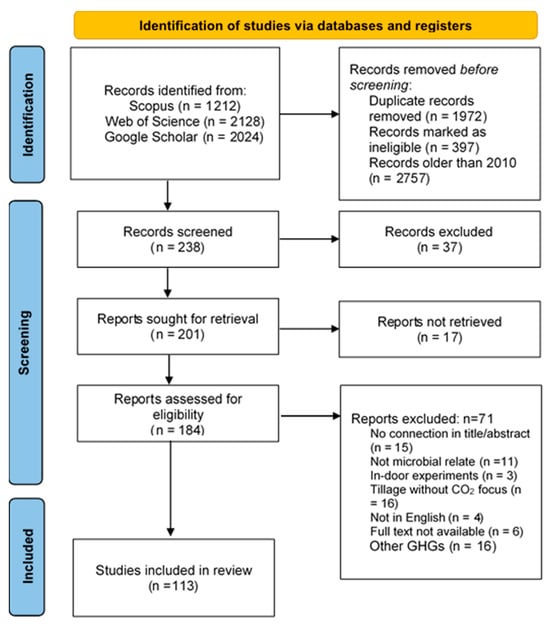
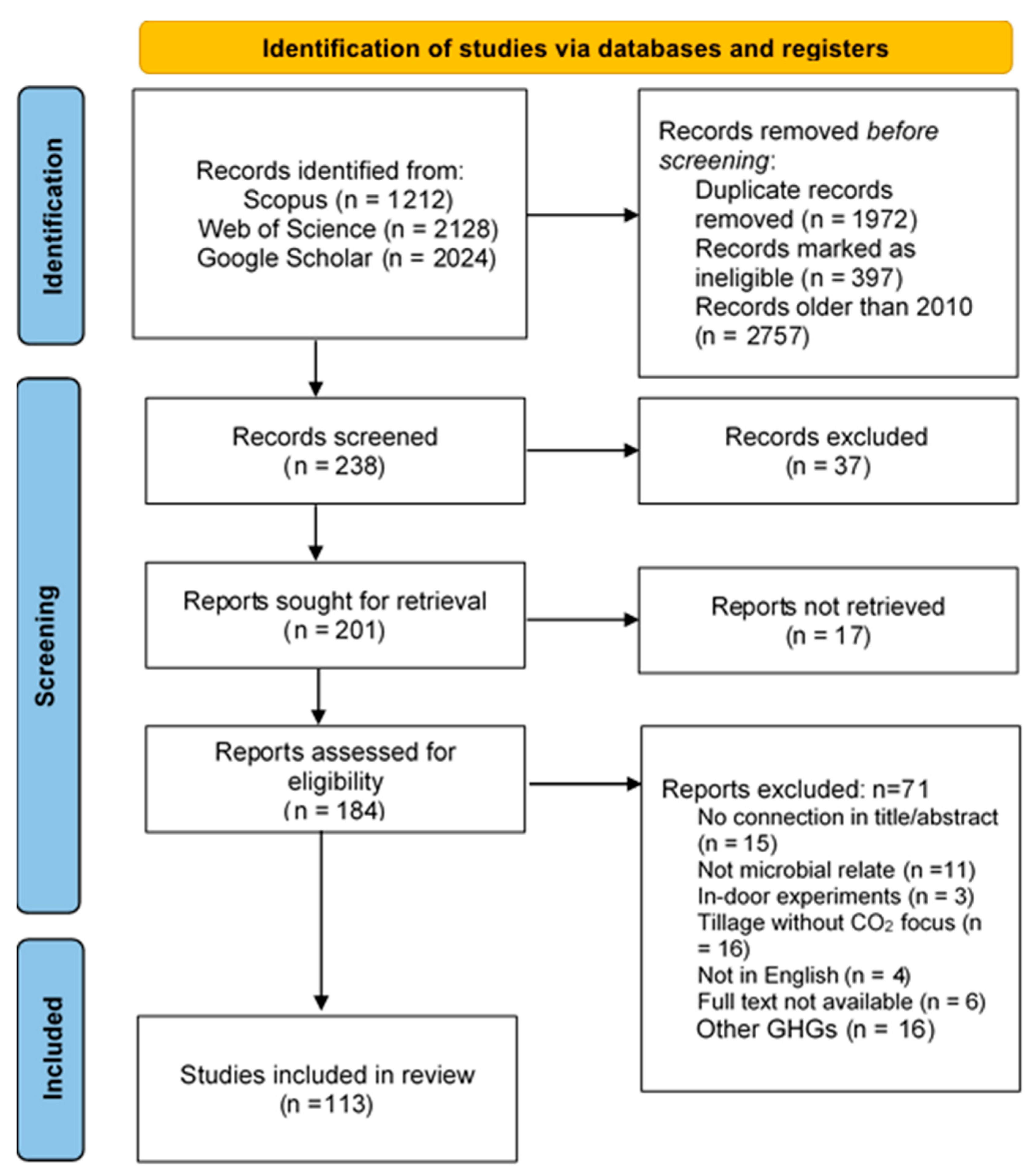
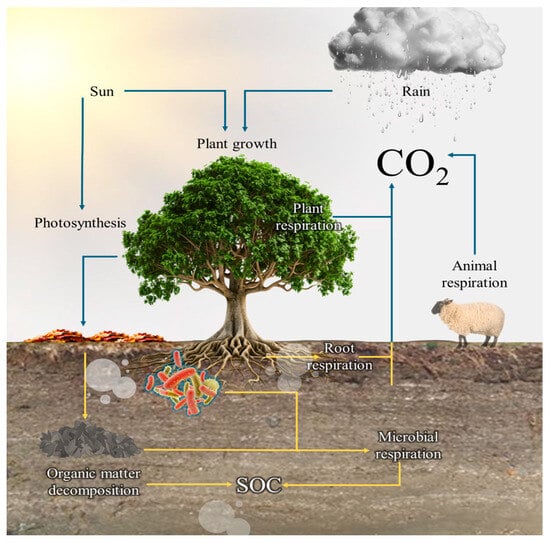
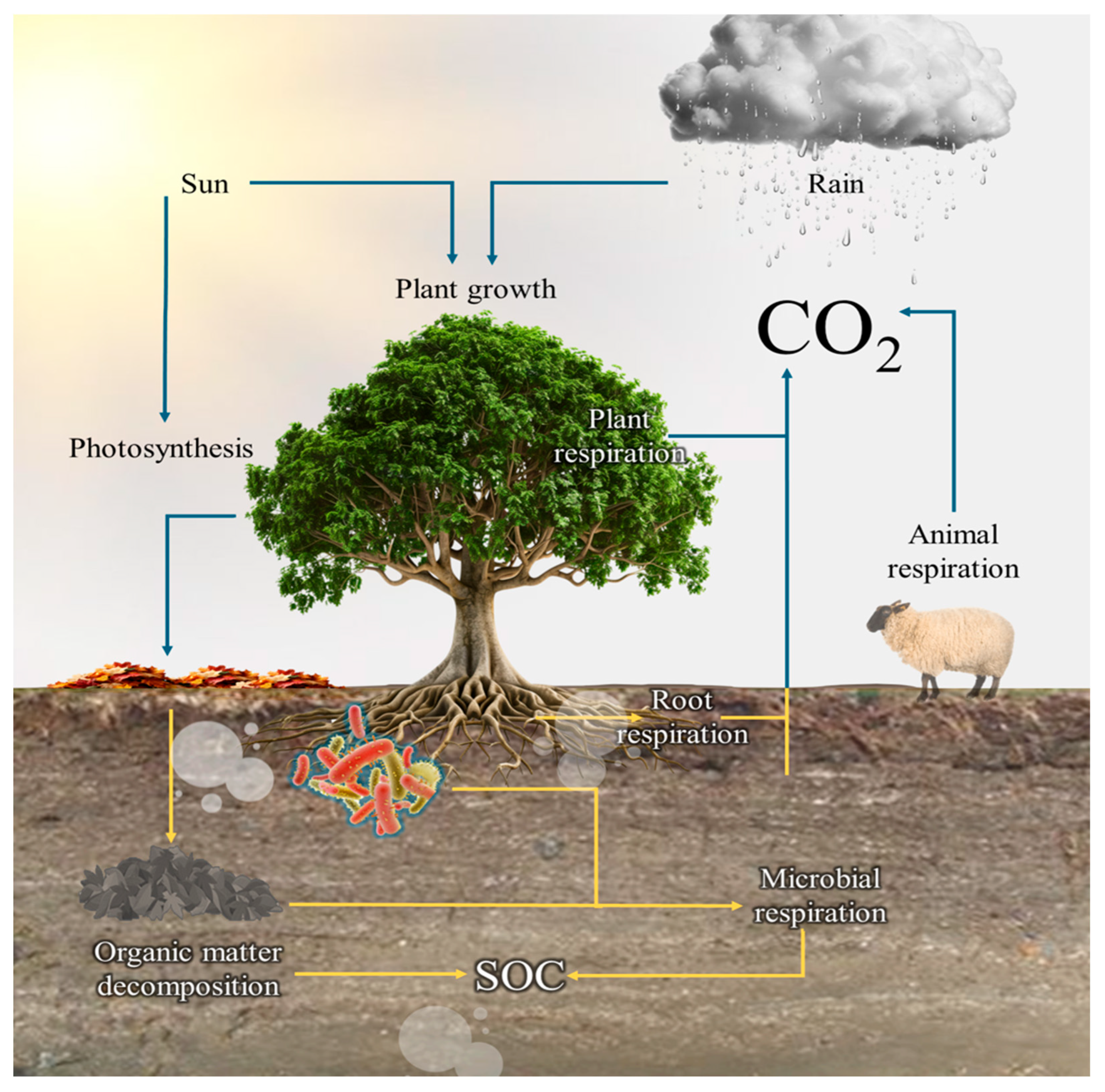
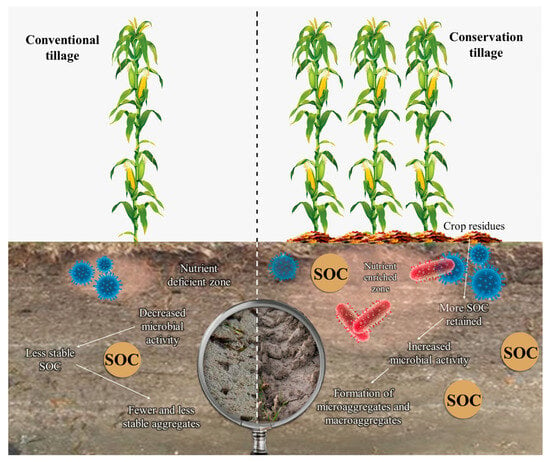
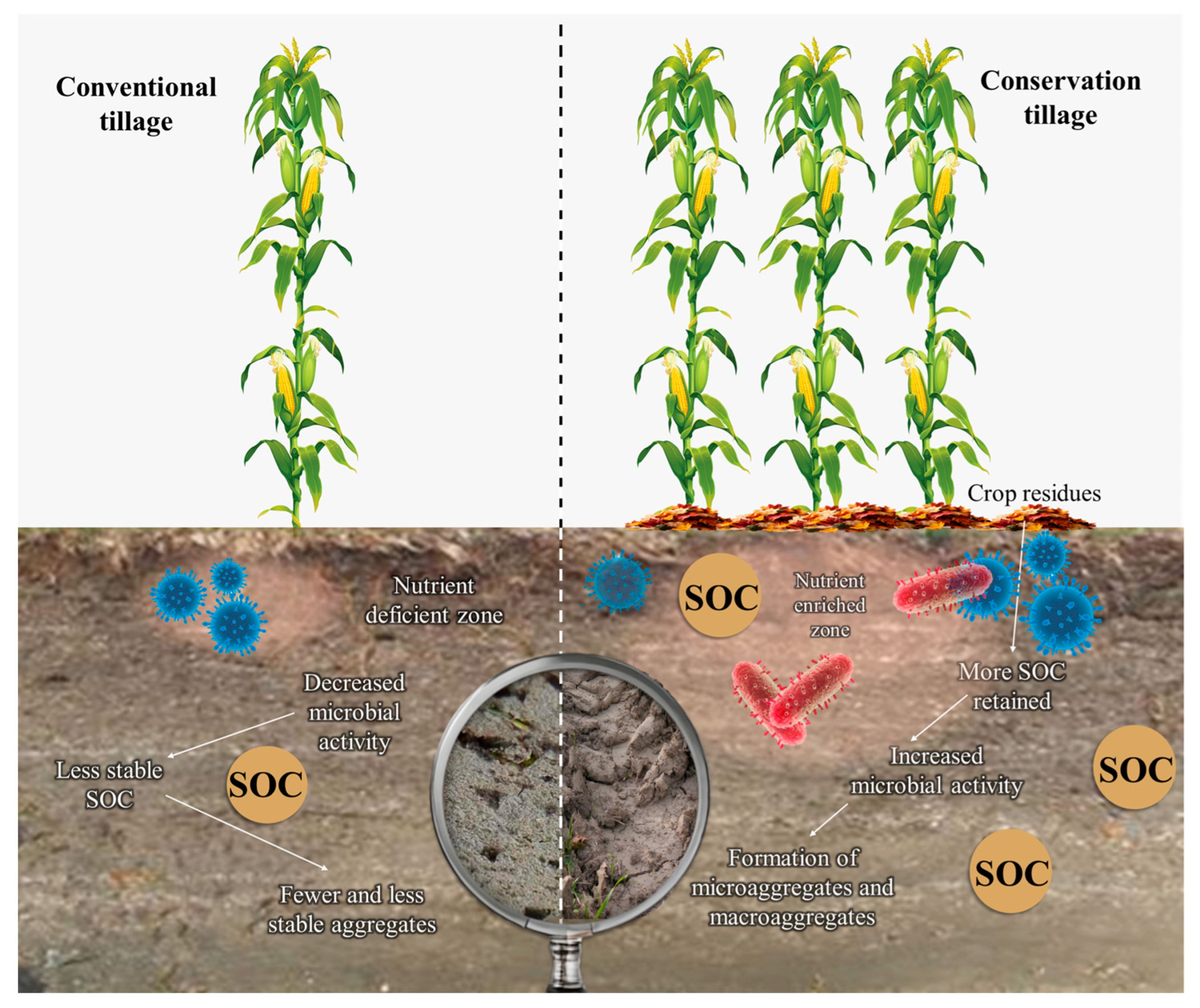

Disclaimer/Publisher’s Note: The statements, opinions and data contained in all publications are solely those of the individual author(s) and contributor(s) and not of MDPI and/or the editor(s). MDPI and/or the editor(s) disclaim responsibility for any injury to people or property resulting from any ideas, methods, instructions or products referred to in the content. |
© 2026 by the authors. Licensee MDPI, Basel, Switzerland. This article is an open access article distributed under the terms and conditions of the Creative Commons Attribution (CC BY) license.