


Abstract
Yak colostrum is crucial for the adaptation of newborn calves to the harsh environment of the Qinghai–Tibet Plateau. However, the modulation of its bioactive components along altitudinal gradients and the molecular basis remains incompletely understood. This study evaluated the bioactive components including immune factors, immunoglobulins, growth factors, and antioxidant enzyme activities of yak colostrum collected at low (LAT), medium (MAT), and high altitudes (HAT). Furthermore, quantitative proteomic analysis was used to identify differentially expressed proteins and candidate pathways associated with altitude-related variation. The results showed that along the altitudinal gradient, the levels of total solids, fat, antioxidant enzymes (SOD, GSH-Px, and CAT), β-Lg, IL-2, and IL-6 increased significantly (p < 0.05). Conversely, the concentrations of IL-4, immunoglobulins (IgG, IgA, and IgM), and growth factors (IGF-1, and TGF-β) exhibited a significant decline (p < 0.05). Across the three pairwise comparisons, 489, 625, and 246 DEPs were identified, respectively (fold change > 2, FDR < 0.05), corresponding to 1120 unique DEPs after merging the three lists and removing duplicated protein IDs. KEGG enrichment analysis revealed that DEPs between the LAT and MAT groups were predominantly enriched in the complement and coagulation cascades (FDR ≤ 0.05), whereas those between the LAT and HAT groups were significantly enriched in the NF-κB and AMPK signaling pathways (FDR ≤ 0.05). Integrated WGCNA and STEM analyses further identified MAPK signaling and complement and coagulation cascades as candidate pathways associated with the observed phenotypic variation. Collectively, these findings are consistent with a potential energy-allocation trade-off under high-altitude-associated environmental stress, characterized by coordinated changes in energy-rich nutrients, antioxidant capacity, and immune-related components. From a dairy-resource perspective, these findings may support the characterization and differentiated utilization of yak colostrum with distinct bioactive profiles, providing a basis for the high-value utilization of bioactive components and the development of value-added functional dairy products.
1. Introduction
The yak (Bos grunniens) is an essential livestock species that is uniquely adapted to the harsh, high-altitude, and hypoxic environments of the Qinghai–Tibetan Plateau [1]. Often referred to as the “boat of the plateau,” yaks provide indispensable resources, including meat, milk, and wool, serving as the economic backbone for local herders. Through prolonged natural and artificial selection, various yak breeds have emerged with distinct morphological and physiological traits that maximize their survival in extreme habitats [2]. Recent studies indicate that yaks possess specialized physiological and molecular adaptations that enable them to cope with the environmental challenges of high-altitude habitats [3].
Changes in altitude are accompanied by environmental conditions that may influence animal physiology and adaptation, particularly reduced oxygen availability and lower ambient temperature. These environmental pressures can affect energy metabolism, oxidative balance, endocrine function, and mammary gland physiology. Previous studies have reported differences in milk composition across altitudinal environments. Milk from higher-altitude dairy farms has been associated with higher concentrations of fat and protein [4], while changes in the proportions of several unsaturated fatty acids have also been reported with increasing altitude [5]. In yaks, higher-altitude environments have been associated with differences in total antioxidant capacity and in the concentrations of fat, fatty acids, vitamins, and minerals in mature milk [6]. In addition, hypoxic stress can affect milk protein synthesis and secretion through changes in pathways related to translational regulation and amino acid transport [7]. Collectively, these findings suggest that environmental conditions associated with different altitudes may contribute to variation in yak milk composition, including its protein and bioactive components.
Colostrum, the initial mammary secretion after parturition, is essential for neonatal survival, growth, gastrointestinal maturation, and the establishment of passive immunity. In ruminants, the synepitheliochorial placenta largely prevents the prenatal transfer of maternal immunoglobulins; therefore, newborn calves depend on colostrum as the primary source of maternally derived immune protection [8,9]. In addition to immunoglobulins (IgG, IgA, and IgM), colostrum contains other immune-related proteins, such as lactoferrin, as well as growth factors including epidermal growth factor (EGF), insulin-like growth factor-1 (IGF-1), and transforming growth factor-β (TGF-β). These bioactive components contribute to antimicrobial defense, intestinal barrier development, epithelial growth and repair, and maturation of the neonatal immune system [10,11]. During parturition, the abrupt transition from a hypoxic intrauterine environment to an oxygen-rich extrauterine environment frequently induces oxidative stress in neonates [12]; in this context, the abundant antioxidant enzymes in colostrum are vital for scavenging excess reactive oxygen species (ROS). Given that mammary protein synthesis and secretion are sensitive to environmental and metabolic conditions, altitude-associated hypoxia and cold stress may also be associated with variations in colostral immune-related proteins and growth factors. However, such altitude-associated variation in yak colostrum remains poorly characterized.
To date, studies of yak colostrum have mainly focused on breed differences, changes across lactation stages, and comparisons with mature milk, whereas altitude-associated variation in its immune-related and growth-promoting components remains poorly understood. Therefore, the present study compared yak colostrum collected from three geographically distinct sites representing low, medium, and high altitudes. Major nutritional and bioactive components, including functional proteins, immunoglobulins, growth factors, immune factors, and antioxidant enzyme activities, were quantified, and quantitative proteomics was further used to characterize altitude-associated protein expression patterns and candidate pathways. This study aimed to identify compositional and proteomic patterns associated with the altitudinal gradient and to provide a basis for understanding variation in the bioactive characteristics of yak colostrum across different highland environments.
2. Materials and Methods
2.1. Experimental Design and Sample Collection
A total of 30 late-pregnancy plateau-type yaks (parity 2–3) were selected across three altitudinal gradients: 2500 m (Huangzhong, Xining; low altitude, LAT, n = 10), 3200 m (Gangcha, Haibei; medium altitude, MAT, n = 10), and 4000 m (Muli, Haixi; high altitude, HAT, n = 10). Throughout the experimental period, all animals were maintained on natural pastures without any supplementary feeding. This study was conducted as an observational field comparison, with each altitude category represented by a distinct geographic sampling site. Therefore, altitude was inherently linked to sampling location, rather than being independently manipulated or randomized. Colostrum samples were collected within 2 h postpartum. Prior to sampling, the udders were disinfected with an iodophor solution. The collected colostrum was filtered through sterile gauze to remove hair and macroscopic impurities, immediately snap-frozen in liquid nitrogen, and stored at −80 °C until further analysis. All animal experiments were approved by the Animal Ethics Committee of Qinghai University (permit No. QUA-2023-0914; approval date: 14 September 2023).
2.2. Analysis of Basic Nutritional Composition of Colostrum
The collected colostrum was thawed at 4 °C and gently mixed. A MilkoScan™ FT120 (FOSS Analytical A/S, Hillerød, Denmark) was used to determine the contents of conventional nutritional components in the yak colostrum, including fat, lactose, protein, and total solids. The contents of these components were expressed as percentage by weight (% w/w).
2.3. Determination of Functional Proteins in Colostrum
The concentrations of α-lactalbumin (α-LA), β-lactoglobulin (β-Lg), lactoferrin (LTF), and immunoglobulins (IgG, IgA, and IgM) were quantified using specific bovine ELISA kits and the MILLIPLEX MAP Bovine Ig Panel (Jiangsu Yutong Biotechnology Co., Ltd., Jiangsu, Yancheng China). The concentrations were expressed as μg/L for α-LA and β-Lg and as μg/mL for LTF, IgG, IgA, and IgM. All assays were conducted strictly in accordance with the manufacturer’s protocols.
2.4. Determination of Growth Factors and Immune Factors in Colostrum
The concentrations of epidermal growth factor (EGF), insulin-like growth factor-1 (IGF-1), transforming growth factor-β1 (TGF-β), and immune factors (IL-2, IL-4, IL-6, and IL-10) in the colostrum were quantified using specific bovine ELISA kits (Jiangsu Yutong Biotechnology Co., Ltd., Jiangsu, Yancheng China). EGF and TGF-β1 concentrations were expressed as pg/mL, IGF-1 as μg/L, and IL-2, IL-4, IL-6, and IL-10 as ng/L. All samples were analyzed in triplicate, and the assays were performed strictly in accordance with the manufacturer’s protocols.
2.5. Detection of Antioxidant Enzyme Activities in Colostrum
The activities of antioxidant enzymes in the colostrum, including glutathione peroxidase (GSH-Px), superoxide dismutase (SOD), and catalase (CAT), were quantified using bovine-specific ELISA kits (Jiangsu Aidisheng Biological Technology Co., Ltd., Jiangsu, Yancheng China). All assays were conducted strictly in accordance with the manufacturer’s protocols.
2.6. Proteomic Analysis of Colostrum
Protein extraction and enzymatic digestion: An appropriate amount of protein was mixed with lysis buffer and heated at 95 °C for 10 min. After cooling, trypsin digestion buffer was added, and the mixture was incubated with shaking at 37 °C for 2 h, followed by the addition of a stop solution. The iST 96x kit (PreOmics, Martinsried, Germany) was used to desalt and elute the peptides. The eluted peptides were vacuum-dried and stored at −80 °C. High-pH reversed-phase separation: The peptide mixture was subjected to high-pH gradient separation using a C18 column. Six fractions were collected via an automated fraction collection system and vacuum-dried. DDA data acquisition: The desalted and lyophilized peptides were reconstituted in 0.1% formic acid aqueous solution and analyzed in DDA PASEF mode using a tandem UltiMate 3000 system coupled (Thermo Fisher Scientific, Waltham, MA, USA) with a timsTOF Pro2 mass spectrometer (Bruker Daltonics, Bremen, Germany) [13]. Database search: Raw data were searched using Spectronaut software (version 18), with the false discovery rate (FDR) at both the precursor and protein levels set to 1%. DIA data acquisition: After reconstitution, the peptides were loaded onto the machine. The mass spectrometer acquired data using the diaPASEF mode [14] (scan range 349–1229 m/z, isolation window width 40 Da). Database search and quantification: DIA data were analyzed using the default parameters of Spectronaut 18. The qualitative criteria for both the Precursor and Protein Threshold were set to 1.0% FDR [15]. Finally, MaxLFQ was used for the quantification of protein groups. The DIA-based quantitative proteomic analysis included 30 biological samples, with 10 samples from each altitude group (LAT, MAT, and HAT; n = 10 per group). Each biological sample represented colostrum collected from an individual yak. Principal component analysis (PCA) was performed in R (http://www.r-project.org/), based on the quantitative protein abundance data to evaluate the overall relationships among samples. PCA reduced the high-dimensional proteomic data into principal components that captured the major sources of variation, allowing visualization of sample clustering and separation. To further explore the impact of altitude changes on protein expression in yak colostrum, this study conducted an expression trend analysis on the differentially expressed proteins screened from the three different altitudes. The STEM (Short Time-series Expression Miner) software (version 1.3.13) was used to cluster the protein expression patterns. Combining the three different altitudes set in this experiment and a maximum of eight trend model profiles, all possible sequential expression change patterns were systematically defined to construct a trend model library. The expression trend of each protein was matched with the predefined models using the Pearson correlation coefficient, assigning each protein to the best-matched model. KEGG pathway enrichment analysis was subsequently performed using the bioinformatics analysis pipeline provided by Guangzhou Gene Denovo Biotechnology Co., Ltd. (Guangzhou, China), with all background proteins possessing KEGG pathway annotations used as the reference background.
2.7. Weighted Protein Co-Expression Network Analysis
To construct the WGCNA input dataset in R (http://www.r-project.org/), the DEP lists from the three pairwise comparisons (LAT vs. MAT, LAT vs. HAT, and MAT vs. HAT) were merged and duplicated protein IDs were removed, yielding 1120 unique DEPs. Following WGCNA preprocessing and data filtering, 391 proteins were retained for network construction. The co-expression network was constructed jointly using all 30 biological samples (n = 10 per altitude group), exceeding the recommended sample size of at least 20 samples for WGCNA [16]. A soft-thresholding power of 6 was selected, and proteins with similar expression patterns were hierarchically clustered. Initial modules were identified using the Dynamic Tree Cut algorithm with a minimum module size of 50 proteins. Module eigengenes, defined as the first principal component of the protein abundance profiles within each module, were then calculated, and modules with similar expression patterns were merged using a module-eigengene similarity threshold of 0.6. Proteins that could not be assigned to a co-expression module were designated as the gray group. Pearson correlation analysis was subsequently performed between module eigengenes and the measured phenotypic traits. Significantly associated modules were then subjected to KEGG pathway enrichment analysis to identify candidate pathways and proteins that were potentially associated with the observed phenotypic differences.
2.8. Western Blot Analysis
To verify the reliability of the proteomic data, representative proteins from the pathways significantly co-enriched by both STEM and WGCNA were selected for Western blot analysis. Specifically, RAC1 (bs-4186R), HSPA1A (bs-0244R), CDC42 (bs-3555R), and HSPA8 (10654-1-AP) were chosen from the MAPK signaling pathway, while C4A (bs-10454R), C6 (bs-9356R), and PROS1 (bs-9512R) were selected from the complement and coagulation cascades. For each target protein, three independent colostrum samples were randomly selected from the 10 biological samples available in each altitude group for Western blot validation (n = 3 biological replicates per group for each protein). Each biological replicate represented colostrum collected from an individual yak. β-Lactoglobulin was utilized as the loading control to normalize the relative expression levels of the target proteins.
Briefly, samples were lysed on ice using a pre-cooled lysis buffer and centrifuged to collect the total protein supernatant. Protein concentrations were determined using the BCA method (incubated at 37 °C and measured at 562 nm). The samples were denatured at 100 °C, separated by SDS-PAGE under a constant voltage of 300 V, and transferred onto PVDF membranes at a constant current of 300 mA. Following transfer, the membranes were blocked, incubated with primary antibodies (either overnight at 4 °C or for 2 h at room temperature), washed thoroughly with TBST, and subsequently incubated with appropriate secondary antibodies [17]. Finally, protein bands were visualized using an enhanced chemiluminescence (ECL) reagent and captured with a chemiluminescence imaging system. Densitometric analysis of the bands was performed using ImageJ (version 1.53) software [18]. To further explore the associations between the seven validated candidate proteins and the bioactive characteristics of colostrum, Pearson correlation analysis was performed between their Western blot-derived relative expression levels and the measured phenotypic variables, including functional proteins, growth factors, immune factors, and antioxidant enzyme activities.
2.9. Statistical Analysis
Data on conventional nutritional components, functional proteins, growth factors, immune factors, antioxidant enzyme activities, and Western blot densitometric measurements were statistically analyzed using SPSS 27.0. Differences among the three altitude groups were evaluated by one-way analysis of variance (ANOVA), followed by Tukey’s multiple-comparison test, with p < 0.05 considered statistically significant. Using a fold change > 2 and FDR < 0.05 for screening differentially expressed proteins, KEGG pathway enrichment significance was assessed using a hypergeometric test, with all background proteins possessing KEGG pathway annotations used as the reference background. The resulting p-values were corrected for multiple testing using the false discovery rate (FDR), and pathways with FDR ≤ 0.05 were considered significantly enriched. For STEM analysis, the statistical significance of protein enrichment within each expression profile was evaluated using a permutation test, with p < 0.05 considered significant. Module–trait associations in WGCNA were assessed using Pearson correlation analysis, and modules with |r| > 0.6 and p < 0.05 were considered to be significantly associated with the corresponding phenotypic traits. Associations between the relative expression levels of the seven candidate proteins and the measured phenotypic variables were also evaluated using Pearson correlation analysis, for the candidate protein–phenotype correlation analysis, correlations with |r| > 0.6 and p < 0.001 were considered significant.
3. Results
3.1. Effect of Altitude on Conventional Nutritional Components of Yak Colostrum
As shown in Table 1, the contents of total solids, protein, and fat in yak colostrum increased significantly with increasing altitude (p < 0.05). Specifically, total solid contents were significantly higher in the MAT and HAT groups than in the LAT group (p < 0.05). Protein content was significantly higher in the MAT group than in the LAT group (p < 0.05), while fat content was significantly higher in the HAT group than in both the LAT and MAT groups (p < 0.05). In contrast, lactose content showed no significant difference with increasing altitude (p > 0.05).
Table 1.
Effects of altitude on the conventional nutritional composition of yak colostrum.
3.2. Effect of Altitude on Functional Proteins in Yak Colostrum
As shown in Table 2, the contents of α-LA, β-Lg, and LTF in yak colostrum varied significantly with altitude (p < 0.05). Specifically, α-LA content was significantly higher in the LAT group than in the MAT and HAT groups (p < 0.05), and was significantly higher in the HAT group than in the MAT group (p < 0.05). β-Lg content was significantly higher in the HAT group than in the LAT and MAT groups (p < 0.05), whereas LTF content was significantly higher in the MAT group than in the LAT and HAT groups (p < 0.05). In addition, the immunoglobulin content in yak colostrum decreased significantly with increasing altitude (p < 0.05). IgA content was significantly lower in the HAT group than in the LAT and MAT groups (p < 0.05). IgG and IgM contents were significantly higher in the LAT group than in the MAT and HAT groups (p < 0.05), while IgM content was significantly higher in the HAT group than in the MAT group (p < 0.05).
Table 2.
Effects of altitude on functional proteins in yak colostrum.
3.3. Effect of Altitude on Growth Factors in Yak Colostrum
Table 3 shows that the contents of EGF, IGF-1, and TGF-β in yak colostrum changed significantly with altitude (p < 0.05). Among them, the EGF content in the MAT group was significantly higher than that in the LAT and HAT groups (p < 0.05), and the EGF content in the LAT group was significantly higher than that in the HAT group (p < 0.05); the IGF-1 content in the LAT and MAT groups was significantly higher than that in the HAT group (p < 0.05); and the TGF-β content in the LAT and MAT groups was significantly higher than that in the HAT group (p < 0.05).
Table 3.
Effects of altitude on growth factors in yak colostrum.
3.4. Effect of Altitude on Immune Factors in Yak Colostrum
Table 4 shows that the IL-4 content in yak colostrum significantly decreased with increasing altitude (p < 0.05), whereas the IL-2 and IL-6 contents significantly increased with increasing altitude (p < 0.05). The IL-10 content was significantly higher in the MAT group than in the HAT group (p < 0.05).
Table 4.
Effect of altitude on immune factors in yak colostrum.
3.5. Effect of Altitude on Antioxidant Enzymes in Yak Colostrum
As shown in Table 5, the activities of antioxidant enzymes in yak colostrum increased significantly with increasing altitude (p < 0.05). Specifically, the HAT group exhibited significantly higher GSH-Px and CAT activities compared to both the LAT and MAT groups (p < 0.05), while its SOD activity was significantly elevated relative to the LAT group (p < 0.05).
Table 5.
Effect of altitude on antioxidant enzyme activity in yak colostrum.
3.6. Expression Characteristics and Functional Analysis of Proteins in Yak Colostrum at Different Altitudes
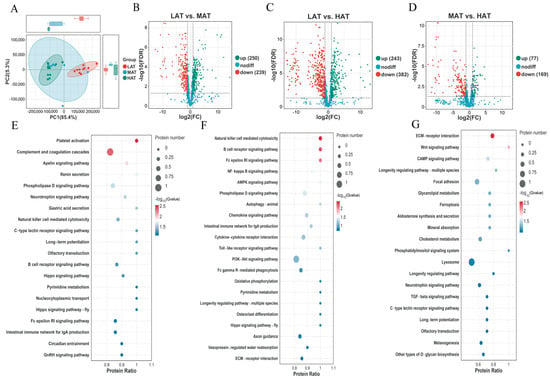
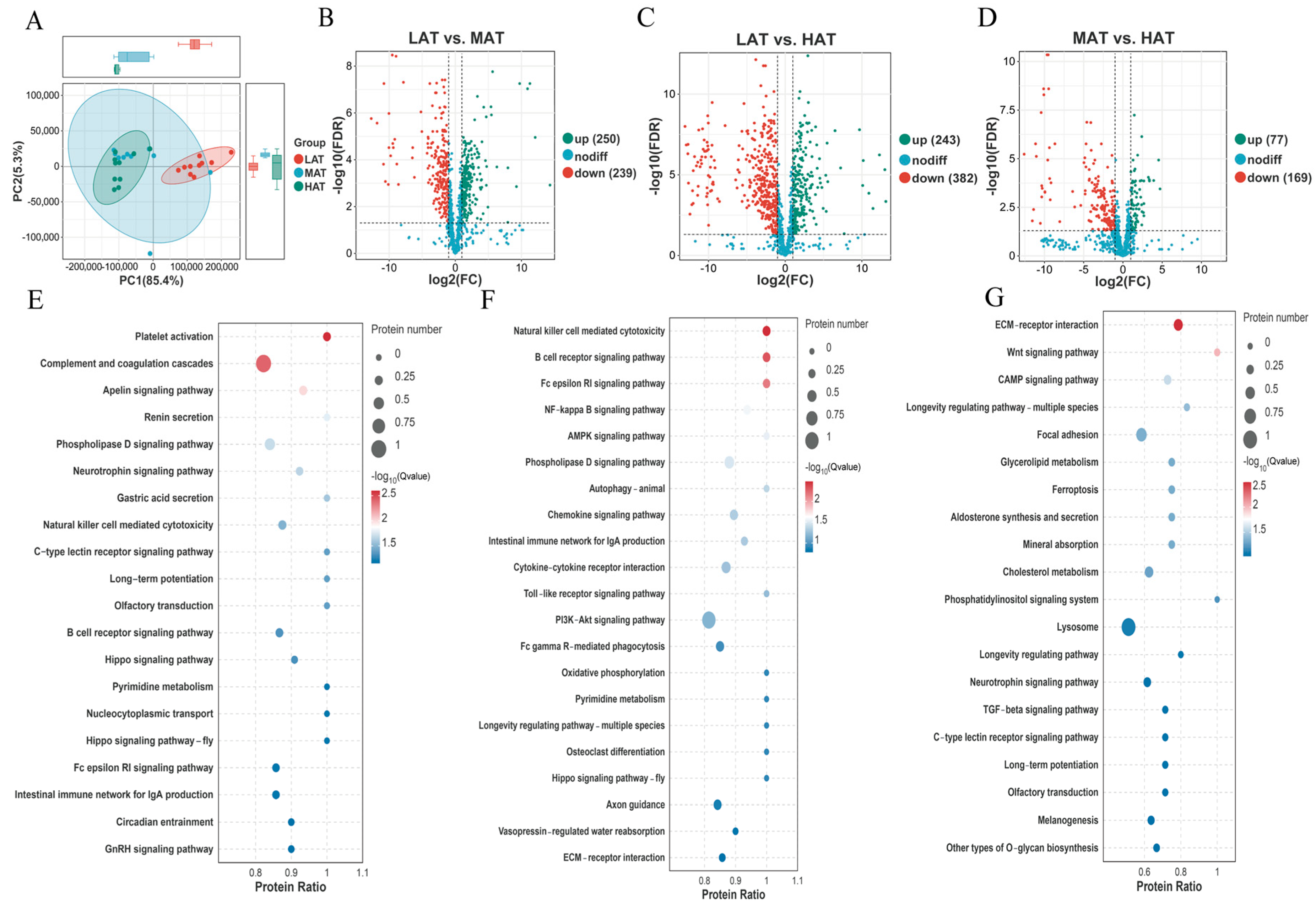
As shown in Figure 1, the protein composition of yak colostrum changed significantly with altitude, and the LAT and HAT groups were clearly separated (Figure 1A). Using a fold change > 2 and FDR < 0.05 for screening differentially expressed proteins, a total of 489 differentially expressed proteins were identified between the LAT and MAT groups, of which 250 proteins were significantly up-regulated and 239 proteins were significantly down-regulated (Figure 1B); there were 625 differentially expressed proteins between the LAT and HAT groups, with 243 proteins significantly up-regulated and 382 proteins significantly down-regulated (Figure 1C); and there were 246 differentially expressed proteins between the MAT and HAT groups, with 77 proteins significantly up-regulated and 169 proteins significantly down-regulated (Figure 1D). The three pairwise comparisons therefore yielded a cumulative total of 1360 DEP entries. Because some DEPs were shared among comparisons, merging the three DEP lists and removing duplicated protein IDs resulted in 1120 unique DEPs, which were used for subsequent WGCNA. KEGG enrichment analysis of the differentially expressed proteins revealed that the differentially expressed proteins between the LAT and MAT groups were significantly enriched in platelet activation, complement and coagulation cascades, and renin secretion (FDR ≤ 0.05, Figure 1E); the differentially expressed proteins between the LAT and HAT groups were significantly enriched in natural killer cell-mediated cytotoxicity, the B cell receptor signaling pathway, the Fc gamma R-mediated phagocytosis signaling pathway, the NF-κB signaling pathway, and the AMPK signaling pathway (FDR ≤ 0.05, Figure 1F); and the differentially expressed proteins between the MAT and HAT groups were significantly enriched in ECM–receptor interaction, the Wnt signaling pathway, and the cAMP signaling pathway (FDR ≤ 0.05, Figure 1G).
Figure 1.
Differential proteomic and KEGG functional enrichment analyses of yak colostrum at different altitudes. (A) PCA plot. (B–D) Volcano plots of LAT vs. MAT, LAT vs. HAT, and MAT vs. HAT. (E–G) KEGG pathway enrichment plots of LAT vs. MAT, LAT vs. HAT, and MAT vs. HAT. LAT, low-altitude group (2500 m); MAT, medium-altitude group (3200 m); HAT, high-altitude group (4000 m).
3.7. Short Time-Series Expression Miner Analysis of Protein Expression in Yak Colostrum
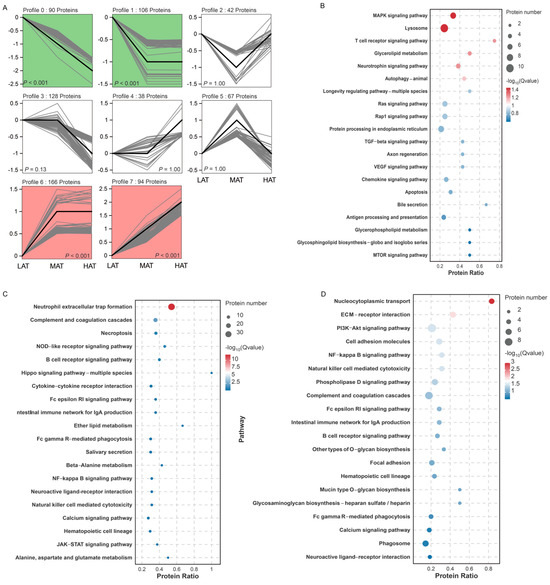
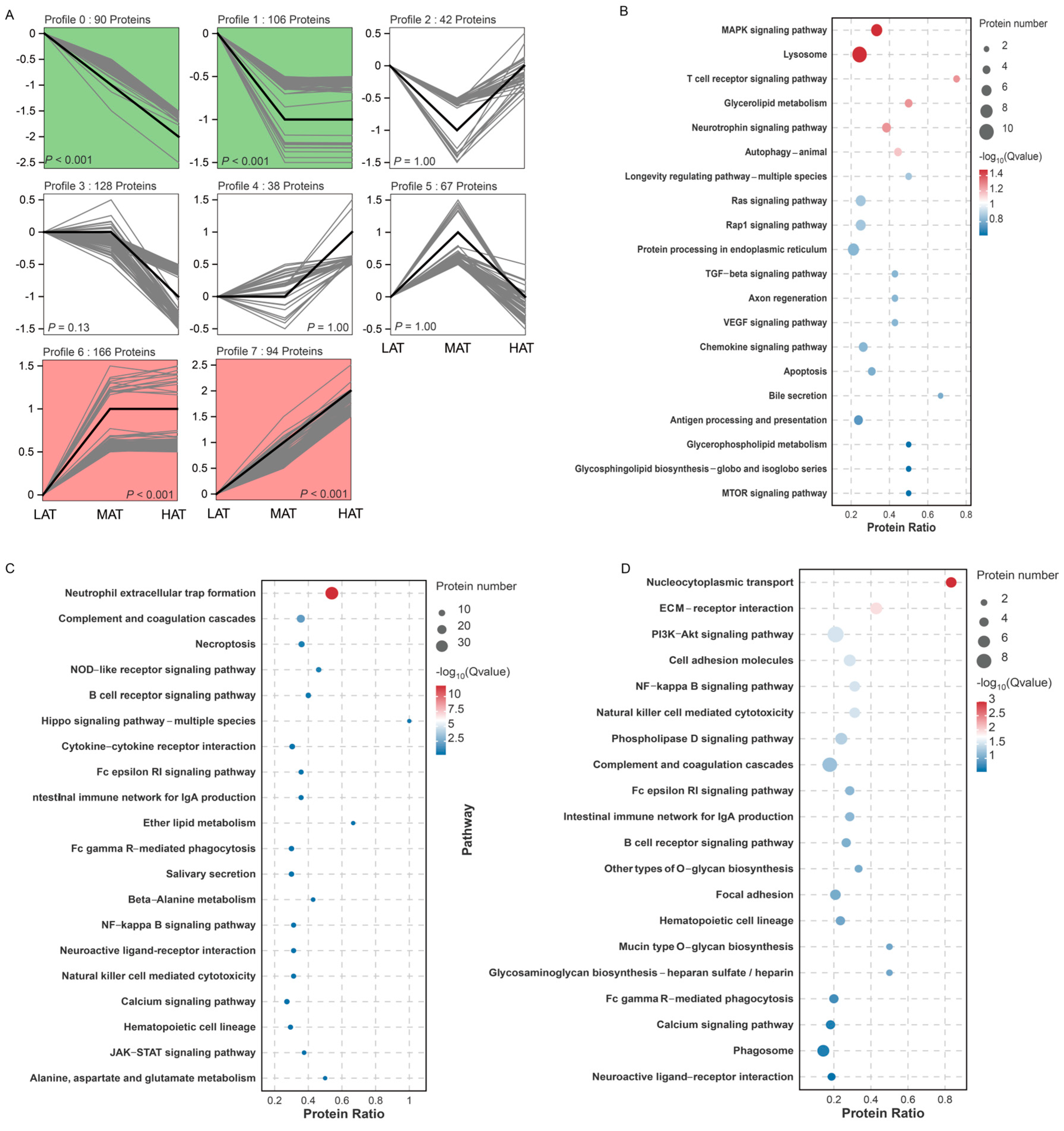
To identify key DEPs or pathways, we conducted short time-series expression miner (STEM) analysis; a total of four significantly different protein expression trends were identified, namely a linear decreasing trend of protein expression with increasing altitude (profile 0, p < 0.001), an initial decrease followed by a plateau trend (profile 1, p < 0.001), an initial increase followed by a plateau trend (profile 6, p < 0.001), and a linear increasing trend (profile 7, p < 0.001, Figure 2A). KEGG enrichment analysis of the proteins within these four trends revealed that the proteins in profile 0 were mainly enriched in the MAPK signaling pathway and lysosome (FDR ≤ 0.05, Figure 2B); the proteins in profile 6 were mainly enriched in neutrophil extracellular trap formation, and complement and coagulation cascades (FDR ≤ 0.05, Figure 2C); and the proteins in profile 7 were mainly enriched in nucleocytoplasmic transport, ECM–receptor interaction, the PI3K-Akt signaling pathway, cell adhesion molecules, the NF-κB signaling pathway, natural killer cell-mediated cytotoxicity, and the phospholipase D signaling pathway (FDR ≤ 0.05, Figure 2D). In summary, significant differences in protein expression profiles were observed across the three altitude-associated groups.
Figure 2.
Proteomic trend analysis and KEGG pathway enrichment analysis. (A) Trend analysis plots.The blue background indicates decreasing trends, and the red background indicates increasing trends. (B–D) KEGG pathway enrichment plots for Profile 0, Profile 6, and Profile 7. LAT, low-altitude group (2500 m); MAT, medium-altitude group (3200 m); HAT, high-altitude group (4000 m).
3.8. WGCNA Analysis of Yak Colostrum Proteins
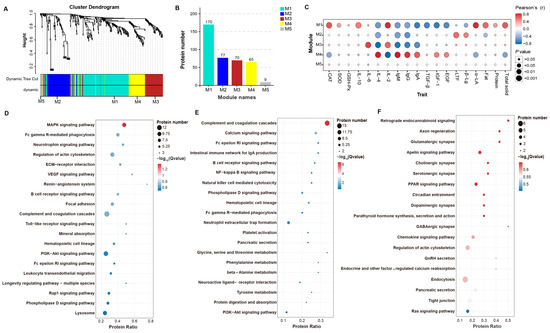
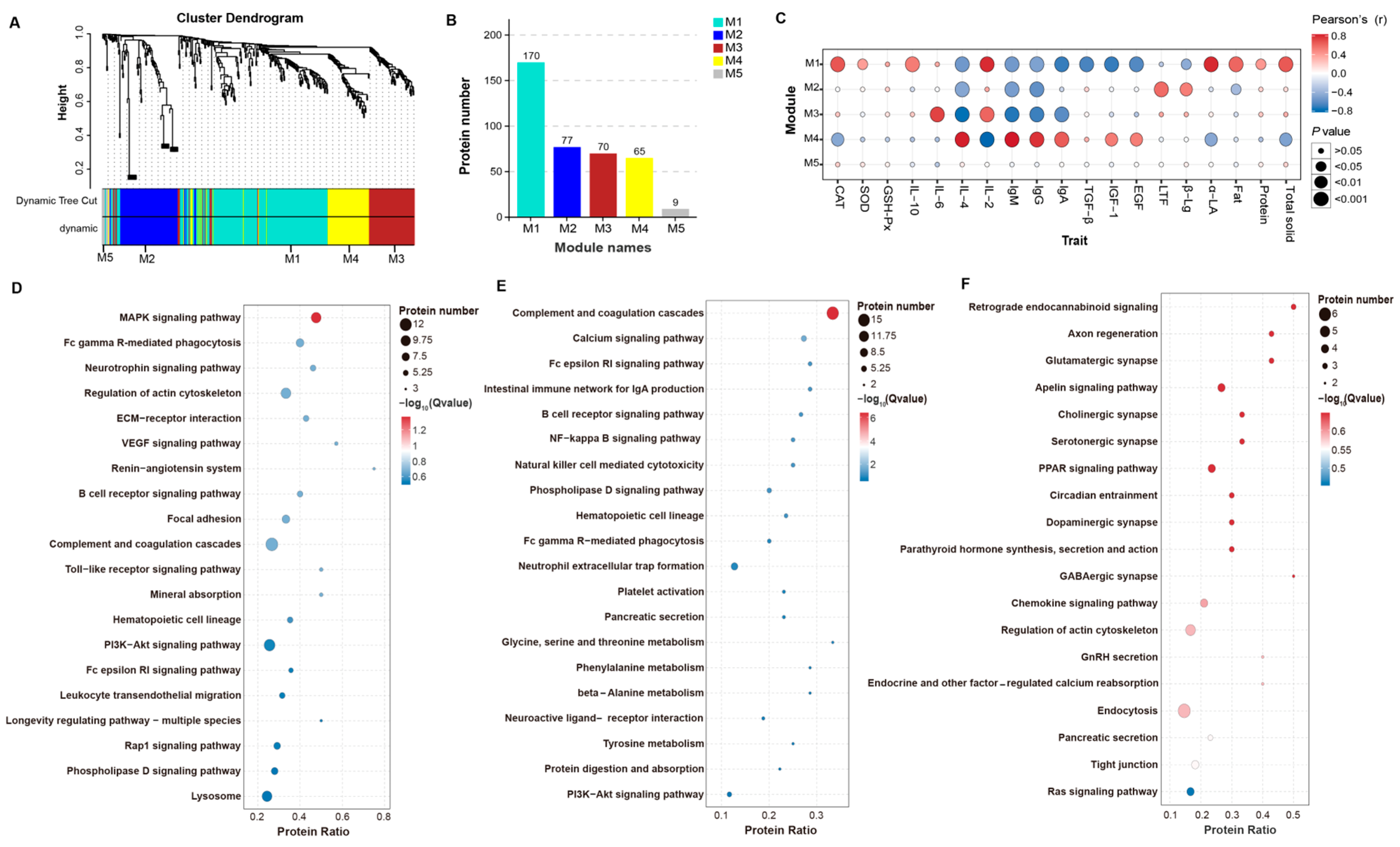
Following preprocessing and filtering, 391 proteins were retained for WGCNA. Four co-expression modules were identified, containing 170 (M1), 77 (M2), 70 (M3), and 65 (M4) proteins, respectively, while 9 proteins (M5) that could not be assigned to these modules were classified into the gray group (Figure 3A,B). Pearson correlation analysis was performed between 19 significantly different phenotypes (TS, Protein, Fat, α-LA, β-Lg, LTF, IgA, IgG, IgM, EGF, IGF-1, TGF-β, IL-2, IL-4, IL-6, IL-10, GSH-Px, SOD, CAT) and each module (Figure 3C). Using |r| > 0.6 and p < 0.05 as the screening criteria for significant correlation, it was found that module M1 was significantly positively correlated with Total solid, Fat, α-LA, β-Lg, and IL-4, and significantly negatively correlated with IGF-1, TGF-β, IgA, and IgG (p < 0.05); module M3 was significantly negatively correlated with IgG, IgM, IL-2, and IL-6, and significantly positively correlated with IL-4 and IL-10 (p < 0.05); and module M4 was significantly positively correlated with IgG, IgM, IL-2, and IL-6, and significantly negatively correlated with IL-4 (p < 0.05). KEGG enrichment analysis of the proteins in modules M1, M3, and M4 revealed that the proteins in module M1 were mainly enriched in the MAPK signaling pathway (FDR ≤ 0.05, Figure 3D), the proteins in module M3 were mainly enriched in complement and coagulation cascades and the calcium signaling pathway (FDR ≤ 0.05, Figure 3E), and the proteins in module M4 were not enriched in any pathway (Figure 3F).
Figure 3.
WGCNA and KEGG enrichment analyses. (A) Protein clustering module dendrogram. (B) Number of proteins per module. (C) Pearson correlation analysis plot. (D–F) KEGG pathway enrichment plots for M1, M3, and M4. LAT, low-altitude group (2500 m); MAT, medium-altitude group (3200 m); HAT, high-altitude group (4000 m).
3.9. Integrated Identification of Candidate Pathways and Validation of Candidate Proteins by Western Blotting
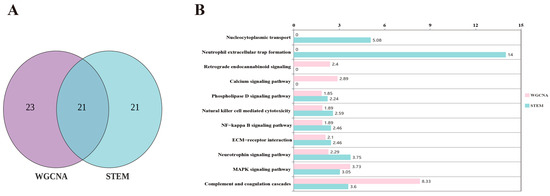
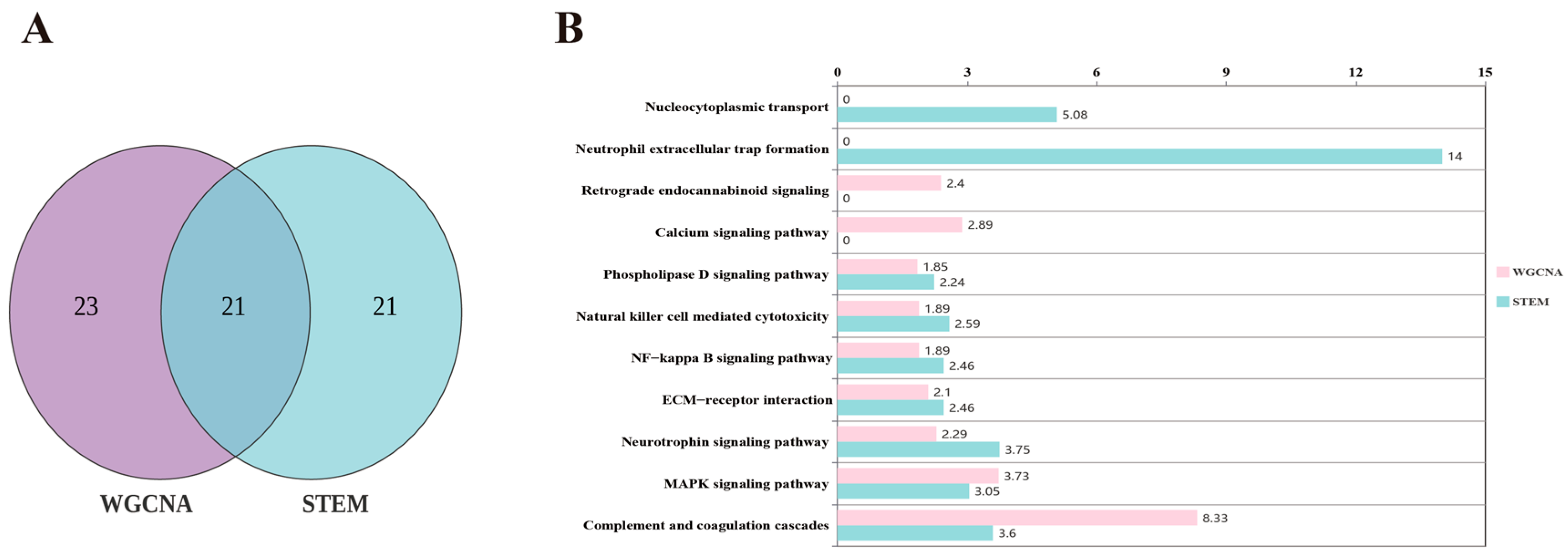
To further identify the core molecular mechanisms of yak colostrum in response to the altitude gradient, an intersection analysis was performed on the KEGG enrichment results of the significantly changed trends in the STEM analysis (e.g., Profile 0, Profile 6, and Profile 7) and the key modules screened from the WGCNA analysis (e.g., M1, M3, and M4). The results showed that the MAPK signaling pathway and the complement and coagulation cascades were significantly co-enriched in both analysis strategies (Figure 4A,B). These findings suggest that the MAPK signaling pathway and complement and coagulation cascades may be involved in the altitude-associated variation in colostral bioactive components and were therefore selected as candidate pathways for further analysis.
Figure 4.
Integrated analysis of key pathways. (A) Venn diagram of shared pathways between STEM and WGCNA. (B) Significantly enriched pathways shared by STEM and WGCNA.
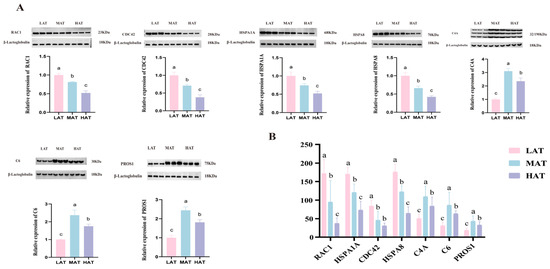
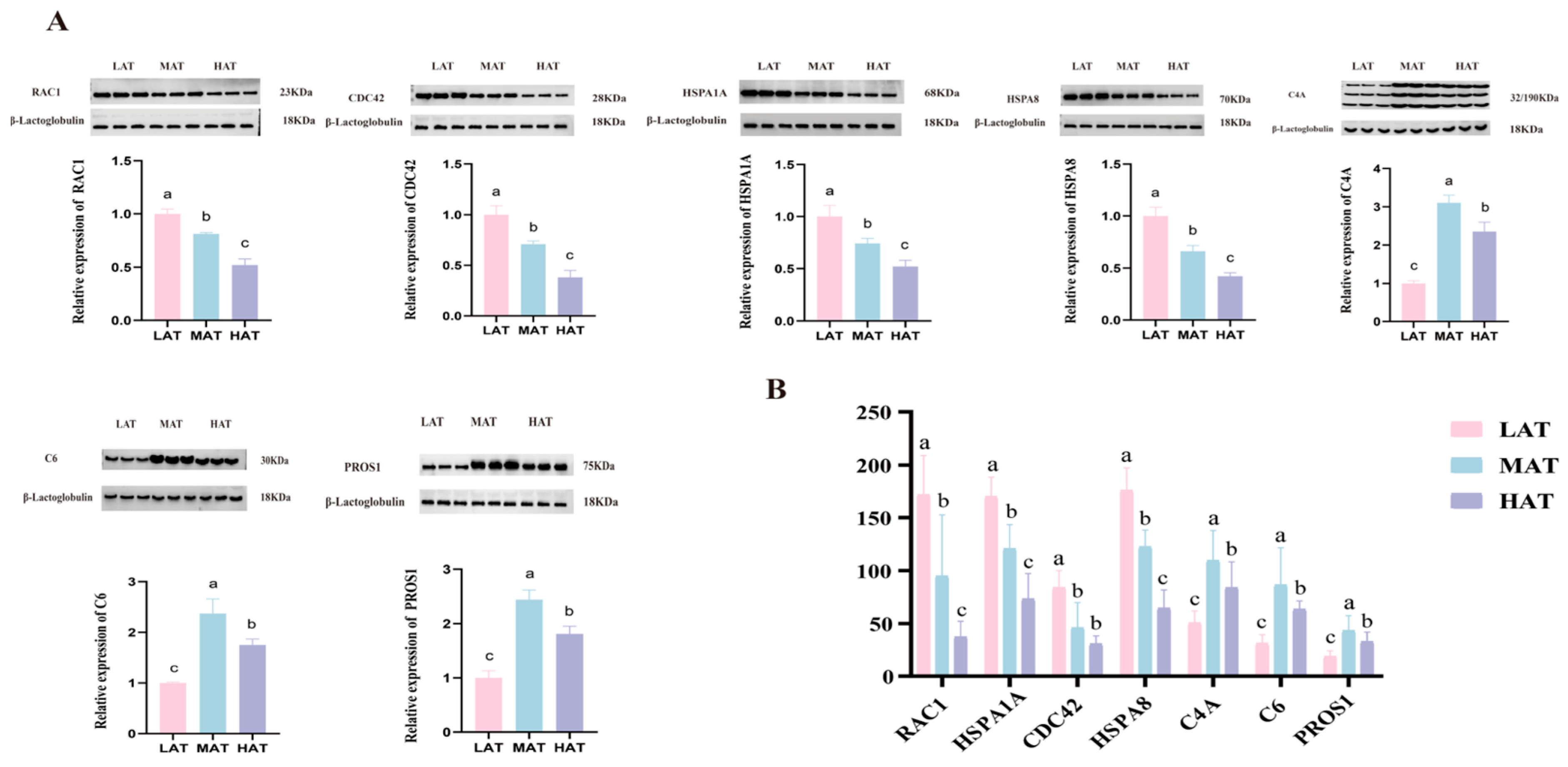
Based on the co-enriched pathways, seven differentially expressed proteins were screened: RAC1, HSPA1A, CDC42, HSPA8, C4A, C6 and PROS1. As shown in the validation results in Figure 5A, the protein expression levels of RAC1, HSPA1A, CDC42, and HSPA8 in the LAT group were significantly higher than those in the MAT and HAT groups. However, the protein expression levels of C4A, C6, and PROS1 in the MAT group were significantly higher than those in the LAT and HAT groups. Overall, the variation trends in the relative WB expression levels of these seven candidate proteins across different altitude gradients were highly consistent with the quantitative proteomics sequencing data in this study (Figure 5B).
Figure 5.
Validation of candidate protein expression. (A) Western blot analysis and relative expression levels of seven candidate proteins (RAC1, HSPA1A, CDC42, HSPA8, C4A, C6, and PROS1). For each target protein, three independent biological samples were randomly selected from each altitude group (n = 3 per group). (B) Relative abundances of the seven candidate proteins determined by quantitative proteomic profiling (n = 10 per group). a,b,c means within a row with different superscripts differ significantly (p < 0.05). LAT, low-altitude group (2500 m); MAT, medium-altitude group (3200 m); HAT, high-altitude group (4000 m).
3.10. Correlation Analysis Between Key Differential Proteins and Phenotypic Characteristics of Colostrum
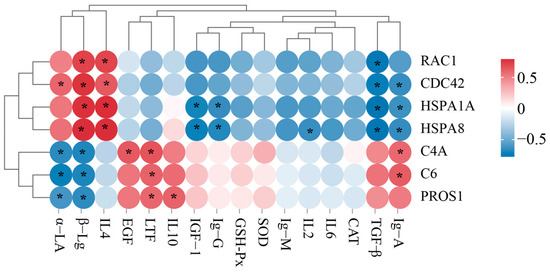
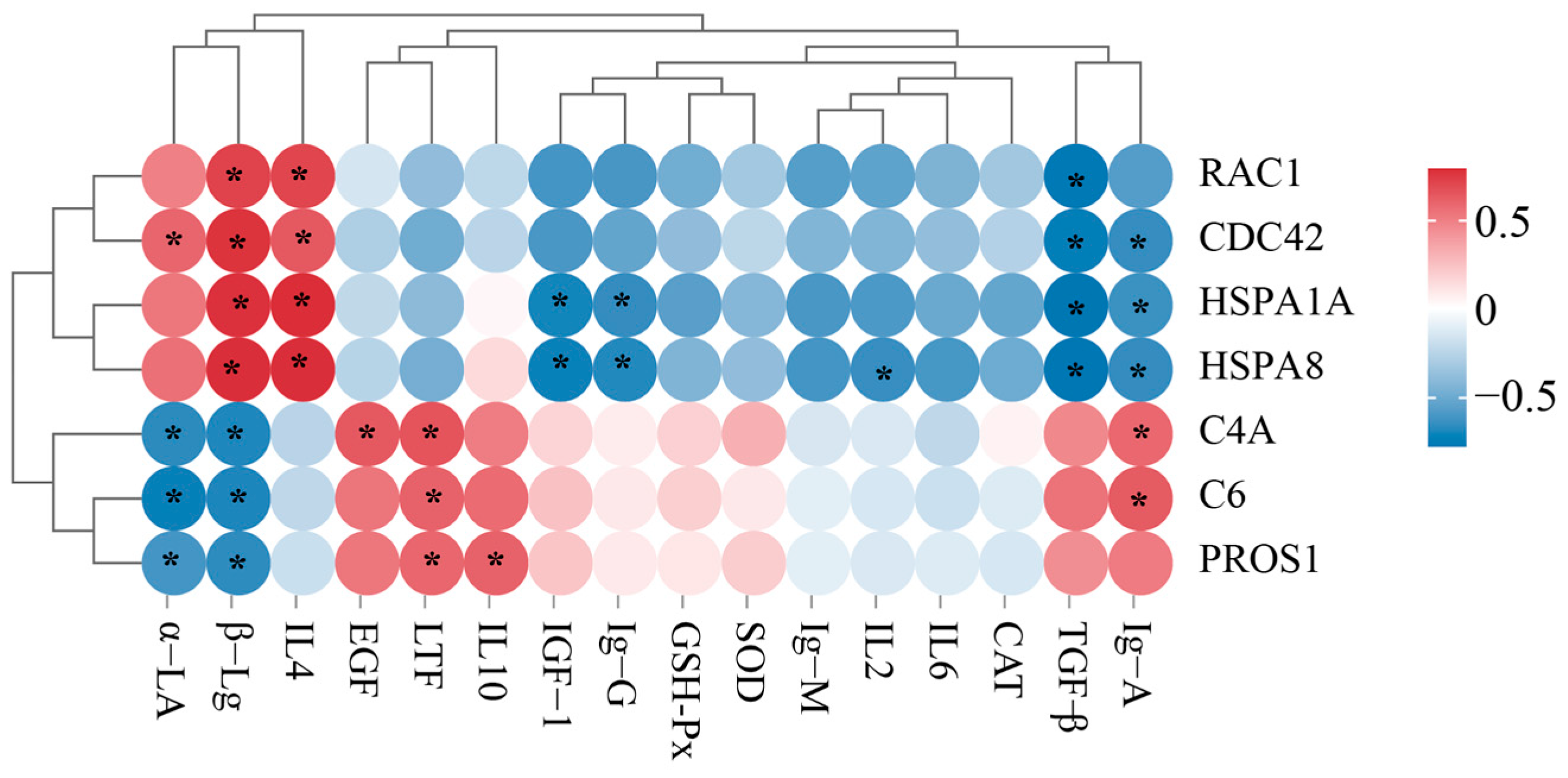
To further explore the associations between the seven candidate differentially expressed proteins and the bioactive characteristics of colostrum, Pearson correlation analysis was performed between their relative expression levels and the measured phenotypic indicators (including functional proteins, growth factors, immunoglobulins, and antioxidant enzyme activities) (Figure 6). The screening criteria were |r| > 0.6 and p < 0.001. The results showed that four proteins, namely RAC1, CDC42, HSPA1A and HSPA8, were positively correlated with β-Lg and IL-4, while significantly negatively correlated with IgG, TGF-β, and IgA (p < 0.001). The other three proteins, C4A, C6 and PROS1, were significantly positively correlated with LTF, IL-10, and IgA, and significantly negatively correlated with α-LA and β-Lg (p < 0.001).
Figure 6.
Correlation analysis of key differentially expressed proteins and bioactive compounds. * Indicates significant correlation (|r| > 0.6, p < 0.001).
4. Discussion
Colostrum contains a diverse range of nutrients and bioactive compounds that support neonatal nutrition and immune protection, functions that are particularly important for yak calves during the early stage of life in high-altitude environments [19]. In addition to these bioactive components, colostrum provides essential macronutrients and micronutrients that supply energy and the metabolic substrates required during the early stage of life [9]. Major nutritional components, including protein, fat, and lactose, are therefore important for meeting the nutritional demands of newborn calves and supporting early postnatal development [20]. The results of this study indicated that altitude significantly affects the accumulation of nutritional components in yak colostrum. With the increase in altitude, the contents of total solids, protein, and fat increased significantly, while the lactose content showed no significant change. These results are consistent with the findings of Alrhmoun et al. [4] regarding the conventional nutritional components of bovine milk at different altitudes. The higher fat content observed at the HAT site may contribute to a greater energy density of colostrum, which could be particularly relevant under the increased energetic demands associated with cold high-altitude environments [21,22,23,24]. In contrast, the relative stability of lactose, an important osmotic component of milk secretion [25], suggests that the observed compositional variation was mainly associated with other nutritional components. These compositional differences provide a nutritional context for the subsequent variation in bioactive components and proteomic profiles.
Whey proteins and other bioactive components showed more complex patterns across the three sites. α-LA, β-Lg, and LTF are major components of bovine colostrum and are involved in lactose synthesis, nutrient transport, antimicrobial defense, and other biological functions [26,27,28,29,30,31]. α-LA and LTF showed non-linear changes among the altitude groups, whereas the higher β-Lg concentration observed at the HAT site occurred together with the higher fat content of this group. In addition to altitude-associated environmental conditions, differences in feed resources among the three sampling sites should also be considered. All animals were maintained on natural pasture without supplementary feeding; however, the forage availability, botanical composition, and nutrient composition of the pastures were not characterized and may have differed among sites. Such differences could contribute to variation in milk composition, as previous work has reported associations among altitude, pasture-grass composition, and the fatty acid profile of yak milk [5]. Therefore, the observed differences in β-Lg, fat, and other bioactive components may partly reflect site-specific forage conditions rather than altitude-associated hypoxia or cold stress alone. In contrast, the concentrations of IgG, IgA, and IgM were generally lower at the higher-altitude site. This contrasting pattern is consistent with a potential energy-allocation trade-off. Under this working framework, environmental stress may be accompanied by a relative shift toward energy-rich and stress-related components, while some energetically costly bioactive macromolecules are reduced [32]. A similar pattern was observed for the growth factors. IGF-1 and TGF-β were lower at the HAT site, whereas EGF showed a non-linear pattern and reached its highest concentration at the MAT site. These growth factors are involved in intestinal epithelial growth, tissue repair, mucosal maturation, and immune regulation during early life [33,34,35]. Taken together, the immunoglobulin and growth-factor results indicate that the composition of colostral components related to passive immune protection and intestinal development differs among the investigated environments. The intermediate-altitude peaks observed for LTF and EGF may likewise reflect the combined influence of local environmental and nutritional conditions rather than a simple linear response to elevation.
The immune-factor and antioxidant results provide further evidence that the bioactive characteristics of yak colostrum differ among the three altitude-associated environments. IL-2 and IL-6 increased across the altitude groups, whereas IL-4 decreased, and IL-10 showed a non-linear pattern. Hypoxia is known to influence inflammatory signaling [36], while IL-4 and IL-10 participate in B-cell responses and immune regulation [37,38]. The parallel reduction in IL-4 and immunoglobulins at the HAT site is therefore biologically consistent with variation in humoral immune-related processes. At the same time, the activities of SOD, GSH-Px, and CAT were higher at the HAT site. With increasing elevation, reduced barometric pressure lowers the partial pressure of inspired oxygen and can result in hypobaric hypoxia, while lower ambient temperature and greater ultraviolet exposure represent additional environmental challenges commonly associated with high-altitude environments. These conditions are closely related to oxidative stress and altered cellular redox balance [39]. SOD, GSH-Px, and CAT are important components of antioxidant defense, and their presence in colostrum may be particularly relevant during the early neonatal period, when calves undergo the transition from the relatively hypoxic intrauterine environment to postnatal oxygen exposure [12,40]. Thus, the cytokine and antioxidant profiles observed in the present study are consistent with altered immune and antioxidant characteristics of colostrum under high-altitude-associated environmental stress. Because oxygen availability, ambient temperature, ultraviolet exposure, and ROS production were not directly measured at the sampling sites, these findings should be interpreted in the context of the overall highland environment rather than attributed to a single environmental stressor.
Proteomic profiling provided molecular information that complements these phenotypic observations. PCA showed clear separation between the LAT and HAT samples, and this comparison also yielded the largest number of DEPs. In the LAT vs. HAT comparison, DEPs were enriched in pathways related to energy sensing and immune regulation, including AMPK, NF-κB, B-cell receptor signaling, and other immune-related pathways. AMPK is an important regulator of cellular energy homeostasis [41], and its enrichment is consistent with the differences in energy-rich nutrients observed among the altitude-associated groups. NF-κB and B-cell receptor signaling are closely involved in inflammatory and humoral immune responses [42,43,44,45], providing a molecular context for the observed variation in immunoglobulins and cytokines. In addition, the MAT vs. HAT comparison showed enrichment of ECM–receptor interaction, Wnt signaling, and cAMP signaling, which are pathways associated with cell proliferation, tissue organization, and mammary gland function [46,47]. These pathway-level differences suggest coordinated variation in energy metabolism, immune regulation, and tissue-related processes across the sampling environments. In summary, the proteomic results provide molecular context for the phenotypic differences observed among the altitude-associated groups. Enrichment of the AMPK pathway is consistent with the proposed energy-allocation trade-off framework, whereas differences in immune- and proliferation-related pathways, including NF-κB, B-cell receptor, and Wnt signaling, may be associated with the observed variation in immunoglobulins, inflammatory cytokines, and growth factors. These associations generate mechanistic hypotheses that require validation in targeted functional studies.
STEM and WGCNA provided complementary information about the protein expression patterns associated with the altitude-related variation in yak colostrum. STEM identified distinct expression trajectories across the three altitude-associated groups. Proteins in Profile 0 showed a continuous decrease and were mainly enriched in the MAPK signaling pathway and lysosome-related processes. MAPK signaling is involved in cell proliferation, differentiation, inflammatory responses, and cellular stress regulation [48,49,50], whereas lysosomes participate in intracellular degradation and antigen-processing-related functions [51]. The decreasing abundance of proteins associated with these processes may therefore reflect changes in cellular signaling and antigen-processing functions at the higher-altitude site. In contrast, proteins in the increasing Profiles 6 and 7 were enriched in several stress- and immune-related pathways, including PI3K-AKT and NF-κB signaling, complement and coagulation cascades, neutrophil extracellular trap formation, and natural killer cell-mediated cytotoxicity [52,53,54,55]. These expression trends are consistent with the higher antioxidant enzyme activities and altered immune-factor profiles observed at the HAT site, suggesting coordinated changes in cellular stress responses and innate immune-related processes. WGCNA further linked these proteomic patterns with the measured colostral phenotypes. In module M1, total solids, fat, α-LA, and β-Lg showed positive associations, whereas several immunoglobulins and growth factors, including IgG, IgA, IGF-1, and TGF-β, showed negative associations; proteins in this module were also enriched in MAPK signaling. In addition, module M3 was enriched in complement and coagulation cascades and calcium signaling, pathways closely related to innate immune regulation and immune-cell activation [56,57], while M3 and M4 showed contrasting associations with several immune-related traits. These module–trait relationships are consistent with the contrasting changes observed between energy-rich components and some immune-related bioactive substances and provide systems-level support for the proposed energy-allocation trade-off framework. Importantly, MAPK signaling was identified both in the decreasing STEM profile and in a phenotype-associated WGCNA module, whereas complement and coagulation cascades emerged from an increasing STEM profile as well as WGCNA. The convergence of these two independent analytical approaches therefore strengthens the identification of MAPK signaling and complement/coagulation cascades as candidate pathways linking altitude-associated proteomic variation with changes in the nutritional, stress-related, and immune characteristics of yak colostrum.
Western blotting provided additional support for the proteomic findings. The expression patterns of RAC1, HSPA1A, CDC42, HSPA8, C4A, C6, and PROS1 were generally consistent with those observed by quantitative proteomics. RAC1 and CDC42 are Rho-family GTPases involved in cytoskeletal organization and MAPK-related signaling [58], whereas HSPA1A and HSPA8 participate in protein folding and cellular protein homeostasis [59]. C4A, C6, and PROS1 were selected from the complement and coagulation pathway set. The correlation analysis further showed that these candidate proteins were associated with several immunoglobulins, growth factors, functional proteins, and immune factors. These associations are consistent with coordinated variation between candidate protein networks and the measured colostral phenotype and support the selection of these proteins for further investigation. The present correlation analysis does not imply direct regulation, but it provides a useful basis for prioritizing candidate proteins for subsequent functional studies.
The novelty of this study lies in the integrated analysis of altitude-associated variation in yak colostrum. We systematically evaluated nutritional and bioactive components and further combined quantitative proteomics with STEM, WGCNA, and Western blot analyses to identify candidate pathways and proteins associated with these changes. This integrative approach provides new insights into the potential adaptive responses of yak colostrum to high-altitude environments. From a dairy-resource perspective, the altitude-associated differences observed in this study may provide a basis for the differentiated utilization of yak colostrum according to its bioactive characteristics. Bovine colostrum and its fractions have been increasingly explored as sources of functional food and nutraceutical ingredients, particularly because of their immunoglobulins, lactoferrin, whey proteins, growth factors, and bioactive peptides [60]. In the present study, the LAT group showed relatively higher levels of IgG and IgM, together with higher IGF-1 and TGF-β than the HAT group, suggesting potential value as a source of immunoglobulin- and growth factor-rich fractions [61]. The MAT group showed the highest lactoferrin and EGF contents while maintaining relatively high IGF-1 and TGF-β levels, indicating potential for the development of lactoferrin- or growth-factor-enriched functional ingredients [33]. In contrast, the HAT group was characterized by higher total solids, fat, protein, β-lactoglobulin, and antioxidant enzyme activities, suggesting potential value as a nutrient-dense protein resource and as a source for whey-protein-derived bioactive peptides and antioxidant-oriented dairy ingredients [62]. Rather than indicating that colostrum from one altitude is uniformly superior, these findings suggest that yak colostrum from different production environments may possess distinct compositional advantages that could support targeted processing and high-value utilization. Further studies are needed to verify the stability and biological activity of these components after processing.
Several limitations should be considered. Each altitude group was represented by a single geographic site, resulting in inherent confounding between altitude and location. Increasing elevation is accompanied by a decrease in barometric pressure and oxygen partial pressure, together with changes in temperature, ultraviolet radiation, and other environmental conditions [63]. These altitude-associated environmental gradients may also affect pasture composition and nutritional quality. For example, crude protein in forage decreased, whereas neutral detergent fiber increased with increasing altitude. Future studies incorporating multiple independent sites at comparable elevations, direct measurements of environmental variables, and detailed characterization of pasture composition and nutritional quality are needed to distinguish altitude-specific effects from site-related influences.
5. Conclusions
This study identified distinct nutritional, immune-related, antioxidant, and proteomic characteristics of yak colostrum across three altitude-associated geographic sites. The higher-altitude group showed higher levels of energy-rich components and antioxidant enzyme activities, together with lower concentrations of several immunoglobulins and growth factors. Integrated proteomic, STEM, and WGCNA analyses further highlighted MAPK signaling and complement and coagulation cascades as candidate pathways associated with these phenotypic differences, and Western blotting supported the expression patterns of the selected candidate proteins. Overall, these findings are consistent with a potential energy-allocation trade-off involving nutritional supply, antioxidant defense, and immune-related components under high-altitude-associated environmental conditions. The results provide a basis for further investigation of the biological regulation of yak colostrum and for the characterization, differentiated utilization, and high-value development of yak colostrum resources based on their bioactive properties.
Author Contributions
R.S.: Writing—original draft, Formal analysis, Conceptualization, Investigation, Data curation. M.D.: Methodology, Writing—review and editing. S.C.: Writing—review and editing, Visualization. L.G.: Writing—review and editing, Software. C.Y.: Writing—review and editing, Supervision, Project administration, Funding acquisition, Conceptualization. All authors have read and agreed to the published version of the manuscript.
Funding
The current study was supported by the Project of the Key Laboratory of the Alpine Grassland Ecology in the Three Rivers Region (Qinghai University), Ministry of Education (2023-SJY-ZZ-03).
Institutional Review Board Statement
All animal experiments were approved by the Animal Ethics Committee of Qinghai University (permit No. QUA-2023-0914; approval date: 14 September 2023).
Informed Consent Statement
Not applicable.
Data Availability Statement
Raw proteomics data from the current study were deposited in the OMIX database (https://ngdc.cncb.ac.cn/omix/preview/Ogv933FZ, accessed on 26 August 2026) with accession number OMIX019318.
Acknowledgments
The authors are grateful to Qinghai University for their support and the use of their laboratory facilities.
Conflicts of Interest
The authors declare no conflicts of interest.
References
- Yang, L.; Yang, C.; Chi, F.; Gu, X.; Zhu, Y. A survey of the vitamin and mineral content in milk from yaks raised at different altitudes. Int. J. Food Sci. 2021, 2021, 1855149. [Google Scholar] [CrossRef] [Scilit] [PubMed]
- Ren, J.; Ma, X.; Zhao, P.; Zhang, L.; Tao, S.; Wang, X.; Shi, B. Synergistic Adaptations of Yak Rumen Microbiota, Metabolites and Host to Altitudinal. Microorganisms 2025, 13, 1543. [Google Scholar] [CrossRef] [Scilit] [PubMed]
- Wu, Q.; Yang, H.; Chen, J.; Chai, Z.; Zhao, H.; Wu, Z. Age-Related Expression and Localization of HIF-1α and HIF-2α in Different Tissues of Yak. Oxygen 2026, 6, 10. [Google Scholar] [CrossRef] [Scilit]
- Alrhmoun, M.; Zanon, T.; Katzenberger, K.; Holighaus, L.; Gauly, M. Exploring the heights: Impact of altitude on dairy milk composition. JDS Commun. 2024, 5, 139–143. [Google Scholar] [CrossRef] [Scilit] [PubMed]
- Wang, R.; Yang, J.; Bai, B.; Malik, M.I.; Huang, Y.; Yang, Y.; Liu, S.; Han, X.; Hao, L. Fatty Acids Composition of Pasture Grass, Yak Milk and Yak Ghee from the Four Altitudes of Qinghai–Tibet Plateau: A Predictive Modelling Approach to Evaluate the Correlation among Altitude, Pasture Grass, Yak Milk and Yak Ghee. Animals 2024, 14, 2975. [Google Scholar] [CrossRef] [Scilit] [PubMed]
- Cui, G.; Yuan, F.; Degen, A.; Liu, S.; Zhou, J.; Shang, Z.; Ding, L.; Mi, J.; Wei, X.; Long, R. Composition of the milk of yaks raised at different altitudes on the Qinghai–Tibetan Plateau. Int. Dairy J. 2016, 59, 29–35. [Google Scholar] [CrossRef] [Scilit]
- Jin, Y.; Liu, Z.; Yang, Z.; Fang, L.; Zhao, F.-Q.; Liu, H. Effects of hypoxia stress on the milk synthesis in bovine mammary epithelial cells. J. Anim. Sci. Biotechnol. 2025, 16, 37. [Google Scholar] [CrossRef] [Scilit] [PubMed]
- McGrath, B.A.; Fox, P.F.; McSweeney, P.L.H.; Kelly, A.L. Composition and properties of bovine colostrum: A review. Dairy Sci. Technol. 2016, 96, 133–158. [Google Scholar] [CrossRef] [Scilit]
- Korhonen, H.; Marnila, P.; Gill, H.S. Bovine milk antibodies for health. Br. J. Nutr. 2000, 84, 135–146. [Google Scholar] [CrossRef] [Scilit] [PubMed]
- Wang, Y.; Lan, D.; Beng, S.; Liu, S.; Mu, X.; Chen, K.; Li, Y.; Xu, M.; Li, J.; Fu, W. Untargeted metabolomics reveals stage-specific metabolic signatures in yak colostrum, transitional milk and mature milk. Food Chem. X 2025, 28, 102614. [Google Scholar] [CrossRef] [Scilit] [PubMed]
- Tripathi, V.; Vashishtha, B. Bioactive Compounds of Colostrum and Its Application. Food Rev. Int. 2006, 22, 225–244. [Google Scholar] [CrossRef] [Scilit]
- Abuelo, A.; Hernández, J.; Benedito, J.L.; Castillo, C. Redox biology in transition periods of dairy cattle: Role in the health of periparturient and neonatal animals. Antioxidants 2019, 8, 20. [Google Scholar] [CrossRef] [Scilit] [PubMed]
- Meier, F.; Brunner, A.-D.; Koch, S.; Koch, H.; Lubeck, M.; Krause, M.; Goedecke, N.; Decker, J.; Kosinski, T.; Park, M.A.; et al. Online parallel accumulation–serial fragmentation (PASEF) with a novel trapped ion mobility mass spectrometer. Mol. Cell. Proteom. 2018, 17, 2534–2545. [Google Scholar] [CrossRef] [Scilit] [PubMed]
- Meier, F.; Brunner, A.-D.; Frank, M.; Ha, A.; Bludau, I.; Voytik, E.; Kaspar-Schoenefeld, S.; Lubeck, M.; Raether, O.; Bache, N.; et al. diaPASEF: Parallel accumulation–serial fragmentation combined with data-independent acquisition. Nat. Methods 2020, 17, 1229–1236. [Google Scholar] [CrossRef] [Scilit] [PubMed]
- Bruderer, R.; Bernhardt, O.M.; Gandhi, T.; Miladinović, S.M.; Cheng, L.-Y.; Messner, S.; Ehrenberger, T.; Zanotelli, V.; Butscheid, Y.; Escher, C.; et al. Extending the Limits of Quantitative Proteome Profiling with Data-Independent Acquisition and Application to Acetaminophen-Treated Three-Dimensional Liver Microtissues. Mol. Cell. Proteom. 2015, 14, 1400–1410. [Google Scholar] [CrossRef] [Scilit] [PubMed]
- Carr, A.V.; Frey, B.L.; Scalf, M.; Cesnik, A.J.; Rolfs, Z.; Pike, K.A.; Yang, B.; Keller, M.P.; Jarrard, D.F.; Shortreed, M.R.; et al. MetaNetwork enhances biological insights from quantitative proteomics differences by combining clustering and enrichment analyses. J. Proteome Res. 2022, 21, 410. [Google Scholar] [CrossRef] [Scilit] [PubMed]
- Gallagher, S.; Winston, S.E.; Fuller, S.A.; Hurrell, J.G.R. Immunoblotting and immunodetection. Curr. Protoc. Mol. Biol. 2008, 83, 10.8.1–10.8.28. [Google Scholar] [CrossRef] [Scilit] [PubMed]
- Schneider, C.A.; Rasband, W.S.; Eliceiri, K.W. NIH Image to ImageJ: 25 years of image analysis. Nat. Methods 2012, 9, 671–675. [Google Scholar] [CrossRef] [Scilit] [PubMed]
- Gomes, R.D.S.; Anaya, K.; Galdino, A.B.S.; Oliveira, J.P.; Gama, M.A.; Medeiros, C.A.; Gavioli, E.C.; Porto, A.L.F.; Rangel, A.H. Bovine colostrum: A source of bioactive compounds for prevention and treatment of gastrointestinal disorders. NFS J. 2021, 25, 1–11. [Google Scholar] [CrossRef] [Scilit]
- Kehoe, S.; Jayarao, B.; Heinrichs, A. A survey of bovine colostrum composition and colostrum management practices on Pennsylvania dairy farms. J. Dairy Sci. 2007, 90, 4108–4116. [Google Scholar] [CrossRef] [Scilit] [PubMed]
- Coloma-García, W.; Mehaba, N.; Such, X.; Caja, G.; Salama, A.A. Effects of cold exposure on some physiological, productive, and metabolic variables in lactating dairy goats. Animals 2020, 10, 2383. [Google Scholar] [CrossRef] [Scilit] [PubMed]
- O’Callaghan, T.F.; O’Donovan, M.; Murphy, J.P.; Sugrue, K.; Mannion, D.; McCarthy, W.P.; Timlin, M.; Kilcawley, K.N.; Hickey, R.M.; Tobin, J.T. Evolution of the bovine milk fatty acid profile–From colostrum to milk five days post parturition. Int. Dairy J. 2020, 104, 104655. [Google Scholar] [CrossRef] [Scilit]
- Quigley, J., III; Drewry, J. Nutrient and immunity transfer from cow to calf pre-and postcalving. J. Dairy Sci. 1998, 81, 2779–2790. [Google Scholar] [CrossRef] [Scilit] [PubMed]
- Hammon, H.; Steinhoff-Wagner, J.; Flor, J.; Schönhusen, U.; Metges, C. Lactation Biology Symposium: Role of colostrum and colostrum components on glucose metabolism in neonatal calves. J. Anim. Sci. 2013, 91, 685–695. [Google Scholar] [CrossRef] [Scilit] [PubMed]
- Hamon, A.; Guinard-Flament, J.; Costa, A.; Fischer, A.; Faverdin, P.; Gelé, M.; Boudon, A.; Lemosquet, S. Dynamics of the lactose content and other osmotic agents in milk throughout lactation according to the cow’s parity. JDS Commun. 2025, 6, 432–437. [Google Scholar] [CrossRef] [Scilit] [PubMed]
- Kim, J.; Paik, H.-D.; Yoon, Y.-C.; Park, E. Whey protein inhibits iron overload-induced oxidative stress in rats. J. Nutr. Sci. Vitaminol. 2013, 59, 198–205. [Google Scholar] [CrossRef] [Scilit] [PubMed]
- Roth, W.; Zadeh, K.; Vekariya, R.; Ge, Y.; Mohamadzadeh, M. Tryptophan metabolism and gut-brain homeostasis. Int. J. Mol. Sci. 2021, 22, 2973. [Google Scholar] [CrossRef] [Scilit] [PubMed]
- Zhang, Y.; Brew, K. MILK PROTEINS | Alpha-Lactalbumin. Encycl. Dairy Sci. 2002, 1924–1932. [Google Scholar] [CrossRef] [Scilit]
- Tai, C.S.; Chen, Y.Y.; Chen, W.L. Β-Lactoglobulin influences human immunity and promotes cell proliferation. BioMed Res. Int. 2016, 2016, 7123587. [Google Scholar] [CrossRef] [Scilit] [PubMed]
- Kontopidis, G.; Holt, C.; Sawyer, L. Invited review: β-lactoglobulin: Binding properties, structure, and function. J. Dairy Sci. 2004, 87, 785–796. [Google Scholar] [CrossRef] [Scilit] [PubMed]
- Pang, X.; Hong, X.; Wei, X.; Chen, X.; Liu, J.; Chen, D. Research progress in physicochemical characteristics of lactoferrin and its recombinant expression systems. Yi Chuan = Hered. 2015, 37, 873–884. [Google Scholar] [CrossRef] [Scilit] [PubMed]
- Lochmiller, R.L.; Deerenberg, C. Trade-offs in evolutionary immunology: Just what is the cost of immunity? Oikos 2000, 88, 87–98. [Google Scholar] [CrossRef] [Scilit]
- Pakkanen, R.; Aalto, J. Growth factors and antimicrobial factors of bovine colostrum. Int. Dairy J. 1997, 7, 285–297. [Google Scholar] [CrossRef] [Scilit]
- Penttila, I.A. Milk-derived transforming growth factor-β and the infant immune response. J. Pediatr. 2010, 156, S21–S25. [Google Scholar] [CrossRef] [Scilit] [PubMed]
- Yalçıntaş, Y.M.; Duman, H.; López, J.M.M.; Portocarrero, A.C.M.; Lombardo, M.; Khallouki, F.; Koch, W.; Bordiga, M.; El-Seedi, H.; Raposo, A.; et al. Revealing the Potency of Growth Factors in Bovine Colostrum. Nutrients 2024, 16, 2359. [Google Scholar] [CrossRef] [Scilit] [PubMed]
- Taylor, C.T.; Colgan, S.P. Regulation of immunity and inflammation by hypoxia in immunological niches. Nat. Rev. Immunol. 2017, 17, 774–785. [Google Scholar] [CrossRef] [Scilit] [PubMed]
- Paul, W.E. Interleukin-4: A prototypic immunoregulatory lymphokine. Blood 1991, 77, 1859–1870. [Google Scholar] [CrossRef] [Scilit]
- Moore, K.W.; de Waal Malefyt, R.; Coffman, R.L.; O’Garra, A. Interleukin-10 and the interleukin-10 receptor. Annu. Rev. Immunol. 2001, 19, 683–765. [Google Scholar] [CrossRef] [Scilit] [PubMed]
- Pena, E.; El Alam, S.; Siques, P.; Brito, J. Oxidative stress and diseases associated with high-altitude exposure. Antioxidants 2022, 11, 267. [Google Scholar] [CrossRef] [Scilit] [PubMed]
- Przybylska, J.; Albera, E.; Kankofer, M. Antioxidants in bovine colostrum. Reprod. Domest. Anim. 2007, 42, 402–409. [Google Scholar] [CrossRef] [Scilit] [PubMed]
- Hardie, D.G. AMP-activated protein kinase—An energy sensor that regulates all aspects of cell function. Genes Dev. 2011, 25, 1895–1908. [Google Scholar] [CrossRef] [Scilit] [PubMed]
- Tkachenko, A.; Kupcova, K.; Havranek, O. B-cell receptor signaling and beyond: The role of Igα (CD79a)/Igβ (CD79b) in normal and malignant B cells. Int. J. Mol. Sci. 2023, 25, 10. [Google Scholar] [CrossRef] [Scilit] [PubMed]
- Nagata, Y.; Suzuki, R. FcεRI: A master regulator of mast cell functions. Cells 2022, 11, 622. [Google Scholar] [CrossRef] [Scilit] [PubMed]
- Hoffmann, A.; Cheng, G.; Baltimore, D. NF-κB: Master regulator of cellular responses in health and disease. Immun. Inflamm. 2025, 1, 2. [Google Scholar] [CrossRef] [Scilit] [PubMed]
- Rius, J.; Guma, M.; Schachtrup, C.; Akassoglou, K.; Zinkernagel, A.S.; Nizet, V.; Johnson, R.S.; Haddad, G.G.; Karin, M. NF-κB links innate immunity to the hypoxic response through transcriptional regulation of HIF-1α. Nature 2008, 453, 807–811. [Google Scholar] [CrossRef] [Scilit] [PubMed]
- Tejeda-Muñoz, N.; Mei, K.C. Wnt signaling in cell adhesion, development, and colon cancer. IUBMB Life 2024, 76, 383–396. [Google Scholar] [CrossRef] [Scilit] [PubMed]
- Macias, H.; Hinck, L. Mammary gland development. Wiley Interdiscip. Rev. Dev. Biol. 2012, 1, 533–557. [Google Scholar] [CrossRef] [Scilit] [PubMed]
- Yue, J.; López, J.M. Understanding MAPK signaling pathways in apoptosis. Int. J. Mol. Sci. 2020, 21, 2346. [Google Scholar] [CrossRef] [Scilit] [PubMed]
- Kyriakis, J.M.; Avruch, J. Mammalian MAPK signal transduction pathways activated by stress and inflammation: A 10-year update. Physiol. Rev. 2012, 92, 689–737. [Google Scholar] [CrossRef] [Scilit] [PubMed]
- Zhuang, Y.; Wu, H.; Wang, X.; He, J.; He, S.; Yin, Y. Resveratrol attenuates oxidative stress-induced intestinal barrier injury through PI3K/Akt-mediated Nrf2 signaling pathway. Oxidative Med. Cell. Longev. 2019, 2019, 7591840. [Google Scholar] [CrossRef] [Scilit] [PubMed]
- Pu, J.; Guardia, C.M.; Keren-Kaplan, T.; Bonifacino, J.S. Mechanisms and functions of lysosome positioning. J. Cell Sci. 2016, 129, 4329–4339. [Google Scholar] [CrossRef] [Scilit] [PubMed]
- West, E.E.; Kemper, C. Complosome—The intracellular complement system. Nat. Rev. Nephrol. 2023, 19, 426–439. [Google Scholar] [CrossRef] [Scilit] [PubMed]
- Ma, Z.; Wang, Q.; Zhang, Y.; Li, Y.; Wu, H.; Yang, H.; Li, X. The Role of Neutrophils and NETosis in Diseases: The Implications for Therapy. MedComm 2026, 7, e70770. [Google Scholar] [CrossRef] [Scilit] [PubMed]
- Lesta, A.; Marín-García, P.J.; Llobat, L. A comprehensive review of the bovine immune response to pathogens. Int. J. Mol. Sci. 2025, 26, 8461. [Google Scholar] [CrossRef] [Scilit] [PubMed]
- Santos, M.A.; Franco, F.N.; Caldeira, C.A.; de Araújo, G.R.; Vieira, A.; Chaves, M.M.; Lara, R.C. Antioxidant effect of Resveratrol: Change in MAPK cell signaling pathway during the aging process. Arch. Gerontol. Geriatr. 2021, 92, 104266. [Google Scholar] [CrossRef] [Scilit] [PubMed]
- Feske, S. Calcium signalling in lymphocyte activation and disease. Nat. Rev. Immunol. 2007, 7, 690–702. [Google Scholar] [CrossRef] [Scilit] [PubMed]
- Ricklin, D.; Hajishengallis, G.; Yang, K.; Lambris, J.D. Complement: A key system for immune surveillance and homeostasis. Nat. Immunol. 2010, 11, 785–797. [Google Scholar] [CrossRef] [Scilit] [PubMed]
- Coso, O.A.; Chiariello, M.; Yu, J.-C.; Teramoto, H.; Crespo, P.; Xu, N.; Miki, T.; Gutkind, J.S. The small GTP-binding proteins Rac1 and Cdc42regulate the activity of the JNK/SAPK signaling pathway. Cell 1995, 81, 1137–1146. [Google Scholar] [CrossRef] [Scilit] [PubMed]
- Mayer, M.; Bukau, B. Hsp70 chaperones: Cellular functions and molecular mechanism. Cell. Mol. Life Sci. 2005, 62, 670. [Google Scholar] [CrossRef] [Scilit] [PubMed]
- Linehan, K.; Ross, R.P.; Stanton, C. Bovine colostrum for veterinary and human health applications: A critical review. Annu. Rev. Food Sci. Technol. 2023, 14, 387–410. [Google Scholar] [CrossRef] [Scilit] [PubMed]
- Elfstrand, L.; Lindmark-Månsson, H.; Paulsson, M.; Nyberg, L.; Åkesson, B. Immunoglobulins, growth factors and growth hormone in bovine colostrum and the effects of processing. Int. Dairy J. 2002, 12, 879–887. [Google Scholar] [CrossRef] [Scilit]
- Korhonen, H.J. Production and properties of health-promoting proteins and peptides from bovine colostrum and milk. Cell. Mol. Biol. 2013, 59, 12–24. [Google Scholar] [PubMed]
- Sharma, V.; Varshney, R.; Sethy, N.K. Human adaptation to high altitude: A review of convergence between genomic and proteomic signatures. Hum. Genom. 2022, 16, 21. [Google Scholar] [CrossRef] [Scilit] [PubMed]

Disclaimer/Publisher’s Note: The statements, opinions and data contained in all publications are solely those of the individual author(s) and contributor(s) and not of MDPI and/or the editor(s). MDPI and/or the editor(s) disclaim responsibility for any injury to people or property resulting from any ideas, methods, instructions or products referred to in the content. |
© 2026 by the authors. Licensee MDPI, Basel, Switzerland. This article is an open access article distributed under the terms and conditions of the Creative Commons Attribution (CC BY) license.