


Abstract
Moisture, salinity and aeration in saline–alkali soil are three critical factors affecting the biotic and abiotic environment. A three-factorial experiment including two tillage measures (ridge and flat tillage, denoted as R and F, respectively), three drip irrigation levels (soil wetting proportion of 40, 55 and 70%, denoted as P1, P2 and P3) and the presence or absence of air injection (AI) were investigated to determine their effects on soil moisture, salinity, aeration and sunflower growth and yield. Field trials were conducted in the Hetao irrigation district of Inner Mongolia in 2021 and 2022. Results showed that R increased daily average topsoil (0–20 cm depth) temperature by 0~4.7 °C, water-filled pore space (WFPS) by 4.3~9.1% and redox potential (Eh) by 16.7~31.6% compared to F. P2 reduced the Eh of topsoil by 50.4% and 55.1% respectively under R and F. Under the same P, the effect of different tillage methods (R and F) on salt accumulation was not notable. AI increased topsoil temperature under R (0.1~2.7 °C) and F (0~2.2 °C) and increased salt accumulation in the topsoil. Compared with other treatments, the yield of sunflower increased by 10~36% and 12~37% respectively under the conditions of P3R and P2FAI. The net profit of P3R treatment was 3421–3551 USD ha−1, which was 12.0–71.5% higher than the other treatments. Furthermore, random forest analysis revealed that air injection, salinity, tillage method, and Eh were the primary determinants of sunflower yield and quality, while WFPS and temperature were of secondary importance. These findings also suggest that, in heavily saline–alkali soils, sunflower yield can be effectively enhanced either by adopting flat tillage with air injection or by using ridge tillage without air injection.
1. Introduction
Oxygen deficiency in soil is a critical constraint on crop productivity, particularly in saline–alkali and clayey (“heavy”) soils where poor soil structure exacerbates aeration limitations [1,2,3]. In saline–alkali soils, high concentrations of Na+ not only impose ionic and osmotic stress on plants but also degrade soil physical properties (e.g., aggregate stability, porosity), chemical properties (e.g., pH, nutrient availability), and biological activities [4]. These changes severely impair soil aeration and water permeability, leading to hypoxic conditions in the root zone, which suppress root respiration, nutrient uptake, and ultimately crop yield [5,6,7]. However, the specific mechanisms by which high salinity and alkalinity such as exchangeable sodium percentage (ESP) > 15% and pH > 8.5 exacerbate soil oxygen deficiency and their subsequent effects on plant performance remain insufficiently elaborated, especially under intensive management conditions.
The detrimental effects of saline–alkali soils on crop yield are well documented. Under combined salt and alkali stresses, plants experience osmotic stress (which limits water uptake), ionic stress (primarily due to excessive Na+ accumulation leading to nutrient imbalance and disruption of cell membrane integrity), and secondary oxidative stress [8]. Sustained exposure to saline–alkali stress results in reduced germination rates, stunted vegetative growth, impaired root development, decreased photosynthetic capacity, and ultimately significant yield losses [9]. The severity of yield reduction is positively correlated with soil salinity levels and is particularly pronounced under water-limited conditions, where salt stress exacerbates the effects of drought [1]. This is especially evident in the Hetao Irrigation District of Inner Mongolia, China, where the present study was conducted and soil salinization is a critical agricultural constraint. The salt-affected soil area in Inner Mongolia reaches 1.75 million hectares, accounting for 14.8% of the region’s total land [10]. Within the Hetao Irrigation District alone, approximately 4.84 million mu (about 0.323 million hectares) of cropland are affected by varying degrees of salinization (mild, moderate, and severe), representing nearly half of the cultivated land in the region and one-third of the total saline–alkali cropland in Inner Mongolia [11]. These saline–alkali soils are characterized by poor physical structure, low infiltration rates, and severe oxygen deficiency, which collectively restrict root development and significantly reduce crop yield.
To mitigate poor soil aeration, several agricultural practices have been developed. Ridge tillage is an effective method to improve soil structure, increase porosity and air permeability, enhance water use efficiency, and boost yield [12,13,14]. Under drip irrigation, the soil wetted proportion (P)—defined as the ratio of wetted soil volume to the total soil volume within a designed layer—is another key factor influencing soil aeration. Adjusting P alters oxygen diffusion pathways and gas exchange rates in the soil [15,16,17], and selecting an appropriate P is crucial for achieving high crop yields [6]. Beyond tillage and irrigation management, fewer measures directly enhance soil aeration. These include adding hydrogen peroxide [18,19], injecting micro-nano bubbles [20], or injecting air [21] into the rhizosphere via subsurface drip irrigation. Such interventions directly or indirectly modify the root-zone microenvironment by increasing oxygen concentration [22], enhancing gas diffusivity, or altering soil water storage [23], thereby promoting root activity and crop growth. Among these, air injection via pump is notable for directly improving soil gas conditions [24,25,26], though it can also induce soil moisture redistribution [27].
Despite these advances, critical research gaps remain, particularly for heavily saline–alkali soils. First, the individual and interactive effects of ridge tillage, soil wetted proportion, and air injection on soil aeration have not been systematically compared under high-salinity conditions. Second, the combined effects of these practices on the coupled water–salt–oxygen environment in the root zone are poorly understood. Most previous studies have focused on non-saline or moderately saline soils, leaving heavily saline–alkali conditions—where aeration is most severely limiting—largely unexamined. Consequently, little information is available on how to synergistically improve soil aeration and manage water–salt dynamics in such challenging environments to enhance crop performance.
To address these gaps, this study investigated the effects of tillage methods, soil wetted proportion, and air injection on soil aeration and water–salt transport in a drip-irrigated sunflower field with heavily saline–alkali soil in the Hetao Irrigation District of Inner Mongolia. The specific objectives were to: (1) compare the individual effects of different tillage practices, soil wetted proportions, and air injection on soil aeration performance in heavily saline–alkali soil under plastic film mulch; and (2) evaluate the comprehensive effects of different treatment combinations on the soil microenvironment, including soil aeration, temperature, moisture distribution, salt transport, and sunflower growth performance.
2. Materials and Methods
2.1. Site Description
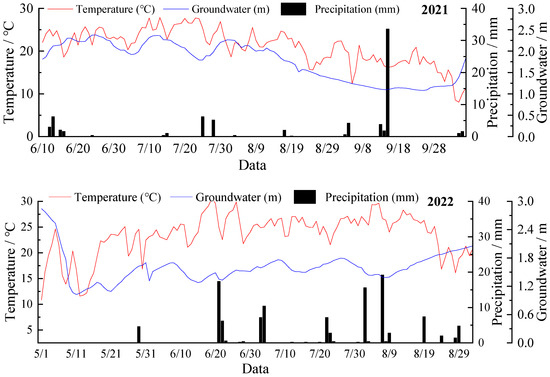
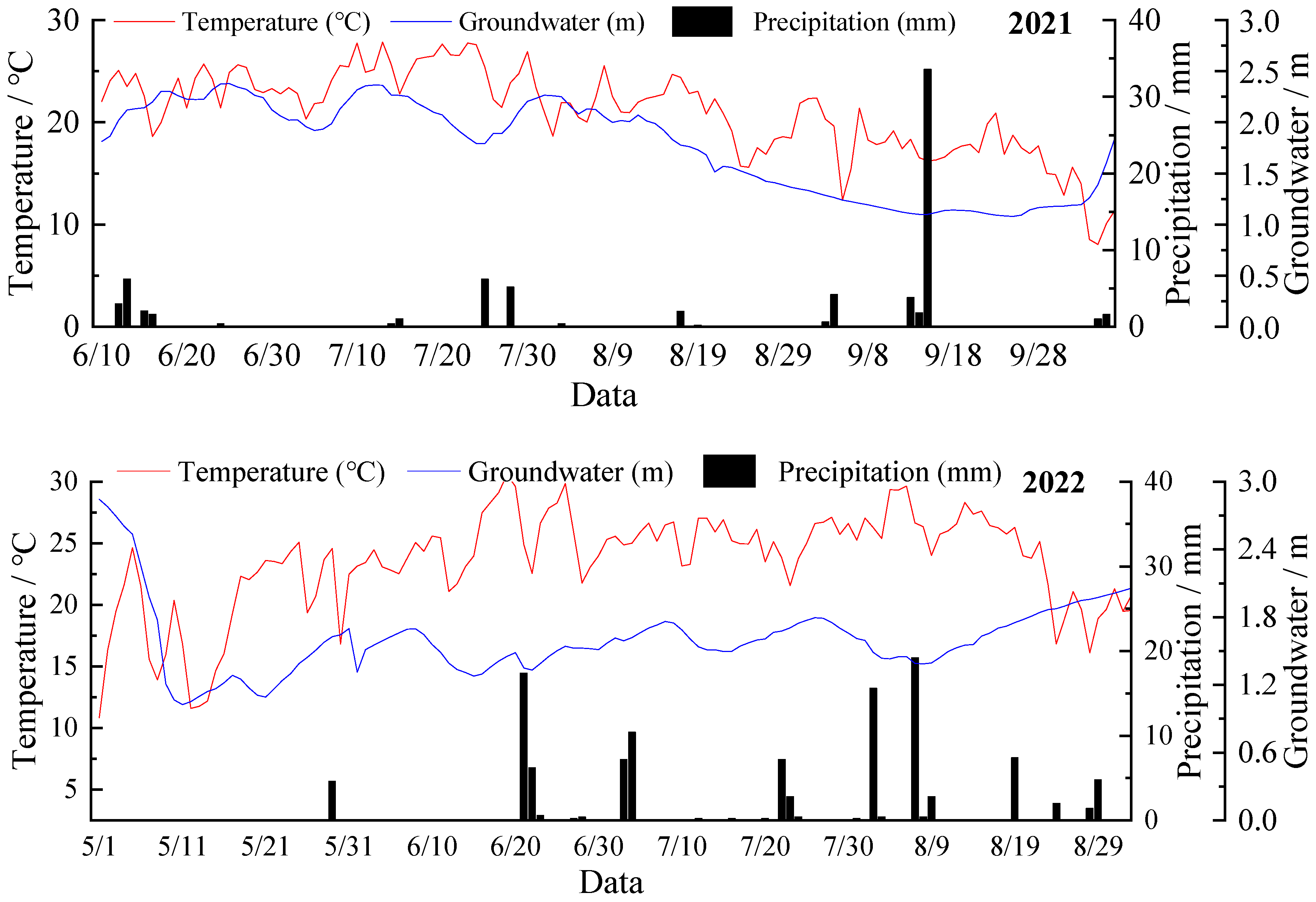
The field experiments were conducted at Hetao Experimental Station in Inner Mongolia (107.2° E, 40.7° N, elevation is 1031 m) from May to October, in 2021 and 2022. This region is in the arid and semi-arid climatic zone. The average annual temperature is 7~8 °C, and the average annual precipitation is 140 mm. The average annual potential evaporation capacity is 2000 mm. The frost-free period is about 180 d, and the depth of soil freezing is 1.0~1.3 m. According to the FAO/UNESCO soil classification [28], the soil at the experimental site is sandy loam (sand 45%, silt 51%, and clay 4%) with relatively low fertility. The pH ranges from 8.6 to 9.1 (Table 1). As shown in Figure 1, during the sunflower growth period in 2021 and 2022, the groundwater table is 1.1–2.4 m.
Table 1.
Physical properties of the experimental soil.
Figure 1.
Daily precipitation (black bars), mean air temperature (red) and groundwater (blue) during growing seasons in 2021 and 2022.
2.2. Experimental Design and Field Management
The factorial experiment had different levels of tillage (flat and ridge tillage, denoted as F and R respectively), soil wetting proportion (40%, 55% and 70%, denoted as P1, P2 and P3) under drip irrigation, and the presence or absence of air injection (AI). Specifically, P1RAI refers to the combination of P1 wetted proportion, ridge tillage, and air injection; P1R refers to the combination of P1 wetted proportion, ridge tillage, and no air injection; P1FAI refers to the combination of P1 wetted proportion, flat tillage, and air injection; and P1F refers to the combination of P1 wetted proportion, flat tillage, and no air injection. P2 and P3 combinations were defined analogously. The experiment adopted a three-factor factorial layout based on a randomized complete block design (RCBD). Three factors included tillage pattern (ridge and flat tillage), soil wetting proportion (P1, P2, P3), and air injection (with and without), forming 12 treatment combinations in total (Table 2). Each treatment was replicated three times. The three replicates were set as three spatial blocks to eliminate the interference of field soil heterogeneity such as initial soil salinity and texture variation. Within each block, all 12 treatments were randomly allocated to experimental plots using a random number generator in Microsoft Excel, and randomization was conducted independently for each block. A total of 36 experimental plots were arranged across the three blocks, with each plot measuring 10 m in length and 6 m in width.
Table 2.
Description of all treatment combinations.
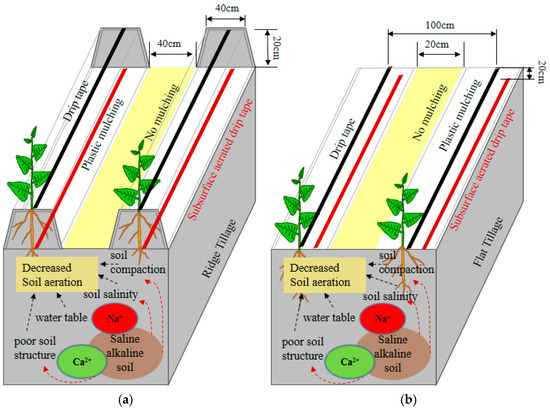
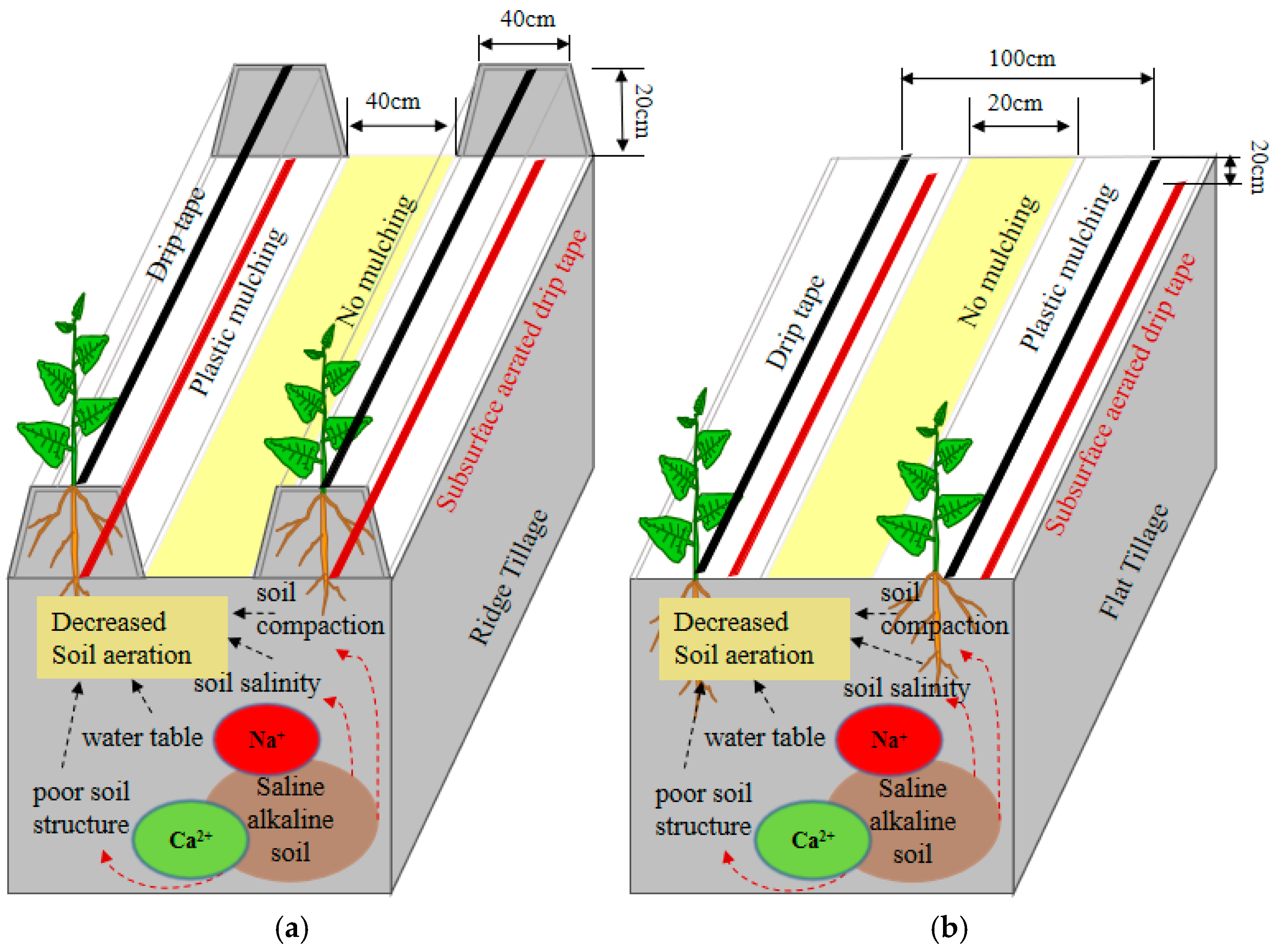
For flat tillage, the row spacing was 100 cm and plant spacing was 30 cm. For ridge tillage, the ridges and furrows were designed as follows: ridge spacing 100 cm, ridge surface width 60 cm, furrow width 40 cm, and furrow depth 20 cm (Figure 2). The planting density was 27,750 plants/ha.
Figure 2.
Schematic diagrams of experimental treatment. (a) R, ridge tillage; (b) F, flat tillage. The black line represents the surface drip tape; red line represents the subsurface aerated drip tape; red dashed line represents the negative impact on soil; the black dashed line indicates the reduction of soil air aeration.
Polyethylene mulch is a conventional practice for spring-sown sunflower production in the Hetao Irrigation District. Local farmers adopt black polyethylene mulch to: (1) minimize surface evaporation and suppress capillary-driven salt upward movement-a critical issue in heavily saline–alkali soils; (2) conserve soil moisture; and (3) increase early-season soil temperature to facilitate germination and seedling establishment. Its use in our experiment therefore reflects realistic local farming conditions. The mulch film had a thickness of 0.015 mm and a width of 80 cm.
The local sunflower variety “Gufeng No. 6” was selected for the experiment in 2021 and 2022. Sunflower was chosen because it is a major cash crop widely cultivated in the Hetao Irrigation District and exhibits moderate tolerance to saline–alkali stress. Pre-sowing irrigation was applied after ridge construction and mulching to leach topsoil salts into deeper layers and ensure seedling survival. On 28 May (before sowing), 120 mm of Yellow River water (salinity 688 µS/cm) was applied by surface irrigation in 2021; in 2022, 90 mm of groundwater (salinity 159 µS/cm) was applied via drip irrigation. Seeds were sown on 8 June in 2021 and 9 June in 2022. Harvesting took place on 26 September in 2021 and 16 September in 2022, with total growth periods of 111 and 118 days, respectively.
Fertilizers were applied via the drip irrigation system. Urea (CO(NH2)2 46.4% N), diammonium phosphate ((NH4)2HPO4 16% N, 23.5% P) and potassium sulphate (K2SO4 57.8% K) were used. Total N application during the sunflower growing period was 135 kg/ha, with urea applied four times at a ratio of 3:2:3:2 at pre-planting, budding, flowering, and filling stages. Application dates were: 27 May, 10 July, 2 August, 25 August in 2021; and 2 June, 8 July, 24 July, 8 August in 2022. Total P2O5 was 150 kg/ha and total K2O was 75 kg/ha. Phosphate and potassium fertilizers were applied as base fertilizers in a single application before sowing.
2.3. Air Injection and Irrigation Measures
Air was injected by a compressor with a pressure regulator that provided a constant relative pressure of 0.1 MPa at the line head. This pressure has been found adequate for the emitter’s regulating range [29]. The compressor provides measured air discharge rates of approximately 125 L/min. Each air injection in each plot is defined as a fixed value (2820 L), and calculated according to the following equation [30].
where V is the air injection volume per time of each plot (l), S is the cross-sectional area of ridge (cm2), L is the length of the experimental plot (cm), N is the number of ridges contained in each plot, is the bulk density (1.4 g/cm3), is the particle density (2.7 g/cm3).
Air injection was carried out at two days interval [30], between 8:00 and 16:00. Air was injected into the soil through subsurface driplines which were buried at 20 cm below the soil surface [19] with emitter spacing of 20 cm (Figure 2a,b). All plots were irrigated with surface drip irrigation. The emitter spacing was 30 cm and the emitter discharges were 2 L·h−1 (2021) and 1.38 L·h−1 (2022) under the operating pressure of 0.1 MPa. There were a separate valve and a separate water meter in each experimental plot. The soil wetting proportions were maintained in a method suggested by Yang [7]. The irrigation source was pumped ground water in situ. Irrigation was guided by soil matric potential (SMP), measured by a tensiometer (WST-2B, Beijing Sinton Technology, Beijing, China), buried at a depth of 20 cm immediately under the emitters and irrigations were applied immediately when SMP was lower than −20 kPa [31].
2.4. Sampling and Measurements
During the experimental period, rainfall data were recorded using an automatic standard weather station located at the experimental site. Mercury-in-glass geothermometers were placed between the two sunflower plants in each treatment plot at soil depths of 5, 10, 15 and 20 cm to determine the soil temperature [32]. Soil temperatures were recorded at 8:00, 14:00 and 20:00 h every ten days in 2021, and measured and recorded at the different depths with a TS20 sensor (TS20, Beijing Sinton Technology, Beijing, China) in 2022 and the sampling interval was 10 min. Mean daily soil temperature was calculated as the average of the readings for each day. Soil moisture was determined by gravimetrical measures at 0–10, 10–20, 20–40, 40–80 and 80–100 cm soil depths. Sampling points for measuring moisture and salt were in the middle of two adjacent emitters. After shaking a 10 g soil sample with 50 mL of pure water (1:5 soil-to-water ratio) for 30 min, the electrical conductivity (EC1:5) of the extract was measured, and the total salt content (St) was calculated using the following equation [33]:
where (g/kg) is the total salt content; (ds/m) is the soil electrical conductivity.
Soil water-filled pore space (WFPS) was calculated at each sampling time [22]:
where is dry bulk density of soil; is the volumetric water content (%).
The Eh was monitored by a Redox Potential Meter (Prof. Dr. Mansfeldt, University of Cologne, and was optimized by Eco Tech in cooperation with the Bavarian Environmental Protection Agency). It was designed for continuous operation in soils even under water-saturated conditions. An extra sensor was placed inside a piezometer PJ, where the reference electrode (Ag/AgCl) was also installed at 40 cm depth to ensure permanent wet conditions [34]. Probes were installed 5, 10, 15, 20 and 25 cm below the soil surface and 2 cm distance from the buried emitters.
Ten representative sunflower plants per plot were used for yield and yield component measurement at harvest, and the 100 seeds weight was recorded [35]. Net profit refers to the selling price of sunflowers minus costs. The price of sunflower was 1.30 USD/kg. The cost included all expenses from pre-sowing to harvesting of sunflowers, including land preparation, film, labor costs, weed control, pesticides, fertilizers, seeds, water, electricity charge, and mean seasonal investment in drip irrigation projects.
2.5. Statistical Analysis
Data were analyzed by the statistical software Microsoft Excel 2016 and SPSS 13.0 (SPSS Inc., Chicago, IL, USA). A one-way analysis of variance (ANOVA) was performed, and Fisher’s least significant difference (LSD) test was used for multiple mean comparisons at the p < 0.05 significance level. Normality and homogeneity of variance were tested prior to conducting the one-way ANOVA. The Origin 2020 program was used for drawing. Additionally, this study created a prediction model for each variable (soil index and management practice) using the random forest package (version 4.6-14) in R version 4.2.2. Variable importance was assessed using the percentage increase in mean squared error (%IncMSE), a higher %IncMSE value indicates a greater contribution of that variable to the prediction of sunflower yield.
3. Results
3.1. Soil Temperature
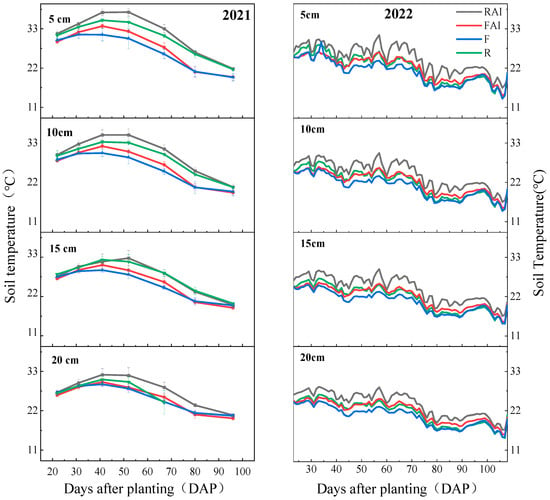
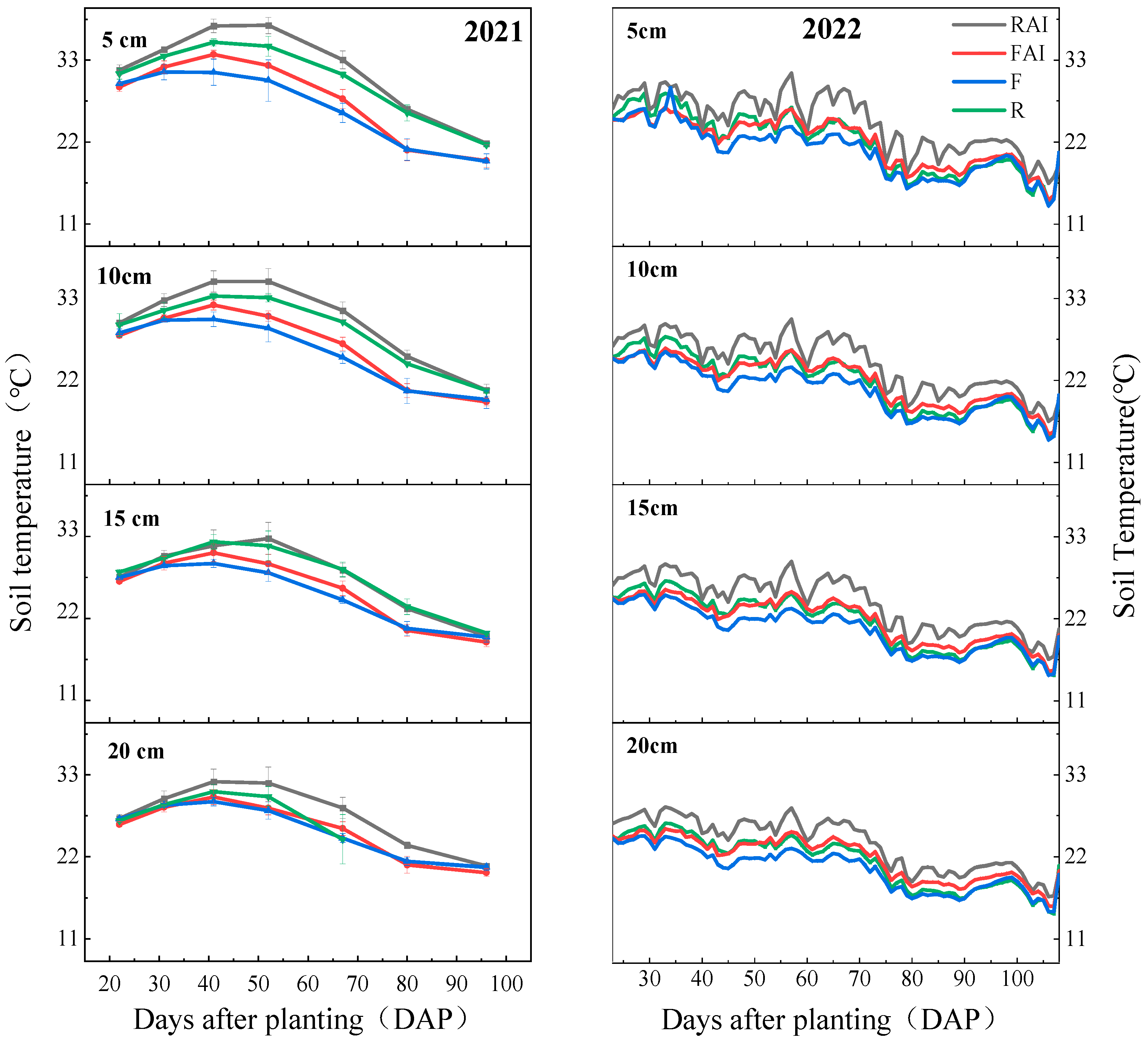
Compared with flat tillage (F), ridge tillage (R) increased the daily average topsoil temperature (0–20 cm) during the sunflower growth period under the same soil wetted proportion (P2) (Figure 3). In 2021, at soil depths of 5, 10, and 15 cm, the temperature under R was 1.9–4.7 °C, 1.0–4.0 °C, and 0.7–4.5 °C higher than under F, respectively. In 2022, R increased soil temperature by 0.1–3.0 °C (5 cm), 0–2.7 °C (10 cm), and 0–2.3 °C (15 cm) compared to F.
Figure 3.
Effects of different experimental treatments on soil temperature at different soil depths and times at the Hetao experimental Station in 2021 and 2022. R, ridge tillage; F, flat tillage; RAI, air injection under ridge tillage; FAI, air injection under flat tillage. Soil temperature was the average value of three reading temperatures in one day. Statistical differences among treatment means were determined by one-way ANOVA followed by LSD post hoc test (p < 0.05).
Data from both years also showed that air injection (AI) increased topsoil temperature during the sunflower growth period. At the 5 cm depth, the RAI treatment was 0.2–2.7 °C (2021) and 0.1–2.7 °C (2022) higher than R without AI, while the FAI treatment was 0.4–1.9 °C (2021) and 0–2.2 °C (2022) higher than F without AI. Overall, RAI significantly raised topsoil temperature (0–20 cm) across the sunflower growing seasons (Figure 3).
3.2. Variations in WFPS and Eh
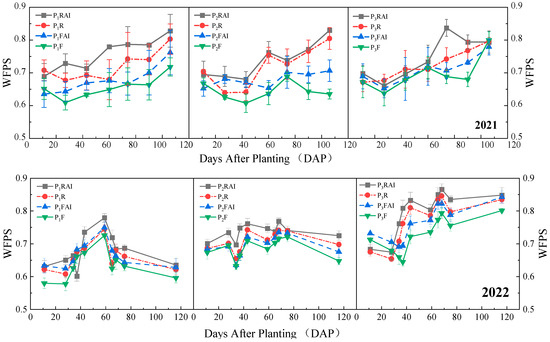
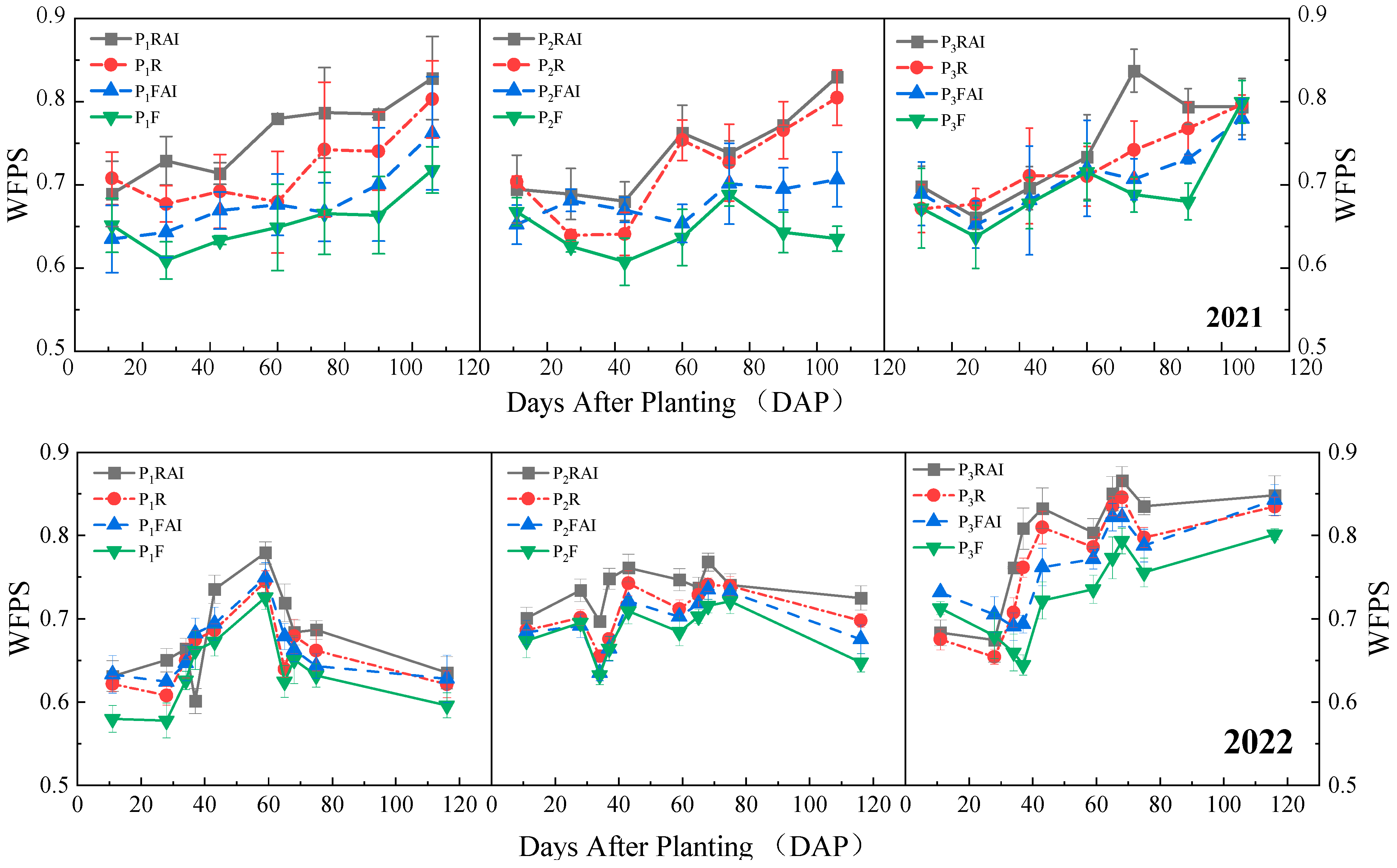
The changes in WFPS in the 0–10 cm soil layer under different treatments during the sunflower growth periods in 2021 and 2022 were shown in Figure 4. Overall, WFPS in 2022 was generally higher than that in 2021, which was probably related to the heavy rainfall in 2022 and the low discharge emitters were more suitable for water infiltration in saline soil. As shown in Figure 4, WFPS under ridge tillage (R) was higher than that of flat tillage (F), and a similar phenomenon was observed under air injection (AI). WFPS did not increase with increasing soil wetted proportion (P), which was attributed to the inconsistent irrigation timing among treatments. In both 2021 and 2022, under the same P, WFPS with air injection was higher than without injection under both R and F for most of the measurement periods (Figure 4), which is consistent with the findings of many previous studies [18,22]. However, analysis of variance indicated that the effect of air injection on WFPS was not significant (p > 0.05) in either year.
Figure 4.
The variation in soil water-filled pore space (WFPS) of 0–10 cm under different treatments in 2021 and 2022. P1, P2 and P3 represent soil wetting proportions of 40%, 55% and 70%, respectively. RAI, air injection under ridge conditions; R, ridge conditions; FAI, air injection under flat conditions; the F, flat conditions. Specifically, P1RAI refers to the combination of P1 wetted proportion, ridge tillage, and air injection; P1R refers to the combination of P1 wetted proportion, ridge tillage, and no air injection; P2 and P3 are defined by analogy. WFPS is the average value of three replicates. Error bars indicate LSD values (p < 0.05).
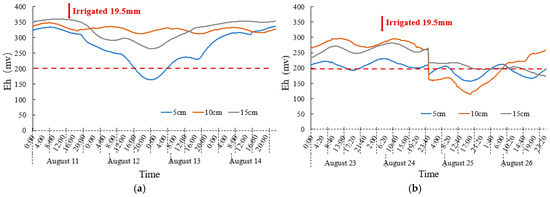
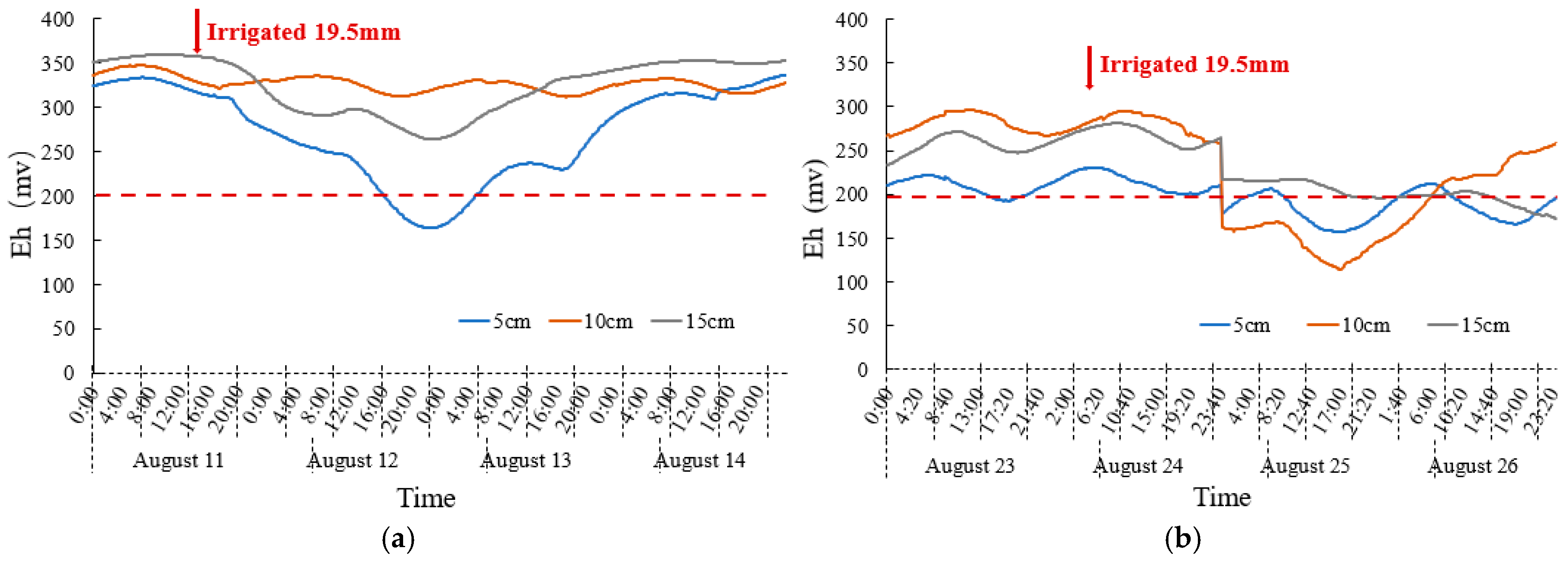
In 2021, on 11 August, Eh in the 0–15 cm soil layer under ridge tillage (R) ranged from 250 to 350 mV, while under flat tillage (F) on 23 August, Eh ranged from 190 to 300 mV (Figure 5). Compared with F, R increased Eh by 16.7–31.6%. Under R, irrigation (19.5 mm) was applied on 11 August; under F, the same amount of irrigation (19.5 mm) was applied on 24 August. During an irrigation cycle, Eh of the saline–alkali soil ranged from 150 to 355 mV under R and from 100 to 300 mV under F (Figure 5). Irrigation decreased soil Eh. Under R, the decrease in Eh was more pronounced at the 5 cm depth, while the 10 cm depth was less affected by irrigation. Specifically, under R, Eh at the 5 cm depth reached its lowest value of 164 mV after irrigation, a decrease of 50.4%, and returned to the pre-irrigation level after 40 h (Figure 5). Under F, irrigation reduced Eh in the 5–15 cm soil layer, with a decline observed as early as 3 h after irrigation. At the 5 cm depth, the reduction rate was 55.1%.
Figure 5.
Variations in the Redox potential (Eh) in each plot of the cultivated farmland affected by irrigation in 2021. (a) Ridge tillage, 11–14 August; (b) flat tillage, 23–26 August. The amount of irrigation water was 19.5 mm. The dashed line indicates the minimum value of redox potential in upland soil.
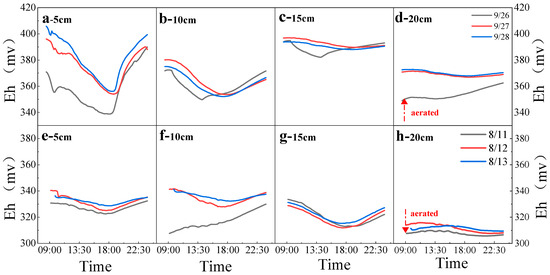
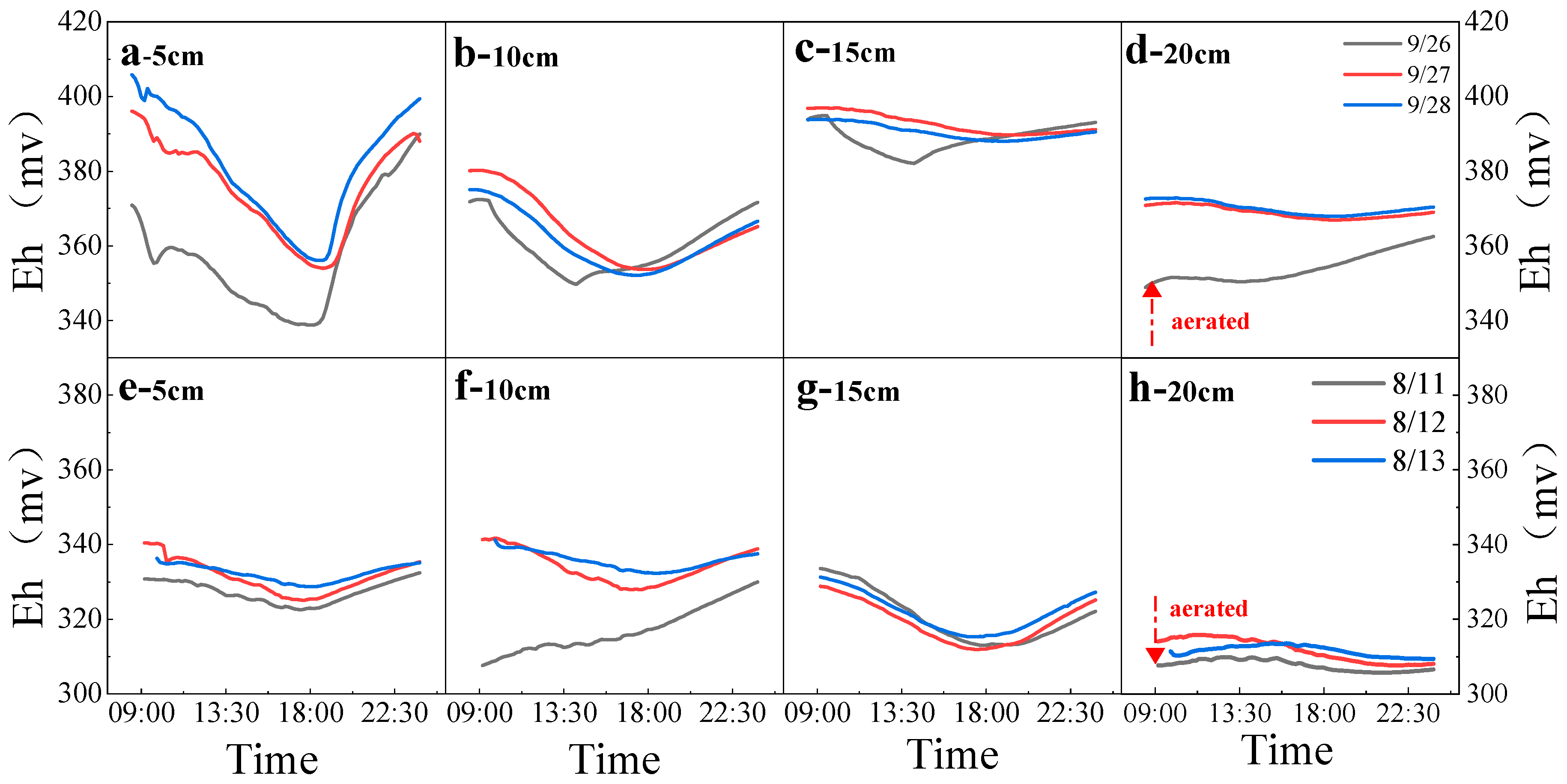
The changes in Eh values in different soil layers over three consecutive days (without irrigation) following air injection under ridge cultivation (R) and flat cultivation (F) are shown in Figure 6. Under both R and F, the diurnal variation in Eh in the 0–15 cm soil layer decreased first and then increased. During the test period, Eh values under R ranged from 340 to 410 mV in the 0–20 cm soil layer, while under F they ranged from 300 to 340 mV. The higher Eh values under R compared with F indicate that ridge tillage improved soil aeration. Under both R and F, air injection increased Eh at the 20 cm depth, suggesting that soil aeration at that depth was enhanced by air injection. Under R (Figure 6a–c), Eh in the 0–15 cm layer on 26 September was significantly lower than that on 27 and 28 September, and Eh in the 0–10 cm layer was lower than that in the 15 cm layer. Under F, Eh gradually decreased with increasing soil depth. The effect of air injection on Eh under F was weaker than that under R.
Figure 6.
Effects of air injection on Redox potential (Eh) in different soil layers under ridge and flat tillage. (a–d) Ridge tillage, 26–28 September (5, 10, 15 and 20 cm, respectively); (e–h) flat tillage, 11–13 August (5, 10, 15 and 20 cm, respectively). Air injection was performed on 26 September and 11 August from 8:00 to 12:00 a.m., respectively.
3.3. Soil Salinity
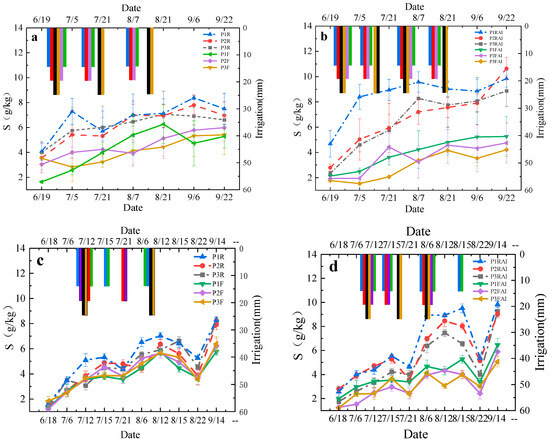
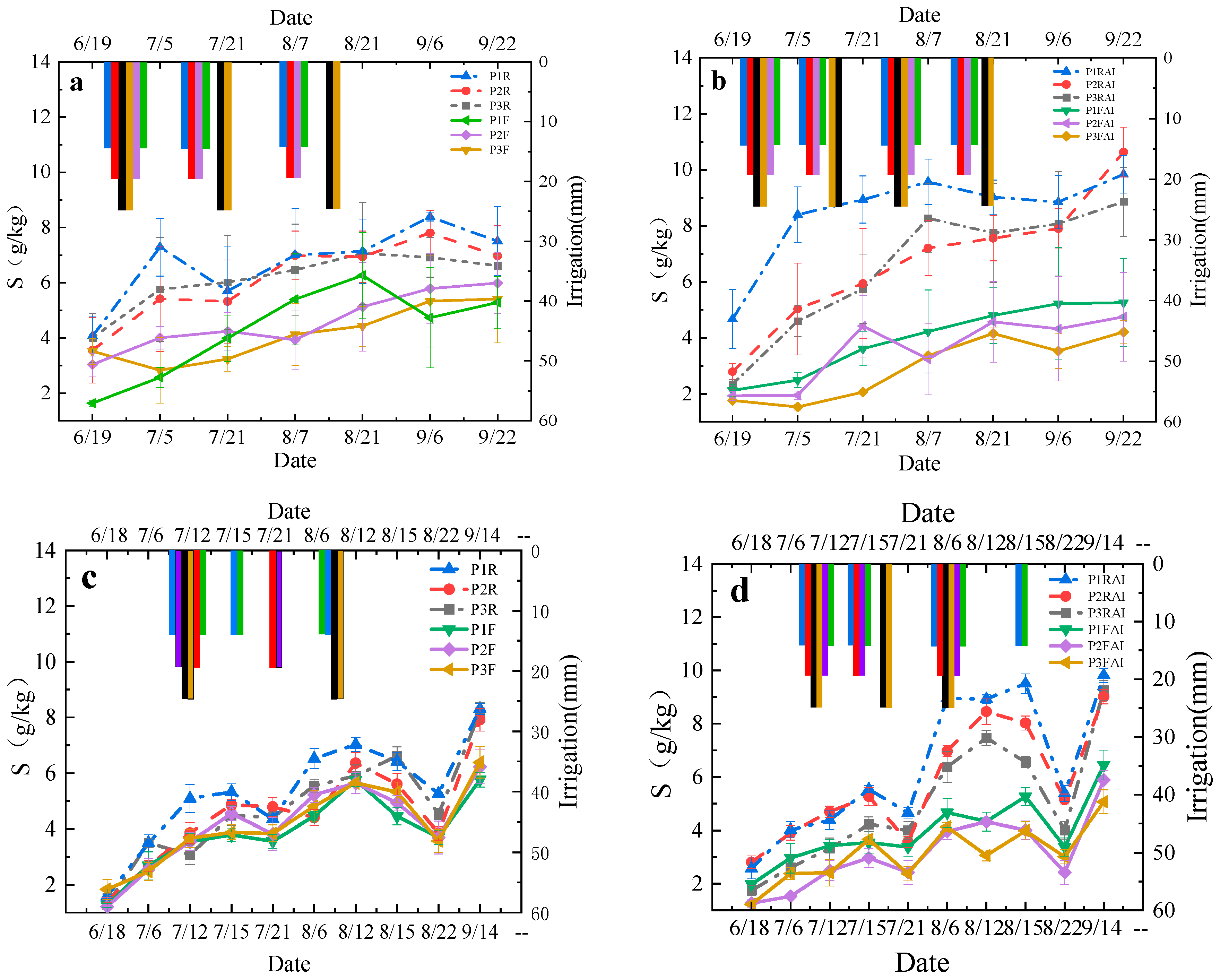
Total soil salinity (S) in the 0–20 cm soil layer was used as the main indicator of root-zone salinity. Variations in S under different treatments throughout the sunflower growth period are shown in Figure 7. During the growth period, the groundwater table ranged from 1.1 to 2.4 m, which was below the critical depth (1.5–2.5 m), causing upward salt movement under strong evaporation. In both 2021 and 2022, S in the 0–20 cm layer showed an increasing trend across all treatments during the sunflower growing season. From the first sampling results, under ridge tillage (R) in 2021, S of the topsoil after surface irrigation ranged from 2.3 to 4.3 g/kg, which was 0.8–2.0 g/kg higher than that under drip irrigation in 2022, suggesting that drip irrigation had a more pronounced salt-leaching effect under R. During the 2021 irrigation period, the increase in topsoil salinity under R ranged from 2.6 to 3.4 g/kg, while under flat cultivation (F) it ranged from 1.9 to 3.7 g/kg. In 2022, the increase ranges under R and F were 4.6–5.4 g/kg and 3.8–4.5 g/kg, respectively. However, there was no significant difference in salt accumulation between the two tillage measures. As shown in Figure 7, S decreased with increasing soil wetted proportion (P) during the irrigation period. Under air injection (AI) with R in 2021, the P1RAI, P2RAI, and P3RAI treatments increased S by 7.8, 6.5, and 5.2 g/kg, respectively, while under AI with F, the increases in the P1FAI, P2FAI, and P3FAI treatments were 3.1, 2.8, and 2.4 g/kg, respectively. In 2022, under AI with R, the same three treatments increased S by 8.5, 7.1, and 7.5 g/kg, respectively, while under AI with F, the increases were 5.7, 5.3, and 4.5 g/kg, respectively. Interestingly, AI enhanced salt accumulation in the topsoil under R during both growing seasons, whereas its effect appeared negligible under F.
Figure 7.
Variations in the total soil salinity in 0–20 cm layer (S) in each plot under different treatments throughout the growth period of the sunflower in 2021 (a,b) and 2022 (c,d). P1, P2 and P3 represent the soil wetting proportion of 40%, 55% and 70%, respectively. R, ridges tillage; F, flat tillage; AI, air injection. The bar chart represents the irrigation amount, and the color represents different treatments. Statistical differences among treatment means were determined by one-way ANOVA followed by LSD post hoc test (p < 0.05). Different colored bars in the figure represent the irrigation amount of the corresponding treatments.
3.4. Analysis of Sunflower Yield and Economic Benefit
The effects of tillage method, soil wetted proportion, and air injection on sunflower yield components, yield, and economic benefits are shown in Table 3. The empty-seed rate of sunflower under flat tillage (F) was higher than that under ridge tillage (R). Compared with F, R resulted in greater 100-seed weight and yield, indicating that ridge tillage improved sunflower quality and yield. Under F, the empty-seed rate decreased with increasing soil wetted proportion (P) in both 2021 and 2022, suggesting that soil moisture distribution affected sunflower quality under F. Under R, sunflower quality was less affected by P, but yield increased with increasing P, indicating that a higher wetted proportion was more conducive to sunflower growth under R.
Table 3.
Sunflower yield components, yield at harvest and economic benefits as affected by combinations of tillage method, soil wetting proportion and air injection in 2021 and 2022.
Regarding air injection (AI) under F, the empty-seed rate of sunflower decreased by 1.9–4.4% in 2021 (except for P2F) and by 0.7–1.4% in 2022. Both 100-seed weight and yield increased. Notably, sunflower seed yield increased by 23–37% in 2021 and by 12–33% in 2022 under F with AI. However, under R with AI, the empty-seed rate of sunflower increased by 2.9–8.9% in 2021 and by 2.3–7.6% in 2022.
Among all treatments, the highest yield was observed under P2FAI in both 2021 and 2022, with a maximum yield of 5.4–5.6 t/ha. Under R treatments, the maximum yield occurred under P3R. From a profit perspective, the highest net profit (3618–3811 USD ha−1) was achieved under P3R, which reduced the investment and operating costs associated with the air injection system compared with P2FAI.
3.5. Relative Importance of Different Factors to Sunflower Yield
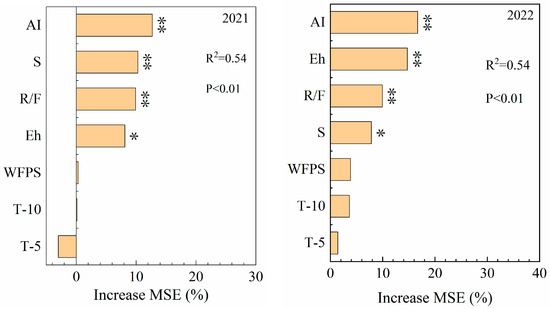
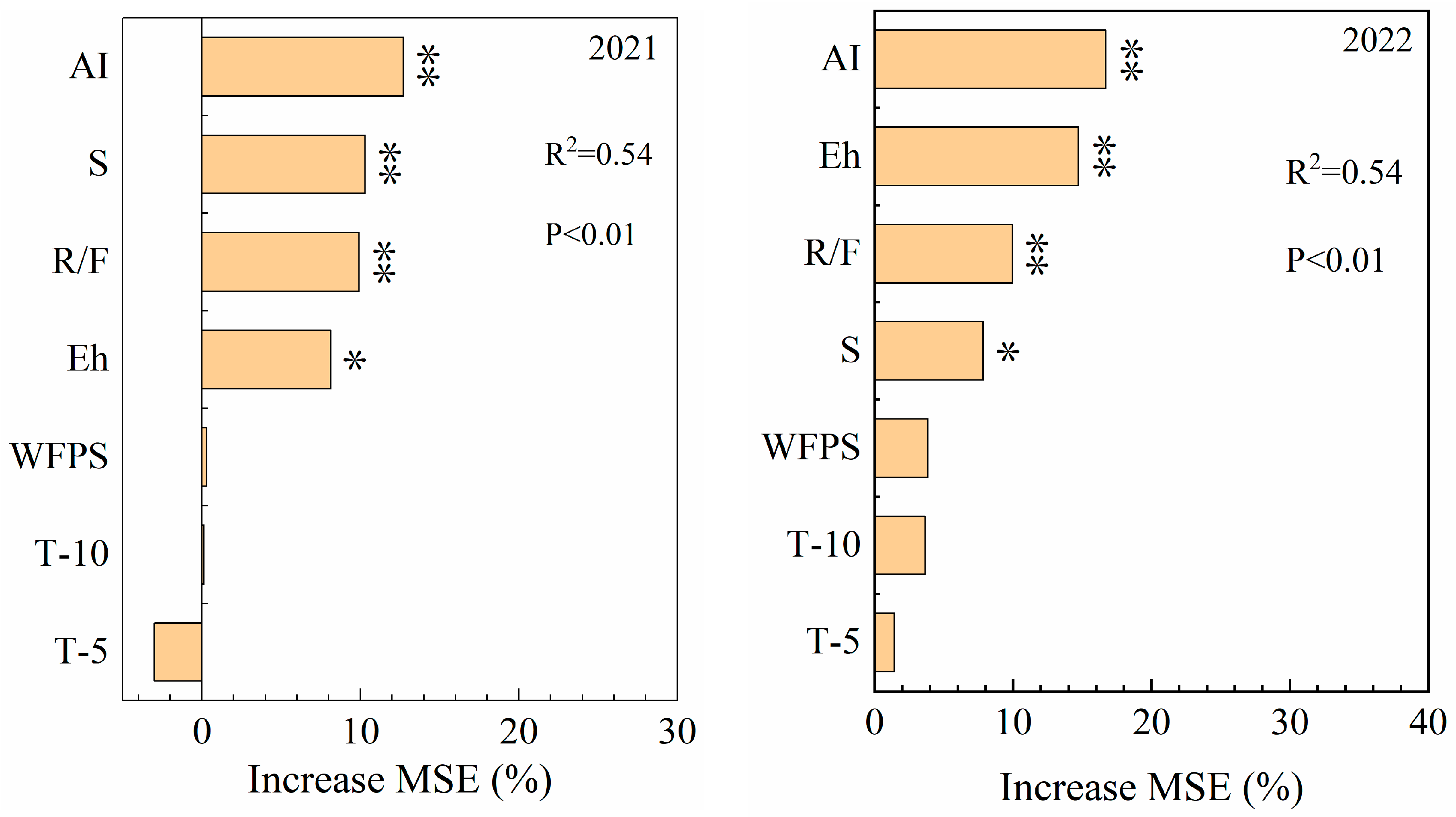
A random forest model was used to explore the importance of the investigated variables (air injection, soil salinity, tillage method, soil Eh, WFPS, and temperature) for sunflower yield (Figure 8). The results indicated that air injection, soil salinity, tillage methods, and soil Eh were the dominant factors affecting sunflower yield and quality, while WFPS and temperature exhibited relatively lower importance.
Figure 8.
Importance of different variables to the yield of sunflower in planting seasons 2021 and 2022 based on the random forest model. AI represented the air injection, T-5 and T-10 represented the daily average temperature of the 5 and 10 cm soil layers. * and ** indicated significance at the levels of 0.01 and 0.05, respectively. %IncMSE represents the percentage increase in mean squared error, which is used to evaluate variable importance.
4. Discussion
4.1. Effects of Tillage Method, Irrigation and Air Injection on Soil Temperature and Eh
During the sunflower growth period, the 0–20 cm soil temperature was higher under ridge tillage (R) than under flat tillage (F). Aeration irrigation (AI) also increased soil temperature in the 0–20 cm layer. This phenomenon can be attributed to improved soil aeration under R and AI treatments, which enhanced exothermic processes including root and microbial respiration [8]. The increased soil temperature reduced soil water potential and accelerated upward soil water movement, which was consistent with the observed variations in soil water-filled pore space (WFPS).
Key indicators for evaluating soil aeration include soil gas oxygen and carbon dioxide concentrations, soil solution dissolved oxygen, soil oxygen diffusivity, and soil redox potential (Eh). Notably, Eh allows real-time in situ measurement and exhibits high sensitivity to variations in soil aeration status. The experimental field showed poor inherent soil aeration, with Eh values ranging from 190 to 350 mV. Ridge tillage increased soil Eh by 16.7–31.6% (Figure 5). Unexpectedly, the 15 cm soil layer under R had a higher Eh value than the 5 cm and 10 cm layers, which was likely associated with increased topsoil moisture under ridge tillage.
During the air injection periods (8:00–12:00 on 11 August and 26 September, Figure 6), the Eh value decreased in the 0–15 cm soil layer but increased in the 20 cm layer, corresponding to the 20 cm aeration depth. In the 5 cm soil layer, air injection reduced Eh by 7.5% under R and 3.0% under F. Injected air squeezed soil water upward and increased topsoil moisture and WFPS, thereby deteriorating topsoil aeration.
Irrigation significantly reduced soil Eh (Figure 5). Under the P2 irrigation level, the Eh values in the 5 cm soil layer decreased by 50.4% and 55.1% for R and F treatments, respectively. The Eh variation curve remained stable under ridge tillage, whereas abrupt Eh fluctuations occurred under flat tillage. This discrepancy was mainly caused by the high emitter discharge rate (2 L/h) applied in 2021. The excessive irrigation intensity exceeded the infiltration capacity of saline–alkali soil, triggering lateral runoff along the ridge side. Therefore, low-discharge emitters (<1.5 L/h) are recommended for drip irrigation application in saline–alkali farmland.
4.2. Effects of Tillage Mothed and Air Injection on WFPS and S
Soil is a complex three-phase system consisting of solid, gas, and liquid phases, among which the solid phase remains relatively stable. Thus, the liquid and gas phases in soil continuously undergo renewal and replacement. Soil water-filled pore space (WFPS) is a critical indicator for characterizing soil moisture and aeration status. In 2021, the average WFPS was 0.72 under ridge tillage (R) and 0.69 under flat tillage (F), while the corresponding values were 0.72 and 0.66 in 2022. Overall, ridge tillage increased WFPS by 4.3% in 2021 and 9.1% in 2022 relative to flat tillage (Figure 4), demonstrating that R effectively improved soil WFPS. These findings are consistent with previous five-year field observations, which confirmed that long-term ridge tillage increased soil water content in the 0–30 cm soil layer [12]. In this study, air injection (AI) treatments generally exhibited higher WFPS in the 0–10 cm soil layer than non-injection treatments under ridge tillage across 2021 and 2022 (Figure 4), which aligns with the results of Ben-Noah et al. [21]. However, inconsistent conclusions have been reported, with several studies indicating a negligible effect of aeration on WFPS [22,36]. Ben-Noah et al. [21] verified through two-phase flow column experiments that soil air injection pushes soil water away from the aeration point and thus increases topsoil moisture. In contrast, Chen et al. [36] observed minimal WFPS variation under aeration conditions. Such discrepancies are primarily attributed to differences in aeration methods. Direct subsurface air injection predominantly drives soil water movement, whereas aeration via irrigation water mainly regulates crop and microbial activities rather than altering soil water distribution.
Soil salinity (S) in the 0–20 cm layer increased continuously across all treatments during the sunflower growing seasons in 2021 and 2022. This trend was mainly caused by rising temperatures and intense soil evaporation, which accelerated upward salt migration and exceeded the salt leaching capacity of irrigation and rainfall. After pre-sowing irrigation in 2021, the 0–20 cm soil salinity under ridge tillage was higher than that under flat tillage (6/19, Figure 7a,b). This phenomenon occurred because ridge tillage with plastic film mulch restricted salt leaching at the ridge top under surface irrigation. In 2022, no significant difference in soil salinity was observed between R and F treatments after drip irrigation-induced salt leaching. Therefore, drip irrigation is recommended for desalination in film-mulched ridge tillage farmland. The magnitude of topsoil salt accumulation was negatively correlated with irrigation quota (P). The salt leaching efficiency gradually declined with the reduction in single irrigation volume (P1 < P2 < P3).
Further salinity analysis revealed that the increases in soil salinity under P2R, P2F, P2RAI, and P2FAI treatments ranged from 3.3 to 5.8 g/kg, 2.8–4.7 g/kg, 6.1–7.7 g/kg, and 2.9–4.8 g/kg, respectively, across the two growing seasons. These results indicated that the P2RAI treatment exhibited the highest salt accumulation rate, followed by P2FAI, P2R, and P2F. Excluding the salt input from irrigation water (salinity of 800 mg/L), the accumulated topsoil salt primarily originated from deep soil layers, driven upward by soil water capillary movement. This mechanism is well supported by the aforementioned variations in soil temperature and WFPS.
4.3. Proper Operational Strategy for Sunflower Yield
Across the 2021 and 2022 growing seasons, ridge tillage (R) produced a higher sunflower yield than flat tillage (F) under identical irrigation quotas. Air injection (AI) significantly increased sunflower yield under flat tillage conditions. Overall, both ridge tillage and air injection practices effectively improved sunflower productivity, demonstrating that soil aeration is an indispensable regulatory factor for sunflower cultivation. However, an opposite trend was observed under ridge tillage: AI negatively affected sunflower yield in both years, which deviated from the initial expectation. This adverse outcome was closely associated with AI-induced variations in soil WFPS and aeration status. Specifically, air injection promoted upward salt accumulation in topsoil, and the resultant elevated soil salinity ultimately inhibited sunflower yield formation. This finding is consistent with the conclusions reported by Cruz et al. [37]. Previous studies focusing on sunflower production in the Hetao Irrigation District also confirmed that soil salinity was the dominant limiting factor for yield improvement [33], which further supports the results of the random forest analysis in this study that soil aeration and salinity were the two most critical determinants of sunflower yield. Bhattarai et al. [20] investigated salt stress effects on tomato growth using gradient NaCl solutions and found that crop yield decreased by 18% and 62% when soil electrical conductivity increased from 2.0 ds/m to 8.8 ds/m and 10.0 ds/m, respectively.
Among all experimental treatments, the P2FAI treatment achieved the highest sunflower yield. Economic analysis indicated that the P3R treatment yielded a net profit of 3421–3551 USD ha−1, which was 12.0–71.5% higher than that of other treatments and 17.2–31.7% greater than the local farmers’ average net profit (2597–3030 USD ha−1). These results indicated that flat tillage combined with air injection and sole ridge tillage without aeration are both efficient strategies to improve sunflower economic returns, which can be recommended as optimal management practices for sunflower cultivation in severe saline–alkali farmland. Nevertheless, field air injection irrigation still faces the limitations of a complex operation and high input cost in practical large-scale sunflower production. To address these constraints, popularizing low-cost aeration equipment can simplify field operation. Furthermore, the development and application of subsurface drip irrigation systems will greatly facilitate the large-scale promotion and practical extension of aerated irrigation technology in saline agricultural fields.
5. Conclusions
For saline–alkali soils with low infiltration rates, low discharge emitters (<1.5 L/h) may be considered. Ridge tillage increased Eh by 16.7–31.6%, WFPS, and soil temperature in the 0–20 cm root zone compared to flat tillage under our experimental conditions. Salt accumulation gradually decreased with increasing soil wetted proportion (P). Air injection redistributed soil moisture in the root zone. Under ridge tillage (R), air injection enhanced aeration but also caused salt to accumulate in the topsoil, affecting sunflower growth and yield. Random forest analysis identified soil aeration and salinity as the most important factors affecting yield. These findings suggest that sunflower yield could be improved either by air injection under flat tillage or by ridge tillage without air injection.
For practical implications based on this study, low discharge emitters may be a useful choice, and farmers in similar heavily saline–alkali regions might consider either flat tillage with air injection or ridge tillage alone to improve yield. However, these recommendations are derived from a two-year field experiment at a single site and require further validation under different soil, climatic, and management conditions. Future research should focus on (1) the long-term effects of repeated air injection on soil structure and salt dynamics, and (2) optimizing the timing and frequency of air injection to maximize yield while minimizing induced salt accumulation.
Author Contributions
Conceptualization, B.Y. and F.W.; methodology, B.Y.; software, Y.Z.; validation, B.Y., Y.Z. and F.W.; data curation, Y.Z.; writing—original draft preparation, B.Y.; writing—review and editing, C.C.S.; supervision, K.Y. and F.W.; funding acquisition, F.W. All authors have read and agreed to the published version of the manuscript.
Funding
This research was funded by Integrated Research on Water and Fertilizer Integration Technology of Yellow River Diversion Drip Irrigation (NMKJXM202308) and the Project of Effects of Mulched Drip Irrigation on Soil Compaction and Soil Air-Water Environment of Potato and Optimization of Technical Parameters (52009142).
Data Availability Statement
All data related to the research are included in this scientific paper. Further inquiries can be directed to the corresponding author.
Acknowledgments
The authors acknowledge the College of Water Resources and Civil Engineering, China Agricultural University for institutional support and sincerely thank Huang Guanhua for help and support at various stages of these experiments. During the preparation of this work, the author B.Y used Doubao (Seedance 2.0) (ByteDance Ltd., Beijing, China) to improve language clarity and readability. After using this tool, the author reviewed and revised the content as necessary and takes full responsibility for the content of the publication.
Conflicts of Interest
The authors declare no conflicts of interest. The funders had no role in the design of the study; in the collection, analyses, or interpretation of data; in the writing of the manuscript; or in the decision to publish the results.
References
- Ebrahimian, E.; Seyyedi, S.M.; Bybordi, A.; Damalas, C.A. Seed yield and oil quality of sunflower, safflower, and sesame under different levels of irrigation water availability. Agric. Water Manag. 2019, 218, 149–157. [Google Scholar] [CrossRef] [Scilit]
- Sun, W.; Chen, X. Analysis of research hotspots in saline-alkali land in China. J. North. Agric. 2020, 48, 130–134. [Google Scholar] [CrossRef]
- Wang, Y.; Wang, Z.H.; Yan, H.; Li, S.Y.; Cui, Y.H. Construction and experimental analysis of permeability prediction model of unsaturated clay. Arab. J. Geosci. 2021, 14, 549. [Google Scholar] [CrossRef] [Scilit]
- Bhattarai, S.P.; Midmore, D.J. Oxygation Enhances Growth, Gas Exchange and Salt Tolerance of Vegetable Soybean and Cotton in a Saline Vertisol. J. Integr. Plant Biol. 2010, 51, 675–688. [Google Scholar] [CrossRef] [Scilit] [PubMed]
- Lei, S.; Jia, X.; Zhao, C.; Shao, M. A review of saline-alkali soil improvements in China: Efforts and their impacts on soil properties. Agric. Water Manag. 2025, 317, 109617. [Google Scholar] [CrossRef] [Scilit]
- Meng, C.; Wang, F.; Yang, K.; Shock, C.C.; Engel, B.A.; Zhang, Y.; Tao, L.; Gu, X. Small wetted proportion of drip irrigation and non-mulched treatment with manure application enhanced methane uptake in upland field. Agric. For. Meteorol. 2020, 281, 107821. [Google Scholar] [CrossRef] [Scilit]
- Yang, K.; Wang, F.; Shock, C.C.; Kang, S.; Huo, Z.; Song, N.; Ma, D. Potato performance as influenced by the proportion of wetted soil volume and nitrogen under drip irrigation with plastic mulch. Agric. Water Manag. 2017, 179, 260–270. [Google Scholar] [CrossRef] [Scilit]
- Mloza-Banda, H.; Makwiza, C.; Mloza-Banda, M. Soil properties after conversion to conservation agriculture from ridge tillage in Southern Malawi. J. Arid. Environ. 2016, 127, 7–16. [Google Scholar] [CrossRef] [Scilit]
- Fang, S.; Hou, X.; Liang, X. Response Mechanisms of Plants Under Saline-Alkali Stress. Front. Plant Sci. 2021, 12, 667458. [Google Scholar] [CrossRef] [Scilit]
- Wuyun, D.; Bao, J.; Crusiol, L.G.T.; Wulan, T.; Sun, L.; Wu, S.; Xin, Q.; Sun, Z.; Chen, R.; Peng, J.; et al. Generating Salt-Affected Irrigated Cropland Map in an Arid and Semi-Arid Region Using Multi-Sensor Remote Sensing Data. Remote Sens. 2022, 14, 6010. [Google Scholar] [CrossRef] [Scilit]
- Zhao, L.; Jia, K.; Liu, X.; Li, J.; Xia, M. Assessment of land degradation in Inner Mongolia between 2000 and 2020 based on remote sensing data. Geogr. Sustain. 2023, 4, 100–111. [Google Scholar] [CrossRef] [Scilit]
- Guan, F.; Miao, Y.; Fang, T.; Lan, X.; Liang, Z. Effects of Ridging on Soil and Above-ground Biomass in Heavy Alkali-saline Grasslands of West Songnen Plain, China. Acta Agron. Sin. 2010, 18, 763–767. [Google Scholar] [CrossRef]
- Liu, Z.; Cao, S.; Sun, Z.; Wang, H.; Qu, S.; Lei, N.; He, J.; Dong, Q. Tillage effects on soil properties and crop yield after land reclamation. Sci. Rep. 2021, 11, 4611. [Google Scholar] [CrossRef] [Scilit]
- Hu, X.; Liang, A.; Yao, Q.; Liu, Z.; Yu, Z.; Wang, G.; Liu, J. Ridge Tillage Improves Soil Properties, Sustains Diazotrophic Communities, and Enhances Extensively Cooperative Interactions Among Diazotrophs in a Clay Loam Soil. Front. Microbiol. 2020, 11, 1333. [Google Scholar] [CrossRef] [Scilit]
- Vishwakarma, D.K.; Kumar, R.; Tomar, A.S.; Kuriqi, A. Eco-hydrological modeling of soil wetting pattern dimensions under drip irrigation systems. Heliyon 2023, 9, e18078. [Google Scholar] [CrossRef] [Scilit]
- Cote, C.M.; Bristow, K.L.; Charlesworth, P.B.; Cook, F.J.; Thorburn, P.J. Analysis of soil wetting and solute transport in subsurface trickle irrigation. Irrig. Sci. 2003, 22, 143–156. [Google Scholar] [CrossRef] [Scilit]
- Zhang, Y.Y.; Zhao, X.-N.; Wu, P.-T. Soil Wetting Patterns and Water Distribution as Affected by Irrigation for Uncropped Ridges and Furrows. Pedosphere 2015, 25, 468–477. [Google Scholar] [CrossRef] [Scilit]
- Bhattarai, S.P.; Midmore, D.J.; Pendergast, L. Yield, water-use efficiencies and root distribution of soybean, chickpea and pumpkin under different subsurface drip irrigation depths and oxygation treatments in vertisols. Irrig. Sci. 2008, 26, 439–450. [Google Scholar] [CrossRef] [Scilit]
- Wei, C.; Zhu, Y.; Zhang, J.; Wang, Z. Evaluation of Suitable Mixture of Water and Air for Processing Tomato in Drip Irrigation in Xinjiang Oasis. Sustainability 2021, 13, 7845. [Google Scholar] [CrossRef] [Scilit]
- Han, G.; Chen, S.; Su, S.; Huang, Y.; Liu, B.; Sun, H. A review and perspective on micro and nanobubbles: What They Are and Why They Matter. Miner. Eng. 2022, 189, 107906. [Google Scholar] [CrossRef] [Scilit]
- Ben-Noah, I.; Nitsan, I.; Friedman, S.P. Forced gas injection and water infiltration into sand—A two-phase flow barrel and column experiment. Soil Sci. Soc. Am. J. 2020, 85, 40–58. [Google Scholar] [CrossRef] [Scilit]
- Chen, H.; Shang, Z.; Cai, H.; Zhu, Y. Irrigation Combined with Aeration Promoted Soil Respiration through Increasing Soil Microbes, Enzymes, and Crop Growth in Tomato Fields. Catalysts 2019, 9, 945. [Google Scholar] [CrossRef] [Scilit]
- Niu, W.-Q.; Guo, C.; Shao, H.; Wu, P. Effects of different rhizosphere ventilation treatment on water and nutrients absorption of maize. Afr. J. Biotechnol. 2011, 10, 949–958. [Google Scholar]
- Xie, H.; Cai, H.; Zhang, Z. Evaluation of comprehensive benefit in greenhouse muskmelon under aeration irrigation. Nongye Jixie Xuebao/Trans. Chin. Soc. Agric. Mach. 2010, 41, 79–83. [Google Scholar]
- Zhao, F.; Sun, J.; Jiang, Y.; Hu, D.; Yang, X.; Dong, M.; Yu, K.; Yu, S. Effect of rhizosphere aeration by subsurface drip irrigation with tanks on the growth of ‘Red Globe’ grape seedling and its absorption, distribution and utilization of urea- 15 N. Sci. Hortic. 2018, 236, 207–213. [Google Scholar] [CrossRef] [Scilit]
- Zheng, T.; Liang, C.; Xie, H.; Zhao, J.; Yan, E.; Zhou, X.; Bao, X. Rhizosphere effects on soil microbial community structure and enzyme activity in a successional subtropical forest. FEMS Microbiol. Ecol. 2019, 95, fiz043. [Google Scholar] [CrossRef] [Scilit]
- Zhu, Y.; Cai, H.; Song, L.; Wang, X.; Shang, Z.; Sun, Y. Aerated Irrigation of Different Irrigation Levels and Subsurface Dripper Depths Affects Fruit Yield, Quality and Water Use Efficiency of Greenhouse Tomato. Sustainability 2020, 12, 2703. [Google Scholar] [CrossRef] [Scilit]
- Gerasimov, I.P. FAO-UNESCO world soils units in the light of the concept of elementary soil processes (ESP). Sov. Soil Sci. 1980, 12, 148–157. [Google Scholar]
- Ben-Noah, I.; Friedman, S. Aeration of clayey soils by injecting air through subsurface drippers: Lysimetric and field experiments. Agric. Water Manag. 2016, 176, 222–233. [Google Scholar] [CrossRef] [Scilit]
- Li, Y.; Jia, Z.-X.; Niu, W.-Q.; Wang, J.-W. Impact of post-infiltration soil aeration at different growth stages of sub-surface trickle-irrigated tomato plants. Int. Agrophysics 2016, 30, 331–337. [Google Scholar] [CrossRef] [Scilit]
- Dong, S.; Wan, S.; Kang, Y.; Li, X. Prospects of using drip irrigation for ecological conservation and reclaiming highly saline soils at the edge of Yinchuan Plain. Agric. Water Manag. 2020, 239, 106255. [Google Scholar] [CrossRef] [Scilit]
- Zhang, P.; Wei, T.; Cai, T.; Ali, S.; Han, Q.; Ren, X.; Jia, Z. Plastic-Film Mulching for Enhanced Water-Use Efficiency and Economic Returns from Maize Fields in Semiarid China. Front. Plant Sci. 2017, 8, 512. [Google Scholar] [CrossRef] [Scilit]
- Ren, D.; Xu, X.; Huang, G. Irrigation water use in typical irrigation and drainage system of Hetao Irrigation District. Nongye Gongcheng Xuebao/Trans. Chin. Soc. Agric. Eng. 2019, 35, 98–105. [Google Scholar] [CrossRef]
- Rodríguez-Escales, P.; Barba, C.; Sanchez-Vila, X.; Jacques, D.; Folch, A. Coupling Flow, Heat, and Reactive Transport Modeling to Reproduce In Situ Redox Potential Evolution: Application to an Infiltration Pond. Environ. Sci. Technol. 2020, 54, 12092–12101. [Google Scholar] [CrossRef] [Scilit]
- Shahin, M.G.; El-Bially, M.E.; Saudy, H.S.; El-Metwally, I.M. Sowing date and irrigation effects on productivity and water use efficiency in sunflower. Arab. Univ. J. Agric. Sci. 2018, 26, 1483–1493. [Google Scholar] [CrossRef] [Scilit]
- Chen, H.; Hou, H.-J.; Wang, X.-Y.; Zhu, Y.; Saddique, Q.; Wang, Y.-F.; Cai, H. The effects of aeration and irrigation regimes on soil CO2 and N2O emissions in a greenhouse tomato production system. J. Integr. Agric. 2018, 17, 449–460. [Google Scholar] [CrossRef] [Scilit]
- Cruz, V.; Cuartero, J.; Bolarin, M.; Romero, M. Evaluation of characters for ascertaining salt stress responses in lycopersicon species. J. Am. Soc. Hortic. Sci. 1990, 115, 1000–1003. [Google Scholar] [CrossRef] [Scilit]

Disclaimer/Publisher’s Note: The statements, opinions and data contained in all publications are solely those of the individual author(s) and contributor(s) and not of MDPI and/or the editor(s). MDPI and/or the editor(s) disclaim responsibility for any injury to people or property resulting from any ideas, methods, instructions or products referred to in the content. |
© 2026 by the authors. Licensee MDPI, Basel, Switzerland. This article is an open access article distributed under the terms and conditions of the Creative Commons Attribution (CC BY) license.