1. Introduction
Originally conceptualized during the Dartmouth Conference in 1956 [
1], AI has evolved into a general-purpose technology capable of automating complex decision-making processes and transforming value creation mechanisms [
2,
3,
4]. Although the diffusion of AI is rapidly increasing at a global level, its adoption remains heterogeneous in the European context. Particularly, while northern Europe shows high adoption rates, other countries (such as Italy) are characterized by accelerated but uneven growth [
5].
In recent years, the agri-food sector has been increasingly influenced by the rapid development of innovative digital technologies, which are reshaping both production systems and value chain dynamics [
6,
7]. In particular, AI, together with complementary technologies such as the Internet of Things (IoT), big data analytics, and blockchain, is driving the development of integrated digital ecosystems that are transforming production, logistics, and supply chain management [
8,
9,
10]. Within the agri-food sector, these technologies support continuous monitoring, predictive analytics, and improved quality control, enhancing efficiency and traceability across the “farm-to-fork” system [
11,
12].
Beyond production processes, the diffusion of these technologies is increasingly affecting market-oriented activities, particularly marketing. The growing availability of data generated through digital interactions is fostering the transition toward data-driven marketing models, in which firms rely on advanced analytics and AI-based tools to better understand consumer behavior, anticipate demand fluctuations, and support strategic decision-making [
13,
14,
15]. In this context, AI enables the automation of key marketing functions, such as customer segmentation, personalization, and communication, enhancing customer experience and strengthening firm–consumer relationships [
16,
17].
Despite a recent increase in adoption rates, a marked gap persists between large enterprises and small- and medium-sized firms, the latter often constrained by limited digital capabilities, lack of specialized skills, and regulatory uncertainties [
18,
19].
In this evolving scenario, the wine sector represents a particularly relevant context of analysis.
While technologies such as precision viticulture and smart winemaking are improving production efficiency and sustainability [
20,
21], AI is also emerging as a key enabler in downstream activities, particularly in marketing and sales. Through data-driven insights and personalization capabilities, AI allows wineries to develop more targeted strategies and create stronger, long-term relationships with consumers [
22,
23,
24]. Although traditionally rooted in strong territorial identities and artisanal practices, wineries are increasingly required to operate within global and highly competitive markets, where marketing capabilities and relational strategies play a central role [
25]. The adoption of digital tools has already expanded market reach and enhanced consumer engagement. However, the integration of AI is expected to further transform marketing into a more structured and strategic function, enabling the systematic coordination of market analysis, positioning, and distribution decisions [
26].
Building on this context, the following section reviews the existing literature on wine marketing, digitalization, and relational dynamics, in order to identify the main research gaps addressed in this study.
1.1. Literature Review
The wine sector is currently undergoing a profound transformation driven by increasing market complexity, evolving consumer preferences, and the progressive diffusion of digital technologies [
27,
28,
29]. Traditionally rooted in strong territorial identities and artisanal production logics, wineries are now required to operate within highly competitive and globalized markets, where marketing capabilities and relational strategies play a central role in determining firm performance and market access [
30,
31,
32]. In this context, marketing is no longer limited to promotional activities but represents a strategic function that integrates market analysis, brand positioning, distribution management, and customer relationship development [
33].
Recent literature highlights how marketing systems are evolving toward increasingly structured and integrated configurations, in which strategic and operational dimensions are closely interconnected [
34,
35,
36]. Within this perspective, data assumes a central role as a key resource supporting marketing decision-making processes [
37,
38,
39]. The growing availability of data generated through multiple touchpoints, such as sales channels, digital interactions, and customer relationships, suggests that wine marketing, too, must evolve toward a more data-driven approaches [
40,
41]. In this context, data not only supports traditional marketing functions, but also represents the foundational layer for the implementation of innovative technologies. From a technological perspective, these developments highlight the increasing importance of data infrastructure and digital readiness as key enablers of advanced marketing systems and AI adoption [
17,
37].
The progressive digitalization of the agri-food sector is reshaping how firms interact with consumers and stakeholders. While on the one hand digital tools, social media, and e-commerce platforms have become essential components of contemporary marketing strategies, enabling wineries to expand their market reach and enhance customer engagement [
42,
43]. Within this evolving landscape, innovative technologies such as AI are increasingly recognized as potential drivers of transformation in marketing processes [
44,
45]. On the other hand, the role of relational dynamics within the wine value chain emerges as a critical factor influencing marketing practices and innovation capacity. Wineries operate within complex networks of stakeholders, including distributors, marketing agencies, institutions, and technology providers [
46,
47]. These networks facilitate information exchange, coordination, and market access, but may also constrain innovation when technological operators remain marginal or collaboration among wineries is limited. Understanding how these relational configurations influence marketing strategies and technological adoption is therefore essential for capturing the systemic nature of the wine marketing ecosystem. From a theoretical perspective, network-based approaches highlight how inter-organizational ties shape access to information, resources, and external capabilities, thereby influencing innovation and technology adoption processes [
30].
Overall, the literature suggests that the evolution of wine marketing toward more data-driven and AI-enabled models is shaped by the interaction between digitalization processes, organizational capabilities, and relational dynamics within the value chain [
48]. Despite the growing body of literature on digitalization and AI in agri-food marketing, limited attention has been devoted so far to understand how AI can be implemented in corporate marketing strategies [
49].
1.2. Research Context and Research Questions
This study focuses on two of the most relevant wine-producing countries: Italy and Spain. These countries represent mature and highly structured wine systems and are leaders at the global level, both in terms of production volumes and international market presence. Moreover, although these two countries are often characterized by traditional production practices, similar mediterranean climate, and a thousand-year-old tradition of winemaking, they show significant differences in business strategies and production models.
Furthermore, among their similarities, both countries are distinguished by their extensive use of native grape varieties over international ones, thereby highlighting their regional character. Both are leaders in the organic sector and in the production of organic wine grapes (Spain) and bottled organic wine (Italy). However, these two countries still exhibit some significant differences. In particular, regarding production and export strategies, Italy has drastically reduced its exports of bulk wine, focusing on bottled wine and quality over quantity, positioning itself in higher price brackets (around €2.50/L). Spain, while improving, remains the leading exporter of bulk wine, with average prices below one euro. Precisely because of this divergence in strategies, the value (turnover) of Italian exports, despite having declined in 2025 (mainly due to U.S. tariffs and the dynamics they triggered in the second half of the year, such as the devaluation of the dollar), shows a smaller reduction than that of Spain, since the main category of wine exported by Spain is bulk wine and must [
50].
Among the differences, Italy boasts an extremely fragmented market with over 30,000 wineries, while Spain has just over 5000, indicating a higher concentration of large-scale operations. Spain has a significantly lower per capita domestic consumption than Italy and France.
In short, while Spain serves as a “reservoir” of large volumes at competitive prices (excellent value for money, vast vineyard areas, and a leader in Cava production), Italy has succeeded in transforming its production into a high-value-added product by focusing on strong regional brands. Strong regional marketing, a higher reputation, and the ability to promote designations of origin (DOCG/DOC).
The selection of these two countries with increasing exposure to global competition allows for a comparative exploration of wine marketing processes and relational dynamics across similar yet heterogeneous contexts. Furthermore, focusing on two leading European wine producers provides a relevant empirical setting to investigate how traditional agri-food sectors are responding to the challenges of digitalization and artificial intelligence adoption.
This study adopts an exploratory approach, intended as a first step toward a broader research agenda.
Building on the gaps identified in the literature, the study addresses the following research questions:
RQ1: How are wine marketing processes structured within the selected wineries?
RQ2: What is the level of digitalization of the selected wineries and what are the assessed factors limiting the implementation of AI-based marketing tools?
RQ3: How are relational networks structured between the selected wineries and key stakeholders within the wine marketing?
2. Materials and Methods
This study adopts a combined exploratory research methodological approach to provide a comprehensive understanding of how wineries organize their marketing activities, interact with stakeholders, and perceive the opportunities and barriers related to the adoption of innovative technologies [
51].
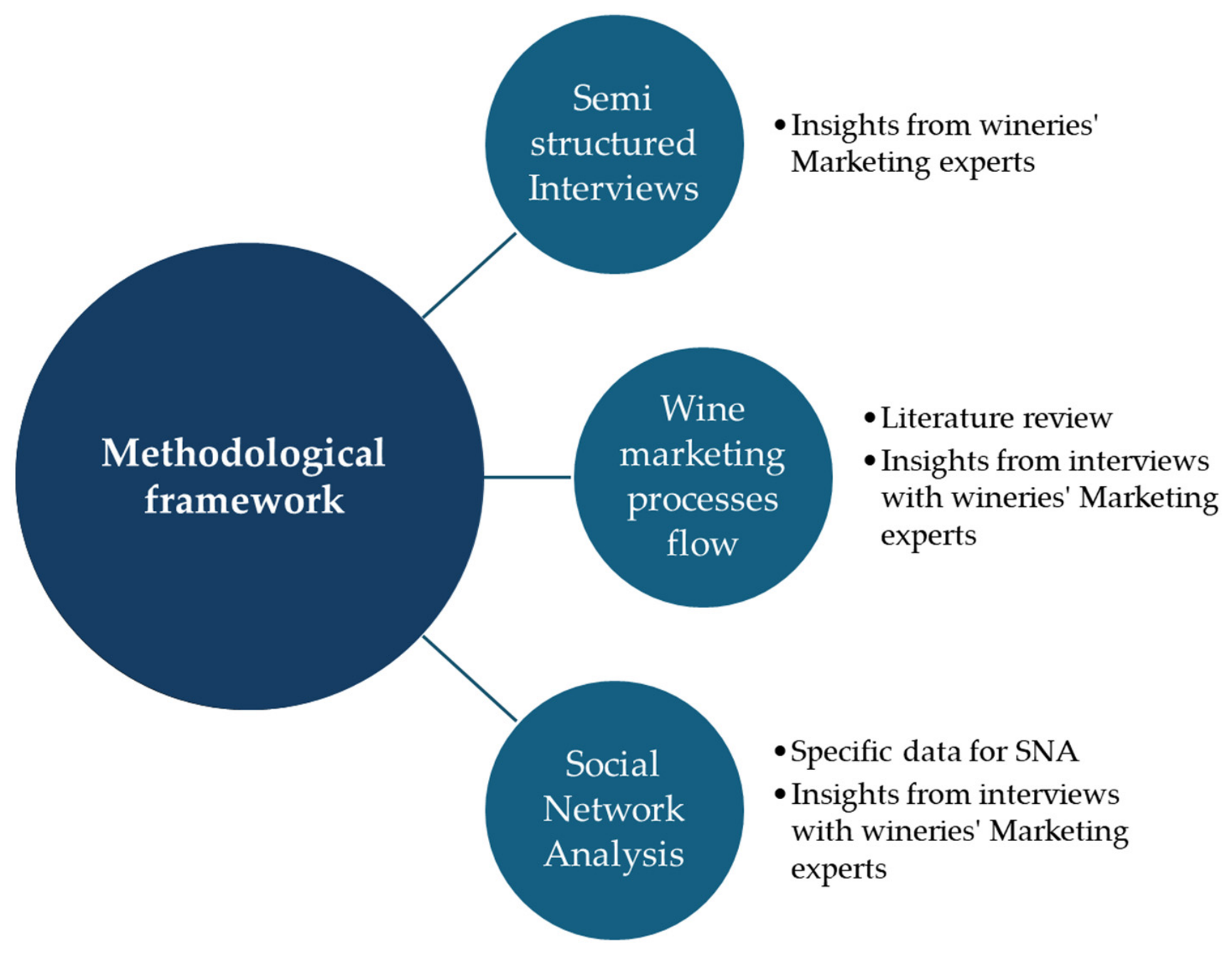
The methodological framework is structured into three complementary steps (
Figure 1) combining (i) semi-structured interviews with wineries’ marketing experts (e.g., Marketing Manager), (ii) wine marketing processes flow, and (iii) Social Network Analysis (SNA).
To ensure the robustness of the findings, several strategies were adopted. First, data triangulation was applied by combining multiple sources of evidence, including interviews, process flow analysis, and network data [
52]. Second, the use of a semi-structured questionnaire ensured consistency across interviews while allowing flexibility for in-depth exploration. Finally, the systematic coding and structuring of data contributed to the reliability and transparency of the analytical process. The adoption of a multi-method approach allows for a comprehensive analysis of the phenomenon under investigation [
53]. Semi-structured interviews provide in-depth qualitative insights into managerial perceptions and practices. The process flow analysis enables the structured representation of marketing activities, highlighting operational dynamics and decision-making processes. SNA captures the relational dimension of the system, allowing the identification of interaction patterns among wineries and stakeholders. The integration of these methods ensures a more robust and multidimensional understanding of AI adoption in wine marketing.
2.1. Sampling Method
This study is based on a purposive sampling method, aimed at selecting wineries that are representative of different structural and strategic profiles within the wine sector [
54]. A total of 17 wineries located in Italy and Spain were included in the analysis. The sample size was considered consistent with the exploratory purpose of this study and the methodologies of data collection and analysis applied.
The selection of the sample was guided by multiple criteria, including geographical location and firm size, in order to ensure heterogeneity and enhance the analytical robustness of the study. Specifically, wineries were classified into small, medium, and large enterprises based on structural and commercial criteria, including the number of employees, the annual volume of bottles sold, and the annual turnover [
54]. Moreover, wineries were selected to reflect different territorial contexts (North, Central, and South) within the two countries, as well as different organizational configurations. Firm size was assessed based on a combination of indicators, including number of employees and annual production levels, allowing the classification of wineries into small, medium, and large enterprises [
54].
The characteristics of the sampled wineries are reported in
Table 1, which provides a detailed overview of their geographical distribution, structural features, managerial roles of interviewees, and primary sales channels. This diversity allows the study to capture a wide range of marketing practices and relational dynamics within this exploratory context.
All selected wineries participated in all the main phases of the research, ensuring coherence between qualitative insights, network-based evidence, and literature data.
Given the exploratory nature of the research, data collection continued until a sufficient level of theoretical saturation was reached, meaning that additional interviews did not provide substantially new insights, but rather confirmed recurring patterns across respondents [
55]. The sample was purposively selected to capture heterogeneity in terms of firm size, market orientation, and level of digitalization, rather than to achieve statistical representativeness. This approach is consistent with purposive (non-probabilistic) sampling strategies, where the objective is not to achieve large sample sizes, but to ensure the selection of theoretically relevant and information-rich cases, allowing for an in-depth understanding of the phenomenon rather than statistical generalization [
54]. Accordingly, the findings are intended to support analytical rather than statistical generalization, contributing to a deeper understanding of AI adoption in wine marketing.
2.2. Semi-Structured Interviews
The first step consisted of an exploratory analysis based on semi-structured interviews conducted with wineries in Italy and Spain [
56]. Semi-structured interviews represent a widely adopted method in exploratory research, as they allow researchers to collect detailed and context-specific insights while maintaining a consistent structure across respondents [
57].
The interviews were conducted between 1 October 2025 and 31 March 2026, with winery managers and key decision-makers, including owners, marketing managers, and commercial managers, who are directly involved in marketing strategies and market development activities. These actors were selected because of their central role in shaping marketing decisions and managing relationships with stakeholders within the wine value chain [
58]. The interviews were guided by a structured interview protocol described in the following paragraph.
The data collected through the interviews played a central role in research design. First, the insights provided by winery managers/specialized marketing operators contributed to refining and validating the process flow related to wine marketing operations developed. Second, the interviews provided additional relational data used to complement the explanation of the Social Network Analysis, supporting a more comprehensive mapping of interactions among actors in the wine value chain. Third, the qualitative responses allowed the collection of in-depth insights regarding wineries’ marketing strategies and their readiness to adopt innovative technologies.
Questionnaire Design
The data collection instrument adopted in this study consisted of a semi-structured questionnaire, specifically designed to collect both qualitative and quantitative data on wineries’ characteristics, marketing strategies, relational dynamics within the wine value chain, and the adoption of innovative technologies [
56,
59]. The questionnaire combined open-ended questions, aimed at capturing in-depth insights and managerial perceptions, with closed-ended questions, allowing the generation of structured and comparable data suitable for quantitative analysis [
60]. Additional details on the structured questions and their measurement scales are provided in
Appendix A. Moreover, to provide a more structured interpretation of AI adoption patterns, a simplified AI maturity framework was developed to classify wineries according to their level of AI adoption [
61,
62]. Specifically, four levels were identified: no adoption (Level 0), basic usage (Level 1), assisted usage (Level 2), and integrated AI systems (Level 3). This classification, grounded in the empirical evidence collected through the interviews, was applied to the sample to capture differences in both the extent and depth of AI adoption across wineries.
Based on its content, the questionnaire can be conceptually organized into five main sections, reflecting the key dimensions of the research [
63]. The first section collected general structural and commercial information about the wineries, including firm age, number of employees, annual production (number of bottles sold), target markets, distribution channels, and product typologies. These variables were used to classify wineries and contextualize their strategic behavior, as well as to support subsequent comparative and statistical analyses. The second section explored the organization of marketing activities within the winery, including internal marketing structures, use of digital tools, communication strategies, target market segments, pricing strategies, and investment in marketing activities. The third section focused on data collection and usage within wineries, including the types of data collected (e.g., sales, customer data, e-commerce data), tools used for data management, and the extent to which marketing decisions are driven by consumer feedback. The fourth section investigated the adoption and perception of innovative technologies, with particular attention to AI applications in marketing. This section included questions on current adoption, perceived usefulness, potential application areas, required competencies, and barriers to adoption. The final section was designed to collect explanatory information regarding the interactions between wineries and their key stakeholders within the wine supply chain. The questionnaire was reviewed and refined prior to data collection to ensure clarity and coherence of the questions.
2.3. Winery Marketing Process Flow
Process flow refers to the sequential progression of information, materials, or activities across a series of interconnected stages, through which specific inputs are transformed into desired outputs in order to achieve organizational objectives [
64]. It is widely employed in managerial and strategic contexts to decompose complex operations into structured, transparent, and logically ordered sequences of tasks, particularly when organizations seek to enhance clarity, control, and process optimization [
65]. As a managerial tool, process flow analysis enables the identification of inefficiencies, bottlenecks, and sources of waste. By visualizing each stage of a process, managers can detect redundant activities or critical points where delays occur, thereby facilitating process redesign and performance improvement [
66]. Furthermore, process standardization contributes to reducing variability and operational errors, ensuring consistency in task execution across organizational actors. Mapping process flows is also a crucial preliminary step prior to the implementation of digital systems, such as customer relationship management (CRM) or Enterprise Resource Planning (ERP) platforms, as it allows organizations to identify tasks suitable for automation and to avoid the risk of digitizing inefficient processes. Methodologically, process flow development typically follows a logical-analytical approach, moving from empirical observation to formal representation, often operationalized through flowcharting techniques [
64,
65].
To develop the wineries’ marketing process flow, a comprehensive review of the academic literature on wine marketing was conducted. These insights were further complemented and refined through qualitative evidence collected from semi-structured interviews with wineries. Building on these theoretical and empirical insights, the processes flow was developed specifically to cover the stages of marketing strategies, CRM, and operational marketing activities. It supports the interpretation of relational dynamics subsequently explored through Social Network Analysis.
2.4. Social Network Analysis
The third step of the research involved the application of Social Network Analysis (SNA) in order to examine the relational structure connecting wineries with the various actors involved in the wine value chain. SNA is a methodological approach widely used in organizational and economic research to analyze patterns of relationships among actors and to understand how these relationships influence information exchange, collaboration, and strategic decision-making [
67,
68].
SNA was adopted in this study to explicitly capture the relational dimension of wine marketing, which cannot be fully understood through firm-level analysis alone. Wineries operate within complex networks of stakeholders whose interactions influence access to resources, information flows, and market opportunities. In this context, a network-based approach allows the identification of structural patterns, central actors, and the intensity of relationships within the wine marketing ecosystem, directly addressing the relational perspective highlighted in the literature and the third research question of this study.
The relational data used to construct the network were derived directly from the interviews conducted with the wineries. During the interviews, respondents were asked to identify the main stakeholders with whom they interact in relation to marketing, distribution, and promotional activities, as well as the frequency of such interactions. These qualitative insights were subsequently structured and coded into quantitative relational data, allowing the construction of the network. This approach enabled the integration of qualitative evidence and network analysis, ensuring consistency between the different methodological components of the study [
69,
70].
The seventeen wineries included in the analysis reported the frequency of their interactions with the same set of stakeholder categories, creating a database for subsequent network analysis. To operationalize the network structure, the information related to interactions was systematically coded and transformed into quantitative data. Specifically, the frequency of interaction between wineries and the different stakeholders was operationalized using an ordinal scale ranging from 0 to 7, where each value represents a different level of interaction intensity (0—Never; 1—Occasionally; 2—Annually; 3—Semi-annually; 4—Quarterly; 5—Monthly; 6—Weekly; 7—Several times a week).
In network terms, wineries and stakeholders were conceptualized as “
nodes”, while the strength of the relationships connecting them, measured through the frequency of interactions, was represented as “
edges” within the network. Stakeholder categories were identified a priori based on existing literature and preliminary qualitative insights, ensuring the inclusion of the most relevant actors within the wine marketing ecosystem. Each category of actor identified in the network was assigned a unique identification code (
label) in order to facilitate its representation and interpretation within the network visualization [
71]. These labels were used to identify the nodes in the network map and correspond to the categories of stakeholders involved in the wine marketing ecosystem. The coding system adopted for node identification is reported in
Table 2. This transformation enabled the construction of a structured dataset suitable for network analysis.
For the SNA, the Gephi software (v.10.1) was utilized [
71]. The coded relational data were organized into Excel spreadsheet and subsequently imported into Gephi for network analysis and visualization [
72]. The network was conceptualized as a two-mode network, linking wineries and stakeholder categories within the wine marketing ecosystem.
Specifically, the relational data were organized into two datasets structured in accordance with the input requirements of the software, ensuring consistency and accuracy in network construction.
The first dataset consisted of a node table including all actors involved in the network, namely wineries and supply chain actors. Each node was defined through three attributes: a unique ID, a corresponding label (representing the actual winery or stakeholder category), and a categorical classification (e.g., enterprise, marketing, technology, supply chain, organization). This structure facilitates both the visualization and the analytical interpretation of the network by distinguishing actors based on their functional role within the ecosystem.
The second dataset consisted of an edge list structured in three columns (source, target, weight), where each row represents the interaction between a specific winery (source) and a stakeholder category (target). The weight corresponds to the reported interaction frequency, measured on an ordinal scale ranging from 0 (no interaction) to 7 (several times per week).
These datasets were imported into Gephi, where the edge list was used to construct a weighted two-mode network linking wineries and stakeholders.
The spatialization of the network was generated using the
ForceAtlas2 layout algorithm, which positions strongly connected nodes closer together and helps reveal structural patterns within the network [
73]. The network map provides the relational structure between wineries and key stakeholders in the wine marketing supply chain. In addition, the selected network metrics were chosen to capture complementary structural properties of the network. Degree centrality was used to assess the level of direct connectivity of each actor, reflecting their level of interaction within the network. Betweenness centrality was employed to identify actors that potentially act as intermediaries or brokers within the relational structure. Network density was considered to evaluate the overall level of interconnectedness among actors. Together, these indicators provide a comprehensive understanding of both local and global network structures. Based on the output, the network structure was analyzed to identify central actors, patterns of connectivity, and the role played by different stakeholders within the wine marketing ecosystem [
74].
3. Results
This section presents the main findings of the study, structured according to the research questions. The results integrate evidence derived from the semi-structured interviews, the process flow, and Social Network Analysis, providing a comprehensive understanding of relational dynamics within the selected wineries, and the role of digitalization and innovative technologies.
3.1. Interview-Based Evidence from the Wineries Sample
A total of 17 wineries were selected, which characteristics are reported in
Table 1. This wineries sample provides an overview of their structural and organizational features, including firm size, production volume, geographical location, and primary market channel, as well as the role of the interviewees. The sample exhibits a heterogeneous composition in terms of size and market orientation, encompassing small, medium, and large wineries with different strategic approaches, ranging from HoReCa-driven to export-oriented and omnichannel models. Such diversity enhances the robustness of the analysis, allowing the identification of both recurring patterns and statistically supported differences across groups.
Market Positioning and Commercial Orientation of Wineries
The analysis of data from interview with marketing managers reveals a heterogeneous yet structured configuration of wineries’ market positioning and commercial strategies, characterized by a widespread adoption of omnichannel approaches, although with significant differences in the relative importance of each channel.
Export markets emerge as the primary volume driver across the sample. Most wineries report that international sales account for a substantial share of total output, typically ranging between 50% and 70%, with peaks observed among Spanish wineries. This strong export orientation reflects both the saturation of domestic markets and the pursuit of higher margins in international contexts. Conversely, the HoReCa channel plays a crucial role as a value-generating mechanism, particularly for wineries positioned in the premium segment. Rather than maximizing volumes, this channel is strategically leveraged to enhance brand reputation, target knowledgeable consumers, and reinforce product positioning within high-quality consumption contexts. Direct-to-consumer (DTC) sales, particularly through enotourism, are increasingly relevant within the commercial strategies of the analyzed wineries. Several cases, specifically related to the small size wineries, highlight how direct sales contribute significantly to overall revenues and represent one of the fastest-growing channels. Beyond economic performance, this channel enables wineries to establish direct relationships with consumers, fostering loyalty and long-term brand engagement. In contrast, the role of large-scale retail distribution (GDO) appears highly polarized. While cooperatives and volume-oriented producers rely on this channel to ensure high sales volumes, although with lower margins, premium and boutique wineries tend to avoid it in order to preserve brand equity and price positioning. E-commerce remains marginal in terms of current sales contribution, generally accounting for a limited share of total revenues. However, it is consistently perceived as a strategic channel for future development, particularly in connection with enotourism and post-visit customer engagement.
From a market perspective, the sample shows a clear international orientation, with only a limited number of wineries maintaining a predominantly domestic focus. At the same time, wineries are adapting their segmentation strategies in response to evolving consumption patterns. While traditional premium producers continue to target experienced and affluent consumers, several wineries are actively seeking to engage younger and less experienced segments through innovative communication strategies and product positioning. Price positioning further reflects the structural diversity of the sample, with three main tiers emerging: volume-oriented producers operating in lower price ranges, premium wineries focused on quality-driven positioning, and ultra-premium producers adopting high-price strategies and territorial branding as a mechanism to reinforce exclusivity and brand identity.
Overall, the findings highlight a dual dynamic within this exploratory setting. On the one hand, the observed wineries exhibit convergence toward similar commercial architectures, particularly in the adoption of omnichannel strategies. On the other hand, significant differentiation persists in terms of channel prioritization, target segments, and pricing strategies, reflecting distinct business models and strategic orientations.
3.2. Winery Marketing Process Flow
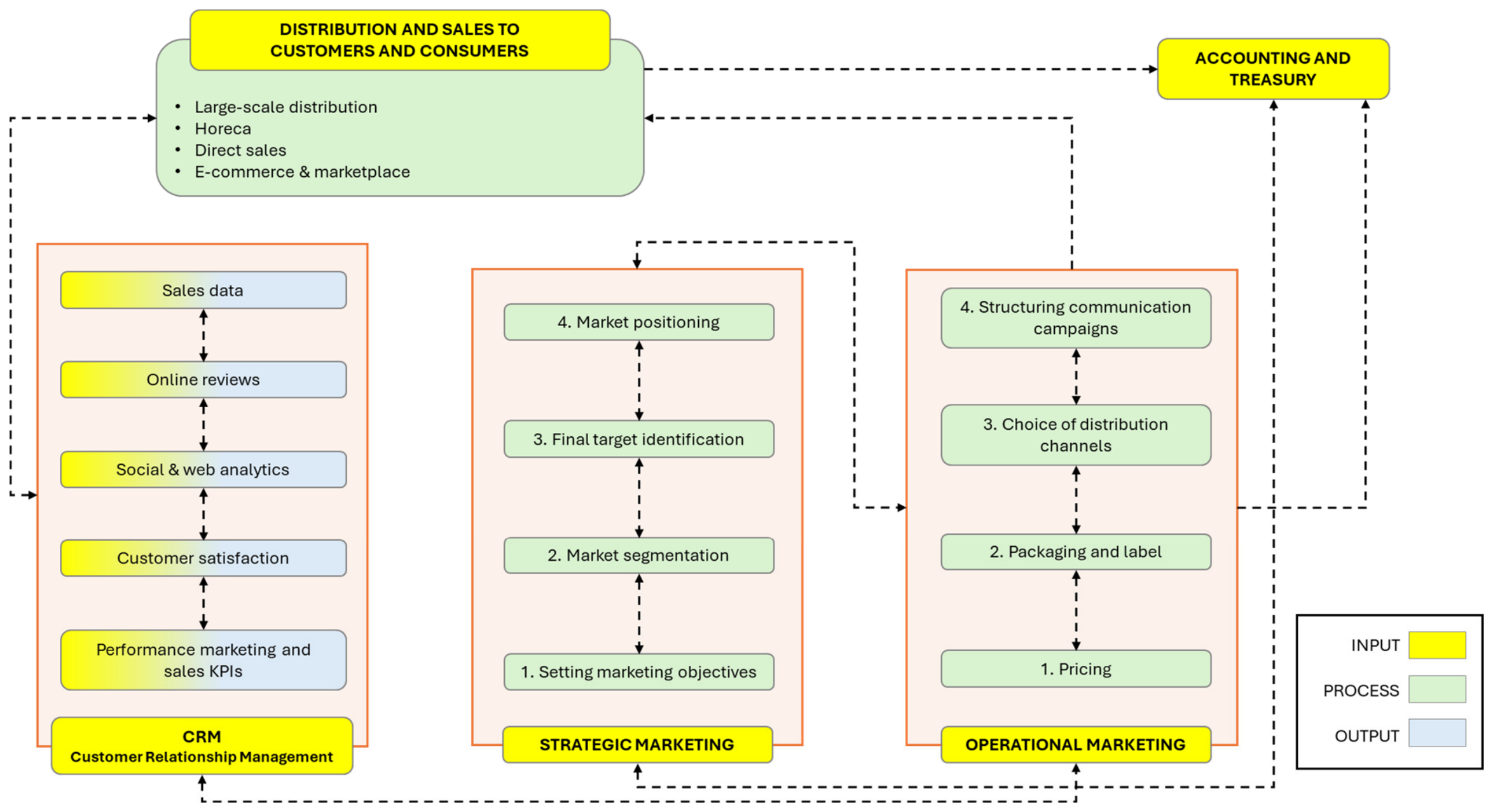
The process flow presented in
Figure 2 provides a structured representation of wine marketing processes within wineries, integrating insights derived from the literature review and semi-structured interviews conducted with key decision-makers. This combined approach allowed the identification of the main stages and feedback mechanisms characterizing marketing activities in the wine sector (RQ1).
The development of the process flow was informed by prior literature on wine marketing, CRM systems, and agri-food value chains [
75,
76,
77], which provided the theoretical foundation for identifying key marketing stages and relational dynamics. These insights were subsequently refined and contextualized through empirical evidence derived from semi-structured interviews.
The process flow (
Figure 2) highlights three interconnected dimensions of wine marketing: strategic marketing, operational marketing, and customer relationship management (CRM)
, all embedded within the broader context of distribution and sales activities.
At the strategic level, the process is structured as a sequential set of activities, including the definition of marketing objectives, market segmentation, target identification, and market positioning. These stages reflect a relatively formalized approach to marketing planning, although their level of implementation varies across wineries. This marketing dimension is characterized by long-term planning, spanning at least ten years. Smaller wineries tend to adopt more intuitive and experience-based strategies, while larger firms exhibit more structured and data-driven approaches.
The operational dimension translates strategic decisions into concrete actions, including pricing, packaging and labeling, selection of distribution channels, and the structuring of communication campaigns. These activities are strongly interconnected and often influenced by both internal capabilities and external constraints, such as market access conditions and the role of intermediaries. This aspect is characterized by short- to medium-term planning and is subject to change over time.
A key element emerging from the process flow is the role of CRM and data-driven feedback loops, which connect performance indicators (e.g., sales data, customer satisfaction, and digital analytics) with strategic and operational decision-making. Several findings from the interviews confirmed this correlation, showing that performance indicators are used by those responsible for managing the company’s operational marketing (whether or not they are specialists) to implement minor modifications to their marketing activities. Strategic marketing, however, remains unaffected and does not suffer any changes in the short term. This highlights the increasing importance of data collection and analysis in shaping marketing activities, although the level of sophistication in data usage varies significantly across wineries.
As confirmed by the information obtained from interviews, the process flow emphasizes the relevance of multiple distribution channels, including large-scale distribution, HoReCa, direct sales, and e-commerce platforms, which reflects how companies are diversifying their sales channels and the complexity of the wine marketing ecosystem.
Overall, the results suggest that wine marketing processes are evolving toward more integrated and data-driven models, but remain characterized by heterogeneity across firms, particularly in relation to organizational structure, digital capabilities, and access to resources. The adoption of advanced technologies, including digital tools and artificial intelligence, is still emerging and unevenly distributed, indicating the presence of potential barriers that limit their full integration into marketing processes.
3.3. Digitalization Levels and Constraints to AI Adoption
Through semi-structured interviews with marketing experts from the selected wineries, we were able to gain an understanding of the current level of digitalization and the barriers that are currently hindering the effective adoption of artificial intelligence in marketing (RQ2).
3.3.1. Digitalization Level and Technological Capabilities
The semi-structured interviews conducted with key marketing decision-makers reveal a moderate level of digitalization across the wineries, although characterized by significant internal asymmetries and structural limitations. Based on normalized Likert-scale evaluations, the average level of digitalization is approximately 3.4 out of 5, indicating an overall intermediate stage of digital maturity. Notably, none of the wineries position themselves in the lowest tier, while only a limited number of report advanced digital capabilities. However, qualitative evidence suggests that these self-assessments may partially overestimate actual digital readiness, particularly when considering the discrepancy between front-end and back-end processes. Digital adoption is highly uneven across operational areas. Marketing and communication emerge as the most digitized domains, with all wineries actively leveraging social media platforms and digital communication tools. In contrast, production and vineyard management remain significantly less digitalized, with only a few cases implementing advanced monitoring systems or data-driven agricultural practices. Intermediate levels of adoption are observed in back-office functions, where ERP systems are commonly used for administrative and logistical management, and in enotourism activities, where digital booking and customer interaction tools are increasingly implemented.
A key structural limitation concerns data management capabilities. While wineries collect substantial volumes of data across multiple domains (e.g., e-commerce, production, sales, enotourism), these datasets are typically fragmented and stored in disconnected systems. The absence, in several cases, of centralized customer relationship management (CRM) infrastructures represents a recurring barrier, limiting the ability to integrate data and extract actionable insights. Consequently, data analysis remains largely manual, often relying on spreadsheets such as Excel, with limited adoption of automated or predictive analytics. From an organizational perspective, the prevalent approach to management of digital capabilities follows a hybrid configuration, in which wineries retain strategic control internally while outsourcing operational tasks to specialized agencies. A smaller group of firms adopts a more integrated model, characterized by the presence of dedicated internal teams managing digital and analytical activities. Conversely, smaller or more traditional wineries often rely on informal or non-specialized internal management, typically driven by owners or general managers, reflecting a lower level of digital institutionalization. Building on these dimensions, the sample can be segmented into three clusters of digital maturity. First, “innovators” exhibit a holistic approach, combining internal expertise with integrated technological systems and experimentation with advanced tools. Second, “outsourcers” demonstrate strong capabilities in digital communication but rely heavily on external partners and exhibit fragmented internal data structures. Finally, “traditionalists” display limited and primarily functional digital adoption, often constrained by organizational and cultural barriers.
3.3.2. AI Adoption Levels
The analysis of interview data reveals a relatively high level of exploratory adoption of AI among the sampled wineries, although predominantly limited to basic and operational applications. Approximately 78% of the wineries report having already experimented with or integrated AI tools into their daily activities, while the remaining 22% do not actively use AI, relying instead on external agencies or passively interacting with algorithm-driven platforms. Despite this relatively high adoption rate, the depth of implementation remains limited. Current use is largely confined to commercially available generative AI tools, particularly large language models (LLMs) such as ChatGPT and similar platforms, which are primarily employed for content creation, communication, and routine marketing tasks. More advanced integrations of AI tools for marketing management are not observed among the sampled wineries. However, only two wineries have initiated collaborations with external agencies (primarily international partners) for the development of AI-based models, indicating early-stage efforts toward more advanced adoption rather than fully integrated systems.
To provide a more structured interpretation of AI adoption, wineries were classified according to a simplified AI maturity framework, distinguishing four levels of adoption: no adoption, referring to wineries that do not actively use AI tools (Level 0); basic AI usage, characterized by isolated and experimental use of AI tools without integration into organizational processes (Level 1); assisted AI usage, where digital systems and data are used to support decision-making, with partial or limited AI integration (Level 2); and integrated AI systems, involving advanced AI applications embedded within organizational processes (Level 3).
Table 3 reports the distribution of sampled wineries across the AI maturity levels. The results show a strong concentration in the lower levels of AI maturity. Specifically, four wineries fall into the non-adoption category, indicating the presence of a relevant barrier to entry in the adoption of AI technologies. The majority of wineries (nine out of seventeen) are positioned at the basic level, relying on isolated uses of AI tools, mainly for content generation and communication purposes. A smaller group (four wineries) can be classified at an intermediate level, where digital infrastructures such as CRM and ERP systems support data-driven decision-making, although AI remains only partially integrated. Notably, no wineries reach the integrated level, confirming that advanced AI capabilities are still absent within the observed context. It is important to note that the two wineries that have initiated collaborations with external partners for the development of AI-based models are classified within Level 2 (assisted AI usage). These cases represent an intermediate stage of adoption, reflecting a transition toward more advanced AI integration. However, at the time of analysis, these wineries have not yet achieved full integration of AI systems within their organizational processes. Notably, both cases correspond to large wineries, suggesting that firm size and resource availability may facilitate progression toward higher levels of AI maturity.
A further insight emerges when considering firm size. Intermediate levels of AI maturity are observed exclusively among medium and large wineries, suggesting that organizational resources, digital infrastructure, and managerial capabilities play a key role in enabling more advanced forms of AI adoption. Conversely, small wineries are concentrated in lower levels, particularly in the non-adoption and basic categories.
Despite the low level of adoption of AI technologies, wineries exhibit a moderately high perception of AI’s potential. The average perceived impact of AI on commercial performance is approximately 3.7 out of 5, indicating a generally optimistic viewpoint. However, this perception is not uniformly distributed: while a subset of wineries expresses strong enthusiasm, others display uncertainty or skepticism, often explicitly linked to limited familiarity with the technology rather than to negative prior experiences. Notably, expectations regarding AI applications converge on strategically relevant domains. Wineries identify market intelligence and customer segmentation as the most promising areas, followed by sales forecasting, customer interaction in enotourism contexts, and the automation of repetitive administrative tasks. This indicates a clear awareness of AI’s potential role in enhancing commercial decision-making and operational efficiency.
The qualitative evidence suggests that AI adoption is not primarily driven by structural factors such as firm size or production volume. Instead, it appears to be strongly influenced by organizational and cultural dimensions. In particular, adoption is associated with the presence of proactive managerial figures who engage in self-directed learning and experimentation. Conversely, non-adoption is often linked to generational dynamics, organizational inertia, and the absence of internal competencies, leading firms to require external guidance before initiating any AI-related process.
3.3.3. Barriers to Innovative Technologies and AI Adoption
The analysis of interview data highlights that the adoption of digital technologies and AI within this exploratory context is constrained by a complex interplay of cultural, technological, and organizational barriers.
A first and particularly critical set of barriers is cultural in nature. Several wineries, especially those characterized by long-standing family ownership structures, exhibit resistance to technological change rooted in generational differences. Traditional management approaches, often based on analog tools and established routines, coexist with more digitally oriented perspectives introduced by younger staff. This generational divide creates internal friction that slow down or hinder the adoption of integrated digital systems. A second major constraint concerns technological and infrastructural limitations, particularly related to data management. Despite the widespread availability of data across multiple sources, such as direct sales, customer interactions, and digital platforms, these datasets are typically fragmented and stored in disconnected systems. The absence of centralized CRM infrastructures emerges as a recurring issue across the sample. As a result, the observed wineries exhibit low levels of data readiness for advanced analytical applications, limiting the feasibility of implementing predictive AI models.
Organizational barriers further exacerbate this condition. A lack of internal digital skills, combined with limited time resources, significantly constrains the ability of wineries to experiment with and adopt new technologies. In particular, the effective use of AI requires specific competencies, such as prompt design and output validation, that are currently underdeveloped within most firms. Consequently, wineries often perceive the need for external support as a prerequisite for initiating AI-related processes. Beyond these structural constraints, the analysis reveals a “consumer data contradiction”. While wineries systematically collect consumer data across multiple touchpoints, the extent to which this information is effectively integrated into decision-making processes varies significantly. Two distinct approaches emerge. On the one hand, a market-driven orientation, more evident among Spanish wineries, relies heavily on consumer feedback to guide product development and commercial strategies. On the other hand, an identity-driven approach, particularly prevalent among Italian wineries, deliberately limits the influence of consumer feedback, prioritizing brand identity, terroir, and stylistic consistency over market adaptation.
Additional concerns related to AI adoption further contribute to the observed gap. The interviewed experts expressed apprehension regarding the potential standardization of products and communication strategies, fearing that excessive reliance on AI could erode differentiation and lead to homogenization within the sector. Data security and confidentiality also represent critical issues, particularly for more structured firms handling sensitive commercial information. Furthermore, the perceived unreliability of AI outputs, including the risk of generating inaccurate or misleading content, reinforces the need for continuous human supervision.
3.4. Social Network Analysis
Among the information gathered during interviews conducted at the 17 wineries, the frequency of interactions between the wineries and other operators in the supply chain was quantified for the purposes of the SNA (RQ3).
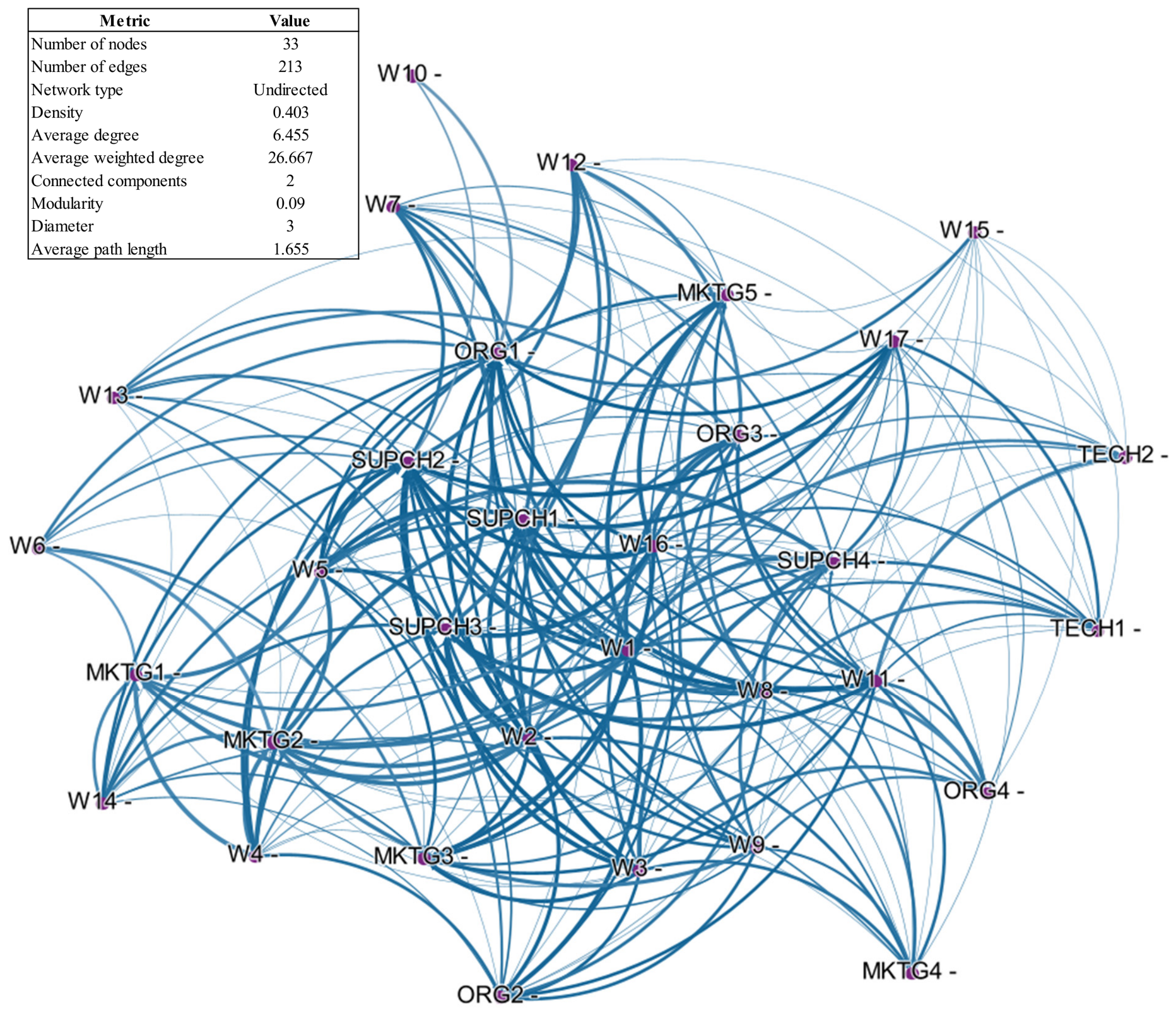
The network visualization presented in
Figure 3 illustrates the relational structure between wineries (
Table 1 and
Table 2) and key operators within the wine marketing supply chain. The network (
Figure 3) appears to be highly interconnected, with a dense core of interactions (edges) linking wineries and multiple categories of actors (nodes). The network consists of 33 nodes and 213 directed edges. Of these, 17 nodes represent the wineries included in the study, while the remaining 16 correspond to stakeholder categories (e.g., suppliers, institutions, and other relevant actors) that were consistently considered across all wineries. Specifically,
Figure 3 shows the frequency of interaction of each winery with a heterogeneous set of stakeholders within the wine value chain, including marketing actors (MKTG1: marketing agencies; MKTG2: communication agencies; MKTG3: wine critics, wine guides, or industry journalists; MKTG4: influencers or content creators; MKTG5: digital platforms or wine e-commerce sites), technology providers (TECH1: providers of innovative digital solutions to support marketing and sales; TECH2: providers of AI-based solutions to support marketing and sales), and supply chain operators (SUPCH1: foreign importers and/or distributors; SUPCH2: domestic distributors; SUPCH3: buyers; SUPCH4: large-scale retail chains—GDO), as well as institutional and organizational actors (ORG1: protection consortia (DO); ORG2: producer organizations (OP); ORG3: other types of associations; ORG4: universities, research centers, or innovation consultants). Overall, the figure highlights a highly articulated and multi-actor network, characterized by numerous and diversified interactions among stakeholders.
Analysis of the map reveals the central role played by specific categories of actors within the supply chain, such as those related to supply chain operators, highlighting their importance in supporting marketing activities and coordination processes within the system. At the same time, wineries are distributed throughout the network, indicating relatively broad engagement with various types of actors, rather than isolated or fragmented relational models. This is supported by the overall network density (0.403) suggests a relatively high level of interconnectedness based on reported interaction frequency, indicating that a large proportion of potential relationships are realized. The average degree (6.455) further confirms that actors maintain multiple connections within the network, while the high average weighted degree (26.667) points to the presence of relatively strong and/or frequent interactions among actors.
A quite homogeneous structure of the network suggests that wineries tend to exhibit similar relational behaviors in their interactions with stakeholders. This may indicate that marketing practices are not highly differentiated across firms but rather follow common patterns within the wine ecosystem. This interpretation is further supported by the evidence collected through the interviews, which revealed a substantial convergence in how wineries organize and manage their marketing activities, particularly in terms of stakeholder engagement and channel selection.
The visual structure also suggests the presence of multiple overlapping connections, rather than clearly separated clusters. This is consistent with the low modularity value (0.09) which reveals the absence of clearly defined clusters, indicating a structurally homogeneous network. This finding suggests that actors in the wine marketing ecosystem tend to interact in a relatively uniform manner rather than forming distinct communities. Additionally, the presence of two connected components indicates that a small portion of the network remains marginal or weakly integrated.
Furthermore, the strength and density of the connections highlight the existence of frequent interactions between wineries and stakeholders, which may facilitate information exchange and coordination processes, although it does not necessarily imply formal collaboration.
Since the connections are based on self-reported interaction frequencies rather than directional flows, the network was also analyzed in its undirected form to provide a more robust assessment of its structural properties. The structure exhibits a diameter of 3 and an average path length of 1.655, indicating a highly connected yet non-trivial relational structure. These values suggest that actors are, on average, separated by fewer than two steps, which could favor relatively efficient interaction and a potential exchange of information across the network while still maintaining a meaningful structural differentiation.
Overall, the results suggest that the wine marketing ecosystem appears to operate as relatively interconnected network, in which central actors play a crucial role in enabling coordination and market access, while wineries maintain diversified relationships with multiple stakeholders. It is important to note that the network is constructed based on self-reported interaction frequency, which captures the intensity of contacts between actors but does not directly reflect the quality of relationships, such as trust, collaboration depth, or data exchange.
Further relevant finding concerns the position of technology providers and innovative-related actors, which appear to occupy more peripheral positions within the network. This suggests that, despite the increasing relevance of digitalization, technological innovation is not yet fully integrated into the wine marketing ecosystem. This result is consistent with the qualitative evidence collected during the interviews. While wineries reported receiving frequent contacts and proposals from technology providers, none of them indicated the existence of stable and ongoing collaborations with these actors. This highlights a gap between the availability of technological solutions and their actual adoption, suggesting the presence of barriers that limit the integration of innovation into marketing practices within the sampled wineries.
4. Discussion
The findings suggest that wine marketing processes within wineries are structured according to a multi-layered configuration, as illustrated in the marketing processes flow (
Figure 2), which integrates strategic and operational dimensions, with the latter fully interconnected with a CRM system. Within this process flow, data collection plays a pivotal role, acting as the vector to marketing decision-making.
In particular, the
Figure 2 highlights how performance indicators, such as sales data, customer satisfaction, and digital analytics, are intended to feed back into both operational and strategic marketing processes, supporting continuous adaptation and alignment with market dynamics [
78,
79]. In this sense, marketing activities are conceptually designed to be data-driven, with CRM systems functioning as the core infrastructure enabling such integration [
80,
81,
82]. Despite this evidence, insights from the interviews reveal that in less structured wineries, which are the most diffused in numerical terms [
18], marketing strategies are decided empirically and CRM systems (or other types of data management systems) are often absent or only partially implemented.
Although participating wineries collect substantial amounts of data across multiple touchpoints, these data are often fragmented across disconnected and relatively basic systems, limiting their effective use in coordinated marketing decisions. A clear gap therefore emerges between the data-driven structure of the marketing processes flow and the effective strategic use of data, as marketing decisions continue to rely largely on experiential knowledge and managerial intuition rather than systematic analysis. This limitation constrains the evolution of marketing processes and reduces the capacity to adopt advanced technologies, particularly AI-based tools that require integrated and structured data systems [
60].
In relation to this, the results highlight a moderate level of digitalization across sampled wineries, characterized by a significant imbalance between front-end and back-end processes. Digital tools are widely adopted in communication and customer-facing activities, particularly in social media and promotional channels. However, as confirmed by previous study, this front-end digitalization is not matched by an equivalent level of integration in internal data infrastructures [
49]. The most frequent observed model can be described as a “hybrid” approach, in which wineries retain strategic control internally while outsourcing operational digital activities to external actors (e.g., communication and marketing agencies). While this configuration facilitates the adoption of digital communication tools, it simultaneously may limit the development of internal capabilities and contributes to the fragmentation of data systems. The process flow analysis highlights a structured but still partially fragmented marketing process, where traditional activities coexist with emerging data-driven practices. While digital tools are increasingly integrated into communication and customer interaction phases, data collection and analysis remain only partially systematized. In particular, while data are generated through customer interactions and digital channels, they are not systematically reintegrated into marketing processes. This results in a predominantly linear process structure, where information flows are only partially exploited and feedback loops remain weak or underdeveloped. This suggests that wineries are in a transitional stage, where digitalization is present but not yet fully embedded into strategic decision-making processes. This fragmentation reduces the effectiveness of data-driven approaches and limits the transition toward more advanced, AI-supported marketing systems. As a result, interviewed experts report a relatively low level of suitability to adopt advanced technologies for marketing in wineries. The lack of centralized data collection systems combined with limited analytical capabilities constrains the transition toward more sophisticated, data-driven practices. This condition suggests that digitalization in this exploratory setting is still at an intermediate stage, where operational tools are in place, but strategic integration remains limited.
As reported in the literature, findings suggest that innovative technologies, particularly AI, have the potential to significantly transform marketing processes and, accordingly, those of wineries as well. However, within this exploratory context, this potential remains largely unrealized in the current stage of wineries development. While the experts interviewed demonstrate a relatively high level of awareness regarding the strategic relevance of AI for marketing, its actual implementation is still limited to basic and operational uses, such as content generation and communication support. The limited impact of AI is primarily explained by a set of interrelated barriers. From a theoretical perspective, these findings can be interpreted through the Technology–Organization–Environment (TOE) framework, which explains technology adoption as the result of the interaction between technological, organizational, and environmental factors [
83,
84]. From a technological perspective, the fragmentation of data across multiple, non-integrated systems represents a critical constraint, preventing the development of predictive and analytical capabilities. This finding is consistent with prior studies, which emphasize that fragmented data infrastructures limit the development of advanced analytics and AI capabilities [
15,
37,
39]. In line with previous studies, the results highlight a partial level of digital readiness, characterized by the widespread adoption of front-end digital tools but limited integration of internal data infrastructures. This suggests that technological capabilities remain insufficient to support advanced AI applications.
From an organizational perspective, the lack of internal digital skills and the reliance on external actors limit the ability to experiment with and integrate advanced technologies. The results align with previous studies [
8,
17,
29]: the prevalence of hybrid models and the reliance on external actors indicate limited internal capabilities and a lack of structured data management processes, which constrain the effective adoption of AI-driven marketing solutions.
At the environmental level, the network analysis reveals a relational structure in which traditional actors occupy central positions, while technology-oriented actors remain peripheral. This configuration suggests that the broader ecosystem does not yet fully support the integration of advanced digital and AI-based practices. This result aligns with prior research highlighting the role of relational ecosystems in shaping access to knowledge, resources, and innovation capabilities [
3,
30,
33].
Overall, these findings suggest that AI adoption in this exploratory setting is not constrained by a single dimension, but by the misalignment between technological readiness, organizational capabilities, and environmental conditions.
Cultural factors further reinforce this state of backwardness, as resistance to change and generational divides slow down the adoption of new tools. In addition, the analysis highlights a fundamental tension between innovation and identity. While some wineries take a market-driven approach, leveraging data and analytics to guide decision-making, others deliberately limit their use of such tools because they mistakenly fear losing their brand identity and its connection to the terroir. This tension reflects a broader trade-off between market responsiveness and product authenticity, which may partially constrain the adoption of AI-driven strategies. Nevertheless, wine marketing managers are often unaware that AI can actually help create, validate, and communicate the identity of a brand and a wine [
25,
48,
85,
86,
87]. Hopefully, some wineries start to adopt CRM with AI technology integration, demonstrating the potential of this implementation on marketing field [
81].
The results point to a significant gap between the perceived potential of AI and its effective implementation. This gap is not primarily driven by technological limitations, but rather by the lack of integrated data infrastructures, organizational capabilities, and cultural readiness. In this exploratory context, wineries can be described as exhibiting a condition of “latent potential”, in which the awareness of AI’s effectiveness coexists with limited practical adoption. This limited level of digital and data management development suggests that individual wineries may face structural constraints in developing sufficiently robust and integrated data systems on their own.
Implications for Wineries
In this context, stronger collaboration with external supply chain operators (and potentially among wineries themselves) could represent a strategic pathway to access more comprehensive and structured datasets, better supporting the future implementation of advanced, data-driven, and AI-based marketing technologies [
88]. In line with this argument, the SNA results (
Figure 3) suggest that sampled wineries operate within a highly cohesive and interconnected relational network, characterized by frequent interactions among key operators in the wine supply chain. From this perspective, relational dynamics appear to represent a critical component of innovation capacity. This dense structure may facilitate coordination, information exchange, and access to distribution channels, reinforcing the central role of relational capital within the wine marketing system. From this perspective, such network configurations could potentially support the development of more structured and shared data flows, partially compensating for the internal limitations observed at the firm level. Although relationships with stakeholders represent a fundamental strategic resource for wineries, their current structure does not appear to fully support the transition toward data-driven and innovative marketing models. A key limitation lies in the lack of structured approaches to data collection and organization, which may represent a significant barrier to the effective use of information for strategic purposes. However, an even more critical constraint is the absence of interaction and collaboration among wineries themselves. None of the interviewed firms reported systematic cooperation with other wineries; rather, relationships are predominantly characterized by competitive dynamics and perceived conflict, potentially limiting opportunities for collective learning and shared development. In addition, despite traditional operators occupy central positions within the network, technology-oriented actors remain peripheral. This lack of collaboration may reduce the potential for aggregating data across organizations, which could otherwise lead to the creation of more comprehensive and structured datasets. Such shared data infrastructures could represent a crucial resource for the implementation of advanced, data-driven technologies, which potentially act as a catalyst for technological transition and wine SMEs competitiveness [
89]. Indeed, although strong relationships with traditional operators facilitate market access and contribute to the convergence of business practices, thereby reinforcing similar distribution structures among wineries, the lack of integration of technology providers into the network may constrain cooperation in the use of technology and, consequently, limit the potential development of AI-based marketing practices within the investigated context [
90].
5. Limitations and Future Research
This study presents some limitations. First of all, the analysis is based on a relatively small and purposive sample of 17 wineries, which limits the generalizability of the findings. While this approach is consistent with the exploratory nature of the research, the results should be interpreted as indicative rather than representative of the broader wine sector. In addition, the qualitative nature of the study implies an interpretative perspective, which, while enabling in-depth insights, may limit the possibility of drawing causal inferences. Moreover, the present analysis is limited to wineries located in Italy and Spain, which may reflect specific contextual, cultural, and institutional characteristics. Future research will extend the investigation to other major wine-producing countries in Europe, in order to validate and generalize the findings across a wider set of contexts. The focus on these two countries therefore reflects both their strategic relevance and the need to develop an initial, in-depth understanding of the phenomena under investigation.
Future research could further explore the dynamics of digital transformation in the wine sector through longitudinal studies, in order to capture how wineries evolve over time in terms of data integration and technology adoption.
Quantitative approaches could complement these findings by testing the relationships between digitalization, data readiness, and AI adoption across larger samples, providing more generalizable insights.
Finally, future studies could investigate collaborative models for data sharing among wineries, examining how inter-firm cooperation may contribute to the development of shared data infrastructures and facilitate the adoption of advanced technologies, including AI.
6. Conclusions
This study investigates wine marketing processes, digitalization, and the adoption of innovative technologies within sampled wineries by integrating qualitative evidence and Social Network Analysis. The results of this exploratory study show that, although marketing processes are conceptually structured as data-driven, this configuration is only partially implemented in practice. A clear gap emerges between the theoretical process flow and actual wineries behavior, primarily due to fragmented and poorly integrated data infrastructures. The findings highlight a moderate and uneven level of digitalization, characterized by a “hybrid” model in which front-end digital tools are widely adopted, while back-end data integration remains limited. This imbalance constrains the transition toward advanced, data-driven marketing practices and reduces wineries’ readiness to adopt innovative technologies. Although AI is widely recognized as having transformative potential, its implementation remains limited and exploratory. This is mainly due to structural barriers, including data fragmentation, lack of internal capabilities, and cultural resistance, resulting in a condition of “latent potential”. The study also shows that relational networks play a central role in shaping marketing strategies but currently do not fully support digital transformation. In particular, the absence of collaboration among wineries in the context investigated and the marginal role of technological operators limit the development of shared data infrastructures and the diffusion of innovation. In this context, policy interventions could play a crucial role. European policies aimed at fostering inter-firm cooperation could support the creation of shared data ecosystems and enhance access to structured information. Combined with initiatives addressing cultural barriers that limit collaboration, such policies could significantly accelerate innovation processes, especially in marketing-related activities. Overall, the findings suggest that the main constraint to technological advancement in this exploratory setting is not the availability of innovation, but the lack of integrated data systems, organizational readiness, and collaborative structures. Addressing these gaps represents a key priority for enabling the transition toward more advanced, data-driven marketing models.




 ,
,