


Simple Summary
Apple pomace (AP) has antioxidant and immune-enhancing functions as a by-product used in animal feed. In the present study, a total of 120 weaned pigs were used to investigate the effects of fermented AP on plasma biochemical and antioxidant indicators and the fecal microbiota of weaned pigs. The average daily gain in the AP group was significantly increased. In the AP group, the concentration of albumin and superoxide dismutase were increased, while the aspartate aminotransferase and malondialdehyde were decreased. Interestingly, the abundance of Lactobacillus, as well as the relative abundance of genetic information processing pathways, was significantly increased in the AP group. Our study showed that the supplementation of fermented AP has beneficial impacts on the growth, plasma biochemistry and immune indicators, and gut microbiota of weaned pigs.
Abstract
As a by-product, apple pomace (AP) is very rich in pectin, polyphenols, carbohydrates and minerals, which have antioxidant and immune-enhancing functions on animals. To investigate the effects of fermented AP on pigs, a total of 120 weaned pigs were allocated into one of two treatments: the control (CON) group, fed with diets containing 5% silage AP; or the AP group, fed with diets containing 5% silage corn-AP for 28 d. The average daily gain was increased (p < 0.001) in the AP group compared with the CON group. The concentration of albumin and superoxide dismutase were increased by 8.98 g/L (p < 0.001) and 2.9 U/mL (p = 0.001), while the concentration of aspartate aminotransferase and malondialdehyde were decreased by 23.59 U/L (p < 0.001) and 2.33 nmol/mL (p = 0.003) in the AP group, respectively. There were 46 and 125 unique OTUs in the AP and CON groups, respectively. In the AP group, the abundance of Lactobacillus was increased (p < 0.003), but the abundances of Clostridium_sensu_stricto_1 (p = 0.001), Terrisporobacter (p = 0.026), Ruminococcus (p = 0.001) were decreased. In addition, the relative abundance of genetic information processing pathways was increased (p = 0.001) in the AP group, while the relative abundance of cellular processes had a tendency to decrease (p = 0.056) in the AP group. Above all, the supplementation of fermented AP has beneficial impacts on the growth, plasma biochemistry and immune indicators, and gut microbiota of weaned pigs.
1. Introduction
Apples, as one of the most popular fruits, are available in a wide range of products in our daily life, such as fresh apples, apple juice, apple cider, and apple puree [1]. The production of apples in 2019 was approximately 87.24 million tons in the world [2]. As a by-product, apple pomace (AP) is rich in pectin, polyphenols, carbohydrates, and minerals, which have antioxidant and immune-enhancing functions in animals [3,4,5]. However, fresh AP contains a large amount of water and causes environmental pollution due to its low biodegradability and unreasonable utilization [6]. In addition, AP is less effective when used directly because it contains a certain amount of anti-nutrients, such as lignin and cellulose [7,8]. Direct supplementation of this anti-nutrient-laden pomace may reduce the growth performance of animals [9].
After fermentation, the percentages of protein and other beneficial ingredients are increased in AP, which improves the nutritional value of AP as animal feed [10]. Since AP provides good conditions for fungal enzyme production [11], it is the best substrate for solid-state fermentation. After a combination of Candida utilis and Aspergillus niger under solid-state fermentation conditions, the protein percent of dry AP and pectin-extracted AP increased by 20% and 17%, respectively [12]. Fermentation using P. ostreatus and P. chrysosporium increased the ash and crude protein content and reduced the fiber content of AP [13].
In this study, we hypothesized that fermented AP has beneficial impacts on growth performances, plasma biochemical indicators, and gastrointestinal microbiota diversity. Therefore, this study was conducted to investigate the effects of fermented AP on the growth performance, plasma biochemical and immune indicators, and gastrointestinal microbiota diversity of weaned pigs.
2. Materials and Methods
2.1. Experimental Design, Animals, and Housing
The animal experiment was carried out in Xinjiang Hongsheng Pastoral Culture Co., LTD., Alar, China. This study was approved by the Nanjing Agricultural University Animal Care and Use Committee (SYXK Su 2017-0027). AP produced in Alaer (Xinjiang, China) was supplemented in weaned pigs’ feed as silage. The silage for the control group contained corn and water, and probiotic (1.0 × 10⁶ CFU/kg of Bacillus spp. and 1.0 × 10⁶ CFU/kg of Saccharomyces cerevisiae; Henan Ruzhou Shengkang Biotechnology Co., Ltd., Pingdingshan, Henan, China). The difference between the experimental and control silage was that the silage in the experimental group contained 10% AP solids, but the silage in the control group did not contain AP solids. According to a previous study, the final silage contained 40% moisture and 60% solids [14]. Before the mixing, the bacteria and brown sugar were dissolved in water at 35 °C in the following proportion: 100 g bacteria and 3 kg brown sugar per 12 kg water. After the mixing, the silage was then sealed in vacuum bags. The pH value of the silage was measured by a pH meter (pH-Star, Matthaus LLC, Germany). It was mixed with other ingredients for preparing the feed of weaned pigs before feed administration. The chemical composition of AP silage is shown in Table 1.
Table 1.
Chemical composition of corn and corn-apple pomace (AP) silage (per dry matter-dry matter basis) (g/kg).
A total of 120 weaned pigs [Duroc × (Landrace × Large White)] at 35 d of age were randomly allocated into one of two treatments: the CON group, fed with a diet containing 5% silage corn; or the AP group, fed with a diet containing 5% silage corn-AP (on a solid basis, w/w). The experiment lasted for 25 days. The composition and nutrient level of the basic diet is shown in Table 2. The pens were disinfected with high-pressure water and fumigated to reduce viral and bacterial contamination. During the experiment, the pigs were fed and watered ad libitum by stainless steel feeders and nipple drinkers. The temperature in the pig barn is automatically controlled between 21 and 25 °C by exhaust fans and hot blast heaters.
Table 2.
Basic diet composition and nutrient levels of the CON and AP (apple pomace) groups.
2.2. Growth Performance and Diarrhea Rate of Weaned Pigs
At the beginning and end of the experiment, we weighed pigs and recorded the feed intake by weighing the provided and remaining feed in each pen. In addition, the weaned pigs were regularly observed at 07:30 am every day, and the overall fresh feces of the pigs in each pen were scored according to the criteria: 1 = firm and shaped feces, 2 = soft and shaped feces, 3 = loose feces, and 4 = watery feces [16]. Fecal scores equal or above three were considered as diarrhea. The diarrhea rate, average daily gain (ADG), average daily feed intake (ADFI), feed-to-weight ratio (F:G) and were calculated at the end of the trial. The diarrhea rate is equal to the number of pigs with diarrhea divided by the number of experimental pigs and the number of days of experimentation.
On d 28 of the trial, 40 pigs were selected randomly (5 pigs per pen) for anterior vena cava blood collection into a tube (5 mL) with anticoagulant heparin sodium. The blood samples were centrifuged at 4 °C, and the plasma samples were stored at −20 °C.
2.3. Plasma Biochemical Indicators of Weaned Pigs
The concentrations of albumin (ALB), urea nitrogen (BUN), total cholesterol (TC), total protein (TP), the activities of alanine aminotransferase (ALT), and aspartate aminotransferase (AST) were determined using ELISA kits (Jiancheng Institute of Biological Engineering, Nanjing, China). The sensitivities of the kits are as follows: ALB: 0.1 g/L; BUN: 0.1 mmol/L; TC: 0.1 mmol/L; TP: 0.1 g/L; ALT: 1.0 U/L; and AST: 1.0 U/L. The concentrations of activities of total antioxidant capacity (T-AOC), malondialdehyde (MDA), and superoxide dismutase (SOD) in plasma were analyzed using ELISA kits (Nanjing Jiancheng Institute of Biological Engineering, Nanjing, China). The sensitivity of the kit is as follows: MDA: 0.1 nmol/mL; T-AOC: 0.1 mmol/gprot; and GSH: 10 μmol/L. The concentrations of immunoglobulin A and G (IgA and IgG) were tested by ELISA kits (Jiancheng Institute of Biological Engineering, Nanjing, China) with an assay sensitivity of 0.1 mg/mL. A multimode reader (Tecan A-5082, Tecan Trading Co., LTD., Mannedorf Switzerland) was used to detect all indicators of ELISA.
2.4. DNA Extraction and 16S RNA Gene Sequencing
On d 25 of the experiment period, 20 pigs (10 pigs per group) were randomly selected to collect fresh feces from the rectum. The feces samples (n = 20) were immediately frozen in liquid nitrogen until DNA extraction. The Powerfecal DNA Isolation Kit (MoBio Laboratories, Carlsbad, CA, USA) was used to extract fecal DNA. The DNA quality and purity were checked by agarose gels and a NanoDrop2000 spectrophotometer (ThermoFisher Scientific, Inc., Waltham, MA, USA). The primers 338F (5′-ACTCCTACGGGAGGCAGCAG-3′) and 806R (5′-GGACTACNNGGGTATCTAAT-3′) were used to amplify the V3 to V4 hypervariable region of the bacterial 16S rRNA gene. An 8-digit barcode sequence had been added to the 5′ end of the forward and reverse primers for each sample (Allwegene, Beijing, China). The PCR was performed on a Mastercycler Gradient (Eppendorf, Hamburg, Germany) in a 25 μL reaction mixture: 3 μL BSA (2 ng/μL), 2 μL template DNA, 12.5 μL 2× Taq PCR MasterMix, 1 μL Forward and Reverse Primers (5 μM), and 5.5 μL ddH2O. The PCR program: first, 95 °C for 5 min, followed by 28 cycles of 95 °C for 45 s, 55 °C for 50 s, and 72 °C for 45 s, with a final extension of 10 min at 72 °C. An Agencourt AMPure XP Kit (Beckman Coulter, Inc., Brea, CA, USA) was used to purify the PCR products. A Miseq PE300 platform at Allwegene Company (Beijing, China) was used to perform the 16s RNA gene sequencing. After the run, image analysis, base calling, and error estimation were analyzed by Illumina Analysis Pipeline Version 2.6.
2.5. Bioinformatics Analysis of Sequencing Data
The raw sequences that had a low quality score (less than 20), were shorter than 120 bp, did not exactly match to primer sequences and barcode tags, or contained ambiguous bases were removed from consideration; they were then separated using sample-specific barcode sequences. The Uparse algorithm of Vsearch (v2.7.1) (https://github.com/torognes/vsearch) (accessed on 1 November 2021) software was used to cluster qualified reads into operational taxonomic units (OTUs) at a similarity level of 97%. All sequences were used to classify into different taxonomic groups against the Silva138 database (http://www.arb-silva.de) (accessed on 2 November 2021) using the BLAST tool [17].
The rarefaction curves and richness and diversity indices were calculated using QIIME (v1.8.0). To compare the membership and structure of bacterial communities in different groups, the heat map of the top 20 OTUs were generated using Mothur [18]. R software (v3.6.0) was used for bar-plot diagram analysis based on the results of taxonomic annotation and relative abundance. Clustering analyses and PCA were analyzed to examine the similarity between different samples. The evolution distances were calculated using the Bray Curtis algorithms.
OTUs were generated by Uparse [19] clustering using the above clean_tags, and the OTUs with 97% similarity were analyzed. Venn diagrams were plotted to count the number of shared and unique OTUs among multiple samples, and species abundance and species evenness were analyzed using Rank-abundance. Alpha diversity analyses were used to detect the abundance and diversity of microbial communities, including a series of indices: chao1, obserd_species, PD_whole_tree, and Shannon. Beta diversity analysis was used to compare between groups. Multiple subgroups were compared using Linear discriminant analysis Effect Size (LEFSe) analysis to identify species with significantly different abundances between groups. The functions of the 16S RNA gene were predicted by PICRUSt software. The abundance of each functional class was calculated based on the information in the Kyoto Encyclopedia of Genes and Genomes (KEGG) database.
2.6. Statistic Analysis
The data of growth performances were analyzed by the MIXED procedure in SAS 9.4 (SAS Institute Inc., Cary, NC, USA) software with dietary treatment, gender, and their interaction as fixed effects and pen as a random effect. Data of diarrhea rate were analyzed by Chi-square tests. The results were reported as mean ± standard error of the mean (SEM). Tests were considered tendencies at p < 0.10 and significant at p < 0.05.
3. Results
3.1. Growth Performance and Diarrhea Rate of Weaned Pigs
As shown in Table 3, ADG was greater (p < 0.01) in the AP group than in the CON group. There were no significant differences in ADFI, F:G, and diarrhea rates between the AP and CON groups (p > 0.05).
Table 3.
Effects of fermented AP (apple pomace) on growth performance of weaned piglets.
3.2. Blood Biochemical, Antioxidant Stress and Immune Indicators
As shown in Table 4, the concentration of ALB and SOD in the AP group was greater than those in the CON group (p < 0.01); while the concentration of AST and MDA in the AP group was less than those in the CON group (p < 0.01). The concentration of TP has a tendency to increase in the AP group compared with the CON group (p = 0.054), while the concentration of ALP has a tendency to decrease in the AP group compared to the CON group (p = 0.088).
Table 4.
Effects of fermented AP (apple pomace) on blood biochemical, blood antioxidant capacity and immune indicators of weaned piglets.
3.3. Gastrointestinal Microbiota Diversity
16S RNA gene sequencing was performed on fecal samples to evaluate the effect of fermented AP on the gastrointestinal microbiota diversity of piglets. The rarefaction curve indicated that the sequencing depth was sufficient (Supplement Figure S1a). Analysis of OTUs by Venn diagram reveals that 46 and 125 OTUs are specific to the AP and CON groups, respectively (Supplement Figure S1b).
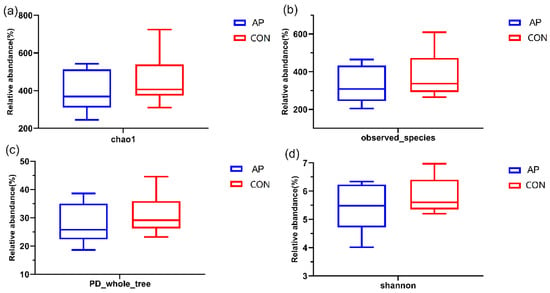
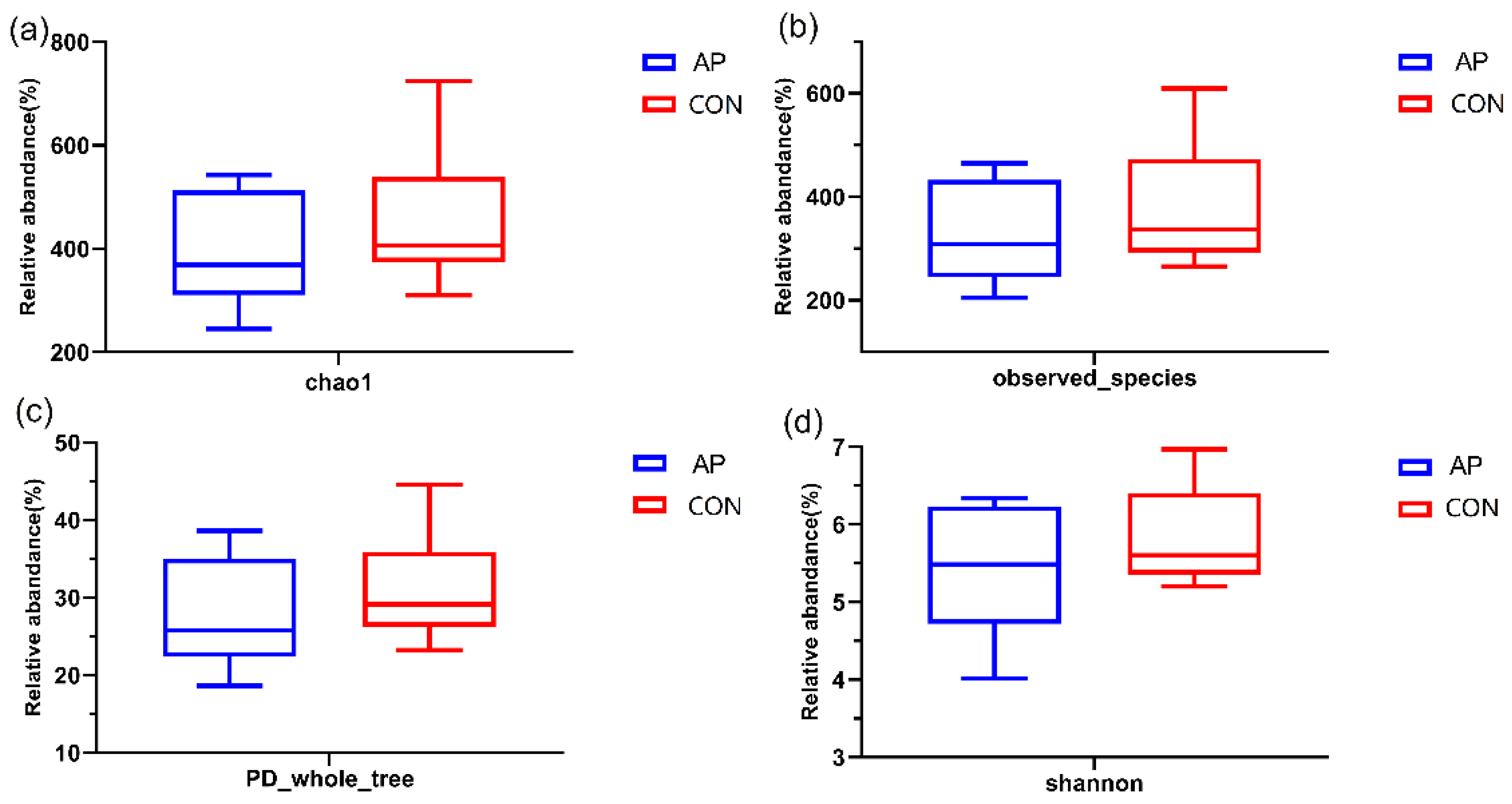
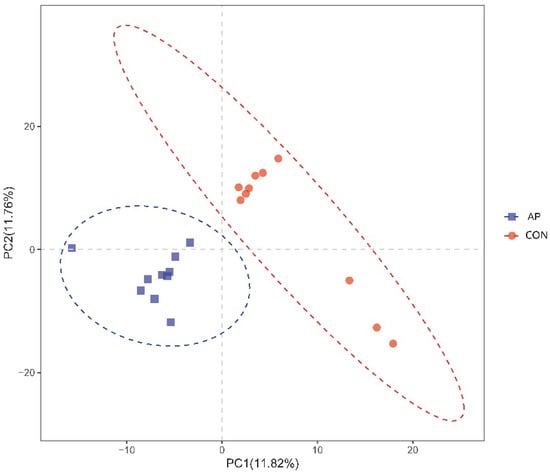
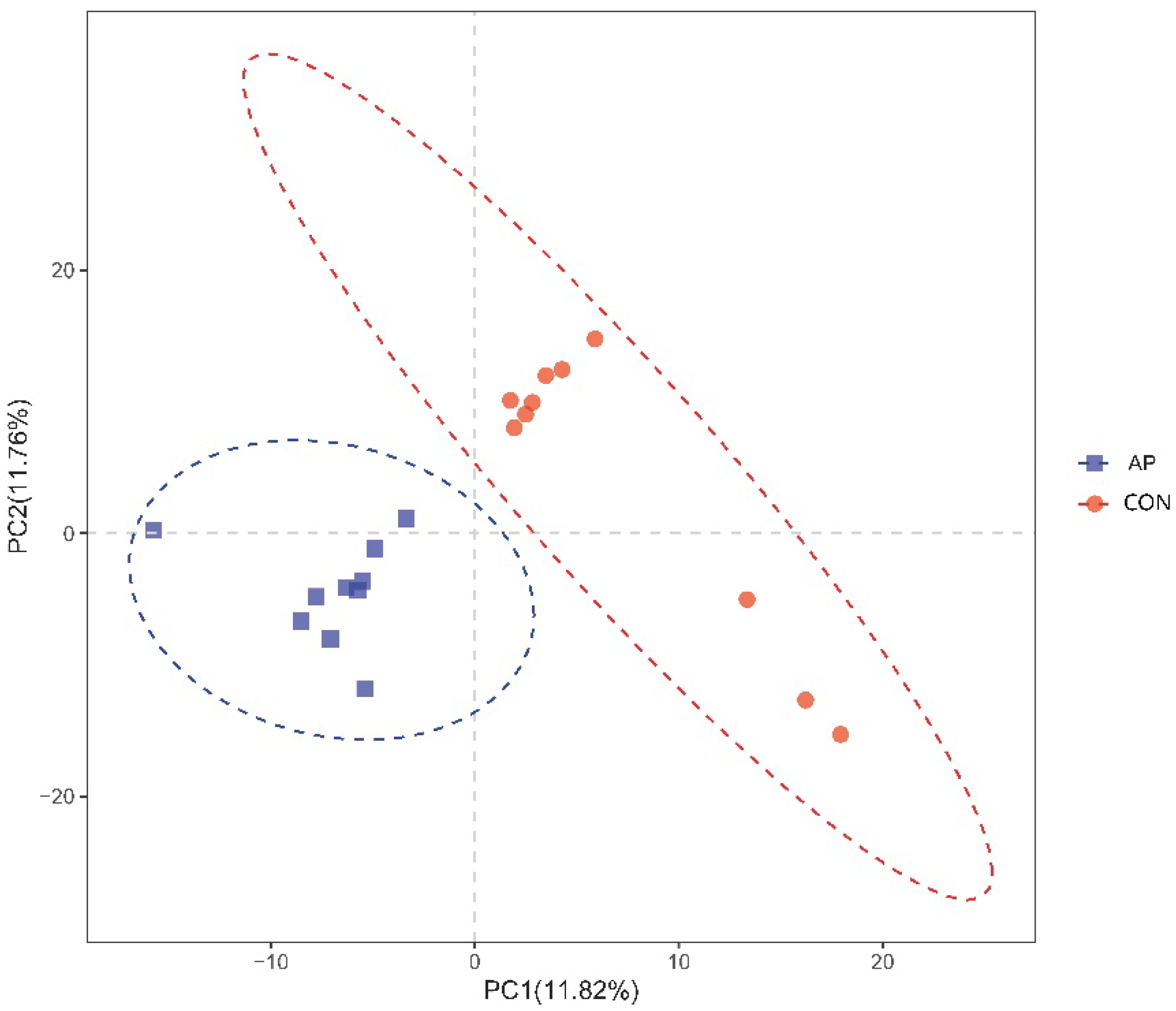
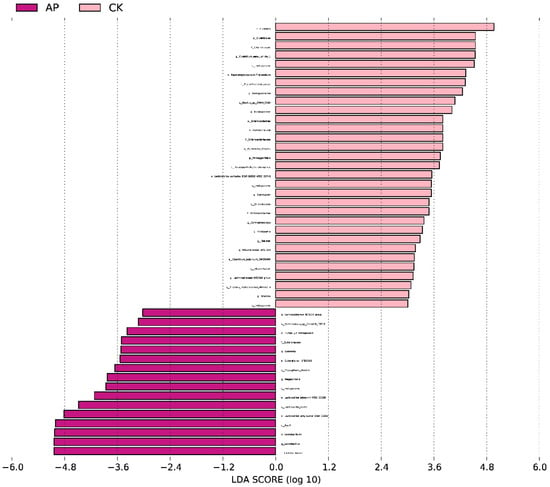
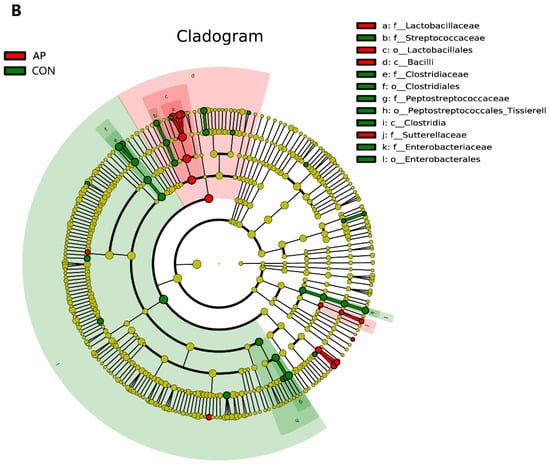
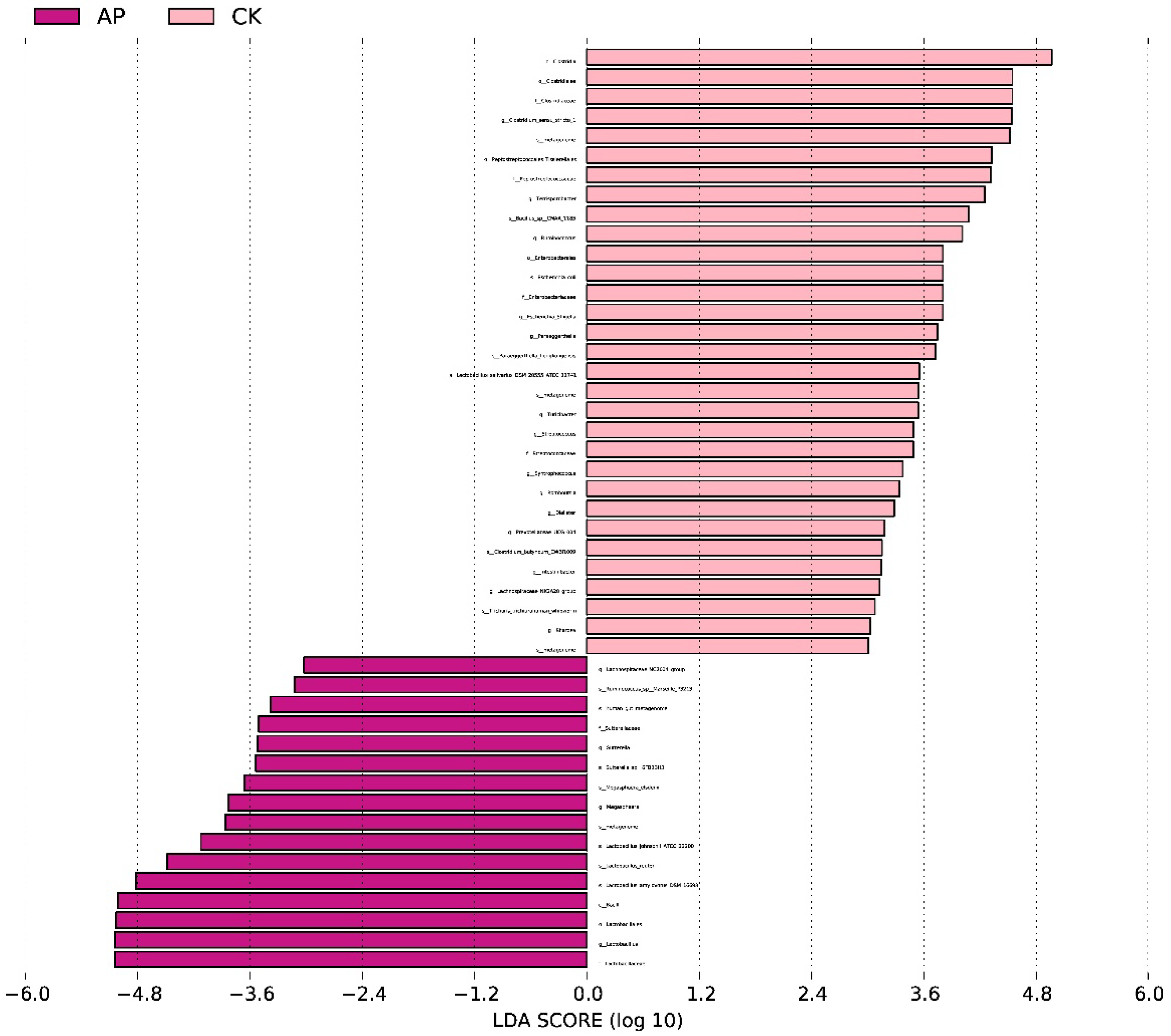
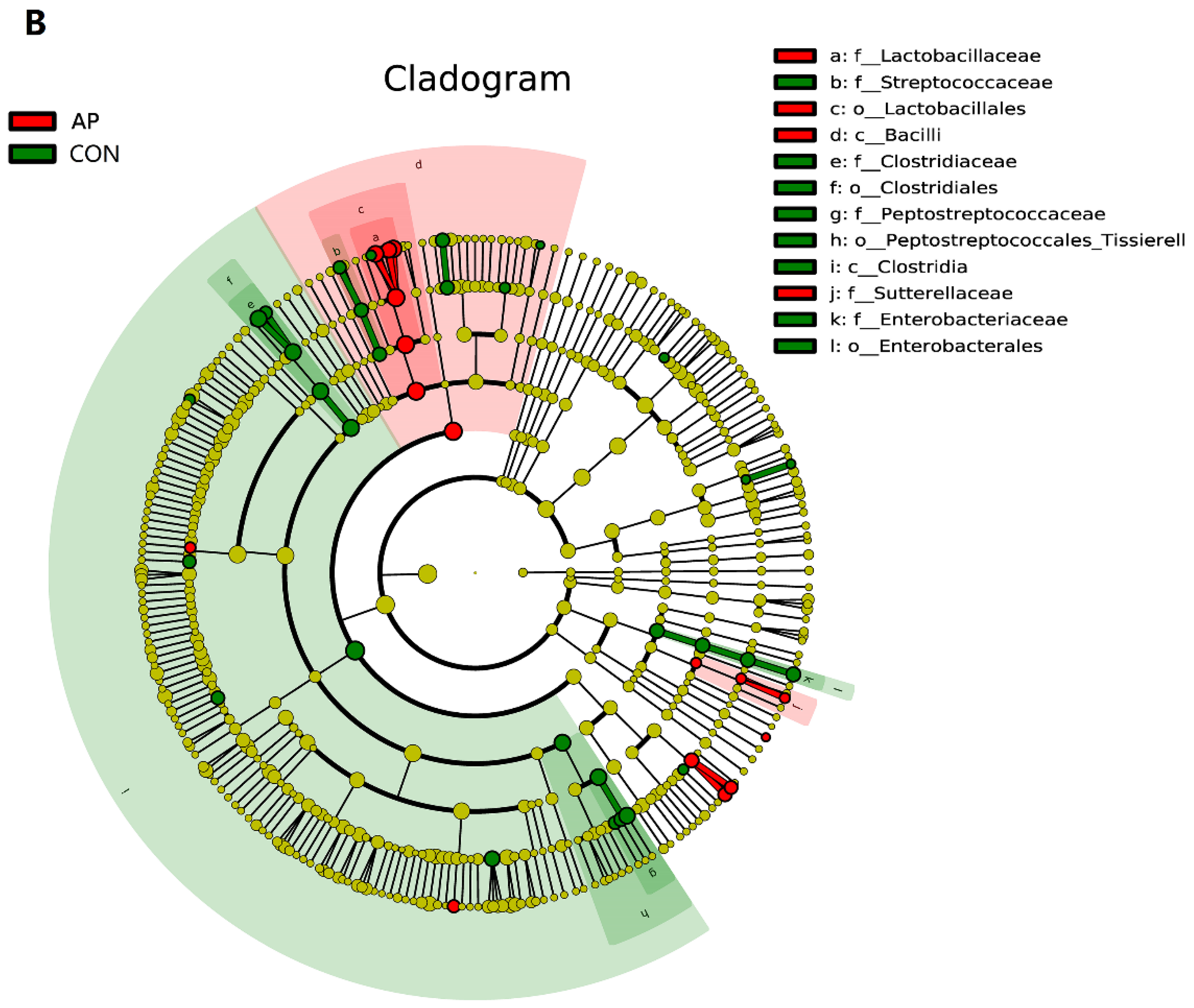
Alpha diversity indices of shannon, chao1, PD_whole_tree, and observed_species are shown in Figure 1. The OTUs PLS-DA (Partial Least Squares Discrimination Analysis) of the bacterial community structure of the microbiome is shown in Figure 2. A LEFse analysis revealed the differences between groups (Figure 3A, p < 0.05). Their taxonomic branching plots showed relative abundance between species (Figure 3B, p < 0.05).
Figure 1.
Effects of Apple pomace (AP) on intestinal microbial alpha diversity index: (a) chao1, (b) observed_species, (c) PD_whole_tree, and (d) shannon index. CON: control group; AP: Apple pomace.
Figure 2.
OTUs PLS-DA (Partial Least Squares Discrimination Analysis) of the bacterial community structure of the microbiome. Orange circle, the control group (CON); blue square, the apple pomace group (AP). Each point represents a sample.
Figure 3.
Linear discriminant analysis effect size (LEFse) analysis on fecal microbiota. (A) Linear discriminant analysis (LDA). (B) LEfSe taxonomy cladogram: different colors suggest enrichment of certain taxa in AP (red) and CON (green). The nonparametric factorial Kruskal–Wallis rank sum test was used for different species at a significance level of 0.05. CON: control group; AP: Apple pomace group.
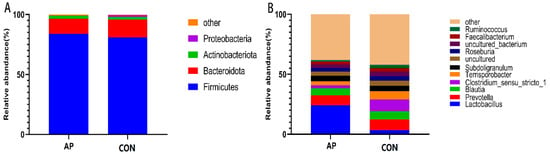
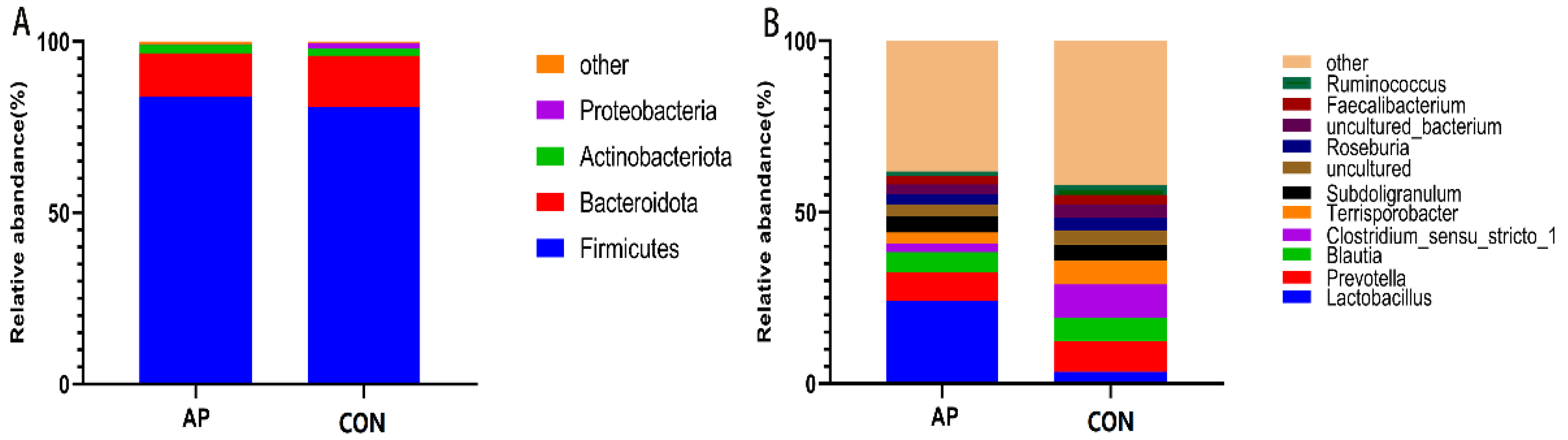
The top 4 relative abundances of microflora in the feces of weaned piglets at the phylum level are Firmicutes, Bacteroidota, Actinobacteria, and Proteobacteria (Figure 4A). The relative abundance of Firmicutes accounts for 80.95% and 83.76% in the CON and AP groups, respectively. The dominant phyla with relative abundance higher than 1% are Firmicutes, Bacteroidota, and Actinobacteria. In addition, the top 11 relative abundances of microflora at the Genus level are Lactobacillus, Prevotella, Blautia, Clostridium_sensu_stricto_1, Terrisporobacter, Subdoligranulum, uncultured, Roseburia, uncultured_bacterium, Faecalibacterium, and Ruminococcus (Figure 4B). As shown in Supplement Table S1, the relative abundances of the Clostridium_sensu_stricto_1, Terrisporobacter, and Ruminococcus are less in the AP group than those in the CON group (p < 0.05); while the relative abundance of the Lactobacillus is greater in the AP group than that the CON group (p < 0.01).
Figure 4.
Intestinal bacterial structure ((A): phylum, (B): genus). CON: control group; AP: Apple pomace group.
The KEGG pathways were used to compare the differences between groups. As shown in Figure S1 and Supplement Table S2, the abundance of genetic information processing was greater in the AP group than that in the CON group (p = 0.001); while the abundance of cellular processes has a tendency to decrease in the AP group compared to the CON group (p = 0.056).
4. Discussion
4.1. Growth Performance of Pigs
AP contains a large number of carbohydrates, vitamins, and minerals, providing animals with the necessary nutrients [20]. At the same time, AP increases the digestible crude protein after fermentation, which facilitates digestion and absorption and promotes growth performance in monogastric animals [21]. In a previous study, the solid-state fermentation of AP using yeast resulted in a significant increase in crude protein, fat and vitamin C, and minerals [22]. The growth of fattening Berkshire pigs was improved after supplementary feeding of fermented AP [23].
4.2. Effects of Fermented AP on Plasma Biochemical, Antioxidant, and Immune Indicators of Weaned Pigs
Plasma biochemical parameters are sensitive serological indicators under different physiological conditions. Glutathione transaminase is used as a clinical indicator for liver function tests [24,25,26,27]. A previous study found that the supplementary AP and mango peel significantly reduced plasma AST levels when hyperlipidemia was controlled [28]. The protein content increased by 36% in fermented AP by Fungus P. chrysosporium, indicating that more protein is available for absorption by the pigs [29]. In the present study, the plasma ALB concentration increased by 25.97%, while the AST concentration decreased by 36.74%. The polyphenols in AP, including root anthocyanins and chlorogenic acid, have antioxidant activity [30]. In addition, quercetin and its derivatives are rich in flavonols of apples, and have antioxidant biological activity, anti-inflammatory and antibacterial properties [31,32]. In the present study, the concentration of plasma MD decreased by 2.33 nmol/mL, and the concentration of SOD increased by 2.9 U/mL in the AP group, which suggests that fermented AP has better antioxidant capacity.
4.3. Intestinal Microbiota of Weaned Pigs
The increase in beneficial gut bacteria and the decrease in pathogenic bacteria are beneficial to the growth of animals [33]. Shannon, PD_whole_tree, observed_species, and Chao1 indexes represent species richness, evolutionary distance diversity of species, community diversity and microbial diversity [34]. In the present study, the differences in microbial communities between the two treatments were not significant. In addition, Firmicutes and Bacteroidota were dominant at the phylum level [35]. On the genus level, Lactobacillus is prevalent in the animal intestinal microbiota [36]. In the current study, the relative abundance of Lactobacillus in the AP group was greater than that in the CON group, which is similar to the previous studies. Clostridium has a significant role in the utilization of amino acids, which facilitates the digestive absorption of amino acids in animals [37]. The relative abundance of Ruminococcus (CG-005) in the intestines of young goats with diarrhea was significantly less than that of young, healthy goats [38]. The rapid proliferation of Terrisporobacter as a fiber-degrading bacterium in weaned pigs allowed the rapid adaptation of the intestinal flora to plant-derived feeds [39]. But in the present study, there was a decrease in the relative abundance of Clostridium_sensu_stricto_1, Terrisporobacter, and Ruminococcus, which may be related to the large increase of Lactobacillus. Previous studies also found that supplementary of fermented AP improved the health of the gastrointestinal tract, and the interaction between flavonoids and fiber in AP improved the digestive function of animals [40,41]. Furthermore, the functional prediction in the current study revealed a 4.15% increase in the pathway of genetic information processing and a 16.91% reduction in the pathway of cellular transformation in the AP group, indicating that the addition of fermented AP has an effect on the microbial operational pathways.
5. Conclusions
In conclusion, the supplementary of fermented AP to replace partial corn increased the growth performance by improving the antioxidant capacity, immunity, and intestinal microflora of weaned pigs, which can be applied to the pig production. This study provided experimental data for the utilization of apple pomace as a feed resource in Xingjiang, China.
Supplementary Materials
The following supporting information can be downloaded at: https://www.mdpi.com/article/10.3390/agriculture12101603/s1, Figure S1: Rarefaction curve of OTUs and Venn diagram; Figure S2: Predictive function of intestinal microbiota; Table S1: Comparison of main phylum and genus in fecal flora of each group; Table S2: Comparison of functional prediction of fecal flora in each group.
Author Contributions
Conceptualization, B.Z. and W.A.; methodology, W.A., X.Z. and Y.C.; software, M.C. and C.Z.; validation, Y.C. and J.S.; formal analysis, M.C., C.Z. and M.L.; investigation, Y.C. and J.S.; resources, W.A.; data curation, W.A., X.Z. and M.L.; writing—original draft preparation, W.A. and M.C.; writing—review and editing, B.Z.; visualization, M.C.; funding acquisition, W.A. and B.Z. All authors have read and agreed to the published version of the manuscript.
Funding
This study was supported by Fundamental Research Funds for the Central Universities (KYLH202008) and Tarim University and Nanjing Agricultural University Intercollegiate Joint Project (1120195).
Institutional Review Board Statement
The animal study protocol was approved by the Institutional Ethics Committee of Nanjing Agricultural University (SYXK2017-0027, 1 October 2020).
Informed Consent Statement
Not applicable.
Data Availability Statement
None of the data have been deposited in an official repository. More information on data sources not publicly available used in the paper can be requested from the author.
Conflicts of Interest
The authors declare the following competing interest(s): Jipeng Sun is co-authors in this manuscript. His is an employee at Xinjiang Hongsheng Pastoral Culture Co., LTD., which provided the experimental pigs for this work. Jipeng Sun played a major role in the animal trial.
References
- Koutsos, A.; Tuohy, K.M.; Lovegrove, J.A. Apples and cardiovascular health—Is the gut microbiota a core consideration? Nutrients 2015, 7, 3959–3998. [Google Scholar] [CrossRef] [Scilit] [PubMed]
- FAOSTAT. Food and Agriculture Organization of the United Nations. FAOSTAT Database. 2019. Available online: https://www.fao.org/faostat/zh/#data/QCL/visualize (accessed on 25 November 2021).
- Konrade, D.; Klava, D.; Gramatina, I. Cereal crispbread improvement with dietary fibre from apple by-products. In Proceedings of CBU International Conference Proceedings; Materials Science: Prague, Czech Republic; pp. 1143–1148.
- Bhushan, S.; Kalia, K.; Sharma, M.; Singh, B.; Ahuja, P.S. Processing of apple pomace for bioactive molecules. Crit. Rev. Biotechnol. 2008, 28, 285–296. [Google Scholar] [CrossRef] [Scilit] [PubMed]
- Dhillon, G.S.; Kaur, S.; Brar, S.K. Perspective of apple processing wastes as low-cost substrates for bioproduction of high value products: A review. Renew. Sustain. Energy Rev. 2013, 27, 789–805. [Google Scholar] [CrossRef] [Scilit]
- Shalini, R.; Gupta, D.K. Utilization of pomace from apple processing industries: A review. J. Food Sci. Technol. 2010, 47, 365–371. [Google Scholar] [CrossRef] [Scilit] [PubMed]
- Vendruscolo, F.; Albuquerque, P.M.; Streit, F.; Esposito, E.; Ninow, J.L. Apple pomace: A versatile substrate for biotechnological applications. Crit. Rev. Biotechnol. 2008, 28, 1–12. [Google Scholar] [CrossRef] [Scilit]
- Suárez, B.; Álvarez, Á.L.; García, Y.D.; Barrio, G.D.; Lobo, A.P.; Parra, F. Phenolic profiles, antioxidant activity and in vitro antiviral properties of apple pomace. Food Chem. 2010, 120, 339–342. [Google Scholar] [CrossRef] [Scilit]
- Huang, Q.; Liu, X.; Zhao, G.; Hu, T.; Wang, Y. Potential and challenges of tannins as an alternative to in-feed antibiotics for farm animal production. Anim. Nutr. 2018, 4, 137–150. [Google Scholar] [CrossRef] [Scilit]
- Rahmat, H.; Hodge, R.A.; Manderson, G.J.; Yu, P.L. Solid-substrate fermentation ofKloeckera apiculata andCandida utilis on apple pomace to produce an improved stock-feed. World J. Microbiol. Biotechnol. 1995, 11, 168–170. [Google Scholar] [CrossRef] [Scilit]
- Sadh, P.K.; Duhan, S.; Duhan, J.S. Agro-industrial wastes and their utilization using solid state fermentation: A review. Bioresour. Bioprocess. 2018, 5, 1. [Google Scholar] [CrossRef] [Scilit]
- Bhalla, T.C.; Joshi, M. Protein enrichment of apple pomace by co-culture of cellulolytic moulds and yeasts. World J. Microbiol. Biotechnol. 1994, 10, 116–117. [Google Scholar] [CrossRef] [Scilit]
- Tosun, R.; YaŞAr, S. Fungal Fermantasyonu ile Elma Posasının Besin Madde İçeriğinin Zenginleştirilmesi. Kahramanmaraş Sütçü İmam Üniversitesi Tarım ve Doğa Dergisi 2020. [Google Scholar] [CrossRef] [Scilit]
- Kafantaris, I.; Stagos, D.; Kotsampasi, B.; Hatzis, A.; Kypriotakis, A.; Gerasopoulos, K.; Makri, S.; Goutzourelas, N.; Mitsagga, C.; Giavasis, I.; et al. Grape pomace improves performance, antioxidant status, fecal microbiota and meat quality of piglets. Animal 2018, 12, 246–255. [Google Scholar] [CrossRef] [Scilit]
- Noblet, J.; Perez, J.M. Prediction of digestibility of nutrients and energy values of pig diets from chemical analysis. J. Anim. Sci. 1993, 71, 3389–3398. [Google Scholar] [CrossRef] [Scilit] [PubMed]
- Pedersen, K.S.; Toft, N. Intra- and inter-observer agreement when using a descriptive classification scale for clinical assessment of faecal consistency in growing pigs. Prev. Vet. Med. 2011, 98, 288–291. [Google Scholar] [CrossRef] [Scilit]
- Edgar, R.C. Search and clustering orders of magnitude faster than BLAST. Bioinformatics 2010, 26, 2460–2461. [Google Scholar] [CrossRef] [Scilit] [PubMed]
- Schloss, P.D.; Westcott, S.L.; Ryabin, T.; Hall, J.R.; Hartmann, M.; Hollister, E.B.; Lesniewski, R.A.; Oakley, B.B.; Parks, D.H.; Robinson, C.J.; et al. Introducing mothur: Open-source, platform-independent, community-supported software for describing and comparing microbial communities. Appl. Environ. Microbiol. 2009, 75, 7537–7541. [Google Scholar] [CrossRef] [Scilit] [PubMed]
- Edgar, R.C. UPARSE: Highly accurate OTU sequences from microbial amplicon reads. Nat. Methods 2013, 10, 996–998. [Google Scholar] [CrossRef] [Scilit] [PubMed]
- Lyu, F.; Luiz, S.F.; Azeredo, D.R.P.; Cruz, A.G.; Ajlouni, S.; Ranadheera, C.S. Apple Pomace as a Functional and Healthy Ingredient in Food Products: A Review. Processes 2020, 8, 319. [Google Scholar] [CrossRef] [Scilit]
- Devrajan, A.; Joshi, V.K.; Gupta, K.; Sheikher, C.; Lal, B.B. Evaluation of apple pomace based reconstituted feed in rats after solid state fermentation and ethanol recovery. Braz. Arch. Biol. Technol. 2004, 47, 93–106. [Google Scholar] [CrossRef] [Scilit]
- Lee, S.D.; Kim, H.Y.; Jung, H.J.; Ji, S.Y.; Chowdappa, R.; Ha, J.H.; Song, Y.M.; Park, J.C.; Moon, H.K.; Kim, I.C. The effect of fermented apple diet supplementation on the growth performance and meat quality in finishing pigs. Anim. Sci. J. 2009, 80, 79–84. [Google Scholar] [CrossRef] [Scilit]
- Joshi, V.K.; Sandhu, D.K. Preparation and evaluation of an animal feed byproduct produced by solid-state fermentation of apple pomace. Bioresour. Technol. 1996, 56, 251–255. [Google Scholar] [CrossRef] [Scilit]
- Liao, P.; Li, M.; Li, Y.; Tan, X.; Zhao, F.; Shu, X.; Yin, Y. Effects of dietary supplementation with cupreous N-carbamylglutamate (NCG) chelate and copper sulfate on growth performance, serum biochemical profile and immune response, tissue mineral levels and fecal excretion of mineral in weaning piglets. Food Agric. Immunol. 2017, 28, 1315–1329. [Google Scholar] [CrossRef] [Scilit]
- Tao, H.; Guo, F.; Tu, Y.; Si, B.W.; Xing, Y.C.; Huang, D.J.; Diao, Q.Y. Effect of weaning age on growth performance, feed efficiency, nutrient digestibility and blood-biochemical parameters in Droughtmaster crossbred beef calves. Asian-Australas J. Anim. Sci. 2018, 31, 864–872. [Google Scholar] [CrossRef] [Scilit] [PubMed]
- Coma, J.; Carrion, D.; Zimmerman, D.R. Use of plasma urea nitrogen as a rapid response criterion to determine the lysine requirement of pigs. J. Anim. Sci. 1995, 73, 472–481. [Google Scholar] [CrossRef] [Scilit]
- Liao, P.; Shu, X.; Tang, M.; Tan, B.; Yin, Y. Effect of dietary copper source (inorganic vs. chelated) on immune response, mineral status, and fecal mineral excretion in nursery piglets. Food Agric. Immunol. 2017, 29, 548–563. [Google Scholar] [CrossRef] [Scilit]
- Umbreen, H.; Arshad, M.U.; Noreen, R.; Aftab, K. Ameliorative Effect of Apple Pomace and Mango Peels against Hyperlipidemia and Lipid Peroxidation Induced by Hyperlipidemic Diet. Sains Malays. 2020, 49, 1273–1282. [Google Scholar] [CrossRef] [Scilit]
- Ajila, C.; Sarma, S.; Brar, S.; Godbout, S.; Cote, M.; Guay, F.; Verma, M.; Valéro, J. Fermented Apple Pomace as a Feed Additive to Enhance Growth Performance of Growing Pigs and Its Effects on Emissions. Agriculture 2015, 5, 313–329. [Google Scholar] [CrossRef] [Scilit]
- Lu, Y.; Yeap Foo, L. Antioxidant and radical scavenging activities of polyphenols from apple pomace. Food Chem. 2000, 68, 81–85. [Google Scholar] [CrossRef] [Scilit]
- Herranz, B.; Fernández-Jalao, I.; Dolores Álvarez, M.; Quiles, A.; Sánchez-Moreno, C.; Hernando, I.; de Ancos, B. Phenolic compounds, microstructure and viscosity of onion and apple products subjected to in vitro gastrointestinal digestion. Innov. Food Sci. Emerg. Technol. 2019, 51, 114–125. [Google Scholar] [CrossRef] [Scilit]
- Wang, D.; Jiang, Y.; Sun-Waterhouse, D.X.; Zhai, H.; Guan, H.; Rong, X.; Li, F.; Yu, J.C.; Li, D.P. MicroRNA-based regulatory mechanisms underlying the synergistic antioxidant action of quercetin and catechin in H2O2-stimulated HepG2 cells: Roles of BACH1 in Nrf2-dependent pathways. Free Radic. Biol. Med. 2020, 153, 122–131. [Google Scholar] [CrossRef] [Scilit]
- Pan, D.; Yu, Z. Intestinal microbiome of poultry and its interaction with host and diet. Gut Microbes 2014, 5, 108–119. [Google Scholar] [CrossRef] [Scilit] [PubMed]
- Miller, G.E.; Engen, P.A.; Gillevet, P.M.; Shaikh, M.; Sikaroodi, M.; Forsyth, C.B.; Mutlu, E.; Keshavarzian, A. Lower Neighborhood Socioeconomic Status Associated with Reduced Diversity of the Colonic Microbiota in Healthy Adults. PLoS ONE 2016, 11, e0148952. [Google Scholar] [CrossRef] [Scilit] [PubMed]
- Levy, S.B.; Marshall, B. Antibacterial resistance worldwide: Causes, challenges and responses. Nat. Med. 2004, 10, S122–S129. [Google Scholar] [CrossRef] [Scilit] [PubMed]
- Xu, Y.; Yang, H.; Zhang, L.; Su, Y.; Shi, D.; Xiao, H.; Tian, Y. High-throughput sequencing technology to reveal the composition and function of cecal microbiota in Dagu chicken. BMC Microbiol. 2016, 16, 259. [Google Scholar] [CrossRef] [Scilit]
- Mao, S.Y.; Huo, W.J.; Zhu, W.Y. Microbiome-metabolome analysis reveals unhealthy alterations in the composition and metabolism of ruminal microbiota with increasing dietary grain in a goat model. Environ. Microbiol. 2016, 18, 525–541. [Google Scholar] [CrossRef] [Scilit]
- Wang, Y.; Zhang, H.; Zhu, L.; Xu, Y.; Liu, N.; Sun, X.; Hu, L.; Huang, H.; Wei, K.; Zhu, R. Dynamic Distribution of Gut Microbiota in Goats at Different Ages and Health States. Front. Microbiol. 2018, 9, 2509. [Google Scholar] [CrossRef] [Scilit]
- Li, H.; Ma, L.; Li, Z.; Yin, J.; Tan, B.; Chen, J.; Jiang, Q.; Ma, X. Evolution of the Gut Microbiota and Its Fermentation Characteristics of Ningxiang Pigs at the Young Stage. Animals 2021, 11, 638. [Google Scholar] [CrossRef] [Scilit]
- Juskiewicz, J.; Zary-Sikorska, E.; Zdunczyk, Z.; Krol, B.; Jaroslawska, J.; Jurgonski, A. Effect of dietary supplementation with unprocessed and ethanol-extracted apple pomaces on caecal fermentation, antioxidant and blood biomarkers in rats. Br. J. Nutr. 2012, 107, 1138–1146. [Google Scholar] [CrossRef] [Scilit]
- Sehm, J.; Lindermayer, H.; Dummer, C.; Treutter, D.; Pfaffl, M.W. The influence of polyphenol rich apple pomace or red-wine pomace diet on the gut morphology in weaning piglets. J. Anim. Physiol. Anim. Nutr. 2007, 91, 289–296. [Google Scholar] [CrossRef] [Scilit]

Publisher’s Note: MDPI stays neutral with regard to jurisdictional claims in published maps and institutional affiliations. |
© 2022 by the authors. Licensee MDPI, Basel, Switzerland. This article is an open access article distributed under the terms and conditions of the Creative Commons Attribution (CC BY) license (https://creativecommons.org/licenses/by/4.0/).